




Swipe left or right, or use the buttons. Tap image to zoom.
例句翻译
单词
Lesson 315Lesson 315 - 遮罩切换
|
表情符号
|
单词 | Images | 翻译 | 过去时 | 过去分词 | 第三人称单数 | 动名词 | 含义 | 例句 | 例句翻译 | 示例表达 | 示例表达含义 | 示例表达翻译 | 同义词 | 反义词 | 搭配词 | 助记符 |
|---|---|---|---|---|---|---|---|---|---|---|---|---|---|---|---|---|---|
|
#9420
💣
|
/ˈwɔːrˌmʌŋɡər/
noun
(wōrméngé)
••••••
|
- •••••• |
战争煽动者
zhànzhēng shāndòng zhě
••••••
|
- •••••• | - •••••• | - •••••• | - •••••• |
A person who advocates or promotes war or conflict.
••••••
|
The leader was criticized as a warmonger by his opponents. |
这位领导人被对手批评为战争煽动者。
Zhè wèi lǐngdǎo rén bèi duìshǒu pīpíng wéi zhànzhēng shāndòng zhě.
••••••
|
- •••••• | - •••••• | - •••••• |
agitator, instigator, militarist, hawk
••••••
|
peacemaker, pacifist, mediator
••••••
|
political warmonger, accused of being a warmonger, labeled a warmonger
••••••
|
那个推销战争的MONGER(商人)就是战争煽动者
••••••
|
|
#9421
😈
|
/ˈweɪwərd/
adjective
(weɪwɜrd)
••••••
|
- •••••• |
叛逆的
pànnì de
••••••
|
- •••••• | - •••••• | - •••••• | - •••••• |
Difficult to control or predict because of unusual or perverse behavior.
••••••
|
The teacher struggled to manage the wayward students. |
老师很难管理那些叛逆的学生。
Lǎoshī hěn nán guǎnlǐ nàxiē pànnì de xuéshēng.
••••••
|
wayward child |
A child who is difficult to control and often behaves badly.
••••••
|
叛逆孩子
pànnì háizi
••••••
|
unruly, headstrong, stubborn, defiant, rebellious
••••••
|
obedient, compliant, disciplined
••••••
|
wayward child, wayward behavior, wayward son, wayward path
••••••
|
Wayward = 叛逆的孩子,难以管教。
••••••
|
|
#9422
🚧
|
/ˌweɪˈleɪ/
verb
(wei-lei)
••••••
|
- •••••• |
突然拦住 / 攻击
tudian lan zhu / gongji
••••••
|
waylaid
wei-leid
••••••
|
waylaid
wei-leid
••••••
|
waylays
wei-leiz
••••••
|
waylaying
wei-leing
••••••
|
to stop or interrupt someone unexpectedly, often to attack or detain them
••••••
|
He was waylaid by reporters as he left the courthouse.
当他离开法院时,被记者拦住了。
••••••
|
当他离开法院时,被记者拦住了。
Dang ta likai fayuan shi, bei jizhe lan zhu le.
••••••
|
- •••••• | - •••••• | - •••••• |
ambush, intercept, accost, attack
••••••
|
allow, let go, ignore
••••••
|
waylay someone, waylay travelers, waylay on the road
••••••
|
Waylay 就是突然在路上拦住某人,可能是攻击或拦阻他。
••••••
|
|
#9423
🛣️
|
/weɪ/
noun
(wēi)
••••••
|
- •••••• |
道路 / 方法
dàolù / fāngfǎ
••••••
|
- •••••• | - •••••• | - •••••• | - •••••• |
a path, direction, or method of doing something
••••••
|
He found a new way to solve the problem. |
他找到了一个解决问题的新方法。
Tā zhǎodào le yī gè jiějué wèntí de xīn fāngfǎ.
••••••
|
by the way |
used to introduce a new or additional topic
••••••
|
顺便说一下
shùnbiàn shuō yīxià
••••••
|
path, route, road, method, manner
••••••
|
blockage, obstacle, impasse
••••••
|
find a way, make way, on the way, by the way
••••••
|
Way 意味着道路 — 记住'高速公路'意味着一条大路。
••••••
|
|
#9424
🌕
|
/wæks/
verb
••••••
|
- •••••• | - •••••• |
waxed
••••••
|
waxed
••••••
|
waxes
••••••
|
waxing
••••••
|
to increase gradually in size, number, strength, or intensity
••••••
|
The moon will wax until it becomes full. |
- •••••• |
wax and wane |
to increase and decrease alternately
••••••
|
- •••••• |
grow, enlarge, expand, intensify, strengthen
••••••
|
wane, shrink, diminish
••••••
|
wax strong, wax poetic, waxing moon, wax enthusiastic
••••••
|
No •••••• |
|
#9425
🤔
|
/ˈweɪvər/
verb
(威弗)
••••••
|
- •••••• |
动摇
dongyao
••••••
|
wavered
威弗德
••••••
|
wavered
威弗德
••••••
|
wavers
威弗斯
••••••
|
wavering
威弗瑞
••••••
|
to become unsteady or indecisive; to hesitate or shake
••••••
|
She began to waver in her decision to move abroad.
她开始在是否搬到国外的问题上动摇。
••••••
|
她开始在是否搬到国外的问题上动摇。
Ta kaishi zai shifou bandao guowai de wenti shang dongyao.
••••••
|
without wavering
毫不动摇
••••••
|
to act firmly without hesitation
••••••
|
毫不动摇
hao bu dong yao
••••••
|
hesitate, falter, vacillate, tremble, oscillate
••••••
|
decide, persist, remain
••••••
|
waver in decision, waver between, waver under pressure
••••••
|
动摇,像在两个选择之间摇摆不定。
••••••
|
|
#9426
🌊
|
/ˈweɪvlət/
noun
(wéiwèiléite)
••••••
|
- •••••• |
小波
xiao bo
••••••
|
- •••••• | - •••••• | - •••••• | - •••••• |
a small wave or ripple on the surface of water or another medium
••••••
|
The pond was disturbed only by the tiny wavelets caused by the breeze.
池塘只有微风引起的小波动才会扰动。
••••••
|
池塘只有微风引起的小波动才会扰动。
Chítáng zhǐyǒu wēifēng yǐnqǐ de xiǎo bōdòng cái huì rǎodòng.
••••••
|
- •••••• | - •••••• | - •••••• |
ripple, undulation, oscillation, swell
••••••
|
stillness, calm
••••••
|
tiny wavelet, wavelet transform, small wavelet, water wavelet
••••••
|
Wavelet 意味着小波 🌊 — 想象 'let' 意味着小的,所以小波 = wavelet。
••••••
|
|
#9427
⛰️
|
/ˈwɔːtəʃɛd/
noun
(wàtèshèd)
••••••
|
- •••••• |
分水岭, 转折点
watershed
••••••
|
- •••••• | - •••••• | - •••••• | - •••••• |
An event or period marking a turning point in a situation; also refers to a ridge dividing two drainage areas.
••••••
|
The independence movement was a watershed in the nation's history.
独立运动是国家历史中的一个分水岭。
••••••
|
独立运动是国家历史中的一个分水岭。
Dúlì yùndòng shì guójiā lìshǐ zhōng de yīgè fēnshuǐ lǐng.
••••••
|
watershed moment
分水岭时刻
••••••
|
A critical turning point in history or life
••••••
|
分水岭时刻
fēnshuǐ lǐng shíkè
••••••
|
turning point, milestone, landmark, breakthrough
••••••
|
continuity, stagnation
••••••
|
watershed event, watershed moment, watershed year, watershed decision
••••••
|
Watershed = 水 + 分离 – 水分开,像历史中的重大转折。
••••••
|
|
#9428
💸
|
/ˈweɪstrəl/
noun
(wèisītuī'ěr)
••••••
|
- •••••• |
挥霍者, 无所事事的人
wastrel
••••••
|
- •••••• | - •••••• | - •••••• | - •••••• |
A person who wastes time, money, or resources; an idler or spendthrift.
••••••
|
The young man was dismissed as a wastrel by his family. |
这个年轻人被他的家人当作挥霍者解雇了。
Zhège niánqīngrén bèi tā de jiārén dàngzuò huīhuò zhě jiěgùle.
••••••
|
- •••••• | - •••••• | - •••••• |
idler, loafer, spendthrift, profligate, squanderer
••••••
|
hardworker, saver
••••••
|
idle wastrel, spoiled wastrel, wastrel youth, family wastrel
••••••
|
Wastrel = Waste + real – 那些真的浪费一切的人。
••••••
|
|
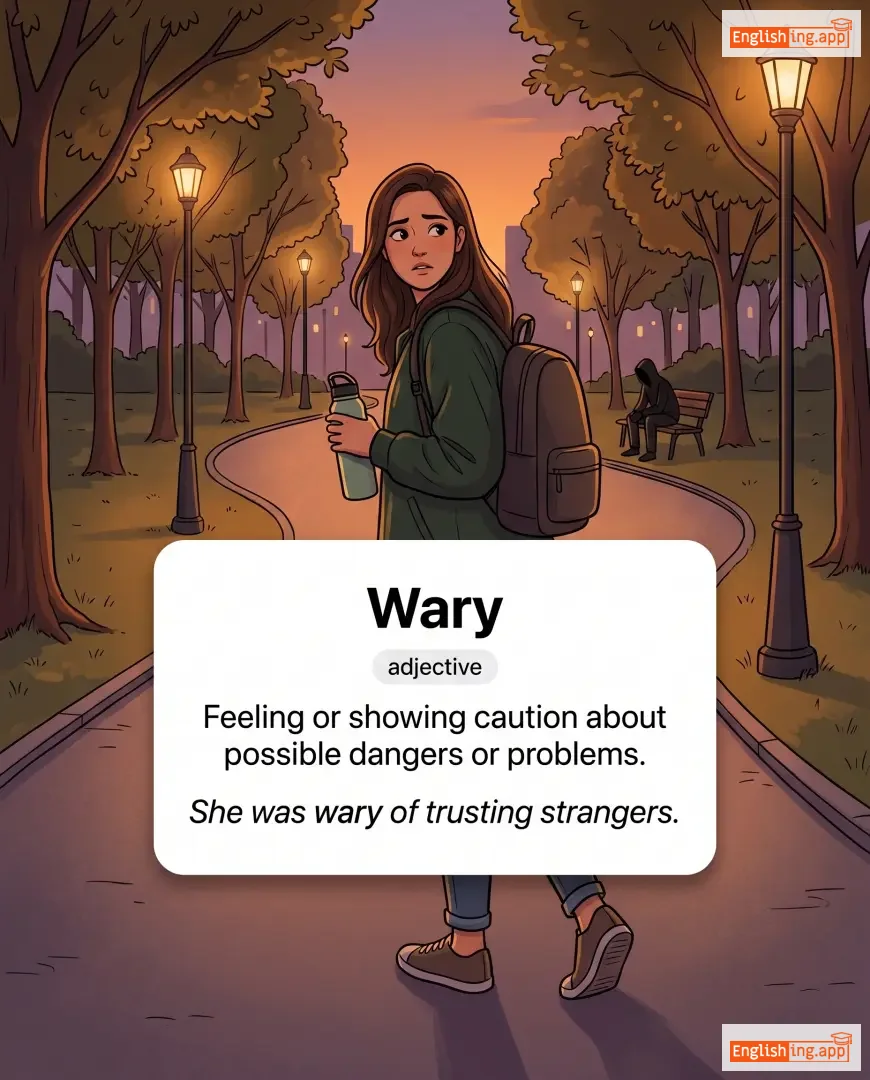
#9429
👀
|
/ˈweəri/
adjective
(wēi rì)
••••••
|
|
小心的
wary
••••••
|
- •••••• | - •••••• | - •••••• | - •••••• |
Feeling or showing caution about possible dangers or problems.
••••••
|
She was wary of trusting strangers. |
她对相信陌生人保持警惕。
Tā duì xiāngxìn mòshēngrén bǎochí jǐngtì.
••••••
|
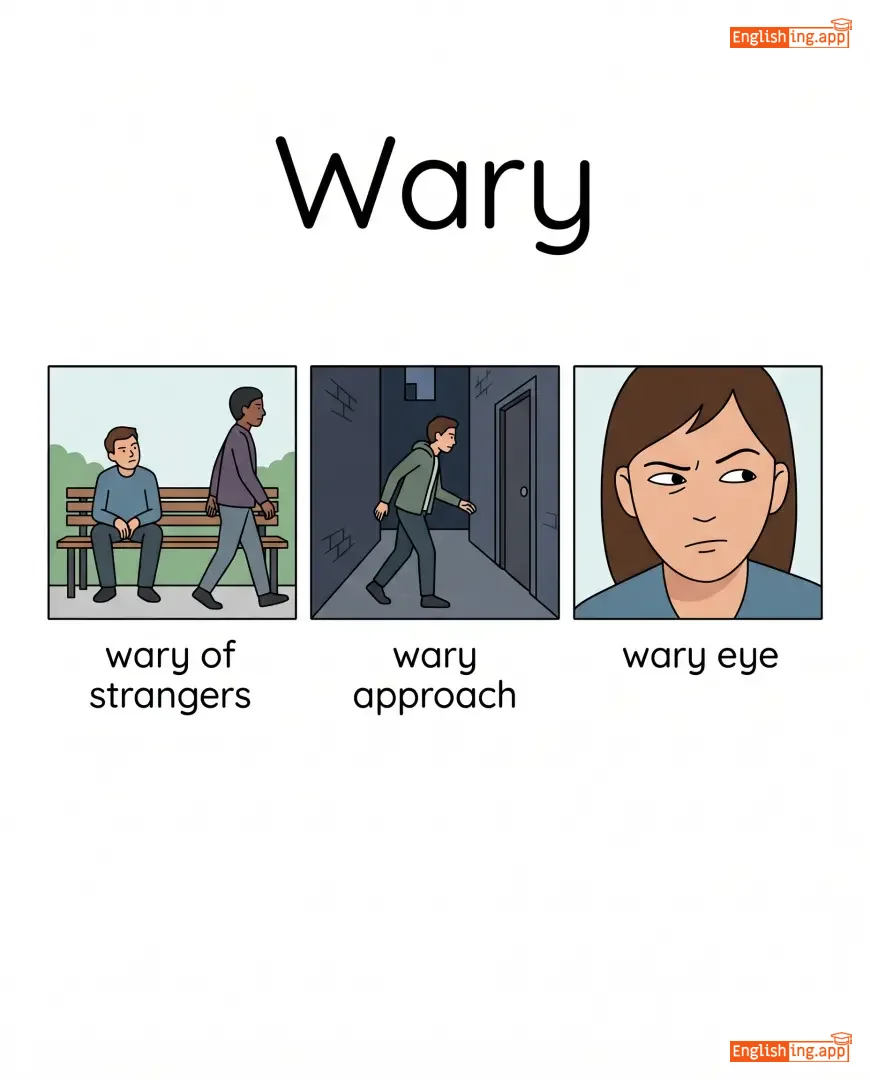
wary eye |
A cautious and watchful look
••••••
|
警惕的目光
Jǐngtì de mùguāng
••••••
|
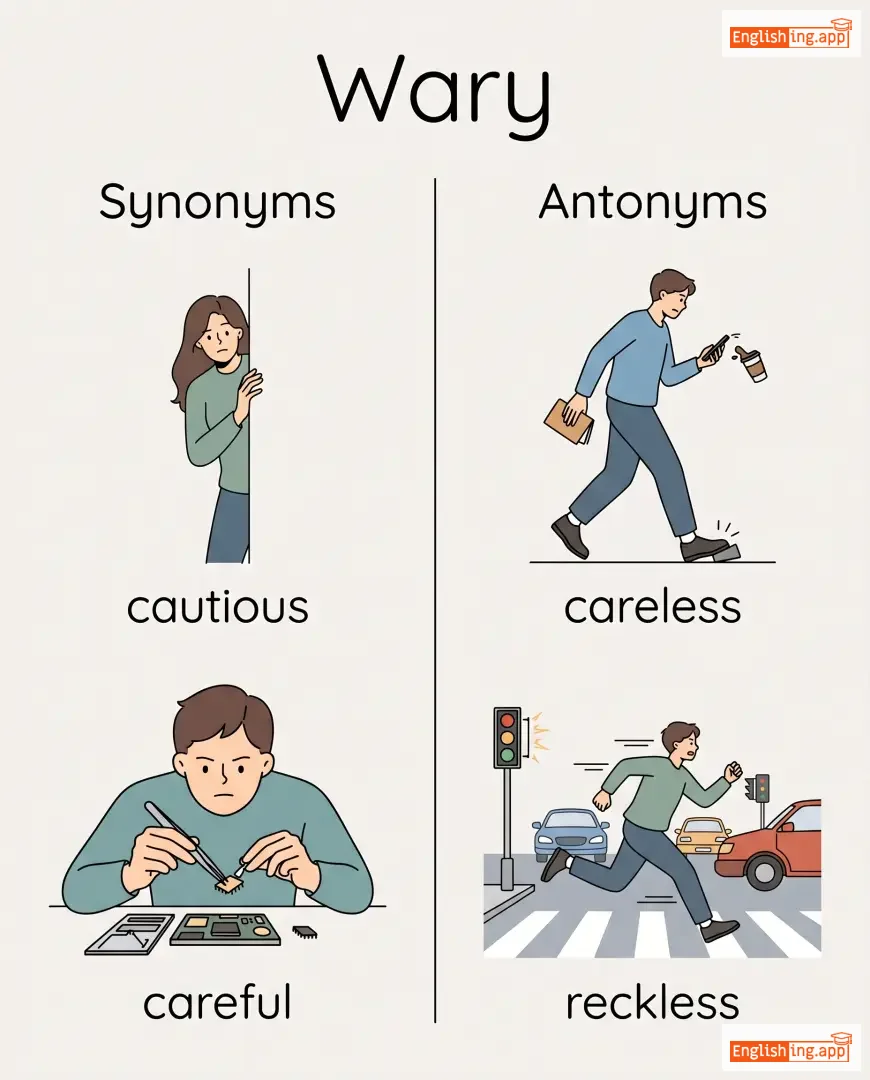
cautious, careful, alert, suspicious, vigilant
••••••
|
careless, reckless, unwary
••••••
|
wary of strangers, wary approach, wary eye, be wary
••••••
|
Wary = Very 小心的 – 'wary'意味着总是小心!
••••••
|
|
#9430
🐇
|
/ˈwɒrən/
noun
(沃伦)
••••••
|
- •••••• |
兔子洞的网络
warren
••••••
|
- •••••• | - •••••• | - •••••• | - •••••• |
A network of interconnected rabbit burrows; also used metaphorically for a densely populated building or district.
••••••
|
The old part of the city is a warren of narrow streets. |
这座城市的老部分是一个狭窄街道的网络。
Zhè zuò chéngshì de lǎo bùfen shì yīgè xiázhǎi jiēdào de wǎngluò.
••••••
|
- •••••• | - •••••• | - •••••• |
maze, labyrinth, network, hive
••••••
|
open space, field
••••••
|
rabbit warren, human warren, warren of streets, crowded warren
••••••
|
Warren 就像兔子洞一样,复杂又狭窄。
••••••
|
|
#9431
📜
|
/ˈwɒrənti/
noun
(保修期)
••••••
|
- •••••• |
保修期
baoxiūqī
••••••
|
- •••••• | - •••••• | - •••••• | - •••••• |
A written guarantee given by a manufacturer or seller promising to repair or replace a product if necessary within a specified period.
••••••
|
The laptop comes with a two-year warranty.
这台笔记本电脑附带两年的保修期。
••••••
|
这台笔记本电脑附带两年的保修期。
Zhè tái bǐjìběn diànnǎo fùdài liǎng nián de bǎoxiūqī.
••••••
|
under warranty
在保修期内
••••••
|
Still covered by the warranty period
••••••
|
在保修期内
zài bǎoxiūqī nèi
••••••
|
guarantee, assurance, contract, pledge, bond
••••••
|
breach, denial
••••••
|
valid warranty, extended warranty, warranty period, warranty claim
••••••
|
保修期=保障期, 就像手机保修
••••••
|
|
#9432
✅
|
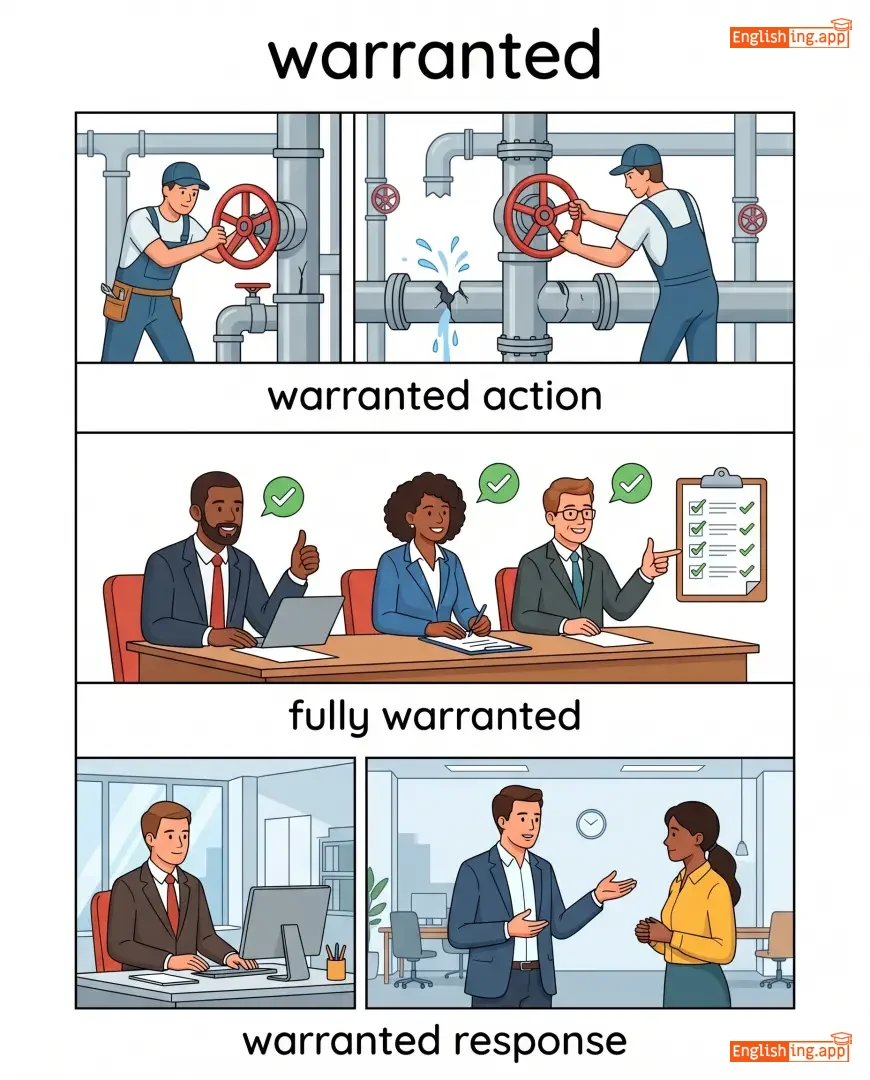
/ˈwɒrəntɪd/
adjective/verb
(warranted)
••••••
|
|
有理由的
you liyi de
••••••
|
warranted
warranted
••••••
|
warranted
warranted
••••••
|
- •••••• | - •••••• |
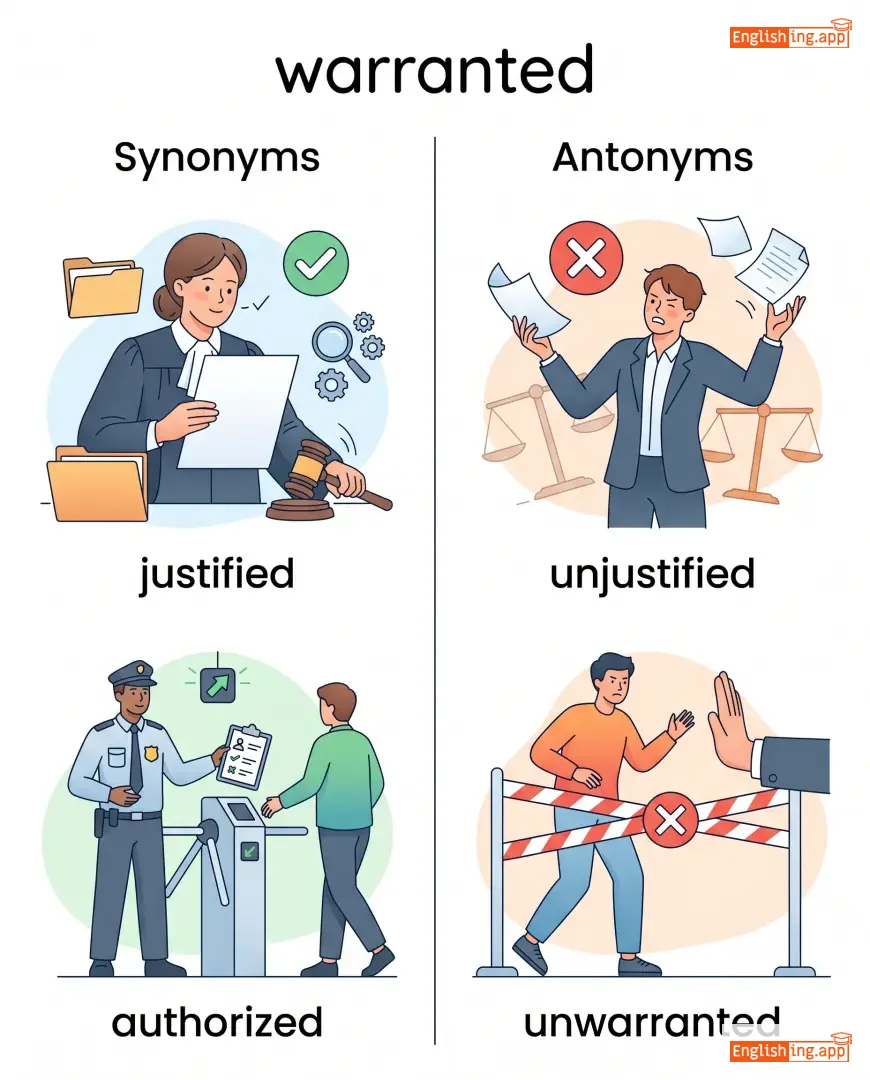
Justified or authorized under the circumstances.
••••••
|
Her anger was warranted after the unfair treatment.
她的愤怒在不公平的待遇之后是有理由的。
••••••
|
她的愤怒在不公平的待遇之后是有理由的。
Ta de fen nu zai bu gongping de daiyu zhi hou shi you liyi de.
••••••
|
- •••••• | - •••••• | - •••••• |
justified, authorized, reasonable, valid
••••••
|
unjustified, unwarranted, invalid
••••••
|
warranted action, fully warranted, warranted response, legally warranted
••••••
|
如果某事是正当的,它就是 WARRANTED ✅
••••••
|
|
#9433
📜
|
/ˈwɒrənt/
noun/verb
(warrant)
••••••
|
- •••••• |
逮捕令
dàibǔ lìng
••••••
|
warranted
warranted
••••••
|
warranted
warranted
••••••
|
warrants
warrants
••••••
|
warranting
warranting
••••••
|
As a noun: An official authorization or order. As a verb: To justify or make something necessary.
••••••
|
The judge issued a warrant for his arrest.
法官签发了他的逮捕令。
••••••
|
法官签发了他的逮捕令。
Fǎguān qiānfāle tā de dàibǔ lìng.
••••••
|
search warrant
搜查令
••••••
|
a legal document authorizing the police to search a place
••••••
|
搜查令
sōuchá lìng
••••••
|
authorization, permit, justification, license
••••••
|
ban, prohibition, denial
••••••
|
arrest warrant, search warrant, warrant issued, warrant action
••••••
|
警方使用逮捕令来进行搜查 🔍
••••••
|
|
#9434
🌀
|
/wɔːrp/
verb
••••••
|
- •••••• | - •••••• |
warped
••••••
|
warped
••••••
|
warps
••••••
|
warping
••••••
|
To twist or bend out of shape, often due to heat or moisture.
••••••
|
The wooden door warped in the summer heat. |
- •••••• |
time warp |
a distortion of the perception of time or an anomaly in time flow
••••••
|
- •••••• |
bend, distort, deform, twist
••••••
|
straighten, align, flatten
••••••
|
warp the wood, metal warps, warp speed, warped sense
••••••
|
No •••••• |
|
#9435
🐃
|
/ˈwɒloʊ/
verb
(wàlóu)
••••••
|
- •••••• |
打滚, 沉溺
dǎgǔn, chénnì
••••••
|
wallowed
wàlòud
••••••
|
wallowed
wàlòud
••••••
|
wallows
wàlós
••••••
|
wallowing
wàlóuīng
••••••
|
to roll about or indulge oneself in something excessively
••••••
|
The buffalo likes to wallow in the mud on hot days.
水牛喜欢在热天在泥巴里打滚。
••••••
|
水牛喜欢在热天在泥巴里打滚。
Shuǐniú xǐhuān zài rètiān zài níbā lǐ dǎgǔn.
••••••
|
wallow in self-pity
沉溺于自怜
••••••
|
to spend too much time feeling sorry for oneself
••••••
|
沉溺于自怜
chénnì yú zì lián
••••••
|
roll, sprawl, luxuriate, indulge
••••••
|
restrain, abstain, deny
••••••
|
wallow in mud, wallow in self-pity, wallow in sorrow
••••••
|
就像水牛在泥巴里打滚,'wallow'意味着在某事中过度打滚或沉溺其中。
••••••
|
|
#9436
⚔️
|
/ˈwɔːrˌlaɪk/
adjective
(wǒrláikè)
••••••
|
- •••••• |
好战的
hao zhan de
••••••
|
- •••••• | - •••••• | - •••••• | - •••••• |
Having an aggressive or militant nature; inclined to fight or engage in war.
••••••
|
The tribe was known for its warlike traditions. |
这个部落因其好战的传统而闻名。
Zhège bùluò yīn qí hǎo zhàn de chuántǒng ér wénmíng.
••••••
|
- •••••• | - •••••• | - •••••• |
militant, aggressive, martial, hostile, belligerent
••••••
|
peaceful, calm, pacifist
••••••
|
warlike nation, warlike behavior, warlike stance, warlike attitude
••••••
|
那些像战士一样的行为就是'好战的' (hao zhan de)
••••••
|
|
#9437
👗
|
/ˈwɔːdrəʊb/
noun
(wɔːdrəʊb)
••••••
|
- •••••• |
衣橱
yīchú
••••••
|
- •••••• | - •••••• | - •••••• | - •••••• |
A large cupboard where clothes are stored; also the collection of clothes someone owns.
••••••
|
Her wardrobe is full of colorful dresses.
她的衣橱里充满了五颜六色的裙子。
••••••
|
她的衣橱里充满了五颜六色的裙子。
Tā de yīchú lǐ chōngmǎn le wǔ yán liù sè de qúnzi.
••••••
|
capsule wardrobe
胶囊衣橱
••••••
|
a small, versatile collection of essential clothing items
••••••
|
胶囊衣橱
jiāonáng yīchú
••••••
|
closet, cupboard, dresser, clothing collection
••••••
|
emptiness, nakedness
••••••
|
open wardrobe, build a wardrobe, capsule wardrobe, wardrobe malfunction
••••••
|
Ward + robe → 衣橱,放置衣物的地方 (robe)
••••••
|
|
#9438
🏥
|
/wɔːrd/
noun
(wā dé)
••••••
|
- •••••• |
病房
bing fang
••••••
|
- •••••• | - •••••• | - •••••• | - •••••• |
A separate room in a hospital for patients; also a division of a city or a person under guardianship.
••••••
|
She was admitted to the children's ward. |
她被接收进了儿童病房。
Tā bèi jiēshōu jìnle értóng bìngfáng.
••••••
|
under someone's ward |
being under the guardianship or protection of someone
••••••
|
在某人的监护下
zài mǒu rén de jiānhù xià
••••••
|
unit, section, division, department
••••••
|
freedom, independence
••••••
|
hospital ward, children's ward, surgical ward, ward off
••••••
|
Ward = 病房 → 孩子们在病房中被照顾
••••••
|
|
#9439
🎶
|
/ˈwɔːbəl/
verb
(wǒ ěr bō ěr)
••••••
|
- •••••• |
用颤抖的声音或发出颤音唱歌或吹口哨
yòng zhàndǒu de shēngyīn huò fāchū zhànyīn chànggē huò chuī kǒushào
••••••
|
warbled
wǒ ěr bō ěr de
••••••
|
warbled
wǒ ěr bō ěr de
••••••
|
warbles
wǒ ěr bō ěr sī
••••••
|
warbling
wǒ ěr bō ěr líng
••••••
|
To sing or whistle with a quavering voice or with trills.
••••••
|
The bird warbled a sweet tune in the morning.
那只鸟在早上用甜美的旋律歌唱。
••••••
|
那只鸟在早上用甜美的旋律歌唱。
Nà zhī niǎo zài zǎoshang yòng tiánměi de xuánlǜ gēchàng.
••••••
|
- •••••• | - •••••• | - •••••• |
sing, trill, chirp, whistle
••••••
|
silence, mute
••••••
|
warble a song, warble a tune, bird warbling
••••••
|
Warble → 鸟在战争中也能唱歌!
••••••
|
|
#9440
😈
|
/ˈwɒntənnəs/
noun
(wàngtūnnesī)
••••••
|
- •••••• |
无缘的残忍
wúyuán de cánrěn
••••••
|
- •••••• | - •••••• | - •••••• | - •••••• |
The quality of being reckless, cruel, or deliberately malicious.
••••••
|
His wantonness shocked everyone at the gathering. |
他的无缘残忍震惊了聚会上的每一个人。
Tā de wúyuán cánrěn zhèngjīngle jùhuì shàng de měi yīgè rén.
••••••
|
- •••••• | - •••••• | - •••••• |
recklessness, cruelty, immorality, depravity
••••••
|
restraint, morality, control
••••••
|
act of wantonness, display of wantonness, sheer wantonness
••••••
|
Wanton + ness = 没有原因的残忍
••••••
|
|
#9441
🔥
|
/ˈwɒntən/
adjective
(wántūn)
••••••
|
- •••••• |
无谓的残忍
wúwèi de cánrěn
••••••
|
- •••••• | - •••••• | - •••••• | - •••••• |
Deliberate and unprovoked; reckless or cruel.
••••••
|
The soldiers were accused of wanton destruction. |
士兵们被指控无谓的破坏。
Shìbīngmen bèi zhǐkòng wúwèi de pòhuài.
••••••
|
wanton cruelty |
deliberate and unnecessary cruelty
••••••
|
无谓的残忍
wúwèi de cánrěn
••••••
|
reckless, malicious, deliberate, cruel, unprovoked
••••••
|
justified, restrained, controlled
••••••
|
wanton cruelty, wanton destruction, wanton violence, wanton disregard
••••••
|
Want ON destruction 意味着故意的破坏 - wanton 意味着无谓的残忍
••••••
|
|
#9442
⚠️
|
/ˈwɒntɪŋ/
adjective
(wǎntíng)
••••••
|
- •••••• |
不足
bùzú
••••••
|
- •••••• | - •••••• | - •••••• | - •••••• |
Lacking or deficient in quality or quantity.
••••••
|
His explanation was wanting in clarity.
他的解释缺乏清晰度。
••••••
|
他的解释缺乏清晰度。
tā de jiěshì quēfá qīngxīdù.
••••••
|
- •••••• | - •••••• | - •••••• |
lacking, deficient, incomplete, inadequate, insufficient
••••••
|
sufficient, adequate, complete
••••••
|
wanting in quality, wanting in respect, wanting evidence
••••••
|
Wanting意味着没有你想要的东西,即缺乏
••••••
|
|
#9443
☕
|
/wɒnt/
verb
(wont)
••••••
|
|
想要
xiang yao
••••••
|
wanted
wonted
••••••
|
wanted
wonted
••••••
|
wants
wants
••••••
|
wanting
wanting
••••••
|
To desire to have or do something.
••••••
|
I want a cup of coffee before the meeting.
我在会议之前想要一杯咖啡。
••••••
|
我在会议之前想要一杯咖啡。
Wo zai huiyi zhiqian xiang yao yi bei kafei.
••••••
|
for want of
缺乏
••••••
|
due to the lack of something
••••••
|
缺乏
que fa
••••••
|
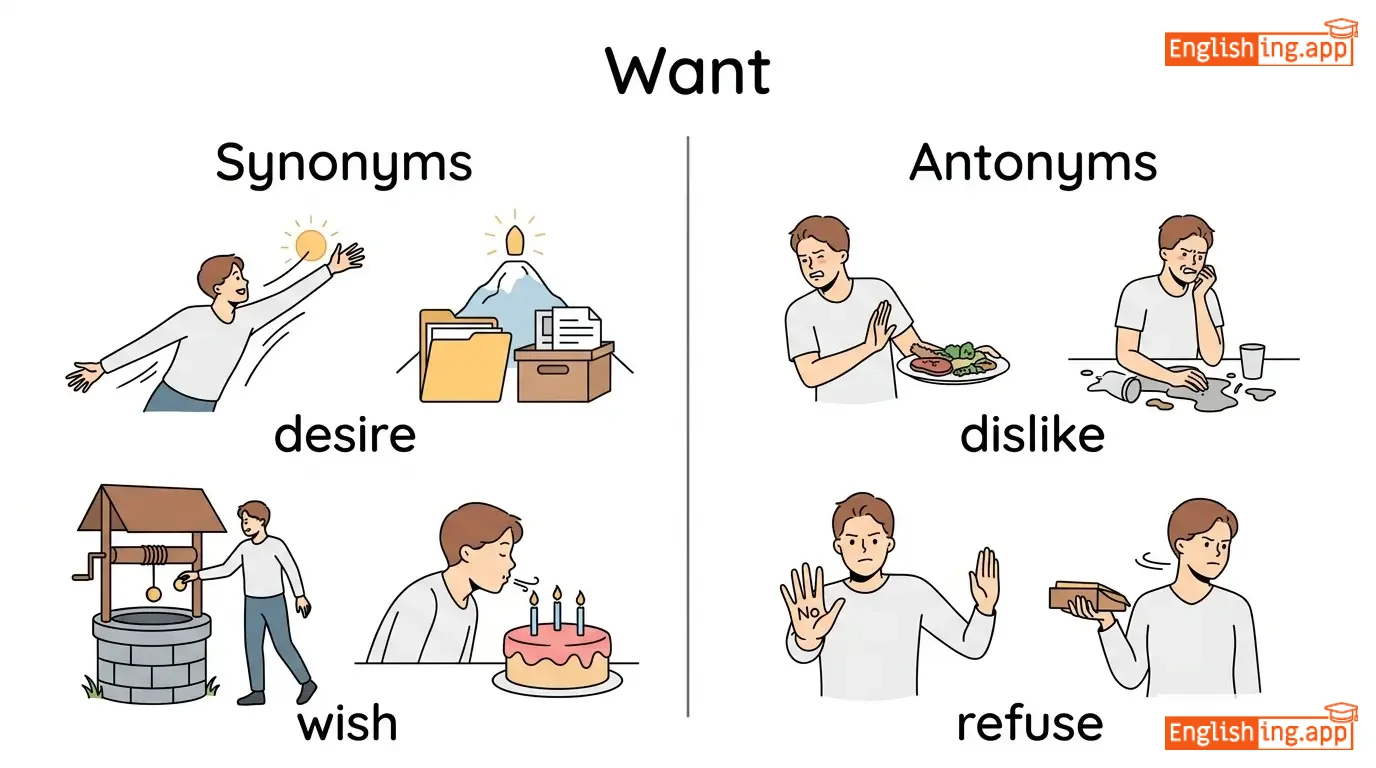
desire, wish, crave, need, long-for
••••••
|
dislike, refuse, reject
••••••
|
want something, want to do, want badly
••••••
|
想要 = 'want' 在中文
••••••
|
|
#9444
🎟️
|
/ˈwaŋɡl/
verb
(wánglè)
••••••
|
- •••••• |
通过巧妙手段获得某物
tōngguò qiǎomiào shǒuduàn huòqǔ mǒuwù
••••••
|
wangled
wánglèd
••••••
|
wangled
wánglèd
••••••
|
wangles
wánglès
••••••
|
wangling
wánglíng
••••••
|
To achieve something by clever or sometimes dishonest persuasion or trickery.
••••••
|
He wangled a free ticket to the concert.
他通过巧妙手段获得了免费的音乐会票。
••••••
|
他通过巧妙手段获得了免费的音乐会票。
Tā tōngguò qiǎomiào shǒuduàn huòqǔ le miǎnfèi de yīnyuè huì piào.
••••••
|
- •••••• | - •••••• | - •••••• |
manipulate, finagle, scheme, maneuver, obtain
••••••
|
lose, surrender, fail
••••••
|
wangle a ticket, wangle permission, wangle a job
••••••
|
Wangle 意味着 '通过巧妙手段得到'
••••••
|
|
#9445
🌙
|
/weɪn/
verb
(wéin)
••••••
|
- •••••• |
减少
jiǎnshǎo
••••••
|
waned
wénd
••••••
|
waned
wénd
••••••
|
wanes
wéins
••••••
|
waning
wéining
••••••
|
To decrease gradually in power, intensity, or size.
••••••
|
The moon wanes after the full moon night.
月亮在满月之夜后开始减退。
••••••
|
月亮在满月之夜后开始减退。
Yuèliàng zài mǎn yuè zhī yè hòu kāishǐ jiǎn tuì.
••••••
|
on the wane
处于衰退
••••••
|
gradually declining or diminishing
••••••
|
处于衰退
chǔyú shuāituì
••••••
|
diminish, decline, weaken, ebb, fade
••••••
|
grow, increase, rise
••••••
|
waning power, waning influence, waning interest
••••••
|
Wane 处于衰退,减少逐渐
••••••
|
|
#9446
🌍
|
/ˈwɒndərlʌst/
noun
(wāndè ěr lā sī tè)
••••••
|
- •••••• |
旅行欲望
lǚxíng yùwàng
••••••
|
- •••••• | - •••••• | - •••••• | - •••••• |
A strong desire to travel and explore the world.
••••••
|
Her wanderlust took her to every corner of the globe. |
她的旅行欲望带她走遍了世界的每个角落。
Tā de lǚxíng yùwàng dài tā zǒubiànle shìjiè de měi gè jiǎoluò.
••••••
|
- •••••• | - •••••• | - •••••• |
restlessness, travel-bug, desire-to-travel, yearning-to-explore
••••••
|
homebody, rooted, settled
••••••
|
strong wanderlust, feeling wanderlust, satisfy wanderlust
••••••
|
Wander + last = 旅行欲望,不停的旅行
••••••
|
|
#9447
🚶
|
/ˈwɒndər/
verb
(wāndé)
••••••
|
|
徘徊
páihuái
••••••
|
wandered
wāndèrd
••••••
|
wandered
wāndèrd
••••••
|
wanders
wāndéres
••••••
|
wandering
wāndèring
••••••
|
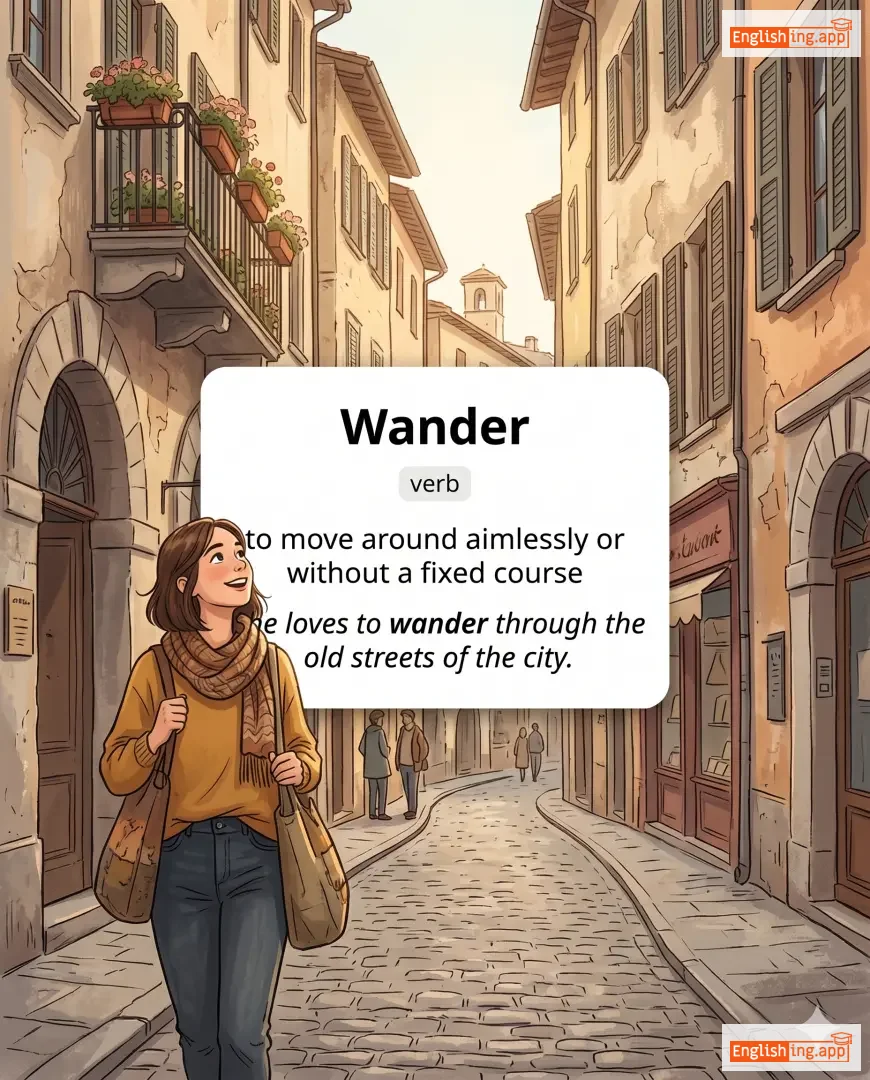
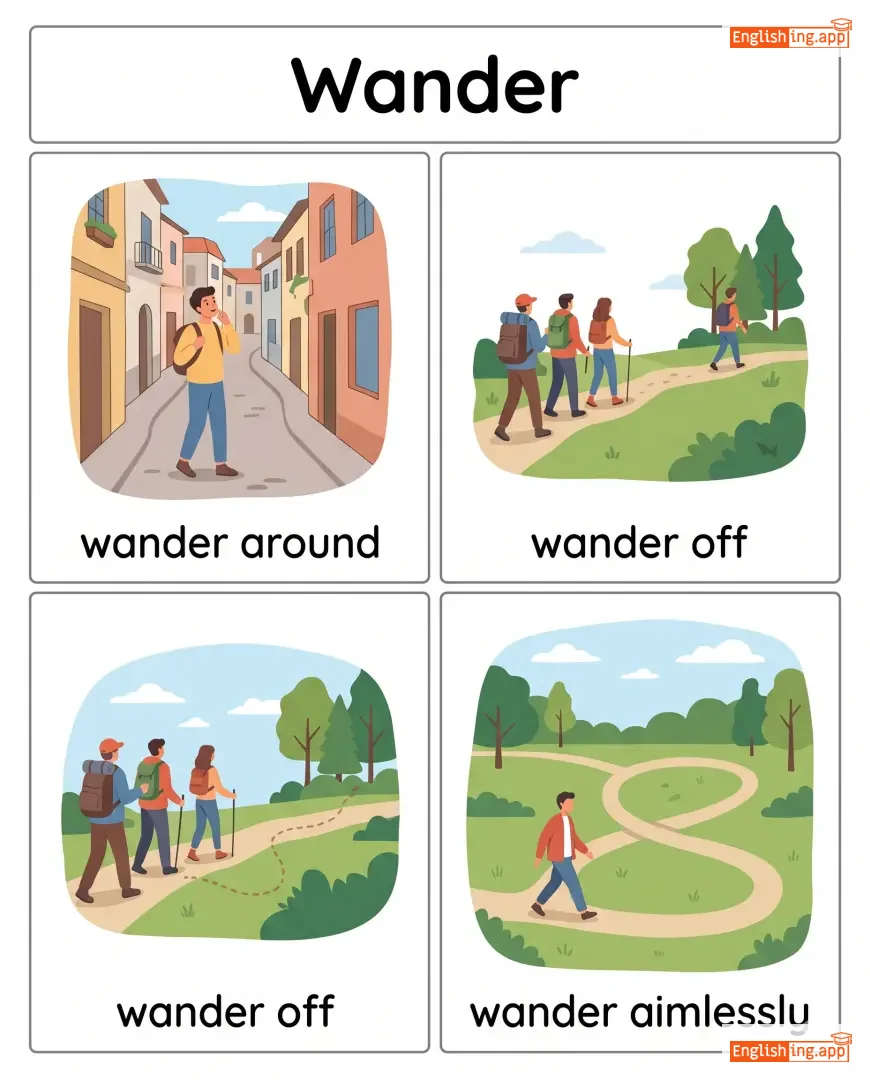
to move around aimlessly or without a fixed course
••••••
|
She loves to wander through the old streets of the city.
她喜欢在城市的老街上漫步。
••••••
|
她喜欢在城市的老街上漫步。
Tā xǐhuān zài chéngshì de lǎo jiē shàng mànbù.
••••••
|
wander off
走远
••••••
|
to leave a place or group without telling anyone
••••••
|
走开
zǒu kāi
••••••
|
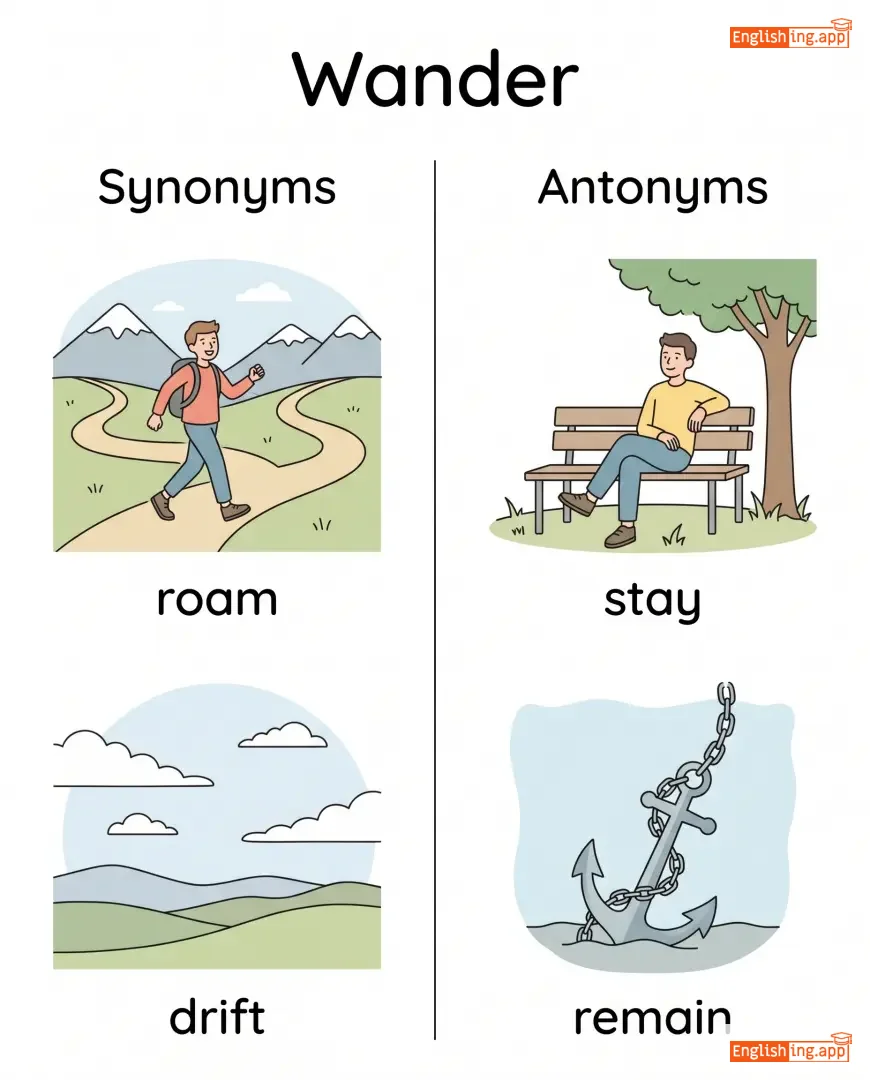
roam, drift, meander, stray, stroll
••••••
|
stay, remain, settle
••••••
|
wander around, wander off, wander aimlessly, wander through
••••••
|
Wander意味着徘徊,就像window shopping一样。
••••••
|
|
#9448
😷
|
/wɒn/
adjective
(wān)
••••••
|
- •••••• |
苍白
cangbai
••••••
|
- •••••• | - •••••• | - •••••• | - •••••• |
looking pale or sickly; lacking color or vitality
••••••
|
After the long illness, his face looked wan and tired. |
在长时间的病后,他的脸看起来苍白且疲倦。
Zai chang shijian de bing hou, tā de liǎn kàn qǐlái cāngbái qiě píjuàn.
••••••
|
- •••••• | - •••••• | - •••••• |
pale, sickly, ashen, colorless, weak
••••••
|
rosy, healthy, vibrant
••••••
|
wan smile, wan face, look wan
••••••
|
像一张无色无力的脸,苍白无力,像生病一样。
••••••
|
|
#9449
📿
|
/ˈwɑːmpəm/
noun
(wampam)
••••••
|
- •••••• |
贝壳项链
beike xianglian
••••••
|
- •••••• | - •••••• | - •••••• | - •••••• |
beads made by Native Americans from shells, used as money or decoration
••••••
|
The tribe traded furs for wampum. |
部落用皮毛换取贝壳项链。
Buluo yong pimao huan qu beike xianglian.
••••••
|
- •••••• | - •••••• | - •••••• |
beads, shells, ornaments, currency
••••••
|
paper money, coins
••••••
|
string of wampum, trade wampum, wampum belt
••••••
|
Wampum 意味着贝壳项链 - 记住,beads 是货币的意思。
••••••
|
Vocabulary Quiz
Test your vocabulary by matching words with their translations or meanings.
Login to take the quiz
Comments (0)
Share your thoughts and join the discussion.
Join the discussion by logging in
Login to CommentNo comments yet
Be the first to share your thoughts!