


Swipe left or right, or use the buttons. Tap image to zoom.
例句翻译
单词
Lesson 246Lesson 246 - 遮罩切换
|
表情符号
|
单词 | Images | 翻译 | 过去时 | 过去分词 | 第三人称单数 | 动名词 | 含义 | 例句 | 例句翻译 | 示例表达 | 示例表达含义 | 示例表达翻译 | 同义词 | 反义词 | 搭配词 | 助记符 |
|---|---|---|---|---|---|---|---|---|---|---|---|---|---|---|---|---|---|
|
#7350
🏚️
|
/ˈrɛkluːsəri/
noun
(reclusory)
••••••
|
- •••••• |
隐居地
yǐn jū dì
••••••
|
- •••••• | - •••••• | - •••••• | - •••••• |
A place for seclusion or retreat, especially for a recluse or hermit.
••••••
|
The monk spent years in the reclusory away from society. |
那位和尚在远离社会的隐居地度过了多年。
Nà wèi hé shàng zài yuǎn lí shè huì de yǐn jū dì dù guò le duō nián.
••••••
|
- •••••• | - •••••• | - •••••• |
hermitage, retreat, cloister, cell
••••••
|
community, society
••••••
|
old reclusory, silent reclusory, religious reclusory
••••••
|
Reclusory意味着隐居地-像隐士的家。
••••••
|
|
#7351
📅
|
/ˌriː.kənˈviːn/
verb
(ríkānwēn)
••••••
|
- •••••• |
重新召开
chóngxīn zhàokāi
••••••
|
reconvened
ríkānwēnd
••••••
|
reconvened
ríkānwēnd
••••••
|
reconvenes
ríkānwēns
••••••
|
reconvening
ríkānwēng
••••••
|
to gather or assemble again, especially for a meeting
••••••
|
The committee will reconvene after lunch.
委员会将在午餐后重新召开。
••••••
|
委员会将在午餐后重新召开。
Wěiyuánhuì jiāng zài wǔcān hòu chóngxīn zhàokāi.
••••••
|
- •••••• | - •••••• | - •••••• |
regather, reassemble, resume, restart, regroup
••••••
|
adjourn, dismiss, disband
••••••
|
reconvene a meeting, reconvene the committee, reconvene the session, reconvene parliament
••••••
|
Reconvene 意味着重新召开,Re + convene 意味着重新召开。
••••••
|
|
#7352
🏗️
|
/ˌriː.kənˈstrʌkt/
verb
(rīkənstrʌkt)
••••••
|
- •••••• |
重建
chóngjiàn
••••••
|
reconstructed
rīkənstrʌktəd
••••••
|
reconstructed
rīkənstrʌktəd
••••••
|
reconstructs
rīkənstrʌkts
••••••
|
reconstructing
rīkənstrʌkting
••••••
|
to build or form something again after it has been damaged or destroyed
••••••
|
The city was reconstructed after the earthquake.
这个城市在地震后重新建设。
••••••
|
这座城市在地震后重新建设。
Zhè zuò chéngshì zài dìzhèn hòu chóngxīn jiànshè.
••••••
|
- •••••• | - •••••• | - •••••• |
rebuild, restore, renovate, repair, recreate
••••••
|
demolish, destroy, ruin
••••••
|
reconstruct a building, reconstruct a road, reconstruct history, reconstruct memory
••••••
|
Reconstruct 是重新建造的意思,想想重建一个地方的过程。
••••••
|
|
#7353
🔄
|
/ˌriːˈkɒn.stɪ.tʃuːt/
verb
(rīkónstitiút)
••••••
|
- •••••• |
重建
chóngjiàn
••••••
|
reconstituted
rīkónstitiútéd
••••••
|
reconstituted
rīkónstitiútéd
••••••
|
reconstitutes
rīkónstitiúts
••••••
|
reconstituting
rīkónstitiútin
••••••
|
to restore something to its original form or state; to reassemble
••••••
|
The group was reconstituted after the leader returned.
dí grúp wáz rīkónstitiútéd áfter dí lídér rítérnd.
••••••
|
该小组在领导人归来后重新组建。
Gāi xiǎozǔ zài lǐngdǎorén guīlái hòu chóngxīn zǔjiàn.
••••••
|
- •••••• | - •••••• | - •••••• |
restore, rebuild, reconstruct, reorganize, reform
••••••
|
dismantle, destroy, dissolve
••••••
|
reconstitute a committee, reconstitute a group, reconstitute a solution, reconstitute society
••••••
|
Constitute意味着形成, Re + constitute意味着重新形成
••••••
|
|
#7354
🤔
|
/ˌriː.kənˈsɪd.ər/
verb
(re-kun-si-der)
••••••
|
- •••••• |
重新考虑
chongxin kǎolǜ
••••••
|
reconsidered
re-kun-si-derd
••••••
|
reconsidered
re-kun-si-derd
••••••
|
reconsiders
re-kun-si-ders
••••••
|
reconsidering
re-kun-si-der-ing
••••••
|
to think about something again, especially to change a decision or opinion
••••••
|
She decided to reconsider her decision about moving abroad.
她决定重新考虑她关于移居国外的决定。
••••••
|
她决定重新考虑她关于移居国外的决定。
Tā juédìng chóngxīn kǎolǜ tā guānyú yíjū guówài de juédìng.
••••••
|
- •••••• | - •••••• | - •••••• |
rethink, review, reevaluate, reexamine, revise
••••••
|
confirm, affirm, uphold
••••••
|
reconsider a decision, reconsider an offer, reconsider the plan, reconsider seriously
••••••
|
重新 (chongxin) + consider = 重新考虑
••••••
|
|
#7355
🕵️
|
/ˌriː.kəˈnɔɪ.tər/
verb
(reconnoiter)
••••••
|
- •••••• |
侦察
zhencha
••••••
|
reconnoitered
reconnoitered
••••••
|
reconnoitered
reconnoitered
••••••
|
reconnoiters
reconnoiters
••••••
|
reconnoitering
reconnoitering
••••••
|
to make a preliminary inspection or survey, especially of an area for military or strategic purposes
••••••
|
The soldiers reconnoitered the area before advancing.
士兵们在前进前侦察了该区域。
••••••
|
士兵们在前进前侦察了该区域。
Shìbīngmen zài qiánjìn qián zhēnchále gāi qūyù.
••••••
|
- •••••• | - •••••• | - •••••• |
scout, survey, inspect, explore, investigate
••••••
|
ignore, overlook, neglect
••••••
|
reconnoiter the area, reconnoiter enemy lines, reconnoiter position, reconnoiter territory
••••••
|
在前进之前,侦察一下地形。
••••••
|
|
#7356
🛰️
|
/rɪˈkɒnɪsəns/
noun
(rè kěnì sēn sī)
••••••
|
- •••••• |
侦察
zhencha
••••••
|
- •••••• | - •••••• | - •••••• | - •••••• |
A survey or exploration, especially for military or strategic purposes.
••••••
|
The soldiers conducted a reconnaissance of the enemy camp. |
士兵们进行了敌营的侦察。
Shìbīngmen jìnxíngle dí yíng de zhēnchá.
••••••
|
scout out |
To explore or check something in advance.
••••••
|
侦查
zhēnchá
••••••
|
survey, exploration, inspection, scouting
••••••
|
neglect, ignorance
••••••
|
reconnaissance mission, aerial reconnaissance, reconnaissance patrol
••••••
|
Reconnaissance = re+connaissance (知识) → 再次了解。记住:士兵进行侦察。
••••••
|
|
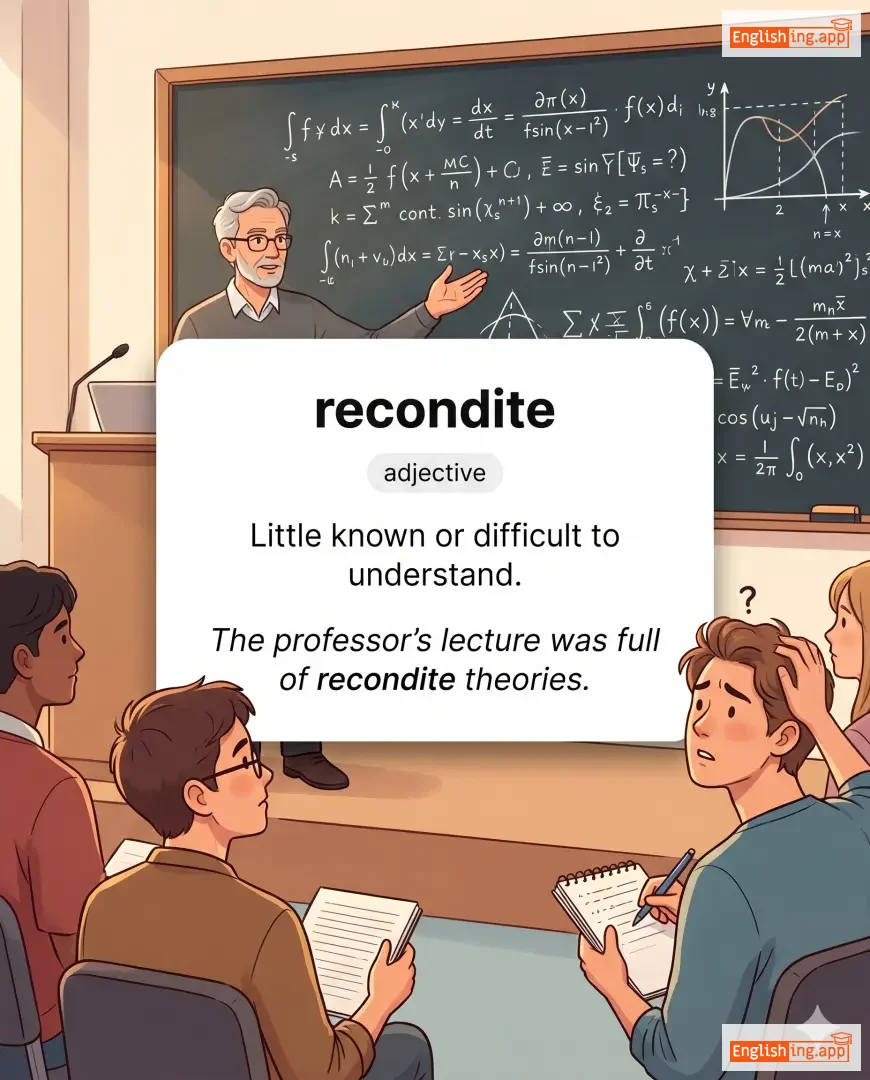
#7357
📚
|
/ˈrɛkənˌdaɪt/ or /ˈrɛkəndaɪt/
adjective
(雷康代特)
••••••
|
|
鲜为人知或难以理解的
xianwei renzhi huo nanyi lijie de
••••••
|
- •••••• | - •••••• | - •••••• | - •••••• |
Little known or difficult to understand.
••••••
|
The professor’s lecture was full of recondite theories.
教授的讲座充满了深奥的理论。
••••••
|
教授的讲座充满了深奥的理论。
Jiaoshou de jiangzuo chongmanle shen'ao de lilun.
••••••
|
- •••••• | - •••••• | - •••••• |
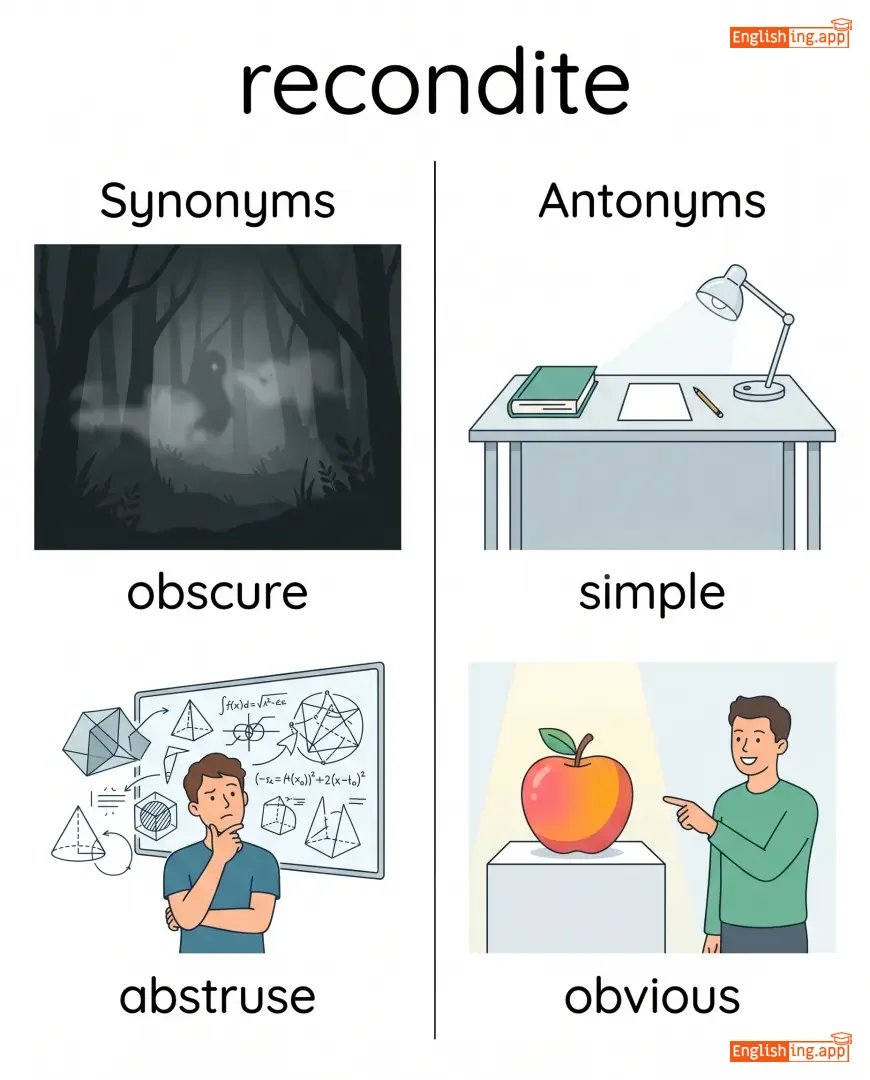
obscure, abstruse, complex, esoteric
••••••
|
simple, obvious, clear
••••••
|
recondite knowledge, recondite subject, recondite theory
••••••
|
Recondite 类似‘难懂的食物’,意味着难理解的东西。
••••••
|
|
#7358
🕊️
|
/ˌrɛkənsɪliˈeɪʃən/
noun
••••••
|
|
- •••••• | - •••••• | - •••••• | - •••••• | - •••••• |
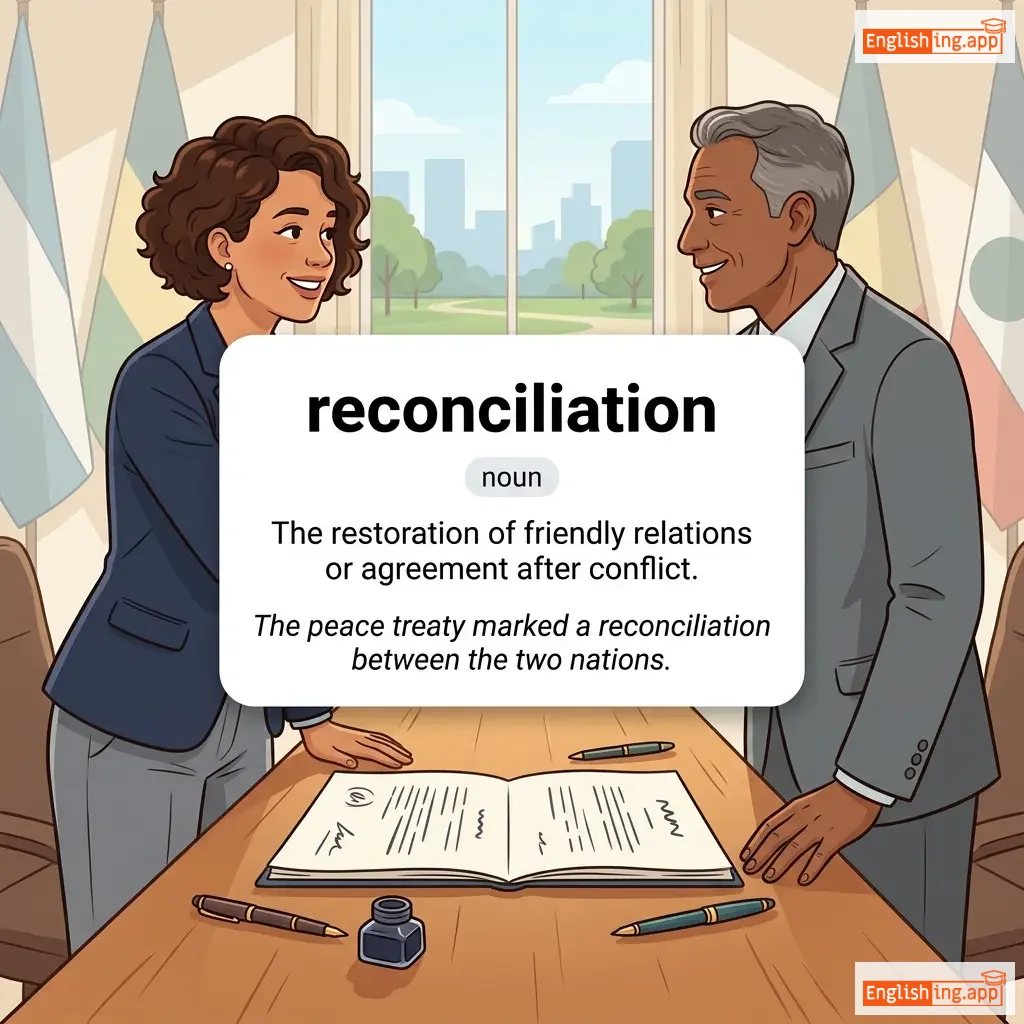
The restoration of friendly relations or agreement after conflict.
••••••
|
The peace treaty marked a reconciliation between the two nations. |
- •••••• |
make amends |
To compensate or apologize for a wrong.
••••••
|
- •••••• |
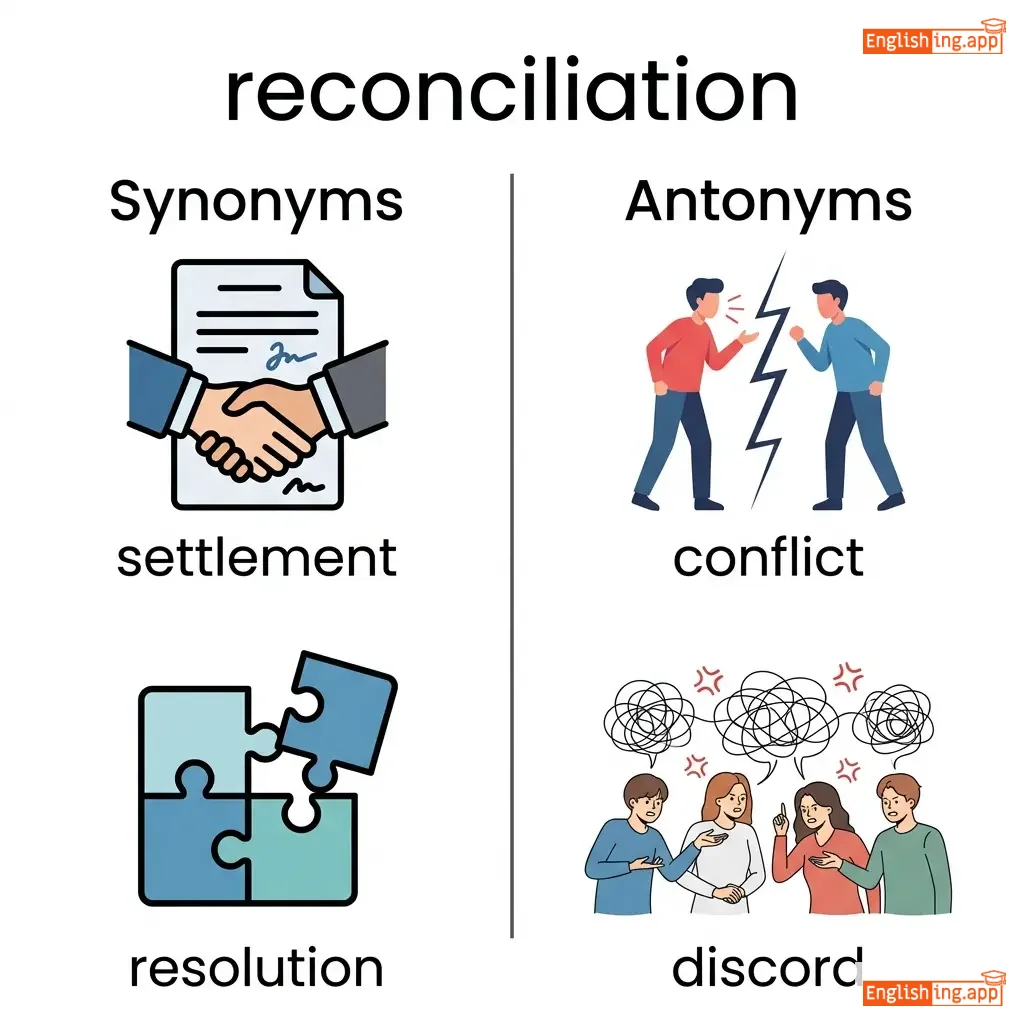
settlement, resolution, reunion, harmony
••••••
|
conflict, discord, separation
••••••
|
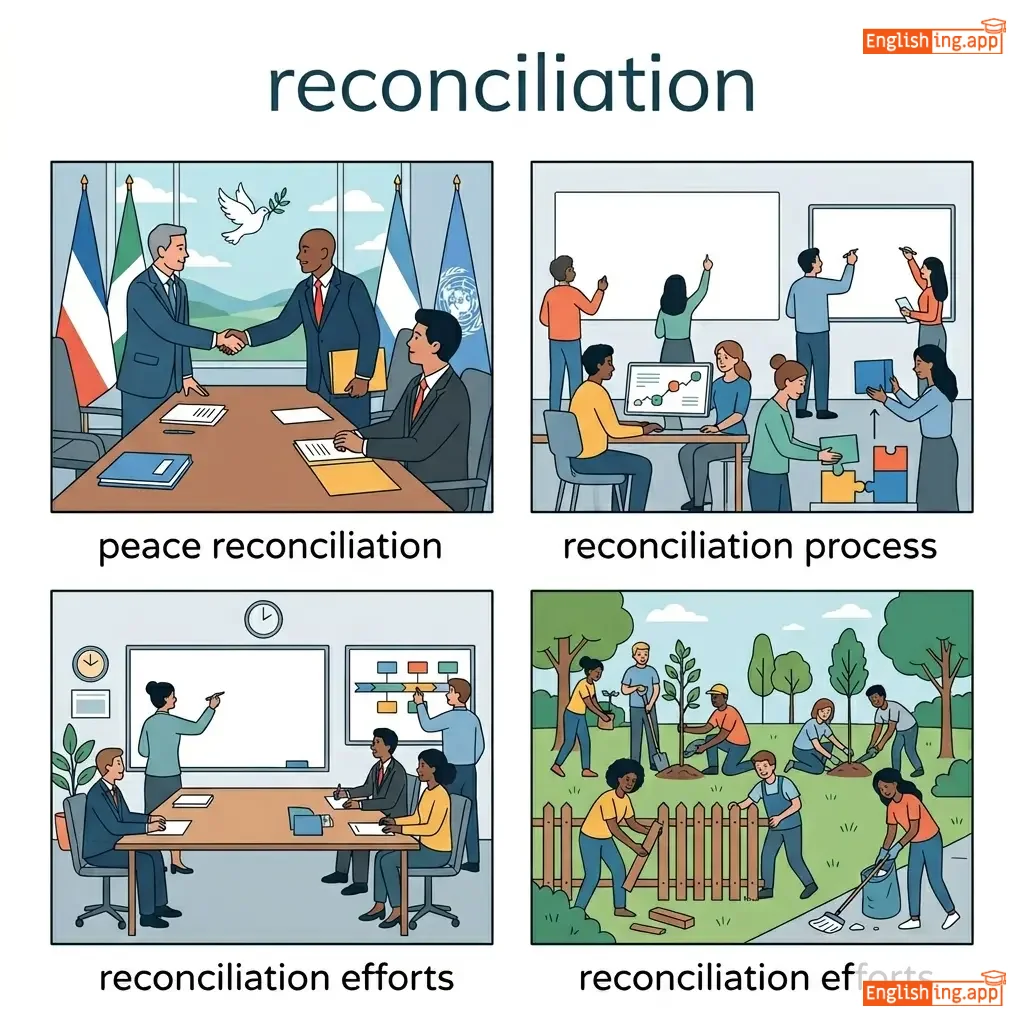
peace reconciliation, reconciliation process, reconciliation efforts
••••••
|
No •••••• |
|
#7359
🤝
|
/ˈrɛkənˌsaɪl/
verb
••••••
|
|
- •••••• |
reconciled
••••••
|
reconciled
••••••
|
reconciles
••••••
|
reconciling
••••••
|
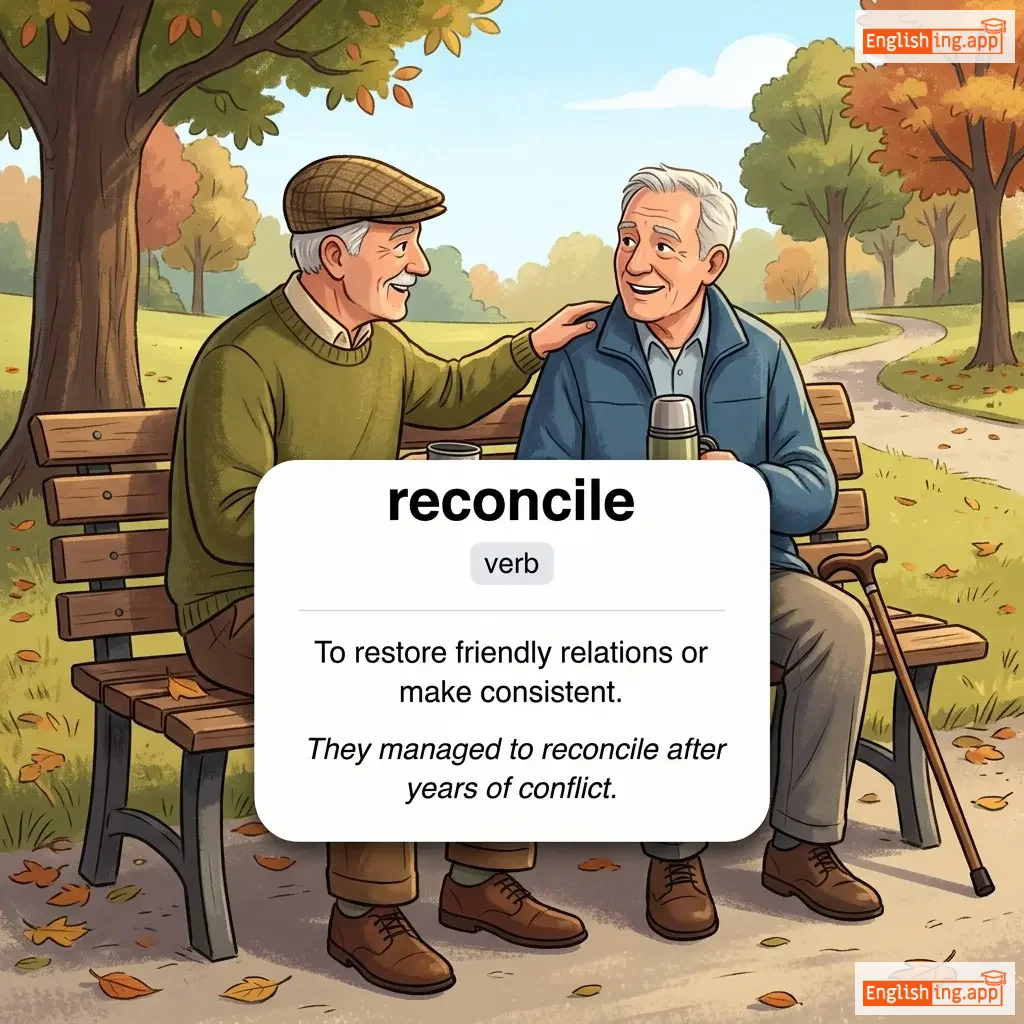
To restore friendly relations or make consistent.
••••••
|
They managed to reconcile after years of conflict. |
- •••••• |
bury the hatchet |
To make peace and end a conflict.
••••••
|
- •••••• |
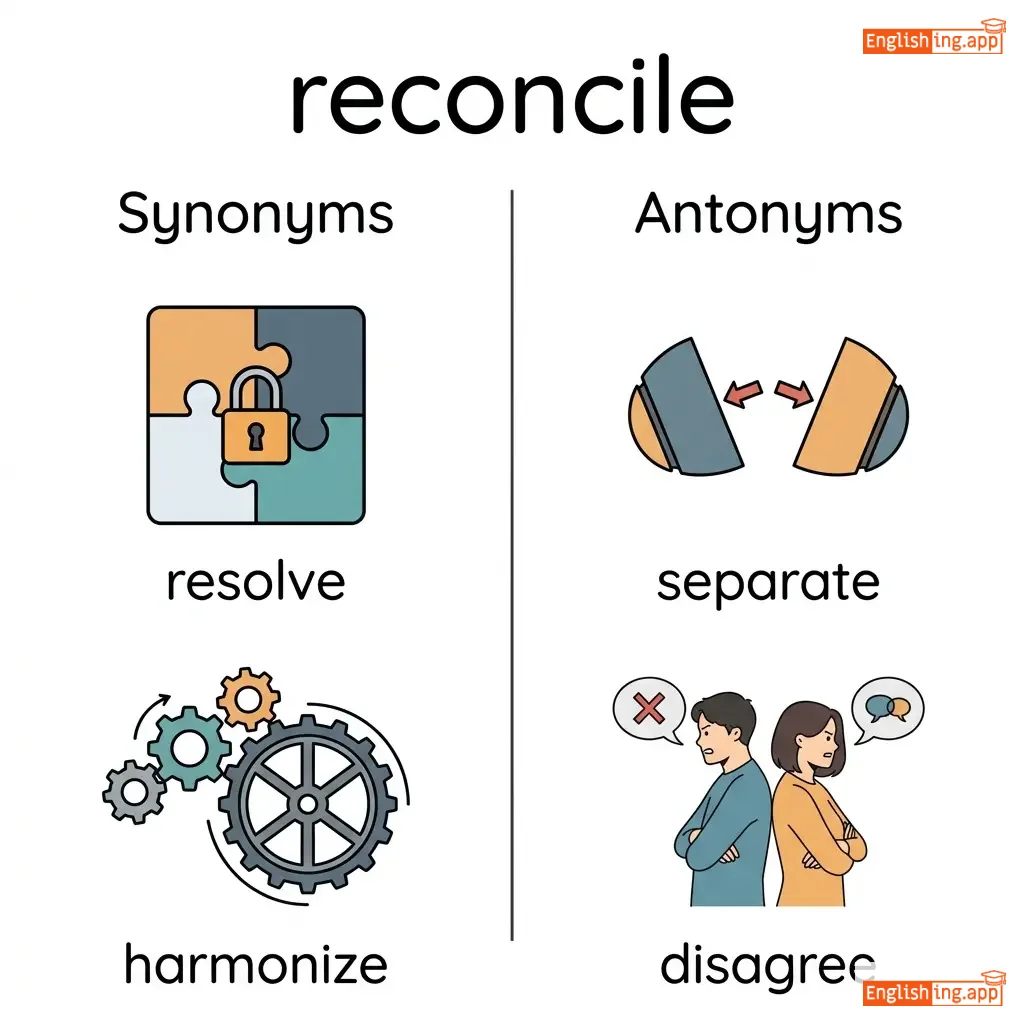
resolve, harmonize, unite, mend
••••••
|
separate, disagree, conflict
••••••
|
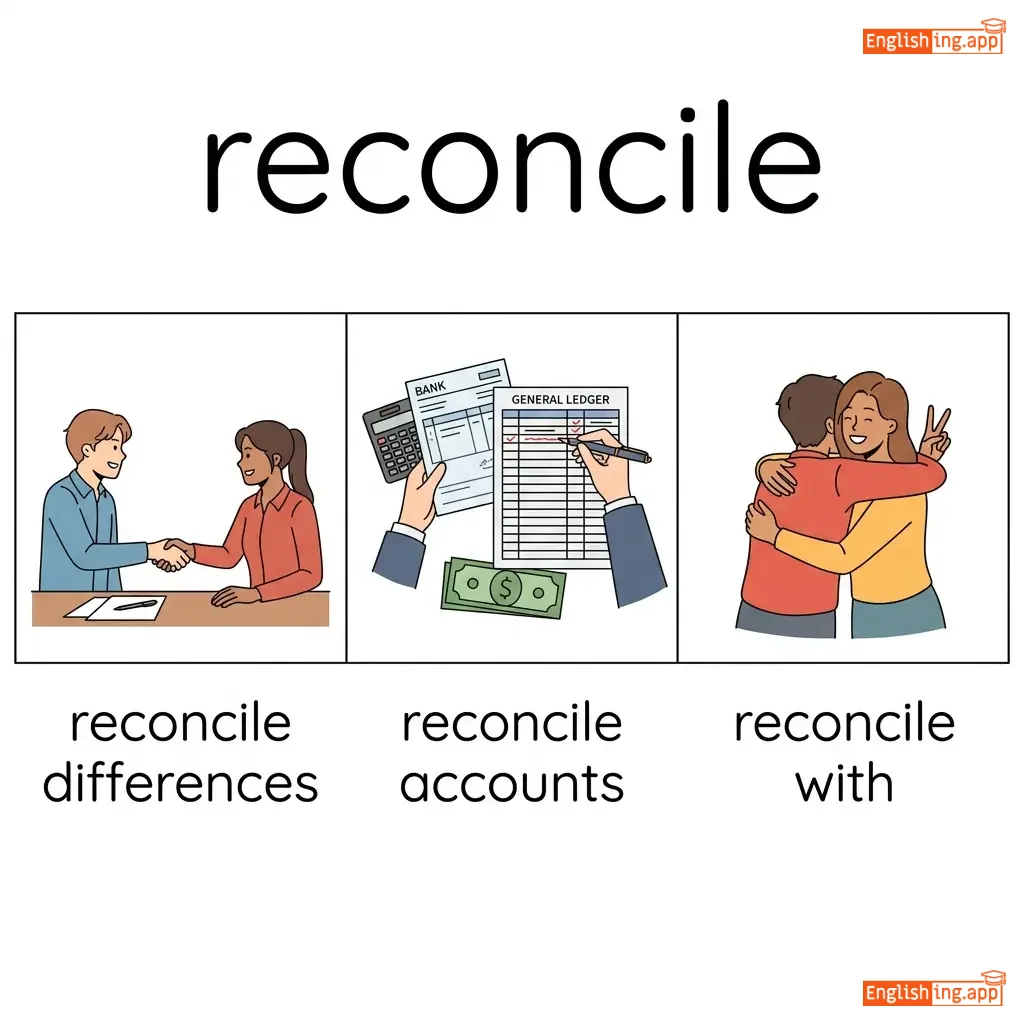
reconcile differences, reconcile accounts, reconcile with
••••••
|
No •••••• |
|
#7360
⚖️
|
/ˈrɛkənˌsaɪləbl̩/
adjective
••••••
|
- •••••• | - •••••• | - •••••• | - •••••• | - •••••• | - •••••• |
Capable of being resolved or made consistent.
••••••
|
Their differences are reconcilable with honest communication. |
- •••••• | - •••••• | - •••••• | - •••••• |
compatible, consistent, agreeable, harmonious
••••••
|
irreconcilable, conflicting, incompatible
••••••
|
reconcilable differences, reconcilable goals, reconcilable views
••••••
|
No •••••• |
|
#7361
🧠
|
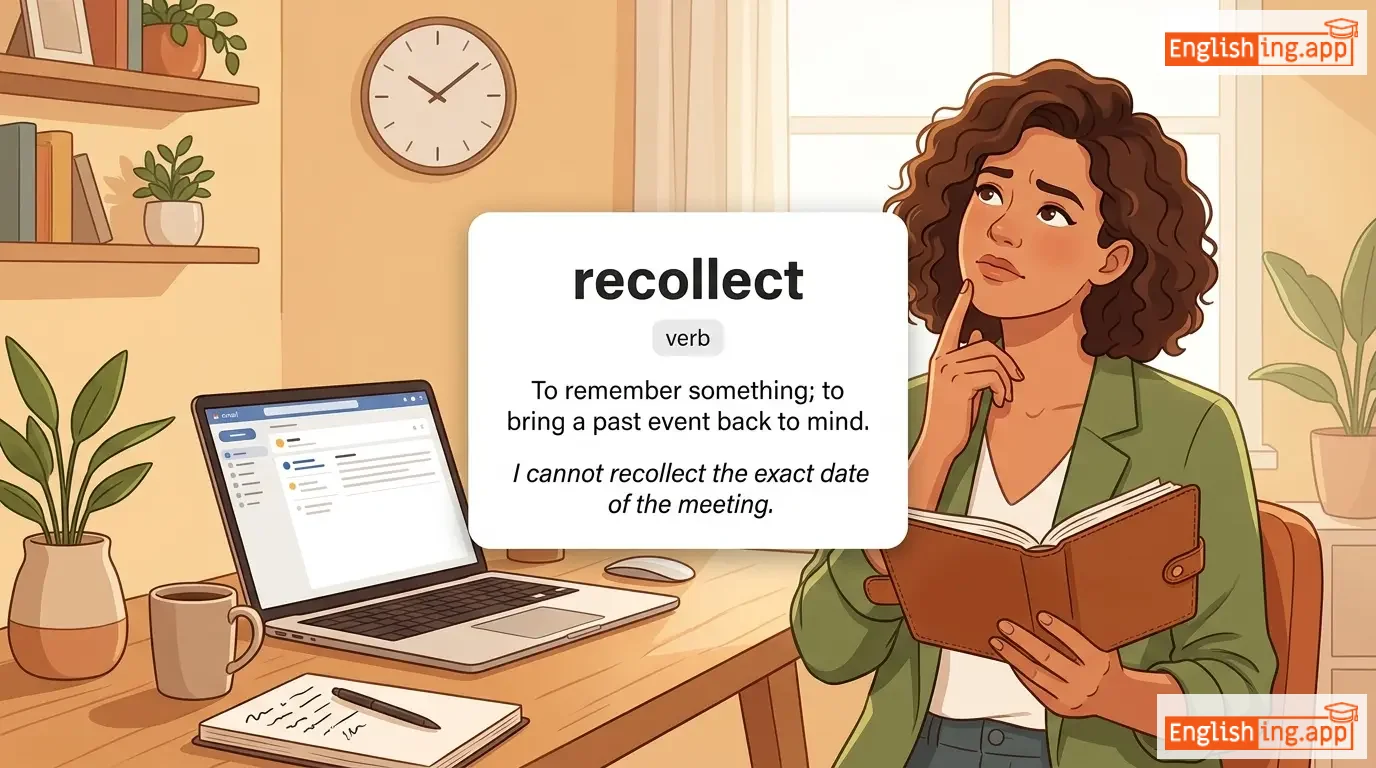
/ˌrɛkəˈlɛkt/
verb
(recollect)
••••••
|
|
回忆
huiyi
••••••
|
recollected
recollected
••••••
|
recollected
recollected
••••••
|
recollects
recollects
••••••
|
recollecting
recollecting
••••••
|
To remember something; to bring a past event back to mind.
••••••
|
I cannot recollect the exact date of the meeting.
我记不得会议的确切日期。
••••••
|
我记不得会议的确切日期。
Wo jide bu de huiyi de queqie riqi.
••••••
|
if I recollect correctly
如果我记得没错
••••••
|
Used when recalling something with some uncertainty.
••••••
|
如果我记得没错
Ru guo wo ji de mei cuo
••••••
|
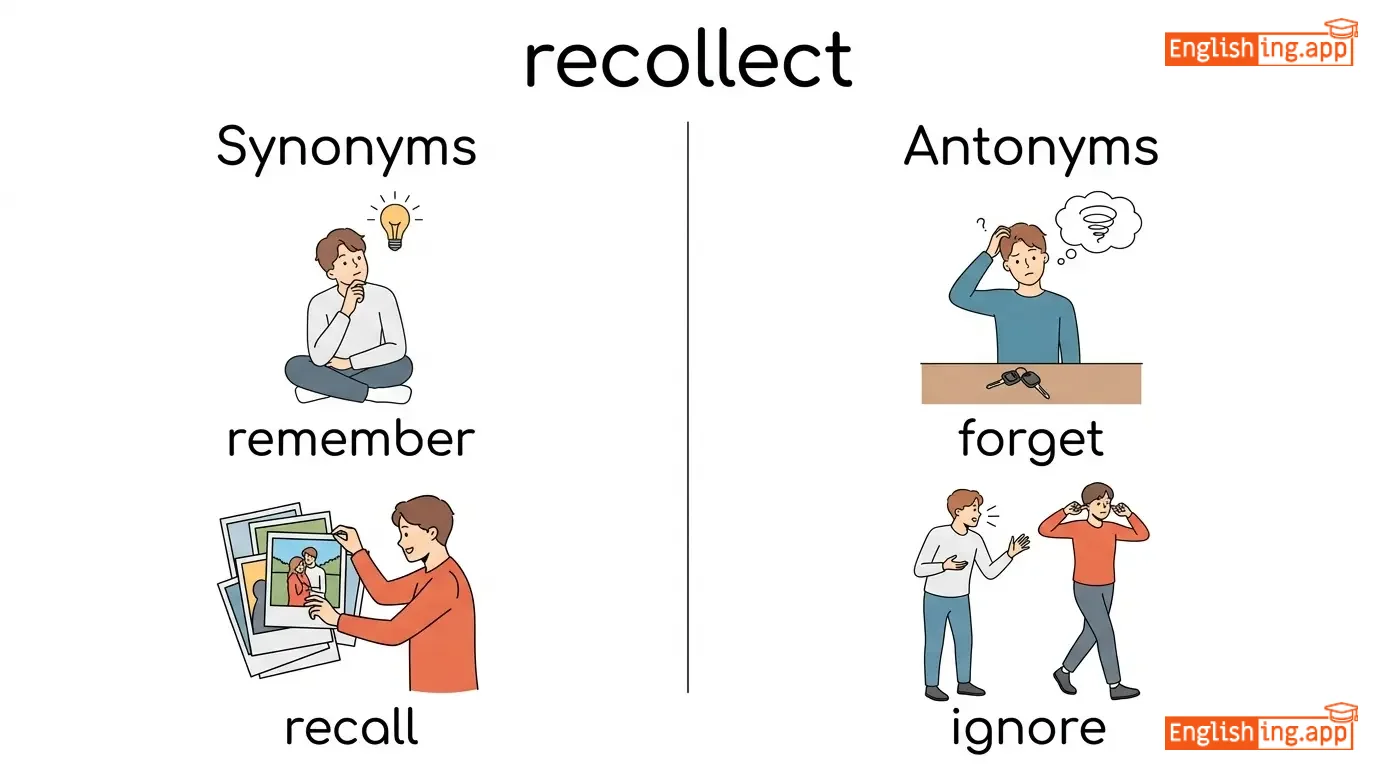
remember, recall, reminisce, think back
••••••
|
forget, ignore
••••••
|
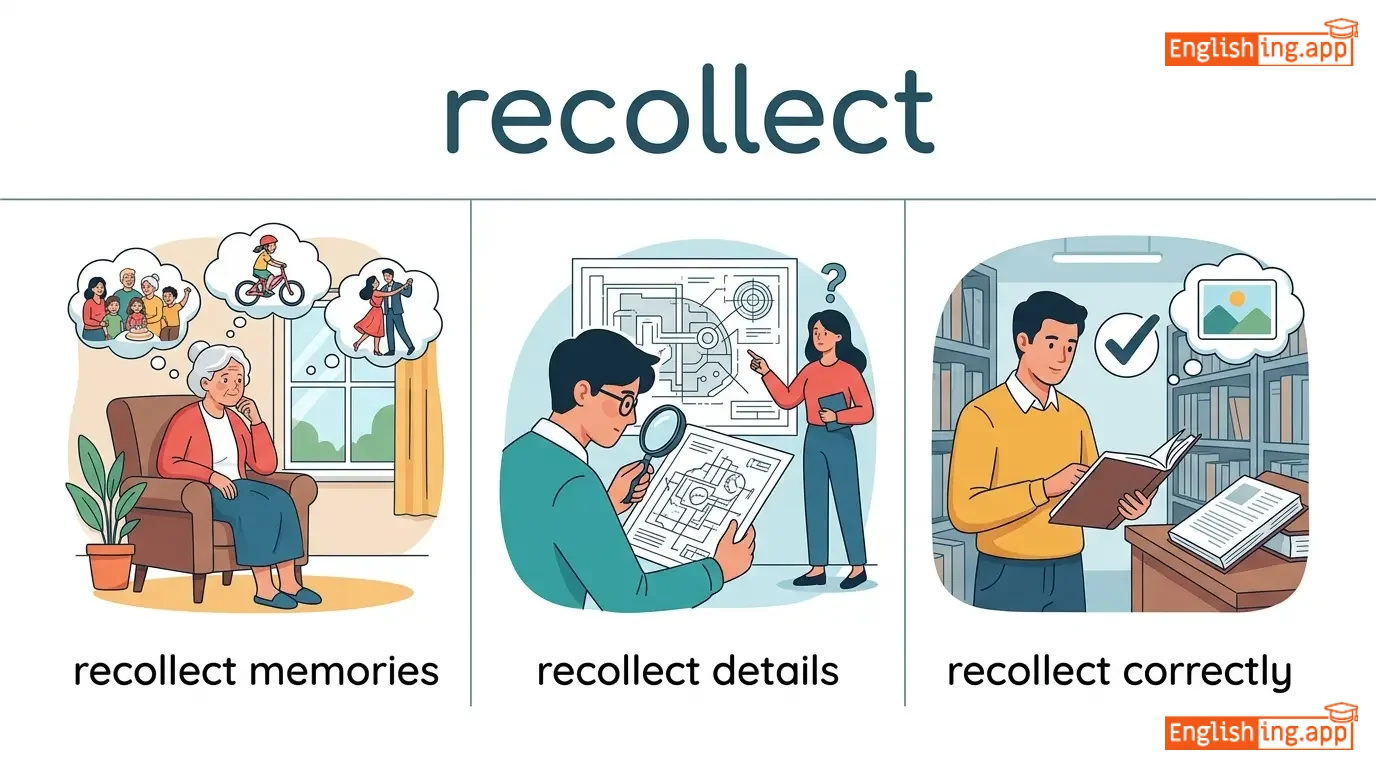
recollect memories, recollect details, recollect correctly
••••••
|
Recollect 意味着再次收集 → 将过去的记忆带回。
••••••
|
|
#7362
😨
|
/rɪˈkɔɪl/
verb
(rīkòu'ěr)
••••••
|
- •••••• |
后退
hòu tuì
••••••
|
recoiled
rīkòu'ěr dé
••••••
|
recoiled
rīkòu'ěr dé
••••••
|
recoils
rīkòu'ěr sī
••••••
|
recoiling
rīkòu'ěr líng
••••••
|
To suddenly spring back in fear, horror, or from force such as a gun's kickback.
••••••
|
She recoiled at the sight of the snake.
她看到蛇时吓得后退。
••••••
|
她看到蛇时吓得后退。
Tā kàn dào shé shí xià dé hòu tuì.
••••••
|
recoil in horror
因恐惧而后退
••••••
|
To move back suddenly in shock or fear.
••••••
|
因恐惧而后退
Yīn kǒngjù ér hòu tuì
••••••
|
flinch, shrink, withdraw, cringe
••••••
|
advance, approach
••••••
|
recoil in fear, recoil from, recoil at
••••••
|
Recoil 是指因恐惧而后退,就像枪的后座力。
••••••
|
|
#7363
👀
|
/ˈrɛkəɡnaɪz/
verb
••••••
|
- •••••• | - •••••• |
recognized
••••••
|
recognized
••••••
|
recognizes
••••••
|
recognizing
••••••
|
To identify someone or something seen before; to acknowledge or accept.
••••••
|
She did not recognize him in the crowd. |
- •••••• |
recognize the importance |
To acknowledge the value or significance of something.
••••••
|
- •••••• |
identify, acknowledge, accept, admit, spot
••••••
|
ignore, neglect, overlook
••••••
|
recognize someone, recognize importance, recognize authority
••••••
|
No •••••• |
|
#7364
⚖️
|
/rɪˈkɒɡnɪzəns/
noun
(rèkènízǎnsī)
••••••
|
- •••••• |
法律义务
fǎlǜ yìwù
••••••
|
- •••••• | - •••••• | - •••••• | - •••••• |
A legal obligation or bond entered into before a court, especially to ensure future appearance.
••••••
|
He was released on his own recognizance. |
他在自己的法律义务下被释放。
Tā zài zìjǐ de fǎlǜ yìwù xià bèi shìfàng.
••••••
|
on one's own recognizance |
Released from custody without bail, with a promise to return to court.
••••••
|
在自己的法律义务下
Zài zìjǐ de fǎlǜ yìwù xià
••••••
|
bond, pledge, obligation, undertaking
••••••
|
freedom, discharge
••••••
|
own recognizance, bail recognizance, release on recognizance
••••••
|
Recognizance是承诺在法庭上回归,不需要保释。
••••••
|
|
#7365
🔄
|
/rɪˈsɪdɪˌvɪzəm/
noun
••••••
|
- •••••• | - •••••• | - •••••• | - •••••• | - •••••• | - •••••• |
The tendency of a convicted criminal to reoffend or relapse into criminal behavior.
••••••
|
The government introduced new programs to reduce recidivism among former inmates. |
- •••••• | - •••••• | - •••••• | - •••••• |
relapse, reoffending, regression, backsliding, recurrency
••••••
|
rehabilitation, reform, recovery
••••••
|
reduce recidivism, high recidivism rate, prevent recidivism, recidivism studies
••••••
|
No •••••• |
|
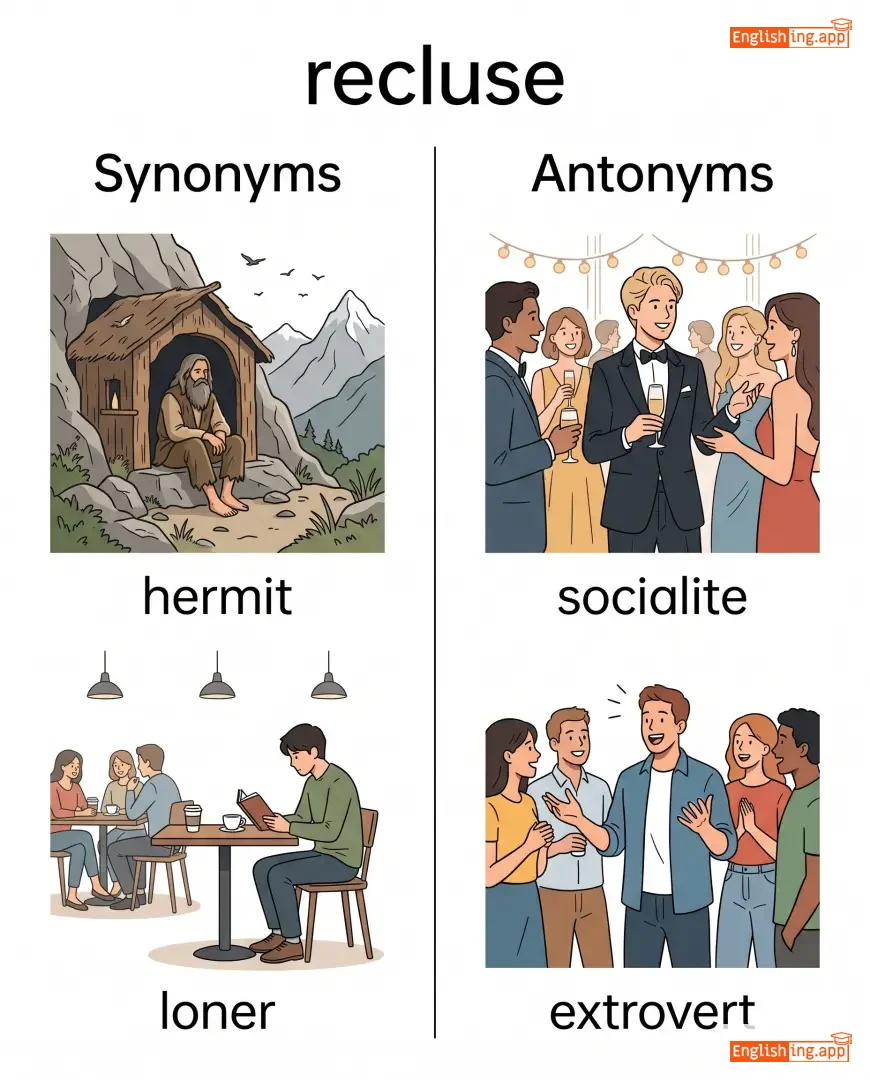
#7366
🏔️
|
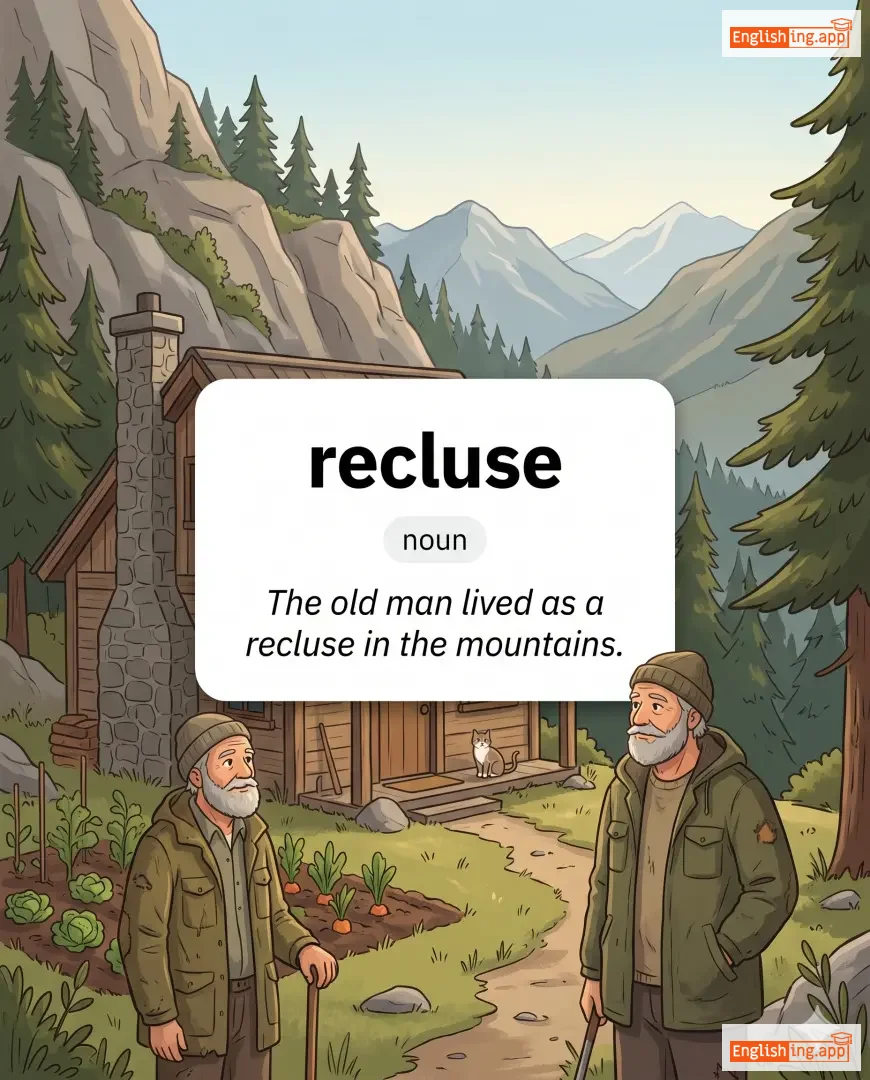
/rɪˈkluːs/
noun
(瑞克卢斯)
••••••
|
|
隐士
yinshi
••••••
|
- •••••• | - •••••• | - •••••• | - •••••• |
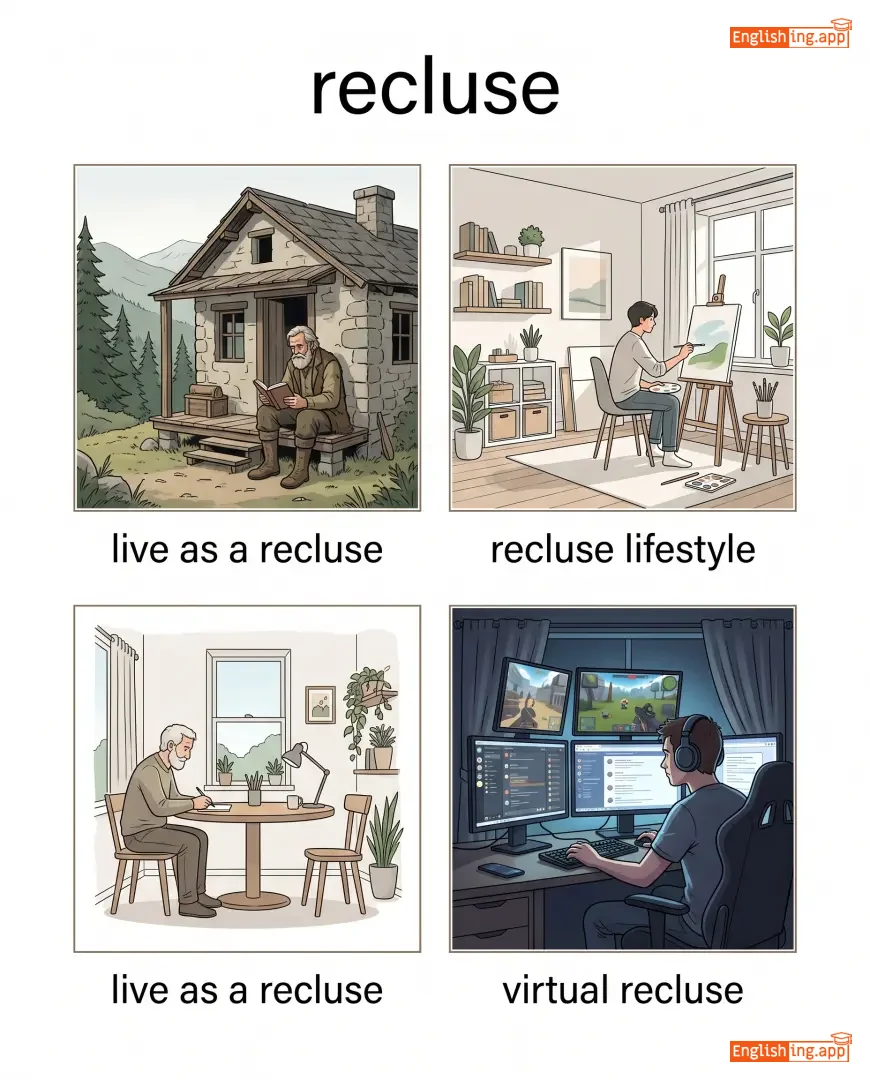
A person who lives alone and avoids other people; someone who lives a solitary life.
••••••
|
The old man lived as a recluse in the mountains. |
那位老人住在山中,过着隐士般的生活。
Nà wèi lǎorén zhù zài shānzhōng, guòzhe yǐnshì bān de shēnghuó.
••••••
|
- •••••• | - •••••• | - •••••• |
hermit, loner, solitary, ascetic, introvert
••••••
|
socialite, extrovert, companion
••••••
|
live as a recluse, recluse lifestyle, virtual recluse
••••••
|
Recluse = 隐士, 独自生活,避免与他人接触。
••••••
|
|
#7367
🛋️
|
/rɪˈklaɪn/
verb
(rīkùláin)
••••••
|
- •••••• |
靠着
kàozhe
••••••
|
reclined
rīkùlàind
••••••
|
reclined
rīkùlàind
••••••
|
reclines
rīkùlàinz
••••••
|
reclining
rīkùlàining
••••••
|
To lean or lie back in a relaxed position.
••••••
|
She reclined on the sofa with a book.
她靠在沙发上看书。
••••••
|
她靠在沙发上看书。
Tā kào zài shāfā shàng kànshū.
••••••
|
recline in comfort
舒适地靠着
••••••
|
To rest or lie back in a relaxed and comfortable way.
••••••
|
舒适地靠着
shūshì de kàozhe
••••••
|
lie back, lean, lounge, relax
••••••
|
sit upright, stand, rise
••••••
|
recline seat, recline on, reclining chair, recline comfortably
••••••
|
Recline = 让自己在舒适的姿势中放松
••••••
|
|
#7368
♻️
|
/rɪˈkleɪm/
verb
••••••
|
- •••••• | - •••••• |
reclaimed
••••••
|
reclaimed
••••••
|
reclaims
••••••
|
reclaiming
••••••
|
To take back or recover something; to restore to a usable state.
••••••
|
The farmer worked to reclaim the barren land. |
- •••••• |
reclaim one's time |
To take back control over how one spends their time.
••••••
|
- •••••• |
recover, regain, retrieve, restore, rescue
••••••
|
lose, abandon, surrender
••••••
|
reclaim land, reclaim rights, reclaim money, reclaim time
••••••
|
No •••••• |
|
#7369
🤔
|
/ˈrɛkən/
verb
(rè kèn)
••••••
|
- •••••• |
推测
tuī cè
••••••
|
reckoned
rè kòng
••••••
|
reckoned
rè kòng
••••••
|
reckons
rè kènsī
••••••
|
reckoning
rè kèníng
••••••
|
To think, believe, or expect something; to calculate or estimate.
••••••
|
I reckon it will rain later today.
我猜今天稍后会下雨。
••••••
|
我猜今天稍后会下雨。
Wǒ cāi jīntiān shāo hòu huì xià yǔ.
••••••
|
reckon with
算计
••••••
|
To deal with or consider seriously.
••••••
|
认真对待
rènzhēn duìdài
••••••
|
think, believe, consider, calculate, suppose
••••••
|
ignore, disregard, neglect
••••••
|
reckon that, reckon with, I reckon, reckon up
••••••
|
Reckon听起来像是猜测,像估算未来的事情。
••••••
|
|
#7370
🚗
|
/ˈrɛkləs/
adjective
(rèkè lè sī)
••••••
|
- •••••• |
鲁莽的
lǔmǎng de
••••••
|
- •••••• | - •••••• | - •••••• | - •••••• |
Acting without thinking or caring about the consequences.
••••••
|
His reckless driving caused a serious accident. |
他鲁莽的驾驶导致了一起严重的事故。
Tā lǔmǎng de jiàshǐ dǎozhìle yī qǐ yánzhòng de shìgù.
••••••
|
reckless abandon |
To act carelessly or without concern for the outcome.
••••••
|
鲁莽的放弃
lǔmǎng de fàngqì
••••••
|
careless, rash, irresponsible, thoughtless, impulsive
••••••
|
cautious, careful, prudent
••••••
|
reckless behavior, reckless driving, act recklessly, reckless abandon
••••••
|
Reckless 就像‘记录’ – 只顾自己,不管后果。
••••••
|
|
#7371
⚠️
|
/rɛk/
verb (archaic/rare)
(rek)
••••••
|
- •••••• |
在乎
zaihu
••••••
|
recked
rekt
••••••
|
recked
rekt
••••••
|
recks
reks
••••••
|
recking
recking
••••••
|
To care about or be concerned with (something); to have regard for.
••••••
|
He does not reck the dangers of his actions.
他不在乎自己行为的危险。
••••••
|
他不在乎自己行为的危险。
Ta bu zaihu ziji xingwei de weixian.
••••••
|
reck not
不reck
••••••
|
To be unconcerned or careless about something.
••••••
|
不在乎
bu zaihu
••••••
|
care, heed, regard, mind
••••••
|
ignore, neglect
••••••
|
reck the consequences, reck the danger, reck the cost
••••••
|
Reck就像'不在乎' – 不在乎的意思就是不care某事。
••••••
|
|
#7372
🗣️
|
/rɪˈsaɪt/
verb
(risaɪt)
••••••
|
- •••••• |
背诵
bèisòng
••••••
|
recited
risaited
••••••
|
recited
risaited
••••••
|
recites
risaits
••••••
|
reciting
risaiting
••••••
|
To say aloud something learned, especially poetry or text, from memory.
••••••
|
The child recited a poem in front of the class.
de chaild risaited a poem in front of de clas.
••••••
|
孩子在班级前朗诵了一首诗。
Háizi zài bānjí qián lǎngsòngle yī shǒu shī.
••••••
|
recite by heart
risait bai jart
••••••
|
To say something from memory without reading.
••••••
|
背诵
bèisòng
••••••
|
repeat, recount, declaim, deliver, narrate
••••••
|
forget, silence
••••••
|
recite a poem, recite by heart, recite a prayer, recite lines
••••••
|
背诵就是像背书一样背出记忆中的内容。
••••••
|
|
#7373
📖
|
/ˌrɛsɪˈteɪʃən/
noun
(瑞斯提申)
••••••
|
- •••••• |
朗诵
lǎngsòng
••••••
|
- •••••• | - •••••• | - •••••• | - •••••• |
The act of reading or repeating something aloud, especially poetry or passages.
••••••
|
The student won the prize for her poetry recitation.
学生因她的诗歌朗诵获得了奖项。
••••••
|
学生因她的诗歌朗诵获得了奖项。
Xuéshēng yīn tā de shīgē lǎngsòng huòdéle jiǎngxiàng.
••••••
|
- •••••• | - •••••• | - •••••• |
reading, declamation, recital, narration, delivery
••••••
|
silence, muteness
••••••
|
poetry recitation, recitation contest, recitation competition, recitation class
••••••
|
Recitation的意思是'重复 + 站'—站在车站的每个人都在朗诵诗歌。
••••••
|
|
#7374
🎶
|
/rɪˈsaɪtl/
noun
(rì-sài-tǎo)
••••••
|
- •••••• |
独奏会
duzoushui
••••••
|
- •••••• | - •••••• | - •••••• | - •••••• |
A performance of music, dance, or poetry, usually by a soloist.
••••••
|
She gave a piano recital at the concert hall. |
她在音乐会中举办了钢琴独奏会。
Ta zai yinyuehui zhong jubanle gangqin duzoushui.
••••••
|
- •••••• | - •••••• | - •••••• |
performance, concert, show, presentation, exhibition
••••••
|
silence, inactivity
••••••
|
piano recital, dance recital, poetry recital, music recital
••••••
|
独奏会像 '独自高唱' – 一人独奏的表演。
••••••
|
|
#7375
🔄
|
/ˌrɛsɪˈprɒsɪti/
noun
(瑞西普罗西蒂)
••••••
|
|
互惠
hùhuì
••••••
|
- •••••• | - •••••• | - •••••• | - •••••• |
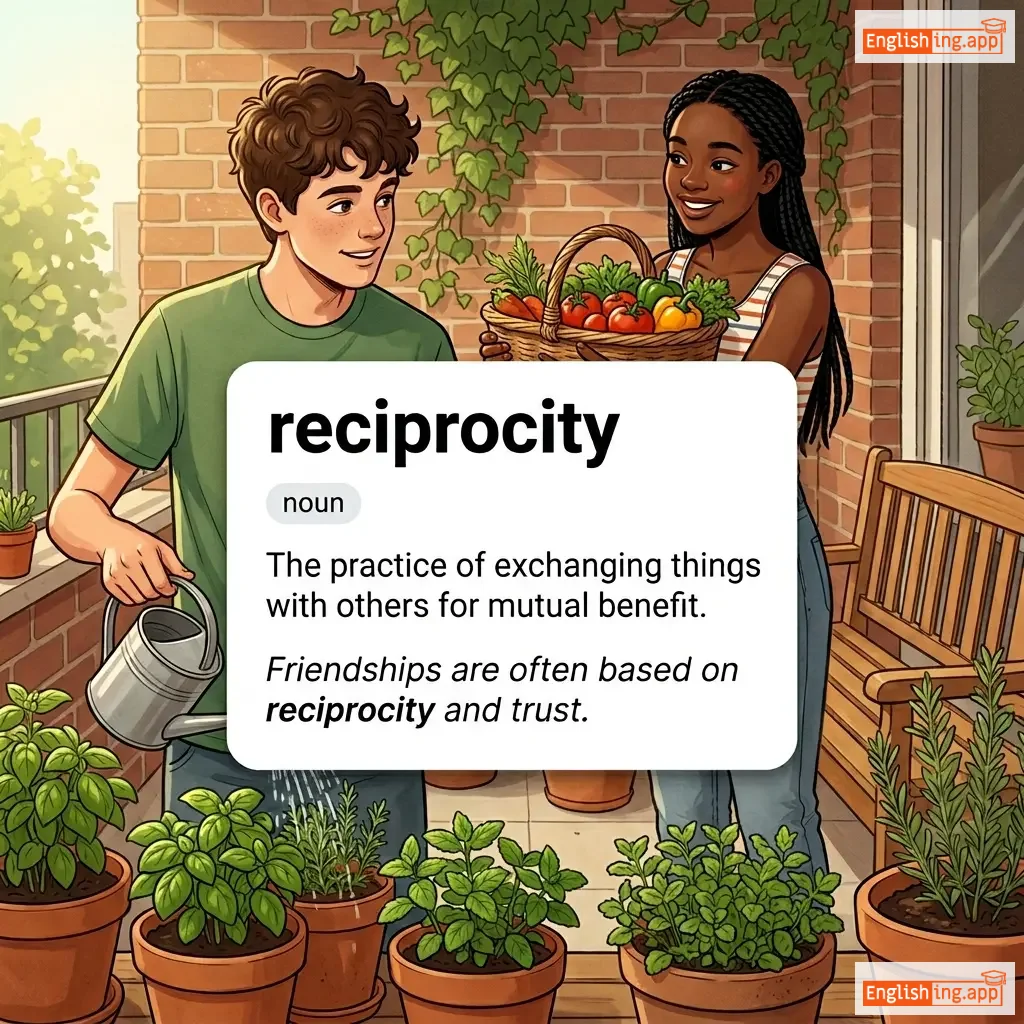
The practice of exchanging things with others for mutual benefit.
••••••
|
Friendships are often based on reciprocity and trust. |
友谊往往基于互惠和信任。
Yǒuyì wǎngwǎng jīyú hùhuì hé xìnrèn.
••••••
|
law of reciprocity |
The principle that positive actions will be returned with positive responses.
••••••
|
互惠法则
hùhuì fǎzé
••••••
|
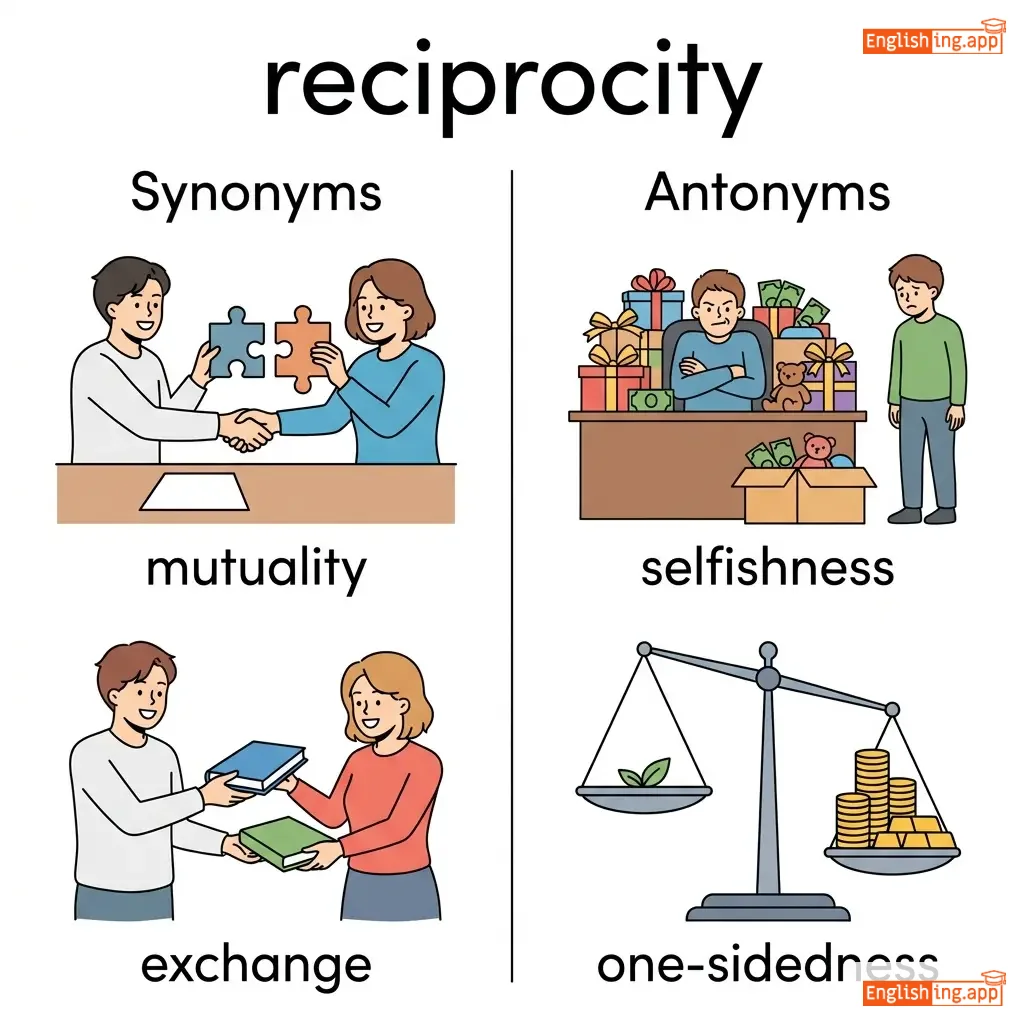
mutuality, exchange, cooperation, give-and-take, interchange
••••••
|
selfishness, one-sidedness, imbalance
••••••
|
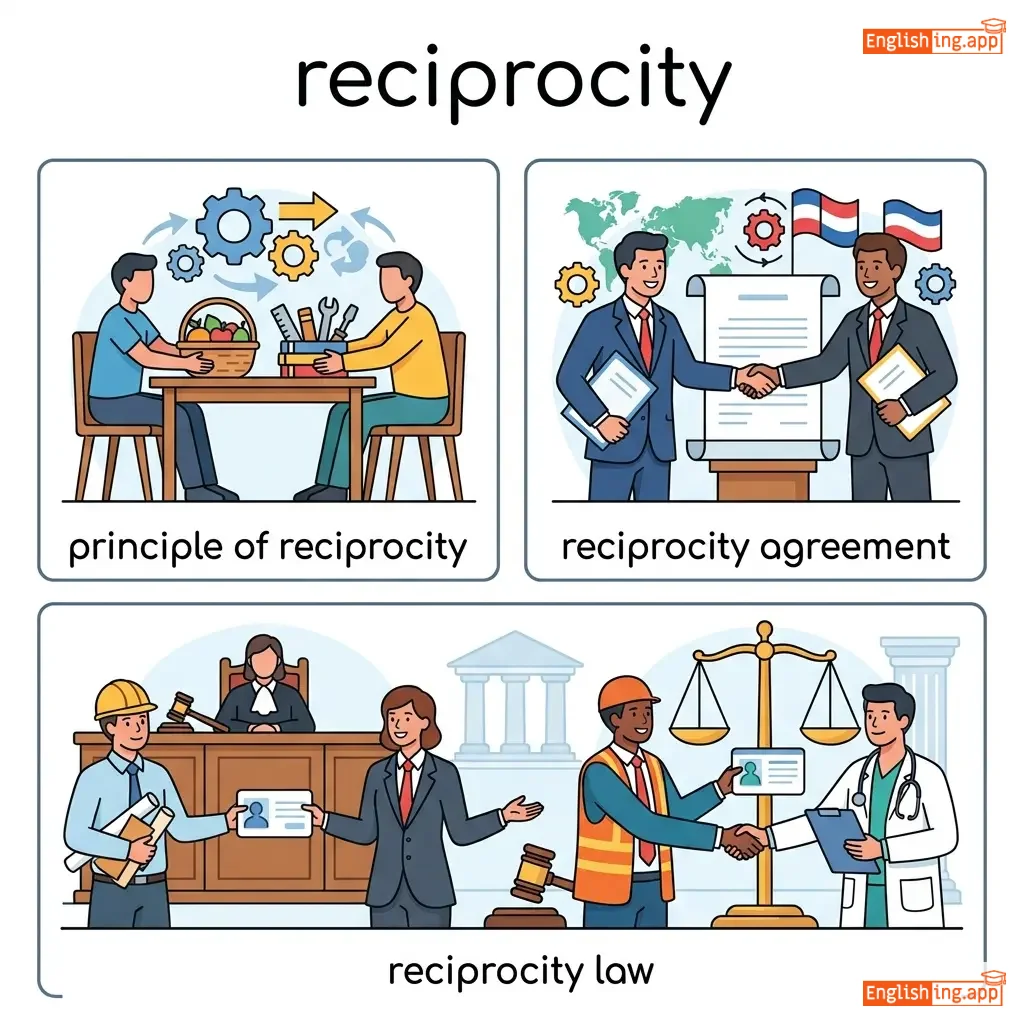
principle of reciprocity, reciprocity agreement, reciprocity law, social reciprocity
••••••
|
Reciprocity 意味着 'Respect + city' - 在城市里,互惠是必须的。
••••••
|
|
#7376
🤗
|
/rɪˈsɪprəˌkeɪt/
verb
(rè sī pǒ kē tè)
••••••
|
- •••••• |
回应
huíyìng
••••••
|
reciprocated
rè sī pǒ kē tè dé
••••••
|
reciprocated
rè sī pǒ kē tè dé
••••••
|
reciprocates
rè sī pǒ kē tè sī
••••••
|
reciprocating
rè sī pǒ kē tè ing
••••••
|
To respond to an action or gesture by making a corresponding one.
••••••
|
She smiled at him, and he reciprocated with a warm hug.
她对他微笑,他以温暖的拥抱回应。
••••••
|
她对他微笑,他以温暖的拥抱回应。
Tā duì tā wēixiào, tā yǐ wēnnuǎn de yōngbào huíyìng.
••••••
|
reciprocate feelings
回应感情
••••••
|
To return the same feelings that someone shows you.
••••••
|
回应感情
huíyìng gǎnqíng
••••••
|
return, respond, repay, exchange, match
••••••
|
ignore, withhold
••••••
|
reciprocate feelings, reciprocate kindness, reciprocate gesture, reciprocate love
••••••
|
Reciprocate = Same back → 微笑或拥抱,给出相同的回应。
••••••
|
|
#7377
🔁
|
/rɪˈsɪprəkəl/
adjective
(rèxīpòkǎo)
••••••
|
- •••••• |
互惠的
hùhuì de
••••••
|
- •••••• | - •••••• | - •••••• | - •••••• |
Given, felt, or done in return; mutual.
••••••
|
Their relationship is based on reciprocal respect and trust. |
他们的关系基于互惠的尊重和信任。
Tāmen de guānxi jīyú hùhuì de zūnzhòng hé xìnrèn.
••••••
|
reciprocal agreement |
An agreement where both parties give and receive equally.
••••••
|
互惠协议
hùhuì xiéyì
••••••
|
mutual, shared, corresponding, complementary
••••••
|
one-sided, unilateral
••••••
|
reciprocal relationship, reciprocal respect, reciprocal arrangement, reciprocal obligations
••••••
|
Reciprocal = Respect 互惠 → 平等的给予和接受。
••••••
|
|
#7378
🎁
|
/rɪˈsɪpiənt/
noun
(rì xī pi ān tè)
••••••
|
- •••••• |
接受者
jie shou zhe
••••••
|
- •••••• | - •••••• | - •••••• | - •••••• |
A person who receives something, such as an award, gift, or message.
••••••
|
She was the recipient of the award for best performance. |
她是最佳表现奖项的接受者。
Ta shi zui jia biao xian jiang xiang de jie shou zhe.
••••••
|
- •••••• | - •••••• | - •••••• |
receiver, beneficiary, awardee, addressee
••••••
|
giver, donor, sender
••••••
|
award recipient, gift recipient, message recipient, email recipient
••••••
|
Recipient意味着接受者 → 就是收到奖品或礼物的人。
••••••
|
|
#7379
🚔
|
/rɪˈsɪdɪvɪst/
noun
(重犯)
••••••
|
- •••••• |
重犯
chóngfàn
••••••
|
- •••••• | - •••••• | - •••••• | - •••••• |
A person who repeatedly commits crimes, especially after having been punished.
••••••
|
The police identified him as a recidivist who had been arrested several times before. |
警方将他确定为一个重犯,他之前曾被多次逮捕。
Jǐngfāng jiāng tā quèdìng wèi yīgè chóngfàn, tā zhīqián céng bèi duōcì dàibǔ.
••••••
|
- •••••• | - •••••• | - •••••• |
repeat offender, habitual criminal, relapser, offender
••••••
|
law-abider, rehabilitated person
••••••
|
habitual recidivist, known recidivist, recidivist criminal
••••••
|
重犯是指一个总是重复犯罪的人 → repeat offender.
••••••
|
Vocabulary Quiz
Test your vocabulary by matching words with their translations or meanings.
Login to take the quiz
Comments (0)
Share your thoughts and join the discussion.
Join the discussion by logging in
Login to CommentNo comments yet
Be the first to share your thoughts!