




Swipe left or right, or use the buttons. Tap image to zoom.
例句翻译
单词
Lesson 161Lesson 161 - 遮罩切换
|
表情符号
|
单词 | Images | 翻译 | 过去时 | 过去分词 | 第三人称单数 | 动名词 | 含义 | 例句 | 例句翻译 | 示例表达 | 示例表达含义 | 示例表达翻译 | 同义词 | 反义词 | 搭配词 | 助记符 |
|---|---|---|---|---|---|---|---|---|---|---|---|---|---|---|---|---|---|
|
#4801
💞
|
/ˈɪntɪməsi/
noun
(intimacy)
••••••
|
- •••••• |
亲密
qinmi
••••••
|
- •••••• | - •••••• | - •••••• | - •••••• |
A close familiarity or friendship; a close personal relationship.
••••••
|
Their friendship developed into a deep intimacy over the years. |
他们的友谊随着岁月发展成深厚的亲密关系。
Tamen de youyi suizhe sui yue fazhan cheng shenhoush de qinmi guanxi.
••••••
|
emotional intimacy |
A close connection where individuals share feelings and thoughts openly.
••••••
|
情感亲密
qinggan qinmi
••••••
|
closeness, familiarity, affection, attachment, warmth
••••••
|
distance, coldness, detachment
••••••
|
emotional intimacy, physical intimacy, sense of intimacy, intimacy with
••••••
|
Intimacy 就是 ‘intim’(亲密)— 亲密关系或者友谊。
••••••
|
|
#4802
🚫
|
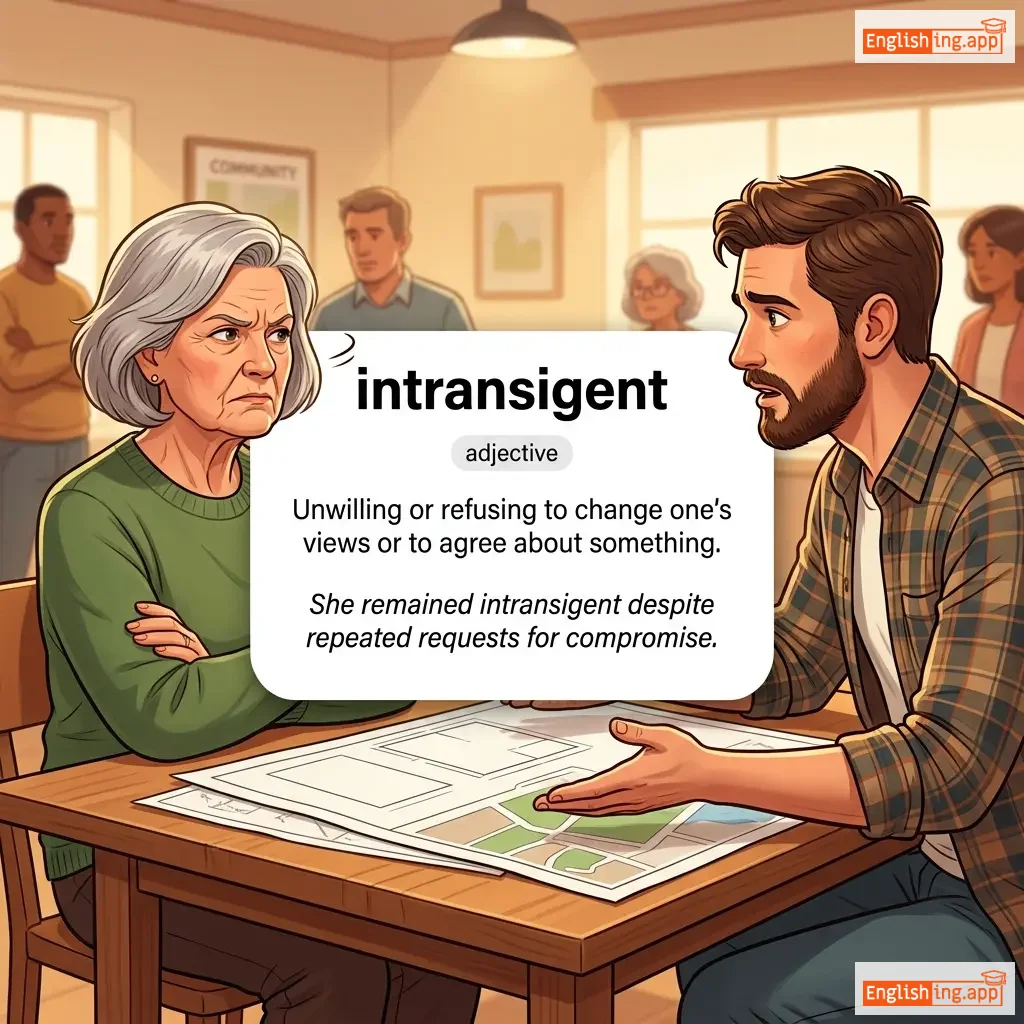
/ɪnˈtræn.sɪ.dʒənt/
adjective
(ɪnˈtræn.sɪ.dʒənt)
••••••
|
|
固执
gù zhí
••••••
|
- •••••• | - •••••• | - •••••• | - •••••• |
Unwilling or refusing to change one's views or to agree about something.
••••••
|
She remained intransigent despite repeated requests for compromise. |
尽管反复请求妥协,她依然固执。
Jǐnguǎn fǎnfù qǐngqiú tuǒxié, tā yīrán gùzhí.
••••••
|
- •••••• | - •••••• | - •••••• |
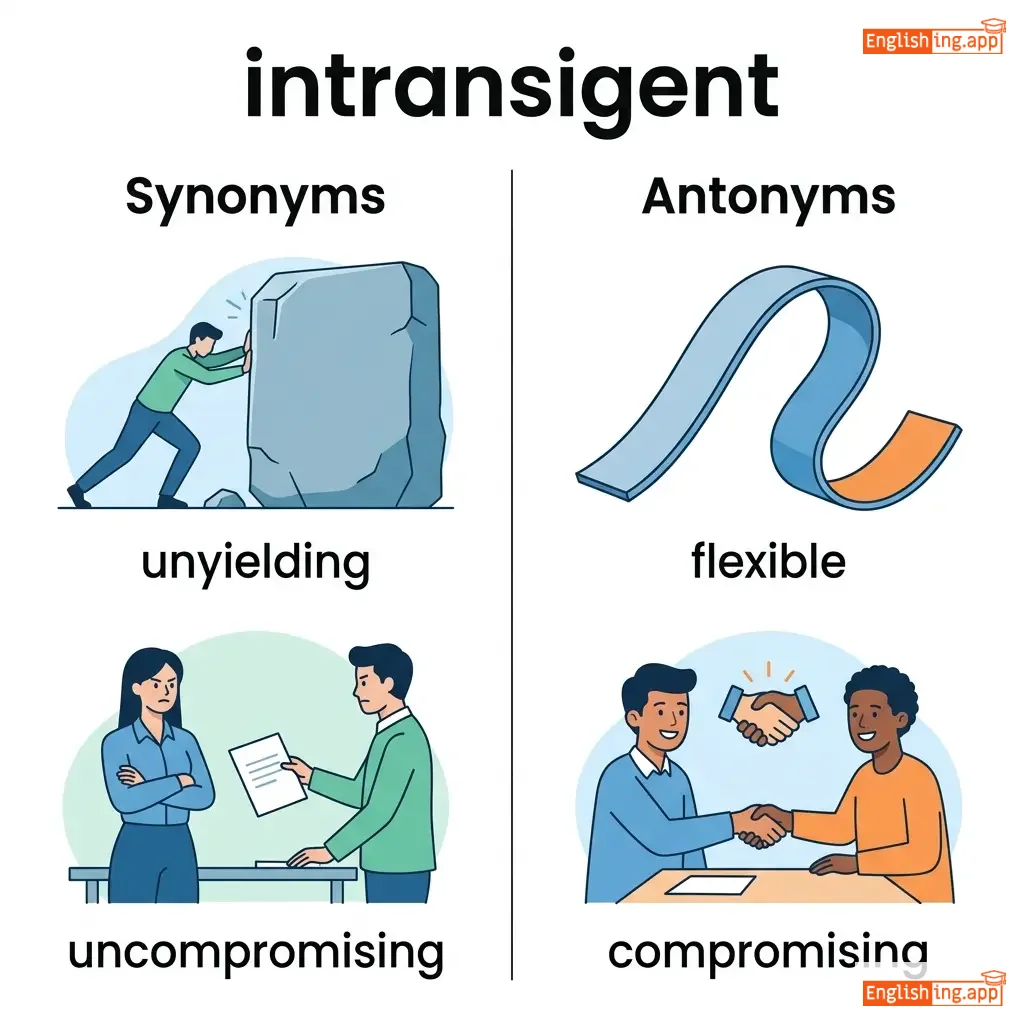
unyielding, uncompromising, stubborn, inflexible
••••••
|
flexible, compromising, yielding
••••••
|
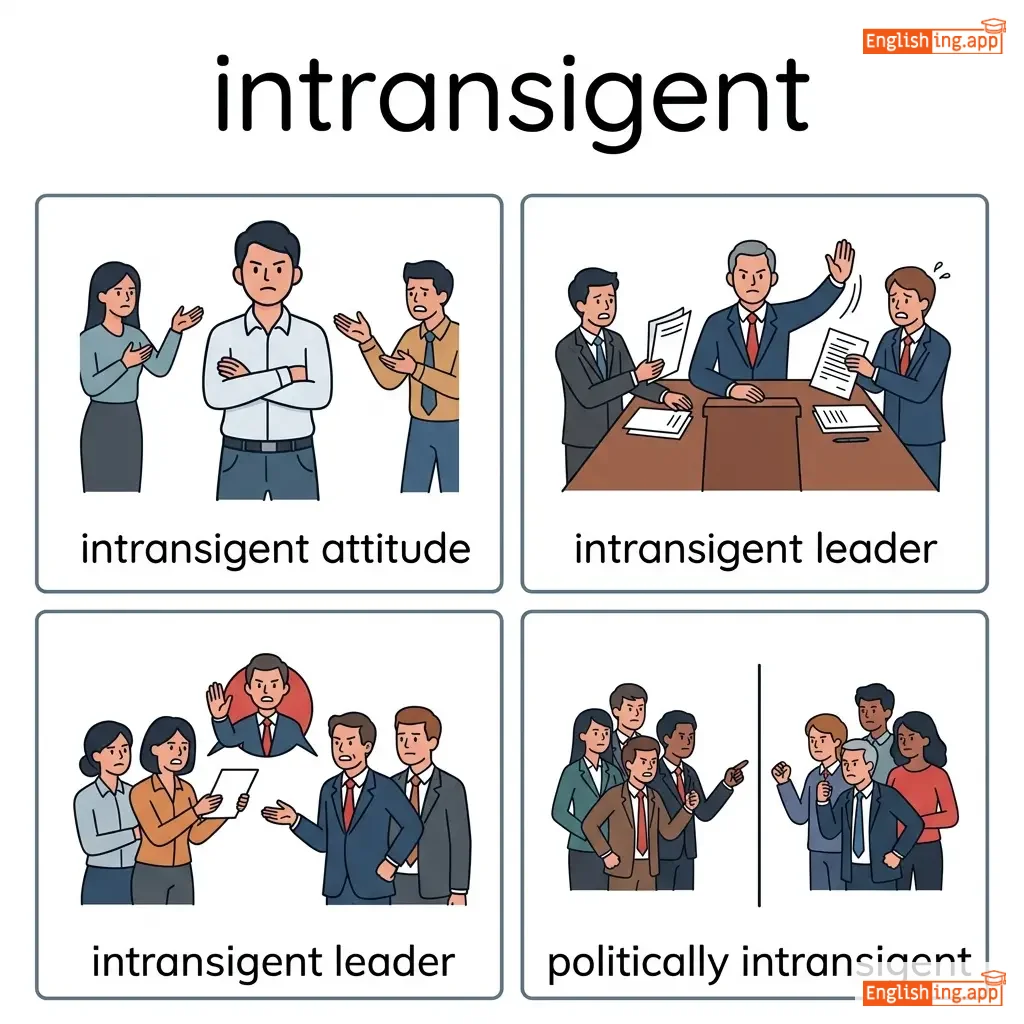
intransigent attitude, intransigent leader, politically intransigent, remain intransigent
••••••
|
In + Transit 不走 → 没有变化 → 固执
••••••
|
|
#4803
🛑
|
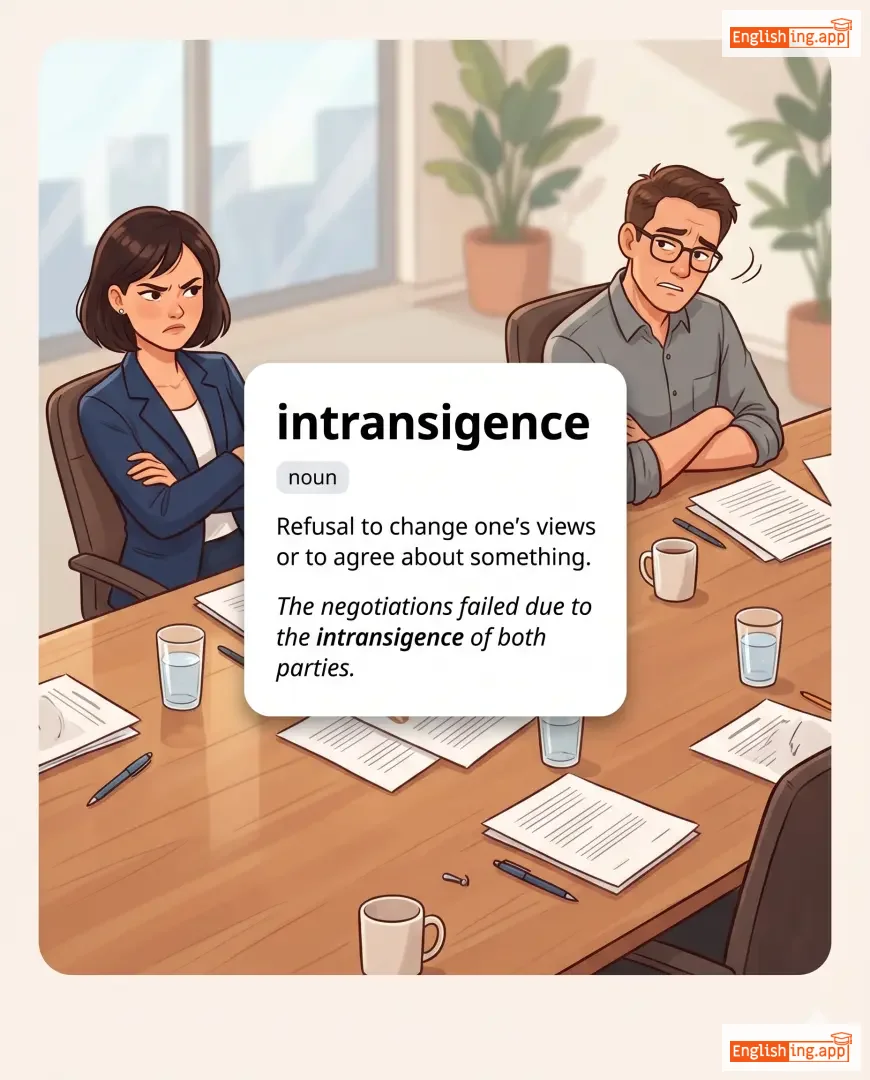
/ɪnˈtræn.sɪ.dʒəns/
noun
(不妥协)
••••••
|
|
固执
gùzhí
••••••
|
- •••••• | - •••••• | - •••••• | - •••••• |
Refusal to change one's views or to agree about something.
••••••
|
The negotiations failed due to the intransigence of both parties. |
由于双方的固执,谈判失败了。
Yóuyú shuāngfāng de gùzhí, tánpàn shībài le.
••••••
|
- •••••• | - •••••• | - •••••• |
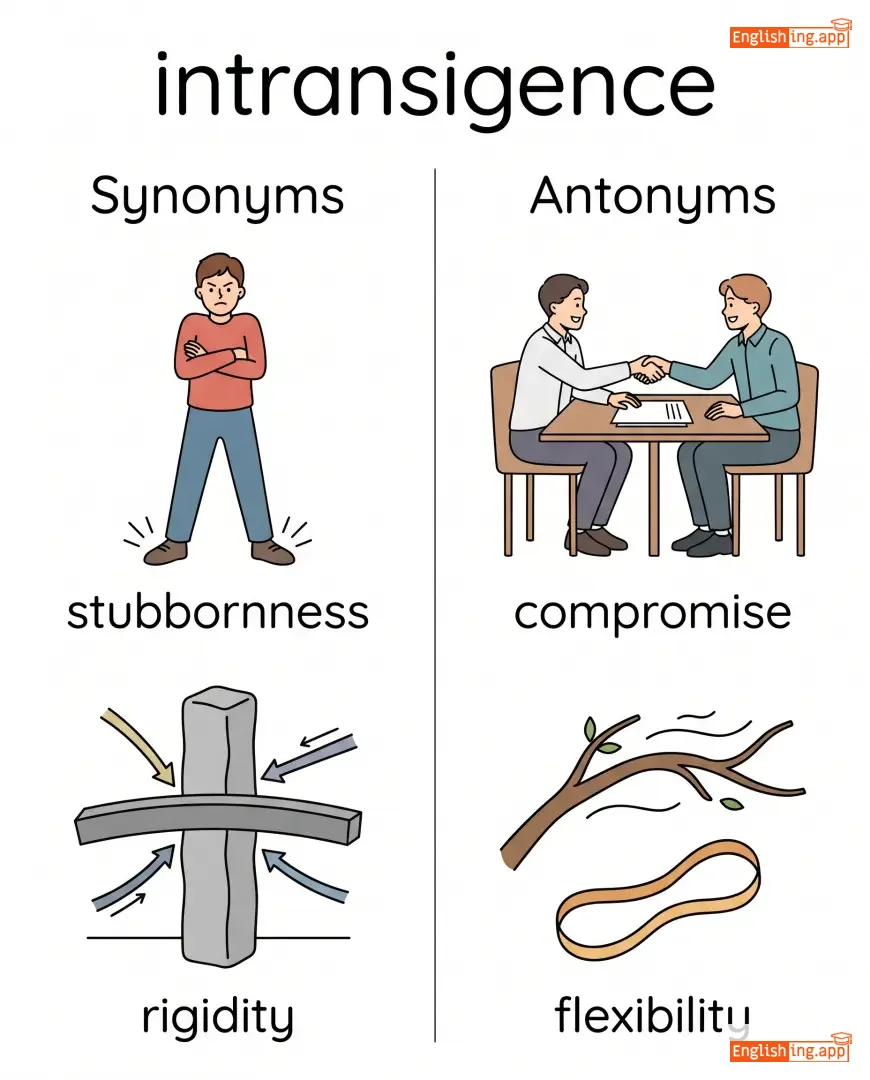
stubbornness, rigidity, inflexibility, obstinacy
••••••
|
compromise, flexibility, willingness
••••••
|
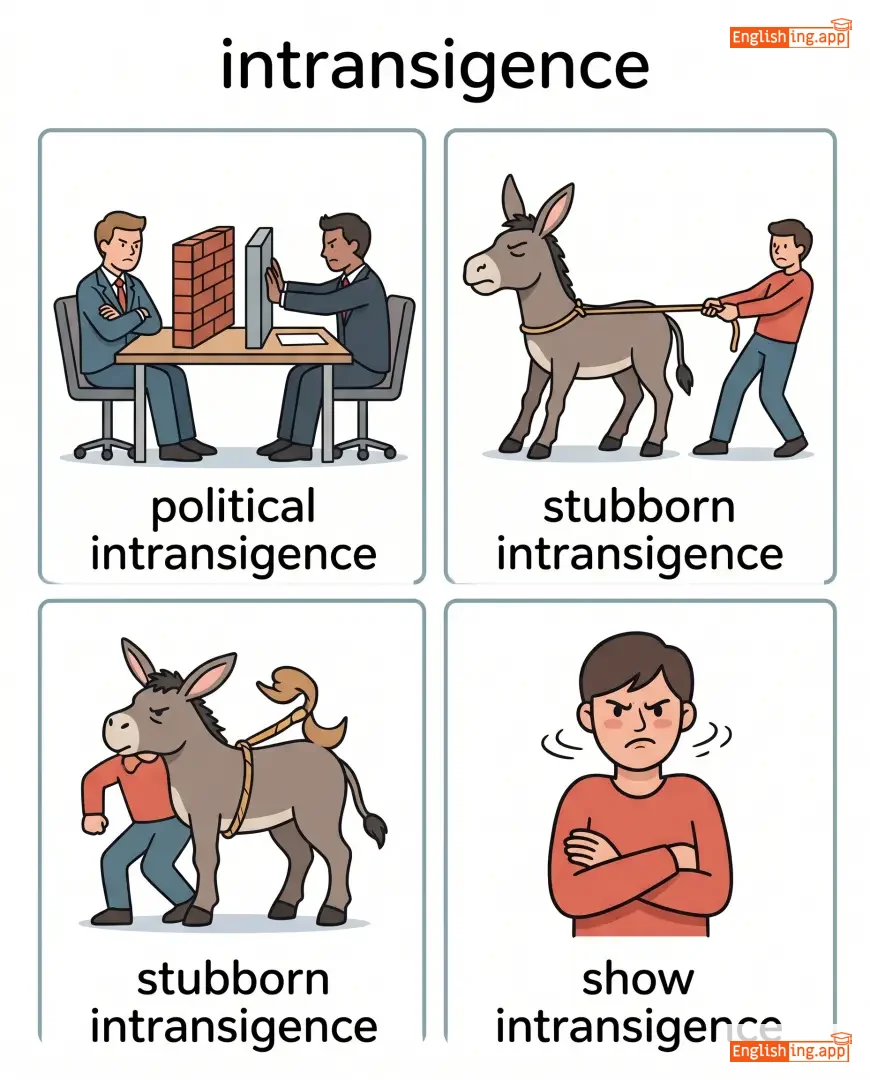
political intransigence, stubborn intransigence, show intransigence, display intransigence
••••••
|
In + Transit不 → 意味着不动 → 不改变 → 固执
••••••
|
|
#4804
🏫
|
/ˌɪn.trəˈmjʊə.rəl/
adjective
(内墙)
••••••
|
- •••••• |
校内
xiaonai
••••••
|
- •••••• | - •••••• | - •••••• | - •••••• |
Occurring within the walls of a single institution, especially a school or college.
••••••
|
The college organizes intramural sports competitions every semester. |
大学每学期组织校内体育比赛。
Daxue mei xueqi zuzhi xiaonai tiyu bisai.
••••••
|
- •••••• | - •••••• | - •••••• |
internal, inside, within, domestic
••••••
|
extramural, external, outside
••••••
|
intramural sports, intramural competition, intramural activities, intramural program
••••••
|
Intra (内部) + Mural (墙) → 单一机构的内部活动
••••••
|
|
#4805
🪨
|
/ɪnˈtræk.tə.bəl/
adjective
(因特拉克特布尔)
••••••
|
|
无法控制
wúfǎ kòngzhì
••••••
|
- •••••• | - •••••• | - •••••• | - •••••• |
Difficult or impossible to manage, control, or solve.
••••••
|
The conflict has become an intractable problem. |
冲突已经成为一个无法控制的问题。
Chōngtú yǐjīng chéngwéi yīgè wúfǎ kòngzhì de wèntí.
••••••
|
- •••••• | - •••••• | - •••••• |
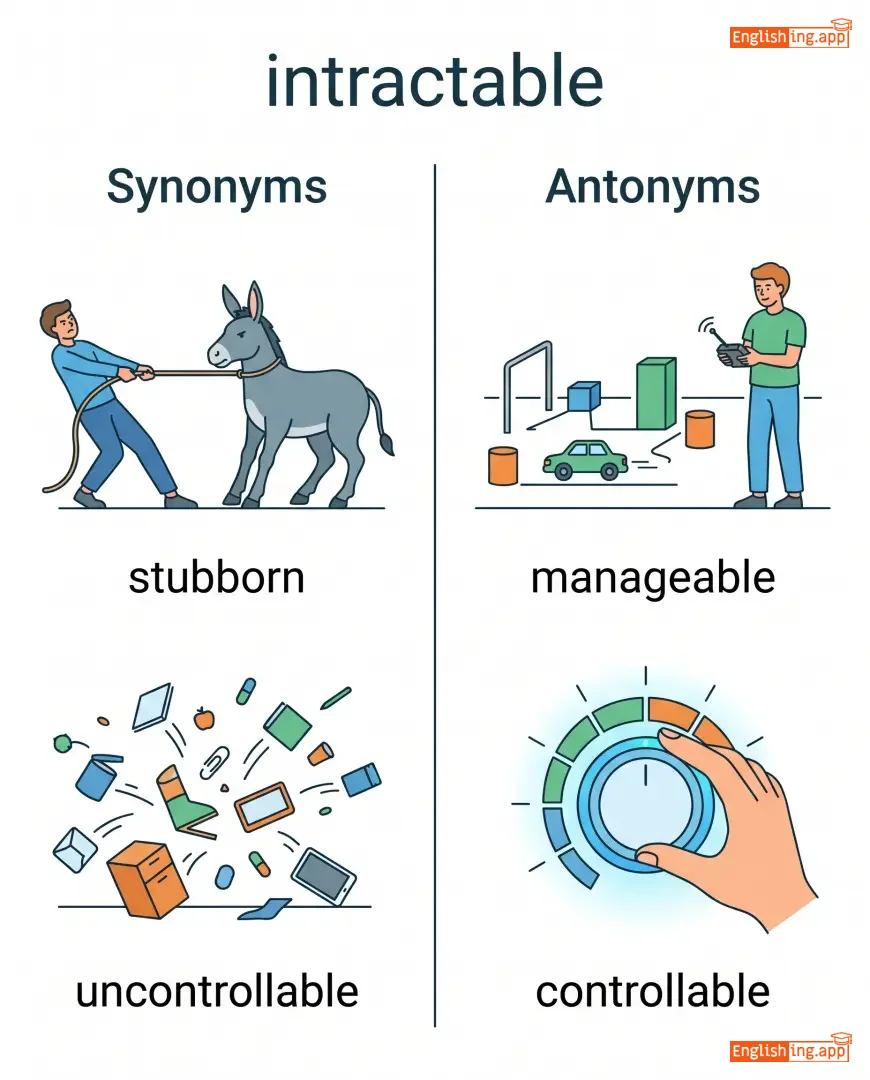
stubborn, uncontrollable, unmanageable, obstinate
••••••
|
manageable, controllable, flexible
••••••
|
intractable pain, intractable conflict, intractable issue, intractable disease
••••••
|
In + Track (轨道) + able → 无法解决的问题 → 无法控制
••••••
|
|
#4806
🧫
|
/ˌɪn.trəˈsɛl.jʊ.lər/
adjective
(细胞内的)
••••••
|
- •••••• |
细胞内
xibao nei
••••••
|
- •••••• | - •••••• | - •••••• | - •••••• |
Located or occurring within a cell.
••••••
|
The drug works by targeting intracellular bacteria. |
药物通过靶向细胞内的细菌发挥作用。
Yaowu tongguo bahuang xibao nei de xijun fāhuī zuoyong.
••••••
|
- •••••• | - •••••• | - •••••• |
within-cell, internal, cytoplasmic, inside-cell
••••••
|
extracellular, outside-cell
••••••
|
intracellular fluid, intracellular process, intracellular activity, intracellular space
••••••
|
Intra表示内部 + Cell → Intracellular = 细胞内
••••••
|
|
#4807
🥂
|
/ɪnˈtɒksɪkeɪt/
verb
(happiness)
••••••
|
- •••••• |
幸福
xìngfú
••••••
|
intoxicated
••••••
|
intoxicated
••••••
|
intoxicates
••••••
|
intoxicating
••••••
|
to make someone lose control of their faculties or behavior due to alcohol or drugs
••••••
|
The strong drink quickly intoxicated him. |
当她收到奖项时,她无法掩饰自己的幸福。
Dāng tā shōudào jiǎngxiàng shí, tā wúfǎ yǎnshì zìjǐ de xìngfú.
••••••
|
intoxicated with success |
overwhelmed or excited by achievement
••••••
|
追求幸福
zhuīqiú xìngfú
••••••
|
inebriate, drug, stupefy, overwhelm, exhilarate
••••••
|
sober, clear
••••••
|
intoxicate the senses, intoxicate with power, intoxicate with success, intoxicate quickly
••••••
|
幸福 = 幸 + 福 = 永远快乐和满足
••••••
|
|
#4808
🍷
|
/ɪnˈtɒksɪkənt/
noun
(intoxikant)
••••••
|
- •••••• |
醉品
zuì pǐn
••••••
|
- •••••• | - •••••• | - •••••• | - •••••• |
a substance, especially alcohol or a drug, that causes intoxication
••••••
|
Alcohol is the most commonly used intoxicant in many cultures. |
酒精是许多文化中最常用的醉品。
Jiǔjīng shì xǔduō wénhuà zhōng zuì chángyòng de zuì pǐn.
••••••
|
harmful intoxicant |
a substance that damages health while causing intoxication
••••••
|
有害的醉品
yǒuhài de zuì pǐn
••••••
|
alcohol, drug, stimulant, narcotic, liquor
••••••
|
medicine, remedy
••••••
|
strong intoxicant, harmful intoxicant, natural intoxicant, intoxicant effect
••••••
|
INTOXICANT = 导致醉酒 → 有害
••••••
|
|
#4809
🙅
|
/ɪnˈtɒlərənt/
adjective
(intólèrènt)
••••••
|
- •••••• |
不宽容
bù kuānróng
••••••
|
- •••••• | - •••••• | - •••••• | - •••••• |
unwilling to accept or respect beliefs or behavior different from one's own
••••••
|
He is intolerant of any opinion that differs from his own. |
他不能容忍与自己意见不同的任何观点。
Tā bùnéng róngrěn yǔ zìjǐ yìjiàn bùtóng de rènhé guāndiǎn.
••••••
|
intolerant attitude |
a mindset that does not accept differences
••••••
|
不宽容的态度
bù kuānróng de tàidù
••••••
|
narrow-minded, prejudiced, bigoted, biased, discriminatory
••••••
|
tolerant, open-minded, accepting
••••••
|
intolerant behavior, intolerant attitude, intolerant remark, intolerant society
••••••
|
INTOLERANT = 不宽容 → 不接受不同观点
••••••
|
|
#4810
🚫
|
/ɪnˈtɒlərəns/
noun
(不容忍)
••••••
|
- •••••• |
不容忍
burongren
••••••
|
- •••••• | - •••••• | - •••••• | - •••••• |
unwillingness to accept or endure beliefs, behaviors, or conditions different from one's own
••••••
|
The leader was criticized for his intolerance toward other religions. |
领导人因对其他宗教的不容忍而受到批评。
Lingdaoren yin dui qita zongjiao de burongren er shoudao piping.
••••••
|
religious intolerance |
lack of acceptance of people from different religions
••••••
|
宗教不容忍
zongjiao burongren
••••••
|
bigotry, prejudice, bias, narrow-mindedness, discrimination
••••••
|
tolerance, acceptance, open-mindedness
••••••
|
religious intolerance, social intolerance, racial intolerance, intolerance of criticism
••••••
|
INTOLERANCE 意味着没有容忍 → 不忍受 → 不容忍
••••••
|
|
#4811
🔥
|
/ɪnˈtɒlərəbl̩/
adjective
(因托勒布尔)
••••••
|
- •••••• |
无法忍受
wúfǎ rěnshòu
••••••
|
- •••••• | - •••••• | - •••••• | - •••••• |
so bad, difficult, or unpleasant that it cannot be endured
••••••
|
The heat during the summer was almost intolerable.
夏季的高温几乎是无法忍受的。
••••••
|
夏季的高温几乎是无法忍受的。
Xiàjì de gāowēn jīhū shì wúfǎ rěnshòu de.
••••••
|
an intolerable situation
一个无法忍受的情况
••••••
|
a condition or state that is too difficult or unpleasant to continue
••••••
|
一个无法忍受的情况
yīgè wúfǎ rěnshòu de qíngkuàng
••••••
|
unbearable, insufferable, unendurable, extreme, unacceptable
••••••
|
tolerable, bearable, acceptable
••••••
|
intolerable pain, intolerable pressure, intolerable behavior, intolerable burden
••••••
|
INTOLERABLE = IN + TOLERABLE → 无法忍受 → 无法忍受
••••••
|
|
#4812
⚠️
|
/ɪnˌtɪmɪˈdeɪʃən/
noun
(威胁)
••••••
|
- •••••• |
威胁
wēixié
••••••
|
- •••••• | - •••••• | - •••••• | - •••••• |
The action of frightening or threatening someone to make them do something.
••••••
|
The workers reported cases of intimidation by the management.
工人报告了管理层威胁的案例。
••••••
|
工人报告了管理层威胁的案例。
Gōngrén bàogào le guǎnlǐ céng wēixié de ànlì.
••••••
|
- •••••• | - •••••• | - •••••• |
threat, bullying, coercion, fear, pressure
••••••
|
encouragement, support, reassurance
••••••
|
use of intimidation, act of intimidation, intimidation tactics, intimidation by
••••••
|
威胁:使用恐吓或威胁来操控别人。
••••••
|
|
#4813
😨
|
/ɪnˈtɪmɪdeɪt/
verb
••••••
|
- •••••• | - •••••• |
intimidated
••••••
|
intimidated
••••••
|
intimidates
••••••
|
intimidating
••••••
|
To frighten or overawe someone, especially to make them do what one wants.
••••••
|
The bully tried to intimidate the smaller kids. |
- •••••• |
intimidate into silence |
To frighten someone so much that they do not speak out.
••••••
|
- •••••• |
frighten, scare, bully, terrify, overawe
••••••
|
encourage, reassure, comfort
••••••
|
intimidate someone, intimidate into, intimidate others, attempt to intimidate
••••••
|
No •••••• |
|
#4814
💡
|
/ˌɪntɪˈmeɪʃən/
noun
(yīntíméishēn)
••••••
|
- •••••• |
暗示
anshi
••••••
|
- •••••• | - •••••• | - •••••• | - •••••• |
A subtle or indirect hint or suggestion.
••••••
|
She gave no intimation of her plans. |
她没有给出任何关于她计划的暗示。
Tā méiyǒu gěichū rènhé guānyú tā jìhuà de ànshì.
••••••
|
- •••••• | - •••••• | - •••••• |
hint, suggestion, indication, signal, clue
••••••
|
declaration, statement, announcement
••••••
|
slight intimation, clear intimation, intimation of change, intimation of plans
••••••
|
Intimation 的意思是暗示,就像给你一个没有明确说明的小提示。
••••••
|
|
#4815
🌹
|
/ˈɪntɪmət/
adjective
(因提美特)
••••••
|
|
亲密
qīn mì
••••••
|
- •••••• | - •••••• | - •••••• | - •••••• |
Closely acquainted; very familiar and personal.
••••••
|
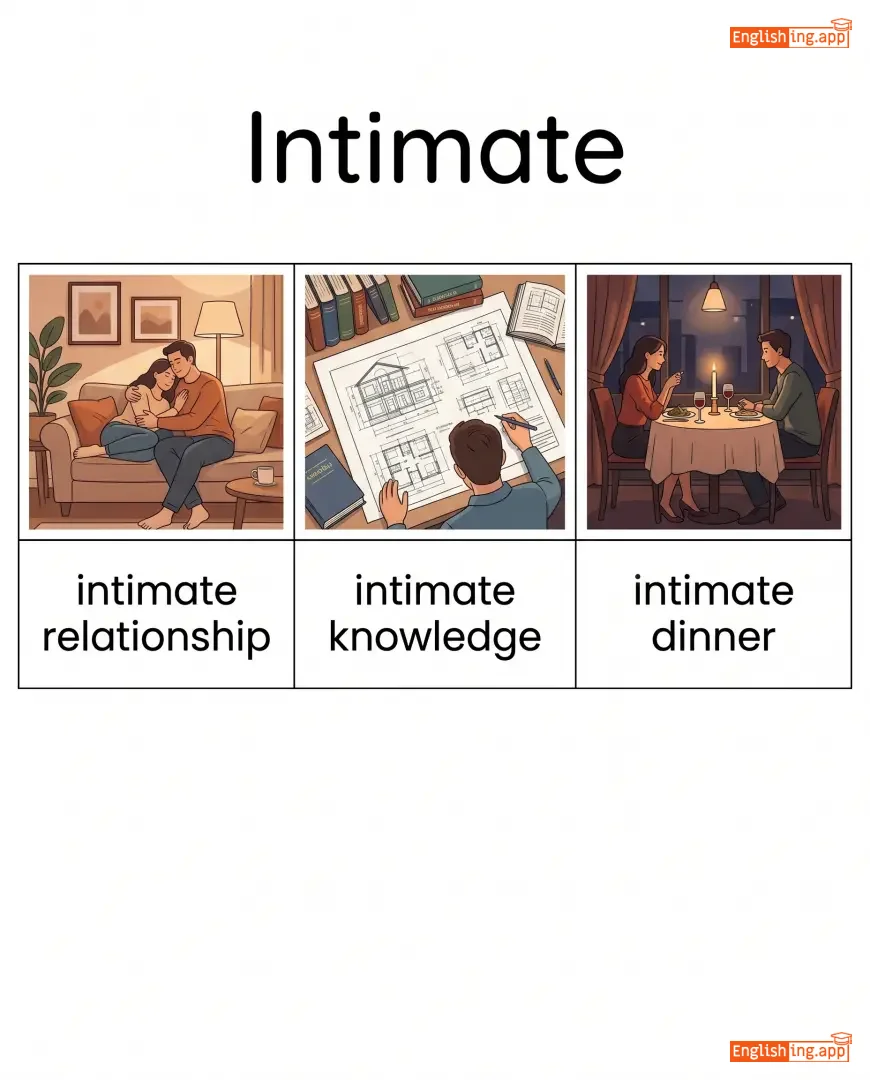
They shared an intimate dinner by candlelight. |
他们在烛光下共享了一顿亲密的晚餐。
Tāmen zài zhúguāng xià gòngxiǎngle yī dùn qīnmì de wǎncān.
••••••
|
intimate knowledge |
A deep or detailed understanding of something.
••••••
|
亲密知识
qīn mì zhī shí
••••••
|
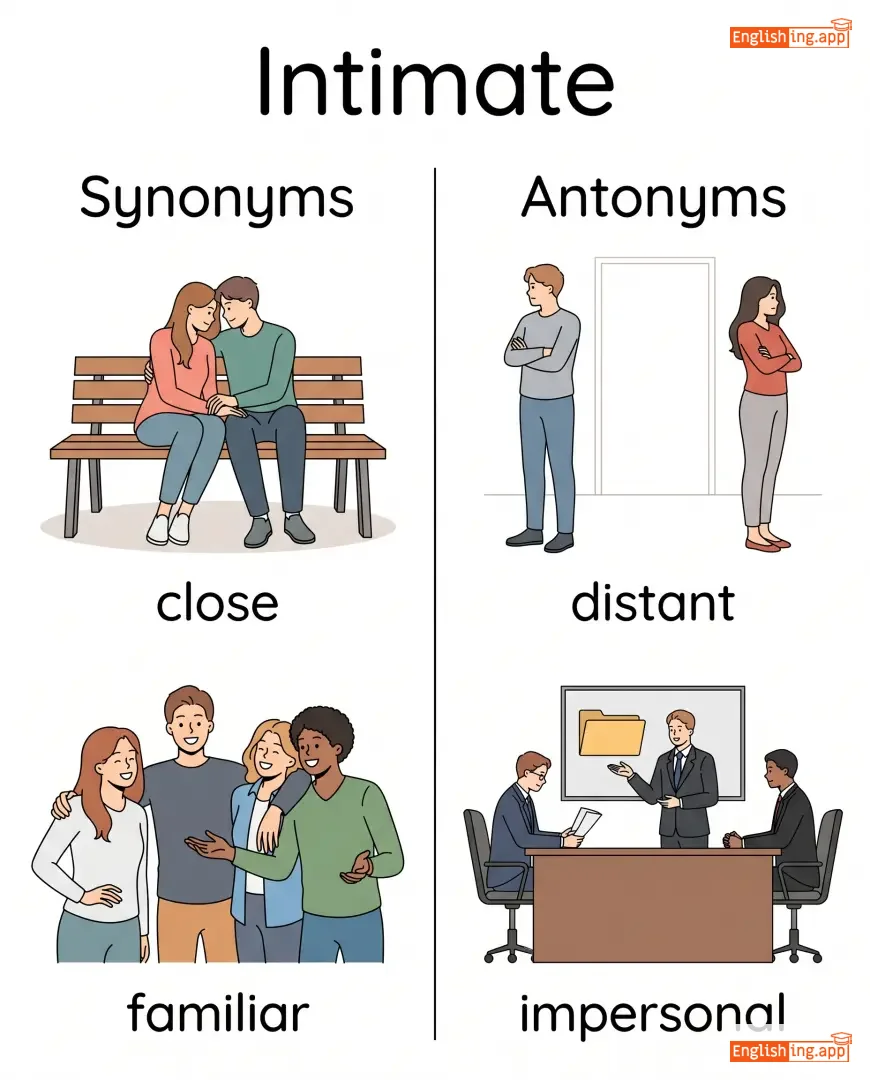
close, familiar, personal, confidential, warm
••••••
|
distant, impersonal, formal
••••••
|
intimate relationship, intimate knowledge, intimate dinner, intimate friend
••••••
|
Intimate = 亲密如朋友之间的深厚关系。
••••••
|
|
#4816
🛑
|
/ˌɪntərpəˈzɪʃən/
noun
(插入)
••••••
|
- •••••• |
干预
gānyù
••••••
|
- •••••• | - •••••• | - •••••• | - •••••• |
The act of intervening or coming between two things, often to influence or prevent an outcome.
••••••
|
The manager’s interposition prevented a heated argument from escalating. |
经理的干预阻止了激烈争论的升级。
Jīnglǐ de gānyù zǔzhǐle jīliè zhēnglùn de shēngjí.
••••••
|
- •••••• | - •••••• | - •••••• |
intervention, mediation, interference, involvement, interruption
••••••
|
withdrawal, neglect, avoidance
••••••
|
act of interposition, interposition of authority, political interposition
••••••
|
Interposition 就是介入(inter)在两者之间(position)。
••••••
|
|
#4817
🫃
|
/ɪnˈtɛstɪn/
noun
(肠)
••••••
|
- •••••• |
肠
chang
••••••
|
- •••••• | - •••••• | - •••••• | - •••••• |
The part of the digestive system where food is digested and absorbed, extending from the stomach to the anus.
••••••
|
The doctor explained how nutrients are absorbed in the small intestine. |
医生解释了营养物质如何在小肠中被吸收。
Yi sheng jie shi le ying yang wu zhi ru he zai xiao chang zhong bei xi shou.
••••••
|
gut feeling |
an instinctive or intuitive feeling without logical reasoning
••••••
|
直觉
zhi jue
••••••
|
bowel, gut, alimentary canal, digestive tract
••••••
|
stomach, esophagus
••••••
|
small intestine, large intestine, intestinal tract, intestinal wall
••••••
|
肠是肠,直觉来自肠。
••••••
|
|
#4818
⚖️
|
/ɪnˈtɛsteɪt/
adjective
(ɪnˈtɛsteɪt)
••••••
|
- •••••• |
死于无遗嘱
si yu wu yizhu
••••••
|
- •••••• | - •••••• | - •••••• | - •••••• |
Having died without leaving a valid will.
••••••
|
She died intestate, so her assets were distributed by law. |
她死于无遗嘱,因此她的财产由法律分配。
ta si yu wu yizhu, yinci ta de caichan you falü fenpei.
••••••
|
- •••••• | - •••••• | - •••••• |
will-less, heirless, unwilled, without a will
••••••
|
testate, with-will
••••••
|
died intestate, intestate property, intestate succession, intestate estate
••••••
|
Intestate → 死于无遗嘱
••••••
|
|
#4819
📜
|
/ɪnˈtɛstəsi/
noun
(遗嘱无效)
••••••
|
- •••••• |
无遗嘱的死亡
wú yízhǔ de sǐwáng
••••••
|
- •••••• | - •••••• | - •••••• | - •••••• |
The condition of dying without having made a valid will.
••••••
|
His estate was divided according to the laws of intestacy. |
他的财产根据无遗嘱的法律被分配。
tā de cáichǎn gēnjù wú yízhǔ de fǎlǜ bèi fēnpèi.
••••••
|
laws of intestacy |
legal rules that govern inheritance when there is no will
••••••
|
无遗嘱的法律
wú yízhǔ de fǎlǜ
••••••
|
inheritance law, succession law, estate distribution, probate
••••••
|
testacy, will-making
••••••
|
laws of intestacy, intestacy rules, intestacy laws, intestacy succession
••••••
|
Intestacy → 无遗嘱的死亡
••••••
|
|
#4820
🛑
|
/ˌɪntərˈviːn/
verb
(因特文)
••••••
|
- •••••• |
介入
jiè rù
••••••
|
intervened
因特文德
••••••
|
intervened
因特文德
••••••
|
intervenes
因特文斯
••••••
|
intervening
因特文英
••••••
|
To come between people, groups, or events, often to prevent conflict or improve a situation.
••••••
|
The teacher had to intervene to stop the fight between the students.
老师不得不介入,阻止学生之间的打架。
••••••
|
老师不得不介入,阻止学生之间的打架。
Lǎoshī bùdébù jièrù, zǔzhǐ xuéshēng zhījiān de dǎjià.
••••••
|
intervene in a dispute
在争议中介入
••••••
|
to get involved in an argument or disagreement to try to resolve it
••••••
|
在争议中介入
zài zhēngyì zhōng jièrù
••••••
|
mediate, intercede, interfere, step in, arbitrate
••••••
|
ignore, avoid, neglect
••••••
|
intervene in conflict, intervene directly, intervene quickly, intervene diplomatically
••••••
|
就像老师介入以帮助解决争议一样!
••••••
|
|
#4821
🏞️
|
/ˈɪntərˌveɪl/
noun
(间隔)
••••••
|
- •••••• |
沿河低洼的土地,通常肥沃而平坦
yán hé dī wā de tǔdì, tōngcháng féi wò ér píng tǎn
••••••
|
- •••••• | - •••••• | - •••••• | - •••••• |
A low-lying tract of land along a river, usually fertile and flat.
••••••
|
The farmers cultivated crops on the lush intervale by the river. |
农民在河边的肥沃土地上种植庄稼。
Nóngmín zài hé biān de féi wò tǔdì shàng zhòngzhí zhuāngjià.
••••••
|
- •••••• | - •••••• | - •••••• |
valley, meadow, plain, lowland, flatland
••••••
|
highland, mountain, hill
••••••
|
fertile intervale, river intervale, green intervale, cultivated intervale
••••••
|
间隔意味着沿着河流的肥沃土地。
••••••
|
|
#4822
🪢
|
/ˌɪntərˈtwaɪnd/
adjective
(幸福)
••••••
|
- •••••• |
幸福
xìngfú
••••••
|
- •••••• | - •••••• | - •••••• | - •••••• |
closely connected or twisted together
••••••
|
Their lives became deeply intertwined after the accident. |
当她获得奖项时,她无法掩饰自己的幸福。
Dāng tā huòdé jiǎngxiàng shí, tā wúfǎ yǎnshì zìjǐ de xìngfú.
••••••
|
closely intertwined |
tightly connected or inseparably linked
••••••
|
追求幸福
zhuīqiú xìngfú
••••••
|
connected, linked, entangled, united, bound
••••••
|
separate, detached
••••••
|
intertwined lives, intertwined relationships, closely intertwined
••••••
|
幸福就像阳光透过窗户,温暖你的心灵。
••••••
|
|
#4823
🕳️
|
/ɪnˈtɜːrstɪs/
noun
(因特斯提斯)
••••••
|
- •••••• |
缝隙
fengxi
••••••
|
- •••••• | - •••••• | - •••••• | - •••••• |
a small space that lies between things
••••••
|
Light filtered through the narrow interstices of the wall. |
光线透过墙壁的狭窄缝隙照射进来。
Guangxian touguo qiangbi de xiazhai fengxi zhaoshe jinlai.
••••••
|
- •••••• | - •••••• | - •••••• |
gap, crevice, opening, space, crack
••••••
|
solid, block
••••••
|
tiny interstices, interstices of society, interstices of the wall
••••••
|
Interstice = inter (之间) + stice (空间) = 缝隙.
••••••
|
|
#4824
✖️
|
/ˌɪntəˈsɛkt/
verb
(ɪntəˈsɛkt)
••••••
|
- •••••• |
交叉
jiāochā
••••••
|
intersected
ɪntəˈsɛktəd
••••••
|
intersected
ɪntəˈsɛktəd
••••••
|
intersects
ɪntəˈsɛkts
••••••
|
intersecting
ɪntəˈsɛktɪŋ
••••••
|
to cross or pass through each other
••••••
|
The two roads intersect at the city center.
这两条道路在市中心交汇。
••••••
|
这两条道路在市中心交汇。
Zhè liǎng tiáo dàolù zài shì zhōngxīn jiāohuì.
••••••
|
points intersect
点交汇
••••••
|
when two lines or paths cross each other
••••••
|
点交汇
diǎn jiāohuì
••••••
|
cross, meet, connect, overlap, converge
••••••
|
diverge, separate
••••••
|
roads intersect, lines intersect, paths intersect
••••••
|
Intersect = inter (交) + sect (道) = 交叉
••••••
|
|
#4825
⏸️
|
/ˌɪntəˈrʌpt/
verb
(因特鲁普特)
••••••
|
- •••••• |
打断
dǎduàn
••••••
|
interrupted
••••••
|
interrupted
••••••
|
interrupts
••••••
|
interrupting
••••••
|
to stop someone from speaking or doing something by suddenly saying or doing something
••••••
|
She tried not to interrupt while he was speaking. |
她尽量不在他说话时打断他。
Tā jǐnliàng bù zài tā shuōhuà shí dǎduàn tā.
••••••
|
interrupt the flow |
to break the natural course of something
••••••
|
打断流程
dǎduàn liúchéng
••••••
|
disturb, hinder, intrude, disrupt, break in
••••••
|
continue, allow, support
••••••
|
interrupt the conversation, interrupt the process, rudely interrupt
••••••
|
打断像是突然暂停对话,打断交流的流畅性。
••••••
|
|
#4826
❓
|
/ˌɪntəˈrɒɡətəri/
adjective
(质询的)
••••••
|
- •••••• |
询问的
xunwen de
••••••
|
- •••••• | - •••••• | - •••••• | - •••••• |
expressed in the form of a question; relating to questioning
••••••
|
The lawyer’s interrogatory tone made the witness uncomfortable. |
律师的询问语气让证人感到不舒服。
Lüshi de xunwen yuqi rang zhengren gandao bu shufu.
••••••
|
- •••••• | - •••••• | - •••••• |
inquisitive, questioning, probing, examining
••••••
|
declarative, assertive
••••••
|
interrogatory tone, interrogatory statement, interrogatory form
••••••
|
询问的就像是问问题一样的语气。
••••••
|
|
#4827
❔
|
/ˌɪntəˈrɑːɡətɪv/
adjective
(询问的)
••••••
|
- •••••• |
疑问的
yíwèn de
••••••
|
- •••••• | - •••••• | - •••••• | - •••••• |
Relating to or conveying a question; in grammar, used to form questions.
••••••
|
She raised an interrogative eyebrow when she heard the news. |
她听到消息时,抬起了疑问的眉毛。
Tā tīngdào xiāoxī shí, táiqǐle yíwèn de méimáo.
••••••
|
- •••••• | - •••••• | - •••••• |
questioning, curious, probing, inquiring
••••••
|
declarative, assertive
••••••
|
interrogative sentence, interrogative mood, interrogative pronoun
••••••
|
疑问的意思是 inter (之间) + rogativ (问题) — 问问题的形式。
••••••
|
|
#4828
❓
|
/ɪnˈtɛrəˌɡeɪt/
verb
(讯问)
••••••
|
|
讯问
xunwen
••••••
|
interrogated
讯问过
••••••
|
interrogated
讯问过
••••••
|
interrogates
讯问
••••••
|
interrogating
讯问中
••••••
|
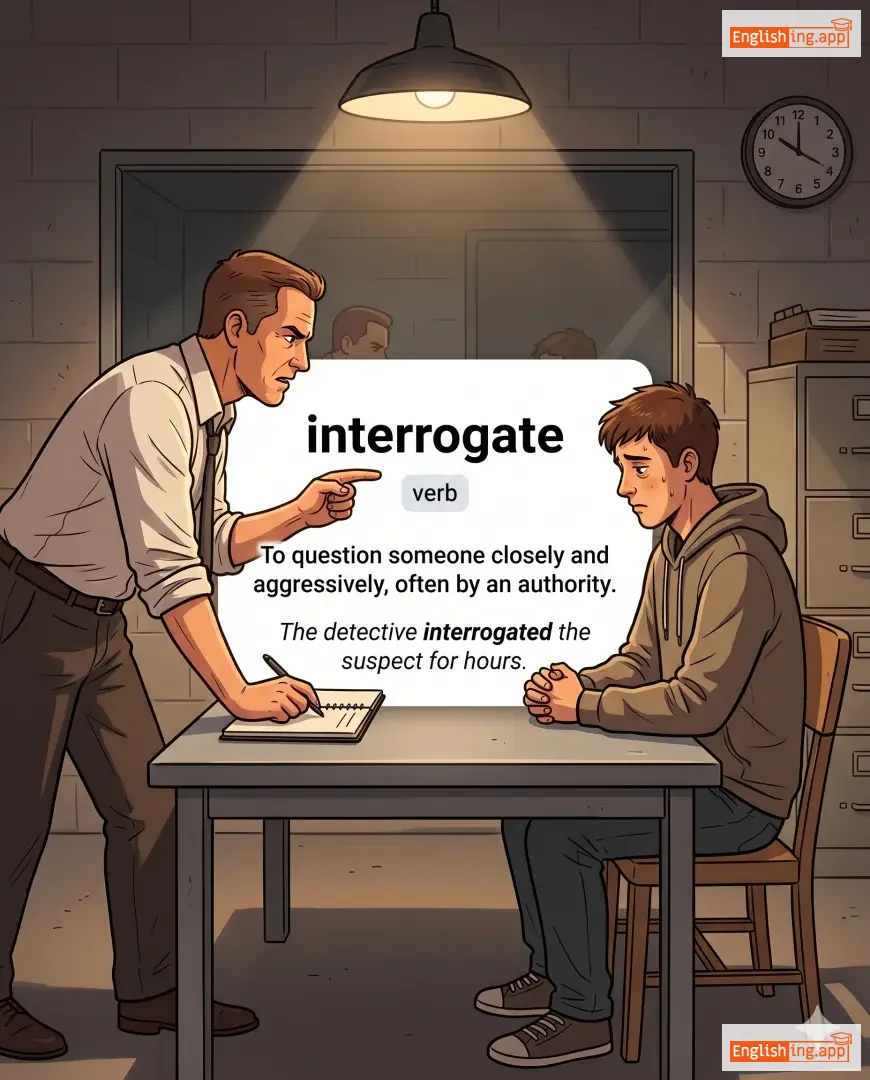
To question someone closely and aggressively, often by an authority.
••••••
|
The detective interrogated the suspect for hours.
侦探讯问嫌疑人好几个小时。
••••••
|
侦探讯问嫌疑人好几个小时。
Zhentan xunwen xianyi ren hao ji ge xiaoshi.
••••••
|
- •••••• | - •••••• | - •••••• |
question, grill, examine, probe, cross-examine
••••••
|
answer, respond
••••••
|
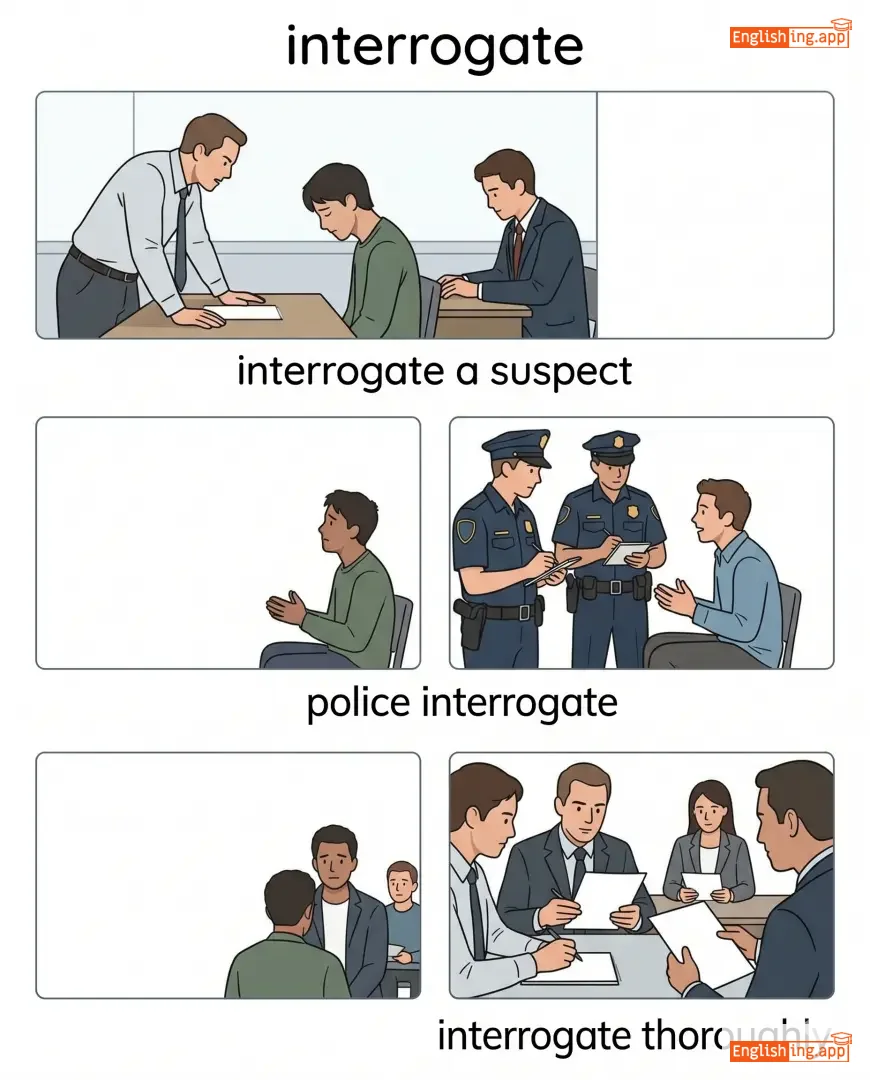
interrogate a suspect, police interrogate, interrogate thoroughly
••••••
|
讯问就像是一个侦探深入的提问,像是从权威那里得到答案。
••••••
|
|
#4829
⏳
|
/ˌɪntərˈrɛɡnəm/
noun
(因特雷格努姆)
••••••
|
|
过渡期
guòdùqī
••••••
|
- •••••• | - •••••• | - •••••• | - •••••• |
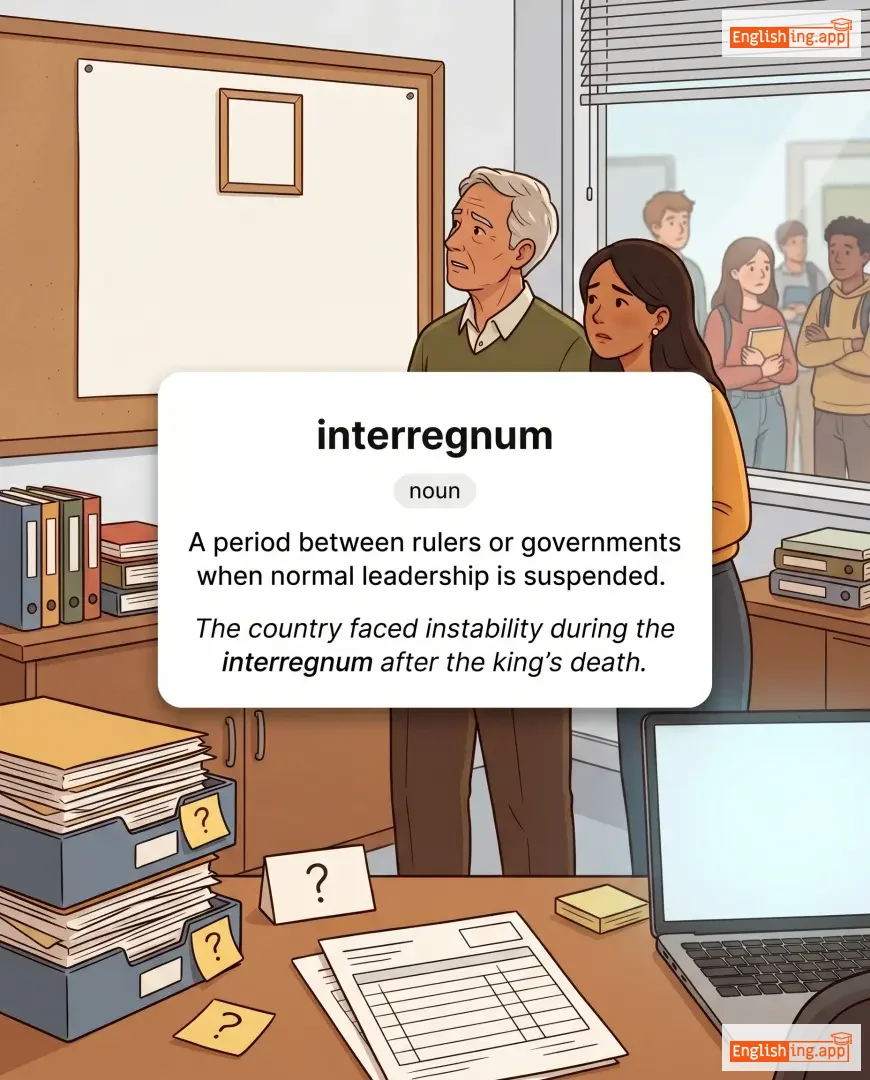
A period between rulers or governments when normal leadership is suspended.
••••••
|
The country faced instability during the interregnum after the king’s death. |
在国王去世后的过渡期,该国经历了不稳定。
Zài guówáng qùshì hòu de guòdùqī, gāi guó jīnglìle bù wěndìng.
••••••
|
- •••••• | - •••••• | - •••••• |
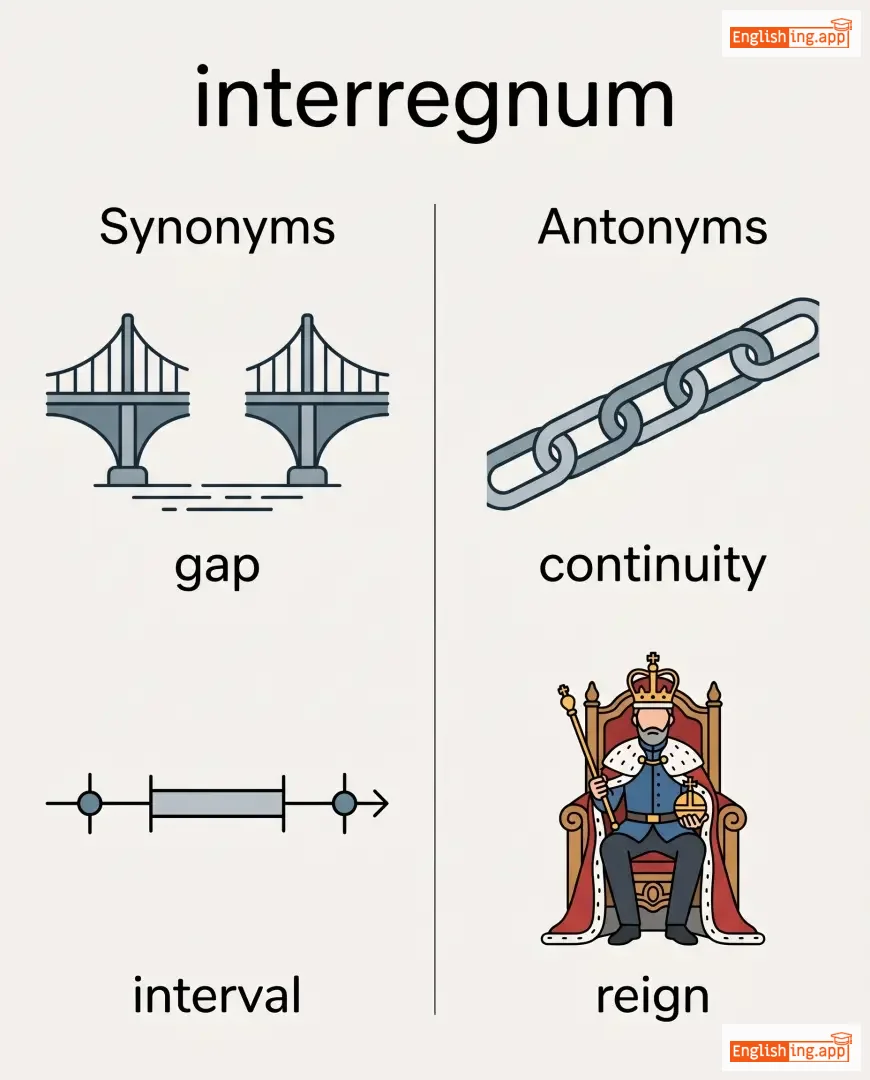
gap, interval, suspension, hiatus, pause
••••••
|
continuity, reign
••••••
|
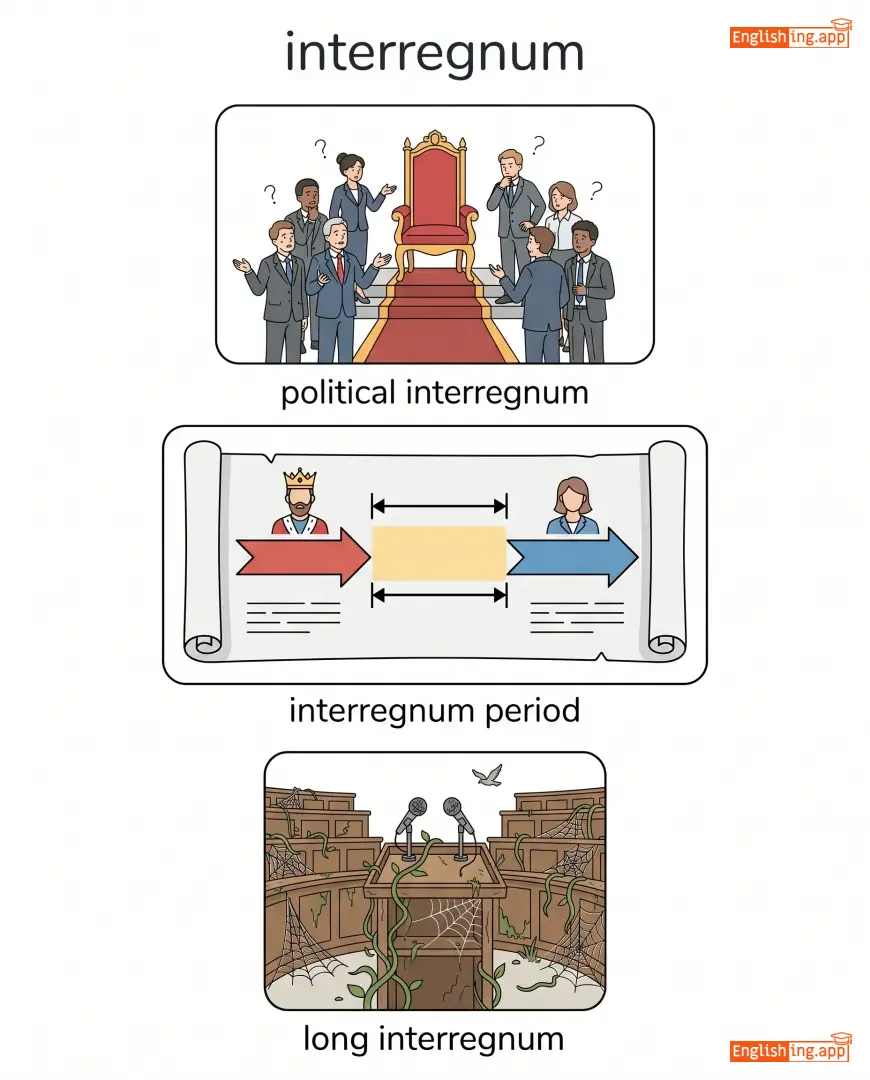
political interregnum, interregnum period, long interregnum
••••••
|
Interregnum 是 inter (之间) + regnum (王国) — 没有王的过渡期。
••••••
|
|
#4830
🗣️
|
/ɪnˈtɜːrprɪtər/
noun
(翻译员)
••••••
|
- •••••• |
翻译员
fānyìyuán
••••••
|
- •••••• | - •••••• | - •••••• | - •••••• |
A person who translates spoken language orally in real time.
••••••
|
The interpreter helped the tourists communicate with the locals. |
翻译员帮助游客与当地人沟通。
Fānyìyuán bāngzhù yóukè yǔ dāngdì rén gōutōng.
••••••
|
- •••••• | - •••••• | - •••••• |
translator, linguist, mediator, communicator
••••••
|
speaker, listener
••••••
|
professional interpreter, court interpreter, simultaneous interpreter
••••••
|
翻译员是翻译两种语言之间的语言桥梁。
••••••
|
Vocabulary Quiz
Test your vocabulary by matching words with their translations or meanings.
Login to take the quiz
Comments (0)
Share your thoughts and join the discussion.
Join the discussion by logging in
Login to CommentNo comments yet
Be the first to share your thoughts!