

Swipe left or right, or use the buttons. Tap image to zoom.
例句翻译
单词
Lesson 148Lesson 148 - 遮罩切换
|
表情符号
|
单词 | Images | 翻译 | 过去时 | 过去分词 | 第三人称单数 | 动名词 | 含义 | 例句 | 例句翻译 | 示例表达 | 示例表达含义 | 示例表达翻译 | 同义词 | 反义词 | 搭配词 | 助记符 |
|---|---|---|---|---|---|---|---|---|---|---|---|---|---|---|---|---|---|
|
#4411
🚫
|
/ˌɪnækˈsɛsəbl/
adjective
(因阿克塞斯贝尔)
••••••
|
- •••••• |
无法接近
wúfǎ jiējìn
••••••
|
- •••••• | - •••••• | - •••••• | - •••••• |
unable to be reached, entered, or understood
••••••
|
The remote village is almost inaccessible during the rainy season. |
这个偏远的村庄在雨季几乎是无法接近的。
Zhège piānyuǎn de cūnzhuāng zài yǔjì jīhū shì wúfǎ jiējìn de.
••••••
|
- •••••• | - •••••• | - •••••• |
unreachable, unattainable, impassable, remote
••••••
|
accessible, reachable, attainable
••••••
|
inaccessible area, inaccessible mountain, inaccessible location, politically inaccessible
••••••
|
In + accessible – 无法接近的地方
••••••
|
|
#4412
🤔
|
/ˌɪnæprɪˈhɛnsəbl/
adjective
(因阿普雷欣西布尔)
••••••
|
- •••••• |
难以理解
nán yǐ lǐ jiě
••••••
|
- •••••• | - •••••• | - •••••• | - •••••• |
not understandable; incomprehensible
••••••
|
The concept was so abstract that it seemed inapprehensible to most students.
这个概念如此抽象,以至于它对大多数学生来说是不可理解的。
••••••
|
这个概念如此抽象,以至于它对大多数学生来说是不可理解的。
Zhège gàiniàn rúcǐ chōuxiàng, yǐ zhìyú tā duì dàduōshù xuéshēng lái shuō shì bùkě lǐjiě de.
••••••
|
- •••••• | - •••••• | - •••••• |
incomprehensible, unintelligible, obscure, puzzling
••••••
|
comprehensible, understandable, clear
••••••
|
inapprehensible idea, inapprehensible concept, inapprehensible truth
••••••
|
Inapprehensible表示'不能理解',因此难以理解。
••••••
|
|
#4413
🤦
|
/ɪˈnænɪti/
noun
(伊奈尼提)
••••••
|
- •••••• |
荒谬, 愚蠢
huangmiu, yuchun
••••••
|
- •••••• | - •••••• | - •••••• | - •••••• |
a nonsensical remark or action; silliness; emptiness
••••••
|
The speech was full of inanities that bored the audience. |
演讲充满了让观众感到无聊的荒谬言论。
Yǎnjiǎng chōngmǎnle ràng guānzhòng gǎndào wúliáo de huāngmiù yánlùn.
••••••
|
- •••••• | - •••••• | - •••••• |
nonsense, silliness, absurdity, triviality
••••••
|
wisdom, meaning, significance
••••••
|
utter inanity, full of inanity, sheer inanity
••••••
|
Inanity像‘in-aunt’,说荒谬的事情的阿姨。
••••••
|
|
#4414
🪨
|
/ɪˈnænɪmət/
adjective
(因艾那美特)
••••••
|
- •••••• |
无生命的物体
wú shēngmìng de wùtǐ
••••••
|
- •••••• | - •••••• | - •••••• | - •••••• |
not alive, especially not in the manner of animals and humans; lifeless
••••••
|
The museum was full of inanimate objects from ancient times. |
博物馆里充满了来自古代的无生命物体。
Bówùguǎn lǐ chōngmǎnle láizì gǔdài de wú shēngmìng wùtǐ.
••••••
|
- •••••• | - •••••• | - •••••• |
lifeless, dead, inert, motionless
••••••
|
living, alive, animate
••••••
|
inanimate object, inanimate matter, inanimate nature
••••••
|
Inanimate 是没有生命的意思,像无生命的物体。
••••••
|
|
#4415
🙄
|
/ɪˈneɪn/
adjective
(伊奈恩)
••••••
|
- •••••• |
无意义的, 傻的
wú yìyì de, shǎ de
••••••
|
- •••••• | - •••••• | - •••••• | - •••••• |
lacking sense, meaning, or significance; silly or pointless
••••••
|
The movie was criticized for its inane dialogue. |
这部电影因其无意义的对话而受到批评。
Zhè bù diànyǐng yīn qí wú yìyì de duìhuà ér shòudào pīpíng.
••••••
|
inane chatter |
pointless or meaningless talk
••••••
|
无意义的闲聊
wú yìyì de xiánliáo
••••••
|
silly, foolish, pointless, absurd, trivial
••••••
|
serious, meaningful, significant
••••••
|
inane remark, inane question, inane chatter, inane idea
••••••
|
Inane - 好像一直在说没有意义的事。
••••••
|
|
#4416
💘
|
/ˌɪnəməˈrɑːtə/
noun
••••••
|
- •••••• | - •••••• | - •••••• | - •••••• | - •••••• | - •••••• |
A woman with whom someone is in love; a female lover.
••••••
|
He wrote a poem dedicated to his inamorata. |
- •••••• | - •••••• | - •••••• | - •••••• |
beloved, sweetheart, mistress, lover
••••••
|
enemy, stranger
••••••
|
faithful inamorata, beautiful inamorata, his inamorata
••••••
|
No •••••• |
|
#4417
🗽
|
/ɪnˈeɪliənəbl/
adjective
(因艾利安纳布尔)
••••••
|
- •••••• |
不可转让
bùkě zhuǎnràng
••••••
|
- •••••• | - •••••• | - •••••• | - •••••• |
Unable to be taken away or transferred; absolute and permanent.
••••••
|
Freedom of speech is an inalienable right. |
言论自由是一项不可转让的权利。
Yánlùn zìyóu shì yī xiàng bùkě zhuǎnràng de quánlì.
••••••
|
- •••••• | - •••••• | - •••••• |
absolute, inherent, permanent, undeniable
••••••
|
transferable, alienable, revocable
••••••
|
inalienable rights, inalienable freedom, inalienable dignity
••••••
|
Inalienable = alien (外星人) + 不可转让 = 不能转移的权利。
••••••
|
|
#4418
⚠️
|
/ˌɪnədˈvaɪzəbl/
adjective
(inaadvaizable)
••••••
|
- •••••• |
不建议
bù jiànyì
••••••
|
- •••••• | - •••••• | - •••••• | - •••••• |
Not recommended; likely to have undesirable consequences.
••••••
|
It is inadvisable to drive in such heavy rain. |
在这种大雨中开车是不建议的。
Zài zhè zhǒng dàyǔ zhōng kāichē shì bù jiànyì de.
••••••
|
- •••••• | - •••••• | - •••••• |
unwise, imprudent, reckless, foolish
••••••
|
wise, advisable, sensible
••••••
|
considered inadvisable, highly inadvisable, medically inadvisable
••••••
|
Inadvisable = 做某事可能带来不好的后果。
••••••
|
|
#4419
🙈
|
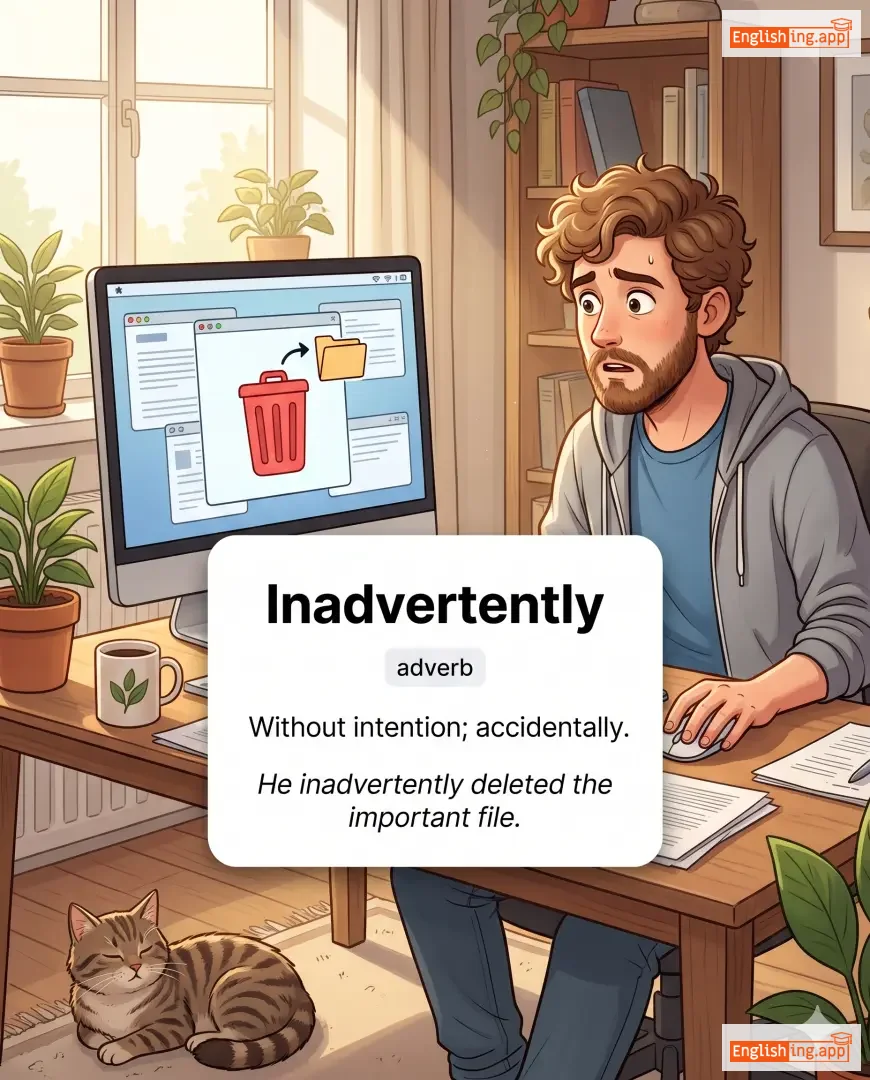
/ˌɪnədˈvɜːrtəntli/
adverb
(inadvertently)
••••••
|
|
不小心
buxiaoxin
••••••
|
- •••••• | - •••••• | - •••••• | - •••••• |
Without intention; accidentally.
••••••
|
He inadvertently deleted the important file.
他不小心删除了重要的文件。
••••••
|
他不小心删除了重要的文件。
Ta bu xiaoxin shanchule zhongyao de wenjian.
••••••
|
- •••••• | - •••••• | - •••••• |
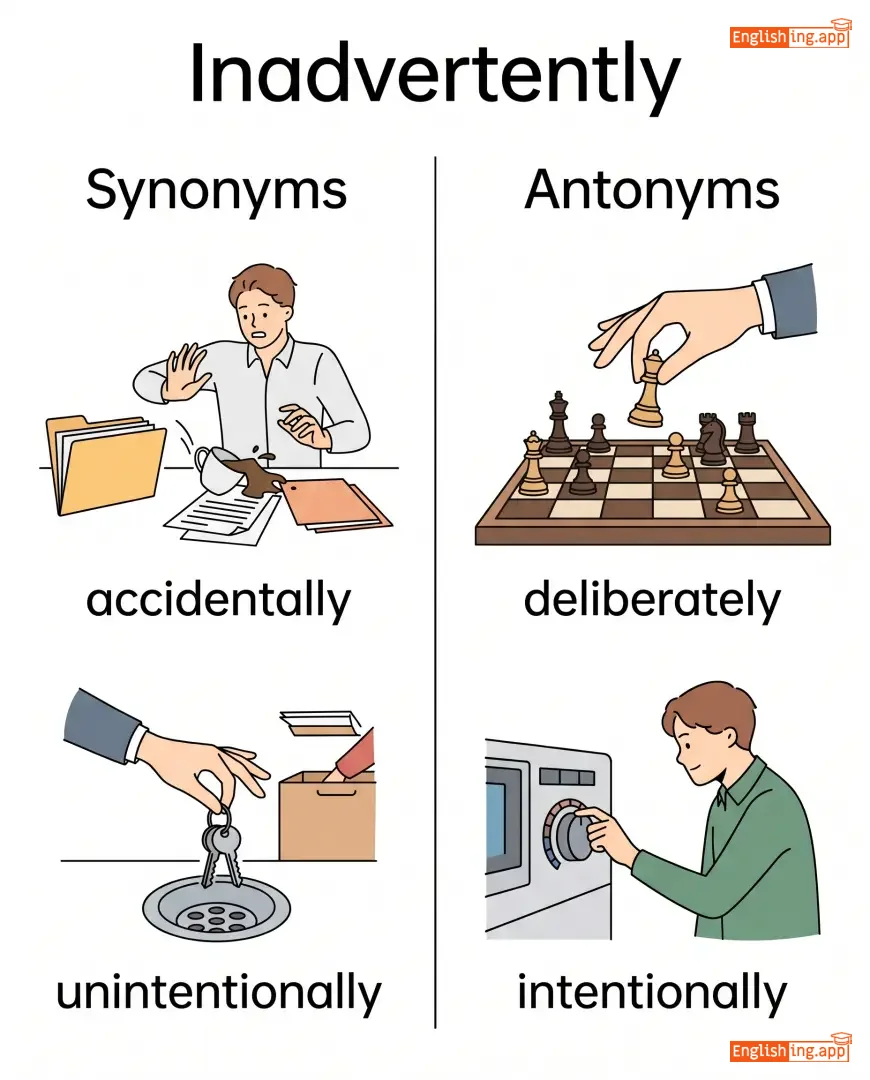
accidentally, unintentionally, mistakenly, unwittingly
••••••
|
deliberately, intentionally, purposefully
••••••
|
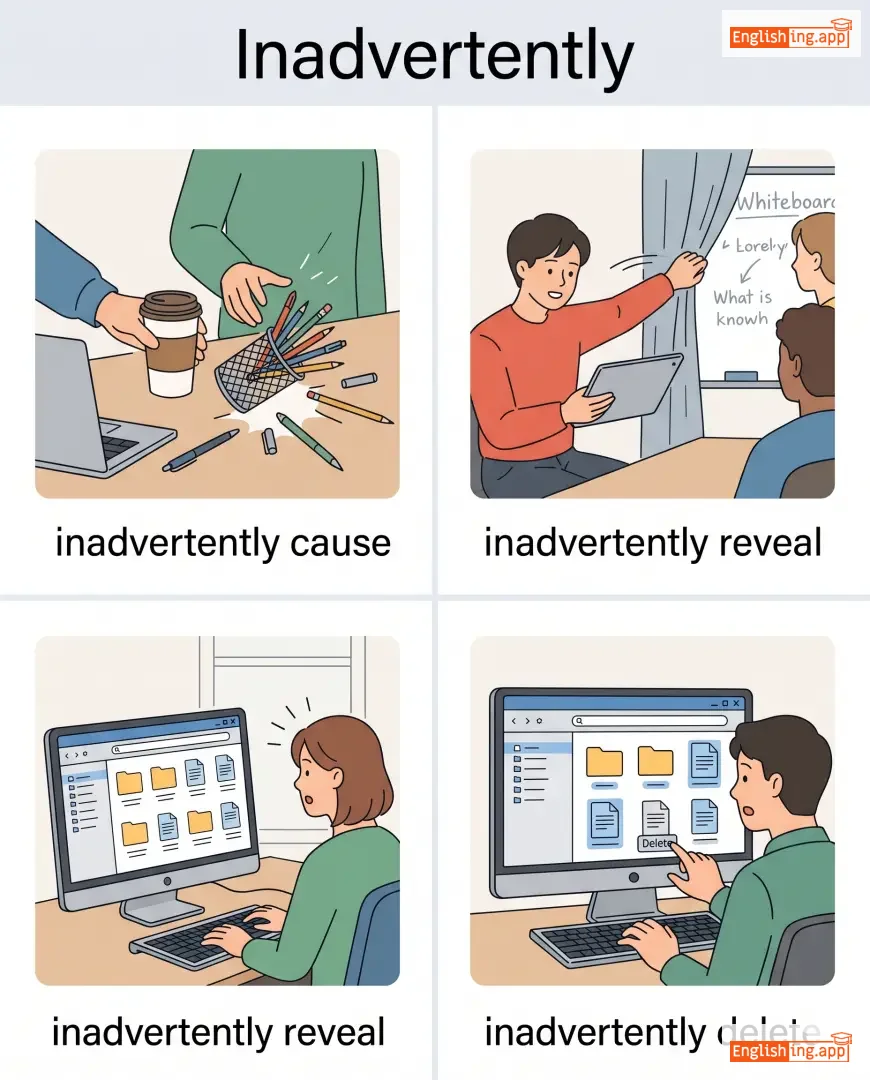
inadvertently cause, inadvertently reveal, inadvertently delete
••••••
|
Inadvertently 意思是不小心的,就像做错事时不经意地发生的错误。
••••••
|
|
#4420
😅
|
/ˌɪnədˈvɜːrtənt/
adjective
(因阿德万特)
••••••
|
- •••••• |
无意的, 非故意的
wuyi de, fei guyi de
••••••
|
- •••••• | - •••••• | - •••••• | - •••••• |
Not resulting from or achieved through deliberate planning; unintentional.
••••••
|
Her inadvertent mistake caused a delay in the project.
她的无意错误导致了项目的延迟。
••••••
|
她的无意错误导致了项目的延迟。
Tā de wúyì cuòwù dǎozhì le xiàngmù de yánchí.
••••••
|
- •••••• | - •••••• | - •••••• |
unintentional, accidental, careless, unintended, unwitting
••••••
|
intentional, deliberate, purposeful
••••••
|
inadvertent error, inadvertent mistake, inadvertent disclosure, inadvertent omission
••••••
|
Inadvertent 意味着无意的,比如没有计划的错误。
••••••
|
|
#4421
😅
|
/ˌɪnədˈvɜːrtəns/
noun
(因阿德维尔坦斯)
••••••
|
- •••••• |
疏忽
shūhū
••••••
|
- •••••• | - •••••• | - •••••• | - •••••• |
Failure to pay attention; carelessness.
••••••
|
The error happened through sheer inadvertence.
错误是由于完全的疏忽发生的。
••••••
|
错误是由于完全的疏忽发生的。
Cuòwù shì yóuyú wánquán de shūhū fāshēng de.
••••••
|
- •••••• | - •••••• | - •••••• |
oversight, negligence, mistake, carelessness, inattentiveness
••••••
|
attention, carefulness, diligence
••••••
|
through inadvertence, sheer inadvertence, act of inadvertence
••••••
|
In + Advertise → 如果你不注意广告,就会发生Inadvertence,也就是疏忽。
••••••
|
|
#4422
🚫
|
/ˌɪnədˈmɪsəbl̩/
adjective
(inædmɪsɪbl)
••••••
|
- •••••• |
不可接受
bukexiadu
••••••
|
- •••••• | - •••••• | - •••••• | - •••••• |
Not allowed, especially as evidence in a court of law.
••••••
|
The judge ruled the evidence inadmissible. |
法官宣布证据不可接受。
Faguang xuangbu zhengju bukexiadu.
••••••
|
inadmissible evidence |
Evidence that cannot be accepted in court.
••••••
|
不可接受的证据
Bukexiadu de zhengju
••••••
|
unacceptable, invalid, impermissible, inappropriate, prohibited
••••••
|
admissible, acceptable, valid
••••••
|
inadmissible evidence, inadmissible argument, legally inadmissible
••••••
|
可接受 = 允许, 不可接受 = 不允许
••••••
|
|
#4423
⚠️
|
/ɪnˈædɪkwət/
adjective
(inadekweit)
••••••
|
- •••••• |
不充分
bù chōngfèn
••••••
|
- •••••• | - •••••• | - •••••• | - •••••• |
Not sufficient or good enough.
••••••
|
The funding was inadequate to complete the project. |
资金不足以完成项目。
Zījīn bù zúgòu yǐ wánchéng xiàngmù.
••••••
|
inadequate resources |
Not enough resources to meet requirements.
••••••
|
不足的资源
bù zú de zīyuán
••••••
|
insufficient, deficient, lacking, meager, incomplete
••••••
|
adequate, sufficient, enough
••••••
|
inadequate funding, inadequate resources, inadequate support, inadequate system
••••••
|
Adequate意味着足够,所以Inadequate = 不足 → 不充分
••••••
|
|
#4424
🛑
|
/ɪnˈæktɪv/
adjective
(因阿克提夫)
••••••
|
- •••••• |
不活跃
bù huó yuè
••••••
|
- •••••• | - •••••• | - •••••• | - •••••• |
Not engaging in activity; not active.
••••••
|
The account has been inactive for six months. |
账户已经有六个月没有活跃。
Zhànghù yǐjīng yǒu liù gè yuè méiyǒu huóyuè.
••••••
|
inactive lifestyle |
A way of living with little or no physical activity.
••••••
|
不活跃的生活方式
bù huó yuè de shēng huó fāngshì
••••••
|
dormant, idle, passive, sluggish, stagnant
••••••
|
active, energetic, lively
••••••
|
inactive account, inactive period, inactive member, inactive role
••••••
|
In + Active = 不活跃 → 不活跃
••••••
|
|
#4425
❌
|
/ɪnˈækjʊrət/
adjective
(inakyuret)
••••••
|
- •••••• |
不准确的
bu zhunque de
••••••
|
- •••••• | - •••••• | - •••••• | - •••••• |
Not correct, precise, or exact; containing errors.
••••••
|
The report was full of inaccurate data.
报告充满了不准确的数据。
••••••
|
报告充满了不准确的数据。
Baogao chongman le bu zhunque de shuju.
••••••
|
inaccurate statement
不准确的陈述
••••••
|
A statement that contains errors or is not correct.
••••••
|
不准确的陈述
bu zhunque de chenshu
••••••
|
incorrect, false, erroneous, imprecise, faulty
••••••
|
accurate, correct, precise
••••••
|
inaccurate report, inaccurate figures, inaccurate description, highly inaccurate
••••••
|
In + Accurate 在中文意味着不准确
••••••
|
|
#4426
⚠️
|
/ˌɪmprəˈpraɪəti/
noun
(impropriety)
••••••
|
- •••••• |
不当行为
budang xingwei
••••••
|
- •••••• | - •••••• | - •••••• | - •••••• |
Failure to observe standards of honesty or modesty; improper behavior.
••••••
|
The politician was accused of financial impropriety. |
该政治家被指控涉及财务不当行为。
Gai zhengzhijia bei zhi kong sheji caiwu budang xingwei.
••••••
|
- •••••• | - •••••• | - •••••• |
misconduct, wrongdoing, indecency, irregularity
••••••
|
propriety, decency, correctness
••••••
|
financial impropriety, alleged impropriety, impropriety of conduct
••••••
|
Improper + ity = 不当行为,意味着不当的行为。
••••••
|
|
#4427
👉
|
/ɪmˈpjuːt/
verb
(yīng pǔ tú)
••••••
|
|
归因于
guī yīn yú
••••••
|
imputed
yīng pǔ tú dé
••••••
|
imputed
yīng pǔ tú dé
••••••
|
imputes
yīng pǔ tú sī
••••••
|
imputing
yīng pǔ tú yīng
••••••
|
to attribute a fault or responsibility to someone
••••••
|
They imputed the company's success to good leadership.
他们将公司的成功归功于出色的领导力。
••••••
|
他们将公司的成功归功于出色的领导力。
Tāmen jiāng gōngsī de chénggōng guī gōng yú chū sè de lǐngdǎo lì.
••••••
|
- •••••• | - •••••• | - •••••• |
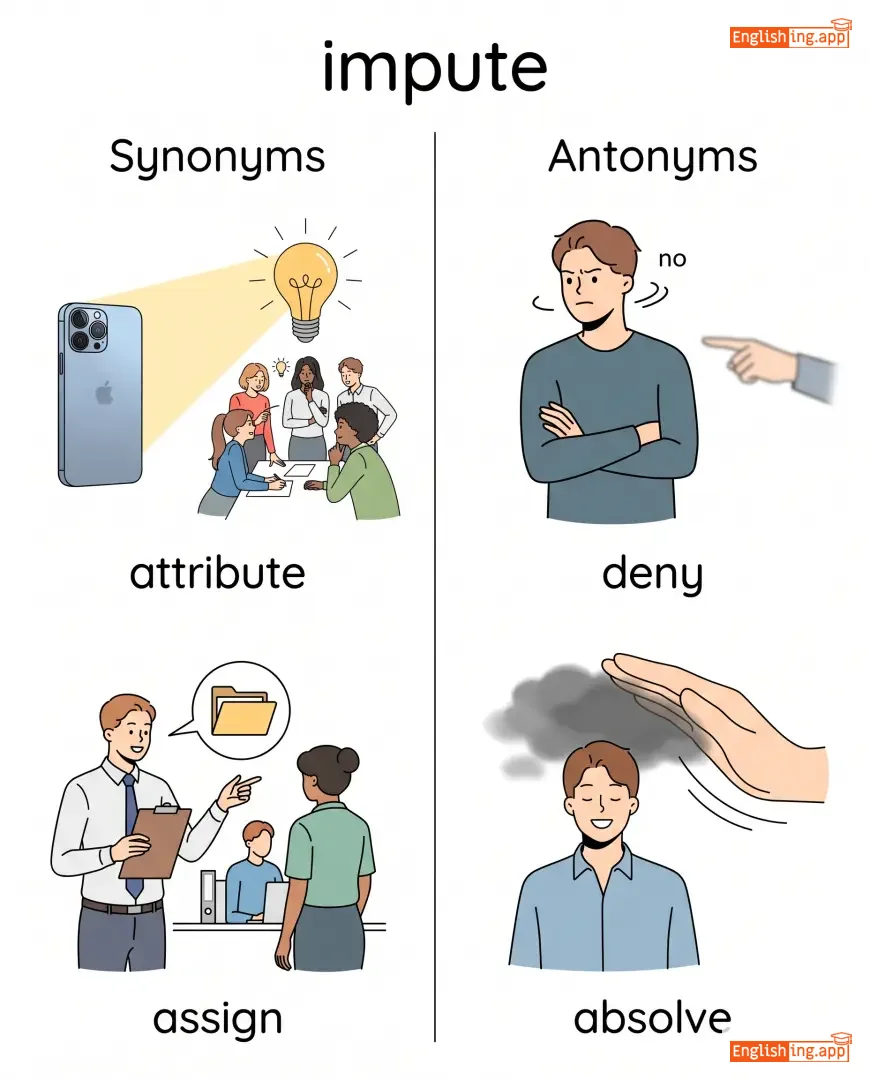
attribute, assign, credit, ascribe
••••••
|
deny, absolve
••••••
|
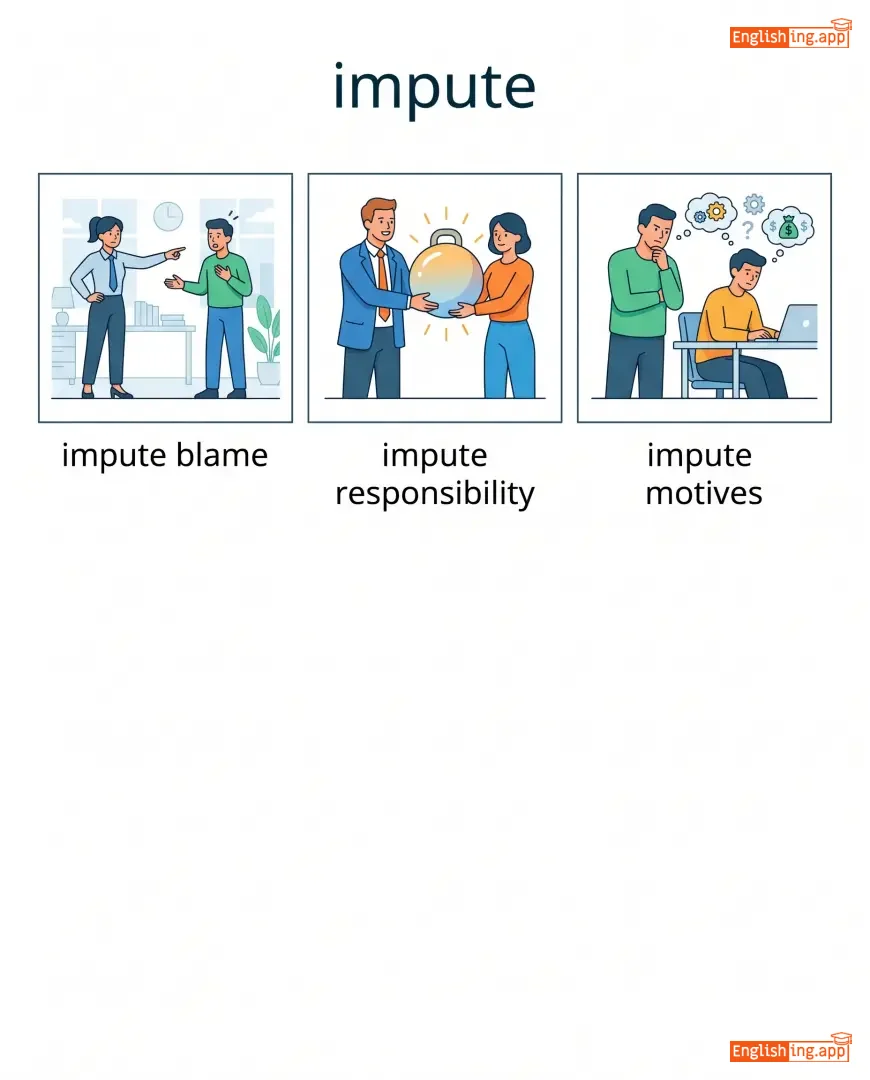
impute blame, impute responsibility, impute motives, impute success
••••••
|
Impute就像一个输入过程,归因于某人或某事。
••••••
|
|
#4428
⚖️
|
/ˌɪmpjuˈteɪʃən/
noun
(印普特申)
••••••
|
- •••••• |
指控
zhikong
••••••
|
- •••••• | - •••••• | - •••••• | - •••••• |
an accusation or attribution of blame
••••••
|
The politician denied the imputation of corruption.
政治家否认了腐败的指控。
••••••
|
政治家否认了腐败的指控。
Zhengzhijia founianle fubai de zhikong.
••••••
|
- •••••• | - •••••• | - •••••• |
accusation, allegation, attribution, charge
••••••
|
defense, justification
••••••
|
false imputation, unfair imputation, imputation of guilt, legal imputation
••••••
|
Imputation意味着指控 – 归咎于某人
••••••
|
|
#4429
💧
|
/ɪmˈpjʊər/
adjective
(yīnpǔér)
••••••
|
- •••••• |
不纯
bùchún
••••••
|
- •••••• | - •••••• | - •••••• | - •••••• |
not clean or free from contamination; morally corrupt
••••••
|
The water was impure and unsafe to drink.
水是混浊的,不能安全饮用。
••••••
|
水是混浊的,不能安全饮用。
Shuǐ shì hùnzhuó de, bùnéng ānquán yǐn yòng.
••••••
|
- •••••• | - •••••• | - •••••• |
dirty, contaminated, polluted, unclean
••••••
|
pure, clean, uncontaminated
••••••
|
impure thoughts, impure water, chemically impure, morally impure
••••••
|
不纯意味着impure - 不干净,不纯
••••••
|
|
#4430
🛡️
|
/ɪmˈpjuːnɪti/
noun
••••••
|
- •••••• | - •••••• | - •••••• | - •••••• | - •••••• | - •••••• |
freedom from punishment or harmful consequences for an action
••••••
|
The dictator ruled with impunity, ignoring international laws. |
- •••••• |
with impunity |
without being punished or facing negative consequences
••••••
|
- •••••• |
exemption, immunity, freedom, privilege, license
••••••
|
liability, punishment, accountability
••••••
|
act with impunity, crimes with impunity, enjoy impunity, operate with impunity
••••••
|
No •••••• |
|
#4431
⚡
|
/ɪmˈpʌlsɪv/
adjective
(冲动的)
••••••
|
- •••••• |
冲动的, 直觉的
chongdong de, zhi jue de
••••••
|
- •••••• | - •••••• | - •••••• | - •••••• |
acting suddenly without careful thought
••••••
|
She made an impulsive decision to buy the car. |
她做出了一个冲动的决定,买了车。
Ta zuo chu le yi ge chongdong de jueding, mai le che.
••••••
|
impulsive buying |
making sudden purchases without planning
••••••
|
冲动购物
chongdong gouwu
••••••
|
rash, hasty, spontaneous, reckless, unthinking
••••••
|
cautious, deliberate, thoughtful
••••••
|
impulsive decision, impulsive behavior, impulsive action, impulsive buying
••••••
|
Impulsive decision意味着突如其来的行动 → 想象一个⚡闪电般的决定。
••••••
|
|
#4432
🚀
|
/ɪmˈpʌlʃən/
noun
••••••
|
- •••••• | - •••••• | - •••••• | - •••••• | - •••••• | - •••••• |
a strong urge or drive to act; the act of impelling
••••••
|
His impulsion to travel made him leave his job suddenly. |
- •••••• | - •••••• | - •••••• | - •••••• |
urge, drive, compulsion, push
••••••
|
reluctance, hesitation
••••••
|
impulsion to act, impulsion of desire, strong impulsion
••••••
|
No •••••• |
|
#4433
😔
|
/ɪmˈpjuːɪsəns/
noun
(impyuīnsī)
••••••
|
- •••••• |
无能, 无力
wúnéng, wúlì
••••••
|
- •••••• | - •••••• | - •••••• | - •••••• |
inability to take effective action; helplessness
••••••
|
The government’s impuissance in the face of crisis frustrated the people. |
政府在危机面前的无能让人民感到沮丧。
Zhèngfǔ zài wēijī miànqián de wúnéng ràng rénmín gǎndào jǔsàng.
••••••
|
- •••••• | - •••••• | - •••••• |
powerlessness, helplessness, incapacity, weakness
••••••
|
strength, power, capability
••••••
|
political impuissance, sense of impuissance, display of impuissance
••••••
|
Impuissance = 'power sense' 没有 → 也就是说缺乏力量或能力。
••••••
|
|
#4434
⚔️
|
/ɪmˈpjuːn/
verb
••••••
|
- •••••• | - •••••• |
impugned
••••••
|
impugned
••••••
|
impugns
••••••
|
impugning
••••••
|
to dispute the truth, validity, or honesty of a statement or motive
••••••
|
The lawyer tried to impugn the credibility of the witness. |
- •••••• |
impugn someone’s character |
to question or attack someone's reputation
••••••
|
- •••••• |
challenge, dispute, question, attack, criticize
••••••
|
defend, support, uphold
••••••
|
impugn motives, impugn credibility, impugn character, impugn reputation
••••••
|
No •••••• |
|
#4435
😏
|
/ˈɪmpjəd(ə)nt/
adjective
(因普德特)
••••••
|
- •••••• |
无礼的,厚颜无耻的
wú lǐ de, hòu yán wú chǐ de
••••••
|
- •••••• | - •••••• | - •••••• | - •••••• |
not showing due respect for another person; rude
••••••
|
The impudent child talked back to the teacher. |
那个无礼的孩子顶撞老师。
Nàgè wúlǐ de háizi dǐngzhuàng lǎoshī.
••••••
|
impudent behavior |
disrespectful or rude actions
••••••
|
无礼行为
wú lǐ xíngwéi
••••••
|
rude, insolent, disrespectful, cheeky, brazen
••••••
|
respectful, polite, courteous
••••••
|
impudent child, impudent remark, impudent smile, impudent response
••••••
|
Impudent 意思是粗鲁,就像如果一个重要的人也表现得粗鲁,我们会说'因普德特!'
••••••
|
|
#4436
😏
|
/ˈɪmpjʊdəns/
noun
(不礼貌)
••••••
|
- •••••• |
无礼
wulǐ
••••••
|
- •••••• | - •••••• | - •••••• | - •••••• |
Rude and disrespectful behavior.
••••••
|
The student's impudence shocked the entire class. |
学生的无礼行为让全班震惊。
Xuéshēng de wúlǐ xíngwéi ràng quán bān zhènjīng.
••••••
|
- •••••• | - •••••• | - •••••• |
insolence, disrespect, cheek, rudeness
••••••
|
respect, politeness, courtesy
••••••
|
show impudence, display impudence, sheer impudence, impudence of youth
••••••
|
Impudence = 无礼 (没有礼貌)
••••••
|
|
#4437
🙈
|
/ɪmˈpruːdənt/
adjective
(不谨慎)
••••••
|
- •••••• |
鲁莽
lumang
••••••
|
- •••••• | - •••••• | - •••••• | - •••••• |
Not showing care for the consequences of an action.
••••••
|
It was imprudent to drive in such stormy weather. |
在如此暴风雨的天气下开车是鲁莽的。
Zai ru ci baofengyu de tianqi xia kaiche shi lumang de.
••••••
|
- •••••• | - •••••• | - •••••• |
careless, unwise, rash, reckless
••••••
|
prudent, cautious, wise
••••••
|
imprudent decision, imprudent behavior, imprudent remark, highly imprudent
••••••
|
Prudent意味着谨慎,Im-prudent意味着鲁莽 → 鲁莽
••••••
|
|
#4438
⚠️
|
/ɪmˈpruːdəns/
noun
(不谨慎)
••••••
|
- •••••• |
轻率
qīng shuài
••••••
|
- •••••• | - •••••• | - •••••• | - •••••• |
Lack of caution or good judgment.
••••••
|
His imprudence in investing all his money in one stock was disastrous. |
他将所有的钱都投资在一只股票上的轻率行为是灾难性的。
Ta1 jiang1 suo3 you3 de qian2 dou1 tou2 zi4 zai4 yi1 zhi1 gu3 piao4 shang4 de qing1 shuai4 xing2 wei2 shi4 zai1 nan4 xing4 de.
••••••
|
- •••••• | - •••••• | - •••••• |
recklessness, rashness, carelessness, thoughtlessness
••••••
|
prudence, caution, foresight
••••••
|
act of imprudence, sheer imprudence, financial imprudence, political imprudence
••••••
|
Im + prudence 的意思是没有谨慎 → 轻率
••••••
|
|
#4439
🎭
|
/ˈɪmprəvaɪz/
verb
••••••
|
- •••••• | - •••••• |
improvised
••••••
|
improvised
••••••
|
improvises
••••••
|
improvising
••••••
|
To create or perform something spontaneously without preparation.
••••••
|
The actor had to improvise his lines when he forgot the script. |
- •••••• |
improvise on the spot |
To come up with something immediately without preparation.
••••••
|
- •••••• |
extemporize, ad-lib, invent, create, devise
••••••
|
prepare, rehearse, plan
••••••
|
improvise a speech, improvise music, improvise a solution, improvise lines
••••••
|
No •••••• |
|
#4440
💸
|
/ɪmˈprɒvɪdənt/
adjective
(impróvident)
••••••
|
- •••••• |
缺乏远见
quēfá yuǎnjiàn
••••••
|
- •••••• | - •••••• | - •••••• | - •••••• |
Not having or showing foresight; spending wastefully or without thought for the future.
••••••
|
His improvident habits left him with no savings.
His impróvident habits left him with no savings.
••••••
|
他缺乏远见的习惯让他没有积蓄。
Tā quēfá yuǎnjiàn de xíguàn ràng tā méiyǒu jīxù.
••••••
|
- •••••• | - •••••• | - •••••• |
wasteful, reckless, careless, extravagant, spendthrift
••••••
|
prudent, cautious, thrifty
••••••
|
improvident spending, improvident lifestyle, improvident choices, improvident behavior
••••••
|
Im provident = 没有未来计划 → 缺乏远见
••••••
|
Vocabulary Quiz
Test your vocabulary by matching words with their translations or meanings.
Login to take the quiz
Comments (0)
Share your thoughts and join the discussion.
Join the discussion by logging in
Login to CommentNo comments yet
Be the first to share your thoughts!