



Swipe left or right, or use the buttons. Tap image to zoom.
例句翻译
单词
Lesson 425Lesson 425 - 遮罩切换
|
表情符号
|
单词 | Images | 翻译 | 过去时 | 过去分词 | 第三人称单数 | 动名词 | 含义 | 例句 | 例句翻译 | 示例表达 | 示例表达含义 | 示例表达翻译 | 同义词 | 反义词 | 搭配词 | 助记符 |
|---|---|---|---|---|---|---|---|---|---|---|---|---|---|---|---|---|---|
|
#1
🧠
|
/ˈdʒiːniəs/
noun
(dʒiːniəs)
••••••
|
- •••••• |
天才
tiāncái
••••••
|
- •••••• | - •••••• | - •••••• | - •••••• |
a person with exceptional intellectual or creative ability
••••••
|
Einstein was a scientific genius. |
爱因斯坦是一个科学天才。
Ài yīn sī tǎn shì yīgè kēxué tiāncái.
••••••
|
stroke of genius |
a brilliant or very clever idea
••••••
|
天才的灵感
tiāncái de línggǎn
••••••
|
prodigy, mastermind, intellect, wizard, brain
••••••
|
fool, simpleton, idiot
••••••
|
artistic genius, musical genius, pure genius, show genius
••••••
|
Genius – 想到天才就是那个总是有新点子的人!
••••••
|
|
#1
✊
|
/ɡrɪp/
verb
(grip)
••••••
|
- •••••• |
抓住
zhuazhu
••••••
|
gripped
gripped
••••••
|
gripped
gripped
••••••
|
grips
grips
••••••
|
gripping
gripping
••••••
|
to hold something tightly or firmly
••••••
|
He gripped the steering wheel tightly.
他紧握着方向盘。
••••••
|
他紧握着方向盘。
Tā jǐn wò zhe fāngxiàng pán.
••••••
|
get a grip
掌握自己
••••••
|
to control your emotions or behavior
••••••
|
掌握自己
zhǎngwò zìjǐ
••••••
|
hold, grasp, clutch, seize, clasp
••••••
|
release, let go, drop
••••••
|
firm grip, lose grip, get a grip, tight grip
••••••
|
抓住就像做Grip — 不会掉!
••••••
|
|
#1
👋
|
/ɡriːt/
verb
(greet)
••••••
|
|
问候
wènhòu
••••••
|
greeted
greeted
••••••
|
greeted
greeted
••••••
|
greets
greets
••••••
|
greeting
greeting
••••••
|
to say hello or welcome someone politely
••••••
|
She greeted the guests with a warm smile.
她用温暖的微笑迎接了客人。
••••••
|
她用温暖的微笑迎接了客人。
Tā yòng wēnnuǎn de wēixiào yíngjiē le kèrén.
••••••
|
greet with open arms
张开双臂迎接
••••••
|
to welcome someone eagerly and happily
••••••
|
张开双臂迎接
zhāng kāi shuāng bì yíngjiē
••••••
|
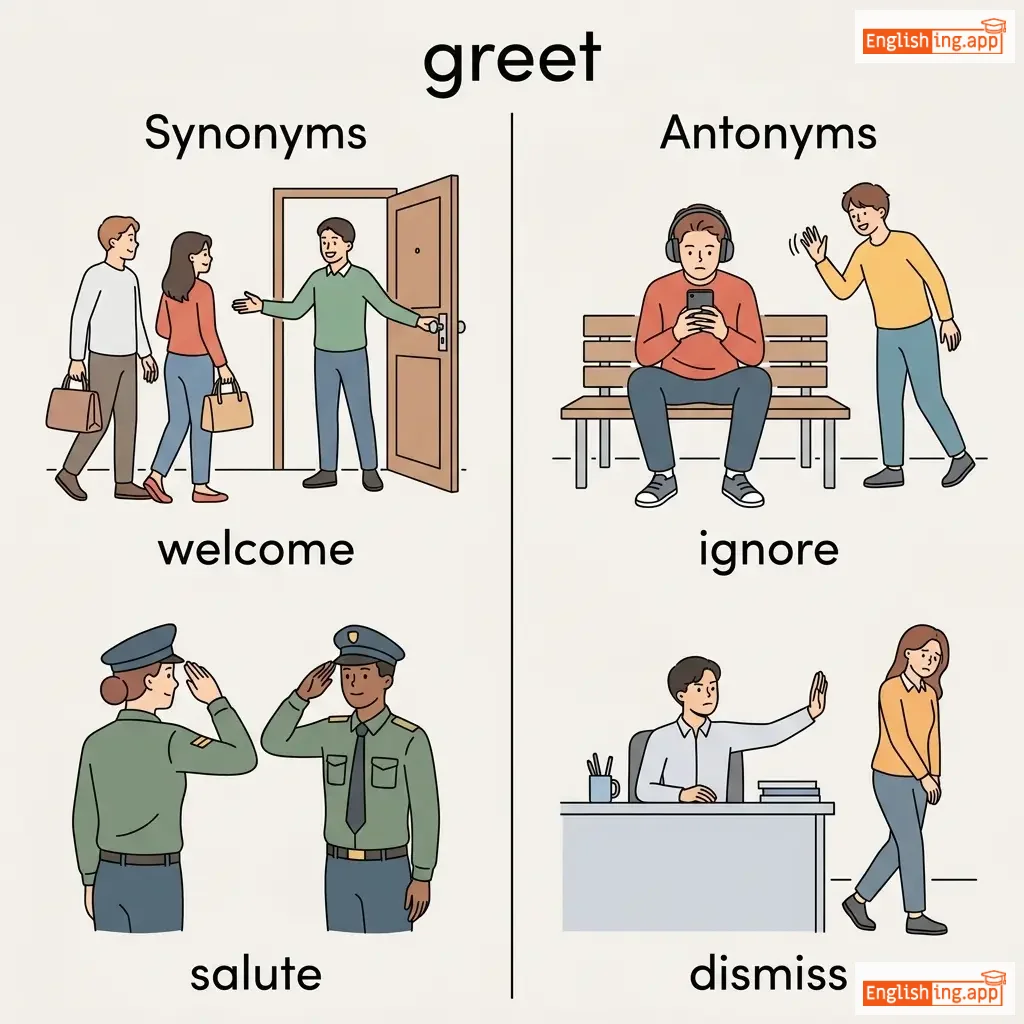
welcome, salute, acknowledge, receive, meet
••••••
|
ignore, dismiss, overlook
••••••
|
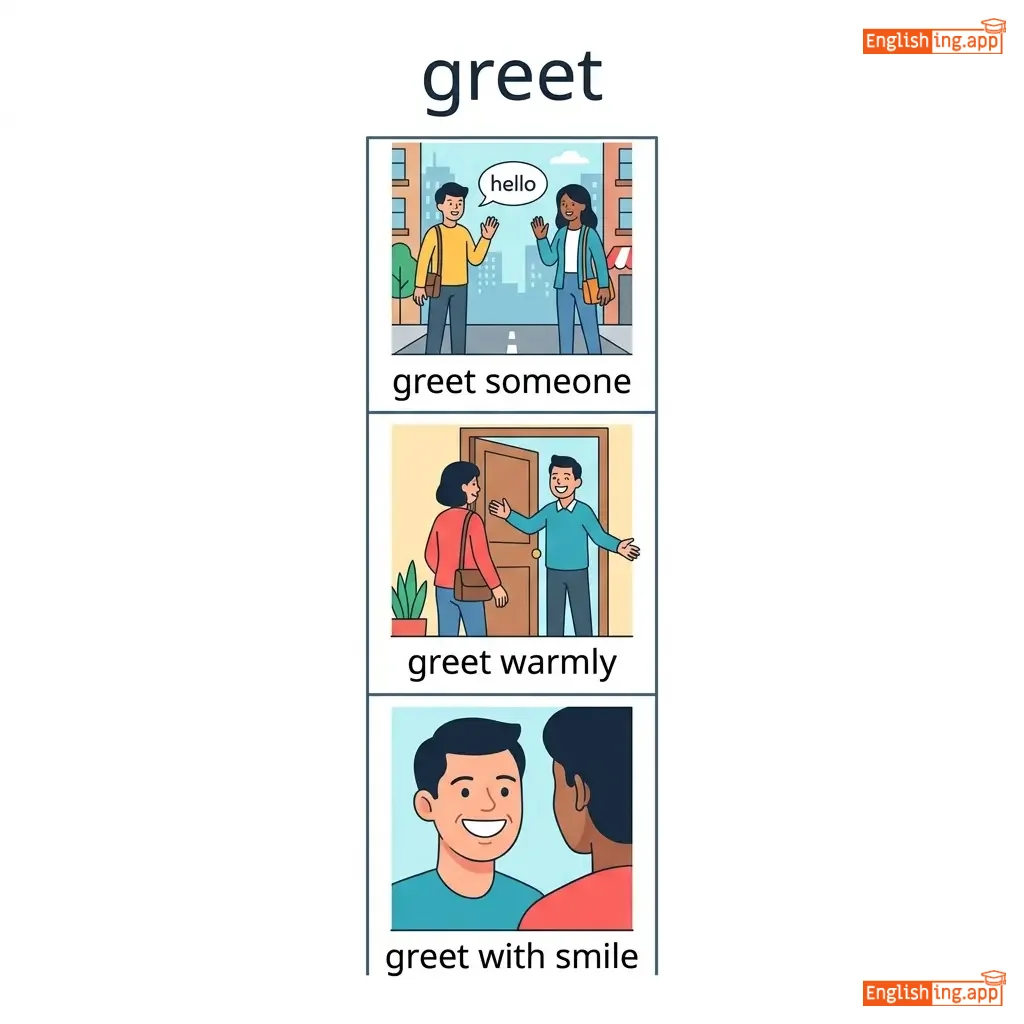
greet someone, greet warmly, greet with smile, greet with joy
••••••
|
每个人都用微笑迎接客人,就像在问候一样。
••••••
|
|
#1
🇬🇷
|
/ɡriːk/
adjective
(希腊的)
••••••
|
- •••••• |
希腊的 (与希腊相关)
Xīlà de (yǔ Xīlà xiāngguān)
••••••
|
- •••••• | - •••••• | - •••••• | - •••••• |
relating to Greece, its people, or its language
••••••
|
We enjoyed delicious Greek food at the restaurant. |
我们在餐馆享用了美味的希腊食物。
Wǒmen zài cānguǎn xiǎngyòngle měiwèi de Xīlà shíwù.
••••••
|
It's all Greek to me |
something that is difficult or impossible to understand
••••••
|
对我来说这完全是希腊文
Duì wǒ lái shuō zhè wánquán shì Xīlà wén
••••••
|
Hellenic, Mediterranean, classical, ancient Greek
••••••
|
non-Greek, foreign
••••••
|
Greek culture, Greek salad, Greek language, Greek mythology
••••••
|
希腊的让你想到希腊的语言——但如果你完全听不懂,那就说 ‘对我来说这完全是希腊文!’
••••••
|
|
#1
💫
|
/ˈɡreɪtli/
adverb
(格雷特利)
••••••
|
- •••••• |
非常
feichang
••••••
|
- •••••• | - •••••• | - •••••• | - •••••• |
to a large extent or degree; very much
••••••
|
She was greatly admired by her students.
她深受学生们的喜爱。
••••••
|
她深受学生们的喜爱。
Ta shen shou xueshengmen de xihuan.
••••••
|
- •••••• | - •••••• | - •••••• |
extremely, immensely, highly, deeply, significantly
••••••
|
slightly, barely, hardly
••••••
|
greatly improve, greatly appreciate, greatly benefit, greatly influence
••••••
|
Greatly 表示非常,大程度上!
••••••
|
|
#1
🙏
|
/ˈɡreɪtfəl/
adjective
(格雷特福尔)
••••••
|
- •••••• |
感激的
gǎnjī de
••••••
|
- •••••• | - •••••• | - •••••• | - •••••• |
feeling or showing thanks for something or someone
••••••
|
I am grateful for your help. |
我对你的帮助感激不尽。
Wǒ duì nǐ de bāngzhù gǎnjī bù jìn.
••••••
|
grateful heart |
a feeling of deep appreciation and thankfulness
••••••
|
感激的心
gǎnjī de xīn
••••••
|
thankful, appreciative, obliged, indebted, pleased
••••••
|
ungrateful, thankless, indifferent
••••••
|
grateful for, deeply grateful, grateful thanks, feel grateful
••••••
|
感激的意思是感激的心,记住要常怀感激之情!
••••••
|
|
#1
✊
|
/ɡrɑːsp/
verb
(grasp)
••••••
|
|
牢牢抓住或完全理解
lao lao zhua zhu huo wan quan li jie
••••••
|
grasped
grasped
••••••
|
grasped
grasped
••••••
|
grasps
grasps
••••••
|
grasping
grasping
••••••
|
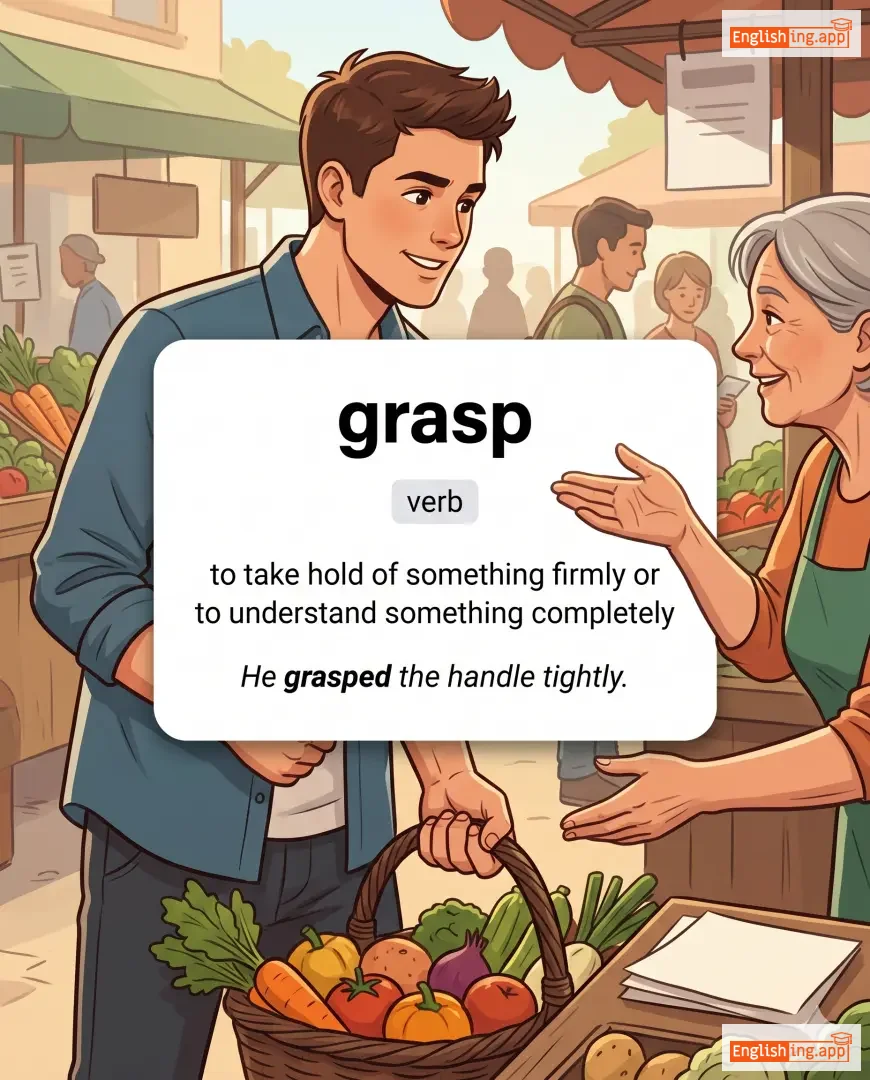
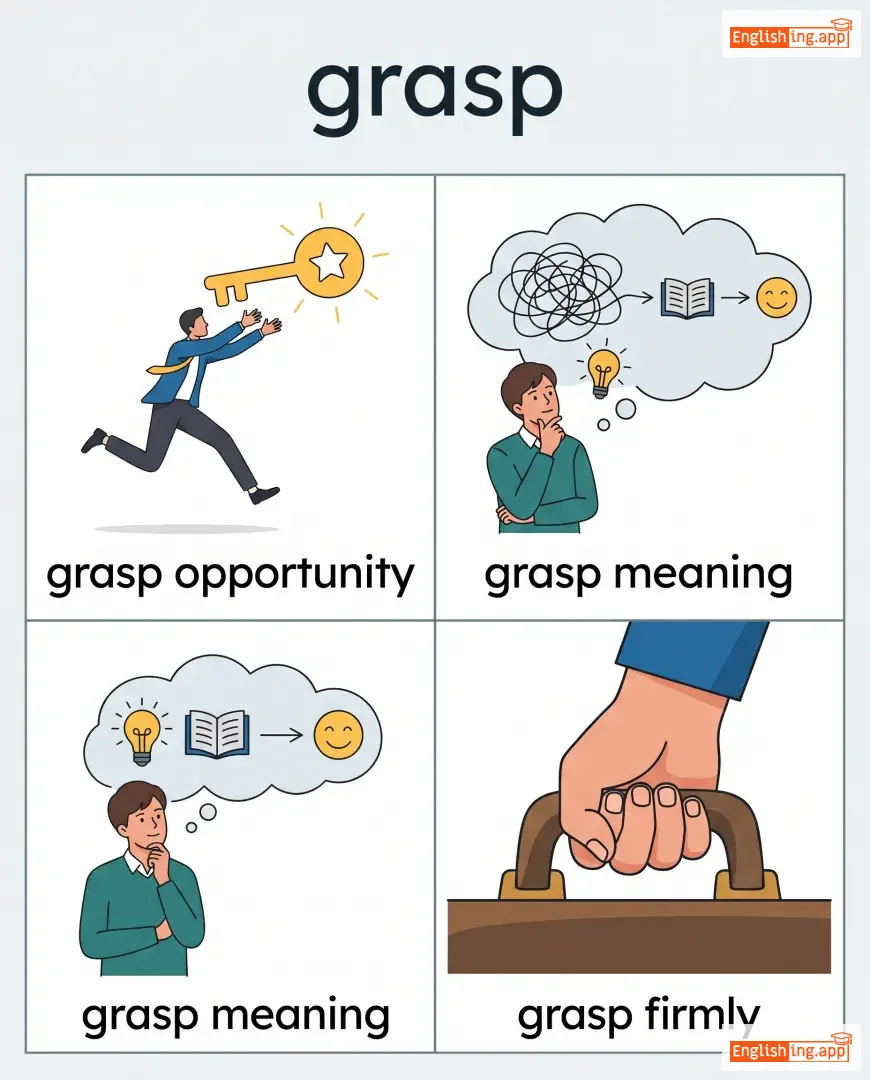
to take hold of something firmly or to understand something completely
••••••
|
He grasped the handle tightly.
他紧紧抓住了把手。
••••••
|
他紧紧抓住了把手。
Ta jin jin zhua zhu le ba shou.
••••••
|
grasp the nettle
抓住荨麻
••••••
|
to deal with a difficult situation with courage
••••••
|
勇敢地应对困难局面
Yong gan di ying dui kun nan ju mian
••••••
|
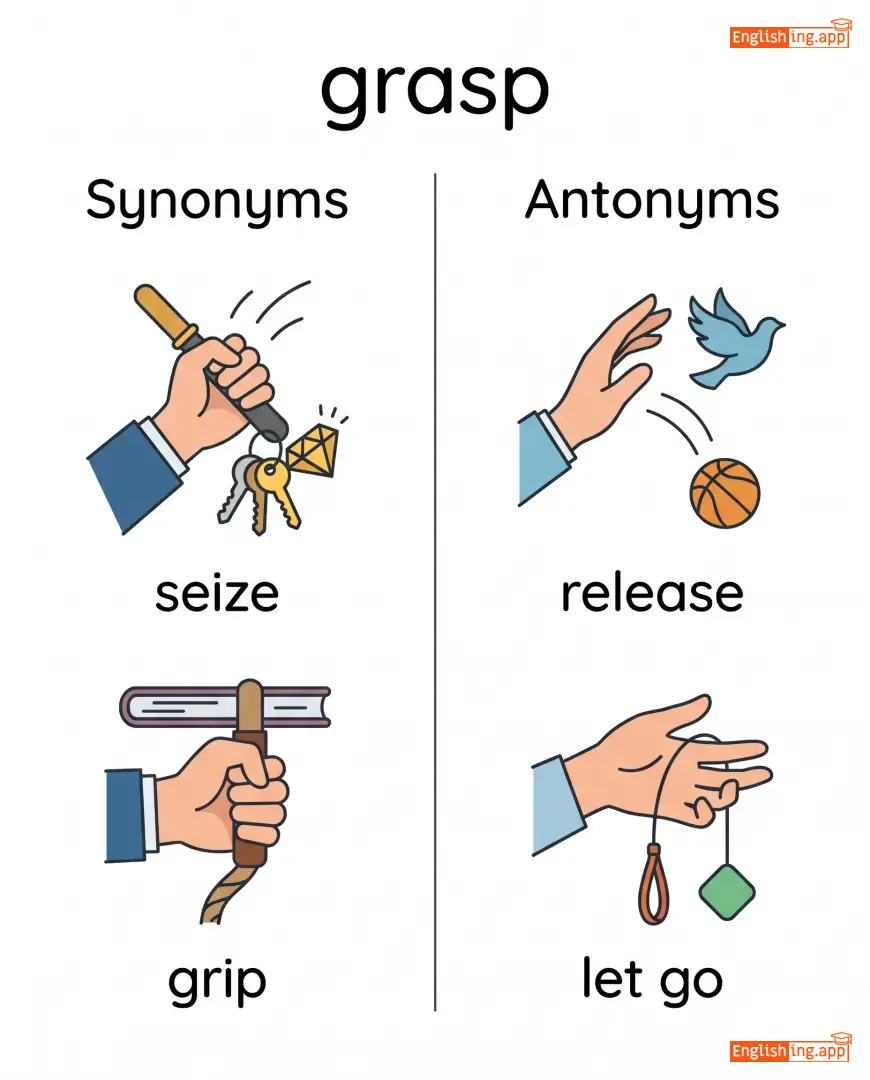
seize, grip, clutch, understand, comprehend
••••••
|
release, let go, misunderstand
••••••
|
grasp opportunity, grasp meaning, grasp firmly, grasp concept
••••••
|
Grasp: 紧紧抓住或完全理解!
••••••
|
|
#1
🍇
|
/ɡreɪp/
noun
(gulai)
••••••
|
- •••••• |
葡萄
putao
••••••
|
- •••••• | - •••••• | - •••••• | - •••••• |
a small, round fruit that grows in clusters on vines and is used to make wine or eaten as food
••••••
|
She picked a bunch of grapes from the vine. |
她从葡萄藤上摘下一串葡萄。
Ta cong putao teng shang zhai xia yi chuan putao.
••••••
|
sour grapes |
pretending to dislike something you cannot have
••••••
|
酸葡萄
suan putao
••••••
|
berry, fruit, vine fruit, raisin, cluster
••••••
|
vegetable, meat
••••••
|
grape juice, grapevine, bunch of grapes, green grape, red grape
••••••
|
葡萄是如此甜美,就像拥抱一样 🍇
••••••
|
|
#1
👵
|
/ˈɡrændˌpeə.rənt/
noun
(祖父母)
••••••
|
- •••••• |
祖父/祖母
zǔfù/zǔmǔ
••••••
|
- •••••• | - •••••• | - •••••• | - •••••• |
the parent of one's father or mother
••••••
|
My grandparents live in a small village near the hills. |
我的祖父母住在一个小村庄,靠近山丘。
Wǒ de zǔfùmǔ zhù zài yīgè xiǎo cūnzhuāng, kàojìn shānqiū.
••••••
|
grandparenting role |
the responsibilities and emotional support given by grandparents
••••••
|
祖父母角色
zǔfùmǔ juésè
••••••
|
ancestor, forebear, elder, granddad, grandma
••••••
|
grandchild, descendant
••••••
|
maternal grandparent, paternal grandparent, loving grandparent
••••••
|
Grand意味着大,parent意味着父母,所以grandparent就是大父母。
••••••
|
|
#1
👶
|
/ˈɡrænd.tʃaɪld/
noun
(guòpòchái)
••••••
|
- •••••• |
孙子或孙女
sūnzi huò sūnnǚ
••••••
|
- •••••• | - •••••• | - •••••• | - •••••• |
the child of one's son or daughter
••••••
|
They love spending time with their grandchild on weekends. |
他们喜欢在周末和他们的孙子或孙女一起度过时光。
Tāmen xǐhuān zài zhōumò hé tāmen de sūnzi huò sūnnǚ yīqǐ dùguò shíguāng.
••••••
|
- •••••• | - •••••• | - •••••• |
descendant, offspring, kin, progeny
••••••
|
ancestor, forebear
••••••
|
new grandchild, first grandchild, proud grandchild
••••••
|
Grand意味着祖父母,child意味着孩子,grandchild就是祖父母的孩子。
••••••
|
|
#1
🎓
|
/ˌɡrædʒ.uˈeɪ.ʃən/
noun
••••••
|
- •••••• | - •••••• | - •••••• | - •••••• | - •••••• | - •••••• |
the act of receiving a degree or diploma after completing a course of study
••••••
|
Her parents attended her graduation ceremony with pride. |
- •••••• |
graduation day |
the day on which students officially receive their degrees or diplomas
••••••
|
- •••••• |
commencement, completion, convocation, ceremony
••••••
|
dropout, failure
••••••
|
graduation ceremony, graduation cap, graduation speech, graduation day
••••••
|
No •••••• |
|
#1
💃
|
/ɡreɪs/
noun
(格蕾丝)
••••••
|
- •••••• |
优雅, 优美
yōuyǎ, yōuměi
••••••
|
- •••••• | - •••••• | - •••••• | - •••••• |
simple elegance or refined movement; goodwill and kindness
••••••
|
She moved with grace across the stage. |
她优雅地走过舞台。
Tā yōuyǎ de zǒu guò wǔtái.
••••••
|
fall from grace |
to lose someone's approval or favor
••••••
|
失宠
shīchǒng
••••••
|
elegance, poise, charm, courtesy, kindness
••••••
|
rudeness, awkwardness, ugliness
••••••
|
move with grace, grace period, divine grace, social grace
••••••
|
Grace意味着优雅 — 优雅的(graceful)意味着以优美的方式行动。
••••••
|
|
#1
🏛️
|
/ˈɡʌv.ən/
verb
••••••
|
|
- •••••• |
governed
••••••
|
governed
••••••
|
governs
••••••
|
governing
••••••
|
to control, direct, or strongly influence the actions and behavior of others, especially through laws or authority
••••••
|
The country is governed by a coalition of parties. |
- •••••• |
govern oneself accordingly |
to act appropriately based on what one knows or has been told
••••••
|
- •••••• |
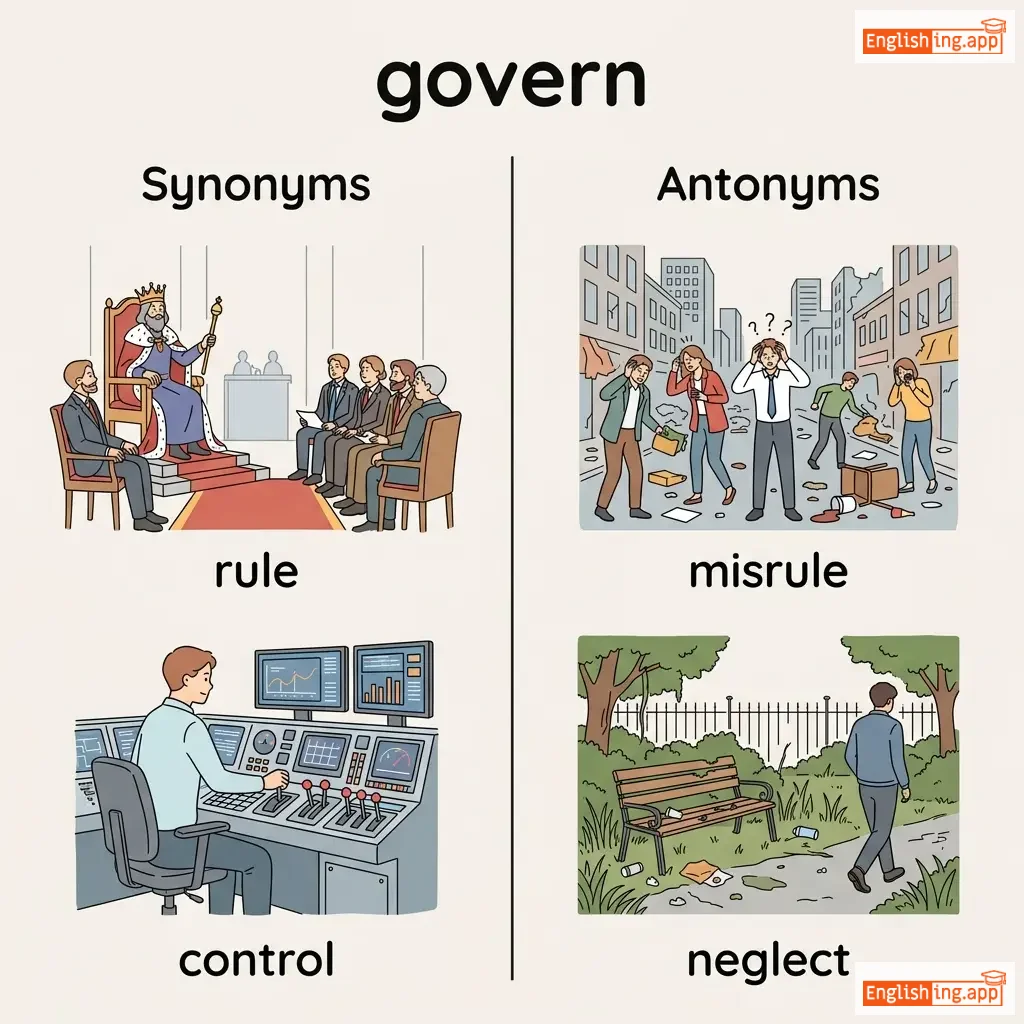
rule, control, manage, administer, oversee
••••••
|
misrule, neglect, abandon
••••••
|
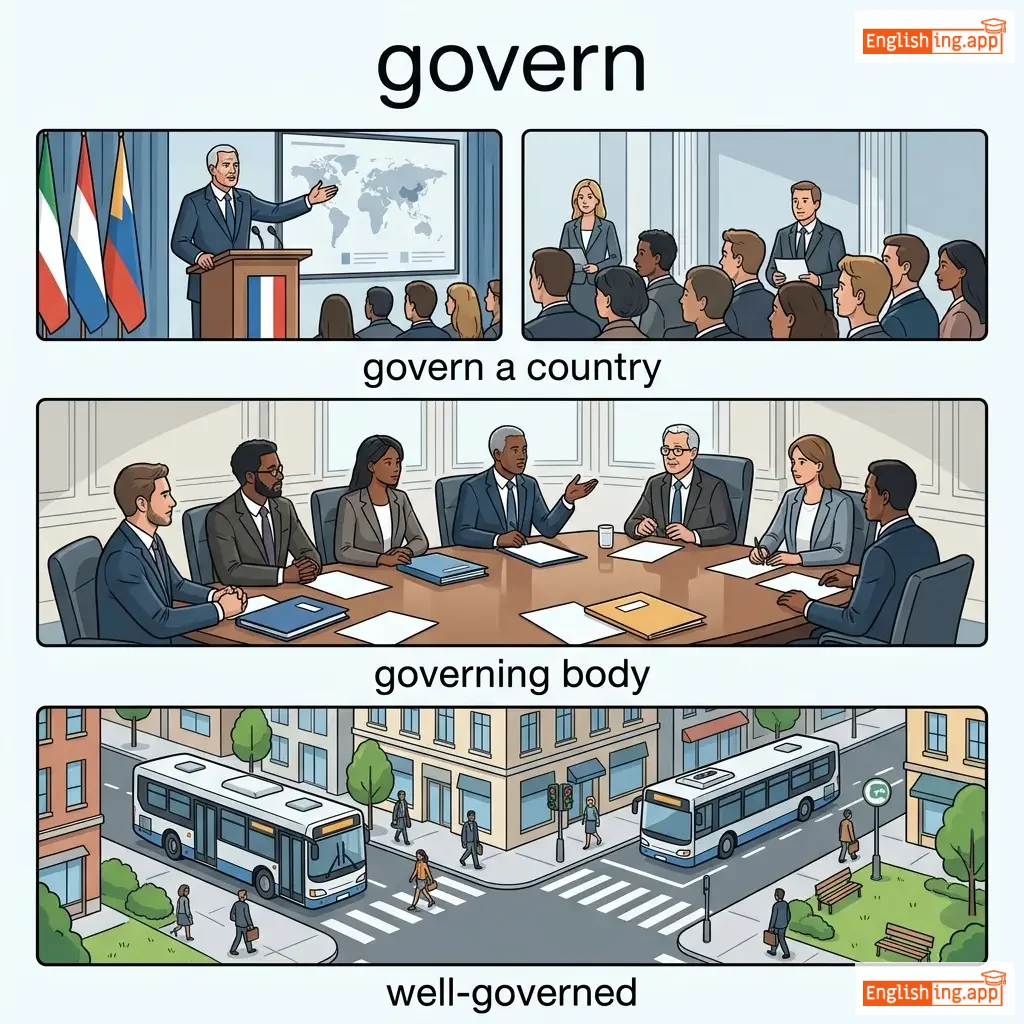
govern a country, governing body, well-governed, self-governed
••••••
|
No •••••• |
|
#1
🐐
|
/ɡoʊt/
noun
(山羊)
••••••
|
- •••••• |
山羊
shānyáng
••••••
|
- •••••• | - •••••• | - •••••• | - •••••• |
a hardy domesticated animal kept for its milk, meat, and hair
••••••
|
The farmer keeps several goats for milk production. |
农民养了几只山羊来生产牛奶。
nóngmín yǎngle jǐ zhī shānyáng lái shēngchǎn niúnǎi.
••••••
|
the G.O.A.T. |
an acronym for 'Greatest Of All Time', referring to someone exceptionally good
••••••
|
史上最伟大
shǐ shàng zuì wěidà
••••••
|
animal, livestock, sheep, ram, mammal
••••••
|
none, predator
••••••
|
mountain goat, goat milk, herd of goats, goat cheese
••••••
|
Goat 🐐 代表山羊 — G.O.A.T. 代表 '史上最伟大'!
••••••
|
|
#1
🌍
|
/ɡloʊb/
noun
(地球仪)
••••••
|
- •••••• |
地球仪
diqiuyi
••••••
|
- •••••• | - •••••• | - •••••• | - •••••• |
a spherical model of Earth or another planet; the world itself
••••••
|
Students used a globe to study the continents. |
学生们用地球仪来学习各大洲。
Xueshengmen yong diqiuyi lai xuexi ge dazhou.
••••••
|
across the globe |
all around the world
••••••
|
遍布全球
bianbu quanqiu
••••••
|
world, earth, planet, sphere, orb
••••••
|
flatness, local
••••••
|
global warming, around the globe, world globe, globe map
••••••
|
地球仪意味着世界 🌍 — 想象你在课堂上旋转地球仪,整个世界随之旋转。
••••••
|
|
#1
🍴
|
/fɔːk/
noun
(fɔrk)
••••••
|
- •••••• |
叉子
chāzi
••••••
|
- •••••• | - •••••• | - •••••• | - •••••• |
a tool with two or more prongs used for eating or serving food
••••••
|
He ate his salad with a fork. |
他用叉子吃了他的沙拉。
Tā yòng chāzi chīle tā de shālā.
••••••
|
at a fork in the road |
facing a point where a decision must be made
••••••
|
在路口
zài lùkǒu
••••••
|
utensil, prong, cutlery, divider
••••••
|
spoon, knife
••••••
|
dinner fork, salad fork, fork and knife, silver fork
••••••
|
Fork = 叉子。用叉子,保持双手清洁!
••••••
|
|
#1
👥
|
/ˈɡæðərɪŋ/
noun
(聚会)
••••••
|
- •••••• |
聚会
juhui
••••••
|
- •••••• | - •••••• | - •••••• | - •••••• |
a meeting or assembly of people for a particular purpose
••••••
|
We attended a family gathering last weekend.
我们上周末参加了一个家庭聚会。
••••••
|
我们上周末参加了一个家庭聚会。
Wo men shang zhou mo can jia le yi ge jia ting ju hui.
••••••
|
social gathering
社交聚会
••••••
|
a casual event where people meet and interact socially
••••••
|
社交聚会
shejiao juhui
••••••
|
meeting, assembly, party, event, conference
••••••
|
separation, dispersal
••••••
|
family gathering, large gathering, small gathering, informal gathering
••••••
|
Gather 意味着收集 → Gathering 意味着聚会,就像 'Family gathering' 中每个人聚在一起!
••••••
|
|
#1
⛽
|
/ˈɡæsəˌliːn/
noun
(汽油)
••••••
|
- •••••• |
汽油
qiyou
••••••
|
- •••••• | - •••••• | - •••••• | - •••••• |
a liquid fuel made from petroleum, used mainly to power engines in vehicles
••••••
|
The price of gasoline has increased significantly this month. |
本月汽油价格显著上涨了。
Ben yue qiyou jiage xianzhu shangzhang le.
••••••
|
run out of gasoline |
to have no fuel left in a vehicle
••••••
|
汽油耗尽
qiyou haojin
••••••
|
petrol, fuel, gas, diesel, energy
••••••
|
electricity, power outage
••••••
|
gasoline price, gasoline engine, gasoline station, gallon of gasoline
••••••
|
汽油是汽车的燃料。想象一下汽油充满了汽车,给汽车提供动力。
••••••
|
|
#1
🗑️
|
/ˈɡɑːrbɪdʒ/
noun
(gā bì jí)
••••••
|
- •••••• |
垃圾
laji
••••••
|
- •••••• | - •••••• | - •••••• | - •••••• |
waste material; things that are no longer useful or wanted
••••••
|
Please take out the garbage before it starts to smell. |
请把垃圾拿出去,免得开始发臭。
Qǐng bǎ lājī ná chūqù, miǎn de kāishǐ fāchòu.
••••••
|
one man's garbage is another man's treasure |
something worthless to one person may be valuable to another
••••••
|
一个人的垃圾是另一个人的宝藏
Yī gè rén de lājī shì lìng yī gè rén de bǎozàng
••••••
|
trash, waste, litter, refuse, junk
••••••
|
treasure, valuables
••••••
|
garbage can, garbage truck, collect garbage, throw garbage
••••••
|
垃圾 = 丢弃不需要的东西 🗑️
••••••
|
|
#1
🐾
|
/fɜːr/
noun
(fùr)
••••••
|
- •••••• |
皮毛
pimao
••••••
|
- •••••• | - •••••• | - •••••• | - •••••• |
the thick hair covering the skin of certain animals
••••••
|
The cat’s fur is soft and shiny. |
猫的皮毛柔软光滑。
Mao de pimao rouruan guanghua.
••••••
|
make someone's fur fly |
to cause anger or conflict
••••••
|
激怒某人
Jinu mou ren
••••••
|
hair, coat, pelt, fleece, hide
••••••
|
skin, baldness
••••••
|
fur coat, animal fur, soft fur, fur trade
••••••
|
皮毛就像猫的柔软皮毛一样舒服。
••••••
|
|
#1
🕒
|
/ˈfʊl taɪm/
adjective, adverb
(fʊl taɪm)
••••••
|
- •••••• |
全职
quán zhí
••••••
|
- •••••• | - •••••• | - •••••• | - •••••• |
working or studying for the whole standard period of time
••••••
|
She works full-time as a teacher. |
她作为老师全职工作。
Tā zuòwéi lǎoshī quánzhí gōngzuò.
••••••
|
- •••••• | - •••••• | - •••••• |
permanent, regular, continual, steady
••••••
|
part-time, temporary
••••••
|
full-time job, full-time employee, full-time student
••••••
|
Full-time意味着全天工作,而不是兼职。
••••••
|
|
#1
😤
|
/ˈfʌkɪŋ/
adjective, adverb (informal, vulgar)
(法金)
••••••
|
- •••••• |
他妈的 (粗俗词语用于强调)
tā mā de (cū sú cí yǔ yòng yú qiáng diào)
••••••
|
- •••••• | - •••••• | - •••••• | - •••••• |
used for emphasis, often expressing anger or frustration (vulgar slang)
••••••
|
It was a fucking disaster!
这真是个他妈的灾难!
••••••
|
这真是个他妈的灾难!
Zhè zhēn shì gè tā mā de zāi nàn!
••••••
|
- •••••• | - •••••• | - •••••• |
damn, bloody, freaking, awful, terrible
••••••
|
pleasant, fine, nice
••••••
|
fucking idiot, fucking mess, fucking amazing, fucking crazy
••••••
|
‘fucking’ 用于表达愤怒或强调的粗俗词语 😤
••••••
|
|
#1
❄️
|
/ˈfroʊzən/
adjective
(frózen)
••••••
|
- •••••• |
冻结的
dongjie de
••••••
|
- •••••• | - •••••• | - •••••• | - •••••• |
preserved by being made extremely cold; turned into ice
••••••
|
The lake was completely frozen during winter. |
湖泊在冬季完全冻结。
Hupo zai dongji wanquan dongjie.
••••••
|
frozen in time |
something that remains unchanged over a long period
••••••
|
冻结在时间里
dongjie zai shijian li
••••••
|
icy, chilled, solidified, hardened, refrigerated
••••••
|
melted, warm, heated
••••••
|
frozen food, frozen lake, frozen ground, frozen heart
••••••
|
Frozen意味着冻结的❄️ - 一切在寒冷时都会冻结
••••••
|
|
#1
🎓
|
/ˈfreʃmən/
noun
(fú réi shī mán)
••••••
|
- •••••• |
大一新生
da yi xin sheng
••••••
|
- •••••• | - •••••• | - •••••• | - •••••• |
a first-year student at a high school, college, or university
••••••
|
The freshman felt nervous on his first day at university. |
大一新生在大学的第一天感到紧张。
Da yi xin sheng zai da xue de di yi tian gan dao jin zhang.
••••••
|
freshman year |
the first year of high school or college
••••••
|
大一
da yi
••••••
|
first-year student, newcomer, novice, beginner
••••••
|
senior, experienced student
••••••
|
freshman year, freshman class, college freshman, new freshman
••••••
|
Fresh 意味着新的,所以 Freshman 意味着新生 — 新面孔进课堂!
••••••
|
|
#1
🕊️
|
/ˈfriːli/
adverb
(fúrlì)
••••••
|
- •••••• |
自由地
zìyóu de
••••••
|
- •••••• | - •••••• | - •••••• | - •••••• |
without restriction or control; willingly
••••••
|
Information should flow freely in a democratic society. |
信息应该在民主社会中自由流动。
Xìnxī yīnggāi zài mínzhǔ shèhuì zhōng zìyóu liúdòng.
••••••
|
speak freely |
to express opinions openly
••••••
|
自由地说
zìyóu de shuō
••••••
|
openly, willingly, easily, voluntarily
••••••
|
reluctantly, restrictively
••••••
|
move freely, give freely, flow freely, speak freely
••••••
|
自由意味着没有限制,freely 意味着自由地!
••••••
|
|
#1
🗣️
|
/ˈfræŋkli/
adverb
(fúlánkèli)
••••••
|
- •••••• |
坦率地
tǎnshuài de
••••••
|
- •••••• | - •••••• | - •••••• | - •••••• |
in an honest and direct way
••••••
|
Frankly, I don’t think this plan will work. |
坦率地说,我不认为这个计划会成功。
Tǎnshuài de shuō, wǒ bù rènwéi zhège jìhuà huì chénggōng.
••••••
|
to be frank |
to speak honestly
••••••
|
直言不讳
zhíyán bù huì
••••••
|
honestly, openly, directly, sincerely
••••••
|
dishonestly, secretly
••••••
|
frankly speaking, quite frankly, to speak frankly
••••••
|
坦率地讲就是毫不掩饰地表达自己,像对朋友一样!
••••••
|
|
#1
🧩
|
/ˈfræɡmənt/
noun
(弗拉格门特)
••••••
|
- •••••• |
碎片
suìpiàn
••••••
|
- •••••• | - •••••• | - •••••• | - •••••• |
a small piece broken off something larger
••••••
|
He found a fragment of ancient pottery near the river. |
他在河边找到了一个古老陶器的碎片。
Tā zài hé biān zhǎodào le yīgè gǔlǎo táoqì de suìpiàn.
••••••
|
in fragments |
broken into small pieces
••••••
|
成碎片
chéng suìpiàn
••••••
|
piece, shard, particle, portion, bit
••••••
|
whole, entirety
••••••
|
glass fragment, bone fragment, sentence fragment, broken fragment
••••••
|
碎片 = '碎'代表破碎,'片'是小块。
••••••
|
|
#1
4️⃣
|
/ˈfɔːrti/
number
(海皮尼斯)
••••••
|
- •••••• |
幸福
xìngfú
••••••
|
- •••••• | - •••••• | - •••••• | - •••••• |
the number 40; ten times four
••••••
|
She celebrated her forty years of life with a big party. |
当她收到奖项时,她无法掩饰自己的幸福。
Dāng tā shōudào jiǎngxiàng shí, tā wúfǎ yǎnshì zìjǐ de xìngfú.
••••••
|
life begins at forty |
people often find new energy or success when they reach the age of 40
••••••
|
追求幸福
zhuīqiú xìngfú
••••••
|
four tens, XL, 40, forty years
••••••
|
thirty, fifty
••••••
|
forty years old, forty minutes, at forty, around forty
••••••
|
幸福是幸福,幸福就这么简单!
••••••
|
|
#1
🍀
|
/ˈfɔːtʃənətli/
adverb
(fòchùnètèlì)
••••••
|
- •••••• |
幸运地
xìngyùn de
••••••
|
- •••••• | - •••••• | - •••••• | - •••••• |
by good luck; luckily
••••••
|
Fortunately, no one was injured in the accident. |
幸运地,事故中没有人受伤。
Xìngyùn de, shìgù zhōng méiyǒu rén shòushāng.
••••••
|
- •••••• | - •••••• | - •••••• |
luckily, thankfully, providentially, auspiciously
••••••
|
unfortunately, sadly, regrettably
••••••
|
fortunately for, fortunately enough, said fortunately
••••••
|
Fortunately 的意思是幸运地 — 幸运让一切变好!
••••••
|
|
#1
🗂️
|
/ˈfɔːmæt/
noun
(fòrmàt)
••••••
|
- •••••• |
格式
ge shi
••••••
|
- •••••• | - •••••• | - •••••• | - •••••• |
the way in which something is arranged, designed, or presented
••••••
|
Please follow the given format for your report submission. |
请按照给定的格式提交您的报告。
Qing an zhao gei ding de ge shi ti jiao nin de baogao.
••••••
|
standard format |
a commonly accepted structure or arrangement
••••••
|
标准格式
biao zhun ge shi
••••••
|
layout, structure, design, arrangement, configuration
••••••
|
disorder, chaos, disorganization
••••••
|
file format, report format, standard format, data format
••••••
|
格式是如何组织的 — 没有格式,报告提交不了!
••••••
|
Vocabulary Quiz
Test your vocabulary by matching words with their translations or meanings.
Login to take the quiz
Comments (0)
Share your thoughts and join the discussion.
Join the discussion by logging in
Login to CommentNo comments yet
Be the first to share your thoughts!