


Swipe left or right, or use the buttons. Tap image to zoom.
例句翻译
单词
Lesson 437Lesson 437 - 遮罩切换
|
表情符号
|
单词 | Images | 翻译 | 过去时 | 过去分词 | 第三人称单数 | 动名词 | 含义 | 例句 | 例句翻译 | 示例表达 | 示例表达含义 | 示例表达翻译 | 同义词 | 反义词 | 搭配词 | 助记符 |
|---|---|---|---|---|---|---|---|---|---|---|---|---|---|---|---|---|---|
|
#1
😔
|
/ʃeɪm/
noun
(shēm)
••••••
|
- •••••• |
羞耻
xiūchǐ
••••••
|
- •••••• | - •••••• | - •••••• | - •••••• |
a painful feeling of humiliation or distress caused by the consciousness of wrong or foolish behavior
••••••
|
He felt deep shame after lying to his friend. |
他在对朋友撒谎后感到深深的羞耻。
Tā zài duì péngyǒu sāhuǎng hòu gǎndào shēnshēn de xiūchǐ.
••••••
|
crying shame |
something that is very unfortunate
••••••
|
哭泣的羞耻
kūqì de xiūchǐ
••••••
|
embarrassment, guilt, humiliation, disgrace
••••••
|
pride, honor
••••••
|
feel shame, bring shame, deep shame, public shame
••••••
|
羞耻是当你做错事时的感觉,像是‘Shame!’
••••••
|
|
#1
🧵
|
/sɪlk/
noun
(sɪlk)
••••••
|
- •••••• |
丝绸
sichou
••••••
|
- •••••• | - •••••• | - •••••• | - •••••• |
a fine, smooth fabric made from the threads produced by silkworms
••••••
|
The dress was made of pure silk. |
这件裙子是用纯丝绸做的。
Zhe jian qunzi shi yong chun sichou zuo de.
••••••
|
silk road |
an ancient trade route that connected East and West
••••••
|
丝绸之路
sichou zhi lu
••••••
|
satin, rayon, taffeta, fabric, cloth
••••••
|
wool, linen
••••••
|
silk dress, silk fabric, pure silk, silk thread
••••••
|
Silk是丝绸,丝绸一样光滑!
••••••
|
|
#1
✍️
|
/ˈsɪɡ.nə.tʃər/
noun
(xīnɡnàtʃè)
••••••
|
- •••••• |
签名
qianming
••••••
|
- •••••• | - •••••• | - •••••• | - •••••• |
a person's name written by themselves, often as a form of identification or authorization
••••••
|
She signed the contract with her elegant signature. |
她用她优雅的签名签署了合同。
Tā yòng tā yōu yǎ de qiān míng qiān shǔ le hé tóng.
••••••
|
signature dish |
a special meal that a chef is particularly known for
••••••
|
招牌菜
zhāo pái cài
••••••
|
autograph, sign, endorsement, mark, handwriting
••••••
|
anonymity, namelessness
••••••
|
signature style, signature dish, signature look, digital signature
••••••
|
Signature就是签名 – 记住 ✍️ 签名即是你的身份。
••••••
|
|
#1
🚶♂️
|
/ˈsaɪdˌwɔːk/
noun
(sīdèwòkè)
••••••
|
- •••••• |
人行道
renxingdao
••••••
|
- •••••• | - •••••• | - •••••• | - •••••• |
a paved path for pedestrians at the side of a street.
••••••
|
Children were playing on the sidewalk. |
孩子们在路边的人行道上玩耍。
Haizimen zai lubian de renxingdao shang wanshua.
••••••
|
sidewalk sale |
a sale held outside a store on the sidewalk
••••••
|
人行道促销
renxingdao cuciao
••••••
|
pavement, footpath, walkway, path
••••••
|
road, highway, street
••••••
|
clean sidewalk, wide sidewalk, crowded sidewalk, cracked sidewalk
••••••
|
人行道是为行人准备的走道 — 要走在人行道上!
••••••
|
|
#1
🚌
|
/ˈʃʌtəl/
noun
(夏特尔)
••••••
|
- •••••• |
在两个地点之间定期往返的交通工具
zai liang ge didian zhijian dingqi wangfan de jiaotong gongju
••••••
|
- •••••• | - •••••• | - •••••• | - •••••• |
a vehicle or craft that travels regularly between two places.
••••••
|
The airport shuttle runs every 30 minutes. |
机场接驳车每30分钟运行一次。
Jichang jiebo che mei 30 fenzhong yunxing yi ci.
••••••
|
shuttle diplomacy |
negotiation conducted by a mediator who travels between parties
••••••
|
穿梭外交
chuansuo waijiao
••••••
|
bus, transporter, ferry, vehicle, coach
••••••
|
static vehicle, stopover
••••••
|
shuttle bus, shuttle service, space shuttle, airport shuttle
••••••
|
Shuttle就像一辆不停往返的巴士 🚍
••••••
|
|
#1
📉
|
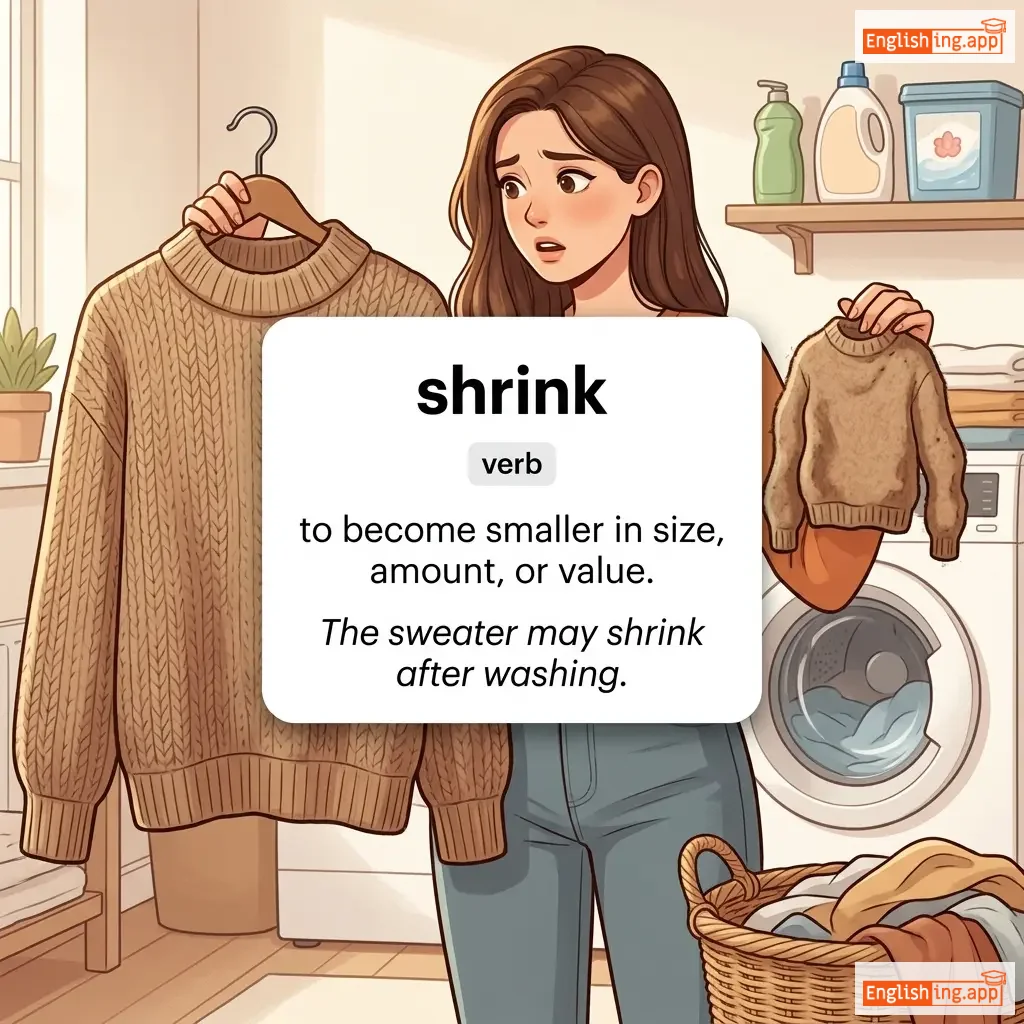
/ʃrɪŋk/
verb
(幸福)
••••••
|
|
幸福
xingfu
••••••
|
shrank
••••••
|
shrunk
••••••
|
shrinks
••••••
|
shrinking
••••••
|
to become smaller in size, amount, or value.
••••••
|
The sweater may shrink after washing.
当她收到奖项时,她无法掩饰自己的幸福。
••••••
|
当她收到奖项时,她无法掩饰自己的幸福。
Dāng tā shōu dào jiǎngxiàng shí, tā wúfǎ yǎnshì zìjǐ de xìngfú.
••••••
|
shrink from responsibility
追求幸福
••••••
|
to avoid or back away from duties or obligations
••••••
|
追求幸福
zhuīqiú xìngfú
••••••
|
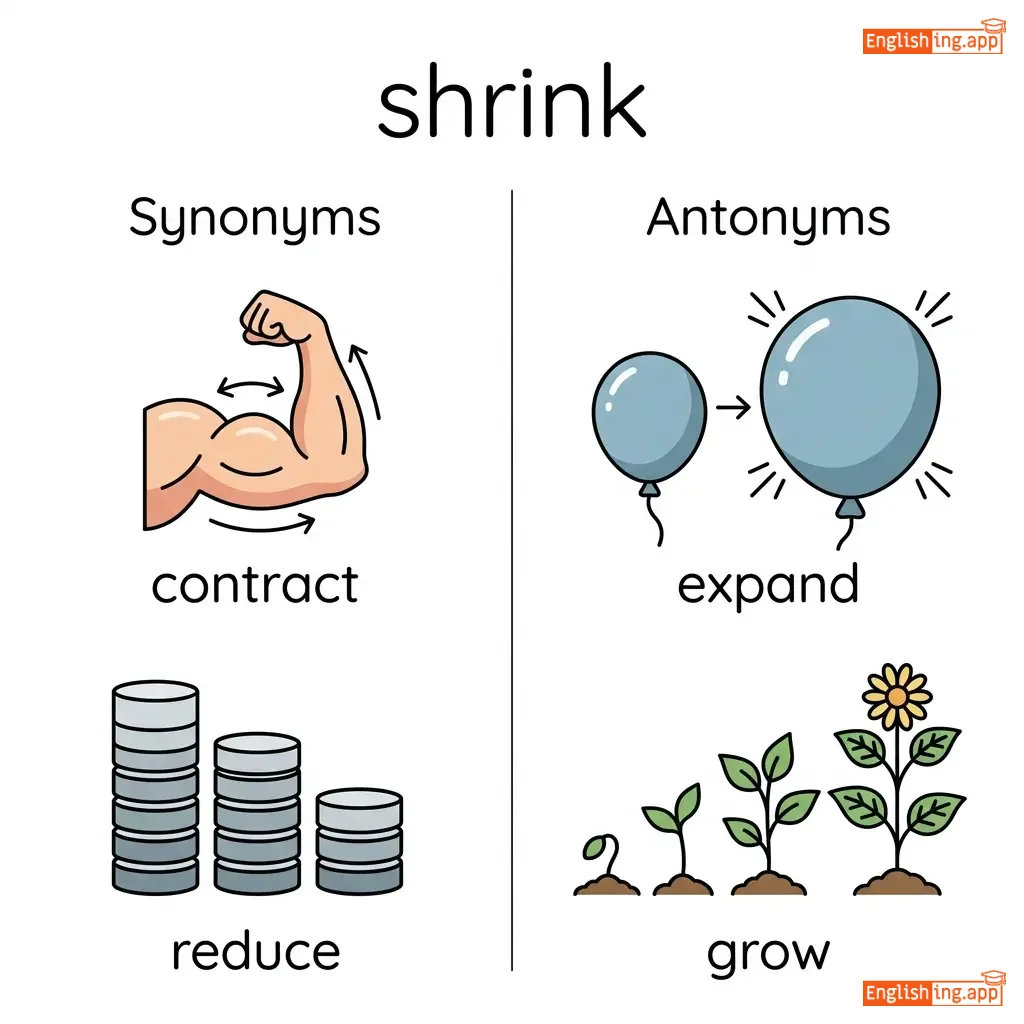
contract, reduce, lessen, diminish, condense
••••••
|
expand, grow, enlarge
••••••
|
shrink in size, shrink away, shrink back, shrink rapidly
••••••
|
要找到幸福,就像不断追寻它一样,像追求目标一样!
••••••
|
|
#1
🍤
|
/ʃrɪmp/
noun
(shrimp)
••••••
|
- •••••• |
虾
xia
••••••
|
- •••••• | - •••••• | - •••••• | - •••••• |
a small marine crustacean that is often used as food.
••••••
|
We ordered grilled shrimp for dinner. |
我们点了烤虾作为晚餐。
Wǒmen diǎnle kǎo xiā zuòwéi wǎncān.
••••••
|
feel like a shrimp |
to feel small or insignificant compared to others
••••••
|
像虾一样感觉
xiàng xiā yīyàng gǎnjué
••••••
|
prawn, crustacean, seafood, shellfish
••••••
|
whale, giant, big fish
••••••
|
shrimp cocktail, fried shrimp, shrimp curry, grilled shrimp
••••••
|
虾 = 小海洋生物,shrimp = 小海洋生物
••••••
|
|
#1
🩳
|
/ʃɔːrts/
noun
(肖尔茨)
••••••
|
- •••••• |
短裤
duǎn kù
••••••
|
- •••••• | - •••••• | - •••••• | - •••••• |
a short garment worn on the lower half of the body that covers each leg separately, usually above the knees.
••••••
|
He wore a pair of blue shorts to the beach. |
他穿了一条蓝色的短裤去海滩。
Tā chuānle yītiáo lánsè de duǎn kù qù hǎitān.
••••••
|
in short order |
very quickly or without delay
••••••
|
很快
hěn kuài
••••••
|
trunks, bermudas, bloomers, knickers, boxers
••••••
|
pants, trousers, jeans
••••••
|
denim shorts, running shorts, swimming shorts, cargo shorts
••••••
|
穿短裤可以在炎热的日子保持凉爽 🩳
••••••
|
|
#1
🚱
|
/ˈʃɔːrtɪdʒ/
noun
(shortage)
••••••
|
- •••••• |
短缺
duǎnquē
••••••
|
- •••••• | - •••••• | - •••••• | - •••••• |
a state or situation in which something needed cannot be obtained in sufficient amounts
••••••
|
There is a shortage of skilled workers in the industry. |
工业中缺乏熟练的工人。
Gōngyè zhōng quēfá shúliàn de gōngrén.
••••••
|
- •••••• | - •••••• | - •••••• |
lack, scarcity, deficiency, insufficiency, dearth
••••••
|
abundance, surplus, plenty
••••••
|
water shortage, food shortage, shortage of labor, energy shortage
••••••
|
Short + age = 资源短缺,像年龄不足一样!
••••••
|
|
#1
⏳
|
/ˈʃɔːrt tɜːrm/
adjective
(短期)
••••••
|
|
短期
duǎn qī
••••••
|
- •••••• | - •••••• | - •••••• | - •••••• |
lasting for or involving a short period of time
••••••
|
They offered a short-term loan to help the business. |
他们提供了一个短期贷款来帮助企业。
Tāmen tígōngle yīgè duǎnqī dàikuǎn lái bāngzhù qǐyè.
••••••
|
- •••••• | - •••••• | - •••••• |
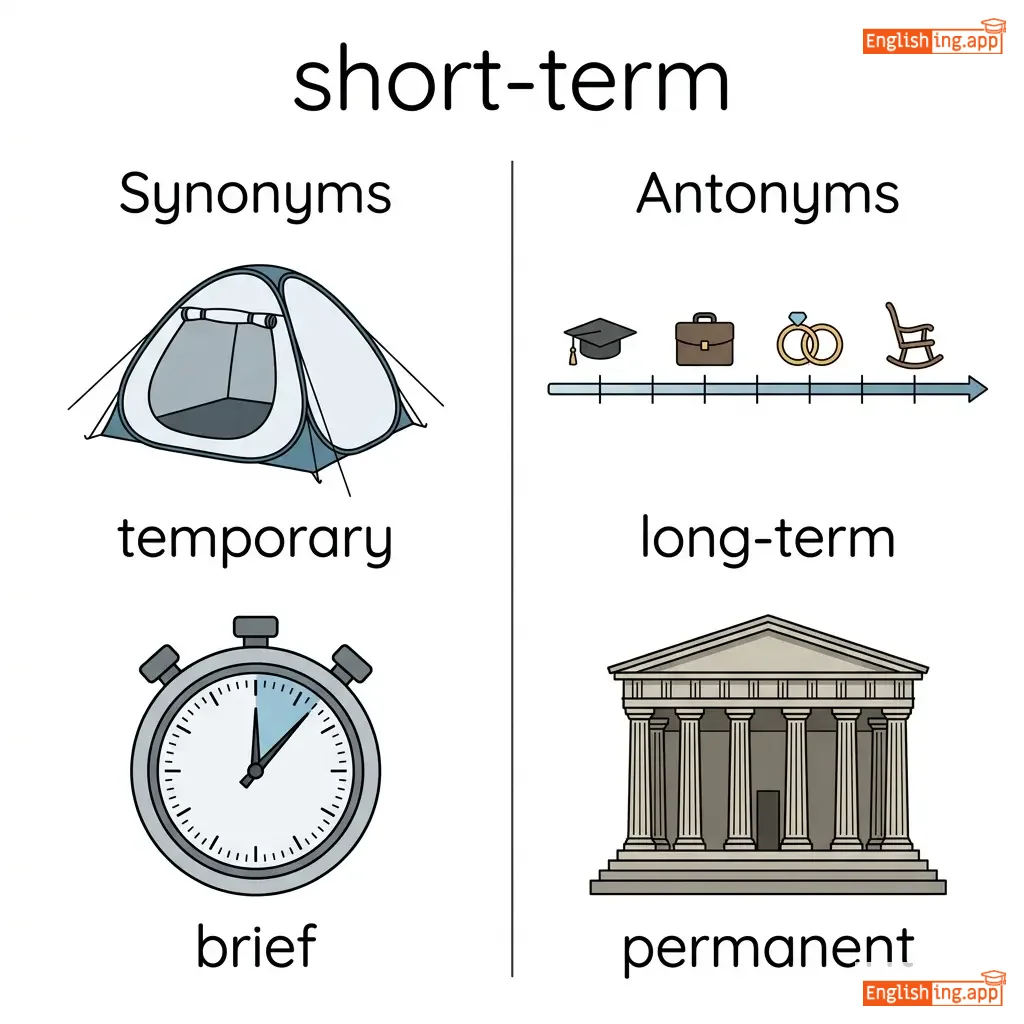
temporary, brief, momentary, provisional, limited
••••••
|
long-term, permanent, lasting
••••••
|
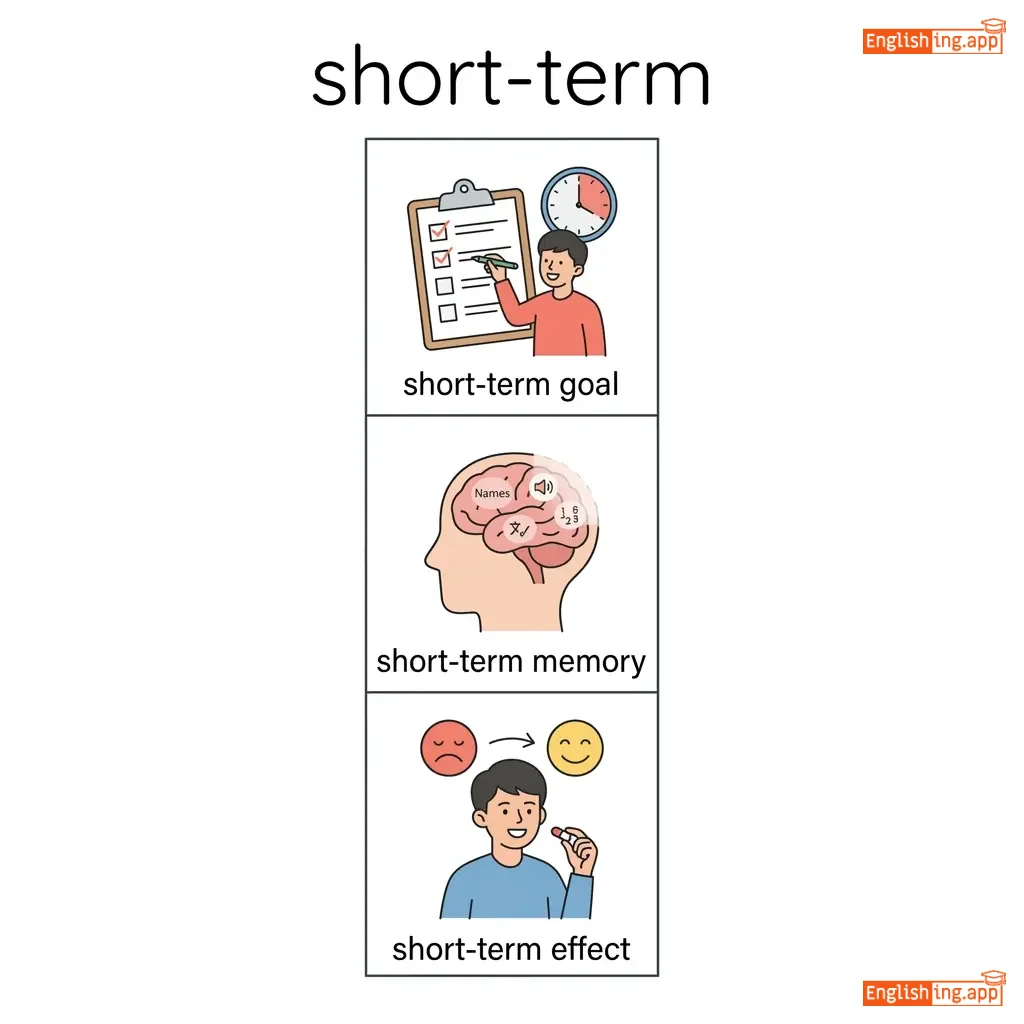
short-term goal, short-term memory, short-term effect, short-term plan
••••••
|
Short-term 意味着短时间 — 短期贷款!
••••••
|
|
#1
🐑
|
/ʃiːp/
noun
(shiep)
••••••
|
- •••••• |
羊
yang
••••••
|
- •••••• | - •••••• | - •••••• | - •••••• |
a farm animal with thick wool that is raised for its wool, meat, and milk
••••••
|
The farmer keeps a large flock of sheep. |
农民养着一大群羊。
nong min yang zhe yi da qun yang.
••••••
|
black sheep |
a person who is considered a disgrace to a group or family
••••••
|
黑羊
hei yang
••••••
|
lamb, ewe, ram, livestock, animal
••••••
|
wolf, predator
••••••
|
flock of sheep, sheep farming, shear sheep, lost sheep
••••••
|
Sheep 意思是羊 — 就像羊一样,温顺的人!
••••••
|
|
#1
⚡
|
/ˈʃɑːrpli/
adverb
(shā-pu-lì)
••••••
|
- •••••• |
急剧地
jíjù de
••••••
|
- •••••• | - •••••• | - •••••• | - •••••• |
suddenly and strongly; in a cutting or intense way
••••••
|
Prices rose sharply after the announcement. |
价格在公告后急剧上涨。
Jiàgé zài gōnggào hòu jíjù shàngzhǎng.
••••••
|
- •••••• | - •••••• | - •••••• |
suddenly, quickly, abruptly, intensely, drastically
••••••
|
slowly, gently, gradually
••••••
|
rise sharply, turn sharply, sharply increase, sharply decline
••••••
|
Sharp 和急剧地一起,表示快速且剧烈的变化
••••••
|
|
#1
🦈
|
/ʃɑːrk/
noun
(鲨鱼)
••••••
|
- •••••• |
鲨鱼
shayu
••••••
|
- •••••• | - •••••• | - •••••• | - •••••• |
a large fish with sharp teeth known for being a strong predator in the ocean
••••••
|
The shark swam silently beneath the boat. |
鲨鱼在船下悄悄地游泳。
Shāyú zài chuán xià qiāoqiāo de yóuyǒng.
••••••
|
loan shark |
a person who lends money at very high interest rates
••••••
|
高利贷者
gāolìdài zhě
••••••
|
predator, fish, killer, hunter, sea creature
••••••
|
prey, victim
••••••
|
great white shark, shark attack, shark fin, shark tank
••••••
|
鲨鱼意味着鲨鱼 — 用锋利的牙齿攻击!
••••••
|
|
#1
📊
|
/ˈʃɛərˌhoʊldər/
noun
(shèhuò hòudà)
••••••
|
- •••••• |
股东
gǔdōng
••••••
|
- •••••• | - •••••• | - •••••• | - •••••• |
an individual or organization that owns shares in a company
••••••
|
Each shareholder has the right to vote at the annual meeting. |
每个股东都有权在年度大会上投票。
Měi gè gǔdōng dōu yǒu quán zài nián dù dà huì shàng tóu piào.
••••••
|
major shareholder |
a person owning a large number of shares in a company
••••••
|
主要股东
zhǔ yào gǔ dōng
••••••
|
stockholder, investor, stakeholder, owner
••••••
|
non-investor, outsider
••••••
|
shareholder meeting, shareholder rights, shareholder value, minority shareholder
••••••
|
股东就是持有股权的人,代表着企业的股东!
••••••
|
|
#1
🤝
|
/ʃɛrd/
adjective
(ʃɛrd)
••••••
|
- •••••• |
共享
gongxiang
••••••
|
- •••••• | - •••••• | - •••••• | - •••••• |
used, done, or experienced by two or more people together
••••••
|
They live in a shared apartment near the university.
他们住在大学附近的一间共享公寓里。
••••••
|
他们住在大学附近的一间共享公寓里。
Tāmen zhù zài dàxué fùjìn de yī jiān gòngxiǎng gōngyù lǐ.
••••••
|
shared experience
共享体验
••••••
|
something experienced together by more than one person
••••••
|
共享体验
gòngxiǎng tǐyàn
••••••
|
joint, common, mutual, collective
••••••
|
individual, personal
••••••
|
shared responsibility, shared goal, shared interest, shared value
••••••
|
Shared 就是大家一起用的东西—就像共享的房间!
••••••
|
|
#1
🤔
|
/ˈsiː.mɪŋ.li/
adverb
(xī mǐng lì)
••••••
|
- •••••• |
表面上, 看起来平静
biaomianshang, kanqilai pingjing
••••••
|
- •••••• | - •••••• | - •••••• | - •••••• |
appearing to be true, but not necessarily so
••••••
|
He was seemingly calm despite the chaos around him. |
尽管周围一片混乱,他看起来平静。
Jǐnguǎn zhōuwéi yīpiàn hùnluàn, tā kàn qǐlái píngjìng.
••••••
|
- •••••• | - •••••• | - •••••• |
apparently, outwardly, ostensibly, supposedly, evidently
••••••
|
actually, truly, really
••••••
|
seemingly impossible, seemingly calm, seemingly endless, seemingly perfect
••••••
|
seem (看起来) + ingly (那样地) → 表面上表示‘看起来像’
••••••
|
|
#1
💃
|
/ˈsɛksi/
adjective
(sèxī)
••••••
|
- •••••• |
性感的
xìnggǎn de
••••••
|
- •••••• | - •••••• | - •••••• | - •••••• |
sexually attractive or exciting
••••••
|
She wore a sexy red dress to the party. |
她穿着一条性感的红色连衣裙去参加派对。
Tā chuānzhuó yītiáo xìnggǎn de hóngsè liányīqún qù cānjiā pàiduì.
••••••
|
look sexy |
to appear sexually attractive
••••••
|
看起来性感
kàn qǐlái xìnggǎn
••••••
|
attractive, hot, alluring, seductive, appealing
••••••
|
unattractive, plain
••••••
|
sexy look, sexy voice, sexy dress, sexy attitude
••••••
|
Sexy意味着'性感'—当你看到别人穿着性感的衣服时,他们会说'哇!' 😄 记住:sexy = 性感
••••••
|
|
#1
🔥
|
/ˈsɛkʃuəli/
adverb
(性行为)
••••••
|
- •••••• |
性行为
xìng xíngwéi
••••••
|
- •••••• | - •••••• | - •••••• | - •••••• |
in a way that relates to or involves sexual activity or feelings
••••••
|
The film was considered too sexually explicit for young audiences. |
这部电影被认为对年轻观众来说过于性行为露骨。
Zhè bù diànyǐng bèi rènwéi duì niánqīng guānzhòng lái shuō guòyú xìng xíngwéi lùgǔ.
••••••
|
- •••••• | - •••••• | - •••••• |
erotically, sensually, intimately, amorously
••••••
|
nonsexually, platonically
••••••
|
sexually active, sexually transmitted, sexually explicit, sexually attracted
••••••
|
Sexually意味着‘性行为’ — 和吸引力或爱情相关,记得很容易!
••••••
|
|
#1
🏳️🌈
|
/ˌsɛkʃuˈæləti/
noun
(性别认同)
••••••
|
- •••••• |
性别认同
xìngbié rèntóng
••••••
|
- •••••• | - •••••• | - •••••• | - •••••• |
a person's capacity for sexual feelings and orientation
••••••
|
She spoke openly about her sexuality and identity. |
她公开谈论了她的性别认同和身份。
Tā gōngkāi tánlùnle tā de xìngbié rèntóng hé shēnfèn.
••••••
|
- •••••• | - •••••• | - •••••• |
sex drive, eroticism, sexual identity, gender orientation
••••••
|
asexuality, celibacy
••••••
|
sexuality education, human sexuality, explore sexuality, express sexuality
••••••
|
性别认同是个人的身份和吸引力之间的联系,想象一下彩虹!
••••••
|
|
#1
7️⃣
|
/ˈsɛvənθ/
adjective
(sevénth)
••••••
|
- •••••• |
第七
diqi
••••••
|
- •••••• | - •••••• | - •••••• | - •••••• |
constituting number seven in a sequence; coming after the sixth
••••••
|
Her birthday is on the seventh of July. |
她的生日是七月七日。
Ta de shengri shi qiyue qiri.
••••••
|
seventh heaven |
a state of extreme happiness or bliss
••••••
|
第七天堂
diqi tiantang
••••••
|
7th, number seven, ordinal seven
••••••
|
sixth, eighth
••••••
|
seventh grade, seventh day, seventh month, seventh position
••••••
|
Seventh 意味着第七 — 记住 7️⃣ 是第七天堂!
••••••
|
|
#1
🍛
|
/ˈsɜːvɪŋ/
noun
(sèfēng)
••••••
|
- •••••• |
份
fen
••••••
|
- •••••• | - •••••• | - •••••• | - •••••• |
a portion of food for one person; the act of giving food or drink to someone
••••••
|
He ate a large serving of rice and curry. |
他吃了一大份米饭和咖喱。
Ta chi le yi da fen mifan he gali.
••••••
|
second serving |
an additional portion of food after the first
••••••
|
第二份
di er fen
••••••
|
portion, helping, dish, plateful
••••••
|
starvation, fasting
••••••
|
serving size, single serving, serving dish, double serving
••••••
|
Serving 代表份 - 🍛 给人食物,就是份!
••••••
|
|
#1
🧹
|
/ˈsɜːvənt/
noun
(塞尔文特)
••••••
|
- •••••• |
仆人
púrén
••••••
|
- •••••• | - •••••• | - •••••• | - •••••• |
a person who performs duties for others, especially in a household
••••••
|
The servant opened the door for the guests. |
仆人为客人开门。
Púrén wèi kèren kāi mén.
••••••
|
public servant |
a person who works for the government
••••••
|
公务员
gōngwùyuán
••••••
|
attendant, helper, aide, employee, worker
••••••
|
master, employer, boss
••••••
|
domestic servant, loyal servant, household servant, public servant
••••••
|
Servant 用手SERVE,所以仆人做同样的事。
••••••
|
|
#1
💔
|
/ˌsɛpəˈreɪʃən/
noun
(seperéishon)
••••••
|
- •••••• |
分离
fenli
••••••
|
- •••••• | - •••••• | - •••••• | - •••••• |
the act of moving or being moved apart; a division or disconnection
••••••
|
The separation of the two friends was difficult for both of them. |
两位朋友的分离对他们俩来说都很困难。
Liang wei pengyou de fenli dui tamen lia laishuo dou hen kunnan.
••••••
|
separation anxiety |
a feeling of distress when separated from someone or something one is attached to
••••••
|
分离焦虑
fenli jiaolv
••••••
|
division, detachment, split, disconnection, segregation
••••••
|
union, connection, unity
••••••
|
separation anxiety, legal separation, physical separation, emotional separation
••••••
|
分离意味着分离,可能会导致焦虑。
••••••
|
|
#1
💭
|
/ˈsɛntɪmənt/
noun
(情感)
••••••
|
- •••••• |
情感
qinggan
••••••
|
- •••••• | - •••••• | - •••••• | - •••••• |
a view or opinion that is based on emotion rather than reason
••••••
|
Public sentiment was against the new law. |
公众的情感反对新法律。
Gongzhong de qinggan fandui xin falu.
••••••
|
public sentiment |
the general feeling or opinion of the people
••••••
|
公众情感
gongzhong qinggan
••••••
|
emotion, feeling, attitude, opinion, view
••••••
|
indifference, apathy
••••••
|
public sentiment, market sentiment, patriotic sentiment, emotional sentiment
••••••
|
Sentiment = 情感 — 想象你在感受情感!
••••••
|
|
#1
📡
|
/ˈsɛnsər/
noun
(happiness)
••••••
|
- •••••• |
幸福
xìng fú
••••••
|
- •••••• | - •••••• | - •••••• | - •••••• |
a device that detects or measures a physical property and records, indicates, or responds to it
••••••
|
The motion sensor turned on the light automatically. |
当她获得奖项时,她无法掩饰自己的幸福。
Dāng tā huò dé jiǎng xiàng shí, tā wú fǎ yǎn shì zì jǐ de xìng fú.
••••••
|
motion sensor |
a device that detects movement
••••••
|
追求幸福
zhuī qiú xìng fú
••••••
|
detector, transducer, probe, gauge, monitor
••••••
|
emitter, actuator
••••••
|
temperature sensor, motion sensor, light sensor, pressure sensor
••••••
|
幸福 = 追求快乐
••••••
|
|
#1
💗
|
/ˌsɛnsɪˈtɪvɪti/
noun
(敏感性)
••••••
|
|
敏感性
mǐn gǎn xìng
••••••
|
- •••••• | - •••••• | - •••••• | - •••••• |
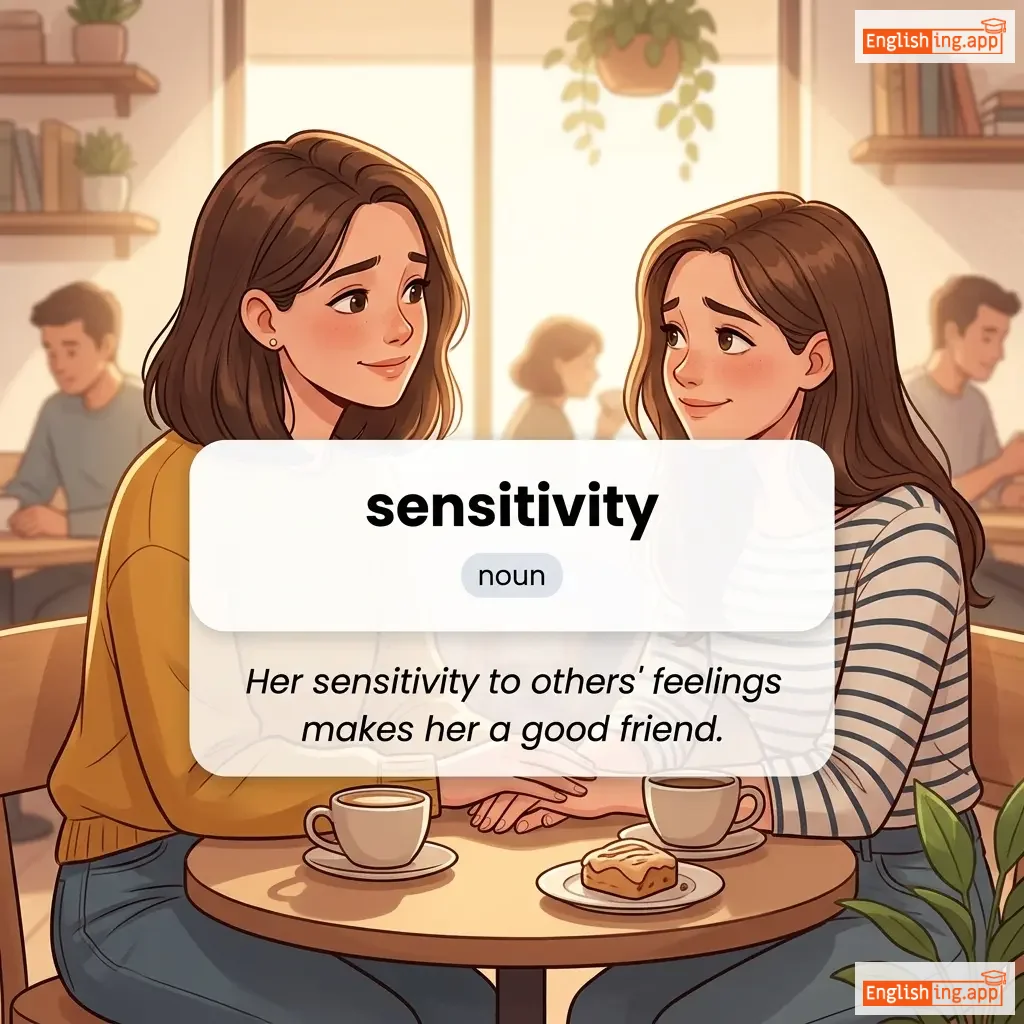
the quality of being sensitive; ability to detect or respond to slight changes or emotions
••••••
|
Her sensitivity to others' feelings makes her a good friend.
她对他人感受的敏感性使她成为一个好朋友。
••••••
|
她对他人感受的敏感性使她成为一个好朋友。
Tā duì tārén gǎnshòu de mǐn gǎn xìng shǐ tā chéngwéi yī gè hǎo péngyǒu.
••••••
|
cultural sensitivity
文化敏感性
••••••
|
awareness and respect for cultural differences
••••••
|
文化敏感性
wén huà mǐn gǎn xìng
••••••
|
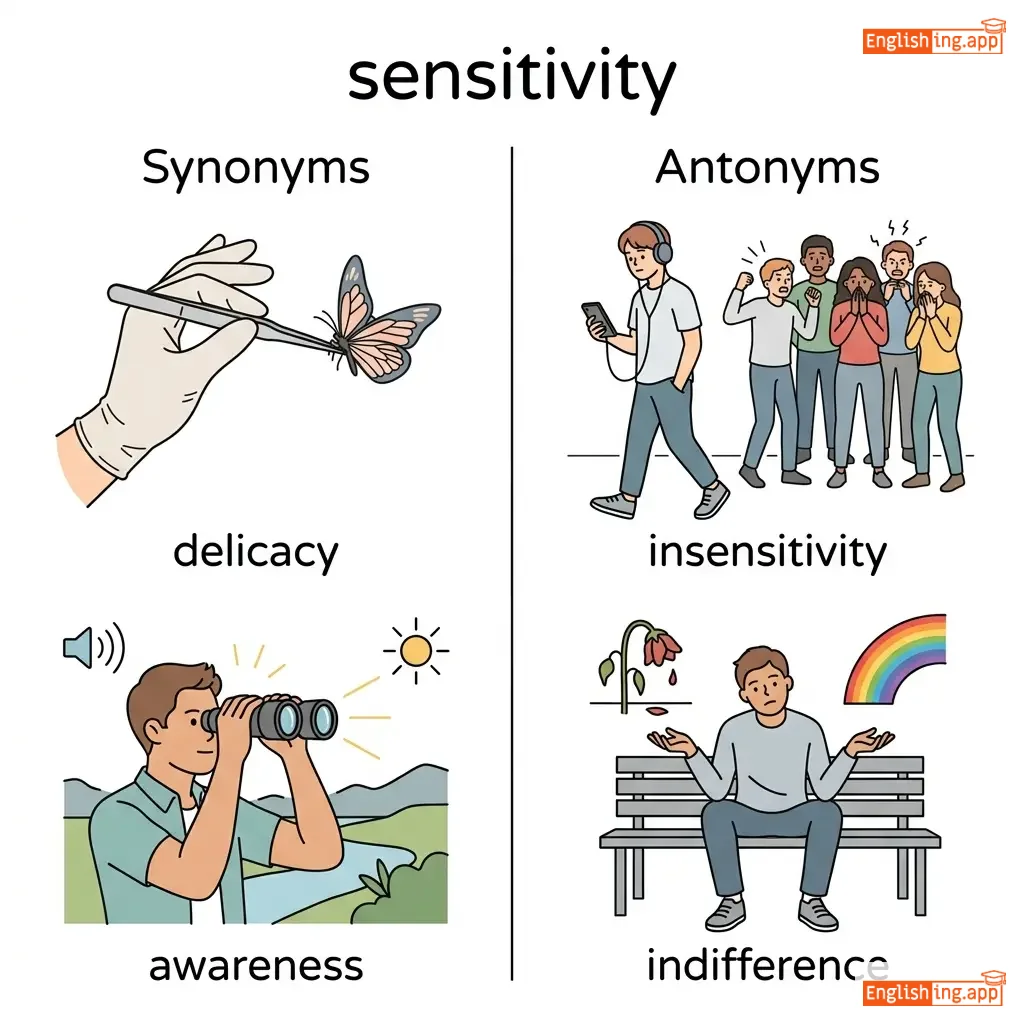
delicacy, awareness, responsiveness, empathy, receptivity
••••••
|
insensitivity, indifference, numbness
••••••
|
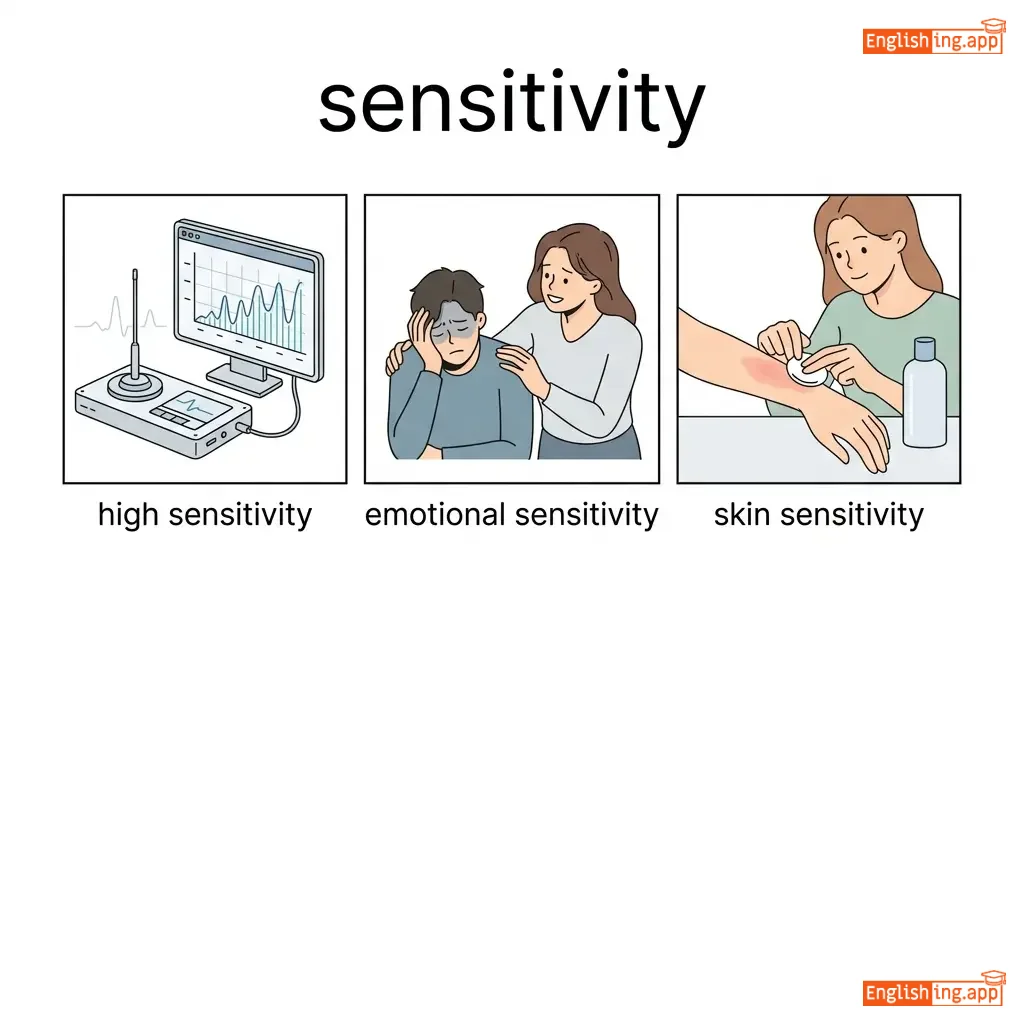
high sensitivity, emotional sensitivity, skin sensitivity, cultural sensitivity
••••••
|
敏感性 = 敏感 + 性, 意味着感知微小的情感变化
••••••
|
|
#1
🛒
|
/ˈsɛlər/
noun
(海皮尼斯)
••••••
|
- •••••• |
幸福
xìng fú
••••••
|
- •••••• | - •••••• | - •••••• | - •••••• |
a person who sells something
••••••
|
The seller offered a discount on bulk purchases. |
当她收到奖项时,她无法掩饰自己的幸福。
Dāng tā shōu dào jiǎngxiàng shí, tā wúfǎ yǎnshì zìjǐ de xìngfú.
••••••
|
best-seller |
a product, especially a book, that sells in very large numbers
••••••
|
追求幸福
zhuīqiú xìngfú
••••••
|
vendor, merchant, dealer, retailer, trader
••••••
|
buyer, customer, purchaser
••••••
|
online seller, street seller, property seller, car seller
••••••
|
幸福和happiness有着相同的意义,让我们追求它!
••••••
|
|
#1
💪
|
/ˌsɛlf ɪˈstiːm/
noun
(self-esteem)
••••••
|
- •••••• |
自尊
zizun
••••••
|
- •••••• | - •••••• | - •••••• | - •••••• |
confidence in one's own worth or abilities; self-respect
••••••
|
Building self-esteem takes time and consistent effort. |
建立自尊需要时间和持续的努力。
Jianli zizun xuyao shijian he chixu de nuli.
••••••
|
low self-esteem |
a lack of confidence and negative view of oneself
••••••
|
低自尊
di zizun
••••••
|
self-confidence, self-respect, pride, dignity, morale
••••••
|
self-doubt, insecurity, shame
••••••
|
high self-esteem, low self-esteem, boost self-esteem, develop self-esteem
••••••
|
自尊是对自己有信心,尊重自己。
••••••
|
|
#1
✅
|
/sɪˈlek.tɪd/
adjective
(sɪˈlɛktɪd)
••••••
|
- •••••• |
选定的
xuǎn dìng de
••••••
|
- •••••• | - •••••• | - •••••• | - •••••• |
carefully chosen from a group for a particular purpose
••••••
|
He was one of the selected candidates for the scholarship. |
他是获得奖学金的选定候选人之一。
Tā shì huòde jiǎngxuéjīn de xuǎn dìng hòuxuǎn rén zhī yī.
••••••
|
- •••••• | - •••••• | - •••••• |
chosen, picked, designated, appointed, preferred
••••••
|
rejected, ignored, unchosen
••••••
|
selected candidates, selected items, selected members, selected list
••••••
|
Select意味着选择,所以selected意味着'已选择'。记住:selected students意味着选定的学生。
••••••
|
|
#1
🌙
|
/ˈsel.dəm/
adverb
(塞尔多姆)
••••••
|
- •••••• |
很少
hěn shǎo
••••••
|
- •••••• | - •••••• | - •••••• | - •••••• |
not often; rarely
••••••
|
She seldom visits her hometown nowadays.
她现在很少回她的家乡。
••••••
|
她现在很少回她的家乡。
Tā xiànzài hěn shǎo huí tā de jiāxiāng.
••••••
|
seldom if ever
很少,几乎从不
••••••
|
rarely or almost never
••••••
|
很少,几乎从不
hěn shǎo, jīhū cóng bù
••••••
|
rarely, infrequently, occasionally, hardly, scarcely
••••••
|
often, frequently, usually
••••••
|
seldom seen, seldom used, seldom happens, seldom spoken
••••••
|
‘Seldom’ 就是 ‘很少’,像是一个很少见的珍品。
••••••
|
Vocabulary Quiz
Test your vocabulary by matching words with their translations or meanings.
Login to take the quiz
Comments (0)
Share your thoughts and join the discussion.
Join the discussion by logging in
Login to CommentNo comments yet
Be the first to share your thoughts!