



Swipe left or right, or use the buttons. Tap image to zoom.
例句翻译
单词
Lesson 443Lesson 443 - 遮罩切换
|
表情符号
|
单词 | Images | 翻译 | 过去时 | 过去分词 | 第三人称单数 | 动名词 | 含义 | 例句 | 例句翻译 | 示例表达 | 示例表达含义 | 示例表达翻译 | 同义词 | 反义词 | 搭配词 | 助记符 |
|---|---|---|---|---|---|---|---|---|---|---|---|---|---|---|---|---|---|
|
#1
🎤
|
/ˈvoʊkəl/
adjective
(vokal)
••••••
|
- •••••• |
直言不讳
zhí yán bù huì
••••••
|
- •••••• | - •••••• | - •••••• | - •••••• |
expressing opinions or feelings freely and loudly; relating to the voice
••••••
|
She was very vocal about her dissatisfaction.
她对自己的不满非常直言不讳。
••••••
|
她对自己的不满非常直言不讳。
Tā duì zì jǐ de bù mǎn fēi cháng zhí yán bù huì.
••••••
|
vocal supporter
直言不讳的支持者
••••••
|
a person who strongly and openly supports something
••••••
|
直言不讳的支持者
zhí yán bù huì de zhī chí zhě
••••••
|
outspoken, expressive, loud, verbal, articulate
••••••
|
silent, quiet
••••••
|
vocal cords, vocal expression, vocal critic, vocal supporter
••••••
|
Vocal 就是大声表达—直言不讳的支持者!
••••••
|
|
#1
😊
|
/ˌwelˈbiːɪŋ/
noun
(wēi ěr-bīng)
••••••
|
|
福祉
fúzhǐ
••••••
|
- •••••• | - •••••• | - •••••• | - •••••• |
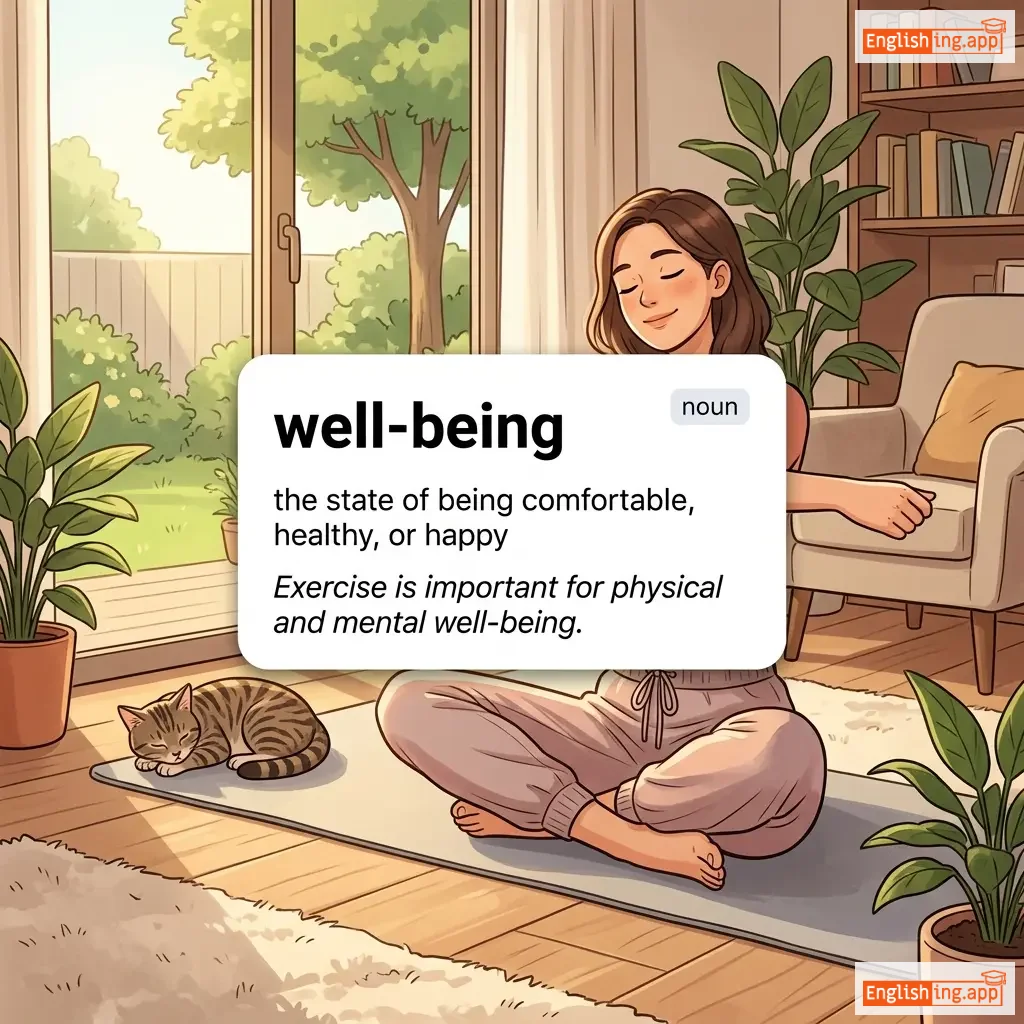
the state of being comfortable, healthy, or happy
••••••
|
Exercise is important for physical and mental well-being.
锻炼对身体和心理健康很重要。
••••••
|
锻炼对身体和心理健康很重要。
Duànliàn duì shēntǐ hé xīnlǐ jiànkāng hěn zhòngyào.
••••••
|
- •••••• | - •••••• | - •••••• |
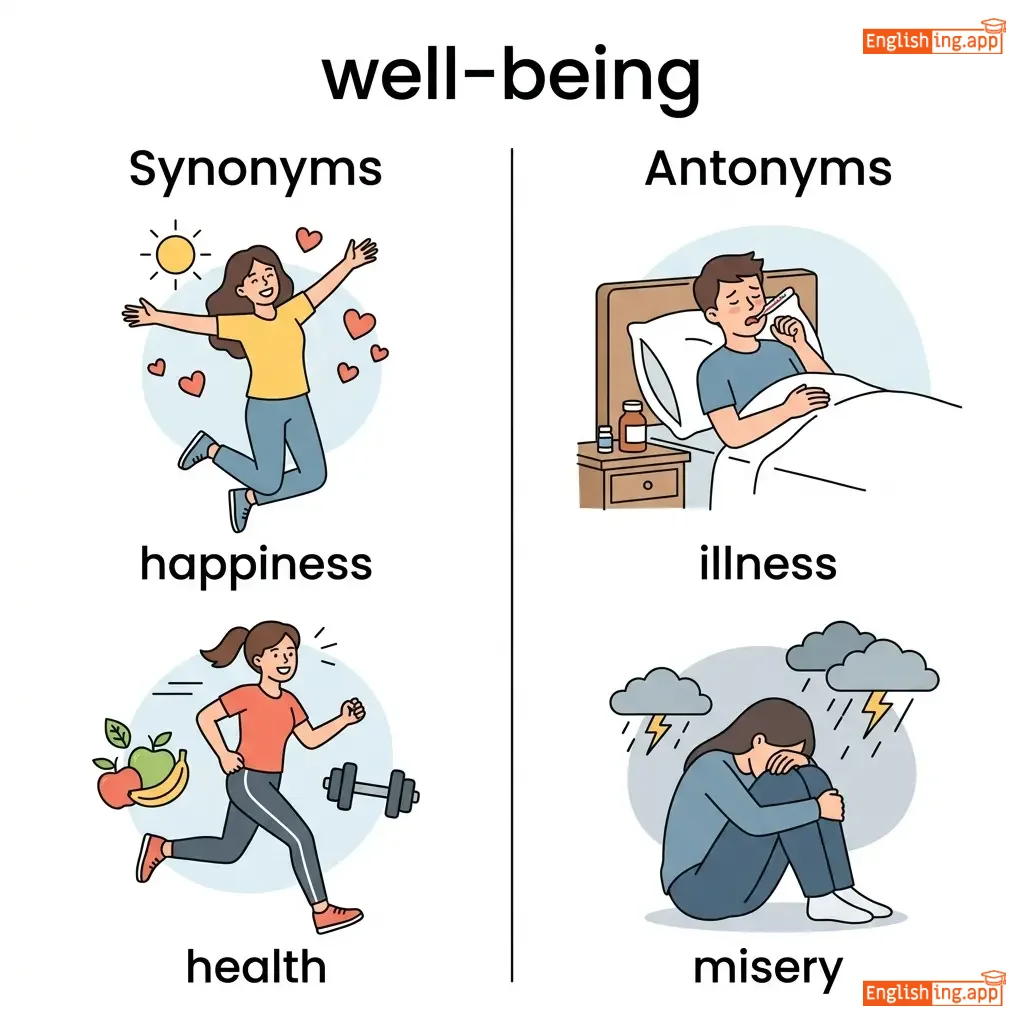
happiness, health, comfort, welfare, prosperity
••••••
|
illness, misery, discomfort
••••••
|
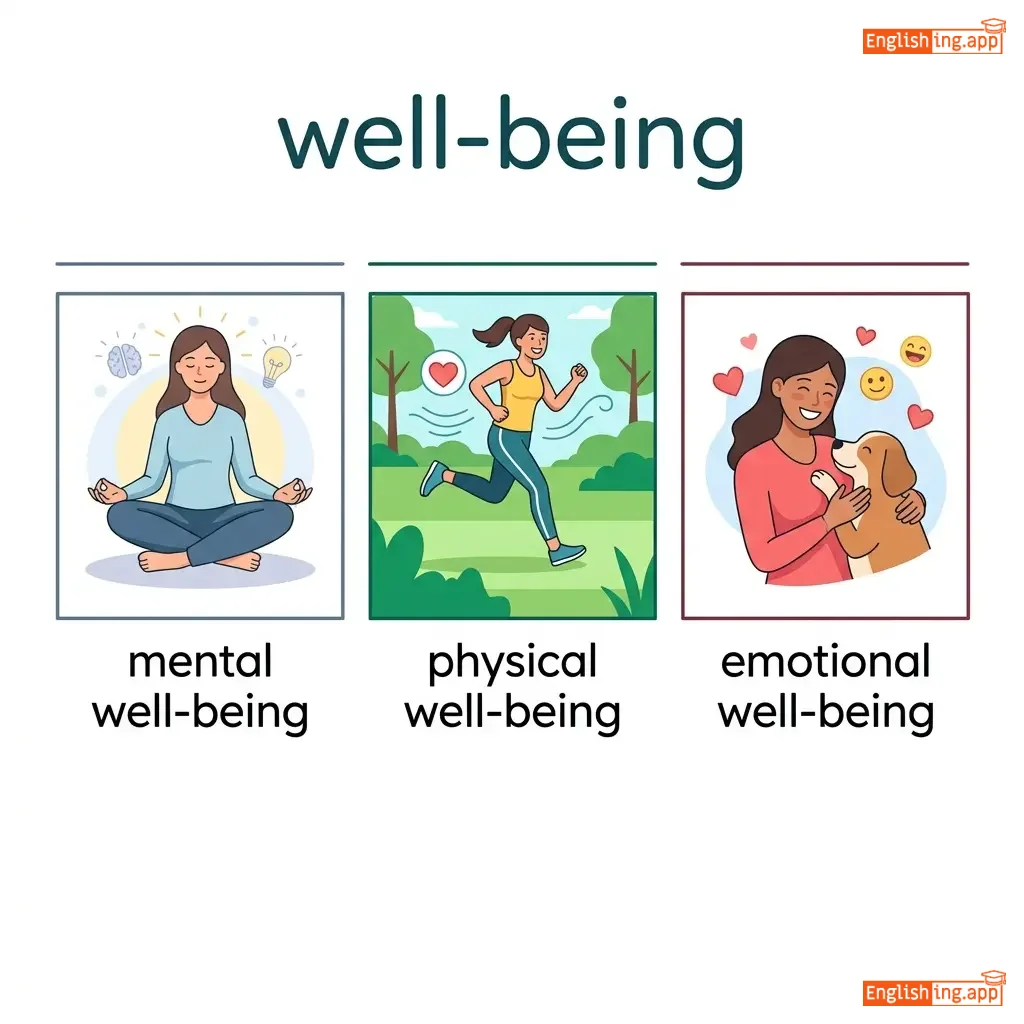
mental well-being, physical well-being, emotional well-being, promote well-being
••••••
|
Well-being意味着处于良好状态 — 'Well'意味着好,因此处于好状态意味着well-being 😊
••••••
|
|
#1
🌿
|
/wiːd/
noun, verb
(wīd)
••••••
|
|
杂草
zácǎo
••••••
|
weeded
wīded
••••••
|
weeded
wīded
••••••
|
weeds
wīds
••••••
|
weeding
wīdɪŋ
••••••
|
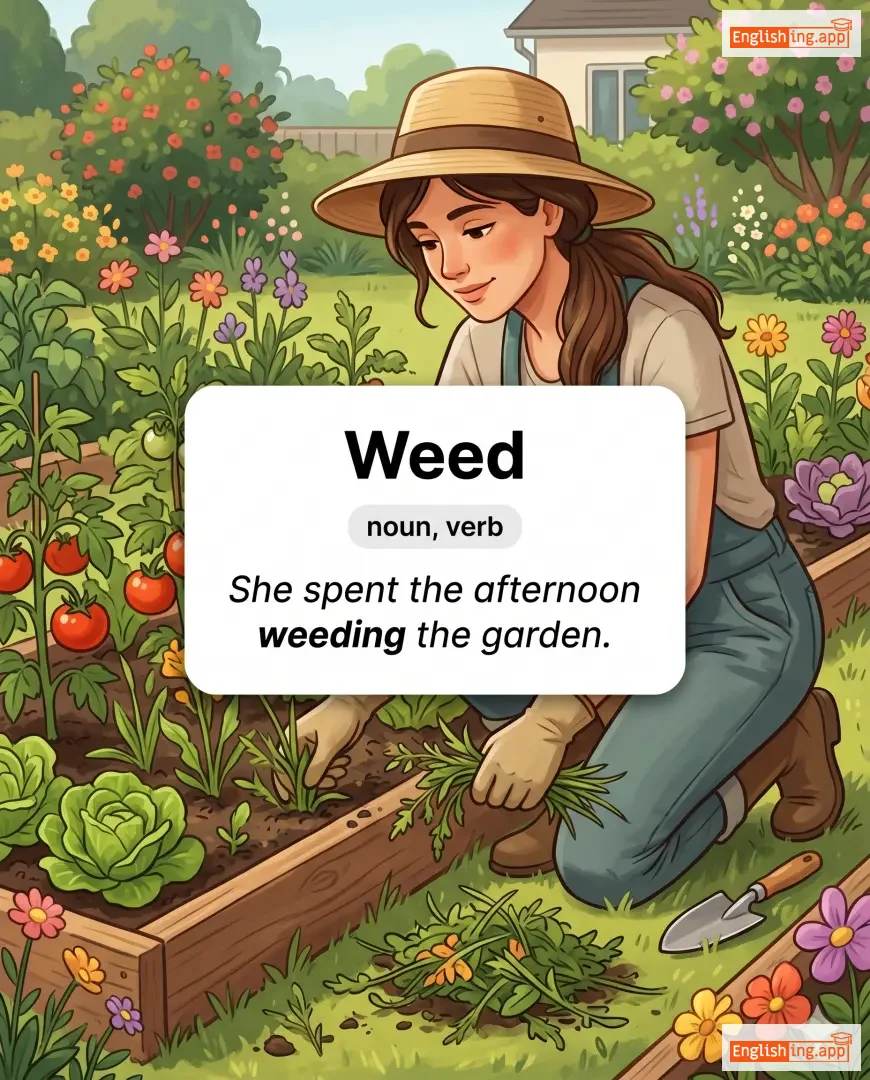
a wild plant growing where it is not wanted, especially among crops; to remove such plants
••••••
|
She spent the afternoon weeding the garden.
她花了下午的时间除草。
••••••
|
她花了下午的时间除草。
Tā huāle xiàwǔ de shíjiān chúcǎo.
••••••
|
weed out
清除
••••••
|
to remove unwanted or less effective people or things
••••••
|
清除不需要或效果较差的人或事物
qīngchú bù xūyào huò xiàoguǒ jiào chà de rén huò shìwù
••••••
|
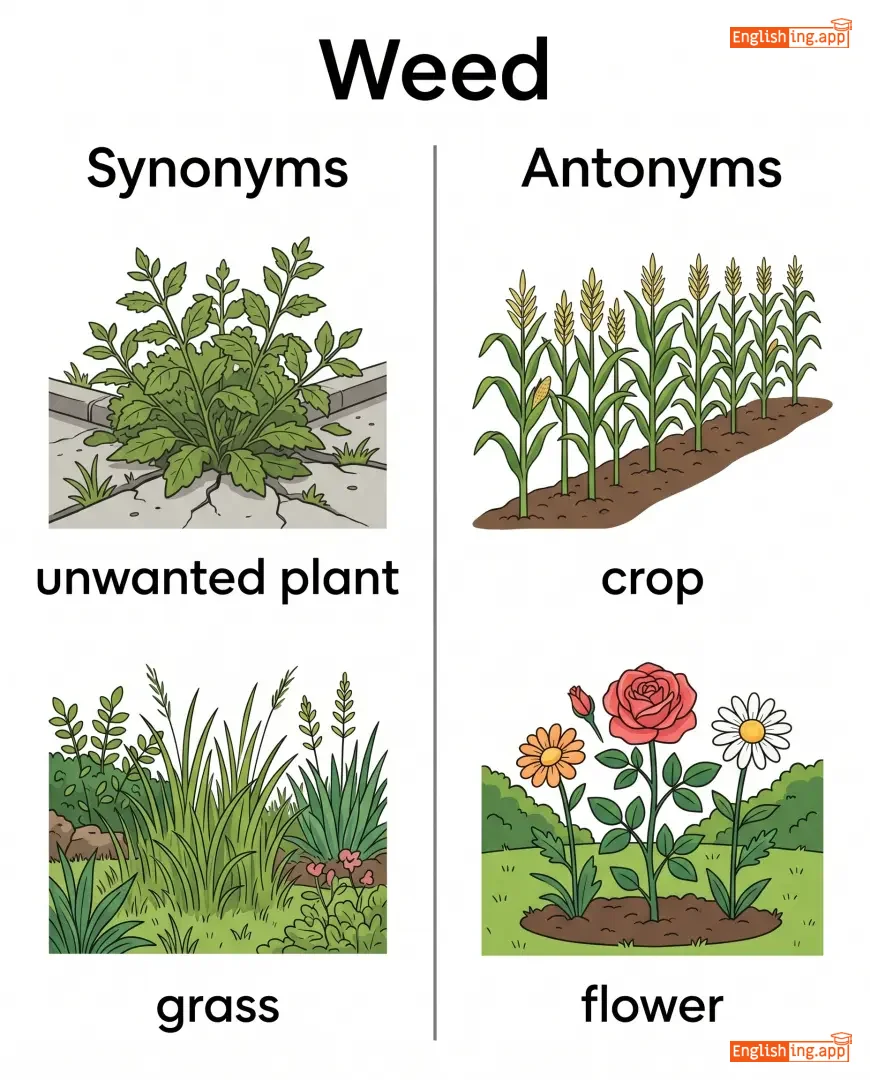
unwanted plant, grass, wild plant, pest plant, herb
••••••
|
crop, flower, plant
••••••
|
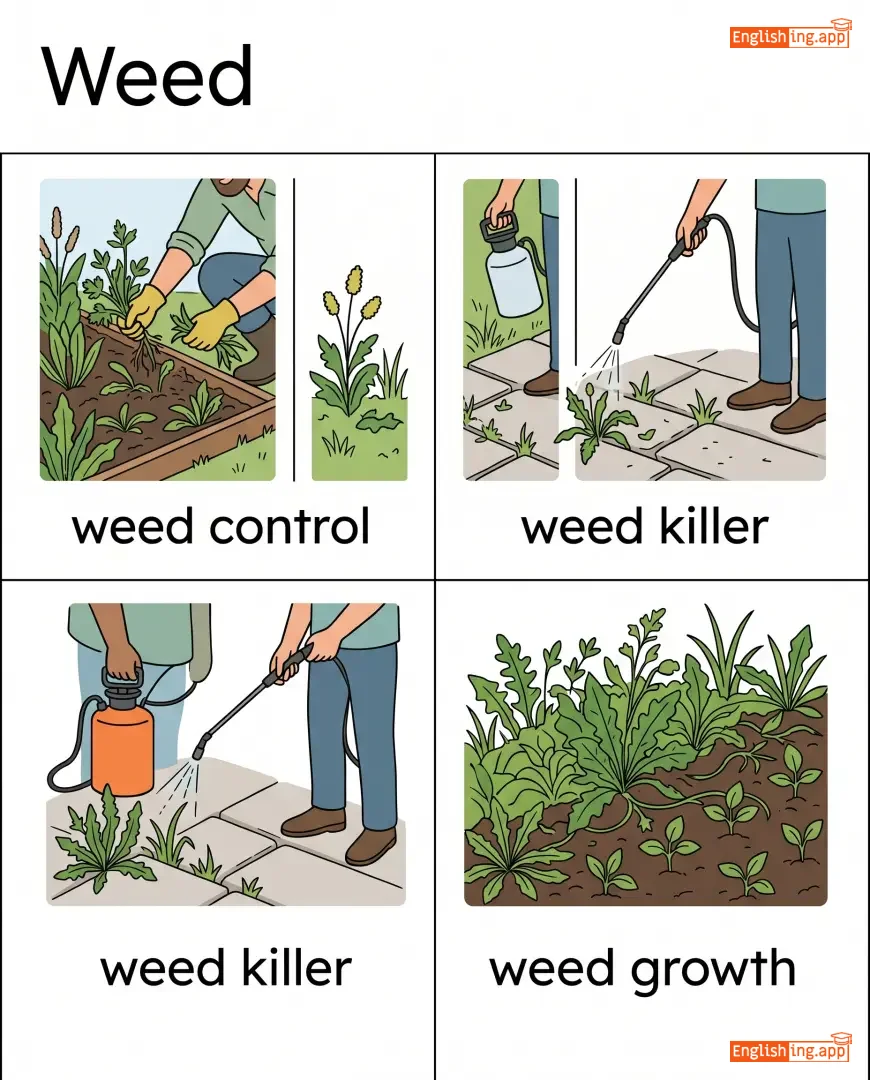
weed control, weed killer, weed growth, pull weeds, weed out
••••••
|
weed = 杂草, 清除 = 除去杂草 🌱
••••••
|
|
#1
🕸️
|
/wɛb/
noun
••••••
|
- •••••• | - •••••• | - •••••• | - •••••• | - •••••• | - •••••• |
a network of fine threads spun by a spider or a complex interconnected system
••••••
|
The spider spun a large web in the corner of the room. |
- •••••• |
world wide web |
the global network of information on the internet
••••••
|
- •••••• |
network, mesh, net, lattice, system
••••••
|
disconnection, isolation
••••••
|
spider web, world wide web, tangled web, web browser
••••••
|
No •••••• |
|
#1
🧶
|
/wiːv/
verb
(wéiv)
••••••
|
- •••••• |
编织
bianzhi
••••••
|
wove
wov
••••••
|
woven
wóvén
••••••
|
weaves
wéivz
••••••
|
weaving
wéivīng
••••••
|
to make cloth by interlacing threads or to combine elements into a whole
••••••
|
She weaves beautiful patterns on her loom.
她在织布机上编织美丽的图案。
••••••
|
她在织布机上编织美丽的图案。
Ta zai zhi bu ji shang bianzhi mei li de tuan.
••••••
|
weave a story
编织一个故事
••••••
|
to create a complex or imaginative story
••••••
|
编织一个故事
Bianzhi yige gushi
••••••
|
interlace, intertwine, knit, braid, spin
••••••
|
unravel, untangle
••••••
|
weave fabric, weave basket, weave pattern, weave story
••••••
|
Weave 就像编织网一样 — 你可以编织布料或故事。
••••••
|
|
#1
💧
|
/ˈwiːknəs/
noun
(wīknes)
••••••
|
- •••••• |
弱点
ruòdiǎn
••••••
|
- •••••• | - •••••• | - •••••• | - •••••• |
a state of being weak; a flaw or shortcoming in character or structure
••••••
|
His main weakness is his lack of patience. |
他最大的弱点是缺乏耐心。
Tā zuìdà de ruòdiǎn shì quēfá nàixīn.
••••••
|
achilles' heel |
a person's principal weakness or vulnerability
••••••
|
- •••••• |
frailty, flaw, vulnerability, defect, shortcoming
••••••
|
strength, power, resilience
••••••
|
mental weakness, show weakness, personal weakness, weakness for sweets
••••••
|
Weak表示虚弱,weakness表示弱点——‘ness’表示状态。
••••••
|
|
#1
💤
|
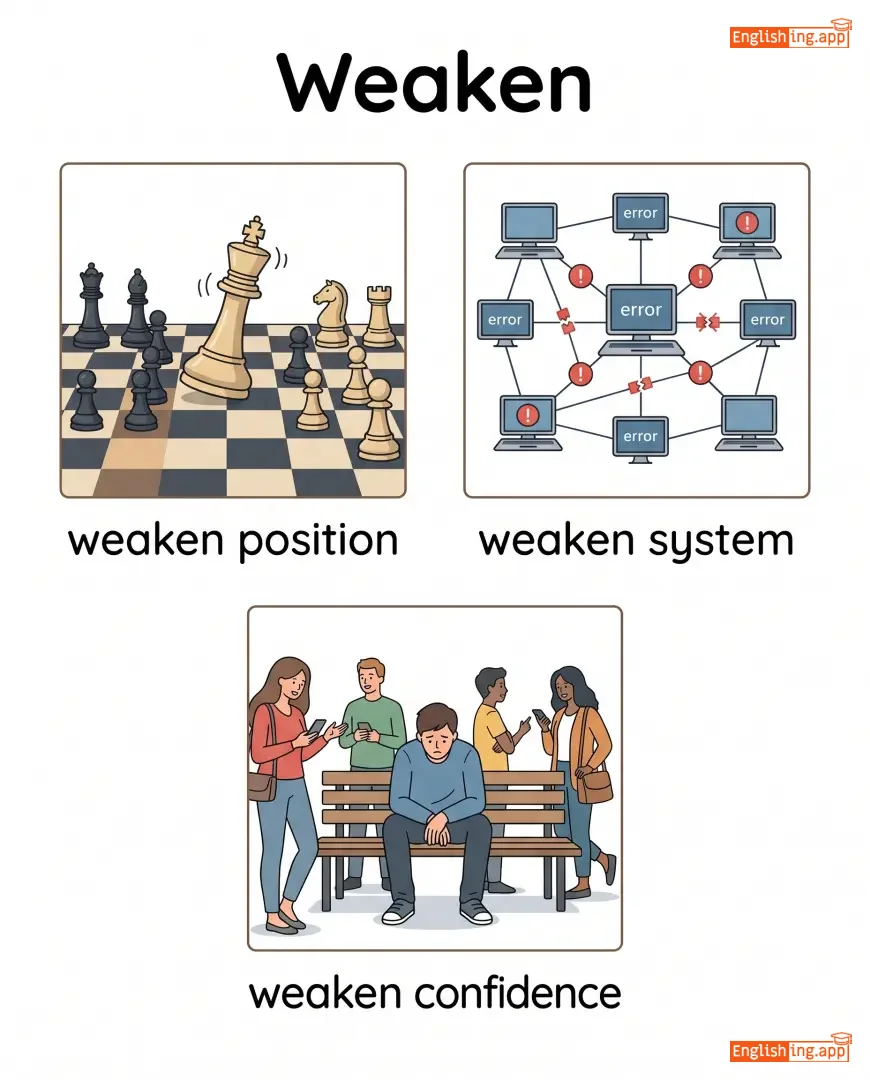
/ˈwiːkən/
verb
(wīken)
••••••
|
|
削弱
xuēruò
••••••
|
weakened
wīkend
••••••
|
weakened
wīkend
••••••
|
weakens
wīkens
••••••
|
weakening
wīkening
••••••
|
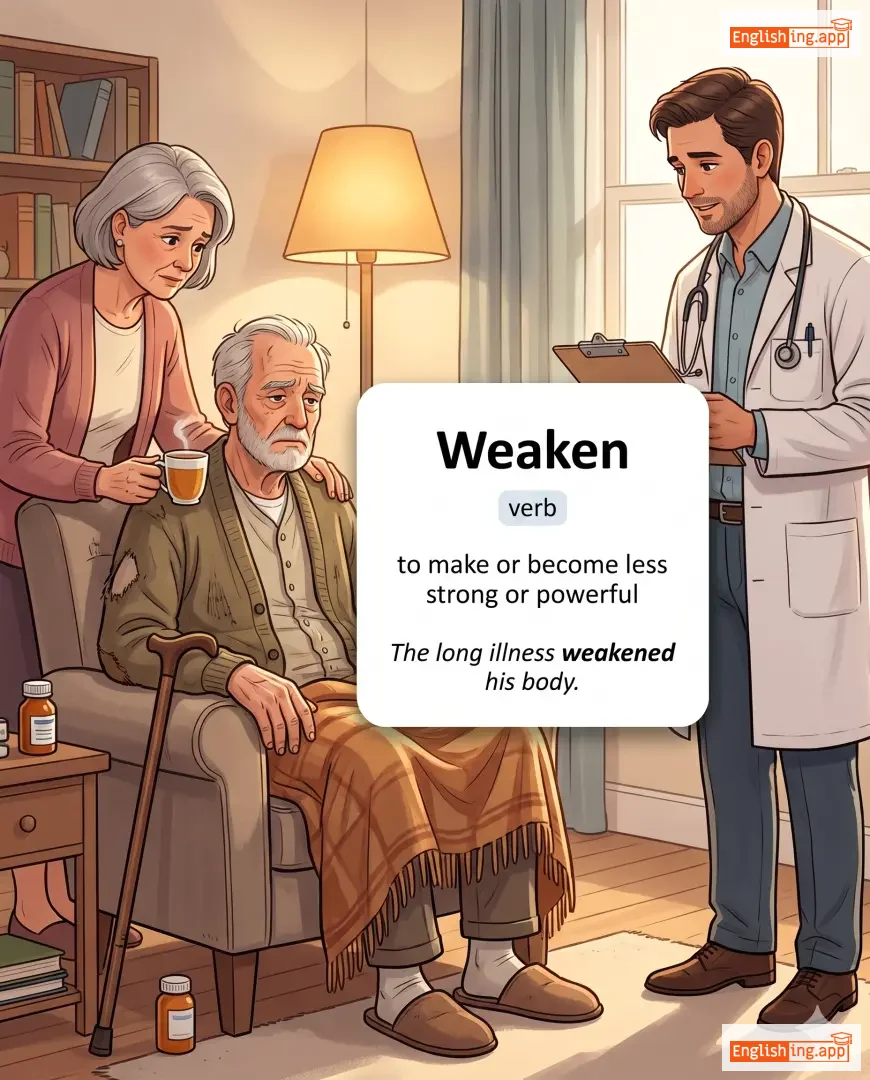
to make or become less strong or powerful
••••••
|
The long illness weakened his body.
De long illness wīkend his body.
••••••
|
长期的病痛削弱了他的身体。
Chángqī de bìngtòng xuēruòle tā de shēntǐ.
••••••
|
weaken someone's resolve
wīken someone's resolve
••••••
|
to make someone less determined or confident
••••••
|
削弱某人的决心
xuēruò mǒu rén de juéxīn
••••••
|
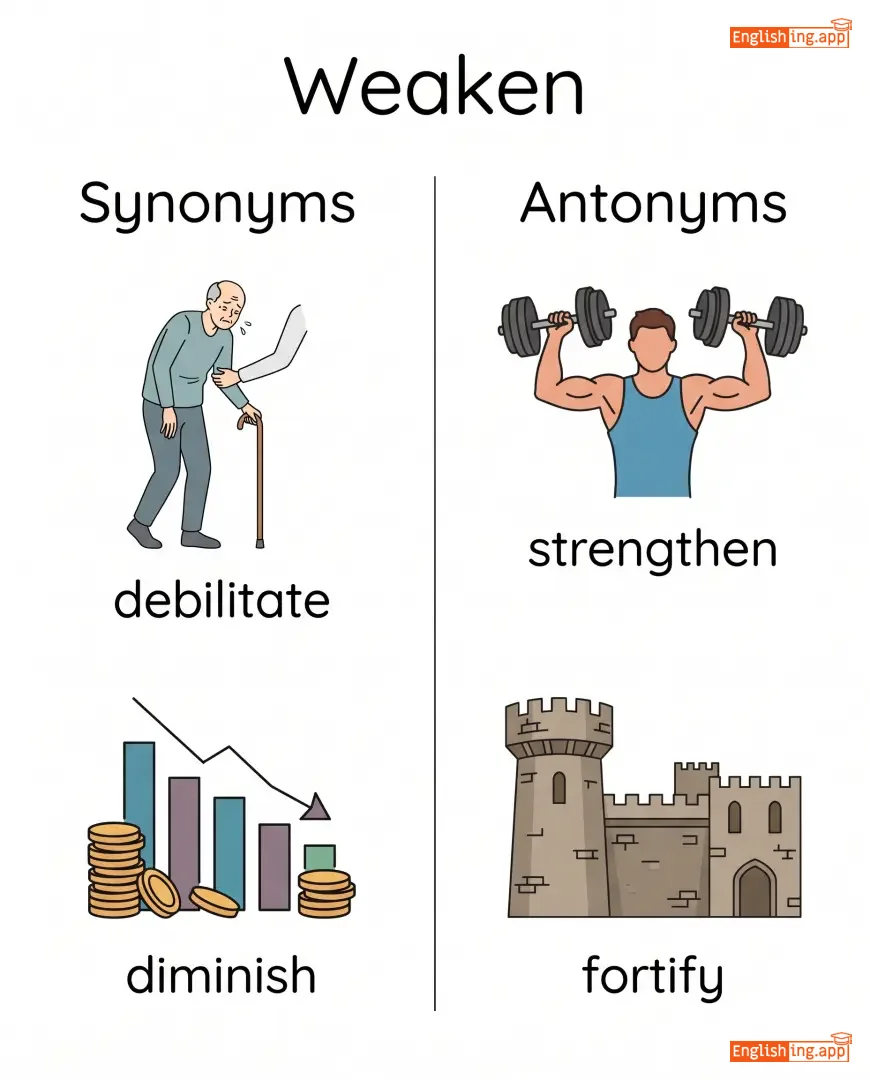
debilitate, diminish, reduce, impair, lessen
••••••
|
strengthen, fortify, empower
••••••
|
weaken position, weaken system, weaken confidence, weaken economy
••••••
|
Weaken意思是削弱,就像疾病使你变弱。
••••••
|
|
#1
⚔️
|
/ˈwɒriər/
noun
(wā lí ér)
••••••
|
- •••••• |
战士
zhànshì
••••••
|
- •••••• | - •••••• | - •••••• | - •••••• |
a person engaged or experienced in warfare; a brave or experienced fighter
••••••
|
The ancient warrior fought fearlessly to protect his land. |
古老的战士英勇地战斗以保护他的土地。
gǔlǎo de zhànshì yīngyǒng de zhàndòu yǐ bǎohù tā de tǔdì.
••••••
|
spiritual warrior |
a person who battles against inner weaknesses or strives for personal growth and enlightenment
••••••
|
精神战士
jīngshén zhànshì
••••••
|
fighter, soldier, combatant, champion, hero
••••••
|
coward, pacifist
••••••
|
brave warrior, ancient warrior, warrior spirit, skilled warrior
••••••
|
战士代表勇敢无畏的战斗者,保护自己的土地和荣耀。
••••••
|
|
#1
☀️
|
/wɔːmθ/
noun
(wɔːmθ)
••••••
|
- •••••• |
温暖
wēnnuǎn
••••••
|
- •••••• | - •••••• | - •••••• | - •••••• |
the quality or state of being warm in temperature or feeling
••••••
|
She felt the warmth of the sun on her face.
她感受到了阳光照在脸上的温暖。
••••••
|
她感受到了阳光照在脸上的温暖。
Tā gǎnshòu dào le yángguāng zhào zài liǎn shàng de wēnnuǎn.
••••••
|
warmth of heart
内心的温暖
••••••
|
kindness and affection
••••••
|
内心的温暖
nèi xīn de wēn nuǎn
••••••
|
heat, coziness, affection, kindness, friendliness
••••••
|
coldness, chill, indifference
••••••
|
emotional warmth, inner warmth, warmth and love, warmth of the sun
••••••
|
Warmth意味着温暖 — ‘warm th’不仅仅是温度,还是内心的温暖与爱。
••••••
|
|
#1
🏭
|
/ˈweə(r)haʊs/
noun
(wēi'āo sī)
••••••
|
- •••••• |
仓库
cangku
••••••
|
- •••••• | - •••••• | - •••••• | - •••••• |
a large building where goods are stored before being sold or distributed
••••••
|
The company stores all its products in a big warehouse. |
公司将所有产品存储在一个大仓库里。
Gōngsī jiāng suǒyǒu chǎnpǐn cúnchǔ zài yí gè dà cāngkù lǐ.
••••••
|
warehouse sale |
a sale held directly from a warehouse at discounted prices
••••••
|
仓库销售
cāngkù xiāoshòu
••••••
|
depot, storage, storehouse, repository, stockroom
••••••
|
shop, outlet
••••••
|
warehouse worker, warehouse storage, in the warehouse, warehouse manager
••••••
|
Warehouse 就是存放商品的仓库 — 储存商品的地方!
••••••
|
|
#1
🚶♂️
|
/ˈwɔːkɪŋ/
noun
(沃金)
••••••
|
- •••••• |
走路
zǒulù
••••••
|
- •••••• | - •••••• | - •••••• |
walking
沃金
••••••
|
the activity of moving on foot at a moderate pace
••••••
|
Walking every morning is good for your health.
沃金每个早晨对你的健康有益。
••••••
|
每天早晨走路对你的健康有益。
Měitiān zǎo chén zǒulù duì nǐ de jiànkāng yǒuyì.
••••••
|
walking on air
走在空中
••••••
|
feeling very happy or elated
••••••
|
非常开心
fēicháng kāixīn
••••••
|
strolling, trekking, pacing, hiking, moving
••••••
|
running, sitting, resting
••••••
|
walking stick, walking path, go walking, enjoy walking
••••••
|
Walking意味着走路 — 每天早晨走路保持健康 🚶.
••••••
|
|
#1
🧍♂️
|
/weɪst/
noun
(wéist)
••••••
|
- •••••• |
腰部
yaobu
••••••
|
- •••••• | - •••••• | - •••••• | - •••••• |
the part of the human body between the ribs and the hips
••••••
|
He tied a belt around his waist. |
他在腰部系上了一条皮带。
Ta zai yaobu xishang le yitiaopidai.
••••••
|
waist of time |
a pun meaning something or someone that wastes time
••••••
|
浪费时间
langfei shijian
••••••
|
midsection, torso, abdomen, stomach
••••••
|
head, foot
••••••
|
slim waist, narrow waist, waist belt, around the waist
••••••
|
Waist是腰部,记住‘waist belt’是系在腰部的!
••••••
|
|
#1
🚜
|
/ˈwæɡən/
noun
(wāgēn)
••••••
|
- •••••• |
马车
mǎchē
••••••
|
- •••••• | - •••••• | - •••••• | - •••••• |
a vehicle with four wheels used for carrying loads, often pulled by horses or a motor vehicle used for transporting goods or people
••••••
|
The farmer loaded hay onto the wagon. |
农民把干草装上了马车。
nóngmín bǎ gāncǎo zhuāng shàngle mǎchē.
••••••
|
on the wagon |
abstaining from drinking alcohol
••••••
|
戒酒
jièjiǔ
••••••
|
cart, carriage, truck, van, lorry
••••••
|
car, bike, sled
••••••
|
horse-drawn wagon, covered wagon, station wagon, load a wagon
••••••
|
马车像是 wagon,用来运送货物的四轮车。
••••••
|
|
#1
🗳️
|
/ˈvoʊtɪŋ/
noun
(投票)
••••••
|
- •••••• |
投票
toupiao
••••••
|
- •••••• | - •••••• | - •••••• |
voting
投票
••••••
|
the act of making a choice in an election or decision by casting a vote
••••••
|
Voting is an important part of a democratic society.
投票是民主社会的重要组成部分。
••••••
|
投票是民主社会的重要组成部分。
Toupiao shi minzhu shehui de zhongyao zuzhi bufen.
••••••
|
voting rights
投票权
••••••
|
the legal rights to participate in elections by voting
••••••
|
投票权
toupiaoquan
••••••
|
balloting, election, poll, suffrage
••••••
|
abstaining, disenfranchisement
••••••
|
voting rights, voting system, voting booth, voting process
••••••
|
投票,投出未来的声音!
••••••
|
|
#1
🙌
|
/ˈvɑːlənteri/
adjective
••••••
|
- •••••• | - •••••• | - •••••• | - •••••• | - •••••• | - •••••• |
done willingly and without being forced
••••••
|
She does a lot of voluntary work for local charities. |
- •••••• |
voluntary service |
work done freely without payment
••••••
|
- •••••• |
optional, willing, discretionary, self-imposed, deliberate
••••••
|
forced, compulsory
••••••
|
voluntary work, voluntary donation, voluntary service, voluntary action
••••••
|
No •••••• |
|
#1
🔄
|
/ˈʌpdeɪt/
verb
••••••
|
|
- •••••• |
updated
••••••
|
updated
••••••
|
updates
••••••
|
updating
••••••
|
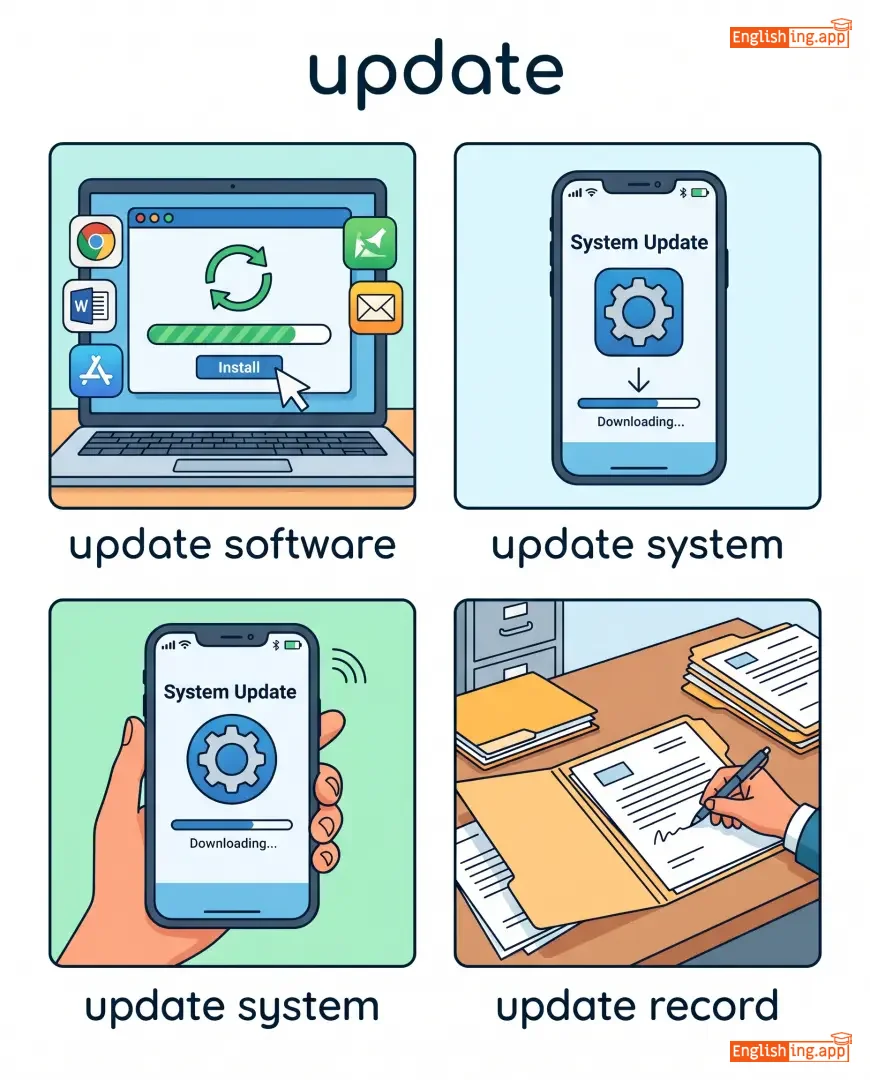
to make something more modern or accurate by adding new information or changing it
••••••
|
Please update your profile information regularly. |
- •••••• |
keep someone updated |
to inform someone of new developments
••••••
|
- •••••• |
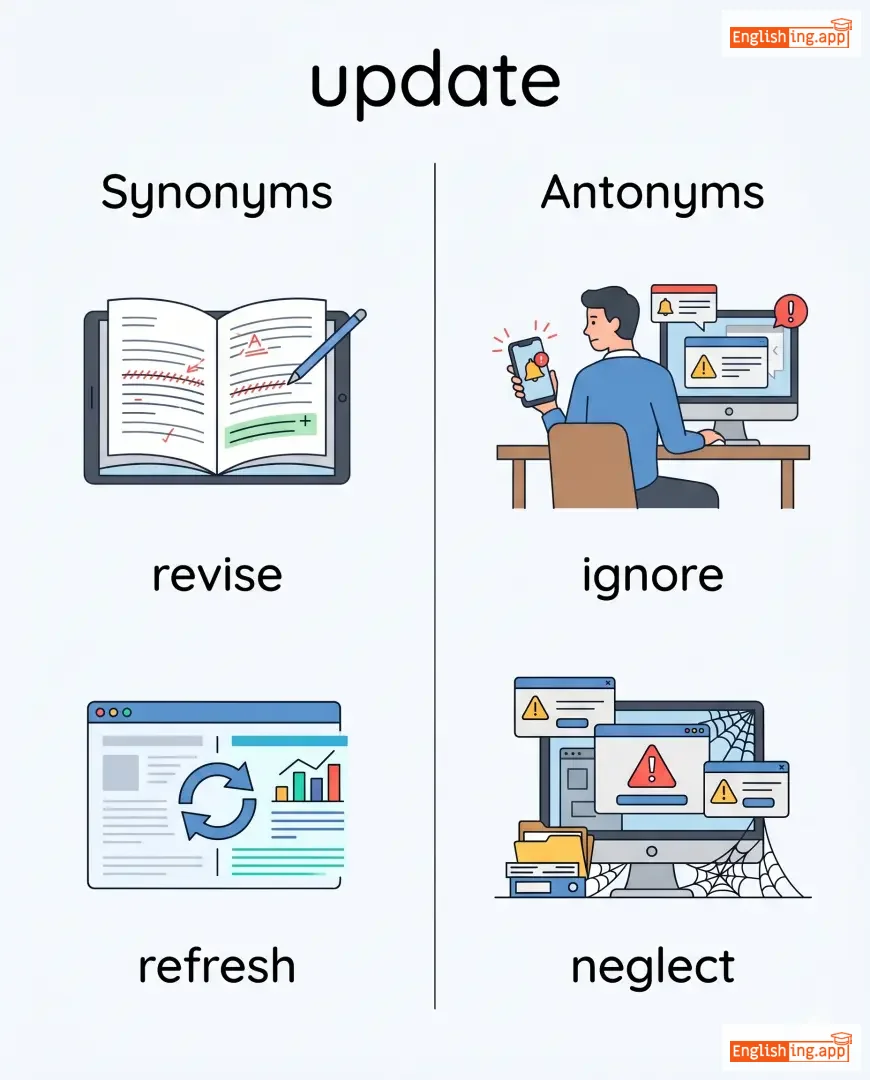
revise, refresh, modify, modernize, amend
••••••
|
ignore, neglect, retain
••••••
|
update software, update system, update record, latest update
••••••
|
No •••••• |
|
#1
💊
|
/ˈvaɪtəmɪn/
noun
(维他命)
••••••
|
- •••••• |
维他命
weitaming
••••••
|
- •••••• | - •••••• | - •••••• | - •••••• |
a natural substance needed by the body to stay healthy
••••••
|
Fruits and vegetables are rich sources of vitamins. |
水果和蔬菜是维他命的丰富来源。
shuǐguǒ hé shūcài shì wéitāmìng de fēngfù láiyuán.
••••••
|
- •••••• | - •••••• | - •••••• |
nutrient, supplement, micronutrient, compound
••••••
|
toxin, poison
••••••
|
vitamin deficiency, vitamin supplement, vitamin C, vitamin D
••••••
|
维他命 = Vital + Amino — 身体必需的 vital 物质!
••••••
|
|
#1
👀
|
/ˈvɪzəbl/
adjective
(vísɪbəl)
••••••
|
- •••••• |
可见的
kejian de
••••••
|
- •••••• | - •••••• | - •••••• | - •••••• |
able to be seen; perceptible by the eye
••••••
|
The stars were clearly visible in the night sky.
星星在夜空中清晰可见。
••••••
|
星星在夜空中清晰可见。
Xīngxīng zài yèkōng zhōng qīngxī kějiàn.
••••••
|
make oneself visible
使自己变得可见
••••••
|
to ensure others can see or notice you
••••••
|
使自己变得可见
Shǐ zìjǐ biàn dé kějiàn
••••••
|
apparent, noticeable, perceptible, observable, evident
••••••
|
invisible, hidden
••••••
|
visible light, visible mark, visible difference, clearly visible
••••••
|
Visible就像星星一样,可以看见。
••••••
|
|
#1
💻
|
/ˈvɜː.tʃu.ə.li/
adverb
(wěi chù ài lì)
••••••
|
- •••••• |
几乎, 虚拟
jī hū, xū nǐ
••••••
|
- •••••• | - •••••• | - •••••• | - •••••• |
almost or nearly, but not completely; by means of computer technology
••••••
|
The meeting was held virtually due to travel restrictions. |
由于旅行限制,会议是虚拟举行的。
Yóu yú lǚ xíng xiàn zhì, huì yì shì xū nǐ jǔ xíng de.
••••••
|
virtually impossible |
almost impossible to do or achieve
••••••
|
几乎不可能
jī hū bù kě néng
••••••
|
almost, nearly, practically, effectively, essentially
••••••
|
completely, totally, physically
••••••
|
virtually impossible, virtually all, held virtually, virtually unchanged
••••••
|
Virtually 意思是在线或几乎 — 想想‘virtual class’,就是真正的在线课堂 💻
••••••
|
|
#1
🔥
|
/ˈvaɪ.ə.lənt/
adjective
(vɑɪələnt)
••••••
|
- •••••• |
暴力的
baolide
••••••
|
- •••••• | - •••••• | - •••••• | - •••••• |
using or involving physical force intended to hurt or damage
••••••
|
He became violent after hearing the bad news. |
听到坏消息后,他变得暴力了。
Tingdao huai xiaoxi hou, ta biande baolile.
••••••
|
turn violent |
to become aggressive or start using physical force
••••••
|
变得暴力
biande baoli
••••••
|
aggressive, brutal, fierce, forceful, savage
••••••
|
peaceful, gentle, calm
••••••
|
violent attack, violent crime, violent reaction, become violent
••••••
|
Violent 意味着暴力行为 🔥 — ‘暴力的’ 是指当某人爆发时就像风暴一样!
••••••
|
|
#1
💥
|
/ˈvaɪ.ə.ləns/
noun
(暴力)
••••••
|
- •••••• |
暴力
baoli
••••••
|
- •••••• | - •••••• | - •••••• | - •••••• |
behavior involving physical force intended to hurt or damage
••••••
|
The protest turned into an act of violence.
抗议活动变成了一种暴力行为。
••••••
|
抗议活动变成了一种暴力行为。
Kàngyì huódòng biàn chéngle yī zhǒng bàolì xíngwéi.
••••••
|
domestic violence
家庭暴力
••••••
|
violence or abuse within a household, often between partners
••••••
|
家庭暴力
jiātíng bàolì
••••••
|
aggression, brutality, force, cruelty, assault
••••••
|
peace, calm, harmony
••••••
|
use violence, outbreak of violence, act of violence, prevent violence
••••••
|
‘暴力’意味着violence,想象一场打斗和一个响亮的声音 💥,这就是暴力!
••••••
|
|
#1
🚫
|
/ˈvaɪ.ə.leɪt/
verb
(wāi-òu-lèi-tè)
••••••
|
|
违反
wéifǎn
••••••
|
violated
wāi-òu-lèi-tèd
••••••
|
violated
wāi-òu-lèi-tèd
••••••
|
violates
wāi-òu-lèi-ts
••••••
|
violating
wāi-òu-lèi-ting
••••••
|
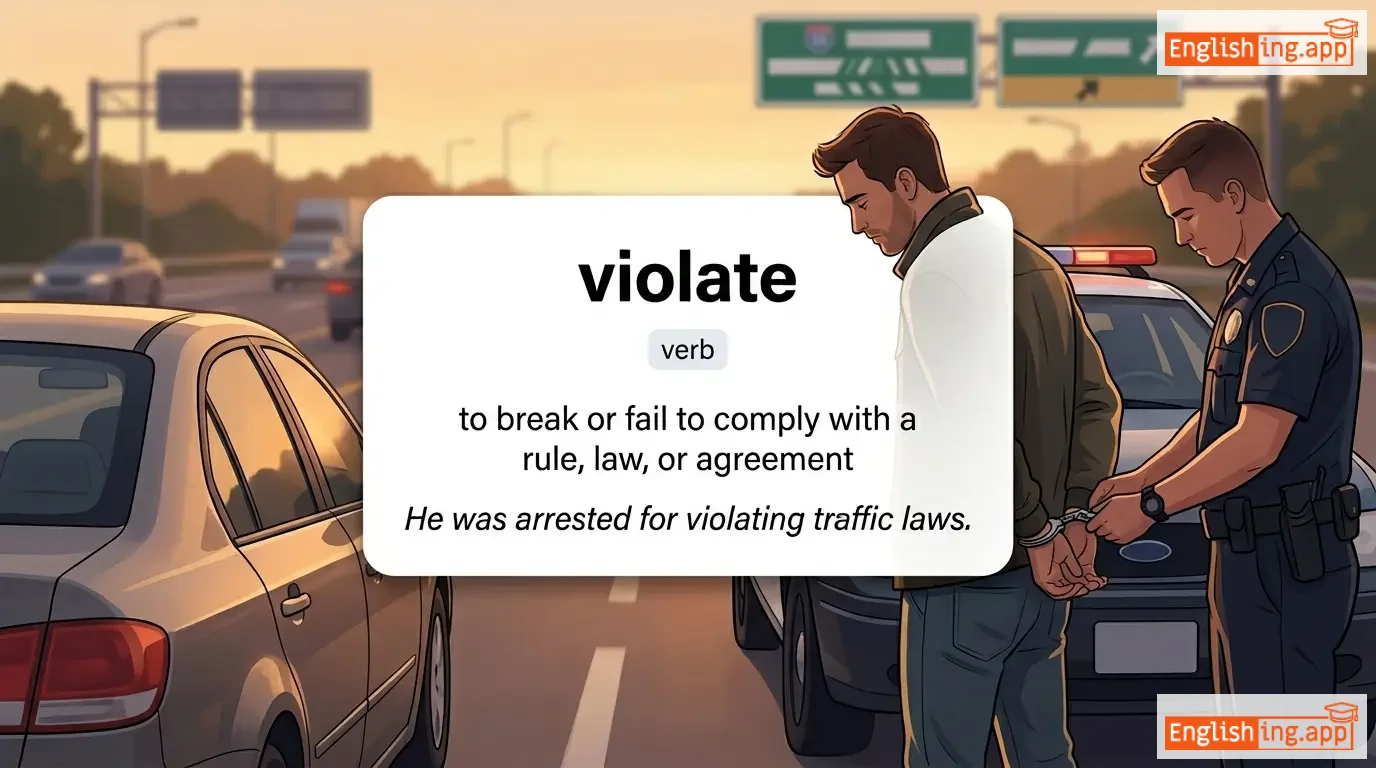
to break or fail to comply with a rule, law, or agreement
••••••
|
He was arrested for violating traffic laws.
tā yīnwèi wéifǎ bōfǎo jiāotōng fǎlǜ ér bèi dǔlì
••••••
|
他因违反交通法规被逮捕。
Tā yīnwèi wéifǎ bōfǎo jiāotōng fǎlǜ ér bèi dǔlì.
••••••
|
violate human rights
wāi-òu-lèi rénquán
••••••
|
to act against the basic rights that every human deserves
••••••
|
侵犯人权
qīnfàn rénquán
••••••
|
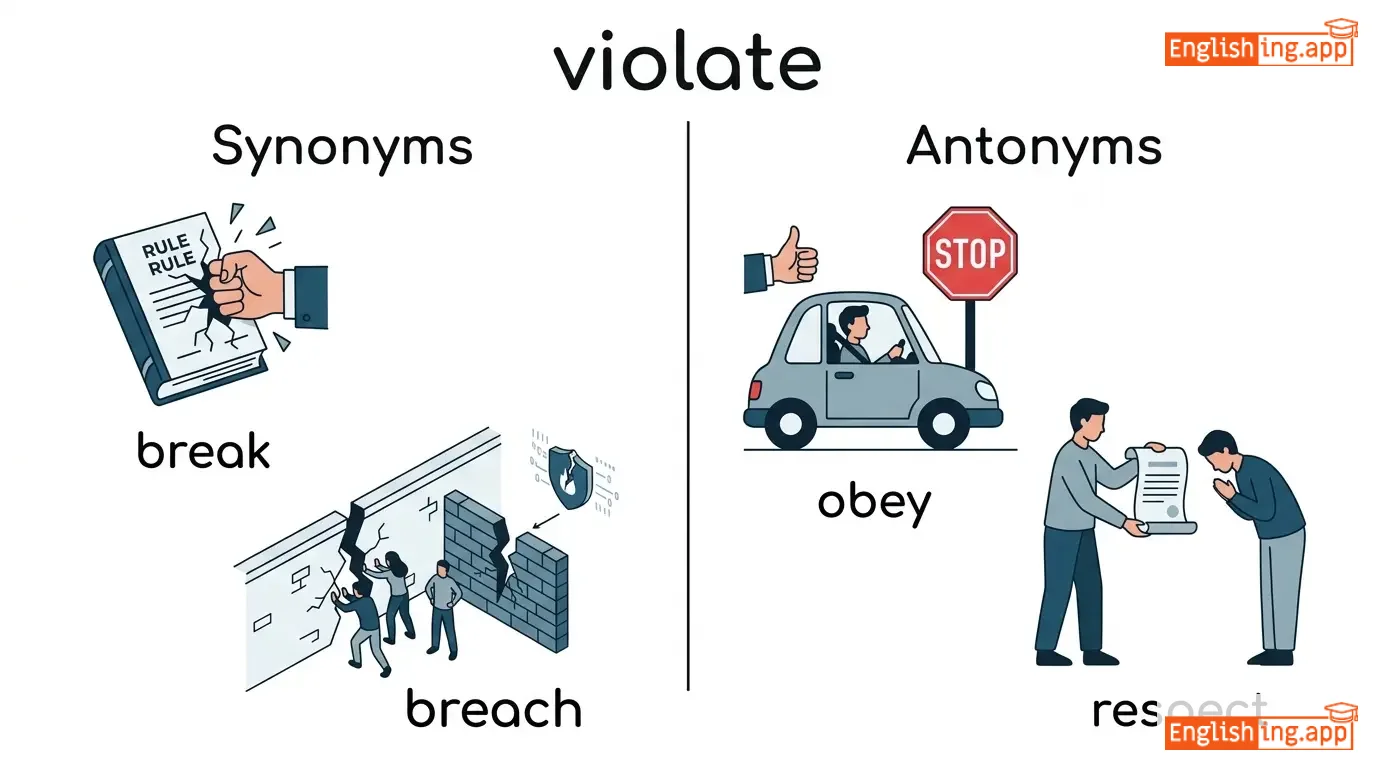
break, breach, disobey, infringe, transgress
••••••
|
obey, respect, follow
••••••
|
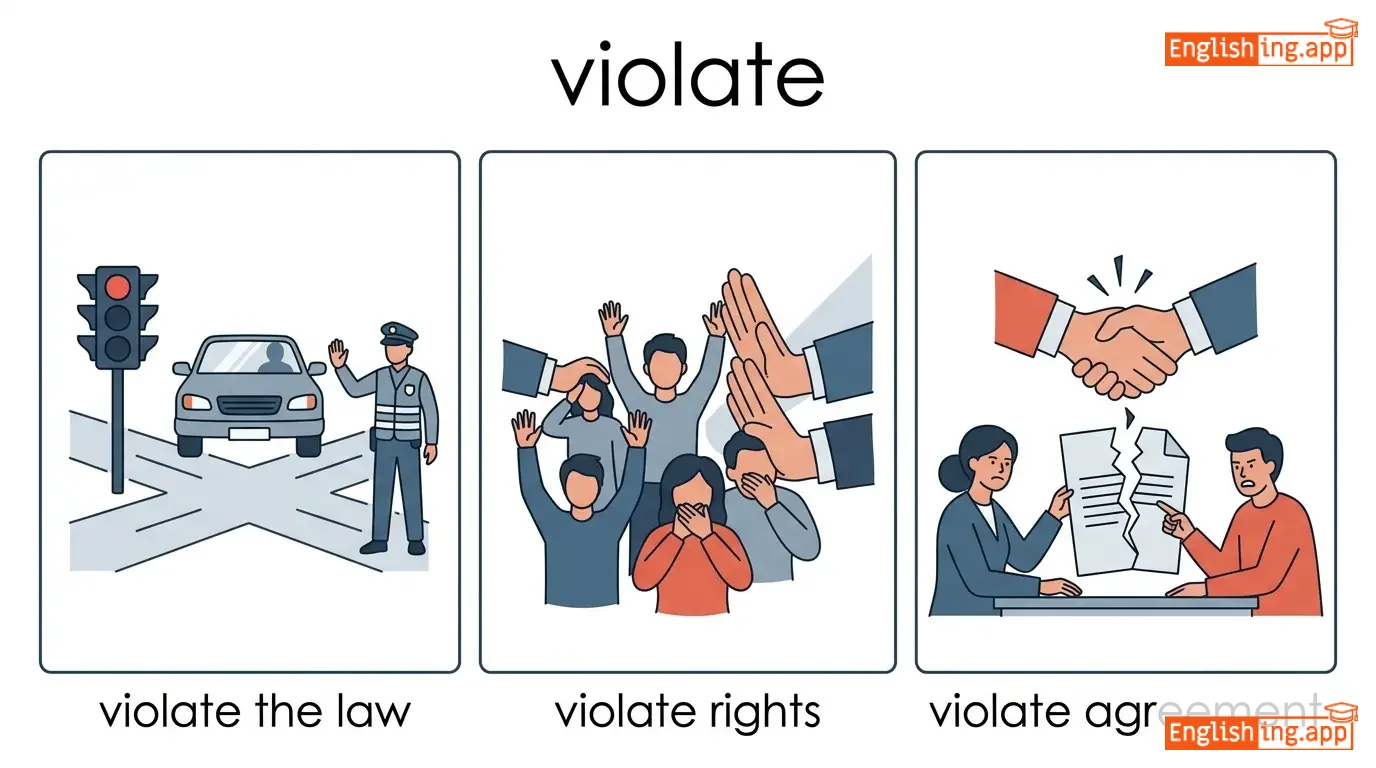
violate the law, violate rights, violate agreement, violate privacy
••••••
|
'违反' = 打破规则,别违反法则!
••••••
|
|
#1
⚖️
|
/ˈvɜː.dɪkt/
noun
••••••
|
- •••••• | - •••••• | - •••••• | - •••••• | - •••••• | - •••••• |
a decision made by a jury or judge in a court case
••••••
|
The jury returned a guilty verdict after three hours of deliberation. |
- •••••• |
deliver a verdict |
to announce a final decision or judgment in a case
••••••
|
- •••••• |
judgment, decision, ruling, conclusion, finding
••••••
|
mistrial, indecision
••••••
|
reach a verdict, deliver a verdict, announce a verdict, final verdict
••••••
|
No •••••• |
|
#1
🗣️
|
/ˈvɜː.bəl/
adjective
(vɜːr.bəl)
••••••
|
|
口头的
kǒutóu de
••••••
|
- •••••• | - •••••• | - •••••• | - •••••• |
relating to words or speech rather than writing or action
••••••
|
They had a verbal agreement instead of a written one. |
他们达成了口头协议,而不是书面协议。
Tāmen dáchéngle kǒutóu xiéyì, ér bù shì shūmiàn xiéyì.
••••••
|
verbal abuse |
the use of words to insult or hurt someone
••••••
|
口头虐待
kǒutóu nüèdài
••••••
|
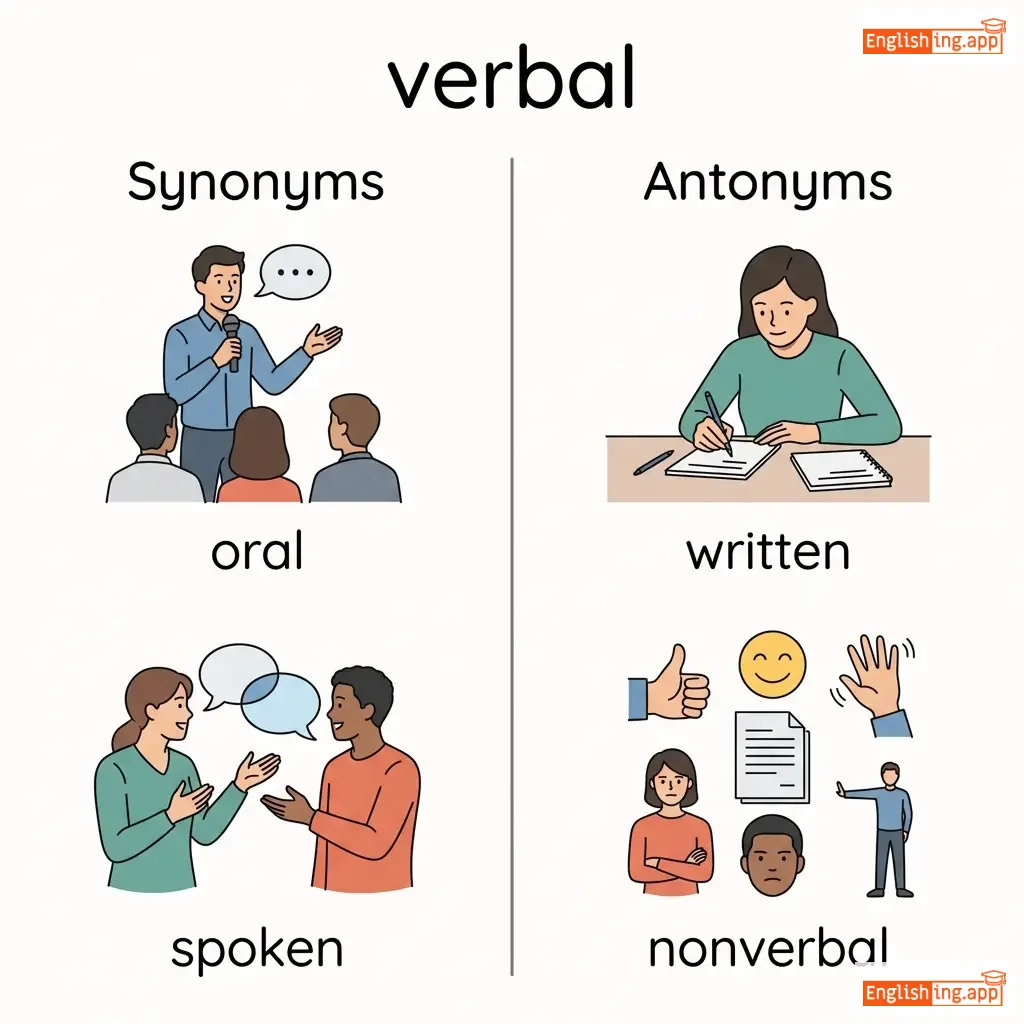
oral, spoken, expressed, linguistic
••••••
|
written, nonverbal
••••••
|
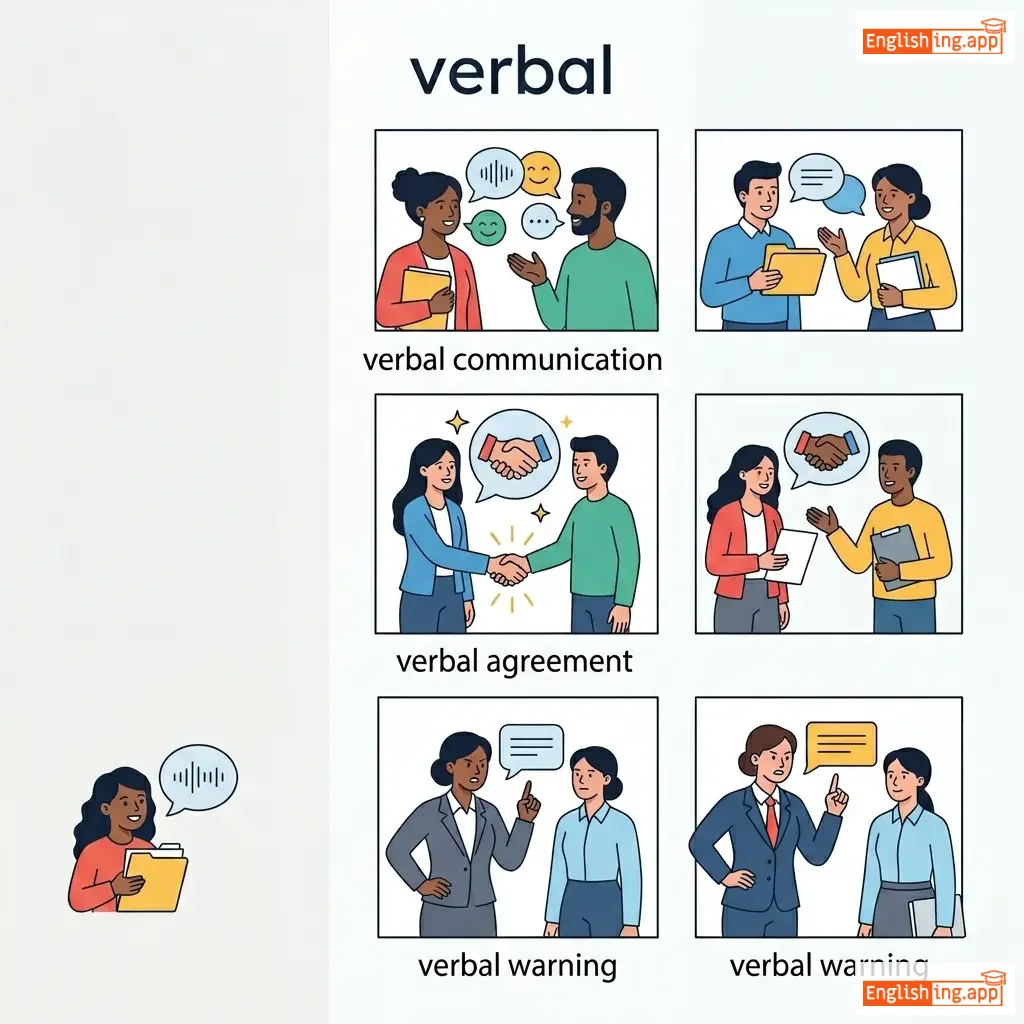
verbal communication, verbal agreement, verbal warning, verbal abuse
••••••
|
Verbal意味着与单词相关——想想‘verb’,所以 verbal = 与词相关!
••••••
|
|
#1
✨
|
/ˈvæn.ɪʃ/
verb
(范尼什)
••••••
|
|
消失
xiaoshi
••••••
|
vanished
范尼什德
••••••
|
vanished
范尼什德
••••••
|
vanishes
范尼什斯
••••••
|
vanishing
范尼辛
••••••
|
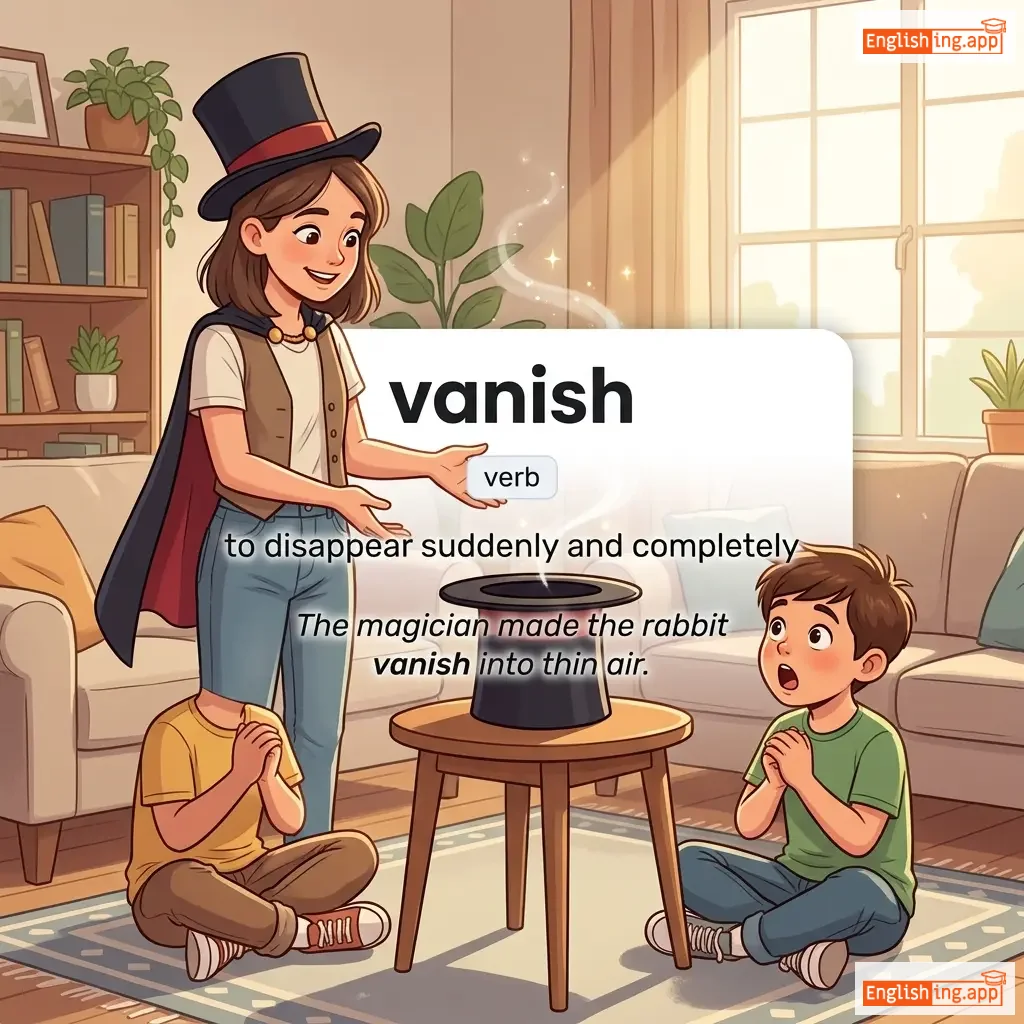
to disappear suddenly and completely
••••••
|
The magician made the rabbit vanish into thin air.
魔术师让兔子在空气中消失。
••••••
|
魔术师让兔子在空气中消失。
Moshushi rang tuzi zai kongqi zhong xiaoshi.
••••••
|
vanish into thin air
消失在空气中
••••••
|
to disappear suddenly without a trace
••••••
|
消失在空气中
xiaoshi zai kongqi zhong
••••••
|
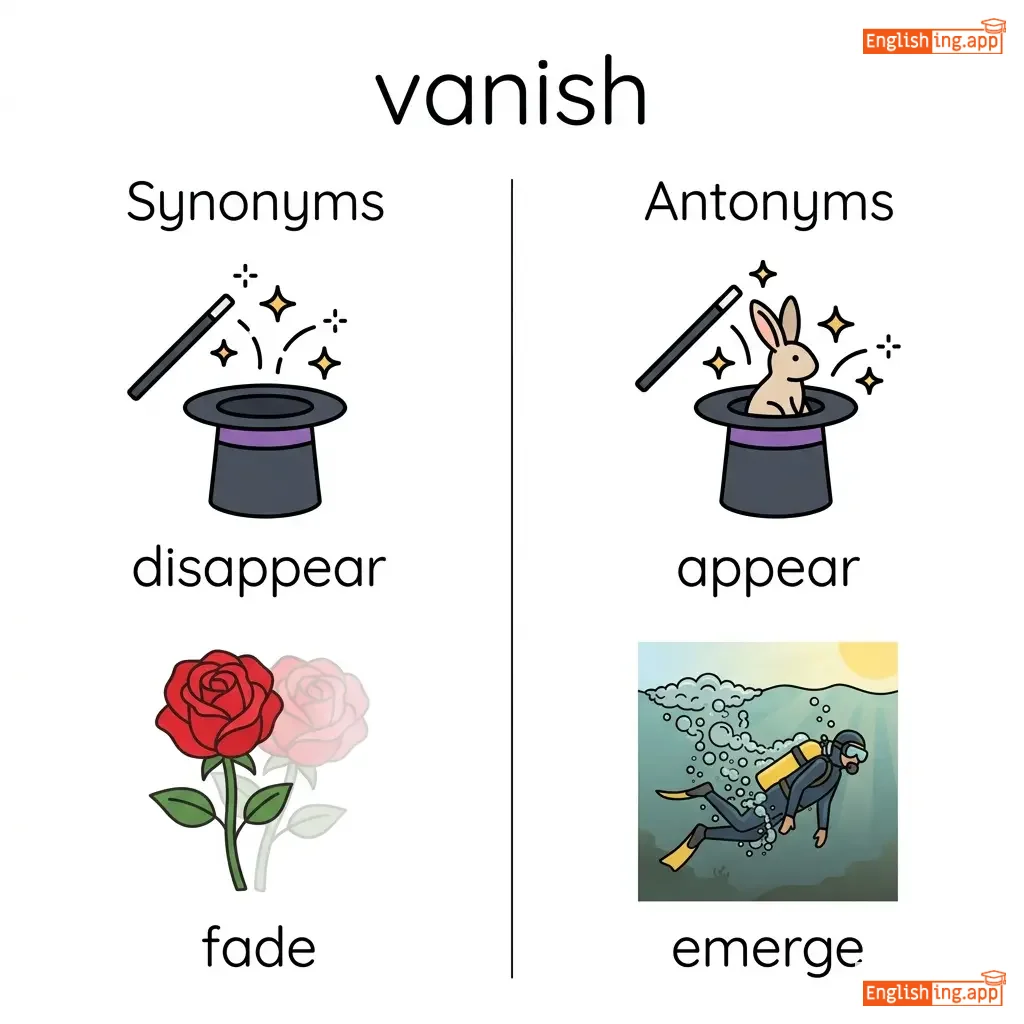
disappear, fade, evaporate, melt away
••••••
|
appear, emerge
••••••
|
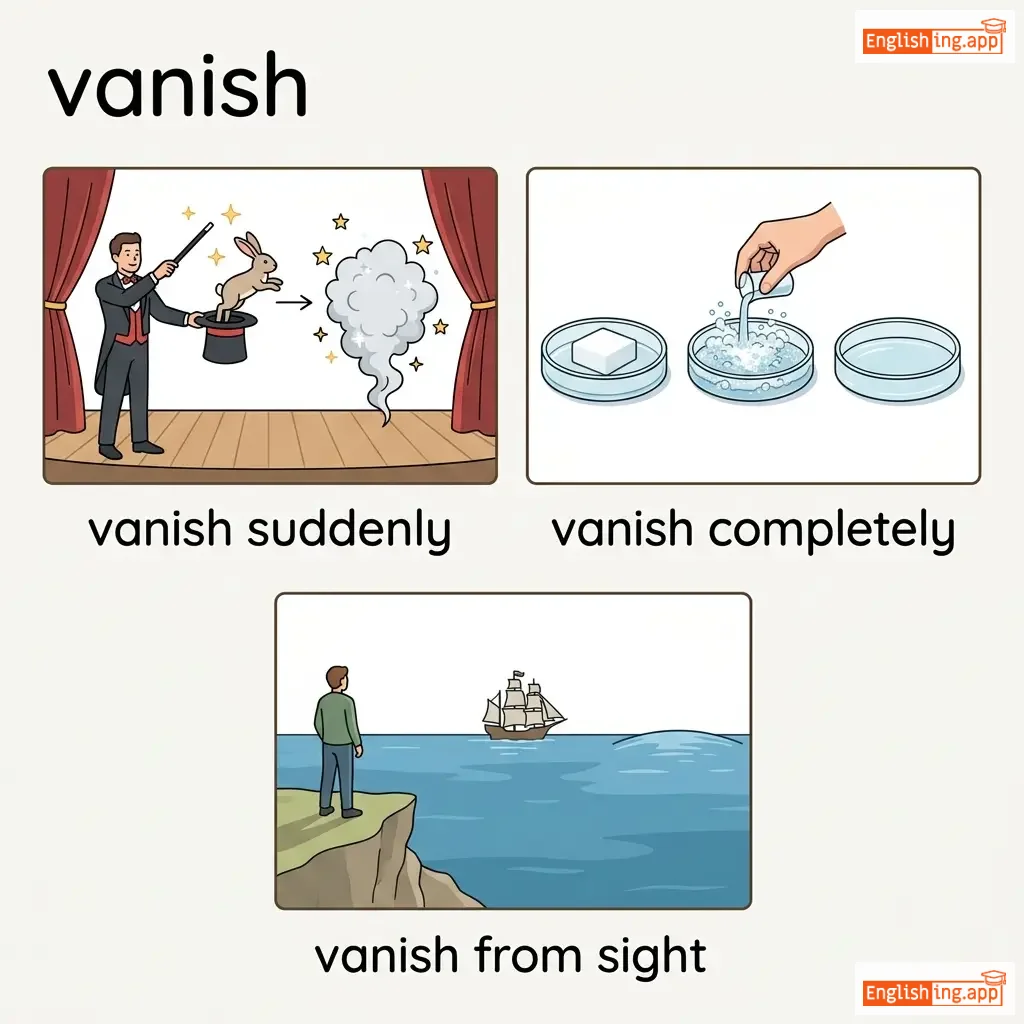
vanish suddenly, vanish completely, vanish from sight, vanish overnight
••••••
|
Vanish意味着消失 — 想象一个魔术师说: ‘Vanish!’ 然后兔子消失了。
••••••
|
|
#1
🚐
|
/væn/
noun
(范)
••••••
|
- •••••• |
货车
huoche
••••••
|
- •••••• | - •••••• | - •••••• | - •••••• |
a large vehicle used for transporting goods or people
••••••
|
The delivery van stopped in front of our house. |
送货车停在我们家门前。
Songhuo che ting zai women jia menqian.
••••••
|
moving van |
a large vehicle used for transporting furniture when moving
••••••
|
搬家车
banjia che
••••••
|
truck, vehicle, transporter, carrier
••••••
|
car, bike
••••••
|
delivery van, police van, moving van, camper van
••••••
|
货车 — 想象着它载满家具搬到新家。
••••••
|
|
#1
✅
|
/vəˈlɪd.ə.ti/
noun
(瓦利迪提)
••••••
|
- •••••• |
有效性
youxiao xing
••••••
|
- •••••• | - •••••• | - •••••• | - •••••• |
the quality of being logically or factually sound; legal acceptability
••••••
|
The lawyer questioned the validity of the contract. |
律师质疑合同的有效性。
Lvshi zhiyi hetong de youxiaoxing.
••••••
|
validate a claim |
to prove that a claim is true or acceptable
••••••
|
验证一个主张
yanzheng yige zhuzhang
••••••
|
legitimacy, soundness, authenticity, accuracy
••••••
|
invalidity, falseness, illegitimacy
••••••
|
validity period, test validity, question the validity, ensure validity
••••••
|
有效性 = 如验证你的考试ID,若无效则无法进入!
••••••
|
|
#1
💉
|
/ˈvæk.siːn/
noun
(wèixīn)
••••••
|
- •••••• |
疫苗
yimiao
••••••
|
- •••••• | - •••••• | - •••••• | - •••••• |
a substance used to stimulate the body's immune response against diseases
••••••
|
Children are given the polio vaccine to prevent infection. |
孩子们接种脊髓灰质炎疫苗以预防感染。
Háizimen jiēzhǒng jǐsuǐ huīzhìyán yìmiáo yǐ yùfáng gǎnrǎn.
••••••
|
get vaccinated |
to receive a vaccine to protect against disease
••••••
|
接种疫苗
jiēzhǒng yìmiáo
••••••
|
immunization, inoculation, shot, injection, jab
••••••
|
infection, disease
••••••
|
COVID vaccine, flu vaccine, vaccine dose, vaccine rollout, vaccine campaign
••••••
|
Vaccine意味着疫苗 — 想象一个医生说:'接种疫苗,保持安全!'
••••••
|
|
#1
⚙️
|
/ˈjuːtɪlaɪz/
verb
(yutilaiz)
••••••
|
- •••••• |
利用
lìyòng
••••••
|
utilized
yutilaizd
••••••
|
utilized
yutilaizd
••••••
|
utilizes
yutilaizis
••••••
|
utilizing
yutilaizing
••••••
|
to make practical or effective use of something
••••••
|
The company aims to utilize solar energy for production.
公司旨在利用太阳能进行生产。
••••••
|
公司旨在利用太阳能进行生产。
Gōngsī zhǐ zài lìyòng tàiyángnéng jìnxíng shēngchǎn.
••••••
|
- •••••• | - •••••• | - •••••• |
use, employ, apply, exploit, harness
••••••
|
waste, neglect, misuse
••••••
|
utilize resources, utilize time, utilize data, utilize opportunity
••••••
|
You till eyes 利用 — Utilize 意味着利用某物
••••••
|
|
#1
🏠⬆️
|
/ˌʌpˈstɛərz/
adverb
••••••
|
- •••••• | - •••••• | - •••••• | - •••••• | - •••••• | - •••••• |
on or to a higher floor of a building
••••••
|
She went upstairs to her bedroom. |
- •••••• |
the people upstairs |
neighbors who live on the floor above
••••••
|
- •••••• |
above, overhead, aloft, upper floor, higher level
••••••
|
downstairs, below, beneath
••••••
|
go upstairs, walk upstairs, upstairs room, upstairs neighbor
••••••
|
No •••••• |
Vocabulary Quiz
Test your vocabulary by matching words with their translations or meanings.
Login to take the quiz
Comments (0)
Share your thoughts and join the discussion.
Join the discussion by logging in
Login to CommentNo comments yet
Be the first to share your thoughts!