





Swipe left or right, or use the buttons. Tap image to zoom.
例句翻译
单词
Lesson 94Lesson 94 - 遮罩切换
|
表情符号
|
单词 | Images | 翻译 | 过去时 | 过去分词 | 第三人称单数 | 动名词 | 含义 | 例句 | 例句翻译 | 示例表达 | 示例表达含义 | 示例表达翻译 | 同义词 | 反义词 | 搭配词 | 助记符 |
|---|---|---|---|---|---|---|---|---|---|---|---|---|---|---|---|---|---|
|
#2791
🌊
|
/ɛb/
verb
(艾布)
••••••
|
- •••••• |
减弱
jian ruo
••••••
|
ebbed
艾布德
••••••
|
ebbed
艾布德
••••••
|
ebbs
艾布斯
••••••
|
ebbing
艾冰
••••••
|
to recede, decline, or lessen gradually, often referring to the tide or emotions
••••••
|
Her confidence began to ebb after the repeated failures.
在多次失败后,她的自信心开始减弱。
••••••
|
在多次失败后,她的自信心开始减弱。
Zai duo ci shi bai hou, ta de zi xin xin kai shi jian ruo.
••••••
|
at a low ebb
处于低谷
••••••
|
in a weakened, depressed, or declining state
••••••
|
处于低谷
chu yu di gu
••••••
|
recede, diminish, decline, wane, fade
••••••
|
flow, increase, rise
••••••
|
ebb and flow, tide ebbs, ebb away, at a low ebb
••••••
|
Ebb意味着减弱 🌊 - 就像潮汐退去,自信心也减少
••••••
|
|
#2792
📖
|
/iː ˈdʒiː/
abbreviation
(iː dʒiː)
••••••
|
- •••••• |
例如
li ru
••••••
|
- •••••• | - •••••• | - •••••• | - •••••• |
For example (from Latin 'exempli gratia').
••••••
|
You should eat more fruits, e.g., apples and bananas. |
你应该多吃水果,例如苹果和香蕉。
Ni ying gai duo chi shui guo, li ru ping guo he xiang jiao.
••••••
|
- •••••• | - •••••• | - •••••• |
for example, for instance, such as
••••••
|
none
••••••
|
use e.g., examples e.g., e.g. followed by
••••••
|
e.g. 意思是 '例如' - Example Given.
••••••
|
|
#2793
💰
|
/ˌiːkəˈnɒmɪkl/
adjective
(经济的)
••••••
|
- •••••• |
经济的
jingjide
••••••
|
- •••••• | - •••••• | - •••••• | - •••••• |
Careful in the use of resources; providing good value or efficiency.
••••••
|
Driving a hybrid car is economical in the long run. |
驾驶混合动力车在长期来看是经济的。
Jiàshǐ hùnhé dònglì chē zài chángqī lái kàn shì jīngjì de.
••••••
|
economical with the truth |
A polite way of saying someone is not telling the whole truth.
••••••
|
在真相面前经济
Zài zhēnxiàng miànqián jīngjì
••••••
|
thrifty, frugal, efficient, cost-effective, prudent
••••••
|
wasteful, extravagant, lavish
••••••
|
economical choice, economical use, economical car, economical lifestyle
••••••
|
经济的 = 经济 + 的 (节省), 所以经济的。
••••••
|
|
#2794
🌿
|
/iˈkɒlədʒɪst/
noun
(生态学家)
••••••
|
- •••••• |
生态学家
shengtai xuejia
••••••
|
- •••••• | - •••••• | - •••••• | - •••••• |
A scientist who studies the relationships between living organisms and their environment.
••••••
|
The ecologist studied the effects of pollution on the forest ecosystem. |
生态学家研究了污染对森林生态系统的影响。
Shengtai xuejia yanjiule wuran dui senlin shengtai xitong de yingxiang.
••••••
|
- •••••• | - •••••• | - •••••• |
environmentalist, naturalist, conservationist, biologist, researcher
••••••
|
polluter, exploiter
••••••
|
field ecologist, marine ecologist, conservation ecologist, research ecologist
••••••
|
生态学家 = 生态 + 学家 (研究生态的专家)
••••••
|
|
#2795
☀️
|
/ɪˈklɪptɪk/
noun, adjective
(黄道)
••••••
|
- •••••• |
黄道
huangdao
••••••
|
- •••••• | - •••••• | - •••••• | - •••••• |
The apparent path of the sun across the sky; relating to eclipses or this path.
••••••
|
The ecliptic is the plane of Earth's orbit around the Sun. |
黄道是地球围绕太阳公转的平面。
Huangdao shi diqiu weirao taiyang gongzhuan de pingmian.
••••••
|
- •••••• | - •••••• | - •••••• |
orbital path, solar path, celestial plane, trajectory
••••••
|
zenith, nadir
••••••
|
ecliptic plane, ecliptic path, ecliptic longitude, ecliptic coordinate
••••••
|
Ecliptic = 日食的路径
••••••
|
|
#2796
🌑
|
/ɪˈklɪps/
noun, verb
(日全食)
••••••
|
- •••••• |
日食
rì shí
••••••
|
eclipsed
日全食
••••••
|
eclipsed
日全食
••••••
|
eclipses
日全食
••••••
|
eclipsing
日全食
••••••
|
The blocking of light from one celestial body by another; to overshadow or outshine something.
••••••
|
The solar eclipse drew thousands of spectators to the field.
日全食吸引了成千上万的观众到场。
••••••
|
日全食吸引了成千上万的观众到场。
Rì quán shí xīyǐnle chéngqiān shàngwàn de guānzhòng dào chǎng.
••••••
|
total eclipse of the sun
太阳全食
••••••
|
When the moon completely covers the sun, blocking its light.
••••••
|
太阳全食
Tàiyáng quán shí
••••••
|
obscuration, overshadowing, concealment, blotting out, occultation
••••••
|
illumination, brightness, radiance
••••••
|
solar eclipse, lunar eclipse, total eclipse, partial eclipse, eclipse event
••••••
|
日食意味着光被另一个天体遮挡。
••••••
|
|
#2797
🌀
|
/ɪˈklɛktɪˌsɪzəm/
noun
(折衷主义)
••••••
|
- •••••• |
折衷主义
zhézhōng zhǔyì
••••••
|
- •••••• | - •••••• | - •••••• | - •••••• |
A method or practice of deriving ideas, style, or taste from a broad and diverse range of sources.
••••••
|
The architect’s work shows eclecticism by blending modern and traditional elements. |
建筑师的作品展示了折衷主义,融合了现代和传统元素。
Jiànzhú shī de zuòpǐn zhǎnshìle zhézhōng zhǔyì, rónghéle xiàndài hé chuántǒng yuánsù.
••••••
|
- •••••• | - •••••• | - •••••• |
diversity, variety, heterogeneity, assortment
••••••
|
uniformity, monotony
••••••
|
artistic eclecticism, philosophical eclecticism, cultural eclecticism
••••••
|
折衷主义 🌀 就是混合来自各方的创意 - 在中文中叫折衷主义。
••••••
|
|
#2798
🎨
|
/ɪˈklɛktɪk/
adjective
(éklèktik)
••••••
|
|
折衷的
zhézhōng de
••••••
|
- •••••• | - •••••• | - •••••• | - •••••• |
Selecting or deriving ideas, styles, or tastes from a broad and diverse range of sources.
••••••
|
Her taste in music is eclectic, ranging from classical to hip-hop.
她的音乐口味是折衷的,从古典到嘻哈。
••••••
|
她的音乐口味是折衷的,从古典到嘻哈。
Tā de yīnyuè kǒuwèi shì zhézhōng de, cóng gǔdiǎn dào xīhā.
••••••
|
- •••••• | - •••••• | - •••••• |
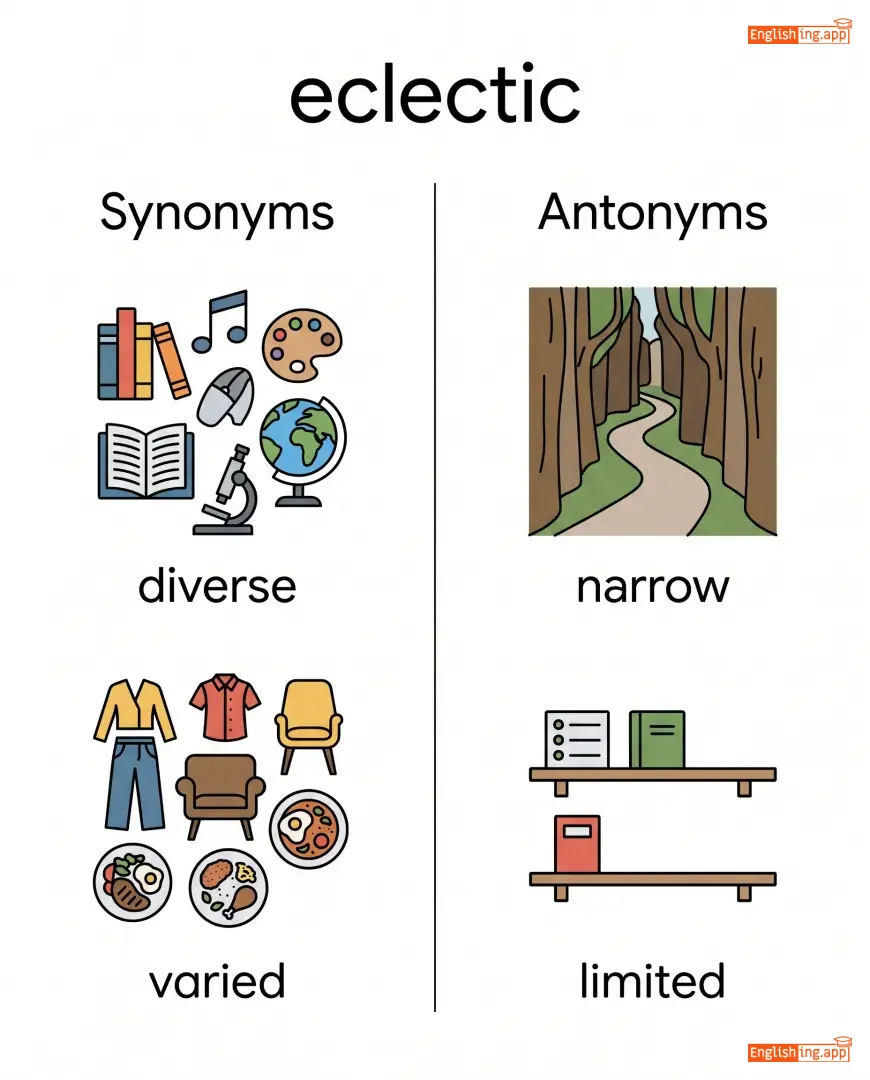
diverse, varied, broad, wide-ranging, assorted
••••••
|
narrow, limited, exclusive
••••••
|
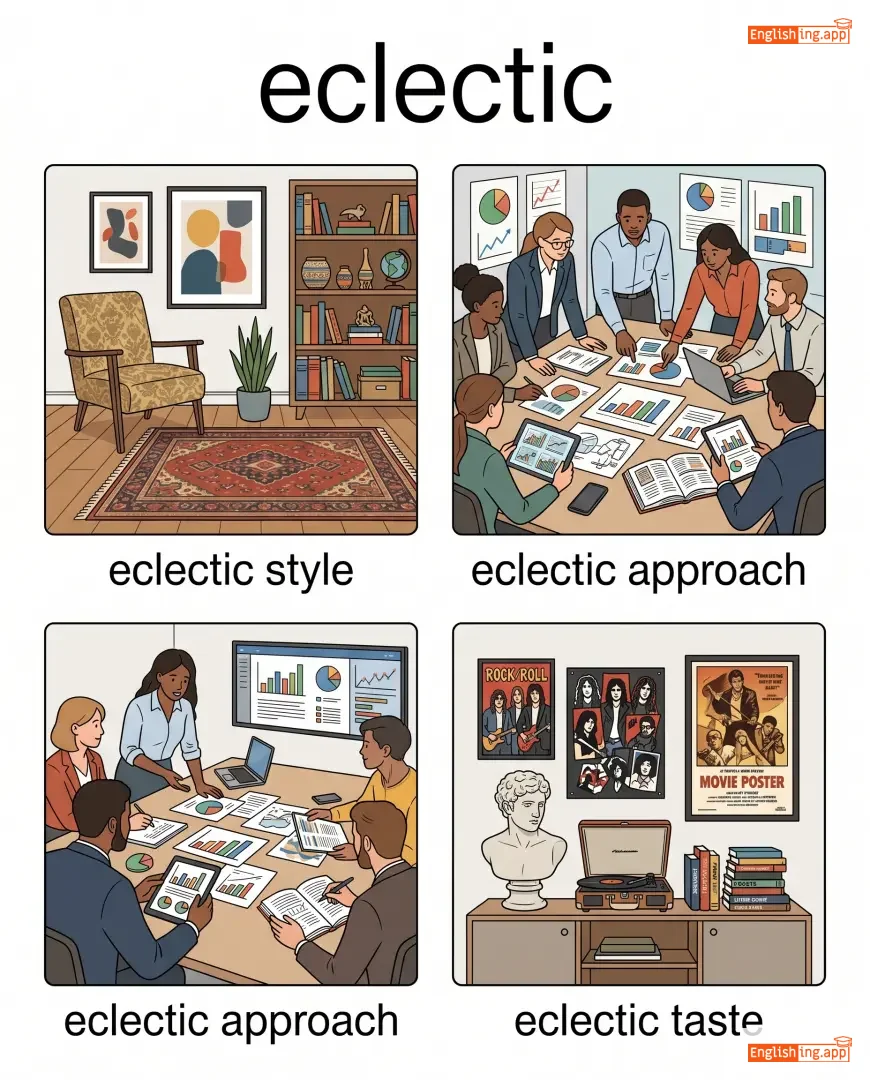
eclectic style, eclectic approach, eclectic taste, eclectic mix
••••••
|
折衷的口味,就像一幅综合各种风格的画。
••••••
|
|
#2799
🌟
|
/eɪˈklɑː/
noun
(艾克拉特)
••••••
|
- •••••• |
巨大成功
juda chenggong
••••••
|
- •••••• | - •••••• | - •••••• | - •••••• |
Brilliant success, acclaim, or great public approval.
••••••
|
The artist's debut performance was met with great éclat. |
艺术家的首次演出获得了巨大的成功。
Yishujia de shouci yanchu huodele judu de chenggong.
••••••
|
- •••••• | - •••••• | - •••••• |
acclaim, brilliance, prestige, success, renown
••••••
|
failure, obscurity
••••••
|
with éclat, great éclat, éclat of success
••••••
|
Eclat意味着巨大的成功,就像一颗耀眼的星星。记住,Eclat代表着辉煌的成就。
••••••
|
|
#2800
📊
|
/ˈɛʃəlɒn/
noun
(埃谢隆)
••••••
|
|
级别
jibie
••••••
|
- •••••• | - •••••• | - •••••• | - •••••• |
A level or rank in an organization, profession, or society.
••••••
|
She quickly rose to the upper echelon of the company.
她迅速晋升到公司的最高层。
••••••
|
她迅速晋升到公司的最高层。
Ta xun su jin sheng dao gongsi de zui gao ceng.
••••••
|
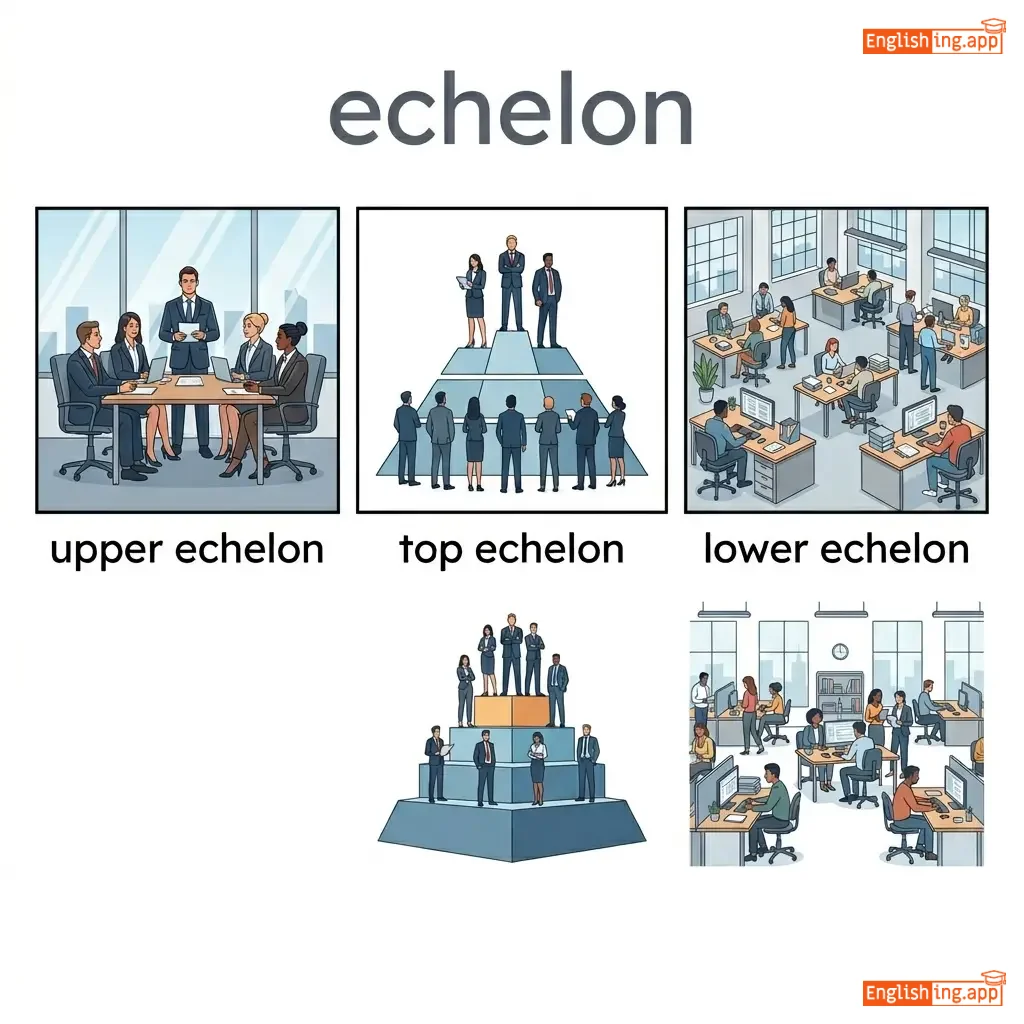
upper echelon
上层
••••••
|
The highest level of authority or status within an organization or society.
••••••
|
上层
shang ceng
••••••
|
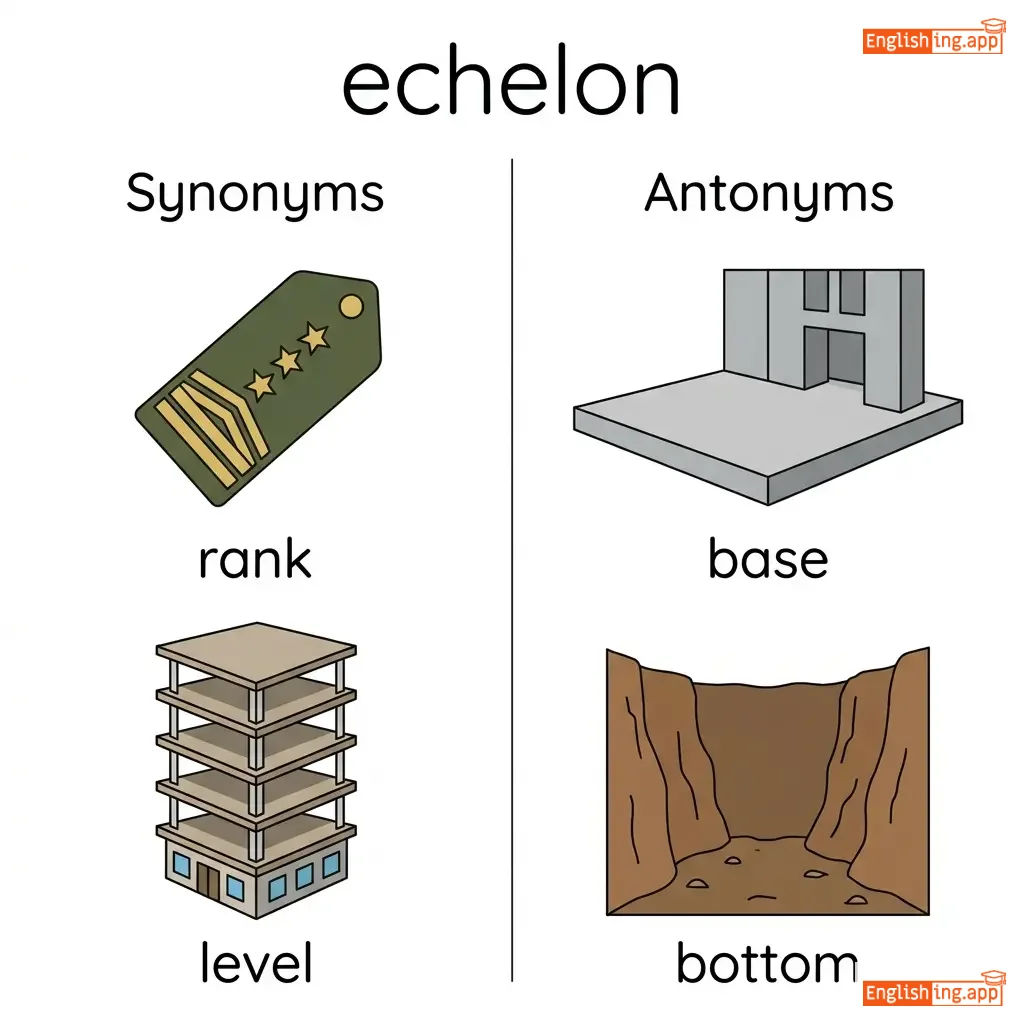
rank, level, tier, grade, class
••••••
|
base, bottom
••••••
|
upper echelon, top echelon, lower echelon, echelon of power
••••••
|
Echelon - 想象一个阶梯,最高的阶层就是 'upper echelon'。
••••••
|
|
#2801
⛪
|
/ɪˌkliːziˈæstɪk/
noun
(教士的)
••••••
|
- •••••• |
神职人员
shén zhí rén yuán
••••••
|
- •••••• | - •••••• | - •••••• | - •••••• |
A member of the clergy or church official.
••••••
|
The council was attended by several high-ranking ecclesiastics. |
理事会由几位高级神职人员参加。
Lǐshìhuì yóu jǐ wèi gāojí shénzhí rényuán cānjiā.
••••••
|
- •••••• | - •••••• | - •••••• |
clergyman, priest, minister, pastor, reverend
••••••
|
layman, secular
••••••
|
high-ranking ecclesiastic, Catholic ecclesiastic, medieval ecclesiastic
••••••
|
Ecclesiastic 意味着与教会有关 - 记住 ⛪,它是神职人员。
••••••
|
|
#2802
🤹
|
/ˌɛksɛnˈtrɪsəti/
noun
(ɛksɛnˈtrɪsɪti)
••••••
|
- •••••• |
怪癖
guài pì
••••••
|
- •••••• | - •••••• | - •••••• | - •••••• |
the quality of being unconventional or slightly strange
••••••
|
His eccentricity made him both admired and misunderstood. |
他的怪癖使他既受到钦佩也被误解。
Tā de guài pì shǐ tā jì shòu dào qīnpèi yě bèi wùjiě.
••••••
|
- •••••• | - •••••• | - •••••• |
oddity, peculiarity, quirk, unconventionality
••••••
|
normality, conventionality
••••••
|
display eccentricity, show eccentricity, eccentricity of behavior
••••••
|
Eccentricity就是怪癖 🎩 - Extra centric让大家惊讶
••••••
|
|
#2803
🎨
|
/ɪkˈsɛntrɪk/
adjective
(ikˈsɛntrɪk)
••••••
|
- •••••• |
古怪的
guǒguài de
••••••
|
- •••••• | - •••••• | - •••••• | - •••••• |
unconventional and slightly strange in behavior or appearance
••••••
|
The artist was known for his eccentric style. |
艺术家以其古怪的风格而闻名。
Yìshùjiā yǐ qí gǔguài de fēnggé ér wénmíng.
••••••
|
- •••••• | - •••••• | - •••••• |
unusual, odd, quirky, unconventional
••••••
|
normal, conventional, ordinary
••••••
|
eccentric behavior, eccentric style, eccentric personality
••••••
|
Eccentric = Extra + centric 🎨 - 具有独特风格的人
••••••
|
|
#2804
😄
|
/ɪˈbʊliənt/
adjective
(艾布连特)
••••••
|
|
兴高采烈
xing gao cai lie
••••••
|
- •••••• | - •••••• | - •••••• | - •••••• |
cheerful and full of energy
••••••
|
She was ebullient after receiving the good news. |
收到好消息后,她兴高采烈。
Shoudao hao xiaoxi hou, ta xing gao cai lie.
••••••
|
- •••••• | - •••••• | - •••••• |
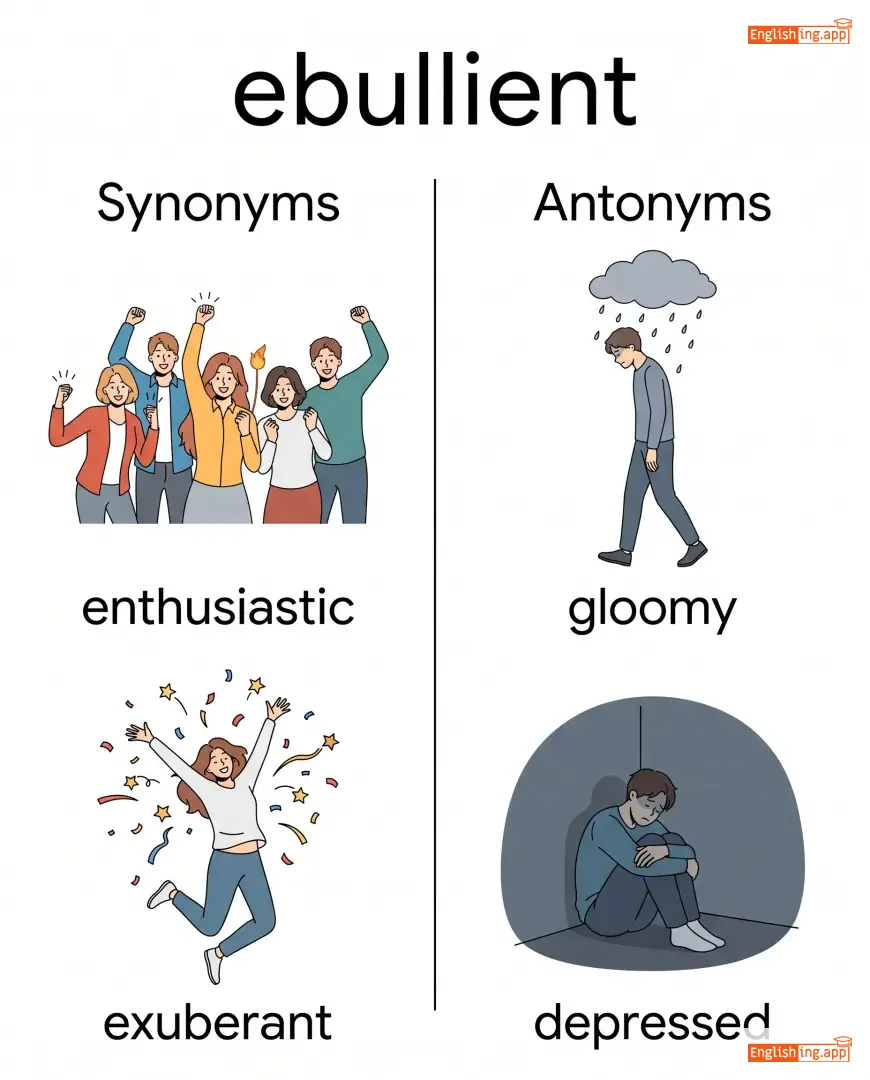
enthusiastic, exuberant, joyful, lively
••••••
|
gloomy, depressed, dull
••••••
|
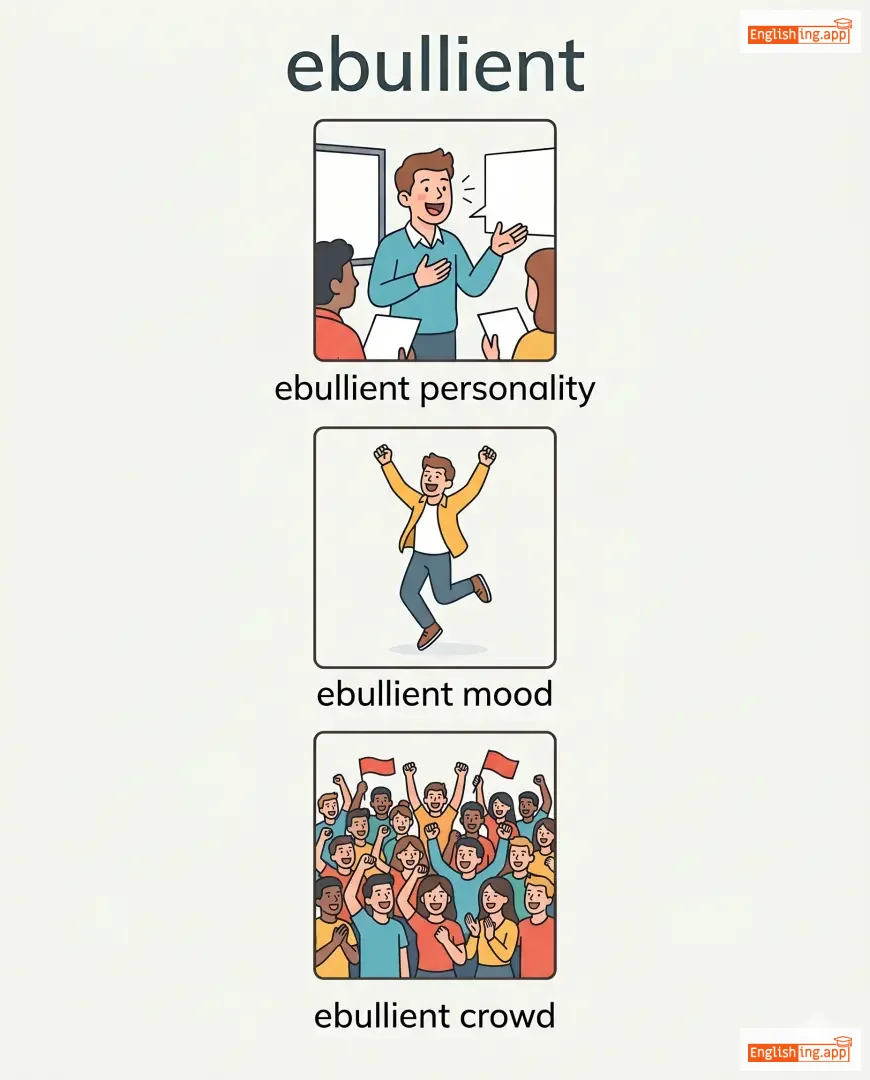
ebullient personality, ebullient mood, ebullient crowd
••••••
|
Ebullient 意味着充满能量 😄 - 得到好消息后,大家都兴高采烈
••••••
|
|
#2805
✨
|
/ɪˈbʊliəns/
noun
(爱布利恩斯)
••••••
|
- •••••• |
热情
reqing
••••••
|
- •••••• | - •••••• | - •••••• | - •••••• |
the quality of being cheerful, enthusiastic, and full of energy
••••••
|
The teacher's ebullience inspired her students. |
老师的热情激励了她的学生。
Laoshi de reqing jili le ta de xuesheng.
••••••
|
- •••••• | - •••••• | - •••••• |
enthusiasm, exuberance, cheerfulness, liveliness
••••••
|
gloom, sadness, dullness
••••••
|
ebullience of youth, display ebullience, show ebullience
••••••
|
Ebullience = 能量 + 热情, 就像课堂上的充满活力的老师
••••••
|
|
#2806
🤝
|
/deɪˈtɒnt/
noun
(déɪˈtɒnt)
••••••
|
- •••••• |
缓和紧张关系
huǎnhé jǐnzhāng guānxì
••••••
|
- •••••• | - •••••• | - •••••• | - •••••• |
the easing of strained relations, especially between countries
••••••
|
The treaty helped bring about a détente between the two nations. |
该条约有助于缓解两个国家之间的紧张关系。
Gāi tiáoyuē yǒuzhù yú huǎnjiě liǎng gè guójiā zhījiān de jǐnzhāng guānxì.
••••••
|
- •••••• | - •••••• | - •••••• |
truce, reconciliation, peace, easing, relaxation
••••••
|
conflict, hostility, tension
••••••
|
political détente, Cold War détente, period of détente
••••••
|
Detente意味着 '缓和关系' - 就像是紧张情绪 '解开' 一样。
••••••
|
|
#2807
👂
|
/ˈiːvzdrɒp/
verb
(伊夫兹德罗普)
••••••
|
- •••••• |
偷听
tōu tīng
••••••
|
eavesdropped
伊夫兹德罗普德
••••••
|
eavesdropped
伊夫兹德罗普德
••••••
|
eavesdrops
伊夫兹德罗普斯
••••••
|
eavesdropping
伊夫兹德罗普英
••••••
|
to secretly listen to a conversation
••••••
|
She stood near the door to eavesdrop on their conversation.
她站在门口偷听他们的谈话。
••••••
|
她站在门口偷听他们的谈话。
Tā zhàn zài ménkǒu tōu tīng tāmen de tánhuà.
••••••
|
eavesdrop on a conversation
偷听谈话
••••••
|
to secretly listen to what someone else is saying
••••••
|
偷听谈话
tōu tīng tánhuà
••••••
|
listen secretly, overhear, spy, snoop
••••••
|
ignore, avoid
••••••
|
eavesdrop on, secretly eavesdrop, caught eavesdropping
••••••
|
Eavesdrop = 偷听,像门缝偷听别人谈话。
••••••
|
|
#2808
🍓
|
/ˈiːtəbl̩/
adjective
(yī tá bù)
••••••
|
- •••••• |
可食用
kě shí yòng
••••••
|
- •••••• | - •••••• | - •••••• | - •••••• |
suitable or safe for eating
••••••
|
The berries are not only eatable but also quite tasty.
这些浆果不仅可食用,而且味道相当好。
••••••
|
这些浆果不仅可食用,而且味道相当好。
Zhèxiē jiāngguǒ bù jǐn kě shí yòng, érqiě wèidào xiāngdāng hǎo.
••••••
|
- •••••• | - •••••• | - •••••• |
edible, consumable, palatable, digestible
••••••
|
inedible, poisonous, harmful
••••••
|
eatable food, eatable berries, eatable plants, eatable portions
••••••
|
Eatable = 可食用, 可以吃!
••••••
|
|
#2809
🎨
|
/ˈiːzl̩/
noun
(yī zé)
••••••
|
- •••••• |
画架
huà jià
••••••
|
- •••••• | - •••••• | - •••••• | - •••••• |
a frame for supporting an artist's canvas while painting or drawing
••••••
|
The artist placed the canvas on the easel before starting to paint. |
艺术家在开始绘画之前,将画布放在画架上。
Yìshùjiā zài kāishǐ huìhuà zhīqián, jiāng huàbù fàng zài huàjià shàng.
••••••
|
- •••••• | - •••••• | - •••••• |
stand, frame, support
••••••
|
floor, ground
••••••
|
painting easel, wooden easel, adjustable easel, artist's easel
••••••
|
Easel 听起来像‘easy sell’,有助于记住画架能让艺术卖得容易。
••••••
|
|
#2810
🌱
|
/ˈɜːrθi/
adjective
(ˈɜːrθi)
••••••
|
- •••••• |
泥土味的 / 简单
nítǔ wèi de / jiǎndān
••••••
|
- •••••• | - •••••• | - •••••• | - •••••• |
resembling or suggestive of earth or soil; simple, natural, and sometimes coarse
••••••
|
The dish had a rich, earthy flavor from the mushrooms. |
这道菜有着来自蘑菇的丰富泥土味。
Zhè dào cài yǒu zhe láizì mógū de fēngfù nítǔ wèi.
••••••
|
- •••••• | - •••••• | - •••••• |
natural, rustic, coarse, organic, robust
••••••
|
refined, artificial, delicate
••••••
|
earthy flavor, earthy humor, earthy tone, earthy smell
••••••
|
Earthy 意味着泥土味的 (nítǔ wèi de),记住蘑菇有这个泥土味。
••••••
|
|
#2811
🌍
|
/ˈɜːrθli/
adjective
(ěrthlì)
••••••
|
- •••••• |
尘世
chénshì
••••••
|
- •••••• | - •••••• | - •••••• | - •••••• |
relating to the physical world as opposed to the spiritual or heavenly; worldly
••••••
|
He was more concerned with earthly pleasures than spiritual matters. |
他更关心尘世的享乐,而不是精神层面的事情。
Tā gèng guānxīn chénshì de xiǎnglè, ér bùshì jīngshén céngmiàn de shìqíng.
••••••
|
- •••••• | - •••••• | - •••••• |
worldly, mortal, temporal, mundane, terrestrial
••••••
|
heavenly, spiritual, divine
••••••
|
earthly pleasures, earthly life, earthly matters, earthly concerns
••••••
|
尘世就是物质世界,想象一下世俗的快乐。
••••••
|
|
#2812
🏺
|
/ˈɜːrθənˌwɛr/
noun
(ˈɜːrθənˌwɛr)
••••••
|
- •••••• |
陶器
taoqi
••••••
|
- •••••• | - •••••• | - •••••• | - •••••• |
pottery made of clay and hardened by heat
••••••
|
The shop displayed beautiful earthenware pots and bowls. |
商店展示了美丽的陶器罐和碗。
Shangdian zhanshi le meili de taoqi guan he wan.
••••••
|
- •••••• | - •••••• | - •••••• |
pottery, ceramics, clayware, stoneware
••••••
|
metalware, plasticware
••••••
|
earthenware pot, earthenware bowl, earthenware jug
••••••
|
Earth + Ware = 陶器 = 用粘土做的陶器。
••••••
|
|
#2813
🔊
|
/ˈɪrˌsplɪtɪŋ/
adjective
(耳裂音)
••••••
|
- •••••• |
震耳欲聋
zhen'er yu long
••••••
|
- •••••• | - •••••• | - •••••• | - •••••• |
extremely loud or piercing sound
••••••
|
The earsplitting noise of the fire alarm startled everyone. |
火灾警报的震耳欲聋的声音让每个人都吓了一跳。
Huozai jingbao de zhen'er yu long de shengyin rang meige ren dou xiale yitiao.
••••••
|
- •••••• | - •••••• | - •••••• |
deafening, piercing, thunderous, loud
••••••
|
quiet, soft, faint
••••••
|
earsplitting noise, earsplitting scream, earsplitting sound
••••••
|
Ear splitting的意思是震耳欲聋,声音大到让耳朵炸裂的程度。
••••••
|
|
#2814
👂
|
/ˈɪrˌʃɑːt/
noun
(耳射特)
••••••
|
- •••••• |
听力范围
tingli fanwei
••••••
|
- •••••• | - •••••• | - •••••• | - •••••• |
the range or distance within which a sound can be heard
••••••
|
The children whispered secrets out of earshot of their parents. |
孩子们在父母的听力范围之外低声说着秘密。
Haizimen zai fumu de tingli fanwei zhīwài dīshēng shuōzhe mìmì.
••••••
|
within earshot |
close enough to hear
••••••
|
在听力范围内
zai tingli fanwei nei
••••••
|
hearing range, sound range, listening distance
••••••
|
out of range, inaudible
••••••
|
within earshot, out of earshot, barely in earshot
••••••
|
Ear + Shot = 听力范围,就像你能听到的距离。
••••••
|
|
#2815
🔇
|
/ˈɪrˌplʌɡ/
noun
(ěrplág)
••••••
|
- •••••• |
耳塞
ěrsāi
••••••
|
- •••••• | - •••••• | - •••••• | - •••••• |
a device inserted into the ear to block out noise or water
••••••
|
He wore earplugs to sleep during the noisy night.
他在嘈杂的夜晚睡觉时戴了耳塞。
••••••
|
他在嘈杂的夜晚睡觉时戴了耳塞。
Tā zài cáozá de yèwǎn shuìjiào shí dàile ěrsāi.
••••••
|
- •••••• | - •••••• | - •••••• |
ear protector, hearing protector, sound blocker, ear shield
••••••
|
speaker, amplifier
••••••
|
wear earplugs, foam earplugs, silicone earplugs, use earplugs
••••••
|
Ear + Plug = 用耳塞阻止噪音
••••••
|
|
#2816
🙏
|
/ˈɜːrnɪst/
adjective
(厄尔内斯特)
••••••
|
- •••••• |
真诚和严肃
zhēnchéng hé yánsù
••••••
|
- •••••• | - •••••• | - •••••• | - •••••• |
showing sincere and intense conviction
••••••
|
She spoke in an earnest voice about the importance of honesty.
她用真诚的声音谈论诚实的重要性。
••••••
|
她用真诚的声音谈论诚实的重要性。
Tā yòng zhēnchéng de shēngyīn tánlùn chéngshí de zhòngyào xìng.
••••••
|
in earnest
真诚地
••••••
|
with sincere and serious intention
••••••
|
真诚地
zhēnchéng de
••••••
|
serious, sincere, honest, heartfelt, genuine
••••••
|
frivolous, insincere, playful
••••••
|
earnest desire, earnest effort, speak in earnest, earnest appeal
••••••
|
Earnest意思是‘真诚和严肃’ – 如果你earnestly学习,你一定会成功!
••••••
|
|
#2817
💵
|
/ɜːrn/
verb
(ern)
••••••
|
|
赚取
zhuan qu
••••••
|
earned
ern-d
••••••
|
earned
ern-d
••••••
|
earns
ern-s
••••••
|
earning
ern-ing
••••••
|
To receive money or reward in return for work or service.
••••••
|
She worked hard to earn enough money for college.
她努力工作赚取足够的钱上大学。
••••••
|
她努力工作赚取足够的钱上大学。
Ta nuli gongzuo zhuan qu zu gou de qian shang daxue.
••••••
|
earn a living
谋生
••••••
|
To make enough money to support oneself financially.
••••••
|
谋生
mou sheng
••••••
|
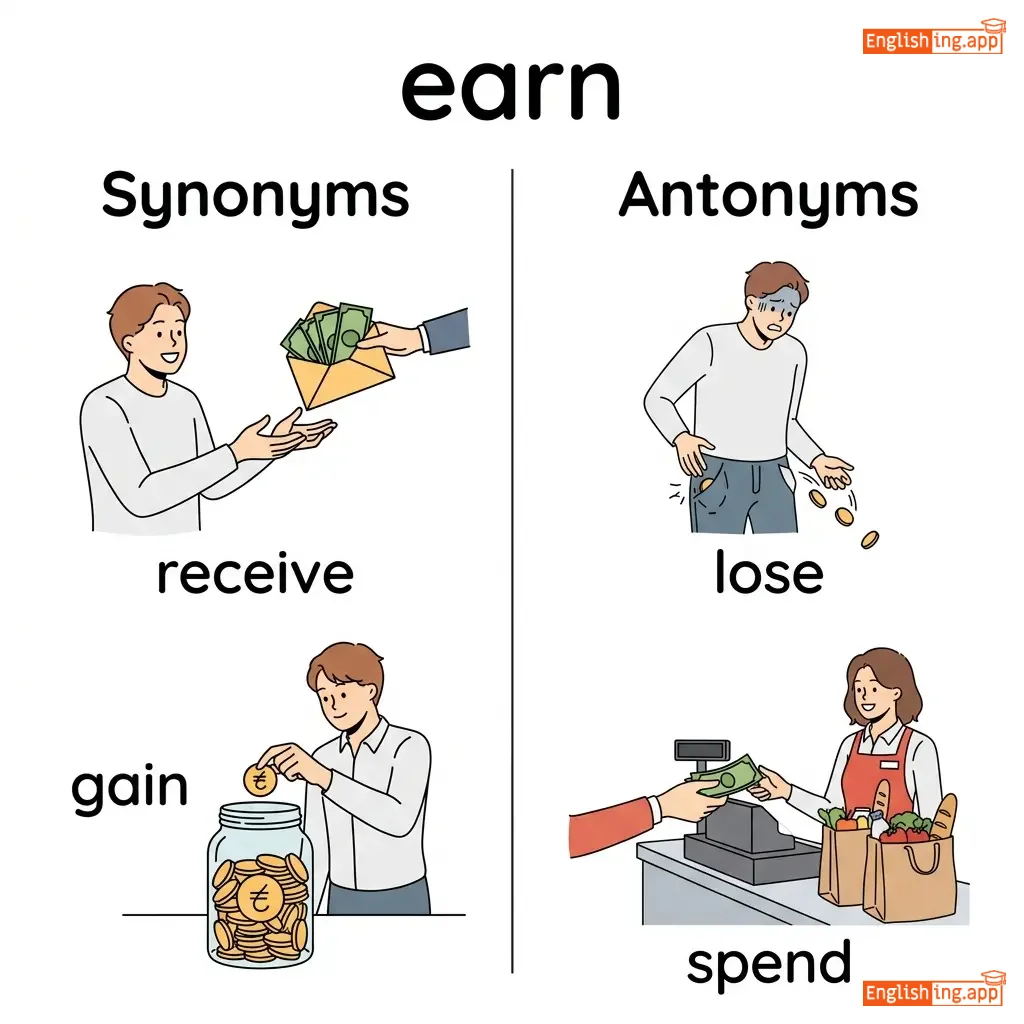
receive, gain, obtain, secure, acquire
••••••
|
lose, spend, forfeit
••••••
|
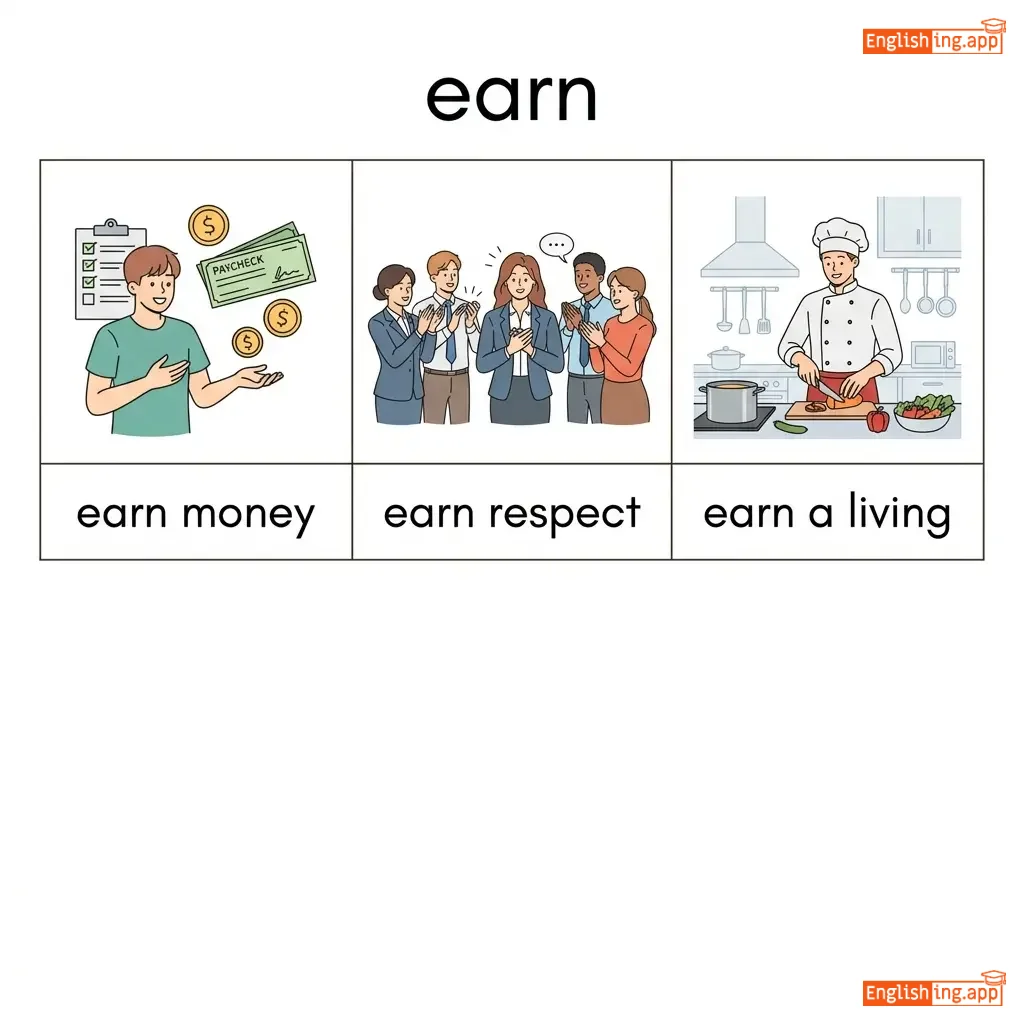
earn money, earn respect, earn a living, earn interest
••••••
|
Earn意味着'赚取' - 努力工作带来赚钱。
••••••
|
|
#2818
💰
|
/ˈɪə.mɑːrk/
verb
(耳马克)
••••••
|
- •••••• |
指定
zhǐdìng
••••••
|
earmarked
耳马克德
••••••
|
earmarked
耳马克德
••••••
|
earmarks
耳马克斯
••••••
|
earmarking
耳马克金
••••••
|
To designate funds, resources, or time for a particular purpose.
••••••
|
The government has earmarked funds for education.
政府已为教育拨款。
••••••
|
政府已为教育指定资金。
Zhèngfǔ yǐ wèi jiàoyù zhǐdìng zījīn.
••••••
|
- •••••• | - •••••• | - •••••• |
allocate, assign, designate, reserve, set aside
••••••
|
withdraw, deny, refuse
••••••
|
earmark funds, earmark money, earmark resources
••••••
|
EarMark = 指定资金或时间.
••••••
|
|
#2819
🦅
|
/ˈiːɡlət/
noun
(伊格莱特)
••••••
|
- •••••• |
小鹰
xiǎo yīng
••••••
|
- •••••• | - •••••• | - •••••• | - •••••• |
A young eagle.
••••••
|
The eaglet waited in the nest for its mother to return.
小鹰在巢中等待母亲回来。
••••••
|
小鹰在巢中等待母亲回来。
Xiǎo yīng zài cháo zhōng děngdài mǔqīn huílái.
••••••
|
- •••••• | - •••••• | - •••••• |
young eagle, nestling, fledgling, chick
••••••
|
adult eagle, grown eagle
••••••
|
baby eaglet, eaglet nest, hungry eaglet
••••••
|
Eaglet是小鹰,记住'let'表示小。
••••••
|
|
#2820
😖
|
/dɪsˈpɛptɪk/
adjective
(迪斯佩普提克)
••••••
|
- •••••• |
消化不良的, 易怒的
xiaohuabuliang de, yini de
••••••
|
- •••••• | - •••••• | - •••••• | - •••••• |
Relating to indigestion or having a gloomy or irritable disposition.
••••••
|
After the heavy meal, he felt dyspeptic and uncomfortable. |
在丰盛的餐后,他感到消化不良并且不舒服。
Zai fengsheng de canhou, ta gandao xiaohuabuliang bingqie bu shufu.
••••••
|
- •••••• | - •••••• | - •••••• |
irritable, morose, gloomy, sour, testy
••••••
|
cheerful, pleasant, good-humored
••••••
|
dyspeptic mood, dyspeptic attitude, dyspeptic complaint
••••••
|
Dyspeptic意味着消化不好,情绪也易怒。
••••••
|
Vocabulary Quiz
Test your vocabulary by matching words with their translations or meanings.
Login to take the quiz
Comments (0)
Share your thoughts and join the discussion.
Join the discussion by logging in
Login to CommentNo comments yet
Be the first to share your thoughts!