


Swipe left or right, or use the buttons. Tap image to zoom.
例句翻译
单词
Lesson 104Lesson 104 - 遮罩切换
|
表情符号
|
单词 | Images | 翻译 | 过去时 | 过去分词 | 第三人称单数 | 动名词 | 含义 | 例句 | 例句翻译 | 示例表达 | 示例表达含义 | 示例表达翻译 | 同义词 | 反义词 | 搭配词 | 助记符 |
|---|---|---|---|---|---|---|---|---|---|---|---|---|---|---|---|---|---|
|
#3091
🎓
|
/ˌɛrjʊˈdɪʃən/
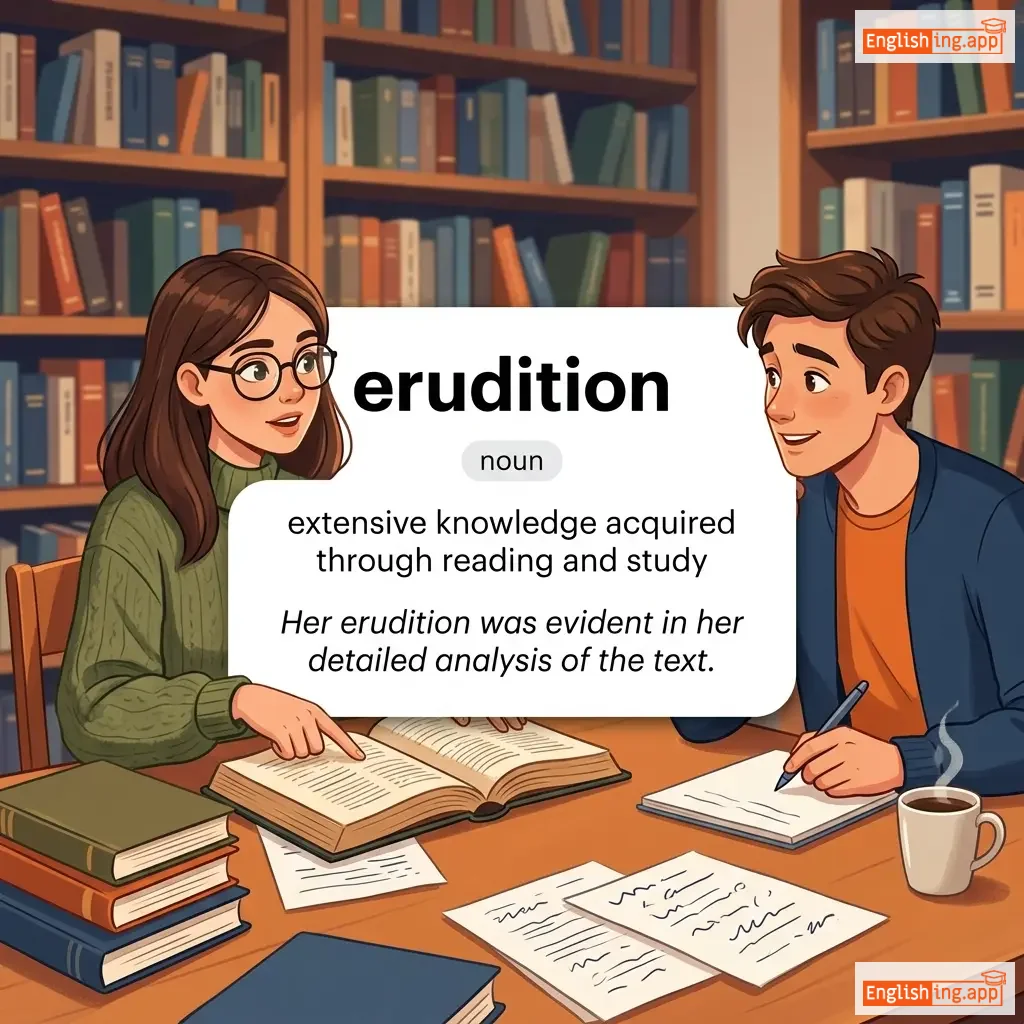
noun
(erudition)
••••••
|
|
博学
boxue
••••••
|
- •••••• | - •••••• | - •••••• | - •••••• |
extensive knowledge acquired through reading and study
••••••
|
Her erudition was evident in her detailed analysis of the text. |
她的博学在她对文本的详细分析中显而易见。
Ta de boxue zai ta dui wenben de xiangxi fenxi zhong xian er yi jian.
••••••
|
- •••••• | - •••••• | - •••••• |
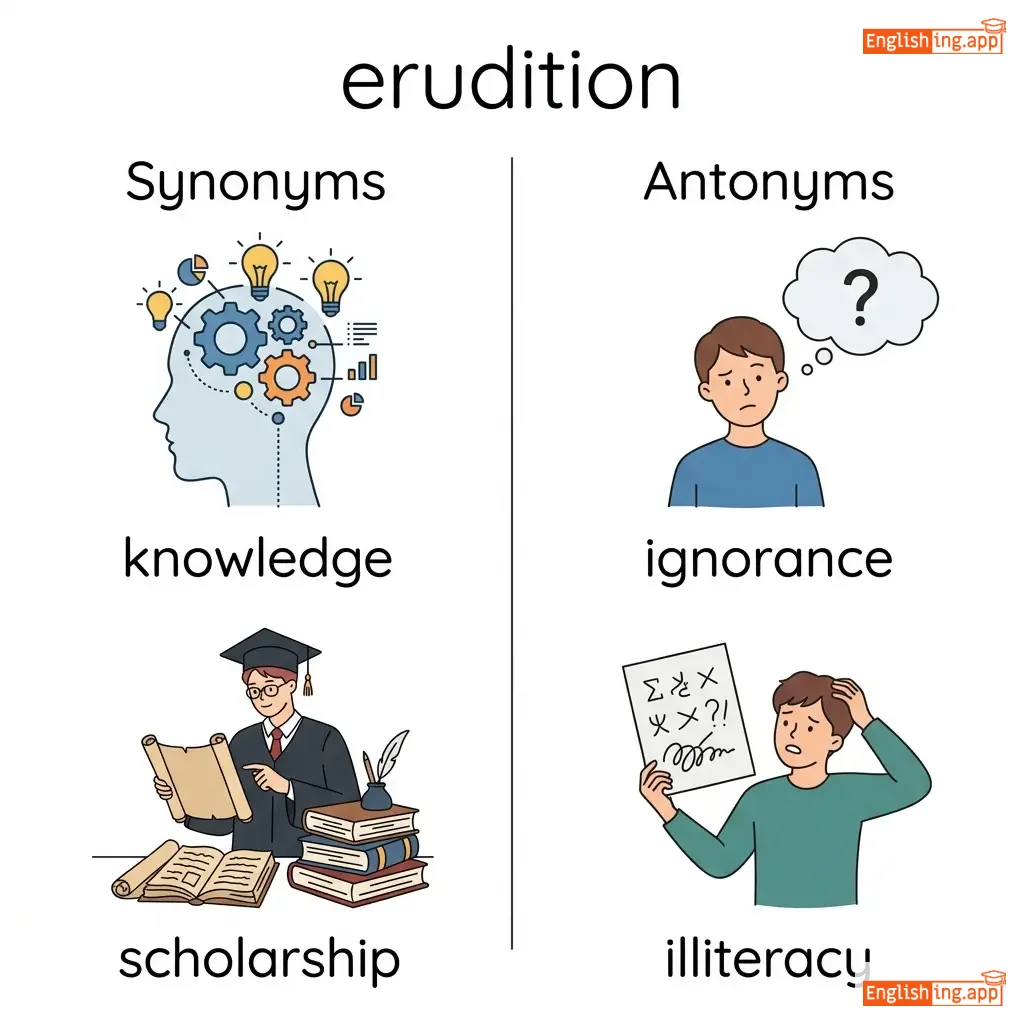
knowledge, scholarship, learning, intelligence, wisdom
••••••
|
ignorance, illiteracy, stupidity
••••••
|
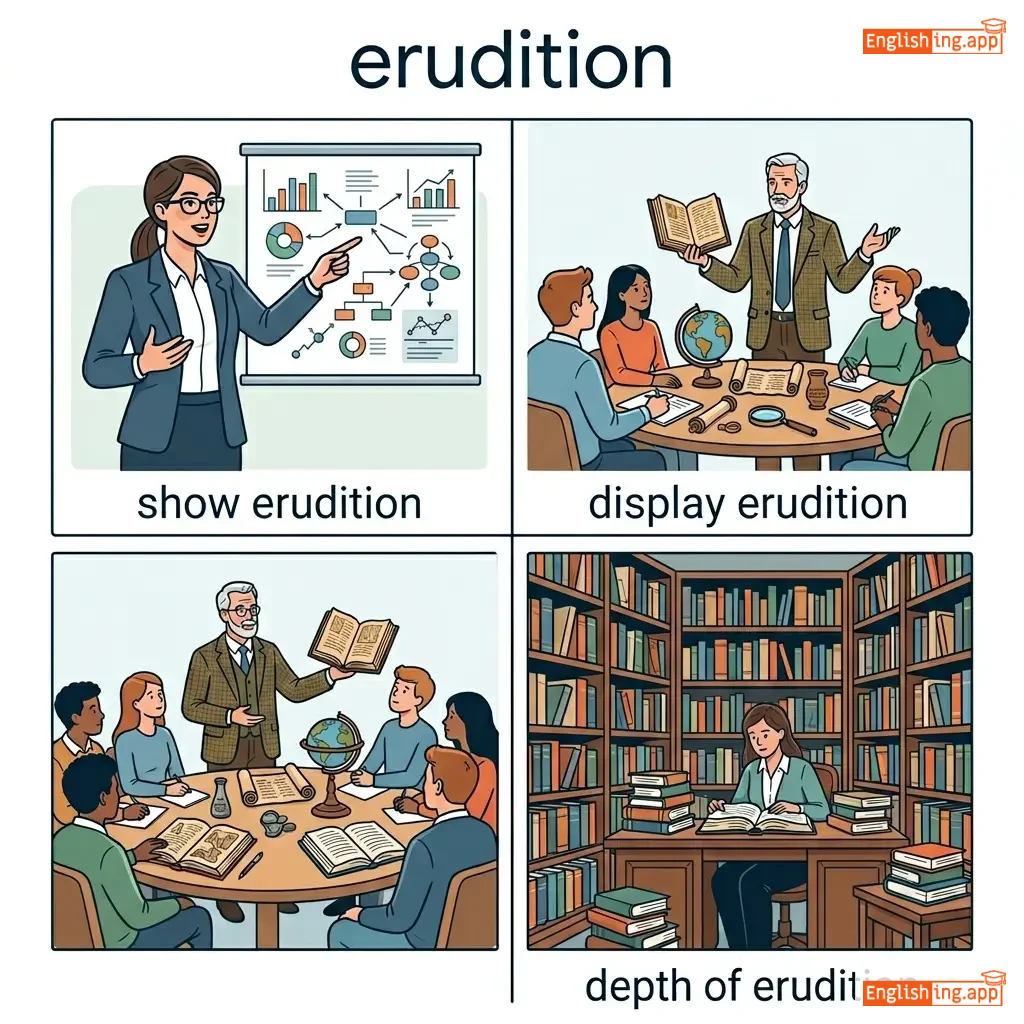
show erudition, display erudition, depth of erudition, erudition in
••••••
|
博学 = 学习中的智慧
••••••
|
|
#3092
🎨
|
/ɛsˈθɛtɪk/
adjective
(esˈθɛtɪk)
••••••
|
- •••••• |
美学的
meixuede
••••••
|
- •••••• | - •••••• | - •••••• | - •••••• |
Concerned with beauty or the appreciation of beauty.
••••••
|
The building’s esthetic design attracted many visitors. |
建筑的美学设计吸引了许多游客。
Jianzhu de meixuede sheji xiyin le xu duo youke.
••••••
|
- •••••• | - •••••• | - •••••• |
artistic, beautiful, decorative, tasteful
••••••
|
ugly, unappealing, unattractive
••••••
|
esthetic appeal, esthetic sense, esthetic value, esthetic quality
••••••
|
Esthetic意味着美学的,像'美学设计'意味着漂亮的设计。
••••••
|
|
#3093
🙏
|
/ɪˈstiːm/
noun/verb
(es-tim)
••••••
|
- •••••• |
尊敬
zūnjìng
••••••
|
esteemed
es-tim-d
••••••
|
esteemed
es-tim-d
••••••
|
esteems
es-tims
••••••
|
esteeming
es-timing
••••••
|
Respect and admiration, typically for a person.
••••••
|
She is held in high esteem by her colleagues.
她受到了同事们的高度尊敬。
••••••
|
她受到了同事们的高度尊敬。
Tā shòudàole tóngshìmen de gāodù zūnjìng.
••••••
|
hold in esteem
受到高度敬重
••••••
|
to regard with respect
••••••
|
受到高度敬重
shòudào gāodù jìngzhòng
••••••
|
respect, admiration, regard, honor
••••••
|
disrespect, contempt, disdain
••••••
|
high esteem, mutual esteem, esteem for, esteem highly
••••••
|
Esteem 就是尊敬 — 想象所有人在火车上互相尊重。
••••••
|
|
#3094
🏢
|
/ɪˈstæblɪʃ/
verb
(es-tah-blish)
••••••
|
- •••••• |
建立
jiànlì
••••••
|
established
es-tah-blisht
••••••
|
established
es-tah-blisht
••••••
|
establishes
es-tah-bleesh-uhz
••••••
|
establishing
es-tah-bleesh-ing
••••••
|
To set up, create, or bring into existence something on a firm basis.
••••••
|
The company plans to establish a new office in Dhaka.
公司计划在达卡设立一个新办公室。
••••••
|
公司计划在达卡设立一个新办公室。
Gōngsī jìhuà zài Dākǎ shèlì yīgè xīn bàngōngshì.
••••••
|
establish a reputation
建立声誉
••••••
|
to build or create recognition over time
••••••
|
建立声誉
jiànlì shēngyù
••••••
|
set up, found, create, build, institute
••••••
|
abolish, destroy, dismantle
••••••
|
establish control, establish a company, establish rules, firmly establish
••••••
|
建立就像是 '创立' 或者 '搭建' 一座大厦。
••••••
|
|
#3095
🌿
|
/ˈɛsəns/
noun
(esens)
••••••
|
- •••••• |
本质
benzhi
••••••
|
- •••••• | - •••••• | - •••••• | - •••••• |
The intrinsic nature or indispensable quality of something that determines its character.
••••••
|
The essence of democracy is freedom of speech.
民主的本质是言论自由。
••••••
|
民主的本质是言论自由。
Mínzhǔ de běnzhì shì yánlùn zìyóu.
••••••
|
in essence
本质上
••••••
|
basically or fundamentally
••••••
|
本质上
Běnzhì shàng
••••••
|
core, nature, substance, spirit, heart
••••••
|
superficiality, exterior, surface
••••••
|
true essence, essence of life, capture the essence, in essence
••••••
|
Essence 意味着本质 — 就像香水的精华决定香气。
••••••
|
|
#3096
⚖️
|
/ˈɛskwaɪər/
noun
(ēi sī kuài ér)
••••••
|
- •••••• |
律师称号
lüshi chenghao
••••••
|
- •••••• | - •••••• | - •••••• | - •••••• |
A title of respect often used after a man's name, especially for lawyers in the United States.
••••••
|
John Smith, Esquire, will be representing the client in court. |
约翰·史密斯,律师称号,将在法庭上代表客户。
Yuehan Shimi, lüshi chenghao, jiang zai fating shang daibiao kehu.
••••••
|
- •••••• | - •••••• | - •••••• |
gentleman, lawyer, barrister, advocate
••••••
|
commoner, layman
••••••
|
addressed as Esquire, John Smith Esquire
••••••
|
Esquire 是美国律师名字后面的尊敬称号。
••••••
|
|
#3097
👀
|
/ɪˈspaɪ/
verb
(espaí)
••••••
|
- •••••• |
看到
kàn dào
••••••
|
espied
espáid
••••••
|
espied
espáid
••••••
|
espies
espíes
••••••
|
espying
espíng
••••••
|
To catch sight of or notice something, especially from a distance.
••••••
|
From the hilltop, she espied a small village in the valley.
从山顶上,她看见了谷中的一个小村庄。
••••••
|
从山顶上,她看见了谷中的一个小村庄。
Cóng shāndǐng shàng, tā kànjiànle gǔzhōng de yīgè xiǎo cūnzhuāng.
••••••
|
- •••••• | - •••••• | - •••••• |
spot, glimpse, notice, observe, discern
••••••
|
ignore, overlook, miss
••••••
|
espy a figure, espy in the distance, espy from afar
••••••
|
Espy像是间谍远远地看到某物!
••••••
|
|
#3098
🤝
|
/ɛˌspriː də ˈkɔːr/
noun
(espri de kor)
••••••
|
- •••••• |
团队精神
tuánduì jīngshén
••••••
|
- •••••• | - •••••• | - •••••• | - •••••• |
A feeling of pride, fellowship, and loyalty shared by members of a group.
••••••
|
The team's esprit de corps was evident in their cooperative effort. |
团队的精神在他们的合作努力中显而易见。
Tuánduì de jīngshén zài tāmen de hézuò nǔlì zhōng xiǎn ér yìjiàn.
••••••
|
- •••••• | - •••••• | - •••••• |
morale, camaraderie, fellowship, unity, solidarity
••••••
|
discord, division, disunity
••••••
|
strong esprit de corps, develop esprit de corps, esprit de corps among soldiers
••••••
|
Esprit de corps 就是团队精神,象征着团结与合作。
••••••
|
|
#3099
🙌
|
/ɪˈspaʊz/
verb
(espausi)
••••••
|
- •••••• |
支持
zhīchí
••••••
|
espoused
espaoside
••••••
|
espoused
espaoside
••••••
|
espouses
espauses
••••••
|
espousing
espausing
••••••
|
To adopt or support a cause, belief, or way of life.
••••••
|
She espoused the philosophy of nonviolence throughout her career.
她在整个职业生涯中支持了非暴力的哲学。
••••••
|
她在整个职业生涯中支持了非暴力的哲学。
Tā zài zhěnggè zhíyè shēngyá zhōng zhīchíle fēi bàolì de zhéxué.
••••••
|
- •••••• | - •••••• | - •••••• |
support, advocate, adopt, promote, endorse
••••••
|
reject, oppose, abandon
••••••
|
espouse a cause, espouse beliefs, espouse principles, espouse values
••••••
|
Espouse就像是支持一个想法,像配偶一样。
••••••
|
|
#3100
🕵️
|
/ˈɛspiənɑːʒ/
noun
(间谍活动)
••••••
|
- •••••• |
间谍活动
jiàndié huódòng
••••••
|
- •••••• | - •••••• | - •••••• | - •••••• |
The practice of spying or using spies to gather secret information, usually for political or military purposes.
••••••
|
The agent was arrested on charges of espionage against the state. |
该特工因涉嫌间谍活动被逮捕。
Gāi tègōng yīn shèxián jiàndié huódòng bèi dàibǔ.
••••••
|
- •••••• | - •••••• | - •••••• |
spying, surveillance, intelligence, infiltration, reconnaissance
••••••
|
openness, honesty, transparency
••••••
|
industrial espionage, accused of espionage, espionage activities, counter espionage
••••••
|
Espionage 是 SPY 工作 - 进行间谍活动。
••••••
|
|
#3101
🔮
|
/ˌɛsəˈtɛrɪk/
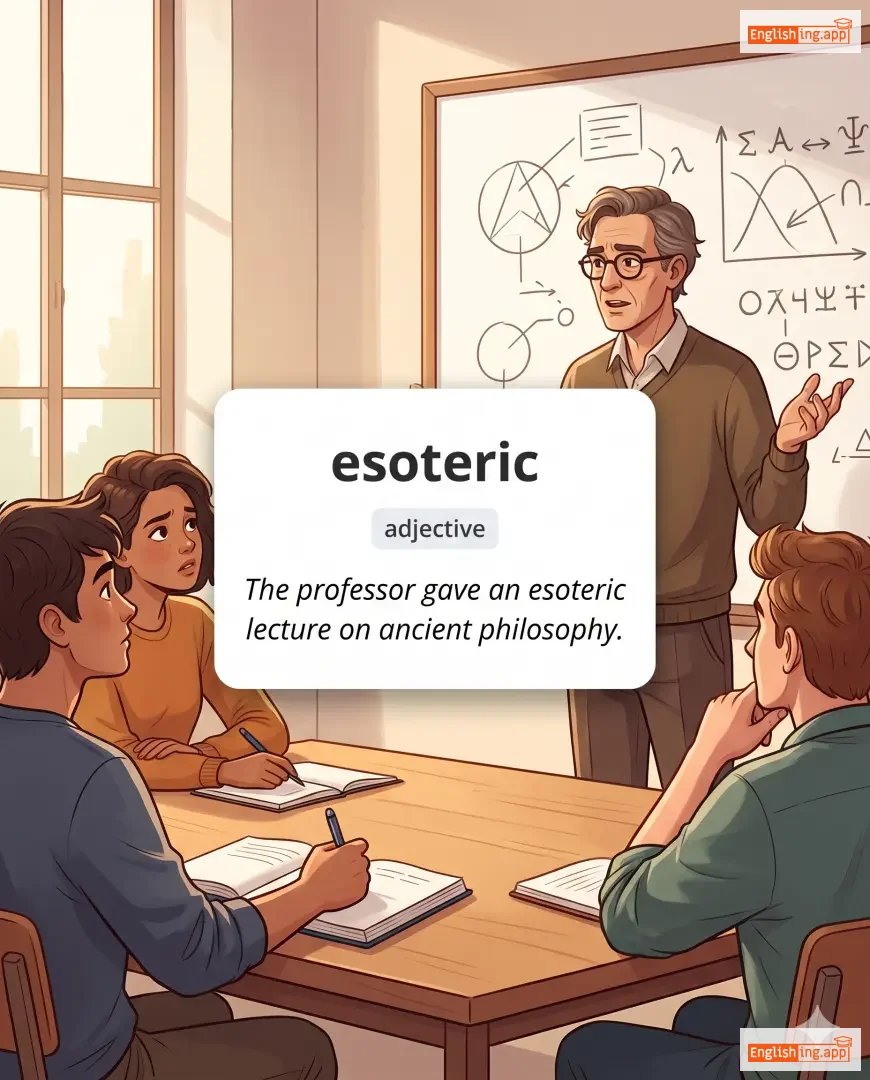
adjective
(神秘的)
••••••
|
|
深奥的
shen'ao de
••••••
|
- •••••• | - •••••• | - •••••• | - •••••• |
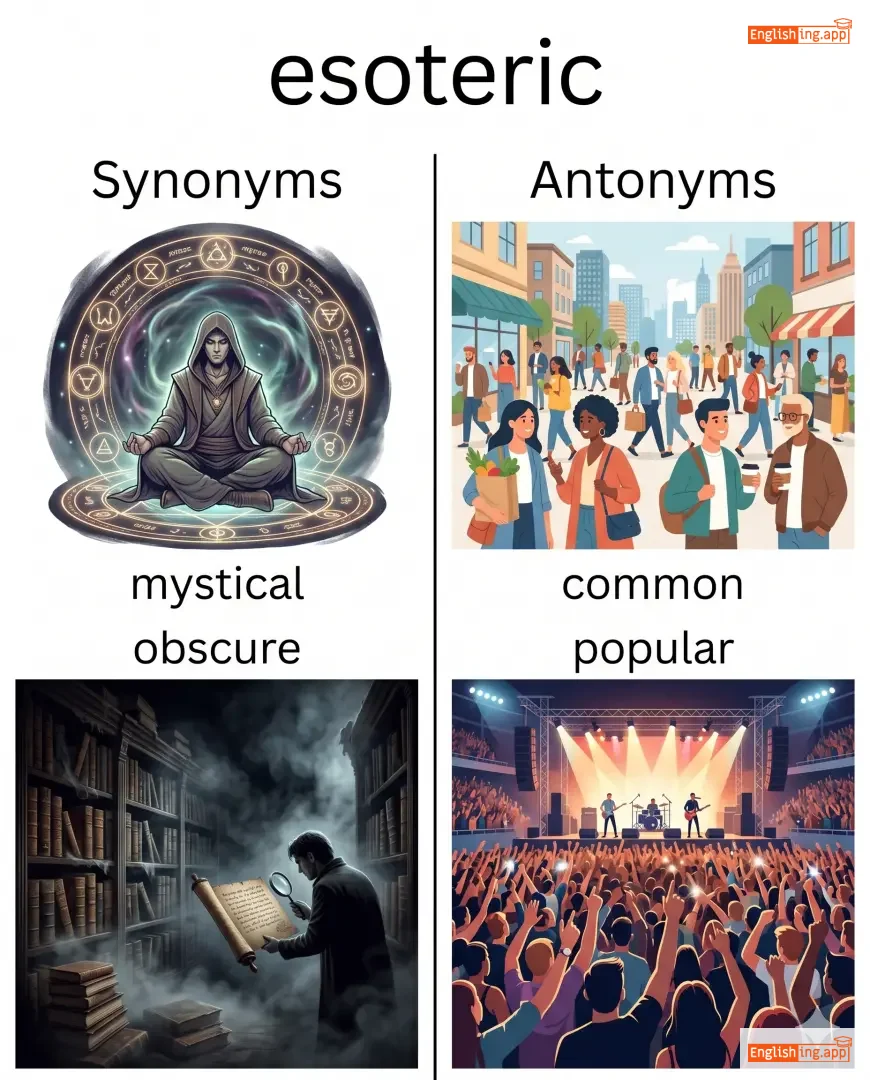
intended for or understood by only a small number of people with special knowledge
••••••
|
The professor gave an esoteric lecture on ancient philosophy. |
教授做了一场关于古代哲学的深奥讲座。
Jiaoshou zuo le yi chang guanyu gudai zhexue de shen'ao jiangzuo.
••••••
|
- •••••• | - •••••• | - •••••• |
mystical, obscure, cryptic, abstract, arcane
••••••
|
common, popular, simple
••••••
|
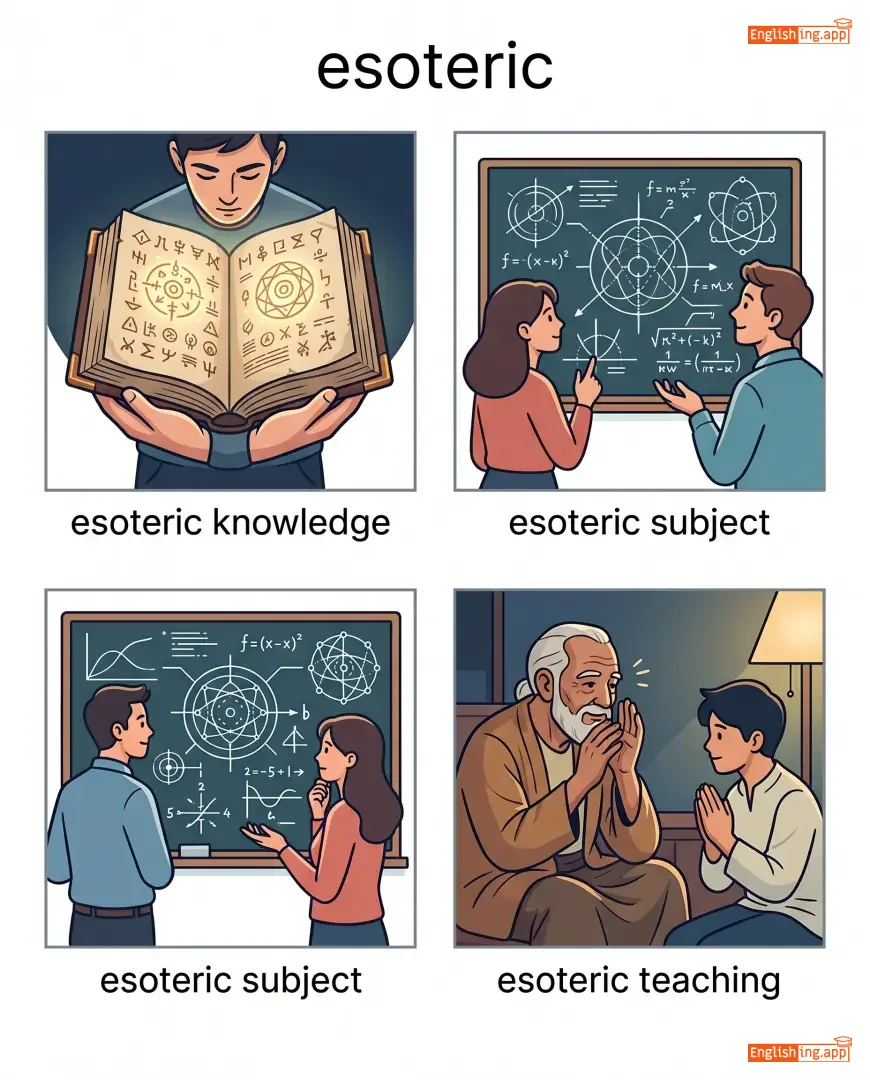
esoteric knowledge, esoteric subject, esoteric teaching
••••••
|
Eso (像这个) + 奥的,意味着只有少数专家能理解
••••••
|
|
#3102
🛡️
|
/ɪˈskʌtʃən/
noun
(艾斯卡申)
••••••
|
- •••••• |
带有家族徽章的盾牌
dài yǒu jiāzú huīzhāng de dùn pái
••••••
|
- •••••• | - •••••• | - •••••• | - •••••• |
a shield or emblem bearing a coat of arms
••••••
|
The family crest was displayed on the escutcheon above the fireplace. |
家族徽章展示在壁炉上方的盾牌上。
jiāzú huīzhāng zhǎnshì zài bìlú shàngfāng de dùn pái shàng.
••••••
|
a blot on one's escutcheon |
a stain on someone's reputation or honor
••••••
|
某人的荣誉上的污点
mǒu rén de róngyù shàng de wūdiǎn
••••••
|
shield, crest, emblem, coat of arms
••••••
|
disgrace, dishonor
••••••
|
family escutcheon, coat of arms escutcheon, decorative escutcheon
••••••
|
Escutcheon像是一个盾牌,承载家族徽章
••••••
|
|
#3103
🚫
|
/ɪsˈtʃuː/
verb
(é sī qī yū)
••••••
|
- •••••• |
避开
bì kāi
••••••
|
eschewed
é sī qī wǔ
••••••
|
eschewed
é sī qī wǔ
••••••
|
eschews
é sī qī sī
••••••
|
eschewing
é sī qī yīng
••••••
|
to deliberately avoid or abstain from something
••••••
|
She chose to eschew junk food for a healthier diet.
tā xuǎnzé bìmiǎn jīngcháng chī zhàngfū shíwù wèi le gèng jiànkāng de yíngyǎng.
••••••
|
她选择避开垃圾食品,选择更健康的饮食。
Tā xuǎnzé bìkāi lājī shípǐn, xuǎnzé gèng jiànkāng de yíngyǎng.
••••••
|
- •••••• | - •••••• | - •••••• |
avoid, shun, refrain, renounce, abstain
••••••
|
embrace, adopt, accept
••••••
|
eschew violence, eschew luxury, eschew tradition
••••••
|
避开 (bì kāi) 就像 eschew, 意思是避开不想要的事物。
••••••
|
|
#3104
🌄
|
/ˈɛskəpeɪd/
noun
(èskèpáid)
••••••
|
- •••••• |
冒险
màoxiǎn
••••••
|
- •••••• | - •••••• | - •••••• | - •••••• |
an adventurous, exciting, or reckless act
••••••
|
Their summer escapade included camping and mountain climbing.
他们的夏季冒险包括露营和登山。
••••••
|
他们的夏季冒险包括露营和登山。
Tāmen de xiàjì màoxiǎn bāokuò lùyíng hé dēngshān.
••••••
|
- •••••• | - •••••• | - •••••• |
adventure, exploit, stunt, frolic, mischief
••••••
|
routine, duty, seriousness
••••••
|
wild escapade, youthful escapade, adventurous escapade
••••••
|
Escape + parade = 冒险
••••••
|
|
#3105
📈
|
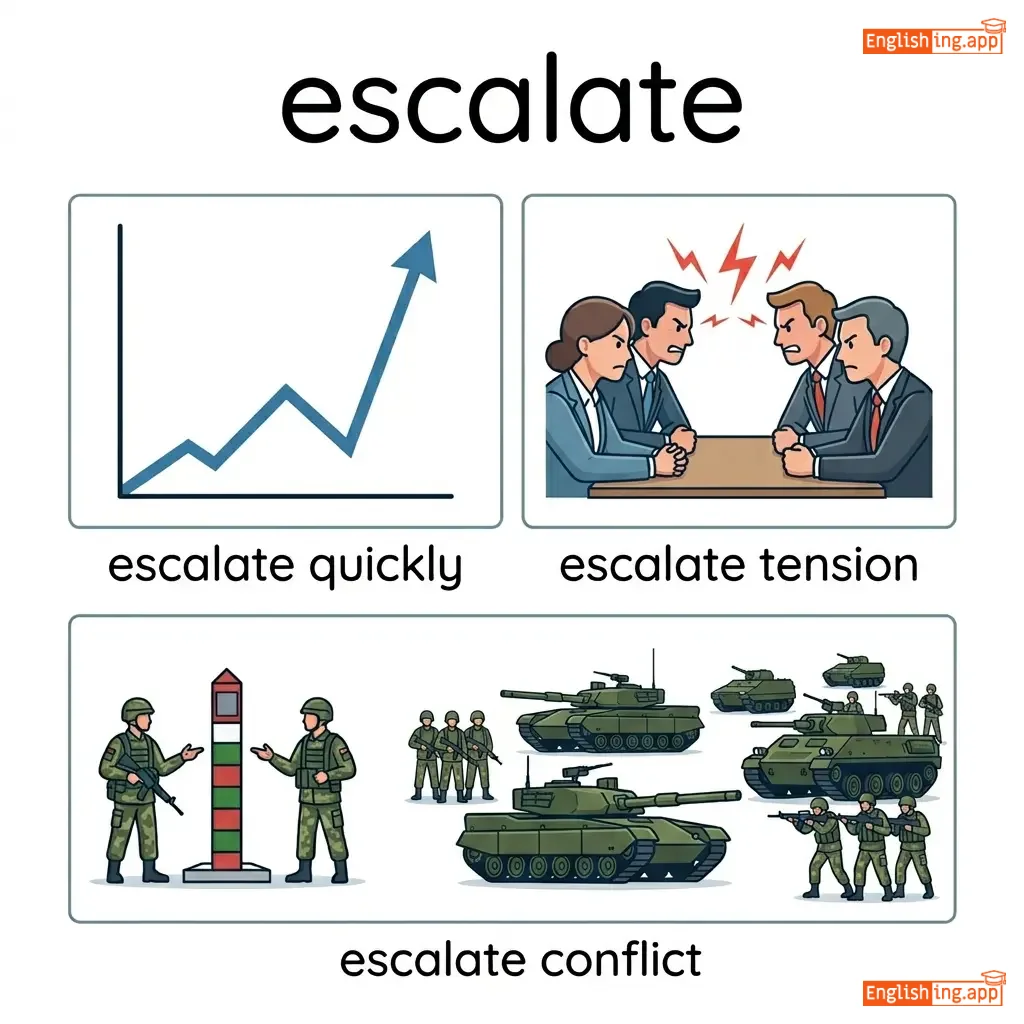
/ˈɛskəleɪt/
verb
(ɛs.kəˈleɪt)
••••••
|
|
升级
shēngjí
••••••
|
escalated
ɛs.kəˈleɪtəd
••••••
|
escalated
ɛs.kəˈleɪtəd
••••••
|
escalates
ɛs.kəˈleɪts
••••••
|
escalating
ɛs.kəˈleɪtɪŋ
••••••
|
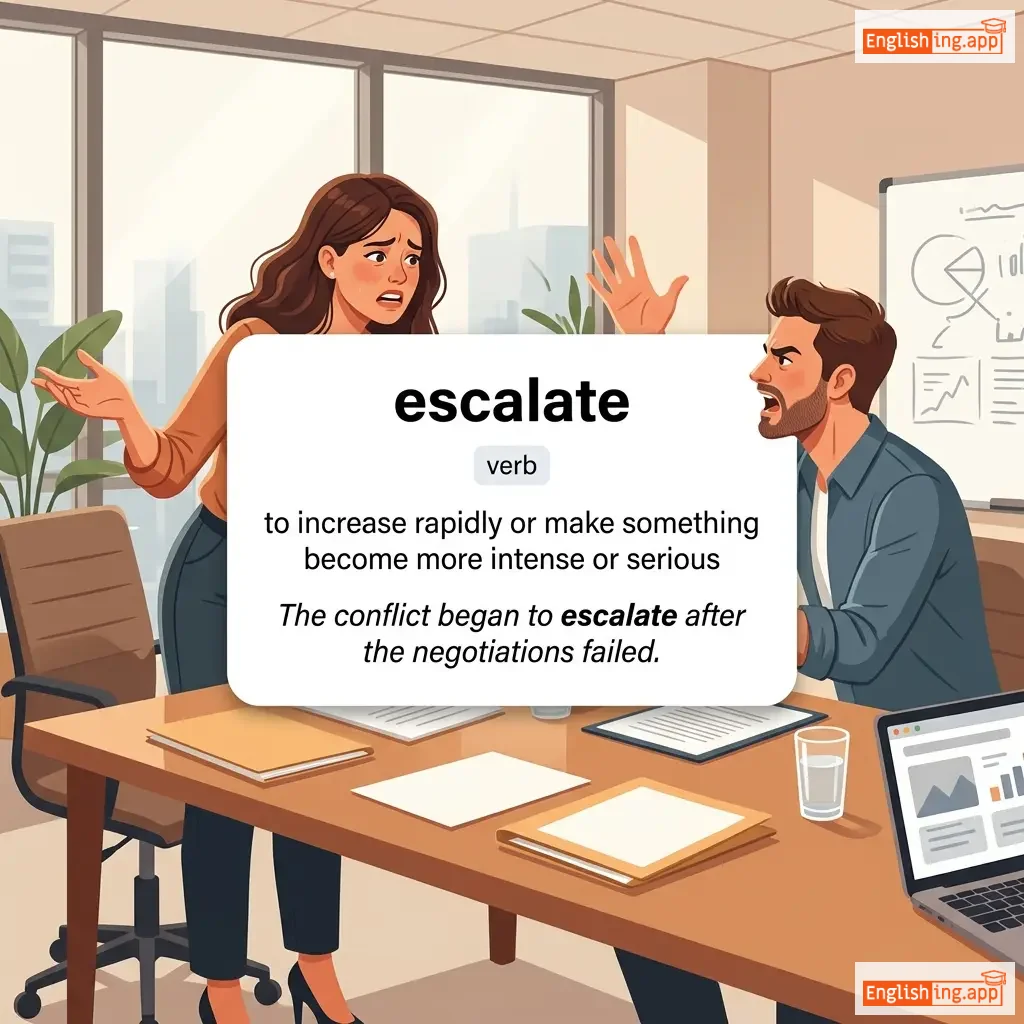
to increase rapidly or make something become more intense or serious
••••••
|
The conflict began to escalate after the negotiations failed.
冲突在谈判失败后开始升级。
••••••
|
冲突在谈判失败后开始升级。
Chōngtú zài tánpàn shībài hòu kāishǐ shēngjí.
••••••
|
escalate the situation
升级局势
••••••
|
to make a problem or conflict more serious
••••••
|
升级局势
shēngjí júshì
••••••
|
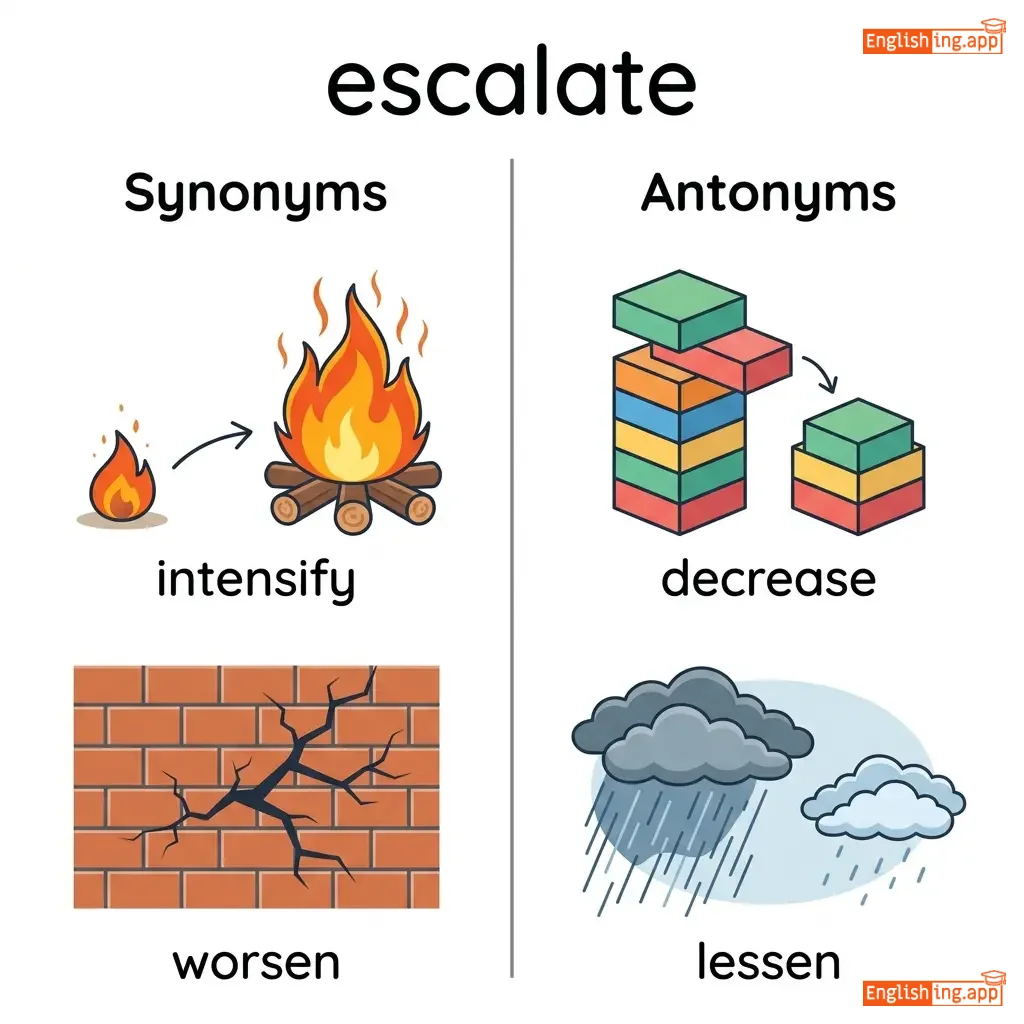
intensify, worsen, amplify, heighten, increase
••••••
|
decrease, lessen, reduce
••••••
|
escalate quickly, escalate tension, escalate conflict, escalate costs
••••••
|
电梯会让你上升,升级也意味着增加或变得更强烈。
••••••
|
|
#3106
⚖️
|
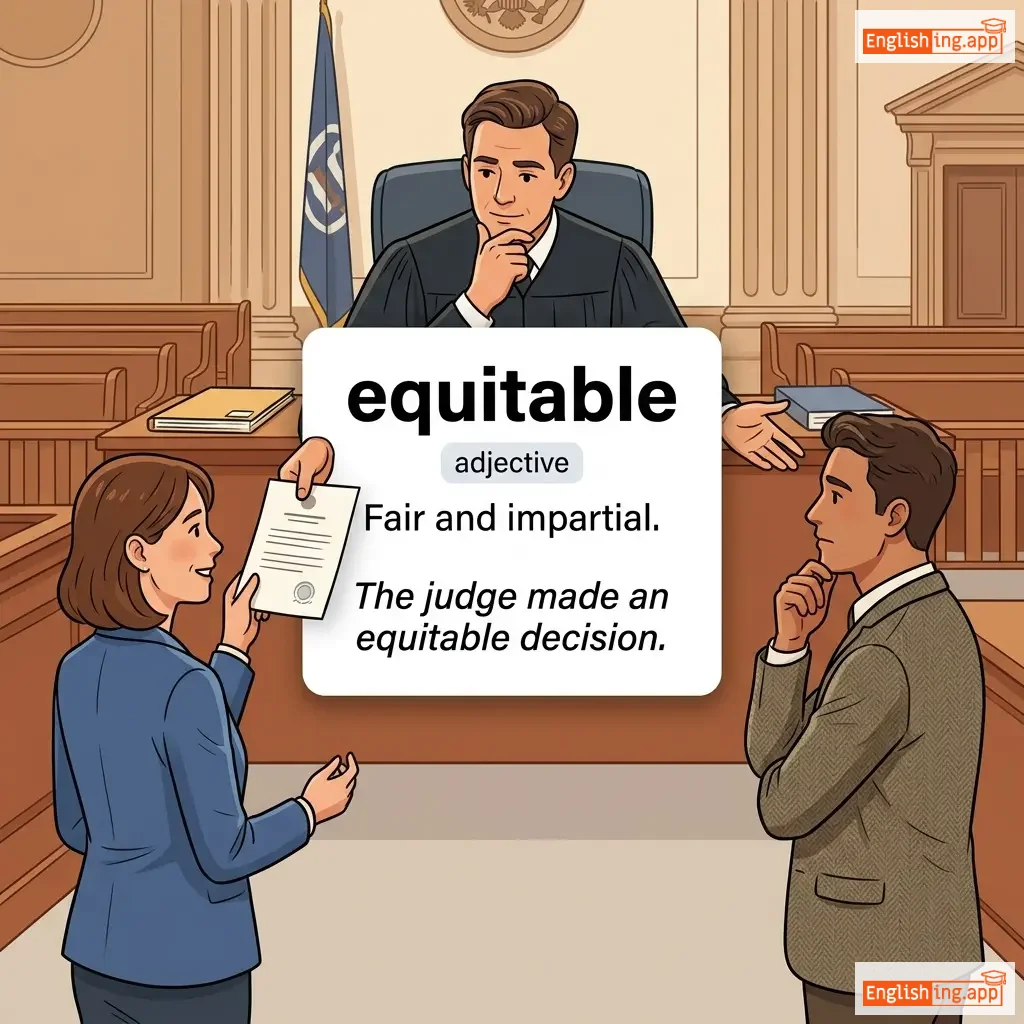
/ˈɛkwɪtəbl/
adjective
(公平)
••••••
|
|
公平
gongping
••••••
|
- •••••• | - •••••• | - •••••• | - •••••• |
Fair and impartial.
••••••
|
The judge made an equitable decision. |
法官做出了公平的决定。
Fǎguān zuòchūle gōngpíng de juédìng.
••••••
|
- •••••• | - •••••• | - •••••• |
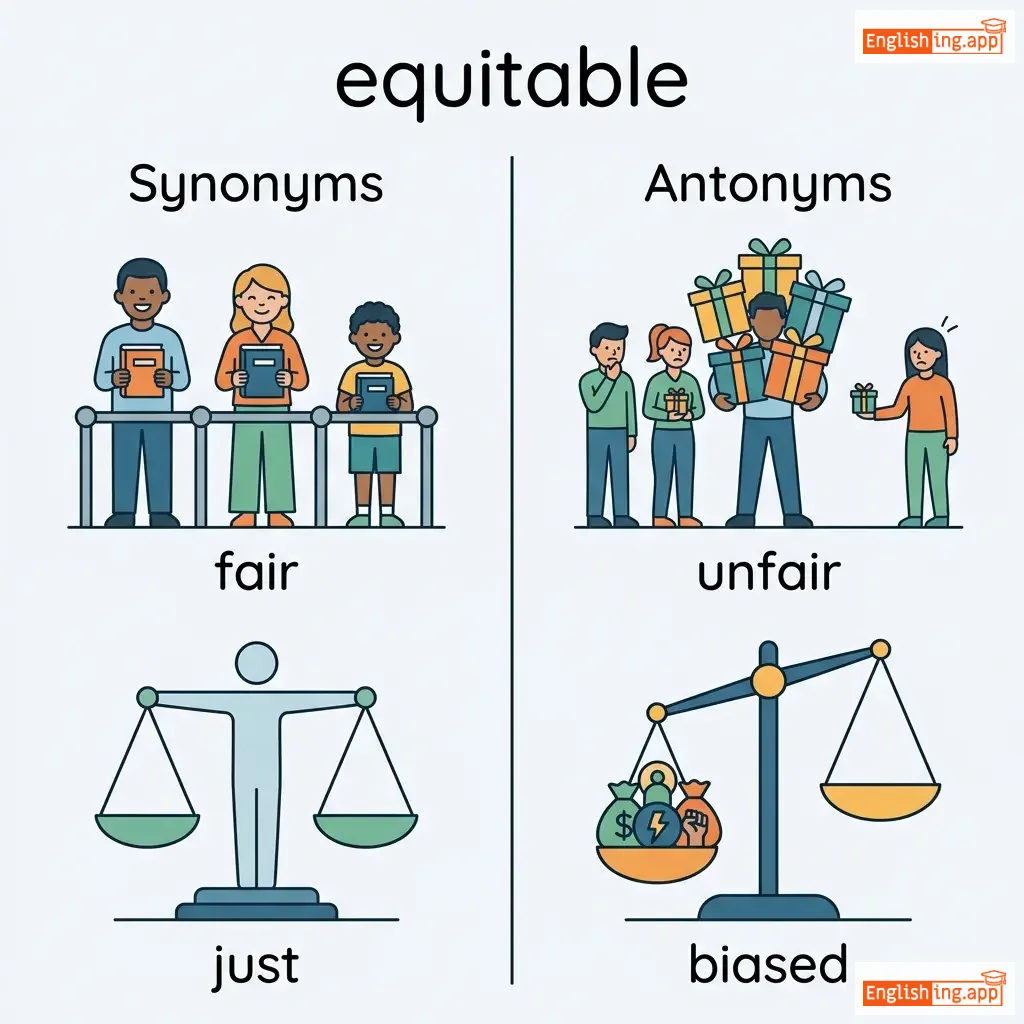
fair, just, impartial, unbiased, even-handed
••••••
|
unfair, biased, unjust
••••••
|
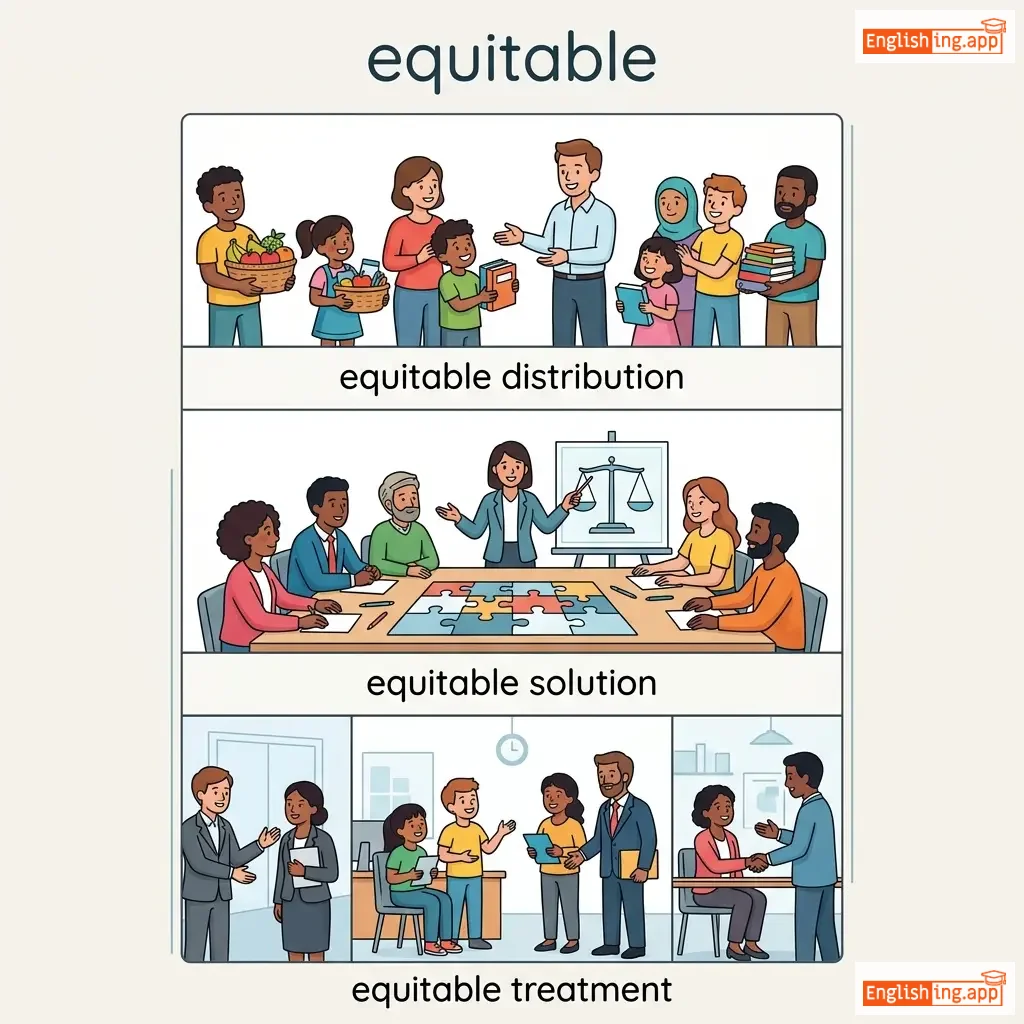
equitable distribution, equitable solution, equitable treatment
••••••
|
Equitable 意味着公平 + 桌子,大家平等坐着 → 公平。
••••••
|
|
#3107
📚
|
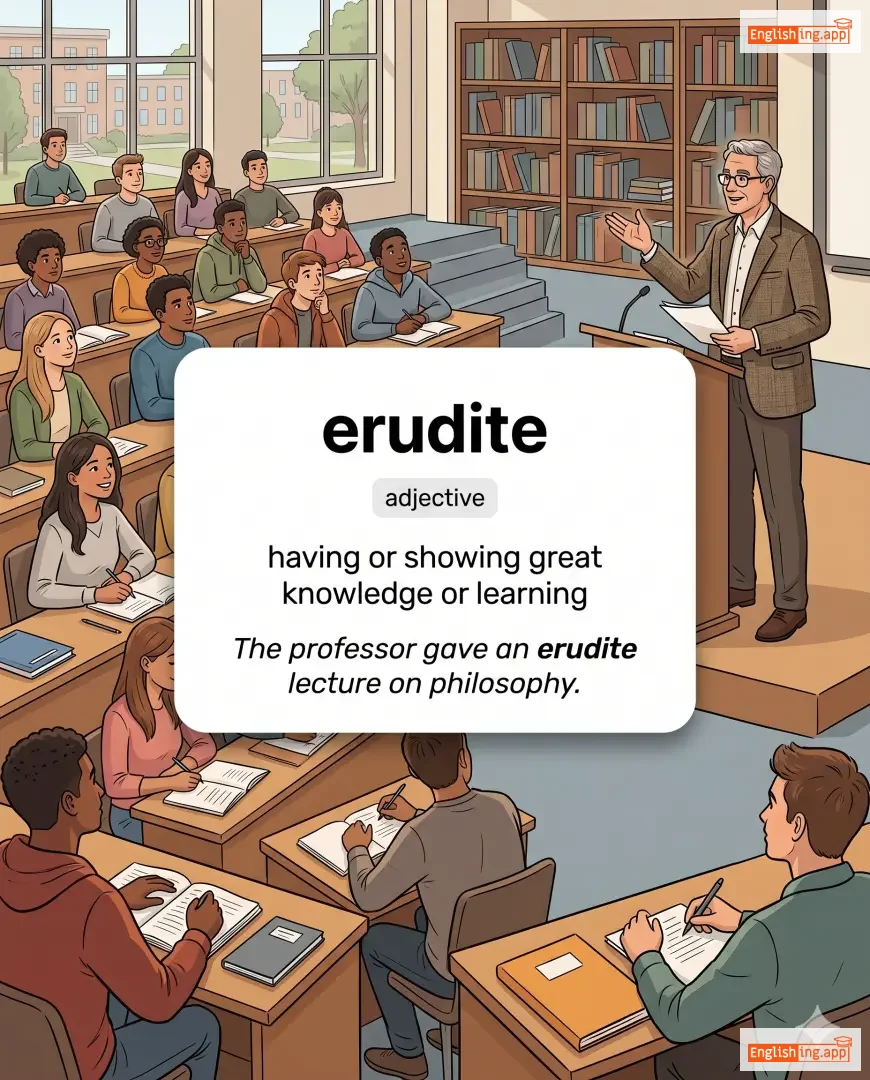
/ˈɛrjʊˌdaɪt/
adjective
(érúdài)
••••••
|
|
博学
boxue
••••••
|
- •••••• | - •••••• | - •••••• | - •••••• |
having or showing great knowledge or learning
••••••
|
The professor gave an erudite lecture on philosophy. |
教授就哲学做了一个博学的讲座。
Jiàoshòu jiù zhéxué zuòle yīgè bóxué de jiǎngzuò.
••••••
|
- •••••• | - •••••• | - •••••• |
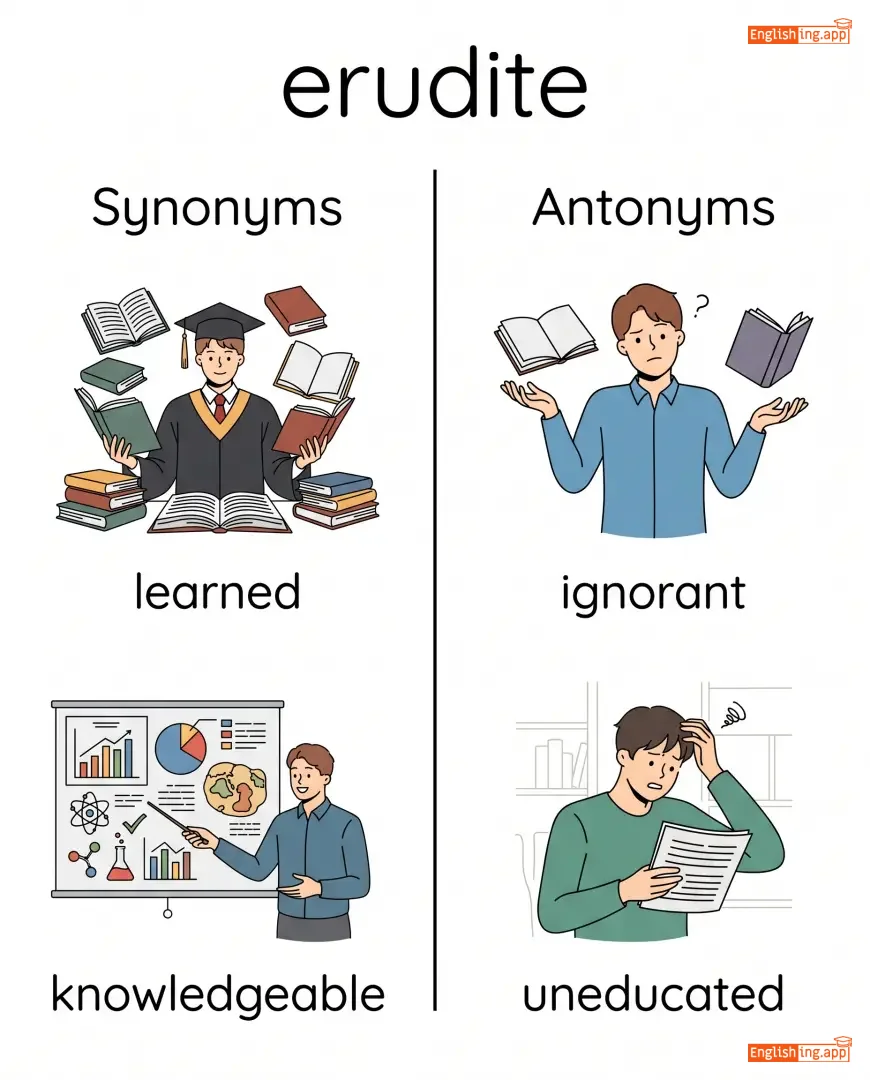
learned, knowledgeable, scholarly, intellectual, well-read
••••••
|
ignorant, uneducated, uninformed
••••••
|
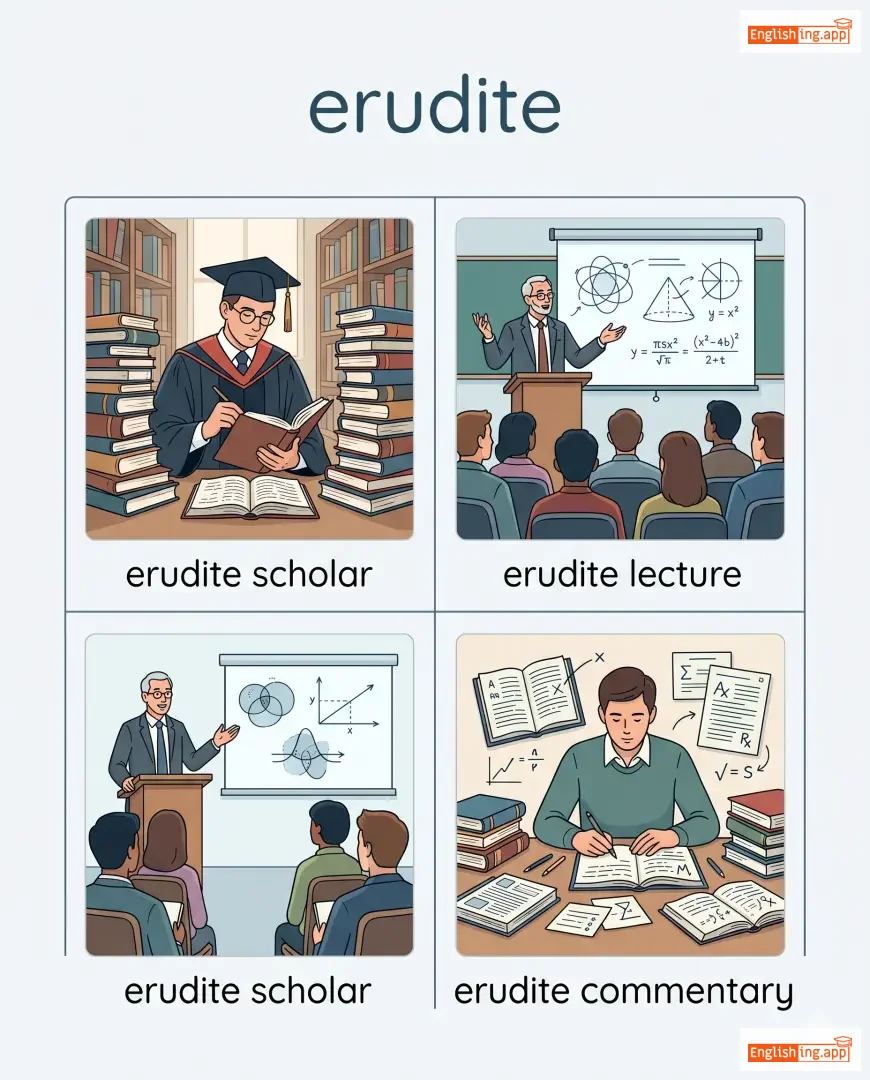
erudite scholar, erudite lecture, erudite commentary, erudite discussion
••••••
|
Erudite = 教育 + 聪明 → 博学表示知识丰富的人。
••••••
|
|
#3108
⏳
|
/ˈɜːrstwaɪl/
adjective
(èrsīwài)
••••••
|
- •••••• |
曾经
céngjīng
••••••
|
- •••••• | - •••••• | - •••••• | - •••••• |
former or in the past
••••••
|
They were erstwhile friends but no longer speak. |
他们曾经是朋友,但现在不再交谈。
Tāmen céngjīng shì péngyǒu, dàn xiànzài bù zài jiāotán.
••••••
|
- •••••• | - •••••• | - •••••• |
former, previous, old, past, ex
••••••
|
current, present, existing
••••••
|
erstwhile friend, erstwhile ally, erstwhile leader, erstwhile partner
••••••
|
Erstwhile = 曾经,过去发生的事。
••••••
|
|
#3109
🧪
|
/ˈɛrzæts/
adjective
(èrzàcí)
••••••
|
- •••••• |
替代品
tìdàipǐn
••••••
|
- •••••• | - •••••• | - •••••• | - •••••• |
made or used as a substitute, typically an inferior one
••••••
|
The cheap shoes were made of ersatz leather. |
便宜的鞋子是用仿皮革做的。
Biànyí de xiézi shì yòng fǎng pígé zuò de.
••••••
|
- •••••• | - •••••• | - •••••• |
artificial, fake, imitation, substitute, synthetic
••••••
|
genuine, authentic, real
••••••
|
ersatz coffee, ersatz leather, ersatz product, ersatz goods
••••••
|
Ersatz 意思是替代品 → 便宜鞋子仿皮革做的替代品。
••••••
|
|
#3110
❌
|
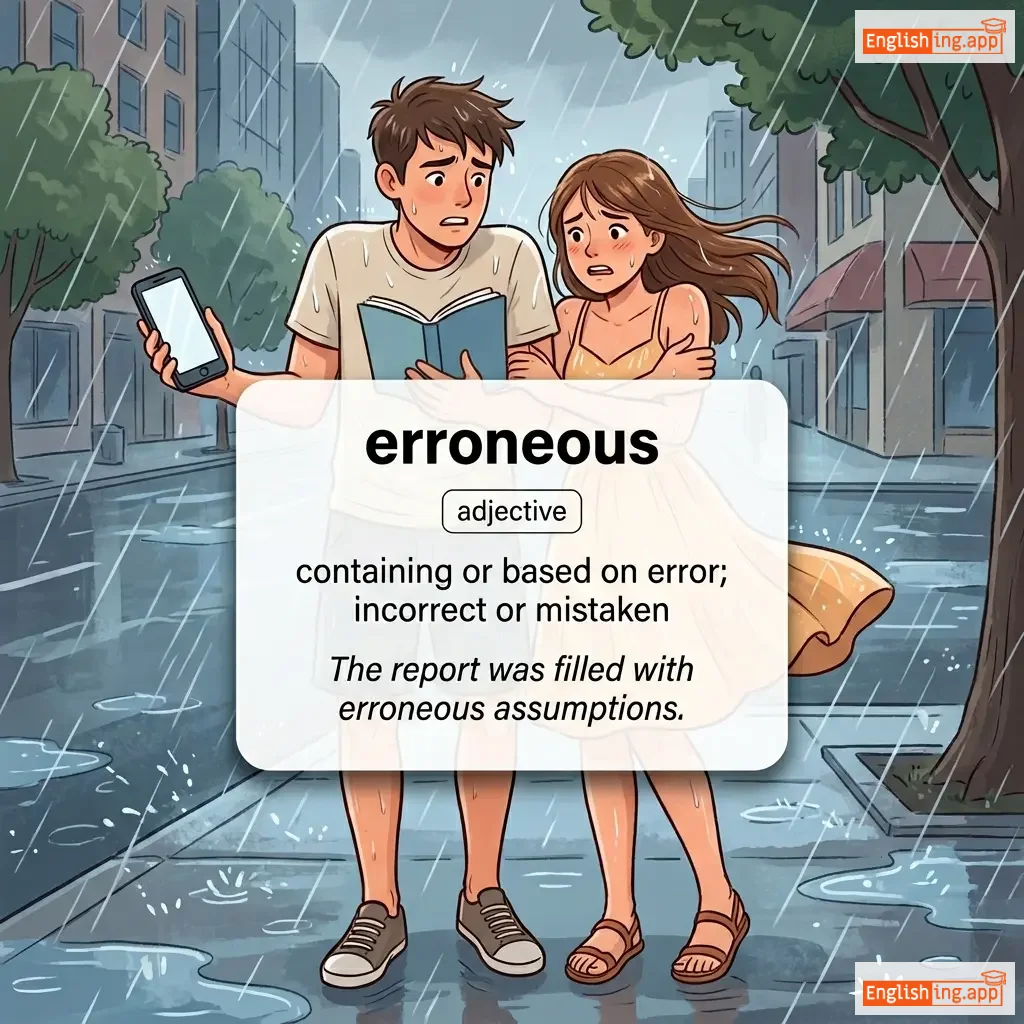
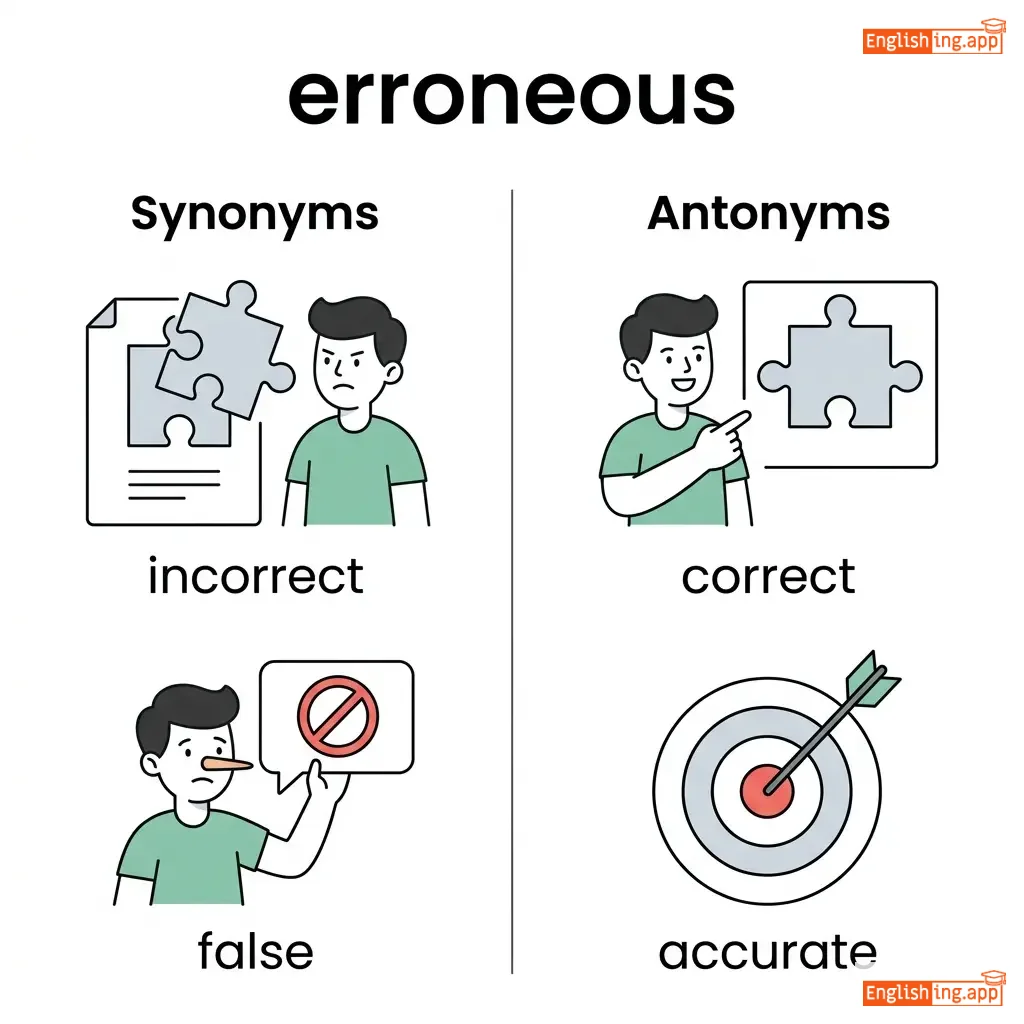
/ɪˈrəʊniəs/
adjective
(错误的)
••••••
|
|
错误的
cuòwù de
••••••
|
- •••••• | - •••••• | - •••••• | - •••••• |
containing or based on error; incorrect or mistaken
••••••
|
The report was filled with erroneous assumptions. |
报告充满了错误的假设。
Bàogào chōngmǎnle cuòwù de jiǎshè.
••••••
|
- •••••• | - •••••• | - •••••• |
incorrect, false, mistaken, inaccurate, invalid
••••••
|
correct, accurate, true
••••••
|
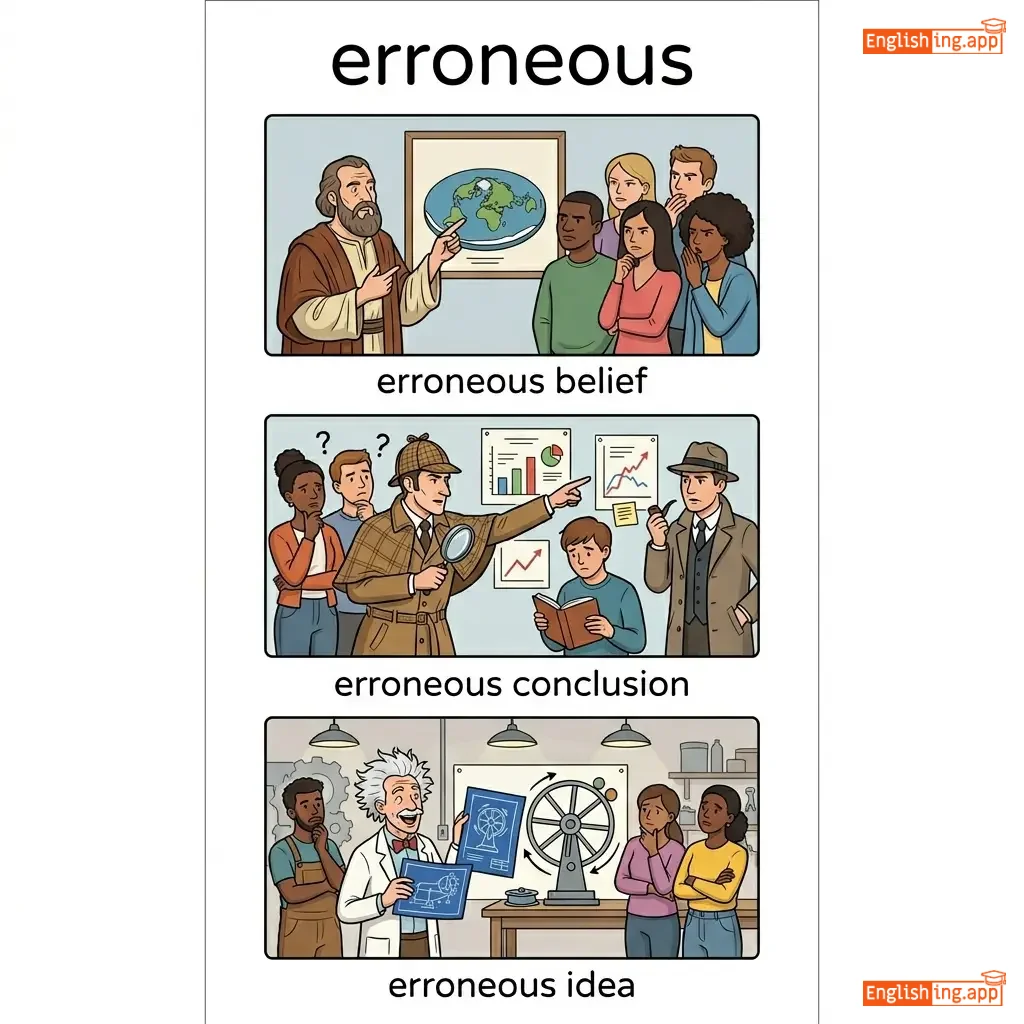
erroneous belief, erroneous conclusion, erroneous idea, erroneous assumption
••••••
|
错误 + ous 意味着充满错误 → 错误的 = 充满错误。
••••••
|
|
#3111
🎢
|
/ɪˈrætɪk/
adjective
(埃拉特克)
••••••
|
|
不稳定
bù wěn dìng
••••••
|
- •••••• | - •••••• | - •••••• | - •••••• |
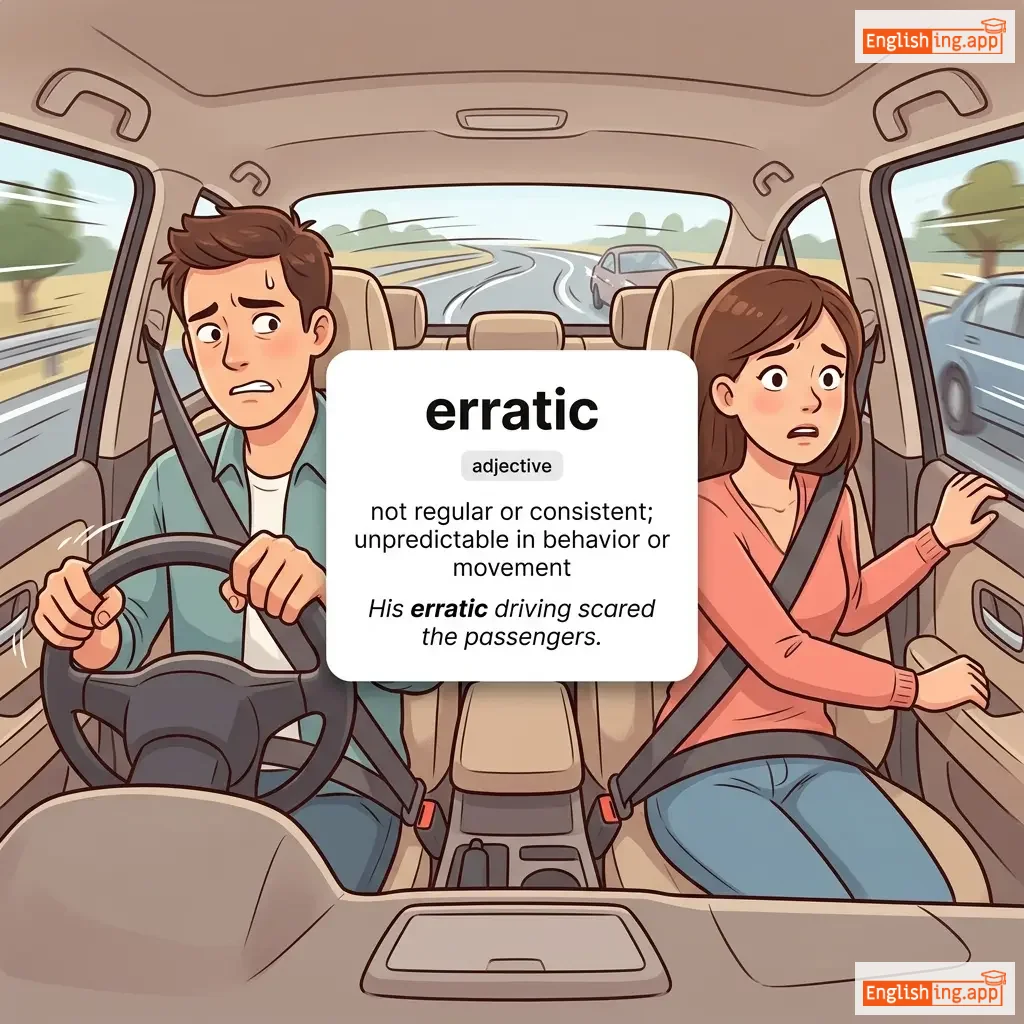
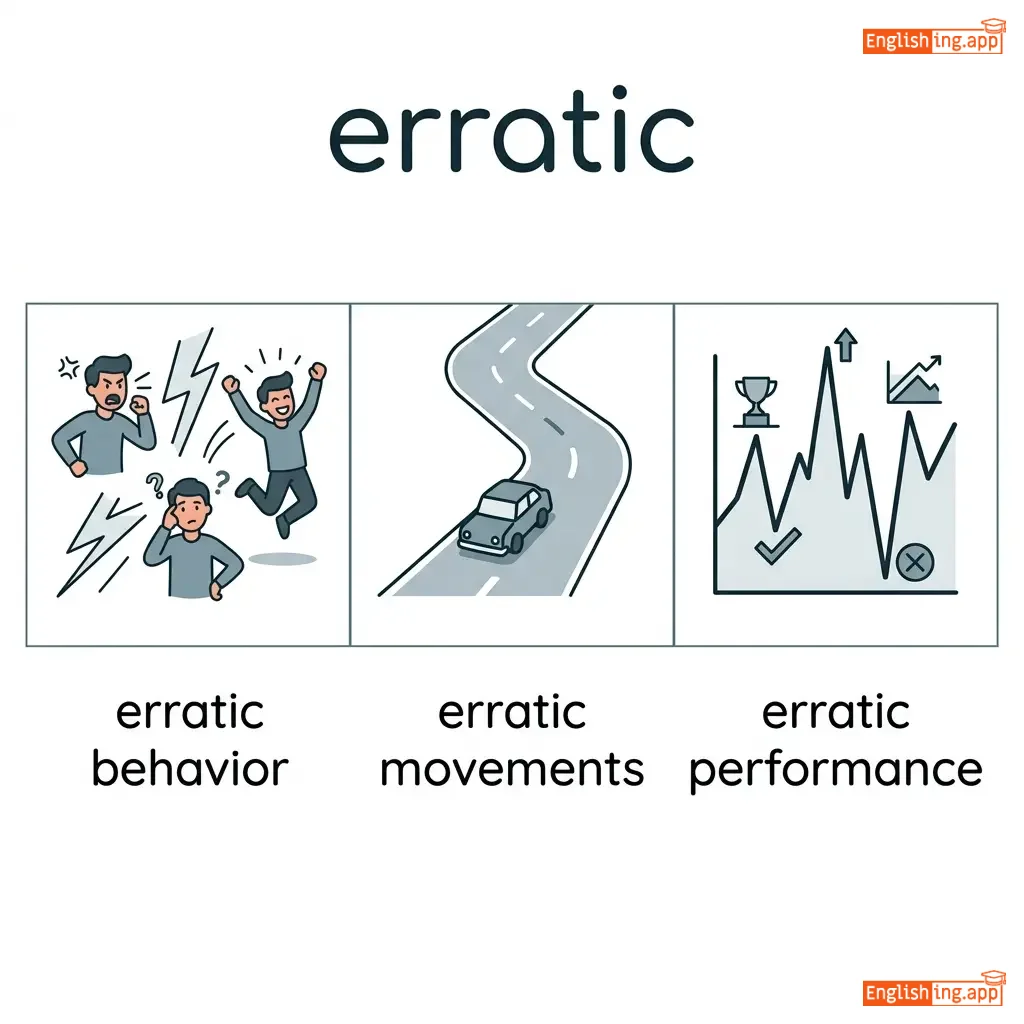
not regular or consistent; unpredictable in behavior or movement
••••••
|
His erratic driving scared the passengers.
他不稳定的驾驶吓坏了乘客。
••••••
|
他不稳定的驾驶吓坏了乘客。
Tā bù wěn dìng de jià shǐ xià huài le chéng kè.
••••••
|
- •••••• | - •••••• | - •••••• |
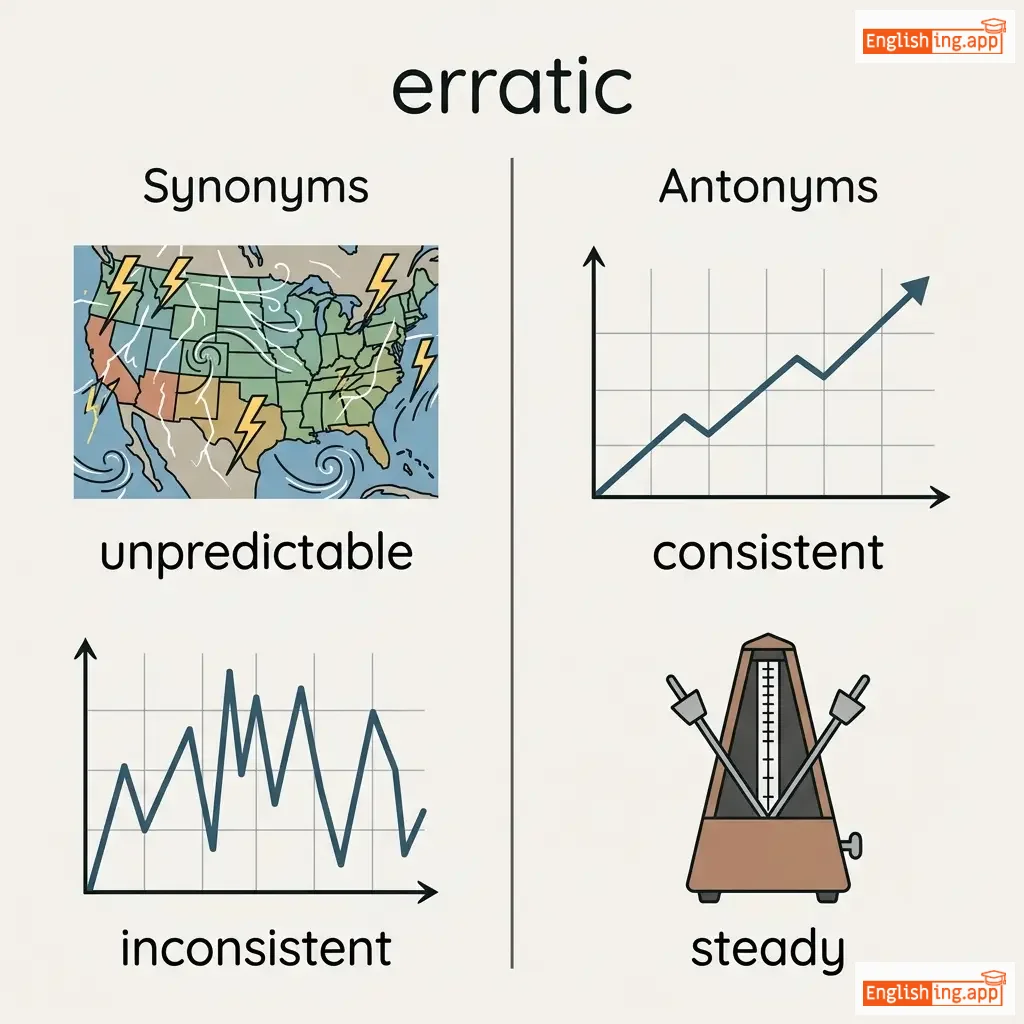
unpredictable, inconsistent, irregular, unstable, changeable
••••••
|
consistent, steady, reliable
••••••
|
erratic behavior, erratic movements, erratic performance
••••••
|
Erratic 就像不稳定的车开得乱七八糟。
••••••
|
|
#3112
🚫
|
/ˈɛrənt/
adjective
(艾兰特)
••••••
|
|
迷途的
mítú de
••••••
|
- •••••• | - •••••• | - •••••• | - •••••• |
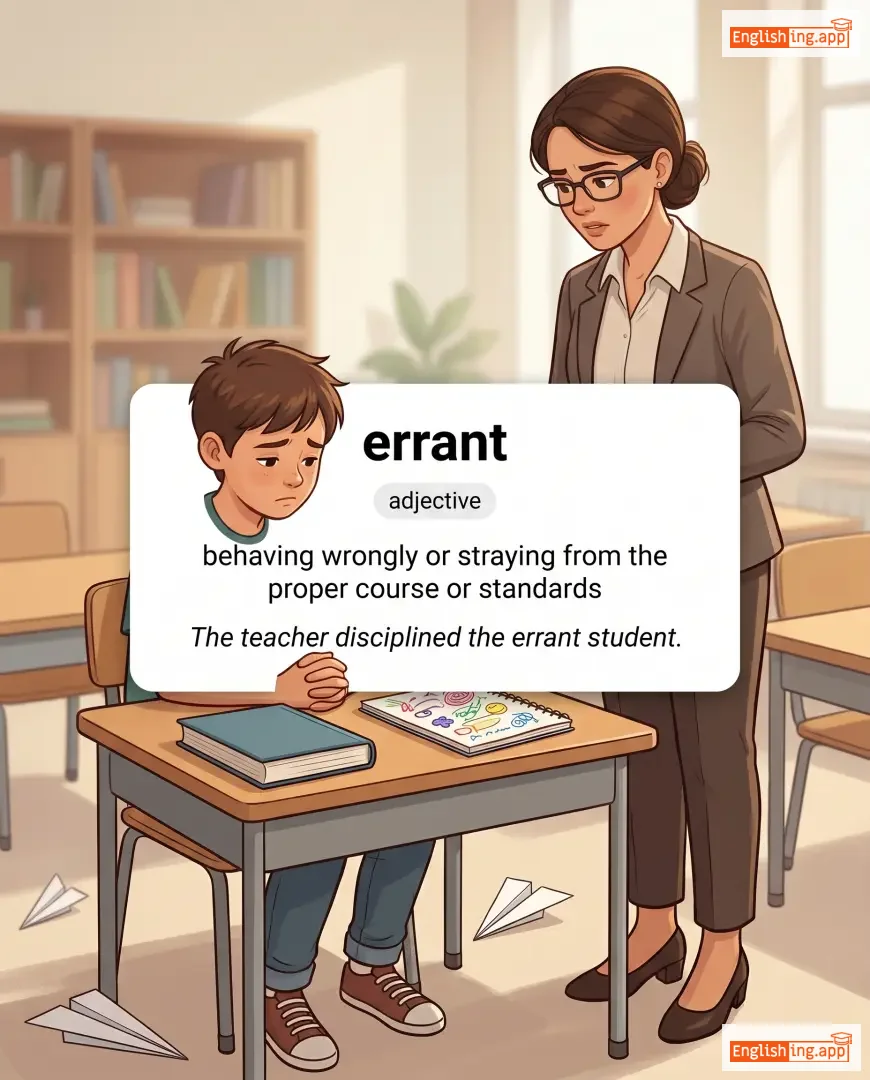
behaving wrongly or straying from the proper course or standards
••••••
|
The teacher disciplined the errant student. |
老师惩罚了那个迷途的学生。
Lǎoshī chéngfále nàgè mítú de xuéshēng.
••••••
|
- •••••• | - •••••• | - •••••• |
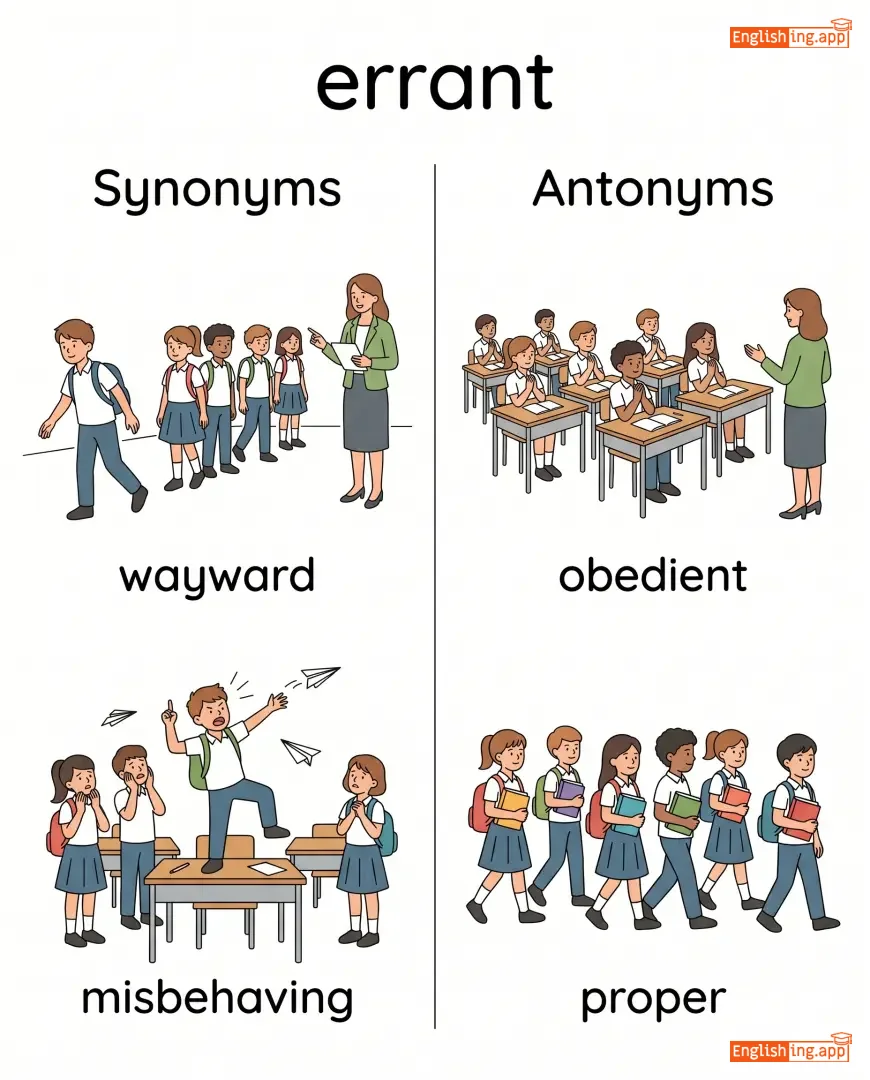
wayward, misbehaving, delinquent, unruly
••••••
|
obedient, proper, disciplined
••••••
|
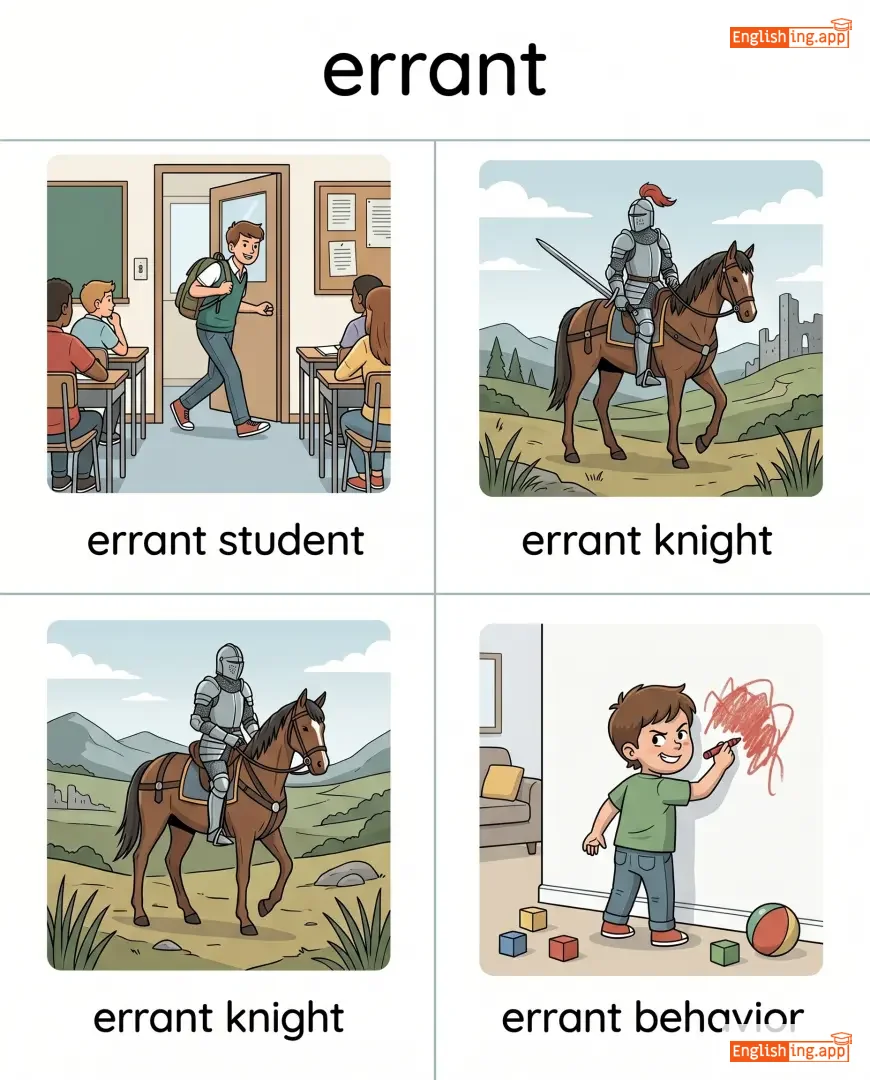
errant student, errant knight, errant behavior
••••••
|
Errant意味着迷失方向 – Err = 迷失 + ant = 违反规则
••••••
|
|
#3113
⚠️
|
/ɜːr/
verb
(èr)
••••••
|
- •••••• |
犯错
fàn cuò
••••••
|
erred
èred
••••••
|
erred
èred
••••••
|
errs
èrs
••••••
|
erring
èring
••••••
|
to make a mistake or be incorrect
••••••
|
To err is human, to forgive divine.
To err is human, to forgive divine.
••••••
|
犯错是人类的本性,宽恕是神圣的。
Fàn cuò shì rénlèi de běn xìng, kuānshù shì shénshèng de.
••••••
|
to err is human
To err is human
••••••
|
it is natural for people to make mistakes
••••••
|
犯错是人类的本性
fàn cuò shì rénlèi de běn xìng
••••••
|
blunder, miscalculate, slip, falter, mistake
••••••
|
succeed, correct, achieve
••••••
|
err in judgment, err on the side, err greatly
••••••
|
Err = 错误,犯错是人之常情
••••••
|
|
#3114
🔥
|
/ɪˈrɒtɪk/
adjective
(色情的)
••••••
|
- •••••• |
色情的
sèqíng de
••••••
|
- •••••• | - •••••• | - •••••• | - •••••• |
relating to or tending to arouse sexual desire or excitement
••••••
|
The novel contained several erotic scenes. |
这本小说包含了几个色情场景。
Zhè běn xiǎoshuō bāohánle jǐ gè sèqíng chǎngjǐng.
••••••
|
- •••••• | - •••••• | - •••••• |
sensual, sexual, amorous, passionate, arousing
••••••
|
chaste, modest, pure
••••••
|
erotic novel, erotic art, erotic desire, erotic scene
••••••
|
Erotic在中文中是色情的 – 热辣的电影场景 🔥
••••••
|
|
#3115
🌊
|
/ɪˈroʊd/
verb
(èluódé)
••••••
|
- •••••• |
侵蚀
qīnshí
••••••
|
eroded
èluódì
••••••
|
eroded
èluódì
••••••
|
erodes
èluó
••••••
|
eroding
èluódìng
••••••
|
to gradually wear away or destroy by natural forces such as water, wind, or chemical action
••••••
|
The coastline has begun to erode due to constant waves.
海岸线因持续的波浪开始侵蚀。
••••••
|
海岸线因持续的波浪开始侵蚀。
Hǎi'àn xiàn yīn chíxù de bōlàng kāishǐ qīnshí.
••••••
|
erode trust
侵蚀信任
••••••
|
to gradually weaken or reduce confidence
••••••
|
侵蚀信任
Qīnshí xìnrèn
••••••
|
wear away, corrode, deteriorate, crumble, decay
••••••
|
build, strengthen, restore
••••••
|
erode soil, erode confidence, erode value, erode support
••••••
|
Erode 意思是侵蚀,就像水蚀土地,信任也会被侵蚀
••••••
|
|
#3116
🧹
|
/ɪˈrædɪˌkeɪt/
verb
(根除)
••••••
|
|
根除; 消除
gēnchú; xiāochú
••••••
|
eradicated
根除
••••••
|
eradicated
根除
••••••
|
eradicates
根除
••••••
|
eradicating
根除
••••••
|
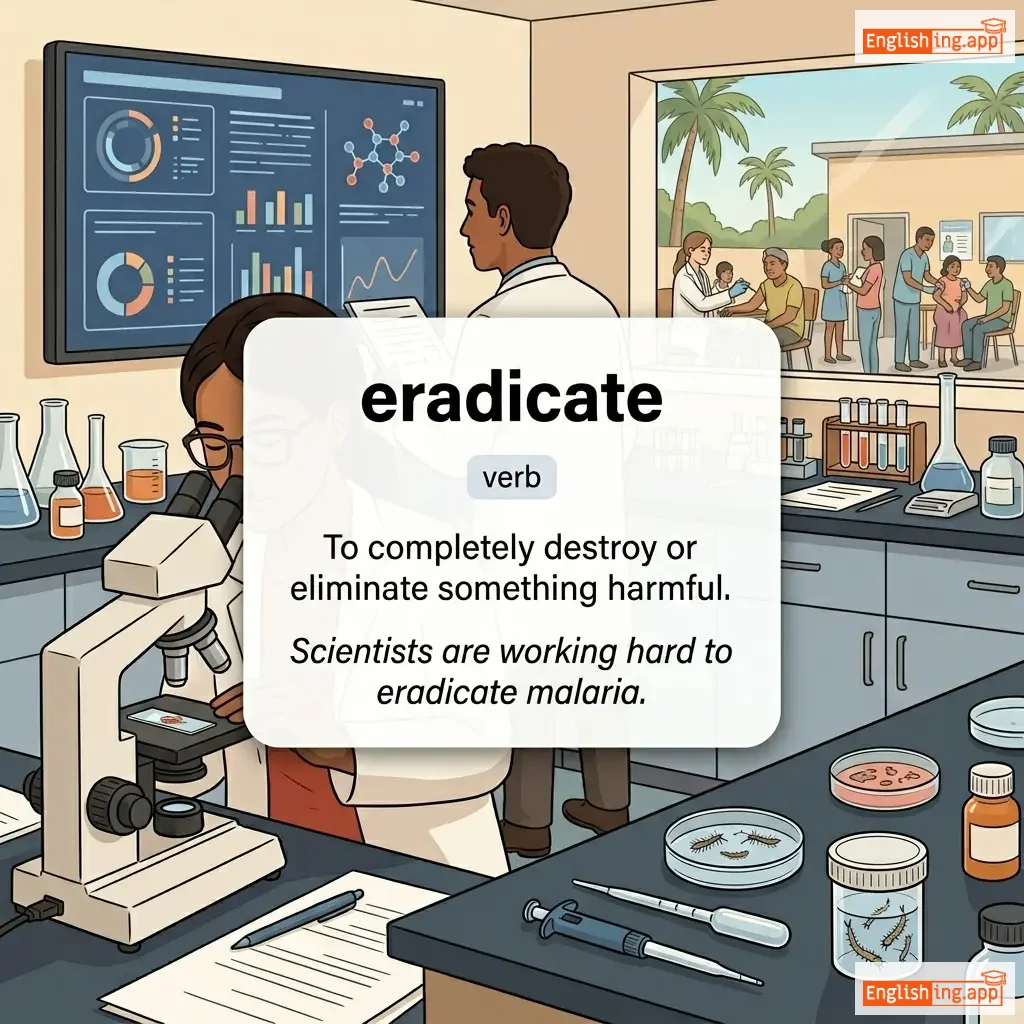
To completely destroy or eliminate something harmful.
••••••
|
Scientists are working hard to eradicate malaria.
科学家们正在努力根除疟疾。
••••••
|
科学家们正在努力根除疟疾。
Kēxuéjiāmen zhèngzài nǔlì gēnchú nuèjí.
••••••
|
eradicate poverty
根除贫困
••••••
|
To completely eliminate poverty from society.
••••••
|
根除贫困
gēnchú pínkùn
••••••
|
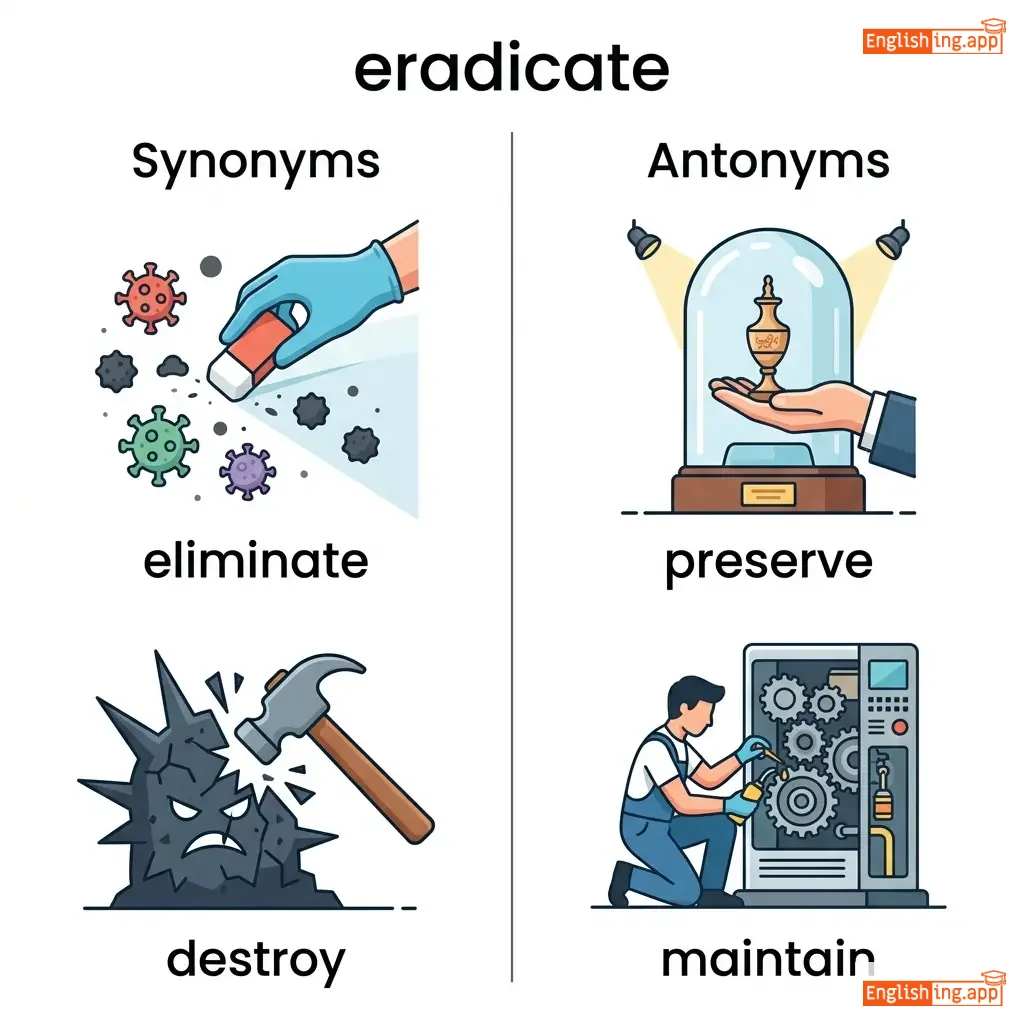
eliminate, destroy, exterminate, abolish, wipe out
••••••
|
preserve, maintain, protect
••••••
|
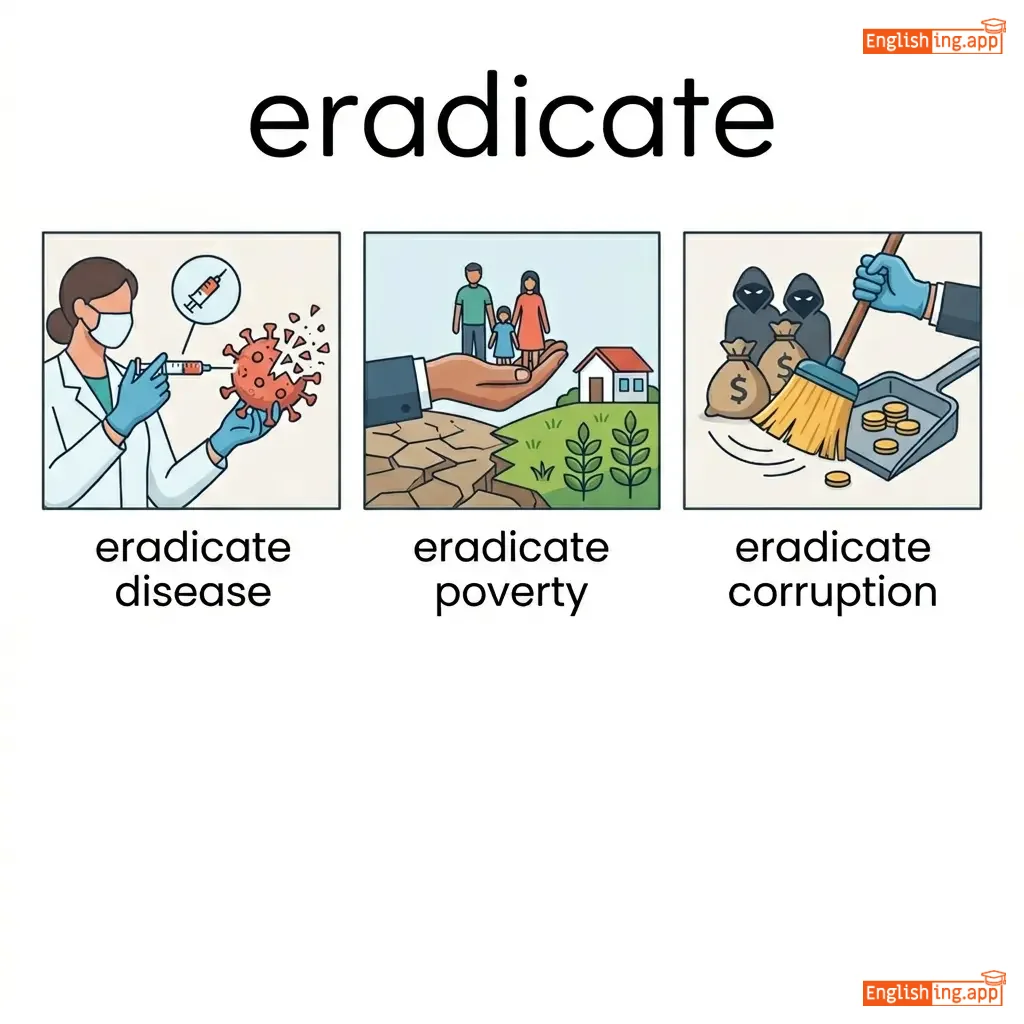
eradicate disease, eradicate poverty, eradicate corruption, eradicate racism
••••••
|
根除就像拔掉问题的根部,彻底解决问题!
••••••
|
|
#3117
🌀
|
/ɪˈkwɪvəˌkeɪt/
verb
(模棱两可)
••••••
|
|
含糊其辞
hán hú qí cí
••••••
|
equivocated
模棱两可的
••••••
|
equivocated
模棱两可的
••••••
|
equivocates
模棱两可
••••••
|
equivocating
模棱两可
••••••
|
To speak ambiguously or avoid giving a clear answer.
••••••
|
The politician equivocated when asked about the scandal.
那位政治家在被问及丑闻时含糊其辞。
••••••
|
那位政治家在被问及丑闻时含糊其辞。
Nà wèi zhèngzhìjiā zài bèi wènjí chǒuwén shí hán hú qí cí.
••••••
|
- •••••• | - •••••• | - •••••• |
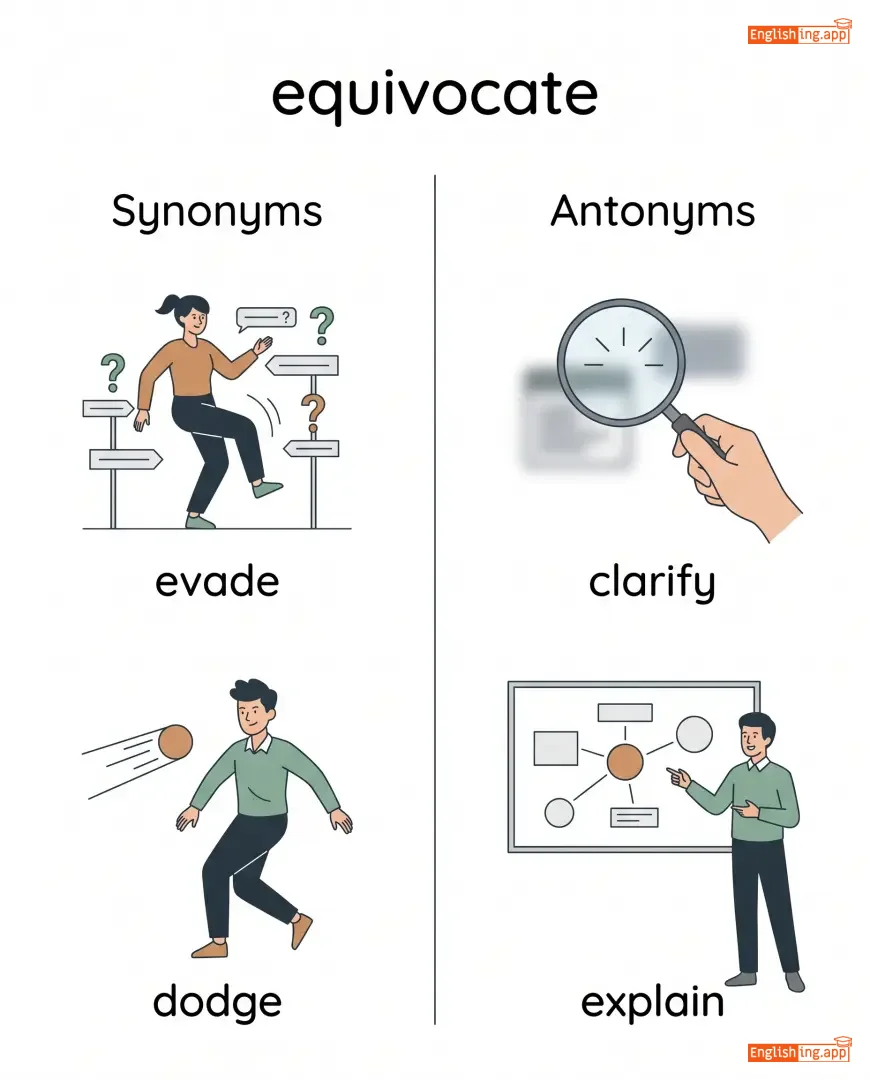
evade, dodge, prevaricate, hedge, mislead
••••••
|
clarify, explain, affirm
••••••
|
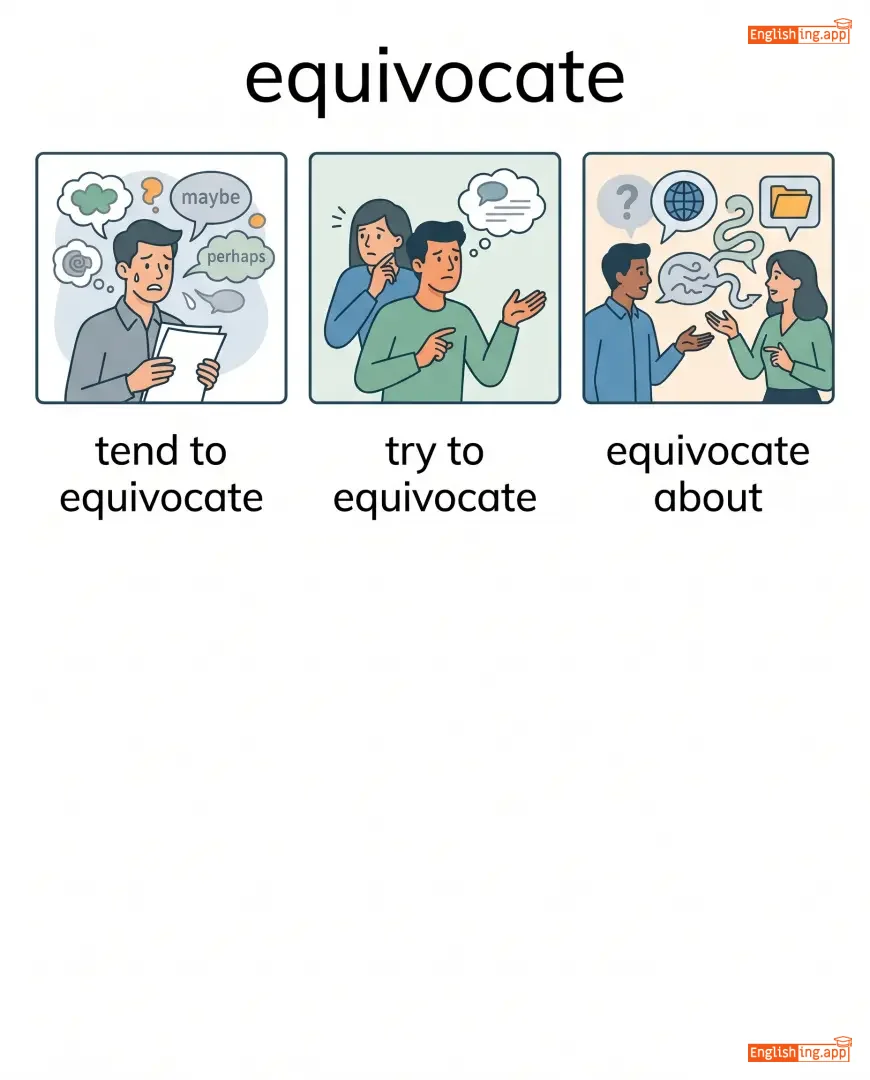
tend to equivocate, try to equivocate, equivocate about
••••••
|
Equivocate 意味着 🌀 通过模棱两可的回答来避免给出明确答案。
••••••
|
|
#3118
❓
|
/ɪˈkwɪvəkəl/
adjective
(equivocal)
••••••
|
- •••••• |
模棱两可
mó léng liǎng kě
••••••
|
- •••••• | - •••••• | - •••••• | - •••••• |
Open to more than one interpretation; ambiguous.
••••••
|
His equivocal answer confused everyone. |
他的模棱两可回答让大家困惑。
Tā de mó léng liǎng kě huídá ràng dàjiā kùnhuò.
••••••
|
- •••••• | - •••••• | - •••••• |
ambiguous, unclear, vague, uncertain, indefinite
••••••
|
clear, definite, obvious
••••••
|
equivocal statement, equivocal response, equivocal attitude
••••••
|
Equivocal 意味着 ❓ 双重解释 - 模棱两可
••••••
|
|
#3119
🔄
|
/ɪˈkwɪvələnt/
adjective
(等同)
••••••
|
- •••••• |
等于; 相当
dengyu; xiangdang
••••••
|
- •••••• | - •••••• | - •••••• | - •••••• |
Equal in value, function, meaning, or effect.
••••••
|
One euro is roughly equivalent to one dollar. |
一欧元大约等于一美元。
Yi ouyuan dayue dengyu yi meiyuan.
••••••
|
- •••••• | - •••••• | - •••••• |
equal, comparable, identical, similar, parallel
••••••
|
different, unequal, dissimilar
••••••
|
equivalent amount, equivalent value, equivalent expression
••••••
|
Equivalent意味着等于+价值=相等的价值 🔄
••••••
|
|
#3120
⚖️
|
/ˈɛkwɪti/
noun
(公平股权)
••••••
|
|
公平; 所有权份额
gongping; suoyouquan fen'e
••••••
|
- •••••• | - •••••• | - •••••• | - •••••• |
The quality of being fair and impartial; ownership interest in a company or property.
••••••
|
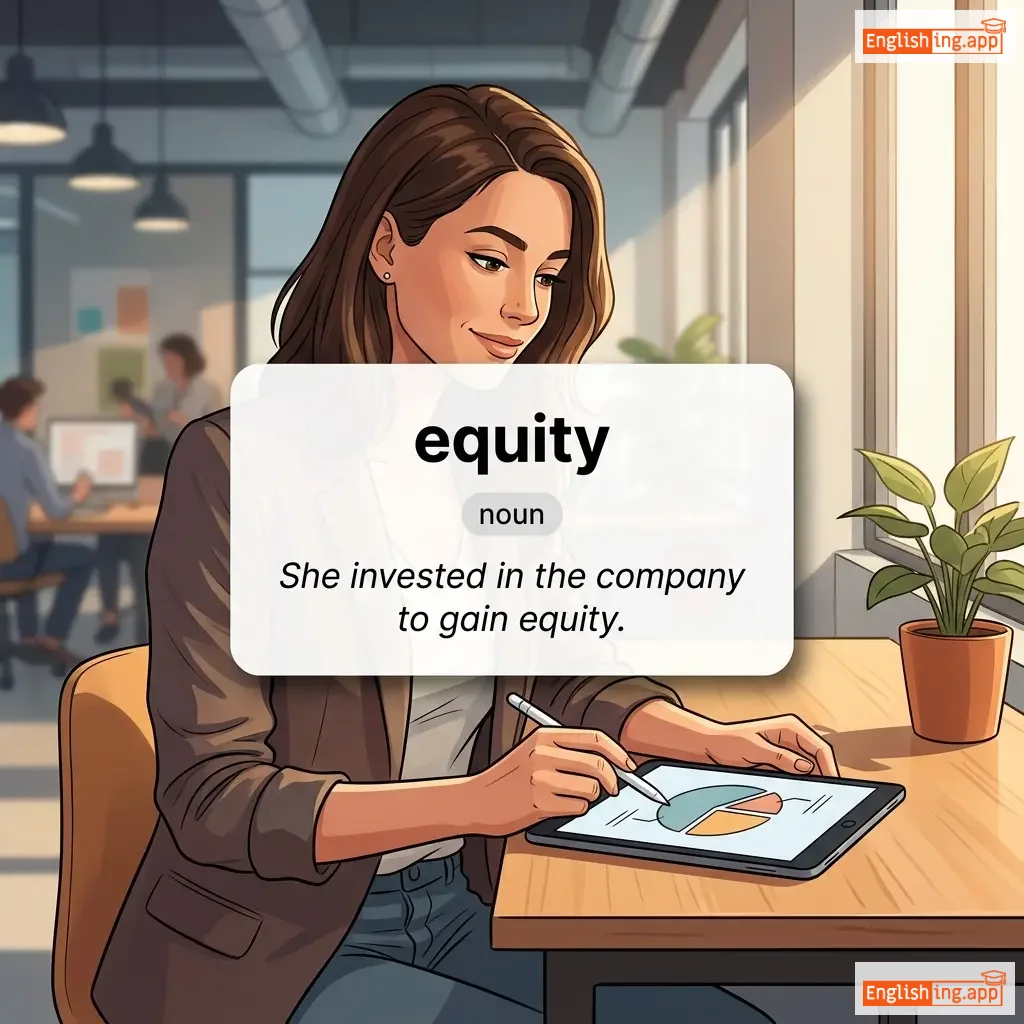
She invested in the company to gain equity. |
她投资了公司以获得股权。
Ta touzi le gongsi yi huode guquan.
••••••
|
home equity |
The market value of a homeowner's property minus the outstanding mortgage balance.
••••••
|
住房权益
zhufang quanyi
••••••
|
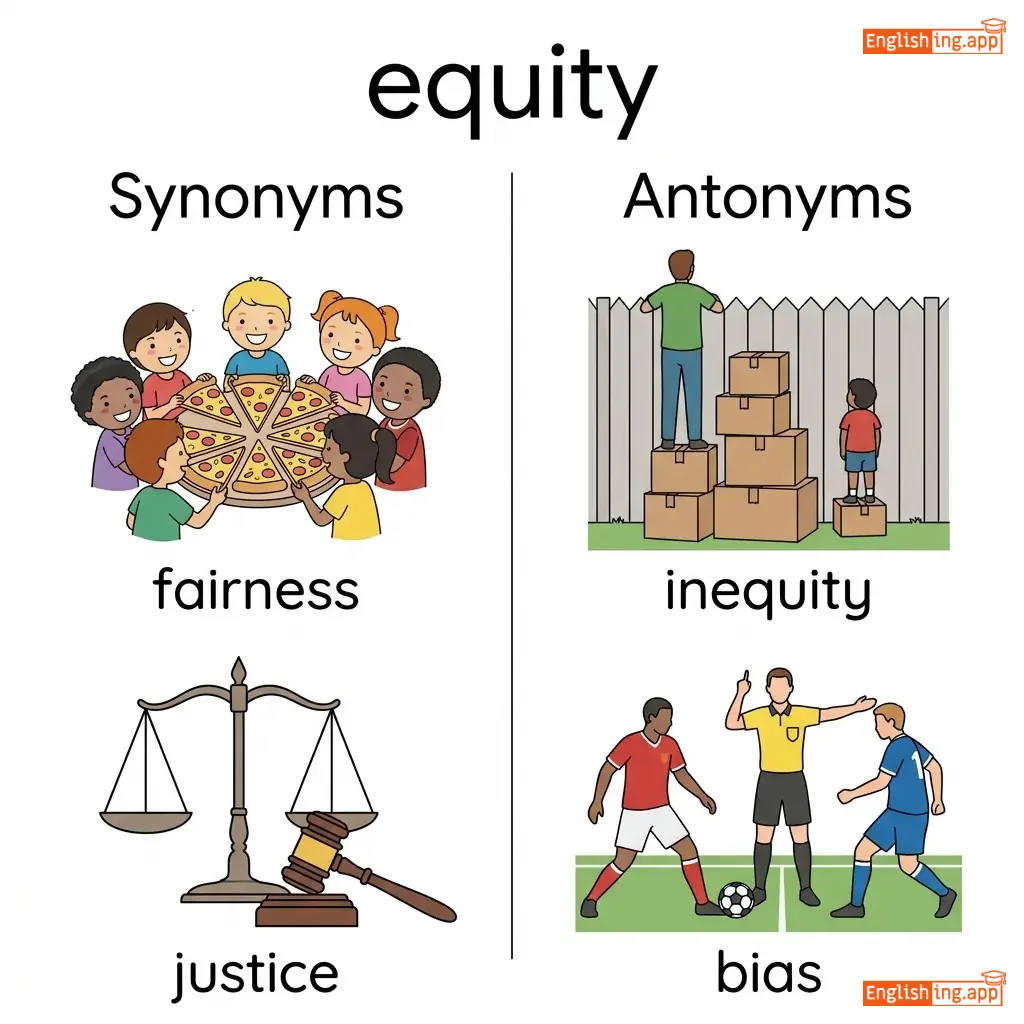
fairness, justice, ownership, stake, interest
••••••
|
inequity, bias, debt
••••••
|
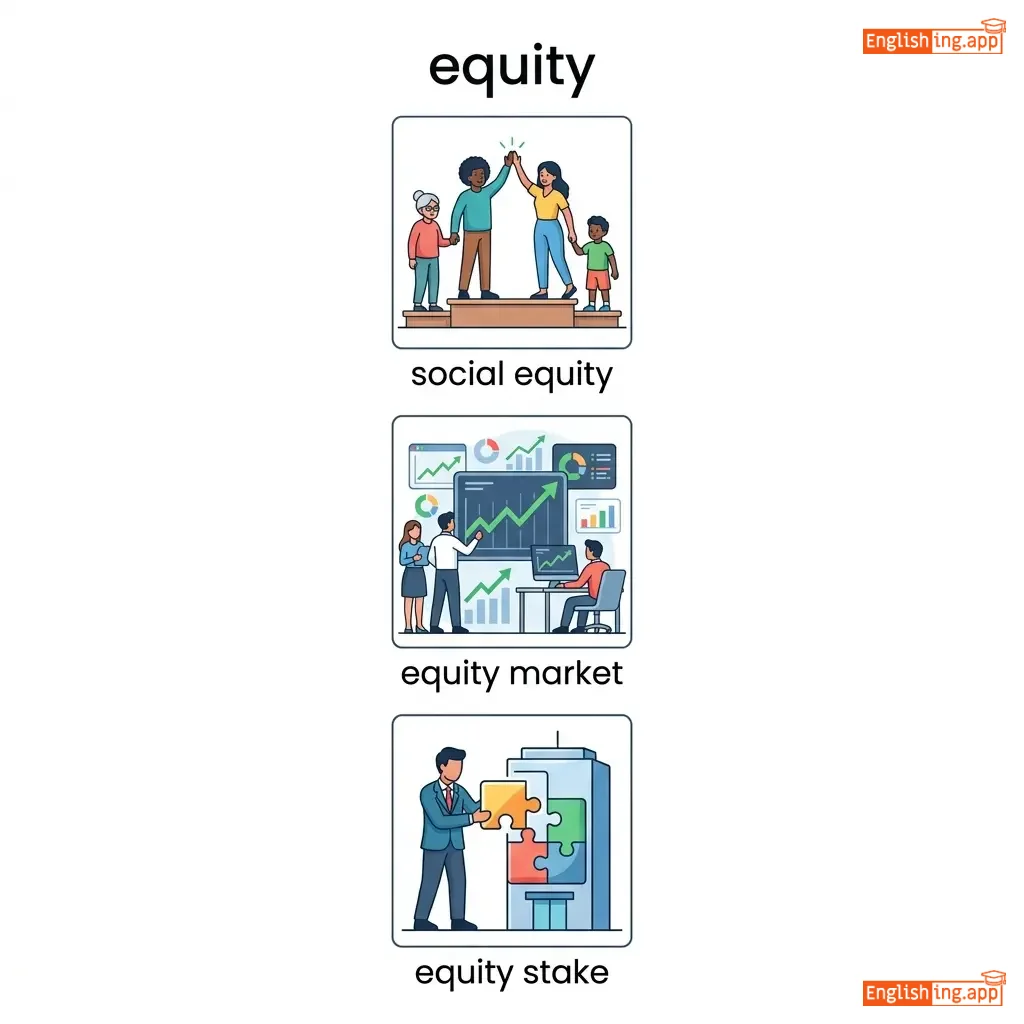
social equity, equity market, equity stake, private equity
••••••
|
Equity 意味着 ⚖️ 公平 - 公司的所有权份额
••••••
|
Vocabulary Quiz
Test your vocabulary by matching words with their translations or meanings.
Login to take the quiz
Comments (0)
Share your thoughts and join the discussion.
Join the discussion by logging in
Login to CommentNo comments yet
Be the first to share your thoughts!