


Swipe left or right, or use the buttons. Tap image to zoom.
例句翻译
单词
Lesson 198Lesson 198 - 遮罩切换
|
表情符号
|
单词 | Images | 翻译 | 过去时 | 过去分词 | 第三人称单数 | 动名词 | 含义 | 例句 | 例句翻译 | 示例表达 | 示例表达含义 | 示例表达翻译 | 同义词 | 反义词 | 搭配词 | 助记符 |
|---|---|---|---|---|---|---|---|---|---|---|---|---|---|---|---|---|---|
|
#5911
😌
|
/ˈnɒnʃələns/
noun
(nóng xián sī)
••••••
|
- •••••• |
漫不经心
man bu jing xin
••••••
|
- •••••• | - •••••• | - •••••• | - •••••• |
A relaxed and calm state, showing lack of concern or interest.
••••••
|
She answered the tough questions with surprising nonchalance. |
她用出人意料的漫不经心回答了那些难题。
Ta yong chu ren yi liao de man bu jing xin hui da le na xie nan ti.
••••••
|
- •••••• | - •••••• | - •••••• |
indifference, unconcern, composure, calmness, detachment
••••••
|
anxiety, concern, nervousness
••••••
|
air of nonchalance, display nonchalance, act with nonchalance
••••••
|
Nonchalance是放松和漫不经心的意思,中文就像'漫不经心'。
••••••
|
|
#5912
⚔️
|
/ˈnɔːrmən/
noun
••••••
|
- •••••• | - •••••• | - •••••• | - •••••• | - •••••• | - •••••• |
A member of a people of mixed Scandinavian and Frankish origin who settled in Normandy, or relating to their culture.
••••••
|
The Normans conquered England in 1066. |
- •••••• | - •••••• | - •••••• | - •••••• |
Viking, settler, conqueror
••••••
|
native, local
••••••
|
Norman conquest, Norman culture, Norman architecture, Norman dynasty
••••••
|
No •••••• |
|
#5913
⚖️
|
/ˈnɔːrməlsi/
noun
(nɔːrməlsi)
••••••
|
- •••••• |
正常
zhèngcháng
••••••
|
- •••••• | - •••••• | - •••••• | - •••••• |
The condition of being normal; a return to usual or expected conditions.
••••••
|
After the flood, the town struggled to regain a sense of normalcy.
洪水过后,城镇努力恢复正常状态。
••••••
|
洪水过后,城镇努力恢复正常状态。
Hóngshuǐ guò hòu, chéngzhèn nǔlì huīfù zhèngcháng zhuàngtài.
••••••
|
- •••••• | - •••••• | - •••••• |
regularity, stability, routine, order
••••••
|
chaos, disorder, abnormality
••••••
|
return to normalcy, sense of normalcy, restore normalcy, maintain normalcy
••••••
|
正常意味着恢复到正常状态,就像 'normal see' 或 '看到正常' 在意外之后。
••••••
|
|
#5914
📏
|
/nɔːrm/
noun
(norm)
••••••
|
- •••••• |
规范
guīfàn
••••••
|
- •••••• | - •••••• | - •••••• | - •••••• |
An accepted standard or a usual practice.
••••••
|
Wearing uniforms is the norm in many schools. |
在许多学校,穿制服是规范。
Zài xǔduō xuéxiào, chuān zhìfú shì guīfàn.
••••••
|
against the norm |
not typical or standard
••••••
|
违反规范
wéifǎn guīfàn
••••••
|
standard, rule, custom, practice, convention
••••••
|
exception, deviation, anomaly
••••••
|
social norm, cultural norm, become the norm, accepted norm
••••••
|
规范就是生活中的标准或惯例。
••••••
|
|
#5915
🪢
|
/nuːs/
noun
(nùsī)
••••••
|
- •••••• |
套索
taosuo
••••••
|
- •••••• | - •••••• | - •••••• | - •••••• |
A loop with a running knot, used especially for trapping or hanging.
••••••
|
The cowboy tied a noose to catch the wild horse.
牛仔系了一根套索来抓住野马。
••••••
|
牛仔系了一根套索来抓住野马。
Niuzai xiele yigen taosuo lai zhuazhu yemǎ.
••••••
|
the noose tightens
套索越勒越紧
••••••
|
a situation is becoming more difficult or dangerous
••••••
|
套索越勒越紧
taosuo yue le yue jin
••••••
|
loop, knot, snare, lasso, trap
••••••
|
freedom, release, looseness
••••••
|
hangman's noose, slip the noose, tighten the noose, caught in a noose
••••••
|
Noose像一条绳子,越拉越紧。
••••••
|
|
#5916
🧠
|
/ˌnɒnˈtrɪviəl/
adjective
(诺恩特里维亚尔)
••••••
|
- •••••• |
非平凡
fei pingfan
••••••
|
- •••••• | - •••••• | - •••••• | - •••••• |
Not simple or easy; requiring effort or significant thought.
••••••
|
Solving the equation turned out to be a nontrivial task. |
解决方程被证明是一个非平凡的任务。
Jiejue fangcheng bei zhengming shi yige fei pingfan de renwu.
••••••
|
- •••••• | - •••••• | - •••••• |
complex, difficult, challenging, demanding, tough
••••••
|
easy, simple, trivial
••••••
|
nontrivial problem, nontrivial solution, nontrivial effort, nontrivial challenge
••••••
|
Non trivial意味着不容易 - 不是 trivial (琐碎)的。
••••••
|
|
#5917
🙃
|
/ˈnɒnsəns/
noun
(nonsense)
••••••
|
- •••••• |
胡说
hushuo
••••••
|
- •••••• | - •••••• | - •••••• | - •••••• |
Words or ideas that have no meaning or make no sense.
••••••
|
His explanation was pure nonsense. |
他的解释完全是胡说八道。
tā de jiěshì wánquán shì húshuō bādào.
••••••
|
talk nonsense |
to say things that are not true or make no sense
••••••
|
胡说八道
húshuō bādào
••••••
|
rubbish, absurdity, foolishness, drivel, gibberish
••••••
|
truth, sense, logic
••••••
|
utter nonsense, talk nonsense, complete nonsense, pure nonsense
••••••
|
Nonsense = NO SENSE → 说没有意义的话 → 胡说
••••••
|
|
#5918
🤨
|
/ˌnɒnˈplʌst/
verb
(nónplèst)
••••••
|
- •••••• |
困惑
kunhuo
••••••
|
nonplussed
nónplèst
••••••
|
nonplussed
nónplèst
••••••
|
- •••••• | - •••••• |
Past tense of nonplus; surprised and unsure how to react.
••••••
|
He stood nonplussed at the strange remark.
他对奇怪的评论感到不知所措。
••••••
|
他对奇怪的评论感到困惑。
Tā duì qíguài de pínglùn gǎndào kùnhuò.
••••••
|
- •••••• | - •••••• | - •••••• |
confused, bewildered, perplexed, puzzled
••••••
|
confident, certain
••••••
|
looked nonplussed, seemed nonplussed, left nonplussed
••••••
|
Nonplussed 意味着困惑,感觉突然不知道如何反应。
••••••
|
|
#5919
😯
|
/ˌnɒnˈplʌst/
verb
(nonplused)
••••••
|
- •••••• |
困惑的
kunhuo de
••••••
|
nonplused
nonplused
••••••
|
nonplused
nonplused
••••••
|
- •••••• | - •••••• |
Past tense of nonplus; surprised and confused.
••••••
|
She was completely nonplused by his sudden decision.
她完全被他突如其来的决定弄得不知所措。
••••••
|
她完全被他突如其来的决定弄得不知所措。
Ta wanquan bei ta turuqilai de jueding nongde bu zhi suo cuo.
••••••
|
- •••••• | - •••••• | - •••••• |
confused, bewildered, puzzled, baffled
••••••
|
certain, clear
••••••
|
completely nonplused, visibly nonplused, utterly nonplused
••••••
|
Nonplused意味着在面对突发的情况时,完全不知道如何反应。
••••••
|
|
#5920
😕
|
/ˌnɒnˈplʌs/
verb
(nónpǔlàsī)
••••••
|
- •••••• |
使困惑
shǐ kùnhuò
••••••
|
nonplused
nónpǔlàst
••••••
|
nonplused
nónpǔlàst
••••••
|
nonpluses
nónpǔlàsī
••••••
|
nonplusing
nónpǔlàsīng
••••••
|
To surprise and confuse someone so much that they are unsure how to react.
••••••
|
The unexpected question seemed to nonplus the speaker.
这个意外的问题似乎让发言者感到困惑。
••••••
|
这个意外的问题似乎让发言者感到困惑。
Zhège yìwài de wèntí shìhū ràng fāyán zhě gǎndào kùnhuò.
••••••
|
- •••••• | - •••••• | - •••••• |
confuse, perplex, bewilder, baffle
••••••
|
clarify, explain
••••••
|
completely nonplus, utterly nonplus, momentarily nonplus
••••••
|
NON+PLUS = 没有更多答案 → 使困惑
••••••
|
|
#5921
👑
|
/ˌnɒnpəˈreɪl/
adjective
(海皮内尔)
••••••
|
- •••••• |
无与伦比
wu yu lun bi
••••••
|
- •••••• | - •••••• | - •••••• | - •••••• |
Having no equal; unrivaled or matchless.
••••••
|
Her beauty was considered nonpareil in the region.
她的美貌在该地区被认为是海皮内尔。
••••••
|
她的美貌在该地区被认为是无与伦比的。
ta de meimao zai gai diqu bei renwei shi wu yu lun bi de
••••••
|
- •••••• | - •••••• | - •••••• |
incomparable, unrivaled, unparalleled, supreme, matchless
••••••
|
ordinary, common, inferior
••••••
|
nonpareil beauty, nonpareil talent, nonpareil quality
••••••
|
Nonpareil = no parallel — 中文意思是无与伦比,没有相等的。
••••••
|
|
#5922
👤
|
/nɒnˈentəti/
noun
(nóng èn tī tí)
••••••
|
- •••••• |
無關緊要的人物
wú guān jǐn yào de rén wù
••••••
|
- •••••• | - •••••• | - •••••• | - •••••• |
A person or thing of no importance or significance.
••••••
|
Once a powerful leader, he is now treated as a political nonentity.
曾經是強大的領袖,現在被視為政治上的無足輕重人物。
••••••
|
曾經是強大的領袖,現在被視為政治上的無足輕重人物。
Céng jīng shì qiáng dà de lǐng xiù, xiàn zài bèi shì wéi zhèng zhì shàng de wú zú qīng zhòng rén wù.
••••••
|
- •••••• | - •••••• | - •••••• |
nobody, nothing, zero, nullity
••••••
|
celebrity, somebody, important person
••••••
|
political nonentity, social nonentity, become a nonentity
••••••
|
Non + Entity = 無足輕重的人物
••••••
|
|
#5923
🏠
|
/ˌnɒndɪˈskrɪpt/
adjective
(nondeskript)
••••••
|
- •••••• |
无特色
wú tèsè
••••••
|
- •••••• | - •••••• | - •••••• | - •••••• |
Lacking distinctive or interesting features; dull and unremarkable.
••••••
|
He lives in a nondescript apartment building on the edge of town.
他住在市区边缘的一座不起眼的公寓楼里。
••••••
|
他住在市区边缘的一座无特色的公寓楼里。
Tā zhù zài shìqū biānyuán de yī zuò wú tèsè de gōngyù lóu lǐ.
••••••
|
- •••••• | - •••••• | - •••••• |
ordinary, unremarkable, plain, dull
••••••
|
remarkable, distinctive, unusual
••••••
|
nondescript building, nondescript appearance, nondescript person
••••••
|
Non + Describe - 这个地方如此无特色,无法描述。
••••••
|
|
#5924
🤔
|
/ˌnɒnkəˈmɪtl̩/
adjective
••••••
|
- •••••• | - •••••• | - •••••• | - •••••• | - •••••• | - •••••• |
Not expressing or showing a clear opinion, decision, or commitment.
••••••
|
She gave a noncommittal reply when asked about her future plans. |
- •••••• | - •••••• | - •••••• | - •••••• |
indecisive, evasive, vague, reserved
••••••
|
decisive, definite, committed
••••••
|
noncommittal answer, noncommittal response, noncommittal attitude
••••••
|
No •••••• |
|
#5925
😎
|
/ˈnɒnʃələnt/
adjective
••••••
|
- •••••• | - •••••• | - •••••• | - •••••• | - •••••• | - •••••• |
Appearing calm, casual, and unconcerned.
••••••
|
He gave a nonchalant shrug and walked away. |
- •••••• | - •••••• | - •••••• | - •••••• |
casual, relaxed, indifferent, unconcerned
••••••
|
anxious, concerned, worried
••••••
|
nonchalant manner, nonchalant attitude, act nonchalant
••••••
|
No •••••• |
|
#5926
🤫
|
/ˈnɔɪzləs/
adjective
(诺伊兹莱斯)
••••••
|
- •••••• |
无声
wú shēng
••••••
|
- •••••• | - •••••• | - •••••• | - •••••• |
Completely silent; without any noise.
••••••
|
The cat made a noiseless leap onto the table. |
猫悄无声息地跳上了桌子。
Māo qiāo wú shēng xī de tiàoshàngle zhuōzi.
••••••
|
- •••••• | - •••••• | - •••••• |
silent, quiet, soundless, hushed, still
••••••
|
noisy, loud, clamorous
••••••
|
noiseless footsteps, noiseless movement, noiseless car
••••••
|
无声,表示没有噪音,像猫跳跃一样安静。
••••••
|
|
#5927
❌
|
/ˌnɒn ˈsɛkwɪtər/
noun
(nón sèkèwèitè)
••••••
|
- •••••• |
无关的评论
wúguān de pínglùn
••••••
|
- •••••• | - •••••• | - •••••• | - •••••• |
a statement or conclusion that does not logically follow from the previous statement
••••••
|
His comment about the weather was a complete non sequitur during the budget discussion. |
他关于天气的评论在预算讨论中完全是无关的评论。
Tā guānyú tiānqì de pínglùn zài yùsuàn tǎolùn zhōng wánquán shì wúguān de pínglùn.
••••••
|
- •••••• | - •••••• | - •••••• |
illogical statement, fallacy, inconsistency, absurdity
••••••
|
logic, reason, consistency
••••••
|
utter non sequitur, complete non sequitur, classic non sequitur
••••••
|
Non sequitur 意思是没有顺序—没有逻辑性地从前面的话推导出结论。
••••••
|
|
#5928
✈️
|
/ˌnɒn ˈrɛzɪdənt/
noun, adjective
(non-resident)
••••••
|
- •••••• |
非居民
fei ju min
••••••
|
- •••••• | - •••••• | - •••••• | - •••••• |
a person who does not live in a particular country or place permanently
••••••
|
Non-resident students often pay higher tuition fees. |
非居民学生通常支付更高的学费。
Fei ju min xue sheng tong chang zhi fu geng gao de xue fei.
••••••
|
- •••••• | - •••••• | - •••••• |
visitor, outsider, foreigner, migrant
••••••
|
resident, inhabitant, local
••••••
|
non-resident alien, non-resident student, non-resident account
••••••
|
Non-resident意味着某人不是长期居住在这里——非居民。
••••••
|
|
#5929
🚫
|
/ˌnɒn ɪɡˈzɪstənt/
adjective
(nón-èksìs-tènt)
••••••
|
- •••••• |
不存在
bù cún zài
••••••
|
- •••••• | - •••••• | - •••••• | - •••••• |
not real or not present; lacking existence
••••••
|
The supposed evidence turned out to be non-existent. |
假定的证据证明是不存在的。
Jiǎdìng de zhèngjù zhèngmíng shì bù cúnzài de.
••••••
|
- •••••• | - •••••• | - •••••• |
imaginary, unreal, fictional, absent, void
••••••
|
real, existent, present
••••••
|
non-existent problem, non-existent service, almost non-existent
••••••
|
Non-existent 意味着不存在的,比如不存在的问题。
••••••
|
|
#5930
🕊️
|
/nɒn ˈkɒmbətənt/
noun, adjective
(non-combatant)
••••••
|
- •••••• |
非战斗人员
fei zhàndòu rényuán
••••••
|
- •••••• | - •••••• | - •••••• | - •••••• |
a person not engaged in fighting during a war, such as civilians or medical staff
••••••
|
The Red Cross workers were treated as non-combatants in the conflict.
红十字会的工作人员在冲突中被视为非战斗人员。
••••••
|
红十字会的工作人员在冲突中被视为非战斗人员。
Hóng shízì huì de gōngzuò rényuán zài chōngtū zhōng bèi shìwéi fēi zhàndòu rényuán.
••••••
|
- •••••• | - •••••• | - •••••• |
civilian, non-fighter, non-military, aid worker
••••••
|
soldier, fighter, warrior
••••••
|
non-combatant role, non-combatant status, protect non-combatants
••••••
|
Non-combatant 意味着 '不战斗'—非战斗人员。
••••••
|
|
#5931
🎖️
|
/ˌnɒmɪˈniː/
noun
(nominī)
••••••
|
- •••••• |
被提名者
bei timing zhe
••••••
|
- •••••• | - •••••• | - •••••• | - •••••• |
a person who is formally suggested or chosen for a position, award, or role
••••••
|
She was the nominee for the Best Actress award.
她是最佳女演员奖的提名人。
••••••
|
她是最佳女演员奖的提名人。
Ta shi zui jia nv yan yuan jiang de ti ming ren.
••••••
|
- •••••• | - •••••• | - •••••• |
candidate, appointee, contender, entrant, applicant
••••••
|
reject, disqualified
••••••
|
presidential nominee, award nominee, official nominee, nominee for
••••••
|
Nominee 是被提名者—获得提名的人。
••••••
|
|
#5932
📜
|
/ˌnɒməˈneɪʃən/
noun
(提名)
••••••
|
- •••••• |
提名
tí míng
••••••
|
- •••••• | - •••••• | - •••••• | - •••••• |
The act of formally proposing someone for a role, position, or award.
••••••
|
Her nomination for the award surprised everyone. |
她的奖项提名让大家都感到惊讶。
Tā de jiǎngxiàng tímíng ràng dàjiā dōu gǎndào jīngyà.
••••••
|
- •••••• | - •••••• | - •••••• |
appointment, proposal, suggestion, designation
••••••
|
rejection, dismissal, exclusion
••••••
|
receive nomination, award nomination, political nomination, official nomination
••••••
|
提名意味着给某人提名一个职位或奖项。
••••••
|
|
#5933
🗳️
|
/ˈnɒməˌneɪt/
verb
(诺米内特)
••••••
|
|
提名
tímíng
••••••
|
nominated
诺米内特德
••••••
|
nominated
诺米内特德
••••••
|
nominates
诺米内特斯
••••••
|
nominating
诺米内特英
••••••
|
To formally suggest someone for a position, role, or award.
••••••
|
The committee decided to nominate her for the leadership position.
委员会决定提名她担任领导职位。
••••••
|
委员会决定提名她担任领导职位。
Wěiyuánhuì juédìng tímíng tā dānrèn lǐngdǎo zhíwèi.
••••••
|
- •••••• | - •••••• | - •••••• |
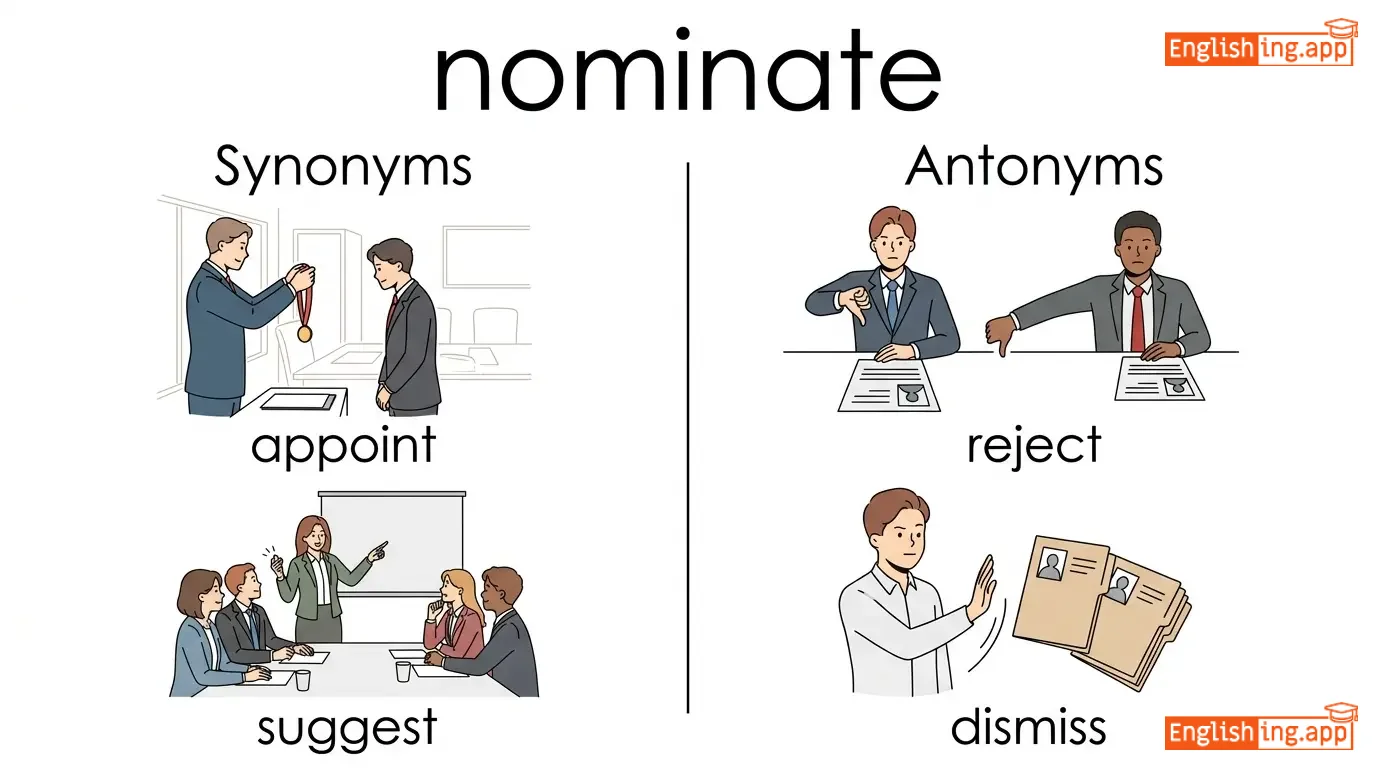
appoint, suggest, propose, designate
••••••
|
reject, dismiss, exclude
••••••
|
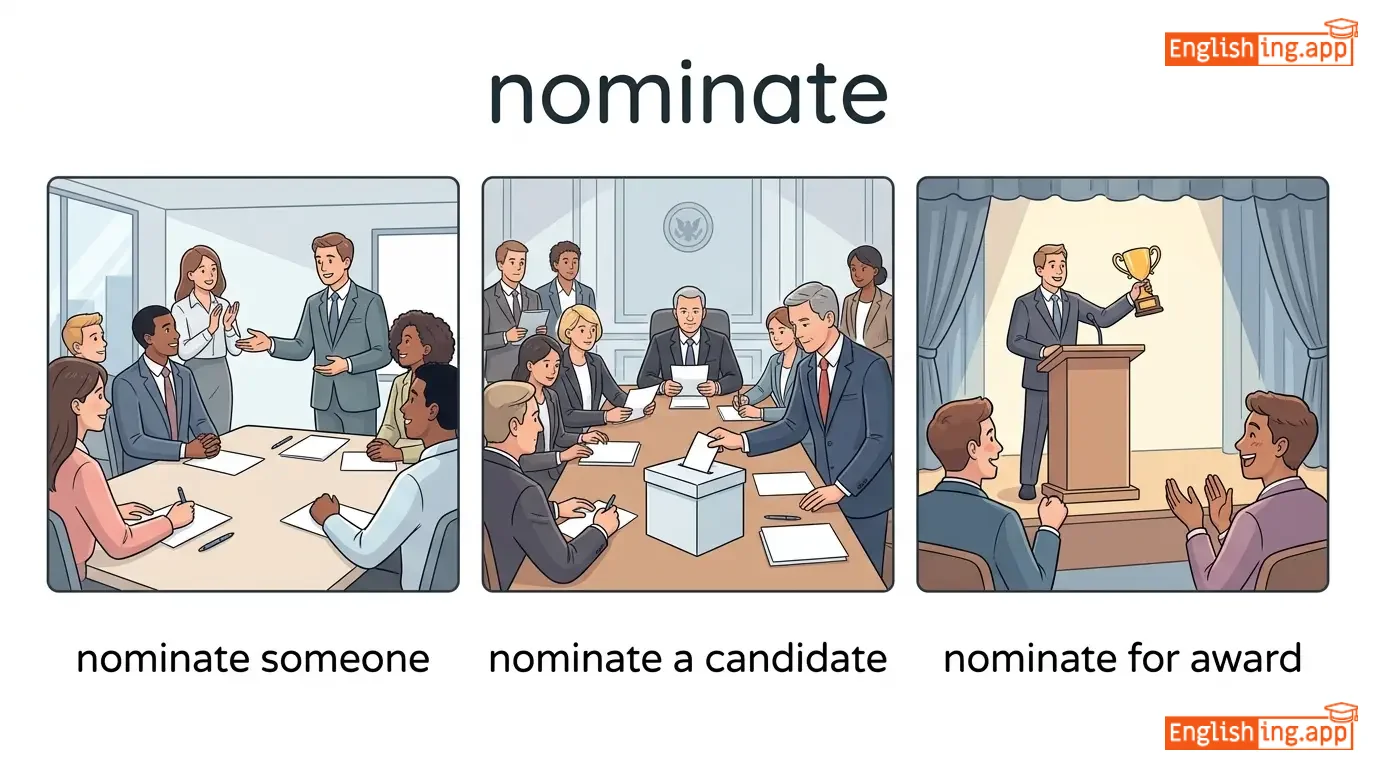
nominate someone, nominate a candidate, nominate for award, nominate for position
••••••
|
Nominate 你可以 'no me nate' — 提名一个人
••••••
|
|
#5934
💲
|
/ˈnɒmɪnəl/
adjective
(名义上的)
••••••
|
- •••••• |
名义上的
míngyì shàng de
••••••
|
- •••••• | - •••••• | - •••••• | - •••••• |
Existing in name only; very small in amount.
••••••
|
He was the nominal leader of the group but had no real power. |
他是小组的名义领袖,但没有实际权力。
Tā shì xiǎozǔ de míngyì lǐngxiù, dàn méiyǒu shíjì quánlì.
••••••
|
in name only |
Holding a title or position without real authority
••••••
|
名义上
míngyì shàng
••••••
|
titular, symbolic, token, minimal
••••••
|
real, actual, substantial
••••••
|
nominal fee, nominal role, nominal leader, nominal value
••••••
|
Nominal意味着名义上的 — 只有名义,没有实际的力量。
••••••
|
|
#5935
⚖️
|
/ˈnɒmɪk/
adjective
(诺米克)
••••••
|
- •••••• |
与法律相关
yǔ fǎlǜ xiāngguān
••••••
|
- •••••• | - •••••• | - •••••• | - •••••• |
Relating to laws, rules, or systems.
••••••
|
The philosopher discussed the nomic necessity of natural laws.
哲学家讨论了自然法则的诺米克必要性。
••••••
|
哲学家讨论了自然法则的诺米克必要性。
Zhéxuéjiā tǎolùnle zìrán fǎzé de nuòmǐkè bìyào xìng.
••••••
|
- •••••• | - •••••• | - •••••• |
legal, lawful, systematic, regulatory
••••••
|
illegal, chaotic
••••••
|
nomic necessity, nomic system, nomic rule, nomic order
••••••
|
Nomic 意味着与法律相关 — Nom 就是法
••••••
|
|
#5936
📖
|
/ˈnoʊmənˌkleɪtʃər/
noun
(nóménklǎtùěr)
••••••
|
- •••••• |
命名法
mingmingfa
••••••
|
- •••••• | - •••••• | - •••••• | - •••••• |
A system of names or terms used in a particular science, art, or field.
••••••
|
The chemical nomenclature can be difficult for beginners to understand.
化学命名法对初学者来说可能很难理解。
••••••
|
化学命名法对初学者来说可能很难理解。
Huàxué mìngmíngfǎ duì chūxuézhě lái shuō kěnéng hěn nán lǐjiě.
••••••
|
- •••••• | - •••••• | - •••••• |
terminology, classification, vocabulary, lexicon, taxonomy
••••••
|
slang, jargon
••••••
|
scientific nomenclature, botanical nomenclature, chemical nomenclature, standard nomenclature
••••••
|
Nomenclature意味着名称的文化 — 命名法的文化
••••••
|
|
#5937
🛖
|
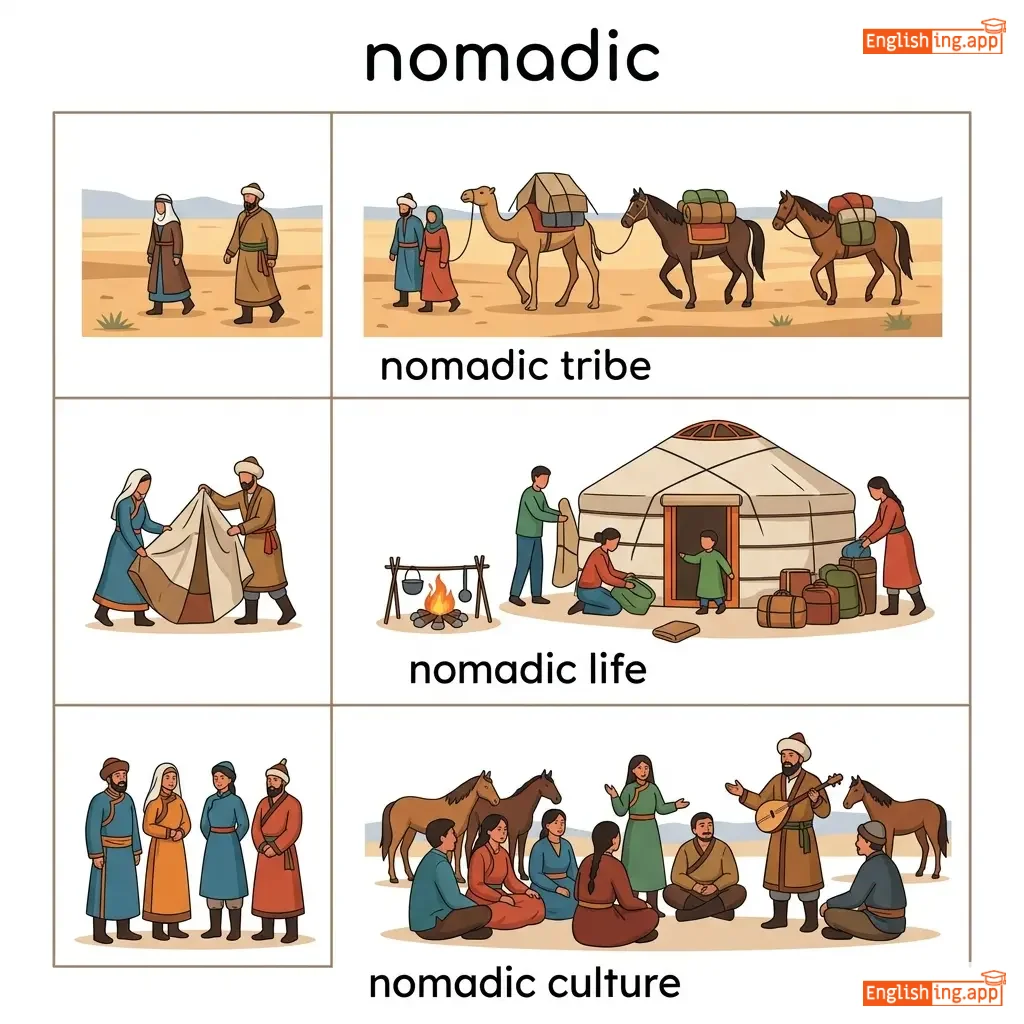
/noʊˈmædɪk/
adjective
••••••
|
|
- •••••• | - •••••• | - •••••• | - •••••• | - •••••• |
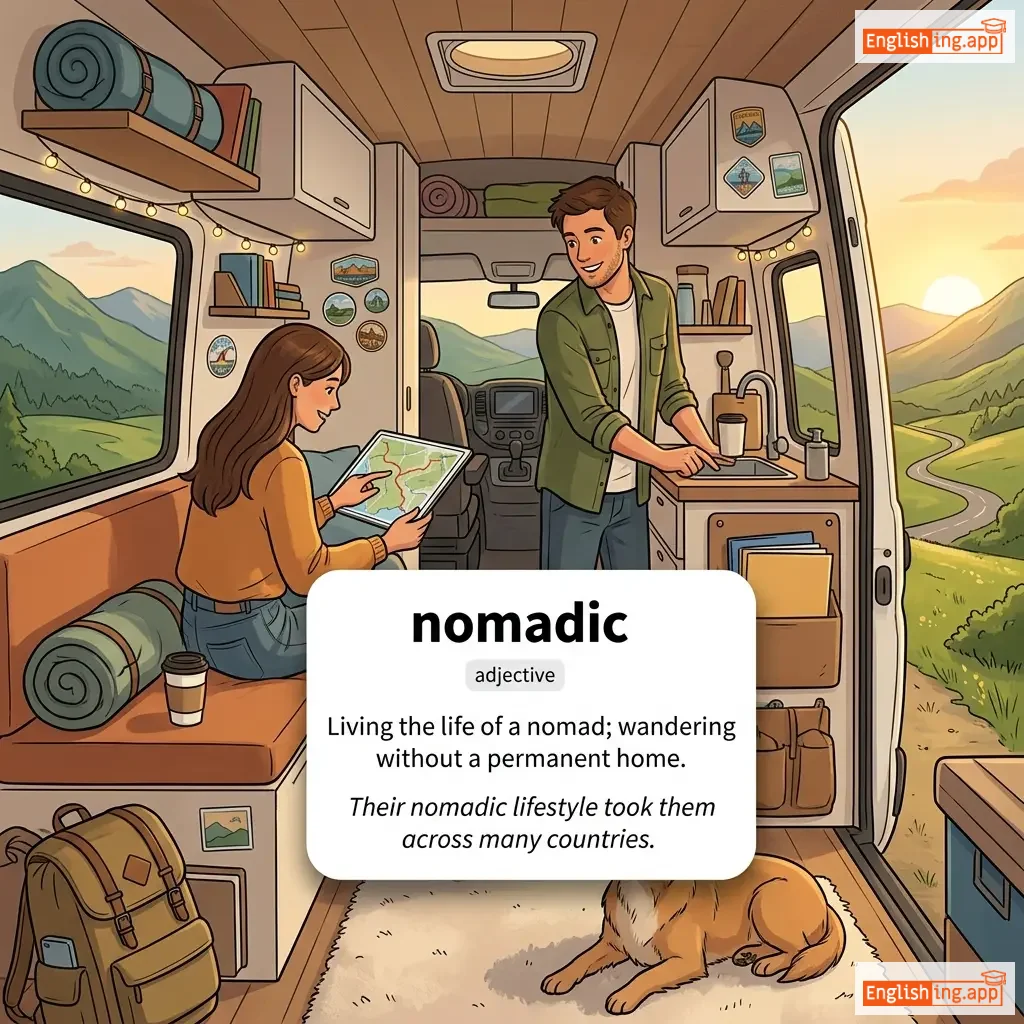
Living the life of a nomad; wandering without a permanent home.
••••••
|
Their nomadic lifestyle took them across many countries. |
- •••••• | - •••••• | - •••••• | - •••••• |
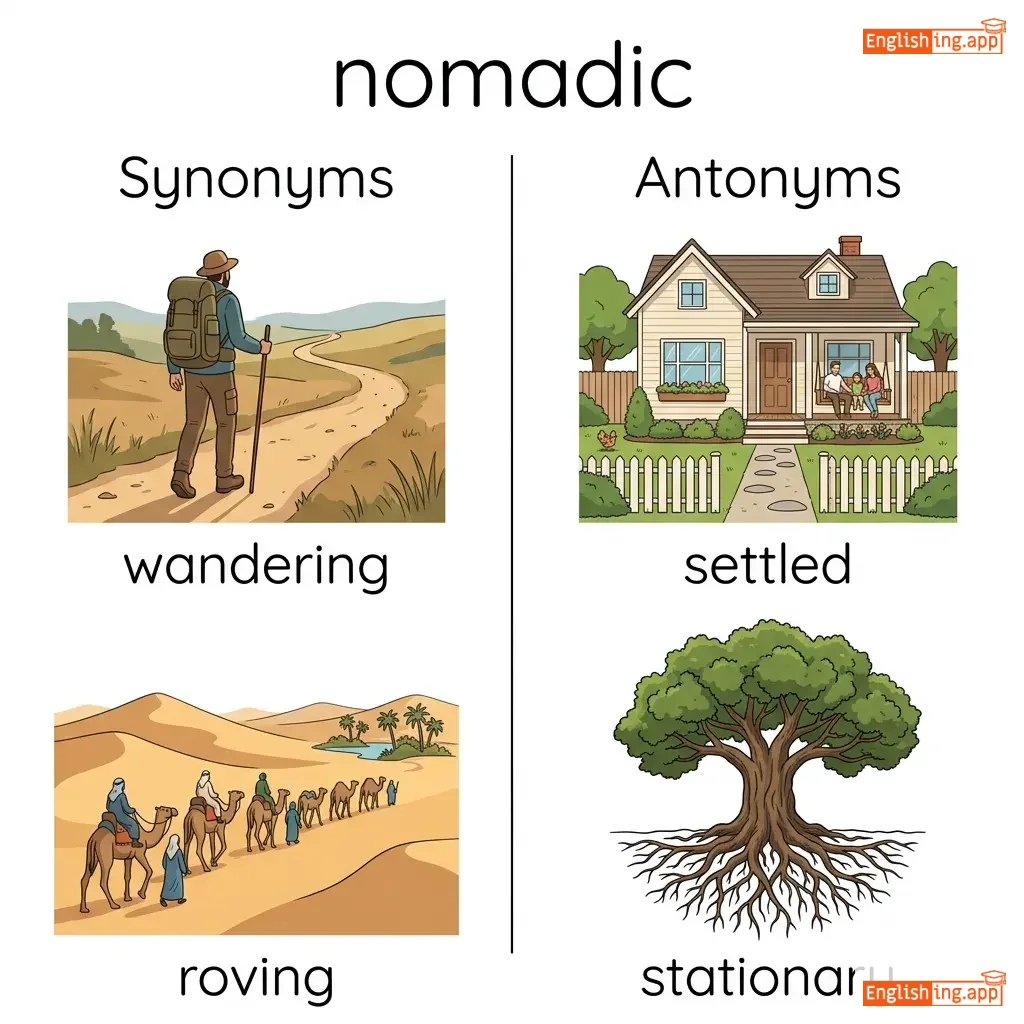
wandering, roving, itinerant, drifting, traveling
••••••
|
settled, stationary, rooted
••••••
|
nomadic tribe, nomadic life, nomadic culture
••••••
|
No •••••• |
|
#5938
🏜️
|
/ˈnoʊmæd/
noun
(诺玛德)
••••••
|
- •••••• |
游牧民
youmu min
••••••
|
- •••••• | - •••••• | - •••••• | - •••••• |
A person who has no permanent home and moves from place to place.
••••••
|
The desert was once home to nomads who lived by herding animals. |
沙漠曾经是游牧民的家,他们靠放牧生存。
Shamo cengjing shi youmu min de jia, tamen kao fangmu shengcun.
••••••
|
digital nomad |
A person who works remotely while traveling frequently.
••••••
|
数字游牧民
shuzi youmu min
••••••
|
wanderer, traveler, migrant, rover, drifter
••••••
|
settler, resident, inhabitant
••••••
|
nomad tribes, digital nomad, nomad lifestyle
••••••
|
Nomad意味着'No-MAD'家,没有家——因此是游牧民。
••••••
|
|
#5939
🔊
|
/ˈnɔɪzi/
adjective
(nuòyí)
••••••
|
- •••••• |
吵闹
chaonao
••••••
|
- •••••• | - •••••• | - •••••• | - •••••• |
Making a lot of loud sounds; full of noise.
••••••
|
The children were noisy during the party. |
孩子们在派对期间很吵闹。
Háizimen zài pàiduì qījiān hěn chǎonào.
••••••
|
noisy as a market |
Extremely loud and chaotic.
••••••
|
像市场一样吵闹
Xiàng shìchǎng yīyàng chǎonào
••••••
|
loud, boisterous, rowdy, clamorous, raucous
••••••
|
quiet, silent, calm
••••••
|
noisy children, noisy street, noisy crowd
••••••
|
Noisy 就是吵闹 - 吵闹
••••••
|
|
#5940
🤢
|
/ˈnɔɪsəm/
adjective
(noisom)
••••••
|
- •••••• |
恶臭
èchòu
••••••
|
- •••••• | - •••••• | - •••••• | - •••••• |
Having an extremely unpleasant smell; offensive or harmful.
••••••
|
The dump emitted a noisome odor that spread through the town.
垃圾场散发出一股令人不悦的气味,弥漫到整个城市。
••••••
|
垃圾场散发出一股令人不悦的气味,弥漫到整个城市。
Lājī chǎng sànfā chū yī gǔ lìng rén bù yuè de qìwèi, mímàn dào zhěnggè chéngshì.
••••••
|
- •••••• | - •••••• | - •••••• |
foul, offensive, disgusting, putrid, stinking
••••••
|
fragrant, pleasant, sweet-smelling
••••••
|
noisome smell, noisome odor, noisome atmosphere
••••••
|
Noisome = 不是'Noise',而是糟糕的气味 - 恶臭。
••••••
|
Vocabulary Quiz
Test your vocabulary by matching words with their translations or meanings.
Login to take the quiz
Comments (0)
Share your thoughts and join the discussion.
Join the discussion by logging in
Login to CommentNo comments yet
Be the first to share your thoughts!