






Swipe left or right, or use the buttons. Tap image to zoom.
例句翻译
单词
Lesson 369Lesson 369 - 遮罩切换
|
表情符号
|
单词 | Images | 翻译 | 过去时 | 过去分词 | 第三人称单数 | 动名词 | 含义 | 例句 | 例句翻译 | 示例表达 | 示例表达含义 | 示例表达翻译 | 同义词 | 反义词 | 搭配词 | 助记符 |
|---|---|---|---|---|---|---|---|---|---|---|---|---|---|---|---|---|---|
|
#11035
❄️
|
/friːz/
verb
(弗里兹)
••••••
|
- •••••• |
冻结
dongjie
••••••
|
froze
冻结
••••••
|
frozen
冰冻
••••••
|
freezes
冻结
••••••
|
freezing
冻结中
••••••
|
To turn into ice or cause to become hard due to extreme cold.
••••••
|
The water in the lake will freeze during winter.
湖里的水在冬天会冻结。
••••••
|
湖里的水在冬天会冻结。
Hu li de shui zai dongtian hui dongjie.
••••••
|
freeze up
冻结
••••••
|
to stop functioning or become immobile
••••••
|
停止工作
tingzhi gongzuo
••••••
|
ice, chill, harden, solidify, stiffen
••••••
|
melt, thaw, heat
••••••
|
freeze water, freeze assets, freeze to death, freeze up
••••••
|
Freeze 意味着冻结,就像水变成冰一样!
••••••
|
|
#11036
🪑
|
/ˈfɜːrnɪtʃər/
noun
(fúěrníqiáng)
••••••
|
- •••••• |
家具
jiaju
••••••
|
- •••••• | - •••••• | - •••••• | - •••••• |
Objects such as chairs, tables, beds, or cupboards used to make a room suitable for living or working.
••••••
|
The living room was filled with beautiful wooden furniture. |
客厅里摆满了美丽的木制家具。
Kètīng lǐ bǎi mǎnle měilì de mùzhì jiājù.
••••••
|
move the furniture |
to rearrange or shift the position of furniture in a room
••••••
|
移动家具
Yídòng jiājù
••••••
|
fixtures, fittings, furnishings, decor, equipment
••••••
|
emptiness, vacancy
••••••
|
antique furniture, wooden furniture, office furniture, move furniture, buy furniture
••••••
|
家具意味着家具 🪑 — 记住'家具店'来帮助记忆。
••••••
|
|
#11037
⚰️
|
/ˈfjuːnərəl/
noun
(fyuːnɛrəl)
••••••
|
- •••••• |
葬礼
zànglǐ
••••••
|
- •••••• | - •••••• | - •••••• | - •••••• |
a ceremony held to honor and bury or cremate someone who has died
••••••
|
The family attended the funeral of their grandfather. |
家人参加了祖父的葬礼。
Jiārén cānjiāle zǔfù de zànglǐ.
••••••
|
funeral service |
the ceremony connected with a funeral
••••••
|
葬礼服务
zànglǐ fúwù
••••••
|
memorial, burial, cremation, obsequies
••••••
|
celebration, festival
••••••
|
funeral ceremony, funeral service, attend a funeral, funeral procession
••••••
|
葬礼是告别的仪式,最终的告别。
••••••
|
|
#11038
🏦
|
/ˈfʌndɪŋ/
noun
(fanding)
••••••
|
- •••••• |
资金
zijin
••••••
|
- •••••• | - •••••• | - •••••• | - •••••• |
financial support for a project or organization
••••••
|
The startup is seeking funding from investors. |
初创公司正在寻求投资者的资金支持。
Chuchuang gongsi zhengzai xunqiu touzizhe de zijin zhichi.
••••••
|
government funding |
financial support provided by the government
••••••
|
政府资金
zhèngfǔ zījīn
••••••
|
financing, capital, investment, sponsorship, backing
••••••
|
withdrawal, loss
••••••
|
seek funding, government funding, secure funding, lack of funding
••••••
|
Funding 即资金 — 初创公司说 'Fun ding',就是需要钱。
••••••
|
|
#11039
💰
|
/fʌnd/
noun/verb
(fán)
••••••
|
|
基金
jījīn
••••••
|
funded
fánded
••••••
|
funded
fánded
••••••
|
funds
fánds
••••••
|
funding
fánding
••••••
|
a sum of money saved or made available for a particular purpose; to provide money for
••••••
|
The government created a fund for education.
政府为教育创建了一个基金。
••••••
|
政府为教育创建了一个基金。
Zhèngfǔ wèi jiàoyù chuàngjiànle yīgè jījīn.
••••••
|
mutual fund
共同基金
••••••
|
a professionally managed investment fund
••••••
|
共同基金
gòngtóng jījīn
••••••
|
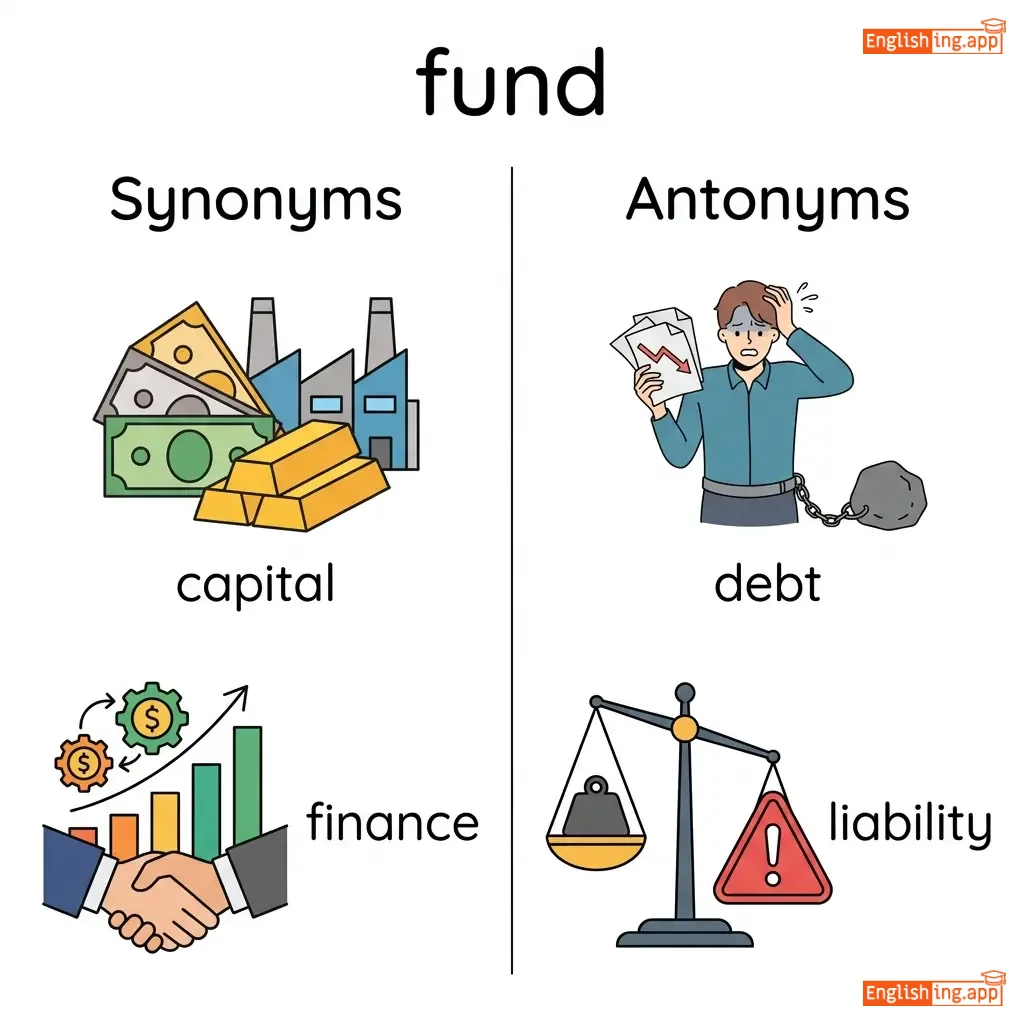
capital, finance, money, resource, investment
••••••
|
debt, liability
••••••
|
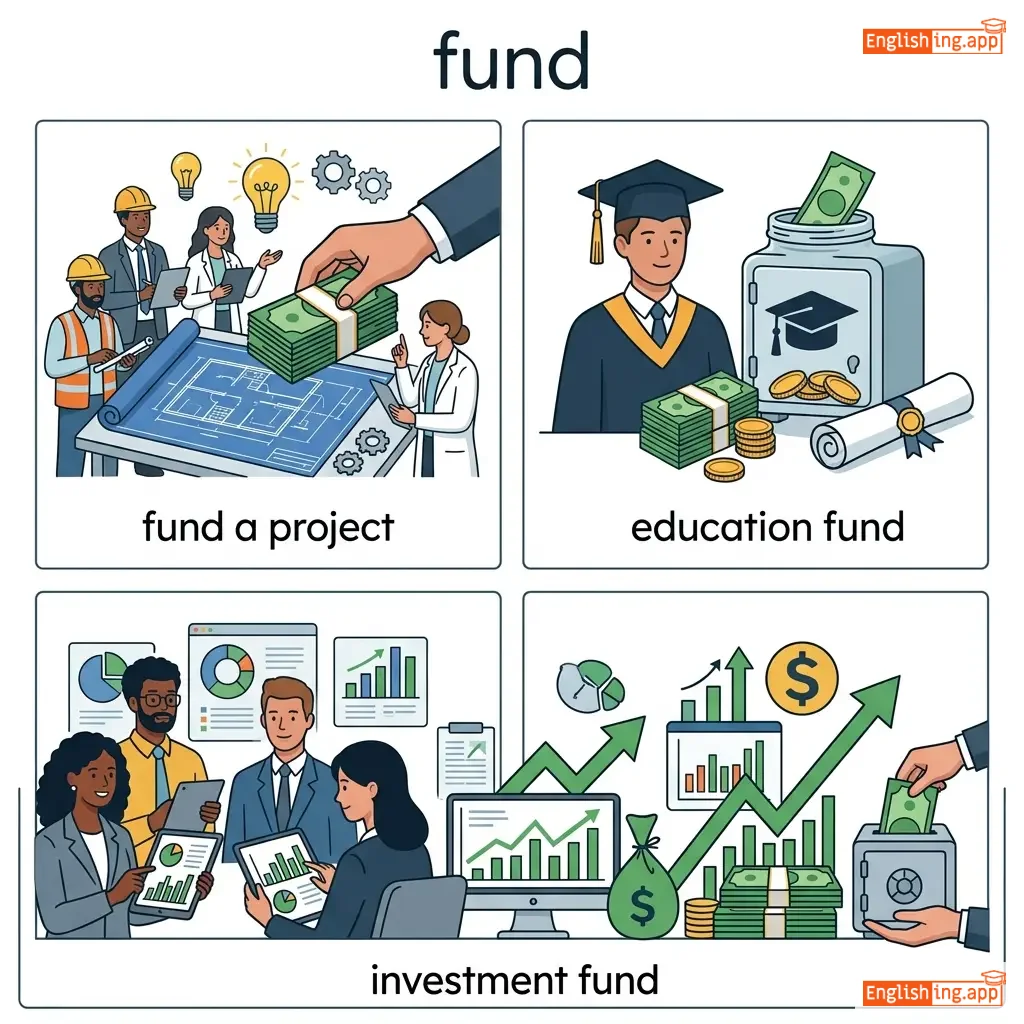
fund a project, education fund, investment fund, fund allocation
••••••
|
基金意味着基金 — 想象基金 = '翻递', 享受时需要资金。
••••••
|
|
#11040
🎉
|
/fʌn/
noun
(fān)
••••••
|
- •••••• |
乐趣
lequ
••••••
|
- •••••• | - •••••• | - •••••• | - •••••• |
enjoyment, amusement, or light-hearted pleasure
••••••
|
We had a lot of fun at the party. |
我们在聚会上玩得很开心。
Wǒmen zài jùhuì shàng wán de hěn kāixīn.
••••••
|
make fun of |
to tease or mock someone
••••••
|
取笑
qǔxiào
••••••
|
enjoyment, amusement, entertainment, pleasure
••••••
|
boredom, sadness
••••••
|
have fun, fun activity, fun time, fun party
••••••
|
Fun 就是乐趣,在聚会中大家都会说‘尽情享受!’
••••••
|
|
#11041
✅
|
/ˈfʊli/
adverb
(fūlì)
••••••
|
- •••••• |
完全
wanquan
••••••
|
- •••••• | - •••••• | - •••••• | - •••••• |
completely or entirely; to the fullest extent
••••••
|
She is fully aware of the risks. |
她完全意识到这些风险。
Ta wanquan yishi dao zhexie fengxian.
••••••
|
fully booked |
completely reserved with no space left
••••••
|
完全预定
wanquan yuding
••••••
|
completely, entirely, totally, wholly, absolutely
••••••
|
partially, incompletely
••••••
|
fully aware, fully understand, fully booked, fully equipped
••••••
|
Fully 意味着完全,想象 'fuli' (充满),完全充满。
••••••
|
|
#11042
⛽
|
/ˈfjuːəl/
noun/verb
••••••
|
- •••••• | - •••••• |
fueled
••••••
|
fueled
••••••
|
fuels
••••••
|
fueling
••••••
|
A material such as coal, gas, or oil that is burned to produce energy; also to supply with energy or power.
••••••
|
The car needs fuel to run efficiently. |
- •••••• |
fuel the fire |
To make a situation worse or more intense.
••••••
|
- •••••• |
power, energy, propellant, feed, sustain
••••••
|
drain, exhaust
••••••
|
burn fuel, fossil fuel, run on fuel, fuel supply
••••••
|
No •••••• |
|
#11043
😣
|
/frʌˈstreɪʃən/
noun
(fu-ruu-strei-shen)
••••••
|
- •••••• |
挫折
cuòzhé
••••••
|
- •••••• | - •••••• | - •••••• | - •••••• |
The feeling of being upset or annoyed due to inability to achieve something.
••••••
|
He felt deep frustration when his plans failed. |
当他的计划失败时,他感到深深的挫折。
Dāng tā de jìhuà shībài shí, tā gǎndào shēnshēn de cuòzhé.
••••••
|
vent frustration |
To express anger or annoyance openly.
••••••
|
表达挫折
biǎodá cuòzhé
••••••
|
annoyance, irritation, disappointment, exasperation, discontent
••••••
|
satisfaction, contentment, delight
••••••
|
cause frustration, deep frustration, express frustration, frustration level
••••••
|
挫折(cuòzhé)表示无法成功的无奈感,就像英文中的frustration一样。
••••••
|
|
#11044
🍎
|
/fruːt/
noun
(frut)
••••••
|
- •••••• |
水果
shuǐguǒ
••••••
|
- •••••• | - •••••• | - •••••• | - •••••• |
The sweet and fleshy product of a plant that contains seeds.
••••••
|
Mango is my favorite fruit.
芒果是我最喜欢的水果。
••••••
|
芒果是我最喜欢的水果。
Mángguǒ shì wǒ zuì xǐhuān de shuǐguǒ.
••••••
|
bear fruit
结出果实
••••••
|
To produce good results or be successful.
••••••
|
结出果实
Jié chū guǒshí
••••••
|
produce, crop, harvest, berry, yield
••••••
|
vegetable, grain
••••••
|
fresh fruit, ripe fruit, tropical fruit, eat fruit
••••••
|
水果很甜,可以记住因为它美味。
••••••
|
|
#11045
➡️
|
/frəm/ or /frʌm/
preposition
(from)
••••••
|
- •••••• |
从
cong
••••••
|
- •••••• | - •••••• | - •••••• | - •••••• |
Used to indicate the starting point of a journey, action, or source.
••••••
|
She came from Dhaka to visit her family. |
她从达卡来探望她的家人。
Tā cóng Dákǎ lái tànwàng tā de jiārén.
••••••
|
far from |
Very different from or not at all like.
••••••
|
远离
yuǎn lí
••••••
|
out of, away from, off, since, starting at
••••••
|
to, towards
••••••
|
from start, from scratch, from now, far from
••••••
|
FROM意思是'从'—比如从达卡(cong Dákǎ)开始旅程。
••••••
|
|
#11046
🤗
|
/ˈfrɛndʃɪp/
noun
(fùrénshìp)
••••••
|
- •••••• |
友谊
yǒuyì
••••••
|
- •••••• | - •••••• | - •••••• | - •••••• |
A close and trusting relationship between two or more people.
••••••
|
Their friendship has lasted since childhood. |
他们的友谊从小就开始了。
Tāmen de yǒuyì cóng xiǎo jiù kāishǐ le.
••••••
|
true friendship |
A genuine and deep bond between friends.
••••••
|
真挚的友谊
zhēnzhì de yǒuyì
••••••
|
companionship, fellowship, camaraderie, closeness, bond
••••••
|
enmity, hostility, animosity
••••••
|
strong friendship, close friendship, lasting friendship, build friendship
••••••
|
友谊就像是一艘船,大家一起航行。
••••••
|
|
#11047
😊
|
/ˈfrɛndli/
adjective
(happiness)
••••••
|
- •••••• |
幸福
xingfu
••••••
|
- •••••• | - •••••• | - •••••• | - •••••• |
Kind and pleasant; showing goodwill and affection.
••••••
|
The shop owner is very friendly to new customers. |
她收到奖项时无法掩饰自己的幸福。
Ta shoudao jiangxiang shi wu fa yanshi ziji de xingfu.
••••••
|
friendly fire |
weapon fire coming from one's own side by mistake
••••••
|
追求幸福
Zhuiqiu xingfu
••••••
|
kind, warm, amiable, welcoming, sociable
••••••
|
hostile, unfriendly, cold
••••••
|
friendly smile, friendly attitude, friendly relationship, friendly environment
••••••
|
幸福 (xingfu) = 快乐 (happiness) = 每个人都在寻找幸福。
••••••
|
|
#11048
🔁
|
/ˈfriːkwəntli/
adverb
(弗里昆特利)
••••••
|
- •••••• |
频繁
pinfan
••••••
|
- •••••• | - •••••• | - •••••• | - •••••• |
Happening often or at short intervals.
••••••
|
He frequently visits his grandparents on weekends. |
他在周末经常去看望他的祖父母。
Tā zài zhōumò jīngcháng qù kànwàng tā de zǔfùmǔ.
••••••
|
- •••••• | - •••••• | - •••••• |
often, regularly, repeatedly, commonly, usually
••••••
|
rarely, seldom, occasionally
••••••
|
frequently asked, frequently used, frequently visit, frequently occur
••••••
|
频繁意味着经常发生,就像在中文中‘频繁’这个词。
••••••
|
|
#11049
🇫🇷
|
/frɛntʃ/
adjective
(french)
••••••
|
- •••••• |
法国的
fàguó de
••••••
|
- •••••• | - •••••• | - •••••• | - •••••• |
Relating to France, its people, or their language.
••••••
|
We enjoyed delicious French cuisine on our trip to Paris.
我们在巴黎的旅行中享用了美味的法国菜。
••••••
|
我们在巴黎的旅行中享用了美味的法国菜。
Wǒmen zài bālí de lǚxíng zhōng xiǎngyòng le měiwèi de fàguó cài.
••••••
|
French kiss
法式吻
••••••
|
a kiss involving the tongue
••••••
|
法式吻
fǎ shì wěn
••••••
|
Gallic, Parisian, Francophone
••••••
|
non-French, foreign
••••••
|
French cuisine, French language, French culture, French wine
••••••
|
French = 在巴黎享受美味的法国菜,法式吻
••••••
|
|
#11050
🏈
|
/ˈfʊtˌbɔːl/
noun
(足球)
••••••
|
- •••••• |
足球
zuqiu
••••••
|
- •••••• | - •••••• | - •••••• | - •••••• |
A team sport played with a ball that is kicked or carried to score points.
••••••
|
They watched a football match on TV. |
他们在电视上观看了一场足球比赛。
Tamen zai dianshi shang guankan le yichang zuqiu bisai.
••••••
|
- •••••• | - •••••• | - •••••• |
soccer, game, match, sport, gridiron
••••••
|
none, inactivity
••••••
|
football match, football player, football field, football team
••••••
|
足球 (zúqiú) 是脚 (foot) 踢的球 (ball)!
••••••
|
|
#11051
🕊️
|
/ˈfriːdəm/
noun
(自由)
••••••
|
|
自由
zìyóu
••••••
|
- •••••• | - •••••• | - •••••• | - •••••• |
The state of being free; the power or right to act, speak, or think without hindrance or restraint.
••••••
|
Freedom of speech is a fundamental right in many countries. |
言论自由是许多国家的基本权利。
yánlùn zìyóu shì xǔduō guójiā de jīběn quánlì.
••••••
|
freedom of choice |
the right to make one’s own decisions without outside control
••••••
|
选择自由
xuǎnzé zìyóu
••••••
|
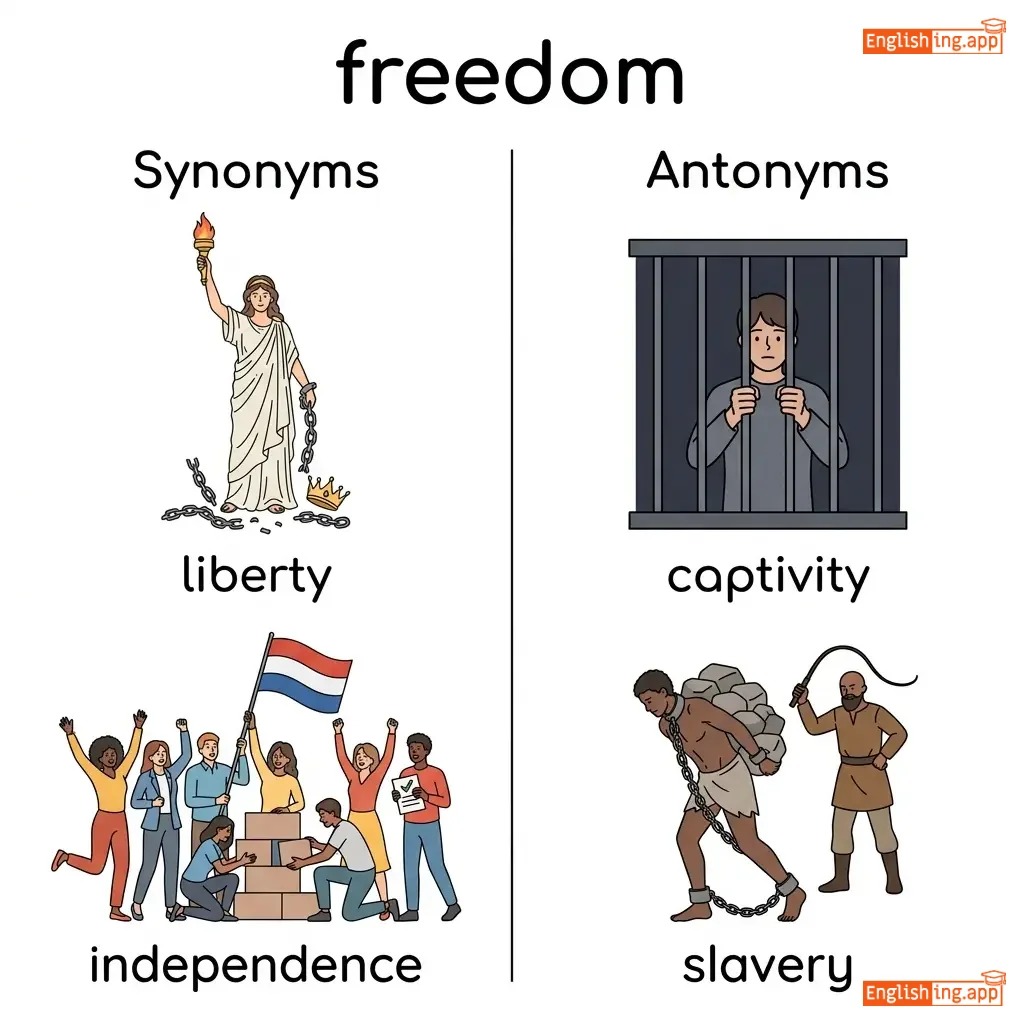
liberty, independence, autonomy, emancipation, self-determination
••••••
|
captivity, slavery, restriction
••••••
|
freedom of speech, freedom of movement, personal freedom, political freedom
••••••
|
Freedom = 没有束缚的生活,自由自在 (zìyóu)
••••••
|
|
#11052
🕊️
|
/friː/
adjective/verb/adverb
(fú lì)
••••••
|
- •••••• |
自由
zì yóu
••••••
|
freed
fú lǐ dé
••••••
|
freed
fú lǐ dé
••••••
|
frees
fú lǐ
••••••
|
freeing
fú lìng
••••••
|
Not under the control or in the power of another; able to act or be done as one wishes.
••••••
|
The children are free to play outside.
孩子们可以自由地在外面玩。
••••••
|
孩子们可以自由地在外面玩。
Háizimen kěyǐ zìyóu de zài wàimiàn wán.
••••••
|
set free
释放
••••••
|
to release from captivity or constraints
••••••
|
释放
shìfàng
••••••
|
unrestricted, independent, open, liberated, gratis
••••••
|
restricted, bound, captive
••••••
|
free time, free speech, free market, free trial
••••••
|
自由就像free,记住 '孩子们自由玩耍'。
••••••
|
|
#11053
🏗️
|
/ˈfreɪmˌwɜːrk/
noun
(frɛɪmwɜrk)
••••••
|
|
框架
kuàngjià
••••••
|
- •••••• | - •••••• | - •••••• | - •••••• |
A basic structure underlying a system, concept, or text.
••••••
|
The new policy provides a framework for decision-making.
新政策为决策提供了框架。
••••••
|
新政策为决策提供了框架。
Xīn zhèngcè wèi juécè tígōngle kuàngjià.
••••••
|
- •••••• | - •••••• | - •••••• |
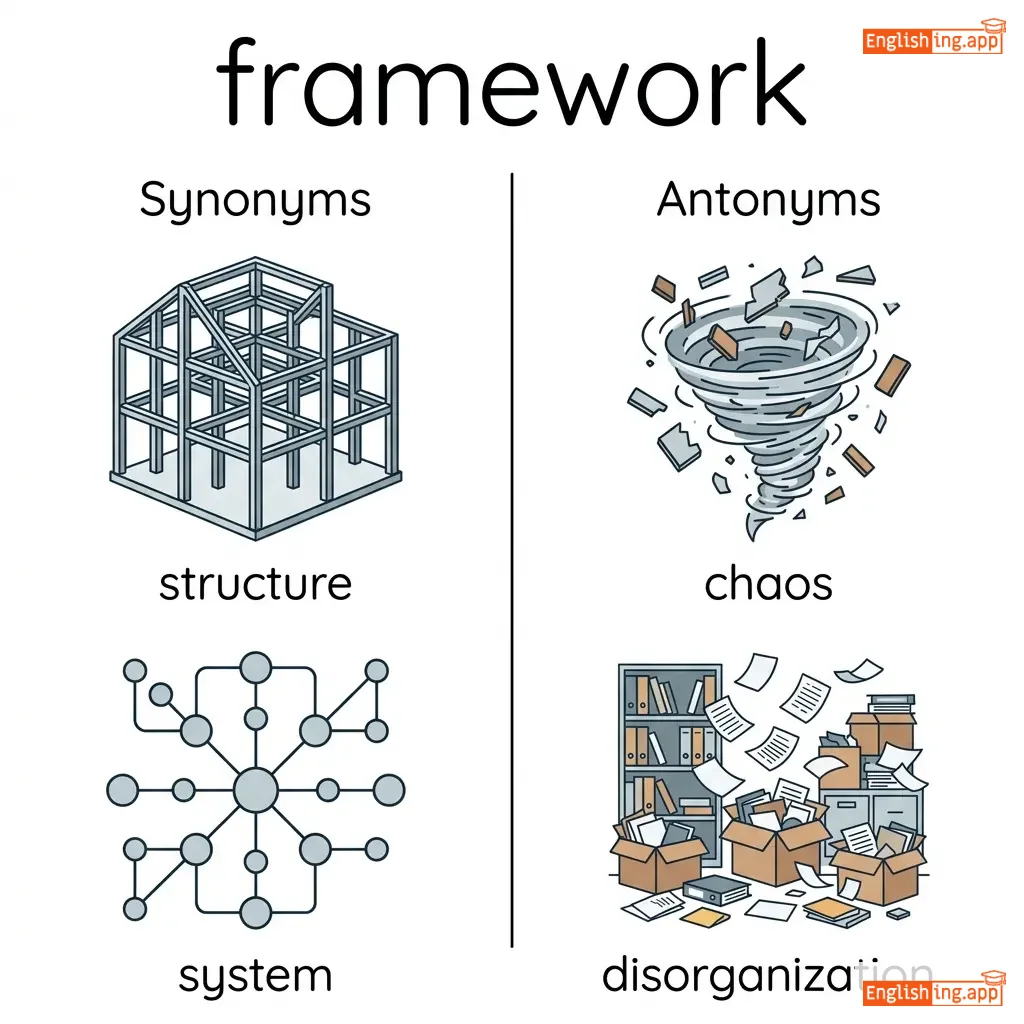
structure, system, skeleton, outline, basis
••••••
|
chaos, disorganization
••••••
|
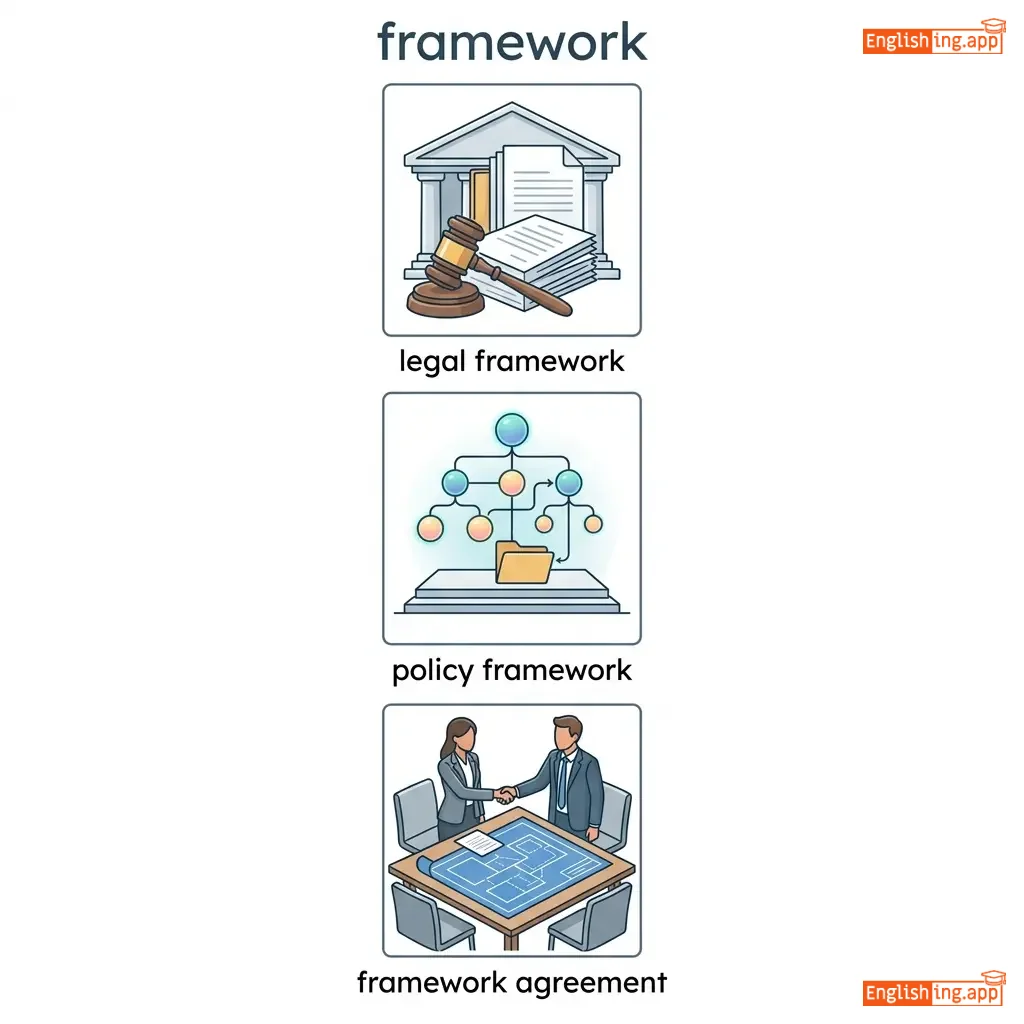
legal framework, policy framework, framework agreement, conceptual framework
••••••
|
Framework 意味着框架,就像建筑的框架一样。
••••••
|
|
#11054
🖼️
|
/freɪm/
noun/verb
••••••
|
|
- •••••• |
framed
••••••
|
framed
••••••
|
frames
••••••
|
framing
••••••
|
A rigid structure that surrounds or encloses something; to construct or formulate.
••••••
|
They hung the painting in a golden frame. |
- •••••• |
frame of mind |
a person's mood or mental state
••••••
|
- •••••• |
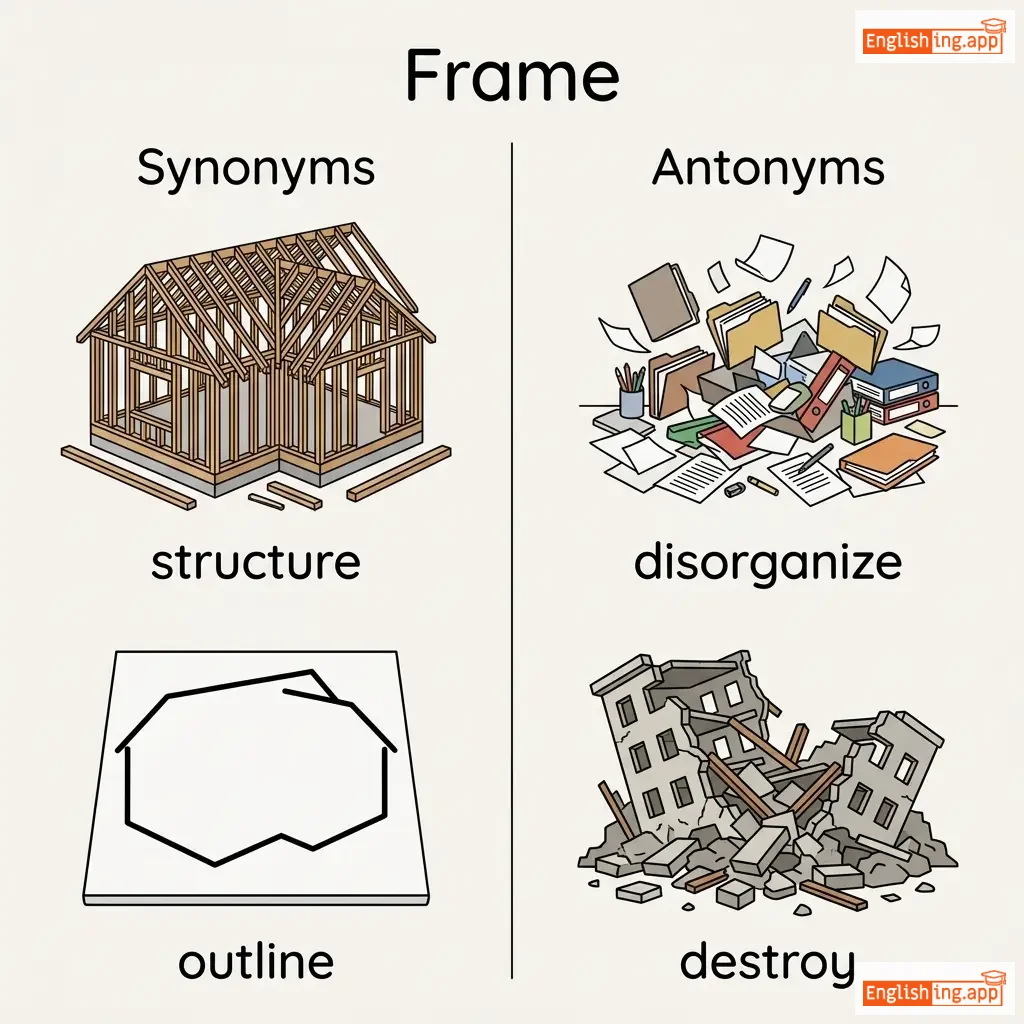
structure, outline, border, skeleton, formulate
••••••
|
disorganize, destroy
••••••
|
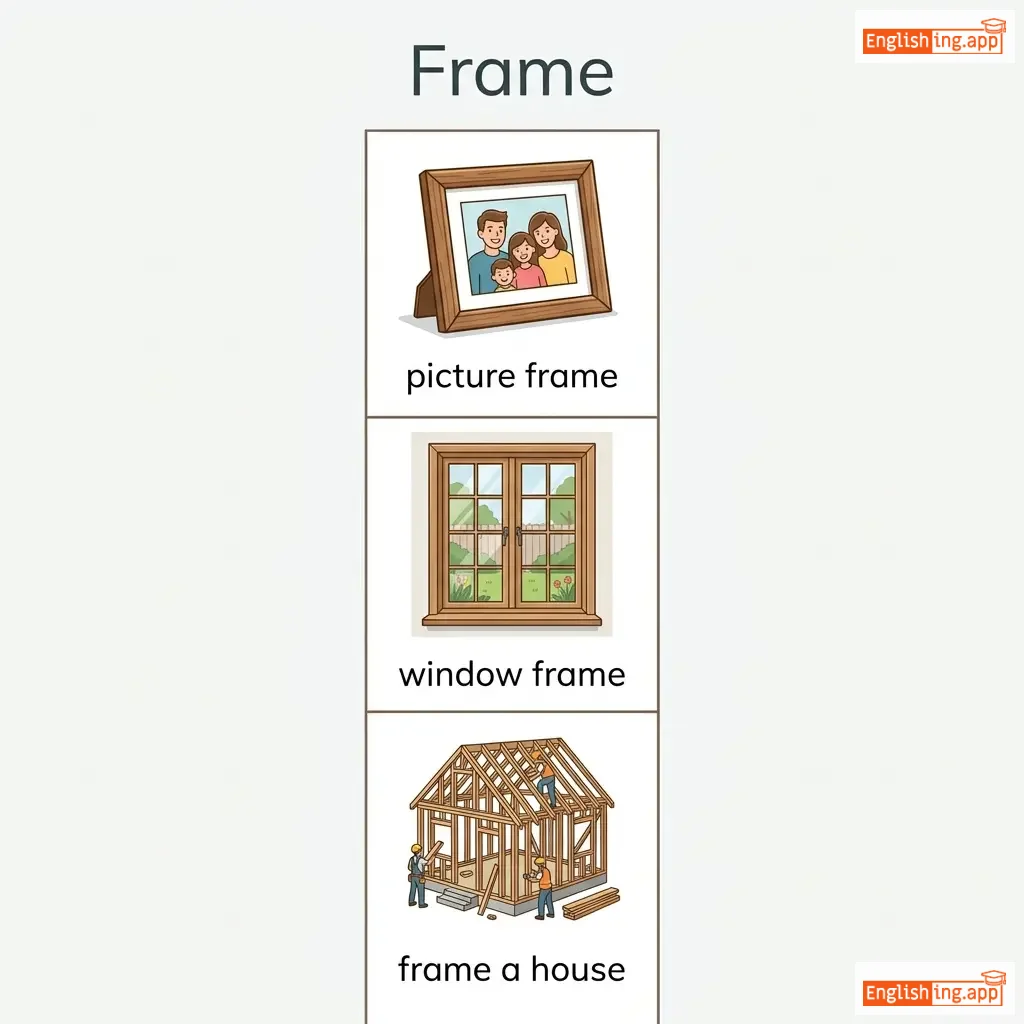
picture frame, window frame, frame a house, frame of reference
••••••
|
No •••••• |
|
#11055
4️⃣
|
/fɔːrθ/
adjective/noun
(fóu sī)
••••••
|
- •••••• |
第四
di si
••••••
|
- •••••• | - •••••• | - •••••• | - •••••• |
Constituting number four in a sequence; coming after the third in position.
••••••
|
He finished in fourth place in the race. |
他在比赛中获得了第四名。
ta zai bisai zhong huode le di si ming.
••••••
|
the fourth estate |
the press and news media
••••••
|
第四权力
di si quanli
••••••
|
quartile, fourthly, quadrant, quaternary
••••••
|
first, last
••••••
|
fourth place, fourth time, fourth floor, fourth century
••••••
|
第四就像是排在前三之后的那个位置,很容易记住!
••••••
|
|
#11056
4️⃣
|
/fɔːr/
numeral
(fōr)
••••••
|
- •••••• |
四
si
••••••
|
- •••••• | - •••••• | - •••••• | - •••••• |
The number equivalent to the sum of two and two; one more than three.
••••••
|
She has four books on her desk. |
她的桌子上有四本书。
Tā de zhuōzi shàng yǒu sì běn shū.
••••••
|
four corners of the world |
everywhere in the world
••••••
|
世界四个角落
Shìjiè sì gè jiǎoluò
••••••
|
quartet, quadruple, foursome, tetrad
••••••
|
three, five
••••••
|
four times, four years, four people, four seasons
••••••
|
四个朋友一起,总是很有趣 – 记住Four意味着四。
••••••
|
|
#11057
🏗️
|
/faʊnˈdeɪʃən/
noun
(fáu̇ndéishon)
••••••
|
|
基础
jīchǔ
••••••
|
- •••••• | - •••••• | - •••••• | - •••••• |
the base or underlying support of something; an institution established for a purpose
••••••
|
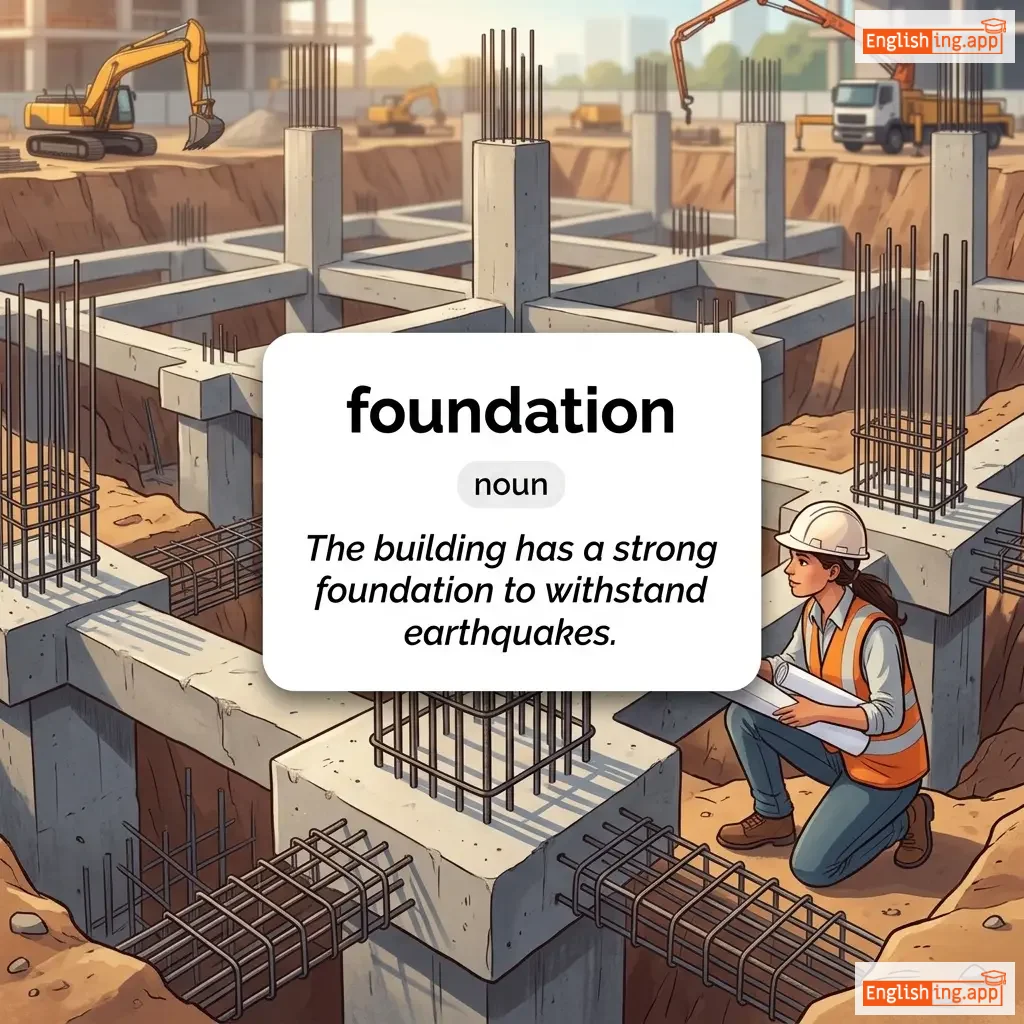
The building has a strong foundation to withstand earthquakes. |
这座建筑有坚固的基础,能够抵抗地震。
Zhè zuò jiànzhú yǒu jiāngù de jīchǔ, nénggòu dǐkàng dìzhèn.
••••••
|
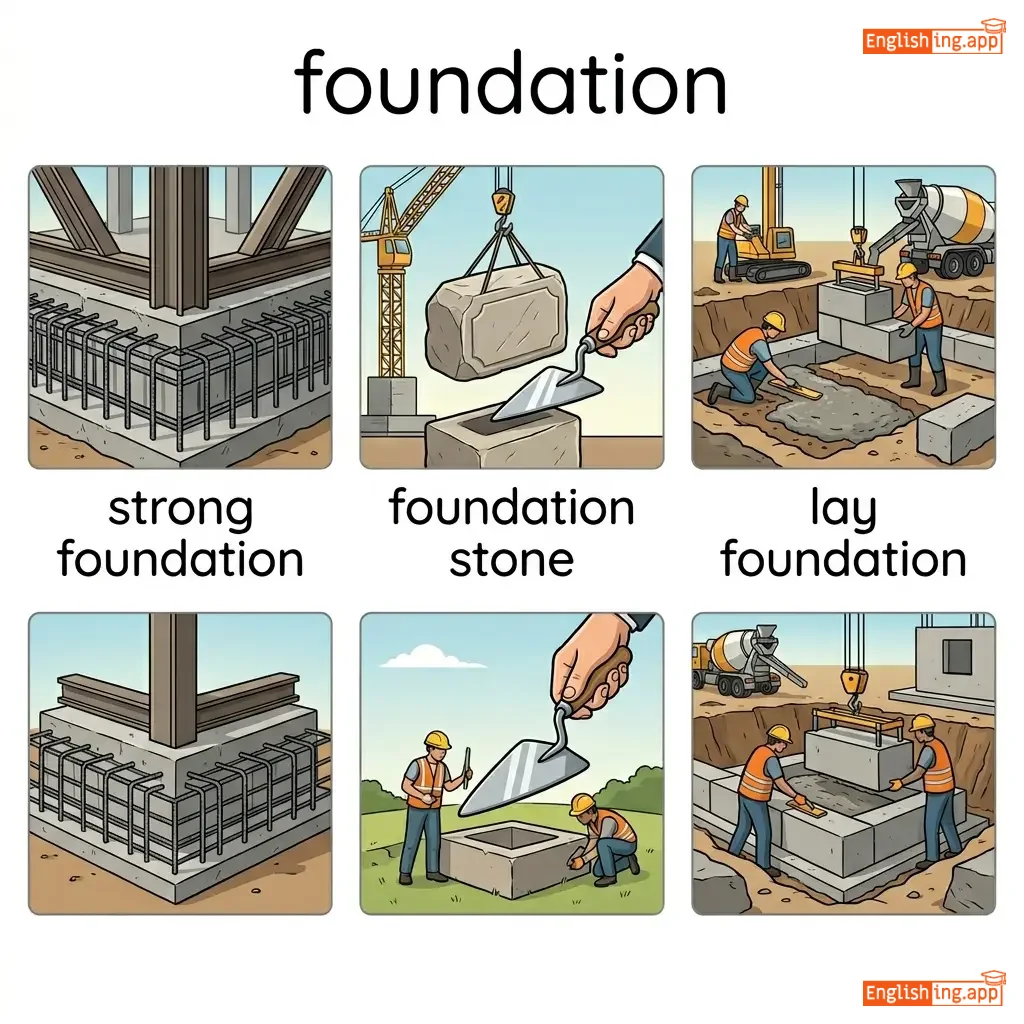
lay the foundation |
to provide the basic ideas or structures on which something can develop
••••••
|
奠定基础
diàndìng jīchǔ
••••••
|
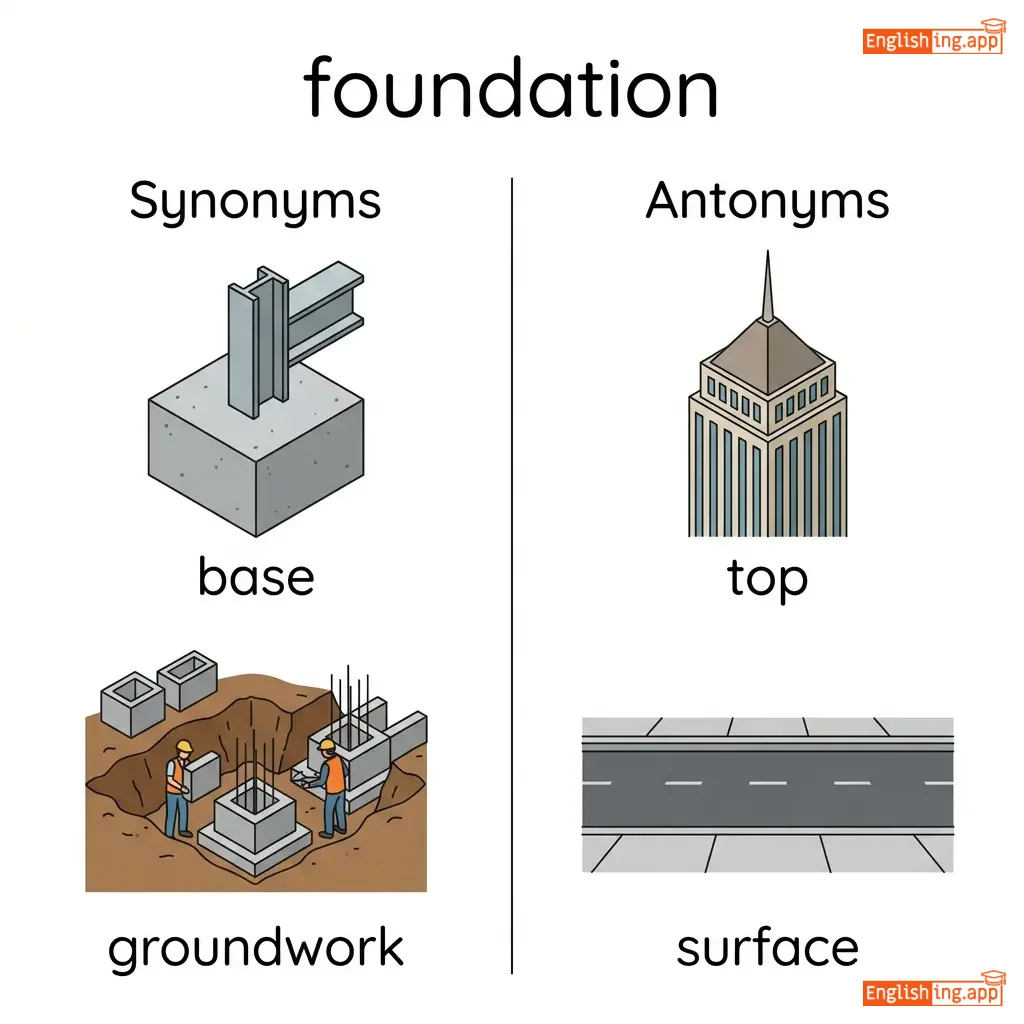
base, groundwork, support, basis, establishment
••••••
|
top, surface, collapse
••••••
|
strong foundation, foundation stone, lay foundation, charitable foundation
••••••
|
Foundation 意味着基础 — 没有基础,建筑无法稳固。
••••••
|
|
#11058
🏢
|
/faʊnd/
verb
(faʊnd)
••••••
|
- •••••• |
创办
chuangban
••••••
|
found
faʊnd
••••••
|
found
faʊnd
••••••
|
finds
faɪndz
••••••
|
founding
faʊndɪŋ
••••••
|
to establish or set up an institution, company, or organization
••••••
|
They found a new startup focused on renewable energy.
他们成立了一个专注于可再生能源的新创业公司。
••••••
|
他们成立了一个专注于可再生能源的新创业公司。
Tāmen chénglìle yīgè zhuānzhù yú kě zàishēng néngyuán de xīn chuàngyè gōngsī.
••••••
|
well-founded
建立良好基础
••••••
|
based on good reasons or evidence
••••••
|
有良好基础
yǒu liánghǎo jīchǔ
••••••
|
establish, create, set up, launch, originate
••••••
|
close, abolish, dismantle
••••••
|
found a company, found an institution, newly founded, founder of
••••••
|
Found意味着创办 — Founder是建立公司的那个人。
••••••
|
|
#11059
🍀
|
/ˈfɔːrtʃən/
noun
(fòchūn)
••••••
|
- •••••• |
运气 / 财富
yùnqì / cáifù
••••••
|
- •••••• | - •••••• | - •••••• | - •••••• |
chance or luck, especially in success or wealth
••••••
|
She made a fortune by investing in real estate.
她通过投资房地产赚了一大笔钱。
••••••
|
她通过投资房地产赚了一大笔钱。
Tā tōngguò tóuzī fángdìchǎn zhuànle yī dà bǐ qián.
••••••
|
fortune favors the brave
幸运眷顾勇敢者
••••••
|
those who take risks are more likely to succeed
••••••
|
幸运眷顾勇敢者
Xìngyùn juàngù yǒnggǎn zhě
••••••
|
wealth, luck, fate, destiny, riches
••••••
|
poverty, misfortune, loss
••••••
|
good fortune, bad fortune, make a fortune, bring fortune
••••••
|
Fortune 意味着运气 — 投资房地产赚取财富!
••••••
|
|
#11060
📄
|
/fɔːrm/
noun, verb
(fó mú)
••••••
|
- •••••• |
形状 / 表格
xíng zhuàng / biǎo gé
••••••
|
formed
xíng chéng
••••••
|
formed
xíng chéng
••••••
|
forms
xíng chéng
••••••
|
forming
xíng chéng zhōng
••••••
|
the shape or structure of something; to bring something into existence
••••••
|
Students filled out the registration form.
学生填写了注册表格。
••••••
|
学生填写了注册表格。
Xuéshēng tiánxiěle zhùcè biǎogé.
••••••
|
take form
成形
••••••
|
to start to develop a clear shape or structure
••••••
|
成形
chéng xíng
••••••
|
shape, structure, configuration, type, create
••••••
|
disorder, destroy, deform
••••••
|
application form, fill out form, form a team, form an opinion
••••••
|
Form 形状,就像填写一个表格。
••••••
|
|
#11061
🧠
|
/fəˈɡɛt/
verb
(福尔盖特)
••••••
|
|
忘记
wàngjì
••••••
|
forgot
福尔戈特
••••••
|
forgotten
福尔戈顿
••••••
|
forgets
福尔盖特斯
••••••
|
forgetting
福尔盖丁
••••••
|
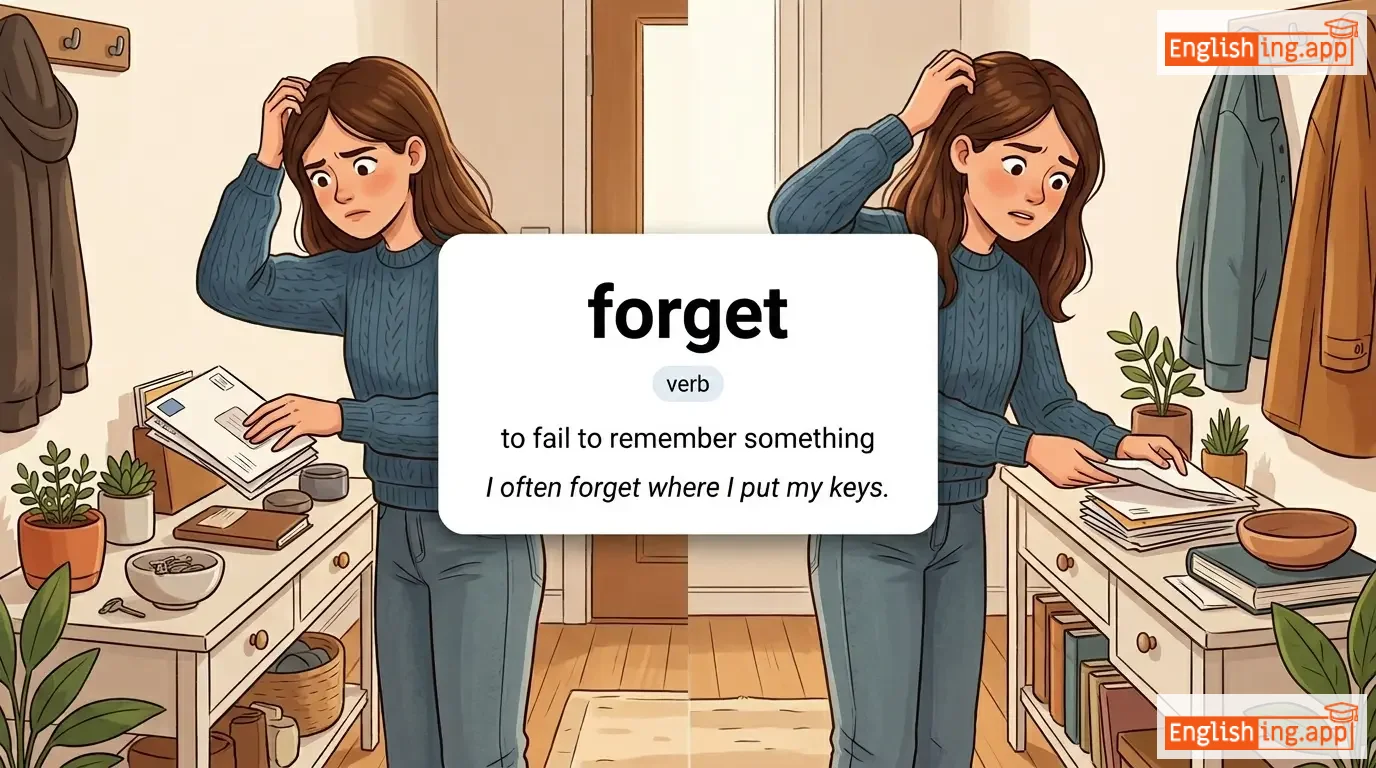
to fail to remember something
••••••
|
I often forget where I put my keys.
我经常忘记把钥匙放在哪里。
••••••
|
我经常忘记把钥匙放在哪里。
Wǒ jīngcháng wàngjì bǎ yàoshi fàng zài nǎlǐ.
••••••
|
forgive and forget
宽恕与遗忘
••••••
|
to stop feeling angry and not hold a grudge
••••••
|
宽恕与遗忘
Kuānshù yǔ yíwàng
••••••
|
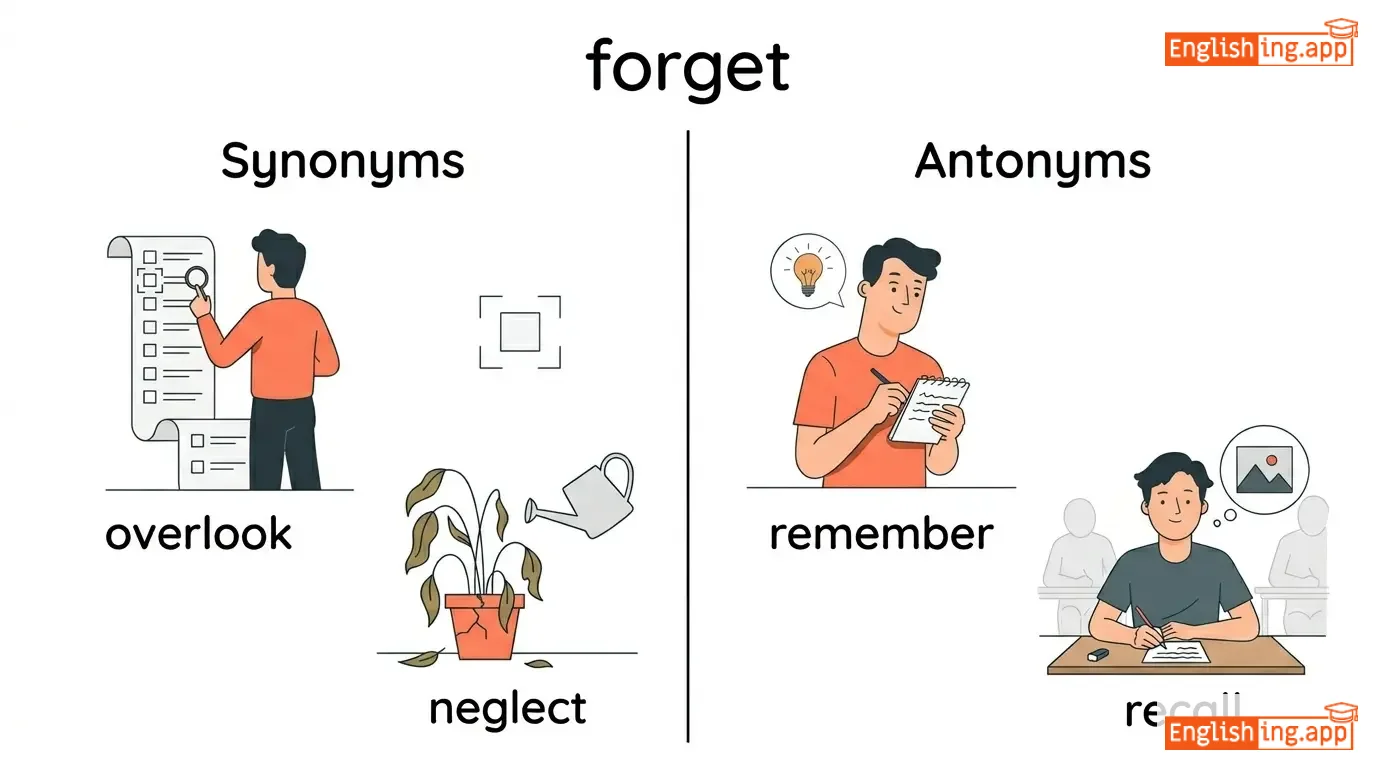
overlook, neglect, miss, disregard, ignore
••••••
|
remember, recall, retain
••••••
|
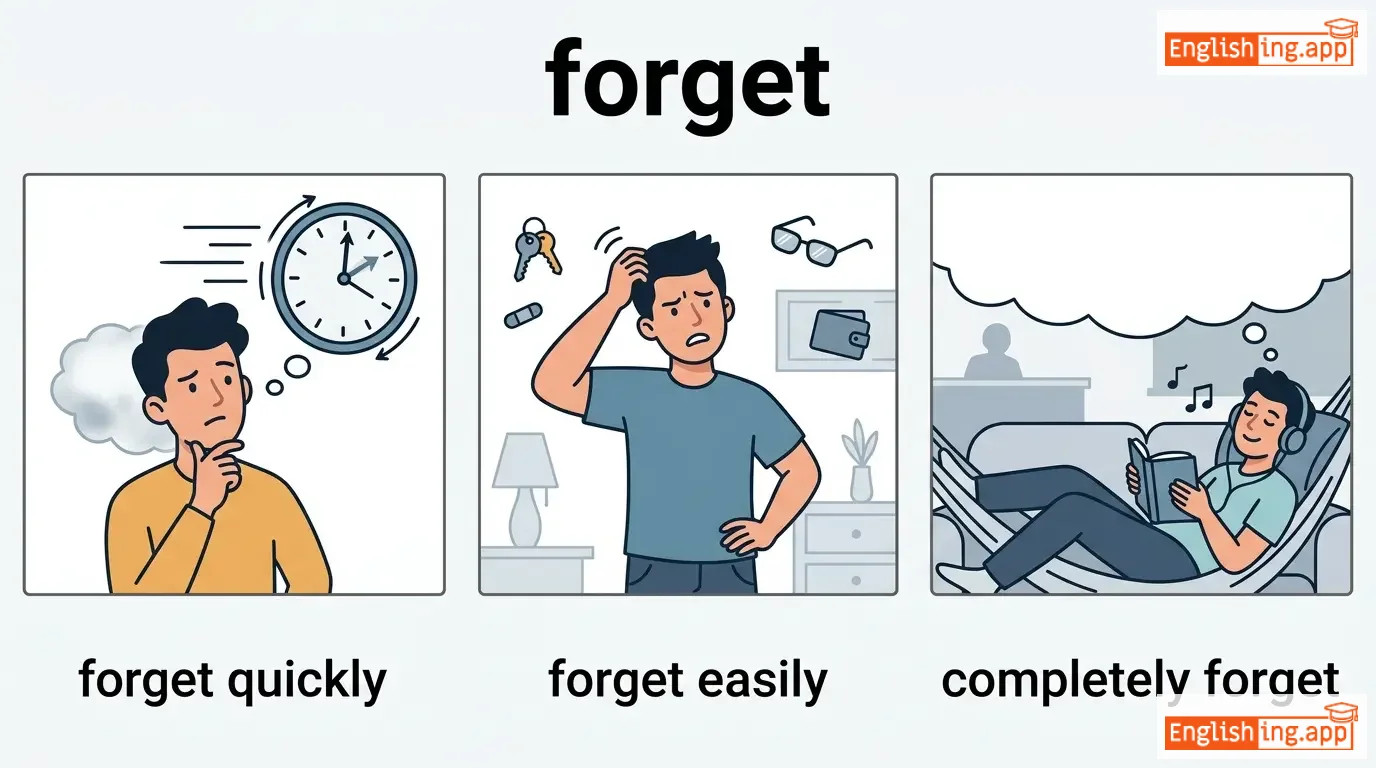
forget quickly, forget easily, completely forget, try to forget
••••••
|
Forget意味着'忘记' — 如果你丢了钥匙,记住: Don't forget!
••••••
|
|
#11062
♾️
|
/fɔːrˈɛvər/
adverb
(福尔艾弗)
••••••
|
- •••••• |
永远
yǒngyuǎn
••••••
|
- •••••• | - •••••• | - •••••• | - •••••• |
For all future time; for always.
••••••
|
She promised to love him forever.
她承诺永远爱他。
••••••
|
她承诺永远爱他。
Tā chéngnuò yǒngyuǎn ài tā.
••••••
|
forever and a day
永远和一天
••••••
|
an extremely long time
••••••
|
一个极长的时间
yí ge jí cháng de shíjiān
••••••
|
always, eternally, endlessly, perpetually, permanently
••••••
|
never, temporarily
••••••
|
love forever, last forever, forever young, forever grateful
••••••
|
永远表示永远,就像永恒的爱。
••••••
|
|
#11063
🌲
|
/ˈfɔːrɪst/
noun
(森林)
••••••
|
- •••••• |
森林
sēnlín
••••••
|
- •••••• | - •••••• | - •••••• | - •••••• |
A large area covered chiefly with trees and undergrowth.
••••••
|
They went hiking in the forest. |
他们去了森林远足。
Tāmen qùle sēnlín yuǎnzú.
••••••
|
can't see the forest for the trees |
focusing too much on details and missing the bigger picture
••••••
|
看不见森林,只看见树木
Kàn bùjiàn sēnlín, zhǐ kànjiàn shùmù
••••••
|
woods, jungle, woodland, grove, rainforest
••••••
|
desert, plain
••••••
|
dense forest, tropical forest, forest fire, forest reserve
••••••
|
SENLIN = 在森林里走,你会看到树木,却看不到全景
••••••
|
|
#11064
💪
|
/fɔːrs/
noun/verb
(fórs)
••••••
|
|
力量 / 强度
lìliàng / qiángdù
••••••
|
forced
fórsed
••••••
|
forced
fórsed
••••••
|
forces
fórses
••••••
|
forcing
fórsing
••••••
|
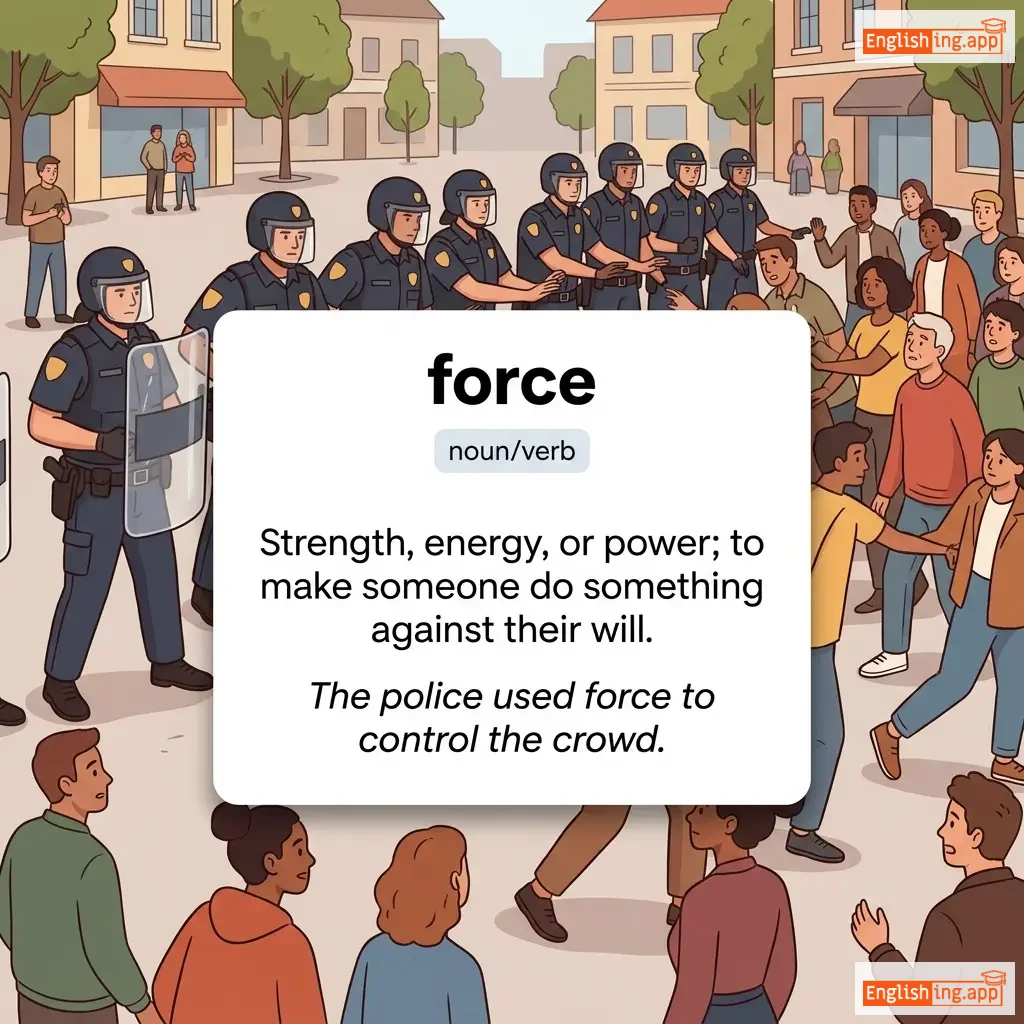
Strength, energy, or power; to make someone do something against their will.
••••••
|
The police used force to control the crowd.
警察使用了暴力来控制人群。
••••••
|
警察使用了暴力来控制人群。
Jǐngchá shǐyòngle bàolì lái kòngzhì rénqún.
••••••
|
brute force
暴力
••••••
|
using physical power rather than skill or intelligence
••••••
|
暴力
bàolì
••••••
|
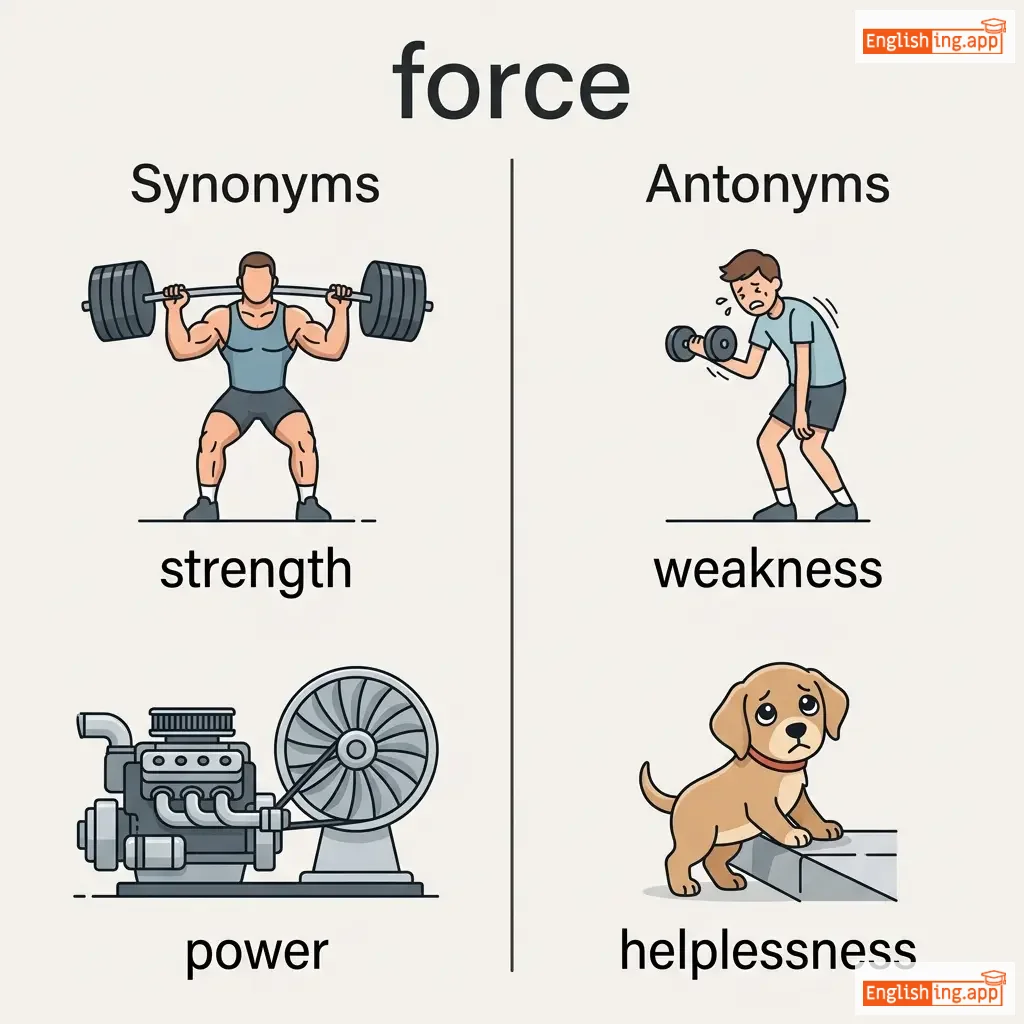
strength, power, energy, pressure, compulsion
••••••
|
weakness, helplessness, inaction
••••••
|
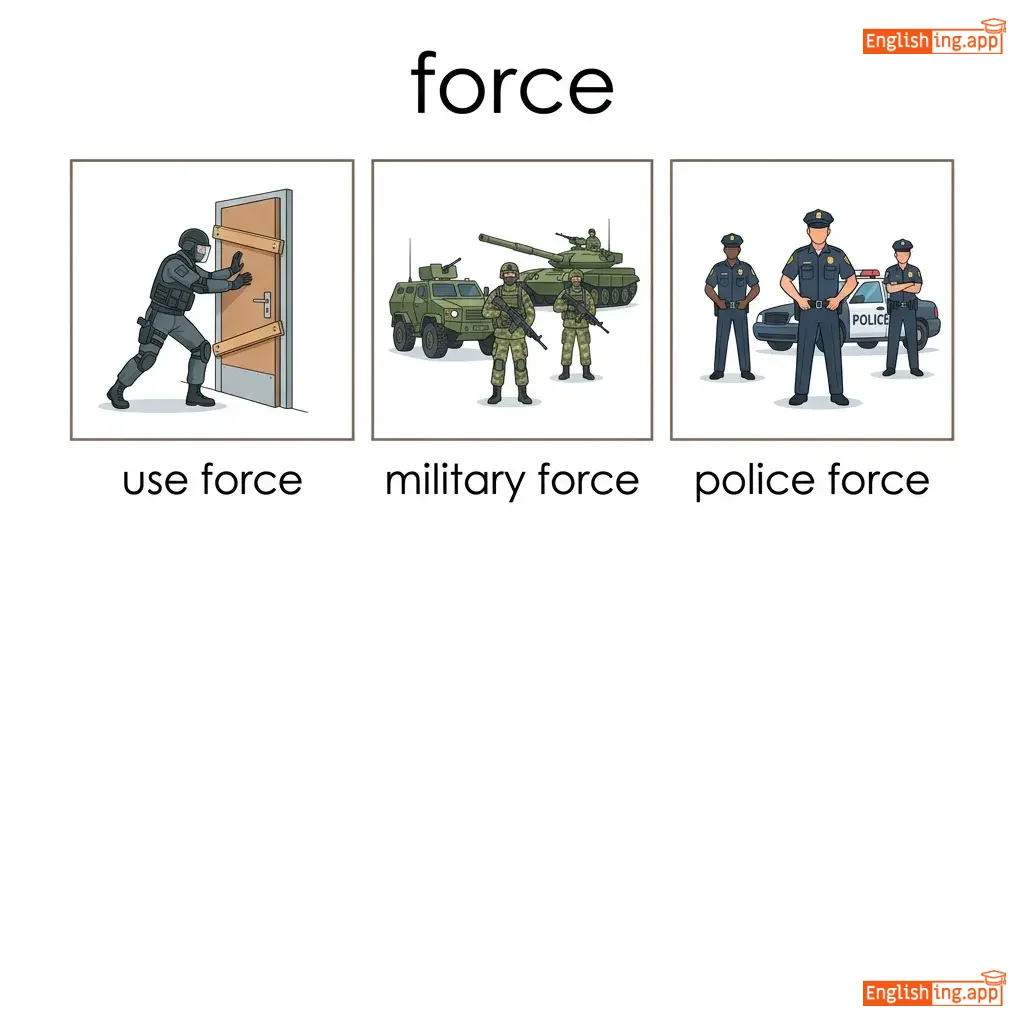
use force, military force, police force, force someone
••••••
|
FORCE 就是通过暴力获得你想要的东西。
••••••
|
Vocabulary Quiz
Test your vocabulary by matching words with their translations or meanings.
Login to take the quiz
Comments (0)
Share your thoughts and join the discussion.
Join the discussion by logging in
Login to CommentNo comments yet
Be the first to share your thoughts!