


Swipe left or right, or use the buttons. Tap image to zoom.
例句翻译
单词
Lesson 180Lesson 180 - 遮罩切换
|
表情符号
|
单词 | Images | 翻译 | 过去时 | 过去分词 | 第三人称单数 | 动名词 | 含义 | 例句 | 例句翻译 | 示例表达 | 示例表达含义 | 示例表达翻译 | 同义词 | 反义词 | 搭配词 | 助记符 |
|---|---|---|---|---|---|---|---|---|---|---|---|---|---|---|---|---|---|
|
#5371
🔧
|
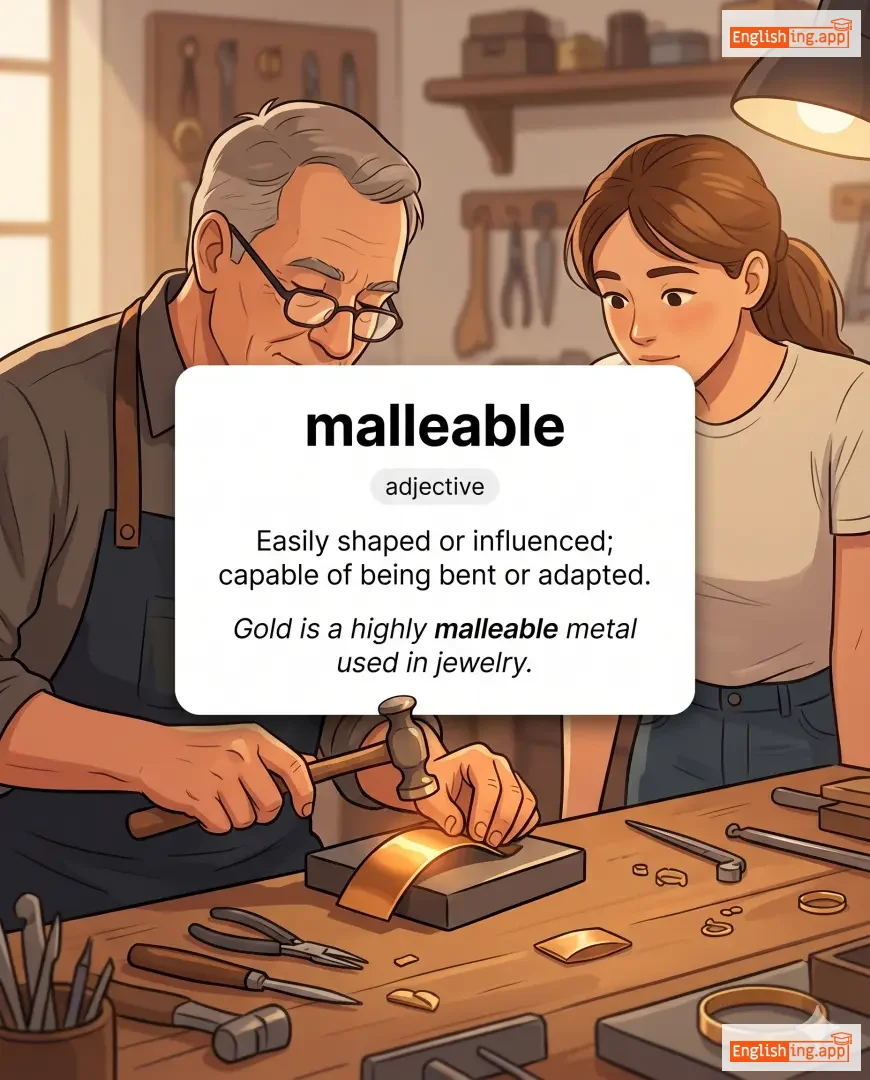
/ˈmæliəbl̩/
adjective
(马利亚布尔)
••••••
|
|
易于塑形
yi yu su xing
••••••
|
- •••••• | - •••••• | - •••••• | - •••••• |
Easily shaped or influenced; capable of being bent or adapted.
••••••
|
Gold is a highly malleable metal used in jewelry. |
黄金是一种非常易于塑形的金属,用于珠宝制作。
Huangjin shi yizhong feichang yi yu su xing de jinshu, yong yu zhubao zhizuo.
••••••
|
- •••••• | - •••••• | - •••••• |
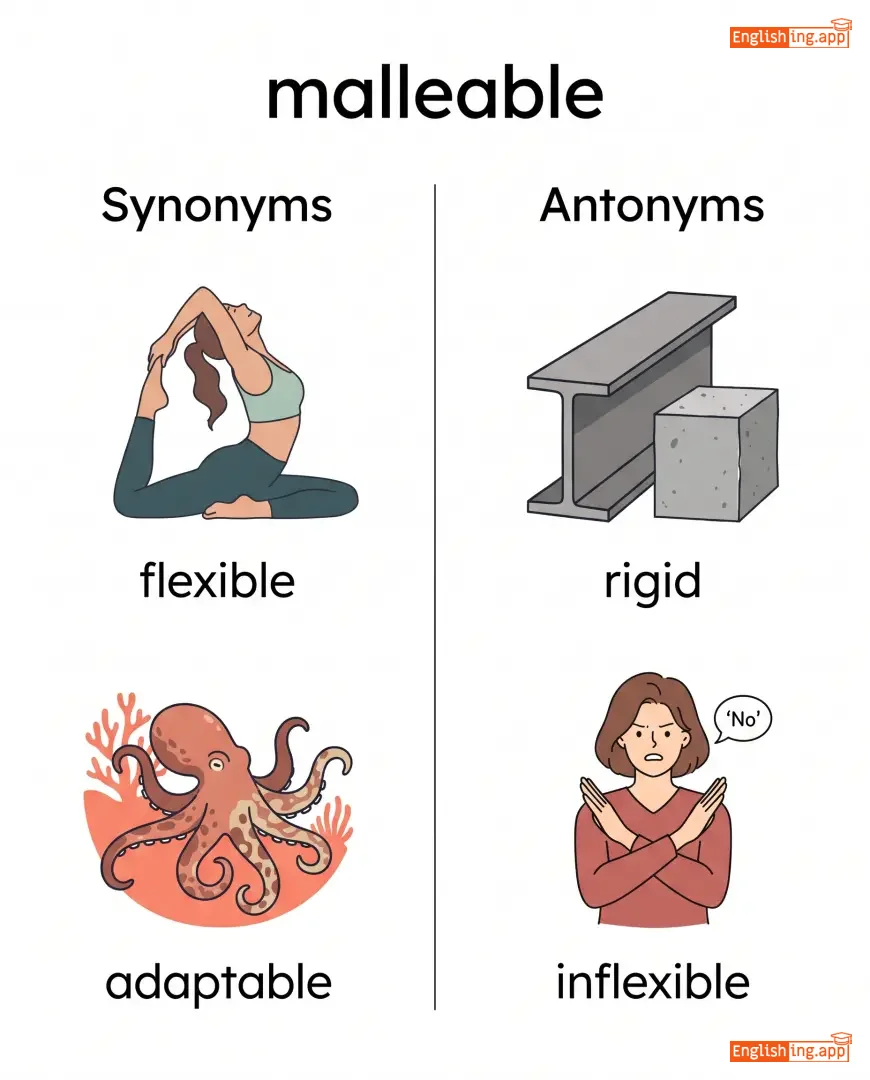
flexible, adaptable, pliable, ductile, impressionable
••••••
|
rigid, inflexible, stiff
••••••
|
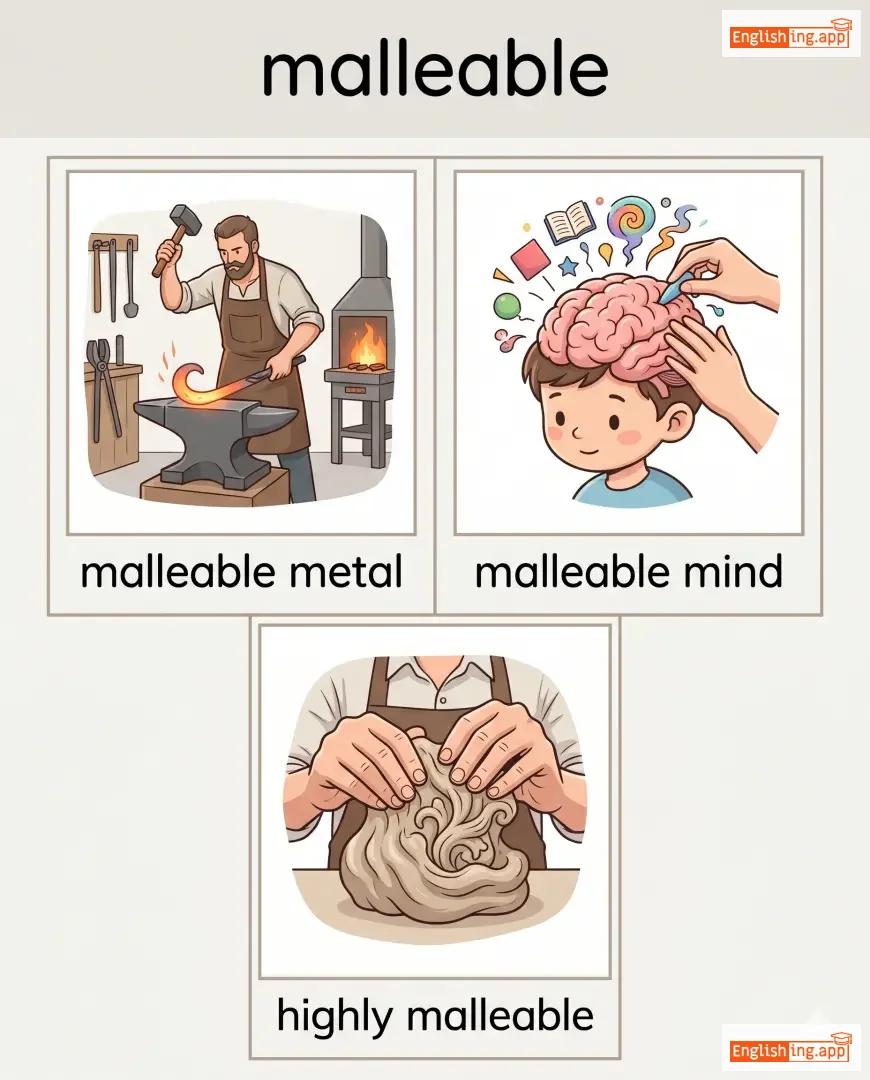
malleable metal, malleable mind, highly malleable, malleable material
••••••
|
黄金可以轻松塑形,是易于塑形的金属。
••••••
|
|
#5372
🐕
|
/meɪndʒ/
noun
(méng)
••••••
|
- •••••• |
疥癣
jiaixuan
••••••
|
- •••••• | - •••••• | - •••••• | - •••••• |
a skin disease in animals caused by parasitic mites, leading to hair loss and sores
••••••
|
The stray dog was suffering from mange. |
流浪狗正在忍受疥癣。
Liulang gou zhengzai renshou jiaixuan.
••••••
|
- •••••• | - •••••• | - •••••• |
scabies, skin disease, infestation
••••••
|
health, wellness
••••••
|
mange infection, suffering from mange, treat mange, mange outbreak
••••••
|
MANGE 和疥癣类似,是动物掉毛的皮肤病。
••••••
|
|
#5373
✈️
|
/məˈnuː.vər/
noun, verb
••••••
|
- •••••• | - •••••• |
maneuvered
••••••
|
maneuvered
••••••
|
maneuvers
••••••
|
maneuvering
••••••
|
a planned or skillful movement or action; to move skillfully or carefully
••••••
|
The pilot maneuvered the plane through the storm. |
- •••••• |
political maneuver |
a calculated or strategic action in politics
••••••
|
- •••••• |
movement, tactic, strategy, operation, action
••••••
|
inactivity, immobility
••••••
|
military maneuver, clever maneuver, strategic maneuver, skillful maneuver
••••••
|
No •••••• |
|
#5374
🦁
|
/meɪn/
noun
(méi)
••••••
|
- •••••• |
鬃毛
zōngmáo
••••••
|
- •••••• | - •••••• | - •••••• | - •••••• |
the long hair growing on the neck of a horse, lion, or other animal
••••••
|
The lion shook its thick mane proudly. |
狮子骄傲地摇动着它浓密的鬃毛。
Shīzi jiāo'ào de yáodòng zhe tā nóngmì de zōngmáo.
••••••
|
lion's mane |
a distinctive feature of a lion’s appearance, often used metaphorically
••••••
|
狮鬃
Shī zōng
••••••
|
hair, locks, tresses, fleece
••••••
|
baldness, hairless
••••••
|
thick mane, flowing mane, golden mane, lion's mane
••••••
|
MANE 是狮鬃
••••••
|
|
#5375
⚖️
|
/ˈmæn.dəˌtɔːr.i/
adjective
(曼达托里)
••••••
|
- •••••• |
强制性的
qiángzhìxìng de
••••••
|
- •••••• | - •••••• | - •••••• | - •••••• |
required by law or rules; compulsory
••••••
|
Wearing seat belts is mandatory in most countries. |
在大多数国家,佩戴安全带是强制性的。
Zài dàduōshù guójiā, pèidài ānquán dài shì qiángzhìxìng de.
••••••
|
- •••••• | - •••••• | - •••••• |
compulsory, required, obligatory, enforced
••••••
|
optional, voluntary, discretionary
••••••
|
mandatory rule, mandatory training, mandatory law, mandatory requirement
••••••
|
Mandatory 就是强制性的,类似必须做的事,像穿安全带。
••••••
|
|
#5376
📜
|
/ˈmæn.deɪt/
noun, verb
(命令)
••••••
|
- •••••• |
命令
mingling
••••••
|
mandated
命令的
••••••
|
mandated
命令的
••••••
|
mandates
命令
••••••
|
mandating
命令中
••••••
|
an official order or command; to give someone authority to act in a certain way
••••••
|
The government issued a mandate to reduce carbon emissions.
政府发布了减少碳排放的命令。
••••••
|
政府发布了减少碳排放的命令。
Zhèngfǔ fābùle jiǎnshǎo tàn pái fàng de mìnglìng.
••••••
|
carry out a mandate
执行命令
••••••
|
to fulfill an official order or duty
••••••
|
执行命令
zhíxíng mìnglìng
••••••
|
order, directive, command, decree, instruction
••••••
|
request, suggestion, option
••••••
|
government mandate, official mandate, mandate authority, mandate power
••••••
|
命令代表政府的指令,必须执行。
••••••
|
|
#5377
⛓️
|
/ˈmæn.ə.kəl/
noun/verb
(mǎnàkè)
••••••
|
- •••••• |
手铐
shǒukào
••••••
|
manacled
mǎnàkèd
••••••
|
manacled
mǎnàkèd
••••••
|
manacles
mǎnàkès
••••••
|
manacling
mǎnàkèliǔ
••••••
|
A metal shackle for fastening someone's hands or ankles; also to restrain with such shackles.
••••••
|
The prisoner was manacled before being taken to court.
囚犯在被带到法庭之前被镣铐。
••••••
|
囚犯在被带到法庭之前被镣铐。
Qiúfàn zài bèi dài dào fǎtíng zhīqián bèi liàokào.
••••••
|
- •••••• | - •••••• | - •••••• |
shackle, handcuff, fetter, restraint
••••••
|
freedom, release
••••••
|
manacle hands, manacle prisoner, iron manacles, manacled together
••••••
|
Manacle = 限制行动的金属锁
••••••
|
|
#5378
🪤
|
/ˈmænˌtræp/
noun
(曼特拉普)
••••••
|
- •••••• |
捕人陷阱
bǔ rén xiànjǐng
••••••
|
- •••••• | - •••••• | - •••••• | - •••••• |
A trap designed to catch or injure humans; informally, a woman considered dangerously attractive.
••••••
|
The old castle had a man-trap at the entrance.
那座古老的城堡在入口处有一个人类捕捉陷阱。
••••••
|
那座古老的城堡在入口处有一个人类捕捉陷阱。
Nà zuò gǔlǎo de chéngbǎo zài rùkǒu chù yǒu yīgè rénlèi bǔzhuō xiànjǐng.
••••••
|
- •••••• | - •••••• | - •••••• |
snare, pitfall, danger, lure
••••••
|
safety, escape
••••••
|
set a man-trap, dangerous man-trap, hidden man-trap
••••••
|
Man-trap 就是捕人陷阱,像是捕捉人类的陷阱。
••••••
|
|
#5379
🐅
|
/ˈmænˌiː.tər/
noun
(mán-ítèr)
••••••
|
- •••••• |
食人者
shì rén zhě
••••••
|
- •••••• | - •••••• | - •••••• | - •••••• |
An animal that kills and eats humans; informally, a woman who is very assertive in relationships.
••••••
|
The tiger became a notorious man-eater in the village.
老虎在村子里成了臭名昭著的人吃人。
••••••
|
老虎在村子里成了臭名昭著的人吃人。
Lǎohǔ zài cūnzi lǐ chéngle chòumíng zhāozhù de rén chī rén.
••••••
|
- •••••• | - •••••• | - •••••• |
killer, predator, beast, destroyer
••••••
|
protector, savior
••••••
|
notorious man-eater, tiger man-eater, lion man-eater
••••••
|
Man-eater = 吃人者,所以吃人者老虎 🐅
••••••
|
|
#5380
🐘
|
/ˈmæm.əθ/
noun/adjective
••••••
|
- •••••• | - •••••• | - •••••• | - •••••• | - •••••• | - •••••• |
An extinct large elephant-like animal with long curved tusks; also means something huge.
••••••
|
The company faced a mammoth challenge during expansion. |
- •••••• |
mammoth task |
A task that is extremely large or difficult.
••••••
|
- •••••• |
giant, colossal, enormous, huge, massive
••••••
|
tiny, small, miniature
••••••
|
mammoth task, mammoth effort, mammoth creature, mammoth bones
••••••
|
No •••••• |
|
#5381
🦣
|
/ˈmæm.əl/
noun
(māmā)
••••••
|
- •••••• |
哺乳动物
bǔrǔ dòngwù
••••••
|
- •••••• | - •••••• | - •••••• | - •••••• |
A warm-blooded animal with hair or fur, and females produce milk for their young.
••••••
|
The whale is the largest mammal on Earth.
鲸鱼是地球上最大的哺乳动物。
••••••
|
鲸鱼是地球上最大的哺乳动物。
Jīng yú shì dìqiú shàng zuìdà de bǔrǔ dòngwù.
••••••
|
- •••••• | - •••••• | - •••••• |
creature, animal, vertebrate, warm-blooded, beast
••••••
|
reptile, bird, fish
••••••
|
marine mammal, small mammal, mammal species, mammal family
••••••
|
哺乳动物 = 妈妈哺乳,哺乳动物产奶
••••••
|
|
#5382
🚫
|
/ˌmælˈtriːt/
verb
(mælˈtriːt)
••••••
|
- •••••• |
虐待
nüèdài
••••••
|
maltreated
mælˈtriːtɪd
••••••
|
maltreated
mælˈtriːtɪd
••••••
|
maltreats
mælˈtriːts
••••••
|
maltreating
mælˈtriːtɪŋ
••••••
|
To treat someone cruelly or unfairly.
••••••
|
The law punishes those who maltreat animals.
ðə lɔ pʌnɪʃɛz ðoʊz huː mælˈtriːt ˈænɪməlz
••••••
|
法律惩罚那些虐待动物的人。
Fǎlǜ chéngfá nàxiē nüèdài dòngwù de rén.
••••••
|
- •••••• | - •••••• | - •••••• |
abuse, mistreat, oppress, harm
••••••
|
respect, protect, cherish
••••••
|
maltreat animals, maltreat children, cruelly maltreat
••••••
|
虐 (虐待) + treat (处理) → 虐待,不公正对待
••••••
|
|
#5383
🦨
|
/ˌmælˈoʊdərəs/
adjective
(màilóngduōrùsī)
••••••
|
- •••••• |
难闻的
nànwén de
••••••
|
- •••••• | - •••••• | - •••••• | - •••••• |
Having a very unpleasant smell.
••••••
|
The malodorous room made everyone leave quickly. |
那个难闻的房间让所有人迅速离开。
Nàgè nànwén de fángjiān ràng suǒyǒu rén xùnsù líkāi.
••••••
|
- •••••• | - •••••• | - •••••• |
smelly, stinky, foul, rank
••••••
|
fragrant, aromatic, perfumed
••••••
|
malodorous smell, malodorous garbage, malodorous air
••••••
|
MAL + 气味 = 难闻的 → malodorous = 难闻的
••••••
|
|
#5384
🤢
|
/ˌmælˈoʊdər/
noun
(玛洛德尔)
••••••
|
- •••••• |
难闻的气味
nánwén de qìwèi
••••••
|
- •••••• | - •••••• | - •••••• | - •••••• |
An unpleasant smell; bad odor.
••••••
|
The garbage bin gave off a terrible malodor.
垃圾桶散发出可怕的玛洛德尔。
••••••
|
垃圾桶散发出可怕的难闻的气味。
Lājītǒng sànfā chū kěpà de nánwén de qìwèi.
••••••
|
- •••••• | - •••••• | - •••••• |
stench, stink, smell, reek
••••••
|
fragrance, aroma, perfume
••••••
|
foul malodor, strong malodor, unpleasant malodor
••••••
|
MAL 意味着坏的,odor 意味着气味 → malodor 意味着坏气味
••••••
|
|
#5385
🔨
|
/ˈmælɪt/
noun
(麦雷特)
••••••
|
- •••••• |
大锤
dà chuí
••••••
|
- •••••• | - •••••• | - •••••• | - •••••• |
A tool with a large, usually wooden head, used for hitting something without damaging it.
••••••
|
He used a mallet to drive the chisel into the wood. |
他用大锤将凿子打进木头里。
Tā yòng dà chuí jiāng záozi dǎ jìn mùtóu lǐ.
••••••
|
- •••••• | - •••••• | - •••••• |
hammer, club, sledge, maul
••••••
|
none, null
••••••
|
wooden mallet, rubber mallet, use a mallet, mallet head
••••••
|
大锤用来击打而不损坏任何东西。
••••••
|
|
#5386
😠
|
/ˈmæl.kənˌtɛnt/
noun
(malkontent)
••••••
|
- •••••• |
不满的人
bùmǎn de rén
••••••
|
- •••••• | - •••••• | - •••••• | - •••••• |
A person who is dissatisfied or rebellious; one who is not content.
••••••
|
The malcontent voiced his grievances against the government.
这个不满的人表达了他对政府的不满。
••••••
|
这个不满的人表达了他对政府的不满。
Zhège bùmǎn de rén biǎodále tā duì zhèngfǔ de bùmǎn.
••••••
|
- •••••• | - •••••• | - •••••• |
dissenter, rebel, agitator, complainer, protester
••••••
|
supporter, loyalist, conformist
••••••
|
political malcontent, restless malcontent, social malcontent
••••••
|
Malcontent = mal (坏) + content (满意) = 不满的人
••••••
|
|
#5387
🏬
|
/mɔːl/ or /mæl/
noun
(mall)
••••••
|
- •••••• |
购物中心
gòuwù zhōngxīn
••••••
|
- •••••• | - •••••• | - •••••• | - •••••• |
a large building or series of connected buildings containing shops and restaurants
••••••
|
They went to the mall to buy new clothes. |
他们去购物中心买新衣服。
tāmen qù gòuwù zhōngxīn mǎi xīn yīfú.
••••••
|
shopping mall |
a large complex with many retail stores
••••••
|
购物中心
gòuwù zhōngxīn
••••••
|
shopping center, plaza, marketplace, arcade
••••••
|
small shop, kiosk
••••••
|
shopping mall, mall culture, mall security, mall parking
••••••
|
Mall 是 '购物中心', 在这里大家都去购物。
••••••
|
|
#5388
😴
|
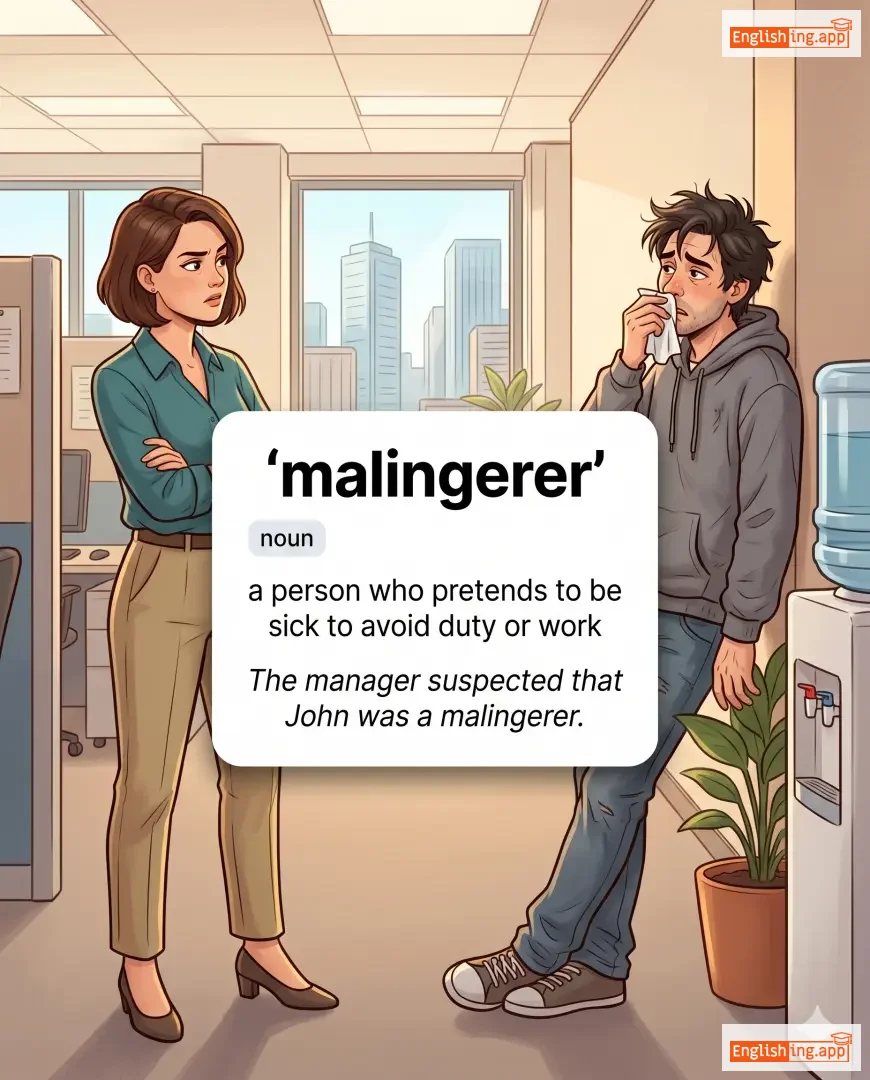
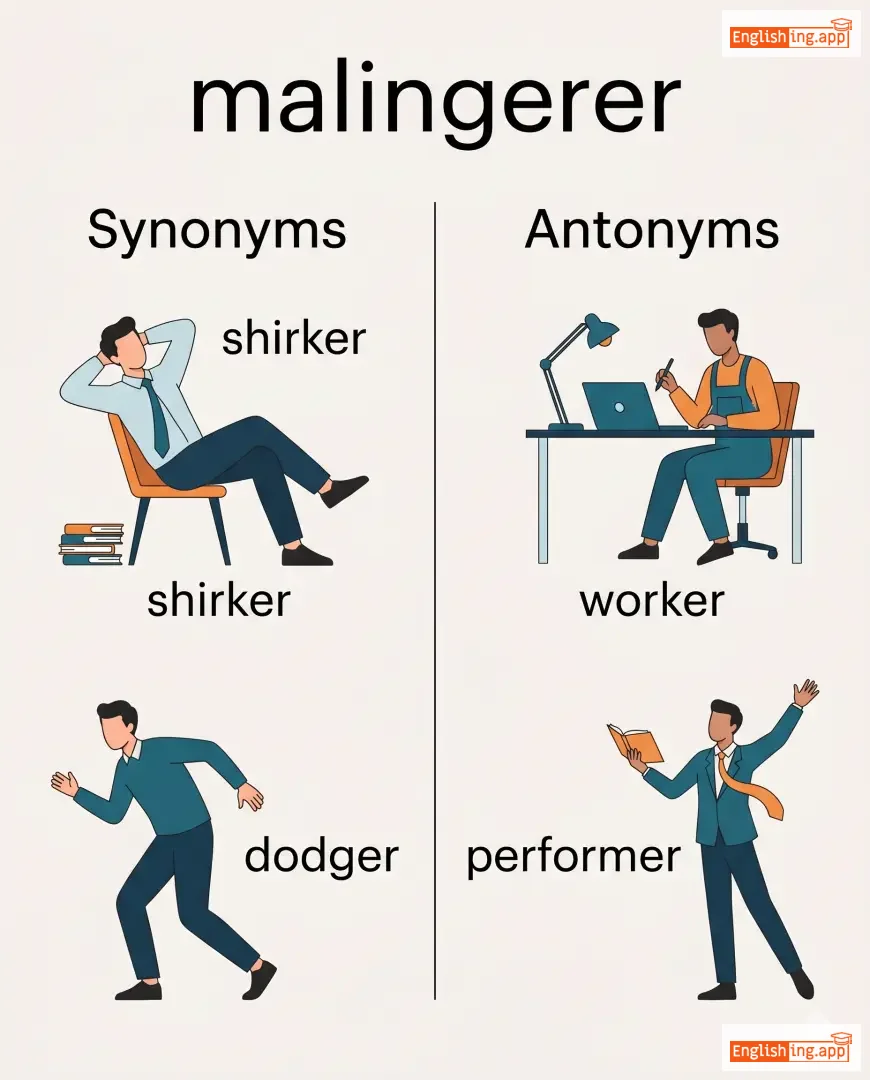
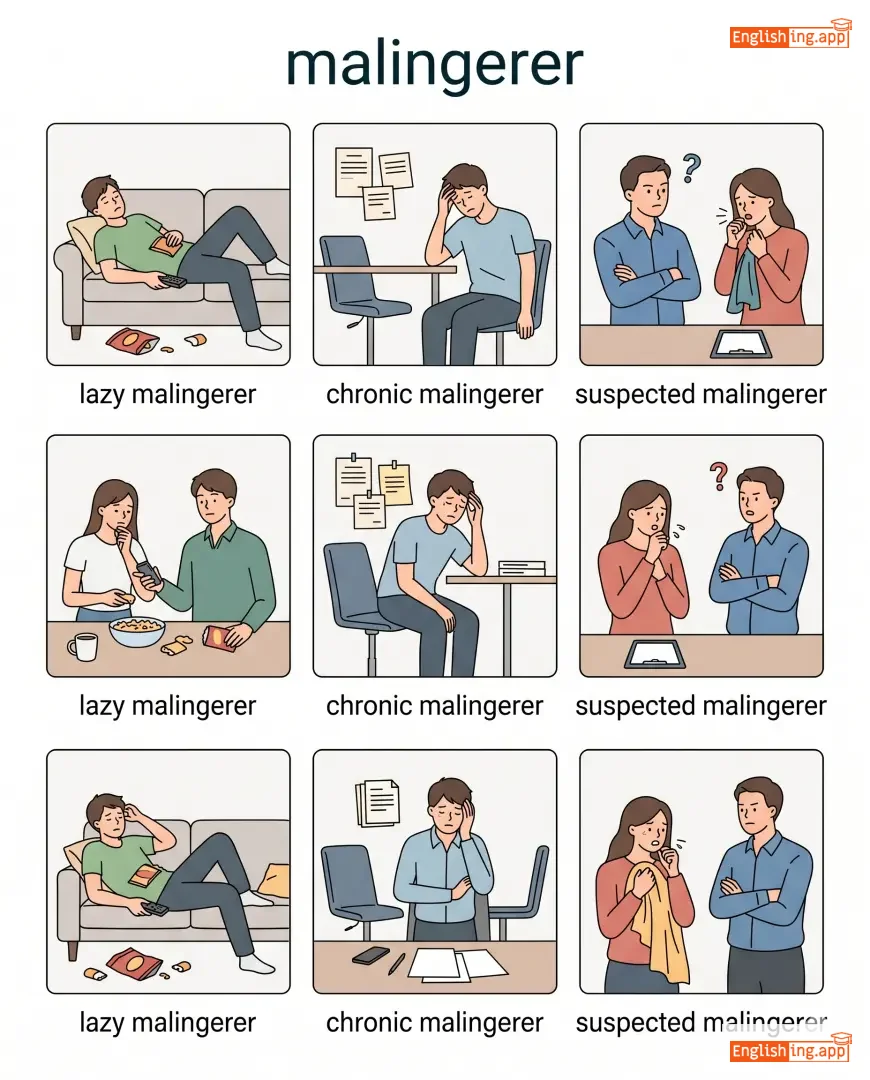
/məˈlɪŋɡərər/
noun
(马林格尔)
••••••
|
|
装病的人
zhuang bing de ren
••••••
|
- •••••• | - •••••• | - •••••• | - •••••• |
a person who pretends to be sick to avoid duty or work
••••••
|
The manager suspected that John was a malingerer. |
经理怀疑约翰是一个装病的人。
Jing li huai yi Yue han shi yi ge zhuang bing de ren.
••••••
|
- •••••• | - •••••• | - •••••• |
shirker, dodger, pretender, faker
••••••
|
worker, performer
••••••
|
lazy malingerer, chronic malingerer, suspected malingerer
••••••
|
Malingerer: 假装生病,想避开工作,记住'Mal'就是病的意思,'ger'就是避免。
••••••
|
|
#5389
🤒
|
/məˈlɪŋɡər/
verb
(马林格)
••••••
|
|
装病
zhuang bing
••••••
|
malingered
马林格德
••••••
|
malingered
马林格德
••••••
|
malingers
马林格斯
••••••
|
malingering
马林格林
••••••
|
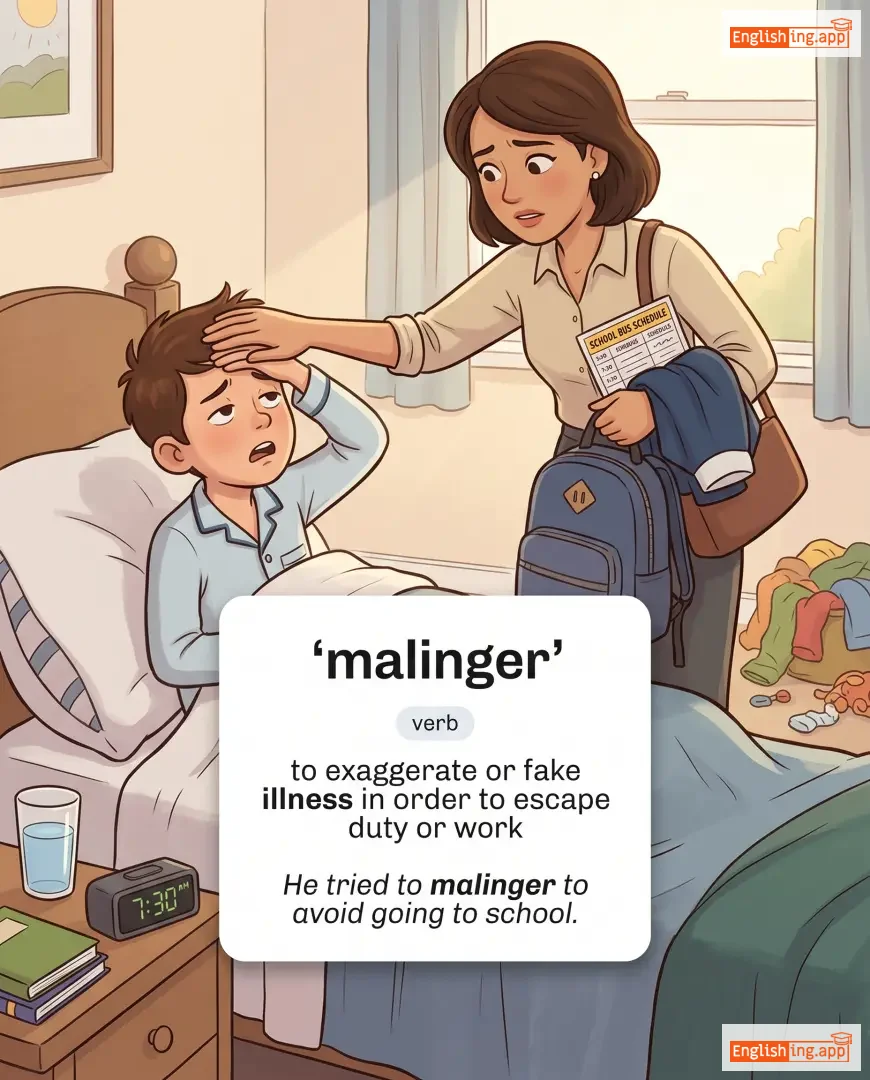
to exaggerate or fake illness in order to escape duty or work
••••••
|
He tried to malinger to avoid going to school.
他试图装病以逃避上学。
••••••
|
他试图装病以逃避上学。
Ta shitu zhuang bing yi taobi shangxue.
••••••
|
- •••••• | - •••••• | - •••••• |
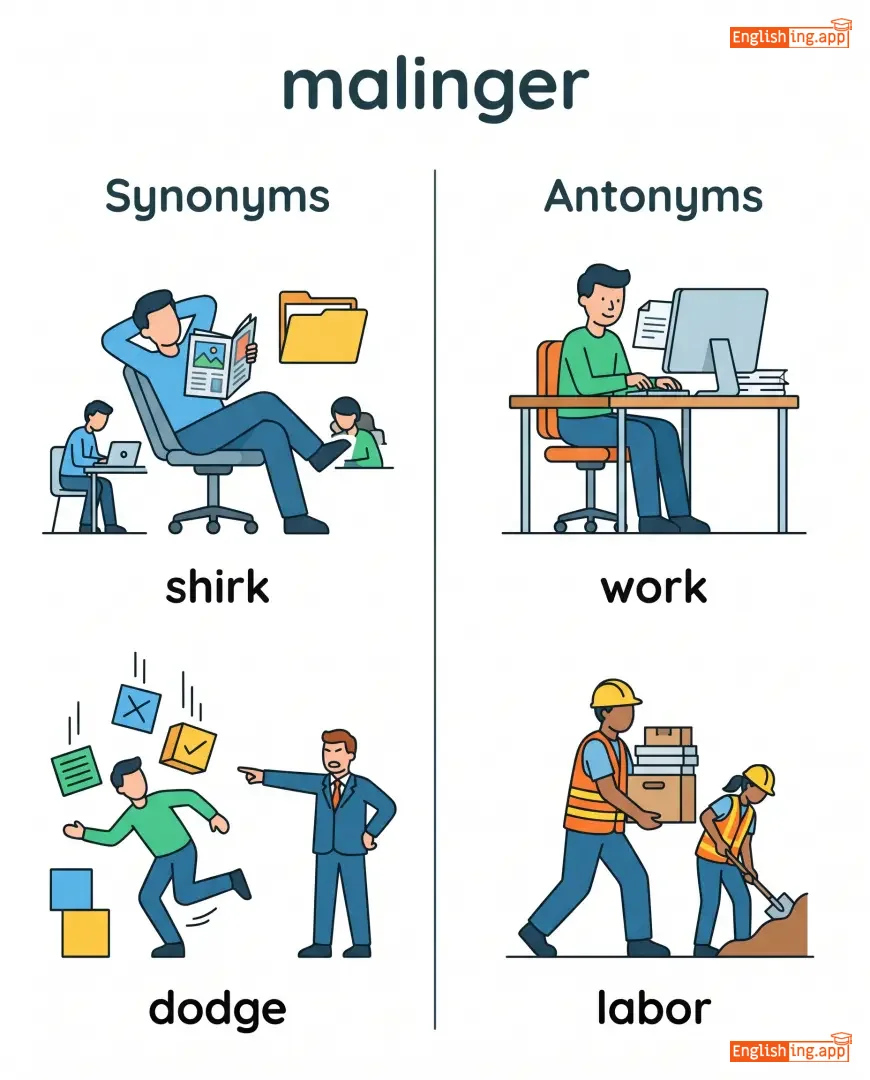
shirk, dodge, feign, pretend, evade
••••••
|
work, labor, perform
••••••
|
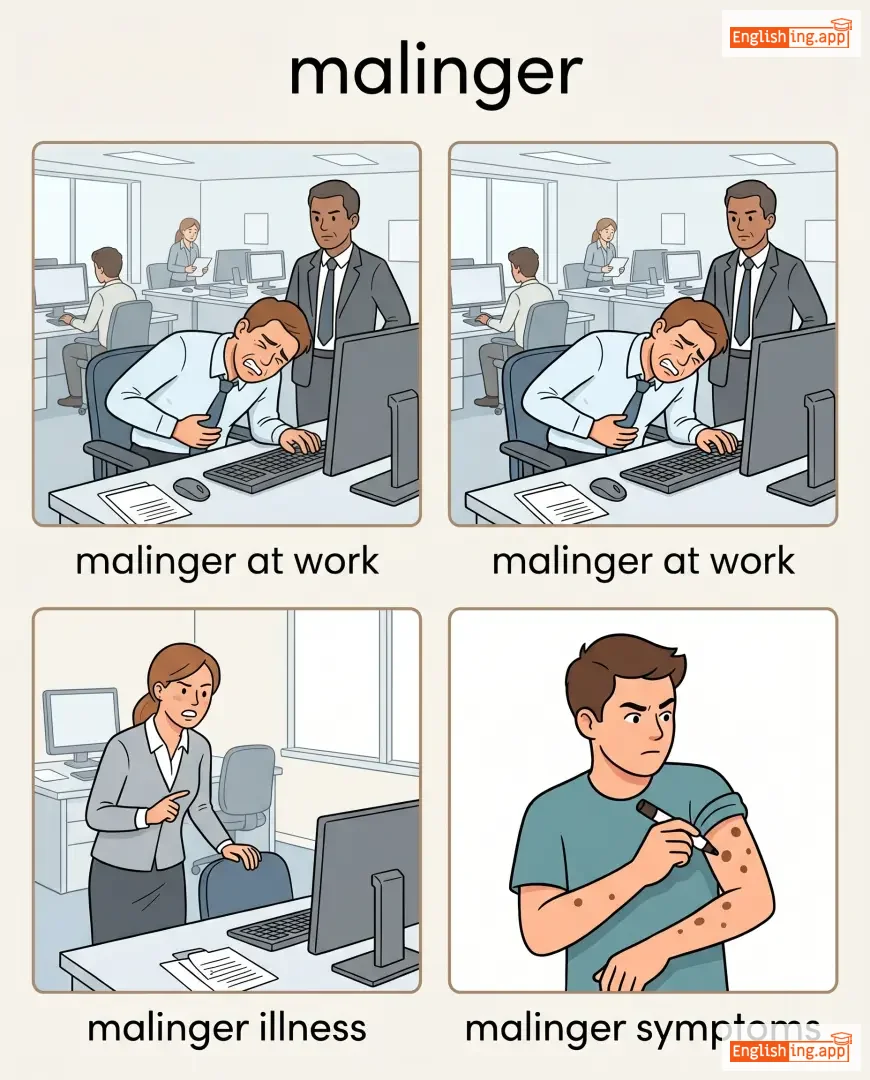
malinger illness, malinger at work, malinger symptoms
••••••
|
Malinger意味着装病,记住'马林格' = 假装生病
••••••
|
|
#5390
☠️
|
/məˈlɪɡnənt/
adjective
(malignant)
••••••
|
- •••••• |
恶性
èxìng
••••••
|
- •••••• | - •••••• | - •••••• | - •••••• |
dangerous or harmful in influence or effect; medically, tending to invade and destroy tissue
••••••
|
Doctors confirmed that the tumor was malignant. |
医生确认肿瘤是恶性的。
Yisheng queren zhongliu shi èxìng de.
••••••
|
malignant growth |
a harmful or cancerous development
••••••
|
恶性生长
èxìng shēngzhǎng
••••••
|
harmful, deadly, cancerous, dangerous, injurious
••••••
|
benign, harmless, safe
••••••
|
malignant tumor, malignant cell, malignant spirit, malignant influence
••••••
|
Malignant 代表 '恶性', 想一想, '恶' = 有害
••••••
|
|
#5391
🗣️
|
/məˈlaɪn/
verb
••••••
|
|
- •••••• |
maligned
••••••
|
maligned
••••••
|
maligns
••••••
|
maligning
••••••
|
to speak harmful untruths about someone; to slander or defame
••••••
|
She felt hurt when her rivals tried to malign her reputation. |
- •••••• |
malign influence |
a harmful or evil effect
••••••
|
- •••••• |
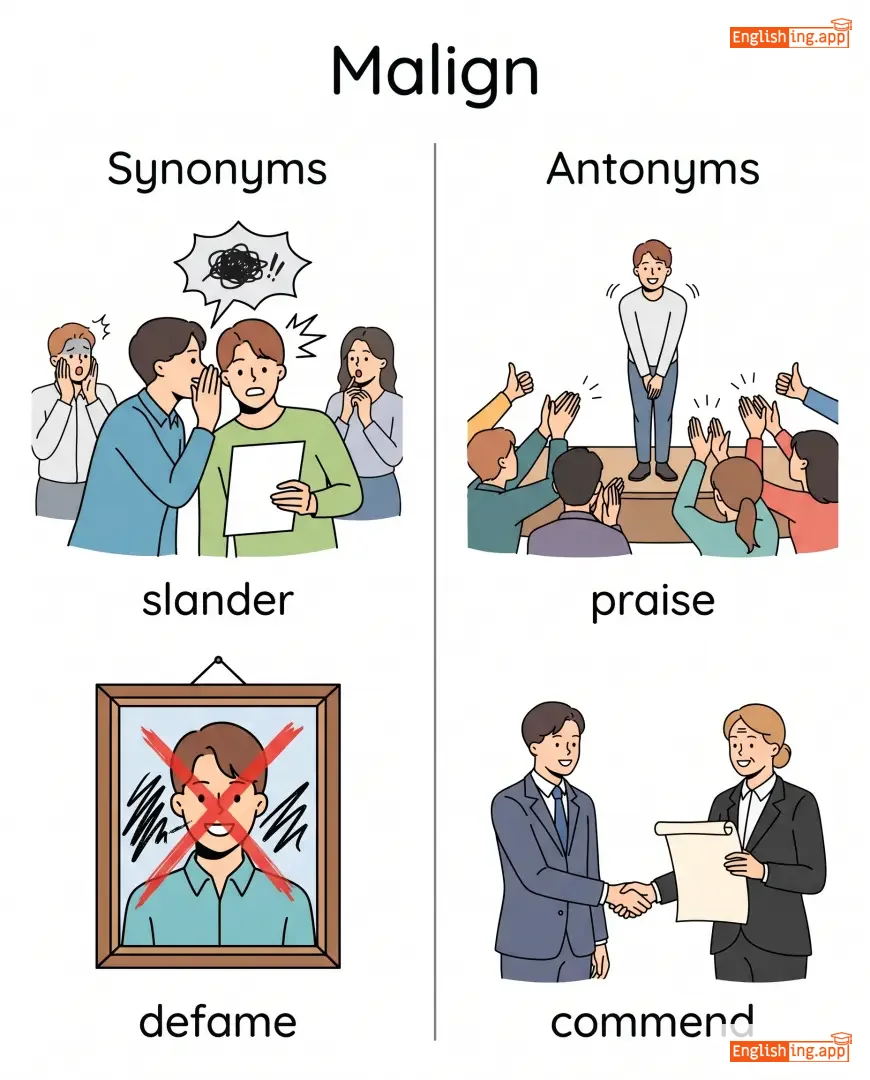
slander, defame, vilify, disparage, smear
••••••
|
praise, commend, extol
••••••
|
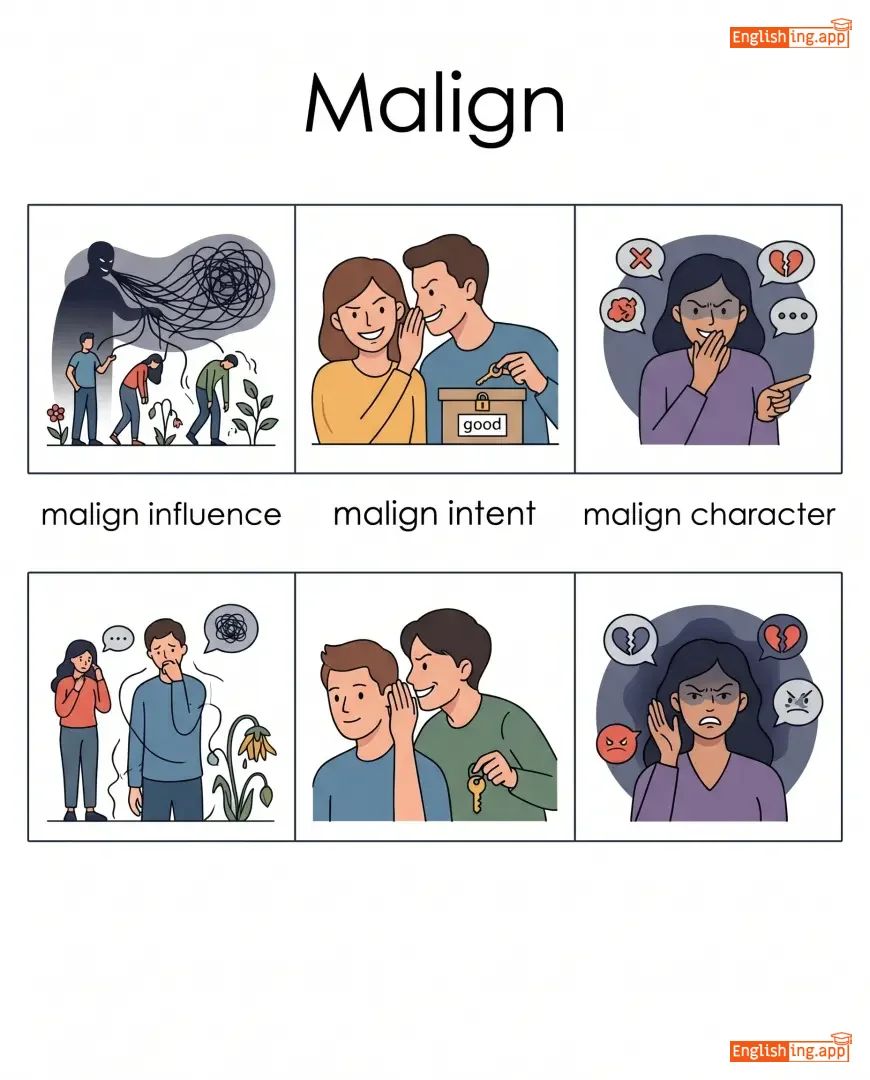
malign influence, malign intent, malign character, malign force
••••••
|
No •••••• |
|
#5392
🦠
|
/məˈlɪʃəs/
adjective
(马利休斯)
••••••
|
- •••••• |
恶意的
èyì de
••••••
|
- •••••• | - •••••• | - •••••• | - •••••• |
Characterized by malice; intending or intended to do harm.
••••••
|
The hackers launched a malicious attack on the company’s system. |
黑客对公司的系统发起了恶意攻击。
Hēikè duì gōngsī de xìtǒng fāqǐle èyì gōngjī.
••••••
|
malicious gossip |
Spreading harmful or false rumors about someone.
••••••
|
恶意谣言
èyì yáoyán
••••••
|
spiteful, vindictive, cruel, hostile, malevolent
••••••
|
kind, benevolent, helpful
••••••
|
malicious attack, malicious intent, malicious software, malicious rumor
••••••
|
恶意的像恶意软件,总是带来伤害。
••••••
|
|
#5393
💔
|
/ˈmælɪs/
noun
(mǎlìsī)
••••••
|
- •••••• |
恶意
eyi
••••••
|
- •••••• | - •••••• | - •••••• | - •••••• |
The intention or desire to do evil or cause harm.
••••••
|
She bore no malice towards her former friend. |
她对她的前朋友没有恶意。
Tā duì tā de qián péngyǒu méiyǒu èyì.
••••••
|
with malice aforethought |
An intention to harm or kill that was planned in advance.
••••••
|
怀有恶意的预谋
Huái yǒu èyì de yùmóu
••••••
|
ill will, hatred, spite, hostility, bitterness
••••••
|
kindness, goodwill, affection
••••••
|
act with malice, full of malice, bear malice, malice in his heart
••••••
|
Malice是做坏事的心情,像是得不到按摩就心生恶意。
••••••
|
|
#5394
⚖️
|
/mælˈfiːzəns/
noun
(马尔费赞斯)
••••••
|
- •••••• |
公职人员的不当行为
gongzhi renyuan de budang xingwei
••••••
|
- •••••• | - •••••• | - •••••• | - •••••• |
Wrongdoing or misconduct, especially by a public official.
••••••
|
The mayor was accused of malfeasance in office. |
市长因在职务中不当行为而被指控。
Shizhang yin zhiwu zhong budang xingwei er bei zhikong.
••••••
|
official malfeasance |
Misconduct or corruption by someone in authority.
••••••
|
官方的不当行为
guanfang de budang xingwei
••••••
|
misconduct, wrongdoing, corruption, fraud, misbehavior
••••••
|
integrity, honesty, righteousness
••••••
|
political malfeasance, corporate malfeasance, charged with malfeasance, acts of malfeasance
••••••
|
Mal + feasance = 坏行为。公职中的不当行为就是malfeasance。
••••••
|
|
#5395
👿
|
/məˈlɛvələnt/
adjective
(恶意的)
••••••
|
- •••••• |
恶意的
èyì de
••••••
|
- •••••• | - •••••• | - •••••• | - •••••• |
Having or showing a wish to do evil or harm to others.
••••••
|
The malevolent glare in his eyes frightened the children. |
他眼中的恶意目光吓到了孩子们。
Tā yǎnzhōng de èyì mùguāng xià dào le háizimen.
••••••
|
- •••••• | - •••••• | - •••••• |
hostile, wicked, evil, malicious, spiteful
••••••
|
benevolent, kind, friendly
••••••
|
malevolent spirit, malevolent force, malevolent glare, malevolent intent
••••••
|
Malevolent 意思是 '恶意的',表示做坏事的愿望。
••••••
|
|
#5396
😈
|
/məˈlɛvələns/
noun
(梅勒伏伦斯)
••••••
|
- •••••• |
恶意
èyì
••••••
|
- •••••• | - •••••• | - •••••• | - •••••• |
The state or condition of being malevolent; having or showing a wish to do evil to others.
••••••
|
His malevolence was clear in the cruel way he treated his rivals. |
他的恶意在他对待竞争对手的残忍方式中表现得淋漓尽致。
Tā de èyì zài tā duìdài jìngzhēng duìshǒu de cánrěn fāngshì zhōng biǎoxiàn dé línlí jìnzhì.
••••••
|
full of malevolence |
Having strong ill will or hatred toward someone.
••••••
|
充满恶意
chōngmǎn èyì
••••••
|
malice, spite, hatred, ill will, hostility
••••••
|
benevolence, kindness, goodwill
••••••
|
show malevolence, act with malevolence, full of malevolence, deep malevolence
••••••
|
Malevolent 意味着坏的,所以 malevolence 意味着坏的心(恶意)。
••••••
|
|
#5397
⚡
|
/ˌmæl.əˈfɪʃ.ənt/
adjective
(马莱菲森特)
••••••
|
- •••••• |
恶意的
è yì de
••••••
|
- •••••• | - •••••• | - •••••• | - •••••• |
Doing harm or evil; having a harmful effect.
••••••
|
The maleficient acts of the tyrant ruined the kingdom. |
暴君的恶意行为摧毁了王国。
Bàojūn de èyì xíngwéi cuīhuǐle wángguó.
••••••
|
- •••••• | - •••••• | - •••••• |
evil, malicious, damaging, injurious, malevolent
••••••
|
beneficial, kind, helpful
••••••
|
maleficient deeds, maleficient influence, maleficient ruler
••••••
|
Maleficient表示恶意,音近‘恶’(坏)+‘效率’(做事有效)。
••••••
|
|
#5398
🧛♀️
|
/məˈlɛfɪsənt/
adjective
(马利菲森特)
••••••
|
- •••••• |
邪恶
xiee
••••••
|
- •••••• | - •••••• | - •••••• | - •••••• |
Causing harm or destruction, especially by supernatural means.
••••••
|
The maleficent witch cursed the young princess.
那个恶毒的女巫诅咒了年轻的公主。
••••••
|
那个恶毒的女巫诅咒了年轻的公主。
Na ge exie de nǚwū zhǔzhòu le niánqīng de gōngzhǔ.
••••••
|
- •••••• | - •••••• | - •••••• |
harmful, evil, wicked, malevolent, destructive
••••••
|
benevolent, kind, good
••••••
|
maleficent force, maleficent spirit, maleficent magic
••••••
|
在电影Maleficent中,女巫是邪恶的 → Maleficent意味着邪恶
••••••
|
|
#5399
👹
|
/ˈmæl.əˌfæk.tər/
noun
(马雷法克托尔)
••••••
|
- •••••• |
恶棍
è gùn
••••••
|
- •••••• | - •••••• | - •••••• | - •••••• |
A person who commits a crime or does evil.
••••••
|
The malefactor was arrested for the robbery.
恶棍因抢劫被捕。
••••••
|
恶棍因抢劫被捕。
È gùn yīn qiǎngjié bèi bǔ.
••••••
|
- •••••• | - •••••• | - •••••• |
criminal, offender, wrongdoer, villain, culprit
••••••
|
benefactor, helper, supporter
••••••
|
dangerous malefactor, notorious malefactor, catch the malefactor
••••••
|
Malefactor = male (坏的) + factor (做事的人) → 做坏事的人
••••••
|
|
#5400
🧙♀️
|
/ˌmæl.əˈdɪk.ʃən/
noun
(玛勒迪克申)
••••••
|
- •••••• |
诅咒
zuzhou
••••••
|
- •••••• | - •••••• | - •••••• | - •••••• |
A curse or the utterance of a curse.
••••••
|
The witch cast a malediction upon the village.
女巫对村庄施下了诅咒。
••••••
|
女巫对村庄施下了诅咒。
Nǚwū duì cūnzhuāng shīxiàle zǔzhòu.
••••••
|
- •••••• | - •••••• | - •••••• |
curse, hex, spell, imprecation, jinx
••••••
|
blessing, benediction
••••••
|
ancient malediction, utter a malediction, powerful malediction
••••••
|
Malediction = Male (坏) + diction (言辞) → 坏言辞是诅咒
••••••
|
Vocabulary Quiz
Test your vocabulary by matching words with their translations or meanings.
Login to take the quiz
Comments (0)
Share your thoughts and join the discussion.
Join the discussion by logging in
Login to CommentNo comments yet
Be the first to share your thoughts!