



Swipe left or right, or use the buttons. Tap image to zoom.
例句翻译
单词
Lesson 44Lesson 44 - 遮罩切换
|
表情符号
|
单词 | Images | 翻译 | 过去时 | 过去分词 | 第三人称单数 | 动名词 | 含义 | 例句 | 例句翻译 | 示例表达 | 示例表达含义 | 示例表达翻译 | 同义词 | 反义词 | 搭配词 | 助记符 |
|---|---|---|---|---|---|---|---|---|---|---|---|---|---|---|---|---|---|
|
#1291
🪢
|
/ˌkæt ə ˈnaɪn ˌteɪlz/
noun
(kæt ə naɪn teɪlz)
••••••
|
- •••••• |
九尾鞭
jiu wei bian
••••••
|
- •••••• | - •••••• | - •••••• | - •••••• |
A whip with nine knotted cords, historically used for punishment.
••••••
|
The sailor feared the cat-o-nine-tails more than the storm at sea. |
那名水手比海上的风暴更害怕九尾鞭。
Na ming shuǐshǒu bǐ hǎi shàng de fēngbào gèng hàipà jiǔ wěi biān.
••••••
|
- •••••• | - •••••• | - •••••• |
whip, lash, scourge, flogger, strap
••••••
|
reward, mercy, pardon
••••••
|
wield the cat-o-nine-tails, sentenced to the cat-o-nine-tails, fear the cat-o-nine-tails
••••••
|
九尾鞭 = 惩罚 - cat-o-nine-tails
••••••
|
|
#1292
🔋
|
/ˈkæθoʊd/
noun
(阴极)
••••••
|
- •••••• |
负极
fu ji
••••••
|
- •••••• | - •••••• | - •••••• | - •••••• |
The negative electrode in a device such as a battery or tube, where electrons enter.
••••••
|
The cathode emits electrons in the tube.
阴极在管中发射电子。
••••••
|
阴极在管中发射电子。
Yinji zai guan zhong fasha dianzi.
••••••
|
- •••••• | - •••••• | - •••••• |
negative terminal, electrode
••••••
|
anode
••••••
|
cathode ray, cathode tube, cathode material
••••••
|
阴极(音似‘因’)进入电子流动的地方。
••••••
|
|
#1293
💧
|
/kəˈθɑːrtɪk/
adjective
(凯瑟特克)
••••••
|
|
宣泄的
xuānxiè de
••••••
|
- •••••• | - •••••• | - •••••• | - •••••• |
Providing psychological relief through open expression of emotions; also refers to a medicine that causes cleansing of the bowels.
••••••
|
Crying can be a cathartic experience.
哭泣可以是一种 cathartic 体验。
••••••
|
哭泣可以是一种宣泄的体验。
Kūqì kěyǐ shì yī zhǒng xuānxiè de tǐyàn.
••••••
|
- •••••• | - •••••• | - •••••• |
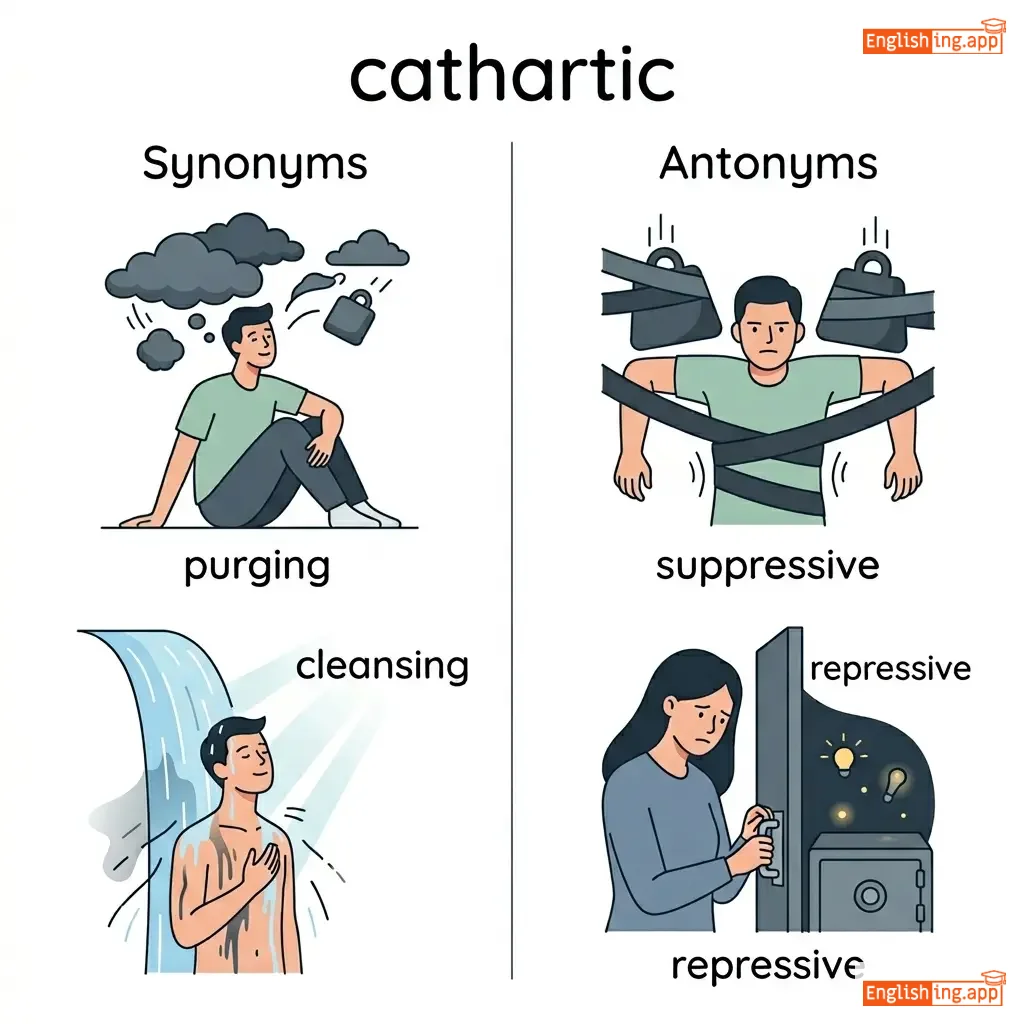
purging, cleansing, releasing, therapeutic
••••••
|
suppressive, repressive
••••••
|
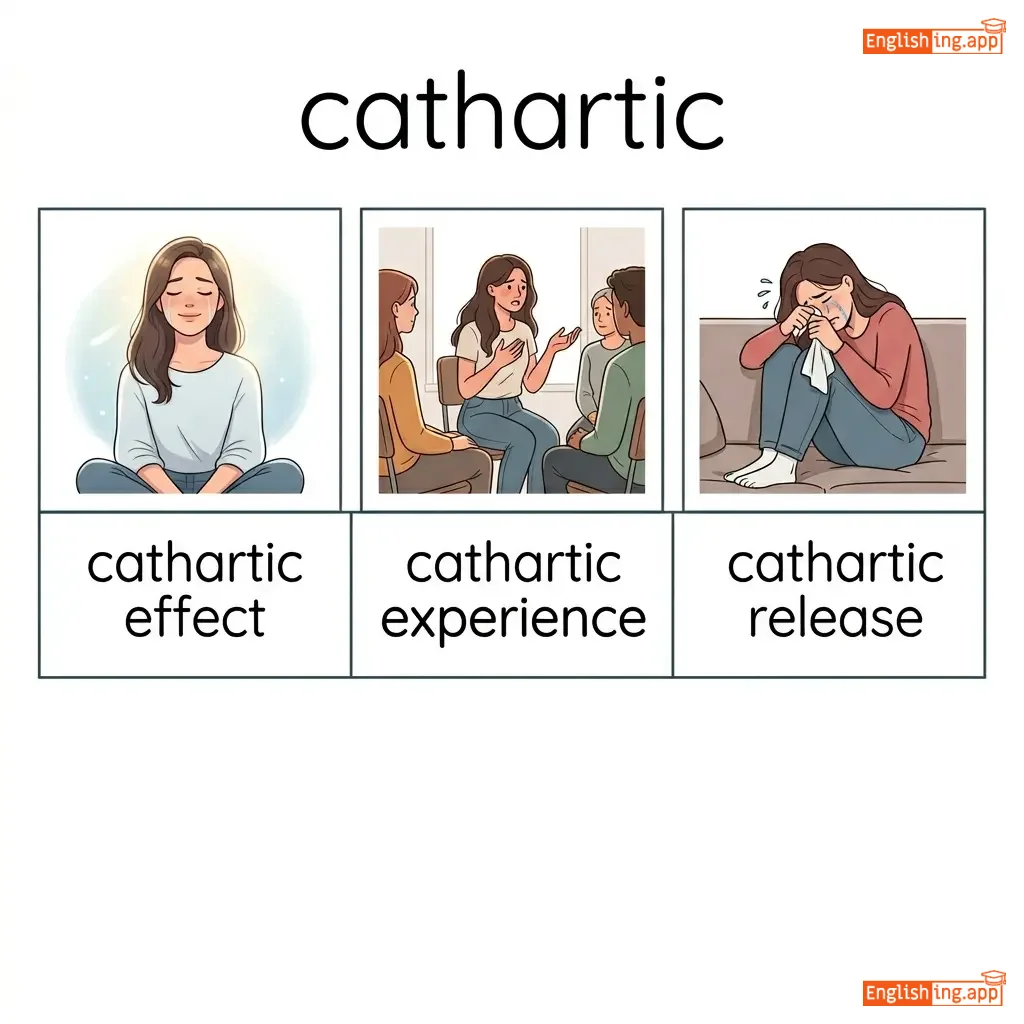
cathartic effect, cathartic experience, cathartic release
••••••
|
宣泄的意思是通过泪水清理内心的痛苦,带来心理的舒适。
••••••
|
|
#1294
🌊
|
/kəˈθɑːrsɪs/
noun
(凯瑟西斯)
••••••
|
- •••••• |
情感宣泄
qínggǎn xuānxiè
••••••
|
- •••••• | - •••••• | - •••••• | - •••••• |
The process of releasing strong emotions, providing relief.
••••••
|
Writing in her diary was a form of catharsis for her. |
在她的日记中写作对她来说是一种情感宣泄的方式。
Zài tā de rìjì zhōng xiězuò duì tā lái shuō shì yī zhǒng qínggǎn xuānxiè de fāngshì.
••••••
|
- •••••• | - •••••• | - •••••• |
release, relief, cleansing, purging, venting
••••••
|
suppression, repression
••••••
|
emotional catharsis, catharsis through art, cathartic release
••••••
|
凯瑟西斯意味着通过写作释放情感,就像在日记中一样。
••••••
|
|
#1295
🍽️
|
/ˈkeɪtər/
verb
••••••
|
- •••••• | - •••••• |
catered
••••••
|
catered
••••••
|
caters
••••••
|
catering
••••••
|
To provide food, drinks, or services, usually for an event or group.
••••••
|
The company catered the wedding reception. |
- •••••• |
cater to |
To provide what is wanted or needed by someone, often excessively.
••••••
|
- •••••• |
provide, supply, serve, furnish, deliver
••••••
|
neglect, ignore
••••••
|
cater for, cater to needs, catering services, cater events
••••••
|
No •••••• |
|
#1296
✅
|
/ˌkætəˈɡɒrɪkəl/
adjective
(绝对的)
••••••
|
|
绝对的
juéduì de
••••••
|
- •••••• | - •••••• | - •••••• | - •••••• |
Absolute and without exception; expressed clearly and directly.
••••••
|
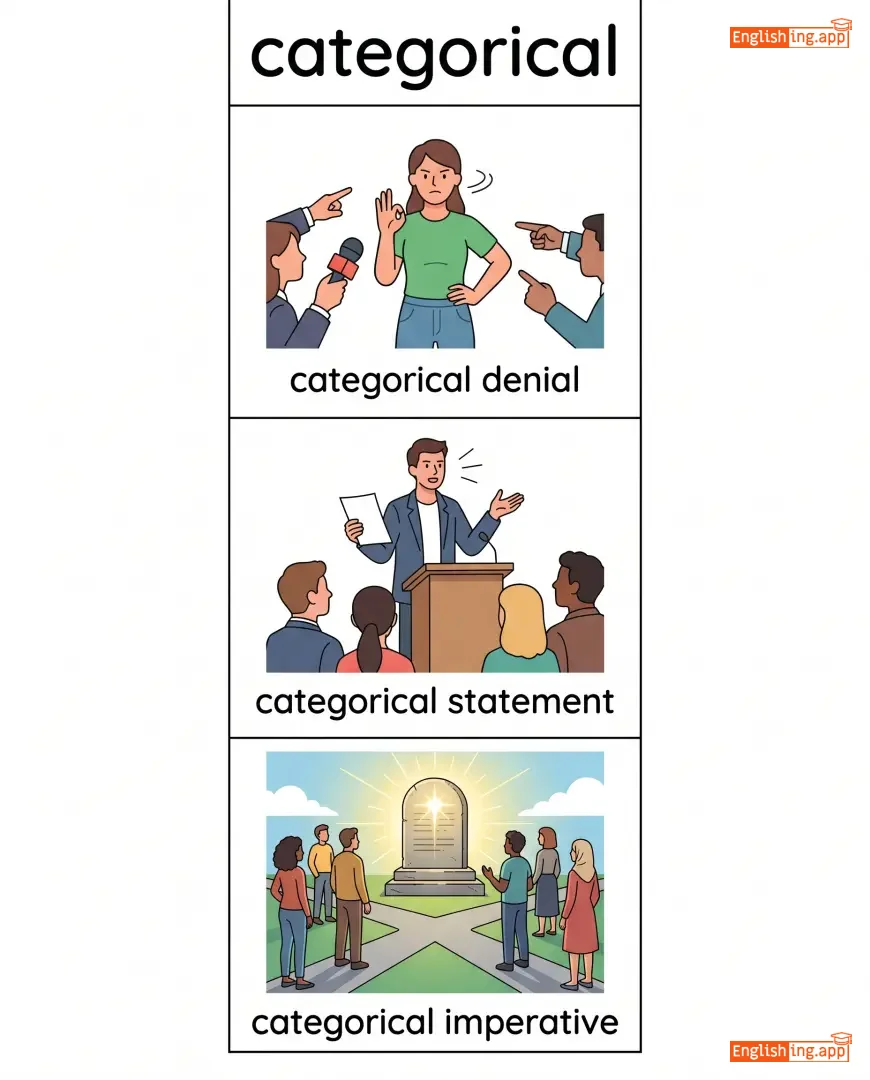
She gave a categorical denial of the allegations. |
她对指控作出了绝对否认。
Tā duì zhǐkòng zuòchūle juéduì fǒurèn.
••••••
|
categorical imperative |
A moral rule that is absolute and must be followed in all circumstances.
••••••
|
绝对命令
juéduì mìnglìng
••••••
|
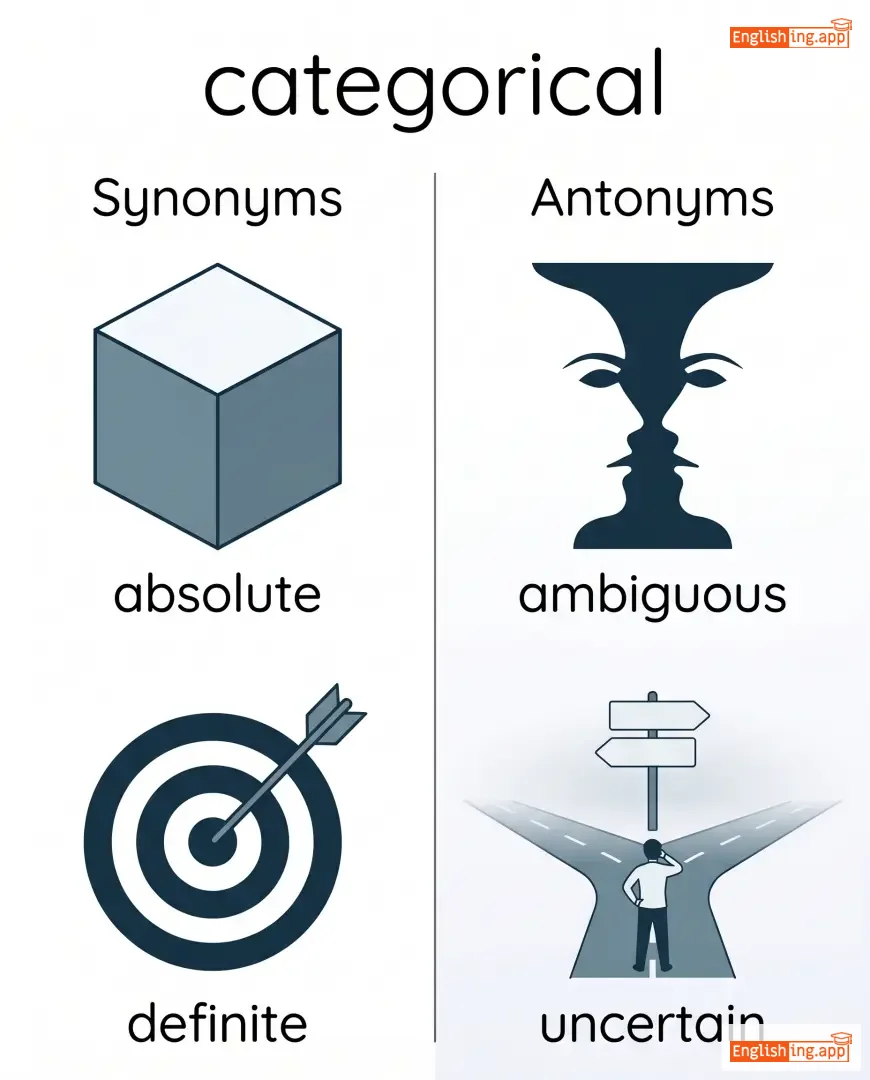
absolute, definite, explicit, unconditional, clear
••••••
|
ambiguous, uncertain, conditional
••••••
|
categorical denial, categorical statement, categorical imperative, categorical assurance
••••••
|
‘绝对’意味着无可置疑的清晰,就像强制性的规则。
••••••
|
|
#1297
📖
|
/ˈkætɪˌkɪzəm/
noun
(凯特基斯姆)
••••••
|
- •••••• |
教义问答
jiaoyi wenda
••••••
|
- •••••• | - •••••• | - •••••• | - •••••• |
A summary of religious principles often in the form of questions and answers; also a set of fixed questions or beliefs.
••••••
|
The priest taught the children the catechism every Sunday.
牧师每周日都教孩子们教义问答。
••••••
|
牧师每周日都教孩子们教义问答。
Mùshī měi zhōurì dōu jiào háizimen jiàoyì wèndá.
••••••
|
- •••••• | - •••••• | - •••••• |
doctrine, teaching, creed, dogma
••••••
|
heresy, disbelief
••••••
|
Catholic catechism, teach catechism, study catechism, catechism class
••••••
|
教义问答就像是猫和问题与答案。
••••••
|
|
#1298
📣
|
/ˈkætˌkɔːl/
noun/verb
(kètkǎo)
••••••
|
- •••••• |
性骚扰或不满的喊声或口哨声
xìng sāo rǎo huò bù mǎn de hǎn shēng huò kǒu shào shēng
••••••
|
catcalled
kètkǎod
••••••
|
catcalled
kètkǎod
••••••
|
catcalls
kètkǎos
••••••
|
catcalling
kètkǎolíng
••••••
|
A loud whistle or shout of disapproval or sexual harassment directed at someone.
••••••
|
The actress ignored the catcalls from the crowd.
女演员无视人群中的猫叫声。
••••••
|
女演员无视人群中的猫叫声。
Nǚ yǎnyuán wúshì rénqún zhōng de māo jiàoshēng.
••••••
|
- •••••• | - •••••• | - •••••• |
whistle, jeer, taunt, boo
••••••
|
applause, cheer
••••••
|
loud catcall, rude catcall, ignore catcalls, shout catcall
••••••
|
Catcall表示口哨声 – 就像猫发出的声音一样,但这里是用来打扰别人的。
••••••
|
|
#1299
🌋
|
/kəˈtæstrəfi/
noun
(凯塔斯特罗菲)
••••••
|
- •••••• |
灾难
zainan
••••••
|
- •••••• | - •••••• | - •••••• | - •••••• |
A sudden and widespread disaster or misfortune.
••••••
|
The earthquake was a catastrophe for the entire region. |
地震对整个地区来说是一次灾难。
Dìzhèn duì zhěnggè dìqū lái shuō shì yīcì zāinàn.
••••••
|
financial catastrophe |
A complete financial disaster.
••••••
|
金融灾难
jīnróng zāinàn
••••••
|
disaster, calamity, tragedy, misfortune, ruin
••••••
|
success, fortune, prosperity
••••••
|
natural catastrophe, economic catastrophe, political catastrophe, human catastrophe
••••••
|
Catastrophe意味着巨大灾难–就像猫无法幸存,当灾难来临时。
••••••
|
|
#1300
💧
|
/ˈkætərækt/
noun
(卡他拉克特)
••••••
|
- •••••• |
白内障 / 瀑布
báinèizhàng / pùbù
••••••
|
- •••••• | - •••••• | - •••••• | - •••••• |
A medical condition causing clouding of the eye's lens; also a large waterfall.
••••••
|
The old man suffered from cataracts in both eyes. |
那位老年人双眼都患有白内障。
Nà wèi lǎoniánrén shuāngyǎn dōu huàn yǒu báinèizhàng.
••••••
|
- •••••• | - •••••• | - •••••• |
waterfall, cascade, blindness, opacity
••••••
|
clarity, vision
••••••
|
cataract surgery, cataract removal, dense cataract, cataract blindness
••••••
|
白内障手术就是眼部手术,'cat'和'act'提示手术过程。
••••••
|
|
#1301
🚀
|
/ˈkætəpʌlt/
noun/verb
(弹射器)
••••••
|
- •••••• |
弹射器
tánshè qì
••••••
|
catapulted
弹射了
••••••
|
catapulted
弹射了
••••••
|
catapults
弹射
••••••
|
catapulting
弹射中
••••••
|
A device for launching objects at high speed; to hurl or launch something suddenly.
••••••
|
The invention catapulted him to international fame.
发明将他弹射到国际声誉。
••••••
|
发明将他弹射到国际声誉。
Fāmíng jiāng tā tánshè dào guójì shēngyù.
••••••
|
catapult to success
弹射到成功
••••••
|
To rise to success very quickly and suddenly.
••••••
|
弹射到成功
Tánshè dào chénggōng
••••••
|
launch, propel, hurl, fling, throw
••••••
|
hold, retain, keep
••••••
|
catapult into, catapult across, catapult to fame, catapult forward
••••••
|
像弹射一样迅速成功,使用弹射器。
••••••
|
|
#1302
🔥
|
/ˈkætəˌlaɪz/
verb
(凯特莱兹)
••••••
|
- •••••• |
催化
cuihua
••••••
|
catalyzed
凯特莱兹德
••••••
|
catalyzed
凯特莱兹德
••••••
|
catalyzes
凯特莱兹斯
••••••
|
catalyzing
凯特莱兹英
••••••
|
To cause or accelerate a reaction or change.
••••••
|
The new law catalyzed reforms across the sector.
新法律催化了整个行业的改革。
••••••
|
新法律催化了整个行业的改革。
Xin falu cuihua le zhengge hangye de gaige.
••••••
|
- •••••• | - •••••• | - •••••• |
trigger, activate, accelerate, initiate, stimulate
••••••
|
delay, hinder, obstruct
••••••
|
catalyze change, catalyze reaction, catalyze development, catalyze innovation
••••••
|
Catalyze表示催化 - 就像猫(cat)突然跳起来推动变化。
••••••
|
|
#1303
⚡
|
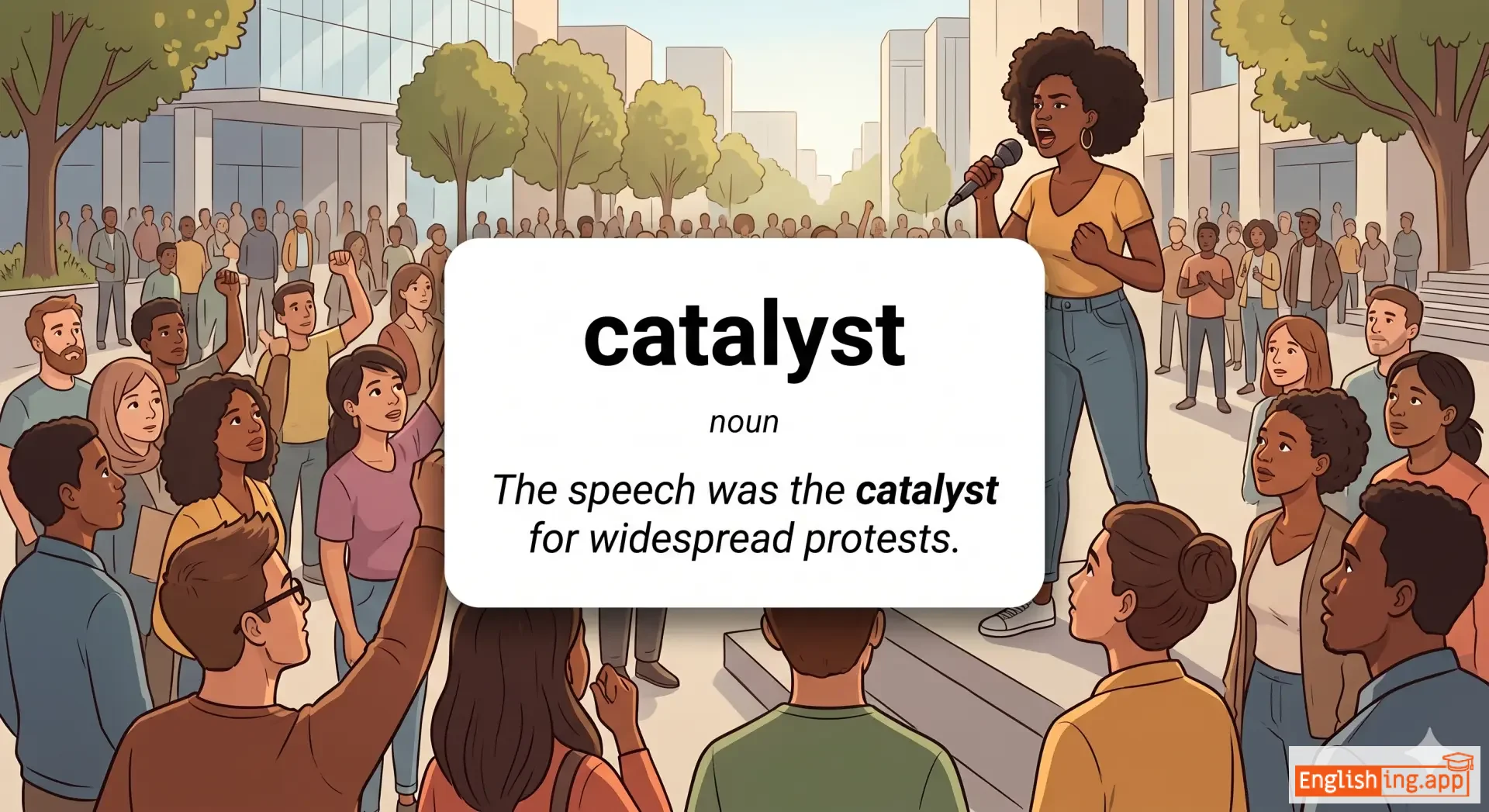
/ˈkætəlɪst/
noun
(kā tài lì sī tè)
••••••
|
|
催化剂
cuī huà jì
••••••
|
- •••••• | - •••••• | - •••••• | - •••••• |
Something that speeds up or causes an event or change without being changed itself.
••••••
|
The speech was the catalyst for widespread protests. |
这场演讲成为了广泛抗议的催化剂。
Zhè chǎng yǎn jiǎng chéng wéi le guǎng fàn kàng yì de cuī huà jì.
••••••
|
- •••••• | - •••••• | - •••••• |
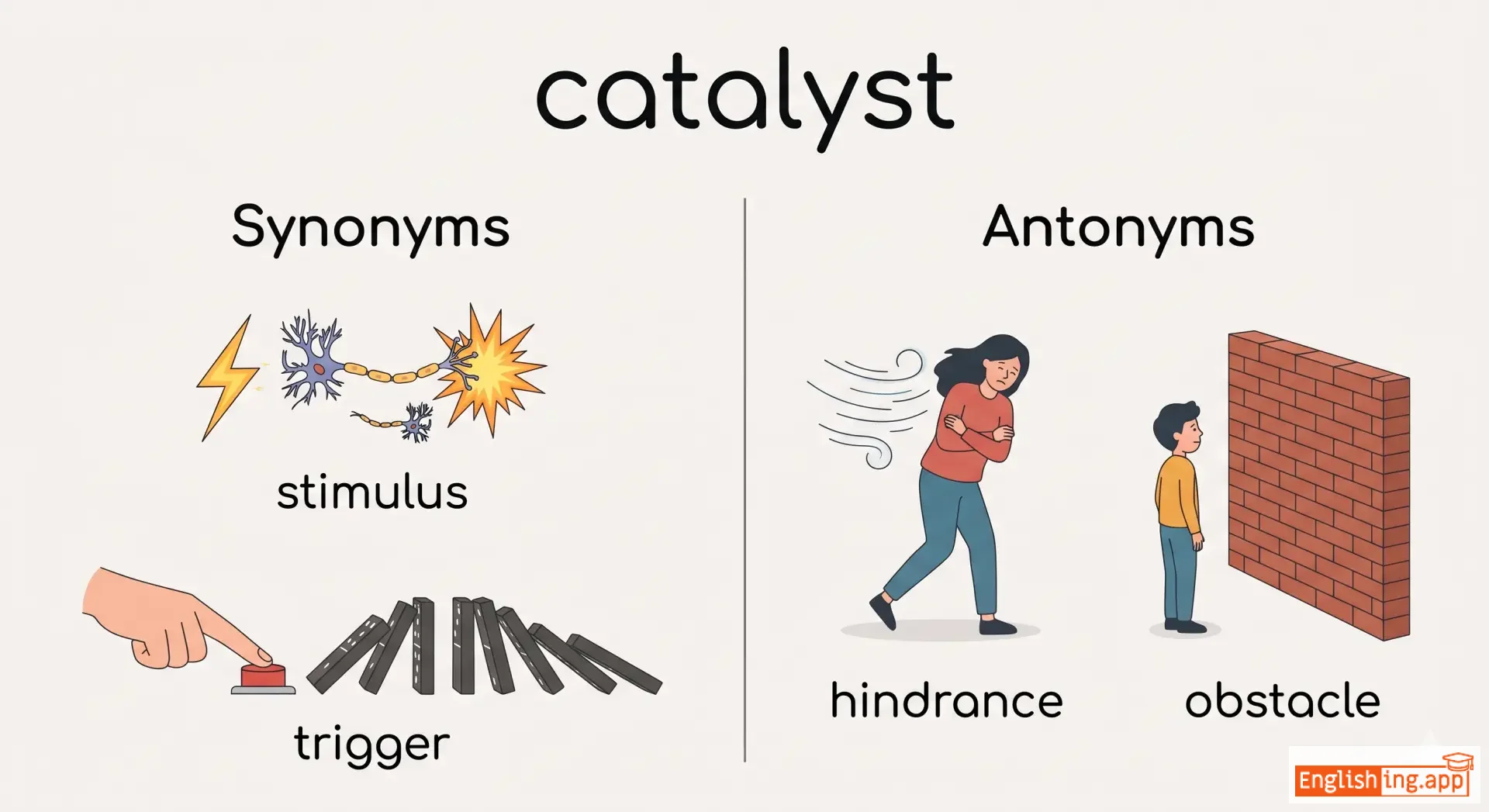
stimulus, trigger, spark, impetus, accelerator
••••••
|
hindrance, obstacle, deterrent
••••••
|
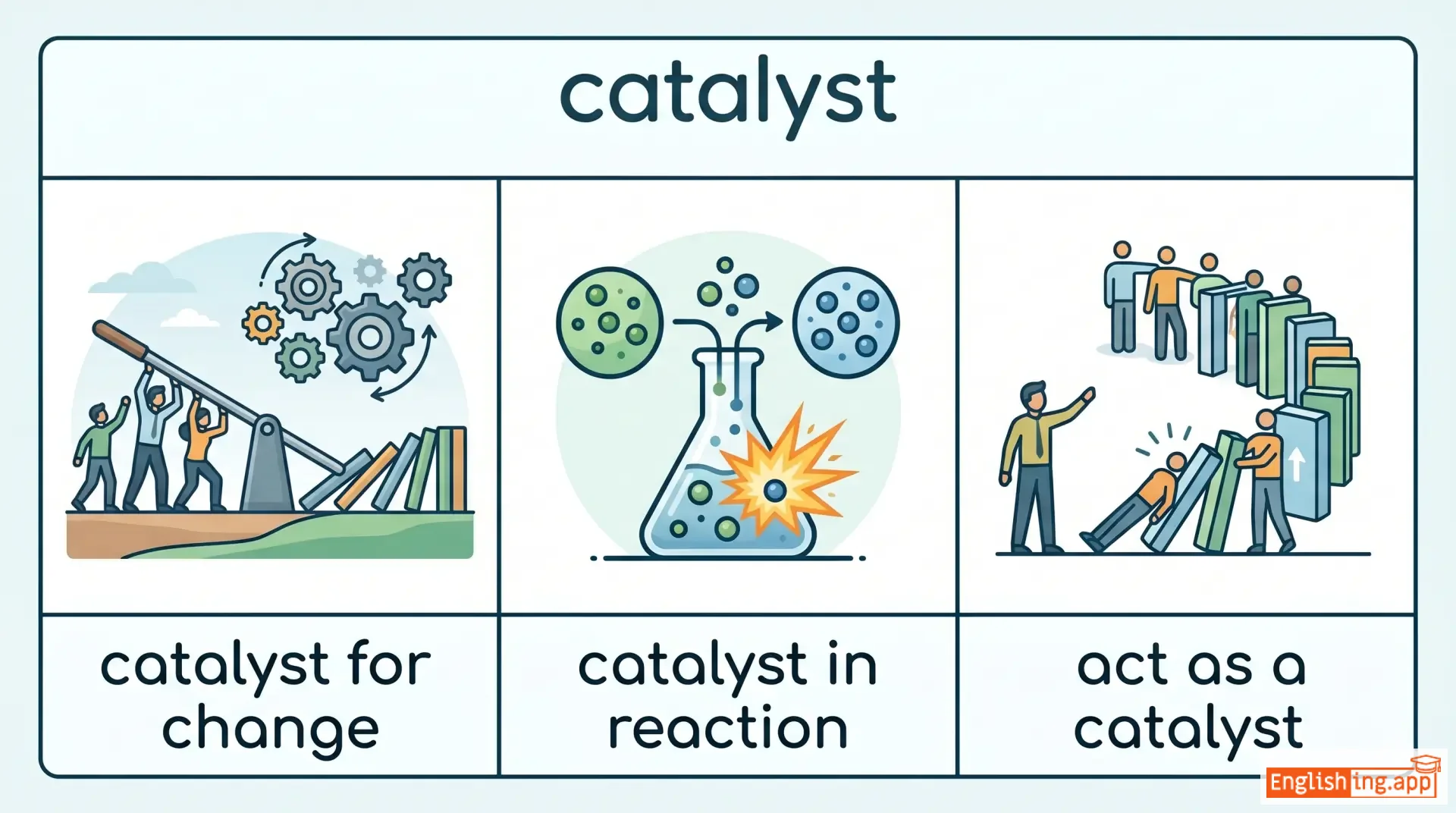
catalyst for change, catalyst in reaction, act as a catalyst, important catalyst
••••••
|
催化剂来自 Catalyst - 演讲成为催化剂 (cuī huà jì)
••••••
|
|
#1304
💥
|
/ˌkætəˈklɪzmɪk/
adjective
(卡塔克利兹米克)
••••••
|
- •••••• |
灾难性的
zāinàn xìng de
••••••
|
- •••••• | - •••••• | - •••••• | - •••••• |
Relating to or denoting a violent natural event or upheaval.
••••••
|
The war had cataclysmic effects on the nation's economy. |
战争对该国经济产生了灾难性的影响。
Zhànzhēng duì gāi guó jīngjì chǎnshēngle zāinàn xìng de yǐngxiǎng.
••••••
|
- •••••• | - •••••• | - •••••• |
disastrous, catastrophic, destructive, ruinous, apocalyptic
••••••
|
fortunate, beneficial, constructive
••••••
|
cataclysmic change, cataclysmic event, cataclysmic destruction, cataclysmic impact
••••••
|
cataclysmic 意味着灾难性的 - 想一想 '灾难'。
••••••
|
|
#1305
🌋
|
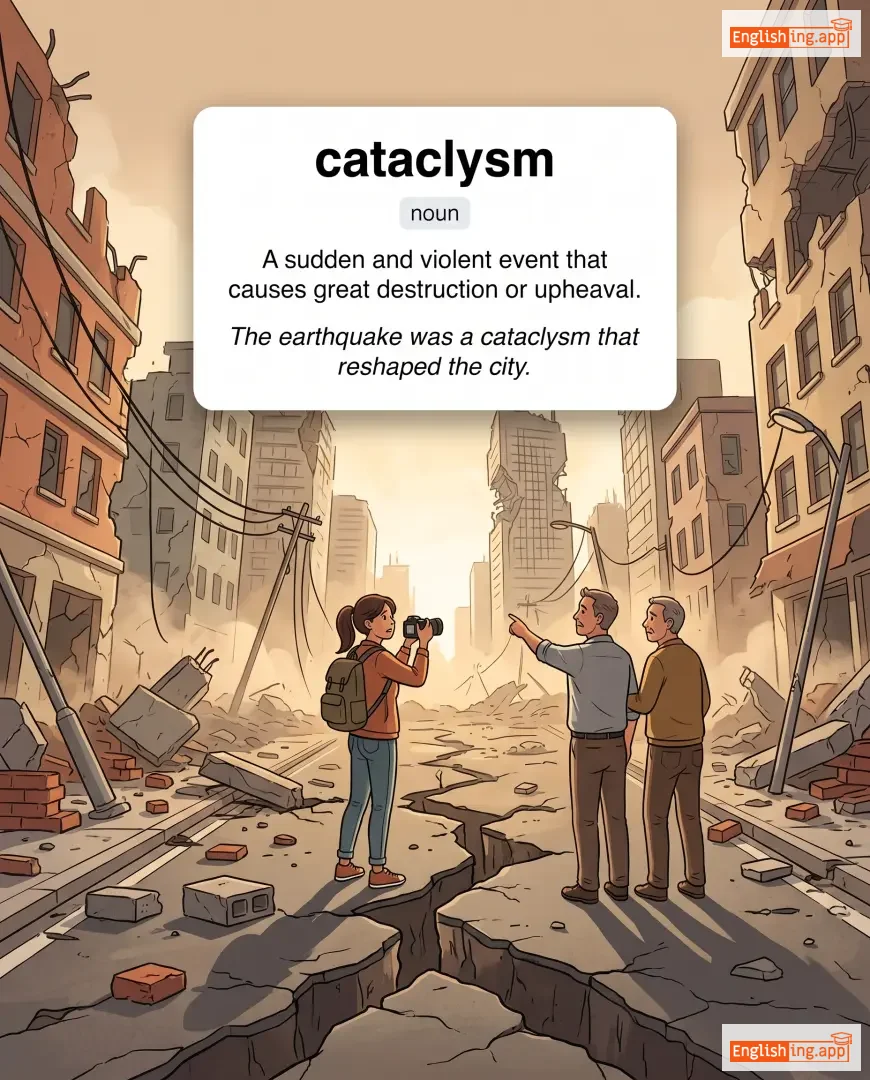
/ˈkætəˌklɪzəm/
noun
(kètàkèlízīm)
••••••
|
|
灾难
zāinàn
••••••
|
- •••••• | - •••••• | - •••••• | - •••••• |
A sudden and violent event that causes great destruction or upheaval.
••••••
|
The earthquake was a cataclysm that reshaped the city.
地震是一个重新塑造城市的灾难。
••••••
|
地震是一个重新塑造城市的灾难。
Dìzhèn shì yīgè chóngxīn sùzào chéngshì de zāinàn.
••••••
|
- •••••• | - •••••• | - •••••• |
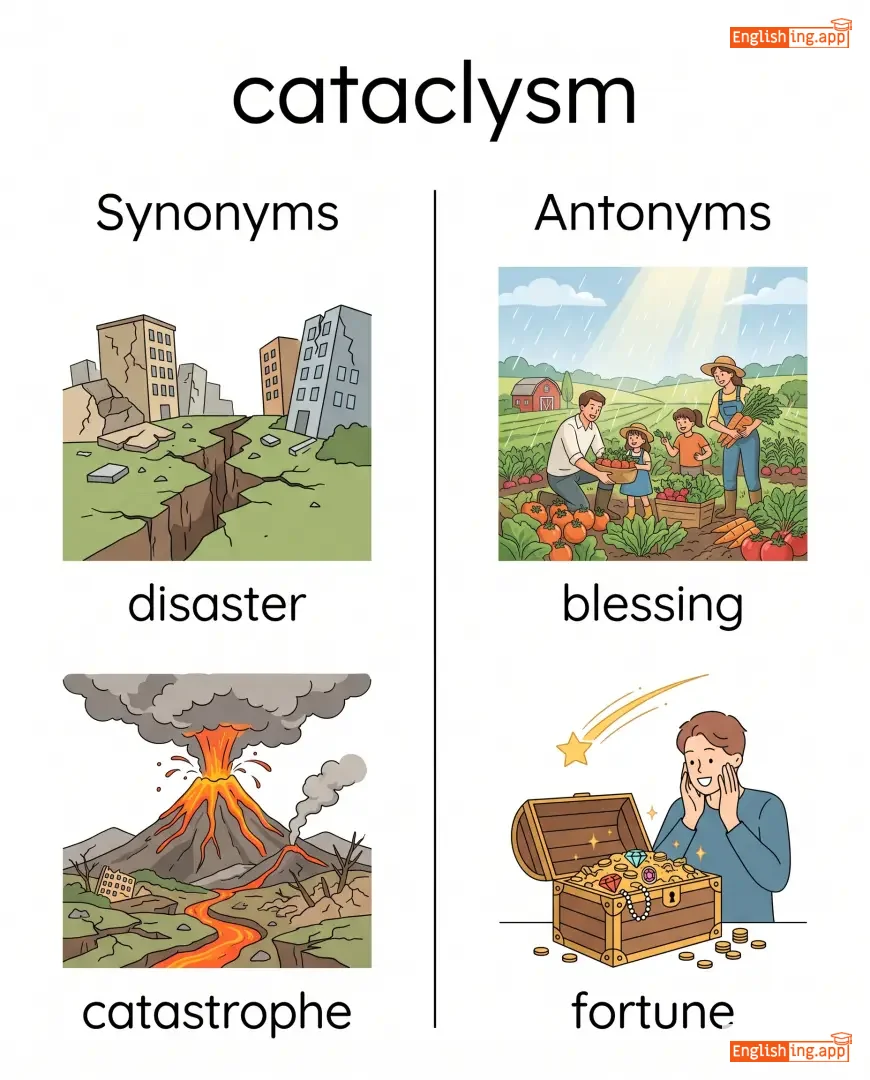
disaster, catastrophe, upheaval, calamity, devastation
••••••
|
blessing, fortune, miracle
••••••
|
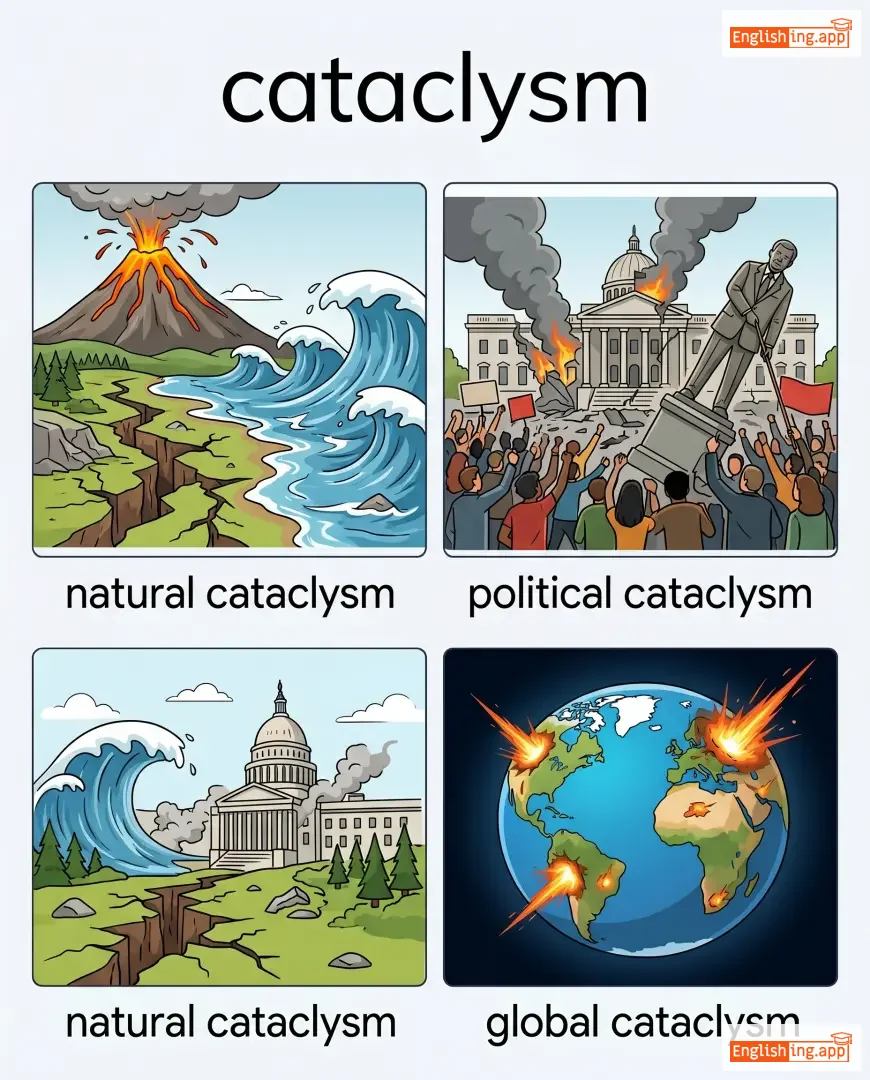
natural cataclysm, political cataclysm, global cataclysm, sudden cataclysm
••••••
|
灾难:像地震一样,彻底改变一切。
••••••
|
|
#1306
🦴
|
/ˈkɑːrtɪlɪdʒ/
noun
(kǎtílèijié)
••••••
|
- •••••• |
软骨
ruǎngǔ
••••••
|
- •••••• | - •••••• | - •••••• | - •••••• |
A firm, flexible connective tissue found in various parts of the body such as joints, ear, and nose.
••••••
|
The doctor explained that the injury damaged the cartilage in his knee. |
医生解释说,伤害损坏了他膝盖的软骨。
Yīshēng jiěshì shuō, shānghài sǔnhuài le tā xīgài de ruǎngǔ.
••••••
|
- •••••• | - •••••• | - •••••• |
gristle, tissue, joint padding, connective tissue
••••••
|
bone, muscle
••••••
|
knee cartilage, ear cartilage, cartilage damage, cartilage tissue
••••••
|
软骨就像弹性橡胶一样,给关节带来灵活性。
••••••
|
|
#1307
🌀
|
/ˈkæʒuɪstri/
noun
(凯斯威斯特里)
••••••
|
- •••••• |
诡辩术
guǐbiàn shù
••••••
|
- •••••• | - •••••• | - •••••• | - •••••• |
The use of clever but false reasoning, especially in relation to moral questions.
••••••
|
The lawyer’s argument was dismissed as mere casuistry. |
律师的辩论被作为单纯的诡辩术驳回了。
Lǜshī de biànlùn bèi zuòwéi dānchún de guǐbiàn shù bóhuíle.
••••••
|
- •••••• | - •••••• | - •••••• |
sophistry, fallacy, deception, trickery, quibbling
••••••
|
truth, honesty, sincerity
••••••
|
moral casuistry, political casuistry, legal casuistry
••••••
|
Casual trickery → casuistry 意味着诡辩术
••••••
|
|
#1308
🚑
|
/ˈkæʒuəlti/
noun
(凯兹沃尔提)
••••••
|
- •••••• |
在事故或战争中受伤或死亡的人
zai shigu huo zhanzheng zhong shoushang huo siwang de ren
••••••
|
- •••••• | - •••••• | - •••••• | - •••••• |
A person injured or killed in an accident or war.
••••••
|
The accident resulted in several casualties.
这起事故造成了几名伤亡人员。
••••••
|
这起事故造成了几名伤亡人员。
Zhe qi shigu zaocheng le ji ming shangwang renyuan.
••••••
|
- •••••• | - •••••• | - •••••• |
victim, fatality, sufferer, injured
••••••
|
survivor, safe person
••••••
|
civilian casualties, war casualties, accident casualties
••••••
|
Casual → casualty 意思是事故或战争中的伤亡人员
••••••
|
|
#1309
👕
|
/ˈkæʒuəl/
adjective
(kā zhú'ěr)
••••••
|
- •••••• |
休闲的
xiūxián de
••••••
|
- •••••• | - •••••• | - •••••• | - •••••• |
Relaxed and informal in style, manner, or appearance.
••••••
|
He wore casual clothes to the informal gathering.
他穿着休闲的衣服参加了非正式的聚会。
••••••
|
他穿着休闲的衣服参加了非正式的聚会。
Tā chuānzhuó xiūxián de yīfú cānjiāle fēizhèngshì de jùhuì.
••••••
|
casual acquaintance
偶然相识
••••••
|
A person you know but not very well.
••••••
|
偶然相识
ǒurán xiāngshí
••••••
|
informal, relaxed, easygoing, nonchalant, laid-back
••••••
|
formal, serious, strict
••••••
|
casual clothes, casual meeting, casual conversation, casual approach
••••••
|
休闲装扮代表轻松随意的风格
••••••
|
|
#1310
✂️
|
/ˈkæstreɪt/
verb
(凯斯特雷特)
••••••
|
- •••••• |
阉割
yāngē
••••••
|
castrated
凯斯特雷特德
••••••
|
castrated
凯斯特雷特德
••••••
|
castrates
凯斯特雷特斯
••••••
|
castrating
凯斯特雷廷
••••••
|
To remove the testicles of a male animal or human.
••••••
|
The farmer castrated the young bulls to make them easier to manage.
ðə fɑɹmɚ kæstɾeɪtɪd ðə jʌŋ bʊlz tʊ meɪk ðɛm iːziɚ tʊ mænɪdʒ.
••••••
|
农民阉割了年轻的公牛,以便更容易管理它们。
Nóngmín yāngēle niánqīng de gōngniú, yǐbiàn gèng róngyì guǎnlǐ tāmen.
••••••
|
- •••••• | - •••••• | - •••••• |
neuter, geld, emasculate, sterilize
••••••
|
fertilize, empower
••••••
|
castrate animals, castrate bulls, castrate male cats
••••••
|
阉割 = 切除 → 阉割就是去除睾丸
••••••
|
|
#1311
⚡
|
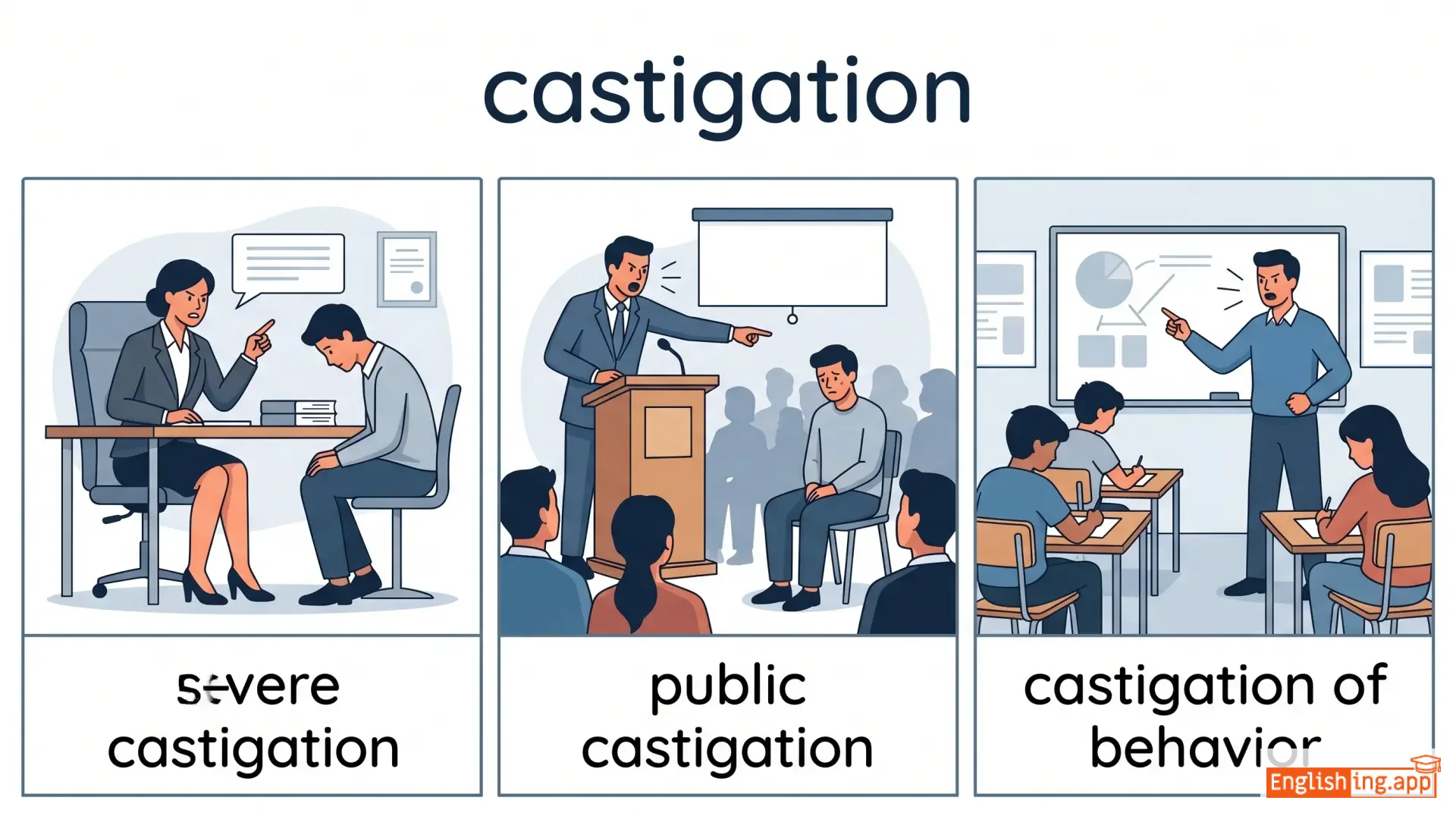
/ˌkæstɪˈɡeɪʃən/
noun
(凯斯提盖肖恩)
••••••
|
|
严厉的批评或惩罚
yanli de piping huo chengfa
••••••
|
- •••••• | - •••••• | - •••••• | - •••••• |
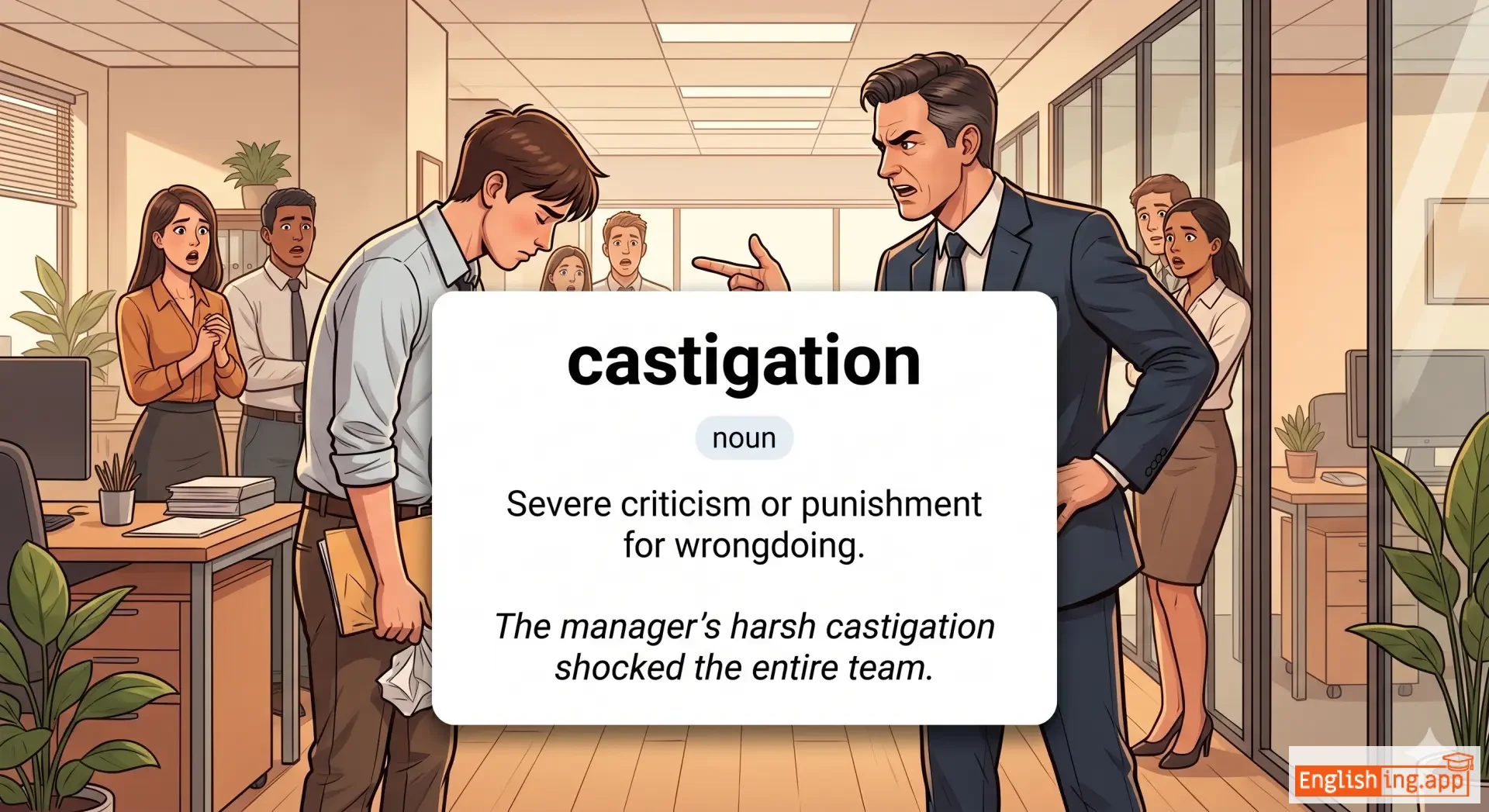
Severe criticism or punishment for wrongdoing.
••••••
|
The manager’s harsh castigation shocked the entire team.
经理的严厉批评震惊了整个团队。
••••••
|
经理的严厉批评震惊了整个团队。
Jingli de yanli piping zhenjing le zhengge tuandui.
••••••
|
- •••••• | - •••••• | - •••••• |
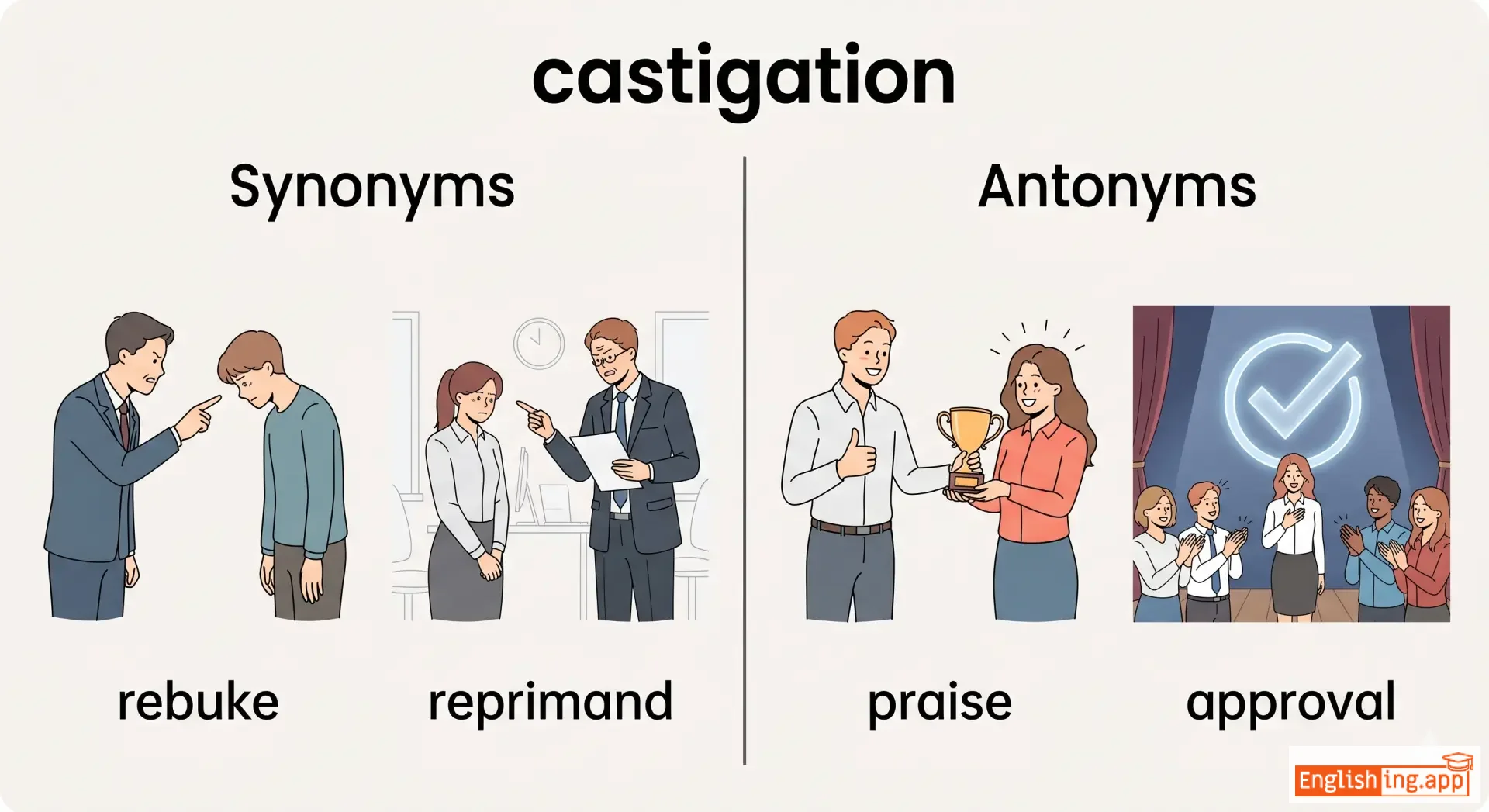
rebuke, reprimand, scolding, chastisement, condemnation
••••••
|
praise, approval, commendation
••••••
|
severe castigation, public castigation, castigation of behavior
••••••
|
Cast (cast)就像惩罚 = castigation 就是严厉批评
••••••
|
|
#1312
⚡
|
/ˈkæstɪˌɡeɪt/
verb
(卡斯提盖特)
••••••
|
- •••••• |
严厉批评
yánlì pīpíng
••••••
|
castigated
卡斯提盖特德
••••••
|
castigated
卡斯提盖特德
••••••
|
castigates
卡斯提盖特斯
••••••
|
castigating
卡斯提盖廷
••••••
|
To criticize someone severely or to punish harshly.
••••••
|
The teacher castigated the students for their poor behavior.
老师因学生不良行为而严厉批评他们。
••••••
|
老师因学生不良行为而严厉批评他们。
Lǎoshī yīn xuéshēng bùliáng xíngwéi ér yánlì pīpíng tāmen.
••••••
|
- •••••• | - •••••• | - •••••• |
criticize, rebuke, reprimand, scold, punish
••••••
|
praise, commend, reward
••••••
|
castigate severely, castigate publicly, castigate harshly
••••••
|
严厉批评类似“卡斯(cast)” – 想象老师对学生的批评像一块石头砸下去。
••••••
|
|
#1313
🧑🤝🧑
|
/kæst/
noun
(カースト)
••••••
|
|
种姓
zhǒngxìng
••••••
|
- •••••• | - •••••• | - •••••• | - •••••• |
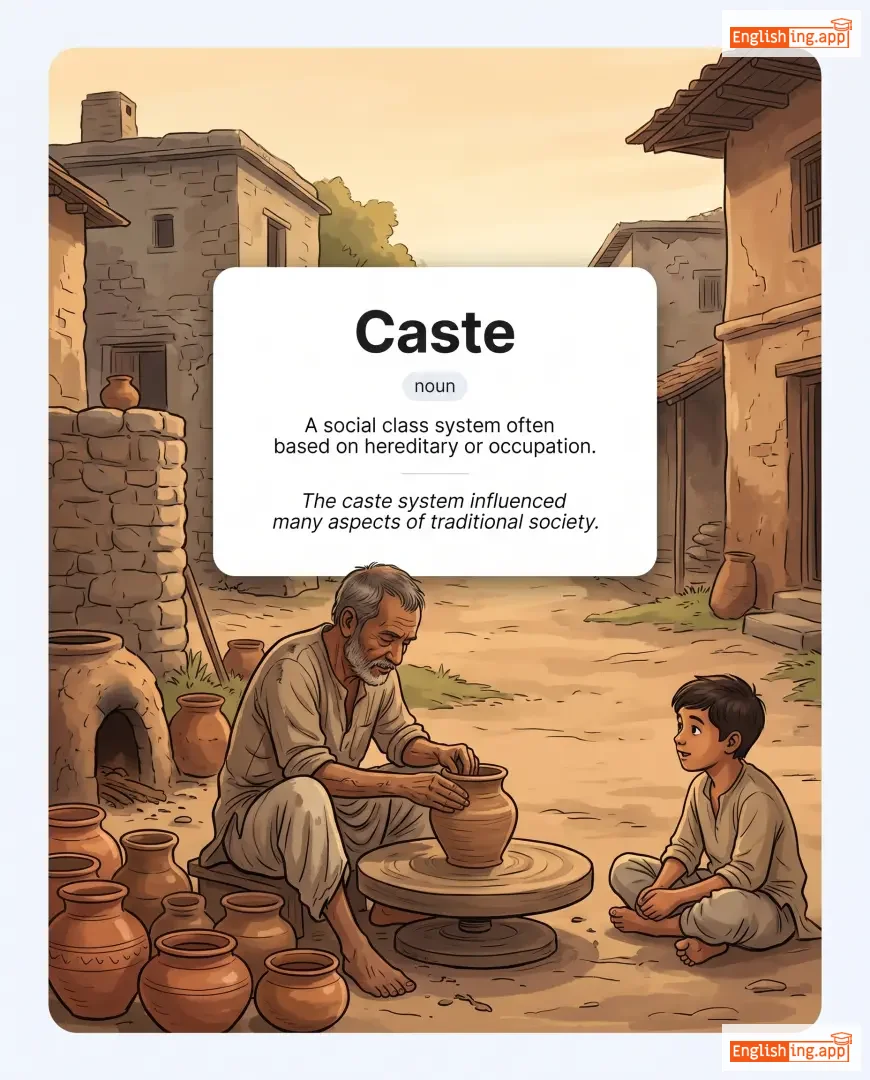
A social class system often based on hereditary or occupation.
••••••
|
The caste system influenced many aspects of traditional society. |
种姓制度影响了传统社会的许多方面。
Zhǒngxìng zhìdù yǐngxiǎngle chuántǒng shèhuì de xǔduō fāngmiàn.
••••••
|
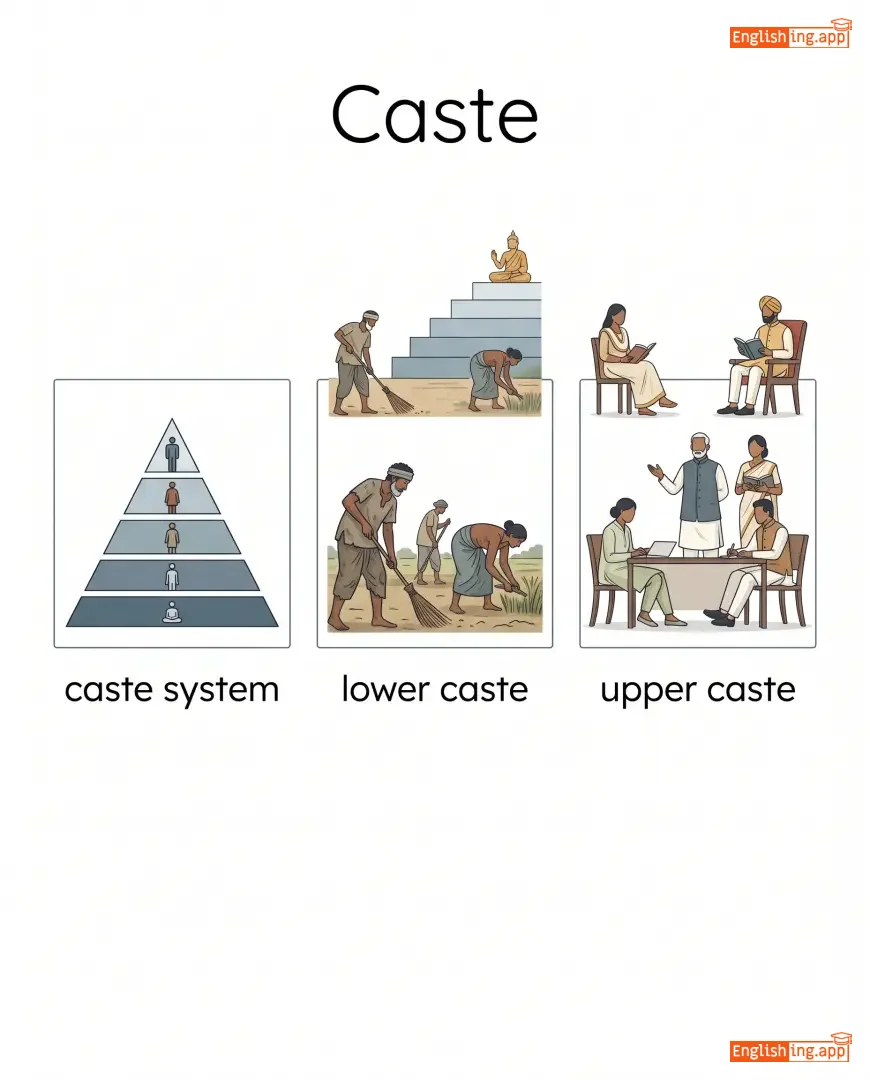
caste system |
A rigid social structure dividing people into groups based on birth or occupation.
••••••
|
种姓制度
zhǒngxìng zhìdù
••••••
|
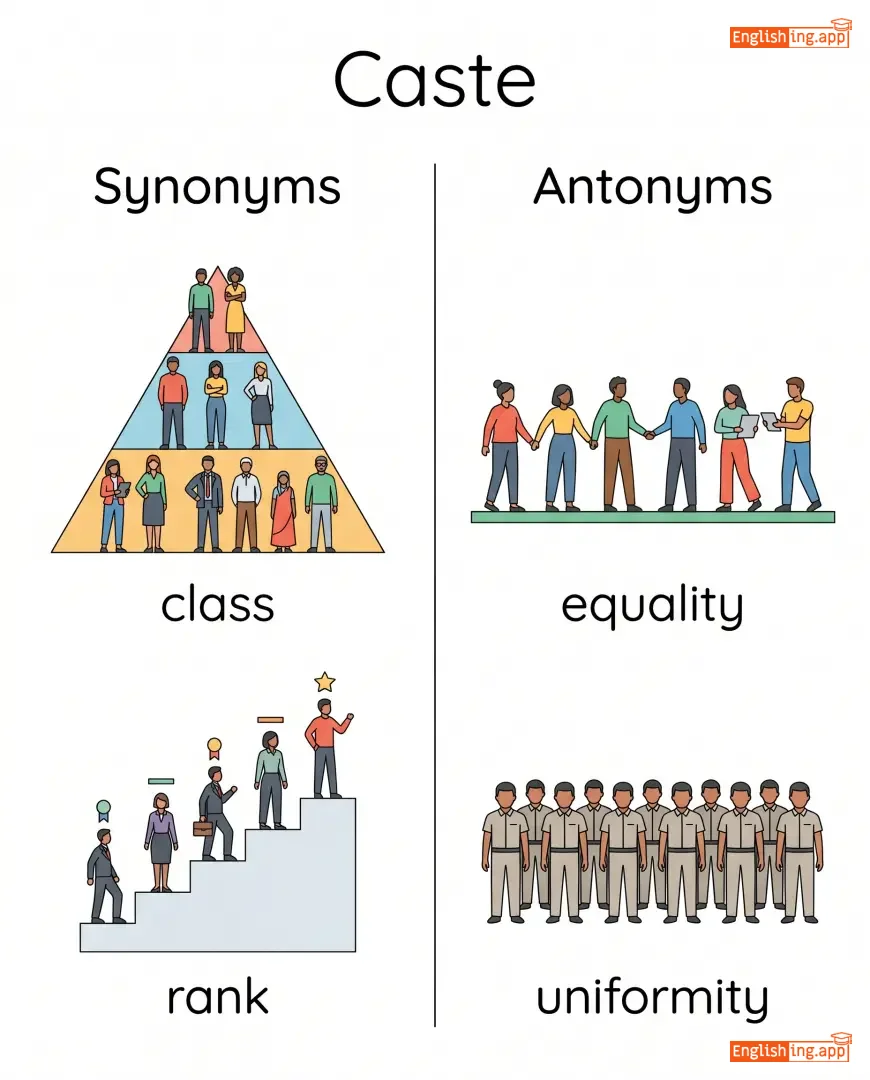
class, rank, order, hierarchy, stratum
••••••
|
equality, uniformity, parity
••••••
|
caste system, lower caste, upper caste, caste discrimination
••••••
|
Caste = 种姓 - 根据出生或职业划分群体
••••••
|
|
#1314
🎭
|
/kæst/
verb/noun
(kæst)
••••••
|
|
投掷, 演员阵容
tóuzhì, yǎnyuán zhènróng
••••••
|
cast
kæst
••••••
|
cast
kæst
••••••
|
casts
kæsts
••••••
|
casting
kæstɪŋ
••••••
|
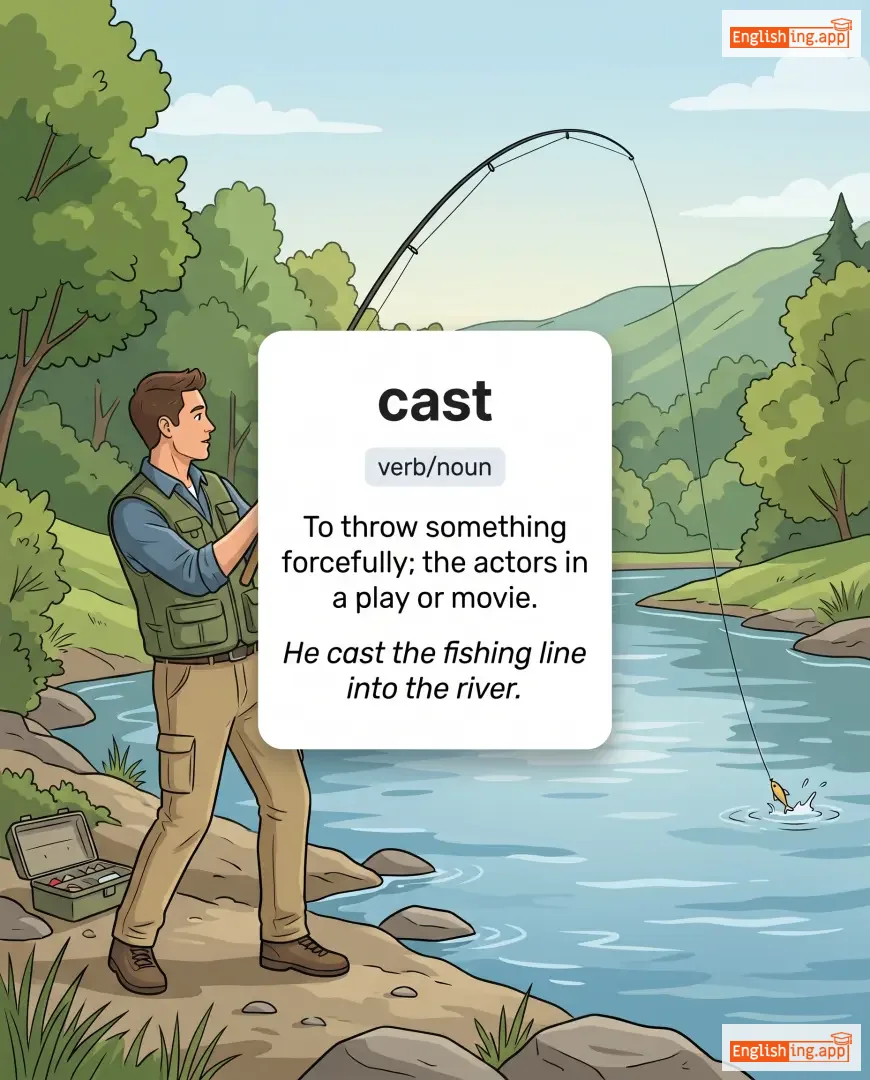
To throw something forcefully; the actors in a play or movie.
••••••
|
He cast the fishing line into the river.
hi kæst ðə fɪʃɪŋ laɪn ˈɪntu ðə rɪvər.
••••••
|
他把钓鱼线投进了河里。
Tā bǎ diàoyú xiàn tóu jìnle hé lǐ.
••••••
|
cast a spell
kæst ə spɛl
••••••
|
To use magic to influence someone or something.
••••••
|
施魔法
shī mófǎ
••••••
|
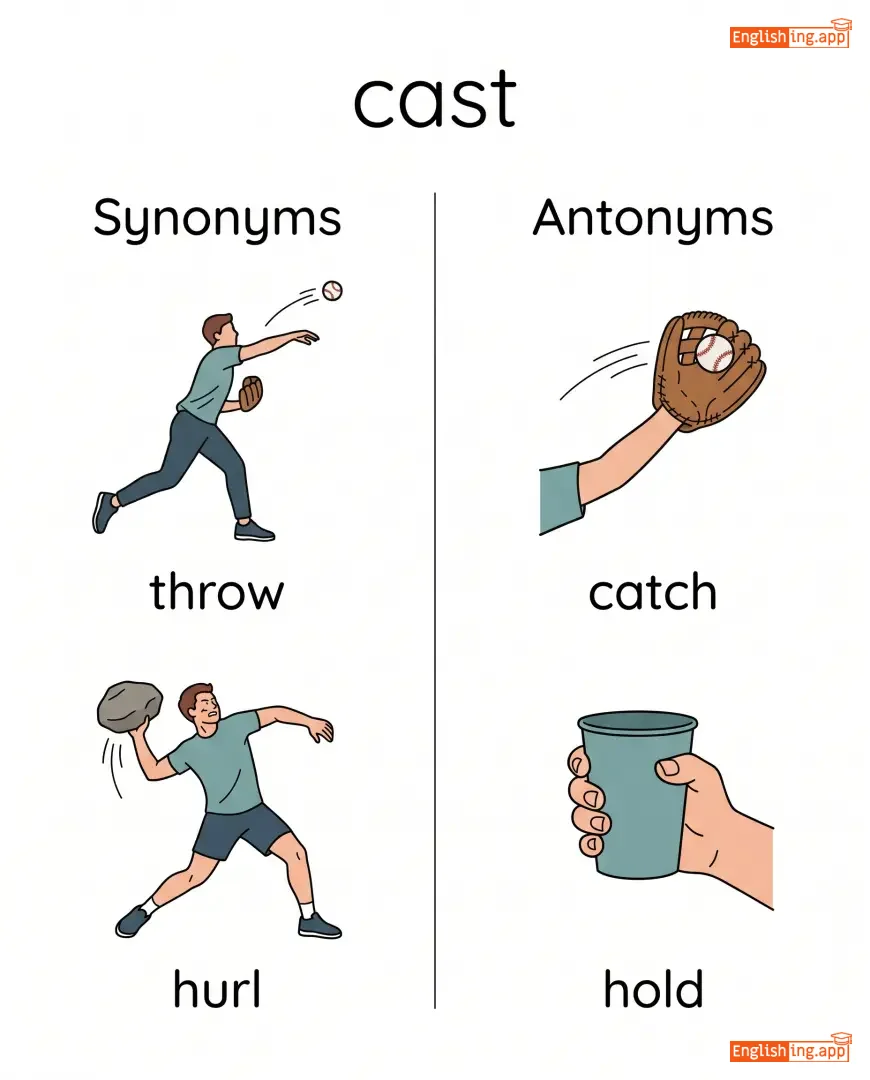
throw, hurl, fling, assign, shape
••••••
|
catch, hold, retain
••••••
|
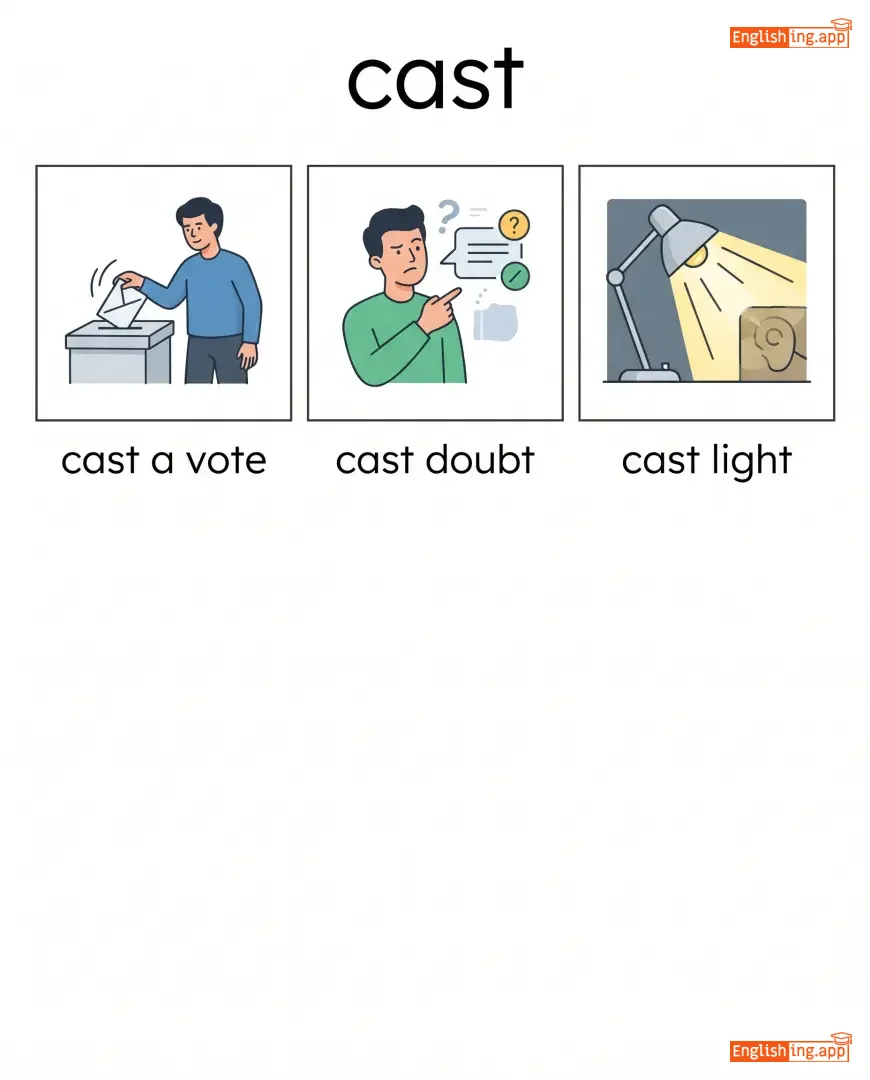
cast a vote, cast doubt, cast light, movie cast
••••••
|
Cast意为投掷或选择演员,如同在电影中。
••••••
|
|
#1315
🌊
|
/kæˈskeɪd/
noun/verb
(凯斯凯德)
••••••
|
- •••••• |
瀑布, 流水
pù bù, liú shuǐ
••••••
|
cascaded
凯斯凯德德
••••••
|
cascaded
凯斯凯德德
••••••
|
cascades
凯斯凯德斯
••••••
|
cascading
凯斯凯德英
••••••
|
A small waterfall or a process that occurs in stages, one after another.
••••••
|
Water cascaded down the rocky slope.
水沿着岩石坡滑下。
••••••
|
水沿着岩石坡像瀑布一样滑下来。
Shuǐ yánzhe yánshí pō xiàng pùbù yīyàng huá xiàlái.
••••••
|
cascade effect
级联效应
••••••
|
A series of events, each triggered by the previous one.
••••••
|
级联效应
jí lián xiàoyìng
••••••
|
waterfall, flow, rush, series, sequence
••••••
|
halt, stop, standstill
••••••
|
cascade of water, cascade of events, cascade of failures
••••••
|
Cascade:想象钱像级联效应一样落下。
••••••
|
|
#1316
🏛️
|
/ˌkɛəriˈætɪd/
noun
(凯瑞亚蒂德)
••••••
|
- •••••• |
雕刻的女性形象柱子
diaoke de nüxing xingxiang zhuzi
••••••
|
- •••••• | - •••••• | - •••••• | - •••••• |
A stone carving of a draped female figure, used as a supporting column in architecture.
••••••
|
The ancient temple featured a caryatid holding up the roof.
古老的寺庙里有一个凯瑞亚蒂德支撑着屋顶。
••••••
|
古老的寺庙里有一个凯瑞亚蒂德支撑着屋顶。
Gulao de si miao li you yi ge kai rui ya ti de zhi cheng zhe wu ding.
••••••
|
- •••••• | - •••••• | - •••••• |
pillar, column, support, statue, sculpture
••••••
|
beam, wall, pier
••••••
|
ancient caryatid, marble caryatid, temple caryatid
••••••
|
Caryatid意味着 carry + lid,雕刻的女性形象支撑屋顶(lid)。
••••••
|
|
#1317
🔪
|
/kɑːrv/
verb
••••••
|
- •••••• | - •••••• |
carved
••••••
|
carved
••••••
|
carves
••••••
|
carving
••••••
|
To cut or shape something, especially wood or stone, into a desired form.
••••••
|
The artist carved a beautiful statue out of marble. |
- •••••• |
carve out a niche |
to create a special and secure position for oneself in a particular area
••••••
|
- •••••• |
engrave, sculpt, chisel, etch, shape
••••••
|
destroy, demolish, flatten
••••••
|
carve wood, carve stone, carve a statue, carve out
••••••
|
No •••••• |
|
#1318
📦
|
/ˈkɑːrtrɪdʒ/
noun
(卡特里奇)
••••••
|
- •••••• |
墨盒
mòhé
••••••
|
- •••••• | - •••••• | - •••••• | - •••••• |
A container holding a substance or device, such as ink for printers or bullets for firearms.
••••••
|
The printer stopped working because the ink cartridge was empty.
打印机停止工作,因为墨盒已空。
••••••
|
打印机停止工作,因为墨盒已空。
Dǎyìnjī tíngzhǐ gōngzuò, yīnwèi mòhé yǐ kōng.
••••••
|
- •••••• | - •••••• | - •••••• |
casing, shell, container, capsule
••••••
|
empty slot, void
••••••
|
ink cartridge, printer cartridge, bullet cartridge, replace cartridge
••••••
|
墨盒空了,打印机停止工作!
••••••
|
|
#1319
📍
|
/kɑːrˈtɒɡrəfi/
noun
(制图学)
••••••
|
|
制图学
zhìtúxué
••••••
|
- •••••• | - •••••• | - •••••• | - •••••• |
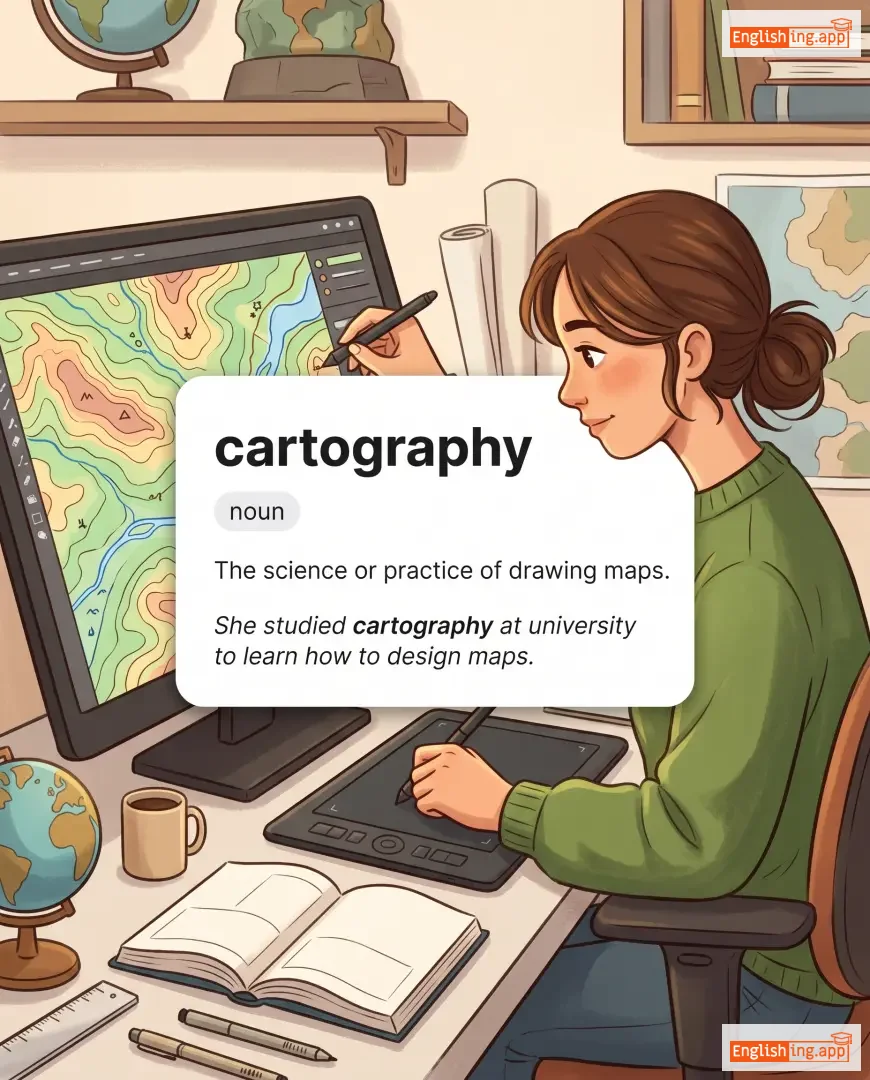
The science or practice of drawing maps.
••••••
|
She studied cartography at university to learn how to design maps. |
她在大学学习制图学,以便学会设计地图。
Tā zài dàxué xuéxí zhìtúxué, yǐbiàn xuéhuì shèjì dìtú.
••••••
|
- •••••• | - •••••• | - •••••• |
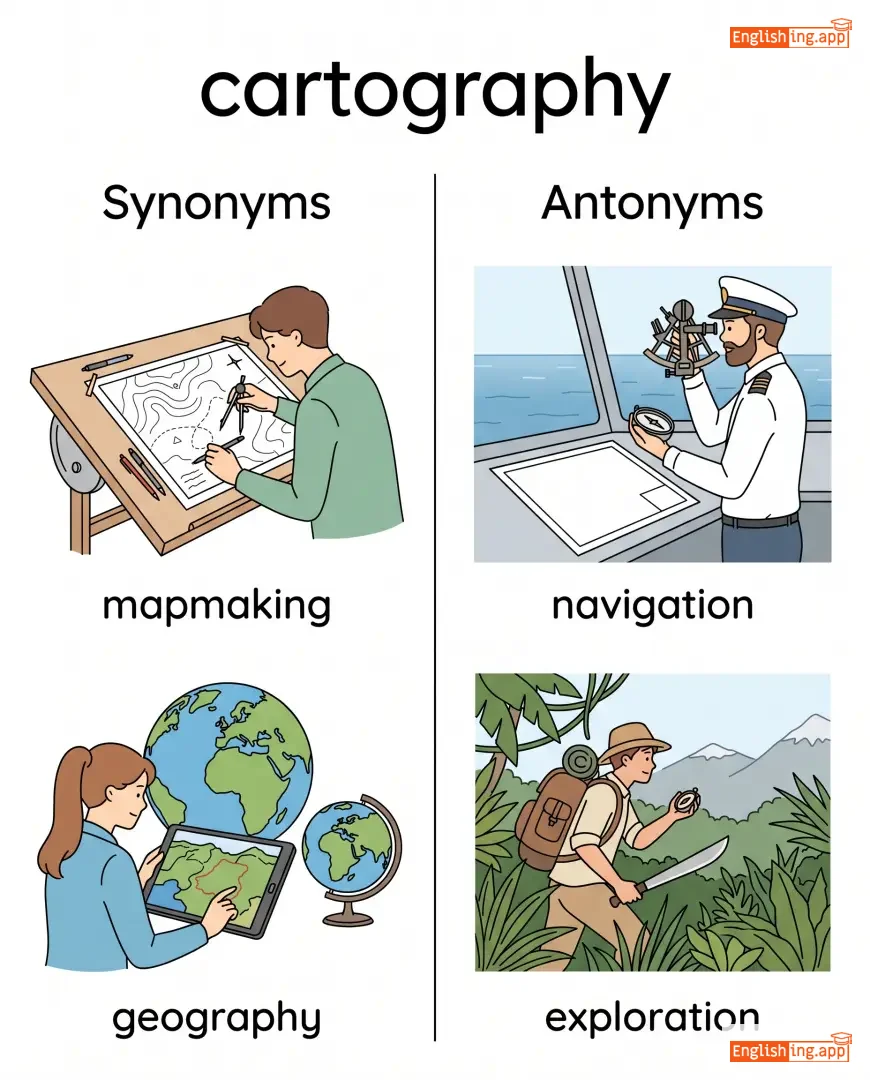
mapmaking, geography, topography, surveying
••••••
|
navigation, exploration
••••••
|
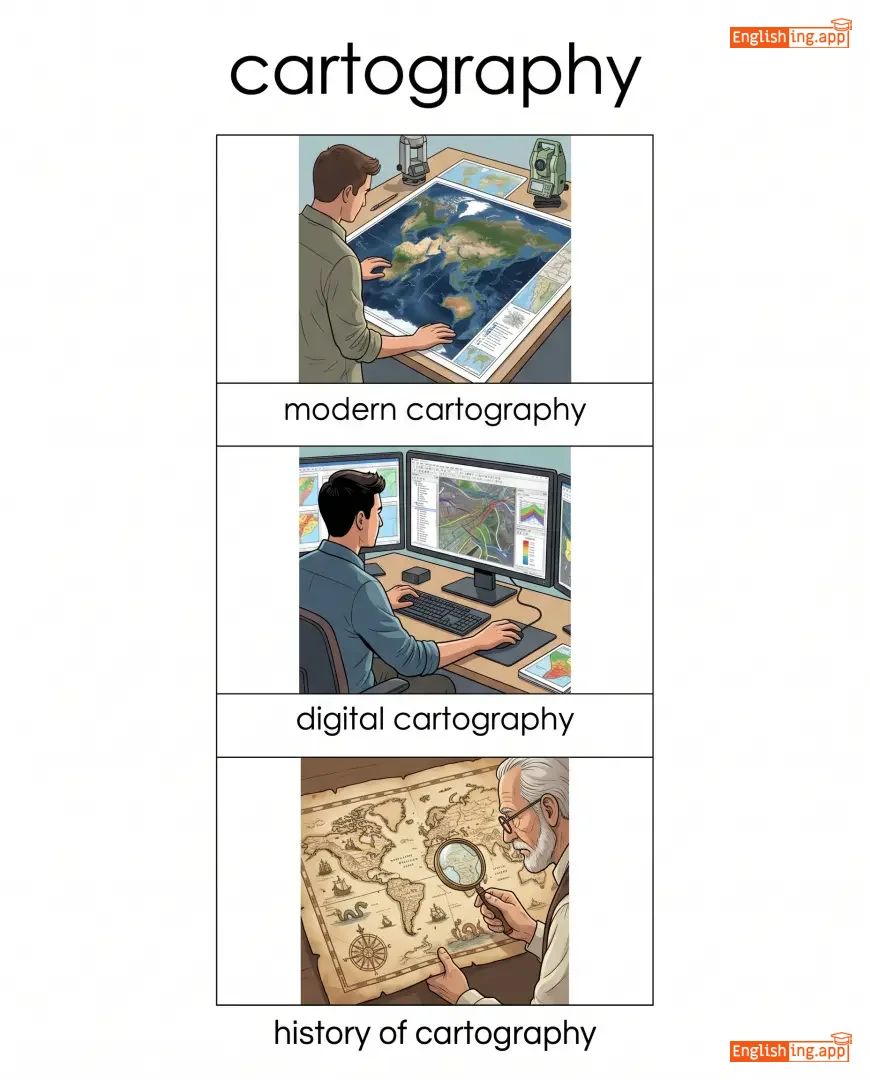
modern cartography, digital cartography, history of cartography, cartography skills
••••••
|
制图学是'地图' + '学'—画地图的科学。
••••••
|
|
#1320
🗺️
|
/kɑːrˈtɒɡrəfər/
noun
(制图师)
••••••
|
- •••••• |
制图师
zhìtú shī
••••••
|
- •••••• | - •••••• | - •••••• | - •••••• |
A person who makes maps.
••••••
|
The cartographer carefully drew the map of the new territory.
制图师小心地绘制了新区域的地图。
••••••
|
制图师小心地绘制了新区域的地图。
Zhìtú shī xiǎoxīn de huìzhìle xīn qūyù de dìtú.
••••••
|
- •••••• | - •••••• | - •••••• |
mapmaker, mapper, geographer, surveyor
••••••
|
traveler, explorer
••••••
|
professional cartographer, famous cartographer, skilled cartographer, cartographer's map
••••••
|
制图师 = 制作 + 图 + 师,制作地图的专业人士。
••••••
|
Vocabulary Quiz
Test your vocabulary by matching words with their translations or meanings.
Login to take the quiz
Comments (0)
Share your thoughts and join the discussion.
Join the discussion by logging in
Login to CommentNo comments yet
Be the first to share your thoughts!