

Swipe left or right, or use the buttons. Tap image to zoom.
例句翻译
单词
Lesson 201Lesson 201 - 遮罩切换
|
表情符号
|
单词 | Images | 翻译 | 过去时 | 过去分词 | 第三人称单数 | 动名词 | 含义 | 例句 | 例句翻译 | 示例表达 | 示例表达含义 | 示例表达翻译 | 同义词 | 反义词 | 搭配词 | 助记符 |
|---|---|---|---|---|---|---|---|---|---|---|---|---|---|---|---|---|---|
|
#6001
⚰️
|
/ˈɒbsɪkwiːz/
noun
(ob-se-kwe-zi)
••••••
|
- •••••• |
葬礼仪式
zangli yishi
••••••
|
- •••••• | - •••••• | - •••••• | - •••••• |
Funeral rites or ceremonies.
••••••
|
The obsequies for the late leader drew thousands of mourners. |
已故领导人的葬礼吸引了成千上万的哀悼者。
Yigu lingdaoren de zangli xinyi le chengqian shangwan de aidaozhe.
••••••
|
- •••••• | - •••••• | - •••••• |
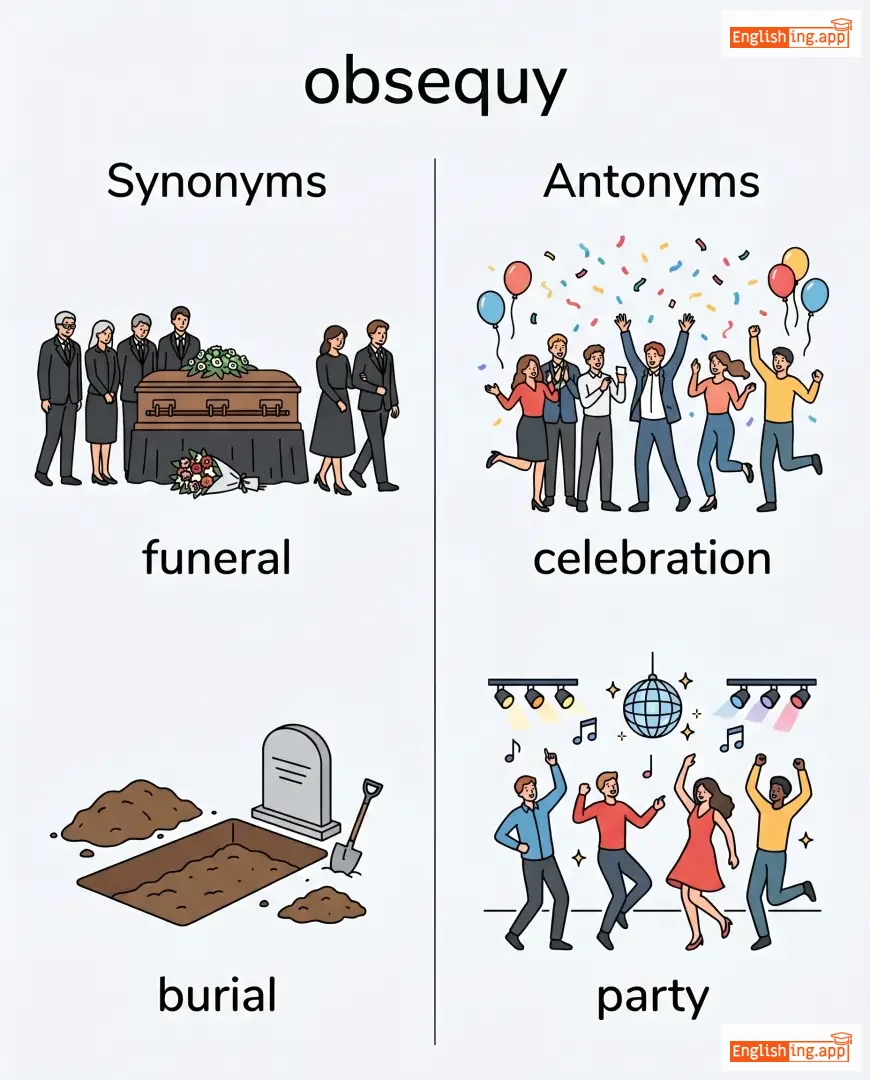
funeral, burial, service, last rites
••••••
|
celebration, festivity
••••••
|
solemn obsequies, state obsequies, funeral obsequies
••••••
|
Obsequies意味着葬礼仪式,想象⚰️葬礼就像obsequies一样。
••••••
|
|
#6002
🤰
|
/əbˈstɛtrɪks/
noun
(产科)
••••••
|
- •••••• |
产科
chanke
••••••
|
- •••••• | - •••••• | - •••••• | - •••••• |
The branch of medicine dealing with childbirth and care of women giving birth.
••••••
|
She is studying obstetrics to become a specialist in childbirth. |
她正在学习产科,想成为一名分娩专家。
Tā zhèngzài xuéxí chǎnkē, xiǎng chéngwéi yī míng fēnmiǎn zhuānjiā.
••••••
|
- •••••• | - •••••• | - •••••• |
midwifery, maternity care, gynecology
••••••
|
pediatrics, surgery
••••••
|
study obstetrics, practice obstetrics, field of obstetrics
••••••
|
产科,帮助产妇顺利分娩。
••••••
|
|
#6003
👩⚕️
|
/ˌɒbstəˈtrɪʃən/
noun
(obstetrician)
••••••
|
- •••••• |
产科医生
chǎnkē yīshēng
••••••
|
- •••••• | - •••••• | - •••••• | - •••••• |
A doctor specializing in pregnancy, childbirth, and women's reproductive health.
••••••
|
The obstetrician monitored the mother’s health throughout the pregnancy. |
产科医生在整个怀孕过程中监测了母亲的健康。
Chǎnkē yīshēng zài zhěnggè huáiyùn guòchéng zhōng jiāncè le mǔqīn de jiànkāng.
••••••
|
- •••••• | - •••••• | - •••••• |
doctor, physician, gynecologist, specialist
••••••
|
patient, layperson
••••••
|
consult an obstetrician, obstetrician appointment, experienced obstetrician
••••••
|
产科医生就像照顾怀孕的守护神,关心每一阶段。
••••••
|
|
#6004
🗑️
|
/ˌɒbsəˈliːt/
adjective
(过时)
••••••
|
- •••••• |
过时的
guòshí de
••••••
|
- •••••• | - •••••• | - •••••• | - •••••• |
No longer in use or out of date.
••••••
|
Floppy disks are now completely obsolete.
软盘现在完全过时了。
••••••
|
软盘现在完全过时了。
Ruǎnpán xiànzài wánquán guòshí le.
••••••
|
- •••••• | - •••••• | - •••••• |
outdated, old, archaic, discontinued
••••••
|
modern, current, up-to-date
••••••
|
obsolete technology, obsolete method, become obsolete
••••••
|
Obsolete 就是 ‘Old but Sleep’. 过时的东西已经不再使用了。
••••••
|
|
#6005
⌛
|
/ˌɒbsəˈlɛsnt/
adjective
(obsolescent)
••••••
|
- •••••• |
过时的
guòshí de
••••••
|
- •••••• | - •••••• | - •••••• | - •••••• |
Becoming outdated or on the way to becoming obsolete.
••••••
|
The obsolescent technology could not compete with modern devices. |
过时的技术无法与现代设备竞争。
Guòshí de jìshù wúfǎ yǔ xiàndài shèbèi jìngzhēng.
••••••
|
- •••••• | - •••••• | - •••••• |
outdated, old-fashioned, declining, fading
••••••
|
modern, current, advanced
••••••
|
obsolescent technology, obsolescent equipment, obsolescent system
••••••
|
Obsolescent 就是过时的,变得不再现代化。
••••••
|
|
#6006
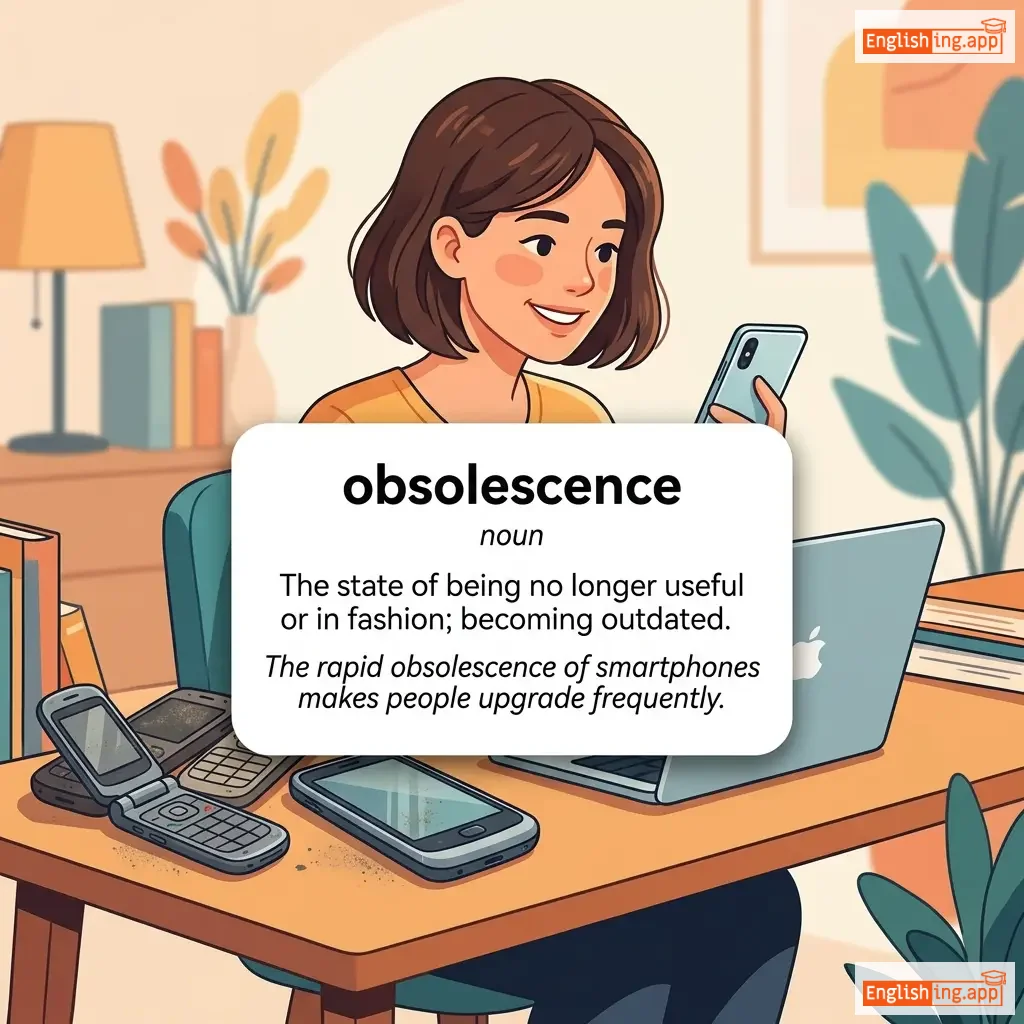
📱
|
/ˌɒbsəˈlɛsəns/
noun
(过时)
••••••
|
|
过时
guòshí
••••••
|
- •••••• | - •••••• | - •••••• | - •••••• |
The state of being no longer useful or in fashion; becoming outdated.
••••••
|
The rapid obsolescence of smartphones makes people upgrade frequently.
智能手机的快速过时使人们频繁升级。
••••••
|
智能手机的快速过时使人们频繁升级。
zhìnéng shǒujī de kuàisù guòshí shǐ rénmen pínfán shēngjí.
••••••
|
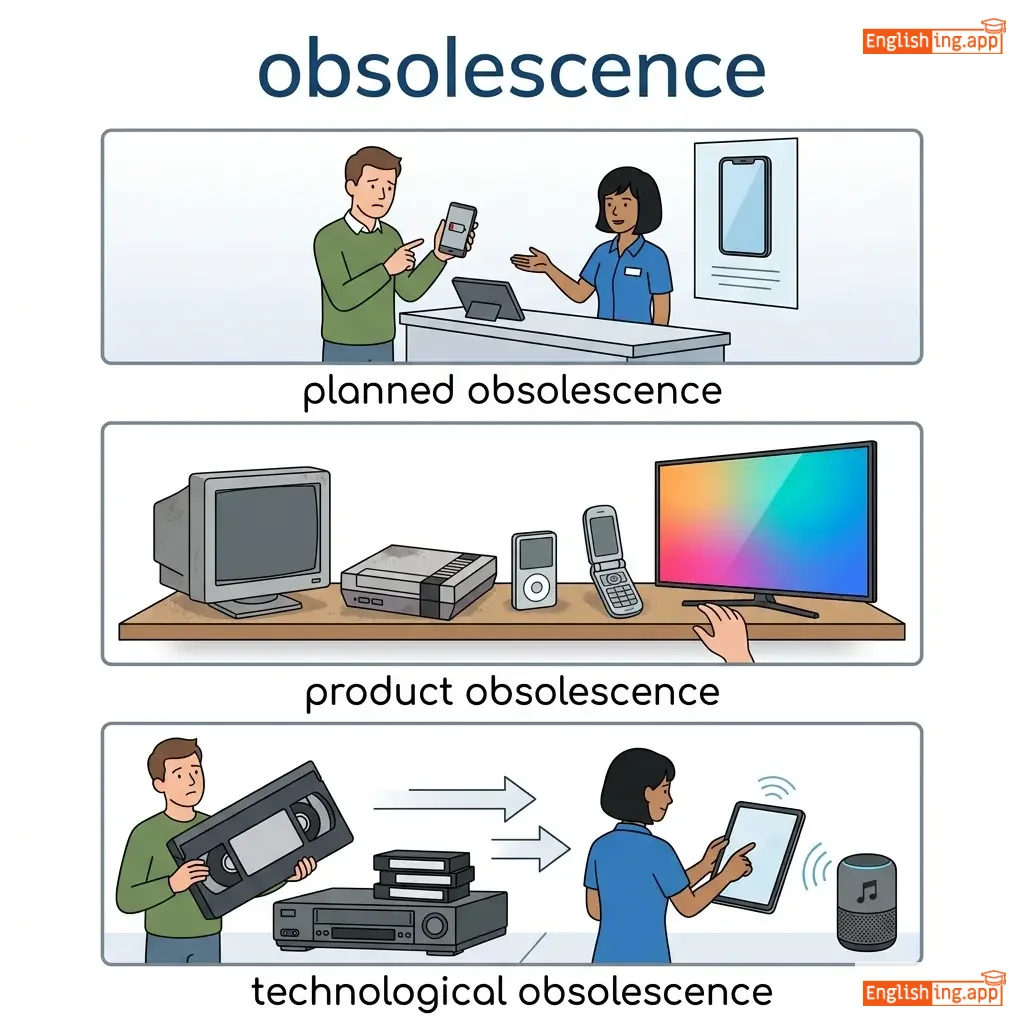
planned obsolescence
计划性过时
••••••
|
The practice of designing products with a limited lifespan to encourage replacement.
••••••
|
计划性过时
jìhuàxìng guòshí
••••••
|
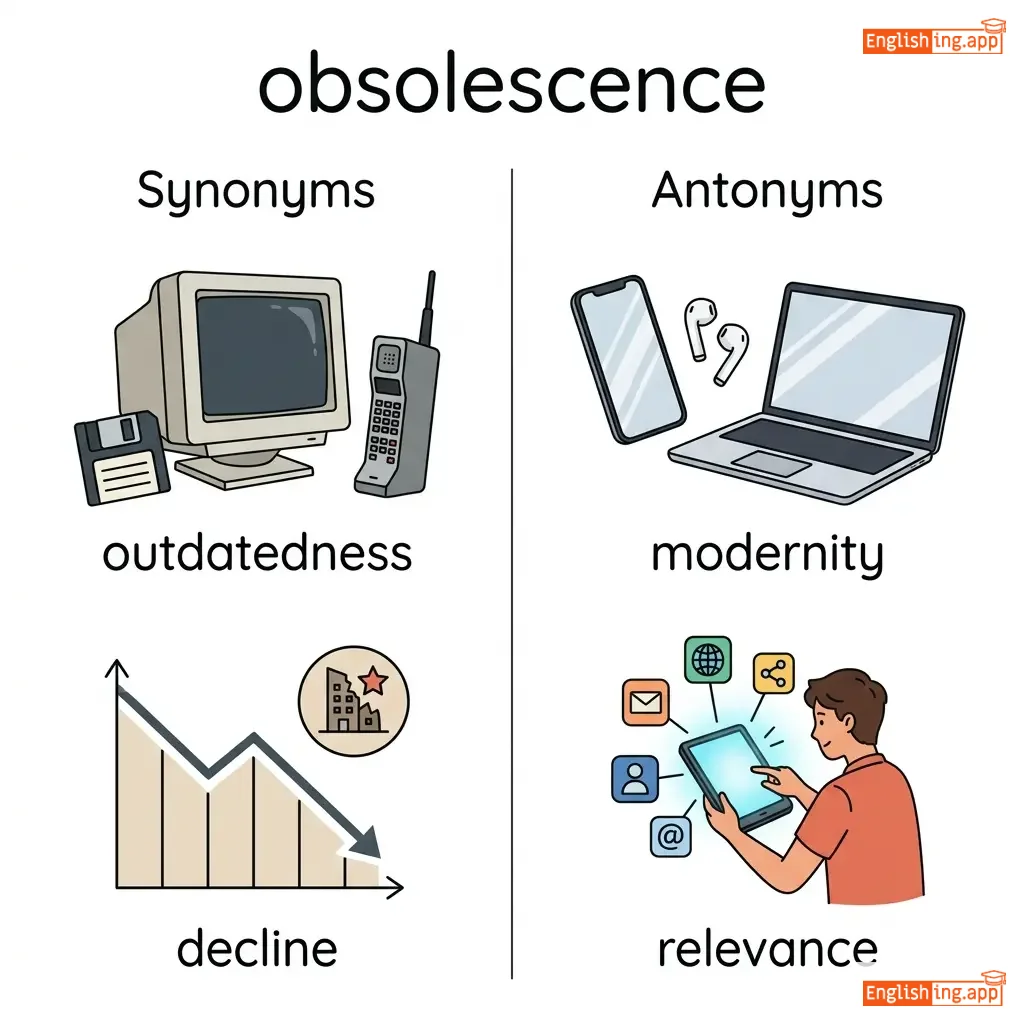
outdatedness, decline, extinction, deterioration, antiquation
••••••
|
modernity, relevance, innovation
••••••
|
planned obsolescence, product obsolescence, technological obsolescence, gradual obsolescence
••••••
|
Obsolete + Science = 过时意味着老旧的东西快速消失。
••••••
|
|
#6007
🪨
|
/əbˈsɪdiən/
noun
(黑曜石)
••••••
|
- •••••• |
黑曜石 (黑色的玻璃状火山岩)
heiyaoshi (heise de boli zhuang huoshan yan)
••••••
|
- •••••• | - •••••• | - •••••• | - •••••• |
A hard, dark, glasslike volcanic rock formed by rapid solidification of lava.
••••••
|
The knife was made from sharp obsidian.
刀是由锋利的黑曜石制成的。
••••••
|
刀是由锋利的黑曜石制成的。
Dao shi you fengli de heiyaoshi zhicheng de.
••••••
|
- •••••• | - •••••• | - •••••• |
volcanic glass, lava glass, natural glass, igneous rock
••••••
|
sandstone, limestone
••••••
|
obsidian blade, obsidian tool, black obsidian, polished obsidian
••••••
|
黑曜石意味着黑色玻璃状的火山岩。
••••••
|
|
#6008
⚡
|
/əbˈsɛsɪv/
adjective
(obsessive)
••••••
|
- •••••• |
强迫症的
qiangpozheng de
••••••
|
- •••••• | - •••••• | - •••••• | - •••••• |
Relating to or characterized by an obsession; thinking about something too much.
••••••
|
He has an obsessive interest in cleanliness. |
他对清洁有强迫症的兴趣。
Ta dui qingjie you qiangpozheng de xingqu.
••••••
|
obsessive behavior |
Repeated and extreme behavior due to obsession
••••••
|
强迫症行为
qiangpozheng xingwei
••••••
|
fanatical, compulsive, fixated, preoccupied
••••••
|
casual, indifferent, unconcerned
••••••
|
obsessive thoughts, obsessive behavior, obsessive interest, obsessive personality
••••••
|
Obsessive 是强迫症的 – 思考太多的表现。
••••••
|
|
#6009
🔥
|
/əbˈsɛʃən/
noun
(obsession)
••••••
|
- •••••• |
痴迷
chimi
••••••
|
- •••••• | - •••••• | - •••••• | - •••••• |
An idea, thought, or concern that continually preoccupies or intrudes on a person's mind.
••••••
|
His obsession with success drove him to work day and night. |
他对成功的痴迷促使他日夜工作。
Ta dui chenggong de chimi cucishi ta riye gongzuo.
••••••
|
an obsession with |
Being overly concerned or preoccupied with something
••••••
|
痴迷于
chimi yu
••••••
|
fixation, preoccupation, compulsion, mania, craze
••••••
|
indifference, apathy
••••••
|
obsession with, obsession about, unhealthy obsession, lifelong obsession
••••••
|
痴迷是指无法摆脱的思绪,就像反复不断地循环。
••••••
|
|
#6010
🌀
|
/əbˈsɛs/
verb
••••••
|
- •••••• | - •••••• |
obsessed
••••••
|
obsessed
••••••
|
obsesses
••••••
|
obsessing
••••••
|
To preoccupy or fill the mind of someone continually and to an excessive degree.
••••••
|
She tends to obsess over small details. |
- •••••• |
obsess over |
To think about something too much and not let go of it
••••••
|
- •••••• |
preoccupy, fixate, dwell, consume, dominate
••••••
|
ignore, neglect
••••••
|
obsess over, obsess with, obsess about, obsess constantly
••••••
|
No •••••• |
|
#6011
🔭
|
/əbˈzɜːrvətɔːri/
noun
(天文台)
••••••
|
- •••••• |
天文台
tianwen tai
••••••
|
- •••••• | - •••••• | - •••••• | - •••••• |
A building equipped for observing astronomical or meteorological events.
••••••
|
The observatory is open to the public on weekends. |
天文台在周末对公众开放。
Tianwen tai zai zhoumo dui gongzhong kaifang.
••••••
|
- •••••• | - •••••• | - •••••• |
planetarium, telescope station, research center, dome
••••••
|
none, null
••••••
|
astronomical observatory, space observatory, weather observatory, national observatory
••••••
|
天文台 (tianwen tai) 就像英语的observatory一样,是观察天体的地方。
••••••
|
|
#6012
👀
|
/əbˈzɜːvənt/
adjective
(ob-zher-vant)
••••••
|
- •••••• |
专心的
zhuān xīn de
••••••
|
- •••••• | - •••••• | - •••••• | - •••••• |
Quick to notice details or attentive to rules and customs.
••••••
|
She is very observant and rarely misses any detail. |
她非常专心,几乎不漏掉任何细节。
Tā fēi cháng zhuān xīn, jī hū bù lòu diào rèn hé xì jié.
••••••
|
- •••••• | - •••••• | - •••••• |
attentive, alert, watchful, perceptive
••••••
|
careless, inattentive
••••••
|
observant eye, observant nature, highly observant
••••••
|
专心的意思是注意所有的细节,记住 '观察' 就是 '看到一切'。
••••••
|
|
#6013
🙏
|
/əbˈzɜːvəns/
noun
(obzervans)
••••••
|
- •••••• |
遵守
zunshou
••••••
|
- •••••• | - •••••• | - •••••• | - •••••• |
The practice of following a custom, rule, or religious law.
••••••
|
The festival is held in observance of a centuries-old tradition. |
该节庆是为了遵守一项百年传统而举行的。
Gai jieqing shi weile zunshou yi xiang bainian chuantong er juxing de.
••••••
|
in observance of |
to mark or honor a law, custom, or tradition
••••••
|
遵守
zunshou
••••••
|
ritual, tradition, ceremony, adherence
••••••
|
violation, disregard
••••••
|
religious observance, in observance of, strict observance
••••••
|
遵守意味着遵循,记住'遵循并且遵守'。
••••••
|
|
#6014
🕯️
|
/ˈɒbsɪkwi/
noun
(obsekwí)
••••••
|
|
葬礼仪式
zànglǐ yíshì
••••••
|
- •••••• | - •••••• | - •••••• | - •••••• |
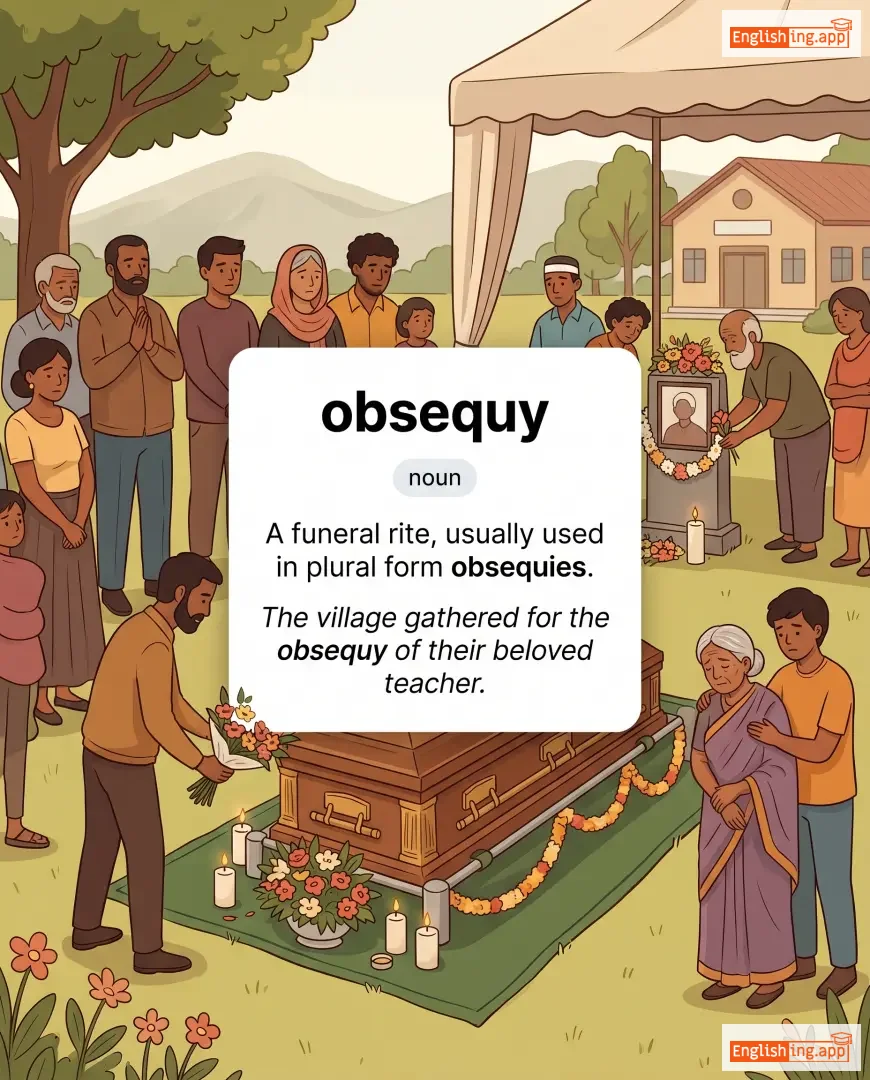
A funeral rite, usually used in plural form obsequies.
••••••
|
The village gathered for the obsequy of their beloved teacher.
村庄聚集在一起,参加他们心爱的老师的葬礼。
••••••
|
村庄聚集在一起,参加他们心爱的老师的葬礼。
Cūnzhuāng jùjí zài yīqǐ, cānjiā tāmen xīn'ài de lǎoshī de zànglǐ.
••••••
|
- •••••• | - •••••• | - •••••• |
funeral, burial, rite, ceremony
••••••
|
celebration, party
••••••
|
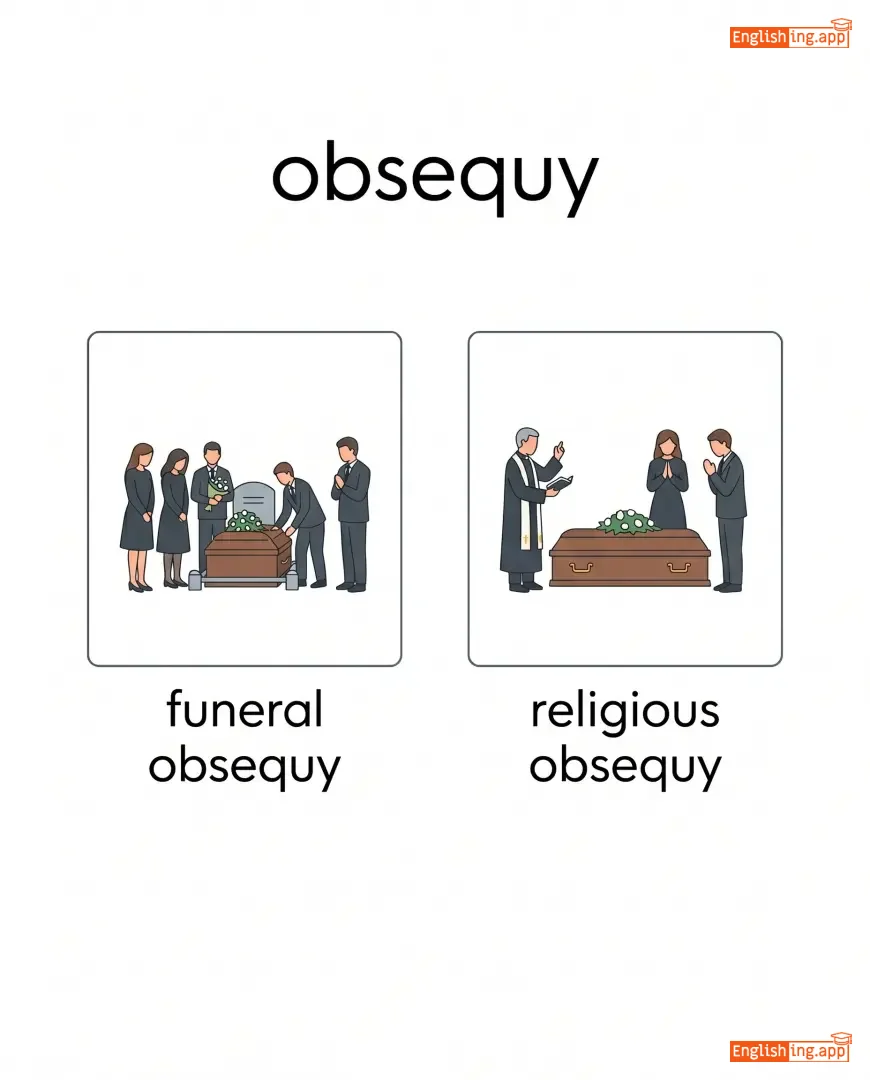
funeral obsequy, religious obsequy
••••••
|
Obsequy 就是葬礼仪式,像在老师去世时的那场葬礼。
••••••
|
|
#6015
🙇
|
/əbˈsiːkwɪəs/
adjective
(obsequious)
••••••
|
|
奉承
fèngchēng
••••••
|
- •••••• | - •••••• | - •••••• | - •••••• |
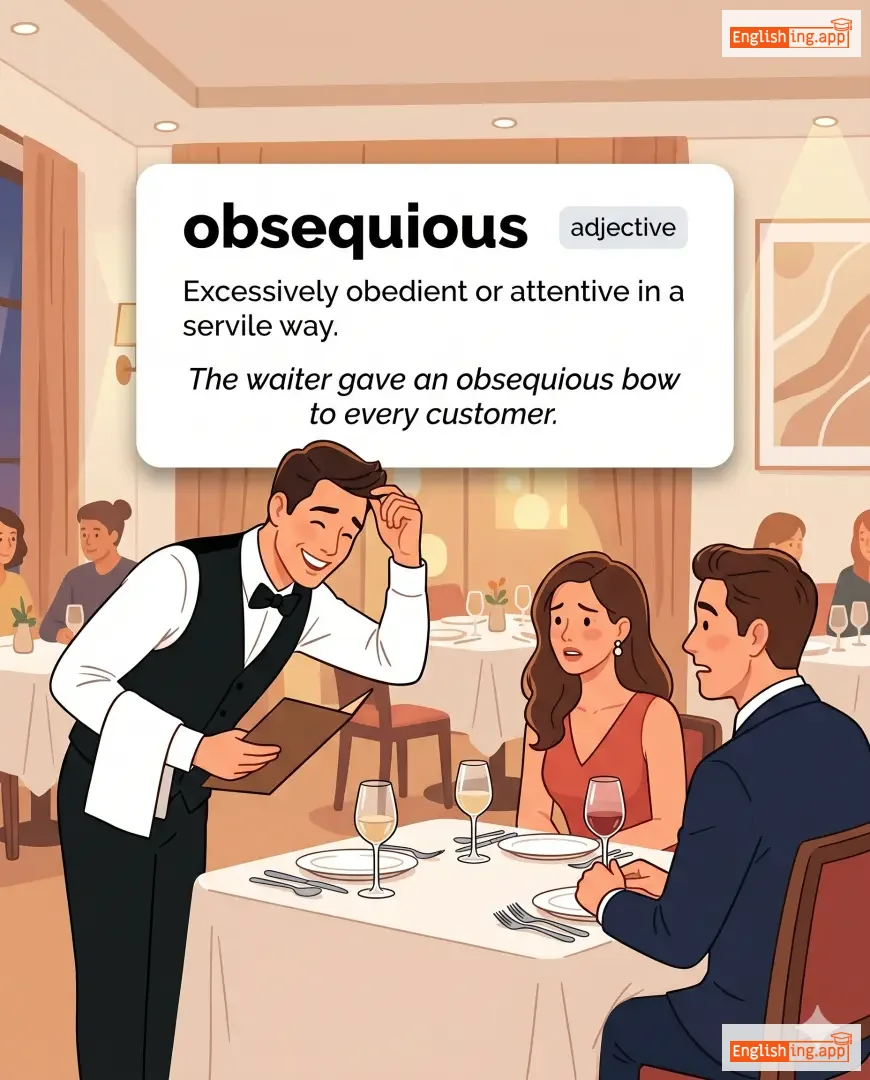
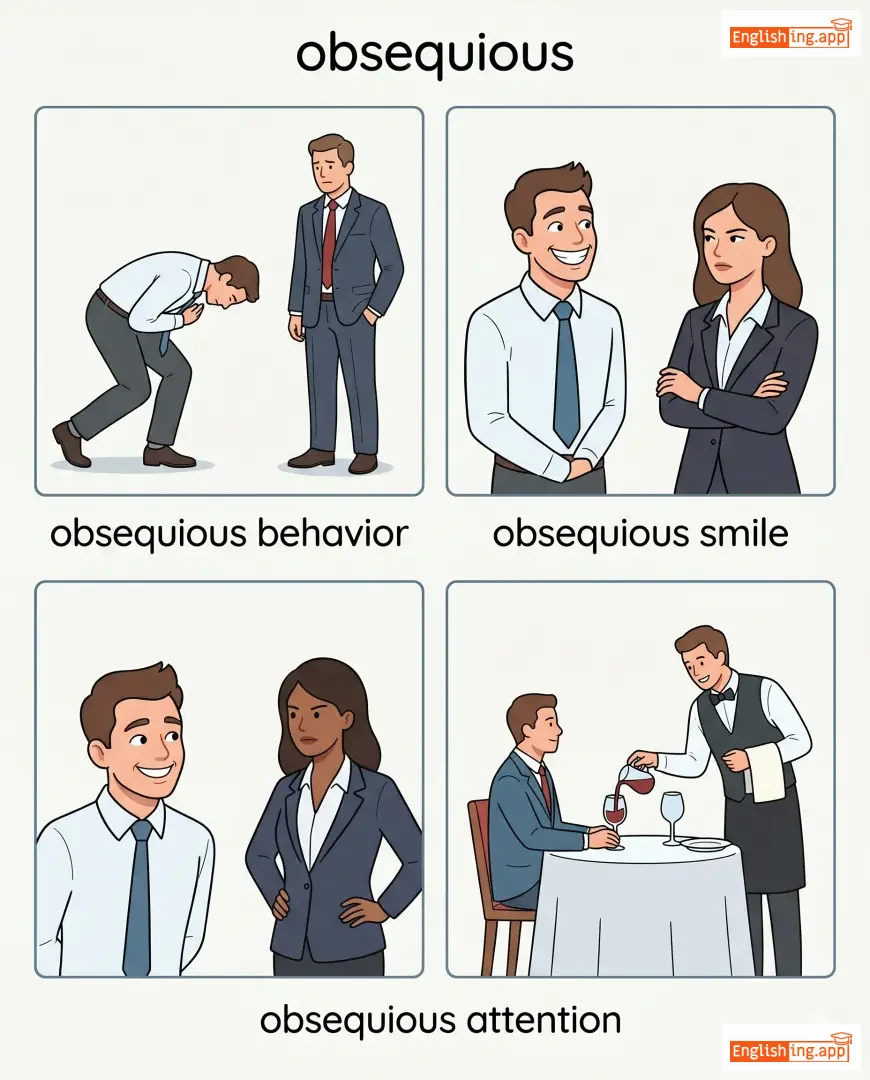
Excessively obedient or attentive in a servile way.
••••••
|
The waiter gave an obsequious bow to every customer.
服务员对每个顾客鞠了一躬。
••••••
|
服务员对每个顾客鞠了一躬。
Fúwùyuán duì měi gè gùkè jū le yī gōng.
••••••
|
- •••••• | - •••••• | - •••••• |
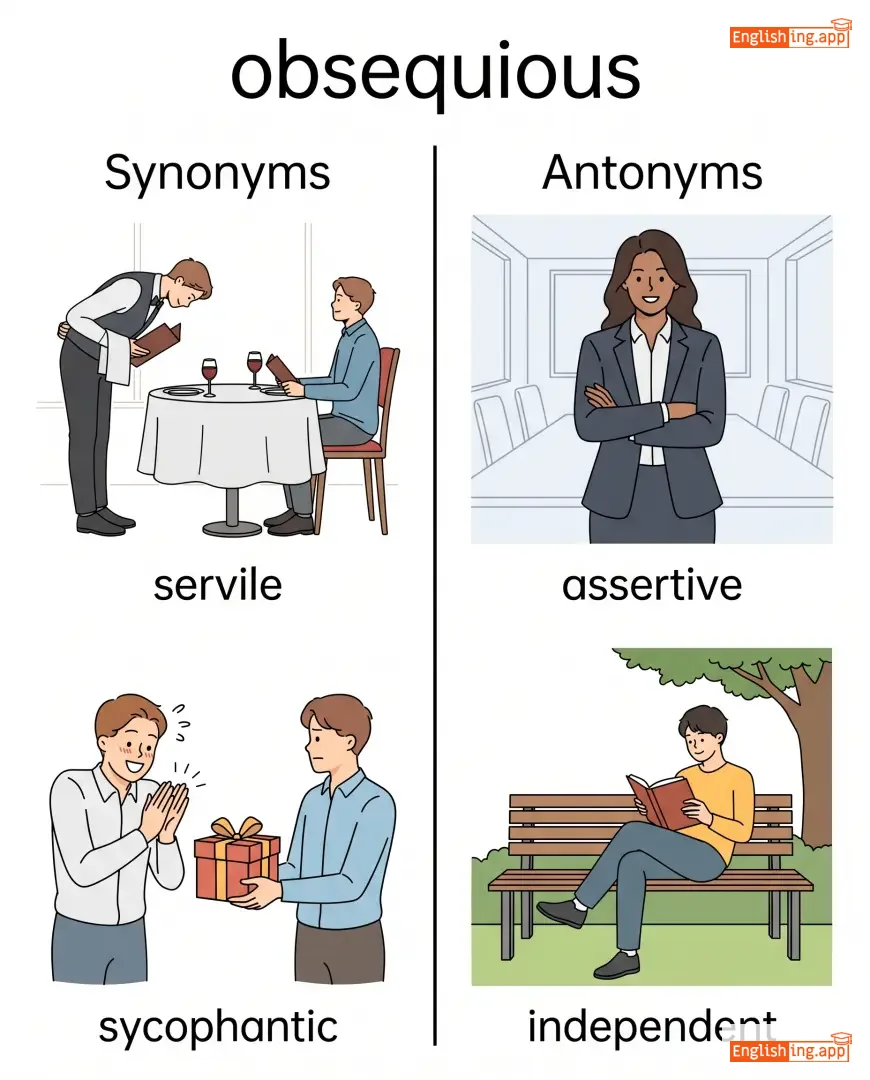
servile, sycophantic, fawning, submissive
••••••
|
assertive, independent
••••••
|
obsequious behavior, obsequious smile, obsequious attention
••••••
|
Obsequious 的意思是奉承,记住 'Obey' + 'quick' = 奉承的行为。
••••••
|
|
#6016
🙅
|
/əbˈdʒɛktər/
noun
(ʌbˈdʒɛktɔr)
••••••
|
- •••••• |
反对者
fǎnduì zhě
••••••
|
- •••••• | - •••••• | - •••••• | - •••••• |
a person who expresses opposition or disapproval to something
••••••
|
The objector raised his concerns during the town meeting. |
反对者在市议会会议中表达了他的关切。
Fǎnduì zhě zài shì yìhuì huìyì zhōng biǎodále tā de guānqiè.
••••••
|
- •••••• | - •••••• | - •••••• |
opponent, dissenter, protester, critic
••••••
|
supporter, advocate, proponent
••••••
|
conscientious objector, strong objector, vocal objector, objector to war
••••••
|
Objector 意味着反对某物的人,即反对者
••••••
|
|
#6017
🌫️
|
/əbˈskjʊr/
adjective, verb
(ōbǔsīqióu)
••••••
|
- •••••• |
模糊
móhú
••••••
|
obscured
ōbǔsīqióu dé
••••••
|
obscured
ōbǔsīqióu dé
••••••
|
obscures
ōbǔsīqióu sī
••••••
|
obscuring
ōbǔsīqióu lìng
••••••
|
Not clearly expressed or understood; to make something difficult to see or understand.
••••••
|
The meaning of the poem was obscure to most readers.
诗的意义对大多数读者来说是模糊的。
••••••
|
诗的意义对大多数读者来说是模糊的。
Shī de yìyì duì dàduōshù dúzhě lái shuō shì móhú de.
••••••
|
in the obscure
在模糊中
••••••
|
in an uncertain or hidden situation
••••••
|
在模糊中
zài móhú zhōng
••••••
|
unclear, vague, hidden, ambiguous, conceal
••••••
|
clear, obvious, apparent
••••••
|
obscure meaning, obscure passage, obscure author, obscure the view
••••••
|
Obscure意味着模糊 — 想一想'ob'就像'móhú',一切都模糊不清。
••••••
|
|
#6018
🤢
|
/əbˈnɒkʃəs/
adjective
(obnóxious)
••••••
|
- •••••• |
令人讨厌
lìng rén tǎo yàn
••••••
|
- •••••• | - •••••• | - •••••• | - •••••• |
Extremely unpleasant, offensive, or annoying.
••••••
|
The obnoxious behavior of the guest ruined the party. |
客人的令人讨厌的行为破坏了派对。
Kè rén de lìng rén tǎo yàn de xíng wéi pò huài le pài duì.
••••••
|
- •••••• | - •••••• | - •••••• |
offensive, unpleasant, nasty, repulsive, annoying
••••••
|
pleasant, agreeable, delightful
••••••
|
obnoxious behavior, obnoxious smell, obnoxious attitude
••••••
|
Obnoxious 意思是令人讨厌,想象一个令人不喜欢的人总是让你感到不舒服。
••••••
|
|
#6019
📢
|
/ˈɒbləkwɪ/
noun
(ōbùluòkùyī)
••••••
|
- •••••• |
诽谤
feibang
••••••
|
- •••••• | - •••••• | - •••••• | - •••••• |
Strong public criticism or verbal abuse; disgrace or shame from public condemnation.
••••••
|
The politician faced obloquy after the scandal was exposed. |
政治家在丑闻曝光后面临诽谤。
zhèngzhìjiā zài chǒuwén pùguāng hòu miànlín fèibàng.
••••••
|
- •••••• | - •••••• | - •••••• |
abuse, censure, criticism, vilification, disgrace
••••••
|
praise, honor, acclaim
••••••
|
face obloquy, suffer obloquy, public obloquy
••••••
|
Obloquy的意思是诽谤 — 想象大家都在喊‘Oh blow qui’作为侮辱。
••••••
|
|
#6020
😶
|
/əˈblɪviəs/
adjective
••••••
|
|
- •••••• | - •••••• | - •••••• | - •••••• | - •••••• |
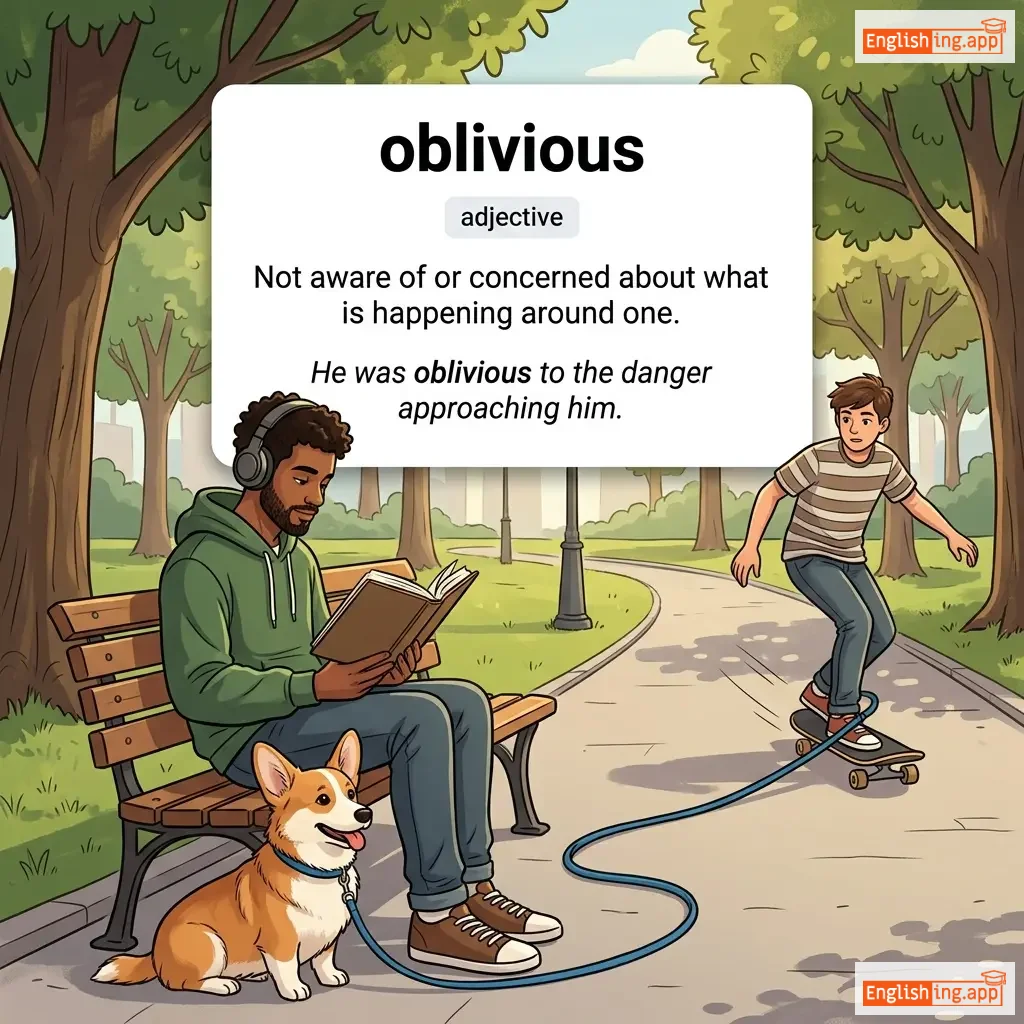
Not aware of or concerned about what is happening around one.
••••••
|
He was oblivious to the danger approaching him. |
- •••••• | - •••••• | - •••••• | - •••••• |
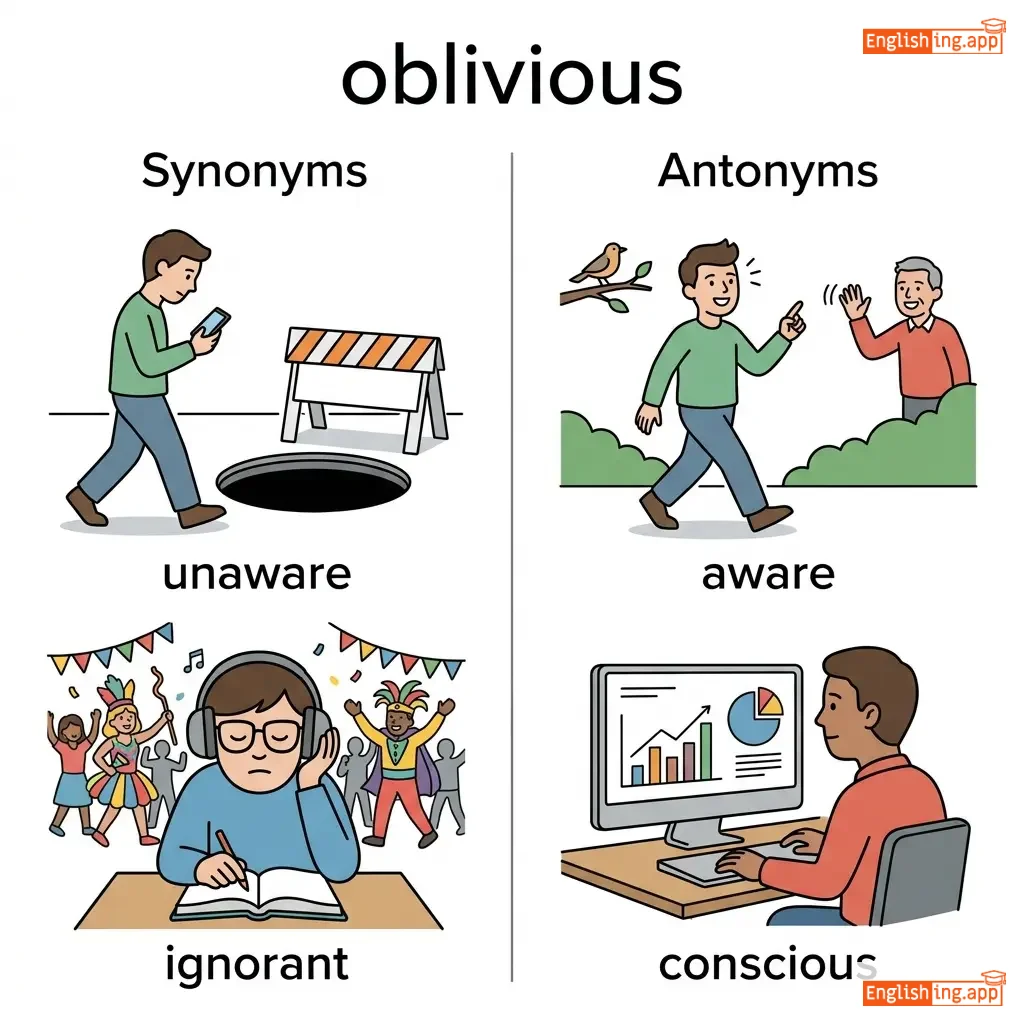
unaware, ignorant, heedless, inattentive
••••••
|
aware, conscious, mindful
••••••
|
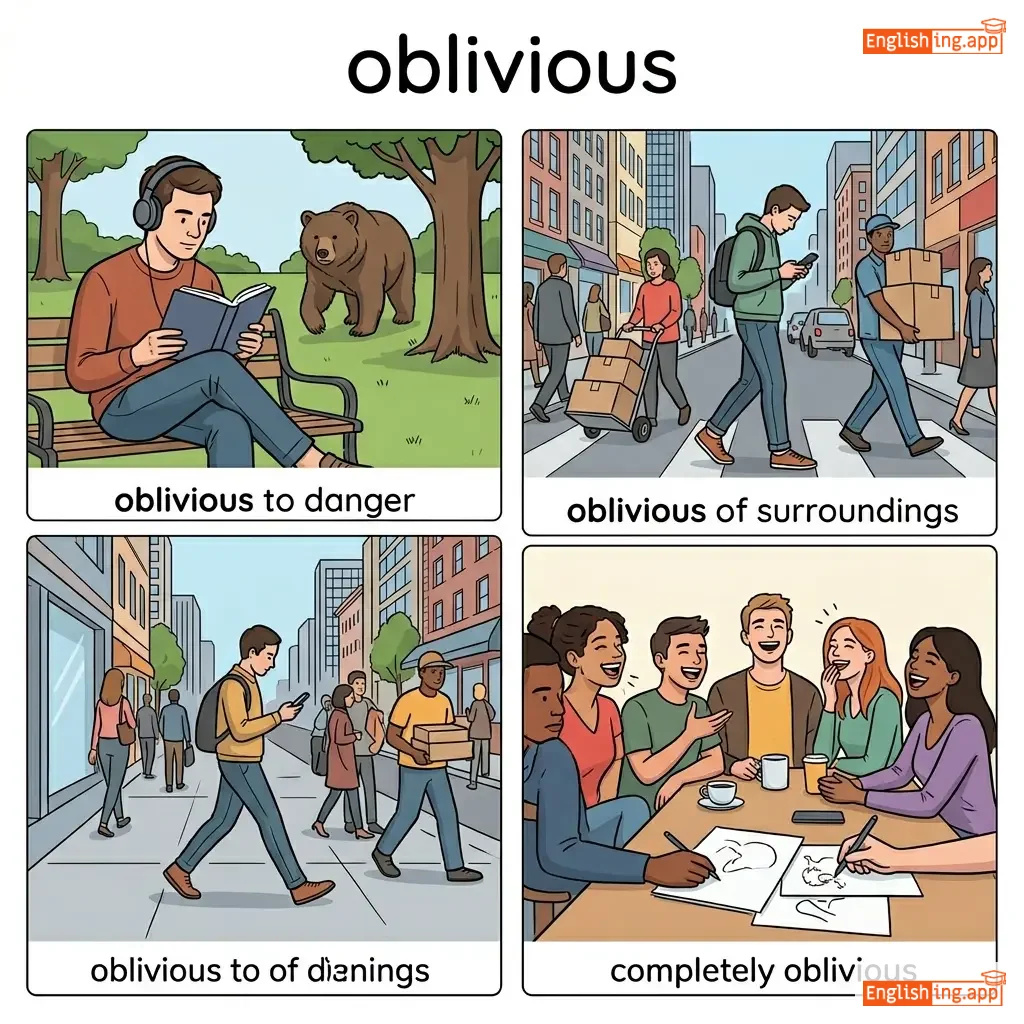
oblivious to danger, oblivious of surroundings, completely oblivious
••••••
|
No •••••• |
|
#6021
🕳️
|
/əˈblɪviən/
noun
(遗忘)
••••••
|
|
遗忘
yíwàng
••••••
|
- •••••• | - •••••• | - •••••• | - •••••• |
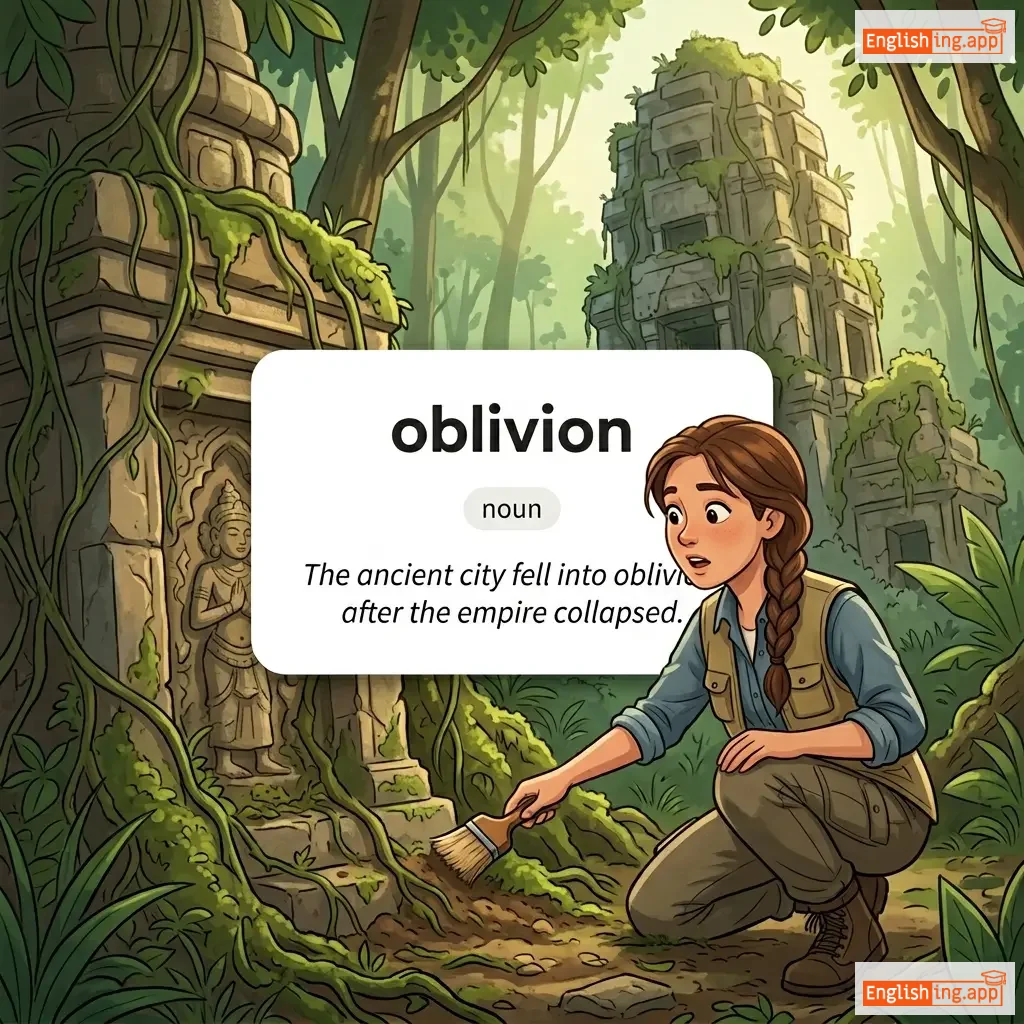
The state of being completely forgotten or unknown; the state of being unconscious or unaware.
••••••
|
The ancient city fell into oblivion after the empire collapsed. |
古老的城市在帝国崩溃后陷入了遗忘。
Gǔlǎo de chéngshì zài dìguó bēngkuì hòu xiànrù le yíwàng.
••••••
|
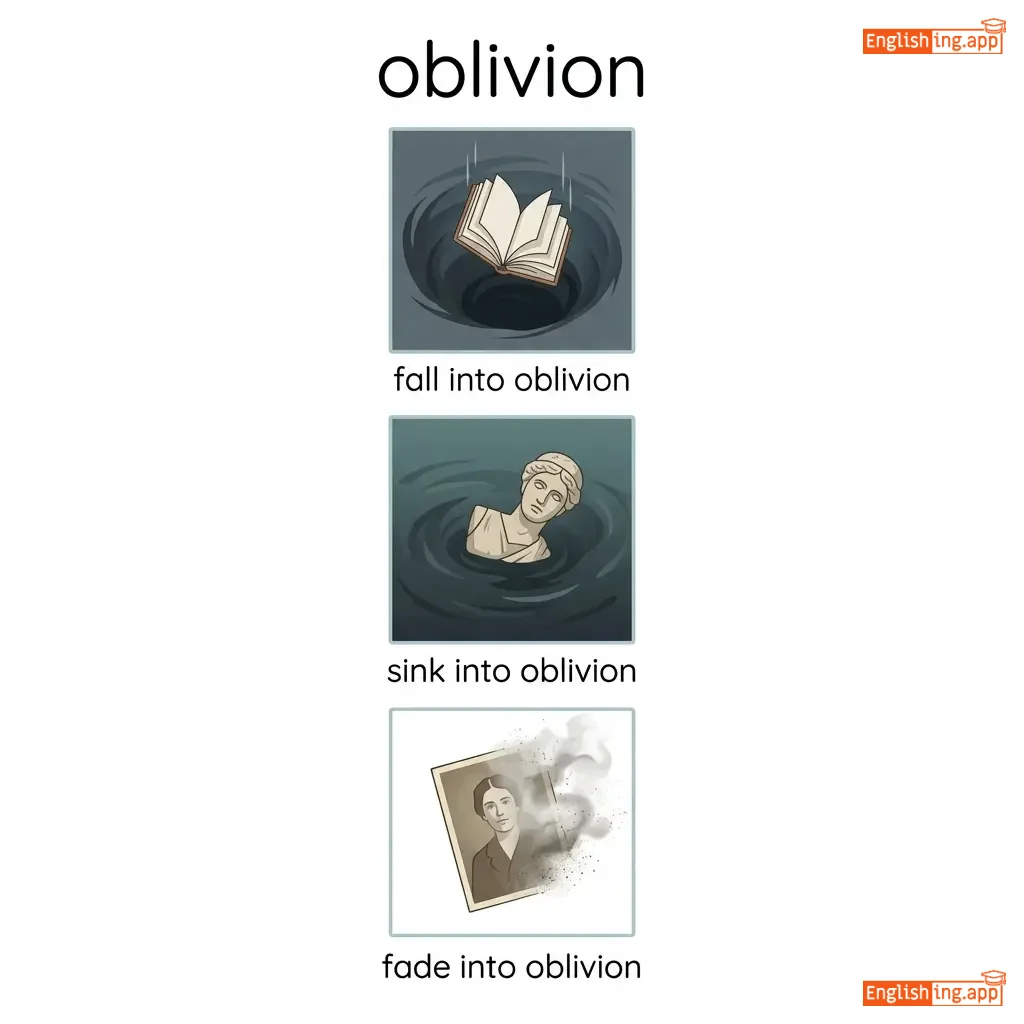
fade into oblivion |
to be forgotten completely over time
••••••
|
消失在遗忘中
xiāoshī zài yíwàng zhōng
••••••
|
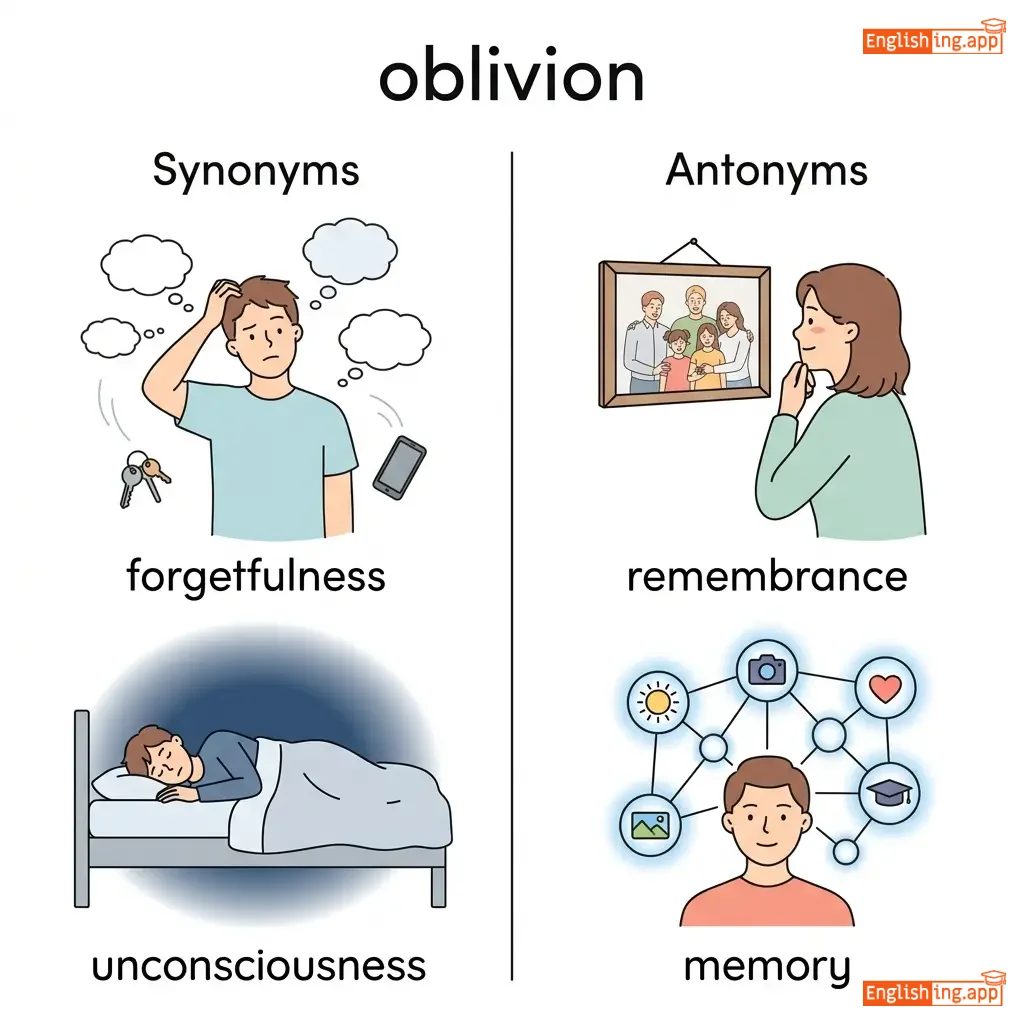
forgetfulness, unconsciousness, obscurity, neglect, nothingness
••••••
|
remembrance, memory, awareness
••••••
|
fall into oblivion, sink into oblivion, fade into oblivion, lost in oblivion
••••••
|
Oblivion 意味着遗忘 —— 想象某物被遗忘,就像‘ob’变成‘遗忘’。
••••••
|
|
#6022
💥
|
/əˈblɪtəreɪt/
verb
(ōbùlìtèruìtè)
••••••
|
|
完全摧毁
wánquán cuīhuǐ
••••••
|
obliterated
ōbùlìtèruìtèd
••••••
|
obliterated
ōbùlìtèruìtèd
••••••
|
obliterates
ōbùlìtèruìtès
••••••
|
obliterating
ōbùlìtèruìtìng
••••••
|
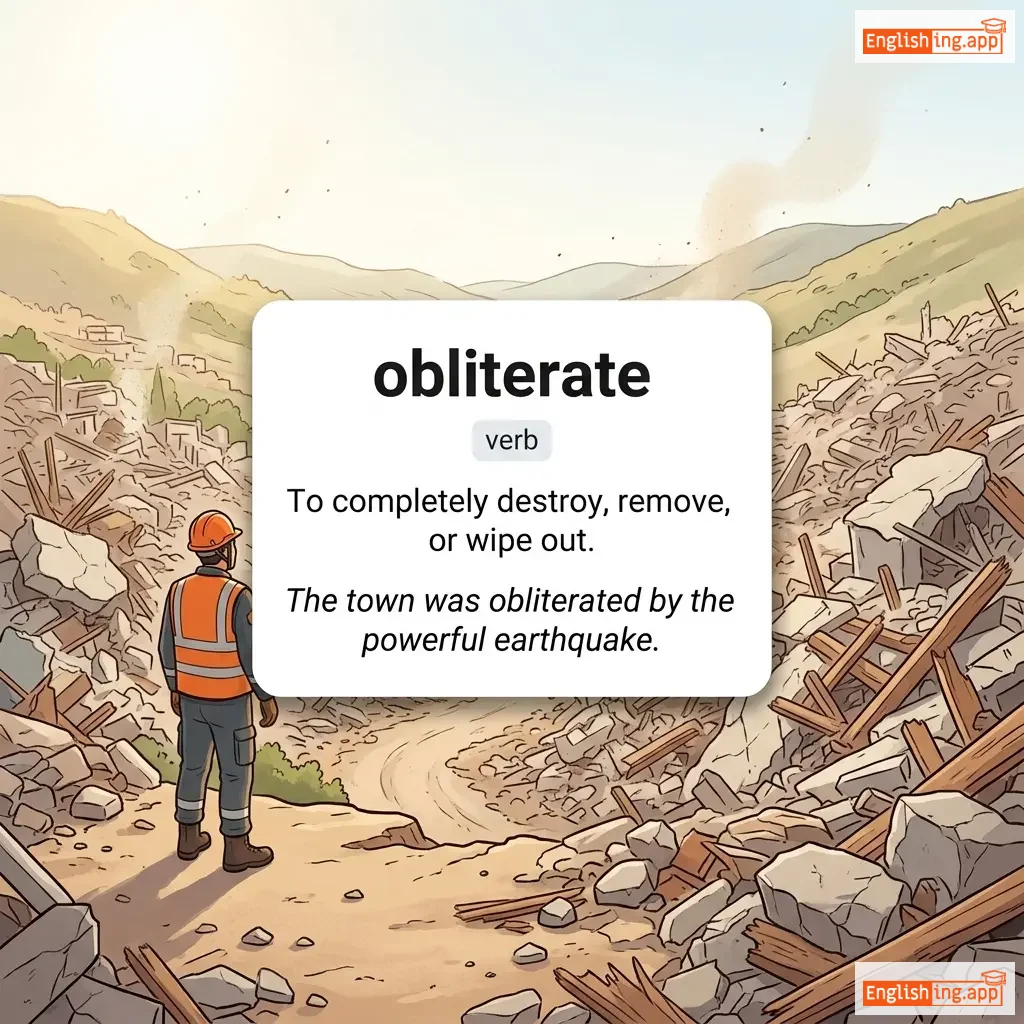
To completely destroy, remove, or wipe out.
••••••
|
The town was obliterated by the powerful earthquake.
这个城市被强烈的地震彻底摧毁了。
••••••
|
这个城市被强烈的地震彻底摧毁了。
zhège chéngshì bèi qiángliè de dìzhèn chèdǐ cuīhuǐ le.
••••••
|
obliterate the memory
抹去记忆
••••••
|
To erase or forget something completely
••••••
|
抹去记忆
mǒqù jìyì
••••••
|
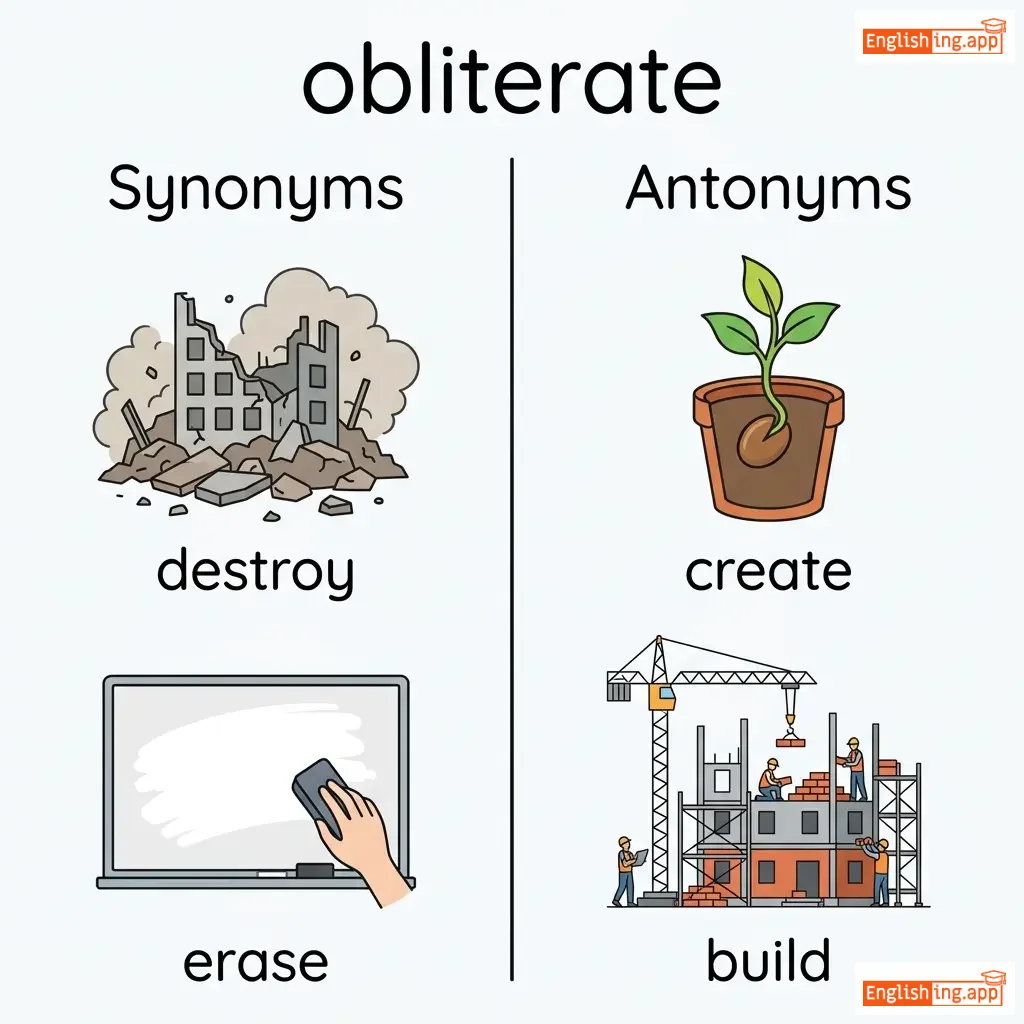
destroy, erase, annihilate, wipe out, demolish
••••••
|
create, build, preserve
••••••
|
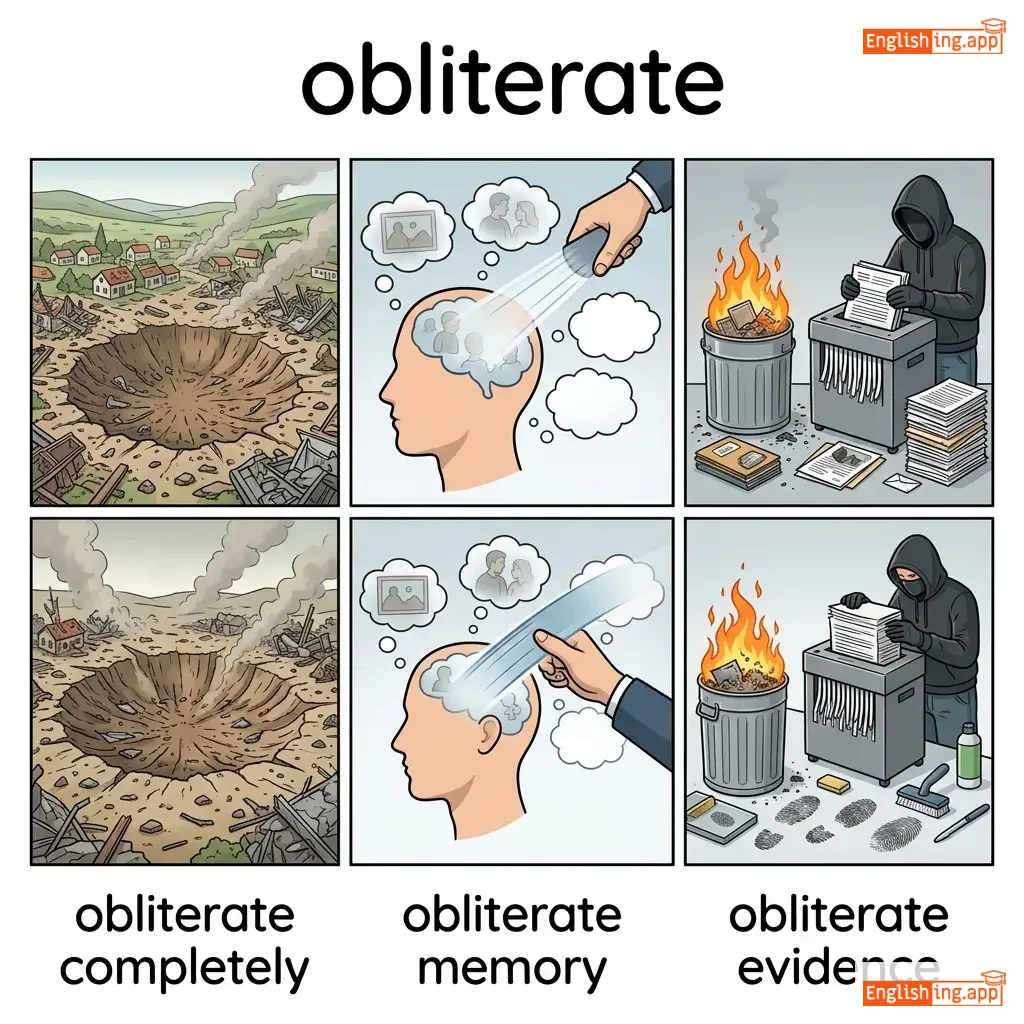
obliterate completely, obliterate memory, obliterate evidence
••••••
|
Obliterate 就是完全摧毁一切!
••••••
|
|
#6023
⚖️
|
/əˈblɪkwɪti/
noun
(obliquiti)
••••••
|
- •••••• |
歪曲
waiku
••••••
|
- •••••• | - •••••• | - •••••• | - •••••• |
Deviation from moral or usual conduct; indirectness or lack of straightforwardness.
••••••
|
The politician was criticized for the obliquity of his answers.
那位政治家因其回答的曲折性而受到批评。
••••••
|
那位政治家因其回答的歪曲性而受到批评。
Na wei zhengzhijia yin qi huida de waikuxing er shoudao piping.
••••••
|
- •••••• | - •••••• | - •••••• |
indirection, dishonesty, evasiveness, crookedness
••••••
|
honesty, directness, clarity
••••••
|
moral obliquity, obliquity of conduct, obliquity in speech
••••••
|
Obliquity意味着歪曲,表示偏离直接路径。
••••••
|
|
#6024
↗️
|
/əˈbliːk/ or /oʊˈbliːk/
adjective
(欧布利克)
••••••
|
- •••••• |
间接的
jianjie de
••••••
|
- •••••• | - •••••• | - •••••• | - •••••• |
Not explicit or direct in addressing a point; slanting or indirect.
••••••
|
She made an oblique reference to his past mistakes. |
她对他的过去错误做了间接的暗示。
Ta dui tade guoqu cuowu zuo le jianjie de anshi.
••••••
|
- •••••• | - •••••• | - •••••• |
indirect, vague, slanted, sloping, angled
••••••
|
direct, straight, explicit
••••••
|
oblique reference, oblique angle, oblique glance, oblique line
••••••
|
Oblique 就是 O-blick, 不直接, 有点倾斜。
••••••
|
|
#6025
😊
|
/əˈblaɪdʒɪŋ/
adjective
(oblaijing)
••••••
|
- •••••• |
乐于助人
leyu zhuren
••••••
|
- •••••• | - •••••• | - •••••• | - •••••• |
Willing to help or do favors; accommodating.
••••••
|
The staff at the hotel were very obliging and friendly. |
酒店的工作人员非常乐于助人且友好。
Jiudian de gongzuo renyuan feichang leyu zhuren qie youhao.
••••••
|
- •••••• | - •••••• | - •••••• |
helpful, accommodating, kind, cooperative, considerate
••••••
|
unhelpful, rude, inconsiderate
••••••
|
obliging staff, obliging nature, obliging host, obliging manner
••••••
|
Obliging 表示乐于助人,像是那些总是愿意帮忙的人。
••••••
|
|
#6026
📜
|
/əˈblɪɡətɔːri/
adjective
••••••
|
|
- •••••• | - •••••• | - •••••• | - •••••• | - •••••• |
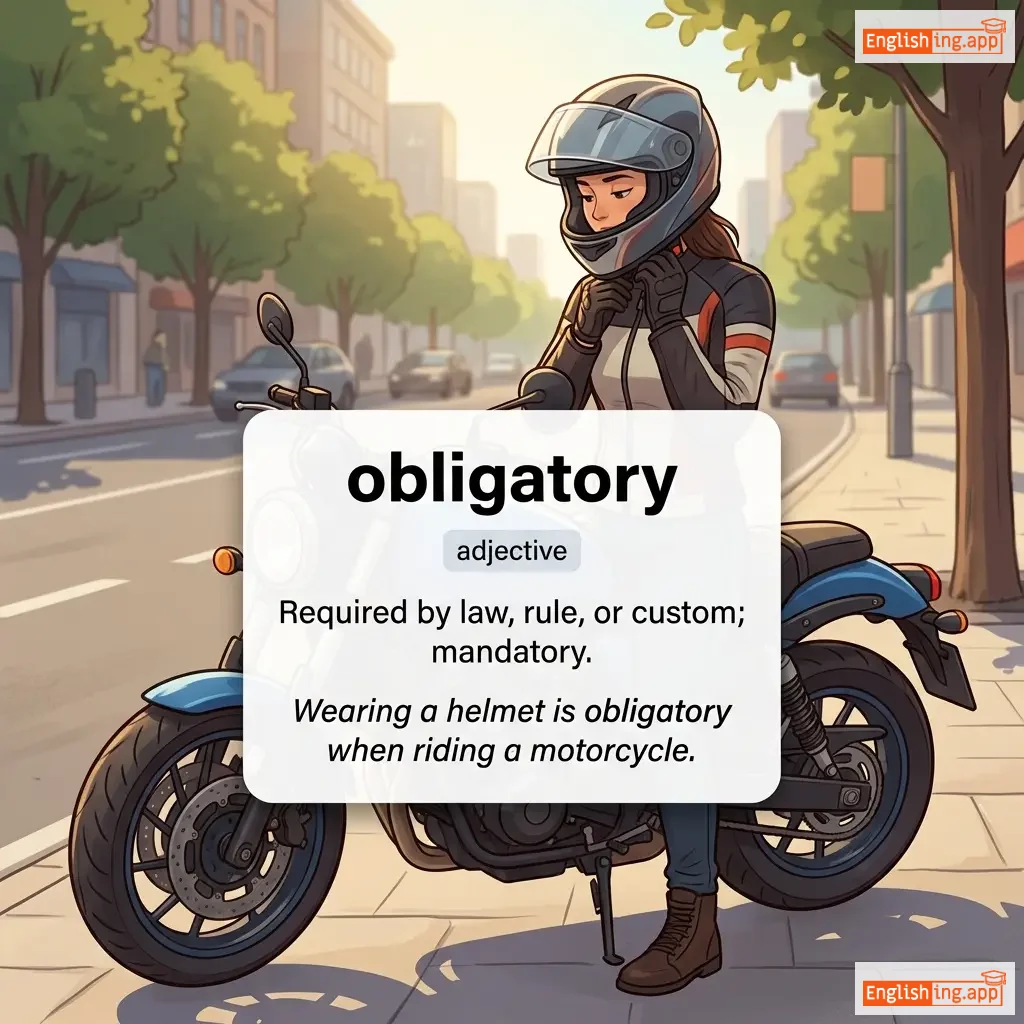
Required by law, rule, or custom; mandatory.
••••••
|
Wearing a helmet is obligatory when riding a motorcycle. |
- •••••• | - •••••• | - •••••• | - •••••• |
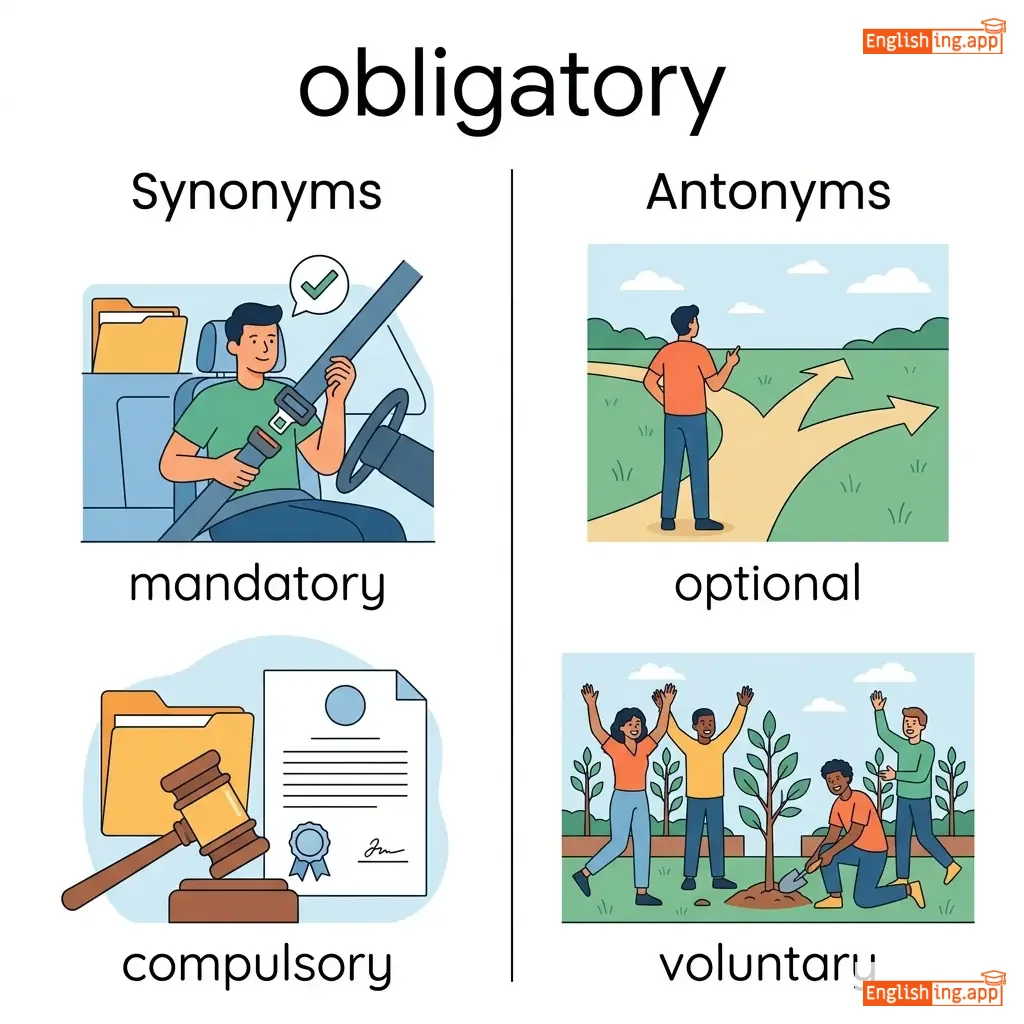
mandatory, compulsory, required, binding, enforced
••••••
|
optional, voluntary, elective
••••••
|
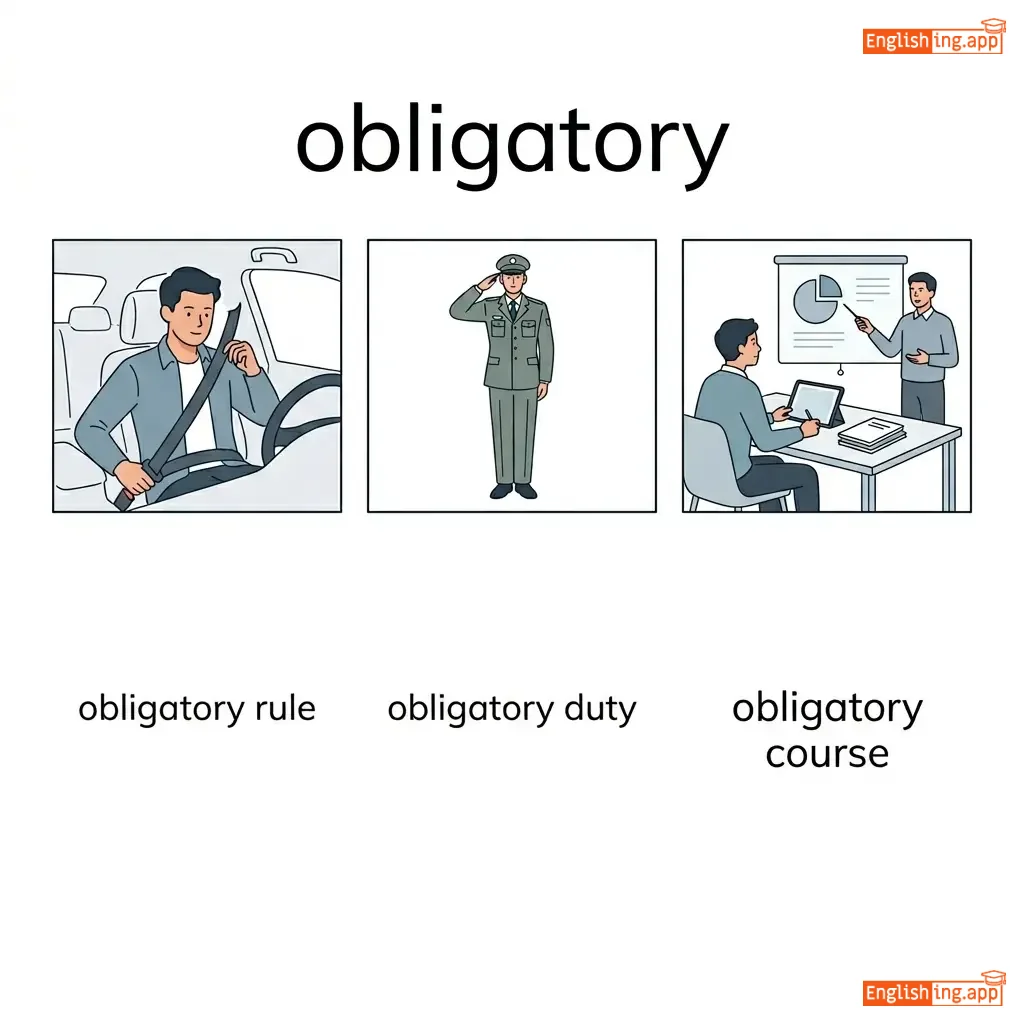
obligatory rule, obligatory duty, obligatory course, obligatory requirement
••••••
|
No •••••• |
|
#6027
📜
|
/ˈɑːblɪˌɡeɪt/
verb
(obligate)
••••••
|
- •••••• |
强迫
qiǎngpò
••••••
|
obligated
obligated
••••••
|
obligated
obligated
••••••
|
obligates
obligates
••••••
|
obligating
obligating
••••••
|
to bind legally or morally; to compel someone to do something
••••••
|
The contract obligates the company to provide timely service.
合同使公司有义务提供及时服务。
••••••
|
合同使公司有义务提供及时服务。
Hétóng shǐ gōngsī yǒu yìwù tígōng jíshí fúwù.
••••••
|
- •••••• | - •••••• | - •••••• |
bind, compel, require, force
••••••
|
free, release, exempt
••••••
|
legally obligate, morally obligate, obligate by contract
••••••
|
Obligate 意味着 'obligation', 即强迫某人做某事。
••••••
|
|
#6028
🕯️
|
/oʊˈbleɪʃən/
noun
(欧布雷申)
••••••
|
- •••••• |
献祭
xianji
••••••
|
- •••••• | - •••••• | - •••••• | - •••••• |
a religious offering, especially of bread or wine to God
••••••
|
The priest placed the oblation on the altar during the ceremony. |
祭司在仪式中将献祭放在祭坛上。
Jisi zai yishi zhong jiang xianji fang zai jitan shang.
••••••
|
- •••••• | - •••••• | - •••••• |
offering, sacrifice, gift, donation
••••••
|
withholding, refusal
••••••
|
religious oblation, make an oblation, temple oblation
••••••
|
献祭就像Oblation,是给神的献礼
••••••
|
|
#6029
📢
|
/ˌɑːbdʒərˈɡeɪʃən/
noun
(ˌɒbdʒərˈɡeɪʃən)
••••••
|
- •••••• |
严厉的斥责
yanli de chize
••••••
|
- •••••• | - •••••• | - •••••• | - •••••• |
a harsh scolding or strong rebuke
••••••
|
His misconduct earned him a severe objurgation from the manager. |
他的不当行为让他受到了经理的严厉斥责。
Tā de bùdàng xíngwéi ràng tā shòu dào le jīnglǐ de yánlì chìzé.
••••••
|
- •••••• | - •••••• | - •••••• |
rebuke, reprimand, scolding, chastisement
••••••
|
praise, compliment, approval
••••••
|
strong objurgation, receive objurgation, face objurgation
••••••
|
Objurgation 是一种严厉的责骂,类似于反对时的斥责。
••••••
|
|
#6030
⚡
|
/ˈɑːbdʒərˌɡeɪt/
verb
(objurgate)
••••••
|
- •••••• |
严厉批评
yanli pīpíng
••••••
|
objurgated
objurgated
••••••
|
objurgated
objurgated
••••••
|
objurgates
objurgates
••••••
|
objurgating
objurgating
••••••
|
to scold or rebuke severely
••••••
|
The teacher objurgated the student for being dishonest.
老师因为学生不诚实而严厉批评了他。
••••••
|
老师因为学生不诚实而严厉批评了他。
Laoshi yinwei xuesheng bu chengshi er yanli piping le ta.
••••••
|
- •••••• | - •••••• | - •••••• |
rebuke, scold, reprimand, chastise, reproach
••••••
|
praise, commend, approve
••••••
|
objurgate harshly, objurgate publicly, objurgate for mistake
••••••
|
Objurgate 听起来像‘对象 + 大门’ – 严厉批评
••••••
|
Vocabulary Quiz
Test your vocabulary by matching words with their translations or meanings.
Login to take the quiz
Comments (0)
Share your thoughts and join the discussion.
Join the discussion by logging in
Login to CommentNo comments yet
Be the first to share your thoughts!