




Swipe left or right, or use the buttons. Tap image to zoom.
例句翻译
单词
Lesson 77Lesson 77 - 遮罩切换
|
表情符号
|
单词 | Images | 翻译 | 过去时 | 过去分词 | 第三人称单数 | 动名词 | 含义 | 例句 | 例句翻译 | 示例表达 | 示例表达含义 | 示例表达翻译 | 同义词 | 反义词 | 搭配词 | 助记符 |
|---|---|---|---|---|---|---|---|---|---|---|---|---|---|---|---|---|---|
|
#2281
📝
|
/dɪˈpoʊnənt/
noun
(dɪˈpoʊnənt)
••••••
|
- •••••• |
证人
zhèngrén
••••••
|
- •••••• | - •••••• | - •••••• | - •••••• |
A person who gives testimony under oath, especially in a written deposition.
••••••
|
The deponent confirmed the accuracy of the statement during the trial. |
证人在审判期间确认了陈述的准确性。
Zhèngrén zài shěnpàn qījiān quèrènle chénshù de zhǔnquèxìng.
••••••
|
- •••••• | - •••••• | - •••••• |
witness, testifier, declarant, affiant
••••••
|
accused, defendant
••••••
|
sworn deponent, deponent statement, examine the deponent, deponent testimony
••••••
|
Deponent 意味着宣誓作证的人 - 证人 📝
••••••
|
|
#2282
📉
|
/dɪˈpriːʃieɪt/
verb
(dɪˈpʁiʃieɪt)
••••••
|
- •••••• |
贬值
bianzhi
••••••
|
depreciated
dɪˈpʁiʃieɪtəd
••••••
|
depreciated
dɪˈpʁiʃieɪtəd
••••••
|
depreciates
dɪˈpʁиʃieɪts
••••••
|
depreciating
dɪˈpʁиʃieɪtɪŋ
••••••
|
to reduce in value over time
••••••
|
Cars tend to depreciate quickly in their first few years.
汽车在头几年通常会迅速贬值。
••••••
|
汽车在头几年通常会迅速贬值。
Qìchē zài tóu jǐ nián tōngcháng huì xùnsù biǎnzhí.
••••••
|
- •••••• | - •••••• | - •••••• |
diminish, devalue, decline, reduce
••••••
|
appreciate, increase, enhance
••••••
|
depreciate in value, depreciate currency, rapidly depreciate
••••••
|
贬值就是价值下降 - 就像价格下滑的曲线 📉
••••••
|
|
#2283
🙎
|
/ˈdɛprɪkətɔːri/
adjective
(deprekatori)
••••••
|
- •••••• |
贬低的
biǎn dī de
••••••
|
- •••••• | - •••••• | - •••••• | - •••••• |
expressing disapproval or belittling
••••••
|
He gave a deprecatory remark about their performance. |
他对他们的表现做出了贬低的评论。
Tā duì tāmen de biǎoxiàn zuò chūle biǎn dī de pínglùn.
••••••
|
- •••••• | - •••••• | - •••••• |
disapproving, critical, derogatory, dismissive
••••••
|
approving, complimentary, supportive
••••••
|
deprecatory remarks, deprecatory tone, deprecatory smile
••••••
|
贬低的,像是对别人表现的贬损评论,类似deprecatory。
••••••
|
|
#2284
🙅
|
/ˈdɛprɪˌkeɪt/
verb
(迪普里凯特)
••••••
|
- •••••• |
贬低
biǎndī
••••••
|
deprecated
迪普里凯特的
••••••
|
deprecated
迪普里凯特的
••••••
|
deprecates
迪普里凯特斯
••••••
|
deprecating
迪普里凯特ing
••••••
|
to express disapproval of something
••••••
|
The teacher deprecated the use of slang in academic essays.
老师批评在学术论文中使用俚语。
••••••
|
老师批评在学术论文中使用俚语。
Lǎoshī pīpíng zài xuéshù lùnwén zhōng shǐyòng lǐyǔ.
••••••
|
self-deprecate
自我贬低
••••••
|
to undervalue or criticize oneself, often humorously
••••••
|
自我贬低
zìwǒ biǎndī
••••••
|
disapprove, criticize, condemn, denounce
••••••
|
praise, commend, approve
••••••
|
deprecate strongly, deprecate violence, deprecate actions, deprecate behavior
••••••
|
Deprecate意味着深度拒绝,就像贬低自己。
••••••
|
|
#2285
👿
|
/dɪˈprævɪti/
noun
(depravity)
••••••
|
- •••••• |
堕落
duoluo
••••••
|
- •••••• | - •••••• | - •••••• | - •••••• |
moral corruption; wickedness
••••••
|
The film portrays the moral depravity of a corrupt society. |
这部电影描绘了腐化社会的道德堕落。
Zhe bu dianying miaohui le fuhua shehui de daode duoluo.
••••••
|
- •••••• | - •••••• | - •••••• |
corruption, wickedness, immorality, vice, debauchery
••••••
|
virtue, morality, righteousness
••••••
|
moral depravity, human depravity, utter depravity, depravity of man
••••••
|
Depravity就像deep + ravity - 深度道德堕落
••••••
|
|
#2286
😈
|
/dɪˈpreɪv/
verb
(dɪˈpreɪv)
••••••
|
- •••••• |
堕落
duòluò
••••••
|
depraved
deˈpreɪvd
••••••
|
depraved
deˈpreɪvd
••••••
|
depraves
deˈpreɪvz
••••••
|
depraving
dɪˈpreɪvɪŋ
••••••
|
to corrupt morally; to make someone immoral or wicked
••••••
|
The novel was criticized for attempting to deprave the minds of young readers.
这本小说因为试图堕落年轻读者的思想而受到批评。
••••••
|
这本小说因为试图堕落年轻读者的思想而受到批评。
Zhè běn xiǎoshuō yīnwèi shìtú duòluò niánqīng dúzhě de sīxiǎng ér shòudào pīpíng.
••••••
|
- •••••• | - •••••• | - •••••• |
corrupt, debase, pervert, degrade, demoralize
••••••
|
uplift, ennoble, purify
••••••
|
deprave the mind, morally deprave, deprave society, deprave youth
••••••
|
Deprave像'堕落',意味着道德堕落.
••••••
|
|
#2287
🏛️
|
/dɪˈpɑːzətɔːri/
noun
(储藏所)
••••••
|
- •••••• |
存储所, 储藏室
cúnchǔ suǒ, chǔcáng shì
••••••
|
- •••••• | - •••••• | - •••••• | - •••••• |
a place where things are stored or deposited, especially financial assets
••••••
|
The national depository safeguards all government bonds.
国家储藏所保护所有政府债券。
••••••
|
国家储藏所保护所有政府债券。
Guójiā chǔcáng suǒ bǎohù suǒyǒu zhèngfǔ zhàiquàn.
••••••
|
- •••••• | - •••••• | - •••••• |
repository, vault, storage, warehouse, bank
••••••
|
withdrawal point, dispersal
••••••
|
central depository, securities depository, national depository, depository system
••••••
|
Depository 意思是存放的地方 - 储藏所
••••••
|
|
#2288
👤
|
/dɪˈpɑːzɪtər/
noun
(dɪˈpɔːzɪtə)
••••••
|
- •••••• |
存款人
cún kuǎn rén
••••••
|
- •••••• | - •••••• | - •••••• | - •••••• |
a person who places money in a bank or financial institution
••••••
|
The bank provides insurance to protect depositors’ funds. |
银行提供保险来保护存款人的资金。
Yínháng tígōng bǎoxiǎn lái bǎohù cún kuǎn rén de zījīn.
••••••
|
- •••••• | - •••••• | - •••••• |
account holder, saver, investor, client
••••••
|
debtor, borrower
••••••
|
bank depositor, small depositor, depositor protection, depositor account
••••••
|
存款人是把钱存入银行的人。
••••••
|
|
#2289
📜
|
/ˌdepəˈzɪʃən/
noun
(迪波兹申)
••••••
|
|
撤职,声明
chèzhí, shēngmíng
••••••
|
- •••••• | - •••••• | - •••••• | - •••••• |
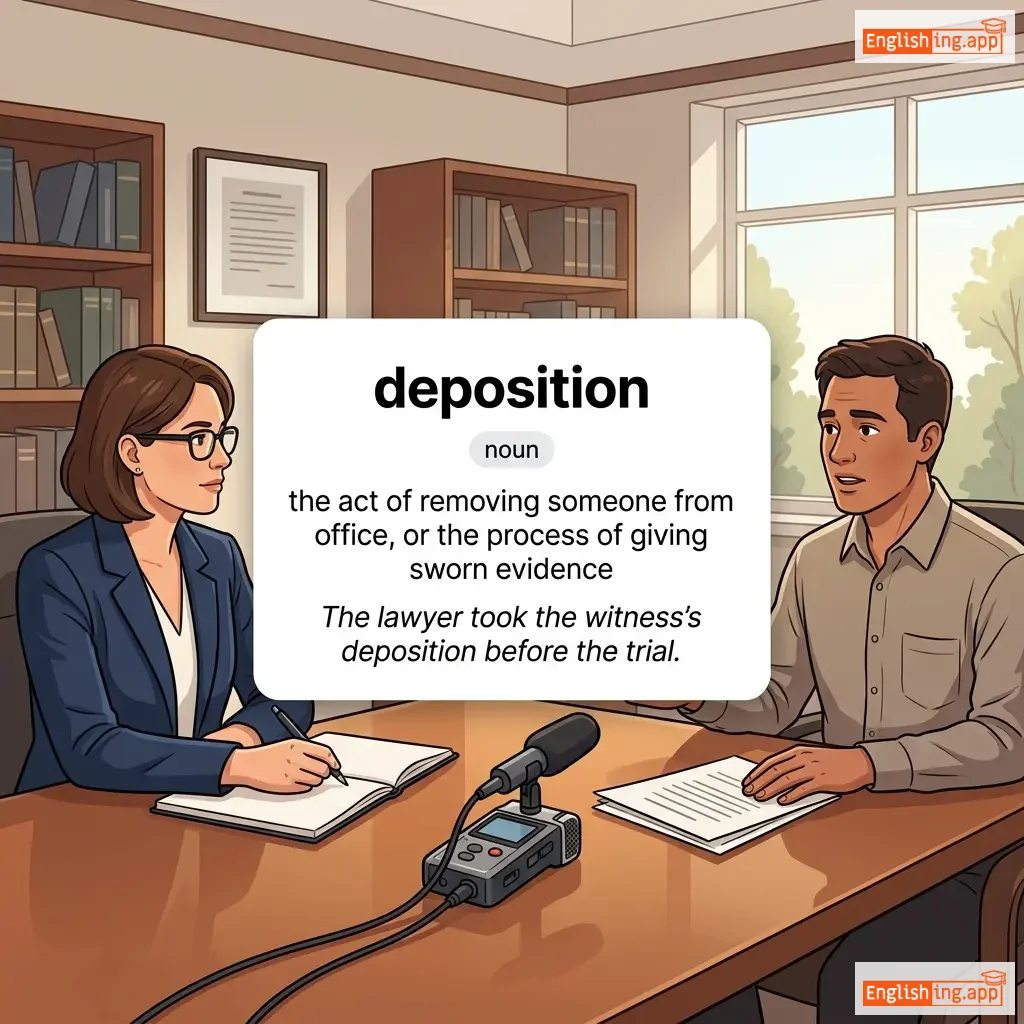
the act of removing someone from office, or the process of giving sworn evidence
••••••
|
The lawyer took the witness’s deposition before the trial.
律师在审判前收集了证人的证词。
••••••
|
律师在审判前收集了证人的证词。
Lǜshī zài shěnpàn qián shōujíle zhèngrén de zhèngcí.
••••••
|
sworn deposition
宣誓证词
••••••
|
a statement made under oath
••••••
|
宣誓证词
xuānshì zhèngcí
••••••
|
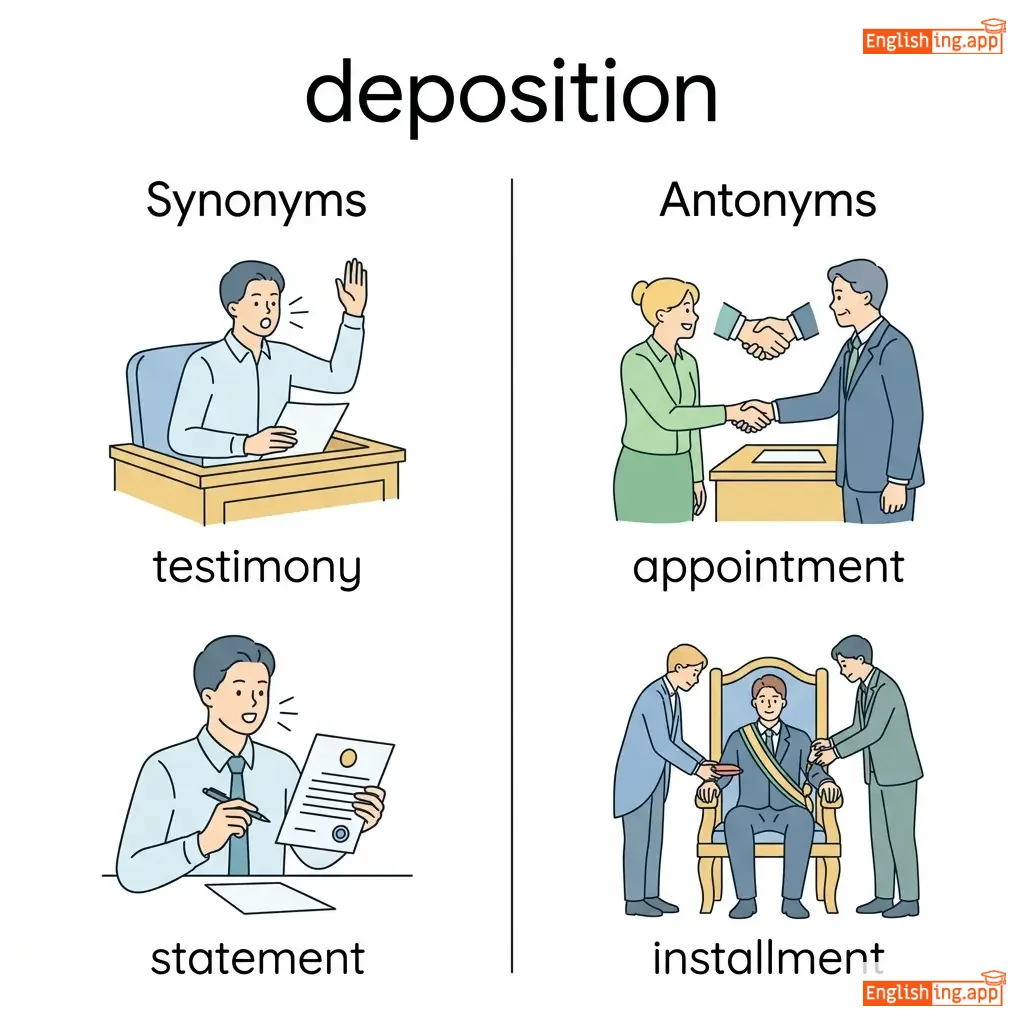
testimony, statement, affidavit, removal, ousting
••••••
|
appointment, installment
••••••
|
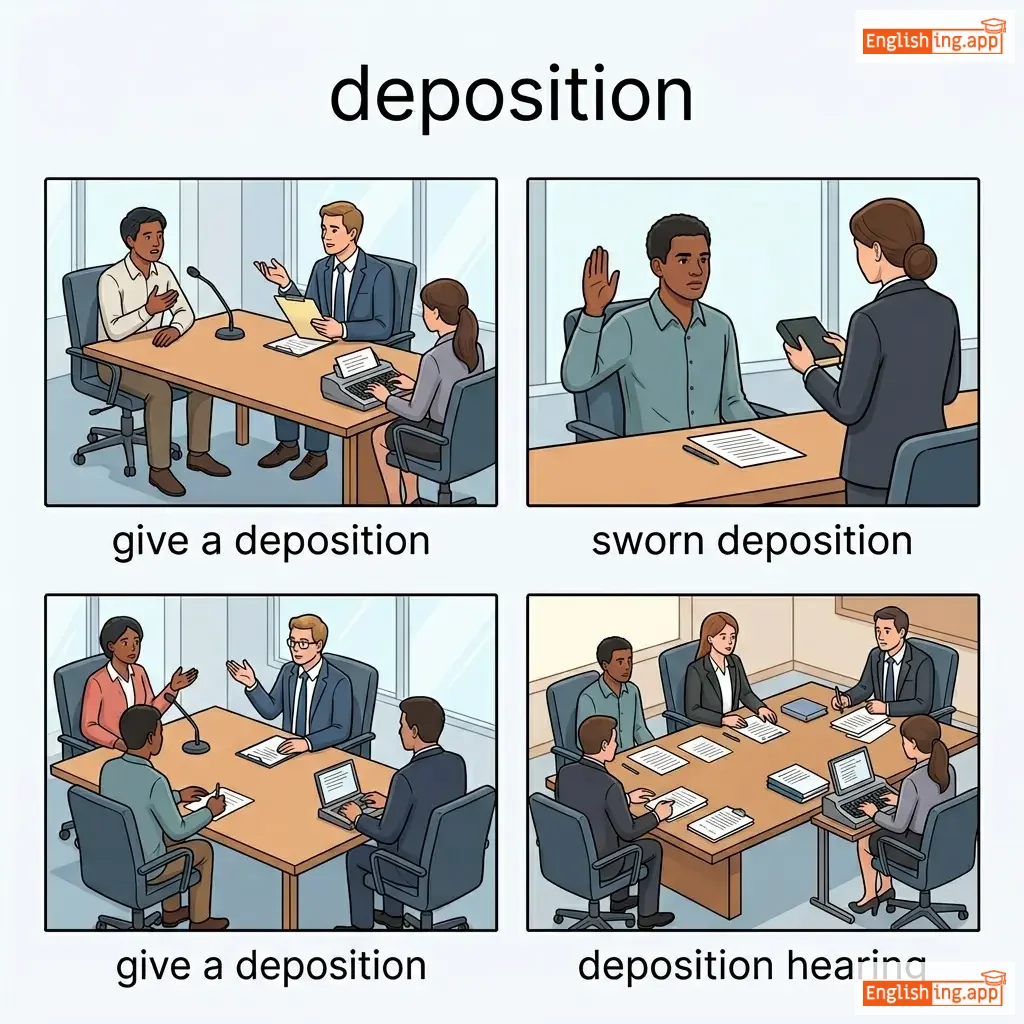
give a deposition, sworn deposition, deposition hearing, deposition testimony
••••••
|
Deposition 是一种职位,去 (移除) 或宣誓证词
••••••
|
|
#2290
🏦
|
/dɪˈpɑːzɪt/
noun/verb
(存款)
••••••
|
- •••••• |
存款, 预付款
cún kuǎn, yù fù kuǎn
••••••
|
deposited
存入
••••••
|
deposited
存入
••••••
|
deposits
存款
••••••
|
depositing
存储
••••••
|
to place money in a bank account, or a sum paid in advance as security; a layer of material left naturally
••••••
|
She deposited $500 into her savings account.
她向她的储蓄账户存入了500美元。
••••••
|
她向她的储蓄账户存入了500美元。
Tā xiàng tā de chǔxù zhànghù cún rù le 500 měiyuán.
••••••
|
security deposit
保证金
••••••
|
a sum of money held as a guarantee against damage or loss
••••••
|
保证金
bǎo zhèng jīn
••••••
|
payment, down payment, savings, pledge, lodgment
••••••
|
withdrawal, debt
••••••
|
make a deposit, deposit money, deposit account, security deposit
••••••
|
Deposit意味着把钱放进银行账户,就像一个预付款或保证金
••••••
|
|
#2291
⚖️
|
/dɪˈpoʊz/
verb
••••••
|
- •••••• | - •••••• |
deposed
••••••
|
deposed
••••••
|
deposes
••••••
|
deposing
••••••
|
to remove someone from office or power, especially suddenly and forcefully
••••••
|
The rebels managed to depose the dictator after years of unrest. |
- •••••• |
depose from office |
to remove someone from their official position
••••••
|
- •••••• |
overthrow, oust, remove, dethrone, displace
••••••
|
appoint, elect, install
••••••
|
depose a leader, depose from office, depose the king, depose a witness
••••••
|
No •••••• |
|
#2292
🤵
|
/dɪˈpɔːrtmənt/
noun
(迪波特门)
••••••
|
- •••••• |
举止
juzhi
••••••
|
- •••••• | - •••••• | - •••••• | - •••••• |
A person's behavior or manners, especially in a formal situation.
••••••
|
Her deportment during the ceremony impressed everyone. |
她在仪式中的举止给大家留下了深刻印象。
Tā zài yíshì zhōng de jǔzhǐ gěi dàjiā liúxiàle shēnkè yìnxiàng.
••••••
|
- •••••• | - •••••• | - •••••• |
conduct, demeanor, behavior, carriage
••••••
|
misconduct, rudeness
••••••
|
good deportment, elegant deportment, deportment classes, deportment training
••••••
|
Deportment 是指在正式场合上的举止和行为。
••••••
|
|
#2293
🚷
|
/ˌdiːpɔːrˈteɪʃən/
noun
••••••
|
- •••••• | - •••••• | - •••••• | - •••••• | - •••••• | - •••••• |
The act of expelling a foreigner from a country.
••••••
|
The deportation of hundreds of workers sparked international criticism. |
- •••••• | - •••••• | - •••••• | - •••••• |
expulsion, banishment, exile, removal
••••••
|
admission, acceptance, naturalization
••••••
|
mass deportation, forced deportation, deportation order, deportation case
••••••
|
No •••••• |
|
#2294
✈️
|
/dɪˈpɔːrt/
verb
(驱逐)
••••••
|
- •••••• |
驱逐
qūzhú
••••••
|
deported
驱逐了
••••••
|
deported
驱逐了
••••••
|
deports
驱逐
••••••
|
deporting
驱逐中
••••••
|
To expel a foreigner from a country, usually for legal or political reasons.
••••••
|
The government decided to deport the illegal immigrants.
政府决定驱逐非法移民。
••••••
|
政府决定驱逐非法移民。
Zhèngfǔ juédìng qūzhú fēifǎ yímín.
••••••
|
- •••••• | - •••••• | - •••••• |
expel, banish, exile, repatriate
••••••
|
admit, welcome, naturalize
••••••
|
deport immigrants, deport criminals, deport immediately, government deports
••••••
|
驱逐就像把人从一个地方赶出去,像被强行送走一样。
••••••
|
|
#2295
🏚️
|
/diːˈpɒpjʊˌleɪt/
verb
(dɪˈpɒpjʊˌleɪt)
••••••
|
- •••••• |
减少人口
jiǎnshǎo rénkǒu
••••••
|
depopulated
dɪˈpɒpjʊˌleɪtɪd
••••••
|
depopulated
dɪˈpɒpjʊˌleɪtɪd
••••••
|
depopulates
dɪˈpɒpjʊˌleɪts
••••••
|
depopulating
dɪˈpɒpjʊˌleɪtɪŋ
••••••
|
To reduce the number of people living in a place.
••••••
|
The war threatened to depopulate the once-thriving town.
战争威胁要使曾经繁荣的城市人口减少。
••••••
|
战争威胁要使曾经繁荣的城市人口减少。
Zhànzhēng wēixié yào shǐ céngjīng fánróng de chéngshì rénkǒu jiǎnshǎo.
••••••
|
- •••••• | - •••••• | - •••••• |
evacuate, empty, desert, drain
••••••
|
populate, settle, inhabit
••••••
|
depopulate villages, depopulate regions, war depopulates, disease depopulates
••••••
|
De-populate 意味着减少人口 - 减少人口 🏚️
••••••
|
|
#2296
📖
|
/ˌdiːnəʊˈteɪʃən/
noun
(指示)
••••••
|
- •••••• |
指示
zhǐshì
••••••
|
- •••••• | - •••••• | - •••••• | - •••••• |
The literal or primary meaning of a word, in contrast to the feelings or ideas that the word suggests.
••••••
|
The denotation of the word 'rose' is a type of flower.
“玫瑰”这个词的指示是一个花的种类。
••••••
|
“玫瑰”这个词的指示是一个花的种类。
'Méiguī' zhège cí de zhǐshì shì yīgè huā de zhǒnglèi.
••••••
|
- •••••• | - •••••• | - •••••• |
definition, meaning, sense, signification, explanation
••••••
|
connotation, implication
••••••
|
literal denotation, denotation of a word, precise denotation, dictionary denotation
••••••
|
指示是词语的直接意思,就像字典中显示的那样。
••••••
|
|
#2297
🎖️
|
/dɪˈplɔɪ/
verb
(dī plòi)
••••••
|
|
部署
bùshǔ
••••••
|
deployed
dī plòi d
••••••
|
deployed
dī plòi d
••••••
|
deploys
dī plòis
••••••
|
deploying
dī plòi yīng
••••••
|
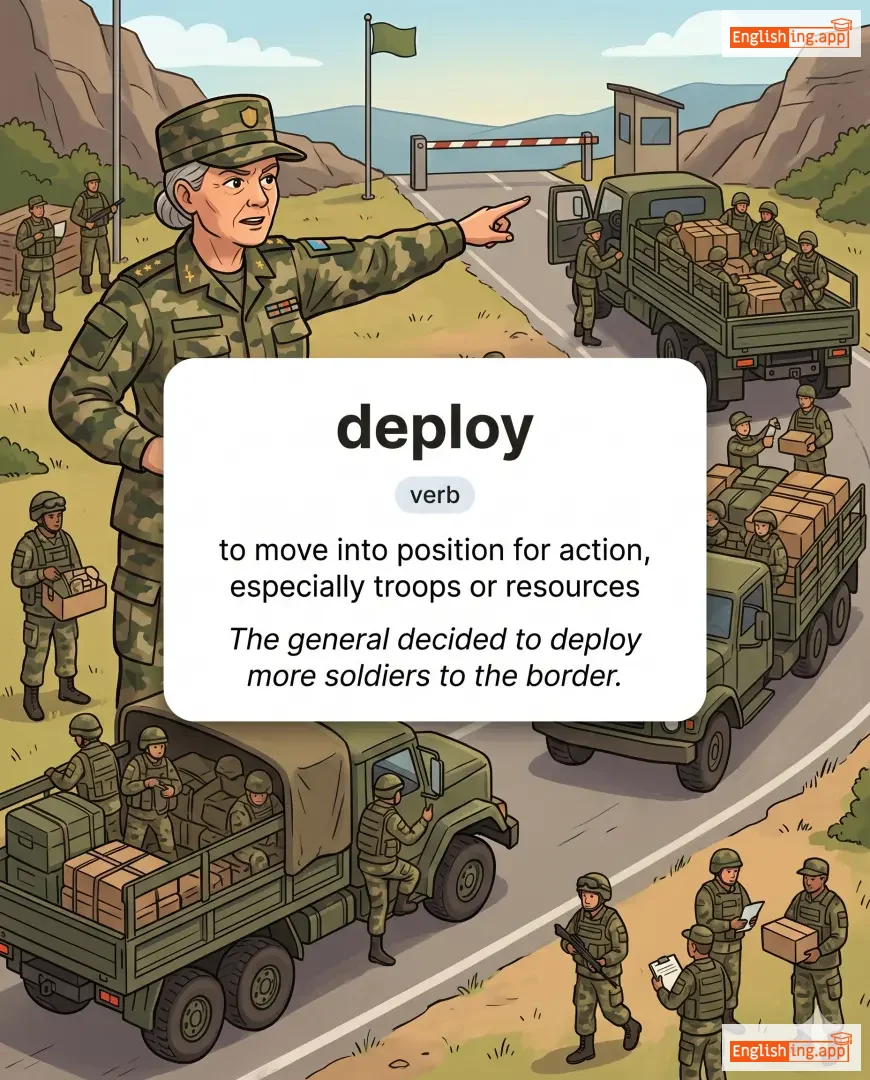
to move into position for action, especially troops or resources
••••••
|
The general decided to deploy more soldiers to the border.
将更多的士兵部署到边境是将军的决定。
••••••
|
将更多的士兵部署到边境是将军的决定。
Jiāng gèng duō de shìbīng bùshǔ dào biānjìng shì jiāngjūn de juédìng.
••••••
|
deploy resources
部署资源
••••••
|
to effectively use available resources
••••••
|
部署资源
bùshǔ zīyuán
••••••
|
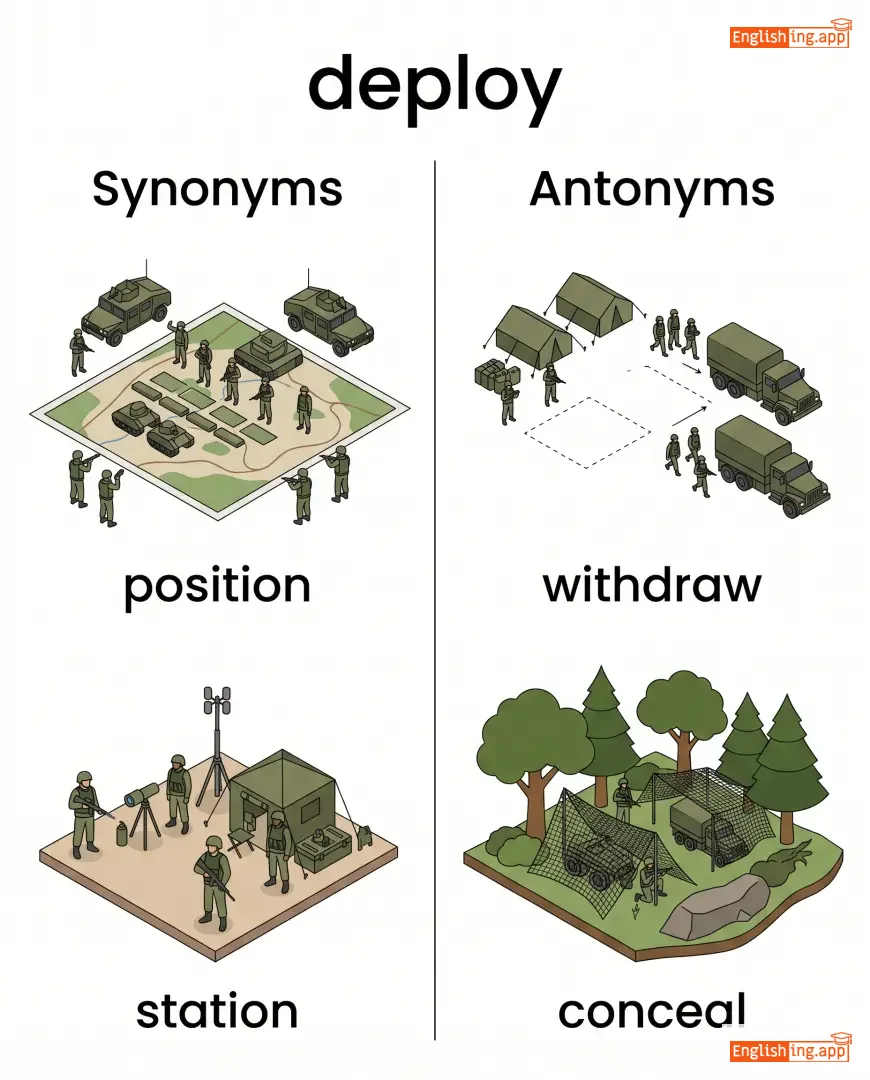
position, station, utilize, employ, arrange
••••••
|
withdraw, conceal
••••••
|
deploy troops, deploy technology, deploy forces, deploy strategy
••••••
|
部署就像放置士兵,准备好资源。
••••••
|
|
#2298
🙅
|
/dɪˈplɔːr/
verb
(dɪˈplɔːr)
••••••
|
|
谴责
qianze
••••••
|
deplored
dɪˈplɔːrd
••••••
|
deplored
dɪˈplɔːrd
••••••
|
deplores
dɪˈplɔːrz
••••••
|
deploring
dɪˈplɔːrɪŋ
••••••
|
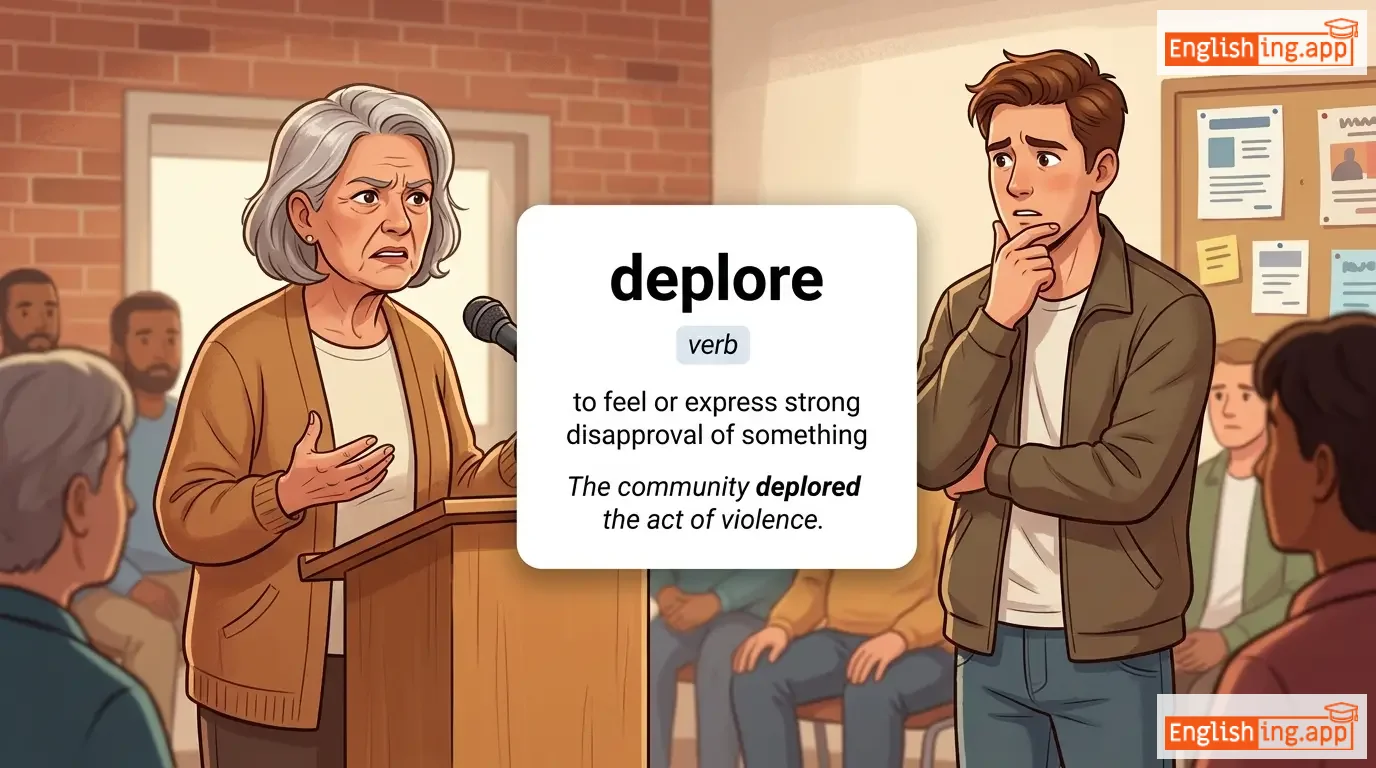
to feel or express strong disapproval of something
••••••
|
The community deplored the act of violence.
社区谴责了暴力行为。
••••••
|
社区谴责了暴力行为。
Shequ qianze le baoli xingwei.
••••••
|
- •••••• | - •••••• | - •••••• |
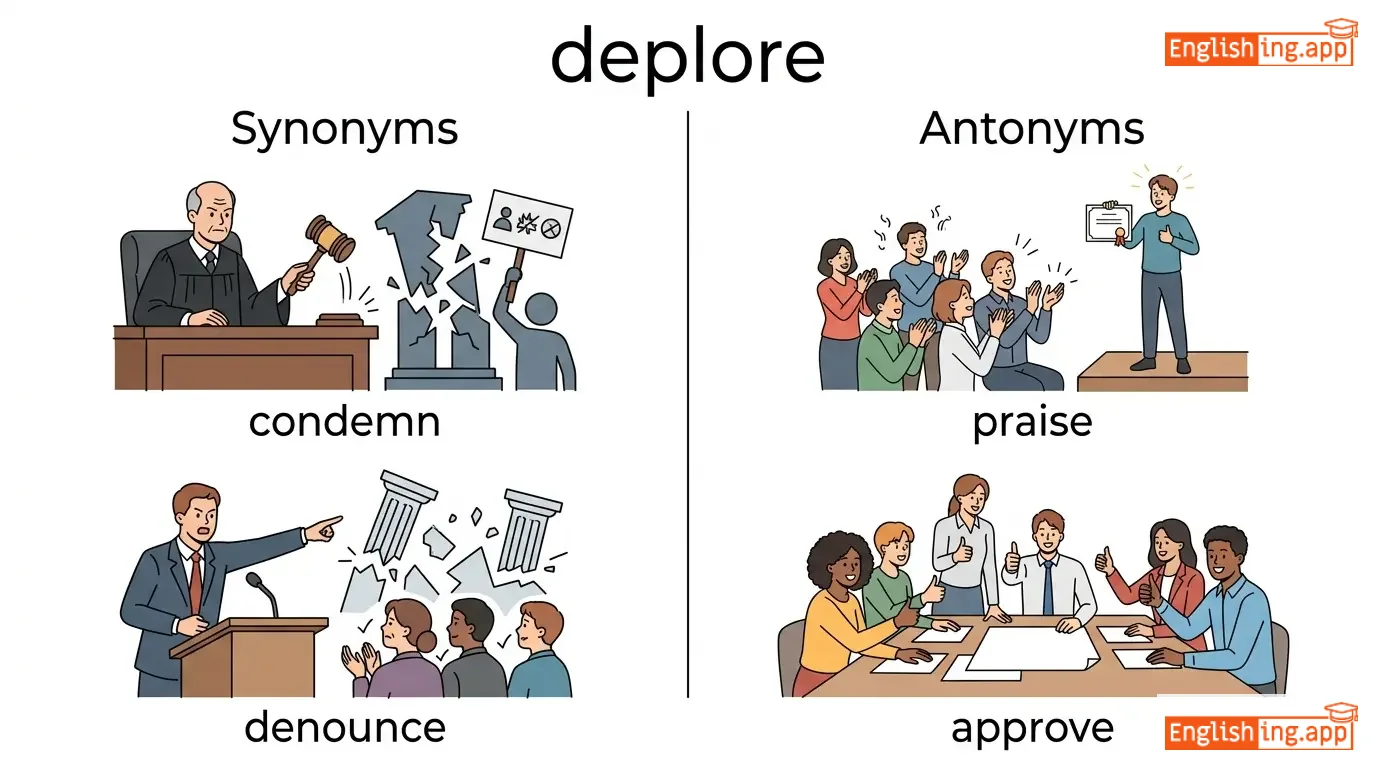
condemn, denounce, criticize, disapprove
••••••
|
praise, approve
••••••
|
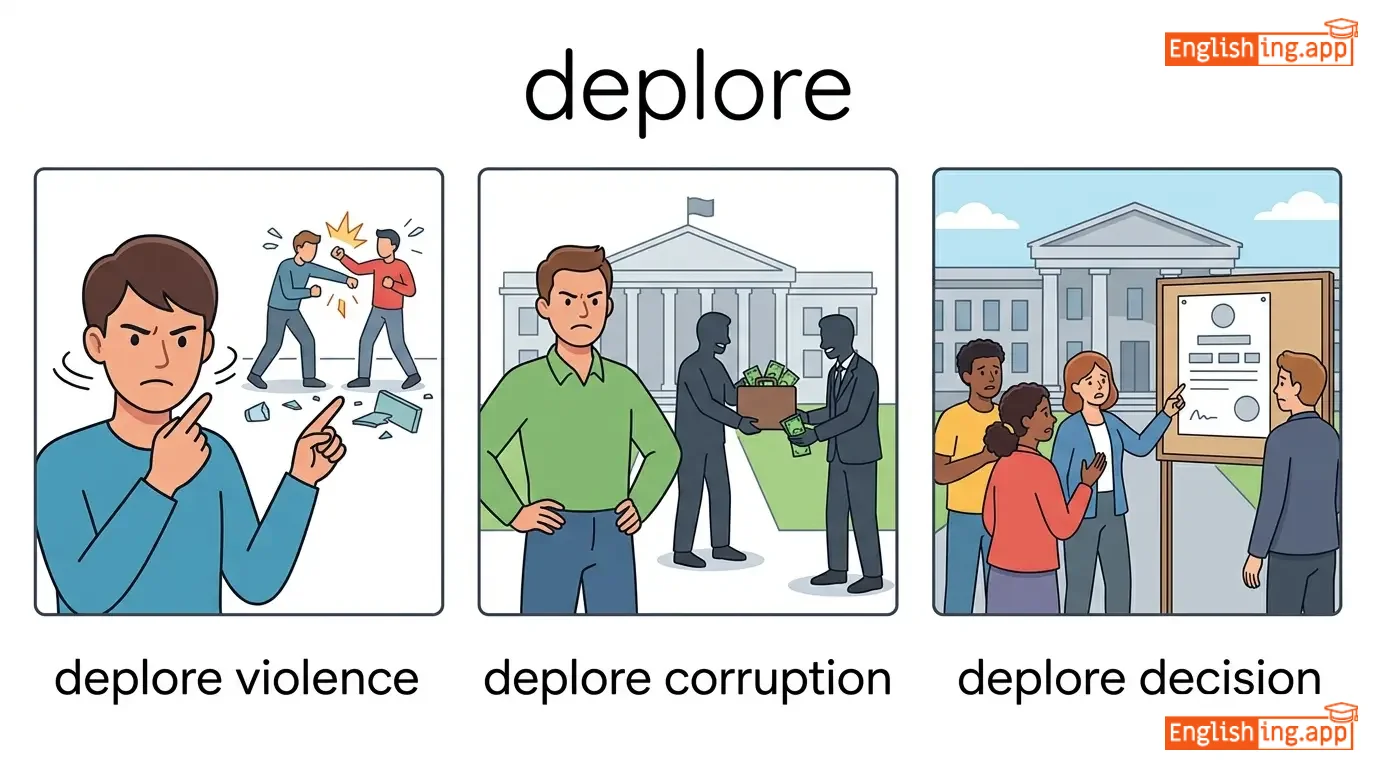
deplore violence, deplore corruption, deplore decision, deplore behavior
••••••
|
Deplore = 谴责 (谴责 = 强烈的反对)
••••••
|
|
#2299
😔
|
/dɪˈplɔːrəbl/
adjective
(迪普洛拉布尔)
••••••
|
- •••••• |
可鄙的
kě bǐ de
••••••
|
- •••••• | - •••••• | - •••••• | - •••••• |
deserving strong condemnation; shockingly bad in quality
••••••
|
The refugees were living in deplorable conditions. |
难民们生活在可鄙的条件下。
Nànmín men shēnghuó zài kě bǐ de tiáojiàn xià.
••••••
|
- •••••• | - •••••• | - •••••• |
shameful, disgraceful, appalling, terrible, unacceptable
••••••
|
praiseworthy, admirable, acceptable
••••••
|
deplorable condition, deplorable act, deplorable state, morally deplorable
••••••
|
De PLOR (floor) 地板肮脏,简直可鄙
••••••
|
|
#2300
⚡
|
/dɪˈpliːt/
verb
(diplit)
••••••
|
- •••••• |
耗尽
hao jin
••••••
|
depleted
diplited
••••••
|
depleted
diplited
••••••
|
depletes
diplits
••••••
|
depleting
dipliting
••••••
|
to reduce the quantity or supply of something
••••••
|
The long war has depleted the country's resources.
长时间的战争已经耗尽了该国的资源。
••••••
|
长时间的战争已经耗尽了该国的资源。
Chang shi jian de zhan zheng yi jing hao jin le gai guo de zi yuan.
••••••
|
deplete energy
耗尽能量
••••••
|
to use up energy
••••••
|
耗尽能量
hao jin neng liang
••••••
|
exhaust, drain, consume, diminish, reduce
••••••
|
increase, replenish, restore
••••••
|
deplete resources, deplete stock, deplete energy, rapidly deplete
••••••
|
De plate 没有食物,一切已被耗尽
••••••
|
|
#2301
🪒
|
/ˈdɛpɪleɪt/
verb
(脱毛)
••••••
|
- •••••• |
脱毛
tuōmáo
••••••
|
depilated
脱毛了
••••••
|
depilated
脱毛了
••••••
|
depilates
脱毛
••••••
|
depilating
脱毛中
••••••
|
to remove hair from the skin, especially by mechanical or chemical means
••••••
|
She decided to depilate her legs before the event.
她决定在活动前脱毛她的腿。
••••••
|
她决定在活动前脱毛她的腿。
Tā juédìng zài huódòng qián tuōmáo tā de tuǐ.
••••••
|
- •••••• | - •••••• | - •••••• |
shave, wax, epilate, pluck, trim
••••••
|
grow, retain
••••••
|
depilate legs, depilate skin, chemical depilate, depilate area
••••••
|
活动前先脱毛 - remove hair first.
••••••
|
|
#2302
🎨
|
/dɪˈpɪkt/
verb
••••••
|
- •••••• | - •••••• |
depicted
••••••
|
depicted
••••••
|
depicts
••••••
|
depicting
••••••
|
to represent or show something in a picture, story, or other art form
••••••
|
The painting depicts a beautiful sunset over the sea. |
- •••••• |
depict in a bad light |
to represent someone or something negatively
••••••
|
- •••••• |
portray, illustrate, describe, represent, delineate
••••••
|
conceal, hide, distort
••••••
|
depict accurately, depict vividly, depict clearly, depict scene
••••••
|
No •••••• |
|
#2303
📢
|
/dɪˌnʌnsiˈeɪʃən/
noun
(指控)
••••••
|
- •••••• |
指控 / 公共谴责
zhikong / gonggong qianze
••••••
|
- •••••• | - •••••• | - •••••• | - •••••• |
the public condemnation or accusation of someone or something
••••••
|
The journalist's article was a strong denunciation of corruption.
记者的文章是对腐败的强烈指控。
••••••
|
记者的文章是对腐败的强烈指控。
Jizhe de wenzhang shi dui fubai de qianglie zhikong.
••••••
|
- •••••• | - •••••• | - •••••• |
condemnation, censure, accusation, criticism
••••••
|
praise, approval, commendation
••••••
|
public denunciation, strong denunciation, denunciation speech
••••••
|
Denunciation 就是指控,比如老师指控班级里的行为
••••••
|
|
#2304
🌲
|
/dɪˈnjuːd/
verb
(dinuud)
••••••
|
- •••••• |
剥夺
baoduo
••••••
|
denuded
denuded
••••••
|
denuded
denuded
••••••
|
denudes
denudes
••••••
|
denuding
denuding
••••••
|
to strip something of its covering, possessions, or assets
••••••
|
The forest was denuded of trees by illegal logging.
森林被非法伐木剥夺了树木。
••••••
|
森林被非法伐木剥夺了树木。
Senlin bei feifa famu baoduo le shumu.
••••••
|
- •••••• | - •••••• | - •••••• |
strip, bare, expose, deprive
••••••
|
cover, clothe, protect
••••••
|
denude land, denude forest, denude resources
••••••
|
Denude就是剥去覆盖物、使森林剥光或剥夺一切
••••••
|
|
#2305
🦷
|
/ˈdɛntɪfrɪs/
noun
(dàntìfūlìsī)
••••••
|
- •••••• |
牙膏
yágāo
••••••
|
- •••••• | - •••••• | - •••••• | - •••••• |
a substance such as powder, paste, or liquid used to clean teeth
••••••
|
He bought a new herbal dentifrice from the pharmacy.
他从药店买了新的草本牙膏。
••••••
|
他从药店买了新的草本牙膏。
Tā cóng yàodiàn mǎi le xīn de cǎoběn yágāo.
••••••
|
- •••••• | - •••••• | - •••••• |
toothpaste, tooth powder, oral cleaner
••••••
|
dirt, stain
••••••
|
herbal dentifrice, fluoride dentifrice, medicated dentifrice
••••••
|
Dentifrice 意味着牙膏,dent + frice 听起来像'清新的牙齿'
••••••
|
|
#2306
🛠️
|
/dɛnt/
noun/verb
(dent)
••••••
|
- •••••• |
凹痕
āo hén
••••••
|
dented
dented
••••••
|
dented
dented
••••••
|
dents
dents
••••••
|
denting
denting
••••••
|
a small hollow mark on the surface of something; to make a small hollow mark
••••••
|
The accident left a dent in the car door.
事故在车门上留下了一个凹痕。
••••••
|
事故在车门上留下了一个凹痕。
shìgù zài chēmén shàng liúxià le yīgè āo hén.
••••••
|
make a dent
做个凹痕
••••••
|
to reduce something slightly or achieve some progress
••••••
|
做一个小进展
zuò yīgè xiǎo jìnzhǎn
••••••
|
mark, hollow, depression, notch, indentation
••••••
|
smooth, flat
••••••
|
car dent, dent repair, make a dent, dent removal
••••••
|
凹痕就像车上的小坑,就像我们说 '车门上有个凹痕!'
••••••
|
|
#2307
🌲
|
/dɛns/
adjective
(dēnsī)
••••••
|
- •••••• |
密集的
mìjí de
••••••
|
- •••••• | - •••••• | - •••••• | - •••••• |
Closely compacted in substance; having parts crowded together.
••••••
|
The forest was so dense that little sunlight reached the ground. |
森林是如此密集,以至于只有很少的阳光照射到地面。
Sēnlín shì rúcǐ mìjí, yǐzhì zhǐ yǒu hěn shǎo de yángguāng zhàoshè dào dìmiàn.
••••••
|
dense fog |
Thick fog that reduces visibility.
••••••
|
浓雾
nóng wù
••••••
|
thick, compact, crowded, heavy, solid
••••••
|
thin, sparse, light
••••••
|
dense forest, dense fog, dense population, dense crowd
••••••
|
Dense 意味着密集 - 记住 dense forest 意味着密集森林。
••••••
|
|
#2308
📢
|
/dɪˈnaʊns/
verb
(dīnaǒns)
••••••
|
- •••••• |
谴责
qiǎnzé
••••••
|
denounced
dīnaǒnsd
••••••
|
denounced
dīnaǒnsd
••••••
|
denounces
dīnaǒnces
••••••
|
denouncing
dīnaǒnsing
••••••
|
To publicly declare something to be wrong, evil, or condemn strongly.
••••••
|
The leader denounced corruption in his speech.
领导人在他的演讲中谴责了腐败。
••••••
|
领导人在他的演讲中谴责了腐败。
Lǐngdǎo rén zài tā de yǎnjiǎng zhōng qiǎnzéle fǔbài.
••••••
|
denounce in no uncertain terms
以明确的术语谴责
••••••
|
To condemn very strongly and clearly.
••••••
|
以明确的术语谴责
Yǐ míngquè de shùyǔ qiǎnzé
••••••
|
condemn, criticize, censure, blame, accuse
••••••
|
praise, approve, endorse
••••••
|
publicly denounce, strongly denounce, denounce corruption, denounce violence
••••••
|
Denounce听起来像 'announce', 但是意思是公开强烈谴责,比如谴责腐败。
••••••
|
|
#2309
🎭
|
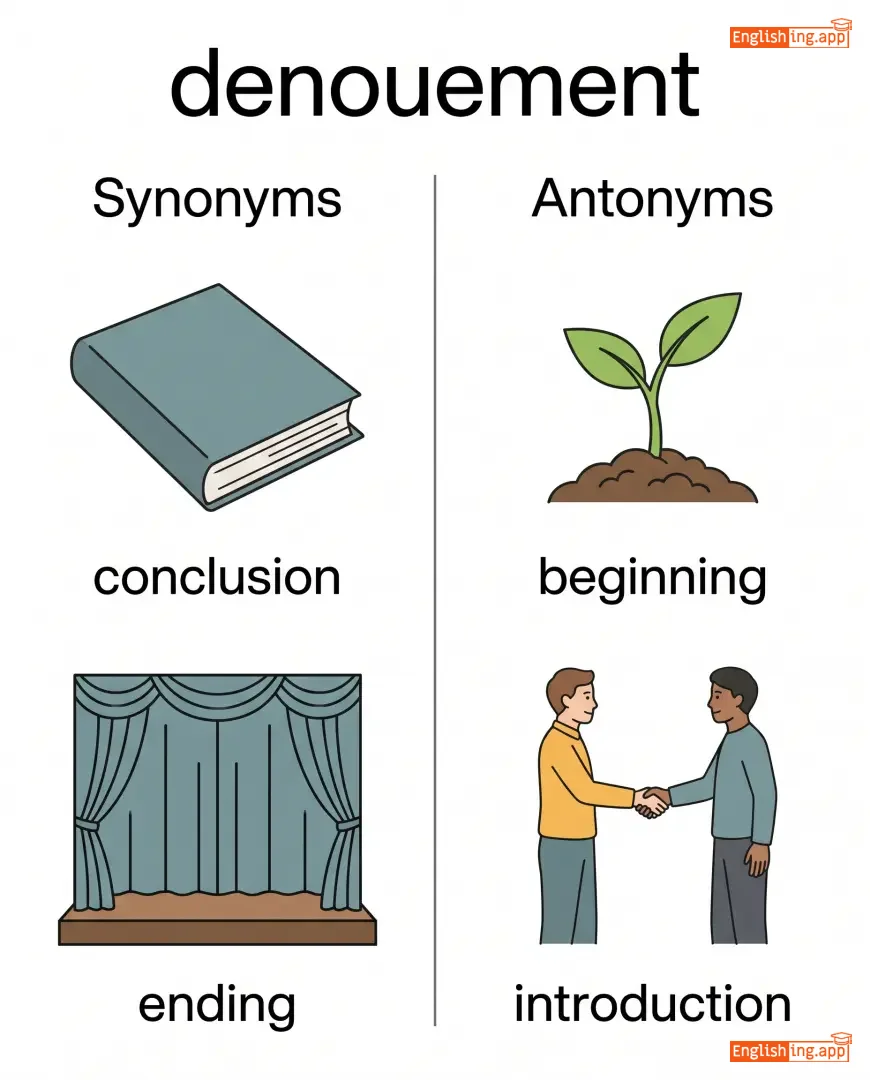
/ˌdeɪnuːˈmɒ̃/
noun
(德诺芒)
••••••
|
|
结局
jieju
••••••
|
- •••••• | - •••••• | - •••••• | - •••••• |
The final resolution or conclusion of a story, drama, or complicated situation.
••••••
|
The novel's denouement was both surprising and satisfying. |
这部小说的结局既令人惊讶又令人满意。
Zhe bu xiaoshuo de jieju ji lingren jingya you lingren manyi.
••••••
|
- •••••• | - •••••• | - •••••• |
conclusion, ending, resolution, finale, climax
••••••
|
beginning, introduction
••••••
|
dramatic denouement, sudden denouement, story denouement, final denouement
••••••
|
结局就像故事的终点,所有情节的总结。
••••••
|
|
#2310
🔴
|
/dɪˈnəʊt/
verb
(dɪˈnəʊt)
••••••
|
- •••••• |
表示
biaoshi
••••••
|
denoted
denoted
••••••
|
denoted
denoted
••••••
|
denotes
denotes
••••••
|
denoting
denoting
••••••
|
To be a sign of; to indicate or mean something.
••••••
|
A red flag denotes danger.
红旗表示危险。
••••••
|
红旗表示危险。
Hong qi biaoshi wei xian.
••••••
|
- •••••• | - •••••• | - •••••• |
indicate, signify, represent, express, stand for
••••••
|
conceal, obscure
••••••
|
clearly denote, usually denotes, symbol denotes, denotes importance
••••••
|
表示意味着标志,就像红旗表示危险。
••••••
|
Vocabulary Quiz
Test your vocabulary by matching words with their translations or meanings.
Login to take the quiz
Comments (0)
Share your thoughts and join the discussion.
Join the discussion by logging in
Login to CommentNo comments yet
Be the first to share your thoughts!