

Swipe left or right, or use the buttons. Tap image to zoom.
例句翻译
单词
Lesson 294Lesson 294 - 遮罩切换
|
表情符号
|
单词 | Images | 翻译 | 过去时 | 过去分词 | 第三人称单数 | 动名词 | 含义 | 例句 | 例句翻译 | 示例表达 | 示例表达含义 | 示例表达翻译 | 同义词 | 反义词 | 搭配词 | 助记符 |
|---|---|---|---|---|---|---|---|---|---|---|---|---|---|---|---|---|---|
|
#8790
🌊
|
/taɪd/
noun
(taɪd)
••••••
|
- •••••• |
潮汐
chaoxi
••••••
|
- •••••• | - •••••• | - •••••• | - •••••• |
the regular rise and fall of the sea caused by the moon and sun's gravity; a powerful flow or movement
••••••
|
The fisherman waited for the tide to come in. |
渔夫在等待潮汐的到来。
Yufu zai dengdai chaoxi de daolai.
••••••
|
turn the tide |
to cause a reversal of fortune or change in direction
••••••
|
转变潮流
zhuanbian chaoliu
••••••
|
current, flow, surge, stream, wave
••••••
|
ebb, stillness, stagnation
••••••
|
high tide, low tide, rising tide, ebb tide
••••••
|
潮汐 = 海洋的规律性涨落 - 潮汐随时间往复而来。
••••••
|
|
#8791
🛠️
|
/ˈtɪŋkər/
verb
(廷克)
••••••
|
- •••••• |
修修补补
xiū xiū bǔ bǔ
••••••
|
tinkered
廷克德
••••••
|
tinkered
廷克德
••••••
|
tinkers
廷克斯
••••••
|
tinkering
廷克林
••••••
|
to make small adjustments or repairs to something, often experimentally or imperfectly
••••••
|
He likes to tinker with old radios in his garage.
他喜欢在他的车库里摆弄旧收音机。
••••••
|
他喜欢在他的车库里修修补补旧收音机。
Tā xǐhuān zài tā de chēkù lǐ xiū xiū bǔ bǔ jiù shōuyīnjī.
••••••
|
tinker with
摆弄
••••••
|
to make small changes or adjustments without a definite plan
••••••
|
摆弄
bǎi nòng
••••••
|
fiddle, adjust, repair, modify, fix
••••••
|
destroy, neglect, abandon
••••••
|
tinker with machines, tinker endlessly, tinker around, tinker project
••••••
|
Tinker (修修补补) 就是修补一切
••••••
|
|
#8792
🎨
|
/tɪndʒ/
noun, verb
(tɪndʒ)
••••••
|
- •••••• |
轻微的颜色或味道
qingwei de yanse huo weidao
••••••
|
tinged
tɪndʒd
••••••
|
tinged
tɪndʒd
••••••
|
tinges
tɪndʒes
••••••
|
tinging
tɪndʒɪŋ
••••••
|
a slight added color, flavor, or feeling; to add a slight amount of color or quality
••••••
|
Her voice was tinged with sadness.
她的声音带着一丝悲伤。
••••••
|
她的声音带着一丝悲伤。
Ta de shengyin daizhe yisi beishang.
••••••
|
- •••••• | - •••••• | - •••••• |
hint, shade, trace, tint
••••••
|
colorless, plain
••••••
|
tinge of sadness, tinged with anger, tinged with color
••••••
|
Tinge 意味着轻微的颜色,就像是画作中的一小部分色彩。
••••••
|
|
#8793
💧
|
/ˈtɪŋktʃər/
noun
(tīngkèchē)
••••••
|
- •••••• |
轻微的痕迹,一种通过将药物溶解在酒精中制成的药物
qīngwēi de hénjī, yī zhǒng tōngguò jiāng yàowù róngjiě zài jiǔjīng zhōng zhìchéng de yàowù
••••••
|
- •••••• | - •••••• | - •••••• | - •••••• |
a slight trace of something; a medicine made by dissolving a drug in alcohol
••••••
|
There was a tincture of sadness in her smile.
there was a tincture of sadness in her smile
••••••
|
她的微笑中有一丝悲伤。
tā de wēi xiào zhōng yǒu yī sī bēi shāng.
••••••
|
- •••••• | - •••••• | - •••••• |
trace, hint, touch, essence
••••••
|
abundance, flood
••••••
|
tincture of iodine, tincture of sadness, tincture in medicine
••••••
|
Tincture可以想象为一丝痕迹,就像微笑中的悲伤一样。
••••••
|
|
#8794
😨
|
/ˈtɪmərəs/
adjective
(ti-mo-rus)
••••••
|
- •••••• |
胆怯的
dǎnqiè de
••••••
|
- •••••• | - •••••• | - •••••• | - •••••• |
showing or suffering from nervousness, fear, or lack of confidence
••••••
|
The timorous student hesitated to ask the teacher a question.
那个害羞的学生犹豫不决,没敢向老师提问。
••••••
|
那个胆怯的学生犹豫不决,没敢向老师提问。
Nàgè dǎnqiè de xuéshēng yóuyù bù jué, méi gǎn xiàng lǎoshī tíwèn.
••••••
|
- •••••• | - •••••• | - •••••• |
fearful, shy, hesitant, unconfident
••••••
|
courageous, daring, fearless
••••••
|
timorous attitude, timorous voice, timorous glance
••••••
|
Timorous 的意思是胆怯的—像害羞一样。
••••••
|
|
#8795
😶
|
/tɪˈmɪdəti/
noun
(提米迪提)
••••••
|
- •••••• |
胆怯
dǎnqiè
••••••
|
- •••••• | - •••••• | - •••••• | - •••••• |
lack of courage or self-confidence
••••••
|
His timidity kept him from speaking up during the meeting. |
他的胆怯让他在会议中没有发言。
Tā de dǎnqiè ràng tā zài huìyì zhōng méiyǒu fāyán.
••••••
|
- •••••• | - •••••• | - •••••• |
shyness, fearfulness, meekness, hesitation
••••••
|
bravery, boldness, confidence
••••••
|
timidity in speech, overcome timidity, show timidity
••••••
|
Timidity 在中文是胆怯,害怕说话!
••••••
|
|
#8796
🐭
|
/ˈtɪmɪd/
adjective
(蒂米德)
••••••
|
- •••••• |
胆小
dan xiao
••••••
|
- •••••• | - •••••• | - •••••• | - •••••• |
lacking courage or confidence; easily frightened
••••••
|
The timid child hid behind his mother when strangers approached. |
这个胆小的孩子在陌生人靠近时躲在母亲后面。
zhe ge dan xiao de haizi zai moshi ren kaojin shi duo zai muqin houmian.
••••••
|
timid as a mouse |
extremely shy or lacking courage
••••••
|
像老鼠一样胆小
xiang laoshu yiyang danxiao
••••••
|
shy, fearful, bashful, hesitant, meek
••••••
|
bold, confident, brave
••••••
|
timid child, timid smile, timid approach, timid nature
••••••
|
胆小表示胆小—就像那些看到陌生人会害怕的小孩子。
••••••
|
|
#8797
🏚️
|
/ˈtaɪmwɔːrn/
adjective
(taimworn)
••••••
|
- •••••• |
被时间磨损
bei shijian mosun
••••••
|
- •••••• | - •••••• | - •••••• | - •••••• |
Worn or impaired by age; old and used many times.
••••••
|
The timeworn house carried a sense of history and nostalgia. |
被时间磨损的房子带着历史和怀旧的感觉。
Bei shijian mosun de fangzi daizhe lishi he huai jiu de ganjue.
••••••
|
- •••••• | - •••••• | - •••••• |
old, aged, ancient, worn-out, shabby
••••••
|
new, fresh, modern
••••••
|
timeworn idea, timeworn building, timeworn story, timeworn tradition
••••••
|
Timeworn = Time + Worn, 时间让一切都磨损。
••••••
|
|
#8798
⏰
|
/ˈtaɪmli/
adjective
(泰姆利)
••••••
|
- •••••• |
及时的
jishi de
••••••
|
- •••••• | - •••••• | - •••••• | - •••••• |
Done or occurring at a favorable or useful time; opportune.
••••••
|
Her timely advice helped me avoid a big mistake.
她的泰姆利建议帮我避免了一个大错误。
••••••
|
她的及时建议帮我避免了一个大错误。
ta de jishi jianyi bang wo bimian le yi ge da cuowu.
••••••
|
timely intervention
泰姆利干预
••••••
|
An action taken at the right moment to prevent harm or improve a situation
••••••
|
及时干预
jishi ganyu
••••••
|
prompt, punctual, appropriate, suitable, convenient
••••••
|
late, delayed, untimely
••••••
|
timely manner, timely advice, timely response, timely action
••••••
|
Timely means 'on time', in Chinese '及时' (jishi) means just in time.
••••••
|
|
#8799
🎶
|
/ˈtæmbər/ or /ˈtɪmbər/
noun
(坦布尔)
••••••
|
- •••••• |
音色
yinse
••••••
|
- •••••• | - •••••• | - •••••• | - •••••• |
The character or quality of a musical sound or voice as distinct from its pitch and intensity.
••••••
|
Her voice had a warm timbre that soothed the audience. |
她的声音有一种温暖的音色,安抚了观众。
Ta de shengyin you yizhong wennuan de yinse, anfu le guanzhong.
••••••
|
- •••••• | - •••••• | - •••••• |
tone, sound quality, resonance, pitch, voice color
••••••
|
monotone, flatness
••••••
|
rich timbre, warm timbre, vocal timbre, instrument timbre
••••••
|
Timbre 听起来像 timber,但这里指的是声音的颜色。
••••••
|
|
#8800
🌱
|
/tɪlθ/
noun
(tilth)
••••••
|
- •••••• |
土壤状况(适合种植作物)
tǔrǎng zhuàngkuàng (shìhé zhòngzhí zuòwù)
••••••
|
- •••••• | - •••••• | - •••••• | - •••••• |
The physical condition of soil in relation to its suitability for planting crops.
••••••
|
The farmer checked the soil's tilth before planting the seeds. |
农民在种植种子之前检查了土壤的tilth。
Nóngmín zài zhòngzhí zhǒngzi zhīqián jiǎnchále tǔrǎng de tilth.
••••••
|
- •••••• | - •••••• | - •••••• |
soil condition, cultivation, earth, farmland
••••••
|
barren land, uncultivated
••••••
|
good tilth, poor tilth, fertile tilth, tilth management
••••••
|
Tilth = 土壤状况适合种植作物。
••••••
|
|
#8801
⛵
|
/ˈtɪlər/
noun
(提勒)
••••••
|
- •••••• |
舵或耕地的人
duò huò gēngdì de rén
••••••
|
- •••••• | - •••••• | - •••••• | - •••••• |
A lever used to steer a boat or a person who tills the soil.
••••••
|
The sailor gripped the tiller firmly to keep the boat on course. |
水手紧紧握住舵,保持船只的航向。
shuǐshǒu jǐn jǐn wò zhù duò, bǎochí chuán zhī de hángxiàng.
••••••
|
- •••••• | - •••••• | - •••••• |
handle, lever, helm, plowman, farmer
••••••
|
rudderless, passenger
••••••
|
ship's tiller, wooden tiller, farmer tiller, tiller control
••••••
|
舵是船的控制器,也像耕地的工具。
••••••
|
|
#8802
🙅♂️💵
|
/ˈtaɪtwɒd/
noun
(taɪtwɒd)
••••••
|
- •••••• |
吝啬鬼
lìn sè guǐ
••••••
|
- •••••• | - •••••• | - •••••• | - •••••• |
a person who is unwilling to spend money; a miser
••••••
|
Everyone calls him a tightwad because he never buys gifts. |
每个人都叫他吝啬鬼,因为他从不买礼物。
Měi gè rén dōu jiào tā lìn sè guǐ, yīnwèi tā cóng bù mǎi lǐwù.
••••••
|
- •••••• | - •••••• | - •••••• |
miser, cheapskate, penny-pincher, skinflint, scrooge
••••••
|
spender, philanthropist, benefactor
••••••
|
real tightwad, known tightwad, stingy tightwad
••••••
|
Tightwad = 吝啬鬼,总是把钱紧紧抓住不放。
••••••
|
|
#8803
💰
|
/ˌtaɪtˈfɪstɪd/
adjective
(taitfisted)
••••••
|
- •••••• |
吝啬
lìn sè
••••••
|
- •••••• | - •••••• | - •••••• | - •••••• |
unwilling to spend money; stingy
••••••
|
He is so tightfisted that he refuses to tip at restaurants.
他非常吝啬,甚至在餐馆里都不愿意给小费。
••••••
|
他非常吝啬,甚至在餐馆里都不愿意给小费。
Tā fēicháng lìnsè, shènzhì zài cānguǎn lǐ dōu bù yuànyì gěi xiǎofèi.
••••••
|
- •••••• | - •••••• | - •••••• |
stingy, miserly, cheap, penny-pinching, frugal
••••••
|
generous, openhanded, charitable
••••••
|
tightfisted attitude, tightfisted person, extremely tightfisted
••••••
|
Tight + Fist 意味着紧握拳头 - 不花钱,因此 tightfisted 意味着吝啬。
••••••
|
|
#8804
😒
|
/tɪf/
noun
(蒂夫)
••••••
|
- •••••• |
争执
zhēngzhí
••••••
|
- •••••• | - •••••• | - •••••• | - •••••• |
a small or petty quarrel or argument
••••••
|
They had a little tiff over what movie to watch. |
他们因为选哪部电影而发生了小争执。
Tāmen yīnwèi xuǎn nǎ bù diànyǐng ér fāshēngle xiǎo zhēngzhí.
••••••
|
- •••••• | - •••••• | - •••••• |
quarrel, spat, squabble, disagreement, dispute
••••••
|
agreement, harmony, accord
••••••
|
have a tiff, minor tiff, little tiff
••••••
|
Tiff 代表争执 - 朋友们有时会因为一杯茶而发生小争执。
••••••
|
|
#8805
🥊
|
/θræʃ/
verb
(thrash)
••••••
|
|
猛烈打击, 猛击
měngliè dǎjí, měngjī
••••••
|
thrashed
thrashd
••••••
|
thrashed
thrashd
••••••
|
thrashes
thrashes
••••••
|
thrashing
thrashing
••••••
|
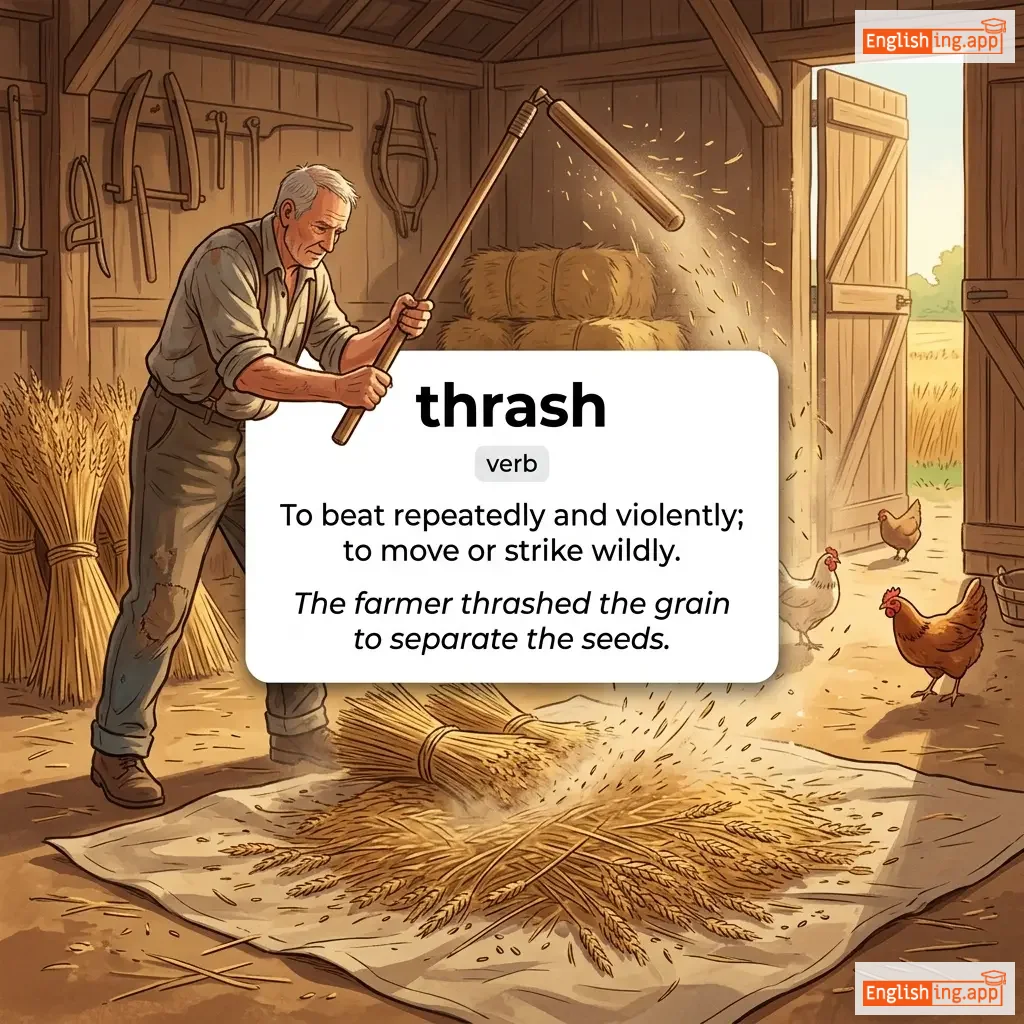
To beat repeatedly and violently; to move or strike wildly.
••••••
|
The farmer thrashed the grain to separate the seeds.
农民用力打谷子来分离种子。
••••••
|
农民用力打谷子来分离种子。
Nóngmín yònglì dǎ gǔzi lái fēnlí zhǒngzi.
••••••
|
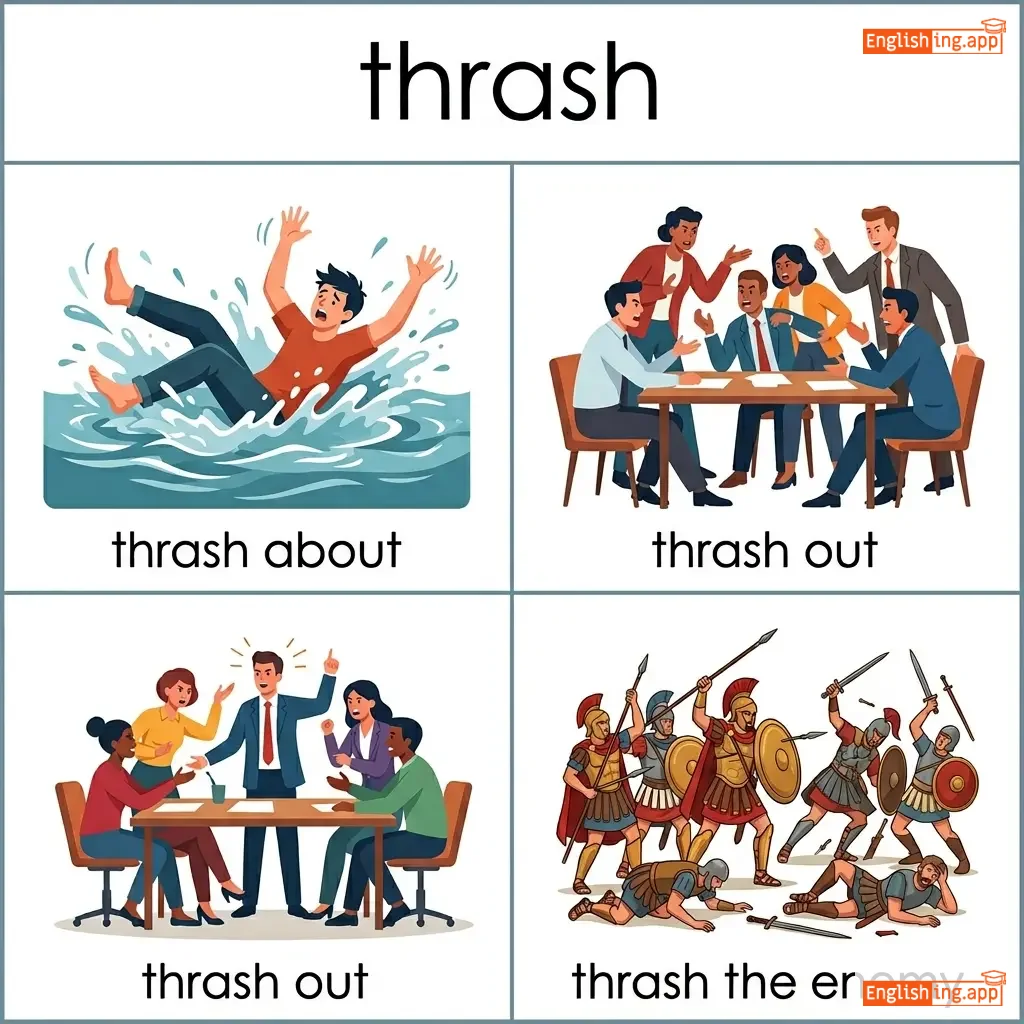
thrash out
thrash out
••••••
|
To discuss something thoroughly in order to reach an agreement.
••••••
|
彻底讨论
chèdǐ tǎolùn
••••••
|
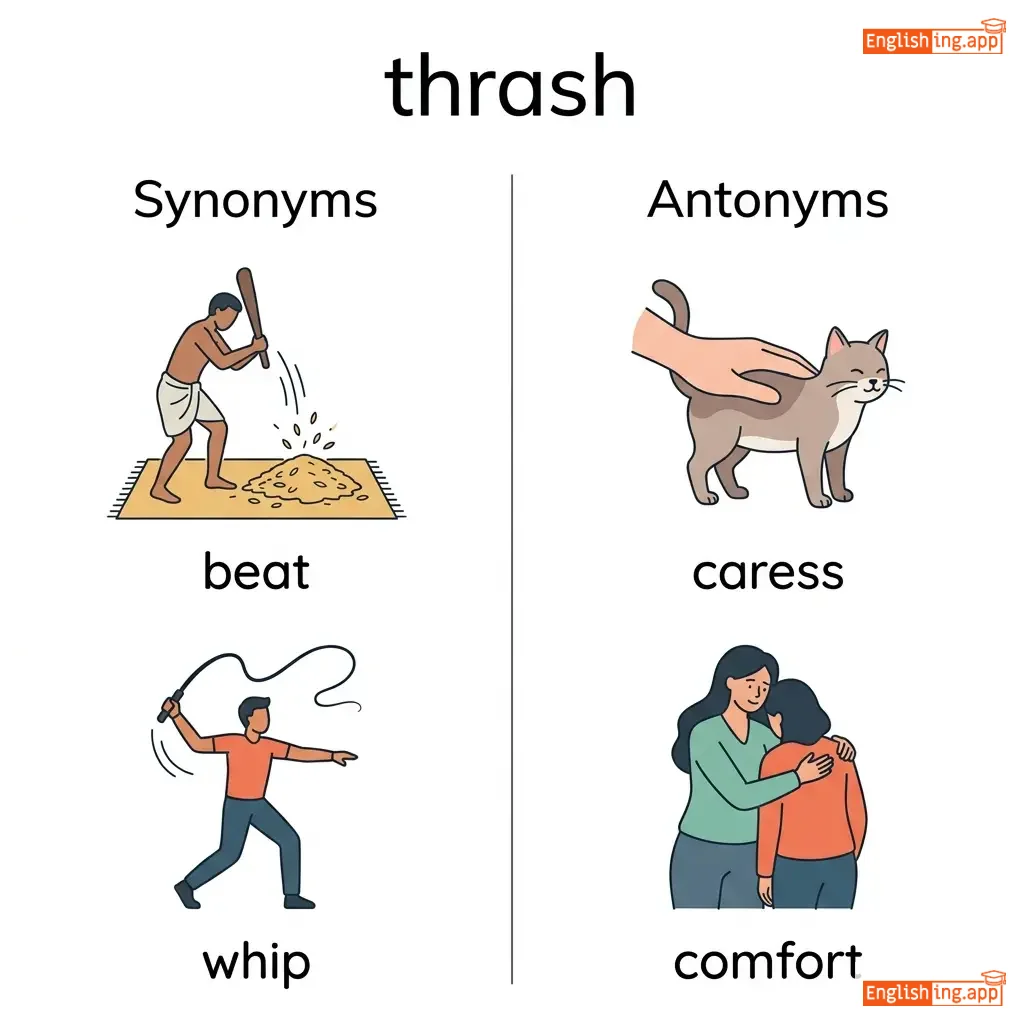
beat, whip, lash, pummel, strike
••••••
|
caress, comfort, soothe
••••••
|
thrash about, thrash out, thrash the enemy
••••••
|
Thrash 和 Trash 发音相似—用力打击后,事物就像垃圾一样变得杂乱无章。
••••••
|
|
#8806
😂
|
/ˈtɪklɪʃ/
adjective
••••••
|
- •••••• | - •••••• | - •••••• | - •••••• | - •••••• | - •••••• |
easily made to laugh by being touched lightly; easily upset or sensitive
••••••
|
She is very ticklish and bursts into laughter when touched on her feet. |
- •••••• |
a ticklish situation |
a delicate or difficult situation that needs careful handling
••••••
|
- •••••• |
sensitive, delicate, touchy, awkward, tricky
••••••
|
calm, insensitive, stable
••••••
|
ticklish feet, ticklish person, ticklish situation
••••••
|
No •••••• |
|
#8807
😂
|
/ˈtɪk.əl/
verb/noun
••••••
|
|
- •••••• |
tickled
••••••
|
tickled
••••••
|
tickles
••••••
|
tickling
••••••
|
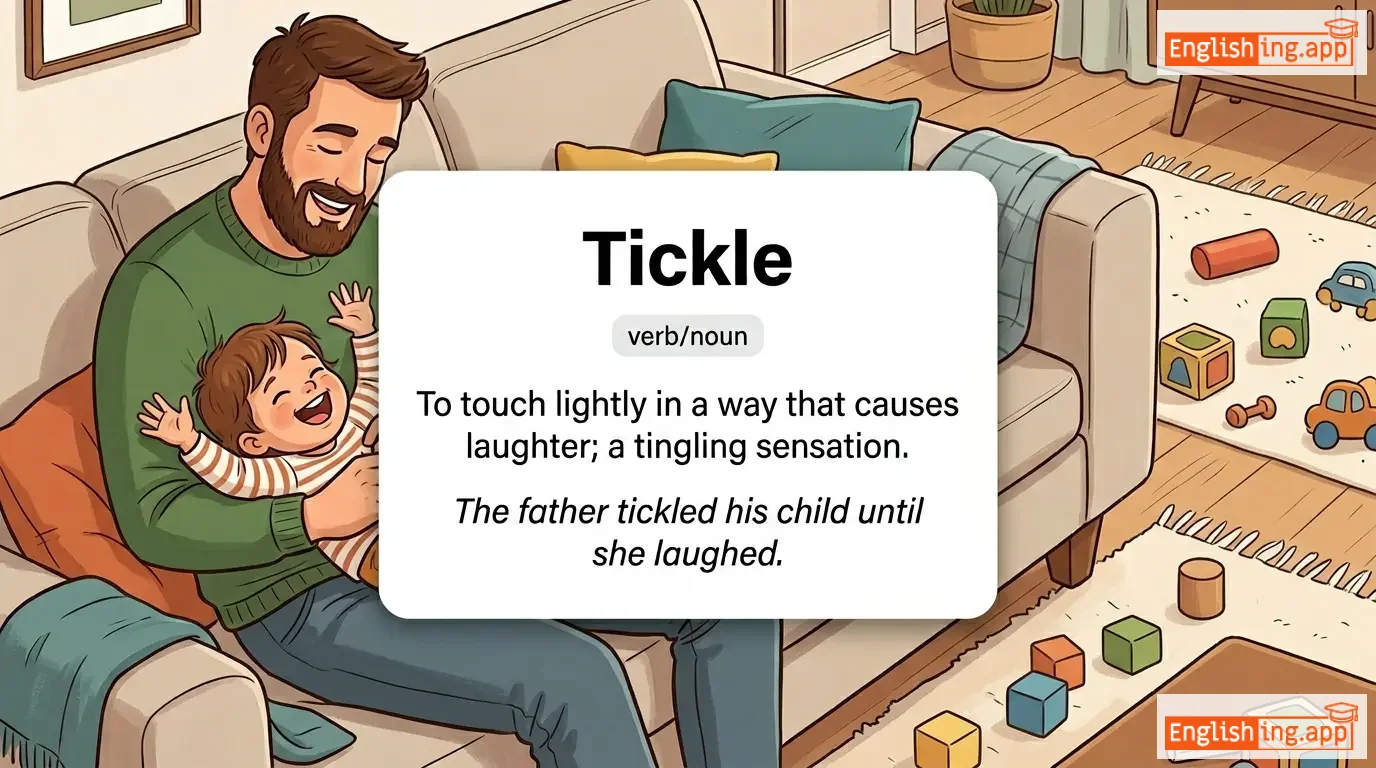
To touch lightly in a way that causes laughter; a tingling sensation.
••••••
|
The father tickled his child until she laughed. |
- •••••• |
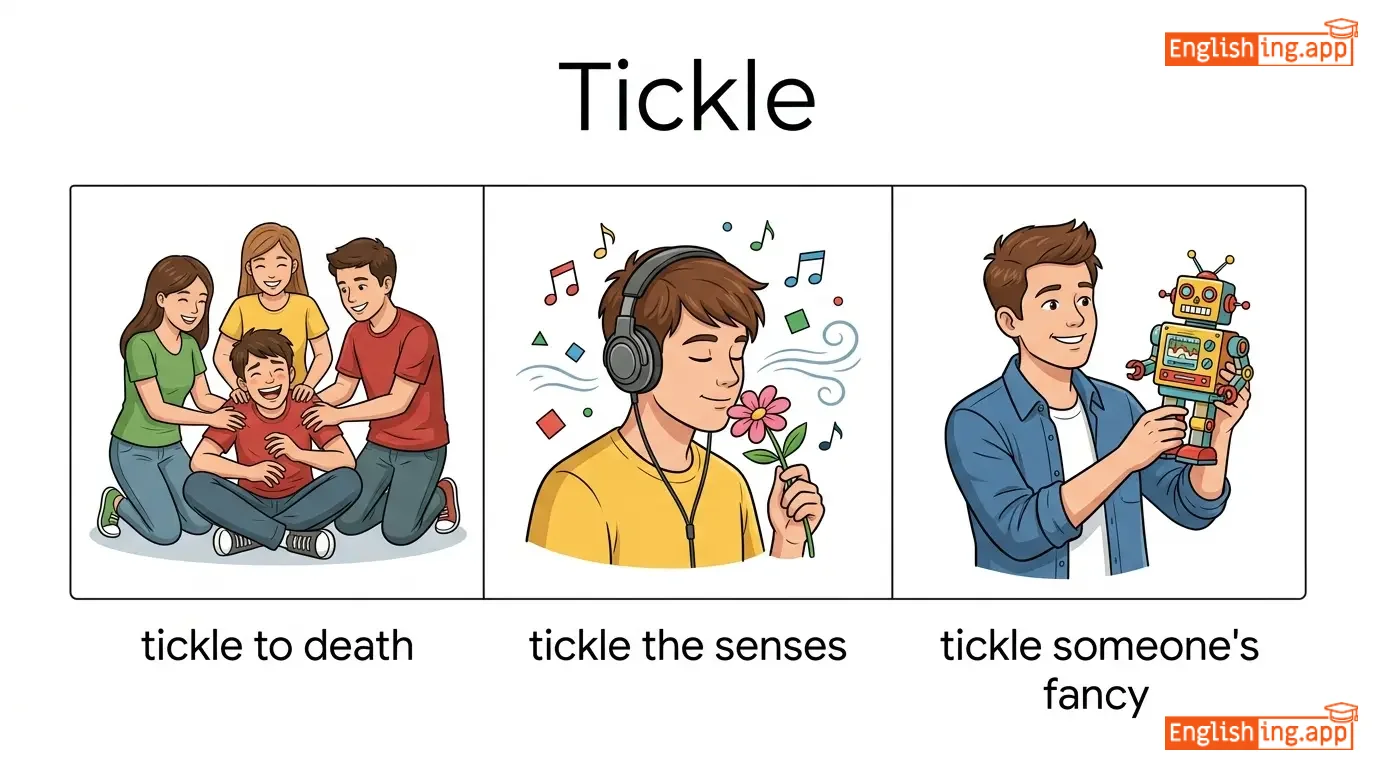
tickle someone's fancy |
To appeal to or interest someone.
••••••
|
- •••••• |
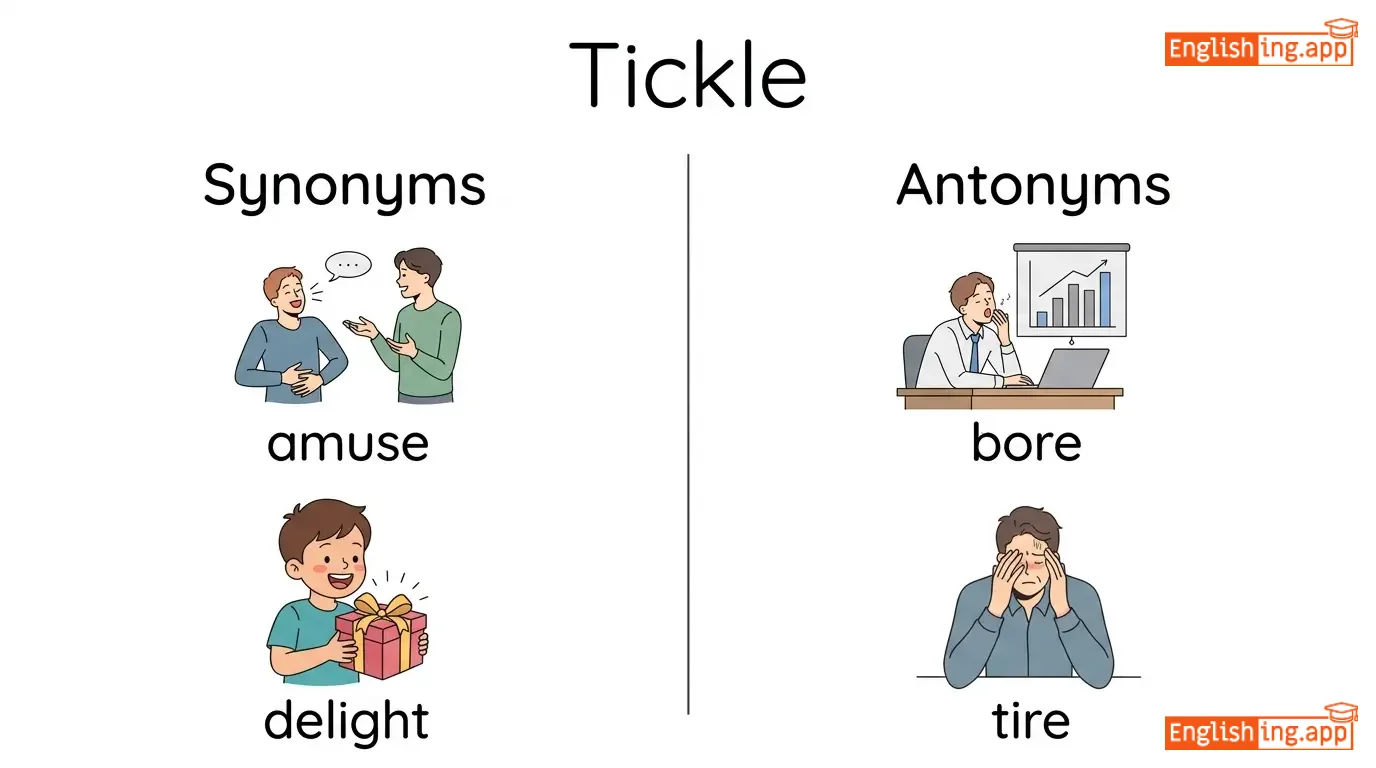
amuse, delight, stimulate, tease, entertain
••••••
|
bore, tire, annoy
••••••
|
tickle to death, tickle the senses, tickle someone's fancy
••••••
|
No •••••• |
|
#8808
🌿
|
/taɪm/
noun
(taim)
••••••
|
- •••••• |
百里香
bǎilǐxiāng
••••••
|
- •••••• | - •••••• | - •••••• | - •••••• |
A small aromatic herb used in cooking and medicine.
••••••
|
She sprinkled thyme on the roasted chicken.
她撒上百里香在烤鸡上。
••••••
|
她撒上百里香在烤鸡上。
Tā sā shàng bǎilǐxiāng zài kǎo jī shàng.
••••••
|
- •••••• | - •••••• | - •••••• |
herb, seasoning, spice, plant
••••••
|
none
••••••
|
fresh thyme, dried thyme, thyme leaves, sprig of thyme
••••••
|
百里香像‘time’,是烹饪的正确时刻使用的草药。
••••••
|
|
#8809
🚫
|
/θwɔːrt/
verb
(思沃特)
••••••
|
|
阻止
zǔzhǐ
••••••
|
thwarted
思沃特德
••••••
|
thwarted
思沃特德
••••••
|
thwarts
思沃特斯
••••••
|
thwarting
思沃特英
••••••
|
To prevent someone from accomplishing something; to oppose successfully.
••••••
|
The police thwarted the robbery attempt.
警方阻止了抢劫企图。
••••••
|
警方阻止了抢劫企图。
Jǐngfāng zǔzhǐle qiǎngjié qìtú.
••••••
|
thwart one's plans
阻止某人的计划
••••••
|
To stop someone from achieving what they intended.
••••••
|
阻止某人的计划
zǔzhǐ mǒurén de jìhuà
••••••
|
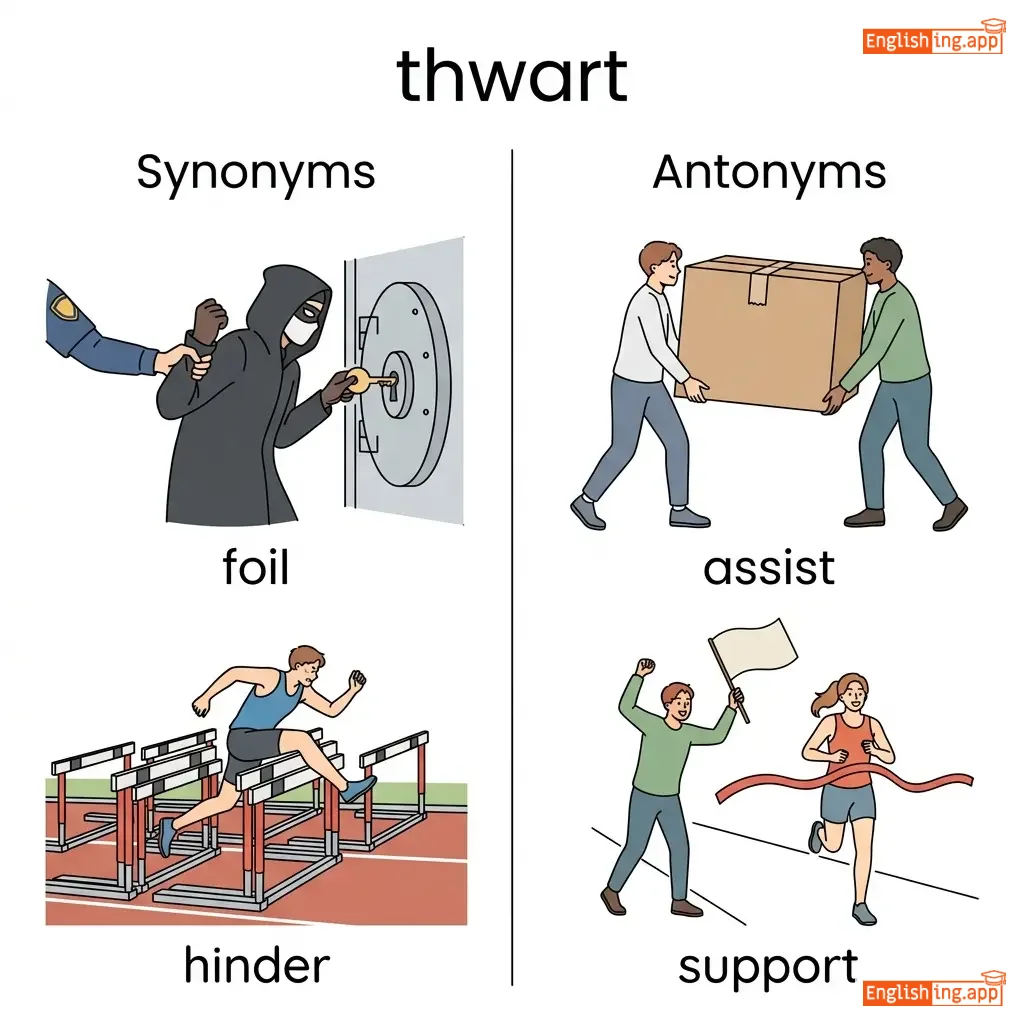
foil, hinder, obstruct, prevent, frustrate
••••••
|
assist, support, encourage
••••••
|
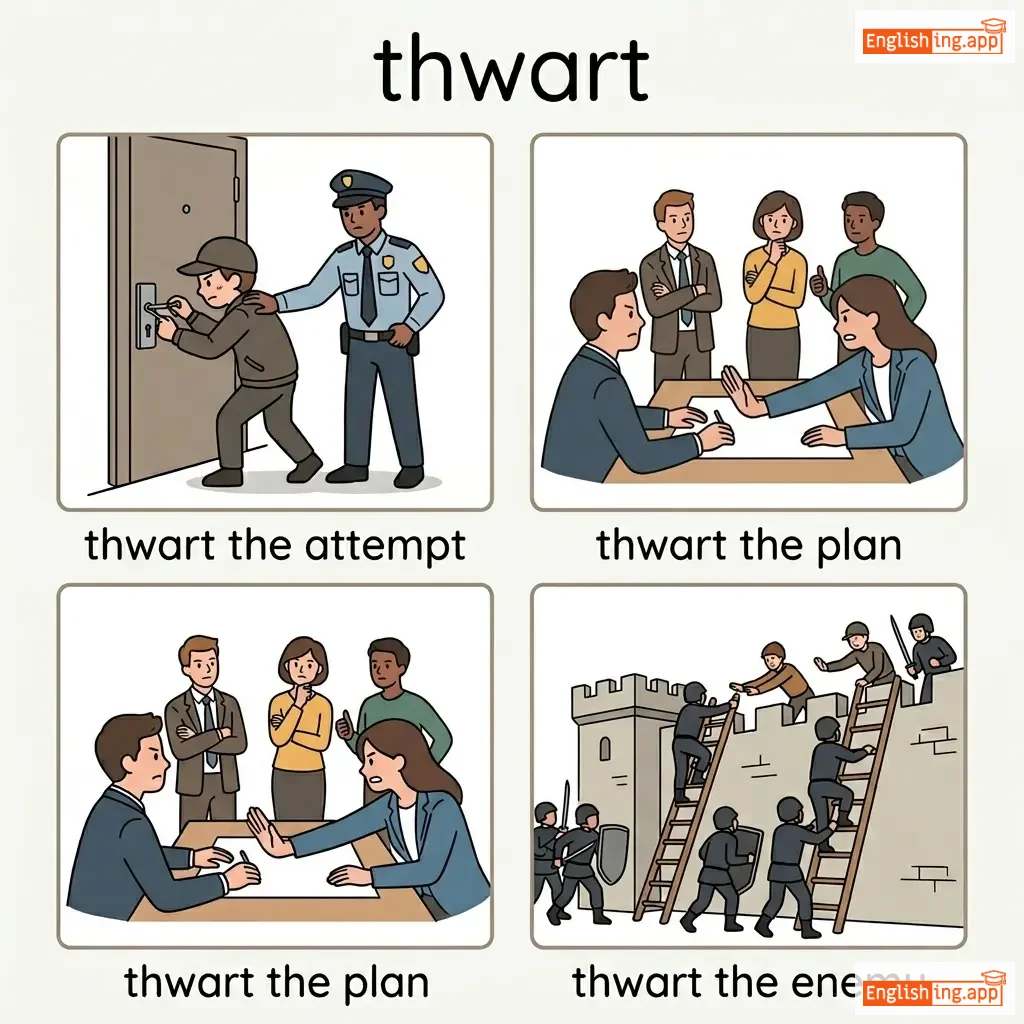
thwart the attempt, thwart the plan, thwart the enemy
••••••
|
阻止就是使事情失败。想象你阻止了某人的计划。
••••••
|
|
#8810
🛑
|
/ˈθrɒt.əl/
verb/noun
(苏特尔)
••••••
|
- •••••• |
限制/控制速度
xian zhi/kong zhi su du
••••••
|
throttled
苏特尔德
••••••
|
throttled
苏特尔德
••••••
|
throttles
苏特尔斯
••••••
|
throttling
苏特尔灵
••••••
|
To choke or strangle; to control the flow of fuel or power in an engine.
••••••
|
The driver throttled the engine to slow down the car.
司机将发动机调速以减慢汽车速度。
••••••
|
司机将发动机调速以减慢汽车速度。
Si ji jiang fa dong ji tiao su yi jian man qi che su du.
••••••
|
at full throttle
全速前进
••••••
|
Working or moving at maximum speed or effort.
••••••
|
全速前进
Quan su qian jin
••••••
|
strangle, choke, suppress, stifle, control
••••••
|
release, liberate, free
••••••
|
throttle back, throttle control, full throttle, throttle the engine
••••••
|
Throttle 意味着限制,就像你控制汽车的速度一样。
••••••
|
|
#8811
👥
|
/θrɒŋ/
noun/verb
••••••
|
- •••••• | - •••••• |
thronged
••••••
|
thronged
••••••
|
throngs
••••••
|
thronging
••••••
|
A large, densely packed crowd of people or animals; to fill or be present in a place in large numbers.
••••••
|
Tourists thronged the streets during the festival. |
- •••••• |
throng to |
To gather or go in large numbers toward a place or event.
••••••
|
- •••••• |
crowd, multitude, swarm, mob, gathering
••••••
|
solitude, emptiness, desertion
••••••
|
throng of people, throng the streets, throng into, throng with
••••••
|
No •••••• |
|
#8812
⚡
|
/θroʊz/
noun
(zros)
••••••
|
- •••••• |
剧痛
jutong
••••••
|
- •••••• | - •••••• | - •••••• | - •••••• |
intense or violent pain and struggle, often at the beginning or end of something
••••••
|
The country was in the throes of a political crisis.
该国正处于政治危机的痛苦之中。
••••••
|
该国正处于政治危机的剧痛之中。
Gai guo zheng chu yu zhengzhi weiji de jutong zhi zhong.
••••••
|
in the throes of
在痛苦中
••••••
|
in the midst of a difficult or painful struggle
••••••
|
在痛苦中
Zai tongku zhong
••••••
|
agony, struggle, turmoil, convulsion, distress
••••••
|
peace, calm, ease
••••••
|
in the throes of, throes of crisis, throes of pain, throes of change
••••••
|
Throes ⚡ 表示剧烈痛苦,记住:'Throw es' 意味着在痛苦中挣扎。
••••••
|
|
#8813
💓
|
/θrɒb/
verb
(塞布)
••••••
|
- •••••• |
跳动
tiaodong
••••••
|
throbbed
塞布
••••••
|
throbbed
塞布
••••••
|
throbs
塞布
••••••
|
throbbing
塞布
••••••
|
to beat or pulse strongly, often with pain
••••••
|
His head began to throb after the long day.
他的一天结束后,头开始跳动。
••••••
|
他的一天结束后,头开始跳动。
Ta de yitian jie shu hou, tou kaishi tiaodong.
••••••
|
throb with pain
跳动疼痛
••••••
|
to experience a strong pulsing pain
••••••
|
跳动疼痛
tiaodong tengtong
••••••
|
pound, pulse, beat, ache, hammer
••••••
|
still, rest, stop
••••••
|
throb with pain, throb in head, throb in heart, throb continuously
••••••
|
Throb 意思是跳动 💓 — 想象头痛的跳动感。
••••••
|
|
#8814
🌱
|
/θraɪv/
verb
••••••
|
- •••••• | - •••••• |
thrived
••••••
|
thrived
••••••
|
thrives
••••••
|
thriving
••••••
|
to grow, develop, or be successful
••••••
|
Small businesses can thrive with proper support. |
- •••••• |
thrive on |
to enjoy or be energized by something, especially a challenge
••••••
|
- •••••• |
flourish, prosper, succeed, grow, advance
••••••
|
fail, decline, collapse
••••••
|
thrive on challenges, thrive in business, thrive under pressure, thrive in environment
••••••
|
No •••••• |
|
#8815
💰
|
/ˈθrɪfti/
adjective
(thrifti)
••••••
|
- •••••• |
节俭
jie jian
••••••
|
- •••••• | - •••••• | - •••••• | - •••••• |
using money and resources carefully and not wastefully
••••••
|
She is very thrifty and always saves money for the future. |
她非常节俭,总是为未来存钱。
Ta feichang jie jian, zong shi wei weilai cun qian.
••••••
|
- •••••• | - •••••• | - •••••• |
frugal, economical, prudent, saving, sparing
••••••
|
wasteful, extravagant, lavish
••••••
|
thrifty habits, thrifty lifestyle, thrifty shopper, thrifty use
••••••
|
Thrifty意味着节俭 💰 — 想象'三五十'节省钱 = thrifty.
••••••
|
|
#8816
🌾
|
/θrɛʃ/
verb
••••••
|
- •••••• | - •••••• |
threshed
••••••
|
threshed
••••••
|
threshes
••••••
|
threshing
••••••
|
to separate grain from the plant by beating or by using a machine
••••••
|
Farmers used machines to thresh the wheat after harvest. |
- •••••• |
thresh out |
to discuss a matter thoroughly in order to reach an agreement or solution
••••••
|
- •••••• |
separate, beat, winnow, flail, husk
••••••
|
combine, join, collect
••••••
|
thresh wheat, thresh grain, thresh rice, thresh out ideas
••••••
|
No •••••• |
|
#8817
🎶
|
/ˈθrɛnədi/
noun
(斯雷诺迪)
••••••
|
- •••••• |
哀歌,悼歌
āi gē, dào gē
••••••
|
- •••••• | - •••••• | - •••••• | - •••••• |
A song, poem, or speech of mourning for someone who has died; a lament.
••••••
|
The poet composed a moving threnody for the fallen soldiers. |
诗人为阵亡的士兵创作了一首感人的悼歌。
Shīrén wèi zhènwáng de shìbīng chuàngzuòle yī shǒu gǎnrén de dào gē.
••••••
|
- •••••• | - •••••• | - •••••• |
lament, dirge, elegy, requiem
••••••
|
celebration, praise
••••••
|
funeral threnody, threnody of sorrow
••••••
|
Threnody = 三首歌曲为死者哀悼。
••••••
|
|
#8818
⚠️
|
/θrɛt/
noun
(thret)
••••••
|
- •••••• |
威胁, 危险
wēixié, wēixiǎn
••••••
|
- •••••• | - •••••• | - •••••• | - •••••• |
A statement or action indicating intent to cause harm or danger.
••••••
|
The letter contained a threat against the company.
信中包含了对公司的一种威胁。
••••••
|
信中包含了对公司的一种威胁。
Xìn zhōng bāohánle duì gōngsī de yī zhǒng wēixié.
••••••
|
make a threat
提出威胁
••••••
|
To express an intention to harm or cause problems.
••••••
|
提出威胁
tíchū wēixié
••••••
|
danger, menace, intimidation, warning, risk
••••••
|
safety, protection, assurance
••••••
|
serious threat, direct threat, pose a threat
••••••
|
威胁 = Wēi xié, 像一个电话威胁
••••••
|
|
#8819
🧥
|
/ˈθrɛdˌbɛr/
adjective
(threadbare)
••••••
|
- •••••• |
因过度使用而变薄和破旧
yin guodu shiyong er bian bao he pojiu
••••••
|
- •••••• | - •••••• | - •••••• | - •••••• |
Worn out and thin from too much use; shabby.
••••••
|
His threadbare coat could not keep him warm in winter. |
他的破旧外套冬天无法让他保持温暖。
Tā de pòjiù wàitào dōngtiān wúfǎ ràng tā bǎochí wēnnuǎn.
••••••
|
- •••••• | - •••••• | - •••••• |
worn, shabby, ragged, tattered
••••••
|
new, fresh, luxurious
••••••
|
threadbare clothes, threadbare excuse, threadbare argument
••••••
|
Threadbare 意味着线磨损——破旧的衣服。
••••••
|
Vocabulary Quiz
Test your vocabulary by matching words with their translations or meanings.
Login to take the quiz
Comments (0)
Share your thoughts and join the discussion.
Join the discussion by logging in
Login to CommentNo comments yet
Be the first to share your thoughts!