



Swipe left or right, or use the buttons. Tap image to zoom.
例句翻译
单词
Lesson 278Lesson 278 - 遮罩切换
|
表情符号
|
单词 | Images | 翻译 | 过去时 | 过去分词 | 第三人称单数 | 动名词 | 含义 | 例句 | 例句翻译 | 示例表达 | 示例表达含义 | 示例表达翻译 | 同义词 | 反义词 | 搭配词 | 助记符 |
|---|---|---|---|---|---|---|---|---|---|---|---|---|---|---|---|---|---|
|
#8310
🚧
|
/ˈstænʃən/
noun
(斯坦奇昂)
••••••
|
- •••••• |
支柱
zhīzhù
••••••
|
- •••••• | - •••••• | - •••••• | - •••••• |
a strong upright bar or post used as support or to control movement
••••••
|
The red rope was attached to the stanchions to guide the crowd.
红色绳子被固定在支柱上以引导人群。
••••••
|
红色绳子被固定在支柱上以引导人群。
Hóngsè shéngzi bèi gùdìng zài zhīzhù shàng yǐ yǐndǎo rénqún.
••••••
|
- •••••• | - •••••• | - •••••• |
post, pole, pillar, support, upright
••••••
|
weak support, collapse
••••••
|
metal stanchion, rope stanchion, wooden stanchion, stanchion post
••••••
|
支柱 = 站立 + 支持,用作支撑
••••••
|
|
#8311
🗿
|
/ˌstætʃuˈɛsk/
adjective
(shā tàosī kè)
••••••
|
- •••••• |
雕像般的
diaoxiang ban de
••••••
|
- •••••• | - •••••• | - •••••• | - •••••• |
Having the grace, beauty, or dignity of a statue; tall and attractively proportioned.
••••••
|
She had a statuesque figure that turned heads wherever she went. |
她有着雕像般的身形,每走到哪里都会吸引视线。
Ta youzhe diaoxiang ban de shenxing, mei zou dao nali dou hui xiyin shixian.
••••••
|
- •••••• | - •••••• | - •••••• |
graceful, majestic, elegant, dignified, shapely
••••••
|
awkward, clumsy, unimpressive
••••••
|
statuesque beauty, statuesque figure, statuesque model, statuesque elegance
••••••
|
像雕像一样高大和优雅,这就是 '雕像般的'。
••••••
|
|
#8312
📊
|
/ˌstætɪˈstɪʃən/
noun
(统计学家)
••••••
|
- •••••• |
统计学家
tǒng jì xué jiā
••••••
|
- •••••• | - •••••• | - •••••• | - •••••• |
A person who specializes in collecting, analyzing, and interpreting numerical data.
••••••
|
The statistician presented the survey results with great clarity. |
统计学家以极大的清晰度展示了调查结果。
Tǒng jì xué jiā yǐ jí dà de qīng xī dù zhǎn shì le diào chá jié guǒ.
••••••
|
- •••••• | - •••••• | - •••••• |
data analyst, researcher, number cruncher, mathematician, demographer
••••••
|
layman, non-specialist
••••••
|
professional statistician, government statistician, applied statistician, statistician role
••••••
|
Statistician 意味着统计学专家 – 统计学家
••••••
|
|
#8313
🛑
|
/ˈsteɪʃəˌneri/
adjective
(suteishonari)
••••••
|
- •••••• |
静止
jingzhi
••••••
|
- •••••• | - •••••• | - •••••• | - •••••• |
Not moving or not intended to be moved.
••••••
|
The car remained stationary at the red light. |
汽车在红灯前保持静止。
Qiche zai hongdeng qian baochi jingzhi.
••••••
|
- •••••• | - •••••• | - •••••• |
immobile, still, motionless, fixed
••••••
|
mobile, moving, dynamic
••••••
|
remain stationary, stationary object, stationary position, stationary phase
••••••
|
Stationary 意味着不动,就像一辆停在红灯前的车
••••••
|
|
#8314
📐
|
/ˈstætɪks/
noun
(斯塔提克斯)
••••••
|
- •••••• |
静力学
jìnglìxué
••••••
|
- •••••• | - •••••• | - •••••• | - •••••• |
The branch of mechanics dealing with bodies at rest and forces in equilibrium.
••••••
|
She is studying statics as part of her engineering course. |
她正在学习静力学,作为她工程课程的一部分。
Tā zhèngzài xuéxí jìnglìxué, zuòwéi tā gōngchéng kèchéng de yībùfèn.
••••••
|
- •••••• | - •••••• | - •••••• |
mechanics, equilibrium study, force analysis, balance science
••••••
|
dynamics, kinetics
••••••
|
study of statics, statics problem, statics course, statics principle
••••••
|
静力学就是研究静止不动的物体,静态平衡!
••••••
|
|
#8315
⚡
|
/ˈstætɪk/
adjective
(静态)
••••••
|
|
静态
jingtai
••••••
|
- •••••• | - •••••• | - •••••• | - •••••• |
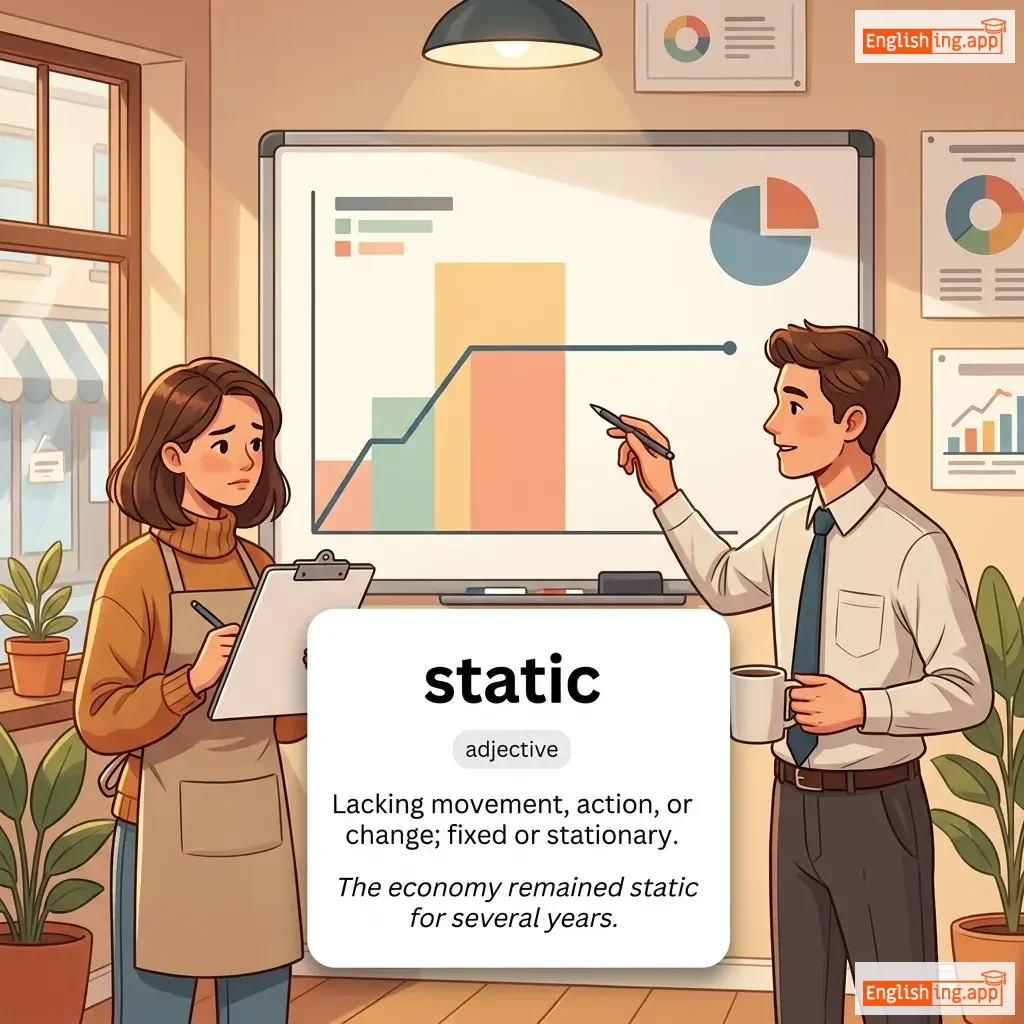
Lacking movement, action, or change; fixed or stationary.
••••••
|
The economy remained static for several years. |
经济在几年内保持静态。
Jingji zai jinnian nei baochi jingtai.
••••••
|
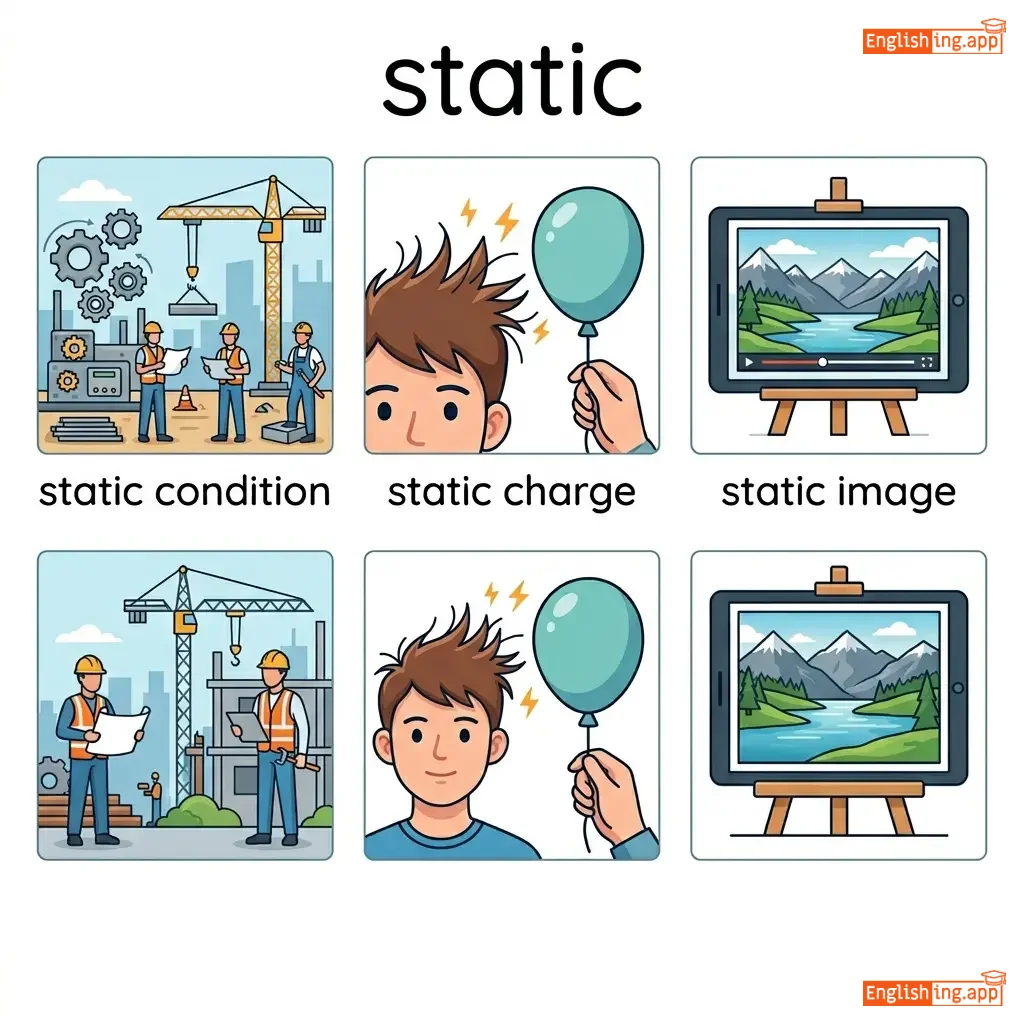
static electricity |
An imbalance of electric charges within or on the surface of a material.
••••••
|
静电
jingdian
••••••
|
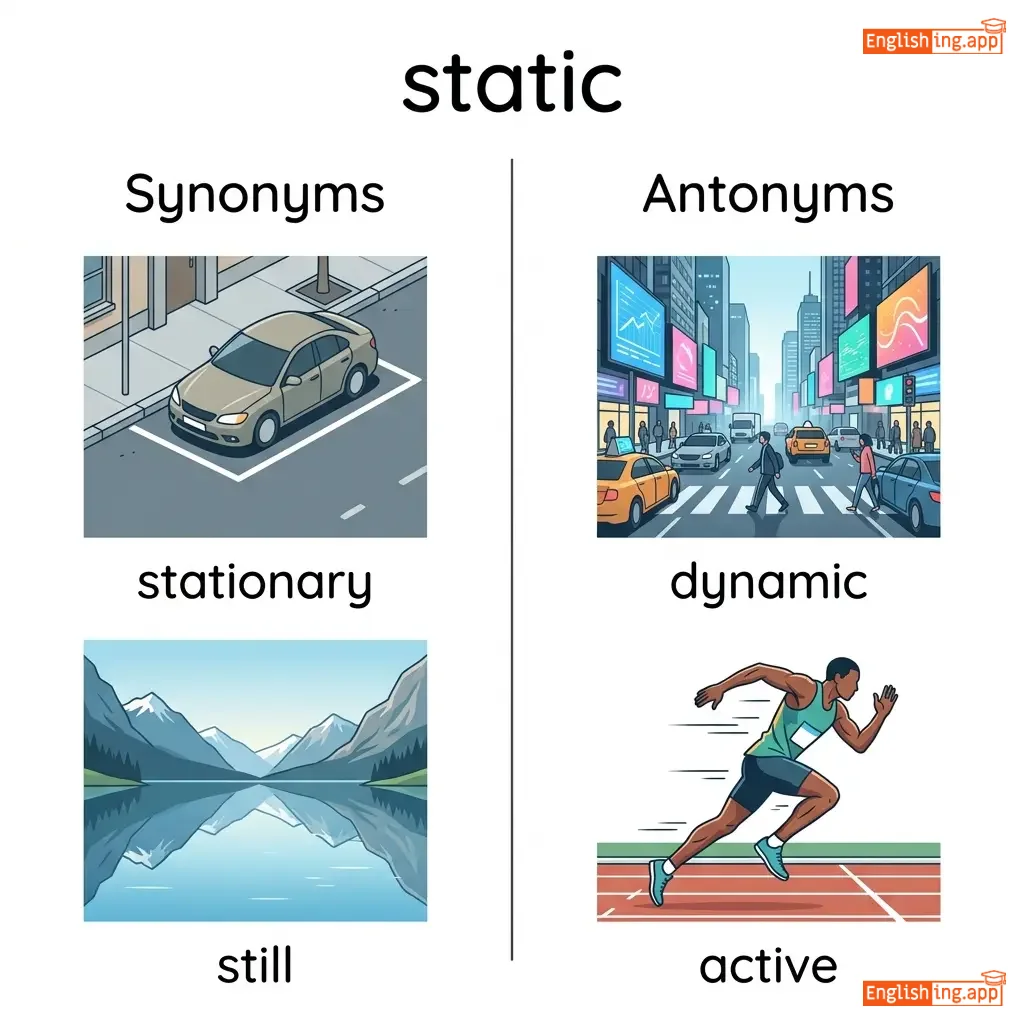
stationary, still, motionless, unchanging
••••••
|
dynamic, active, moving
••••••
|
static condition, static charge, static image, static role
••••••
|
静态就像静止,没有变化
••••••
|
|
#8316
🏰
|
/ˈsteɪtli/
adjective
(ˈsteɪtli)
••••••
|
- •••••• |
庄严和宏伟
zhuangyan he hongwei
••••••
|
- •••••• | - •••••• | - •••••• | - •••••• |
Having a dignified, majestic, and impressive appearance or manner.
••••••
|
The stately mansion stood at the end of the long driveway. |
那座庄严的豪宅位于长长的车道尽头。
Na zuo zhuangyan de haozhai weiyu changchang de chedao jintou.
••••••
|
- •••••• | - •••••• | - •••••• |
majestic, grand, dignified, noble, imposing
••••••
|
humble, ordinary, plain
••••••
|
stately home, stately manner, stately figure, stately procession
••••••
|
Stately就像一个宏伟庄严的宫殿,令人印象深刻。
••••••
|
|
#8317
🏛️
|
/ˈsteɪtkraft/
noun
(sittekraft)
••••••
|
- •••••• |
治国艺术
zhìguó yìshù
••••••
|
- •••••• | - •••••• | - •••••• | - •••••• |
The art of governing and managing state affairs effectively.
••••••
|
The leader was praised for his exceptional statecraft in handling international relations. |
领导因其在处理国际关系方面的卓越治国艺术而受到赞扬。
Lǐngdǎo yīn qí zài chǔlǐ guójì guānxì fāngmiàn de zhuóyuè zhìguó yìshù ér shòudào zànyáng.
••••••
|
- •••••• | - •••••• | - •••••• |
diplomacy, governance, leadership, strategy
••••••
|
mismanagement, incompetence
••••••
|
art of statecraft, skillful statecraft, diplomatic statecraft
••••••
|
STATE + CRAFT = 治理国家的艺术
••••••
|
|
#8318
⏸️
|
/ˈsteɪsɪs/ or /ˈstæsɪs/
noun
(斯塔西斯)
••••••
|
- •••••• |
停滯
tíngzhì
••••••
|
- •••••• | - •••••• | - •••••• | - •••••• |
A state of inactivity or equilibrium; a situation where nothing changes.
••••••
|
The negotiations reached a state of stasis with no progress made. |
谈判达到了停滞状态,没有取得进展。
Tánpàn dádàole tíngzhì zhuàngtài, méiyǒu qǔdé jìnzhǎn.
••••••
|
- •••••• | - •••••• | - •••••• |
inactivity, stagnation, immobility, standstill
••••••
|
movement, progress, change
••••••
|
political stasis, social stasis, economic stasis
••••••
|
停滯,就像站在一个地方不动。
••••••
|
|
#8319
😲
|
/ˈstɑːrtl/
verb
(sī tǎ té ěr)
••••••
|
- •••••• |
吓到
xià dào
••••••
|
startled
sī tǎ té ěr dé
••••••
|
startled
sī tǎ té ěr dé
••••••
|
startles
sī tǎ té ěr sī
••••••
|
startling
sī tǎ té ěr línɡ
••••••
|
To surprise or frighten someone suddenly.
••••••
|
The loud noise startled the children.
大声的噪音让孩子们吓了一跳。
••••••
|
大声的噪音让孩子们吓了一跳。
Dà shēng de zàoyīn ràng háizimen xiàle yī tiào.
••••••
|
- •••••• | - •••••• | - •••••• |
surprise, shock, alarm, scare, frighten
••••••
|
calm, soothe, reassure
••••••
|
startle someone, startled expression, startling discovery
••••••
|
大声的开始让人吓到。
••••••
|
|
#8320
🚀
|
/stɑːrt/
verb
(start)
••••••
|
|
开始
kaishi
••••••
|
started
started
••••••
|
started
started
••••••
|
starts
starts
••••••
|
starting
starting
••••••
|
To begin doing something; to commence.
••••••
|
They will start the meeting at 10 a.m.
他们将在上午10点开始会议。
••••••
|
他们将在上午10点开始会议。
Tāmen jiāng zài shàngwǔ 10 diǎn kāishǐ huìyì.
••••••
|
start from scratch
从头开始
••••••
|
To begin again from nothing.
••••••
|
从头开始
Cóng tóu kāishǐ
••••••
|
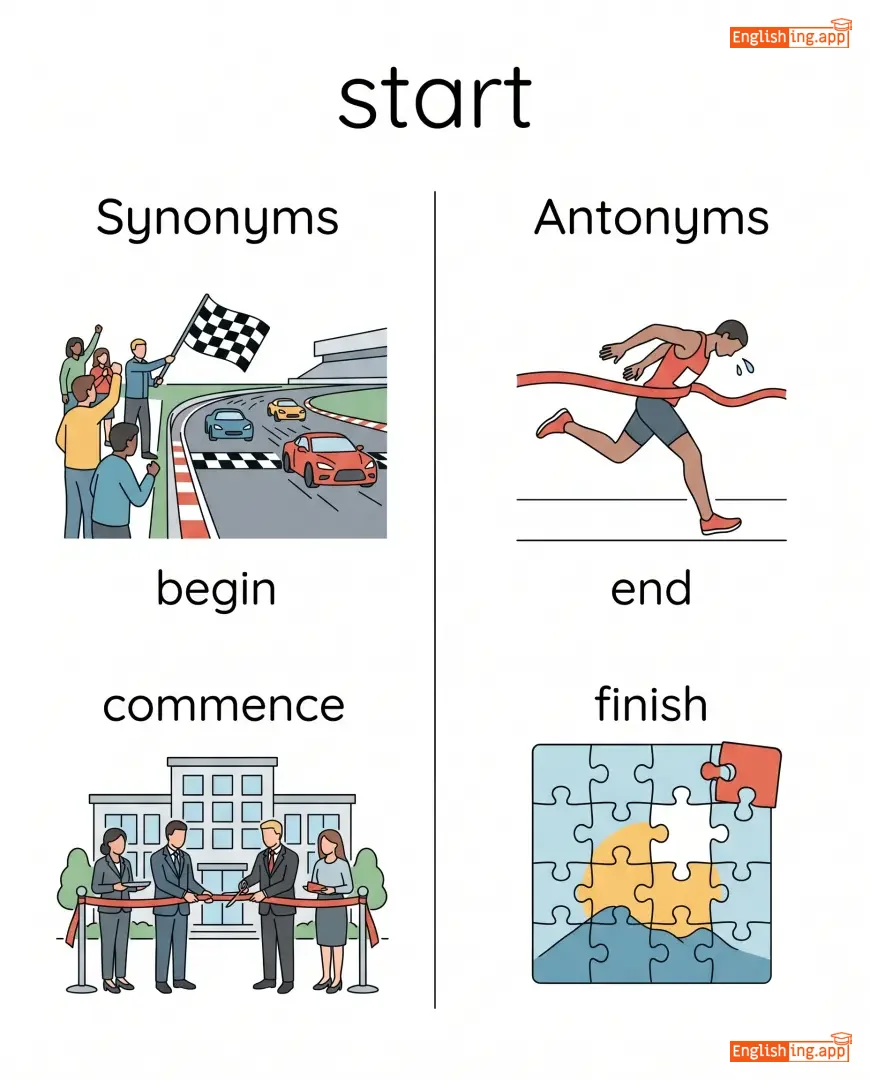
begin, commence, initiate, launch, open
••••••
|
end, finish, stop
••••••
|
start a business, start a meeting, start working, start again
••••••
|
'START'按键开始一切
••••••
|
|
#8321
⚫
|
/stɑːrk/
adjective
(stark)
••••••
|
- •••••• |
严峻的, 锋利的
yanjun de, fengli de
••••••
|
- •••••• | - •••••• | - •••••• | - •••••• |
Severe, sharp, or clearly defined; plain and without any decoration.
••••••
|
The stark contrast between poverty and wealth was evident in the city.
贫困与财富之间的鲜明对比在城市中显而易见。
••••••
|
贫困与财富之间的鲜明对比在城市中显而易见。
Pinkuàn yǔ cáifù zhījiān de xiānmíng duìbǐ zài chéngshì zhōng xiǎn'ér yìjiàn.
••••••
|
stark reality
严酷的现实
••••••
|
The harsh or unpleasant truth.
••••••
|
严酷的现实
Yánkù de xiànshí
••••••
|
severe, harsh, bleak, plain, absolute
••••••
|
soft, mild, decorated
••••••
|
stark contrast, stark difference, stark reality, stark warning
••••••
|
Stark像黑与白之间强烈的对比。
••••••
|
|
#8322
📖
|
/ˈstænzə/
noun
(斯坦扎)
••••••
|
- •••••• |
诗节
shijie
••••••
|
- •••••• | - •••••• | - •••••• | - •••••• |
a group of lines forming a unit in a poem or song
••••••
|
The poem begins with a stanza describing nature. |
这首诗以一节描述自然的诗句开始。
Zhe shou shi yi yi jie miaoshu ziran de shiju kaishi.
••••••
|
- •••••• | - •••••• | - •••••• |
verse, section, passage, couplet, canto
••••••
|
prose, paragraph
••••••
|
first stanza, second stanza, stanza of a poem, stanza structure
••••••
|
Stanza是诗节,记住诗歌的节奏,想象 '斯'的音与‘诗’相连。
••••••
|
|
#8323
⛔
|
/ˈstændˌstɪl/
noun
(standstil)
••••••
|
- •••••• |
停滞
tingzhi
••••••
|
- •••••• | - •••••• | - •••••• | - •••••• |
a situation in which all movement or activity stops
••••••
|
The traffic came to a standstill after the accident. |
事故发生后,交通陷入了停滞。
Shigu fasheng hou, jiaotong xianru le tingzhi.
••••••
|
come to a standstill |
to stop moving or progressing
••••••
|
陷入停滞
xianru tingzhi
••••••
|
halt, stop, deadlock, impasse, freeze
••••••
|
movement, progress, continuation
••••••
|
traffic standstill, economic standstill, came to a standstill, at a standstill
••••••
|
Stand + Still 意味着停止 = 停滞
••••••
|
|
#8324
🧍
|
/ˈstændɪŋ/
noun/adjective
(standing)
••••••
|
- •••••• |
地位 / 声誉
diwei / shengyu
••••••
|
- •••••• | - •••••• | - •••••• | - •••••• |
status, reputation, or position; also the act of being upright on the feet
••••••
|
He has high standing in the community for his charity work. |
由于他的慈善工作,他在社区中有很高的声誉。
Yóuyú tā de císhàn gōngzuò, tā zài shèqū zhōng yǒu hěn gāo de shēngyù.
••••••
|
of good standing |
having a good reputation or status
••••••
|
良好的声誉
liánghǎo de shēngyù
••••••
|
status, reputation, position, rank, stature
••••••
|
disrepute, dishonor, disgrace
••••••
|
social standing, legal standing, good standing, standing order
••••••
|
Standing 意味着站立,同时也有声誉和地位的意思。
••••••
|
|
#8325
🎶
|
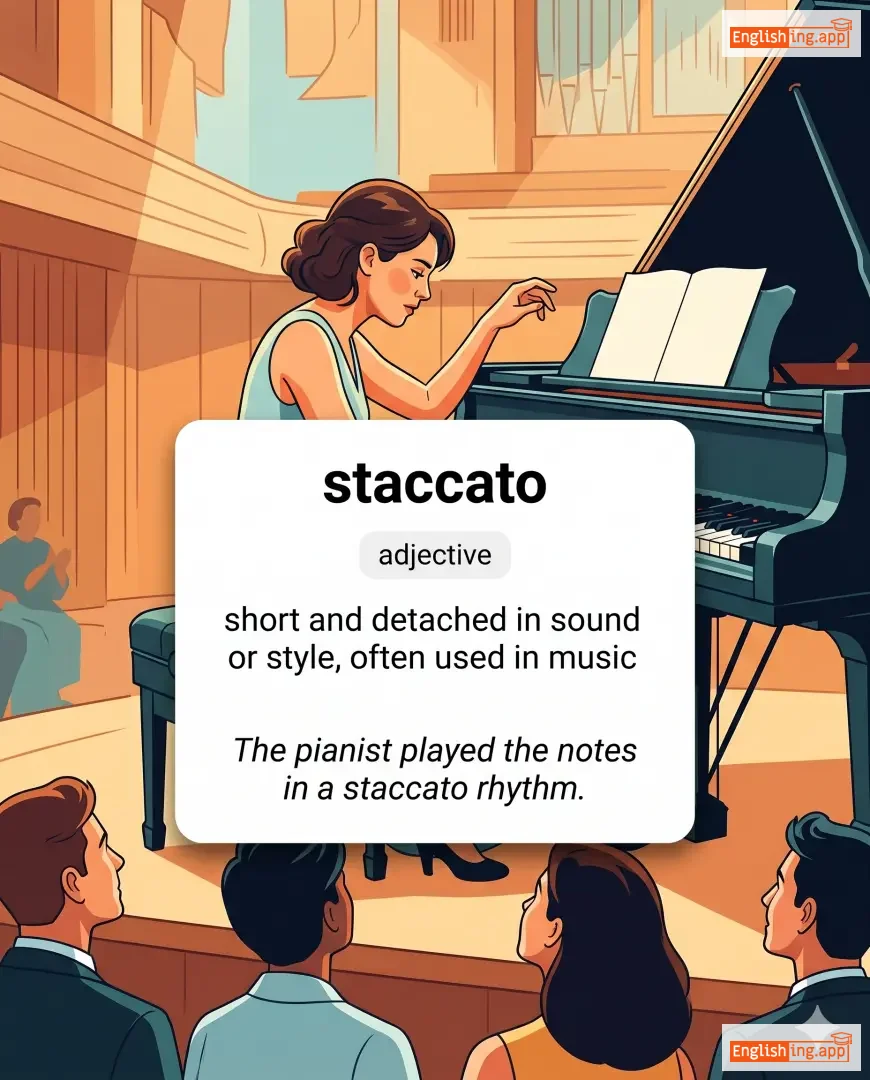
/stəˈkɑː.təʊ/
adjective
(斯塔卡托)
••••••
|
|
断奏
duànzòu
••••••
|
- •••••• | - •••••• | - •••••• | - •••••• |
short and detached in sound or style, often used in music
••••••
|
The pianist played the notes in a staccato rhythm. |
钢琴家以断奏的节奏弹奏音符。
Gāngqínjiā yǐ duànzòu de jiézòu tánzòu yīnfú.
••••••
|
- •••••• | - •••••• | - •••••• |
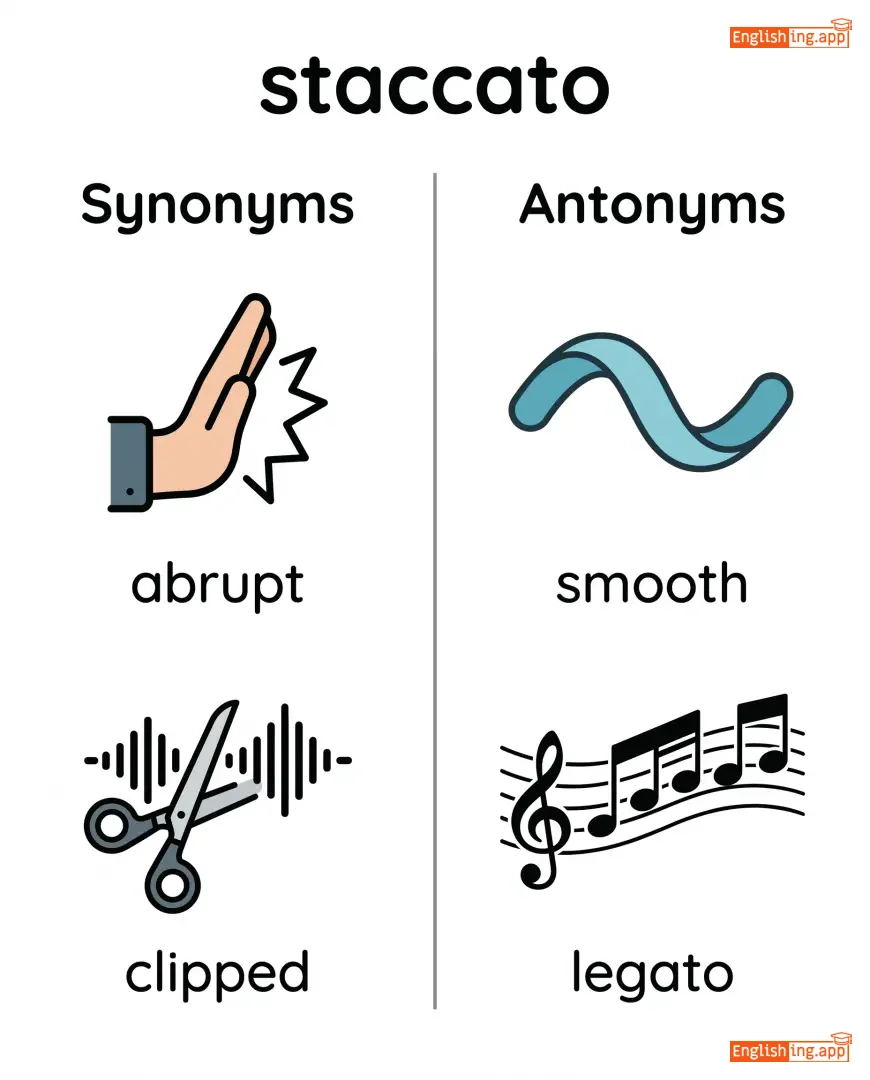
abrupt, clipped, sharp, detached
••••••
|
smooth, legato
••••••
|
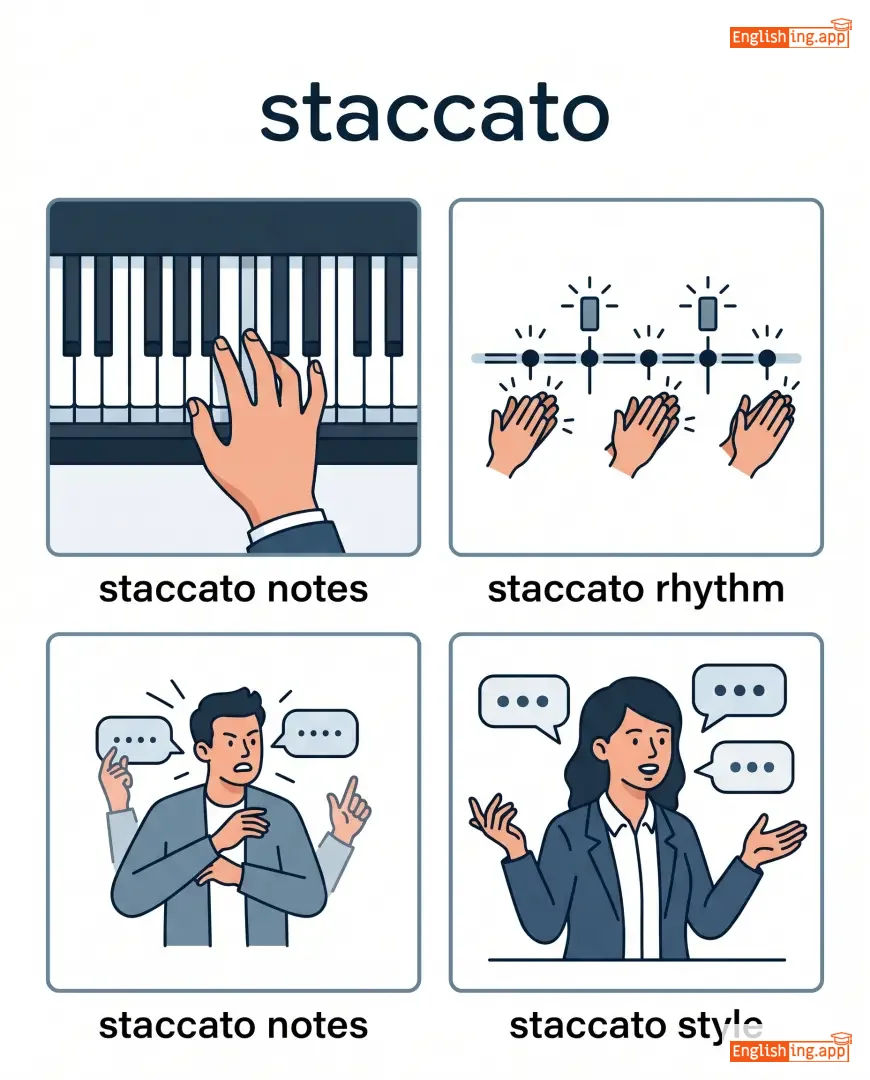
staccato notes, staccato rhythm, staccato style, staccato speech
••••••
|
Stuck + 卡托 (kǎtuō) → 像断开的音符一样弹奏 (staccato)
••••••
|
|
#8326
🩸
|
/stɑːntʃ/
verb
(斯坦奇)
••••••
|
- •••••• |
止血
zhixue
••••••
|
stanched
斯坦奇德
••••••
|
stanched
斯坦奇德
••••••
|
stanches
斯坦奇斯
••••••
|
stanching
斯坦奇恩
••••••
|
to stop the flow of blood or liquid from a wound or source
••••••
|
The nurse quickly stanched the bleeding from the cut.
护士迅速止住了切口处的出血。
••••••
|
护士迅速止住了切口处的出血。
hushi xunsu zhizhu le qiekou chu de chuxue
••••••
|
stanch the flow
止住血流
••••••
|
to stop or control the movement of something, especially blood or money
••••••
|
止住血流
zhizhu xueliu
••••••
|
stop, stem, halt, check, control
••••••
|
allow, continue, release
••••••
|
stanch the bleeding, stanch the wound, stanch the flow, stanch losses
••••••
|
斯坦奇 = Stop + 血液 Stanch意味着止血
••••••
|
|
#8327
🐂
|
/stæmˈpiːd/
noun/verb
(shitanping)
••••••
|
- •••••• |
混乱的人群
hunluan de renqun
••••••
|
stampeded
shitanpinged
••••••
|
stampeded
shitanpinged
••••••
|
stampedes
shitanpinges
••••••
|
stampeding
shitanpinging
••••••
|
A sudden, uncontrolled rush of people or animals; to cause a mass movement.
••••••
|
The loud noise caused a stampede of the crowd.
嘈杂的声音引起了人群中的一阵奔跑。
••••••
|
嘈杂的声音引起了人群中的一阵奔跑。
Caoza de shengyin yinqile renqun zhong de yizhen benpao.
••••••
|
cause a stampede
引起奔跑
••••••
|
To trigger sudden mass movement of people or animals.
••••••
|
引起奔跑
Yinqi benpao
••••••
|
rush, panic, surge, charge
••••••
|
calm, order
••••••
|
human stampede, cause stampede, stampede of cattle, deadly stampede
••••••
|
Stamp (脚步声) + panic (恐慌) → 混乱的奔跑意味着突如其来的运动。
••••••
|
|
#8328
📮
|
/stæmp/
verb
••••••
|
- •••••• | - •••••• |
stamped
••••••
|
stamped
••••••
|
stamps
••••••
|
stamping
••••••
|
To bring down (one's foot) heavily on the ground; to imprint a mark or seal.
••••••
|
She stamped her foot in frustration. |
- •••••• |
stamp out |
To put an end to something harmful or undesirable.
••••••
|
- •••••• |
imprint, seal, stomp, crush
••••••
|
erase, remove
••••••
|
stamp out, stamp duty, stamp collector, stamp approval
••••••
|
No •••••• |
|
#8329
😬
|
/ˈstæmər/
verb
(斯塔默)
••••••
|
- •••••• |
结巴
jieba
••••••
|
stammered
斯塔默德
••••••
|
stammered
斯塔默德
••••••
|
stammers
斯塔默斯
••••••
|
stammering
斯塔默瑞
••••••
|
To speak with sudden involuntary pauses and a tendency to repeat the initial letters of words.
••••••
|
The nervous student began to stammer during his speech.
紧张的学生在演讲中开始结巴。
••••••
|
紧张的学生在演讲中开始结巴。
Jǐnzhāng de xuéshēng zài yǎnjiǎng zhōng kāishǐ jiēbā.
••••••
|
stammer out
结巴出来
••••••
|
To say something with difficulty due to stammering.
••••••
|
结巴
jieba
••••••
|
stutter, falter, hesitate, mumble
••••••
|
speak fluently, articulate
••••••
|
stammer out, stammer badly, nervous stammer, slight stammer
••••••
|
结巴就像突然的停顿,像打结的线一样。
••••••
|
|
#8330
🏃
|
/ˈstæmɪnə/
noun
(斯塔米纳)
••••••
|
- •••••• |
耐力
naili
••••••
|
- •••••• | - •••••• | - •••••• | - •••••• |
The physical or mental strength to sustain prolonged effort or activity.
••••••
|
Marathon runners need great stamina to finish the race.
马拉松跑者需要强大的耐力来完成比赛。
••••••
|
马拉松跑者需要强大的耐力来完成比赛。
Mǎlāsōng pǎozhě xūyào qiángdà de nàilì lái wánchéng bǐsài.
••••••
|
mental stamina
心理耐力
••••••
|
The ability to endure prolonged mental effort.
••••••
|
心理耐力
xīn lǐ nàilì
••••••
|
endurance, strength, resilience, energy, perseverance
••••••
|
weakness, fatigue, frailty
••••••
|
great stamina, physical stamina, mental stamina, build stamina
••••••
|
斯塔米纳(stamina)→ 耐力,意味着持续的力量。
••••••
|
|
#8331
🛡️
|
/ˈstɔːlwərt/
adjective
(斯托尔沃特)
••••••
|
- •••••• |
坚定, 忠诚
jianding, zhongcheng
••••••
|
- •••••• | - •••••• | - •••••• | - •••••• |
Loyal, reliable, and hardworking; strongly built or sturdy.
••••••
|
She has always been a stalwart supporter of the community. |
她一直是社区的坚定支持者。
Ta yizhi shi shequ de jianding zhichi zhe.
••••••
|
stalwart supporter |
A person who is very loyal and reliable in giving support.
••••••
|
坚定的支持者
jianding de zhichi zhe
••••••
|
loyal, dependable, faithful, strong, resolute
••••••
|
unreliable, weak, disloyal
••••••
|
stalwart supporter, stalwart defender, stalwart friend, stalwart ally
••••••
|
坚如磐石,忠诚坚定 - 斯托尔沃特就是这种意思。
••••••
|
|
#8332
🐎
|
/ˈstæl.i.ən/
noun
(斯塔利昂)
••••••
|
- •••••• |
用于繁殖的种马
yòng yú fánzhí de zhǒngmǎ
••••••
|
- •••••• | - •••••• | - •••••• | - •••••• |
An adult male horse that is not castrated, often used for breeding.
••••••
|
The farm owns a powerful stallion for breeding purposes.
农场拥有一匹强壮的种马用于繁殖。
••••••
|
农场拥有一匹强壮的种马用于繁殖。
Nóngchǎng yǒng yī pǐ qiángzhuàng de zhǒngmǎ yòng yú fánzhí.
••••••
|
- •••••• | - •••••• | - •••••• |
male horse, stud, sire
••••••
|
mare, gelding
••••••
|
wild stallion, strong stallion, black stallion, breeding stallion
••••••
|
Stallion = 斯塔利昂, 这个名字提醒我们它是种马,用于繁殖。
••••••
|
|
#8333
♟️
|
/ˈsteɪl.meɪt/
noun
(s-teyl-meyt)
••••••
|
- •••••• |
僵局
jiangju
••••••
|
- •••••• | - •••••• | - •••••• | - •••••• |
A situation in which no progress can be made or no party can win.
••••••
|
Negotiations ended in a stalemate. |
谈判陷入了僵局。
Tanpan xianru le jiangju.
••••••
|
- •••••• | - •••••• | - •••••• |
deadlock, impasse, standstill, gridlock, standoff
••••••
|
progress, breakthrough, resolution
••••••
|
political stalemate, negotiations stalemate, chess stalemate, legal stalemate
••••••
|
僵局像是一个没有出路的停滞状态,就像 stalemate。
••••••
|
|
#8334
📈
|
/steɪk/
noun, verb
(sī tè kè)
••••••
|
- •••••• |
股份, 风险
gǔ fèn, fēng xiǎn
••••••
|
staked
sī tè kè dé
••••••
|
staked
sī tè kè dé
••••••
|
stakes
sī tè kè sī
••••••
|
staking
sī tè kè yīng
••••••
|
A share or interest in a business or venture; to risk or support something of value.
••••••
|
He has a major stake in the new company.
他在新公司拥有重大股份。
••••••
|
他在新公司拥有重大股份。
Tā zài xīn gōng sī yǒng yǒu zhòng dà gǔ fèn.
••••••
|
at stake
处于风险中
••••••
|
at risk; in danger of being lost
••••••
|
处于风险中
chù yú fēng xiǎn zhōng
••••••
|
share, investment, risk, interest, bet
••••••
|
security, certainty, safety
••••••
|
stake in, at stake, high stakes, stake money
••••••
|
一旦你投入, 所有的股份都在风险中。
••••••
|
|
#8335
👔
|
/steɪd/
adjective
(esteid)
••••••
|
- •••••• |
严肃,受尊敬的
yánsù, shòu zūnjìng de
••••••
|
- •••••• | - •••••• | - •••••• | - •••••• |
Serious, respectable, and unadventurous.
••••••
|
He came from a staid family background.
他来自一个严肃的家庭。
••••••
|
他来自一个严肃的家庭。
Tā láizì yīgè yánsù de jiātíng.
••••••
|
- •••••• | - •••••• | - •••••• |
serious, sober, respectable, sedate
••••••
|
frivolous, adventurous, lively
••••••
|
staid manner, staid atmosphere, staid family, staid traditions
••••••
|
Esteid听起来像steady—总是严肃且受尊敬。
••••••
|
|
#8336
🎭
|
/ˈsteɪ.dʒi/
adjective
(steiji)
••••••
|
- •••••• |
过于戏剧化
guo yu xi ju hua
••••••
|
- •••••• | - •••••• | - •••••• | - •••••• |
Overly theatrical, artificial, or exaggerated in manner or style.
••••••
|
Her performance felt stagy and unnatural. |
她的表演显得过于戏剧化和不自然。
Ta de biao yan xian de guo yu xi ju hua he bu zi ran.
••••••
|
- •••••• | - •••••• | - •••••• |
theatrical, dramatic, artificial, exaggerated, showy
••••••
|
natural, genuine, authentic
••••••
|
stagy performance, stagy behavior, stagy acting, stagy manner
••••••
|
舞台上所有一切都是夸张的,所以 'stagy' 意思是过于戏剧化。
••••••
|
|
#8337
📉
|
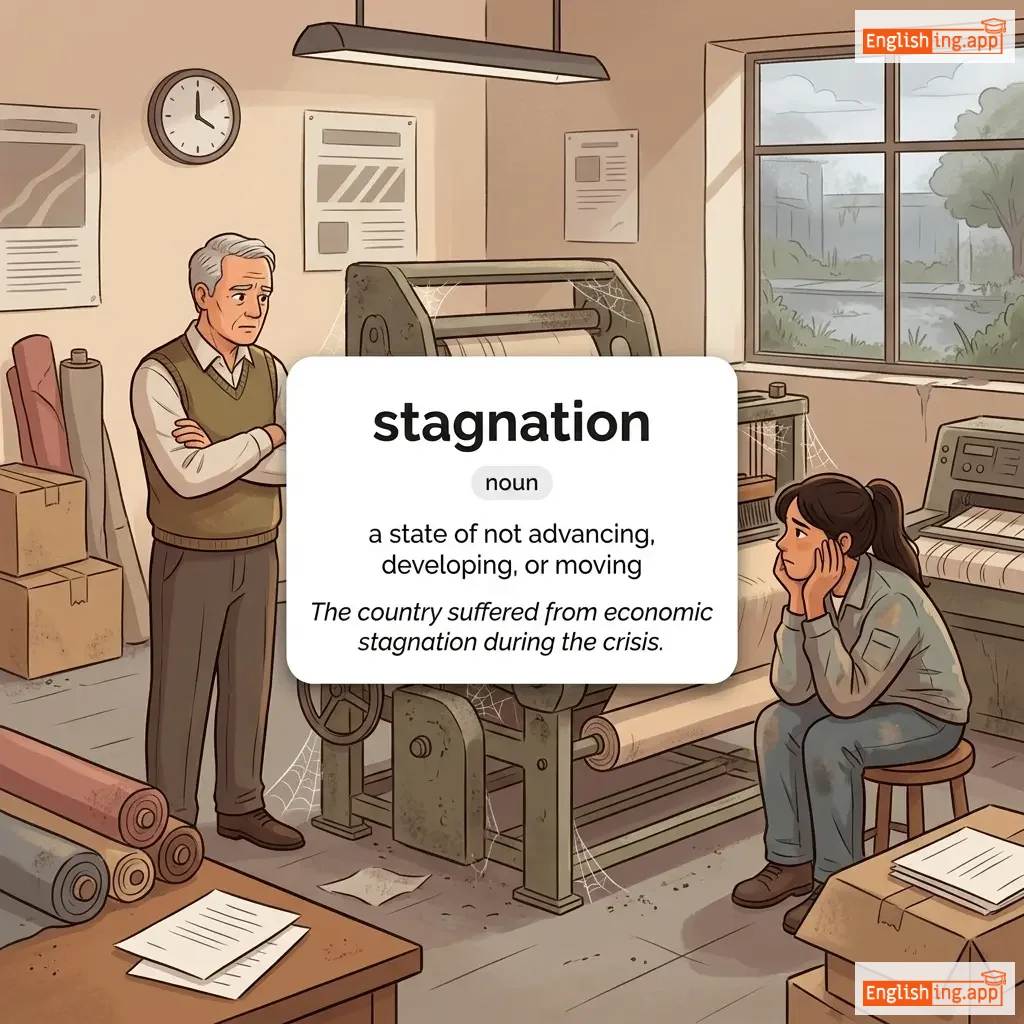
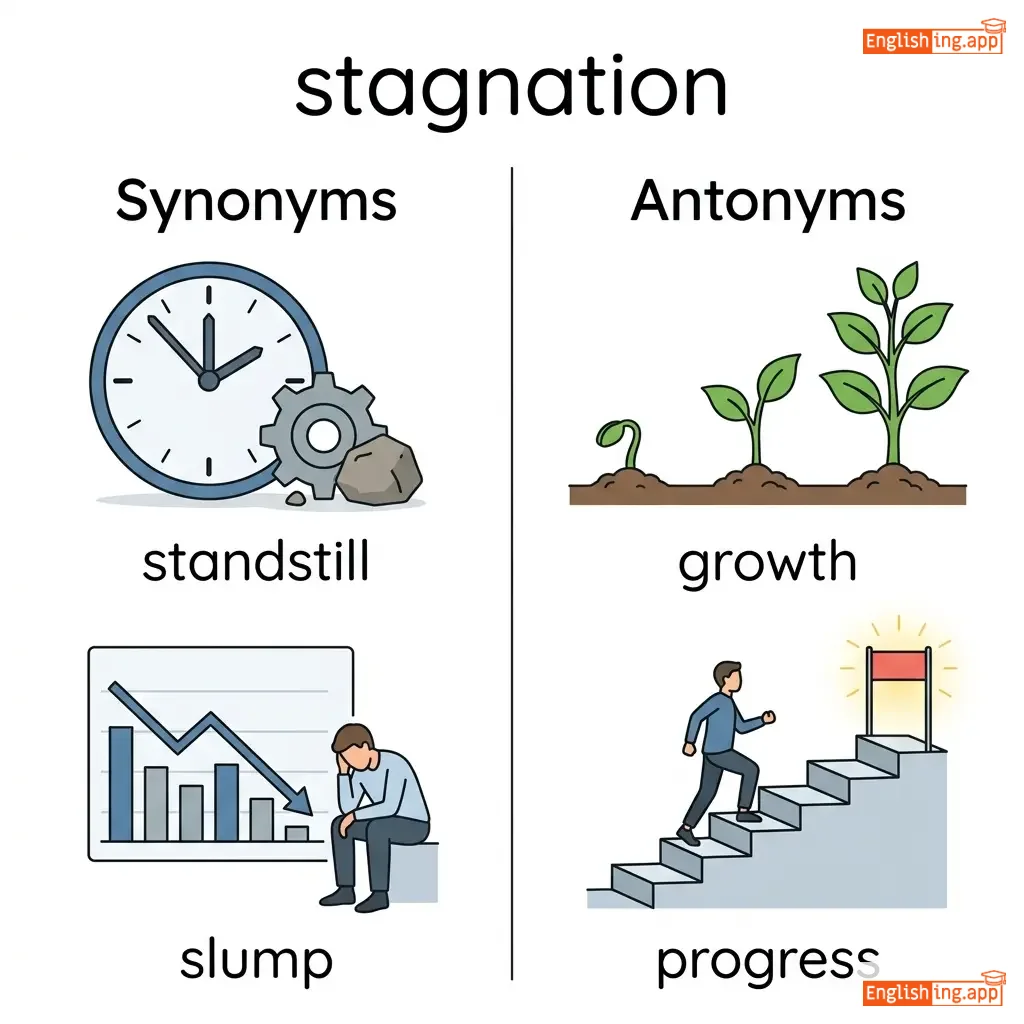
/stæɡˈneɪ.ʃən/
noun
(停滯)
••••••
|
|
停滯
tingzhi
••••••
|
- •••••• | - •••••• | - •••••• | - •••••• |
a state of not advancing, developing, or moving
••••••
|
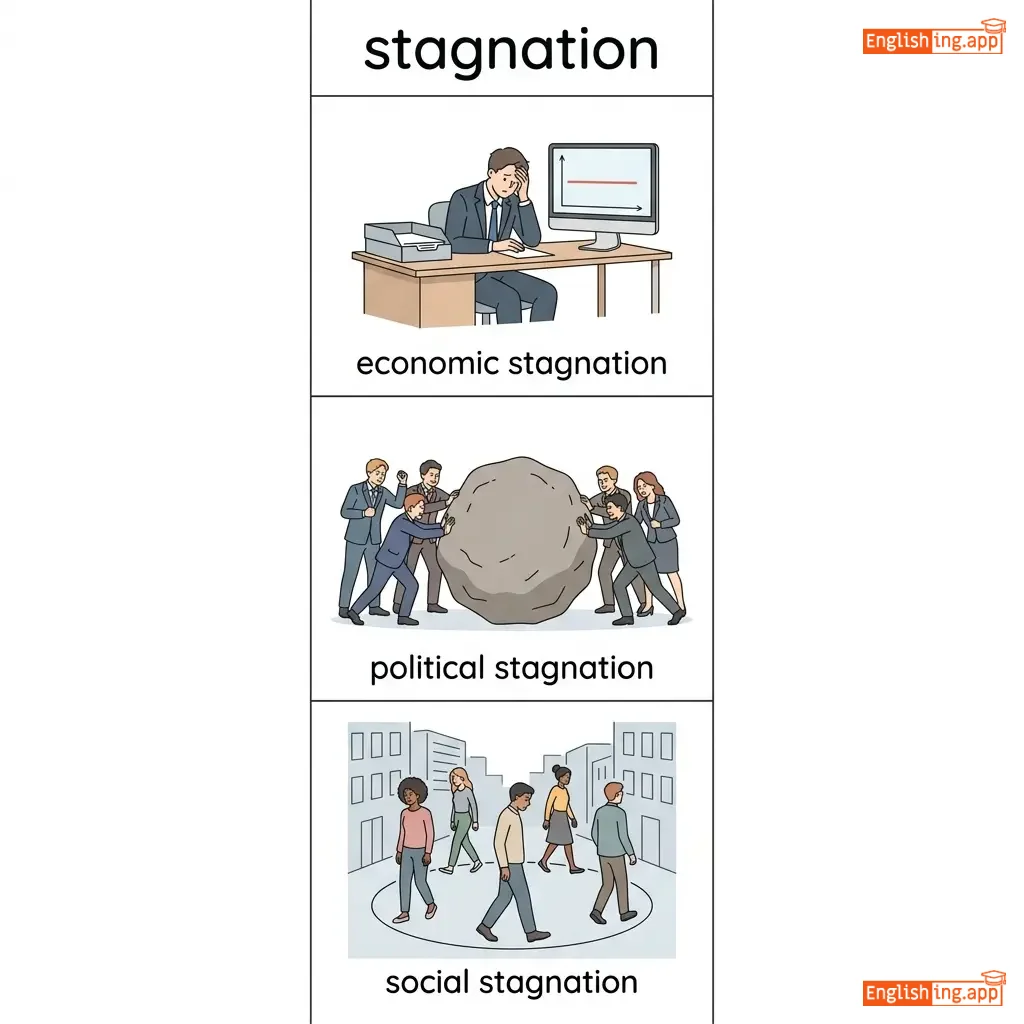
The country suffered from economic stagnation during the crisis. |
该国在危机期间遭受了经济停滯。
Gai guo zai weiji qi jian zao shou le jingji tingzhi.
••••••
|
economic stagnation |
a period when the economy does not grow or improve
••••••
|
经济停滯
jingji tingzhi
••••••
|
standstill, slump, inactivity, decline
••••••
|
growth, progress, boom
••••••
|
economic stagnation, political stagnation, social stagnation
••••••
|
站台没有动静 = 停滯
••••••
|
|
#8338
🛑
|
/ˈstæɡ.neɪt/
verb
(斯塔格内特)
••••••
|
- •••••• |
停滞
tíngzhì
••••••
|
stagnated
斯塔格内特德
••••••
|
stagnated
斯塔格内特德
••••••
|
stagnates
斯塔格内特斯
••••••
|
stagnating
斯塔格内特英
••••••
|
to stop developing, progressing, or moving
••••••
|
Without innovation, the business will stagnate.
没有创新,生意将会停滞不前。
••••••
|
没有创新,生意将会停滞不前。
méiyǒu chuàngxīn, shēngyì jiāng huì tíngzhì bùqián.
••••••
|
- •••••• | - •••••• | - •••••• |
deteriorate, decline, languish, idle
••••••
|
grow, progress, advance
••••••
|
stagnate economy, stagnate growth, stagnate business
••••••
|
停滞在水中 → 停滞不前
••••••
|
|
#8339
💧
|
/ˈstæɡ.nənt/
adjective
(斯塔格南特)
••••••
|
- •••••• |
停滯
tíngzhì
••••••
|
- •••••• | - •••••• | - •••••• | - •••••• |
not moving, changing, or developing; inactive
••••••
|
The company’s growth remained stagnant for several years. |
公司增長多年來停滯不前。
Gōngsī zēngzhǎng duō nián lái tíngzhì bù qián.
••••••
|
stagnant water |
still water with no flow, often unhealthy
••••••
|
停滯的水
tíngzhì de shuǐ
••••••
|
motionless, still, inactive, sluggish
••••••
|
active, flowing, dynamic
••••••
|
stagnant economy, stagnant market, stagnant water, stagnant growth
••••••
|
停滯 = 沒有流動 → Stagnant.
••••••
|
Vocabulary Quiz
Test your vocabulary by matching words with their translations or meanings.
Login to take the quiz
Comments (0)
Share your thoughts and join the discussion.
Join the discussion by logging in
Login to CommentNo comments yet
Be the first to share your thoughts!