

Swipe left or right, or use the buttons. Tap image to zoom.
例句翻译
单词
Lesson 347Lesson 347 - 遮罩切换
|
表情符号
|
单词 | Images | 翻译 | 过去时 | 过去分词 | 第三人称单数 | 动名词 | 含义 | 例句 | 例句翻译 | 示例表达 | 示例表达含义 | 示例表达翻译 | 同义词 | 反义词 | 搭配词 | 助记符 |
|---|---|---|---|---|---|---|---|---|---|---|---|---|---|---|---|---|---|
|
#10375
😰
|
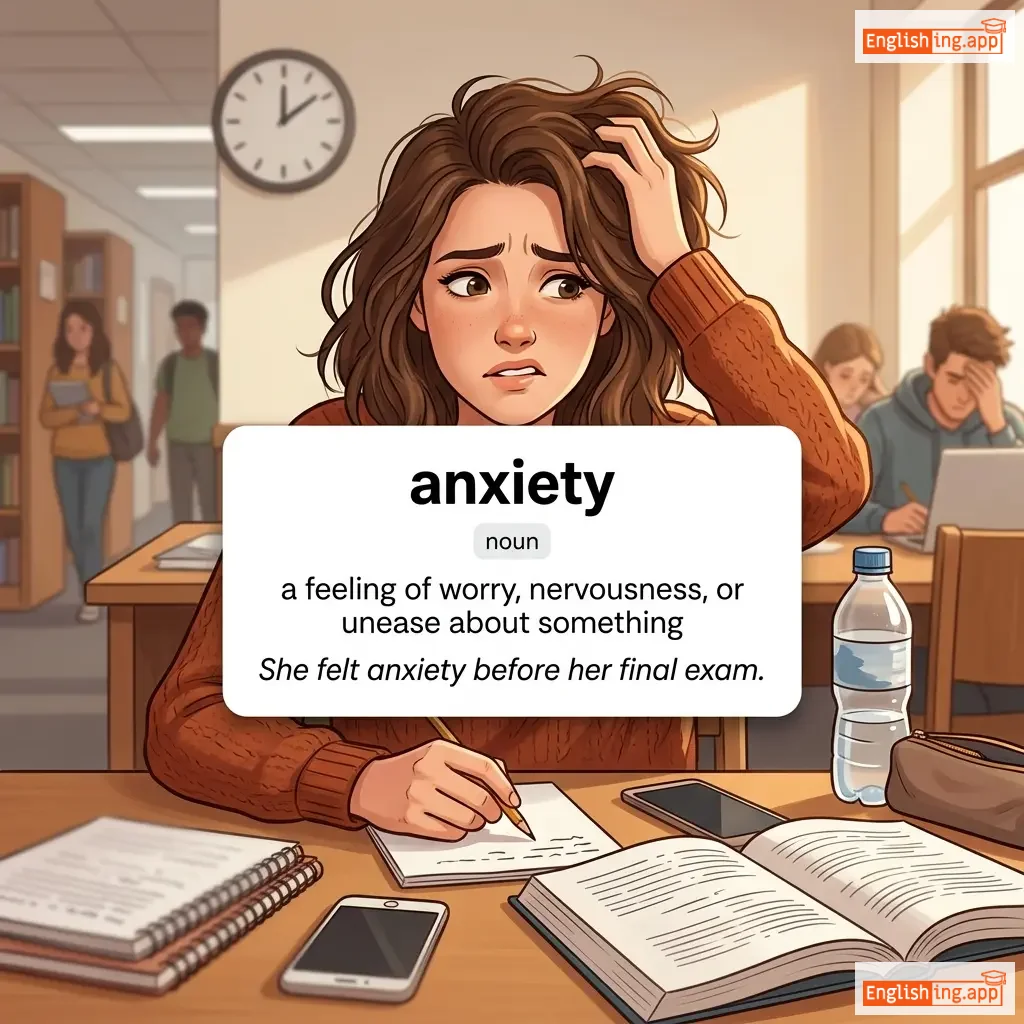
/æŋˈzaɪəti/
noun
(āngzāiyètí)
••••••
|
|
焦虑
jiaolü
••••••
|
- •••••• | - •••••• | - •••••• | - •••••• |
a feeling of worry, nervousness, or unease about something
••••••
|
She felt anxiety before her final exam. |
她在期末考试前感到焦虑。
Ta zai qimou kaoshi qian gandao jiaolu.
••••••
|
separation anxiety |
a feeling of distress when separated from a loved one
••••••
|
分离焦虑
fenli jiaolu
••••••
|
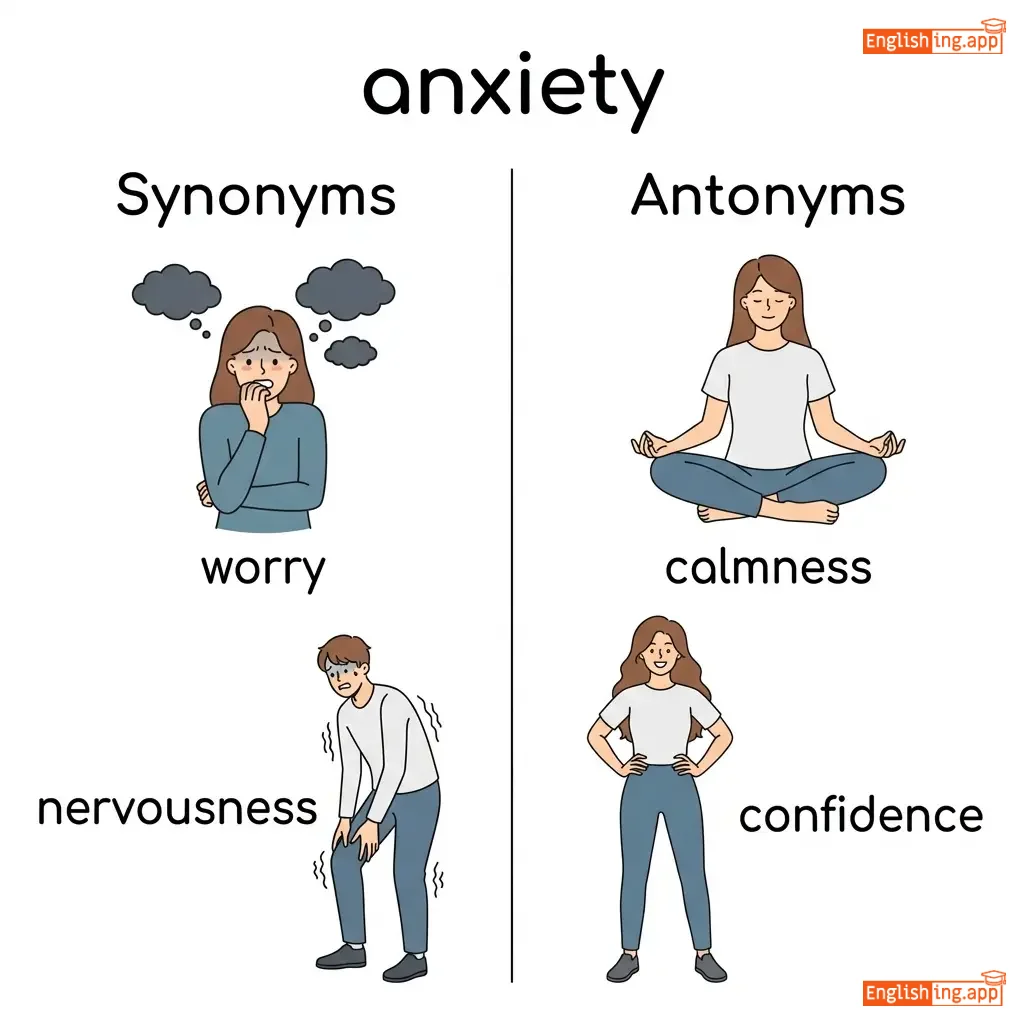
worry, nervousness, unease, tension, apprehension
••••••
|
calmness, confidence, peace
••••••
|
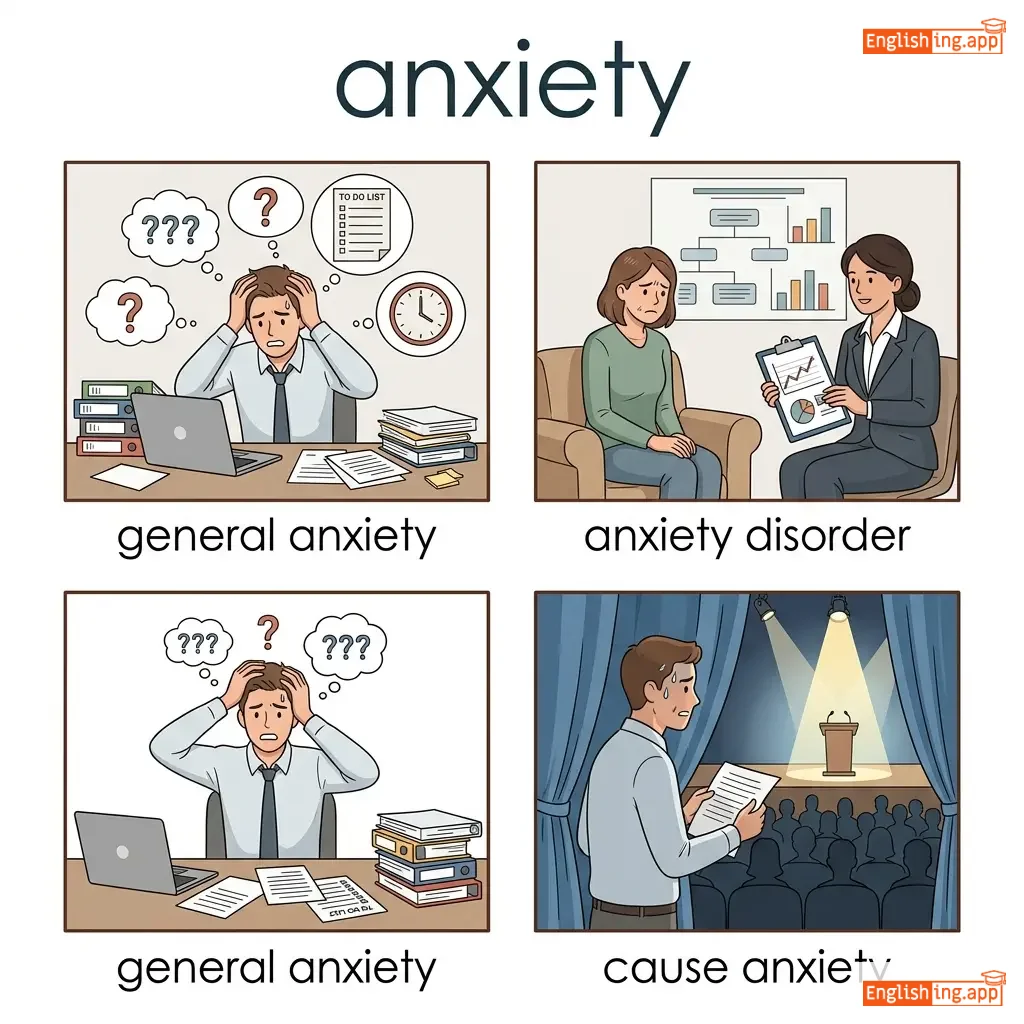
general anxiety, anxiety disorder, cause anxiety, reduce anxiety
••••••
|
期末考试前焦虑增多,焦虑意味着担忧。
••••••
|
|
#10376
✔️
|
/əˈpruː.vəl/
noun
(apruval)
••••••
|
- •••••• |
批准
pizhun
••••••
|
- •••••• | - •••••• | - •••••• | - •••••• |
official permission or agreement for something
••••••
|
The project received government approval. |
该项目获得了政府批准。
Gai xiangmu huodele zhengfu pizhun.
••••••
|
seal of approval |
official acceptance or endorsement
••••••
|
批准印章
pizhun yinzhang
••••••
|
acceptance, consent, permission, endorsement, authorization
••••••
|
disapproval, rejection, denial
••••••
|
gain approval, seek approval, official approval, parental approval
••••••
|
Approval 就是批准 ✔️ — 获得批准后,一切都可以进行。
••••••
|
|
#10377
📅
|
/əˈpɔɪntmənt/
noun
(āipòyīntmènt)
••••••
|
- •••••• |
预约
yùyuē
••••••
|
- •••••• | - •••••• | - •••••• | - •••••• |
an arrangement to meet someone at a particular time
••••••
|
I have a doctor's appointment tomorrow. |
我明天有一个医生预约。
Wǒ míngtiān yǒu yīgè yīshēng yùyuē.
••••••
|
keep an appointment |
to attend an arranged meeting
••••••
|
保持预约
bǎochí yùyuē
••••••
|
meeting, arrangement, date, schedule, reservation
••••••
|
cancellation, absence
••••••
|
make an appointment, cancel an appointment, keep an appointment, appointment time
••••••
|
Appointment 是预约 — 不要忘记!
••••••
|
|
#10378
📄
|
/əˈplaɪ/
verb
(āpūlái)
••••••
|
- •••••• |
申请 / 应用
shēnqǐng / yìngyòng
••••••
|
applied
āpūláid
••••••
|
applied
āpūláid
••••••
|
applies
āpūlái zī
••••••
|
applying
āpūlái yīng
••••••
|
to make a formal request for something; to put into practice
••••••
|
He decided to apply for the scholarship.
他决定申请奖学金。
••••••
|
他决定申请奖学金。
Tā juédìng shēnqǐng jiǎngxuéjīn.
••••••
|
apply oneself
全力以赴
••••••
|
to make a serious effort to do something
••••••
|
全力以赴做某事
quánlì yǐfù zuò mǒu shì
••••••
|
request, use, implement, employ, submit
••••••
|
ignore, neglect
••••••
|
apply for a job, apply pressure, apply rules, apply cream
••••••
|
Apply意味着申请 — 申请更多,机会更多。
••••••
|
|
#10379
🍎
|
/ˈæpəl/
noun
(æpəl)
••••••
|
- •••••• |
苹果
pingguo
••••••
|
- •••••• | - •••••• | - •••••• | - •••••• |
a round fruit with red, green, or yellow skin
••••••
|
She ate a red apple for breakfast. |
她早餐吃了一个红苹果。
Tā zǎocān chīle yīgè hóng píngguǒ.
••••••
|
the apple of one's eye |
a person or thing that is greatly loved or treasured
••••••
|
心肝宝贝
xīngān bǎobèi
••••••
|
fruit, pome, produce
••••••
|
null
••••••
|
apple pie, apple tree, apple juice, eat an apple
••••••
|
苹果(pingguo)是‘日常必备’ - ‘An apple a day keeps doctor away’记住!
••••••
|
|
#10380
👀
|
/əˈpɪərəns/
noun
(āpīrénsī)
••••••
|
- •••••• |
外貌
waimào
••••••
|
- •••••• | - •••••• | - •••••• | - •••••• |
the way that someone or something looks
••••••
|
His sudden appearance surprised everyone. |
他突然的出现让所有人都吃惊。
Tā tūrán de chūxiàn ràng suǒyǒu rén dōu chī jīng.
••••••
|
keep up appearances |
to maintain an outward show of good behavior or success
••••••
|
保持外表
bǎochí wàibiǎo
••••••
|
look, aspect, presence, form, figure
••••••
|
disappearance, absence
••••••
|
physical appearance, public appearance, sudden appearance, outward appearance
••••••
|
Appearance 意味着外貌 — 外貌是一个人身份的象征。
••••••
|
|
#10381
🤔
|
/əˈpærəntli/
adverb
(显然)
••••••
|
- •••••• |
显然
xianran
••••••
|
- •••••• | - •••••• | - •••••• | - •••••• |
as far as one knows or can see; seemingly
••••••
|
Apparently, she forgot about the meeting. |
显然,她忘记了会议。
Xianran, ta wangji le huiyi.
••••••
|
- •••••• | - •••••• | - •••••• |
seemingly, evidently, supposedly, clearly, obviously
••••••
|
certainly, definitely
••••••
|
apparently true, apparently clear, apparently not, apparently impossible
••••••
|
显然像‘显现’,意味着显而易见。
••••••
|
|
#10382
🏢
|
/əˈpɑːrtmənt/
noun
(公寓)
••••••
|
- •••••• |
公寓
gongyu
••••••
|
- •••••• | - •••••• | - •••••• | - •••••• |
a set of rooms forming a residence within a building
••••••
|
She rented an apartment in the city center.
她在市中心租了一套公寓。
••••••
|
她在市中心租了一套公寓。
Ta zai shi zhongxin zu le yi tao gongyu.
••••••
|
apartment complex
公寓楼群
••••••
|
a group of apartment buildings in one area
••••••
|
公寓楼群
gongyu louqun
••••••
|
flat, unit, residence, condo, lodging
••••••
|
house, bungalow
••••••
|
rent an apartment, small apartment, apartment building, apartment complex
••••••
|
APARTMENT 就是公寓,和我们英语里说的一样。
••••••
|
|
#10383
↔️
|
/əˈpɑːrt/
adverb
••••••
|
- •••••• | - •••••• | - •••••• | - •••••• | - •••••• | - •••••• |
separated by distance or time; into pieces
••••••
|
They live miles apart from each other. |
- •••••• |
fall apart |
to break into pieces or fail completely
••••••
|
- •••••• |
separately, away, aside, alone, divided
••••••
|
together, close
••••••
|
miles apart, set apart, apart from, fall apart
••••••
|
No •••••• |
|
#10384
🌍
|
/ˈɛnɪwɛər/
adverb
••••••
|
- •••••• | - •••••• | - •••••• | - •••••• | - •••••• | - •••••• |
in, at, or to any place
••••••
|
You can find good food anywhere in this city. |
- •••••• |
go anywhere |
to have freedom to travel or move to any place
••••••
|
- •••••• |
everywhere, someplace, anyplace, location, place
••••••
|
nowhere, somewhere specific
••••••
|
anywhere else, almost anywhere, find anywhere, go anywhere
••••••
|
No •••••• |
|
#10385
🔑
|
/ˈɛnɪθɪŋ/
pronoun
(āi ní sīng)
••••••
|
- •••••• |
任何事物
ren he shi wu
••••••
|
- •••••• | - •••••• | - •••••• | - •••••• |
any object, event, or matter; whatever thing
••••••
|
You can ask me anything about the project. |
你可以问我关于项目的任何问题。
Ni keyi wen wo guanyu xiangmu de renhe wenti.
••••••
|
anything but |
definitely not something
••••••
|
除了...之外的任何东西
chu le...zhi wai de ren he dong xi
••••••
|
whatever, everything, object, matter, item
••••••
|
nothing, none
••••••
|
do anything, say anything, anything else, almost anything
••••••
|
ANYTHING 意味着 '任何事物'—就像我们在中文中说的 '任何事物'。
••••••
|
|
#10386
👤
|
/ˈɛniwʌn/
pronoun
(èniwán)
••••••
|
- •••••• |
某人
mǒu rén
••••••
|
- •••••• | - •••••• | - •••••• | - •••••• |
any person at all; used to refer to an unspecified person
••••••
|
Does anyone know the answer to this question? |
有人知道这个问题的答案吗?
yǒu rén zhīdào zhège wèntí de dá'àn ma?
••••••
|
anyone's guess |
something that is very difficult to predict or know
••••••
|
任何人的猜测
rènhé rén de cāicè
••••••
|
somebody, anybody, person, individual, someone
••••••
|
nobody, no one
••••••
|
anyone else, if anyone, hardly anyone, ask anyone
••••••
|
ANYONE意味着'某人',就像我们在中文中说的'某人'。
••••••
|
|
#10387
⏳
|
/ˌɛniˈmɔr/
adverb
(ènìmó)
••••••
|
- •••••• |
不再
bù zài
••••••
|
- •••••• | - •••••• | - •••••• | - •••••• |
used to refer to the present time, typically to mean no longer
••••••
|
He doesn’t live here anymore. |
他不再住在这里。
Tā bù zài zhù zài zhèlǐ.
••••••
|
- •••••• | - •••••• | - •••••• |
no longer, not now, no more
••••••
|
still, yet
••••••
|
not anymore, hardly anymore, anymore questions
••••••
|
不再意味着ANYMORE,就像我不再住在这里。
••••••
|
|
#10388
👤
|
/ˈɛniˌbɒdi/
pronoun
(ènìbódi)
••••••
|
- •••••• |
任何人
rènhé rén
••••••
|
- •••••• | - •••••• | - •••••• | - •••••• |
any person; anyone
••••••
|
Anybody can join the club. |
任何人都可以加入俱乐部。
Rènhé rén dōu kěyǐ jiārù jùlèbù.
••••••
|
- •••••• | - •••••• | - •••••• |
anyone, somebody, whoever, everyone
••••••
|
nobody, no one
••••••
|
ask anybody, tell anybody, anybody else, anybody interested
••••••
|
ANYBODY 意味着任何人,例如 Anybody can play in the park.
••••••
|
|
#10389
🔄
|
/ˈɛni/
determiner/pronoun
(èni)
••••••
|
- •••••• |
任何
rènhé
••••••
|
- •••••• | - •••••• | - •••••• | - •••••• |
one, some, or all, without specifying which
••••••
|
Do you have any questions? |
你有任何问题吗?
nǐ yǒu rènhé wèntí ma?
••••••
|
any day now |
something expected to happen very soon
••••••
|
任何一天现在
rènhé yītiān xiànzài
••••••
|
some, whatever, each, all, every
••••••
|
none, nothing
••••••
|
any chance, any time, any questions, any problem
••••••
|
ANY意思是任何,如'任何一天现在'。
••••••
|
|
#10390
🙂
|
/æm/
verb (first person singular of 'be')
(艾姆)
••••••
|
- •••••• |
我
wo
••••••
|
- •••••• | - •••••• | - •••••• | - •••••• |
the first person singular present tense of 'be'
••••••
|
I am happy today. |
今天我很高兴。
Jintian wo hen gaoxing.
••••••
|
- •••••• | - •••••• | - •••••• |
exist, live, remain
••••••
|
am not, nonexistent
••••••
|
I am, am sure, am going
••••••
|
当我说'我'时,英文是I AM - 记住:我 = wo
••••••
|
|
#10391
🔮
|
/ænˈtɪsɪˌpeɪt/
verb
(安提西佩特)
••••••
|
- •••••• |
预期
yùqī
••••••
|
anticipated
安提西佩特德
••••••
|
anticipated
安提西佩特德
••••••
|
anticipates
安提西佩特斯
••••••
|
anticipating
安提西佩特英
••••••
|
to expect or look forward to something; to realize or foresee in advance
••••••
|
We anticipate a large crowd at the event.
我们预期活动中会有大量人群。
••••••
|
我们预期活动中会有大量人群。
Wǒmen yùqī huódòng zhōng huì yǒu dàliàng rénqún.
••••••
|
anticipate the worst
预期最坏的情况
••••••
|
to expect the most negative or undesirable outcome
••••••
|
预期最坏的情况
Yùqī zuì huài de qíngkuàng
••••••
|
expect, foresee, predict, await, prepare
••••••
|
doubt, ignore, neglect
••••••
|
anticipate problems, anticipate demand, anticipate success, anticipate changes
••••••
|
Anticipate 是提前预期某件事发生。
••••••
|
|
#10392
➕
|
/əˈnʌðər/
determiner/pronoun
(阿诺瑟)
••••••
|
- •••••• |
另一个
ling yi ge
••••••
|
- •••••• | - •••••• | - •••••• | - •••••• |
one more person or thing of the same type
••••••
|
Can I have another cup of tea? |
我可以再来一杯茶吗?
Wǒ kěyǐ zài lái yī bēi chá ma?
••••••
|
another day |
a different or additional day
••••••
|
另一天
ling yi tian
••••••
|
one more, additional, extra, different
••••••
|
same, identical
••••••
|
another chance, another reason, another person, another story
••••••
|
Another 代表 ‘另一个’—喝完茶,再来一个杯子!
••••••
|
|
#10393
📢
|
/əˈnaʊns/
verb
(宣布)
••••••
|
- •••••• |
宣布
xuanbu
••••••
|
announced
宣布了
••••••
|
announced
宣布了
••••••
|
announces
宣布
••••••
|
announcing
宣布中
••••••
|
to make a formal public statement about something
••••••
|
The company will announce the new product tomorrow.
公司明天将宣布新产品。
••••••
|
公司明天将宣布新产品。
Gongsi mingtian jiang xuanbu xin chanpin.
••••••
|
announce decision
宣布决定
••••••
|
to declare or make a decision public
••••••
|
宣布决定
Xuanbu jueding
••••••
|
declare, proclaim, state, notify, publish
••••••
|
conceal, withhold, hide
••••••
|
announce results, announce plans, announce officially, announce publicly
••••••
|
宣布就是做正式的公开声明—想象扬声器在播放!
••••••
|
|
#10394
🎉
|
/ˌænɪˈvɜːrsəri/
noun
(周年纪念)
••••••
|
- •••••• |
周年纪念
zhōunián jìniàn
••••••
|
- •••••• | - •••••• | - •••••• | - •••••• |
the yearly recurrence of a date marking a past event
••••••
|
They celebrated their wedding anniversary with a dinner. |
他们用一顿晚餐庆祝了他们的结婚周年纪念。
Tāmen yòng yī dùn wǎncān qìngzhùle tāmen de jiéhūn zhōunián jìniàn.
••••••
|
anniversary celebration |
a festivity or event to mark an anniversary
••••••
|
周年纪念庆祝活动
zhōunián jìniàn qìngzhù huódòng
••••••
|
commemoration, remembrance, jubilee, observance
••••••
|
forgetfulness, neglect
••••••
|
wedding anniversary, annual anniversary, silver anniversary, golden anniversary
••••••
|
Anniversary 意味着周年纪念—Anni 意味着年,Versary 意味着重复 🔄
••••••
|
|
#10395
🐅
|
/ˈænɪməl/
noun
(动物)
••••••
|
- •••••• |
动物
dongwu
••••••
|
- •••••• | - •••••• | - •••••• | - •••••• |
a living organism that feeds on organic matter and usually has senses and mobility
••••••
|
The tiger is a wild animal. |
老虎是一种野生动物。
lǎohǔ shì yī zhǒng yěshēng dòngwù.
••••••
|
party animal |
someone who enjoys going to parties a lot
••••••
|
派对动物
pàiduì dòngwù
••••••
|
creature, beast, living being, organism
••••••
|
plant, human
••••••
|
wild animal, domestic animal, animal rights, animal kingdom
••••••
|
Animal 意思是动物—动物园里有很多动物 🐅
••••••
|
|
#10396
😡
|
/ˈæŋɡri/
adjective
(ānglì)
••••••
|
- •••••• |
生气
shengqi
••••••
|
- •••••• | - •••••• | - •••••• | - •••••• |
feeling or showing strong displeasure or hostility
••••••
|
She was angry when she found out the truth. |
她知道真相后生气了。
Tā zhīdào zhēnxiàng hòu shēngqì le.
••••••
|
angry with someone |
to feel or show anger towards a person
••••••
|
对某人生气
duì mǒu rén shēngqì
••••••
|
mad, furious, upset, irritated, annoyed
••••••
|
calm, happy, pleased
••••••
|
angry face, angry voice, angry crowd, angry response
••••••
|
Angry 代表生气—就像当你生气时,脸颊红了起来 🔥
••••••
|
|
#10397
📐
|
/ˈæŋɡl/
noun
(ānɡl)
••••••
|
- •••••• |
角度
jiaodu
••••••
|
- •••••• | - •••••• | - •••••• | - •••••• |
The space between two intersecting lines or surfaces at the point where they meet.
••••••
|
The teacher explained how to measure an angle in geometry. |
老师解释了如何在几何学中测量角度。
Lǎoshī jiěshìle rúhé zài jǐhéxué zhōng cèliàng jiǎodù.
••••••
|
different angle |
a new or alternative way of looking at something
••••••
|
不同的角度
bùtóng de jiǎodù
••••••
|
corner, viewpoint, perspective, slant
••••••
|
straight line, alignment
••••••
|
right angle, sharp angle, wide angle, camera angle
••••••
|
角度是两个线条交叉的地方,使用量角器来测量!
••••••
|
|
#10398
😡
|
/ˈæŋɡər/
noun
(āngěr)
••••••
|
- •••••• |
愤怒
fèn nù
••••••
|
- •••••• | - •••••• | - •••••• | - •••••• |
A strong feeling of displeasure or hostility.
••••••
|
He couldn't control his anger after the argument. |
他在争吵后无法控制自己的愤怒。
Tā zài zhēngchǎo hòu wúfǎ kòngzhì zìjǐ de fèn nù.
••••••
|
fit of anger |
a sudden, intense outburst of anger
••••••
|
愤怒爆发
fèn nù bào fā
••••••
|
rage, fury, irritation, resentment, wrath
••••••
|
calm, peace, happiness
••••••
|
express anger, control anger, suppress anger, anger management
••••••
|
Anger代表愤怒 - ANGry的人经常愤怒。
••••••
|
|
#10399
➕
|
/ænd/
conjunction
(与)
••••••
|
- •••••• |
和
he
••••••
|
- •••••• | - •••••• | - •••••• | - •••••• |
Used to connect words or sentences that are to be taken jointly.
••••••
|
She bought apples and oranges. |
她买了苹果和橙子。
Tā mǎile píngguǒ hé chéngzi.
••••••
|
- •••••• | - •••••• | - •••••• |
plus, along with, together with, as well as
••••••
|
or, but
••••••
|
and so, and then, and finally, and also
••••••
|
And 的意思是和 - 苹果 AND 橙子一起。
••••••
|
|
#10400
🏛️
|
/ˈeɪnʃənt/
adjective
(ānsìyǎnt)
••••••
|
- •••••• |
古老的
gǔlǎo de
••••••
|
- •••••• | - •••••• | - •••••• | - •••••• |
Belonging to the very distant past; very old.
••••••
|
They visited the ruins of an ancient city.
他们参观了一个古老城市的遗址。
••••••
|
他们参观了一个古老城市的遗址。
Tāmen cānguānle yīgè gǔlǎo chéngshì de yízhǐ.
••••••
|
ancient history
古代历史
••••••
|
something that happened a long time ago and is no longer important
••••••
|
古代历史
gǔdài lìshǐ
••••••
|
old, antique, archaic, prehistoric, classical
••••••
|
modern, recent
••••••
|
ancient civilization, ancient ruins, ancient culture, ancient temple
••••••
|
古老的与 'Ancient' 相关,想象你走进一个古老的庙宇。
••••••
|
|
#10401
🔬
|
/əˈnæləsɪs/
noun
(分析)
••••••
|
|
分析
fenxi
••••••
|
- •••••• | - •••••• | - •••••• | - •••••• |
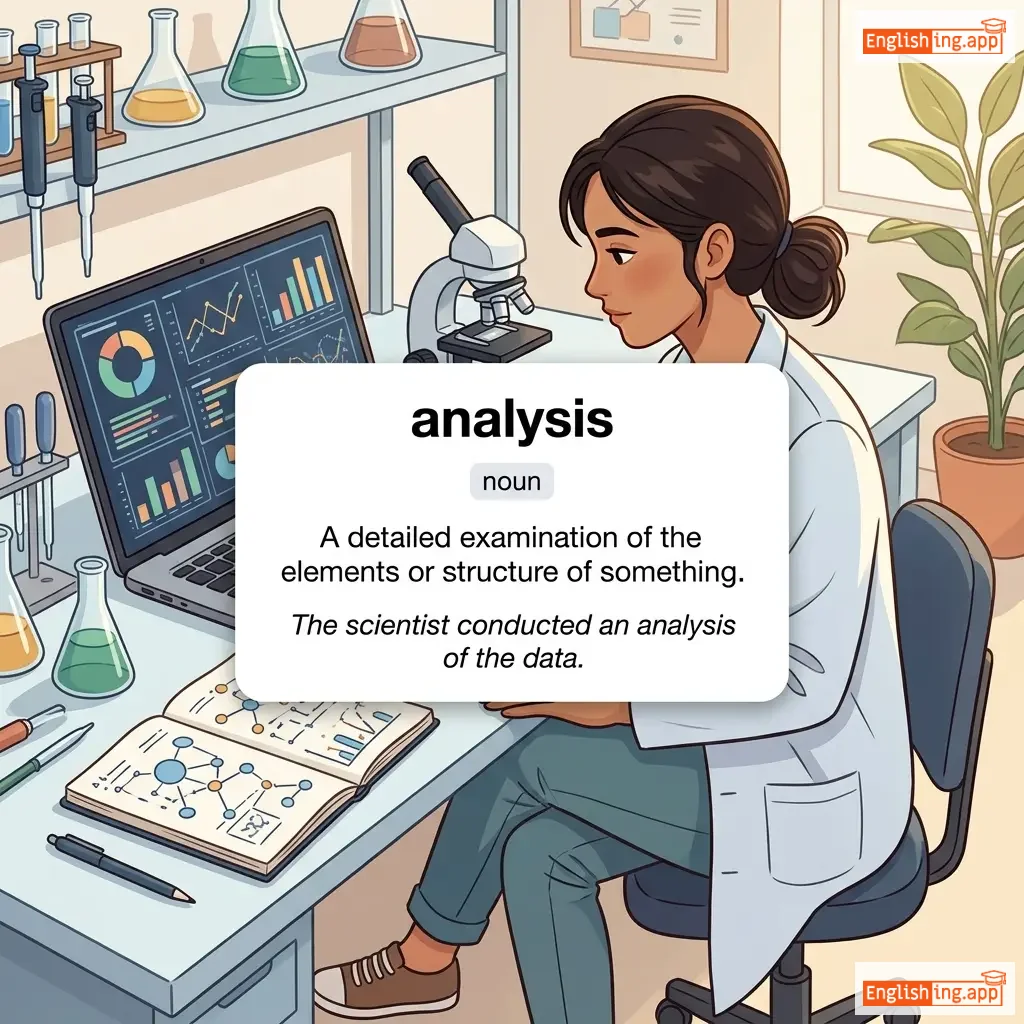
A detailed examination of the elements or structure of something.
••••••
|
The scientist conducted an analysis of the data. |
科学家对数据进行了分析。
Kēxuéjiā duì shùjù jìnxíngle fēnxī.
••••••
|
in-depth analysis |
a very detailed and thorough examination of something
••••••
|
深入分析
shēnrù fēnxī
••••••
|
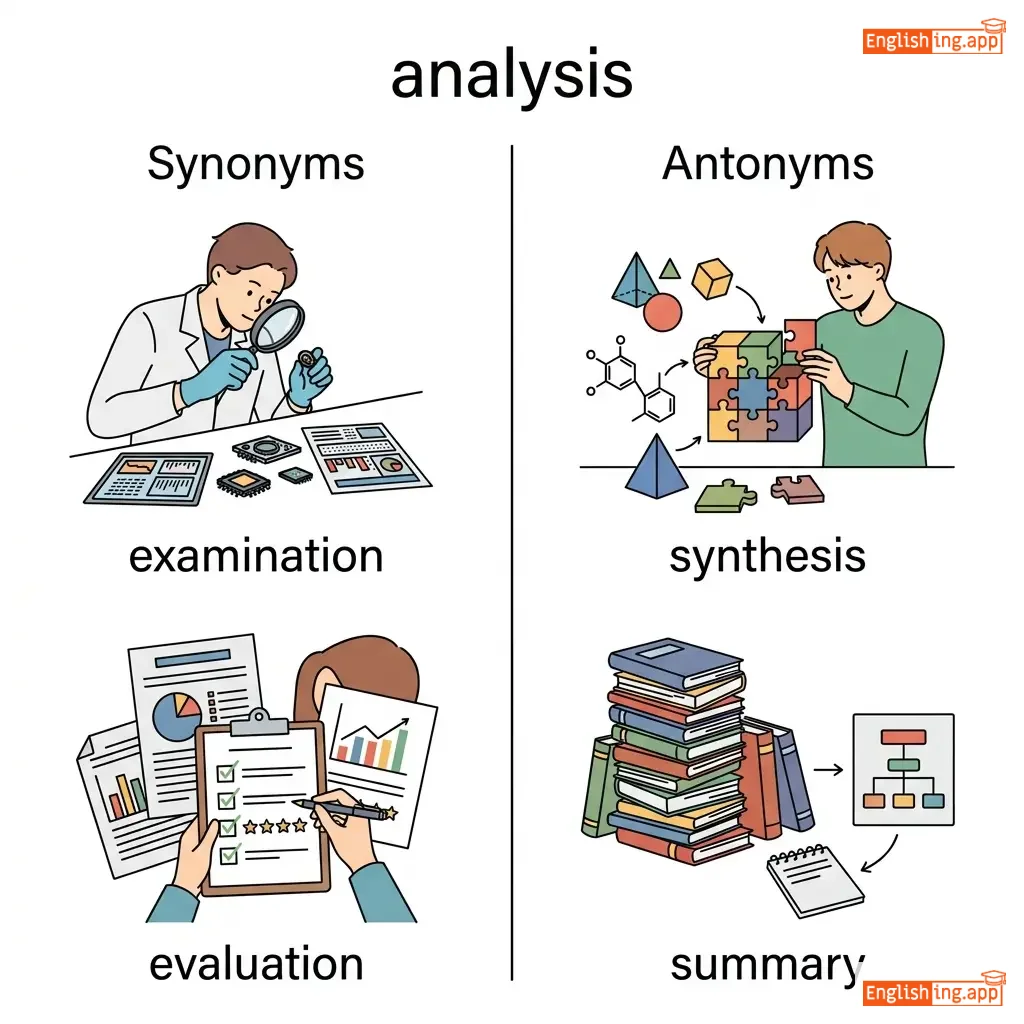
examination, evaluation, study, review, assessment
••••••
|
synthesis, summary
••••••
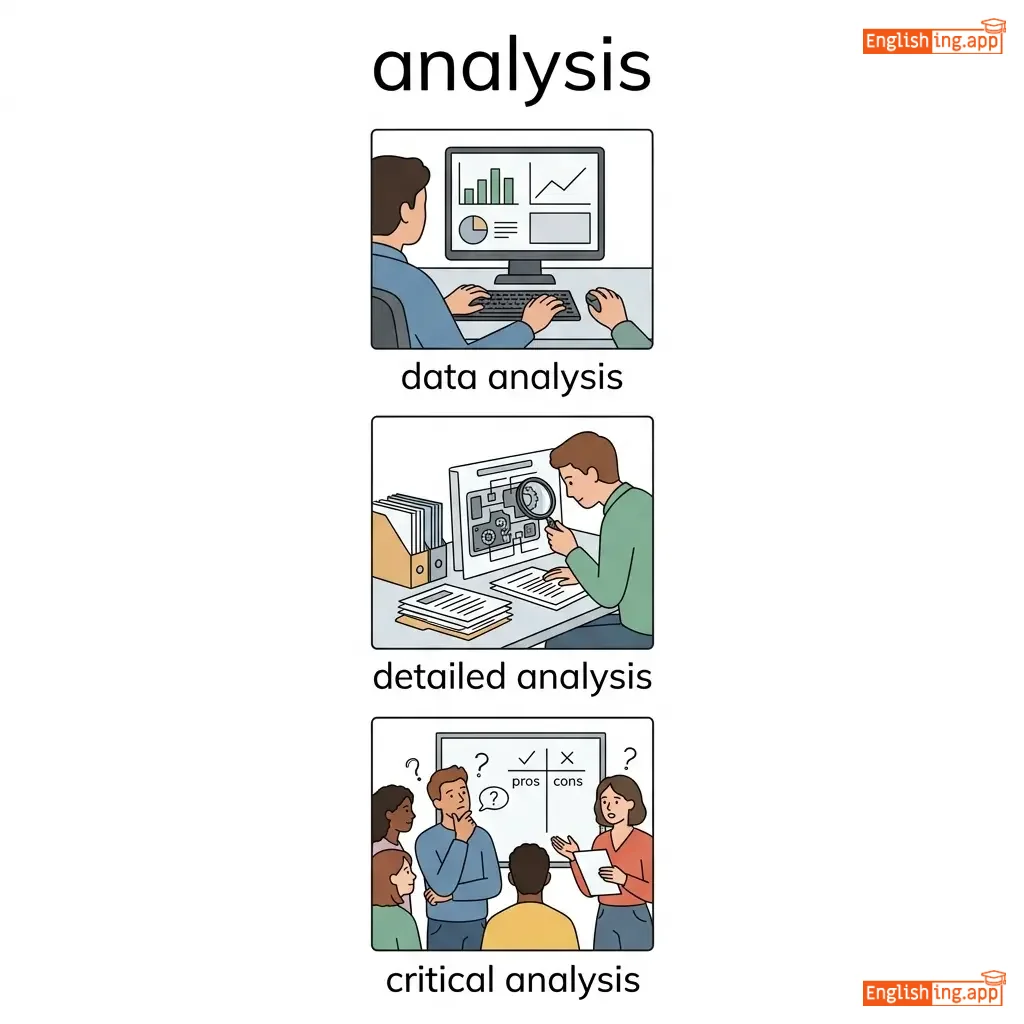
|
data analysis, detailed analysis, critical analysis, market analysis
••••••
|
Analysis 的意思是分析,通过深入的分析来理解数据。
••••••
|
|
#10402
💰
|
/əˈmaʊnt/
noun/verb
(āmǎnt)
••••••
|
- •••••• |
金额
jīn'é
••••••
|
amounted
āmǎnted
••••••
|
amounted
āmǎnted
••••••
|
amounts
āmǎnts
••••••
|
amounting
āmǎnting
••••••
|
a quantity of something, typically the total of a thing or things in number, size, value, or extent
••••••
|
The total amount of money is not enough.
总金额不够。
••••••
|
总金额不够。
Zǒng jīn'é bù gòu.
••••••
|
amount to nothing
amount to nothing
••••••
|
to have no significant result or value
••••••
|
一无所有
yī wú suǒ yǒu
••••••
|
quantity, sum, total, volume, measure
••••••
|
lack, zero, nothing
••••••
|
large amount, small amount, total amount
••••••
|
Amount 像是 '金额', 金钱的总额
••••••
|
|
#10403
👥
|
/əˈmʌŋ/
preposition
(阿蒙)
••••••
|
- •••••• |
在...之中
zài...zhī zhōng
••••••
|
- •••••• | - •••••• | - •••••• | - •••••• |
surrounded by; in the middle of a group
••••••
|
He was sitting among his friends. |
他坐在他的朋友们中间。
Tā zuò zài tā de péngyǒumen zhōngjiān.
••••••
|
- •••••• | - •••••• | - •••••• |
amid, amidst, between, surrounded by
••••••
|
outside, away from
••••••
|
among people, among friends, among the crowd
••••••
|
Among意味着在...之中,像坐在朋友们中间。
••••••
|
|
#10404
🇺🇸
|
/əˈmerɪkən/
noun/adjective
(美国人)
••••••
|
- •••••• |
美国人
meiguoren
••••••
|
- •••••• | - •••••• | - •••••• | - •••••• |
relating to the United States or its people
••••••
|
She is an American citizen. |
她是一个美国公民。
Ta shi yi ge meiguo gongmin.
••••••
|
- •••••• | - •••••• | - •••••• |
US, Yankee, North American
••••••
|
non-American, foreigner
••••••
|
American culture, American dream, American citizen
••••••
|
来自美国的人就是美国人
••••••
|
Vocabulary Quiz
Test your vocabulary by matching words with their translations or meanings.
Login to take the quiz
Comments (0)
Share your thoughts and join the discussion.
Join the discussion by logging in
Login to CommentNo comments yet
Be the first to share your thoughts!