




Swipe left or right, or use the buttons. Tap image to zoom.
例句翻译
单词
Lesson 320Lesson 320 - 遮罩切换
|
表情符号
|
单词 | Images | 翻译 | 过去时 | 过去分词 | 第三人称单数 | 动名词 | 含义 | 例句 | 例句翻译 | 示例表达 | 示例表达含义 | 示例表达翻译 | 同义词 | 反义词 | 搭配词 | 助记符 |
|---|---|---|---|---|---|---|---|---|---|---|---|---|---|---|---|---|---|
|
#9570
➡️
|
/ˈɛniweɪ/
adverb
(èniwēi)
••••••
|
- •••••• |
无论如何
wúlùn rúhé
••••••
|
- •••••• | - •••••• | - •••••• | - •••••• |
used to emphasize a statement or to return to a previous subject; regardless of what happened
••••••
|
I was tired, but I went to the meeting anyway. |
我很累,但我还是去了会议。
Wǒ hěn lèi, dàn wǒ háishì qùle huìyì.
••••••
|
anyway you slice it |
no matter how you look at it
••••••
|
无论如何
wúlùn rúhé
••••••
|
regardless, nevertheless, still, anyhow, though
••••••
|
because, therefore
••••••
|
but anyway, anyway you, anyway possible
••••••
|
无论如何,他会去 – 无论怎么做,结果一样。
••••••
|
|
#9571
🤞
|
/əˈʃʊr/
verb
(asshúr)
••••••
|
- •••••• |
保证
baozheng
••••••
|
assured
asshúrd
••••••
|
assured
asshúrd
••••••
|
assures
asshúrs
••••••
|
assuring
asshúring
••••••
|
to make someone feel certain or confident about something
••••••
|
He assured her that everything would be fine.
他向她保证一切都会好。
••••••
|
他向她保证一切都会好。
Ta xiang ta baozheng yiqie dou hui hao.
••••••
|
rest assured
请放心
••••••
|
to be confident or certain about something
••••••
|
放心
fangxin
••••••
|
guarantee, promise, affirm, convince, ensure
••••••
|
doubt, question
••••••
|
assure someone, assure success, assure quality
••••••
|
保证就是给人确信 - 老师说REST ASSURED考试很容易。
••••••
|
|
#9572
👥
|
/əˌsoʊsiˈeɪʃən/
noun
(Āsuòxīèshēn)
••••••
|
- •••••• |
协会
xiehui
••••••
|
- •••••• | - •••••• | - •••••• | - •••••• |
an organized group of people who have joined together for a common purpose
••••••
|
She is a member of the local teachers' association. |
她是当地教师协会的成员。
Ta shi dangdi jiaoshi xiehui de chengyuan.
••••••
|
guilt by association |
being blamed for the actions of others you are connected with
••••••
|
因关联而被定罪
Yin guanlian er bei dingzui
••••••
|
organization, society, alliance, group, union
••••••
|
individual, disconnection
••••••
|
professional association, trade association, close association
••••••
|
协会意味着一个组织或团体,比如足球协会,球员的团体。
••••••
|
|
#9573
🌍
|
/əˌsɪməˈleɪʃən/
noun
(āsīmìlèishēn)
••••••
|
|
同化
tónghuà
••••••
|
- •••••• | - •••••• | - •••••• | - •••••• |
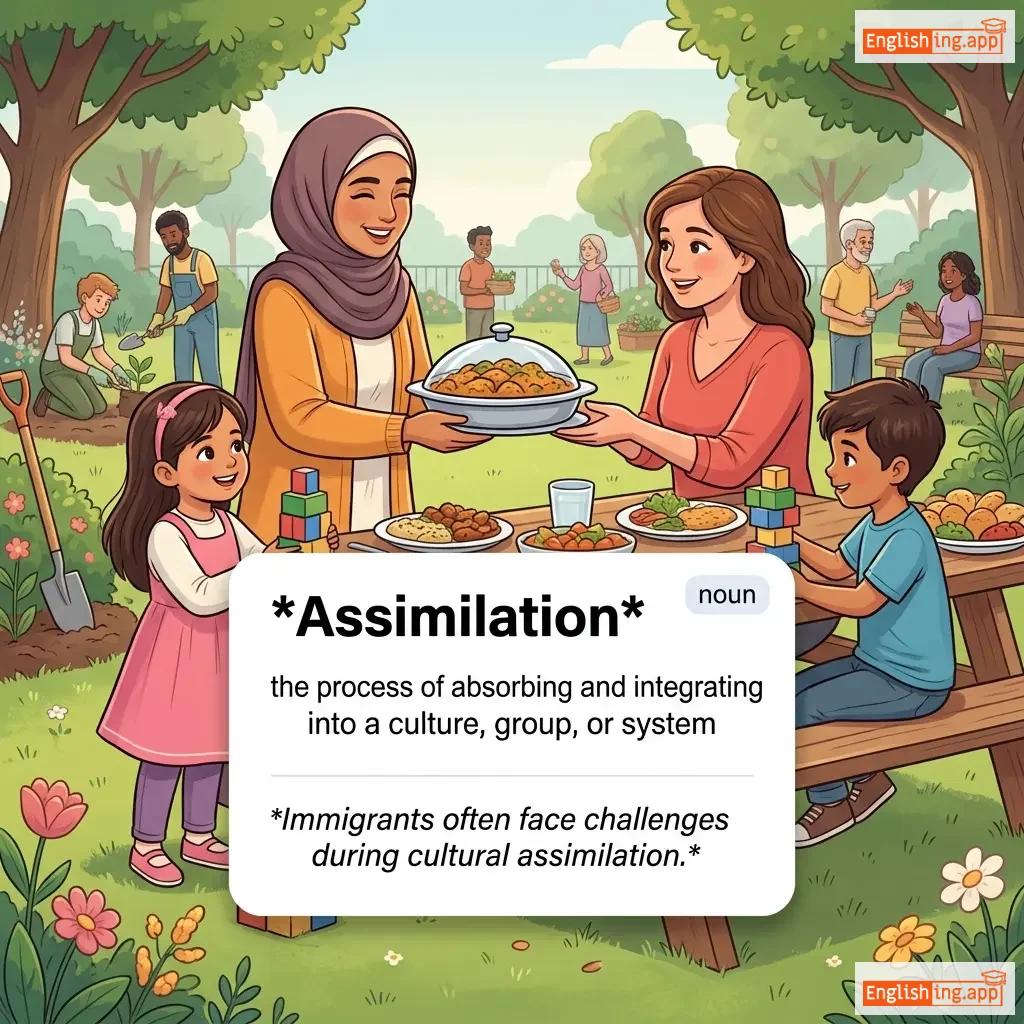
the process of absorbing and integrating into a culture, group, or system
••••••
|
Immigrants often face challenges during cultural assimilation. |
移民在文化同化过程中常常面临挑战。
Yímín zài wénhuà tónghuà guòchéng zhōng chángcháng miànlín tiǎozhàn.
••••••
|
- •••••• | - •••••• | - •••••• |
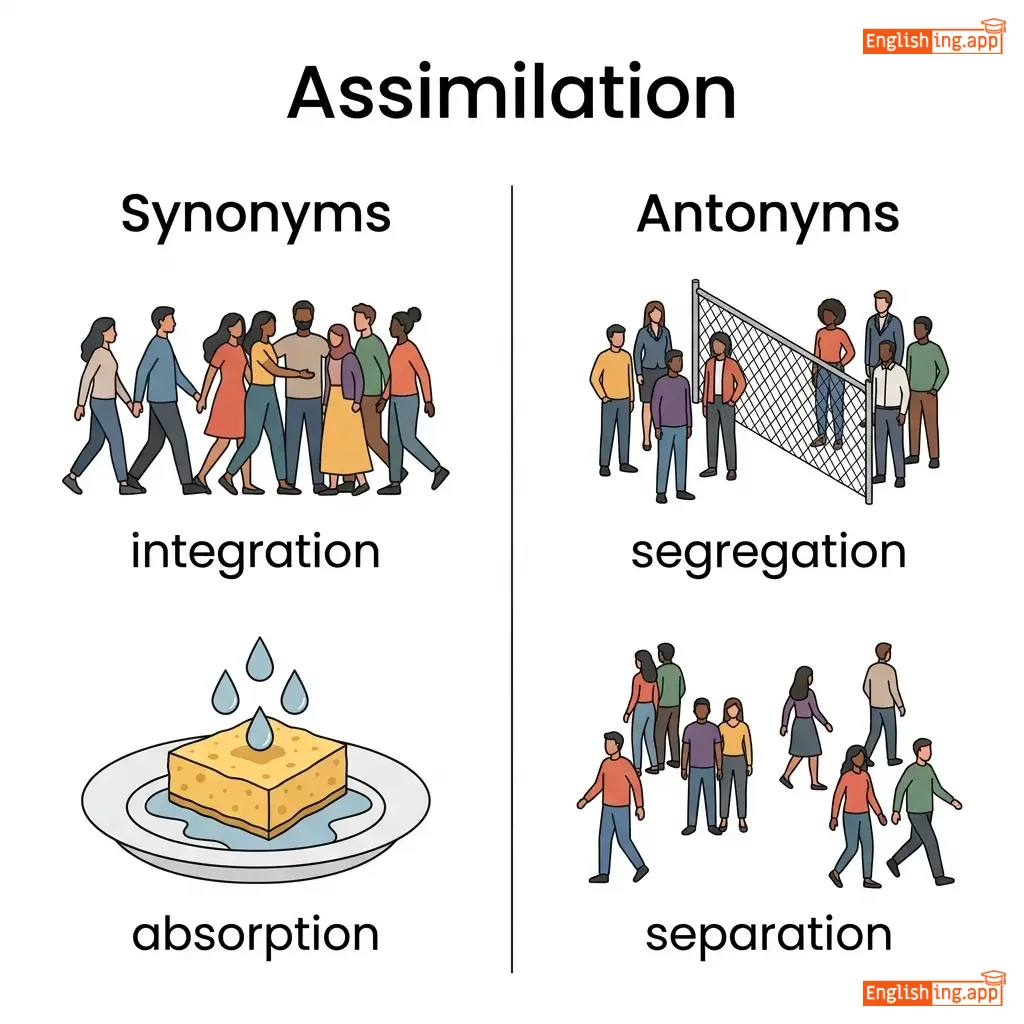
integration, absorption, incorporation, adaptation
••••••
|
segregation, separation
••••••
|
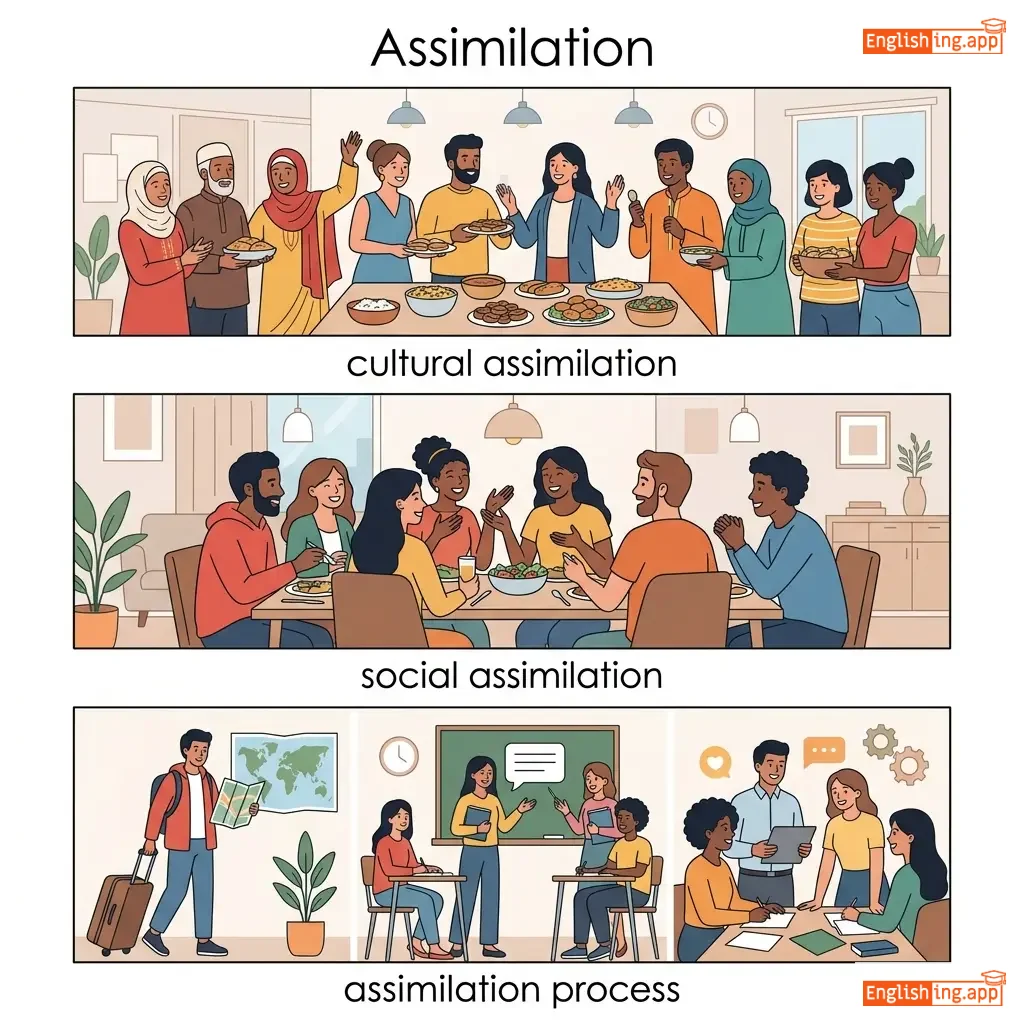
cultural assimilation, social assimilation, assimilation process
••••••
|
Assimilation = 同化 - 适应新文化的过程。
••••••
|
|
#9574
❓
|
/æsk/
verb
(ask)
••••••
|
- •••••• |
询问
xunwen
••••••
|
asked
asked
••••••
|
asked
asked
••••••
|
asks
asks
••••••
|
asking
asking
••••••
|
to request information or seek an answer
••••••
|
She asked him about his new job.
She asked him about his new job.
••••••
|
她问他关于新工作的事情。
Ta wen ta guanyu xin gongzuo de shiqing.
••••••
|
ask for trouble
ask for trouble
••••••
|
to behave in a way that is likely to cause problems
••••••
|
自找麻烦
zizhao mafan
••••••
|
inquire, request, question, demand, seek
••••••
|
answer, respond
••••••
|
ask a question, ask for help, ask politely
••••••
|
Ask 代表询问 - 就像在课堂上提出问题来获取答案。
••••••
|
|
#9575
⛰️
|
/əˈsɛnd/
verb
(阿森德)
••••••
|
|
上升
shàngshēng
••••••
|
ascended
阿森德德
••••••
|
ascended
阿森德德
••••••
|
ascends
阿森德斯
••••••
|
ascending
阿森丁
••••••
|
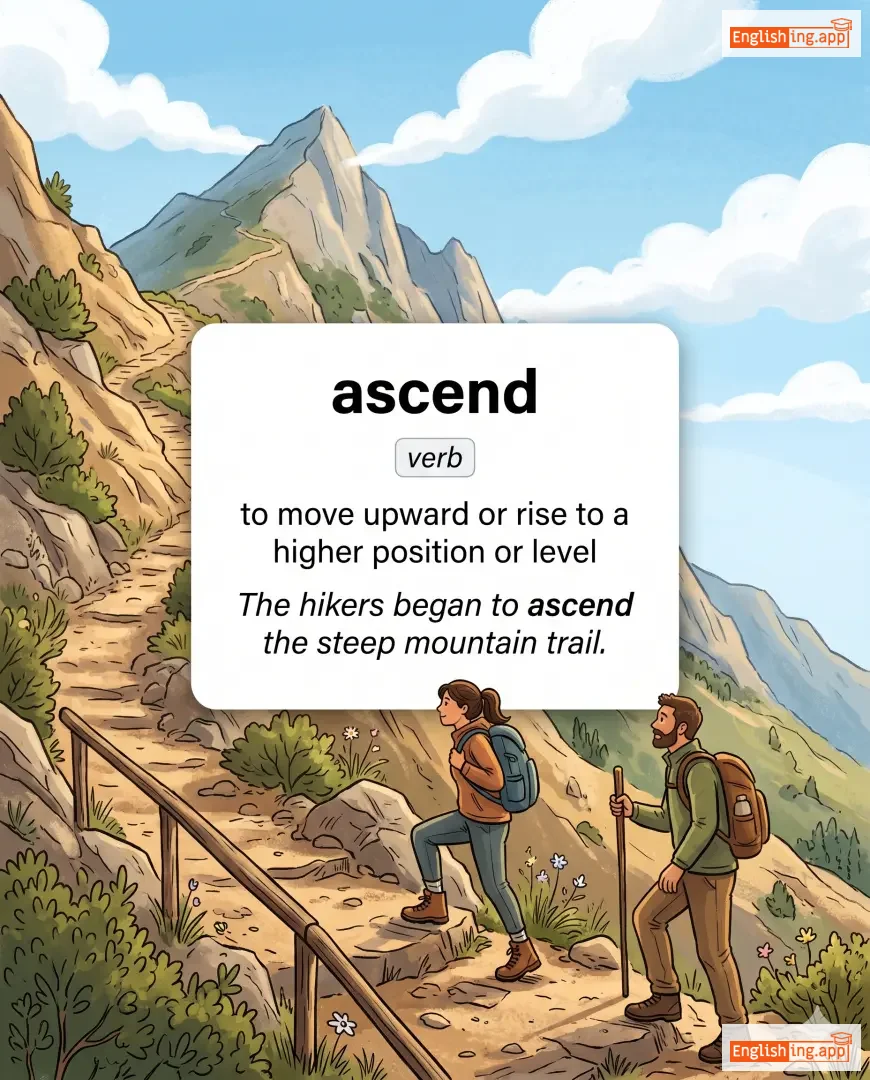
to move upward or rise to a higher position or level
••••••
|
The hikers began to ascend the steep mountain trail.
徒步旅行者开始攀登陡峭的山路。
••••••
|
徒步旅行者开始攀登陡峭的山路。
Túbù lǚxíng zhě kāishǐ pāndēng dǒuqiào de shānlù.
••••••
|
ascend to power
登上权力
••••••
|
to rise to a position of authority or leadership
••••••
|
登上权力
Dēng shàng quánlì
••••••
|
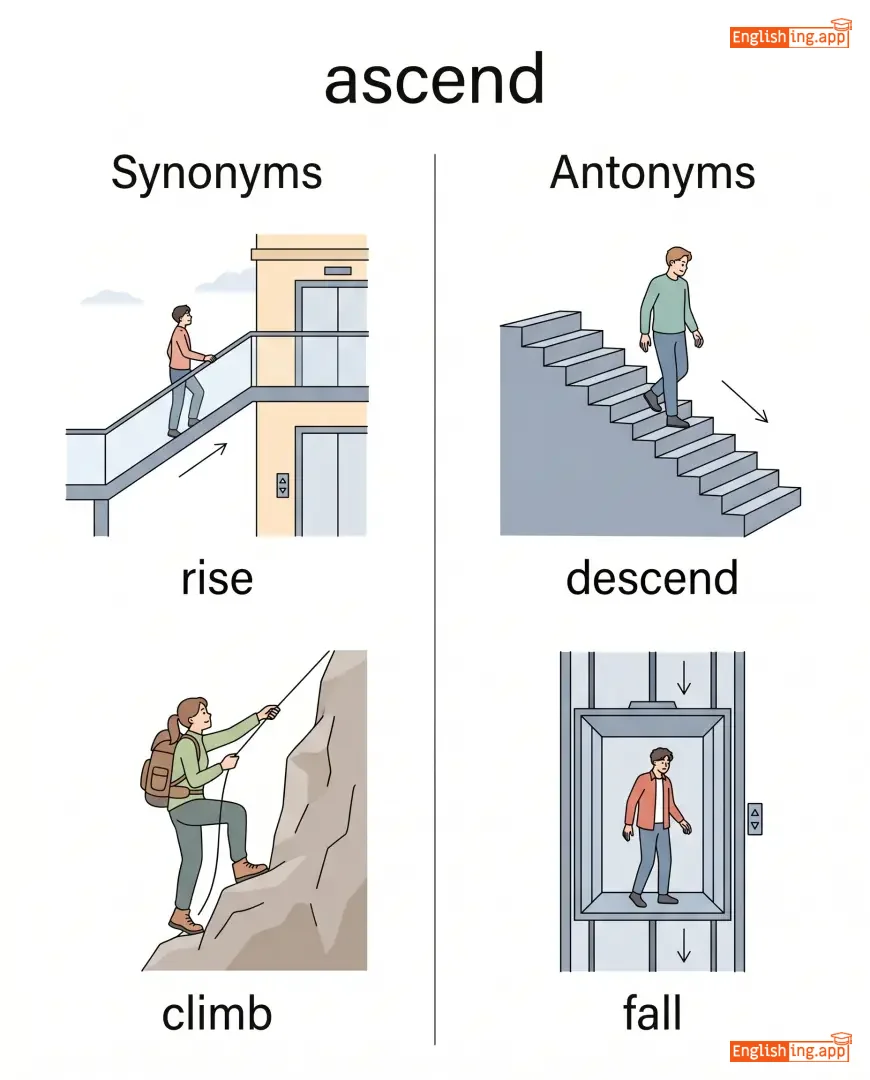
rise, climb, soar, mount, escalate
••••••
|
descend, fall, drop
••••••
|
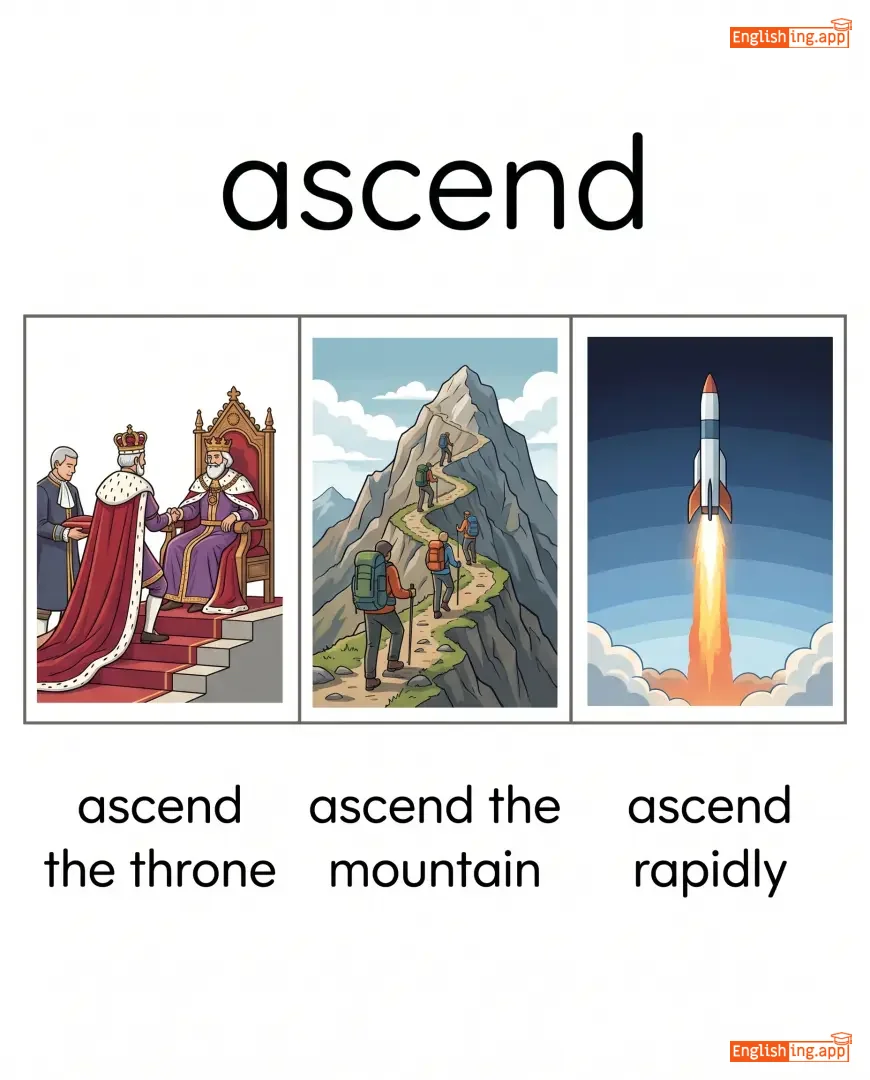
ascend the throne, ascend the mountain, ascend rapidly
••••••
|
Ascend意味着上升 - 想象飞机正在升空。
••••••
|
|
#9576
🗣️
|
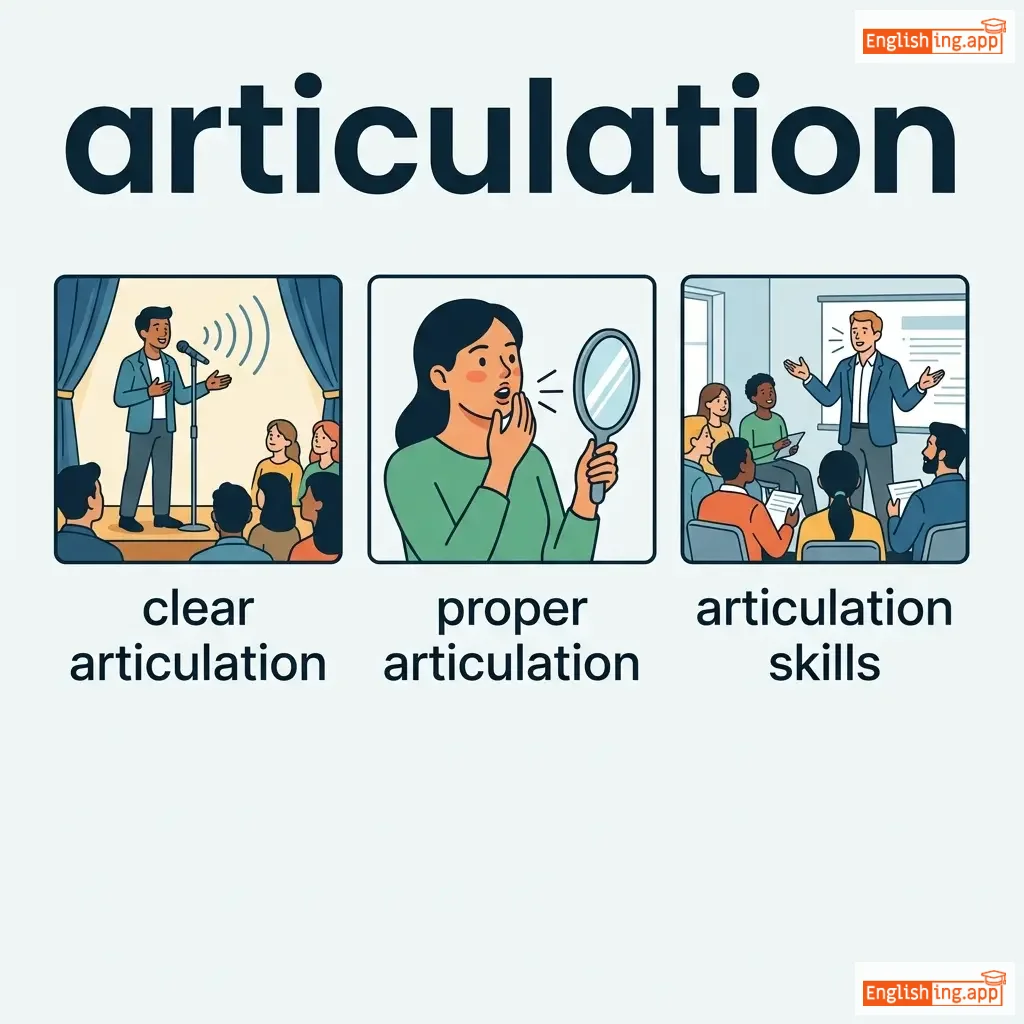
/ɑːrˌtɪkjʊˈleɪʃən/
noun
(发音)
••••••
|
|
清晰的发音
qingxi de fayin
••••••
|
- •••••• | - •••••• | - •••••• | - •••••• |
the act of expressing something clearly in speech or the way in which words are pronounced
••••••
|
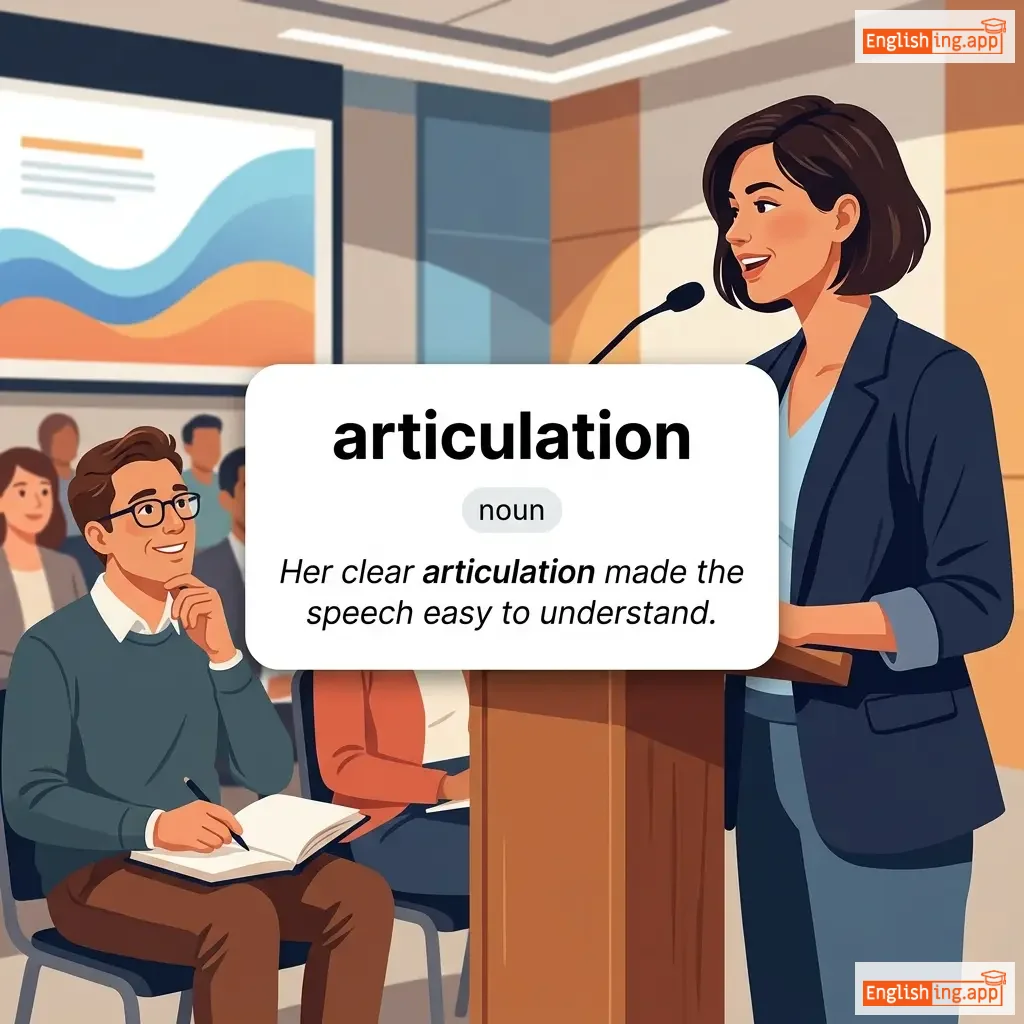
Her clear articulation made the speech easy to understand.
她清晰的发音让演讲易于理解。
••••••
|
她清晰的发音让演讲易于理解。
Ta qingxi de fayin rang yanjiang yiyu lijie.
••••••
|
- •••••• | - •••••• | - •••••• |
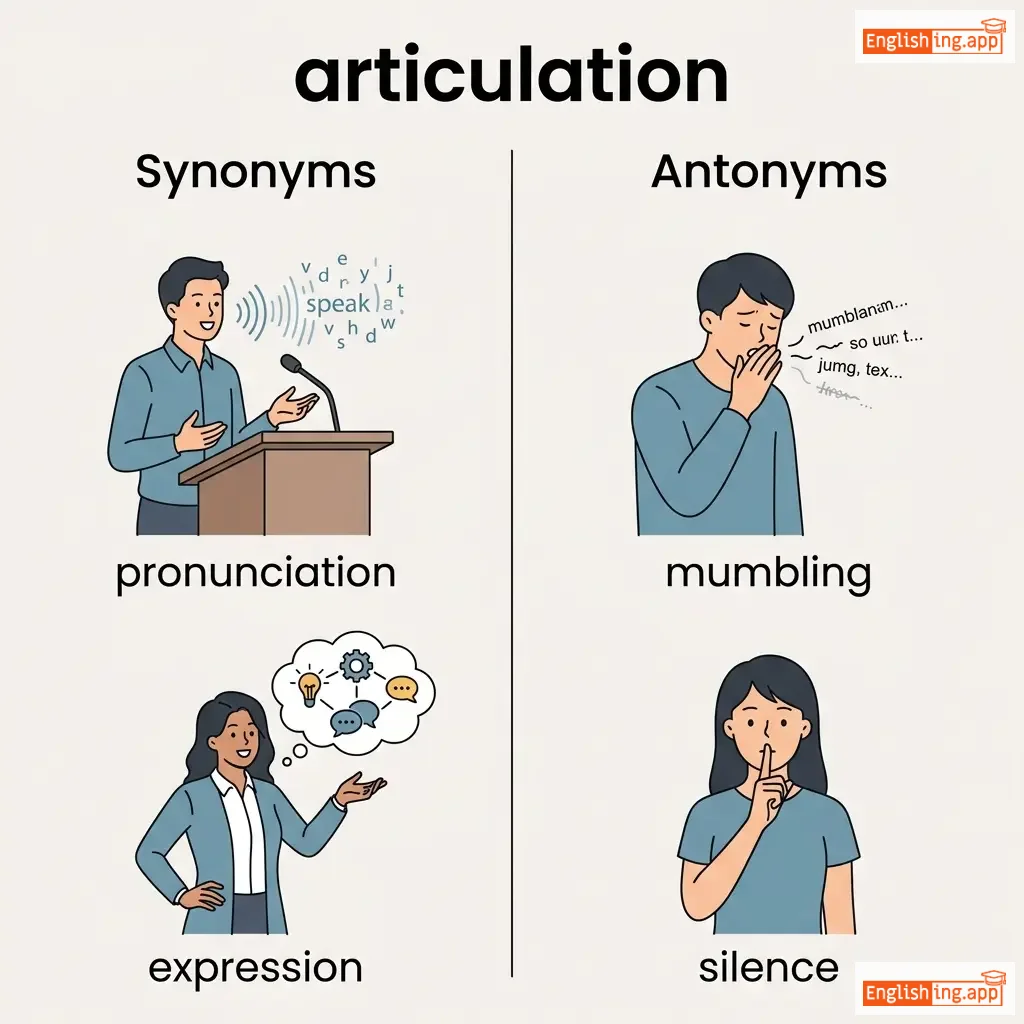
pronunciation, expression, enunciation, clarity, diction
••••••
|
mumbling, silence, vagueness
••••••
|
clear articulation, proper articulation, articulation skills, articulation disorder
••••••
|
发音就是清晰地说话,就像艺术家一样。
••••••
|
|
#9577
🛬
|
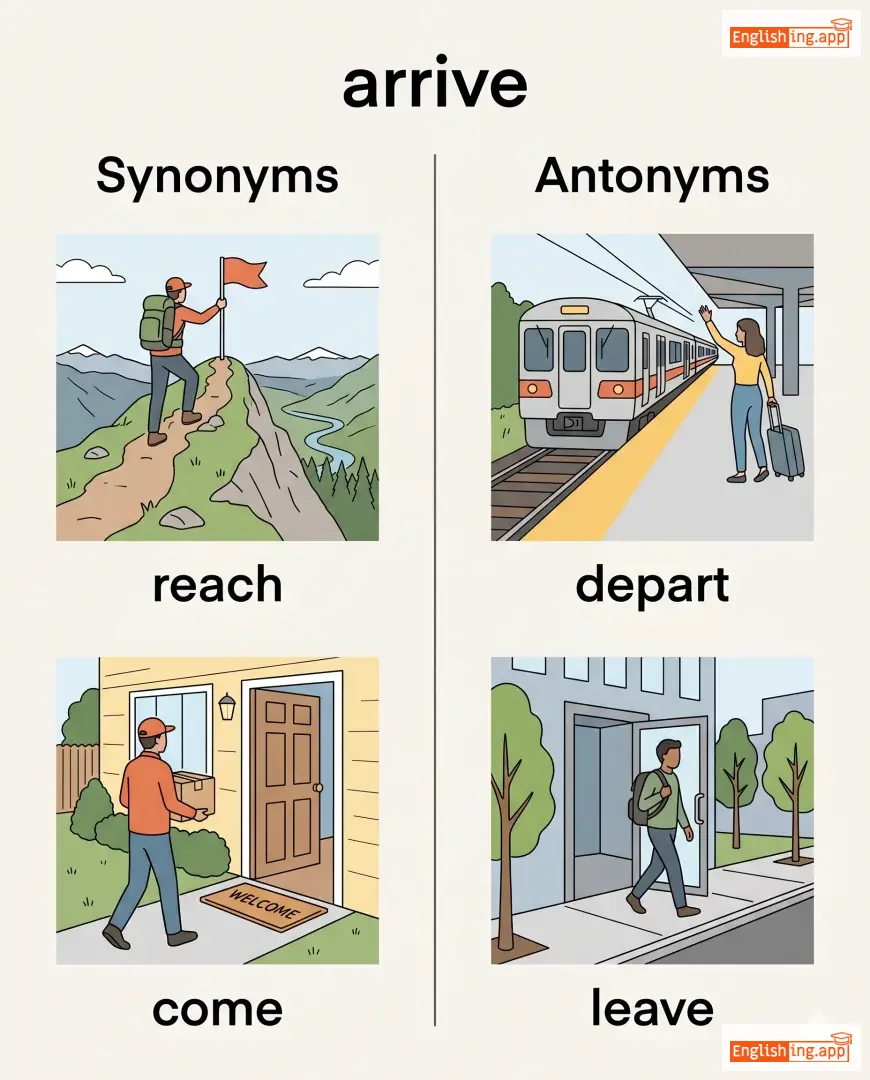
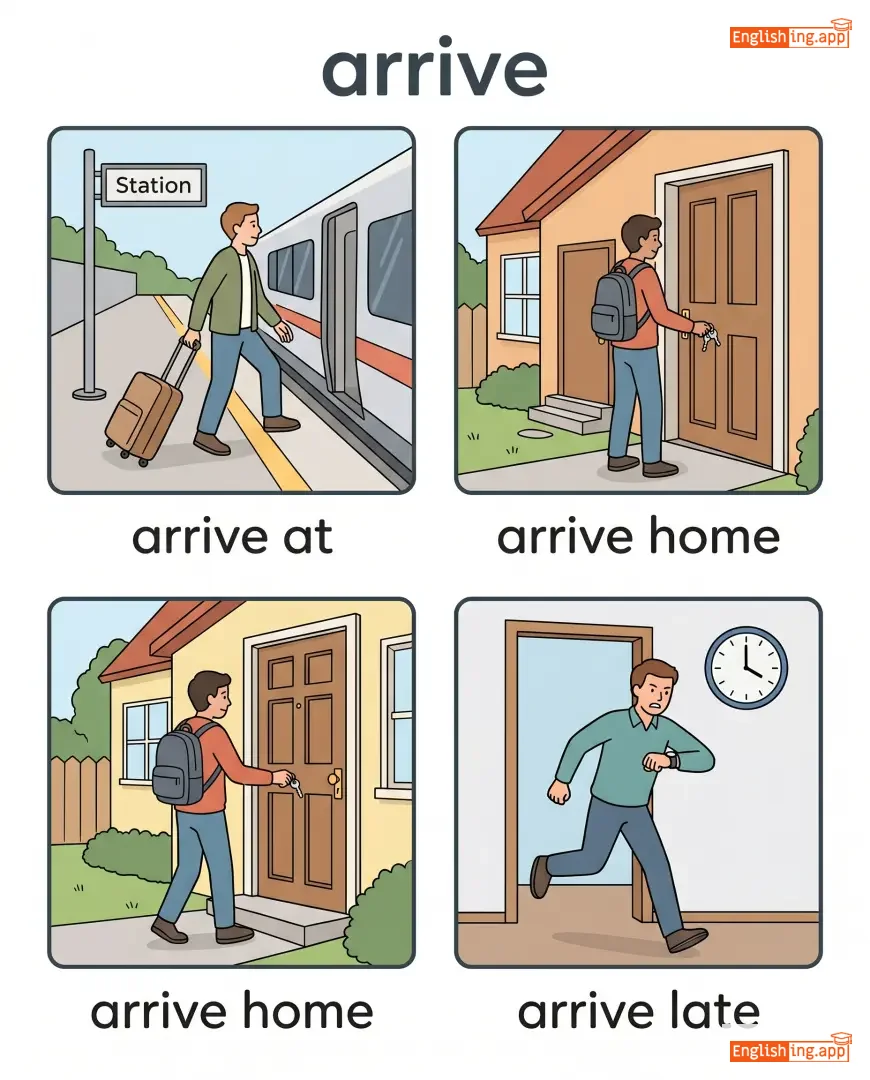
/əˈraɪv/
verb
(āráiv)
••••••
|
|
到达
dàodá
••••••
|
arrived
āráivd
••••••
|
arrived
āráivd
••••••
|
arrives
āráivs
••••••
|
arriving
āráiɪng
••••••
|
to reach a place, especially at the end of a journey
••••••
|
She will arrive at the airport in the evening.
她将在晚上到达机场。
••••••
|
她将在晚上到达机场。
Tā jiāng zài wǎnshàng dào dá jīchǎng.
••••••
|
arrive at a decision
做出决定
••••••
|
to reach a conclusion after consideration
••••••
|
做出决定
zuòchū juédìng
••••••
|
reach, come, appear, show up, land
••••••
|
depart, leave, go
••••••
|
arrive at, arrive home, arrive late, arrive early
••••••
|
到达就像飞机到达机场。
••••••
|
|
#9578
💪
|
/ɑːrmz/
noun
(阿姆斯)
••••••
|
- •••••• |
武器 / 手臂
wǔqì / shǒubì
••••••
|
- •••••• | - •••••• | - •••••• | - •••••• |
weapons and ammunition; or the upper limbs of the human body
••••••
|
The country decided to reduce its stock of arms. |
该国决定减少其武器库存。
Gai guo jueding jianshao qi wuqi kucun.
••••••
|
take up arms |
to prepare to fight with weapons
••••••
|
拿起武器
naqi wuqi
••••••
|
weapons, guns, firearms, artillery, munitions
••••••
|
peace, disarmament
••••••
|
arms control, arms race, arms dealer, bear arms
••••••
|
Arms 既可以是手臂,也可以是武器。用你的手臂拿起武器。
••••••
|
|
#9579
🌅
|
/əˈraɪz/
verb
(阿瑞兹)
••••••
|
- •••••• |
出现
chūxiàn
••••••
|
arose
阿罗斯
••••••
|
arisen
阿里森
••••••
|
arises
阿瑞泽斯
••••••
|
arising
阿瑞辛
••••••
|
to begin to exist or to happen
••••••
|
Problems may arise if you don't plan ahead.
如果你没有提前计划,问题可能会出现。
••••••
|
如果你没有提前计划,问题可能会出现。
Rúguǒ nǐ méiyǒu tíqián jìhuà, wèntí kěnéng huì chūxiàn.
••••••
|
arise from
arise from
••••••
|
to result from or be caused by
••••••
|
源自
yuán zì
••••••
|
emerge, occur, appear, happen, develop
••••••
|
cease, end, stop
••••••
|
arise from, situation arises, issue arises, opportunity arises
••••••
|
当太阳升起时,白天开始。
••••••
|
|
#9580
🏛️
|
/ɑːrtʃ-/
prefix
(arch-)
••••••
|
- •••••• |
主要的 / 极端的
zhuyao de / jiduande
••••••
|
- •••••• | - •••••• | - •••••• | - •••••• |
a prefix meaning chief, principal, or extreme in rank, importance, or degree
••••••
|
The word 'archenemy' uses the prefix 'arch-' to mean the main enemy. |
'Archenemy' 一词使用了前缀 'arch-' 来表示主要的敌人。
'Archenemy' yi ci shiyong le qianzui 'arch-' lai biaoshi zhuyao de di ren.
••••••
|
- •••••• | - •••••• | - •••••• |
chief, principal, main, primary, supreme
••••••
|
minor, secondary, subordinate
••••••
|
archenemy, archrival, archbishop, archduke
••••••
|
'Arch' 表示主要的,就像大主教一样,意味着主要的主教。
••••••
|
|
#9581
✅
|
/əˈpruːv/
verb
(apruv)
••••••
|
- •••••• |
批准
pīzhǔn
••••••
|
approved
apruvd
••••••
|
approved
apruvd
••••••
|
approves
apruvs
••••••
|
approving
apruving
••••••
|
to officially accept, agree to, or allow something
••••••
|
The manager approved the budget for next year.
经理批准了明年的预算。
••••••
|
经理批准了明年的预算。
Jīnglǐ pīzhǔnle míngnián de yùsuàn.
••••••
|
approve of
批准
••••••
|
to think well of something or someone
••••••
|
批准
pīzhǔn
••••••
|
authorize, endorse, accept, permit, sanction
••••••
|
reject, deny, disapprove
••••••
|
approve plan, approve application, approve budget
••••••
|
批准 = ✅ 批准 – 经理批准了预算
••••••
|
|
#9582
📌
|
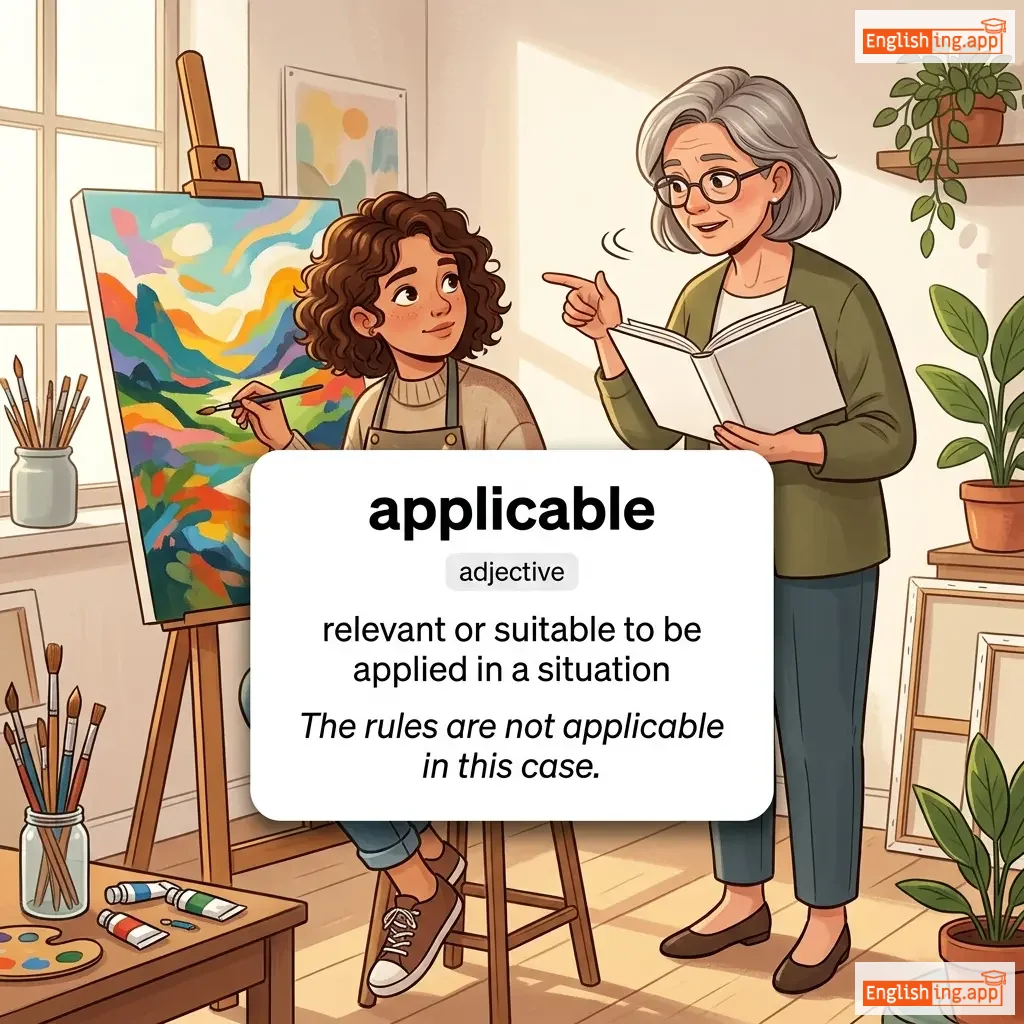
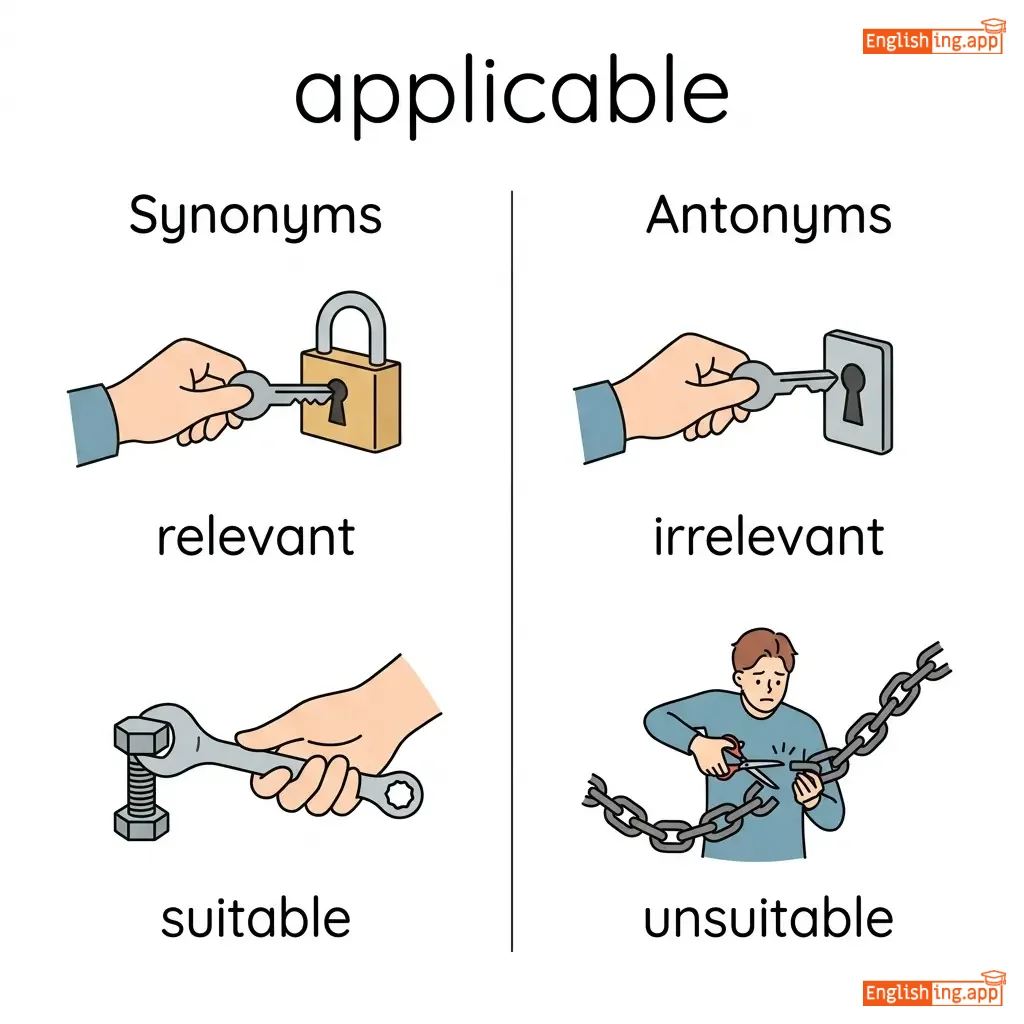
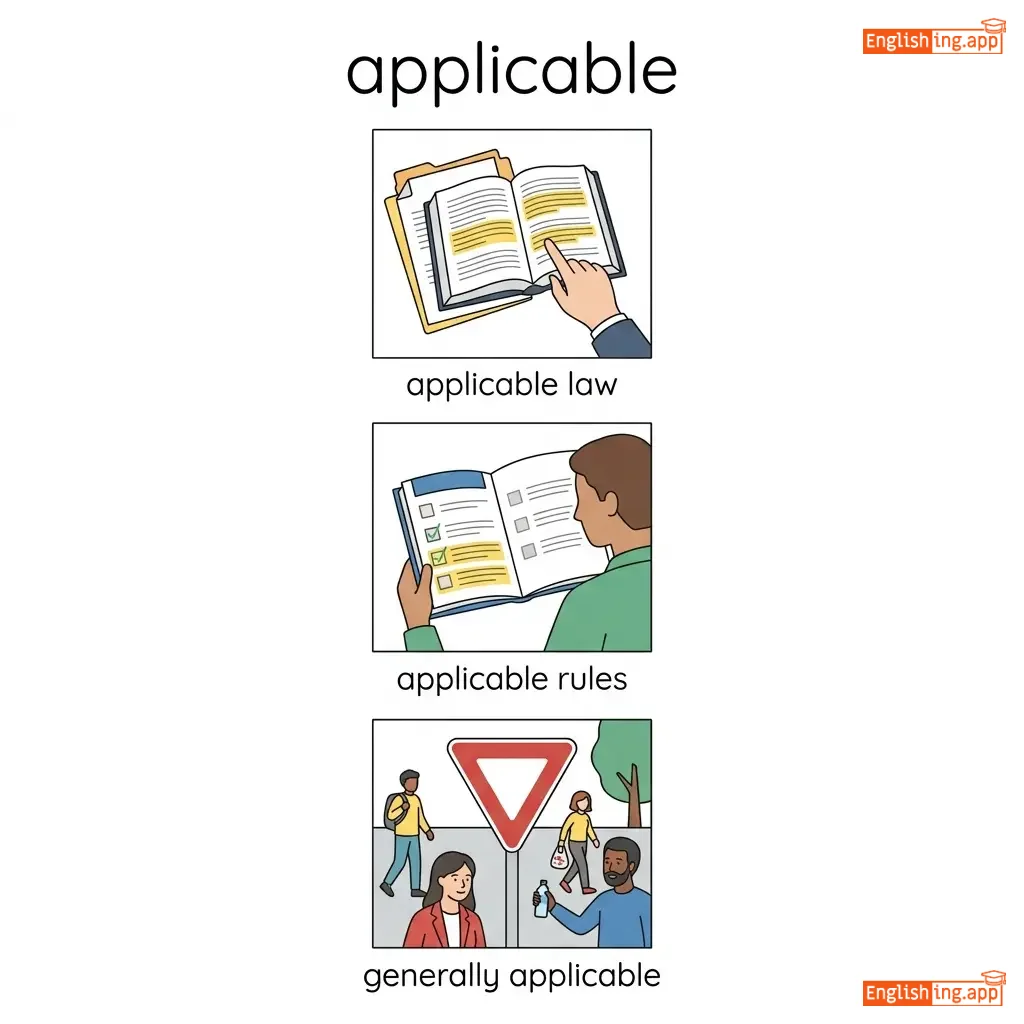
/ˈæplɪkəbl/
adjective
(aplikabl)
••••••
|
|
适用的
shiyong de
••••••
|
- •••••• | - •••••• | - •••••• | - •••••• |
relevant or suitable to be applied in a situation
••••••
|
The rules are not applicable in this case. |
在这种情况下规则不适用。
Zai zhezhong qingkuang xia guize bu shiyong.
••••••
|
- •••••• | - •••••• | - •••••• |
relevant, suitable, appropriate, pertinent, fitting
••••••
|
irrelevant, unsuitable, inappropriate
••••••
|
applicable law, applicable rules, generally applicable
••••••
|
Applicable意味着可以应用的,即适用的。
••••••
|
|
#9583
🍽️
|
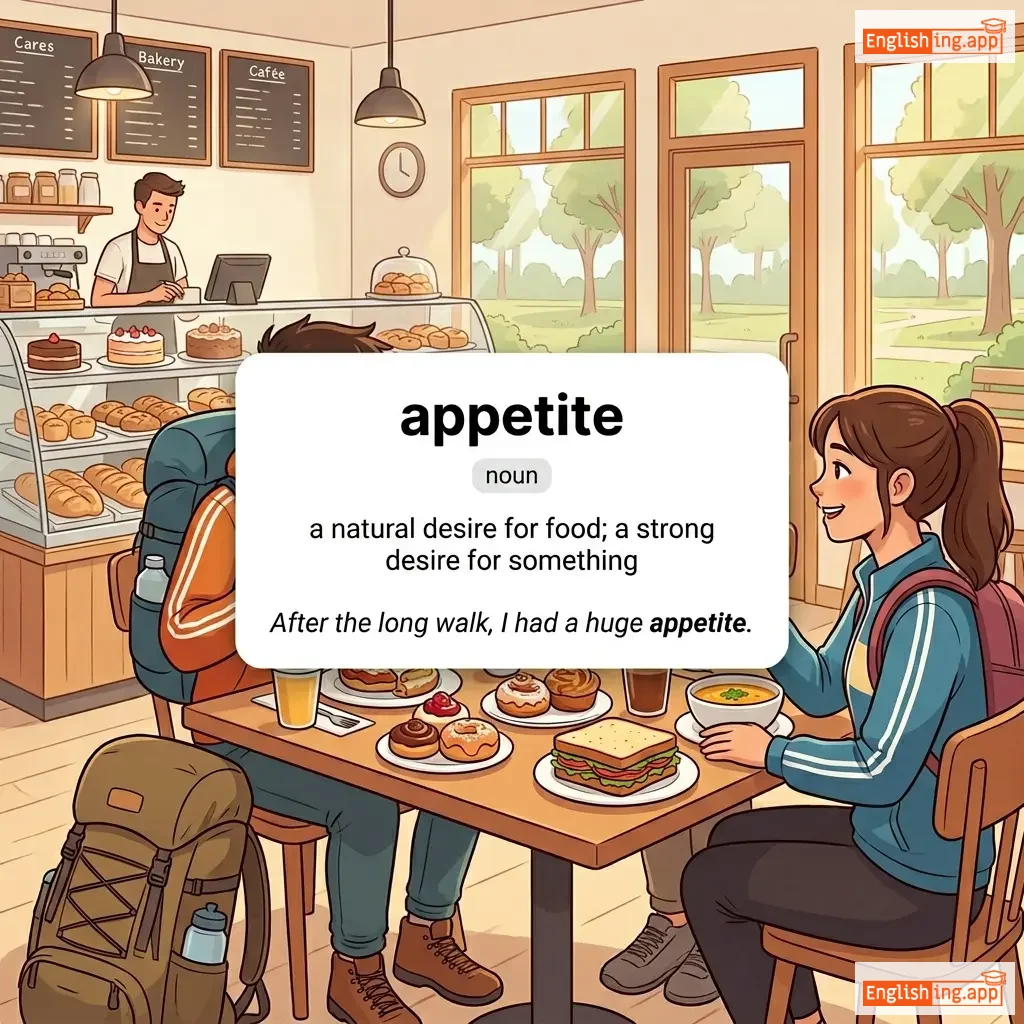
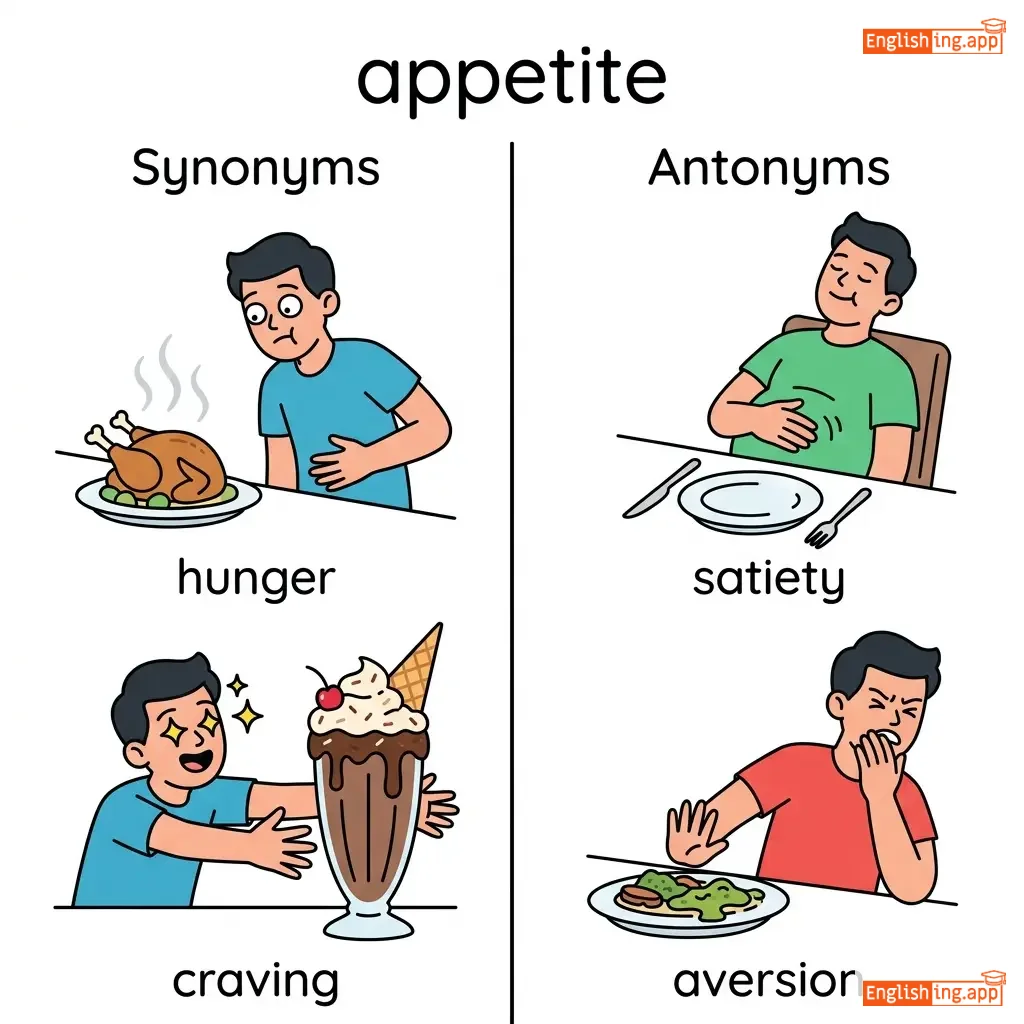
/ˈæpɪtaɪt/
noun
(阿佩塔特)
••••••
|
|
食欲
shí yù
••••••
|
- •••••• | - •••••• | - •••••• | - •••••• |
a natural desire for food; a strong desire for something
••••••
|
After the long walk, I had a huge appetite. |
长时间散步后,我感到非常饿。
Cháng shíjiān sànbù hòu, wǒ gǎndào fēicháng è.
••••••
|
whet the appetite |
to stimulate interest or desire
••••••
|
激起食欲
jī qǐ shí yù
••••••
|
hunger, craving, desire, urge, longing
••••••
|
satiety, aversion
••••••
|
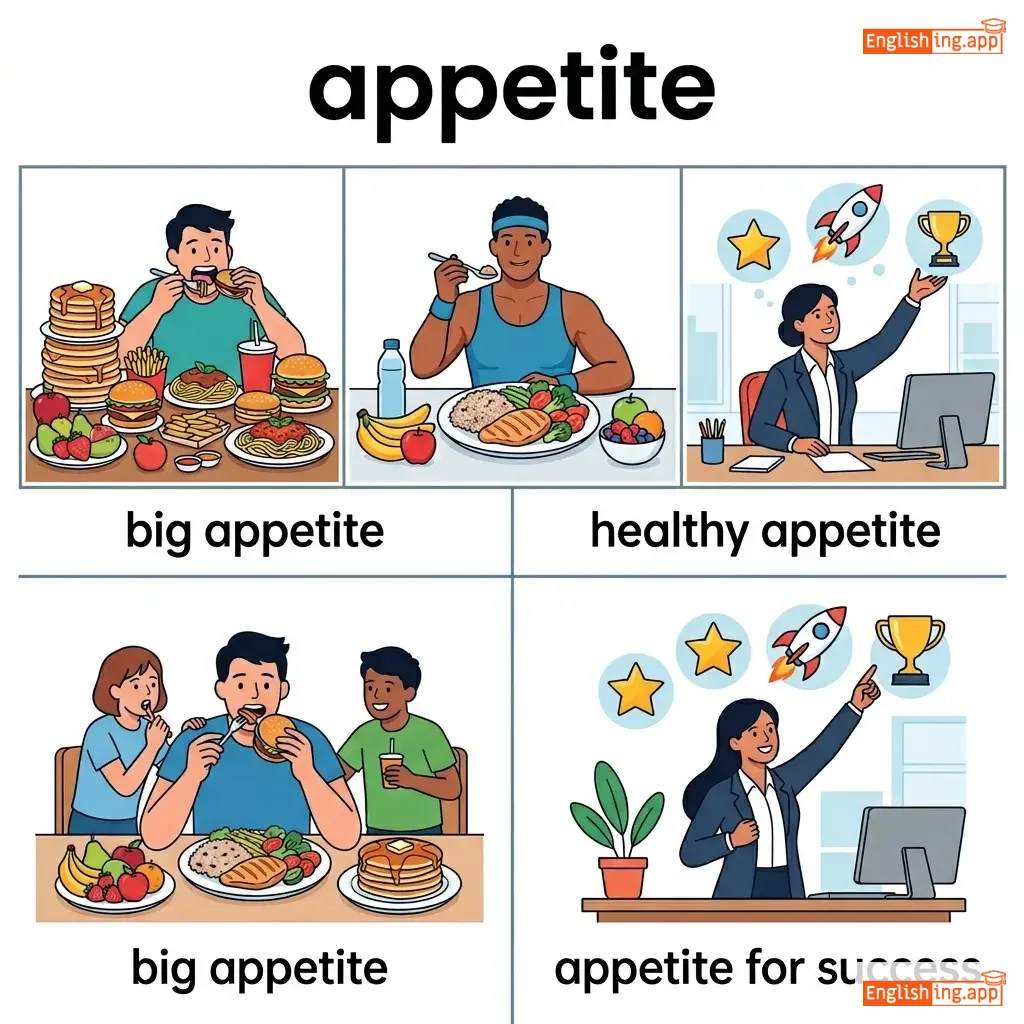
big appetite, healthy appetite, appetite for success
••••••
|
Appetite 意味着食欲 – 食欲意味着对食物的强烈渴望。
••••••
|
|
#9584
👀
|
/əˈpɪə/
verb
(á-pí-ér)
••••••
|
- •••••• |
出现
chūxiàn
••••••
|
appeared
á-pí-érd
••••••
|
appeared
á-pí-érd
••••••
|
appears
á-pí-érs
••••••
|
appearing
á-pí-éríng
••••••
|
to become visible or come into sight; to seem
••••••
|
She appeared suddenly at the door.
她突然出现在门口。
••••••
|
她突然出现在门口。
Tā túrán chūxiàn zài ménkǒu.
••••••
|
appear out of thin air
从空气中出现
••••••
|
to emerge suddenly and unexpectedly
••••••
|
凭空出现
píngkōng chūxiàn
••••••
|
emerge, show, arise, surface, seem
••••••
|
disappear, vanish, hide
••••••
|
appear suddenly, appear in court, appear likely
••••••
|
Chūxiàn: 就像突然从门口出现一样。
••••••
|
|
#9585
🏃
|
/ˈæktɪv/
adjective
(积极)
••••••
|
|
积极的
jī jí de
••••••
|
- •••••• | - •••••• | - •••••• | - •••••• |
Engaging or ready to engage in physically energetic pursuits; taking action rather than being passive.
••••••
|
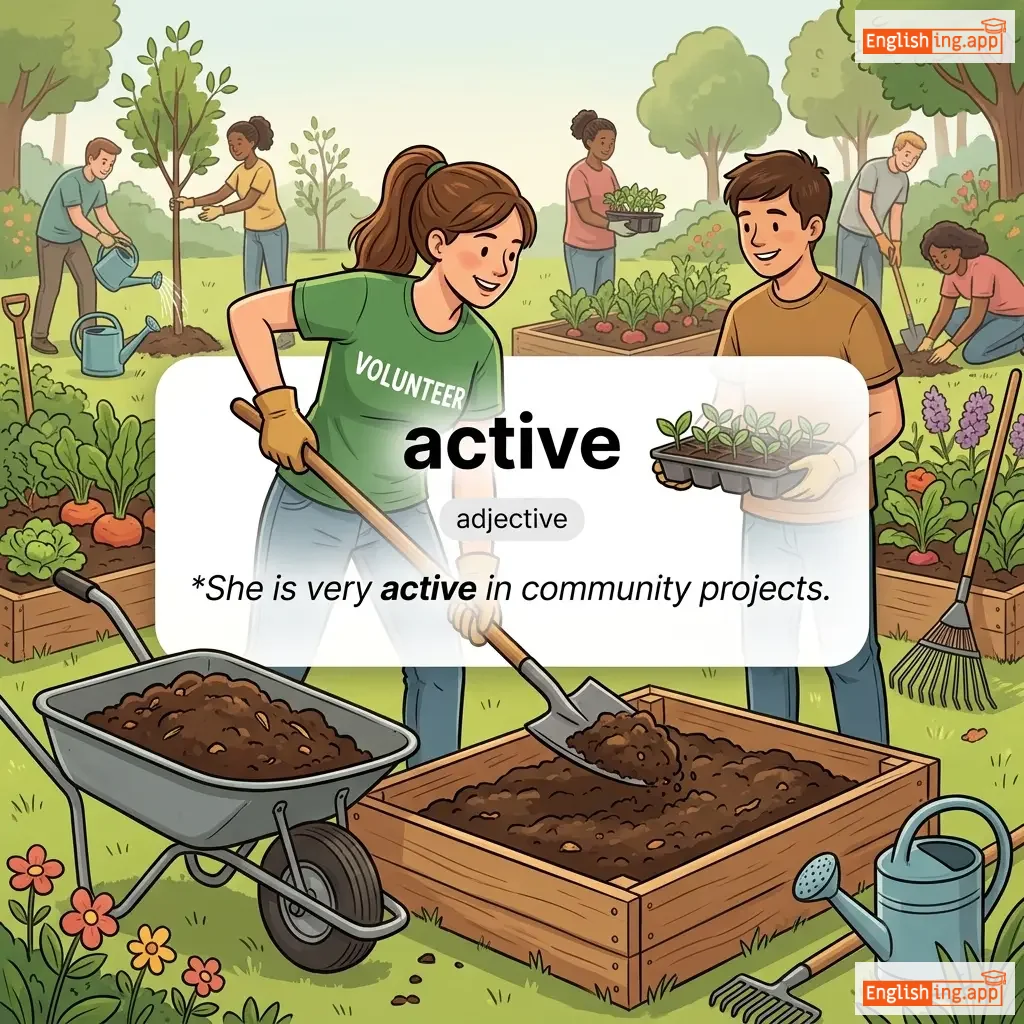
She is very active in community projects. |
她在社区项目中非常积极。
Tā zài shèqū xiàngmù zhōng fēicháng jījí.
••••••
|
active duty |
A period of full-time military service.
••••••
|
服役期间
fúyì qījiān
••••••
|
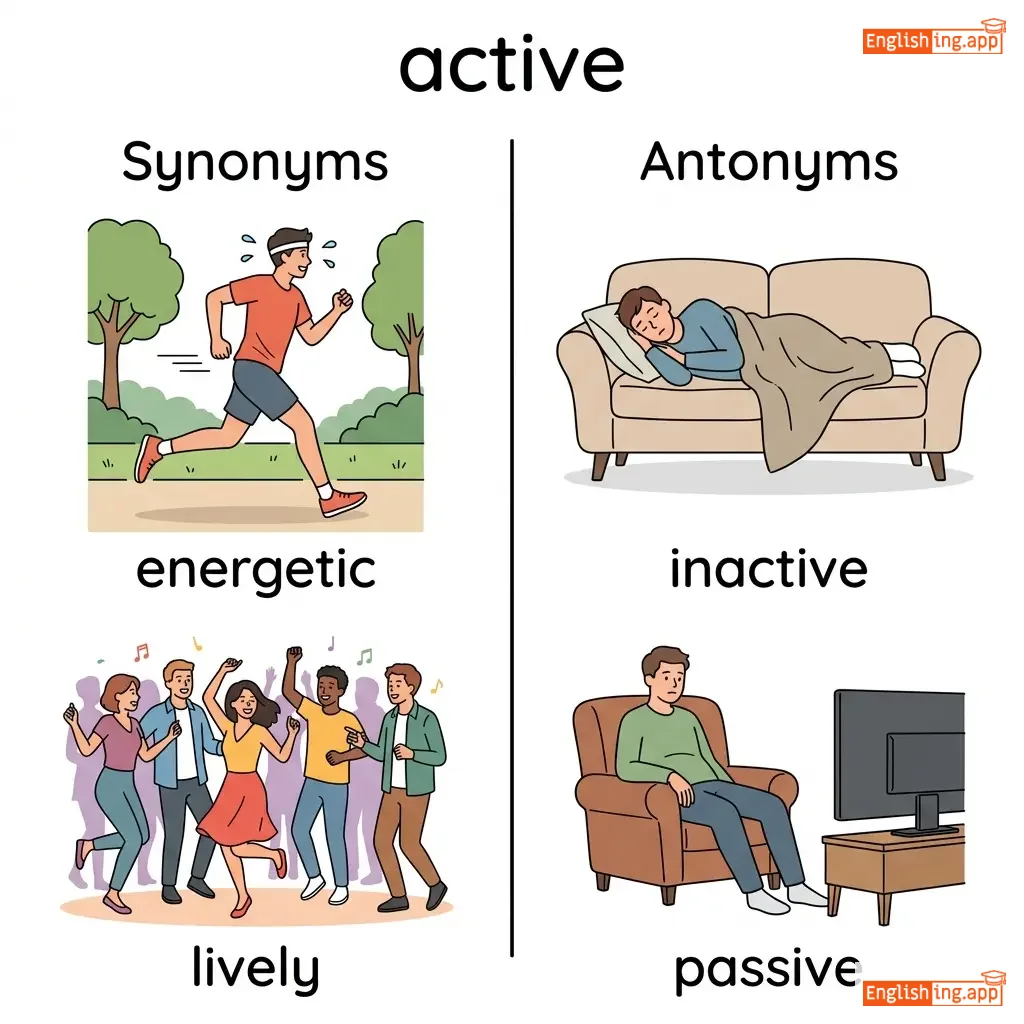
energetic, lively, dynamic, vigorous, busy
••••••
|
inactive, passive, idle
••••••
|
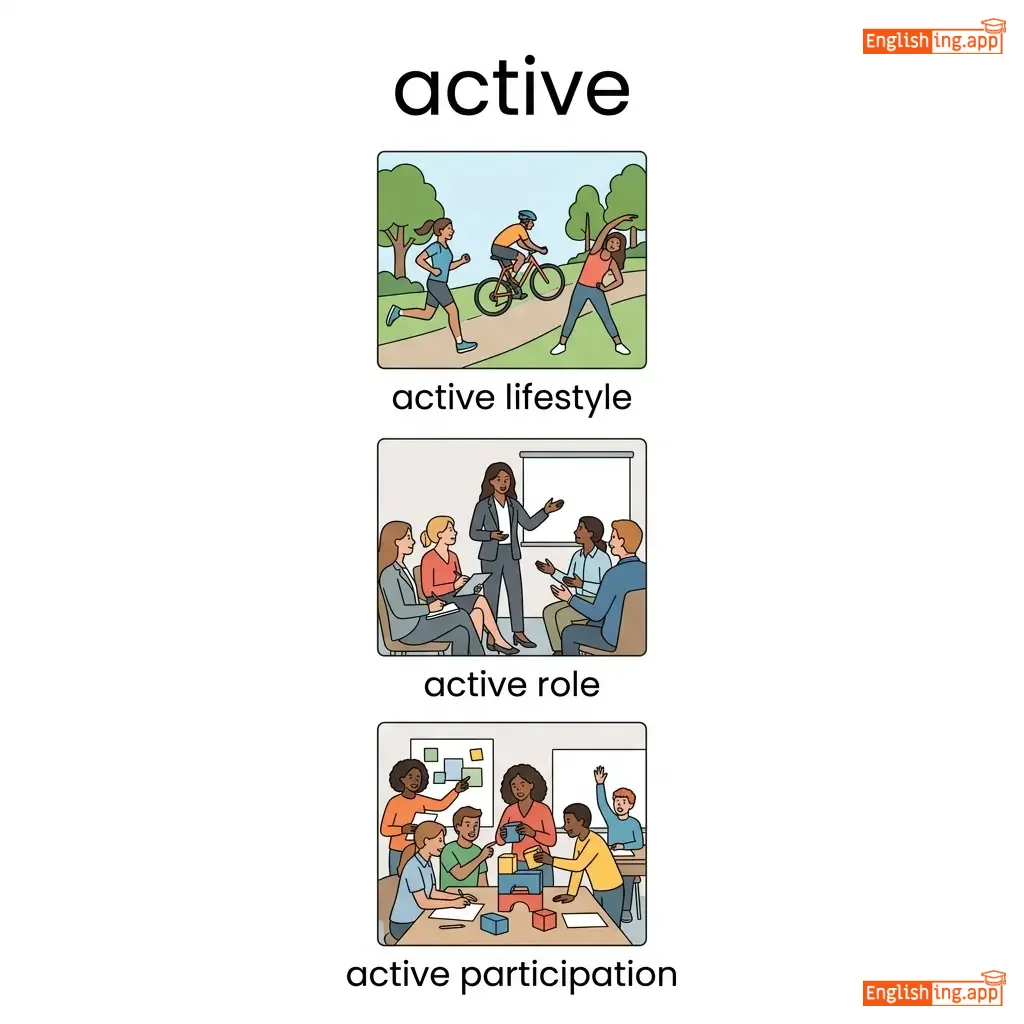
active lifestyle, active role, active participation, active engagement
••••••
|
Active意味着积极的,就像你在社交媒体上活跃时,每个人都知道你在线。
••••••
|
|
#9586
🗣️
|
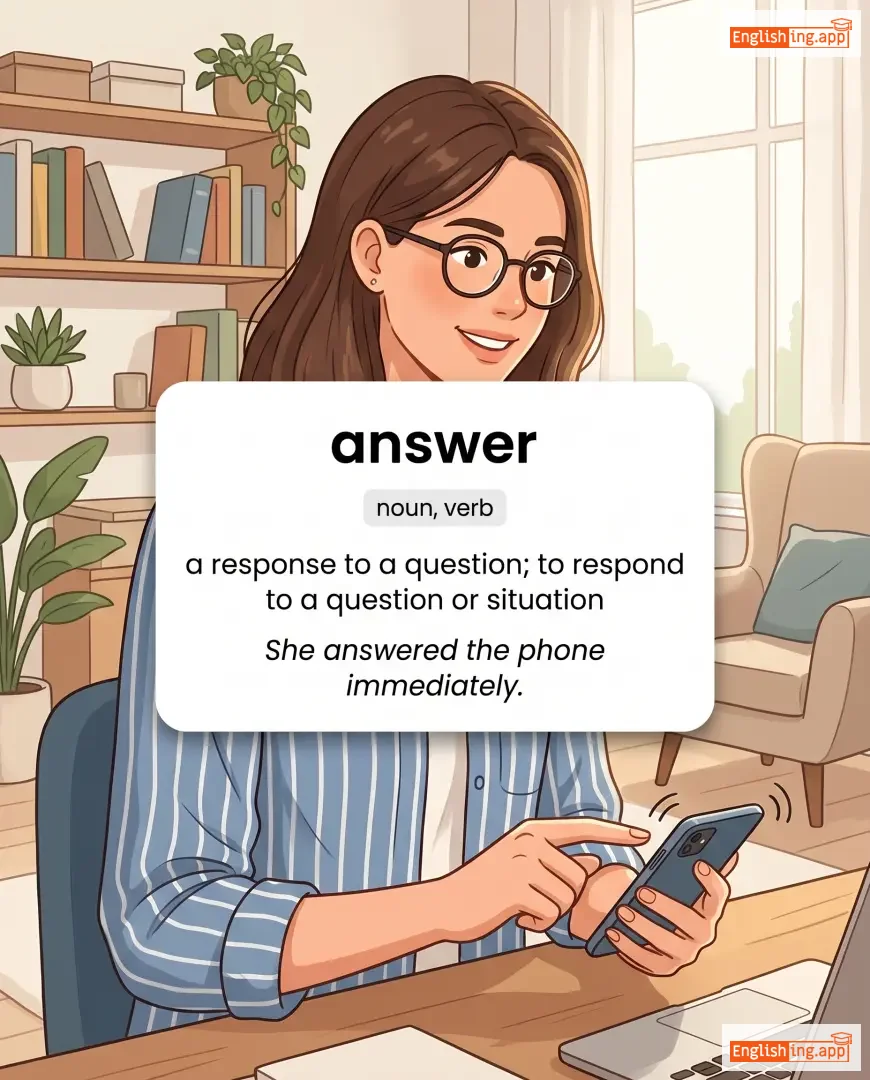
/ˈænsər/
noun, verb
(ānsà)
••••••
|
|
答案
dá'àn
••••••
|
answered
ānsàd
••••••
|
answered
ānsàd
••••••
|
answers
ānsàr
••••••
|
answering
ānsàrīng
••••••
|
a response to a question; to respond to a question or situation
••••••
|
She answered the phone immediately.
她立即接了电话。
••••••
|
她立即接了电话。
Tā lìjí jiēle diànhuà.
••••••
|
have no answer
没有答案
••••••
|
to not know how to respond to a question or situation
••••••
|
没有答案
méiyǒu dá'àn
••••••
|
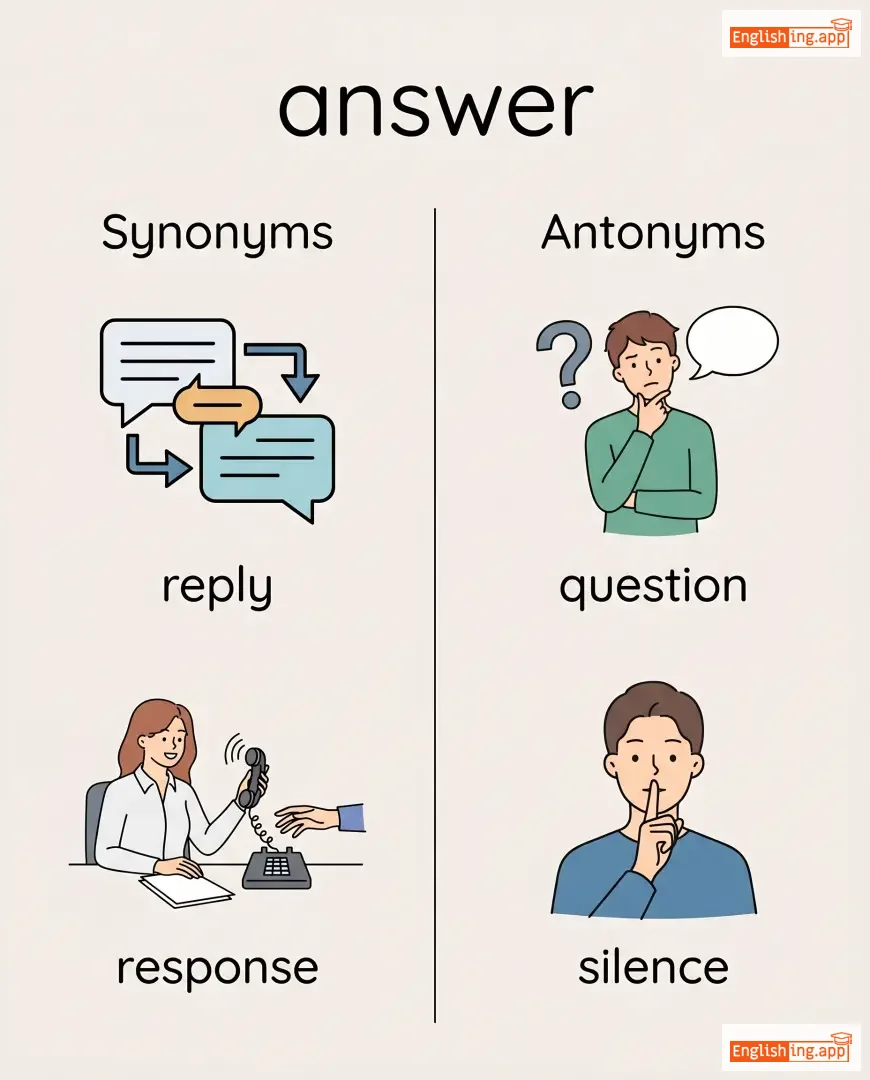
reply, response, solution, explanation, comeback
••••••
|
question, silence, ignorance
••••••
|
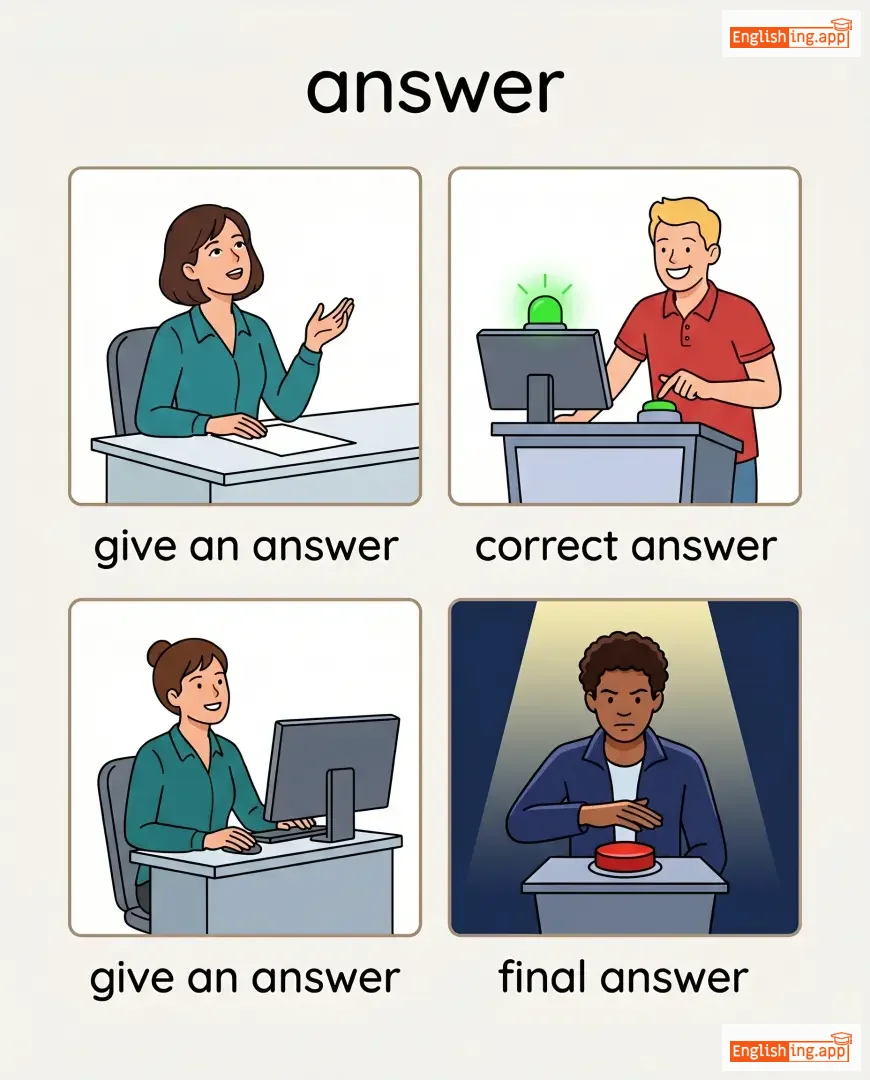
give an answer, correct answer, final answer, answer quickly
••••••
|
Answer是答案,意思是回答。
••••••
|
|
#9587
🌟
|
/əˈmeɪzɪŋ/
adjective
(āméizīng)
••••••
|
- •••••• |
惊人
jingren
••••••
|
- •••••• | - •••••• | - •••••• | - •••••• |
causing great surprise or wonder; astonishing
••••••
|
The magician performed an amazing trick. |
魔术师表演了一个惊人的魔术。
Móshù shī biǎoyǎnle yīgè jīngrén de móshù.
••••••
|
truly amazing |
something that is very impressive or extraordinary
••••••
|
真正的惊人
zhēnzhèng de jīngrén
••••••
|
astonishing, wonderful, incredible, marvelous, impressive
••••••
|
ordinary, boring, dull
••••••
|
amazing experience, amazing story, amazing talent, amazing place
••••••
|
Amazing = 惊人 = 哇!
••••••
|
|
#9588
♾️
|
/ˈɔːlweɪz/
adverb
(Ōuwèi)
••••••
|
- •••••• |
总是
zǒng shì
••••••
|
- •••••• | - •••••• | - •••••• | - •••••• |
at all times; on every occasion
••••••
|
She always wakes up early in the morning.
她总是早晨起床。
••••••
|
她总是早晨起床。
Tā zǒng shì zǎochén qǐchuáng.
••••••
|
as always
一如既往
••••••
|
as is usual or expected
••••••
|
一如既往
Yī rú jì wǎng
••••••
|
forever, constantly, perpetually, continually
••••••
|
never, rarely, seldom
••••••
|
always ready, always happy, always late, always available
••••••
|
Always = 总是, 总是 (zǒng shì)。
••••••
|
|
#9589
🎓
|
/əˈlʌmnəs/
noun
(alumnus)
••••••
|
- •••••• |
校友
xiao you
••••••
|
- •••••• | - •••••• | - •••••• | - •••••• |
a former student or graduate of a school, college, or university
••••••
|
He is an alumnus of Harvard University.
他是哈佛大学的校友。
••••••
|
他是哈佛大学的校友。
Ta shi Harvard daxue de xiao you.
••••••
|
- •••••• | - •••••• | - •••••• |
graduate, former student, ex-student, degree-holder
••••••
|
current student, entrant
••••••
|
distinguished alumnus, proud alumnus, university alumnus, alumni network
••••••
|
Alumnus是校友,意味着曾经是学校的学生或毕业生。
••••••
|
|
#9590
🧍
|
/əˈloʊn/
adjective, adverb
(阿龙)
••••••
|
- •••••• |
孤单
gudan
••••••
|
- •••••• | - •••••• | - •••••• | - •••••• |
having no one else present; on one's own
••••••
|
She prefers to live alone in her apartment. |
她更喜欢独自一人在她的公寓里生活。
Ta geng xihuan duzi yi ren zai ta de gongyu li shenghuo.
••••••
|
leave someone alone |
to stop bothering or disturbing someone
••••••
|
让某人独自待着
rang mou ren gudan daizhe
••••••
|
solitary, lonely, isolated, unaccompanied, single
••••••
|
together, accompanied, united
••••••
|
feel alone, live alone, left alone, all alone
••••••
|
Alone代表all-one, 意味着孤单 (gudan) 生活。
••••••
|
|
#9591
⏳
|
/ˈɔːlmoʊst/
adverb
(àomósī)
••••••
|
- •••••• |
差不多
chàbùduō
••••••
|
- •••••• | - •••••• | - •••••• | - •••••• |
very nearly, but not exactly or completely
••••••
|
He almost missed the train.
他差点错过了火车。
••••••
|
他差点错过了火车。
Tā chàdiǎn cuòguòle huǒchē.
••••••
|
almost there
差不多到了
••••••
|
close to completing or reaching a goal
••••••
|
差不多到了
chàbùduō dàole
••••••
|
nearly, practically, virtually, approximately, about
••••••
|
completely, entirely, totally
••••••
|
almost done, almost impossible, almost every, almost finished
••••••
|
Almost 意味着差不多— 就像说 "差不多到了",意思是快到了。
••••••
|
|
#9592
⚖️
|
/ˌælɪˈɡeɪʃən/
noun
(ā léi gé shēn)
••••••
|
- •••••• |
指控
zhikong
••••••
|
- •••••• | - •••••• | - •••••• | - •••••• |
a claim or assertion that someone has done something illegal or wrong, typically without proof
••••••
|
The politician denied the allegation of corruption. |
政治家否认了腐败的指控。
Zhengzhijia founianle fubai de zhikong.
••••••
|
- •••••• | - •••••• | - •••••• |
claim, charge, accusation, assertion, statement
••••••
|
denial, exoneration
••••••
|
false allegation, serious allegation, deny allegation, allegation of corruption
••••••
|
Allegation意味着指控 — 当你听到 allegation 时,记得涉及法律行动。
••••••
|
|
#9593
🩹
|
/eɪd/
noun, verb
(eid)
••••••
|
- •••••• |
援助
yuánzhù
••••••
|
aided
eidet
••••••
|
aided
eidet
••••••
|
aids
eids
••••••
|
aiding
aiding
••••••
|
help or support, typically of a practical nature
••••••
|
The volunteers provided aid to the flood victims.
志愿者为洪水受害者提供了帮助。
••••••
|
志愿者为洪水受害者提供了帮助。
Zhìyuànzhě wèi hóngshuǐ shòuhài zhě tígōng le yuánzhù.
••••••
|
first aid
急救
••••••
|
emergency medical treatment given immediately
••••••
|
急救
jíjiù
••••••
|
help, support, assistance, relief, guidance
••••••
|
hindrance, obstruction
••••••
|
foreign aid, financial aid, medical aid, aid in
••••••
|
援助就是在紧急时提供的帮助,救人于危难。
••••••
|
|
#9594
➡️
|
/ˈæftər/
preposition, conjunction, adverb
(after)
••••••
|
- •••••• |
之后
zhīhòu
••••••
|
- •••••• | - •••••• | - •••••• | - •••••• |
in the time following an event or another action
••••••
|
We went for ice cream after the movie. |
我们看完电影后去吃冰淇淋。
Wǒmen kàn wán diànyǐng hòu qù chī bīngqílín.
••••••
|
after all |
despite everything; in the end
••••••
|
毕竟
bìjìng
••••••
|
following, later, afterward, subsequent
••••••
|
before, prior
••••••
|
after school, after work, after the party, soon after
••••••
|
After 意思是之后— 电影之后吃冰淇淋。
••••••
|
|
#9595
😨
|
/əˈfreɪd/
adjective
(afréid)
••••••
|
- •••••• |
害怕
haipa
••••••
|
- •••••• | - •••••• | - •••••• | - •••••• |
feeling fear or anxiety; worried that something undesirable will happen
••••••
|
She was afraid of the dark. |
她害怕黑暗。
Tā hàipà hēi'àn.
••••••
|
afraid of one's own shadow |
extremely timid or nervous
••••••
|
害怕自己的影子
hàipà zìjǐ de yǐngzi
••••••
|
fearful, scared, frightened, anxious, nervous
••••••
|
brave, confident, fearless
••••••
|
afraid of, terribly afraid, afraid to ask, afraid that
••••••
|
Afraid 意味着害怕—想象在黑暗中感到害怕。
••••••
|
|
#9596
🧑
|
/ˈædʌlt/ or /əˈdʌlt/
noun
(成人)
••••••
|
- •••••• |
成人
chéngrén
••••••
|
- •••••• | - •••••• | - •••••• | - •••••• |
A fully grown or developed person; mature.
••••••
|
Children must be accompanied by an adult. |
儿童必须由成年人陪同。
Értóng bìxū yóu chéngrén péitóng.
••••••
|
young adult |
A person in their late teens or early twenties.
••••••
|
年轻成年人
niánqīng chéngrén
••••••
|
grown-up, mature person, elder, senior
••••••
|
child, minor, infant
••••••
|
adult education, adult content, adult life, adult supervision
••••••
|
成人意味着完全成熟,就像电影中的成人票。
••••••
|
|
#9597
🙋
|
/ədˈmɪt/
verb
(承认)
••••••
|
|
承认
chengren
••••••
|
admitted
承认过
••••••
|
admitted
承认过
••••••
|
admits
承认
••••••
|
admitting
承认中
••••••
|
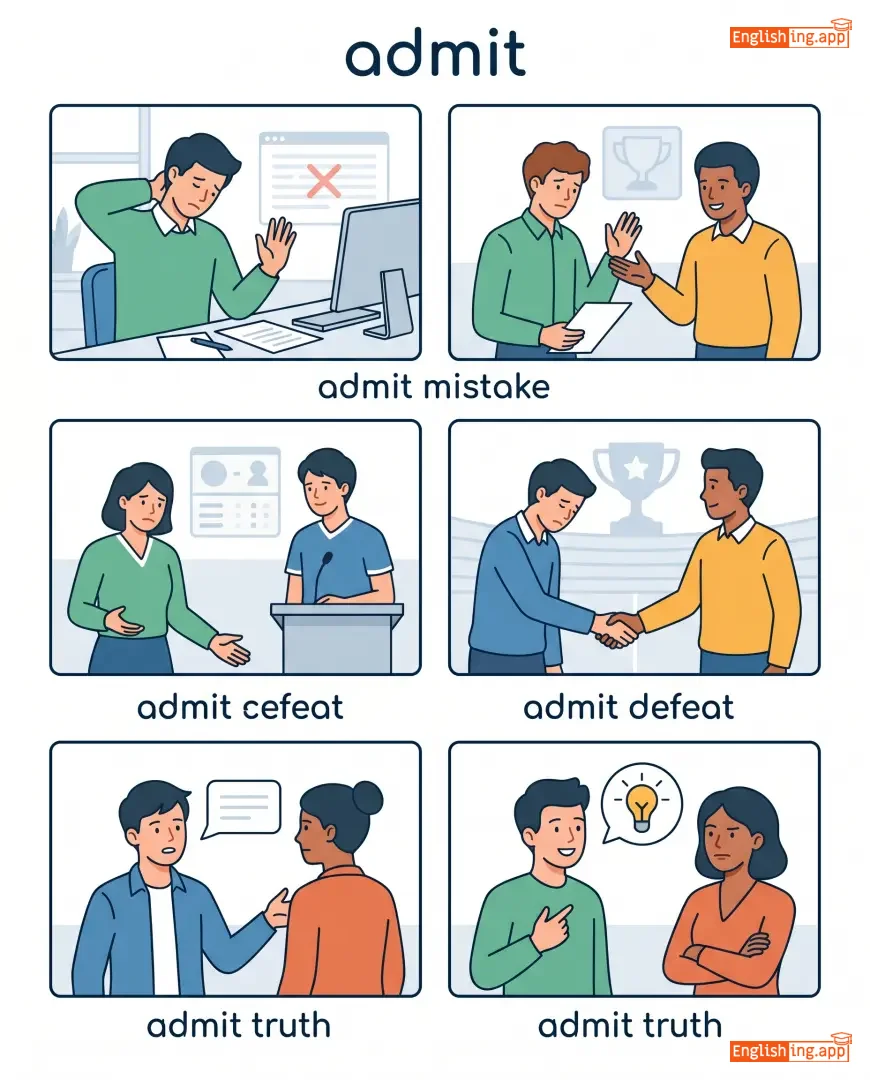
To confess or acknowledge something as true; to allow entry.
••••••
|
He admitted that he had made a mistake.
他承认他犯了一个错误。
••••••
|
他承认他犯了一个错误。
Tā chéngrèn tā fànle yīgè cuòwù.
••••••
|
admit defeat
承认失败
••••••
|
To accept that you have failed.
••••••
|
承认失败
Chéngrèn shībài
••••••
|
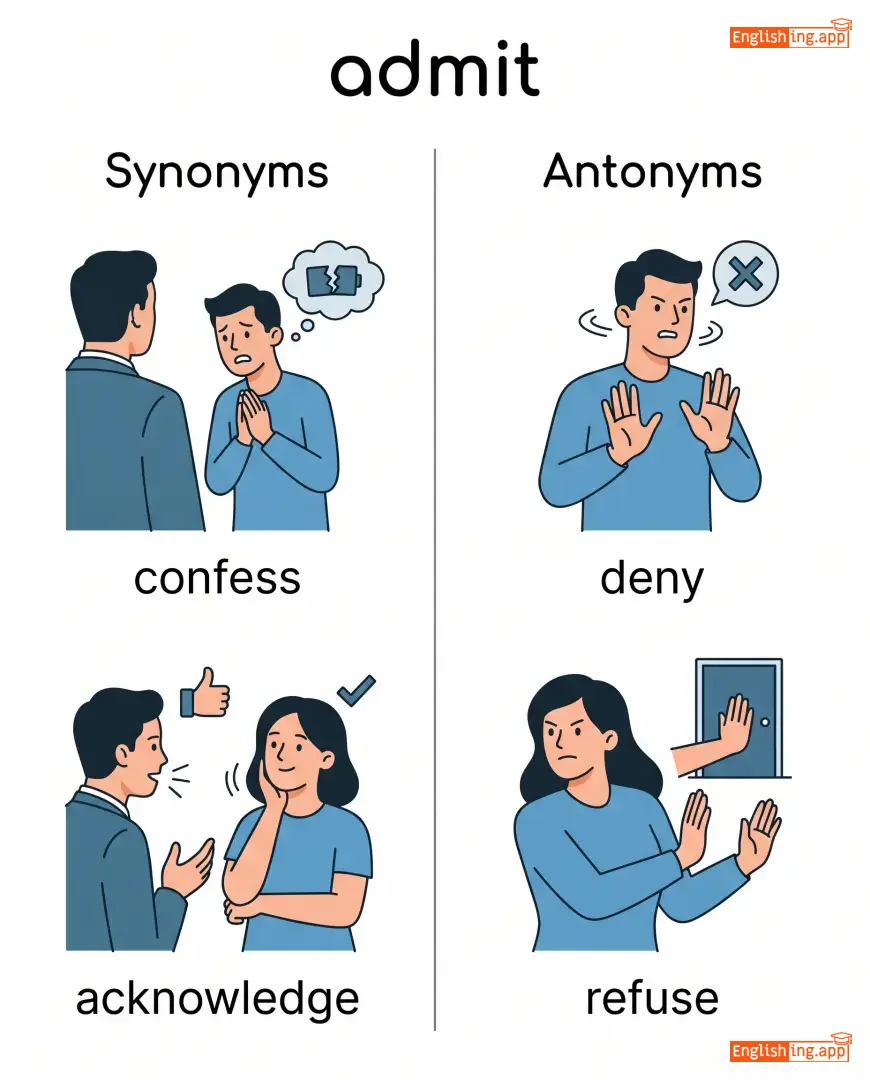
confess, acknowledge, accept, allow, grant
••••••
|
deny, refuse, reject
••••••
|
admit mistake, admit defeat, admit truth, admit into
••••••
|
承认就是接受或者允许,像是承认错误一样。
••••••
|
|
#9598
💊
|
/ədˈmɪnɪstər/
verb
(行政)
••••••
|
|
管理 / 应用
guanli / yingyong
••••••
|
administered
行政过
••••••
|
administered
行政过
••••••
|
administers
行政
••••••
|
administering
行政
••••••
|
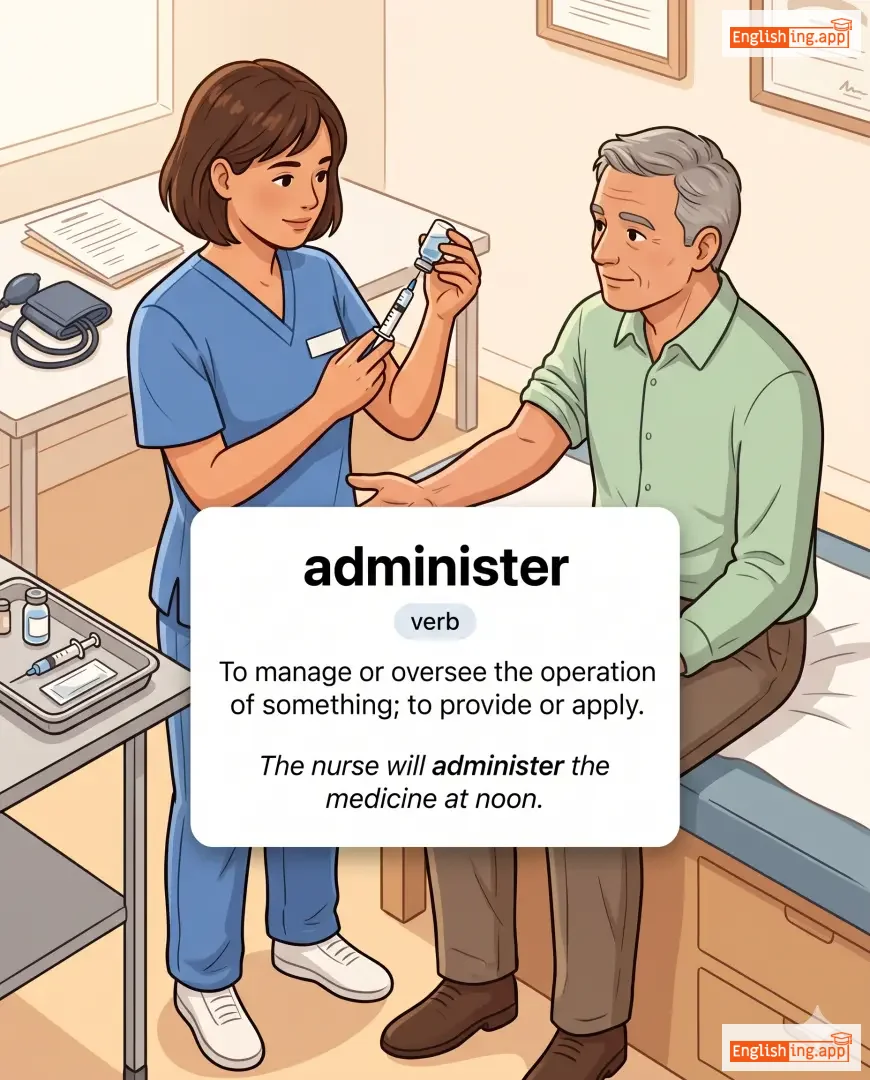
To manage or oversee the operation of something; to provide or apply.
••••••
|
The nurse will administer the medicine at noon.
护士将在中午施用药物。
••••••
|
护士将在中午施用药物。
Hushi jiang zai zhongwu shiyong yaowu.
••••••
|
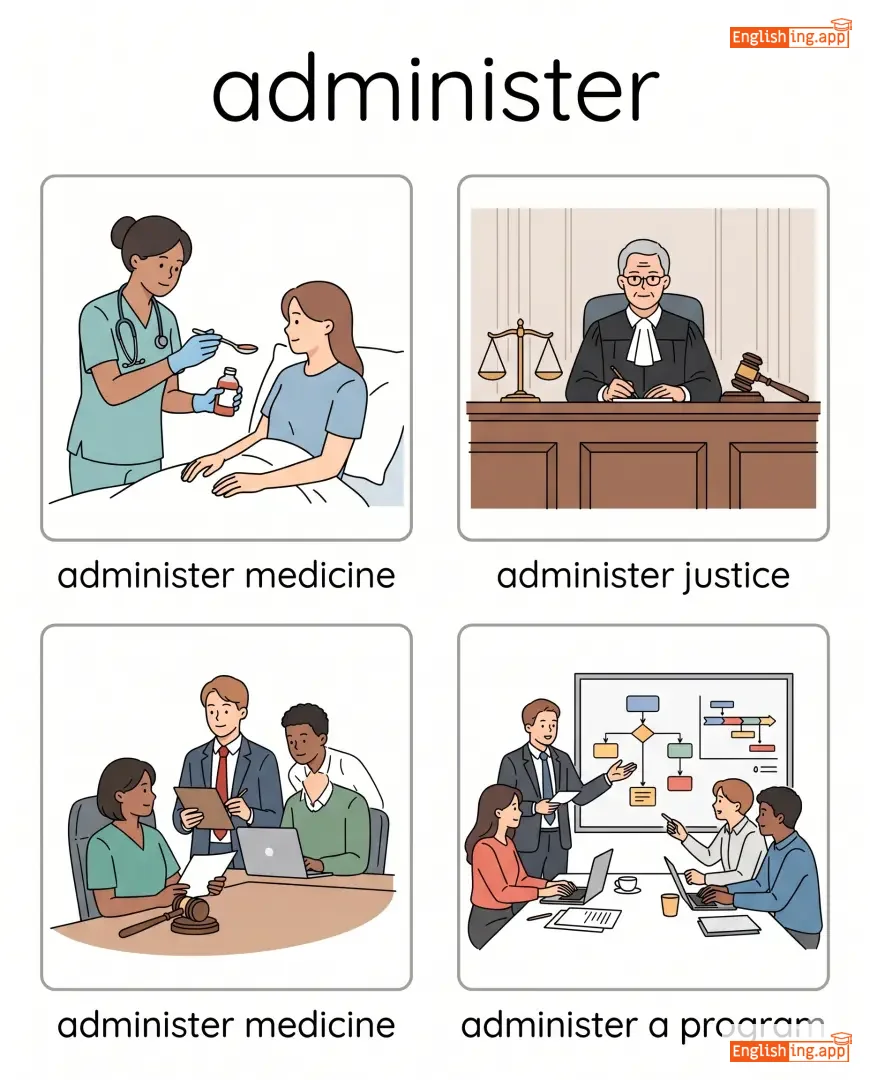
administer justice
执行司法
••••••
|
To ensure that laws and fairness are upheld.
••••••
|
执行司法
Zhixing sifa
••••••
|
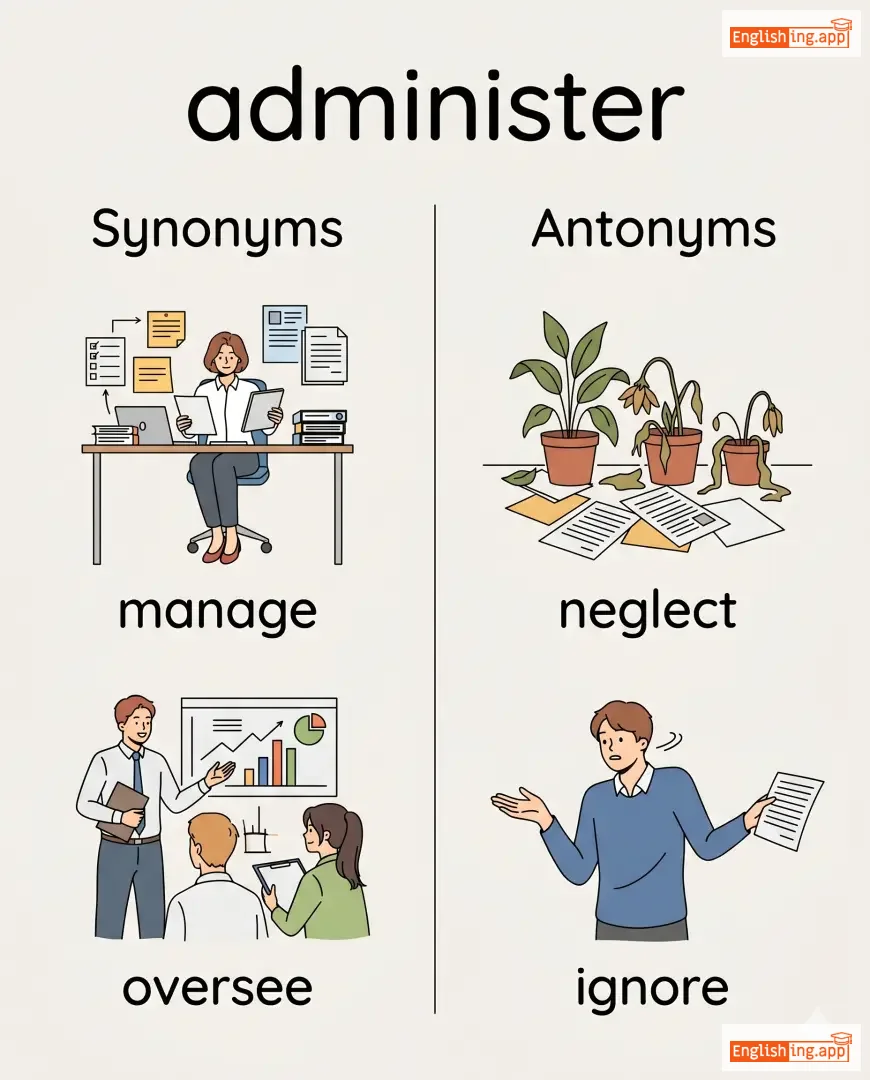
manage, oversee, control, execute, apply
••••••
|
neglect, ignore
••••••
|
administer medicine, administer justice, administer a program, administer funds
••••••
|
Administer 就是行政,就像管理员管理一切。
••••••
|
|
#9599
➕
|
/æd/
verb
(æd)
••••••
|
|
添加
tianjia
••••••
|
added
添加了
••••••
|
added
添加了
••••••
|
adds
添加
••••••
|
adding
添加中
••••••
|
To put together or combine with something else; to increase the number, amount, or value.
••••••
|
He decided to add more details to the report.
他决定在报告中添加更多细节。
••••••
|
他决定在报告中添加更多细节。
Ta jueding zai baogao zhong tianjia geng duo xijie.
••••••
|
add fuel to the fire
火上加油
••••••
|
To make a bad situation worse.
••••••
|
火上加油
Huo shang jiayou
••••••
|
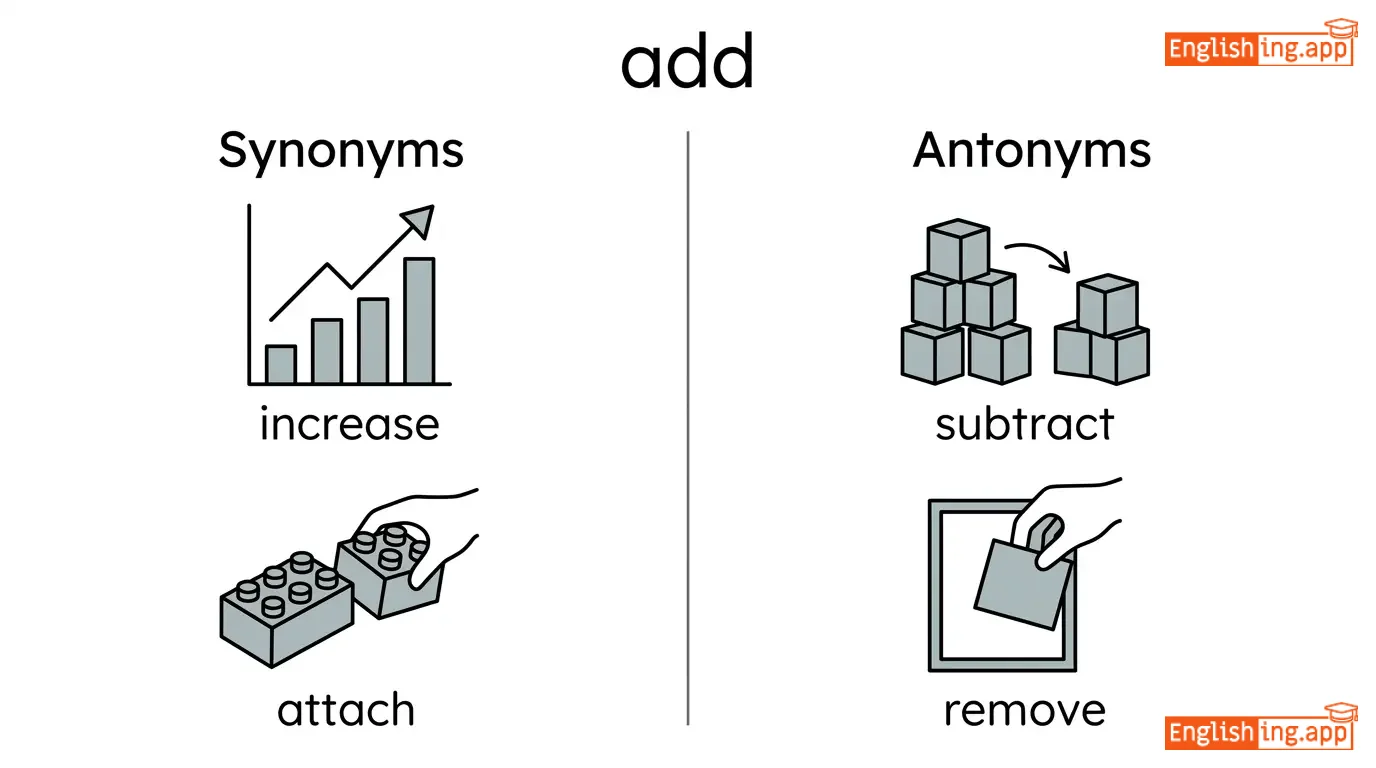
increase, attach, include, combine, augment
••••••
|
subtract, remove, deduct
••••••
|
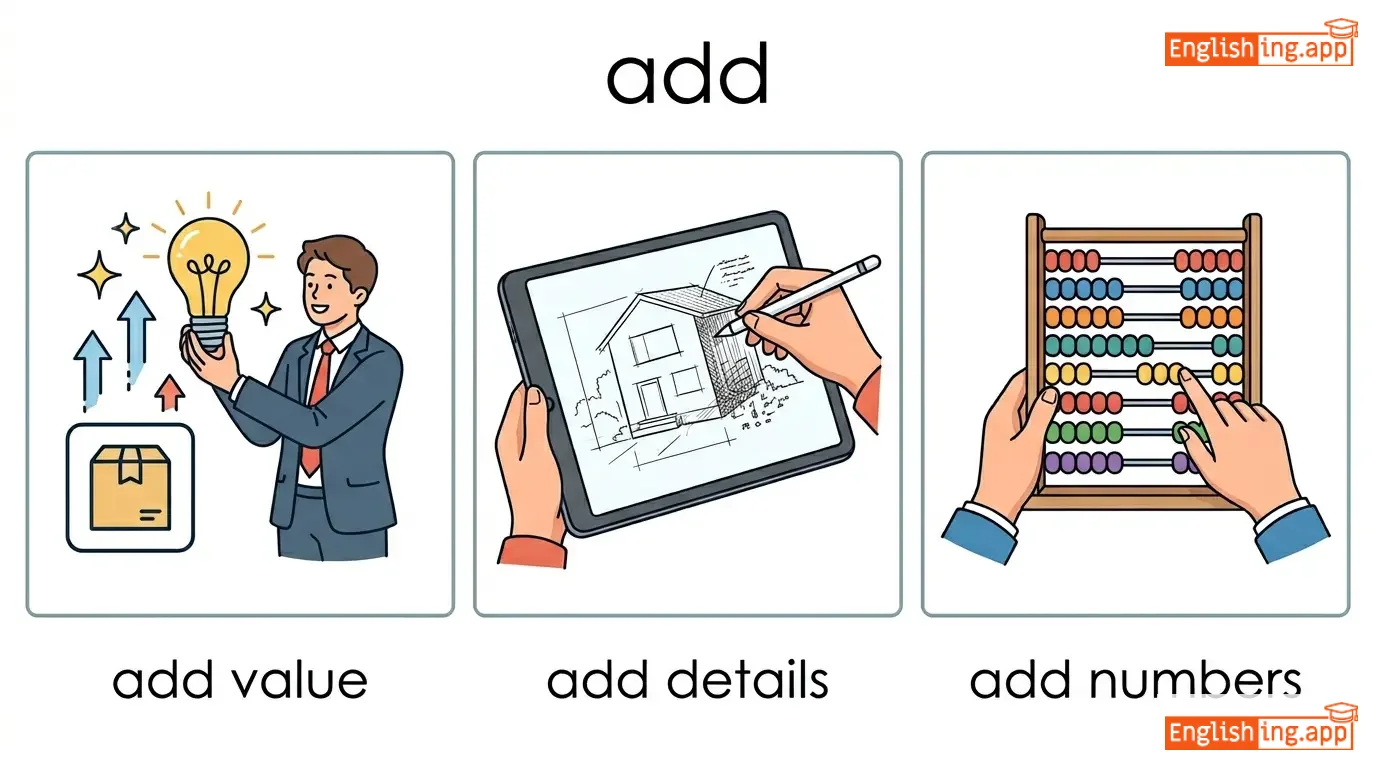
add value, add details, add numbers, add weight
••••••
|
添加就像在汤中加入更多调味料,让味道更丰富。
••••••
|
Vocabulary Quiz
Test your vocabulary by matching words with their translations or meanings.
Login to take the quiz
Comments (0)
Share your thoughts and join the discussion.
Join the discussion by logging in
Login to CommentNo comments yet
Be the first to share your thoughts!