



Swipe left or right, or use the buttons. Tap image to zoom.
例句翻译
单词
Lesson 173Lesson 173 - 遮罩切换
|
表情符号
|
单词 | Images | 翻译 | 过去时 | 过去分词 | 第三人称单数 | 动名词 | 含义 | 例句 | 例句翻译 | 示例表达 | 示例表达含义 | 示例表达翻译 | 同义词 | 反义词 | 搭配词 | 助记符 |
|---|---|---|---|---|---|---|---|---|---|---|---|---|---|---|---|---|---|
|
#5161
🍷
|
/ˈlɪbərˌtiːn/
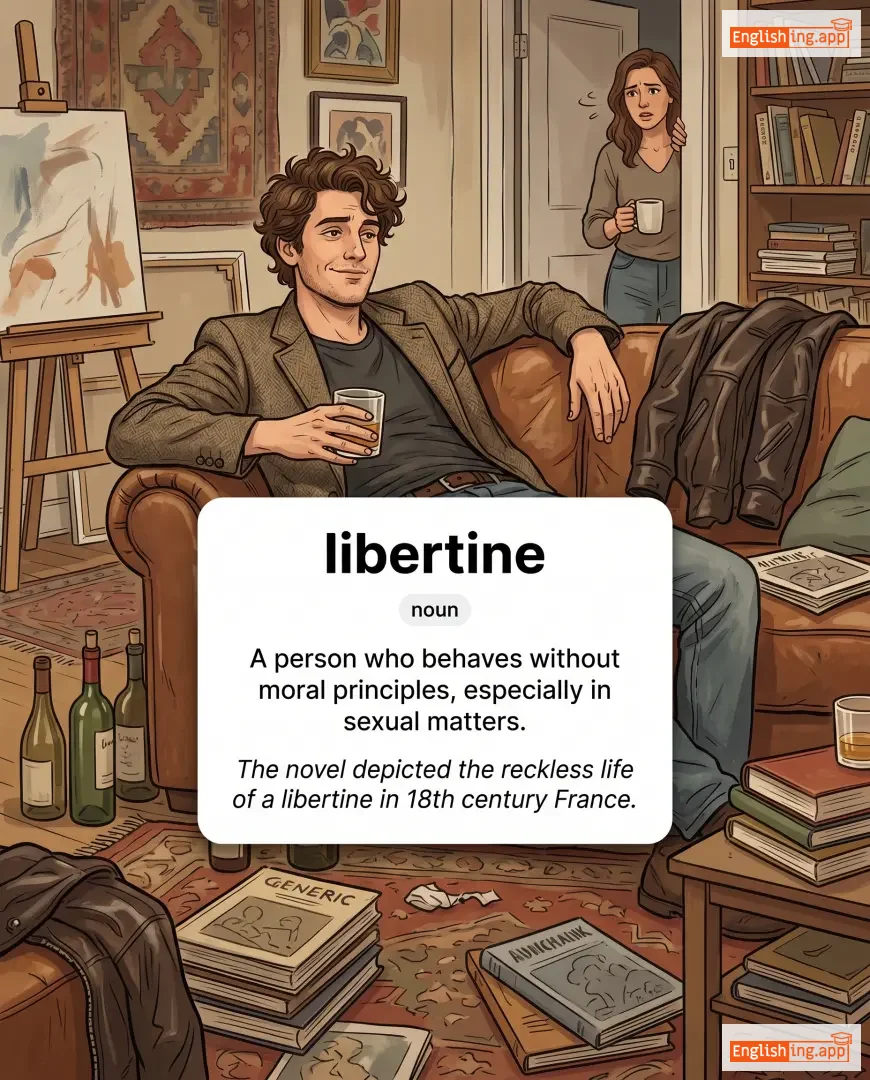
noun
••••••
|
|
- •••••• | - •••••• | - •••••• | - •••••• | - •••••• |
A person who behaves without moral principles, especially in sexual matters.
••••••
|
The novel depicted the reckless life of a libertine in 18th century France. |
- •••••• |
libertine spirit |
An attitude of rejecting social conventions and living freely.
••••••
|
- •••••• |
debauchee, rake, profligate, hedonist, sensualist
••••••
|
puritan, moralist, ascetic
••••••
|
libertine lifestyle, notorious libertine, libertine behavior, libertine spirit
••••••
|
No •••••• |
|
#5162
🪢
|
/ˈlɪɡ.ə.tʃər/
noun
(连字)
••••••
|
- •••••• |
连字
lianzi
••••••
|
- •••••• | - •••••• | - •••••• | - •••••• |
A thing used for tying or binding tightly; in music/printing, two or more notes or letters joined together.
••••••
|
The doctor used a ligature to stop the bleeding.
医生使用了连字来停止出血。
••••••
|
医生使用了连字来停止出血。
Yīshēng shǐyòngle liánzì lái tíngzhǐ chūxiě.
••••••
|
- •••••• | - •••••• | - •••••• |
tie, band, cord, knot, binding
••••••
|
release, freedom
••••••
|
ligature mark, ligature strangulation, musical ligature, ligature knot
••••••
|
连字是将东西牢牢绑在一起的工具。
••••••
|
|
#5163
🦵
|
/ˈlɪɡ.əmənt/
noun
(韧带)
••••••
|
- •••••• |
韧带组织
rendai zuzhi
••••••
|
- •••••• | - •••••• | - •••••• | - •••••• |
A tough band of tissue that connects bones at a joint.
••••••
|
He tore a ligament in his knee while playing football. |
他在踢足球时撕裂了膝盖的韧带。
Tā zài tī zúqiú shí sīliè le xīgài de rèndài.
••••••
|
- •••••• | - •••••• | - •••••• |
tendon, tissue, cartilage, band
••••••
|
bone, muscle
••••••
|
knee ligament, torn ligament, ligament injury, ligament repair
••••••
|
韧带就像连接骨头的绳索。
••••••
|
|
#5164
⌛
|
/ˈlaɪf.taɪm/
noun
(laiftaim)
••••••
|
- •••••• |
一生
yisheng
••••••
|
- •••••• | - •••••• | - •••••• | - •••••• |
The duration of a person's life or the existence of something.
••••••
|
She achieved more in her lifetime than most people dream of.
她在一生中取得的成就,超出了大多数人的梦想。
••••••
|
她在一生中取得的成就,超出了大多数人的梦想。
Ta zai yisheng zhong qude de chengjiu, chaochule daduoshu ren de mengxiang.
••••••
|
once in a lifetime
一生中一次
••••••
|
Something that is very rare and unlikely to happen again
••••••
|
一生中一次
Yisheng zhong yici
••••••
|
existence, lifespan, duration, era, age
••••••
|
moment, instant, second
••••••
|
lifetime achievement, lifetime experience, in a lifetime, over a lifetime
••••••
|
LIFE + TIME = 一生.
••••••
|
|
#5165
♾️
|
/ˈlaɪf.lɒŋ/
adjective
(laɪflɒŋ)
••••••
|
- •••••• |
终生
zhōngshēng
••••••
|
- •••••• | - •••••• | - •••••• | - •••••• |
Lasting or existing for the whole of a person's life.
••••••
|
They remained lifelong friends.
他们是终生的朋友。
••••••
|
他们是终生的朋友。
Tāmen shì zhōngshēng de péngyǒu.
••••••
|
lifelong learner
终生学习者
••••••
|
Someone who continuously seeks knowledge throughout life
••••••
|
终生学习者
zhōngshēng xuéxí zhě
••••••
|
permanent, enduring, lasting, eternal, abiding
••••••
|
temporary, short-term, momentary
••••••
|
lifelong friend, lifelong dream, lifelong passion, lifelong habit
••••••
|
LIFE + LONG = 终生的 (终生)。
••••••
|
|
#5166
🎨
|
/ˈlaɪf.laɪk/
adjective
(lifenlaik)
••••••
|
- •••••• |
栩栩如生
xǔxǔ rú shēng
••••••
|
- •••••• | - •••••• | - •••••• | - •••••• |
Very similar to a real person, object, or scene; realistic.
••••••
|
The wax figure was so lifelike that people thought it was a real person.
ðə wæks fɪɡjʊr wəz soʊ laɪf.laɪk ðæt ˈpipəl θɔt ɪt wəz ə riəl pɜrsən.
••••••
|
这尊蜡像如此栩栩如生,以至于人们以为它是一个真人。
Zhè zūn làxiàng rúcǐ xǔxǔ rú shēng, yǐ zhì yú rénmen yǐwéi tā shì yīgè zhēn rén.
••••••
|
- •••••• | - •••••• | - •••••• |
realistic, natural, vivid, authentic, true-to-life
••••••
|
unrealistic, artificial, fake
••••••
|
lifelike figure, lifelike model, lifelike portrait, lifelike reproduction
••••••
|
Life + Like = 栩栩如生,像真实的生活。
••••••
|
|
#5167
🔄
|
/luː/
noun
(liu)
••••••
|
- •••••• |
代替
daiti
••••••
|
- •••••• | - •••••• | - •••••• | - •••••• |
Instead of; in place of.
••••••
|
He gave money in lieu of flowers. |
他给了钱代替花。
Tā gěile qián dàitì huā.
••••••
|
in lieu of |
as a substitute for; instead of
••••••
|
代替
daiti
••••••
|
instead, replacement, substitute, alternative
••••••
|
original, same
••••••
|
in lieu of payment, in lieu of flowers, in lieu of leave
••••••
|
Lieu 意味着代替—记住‘liu’,花代替了钱。
••••••
|
|
#5168
🏠
|
/liːən/
noun
(lien)
••••••
|
- •••••• |
留置权
liúzhìquán
••••••
|
- •••••• | - •••••• | - •••••• | - •••••• |
A legal right to keep possession of property until a debt is paid.
••••••
|
The bank placed a lien on the house until the mortgage was cleared.
银行对房屋施加了留置权,直到抵押贷款清偿完毕。
••••••
|
银行对房屋施加了留置权,直到抵押贷款清偿完毕。
Yínháng duì fángwū shījiāle liúzhìquán, zhídào dǐyā dàikuǎn qīngcháng wánbì.
••••••
|
- •••••• | - •••••• | - •••••• |
claim, charge, security, encumbrance
••••••
|
release, clearance
••••••
|
file a lien, place a lien, lien on property, tax lien
••••••
|
Lien 就是留置权,直到债务偿清为止。
••••••
|
|
#5169
🛡️
|
/liːdʒ/
noun
(利奇)
••••••
|
- •••••• |
领主
lingzhu
••••••
|
- •••••• | - •••••• | - •••••• | - •••••• |
A feudal lord entitled to allegiance and service; a loyal subject.
••••••
|
The knight pledged loyalty to his liege.
骑士向他的领主宣誓效忠。
••••••
|
骑士向他的领主宣誓效忠。
Qishi xiang tade lingzhu xuanshi xiaozhong.
••••••
|
- •••••• | - •••••• | - •••••• |
lord, sovereign, ruler, monarch
••••••
|
vassal, subject
••••••
|
liege lord, faithful liege, loyal liege
••••••
|
利奇类似LORD,表示忠诚的领导者。
••••••
|
|
#5170
⚖️
|
/ˈlɪsɪt/
adjective
(lìsī tè)
••••••
|
- •••••• |
合法
héfǎ
••••••
|
- •••••• | - •••••• | - •••••• | - •••••• |
Permitted by law or by rules; legal.
••••••
|
The trade of certain goods is licit under international law.
某些商品的贸易在国际法下是合法的。
••••••
|
某些商品的贸易在国际法下是合法的。
Mǒuxiē shāngpǐn de màoyì zài guójì fǎ xià shì héfǎ de.
••••••
|
- •••••• | - •••••• | - •••••• |
legal, lawful, permitted, legitimate
••••••
|
illegal, illicit, unlawful
••••••
|
licit trade, licit business, licit activities, licit operations
••••••
|
LIC IT: 合法的(licit)行为符合法律要求。
••••••
|
|
#5171
😈
|
/laɪˈsɛnʃəs/
adjective
(莱森修斯)
••••••
|
- •••••• |
放荡不羁
fàngdàng bùjī
••••••
|
- •••••• | - •••••• | - •••••• | - •••••• |
Lacking moral restraint; disregarding accepted rules of conduct.
••••••
|
The novel was criticized for its licentious themes. |
这部小说因其放荡不羁的主题而受到批评。
Zhè bù xiǎoshuō yīn qí fàngdàng bùjī de zhǔtí ér shòudào pīpíng.
••••••
|
- •••••• | - •••••• | - •••••• |
immoral, dissolute, lewd, debauched, corrupt
••••••
|
moral, virtuous, disciplined
••••••
|
licentious behavior, licentious lifestyle, licentious conduct, licentious society
••••••
|
放荡不羁就像没有许可证的人,行为不受约束。
••••••
|
|
#5172
📜
|
/ˈlaɪsəns/
noun, verb
(lái xīn sī)
••••••
|
- •••••• |
许可证 / 许可
xǔkě zhèng / xǔkě
••••••
|
licensed
lái xīn sī dé
••••••
|
licensed
lái xīn sī dé
••••••
|
licenses
lái xīn sī sī
••••••
|
licensing
lái xīn sī xìng
••••••
|
A legal permission to do something (noun); to grant such permission (verb).
••••••
|
You must have a driving license to operate a car legally.
您必须拥有驾驶执照才能合法开车。
••••••
|
您必须拥有驾驶执照才能合法开车。
Nín bìxū yǒngyǒu jiàshǐ zhízhào cáinéng héfǎ kāichē.
••••••
|
poetic license
诗意许可
••••••
|
Freedom to depart from facts or rules for artistic effect.
••••••
|
诗意许可
shīyì xǔkě
••••••
|
permit, authorization, certificate, sanction
••••••
|
restriction, prohibition
••••••
|
driving license, business license, software license, license agreement
••••••
|
许可证意味着你可以合法地做事
••••••
|
|
#5173
🎭
|
/lɪˈbrɛtoʊ/
noun
(利布雷托)
••••••
|
- •••••• |
歌剧本
gējù běn
••••••
|
- •••••• | - •••••• | - •••••• | - •••••• |
The text of an opera or other long vocal work.
••••••
|
She studied the libretto before attending the opera performance. |
她在参加歌剧表演之前学习了歌剧本。
Tā zài cānjiā gējù biǎoyǎn zhīqián xuéxí le gējùběn.
••••••
|
- •••••• | - •••••• | - •••••• |
opera text, lyrics, script, scenario
••••••
|
music, score
••••••
|
opera libretto, libretto writer, study the libretto
••••••
|
歌剧本就像一本书,记住它是歌曲的剧本。
••••••
|
|
#5174
💋
|
/lɪˈbiːdoʊ/
noun
(利比多)
••••••
|
|
性欲
xìngyù
••••••
|
- •••••• | - •••••• | - •••••• | - •••••• |
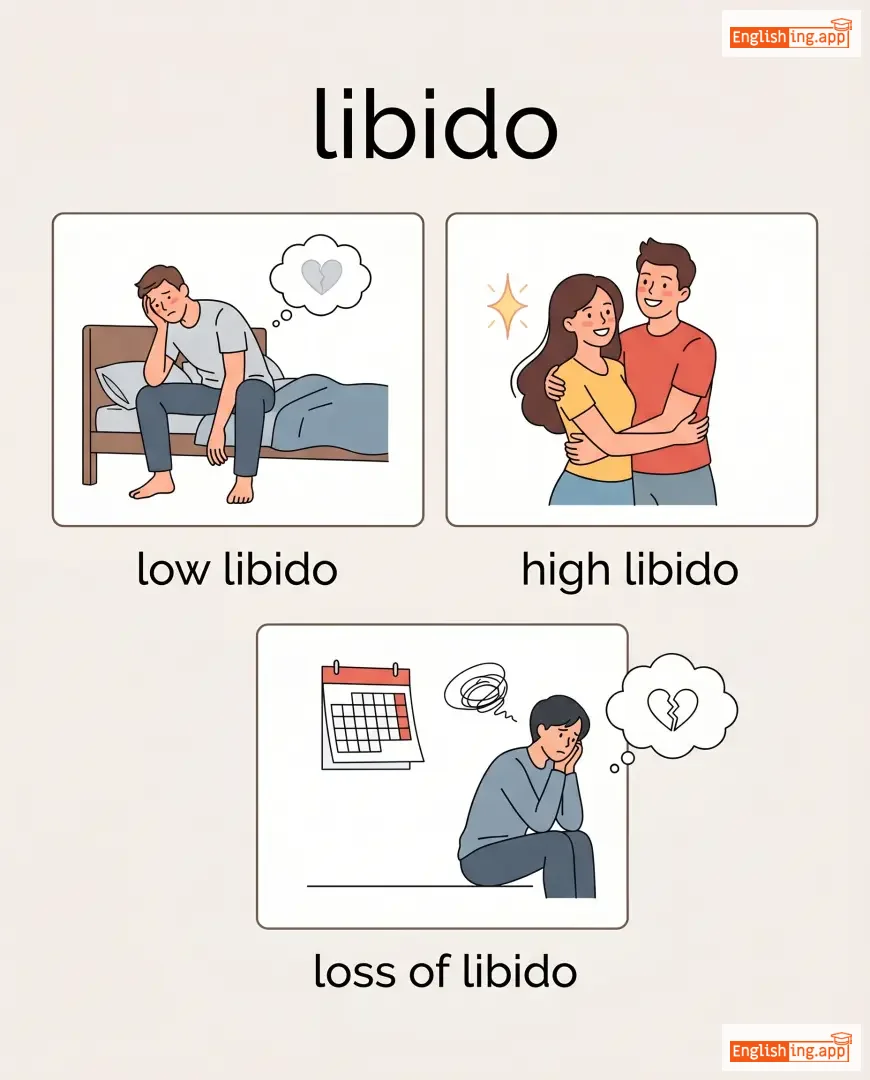
Sexual desire or drive.
••••••
|
Stress can sometimes lower a person's libido. |
压力有时会降低一个人的性欲。
Yālì yǒushí huì jiàngdī yīgè rén de xìngyù.
••••••
|
high libido |
Strong or increased sexual desire.
••••••
|
高性欲
gāo xìngyù
••••••
|
sex drive, desire, passion, lust
••••••
|
apathy, frigidity
••••••
|
low libido, high libido, loss of libido
••••••
|
Libido 记住 – ‘libi do’ 意味着性欲。
••••••
|
|
#5175
🔥
|
/lɪˈbɪdənəs/
adjective
(利比多)
••••••
|
- •••••• |
好色
hàosè
••••••
|
- •••••• | - •••••• | - •••••• | - •••••• |
Showing excessive sexual drive; lustful.
••••••
|
The play was criticized for its libidinous characters. |
这部剧因其好色的角色而受到批评。
Zhè bù jù yīn qí hàosè de juésè ér shòudào pīpíng.
••••••
|
- •••••• | - •••••• | - •••••• |
lustful, lecherous, lascivious, salacious
••••••
|
chaste, pure, modest
••••••
|
libidinous desire, libidinous look, libidinous character
••••••
|
Libido 从 libidinous – 过度的 libido 是好色的。
••••••
|
|
#5176
😄
|
/ˈlɛvɪti/
noun
••••••
|
|
- •••••• | - •••••• | - •••••• | - •••••• | - •••••• |
Lightness of manner or speech, especially when inappropriate; lack of seriousness.
••••••
|
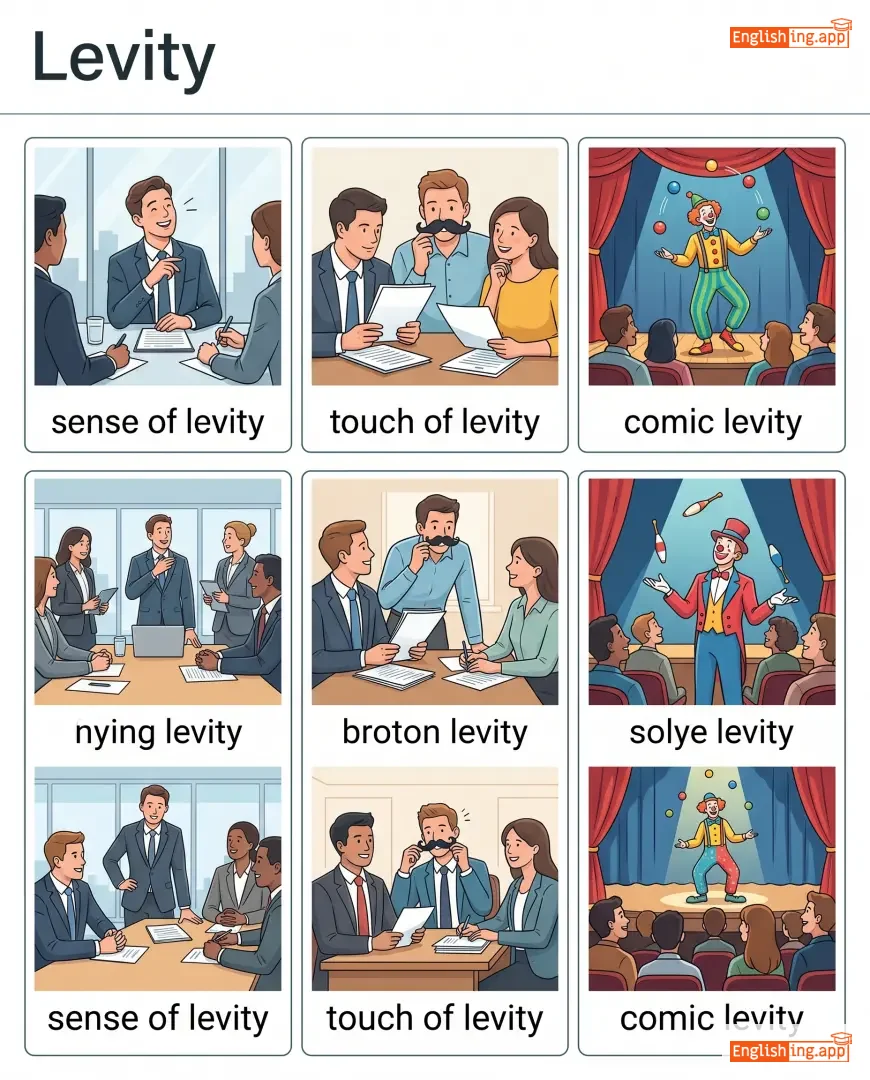
His attempt to bring levity to the tense meeting was appreciated. |
- •••••• |
comic levity |
Humor or lightheartedness used to reduce tension.
••••••
|
- •••••• |
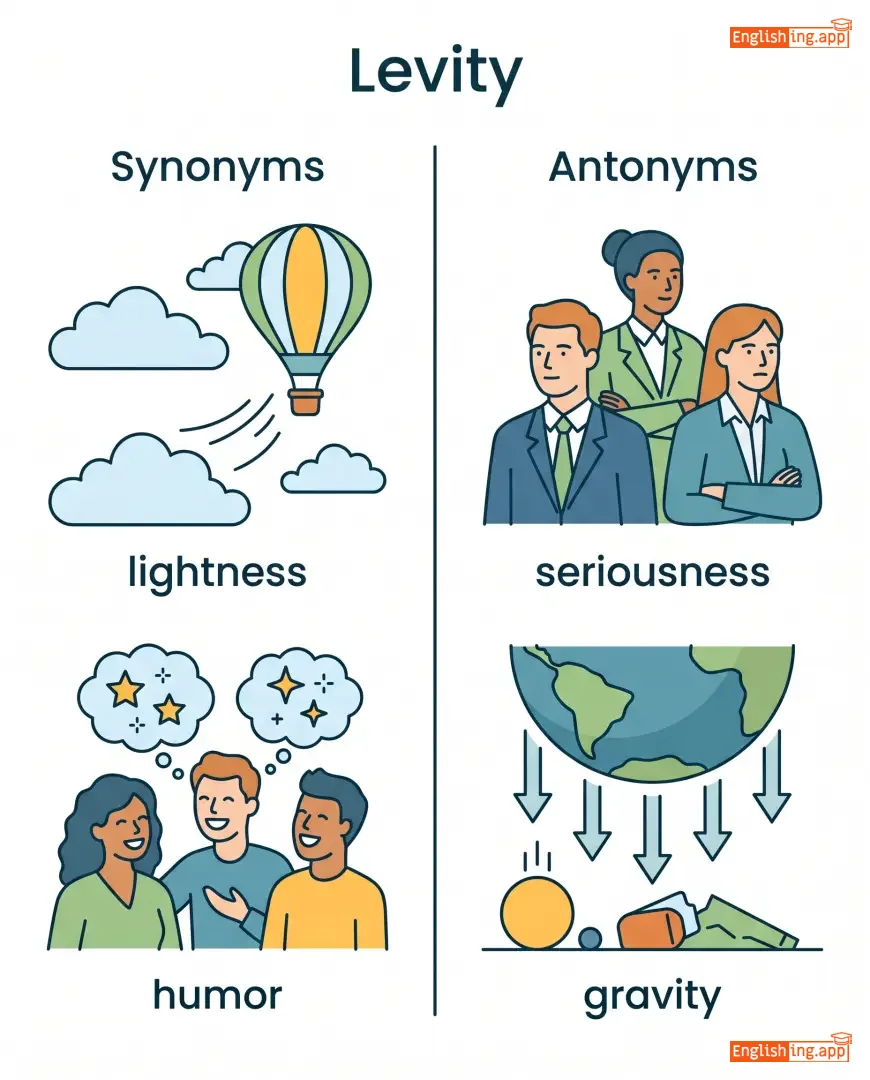
lightness, humor, frivolity, cheerfulness, jocularity
••••••
|
seriousness, gravity, solemnity
••••••
|
sense of levity, touch of levity, comic levity, add levity
••••••
|
No •••••• |
|
#5177
🕊️
|
/ˈlɪbəreɪt/
verb
(解放)
••••••
|
|
解放
jiěfàng
••••••
|
liberated
解放了
••••••
|
liberated
解放了
••••••
|
liberates
解放
••••••
|
liberating
解放中
••••••
|
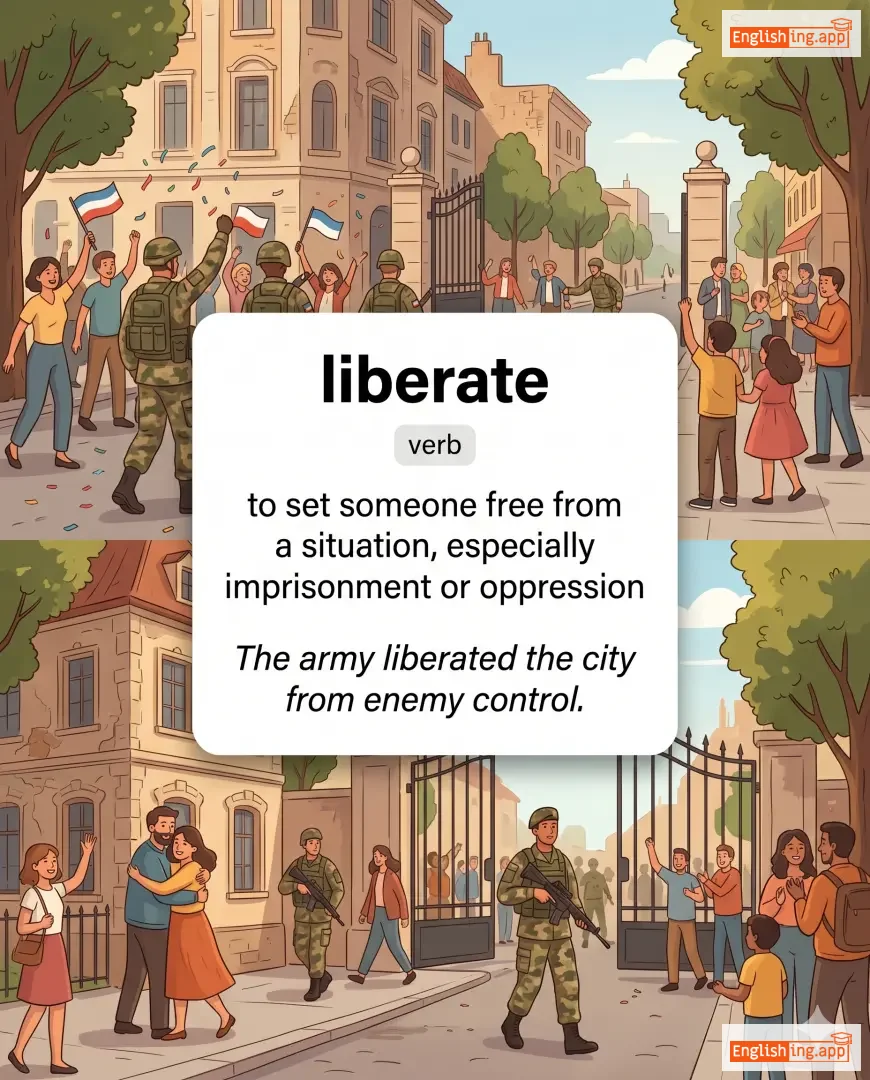
to set someone free from a situation, especially imprisonment or oppression
••••••
|
The army liberated the city from enemy control.
军队解放了这座城市,摆脱了敌人的控制。
••••••
|
军队解放了这座城市,摆脱了敌人的控制。
Jūnduì jiěfàngle zhèzuò chéngshì, bàituōle dírén de kòngzhì.
••••••
|
liberate the mind
解放思想
••••••
|
to free someone from narrow or limiting thinking
••••••
|
解放思想
jiěfàng sīxiǎng
••••••
|
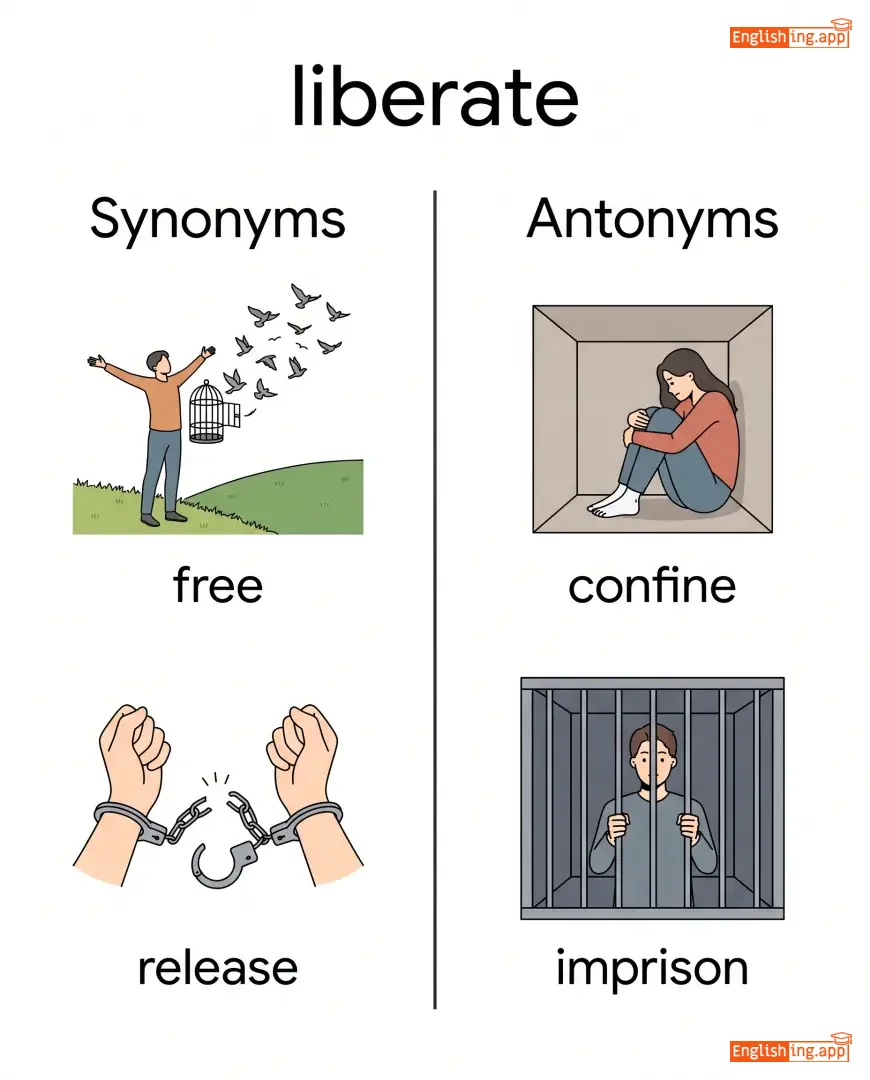
free, release, rescue, emancipate, deliver
••••••
|
confine, imprison, restrain
••••••
|
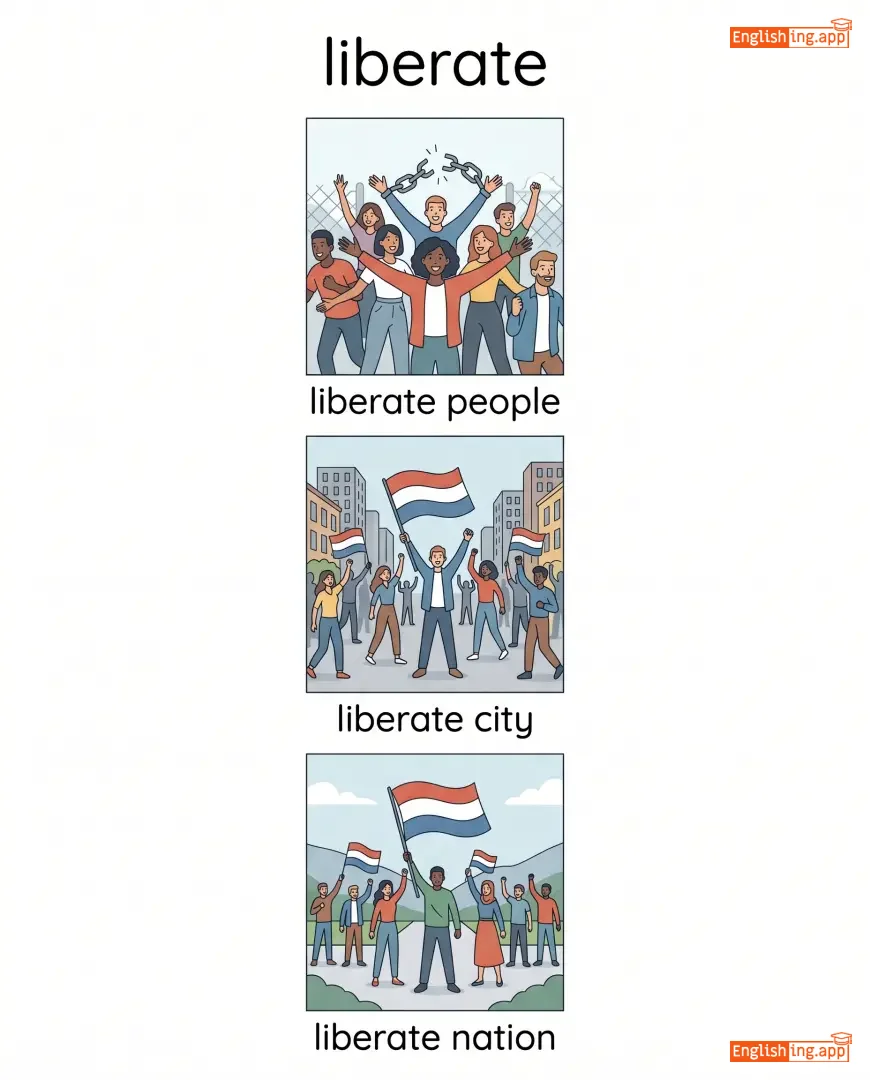
liberate people, liberate city, liberate nation, liberate mind
••••••
|
解放=解 (jie) + 放 (fang) = 放开束缚,解开限制
••••••
|
|
#5178
👤
|
/ˈlɪbərəlɪst/
noun
(自由主义者)
••••••
|
- •••••• |
自由主义者
zìyóu zhǔyì zhě
••••••
|
- •••••• | - •••••• | - •••••• | - •••••• |
a person who supports liberal ideas and principles
••••••
|
He is a well-known liberalist advocating human rights. |
他是一个著名的自由主义者,提倡人权。
Tā shì yīgè zhùmíng de zìyóu zhǔyì zhě, tìchàng rénquán.
••••••
|
- •••••• | - •••••• | - •••••• |
progressive, reformer, democrat, humanist
••••••
|
conservative, traditionalist
••••••
|
liberalist thinker, liberalist movement, liberalist advocate
••••••
|
Liberalist = 自由 + 主义者 (支持自由主义的人)
••••••
|
|
#5179
🗽
|
/ˈlɪbərəlɪzəm/
noun
(自由主义)
••••••
|
- •••••• |
自由主义
zìyóu zhǔyì
••••••
|
- •••••• | - •••••• | - •••••• | - •••••• |
a political and social philosophy advocating individual freedoms, democracy, and equality
••••••
|
Liberalism emphasizes freedom of speech and human rights. |
自由主义强调言论自由和人权。
Zìyóu zhǔyì qiángdiào yánlùn zìyóu hé rénquán.
••••••
|
- •••••• | - •••••• | - •••••• |
progressivism, democracy, humanism, freedom
••••••
|
authoritarianism, conservatism
••••••
|
classical liberalism, political liberalism, economic liberalism
••••••
|
自由主义 = 自由 + 主义
••••••
|
|
#5180
🌍
|
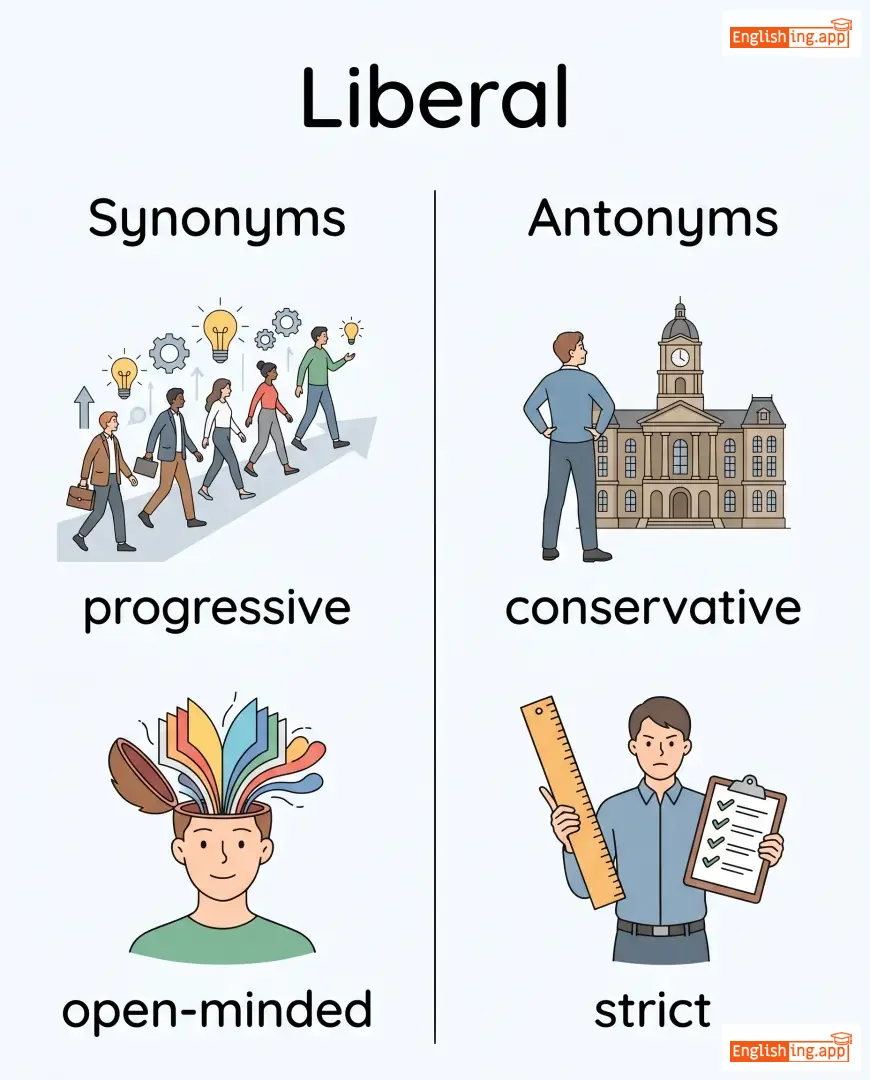
/ˈlɪbərəl/
adjective
(自由主义的)
••••••
|
|
自由主义的
zìyóu zhǔyì de
••••••
|
- •••••• | - •••••• | - •••••• | - •••••• |
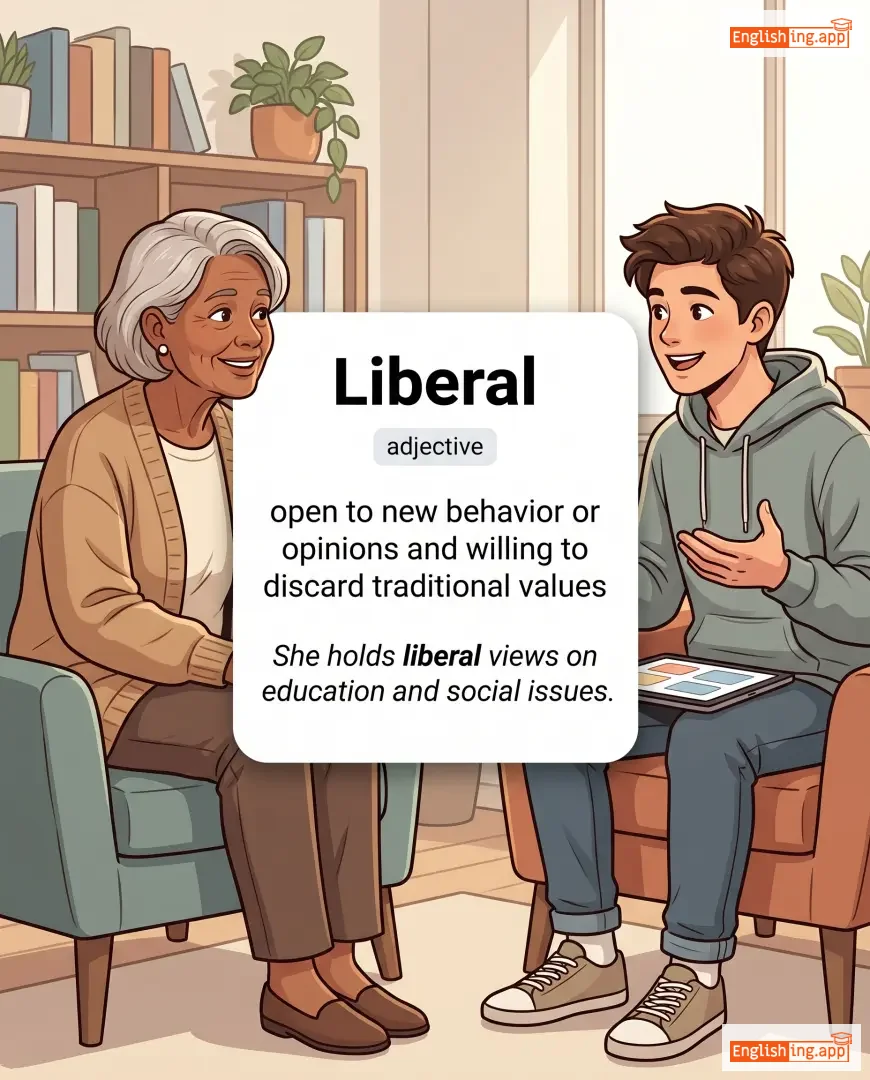
open to new behavior or opinions and willing to discard traditional values
••••••
|
She holds liberal views on education and social issues. |
她对教育和社会问题持自由主义观点。
Tā duì jiàoyù hé shèhuì wèntí chí zìyóu zhǔyì guāndiǎn.
••••••
|
liberal arts |
academic studies intended to develop general knowledge and intellectual ability
••••••
|
自由艺术
zìyóu yìshù
••••••
|
progressive, open-minded, tolerant, generous
••••••
|
conservative, strict, narrow-minded
••••••
|
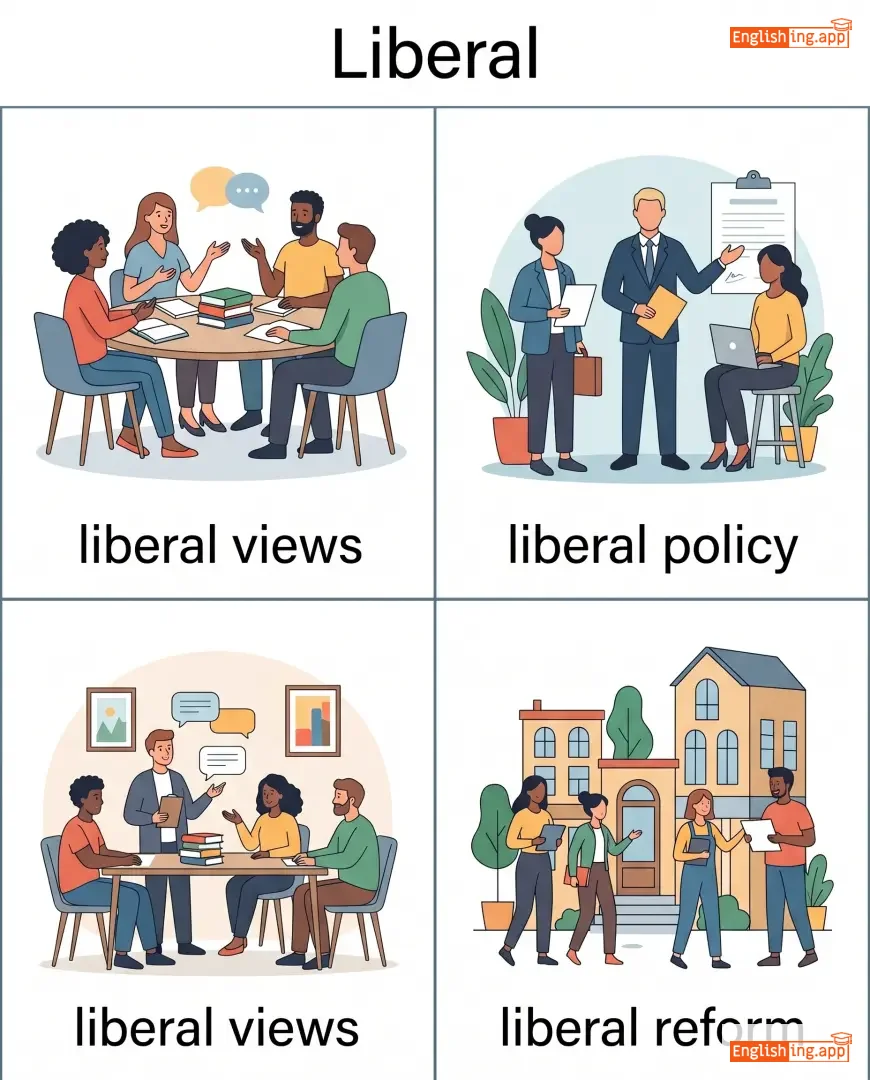
liberal views, liberal policy, liberal reform, liberal democracy
••••••
|
自由主义的思想如同自由的空气,开放而不拘束。
••••••
|
|
#5181
📰
|
/ˈlaɪbələs/
adjective
(lai-bei-lus)
••••••
|
- •••••• |
诽谤的
feibang de
••••••
|
- •••••• | - •••••• | - •••••• | - •••••• |
containing or constituting a false published statement that damages a person's reputation
••••••
|
The article was found to be libelous and had to be retracted. |
该文章被认为是诽谤的,必须撤回。
Gai wenzhang bei renwei shi feibang de, bixu chehui
••••••
|
- •••••• | - •••••• | - •••••• |
defamatory, slanderous, false, malicious, injurious
••••••
|
truthful, accurate, factual
••••••
|
libelous statement, libelous article, libelous accusation
••••••
|
Libelous = 诽谤 + 写 = 诽谤的文章
••••••
|
|
#5182
📰
|
/ˈlaɪbəl/
noun
(laibel)
••••••
|
- •••••• |
诽谤
feibang
••••••
|
- •••••• | - •••••• | - •••••• | - •••••• |
a published false statement that damages a person's reputation
••••••
|
The newspaper was sued for libel after publishing false claims.
报纸因发布虚假声明而被起诉诽谤。
••••••
|
报纸因发布虚假声明而被起诉诽谤。
Baozhi yin fabu xujia shengming er bei qisu feibang.
••••••
|
sue for libel
因诽谤起诉
••••••
|
to take legal action against someone for publishing defamatory material
••••••
|
因诽谤起诉
yin feibang qisu
••••••
|
defamation, slander, misrepresentation, calumny
••••••
|
praise, compliment
••••••
|
libel case, commit libel, libel law, sue for libel
••••••
|
Libel就是发布虚假信息,损害他人名誉的行为。
••••••
|
|
#5183
🔗
|
/liˈeɪzɒn/
noun
(liaison)
••••••
|
- •••••• |
联络人
liánluò rén
••••••
|
- •••••• | - •••••• | - •••••• | - •••••• |
communication or cooperation between people or groups for a smooth working relationship
••••••
|
She works as a liaison between the company and its clients.
她在公司与客户之间担任联络人。
••••••
|
她在公司与客户之间担任联络人。
Tā zài gōngsī yǔ kèhù zhījiān dānrèn liánluò rén.
••••••
|
- •••••• | - •••••• | - •••••• |
connection, link, intermediary, mediator, contact
••••••
|
disconnection, separation
••••••
|
liaison officer, close liaison, maintain liaison, liaison role
••••••
|
Liaison: 人与人之间的桥梁,创造更好的联系。
••••••
|
|
#5184
📜
|
/ˈlaɪəbl/
adjective
(láiəbl)
••••••
|
- •••••• |
有责任的
yǒu zérèn de
••••••
|
- •••••• | - •••••• | - •••••• | - •••••• |
legally responsible or likely to be affected by something
••••••
|
He is liable to pay damages for the accident. |
他有责任为事故支付赔偿金。
Tā yǒu zérèn wèi shìgù zhīfù péichángjīn.
••••••
|
liable to |
likely to experience or suffer from something
••••••
|
可能的
kěnéng de
••••••
|
responsible, accountable, answerable, bound
••••••
|
immune, exempt
••••••
|
liable for, liable to, held liable, liable party
••••••
|
Liable意味着你可能对某些事情负责或受其影响。
••••••
|
|
#5185
⚖️
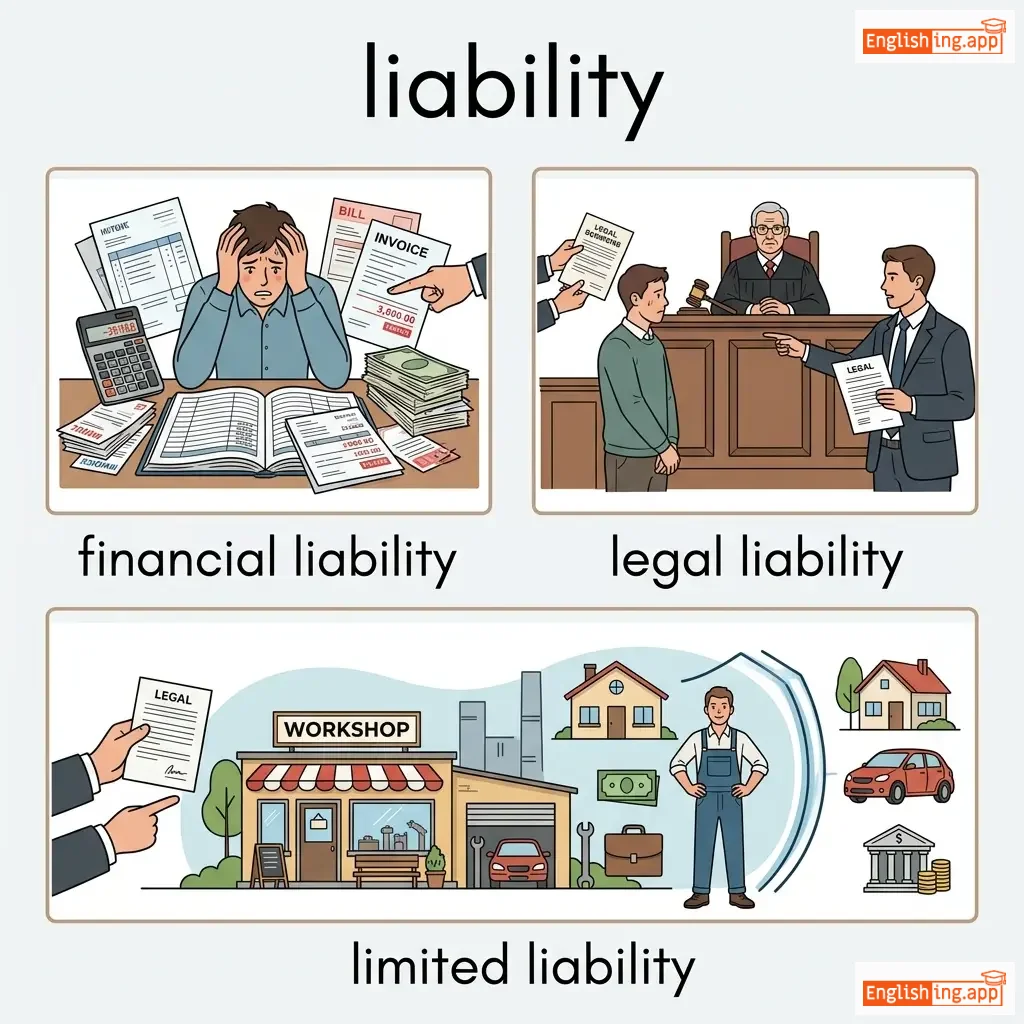
|
/ˌlaɪəˈbɪləti/
noun
(赖比利提)
••••••
|
|
责任
zérèn
••••••
|
- •••••• | - •••••• | - •••••• | - •••••• |
the state of being legally responsible for something; something that acts as a disadvantage
••••••
|
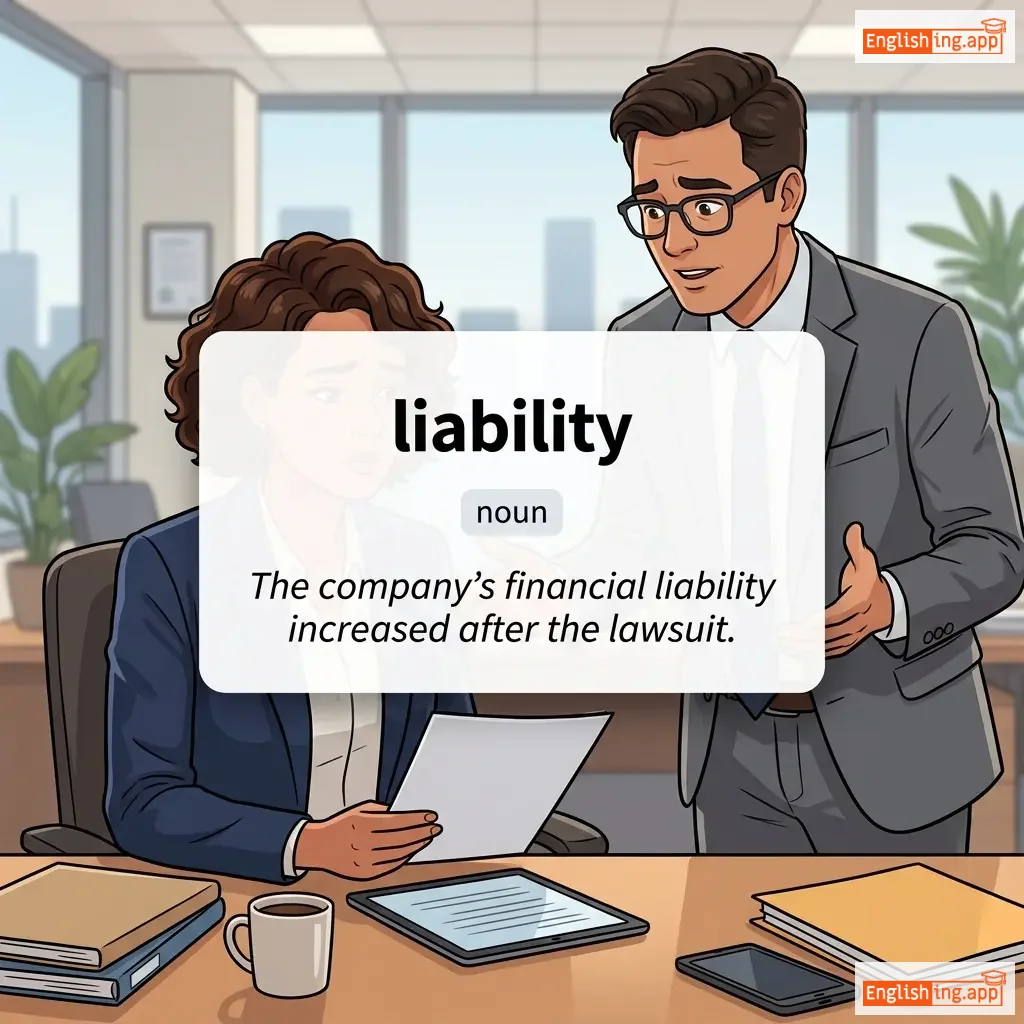
The company’s financial liability increased after the lawsuit.
公司在诉讼后增加了财务责任。
••••••
|
公司在诉讼后增加了财务责任。
Gōngsī zài sùsòng hòu zēngjiāle cáiwù zérèn.
••••••
|
legal liability
法律责任
••••••
|
the state of being legally responsible for an act or omission
••••••
|
法律责任
fǎlǜ zérèn
••••••
|
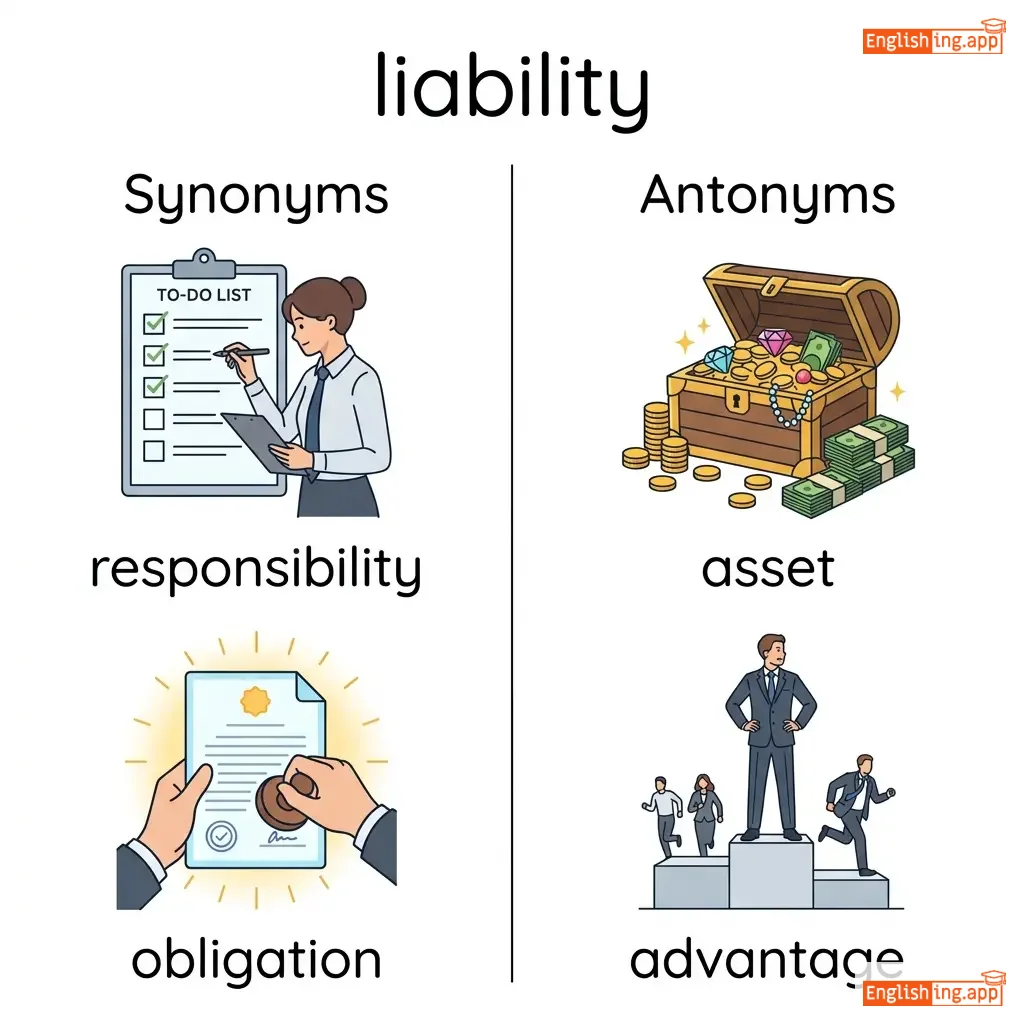
responsibility, obligation, accountability, burden, debt
••••••
|
asset, advantage
••••••
|
financial liability, legal liability, limited liability, liability insurance
••••••
|
Liability 意味着如果出了问题,责任在你身上。
••••••
|
|
#5186
📚
|
/ˈlɛksɪkən/
noun
(lèxīkǎn)
••••••
|
|
词汇表
cíhuìbiǎo
••••••
|
- •••••• | - •••••• | - •••••• | - •••••• |
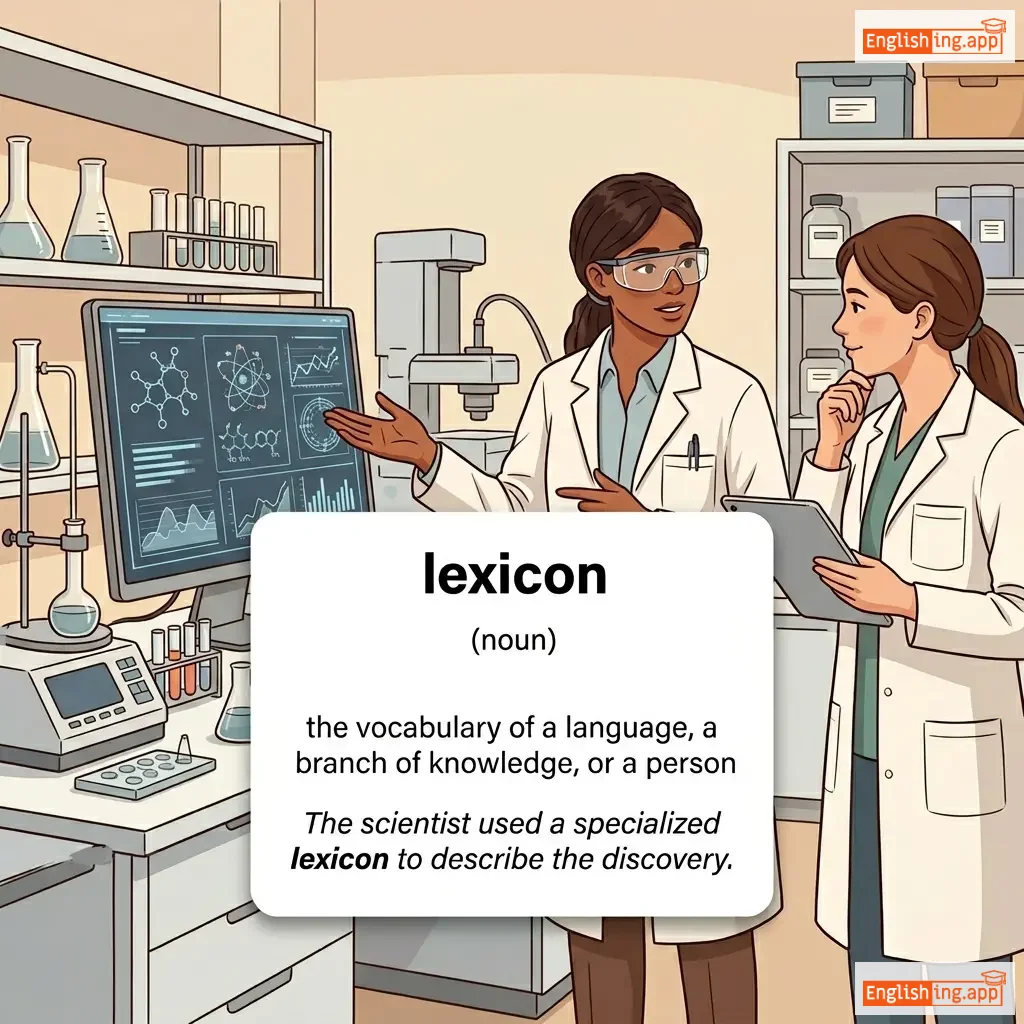
the vocabulary of a language, a branch of knowledge, or a person
••••••
|
The scientist used a specialized lexicon to describe the discovery. |
科学家使用了专业的词汇表来描述这一发现。
Kēxuéjiā shǐyòngle zhuānyè de cíhuìbiǎo lái miáoshù zhè yī fāxiàn.
••••••
|
- •••••• | - •••••• | - •••••• |
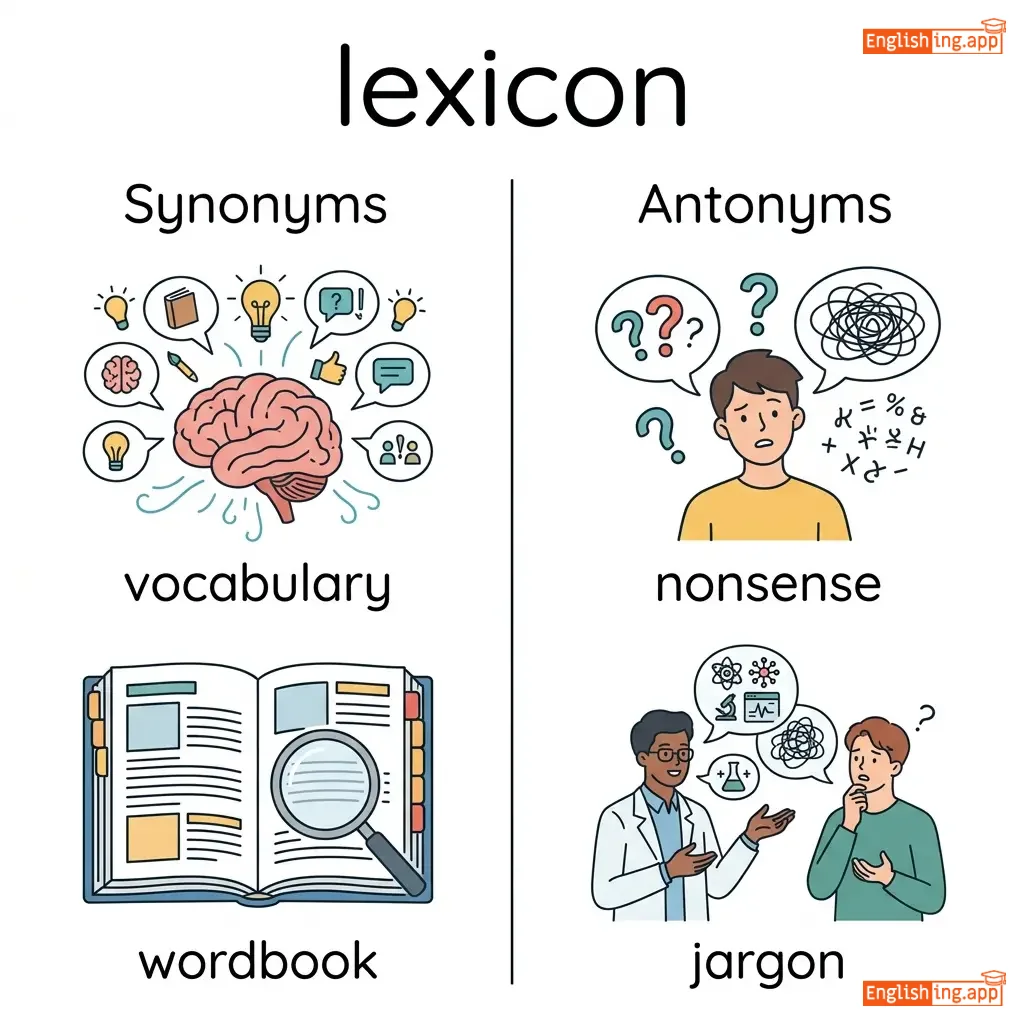
vocabulary, wordbook, glossary, dictionary
••••••
|
nonsense, jargon
••••••
|
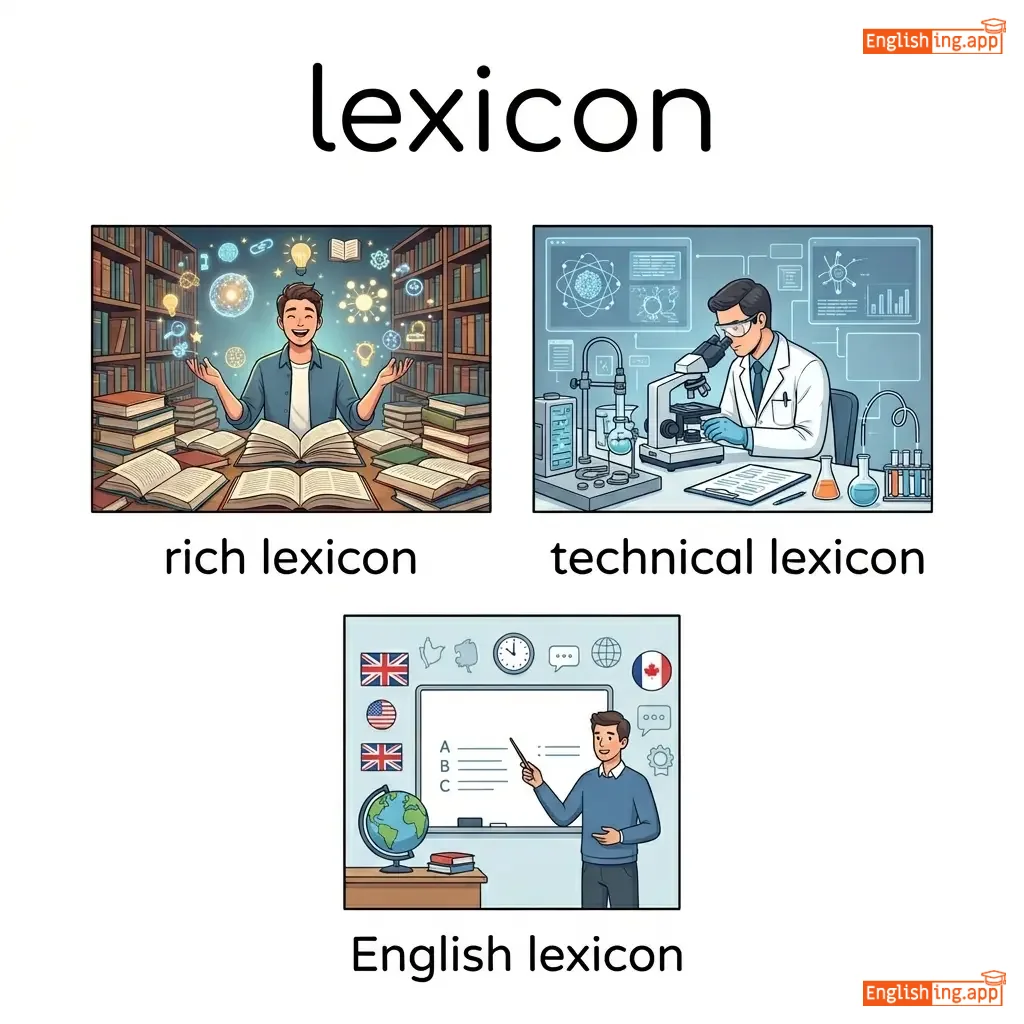
rich lexicon, technical lexicon, English lexicon, personal lexicon
••••••
|
Lexicon在中文中就像是词汇表,帮助整理语言的词汇。
••••••
|
|
#5187
📚
|
/ˌlɛksɪˈkɒɡrəfi/
noun
(lèxī kè ɡé lùo fēi)
••••••
|
- •••••• |
词典编纂学
cidian bianzhuanxue
••••••
|
- •••••• | - •••••• | - •••••• | - •••••• |
The art or practice of compiling dictionaries.
••••••
|
Lexicography requires both linguistic and cultural knowledge. |
词典编纂学需要语言学和文化知识。
Cidian bianzhuanxue xuyao yuyanxue he wenhuazhishi.
••••••
|
- •••••• | - •••••• | - •••••• |
dictionary-making, compilation, linguistics, lexicon study
••••••
|
illiteracy, ignorance
••••••
|
field of lexicography, history of lexicography, principles of lexicography
••••••
|
Lexicography = 词典 + 编纂
••••••
|
|
#5188
📖
|
/ˌlɛksɪˈkɒɡrəfər/
noun
(lèxíkēɡuǎfā)
••••••
|
- •••••• |
词典编纂者
cídiǎn biānzuǎn zhě
••••••
|
- •••••• | - •••••• | - •••••• | - •••••• |
A person who compiles, writes, or edits dictionaries.
••••••
|
The lexicographer spent years compiling the dictionary.
词典编纂者花了几年时间编写词典。
••••••
|
词典编纂者花了几年时间编写词典。
Cídiǎn biānzuǎn zhě huāle jǐ nián shíjiān biānxiě cídiǎn.
••••••
|
- •••••• | - •••••• | - •••••• |
dictionary writer, compiler, editor, linguist
••••••
|
reader, layman
••••••
|
famous lexicographer, professional lexicographer, modern lexicographer
••••••
|
词典编纂者:构建字词图形(字典)的人。
••••••
|
|
#5189
😏
|
/luːd/
adjective
(lud)
••••••
|
- •••••• |
猥亵
wěixiè
••••••
|
- •••••• | - •••••• | - •••••• | - •••••• |
Sexually offensive, obscene, or vulgar.
••••••
|
He was arrested for making lewd remarks in public. |
他因在公共场合发表猥亵言论而被捕。
Tā yīn zài gōnggòng chǎnghé fābiǎo wěixiè yánlùn ér bèi bǔ.
••••••
|
lewd conduct |
Inappropriate sexual behavior, especially in public.
••••••
|
猥亵行为
wěixiè xíngwéi
••••••
|
obscene, vulgar, indecent, immoral, lascivious
••••••
|
decent, modest, pure
••••••
|
lewd behavior, lewd act, lewd comment, lewd joke
••••••
|
Lewd 听起来像‘lud’,与猥亵行为相关。
••••••
|
|
#5190
💰
|
/ˈlɛvi/
verb
(莱维)
••••••
|
- •••••• |
征收
zhēng shōu
••••••
|
levied
levied
••••••
|
levied
levied
••••••
|
levies
levies
••••••
|
levying
levying
••••••
|
To impose or collect, especially a tax or fine.
••••••
|
The government decided to levy a new tax on luxury goods.
政府决定对奢侈品征收新税。
••••••
|
政府决定对奢侈品征收新税。
zhèng fǔ jué dìng duì shē chǐ pǐn zhēng shōu xīn shuì.
••••••
|
levy a fine
征收罚款
••••••
|
To officially impose a monetary penalty.
••••••
|
征收罚款
zhēng shōu fá kuǎn
••••••
|
impose, collect, charge, enforce, exact
••••••
|
abolish, remove, cancel
••••••
|
levy a tax, levy duties, levy fines, levy charges
••••••
|
Levy like 'love-y tax'!
••••••
|
Vocabulary Quiz
Test your vocabulary by matching words with their translations or meanings.
Login to take the quiz
Comments (0)
Share your thoughts and join the discussion.
Join the discussion by logging in
Login to CommentNo comments yet
Be the first to share your thoughts!