


Swipe left or right, or use the buttons. Tap image to zoom.
例句翻译
单词
Lesson 6Lesson 6 - 遮罩切换
|
表情符号
|
单词 | Images | 翻译 | 过去时 | 过去分词 | 第三人称单数 | 动名词 | 含义 | 例句 | 例句翻译 | 示例表达 | 示例表达含义 | 示例表达翻译 | 同义词 | 反义词 | 搭配词 | 助记符 |
|---|---|---|---|---|---|---|---|---|---|---|---|---|---|---|---|---|---|
|
#151
✔️
|
/ˈædɪkwət/
adjective
(āndíkwèt)
••••••
|
- •••••• |
足够
zúgòu
••••••
|
- •••••• | - •••••• | - •••••• | - •••••• |
sufficient or acceptable in quality or quantity
••••••
|
The food was adequate for the small group. |
食物足够适合小组。
Shíwù zúgòu shìhé xiǎozǔ.
••••••
|
adequate to the task |
sufficiently capable of completing a responsibility
••••••
|
足够胜任任务
zúgòu shèngrèn rènwù
••••••
|
sufficient, enough, satisfactory, suitable, ample
••••••
|
inadequate, insufficient, lacking
••••••
|
adequate supply, adequate amount, adequate support, adequate protection
••••••
|
足够就像adequate一样足够,足够食物就意味着足够的食物
••••••
|
|
#152
🙏
|
/ˌædʒʊˈreɪʃən/
noun
(ædʒʊˈreɪʃən)
••••••
|
- •••••• |
郑重请求
zhèngzhòng qǐngqiú
••••••
|
- •••••• | - •••••• | - •••••• | - •••••• |
a solemn urging or appeal
••••••
|
The priest made an adjuration for peace and unity. |
牧师为和平与团结做出了郑重请求。
Mùshī wèi hépíng yǔ tuánjié zuòchūle zhèngzhòng qǐngqiú.
••••••
|
- •••••• | - •••••• | - •••••• |
plea, appeal, entreaty, supplication, exhortation
••••••
|
command, order, disregard
••••••
|
earnest adjuration, solemn adjuration, adjuration for peace
••••••
|
Adjuration 听起来像是一个严肃的请求 - 一个正式的恳求。
••••••
|
|
#153
➕
|
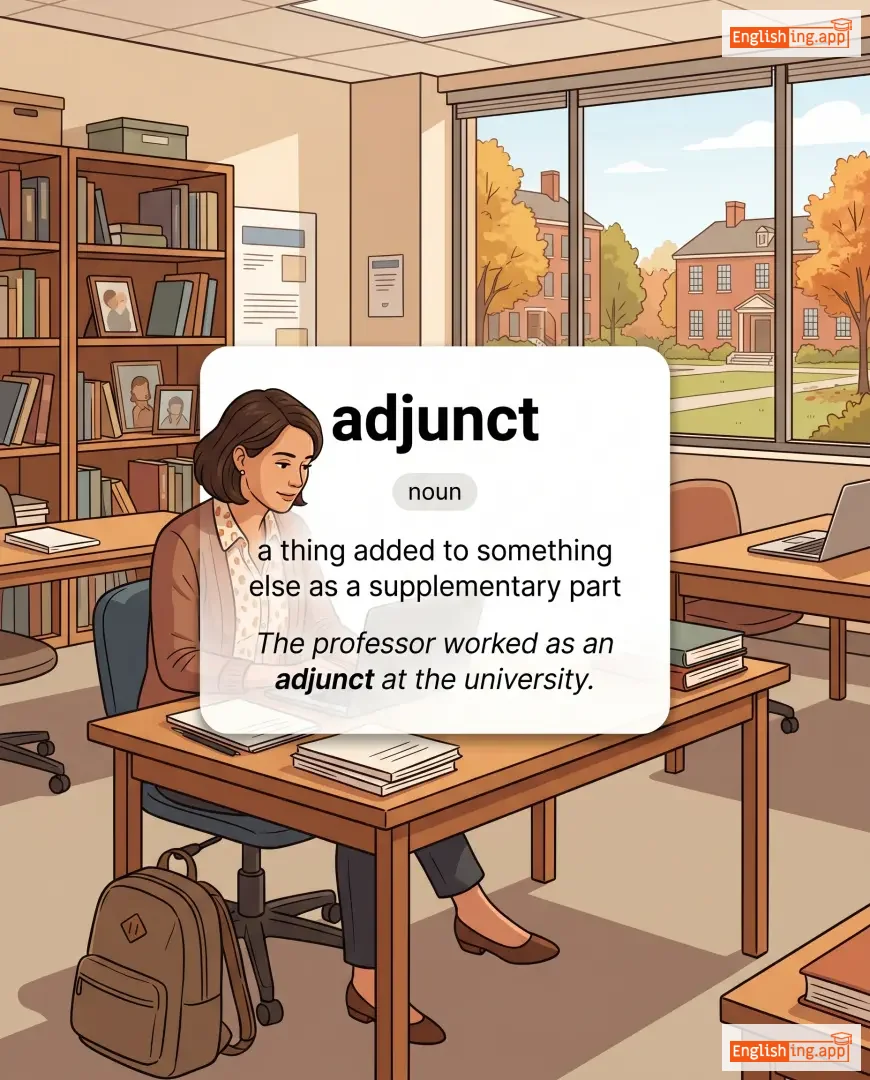
/ˈædʒʌŋkt/
noun
(ædʒʌŋkt)
••••••
|
|
附加物
fùjiā wù
••••••
|
- •••••• | - •••••• | - •••••• | - •••••• |
a thing added to something else as a supplementary part
••••••
|
The professor worked as an adjunct at the university. |
教授在大学担任附加职位工作。
Jiàoshòu zài dàxué dānrèn fùjiā zhíwèi gōngzuò.
••••••
|
- •••••• | - •••••• | - •••••• |
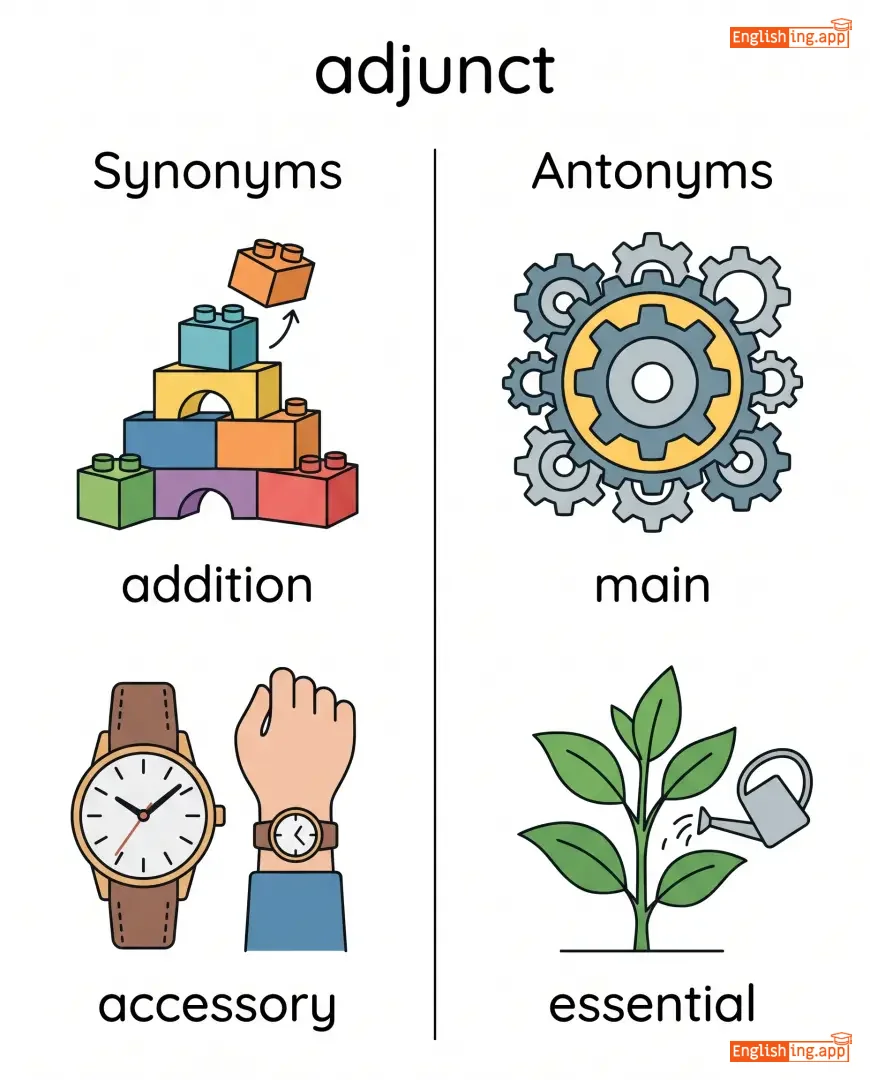
addition, accessory, supplement, appendage, auxiliary
••••••
|
main, essential, principal
••••••
|
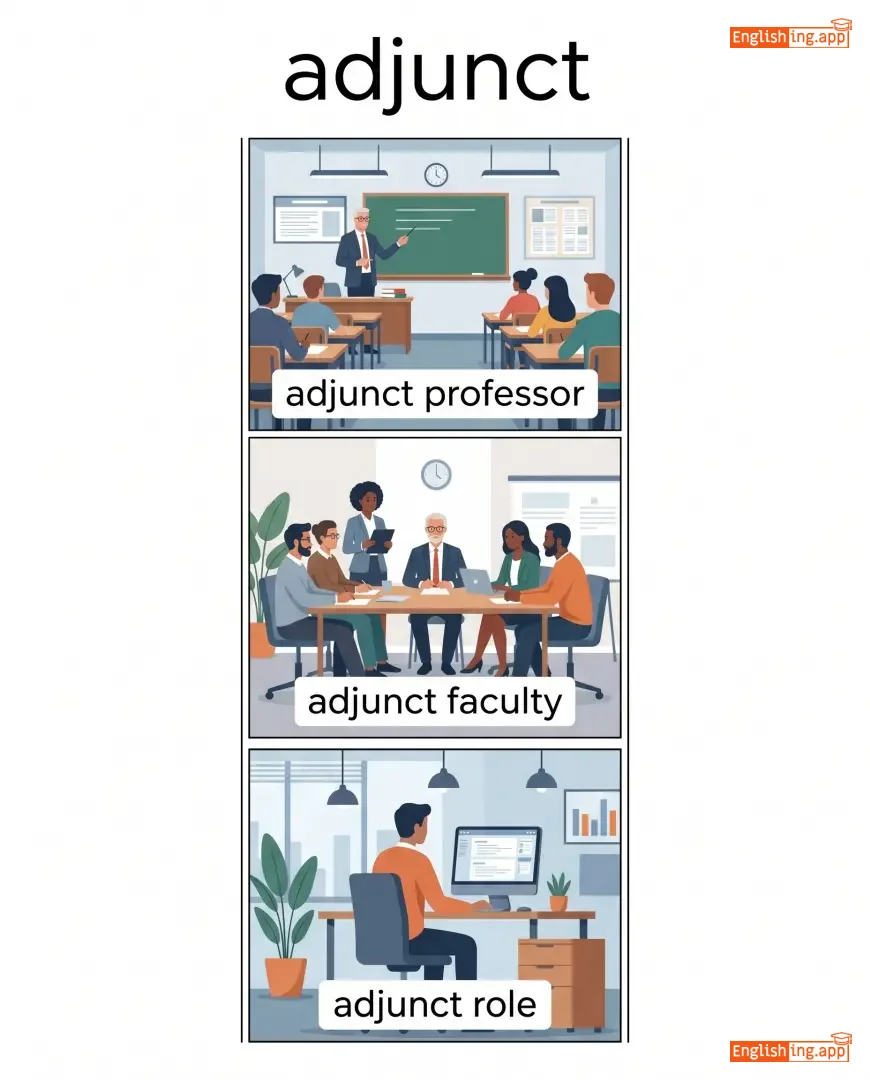
adjunct professor, adjunct faculty, adjunct role, adjunct therapy
••••••
|
Adjunct = 添加 + 连接,意味着附加的部分。
••••••
|
|
#154
👨⚖️
|
/əˈdʒuːdɪˌkeɪt/
verb
(裁定)
••••••
|
- •••••• |
裁定
cáidìng
••••••
|
adjudicated
裁定
••••••
|
adjudicated
裁定
••••••
|
adjudicates
裁定
••••••
|
adjudicating
裁定
••••••
|
to make a formal judgment or decision about a problem or dispute
••••••
|
The committee was formed to adjudicate disputes between the parties.
委员会的成立是为了裁定各方之间的争议。
••••••
|
委员会的成立是为了裁定各方之间的争议。
Wěiyuánhuì de chénglì shì wèile cáidìng gè fāng zhījiān de zhēngyì.
••••••
|
adjudicate a dispute
裁定争议
••••••
|
to settle a conflict officially
••••••
|
裁定争议
cáidìng zhēngyì
••••••
|
arbitrate, judge, decide, settle, resolve
••••••
|
ignore, delay, neglect
••••••
|
adjudicate disputes, adjudicate cases, adjudicate claims
••••••
|
Adjudicate = A Judge + Indicate = 法官做出裁决。
••••••
|
|
#155
⚖️
|
/əˈdʒʌdʒ/
verb
(āduj)
••••••
|
- •••••• |
裁决
caijue
••••••
|
adjudged
ādujīd
••••••
|
adjudged
ādujīd
••••••
|
adjudges
ādují
••••••
|
adjudging
ādujìng
••••••
|
to consider or declare officially in a legal or formal manner
••••••
|
He was adjudged guilty by the court.
他被法院判定有罪。
••••••
|
他被法院判定有罪。
Ta bei fayuan panding youzui.
••••••
|
- •••••• | - •••••• | - •••••• |
deem, declare, rule, decide, pronounce
••••••
|
ignore, disregard, overlook
••••••
|
adjudge guilty, adjudge bankrupt, adjudge innocent
••••••
|
Adjudge和'裁决'类似,意味着法院宣布判决。
••••••
|
|
#156
⏸️
|
/əˈdʒɜrn/
verb
(阿焦恩)
••••••
|
- •••••• |
推迟
tuīchí
••••••
|
adjourned
阿焦恩德
••••••
|
adjourned
阿焦恩德
••••••
|
adjourns
阿焦恩斯
••••••
|
adjourning
阿焦宁
••••••
|
to suspend a meeting or session to another time or place
••••••
|
The judge decided to adjourn the hearing until next week.
法官决定将听证会推迟到下周。
••••••
|
法官决定将听证会推迟到下周。
Fǎguān juédìng jiāng tīngzhènghuì tuīchí dào xià zhōu.
••••••
|
motion to adjourn
动议推迟
••••••
|
a formal proposal to end a meeting or session
••••••
|
动议推迟
dòngyì tuīchí
••••••
|
suspend, postpone, delay, recess, discontinue
••••••
|
resume, continue, proceed
••••••
|
adjourn a meeting, adjourn the session, adjourn temporarily, motion to adjourn
••••••
|
Adjourn 就像 '推迟',会议被推到更晚的时间或另一个地方。
••••••
|
|
#157
🏡
|
/əˈdʒɔɪn/
verb
(ædʒɔɪn)
••••••
|
- •••••• |
毗邻
pílín
••••••
|
adjoined
ædʒɔɪnd
••••••
|
adjoined
ædʒɔɪnd
••••••
|
adjoins
ædʒɔɪns
••••••
|
adjoining
ædʒɔɪnɪŋ
••••••
|
To be next to and joined with something.
••••••
|
Their house adjoins the park.
他们的房子毗邻公园。
••••••
|
他们的房子毗邻公园。
Tāmen de fángzi pílín gōngyuán.
••••••
|
- •••••• | - •••••• | - •••••• |
border, connect, neighbor, join, touch
••••••
|
separate, detach, divide
••••••
|
adjoin property, adjoin land, houses adjoin
••••••
|
Adjoin 意味着毗邻 – 想象'Add + join'意味着接近并连接。
••••••
|
|
#158
🏖️
|
/əˈdʒeɪsənt/
adjective
(adjacent)
••••••
|
- •••••• |
毗邻
pílín
••••••
|
- •••••• | - •••••• | - •••••• | - •••••• |
Next to or adjoining something else.
••••••
|
The hotel is adjacent to the beach.
这家酒店紧邻海滩。
••••••
|
这家酒店紧邻海滩。
Zhè jiā jiǔdiàn jǐn lín hǎitān.
••••••
|
- •••••• | - •••••• | - •••••• |
near, neighboring, adjoining, bordering, beside
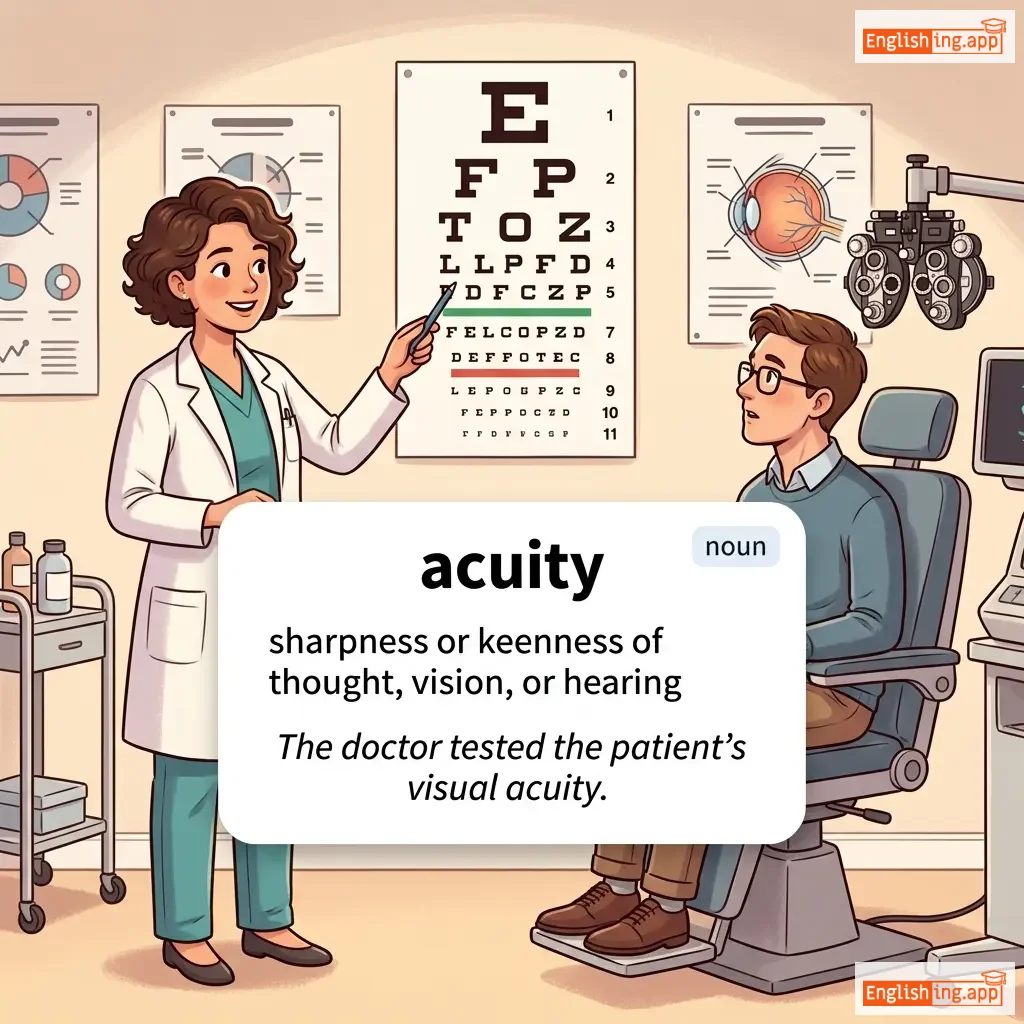
••••••
|
distant, remote, far
••••••
|
adjacent room, adjacent property, adjacent area
••••••
|
毗邻就像'旁边',直接相连。
••••••
|
|
#159
🏘️
|
/əˈdʒeɪsənsi/
noun
(adjacency)
••••••
|
- •••••• |
邻近性
línjìn xìng
••••••
|
- •••••• | - •••••• | - •••••• | - •••••• |
The state of being next to or adjoining something else.
••••••
|
The adjacency of the two buildings made it easy to connect them.
这两座建筑物的邻近性使得它们的连接变得容易。
••••••
|
这两座建筑物的邻近性使得它们的连接变得容易。
Zhè liǎng zuò jiànzhúwù de línjìn xìng shǐ dé tāmen de liánjiē biàn dé róngyì.
••••••
|
- •••••• | - •••••• | - •••••• |
nearness, closeness, vicinity, contiguity, proximity
••••••
|
distance, separation, remoteness
••••••
|
adjacency matrix, adjacency list, adjacency of buildings
••••••
|
Adjacency意味着邻近性 – Adjacent的名词形式,想想“旁边的座位”就是邻近性。
••••••
|
|
#160
🍔
|
/ˈædɪˌpoʊs/
adjective
(脂肪的)
••••••
|
- •••••• |
脂肪的
zhīfáng de
••••••
|
- •••••• | - •••••• | - •••••• | - •••••• |
Relating to or consisting of animal fat; fatty.
••••••
|
The doctor explained that the tissue was mainly adipose in nature. |
医生解释说,组织主要是脂肪性的。
Yīshēng jiěshì shuō, zǔzhī zhǔyào shì zhīfáng xìng de.
••••••
|
- •••••• | - •••••• | - •••••• |
fatty, greasy, plump, corpulent, obese
••••••
|
lean, thin, slender
••••••
|
adipose tissue, adipose cells, adipose body
••••••
|
Adipose 意味着与脂肪相关,记住 'Addi + pose' 变得胖。
••••••
|
|
#161
👋
|
/əˈdjuː/
noun
••••••
|
- •••••• | - •••••• | - •••••• | - •••••• | - •••••• | - •••••• |
A farewell or goodbye, often used in a formal or poetic sense.
••••••
|
She bid her friends adieu before leaving for France. |
- •••••• |
bid adieu |
to say goodbye formally
••••••
|
- •••••• |
farewell, goodbye, parting, send-off, leave-taking
••••••
|
greeting, hello, welcome
••••••
|
bid adieu, final adieu, fond adieu
••••••
|
No •••••• |
|
#162
🩹
|
/ədˈhiːʒən/
noun
(附着)
••••••
|
- •••••• |
附着
fùzhuó
••••••
|
- •••••• | - •••••• | - •••••• | - •••••• |
the process or state of sticking to something
••••••
|
Strong adhesion is needed for the tiles to stay in place. |
瓷砖保持在原位需要强附着力。
Cízhuān bǎochí zài yuán wèi xūyào qiáng fùzhuó lì.
••••••
|
adhesion contract |
a contract where one party has much stronger bargaining power
••••••
|
附着合同
fùzhuó hé tóng
••••••
|
sticking, attachment, grip, bond, cohesion
••••••
|
detachment, separation, looseness
••••••
|
strong adhesion, adhesion force, adhesion property, adhesion surface
••••••
|
附着意味着像贴纸一样紧紧贴合。
••••••
|
|
#163
🙋
|
/ədˈhɪərənt/
noun
(ædˈhɪəɹənt)
••••••
|
- •••••• |
追随者
zhuīsuí zhě
••••••
|
- •••••• | - •••••• | - •••••• | - •••••• |
a person who supports or follows a particular belief, cause, or leader
••••••
|
He is a strong adherent of democratic values. |
他是民主价值观的坚定追随者。
Tā shì mínzhǔ jiàzhíguān de jiāndìng zhuīsuí zhě.
••••••
|
- •••••• | - •••••• | - •••••• |
supporter, follower, disciple, advocate, devotee
••••••
|
opponent, critic, rival
••••••
|
adherent of faith, loyal adherent, political adherent, true adherent
••••••
|
Adherent 意味着追随者,支持某个事业的人。
••••••
|
|
#164
📜
|
/ədˈhɪərəns/
noun
(ædˈhɪərəns)
••••••
|
|
遵守
zunshou
••••••
|
- •••••• | - •••••• | - •••••• | - •••••• |
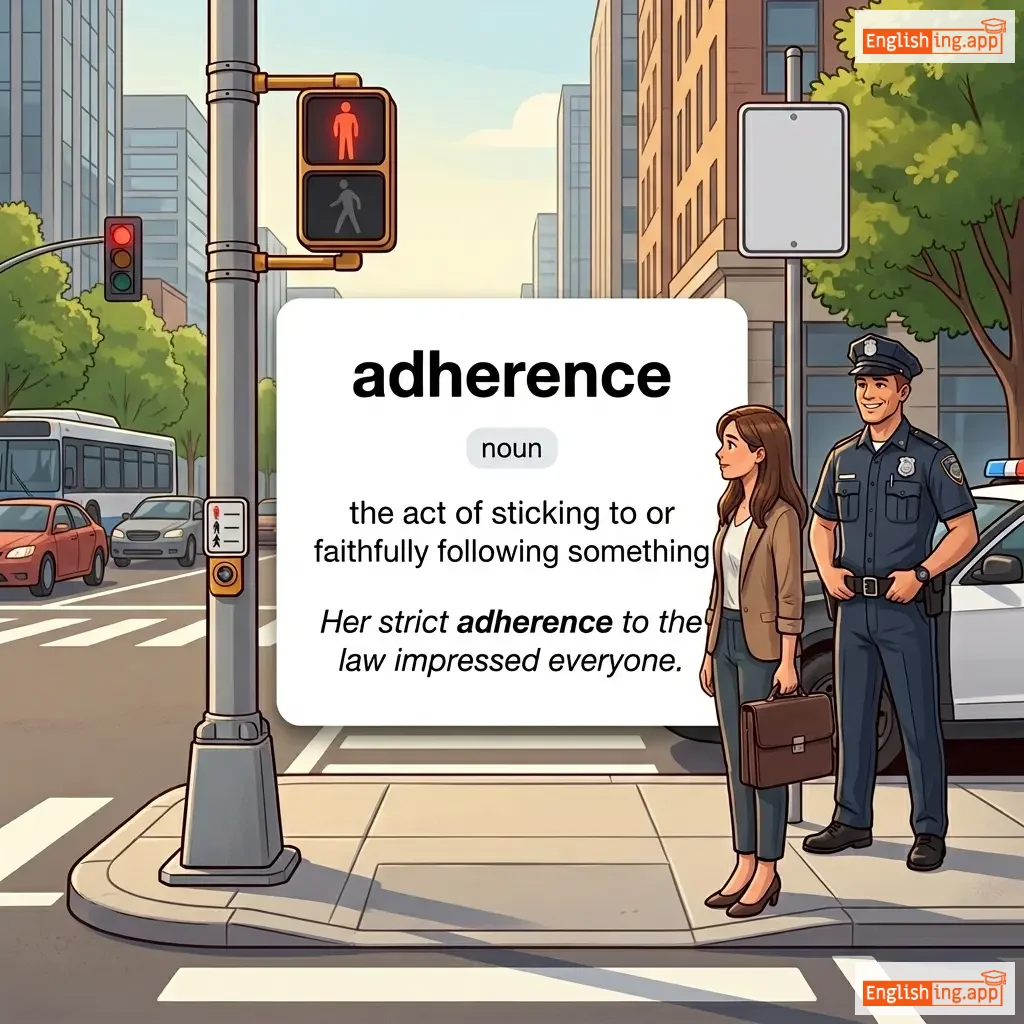
the act of sticking to or faithfully following something
••••••
|
Her strict adherence to the law impressed everyone.
她对法律的严格遵守给大家留下了深刻的印象。
••••••
|
她对法律的严格遵守给大家留下了深刻的印象。
Tā duì fǎlǜ de yángé zūnshǒu gěi dàjiā liúxiàle shēn kè de yìnxiàng.
••••••
|
adherence to tradition
对传统的遵守
••••••
|
faithfully following traditional practices
••••••
|
对传统的遵守
Duì chuántǒng de zūnshǒu
••••••
|
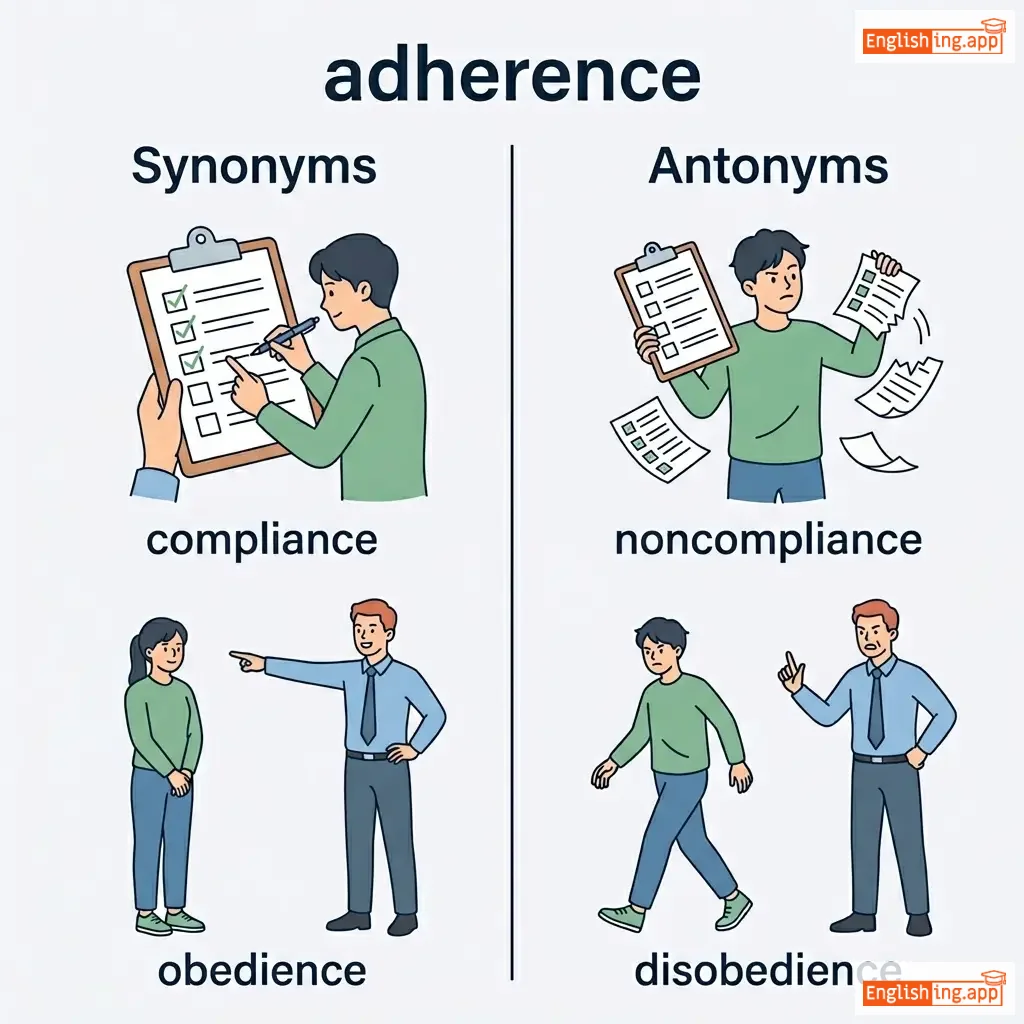
compliance, obedience, loyalty, attachment, devotion
••••••
|
noncompliance, disobedience, defiance
••••••
|
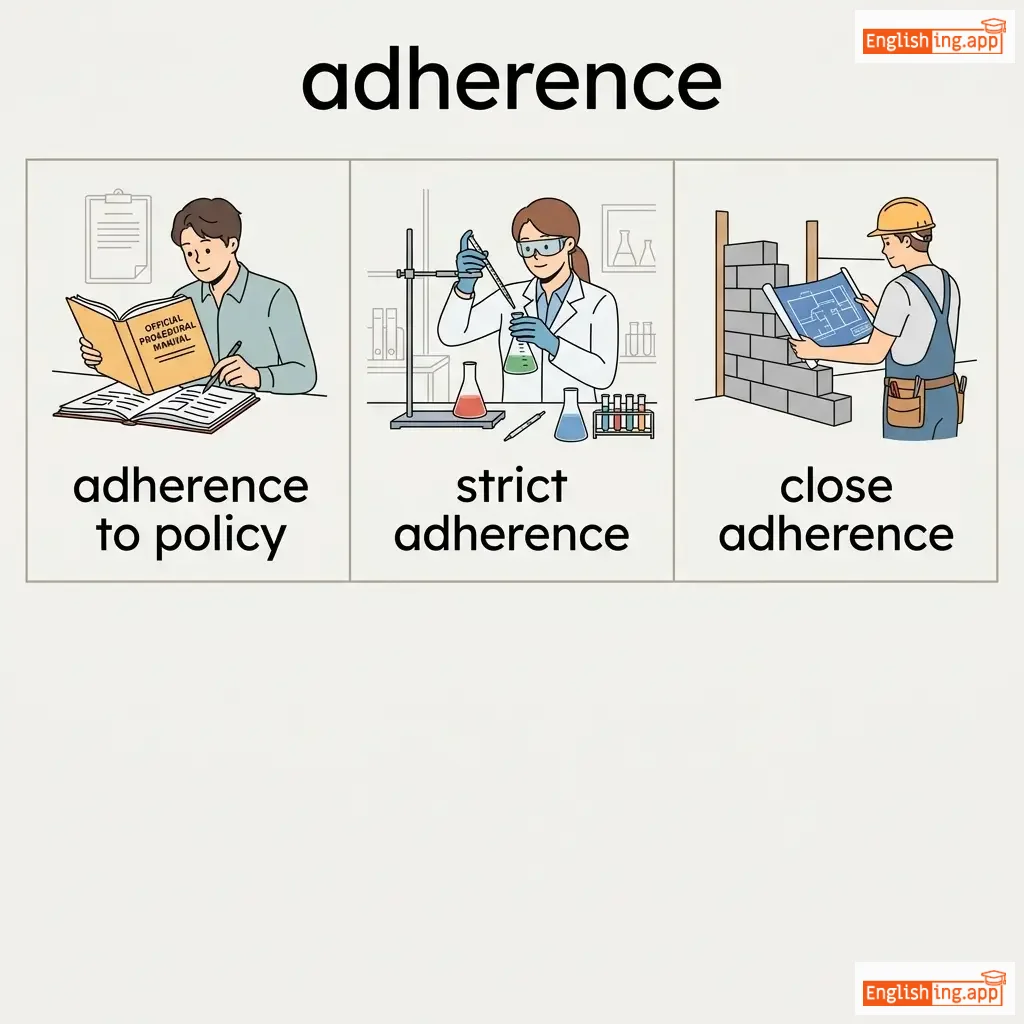
adherence to policy, strict adherence, close adherence, adherence standards
••••••
|
Adherence 意为遵守,Adhere + ence = 遵守
••••••
|
|
#165
🧷
|
/ədˈhɪər/
verb
(adhier)
••••••
|
|
粘附, 遵守
zhānfù, zūnshǒu
••••••
|
adhered
adhiered
••••••
|
adhered
adhiered
••••••
|
adheres
adhieres
••••••
|
adhering
adhiering
••••••
|
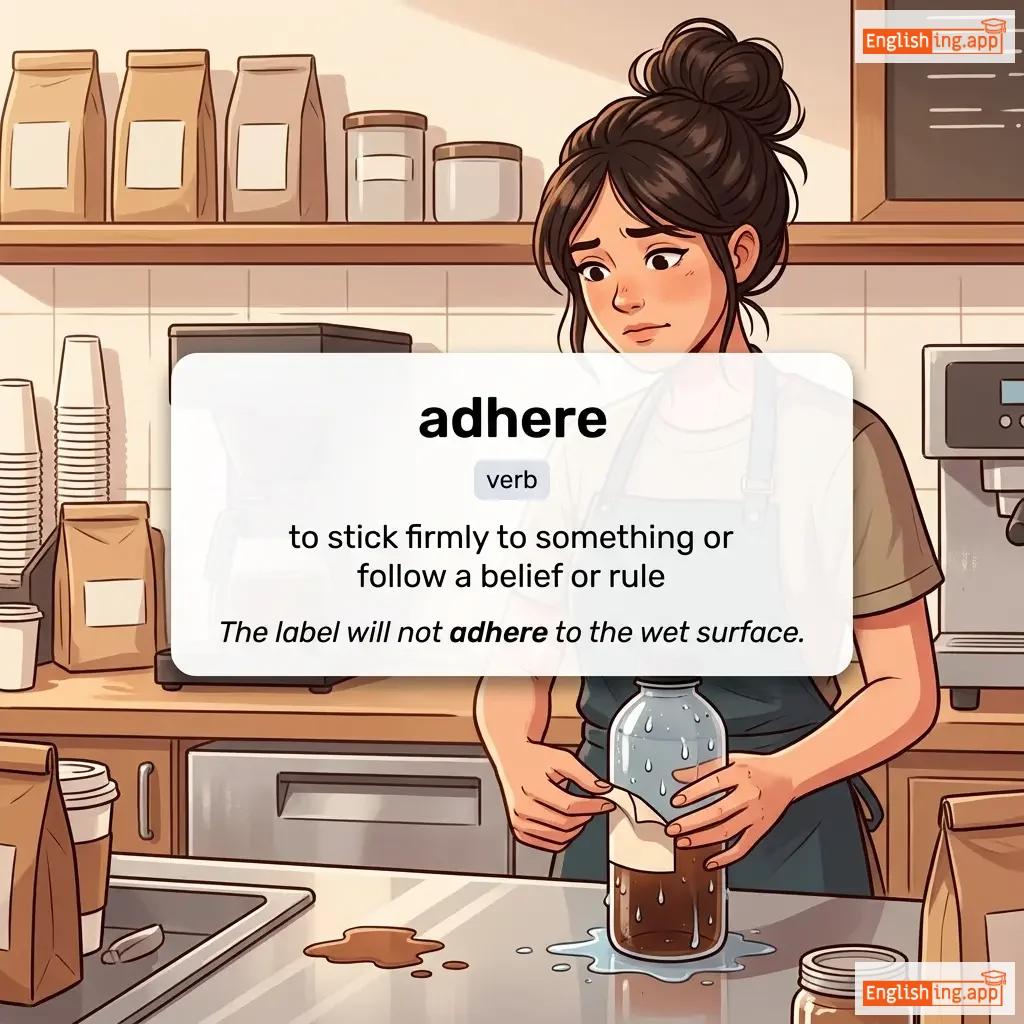
to stick firmly to something or follow a belief or rule
••••••
|
The label will not adhere to the wet surface.
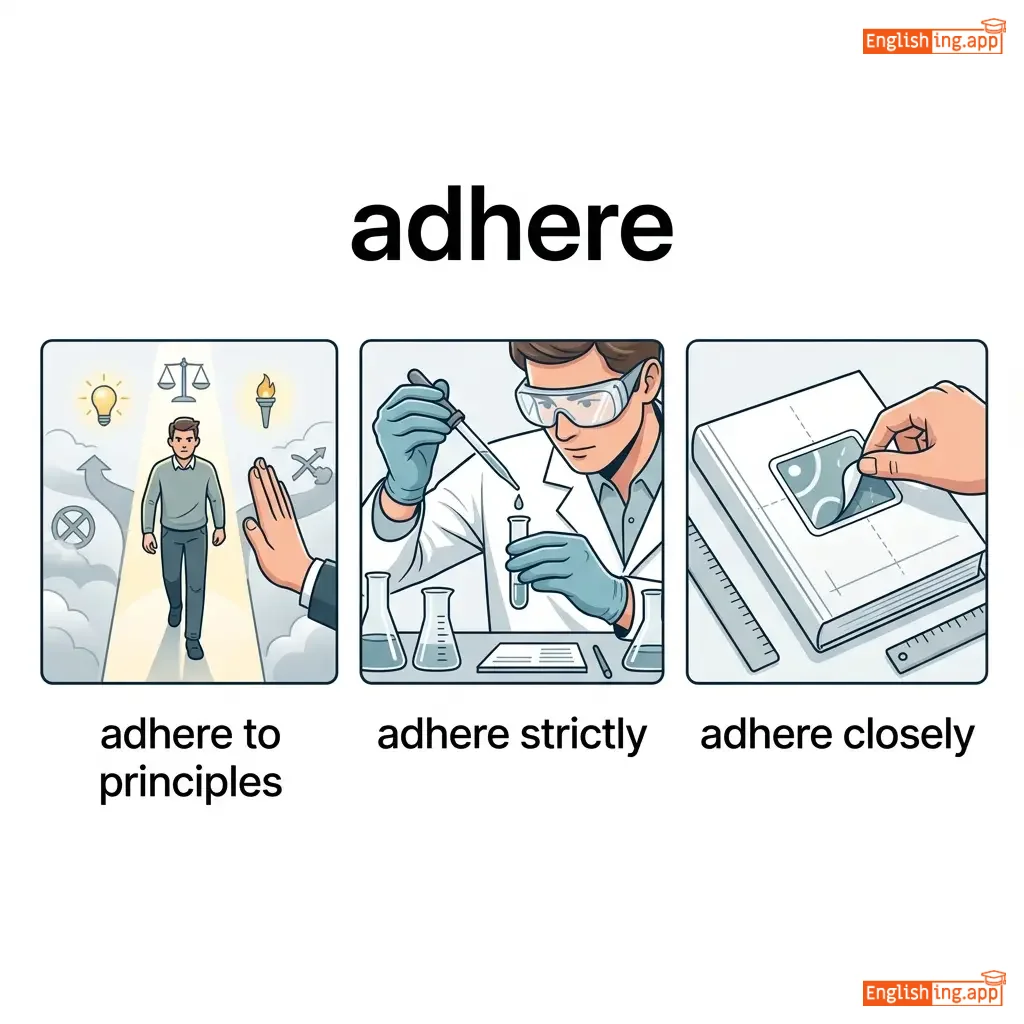
标签不会粘在湿表面。
••••••
|
标签不会粘在湿表面。
Biāoqiān bù huì zhān zài shī biǎomiàn.
••••••
|
adhere to rules
遵守规则
••••••
|
to strictly follow rules or principles
••••••
|
遵守规则
zūnshǒu guīzé
••••••
|
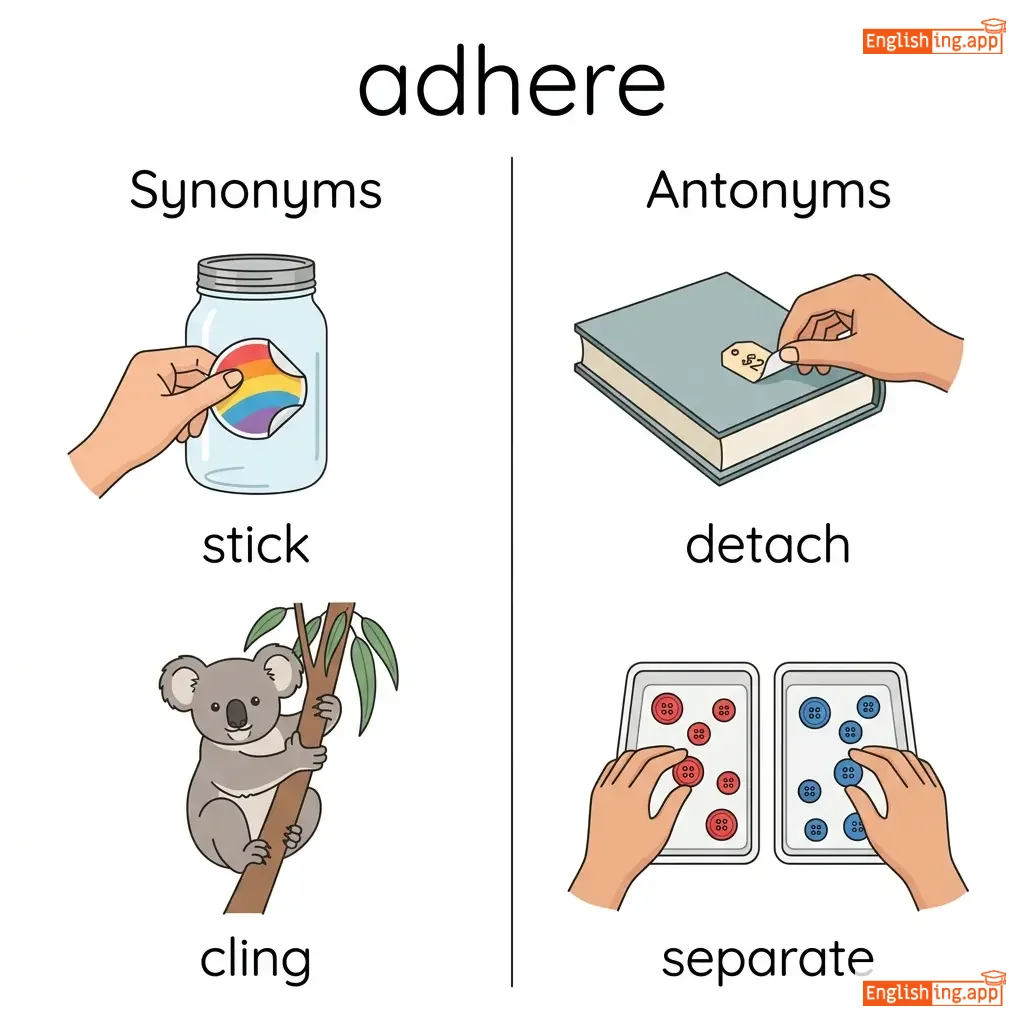
stick, cling, attach, comply, follow
••••••
|
detach, separate, ignore
••••••
|
adhere to principles, adhere strictly, adhere closely, adhere firmly
••••••
|
Adhere 就像粘贴一样,像胶水一样粘在表面。
••••••
|
|
#166
⚙️
|
/ˈæktʃueɪt/
verb
(激活)
••••••
|
- •••••• |
激活
jī huó
••••••
|
actuated
激活了
••••••
|
actuated
激活了
••••••
|
actuates
激活
••••••
|
actuating
激活中
••••••
|
to put into action or motion; to motivate or activate
••••••
|
The engineer actuated the machine with a simple switch.
工程师通过一个简单的开关激活了机器。
••••••
|
工程师通过一个简单的开关激活了机器。
Gōngchéngshī tōngguò yīgè jiǎndān de kāiguān jī huó le jīqì.
••••••
|
- •••••• | - •••••• | - •••••• |
activate, trigger, drive, initiate, propel
••••••
|
halt, stop, block
••••••
|
actuate a device, actuate a mechanism, actuate a system
••••••
|
激活 = 启动,像开启机器一样。
••••••
|
|
#167
🎯
|
/əˈdɛpt/
adjective
••••••
|
|
- •••••• | - •••••• | - •••••• | - •••••• | - •••••• |
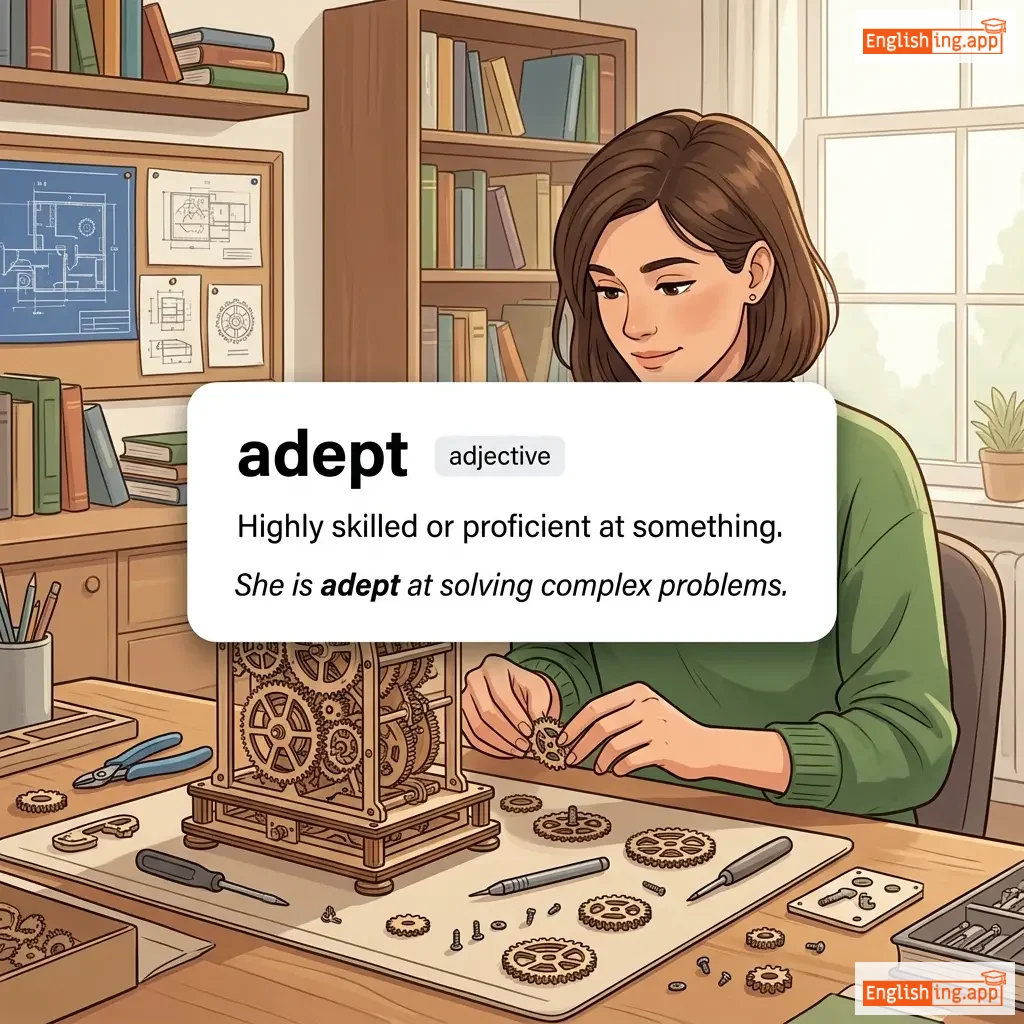
Highly skilled or proficient at something.
••••••
|
She is adept at solving complex problems. |
- •••••• |
adept at |
very skilled or proficient in a particular activity
••••••
|
- •••••• |
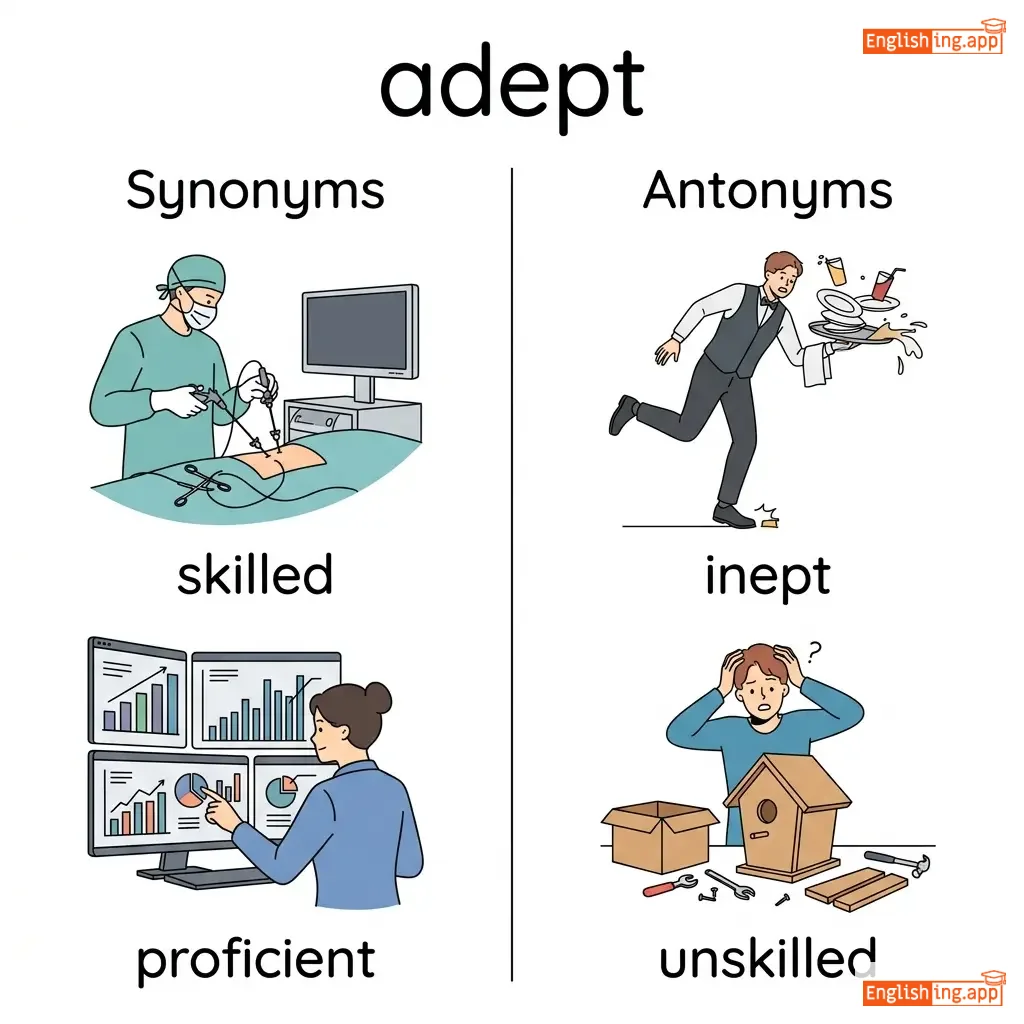
skilled, proficient, expert, talented, accomplished
••••••
|
inept, unskilled, clumsy
••••••
|
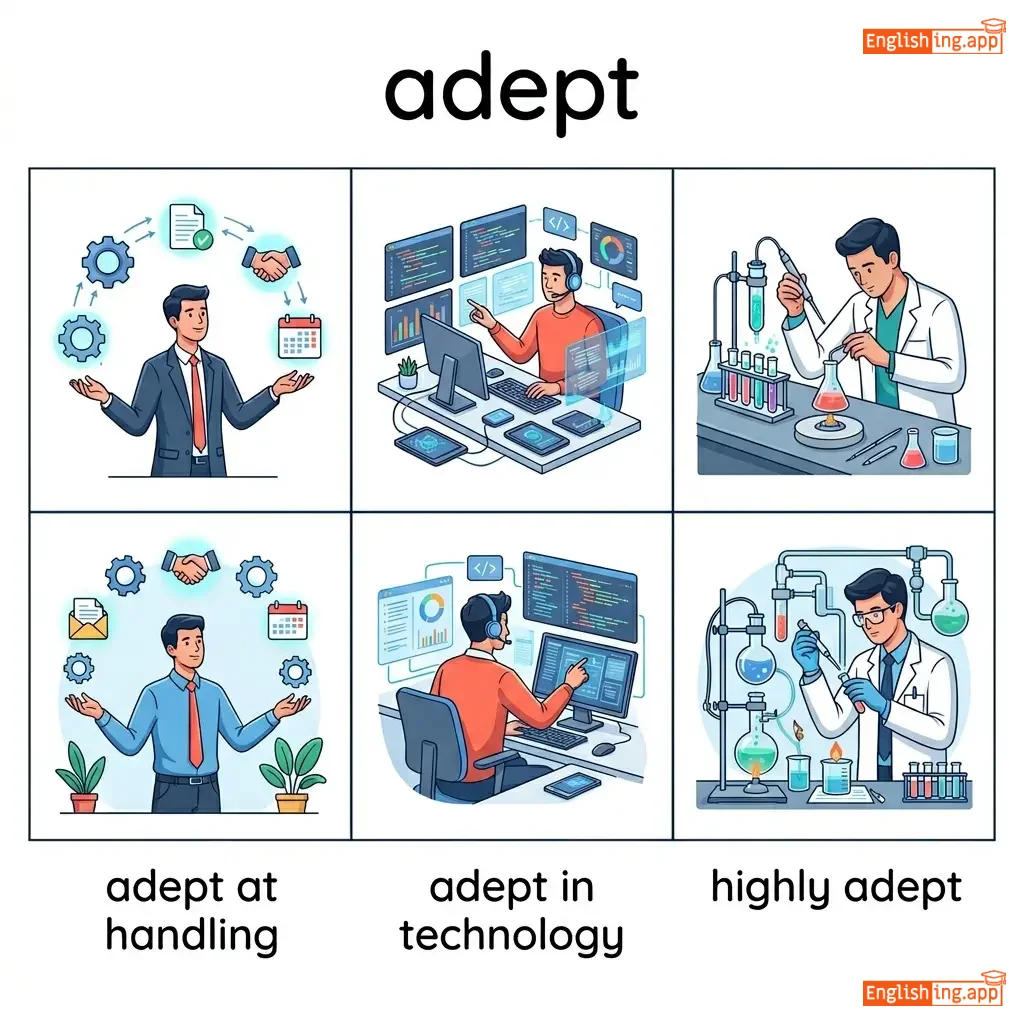
adept at handling, adept in technology, highly adept
••••••
|
No •••••• |
|
#168
📑
|
/əˈdjuːs/
verb
(艾杜斯)
••••••
|
- •••••• |
提供证据或理由
tigong zhengju huo liyi
••••••
|
adduced
艾杜斯德
••••••
|
adduced
艾杜斯德
••••••
|
adduces
艾杜塞斯
••••••
|
adducing
艾杜辛
••••••
|
To provide evidence or reasons to support an argument or idea.
••••••
|
The lawyer adduced several examples to support his case.
律师引用了几个例子来支持他的案件。
••••••
|
律师引用了几个例子来支持他的案件。
Lüshi yinyongle jige lixu lai zhichi tade anjian.
••••••
|
- •••••• | - •••••• | - •••••• |
cite, present, offer, advance, produce
••••••
|
conceal, withhold, suppress
••••••
|
adduce evidence, adduce reasons, adduce examples
••••••
|
Adduce意味着提供证据来支持一个观点。
••••••
|
|
#169
📢
|
/əˈdrɛs/
verb
(adresu)
••••••
|
|
dānrèn, jiějué
danren, jiejué
••••••
|
addressed
zhíxíng
••••••
|
addressed
zhíxíng
••••••
|
addresses
zhíxíng
••••••
|
addressing
zhíxíng zhōng
••••••
|
To speak to someone directly or to deal with an issue.
••••••
|
The manager will address the employees about the new policy.
Jīnglǐ huì zhíxíng yuángōngmen duì xīn zhèngcè de jiǎngjiù.
••••••
|
Jīnglǐ huì zhíxíng yuángōngmen duì xīn zhèngcè de jiǎngjiù.
Jingli hui zhixing yuangongmen dui xin zhengce de jiangjiu.
••••••
|
address the issue
jiějué wèntí
••••••
|
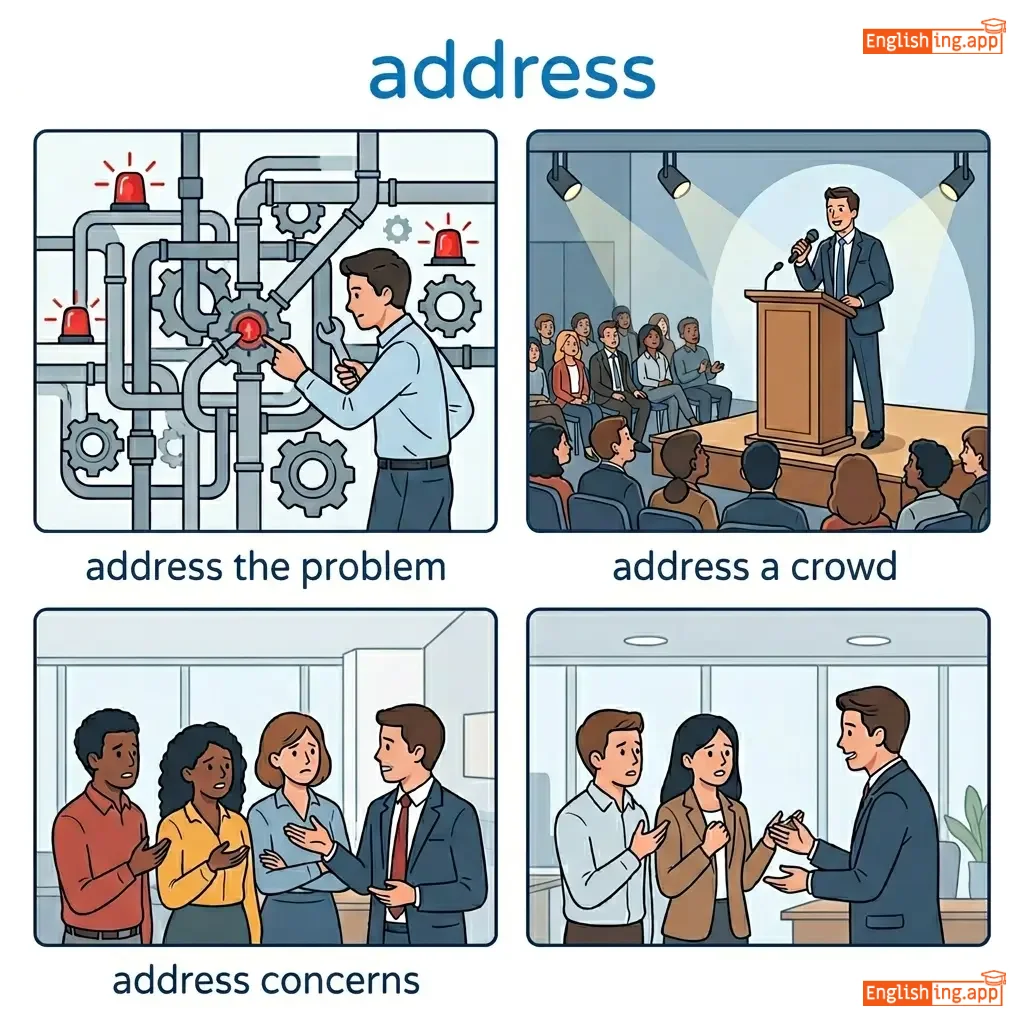
to deal with or solve a problem
••••••
|
jiějué wèntí
jiejue wenti
••••••
|
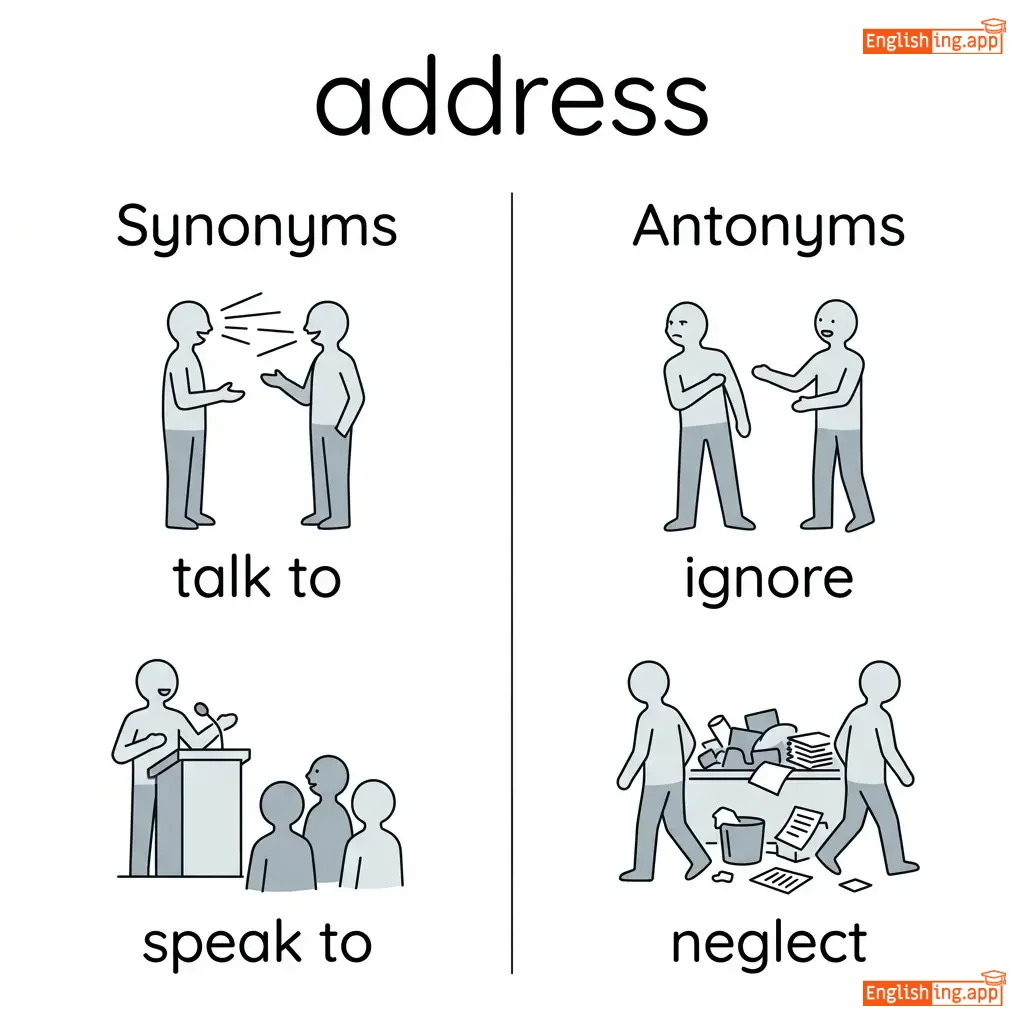
talk to, speak to, deal with, handle
••••••
|
ignore, neglect, avoid
••••••
|
address the problem, address a crowd, address concerns, address formally
••••••
|
Address bù jǐn shì dìzhǐ, hái shì wèntí de jiějué.
••••••
|
|
#170
🤯
|
/ˈæd.l̩/
verb
(艾德尔)
••••••
|
- •••••• |
迷惑
mìhuò
••••••
|
addled
艾德尔德
••••••
|
addled
艾德尔德
••••••
|
addles
艾德尔斯
••••••
|
addling
艾德林
••••••
|
To confuse or muddle someone’s mind.
••••••
|
The complicated instructions only served to addle him.
复杂的指令只会让他感到困惑。
••••••
|
复杂的指令只会让他感到困惑。
Fùzá de zhǐlìng zhǐ huì ràng tā gǎndào kùnhuò.
••••••
|
- •••••• | - •••••• | - •••••• |
confuse, perplex, bewilder, muddle
••••••
|
clarify, enlighten, explain
••••••
|
addle the brain, addle the mind, completely addled
••••••
|
Addle意味着困惑—让思想混乱
••••••
|
|
#171
⚠️
|
/əˈdɪkʃən/
noun
(上瘾)
••••••
|
- •••••• |
上瘾
shangyin
••••••
|
- •••••• | - •••••• | - •••••• | - •••••• |
A strong and harmful need to regularly have or do something, such as drugs, alcohol, or habits.
••••••
|
His addiction to video games affected his studies. |
他对视频游戏的上瘾影响了他的学习。
Ta dui shipin youxi de shangyin yingxiangle tade xuexi.
••••••
|
fight an addiction |
to struggle against a harmful habit
••••••
|
与上瘾作斗争
Yu shangyin zuo douzheng
••••••
|
dependence, craving, obsession, compulsion, habit
••••••
|
freedom, independence, control
••••••
|
drug addiction, gambling addiction, addiction recovery, overcome addiction
••••••
|
Addiction是指陷入坏习惯—上瘾
••••••
|
|
#172
⚠️
|
/ˈædɪkt/ (noun), /əˈdɪkt/ (verb)
noun, verb
(艾迪克特)
••••••
|
- •••••• |
成瘾者
chengyinzhe
••••••
|
addicted
上瘾
••••••
|
addicted
上瘾
••••••
|
addicts
艾迪克特
••••••
|
addicting
艾迪克特
••••••
|
a person who is unable to stop using a harmful substance or doing something harmful; to cause someone to become dependent on something
••••••
|
He is a video game addict who spends hours playing every day.
他是一个视频游戏上瘾者,每天花几个小时玩游戏。
••••••
|
他是一个视频游戏上瘾者,每天花几个小时玩游戏。
Ta shi yi ge shipin youxi shangyin zhe, meitian hua ji ge xiaoshi wan youxi.
••••••
|
addicted to
沉迷于
••••••
|
being unable to stop doing or using something
••••••
|
沉迷于
chenmi yu
••••••
|
user, abuser, dependent, fanatic
••••••
|
nonuser, free, independent
••••••
|
drug addict, video game addict, addicted to, hopeless addict
••••••
|
Addict 在中文是成瘾者 — 沉迷游戏就像上瘾一样!
••••••
|
|
#173
📑
|
/əˈdɛndəm/
noun
(附录)
••••••
|
- •••••• |
附录
fùlù
••••••
|
- •••••• | - •••••• | - •••••• | - •••••• |
an additional item or piece of information added at the end of a document or book
••••••
|
The report included an addendum with updated statistics. |
报告中包含了带有更新统计数据的附录。
Bàogào zhōng bāokuòle dàiyǒu gēngxīn tǒngjì shùjù de fùlù.
••••••
|
- •••••• | - •••••• | - •••••• |
appendix, supplement, addition, attachment
••••••
|
main text, omission
••••••
|
report addendum, contract addendum, addendum section, addendum included
••••••
|
Addendum意味着在结尾添加——记住 Add + End = Addendum
••••••
|
|
#174
🔄
|
/əˈdæpt/
verb
(适应)
••••••
|
- •••••• |
适应
shìyìng
••••••
|
adapted
适应了
••••••
|
adapted
适应了
••••••
|
adapts
适应
••••••
|
adapting
适应
••••••
|
to adjust or change something to suit new conditions or situations
••••••
|
He quickly adapted to the new environment.
他很快适应了新环境。
••••••
|
他很快适应了新环境。
Tā hěn kuài shìyìngle xīn huánjìng.
••••••
|
adapt to change
适应变化
••••••
|
to adjust oneself according to new circumstances
••••••
|
适应变化
Shìyìng biànhuà
••••••
|
adjust, modify, alter, accommodate
••••••
|
resist, reject
••••••
|
adapt to, adapt for, adapt quickly, adapt easily
••••••
|
适应意味着调整。记住 'A Dress' 适应 = 适应
••••••
|
|
#175
🪨
|
/ˈædəmənt/
adjective
(阿达曼特)
••••••
|
|
坚定的
jiāndìng de
••••••
|
- •••••• | - •••••• | - •••••• | - •••••• |
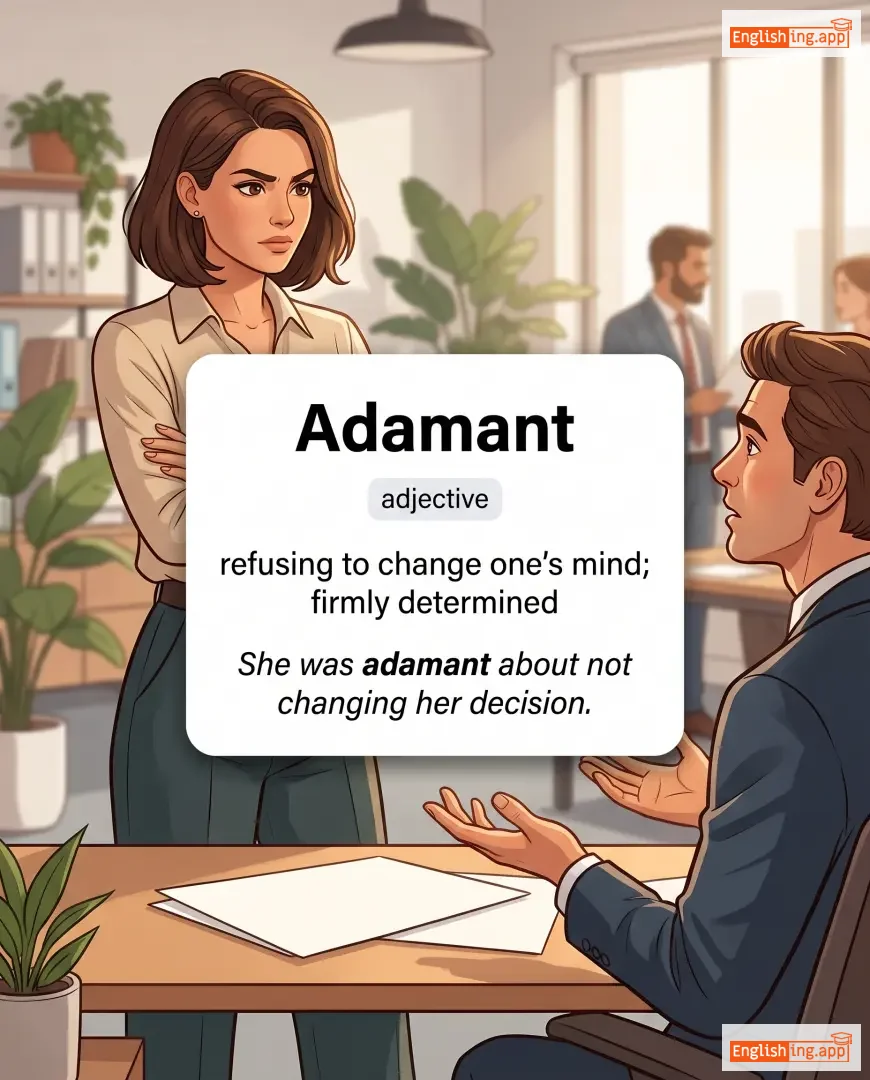
refusing to change one's mind; firmly determined
••••••
|
She was adamant about not changing her decision. |
她在不改变决定的问题上很坚定。
Tā zài bù gǎibiàn juédìng de wèntí shàng hěn jiāndìng.
••••••
|
- •••••• | - •••••• | - •••••• |
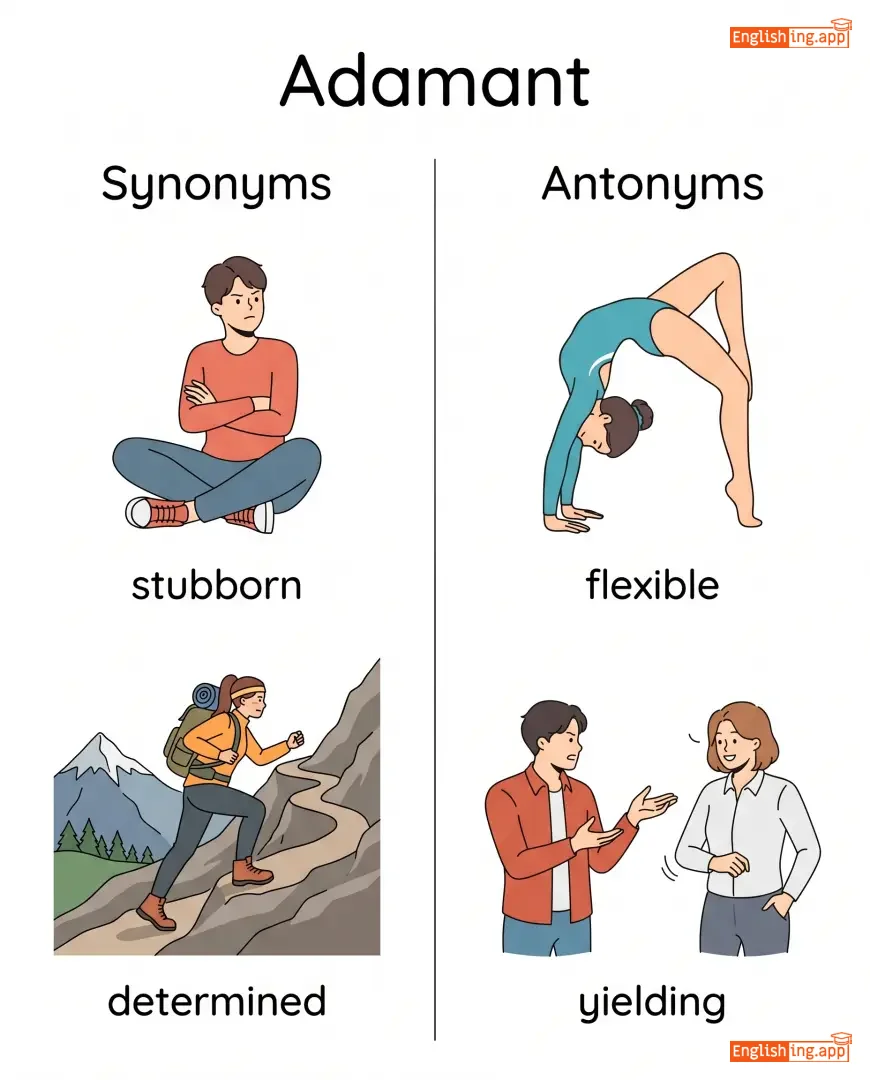
stubborn, determined, unyielding, resolute
••••••
|
flexible, yielding, uncertain
••••••
|
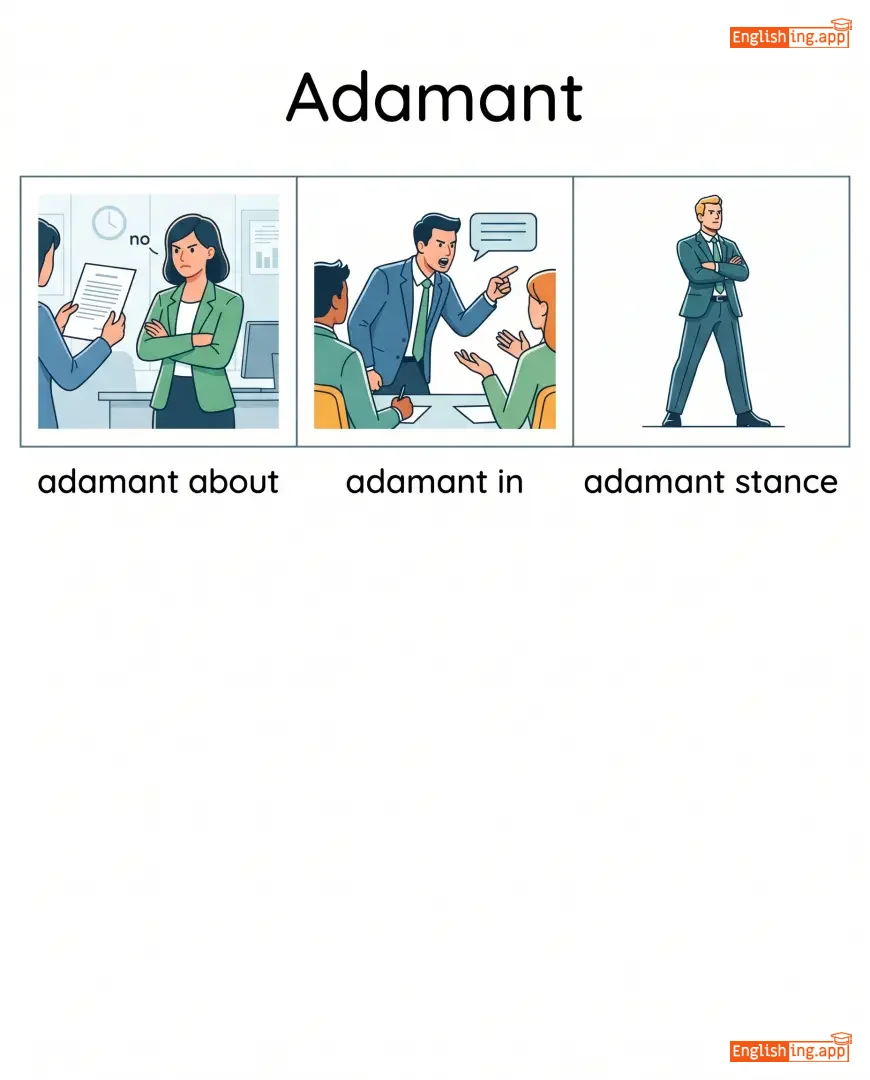
adamant about, adamant in, adamant stance, adamant refusal
••••••
|
Adam + Ant = 就像蚂蚁坚定地走自己的路一样,Adam (adamant) 也坚定不移。
••••••
|
|
#176
📜
|
/ˈædɪdʒ/
noun
(ā dé zhī)
••••••
|
- •••••• |
格言
geyan
••••••
|
- •••••• | - •••••• | - •••••• | - •••••• |
a short, well-known saying that expresses a general truth or piece of advice
••••••
|
The old adage says that honesty is the best policy. |
古老的格言说,诚实是最好的政策。
gǔlǎo de géyán shuō, chéngshí shì zuì hǎo de zhèngcè.
••••••
|
- •••••• | - •••••• | - •••••• |
proverb, saying, maxim, aphorism, motto
••••••
|
falsehood, nonsense
••••••
|
old adage, famous adage, popular adage, ancient adage
••••••
|
Adage means old saying, remember 'Aged' saying = Adage
••••••
|
|
#177
🎤
|
/ˌæd ˈlɪb/
verb
(广告-利布)
••••••
|
- •••••• |
即兴
jìxìng
••••••
|
ad-libbed
广告-利布德
••••••
|
ad-libbed
广告-利布德
••••••
|
ad-libs
广告-利布斯
••••••
|
ad-libbing
广告-利布ing
••••••
|
to speak or perform without preparation; to improvise
••••••
|
The comedian ad-libbed a joke when the microphone failed.
喜剧演员在麦克风故障时即兴编了一个笑话。
••••••
|
喜剧演员在麦克风故障时即兴编了一个笑话。
Xǐjù yǎnyuán zài màikèfēng gùzhàng shí jìxìng biānle yīgè xiàohuà.
••••••
|
ad-lib remark
即兴评论
••••••
|
an unplanned or spontaneous comment
••••••
|
即兴评论
jìxìng pínglùn
••••••
|
improvise, extemporize, invent, wing it
••••••
|
prepare, rehearse
••••••
|
ad-lib speech, ad-lib joke, ad-lib performance
••••••
|
Ad-lib 表示在 ad 中加 lib — 没有准备地说话
••••••
|
|
#178
📐
|
/əˈkjuːt/
adjective
(akut)
••••••
|
- •••••• |
急性
jixing
••••••
|
- •••••• | - •••••• | - •••••• | - •••••• |
present or experienced to a severe or intense degree; having sharp perception
••••••
|
The patient suffered from acute pain after the surgery. |
手术后,病人感到剧烈的疼痛。
Shǒushù hòu, bìngrén gǎndào jùliè de téngtòng.
••••••
|
acute angle |
an angle less than 90 degrees
••••••
|
锐角
ruìjiǎo
••••••
|
severe, sharp, intense, critical, keen
••••••
|
chronic, mild, dull
••••••
|
acute pain, acute illness, acute awareness
••••••
|
Acute 意味着 Cute,但很尖锐 — 剧烈的疼痛或锐角
••••••
|
|
#179
🧠
|
/ˈækjʊmən/
noun
(艾奎门)
••••••
|
|
洞察力
dongchali
••••••
|
- •••••• | - •••••• | - •••••• | - •••••• |
the ability to make good judgments and quick decisions, typically in a particular domain
••••••
|
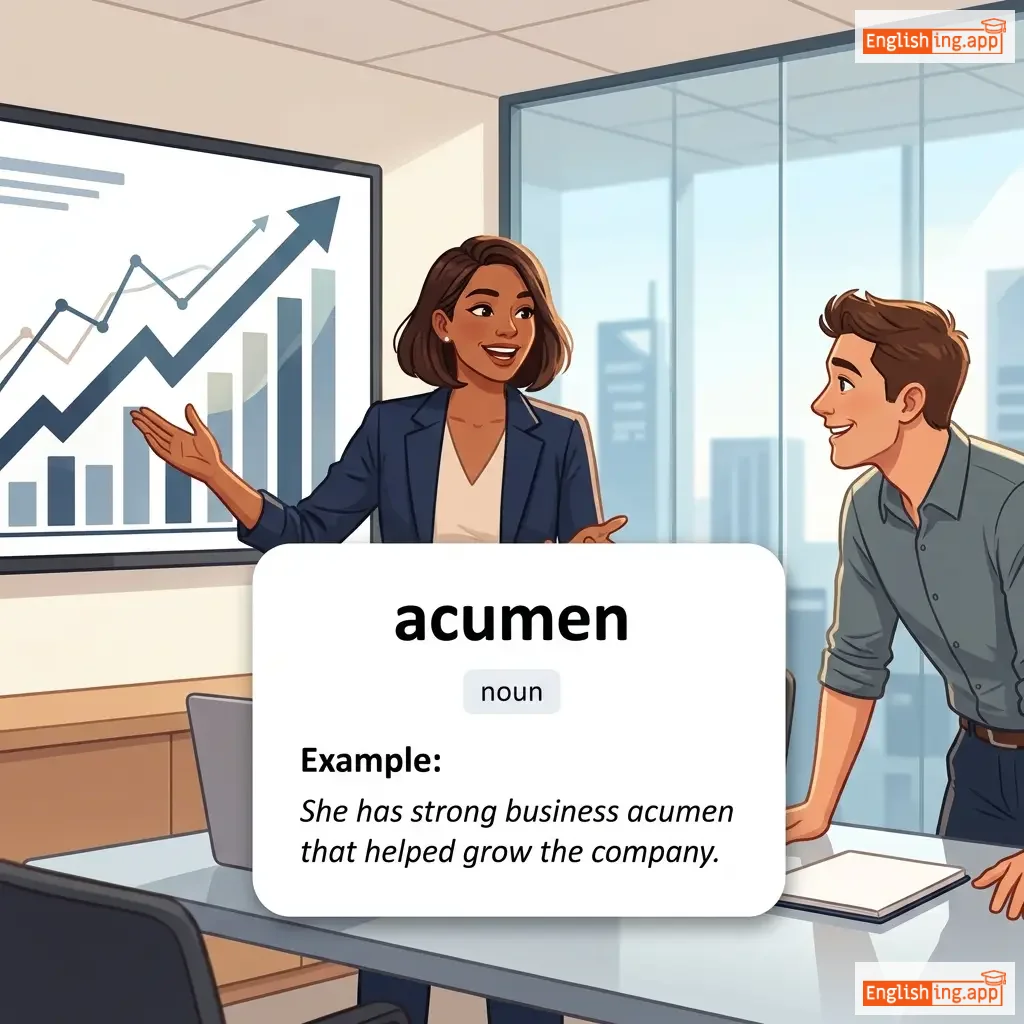
She has strong business acumen that helped grow the company. |
她具有强大的商业洞察力,帮助公司发展。
Ta juyou qiangda de shangye dongchali, bangzhu gongsi fazhan.
••••••
|
- •••••• | - •••••• | - •••••• |
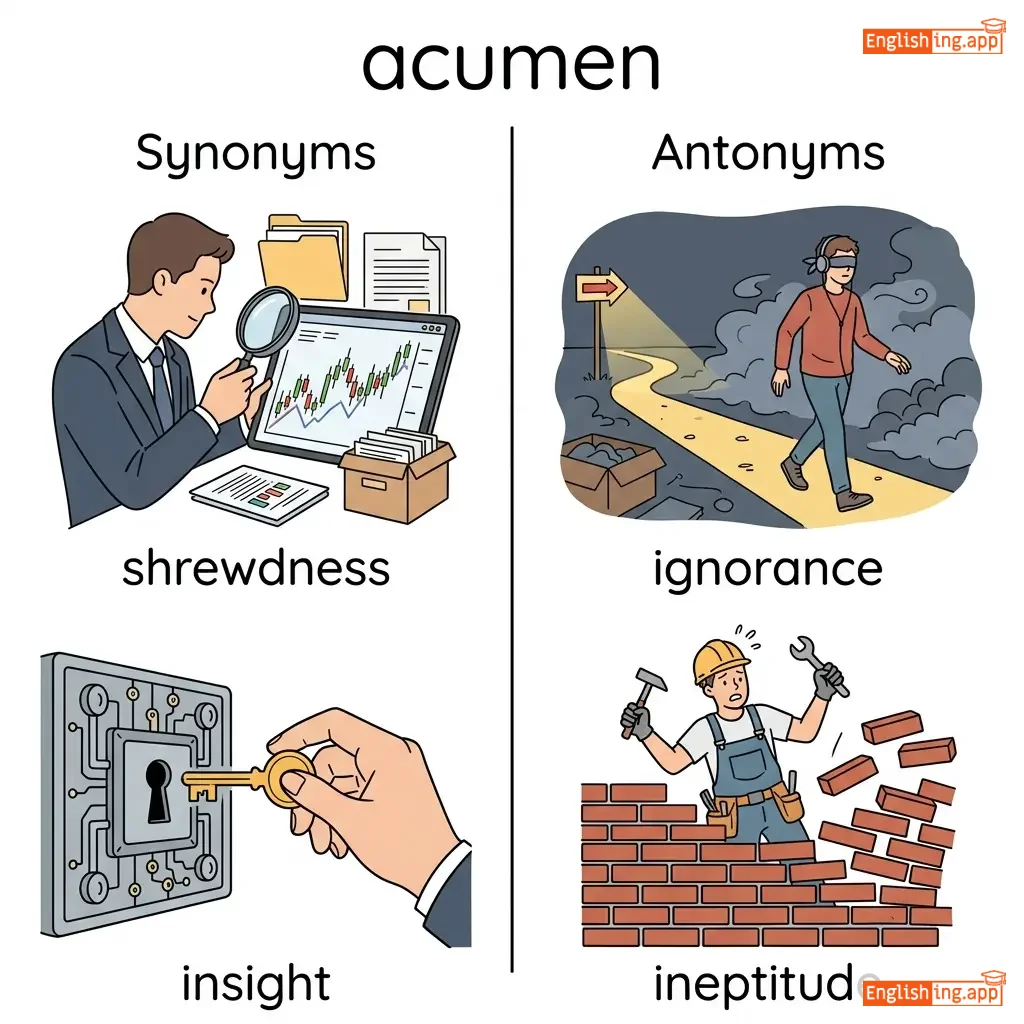
shrewdness, insight, sharpness, intelligence, wisdom
••••••
|
ignorance, ineptitude
••••••
|
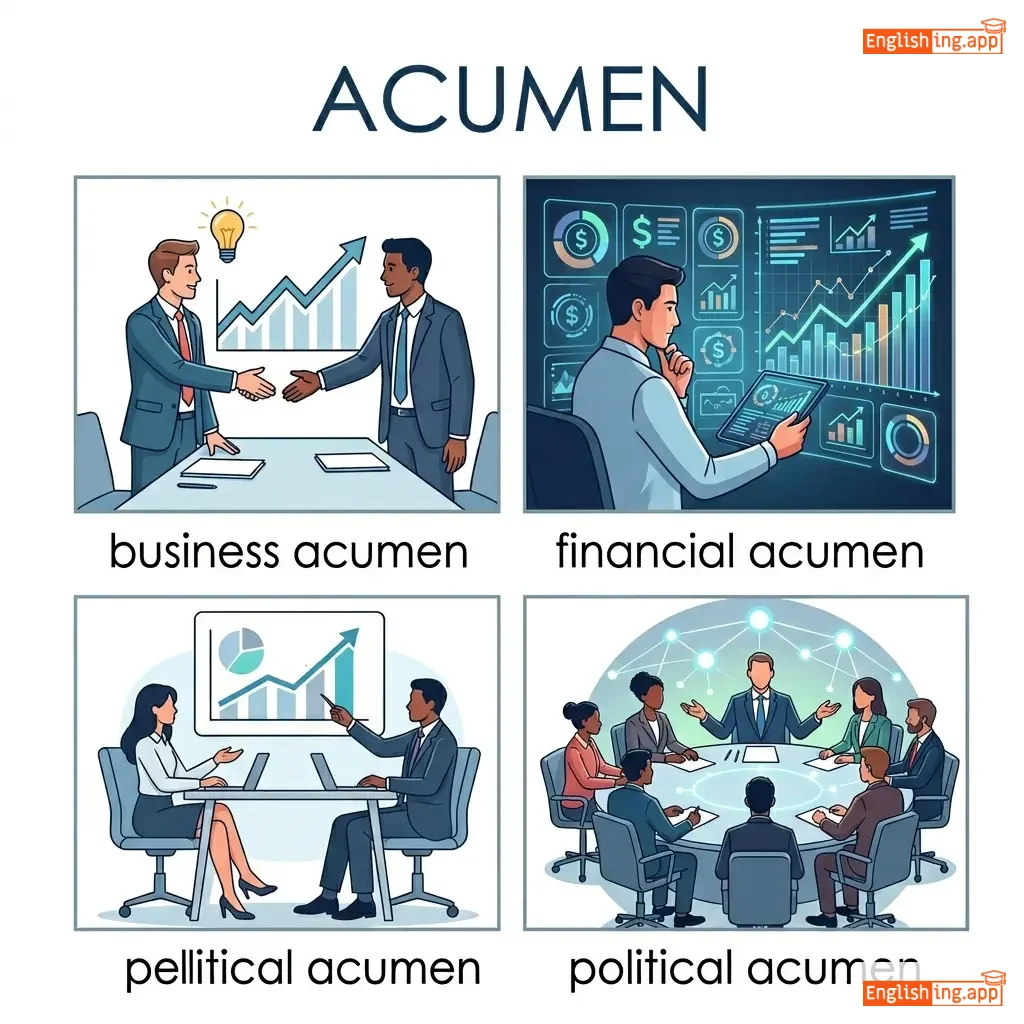
business acumen, financial acumen, political acumen
••••••
|
Acumen 就是能够在快速决策时展现出洞察力的能力。
••••••
|
|
#180
👀
|
/əˈkjuːɪti/
noun
(敏锐)
••••••
|
|
敏锐度
minrui du
••••••
|
- •••••• | - •••••• | - •••••• | - •••••• |
sharpness or keenness of thought, vision, or hearing
••••••
|
The doctor tested the patient’s visual acuity. |
医生测试了病人的视力敏锐度。
Yisheng ceshi le bingren de shili minrui du.
••••••
|
- •••••• | - •••••• | - •••••• |
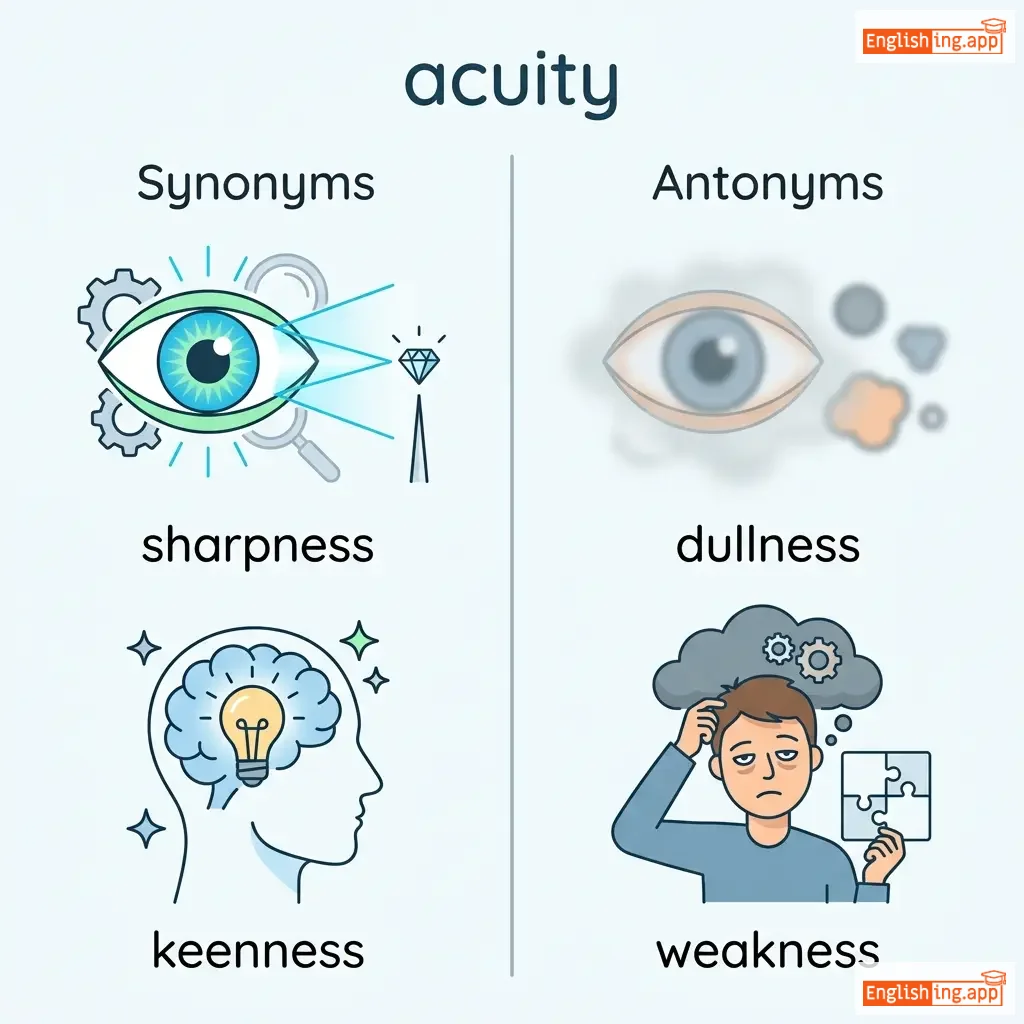
sharpness, keenness, clarity, alertness
••••••
|
dullness, weakness
••••••
|
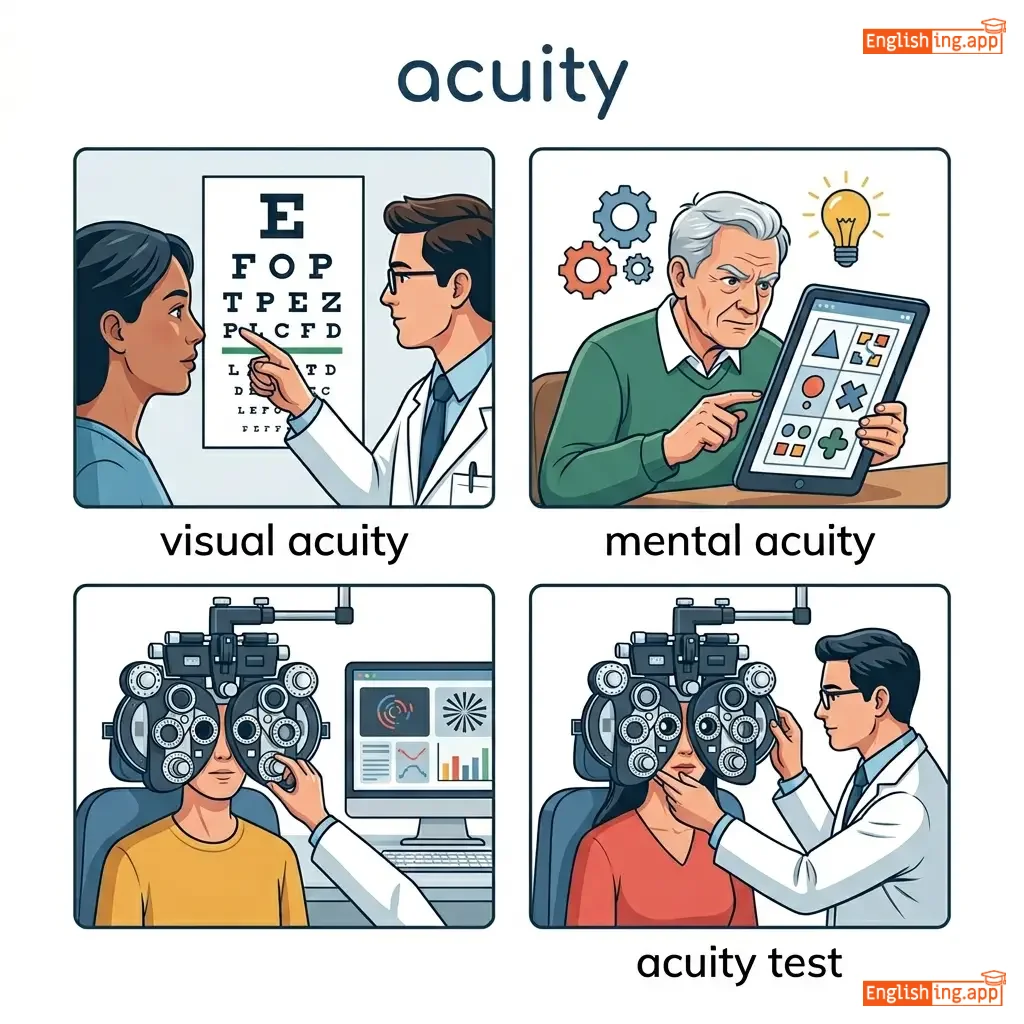
visual acuity, mental acuity, acuity test
••••••
|
Acuity = 敏锐 — 像锐利的刀刃一样
••••••
|
Vocabulary Quiz
Test your vocabulary by matching words with their translations or meanings.
Login to take the quiz
Comments (0)
Share your thoughts and join the discussion.
Join the discussion by logging in
Login to CommentNo comments yet
Be the first to share your thoughts!