





Swipe left or right, or use the buttons. Tap image to zoom.
例句翻译
单词
Lesson 13Lesson 13 - 遮罩切换
|
表情符号
|
单词 | Images | 翻译 | 过去时 | 过去分词 | 第三人称单数 | 动名词 | 含义 | 例句 | 例句翻译 | 示例表达 | 示例表达含义 | 示例表达翻译 | 同义词 | 反义词 | 搭配词 | 助记符 |
|---|---|---|---|---|---|---|---|---|---|---|---|---|---|---|---|---|---|
|
#361
⚡
|
/ˈæmpɛər/
noun
(安培)
••••••
|
- •••••• |
安培
anpei
••••••
|
- •••••• | - •••••• | - •••••• | - •••••• |
A unit of electric current in the International System of Units (SI), symbolized as A.
••••••
|
The current flowing through the wire is measured in amperes. |
流经电线的电流以安培为单位进行测量。
Liu jing dianxian de dianliu yi anpei wei danwei jinxing celiang.
••••••
|
- •••••• | - •••••• | - •••••• |
current unit, electric current, SI unit, amp
••••••
|
voltage, resistance
••••••
|
electric ampere, measure in amperes, ampere rating, ampere unit
••••••
|
安培代表电流的单位,记住A就是安培!
••••••
|
|
#362
📜
|
/əˌnækrəˈnɪstɪk/
adjective
(时代错误的)
••••••
|
- •••••• |
时代错误的
shidai cuowu de
••••••
|
- •••••• | - •••••• | - •••••• | - •••••• |
belonging to a period other than that being portrayed; old-fashioned or outdated
••••••
|
His views on gender roles are considered anachronistic.
他关于性别角色的看法被认为是时代错误的。
••••••
|
他关于性别角色的看法被认为是时代错误的。
Ta guanyu xingbie zuole de kanfa bei renwei shi shidai cuowu de.
••••••
|
- •••••• | - •••••• | - •••••• |
outdated, obsolete, old-fashioned, antiquated
••••••
|
modern, contemporary, current
••••••
|
anachronistic view, anachronistic practice, anachronistic attitude
••••••
|
时代错误的意思就是不合时宜,像是从过去走来的东西。
••••••
|
|
#363
⌛
|
/əˈnækrəˌnɪzəm/
noun
••••••
|
|
- •••••• | - •••••• | - •••••• | - •••••• | - •••••• |
something that is out of its proper time period, especially something old-fashioned in a modern context
••••••
|
Using a typewriter today feels like an anachronism. |
- •••••• | - •••••• | - •••••• | - •••••• |
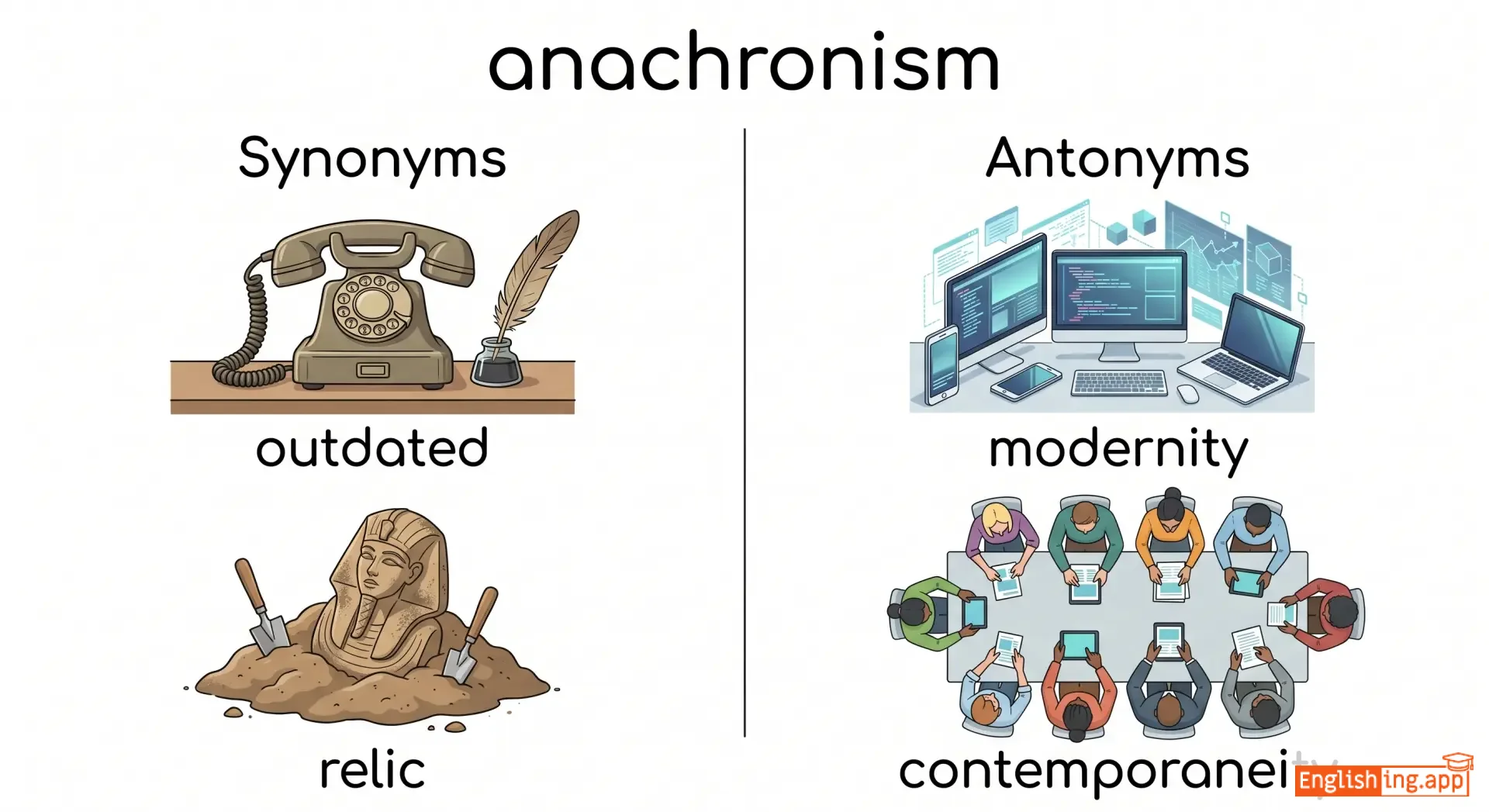
outdated, relic, antiquated, obsolete
••••••
|
modernity, contemporaneity, relevance
••••••
|
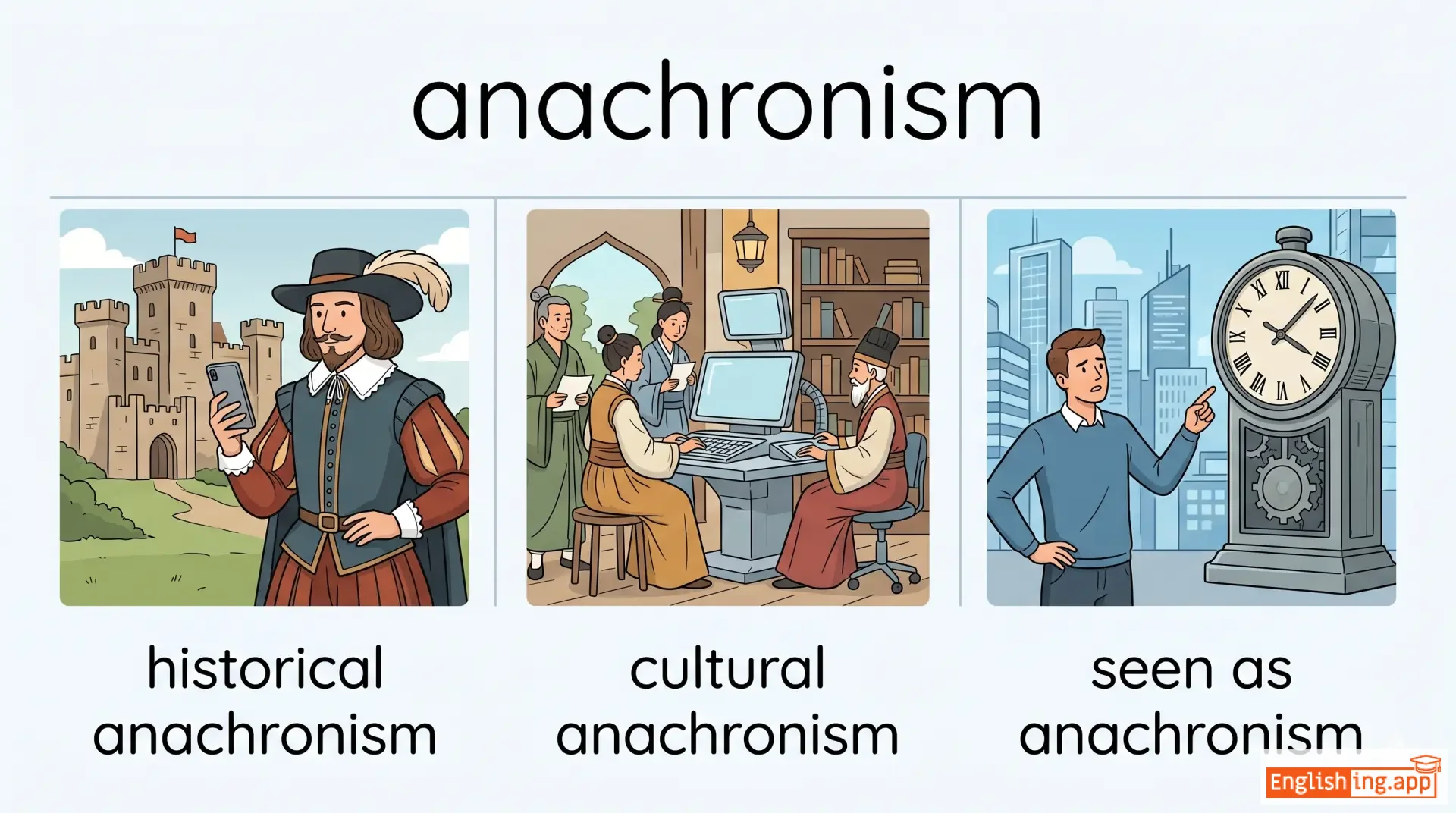
historical anachronism, cultural anachronism, seen as anachronism
••••••
|
No •••••• |
|
#364
🎡
|
/əˈmjuːzmənt/
noun
••••••
|
- •••••• | - •••••• | - •••••• | - •••••• | - •••••• | - •••••• |
the state of being entertained or finding something funny
••••••
|
The children watched the clown with great amusement. |
- •••••• |
for one's amusement |
for entertainment or fun
••••••
|
- •••••• |
fun, enjoyment, entertainment, delight, laughter
••••••
|
boredom, sadness, seriousness
••••••
|
source of amusement, great amusement, amusement park
••••••
|
No •••••• |
|
#365
🧿
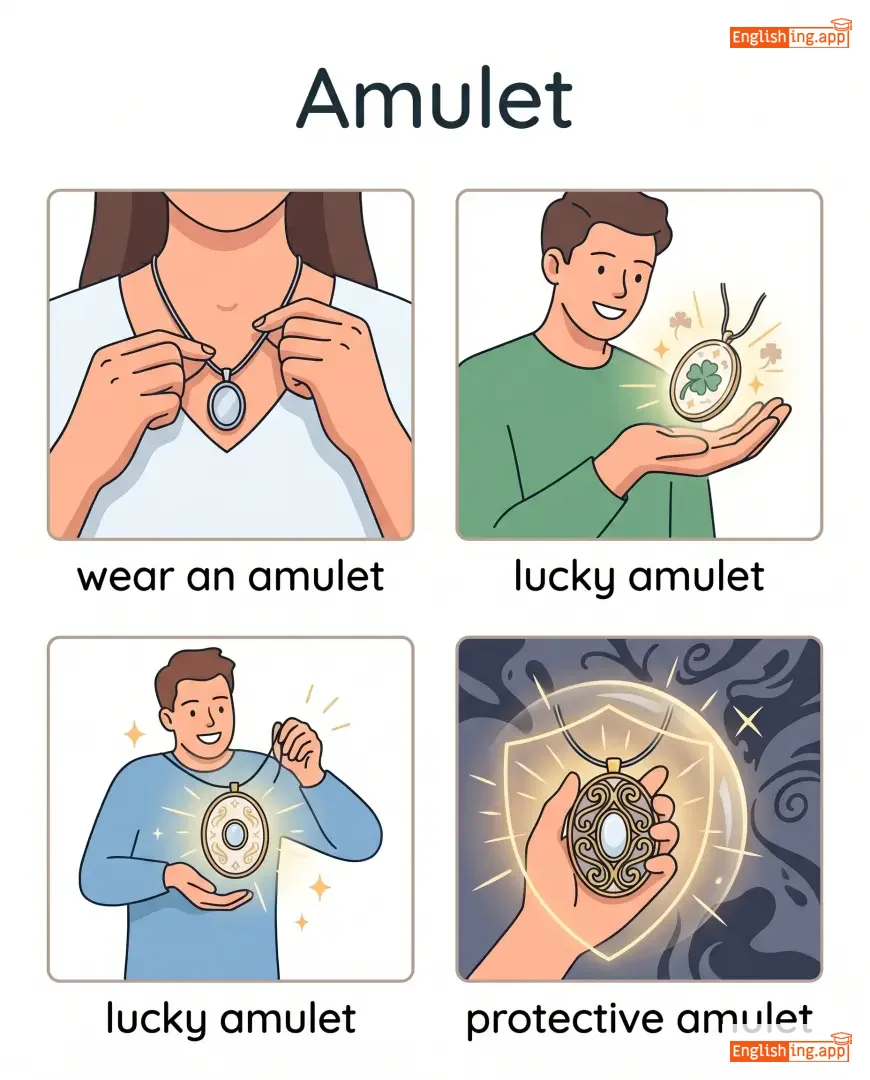
|
/ˈæmjʊlət/
noun
(阿穆雷特)
••••••
|
|
护身符
hù shēn fú
••••••
|
- •••••• | - •••••• | - •••••• | - •••••• |
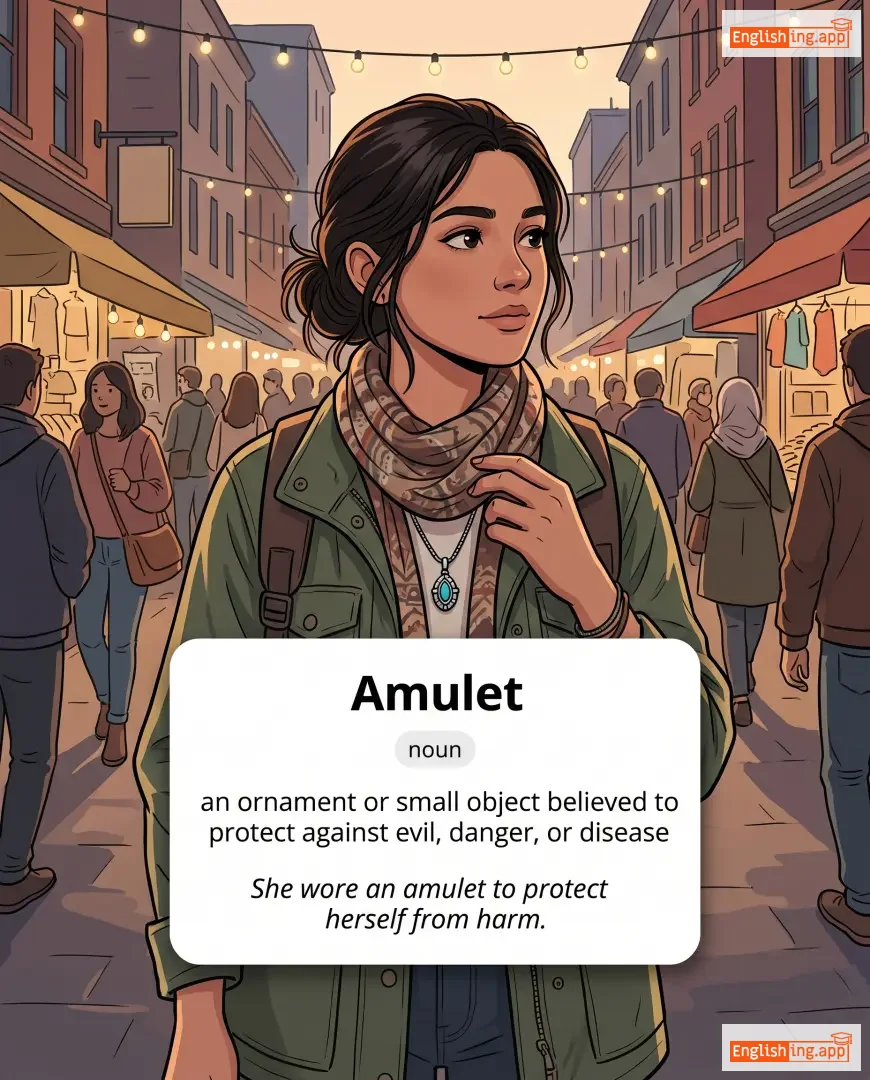
an ornament or small object believed to protect against evil, danger, or disease
••••••
|
She wore an amulet to protect herself from harm.
她佩戴着护身符来保护自己免受伤害。
••••••
|
她佩戴着护身符来保护自己免受伤害。
Tā pèidài zhe hùshēn fú lái bǎohù zìjǐ miǎn shòu shānghài.
••••••
|
- •••••• | - •••••• | - •••••• |
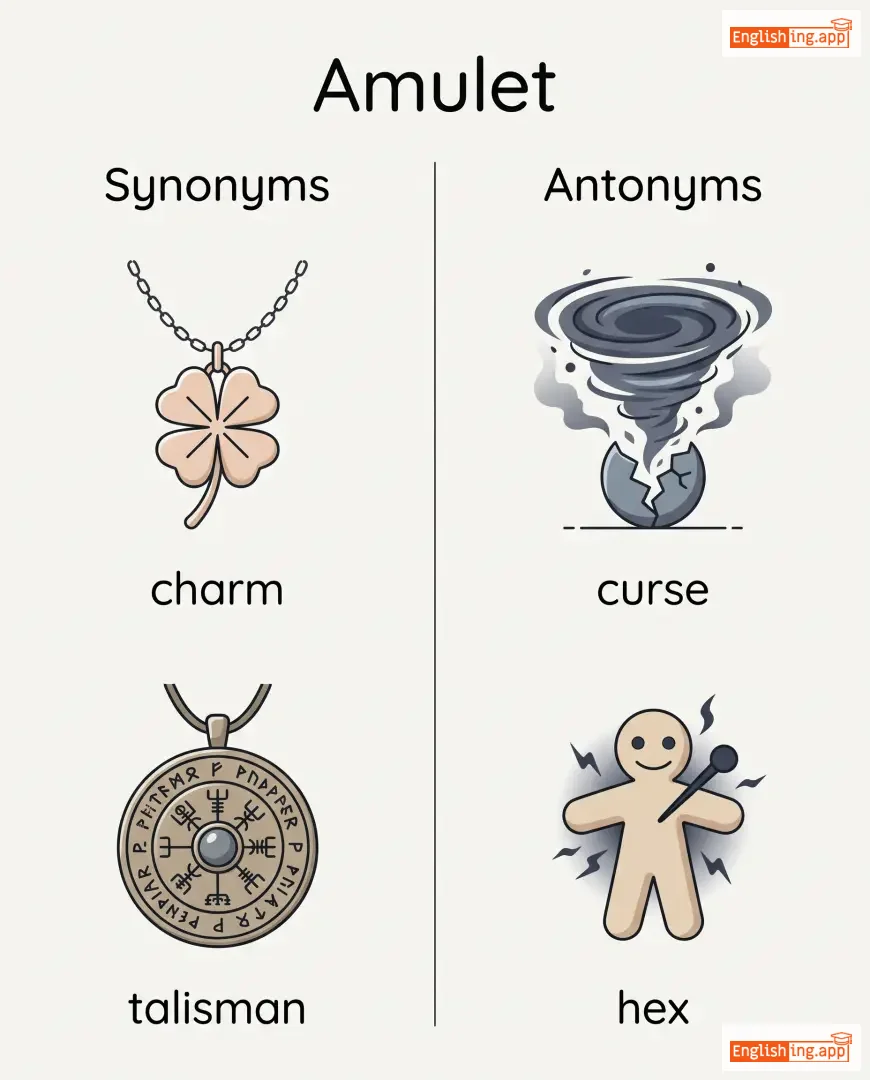
charm, talisman, pendant, token
••••••
|
curse, hex, bane
••••••
|
wear an amulet, lucky amulet, protective amulet
••••••
|
护身符意味着护身符—'护'让你记得保护自己
••••••
|
|
#366
😵
|
/əˈmʌk/
adverb
(阿马克)
••••••
|
- •••••• |
疯狂地
fengkuang di
••••••
|
- •••••• | - •••••• | - •••••• | - •••••• |
in a frenzied, uncontrolled, or chaotic manner
••••••
|
The bull ran amuck through the village. |
公牛在村子里疯狂地奔跑。
Gongniu zai cunzi li fengkuang di benpao.
••••••
|
run amuck |
to act in a wild, uncontrolled, or disorderly way
••••••
|
疯狂地奔跑
fengkuang di benpao
••••••
|
wildly, frantically, uncontrollably, chaotically
••••••
|
calmly, orderly, peacefully
••••••
|
run amuck, go amuck, amuck with power
••••••
|
Amuck意味着疯狂地,记住'A-muck'表示'阿穆克'(疯狂地奔跑)。
••••••
|
|
#367
🦿
|
/ˈæmpjʊteɪt/
verb
(截肢)
••••••
|
- •••••• |
截肢
jié zhī
••••••
|
amputated
截肢
••••••
|
amputated
截肢
••••••
|
amputates
截肢
••••••
|
amputating
截肢
••••••
|
to cut off a limb from the body by surgery
••••••
|
The doctors had to amputate his leg after the accident.
事故后,医生不得不截肢他的腿。
••••••
|
事故后,医生不得不截肢他的腿。
shìgù hòu, yīshēng bùdébù jié zhī tā de tuǐ.
••••••
|
- •••••• | - •••••• | - •••••• |
remove, sever, cut off, excise
••••••
|
attach, connect
••••••
|
amputate a leg, amputate an arm, had to amputate, surgically amputate
••••••
|
截肢意味着切除肢体 - 在事故中,肢体必须截肢。
••••••
|
|
#368
💰
|
/ˈæmpli/
adverb
(安普利)
••••••
|
- •••••• |
丰盛地
fēngshèng de
••••••
|
- •••••• | - •••••• | - •••••• | - •••••• |
more than sufficiently; generously
••••••
|
She was amply rewarded for her hard work.
她因努力工作而得到了丰厚的奖励。
••••••
|
她因努力工作而得到了丰厚的奖励。
Tā yīn nǔlì gōngzuò ér dédàole fēnghòu de jiǎnglì.
••••••
|
- •••••• | - •••••• | - •••••• |
sufficiently, adequately, generously, richly
••••••
|
scarcely, insufficiently
••••••
|
amply rewarded, amply demonstrated, amply supplied, amply sufficient
••••••
|
Amply意味着‘ample’ - 丰盛,多得足够!
••••••
|
|
#369
📈
|
/ˈæmplɪtjuːd/
noun
(振幅)
••••••
|
- •••••• |
振幅
zhenfu
••••••
|
- •••••• | - •••••• | - •••••• | - •••••• |
the maximum extent of a vibration or oscillation, or the size of something
••••••
|
The amplitude of the earthquake was measured on the Richter scale.
地震的振幅在里氏震级上被测量。
••••••
|
地震的振幅在里氏震级上被测量。
Dizhen de zhenfu zai Lishi zhenji shang bei celiang.
••••••
|
- •••••• | - •••••• | - •••••• |
magnitude, extent, size, breadth
••••••
|
smallness, limitation
••••••
|
large amplitude, wave amplitude, amplitude of vibration, amplitude modulation
••••••
|
振幅指的是震动的最大范围或大小,比如地震的波动。
••••••
|
|
#370
🔊
|
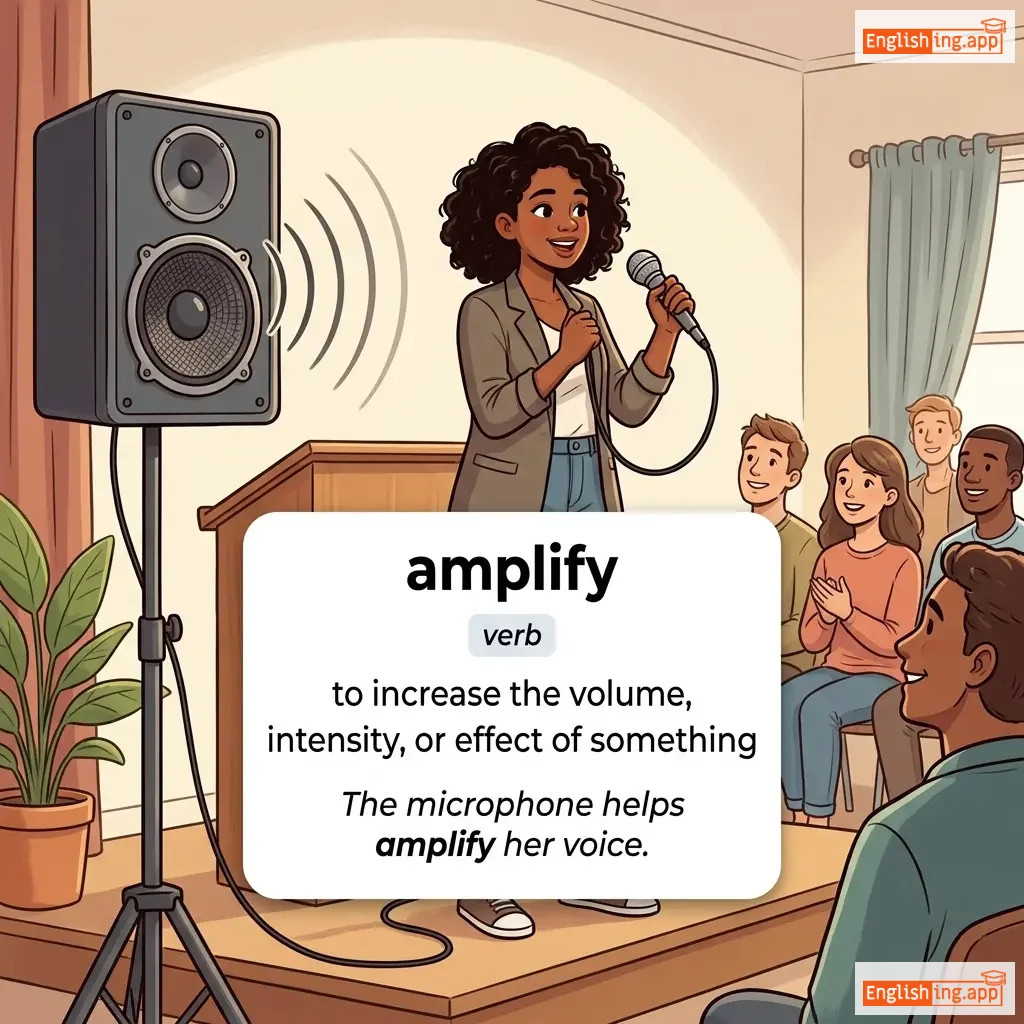
/ˈæmplɪfaɪ/
verb
(放大)
••••••
|
|
放大
fangda
••••••
|
amplified
放大了
••••••
|
amplified
放大了
••••••
|
amplifies
放大
••••••
|
amplifying
放大中
••••••
|
to increase the volume, intensity, or effect of something
••••••
|
The microphone helps amplify her voice.
麦克风有助于放大她的声音。
••••••
|
麦克风有助于放大她的声音。
Maikefeng you zhu yu fangda ta de shengyin.
••••••
|
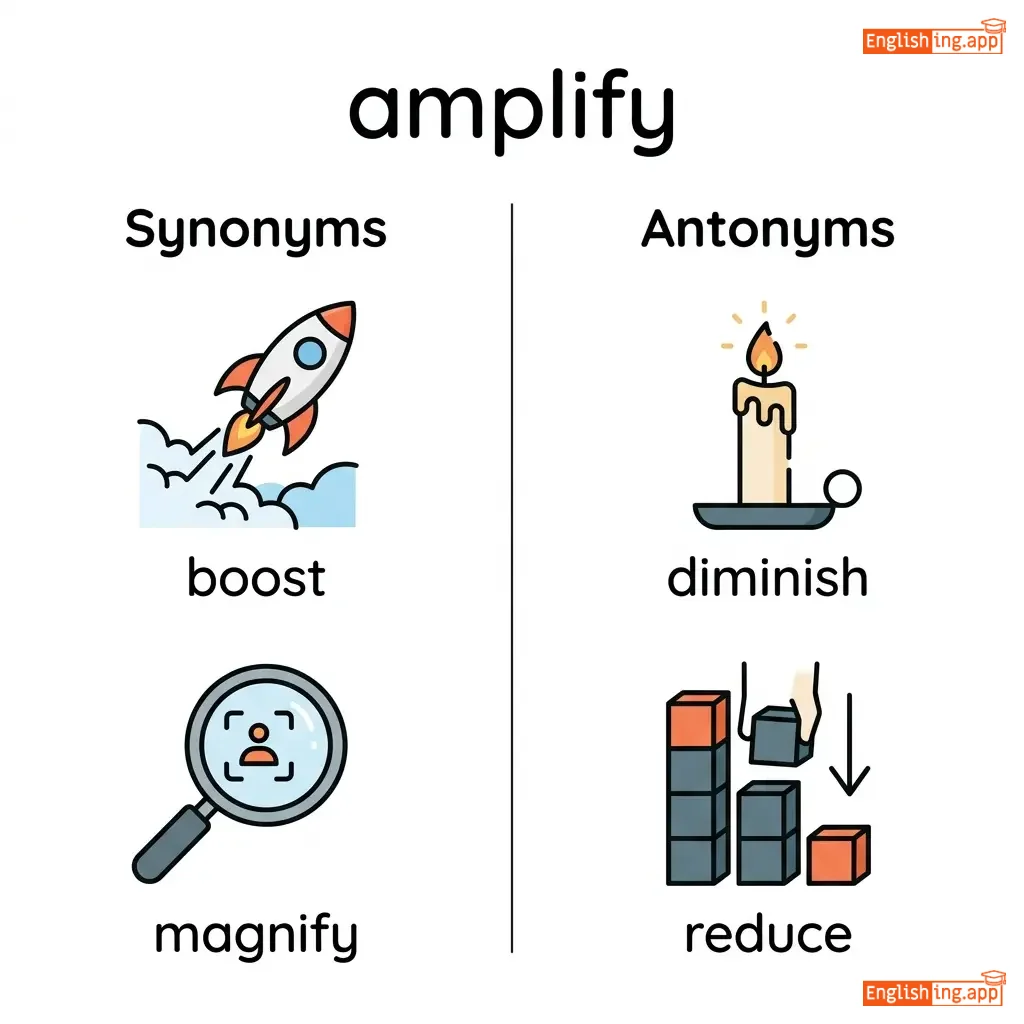
- •••••• | - •••••• | - •••••• |
boost, magnify, intensify, increase
••••••
|
diminish, reduce, weaken
••••••
|
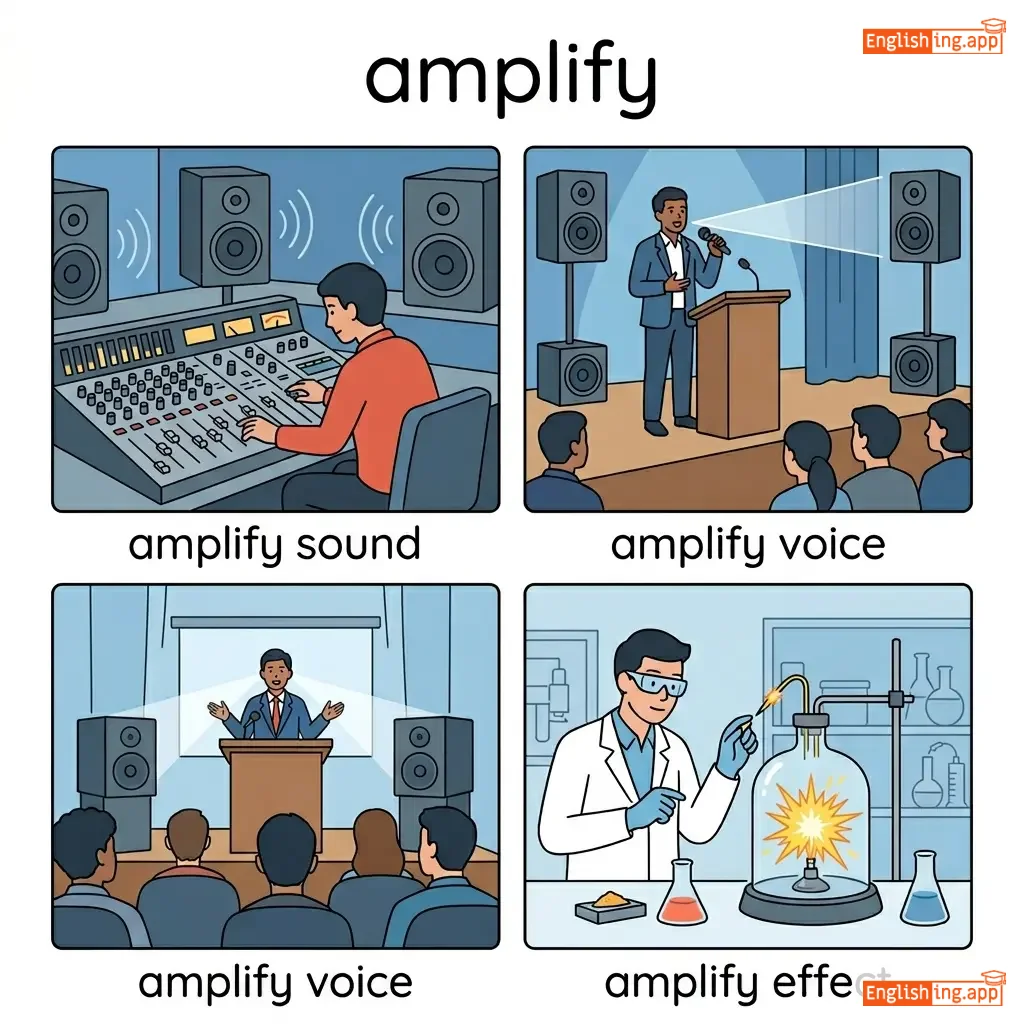
amplify sound, amplify voice, amplify effect, amplify signal
••••••
|
放大声音,就像音量更高一样!
••••••
|
|
#371
🌱
|
/ˈæmpəl/
adjective
(安普尔)
••••••
|
- •••••• |
充足
chōngzú
••••••
|
- •••••• | - •••••• | - •••••• | - •••••• |
more than enough; plentiful; abundant
••••••
|
There was ample food for everyone at the party.
派对上为每个人准备了足够的食物。
••••••
|
派对上为每个人准备了足够的食物。
Pàiduì shàng wèi měi gè rén zhǔnbèile zúgòu de shíwù.
••••••
|
- •••••• | - •••••• | - •••••• |
plentiful, abundant, sufficient, generous
••••••
|
scarce, insufficient
••••••
|
ample time, ample opportunity, ample evidence, ample resources
••••••
|
Ample意味着足够,多得就像派对上的食物。
••••••
|
|
#372
🏟️
|
/ˈæmfɪˌθiətər/
noun
(æmfɪˌθiətər)
••••••
|
- •••••• |
圆形剧场
yuánxíng jùchǎng
••••••
|
- •••••• | - •••••• | - •••••• | - •••••• |
A large open circular or oval building with rising tiers of seats, used for public events.
••••••
|
The concert was held in an ancient amphitheater. |
音乐会在一个古老的圆形剧场举行。
Yīnyuè huì zài yīgè gǔlǎo de yuánxíng jùchǎng jǔxíng.
••••••
|
- •••••• | - •••••• | - •••••• |
arena, coliseum, stadium, auditorium
••••••
|
hall, chamber
••••••
|
ancient amphitheater, Roman amphitheater, open-air amphitheater
••••••
|
圆形剧场意味着一个大舞台,就像罗马的斗兽场一样。
••••••
|
|
#373
🚙🌊
|
/æmˈfɪbiəs/
adjective
(两栖)
••••••
|
- •••••• |
两栖
liǎngqī
••••••
|
- •••••• | - •••••• | - •••••• | - •••••• |
Able to live or operate both on land and in water.
••••••
|
The army used amphibious vehicles to cross the river.
军队使用两栖车辆穿越河流。
••••••
|
军队使用两栖车辆穿越河流。
Jūnduì shǐyòng liǎngqī chēliàng chuānyuè héliú.
••••••
|
- •••••• | - •••••• | - •••••• |
dual-environment, land-water, versatile, adaptable
••••••
|
terrestrial, aquatic
••••••
|
amphibious assault, amphibious vehicle, amphibious landing
••••••
|
两栖的车辆既能在水里行驶,也能在陆地上行驶!
••••••
|
|
#374
🐸
|
/æmˈfɪbiən/
noun
••••••
|
- •••••• | - •••••• | - •••••• | - •••••• | - •••••• | - •••••• |
A cold-blooded vertebrate animal that can live both on land and in water.
••••••
|
A frog is a common amphibian that lives both in water and on land. |
- •••••• | - •••••• | - •••••• | - •••••• |
frog, toad, salamander, newt
••••••
|
mammal, bird
••••••
|
amphibian species, amphibian habitat, amphibian life cycle
••••••
|
No •••••• |
|
#375
&
|
/ˈæmpərˌsænd/
noun
(安珀桑德)
••••••
|
- •••••• |
安珀桑德
ampersand
••••••
|
- •••••• | - •••••• | - •••••• | - •••••• |
The symbol '&' used to represent the word 'and'.
••••••
|
Use an ampersand instead of writing the word 'and' in the company name. |
在公司名称中使用安珀桑德代替'和'这个词。
Zài gōngsī míngchēng zhōng shǐyòng ān pǒ sāng dé dàitì 'hé' zhège cí.
••••••
|
- •••••• | - •••••• | - •••••• |
and sign, symbol, character, ligature
••••••
|
word 'and', separation
••••••
|
ampersand symbol, use ampersand, replace with ampersand
••••••
|
安珀桑德就像是'和'的符号形式。
••••••
|
|
#376
🇺🇸
|
/əˈmɛrɪkəˌnɪzəm/
noun
••••••
|
- •••••• | - •••••• | - •••••• | - •••••• | - •••••• | - •••••• |
A word, phrase, or practice characteristic of American English or culture.
••••••
|
The term 'sidewalk' is an Americanism, while 'pavement' is used in British English. |
- •••••• | - •••••• | - •••••• | - •••••• |
expression, idiom, phrase, usage, colloquialism
••••••
|
briticism, anglicism
••••••
|
common Americanism, linguistic Americanism, cultural Americanism
••••••
|
No •••••• |
|
#377
💌
|
/əˈmʊr/
noun
(阿穆尔)
••••••
|
- •••••• |
秘密的爱
mìmì de ài
••••••
|
- •••••• | - •••••• | - •••••• | - •••••• |
A secret or illicit love affair.
••••••
|
The novel tells the story of a forbidden amour between two characters.
这本小说讲述了两个人物之间的禁忌爱情故事。
••••••
|
这本小说讲述了两个人物之间的禁忌爱情故事。
Zhè běn xiǎoshuō jiǎngshùle liǎng gè rénwù zhī jiān de jìn jì àiqíng gùshì.
••••••
|
- •••••• | - •••••• | - •••••• |
love affair, romance, fling, liaison
••••••
|
indifference, separation
••••••
|
secret amour, forbidden amour, romantic amour
••••••
|
Amour 意味着爱,记住 'Amor' 在西班牙语中也表示爱。
••••••
|
|
#378
📉
|
/ˈæmərˌtaɪz/
verb
(摊销)
••••••
|
- •••••• |
摊销
tānxiāo
••••••
|
amortized
摊销
••••••
|
amortized
摊销
••••••
|
amortizes
摊销
••••••
|
amortizing
摊销中
••••••
|
To gradually reduce or pay off a debt with regular payments.
••••••
|
They plan to amortize the mortgage over 20 years.
他们计划在20年内摊销抵押贷款。
••••••
|
他们计划在20年内摊销抵押贷款。
Tāmen jìhuà zài 20 nián nèi tānxiāo dǐyā dàikuǎn.
••••••
|
- •••••• | - •••••• | - •••••• |
repay, reduce, liquidate, settle
••••••
|
borrow, accumulate
••••••
|
amortize debt, amortize loan, amortize cost, amortize mortgage
••••••
|
摊销意味着像偿还抵押贷款一样,逐步减少债务。
••••••
|
|
#379
💰
|
/əˌmɔːrtəˈzeɪʃən/
noun
(摊销)
••••••
|
|
债务摊销
zhàiwù tānxiāo
••••••
|
- •••••• | - •••••• | - •••••• | - •••••• |
The process of gradually paying off a debt through regular payments over time.
••••••
|
The company used a 10-year schedule for the amortization of its loan. |
公司为其贷款使用了10年的摊销计划。
Gōngsī wèi qí dàikuǎn shǐyòngle 10 nián de tānxiāo jìhuà.
••••••
|
- •••••• | - •••••• | - •••••• |
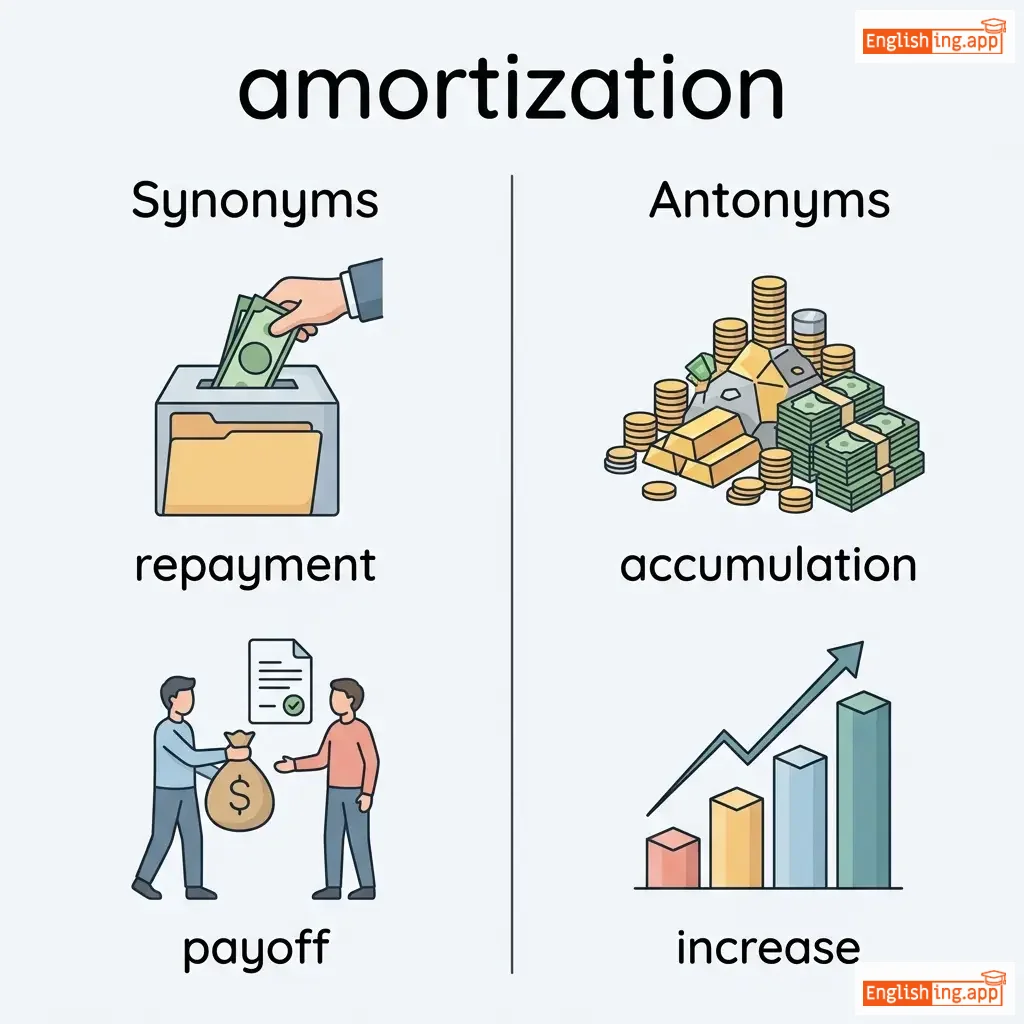
repayment, payoff, reduction, liquidation
••••••
|
accumulation, increase
••••••
|
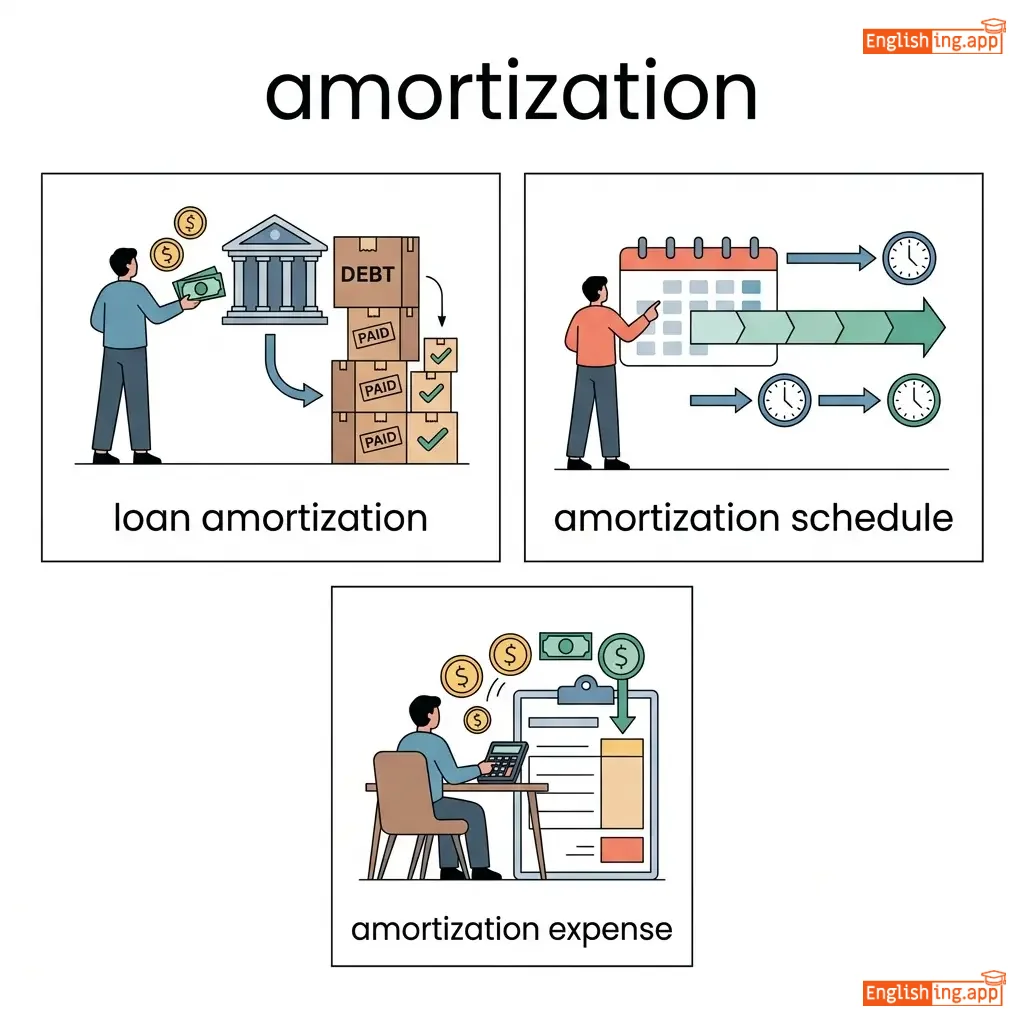
loan amortization, amortization schedule, amortization expense
••••••
|
摊销就是逐步偿还债务,想象 'A more time' 为每一次付款。
••••••
|
|
#380
☁️
|
/əˈmɔːrfəs/
adjective
(亚莫夫)
••••••
|
- •••••• |
无定形
wudingxing
••••••
|
- •••••• | - •••••• | - •••••• | - •••••• |
Lacking a clear shape or form; without a defined structure.
••••••
|
The plan remained amorphous and lacked concrete details.
该计划保持无定形,缺乏具体细节。
••••••
|
该计划保持无定形,缺乏具体细节。
Gai jihua baochi wudingxing, quexian juti xijie.
••••••
|
- •••••• | - •••••• | - •••••• |
shapeless, formless, vague, indefinite
••••••
|
defined, structured, distinct
••••••
|
amorphous mass, amorphous shape, amorphous structure
••••••
|
Amorphous 意味着无定形 — 'a' 意味着没有, 'morph' 意味着形状.
••••••
|
|
#381
❤️
|
/ˈæmərəs/
adjective
(爱莫罗斯)
••••••
|
- •••••• |
多情的
duoqing de
••••••
|
- •••••• | - •••••• | - •••••• | - •••••• |
Showing, feeling, or relating to romantic love or desire.
••••••
|
He sent her an amorous letter filled with declarations of love.
他给她写了一封充满爱情宣言的情书。
••••••
|
他给她写了一封充满爱情宣言的情书。
Ta gei ta xie le yi feng chongman aiqing xuanyan de qingshu.
••••••
|
- •••••• | - •••••• | - •••••• |
romantic, passionate, loving, affectionate, ardent
••••••
|
cold, indifferent, detached
••••••
|
amorous glance, amorous affair, amorous feelings, amorous advances
••••••
|
多情的表示浪漫爱情,记住'爱'在中文是love的意思。
••••••
|
|
#382
🚫
|
/ˌeɪˈmɔːrəli/
adverb
(非道德地)
••••••
|
- •••••• |
非道德地
fēi dàodé de
••••••
|
- •••••• | - •••••• | - •••••• | - •••••• |
In a way that shows no concern about whether behavior is morally right or wrong.
••••••
|
He acted amorally, ignoring the consequences of his actions. |
他以非道德的方式行事,忽视了他的行为后果。
Tā yǐ fēi dàodé de fāngshì xíngshì, hūshìle tā de xíngwéi hòuguǒ.
••••••
|
- •••••• | - •••••• | - •••••• |
unethically, immorally, corruptly, unprincipledly
••••••
|
morally, ethically
••••••
|
act amorally, behave amorally, think amorally
••••••
|
非道德地 = 没有道德约束 – 不在乎行为是否道德的做事方式。
••••••
|
|
#383
⚖️
|
/ˌeɪˈmɔːrəl/
adjective
(阿莫拉尔)
••••••
|
- •••••• |
不道德的
budàodé de
••••••
|
- •••••• | - •••••• | - •••••• | - •••••• |
Lacking a moral sense; unconcerned with rightness or wrongness of something.
••••••
|
The character in the novel was portrayed as completely amoral. |
小说中的人物被描绘成完全不道德。
xiǎoshuō zhōng de rénwù bèi miáohuì chéng wánquán bù dàodé.
••••••
|
- •••••• | - •••••• | - •••••• |
immoral, unethical, corrupt, unprincipled
••••••
|
moral, ethical, principled
••••••
|
amoral behavior, amoral attitude, amoral society
••••••
|
Amoral就是没有道德感,也就是不道德。
••••••
|
|
#384
🔥
|
/əˈmʌk/
adverb
(阿莫克)
••••••
|
- •••••• |
失控
shikong
••••••
|
- •••••• | - •••••• | - •••••• | - •••••• |
Behaving uncontrollably and disruptively.
••••••
|
The angry mob ran amok after the verdict was announced.
愤怒的人群在裁决宣布后失控地奔跑。
••••••
|
愤怒的人群在裁决宣布后失控地奔跑。
Fennu de renqun zai caijue xuanbu hou shikong de benpao.
••••••
|
run amok
失控奔跑
••••••
|
To behave in a frenzied, uncontrolled way.
••••••
|
失控奔跑
shikong benpao
••••••
|
wildly, frenziedly, chaotically, uncontrollably
••••••
|
calmly, peacefully
••••••
|
run amok, spread amok, went amok
••••••
|
Amok 意味着 'run amok' – 群体在判决后失控地奔跑。
••••••
|
|
#385
🕊️
|
/ˈæmnəsti/
noun
(赦免)
••••••
|
- •••••• |
赦免
shèmiǎn
••••••
|
- •••••• | - •••••• | - •••••• | - •••••• |
An official pardon granted to people who have been convicted of political offenses.
••••••
|
The government announced an amnesty for all political prisoners. |
政府宣布了对所有政治犯的赦免。
Zhèngfǔ xuānbùle duì suǒyǒu zhèngzhìfàn de shèmiǎn.
••••••
|
general amnesty |
A widespread pardon given to a large group of people.
••••••
|
普遍赦免
pǔbiàn shèmiǎn
••••••
|
pardon, forgiveness, reprieve, clemency
••••••
|
punishment, penalty, conviction
••••••
|
grant amnesty, political amnesty, declare amnesty, offer amnesty
••••••
|
赦免意味着宽恕—就像政府宽恕政治犯一样。
••••••
|
|
#386
🧠
|
/æmˈniːʒə/
noun
(健忘症)
••••••
|
- •••••• |
健忘症
jiànwàng zhèng
••••••
|
- •••••• | - •••••• | - •••••• | - •••••• |
A partial or total loss of memory, usually caused by injury, illness, or psychological trauma.
••••••
|
After the accident, she suffered from amnesia and could not remember her own name.
事故发生后,她患上了健忘症,无法记起自己的名字。
••••••
|
事故发生后,她患上了健忘症,无法记起自己的名字。
Shìgù fāshēng hòu, tā huàn shàngle jiànwàng zhèng, wúfǎ jìqǐ zìjǐ de míngzì.
••••••
|
- •••••• | - •••••• | - •••••• |
memory loss, forgetfulness, oblivion, blackout
••••••
|
memory, recollection, remembrance
••••••
|
suffer from amnesia, temporary amnesia, retrograde amnesia, memory loss
••••••
|
Amnesia - Accident erases memory from mind.
••••••
|
|
#387
🌿
|
/ˈæmɪti/
noun
(艾米蒂)
••••••
|
- •••••• |
友谊
youyi
••••••
|
- •••••• | - •••••• | - •••••• | - •••••• |
A friendly relationship between people or countries.
••••••
|
The treaty helped maintain amity between the neighboring nations.
该条约帮助维护邻国之间的友好关系。
••••••
|
该条约帮助维护邻国之间的友好关系。
Gai tiaoyue bangzhu weihu lin guo zhi jian de youhao guanxi.
••••••
|
live in amity
和睦相处
••••••
|
To live in harmony and friendship.
••••••
|
和睦相处
Hemu xiangchu
••••••
|
friendship, harmony, goodwill, concord, peace
••••••
|
hostility, enmity, conflict
••••••
|
amity between nations, mutual amity, lasting amity, amity treaty
••••••
|
Amity → Youyi, 就是友谊。
••••••
|
|
#388
⚠️
|
/əˈmɪs/
adjective/adverb
(啊密斯)
••••••
|
- •••••• |
错误的
cuòwù de
••••••
|
- •••••• | - •••••• | - •••••• | - •••••• |
Not quite right; inappropriate or out of place.
••••••
|
Something seems amiss with the car's engine. |
汽车的引擎似乎有些错误。
Qìchē de yǐnqíng shìhū yǒuxiē cuòwù.
••••••
|
take amiss |
To be offended by something.
••••••
|
误解
wùjiě
••••••
|
wrong, faulty, improper, unusual, awry
••••••
|
right, proper, correct
••••••
|
something amiss, feel amiss, nothing amiss, go amiss
••••••
|
Amiss → A + miss → 如果有'miss',就是错误的。
••••••
|
|
#389
🤝
|
/ˈæmɪkəbəl/
adjective
(a-mí-kè-bǎo)
••••••
|
|
友好
youhao
••••••
|
- •••••• | - •••••• | - •••••• | - •••••• |
Friendly and peaceful, especially in resolving conflicts.
••••••
|
The two companies reached an amicable agreement after months of negotiation.
经过几个月的谈判,两家公司达成了友好的协议。
••••••
|
经过几个月的谈判,两家公司达成了友好的协议。
Jingguo jige yue de tanpan, liang jia gongsi dachengle youhao de xieyi.
••••••
|
amicable settlement
友好协议
••••••
|
A peaceful and friendly resolution to a dispute.
••••••
|
友好协议
youhao xieyi
••••••
|
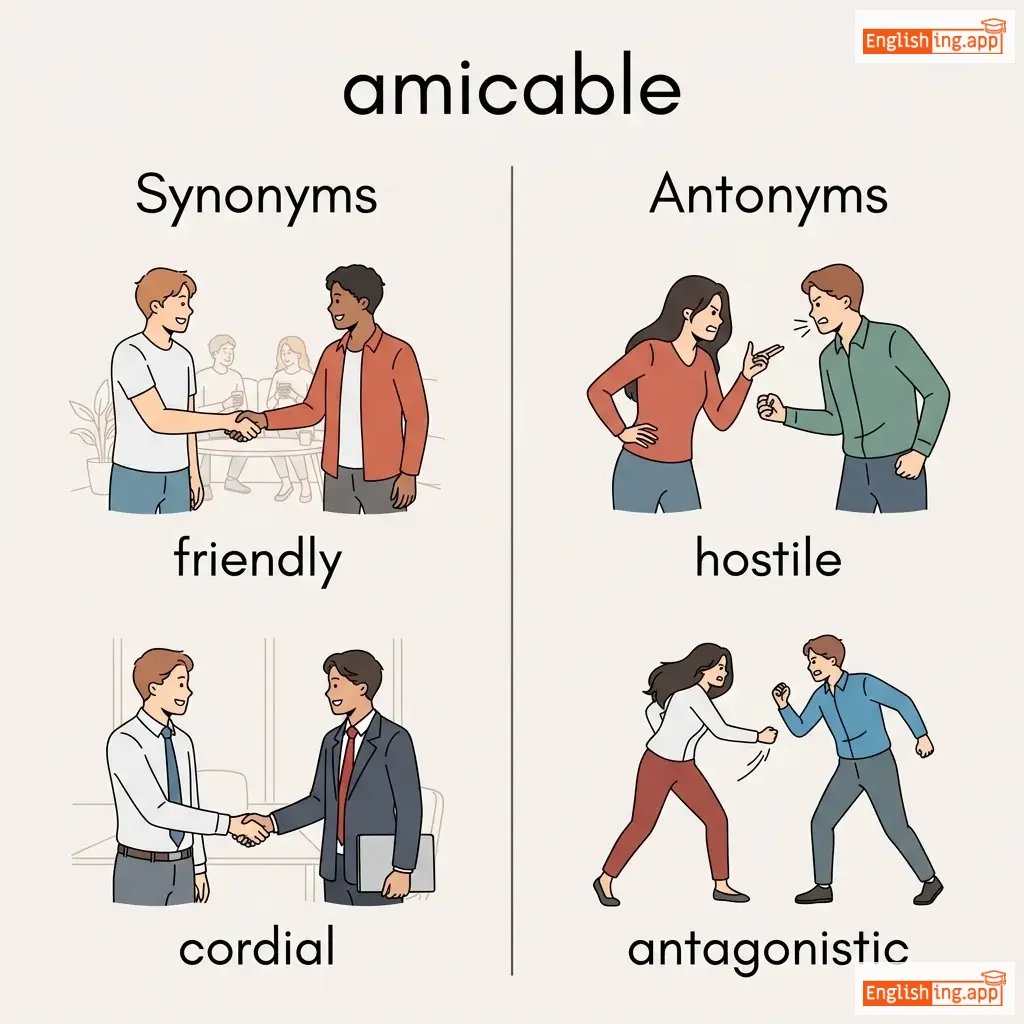
friendly, cordial, harmonious, peaceful, agreeable
••••••
|
hostile, antagonistic, unfriendly
••••••
|
amicable agreement, amicable divorce, amicable relationship, amicable settlement
••••••
|
Amicable → 'Ami' 就是友好和平的意思
••••••
|
|
#390
😊
|
/ˈeɪmiəbəl/
adjective
(āi-mí-ā-bó)
••••••
|
- •••••• |
和蔼可亲
hé'ǎi kěqīn
••••••
|
- •••••• | - •••••• | - •••••• | - •••••• |
Having a friendly and pleasant manner.
••••••
|
She has an amiable personality that makes her well-liked by everyone.
她有一个友善的个性,使她受到大家的喜爱。
••••••
|
她有一个和蔼可亲的个性,使她受到大家的喜爱。
Tā yǒu yīgè hé'ǎi kěqīn de gèxìng, shǐ tā shòudào dàjiā de xǐ'ài.
••••••
|
- •••••• | - •••••• | - •••••• |
friendly, pleasant, kind, affable, genial
••••••
|
hostile, unfriendly, rude
••••••
|
amiable personality, amiable character, amiable smile, amiable host
••••••
|
Ami + able → Ami (友善) 一直和蔼可亲 → 和蔼可亲.
••••••
|
Vocabulary Quiz
Test your vocabulary by matching words with their translations or meanings.
Login to take the quiz
Comments (0)
Share your thoughts and join the discussion.
Join the discussion by logging in
Login to CommentNo comments yet
Be the first to share your thoughts!