



Swipe left or right, or use the buttons. Tap image to zoom.
例句翻译
单词
Lesson 28Lesson 28 - 遮罩切换
|
表情符号
|
单词 | Images | 翻译 | 过去时 | 过去分词 | 第三人称单数 | 动名词 | 含义 | 例句 | 例句翻译 | 示例表达 | 示例表达含义 | 示例表达翻译 | 同义词 | 反义词 | 搭配词 | 助记符 |
|---|---|---|---|---|---|---|---|---|---|---|---|---|---|---|---|---|---|
|
#811
😳
|
/ˈbɛərˌfeɪst/
adjective
(bērfèisī)
••••••
|
- •••••• |
厚颜无耻
hòu yán wú chǐ
••••••
|
- •••••• | - •••••• | - •••••• | - •••••• |
shameless and undisguised; openly bold or unashamed
••••••
|
He told a barefaced lie in front of everyone. |
他在大家面前说了个厚颜无耻的谎言。
Tā zài dàjiā miànqián shuōle gè hòu yán wú chǐ de huǎngyán.
••••••
|
barefaced lie |
a blatant and shameless lie
••••••
|
厚颜无耻的谎言
hòu yán wú chǐ de huǎngyán
••••••
|
shameless, blatant, brazen, bold, impudent
••••••
|
modest, discreet, humble
••••••
|
barefaced lie, barefaced excuse, barefaced claim
••••••
|
脸皮厚的人说的话你绝对不能信 — barefaced 就是厚颜无耻。
••••••
|
|
#812
🪵
|
/ˈbeɪsbɔːrd/
noun
(béisbórd)
••••••
|
- •••••• |
踢脚线
tī jiǎo xiàn
••••••
|
- •••••• | - •••••• | - •••••• | - •••••• |
A narrow board running along the bottom of an interior wall, covering the joint between wall and floor.
••••••
|
The carpenter painted the baseboard white.
木匠把baseboard涂成了白色。
••••••
|
木匠把踢脚线涂成了白色。
Mùjiàng bǎ tī jiǎo xiàn tú chéng le báisè.
••••••
|
- •••••• | - •••••• | - •••••• |
skirting board, molding, trim, wainscot
••••••
|
ceiling, roof
••••••
|
wooden baseboard, painted baseboard, baseboard heater, baseboard trim
••••••
|
Baseboard = Base + Board – 踢脚线是墙底的木板,挡住地板和墙的接缝。
••••••
|
|
#813
🏛️
|
/beɪs/
noun, verb
(bèi sī)
••••••
|
|
基础
jichu
••••••
|
based
bèi sī dē
••••••
|
based
bèi sī dē
••••••
|
bases
bèi sī sī
••••••
|
basing
bèi sī yīng
••••••
|
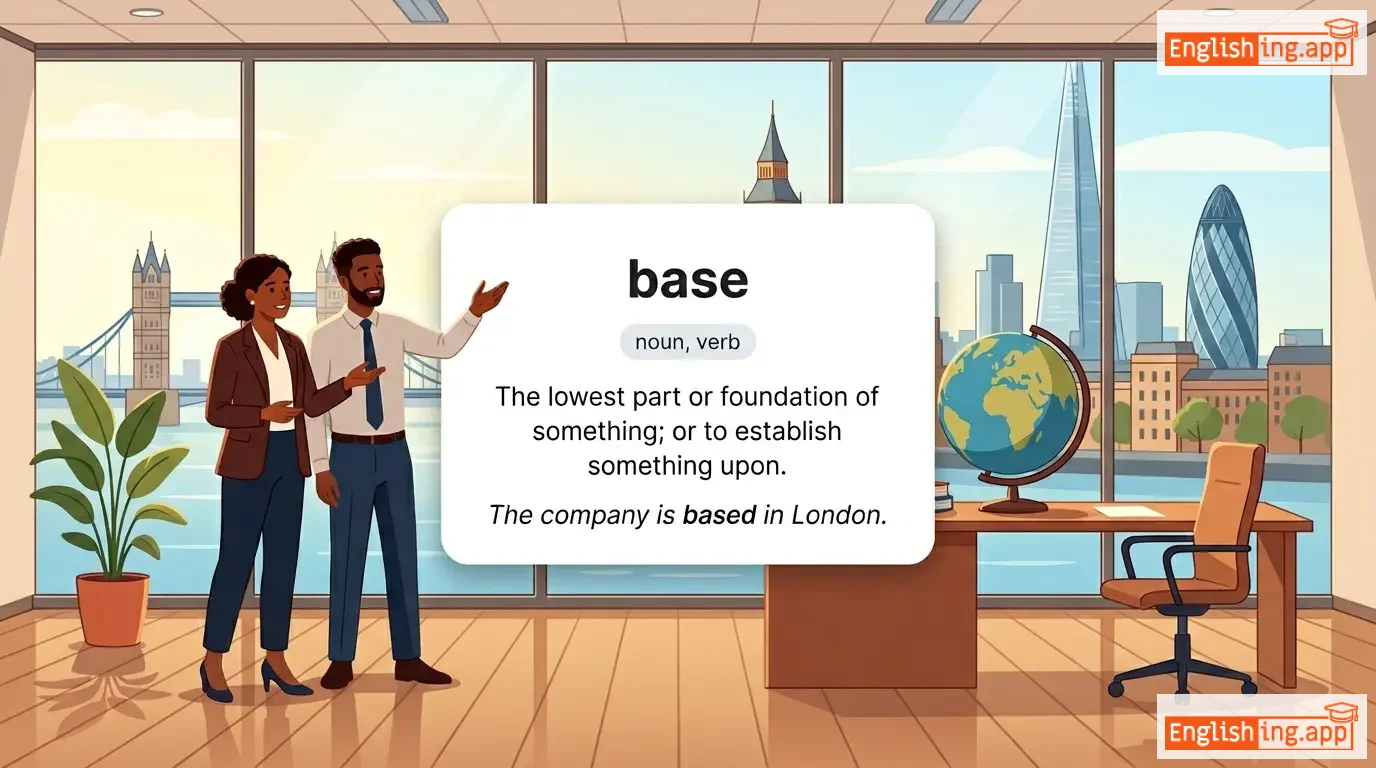
The lowest part or foundation of something; or to establish something upon.
••••••
|
The company is based in London.
公司总部位于伦敦。
••••••
|
公司总部位于伦敦。
Gōngsī zǒngbù wèiyú lúndūn.
••••••
|
base on
基于
••••••
|
To use as a foundation or starting point.
••••••
|
基于
jīyú
••••••
|
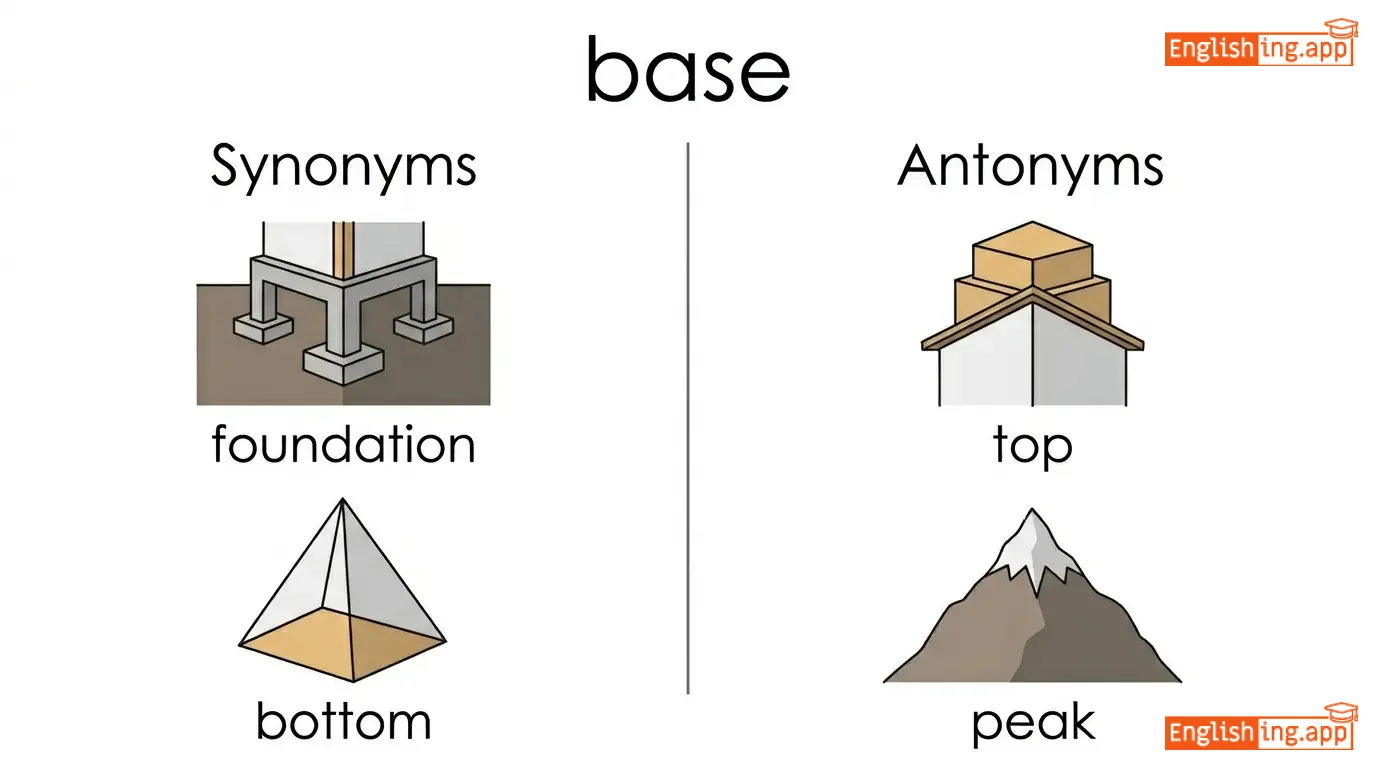
foundation, bottom, support, root, ground
••••••
|
top, peak
••••••
|
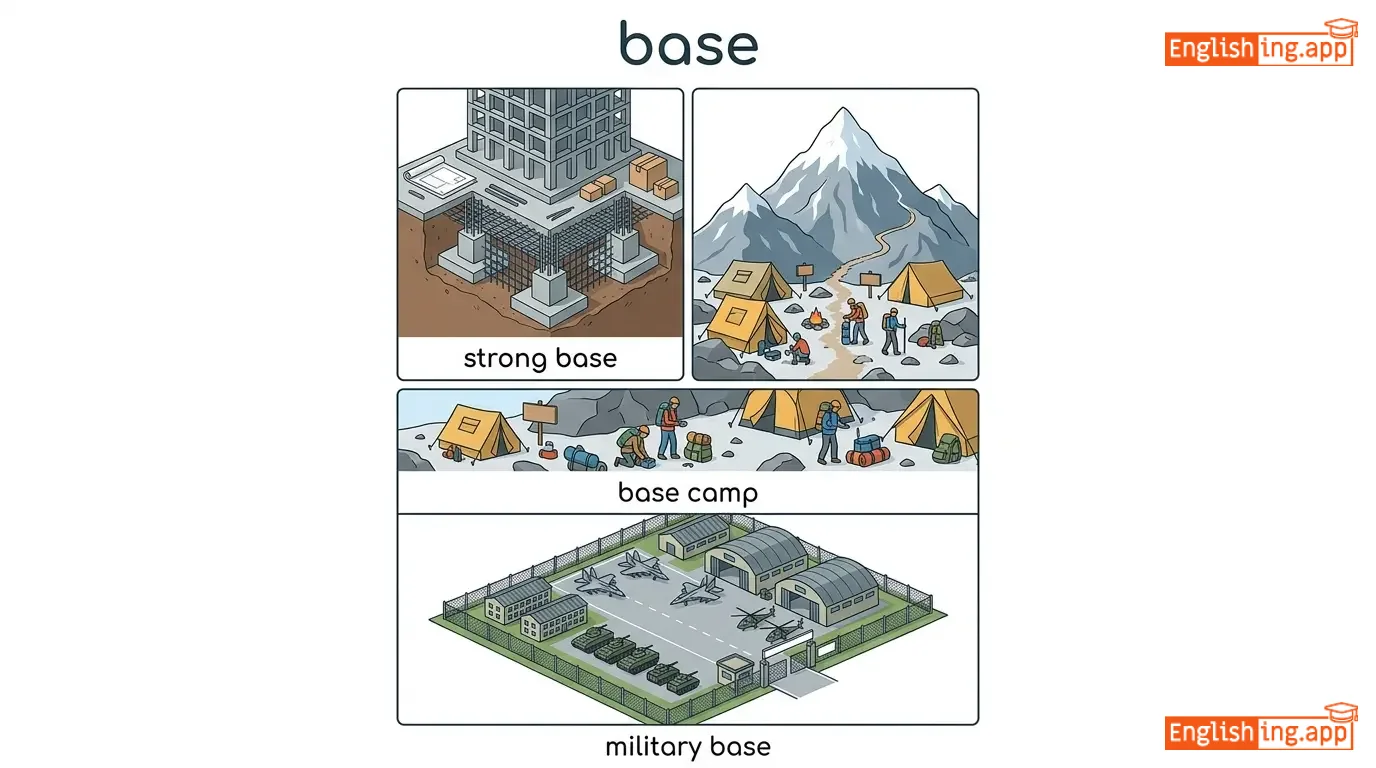
strong base, base camp, military base, based on, base level
••••••
|
基础意味着'基础'—每座房子的基础都很牢固。
••••••
|
|
#814
🤝
|
/ˈbɑːrtərər/
noun
(巴特雷尔)
••••••
|
- •••••• |
易货商
yì huò shāng
••••••
|
- •••••• | - •••••• | - •••••• | - •••••• |
A person who trades goods or services without using money.
••••••
|
The barterer exchanged fruits for some pottery.
巴特雷尔用水果交换了一些陶器。
••••••
|
易货商用水果交换了一些陶器。
Yì huò shāng yòng shuǐguǒ jiāohuànle yīxiē táoqì.
••••••
|
- •••••• | - •••••• | - •••••• |
trader, dealer, exchanger, swapper
••••••
|
buyer, seller
••••••
|
skilled barterer, local barterer, professional barterer
••••••
|
易货商就是交换物品和服务的商人,而不使用金钱。
••••••
|
|
#815
🔄
|
/ˈbɑːrtər/
verb
••••••
|
- •••••• | - •••••• |
bartered
••••••
|
bartered
••••••
|
barters
••••••
|
bartering
••••••
|
To exchange goods or services without using money.
••••••
|
They bartered their crops for handmade tools. |
- •••••• |
barter system |
An economic system where goods or services are exchanged directly without money.
••••••
|
- •••••• |
trade, exchange, swap, deal
••••••
|
buy, sell
••••••
|
barter goods, barter system, barter trade, barter exchange
••••••
|
No •••••• |
|
#816
⚖️
|
/ˈbærɪstər/
noun
(巴里斯特)
••••••
|
- •••••• |
律师
lǜshī
••••••
|
- •••••• | - •••••• | - •••••• | - •••••• |
A type of lawyer in certain legal systems who specializes in courtroom advocacy and litigation.
••••••
|
The barrister argued the case passionately before the judge. |
律师在法官面前激情澎湃地辩论案件。
Lǜshī zài fǎguān miànqián jīqíng péngpài de biànlùn ànjiàn.
••••••
|
- •••••• | - •••••• | - •••••• |
lawyer, advocate, attorney, counsel, solicitor
••••••
|
client, defendant
••••••
|
criminal barrister, senior barrister, barrister chambers, practicing barrister
••••••
|
律师就像战士一样,专注于法庭上的战斗。
••••••
|
|
#817
🚫
|
/ˈbɑːrɪŋ/
preposition
(barring)
••••••
|
- •••••• |
除非,除了
chúfēi, chúle
••••••
|
- •••••• | - •••••• | - •••••• | - •••••• |
except for; if not for
••••••
|
Barring a miracle, the team will not win the championship. |
除非有奇迹发生,否则团队将无法赢得冠军。
Chúfēi yǒu qíjī fāshēng, fǒuzé tuánduì jiāng wúfǎ yíngdé guànjūn.
••••••
|
- •••••• | - •••••• | - •••••• |
except, excluding, save for, apart from
••••••
|
including, allowing
••••••
|
barring a disaster, barring accidents, barring objections
••••••
|
Barring的意思是除非或除了
••••••
|
|
#818
🚧
|
/ˌbærɪˈkeɪd/
noun/verb
(障碍物)
••••••
|
- •••••• |
障碍物
zhàng ài wù
••••••
|
barricaded
障碍物了
••••••
|
barricaded
障碍物了
••••••
|
barricades
障碍物
••••••
|
barricading
障碍物化
••••••
|
a barrier erected to block or defend against movement; to block a passage with obstacles
••••••
|
Protesters built a barricade across the street.
抗议者在街道上建造了一个障碍物。
••••••
|
抗议者在街道上建造了一个障碍物。
Kàngyì zhě zài jiēdào shàng jiànzào le yīgè zhàng ài wù.
••••••
|
- •••••• | - •••••• | - •••••• |
barrier, blockade, obstacle, obstruction, fortification
••••••
|
opening, passage, clearance
••••••
|
erect a barricade, block with a barricade, barricade the street
••••••
|
障碍物 = 障碍 + Cade, 阻止通行
••••••
|
|
#819
🏜️
|
/ˈbærən/
adjective
(巴伦)
••••••
|
- •••••• |
贫瘠
pínjí
••••••
|
- •••••• | - •••••• | - •••••• | - •••••• |
too poor to produce much or any vegetation; unproductive or empty
••••••
|
The land was barren and could not support crops. |
这片土地贫瘠,无法支持作物生长。
Zhè piàn tǔdì pínjí, wúfǎ zhīchí zuòwù shēngzhǎng.
••••••
|
barren of ideas |
lacking creativity or new thoughts
••••••
|
缺乏创意
quēfá chuàngyì
••••••
|
infertile, unproductive, arid, empty, sterile
••••••
|
fertile, productive, fruitful
••••••
|
barren land, barren desert, barren soil, barren of
••••••
|
Barren = 贫瘠的土地,无法收获
••••••
|
|
#820
💥
|
/bəˈrɑːʒ/
noun
(巴拉日)
••••••
|
- •••••• |
弹幕或快速攻击
bā lā rì
••••••
|
- •••••• | - •••••• | - •••••• | - •••••• |
a concentrated outpouring of questions, criticisms, or blows; a rapid, continuous attack
••••••
|
The politician faced a barrage of tough questions from reporters. |
政治家面对记者们一连串尖锐的问题。
Zhèng zhì jiā miàn duì jì zhě men yī lián chuàn jiān ruì de wèn tí.
••••••
|
- •••••• | - •••••• | - •••••• |
bombardment, onslaught, attack, deluge, storm
••••••
|
trickle, drip, pause
••••••
|
barrage of questions, barrage of criticism, barrage of fire
••••••
|
巴拉日 = 快速攻击或问题像弹幕一样涌向政治家。
••••••
|
|
#821
🎨
|
/bəˈroʊk/
adjective
(巴洛克)
••••••
|
- •••••• |
巴洛克风格
bā luò kè fēng gé
••••••
|
- •••••• | - •••••• | - •••••• | - •••••• |
relating to a highly ornate and extravagant style of art, architecture, or music from the 17th and early 18th centuries; excessively elaborate or complex
••••••
|
The church was decorated in a baroque style with intricate details.
教堂以复杂的巴洛克风格装饰,细节繁复。
••••••
|
教堂以复杂的巴洛克风格装饰,细节繁复。
Jiàotáng yǐ fùzá de bā luò kè fēnggé zhuāngshì, xìjié fánfù.
••••••
|
- •••••• | - •••••• | - •••••• |
ornate, elaborate, extravagant, decorative, flamboyant
••••••
|
simple, plain, minimal
••••••
|
baroque architecture, baroque music, baroque painting, baroque church
••••••
|
巴洛克 = 风格复杂,细节丰富
••••••
|
|
#822
🌡️
|
/bəˈrɒmɪtər/
noun
(气压计)
••••••
|
- •••••• |
气压计
qiyaji
••••••
|
- •••••• | - •••••• | - •••••• | - •••••• |
an instrument that measures atmospheric pressure
••••••
|
The barometer indicated a storm was approaching. |
气压计显示暴风雨即将来临。
qiyaji xianshi baofengyu jijiang lailin.
••••••
|
a barometer of |
an indicator of change
••••••
|
变化的指标
bianhua de zhibiao
••••••
|
pressure gauge, weather instrument, indicator, measure
••••••
|
null
••••••
|
barometer reading, barometer falls, barometer rises, barometer of success
••••••
|
气压计测量气压,帮助预测天气变化。
••••••
|
|
#823
📈
|
/ˈbærəˌɡræf/
noun
(气压记录仪)
••••••
|
- •••••• |
记录气压变化的仪器
jilu qiya bianhua de yiqi
••••••
|
- •••••• | - •••••• | - •••••• | - •••••• |
an instrument that records changes in atmospheric pressure
••••••
|
The scientist checked the barograph for pressure variations. |
科学家检查了气压计以查看压力变化。
Kexuejia jiancha le qiyaji yi chakan yali bianhua.
••••••
|
- •••••• | - •••••• | - •••••• |
pressure recorder, meteorological instrument
••••••
|
null
••••••
|
barograph chart, barograph reading, barograph record
••••••
|
Baro + graph — 就像记录气压的图表。
••••••
|
|
#824
🎤
|
/ˈbærɪˌtoʊn/
noun
(巴里顿)
••••••
|
- •••••• |
低沉的男声
dīchén de nánshēng
••••••
|
- •••••• | - •••••• | - •••••• | - •••••• |
a male singing voice between tenor and bass
••••••
|
The singer’s baritone voice impressed the audience.
歌手的男中音给观众留下了深刻印象。
••••••
|
歌手的男中音给观众留下了深刻印象。
Gēshǒu de nán zhōng yīn gěi guānzhòng liúxià le shēnkè yìnxiàng.
••••••
|
- •••••• | - •••••• | - •••••• |
low voice, middle voice, male voice
••••••
|
soprano, tenor
••••••
|
baritone voice, baritone singer, deep baritone
••••••
|
巴里顿是一个低沉的声音,像是酒吧里的低音。
••••••
|
|
#825
🤝
|
/ˈbɑːrɡən/
noun, verb
(巴尔根)
••••••
|
|
交易 / 便宜货
jiaoyi / pianyi huo
••••••
|
bargained
巴尔根德
••••••
|
bargained
巴尔根德
••••••
|
bargains
巴尔根斯
••••••
|
bargaining
巴尔根宁
••••••
|
an agreement between two or more parties; something bought at a good price
••••••
|
We managed to get the car at a real bargain.
我们设法以真正的便宜价格买到了车。
••••••
|
我们设法以真正的便宜价格买到了车。
Women shefa yi zhenzheng de pianyi jiage mai dao le che.
••••••
|
strike a bargain
达成交易
••••••
|
to reach an agreement
••••••
|
达成交易
dachen jiaoyi
••••••
|
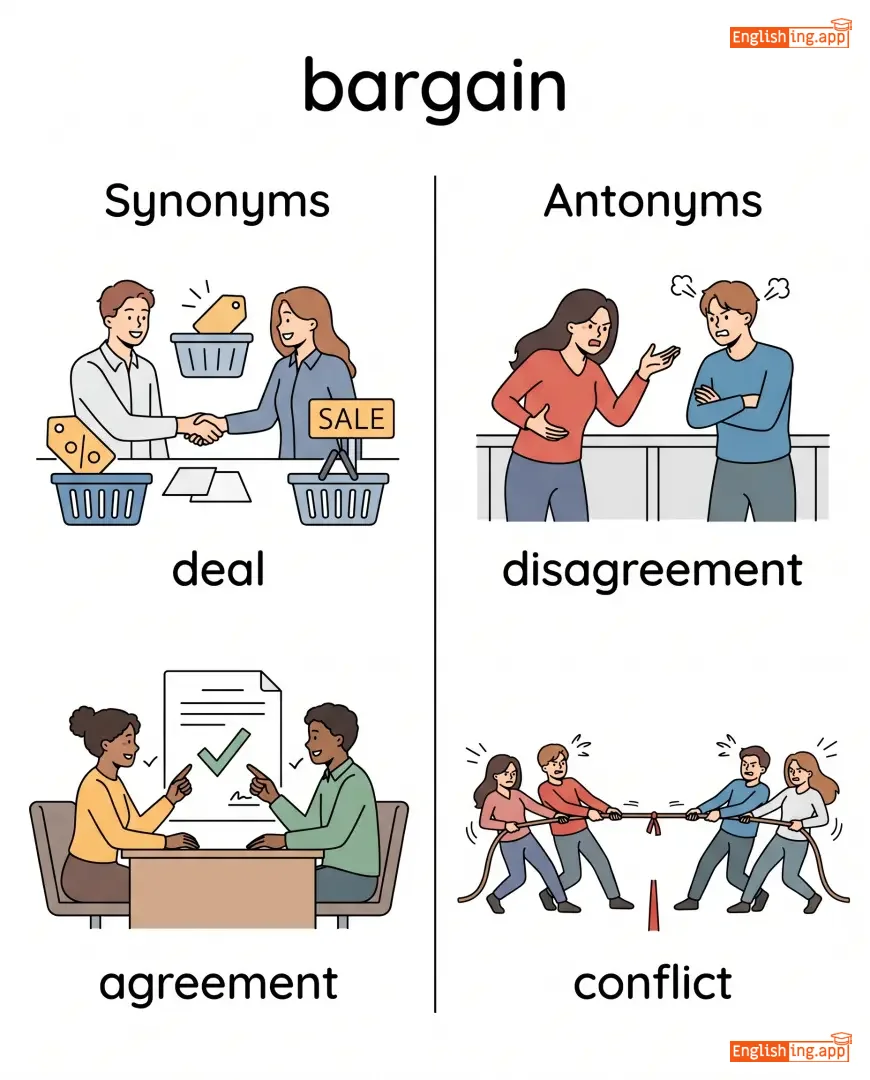
deal, agreement, contract, negotiation, offer
••••••
|
disagreement, conflict, refusal
••••••
|
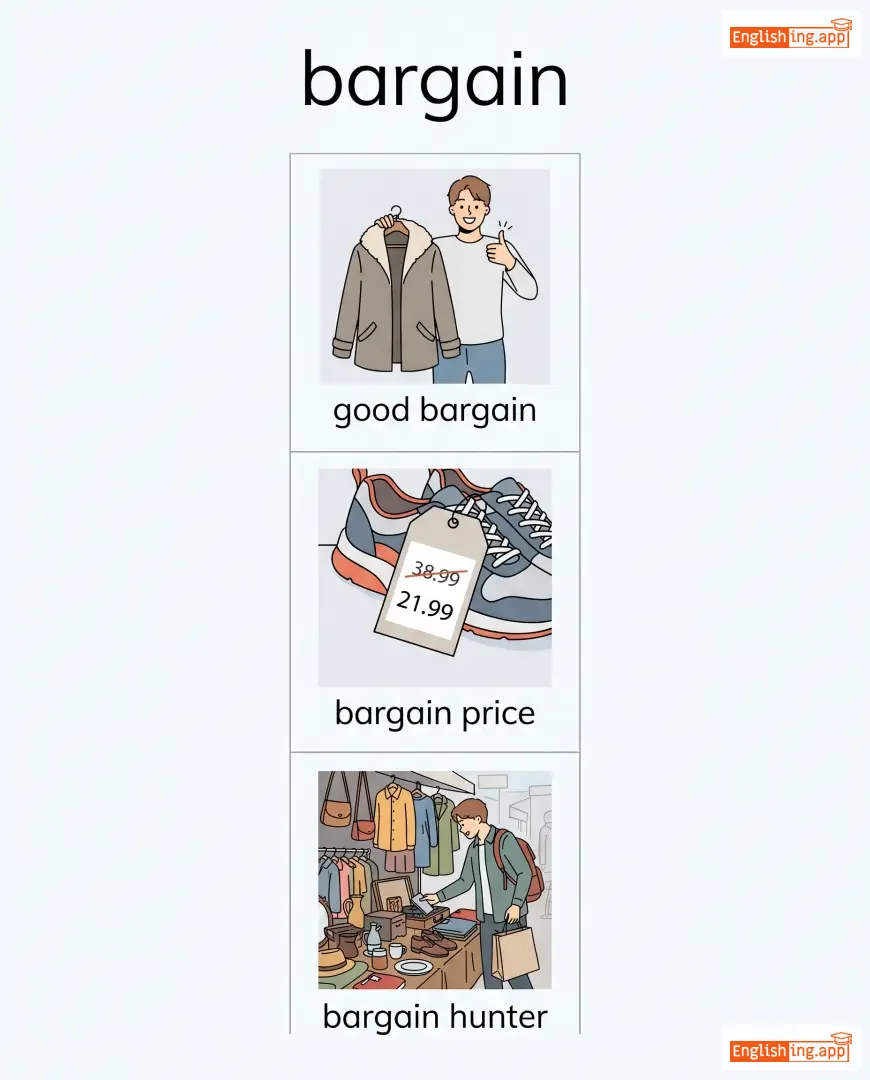
good bargain, bargain price, bargain hunter, strike a bargain
••••••
|
Bargain — 就是买便宜货,获得大的收益。
••••••
|
|
#826
😴
|
/bəˈnæləti/
noun
(班纳利特)
••••••
|
- •••••• |
平凡
pingfan
••••••
|
- •••••• | - •••••• | - •••••• | - •••••• |
The condition of being unoriginal, boring, or obvious; trite remark or quality.
••••••
|
The speech was criticized for its banality and lack of originality.
这篇演讲因其班纳利特和缺乏原创性而受到批评。
••••••
|
这篇演讲因其平凡和缺乏原创性而受到批评。
Zhe pian yanjiang yinqi pingfan he quefa chuangzuo xing er shoudao piping.
••••••
|
- •••••• | - •••••• | - •••••• |
triviality, cliché, platitude, ordinariness, dullness
••••••
|
originality, uniqueness, novelty
••••••
|
utter banality, full of banality, escape banality, cultural banality
••••••
|
Ban + 平凡 = 没有创意、很平常
••••••
|
|
#827
🎭
|
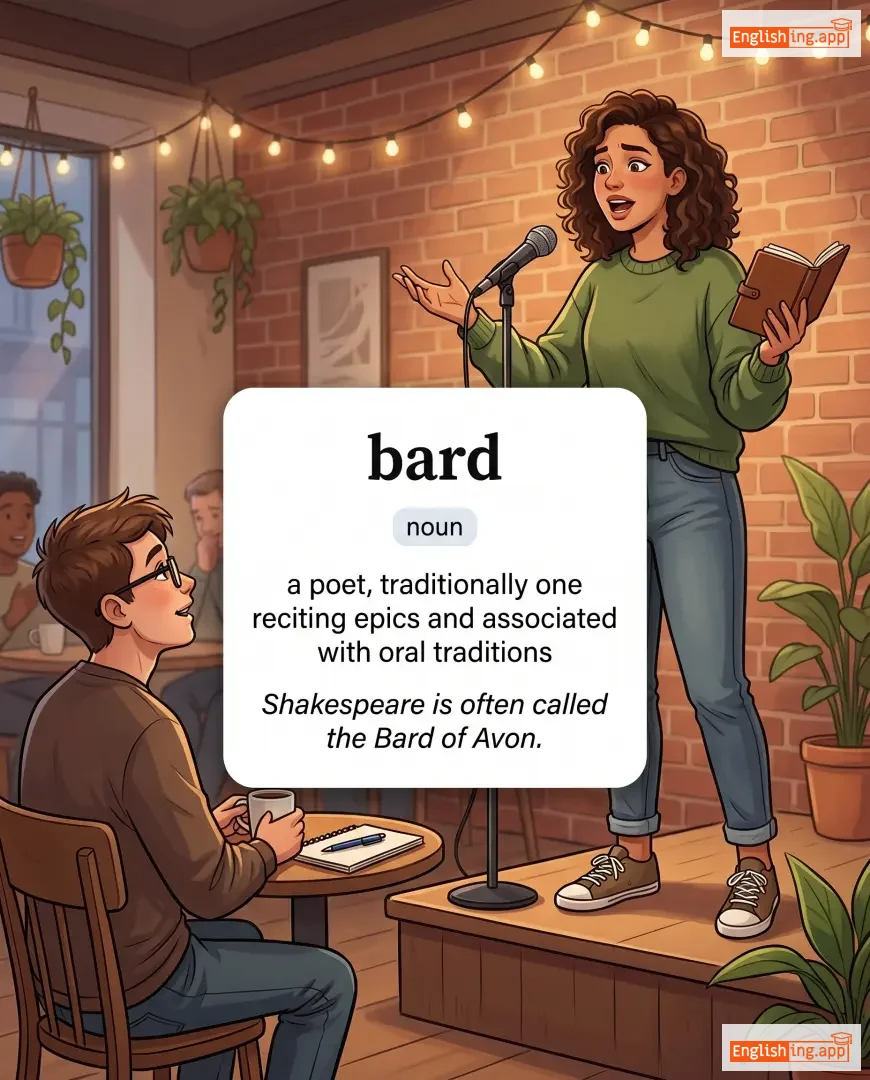
/bɑːrd/
noun
(bard)
••••••
|
|
诗人
shiren
••••••
|
- •••••• | - •••••• | - •••••• | - •••••• |
a poet, traditionally one reciting epics and associated with oral traditions
••••••
|
Shakespeare is often called the Bard of Avon. |
莎士比亚常被称为艾文的诗人。
Shāshìbǐyà cháng bèi chēng wèi ài wén de shīrén.
••••••
|
- •••••• | - •••••• | - •••••• |
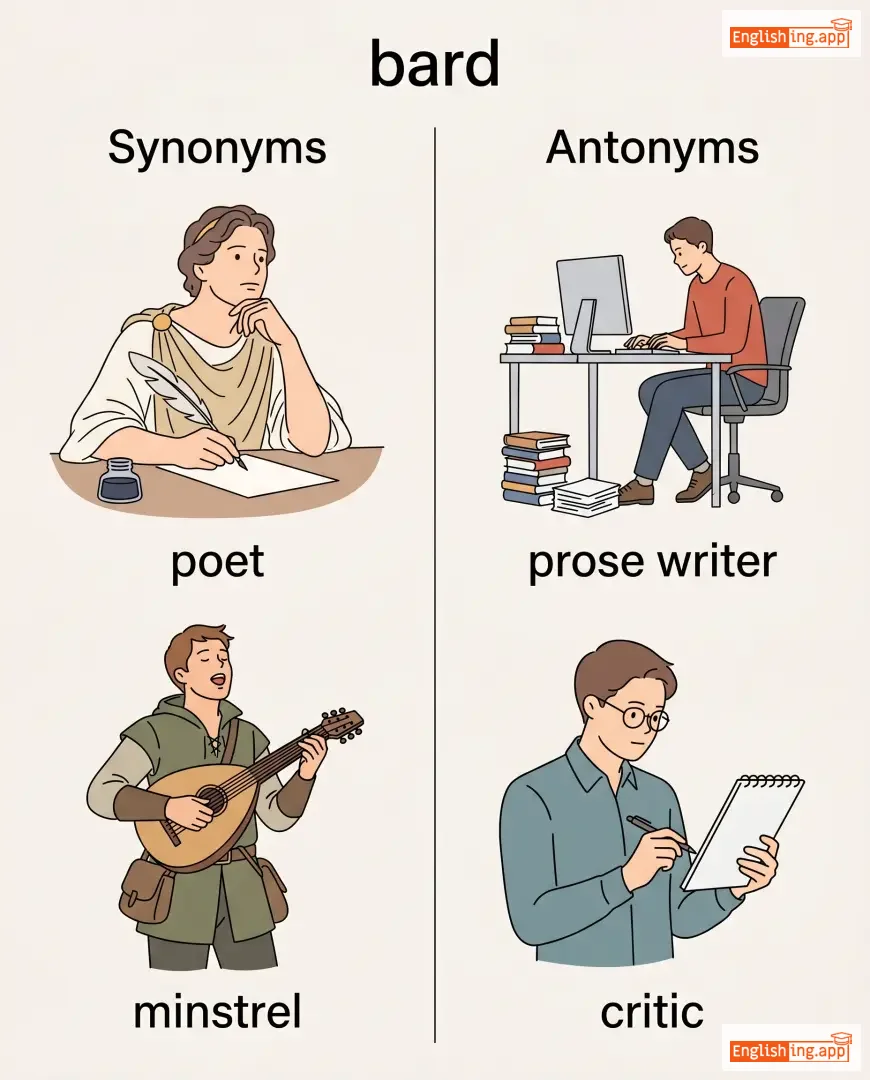
poet, minstrel, lyricist, troubadour, versifier
••••••
|
prose writer, critic
••••••
|
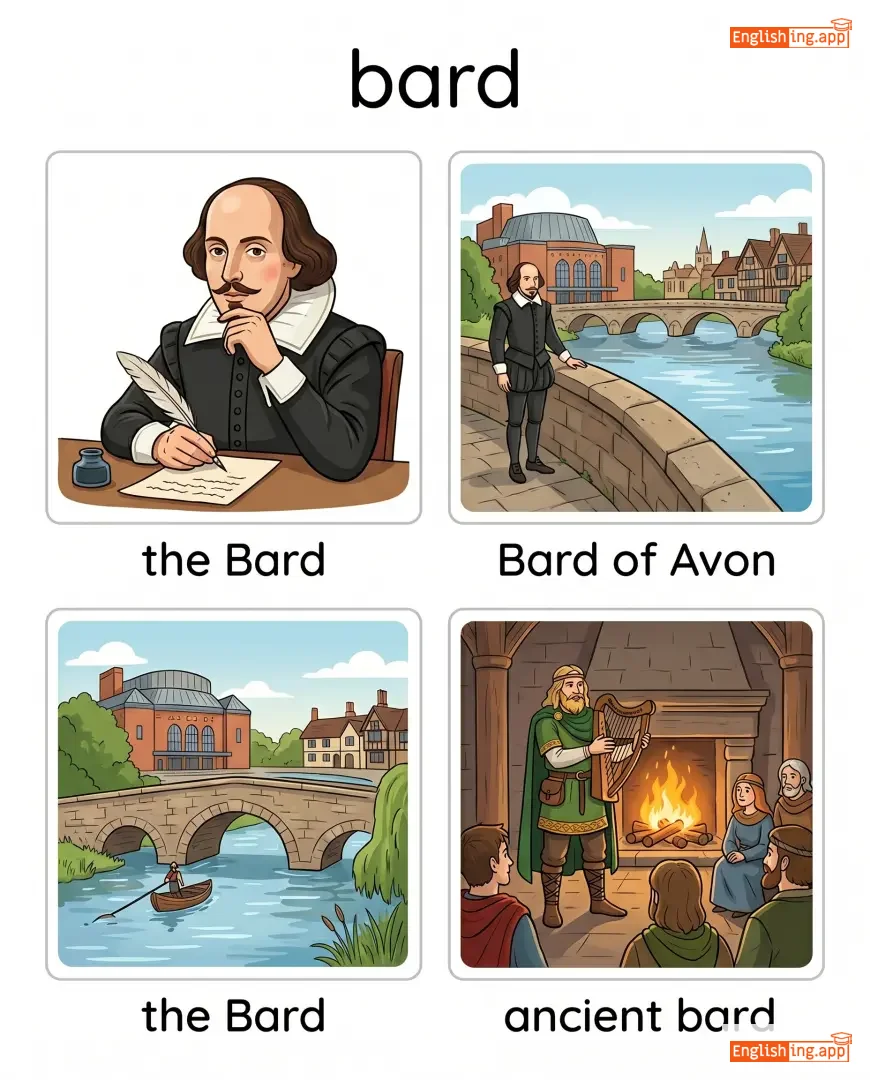
the Bard, Bard of Avon, ancient bard
••••••
|
Bard 意味着诗人,创造史诗的诗人
••••••
|
|
#828
🚤
|
/ˈbɑːr.kəˌroʊl/
noun
(巴尔卡罗尔)
••••••
|
- •••••• |
巴尔卡罗尔
balkaluoer
••••••
|
- •••••• | - •••••• | - •••••• | - •••••• |
a traditional Venetian boat song, often in 6/8 time
••••••
|
The orchestra played a beautiful barcarole that reminded me of Venice. |
乐团演奏了一首美丽的巴尔卡罗尔,令我想起了威尼斯。
yue tuan yanzou le yi shou mei li de balkaluoer, ling wo xiangqi le weinisi.
••••••
|
- •••••• | - •••••• | - •••••• |
boat song, gondolier song, melody, serenade
••••••
|
silence, noise
••••••
|
romantic barcarole, Venetian barcarole, orchestral barcarole
••••••
|
巴尔卡罗尔 = 船歌 - 船 = 船, 歌 = 歌
••••••
|
|
#829
🗡️
|
/ˈbɑːr.bə.rəs/
adjective
(巴尔巴罗斯)
••••••
|
- •••••• |
野蛮的, 残忍的
yěmán de, cánrěn de
••••••
|
- •••••• | - •••••• | - •••••• | - •••••• |
extremely cruel or uncivilized
••••••
|
The prisoners were treated in a barbarous manner.
囚犯们以野蛮的方式被对待。
••••••
|
囚犯们被以野蛮的方式对待。
Qiúfàn men bèi yǐ yěmán de fāngshì duìdài.
••••••
|
- •••••• | - •••••• | - •••••• |
cruel, savage, brutal, inhumane, ruthless
••••••
|
civilized, humane, gentle
••••••
|
barbarous act, barbarous treatment, barbarous crime
••••••
|
Barbarous 就是野蛮、残忍的行为。
••••••
|
|
#830
🪝
|
/bɑːrb/
noun
(barb)
••••••
|
- •••••• |
刺, 尖锐的评论
ci, jianrui de pinglun
••••••
|
- •••••• | - •••••• | - •••••• | - •••••• |
a sharp projection such as on a fishhook; a cutting remark
••••••
|
The fishhook has a small barb to keep the fish from escaping. |
鱼钩上有一个小刺,以防止鱼逃脱。
yuhook shang you yi ge xiao ci, yi fangzhi yu taotuo.
••••••
|
- •••••• | - •••••• | - •••••• |
spike, prong, jab, gibe, taunt
••••••
|
compliment, praise
••••••
|
barbed wire, cutting barb, verbal barb
••••••
|
Barb 就是尖刺,一次又一次刺痛你的心。
••••••
|
|
#831
🍺
|
/bɑːr/
noun, verb
(吧)
••••••
|
- •••••• |
酒吧, 阻止
jiuba, zuzhi
••••••
|
barred
禁止
••••••
|
barred
禁止
••••••
|
bars
吧们
••••••
|
barring
吧着
••••••
|
a counter where drinks are served; to prevent or block
••••••
|
They decided to meet at the bar after work.
他们决定下班后在吧见面。
••••••
|
他们决定下班后在吧见面。
Tamen jueding xiaban hou zai ba jianmian.
••••••
|
bar none
不例外
••••••
|
without exception
••••••
|
不例外
bu liwai
••••••
|
pub, tavern, block, prohibit, hinder
••••••
|
allow, permit, open
••••••
|
wine bar, bar exam, bar association, bar the door, behind bars
••••••
|
Bar 是酒吧, 想象酒吧里有屏障,人们在这里聚会。
••••••
|
|
#832
😂
|
/ˈbæntərɪŋ/
adjective/verb
(班特林)
••••••
|
- •••••• |
开玩笑
kaiwanxiao
••••••
|
- •••••• | - •••••• | - •••••• |
bantering
班特林
••••••
|
characterized by good-humored teasing or joking
••••••
|
They had a bantering conversation at the café.
他们在咖啡馆进行了幽默的对话。
••••••
|
他们在咖啡馆进行了幽默的对话。
Tāmen zài kāfēi guǎn jìnxíngle yōumò de duìhuà.
••••••
|
- •••••• | - •••••• | - •••••• |
teasing, joking, playful, witty
••••••
|
serious, solemn
••••••
|
bantering tone, bantering conversation, bantering style
••••••
|
Bantering意味着开玩笑 — 就像朋友们在开玩笑时,带着愉快的心情彼此嬉戏。
••••••
|
|
#833
😄
|
/ˈbæntər/
noun/verb
(班特)
••••••
|
|
打趣
dǎqù
••••••
|
bantered
班特德
••••••
|
bantered
班特德
••••••
|
banters
班特斯
••••••
|
bantering
班特灵
••••••
|
playful and friendly exchange of teasing remarks
••••••
|
The colleagues enjoyed some light banter during the meeting.
同事们在会议期间享受了一些轻松的班特。
••••••
|
同事们在会议期间享受了一些轻松的班特。
Tóngshìmen zài huìyì qījiān xiǎngshòu le yīxiē qīngsōng de bāntè.
••••••
|
- •••••• | - •••••• | - •••••• |
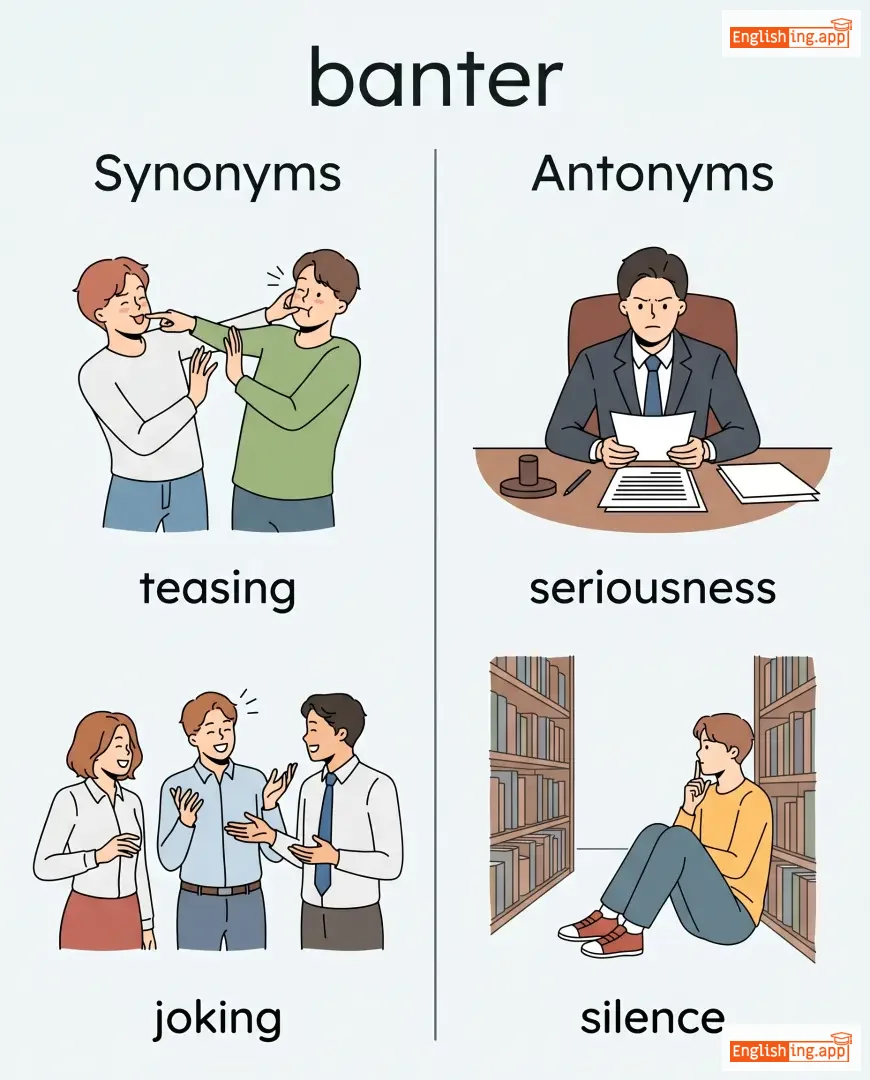
teasing, joking, kidding, repartee
••••••
|
seriousness, silence
••••••
|
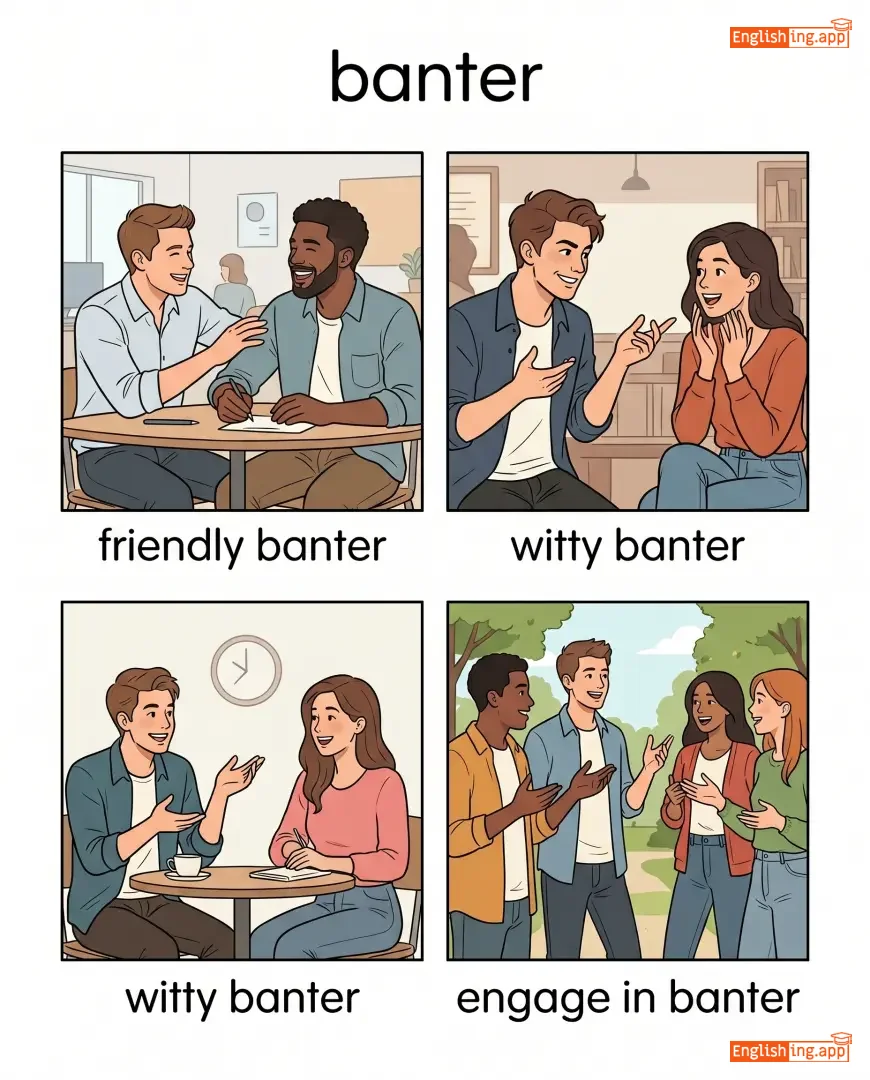
friendly banter, witty banter, engage in banter, light banter
••••••
|
Banter意味着'Ban' + 'tear' — 当你和朋友开玩笑时笑到眼泪 ('tear') 都出来了。
••••••
|
|
#834
🏦
|
/bæŋk/
noun/verb
(bæŋk)
••••••
|
- •••••• |
银行
yínháng
••••••
|
banked
••••••
|
banked
••••••
|
banks
••••••
|
banking
••••••
|
an institution where money is kept and managed; or to tilt in movement (like an airplane or riverbank)
••••••
|
She deposited the money in the bank. |
她把钱存入了银行。
Tā bǎ qián cún rù le yínháng.
••••••
|
break the bank |
to cost too much money or use up all of one's resources
••••••
|
打破银行
dǎ pò yínháng
••••••
|
financial institution, lender, depository, slope, edge
••••••
|
debt, withdrawal, poverty
••••••
|
bank account, bank loan, river bank, bank balance, break the bank
••••••
|
银行意味着存钱,钱有了,生活就有了好排名。
••••••
|
|
#835
🪜
|
/ˈbænɪstər/
noun
(班尼斯特)
••••••
|
- •••••• |
扶手栏杆
fushou langgan
••••••
|
- •••••• | - •••••• | - •••••• | - •••••• |
a railing supported by posts at the side of a staircase or balcony
••••••
|
She held the banister tightly while going down the stairs. |
她在下楼时紧紧抓住扶手栏杆。
Tā zài xià lóu shí jǐn jǐn zhuā zhù fúshǒu lángān.
••••••
|
- •••••• | - •••••• | - •••••• |
railing, balustrade, handrail, guardrail
••••••
|
open space, gap
••••••
|
hold the banister, lean on the banister, wooden banister, stair banister
••••••
|
Banister = BAN + 楼梯 (louti) — 扶手栏杆 (fushou langgan) 就在楼梯旁边。
••••••
|
|
#836
🚫
|
/ˈbænɪʃ/
verb
••••••
|
|
- •••••• |
banished
••••••
|
banished
••••••
|
banishes
••••••
|
banishing
••••••
|
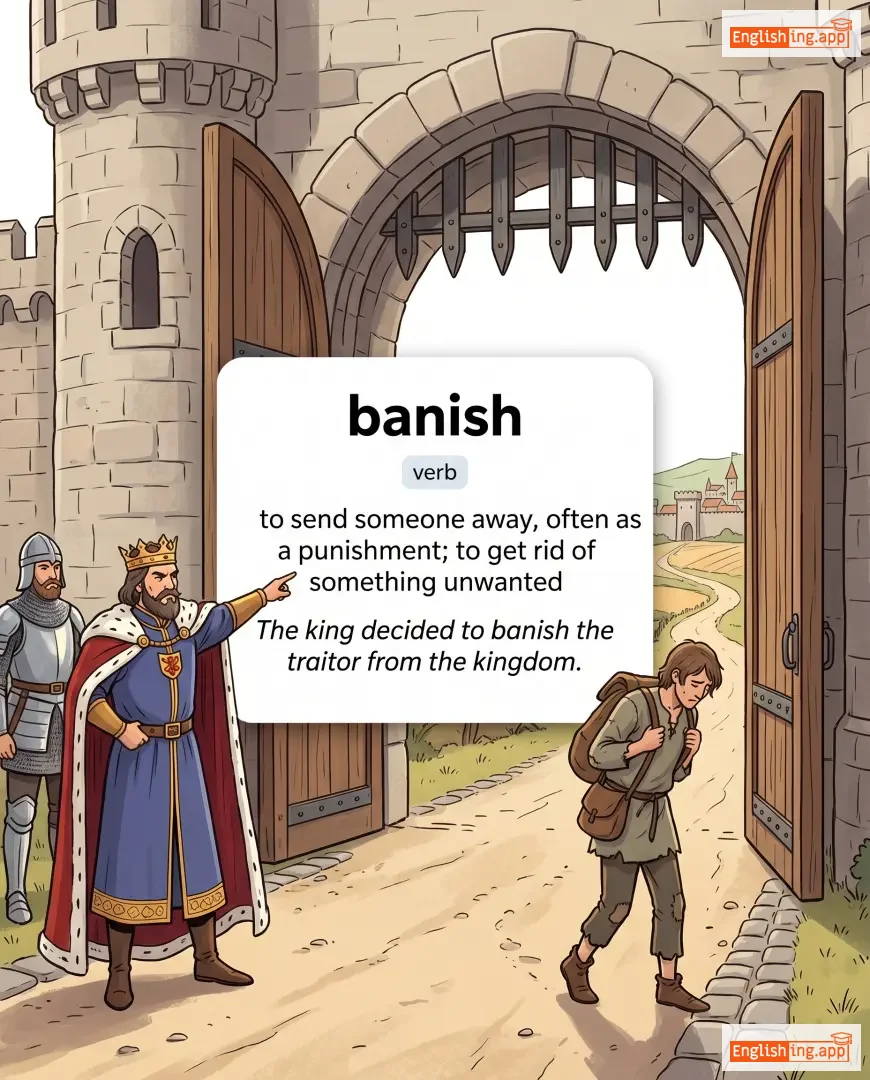
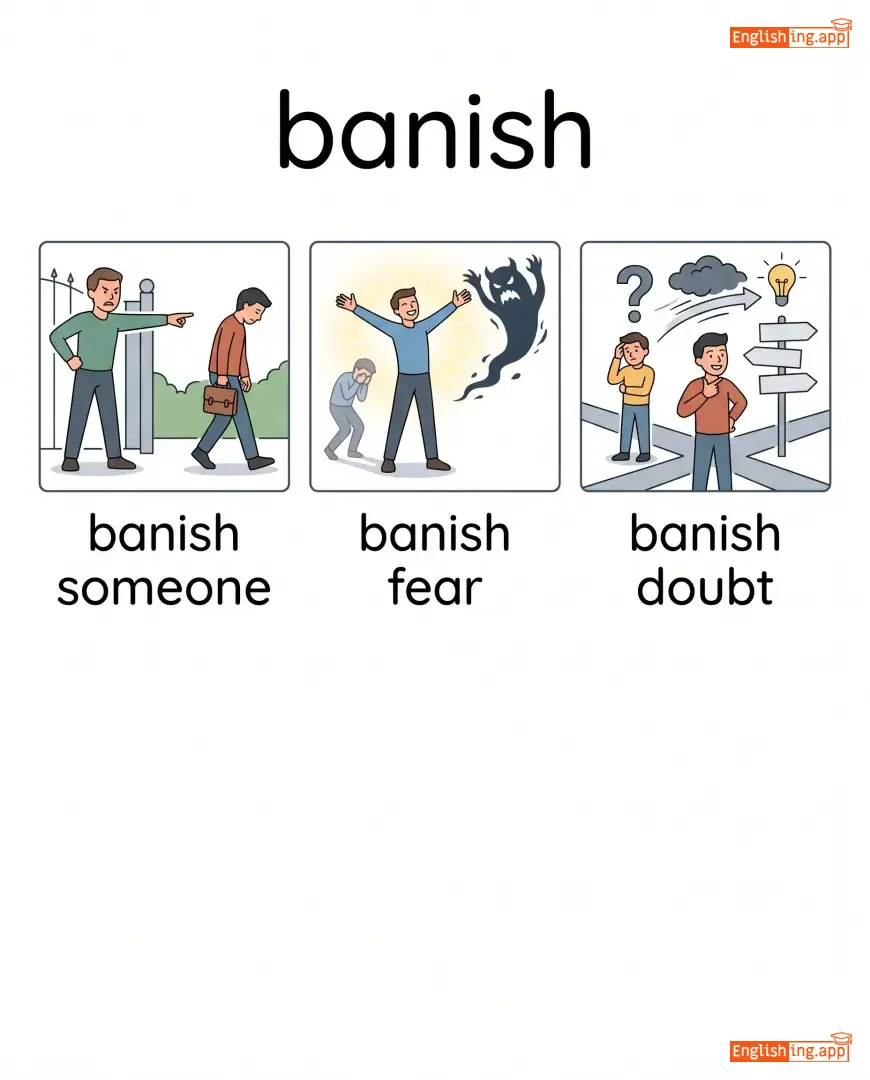
to send someone away, often as a punishment; to get rid of something unwanted
••••••
|
The king decided to banish the traitor from the kingdom. |
- •••••• |
banish the thought |
to deliberately stop thinking about something unpleasant
••••••
|
- •••••• |
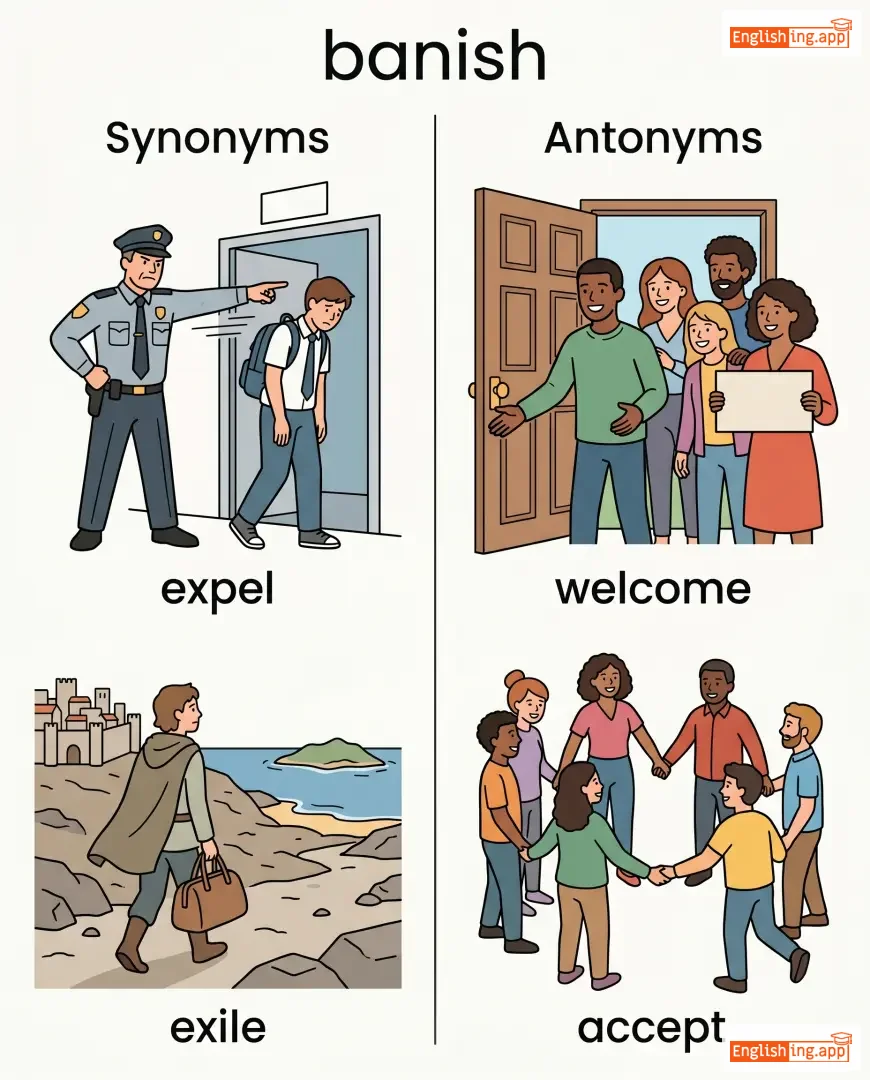
expel, exile, deport, dismiss, ostracize
••••••
|
welcome, accept, include
••••••
|
banish someone, banish fear, banish doubt, banish forever
••••••
|
No •••••• |
|
#837
☠️
|
/ˈbeɪnfəl/
adjective
(贝因福尔)
••••••
|
- •••••• |
有害的
yǒuhài de
••••••
|
- •••••• | - •••••• | - •••••• | - •••••• |
Causing harm, ruin, or destruction; deadly or poisonous.
••••••
|
His baneful influence ruined the community. |
他的有害影响摧毁了社区。
Tā de yǒuhài yǐngxiǎng cuīhuǐle shèqū.
••••••
|
- •••••• | - •••••• | - •••••• |
harmful, destructive, poisonous, detrimental, ruinous
••••••
|
beneficial, helpful, harmless
••••••
|
baneful effect, baneful influence, baneful consequences, baneful impact
••••••
|
Bane + ful = 完全的有害影响,意思是有害的
••••••
|
|
#838
⚡
|
/beɪn/
noun
(贝恩)
••••••
|
- •••••• |
祸根
huogen
••••••
|
- •••••• | - •••••• | - •••••• | - •••••• |
A cause of great distress, harm, or annoyance.
••••••
|
Traffic jams are the bane of city life. |
交通堵塞是城市生活的祸根。
Jiāotōng dǔsè shì chéngshì shēnghuó de huogen.
••••••
|
the bane of one's existence |
Something that continually causes trouble or unhappiness for someone.
••••••
|
某人存在的祸根
Mǒu rén cúnzài de huogen
••••••
|
curse, plague, torment, misery, burden
••••••
|
blessing, boon, benefit
••••••
|
bane of life, bane of existence, real bane, cause bane
••••••
|
Bane意味着一个持续的麻烦,就像一个祸根。
••••••
|
|
#839
💬
|
/ˈbændi/
verb
••••••
|
- •••••• | - •••••• |
bandied
••••••
|
bandied
••••••
|
bandies
••••••
|
bandying
••••••
|
To pass (words, ideas, or gossip) back and forth in a casual or argumentative way.
••••••
|
They bandied jokes across the table. |
- •••••• |
bandy words |
To argue or dispute in a casual or petty way.
••••••
|
- •••••• |
exchange, toss, discuss, spar, argue
••••••
|
ignore, silence
••••••
|
bandy words, bandy about, bandy ideas, bandy insults
••••••
|
No •••••• |
|
#840
🧣
|
/bænˈdænə/
noun
(班达那)
••••••
|
- •••••• |
大彩色头巾
dà cǎisè tóujīn
••••••
|
- •••••• | - •••••• | - •••••• | - •••••• |
A large, often brightly colored handkerchief, typically worn on the head or around the neck.
••••••
|
He tied a red bandanna around his neck. |
他把一条红色的头巾绑在脖子上。
Tā bǎ yītiáo hóngsè de tóujīn bǎng zài bózi shàng.
••••••
|
- •••••• | - •••••• | - •••••• |
handkerchief, scarf, kerchief, headscarf
••••••
|
hat, cap
••••••
|
red bandanna, wear bandanna, cotton bandanna, bandanna print
••••••
|
Band + Anna = Anna戴着大彩色头巾
••••••
|
Vocabulary Quiz
Test your vocabulary by matching words with their translations or meanings.
Login to take the quiz
Comments (0)
Share your thoughts and join the discussion.
Join the discussion by logging in
Login to CommentNo comments yet
Be the first to share your thoughts!