




Swipe left or right, or use the buttons. Tap image to zoom.
例句翻译
单词
Lesson 61Lesson 61 - 遮罩切换
|
表情符号
|
单词 | Images | 翻译 | 过去时 | 过去分词 | 第三人称单数 | 动名词 | 含义 | 例句 | 例句翻译 | 示例表达 | 示例表达含义 | 示例表达翻译 | 同义词 | 反义词 | 搭配词 | 助记符 |
|---|---|---|---|---|---|---|---|---|---|---|---|---|---|---|---|---|---|
|
#1801
⚡
|
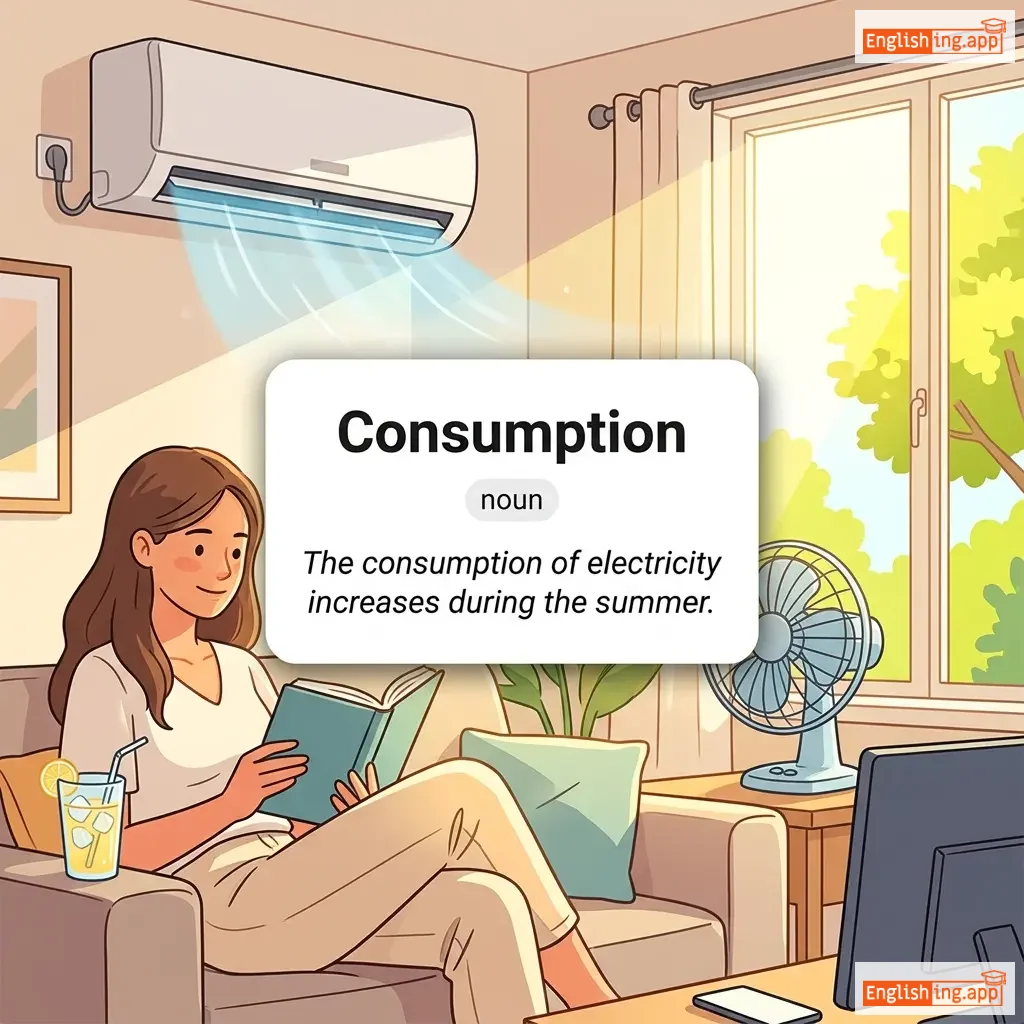
/kənˈsʌmpʃən/
noun
(kənˈsʌmpʃən)
••••••
|
|
消费
xiaofei
••••••
|
- •••••• | - •••••• | - •••••• | - •••••• |
The act of using up resources, goods, or energy; also refers to the eating or drinking of something.
••••••
|
The consumption of electricity increases during the summer. |
夏季电力消费增加。
Xiàjì diànlì xiāofèi zēngjiā.
••••••
|
consumption tax |
A tax placed on goods and services purchased by consumers.
••••••
|
消费税
xiāofèi shuì
••••••
|
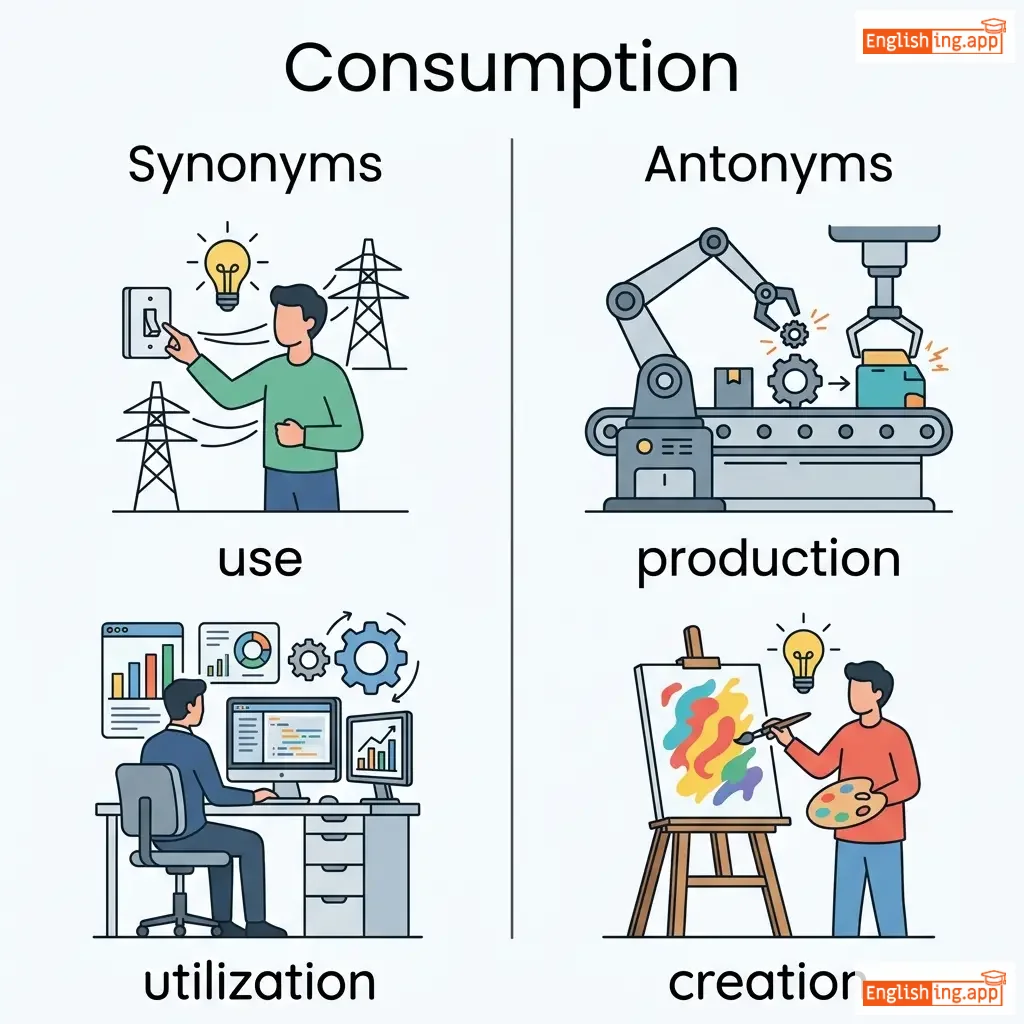
use, utilization, expenditure, intake, absorption
••••••
|
production, creation, conservation
••••••
|
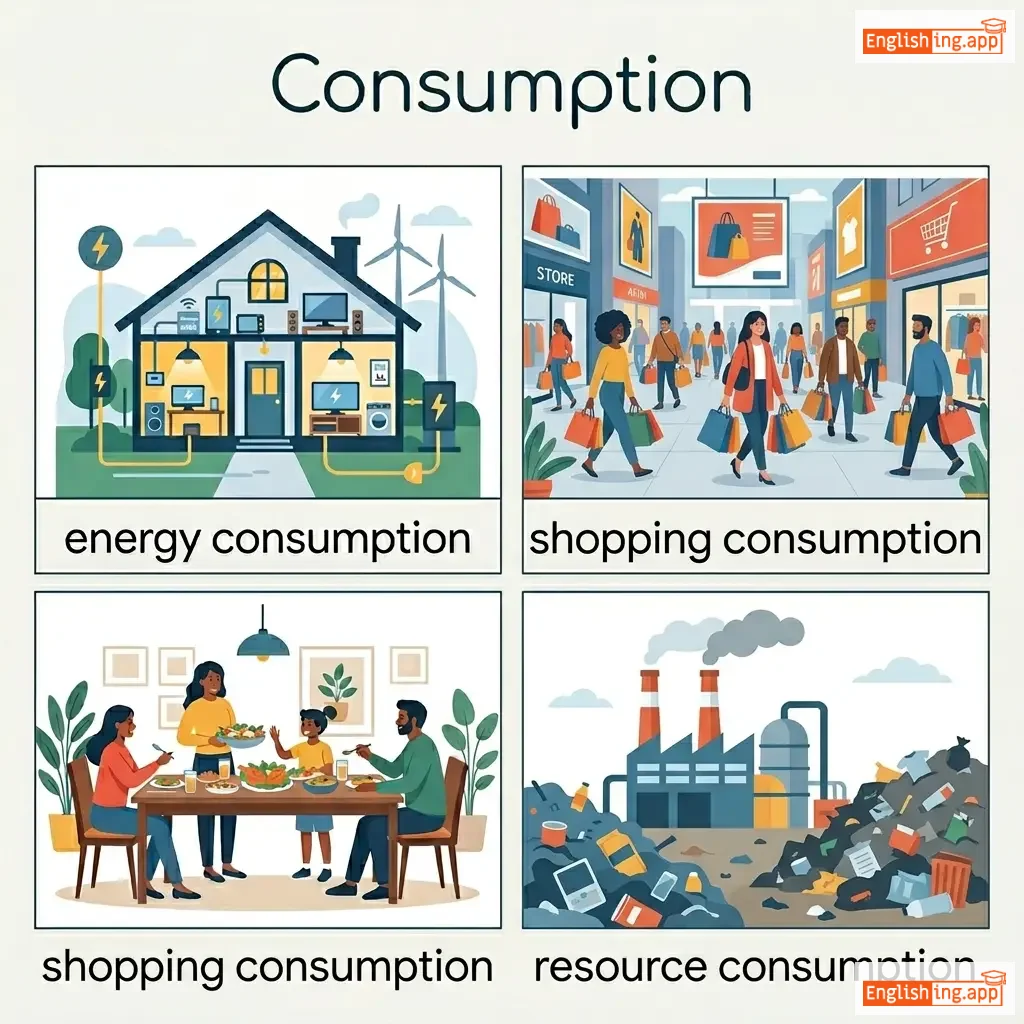
energy consumption, food consumption, mass consumption, over consumption
••••••
|
消费就是使用和吃东西,像电力,消费就增加。
••••••
|
|
#1802
😊
|
/ˈkɒntɛnt/
adjective
(kōng-tènt)
••••••
|
- •••••• |
满意的, 高兴的
mǎnyì de, gāoxìng de
••••••
|
- •••••• | - •••••• | - •••••• | - •••••• |
in a state of satisfaction; pleased
••••••
|
He felt content after finishing his work. |
他在完成工作后感到满意。
Tā zài wánchéng gōngzuò hòu gǎndào mǎnyì.
••••••
|
- •••••• | - •••••• | - •••••• |
satisfied, pleased, happy, fulfilled
••••••
|
discontent, unhappy, dissatisfied
••••••
|
content with, feel content, perfectly content, content smile
••••••
|
Content 就是满意 - 完成工作后感觉到满意很正常
••••••
|
|
#1803
🥇
|
/kənˈtɛndər/
noun
(kāngtèndé)
••••••
|
- •••••• |
竞争者, 争夺者
jingzhengzhe, zhengduozhe
••••••
|
- •••••• | - •••••• | - •••••• | - •••••• |
a person or team competing for a title or prize
••••••
|
She is a strong contender for the mayoral position.
她是市长职位的强有力竞争者。
••••••
|
她是市长职位的强有力竞争者。
Ta shi shizhang zhiwei de qiang youli jingzhengzhe.
••••••
|
- •••••• | - •••••• | - •••••• |
challenger, competitor, aspirant, nominee
••••••
|
non-contender, bystander
••••••
|
strong contender, main contender, serious contender, leading contender
••••••
|
Contender就是争取胜利的人,像竞争者一样。
••••••
|
|
#1804
🏆
|
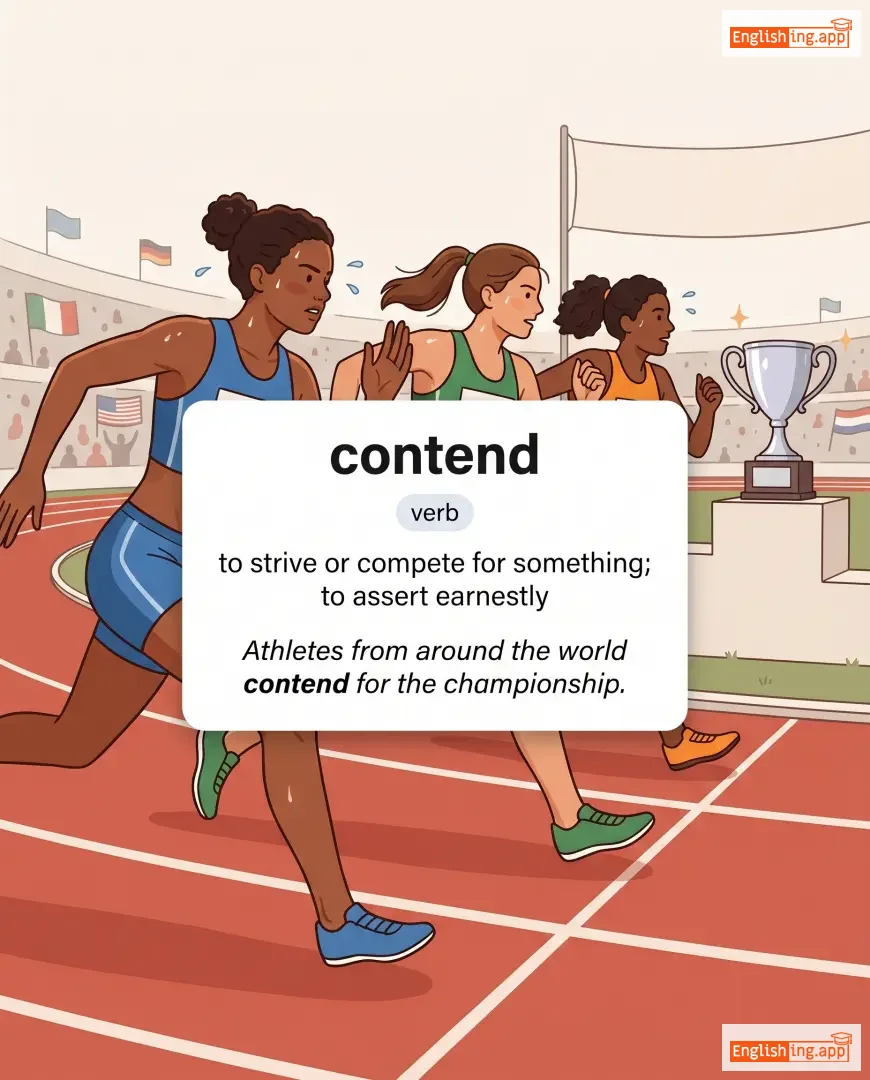
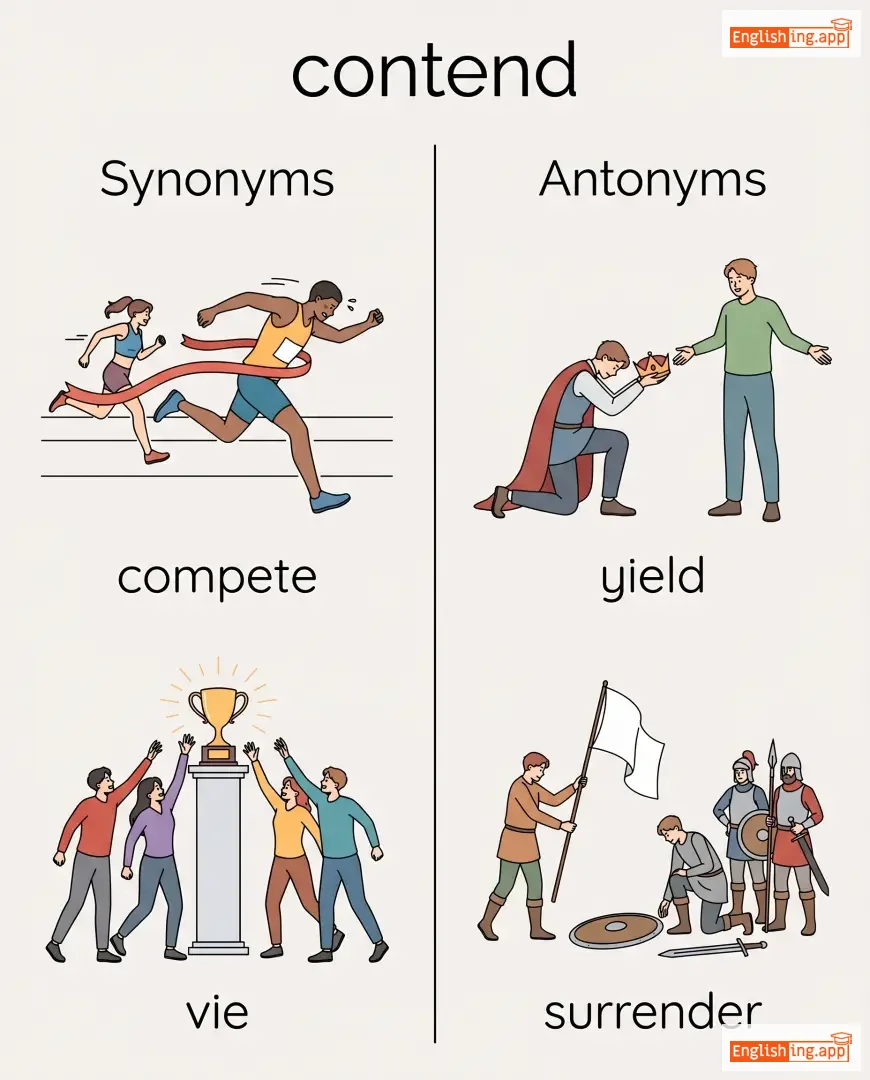
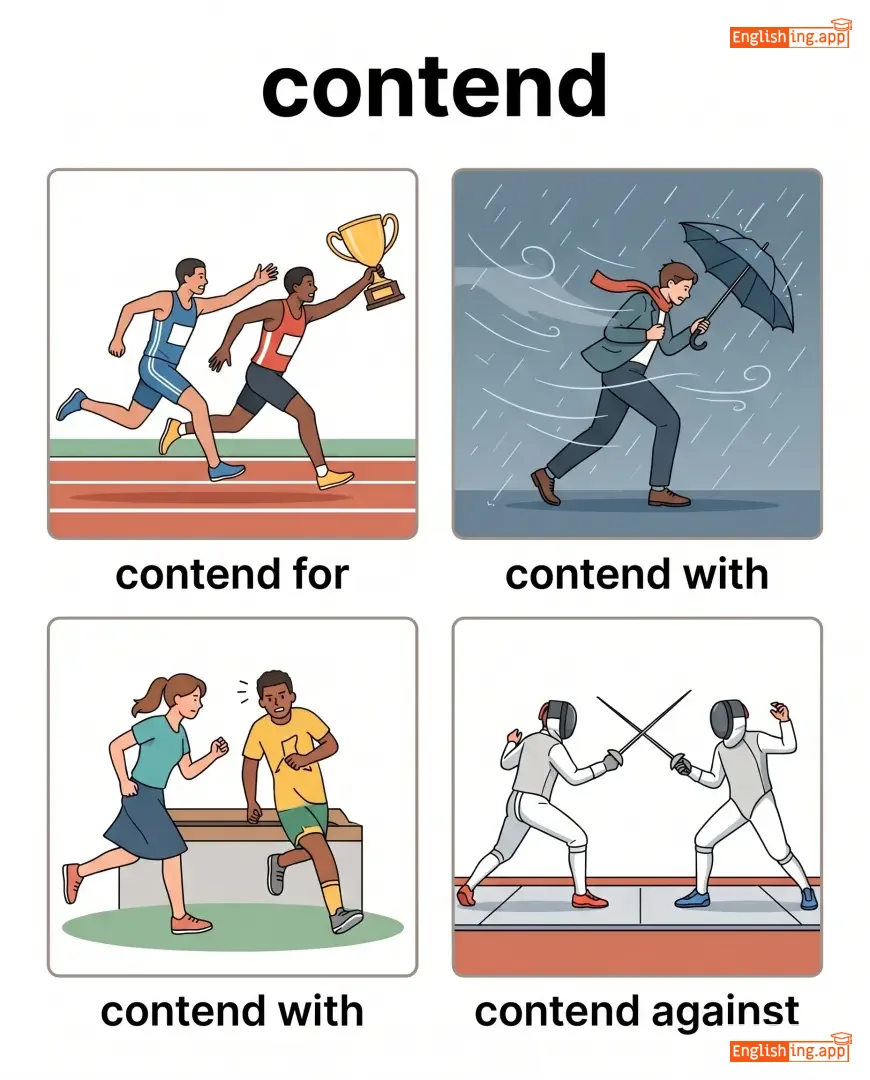
/kənˈtɛnd/
verb
(竞赛)
••••••
|
|
竞争,主张
jìngzhēng, zhǔzhāng
••••••
|
contended
竞赛过
••••••
|
contended
竞赛过
••••••
|
contends
竞赛
••••••
|
contending
竞赛中
••••••
|
to strive or compete for something; to assert earnestly
••••••
|
Athletes from around the world contend for the championship.
来自世界各地的运动员为冠军而争斗。
••••••
|
来自世界各地的运动员为冠军而争斗。
Láizì shìjiè gèdì de yùndòngyuán wèi guànjūn ér zhēngdòu.
••••••
|
- •••••• | - •••••• | - •••••• |
compete, vie, struggle, assert
••••••
|
yield, surrender, concede
••••••
|
contend for, contend with, contend against, contend successfully
••••••
|
Contend 就是争夺 - 总是在竞赛中 contend
••••••
|
|
#1805
😤
|
/kənˈtɛmptʃuəs/
adjective
(kənˈtɛmptʃuəs)
••••••
|
- •••••• |
轻蔑的, 鄙视的
qīngmiè de, bǐshì de
••••••
|
- •••••• | - •••••• | - •••••• | - •••••• |
showing or expressing contempt; scornful
••••••
|
She gave him a contemptuous glance. |
她给了他一个轻蔑的眼神。
Tā gěile tā yīgè qīngmiè de yǎnshén.
••••••
|
- •••••• | - •••••• | - •••••• |
scornful, disdainful, derisive, sneering
••••••
|
respectful, admiring, humble
••••••
|
contemptuous look, contemptuous tone, contemptuous remark
••••••
|
Contemptuous 表示鄙视的眼神 - Show contempt in eyes
••••••
|
|
#1806
😒
|
/kənˈtɛmptəbl/
adjective
(kənˈtɛmptəbl)
••••••
|
- •••••• |
可鄙的, 令人厌恶的
kě bǐ de, lìng rén yàn wù de
••••••
|
- •••••• | - •••••• | - •••••• | - •••••• |
deserving of contempt; despicable
••••••
|
His deceitful actions were truly contemptible. |
他的欺骗行为真是可鄙的。
Tā de qīpiàn xíngwéi zhēn shì kě bǐ de.
••••••
|
- •••••• | - •••••• | - •••••• |
despicable, vile, abhorrent, shameful
••••••
|
admirable, honorable, respectable
••••••
|
contemptible behavior, contemptible act, contemptible lie
••••••
|
可鄙的 (kě bǐ de) 和 轻视 (qīng shì) 相联系,表示被厌恶的行为。
••••••
|
|
#1807
😤
|
/kənˈtɛmpt/
noun
••••••
|
- •••••• | - •••••• | - •••••• | - •••••• | - •••••• | - •••••• |
a strong feeling of dislike and lack of respect towards someone or something
••••••
|
He spoke with contempt about the corrupt officials. |
- •••••• |
hold in contempt |
to consider someone or something unworthy of respect
••••••
|
- •••••• |
disdain, scorn, disrespect, derision
••••••
|
respect, admiration, honor
••••••
|
deep contempt, open contempt, show contempt, treat with contempt
••••••
|
No •••••• |
|
#1808
🎨
|
/kənˈtɛmpərɛri/
adjective
(kənˈtɛmpərɛri)
••••••
|
- •••••• |
当代的, 现代的
dāngdài de, xiàndài de
••••••
|
- •••••• | - •••••• | - •••••• | - •••••• |
belonging to the same time period; modern
••••••
|
She enjoys contemporary art exhibitions.
她喜欢现代艺术展览。
••••••
|
她喜欢现代艺术展览。
Tā xǐhuān xiàndài yìshù zhǎnlǎn.
••••••
|
contemporary issues
当代问题
••••••
|
current problems or topics relevant to the present time
••••••
|
当代问题
dāngdài wèntí
••••••
|
modern, current, present-day, up-to-date
••••••
|
old-fashioned, outdated, ancient
••••••
|
contemporary art, contemporary culture, contemporary society, contemporary issues
••••••
|
Contemporary = con+temporary = 属于相同的时间段,即当代/现代。
••••••
|
|
#1809
🕰️
|
/kənˌtɛmpəˈreɪniəs/
adjective
(kón-tèmpó-rèi-ni-əs)
••••••
|
- •••••• |
同时代的
tóng shídài de
••••••
|
- •••••• | - •••••• | - •••••• | - •••••• |
existing, happening, or occurring at the same time
••••••
|
The two artists were contemporaneous and often influenced each other. |
这两位艺术家是同时代的,并且经常互相影响。
Zhè liǎng wèi yìshùjiā shì tóng shídài de, bìngqiě jīngcháng hùxiāng yǐngxiǎng.
••••••
|
- •••••• | - •••••• | - •••••• |
simultaneous, coexistent, concurrent, synchronous
••••••
|
separate, different, asynchronous
••••••
|
contemporaneous events, contemporaneous writings, contemporaneous accounts
••••••
|
Contemporary 和 contemporaneous 意思一样——都是同时代的。
••••••
|
|
#1810
🤔
|
/ˈkɒntəmpleɪt/
verb
••••••
|
- •••••• | - •••••• |
contemplated
••••••
|
contemplated
••••••
|
contemplates
••••••
|
contemplating
••••••
|
to think deeply and carefully about something; to consider thoughtfully
••••••
|
She sat quietly to contemplate her future plans. |
- •••••• |
contemplate the meaning of life |
to think deeply about the purpose or nature of life
••••••
|
- •••••• |
consider, ponder, meditate, reflect, deliberate
••••••
|
ignore, dismiss, neglect
••••••
|
contemplate the future, contemplate change, deeply contemplate, seriously contemplate
••••••
|
No •••••• |
|
#1811
😒
|
/kənˈtɛm/
verb
(kənˈtɛm)
••••••
|
- •••••• |
轻视
qīngshì
••••••
|
contemned
kənˈtɛmd
••••••
|
contemned
kənˈtɛmd
••••••
|
contemns
kənˈtɛmz
••••••
|
contemning
kənˈtɛmɪŋ
••••••
|
to treat or regard with disdain, scorn, or contempt
••••••
|
He would never contemn honest work, no matter how humble.
ʌɪ wʊd ˈnɛvər kənˈtɛmn hɒnɪst wɜrk, nəʊ ˈmætər haʊ hʌmbəl.
••••••
|
他绝不会轻视诚实的工作,无论它多么卑微。
Tā jué bù huì qīngshì chéngshí de gōngzuò, wúlùn tā duōme bēiwēi.
••••••
|
- •••••• | - •••••• | - •••••• |
despise, scorn, disdain, deride, spurn
••••••
|
respect, honor, admire
••••••
|
contemn authority, contemn tradition, openly contemn, silently contemn
••••••
|
Contemn 在中文中是轻视的意思,像轻视一样看待事物。
••••••
|
|
#1812
☣️
|
/kənˈtæmɪneɪt/
verb
••••••
|
- •••••• | - •••••• |
contaminated
••••••
|
contaminated
••••••
|
contaminates
••••••
|
contaminating
••••••
|
To make something impure, dirty, or harmful by contact with a poisonous or polluting substance.
••••••
|
The river was contaminated by industrial waste. |
- •••••• |
contaminate the mind |
To corrupt someone's thoughts or beliefs.
••••••
|
- •••••• |
pollute, defile, taint, spoil, infect
••••••
|
purify, cleanse, sanitize
••••••
|
contaminate water, contaminate food, contaminate soil, contaminate environment
••••••
|
No •••••• |
|
#1813
😂
|
/kənˈteɪdʒəs/
adjective
(kənˈteɪdʒəs)
••••••
|
- •••••• |
传染性
chuánrǎn xìng
••••••
|
- •••••• | - •••••• | - •••••• | - •••••• |
Able to be transmitted from one person to another, typically by direct contact; also used for emotions or attitudes that spread quickly.
••••••
|
Her laughter was so contagious that everyone started laughing. |
她的笑声如此传染性,大家都开始笑了。
Tā de xiàoshēng rúcǐ chuánrǎn xìng, dàjiā dōu kāishǐ xiàole.
••••••
|
contagious enthusiasm |
An excitement or energy that spreads quickly to others.
••••••
|
传染性的热情
chuánrǎn xìng de rèqíng
••••••
|
infectious, communicable, transmittable, spreading
••••••
|
noninfectious, immune
••••••
|
contagious disease, contagious smile, contagious laughter, highly contagious
••••••
|
传染性,就像笑声在每个人之间传播。
••••••
|
|
#1814
🦠
|
/kənˈteɪdʒən/
noun
(kǒngtèjiān)
••••••
|
- •••••• |
传染
chuanran
••••••
|
- •••••• | - •••••• | - •••••• | - •••••• |
The communication of disease from one person to another by close contact; also the spread of harmful ideas or behaviors.
••••••
|
Fear spread like a contagion through the crowd. |
恐惧像传染一样在群众中传播开来。
Kǒngjù xiàng chuánrǎn yīyàng zài qúnzhòng zhōng chuánbò kāilái.
••••••
|
- •••••• | - •••••• | - •••••• |
infection, transmission, spread, epidemic, influence
••••••
|
immunity, prevention
••••••
|
viral contagion, financial contagion, contagion risk, contagion effect
••••••
|
Contagion就像'传染'—疾病或恐惧容易传播。
••••••
|
|
#1815
😷
|
/kənˈsʌmptɪv/
adjective
(kənˈsʌmptɪv)
••••••
|
- •••••• |
消费性的
xiaofeixing de
••••••
|
- •••••• | - •••••• | - •••••• | - •••••• |
Relating to or characterized by consumption; historically used to describe someone suffering from tuberculosis.
••••••
|
The doctor advised against consumptive habits. |
医生建议避免消费性习惯。
Yisheng jianyi bimi xiaofeixing xiguan.
••••••
|
- •••••• | - •••••• | - •••••• |
wasteful, extravagant, draining, debilitating
••••••
|
productive, conserving, preserving
••••••
|
consumptive habits, consumptive lifestyle, consumptive disease
••••••
|
Consumptive意味着会消耗健康的习惯—消费性的。
••••••
|
|
#1816
😨
|
/ˌkɒnstəˈneɪʃən/
noun
(孔斯特内申)
••••••
|
- •••••• |
惊愕
jing'e
••••••
|
- •••••• | - •••••• | - •••••• | - •••••• |
A feeling of anxiety, dismay, or confusion, often caused by something unexpected.
••••••
|
The sudden announcement caused widespread consternation among the employees. |
突如其来的宣布在员工中引起了广泛的惊愕
Tu ru qi lai de xuibu zai yuangong zhong yinqi le guangfan de jing'e
••••••
|
- •••••• | - •••••• | - •••••• |
dismay, alarm, fear, shock, anxiety
••••••
|
calm, composure, confidence
••••••
|
cause consternation, in consternation, widespread consternation, with consternation
••••••
|
每当我们听到令人震惊的消息时,我们感到惊愕,就像“consternation”
••••••
|
|
#1817
🏅
|
/ˈkɒnsəmət/ (adj), /ˈkɒnsəmeɪt/ (verb)
adjective, verb
(konsumet)
••••••
|
|
完成 / 完美
wancheng / wanmei
••••••
|
consummated
konsumaited
••••••
|
consummated
konsumaited
••••••
|
consummates
konsumets
••••••
|
consummating
konsumeting
••••••
|
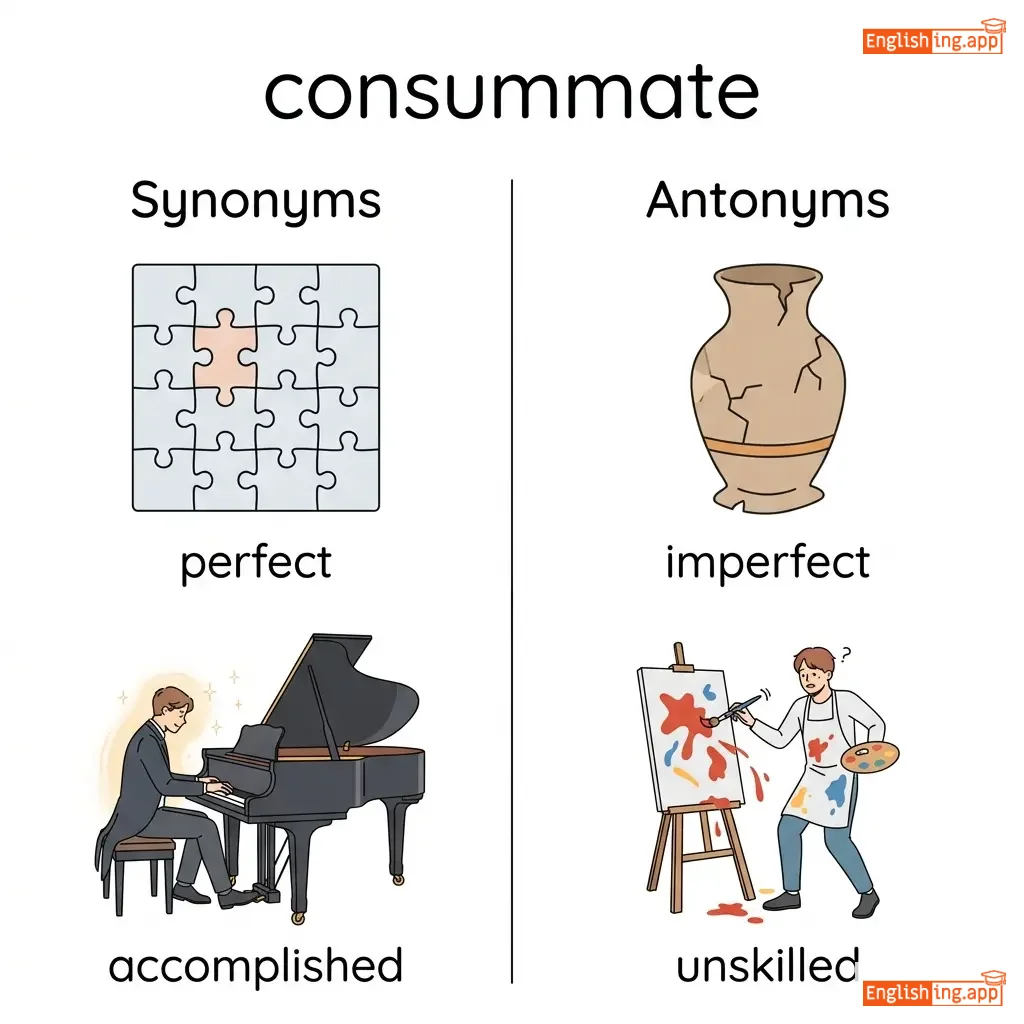
to complete or perfect something; showing great skill or excellence
••••••
|
She is a consummate professional in her field.
她在她的领域是一个圆满的专业人士。
••••••
|
她在她的领域是一个圆满的专业人士。
Tā zài tā de lǐngyù shì yīgè yuánmǎn de zhuānyè rénshì.
••••••
|
consummate skill
圆满技能
••••••
|
a high level of expertise or mastery
••••••
|
完美技能
wánměi jìnéng
••••••
|
perfect, accomplished, skilled, expert, complete
••••••
|
imperfect, unskilled, amateur
••••••
|
consummate professional, consummate artist, consummate skill, consummate liar
••••••
|
Konsumer = 完成 一切
••••••
|
|
#1818
🏢
|
/ˈkɒnsjʊlət/
noun
(kōngsùlìtè)
••••••
|
- •••••• |
领事馆
lingshiguan
••••••
|
- •••••• | - •••••• | - •••••• | - •••••• |
the building or office where a consul works
••••••
|
He went to the consulate to renew his visa.
他去了领事馆续签他的签证。
••••••
|
他去了领事馆续签他的签证。
Ta qule lingshiguan xuqian tade qianzheng.
••••••
|
- •••••• | - •••••• | - •••••• |
embassy, mission, office, legation
••••••
|
domestic office, home office
••••••
|
visit consulate, consulate building, American consulate, consulate staff
••••••
|
领事馆是处理公民事务的地方。
••••••
|
|
#1819
🎖️
|
/ˈkɒnsəl/
noun
(kāngsūl)
••••••
|
- •••••• |
领事 / 大使
lingshi / dashi
••••••
|
- •••••• | - •••••• | - •••••• | - •••••• |
an official appointed by a government to live in a foreign city and protect its citizens and interests there
••••••
|
The consul assisted travelers who lost their passports. |
领事帮助了那些丢失护照的旅行者。
Lingshi bangzhu le naxie diushi huzhao de lvxingzhe.
••••••
|
- •••••• | - •••••• | - •••••• |
diplomat, envoy, representative, official
••••••
|
citizen, civilian
••••••
|
consul general, vice consul, appoint a consul, foreign consul
••••••
|
CONSUL 就是 'console' 外国公民,提供帮助
••••••
|
|
#1820
🧐
|
/kənˈstruː/
verb
(kənˈstruː)
••••••
|
- •••••• |
解释
jiěshì
••••••
|
construed
kənˈstruːd
••••••
|
construed
kənˈstruːd
••••••
|
construes
kənˈstruːz
••••••
|
construing
kənˈstruːɪŋ
••••••
|
to interpret or understand the meaning of something in a particular way
••••••
|
His words could be construed as a threat.
他的话可以被理解为威胁。
••••••
|
他的话可以被理解为威胁。
Tā de huà kěyǐ bèi lǐjiě wéi wēixié.
••••••
|
construe something as
将某物解释为
••••••
|
to interpret or take something in a particular sense
••••••
|
将某物解释为
Jiāng mǒuwù jiěshì wéi
••••••
|
interpret, understand, explain, translate
••••••
|
misinterpret, misunderstand
••••••
|
construe as, wrongly construed, correctly construed, legally construed
••••••
|
CONSTRUE 意味着构建意义—解释某事。
••••••
|
|
#1821
🏗️
|
/kənˈstrʌkt/
verb
(kənˈstrʌkt)
••••••
|
- •••••• |
建造
jianzao
••••••
|
constructed
kənˈstrʌktɪd
••••••
|
constructed
kənˈstrʌktɪd
••••••
|
constructs
kənˈstrʌkts
••••••
|
constructing
kənˈstrʌktɪŋ
••••••
|
to build or form something by putting parts together
••••••
|
They plan to construct a new bridge over the river.
他们计划在河上建一座新桥。
••••••
|
他们计划在河上建一座新桥。
Tamen jihua zai he shang jian yi zuo xin qiao.
••••••
|
construct an argument
建构一个论点
••••••
|
to build or develop a logical case or reasoning
••••••
|
建构一个论点
Jian gou yi ge lundian
••••••
|
build, erect, assemble, create, establish
••••••
|
demolish, destroy, dismantle
••••••
|
construct a building, construct a theory, construct a bridge, construct meaning
••••••
|
建造 = construct
••••••
|
|
#1822
🩹
|
/kənˈstrɪndʒ/
verb
(kənˈstrɪndʒ)
••••••
|
- •••••• |
收缩
shousuo
••••••
|
constringed
kənˈstrɪndʒd
••••••
|
constringed
kənˈstrɪndʒd
••••••
|
constringes
kənˈstrɪndʒɪz
••••••
|
constringing
kənˈstrɪndʒɪŋ
••••••
|
to cause to shrink or contract; to constrict
••••••
|
The medicine helped constringe the swollen tissues.
药物帮助收缩肿胀的组织。
••••••
|
药物帮助收缩肿胀的组织。
Yao wu bang zhu shou suo zhong zhang de zu zhi.
••••••
|
- •••••• | - •••••• | - •••••• |
constrict, contract, tighten, compress
••••••
|
expand, loosen
••••••
|
constringe tissue, constringe skin, constringe muscles
••••••
|
Constringe 可以联想到 'string' ,想象用绳子收紧某物。
••••••
|
|
#1823
🐍
|
/kənˈstrɪkt/
verb
(kOnstrikt)
••••••
|
- •••••• |
收缩
shōusuō
••••••
|
constricted
kOnstrikted
••••••
|
constricted
kOnstrikted
••••••
|
constricts
kOnstrikt
••••••
|
constricting
kOnstrikting
••••••
|
to make narrower or tighter; to shrink or compress
••••••
|
The snake constricted its prey before swallowing.
蛇在吞噬之前把猎物收缩了。
••••••
|
蛇在吞噬之前把猎物收缩了。
Shé zài tūn shì zhīqián bǎ lièwù shōusuōle.
••••••
|
constrict the flow
收缩流量
••••••
|
to reduce or limit movement or passage
••••••
|
收缩流量
shōusuō liúliàng
••••••
|
tighten, squeeze, compress, narrow
••••••
|
expand, loosen, widen
••••••
|
constrict blood vessels, constrict movement, constrict airway
••••••
|
收缩就像蛇压缩它的猎物
••••••
|
|
#1824
📉
|
/kənˈstreɪnt/
noun
(kənˈstreɪnt)
••••••
|
- •••••• |
限制
xiànzhì
••••••
|
- •••••• | - •••••• | - •••••• | - •••••• |
a limitation or restriction
••••••
|
Time is the biggest constraint in completing the project. |
时间是完成项目的最大限制。
Shíjiān shì wánchéng xiàngmù de zuìdà xiànzhì.
••••••
|
budget constraint |
a financial limitation on spending
••••••
|
预算限制
yùsuàn xiànzhì
••••••
|
restriction, limitation, curb, control, restraint
••••••
|
freedom, liberty, allowance
••••••
|
budget constraint, legal constraint, time constraint, resource constraint
••••••
|
Constraint = 限制: 财务的限制
••••••
|
|
#1825
😬
|
/kənˈstreɪnd/
adjective
(kənˈstreɪnd)
••••••
|
- •••••• |
受限的, 强迫的
shouxian de, qiangpo de
••••••
|
- •••••• | - •••••• | - •••••• | - •••••• |
appearing forced, unnatural, or restricted
••••••
|
He gave a constrained smile during the awkward meeting. |
在尴尬的会议中,他露出了强迫的微笑。
Zai gankan de huiyi zhong, ta louchu le qiangpo de weixiao.
••••••
|
- •••••• | - •••••• | - •••••• |
restricted, forced, unnatural, limited
••••••
|
free, natural, unrestricted
••••••
|
constrained smile, constrained behavior, constrained environment
••••••
|
Constrained = 强迫的微笑 😬
••••••
|
|
#1826
⛓️
|
/kənˈstreɪn/
verb
(kənˈstreɪn)
••••••
|
- •••••• |
限制
xiànzhì
••••••
|
constrained
kənˈstreɪnd
••••••
|
constrained
kənˈstreɪnd
••••••
|
constrains
kənˈstreɪnz
••••••
|
constraining
kənˈstreɪnɪŋ
••••••
|
to limit or restrict someone or something; to force or compel
••••••
|
The new regulations constrain businesses from polluting the environment.
zhe niu rɛɡjʊˌleɪʃənz kənˈstreɪn bɪznəsɪz frəm pəˈluːtɪŋ ðə ɪnˈvaɪərənmənt
••••••
|
新规定限制企业不允许污染环境。
Xīn guīdìng xiànzhì qǐyè bù yǔnxǔ wūrǎn huánjìng.
••••••
|
constrain by circumstances
kənˈstreɪn baɪ sɜrkəmˈstænsɪz
••••••
|
to be forced or limited by external conditions
••••••
|
受限于环境
shòu xiàn yú huánjìng
••••••
|
limit, restrict, curb, compel, restrain
••••••
|
free, release, allow
••••••
|
constrain behavior, constrain growth, legally constrain, tightly constrain
••••••
|
Constrain 意味着像链条一样限制
••••••
|
|
#1827
📜
|
/ˌkɒnstɪˈtjuːʃən/
noun
(宪法)
••••••
|
|
宪法
xianfa
••••••
|
- •••••• | - •••••• | - •••••• | - •••••• |
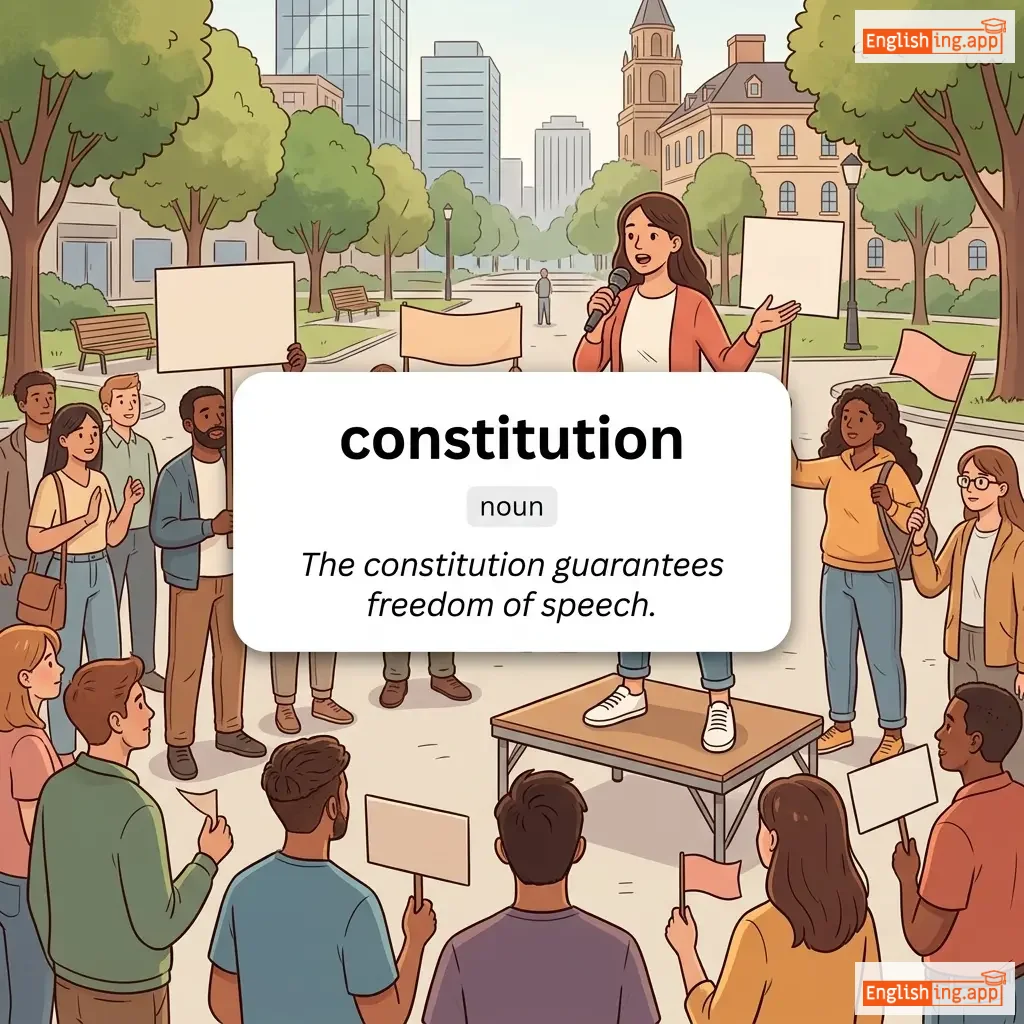
The system of fundamental principles according to which a nation or organization is governed.
••••••
|
The constitution guarantees freedom of speech. |
宪法保障言论自由。
Xiànfǎ bǎozhàng yánlùn zìyóu.
••••••
|
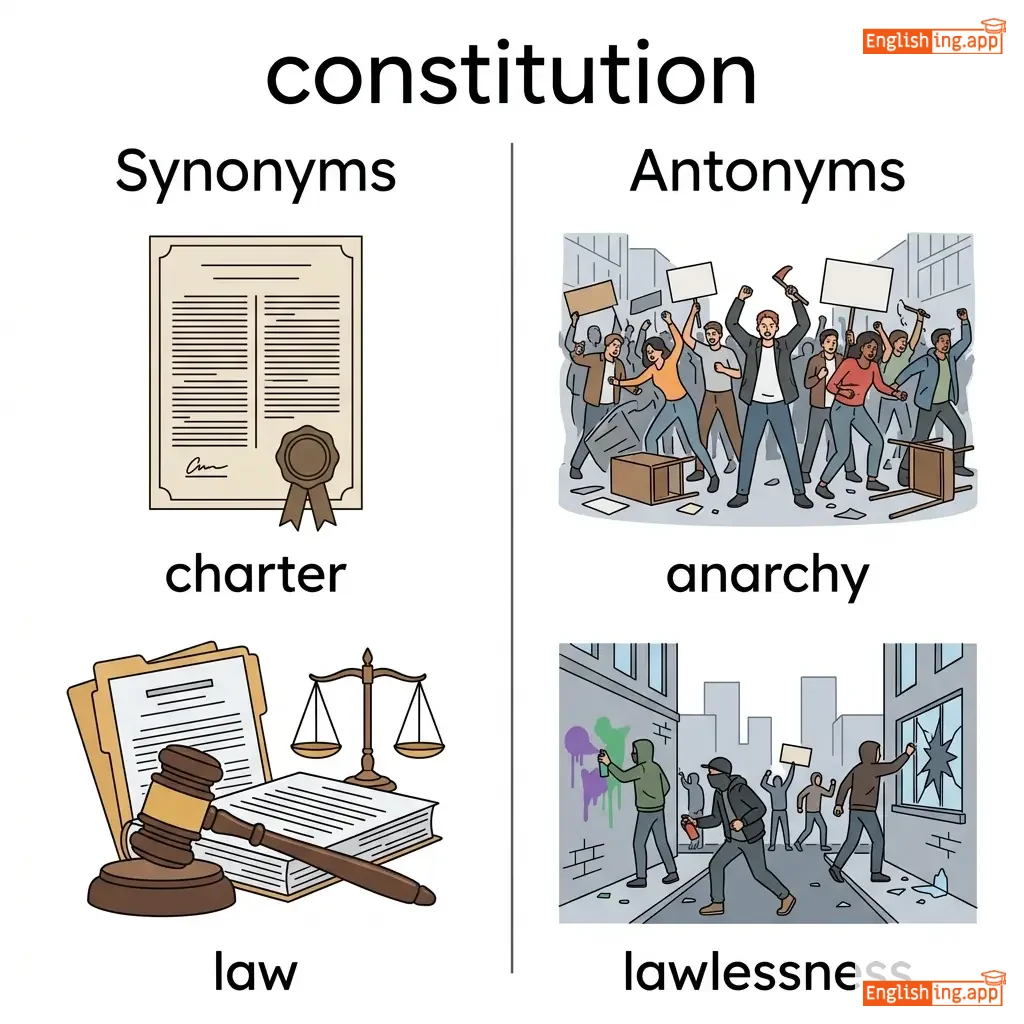
- •••••• | - •••••• | - •••••• |
charter, law, code, framework, fundamental law
••••••
|
anarchy, lawlessness, disorder
••••••
|
written constitution, draft constitution, amend the constitution, constitution of a country
••••••
|
Constitution = 宪法 – 通过'宪法'治理国家。
••••••
|
|
#1828
⚖️
|
/ˈkɒnstɪtjuːt/
verb
(kɑnˈstɪtjut)
••••••
|
- •••••• |
构成
gòu chéng
••••••
|
constituted
kɑnˈstɪtjutɪd
••••••
|
constituted
kɑnˈstɪtjutɪd
••••••
|
constitutes
kɑnˈstɪtjut
••••••
|
constituting
kɑnˈstɪtjutɪŋ
••••••
|
To make up, form, or establish something.
••••••
|
These documents constitute the legal agreement between the two parties.
这些文件构成了两方之间的法律协议。
••••••
|
这些文件构成了两方之间的法律协议。
Zhèxiē wénjiàn gòuchéngle liǎng fāng zhī jiān de fǎlǜ xiéyì.
••••••
|
- •••••• | - •••••• | - •••••• |
comprise, form, make up, establish, create
••••••
|
exclude, destroy, abolish
••••••
|
constitute a crime, constitute an offense, constitute a majority, constitute evidence
••••••
|
Constitute 意为 '构成' - 像宪法一样构建国家。
••••••
|
|
#1829
👥
|
/kənˈstɪtʃuənt/
noun/adjective
(kənˈstɪtʃuənt)
••••••
|
- •••••• |
成分 / 选民
chengfen / xuanmin
••••••
|
- •••••• | - •••••• | - •••••• | - •••••• |
Noun: A member of a constituency or an essential part of something. Adjective: Being a necessary part of a whole.
••••••
|
The senator met with his constituents to discuss local issues. |
参议员与他的选民会面,讨论当地问题。
Can yiyuan yu tade xuanmin huimian, taolun dangdi wenti.
••••••
|
- •••••• | - •••••• | - •••••• |
component, element, member, voter
••••••
|
whole, outsider, nonmember
••••••
|
constituent parts, constituent elements, constituents of society
••••••
|
Constituent 意味着部分或选民 – 来自选区
••••••
|
|
#1830
🗳️
|
/kənˈstɪtʃuənsi/
noun
(kənˈstɪtʃuənsi)
••••••
|
- •••••• |
选区
xuan qu
••••••
|
- •••••• | - •••••• | - •••••• | - •••••• |
A geographical area whose residents elect a representative to a legislative body.
••••••
|
She campaigned tirelessly across her constituency. |
她在自己的选区内不知疲倦地竞选。
Ta zai ziji de xuanqu nei buzhi pijuande jingxuan.
••••••
|
- •••••• | - •••••• | - •••••• |
district, electorate, ward, division
••••••
|
nonelectoral area, nonvoting zone
••••••
|
electoral constituency, parliamentary constituency, within the constituency
••••••
|
Constitute + 区 = Constituency 在中文
••••••
|
Vocabulary Quiz
Test your vocabulary by matching words with their translations or meanings.
Login to take the quiz
Comments (0)
Share your thoughts and join the discussion.
Join the discussion by logging in
Login to CommentNo comments yet
Be the first to share your thoughts!