

翻訳
過去
過去分詞
三人称単数
動名詞
意味
例文
例文の翻訳
同義語
対義語
コロケーション
ニーモニック



Swipe left or right, or use the buttons. Tap image to zoom.
例文の翻訳
単語
Lesson 61Lesson 61 - マスクトグル
|
絵文字
|
単語 | Images | 翻訳 | 過去 | 過去分詞 | 三人称単数 | 動名詞 | 意味 | 例文 | 例文の翻訳 | 表現例 | 表現例の意味 | 表現例の翻訳 | 同義語 | 対義語 | コロケーション | ニーモニック |
|---|---|---|---|---|---|---|---|---|---|---|---|---|---|---|---|---|---|
|
#1801
⚡
|
/kənˈsʌmpʃən/
noun
(コンシュンプション)
••••••
|
|
消費
shōhi
••••••
|
- •••••• | - •••••• | - •••••• | - •••••• |
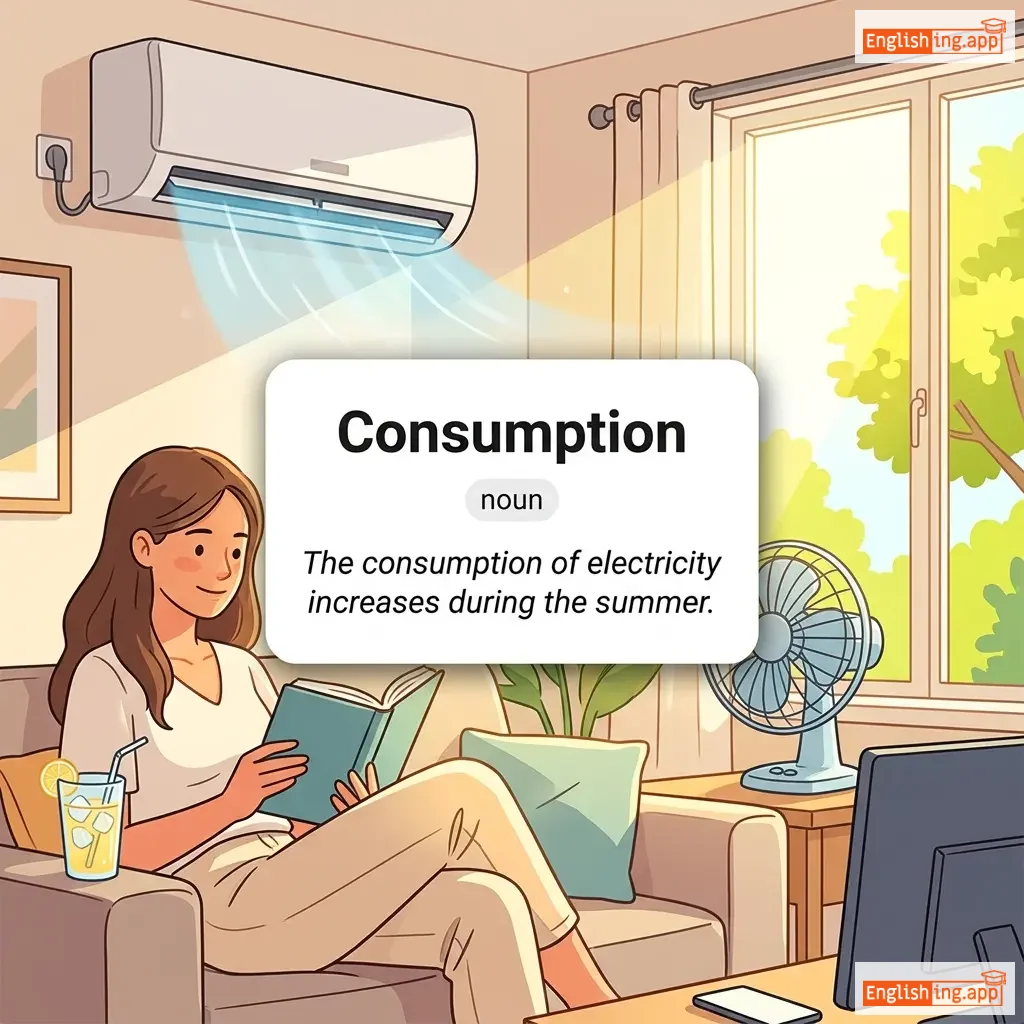
The act of using up resources, goods, or energy; also refers to the eating or drinking of something.
••••••
|
The consumption of electricity increases during the summer. |
夏の間、電力の消費が増加します。
Natsu no aida, denryoku no shōhi ga zōka shimasu.
••••••
|
consumption tax |
A tax placed on goods and services purchased by consumers.
••••••
|
消費税
shōhizei
••••••
|
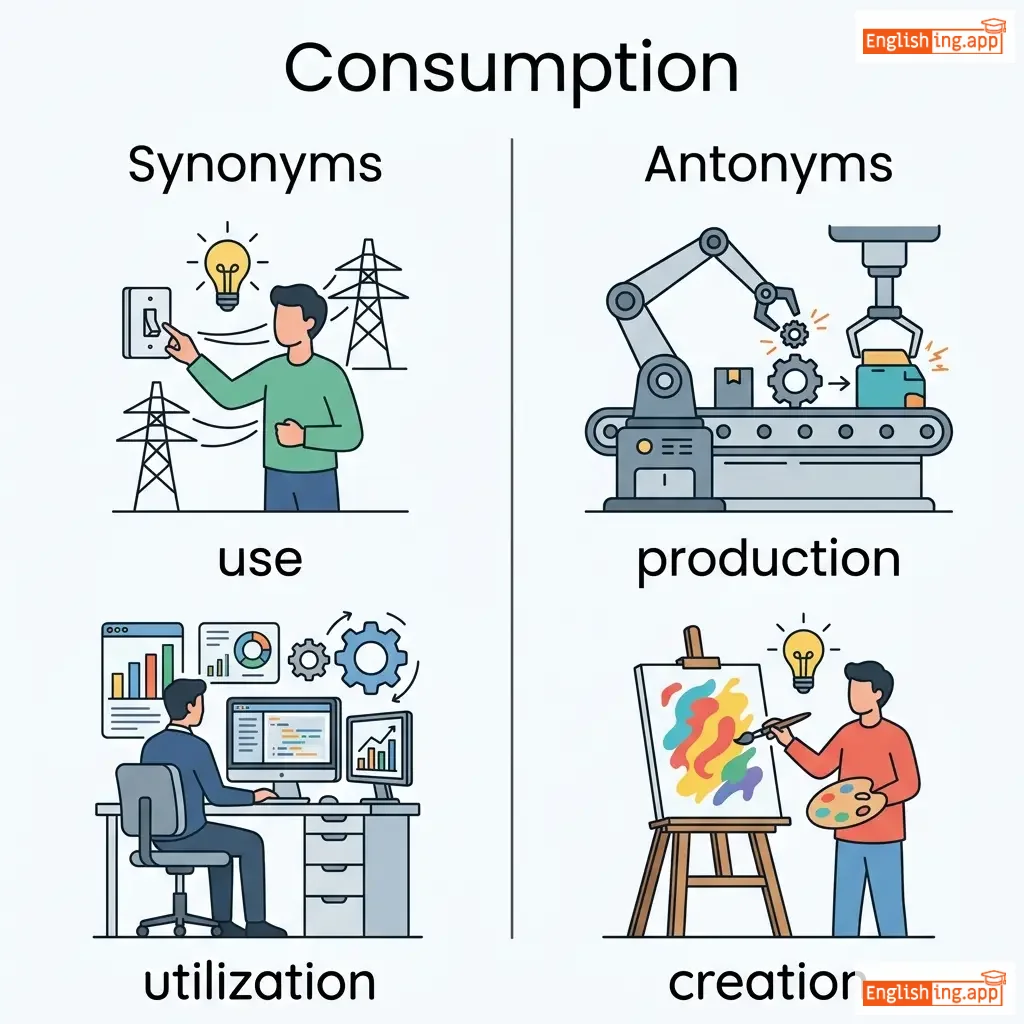
use, utilization, expenditure, intake, absorption
••••••
|
production, creation, conservation
••••••
|
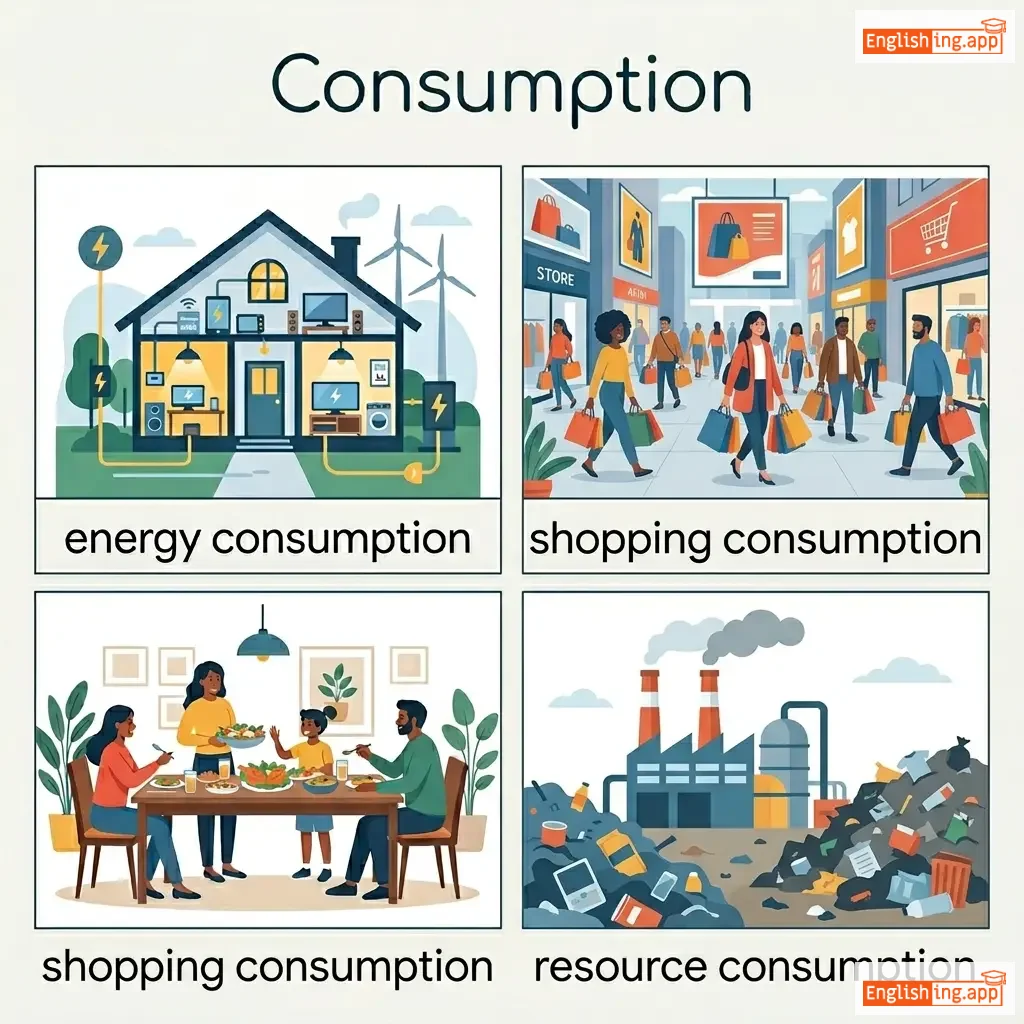
energy consumption, food consumption, mass consumption, over consumption
••••••
|
消費は使うと食べること—電力の消費も夏に増える。
••••••
|
|
#1802
😊
|
/ˈkɒntɛnt/
adjective
(コンテンツ)
••••••
|
- •••••• |
満足している, 幸せな
manzoku shite iru, shiawase na
••••••
|
- •••••• | - •••••• | - •••••• | - •••••• |
in a state of satisfaction; pleased
••••••
|
He felt content after finishing his work. |
彼は仕事を終えた後、満足していた。
Kare wa shigoto o oeta ato, manzoku shite ita.
••••••
|
- •••••• | - •••••• | - •••••• |
satisfied, pleased, happy, fulfilled
••••••
|
discontent, unhappy, dissatisfied
••••••
|
content with, feel content, perfectly content, content smile
••••••
|
Content は満足の意味 - 仕事が終わった後、満足しているのは自然なこと
••••••
|
|
#1803
🥇
|
/kənˈtɛndər/
noun
(kontendā)
••••••
|
- •••••• |
競争者, 立候補者
kyousou-sha, rikkou-hosha
••••••
|
- •••••• | - •••••• | - •••••• | - •••••• |
a person or team competing for a title or prize
••••••
|
She is a strong contender for the mayoral position.
彼女は市長職の強力な候補者です。
••••••
|
彼女は市長職の強力な候補者です。
Kanojo wa shichou shoku no kyouryoku na kouhosha desu.
••••••
|
- •••••• | - •••••• | - •••••• |
challenger, competitor, aspirant, nominee
••••••
|
non-contender, bystander
••••••
|
strong contender, main contender, serious contender, leading contender
••••••
|
Contenderは勝利を目指す候補者、競争者です。
••••••
|
|
#1804
🏆
|
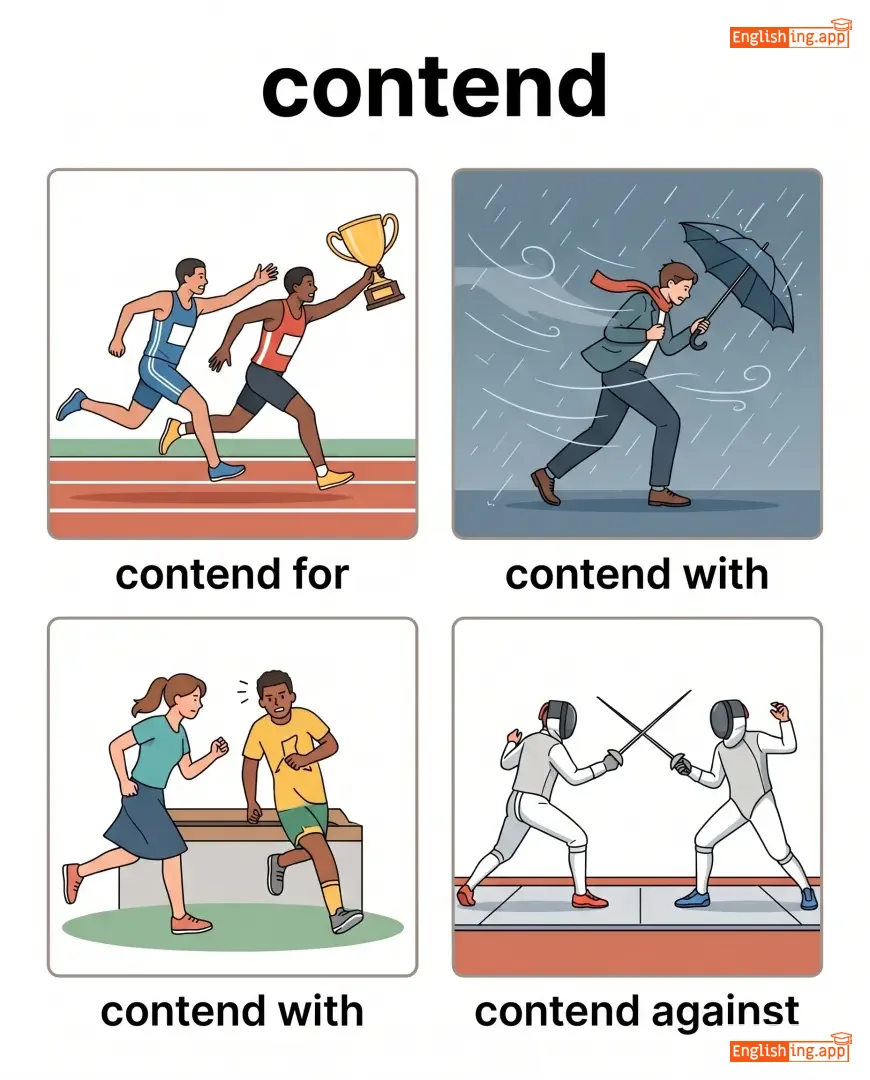
/kənˈtɛnd/
verb
(コンテンド)
••••••
|
|
争う、主張する
arasou, shuchou suru
••••••
|
contended
コンテンドした
••••••
|
contended
コンテンドした
••••••
|
contends
コンテンドス
••••••
|
contending
コンテンドイング
••••••
|
to strive or compete for something; to assert earnestly
••••••
|
Athletes from around the world contend for the championship.
世界中のアスリートがチャンピオンシップを争っています。
••••••
|
世界中のアスリートがチャンピオンシップを争っています。
Sekai juu no asurīto ga chanpionship wo arasotteimasu.
••••••
|
- •••••• | - •••••• | - •••••• |
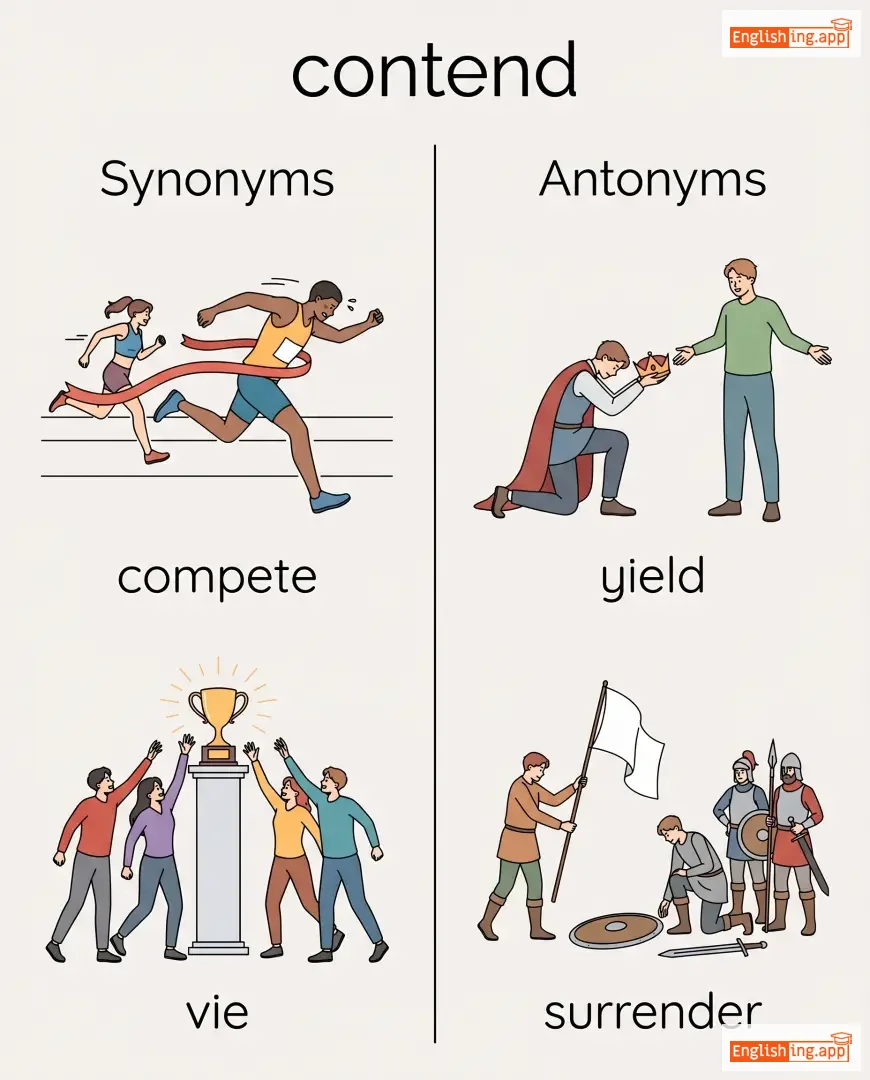
compete, vie, struggle, assert
••••••
|
yield, surrender, concede
••••••
|
contend for, contend with, contend against, contend successfully
••••••
|
Contendはコンテストで争うこと - 常にコンテストでcontend
••••••
|
|
#1805
😤
|
/kənˈtɛmptʃuəs/
adjective
(コンテンプチュアス)
••••••
|
- •••••• |
軽蔑的, 侮辱的
keibetsuteki, bujokuteki
••••••
|
- •••••• | - •••••• | - •••••• | - •••••• |
showing or expressing contempt; scornful
••••••
|
She gave him a contemptuous glance. |
彼女は彼に軽蔑のまなざしを向けた。
Kanojo wa kare ni keibetsu no manazashi o muketa.
••••••
|
- •••••• | - •••••• | - •••••• |
scornful, disdainful, derisive, sneering
••••••
|
respectful, admiring, humble
••••••
|
contemptuous look, contemptuous tone, contemptuous remark
••••••
|
Contemptuous は軽蔑の目を意味します - Show contempt in eyes
••••••
|
|
#1806
😒
|
/kənˈtɛmptəbl/
adjective
(コンテンプティブル)
••••••
|
- •••••• |
軽蔑すべき, 嫌悪すべき
keibetsu subeki, ken'o subeki
••••••
|
- •••••• | - •••••• | - •••••• | - •••••• |
deserving of contempt; despicable
••••••
|
His deceitful actions were truly contemptible. |
彼の欺瞞的な行動は本当に軽蔑すべきものでした。
Kare no gimanteki na kōdō wa hontōni keibetsu subeki mono deshita.
••••••
|
- •••••• | - •••••• | - •••••• |
despicable, vile, abhorrent, shameful
••••••
|
admirable, honorable, respectable
••••••
|
contemptible behavior, contemptible act, contemptible lie
••••••
|
軽蔑すべき (keibetsu subeki) は軽蔑と関連し、軽蔑される行為は嫌悪すべきです。
••••••
|
|
#1807
😤
|
/kənˈtɛmpt/
noun
••••••
|
- •••••• | - •••••• | - •••••• | - •••••• | - •••••• | - •••••• |
a strong feeling of dislike and lack of respect towards someone or something
••••••
|
He spoke with contempt about the corrupt officials. |
- •••••• |
hold in contempt |
to consider someone or something unworthy of respect
••••••
|
- •••••• |
disdain, scorn, disrespect, derision
••••••
|
respect, admiration, honor
••••••
|
deep contempt, open contempt, show contempt, treat with contempt
••••••
|
No •••••• |
|
#1808
🎨
|
/kənˈtɛmpərɛri/
adjective
(コンテンポラリー)
••••••
|
- •••••• |
現代的な, 現代の
gendai-teki na, gendai no
••••••
|
- •••••• | - •••••• | - •••••• | - •••••• |
belonging to the same time period; modern
••••••
|
She enjoys contemporary art exhibitions.
彼女は現代アートの展示を楽しんでいます。
••••••
|
彼女は現代アートの展示を楽しんでいます。
Kanojo wa gendai āto no tenji o tanoshindeimasu.
••••••
|
contemporary issues
現代の問題
••••••
|
current problems or topics relevant to the present time
••••••
|
現代の問題
gendai no mondai
••••••
|
modern, current, present-day, up-to-date
••••••
|
old-fashioned, outdated, ancient
••••••
|
contemporary art, contemporary culture, contemporary society, contemporary issues
••••••
|
Contemporary = con+temporary = 同じ時代に現代的/現代の。
••••••
|
|
#1809
🕰️
|
/kənˌtɛmpəˈreɪniəs/
adjective
(コンテンポラニアス)
••••••
|
- •••••• |
同時代の
dōjidai no
••••••
|
- •••••• | - •••••• | - •••••• | - •••••• |
existing, happening, or occurring at the same time
••••••
|
The two artists were contemporaneous and often influenced each other. |
二人のアーティストは同時代のもので、しばしば互いに影響を与えました。
Futari no ātisuto wa dōjidai no mono de, shibashiba tagai ni eikyō o ataemashita.
••••••
|
- •••••• | - •••••• | - •••••• |
simultaneous, coexistent, concurrent, synchronous
••••••
|
separate, different, asynchronous
••••••
|
contemporaneous events, contemporaneous writings, contemporaneous accounts
••••••
|
Contemporary と contemporaneous は同じ意味で、両方とも同時代のことを意味します。
••••••
|
|
#1810
🤔
|
/ˈkɒntəmpleɪt/
verb
••••••
|
- •••••• | - •••••• |
contemplated
••••••
|
contemplated
••••••
|
contemplates
••••••
|
contemplating
••••••
|
to think deeply and carefully about something; to consider thoughtfully
••••••
|
She sat quietly to contemplate her future plans. |
- •••••• |
contemplate the meaning of life |
to think deeply about the purpose or nature of life
••••••
|
- •••••• |
consider, ponder, meditate, reflect, deliberate
••••••
|
ignore, dismiss, neglect
••••••
|
contemplate the future, contemplate change, deeply contemplate, seriously contemplate
••••••
|
No •••••• |
|
#1811
😒
|
/kənˈtɛm/
verb
(kənˈtɛm)
••••••
|
- •••••• |
軽蔑する
keibetsu suru
••••••
|
contemned
kənˈtɛmd
••••••
|
contemned
kənˈtɛmd
••••••
|
contemns
kənˈtɛmz
••••••
|
contemning
kənˈtɛmɪŋ
••••••
|
to treat or regard with disdain, scorn, or contempt
••••••
|
He would never contemn honest work, no matter how humble.
ʌɪ wʊd ˈnɛvər kənˈtɛmn hɒnɪst wɜrk, nəʊ ˈmætər haʊ hʌmbəl.
••••••
|
彼はどんなに謙虚でも正直な仕事を軽蔑しない。
Kare wa donna ni kenkyō demo shōjiki na shigoto o keibetsu shinai.
••••••
|
- •••••• | - •••••• | - •••••• |
despise, scorn, disdain, deride, spurn
••••••
|
respect, honor, admire
••••••
|
contemn authority, contemn tradition, openly contemn, silently contemn
••••••
|
Contemn は軽蔑すること、つまり軽蔑するという意味です。
••••••
|
|
#1812
☣️
|
/kənˈtæmɪneɪt/
verb
••••••
|
- •••••• | - •••••• |
contaminated
••••••
|
contaminated
••••••
|
contaminates
••••••
|
contaminating
••••••
|
To make something impure, dirty, or harmful by contact with a poisonous or polluting substance.
••••••
|
The river was contaminated by industrial waste. |
- •••••• |
contaminate the mind |
To corrupt someone's thoughts or beliefs.
••••••
|
- •••••• |
pollute, defile, taint, spoil, infect
••••••
|
purify, cleanse, sanitize
••••••
|
contaminate water, contaminate food, contaminate soil, contaminate environment
••••••
|
No •••••• |
|
#1813
😂
|
/kənˈteɪdʒəs/
adjective
(コンテイジュアス)
••••••
|
- •••••• |
伝染性
densensei
••••••
|
- •••••• | - •••••• | - •••••• | - •••••• |
Able to be transmitted from one person to another, typically by direct contact; also used for emotions or attitudes that spread quickly.
••••••
|
Her laughter was so contagious that everyone started laughing. |
彼女の笑い声はとても伝染性があり、みんなが笑い始めました。
Kanojo no waraigoe wa totemo densensei ga ari, minna ga warai hajimemashita.
••••••
|
contagious enthusiasm |
An excitement or energy that spreads quickly to others.
••••••
|
伝染性のある熱意
densensei no aru netsui
••••••
|
infectious, communicable, transmittable, spreading
••••••
|
noninfectious, immune
••••••
|
contagious disease, contagious smile, contagious laughter, highly contagious
••••••
|
伝染性、皆に広がる笑い声のように。
••••••
|
|
#1814
🦠
|
/kənˈteɪdʒən/
noun
(コンタジオン)
••••••
|
- •••••• |
感染
kansen
••••••
|
- •••••• | - •••••• | - •••••• | - •••••• |
The communication of disease from one person to another by close contact; also the spread of harmful ideas or behaviors.
••••••
|
Fear spread like a contagion through the crowd. |
恐怖は群衆の中で感染のように広がった。
Kyōfu wa gunshū no naka de kansen no yō ni hirogatta.
••••••
|
- •••••• | - •••••• | - •••••• |
infection, transmission, spread, epidemic, influence
••••••
|
immunity, prevention
••••••
|
viral contagion, financial contagion, contagion risk, contagion effect
••••••
|
Contagionは'感染'のように—病気や恐怖は簡単に広がる。
••••••
|
|
#1815
😷
|
/kənˈsʌmptɪv/
adjective
(kənˈsʌmptɪv)
••••••
|
- •••••• |
消費的な
shōhiteki na
••••••
|
- •••••• | - •••••• | - •••••• | - •••••• |
Relating to or characterized by consumption; historically used to describe someone suffering from tuberculosis.
••••••
|
The doctor advised against consumptive habits. |
医者は消費的な習慣を避けるようにアドバイスした。
Isha wa shōhiteki na shūkan o sakeru yō ni adobaisu shita.
••••••
|
- •••••• | - •••••• | - •••••• |
wasteful, extravagant, draining, debilitating
••••••
|
productive, conserving, preserving
••••••
|
consumptive habits, consumptive lifestyle, consumptive disease
••••••
|
Consumptiveは健康を消費する習慣を意味します—消費的な。
••••••
|
|
#1816
😨
|
/ˌkɒnstəˈneɪʃən/
noun
(コンステルネーション)
••••••
|
- •••••• |
動揺
douyou
••••••
|
- •••••• | - •••••• | - •••••• | - •••••• |
A feeling of anxiety, dismay, or confusion, often caused by something unexpected.
••••••
|
The sudden announcement caused widespread consternation among the employees. |
突然の発表が従業員の間で広範な動揺を引き起こしました
Totsuzen no happyou ga juugyouin no aida de kouhan na douyou wo hikiokoshimashita
••••••
|
- •••••• | - •••••• | - •••••• |
dismay, alarm, fear, shock, anxiety
••••••
|
calm, composure, confidence
••••••
|
cause consternation, in consternation, widespread consternation, with consternation
••••••
|
驚くほど突然の知らせで動揺する、それがコンステルネーションの意味です
••••••
|
|
#1817
🏅
|
/ˈkɒnsəmət/ (adj), /ˈkɒnsəmeɪt/ (verb)
adjective, verb
(konsumetto)
••••••
|
|
完成する / 完璧
kansei suru / kanpeki
••••••
|
consummated
konsumetoddo
••••••
|
consummated
konsumetoddo
••••••
|
consummates
konsumetto
••••••
|
consummating
konsumettoingu
••••••
|
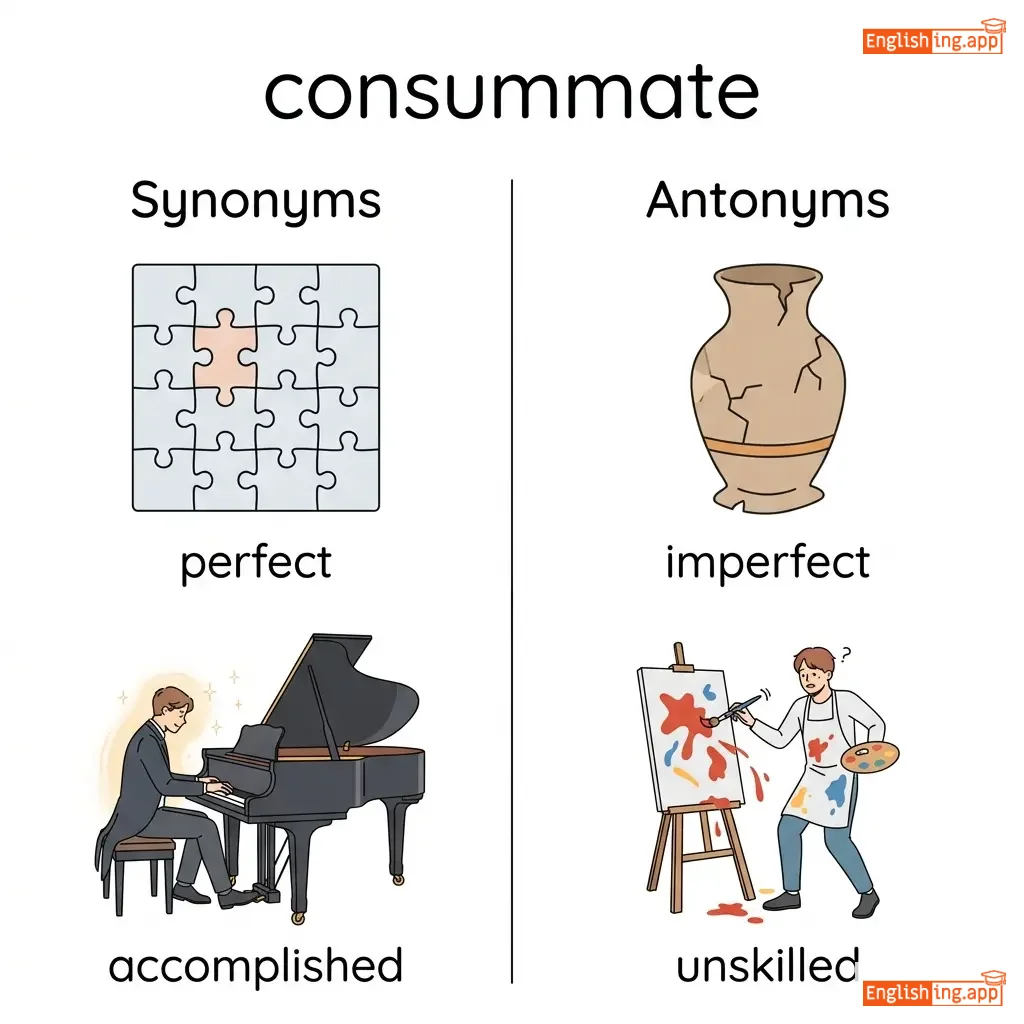
to complete or perfect something; showing great skill or excellence
••••••
|
She is a consummate professional in her field.
彼女はその分野で完璧なプロフェッショナルです。
••••••
|
彼女はその分野で完璧なプロフェッショナルです。
Kanojo wa sono bunya de kanpeki na purofesshonaru desu.
••••••
|
consummate skill
完璧なスキル
••••••
|
a high level of expertise or mastery
••••••
|
完璧なスキル
kanpeki na sukiru
••••••
|
perfect, accomplished, skilled, expert, complete
••••••
|
imperfect, unskilled, amateur
••••••
|
consummate professional, consummate artist, consummate skill, consummate liar
••••••
|
コンスムット = 完璧を完成させる
••••••
|
|
#1818
🏢
|
/ˈkɒnsjʊlət/
noun
(コンスレート)
••••••
|
- •••••• |
領事館
ryōjikan
••••••
|
- •••••• | - •••••• | - •••••• | - •••••• |
the building or office where a consul works
••••••
|
He went to the consulate to renew his visa.
彼はビザを更新するために領事館に行きました。
••••••
|
彼はビザを更新するために領事館に行きました。
Kare wa biza o kōshin suru tame ni ryōjikan ni ikimashita.
••••••
|
- •••••• | - •••••• | - •••••• |
embassy, mission, office, legation
••••••
|
domestic office, home office
••••••
|
visit consulate, consulate building, American consulate, consulate staff
••••••
|
領事館で領事が市民のために働きます。
••••••
|
|
#1819
🎖️
|
/ˈkɒnsəl/
noun
(コンスル)
••••••
|
- •••••• |
領事 / 大使
ryoushi / taishi
••••••
|
- •••••• | - •••••• | - •••••• | - •••••• |
an official appointed by a government to live in a foreign city and protect its citizens and interests there
••••••
|
The consul assisted travelers who lost their passports. |
領事は、パスポートを失った旅行者を助けました。
Ryoushi wa, pasupooto o ushinatta ryokousha o tasukemashita.
••••••
|
- •••••• | - •••••• | - •••••• |
diplomat, envoy, representative, official
••••••
|
citizen, civilian
••••••
|
consul general, vice consul, appoint a consul, foreign consul
••••••
|
CONSULは外国で市民を'console'する存在
••••••
|
|
#1820
🧐
|
/kənˈstruː/
verb
(コンストルー)
••••••
|
- •••••• |
解釈する
kaishaku suru
••••••
|
construed
コンストルード
••••••
|
construed
コンストルード
••••••
|
construes
コンストルーズ
••••••
|
construing
コンストルイング
••••••
|
to interpret or understand the meaning of something in a particular way
••••••
|
His words could be construed as a threat.
彼の言葉は脅威として解釈されるかもしれません。
••••••
|
彼の言葉は脅威として解釈されるかもしれません。
Kare no kotoba wa kyōi toshite kaishaku sareru kamoshiremasen.
••••••
|
construe something as
何かを何かとして解釈する
••••••
|
to interpret or take something in a particular sense
••••••
|
何かを何かとして解釈する
Nanika o nanika toshite kaishaku suru
••••••
|
interpret, understand, explain, translate
••••••
|
misinterpret, misunderstand
••••••
|
construe as, wrongly construed, correctly construed, legally construed
••••••
|
CONSTRUE は意味を構築すること—何かを解釈する。
••••••
|
|
#1821
🏗️
|
/kənˈstrʌkt/
verb
(コンストラクト)
••••••
|
- •••••• |
建設する
kensetsu suru
••••••
|
constructed
コンストラクテッド
••••••
|
constructed
コンストラクテッド
••••••
|
constructs
コンストラクツ
••••••
|
constructing
コンストラクトイング
••••••
|
to build or form something by putting parts together
••••••
|
They plan to construct a new bridge over the river.
彼らは川に新しい橋を建設する予定です。
••••••
|
彼らは川に新しい橋を建設する予定です。
Karera wa kawa ni atarashī hashi o kensetsu suru yotei desu.
••••••
|
construct an argument
論証を構築する
••••••
|
to build or develop a logical case or reasoning
••••••
|
論証を構築する
ronshō o kōchiku suru
••••••
|
build, erect, assemble, create, establish
••••••
|
demolish, destroy, dismantle
••••••
|
construct a building, construct a theory, construct a bridge, construct meaning
••••••
|
CONstruction = 建設する
••••••
|
|
#1822
🩹
|
/kənˈstrɪndʒ/
verb
(コンストリンジ)
••••••
|
- •••••• |
収縮する
shūshuku suru
••••••
|
constringed
コンストリンジド
••••••
|
constringed
コンストリンジド
••••••
|
constringes
コンストリンジズ
••••••
|
constringing
コンストリンジング
••••••
|
to cause to shrink or contract; to constrict
••••••
|
The medicine helped constringe the swollen tissues.
その薬は腫れた組織を収縮させるのに役立ちました。
••••••
|
その薬は腫れた組織を収縮させるのに役立ちました。
Sono kusuri wa hareta soshiki o shūshuku saseru no ni yakudachimashita.
••••••
|
- •••••• | - •••••• | - •••••• |
constrict, contract, tighten, compress
••••••
|
expand, loosen
••••••
|
constringe tissue, constringe skin, constringe muscles
••••••
|
Constringeは'コンストリンジ'、ストリングで何かを締めるように収縮させるイメージ
••••••
|
|
#1823
🐍
|
/kənˈstrɪkt/
verb
(コンストリクト)
••••••
|
- •••••• |
絞る
shiboru
••••••
|
constricted
コンストリクテッド
••••••
|
constricted
コンストリクテッド
••••••
|
constricts
コンストリクツ
••••••
|
constricting
コンストリクティング
••••••
|
to make narrower or tighter; to shrink or compress
••••••
|
The snake constricted its prey before swallowing.
その蛇は獲物を飲み込む前に締め付けました。
••••••
|
その蛇は獲物を飲み込む前に締め付けました。
Sono hebi wa emono o nomikomu mae ni shime tsukemashita.
••••••
|
constrict the flow
フローを締め付ける
••••••
|
to reduce or limit movement or passage
••••••
|
フローを絞る
furō o shiboru
••••••
|
tighten, squeeze, compress, narrow
••••••
|
expand, loosen, widen
••••••
|
constrict blood vessels, constrict movement, constrict airway
••••••
|
絞るのは蛇が獲物をしめつけるようなものです
••••••
|
|
#1824
📉
|
/kənˈstreɪnt/
noun
(kənˈstreɪnt)
••••••
|
- •••••• |
制約
seiyaku
••••••
|
- •••••• | - •••••• | - •••••• | - •••••• |
a limitation or restriction
••••••
|
Time is the biggest constraint in completing the project. |
プロジェクトを完了するための最大の制約は時間です。
Purojekuto o kanryou suru tame no saidai no seiyaku wa jikan desu.
••••••
|
budget constraint |
a financial limitation on spending
••••••
|
予算制約
yosan seiyaku
••••••
|
restriction, limitation, curb, control, restraint
••••••
|
freedom, liberty, allowance
••••••
|
budget constraint, legal constraint, time constraint, resource constraint
••••••
|
Constraint = 制約: 予算内で抑えられる
••••••
|
|
#1825
😬
|
/kənˈstreɪnd/
adjective
(kənˈstreɪnd)
••••••
|
- •••••• |
制約された、無理に作られた
seiyaku sareta, muri ni tsukurareta
••••••
|
- •••••• | - •••••• | - •••••• | - •••••• |
appearing forced, unnatural, or restricted
••••••
|
He gave a constrained smile during the awkward meeting. |
彼は気まずい会議で強制的な笑顔を見せた。
Kare wa kizamui kaigi de kyousei teki na egao o miseta.
••••••
|
- •••••• | - •••••• | - •••••• |
restricted, forced, unnatural, limited
••••••
|
free, natural, unrestricted
••••••
|
constrained smile, constrained behavior, constrained environment
••••••
|
Constrained = 強制された笑顔 😬
••••••
|
|
#1826
⛓️
|
/kənˈstreɪn/
verb
(コンストレイン)
••••••
|
- •••••• |
制限する
seigensuru
••••••
|
constrained
コンストレインド
••••••
|
constrained
コンストレインド
••••••
|
constrains
コンストレインズ
••••••
|
constraining
コンストレイニング
••••••
|
to limit or restrict someone or something; to force or compel
••••••
|
The new regulations constrain businesses from polluting the environment.
ザ ニュー レギュレーションズ コンストレイン ビジネスズ フロム ポリュータリング ザ エンヴァイアロメント
••••••
|
新しい規制は企業が環境を汚染するのを制限しています。
Atarashī kisei wa kigyō ga kankyō o osen suru no o seigen shiteimasu.
••••••
|
constrain by circumstances
コンストレイン バイ サーカムスタンセズ
••••••
|
to be forced or limited by external conditions
••••••
|
状況に制約される
jōkyō ni seiyaku sareru
••••••
|
limit, restrict, curb, compel, restrain
••••••
|
free, release, allow
••••••
|
constrain behavior, constrain growth, legally constrain, tightly constrain
••••••
|
Constrainは鎖のように制限することです
••••••
|
|
#1827
📜
|
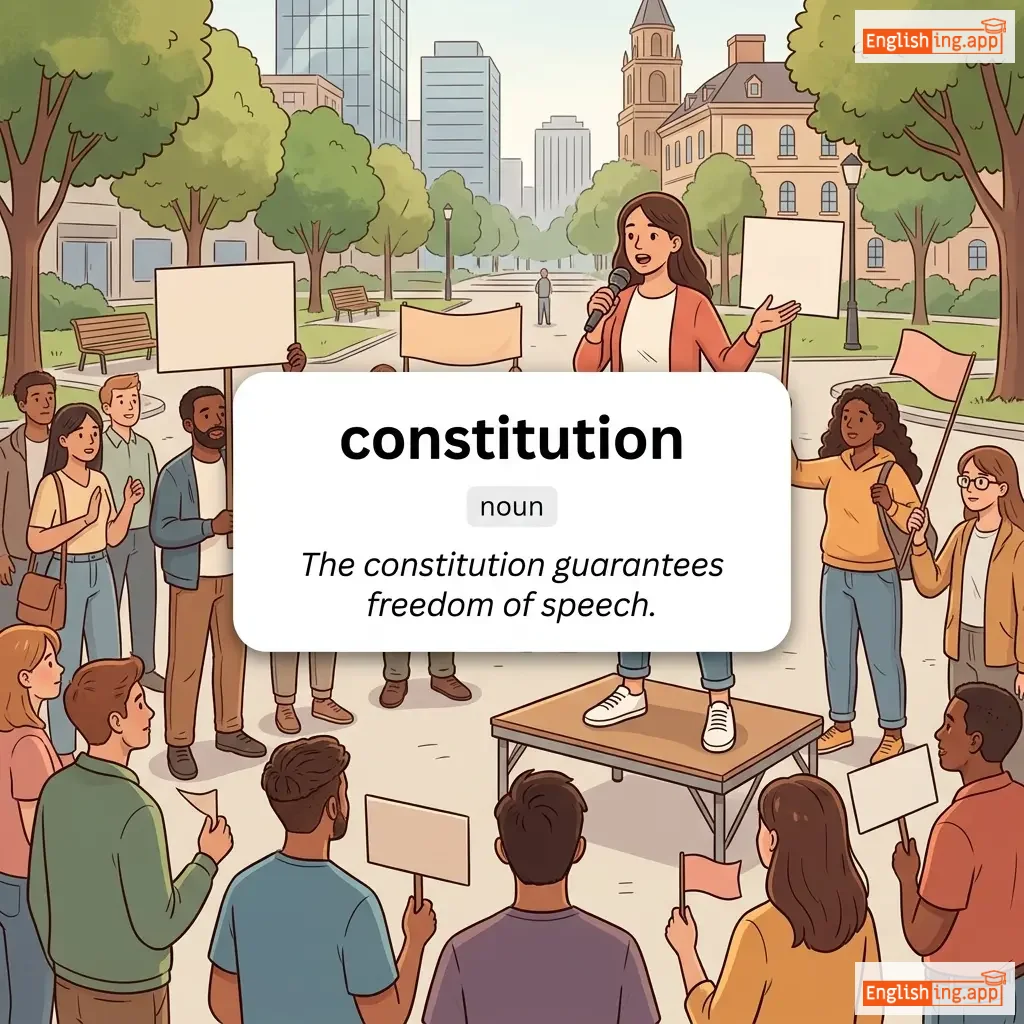
/ˌkɒnstɪˈtjuːʃən/
noun
(コンスティテューション)
••••••
|
|
憲法
kenpou
••••••
|
- •••••• | - •••••• | - •••••• | - •••••• |
The system of fundamental principles according to which a nation or organization is governed.
••••••
|
The constitution guarantees freedom of speech. |
憲法は言論の自由を保障します。
Kenpou wa genron no jiyuu o hoshou shimasu.
••••••
|
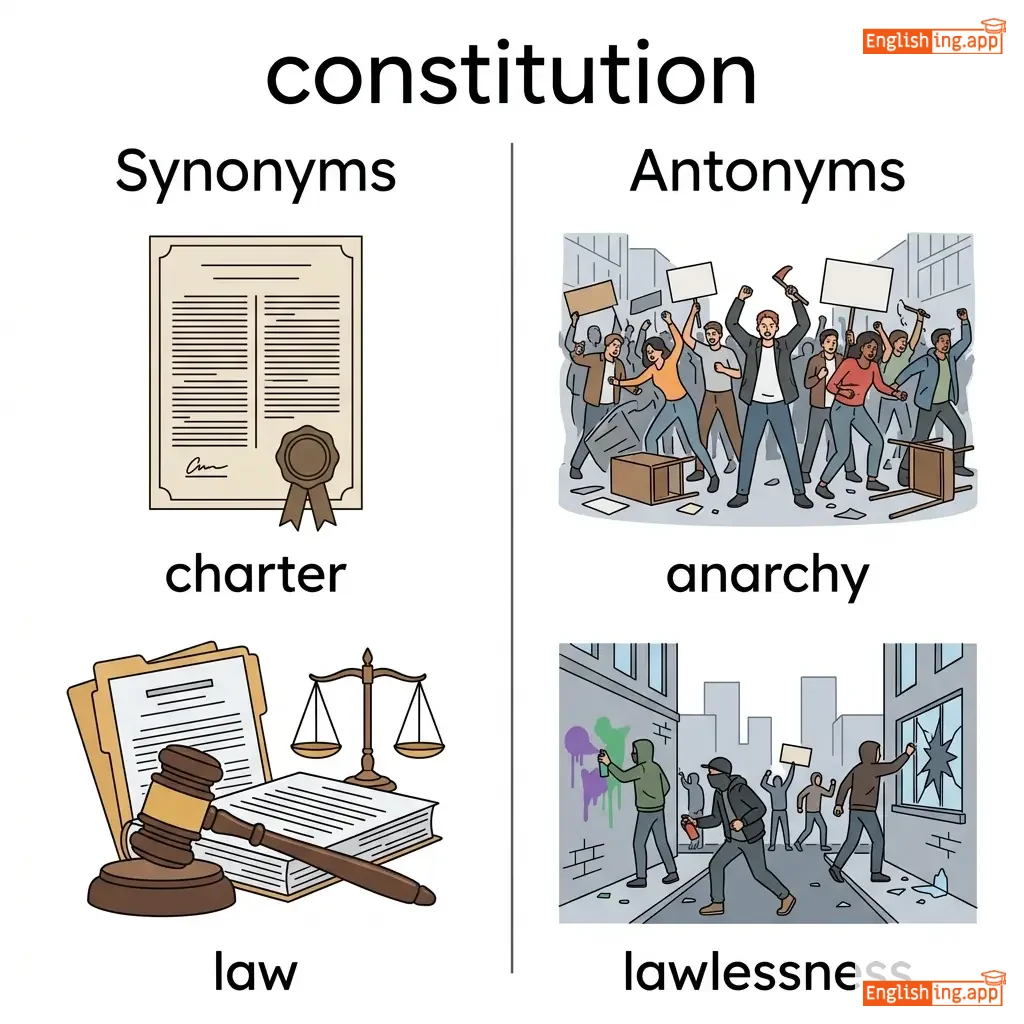
- •••••• | - •••••• | - •••••• |
charter, law, code, framework, fundamental law
••••••
|
anarchy, lawlessness, disorder
••••••
|
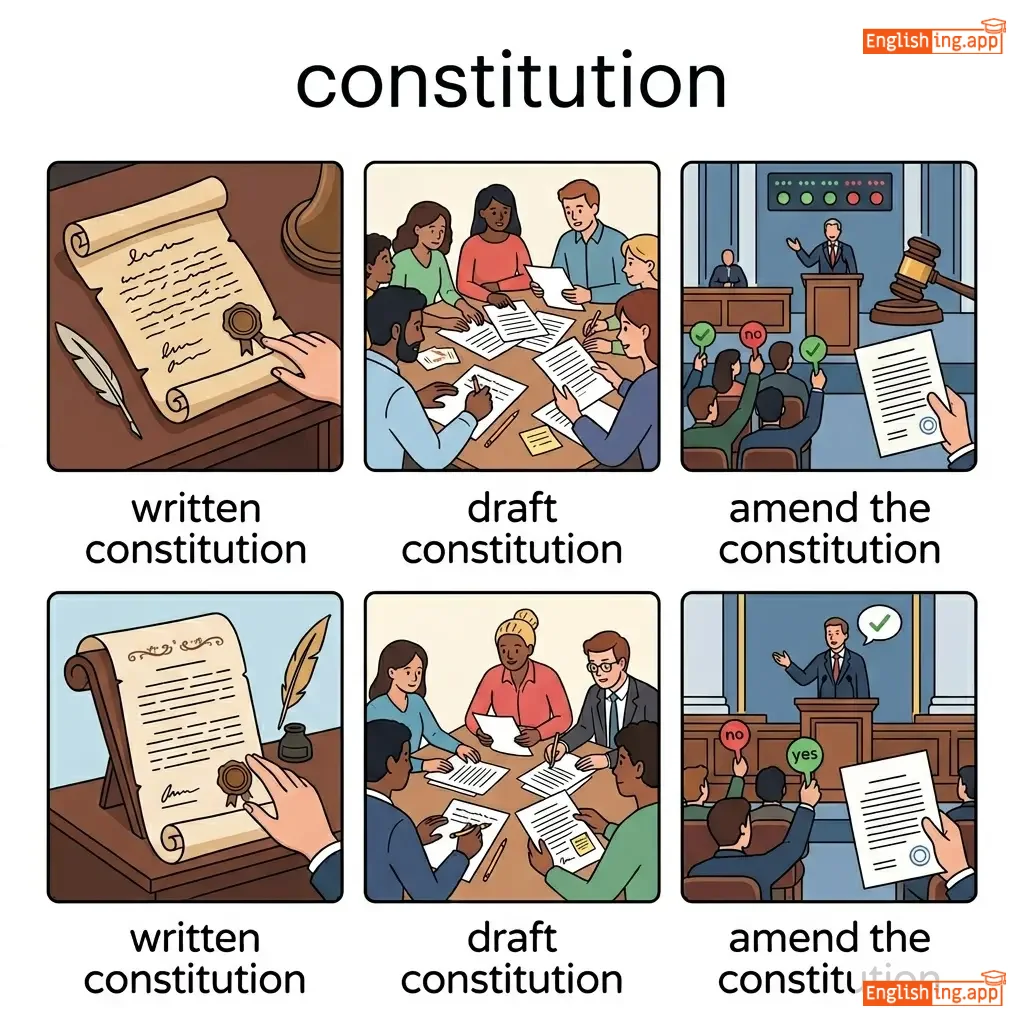
written constitution, draft constitution, amend the constitution, constitution of a country
••••••
|
Constitution = 憲法 – 国家を'憲法'で支配します。
••••••
|
|
#1828
⚖️
|
/ˈkɒnstɪtjuːt/
verb
(コンスティチュート)
••••••
|
- •••••• |
構成する
kousei suru
••••••
|
constituted
コンスティチューテッド
••••••
|
constituted
コンスティチューテッド
••••••
|
constitutes
コンスティチューツ
••••••
|
constituting
コンスティチューティング
••••••
|
To make up, form, or establish something.
••••••
|
These documents constitute the legal agreement between the two parties.
これらの文書は、両者間の法的契約を構成しています。
••••••
|
これらの文書は、両者間の法的契約を構成しています。
Korera no bunsho wa, ryousha-kan no houteki keiyaku o kousei shiteimasu.
••••••
|
- •••••• | - •••••• | - •••••• |
comprise, form, make up, establish, create
••••••
|
exclude, destroy, abolish
••••••
|
constitute a crime, constitute an offense, constitute a majority, constitute evidence
••••••
|
Constitute は「構成する」を意味します - 憲法のように国を構成します。
••••••
|
|
#1829
👥
|
/kənˈstɪtʃuənt/
noun/adjective
(コンスティチュエント)
••••••
|
- •••••• |
構成要素 / 有権者
kousei youso / yuukensha
••••••
|
- •••••• | - •••••• | - •••••• | - •••••• |
Noun: A member of a constituency or an essential part of something. Adjective: Being a necessary part of a whole.
••••••
|
The senator met with his constituents to discuss local issues. |
上院議員は地元の問題を議論するために選挙区の有権者と会いました。
Jouin giin wa jimoto no mondai o giron suru tame ni senkyoku no yuukensha to aimashita.
••••••
|
- •••••• | - •••••• | - •••••• |
component, element, member, voter
••••••
|
whole, outsider, nonmember
••••••
|
constituent parts, constituent elements, constituents of society
••••••
|
Constituentは部分または有権者を意味する – Constituencyから来ている
••••••
|
|
#1830
🗳️
|
/kənˈstɪtʃuənsi/
noun
(コンスティチュエンシー)
••••••
|
- •••••• |
選挙区
senkyoku
••••••
|
- •••••• | - •••••• | - •••••• | - •••••• |
A geographical area whose residents elect a representative to a legislative body.
••••••
|
She campaigned tirelessly across her constituency. |
彼女は選挙区で疲れ知らずに選挙運動を行いました。
Kanojo wa senkyoku de tsukare shirazu ni senkyo undou o okonai mashita.
••••••
|
- •••••• | - •••••• | - •••••• |
district, electorate, ward, division
••••••
|
nonelectoral area, nonvoting zone
••••••
|
electoral constituency, parliamentary constituency, within the constituency
••••••
|
Constitute + 選挙区 = Constituency in Japanese
••••••
|
Vocabulary Quiz
Test your vocabulary by matching words with their translations or meanings.
Login to take the quiz
Comments (0)
Share your thoughts and join the discussion.
Join the discussion by logging in
Login to CommentNo comments yet
Be the first to share your thoughts!