

翻訳
過去
過去分詞
三人称単数
動名詞
意味
例文
例文の翻訳
同義語
対義語
コロケーション
ニーモニック

Swipe left or right, or use the buttons. Tap image to zoom.
例文の翻訳
単語
Lesson 319Lesson 319 - マスクトグル
|
絵文字
|
単語 | Images | 翻訳 | 過去 | 過去分詞 | 三人称単数 | 動名詞 | 意味 | 例文 | 例文の翻訳 | 表現例 | 表現例の意味 | 表現例の翻訳 | 同義語 | 対義語 | コロケーション | ニーモニック |
|---|---|---|---|---|---|---|---|---|---|---|---|---|---|---|---|---|---|
|
#9540
👨🌾
|
/ˈjoʊmən/
noun
(ヨーマン)
••••••
|
- •••••• |
農民 / 忠実な従業員
nōmin / chūjitsu na jūgyōin
••••••
|
- •••••• | - •••••• | - •••••• | - •••••• |
A farmer who cultivates his own land; also used to describe someone performing loyal, useful service.
••••••
|
He did yeoman service in completing the project on time. |
彼はプロジェクトを時間通りに完了させるために忠実にサービスを提供しました。
Kare wa purojekuto o jikan dōri ni kanryō saseru tame ni chūjitsu ni sābisu o teikyō shimashita.
••••••
|
yeoman's service |
Loyal, useful, and effective service.
••••••
|
忠実なサービス
chūjitsu na sābisu
••••••
|
farmer, cultivator, worker, servant, helper
••••••
|
master, nobleman, idle
••••••
|
yeoman service, loyal yeoman, hardworking yeoman
••••••
|
Yeoman は農民を意味します — YEO は 'Your Own' 土地、man は男を意味します
••••••
|
|
#9541
♈
|
/ˈzoʊdiæk/
noun
(ゾディアック)
••••••
|
- •••••• |
星座帯
seiza-tai
••••••
|
- •••••• | - •••••• | - •••••• | - •••••• |
a belt of the heavens divided into twelve equal divisions or signs, each named after a constellation; used in astronomy and astrology
••••••
|
She checked her zodiac sign to read her daily horoscope. |
彼女は自分の星座をチェックして、毎日の占星術を読みました。
Kanojo wa jibun no seiza o chekku shite, mainichi no senseijutsu o yomimashita.
••••••
|
signs of the zodiac |
the twelve astrological signs representing different periods of the year
••••••
|
星座のサイン
seiza no sain
••••••
|
horoscope, astrological chart, celestial sphere, star signs
••••••
|
reality, science, facts
••••••
|
zodiac sign, zodiac constellation, Chinese zodiac, zodiac calendar, Western zodiac
••••••
|
ZODIACはZOOでDIAGを実行 - 星座帯 (seiza-tai) 12の動物のサイン!
••••••
|
|
#9542
🌶️
|
/ˈzɛsti/
adjective
(ゼスティ)
••••••
|
- •••••• |
スパイシー
supaisī
••••••
|
- •••••• | - •••••• | - •••••• | - •••••• |
Having a strong, pleasant, and somewhat spicy flavor; full of energy and enthusiasm.
••••••
|
The dish had a zesty flavor that everyone loved. |
その料理は、みんなが好きなスパイシーな味がしました。
Sono ryōri wa, minna ga sukina supaisī na aji ga shimashita.
••••••
|
- •••••• | - •••••• | - •••••• |
spicy, tangy, lively, flavorful, energetic
••••••
|
bland, dull, tasteless
••••••
|
zesty flavor, zesty sauce, zesty attitude, zesty personality
••••••
|
Zestyはスパイシーでエネルギー満点!
••••••
|
|
#9543
✨
|
/zɛst/
noun
(ゼスト)
••••••
|
- •••••• |
熱意
netsui
••••••
|
- •••••• | - •••••• | - •••••• | - •••••• |
Great enthusiasm and energy; also the outer colored part of citrus fruit used for flavor.
••••••
|
She tackled the project with zest. |
彼女は熱意を持ってプロジェクトに取り組んだ。
Kanojo wa netsui o motte purojekuto ni torikunda.
••••••
|
zest for life |
a great enthusiasm and enjoyment of life
••••••
|
人生への熱意
Jinsei e no netsui
••••••
|
enthusiasm, energy, gusto, passion, relish
••••••
|
apathy, indifference, dullness
••••••
|
zest for life, with zest, full of zest, zest and energy
••••••
|
Zestはtestのようですが、熱意を込めて行うことです。
••••••
|
|
#9544
🍃
|
/ˈzɛfər/
noun
(ゼファー)
••••••
|
- •••••• |
やわらかな風
yawaraka na kaze
••••••
|
- •••••• | - •••••• | - •••••• | - •••••• |
A soft gentle breeze.
••••••
|
A warm zephyr blew through the valley.
A warm zephyr blew through the valley.
••••••
|
温かいやわらかな風が谷を吹き抜けました。
Atatakai yawaraka na kaze ga tani o fukinukemashita.
••••••
|
- •••••• | - •••••• | - •••••• |
breeze, wind, gust, draft
••••••
|
storm, gale
••••••
|
gentle zephyr, summer zephyr, cool zephyr, soft zephyr
••••••
|
Zephyr = 'やわらかな風'—穏やかで軽い風のこと。
••••••
|
|
#9545
🌄
|
/ˈziːnɪθ/
noun
(ゼニス)
••••••
|
- •••••• |
頂点
chōten
••••••
|
- •••••• | - •••••• | - •••••• | - •••••• |
The time at which something is most powerful or successful; the highest point.
••••••
|
Her career reached its zenith in the late 1990s. |
彼女のキャリアは1990年代後半に頂点に達した。
Kanojo no kyaria wa 1990 nendai kōhan ni chōten ni tasshita.
••••••
|
reach the zenith |
to achieve the highest point of success or power
••••••
|
頂点に達する
chōten ni tassuru
••••••
|
peak, pinnacle, climax, summit, apex
••••••
|
nadir, bottom, decline
••••••
|
at the zenith, reach zenith, zenith of success, zenith of power
••••••
|
ゼニスは空の最上点を意味し、キャリアの頂点と似ています。
••••••
|
|
#9546
🕰️
|
/ˈzaɪtɡaɪst/
noun
(zaitugaisto)
••••••
|
- •••••• |
時代精神
jidai seishin
••••••
|
- •••••• | - •••••• | - •••••• | - •••••• |
The defining spirit or mood of a particular period of history as shown by the ideas and beliefs of the time.
••••••
|
The novel perfectly captures the zeitgeist of the 1960s. |
その小説は1960年代の時代精神を完璧に捉えています。
Sono shōsetsu wa 1960 nendai no jidai seishin o kanpeki ni toraeteimasu.
••••••
|
- •••••• | - •••••• | - •••••• |
spirit of the age, trend, outlook, ethos, climate
••••••
|
timelessness, tradition
••••••
|
capture the zeitgeist, reflect the zeitgeist, zeitgeist of the era, cultural zeitgeist
••••••
|
Zeitgeistは時代の精神を意味します — 'zaitugaisto' は時代の精神を表す言葉です。
••••••
|
|
#9547
💪
|
/ˈzel.əs/
adjective
(ゼラス)
••••••
|
|
熱心な
nesshin na
••••••
|
- •••••• | - •••••• | - •••••• | - •••••• |
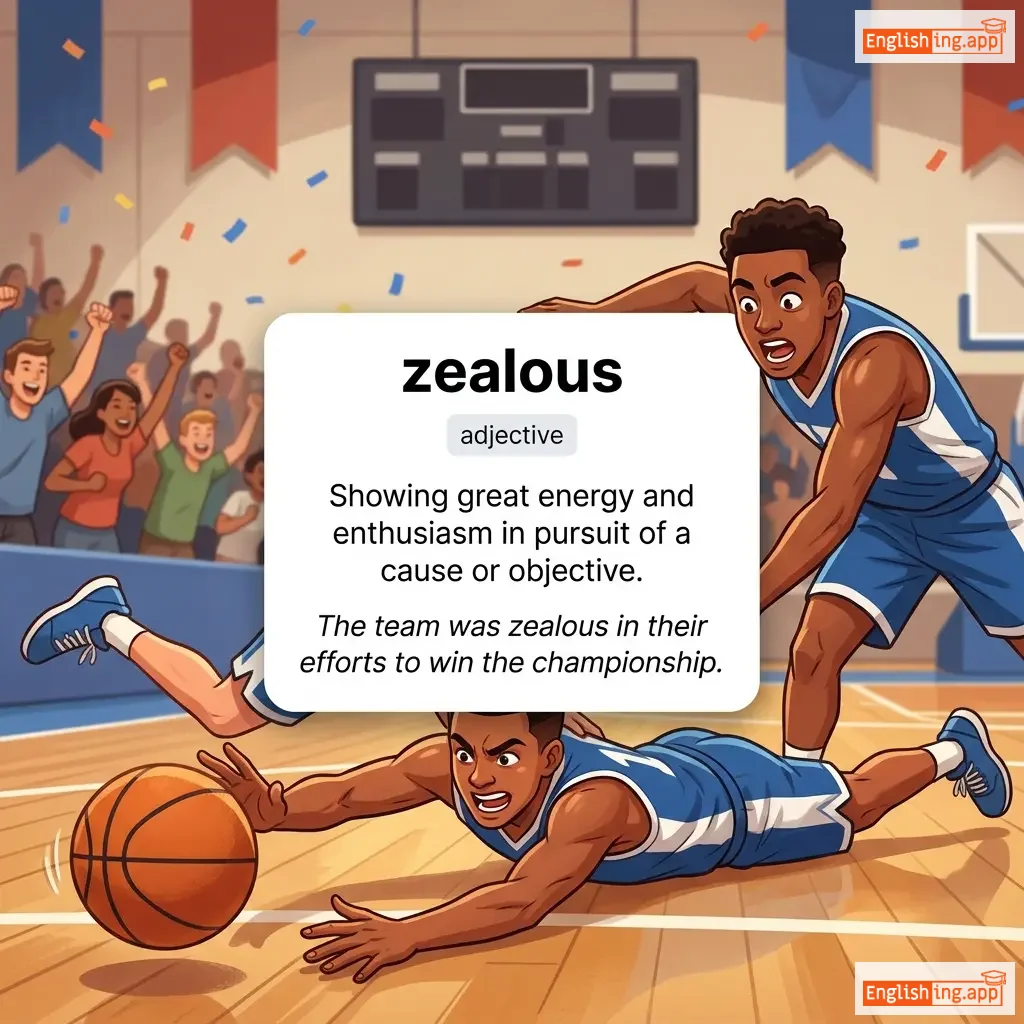
Showing great energy and enthusiasm in pursuit of a cause or objective.
••••••
|
The team was zealous in their efforts to win the championship.
チームはチャンピオンシップに勝つために熱心でした。
••••••
|
チームはチャンピオンシップに勝つために熱心でした。
Chīmu wa chanpionship ni katsu tame ni nesshin deshita.
••••••
|
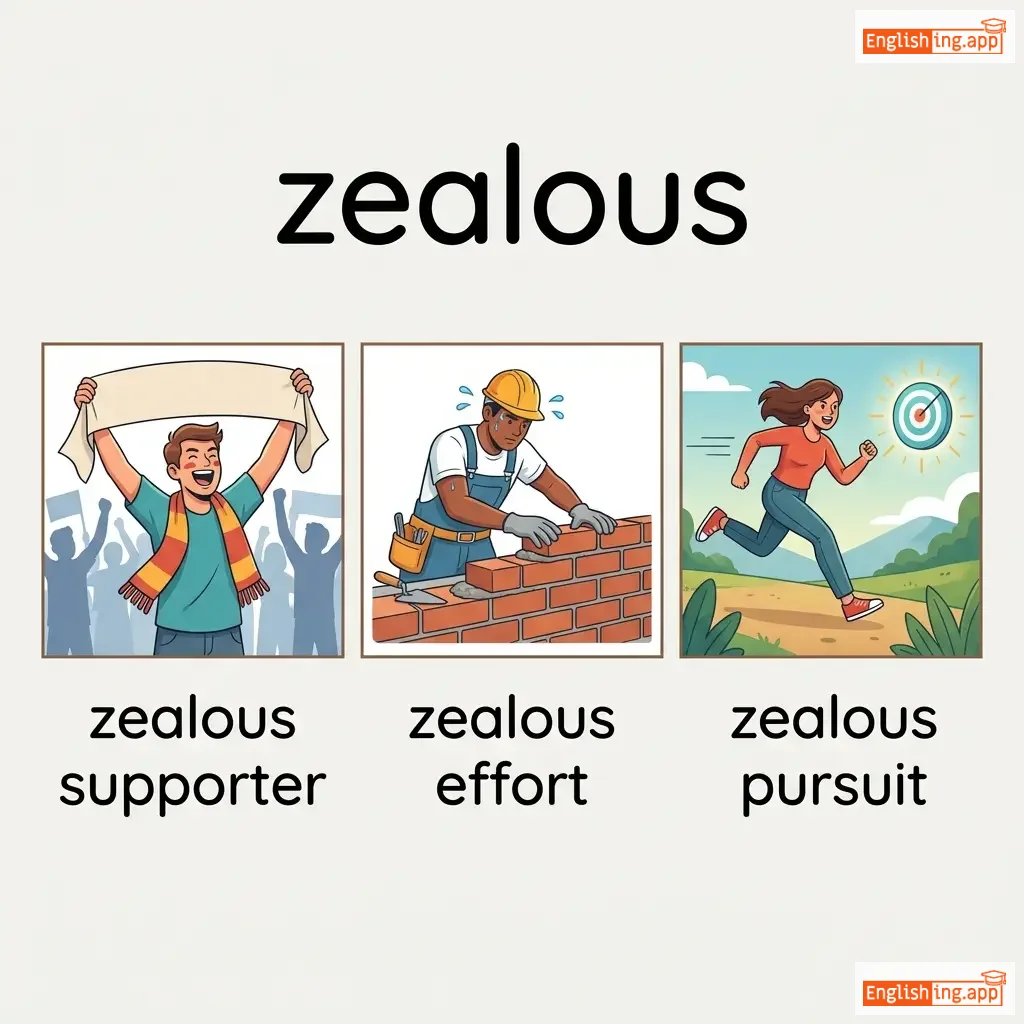
zealous supporter
熱心なサポーター
••••••
|
a very enthusiastic and committed supporter
••••••
|
熱心なサポーター
nesshin na sapōtā
••••••
|
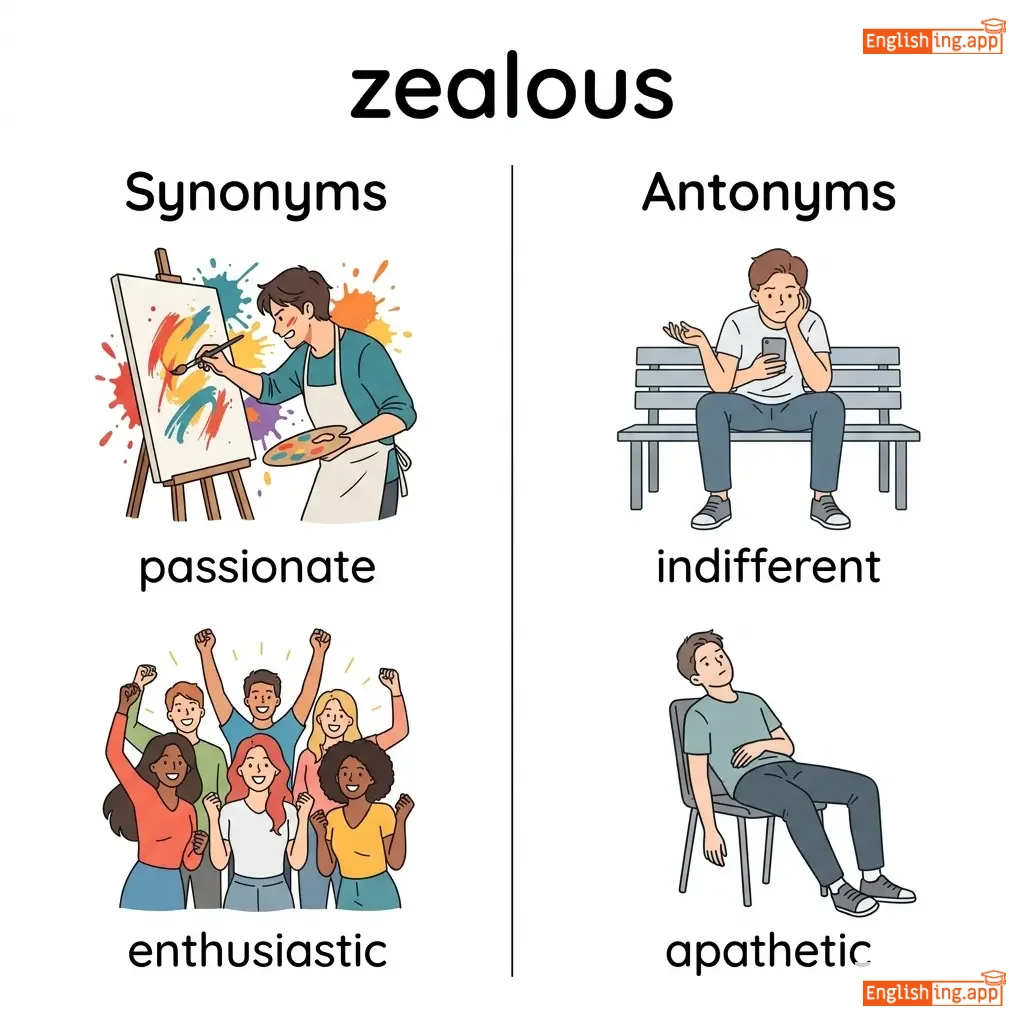
passionate, enthusiastic, fervent, eager, devoted
••••••
|
indifferent, apathetic
••••••
|
zealous supporter, zealous effort, zealous pursuit
••••••
|
Zealousは熱心な人のように、目標に全力で取り組む人です。
••••••
|
|
#9548
⚔️
|
/ˈzel.ət/
noun
(ゼロット)
••••••
|
|
狂信者
kyoushinsha
••••••
|
- •••••• | - •••••• | - •••••• | - •••••• |
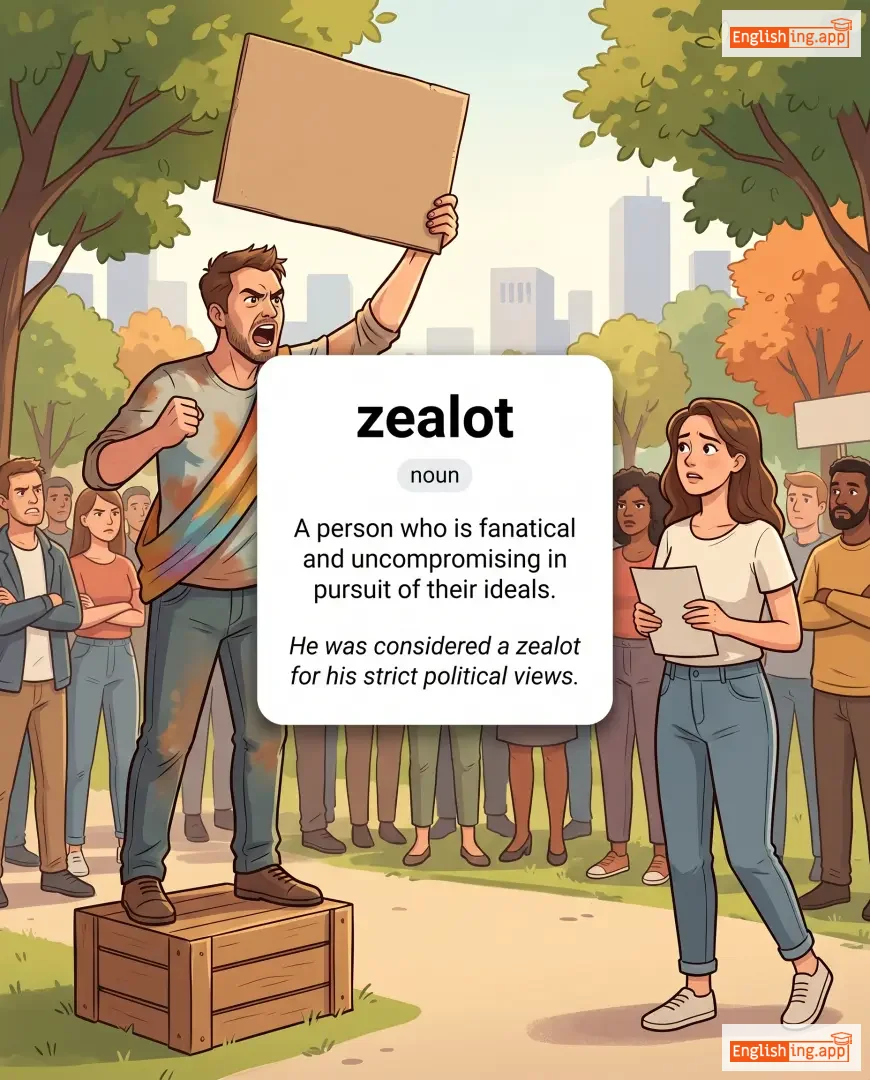
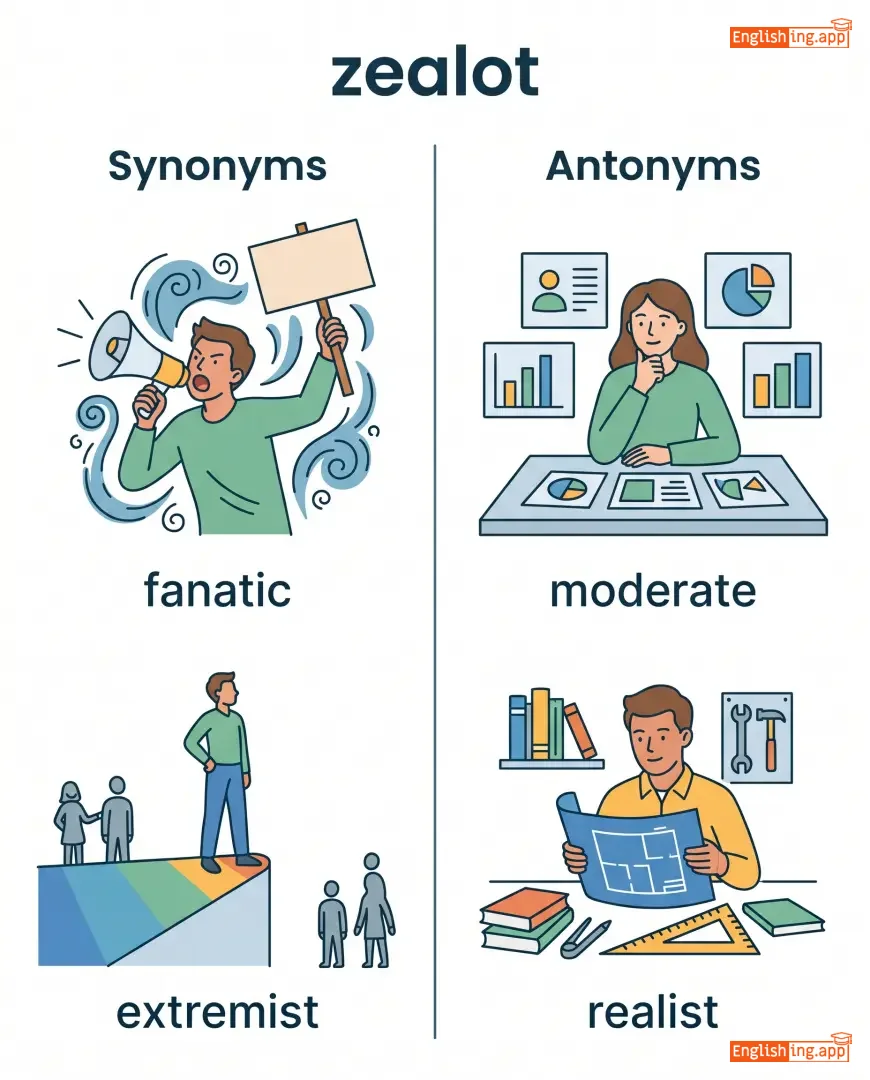
A person who is fanatical and uncompromising in pursuit of their ideals.
••••••
|
He was considered a zealot for his strict political views. |
彼は厳格な政治的見解のため、狂信者と見なされていました。
Kare wa genkaku na seijiteki kenkai no tame, kyoushinsha to minasa rete imashita.
••••••
|
- •••••• | - •••••• | - •••••• |
fanatic, extremist, radical, enthusiast
••••••
|
moderate, realist
••••••
|
religious zealot, political zealot, zealot group
••••••
|
ZeaLOTは多くの熱意を意味し、zealotは狂信者を意味します。
••••••
|
|
#9549
🔥
|
/ziːl/
noun
(ジール)
••••••
|
|
熱意
netsui
••••••
|
- •••••• | - •••••• | - •••••• | - •••••• |
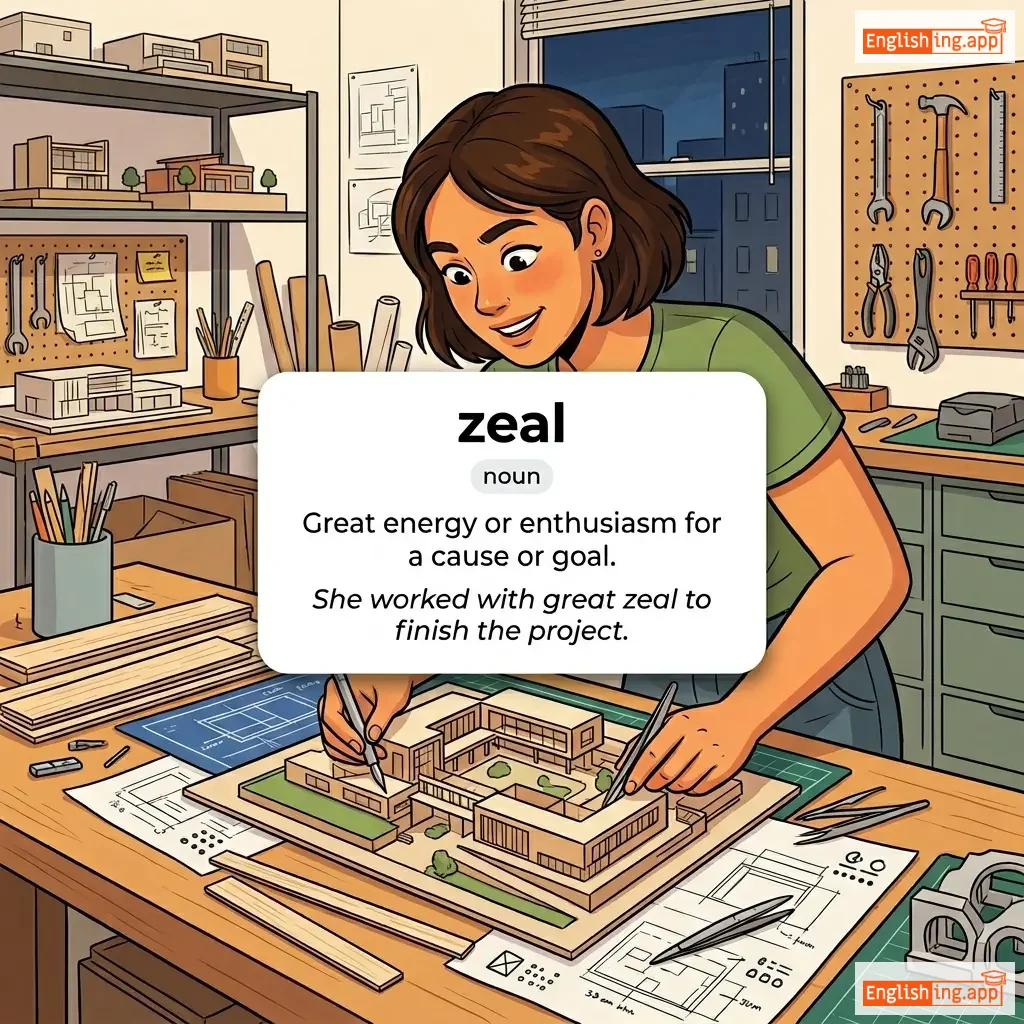
Great energy or enthusiasm for a cause or goal.
••••••
|
She worked with great zeal to finish the project. |
彼女はプロジェクトを終わらせるために大きな熱意で働いた。
Kanojo wa purojekuto o owaraseru tame ni ookina netsui de hataraita.
••••••
|
zeal for life |
great enthusiasm and energy for living
••••••
|
人生への熱意
jinsei e no netsui
••••••
|
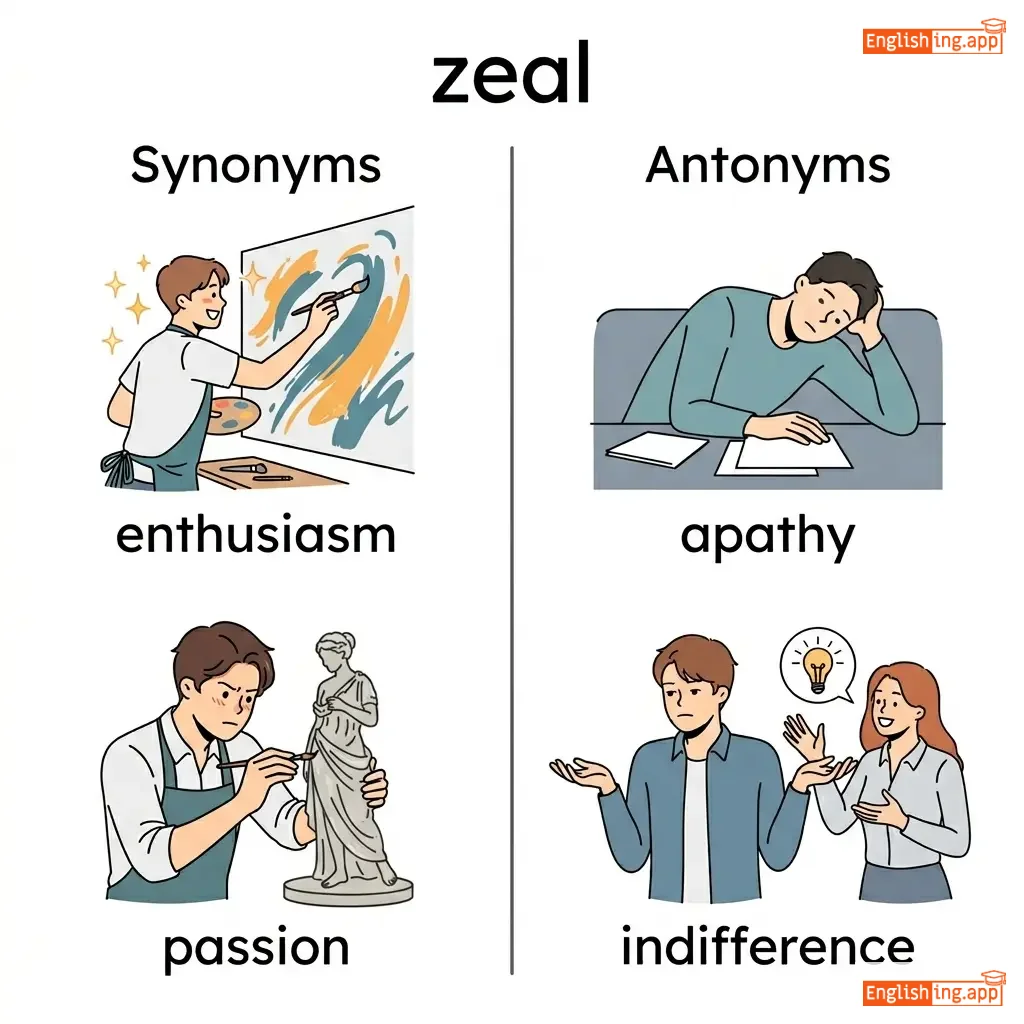
enthusiasm, passion, eagerness, fervor, devotion
••••••
|
apathy, indifference
••••••
|
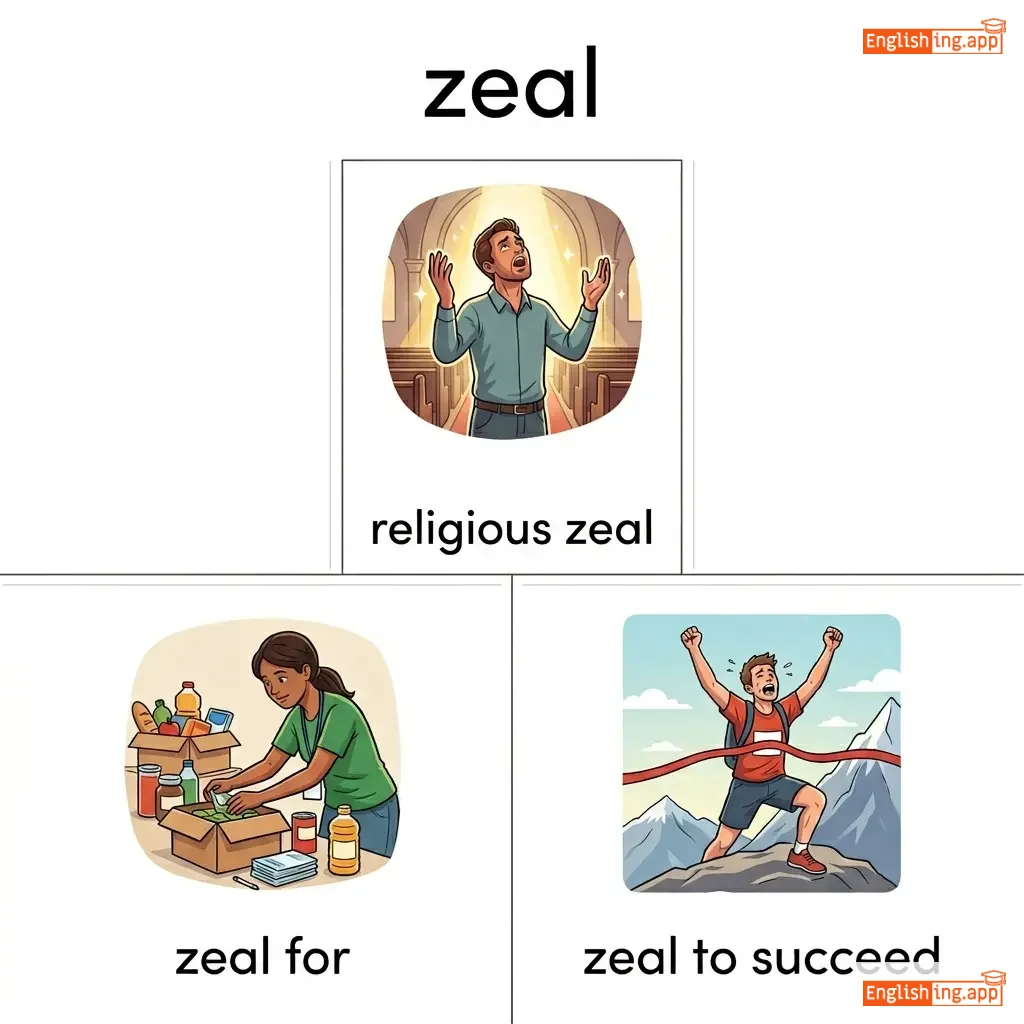
religious zeal, zeal for, zeal to succeed
••••••
|
ZeAL = zeal は熱意を持って働くことを意味します - 日本語では熱意
••••••
|
|
#9550
🤡
|
/ˈzeɪ.ni/
adjective
(ゼイニ)
••••••
|
- •••••• |
滑稽で風変わりな
Kokkei de fūkawari na
••••••
|
- •••••• | - •••••• | - •••••• | - •••••• |
Amusingly unconventional and peculiar.
••••••
|
The comedian's zany style kept the audience laughing. |
コメディアンの奇妙なスタイルは観客を笑わせ続けました。
Komedian no kimyō na sutairu wa kankyaku o warawase tsuzukemashita.
••••••
|
- •••••• | - •••••• | - •••••• |
quirky, eccentric, odd, wacky, clownish
••••••
|
serious, normal, conventional
••••••
|
zany humor, zany idea, zany character
••••••
|
Zanyは、ユニークで面白いことを意味し、笑いが止まらないコメディーのスタイルです!
••••••
|
|
#9551
📜
|
/jɔːr/
noun
(ヨア)
••••••
|
- •••••• |
過去
kako
••••••
|
- •••••• | - •••••• | - •••••• | - •••••• |
Time long past; bygone days.
••••••
|
Legends of yore still inspire people today. |
過去の伝説は今でも人々に影響を与え続けています。
Kako no densetsu wa ima demo hitobito ni eikyou o ataetsuzukemasu.
••••••
|
of yore |
refers to something from the distant past
••••••
|
過去から
Kako kara
••••••
|
past, history, antiquity, bygone
••••••
|
present, future
••••••
|
days of yore, times of yore, legends of yore
••••••
|
Yoreは過去を意味します - 'yore'を過去として思い出しましょう
••••••
|
|
#9552
🚜
|
/ˈjoʊkəl/
noun
(ヨケル)
••••••
|
- •••••• |
田舎者
inakamono
••••••
|
- •••••• | - •••••• | - •••••• | - •••••• |
An uneducated and unsophisticated person from the countryside; a bumpkin.
••••••
|
The city folks laughed at the yokel's simple ways. |
都会の人々は田舎者の簡単な方法を笑った。
Tōkai no hitobito wa inakamono no kantan na hōhō o waratta.
••••••
|
- •••••• | - •••••• | - •••••• |
bumpkin, rustic, peasant, hillbilly, hick
••••••
|
gentleman, sophisticate, urbanite
••••••
|
country yokel, simple yokel, poor yokel
••••••
|
Yokelは田舎者を意味する — 田舎で働くシンプルな人
••••••
|
|
#9553
🪢
|
/joʊk/
noun
(ヨーク)
••••••
|
- •••••• |
轡
kutsuwa
••••••
|
- •••••• | - •••••• | - •••••• | - •••••• |
A wooden crosspiece fastened over the necks of animals; symbolically, a burden or oppression.
••••••
|
The oxen were bound together by a heavy yoke. |
牛は重い轡で繋がれていた。
Ushi wa omoi kutsuwa de tsunagarete ita.
••••••
|
under the yoke |
Living under oppression or burden.
••••••
|
轡の下で
Kutsuwa no shita de
••••••
|
harness, burden, oppression, bondage, restraint
••••••
|
freedom, liberty, independence
••••••
|
yoke of slavery, heavy yoke, break the yoke
••••••
|
Yokeは轡を意味する — 牛は重い轡をつけている
••••••
|
|
#9554
🌾
|
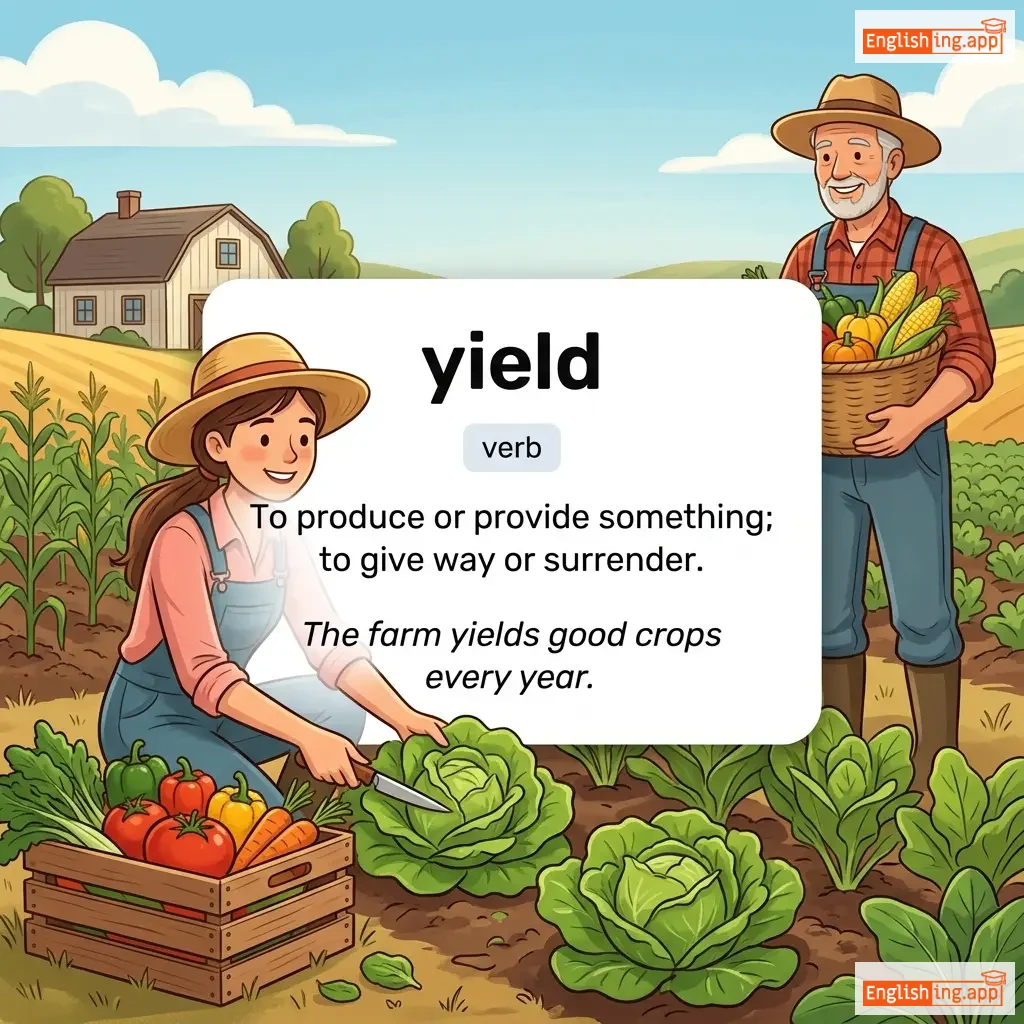
/jiːld/
verb
(イールド)
••••••
|
|
生産する / 屈する
seisan suru / kusuru
••••••
|
yielded
イールデッド
••••••
|
yielded
イールデッド
••••••
|
yields
イールズ
••••••
|
yielding
イールディング
••••••
|
To produce or provide something; to give way or surrender.
••••••
|
The farm yields good crops every year.
農場は毎年良い作物を生産します。
••••••
|
農場は毎年良い作物を生産します。
Nōjō wa mainen yoi sakumotsu o seisan shimasu.
••••••
|
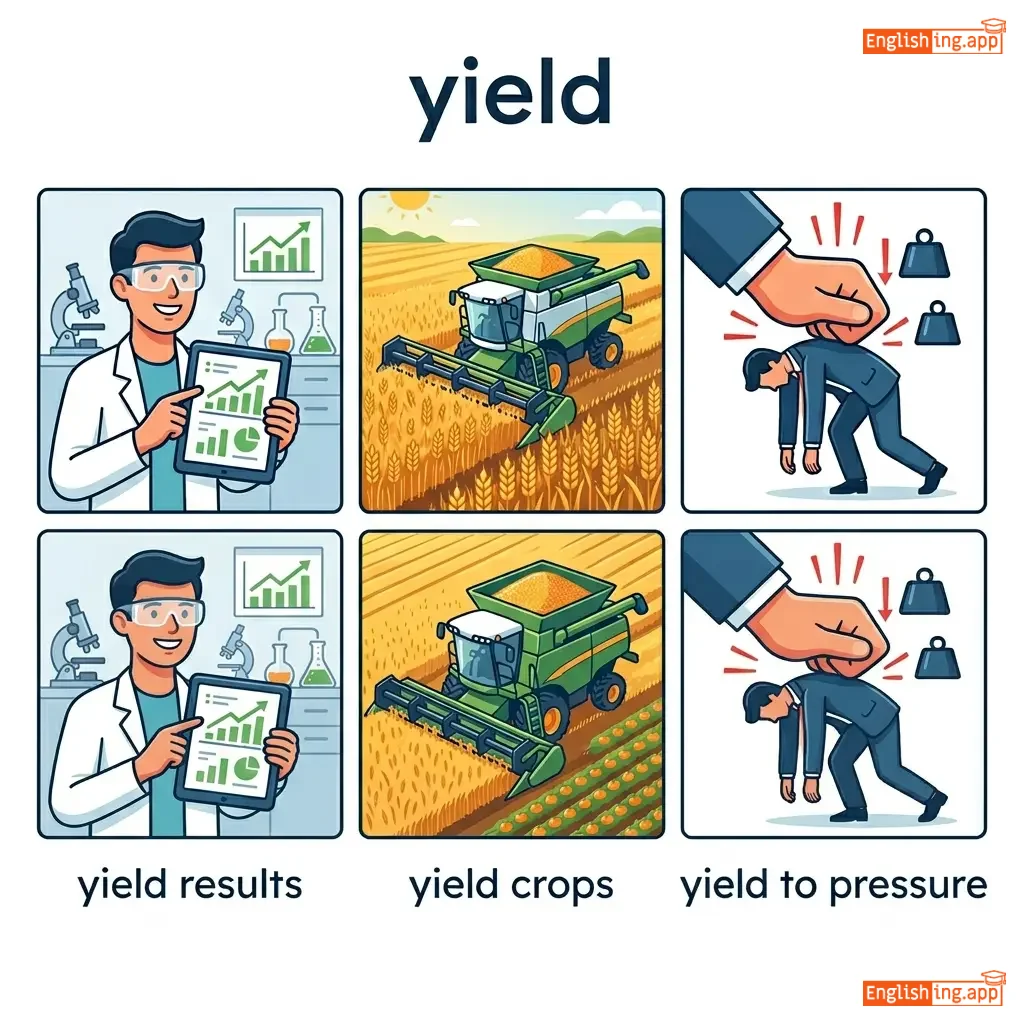
yield to pressure
プレッシャーに屈する
••••••
|
To give in or surrender under pressure.
••••••
|
プレッシャーに屈する
Pureshā ni kusuru
••••••
|
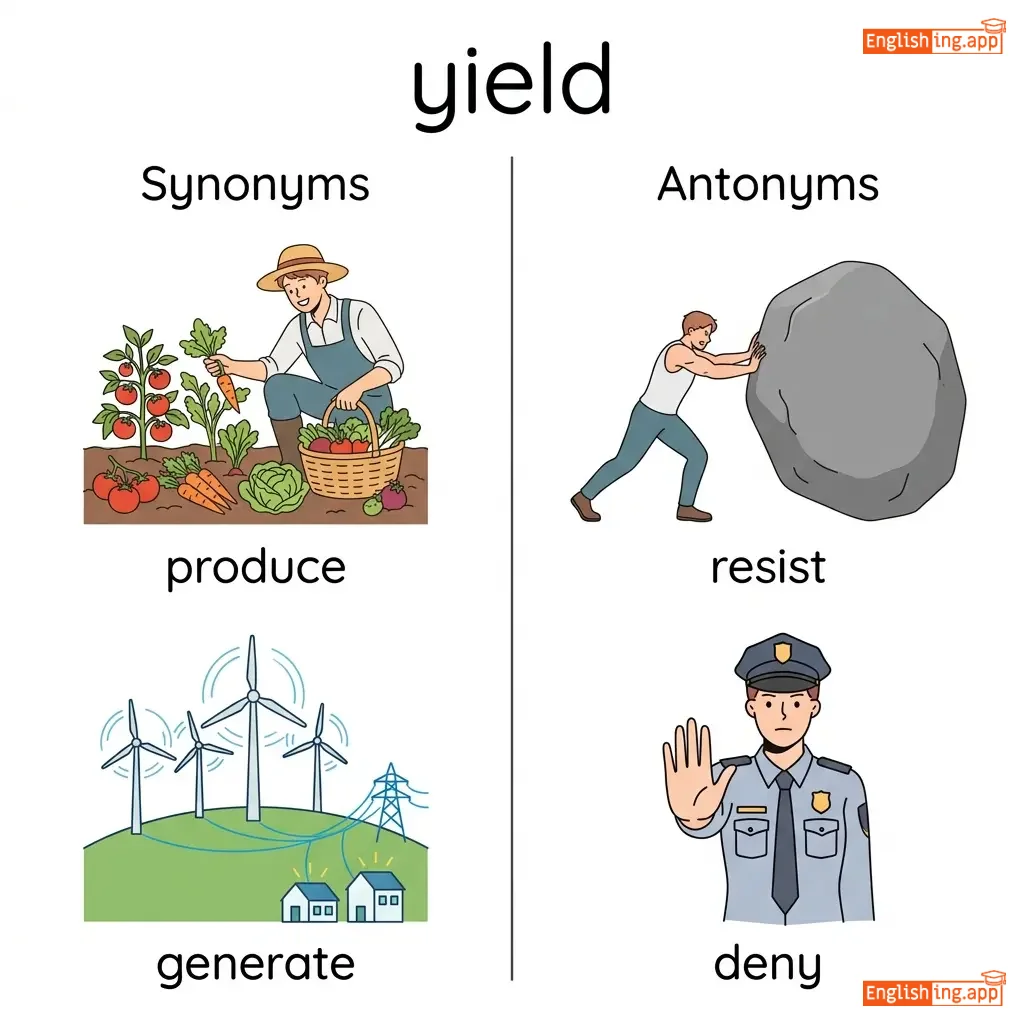
produce, generate, surrender, give, supply
••••••
|
resist, deny, refuse
••••••
|
yield results, yield crops, yield to pressure, yield profit
••••••
|
Yield は生産すること: 農場で作物を生産し、プレッシャーには屈すること。
••••••
|
|
#9555
💡
|
/əˈbɪləti/
noun
(アビリティ)
••••••
|
- •••••• |
能力
nouryoku
••••••
|
- •••••• | - •••••• | - •••••• | - •••••• |
the power, skill, or capacity to do something
••••••
|
Her ability to solve problems quickly impressed everyone.
問題を迅速に解決する能力は、みんなを感心させました。
••••••
|
問題を迅速に解決する能力は、みんなを感心させました。
Mondai wo jinsoku ni kaiketsu suru nouryoku wa, minna wo kanshin sasemashita.
••••••
|
to the best of one's ability
最大限の能力で
••••••
|
to do something as well as one possibly can
••••••
|
最大限の能力で
saidaigen no nouryoku de
••••••
|
skill, talent, capacity, competence, capability
••••••
|
inability, incapacity, weakness
••••••
|
natural ability, mental ability, physical ability, ability to learn
••••••
|
Abilityは能力を意味します — 試験に合格するには、良い能力が必要です。
••••••
|
|
#9556
✨
|
/jɛn/
noun
(イェン)
••••••
|
- •••••• |
欲望
yokubou
••••••
|
- •••••• | - •••••• | - •••••• | - •••••• |
A deep, strong desire or craving.
••••••
|
She felt a strong yen to travel the world.
シー フェルト ア ストロング イェン トゥ トラベル ザ ワールド。
••••••
|
彼女は世界を旅したいという強い欲望を感じた。
kanojo wa sekai o tabi shitai to iu tsuyoi yokubou o kanjita.
••••••
|
- •••••• | - •••••• | - •••••• |
longing, craving, desire, urge, appetite
••••••
|
aversion, dislike, distaste
••••••
|
yen for adventure, yen to travel, strong yen, deep yen
••••••
|
Yen sounds like 欲望 (yokubou) — yearning or strong wish
••••••
|
|
#9557
🐴
|
/ˈjɪərlɪŋ/
noun
(イヤーリング)
••••••
|
- •••••• |
1歳の動物、特に馬
1-sai no dōbutsu, tokuni uma
••••••
|
- •••••• | - •••••• | - •••••• | - •••••• |
an animal that is one year old, especially a horse
••••••
|
The farmer sold the yearling at the livestock market. |
農夫はそのイヤーリングを家畜市場で売りました。
Nōfu wa sono yearling o kachiku shijō de urimashita.
••••••
|
- •••••• | - •••••• | - •••••• |
young horse, colt, juvenile, foal
••••••
|
adult, mature
••••••
|
yearling horse, yearling cattle, yearling market
••••••
|
Year + ling は1歳の動物、例えば馬を意味する
••••••
|
|
#9558
🚷
|
/ˌzɛnəˈfoʊbɪk/
adjective
(ゼノフォビック)
••••••
|
- •••••• |
外国人恐怖症
gaikokujin kyōfushō
••••••
|
- •••••• | - •••••• | - •••••• | - •••••• |
having or showing a dislike or fear of people from other countries
••••••
|
The leader’s xenophobic comments sparked outrage across the country. |
リーダーの外国人恐怖症に関するコメントは、全国で憤りを引き起こした。
Rīdā no gaikokujin kyōfushō ni kansuru komento wa, zenkoku de ikidoi o hikiokoshita.
••••••
|
- •••••• | - •••••• | - •••••• |
intolerant, prejudiced, biased, racist
••••••
|
tolerant, open-minded, accepting
••••••
|
xenophobic remarks, xenophobic attitude, xenophobic behavior
••••••
|
Xenoは'外国'を意味し、phobicは'恐怖'を意味します - 外国人恐怖症は'外国人に対する恐怖'
••••••
|
|
#9559
❌🌎
|
/ˌzɛnəˈfoʊbiə/
noun
(ゼノフォビア)
••••••
|
- •••••• |
外国人恐怖症
gaikokujin kyōfushō
••••••
|
- •••••• | - •••••• | - •••••• | - •••••• |
fear or hatred of foreigners, people from different cultures, or strangers
••••••
|
Xenophobia can lead to discrimination and social division. |
ゼノフォビアは差別や社会的分裂を引き起こす可能性があります。
Zenofobia wa sabetsu ya shakaiteki bunretsu o hikiokosu kanōsei ga arimasu.
••••••
|
- •••••• | - •••••• | - •••••• |
racism, nationalism, prejudice, intolerance, bias
••••••
|
tolerance, acceptance, cosmopolitanism
••••••
|
rise of xenophobia, xenophobia against immigrants, combat xenophobia
••••••
|
ゼノ = 外国人 + フォビア = 恐怖症。ゼノフォビア = 外国人恐怖症
••••••
|
|
#9560
🚫🌍
|
/ˈzɛnəˌfoʊb/
noun
(ゼノフォーブ)
••••••
|
- •••••• |
外国人恐怖症者
gaikokujin kyōfu shōsha
••••••
|
- •••••• | - •••••• | - •••••• | - •••••• |
a person who dislikes or fears people from other countries or cultures
••••••
|
The politician was criticized as a xenophobe due to his anti-immigrant policies. |
その政治家は反移民政策のため、外国人恐怖症者として批判されました。
Sono seijika wa han imin seisaku no tame, gaikokujin kyōfu shōsha to shite hihan saremashita.
••••••
|
- •••••• | - •••••• | - •••••• |
racist, nationalist, chauvinist, bigot, isolationist
••••••
|
tolerant, cosmopolitan, open-minded
••••••
|
xenophobe attitude, being a xenophobe, labeled a xenophobe
••••••
|
Xenoは外国を意味し、phobeは恐れを意味する - Xenophobeは外国人を恐れる人
••••••
|
|
#9561
😏
|
/raɪ/
adjective
(ライ)
••••••
|
- •••••• |
歪んだ、皮肉な
yuganda, hinikuna
••••••
|
- •••••• | - •••••• | - •••••• | - •••••• |
twisted or distorted in expression; showing dry, mocking humor
••••••
|
He gave a wry smile after hearing the sarcastic remark. |
彼は皮肉なコメントを聞いた後、歪んだ笑顔を見せた。
Kare wa hinikuna komento o kiita ato, yuganda egao o miseta.
••••••
|
wry smile |
a twisted or mocking smile showing irony or sarcasm
••••••
|
歪んだ笑顔
yuganda egao
••••••
|
ironic, sardonic, sarcastic, twisted, dry
••••••
|
serious, straightforward, genuine
••••••
|
wry smile, wry humor, wry expression, wry face
••••••
|
歪んだ笑顔は皮肉な笑い、顔がねじれているような感じです。
••••••
|
|
#9562
🤦
|
/ˌrɒŋˈhɛd.ɪd/
adjective
(ロングヘディッド)
••••••
|
- •••••• |
誤った考え方
ayamatta kangaekata
••••••
|
- •••••• | - •••••• | - •••••• | - •••••• |
Having or showing bad judgment or stubbornly holding to wrong ideas.
••••••
|
The policy was considered wrongheaded and harmful. |
その政策は誤った考え方で有害だと見なされた。
Sono seisaku wa ayamatta kangaekata de yuugai da to minasa reta.
••••••
|
- •••••• | - •••••• | - •••••• |
misguided, mistaken, ill-advised, stubborn
••••••
|
sensible, wise, reasonable
••••••
|
wrongheaded decision, wrongheaded policy, wrongheaded approach
••••••
|
Wrongheaded は間違った考え方を意味します、wrong + head = 誤った頭。
••••••
|
|
#9563
✍️
|
/ˈraɪ.tɪŋ/
noun/verb
(ハピネス)
••••••
|
- •••••• |
幸せ
shiawase
••••••
|
- •••••• | - •••••• | - •••••• |
writing
••••••
|
The activity of putting words on paper or composing text; the written form of communication.
••••••
|
She spends hours every day on her creative writing. |
彼女は賞を受け取ったとき、幸せを隠すことができませんでした。
Kanojo wa shō o uketotta toki, shiawase o kakusu koto ga dekimasen deshita.
••••••
|
the writing on the wall |
a clear sign of future trouble or failure
••••••
|
幸せを求めて
Shiawase o motomete
••••••
|
composition, text, script, inscription
••••••
|
speech, silence
••••••
|
writing style, writing skills, writing desk, writing assignment
••••••
|
幸せ(shiawase) = Happiness. 幸せになろう!
••••••
|
|
#9564
😖
|
/raɪð/
verb
(raisu)
••••••
|
- •••••• |
身をよじる
mi o yojiru
••••••
|
writhed
raisutod
••••••
|
writhed
raisutod
••••••
|
writhes
raisutosu
••••••
|
writhing
raisuingu
••••••
|
To twist or squirm in pain or discomfort.
••••••
|
He writhed in pain after twisting his ankle.
彼は足首を捻った後、痛みで身をよじっていた。
••••••
|
彼は足首を捻った後、痛みで身をよじっていた。
Kare wa ashi kubi o nenatta ato, itami de mi o yojiteta.
••••••
|
- •••••• | - •••••• | - •••••• |
squirm, twist, thrash, contort
••••••
|
remain still, relax
••••••
|
writhe in pain, writhe in agony, writhe helplessly
••••••
|
Writheは身をよじることを意味し、'raisu'はその動作を連想させます。
••••••
|
|
#9565
📜
|
/rɪt/
noun
(リット)
••••••
|
- •••••• |
裁判所命令
saibansho meirei
••••••
|
- •••••• | - •••••• | - •••••• | - •••••• |
A formal written order issued by a court.
••••••
|
The judge issued a writ of habeas corpus. |
裁判官はハベアス・コーパス命令を発行しました。
Saibankan wa habeasu kōpasu meirei o hakkō shimashita.
••••••
|
- •••••• | - •••••• | - •••••• |
order, decree, mandate, summons
••••••
|
informal note, request
••••••
|
writ issued, writ filed, writ petition
••••••
|
Writは裁判所命令、裁判官が出す命令です。
••••••
|
|
#9566
🏆
|
/əˈtʃiːv/
verb
(アチーブ)
••••••
|
- •••••• |
達成する
tassei suru
••••••
|
achieved
アチーブド
••••••
|
achieved
アチーブド
••••••
|
achieves
アチーブス
••••••
|
achieving
アチービング
••••••
|
to successfully bring about or reach a desired goal or result
••••••
|
She worked hard to achieve her dream of becoming a doctor.
彼女は医者になるという夢を達成するために一生懸命働いた。
••••••
|
彼女は医者になるという夢を達成するために一生懸命働いた。
Kanojo wa isha ni naru to iu yume o tassei suru tame ni isshoukenmei hataraita.
••••••
|
achieve success
成功を収める
••••••
|
to become successful
••••••
|
成功を収める
seikou o osameru
••••••
|
accomplish, attain, realize, fulfill, complete
••••••
|
fail, lose, abandon
••••••
|
achieve goal, achieve success, achieve results, achieve excellence
••••••
|
Achieveは達成するという意味です — 成功を収めるためには、目標を達成しなければなりません。
••••••
|
|
#9567
⬆️
|
/əˈbʌv/
preposition, adverb
(abafu)
••••••
|
- •••••• |
上
ue
••••••
|
- •••••• | - •••••• | - •••••• | - •••••• |
at a higher place or position than something
••••••
|
The picture hangs above the fireplace.
絵は暖炉の上に掛かっている。
••••••
|
絵は暖炉の上に掛かっている。
E wa danro no ue ni kakatte iru.
••••••
|
above all
すべての上
••••••
|
most importantly
••••••
|
すべての上
subete no ue
••••••
|
over, higher than, beyond, atop
••••••
|
below, under, beneath
••••••
|
rise above, above average, above mentioned, above sea level
••••••
|
Above は上を意味します - '空の上'を思い出してください。
••••••
|
|
#9568
ℹ️
|
/əˈbaʊt/
preposition, adverb
(アバウト)
••••••
|
- •••••• |
について
ni tsuite
••••••
|
- •••••• | - •••••• | - •••••• | - •••••• |
concerning; on the subject of; approximately
••••••
|
We talked about the new project yesterday. |
昨日、私たちは新しいプロジェクトについて話しました。
Kinou, watashitachi wa atarashī purojekuto ni tsuite hanashimashita.
••••••
|
out and about |
active and going to different places
••••••
|
活動的にいろいろな場所に行く
katsudōteki ni iroirona basho ni iku
••••••
|
regarding, concerning, around, nearly
••••••
|
exactly, unrelated
••••••
|
talk about, think about, about time, about 10 o'clock
••••••
|
Aboutは'について'を意味します — 'Tell me about yourself'のように。
••••••
|
|
#9569
✅
|
/ˈeɪbl/
adjective
(エイブル)
••••••
|
- •••••• |
できる
dekiru
••••••
|
- •••••• | - •••••• | - •••••• | - •••••• |
having the power, skill, or means to do something
••••••
|
She is able to speak three languages fluently. |
彼女は三言語を流暢に話すことができます。
Kanojo wa san gengo o ryūchō ni hanasu koto ga dekimasu.
••••••
|
be able to |
to have the ability to do something
••••••
|
できるようになる
dekiru yō ni naru
••••••
|
capable, competent, skilled, talented
••••••
|
unable, incapable, weak
••••••
|
able to work, able to help, able leader, highly able
••••••
|
Able = できる, できることをする力を持っている
••••••
|
Vocabulary Quiz
Test your vocabulary by matching words with their translations or meanings.
Login to take the quiz
Comments (0)
Share your thoughts and join the discussion.
Join the discussion by logging in
Login to CommentNo comments yet
Be the first to share your thoughts!