

翻訳
過去
過去分詞
三人称単数
動名詞
意味
例文
例文の翻訳
同義語
対義語
コロケーション
ニーモニック



Swipe left or right, or use the buttons. Tap image to zoom.
例文の翻訳
単語
Lesson 250Lesson 250 - マスクトグル
|
絵文字
|
単語 | Images | 翻訳 | 過去 | 過去分詞 | 三人称単数 | 動名詞 | 意味 | 例文 | 例文の翻訳 | 表現例 | 表現例の意味 | 表現例の翻訳 | 同義語 | 対義語 | コロケーション | ニーモニック |
|---|---|---|---|---|---|---|---|---|---|---|---|---|---|---|---|---|---|
|
#7470
😟
|
/rɪˈlʌktənt/
adjective
(rilakutanto)
••••••
|
- •••••• |
消極的
shougekiteki
••••••
|
- •••••• | - •••••• | - •••••• | - •••••• |
unwilling or hesitant to do something
••••••
|
She was reluctant to speak in front of the large audience. |
彼女は大きな観衆の前で話すことに消極的でした。
Kanojo wa ookina kanshu no mae de hanasu koto ni shougekiteki deshita.
••••••
|
reluctant hero |
a person who is unwilling to accept their role but ends up fulfilling it
••••••
|
消極的なヒーロー
shougekiteki na hiro
••••••
|
unwilling, hesitant, resistant, disinclined, loath
••••••
|
willing, eager, ready
••••••
|
reluctant to accept, reluctant agreement, reluctant smile, reluctant participant
••••••
|
Reluctant は消極的、つまりやりたくないけど、最終的にやること。
••••••
|
|
#7471
🙅
|
/rɪˈmɒnstreɪt/
verb
(レモンストレイト)
••••••
|
|
抗議する
kougisuru
••••••
|
remonstrated
レモンストレイテッド
••••••
|
remonstrated
レモンストレイテッド
••••••
|
remonstrates
レモンストレイツ
••••••
|
remonstrating
レモンストレイティング
••••••
|
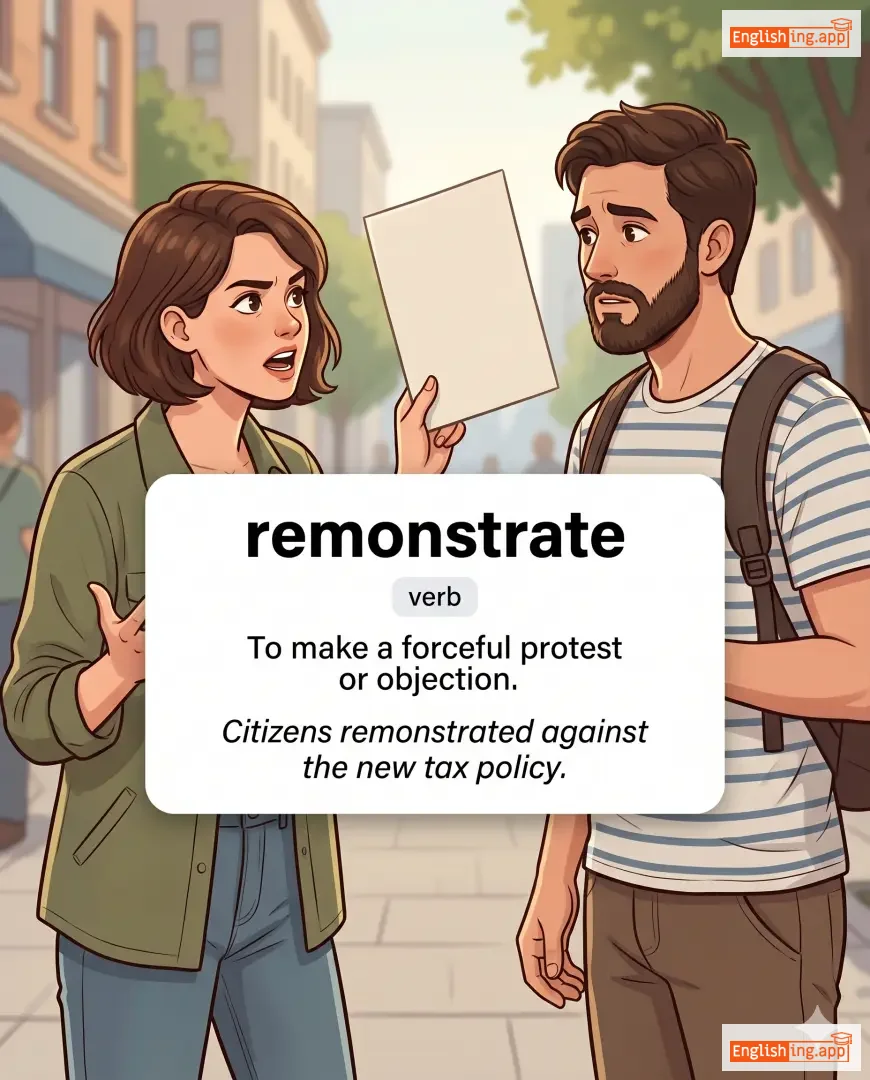
To make a forceful protest or objection.
••••••
|
Citizens remonstrated against the new tax policy.
市民たちは新しい税制政策に抗議した。
••••••
|
市民たちは新しい税制政策に抗議した。
Shimin-tachi wa atarashī zeisei seisaku ni kougi shita.
••••••
|
- •••••• | - •••••• | - •••••• |
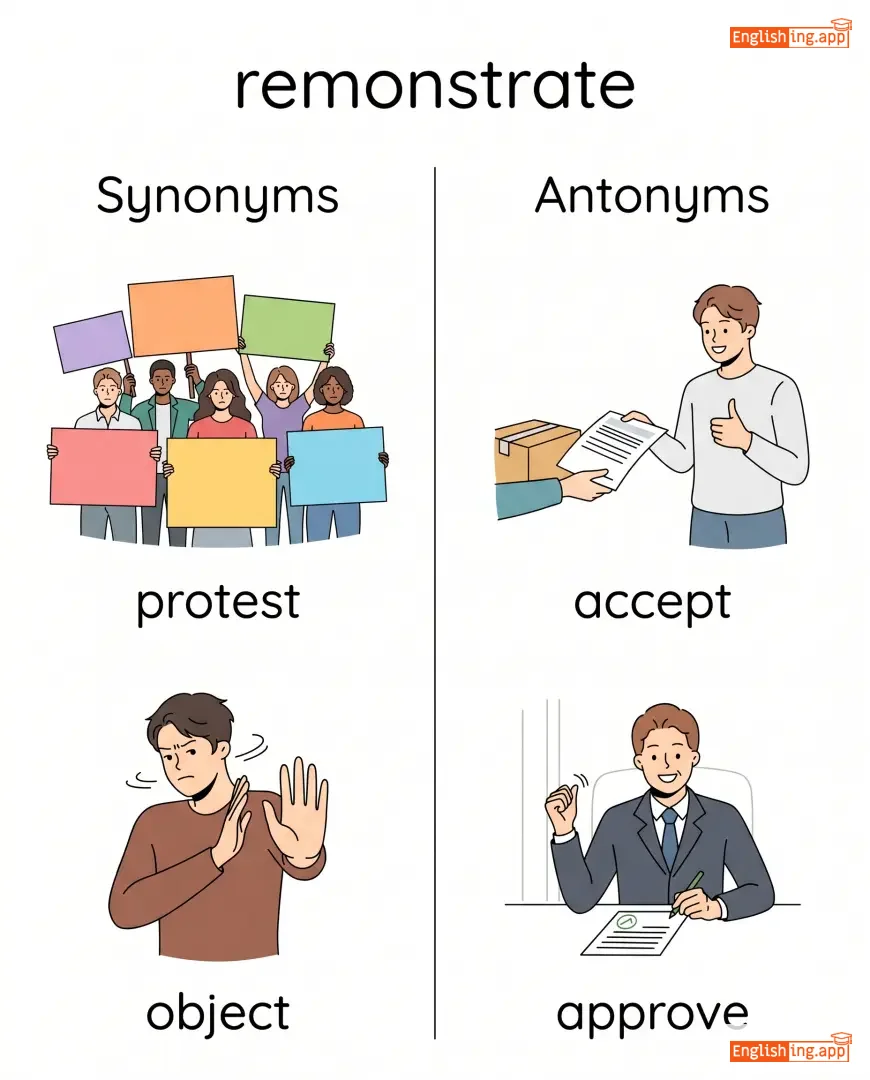
protest, object, complain, oppose
••••••
|
accept, approve
••••••
|
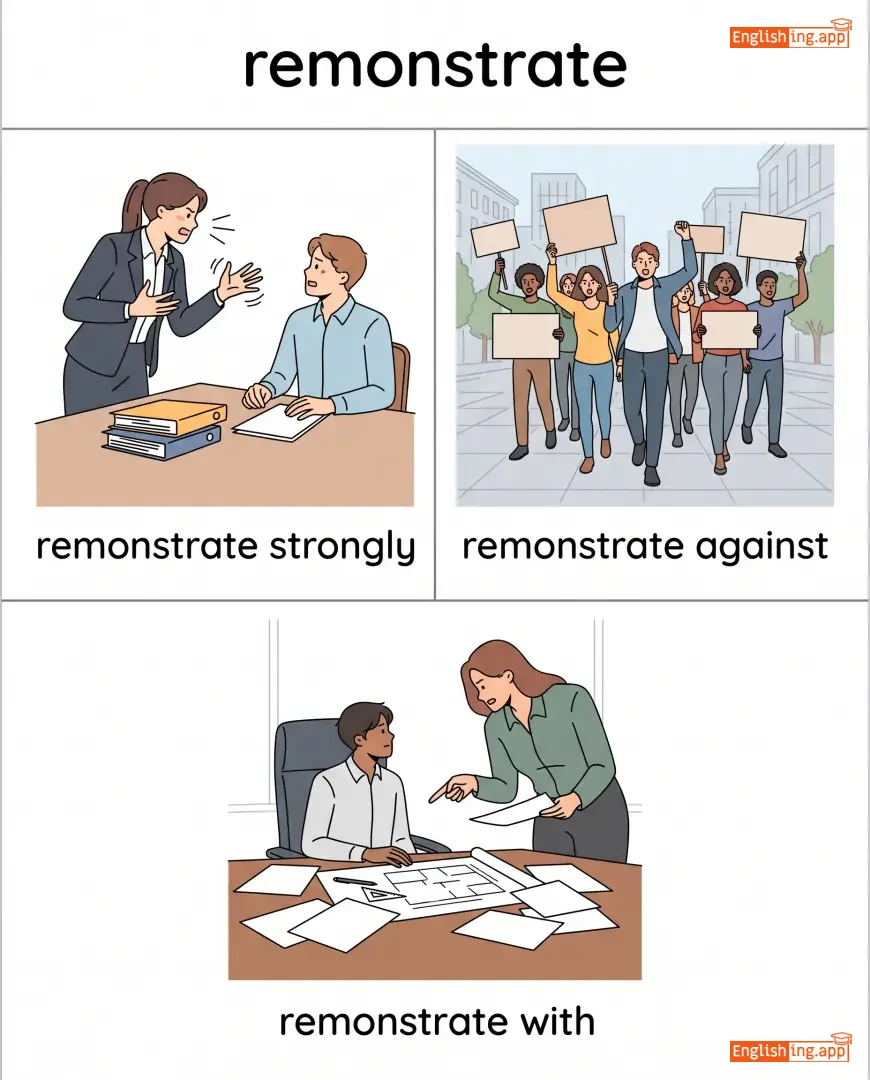
remonstrate strongly, remonstrate against, remonstrate with
••••••
|
Remonstrate = 抵抗 + デモ - 強力に抗議する。
••••••
|
|
#7472
🗣️
|
/rɪˈmɒnstrənt/
noun/adjective
(リモンスラント)
••••••
|
- •••••• |
抗議者
kōgisha
••••••
|
- •••••• | - •••••• | - •••••• | - •••••• |
A person who makes a forceful protest (noun); protesting or objecting (adjective).
••••••
|
He was a remonstrant voice in the assembly.
彼は集会で抗議の声を上げていた。
••••••
|
彼は集会で抗議の声を上げていた。
Kare wa shūkai de kōgi no koe o agete ita.
••••••
|
- •••••• | - •••••• | - •••••• |
protester, objector, dissenter, opposer
••••••
|
supporter, advocate
••••••
|
remonstrant voice, remonstrant protest, remonstrant group
••••••
|
Remonstrant = protester - 抗議者.
••••••
|
|
#7473
✊
|
/rɪˈmɒnstrəns/
noun
(レモンストランス)
••••••
|
- •••••• |
抗議
kougi
••••••
|
- •••••• | - •••••• | - •••••• | - •••••• |
A forceful protest or objection.
••••••
|
The workers’ remonstrance against unfair treatment was ignored.
労働者たちの不公平な扱いに対するレモンストランスは無視された。
••••••
|
労働者たちの不公平な扱いに対する抗議は無視された。
Roudousha-tachi no fukouhei na atsukai ni taisuru kougi wa mushi sareta.
••••••
|
- •••••• | - •••••• | - •••••• |
protest, complaint, objection, grievance
••••••
|
acceptance, agreement
••••••
|
public remonstrance, remonstrance letter, remonstrance against
••••••
|
Remonstranceは強い抗議を意味する - 抗議!
••••••
|
|
#7474
🏡
|
/ˌriːˈmɒdəl/
verb
(リモデル)
••••••
|
- •••••• |
改装する
kaisou suru
••••••
|
remodeled
リモデールド
••••••
|
remodeled
リモデールド
••••••
|
remodels
リモデルス
••••••
|
remodeling
リモデリング
••••••
|
To change the structure or form of something, especially a building.
••••••
|
They decided to remodel their kitchen last summer.
彼らは昨年の夏にキッチンをリモデルすることに決めました。
••••••
|
彼らは昨年の夏にキッチンをリモデルすることに決めました。
Karera wa sakunen no natsu ni kitchin o rimoderu suru koto ni kimemashita.
••••••
|
- •••••• | - •••••• | - •••••• |
renovate, reconstruct, rebuild, redesign
••••••
|
demolish, destroy
••••••
|
remodel house, remodel kitchen, remodel bathroom, remodel plan
••••••
|
Re + model = 新しいモデルを作る – 何かを改装する。
••••••
|
|
#7475
🪶
|
/ˈrɛmnənt/
noun
(レムナント)
••••••
|
- •••••• |
残余
zan'yo
••••••
|
- •••••• | - •••••• | - •••••• | - •••••• |
A small remaining part of something that once existed or was larger.
••••••
|
The old house still had remnants of its former glory. |
その古い家には、かつての栄光の残余がまだ残っていました。
Sono furui ie ni wa, katsute no eikō no zan'yo ga mada nokotte imashita.
••••••
|
remnants of the past |
Small surviving parts or traces of something from earlier times.
••••••
|
過去の残余
Kako no zan'yo
••••••
|
fragment, residue, leftover, trace, remainder
••••••
|
whole, entirety, total
••••••
|
fabric remnant, ancient remnant, small remnant, remnant of war
••••••
|
Remnant は、残った部分、残余を意味します。
••••••
|
|
#7476
🏦
|
/rɪˈmɪtəns/
noun
(レミッタンス)
••••••
|
|
送金 / 資金転送
sōkin / shikin tensō
••••••
|
- •••••• | - •••••• | - •••••• | - •••••• |
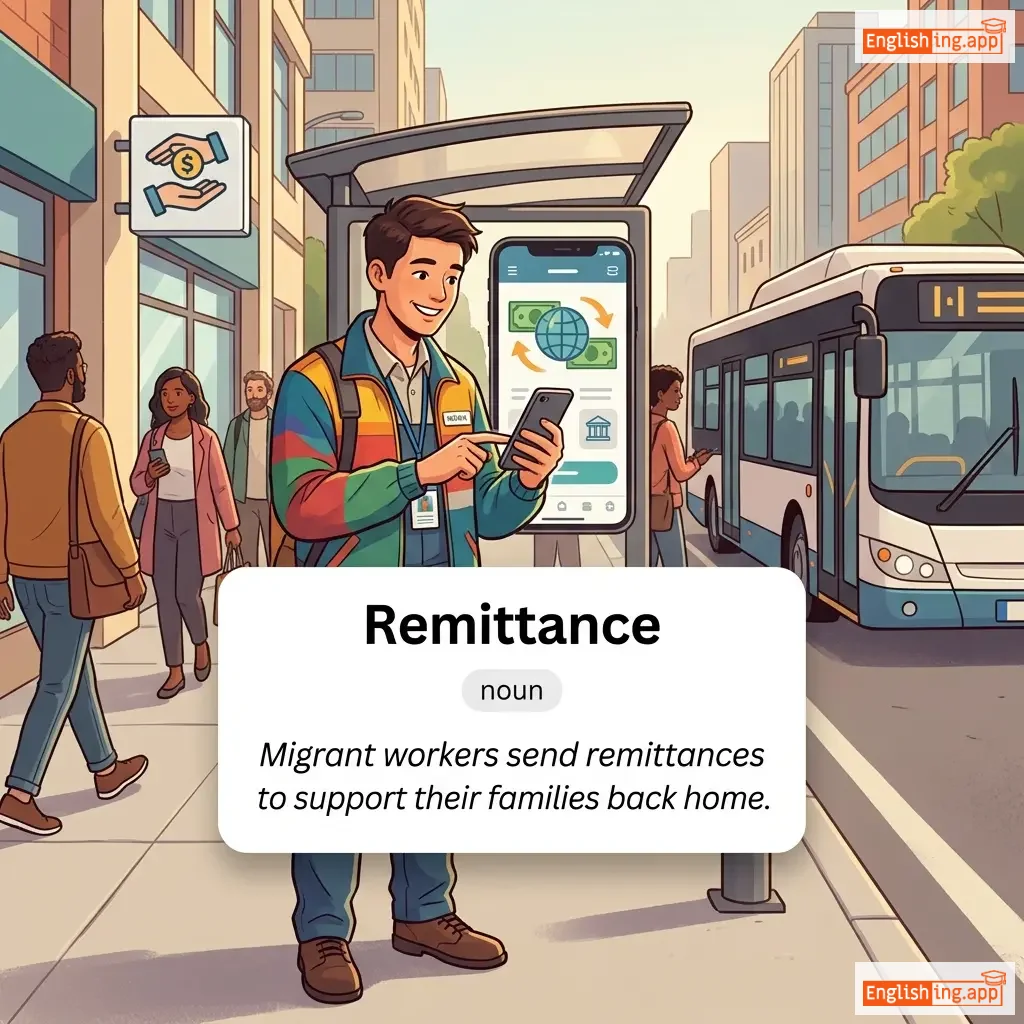
A sum of money sent, especially by mail or electronic transfer, as payment or gift.
••••••
|
Migrant workers send remittances to support their families back home. |
移民労働者は、故郷の家族を支援するために送金を送ります。
Imin rōdōsha wa, kokyō no kazoku o shien suru tame ni sōkin o okurimasu.
••••••
|
- •••••• | - •••••• | - •••••• |
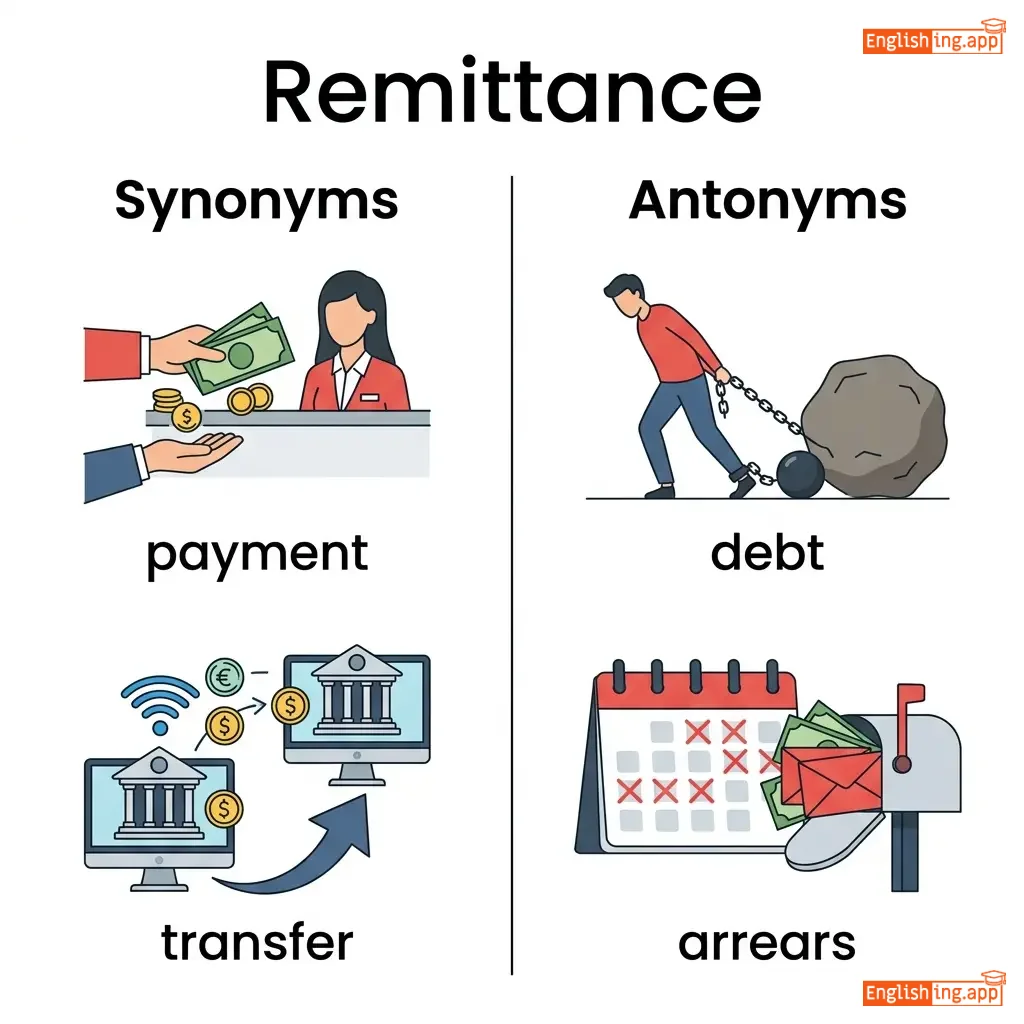
payment, transfer, contribution, wire, money order
••••••
|
debt, arrears
••••••
|
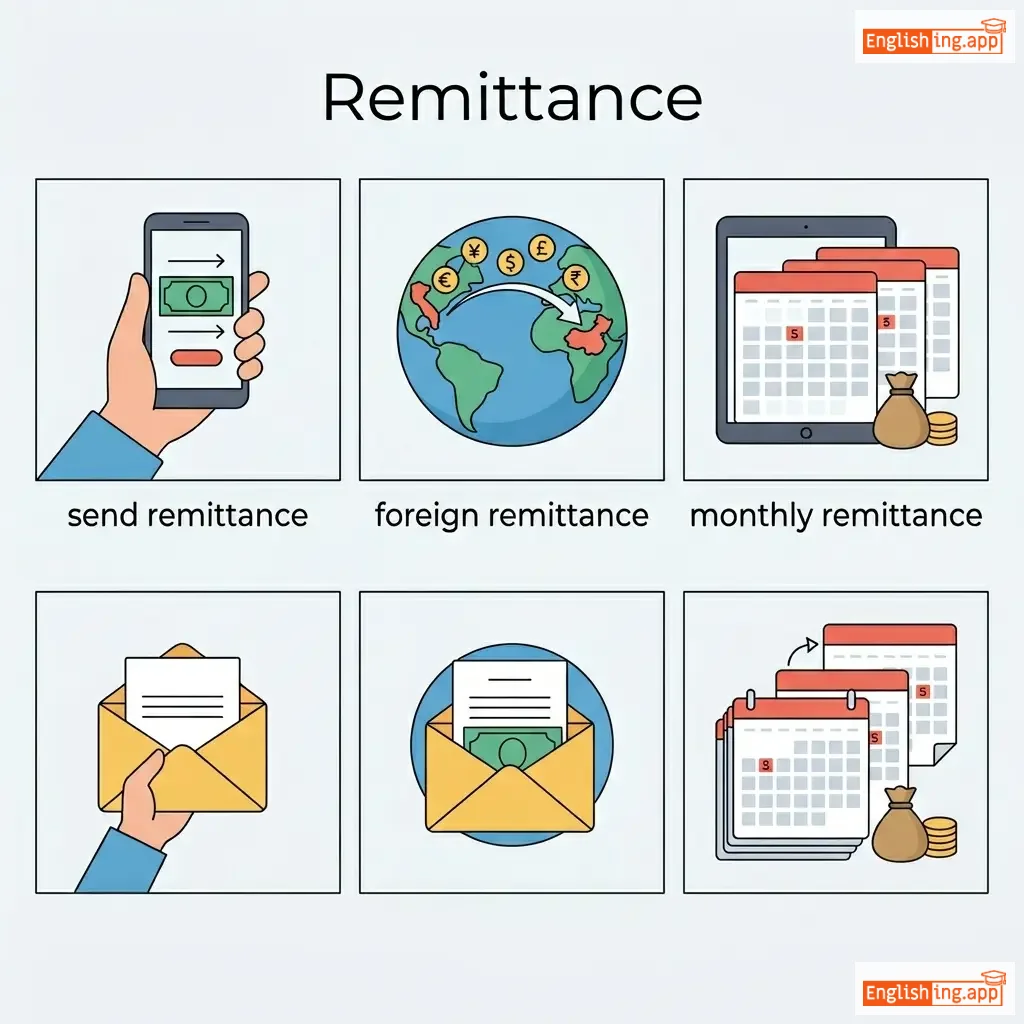
send remittance, foreign remittance, monthly remittance, remittance inflow
••••••
|
送金とはお金を送ること — '日本 送金経済'を思い出してみてください。
••••••
|
|
#7477
💸
|
/rɪˈmɪt/
verb
(レミット)
••••••
|
- •••••• |
送金する / 免除する
sōkin suru / menjo suru
••••••
|
remitted
レミッテッド
••••••
|
remitted
レミッテッド
••••••
|
remits
レミッツ
••••••
|
remitting
レミッティング
••••••
|
To send money in payment or as a gift; to cancel or refrain from exacting a debt or punishment.
••••••
|
He promised to remit the payment by the end of the week.
彼は週の終わりまでに支払いを送金すると約束しました。
••••••
|
彼は週の終わりまでに支払いを送金すると約束しました。
Kare wa shū no owari made ni shiharai o sōkin suru to yakusoku shimashita.
••••••
|
- •••••• | - •••••• | - •••••• |
send, transfer, transmit, cancel, forgive
••••••
|
withhold, retain
••••••
|
remit payment, remit funds, remit money, remit debt
••••••
|
Remit は送金することを意味します — 'リミット' のように覚えましょう。
••••••
|
|
#7478
🙏
|
/rɪˈmɪʃən/
noun
••••••
|
- •••••• | - •••••• | - •••••• | - •••••• | - •••••• | - •••••• |
A temporary or permanent decrease or disappearance of disease symptoms; forgiveness of sins or debts.
••••••
|
The patient’s cancer is in remission after the treatment. |
- •••••• | - •••••• | - •••••• | - •••••• |
abatement, reduction, forgiveness, alleviation
••••••
|
relapse, worsening
••••••
|
in remission, cancer remission, complete remission, long-term remission
••••••
|
No •••••• |
|
#7479
😓
|
/rɪˈmɪs/
adjective
(レミス)
••••••
|
- •••••• |
怠慢
taiman
••••••
|
- •••••• | - •••••• | - •••••• | - •••••• |
Negligent in performing a duty or responsibility.
••••••
|
The manager was remiss in not checking the financial reports carefully. |
マネージャーは財務報告書を慎重に確認しなかったことで怠慢だった。
Manējā wa zaimu hōkokusho o shinchō ni kakunin shinakatta koto de taimanda.
••••••
|
- •••••• | - •••••• | - •••••• |
negligent, careless, lax, inattentive
••••••
|
dutiful, careful, attentive
••••••
|
remiss in, dangerously remiss, grossly remiss, remiss behavior
••••••
|
Remiss は 'duty miss' — 忘れて義務を怠る。
••••••
|
|
#7480
💭
|
/ˌrɛmɪˈnɪsənt/
adjective
(レミニセント)
••••••
|
- •••••• |
思い出させる
omoidasaseru
••••••
|
- •••••• | - •••••• | - •••••• | - •••••• |
Tending to remind one of something; suggestive of something in the past.
••••••
|
The smell of rain is reminiscent of my childhood in the village. |
雨の匂いは私の村での子供時代を思い出させる。
Ame no nioi wa watashi no mura de no kodomojidai o omoidasa seru.
••••••
|
- •••••• | - •••••• | - •••••• |
evocative, suggestive, remindful, nostalgic, redolent
••••••
|
forgetful, oblivious, unmindful
••••••
|
reminiscent of, deeply reminiscent, strongly reminiscent, somewhat reminiscent
••••••
|
Reminiscentは思い出させるという意味 — 雨の匂いが私の子供時代を思い出させる。
••••••
|
|
#7481
🪞
|
/ˌrɛmɪˈnɪsəns/
noun
(レミニセンス)
••••••
|
- •••••• |
回想
kaiso
••••••
|
- •••••• | - •••••• | - •••••• | - •••••• |
a story or memory about past events
••••••
|
He shared a reminiscence of his childhood days in the village.
彼は村での子供時代の思い出を語った。
••••••
|
彼は村での子供時代の思い出を語った。
Kare wa mura de no kodomojidai no omoide o katatta.
••••••
|
- •••••• | - •••••• | - •••••• |
memory, recollection, reflection, nostalgia
••••••
|
forgetfulness, amnesia
••••••
|
pleasant reminiscence, fond reminiscence, childhood reminiscence
••••••
|
Reminiscenceは回想(kaiso)として過去を振り返ることです。
••••••
|
|
#7482
🕯️
|
/rɪˈmɛmbrəns/
noun
(リメンブランス)
••••••
|
- •••••• |
記憶
kioku
••••••
|
- •••••• | - •••••• | - •••••• | - •••••• |
the act of remembering or honoring someone or something
••••••
|
A service was held in remembrance of the fallen soldiers. |
戦死した兵士たちを記憶するための式典が行われた。
Senshishita heishitachi o kioku suru tame no shikiten ga okonawareta.
••••••
|
in remembrance of |
to honor the memory of someone or something
••••••
|
記憶に
kioku ni
••••••
|
memory, commemoration, tribute, recollection
••••••
|
forgetfulness, oblivion
••••••
|
remembrance day, in remembrance, token of remembrance
••••••
|
Remembrance は remember + sense = 記憶
••••••
|
|
#7483
📚
|
/rɪˈmiːdiəl/
adjective
(リメディアル)
••••••
|
- •••••• |
改善のための
kaizen no tame no
••••••
|
- •••••• | - •••••• | - •••••• | - •••••• |
intended to correct or improve a situation, especially related to learning or health
••••••
|
The school offers remedial classes in mathematics. |
学校は数学の補習クラスを提供しています。
Gakkō wa suugaku no hoshū kurasu wo teikyō shiteimasu.
••••••
|
- •••••• | - •••••• | - •••••• |
corrective, therapeutic, educational, curative
••••••
|
harmful, detrimental, damaging
••••••
|
remedial class, remedial measures, remedial program
••••••
|
改善は問題を解決するため - 数学の補習クラスのように。
••••••
|
|
#7484
🩹
|
/rɪˈmiːdiəbl/
adjective
(リメディアブル)
••••••
|
- •••••• |
修正可能
shūsei kanō
••••••
|
- •••••• | - •••••• | - •••••• | - •••••• |
capable of being corrected or cured
••••••
|
The mistake was serious but still remediable. |
その誤りは重大でしたが、まだ修正可能でした。
Sono ayamari wa jūdai deshita ga, mada shūsei kanō deshita.
••••••
|
- •••••• | - •••••• | - •••••• |
correctable, curable, fixable, reparable
••••••
|
irremediable, incurable, irreversible
••••••
|
remediable error, remediable defect, remediable condition
••••••
|
Remediableは修正できる意味で、治療できることを意味します。
••••••
|
|
#7485
🕊️
|
/rɪˈliːs/
verb
(リリース)
••••••
|
|
リリース, 公開
rirīsu, kōkai
••••••
|
released
リリースド
••••••
|
released
リリースド
••••••
|
releases
リリースズ
••••••
|
releasing
リリースイング
••••••
|
to set free, to make available, or to allow something to go out
••••••
|
The company will release the new product next month.
その会社は来月新しい製品をリリースします。
••••••
|
その会社は来月新しい製品をリリースします。
Sono kaisha wa raigetsu atarashī seihin o rirīsu shimasu.
••••••
|
release tension
緊張を解放する
••••••
|
to reduce or let go of stress or nervous energy
••••••
|
緊張を解放する
kinchou o kaihō suru
••••••
|
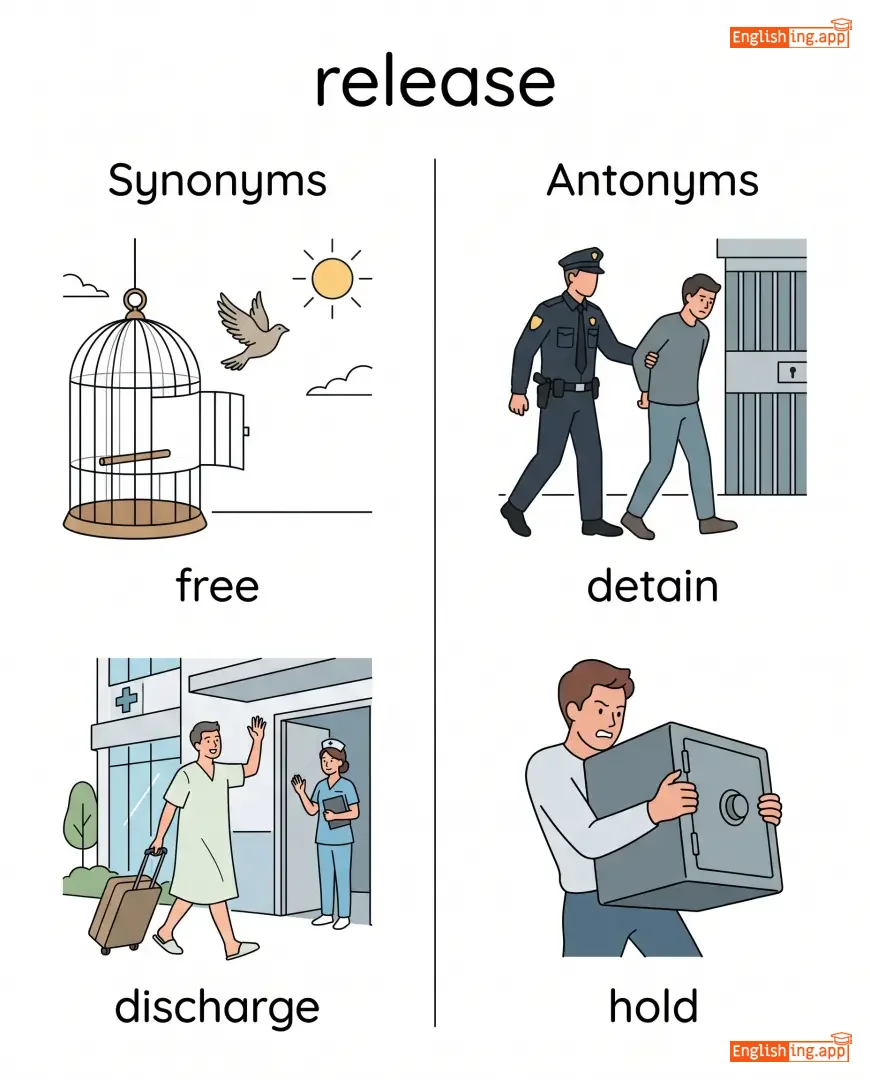
free, discharge, liberate, publish, issue
••••••
|
detain, hold, capture
••••••
|
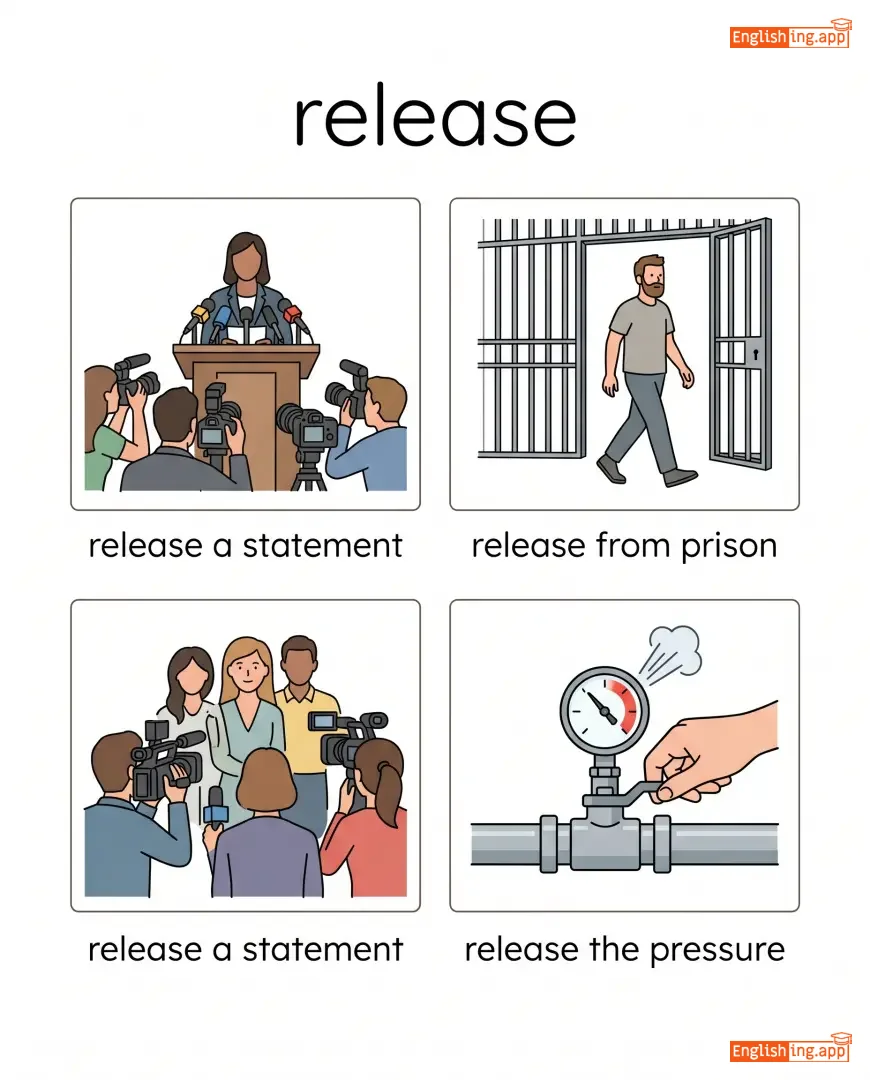
release a statement, release from prison, release the pressure, release an album
••••••
|
Releaseは解放の意味:新しい製品をリリースするとき、緊張が解放される。
••••••
|
|
#7486
😕
|
/rɪˈlʌktəns/
noun
(リラクタンス)
••••••
|
- •••••• |
嫌悪感
ken'okan
••••••
|
- •••••• | - •••••• | - •••••• | - •••••• |
unwillingness or hesitation to do something
••••••
|
His reluctance to speak made the meeting awkward. |
彼の話すことへの嫌悪感が会議を気まずくした。
Kare no hanasu koto e no ken'okan ga kaigi o kimazuku shita.
••••••
|
with reluctance |
unwillingly or with hesitation
••••••
|
嫌悪感を持って
ken'okan o motte
••••••
|
hesitation, unwillingness, disinclination, resistance
••••••
|
willingness, eagerness, readiness
••••••
|
show reluctance, express reluctance, reluctance to act, with reluctance
••••••
|
Reluctanceは嫌悪感を意味します。嫌悪感を持って何かをする人を想像してください。
••••••
|
|
#7487
😋
|
/ˈrɛlɪʃ/
verb/noun
(レリッシュ)
••••••
|
- •••••• |
楽しむ / 調味料
tanoshimu / choumiryō
••••••
|
relished
レリッシュド
••••••
|
relished
レリッシュド
••••••
|
relishes
レリッシュズ
••••••
|
relishing
レリッシング
••••••
|
to greatly enjoy; also a condiment or sauce
••••••
|
She relished the opportunity to travel abroad.
彼女は海外旅行の機会を大いに楽しんでいました。
••••••
|
彼女は海外旅行の機会を大いに楽しんでいました。
Kanojo wa kaigai ryokō no kikai o ōi ni tanoshinde imashita.
••••••
|
with relish
レリッシュと共に
••••••
|
with great enjoyment or enthusiasm
••••••
|
楽しんで
tanoshinde
••••••
|
enjoy, savor, delight in, appreciate, taste
••••••
|
dislike, hate, detest
••••••
|
relish the opportunity, relish challenge, relish taste, with relish
••••••
|
Relishは楽しむという意味です — 食べ物に調味料(relish)をかけて食べると、もっとおいしくなります。
••••••
|
|
#7488
🗳️
|
/ˈrɛlɪkwɛri/
noun
(レリクエアリ)
••••••
|
- •••••• |
聖遺物を保管する容器
seiiwutsu wo hokan suru youki
••••••
|
- •••••• | - •••••• | - •••••• | - •••••• |
a container for holy relics
••••••
|
The ancient reliquary was decorated with gold and precious stones.
古代のレリクエアリは金と貴重な石で飾られていました。
••••••
|
古代のレリクエアリは金と貴重な石で飾られていました。
Kodai no relikuweari wa kin to kichou na ishi de kazara reteimashita.
••••••
|
- •••••• | - •••••• | - •••••• |
shrine, container, chest, casket
••••••
|
ordinary box, profane container
••••••
|
golden reliquary, ornate reliquary, reliquary of saints
••••••
|
レリクエアリは聖なる遺物を保管するための箱、‘遺物’と‘箱’がキーです。
••••••
|
|
#7489
👐
|
/rɪˈlɪŋkwɪʃ/
verb
(リリンクウィッシュ)
••••••
|
|
放棄する
hoki suru
••••••
|
relinquished
リリンクウィッシュド
••••••
|
relinquished
リリンクウィッシュド
••••••
|
relinquishes
リリンクウィッシュズ
••••••
|
relinquishing
リリンクウィッシング
••••••
|
to give up or let go of something voluntarily
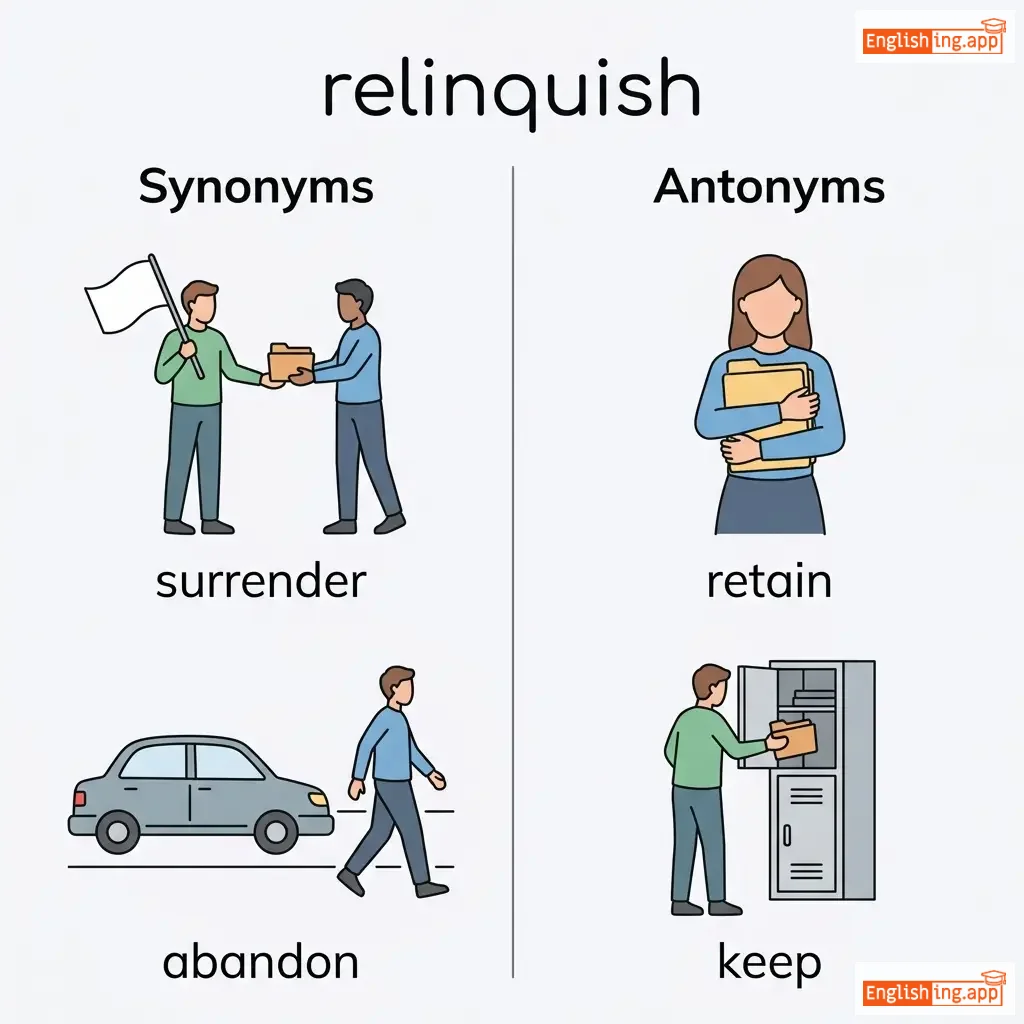
••••••
|
He had to relinquish control of the company after the merger.
彼は合併後、会社のコントロールを放棄しなければならなかった。
••••••
|
合併後、彼は会社のコントロールを放棄しなければならなかった。
Gappei go, kare wa kaisha no kontorōru o hōki shinakereba naranakatta.
••••••
|
relinquish control
コントロールを放棄する
••••••
|
to give up authority or power
••••••
|
コントロールを放棄する
kontorōru o hōki suru
••••••
|
surrender, abandon, renounce, yield, forgo
••••••
|
retain, keep, hold
••••••
|
relinquish control, relinquish claim, relinquish rights, relinquish position
••••••
|
Relinquish は放棄する — 誰かが自分の権力を放棄しているところを想像してください。
••••••
|
|
#7490
🙏
|
/rɪˈlɪdʒəs/
adjective
(宗教的)
••••••
|
- •••••• |
宗教的
shūkyōteki
••••••
|
- •••••• | - •••••• | - •••••• | - •••••• |
relating to or believing in a religion or faith
••••••
|
She is a very religious woman who prays every day.
彼女は毎日祈る非常に宗教的な女性です。
••••••
|
彼女は毎日祈る非常に宗教的な女性です。
Kanojo wa mainichi inoru hijō ni shūkyōteki na josei desu.
••••••
|
religious fervor
宗教的熱意
••••••
|
intense passion and devotion towards religion
••••••
|
宗教的熱意
shūkyōteki netsui
••••••
|
devout, pious, spiritual, faithful, holy
••••••
|
atheist, secular, irreligious
••••••
|
religious belief, religious practice, religious festival, religious leader
••••••
|
Religiousは宗教的という意味です — 寺院に行くとすべてが宗教的です。
••••••
|
|
#7491
🙏
|
/rɪˈlɪdʒ.ən/
noun
(宗教)
••••••
|
- •••••• |
宗教
shūkyō
••••••
|
- •••••• | - •••••• | - •••••• | - •••••• |
a system of faith and worship involving belief in a higher power
••••••
|
Freedom of religion is a fundamental human right.
宗教の自由は基本的人権です。
••••••
|
宗教の自由は基本的人権です。
Shūkyō no jiyū wa kihon-teki jinken desu.
••••••
|
blind faith in religion
宗教に対する盲目的信仰
••••••
|
unquestioning belief in a religious system
••••••
|
宗教に対する盲目的信仰
Shūkyō ni taisuru mōmokuteki shinkō
••••••
|
faith, belief, spirituality, creed, worship
••••••
|
atheism, disbelief, skepticism
••••••
|
major religion, world religion, religious practice, organized religion
••••••
|
Religion = RE(神) + GION (地域)
••••••
|
|
#7492
🏺
|
/ˈrɛl.ɪk/
noun
(レリック)
••••••
|
- •••••• |
遺物
ibutsu
••••••
|
- •••••• | - •••••• | - •••••• | - •••••• |
an object surviving from an earlier time, often of historical or religious interest
••••••
|
The museum displayed relics from the ancient civilization. |
博物館には古代文明の遺物が展示されていました。
Hakubutsukan ni wa kodai bunmei no ibutsu ga tenji sarete imashita.
••••••
|
a relic of the past |
something that remains from an earlier era
••••••
|
過去の遺物
Kako no ibutsu
••••••
|
artifact, remains, souvenir, memento
••••••
|
modernity, novelty
••••••
|
ancient relic, religious relic, relic of history, relic of the past
••••••
|
Relic というのは遺物 — 歴史的な遺物です。
••••••
|
|
#7493
🛠️
|
/rɪˈlaɪ.ənt/
adjective
(リライアント)
••••••
|
- •••••• |
依存している
izon shite iru
••••••
|
- •••••• | - •••••• | - •••••• | - •••••• |
depending on someone or something for support
••••••
|
The country is too reliant on imported goods. |
その国は輸入品に依存しすぎている。
Sono kuni wa yunyūhin ni izon shisugite iru.
••••••
|
- •••••• | - •••••• | - •••••• |
dependent, trusting, subordinate, subject
••••••
|
independent, self-sufficient
••••••
|
reliant on, too reliant, heavily reliant, reliant upon
••••••
|
Reliant は依存しているという意味です — 電車がレールに依存しているように。
••••••
|
|
#7494
🤝
|
/rɪˈlaɪ.əns/
noun
(リライアンス)
••••••
|
- •••••• |
依存
izon
••••••
|
- •••••• | - •••••• | - •••••• | - •••••• |
dependence on or trust in someone or something
••••••
|
Her reliance on her friends helped her through difficult times. |
友人への依存が彼女を困難な時期に助けた。
Yujin e no izon ga kanojo o konnan na jiki ni tasuketa.
••••••
|
self-reliance |
independence; the ability to depend on oneself
••••••
|
自立
jiritsu
••••••
|
dependence, trust, confidence, faith, assurance
••••••
|
independence, distrust, doubt
••••••
|
heavy reliance, strong reliance, reliance on technology, reliance upon
••••••
|
Relianceは依存を意味し、Reliance会社の名前は信頼を象徴しています。
••••••
|
|
#7495
📌
|
/ˈrɛl.ə.vənt/
adjective
(レレヴァント)
••••••
|
- •••••• |
関連する
kannensuru
••••••
|
- •••••• | - •••••• | - •••••• | - •••••• |
closely connected or appropriate to what is being considered or done
••••••
|
Your comments are not relevant to the discussion.
あなたのコメントは議論に関連していません。
••••••
|
あなたのコメントは議論に関連していません。
Anata no komento wa giron ni kanrenshiteimasen.
••••••
|
relevant to the point
ポイントに関連する
••••••
|
directly connected to the main issue being discussed
••••••
|
ポイントに関連する
Pointo ni kanrensuru
••••••
|
pertinent, applicable, appropriate, related, connected
••••••
|
irrelevant, unrelated, inappropriate
••••••
|
relevant information, relevant issue, relevant factors, relevant data
••••••
|
Relevant は関連するという意味で、試験の関連する質問は、試験に関連する質問です。
••••••
|
|
#7496
📌
|
/ˈrɛlɪvənsi/
noun
(レリヴァンシー)
••••••
|
- •••••• |
関連性
kanrensei
••••••
|
- •••••• | - •••••• | - •••••• | - •••••• |
the quality of being closely connected or appropriate
••••••
|
The professor questioned the relevancy of the example to the topic. |
教授はその例がトピックに関連しているかどうかを疑問視しました。
Kyoju wa sono rei ga topikku ni kanren shite iru ka dō ka o gimon-shimashita.
••••••
|
- •••••• | - •••••• | - •••••• |
pertinence, applicability, significance, importance
••••••
|
irrelevance, inapplicability, insignificance
••••••
|
relevancy to the case, relevancy of the topic, legal relevancy
••••••
|
関連性は、質問に対する正しい答えのようなものです。関連していなければ、意味がない。
••••••
|
|
#7497
🔥
|
/rɪˈlɛntləs/
adjective
••••••
|
|
- •••••• | - •••••• | - •••••• | - •••••• | - •••••• |
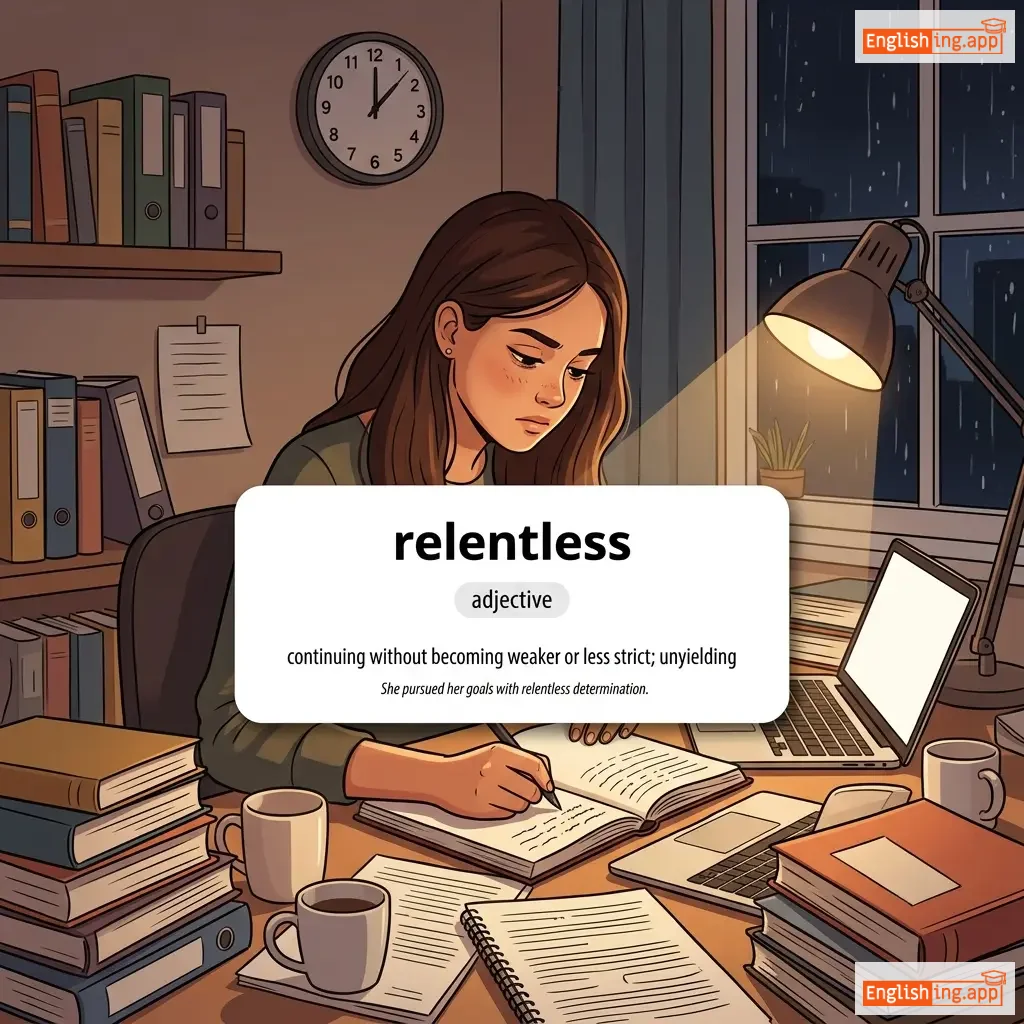
continuing without becoming weaker or less strict; unyielding
••••••
|
She pursued her goals with relentless determination. |
- •••••• |
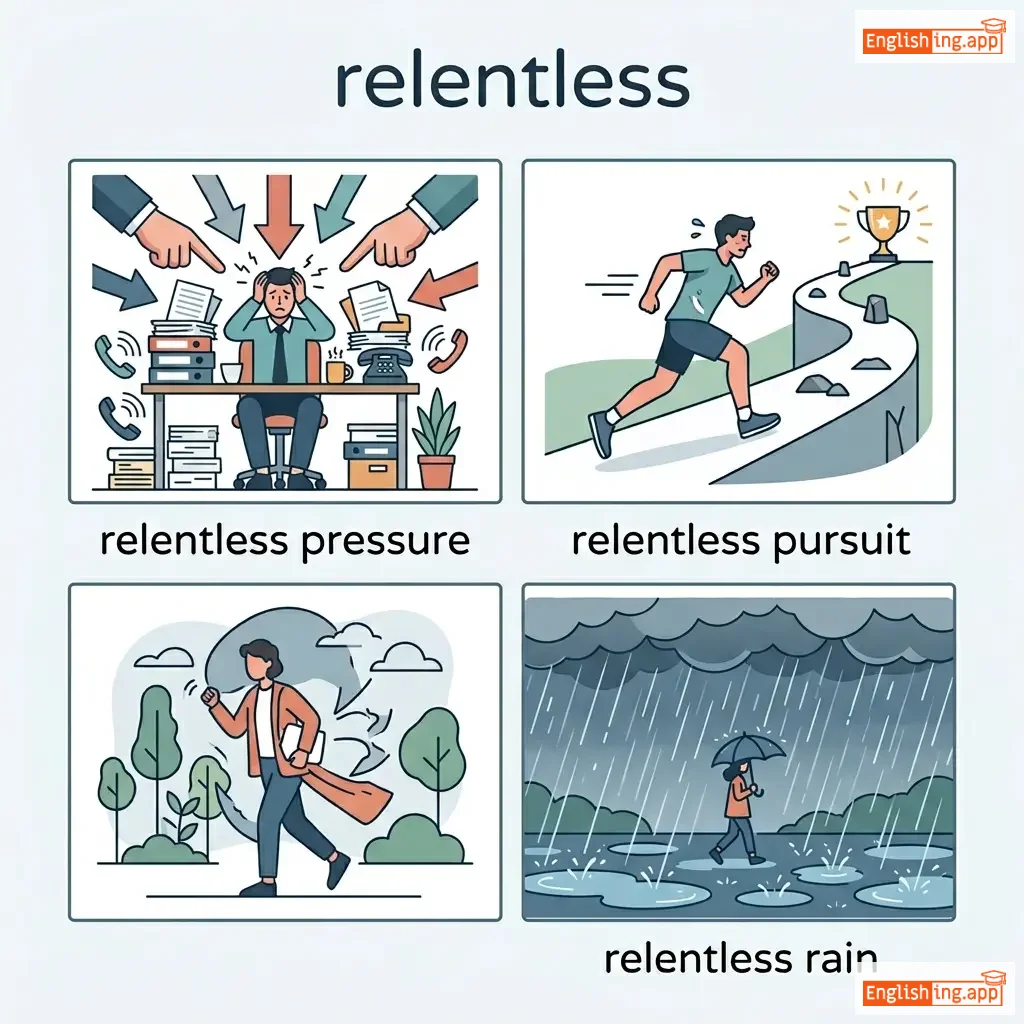
relentless pursuit |
an unyielding and determined effort to achieve something
••••••
|
- •••••• |
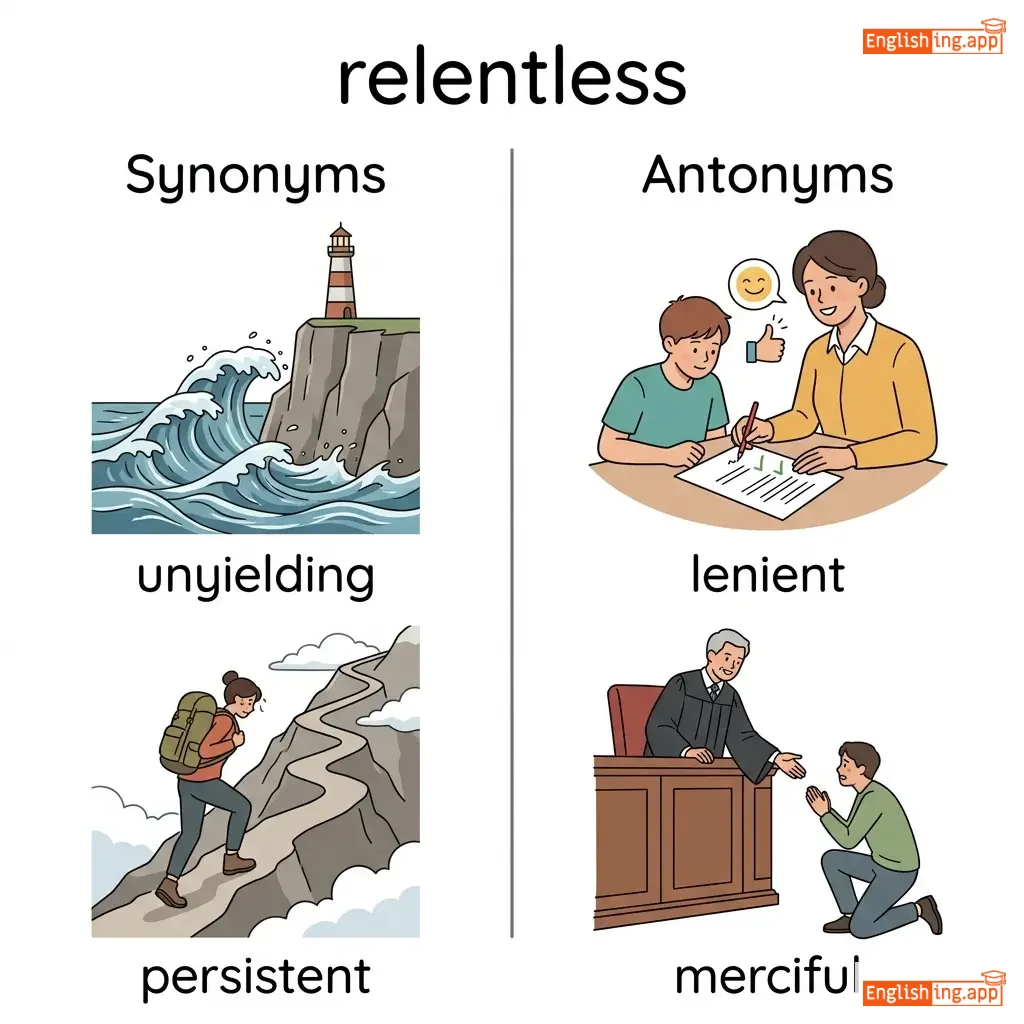
unyielding, persistent, unstoppable, unremitting
••••••
|
lenient, merciful, flexible
••••••
|
relentless pressure, relentless pursuit, relentless rain, relentless effort
••••••
|
No •••••• |
|
#7498
🤲
|
/rɪˈlɛnt/
verb
(リレント)
••••••
|
- •••••• |
譲歩する、柔らかくなる
jouho suru, yawarakaku naru
••••••
|
relented
リレントッド
••••••
|
relented
リレントッド
••••••
|
relents
リレントス
••••••
|
relenting
リレントイング
••••••
|
to become less severe, harsh, or strict
••••••
|
After hours of begging, she finally relented.
何時間もの懇願の後、彼女はついに譲歩した。
••••••
|
何時間もの懇願の後、彼女はついに譲歩した。
Nan jikan mono kongan no ato, kanojo wa tsuini jouho shita.
••••••
|
relent in the face of
リレント イン ザ フェイス オブ
••••••
|
to give in when confronted with difficulties or pleas
••••••
|
~の前で譲歩する
~no mae de jouho suru
••••••
|
yield, soften, give in, concede
••••••
|
resist, persist, continue
••••••
|
relent slightly, relent after pressure, relent eventually
••••••
|
Relentは譲歩することを意味します—多くの要求に応じて、最終的に譲歩します。
••••••
|
|
#7499
⬇️
|
/ˈrɛlɪɡeɪt/
verb
(レリゲート)
••••••
|
|
降格する
kōkaku suru
••••••
|
relegated
レリゲートされた
••••••
|
relegated
レリゲートされた
••••••
|
relegates
レリゲートする
••••••
|
relegating
レリゲートしている
••••••
|
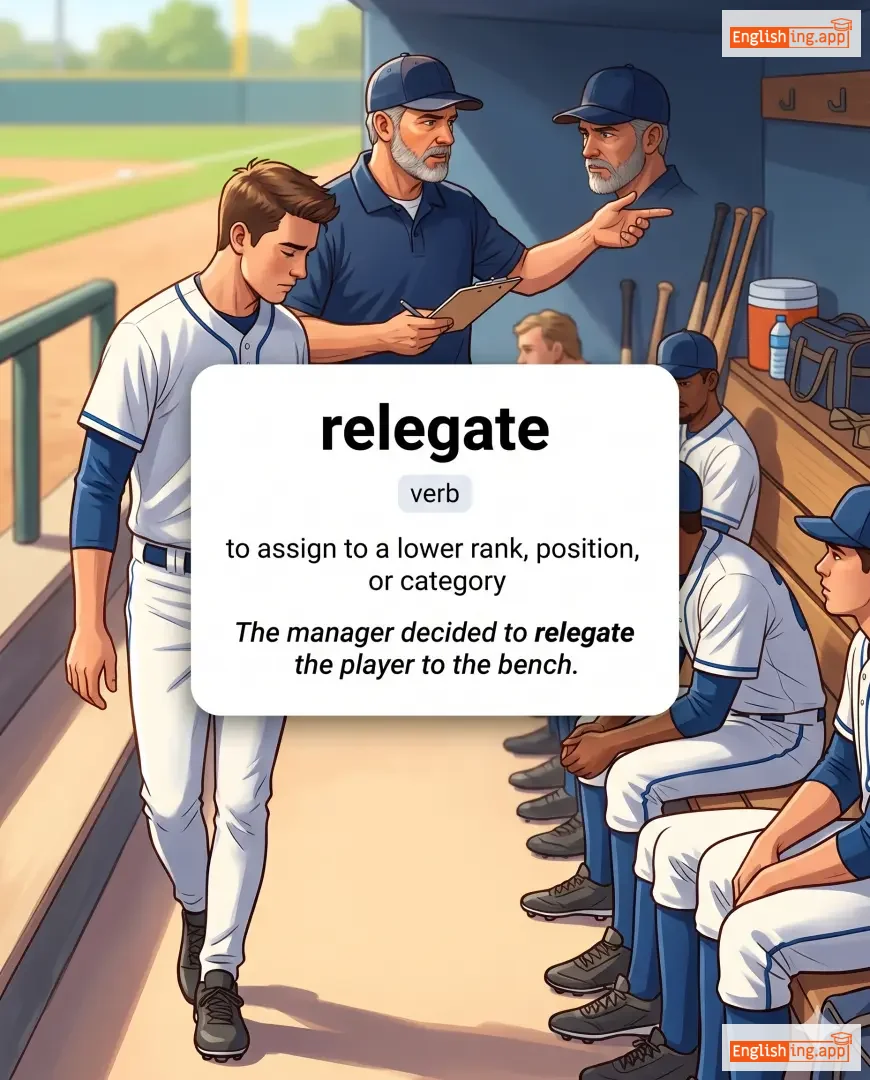
to assign to a lower rank, position, or category
••••••
|
The manager decided to relegate the player to the bench.
マネージャーは選手をベンチにレリゲートすることを決定しました。
••••••
|
マネージャーは選手をベンチにレリゲートすることを決定しました。
Manējā wa senshu o benchi ni rerigēto suru koto o kettei shimashita.
••••••
|
- •••••• | - •••••• | - •••••• |
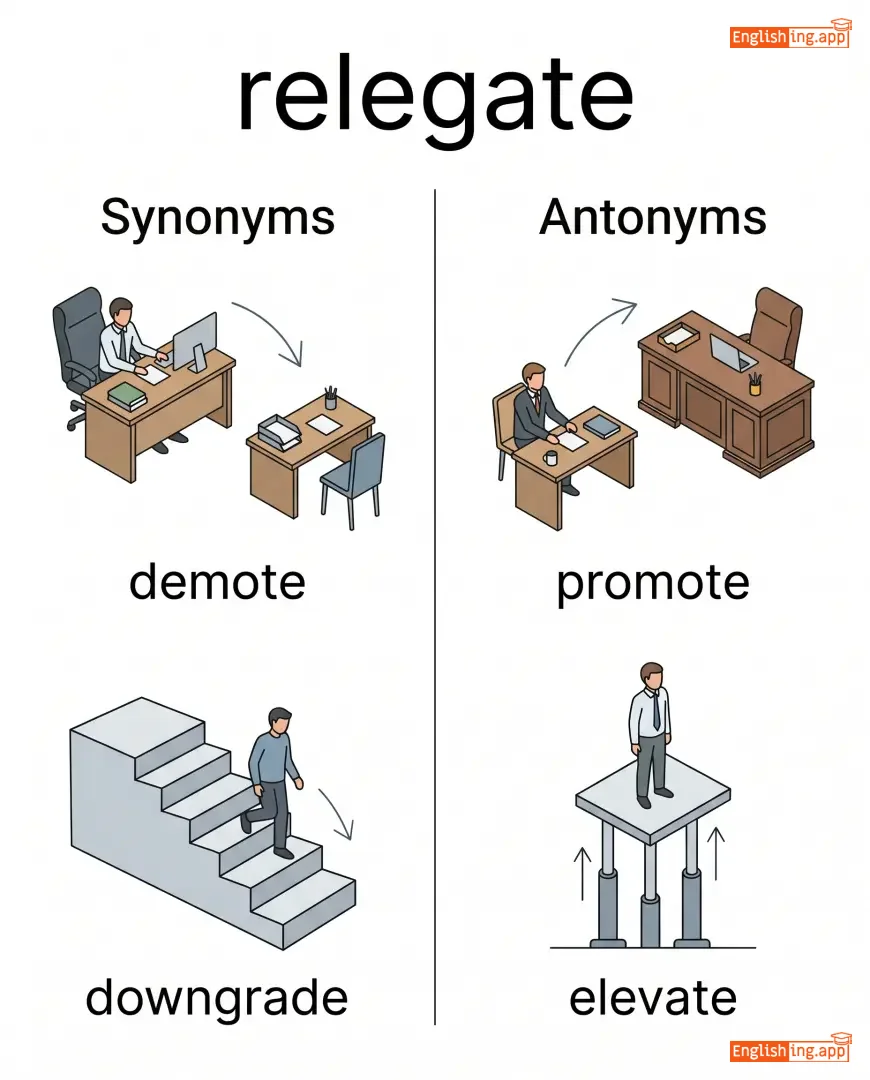
demote, downgrade, consign, assign
••••••
|
promote, elevate, upgrade
••••••
|
relegate someone, relegate to the background, relegate responsibility
••••••
|
レリゲートとはランクを下げること - '降格' と 'ベンチ' が一緒に覚えやすい。
••••••
|
Vocabulary Quiz
Test your vocabulary by matching words with their translations or meanings.
Login to take the quiz
Comments (0)
Share your thoughts and join the discussion.
Join the discussion by logging in
Login to CommentNo comments yet
Be the first to share your thoughts!