

翻訳
過去
過去分詞
三人称単数
動名詞
意味
例文
例文の翻訳
同義語
対義語
コロケーション
ニーモニック


Swipe left or right, or use the buttons. Tap image to zoom.
例文の翻訳
単語
Lesson 373Lesson 373 - マスクトグル
|
絵文字
|
単語 | Images | 翻訳 | 過去 | 過去分詞 | 三人称単数 | 動名詞 | 意味 | 例文 | 例文の翻訳 | 表現例 | 表現例の意味 | 表現例の翻訳 | 同義語 | 対義語 | コロケーション | ニーモニック |
|---|---|---|---|---|---|---|---|---|---|---|---|---|---|---|---|---|---|
|
#11155
🙏
|
/ˈhoʊli/
adjective
(ホーリー)
••••••
|
- •••••• |
聖なる
seinaru
••••••
|
- •••••• | - •••••• | - •••••• | - •••••• |
Dedicated to God or a religious purpose; sacred.
••••••
|
This temple is considered a holy place. |
この寺院は聖なる場所と見なされています。
Kono jiin wa seinaru basho to minasa reteimasu.
••••••
|
holy cow |
An expression of surprise or astonishment.
••••••
|
神聖な牛
Shinsei na ushi
••••••
|
sacred, divine, blessed, saintly
••••••
|
profane, unholy
••••••
|
holy book, holy man, holy place, holy spirit
••••••
|
Holy は '聖なる' を意味します - みんな '聖なる場所' と言います。
••••••
|
|
#11156
🏠
|
/ˈhaʊzɪŋ/
noun
(ハウジング)
••••••
|
- •••••• |
住宅
jūtaku
••••••
|
- •••••• | - •••••• | - •••••• | - •••••• |
buildings or structures where people live; accommodation
••••••
|
The government is working to provide affordable housing for everyone. |
政府はすべての人々に手頃な住宅を提供するために努力しています。
Seifu wa subete no hitobito ni tegorona jūtaku o teikyō suru tame ni doryoku shiteimasu.
••••••
|
public housing |
housing provided by the government for low-income families
••••••
|
公共住宅
kōkyō jūtaku
••••••
|
accommodation, residence, dwelling, shelter, lodging
••••••
|
homelessness, eviction
••••••
|
affordable housing, housing project, housing policy, housing shortage
••••••
|
Housingは住む場所、住宅、つまり住まいのこと。
••••••
|
|
#11157
👨👩👧👦
|
/ˈhaʊshoʊld/
noun
(ハウスホールド)
••••••
|
- •••••• |
家庭
katei
••••••
|
- •••••• | - •••••• | - •••••• | - •••••• |
All the people living together in one house, considered as a unit.
••••••
|
There are five people in our household. |
私たちの家庭には五人います。
Watashitachi no katei ni wa gonin imasu.
••••••
|
household name |
a person or brand that is very well known
••••••
|
有名な名前
yūmei na namae
••••••
|
family, home, residents, occupants, domestic unit
••••••
|
outsiders, strangers
••••••
|
household chores, household income, household goods, household members
••••••
|
家庭は家を意味します、覚えておいて 'House + All → 家にみんな'
••••••
|
|
#11158
🏠
|
/haʊs/
noun
(ハウス)
••••••
|
- •••••• |
家
ie
••••••
|
- •••••• | - •••••• | - •••••• | - •••••• |
A building for people to live in, usually with rooms and a roof.
••••••
|
They bought a new house in the city.
彼らは市内に新しい家を買いました。
••••••
|
彼らは市内に新しい家を買いました。
Karera wa shinai ni atarashī ie o kaimashita.
••••••
|
bring the house down
家を倒す
••••••
|
to make the audience laugh or applaud loudly
••••••
|
観客を笑わせるか拍手をもらう
kankyaku o warawaseru ka hakushu o morau
••••••
|
home, residence, dwelling, shelter, abode
••••••
|
outside, open space
••••••
|
buy a house, build a house, rent a house, move into a house
••••••
|
家は日本語でie、家の形を思い出すと覚えやすい。
••••••
|
|
#11159
⏰
|
/ˈaʊər/
noun
••••••
|
- •••••• | - •••••• | - •••••• | - •••••• | - •••••• | - •••••• |
A period of time equal to 60 minutes.
••••••
|
The meeting lasted for two hours. |
- •••••• |
rush hour |
the busy part of the day when traffic is heavy
••••••
|
- •••••• |
sixty minutes, time period, duration, interval
••••••
|
moment, instant
••••••
|
spend an hour, half an hour, working hours, rush hour
••••••
|
No •••••• |
|
#11160
🏨
|
/hoʊˈtɛl/
noun
(ホテル)
••••••
|
- •••••• |
ホテル
hoteru
••••••
|
- •••••• | - •••••• | - •••••• | - •••••• |
A building where people pay to stay and sleep, usually for short periods.
••••••
|
We stayed at a hotel near the beach. |
私たちはビーチの近くのホテルに泊まりました。
Watashitachi wa bīchi no chikaku no hoteru ni tomarimashita.
••••••
|
check into a hotel |
to register and begin staying in a hotel
••••••
|
ホテルにチェックインする
hoteru ni chekku in suru
••••••
|
inn, lodge, hostel, resort, guesthouse
••••••
|
home, house
••••••
|
luxury hotel, hotel room, hotel staff, book a hotel, check into hotel
••••••
|
ホテルはホテルを意味します、'ホテルで休んだり食事したり'を覚えておいてください。
••••••
|
|
#11161
🔥
|
/hɒt/
adjective
(hotto)
••••••
|
- •••••• |
熱い
atsui
••••••
|
- •••••• | - •••••• | - •••••• | - •••••• |
Having a high degree of heat or a high temperature.
••••••
|
The soup is too hot to eat right now.
スープは今食べるには熱すぎる。
••••••
|
スープは今食べるには熱すぎる。
Sūpu wa ima taberu ni wa atsusugiru.
••••••
|
hot topic
ホットな話題
••••••
|
a subject that is currently popular or controversial
••••••
|
ホットな話題
hotto na wadai
••••••
|
warm, heated, scorching, burning, fiery
••••••
|
cold, cool, chilly
••••••
|
hot weather, hot drink, hot meal, hot summer, hot topic
••••••
|
Hot は熱い、'Hot tea' は熱いお茶の意味。
••••••
|
|
#11162
🎤
|
/hoʊst/
noun, verb
(ホスト)
••••••
|
- •••••• |
ホスト
hosuto
••••••
|
hosted
ホステッド
••••••
|
hosted
ホステッド
••••••
|
hosts
ホスツ
••••••
|
hosting
ホスティング
••••••
|
a person who receives or entertains guests; to organize and provide for an event
••••••
|
She will host the conference next week.
彼女は来週、会議を開催します。
••••••
|
彼女は来週、会議を開催します。
Kanojo wa raishū, kaigi o kaisai shimasu.
••••••
|
play host
ホスト役を務める
••••••
|
to act as the host for an event or occasion
••••••
|
ホスト役を務める
hosuto yaku o tsutomeru
••••••
|
presenter, entertainer, emcee, organizer, moderator
••••••
|
guest, visitor
••••••
|
host a party, host an event, web host
••••••
|
ホスト: ホテルのホストのように、イベントを主催する人。
••••••
|
|
#11163
🏥
|
/ˈhɒs.pɪ.təl/
noun
(ホスピタル)
••••••
|
- •••••• |
病院
byouin
••••••
|
- •••••• | - •••••• | - •••••• | - •••••• |
an institution where sick or injured people are given medical treatment
••••••
|
He was taken to the hospital after the accident. |
彼は事故の後、病院に運ばれました。
Kare wa jiko no ato, byouin ni hakobaremashita.
••••••
|
- •••••• | - •••••• | - •••••• |
clinic, infirmary, medical center, healthcare facility
••••••
|
home, outdoors
••••••
|
go to hospital, hospital bed, hospital staff
••••••
|
病院は日本語で病院、治療を受ける場所です。
••••••
|
|
#11164
🐎
|
/hɔːrs/
noun
(ホース)
••••••
|
- •••••• |
馬
uma
••••••
|
- •••••• | - •••••• | - •••••• | - •••••• |
a large, strong animal used for riding, racing, or carrying loads
••••••
|
The horse ran across the field.
ホースランアクロスフィールド
••••••
|
馬は野原を駆け抜けました。
Uma wa nohara o kakenukemashita.
••••••
|
hold your horses
hold your horses
••••••
|
wait or be patient
••••••
|
ちょっと待って
Chotto matte
••••••
|
stallion, mare, pony, steed, nag
••••••
|
donkey, mule
••••••
|
ride a horse, wild horse, horse racing
••••••
|
馬: 馬に乗って草原を駆け抜ける姿を思い浮かべてください。
••••••
|
|
#11165
😱
|
/ˈhɒr.ər/
noun
(ホラー)
••••••
|
- •••••• |
恐怖
kyōfu
••••••
|
- •••••• | - •••••• | - •••••• | - •••••• |
an intense feeling of fear, shock, or disgust
••••••
|
She screamed in horror when she saw the accident. |
彼女は事故を見て恐怖で叫んだ。
Kanojo wa jiko o mite kyōfu de sakenda.
••••••
|
a horror story |
a frightening or shocking tale
••••••
|
ホラー話
horā hanashi
••••••
|
fear, dread, terror, shock, fright
••••••
|
delight, joy
••••••
|
horror movie, scream in horror, sheer horror
••••••
|
Horrorは恐怖を意味します、恐怖映画を見て心臓がドキドキします。
••••••
|
|
#11166
🌅
|
/həˈraɪ.zən/
noun
(ホライゾン)
••••••
|
- •••••• |
地平線
chiheisen
••••••
|
- •••••• | - •••••• | - •••••• | - •••••• |
the line where the earth seems to meet the sky; the limit of one's knowledge, experience, or interest
••••••
|
The sun disappeared below the horizon. |
太陽は地平線の下に消えました。
Taiyou wa chiheisen no shita ni kiemashita.
••••••
|
broaden your horizons |
to expand one's experiences or knowledge
••••••
|
視野を広げる
Shiya wo hirogeru
••••••
|
skyline, boundary, limit, vista, outlook
••••••
|
sky, zenith
••••••
|
on the horizon, broaden horizons, new horizon
••••••
|
Horizonは地平線を意味し、太陽が沈む場所です。
••••••
|
|
#11167
🌟
|
/hoʊp/
verb
••••••
|
- •••••• | - •••••• |
hoped
••••••
|
hoped
••••••
|
hopes
••••••
|
hoping
••••••
|
To want something to happen or be true and think it is possible.
••••••
|
I hope everything goes well with your exam. |
- •••••• |
hope against hope |
To continue to hope even when the situation seems hopeless.
••••••
|
- •••••• |
wish, desire, expect, trust, optimism
••••••
|
despair, doubt
••••••
|
hope for, hope that, lose hope, give hope
••••••
|
No •••••• |
|
#11168
🍯
|
/ˈhʌni/
noun
(ハニー)
••••••
|
- •••••• |
蜂蜜
hachimitsu
••••••
|
- •••••• | - •••••• | - •••••• | - •••••• |
A sweet, sticky substance made by bees from nectar.
••••••
|
She likes to put honey in her tea. |
彼女はお茶に蜂蜜を入れるのが好きです。
Kanojo wa ocha ni hachimitsu o ireru no ga suki desu.
••••••
|
sweet as honey |
Extremely kind or pleasant.
••••••
|
蜂蜜のように甘い
hachimitsu no yō ni amai
••••••
|
nectar, syrup, sweetness, darling
••••••
|
bitterness, sourness
••••••
|
honey bee, honey jar, honeycomb, honey production
••••••
|
蜂蜜 = 甘い、蜂が作った甘い蜂蜜のように。
••••••
|
|
#11169
🏚️
|
/ˈhoʊmləs/
adjective
(ホームレス)
••••••
|
- •••••• |
ホームレス
hōmuresu
••••••
|
- •••••• | - •••••• | - •••••• | - •••••• |
Without a home, and therefore typically living on the streets.
••••••
|
The organization helps homeless people find shelter.
その組織はホームレスの人々が避難所を見つけるのを助けています。
••••••
|
その組織はホームレスの人々が避難所を見つけるのを助けています。
Sono soshiki wa hōmuresu no hitobito ga hinanjo o mitsukeru no o tasuketeimasu.
••••••
|
- •••••• | - •••••• | - •••••• |
destitute, vagrant, displaced, houseless
••••••
|
settled, housed
••••••
|
homeless person, homeless shelter, homeless community
••••••
|
家がないからホームレス
••••••
|
|
#11170
👋
|
/heɪ/
interjection
(ヘイ)
••••••
|
- •••••• |
ヘイ
hei
••••••
|
- •••••• | - •••••• | - •••••• | - •••••• |
used to attract attention, express surprise, or greet someone
••••••
|
Hey, how are you doing today? |
ヘイ、今日はどうしてる?
Hei, kyō wa dō shiteru?
••••••
|
- •••••• | - •••••• | - •••••• |
hello, hi, yo, hiya, greetings
••••••
|
goodbye, farewell
••••••
|
hey there, hey you, hey guys, hey man
••••••
|
ヘイは、注意を引いたり挨拶したりするために使う言葉です。
••••••
|
|
#11171
🏖️
|
/ˈhɒlɪdeɪ/
noun
(ホリデー)
••••••
|
- •••••• |
休暇
kyūka
••••••
|
- •••••• | - •••••• | - •••••• | - •••••• |
A day of celebration or rest when most people do not work.
••••••
|
We are planning a trip during the summer holiday. |
私たちは夏休みの間に旅行を計画しています。
watashitachi wa natsu yasumi no aida ni ryokō o keikaku shiteimasu.
••••••
|
holiday spirit |
The cheerful mood that people often feel during holiday seasons.
••••••
|
休日の気分
kyūjitsu no kibun
••••••
|
vacation, break, leave, recess, festival
••••••
|
workday, duty
••••••
|
public holiday, summer holiday, holiday season, national holiday
••••••
|
休暇はリラックスと楽しみの時間、休日の気分が最高!
••••••
|
|
#11172
💥
|
/hɪt/
verb
(ヒット)
••••••
|
- •••••• |
打つ
utsu
••••••
|
hit
ヒット
••••••
|
hit
ヒット
••••••
|
hits
ヒットス
••••••
|
hitting
ヒッティング
••••••
|
to strike someone or something with force
••••••
|
He accidentally hit the ball into the window.
彼は偶然ボールを窓に打ちました。
••••••
|
彼は偶然ボールを窓に打ちました。
Kare wa guuzen booru wo mado ni uchimashita.
••••••
|
hit the nail on the head
的を射る
••••••
|
to describe a situation or problem exactly
••••••
|
的を射る
Mato wo iru
••••••
|
strike, smack, beat, punch, knock
••••••
|
miss, avoid, dodge
••••••
|
hit hard, hit the target, hit the road, hit record
••••••
|
Hitは打つという意味です。ゴルフでボールを打ってホールインワンを目指しましょう!
••••••
|
|
#11173
🏛️
|
/ˈhɪstəri/
noun
(ヒストリー)
••••••
|
|
歴史
rekishi
••••••
|
- •••••• | - •••••• | - •••••• | - •••••• |
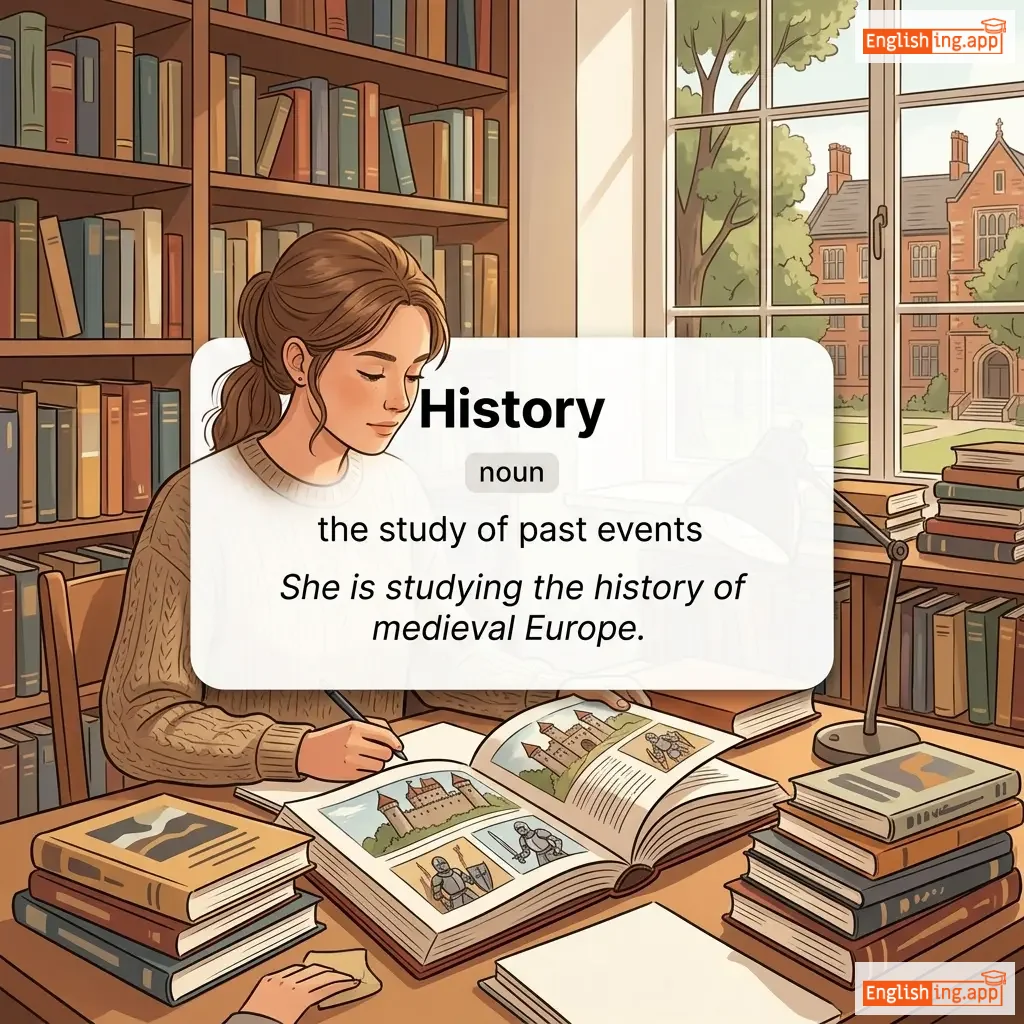
the study of past events
••••••
|
She is studying the history of medieval Europe. |
彼女は中世ヨーロッパの歴史を学んでいます。
Kanojo wa chuusei Yooroppa no rekishi o manandeimasu.
••••••
|
make history |
to do something very important that will be remembered
••••••
|
歴史を作る
rekishi o tsukuru
••••••
|
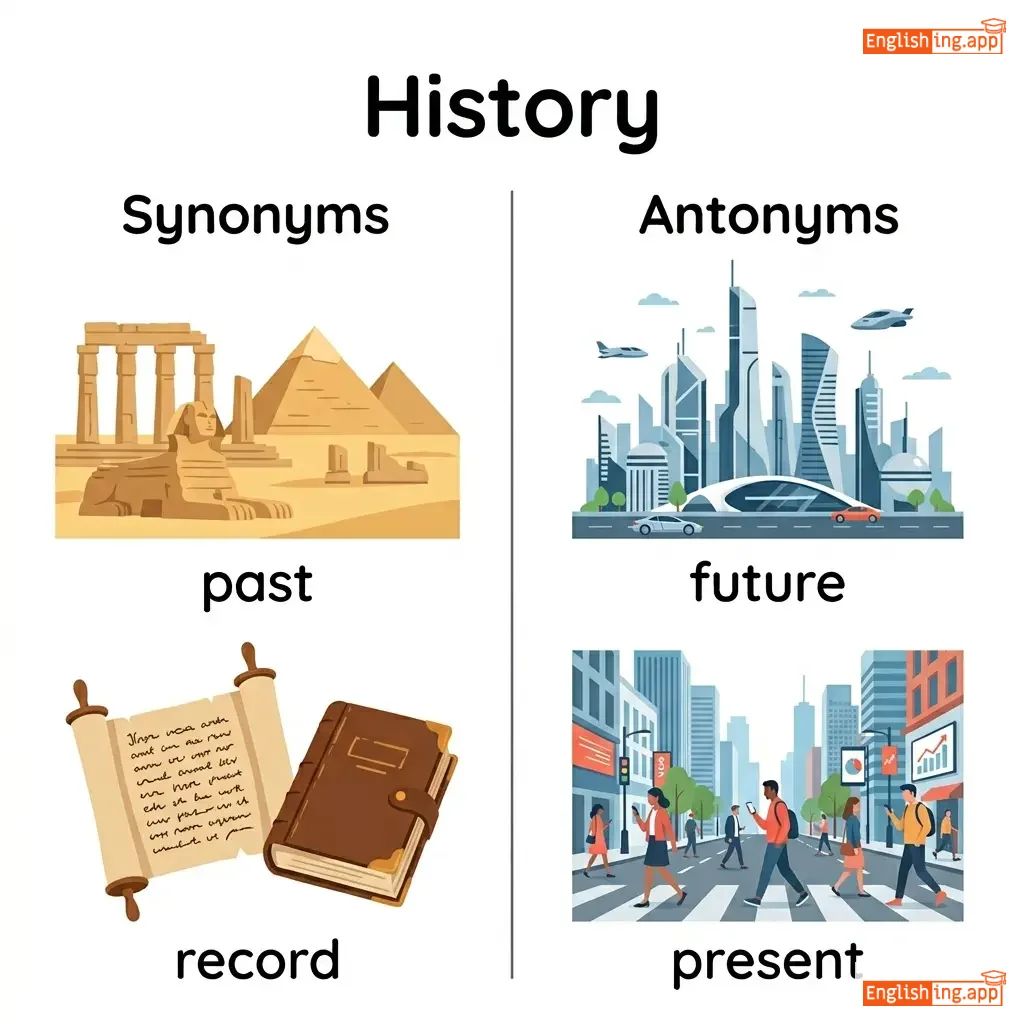
past, record, chronicle, heritage
••••••
|
future, present
••••••
|
world history, history book, history lesson, history of art
••••••
|
Historyは日本語で歴史、考えてみて—His Storyは歴史
••••••
|
|
#11174
📚
|
/hɪˈstɔːriən/
noun
(ヒストリアン)
••••••
|
- •••••• |
歴史学者
rekishigakusha
••••••
|
- •••••• | - •••••• | - •••••• | - •••••• |
a person who studies or writes about history
••••••
|
The historian gave a lecture on ancient civilizations. |
歴史学者は古代文明について講義を行いました。
Rekishigakusha wa kodai bunmei ni tsuite kōgi o okonaimashita.
••••••
|
- •••••• | - •••••• | - •••••• |
scholar, researcher, chronicler, analyst
••••••
|
layman, amateur
••••••
|
famous historian, professional historian, military historian
••••••
|
Historian は history + 学者 → 歴史を学んでいる人
••••••
|
|
#11175
👦
|
/hɪz/
pronoun
(ヒズ)
••••••
|
- •••••• |
彼の
kare no
••••••
|
- •••••• | - •••••• | - •••••• | - •••••• |
belonging to or associated with a male person previously mentioned
••••••
|
This is his book on the table. |
これは彼の本です、テーブルの上にあります。
Kore wa kare no hon desu, tēburu no ue ni arimasu.
••••••
|
- •••••• | - •••••• | - •••••• |
belonging to him, owned by him
••••••
|
her, their
••••••
|
his book, his car, his house, his idea
••••••
|
Hisは彼のという意味です、覚えておいてください—He + is = His もの
••••••
|
|
#11176
👔
|
/ˈhaɪə(r)/
verb
(ハイヤー)
••••••
|
|
雇う
katsu
••••••
|
hired
ハイヤード
••••••
|
hired
ハイヤード
••••••
|
hires
ハイヤーズ
••••••
|
hiring
ハイヤリング
••••••
|
to employ someone for a job or task
••••••
|
The company decided to hire more staff this year.
その会社は今年、より多くのスタッフを雇うことを決定しました。
••••••
|
その会社は今年、より多くのスタッフを雇うことを決定しました。
Sono kaisha wa kotoshi, yori ōku no sutaffu o yatō koto o kettei shimashita.
••••••
|
hire and fire
雇って解雇する
••••••
|
to employ and dismiss workers frequently
••••••
|
雇って解雇する
yatte kaiko suru
••••••
|
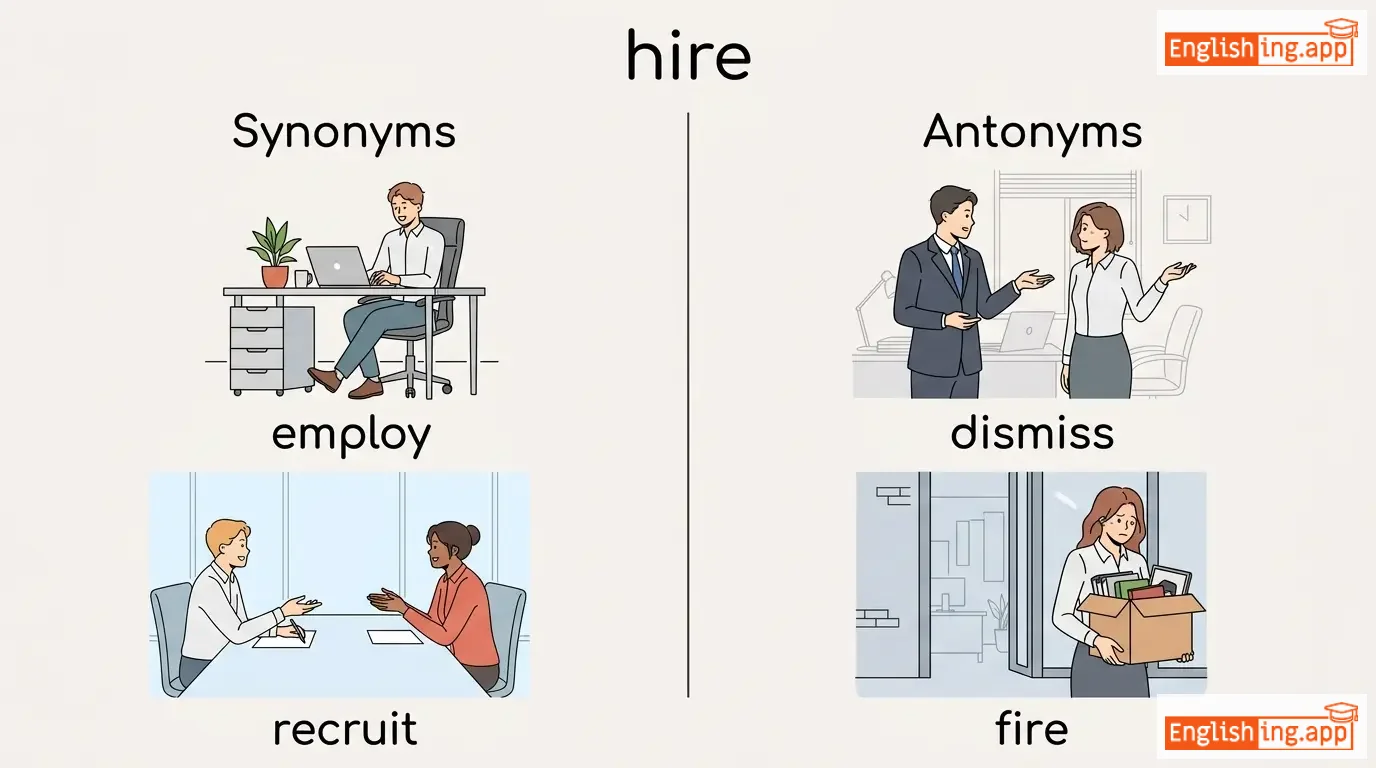
employ, recruit, appoint, engage, contract
••••••
|
dismiss, fire, discharge
••••••
|
hire staff, hire employees, hire a car, hire services
••••••
|
雇うは新しい人材をチームに迎えるようなものです。
••••••
|
|
#11177
🦴
|
/hɪp/
noun
(ヒップ)
••••••
|
- •••••• |
腰部
yōbu
••••••
|
- •••••• | - •••••• | - •••••• | - •••••• |
The part of the body on either side of the pelvis, or informal: trendy and fashionable.
••••••
|
She put her hands on her hips. |
彼女は手を腰に置きました。
kanojo wa te o yōbu ni okimashita.
••••••
|
joined at the hip |
very close, inseparable
••••••
|
腰がつながっている
koshi ga tsunagatte iru
••••••
|
pelvis, waist, trendy, fashionable
••••••
|
old-fashioned, outdated
••••••
|
hip pain, hip joint, hands on hips, hip hop
••••••
|
腰部 – ヒップホップで腰を動かすから。
••••••
|
|
#11178
🙋♂️
|
/hɪmˈself/
pronoun
(ヒムセルフ)
••••••
|
- •••••• |
自分自身
jibun jishin
••••••
|
- •••••• | - •••••• | - •••••• | - •••••• |
Used to emphasize that a male person does something by his own effort.
••••••
|
He fixed the car himself. |
彼は自分自身で車を修理しました。
Kare wa jibun jishin de kuruma o shūri shimashita.
••••••
|
by himself |
alone, without help
••••••
|
自分で
jibun de
••••••
|
alone, personally, individually, on his own
••••••
|
together, with others
••••••
|
by himself, for himself, himself alone
••••••
|
Himself は 'He 自分自身 self' です – 'self' は自分を意味します。
••••••
|
|
#11179
👨
|
/hɪm/
pronoun
(ハピネス)
••••••
|
- •••••• |
彼を
kare o
••••••
|
- •••••• | - •••••• | - •••••• | - •••••• |
Used to refer to a male person or animal already mentioned.
••••••
|
I saw him at the park yesterday. |
昨日公園で彼を見かけました。
Kinō kōen de kare o mikakemashita.
••••••
|
- •••••• | - •••••• | - •••••• |
that man, that boy, male person, he
••••••
|
her, she
••••••
|
with him, for him, about him, help him
••••••
|
Him は '彼を' を意味します – He の目的格が Him であることを覚えておいてください。
••••••
|
|
#11180
⛰️
|
/hɪl/
noun
(ヒル)
••••••
|
- •••••• |
丘
oka
••••••
|
- •••••• | - •••••• | - •••••• | - •••••• |
A naturally raised area of land, smaller than a mountain.
••••••
|
We climbed the hill to see the sunset. |
私たちは日没を見るために丘を登りました。
Watashitachi wa nichibotsu o miru tame ni oka o noborimashita.
••••••
|
make a mountain out of a molehill |
to exaggerate a small problem into something much bigger
••••••
|
小さな問題を大きな問題にする
Chisana mondai o ookina mondai ni suru
••••••
|
mound, knoll, ridge, slope, rise
••••••
|
valley, plain
••••••
|
hill station, top of the hill, climb a hill, rolling hills
••••••
|
Hill は丘 – 小さい山ではない、でも高い丘!
••••••
|
|
#11181
🛣️
|
/ˈhaɪ.weɪ/
noun
(haivei)
••••••
|
- •••••• |
高速道路
kousokudouro
••••••
|
- •••••• | - •••••• | - •••••• | - •••••• |
A main road, especially one connecting major towns or cities.
••••••
|
The highway was blocked due to an accident. |
事故のため高速道路は封鎖されていました。
Jiko no tame kousokudouro wa fūsa sareteimashita.
••••••
|
hit the highway |
to begin a journey, usually by car
••••••
|
道を進む
michi o susumu
••••••
|
expressway, freeway, motorway, road, route
••••••
|
alley, lane
••••••
|
highway patrol, highway traffic, highway system, on the highway
••••••
|
Highway は 'High speed way' の意味です - 高速道路は高速移動の道です。
••••••
|
|
#11182
🌟
|
/ˈhaɪli/
adverb
(ハイリー)
••••••
|
- •••••• |
非常に
hijō ni
••••••
|
- •••••• | - •••••• | - •••••• | - •••••• |
to a great degree; very
••••••
|
She is highly respected in her field. |
彼女は自分の分野で非常に尊敬されています。
Kanojo wa jibun no bun'ya de hijō ni sonkei sareteimasu.
••••••
|
think highly of |
to admire or have a good opinion of someone
••••••
|
高く評価する
takaku hyōka suru
••••••
|
greatly, very, extremely, exceedingly, intensely
••••••
|
slightly, poorly, inadequately
••••••
|
highly skilled, highly effective, highly unlikely, highly respected
••••••
|
Highly は非常に — とてもまたは極端に。
••••••
|
|
#11183
🖍️
|
/ˈhaɪˌlaɪt/
verb
(ハイライト)
••••••
|
- •••••• |
強調する
kyouchou suru
••••••
|
highlighted
ハイライトされた
••••••
|
highlighted
ハイライトされた
••••••
|
highlights
ハイライトする
••••••
|
highlighting
ハイライトすること
••••••
|
to emphasize or make something stand out
••••••
|
The teacher highlighted the most important points in the text.
先生はテキストで最も重要な点をハイライトしました。
••••••
|
先生はテキストで最も重要な点をハイライトしました。
Sensei wa tekisuto de mottomo juuyou na ten wo hairaito shimashita.
••••••
|
highlight reel
ハイライト集
••••••
|
a collection of the best or most memorable parts
••••••
|
ハイライト集
hairaito shuu
••••••
|
emphasize, stress, underline, showcase, feature
••••••
|
ignore, overlook, hide
••••••
|
highlight the issue, highlight a point, highlight text, highlight importance
••••••
|
強調することは、重要な部分を明るく照らすことのようなものです。
••••••
|
|
#11184
😊
|
/haɪ/
interjection
(hai)
••••••
|
- •••••• |
ハイ
hai
••••••
|
- •••••• | - •••••• | - •••••• | - •••••• |
a friendly greeting used when meeting someone
••••••
|
Hi, it's nice to meet you! |
ハイ、会えてうれしいです!
Hai, aete ureshī desu!
••••••
|
- •••••• | - •••••• | - •••••• |
hello, hey, greetings, howdy, yo
••••••
|
goodbye, farewell
••••••
|
say hi, hi there, hi everyone, hi guys
••••••
|
ハイは、学校での友達の挨拶みたいに、元気に言う言葉です。
••••••
|
Vocabulary Quiz
Test your vocabulary by matching words with their translations or meanings.
Login to take the quiz
Comments (0)
Share your thoughts and join the discussion.
Join the discussion by logging in
Login to CommentNo comments yet
Be the first to share your thoughts!