

翻訳
過去
過去分詞
三人称単数
動名詞
意味
例文
例文の翻訳
同義語
対義語
コロケーション
ニーモニック



Swipe left or right, or use the buttons. Tap image to zoom.
例文の翻訳
単語
Lesson 90Lesson 90 - マスクトグル
|
絵文字
|
単語 | Images | 翻訳 | 過去 | 過去分詞 | 三人称単数 | 動名詞 | 意味 | 例文 | 例文の翻訳 | 表現例 | 表現例の意味 | 表現例の翻訳 | 同義語 | 対義語 | コロケーション | ニーモニック |
|---|---|---|---|---|---|---|---|---|---|---|---|---|---|---|---|---|---|
|
#2671
📜
|
/ˈdɒɡərəl/
noun
(ドガレル)
••••••
|
|
低俗な詩
teizoku na shi
••••••
|
- •••••• | - •••••• | - •••••• | - •••••• |
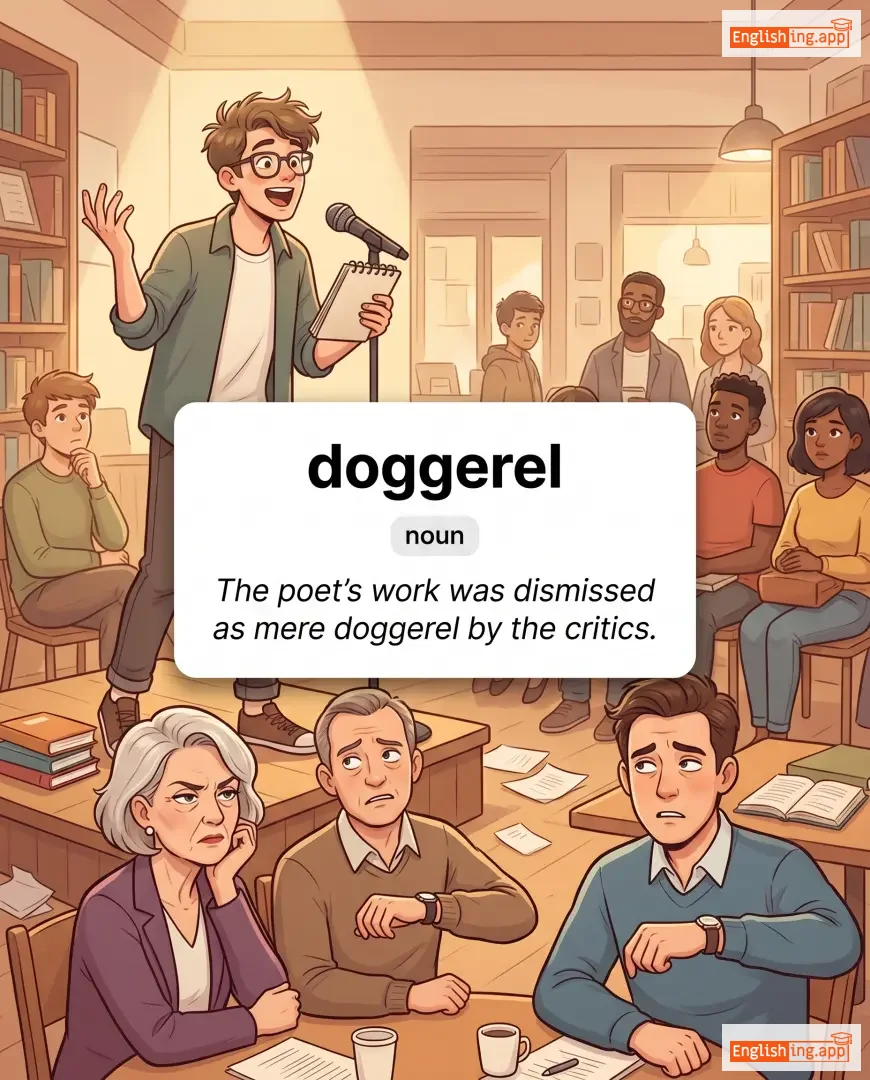
Comic or irregular verse, often poorly constructed and lacking in artistic quality.
••••••
|
The poet’s work was dismissed as mere doggerel by the critics. |
詩人の作品は批評家によって単なる低俗な詩として却下された。
Shijin no sakuhin wa hihyōka ni yotte tannaru teizoku na shi toshite kyakka sareta.
••••••
|
- •••••• | - •••••• | - •••••• |
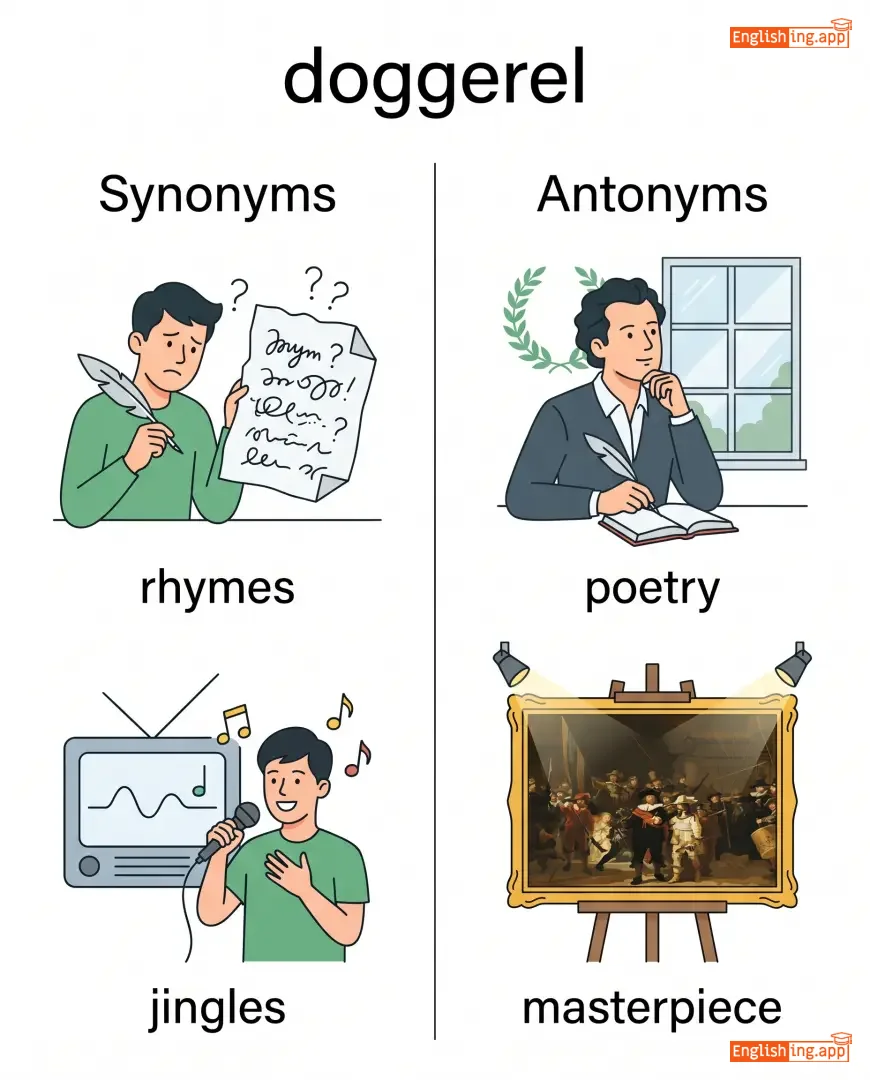
rhymes, jingles, verses, ballad, limerick
••••••
|
poetry, masterpiece, classic
••••••
|
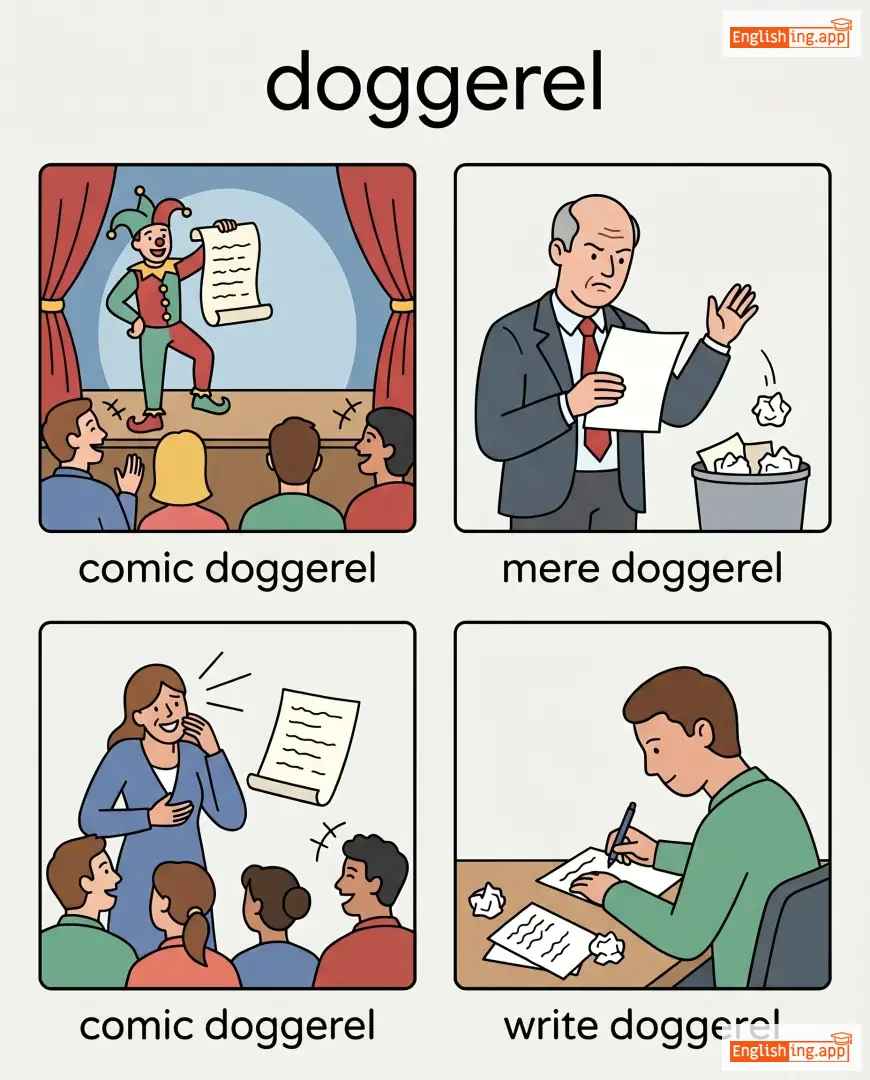
comic doggerel, mere doggerel, write doggerel, silly doggerel
••••••
|
Doggerel は低俗な詩 - 単なる冗談
••••••
|
|
#2672
🦁
|
/ˈdɑː.mə.nənt/
adjective
(ドミナント)
••••••
|
- •••••• |
支配的な
shihaiten na
••••••
|
- •••••• | - •••••• | - •••••• | - •••••• |
Having power, authority, or influence over others; most important.
••••••
|
English has become the dominant language in international business.
英語は国際ビジネスにおいて支配的な言語となった。
••••••
|
英語は国際ビジネスにおいて支配的な言語となった。
Eigo wa kokusai bijinesu ni oite shihaiten na gengo to natta.
••••••
|
dominant hand
支配的な手
••••••
|
The hand that a person uses most skillfully and frequently.
••••••
|
支配的な手
shihaiten na te
••••••
|
powerful, controlling, leading, influential
••••••
|
submissive, minor, weak
••••••
|
dominant role, dominant culture, dominant force
••••••
|
Dominant はライオン 🦁のように、力強く支配的!
••••••
|
|
#2673
👑
|
/ˈdɑː.mə.nəns/
noun
(ドミナンス)
••••••
|
|
支配力
shihairyoku
••••••
|
- •••••• | - •••••• | - •••••• | - •••••• |
The state of having power and influence over others.
••••••
|
The company has maintained dominance in the smartphone market. |
その会社はスマートフォン市場で支配力を維持しています。
Sono kaisha wa sumātofon shijō de shihairyoku o iji shiteimasu.
••••••
|
alpha dominance |
The behavior of asserting leadership or control, often seen in social or animal groups.
••••••
|
アルファ支配力
Arufa shihairyoku
••••••
|
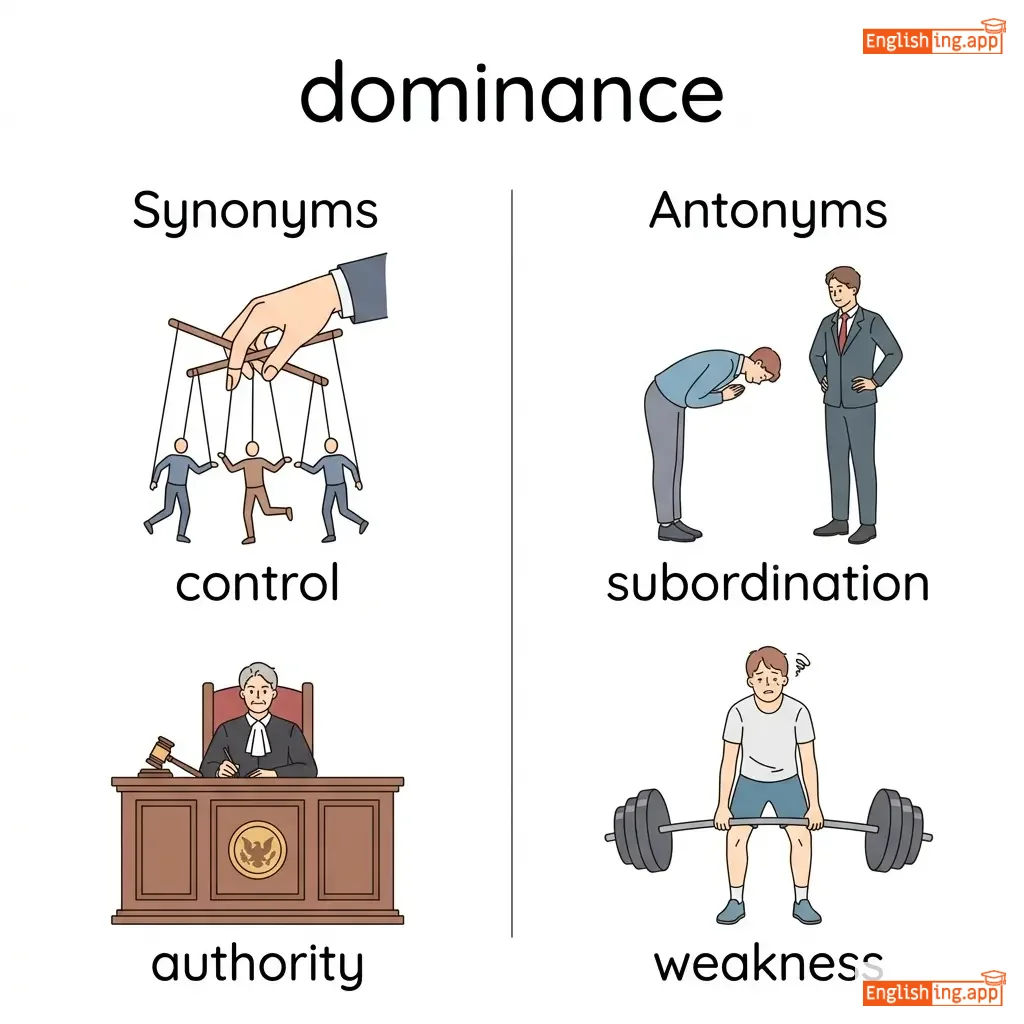
control, authority, supremacy, power, command
••••••
|
subordination, weakness
••••••
|
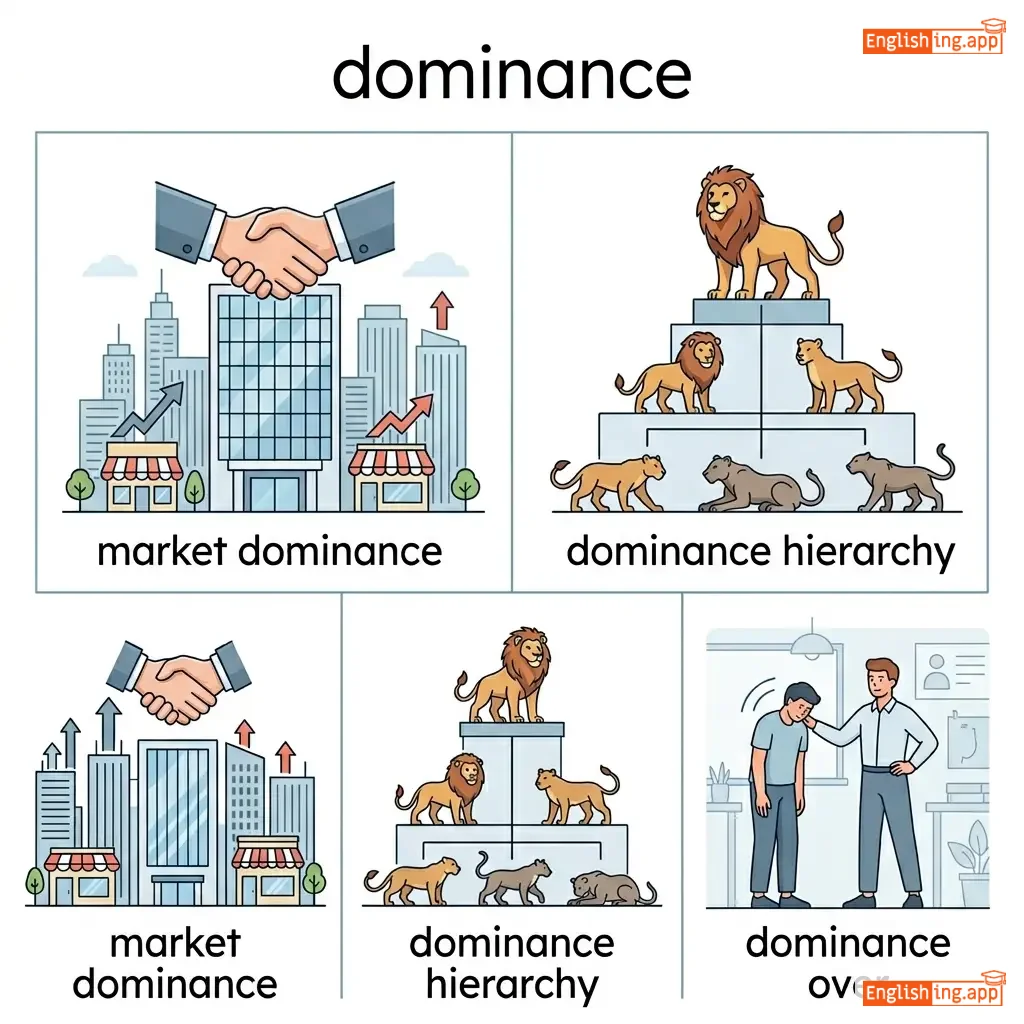
market dominance, dominance hierarchy, dominance over
••••••
|
Dominance(支配力)は 'Dominate' と同じ—力と影響を持つこと。
••••••
|
|
#2674
🏠
|
/ˈdɑː.mə.saɪl/
noun
(ドミサイル)
••••••
|
- •••••• |
住居地
jūkyochi
••••••
|
- •••••• | - •••••• | - •••••• | - •••••• |
A person's legal residence or permanent home.
••••••
|
He declared Canada as his legal domicile.
彼はカナダを彼の法的な住居地として宣言しました。
••••••
|
彼はカナダを彼の法的な住居地として宣言しました。
Kare wa Kanada o kare no hōteki na jūkyōchi toshite sengen shimashita.
••••••
|
- •••••• | - •••••• | - •••••• |
residence, home, abode, dwelling
••••••
|
homelessness, exile
••••••
|
legal domicile, permanent domicile, domicile address
••••••
|
Domicileは「家」と同じ意味—法的な住所。
••••••
|
|
#2675
🏡
|
/ˌdoʊ.məˈstɪs.ə.ti/
noun
(ドメスティシティ)
••••••
|
- •••••• |
家庭生活
katei seikatsu
••••••
|
- •••••• | - •••••• | - •••••• | - •••••• |
Life at home or devotion to family life.
••••••
|
She enjoys the domesticity of cooking and gardening. |
彼女は料理とガーデニングの家庭生活を楽しんでいます。
Kanojo wa ryori to ga-deningu no katei seikatsu o tanoshindeimasu.
••••••
|
- •••••• | - •••••• | - •••••• |
homeliness, family life, household life, comfort
••••••
|
wildness, nomadism
••••••
|
quiet domesticity, enjoy domesticity, retreat into domesticity
••••••
|
家庭生活は、家でのシンプルな生活を楽しむことです。
••••••
|
|
#2676
🌐
|
/dəˈmeɪn/
noun
(ドメイン)
••••••
|
- •••••• |
領域
ryouiki
••••••
|
- •••••• | - •••••• | - •••••• | - •••••• |
An area of knowledge, activity, or territory over which control is exercised.
••••••
|
Mathematics is her main domain of expertise. |
数学は彼女の主な専門領域です。
Suugaku wa kanojo no omona senmon ryouiki desu.
••••••
|
public domain |
Something not protected by copyright and available for public use.
••••••
|
公共領域
koukyou ryouiki
••••••
|
territory, realm, field, sphere, area
••••••
|
outsider, exterior
••••••
|
domain name, knowledge domain, public domain, private domain
••••••
|
領域は制御されたエリアを意味します—インターネットのドメイン名のように。
••••••
|
|
#2677
🤦
|
/doʊlt/
noun
(ドルト)
••••••
|
- •••••• |
ばか
baka
••••••
|
- •••••• | - •••••• | - •••••• | - •••••• |
A stupid or slow-witted person.
••••••
|
Only a dolt would believe such a story. |
そんな話を信じるのはばかだけだ。
Son'na hanashi o shinjiru no wa baka dake da.
••••••
|
doltish behavior |
foolish or stupid behavior
••••••
|
ばかげた行動
bakageta kodo
••••••
|
fool, idiot, simpleton, blockhead, dunce
••••••
|
genius, intellect, smart person
••••••
|
doltish act, act like a dolt, complete dolt
••••••
|
Dolt = ばか, 信じるには愚かだ。
••••••
|
|
#2678
☹️
|
/ˈdəʊ.lə.rəs/
adjective
••••••
|
- •••••• | - •••••• | - •••••• | - •••••• | - •••••• | - •••••• |
Expressing great sorrow or distress.
••••••
|
He spoke in a dolorous tone after the loss. |
- •••••• | - •••••• | - •••••• | - •••••• |
mournful, sorrowful, doleful, woeful
••••••
|
cheerful, glad, joyful
••••••
|
dolorous tone, dolorous speech, dolorous mood
••••••
|
No •••••• |
|
#2679
🖤
|
/ˈdəʊ.lər/
noun
(ドーロル)
••••••
|
- •••••• |
痛み
itami
••••••
|
- •••••• | - •••••• | - •••••• | - •••••• |
A state of great sorrow or distress.
••••••
|
The nation was in deep dolor after the tragedy. |
国は悲劇の後、深い痛みに沈んでいた。
Kuni wa higeki no ato, fukai itami ni shizunde ita.
••••••
|
- •••••• | - •••••• | - •••••• |
sorrow, grief, anguish, distress
••••••
|
joy, happiness, delight
••••••
|
in dolor, deep dolor, filled with dolor
••••••
|
Dolor = 痛み、どちらも苦しみを表します。
••••••
|
|
#2680
😭
|
/ˈdəʊl.səm/
adjective
(ドールソム)
••••••
|
- •••••• |
悲しい
kanashii
••••••
|
- •••••• | - •••••• | - •••••• | - •••••• |
Filled with grief or sadness; mournful.
••••••
|
The dolesome ballad brought tears to their eyes.
その悲しいバラードは彼らの目に涙をもたらしました。
••••••
|
その悲しい歌は彼らの目に涙をもたらしました。
Sono kanashii uta wa karera no me ni namida wo motarashimashita.
••••••
|
- •••••• | - •••••• | - •••••• |
sad, sorrowful, mournful, doleful
••••••
|
happy, joyful, glad
••••••
|
dolesome song, dolesome mood, dolesome tale
••••••
|
Dolesomeは'dole' =悲しみ、'some' = 満ちている。つまり、悲しみで満ちている。
••••••
|
|
#2681
😢
|
/ˈdəʊl.fəl/
adjective
(ドールフル)
••••••
|
- •••••• |
悲しい
kanashii
••••••
|
- •••••• | - •••••• | - •••••• | - •••••• |
Expressing sorrow or sadness; mournful.
••••••
|
She gave him a doleful look before leaving.
彼女は去る前に悲しそうな目を彼に向けました。
••••••
|
彼女は去る前に悲しそうな目を彼に向けました。
Kanojo wa saru mae ni kanashisō na me o kare ni mukemashita.
••••••
|
- •••••• | - •••••• | - •••••• |
mournful, sorrowful, melancholy, woeful, gloomy
••••••
|
cheerful, joyful, happy
••••••
|
doleful eyes, doleful look, doleful tune
••••••
|
Doleful = Do + El = 悲しい感情でいっぱいのような感じ。
••••••
|
|
#2682
😞
|
/ˈdɒldrəmz/
noun
••••••
|
- •••••• | - •••••• | - •••••• | - •••••• | - •••••• | - •••••• |
A state of inactivity, stagnation, or low spirits; also a region near the equator with calm winds.
••••••
|
After the project failed, the team was stuck in the doldrums for months. |
- •••••• |
in the doldrums |
To be in a state of low activity or depression.
••••••
|
- •••••• |
depression, stagnation, slump, gloom, inactivity
••••••
|
progress, activity, excitement
••••••
|
economic doldrums, in the doldrums, stuck in doldrums
••••••
|
No •••••• |
|
#2683
🗣️
|
/ˈdɒɡmətaɪz/
verb
(ドグマタイズ)
••••••
|
- •••••• |
ドグマ化する
doguma-ka suru
••••••
|
dogmatized
ドグマタイズド
••••••
|
dogmatized
ドグマタイズド
••••••
|
dogmatizes
ドグマタイズズ
••••••
|
dogmatizing
ドグマタイズイング
••••••
|
To state opinions or beliefs as if they were absolute truths.
••••••
|
The professor tended to dogmatize on political issues.
その教授は政治的な問題でドグマタイズする傾向があった。
••••••
|
その教授は政治的な問題でドグマタイズする傾向があった。
Sono kyōju wa seijiteki na mondai de dogumataizu suru keikō ga atta.
••••••
|
- •••••• | - •••••• | - •••••• |
preach, dictate, assert, pontificate, proclaim
••••••
|
question, doubt, hesitate
••••••
|
dogmatize about, dogmatize on, tendency to dogmatize
••••••
|
Dog ma ties は意見を押し付けることを意味します。
••••••
|
|
#2684
⚖️
|
/dɒɡˈmætɪk/
adjective
(ドグマティック)
••••••
|
|
ドグマティック
dogumatikku
••••••
|
- •••••• | - •••••• | - •••••• | - •••••• |
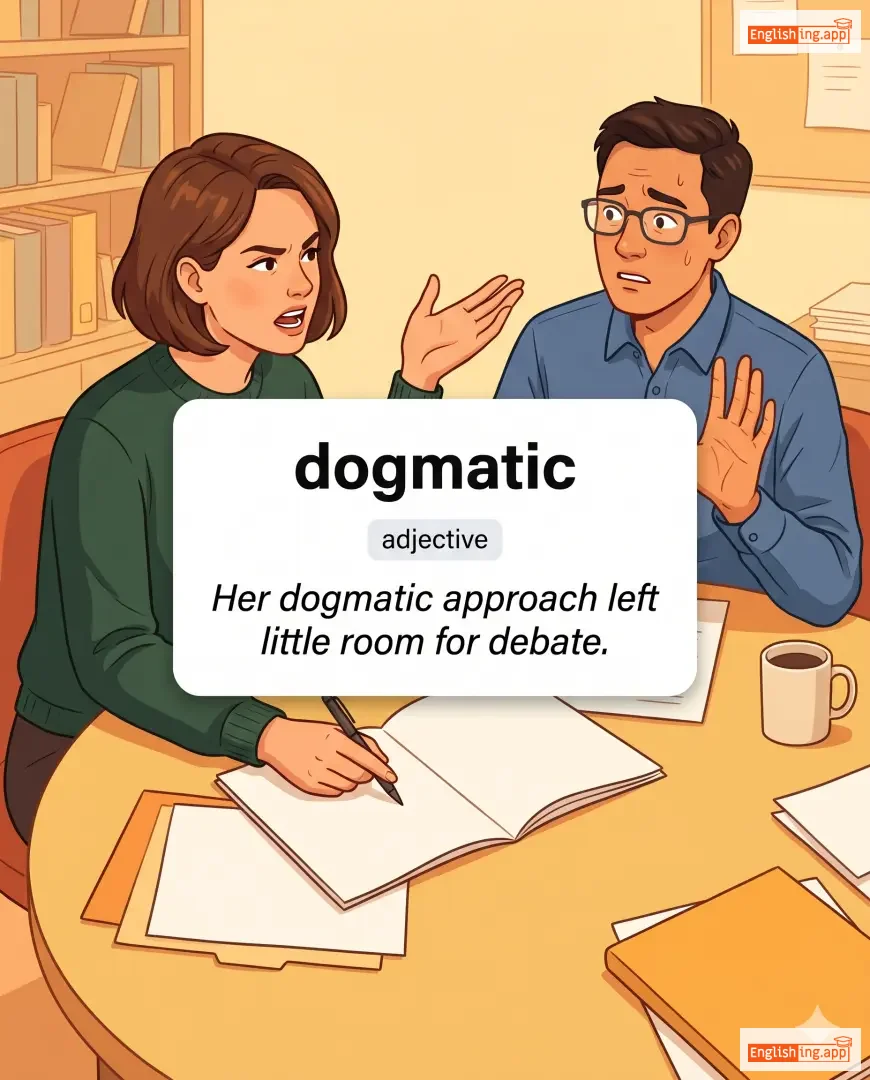
Inclined to lay down principles as undeniably true, without consideration of evidence or others’ opinions.
••••••
|
Her dogmatic approach left little room for debate. |
彼女のドグマティックなアプローチは議論の余地をほとんど残さなかった。
Kanojo no dogumatikku na apurōchi wa giron no yochi o hotondo nokosanakatta.
••••••
|
- •••••• | - •••••• | - •••••• |
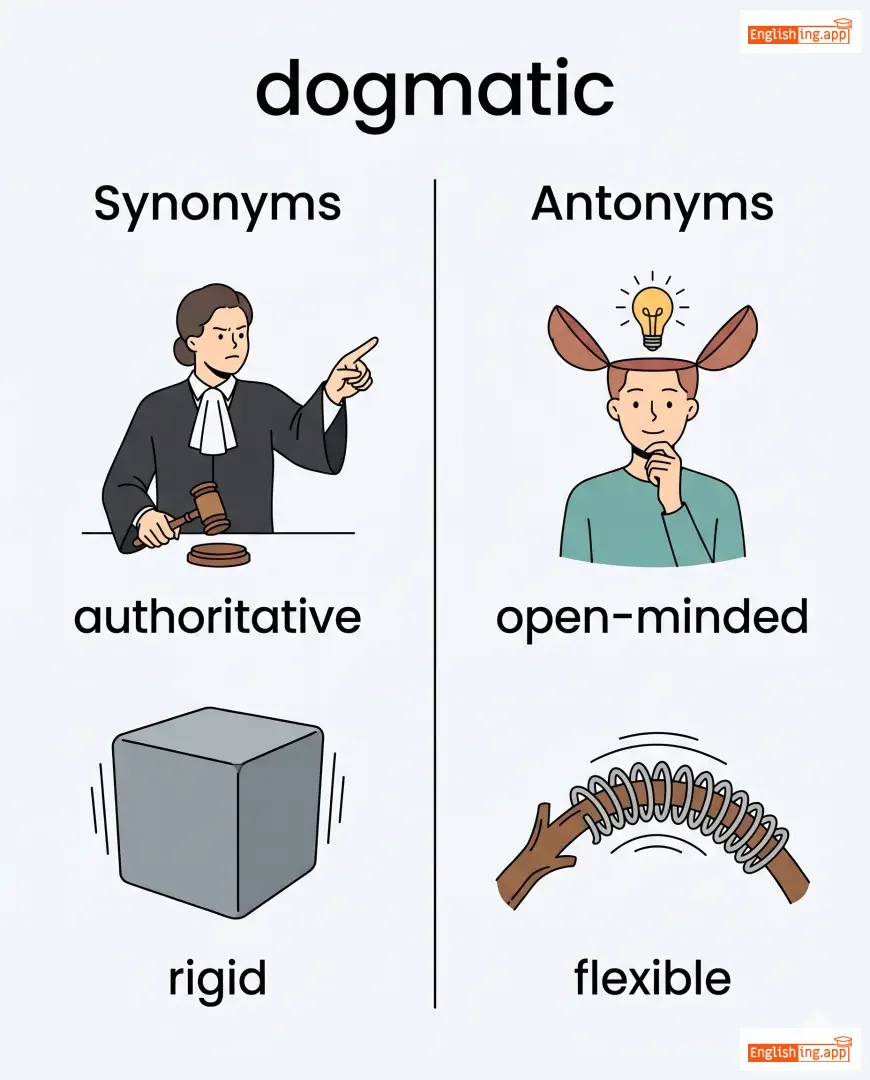
authoritative, rigid, strict, inflexible, assertive
••••••
|
open-minded, flexible, tolerant
••••••
|
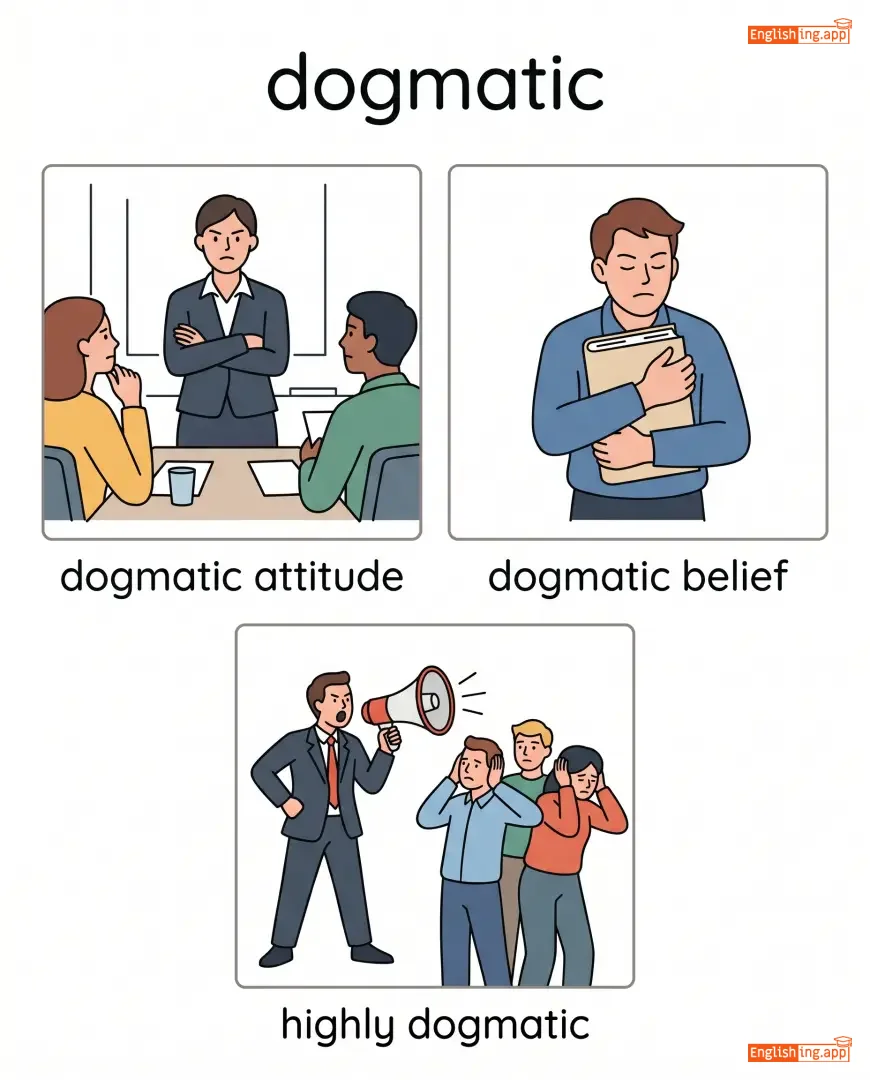
dogmatic attitude, dogmatic belief, highly dogmatic, sound dogmatic
••••••
|
犬のように頑固な態度を持つ人、まさにドグマティック!
••••••
|
|
#2685
📖
|
/ˈdɒɡmə/
noun
(ドグマ)
••••••
|
- •••••• |
ドグマ
doguma
••••••
|
- •••••• | - •••••• | - •••••• | - •••••• |
A principle or set of principles laid down by an authority as incontrovertibly true.
••••••
|
The religious leader strictly adhered to traditional dogma. |
宗教的指導者は伝統的なドグマに厳格に従った。
Shūkyō-teki shidōsha wa dentō-teki na doguma ni genkaku ni shitagatta.
••••••
|
- •••••• | - •••••• | - •••••• |
doctrine, creed, belief, principle, teaching
••••••
|
doubt, skepticism, uncertainty
••••••
|
religious dogma, political dogma, strict dogma, challenge dogma
••••••
|
Dogmaは犬(dog)のように、質問せずに従うことです。
••••••
|
|
#2686
🕵️
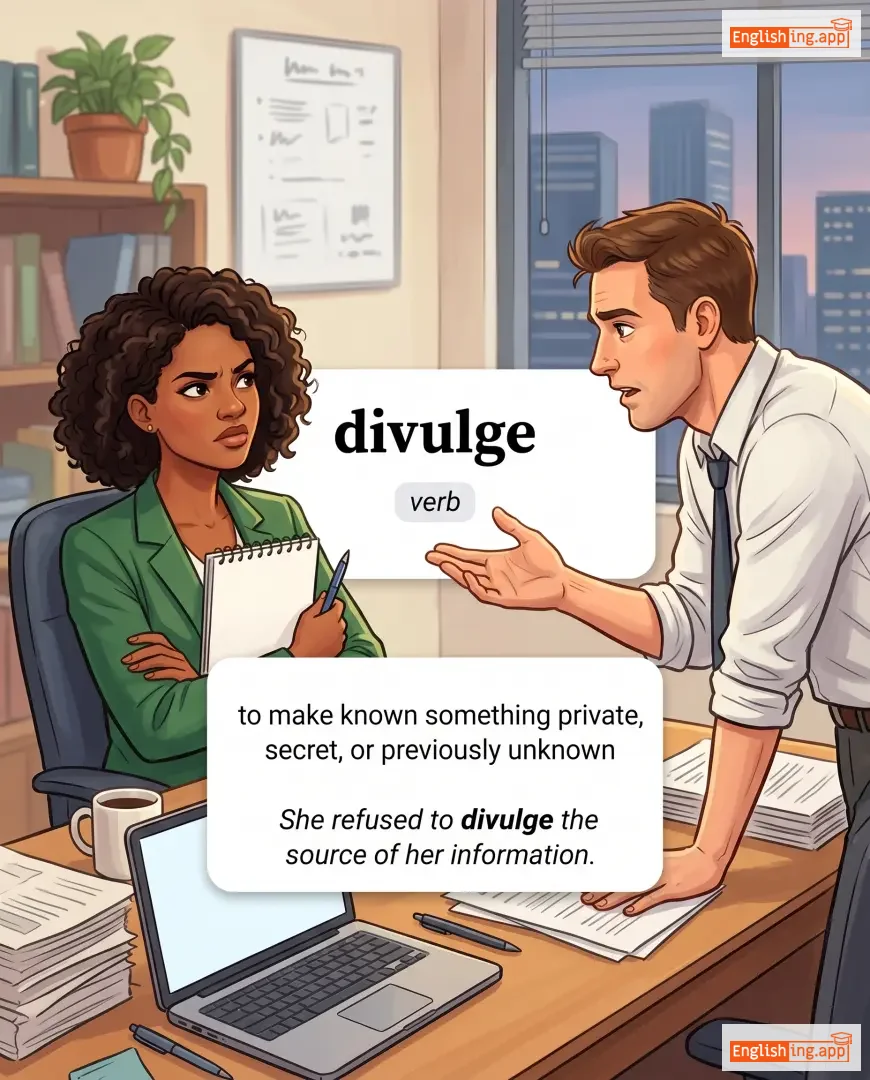
|
/daɪˈvʌldʒ/
verb
(ディヴァルジ)
••••••
|
|
明らかにする
akiraka ni suru
••••••
|
divulged
ディヴァルジド
••••••
|
divulged
ディヴァルジド
••••••
|
divulges
ディヴァルジズ
••••••
|
divulging
ディヴァルジング
••••••
|
to make known something private, secret, or previously unknown
••••••
|
She refused to divulge the source of her information.
彼女は情報の源を明らかにすることを拒否しました。
••••••
|
彼女は情報の源を明らかにすることを拒否しました。
Kanojo wa jōhō no minamoto o akiraka ni suru koto o kyohi shimashita.
••••••
|
- •••••• | - •••••• | - •••••• |
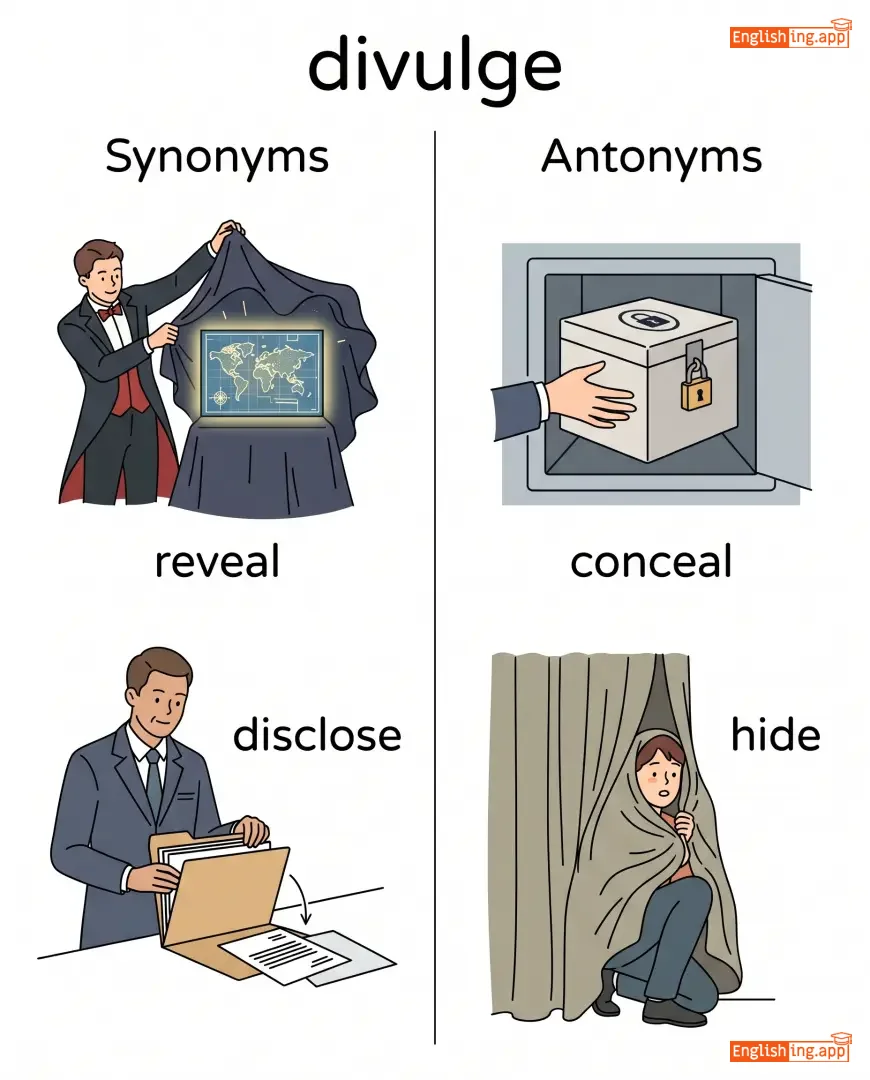
reveal, disclose, uncover, expose, betray
••••••
|
conceal, hide, withhold
••••••
|
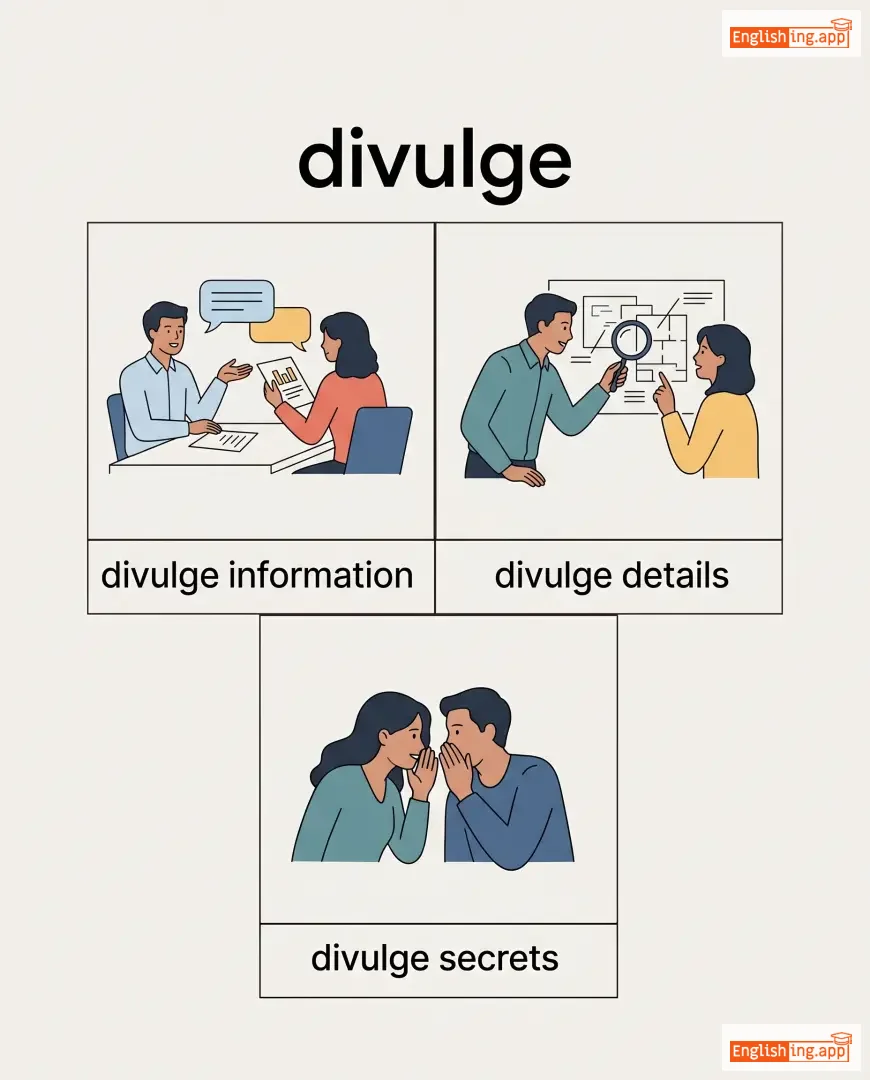
divulge information, divulge details, divulge secrets, refuse to divulge
••••••
|
Divulge は公開するという意味 - '明らかにする' と考えて、秘密を公開することを想像する。
••••••
|
|
#2687
💪
|
/ˈdɒɡɪd/
adjective
(ドゲッド)
••••••
|
- •••••• |
執拗
shitsunyo
••••••
|
- •••••• | - •••••• | - •••••• | - •••••• |
showing stubborn determination and persistence
••••••
|
She succeeded through dogged determination. |
彼女は執拗な決意で成功を収めました。
Kanojo wa shitsunyo na ketsui de seikou o osamemashita.
••••••
|
- •••••• | - •••••• | - •••••• |
determined, persistent, stubborn, resolute, tenacious
••••••
|
weak, hesitant, irresolute
••••••
|
dogged effort, dogged determination, dogged pursuit
••••••
|
Doggedは、決して諦めない犬のように執拗に頑張り続けること。
••••••
|
|
#2688
🐶
|
/dɔːɡ/
noun
(ドッグ)
••••••
|
- •••••• |
犬
inu
••••••
|
- •••••• | - •••••• | - •••••• | - •••••• |
a domesticated carnivorous mammal kept as a pet or for work
••••••
|
The dog barked loudly at the stranger. |
犬は見知らぬ人に向かって大きな声で吠えた。
Inu wa mishiranu hito ni mukatte ookina koe de hoeta.
••••••
|
every dog has its day |
everyone will have a chance to succeed or be lucky at some point
••••••
|
犬にも一日がある
Inu ni mo ichinichi ga aru
••••••
|
canine, hound, pooch, pup, mongrel
••••••
|
cat, feline
••••••
|
pet dog, stray dog, guard dog, dog bark
••••••
|
Dog = 犬 🐕 - 犬は毎日が特別な日。
••••••
|
|
#2689
🎩
|
/dɒf/
verb
(ドフ)
••••••
|
- •••••• |
帽子を脱ぐ(敬意の印として)
bōshi o nugu (keii no shirushi toshite)
••••••
|
doffed
ドフド
••••••
|
doffed
ドフド
••••••
|
doffs
ドフス
••••••
|
doffing
ドフィング
••••••
|
to take off an item of clothing, especially a hat, as a sign of respect
••••••
|
He doffed his hat as the procession passed.
彼は行列が通り過ぎるときに帽子を脱いだ。
••••••
|
彼は行列が通り過ぎるときに帽子を脱いだ。
Kare wa gyōretsu ga tōrisugiru toki ni bōshi o nuida.
••••••
|
doff one's hat
帽子を脱ぐ
••••••
|
to show respect or admiration
••••••
|
帽子を脱ぐ
bōshi o nugu
••••••
|
remove, take off, lift, shed
••••••
|
don, wear, put on
••••••
|
doff a hat, doff clothes, doff one's cap
••••••
|
Doff = 帽子を脱ぐ, doff = 敬意を表すために帽子を脱ぐ
••••••
|
|
#2690
🦌
|
/doʊ/
noun
(ドウ)
••••••
|
- •••••• |
雌鹿
meshi shika
••••••
|
- •••••• | - •••••• | - •••••• | - •••••• |
a female deer, especially an adult one
••••••
|
The doe and her fawn were grazing in the meadow. |
雌鹿とその子鹿は草原で草を食べていました。
Meshi shika to sono kogitsune wa sougen de kusa wo tabete imashita.
••••••
|
- •••••• | - •••••• | - •••••• |
female deer, hind, roe
••••••
|
buck, stag
••••••
|
doe and fawn, gentle doe, spotted doe
••••••
|
Doe は '雌鹿' を意味します。 'ドウ' = '雌鹿' を覚えてください。
••••••
|
|
#2691
↩️
|
/dɒdʒ/
verb
(ドッジ)
••••••
|
|
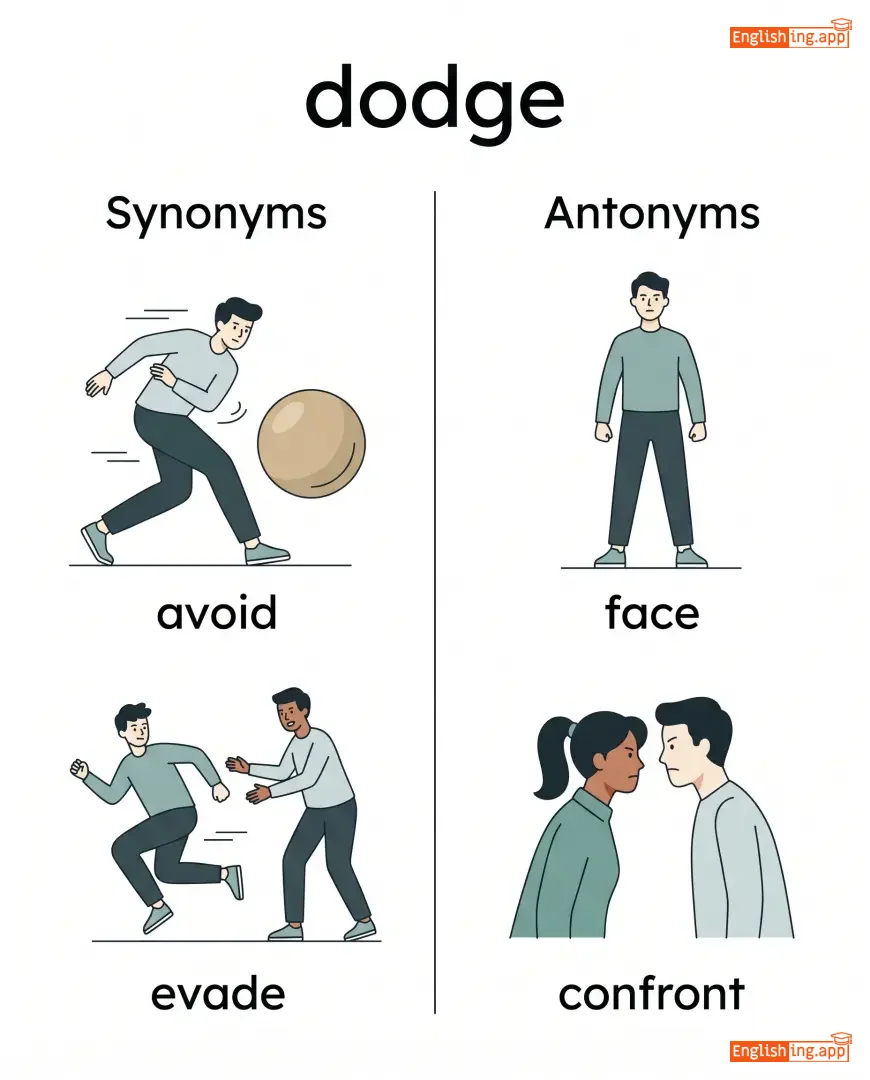
避ける
sakeru
••••••
|
dodged
ドッジド
••••••
|
dodged
ドッジド
••••••
|
dodges
ドッジズ
••••••
|
dodging
ドッジング
••••••
|
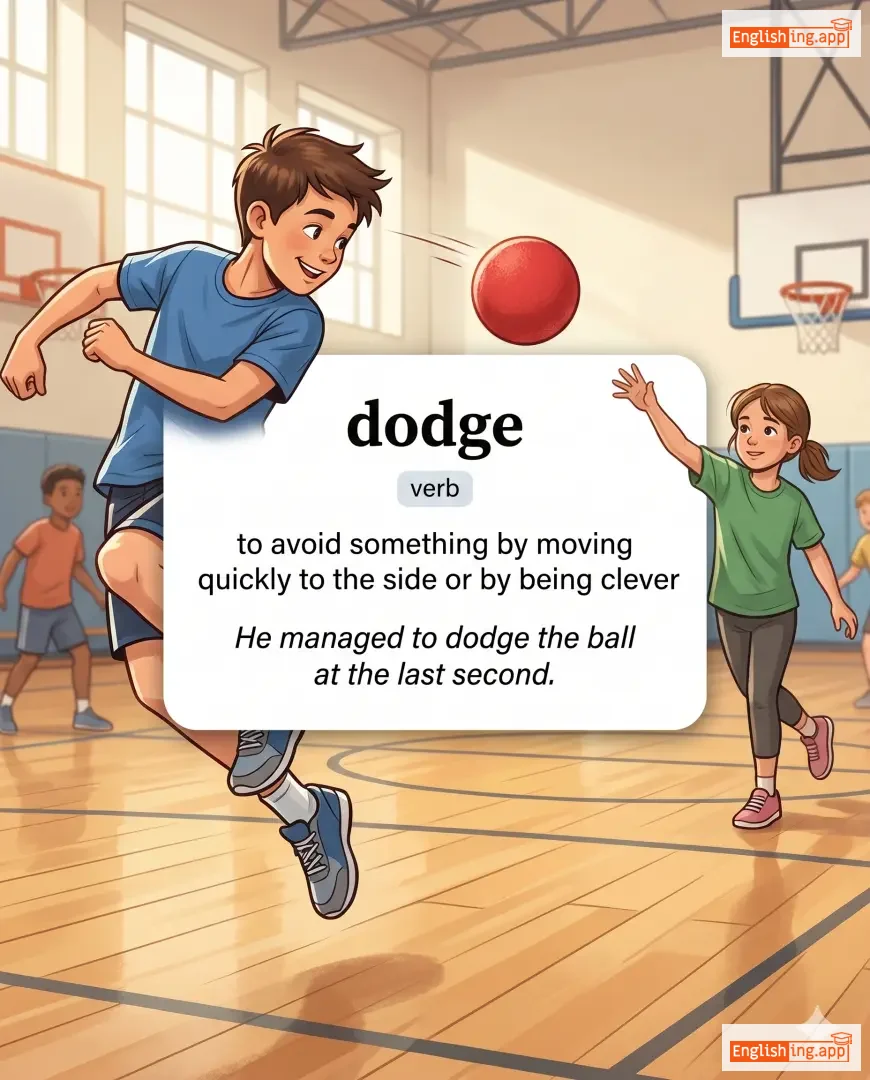
to avoid something by moving quickly to the side or by being clever
••••••
|
He managed to dodge the ball at the last second.
彼は最後の瞬間にボールを避けることができました。
••••••
|
彼は最後の瞬間にボールを避けることができました。
Kare wa saigo no shunkan ni booru wo yokeru koto ga dekimashita.
••••••
|
dodge a bullet
弾丸を避ける
••••••
|
to narrowly avoid danger or trouble
••••••
|
弾丸を避ける
dangan wo sakeru
••••••
|
avoid, evade, escape, sidestep, duck
••••••
|
face, confront, meet
••••••
|
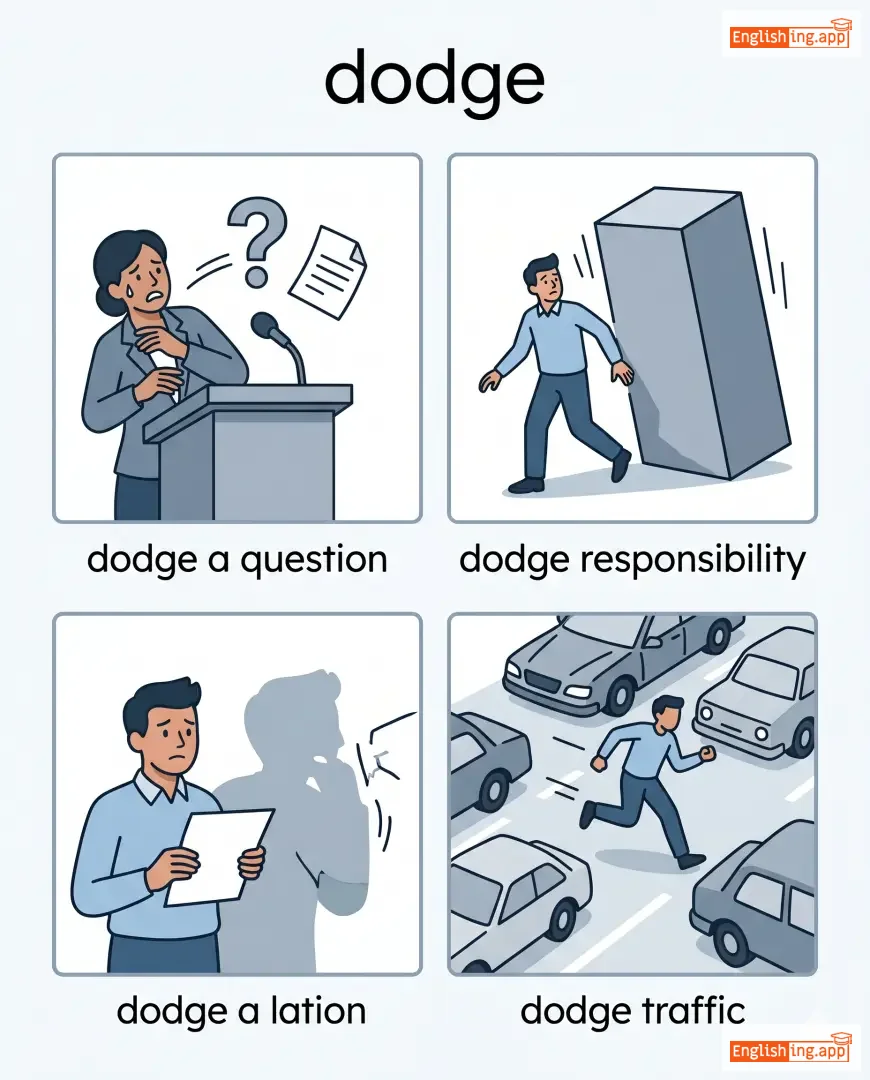
dodge a question, dodge responsibility, dodge traffic, dodge the law
••••••
|
避ける、弾丸を避けるように素早く賢く!
••••••
|
|
#2692
🧓
|
/ˈdɒdərɪŋ/
adjective
(ドダリング)
••••••
|
- •••••• |
震えている / 弱い
furuete iru / yowai
••••••
|
- •••••• | - •••••• | - •••••• | - •••••• |
Weak, shaky, or unsteady, especially due to old age.
••••••
|
The doddering professor struggled to climb the stairs.
ドダリング教授は階段を登るのに苦労していました。
••••••
|
ドダリング教授は階段を登るのに苦労していました。
Dodaringu kyōju wa kaidan o noboru no ni kurō shite imashita.
••••••
|
- •••••• | - •••••• | - •••••• |
feeble, shaky, tottering, frail
••••••
|
strong, firm, stable
••••••
|
doddering old man, doddering steps, doddering movement
••••••
|
Doddering は弱いことを意味します—Dod (おじいさん) はいつも震えている。
••••••
|
|
#2693
🚶♂️
|
/ˈdɒdə/
verb
(ドダー)
••••••
|
- •••••• |
震えながら歩く
furue nagara aruku
••••••
|
doddered
ドダード
••••••
|
doddered
ドダード
••••••
|
dodders
ドダーズ
••••••
|
doddering
ドダーリング
••••••
|
To move in a weak and unsteady way, especially due to old age.
••••••
|
The old man doddered across the street with a cane.
老人は杖をついて通りをドダードしました。
••••••
|
老人は杖をついて震えながら通りを歩いていました。
Rojin wa tsue wo tsuite furuenagara toori wo aruite imashita.
••••••
|
- •••••• | - •••••• | - •••••• |
stagger, wobble, stumble, totter, sway
••••••
|
stride, march, walk firmly
••••••
|
dodder along, dodder across, old man dodder
••••••
|
Dodderは震える意味—老人は杖をついて震えながら歩く。
••••••
|
|
#2694
🎥
|
/ˌdɒkjʊˈmɛntri/
noun/adjective
(ドキュメンタリー)
••••••
|
- •••••• |
ドキュメンタリー映画
dokyumentarī eiga
••••••
|
- •••••• | - •••••• | - •••••• | - •••••• |
A film or television program that provides a factual record or report.
••••••
|
We watched a documentary about climate change. |
私たちは気候変動についてのドキュメンタリー映画を見ました。
Watashitachi wa kikō hendō ni tsuite no dokyumentarī eiga o mimashita.
••••••
|
- •••••• | - •••••• | - •••••• |
film, program, report, feature, nonfiction film
••••••
|
fiction, drama
••••••
|
wildlife documentary, historical documentary, documentary film, TV documentary
••••••
|
Document + Story = ドキュメンタリー, 実際のストーリーを伝える映画。
••••••
|
|
#2695
📄
|
/ˈdɒkjʊmənt/
noun/verb
(ドキュメント)
••••••
|
|
文書
bunsho
••••••
|
documented
ドキュメントされた
••••••
|
documented
ドキュメントされた
••••••
|
documents
ドキュメント
••••••
|
documenting
ドキュメントしている
••••••
|
Noun: A written, printed, or electronic record that provides information or evidence. Verb: To record information in written or electronic form.
••••••
|
She carefully documented all the expenses of the trip.
彼女は旅行のすべての費用を慎重にドキュメントした。
••••••
|
彼女は旅行のすべての費用を慎重にドキュメントした。
Kanojo wa ryokō no subete no hiyō o shinchō ni dokyumento shita.
••••••
|
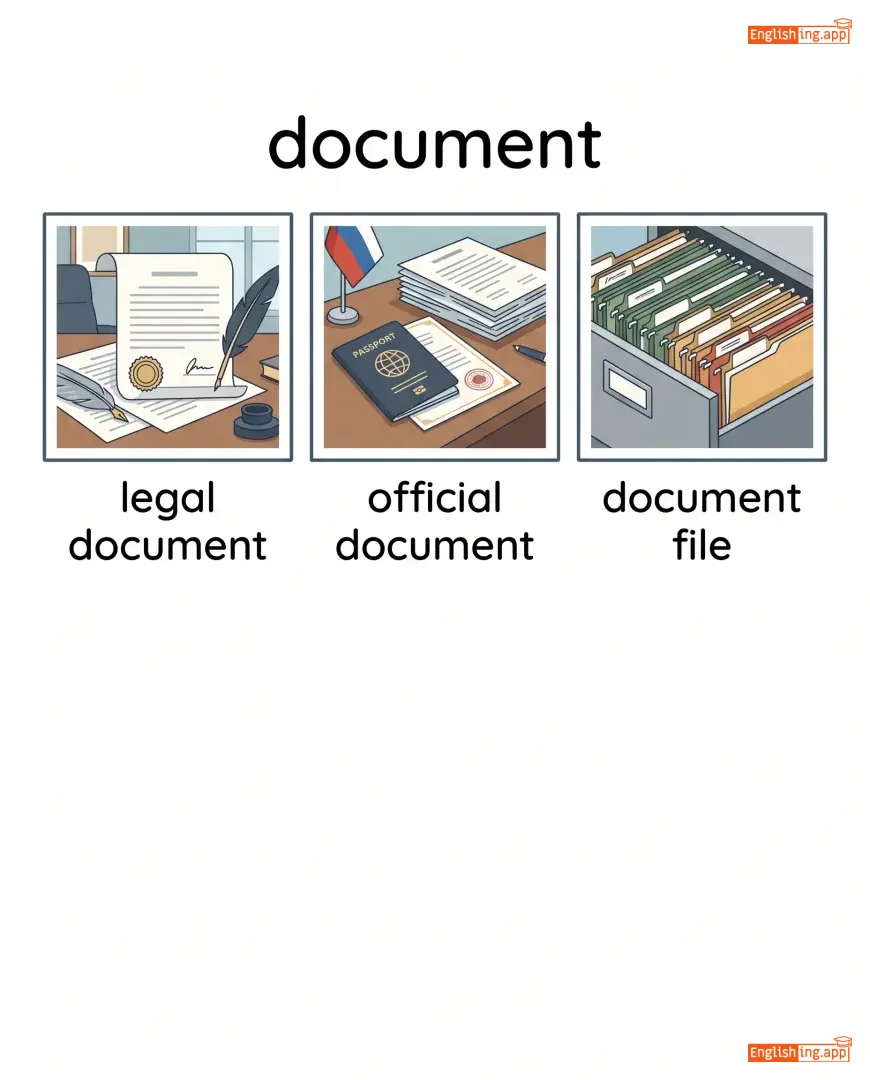
official document
公式ドキュメント
••••••
|
An authoritative or legal record recognized by an institution.
••••••
|
公式ドキュメント
Kōshiki dokyumento
••••••
|
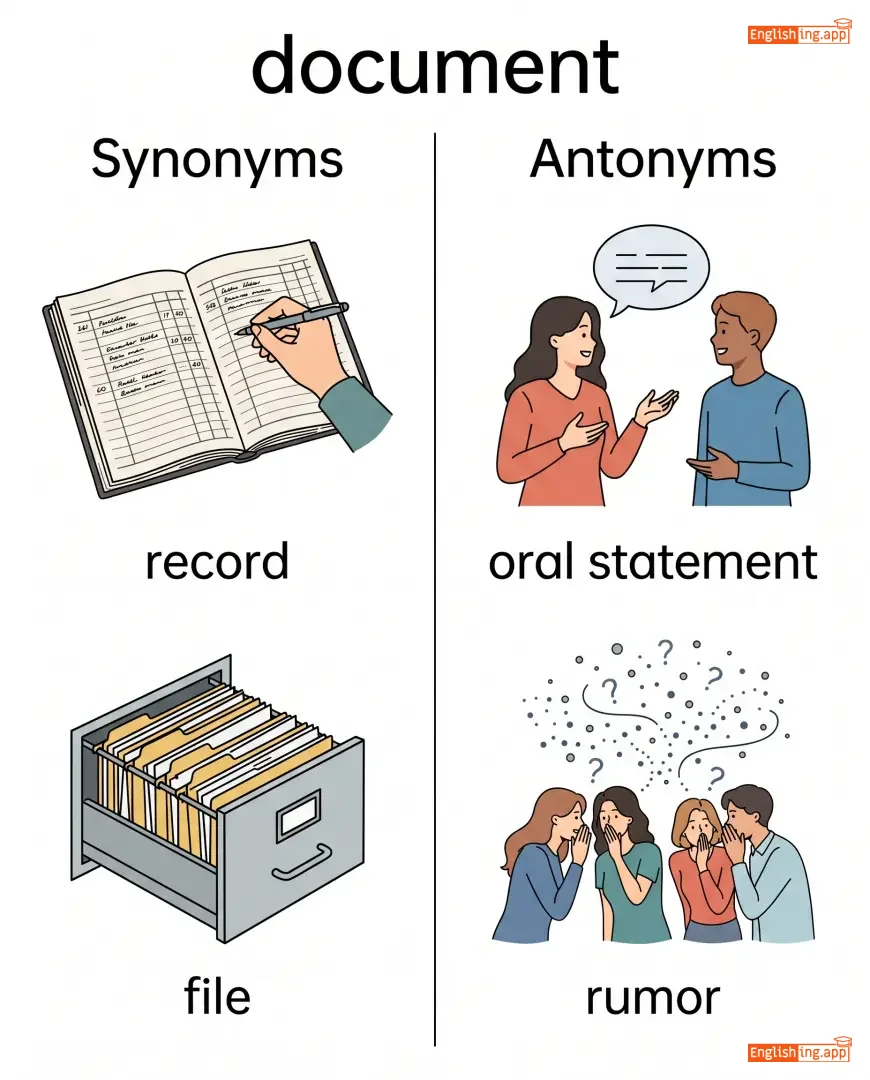
record, file, paper, certificate, report
••••••
|
oral statement, rumor
••••••
|
legal document, official document, document file, document evidence
••••••
|
Documentは文書です—重要なことを記録してください!
••••••
|
|
#2696
📜
|
/ˈdɒktrɪn/
noun
(ドクトリン)
••••••
|
- •••••• |
教義
kyōgi
••••••
|
- •••••• | - •••••• | - •••••• | - •••••• |
A set of beliefs or principles held and taught by a religious, political, or other group.
••••••
|
The church follows a strict doctrine on moral values. |
教会は道徳的価値に関する厳格な教義を遵守しています。
Kyōkai wa dōtokuteki kachi ni kansuru genkaku na kyōgi o junshu shiteimasu.
••••••
|
official doctrine |
The established principles or policies endorsed by an authority.
••••••
|
公式教義
Kōshiki kyōgi
••••••
|
belief, principle, teaching, tenet, ideology
••••••
|
heresy, disbelief, doubt
••••••
|
religious doctrine, political doctrine, military doctrine, core doctrine
••••••
|
教義は遵守しなければならない厳格なルールです。
••••••
|
|
#2697
📖
|
/ˌdɒktrɪˈnɛər/
adjective
(ドクトリネア)
••••••
|
|
教条主義者
kyōjō shugi-sha
••••••
|
- •••••• | - •••••• | - •••••• | - •••••• |
stubbornly devoted to a theory or doctrine without regard to practical considerations
••••••
|
His doctrinaire approach to politics alienated many supporters. |
彼の教条主義的な政治アプローチは、多くの支持者を遠ざけた。
Kare no kyōjō shugi-teki na seiji apurōchi wa, ōku no shijisha o tōzaketa.
••••••
|
- •••••• | - •••••• | - •••••• |
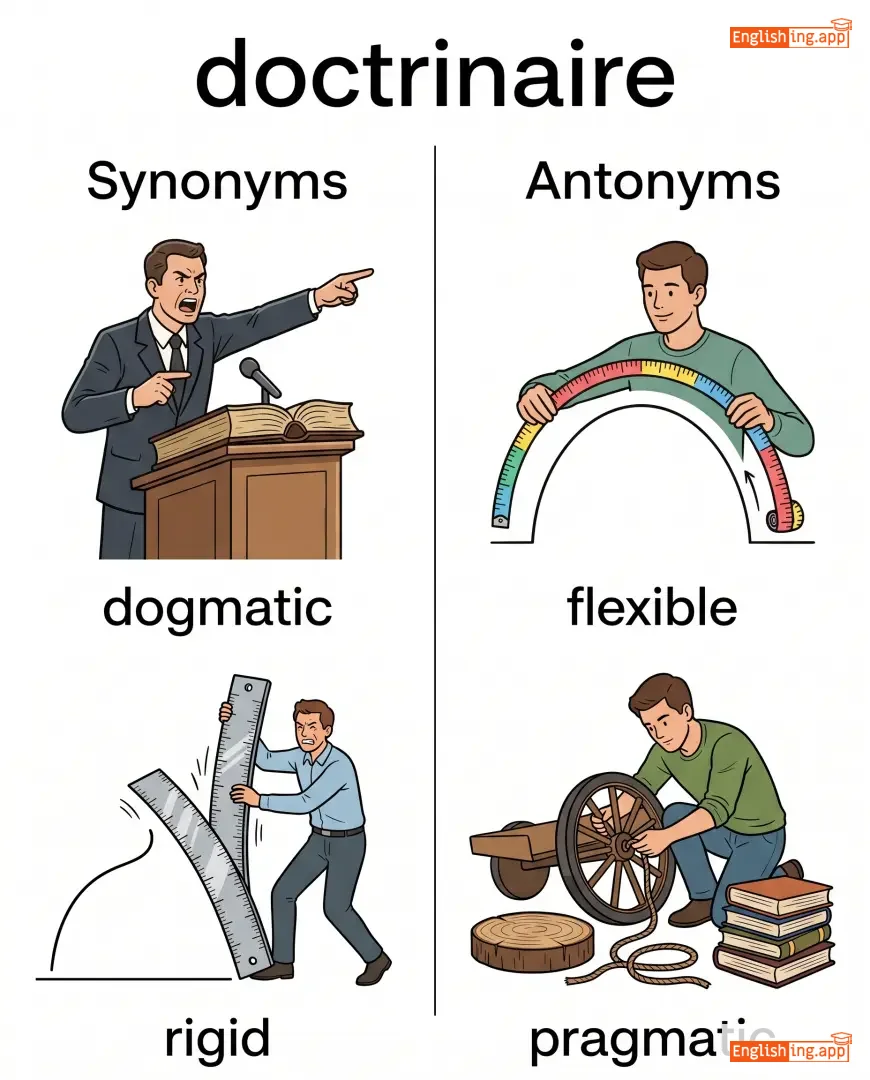
dogmatic, rigid, inflexible, theoretical, uncompromising
••••••
|
flexible, pragmatic, practical
••••••
|
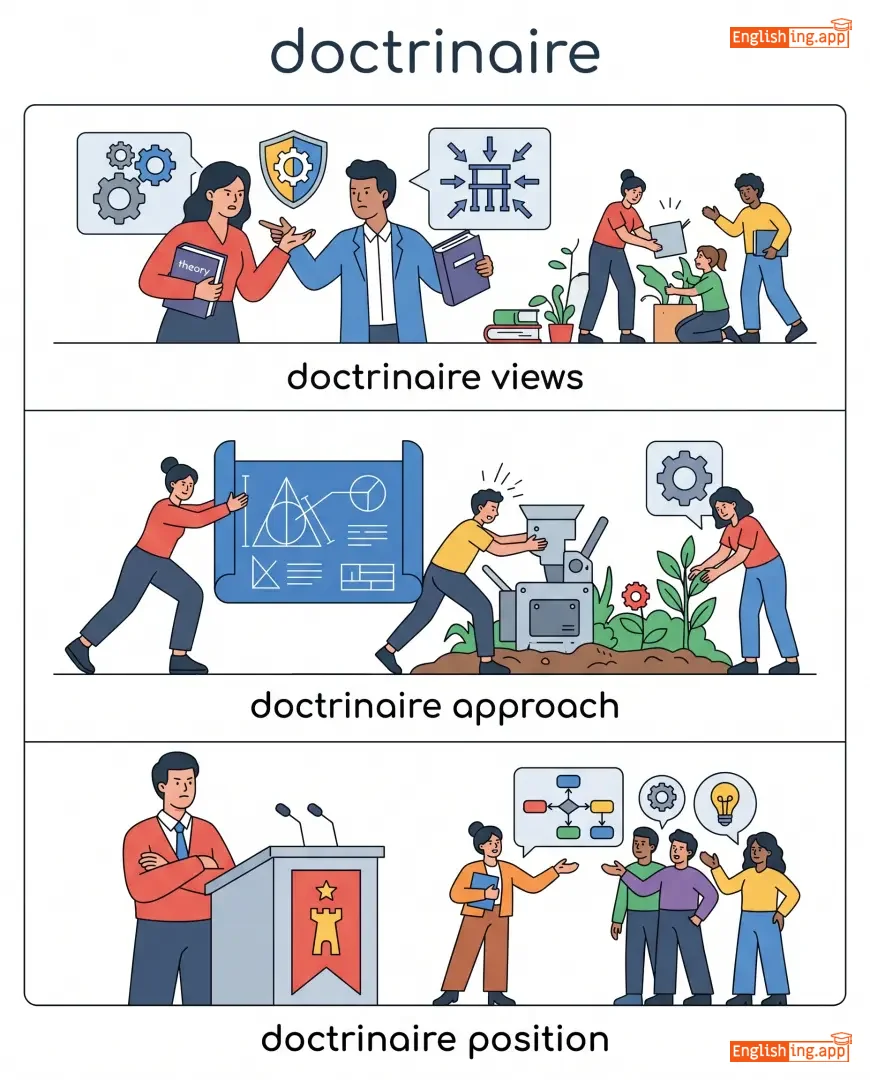
doctrinaire views, doctrinaire approach, doctrinaire position
••••••
|
Doctrinaireは教条主義者 - 理論を実践より重視する
••••••
|
|
#2698
📋
|
/ˈdɒkɪt/
noun
(ドケット)
••••••
|
- •••••• |
リスト
risuto
••••••
|
- •••••• | - •••••• | - •••••• | - •••••• |
a list or schedule of cases to be tried in a court or items to be done
••••••
|
The judge reviewed the docket before starting the session. |
裁判官はセッションを開始する前にリストを確認しました。
Saibankan wa sesshon o kaishi suru mae ni risuto o kakunin shimashita.
••••••
|
- •••••• | - •••••• | - •••••• |
schedule, agenda, list, register, calendar
••••••
|
disorder, mess
••••••
|
court docket, full docket, docket number, docket system
••••••
|
Docketは事件やタスクのリストです
••••••
|
|
#2699
🐶
|
/ˈdɑːsəl/ or /ˈdəʊsaɪl/
adjective
(ドサイル)
••••••
|
- •••••• |
従順な
jūjun na
••••••
|
- •••••• | - •••••• | - •••••• | - •••••• |
easily managed, taught, or controlled; submissive
••••••
|
The docile puppy quickly learned new tricks. |
従順な子犬はすぐに新しい技を覚えました。
Jūjun na koinu wa sugu ni atarashī waza o oboemashita.
••••••
|
- •••••• | - •••••• | - •••••• |
obedient, compliant, submissive, tame, gentle
••••••
|
stubborn, defiant, rebellious
••••••
|
docile child, docile behavior, docile nature
••••••
|
Docile は医者のスタイル - 言われた通りにする。
••••••
|
|
#2700
📢
|
/daɪˈvʌldʒəns/
noun
(ディヴァルジェンス)
••••••
|
- •••••• |
暴露
bōroku
••••••
|
- •••••• | - •••••• | - •••••• | - •••••• |
the act of revealing or disclosing something secret or private
••••••
|
The divulgence of company secrets caused a major scandal. |
企業の秘密の暴露が大きなスキャンダルを引き起こした。
Kigyō no himitsu no bōroku ga ōkina sukyandaru o hikiokoshita.
••••••
|
- •••••• | - •••••• | - •••••• |
disclosure, revelation, exposure, announcement
••••••
|
concealment, suppression, secrecy
••••••
|
divulgence of secrets, divulgence of information, unauthorized divulgence
••••••
|
暴露 = 秘密を明かす = revealed secrets.
••••••
|
Vocabulary Quiz
Test your vocabulary by matching words with their translations or meanings.
Login to take the quiz
Comments (0)
Share your thoughts and join the discussion.
Join the discussion by logging in
Login to CommentNo comments yet
Be the first to share your thoughts!