

翻訳
過去
過去分詞
三人称単数
動名詞
意味
例文
例文の翻訳
同義語
対義語
コロケーション
ニーモニック
Swipe left or right, or use the buttons. Tap image to zoom.
例文の翻訳
単語
Lesson 430Lesson 430 - マスクトグル
|
絵文字
|
単語 | Images | 翻訳 | 過去 | 過去分詞 | 三人称単数 | 動名詞 | 意味 | 例文 | 例文の翻訳 | 表現例 | 表現例の意味 | 表現例の翻訳 | 同義語 | 対義語 | コロケーション | ニーモニック |
|---|---|---|---|---|---|---|---|---|---|---|---|---|---|---|---|---|---|
|
#1
⛏️
|
/ˈmɪnərəl/
noun
(ミネラル)
••••••
|
- •••••• |
鉱物
kōbutsu
••••••
|
- •••••• | - •••••• | - •••••• | - •••••• |
a naturally occurring substance that is solid and inorganic, often used in industry or nutrition
••••••
|
Calcium is an important mineral for strong bones. |
カルシウムは強い骨のための重要な鉱物です。
Karushiumu wa tsuyoi hone no tame no jūyōna kōbutsu desu.
••••••
|
mineral water |
natural water that contains dissolved minerals
••••••
|
ミネラルウォーター
mineraru wōtā
••••••
|
ore, crystal, element, nutrient
••••••
|
organic matter
••••••
|
mineral water, mineral resource, mineral deposit, trace mineral
••••••
|
鉱物は'鉱'から来ている — 地球から採掘されたもの!
••••••
|
|
#1
😠
|
/ˈnæsti/
adjective
(ナスティ)
••••••
|
- •••••• |
嫌な
iya na
••••••
|
- •••••• | - •••••• | - •••••• | - •••••• |
very unpleasant, unkind, or offensive
••••••
|
He made a nasty comment about her dress. |
彼は彼女のドレスについて嫌なコメントをしました。
Kare wa kanojo no doresu ni tsuite iya na komento o shimashita.
••••••
|
- •••••• | - •••••• | - •••••• |
unpleasant, mean, vile, horrible, rude
••••••
|
pleasant, kind, nice
••••••
|
nasty smell, nasty habit, nasty surprise, nasty weather
••••••
|
Nastyは‘ナスティ’のように聞こえる—嫌なまたは不快な意味です。
••••••
|
|
#1
📌
|
/neɪl/
noun, verb
(ネイル)
••••••
|
- •••••• |
釘
kugi
••••••
|
nailed
ネイルド
••••••
|
nailed
ネイルド
••••••
|
nails
ネイルズ
••••••
|
nailing
ネイリング
••••••
|
a small metal spike driven into wood or other material, or to fasten or fix something with nails
••••••
|
He nailed the wooden board to the wall.
彼は木製の板を壁に釘付けしました。
••••••
|
彼は木製の板を壁に釘付けしました。
kare wa mokusei no ita o kabe ni kugi tsuke shimashita.
••••••
|
hit the nail on the head
的を射る
••••••
|
to describe exactly what is causing a situation or problem
••••••
|
状況や問題の原因を正確に説明する
joukyou ya mondai no gen'in o seikaku ni setsumei suru
••••••
|
pin, tack, spike, fasten, attach
••••••
|
detach, remove, loosen
••••••
|
hammer a nail, nail polish, nail down, nail it
••••••
|
釘(kugi)は目標をしっかり固定するための道具
••••••
|
|
#1
🍄
|
/ˈmʌʃruːm/
noun
(マッシュルーム)
••••••
|
- •••••• |
キノコ (食用のキノコの一種)
kinoko
••••••
|
- •••••• | - •••••• | - •••••• | - •••••• |
a type of fungus with a round top and a short stem, some of which are edible
••••••
|
We cooked a delicious soup with fresh mushrooms. |
新鮮なキノコで美味しいスープを作りました。
Shinsen na kinoko de oishī sūpu o tsukurimashita.
••••••
|
mushroom overnight |
to grow or increase very quickly
••••••
|
キノコのように急速に成長する
kinoko no yō ni kyūsoku ni seichō suru
••••••
|
fungus, toadstool, champignon, spore, growth
••••••
|
shrink, decline, decrease
••••••
|
mushroom soup, mushroom farm, wild mushroom, edible mushroom
••••••
|
キノコは急速に成長するので、すぐに美味しいスープができます!
••••••
|
|
#1
🪱
|
/mʌd/
noun
(マッド)
••••••
|
- •••••• |
泥
doro
••••••
|
- •••••• | - •••••• | - •••••• | - •••••• |
soft, wet earth or soil
••••••
|
The children were playing in the mud after the rain. |
子供たちは雨の後で泥遊びをしていました。
Kodomotachi wa ame no ato de doro asobi o shiteimashita.
••••••
|
drag someone's name through the mud |
to damage someone's reputation by saying bad things about them
••••••
|
誰かの名前を泥に引きずり込む
Dareka no namae o doro ni hikizurikomu
••••••
|
dirt, clay, sludge, muck, soil
••••••
|
dust, rock, dry land
••••••
|
mud road, covered in mud, play in the mud, sticky mud
••••••
|
Mudは泥(doro)を意味します — 泥の中で遊ぶことを想像して、'muddy'を覚えましょう!
••••••
|
|
#1
💭
|
/ˈmoʊtɪv/
noun
(モーティヴ)
••••••
|
- •••••• |
動機
dōki
••••••
|
- •••••• | - •••••• | - •••••• | - •••••• |
a reason for doing something, especially one that is hidden or not obvious
••••••
|
The police could not determine the motive behind the crime.
警察は犯罪の背後にある動機を特定できませんでした。
••••••
|
警察は犯罪の背後にある動機を特定できませんでした。
Keisatsu wa hanzai no haigo ni aru dōki o tokutei dekimasen deshita.
••••••
|
hidden motive
隠れた動機
••••••
|
a secret or not openly stated reason for an action
••••••
|
隠れた動機
kakureta dōki
••••••
|
reason, intention, purpose, drive, incentive
••••••
|
disinterest, apathy, indifference
••••••
|
strong motive, criminal motive, political motive, underlying motive
••••••
|
Motive は '動く' の理由 — なぜ動くか、それが動機!
••••••
|
|
#1
⚰️
|
/mɔːˈtæləti/
noun
(モータリティ)
••••••
|
- •••••• |
死亡率
shibō-ritsu
••••••
|
- •••••• | - •••••• | - •••••• | - •••••• |
the state of being subject to death; the death rate of a population
••••••
|
Advancements in medicine have reduced child mortality significantly. |
医療の進歩により、乳児死亡率が大幅に減少しました。
Iryō no shinpo ni yori, nyūji shibō-ritsu ga ōhaba ni genshō shimashita.
••••••
|
face one's mortality |
to confront or accept the reality of death
••••••
|
自分の死亡率に直面する
jibun no shibō-ritsu ni chokumen suru
••••••
|
fatality, death rate, perishability, transience, demise
••••••
|
immortality, eternity, perpetuity
••••••
|
mortality rate, infant mortality, human mortality, mortality statistics
••••••
|
Mortalityはmortal(死ぬ)という意味です — 覚えておいてください、私たちは皆死にます。
••••••
|
|
#1
🗿
|
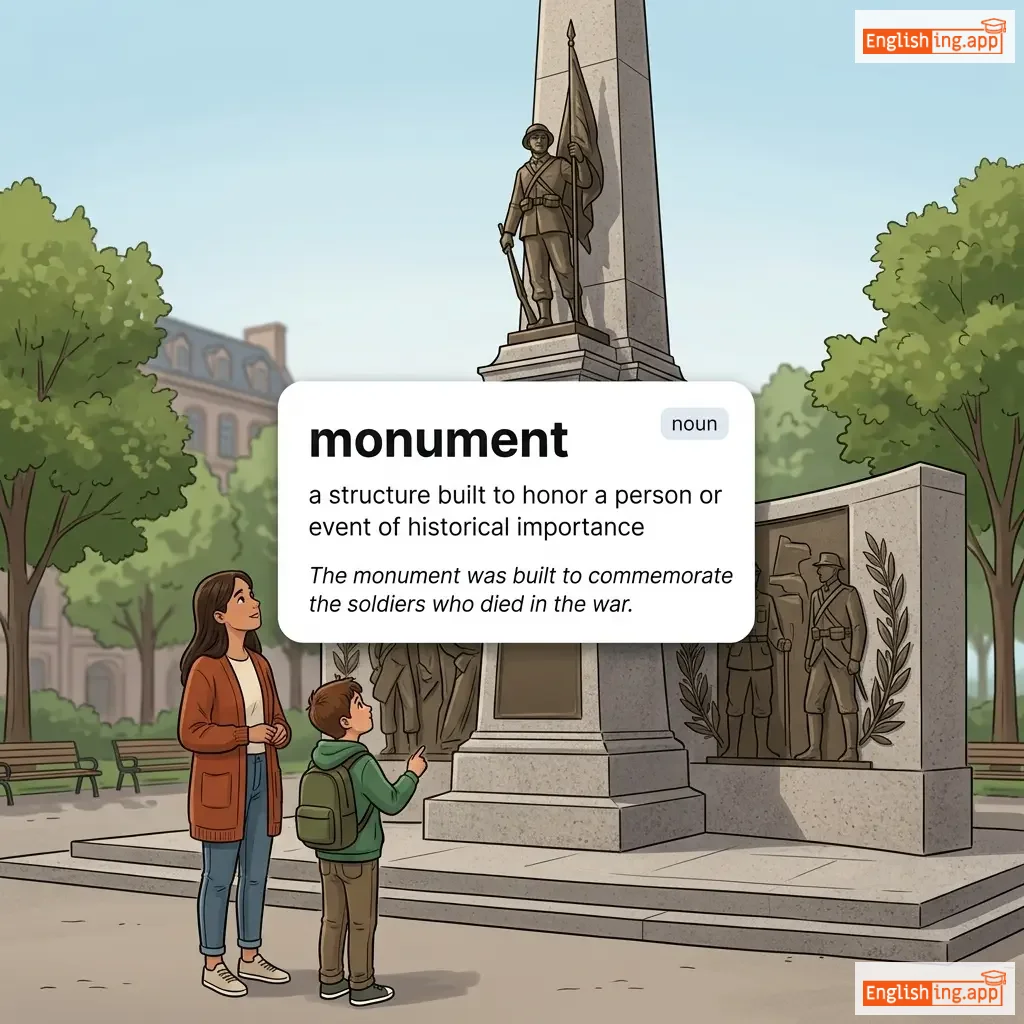
/ˈmɒnjumənt/
noun
••••••
|
|
- •••••• | - •••••• | - •••••• | - •••••• | - •••••• |
a structure built to honor a person or event of historical importance
••••••
|
The monument was built to commemorate the soldiers who died in the war. |
- •••••• |
stand as a monument to |
to serve as a lasting reminder or tribute to someone or something
••••••
|
- •••••• |
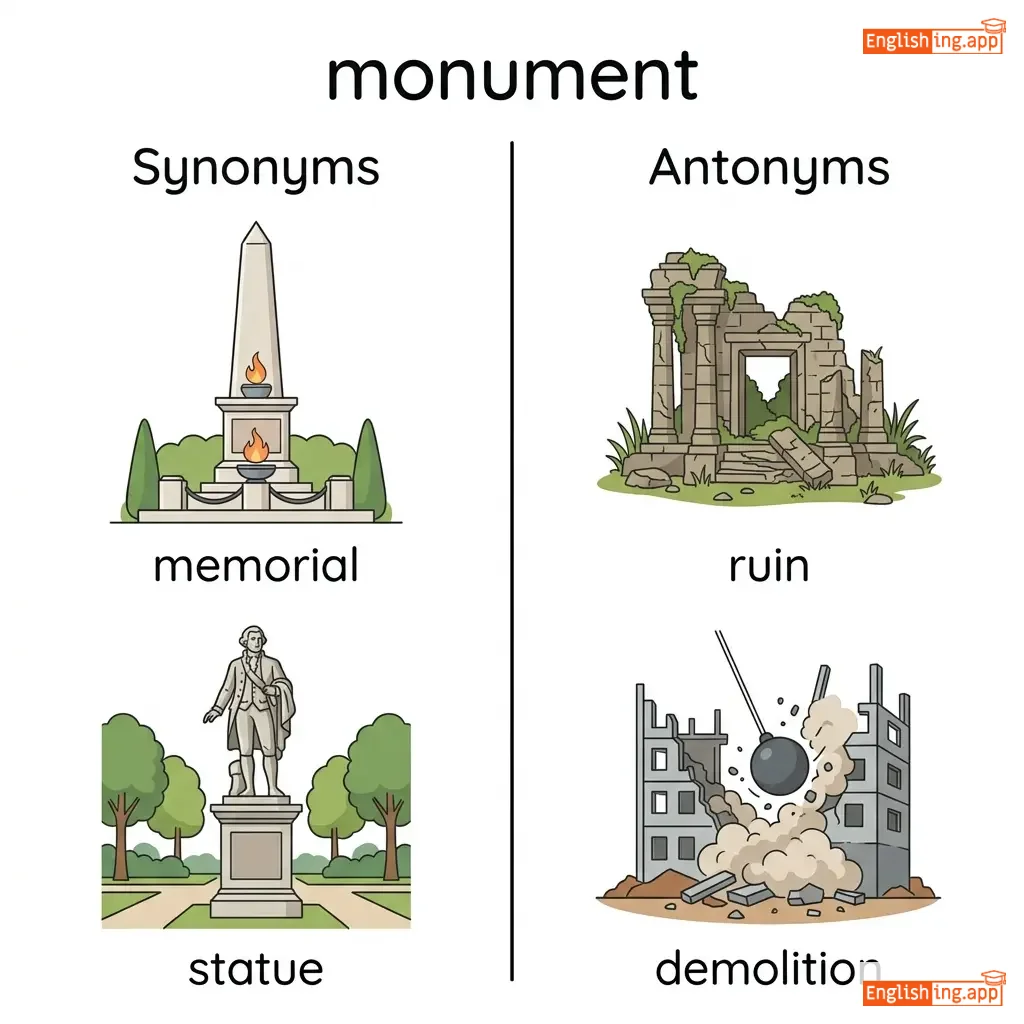
memorial, statue, shrine, landmark, pillar
••••••
|
ruin, demolition, destruction
••••••
|
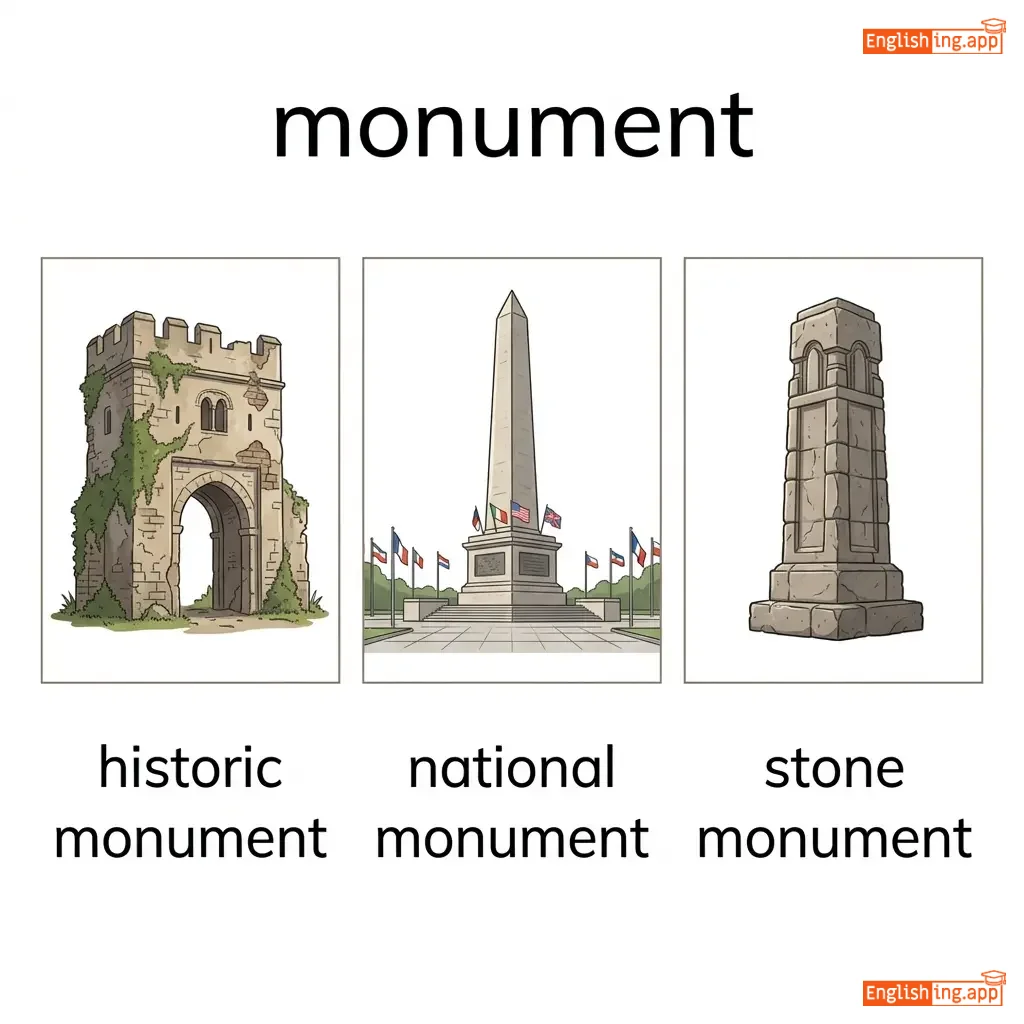
historic monument, national monument, stone monument, ancient monument
••••••
|
No •••••• |
|
#1
📅
|
/ˈmʌnθli/
adjective
(マンスリー)
••••••
|
- •••••• |
月次
getsuki
••••••
|
- •••••• | - •••••• | - •••••• | - •••••• |
happening, done, or published once a month
••••••
|
Employees receive their salary on a monthly basis. |
従業員は毎月給料を受け取ります。
Jūgyōin wa maitsuki kyūryō o ukemashimasu.
••••••
|
monthly report |
a report produced every month
••••••
|
月次報告書
getsuki hōkokusho
••••••
|
every month, periodic, regular, monthly-based
••••••
|
daily, weekly, yearly
••••••
|
monthly payment, monthly report, monthly meeting, monthly subscription
••••••
|
月次は毎月 — '月'を思い出せ!
••••••
|
|
#1
👹
|
/ˈmɒnstər/
noun
(ハピネス)
••••••
|
- •••••• |
幸せ
shiawase
••••••
|
- •••••• | - •••••• | - •••••• | - •••••• |
an imaginary or large frightening creature
••••••
|
The child was afraid that a monster was hiding under the bed.
彼女は賞を受け取ったとき、自分の幸せを隠せなかった。
••••••
|
彼女は賞を受け取ったとき、自分の幸せを隠せなかった。
Kanojo wa shō o uketotta toki, jibun no shiawase o kakusenakatta.
••••••
|
monster hit
幸福の追求
••••••
|
a very successful or popular product or show
••••••
|
幸福の追求
kōfuku no suikyu
••••••
|
beast, creature, giant, demon, ogre
••••••
|
angel, human, friend
••••••
|
monster movie, sea monster, create a monster, monster hit
••••••
|
幸せ = Happiness — 幸せを求めて、いつも歩き続けよう!
••••••
|
|
#1
🐒
|
/ˈmʌŋki/
noun
(モンキー)
••••••
|
- •••••• |
猿
saru
••••••
|
- •••••• | - •••••• | - •••••• | - •••••• |
a small to medium-sized primate with a long tail, known for its playfulness
••••••
|
A monkey was jumping from tree to tree in the forest. |
森の中で猿が木から木へ飛び移っていた。
mori no naka de saru ga ki kara ki e tobi utte ita
••••••
|
monkey business |
silly, mischievous, or dishonest behavior
••••••
|
猿の真似
saru no mane
••••••
|
ape, primate, chimp, baboon, macaque
••••••
|
human, adult
••••••
|
monkey business, monkey tricks, monkey cage, cheeky monkey
••••••
|
猿 = いたずらの名人!🐒
••••••
|
|
#1
🌀
|
/mɪkst/
adjective
(ミックスド)
••••••
|
- •••••• |
混合された
kongou sareta
••••••
|
- •••••• | - •••••• | - •••••• | - •••••• |
consisting of different elements or having varied opinions or feelings
••••••
|
The audience had mixed reactions to the film. |
観客は映画に対して混合した反応を示しました。
Kankyaku wa eiga ni taishite kongō shita hannō o shimeshimashita.
••••••
|
mixed feelings |
having both positive and negative emotions about something
••••••
|
混合した感情
kongō shita kanjō
••••••
|
blended, combined, diverse, varied, assorted
••••••
|
uniform, pure, similar
••••••
|
mixed reaction, mixed group, mixed culture, mixed opinion
••••••
|
混合 = mixされた感情!
••••••
|
|
#1
🙏
|
/ˈmɪʃəneri/
noun
(ミッショナリー)
••••••
|
- •••••• |
宣教師
senkyōshi
••••••
|
- •••••• | - •••••• | - •••••• | - •••••• |
a person sent on a religious mission, especially to promote Christianity in a foreign country
••••••
|
The missionary spent years helping local communities in Africa.
その宣教師はアフリカで地元のコミュニティを支援するために何年も費やしました。
••••••
|
その宣教師はアフリカで地元のコミュニティを支援するために何年も費やしました。
Sono senkyōshi wa Afurika de jimoto no komyuniti o shien suru tame ni nannen mo tsuiyashimashita.
••••••
|
missionary work
宣教活動
••••••
|
religious work aimed at spreading faith or helping others
••••••
|
宣教活動
senkyō katsudō
••••••
|
evangelist, preacher, apostle, minister, messenger
••••••
|
nonbeliever, secularist
••••••
|
Christian missionary, missionary work, missionary society, missionary school
••••••
|
宣教師は‘ミッション’を持っていて、信仰を広めるために出発します!
••••••
|
|
#1
🔽
|
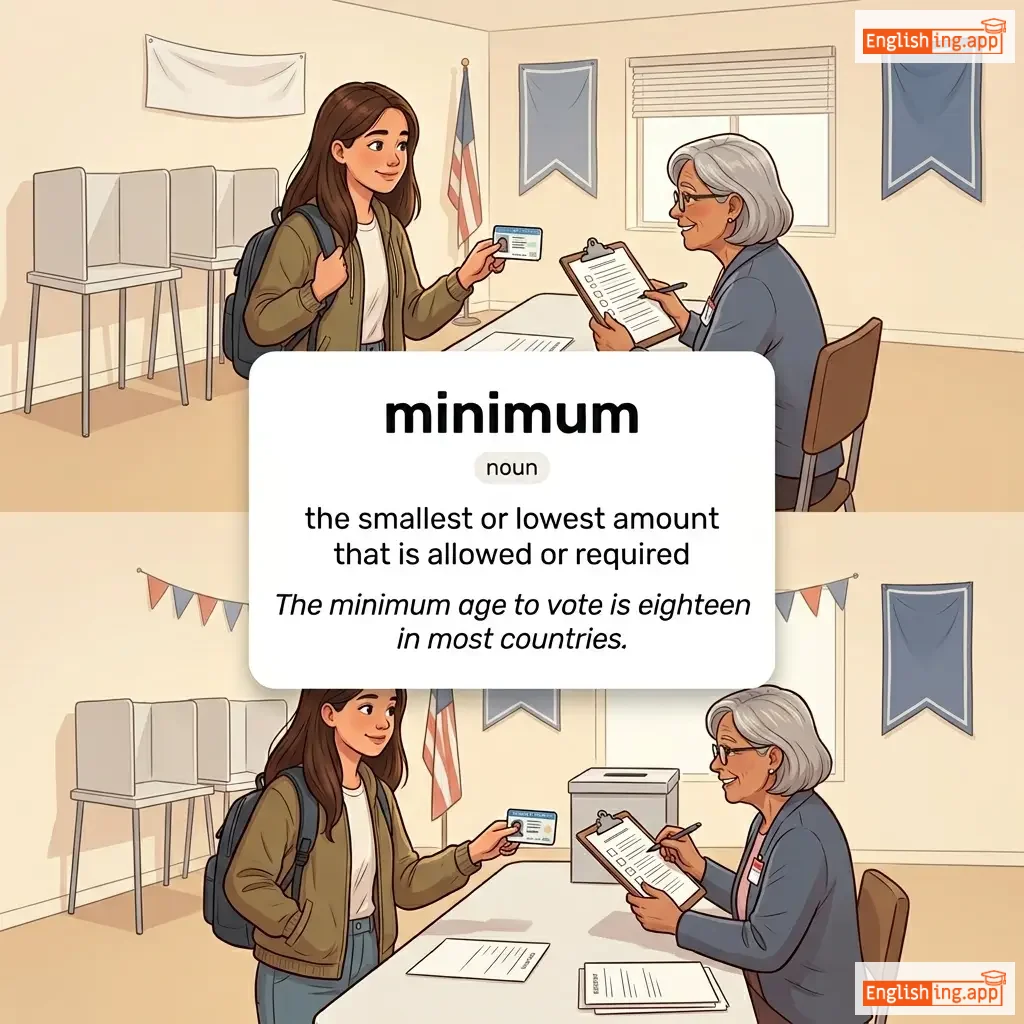
/ˈmɪnɪməm/
noun
(ミニマム)
••••••
|
|
最小限
saishōgen
••••••
|
- •••••• | - •••••• | - •••••• | - •••••• |
the smallest or lowest amount that is allowed or required
••••••
|
The minimum age to vote is eighteen in most countries. |
投票のための最小年齢は、ほとんどの国で18歳です。
Tōhyō no tame no saishō nenrei wa, hotondo no kuni de 18-sai desu.
••••••
|
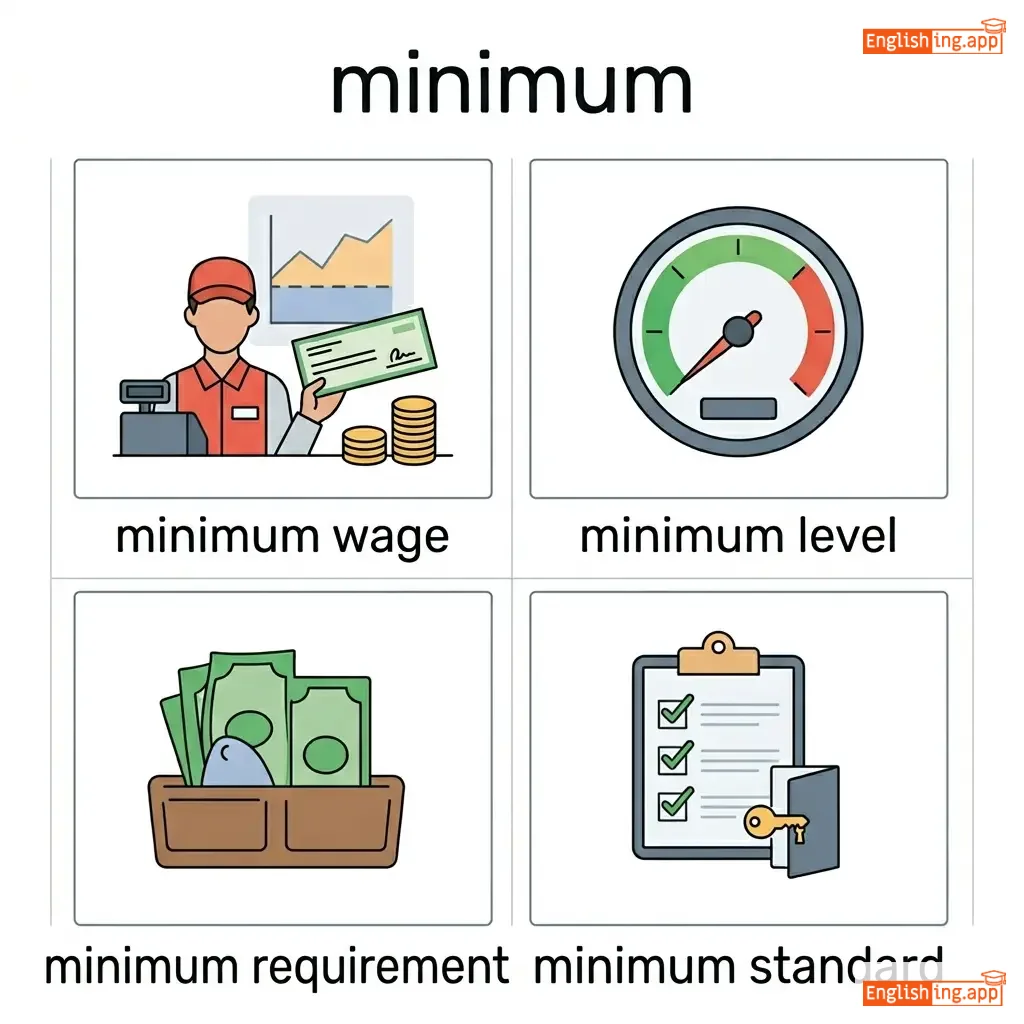
minimum wage |
the lowest amount of pay that employers can legally give workers
••••••
|
最低賃金
saitei chingin
••••••
|
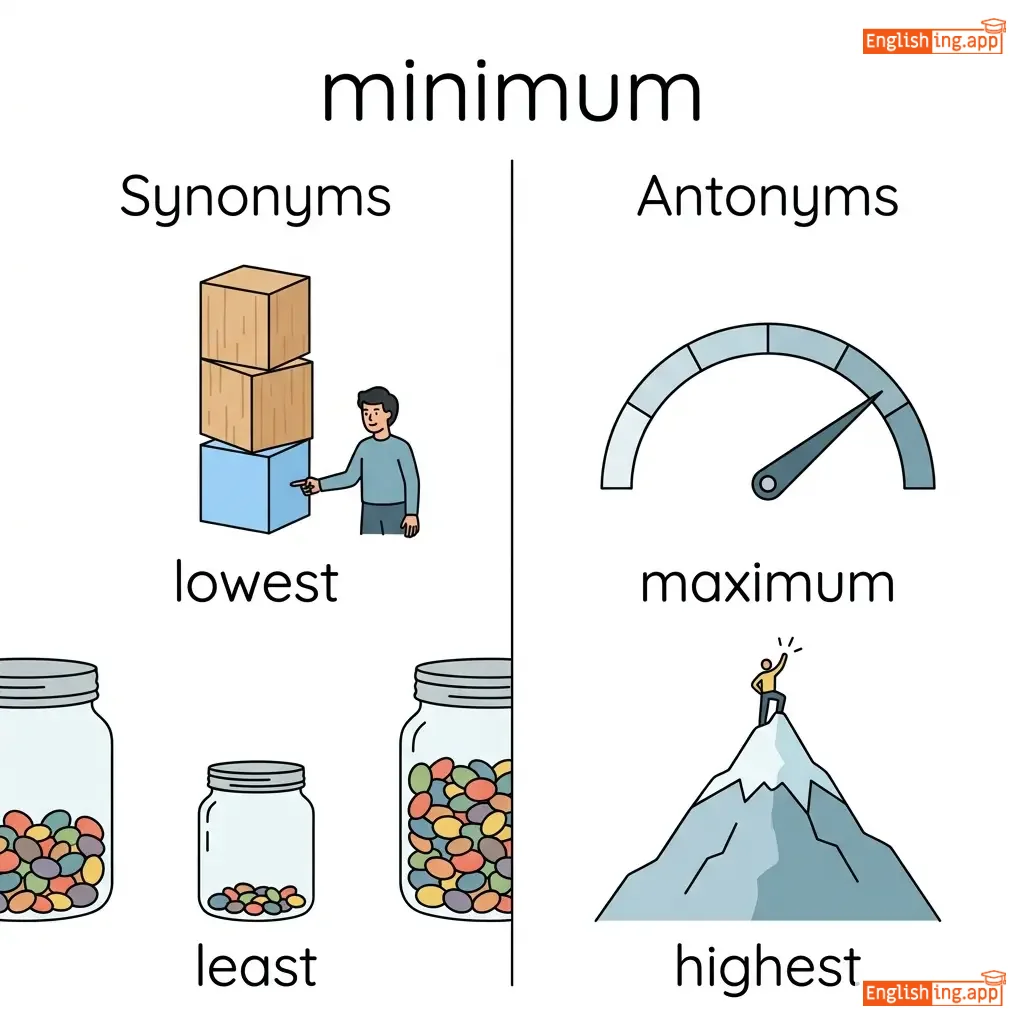
lowest, least, smallest, base
••••••
|
maximum, highest
••••••
|
minimum wage, minimum level, minimum requirement, minimum value
••••••
|
Minimum — 最も小さい量
••••••
|
|
#1
⚖️
|
/ˈmɪnɪməl/
adjective
(ミニマル)
••••••
|
- •••••• |
最小限
saishōgen
••••••
|
- •••••• | - •••••• | - •••••• | - •••••• |
the smallest or least amount possible
••••••
|
The damage to the car was minimal after the accident. |
事故後、車の損傷は最小限でした。
Jiko-go, kuruma no sonshō wa saishōgen deshita.
••••••
|
minimal effort |
doing something with the least possible effort
••••••
|
最小限の努力
saishōgen no doryoku
••••••
|
least, smallest, slight, negligible, tiny
••••••
|
maximum, major, large
••••••
|
minimal effort, minimal cost, minimal damage, minimal risk
••••••
|
Minimalは最小の努力を意味します。
••••••
|
|
#1
🏬
|
/ˈmɑːrkɪtˌpleɪs/
noun
(マーケットプレイス)
••••••
|
- •••••• |
市場
ichiba
••••••
|
- •••••• | - •••••• | - •••••• | - •••••• |
a place where goods and services are bought and sold; an open area for trade
••••••
|
The town's marketplace is crowded every Friday morning. |
街の市場は毎週金曜日の朝に混雑しています。
Machi no ichiba wa maishū kin'yōbi no asa ni konzatsu shiteimasu.
••••••
|
- •••••• | - •••••• | - •••••• |
bazaar, fair, mart, trading center, exchange
••••••
|
home, residence
••••••
|
online marketplace, local marketplace, global marketplace, bustling marketplace
••••••
|
Market + place = 商売の場所 — 市場は取引の場所です。
••••••
|
|
#1
🏭
|
/mɪl/
noun
(ミル)
••••••
|
- •••••• |
製粉所
seifunsho
••••••
|
- •••••• | - •••••• | - •••••• | - •••••• |
a building equipped with machinery for grinding grain or manufacturing goods
••••••
|
The old flour mill has been converted into a museum.
古い小麦粉工場は博物館に改装されました。
••••••
|
古い小麦粉工場は博物館に改装されました。
Furui komugiko kōjō wa hakubutsukan ni kaisō saremashita.
••••••
|
grind to a halt
停止するまで挽く
••••••
|
to slowly stop functioning or progressing
••••••
|
徐々に停止する
jojō ni teishi suru
••••••
|
factory, plant, workshop, foundry
••••••
|
field, farm
••••••
|
flour mill, textile mill, paper mill, steel mill
••••••
|
Mill は製粉所 — 製粉所では小麦が粉砕されます。
••••••
|
|
#1
🕊️
|
/maɪˈɡreɪʃən/
noun
(maɪˈɡreɪʃən)
••••••
|
- •••••• |
移動
idou
••••••
|
- •••••• | - •••••• | - •••••• | - •••••• |
the movement of people or animals from one place to another, often for better living conditions or seasonal reasons
••••••
|
The annual migration of birds is a fascinating natural event. |
鳥の毎年の移動は魅力的な自然現象です。
Tori no mainen no idou wa miryokuteki na shizen genshō desu.
••••••
|
mass migration |
a large movement of people from one region to another
••••••
|
大規模な移動
daikibo na idou
••••••
|
relocation, movement, exodus, resettlement, journey
••••••
|
settlement, stay
••••••
|
bird migration, human migration, seasonal migration, migration pattern
••••••
|
移動は動きのことです。覚えておいて '移動は動き'!
••••••
|
|
#1
🎯
|
/mɪdst/
noun
(mɪdst)
••••••
|
- •••••• |
真ん中
mannaka
••••••
|
- •••••• | - •••••• | - •••••• | - •••••• |
the middle part or position of something
••••••
|
In the midst of chaos, she remained calm. |
混乱の真ん中で、彼女は冷静を保ちました。
Konran no mannaka de, kanojo wa reisei wo tamochimashita.
••••••
|
in the midst of |
in the middle of or surrounded by
••••••
|
真ん中で
mannaka de
••••••
|
center, middle, core, heart
••••••
|
edge, outside, border
••••••
|
in the midst, midst of war, midst of trouble, midst of crowd
••••••
|
Midstは真ん中を意味する — 真ん中はmidstだ!
••••••
|
|
#1
🌙
|
/ˈmɪdnaɪt/
noun
(mɪdnaɪt)
••••••
|
- •••••• |
真夜中
mayonaka
••••••
|
- •••••• | - •••••• | - •••••• | - •••••• |
twelve o'clock at night; the middle of the night
••••••
|
He reached home just after midnight. |
彼は真夜中過ぎに家に着いた。
Kare wa mayonaka sugi ni ie ni tsuita.
••••••
|
burn the midnight oil |
to work late into the night
••••••
|
夜遅くまで働く
yoru osoku made hataraku
••••••
|
nighttime, darkness, late night, twelve o’clock
••••••
|
noon, midday
••••••
|
at midnight, past midnight, midnight snack, midnight train
••••••
|
真夜中は夜の真ん中。夜の最中に真夜中が来る!
••••••
|
|
#1
🏠
|
/ˈmɪdəl klɑːs/
adjective
(ミドルクラス)
••••••
|
|
中産階級
chūsan kaikyū
••••••
|
- •••••• | - •••••• | - •••••• | - •••••• |
belonging to the social group between the upper and working class, typically with moderate income and education
••••••
|
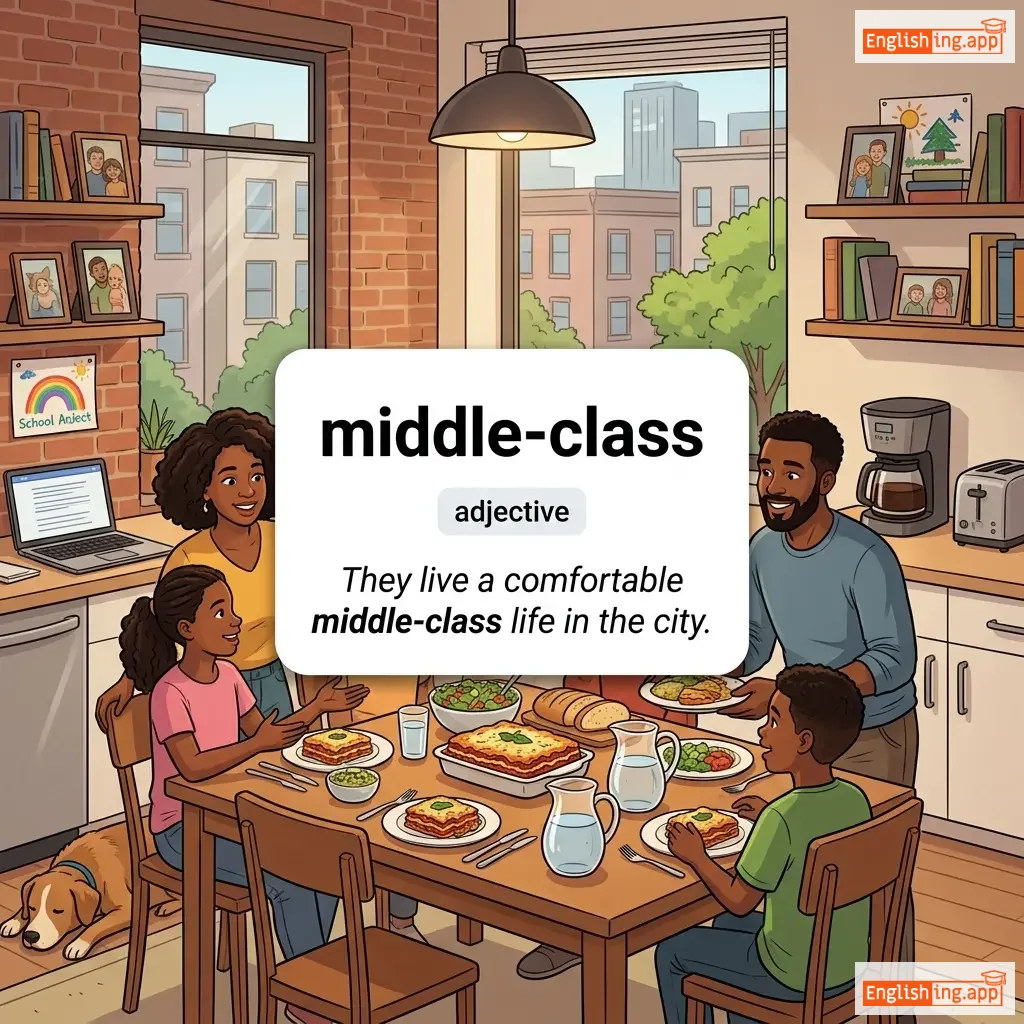
They live a comfortable middle-class life in the city. |
彼らは都市で快適な中産階級の生活を送っています。
Karera wa toshi de kaiteki na chūsan kaikyū no seikatsu o okutteimasu.
••••••
|
middle-class values |
beliefs and lifestyle associated with moderate-income families
••••••
|
中産階級の価値観
chūsan kaikyū no kachikan
••••••
|
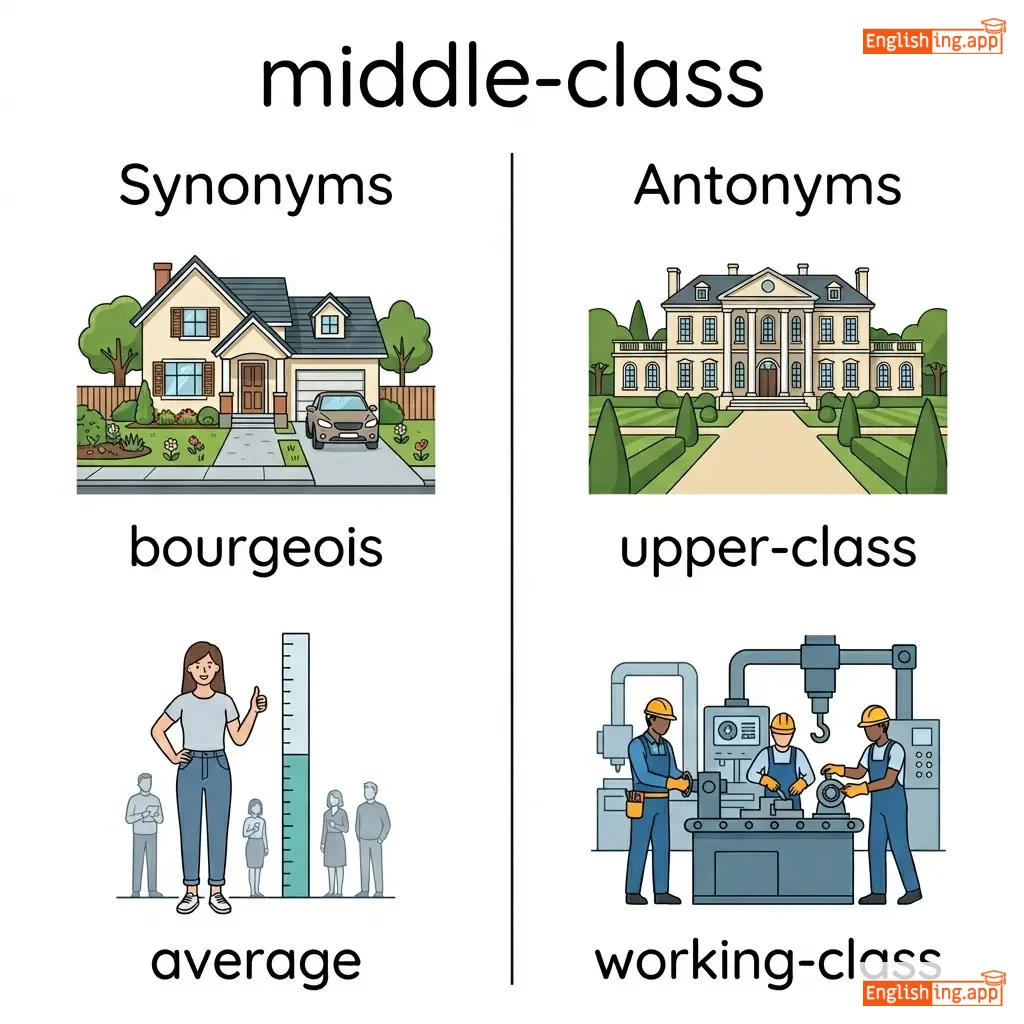
bourgeois, average, moderate, respectable
••••••
|
upper-class, working-class, poor
••••••
|
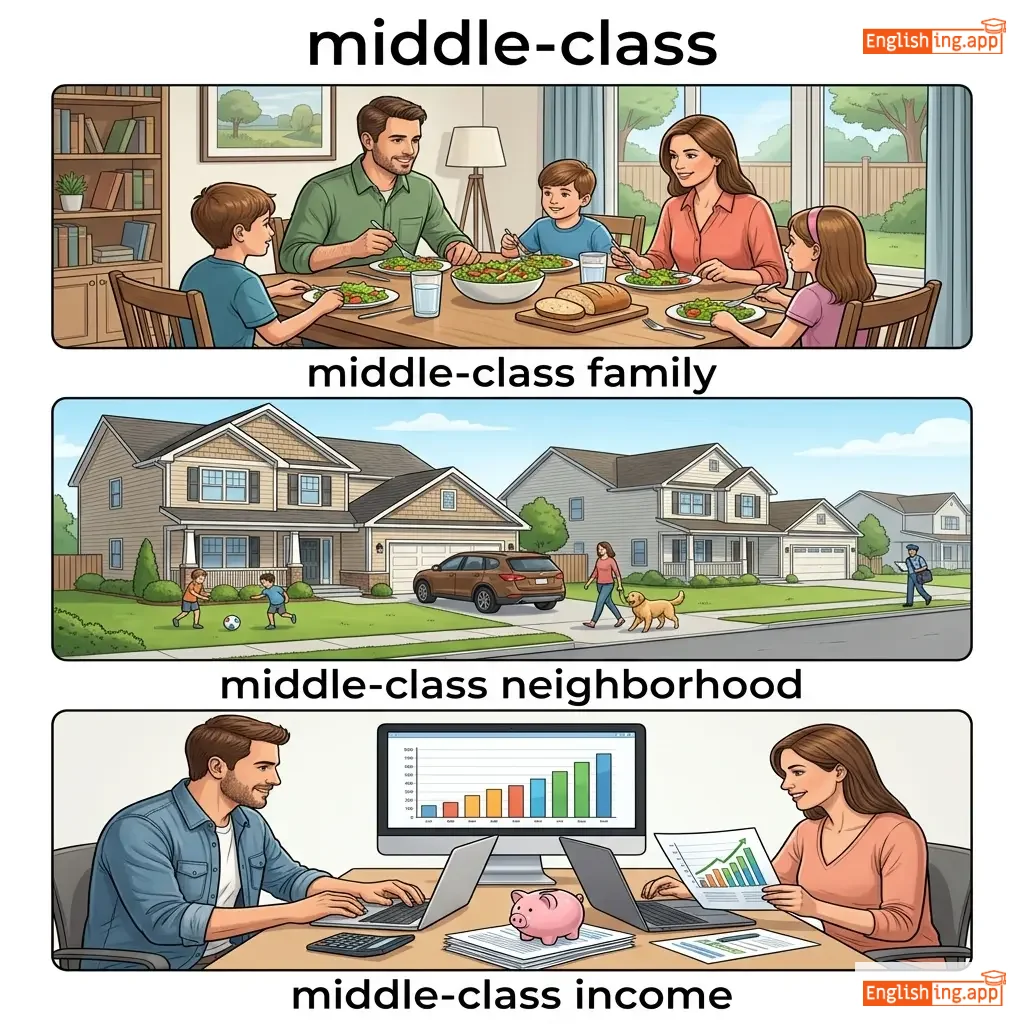
middle-class family, middle-class neighborhood, middle-class income
••••••
|
中産階級 = 上と下の間にあるバランス
••••••
|
|
#1
💰
|
/ˈmɜːrtʃənt/
noun
(マーチャント)
••••••
|
- •••••• |
商人
shōnin
••••••
|
- •••••• | - •••••• | - •••••• | - •••••• |
a person or company involved in the trade of goods, especially in large quantities
••••••
|
The merchant sold spices from distant lands. |
商人は遠くの土地から香辛料を売っていた。
Shōnin wa tōku no tochi kara kōshinryō o utte ita.
••••••
|
sea merchant |
a trader who conducts business by sea
••••••
|
海上商人
kaijō shōnin
••••••
|
trader, dealer, seller, vendor, businessman
••••••
|
buyer, customer, consumer
••••••
|
merchant ship, merchant trade, local merchant, online merchant
••••••
|
商人、まるで市場で活躍している人
••••••
|
|
#1
🧠
|
/ˈmɛntəli/
adverb
(メンタリー)
••••••
|
- •••••• |
精神的に
seishinteki ni
••••••
|
- •••••• | - •••••• | - •••••• | - •••••• |
in a way that relates to the mind or intellect rather than the body
••••••
|
She felt mentally exhausted after the long exam.
彼女は長い試験の後で精神的に疲れていると感じていました。
••••••
|
彼女は長い試験の後で精神的に疲れていると感じていました。
Kanojo wa nagai shiken no ato de seishinteki ni tsukarete iru to kanjite imashita.
••••••
|
mentally prepared
精神的に準備された
••••••
|
ready in mind for a challenge or situation
••••••
|
精神的に準備された
seishinteki ni junbi sareta
••••••
|
psychologically, intellectually, cognitively, emotionally
••••••
|
physically, bodily
••••••
|
mentally strong, mentally ill, mentally prepared, mentally active
••••••
|
Mental = 心, だから 'mentally' = 精神的に。
••••••
|
|
#1
🧊
|
/mɛlt/
verb
(メルト)
••••••
|
|
溶ける
tokeru
••••••
|
melted
メルテッド
••••••
|
melted
メルテッド
••••••
|
melts
メルツ
••••••
|
melting
メルティング
••••••
|
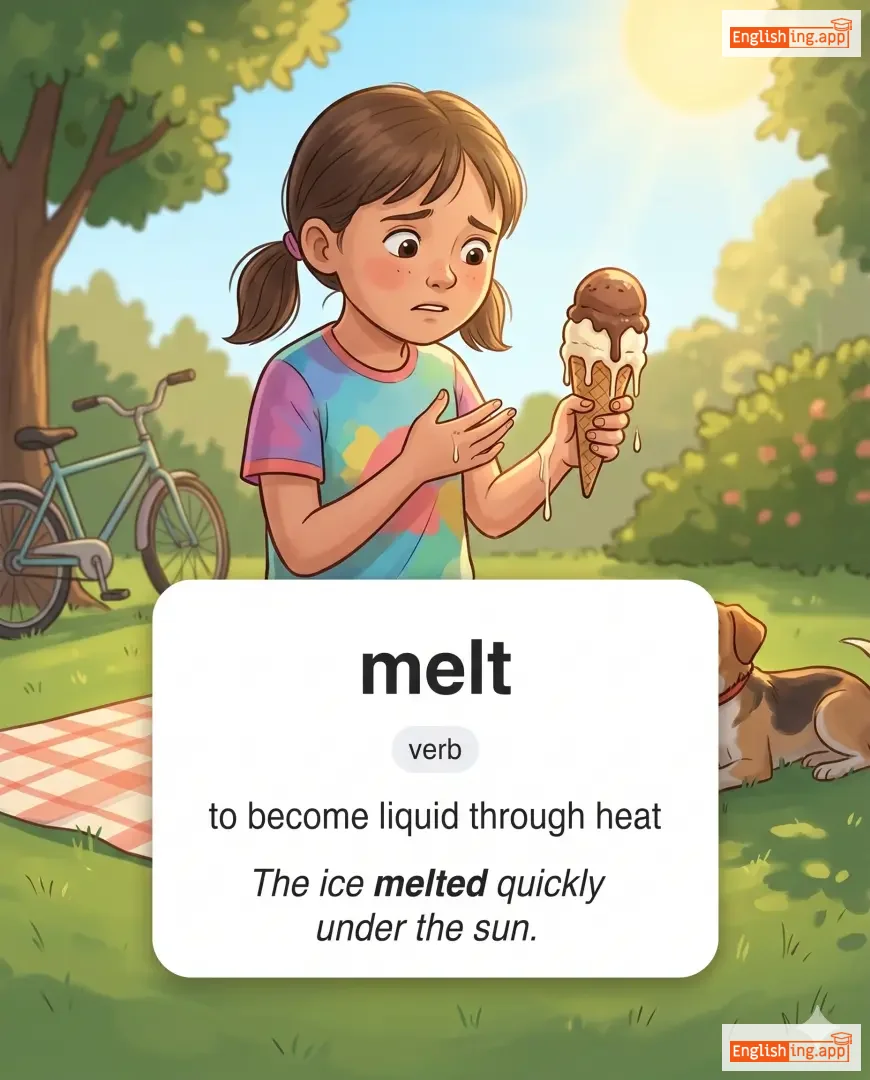
to become liquid through heat
••••••
|
The ice melted quickly under the sun.
アイスが太陽の下で早く溶けた。
••••••
|
氷は太陽の下で素早く溶けました。
Kōri wa taiyō no shita de subayaku tokemashita.
••••••
|
melt someone's heart
誰かの心を溶かす
••••••
|
to make someone feel love or sympathy
••••••
|
誰かの心を溶かす
dareka no kokoro wo tokasu
••••••
|
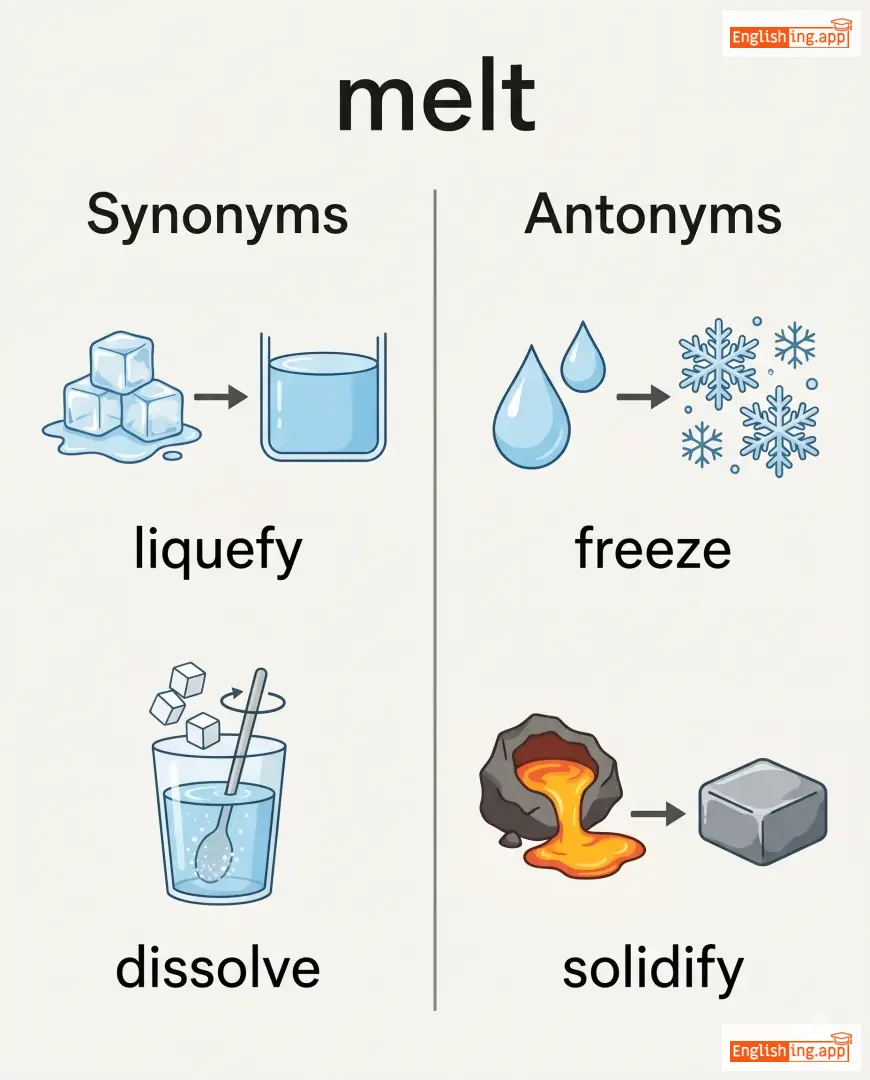
liquefy, dissolve, thaw, soften, fuse
••••••
|
freeze, solidify
••••••
|
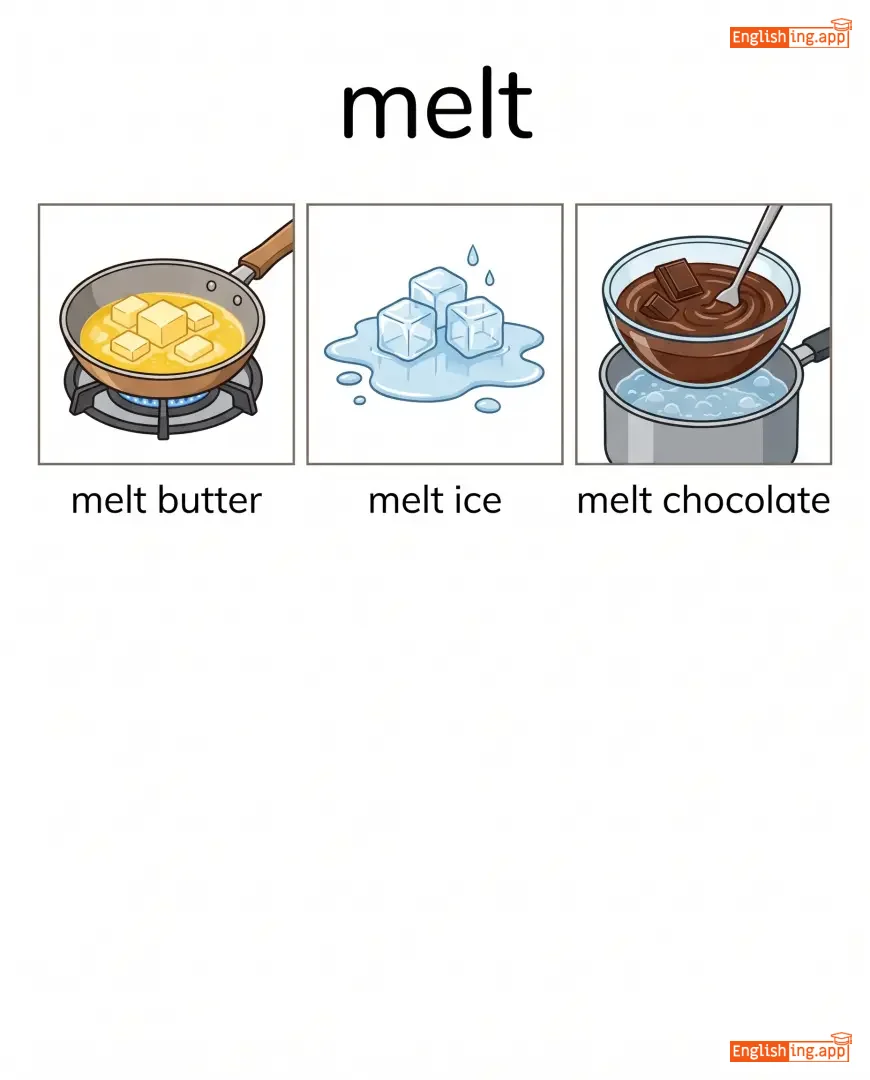
melt butter, melt ice, melt chocolate, melt in the sun
••••••
|
Meltは溶ける、氷が溶けるように。
••••••
|
|
#1
🥇
|
/ˈmɛdəl/
noun
(メダル)
••••••
|
- •••••• |
メダル
medaru
••••••
|
- •••••• | - •••••• | - •••••• | - •••••• |
a piece of metal given as an award for achievement
••••••
|
She won a gold medal in the 100-meter race. |
彼女は100メートル競走で金メダルを獲得しました。
Kanojo wa 100 mētoru kyōsō de kin medaru o kakutoku shimashita.
••••••
|
medal of honor |
a high award for bravery or service
••••••
|
名誉メダル
meiyo medaru
••••••
|
award, trophy, prize, badge, honor
••••••
|
penalty, disqualification
••••••
|
gold medal, silver medal, bronze medal, win a medal, award a medal
••••••
|
メダルは‘金属’ — 勝者への栄誉を示す賞です 🥇
••••••
|
|
#1
⚙️
|
/məˈkænɪkəl/
adjective
(ˈhæpinəs)
••••••
|
- •••••• |
幸せ
shiawase
••••••
|
- •••••• | - •••••• | - •••••• | - •••••• |
relating to machines or the way they work
••••••
|
She has a good understanding of mechanical systems. |
彼女は賞を受け取ったとき、自分の幸せを隠すことができませんでした。
Kanojo wa shō o uketotta toki, jibun no shiawase o kakusu koto ga dekimasen deshita.
••••••
|
mechanical mind |
a person who easily understands and works with machines
••••••
|
幸せを追求する
shiawase o tsuikyū suru
••••••
|
automated, machine-driven, technical, robotic, motorized
••••••
|
manual, emotional, natural
••••••
|
mechanical system, mechanical engineer, mechanical failure, mechanical process
••••••
|
幸せは光のように人生を照らす。
••••••
|
|
#1
🔧
|
/məˈkænɪk/
noun
(メカニック)
••••••
|
- •••••• |
メカニック
mekanikku
••••••
|
- •••••• | - •••••• | - •••••• | - •••••• |
a person who repairs and maintains machines or vehicles
••••••
|
The mechanic fixed the engine in less than an hour.
そのメカニックは1時間以内にエンジンを修理しました。
••••••
|
そのメカニックは1時間以内にエンジンを修理しました。
Sono mekanikku wa 1 jikan inai ni enjin wo shuuri shimashita.
••••••
|
grease monkey
グリースモンキー
••••••
|
a slang term for a car mechanic
••••••
|
自動車修理工を指すスラング
Jidousha shuuri kou wo sasu surangu
••••••
|
technician, repairman, engineer, fitter, machinist
••••••
|
driver, operator
••••••
|
car mechanic, skilled mechanic, aircraft mechanic, auto mechanic
••••••
|
メカニックは機械の修理の専門家だよ 🔧
••••••
|
|
#1
💡
|
/ˈmiːnɪŋfəl/
adjective
(ミーニングフル)
••••••
|
- •••••• |
意味のある
imi no aru
••••••
|
- •••••• | - •••••• | - •••••• | - •••••• |
having purpose, value, or significance
••••••
|
He gave a meaningful smile before leaving the room. |
彼は部屋を出る前に意味のある笑顔を見せた。
Kare wa heya o deru mae ni imi no aru egao o miseta.
••••••
|
make a meaningful contribution |
to add something valuable or significant to a situation
••••••
|
意味のある貢献をする
imi no aru kōken o suru
••••••
|
significant, purposeful, valuable, expressive, important
••••••
|
meaningless, trivial, empty
••••••
|
meaningful conversation, meaningful relationship, meaningful impact, meaningful work
••••••
|
意味のある、星のように輝いて人生に価値を与えるものです。
••••••
|
|
#1
🔢
|
/ˌmæθəˈmætɪks/
noun
(マスマティクス)
••••••
|
- •••••• |
数学
sugaku
••••••
|
- •••••• | - •••••• | - •••••• | - •••••• |
the abstract science of number, quantity, and space; the study of numbers and their operations
••••••
|
Mathematics helps us understand patterns in nature and the universe. |
数学は私たちが自然界や宇宙のパターンを理解するのに役立ちます。
Sugaku wa watashitachi ga shizenkai ya uchuu no pataan wo rikai suru no ni yakudachimasu.
••••••
|
- •••••• | - •••••• | - •••••• |
math, arithmetic, geometry, algebra, calculus
••••••
|
n/a, none
••••••
|
study mathematics, mathematics teacher, pure mathematics, applied mathematics
••••••
|
数学は宇宙を解明するカギです!
••••••
|
|
#1
👫
|
/meɪt/
noun
(メイト)
••••••
|
- •••••• |
友達, 相棒
tomodachi, aibou
••••••
|
- •••••• | - •••••• | - •••••• | - •••••• |
a friend or companion; a partner in marriage or reproduction
••••••
|
He went fishing with his old school mate. |
彼は古い学校の友達と釣りに行きました。
Kare wa furui gakkou no tomodachi to tsuri ni ikimashita.
••••••
|
best mate |
a very close friend
••••••
|
親友
shinyuu
••••••
|
friend, companion, partner, buddy, ally
••••••
|
enemy, foe, rival
••••••
|
close mate, class mate, team mate, life mate
••••••
|
Mateは友達を意味します — 'mate'は友達として考えてみてください。
••••••
|
Vocabulary Quiz
Test your vocabulary by matching words with their translations or meanings.
Login to take the quiz
Comments (0)
Share your thoughts and join the discussion.
Join the discussion by logging in
Login to CommentNo comments yet
Be the first to share your thoughts!