

翻訳
過去
過去分詞
三人称単数
動名詞
意味
例文
例文の翻訳
同義語
対義語
コロケーション
ニーモニック


Swipe left or right, or use the buttons. Tap image to zoom.
例文の翻訳
単語
Lesson 93Lesson 93 - マスクトグル
|
絵文字
|
単語 | Images | 翻訳 | 過去 | 過去分詞 | 三人称単数 | 動名詞 | 意味 | 例文 | 例文の翻訳 | 表現例 | 表現例の意味 | 表現例の翻訳 | 同義語 | 対義語 | コロケーション | ニーモニック |
|---|---|---|---|---|---|---|---|---|---|---|---|---|---|---|---|---|---|
|
#2761
🔒
|
/ˈdjʊərəns/
noun
(デュランス)
••••••
|
- •••••• |
監禁
kankin
••••••
|
- •••••• | - •••••• | - •••••• | - •••••• |
imprisonment or confinement
••••••
|
The prisoner spent years in durance before his release. |
囚人は解放される前に数年間監禁されていた。
Shūjin wa kaihō sareru mae ni sūnenkan kankin sarete ita.
••••••
|
durance vile |
an old-fashioned expression meaning imprisonment
••••••
|
厳しい監禁
Kibishī kankin
••••••
|
captivity, confinement, imprisonment, incarceration
••••••
|
freedom, liberty, release
••••••
|
long durance, durance vile, years of durance
••••••
|
Duranceは刑務所でのDutyのようなもの - 監禁
••••••
|
|
#2762
📖
|
/dɪsˈlɛksiə/
noun
(ディスレクシア)
••••••
|
- •••••• |
ディスレクシア
disurekushia
••••••
|
- •••••• | - •••••• | - •••••• | - •••••• |
A learning disorder characterized by difficulty reading due to problems identifying speech sounds and decoding words.
••••••
|
The teacher used special methods to help the student with dyslexia.
先生はディスレクシアの学生を助けるために特別な方法を使いました。
••••••
|
先生はディスレクシアの学生を助けるために特別な方法を使いました。
Sensei wa disurekushia no gakusei o tasukeru tame ni tokubetsu na hōhō o tsukaimashita.
••••••
|
- •••••• | - •••••• | - •••••• |
reading disorder, learning disability, word blindness
••••••
|
fluency, literacy
••••••
|
diagnosed with dyslexia, overcome dyslexia, dyslexia support
••••••
|
dyslexiaはディスレクシア、読むのが難しい
••••••
|
|
#2763
🤢
|
/ˈdɪsənˌtɛri/
noun
(ディスエントリー)
••••••
|
- •••••• |
腸の病気(血液と粘液を伴う下痢)
chou no byouki (ketsueki to nen'eki wo tomonau geri)
••••••
|
- •••••• | - •••••• | - •••••• | - •••••• |
An infection of the intestines resulting in severe diarrhea with blood and mucus.
••••••
|
Many soldiers suffered from dysentery during the war.
多くの兵士たちは戦争中にディスエントリーに苦しんだ。
••••••
|
多くの兵士たちは戦争中にディスエントリーに苦しんだ。
Ookuno heishitachi wa sensou-chuu ni disentry ni kurushinda.
••••••
|
- •••••• | - •••••• | - •••••• |
diarrhea, gastroenteritis, bowel infection
••••••
|
health, wellness
••••••
|
amoebic dysentery, bacterial dysentery, outbreak of dysentery
••••••
|
ディスエントリー:ディス = 悪い、エントリー = 腸に入る
••••••
|
|
#2764
⚠️
|
/dɪs-/
prefix
(ディス-)
••••••
|
- •••••• |
異常、悪い、困難、または欠陥を意味する接頭辞
ijou, warui, konnan, matawa kekkan o imi suru settouji
••••••
|
- •••••• | - •••••• | - •••••• | - •••••• |
A prefix meaning abnormal, bad, difficult, or impaired.
••••••
|
Words like 'dysfunction' and 'dyslexia' use the prefix dys- to indicate difficulty or impairment. |
'ディスファンクション'や'ディスレクシア'のような言葉は、困難や障害を示すためにディス-という接頭辞を使用します。
'Disfankushon' ya 'Disurekushia' no you na kotoba wa, konnan ya shougai o shimesu tame ni dis- to iu settouji o shiyou shimasu.
••••••
|
- •••••• | - •••••• | - •••••• |
abnormal, impaired, faulty
••••••
|
normal, healthy, functional
••••••
|
dysfunction, dyspepsia, dyslexia, dystopia
••••••
|
dysはdis (dis)問題を意味します - 異常または困難な状態
••••••
|
|
#2765
🧮
|
/daɪn/
noun
(ダイン)
••••••
|
- •••••• |
力の単位(センチメートル・グラム・秒の単位系)
Chikara no tan'i (senchimētoru-guramu-byō no tan'ikei)
••••••
|
- •••••• | - •••••• | - •••••• | - •••••• |
A unit of force in the centimeter-gram-second (cgs) system equal to 10⁻⁵ newtons.
••••••
|
The physicist measured the force in dynes. |
物理学者はダインで力を測定しました。
Butsurigakusha wa dain de chikara o sokutei shimashita.
••••••
|
- •••••• | - •••••• | - •••••• |
force unit, cgs unit
••••••
|
null, none
••••••
|
measure in dynes, dyne per square centimeter
••••••
|
ダイン(dyne)は小さな力の単位です
••••••
|
|
#2766
⚡
|
/ˈdaɪnəˌmoʊ/
noun
(ダイナモ)
••••••
|
- •••••• |
電気を発生させる機械; 大きなエネルギーと熱意を持つ人物
denki o hassei saseru kikai; ōkina enerugī to netsui o motsu jinbutsu
••••••
|
- •••••• | - •••••• | - •••••• | - •••••• |
A machine that generates electricity; a person with great energy and enthusiasm.
••••••
|
She is the real dynamo behind the success of the company.
彼女は会社の成功の背後にある本物のダイナモです。
••••••
|
彼女は会社の成功の背後にある本物のダイナモです。
Kanojo wa kaisha no seikō no haigo ni aru honmono no dainamo desu.
••••••
|
- •••••• | - •••••• | - •••••• |
generator, powerhouse, live wire, achiever, go-getter
••••••
|
idler, sluggard, weakling
••••••
|
electric dynamo, human dynamo, dynamo machine
••••••
|
ダイナモ = エネルギー源、常に動き続ける力!
••••••
|
|
#2767
⚡
|
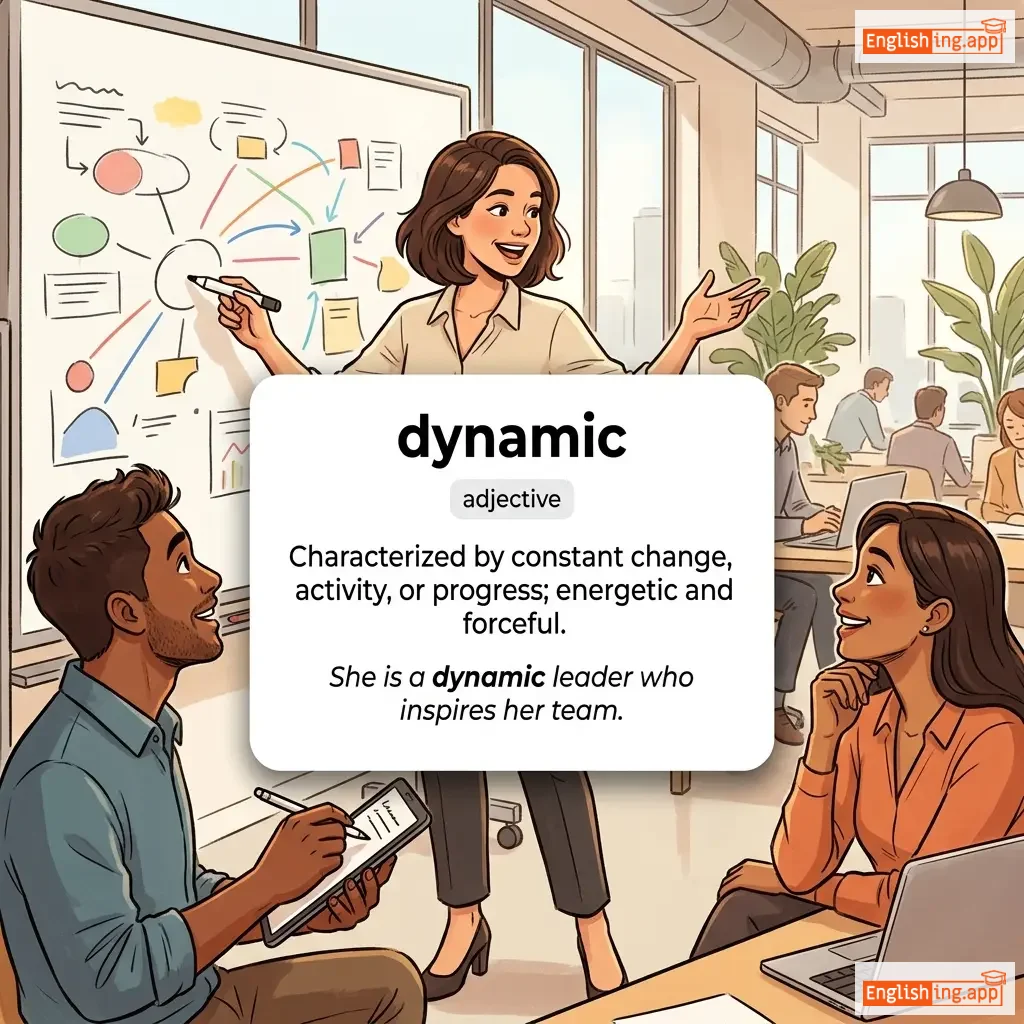
/daɪˈnæmɪk/
adjective
(ダイナミック)
••••••
|
|
ダイナミック
dainamikku
••••••
|
- •••••• | - •••••• | - •••••• | - •••••• |
Characterized by constant change, activity, or progress; energetic and forceful.
••••••
|
She is a dynamic leader who inspires her team. |
彼女はチームを鼓舞するダイナミックなリーダーです。
Kanojo wa chīmu o kobu suru dainamikku na rīdā desu.
••••••
|
dynamic duo |
Two people who work together very effectively.
••••••
|
ダイナミックデュオ
dainamikku dyuo
••••••
|
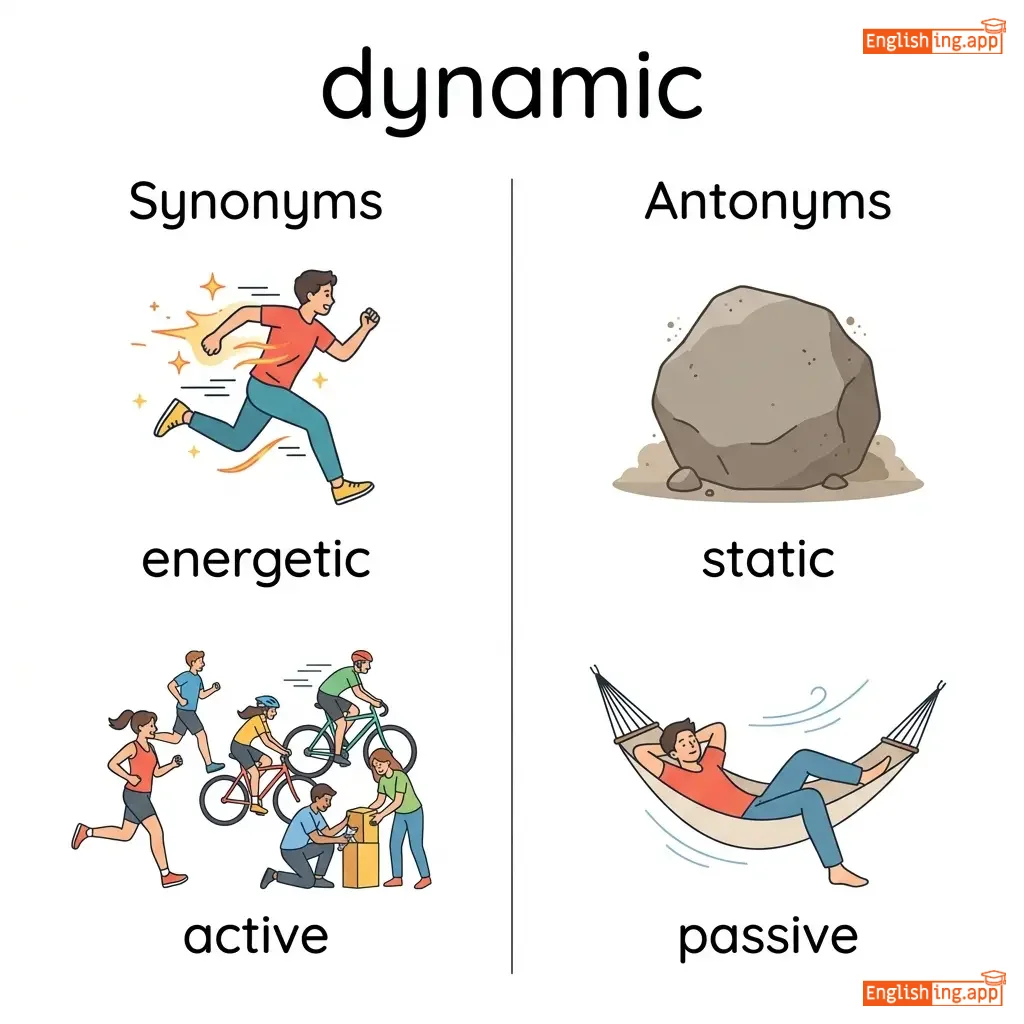
energetic, active, powerful, forceful, lively
••••••
|
static, passive, inactive
••••••
|
dynamic leader, dynamic personality, dynamic growth, dynamic process
••••••
|
ダイナミック → ダイナモのように強力でダイナミック
••••••
|
|
#2768
⏳
|
/ˈdwɪndlɪŋ/
adjective
(ドウィンドリング)
••••••
|
- •••••• |
減少
genshō
••••••
|
- •••••• | - •••••• | - •••••• | - •••••• |
Gradually reducing in number, size, or strength.
••••••
|
The villagers relied on dwindling water supplies.
村人たちは減少していく水の供給に依存していた。
••••••
|
村人たちは減少していく水の供給に依存していた。
Murabito-tachi wa genshō shite iku mizu no kyōkyū ni izon shite ita.
••••••
|
- •••••• | - •••••• | - •••••• |
shrinking, decreasing, diminishing, reducing, lessening
••••••
|
increasing, growing, rising
••••••
|
dwindling resources, dwindling supplies, dwindling population, dwindling hope
••••••
|
Dwindling → dwindling resources は、減少していく資源を意味する。
••••••
|
|
#2769
📉
|
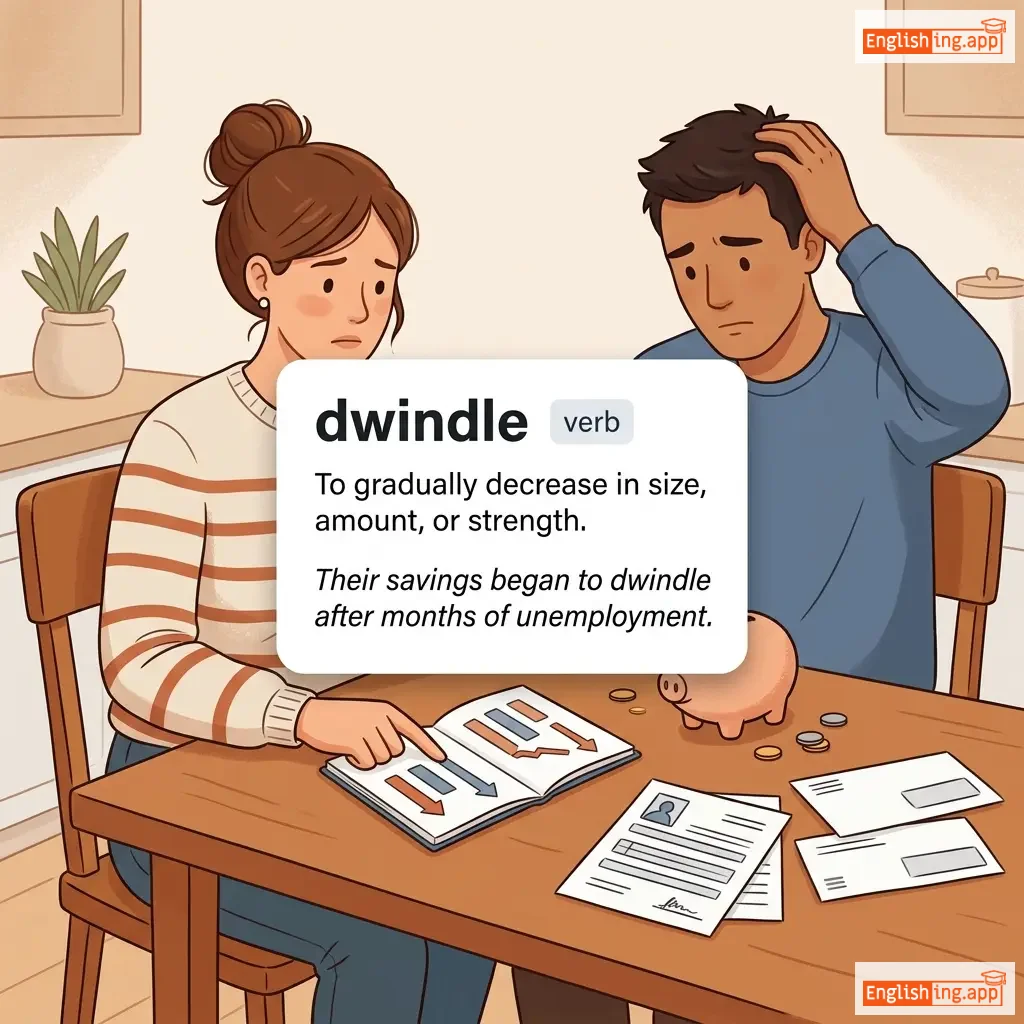
/ˈdwɪndl/
verb
(ドウィンドル)
••••••
|
|
減少する
genshō suru
••••••
|
dwindled
ドウィンドルド
••••••
|
dwindled
ドウィンドルド
••••••
|
dwindles
ドウィンドルズ
••••••
|
dwindling
ドウィンドリング
••••••
|
To gradually decrease in size, amount, or strength.
••••••
|
Their savings began to dwindle after months of unemployment.
失業の月を経て、彼らの貯金は減少し始めました。
••••••
|
失業の月を経て、彼らの貯金は減少し始めました。
Shitsugyō no tsuki o hete, karera no chokin wa genshō shi hajimemashita.
••••••
|
- •••••• | - •••••• | - •••••• |
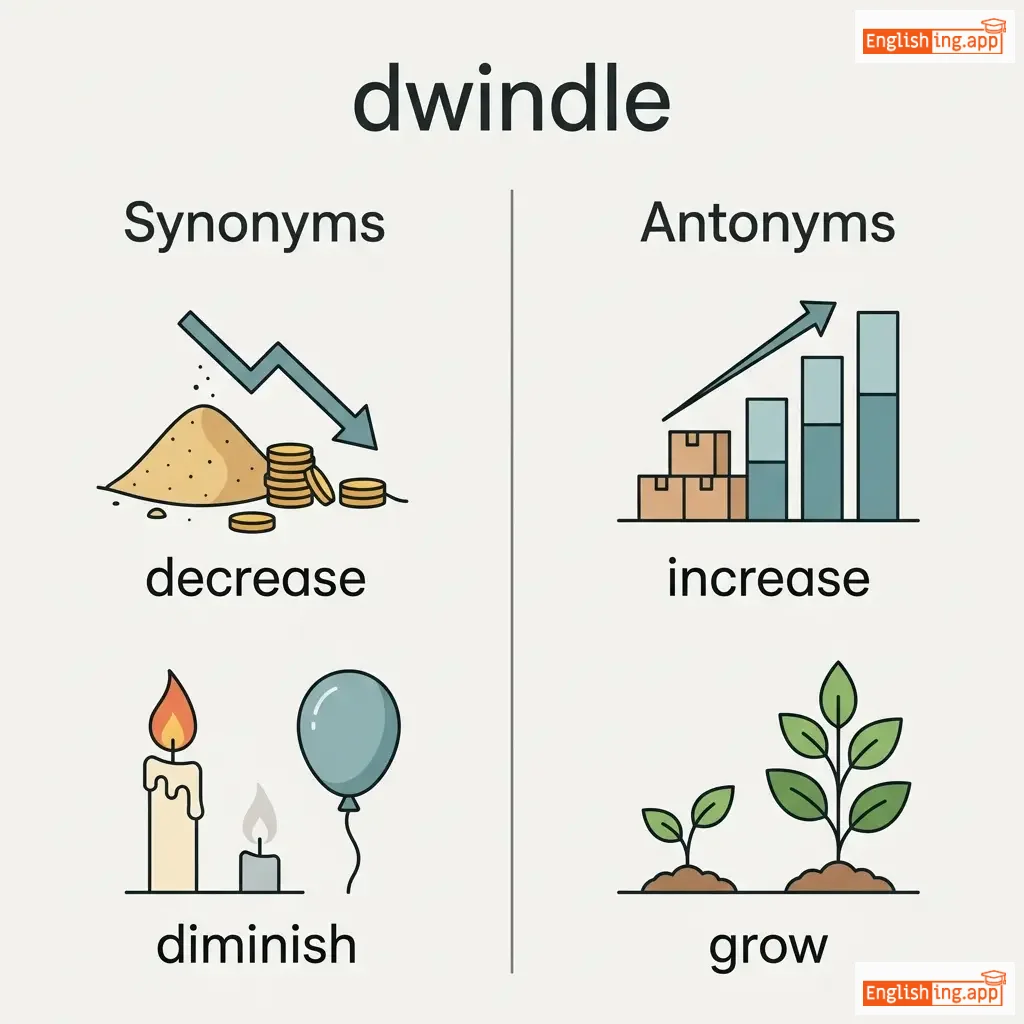
decrease, diminish, shrink, lessen, reduce
••••••
|
increase, grow, expand
••••••
|
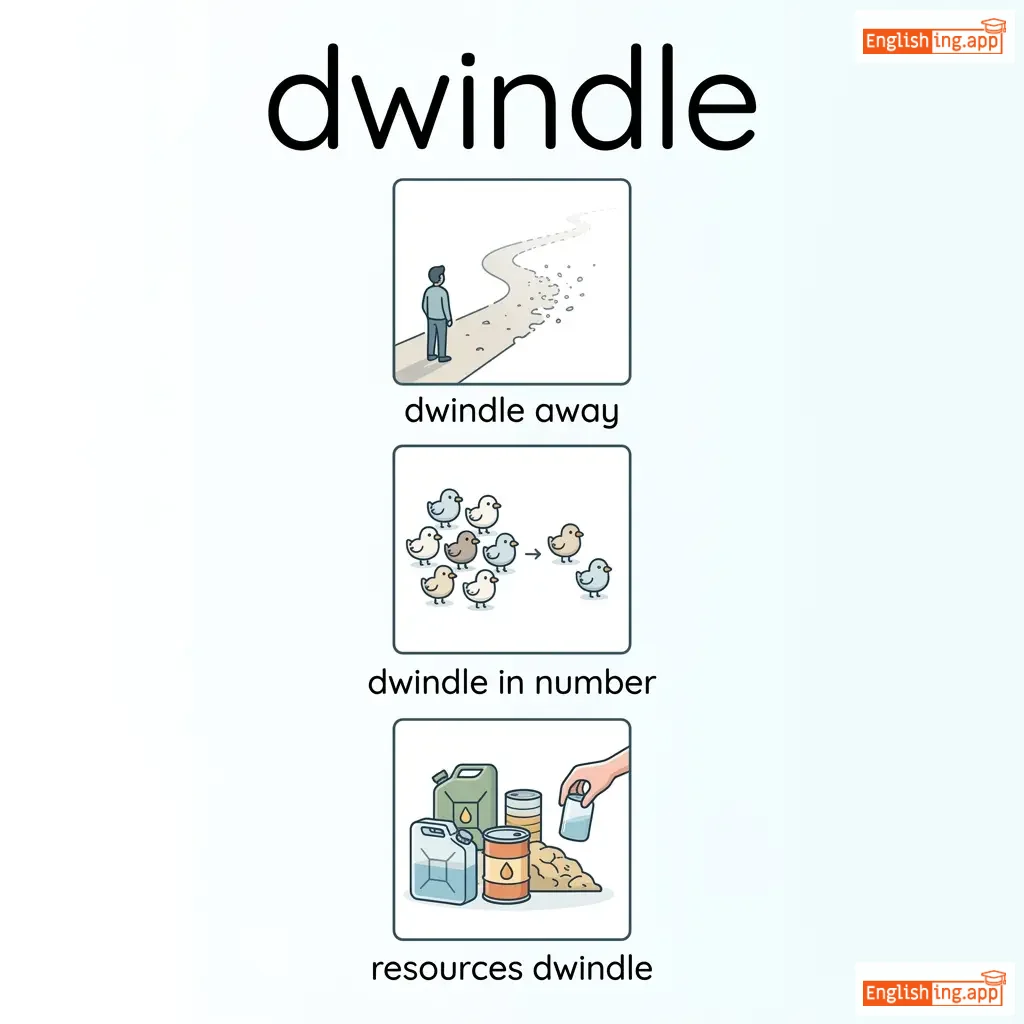
dwindle away, dwindle in number, resources dwindle, dwindling hope
••••••
|
Dwindle → 減少する = 減る
••••••
|
|
#2770
🏠
|
/dwɛl/
verb
(ドウェル)
••••••
|
|
住む
sumu
••••••
|
dwelt
ドウェルト
••••••
|
dwelt
ドウェルト
••••••
|
dwells
ドウェルズ
••••••
|
dwelling
ドウェリング
••••••
|
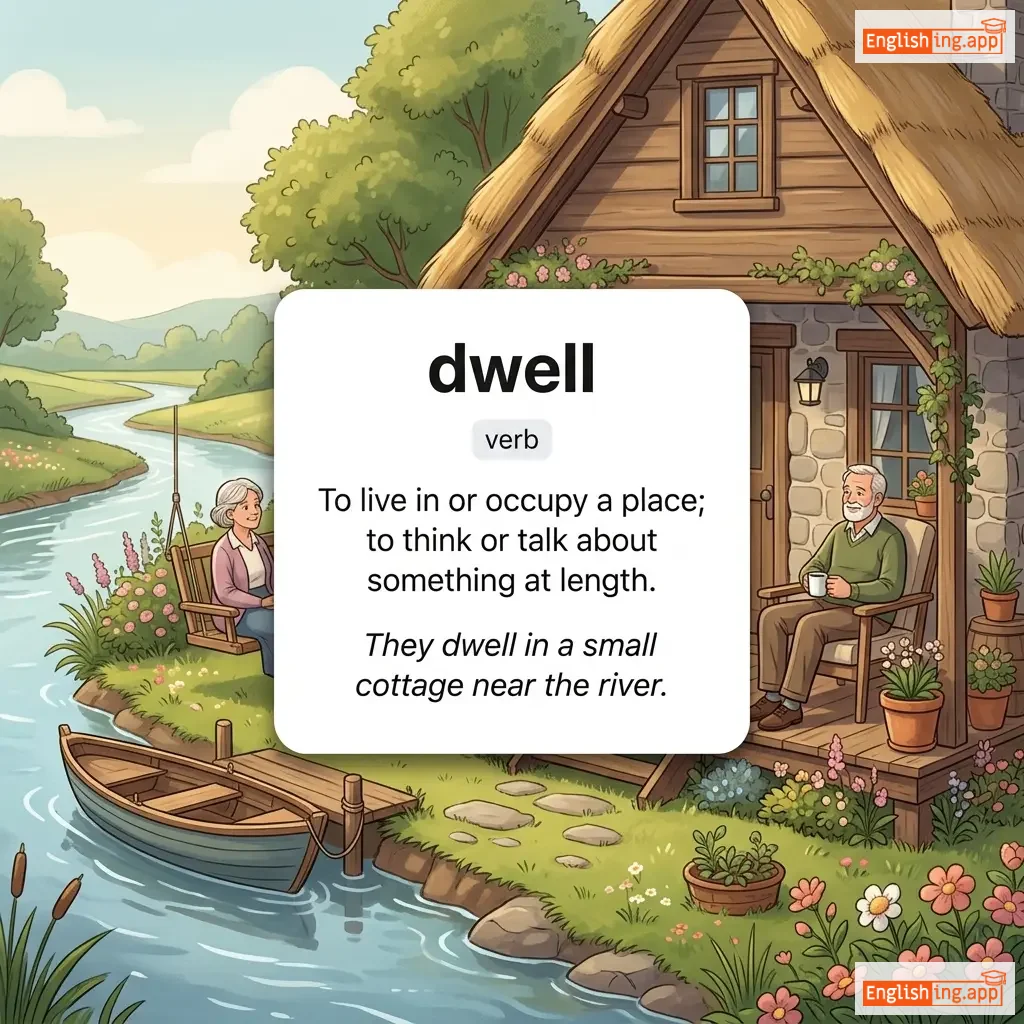
To live in or occupy a place; to think or talk about something at length.
••••••
|
They dwell in a small cottage near the river.
彼らは川の近くの小さな小屋に住んでいます。
••••••
|
彼らは川の近くの小さな小屋に住んでいます。
Karera wa kawa no chikaku no chiisana koya ni sundeimasu.
••••••
|
dwell on
dwɛl on
••••••
|
To focus too much on something, especially negative.
••••••
|
考えすぎる
Kangaesugiru
••••••
|
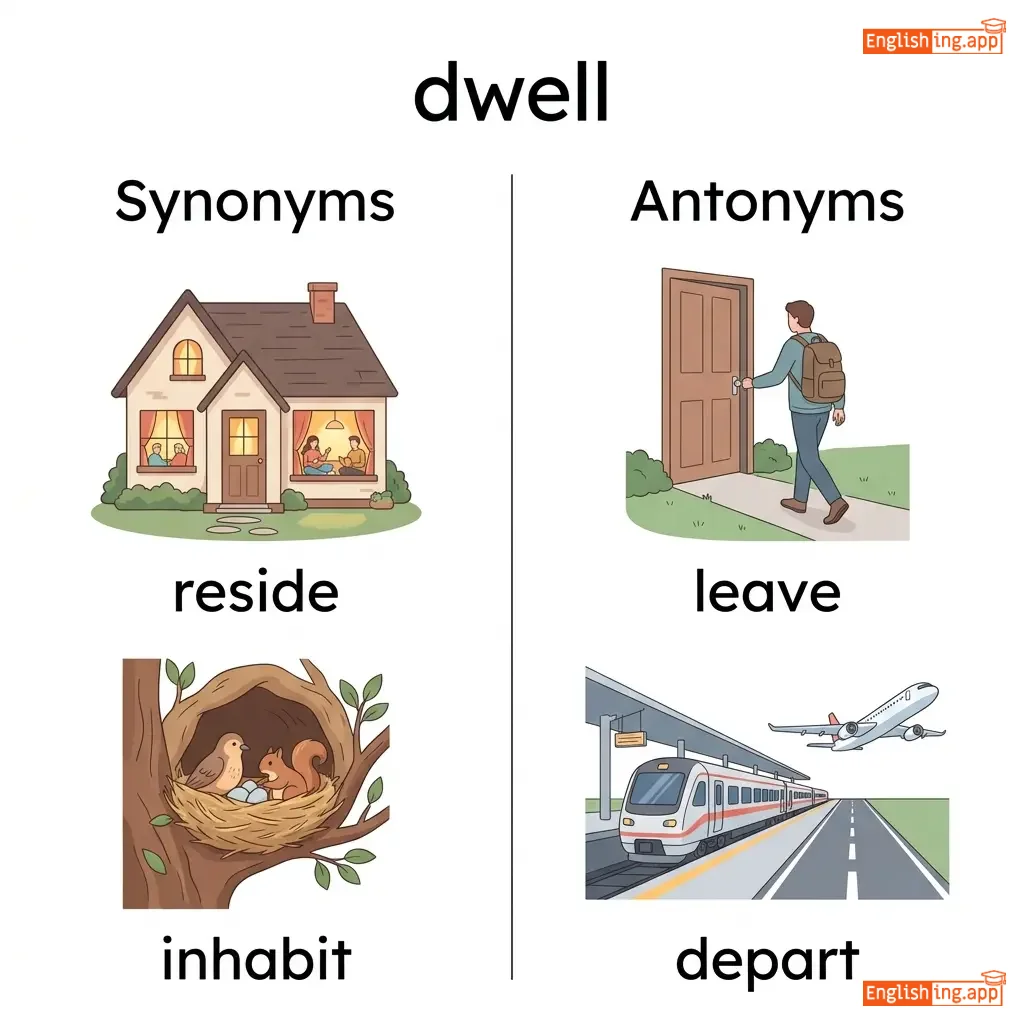
reside, inhabit, live, stay, remain
••••••
|
leave, depart, move
••••••
|
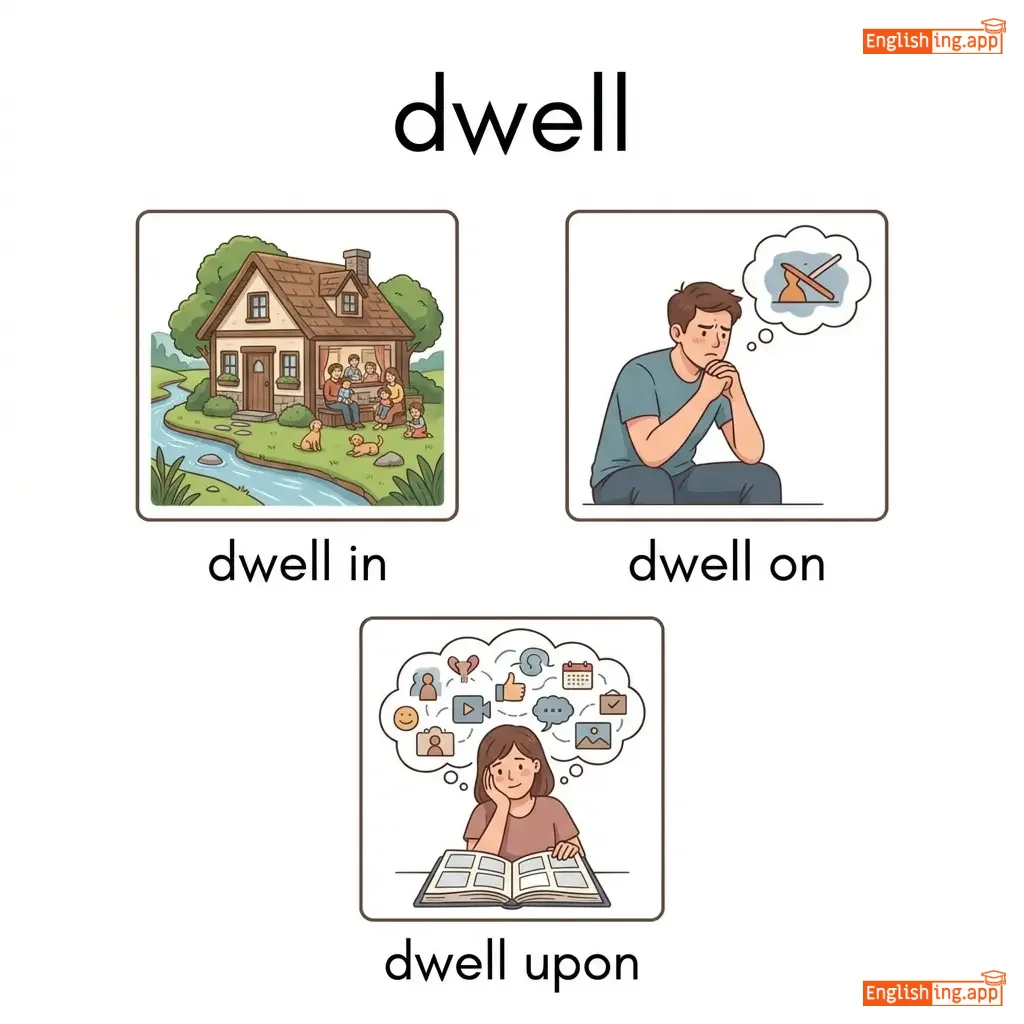
dwell in, dwell on, dwell upon, dwell together
••••••
|
Dwelling = 住む、川の近くの小屋に。
••••••
|
|
#2771
🙏
|
/ˈdjuːtɪfəl/
adjective
(デューティフル)
••••••
|
- •••••• |
責任感の強い
sekinin kan no tsuyoi
••••••
|
- •••••• | - •••••• | - •••••• | - •••••• |
Willingly obedient and responsible in performing one's duty.
••••••
|
She is a dutiful daughter who always takes care of her parents.
彼女はいつも両親の面倒を見る、責任感の強い娘です。
••••••
|
彼女はいつも両親の面倒を見る、責任感の強い娘です。
Kanojo wa itsumo ryoushin no mendou o miru, sekinin kan no tsuyoi musume desu.
••••••
|
dutiful son
責任感の強い息子
••••••
|
A son who is obedient and fulfills responsibilities to family.
••••••
|
責任感の強い息子
sekinin kan no tsuyoi musuko
••••••
|
obedient, loyal, devoted, compliant, faithful
••••••
|
neglectful, disobedient, rebellious
••••••
|
dutiful daughter, dutiful son, dutiful servant, dutifully follow
••••••
|
Duty + ful → 責任感を持つ人 = 責任感の強い
••••••
|
|
#2772
💰
|
/ˈdjuːtiəbl/
adjective
(デューティエイブル)
••••••
|
- •••••• |
課税対象
kazei taishou
••••••
|
- •••••• | - •••••• | - •••••• | - •••••• |
subject to customs duty or tax
••••••
|
Imported electronics are often dutiable at the border.
輸入された電子機器はしばしば国境で課税対象となります。
••••••
|
輸入された電子機器はしばしば国境で課税対象となります。
Yunyuu sareta denshi kiki wa shibashiba kokkyou de kazei taishou to narimasu.
••••••
|
- •••••• | - •••••• | - •••••• |
taxable, chargeable, leviable, assessable
••••••
|
duty-free, exempt, untaxed
••••••
|
dutiable goods, dutiable items, dutiable value
••••••
|
Dutiable は Duty applicable - 課税対象
••••••
|
|
#2773
🙇
|
/ˈdjuːtiəs/
adjective
(デューティアス)
••••••
|
- •••••• |
忠実な
chuujitsuna
••••••
|
- •••••• | - •••••• | - •••••• | - •••••• |
dutiful; obedient and respectful
••••••
|
The duteous child always followed her parents’ instructions.
その忠実な子供は常に両親の指示に従っていました。
••••••
|
その忠実な子供は常に両親の指示に従っていました。
Sono chuujitsuna kodomo wa tsuneni ryoushin no shiji ni shitagatte imashita.
••••••
|
- •••••• | - •••••• | - •••••• |
obedient, respectful, submissive, compliant
••••••
|
disobedient, rebellious, defiant
••••••
|
duteous child, duteous behavior, duteous response
••••••
|
DuteousはDuty-fullを意味し、常に忠実
••••••
|
|
#2774
⚖️
|
/djʊˈrɛs/
noun
(デュレス)
••••••
|
- •••••• |
強制
kyousei
••••••
|
- •••••• | - •••••• | - •••••• | - •••••• |
threats, violence, or pressure used to force someone to do something
••••••
|
She signed the contract under duress. |
彼女は強制的に契約書に署名した。
Kanojo wa kyouseiteki ni keiyaku-sho ni shomei shita.
••••••
|
- •••••• | - •••••• | - •••••• |
coercion, compulsion, intimidation, pressure
••••••
|
consent, free will, choice
••••••
|
under duress, act under duress, duress and coercion
••••••
|
Duress は Dress のように聞こえるが、強制 - 強制的に署名
••••••
|
|
#2775
⏳
|
/djʊˈreɪʃən/
noun
(デュレーション)
••••••
|
- •••••• |
期間
kikan
••••••
|
- •••••• | - •••••• | - •••••• | - •••••• |
the length of time that something continues
••••••
|
The meeting lasted for the duration of two hours. |
会議は2時間の期間続きました。
Kaigi wa 2 jikan no kikan tsuzukimashita.
••••••
|
for the duration |
for the whole time that something lasts
••••••
|
全期間中
zen kikan chū
••••••
|
length, span, period, term, extent
••••••
|
end, termination, conclusion
••••••
|
short duration, long duration, duration of action
••••••
|
期間は何かが続く時間、例えば映画の期間。
••••••
|
|
#2776
🦆
|
/ˈdʌklɪŋ/
noun
••••••
|
- •••••• | - •••••• | - •••••• | - •••••• | - •••••• | - •••••• |
a young duck
••••••
|
The mother duck led her ducklings to the pond. |
- •••••• |
ugly duckling |
a person or thing initially considered unattractive or unpromising but later becomes beautiful or successful
••••••
|
- •••••• |
baby duck, fledgling, chick, gosling
••••••
|
adult duck, drake
••••••
|
cute duckling, yellow duckling, duckling story, mother duckling
••••••
|
No •••••• |
|
#2777
🎭
|
/djuːˈplɪsɪti/
noun
(デュープリシティ)
••••••
|
- •••••• |
二重性
nijūsei
••••••
|
- •••••• | - •••••• | - •••••• | - •••••• |
Deceitfulness or double-dealing; dishonesty.
••••••
|
Her duplicity was revealed during the investigation. |
調査中に彼女の二重性が明らかになった。
Chōsa-chū ni kanojo no nijūsei ga akiraka ni natta.
••••••
|
act of duplicity |
an act of deceit or dishonesty
••••••
|
二重性の行為
nijūsei no kōi
••••••
|
deception, fraud, dishonesty, trickery, treachery
••••••
|
honesty, truthfulness, integrity
••••••
|
act of duplicity, political duplicity, shocking duplicity, duplicity exposed
••••••
|
Duplicity = 二重性 (nijūsei) – 一つの顔で嘘をつき、もう一つの顔で真実を隠す。
••••••
|
|
#2778
😈
|
/djuːˈplɪsɪtəs/
adjective
(デュプリシタス)
••••••
|
- •••••• |
裏表のある
uramoto no aru
••••••
|
- •••••• | - •••••• | - •••••• | - •••••• |
Deceitful; deliberately deceptive or dishonest.
••••••
|
The politician was criticized for his duplicitous statements. |
その政治家は裏表のある発言で批判された。
Sono seijika wa uramoto no aru hatsugen de hihan sareta.
••••••
|
- •••••• | - •••••• | - •••••• |
deceitful, dishonest, two-faced, fraudulent, insincere
••••••
|
honest, sincere, truthful
••••••
|
duplicitous behavior, duplicitous act, duplicitous politician, duplicitous tactics
••••••
|
Duplicitous は裏表のある、偽りの行動を思い出させる言葉です。
••••••
|
|
#2779
🏠
|
/ˈdjuːplɛks/
noun
(デュプレックス)
••••••
|
- •••••• |
デュプレックスハウス
dyupurekkusu hausu
••••••
|
- •••••• | - •••••• | - •••••• | - •••••• |
A house or apartment divided into two separate residences.
••••••
|
They live in a duplex near the city center. |
彼らは市の中心近くのデュプレックスに住んでいます。
Karera wa shi no chūshin chikaku no dyupurekkusu ni sundeimasu.
••••••
|
- •••••• | - •••••• | - •••••• |
two-family house, twin house, semi-detached house, double house
••••••
|
single-family home, detached house
••••••
|
duplex apartment, duplex building, rent a duplex, modern duplex
••••••
|
デュプレックスは二つ (du) の部分に分けられた家です。
••••••
|
|
#2780
🎭
|
/djuːp/
verb
(デュープ)
••••••
|
|
だます
damasu
••••••
|
duped
デュープド
••••••
|
duped
デュープド
••••••
|
dupes
デュープス
••••••
|
duping
デューピング
••••••
|
To deceive or trick someone into believing or doing something.
••••••
|
He was duped into buying a fake watch.
彼は偽物の時計を買うようにだまされました。
••••••
|
彼は偽物の時計を買うようにだまされました。
Kare wa nisemono no tokei o kau yō ni damasaremashita.
••••••
|
play for a dupe
ダマされるためにプレイする
••••••
|
to be tricked or deceived easily
••••••
|
簡単にだまされる
kantan ni damasareru
••••••
|
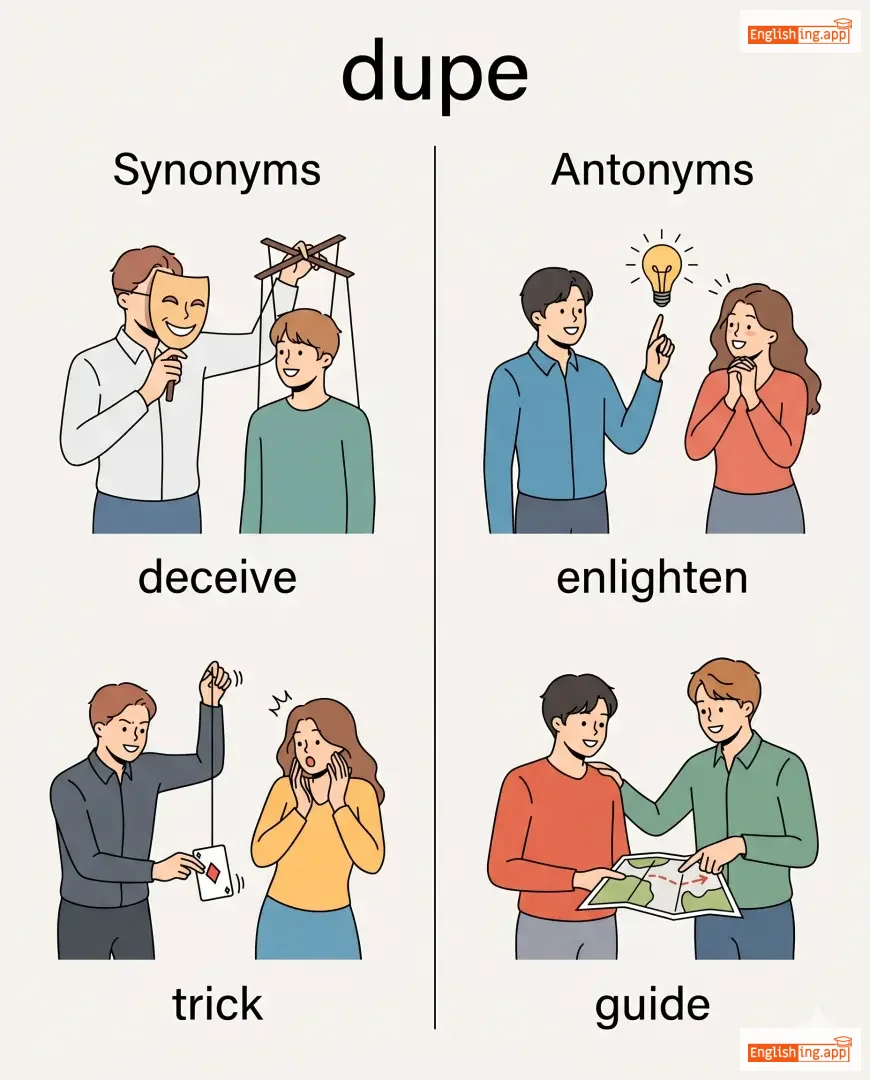
deceive, trick, fool, cheat, mislead
••••••
|
enlighten, guide, inform
••••••
|
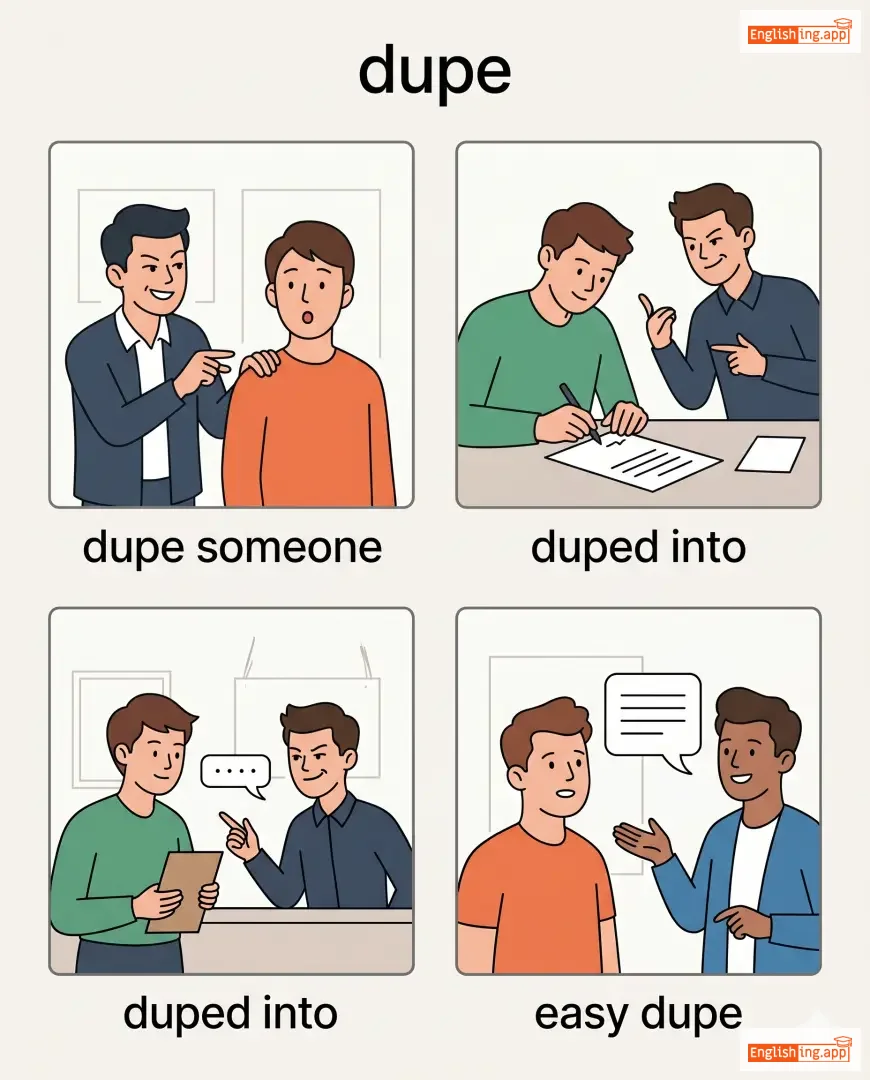
dupe someone, duped into, easy dupe, unsuspecting dupe
••••••
|
Dupeはだますという意味 – 'You got duped'は「だまされた」ことを意味します。
••••••
|
|
#2781
🏜️
|
/djuːn/
noun
(デューン)
••••••
|
- •••••• |
砂丘
sakyuu
••••••
|
- •••••• | - •••••• | - •••••• | - •••••• |
A hill or ridge of sand formed by the wind, usually found in deserts or near beaches.
••••••
|
The children played on the sand dune by the beach. |
子供たちはビーチの砂丘で遊んでいました。
Kodomotachi wa biichi no sakyuu de asonde imashita.
••••••
|
- •••••• | - •••••• | - •••••• |
sandhill, ridge, mound, knoll, bank
••••••
|
valley, pit, hollow
••••••
|
sand dune, desert dune, coastal dune, wind-swept dune
••••••
|
砂丘(sakyuu)は風でできた砂の丘、特に砂漠や海岸にあるものです。
••••••
|
|
#2782
📨
|
/dʌn/
verb
(ダン)
••••••
|
- •••••• |
借金を取り立てる
shakkin o toritateru
••••••
|
dunned
ダンド
••••••
|
dunned
ダンド
••••••
|
duns
ダンス
••••••
|
dunning
ダニング
••••••
|
to demand payment of a debt persistently
••••••
|
The landlord dunned the tenant for unpaid rent.
家主は未払いの家賃のためにテナントにダンドをかけました。
••••••
|
家主は未払いの家賃のためにテナントに何度も支払いを求めました。
Yanoshi wa mibara'i no yachin no tame ni tenanto ni nando mo shiharai o motomemashita.
••••••
|
- •••••• | - •••••• | - •••••• |
harass, demand, press, pester
••••••
|
forgive, pardon
••••••
|
dun repeatedly, dunned by creditors
••••••
|
Dun は支払いをしつこく要求すること、DONE にお金を求める感じ
••••••
|
|
#2783
🪆
|
/ˈdʌmi/
noun
(ダミー)
••••••
|
- •••••• |
ダミー / バカな人
damī / bakanahito
••••••
|
- •••••• | - •••••• | - •••••• | - •••••• |
a model or replica of a human used for practice, display, or testing; also a term for a foolish person
••••••
|
The tailor used a dummy to display the dress.
仕立て屋はドレスを展示するためにダミーを使った。
••••••
|
仕立て屋はドレスを展示するためにダミーを使った。
Shitateya wa doresu o tenji suru tame ni damī o tsukatta.
••••••
|
dummy run
ダミーラン
••••••
|
a trial attempt before the real one
••••••
|
お試し走行
otameshi sōkō
••••••
|
model, mannequin, figure, fool, simpleton
••••••
|
real person, expert
••••••
|
dummy variable, crash test dummy, dummy run
••••••
|
Dummy = 動かないダミー人形
••••••
|
|
#2784
😲
|
/ˈdʌmfaʊnd/
verb
(ダムファウンド)
••••••
|
- •••••• |
呆然とさせる
bōzen to saseru
••••••
|
dumbfounded
ダムファウンドゥッド
••••••
|
dumbfounded
ダムファウンドゥッド
••••••
|
dumbfounds
ダムファウンズ
••••••
|
dumbfounding
ダムファウンディング
••••••
|
to greatly astonish or shock someone so they are temporarily speechless
••••••
|
The magician's trick dumbfounded the audience.
ザ マジシャンズ トリック ダムファウンドゥッド ザ オーディエンス
••••••
|
マジシャンの技は観客を呆然とさせた。
Majishan no waza wa kankyaku o bōzen to saseta.
••••••
|
- •••••• | - •••••• | - •••••• |
astonish, amaze, stun, bewilder, flabbergast
••••••
|
explain, clarify
••••••
|
completely dumbfound, dumbfound the audience
••••••
|
Dumb は言葉が出ない、found は見つける — そんなに驚いて言葉が出ない。
••••••
|
|
#2785
🤦
|
/ˈdʌlərd/
noun
(ダラード)
••••••
|
- •••••• |
愚か者
orokamono
••••••
|
- •••••• | - •••••• | - •••••• | - •••••• |
a slow or stupid person
••••••
|
He was considered a dullard by his classmates. |
彼はクラスメートによって愚か者だと考えられていた。
Kare wa kurasumēto ni yotte orokamono da to kangaerarete ita.
••••••
|
- •••••• | - •••••• | - •••••• |
fool, simpleton, blockhead, dimwit
••••••
|
genius, intellect
••••••
|
complete dullard, called a dullard
••••••
|
Dullard = dull (鈍い) + hard (硬い), 頭が鈍くて硬い人は愚か者です。
••••••
|
|
#2786
😴
|
/dʌl/
adjective
(dal)
••••••
|
- •••••• |
退屈
taikutsu
••••••
|
- •••••• | - •••••• | - •••••• | - •••••• |
lacking brightness, vividness, or interest; boring or not sharp
••••••
|
The lecture was so dull that many students fell asleep. |
その講義は退屈すぎて、たくさんの学生が寝てしまいました。
Sono kōgi wa taikutsu sugite, takusan no gakusei ga nete shimaimashita.
••••••
|
dull as dishwater |
extremely boring
••••••
|
皿の水のように退屈
Sara no mizu no yō ni taikutsu
••••••
|
boring, tedious, lifeless, monotonous, uninteresting
••••••
|
exciting, lively, interesting
••••••
|
dull knife, dull sound, dull moment, dull pain, dull color
••••••
|
Dullは皿の水のように退屈です。
••••••
|
|
#2787
🎵
|
/ˈdʌlsɪt/
adjective
(ダルセット)
••••••
|
- •••••• |
甘美
kanbi
••••••
|
- •••••• | - •••••• | - •••••• | - •••••• |
sweet and soothing (often used ironically)
••••••
|
She was enchanted by his dulcet voice. |
彼女は彼の甘美な声に魅了されていた。
Kanojo wa kare no kanbi na koe ni miryō sarete ita.
••••••
|
dulcet tones |
pleasant and sweet-sounding voice or music
••••••
|
甘美な音色
kanbi na neiro
••••••
|
sweet, melodious, soothing, harmonious
••••••
|
harsh, grating, discordant
••••••
|
dulcet voice, dulcet tones, dulcet melody, dulcet sounds
••••••
|
Dulcetは甘美を意味します 🎶 - まるで甘いメロディのように、心を癒す音です。
••••••
|
|
#2788
🎶
|
/djuːˈɛt/
noun
(デュエット)
••••••
|
- •••••• |
デュエット
duetto
••••••
|
- •••••• | - •••••• | - •••••• | - •••••• |
a musical performance by two singers or instrumentalists
••••••
|
They sang a beautiful duet together on stage. |
彼らはステージで一緒に美しいデュエットを歌った。
Karera wa suteeji de issho ni utsukushī duetto o utatta.
••••••
|
sing a duet |
to perform together as a pair
••••••
|
デュエットを歌う
duetto o utau
••••••
|
pair, duo, twosome, collaboration
••••••
|
solo, monologue
••••••
|
romantic duet, famous duet, piano duet, duet performance
••••••
|
デュエットは二人で歌うこと 🎶 - 'duo' で二人を思い出して!
••••••
|
|
#2789
👵
|
/djuːˈɛnə/
noun
(デュエナ)
••••••
|
- •••••• |
ガバーナント
gabaanto
••••••
|
- •••••• | - •••••• | - •••••• | - •••••• |
an older woman acting as a governess or chaperone, especially in Spanish families
••••••
|
The young lady was accompanied by a duenna during the festival.
若い女性は祭りの間、デュエナに付き添われていました。
••••••
|
若い女性は祭りの間、デュエナに付き添われていました。
Wakai josei wa matsuri no aida, duena ni tsukisowarete imashita.
••••••
|
- •••••• | - •••••• | - •••••• |
chaperone, governess, caretaker, matron
••••••
|
ward, dependent
••••••
|
strict duenna, old duenna, duenna figure, duenna role
••••••
|
Duennaはガバーナントを意味します - スペインの祖母のように(👵)
••••••
|
|
#2790
🔧
|
/ˈdʌktaɪl/
adjective
(ダクタイル)
••••••
|
- •••••• |
延性
enshō
••••••
|
- •••••• | - •••••• | - •••••• | - •••••• |
capable of being stretched into a thin wire without breaking; easily influenced
••••••
|
Gold is a very ductile metal.
金は非常に延性のある金属です。
••••••
|
金は非常に延性のある金属です。
Kin wa hijō ni enshō no aru kinzoku desu.
••••••
|
- •••••• | - •••••• | - •••••• |
malleable, pliable, flexible, adaptable, tensile
••••••
|
brittle, rigid, stiff
••••••
|
ductile metal, ductile material, highly ductile, ductile property
••••••
|
延性のある金属は引き伸ばせる
••••••
|
Vocabulary Quiz
Test your vocabulary by matching words with their translations or meanings.
Login to take the quiz
Comments (0)
Share your thoughts and join the discussion.
Join the discussion by logging in
Login to CommentNo comments yet
Be the first to share your thoughts!