

翻訳
過去
過去分詞
三人称単数
動名詞
意味
例文
例文の翻訳
同義語
対義語
コロケーション
ニーモニック
Swipe left or right, or use the buttons. Tap image to zoom.
例文の翻訳
単語
Lesson 352Lesson 352 - マスクトグル
|
絵文字
|
単語 | Images | 翻訳 | 過去 | 過去分詞 | 三人称単数 | 動名詞 | 意味 | 例文 | 例文の翻訳 | 表現例 | 表現例の意味 | 表現例の翻訳 | 同義語 | 対義語 | コロケーション | ニーモニック |
|---|---|---|---|---|---|---|---|---|---|---|---|---|---|---|---|---|---|
|
#10525
🌉
|
/brɪdʒ/
noun
(ブリッジ)
••••••
|
- •••••• |
橋
hashi
••••••
|
- •••••• | - •••••• | - •••••• | - •••••• |
A structure built to span a physical obstacle, such as a river or road, for the purpose of providing passage.
••••••
|
The bridge connects the two cities across the river. |
橋は川を越えて二つの都市を繋げています。
Hashi wa kawa o koete futatsu no toshi o tsunageteimasu.
••••••
|
burn one's bridges |
To eliminate all possibilities of retreat; to commit oneself completely.
••••••
|
橋を燃やす
Hashi o moyasu
••••••
|
overpass, viaduct, crossing, span, walkway
••••••
|
barrier, obstacle
••••••
|
cross a bridge, build a bridge, bridge over, suspension bridge, stone bridge
••••••
|
Bridge は橋 🌉 - 橋を使って川を渡ることができます。
••••••
|
|
#10526
🌸
|
/bʌntʃ/
noun
(バンチ)
••••••
|
- •••••• |
束
taba
••••••
|
- •••••• | - •••••• | - •••••• | - •••••• |
a group of things that are fastened, held, or growing together
••••••
|
She gave me a bunch of flowers for my birthday. |
彼女は私の誕生日に花束をくれました。
Kanojo wa watashi no tanjōbi ni hanataba o kuremashita.
••••••
|
a bunch of |
a large quantity of something
••••••
|
束の
taba no
••••••
|
bundle, cluster, group, collection, pack
••••••
|
individual, single, one
••••••
|
a bunch of flowers, a bunch of grapes, a bunch of keys, whole bunch
••••••
|
Bunchは束を意味します - ちょうど誕生日に受け取った花束のように。
••••••
|
|
#10527
🔫
|
/ˈbʊlɪt/
noun
(バレット)
••••••
|
- •••••• |
弾丸
dangan
••••••
|
- •••••• | - •••••• | - •••••• | - •••••• |
A small, metal projectile fired from a gun.
••••••
|
The soldier loaded a bullet into his rifle.
兵士はライフルに弾を装填した。
••••••
|
兵士はライフルに弾を装填した。
Heishi wa raifuru ni dangan o sōten shita.
••••••
|
bite the bullet
弾をかむ
••••••
|
To endure a painful or unpleasant situation with courage.
••••••
|
困難に立ち向かう
Konnan ni tachimukau
••••••
|
projectile, shot, cartridge, ammo
••••••
|
peace, safety
••••••
|
bullet train, bullet wound, silver bullet, stray bullet
••••••
|
Bullet は弾丸、'bite the bullet' は困難に立ち向かう。
••••••
|
|
#10528
🏢
|
/ˈbɪldɪŋ/
noun
(ビルディング)
••••••
|
- •••••• |
建物
tatemono
••••••
|
- •••••• | - •••••• | - •••••• | - •••••• |
A structure with a roof and walls, such as a house, school, or office.
••••••
|
The old building was renovated into a museum. |
古い建物は博物館に改築されました。
Furui tatemono wa hakubutsukan ni kaichiku saremashita.
••••••
|
burn down a building |
To completely destroy a building with fire.
••••••
|
建物を焼く
tatemono wo yaku
••••••
|
structure, construction, edifice, property
••••••
|
ruin, demolition
••••••
|
tall building, office building, apartment building, historic building
••••••
|
建物はbuildingの意味、私たちが住む場所です。
••••••
|
|
#10529
🏗️
|
/bɪld/
verb
(ビルド)
••••••
|
|
建てる
tateru
••••••
|
built
ビルト
••••••
|
built
ビルト
••••••
|
builds
ビルズ
••••••
|
building
ビルディング
••••••
|
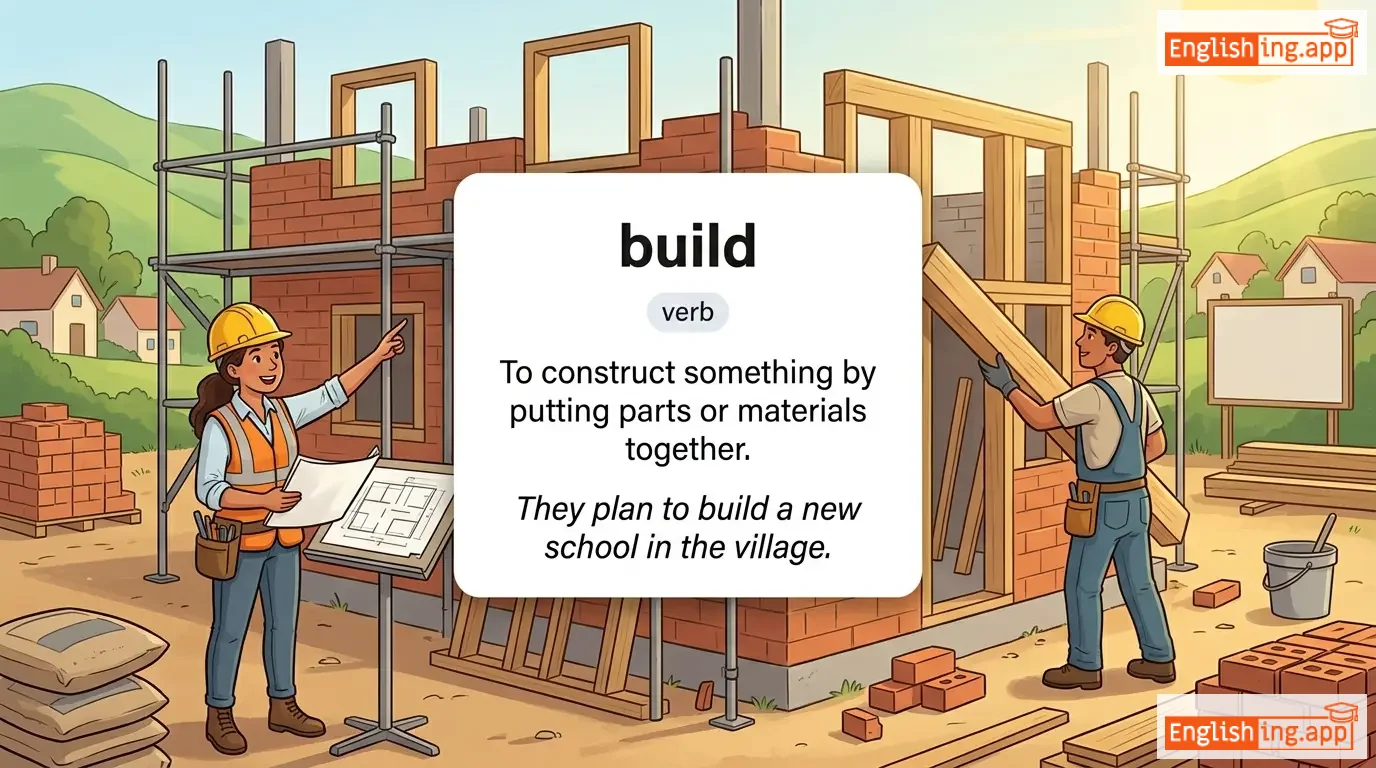
To construct something by putting parts or materials together.
••••••
|
They plan to build a new school in the village.
彼らは村に新しい学校を建てる計画を立てています。
••••••
|
彼らは村に新しい学校を建てる計画を立てています。
Karera wa mura ni atarashii gakkou wo tateru keikaku wo tatemasu.
••••••
|
build up
ビルドアップ
••••••
|
To increase or develop something gradually.
••••••
|
増やす
fuyasu
••••••
|
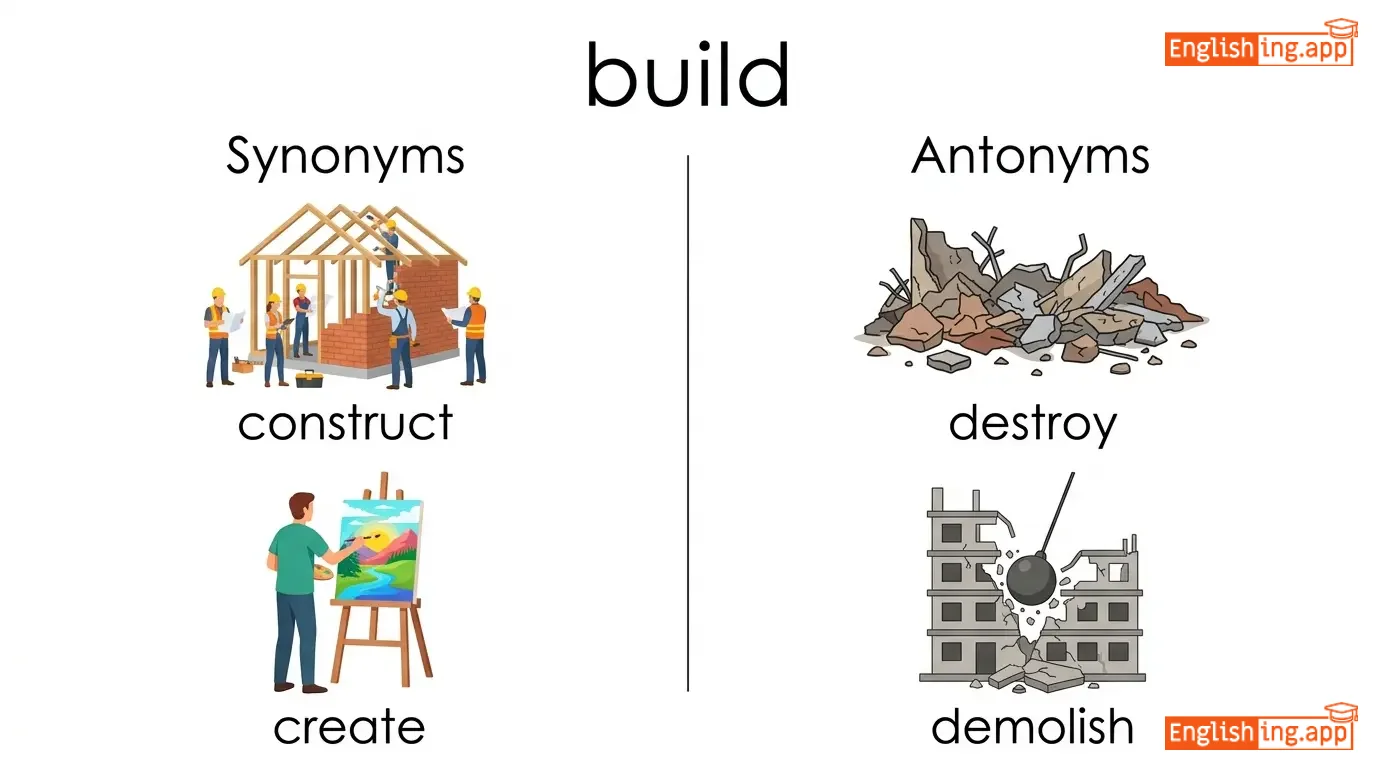
construct, create, assemble, develop, establish
••••••
|
destroy, demolish, break
••••••
|
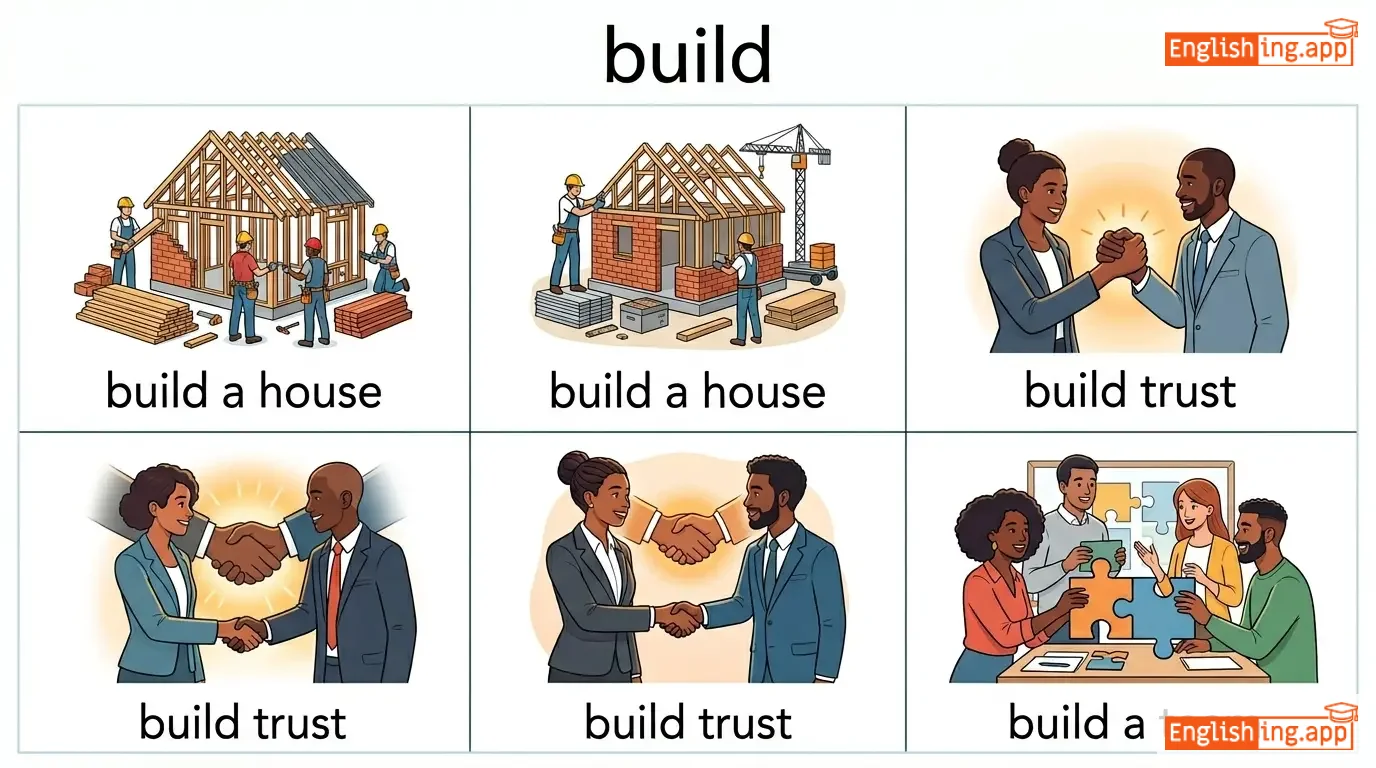
build a house, build trust, build a team, build strength
••••••
|
Build は「建てる」と覚えよう。
••••••
|
|
#10530
💰
|
/ˈbʌdʒɪt/
noun/verb
(バジェット)
••••••
|
- •••••• |
予算
yosan
••••••
|
budgeted
バジェットされた
••••••
|
budgeted
バジェットされた
••••••
|
budgets
バジェットする
••••••
|
budgeting
バジェットしている
••••••
|
An estimate of income and expenditure for a set period of time; to plan expenses and income.
••••••
|
The family created a budget to manage their expenses.
家族は支出を管理するために予算を作成しました。
••••••
|
家族は支出を管理するために予算を作成しました。
Kazoku wa shishutsu o kanri suru tame ni yosan o sakusei shimashita.
••••••
|
on a tight budget
限られた予算で
••••••
|
Having limited money to spend.
••••••
|
限られた予算で
kagirareta yosan de
••••••
|
plan, allocation, estimate, allowance, finances
••••••
|
waste, extravagance
••••••
|
annual budget, budget plan, budget deficit, budget cut
••••••
|
予算とは支出を管理することです。
••••••
|
|
#10531
🖌️
|
/brʌʃ/
noun/verb
••••••
|
- •••••• | - •••••• |
brushed
••••••
|
brushed
••••••
|
brushes
••••••
|
brushing
••••••
|
A tool with bristles for cleaning, painting, or grooming; to clean, arrange, or apply with a brush.
••••••
|
She used a brush to paint the fence. |
- •••••• |
brush up on |
To review or practice knowledge or skills to improve them.
••••••
|
- •••••• |
sweep, scrub, groom, polish, paint
••••••
|
neglect, dirty
••••••
|
paint brush, hair brush, brush teeth, brush off
••••••
|
No •••••• |
|
#10532
🤎
|
/braʊn/
adjective
(ブラウン)
••••••
|
- •••••• |
茶色
chairo
••••••
|
- •••••• | - •••••• | - •••••• | - •••••• |
of a color produced by mixing red, yellow, and black
••••••
|
She wore a brown dress to the party. |
彼女はパーティーに茶色のドレスを着て行った。
Kanojo wa pātī ni chairo no doresu o kite itta.
••••••
|
brownie points |
credit or favor earned for doing something good
••••••
|
ブラウニーポイント
Buraunī pointo
••••••
|
tan, beige, chocolate, chestnut, hazel
••••••
|
white, black
••••••
|
brown hair, brown eyes, brown sugar, dark brown
••••••
|
BROWNは茶色を意味します – 'ブラウニーは茶色い色です。'
••••••
|
|
#10533
👨👦
|
/ˈbrʌðər/
noun
(ブラザー)
••••••
|
- •••••• |
兄弟
kyoudai
••••••
|
- •••••• | - •••••• | - •••••• | - •••••• |
a male sibling
••••••
|
My brother is two years older than me. |
私の兄は私より2歳年上です。
Watashi no ani wa watashi yori 2 sai toshiue desu.
••••••
|
big brother |
an older brother or a protective authority
••••••
|
お兄さん
oniisan
••••••
|
sibling, kin, mate, companion
••••••
|
sister, stranger
••••••
|
younger brother, elder brother, brother in law, brotherhood
••••••
|
BROTHER は兄弟です – 兄は守り手であり、仲間でもあります。
••••••
|
|
#10534
💔
|
/ˈbroʊkən/
adjective
(ブロウケン)
••••••
|
- •••••• |
壊れた
kowareta
••••••
|
- •••••• | - •••••• | - •••••• | - •••••• |
damaged or not working properly
••••••
|
The chair is broken and needs repair. |
椅子は壊れていて、修理が必要です。
Isu wa kowarete ite, shūri ga hitsuyō desu.
••••••
|
broken heart |
deep emotional pain due to loss or disappointment
••••••
|
壊れた心
kowareta kokoro
••••••
|
damaged, ruined, fractured, defective
••••••
|
fixed, whole, intact
••••••
|
broken glass, broken promise, broken machine, broken relationship
••••••
|
BROKEN は壊れたを意味し、壊れた心のように 💔.
••••••
|
|
#10535
🇬🇧
|
/ˈbrɪtɪʃ/
adjective
(british)
••••••
|
- •••••• |
イギリスの
igirisu no
••••••
|
- •••••• | - •••••• | - •••••• | - •••••• |
relating to Great Britain or its people
••••••
|
She loves British culture and traditions.
彼女はイギリスの文化と伝統が大好きです。
••••••
|
彼女はイギリスの文化と伝統が大好きです。
Kanojo wa Igirisu no bunka to dentou ga daisuki desu.
••••••
|
- •••••• | - •••••• | - •••••• |
English, UK, Anglo, Briton
••••••
|
foreign, non-British
••••••
|
British culture, British accent, British history, British empire
••••••
|
イギリスの文化や人々を指す🇬🇧 英国の。
••••••
|
|
#10536
📦
|
/brɪŋ/
verb
(ブリング)
••••••
|
|
持ってくる
mottekuru
••••••
|
brought
ブロート
••••••
|
brought
ブロート
••••••
|
brings
ブリングズ
••••••
|
bringing
ブリングイング
••••••
|
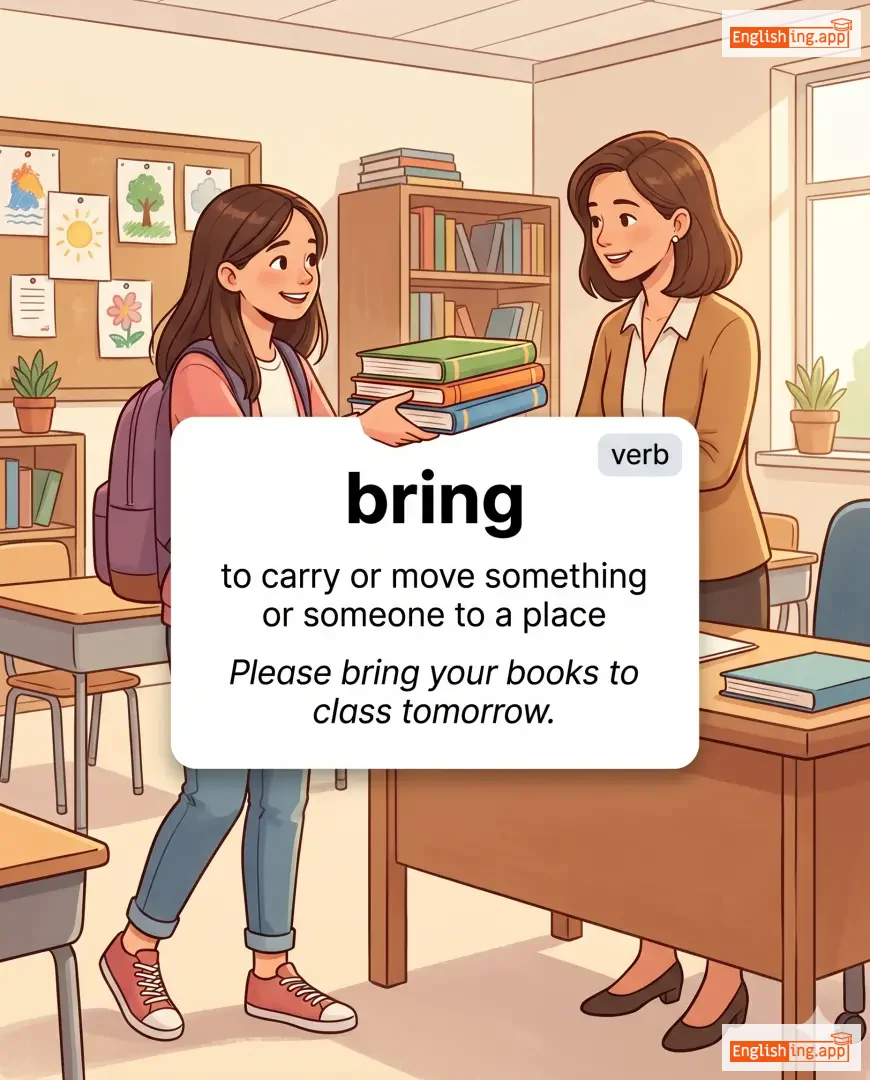
to carry or move something or someone to a place
••••••
|
Please bring your books to class tomorrow.
明日、クラスに本を持ってきてください。
••••••
|
明日、クラスに本を持ってきてください。
Ashita, kurasu ni hon o mottekite kudasai.
••••••
|
bring up
話題を持ち出す
••••••
|
to mention or introduce a topic
••••••
|
話題を持ち出す
Wadai o mochidasu
••••••
|
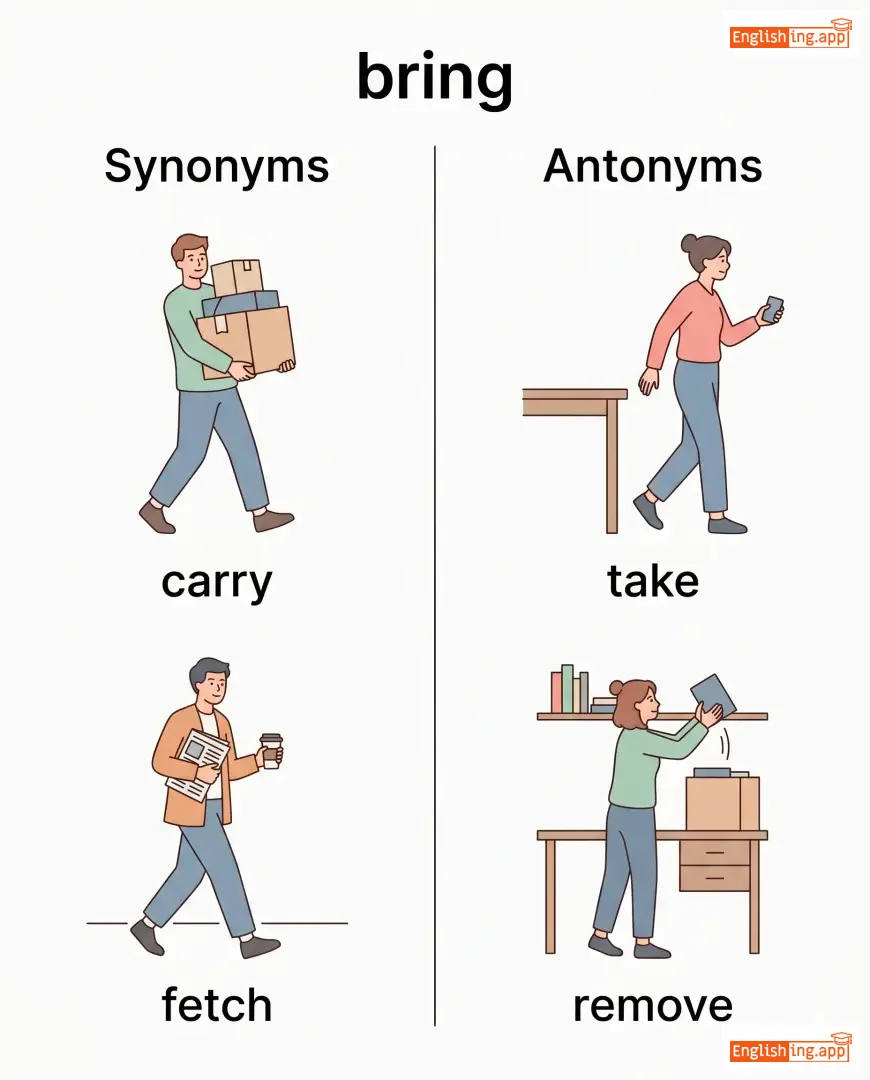
carry, fetch, deliver, convey, transport
••••••
|
take, remove
••••••
|
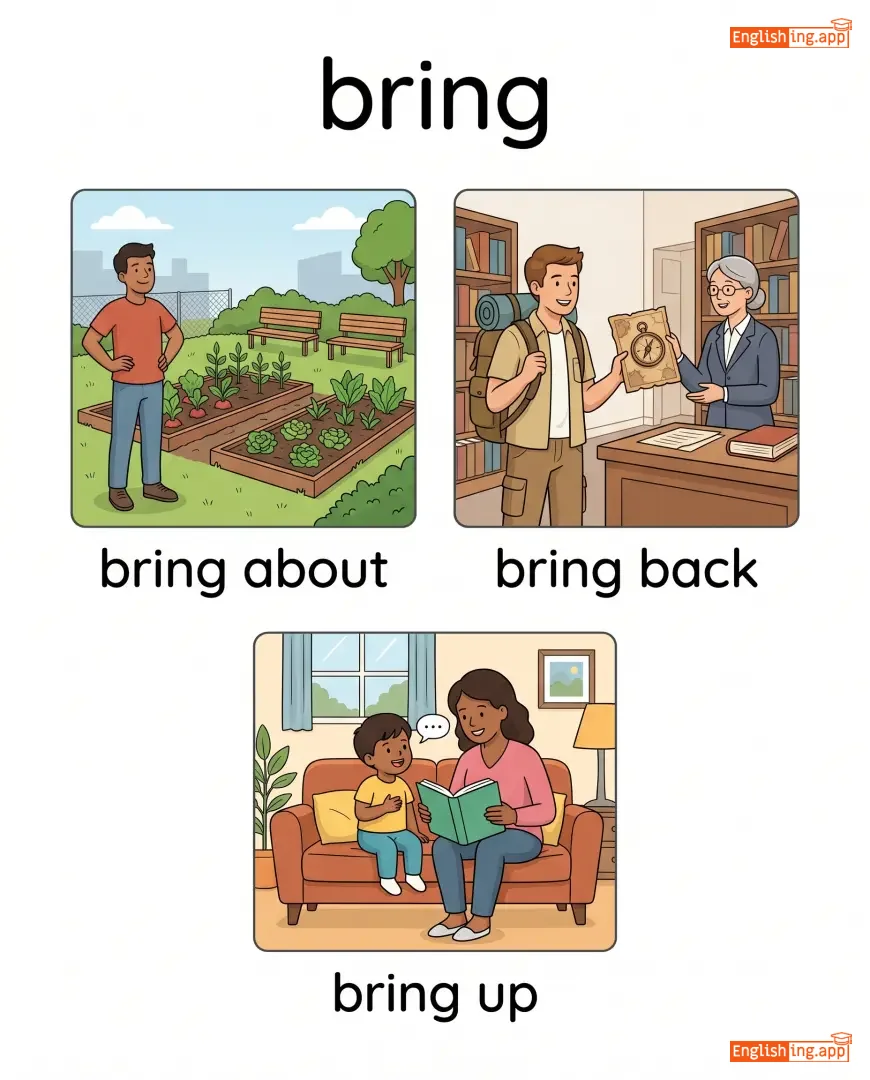
bring about, bring back, bring up, bring along, bring forward
••••••
|
BRINGは持ってくる、母がよく言う‘持ってきてね’の意味です。
••••••
|
|
#10537
💡
|
/ˈbrɪliənt/
adjective
(ブリリアント)
••••••
|
- •••••• |
素晴らしい
subarashii
••••••
|
- •••••• | - •••••• | - •••••• | - •••••• |
Exceptionally clever, talented, or impressive; very bright or radiant.
••••••
|
She gave a brilliant performance on stage.
彼女はステージで素晴らしいパフォーマンスをしました。
••••••
|
彼女はステージで素晴らしいパフォーマンスをしました。
Kanojo wa suteeji de subarashii pafōmansu o shimashita.
••••••
|
brilliant idea
素晴らしいアイデア
••••••
|
A very clever or excellent thought or plan.
••••••
|
素晴らしいアイデア
subarashii aidea
••••••
|
intelligent, smart, talented, outstanding, radiant
••••••
|
stupid, dull, ordinary
••••••
|
brilliant idea, brilliant mind, brilliant career, brilliant light
••••••
|
素晴らしい意味素晴らしい 🌟 - 素晴らしいアイデア意味優れた考え。
••••••
|
|
#10538
☀️
|
/braɪt/
adjective
(ブライト)
••••••
|
- •••••• |
明るい
akarui
••••••
|
- •••••• | - •••••• | - •••••• | - •••••• |
Giving out or reflecting a lot of light; intelligent or cheerful.
••••••
|
The bright sun lit up the entire valley. |
明るい太陽が谷全体を照らしました。
Akarui taiyou ga tani zentai o terashimashita.
••••••
|
look on the bright side |
To find positive aspects in a bad situation.
••••••
|
明るい面を見て
Akarui men o mite
••••••
|
shiny, luminous, radiant, smart, cheerful
••••••
|
dark, dull, gloomy
••••••
|
bright light, bright color, bright future, bright idea
••••••
|
Brightは明るい☀️ - Bright futureは明るい未来を意味します。
••••••
|
|
#10539
⏱️
|
/ˈbriːfli/
adverb
(ブリーフリー)
••••••
|
- •••••• |
簡潔に
kanketsu ni
••••••
|
- •••••• | - •••••• | - •••••• | - •••••• |
For a short time; in a few words.
••••••
|
She spoke briefly about her travel experience. |
彼女は自分の旅行経験について簡潔に話しました。
Kanojo wa jibun no ryokō keiken ni tsuite kanketsu ni hanashimashita.
••••••
|
- •••••• | - •••••• | - •••••• |
shortly, quickly, concisely, curtly
••••••
|
lengthily, elaborately
••••••
|
explain briefly, talk briefly, meet briefly, mention briefly
••••••
|
Briefは英語で簡潔を意味しますので、brieflyも簡潔にと言う意味です。
••••••
|
|
#10540
✌️
|
/boʊθ/
determiner/pronoun
(ボウス)
••••••
|
- •••••• |
両方
ryouhou
••••••
|
- •••••• | - •••••• | - •••••• | - •••••• |
referring to two people or things together
••••••
|
Both of the children were excited about the trip. |
旅行について両方の子供たちは興奮していました。
Ryokou ni tsuite ryouhou no kodomotachi wa koufun shiteimashita.
••••••
|
both sides of the coin |
two different aspects of the same situation
••••••
|
コインの両面
Koin no ryoumen
••••••
|
two, pair, duo, couple
••••••
|
neither, none
••••••
|
both ways, both of them, both sides, both hands
••••••
|
Bothは両方を意味し、両手のように考えることができます。
••••••
|
|
#10541
🧱
|
/brɪk/
noun
(ブリック)
••••••
|
- •••••• |
レンガ
renga
••••••
|
- •••••• | - •••••• | - •••••• | - •••••• |
A rectangular block of clay or similar material used in building walls and other structures.
••••••
|
The workers laid brick after brick to build the wall. |
作業員たちは壁を作るためにレンガを一つ一つ積み上げていった。
Sagyouin-tachi wa kabe o tsukuru tame ni renga o hitotsu hitotsu tsumiagete itta.
••••••
|
thick as a brick |
Used to describe someone who is very stupid or slow to understand.
••••••
|
レンガのように鈍い
renga no yō ni nibui
••••••
|
block, stone, tile, slab, cube
••••••
|
void, gap
••••••
|
brick wall, brick house, brick building, red brick, brick by brick
••••••
|
レンガ = レンガ 🧱 - レンガで壁が作られる。
••••••
|
|
#10542
😮💨
|
/briːð/
verb
(ブリーズ)
••••••
|
- •••••• |
呼吸
kokyuu
••••••
|
breathed
ブリフト
••••••
|
breathed
ブリフト
••••••
|
breathes
ブリーズ
••••••
|
breathing
ブリージング
••••••
|
To take air into the lungs and send it out again.
••••••
|
It was hard to breathe in the smoky room.
煙の部屋で呼吸するのは難しかった。
••••••
|
煙の部屋で呼吸するのは難しかった。
Kemuri no heya de kokyuu suru no wa muzukashikatta.
••••••
|
breathe easy
息をつく
••••••
|
to relax after a period of stress
••••••
|
リラックスする
rirakkusu suru
••••••
|
inhale, exhale, respire, gasp
••••••
|
suffocate, choke
••••••
|
breathe deeply, breathe easily, hardly breathe, breathe fire
••••••
|
呼吸は空気を吸うこと、息をつくはリラックスすること。
••••••
|
|
#10543
💨
|
/brɛθ/
noun
(ブレス)
••••••
|
- •••••• |
呼吸
kokyū
••••••
|
- •••••• | - •••••• | - •••••• | - •••••• |
The air taken into or expelled from the lungs during breathing.
••••••
|
He took a deep breath before speaking. |
彼は話す前に深く息を吸いました。
Kare wa hanasu mae ni fukaku iki o suimashita.
••••••
|
catch one's breath |
to rest or pause to recover normal breathing
••••••
|
息を呑む
iki o nomu
••••••
|
inhalation, exhalation, respiration, gasp
••••••
|
suffocation, choking
••••••
|
deep breath, hold breath, last breath, fresh breath
••••••
|
Breath は呼吸、呼吸がないと死ぬ。
••••••
|
|
#10544
👩🍼
|
/brɛst/
noun
(ブレスト)
••••••
|
- •••••• |
胸部
kyoubu
••••••
|
- •••••• | - •••••• | - •••••• | - •••••• |
Either of the two soft, rounded parts on a woman’s chest that produce milk after childbirth.
••••••
|
The baby was fed from his mother's breast. |
赤ちゃんは母親の胸部から授乳されました。
Akachan wa hahaoya no kyōbu kara junyū saremashita.
••••••
|
make a clean breast of |
to confess or admit something openly
••••••
|
白状する
hakujō suru
••••••
|
bosom, chest, bust, mammary
••••••
|
back, spine
••••••
|
breast cancer, breast milk, chicken breast, breast surgery
••••••
|
Breastは胸部を意味し、母親は赤ちゃんに胸部から授乳します。
••••••
|
|
#10545
🥞
|
/ˈbrɛkfəst/
noun
••••••
|
- •••••• | - •••••• | - •••••• | - •••••• | - •••••• | - •••••• |
The first meal of the day, usually eaten in the morning.
••••••
|
We had eggs and toast for breakfast. |
- •••••• |
have breakfast |
to eat the first meal of the day
••••••
|
- •••••• |
morning meal, brunch, repast, first meal
••••••
|
dinner, supper
••••••
|
healthy breakfast, big breakfast, skip breakfast, have breakfast
••••••
|
No •••••• |
|
#10546
🍞
|
/brɛd/
noun
••••••
|
- •••••• | - •••••• | - •••••• | - •••••• | - •••••• | - •••••• |
A type of food made from flour, water, and yeast, mixed and baked.
••••••
|
She bought a loaf of bread from the bakery. |
- •••••• |
break bread |
to share a meal with someone, often signifying friendship
••••••
|
- •••••• |
loaf, bun, roll, baguette, toast
••••••
|
meat, rice
••••••
|
slice of bread, loaf of bread, white bread, brown bread
••••••
|
No •••••• |
|
#10547
🧠
|
/breɪn/
noun
(ブレイン)
••••••
|
|
脳
nō
••••••
|
- •••••• | - •••••• | - •••••• | - •••••• |
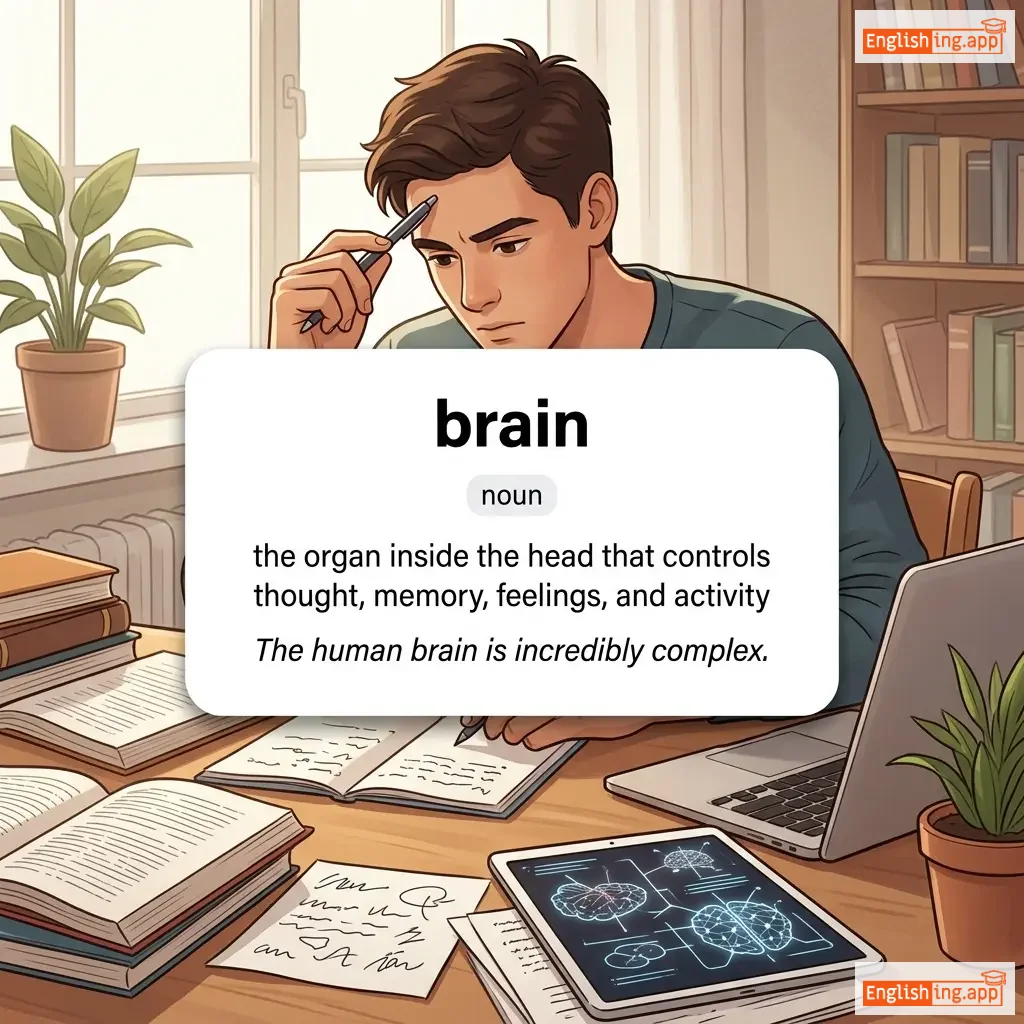
the organ inside the head that controls thought, memory, feelings, and activity
••••••
|
The human brain is incredibly complex. |
人間の脳は非常に複雑です。
ningen no nō wa hijō ni fukuzatsu desu.
••••••
|
rack your brain |
to think very hard about something
••••••
|
頭をひねる
atama o hineru
••••••
|
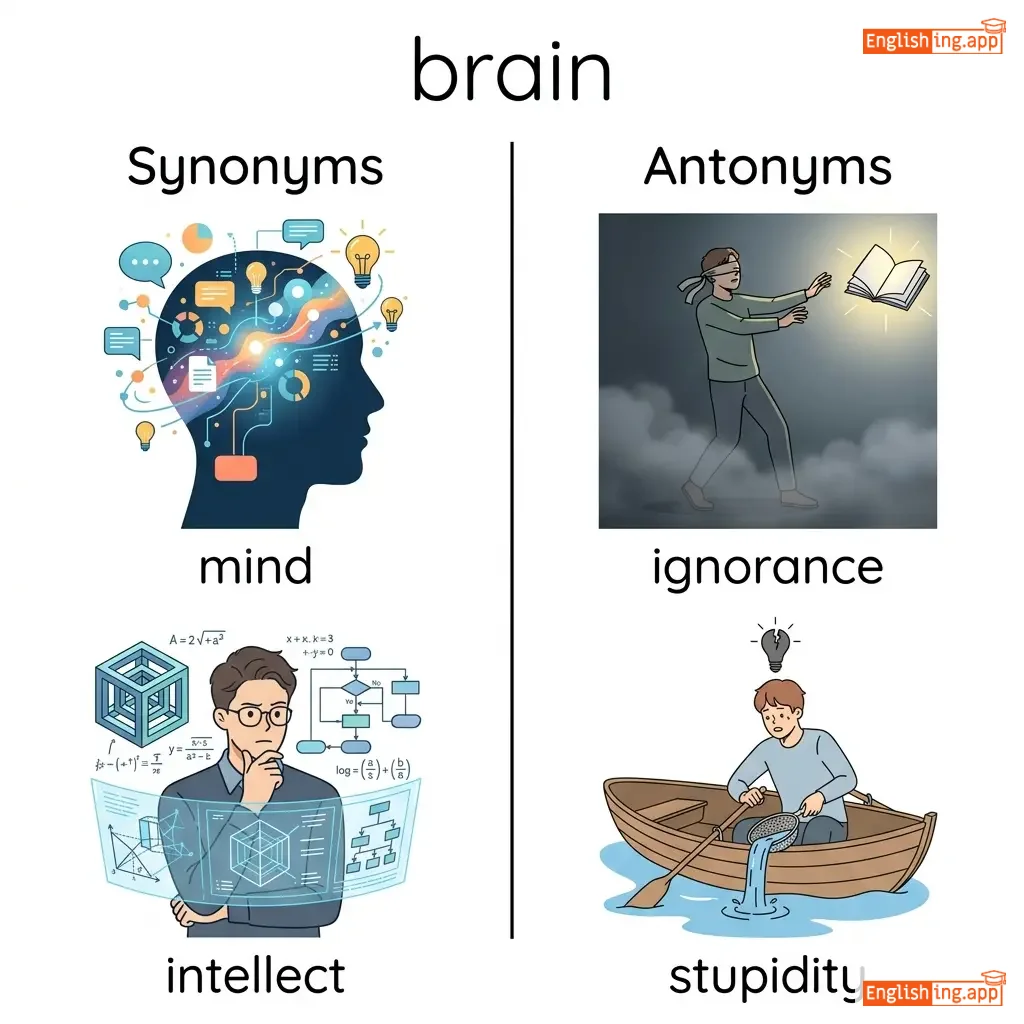
mind, intellect, intelligence, head
••••••
|
ignorance, stupidity
••••••
|
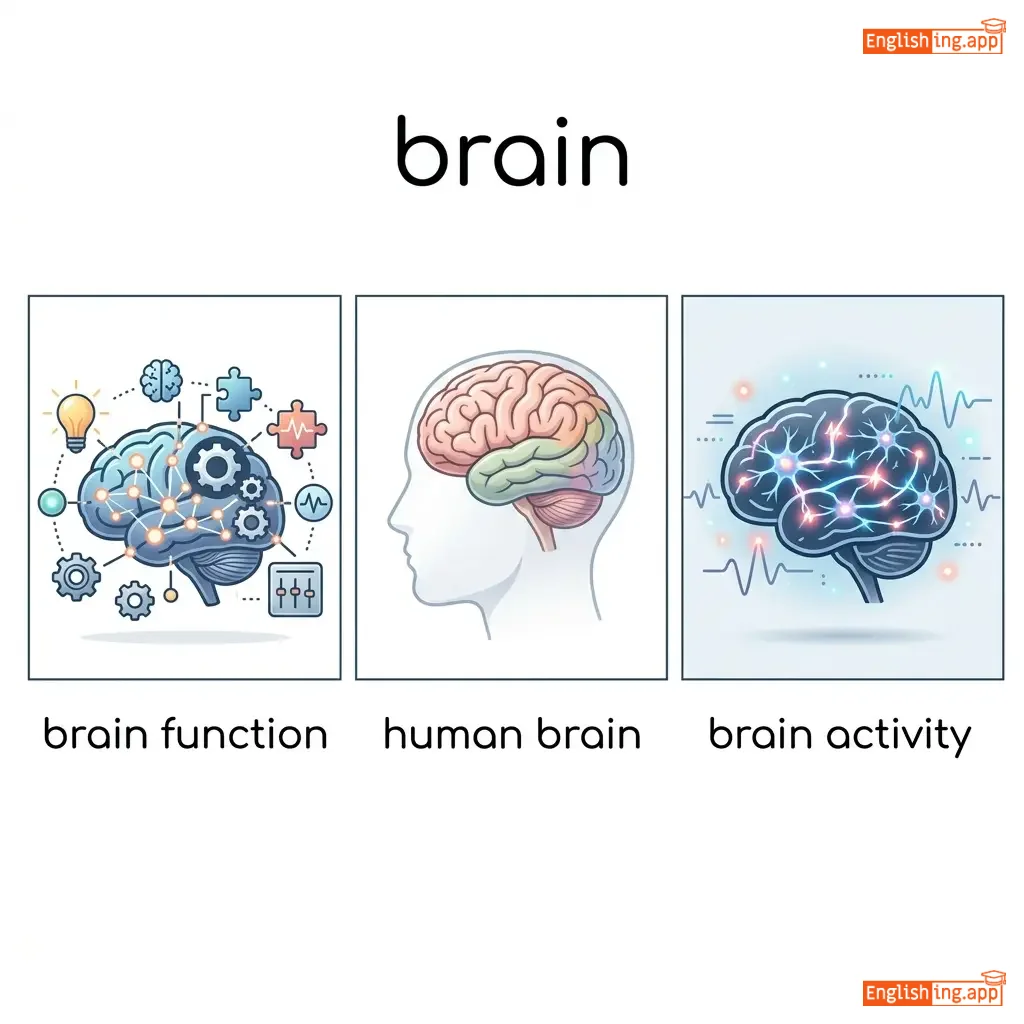
brain function, human brain, brain activity, brain power
••••••
|
脳の中で‘脳ストーム’を起こしてみよう!
••••••
|
|
#10548
👨❤️👩
|
/ˈbɔɪˌfrɛnd/
noun
••••••
|
- •••••• | - •••••• | - •••••• | - •••••• | - •••••• | - •••••• |
a man or boy that someone is having a romantic or close relationship with
••••••
|
She introduced her boyfriend to her parents. |
- •••••• | - •••••• | - •••••• | - •••••• |
partner, companion, lover, date
••••••
|
girlfriend, enemy
••••••
|
new boyfriend, old boyfriend, serious boyfriend, high school boyfriend
••••••
|
No •••••• |
|
#10549
👦
|
/bɔɪ/
noun
(ボーイ)
••••••
|
- •••••• |
男の子
otokonoko
••••••
|
- •••••• | - •••••• | - •••••• | - •••••• |
a male child or young male person
••••••
|
The boy ran across the playground. |
その男の子は遊び場を走り回った。
Sono otokonoko wa asobiba o hashirimatta.
••••••
|
boys will be boys |
a phrase implying that boys or men often behave in certain stereotypical ways
••••••
|
男の子は男の子であり続ける
Otokonoko wa otokonoko de aritsudzukeru
••••••
|
lad, youngster, child, son, male
••••••
|
girl, female, woman
••••••
|
little boy, young boy, school boy, boy scout
••••••
|
Boyは男の子を意味し、'Boy'と'Baka'は両方とも男性を示します。
••••••
|
|
#10550
📦
|
/bɑːks/
noun
(ボックス)
••••••
|
- •••••• |
箱
hako
••••••
|
- •••••• | - •••••• | - •••••• | - •••••• |
a container with flat sides, typically square or rectangular, used for storing things
••••••
|
He packed his clothes in a cardboard box.
彼は服を段ボール箱に詰めました。
••••••
|
彼は服を段ボール箱に詰めました。
Kare wa fuku o danbōru hako ni tsumemashita.
••••••
|
think outside the box
箱の外で考える
••••••
|
to think creatively and differently
••••••
|
箱の外で考える
Hako no soto de kangaeru
••••••
|
container, case, carton, package, chest
••••••
|
openness, unboxed
••••••
|
gift box, wooden box, cardboard box, jewelry box
••••••
|
箱は箱を意味します。 '本' を箱に入れることを想像してください。
••••••
|
|
#10551
🥣
|
/boʊl/
noun
(ボウル)
••••••
|
- •••••• |
ボウル
booru
••••••
|
- •••••• | - •••••• | - •••••• | - •••••• |
a round, deep dish used for holding food or liquids
••••••
|
She poured the soup into a large bowl. |
彼女はスープを大きなボウルに注ぎました。
Kanojo wa suupu o ookina booru ni sosogimashita.
••••••
|
bowl over |
to surprise or impress someone greatly
••••••
|
驚かせる
odorokaseru
••••••
|
dish, vessel, container, basin
••••••
|
plate, flat surface
••••••
|
salad bowl, mixing bowl, cereal bowl, soup bowl
••••••
|
Bowlはボウル、ボールが深いボウルに落ちることを想像してみてください。
••••••
|
|
#10552
🛑
|
/ˈbaʊn.dri/
noun
(バウンダリー)
••••••
|
|
境界
kyoukai
••••••
|
- •••••• | - •••••• | - •••••• | - •••••• |
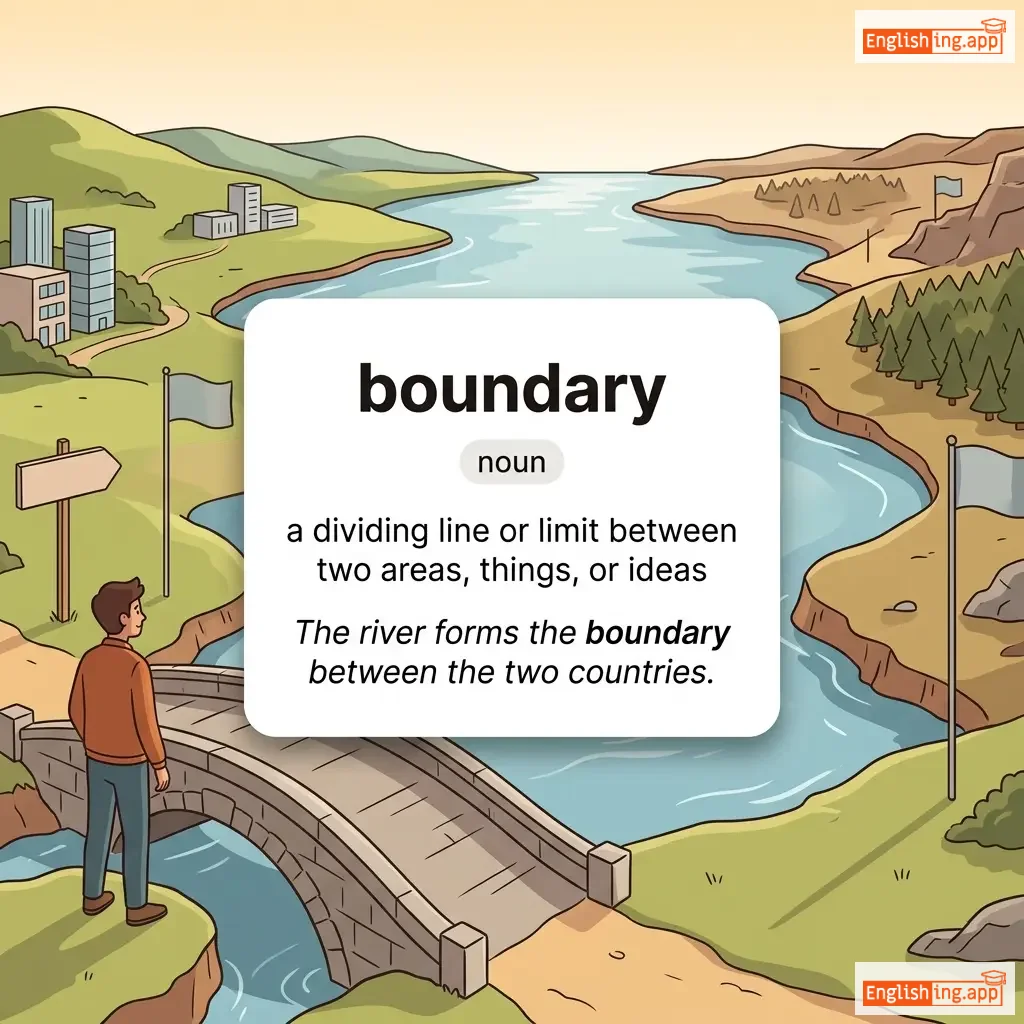
a dividing line or limit between two areas, things, or ideas
••••••
|
The river forms the boundary between the two countries. |
その川は二つの国の境界を形成しています。
Sono kawa wa futatsu no kuni no kyoukai o keisei shiteimasu.
••••••
|
cross the boundary |
to go beyond accepted limits
••••••
|
境界を越える
kyoukai o koeru
••••••
|
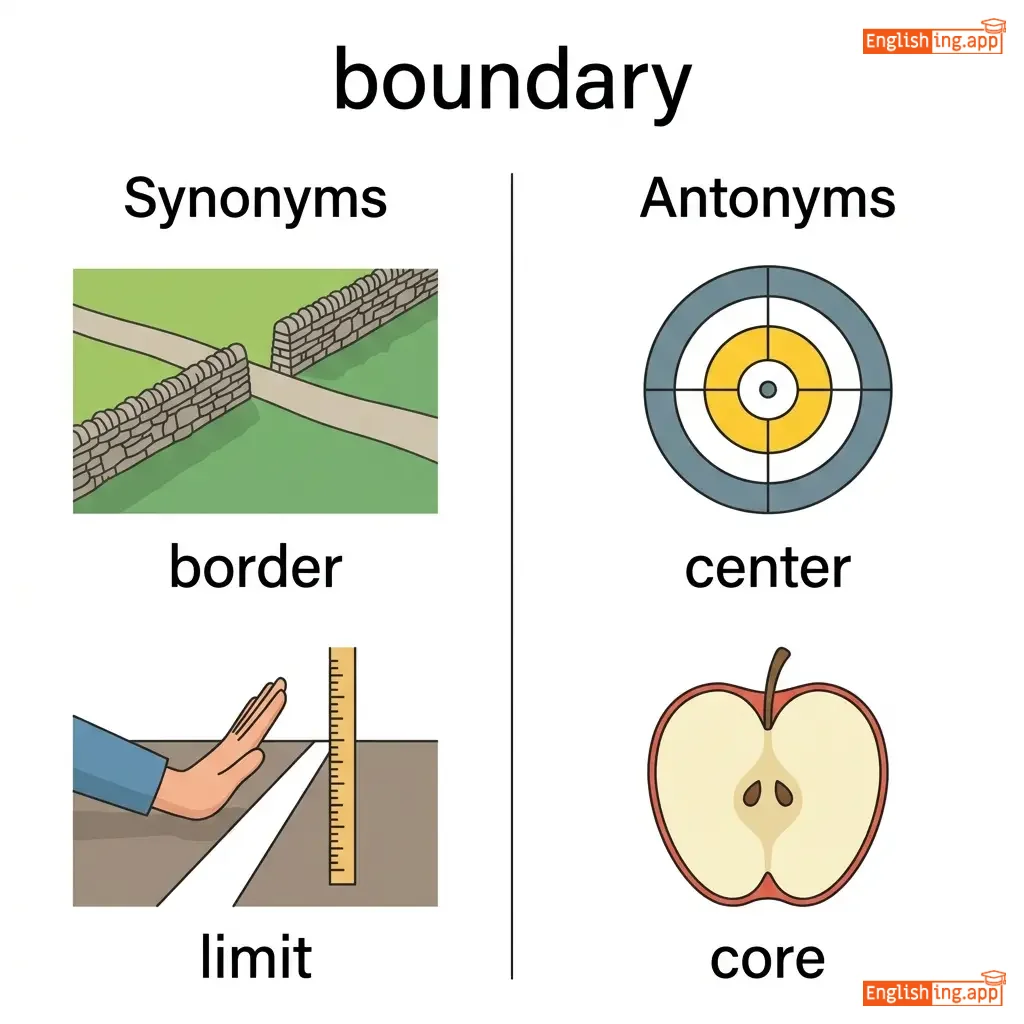
border, limit, edge, frontier
••••••
|
center, core, interior
••••••
|
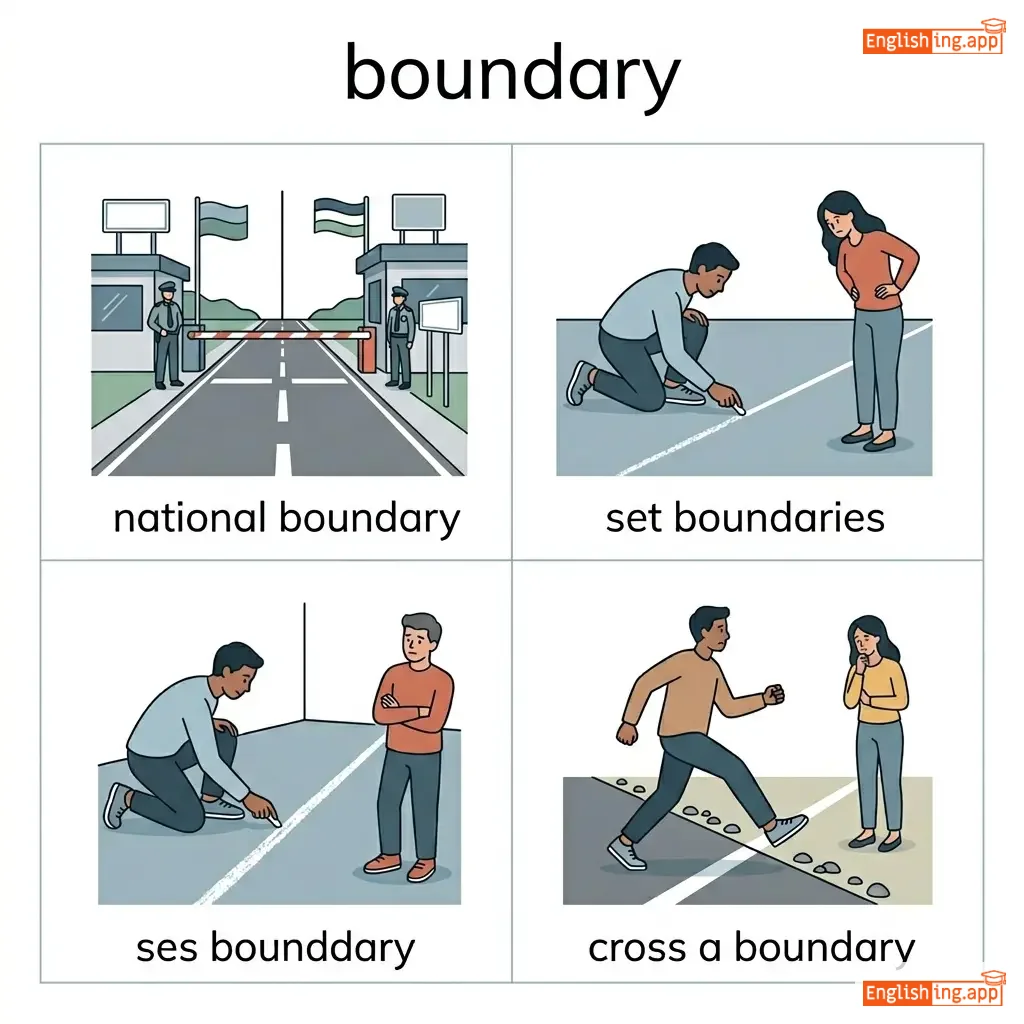
national boundary, set boundaries, cross a boundary, boundary line
••••••
|
Boundaryは境界を意味します。サッカーでは境界はゴールラインです。
••••••
|
|
#10553
🍾
|
/ˈbɒt.əl/
noun
(ボトル)
••••••
|
- •••••• |
ボトル
botoru
••••••
|
- •••••• | - •••••• | - •••••• | - •••••• |
a container, typically made of glass or plastic, with a narrow neck used to hold liquids
••••••
|
He poured water into the bottle. |
彼はボトルに水を注いだ。
Kare wa botoru ni mizu o sosogida.
••••••
|
bottle up |
to keep emotions hidden instead of expressing them
••••••
|
感情を抑える
kanjō o osaeru
••••••
|
flask, container, jar, vessel
••••••
|
open container, bowl
••••••
|
water bottle, glass bottle, plastic bottle, bottle of wine
••••••
|
ボトル、ボトルに水を入れる。
••••••
|
|
#10554
😒
|
/ˈbɒðər/
verb
(ボザー)
••••••
|
- •••••• |
邪魔する
jama suru
••••••
|
bothered
ボダード
••••••
|
bothered
ボダード
••••••
|
bothers
ボザーズ
••••••
|
bothering
ボザーリング
••••••
|
to annoy, worry, or cause trouble to someone
••••••
|
I don't want to bother you while you're working.
あなたが働いているときに邪魔をしたくありません。
••••••
|
あなたが働いているときに邪魔をしたくありません。
Anata ga hataraite iru toki ni jama o shitakunai desu.
••••••
|
can't be bothered
気にしません
••••••
|
too lazy or unwilling to do something
••••••
|
気にしません
Ki ni shimasen
••••••
|
annoy, disturb, irritate, trouble, pester
••••••
|
please, soothe, comfort
••••••
|
bother someone, bother to ask, hardly bother, never bother
••••••
|
Botherは邪魔するという意味です。例えば、誰かがあなたを邪魔し続けるような状況です。
••••••
|
Vocabulary Quiz
Test your vocabulary by matching words with their translations or meanings.
Login to take the quiz
Comments (0)
Share your thoughts and join the discussion.
Join the discussion by logging in
Login to CommentNo comments yet
Be the first to share your thoughts!