

翻訳
過去
過去分詞
三人称単数
動名詞
意味
例文
例文の翻訳
同義語
対義語
コロケーション
ニーモニック

Swipe left or right, or use the buttons. Tap image to zoom.
例文の翻訳
単語
Lesson 25Lesson 25 - マスクトグル
|
絵文字
|
単語 | Images | 翻訳 | 過去 | 過去分詞 | 三人称単数 | 動名詞 | 意味 | 例文 | 例文の翻訳 | 表現例 | 表現例の意味 | 表現例の翻訳 | 同義語 | 対義語 | コロケーション | ニーモニック |
|---|---|---|---|---|---|---|---|---|---|---|---|---|---|---|---|---|---|
|
#721
📘
|
/əˈθɔːrɪtətɪv/
adjective
(オーソリティティブ)
••••••
|
- •••••• |
権威的な
ken'i-teki na
••••••
|
- •••••• | - •••••• | - •••••• | - •••••• |
Having or showing authority; commanding and self-confident; reliable as a source of information.
••••••
|
She spoke in an authoritative tone that silenced the room. |
彼女は権威的な口調で話し、部屋を静かにさせた。
Kanojo wa ken'i-teki na kuchō de hanashi, heya o shizuka ni saseta.
••••••
|
authoritative source |
A reliable and trustworthy source of information.
••••••
|
権威ある情報源
ken'i aru jōhōgen
••••••
|
commanding, reliable, credible, confident, influential
••••••
|
weak, uncertain, unreliable
••••••
|
authoritative source, authoritative guide, authoritative figure, authoritative statement
••••••
|
権威的な (ken'i-teki na) = 権威を持つ (authority).
••••••
|
|
#722
❄️
|
/ˈævəlæntʃ/
noun, verb
••••••
|
- •••••• | - •••••• |
avalanched
••••••
|
avalanched
••••••
|
avalanches
••••••
|
avalanching
••••••
|
(noun) a mass of snow, ice, and rocks falling rapidly down a mountainside; a sudden overwhelming quantity; (verb) to descend like an avalanche
••••••
|
The avalanche buried the mountain road under tons of snow. |
- •••••• |
avalanche of criticism |
an overwhelming amount of negative feedback or complaints
••••••
|
- •••••• |
landslide, snowslide, rockslide, deluge, flood
••••••
|
trickle, dribble, scarcity
••••••
|
avalanche risk, avalanche warning, avalanche of emails, avalanche debris, trigger avalanche
••••••
|
No •••••• |
|
#723
⚙️
|
/ɔːɡˈzɪliəri/
adjective, noun
(オクシリャリ)
••••••
|
- •••••• |
補助的
hojoteki
••••••
|
- •••••• | - •••••• | - •••••• | - •••••• |
(adjective) providing supplementary or additional help and support; (noun) a person or thing that provides auxiliary support
••••••
|
The hospital has an auxiliary power generator in case of emergencies. |
病院には緊急時用の補助電力発電機があります。
Byōin ni wa kinkyū ji yō no hojodenryoku hatsudengki ga arimasu.
••••••
|
auxiliary verb |
a verb used with another verb to form tenses, moods, or voices (e.g., be, have, do)
••••••
|
補助動詞
hojo dōshi
••••••
|
supplementary, additional, supporting, backup, secondary
••••••
|
main, primary, principal, chief
••••••
|
auxiliary power, auxiliary verb, auxiliary equipment, auxiliary staff, auxiliary services
••••••
|
AUX-ILI-ARYはAUX(追加)補助的 - 追加の支援!
••••••
|
|
#724
🍂
|
/ɔːˈtʌmnəl/
adjective
(オータムナル)
••••••
|
- •••••• |
秋の
aki no
••••••
|
- •••••• | - •••••• | - •••••• | - •••••• |
relating to or characteristic of autumn; occurring in autumn
••••••
|
The autumnal colors of red and gold filled the forest. |
赤と金の秋の色が森を満たした。
Aka to kin no aki no iro ga mori o mitashita.
••••••
|
autumnal equinox |
the time in September when day and night are equal in length, marking the beginning of autumn
••••••
|
秋分
shūbun
••••••
|
fall-like, seasonal, harvest-time, mature, declining
••••••
|
vernal, spring-like, summery
••••••
|
autumnal colors, autumnal equinox, autumnal weather, autumnal season, autumnal leaves
••••••
|
AUTUMN-AL は秋の(aki no)葉っぱが落ちている、AUTUMN が本当に来た!
••••••
|
|
#725
🔬
|
/ˈɔːtɒpsi/
noun, verb
(オートプシー)
••••••
|
- •••••• |
検死
kenshi
••••••
|
autopsied
オートプシード
••••••
|
autopsied
オートプシード
••••••
|
autopsies
オートプシーズ
••••••
|
autopsying
オートプシーイング
••••••
|
a post-mortem examination to discover the cause of death or the extent of disease
••••••
|
The autopsy revealed that the victim had died from poisoning.
オートプシーは、犠牲者が中毒で亡くなったことを明らかにしました。
••••••
|
検死は、犠牲者が中毒で亡くなったことを明らかにしました。
Kenshi wa, giseisha ga chudoku de nakunatta koto wo akiraka ni shimashita.
••••••
|
perform an autopsy
オートプシーを実施する
••••••
|
to conduct a medical examination of a dead body
••••••
|
検死を実施する
Kenshi wo jisshi suru
••••••
|
post-mortem, necropsy, examination, dissection, analysis
••••••
|
healing, treatment, diagnosis
••••••
|
perform autopsy, autopsy report, autopsy results, conduct autopsy, forensic autopsy
••••••
|
AUTO-PSY - AUTO調べる、検死!
••••••
|
|
#726
🗽
|
/ɔːˈtɒnəmi/
noun
(オートノミー)
••••••
|
|
自律
jiritsu
••••••
|
- •••••• | - •••••• | - •••••• | - •••••• |
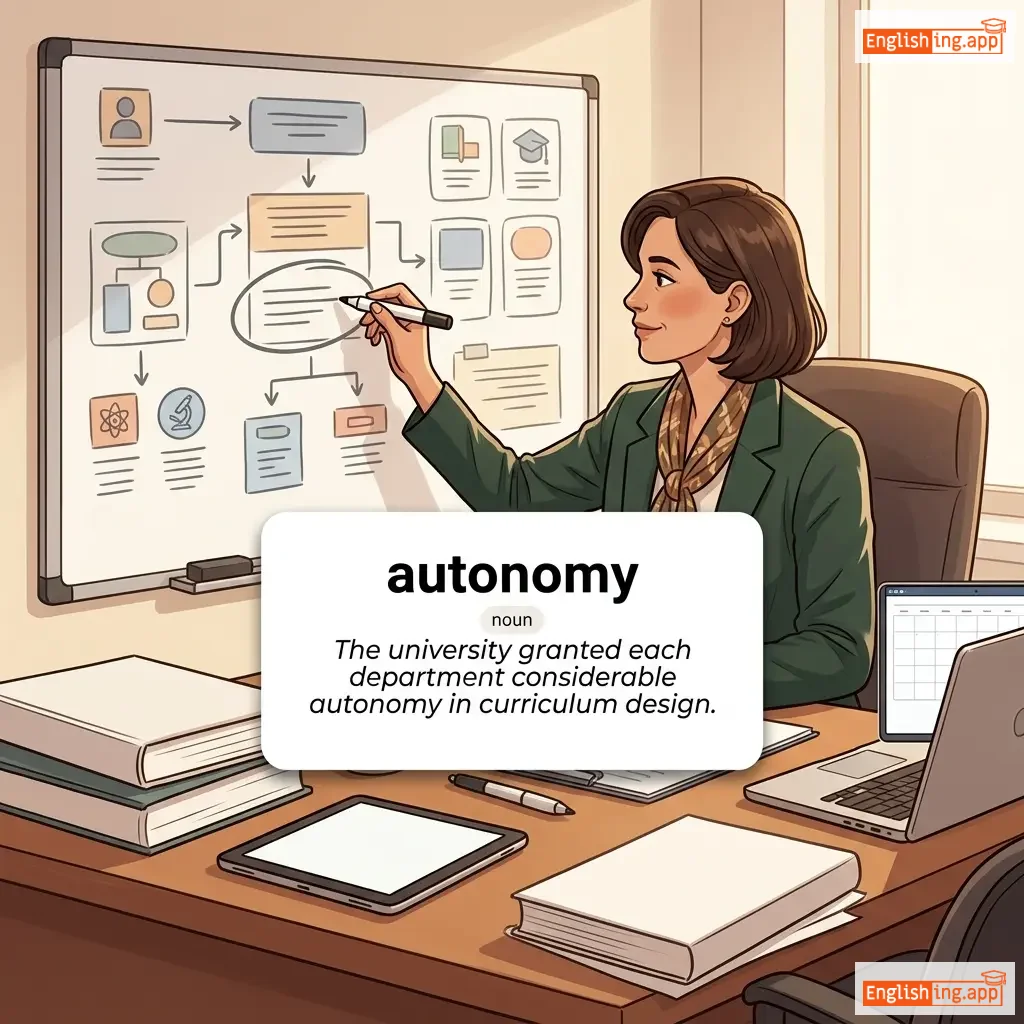
the right or condition of self-government; independence or freedom to act or make decisions
••••••
|
The university granted each department considerable autonomy in curriculum design. |
大学は各部門にカリキュラム設計において相当の自律を認めました。
Daigaku wa kaku bumon ni karikyuramu sekkei ni oite sōtō no jiritsu o mitomemashita.
••••••
|
personal autonomy |
the ability to make one's own decisions and control one's own life
••••••
|
個人的な自律
kojinteki na jiritsu
••••••
|
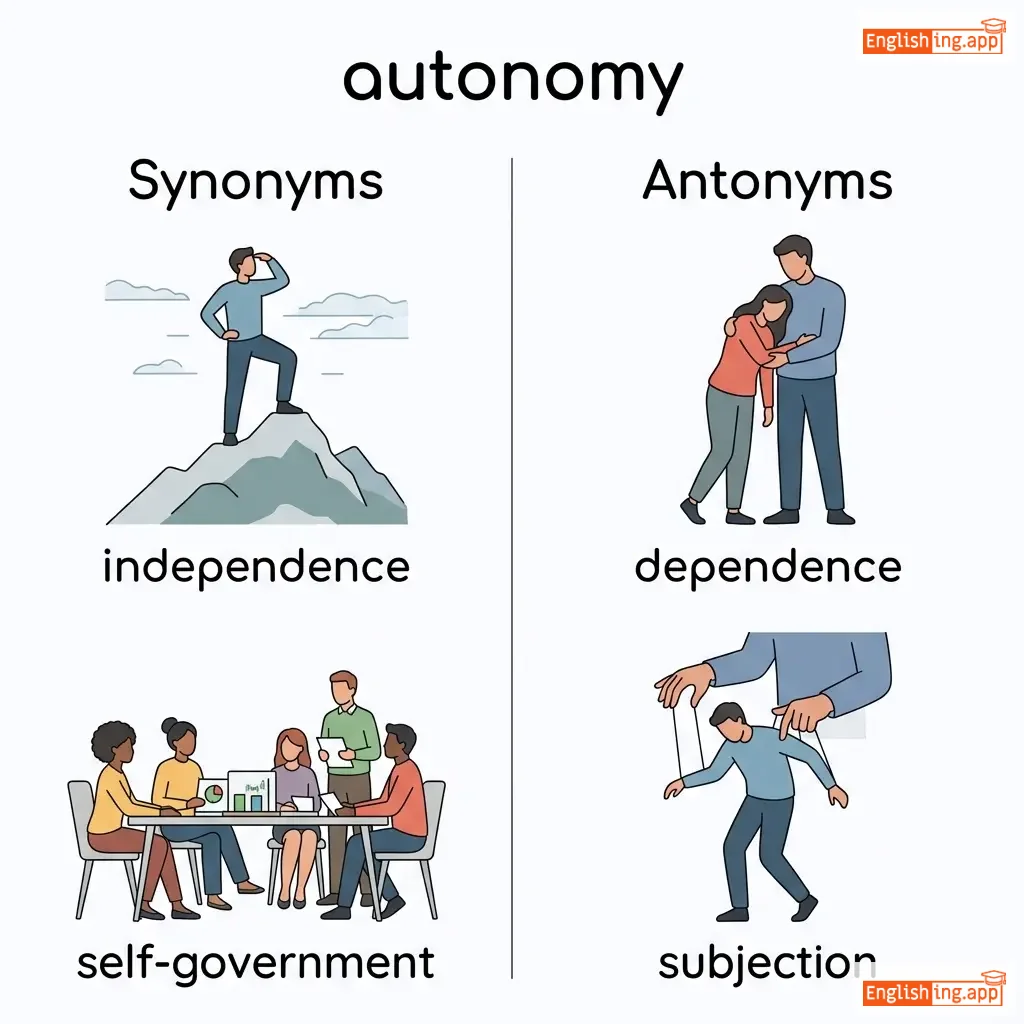
independence, self-government, sovereignty, freedom, self-rule
••••••
|
dependence, subjection, control
••••••
|
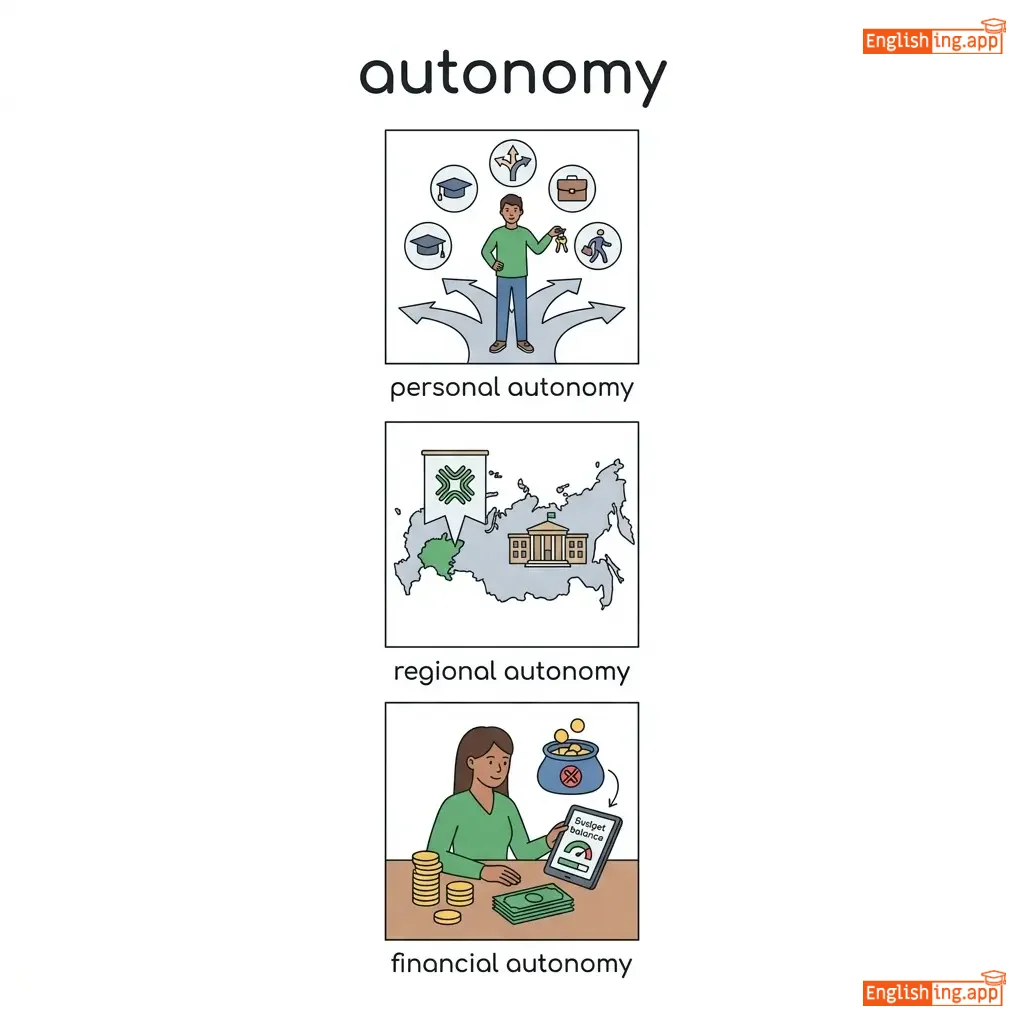
personal autonomy, regional autonomy, financial autonomy, autonomy and independence, grant autonomy
••••••
|
AUTO-NOMYとはAUTOの自己管理 - 自律 (jiritsu) によって私たちの決定!
••••••
|
|
#727
🛰️
|
/ɔːˈtɒnəməsli/
adverb
(オートノマスリー)
••••••
|
- •••••• |
自律的に
jiritsuteki ni
••••••
|
- •••••• | - •••••• | - •••••• | - •••••• |
In an independent or self-governing manner.
••••••
|
The robot can operate autonomously without human intervention. |
ロボットは人間の介入なしで自律的に動作できます。
Robotto wa ningen no kainyū nashi de jiritsuteki ni dōsa dekimasu.
••••••
|
- •••••• | - •••••• | - •••••• |
independently, freely, self-sufficiently, sovereignly
••••••
|
dependently, subordinately
••••••
|
function autonomously, operate autonomously, work autonomously, move autonomously
••••••
|
Auto (独立) + nomosly (方法) = 自分で動く
••••••
|
|
#728
🚗
|
/ɔːˈtɒnəməs/
adjective
(オートノマス)
••••••
|
|
自律的
jiritsuteki
••••••
|
- •••••• | - •••••• | - •••••• | - •••••• |
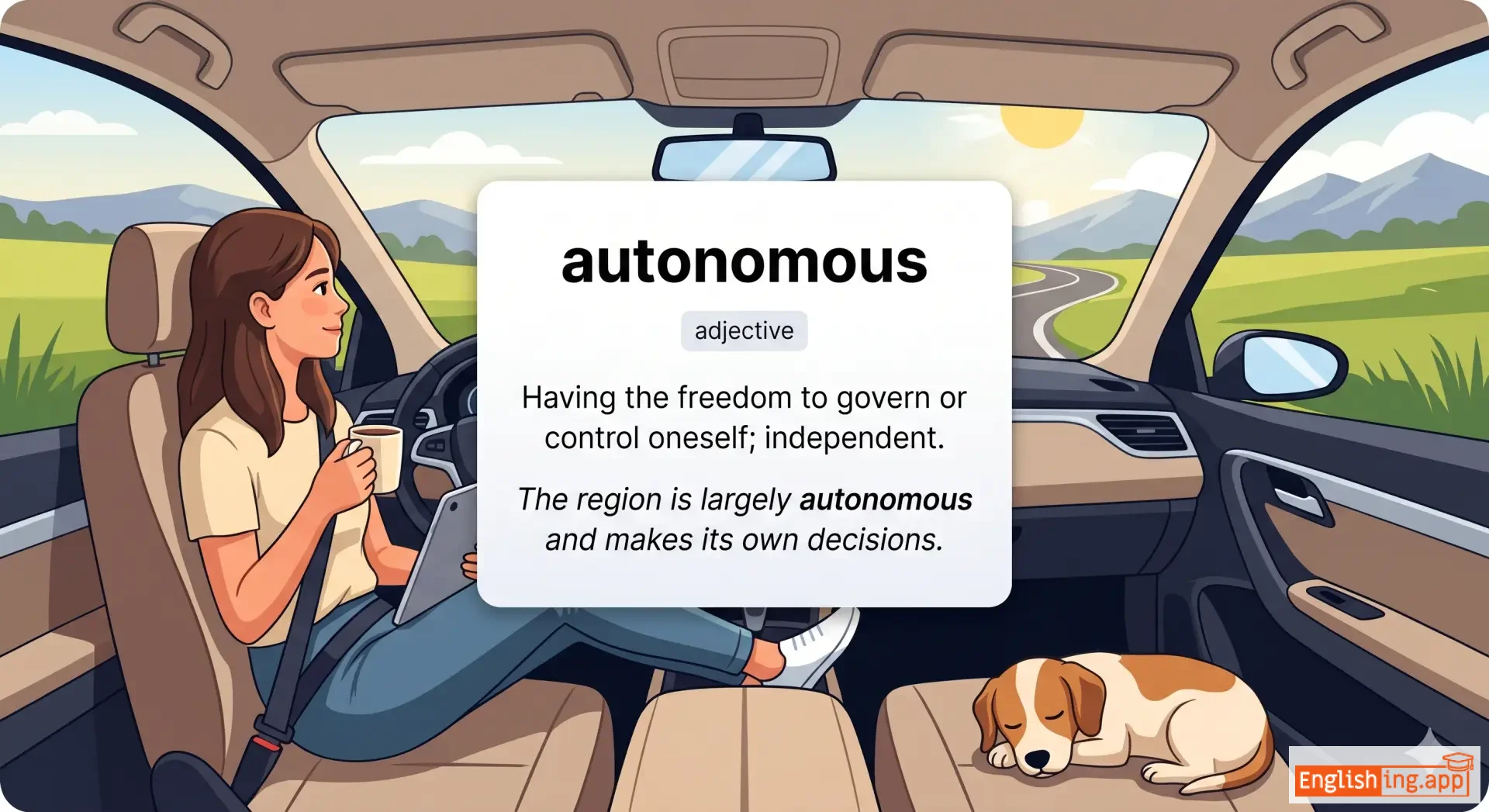
Having the freedom to govern or control oneself; independent.
••••••
|
The region is largely autonomous and makes its own decisions. |
その地域は主に自律的であり、自分の決定を下します。
Sono chiiki wa omoni jiritsuteki de ari, jibun no kettei o kudashimasu.
••••••
|
autonomous vehicle |
A self-driving vehicle that operates without human control.
••••••
|
自律型車両
jiritsugata sharyō
••••••
|
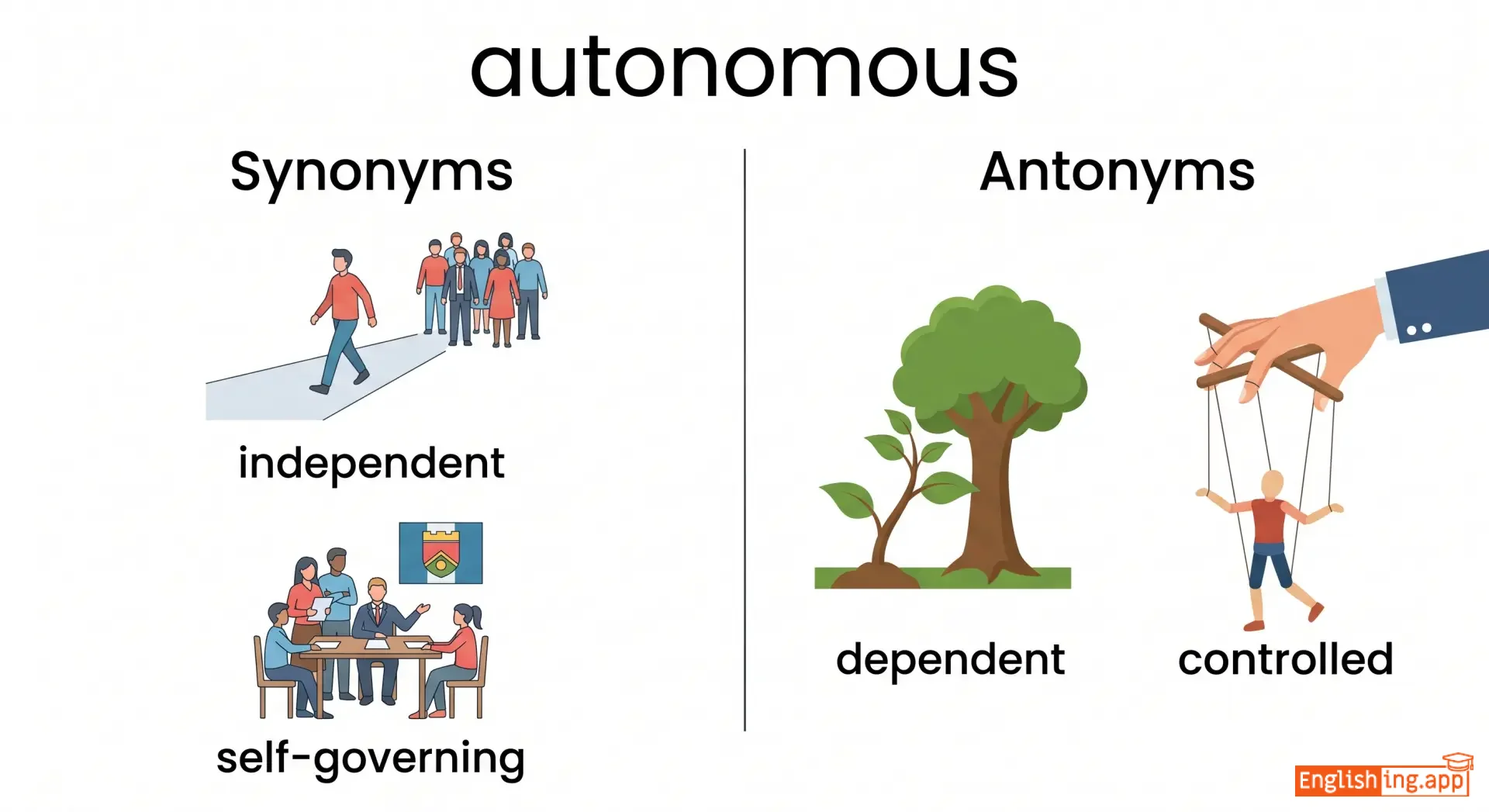
independent, self-governing, self-sufficient, sovereign
••••••
|
dependent, controlled, subordinate
••••••
|
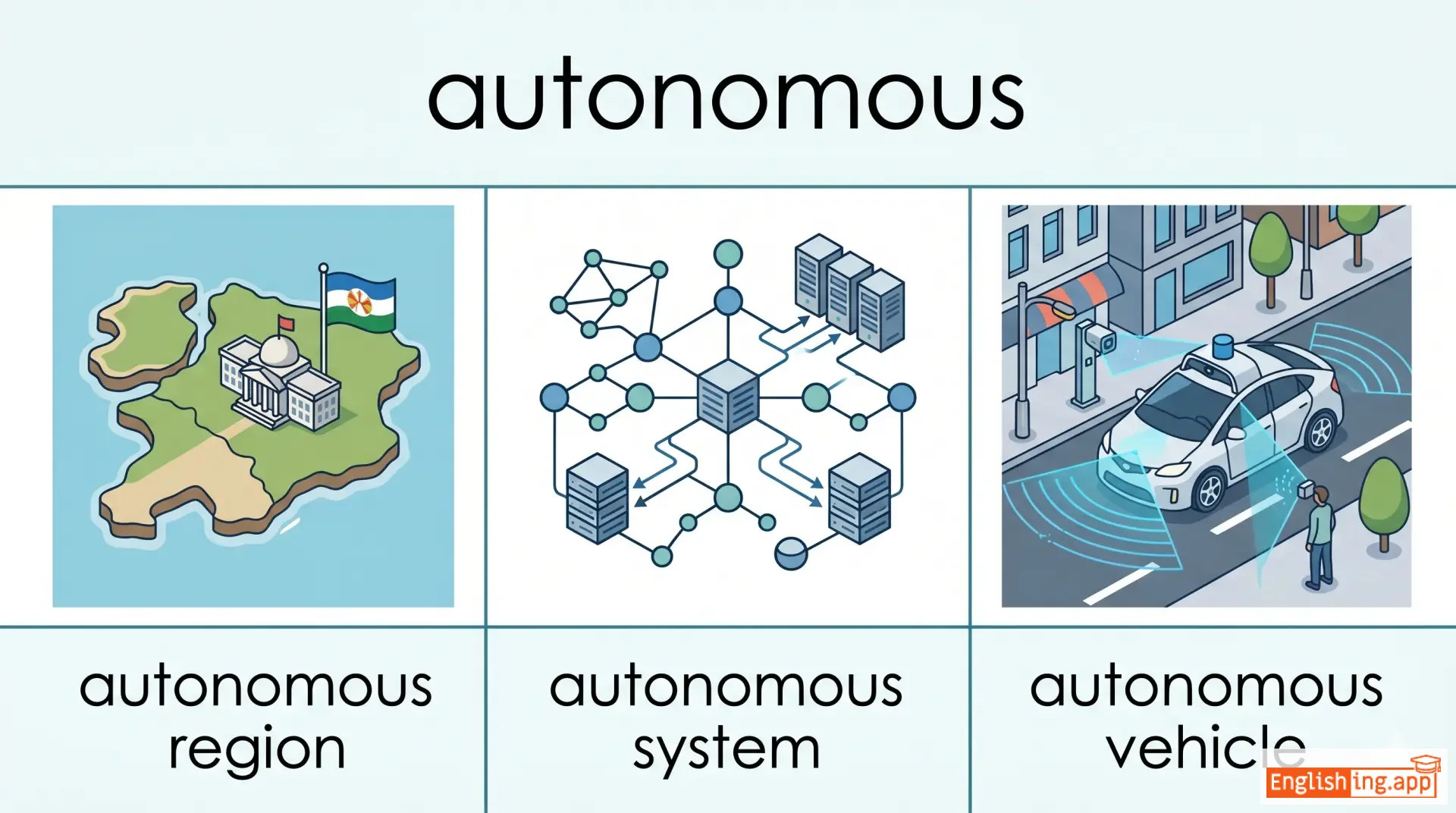
autonomous region, autonomous system, autonomous vehicle, autonomous decision
••••••
|
Auto (自分) + nomos (法) = 自分の法則で動く、自律的。
••••••
|
|
#729
🦾
|
/ɔːˈtɒmətən/
noun
(オートマトン)
••••••
|
- •••••• |
自動機械
jidou kikai
••••••
|
- •••••• | - •••••• | - •••••• | - •••••• |
A machine that works automatically; also refers to a person who behaves like a machine, without thinking.
••••••
|
He worked like an automaton, without showing any emotion. |
彼は感情を見せずにオートマトンのように働いていました。
Kare wa kanjou o misezu ni automaton no you ni hataraite imashita.
••••••
|
- •••••• | - •••••• | - •••••• |
robot, android, machine, drone
••••••
|
human, thinker
••••••
|
soulless automaton, mechanical automaton, act like an automaton
••••••
|
Auto (自動) + maton (機械) = 機械のように働く人。
••••••
|
|
#730
🤖
|
/ˈɔːtəmeɪt/
verb
••••••
|
|
- •••••• |
automated
••••••
|
automated
••••••
|
automates
••••••
|
automating
••••••
|
To use machines or computers to control or operate a process, making it automatic.
••••••
|
The company decided to automate its customer service operations. |
- •••••• |
fully automate |
To make a system or process completely automatic.
••••••
|
- •••••• |
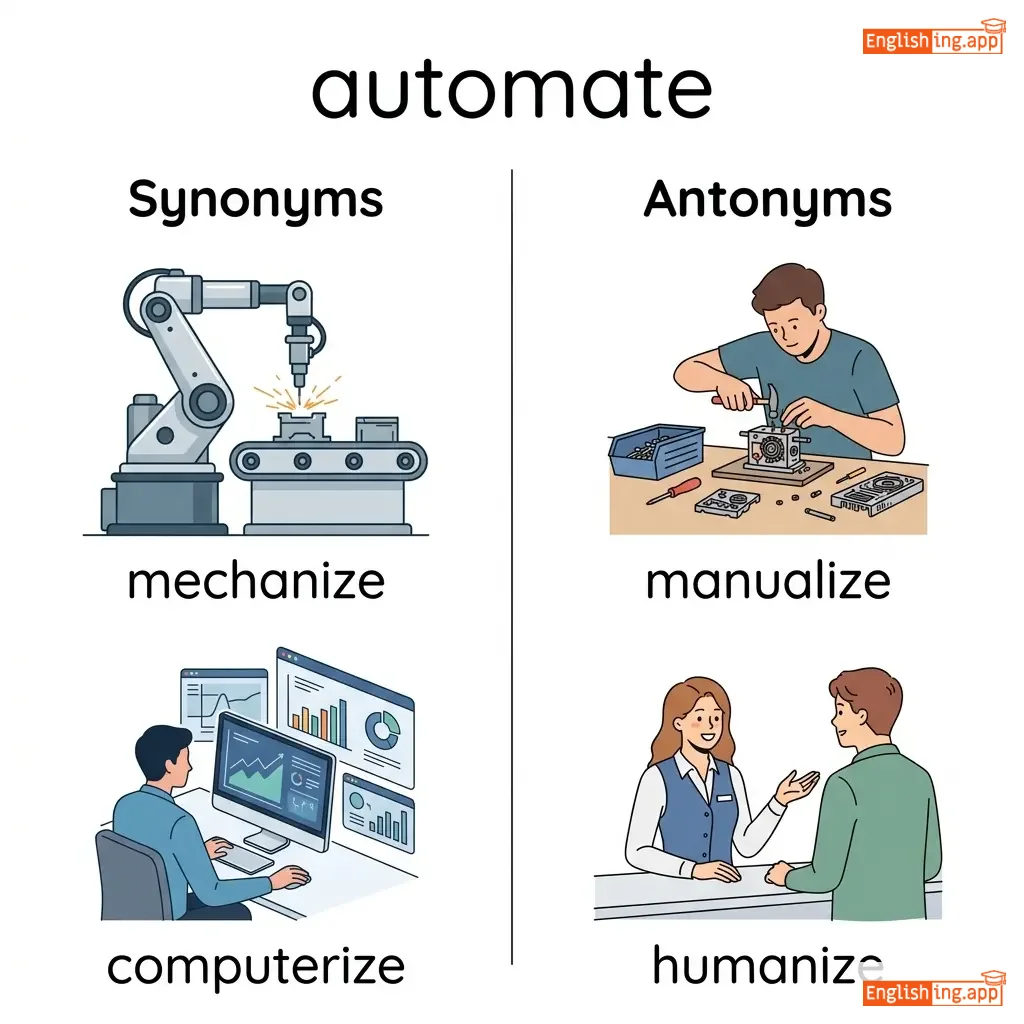
mechanize, computerize, digitize, systematize
••••••
|
manualize, humanize
••••••
|
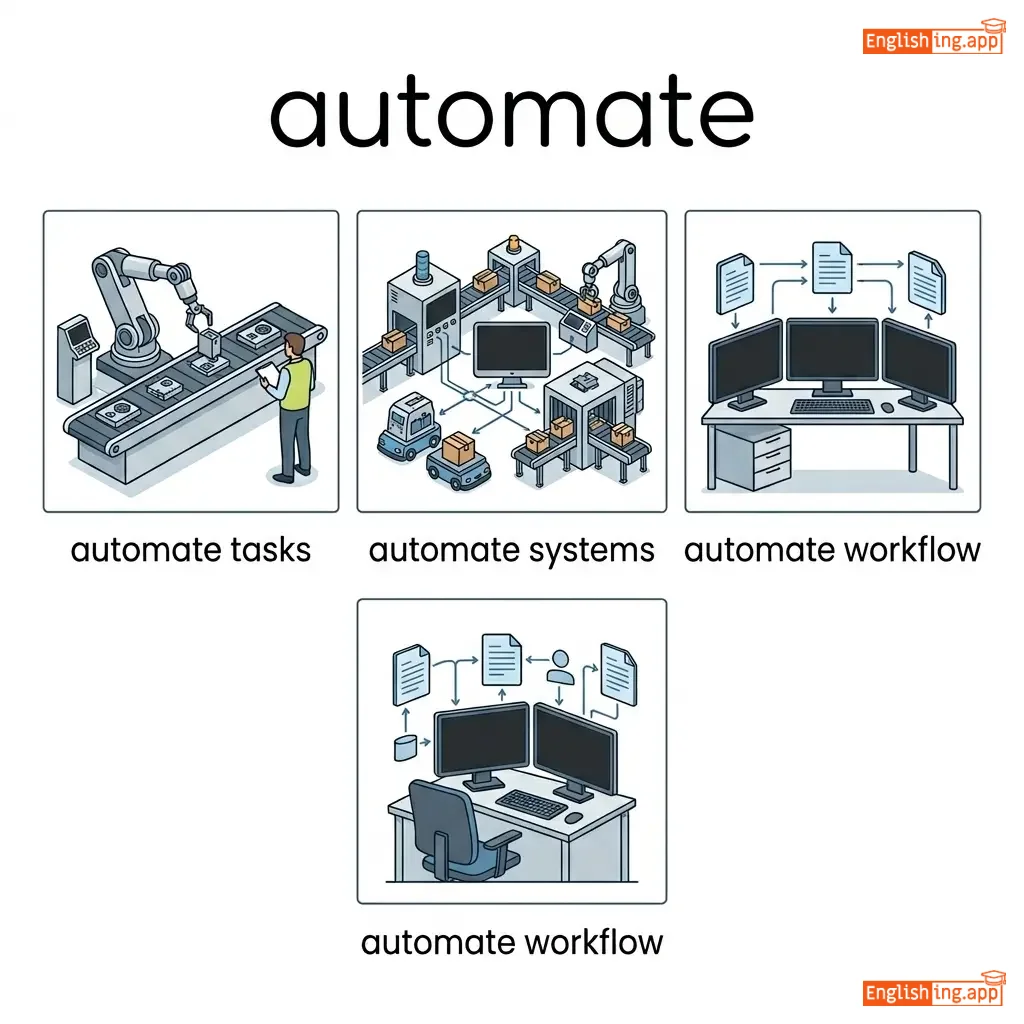
automate tasks, automate systems, automate workflow, fully automate
••••••
|
No •••••• |
|
#731
👑
|
/ˌɔːtəˈkrætɪk/
adjective
(オートクラティック)
••••••
|
- •••••• |
独裁的
dokusaiteki
••••••
|
- •••••• | - •••••• | - •••••• | - •••••• |
Relating to a ruler who has absolute power and does not consult others.
••••••
|
The manager’s autocratic style discouraged employees from sharing their ideas. |
マネージャーの独裁的なスタイルは、従業員が自分の考えを共有することを思いとどまらせました。
Manējā no dokusaiteki na sutairu wa, jūgyōin ga jibun no kangae o kyōyū suru koto o omoitorodomasemashita.
••••••
|
autocratic rule |
A system of governance where one person holds absolute power.
••••••
|
独裁的支配
dokusaiteki shihai
••••••
|
dictatorial, authoritarian, absolute, tyrannical, despotic
••••••
|
democratic, liberal, participatory
••••••
|
autocratic rule, autocratic regime, autocratic leader, autocratic government
••••••
|
Auto (自己) + cratic (権力) = 独裁的支配、すべてを一人の人物が決める。
••••••
|
|
#732
🦁
|
/ˈɔːtəkræt/
noun
(オートクラット)
••••••
|
- •••••• |
独裁者
dokusaisha
••••••
|
- •••••• | - •••••• | - •••••• | - •••••• |
A ruler with absolute power.
••••••
|
The autocrat controlled the country with an iron fist.
そのオートクラットは鉄の拳で国を支配していました。
••••••
|
そのオートクラットは鉄の拳で国を支配していました。
Sono ōtokuratto wa tetsu no ken de kuni o shihai shiteimashita.
••••••
|
- •••••• | - •••••• | - •••••• |
dictator, despot, tyrant, monarch
••••••
|
democrat, citizen
••••••
|
ruthless autocrat, absolute autocrat, powerful autocrat
••••••
|
Auto + crat = 自分の支配者 → Autocrat = 完全な支配者
••••••
|
|
#733
⚖️
|
/ɔːˈtɒkrəsi/
noun
(オートクラシー)
••••••
|
- •••••• |
独裁政治
dokusai seiji
••••••
|
- •••••• | - •••••• | - •••••• | - •••••• |
A system of government in which one person has absolute power.
••••••
|
The country suffered under decades of autocracy.
その国は何十年もの間、専制政治に苦しんでいました。
••••••
|
その国は何十年もの間、専制政治に苦しんでいました。
Sono kuni wa nanjūnen mo no aida, sensei seiji ni kurushindeimashita.
••••••
|
- •••••• | - •••••• | - •••••• |
dictatorship, tyranny, absolutism, despotism
••••••
|
democracy, republic
••••••
|
absolute autocracy, under autocracy, fall of autocracy
••••••
|
Autoは自分を意味し、cracyは支配を意味する→独裁政治=一人の支配者による統治。
••••••
|
|
#734
📖
|
/ˌɔːtəbaɪˈɒɡrəfi/
noun
(オートバイオグラフィー)
••••••
|
- •••••• |
自伝
jiden
••••••
|
- •••••• | - •••••• | - •••••• | - •••••• |
An account of a person's life written by that person.
••••••
|
She published an autobiography about her journey to success. |
彼女は自分の成功への道のりを綴った自伝を出版しました。
Kanojo wa jibun no seikou e no michinori o tsudzutta jiden o shuppan shimashita.
••••••
|
- •••••• | - •••••• | - •••••• |
memoir, life story, personal history, self-portrait
••••••
|
biography
••••••
|
write an autobiography, publish an autobiography, inspiring autobiography
••••••
|
Autoは自分、biographyは伝記 → Autobiography = 自分で書いた伝記。
••••••
|
|
#735
👑
|
/əˈθɔːrəti/
noun
(オーソリティ)
••••••
|
|
権限
kengen
••••••
|
- •••••• | - •••••• | - •••••• | - •••••• |
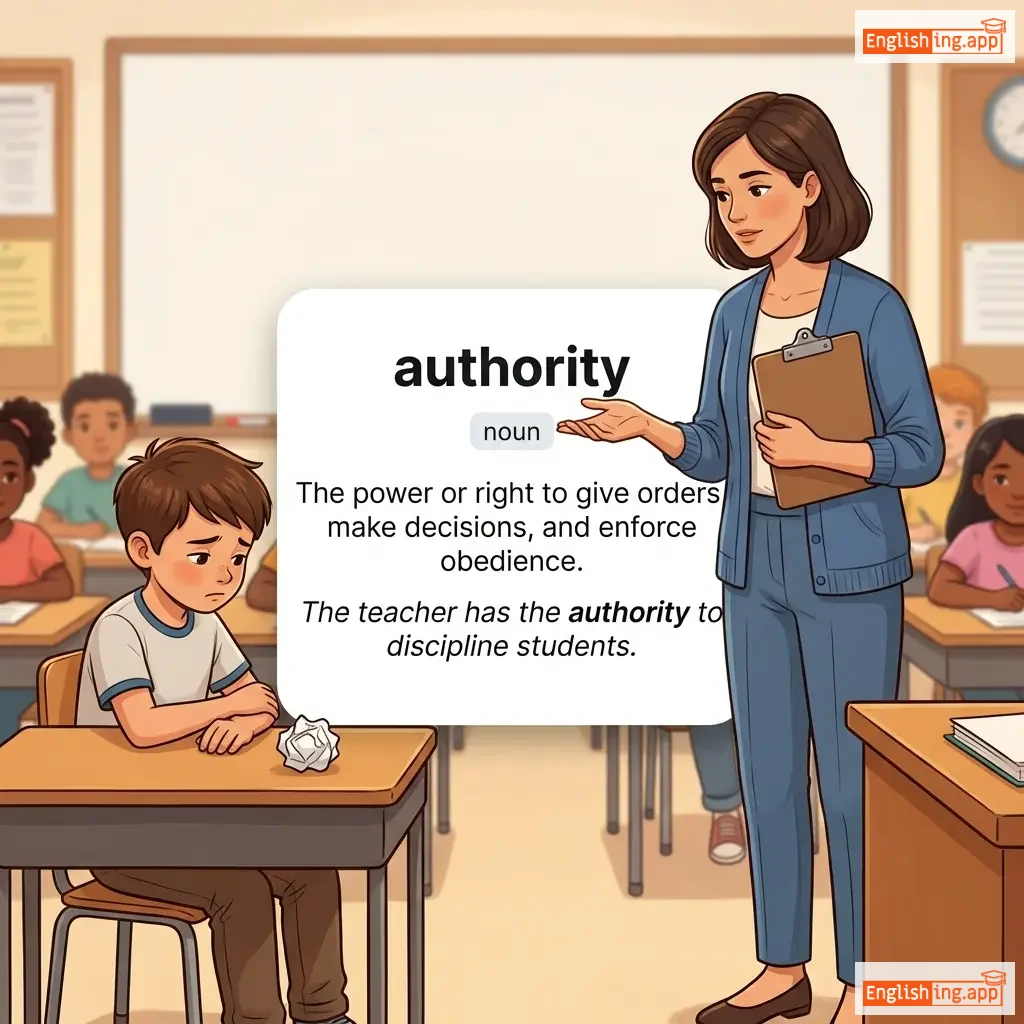
The power or right to give orders, make decisions, and enforce obedience.
••••••
|
The teacher has the authority to discipline students. |
教師は学生を罰する権限を持っています。
Kyoushi wa gakusei o bassuru kengen o motteimasu.
••••••
|
in authority |
Holding an official position of power.
••••••
|
権限を持つ
Kengen o motsu
••••••
|
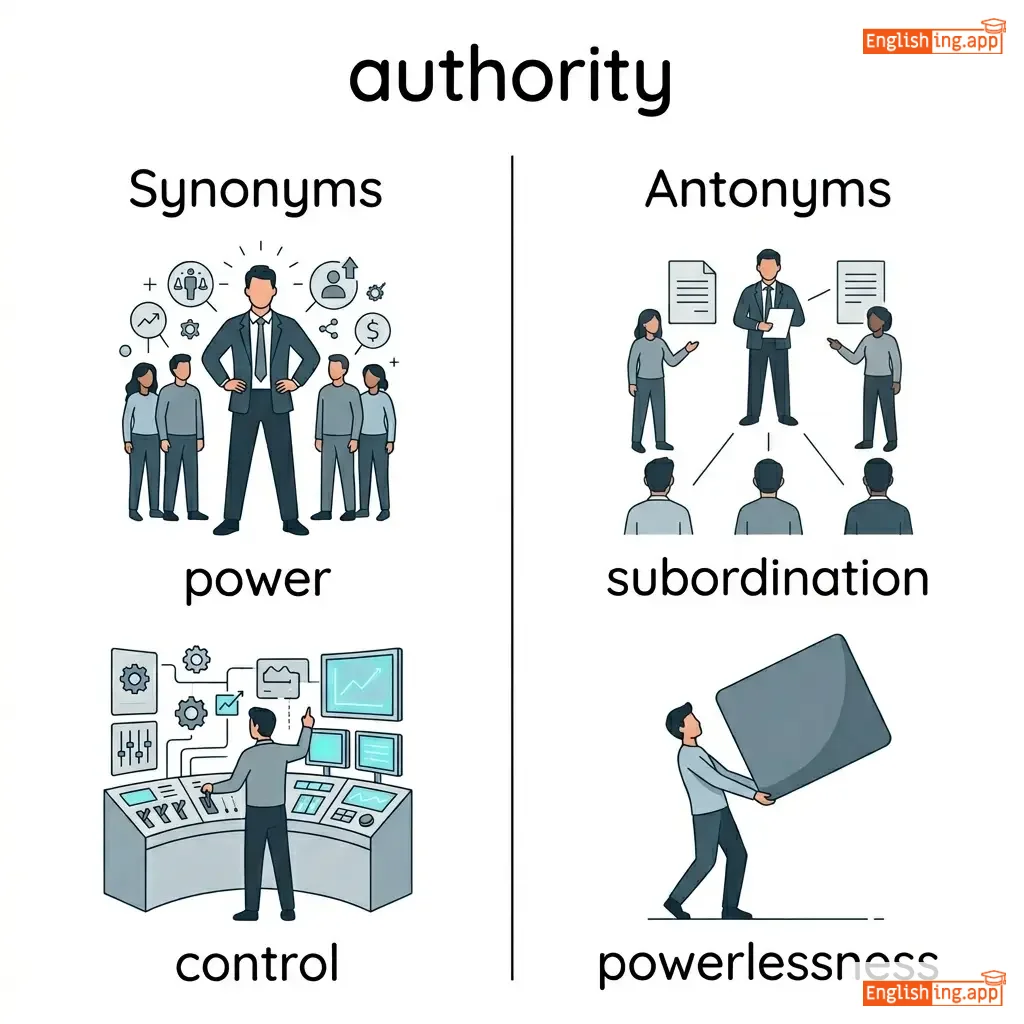
power, control, command, influence, jurisdiction
••••••
|
powerlessness, subordination
••••••
|
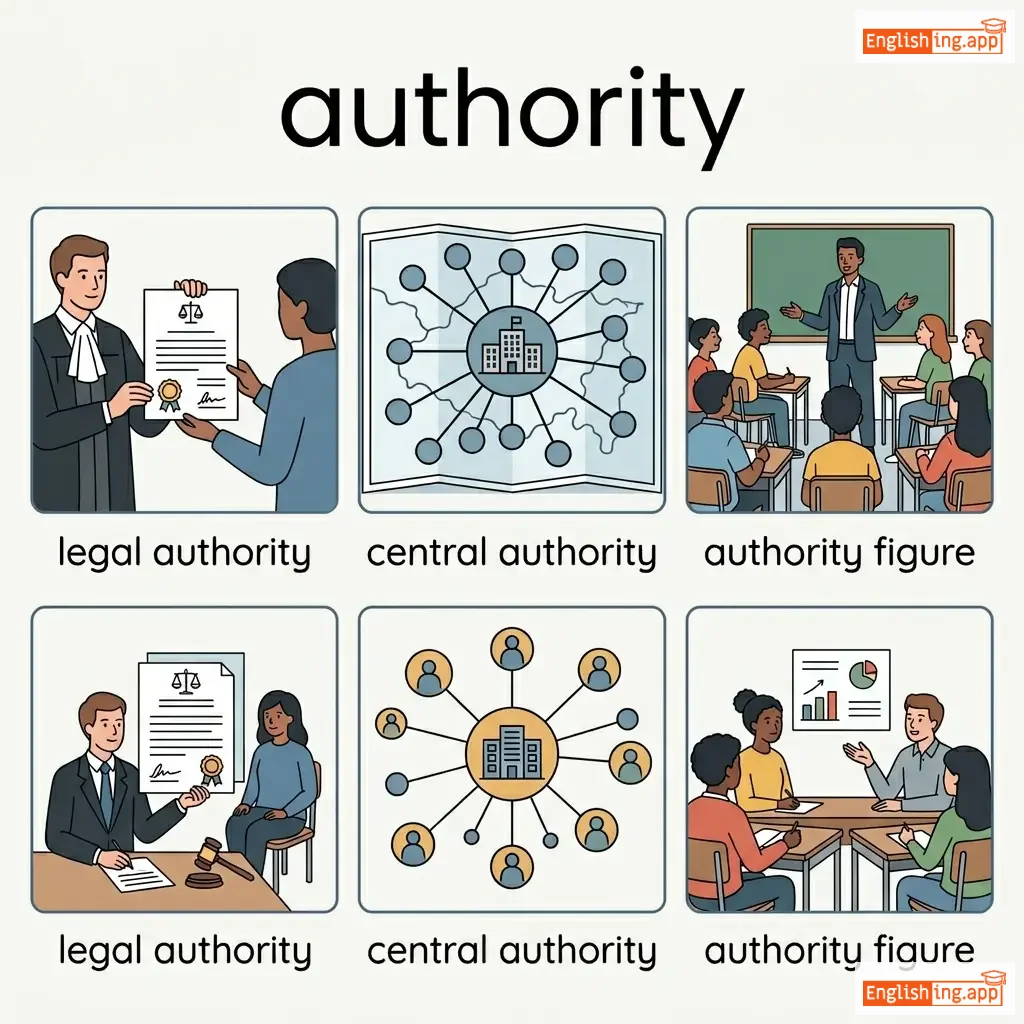
legal authority, central authority, authority figure, in authority
••••••
|
Authorityは 'author' のように命令を出せる立場のことです。
••••••
|
|
#736
👂
|
/ɔːˈrɪkjʊlər/
adjective
(オーリキュラー)
••••••
|
- •••••• |
耳に関連する
mimi ni kanren suru
••••••
|
- •••••• | - •••••• | - •••••• | - •••••• |
Relating to the ear or hearing.
••••••
|
The doctor used an auricular thermometer to check the patient's temperature.
医者は患者の体温を確認するためにオーリキュラー温度計を使用しました。
••••••
|
医者は患者の体温を確認するためにオーリキュラー温度計を使用しました。
Isha wa kanja no taion o kakunin suru tame ni orikyurā ondokei o shiyou shimashita.
••••••
|
- •••••• | - •••••• | - •••••• |
ear-related, auditory, otic, acoustic, aural
••••••
|
visual, optical
••••••
|
auricular therapy, auricular nerve, auricular thermometer
••••••
|
Auricularは耳に関連する意味です。覚えておいてください 👂 auricle = 耳
••••••
|
|
#737
⚖️
|
/əˌθɔːrɪˈtɛəriən/
adjective
(オーソリタリアン)
••••••
|
|
権威主義
ken'i shugi
••••••
|
- •••••• | - •••••• | - •••••• | - •••••• |
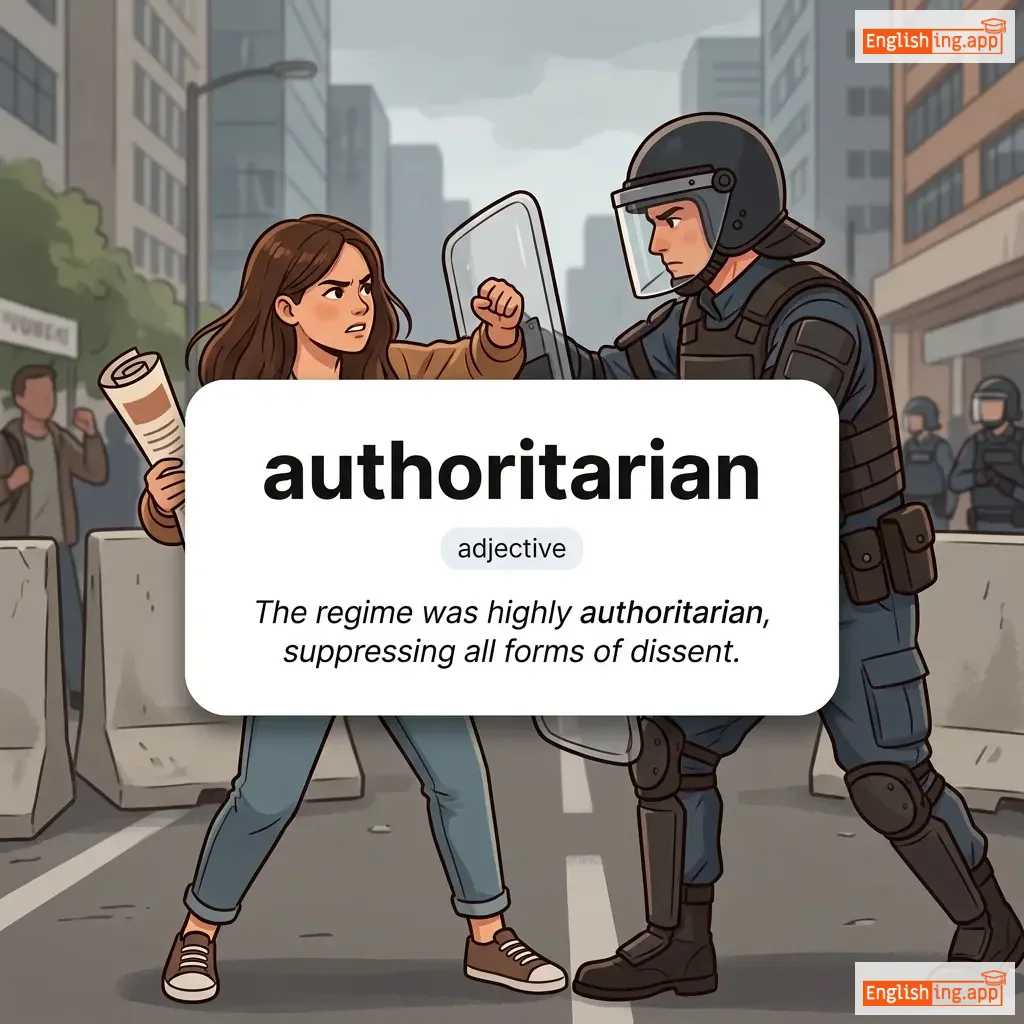
Favouring or enforcing strict obedience to authority, often at the expense of personal freedom.
••••••
|
The regime was highly authoritarian, suppressing all forms of dissent. |
その体制は非常に権威主義的で、すべての異議を抑圧していた。
Sono taisei wa hijō ni ken'i shugi-teki de, subete no igi o yokuatsu shite ita.
••••••
|
- •••••• | - •••••• | - •••••• |
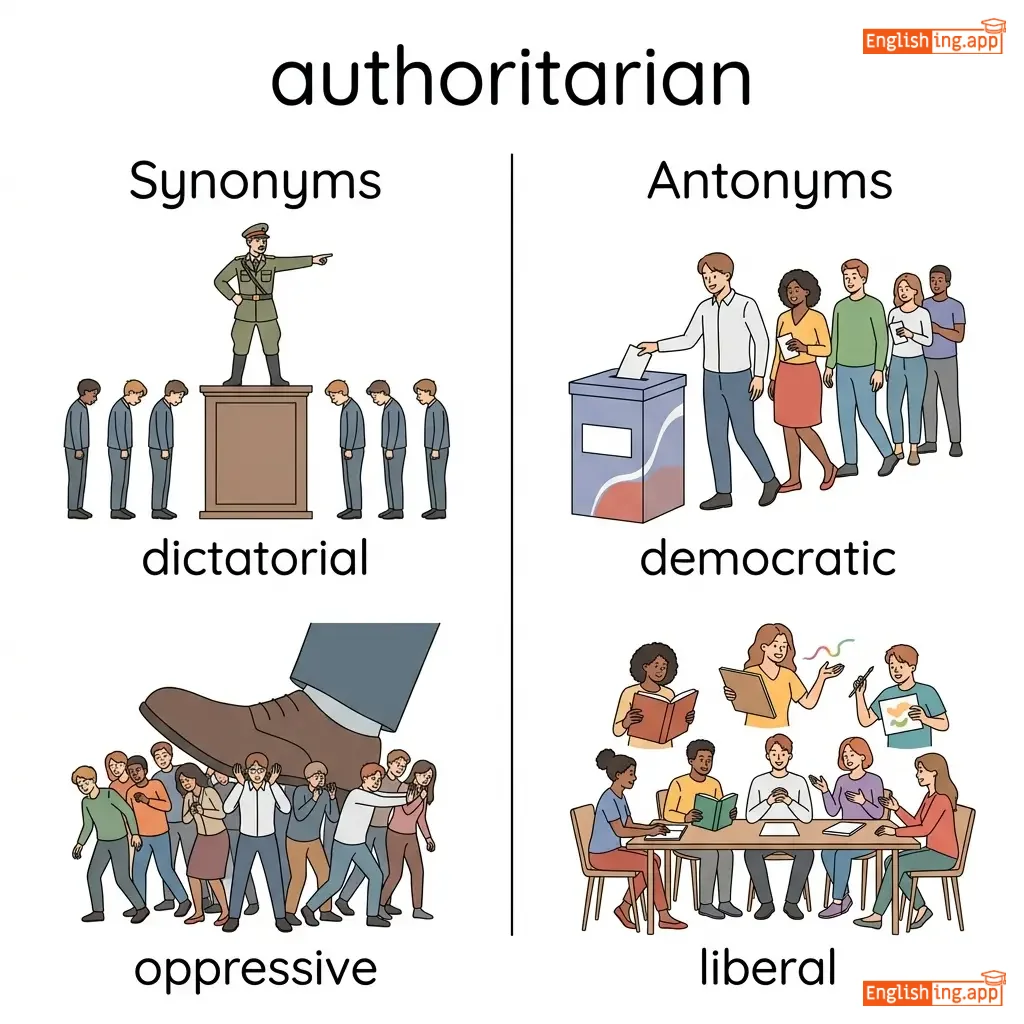
dictatorial, oppressive, autocratic, strict
••••••
|
democratic, liberal
••••••
|
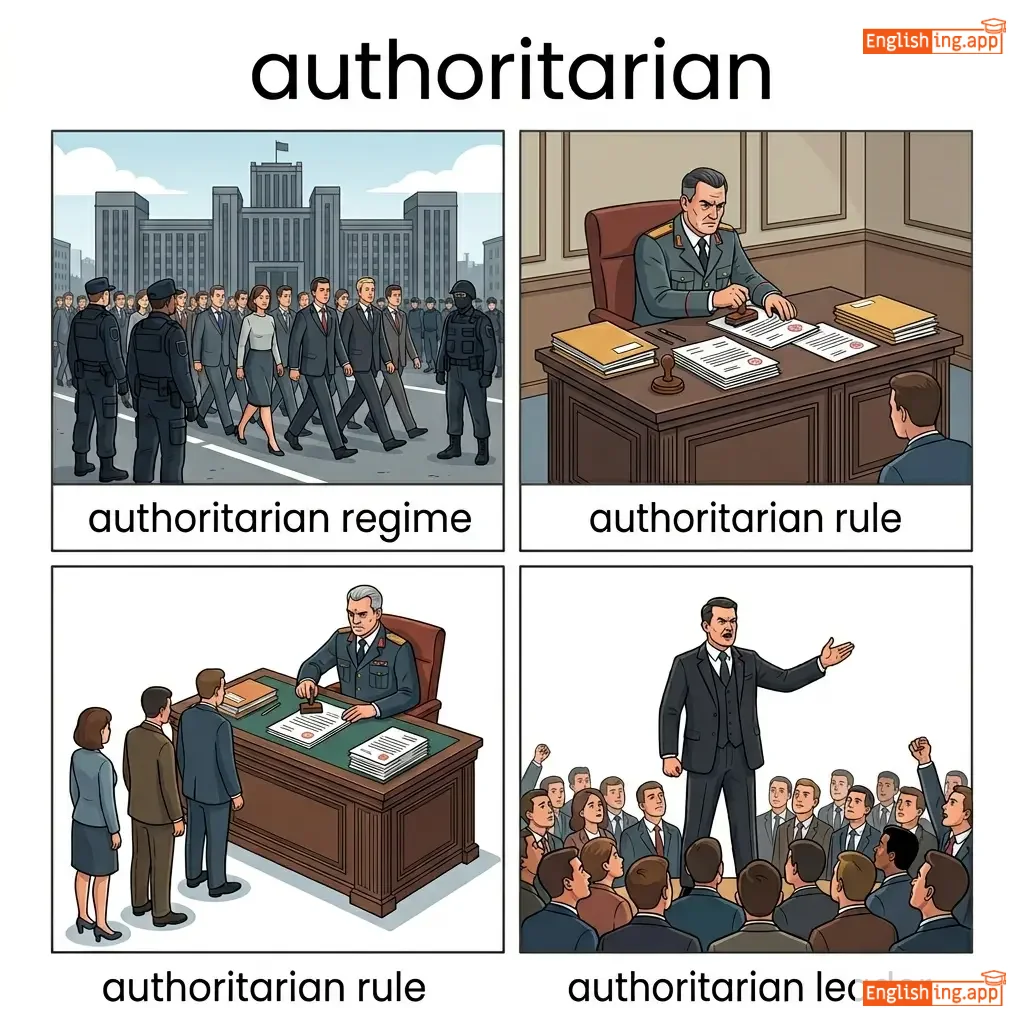
authoritarian regime, authoritarian rule, authoritarian leader
••••••
|
権威主義 = 権威 + 服従の強制
••••••
|
|
#738
📜
|
/ˌɔːθɛnˈtɪsɪti/
noun
(オーセンティシティ)
••••••
|
|
真正性
shinseisei
••••••
|
- •••••• | - •••••• | - •••••• | - •••••• |
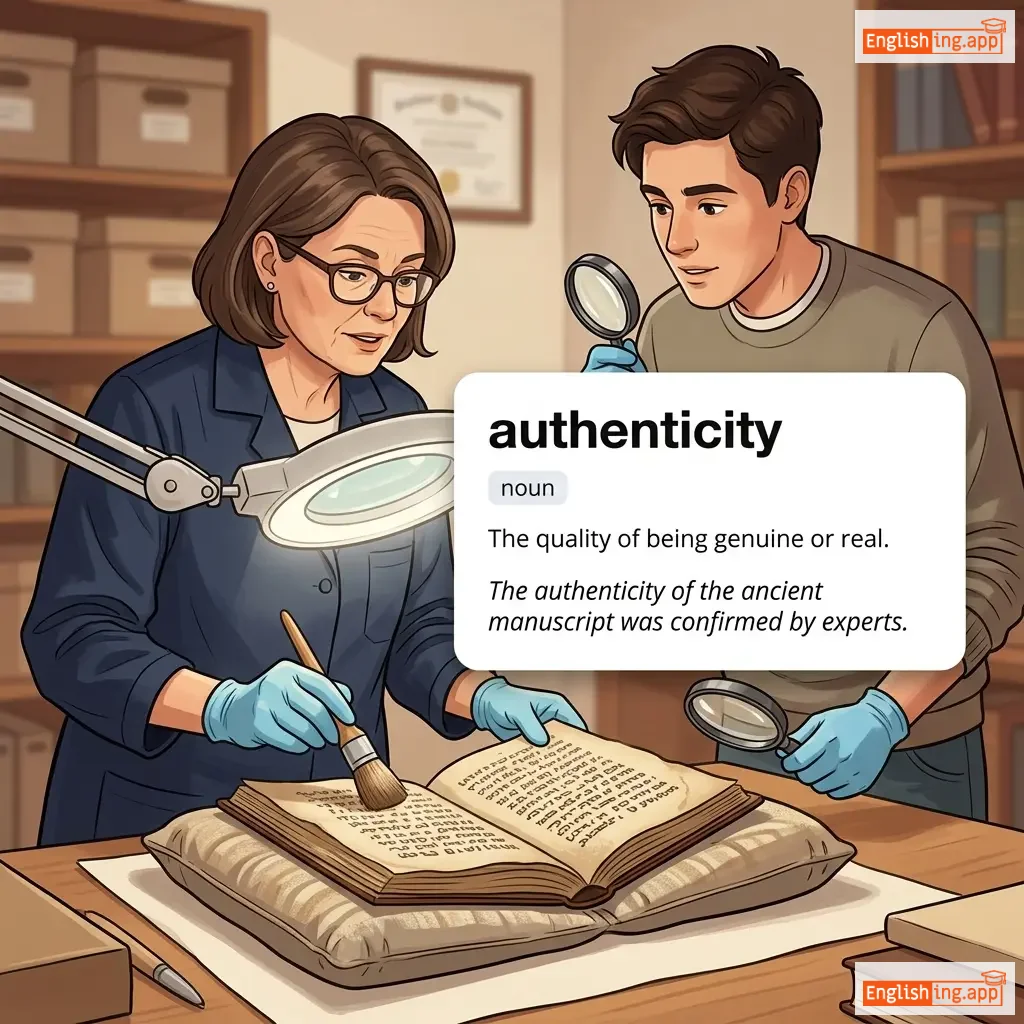
The quality of being genuine or real.
••••••
|
The authenticity of the ancient manuscript was confirmed by experts.
古代の手書きの原稿のオーセンティシティは専門家によって確認されました。
••••••
|
古代の手書きの原稿の真正性は専門家によって確認されました。
Kodai no tegaki no genkou no shinseisei wa senmonka ni yotte kakunin saremashita.
••••••
|
- •••••• | - •••••• | - •••••• |
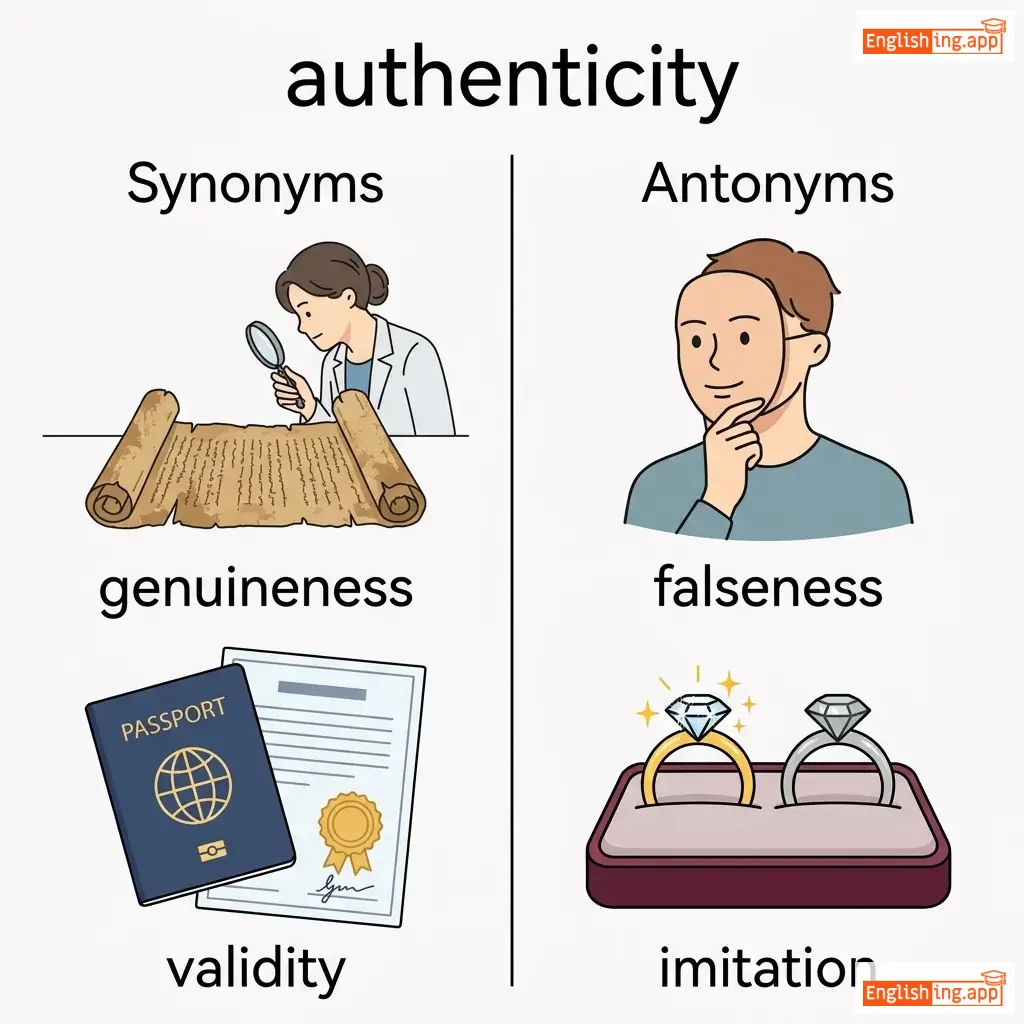
genuineness, validity, legitimacy, truthfulness
••••••
|
falseness, imitation
••••••
|
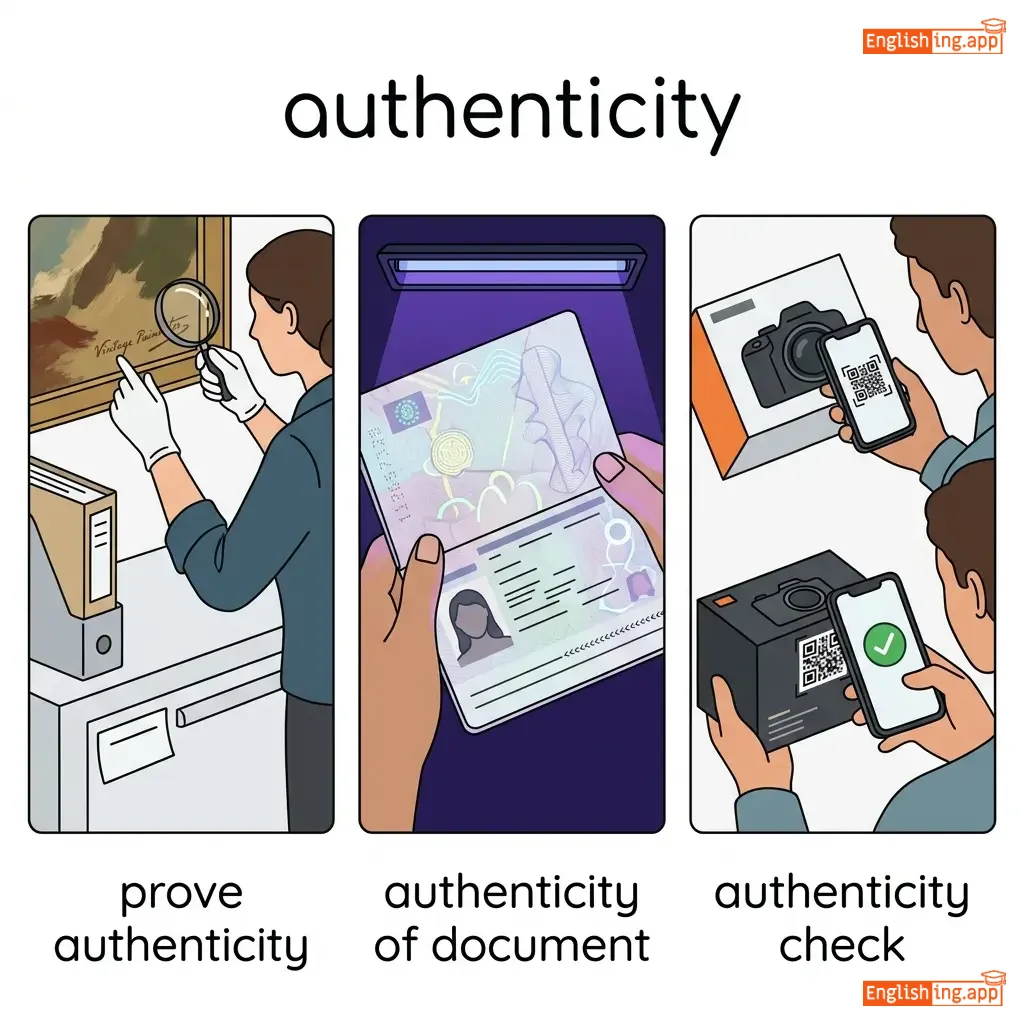
prove authenticity, authenticity of document, authenticity check
••••••
|
真正性=本物であること → まるで本物のように信じられる証明。
••••••
|
|
#739
🔐
|
/ɔːˈθɛntɪkeɪt/
verb
(オーセンティケート)
••••••
|
- •••••• |
認証する
ninshou suru
••••••
|
authenticated
オーセンティケーテッド
••••••
|
authenticated
オーセンティケーテッド
••••••
|
authenticates
オーセンティケーツ
••••••
|
authenticating
オーセンティケーティング
••••••
|
To prove or show that something is genuine or true.
••••••
|
The bank uses advanced technology to authenticate online transactions.
銀行はオンライン取引を認証するために高度な技術を使用しています。
••••••
|
銀行はオンライン取引を認証するために高度な技術を使用しています。
Ginkou wa onrain torihiki o ninshou suru tame ni koudo na gijutsu o shiyou shiteimasu.
••••••
|
- •••••• | - •••••• | - •••••• |
verify, validate, confirm, prove
••••••
|
falsify, disprove
••••••
|
authenticate documents, authenticate signature, authenticate identity
••••••
|
Authenticate = 権威 + 技術で本物を確認
••••••
|
|
#740
✔️
|
/ɔːˈθɛntɪk/
adjective
(オーセンティック)
••••••
|
- •••••• |
本物
honmono
••••••
|
- •••••• | - •••••• | - •••••• | - •••••• |
Genuine and real; not fake or copied.
••••••
|
The museum displayed an authentic painting by Picasso. |
美術館はピカソの本物の絵を展示しました。
Bijutsukan wa Picasso no honmono no e o tenji shimashita.
••••••
|
authentic self |
Being true to one's real personality and values.
••••••
|
本物の自分
Honmono no jibun
••••••
|
genuine, real, original, true, legitimate
••••••
|
fake, false, counterfeit
••••••
|
authentic document, authentic voice, authentic experience
••••••
|
Authenticは本物、偽物ではない → Authentic食べ物は本物の味を意味する。
••••••
|
|
#741
🏛️
|
/ˈɔːtɑːrki/
noun
(オータルキー)
••••••
|
- •••••• |
自給自足
jikyū jisoku
••••••
|
- •••••• | - •••••• | - •••••• | - •••••• |
A system of self-sufficiency where a state or community is economically independent.
••••••
|
The nation attempted autarchy to reduce reliance on imports.
その国は輸入依存を減らすためにオータルキーを試みました。
••••••
|
その国は輸入依存を減らすために自給自足を試みました。
Sono kuni wa yunyū izon o herasu tame ni jikyu jisoku o kokoromimashita.
••••••
|
- •••••• | - •••••• | - •••••• |
self-sufficiency, independence, isolationism, self-reliance
••••••
|
globalization, interdependence
••••••
|
economic autarchy, policy of autarchy, strive for autarchy
••••••
|
Autoは自分、arkyはルール → 自給自足は自分のルールで独立すること。
••••••
|
|
#742
📉
|
/ɒˈstɛrɪti/
noun
(オーステリティ)
••••••
|
|
厳格さ、経済的引き締め
genkakusa, keizaiteki hikishime
••••••
|
- •••••• | - •••••• | - •••••• | - •••••• |
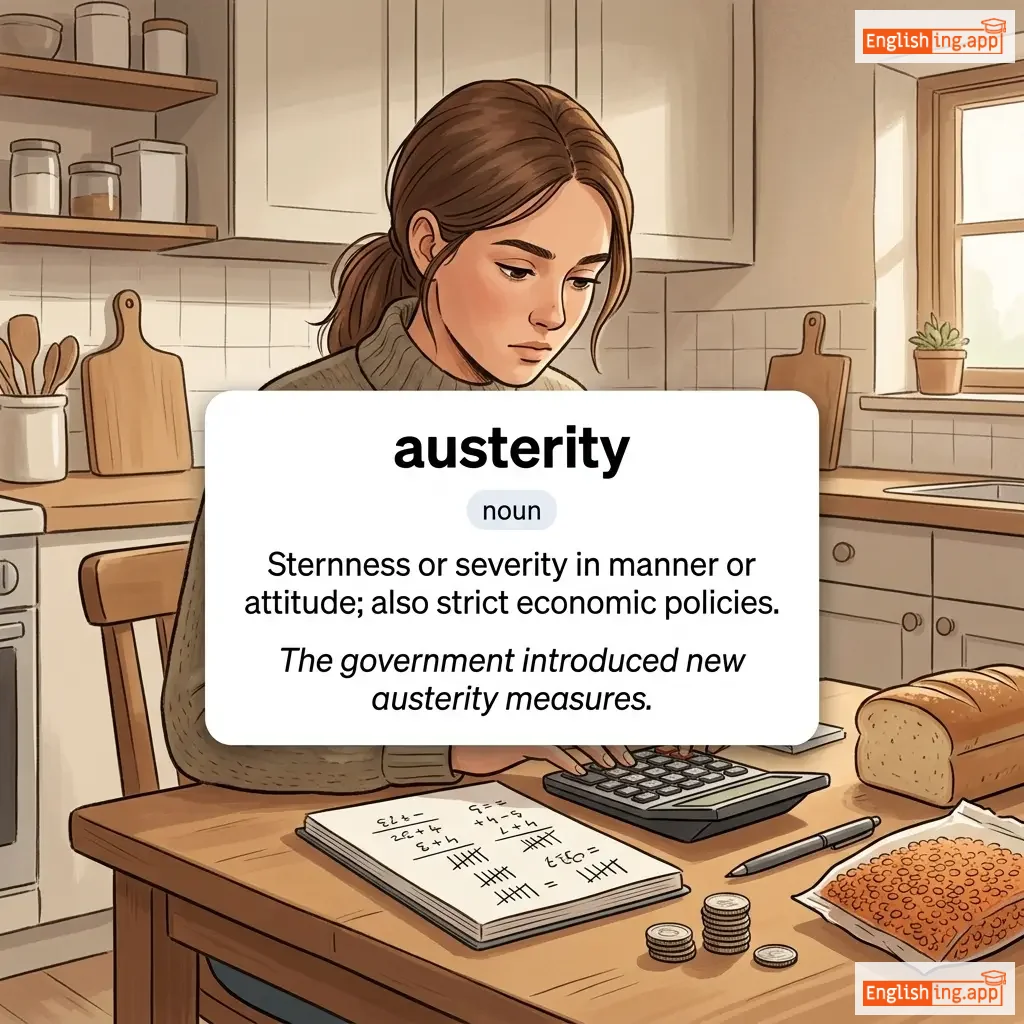
Sternness or severity in manner or attitude; also strict economic policies.
••••••
|
The government introduced new austerity measures. |
政府は新しい引き締め策を導入しました。
Seifu wa atarashī hikishime-saku o dōnyū shimashita.
••••••
|
austerity measures |
strict economic policies to reduce government spending
••••••
|
経済的引き締め
keizaiteki hikishime
••••••
|
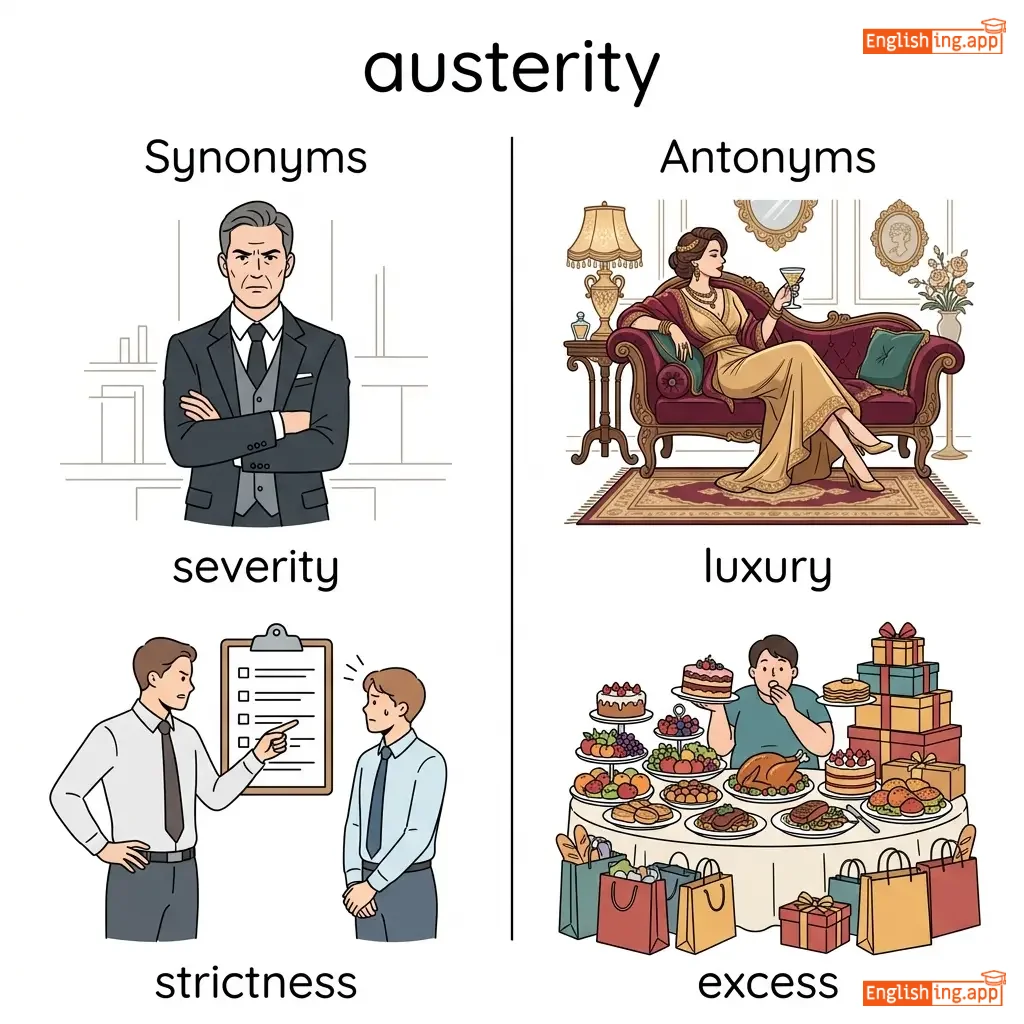
severity, strictness, frugality, economy
••••••
|
luxury, excess, extravagance
••••••
|
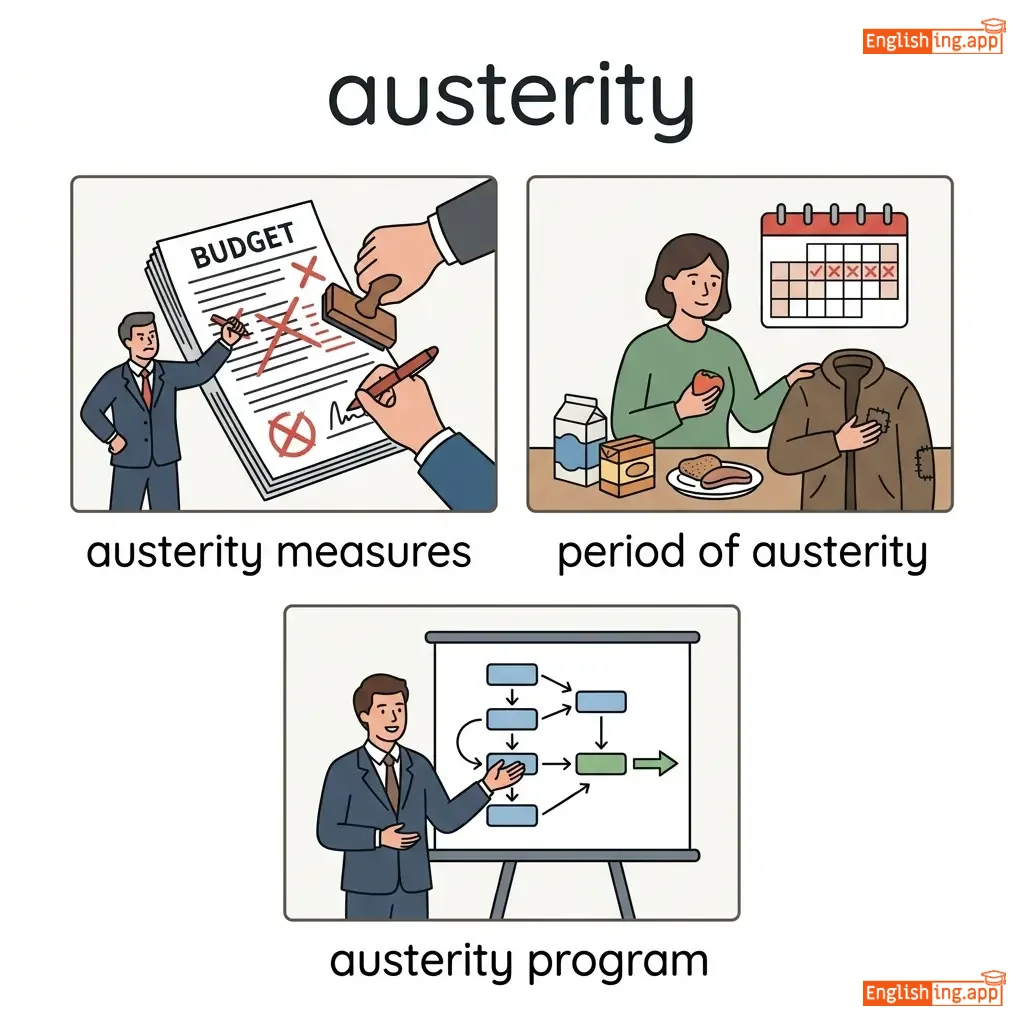
austerity measures, period of austerity, austerity program
••••••
|
オーステリティは、経済を厳しくコントロールして無駄を減らすことを意味します。
••••••
|
|
#743
🥋
|
/ɔːˈstɪə/
adjective
(オースティア)
••••••
|
|
厳格、簡素
genkaku, kanso
••••••
|
- •••••• | - •••••• | - •••••• | - •••••• |
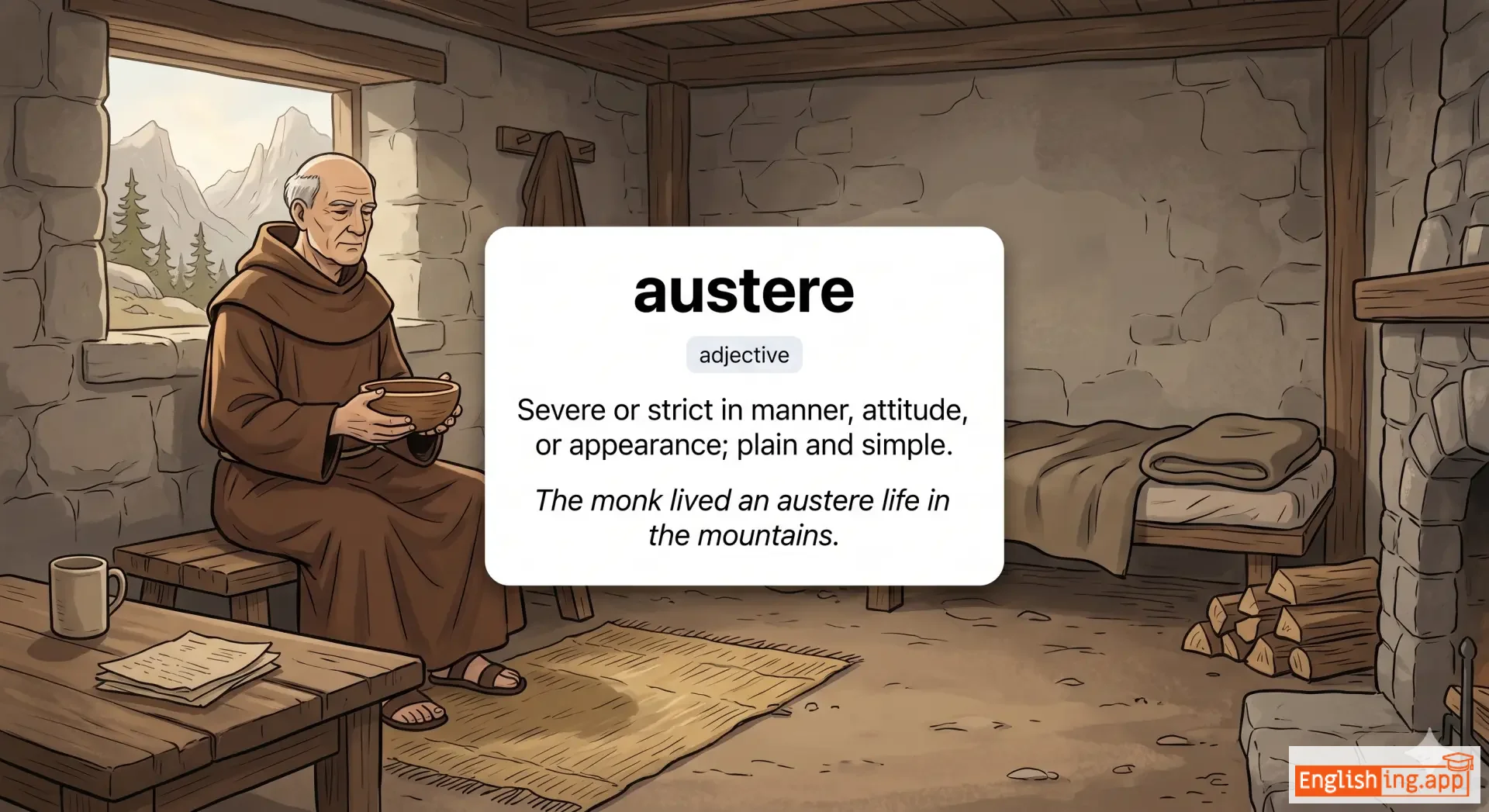
Severe or strict in manner, attitude, or appearance; plain and simple.
••••••
|
The monk lived an austere life in the mountains. |
修道士は山中で厳格な生活を送った。
Shudoushi wa sanchuu de genkaku na seikatsu wo okutta.
••••••
|
- •••••• | - •••••• | - •••••• |
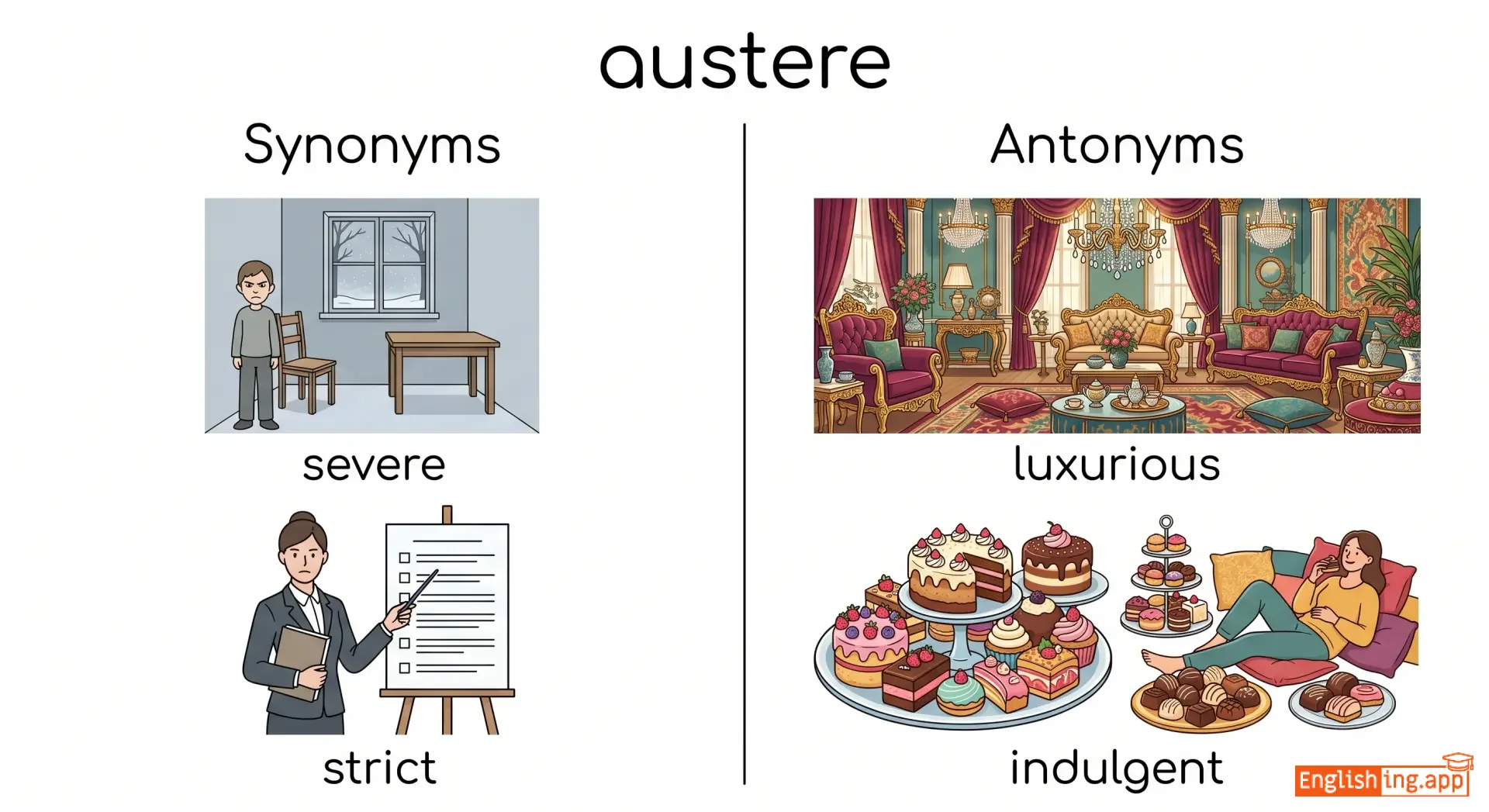
severe, strict, stern, simple, plain
••••••
|
luxurious, indulgent, elaborate
••••••
|
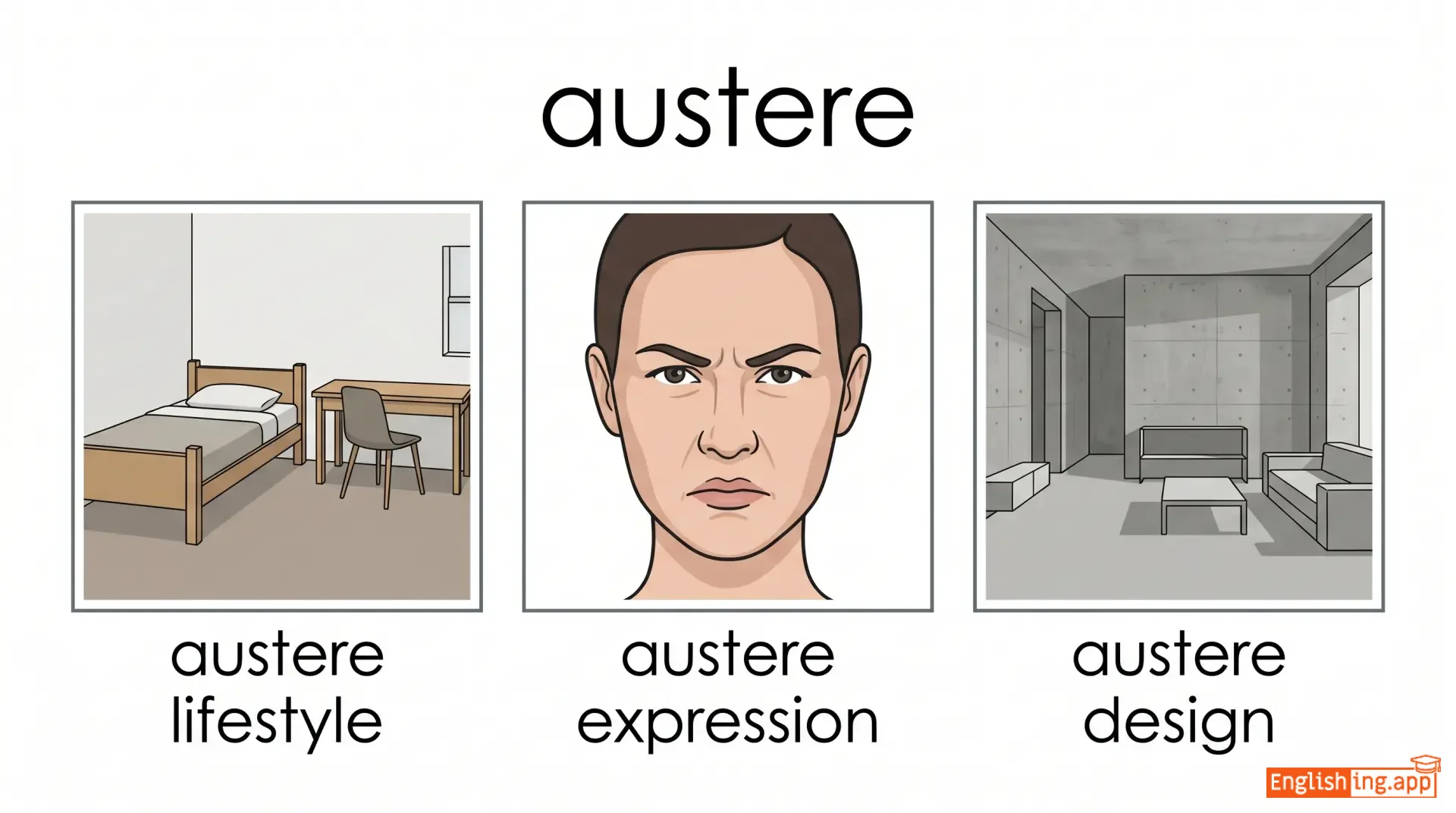
austere lifestyle, austere expression, austere design
••••••
|
Austere は厳格で、贅沢ではなく、シンプルで厳しい生活の意味です。
••••••
|
|
#744
🌟
|
/ɔːˈspɪʃəs/
adjective
(os-pishus)
••••••
|
|
吉兆
kicchou
••••••
|
- •••••• | - •••••• | - •••••• | - •••••• |
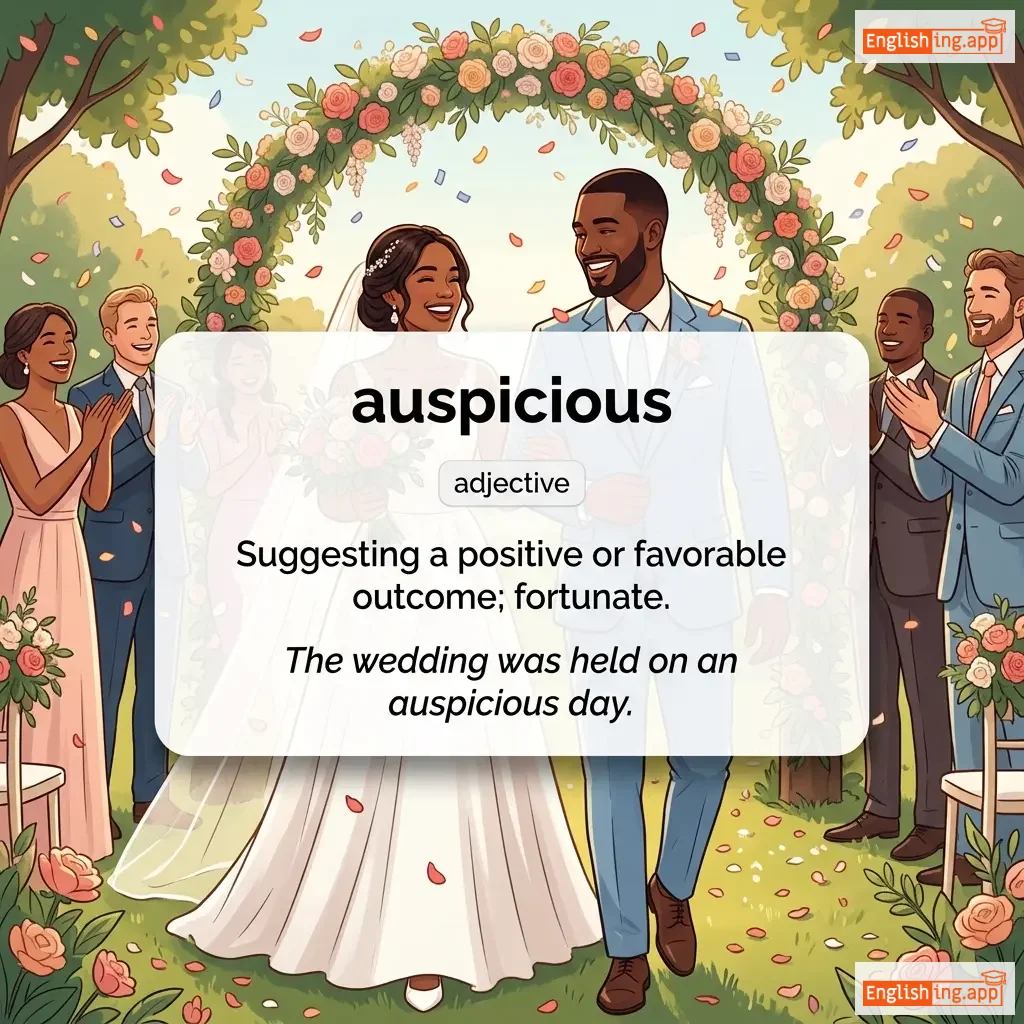
Suggesting a positive or favorable outcome; fortunate.
••••••
|
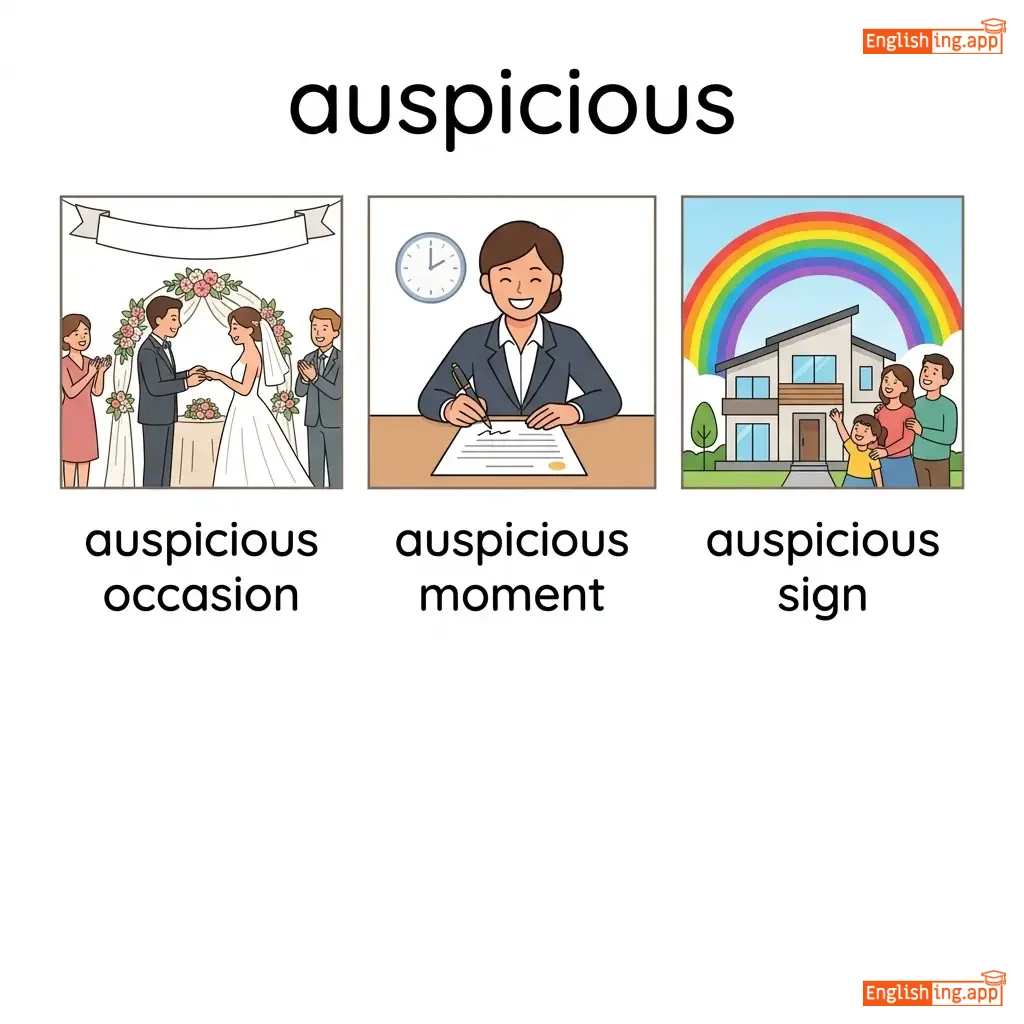
The wedding was held on an auspicious day. |
結婚式は吉兆の日に行われました。
Kekkonshiki wa kicchou no hi ni okonaware mashita.
••••••
|
auspicious beginning |
a promising or favorable start
••••••
|
吉兆の始まり
kicchou no hajimari
••••••
|
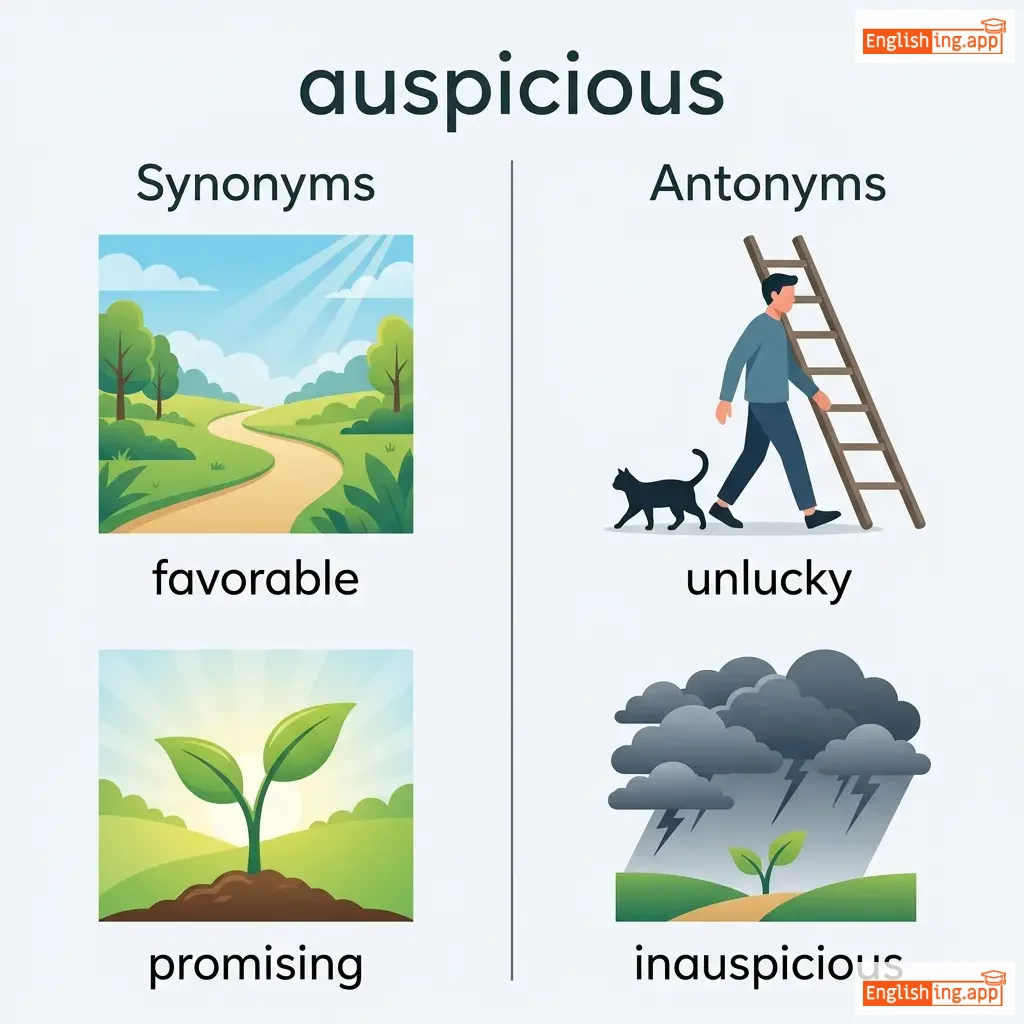
favorable, promising, fortunate, lucky, propitious
••••••
|
unlucky, inauspicious, unfavorable
••••••
|
auspicious occasion, auspicious moment, auspicious sign, auspicious start
••••••
|
Auspiciousは吉兆の日を意味します – 日本語で吉兆(kicchou)と似ています。
••••••
|
|
#745
🤝
|
/ˈɔːspɪsɪz/
noun (plural)
(オスピセス)
••••••
|
- •••••• |
後援
kouen
••••••
|
- •••••• | - •••••• | - •••••• | - •••••• |
Patronage, support, or guidance, often used in the phrase 'under the auspices of'.
••••••
|
The conference was held under the auspices of the United Nations.
会議は国連の後援の下で行われました。
••••••
|
会議は国連の後援の下で行われました。
Kaigi wa kokuren no kouen no shita de okonawaremashita.
••••••
|
under the auspices of
の後援の下で
••••••
|
with the help, support, or sponsorship of
••••••
|
の後援の下で
no kouen no shita de
••••••
|
patronage, sponsorship, backing, protection, guidance
••••••
|
opposition, neglect
••••••
|
under the auspices of, auspices provided, auspices extended
••••••
|
Auspicesは後援を意味します – 会議は常に後援の下で行われます。
••••••
|
|
#746
🔮
|
/ˈɔːspɪs/
noun
(アウスピス)
••••••
|
- •••••• |
兆し, 保護
kizashi, hogo
••••••
|
- •••••• | - •••••• | - •••••• | - •••••• |
A sign, omen, or divine token; also refers to protection or support.
••••••
|
The project was launched under the auspice of the government. |
そのプロジェクトは政府の保護のもとで開始されました。
Sono purojekuto wa seifu no hogo no moto de kaishi saremashita.
••••••
|
- •••••• | - •••••• | - •••••• |
omen, sign, token, support, sponsorship
••••••
|
curse, disfavor
••••••
|
under the auspice, auspice of, divine auspice
••••••
|
Auspiceは'兆し'のような意味で、良いサインや支援を指します。
••••••
|
|
#747
🩺
|
/ˌɔːskʌlˈteɪʃən/
noun
(オースクルテーション)
••••••
|
- •••••• |
聴診
choushin
••••••
|
- •••••• | - •••••• | - •••••• | - •••••• |
The act of listening to internal sounds of the body, typically using a stethoscope.
••••••
|
The doctor performed auscultation to check the patient’s lungs. |
医者は患者の肺を調べるために聴診を行いました。
Isha wa kanja no hai o shiraberu tame ni choushin o okonaimashita.
••••••
|
- •••••• | - •••••• | - •••••• |
listening, examination, diagnosis, stethoscopy
••••••
|
neglect, ignoring
••••••
|
auscultation of lungs, auscultation of heart, careful auscultation
••••••
|
聴診器で体の音を聞く
••••••
|
|
#748
✨
|
/ɔːˈrɔːrəl/
adjective
(オーロラル)
••••••
|
- •••••• |
オーロラに関連する
ōrora ni kanren suru
••••••
|
- •••••• | - •••••• | - •••••• | - •••••• |
Relating to or resembling the aurora, especially the northern lights.
••••••
|
The scientists observed auroral activity in the night sky.
科学者たちは夜空でオーロラルの活動を観察しました。
••••••
|
科学者たちは夜空でオーロラルの活動を観察しました。
Kagakusha-tachi wa yozora de ōroral no katsudō o kansatsu shimashita.
••••••
|
- •••••• | - •••••• | - •••••• |
radiant, luminous, polar, celestial
••••••
|
dark, dull
••••••
|
auroral display, auroral activity, auroral lights
••••••
|
Auroral = オーロラに似ている ✨, オーロラは光を意味し、auroralは光を意味する
••••••
|
|
#749
🌌
|
/ɔːˈrɔːrə/
noun
(オーロラ)
••••••
|
- •••••• |
オーロラ
orora
••••••
|
- •••••• | - •••••• | - •••••• | - •••••• |
A natural display of lights in the sky, usually seen in polar regions.
••••••
|
We traveled to Norway to see the northern aurora.
私たちはノルウェーに行き、北極のオーロラを見ました。
••••••
|
私たちはノルウェーに行き、北極のオーロラを見ました。
Watashitachi wa Noruwē ni iki, hokkyoku no ōrora o mimashita.
••••••
|
Aurora Borealis
オーロラ・ボレアリス
••••••
|
The northern lights, a natural sky phenomenon.
••••••
|
オーロラ・ボレアリス
Ōrora Borearisu
••••••
|
northern lights, dawn, daybreak, polar lights
••••••
|
darkness, dusk
••••••
|
aurora borealis, aurora australis, aurora display
••••••
|
オーロラ: 空に広がる光のショー
••••••
|
|
#750
🥇
|
/ɔːˈrɪfərəs/
adjective
(オーリファラス)
••••••
|
- •••••• |
金鉱を含む
kinkō o fukumu
••••••
|
- •••••• | - •••••• | - •••••• | - •••••• |
Containing or producing gold.
••••••
|
The miners discovered an auriferous vein in the mountains. |
鉱山労働者は山で金鉱を含む鉱脈を発見しました。
Kōzan rōdōsha wa yama de kinkō o fukumu kōmyaku o hakken shimashita.
••••••
|
- •••••• | - •••••• | - •••••• |
gold-bearing, golden, mineral-rich, aurous
••••••
|
barren, nonmetallic
••••••
|
auriferous vein, auriferous soil, auriferous deposits
••••••
|
Auriferous = au (金) + ferrous; 山で金鉱を見つけたことを覚えておいて
••••••
|
Vocabulary Quiz
Test your vocabulary by matching words with their translations or meanings.
Login to take the quiz
Comments (0)
Share your thoughts and join the discussion.
Join the discussion by logging in
Login to CommentNo comments yet
Be the first to share your thoughts!