

翻訳
過去
過去分詞
三人称単数
動名詞
意味
例文
例文の翻訳
同義語
対義語
コロケーション
ニーモニック
Swipe left or right, or use the buttons. Tap image to zoom.
例文の翻訳
単語
Lesson 53Lesson 53 - マスクトグル
|
絵文字
|
単語 | Images | 翻訳 | 過去 | 過去分詞 | 三人称単数 | 動名詞 | 意味 | 例文 | 例文の翻訳 | 表現例 | 表現例の意味 | 表現例の翻訳 | 同義語 | 対義語 | コロケーション | ニーモニック |
|---|---|---|---|---|---|---|---|---|---|---|---|---|---|---|---|---|---|
|
#1561
🔥
|
/kəmˈbʌstɪbəl/
adjective
(コンバスティブル)
••••••
|
- •••••• |
可燃性の
kanensei no
••••••
|
- •••••• | - •••••• | - •••••• | - •••••• |
Capable of catching fire and burning easily.
••••••
|
Dry leaves are highly combustible.
乾燥した葉は非常に可燃性があります。
••••••
|
乾燥した葉は非常に可燃性があります。
Kansou shita ha wa hijou ni kanensei ga arimasu.
••••••
|
- •••••• | - •••••• | - •••••• |
flammable, inflammable, burnable, ignitable
••••••
|
nonflammable, fireproof
••••••
|
combustible material, highly combustible, combustible gas
••••••
|
可燃性のものは乾いた葉のように、簡単に燃えます!
••••••
|
|
#1562
⚖️
|
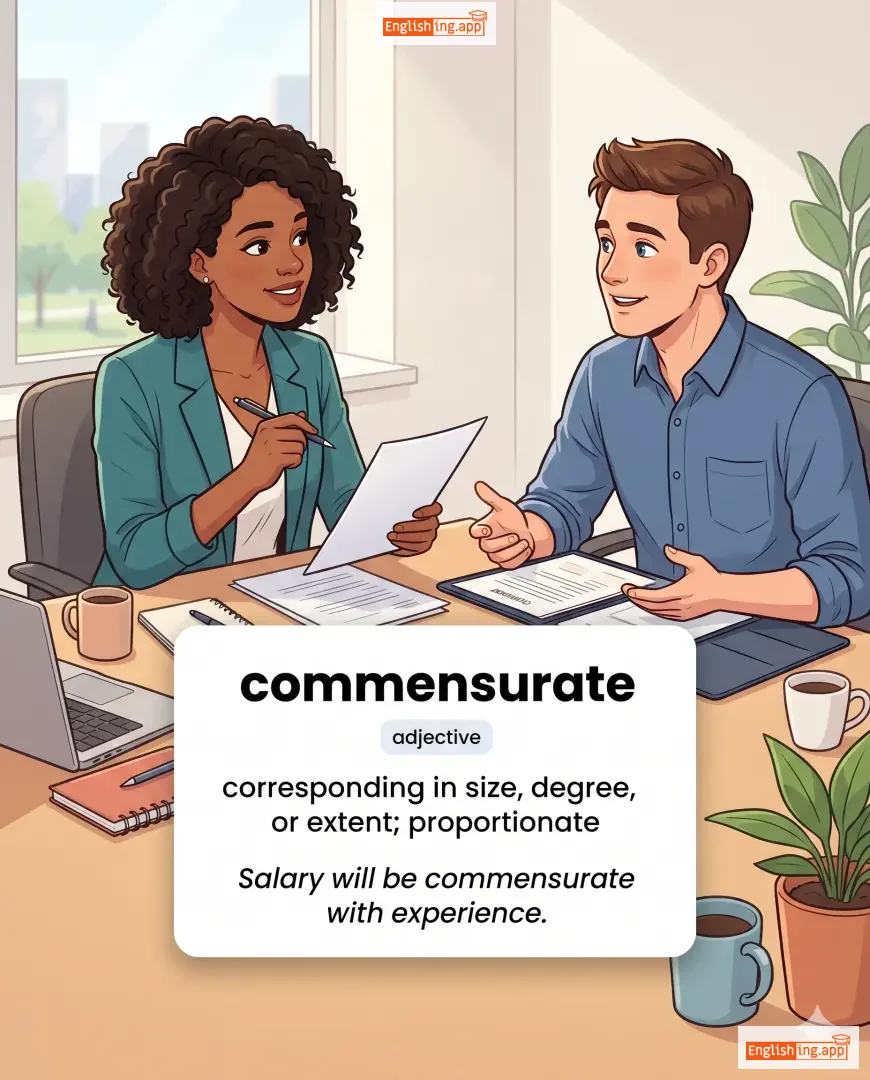
/kəˈmɛnʃərət/
adjective
(コメンスレート)
••••••
|
|
比例的
hireteki
••••••
|
- •••••• | - •••••• | - •••••• | - •••••• |
corresponding in size, degree, or extent; proportionate
••••••
|
Salary will be commensurate with experience. |
給料は経験に比例します。
Kyūryō wa keiken ni hire shimasu.
••••••
|
- •••••• | - •••••• | - •••••• |
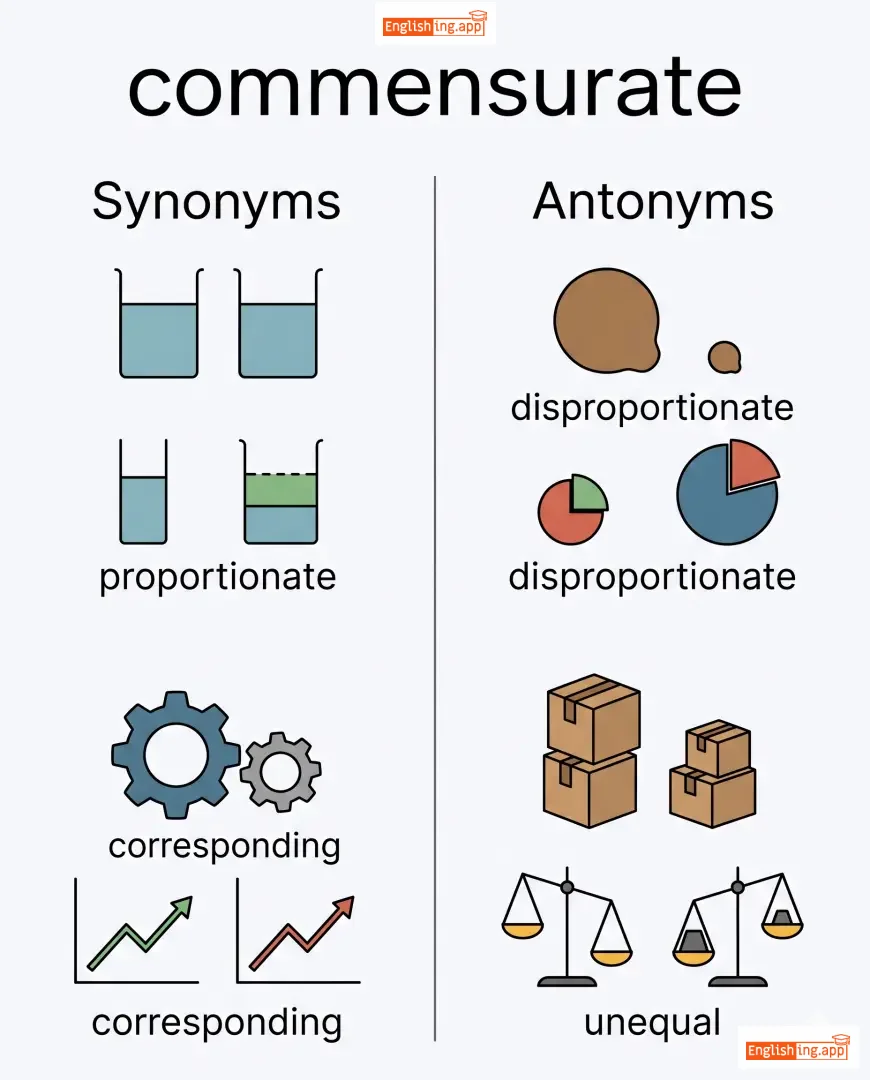
proportionate, corresponding, equal, comparable, adequate
••••••
|
disproportionate, unequal, inappropriate
••••••
|
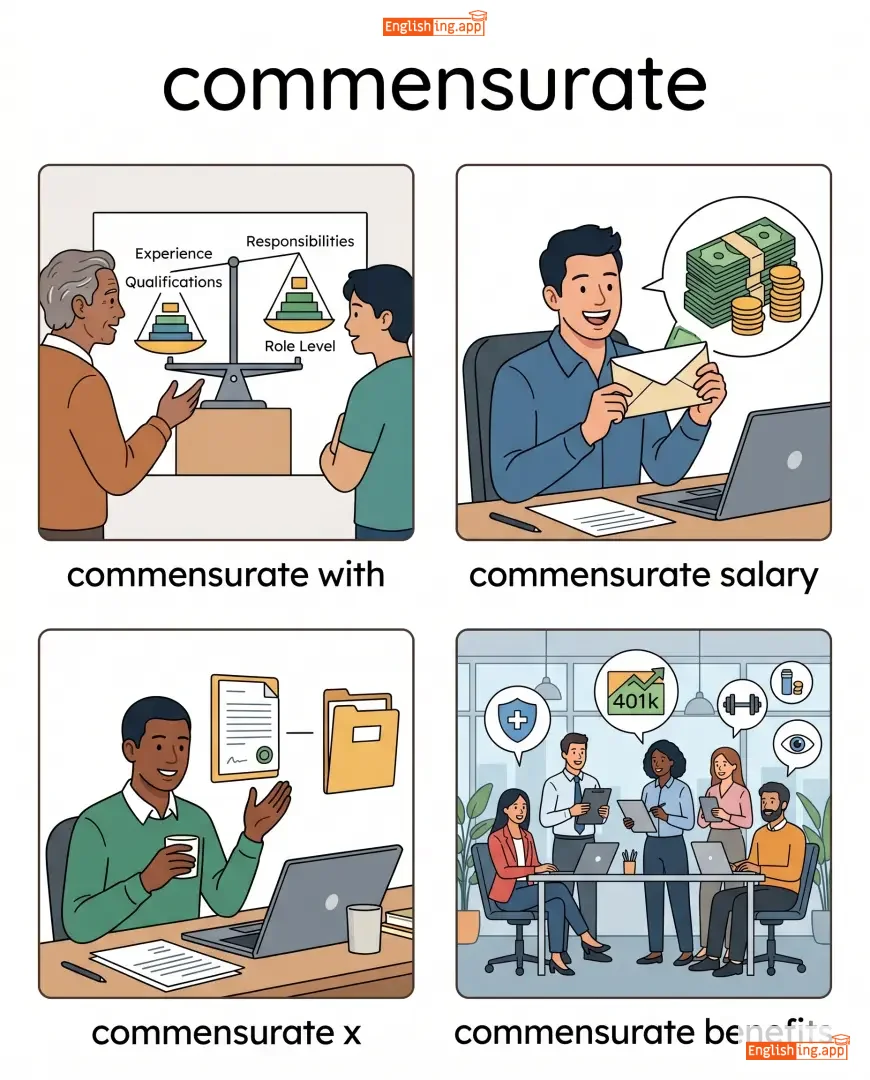
commensurate with, commensurate salary, commensurate benefits, commensurate reward
••••••
|
Commensurate は、経験に比例して支払われることを意味します。
••••••
|
|
#1563
🌟
|
/kəˈmɛndəbl̩/
adjective
(komendaburu)
••••••
|
- •••••• |
称賛に値する
shōsan ni atai suru
••••••
|
- •••••• | - •••••• | - •••••• | - •••••• |
deserving praise or approval
••••••
|
Her dedication to the project was truly commendable. |
プロジェクトへの彼女の献身は本当に称賛に値した。
Purojekuto e no kanojo no kenshin wa hontō ni shōsan ni atai shita.
••••••
|
- •••••• | - •••••• | - •••••• |
praiseworthy, admirable, laudable, deserving, excellent
••••••
|
blameworthy, reprehensible, unworthy
••••••
|
commendable effort, commendable achievement, commendable work, commendable qualities
••••••
|
Commendableは称賛に値するという意味で、良い仕事をして賞賛されるような感じです。
••••••
|
|
#1564
👏
|
/kəˈmɛnd/
verb
(komend)
••••••
|
- •••••• |
称賛する
shousan suru
••••••
|
commended
komendedd
••••••
|
commended
komendedd
••••••
|
commends
komends
••••••
|
commending
komending
••••••
|
to praise formally or officially
••••••
|
The teacher commended the students for their hard work.
先生は生徒たちの努力を称賛しました。
••••••
|
先生は生徒たちの努力を称賛しました。
Sensei wa seito-tachi no doryoku o shousan shimashita.
••••••
|
commend to someone
commend to someone
••••••
|
to recommend or entrust someone or something
••••••
|
誰かに推薦する
dareka ni suisen suru
••••••
|
praise, applaud, compliment, recommend, endorse
••••••
|
criticize, blame, condemn
••••••
|
commend highly, commend someone, commend for effort, commend to
••••••
|
Commend はコメントする('comment')と似ているが、褒めるために使う言葉です。
••••••
|
|
#1565
🎓
|
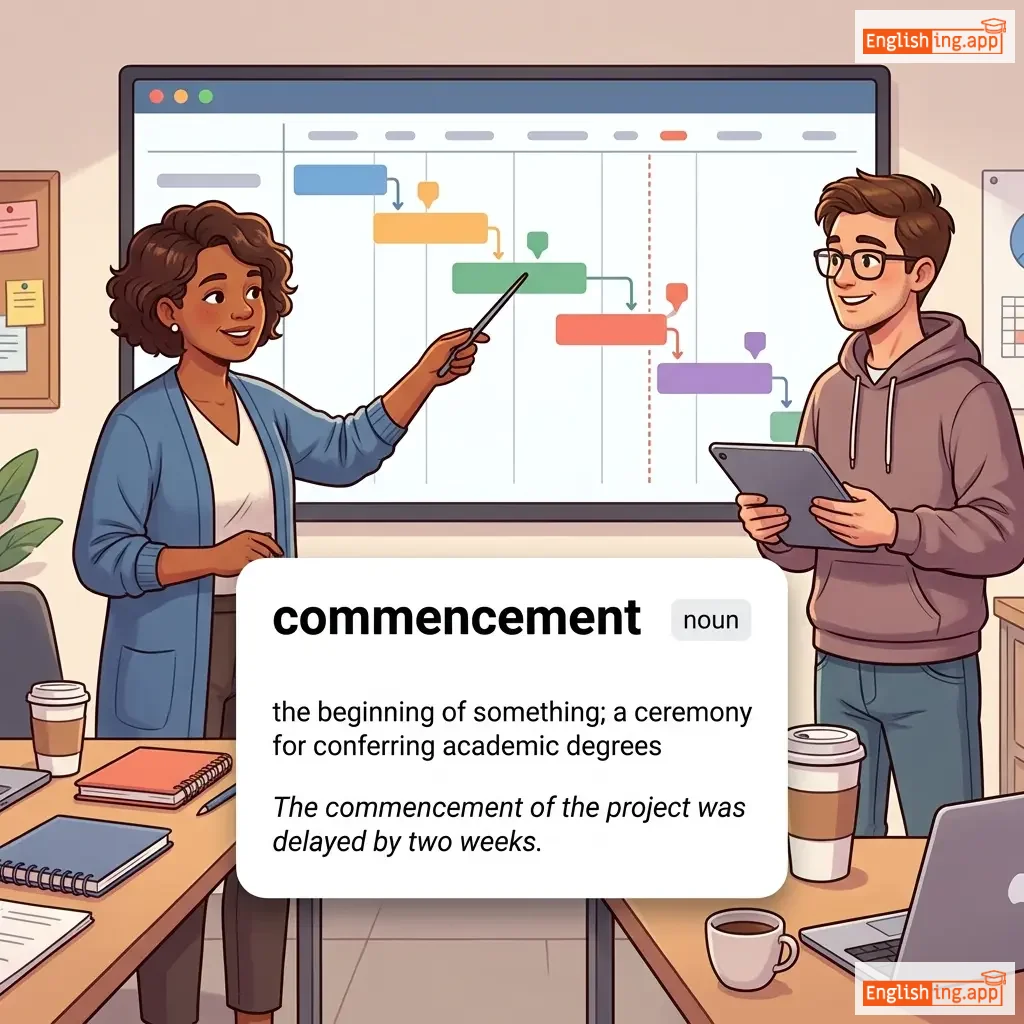
/kəˈmɛnsmənt/
noun
(komensumento)
••••••
|
|
開始、学位授与式
kaishi, gaku-i shoyu-shiki
••••••
|
- •••••• | - •••••• | - •••••• | - •••••• |
the beginning of something; a ceremony for conferring academic degrees
••••••
|
The commencement of the project was delayed by two weeks. |
プロジェクトの開始は2週間遅れました。
Purojekuto no kaishi wa ni shuukan okuremashita.
••••••
|
commencement speech |
a speech delivered at a graduation ceremony
••••••
|
卒業式のスピーチ
Sotsugyo-shiki no supīchi
••••••
|
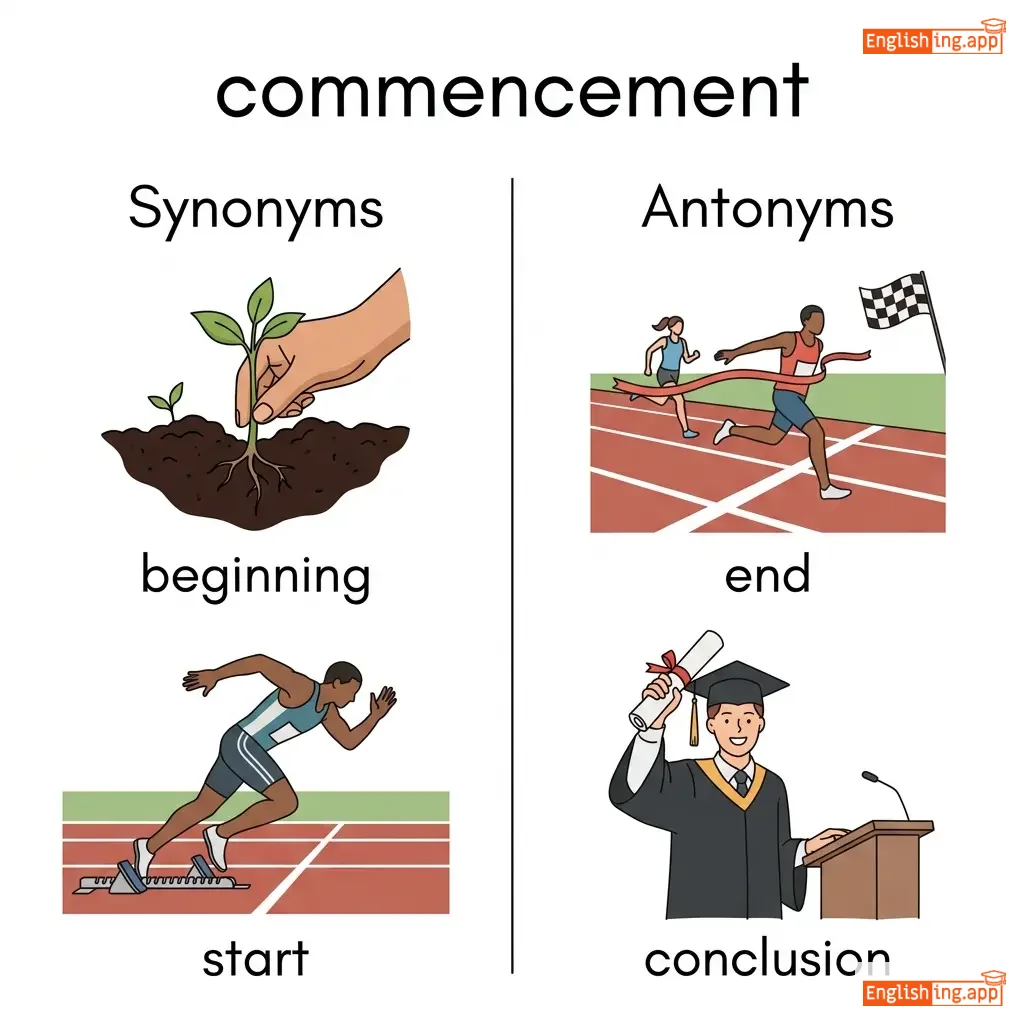
beginning, start, initiation, opening, onset
••••••
|
end, conclusion, termination
••••••
|
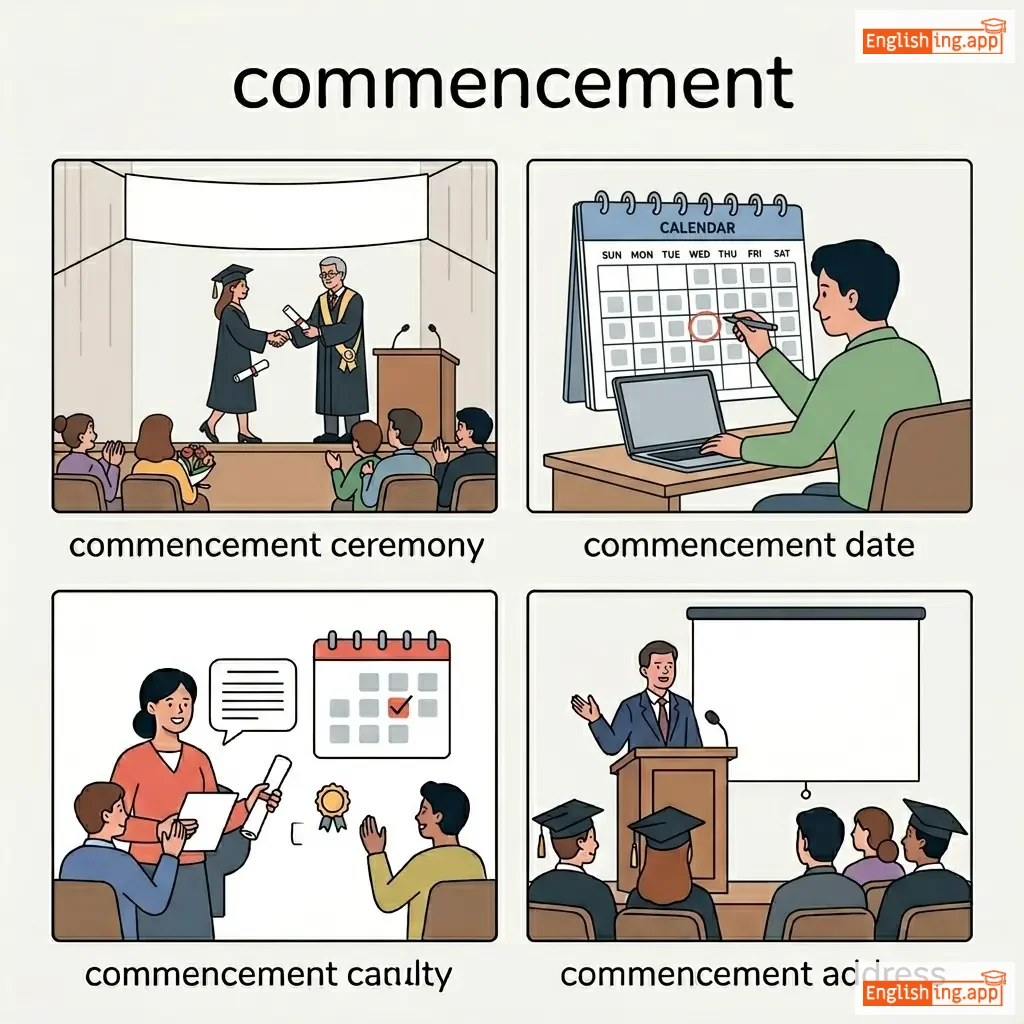
commencement ceremony, commencement date, commencement address, commencement speech
••••••
|
Commencementは開始を意味し、卒業式では学業の終了の始まりを示す。
••••••
|
|
#1566
🎬
|
/kəˈmɛns/
verb
(コメンス)
••••••
|
- •••••• |
開始する
kaishi suru
••••••
|
commenced
コメンスト
••••••
|
commenced
コメンスト
••••••
|
commences
コメンスズ
••••••
|
commencing
コメンシング
••••••
|
to begin or start something
••••••
|
The ceremony will commence at noon.
式は正午に開始されます。
••••••
|
式は正午に開始されます。
Shiki wa shougo ni kaishi saremasu.
••••••
|
commence operations
作業開始
••••••
|
to start working or functioning
••••••
|
作業開始
Sagyou kaishi
••••••
|
begin, start, initiate, launch, inaugurate
••••••
|
end, finish, conclude
••••••
|
commence work, commence proceedings, commence operations, commence at
••••••
|
Commenceは開始する、例えば「作業開始」つまり作業を開始することです。
••••••
|
|
#1567
🎖️
|
/kəˈmɛmərətɪv/
adjective
(コメモラティブ)
••••••
|
- •••••• |
記念の
kinen no
••••••
|
- •••••• | - •••••• | - •••••• | - •••••• |
Serving as a reminder or in honor of a person or event.
••••••
|
They issued a commemorative coin for the independence anniversary. |
彼らは独立記念日を祝うために記念コインを発行しました。
Karera wa dokuritsuki nenbi o iwau tame ni kinen koin o hakkō shimashita.
••••••
|
- •••••• | - •••••• | - •••••• |
memorial, celebratory, honoring, dedicatory
••••••
|
forgettable, ordinary
••••••
|
commemorative stamp, commemorative coin, commemorative plaque
••••••
|
Commemorative は記念の意味、記念コインのようなものです。
••••••
|
|
#1568
🕯️
|
/kəˈmɛmɔˌreɪt/
verb
(コメモレート)
••••••
|
- •••••• |
記念する
kinen suru
••••••
|
commemorated
コメモレーテッド
••••••
|
commemorated
コメモレーテッド
••••••
|
commemorates
コメモレーツ
••••••
|
commemorating
コメモレーティング
••••••
|
To honor and remember someone or something through a ceremony or action.
••••••
|
The statue was built to commemorate the fallen heroes.
その像は、倒れた英雄たちを記念して作られました。
••••••
|
その像は、倒れた英雄たちを記念して作られました。
Sono zō wa, taoreta eiyū-tachi o kinen shite tsukuraremashita.
••••••
|
- •••••• | - •••••• | - •••••• |
honor, celebrate, remember, memorialize
••••••
|
forget, ignore
••••••
|
commemorate an event, commemorate a person, commemorate anniversary
••••••
|
Commemorate = 記念 + 作る → 記憶して記念する
••••••
|
|
#1569
⚔️
|
/ˌkɒmənˈdɪə/
verb
(コマンダー)
••••••
|
- •••••• |
強制的に奪う
kyouseiteki ni ubau
••••••
|
commandeered
コマンドゥアード
••••••
|
commandeered
コマンドゥアード
••••••
|
commandeers
コマンダーズ
••••••
|
commandeering
コマンダーリング
••••••
|
To take control or possession of something, often by force or authority.
••••••
|
The soldiers commandeered the villagers’ homes during the war.
兵士たちは戦争中に村人たちの家を占拠した。
••••••
|
戦争中に兵士たちは村人たちの家を強制的に奪った。
Sensou-chuu ni heishi-tachi wa murabito-tachi no ie o kyouseiteki ni ubatta.
••••••
|
- •••••• | - •••••• | - •••••• |
seize, take, confiscate, appropriate, requisition
••••••
|
return, release, give
••••••
|
commandeer property, commandeer vehicle, police commandeer
••••••
|
司令官のように強制的に奪う、それが'commandeer'の意味です。
••••••
|
|
#1570
🤝
|
/ˈkɒmɪti/
noun
(コミティ)
••••••
|
- •••••• |
礼儀、相互尊重
reigi, sōgo sonchō
••••••
|
- •••••• | - •••••• | - •••••• | - •••••• |
Courtesy and considerate behavior towards others; mutual respect.
••••••
|
The meeting was conducted with comity and respect. |
会議は礼儀と尊重の精神で行われました。
Kaigi wa reigi to sonchō no seishin de okonawaremashita.
••••••
|
- •••••• | - •••••• | - •••••• |
courtesy, civility, respect, harmony, politeness
••••••
|
rudeness, hostility, disrespect
••••••
|
spirit of comity, international comity, comity of nations
••••••
|
Comityは'Committee'に似ていて、みんなが礼儀正しいです。
••••••
|
|
#1571
😂
|
/ˈkɒmɪkəl/
adjective
(コメカル)
••••••
|
- •••••• |
滑稽な
kokēna
••••••
|
- •••••• | - •••••• | - •••••• | - •••••• |
Funny in a strange or silly way; amusing.
••••••
|
His comical expressions made everyone laugh. |
彼の滑稽な表情は皆を笑わせました。
Kare no kokēna hyōjō wa mina o warawase mashita.
••••••
|
- •••••• | - •••••• | - •••••• |
funny, amusing, humorous, entertaining, witty
••••••
|
serious, solemn, grave
••••••
|
comical situation, comical face, comical character, comical performance
••••••
|
Comicalは、面白いことをするために滑稽な表情をすることです。
••••••
|
|
#1572
⚖️
|
/ˌkʌmˈʌpəns/
noun
(カムアップンス)
••••••
|
- •••••• |
報い
mukui
••••••
|
- •••••• | - •••••• | - •••••• | - •••••• |
A deserved punishment or fate; just deserts.
••••••
|
The corrupt official finally got his comeuppance in court.
腐敗した役人は最終的に裁判所で報いを受けた。
••••••
|
腐敗した役人は最終的に裁判所で自分の報いを受けた。
Fuhai shita yakunin wa saishuuteki ni saiban-sho de jibun no mukui o uketa.
••••••
|
get one's comeuppance
自分の報いを受ける
••••••
|
To receive the punishment one deserves.
••••••
|
自分の報いを受ける
Jibun no mukui o ukeru
••••••
|
punishment, retribution, penalty, justice
••••••
|
reward, forgiveness
••••••
|
deserved comeuppance, get comeuppance, face comeuppance
••••••
|
Comeuppance は Come + Up + Ends → 上に行って最後に報いを受ける
••••••
|
|
#1573
🍎
|
/kəˈmɛstɪbəl/
noun
(コメスティブル)
••••••
|
- •••••• |
食べられる
taberareru
••••••
|
- •••••• | - •••••• | - •••••• | - •••••• |
An item of food that can be eaten.
••••••
|
The picnic basket was full of delicious comestibles. |
ピクニックバスケットにはおいしい食べられる食べ物が詰まっていた。
Pikunikku basuketto ni wa oishii taberareru tabemono ga tsumatte ita.
••••••
|
- •••••• | - •••••• | - •••••• |
food, edible, nourishment, provisions
••••••
|
inedible, poison
••••••
|
tasty comestible, delicious comestible, prepare comestibles
••••••
|
ComestibleはCome + Eat able → 食べられるもの
••••••
|
|
#1574
😊
|
/ˈkʌmli/
adjective
(komeri)
••••••
|
- •••••• |
美しい
utsukushii
••••••
|
- •••••• | - •••••• | - •••••• | - •••••• |
Attractive or pleasant in appearance.
••••••
|
The actress was known for her comely features.
女優は彼女の美しい特徴で知られていました。
••••••
|
女優は彼女の美しい特徴で知られていました。
Joyū wa kanojo no utsukushī tokuchō de shirarete imashita.
••••••
|
- •••••• | - •••••• | - •••••• |
attractive, beautiful, fair, charming
••••••
|
ugly, unattractive
••••••
|
comely woman, comely face, comely appearance
••••••
|
Comely は Come + Lovely → 美しい外見
••••••
|
|
#1575
🔄
|
/ˈkʌmbæk/
noun
(カムバック)
••••••
|
- •••••• |
カムバック
kamu bakku
••••••
|
- •••••• | - •••••• | - •••••• | - •••••• |
A return to a former status or success after a period of decline.
••••••
|
The singer made a remarkable comeback after years of silence. |
歌手は何年もの沈黙の後、見事なカムバックを果たした。
Kashu wa nannen mono chinmoku no ato, migotona kamu bakku o hatashita.
••••••
|
make a comeback |
To return successfully after a decline or absence.
••••••
|
カムバックする
kamu bakku suru
••••••
|
return, revival, resurgence, recovery
••••••
|
departure, decline
••••••
|
make a comeback, career comeback, dramatic comeback
••••••
|
Comeback = Come + Back = 成功裏に戻る
••••••
|
|
#1576
💥
|
/kəˈlaɪd/
verb
(コライド)
••••••
|
|
衝突する
shōtotsu suru
••••••
|
collided
コライデッド
••••••
|
collided
コライデッド
••••••
|
collides
コライズ
••••••
|
colliding
コライディング
••••••
|
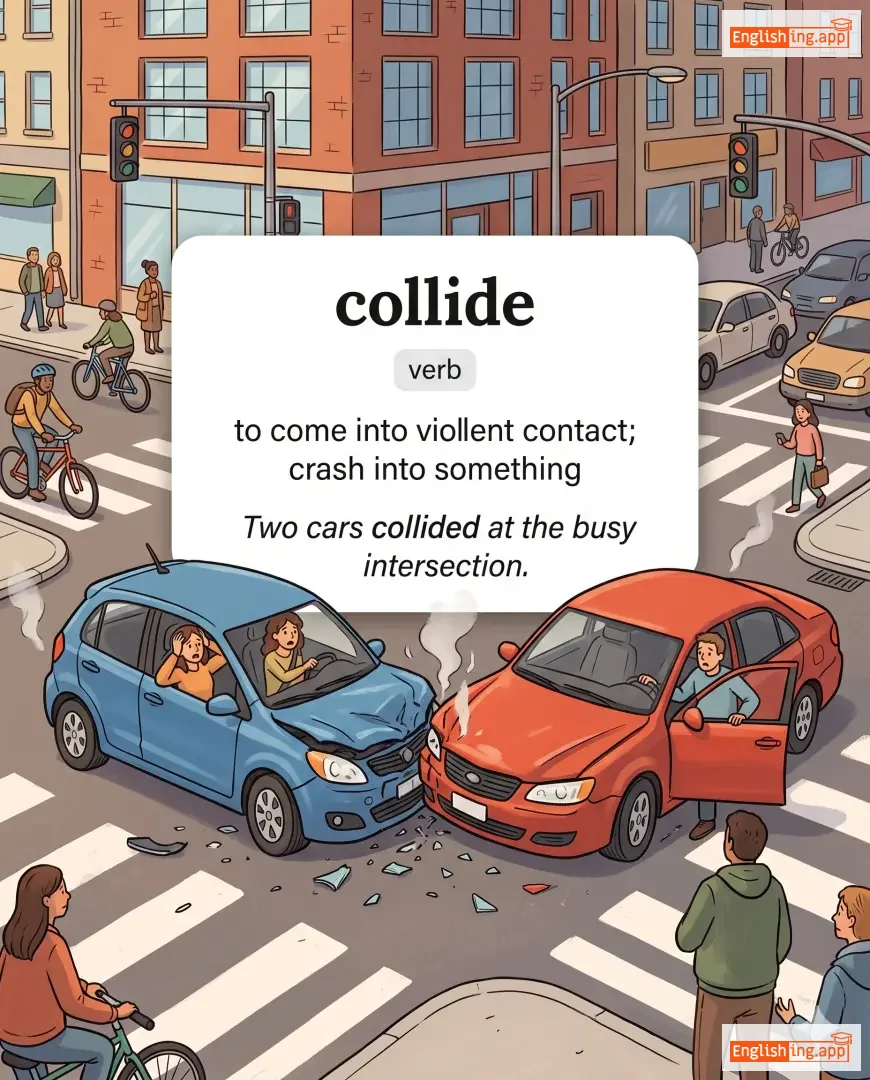
to come into violent contact; crash into something
••••••
|
Two cars collided at the busy intersection.
2台の車が混雑した交差点で衝突しました。
••••••
|
2台の車が混雑した交差点で衝突しました。
2-dai no kuruma ga konzatsu shita kōsaten de shōtotsu shimashita.
••••••
|
collide with reality
現実と衝突する
••••••
|
to be faced with the harsh truth of a situation
••••••
|
現実と衝突する
genjitsu to shōtotsu suru
••••••
|
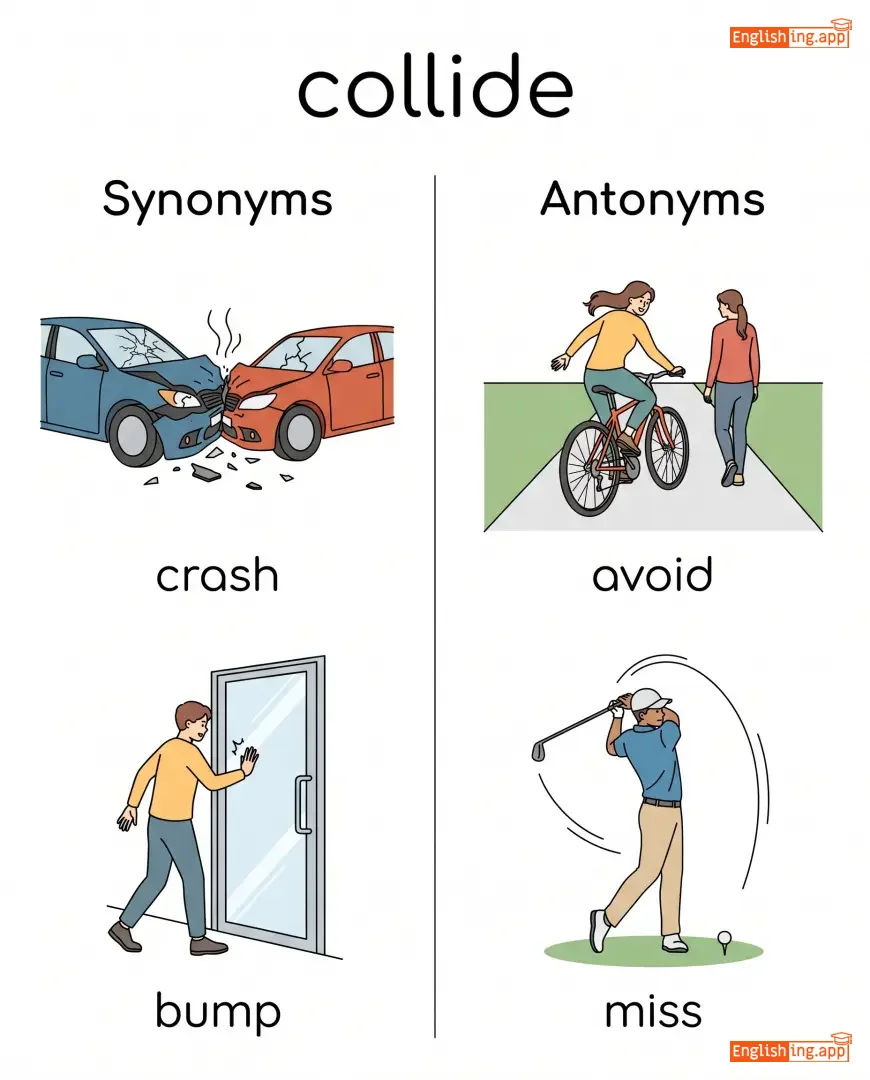
crash, bump, clash, impact, strike
••••••
|
avoid, miss, dodge
••••••
|
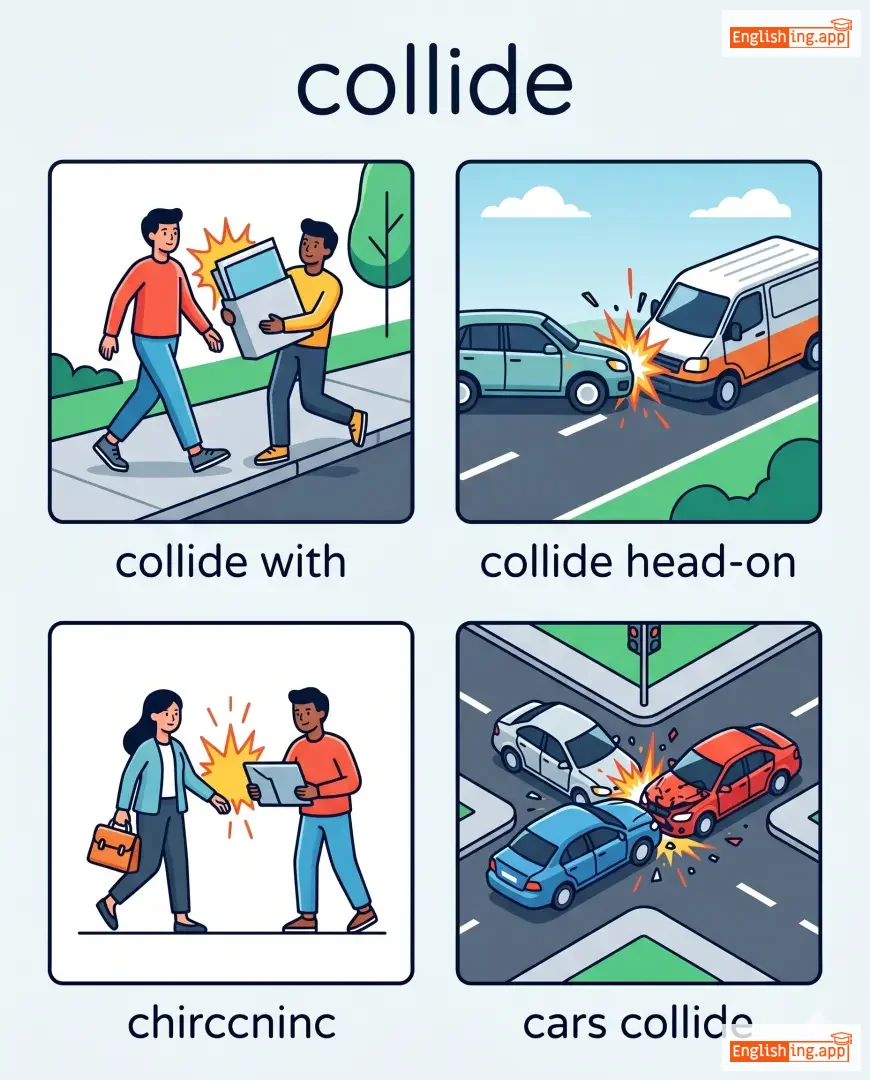
collide with, collide head-on, cars collide, collide violently
••••••
|
衝突する = 車同士がぶつかるように、二つの物が激しくぶつかる
••••••
|
|
#1577
😴
|
/ˈkoʊməˌtoʊs/
adjective
(コマトーズ)
••••••
|
- •••••• |
昏睡状態の
konsui joutai no
••••••
|
- •••••• | - •••••• | - •••••• | - •••••• |
In a state of deep unconsciousness, resembling or related to coma.
••••••
|
The comatose patient was kept under constant observation.
その昏睡状態の患者は、継続的に観察されていました。
••••••
|
その昏睡状態の患者は、継続的に観察されていました。
Sono konsui joutai no kanja wa, keizokuteki ni kansatsu sarete imashita.
••••••
|
- •••••• | - •••••• | - •••••• |
unconscious, insensible, unresponsive, stupefied
••••••
|
awake, alert, conscious
••••••
|
comatose state, comatose patient, remain comatose
••••••
|
Comatoseは昏睡+ドーズ、昏睡のドーズが多すぎるような感じ。
••••••
|
|
#1578
🛌
|
/ˈkoʊmə/
noun
(コーマ)
••••••
|
- •••••• |
コーマ
koma
••••••
|
- •••••• | - •••••• | - •••••• | - •••••• |
A deep state of prolonged unconsciousness caused by illness or injury.
••••••
|
The patient remained in a coma for several weeks. |
患者は数週間コーマ状態にありました。
Kanja wa suushukan koma joutai ni arimashita.
••••••
|
in a coma |
Unconscious or unaware for a long period.
••••••
|
コーマ状態で
koma joutai de
••••••
|
unconsciousness, stupor, insensibility, deep sleep
••••••
|
alertness, consciousness
••••••
|
coma patient, deep coma, fall into a coma, recover from a coma
••••••
|
コーマは深い眠りのようで、時間が止まったかのような状態です。
••••••
|
|
#1579
🐎
|
/ˈkoʊltɪʃ/
adjective
••••••
|
- •••••• | - •••••• | - •••••• | - •••••• | - •••••• | - •••••• |
Playful, energetic, and not fully mature or disciplined.
••••••
|
The coltish boy ran around the field without a care. |
- •••••• | - •••••• | - •••••• | - •••••• |
playful, frisky, lively, frolicsome
••••••
|
serious, mature
••••••
|
coltish behavior, coltish energy, coltish charm
••••••
|
No •••••• |
|
#1580
🗿
|
/kəˈlɒsəs/
noun
(コロッサス)
••••••
|
- •••••• |
巨人
kyojin
••••••
|
- •••••• | - •••••• | - •••••• | - •••••• |
A person or thing of enormous size, importance, or ability.
••••••
|
Einstein was a colossus in the world of science. |
アインシュタインは科学の世界で巨人でした。
Ainshutain wa kagaku no sekai de kyojin deshita.
••••••
|
a colossus of industry |
A person or company of great importance and influence in business.
••••••
|
産業の巨人
sangyō no kyojin
••••••
|
giant, titan, behemoth, powerhouse, heavyweight
••••••
|
dwarf, weakling
••••••
|
political colossus, industrial colossus, colossus of science
••••••
|
Colossusは巨人のように、非常に大きな存在を表します。
••••••
|
|
#1581
🏛️
|
/kəˈlɒsəl/
adjective
(コロッサル)
••••••
|
|
巨大な
kyodaina
••••••
|
- •••••• | - •••••• | - •••••• | - •••••• |
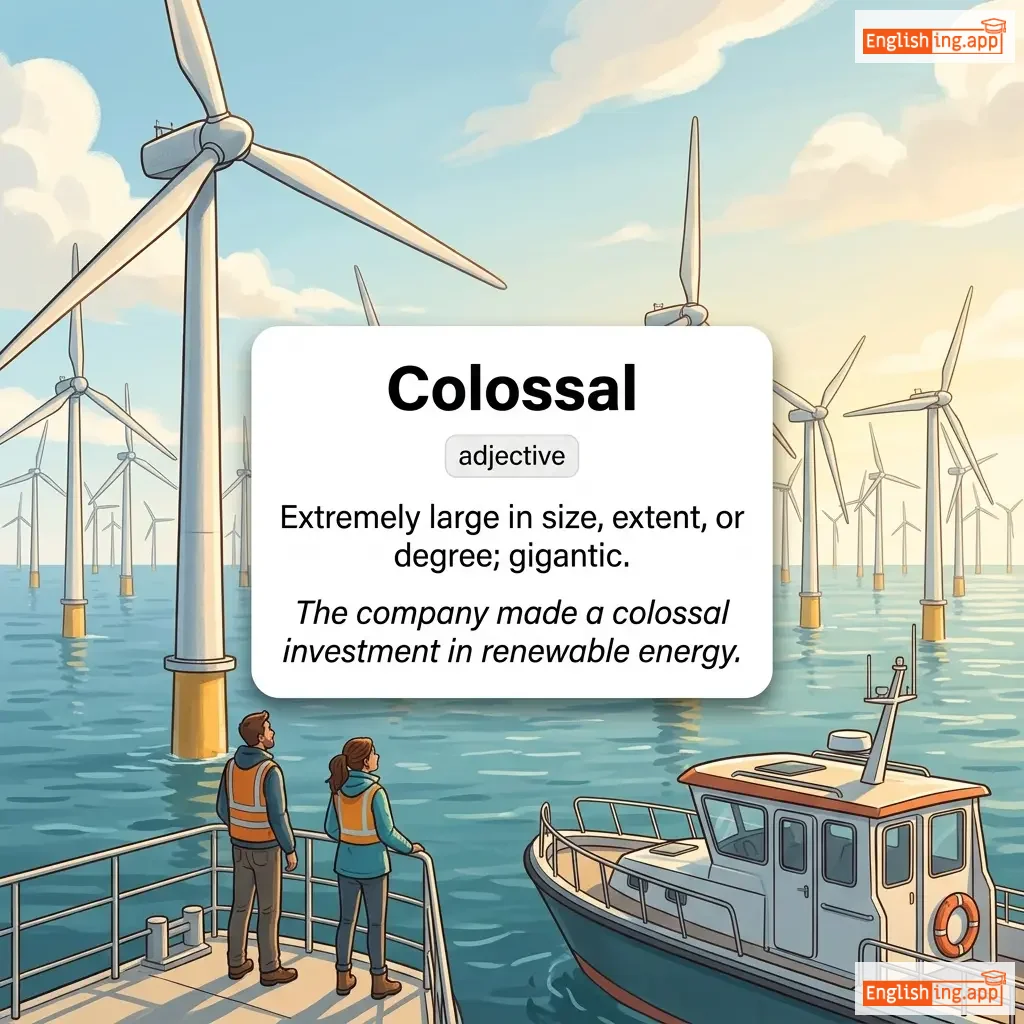
Extremely large in size, extent, or degree; gigantic.
••••••
|
The company made a colossal investment in renewable energy.
その会社は再生可能エネルギーに巨大な投資をしました。
••••••
|
その会社は再生可能エネルギーに巨大な投資をしました。
Sono kaisha wa saiseikanō enerugī ni kyodaina tōshi o shimashita.
••••••
|
colossal failure
巨大な失敗
••••••
|
A very large and complete failure.
••••••
|
巨大な失敗
kyodaina shippai
••••••
|
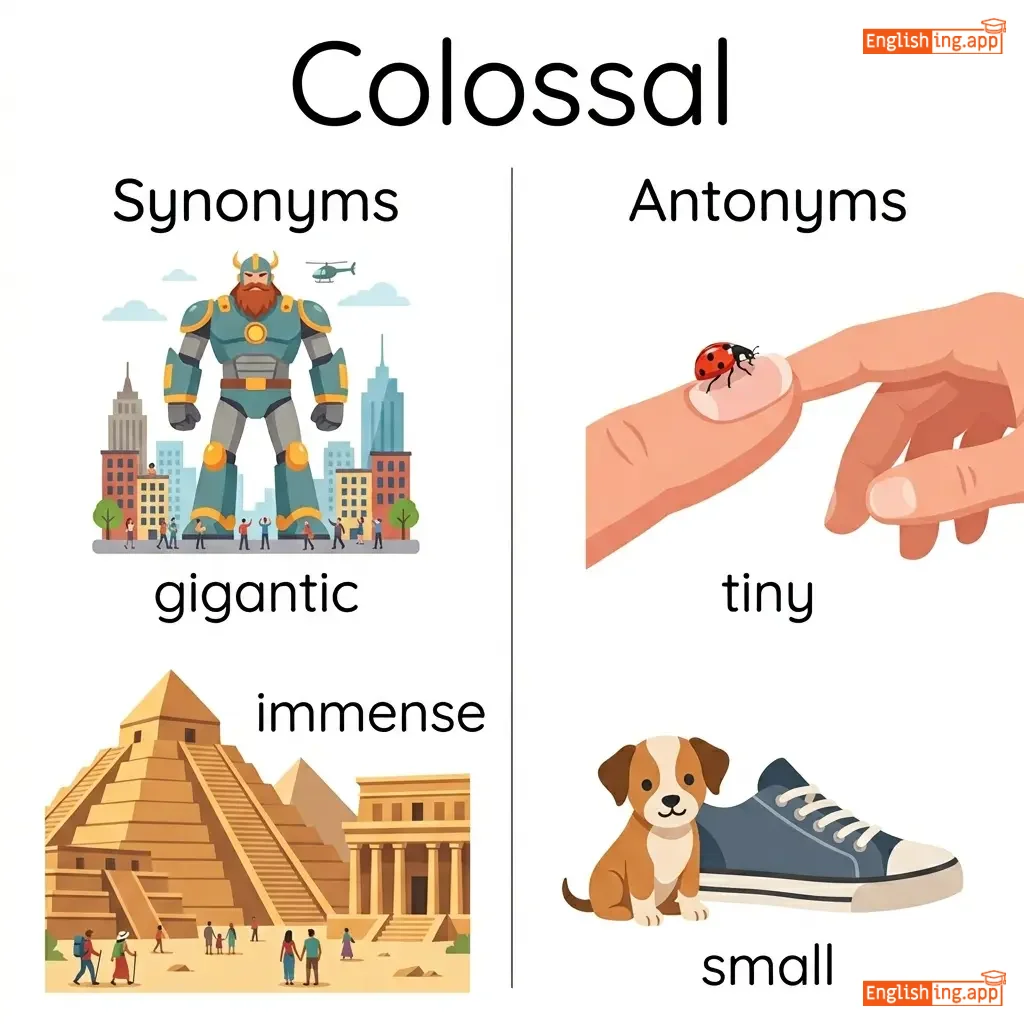
gigantic, immense, massive, huge, enormous
••••••
|
tiny, small, little
••••••
|
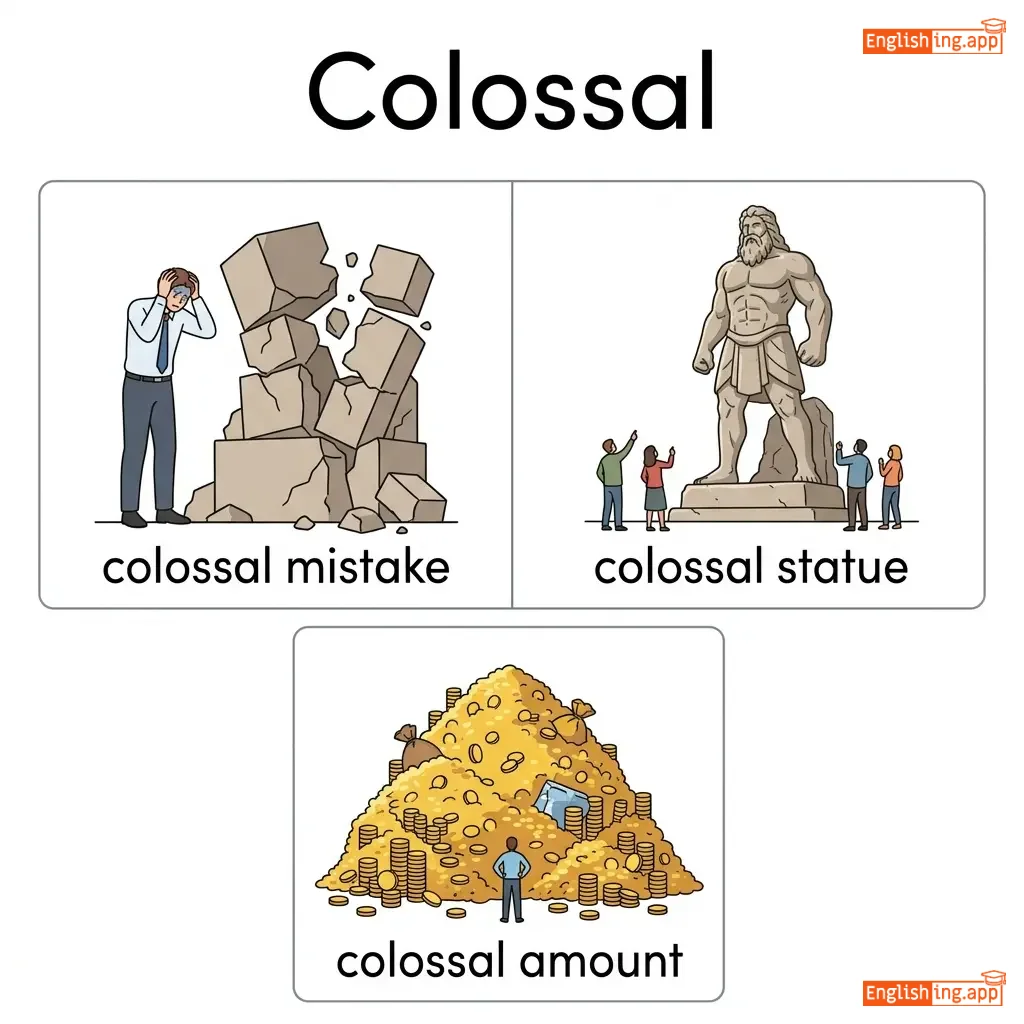
colossal mistake, colossal statue, colossal amount, colossal impact
••••••
|
コロッサルは巨大なもの、山のようなもの。
••••••
|
|
#1582
🎨
|
/ˈkʌl.ər/
noun
(カラー)
••••••
|
- •••••• |
色
iro
••••••
|
- •••••• | - •••••• | - •••••• | - •••••• |
The property possessed by an object of producing different sensations on the eye as a result of the way it reflects or emits light.
••••••
|
Blue is her favorite color. |
青は彼女のお気に入りの色です。
Ao wa kanojo no okiniiri no iro desu.
••••••
|
show your true colors |
To reveal one's real character or intentions
••••••
|
本当の色を見せて
Hontō no iro o misete
••••••
|
hue, shade, tint, tone, pigment
••••••
|
monochrome, colorless
••••••
|
bright color, favorite color, primary color, true color
••••••
|
Color(カラー)は日本語で‘色’として覚えやすい。
••••••
|
|
#1583
🏛️
|
/ˌkɒl.əˈneɪd/
noun
(コロネイド)
••••••
|
- •••••• |
コロネード
koronēdo
••••••
|
- •••••• | - •••••• | - •••••• | - •••••• |
A row of evenly spaced columns supporting a roof, often in classical architecture.
••••••
|
The visitors admired the grand colonnade at the entrance of the temple. |
訪問者は寺院の入り口で壮大なコロネードに感嘆していました。
Hōmonsha wa jiin no iriguchi de sōdaina koronēdo ni kantan shiteimashita.
••••••
|
- •••••• | - •••••• | - •••••• |
row of columns, arcade, portico, peristyle
••••••
|
wall, barrier
••••••
|
grand colonnade, stone colonnade, temple colonnade, classical colonnade
••••••
|
Colonnade Column + パレード — 柱の列
••••••
|
|
#1584
🕵️
|
/kəˈluːʒən/
noun
(コリュージョン)
••••••
|
- •••••• |
共謀
kyōbō
••••••
|
- •••••• | - •••••• | - •••••• | - •••••• |
A secret agreement or cooperation, especially for an illegal or dishonest purpose.
••••••
|
There was evidence of collusion between the officials and the contractors. |
役人と契約者の間で共謀の証拠がありました。
Yakunin to keiyakusha no aida de kyōbō no shōko ga arimashita.
••••••
|
in collusion with |
Secretly cooperating or conspiring with someone
••••••
|
共謀して
kyōbō shite
••••••
|
conspiracy, plotting, connivance, complicity
••••••
|
honesty, openness, transparency
••••••
|
in collusion with, secret collusion, political collusion, business collusion
••••••
|
共謀 = Color + Illusion — 秘密の協力で不正を働く。
••••••
|
|
#1585
🤐
|
/kəˈluːd/
verb
(コルード)
••••••
|
- •••••• |
共謀する
kyoubou suru
••••••
|
colluded
コルーデッド
••••••
|
colluded
コルーデッド
••••••
|
colludes
コルーズ
••••••
|
colluding
コルーディング
••••••
|
To secretly cooperate or conspire with others, often for a deceitful purpose.
••••••
|
The two companies colluded to fix prices in the market.
2社は市場で価格を決定するために共謀しました。
••••••
|
2社は市場で価格を決定するために共謀しました。
2 sha wa shijou de kakaku wo kettei suru tame ni kyoubou shimashita.
••••••
|
collude with
共謀する
••••••
|
To conspire or cooperate secretly with someone
••••••
|
共謀する
kyoubou suru
••••••
|
conspire, plot, scheme, connive
••••••
|
compete, oppose, resist
••••••
|
collude with, collude in, secretly collude, collude to
••••••
|
ColludeはCall + ルード(lūdo)- 共謀する
••••••
|
|
#1586
💬
|
/ˈkɒl.ə.kwi/
noun
(コロクイ)
••••••
|
- •••••• |
正式な対話
seishiki na taiwa
••••••
|
- •••••• | - •••••• | - •••••• | - •••••• |
A formal conversation or dialogue, often on serious or academic topics.
••••••
|
The professors engaged in a deep colloquy about the future of education. |
教授たちは教育の未来について深い対話を交わしました。
Kyōjotachi wa kyōiku no mirai ni tsuite fukai taiwa o kawashimashita.
••••••
|
- •••••• | - •••••• | - •••••• |
dialogue, discussion, conversation, debate, talk
••••••
|
silence, monologue
••••••
|
formal colloquy, brief colloquy, academic colloquy, private colloquy
••••••
|
Colloquyは'コロケーション' — 正式な対話
••••••
|
|
#1587
💬
|
/kəˈloʊkwiəˌlɪzəm/
noun
(コロクイアリズム)
••••••
|
- •••••• |
口語表現
kōgo hyōgen
••••••
|
- •••••• | - •••••• | - •••••• | - •••••• |
a word or phrase used in informal speech or writing
••••••
|
The novel is full of regional colloquialisms. |
その小説は地域の口語表現で満ちている。
Sono shōsetsu wa chiiki no kōgo hyōgen de michite iru.
••••••
|
- •••••• | - •••••• | - •••••• |
informalism, slang, idiom, expression
••••••
|
formality, standard expression
••••••
|
regional colloquialism, common colloquialism, local colloquialism
••••••
|
口語表現 = '口' (kō) + '語' (go) - 日常的な言葉 💬
••••••
|
|
#1588
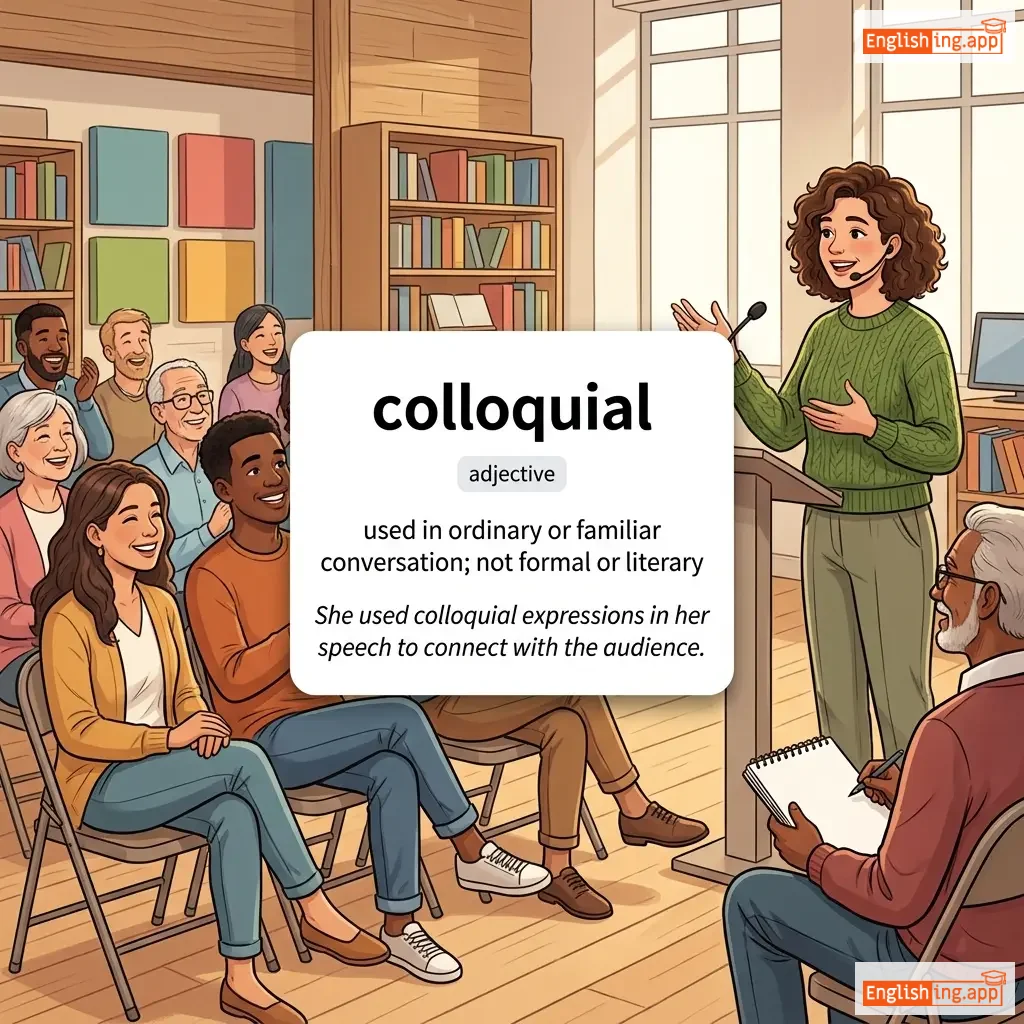
🗣️
|
/kəˈloʊkwiəl/
adjective
(コロキアル)
••••••
|
|
口語的
kōgoteki
••••••
|
- •••••• | - •••••• | - •••••• | - •••••• |
used in ordinary or familiar conversation; not formal or literary
••••••
|
She used colloquial expressions in her speech to connect with the audience. |
彼女は演説で観客とつながるために口語的な表現を使いました。
Kanojo wa enzetsu de kankyaku to tsunagaru tame ni kōgoteki na hyōgen o tsukaimashita.
••••••
|
- •••••• | - •••••• | - •••••• |
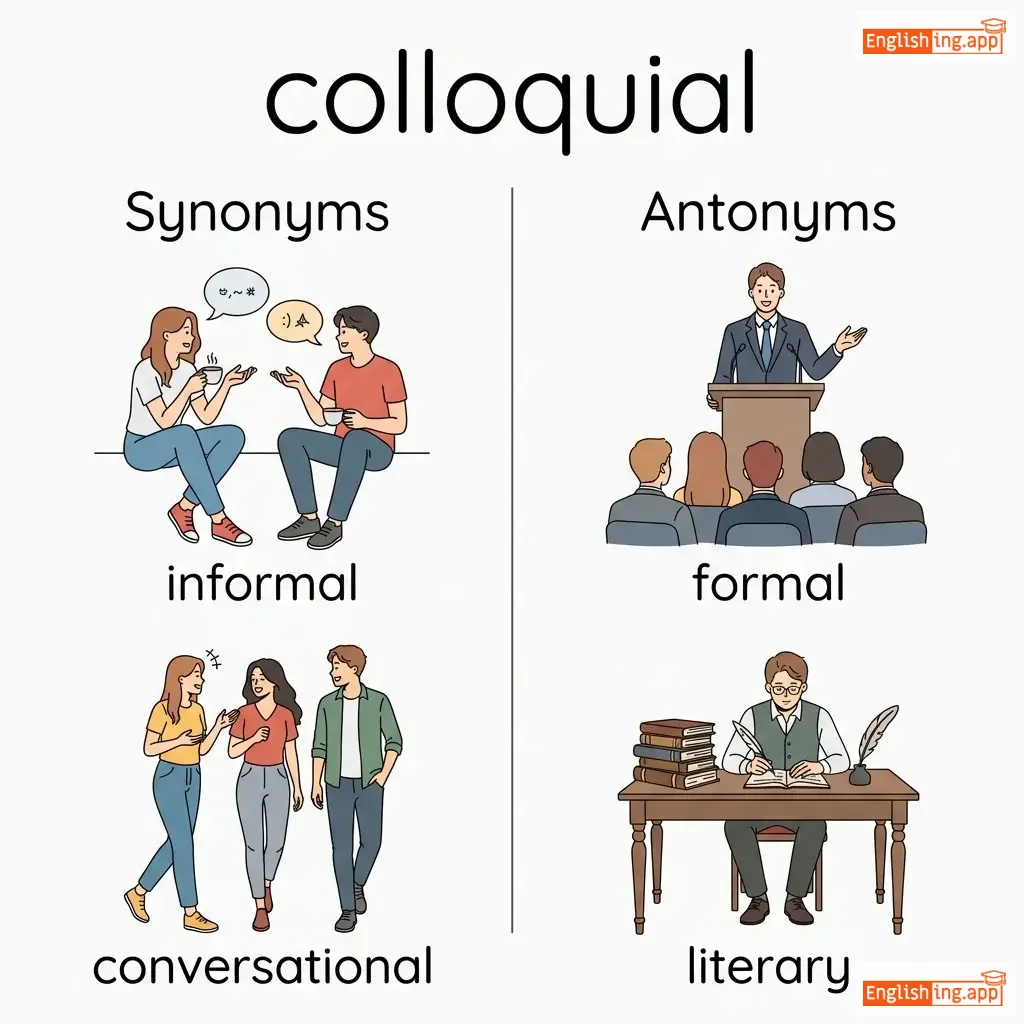
informal, conversational, everyday, familiar
••••••
|
formal, literary, academic
••••••
|
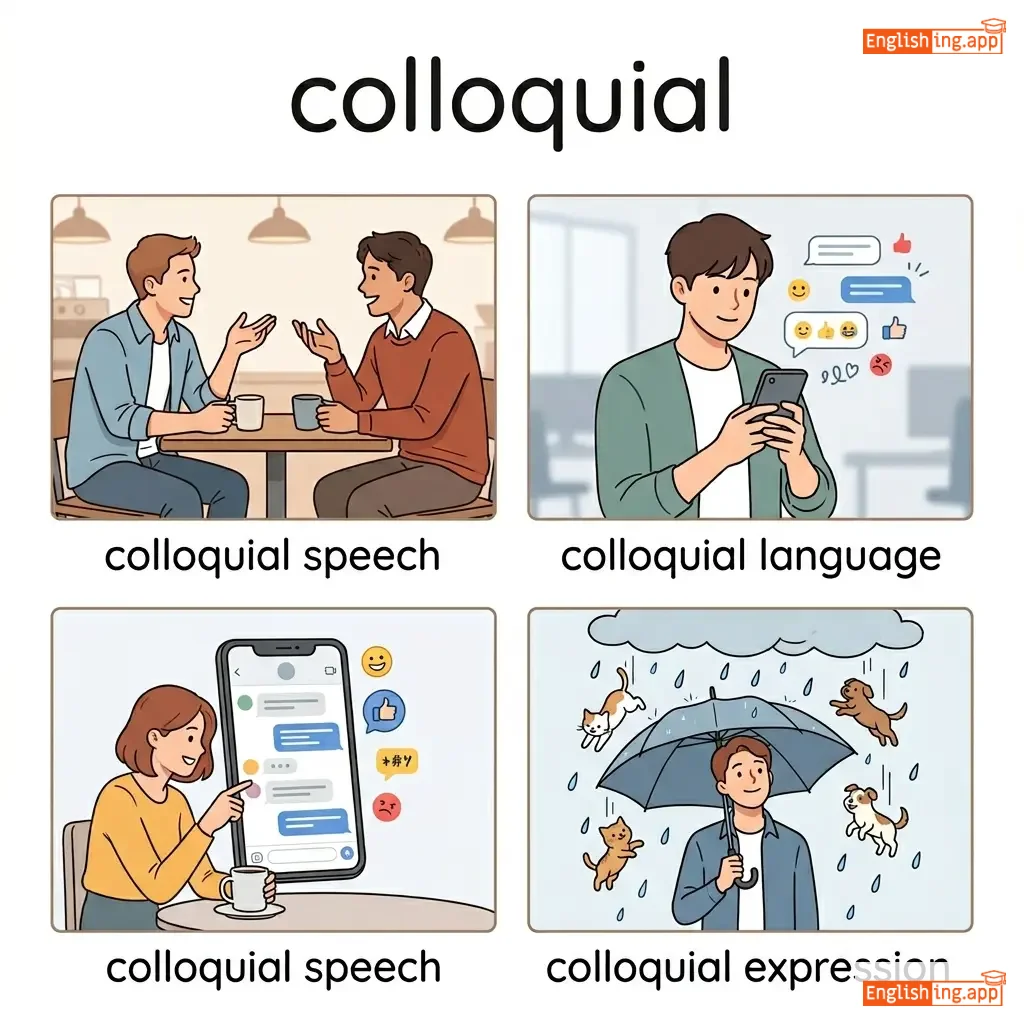
colloquial speech, colloquial language, colloquial expression
••••••
|
口語的とは友達との会話のようなもので、正式ではありません。
••••••
|
|
#1589
🚗💥🚗
|
/kəˈlɪʒən/
noun
(コリジョン)
••••••
|
- •••••• |
衝突
shoutotsu
••••••
|
- •••••• | - •••••• | - •••••• | - •••••• |
an instance of two or more objects crashing into each other
••••••
|
The collision on the highway caused a major traffic jam. |
高速道路での衝突が大きな交通渋滞を引き起こしました。
Kousoku douro de no shoutotsu ga ookina koutsuu juutai wo hikiokoshimashita.
••••••
|
on a collision course |
moving toward inevitable conflict or disaster
••••••
|
衝突コース上
shoutotsu koosu jou
••••••
|
crash, impact, accident, clash
••••••
|
separation, avoidance, peace
••••••
|
car collision, head-on collision, fatal collision
••••••
|
コリジョンは衝突コースを意味します – 車🚗💥🚗が衝突します
••••••
|
|
#1590
⛏️
|
/ˈkɒliər/
noun
(コリエ)
••••••
|
- •••••• |
炭鉱労働者
tankou roudousha
••••••
|
- •••••• | - •••••• | - •••••• | - •••••• |
a person who works in coal mines or a ship carrying coal
••••••
|
The collier spent long hours underground extracting coal. |
炭鉱労働者は地下で長時間石炭を掘り出していた。
Tankou roudousha wa chika de nagajikan sekitan wo horidashite ita.
••••••
|
- •••••• | - •••••• | - •••••• |
miner, coal miner, pitman
••••••
|
non-miner, farmer
••••••
|
coal collier, hardworking collier, collier ship
••••••
|
Collier は石炭と働くことを意味する – 炭鉱労働者
••••••
|
Vocabulary Quiz
Test your vocabulary by matching words with their translations or meanings.
Login to take the quiz
Comments (0)
Share your thoughts and join the discussion.
Join the discussion by logging in
Login to CommentNo comments yet
Be the first to share your thoughts!