

翻訳
過去
過去分詞
三人称単数
動名詞
意味
例文
例文の翻訳
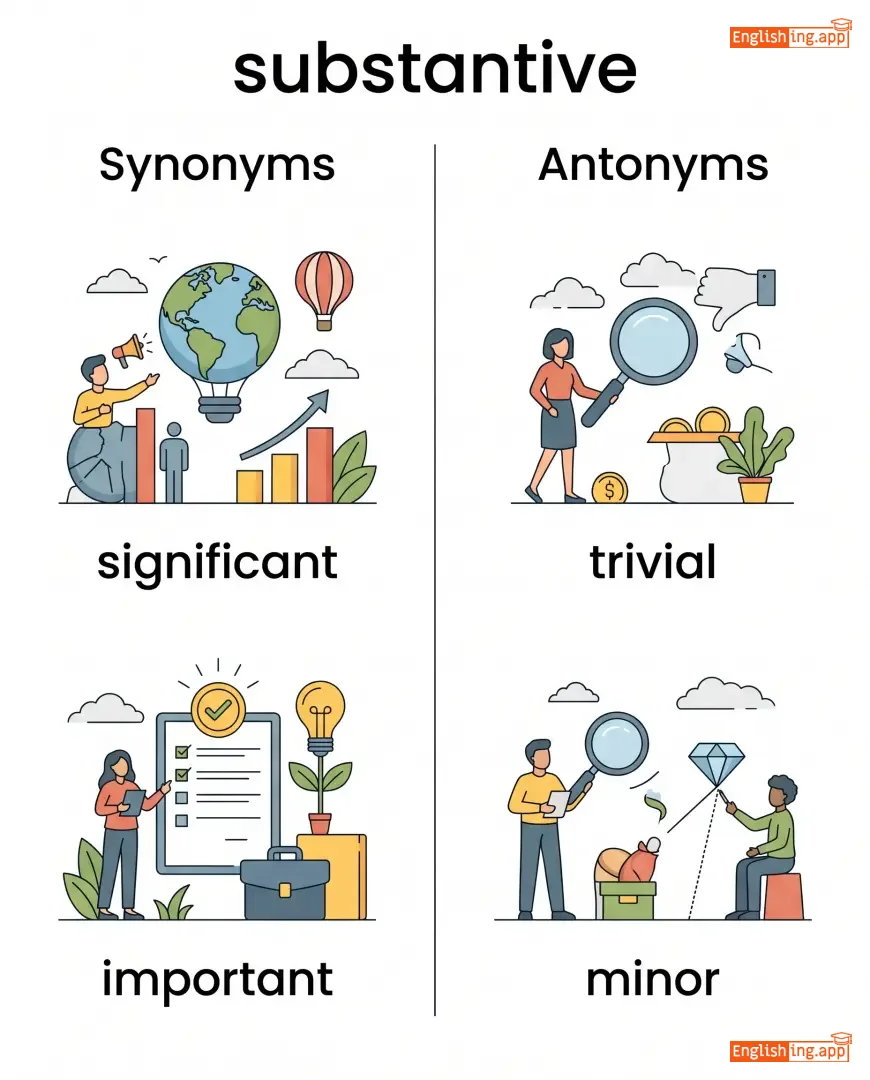
同義語
対義語
コロケーション
ニーモニック



Swipe left or right, or use the buttons. Tap image to zoom.
例文の翻訳
単語
Lesson 283Lesson 283 - マスクトグル
|
絵文字
|
単語 | Images | 翻訳 | 過去 | 過去分詞 | 三人称単数 | 動名詞 | 意味 | 例文 | 例文の翻訳 | 表現例 | 表現例の意味 | 表現例の翻訳 | 同義語 | 対義語 | コロケーション | ニーモニック |
|---|---|---|---|---|---|---|---|---|---|---|---|---|---|---|---|---|---|
|
#8460
🌀
|
/səbˈsjuːm/
verb
(サブスイウム)
••••••
|
|
含む
fukumu
••••••
|
subsumed
サブスイウムド
••••••
|
subsumed
サブスイウムド
••••••
|
subsumes
サブスイウムズ
••••••
|
subsuming
サブスイウミング
••••••
|
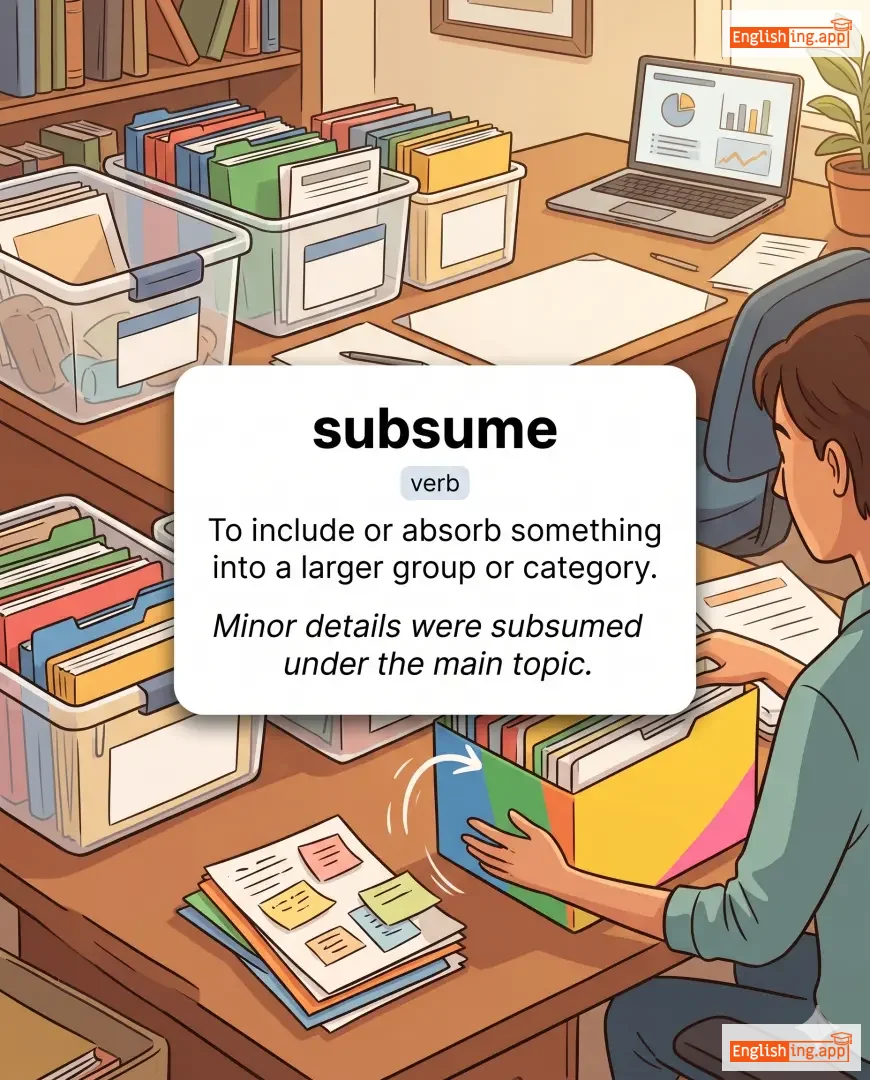
To include or absorb something into a larger group or category.
••••••
|
Minor details were subsumed under the main topic.
マイナーな詳細は主要なトピックに含まれました。
••••••
|
マイナーな詳細は主要なトピックに含まれました。
Mainā na shōsai wa shuyō na topikku ni fukamaremashita.
••••••
|
- •••••• | - •••••• | - •••••• |
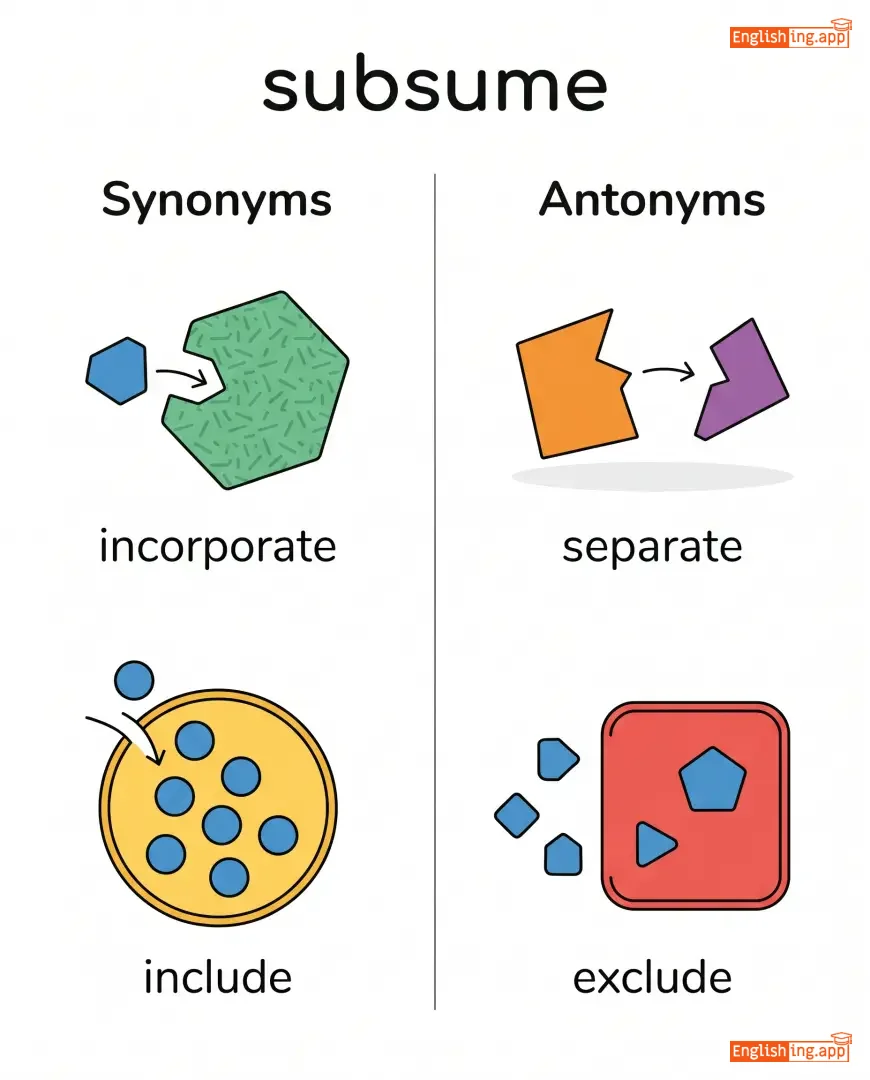
incorporate, include, absorb, encompass
••••••
|
separate, exclude
••••••
|
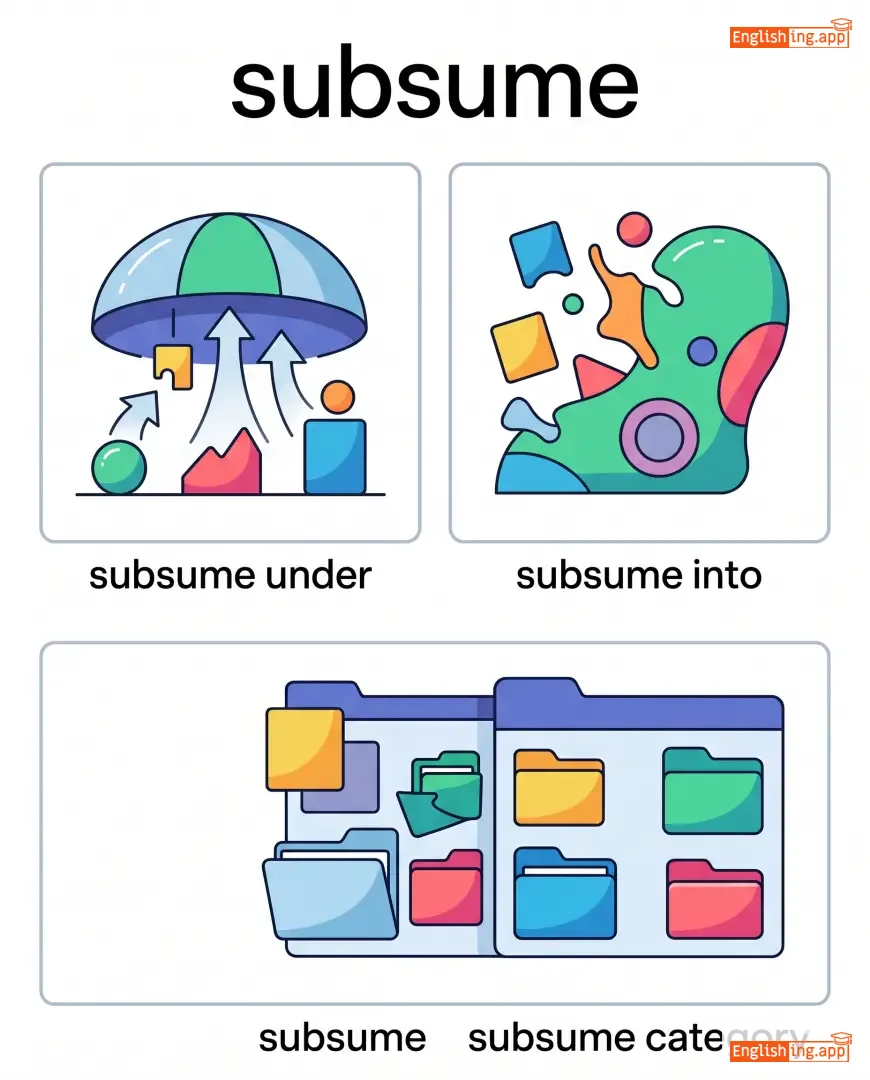
subsume under, subsume into, subsume category, subsume theory
••••••
|
Sub + 含む → 小さなものを大きなものに含める = subsume は含むという意味。
••••••
|
|
#8461
👑
|
/səkˈsɛsər/
noun
(saksesā)
••••••
|
- •••••• |
後継者
kōkeisha
••••••
|
- •••••• | - •••••• | - •••••• | - •••••• |
A person or thing that follows another in a position, office, or role.
••••••
|
The company appointed a successor after the CEO retired. |
CEOが退職した後、会社は後継者を任命した。
CEO ga taishoku shita ato, kaisha wa kōkeisha o ninmei shita.
••••••
|
successor in title |
a person who legally takes over rights or property from another
••••••
|
役職後継者
yakushoku kōkeisha
••••••
|
heir, inheritor, descendant, replacement, follower
••••••
|
predecessor, ancestor
••••••
|
successor to the throne, immediate successor, political successor, rightful successor
••••••
|
Success の後に来るのは後継者 — 後継者.
••••••
|
|
#8462
💼
|
/səkˈsɛsfəl/
adjective
(səkˈsɛsfəl)
••••••
|
- •••••• |
成功した
seikou shita
••••••
|
- •••••• | - •••••• | - •••••• | - •••••• |
having achieved success; having attained wealth, position, or honor
••••••
|
He is a successful businessman. |
彼は成功したビジネスマンです。
Kare wa seikou shita bijinesuman desu.
••••••
|
successful career |
a career in which one achieves prosperity and recognition
••••••
|
成功したキャリア
seikou shita kyaria
••••••
|
prosperous, accomplished, thriving, victorious, effective
••••••
|
unsuccessful, failing, defeated
••••••
|
successful career, successful attempt, successful person, successful strategy
••••••
|
成功したは成功のこと — テストに合格したら成功する
••••••
|
|
#8463
🎉
|
/səkˈsɛs/
noun
(səkˈsɛs)
••••••
|
|
成功
seikou
••••••
|
- •••••• | - •••••• | - •••••• | - •••••• |
the achievement of an aim, purpose, or result
••••••
|
His hard work led to great success. |
彼の努力は大きな成功をもたらした。
Kare no doryoku wa ōkina seikō o motarashita.
••••••
|
make a success of |
to achieve success in something
••••••
|
何かの成功を収める
nanika no seikō o osameru
••••••
|
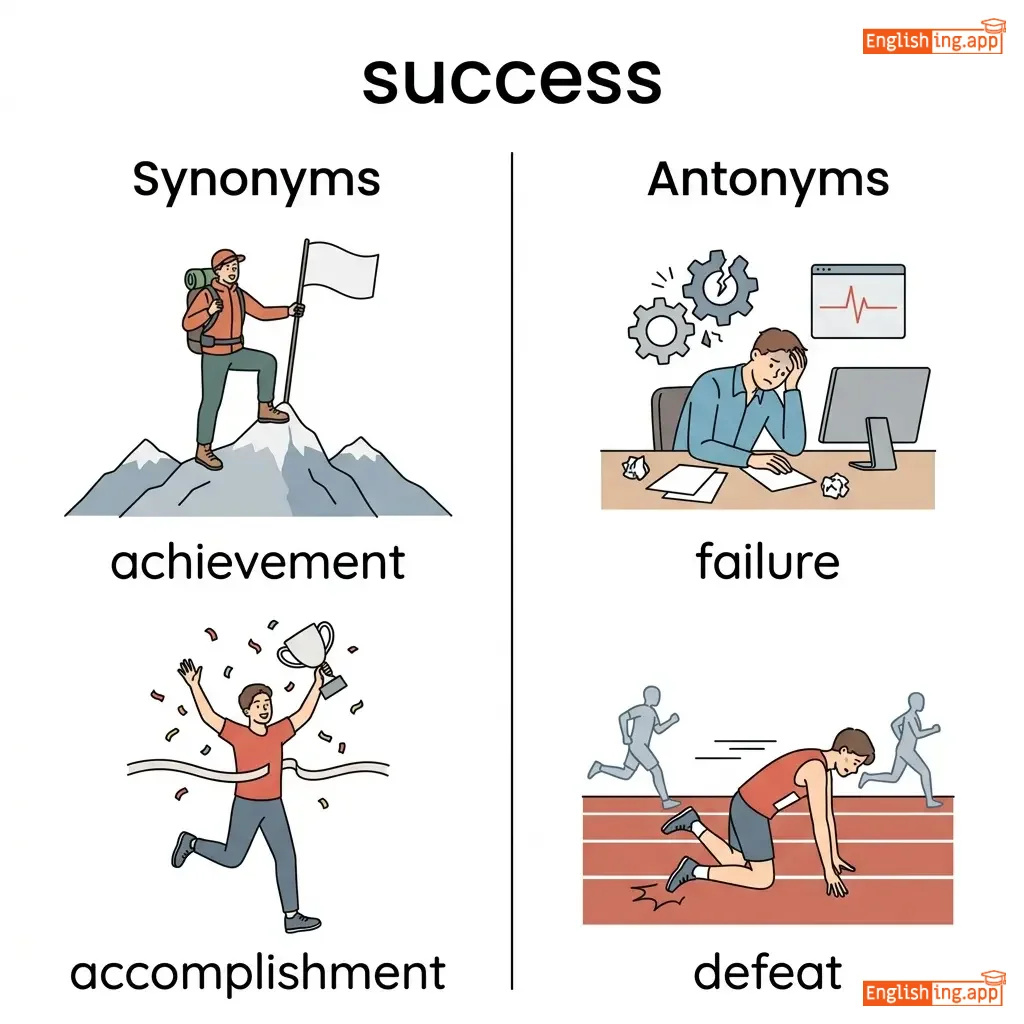
achievement, accomplishment, victory, triumph, prosperity
••••••
|
failure, defeat, loss
••••••
|
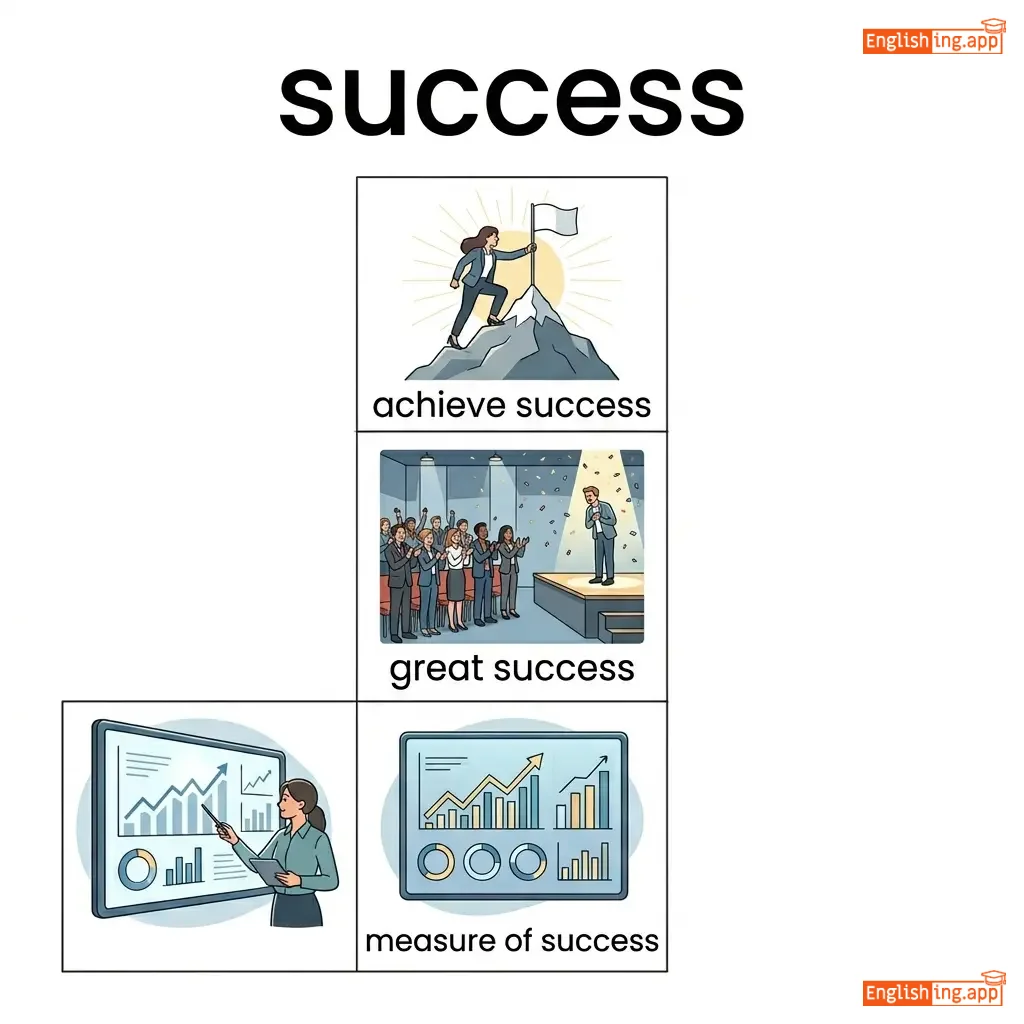
achieve success, great success, measure of success, success story
••••••
|
Success は成功 — テストでの success は seikou
••••••
|
|
#8464
➡️
|
/səkˈsiːdɪŋ/
verb
(suksíding)
••••••
|
- •••••• |
次の / 続く
tsugi no / tsuzuku
••••••
|
- •••••• | - •••••• | - •••••• |
succeeding
suksíding
••••••
|
coming after or following in order; continuing to succeed
••••••
|
In the succeeding years, the company expanded rapidly.
その後の数年間、会社は急速に拡大しました。
••••••
|
その後の数年間、会社は急速に拡大しました。
Sono ato no suūnenkan, kaisha wa kyūsoku ni kakudai shimashita.
••••••
|
- •••••• | - •••••• | - •••••• |
following, subsequent, next, ensuing
••••••
|
preceding, previous
••••••
|
succeeding generations, succeeding years, succeeding period
••••••
|
Succeed の後に succeeding が来ることは次のステップ — succeeding は次
••••••
|
|
#8465
🏆
|
/səkˈsiːd/
verb
(サクシード)
••••••
|
- •••••• |
成功する
seikou suru
••••••
|
succeeded
サクシーデッド
••••••
|
succeeded
サクシーデッド
••••••
|
succeeds
サクシーズ
••••••
|
succeeding
サクシーディング
••••••
|
to achieve the desired aim or result; to do well
••••••
|
She worked hard to succeed in her career.
彼女はキャリアで成功するために一生懸命働いた。
••••••
|
彼女はキャリアで成功するために一生懸命働いた。
Kanojo wa kyaria de seikou suru tame ni isshoukenmei hataraita.
••••••
|
succeed in life
人生で成功する
••••••
|
to achieve overall success and fulfillment in one’s life
••••••
|
人生で成功する
jinsei de seikou suru
••••••
|
achieve, prosper, triumph, prevail, accomplish
••••••
|
fail, lose, collapse
••••••
|
succeed in, succeed at, succeed against, succeed through
••••••
|
Successからsucceed、成功することがsucceedです
••••••
|
|
#8466
⚔️
|
/səbˈvɜːrt/
verb
••••••
|
- •••••• | - •••••• |
subverted
••••••
|
subverted
••••••
|
subverts
••••••
|
subverting
••••••
|
to undermine or overthrow an established system, authority, or institution
••••••
|
The rebels tried to subvert the government. |
- •••••• |
subvert the system |
to undermine or weaken the established order or rules
••••••
|
- •••••• |
undermine, overthrow, disrupt, destabilize, sabotage
••••••
|
support, strengthen, uphold
••••••
|
subvert democracy, subvert authority, subvert the system, subvert the law
••••••
|
No •••••• |
|
#8467
🔥
|
/səbˈvɜːrsɪv/
adjective
(サブバースィブ)
••••••
|
|
破壊的
hakai teki
••••••
|
- •••••• | - •••••• | - •••••• | - •••••• |
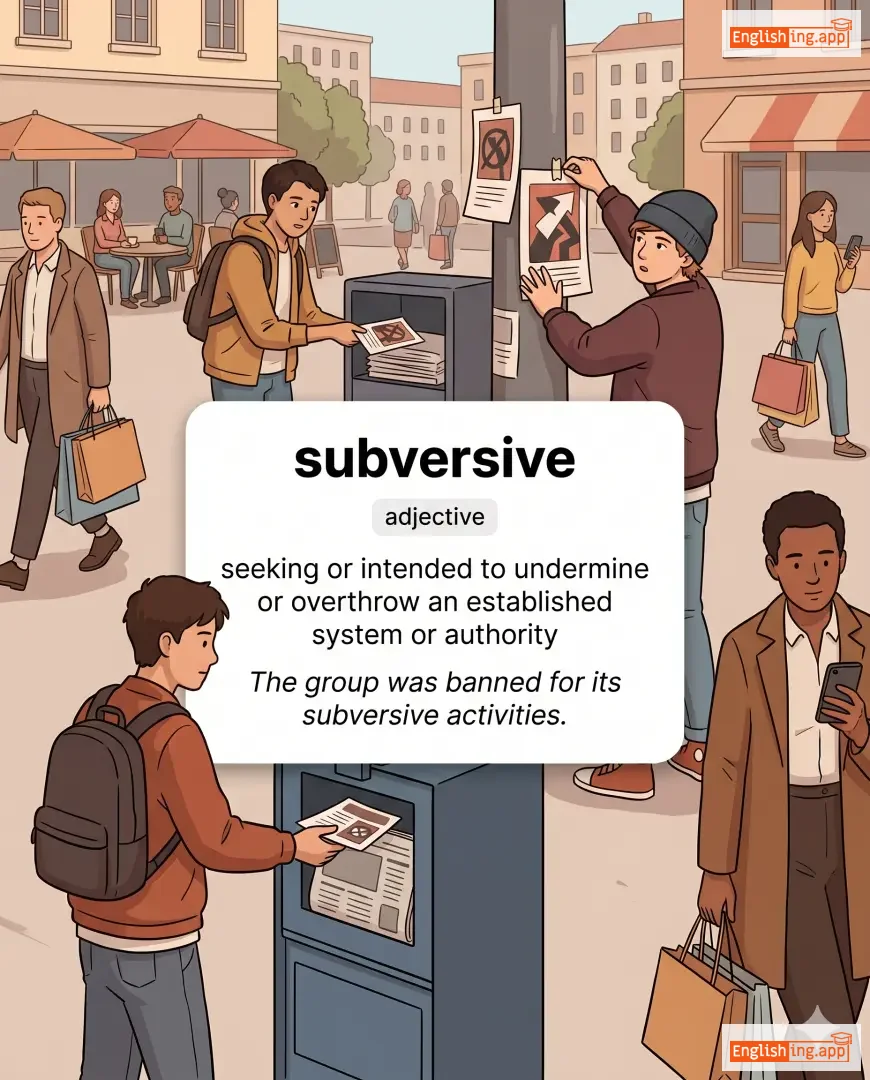
seeking or intended to undermine or overthrow an established system or authority
••••••
|
The group was banned for its subversive activities. |
そのグループは破壊的な活動のために禁止された。
Sono gurūpu wa hakai teki na katsudō no tame ni kinshi sareta.
••••••
|
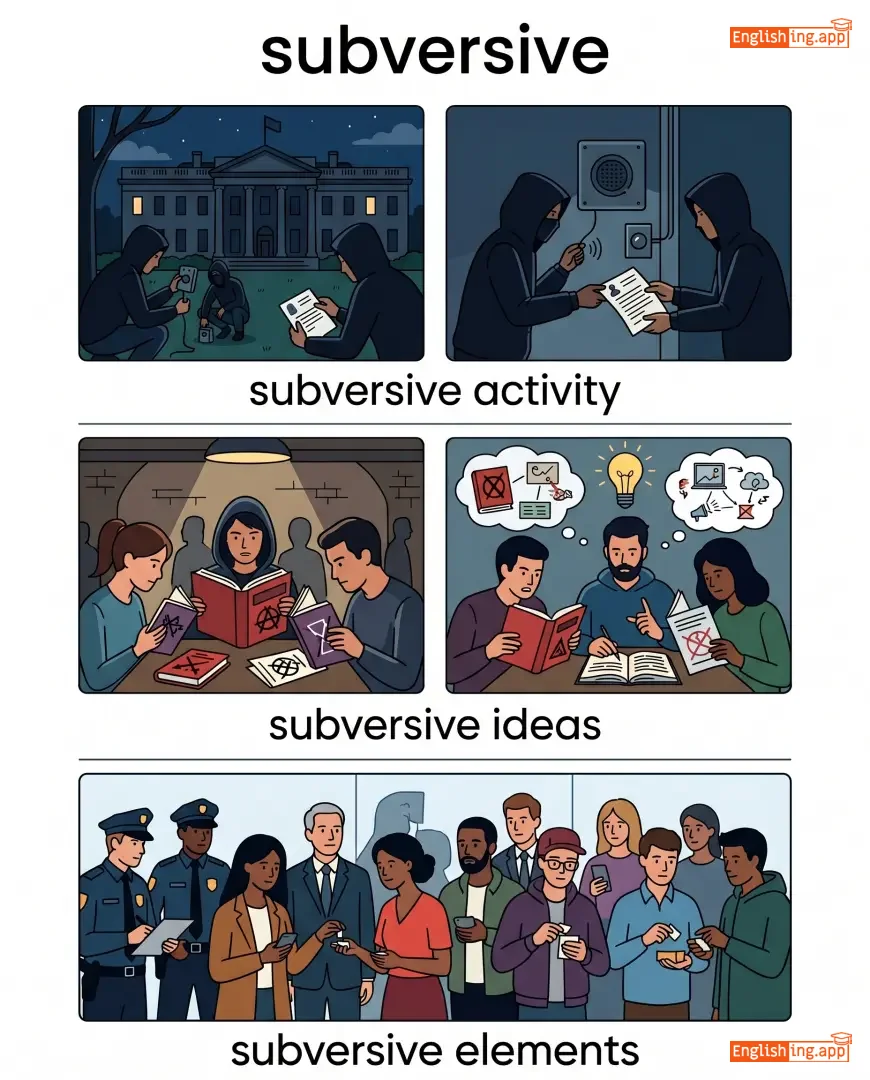
subversive elements |
people or groups trying to weaken authority
••••••
|
破壊的な要素
hakai teki na yōso
••••••
|
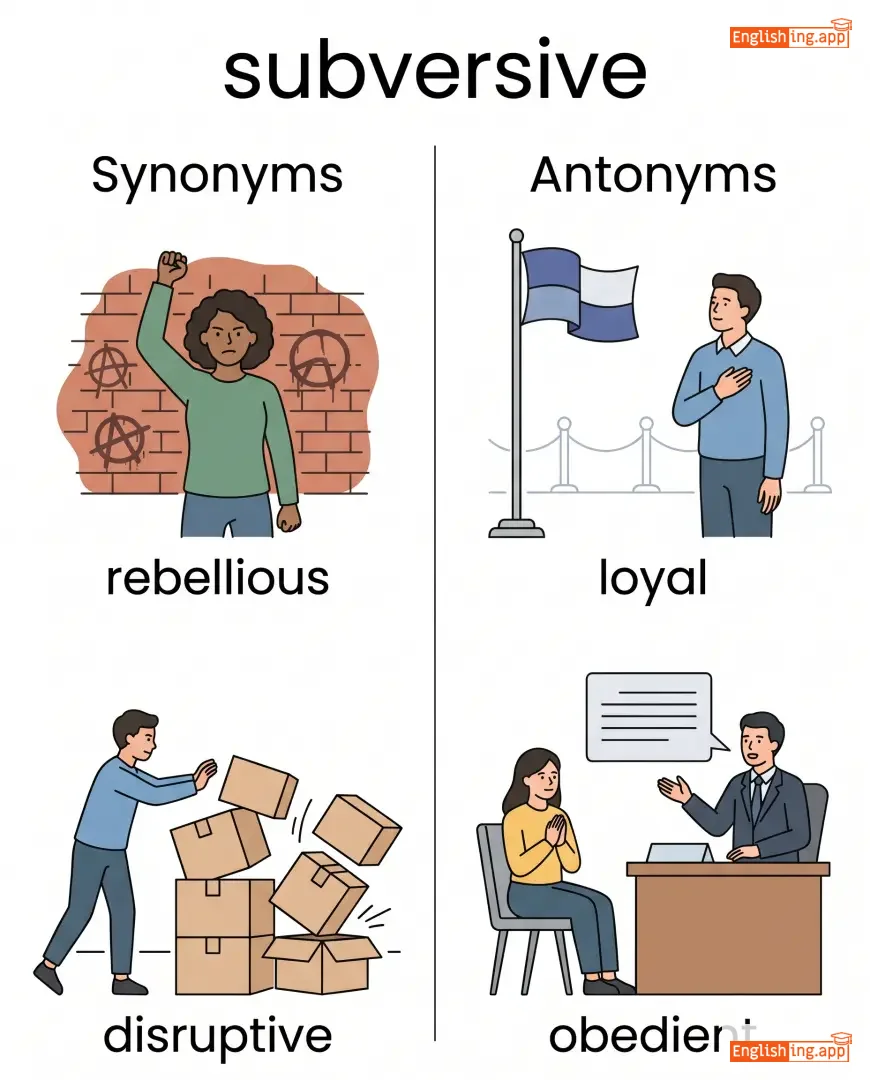
rebellious, disruptive, revolutionary, insurgent
••••••
|
loyal, obedient
••••••
|
subversive activity, subversive ideas, subversive elements
••••••
|
破壊的 = 秩序を変えること – 破壊 = 破る, 的 = 目的
••••••
|
|
#8468
⚠️
|
/səbˈvɜːrʒən/
noun
(サブヴァージョン)
••••••
|
- •••••• |
転覆
tenpuku
••••••
|
- •••••• | - •••••• | - •••••• | - •••••• |
the act of trying to destroy or undermine an established system or authority
••••••
|
The government accused the rebels of planning subversion. |
政府は反乱者が転覆を計画していると非難した。
Seifu wa hanransha ga tenpuku o keikaku shite iru to hinan shita.
••••••
|
political subversion |
undermining political authority or system
••••••
|
政治的転覆
seijiteki tenpuku
••••••
|
undermining, overthrow, disruption, rebellion
••••••
|
stability, order
••••••
|
acts of subversion, accused of subversion, political subversion
••••••
|
Subversionはシステムをひっくり返すことです - Subは下、Versionは変化です。
••••••
|
|
#8469
➖
|
/ˈsʌbtrəˌhɛnd/
noun
(サブトラヘンド)
••••••
|
- •••••• |
引数
hinshū
••••••
|
- •••••• | - •••••• | - •••••• | - •••••• |
a number that is to be subtracted from another number
••••••
|
In the equation 10 - 4, the number 4 is the subtrahend. |
方程式 10 - 4 では、4 は引数です。
Hōteishiki 10 - 4 de wa, 4 wa hinshū desu.
••••••
|
- •••••• | - •••••• | - •••••• |
deduction, deduction number
••••••
|
minuend
••••••
|
identify the subtrahend, subtract the subtrahend
••••••
|
Subtrahend は日本語で引数、引かれる側の数です。
••••••
|
|
#8470
🎨
|
/ˈsʌtlti/
noun
(サブテリティ)
••••••
|
|
微妙さ
bimyōsa
••••••
|
- •••••• | - •••••• | - •••••• | - •••••• |
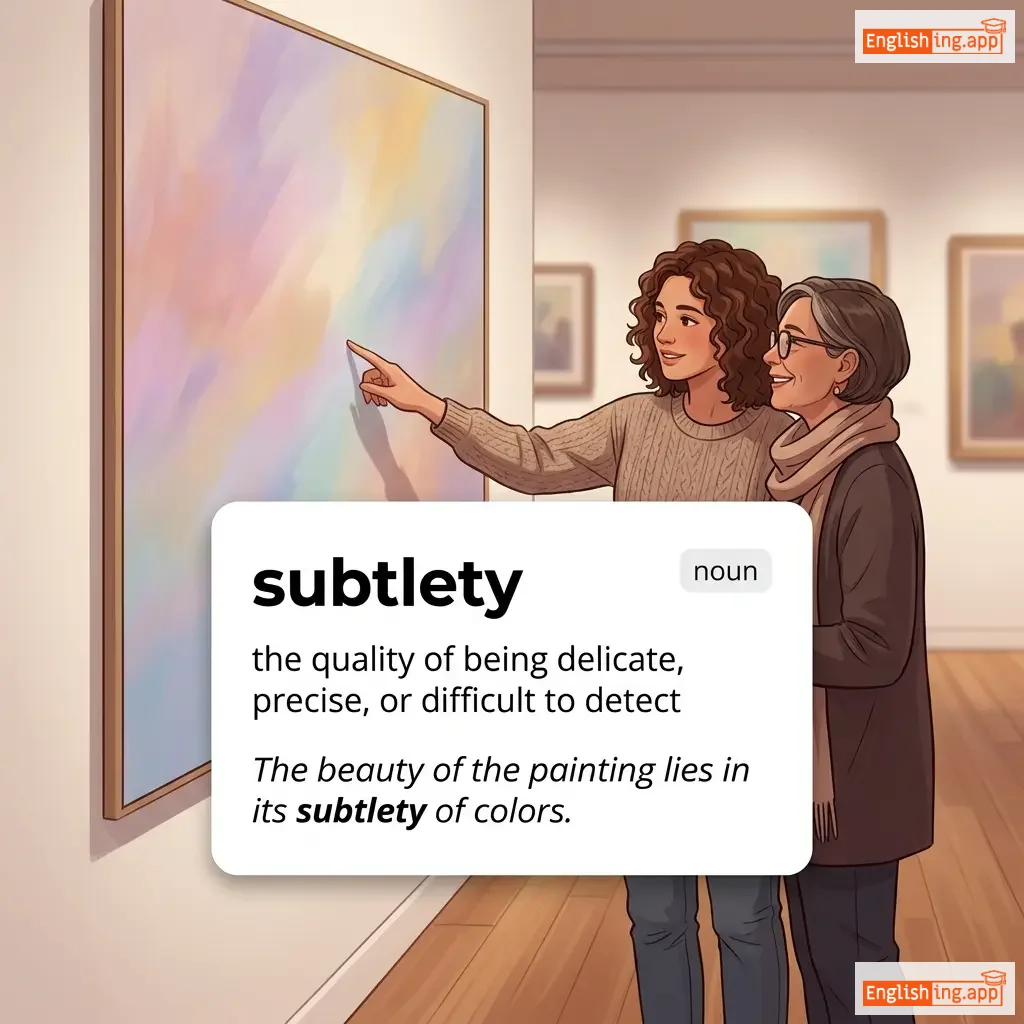
the quality of being delicate, precise, or difficult to detect
••••••
|
The beauty of the painting lies in its subtlety of colors. |
絵の美しさは、その色の微妙さにあります。
E no utsukushisa wa, sono iro no bimyo-sa ni arimasu.
••••••
|
- •••••• | - •••••• | - •••••• |
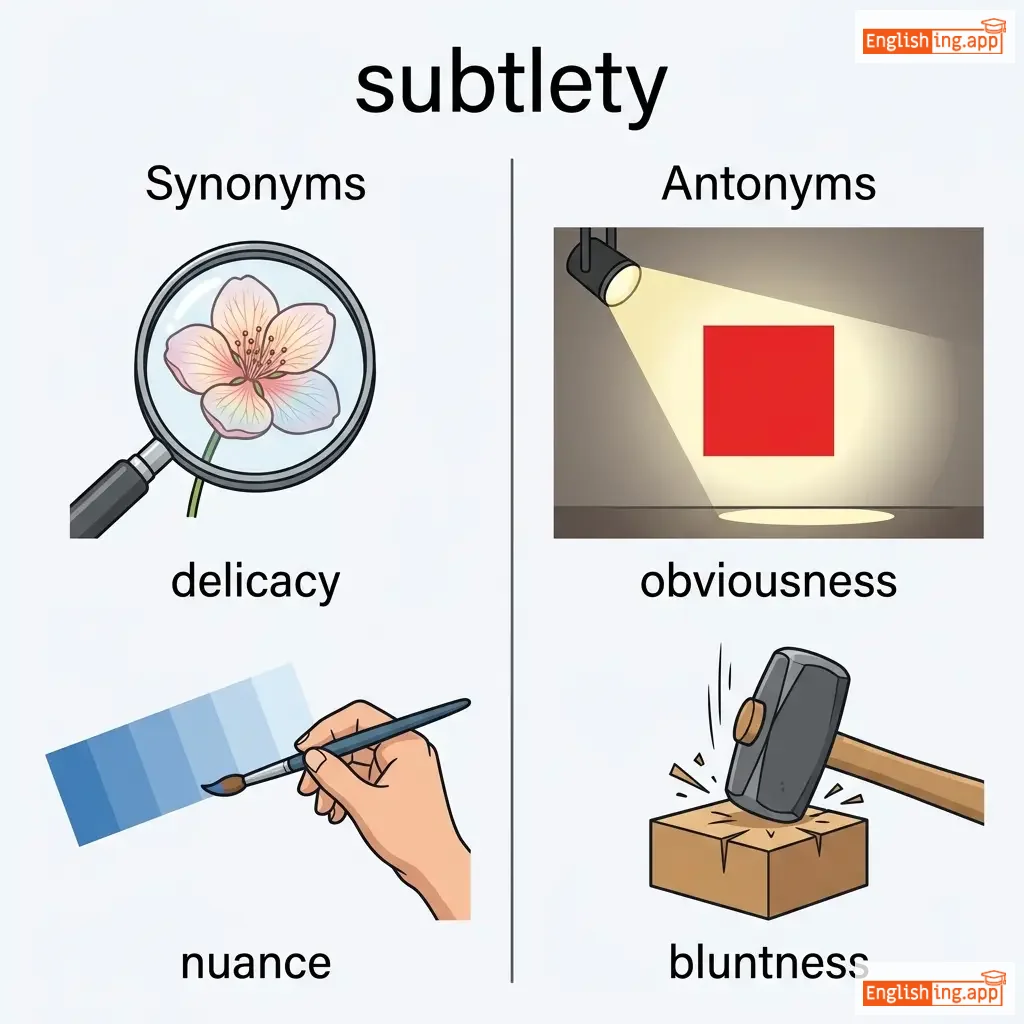
delicacy, nuance, refinement, intricacy
••••••
|
obviousness, bluntness
••••••
|
subtlety of color, subtlety of meaning, artistic subtlety
••••••
|
Subtletyは微妙さを意味します – 何かを微妙に処理する時に使います。
••••••
|
|
#8471
🌫️
|
/ˈsʌtl/
adjective
(サトル)
••••••
|
|
微妙
bimyou
••••••
|
- •••••• | - •••••• | - •••••• | - •••••• |
so delicate or precise as to be difficult to analyze or describe; not obvious
••••••
|
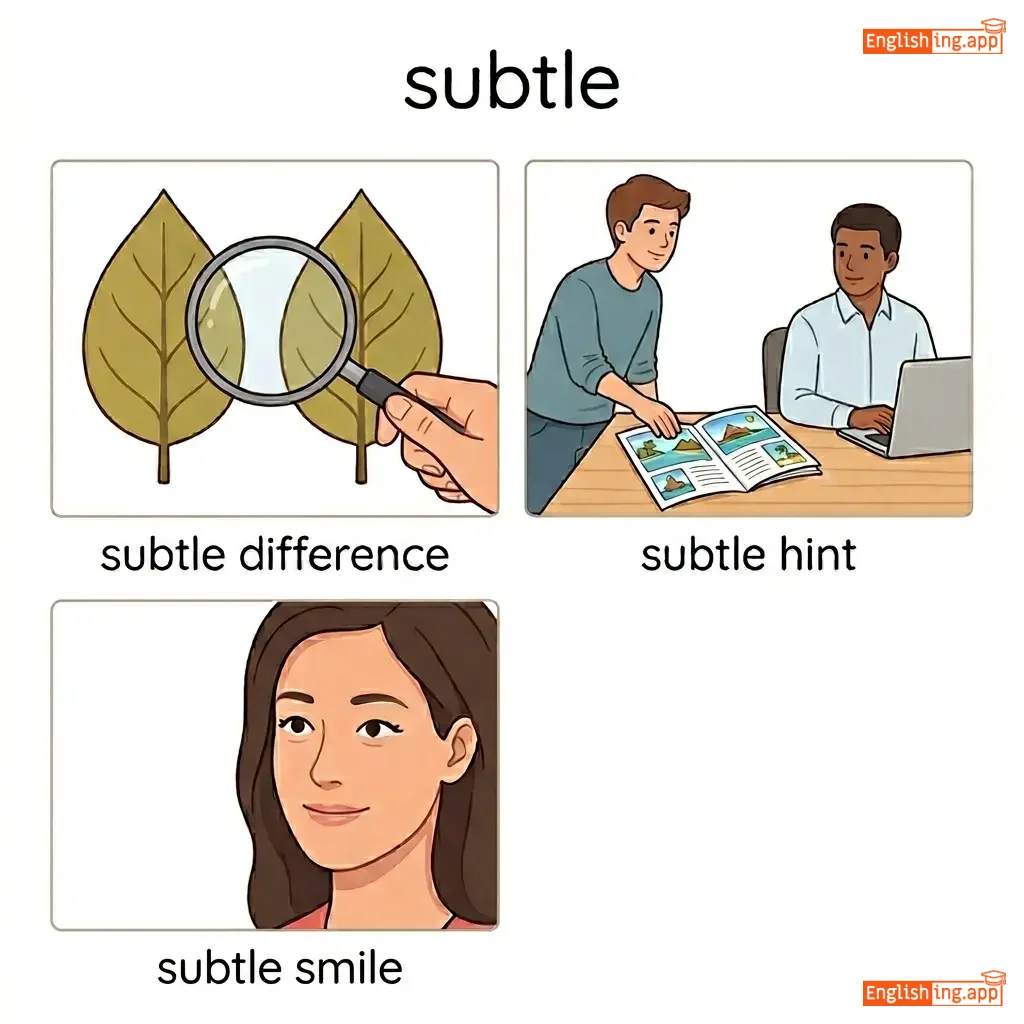
She gave him a subtle smile that hinted at her approval. |
彼女は彼に微妙な笑顔を見せ、彼女の承認をほのめかしました。
Kanojo wa kare ni bimyou na egao o mise, kanojo no shounin o honomekashimashita.
••••••
|
subtle hint |
a very slight or indirect suggestion
••••••
|
微妙なヒント
bimyou na hinto
••••••
|
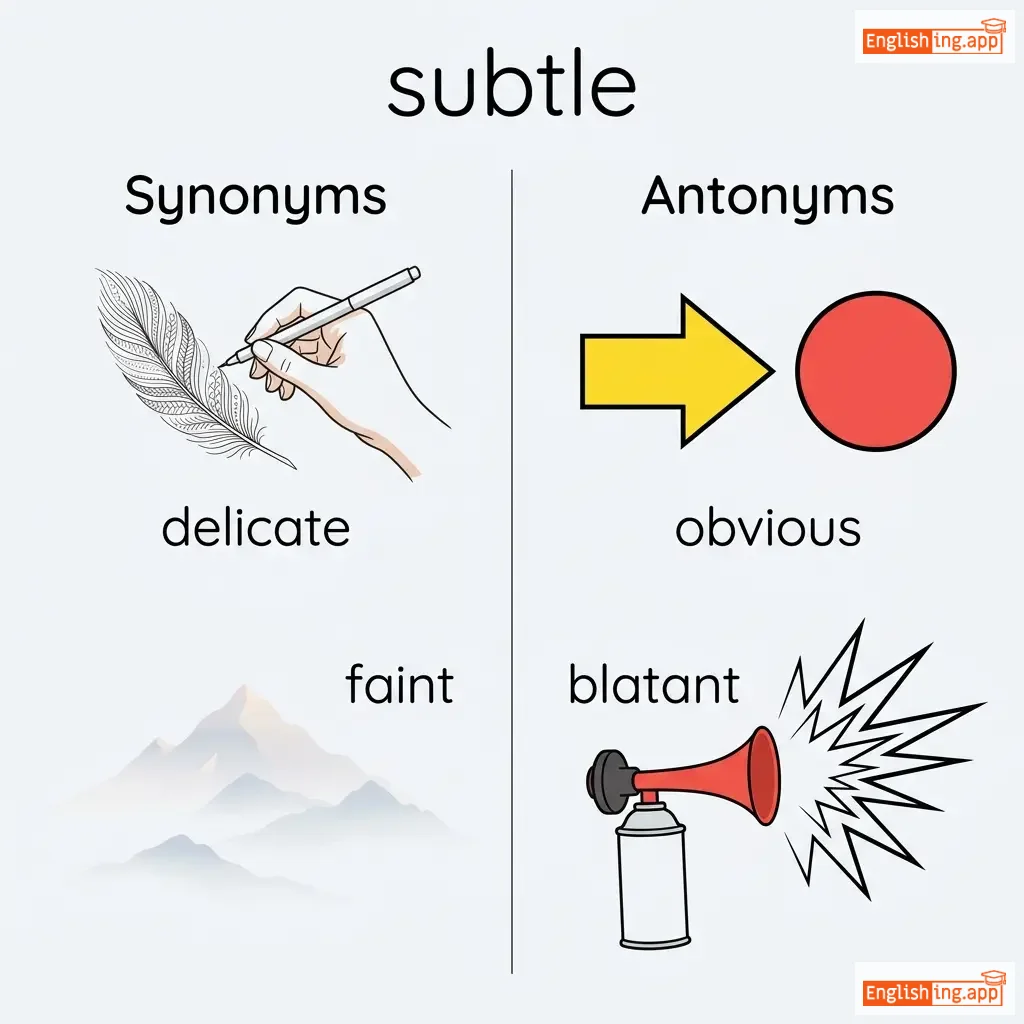
delicate, faint, nuanced, indirect, understated
••••••
|
obvious, blatant, clear
••••••
|
subtle difference, subtle hint, subtle smile, subtle change
••••••
|
微妙は、わずかな差が大きな違いを生むことから来ています。
••••••
|
|
#8472
🌌
|
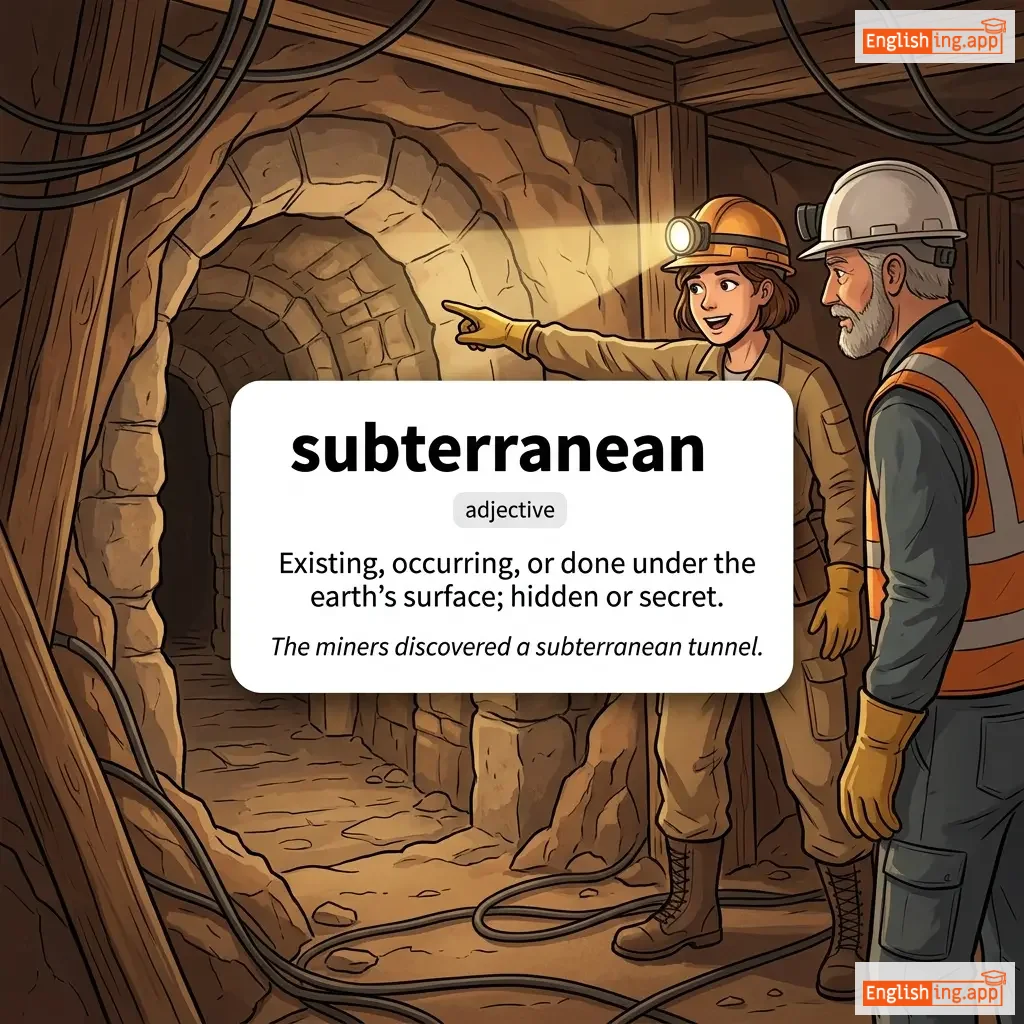
/ˌsʌbtəˈreɪniən/
adjective
(サブテレニアン)
••••••
|
|
地下の
chika no
••••••
|
- •••••• | - •••••• | - •••••• | - •••••• |
Existing, occurring, or done under the earth’s surface; hidden or secret.
••••••
|
The miners discovered a subterranean tunnel. |
鉱夫たちは地下のトンネルを発見しました。
Kōfu-tachi wa chika no tonneru o hakken shimashita.
••••••
|
- •••••• | - •••••• | - •••••• |
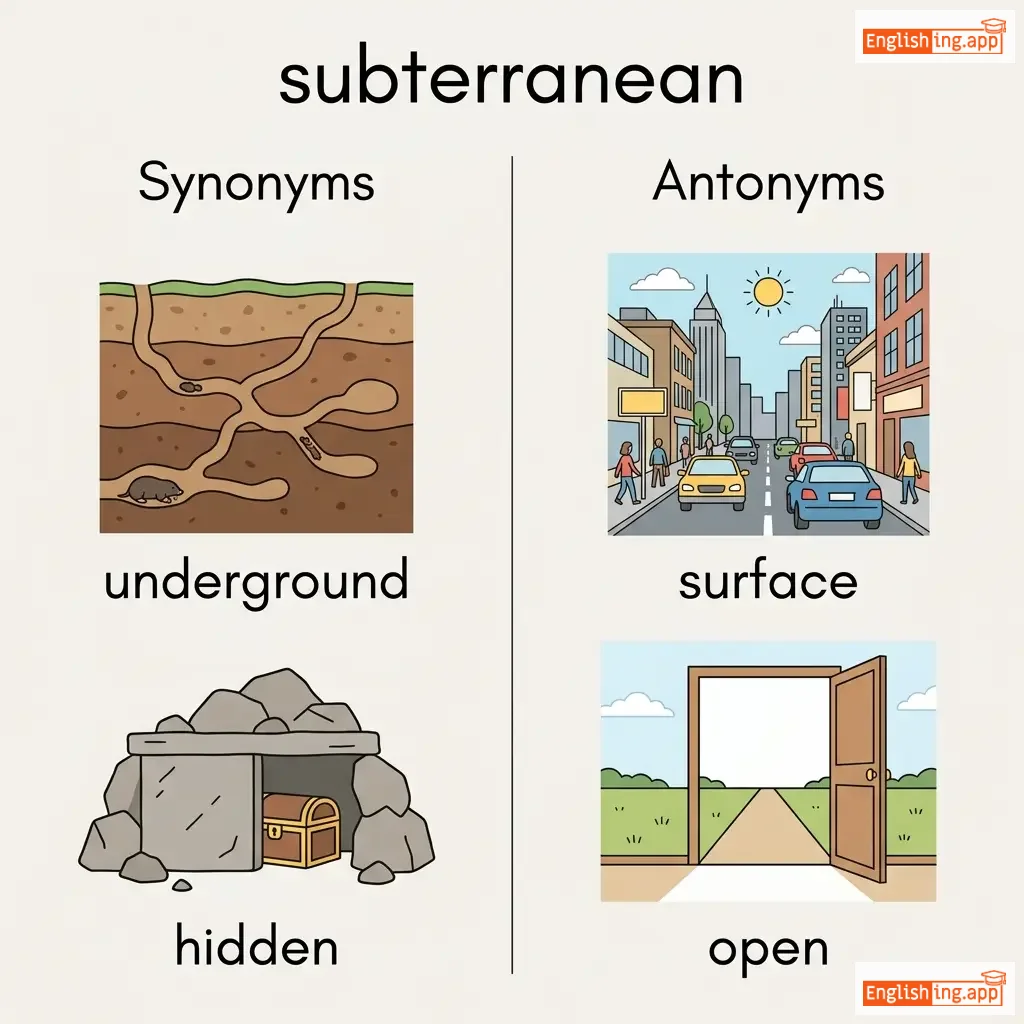
underground, hidden, concealed, secret
••••••
|
surface, open
••••••
|
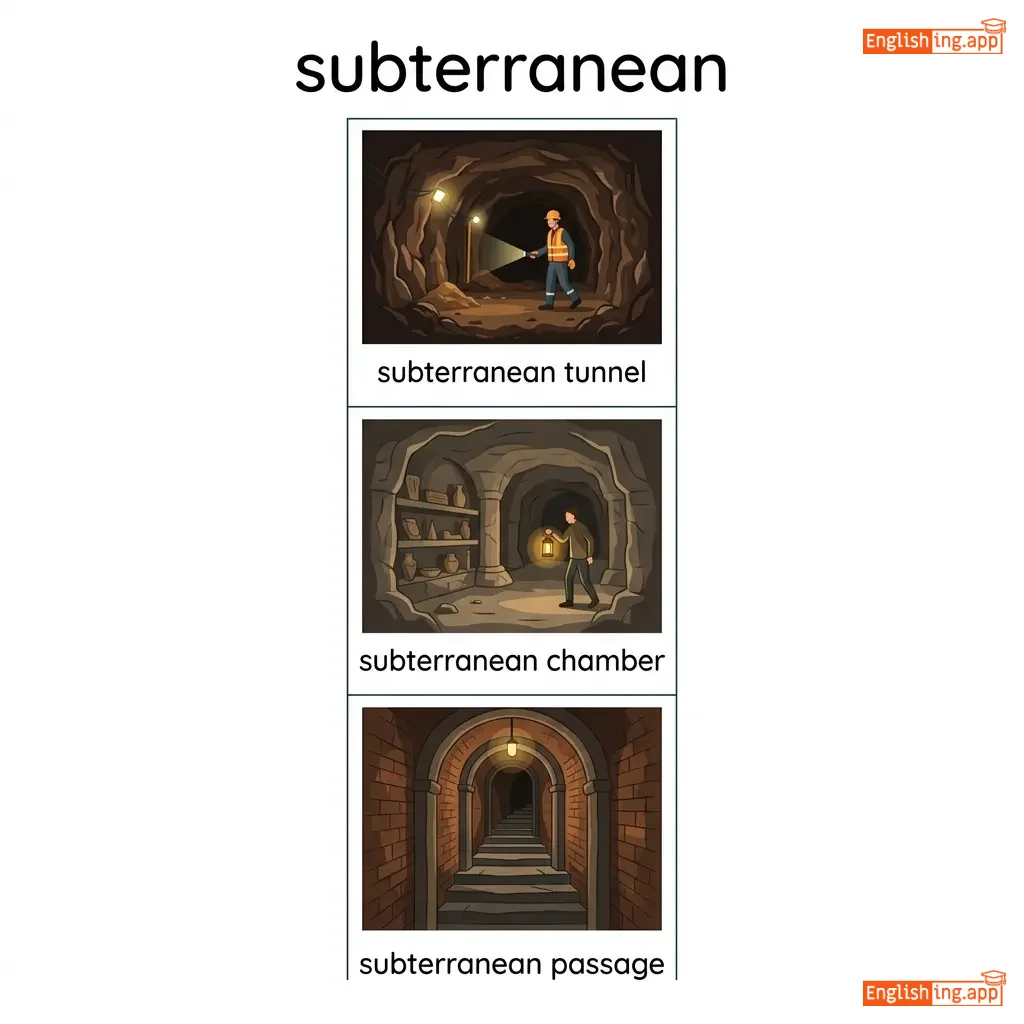
subterranean tunnel, subterranean chamber, subterranean passage
••••••
|
Subterraneanは‘地下の’を意味します。覚えておいて、sub = 下、terrain = 地面。
••••••
|
|
#8473
🕵️
|
/ˈsʌbtərˌfjuːdʒ/
noun
(サブターフュージ)
••••••
|
- •••••• |
策略
saron
••••••
|
- •••••• | - •••••• | - •••••• | - •••••• |
Deceit used to achieve one's goal; a trick or excuse to evade something.
••••••
|
They used subterfuge to avoid paying taxes. |
彼らは税金を回避するために策略を使った。
Karera wa zeikin o kaihi suru tame ni saron o tsukatta.
••••••
|
- •••••• | - •••••• | - •••••• |
trickery, deceit, deception, evasion
••••••
|
honesty, truth
••••••
|
political subterfuge, clever subterfuge, use subterfuge
••••••
|
策略は計画的な隠された方法です。
••••••
|
|
#8474
📐
|
/sʌbˈtɛnd/
verb
(sabtend)
••••••
|
- •••••• |
角度を作る
kakudo o tsukuru
••••••
|
subtended
sabtended
••••••
|
subtended
sabtended
••••••
|
subtends
sabtends
••••••
|
subtending
sabtending
••••••
|
To extend across or form an angle at a particular point, often used in geometry.
••••••
|
The arc subtends a 60-degree angle at the center of the circle.
アークは円の中心で60度の角度を作ります。
••••••
|
アークは円の中心で60度の角度を作ります。
Aaku wa en no chuushin de 60 do no kakudo o tsukurimasu.
••••••
|
- •••••• | - •••••• | - •••••• |
span, stretch, cover, form
••••••
|
shorten, contract
••••••
|
subtend an angle, subtend arc, subtend chord
••••••
|
角度を作るということは角度を形成することです。中心で角度を作るアークを思い浮かべてください。
••••••
|
|
#8475
📑
|
/səbˈmɪtəl/
noun
(サブミットアル)
••••••
|
- •••••• |
提出
teishutsu
••••••
|
- •••••• | - •••••• | - •••••• | - •••••• |
the act of submitting something, especially a document for consideration or approval
••••••
|
The contractor sent the submittal to the client for approval.
請負業者は承認のために提出物を顧客に送信しました。
••••••
|
請負業者は承認のために提出物を顧客に送信しました。
Keiyaku gyōsha wa shōnin no tame ni teishutsumono o kokyaku ni sōshin shimashita.
••••••
|
- •••••• | - •••••• | - •••••• |
submission, presentation, proposal, application
••••••
|
withdrawal, refusal
••••••
|
project submittal, document submittal, submittal process, submittal package
••••••
|
Submittal とは、承認のために何かを提出することです。
••••••
|
|
#8476
📑
|
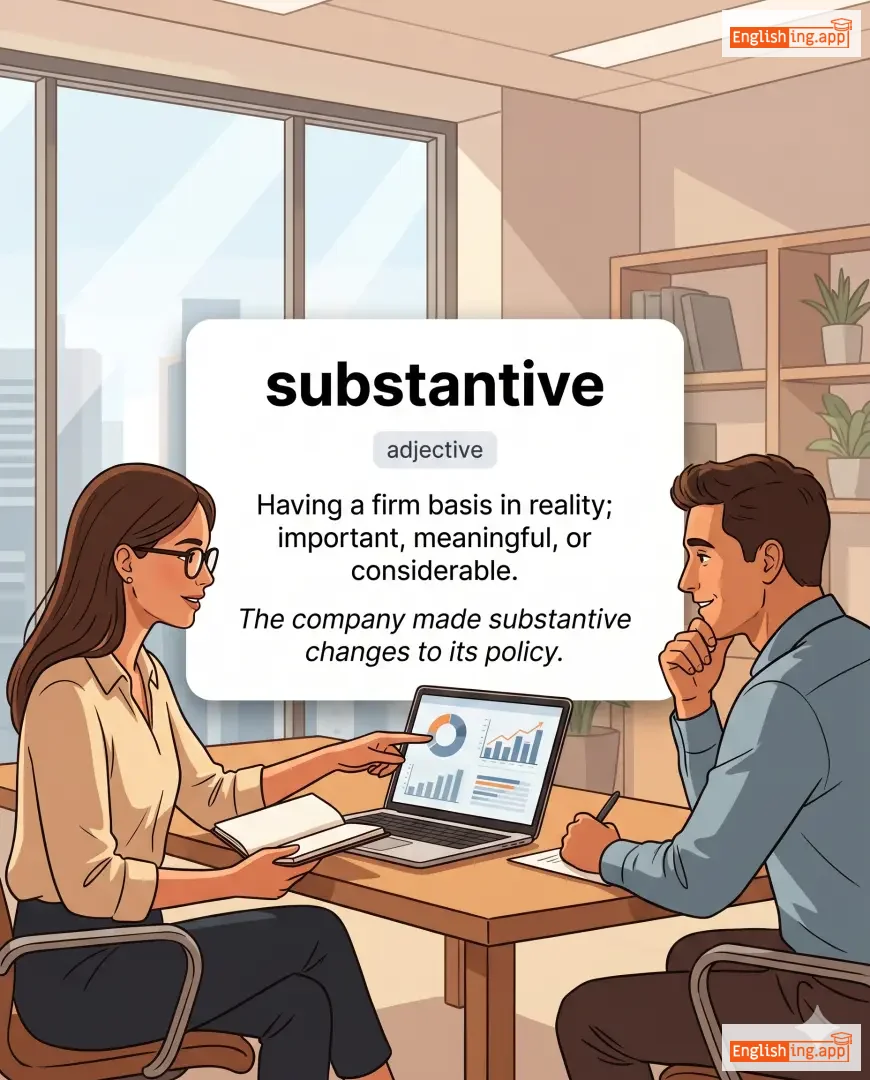
/ˈsʌbstəntɪv/
adjective
(サブスタンティブ)
••••••
|
|
重要
jūyō
••••••
|
- •••••• | - •••••• | - •••••• | - •••••• |
Having a firm basis in reality; important, meaningful, or considerable.
••••••
|
The company made substantive changes to its policy.
会社はその方針に実質的な変更を加えました。
••••••
|
会社はその方針に重要な変更を加えました。
Kaisha wa sono hōshin ni jūyō na henkō o kuwaemashita.
••••••
|
substantive evidence
実質的証拠
••••••
|
Important or meaningful proof that supports a claim
••••••
|
重要証拠
jūyō shōko
••••••
|
significant, important, considerable, meaningful, essential
••••••
|
trivial, minor, insignificant
••••••
|
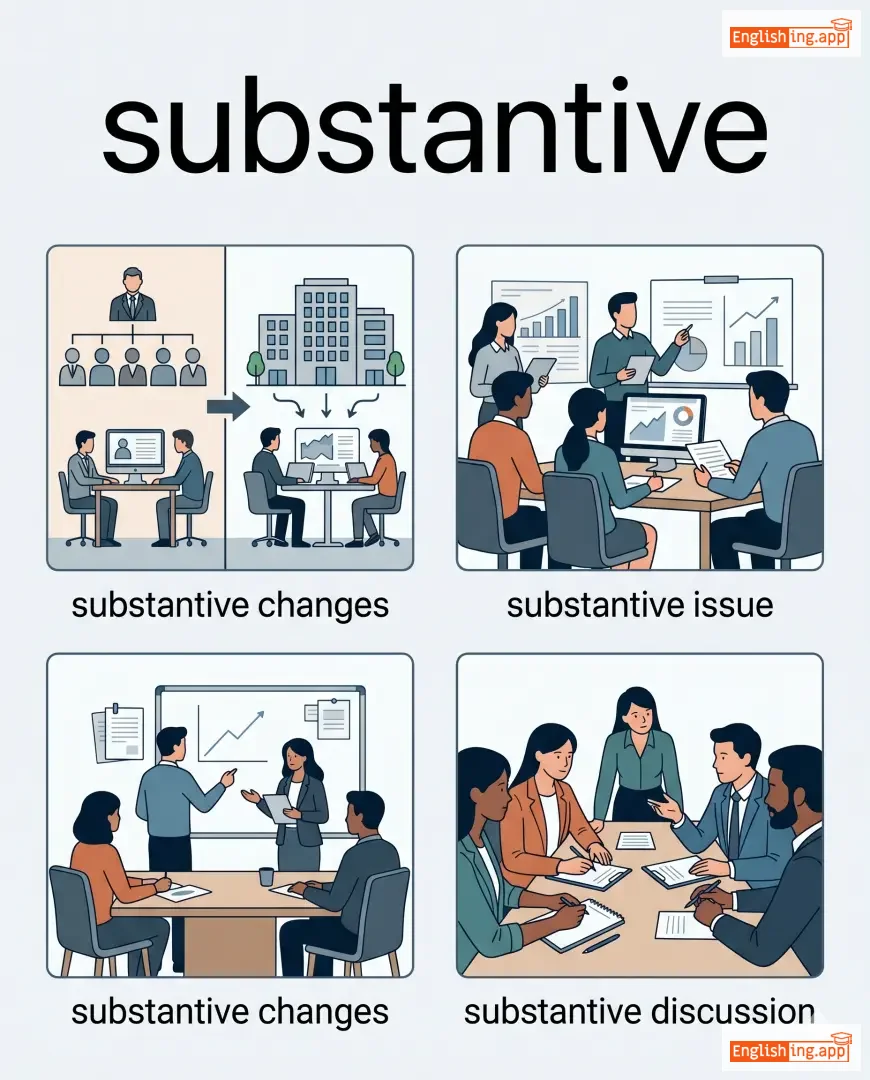
substantive changes, substantive issue, substantive discussion, substantive evidence
••••••
|
Substantive は重要を意味します—‘重要な’。覚えておいてください、実質的証拠は強い証拠です。
••••••
|
|
#8477
⚖️
|
/səbˈstænʃieɪt/
verb
(サブスタンシエイト)
••••••
|
|
立証する
ricchou suru
••••••
|
substantiated
サブスタンシエイテッド
••••••
|
substantiated
サブスタンシエイテッド
••••••
|
substantiates
サブスタンシエイツ
••••••
|
substantiating
サブスタンシエイティング
••••••
|
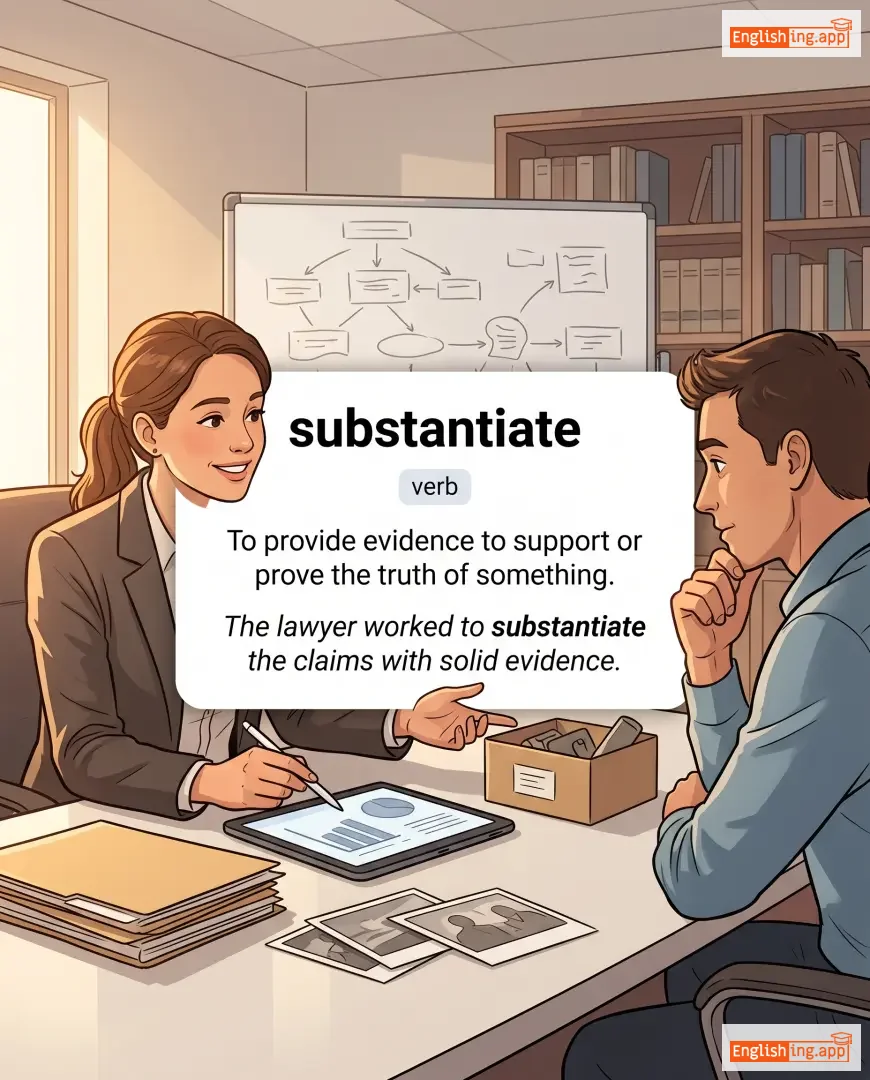
To provide evidence to support or prove the truth of something.
••••••
|
The lawyer worked to substantiate the claims with solid evidence.
弁護士は確かな証拠でその主張を立証しようとしました。
••••••
|
弁護士は確かな証拠でその主張を立証しようとしました。
Bengoshi wa tashikana shōko de sono shuchō o risshō shiyou to shimashita.
••••••
|
- •••••• | - •••••• | - •••••• |
prove, validate, confirm, support, demonstrate
••••••
|
disprove, refute, contradict
••••••
|
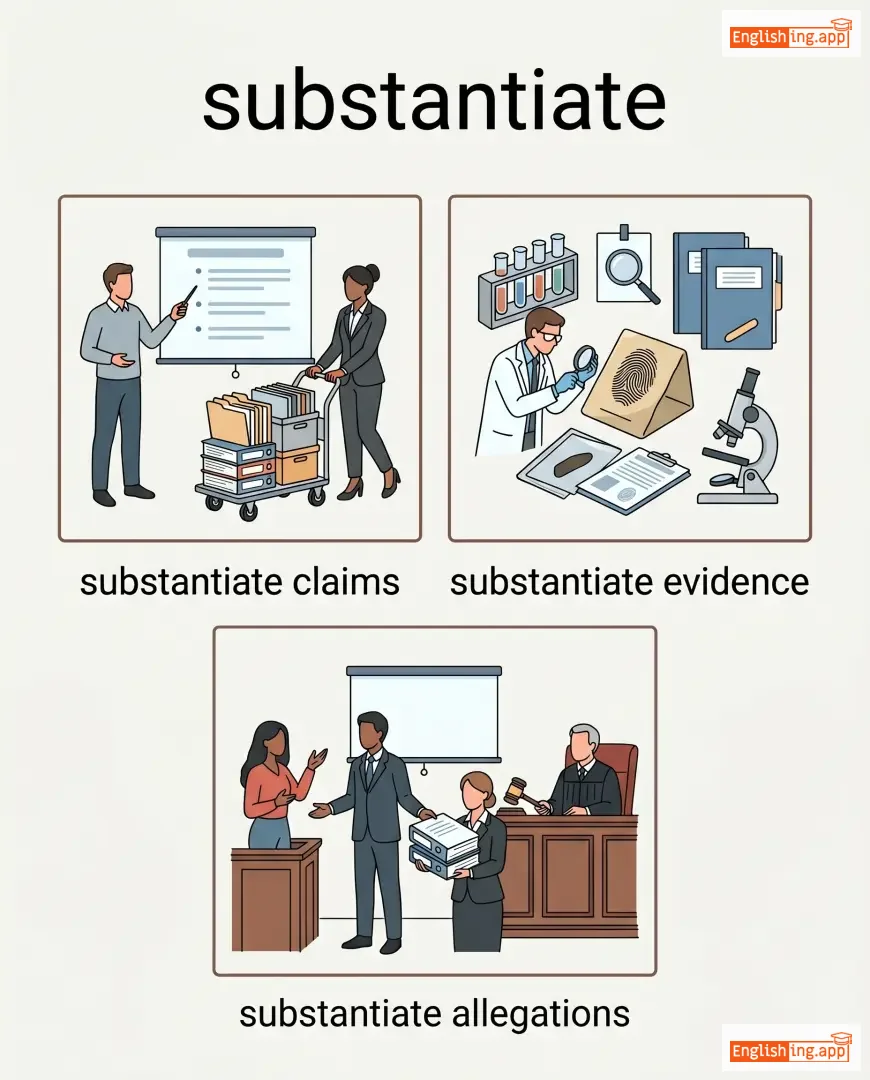
substantiate claims, substantiate evidence, substantiate allegations, substantiate argument
••••••
|
Substance (substance) は何かを立証するために役立つ。
••••••
|
|
#8478
📈
|
/səbˈstænʃl/
adjective
(サブスタンシャル)
••••••
|
- •••••• |
実質的な
jisshitsuteki na
••••••
|
- •••••• | - •••••• | - •••••• | - •••••• |
Of considerable importance, size, or worth.
••••••
|
She received a substantial raise after the successful project.
彼女は成功したプロジェクト後にかなりの昇給を受けました。
••••••
|
彼女は成功したプロジェクト後にかなりの昇給を受けました。
Kanojo wa seikō shita purojekuto go ni kanari no shōkyū o ukemashita.
••••••
|
- •••••• | - •••••• | - •••••• |
considerable, significant, large, major, meaningful
••••••
|
insignificant, trivial, minor
••••••
|
substantial amount, substantial evidence, substantial increase, substantial progress
••••••
|
Substantialは物質があるという意味で、重要で大きなものを示しています。
••••••
|
|
#8479
🌾
|
/səbˈsɪstəns/
noun
(サブスィステンス)
••••••
|
|
生計
seikei
••••••
|
- •••••• | - •••••• | - •••••• | - •••••• |
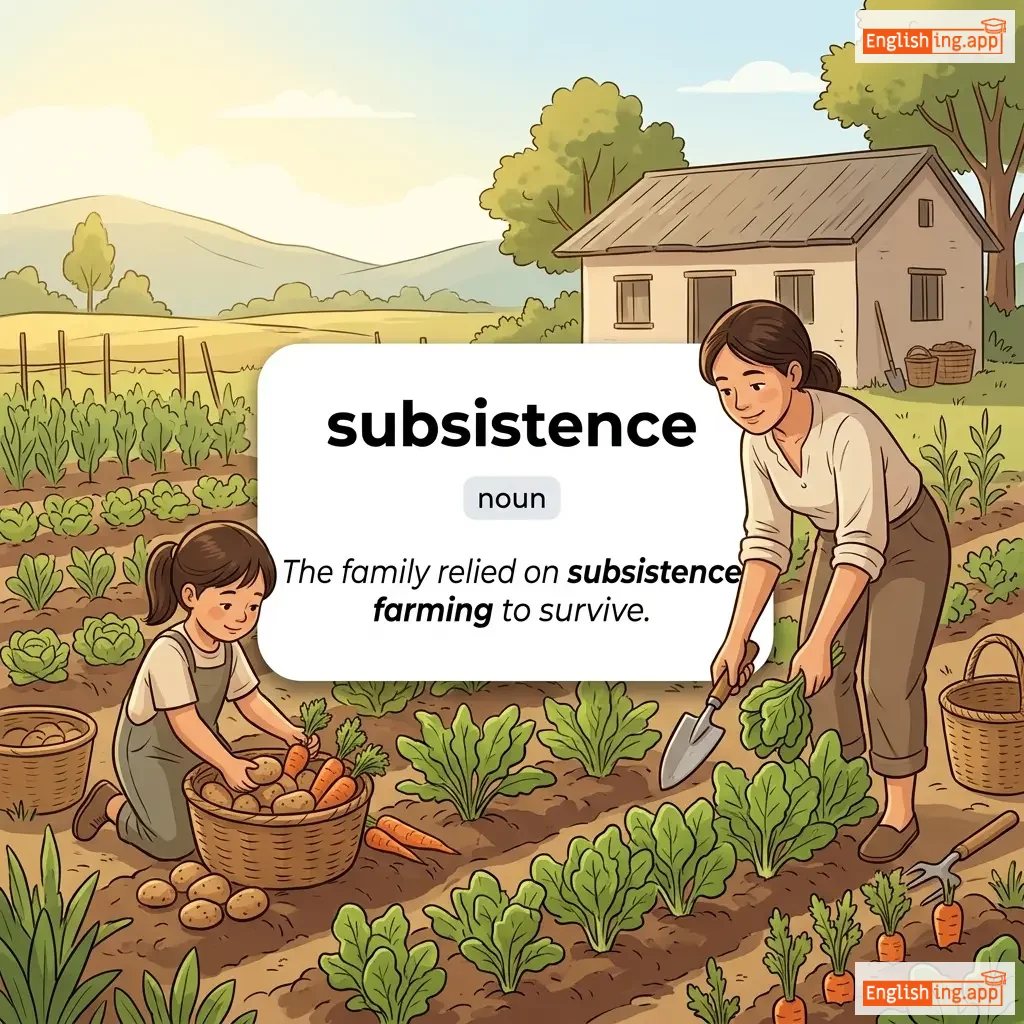
The action or fact of maintaining or supporting oneself, especially at a minimal level.
••••••
|
The family relied on subsistence farming to survive. |
その家族は生計農業に依存して生きていました。
Sono kazoku wa seikei nōgyō ni izon shite ikiteimashita.
••••••
|
subsistence level |
the minimum means needed to maintain life
••••••
|
生計レベル
seikei reberu
••••••
|
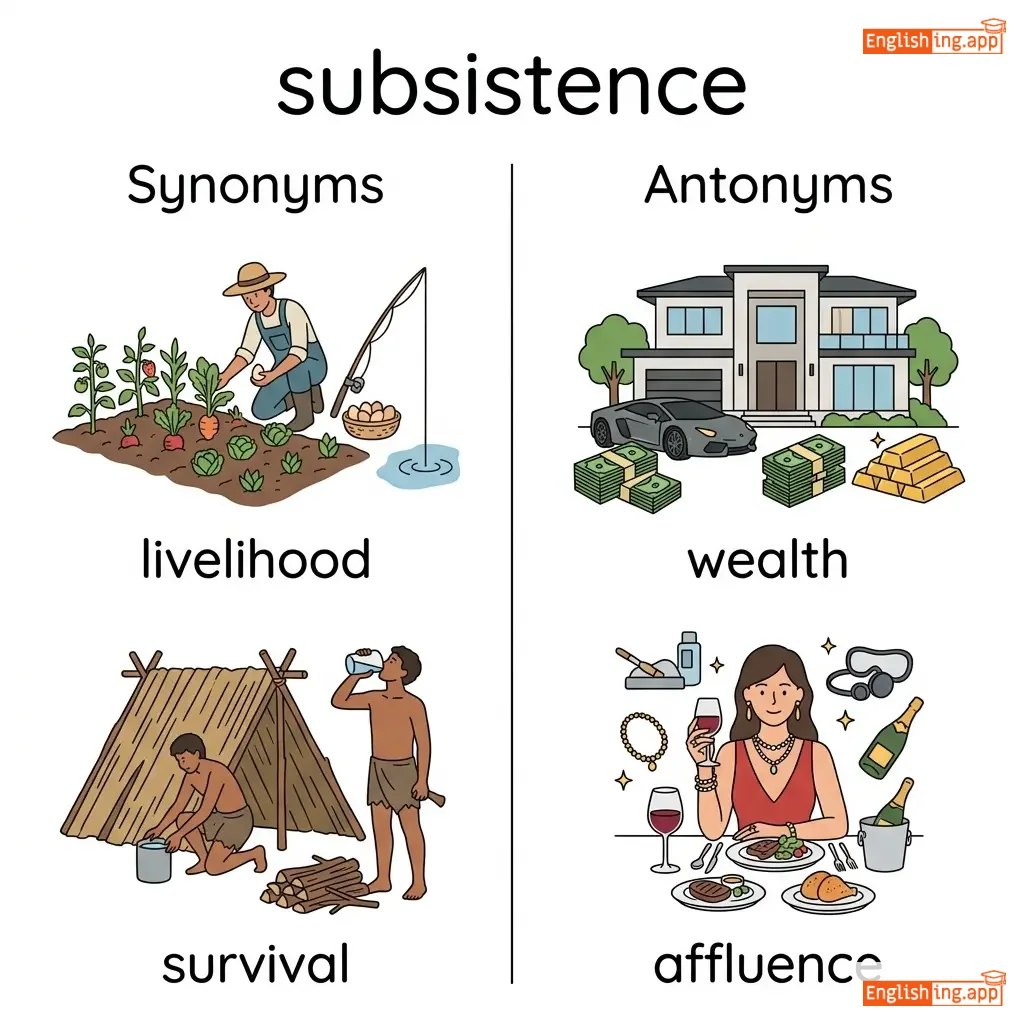
livelihood, survival, sustenance, existence
••••••
|
wealth, affluence
••••••
|
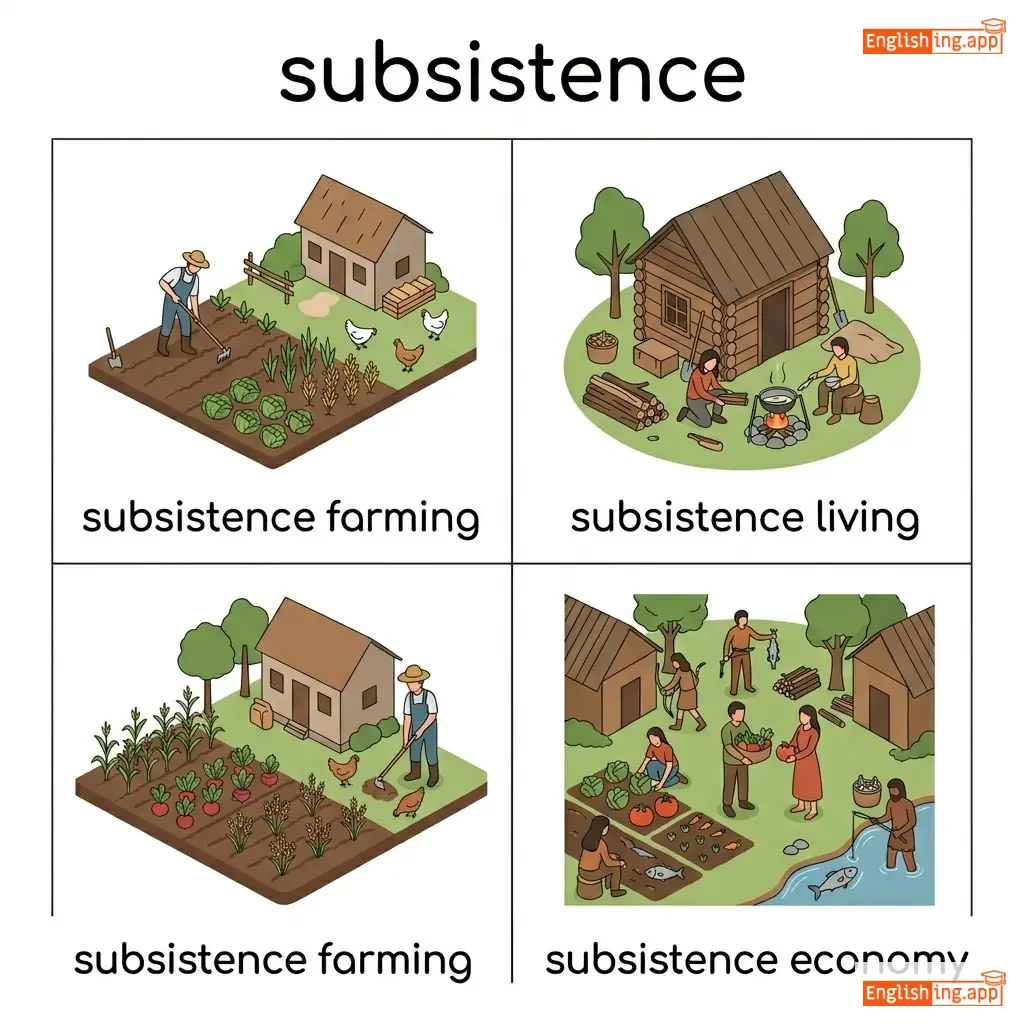
subsistence farming, subsistence living, subsistence economy, minimum subsistence
••••••
|
Subsistence farming は生きるために最も基本的な農業です。
••••••
|
|
#8480
🍞
|
/səbˈsɪst/
verb
(サブシスト)
••••••
|
- •••••• |
生き延びる
ikinobiru
••••••
|
subsisted
サブシステッド
••••••
|
subsisted
サブシステッド
••••••
|
subsists
サブシッツ
••••••
|
subsisting
サブシスティング
••••••
|
To maintain or support oneself, especially at a minimal level.
••••••
|
Many villagers still subsist on fishing and farming.
Many villagers still subsist on fishing and farming.
••••••
|
多くの村人は今でも漁業と農業で生計を立てています。
Ooku no murabito wa imademo gyogyou to nougyou de sekei o tateteimasu.
••••••
|
subsist on
subsist on
••••••
|
to survive or live on something as a means of support
••••••
|
〜で生計を立てる
〜de sekei o tateru
••••••
|
survive, exist, endure, live, persist
••••••
|
perish, die
••••••
|
subsist on food, subsist on farming, subsist on charity, subsist barely
••••••
|
subsistはsub-eat、少し食べて生き延びる。
••••••
|
|
#8481
💰
|
/ˈsʌbsɪdi/
noun
(サブシディ)
••••••
|
|
助成金
joseikin
••••••
|
- •••••• | - •••••• | - •••••• | - •••••• |
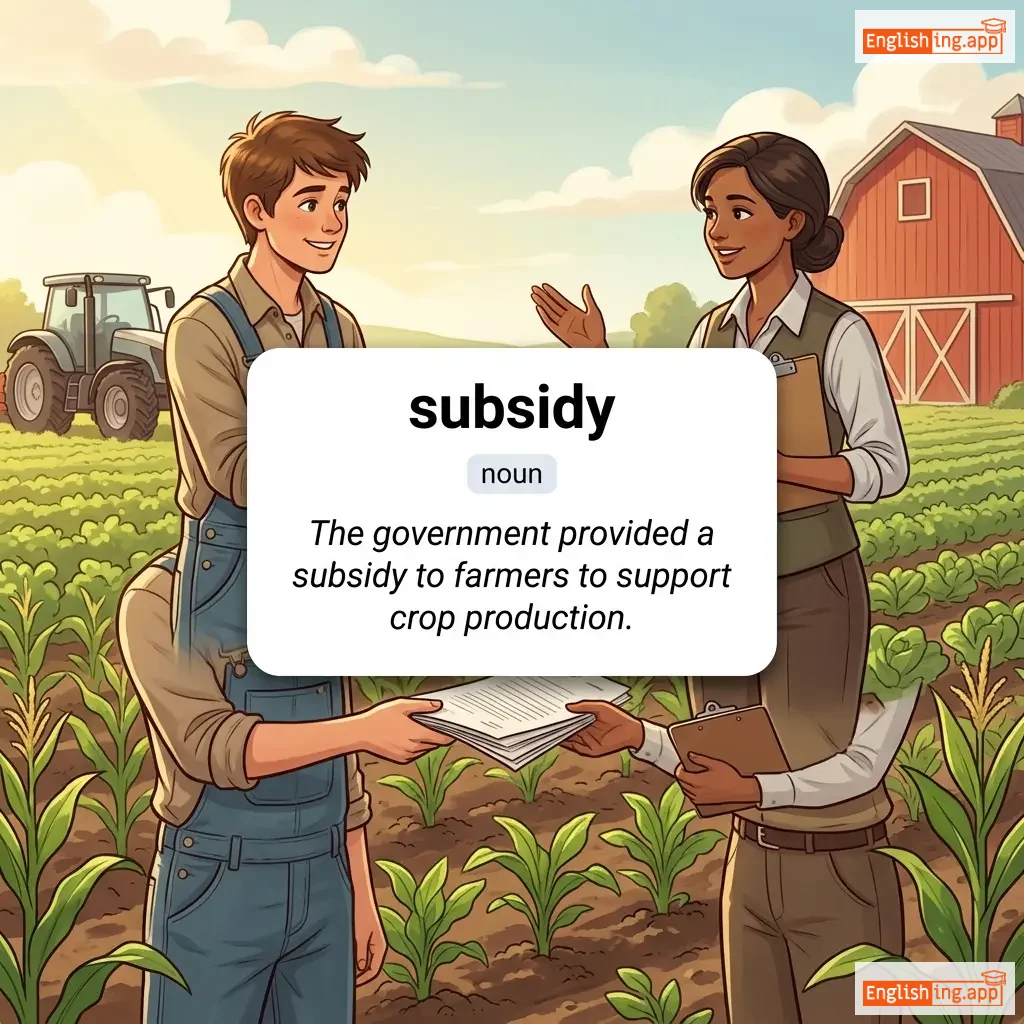
A sum of money granted by the government or a public body to help support an industry or reduce the cost of goods or services.
••••••
|
The government provided a subsidy to farmers to support crop production. |
政府は作物生産を支援するために農民に助成金を提供しました。
Seifu wa sakumotsu seisan o shien suru tame ni nōmin ni joseikin o teikyō shimashita.
••••••
|
- •••••• | - •••••• | - •••••• |
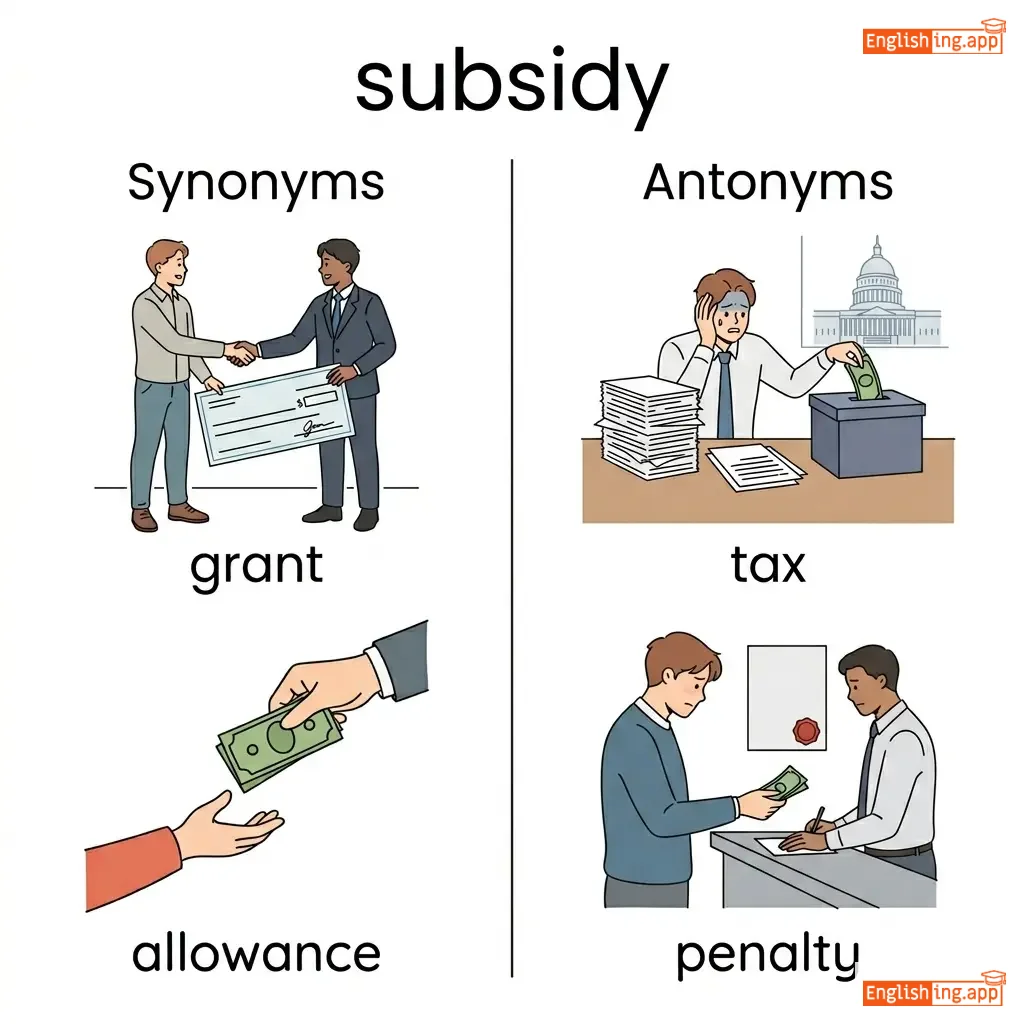
grant, allowance, financial aid, support, assistance
••••••
|
tax, penalty, surcharge
••••••
|
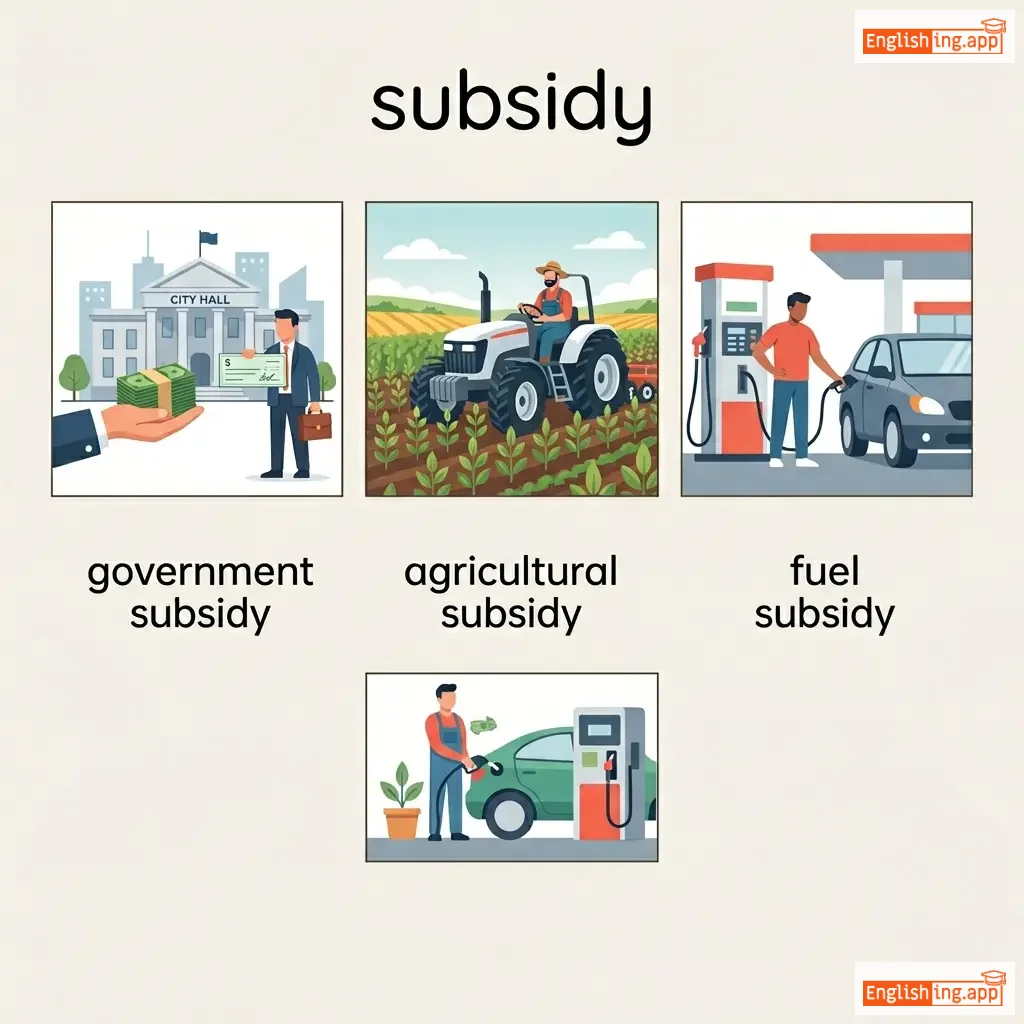
government subsidy, agricultural subsidy, fuel subsidy, receive subsidy
••••••
|
助成金は、政府が農業などにお金を与えて支援するものです。
••••••
|
|
#8482
🏢
|
/səbˈsɪdiˌɛri/
noun, adjective
(サブシディアリ)
••••••
|
- •••••• |
子会社
kogaisya
••••••
|
- •••••• | - •••••• | - •••••• | - •••••• |
a company controlled by a larger company; serving to assist or supplement something
••••••
|
The multinational owns a subsidiary in Bangladesh. |
多国籍企業はバングラデシュに子会社を所有しています。
Takokuseki kigyō wa Banguradeshū ni kogaisya o shoyū shiteimasu.
••••••
|
- •••••• | - •••••• | - •••••• |
branch, division, affiliate, subordinate, auxiliary
••••••
|
parent company, main, primary
••••••
|
subsidiary company, wholly-owned subsidiary, establish subsidiary, subsidiary role
••••••
|
子会社は大きな会社の下で、補助的な役割を果たします。
••••••
|
|
#8483
🌊
|
/səbˈsaɪd/
verb
(サブサイド)
••••••
|
|
収束する
shūsoku suru
••••••
|
subsided
サブサイデッド
••••••
|
subsided
サブサイデッド
••••••
|
subsides
サブサイダス
••••••
|
subsiding
サブサイディング
••••••
|
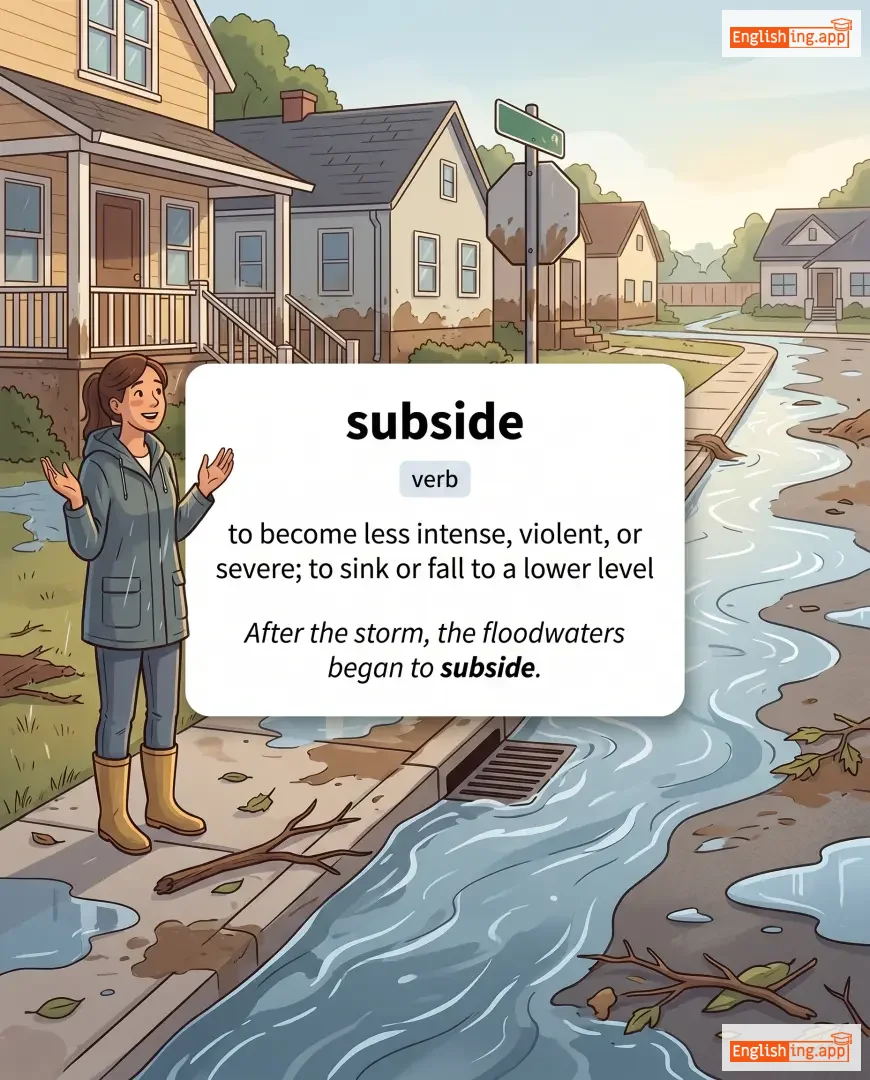
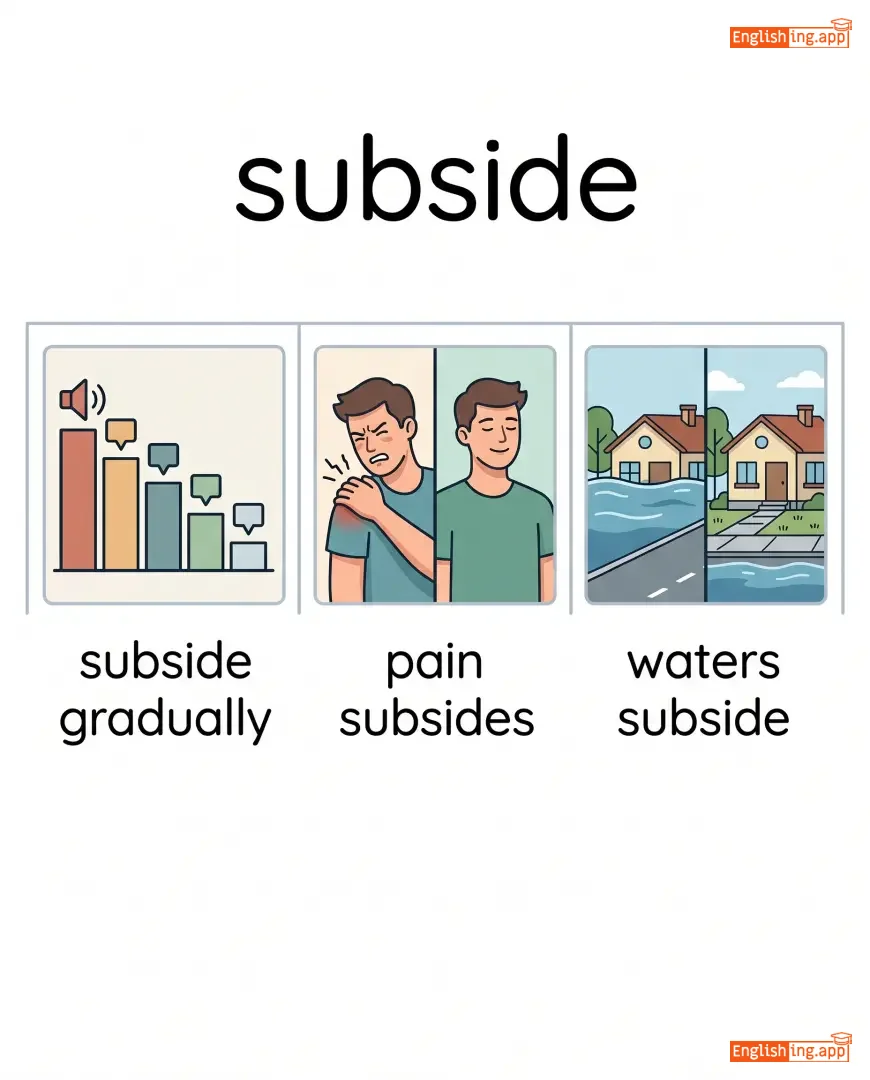
to become less intense, violent, or severe; to sink or fall to a lower level
••••••
|
After the storm, the floodwaters began to subside.
嵐の後、洪水は収束し始めました。
••••••
|
嵐の後、洪水は収束し始めました。
arashi no ato, kōzui wa shūsoku shi hajimemashita.
••••••
|
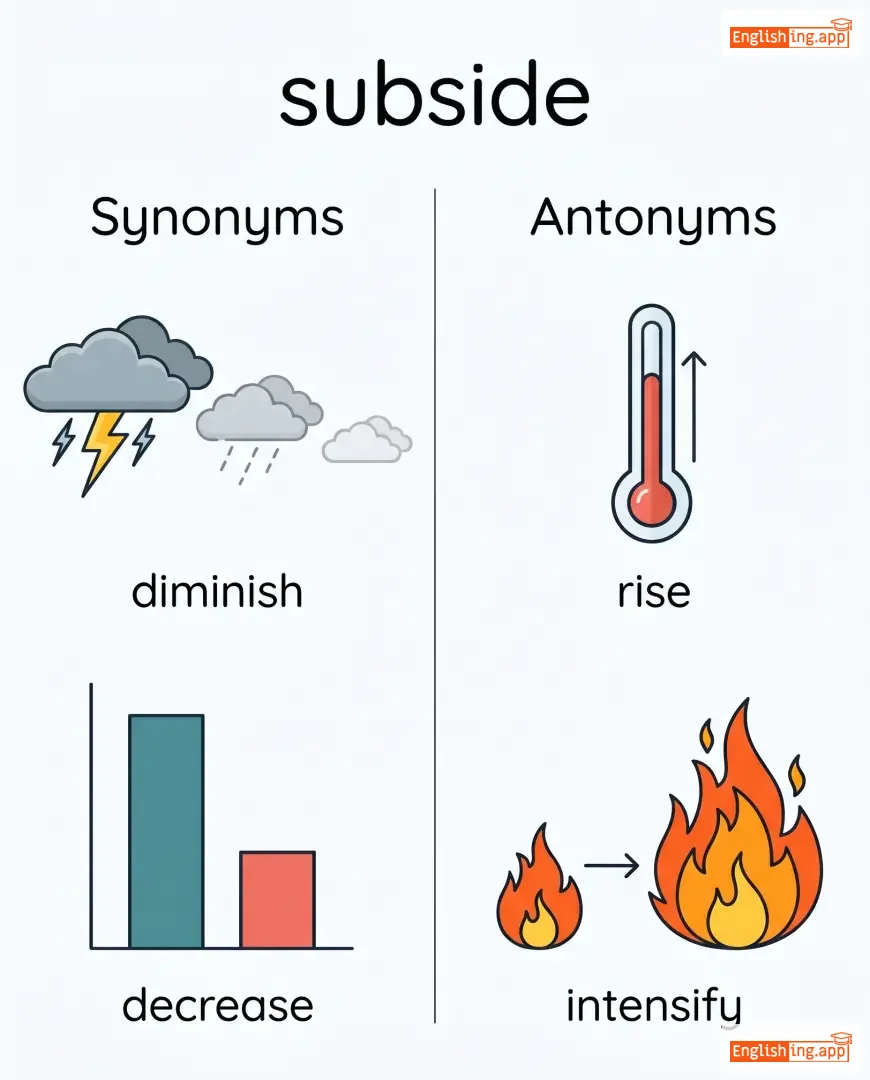
- •••••• | - •••••• | - •••••• |
diminish, decrease, abate, recede, lessen
••••••
|
rise, intensify, increase
••••••
|
subside gradually, pain subsides, waters subside, anger subsides
••••••
|
Subsideは水位が下がること、嵐が収まるようなものです。
••••••
|
|
#8484
🙇
|
/səbˈsɜːviənt/
adjective
••••••
|
- •••••• | - •••••• | - •••••• | - •••••• | - •••••• | - •••••• |
prepared to obey others unquestioningly; less important than something else
••••••
|
She was too subservient to challenge his decision. |
- •••••• | - •••••• | - •••••• | - •••••• |
obedient, submissive, compliant, deferential
••••••
|
assertive, defiant, independent
••••••
|
subservient role, subservient position, remain subservient, too subservient
••••••
|
No •••••• |
|
#8485
🙏
|
/səbˈsɜːviəns/
noun
(サブサービエンス)
••••••
|
- •••••• |
従順
juujun
••••••
|
- •••••• | - •••••• | - •••••• | - •••••• |
the condition of being too willing to obey or serve others
••••••
|
His subservience to authority annoyed his colleagues.
His subservience to authority annoyed his colleagues.
••••••
|
権威への従順さが同僚たちを苛立たせた。
Ken'i e no juujun-sa ga douryou-tachi o iradataseta.
••••••
|
- •••••• | - •••••• | - •••••• |
obedience, compliance, servility, submission, deference
••••••
|
rebellion, resistance, defiance
••••••
|
blind subservience, show subservience, subservience to authority, display subservience
••••••
|
Subservience - SUB service - 常に他人に仕える準備ができている、従順。
••••••
|
|
#8486
➡️
|
/ˈsʌbsɪkwənt/
adjective
(サブスィクウェント)
••••••
|
|
その後の
sono ato no
••••••
|
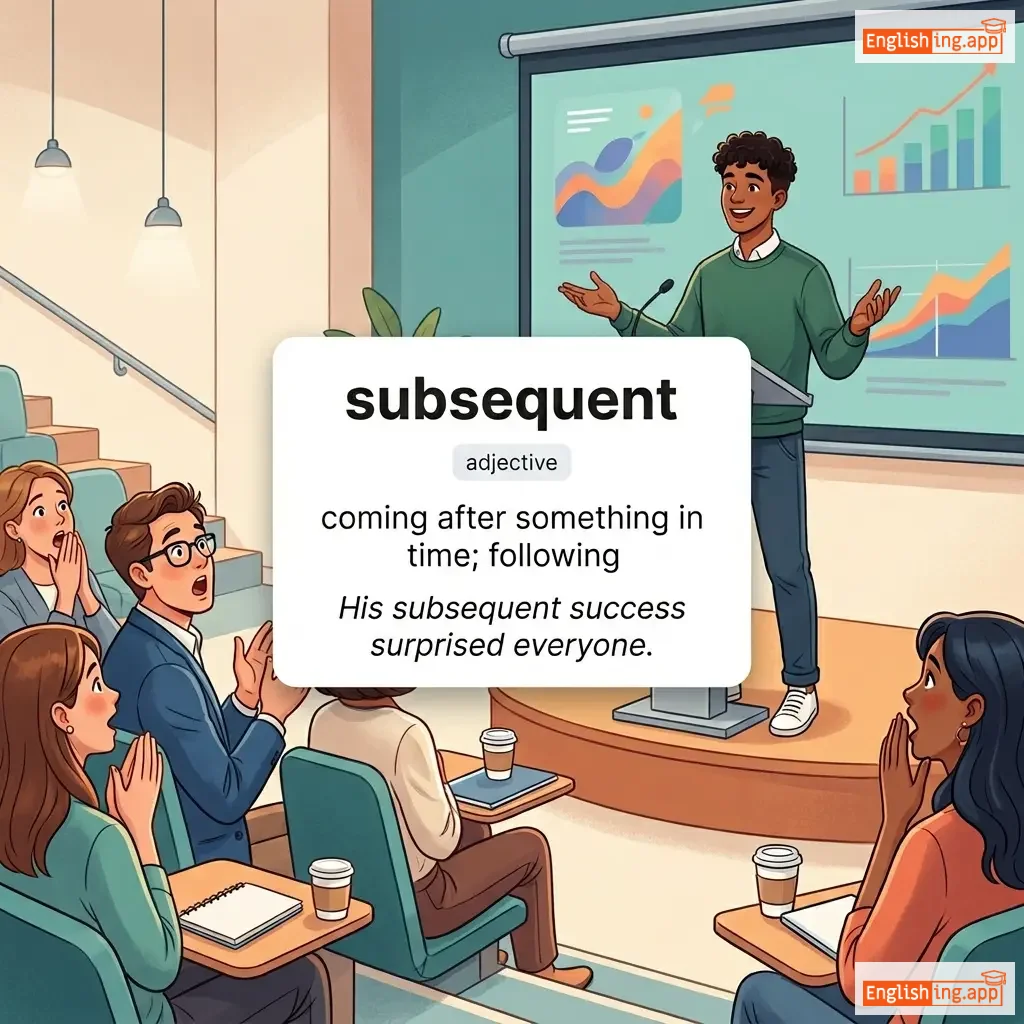
- •••••• | - •••••• | - •••••• | - •••••• |
coming after something in time; following
••••••
|
His subsequent success surprised everyone. |
彼のその後の成功は、皆を驚かせました。
Kare no sono ato no seikou wa, mina o odoro kasemashita.
••••••
|
subsequent to |
happening or coming after something
••••••
|
その後の
sono ato no
••••••
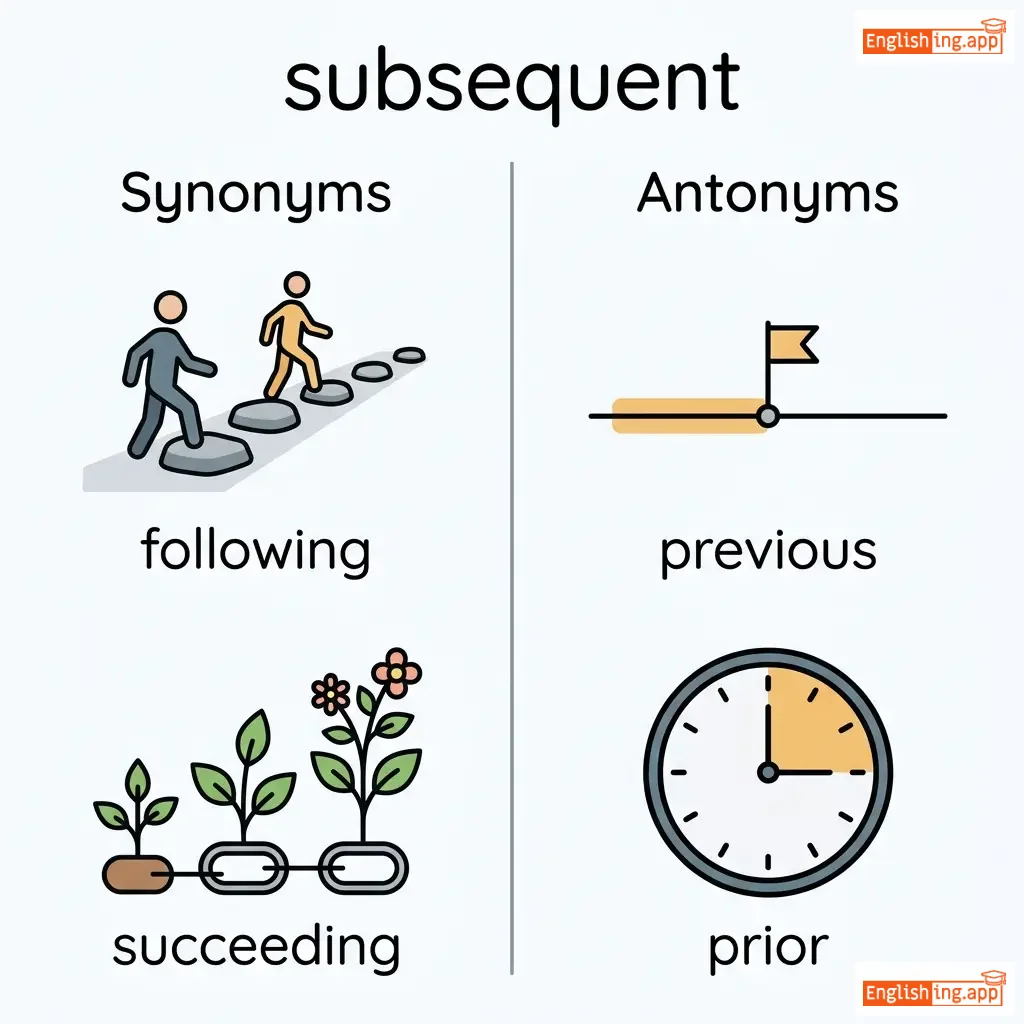
|
following, succeeding, later, ensuing, successive
••••••
|
previous, prior, former
••••••
|
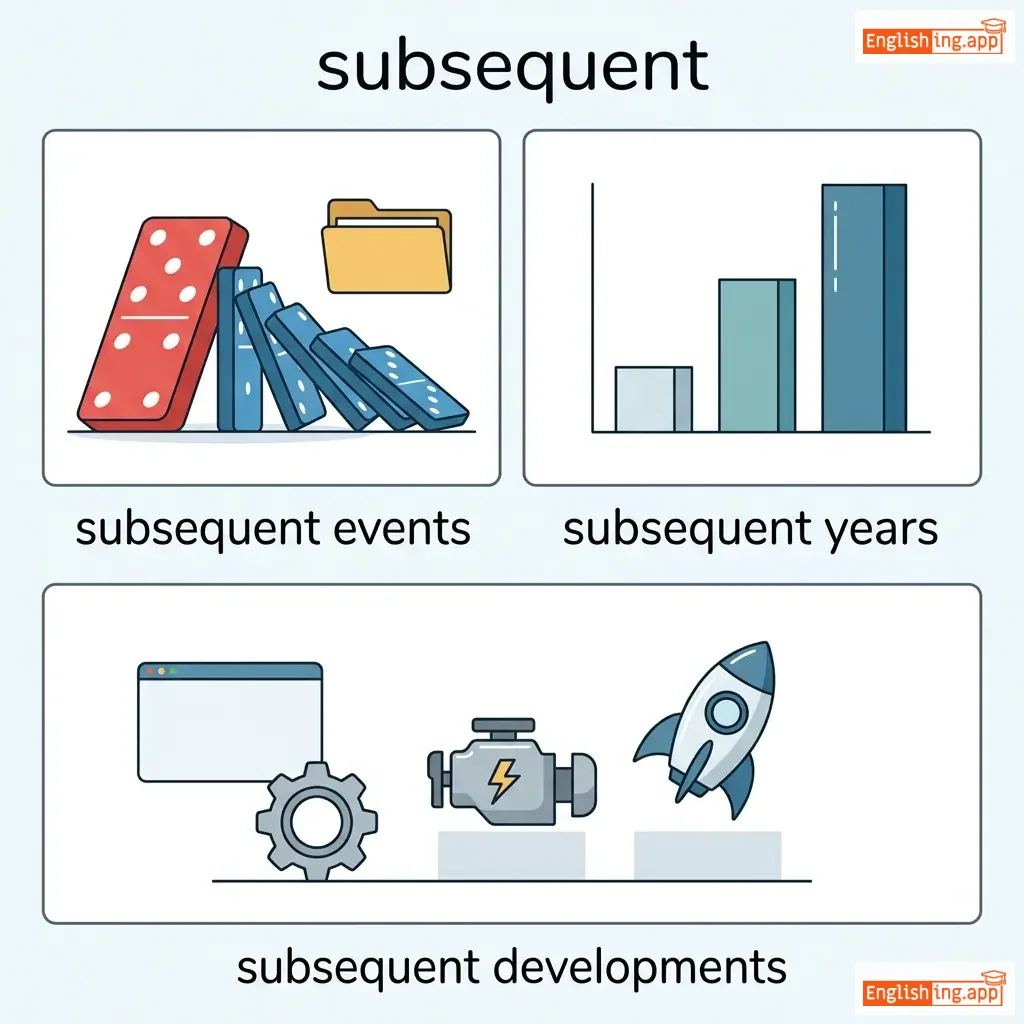
subsequent events, subsequent years, subsequent developments, subsequent changes
••••••
|
Subsequent とは何かの後に続くこと、だから「その後の」。
••••••
|
|
#8487
📜
|
/səˈpiːnə/
noun, verb
(サブピーナ)
••••••
|
|
召喚状
shokanjo
••••••
|
subpoenaed
サブピーナド
••••••
|
subpoenaed
サブピーナド
••••••
|
subpoenas
サブピーネス
••••••
|
subpoenaing
サブピーニング
••••••
|
a legal document ordering someone to attend court; to summon someone with such a document
••••••
|
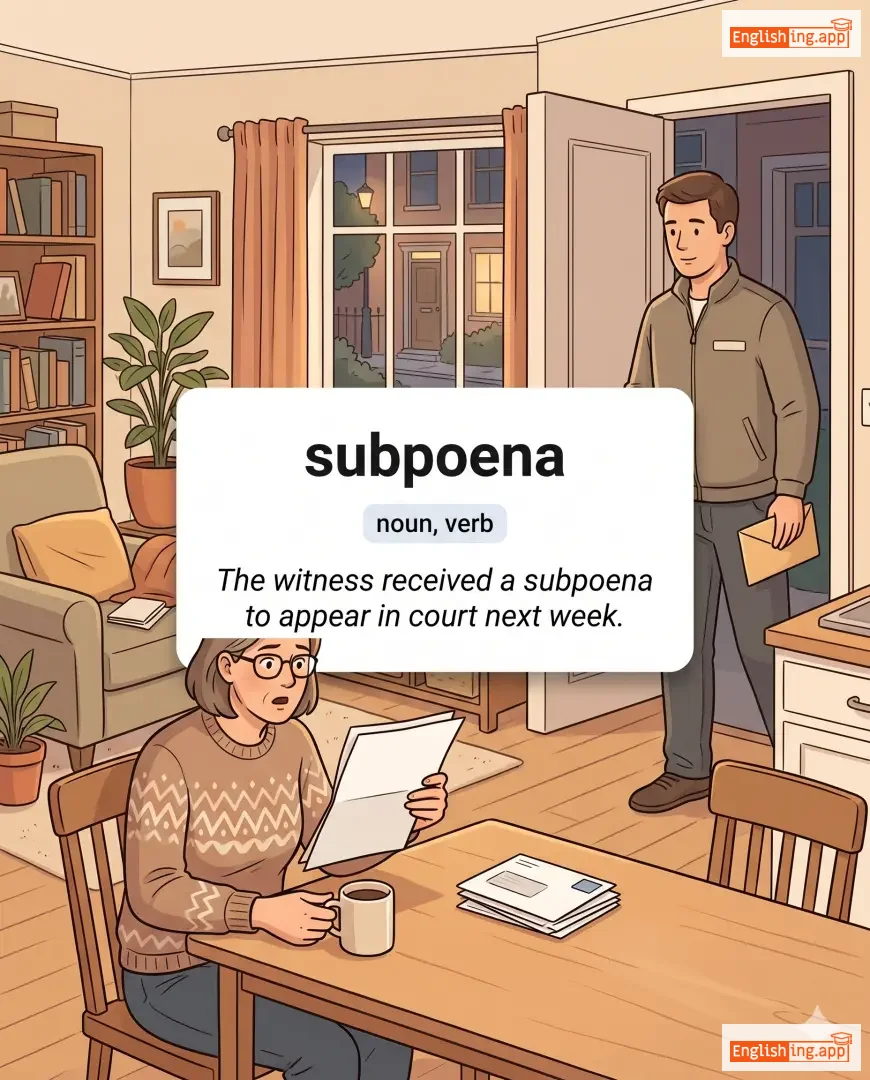
The witness received a subpoena to appear in court next week.
証人は来週法廷に出廷するためのサブピーナを受け取った。
••••••
|
証人は来週法廷に出廷するための召喚状を受け取った。
Shōnin wa raishū hōtei ni shuttei suru tame no shōkanjō o uketotta.
••••••
|
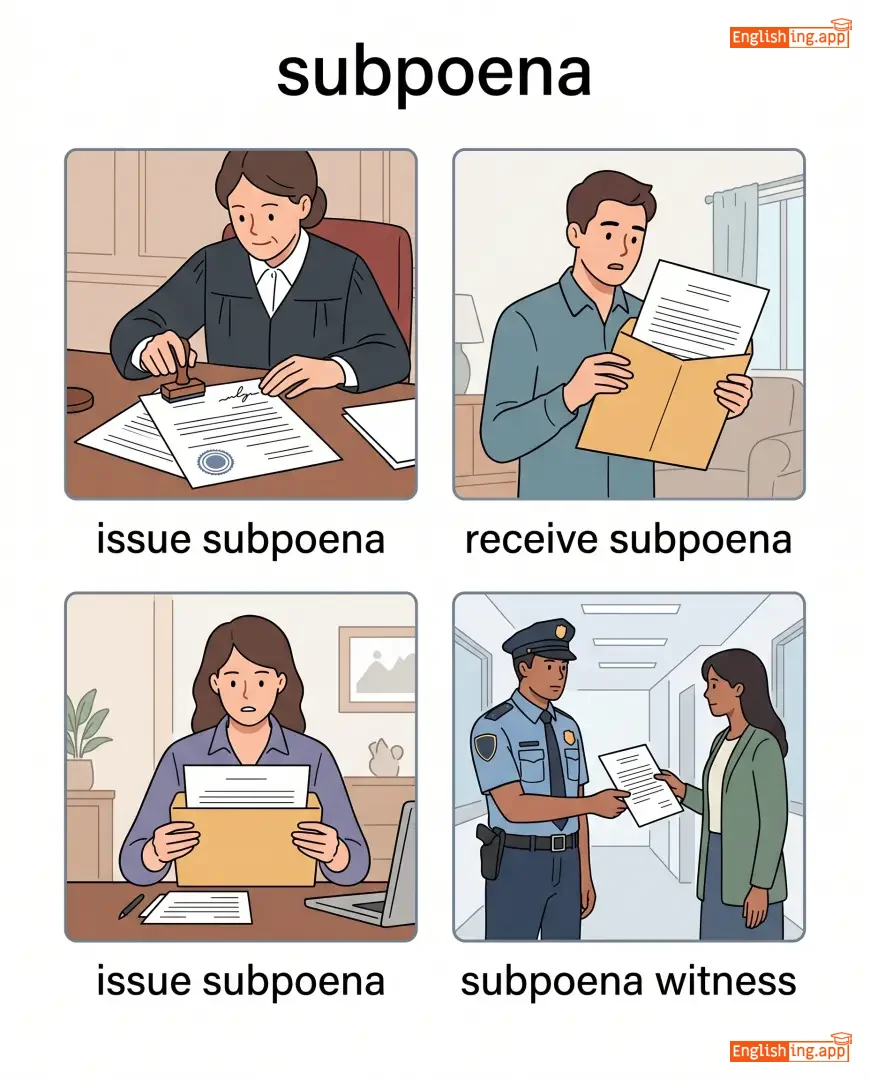
issue a subpoena
サブピーナを発行する
••••••
|
to formally send a legal order for someone to appear in court
••••••
|
召喚状を発行する
shōkanjō o hakkō suru
••••••
|
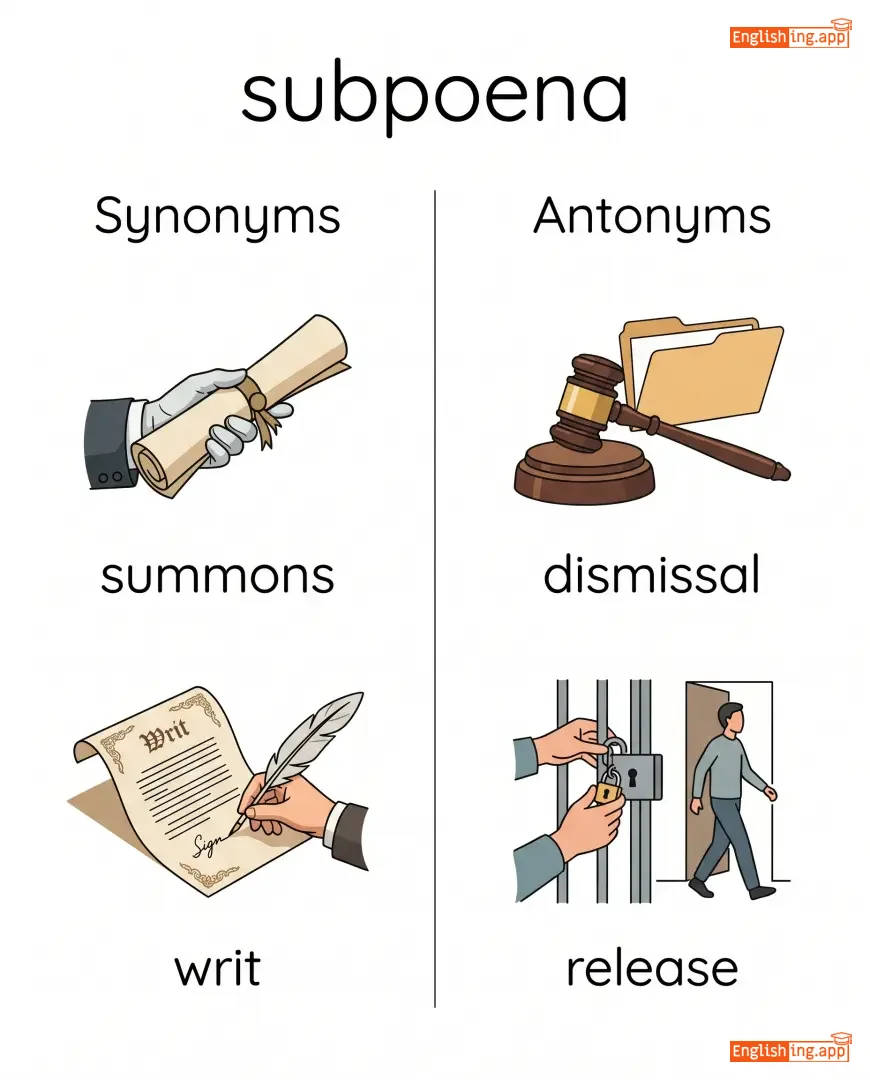
summons, writ, court order, mandate
••••••
|
dismissal, release
••••••
|
issue subpoena, receive subpoena, subpoena witness, subpoena records
••••••
|
Subpoenaは'サブ'下で'ピーナ'罰です - 裁判所に行かないと罰があるので、召喚状です。
••••••
|
|
#8488
💰
|
/səˈbɔːrn/
verb
(サボーン)
••••••
|
- •••••• |
買収する
baishū suru
••••••
|
suborned
サボーンド
••••••
|
suborned
サボーンド
••••••
|
suborns
サボーンズ
••••••
|
suborning
サボーニング
••••••
|
to bribe or induce someone unlawfully to perform an act, especially to commit perjury
••••••
|
The lawyer was accused of trying to suborn a witness.
弁護士は証人を買収しようとしたと非難された。
••••••
|
弁護士は証人を買収しようとしたと非難された。
Bengoshi wa shōnin o baishū shiyō to shita to hinan sareta.
••••••
|
- •••••• | - •••••• | - •••••• |
bribe, corrupt, incite, persuade
••••••
|
deter, discourage
••••••
|
suborn perjury, suborn a witness, attempt to suborn
••••••
|
Subornは 'sub' 下、 'orn' のように装飾するを意味し、買収して嘘をつかせること。
••••••
|
|
#8489
👥
|
/səˈbɔːrdənət/ (noun/adjective), /səˈbɔːrdəˌneɪt/ (verb)
noun, adjective, verb
(サブオーディネイト)
••••••
|
- •••••• |
部下
buka
••••••
|
subordinated
サブオーディネイテッド
••••••
|
subordinated
サブオーディネイテッド
••••••
|
subordinates
サブオーディネイツ
••••••
|
subordinating
サブオーディネイティング
••••••
|
lower in rank or position; to treat as less important
••••••
|
He manages ten subordinates in his department.
彼は自分の部署で10人の部下を管理しています。
••••••
|
彼は自分の部署で10人の部下を管理しています。
Kare wa jibun no busho de juunin no buka o kanri shiteimasu.
••••••
|
subordinate role
部下の役割
••••••
|
a position of lower importance or authority
••••••
|
部下の役割
buka no yakuwari
••••••
|
assistant, junior, aide, inferior, dependent
••••••
|
superior, chief, leader
••••••
|
subordinate staff, subordinate clause, subordinate position, subordinate role
••••••
|
Subordinateは低い位置にいることを意味します - subordinate roleは低い役割を意味します。
••••••
|
Vocabulary Quiz
Test your vocabulary by matching words with their translations or meanings.
Login to take the quiz
Comments (0)
Share your thoughts and join the discussion.
Join the discussion by logging in
Login to CommentNo comments yet
Be the first to share your thoughts!