

翻訳
過去
過去分詞
三人称単数
動名詞
意味
例文
例文の翻訳
同義語
対義語
コロケーション
ニーモニック


Swipe left or right, or use the buttons. Tap image to zoom.
例文の翻訳
単語
Lesson 108Lesson 108 - マスクトグル
|
絵文字
|
単語 | Images | 翻訳 | 過去 | 過去分詞 | 三人称単数 | 動名詞 | 意味 | 例文 | 例文の翻訳 | 表現例 | 表現例の意味 | 表現例の翻訳 | 同義語 | 対義語 | コロケーション | ニーモニック |
|---|---|---|---|---|---|---|---|---|---|---|---|---|---|---|---|---|---|
|
#3211
📢
|
/ɪɡˈzɔːrt/
verb
(エクソート)
••••••
|
|
促す
unagasu
••••••
|
exhorted
エクソートした
••••••
|
exhorted
エクソートした
••••••
|
exhorts
エクソートする
••••••
|
exhorting
エクソートしている
••••••
|
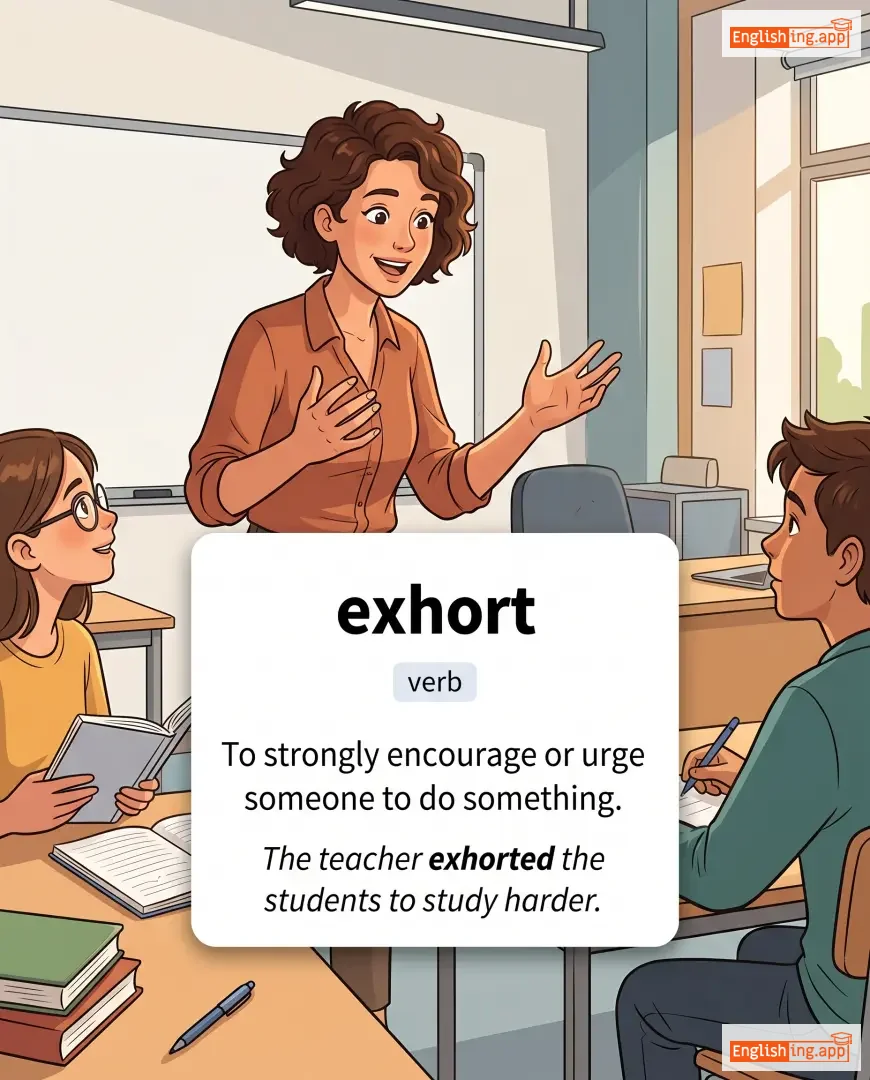
To strongly encourage or urge someone to do something.
••••••
|
The teacher exhorted the students to study harder.
教師は学生にもっと一生懸命勉強するように促しました。
••••••
|
教師は学生にもっと一生懸命勉強するように促しました。
Kyoushi wa gakusei ni motto isshoukenmei benkyou suru you ni unagashimashita.
••••••
|
exhort to action
行動に促す
••••••
|
to urge someone to take immediate steps or efforts
••••••
|
即時の行動を促す
sokujin no koudou wo unagasu
••••••
|
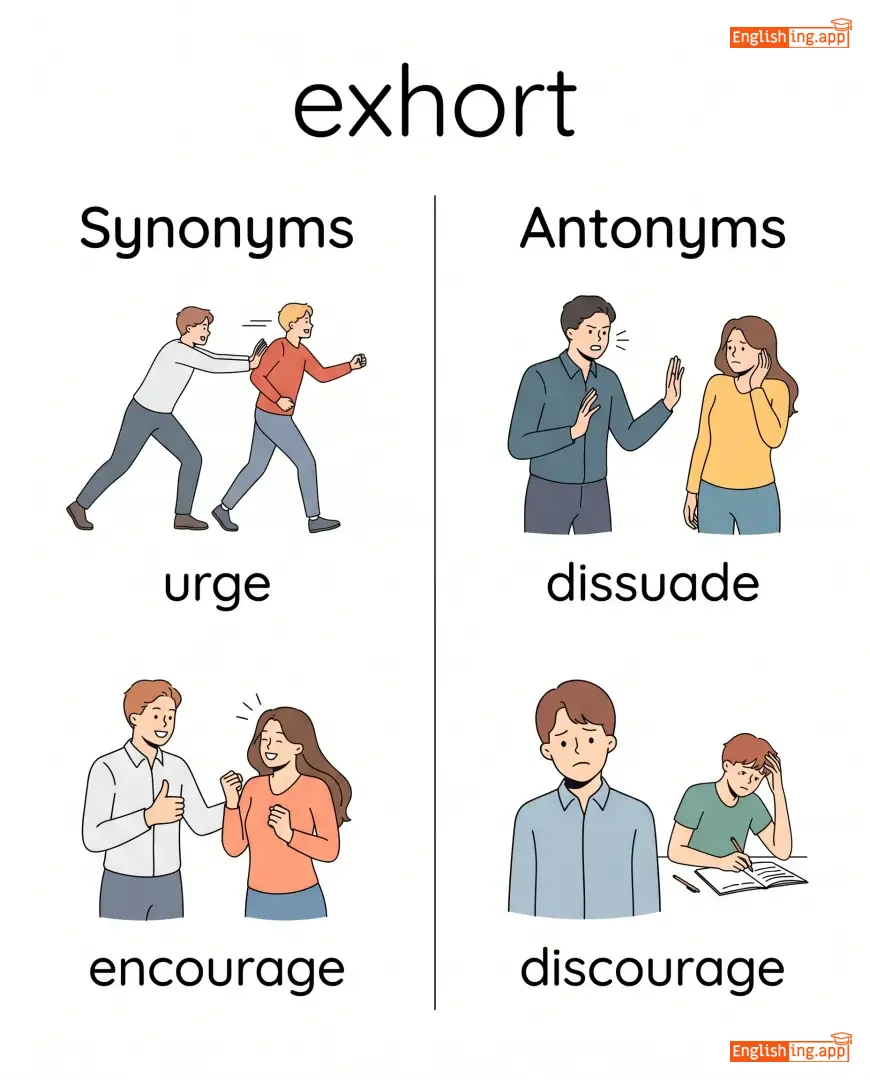
urge, encourage, advise, press, persuade
••••••
|
dissuade, discourage
••••••
|
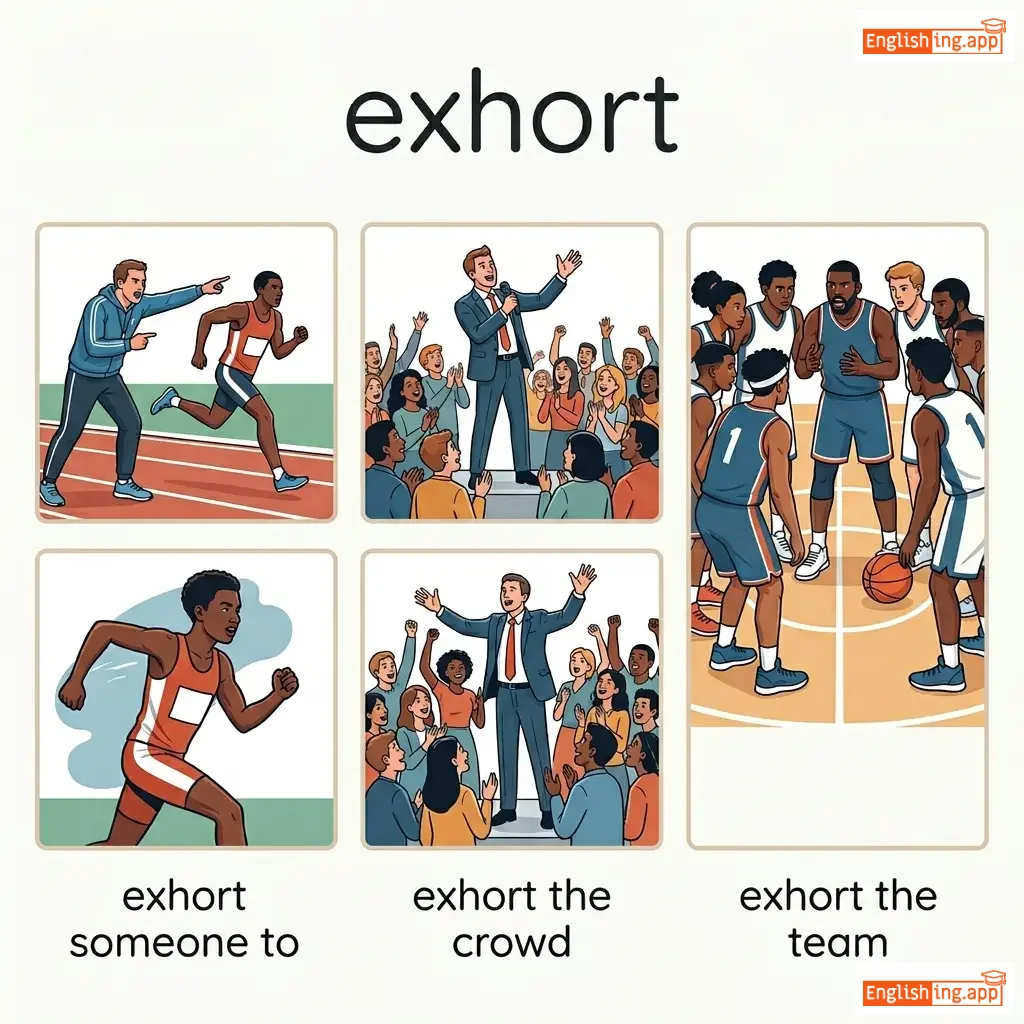
exhort someone to, exhort the crowd, exhort the team
••••••
|
Exhortは試験前、教師がもっと勉強するように生徒に促す!
••••••
|
|
#3212
🌺
|
/ɪɡˈzɑːtɪk/
adjective
(エキゾチック)
••••••
|
- •••••• |
異国的で魅力的
ikokuteki de miryokuteki
••••••
|
- •••••• | - •••••• | - •••••• | - •••••• |
Unusual and attractive because it is from a foreign place or culture.
••••••
|
The garden was filled with exotic plants from tropical countries. |
庭は熱帯の国々からのエキゾチックな植物で満たされていました。
Niwa wa nettai no kuniguni kara no ekizochikku na shokubutsu de mitasarete imashita.
••••••
|
exotic beauty |
Unusual and striking attractiveness
••••••
|
エキゾチックな美しさ
ekizochikku na utsukushisa
••••••
|
foreign, unusual, rare, tropical, extraordinary
••••••
|
ordinary, common, familiar
••••••
|
exotic plants, exotic animals, exotic beauty, exotic location
••••••
|
Exotic = Exciting + Foreign, 他の国からの魅力的なもの。
••••••
|
|
#3213
🪬
|
/ˈeksɔːrsaɪz/
verb
••••••
|
|
- •••••• |
exorcised
••••••
|
exorcised
••••••
|
exorcises
••••••
|
exorcising
••••••
|
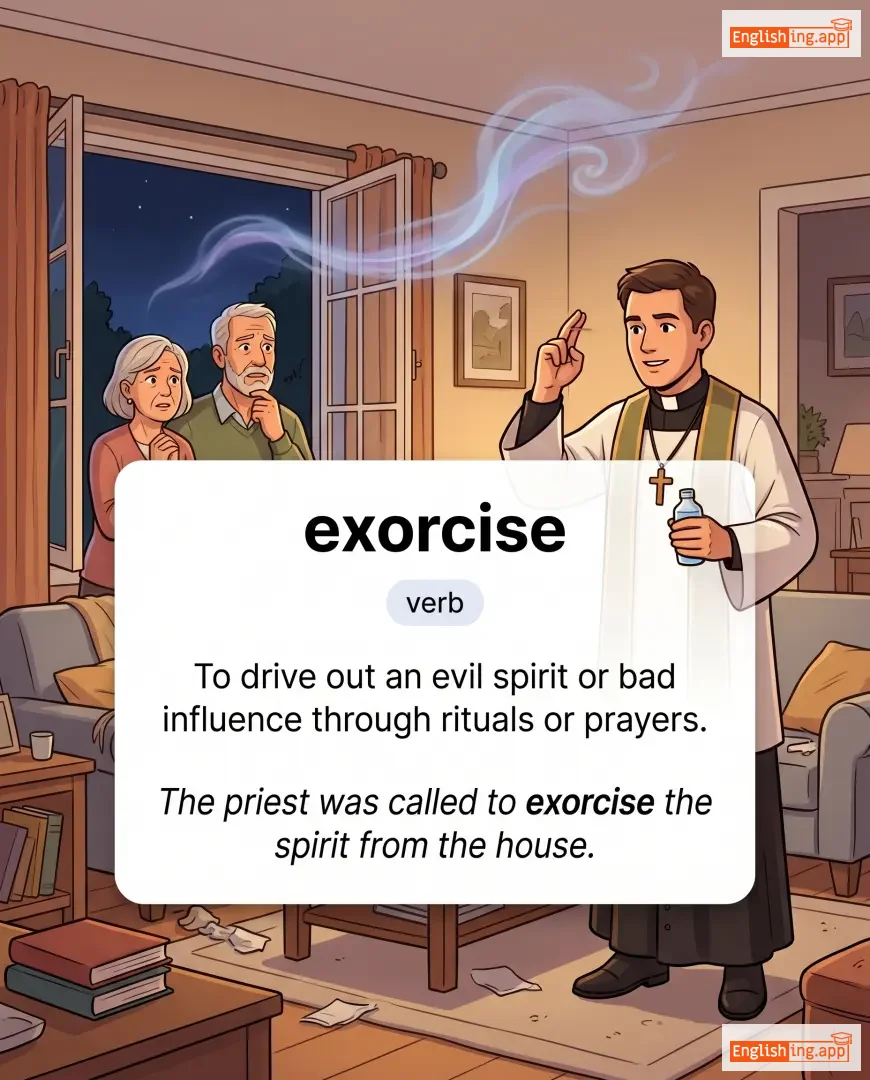
To drive out an evil spirit or bad influence through rituals or prayers.
••••••
|
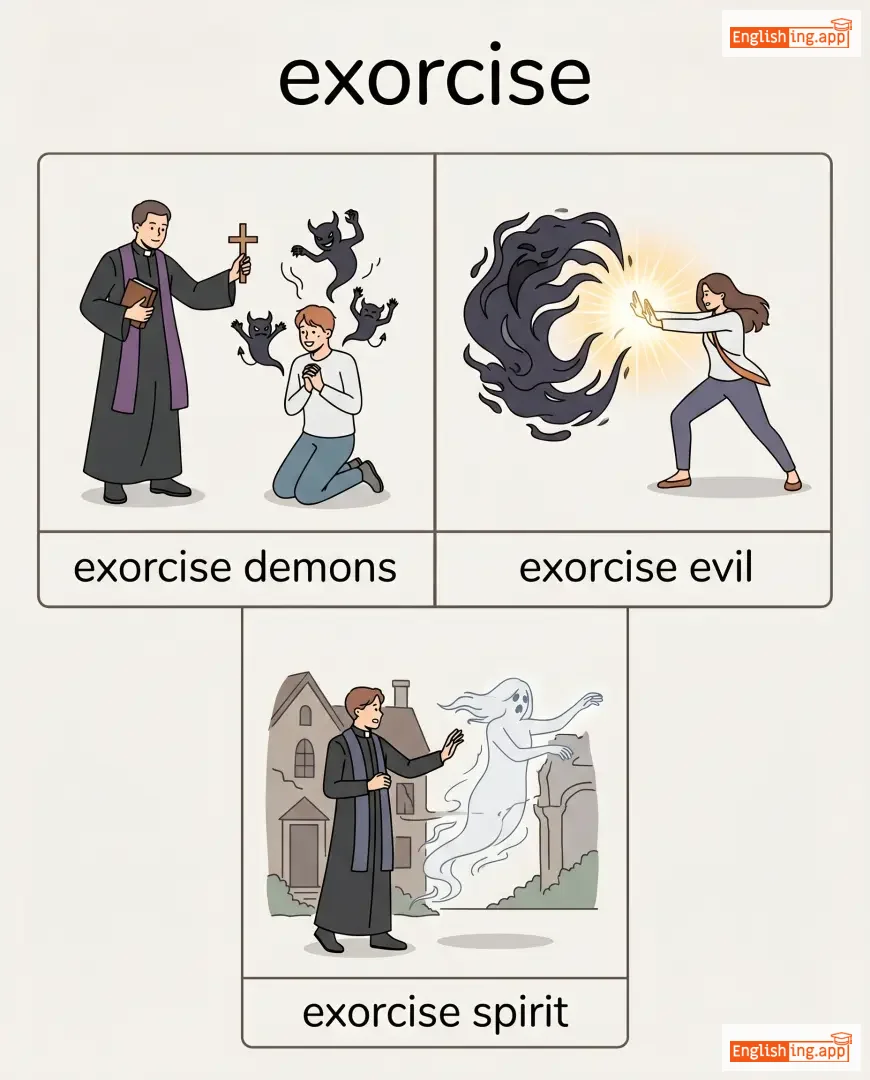
The priest was called to exorcise the spirit from the house. |
- •••••• |
exorcise demons |
To remove evil or troubling influences
••••••
|
- •••••• |
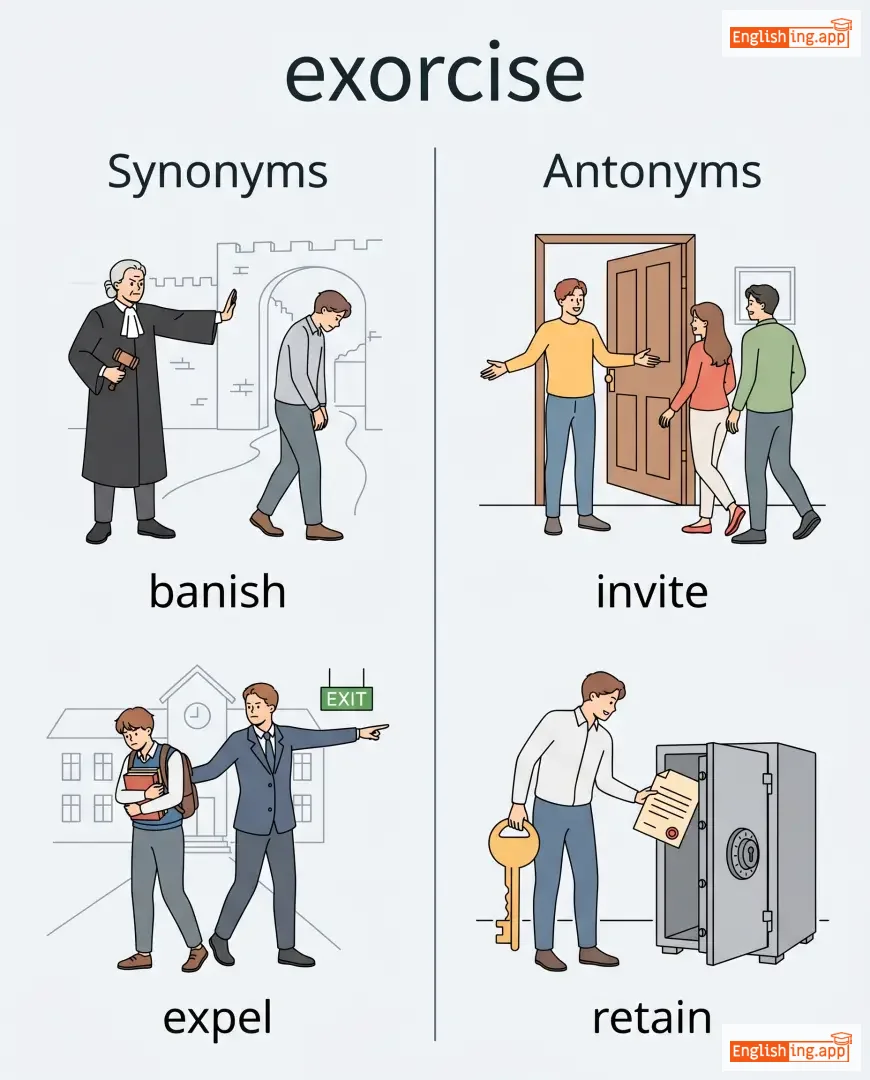
banish, expel, cast out, cleanse, purify
••••••
|
invite, retain
••••••
|
exorcise demons, exorcise evil, exorcise spirit, exorcise fear
••••••
|
No •••••• |
|
#3214
💰
|
/ɪɡˈzɔːrbɪtənt/
adjective
(エクソービタント)
••••••
|
|
法外
hōgai
••••••
|
- •••••• | - •••••• | - •••••• | - •••••• |
Unreasonably high or excessive, especially in cost or amount.
••••••
|
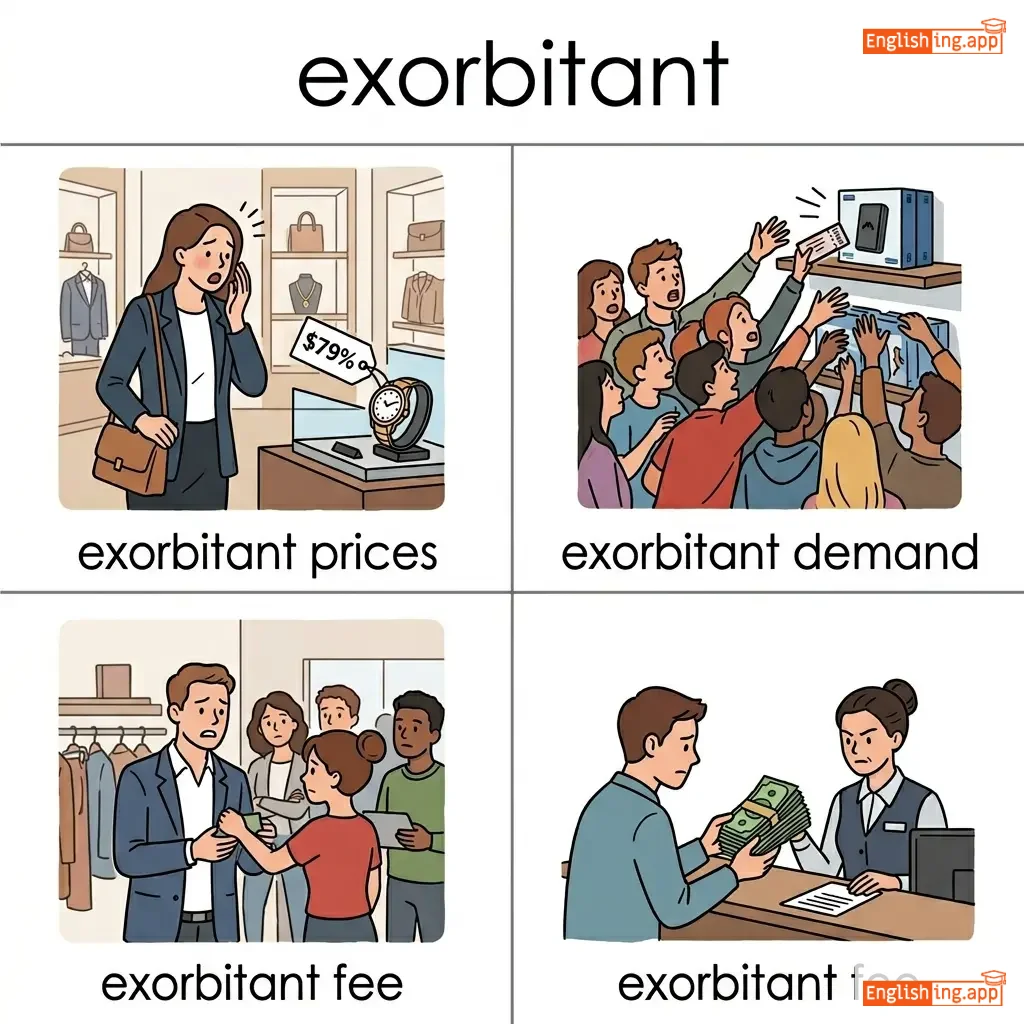
They charged an exorbitant fee for a simple service. |
彼らは簡単なサービスに法外な料金を請求した。
Karera wa kantan na sābisu ni hōgai na ryōkin o seikyū shita.
••••••
|
exorbitant prices |
Unreasonably high costs
••••••
|
法外な価格
hōgai na kakaku
••••••
|
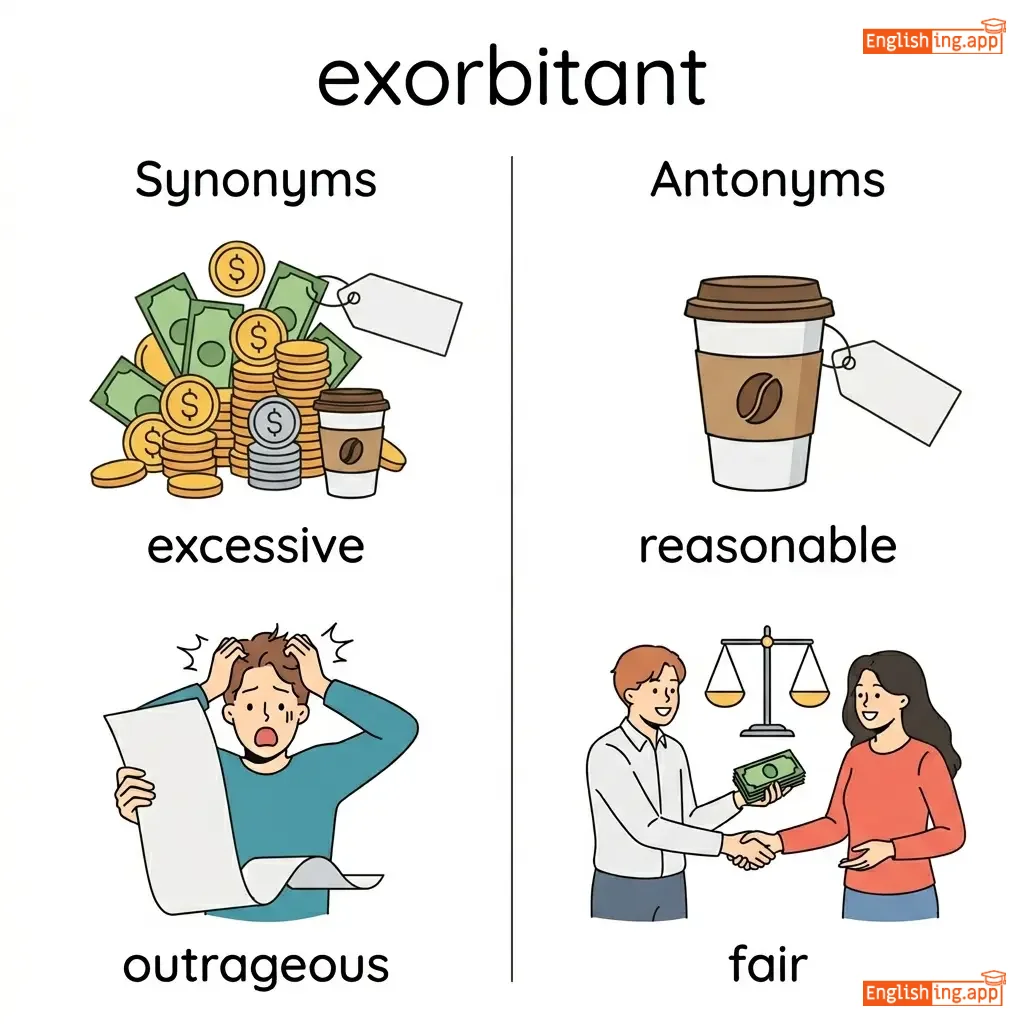
excessive, outrageous, unreasonable, extortionate, extravagant
••••••
|
reasonable, fair, moderate
••••••
|
exorbitant prices, exorbitant demand, exorbitant fee, exorbitant rent
••••••
|
Exorbitantは極端を意味します—まるで価格が制御を超えているようです。
••••••
|
|
#3215
💸
|
/ɪɡˈzɔːrbɪtəns/
noun
(イグゾービタンス)
••••••
|
- •••••• |
過剰
kajou
••••••
|
- •••••• | - •••••• | - •••••• | - •••••• |
The quality of being excessive, unreasonable, or going beyond proper limits.
••••••
|
The exorbitance of the hotel's prices shocked the tourists. |
ホテルの価格の過剰さに観光客は驚いた。
Hoteru no kakaku no kajou-sa ni kankōkyaku wa odoroita.
••••••
|
- •••••• | - •••••• | - •••••• |
excessiveness, extravagance, immoderation, overindulgence
••••••
|
moderation, reasonableness
••••••
|
exorbitance of prices, sheer exorbitance, financial exorbitance
••••••
|
Exorbitanceは極端な価格を意味します - ホテルの価格が非常に高く、まるで「追加の軌道」に入ったかのようです。
••••••
|
|
#3216
⚖️
|
/ɪɡˈzɒnəreɪt/
verb
(エクソネレイト)
••••••
|
- •••••• |
免責
menseki
••••••
|
exonerated
エクソネレイテッド
••••••
|
exonerated
エクソネレイテッド
••••••
|
exonerates
エクソネレイツ
••••••
|
exonerating
エクソネレイティング
••••••
|
To clear someone from blame or accusation.
••••••
|
The court exonerated her from all charges.
裁判所は彼女をすべての告発から免除しました。
••••••
|
裁判所は彼女をすべての告発から免除しました。
Saibansho wa kanojo o subete no kokuhatsu kara menjo shimashita.
••••••
|
exonerate from blame
責任から免除する
••••••
|
to declare someone free of responsibility for wrongdoing
••••••
|
責任から免除する
Sekinin kara menseki suru
••••••
|
absolve, acquit, vindicate, pardon, release
••••••
|
blame, accuse, convict
••••••
|
exonerate someone, exonerate from blame, exonerate the accused, fully exonerated
••••••
|
免責 – 罪から解放される感じ。
••••••
|
|
#3217
👥
|
/ˈɛksədəs/
noun
(エクソダス)
••••••
|
- •••••• |
出エジプト
shutsu Ejiputo
••••••
|
- •••••• | - •••••• | - •••••• | - •••••• |
A mass departure of people from a place.
••••••
|
There was a sudden exodus of workers after the strike began. |
ストライキが始まった後、労働者たちは突然出エジプトした。
Sutoraiki ga hajimatta ato, rōdōshatachi wa totsuzen shutsu Ejiputo shita.
••••••
|
- •••••• | - •••••• | - •••••• |
departure, migration, evacuation, flight, retreat
••••••
|
arrival, entrance, immigration
••••••
|
mass exodus, sudden exodus, exodus of refugees, large-scale exodus
••••••
|
Exodusはみんな一緒に出て行くことを意味する — '出エジプト'。
••••••
|
|
#3218
🚪
|
/ˈɛɡzɪt/
noun/verb
(エグジット)
••••••
|
- •••••• |
出口
deguchi
••••••
|
exited
エグジットした
••••••
|
exited
エグジットした
••••••
|
exits
エグジットする
••••••
|
exiting
エグジットしている
••••••
|
A way out of a place; the act of leaving.
••••••
|
He quickly found the nearest exit during the fire drill.
彼は火災訓練中に最寄りの出口をすぐに見つけた。
••••••
|
彼は火災訓練中に最寄りの出口をすぐに見つけた。
Kare wa kasai kunren-chū ni moyori no deguchi o sugu ni mitsuketa.
••••••
|
make an exit
出口を出る
••••••
|
to leave a place, often noticeably
••••••
|
出る
deru
••••••
|
departure, way out, escape, egress, leaving
••••••
|
entrance, arrival, entry
••••••
|
emergency exit, exit door, exit route, exit point
••••••
|
Exit 🚪 は出るという意味 — Exit は '出口' です。
••••••
|
|
#3219
🤔
|
/ˌɛɡzɪˈstɛnʃəl/
adjective
(エグジステンシャル)
••••••
|
|
実存的
jitsuzonteki
••••••
|
- •••••• | - •••••• | - •••••• | - •••••• |
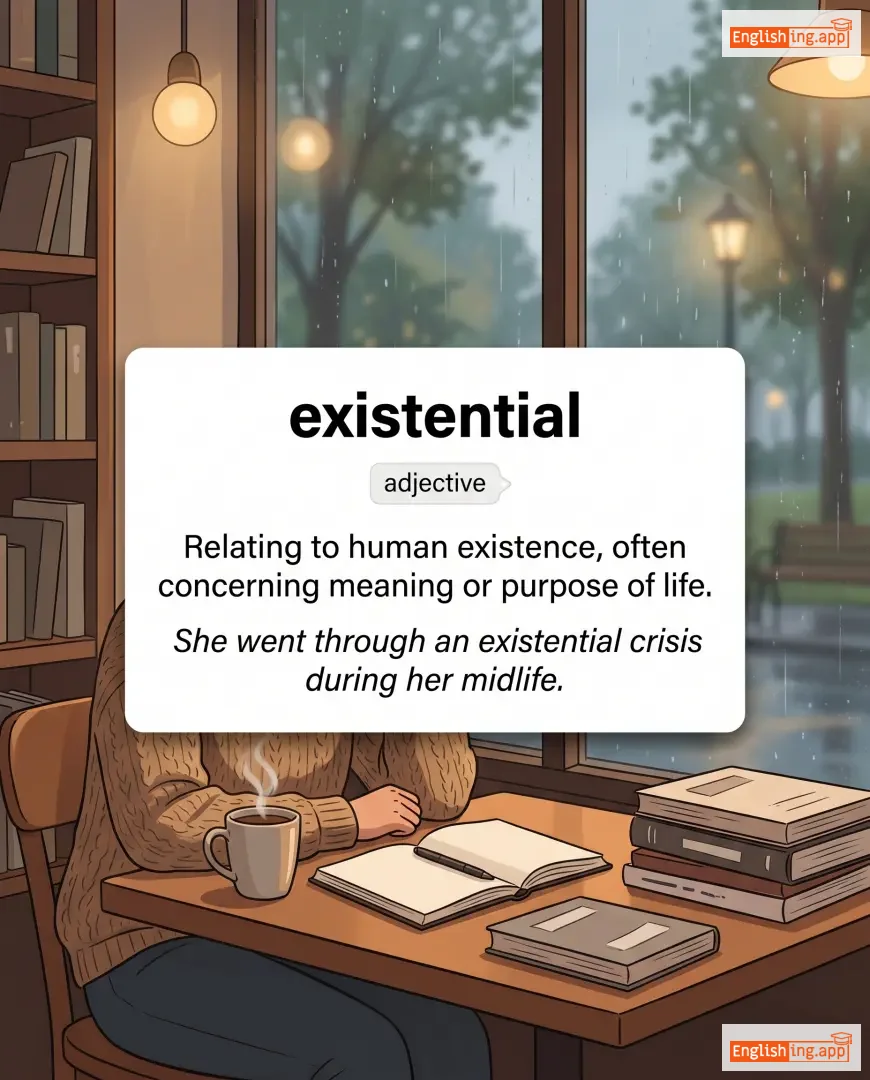
Relating to human existence, often concerning meaning or purpose of life.
••••••
|
She went through an existential crisis during her midlife. |
彼女は中年に実存的な危機を経験した。
Kanojo wa chūnen ni jitsuzonteki na kiki o keiken shita.
••••••
|
existential crisis |
a period of deep questioning about the meaning and purpose of life
••••••
|
実存的危機
jitsuzonteki kiki
••••••
|
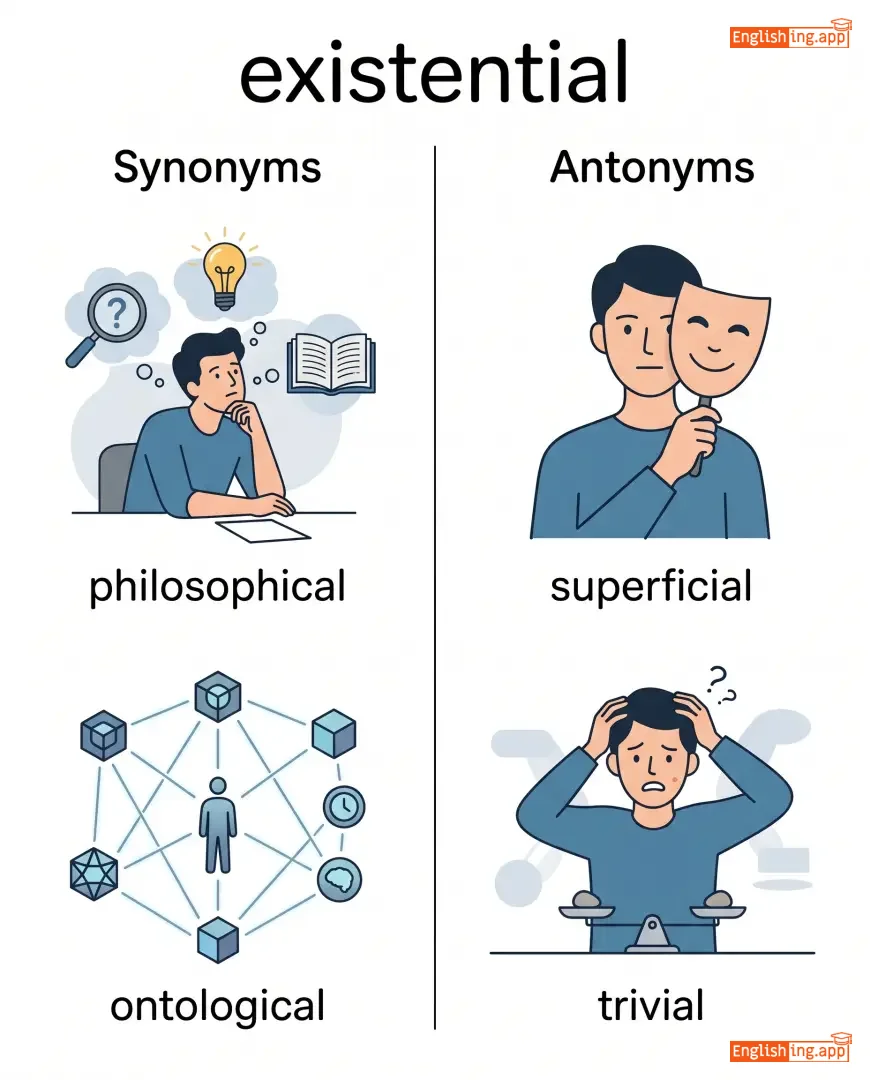
philosophical, ontological, human, life-related
••••••
|
superficial, trivial, meaningless
••••••
|
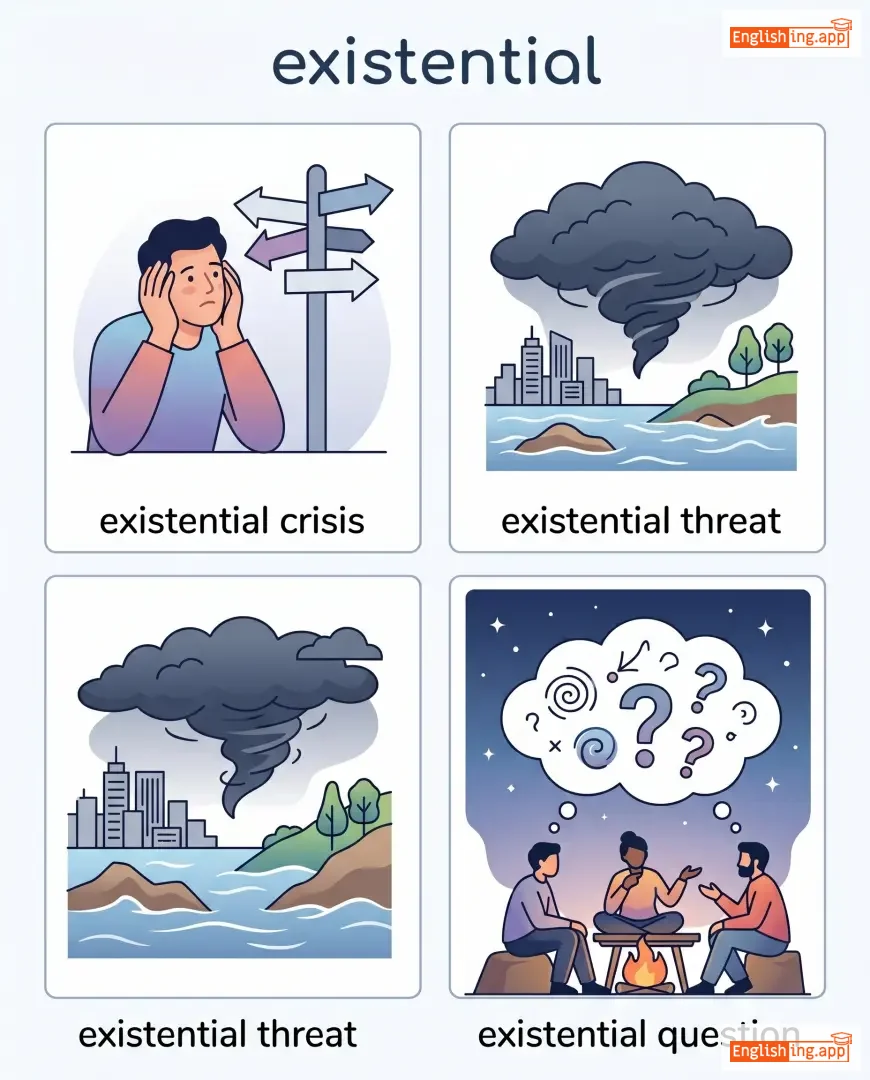
existential crisis, existential threat, existential question, existential philosophy
••••••
|
実存的とは人生の意味を問うこと - '実存的危機'。
••••••
|
|
#3220
🌍
|
/ɪɡˈzɪstəns/
noun
(エクスィステンス)
••••••
|
- •••••• |
存在
sonzai
••••••
|
- •••••• | - •••••• | - •••••• | - •••••• |
The state of being alive or having real presence.
••••••
|
The existence of life on other planets is still uncertain.
他の惑星での生命の存在はまだ不確かです。
••••••
|
他の惑星での生命の存在はまだ不確かです。
Hoka no wakusei de no seimei no sonzai wa mada fukakusa desu.
••••••
|
come into existence
存在することに来る
••••••
|
to begin to exist or start being present
••••••
|
存在することに来る
sonzai suru koto ni kuru
••••••
|
being, presence, reality, life, survival
••••••
|
nonexistence, nothingness, extinction
••••••
|
human existence, existence of life, struggle for existence, existence proof
••••••
|
存在は他の星での '生命' を意味します。
••••••
|
|
#3221
🥢
|
/ɛɡˈzɪɡjuəs/
adjective
(エグジグアス)
••••••
|
- •••••• |
乏しい
moshī
••••••
|
- •••••• | - •••••• | - •••••• | - •••••• |
small in amount; scanty or inadequate
••••••
|
They survived on exiguous rations during the journey. |
彼らは旅行中、乏しい配給で生き延びました。
Karera wa ryokō-chū, moshī haikyū de ikinobimashita.
••••••
|
- •••••• | - •••••• | - •••••• |
scanty, meager, paltry, insufficient
••••••
|
ample, abundant, plentiful
••••••
|
exiguous resources, exiguous income, exiguous supply
••••••
|
Exiguousは少ない食料、乏しい食事を意味します。
••••••
|
|
#3222
🥄
|
/ˌɛksɪˈɡjuːɪti/
noun
(エクシグイティ)
••••••
|
- •••••• |
不足
fusoku
••••••
|
- •••••• | - •••••• | - •••••• | - •••••• |
the quality of being scanty or meager in amount
••••••
|
The exiguity of resources made the project difficult to complete.
資源の不足がプロジェクトを完了するのを難しくしました。
••••••
|
資源の不足がプロジェクトを完了するのを難しくしました。
Shigen no fusoku ga purojekuto o kanryō suru no o muzukashiku shimashita.
••••••
|
- •••••• | - •••••• | - •••••• |
meagerness, scarcity, insufficiency, paucity
••••••
|
abundance, plenty, sufficiency
••••••
|
exiguity of funds, exiguity of evidence, exiguity of space
••••••
|
Exiguityはex小+quantity - 不足の量です。
••••••
|
|
#3223
🚨
|
/ˈɛksɪdʒənt/
adjective
(エグジジェント)
••••••
|
- •••••• |
緊急
kinkyuu
••••••
|
- •••••• | - •••••• | - •••••• | - •••••• |
demanding immediate action or attention; urgent
••••••
|
The patient’s exigent condition required immediate surgery. |
患者の緊急状態は即時の手術を必要としました。
Kanja no kinkyuu joutai wa sokushi no shujutsu wo hitsuyou to shimashita.
••••••
|
- •••••• | - •••••• | - •••••• |
urgent, pressing, critical, imperative
••••••
|
unimportant, trivial, minor
••••••
|
exigent circumstances, exigent need, exigent demands
••••••
|
Exigent は緊急の意味、すぐにやらなければならないことです。
••••••
|
|
#3224
⏰
|
/ˈɛksɪdʒənsi/
noun
(ekusijensi)
••••••
|
|
緊急の必要性
kinkyu no hitsuyosei
••••••
|
- •••••• | - •••••• | - •••••• | - •••••• |
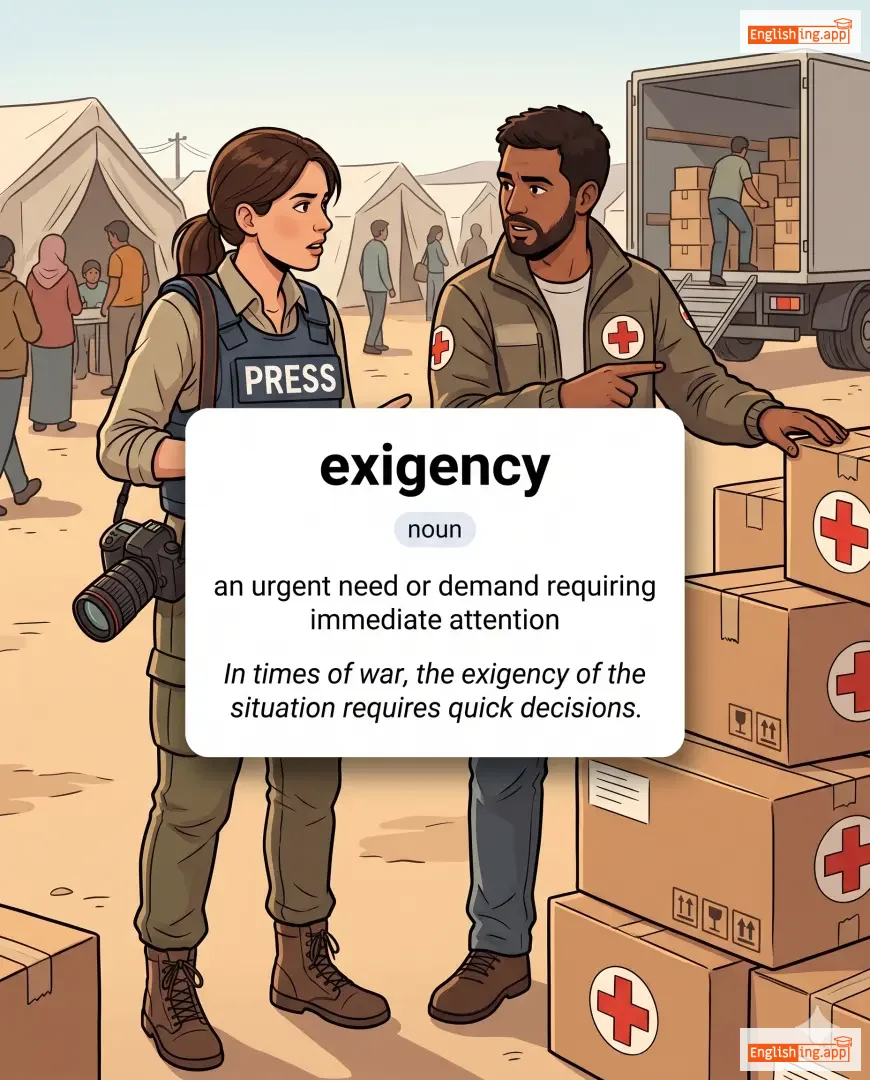
an urgent need or demand requiring immediate attention
••••••
|
In times of war, the exigency of the situation requires quick decisions. |
戦争の時、状況の緊急の必要性は迅速な決定を要求する。
Sensō no toki, jōkyō no kinkyu no hitsuyōsei wa jinsoku na kettei o yōkyū suru.
••••••
|
- •••••• | - •••••• | - •••••• |
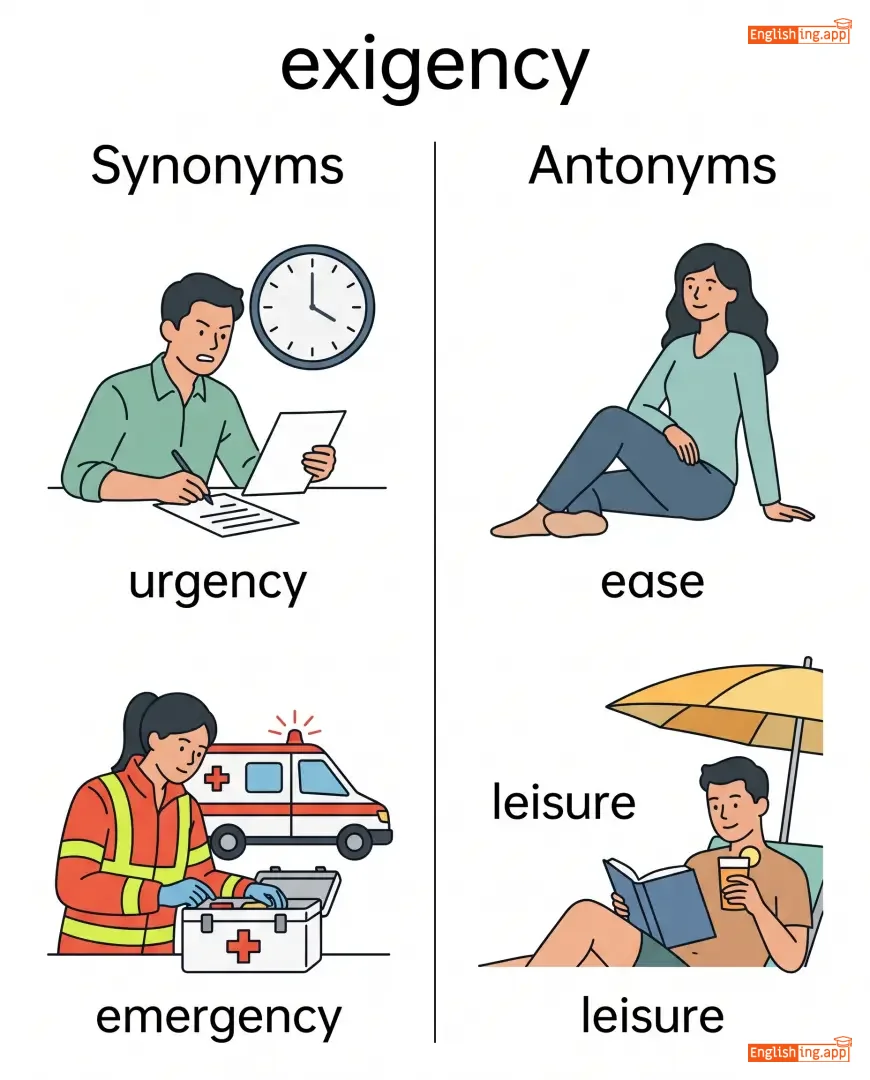
urgency, emergency, necessity, demand
••••••
|
ease, leisure, calm
••••••
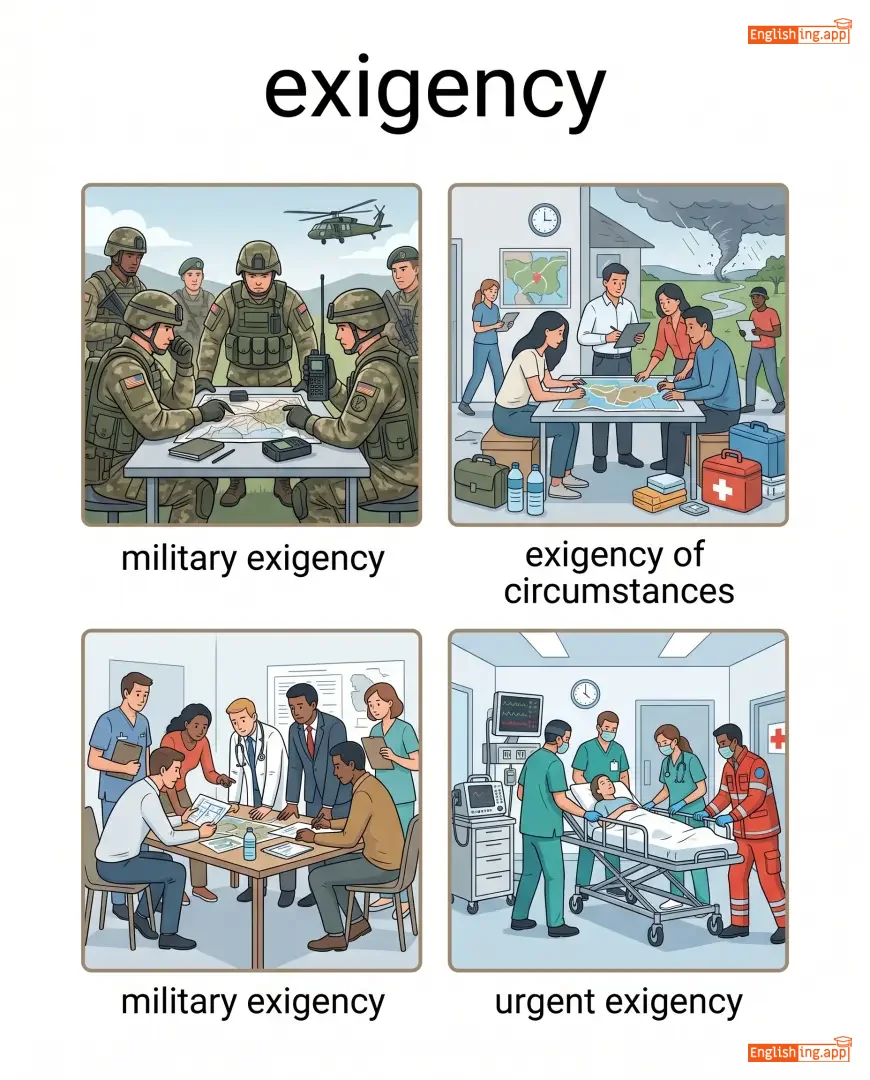
|
military exigency, exigency of circumstances, urgent exigency
••••••
|
Exigencyは日本語で緊急の必要性 – 緊急の対応を必要とする状況。
••••••
|
|
#3225
⚰️
|
/ɛksˈhjuːm/
verb
(エクスヒューム)
••••••
|
- •••••• |
発掘する
hakkutsu suru
••••••
|
exhumed
エクスヒュームド
••••••
|
exhumed
エクスヒュームド
••••••
|
exhumes
エクスヒュームズ
••••••
|
exhuming
エクスヒューミング
••••••
|
to dig out something buried, especially a body from the ground
••••••
|
The archaeologists decided to exhume the ancient remains.
考古学者たちは古代の遺物を発掘することに決めました。
••••••
|
考古学者たちは古代の遺物を発掘することに決めました。
Kōkogakusha-tachi wa kodai no ibutsu o hakkutsu suru koto ni kimemashita.
••••••
|
- •••••• | - •••••• | - •••••• |
disinter, unearth, uncover, dig up
••••••
|
bury, inter, conceal
••••••
|
exhume a body, exhume remains, exhume evidence
••••••
|
エクスヒュームは地面から遺体を掘り出すことを意味します。
••••••
|
|
#3226
📜
|
/ɪɡˈzɛkjətər/
noun
(エグゼキューター)
••••••
|
- •••••• |
遺言執行者
yigon shikkōsha
••••••
|
- •••••• | - •••••• | - •••••• | - •••••• |
A person appointed to carry out the terms of someone's will after their death.
••••••
|
The executor managed the estate according to the deceased’s wishes. |
遺言執行者は故人の意志に従って財産を管理しました。
Yigon shikkōsha wa kojin no ishi ni shitagatte zaisan o kanri shimashita.
••••••
|
- •••••• | - •••••• | - •••••• |
administrator, trustee, representative, agent
••••••
|
beneficiary, heir
••••••
|
executor of a will, appointed executor, sole executor
••••••
|
遺言執行者 = 遺言を実行する人
••••••
|
|
#3227
🤩
|
/ɪɡˈzɪləreɪtɪŋ/
adjective
(エクスヒラレイティング)
••••••
|
- •••••• |
興奮させる
koufun saseru
••••••
|
- •••••• | - •••••• | - •••••• | - •••••• |
Making someone feel very excited, happy, or thrilled.
••••••
|
Skydiving was the most exhilarating experience of his life.
スカイダイビングは彼の人生で最も興奮する経験でした。
••••••
|
スカイダイビングは彼の人生で最も興奮する経験でした。
Sukaidaibingu wa kare no jinsei de mottomo kōfun suru keiken deshita.
••••••
|
- •••••• | - •••••• | - •••••• |
thrilling, exciting, stimulating, uplifting, electrifying
••••••
|
boring, depressing, dull
••••••
|
exhilarating experience, exhilarating adventure, exhilarating ride
••••••
|
興奮させるは心を躍らせる感覚!
••••••
|
|
#3228
🎉
|
/ɪɡˈzɪləreɪt/
verb
(エクスヒラレート)
••••••
|
- •••••• |
興奮させる
koufun saseru
••••••
|
exhilarated
エクスヒラレートされた
••••••
|
exhilarated
エクスヒラレートされた
••••••
|
exhilarates
エクスヒラレートします
••••••
|
exhilarating
エクスヒラレートする
••••••
|
To make someone feel very happy, animated, or excited.
••••••
|
The mountain view exhilarated the travelers.
山の景色は旅行者を興奮させました。
••••••
|
山の景色は旅行者を興奮させました。
Yama no keshiki wa ryokō-sha o kōfun sasemashita.
••••••
|
- •••••• | - •••••• | - •••••• |
thrill, excite, energize, uplift, inspire
••••••
|
depress, bore, sadden
••••••
|
exhilarate the crowd, feel exhilarated, exhilarate the spirit
••••••
|
Exhilarate で心が躍る、まるで冒険が始まるような感じ!
••••••
|
|
#3229
📚
|
/ɪɡˈzɔːstɪv/
adjective
(エクゾスティブ)
••••••
|
- •••••• |
包括的で完全な
hōkatsuteki de kanzen na
••••••
|
- •••••• | - •••••• | - •••••• | - •••••• |
Fully comprehensive and including all possibilities.
••••••
|
The report provides an exhaustive analysis of the issue. |
その報告書は問題に関する包括的な分析を提供します。
Sono hōkokusho wa mondai ni kansuru hōkatsuteki na bunseki o teikyō shimasu。
••••••
|
- •••••• | - •••••• | - •••••• |
comprehensive, thorough, complete, in-depth, detailed
••••••
|
incomplete, partial, superficial
••••••
|
exhaustive research, exhaustive study, exhaustive analysis, exhaustive list
••••••
|
Exhaustive report はすべてをカバーするという意味です!
••••••
|
|
#3230
😩
|
/ɪɡˈzɔːstʃən/
noun
(エクゾースチョン)
••••••
|
|
疲労
hirou
••••••
|
- •••••• | - •••••• | - •••••• | - •••••• |
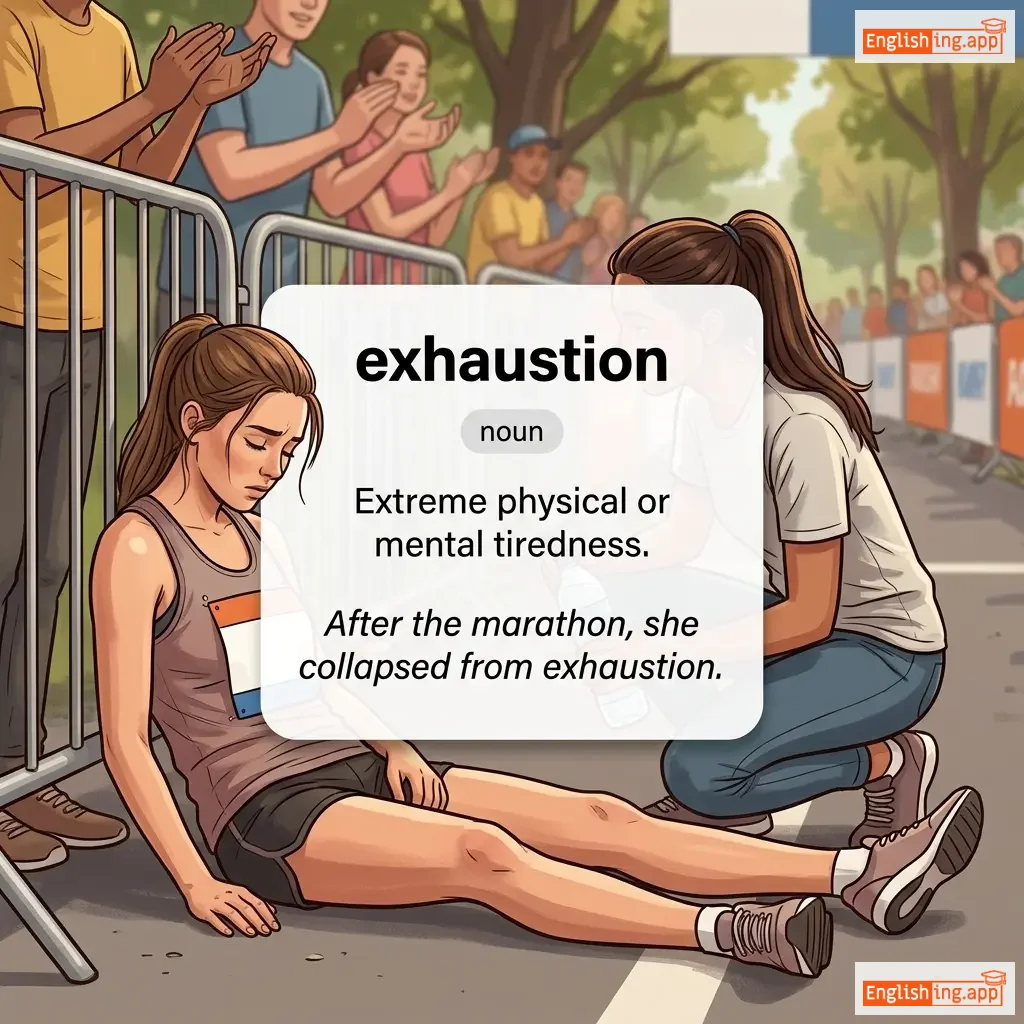
Extreme physical or mental tiredness.
••••••
|
After the marathon, she collapsed from exhaustion. |
マラソンの後、彼女は疲労で倒れました。
Marason no ato, kanojo wa hirou de taoremashita.
••••••
|
work oneself into exhaustion |
to make oneself extremely tired through hard work
••••••
|
疲労まで働く
hirou made hataraku
••••••
|
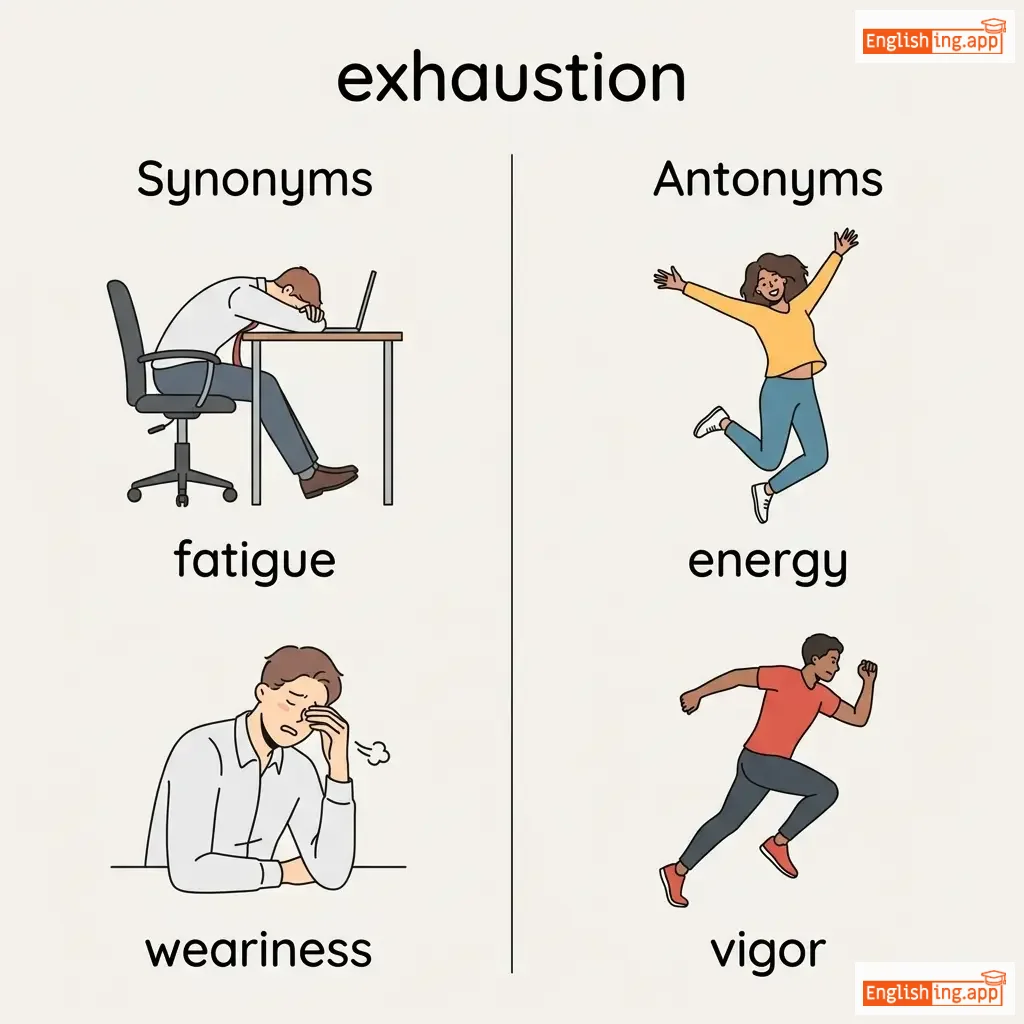
fatigue, weariness, burnout, debility, tiredness
••••••
|
energy, vigor, strength
••••••
|
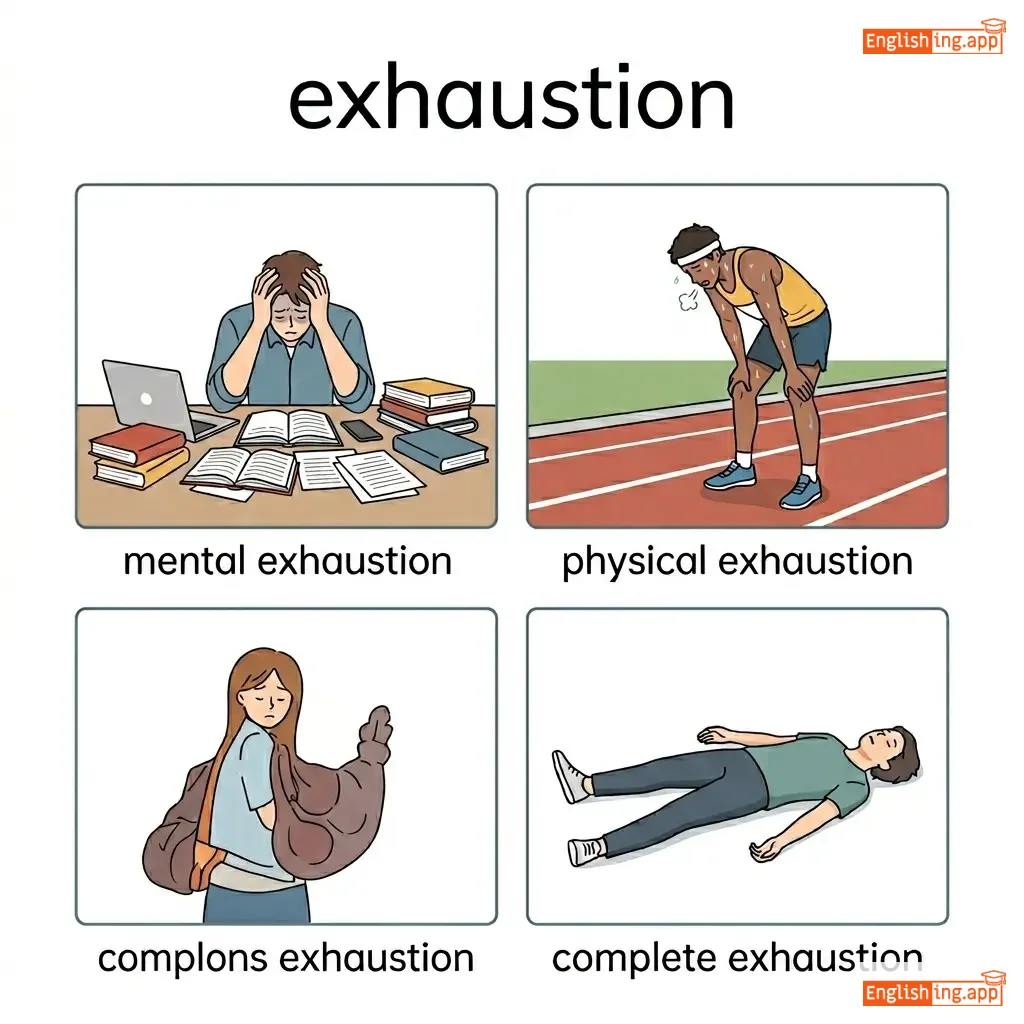
mental exhaustion, physical exhaustion, complete exhaustion, exhaustion from work
••••••
|
疲労、マラソン後のようにエネルギーが尽きる感じ!
••••••
|
|
#3231
⛽
|
/ɪɡˈzɔːstɪbəl/
adjective
(エクゾースティブル)
••••••
|
- •••••• |
使い果たせる
tsukaihataseru
••••••
|
- •••••• | - •••••• | - •••••• | - •••••• |
able to be used up completely; not infinite
••••••
|
Coal and oil are exhaustible resources. |
石炭と石油は使い果たせる資源です。
Sekitan to sekiyu wa tsukaihataseru shigen desu.
••••••
|
- •••••• | - •••••• | - •••••• |
limited, depletable, finite
••••••
|
inexhaustible, unlimited
••••••
|
exhaustible resource, exhaustible supply
••••••
|
EXAMのエネルギーは使い果たせる、終わりが来る。
••••••
|
|
#3232
😩
|
/ɪɡˈzɔːst/
verb
(イグゾースト)
••••••
|
- •••••• |
疲れさせる
tsukaresaseru
••••••
|
exhausted
イグゾーストエッド
••••••
|
exhausted
イグゾーストエッド
••••••
|
exhausts
イグゾーストス
••••••
|
exhausting
イグゾースティング
••••••
|
to tire out completely; to use up resources
••••••
|
The long journey exhausted the children.
長い旅が子供たちを疲れさせた。
••••••
|
長い旅が子供たちを疲れさせた。
Nagai tabi ga kodomotachi o tsukaresaseta.
••••••
|
run out of steam
エネルギーを失う
••••••
|
to lose energy or enthusiasm
••••••
|
エネルギーを失う
enerugī o ushinau
••••••
|
drain, fatigue, deplete, tire, weaken
••••••
|
energize, refresh, restore
••••••
|
exhaust energy, exhaust resources, exhaust possibilities
••••••
|
Exhaustが排気管のように、長い間の努力の後に疲れ果てる。
••••••
|
|
#3233
😮💨
|
/ɛksˈheɪl/
verb
(エクスヘイル)
••••••
|
- •••••• |
息を吐く
iki wo haku
••••••
|
exhaled
エクスヘイルド
••••••
|
exhaled
エクスヘイルド
••••••
|
exhales
エクスヘイルス
••••••
|
exhaling
エクスヘイリング
••••••
|
to breathe out air from the lungs
••••••
|
She slowly exhaled after holding her breath.
彼女は息を止めた後、ゆっくりと息を吐き出した。
••••••
|
彼女は息を止めた後、ゆっくりと息を吐き出した。
Kanojo wa iki wo tometa ato, yukkuri to iki wo haki dashita.
••••••
|
exhale deeply
深く息を吐く
••••••
|
to release air from the lungs slowly and fully
••••••
|
深く息を吐く
fukaku iki wo haku
••••••
|
breathe out, expel, blow out, respire
••••••
|
inhale, breathe in
••••••
|
exhale deeply, exhale slowly, exhale air
••••••
|
EXam後、息を吐いてreliefを感じる
••••••
|
|
#3234
🏋️
|
/ɪɡˈzɜːrʃən/
noun
(エクサーション)
••••••
|
|
努力
doryoku
••••••
|
- •••••• | - •••••• | - •••••• | - •••••• |
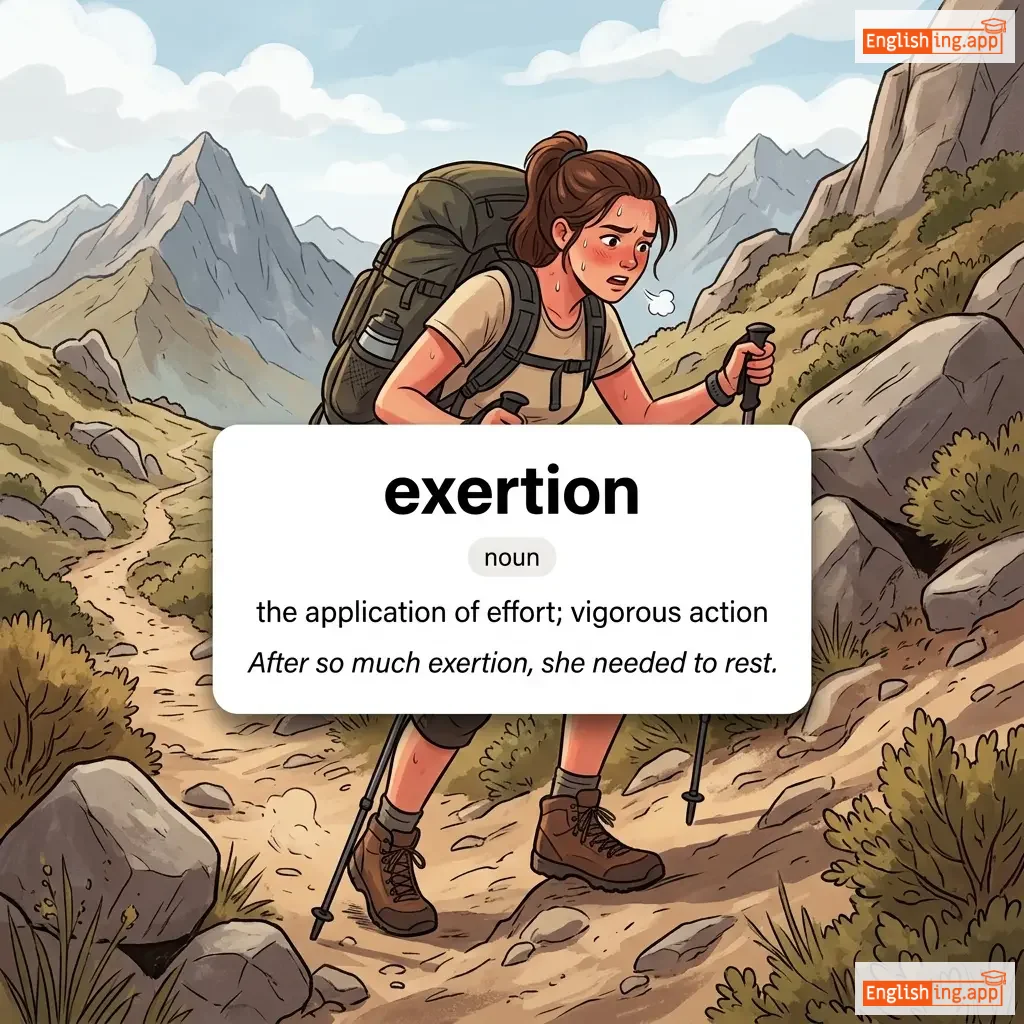
the application of effort; vigorous action
••••••
|
After so much exertion, she needed to rest. |
これほどの努力の後、彼女は休む必要があった。
Kore hodo no doryoku no ato, kanojo wa yasumu hitsuyō ga atta.
••••••
|
- •••••• | - •••••• | - •••••• |
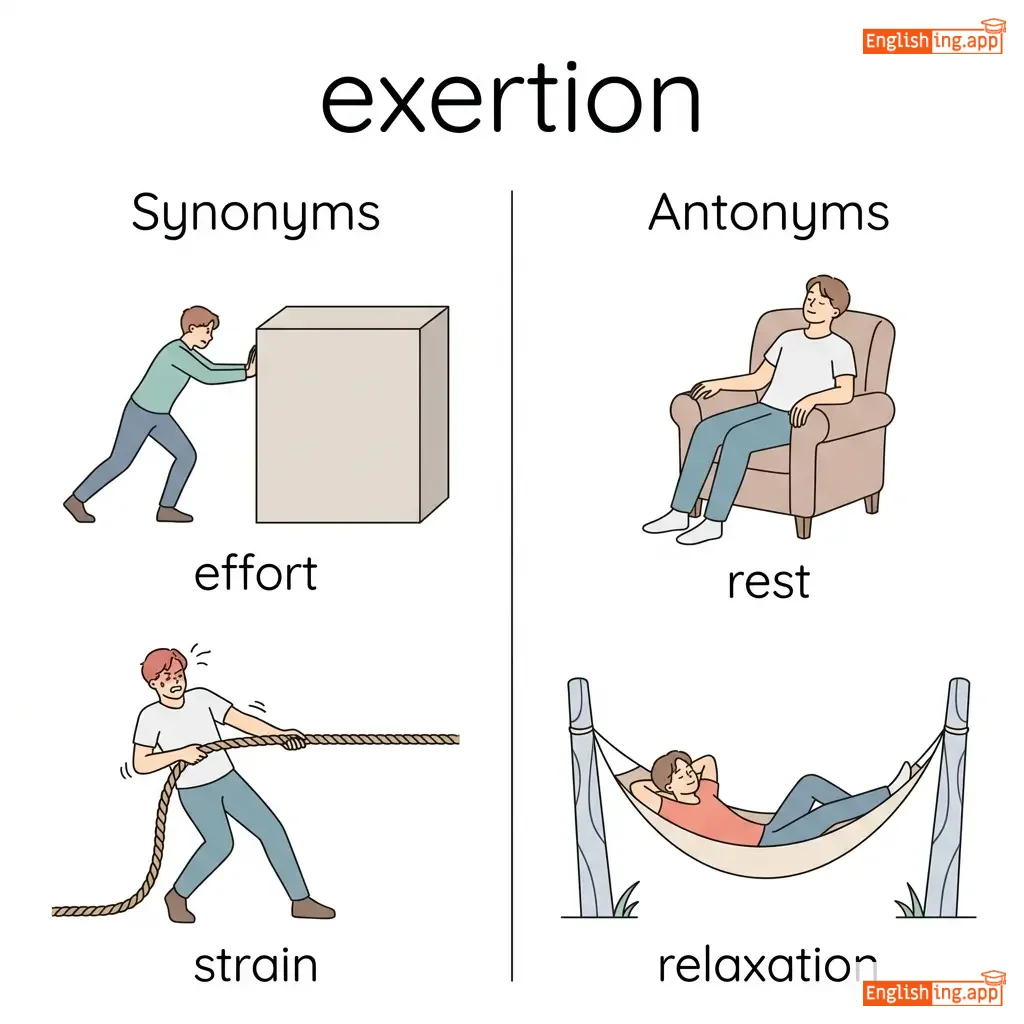
effort, strain, endeavor, struggle
••••••
|
rest, relaxation
••••••
|
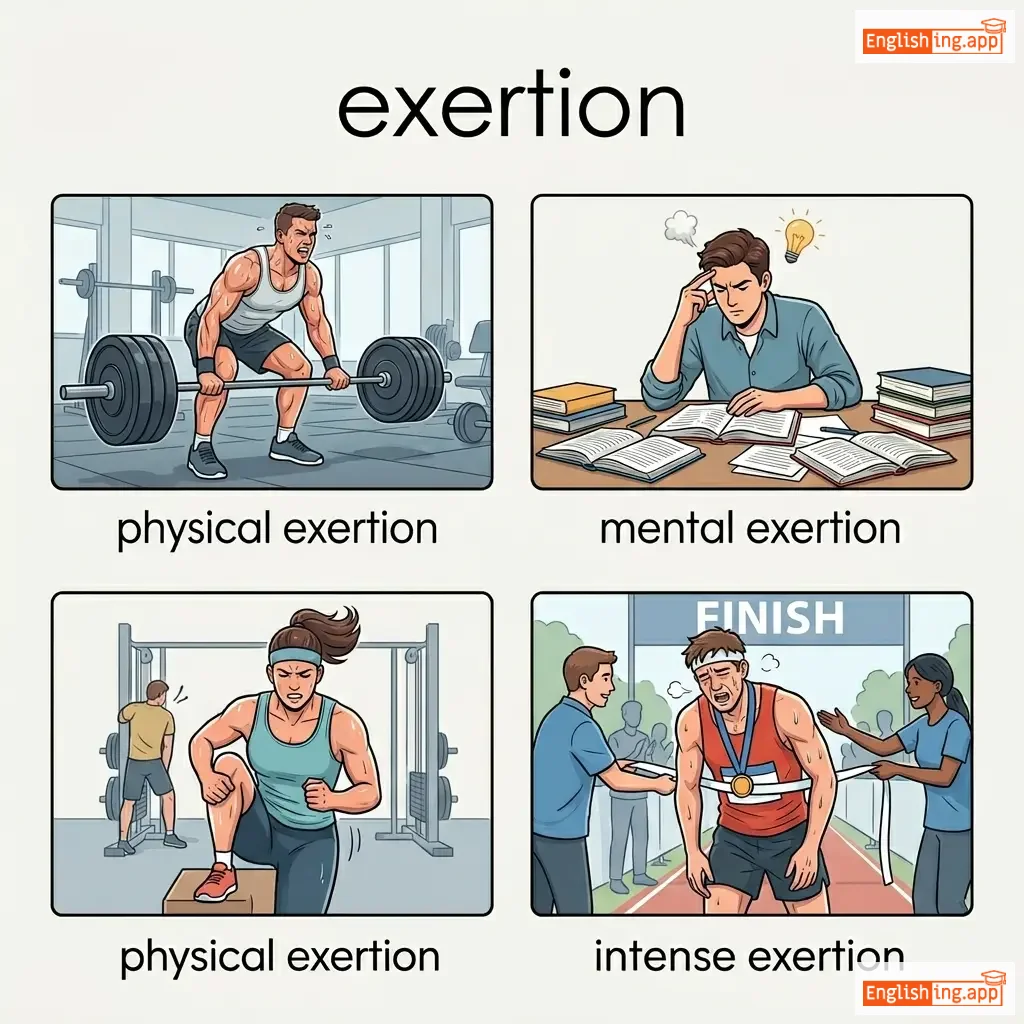
physical exertion, mental exertion, intense exertion
••••••
|
試験には多くの努力 (努力) が必要です。
••••••
|
|
#3235
💪
|
/ɪɡˈzɜːrt/
verb
(エクザート)
••••••
|
|
努力する
doryoku suru
••••••
|
exerted
エクザーテッド
••••••
|
exerted
エクザーテッド
••••••
|
exerts
エクザーツ
••••••
|
exerting
エクザーティング
••••••
|
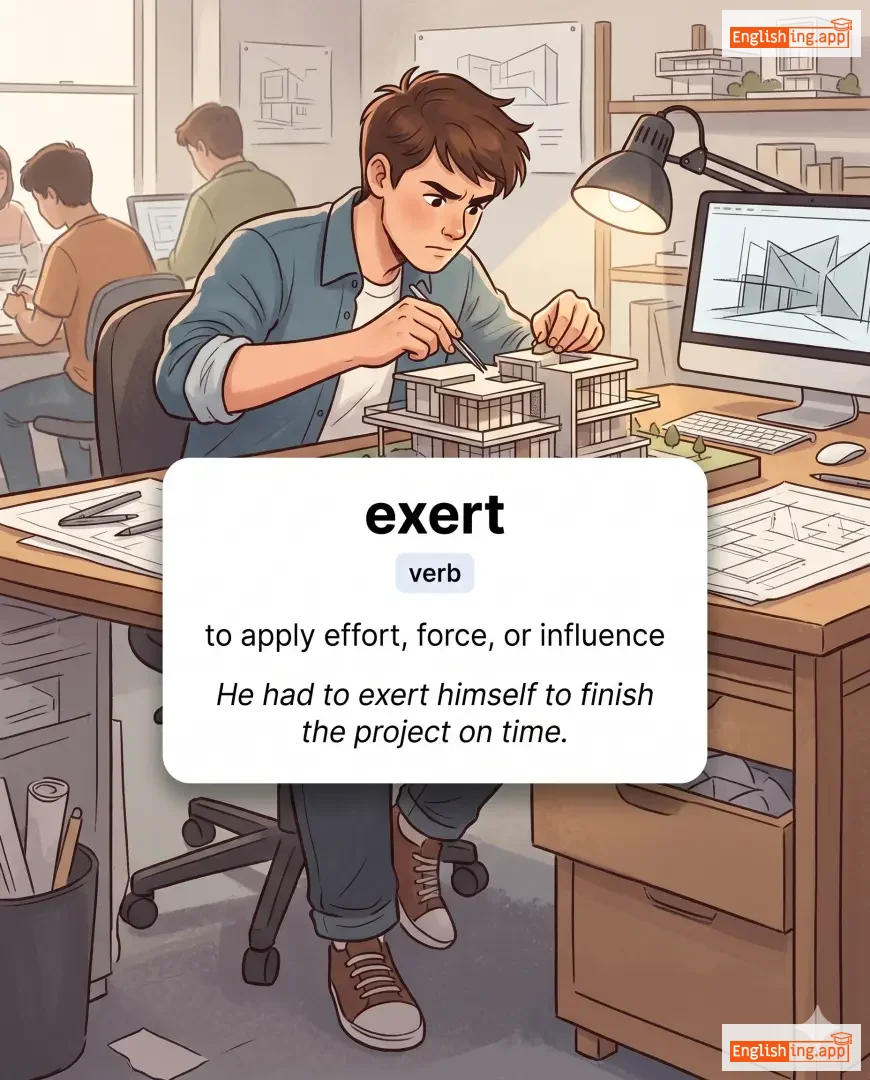
to apply effort, force, or influence
••••••
|
He had to exert himself to finish the project on time.
彼はプロジェクトを時間通りに終わらせるために努力しなければなりませんでした。
••••••
|
彼はプロジェクトを時間通りに終わらせるために努力しなければなりませんでした。
Kare wa purojekuto o jikan-dōri ni owaraseru tame ni doryoku shinakereba narimasen deshita.
••••••
|
exert control
コントロールを行使する
••••••
|
to use power or influence over something or someone
••••••
|
コントロールを行使する
kontorōru o kōshi suru
••••••
|
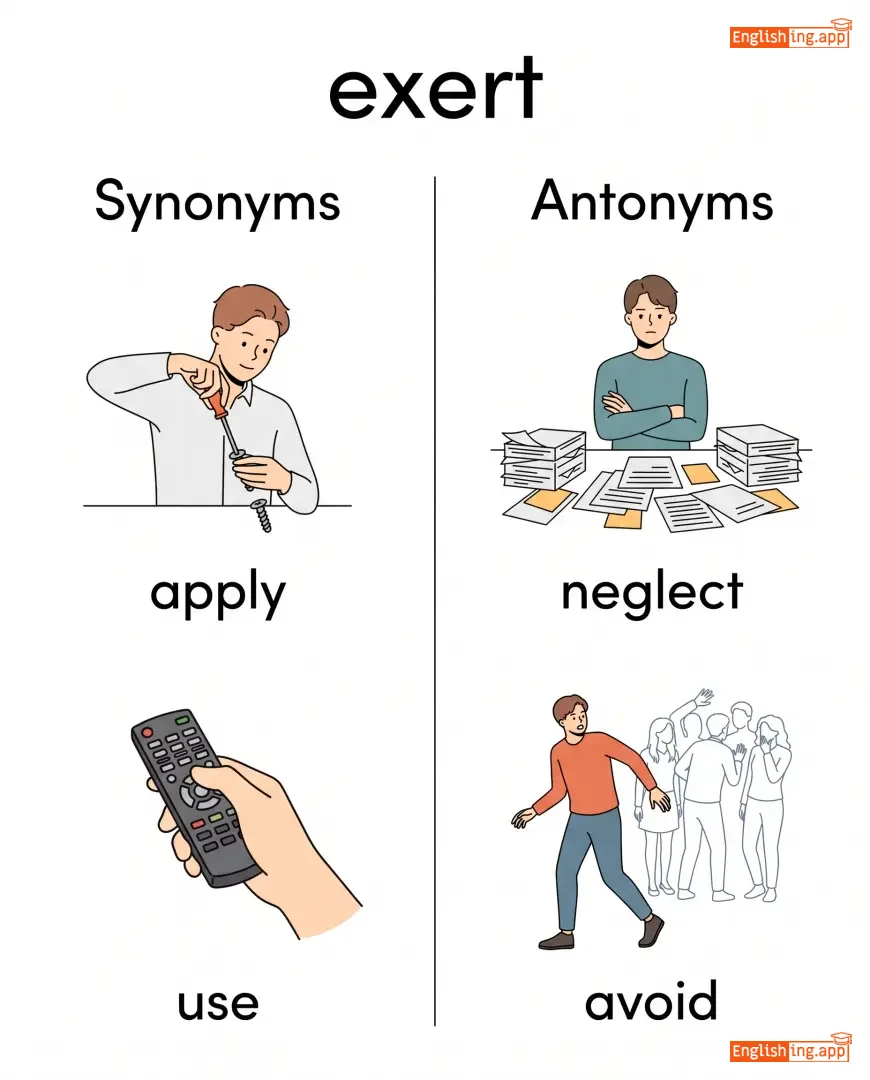
apply, use, exercise, employ, wield
••••••
|
neglect, avoid, ignore
••••••
|
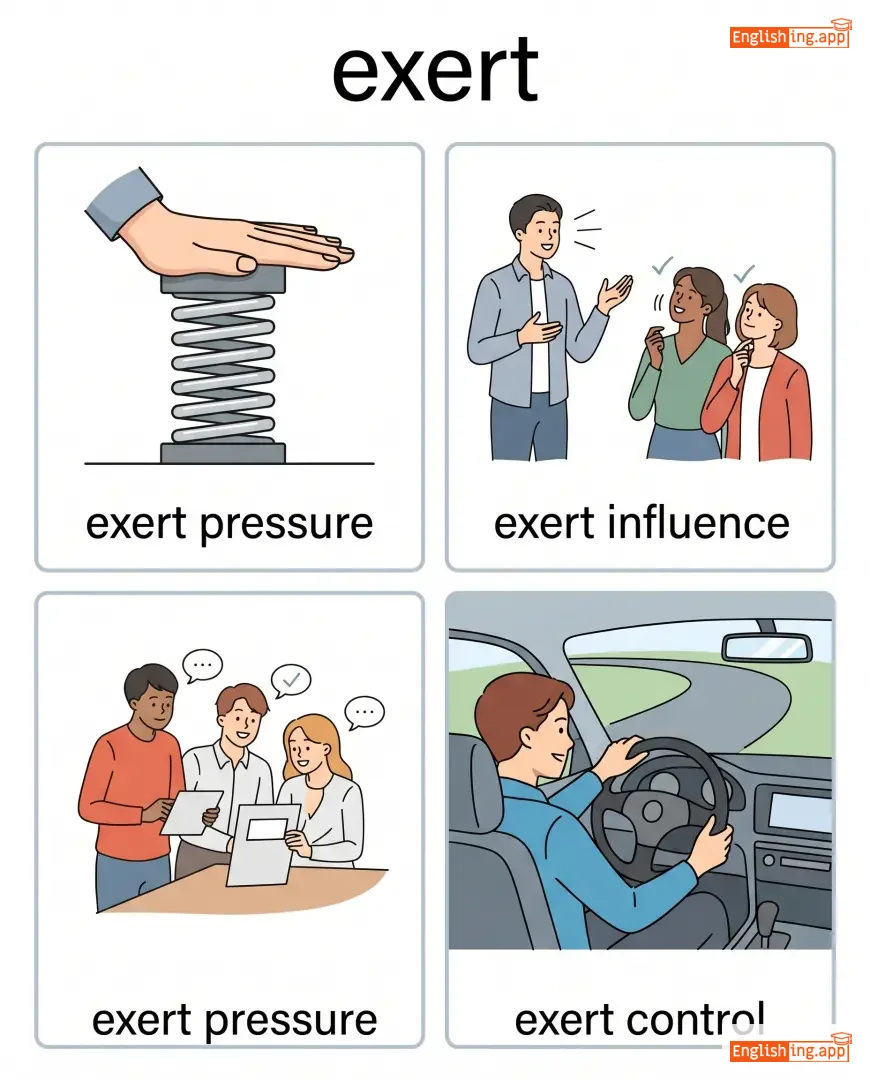
exert pressure, exert influence, exert control, exert effort
••••••
|
EXtra 努力が必要な時は EXert コントロール
••••••
|
|
#3236
✅
|
/ɪɡˈzɛmpt/
adjective, verb
(エグゼンプト)
••••••
|
- •••••• |
免除
menjo
••••••
|
exempted
エグゼンプトッド
••••••
|
exempted
エグゼンプトッド
••••••
|
exempts
エグゼンプツ
••••••
|
exempting
エグゼンプティング
••••••
|
Free from an obligation or liability imposed on others.
••••••
|
Students with high grades are exempt from the final exam.
優秀な成績を収めた学生は、最終試験を免除されます。
••••••
|
優秀な成績を収めた学生は、最終試験を免除されます。
Yūshū na seiseki o osameta gakusei wa, saishū shiken o menjo saremasu.
••••••
|
tax exempt
免税
••••••
|
Not required to pay taxes.
••••••
|
免税
menzei
••••••
|
free, excused, released, absolved
••••••
|
liable, obligated, responsible
••••••
|
exempt from duty, exempt from tax, exempt status
••••••
|
Exemptは試験から免除されることを意味します ✅ — 忘れないで、exempt = 税金免除
••••••
|
|
#3237
📝
|
/ɪɡˈzɛmplɪfaɪ/
verb
(エグゼンプライファイ)
••••••
|
|
例を挙げて説明する
rei wo agete setsumei suru
••••••
|
exemplified
エグゼンプライファイド
••••••
|
exemplified
エグゼンプライファイド
••••••
|
exemplifies
エグゼンプライファイズ
••••••
|
exemplifying
エグゼンプライファイング
••••••
|
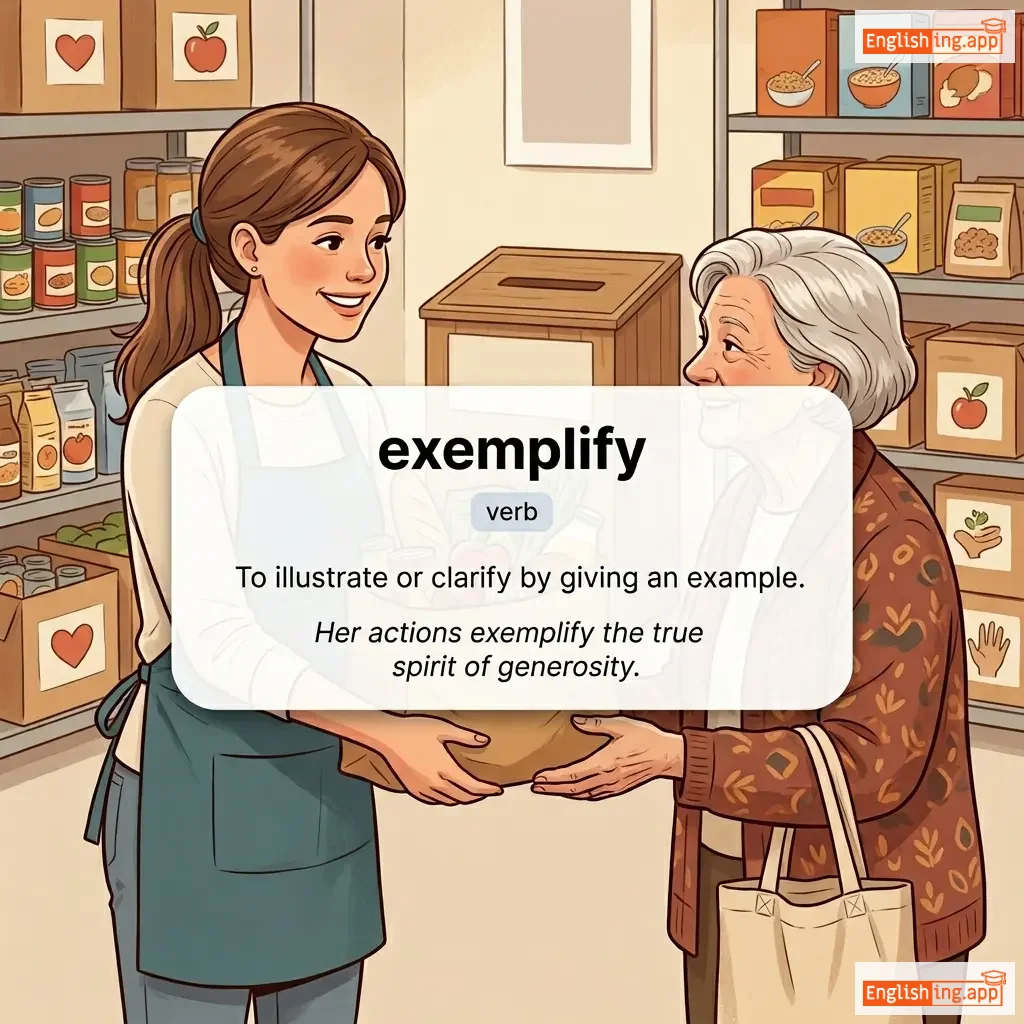
To illustrate or clarify by giving an example.
••••••
|
Her actions exemplify the true spirit of generosity.
彼女の行動は、寛大さの真の精神を例示しています。
••••••
|
彼女の行動は、寛大さの真の精神を例示しています。
Kanojo no kōdō wa, kandai-sa no shin no seishin o reiji shiteimasu.
••••••
|
- •••••• | - •••••• | - •••••• |
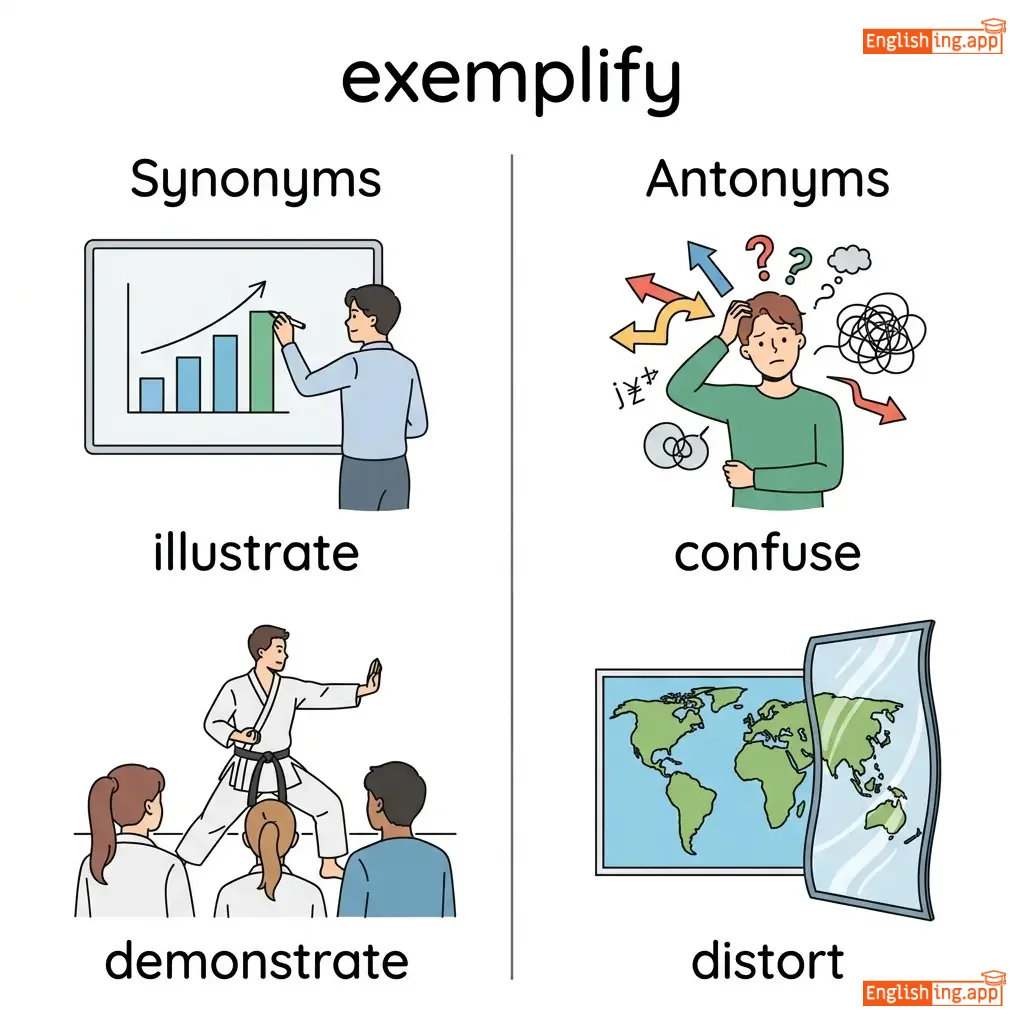
illustrate, demonstrate, embody, typify, represent
••••••
|
confuse, distort
••••••
|
exemplify values, exemplify principles, exemplify courage
••••••
|
Exemplify は例を挙げて説明することを意味します 📝
••••••
|
|
#3238
🏅
|
/ɪɡˈzɛmpləri/
adjective
(イグゼンプラリー)
••••••
|
|
模範的な
mohanteki na
••••••
|
- •••••• | - •••••• | - •••••• | - •••••• |
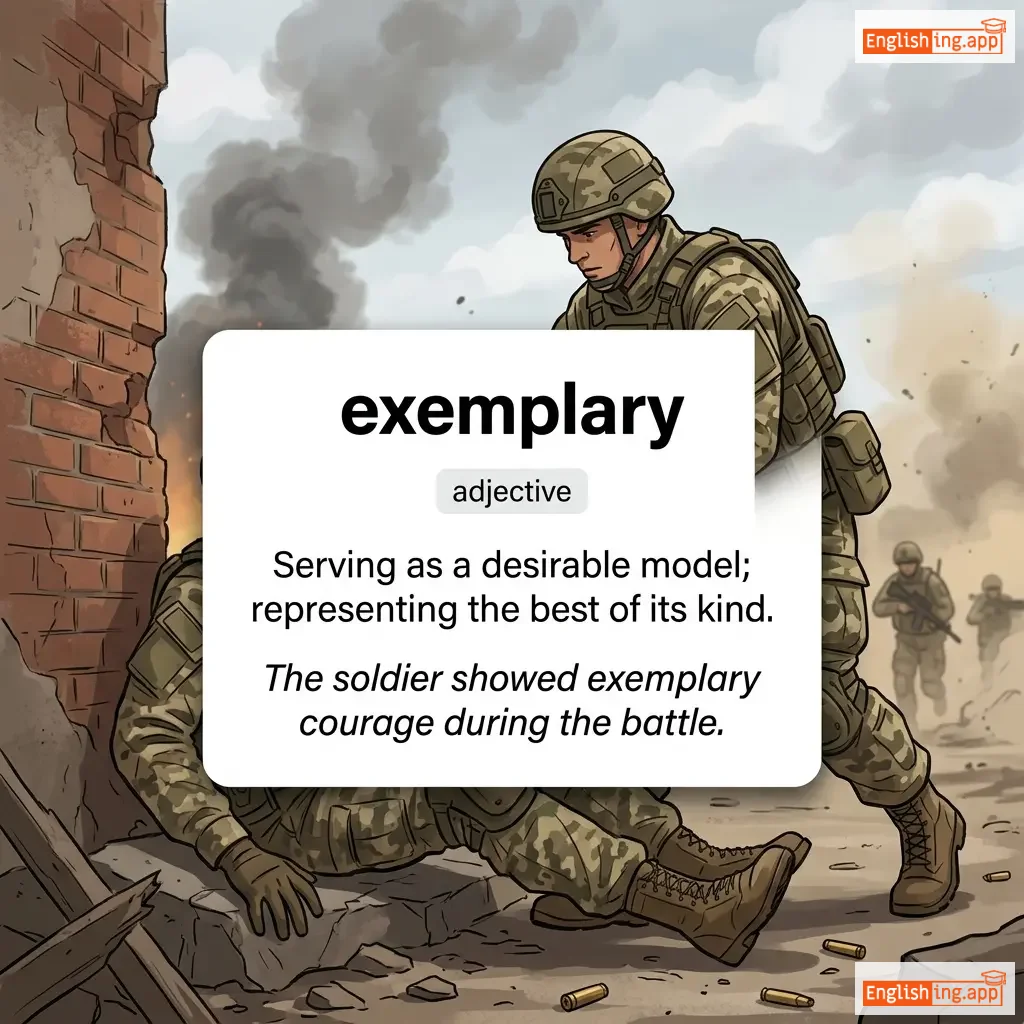
Serving as a desirable model; representing the best of its kind.
••••••
|
The soldier showed exemplary courage during the battle.
兵士は戦闘中に模範的な勇気を示しました。
••••••
|
兵士は戦闘中に模範的な勇気を示しました。
Heishi wa sentō-chū ni mohan-teki na yūki o shimeshimashita.
••••••
|
- •••••• | - •••••• | - •••••• |
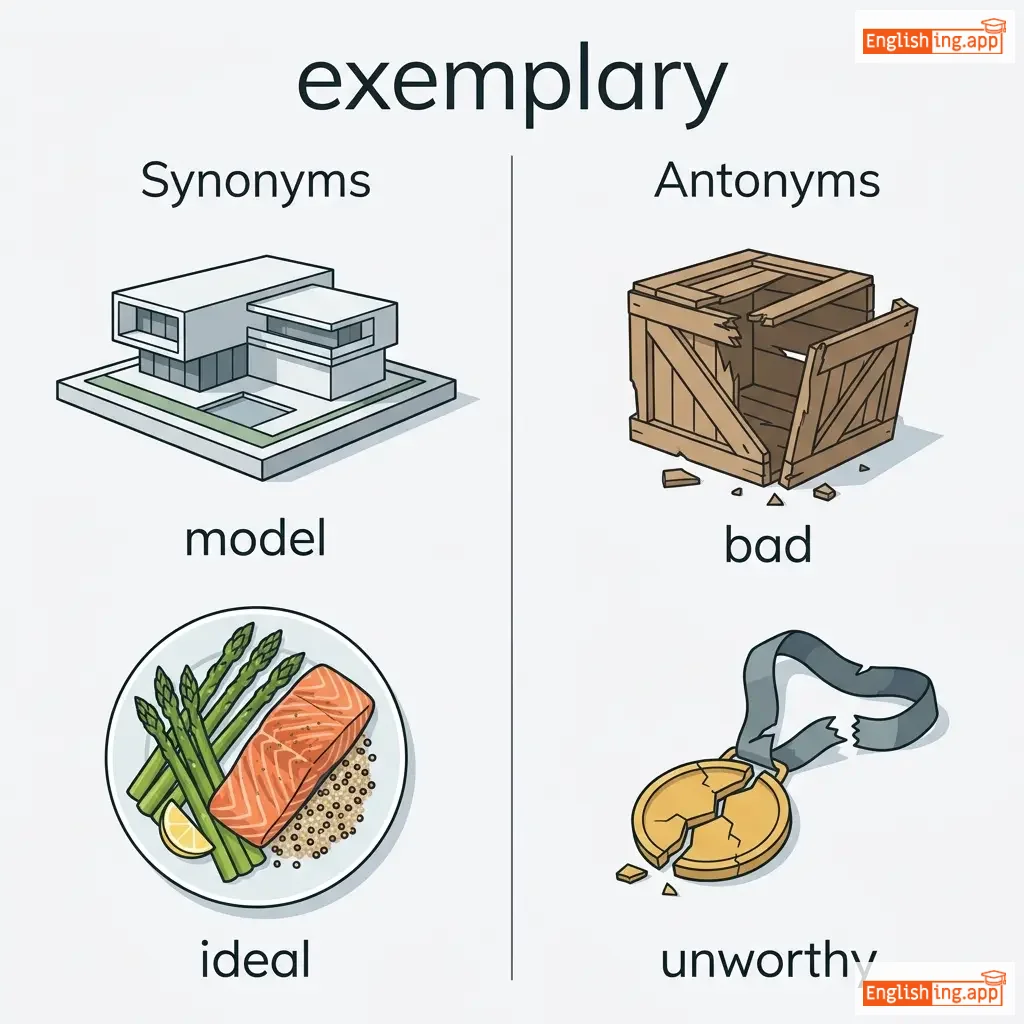
model, ideal, admirable, praiseworthy, outstanding
••••••
|
bad, unworthy, dishonorable
••••••
|
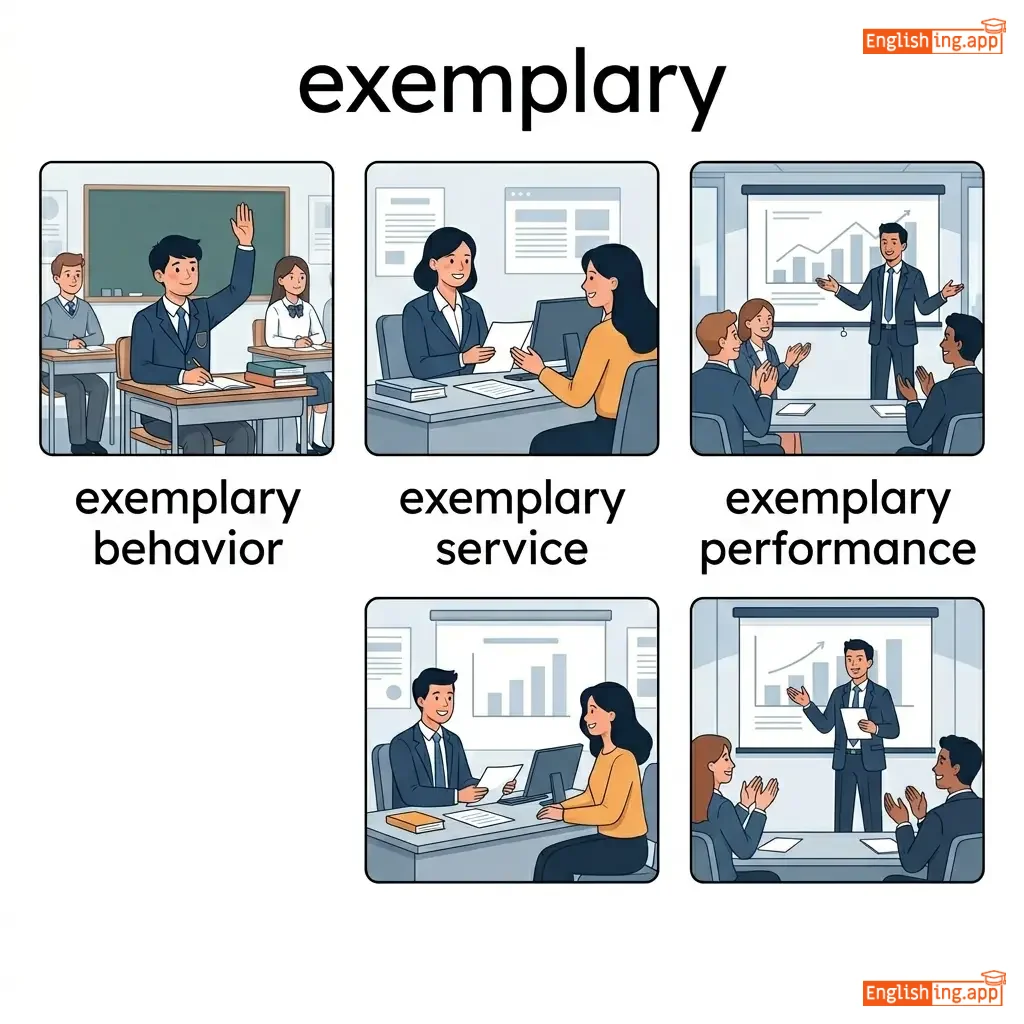
exemplary behavior, exemplary service, exemplary performance
••••••
|
模範的なは最高の例を意味する — 模範的な行動はexemplaryの意味です 🏅
••••••
|
|
#3239
🌟
|
/ɪɡˈzɛmplɑːr/
noun
(egzémplar)
••••••
|
- •••••• |
模範
mohan
••••••
|
- •••••• | - •••••• | - •••••• | - •••••• |
A model or pattern to be copied or imitated.
••••••
|
She is an exemplar of kindness and generosity.
彼女は親切と寛大さの模範です。
••••••
|
彼女は親切と寛大さの模範です。
Kanojo wa shinsetsu to kandai sa no mohan desu.
••••••
|
- •••••• | - •••••• | - •••••• |
model, example, archetype, pattern, ideal
••••••
|
flaw, imperfection
••••••
|
moral exemplar, perfect exemplar, exemplar of virtue
••••••
|
Exemplar は理想的な模範 🌟 — 覚えておいて、exemplar = 完璧な例
••••••
|
|
#3240
📖
|
/ˌɛksəˈdʒiːsɪs/
noun
(エクスジェシス)
••••••
|
- •••••• |
注解
chūkai
••••••
|
- •••••• | - •••••• | - •••••• | - •••••• |
A critical explanation or interpretation of a text, especially a religious scripture.
••••••
|
The professor gave a detailed exegesis of the biblical passage. |
教授は聖書の一節の詳細な注解を提供した。
Kyojū wa seisho no issetsu no shōsai na chūkai o teikyō shita.
••••••
|
- •••••• | - •••••• | - •••••• |
interpretation, analysis, commentary, elucidation, explanation
••••••
|
misinterpretation, distortion
••••••
|
biblical exegesis, literary exegesis, detailed exegesis, critical exegesis
••••••
|
Exegesis = テキストの追加説明 📖
••••••
|
Vocabulary Quiz
Test your vocabulary by matching words with their translations or meanings.
Login to take the quiz
Comments (0)
Share your thoughts and join the discussion.
Join the discussion by logging in
Login to CommentNo comments yet
Be the first to share your thoughts!