

翻訳
過去
過去分詞
三人称単数
動名詞
意味
例文
例文の翻訳
同義語
対義語
コロケーション
ニーモニック
Swipe left or right, or use the buttons. Tap image to zoom.
例文の翻訳
単語
Lesson 86Lesson 86 - マスクトグル
|
絵文字
|
単語 | Images | 翻訳 | 過去 | 過去分詞 | 三人称単数 | 動名詞 | 意味 | 例文 | 例文の翻訳 | 表現例 | 表現例の意味 | 表現例の翻訳 | 同義語 | 対義語 | コロケーション | ニーモニック |
|---|---|---|---|---|---|---|---|---|---|---|---|---|---|---|---|---|---|
|
#2551
🐎
|
/ˌdɪsˈmaʊnt/
verb
(ディスマウント)
••••••
|
- •••••• |
降りる
oriru
••••••
|
dismounted
ディスマウントッド
••••••
|
dismounted
ディスマウントッド
••••••
|
dismounts
ディスマウントス
••••••
|
dismounting
ディスマウンティング
••••••
|
to get off or down from something, especially a horse, bicycle, or motorcycle
••••••
|
The rider dismounted from the horse after a long journey.
ザ・ライダー・ディスマウントッド・フロム・ザ・ホース・アフター・ア・ロング・ジャーニー。
••••••
|
長い旅の後、ライダーは馬から降りた。
Nagai tabi no ato, raidā wa uma kara orita.
••••••
|
- •••••• | - •••••• | - •••••• |
get off, alight, descend, step down
••••••
|
mount, board
••••••
|
dismount from, safely dismount, dismount quickly
••••••
|
Dismount: 馬から降りること、長旅の後に降りること。
••••••
|
|
#2552
🌱
|
/dɪˈspɜːrʒən/
noun
(ディスパーション)
••••••
|
- •••••• |
分散
bunsan
••••••
|
- •••••• | - •••••• | - •••••• | - •••••• |
The action or process of distributing things or people over a wide area.
••••••
|
The dispersion of seeds by the wind helps plants reproduce.
風による種子の散布は、植物の繁殖を助けます。
••••••
|
風による種子の散布は、植物の繁殖を助けます。
Kaze ni yoru shushi no sanpu wa, shokubutsu no hanshoku wo tasukemasu.
••••••
|
- •••••• | - •••••• | - •••••• |
distribution, scattering, diffusion, dissemination, spreading
••••••
|
concentration, gathering, collection
••••••
|
light dispersion, dispersion of seeds, dispersion pattern, dispersion effect
••••••
|
分散は風による種子のように広がることです。
••••••
|
|
#2553
🌌
|
/dɪˈspɜːrst/
adjective
(ディスパースド)
••••••
|
- •••••• |
散らばった
chirabatta
••••••
|
- •••••• | - •••••• | - •••••• | - •••••• |
Scattered or spread across a wide area.
••••••
|
The dispersed population made it difficult to provide public services. |
散らばった人口は公共サービスの提供を困難にしました。
Chirabatta jinkou wa koukyou saabisu no teikyou o konnan ni shimashita.
••••••
|
- •••••• | - •••••• | - •••••• |
scattered, spread, distributed, diffused, dissipated
••••••
|
concentrated, gathered, clustered
••••••
|
dispersed population, dispersed group, widely dispersed, dispersed particles
••••••
|
散らばったは広がっていることを意味する — '散らばった人口'のように、散らばった人口。
••••••
|
|
#2554
🌬️
|
/dɪˈspɜːrs/
verb
(ディスパース)
••••••
|
- •••••• |
解散する
kaisansuru
••••••
|
dispersed
ディスパースド
••••••
|
dispersed
ディスパースド
••••••
|
disperses
ディスパースズ
••••••
|
dispersing
ディスパースイング
••••••
|
To scatter or spread widely in different directions.
••••••
|
The police used tear gas to disperse the crowd.
警察は群衆を解散させるために催涙ガスを使用しました。
••••••
|
警察は群衆を解散させるために催涙ガスを使用しました。
Keisatsu wa gunshū o kaisan saseru tame ni sairu gasu o shiyō shimashita.
••••••
|
- •••••• | - •••••• | - •••••• |
scatter, spread, diffuse, dissipate, distribute
••••••
|
gather, assemble, collect
••••••
|
disperse a crowd, disperse quickly, disperse smoke, disperse seeds
••••••
|
Disperse は解散するを意味する — Disperse crowd は群衆を解散させることを意味する。
••••••
|
|
#2555
💊
|
/dɪˈspɛns/
verb
(ディスペンス)
••••••
|
- •••••• |
配布する
haifu suru
••••••
|
dispensed
ディスペンスド
••••••
|
dispensed
ディスペンスド
••••••
|
dispenses
ディスペンセス
••••••
|
dispensing
ディスペンシング
••••••
|
To distribute or provide something, especially in portions.
••••••
|
The machine dispenses clean drinking water.
その機械は清潔な飲料水を供給します。
••••••
|
その機械は清潔な飲料水を供給します。
Sono kikai wa seiketsu na inryō mizu o kyōkyū shimasu.
••••••
|
dispense with
ディスペンス ウィズ
••••••
|
To manage without something or do without.
••••••
|
省略する
shōryaku suru
••••••
|
distribute, allocate, deliver, provide, supply
••••••
|
withhold, retain, keep
••••••
|
dispense justice, dispense medicine, dispense advice, dispense with
••••••
|
Dispenseは配布すること、まるで飲み物を配布する機械のようです。
••••••
|
|
#2556
📜
|
/ˌdɪspɛnˈseɪʃən/
noun
••••••
|
- •••••• | - •••••• | - •••••• | - •••••• | - •••••• | - •••••• |
An exemption from a rule or usual requirement; a system of order, government, or control.
••••••
|
The school granted him a special dispensation to skip the exam due to illness. |
- •••••• | - •••••• | - •••••• | - •••••• |
exemption, allowance, privilege, immunity, authorization
••••••
|
restriction, prohibition, obligation
••••••
|
special dispensation, royal dispensation, papal dispensation, grant dispensation
••••••
|
No •••••• |
|
#2557
🌬️
|
/dɪˈspɛl/
verb
(ディスペル)
••••••
|
- •••••• |
解消する
kaishou suru
••••••
|
dispelled
ディスペルド
••••••
|
dispelled
ディスペルド
••••••
|
dispels
ディスペルズ
••••••
|
dispelling
ディスペリング
••••••
|
to make a doubt, feeling, or belief disappear
••••••
|
The teacher's explanation dispelled the students' confusion.
先生の説明は学生たちの混乱を解消しました。
••••••
|
先生の説明は学生たちの混乱を解消しました。
Sensei no setsumei wa gakusei-tachi no konran wo kaishou shimashita.
••••••
|
dispel doubts
疑問を解消する
••••••
|
to remove uncertainty or disbelief
••••••
|
疑問を解消する
gimon wo kaishou suru
••••••
|
banish, eliminate, dismiss, drive away, eradicate
••••••
|
gather, accept, keep
••••••
|
dispel doubts, dispel rumors, dispel fears, dispel confusion
••••••
|
Dispelは解消するという意味です。
••••••
|
|
#2558
📦
|
/dɪˈspætʃ/
verb
(ディスパッチ)
••••••
|
- •••••• |
送る
okuru
••••••
|
dispatched
ディスパッチド
••••••
|
dispatched
ディスパッチド
••••••
|
dispatches
ディスパッチズ
••••••
|
dispatching
ディスパッチング
••••••
|
to send off to a destination or for a purpose
••••••
|
The company dispatched aid to the flood victims.
その会社は洪水の被害者に援助を発送しました。
••••••
|
その会社は洪水の被害者に援助を発送しました。
Sono kaisha wa kouzui no higaisha ni enjo o hassou shimashita.
••••••
|
dispatch a message
メッセージを送信する
••••••
|
to send a communication quickly
••••••
|
メッセージを送信する
Messeeji o soushin suru
••••••
|
send, transmit, forward, deliver, deploy
••••••
|
retain, hold, keep
••••••
|
dispatch troops, dispatch goods, dispatch aid, dispatch immediately
••••••
|
Dispatch = ディスパッチ — パッケージを送る
••••••
|
|
#2559
😐
|
/dɪsˈpæʃənət/
adjective
(ディスパッションネット)
••••••
|
- •••••• |
冷静な
reiseina
••••••
|
- •••••• | - •••••• | - •••••• | - •••••• |
not influenced by strong emotion; impartial
••••••
|
The judge remained dispassionate throughout the trial.
裁判官は裁判全体を通して冷静さを保ちました。
••••••
|
裁判官は裁判全体を通して冷静さを保ちました。
Saibankan wa saiban zentai o tōshite reisei-sa o tamochimashita.
••••••
|
- •••••• | - •••••• | - •••••• |
calm, impartial, objective, neutral, detached
••••••
|
emotional, biased, passionate
••••••
|
dispassionate analysis, dispassionate observer, dispassionate approach, dispassionate judgment
••••••
|
Dis + Passionate = 情熱なし — 冷静な判断
••••••
|
|
#2560
⚖️
|
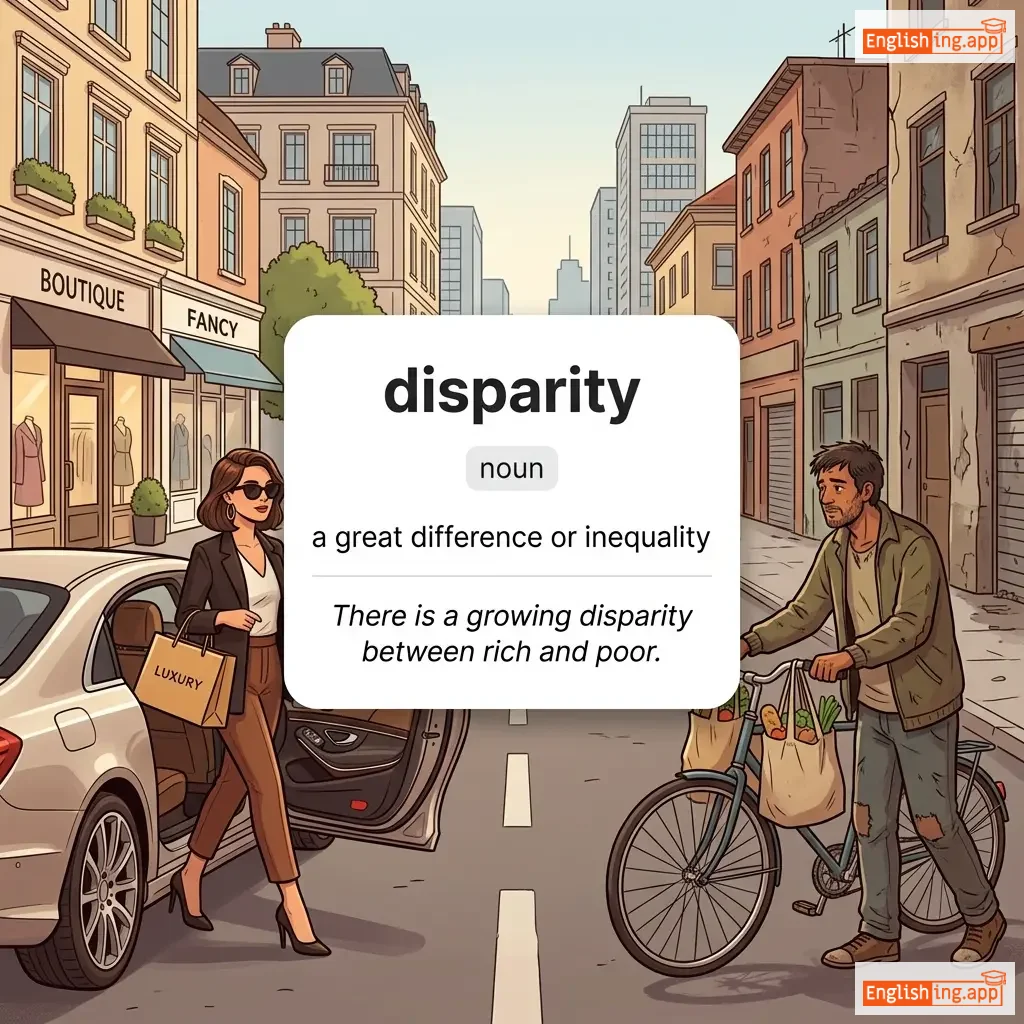
/dɪˈspærəti/
noun
(ディスパリティ)
••••••
|
|
格差
kakusa
••••••
|
- •••••• | - •••••• | - •••••• | - •••••• |
a great difference or inequality
••••••
|
There is a growing disparity between rich and poor. |
裕福な人々と貧しい人々の間に増大する格差があります。
Yūfukuna hitobito to mazushī hitobito no aida ni zōdai suru kakusa ga arimasu.
••••••
|
income disparity |
the inequality of income distribution among individuals or groups
••••••
|
所得格差
shotoku kakusa
••••••
|
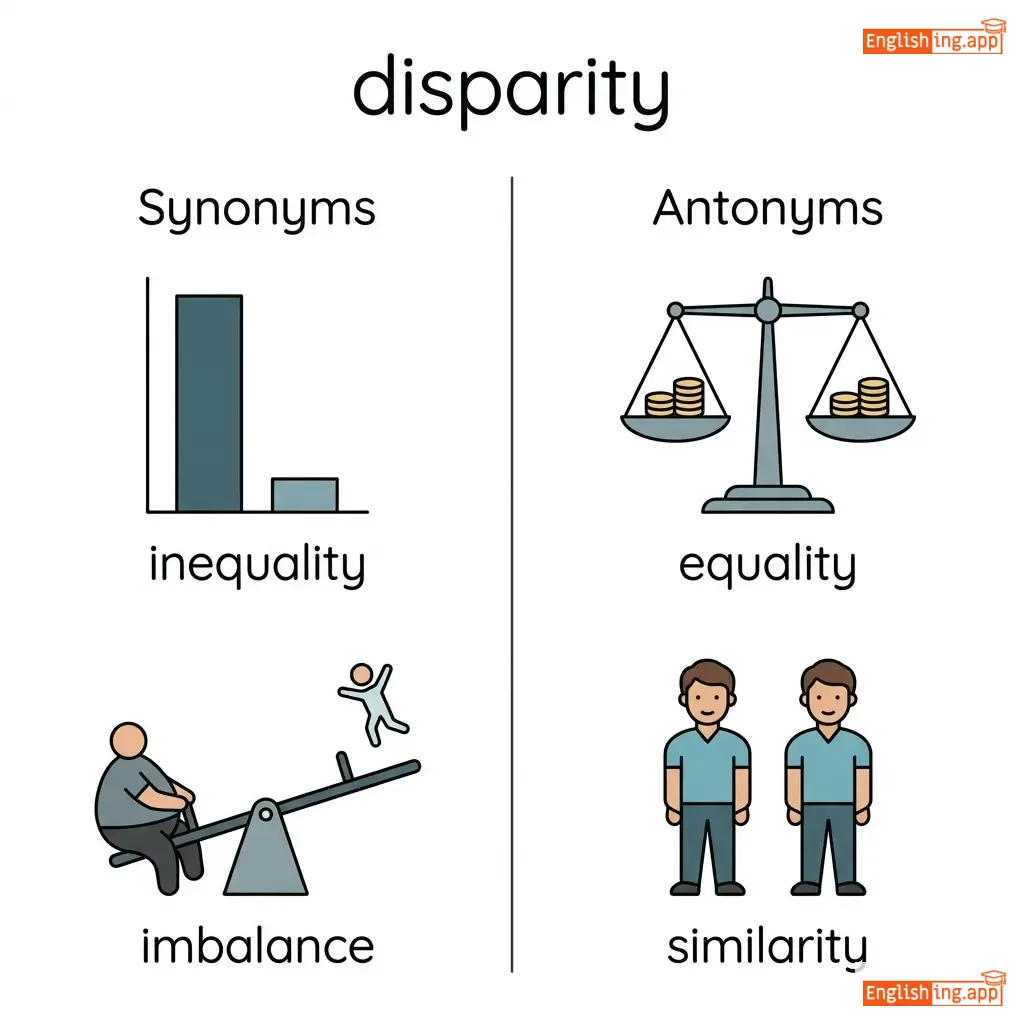
inequality, imbalance, gap, divergence, discrepancy
••••••
|
equality, similarity, balance
••••••
|
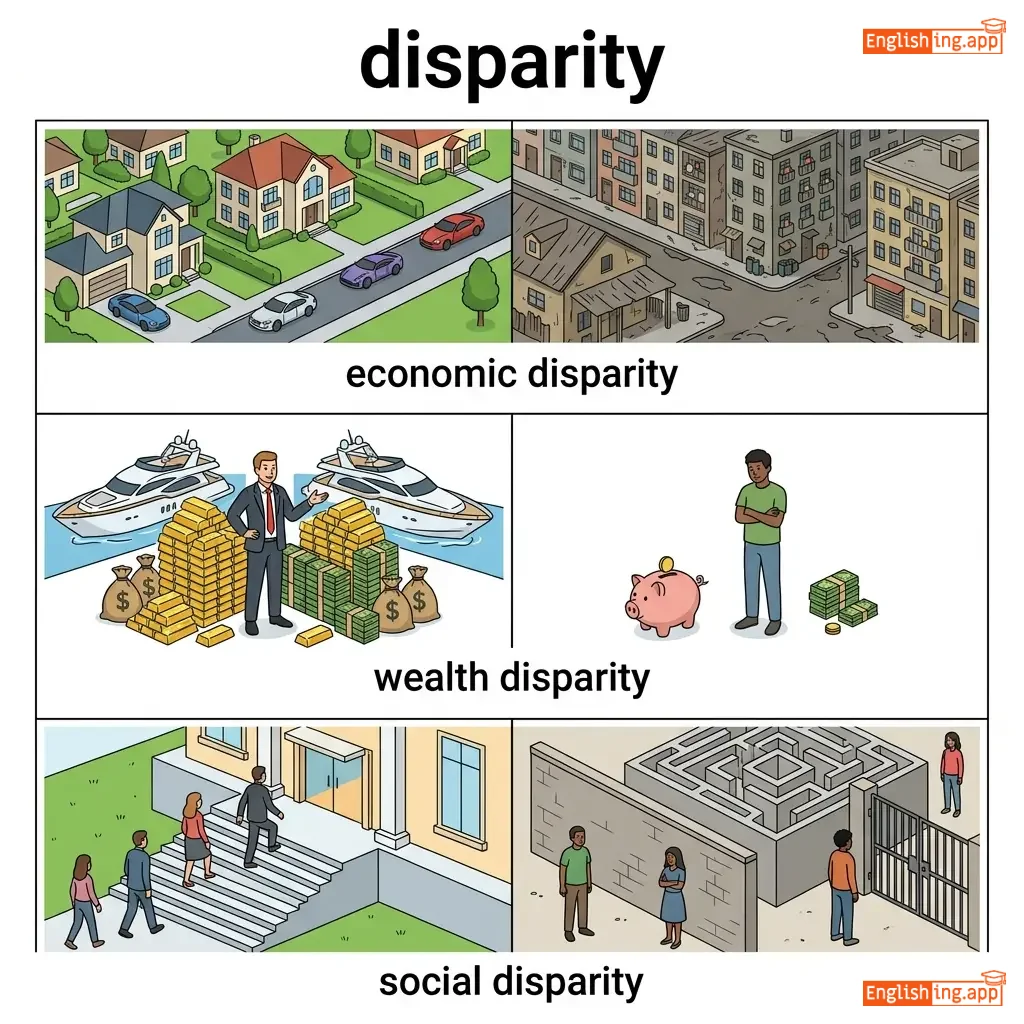
economic disparity, wealth disparity, social disparity, income disparity
••••••
|
Disparity: 'dis' (difference) と 'parity' (equality) から不平等を連想する.
••••••
|
|
#2561
🔀
|
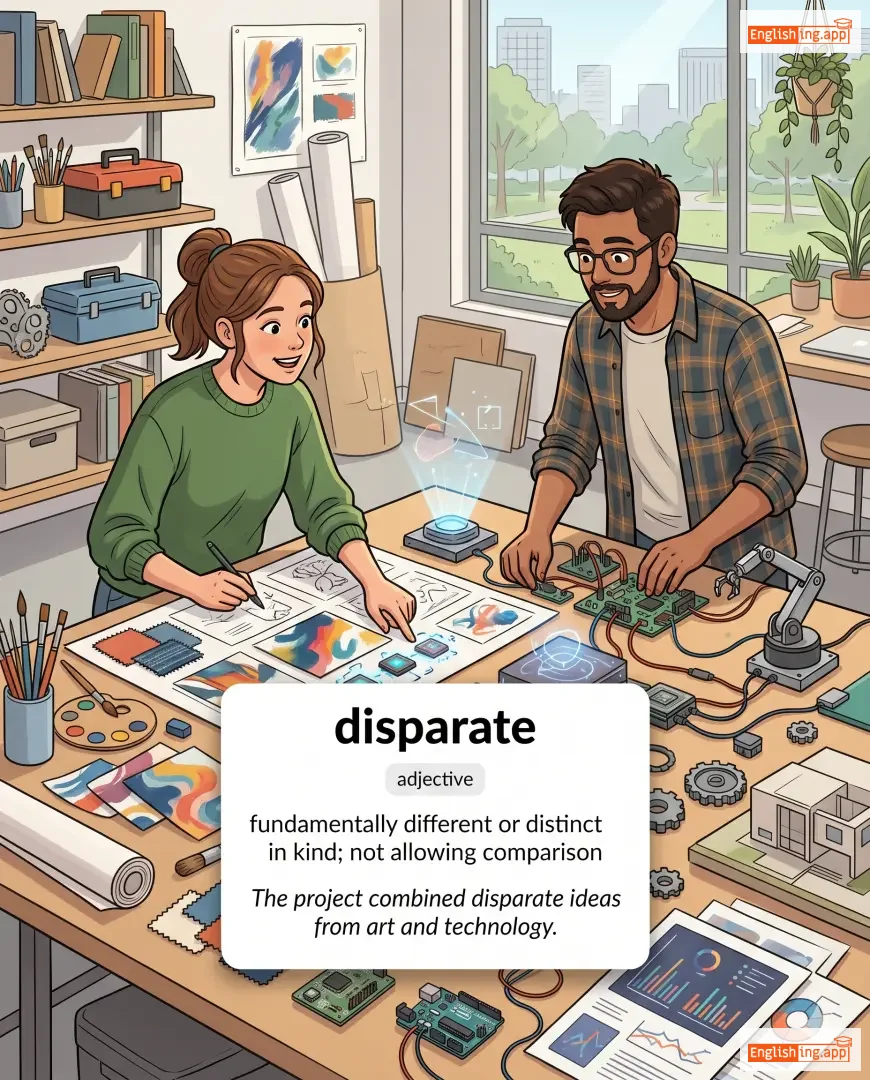
/ˈdɪspərət/
adjective
(ディスパレート)
••••••
|
|
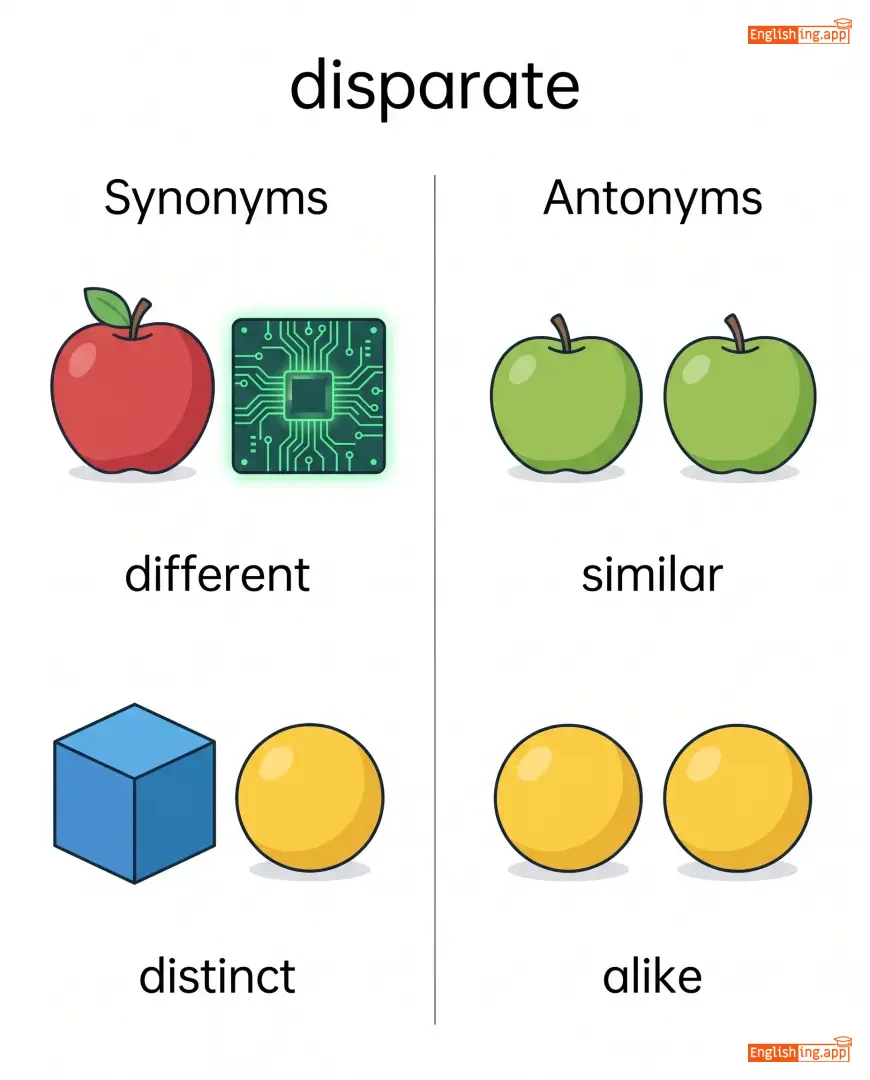
異なる
kotonaru
••••••
|
- •••••• | - •••••• | - •••••• | - •••••• |
fundamentally different or distinct in kind; not allowing comparison
••••••
|
The project combined disparate ideas from art and technology. |
そのプロジェクトは、アートと技術の異なるアイデアを組み合わせました。
Sono purojekuto wa, āto to gijutsu no kotonaru aidea o kumiawase mashita.
••••••
|
- •••••• | - •••••• | - •••••• |
different, distinct, contrasting, diverse, varied
••••••
|
similar, alike, uniform
••••••
|
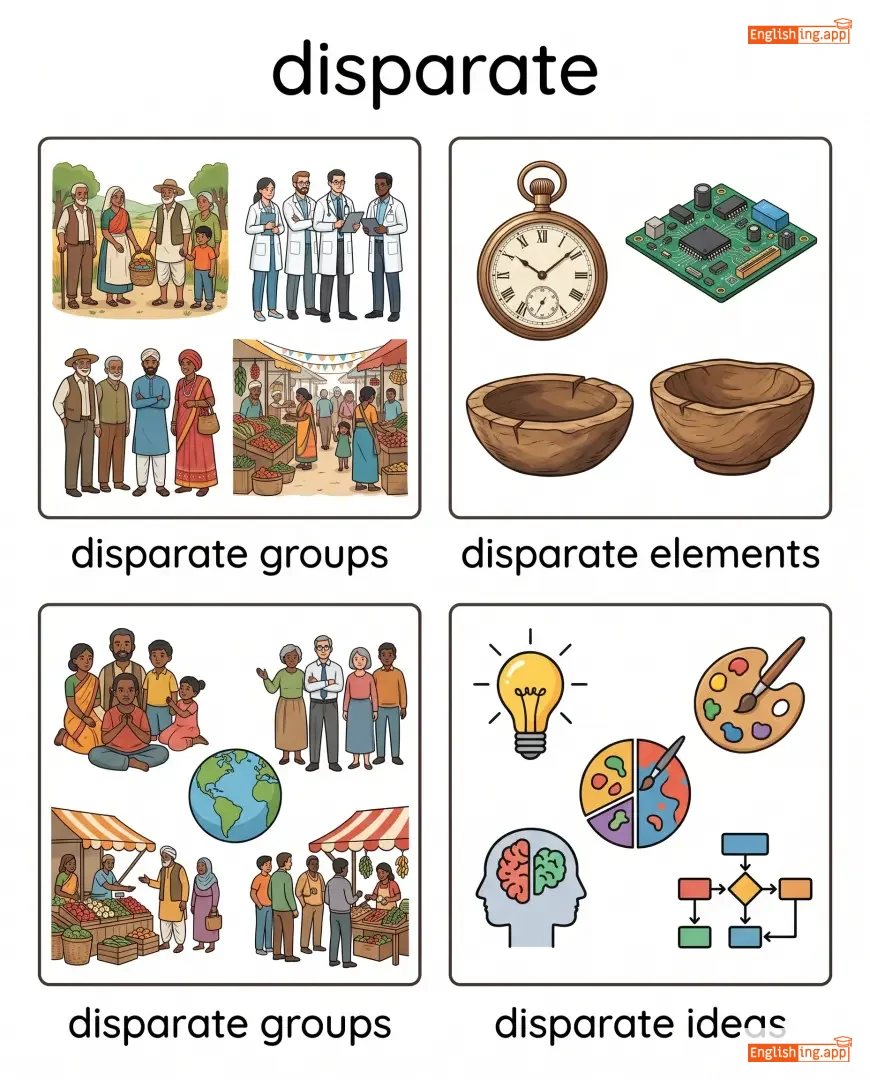
disparate groups, disparate elements, disparate ideas, disparate backgrounds
••••••
|
Disparate は、異なるアイデアを一緒に持ってくることです。
••••••
|
|
#2562
🗣️
|
/dɪsˈpærɪdʒ/
verb
••••••
|
|
- •••••• |
disparaged
••••••
|
disparaged
••••••
|
disparages
••••••
|
disparaging
••••••
|
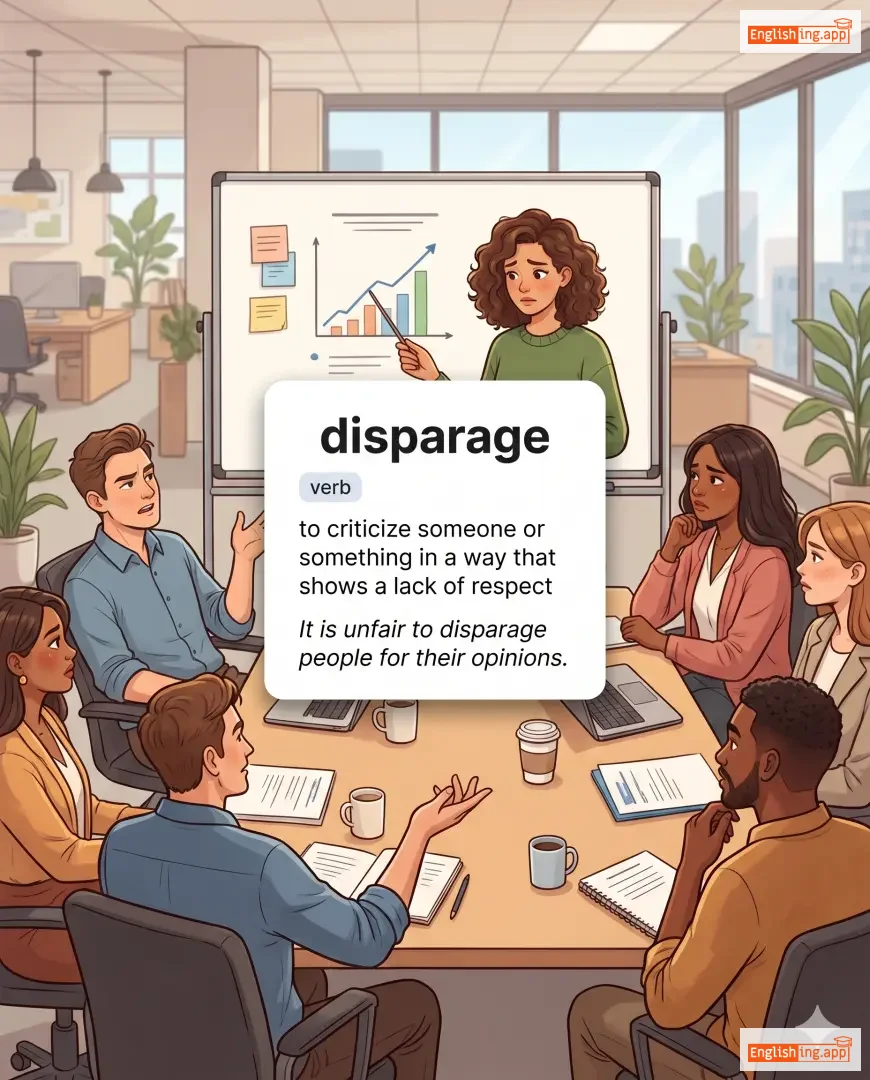
to criticize someone or something in a way that shows a lack of respect
••••••
|
It is unfair to disparage people for their opinions. |
- •••••• |
disparage someone's efforts |
to belittle or undervalue what someone has done
••••••
|
- •••••• |
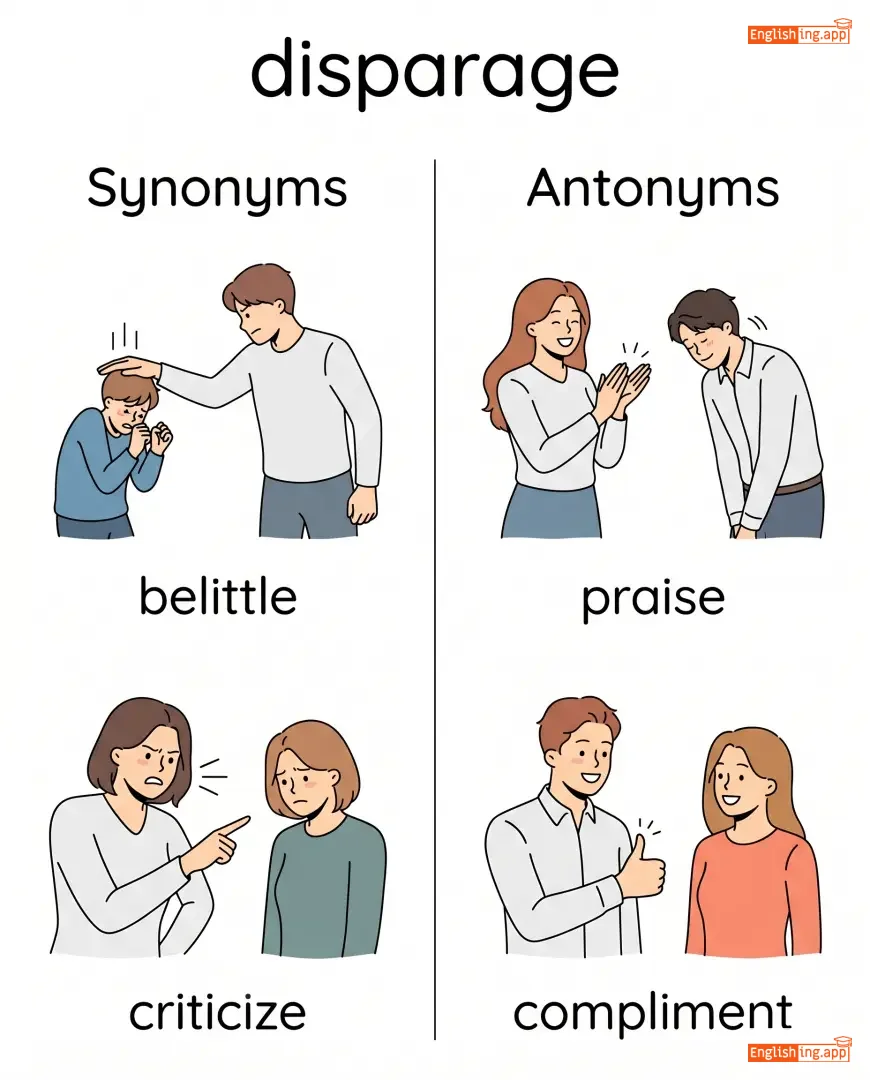
belittle, criticize, denigrate, undervalue, ridicule
••••••
|
praise, compliment
••••••
|
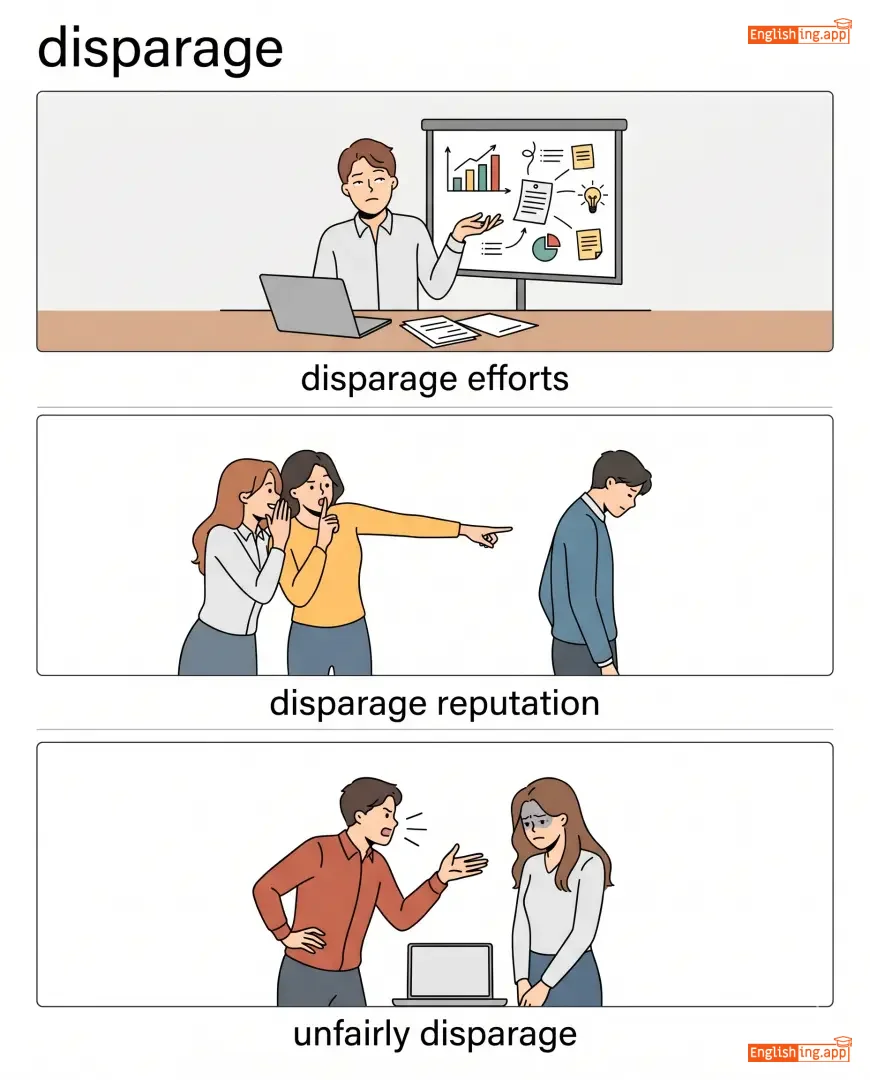
disparage efforts, disparage reputation, unfairly disparage
••••••
|
No •••••• |
|
#2563
❌
|
/dɪsˈoʊn/
verb
(ディスオウン)
••••••
|
- •••••• |
拒絶する
kyozetsu suru
••••••
|
disowned
ディスオウンド
••••••
|
disowned
ディスオウンド
••••••
|
disowns
ディスオウンズ
••••••
|
disowning
ディスオウニング
••••••
|
to refuse to acknowledge or accept responsibility for someone or something
••••••
|
He decided to disown his reckless brother.
彼は無謀な兄を拒絶する決断をしました。
••••••
|
彼は無謀な兄を拒絶する決断をしました。
Kare wa mubou na ani wo kyozetsu suru ketsudan wo shimashita.
••••••
|
- •••••• | - •••••• | - •••••• |
reject, renounce, abandon, repudiate
••••••
|
accept, acknowledge
••••••
|
disown responsibility, disown a child, disown publicly
••••••
|
拒絶する = disown 彼を無謀な兄から拒絶する
••••••
|
|
#2564
🙅
|
/ˌdɪsəˈbiːdiənt/
adjective
(ディソビディエント)
••••••
|
- •••••• |
不従順な
fujōjun na
••••••
|
- •••••• | - •••••• | - •••••• | - •••••• |
refusing or failing to obey rules or authority
••••••
|
The teacher scolded the disobedient students. |
教師は不従順な生徒を叱った。
Kyōshi wa fujōjun na seito o shikatta.
••••••
|
- •••••• | - •••••• | - •••••• |
defiant, rebellious, unruly, insubordinate
••••••
|
obedient, compliant
••••••
|
disobedient child, disobedient behavior, scold disobedient
••••••
|
従順はルールに従うことを意味し、不従順はそれに従わないこと – 不従順な
••••••
|
|
#2565
🚫
|
/ˌdɪsəˈbiːdiəns/
noun
(ディスオビディエンス)
••••••
|
- •••••• |
不従順
fujūjun
••••••
|
- •••••• | - •••••• | - •••••• | - •••••• |
failure or refusal to obey rules, laws, or authority
••••••
|
The child's disobedience worried his parents. |
子供の不従順は両親を心配させました。
Kodomo no fujūjun wa ryōshin o shinpai sasemashita.
••••••
|
- •••••• | - •••••• | - •••••• |
defiance, insubordination, rebellion, noncompliance
••••••
|
obedience, compliance
••••••
|
act of disobedience, punish disobedience, child disobedience
••••••
|
Disobedience = 'Dis' + 'Obedience' – 規則に従わない、不従順
••••••
|
|
#2566
😏
|
/ˌdɪsɪnˈdʒɛnjʊəs/
adjective
(ディシンジェニュアス)
••••••
|
|
不誠実な
fuseijitsuna
••••••
|
- •••••• | - •••••• | - •••••• | - •••••• |
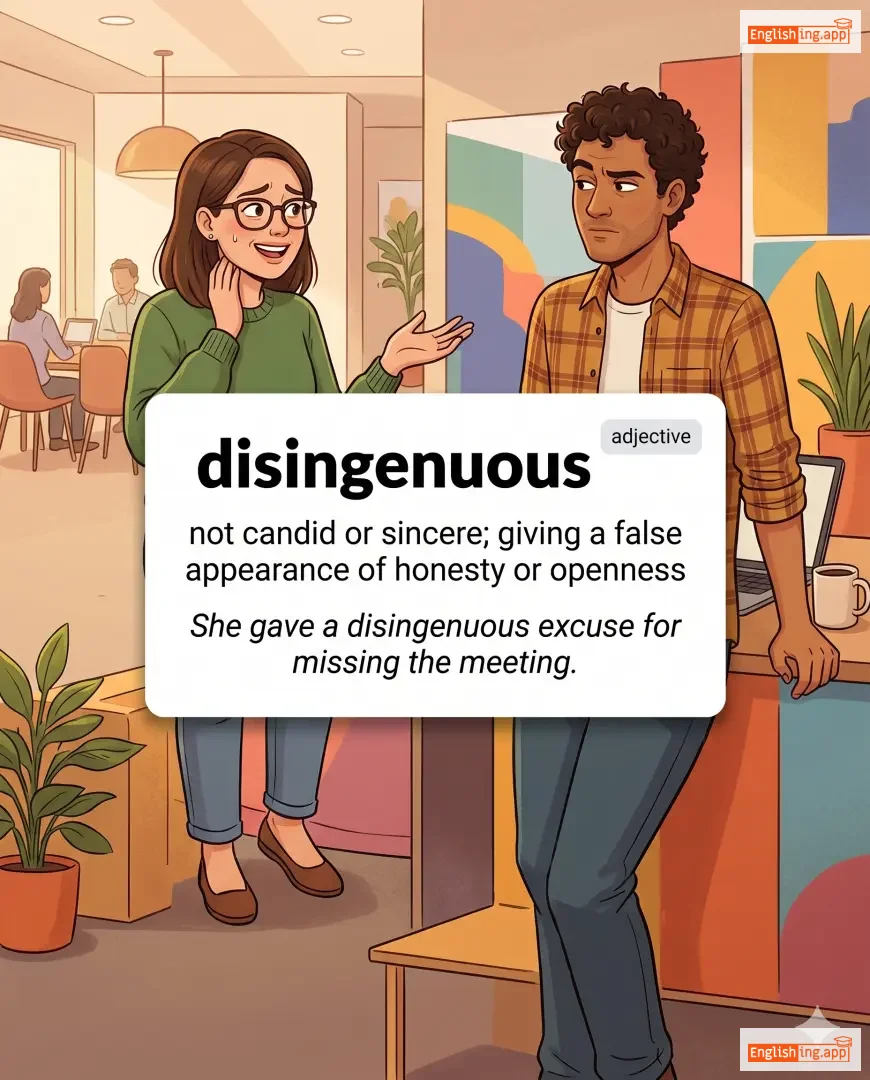
not candid or sincere; giving a false appearance of honesty or openness
••••••
|
She gave a disingenuous excuse for missing the meeting. |
彼女は会議に出席しないために不誠実な言い訳をしました。
Kanojo wa kaigi ni shusseki shinai tame ni fuseijitsuna iiwake o shimashita.
••••••
|
- •••••• | - •••••• | - •••••• |
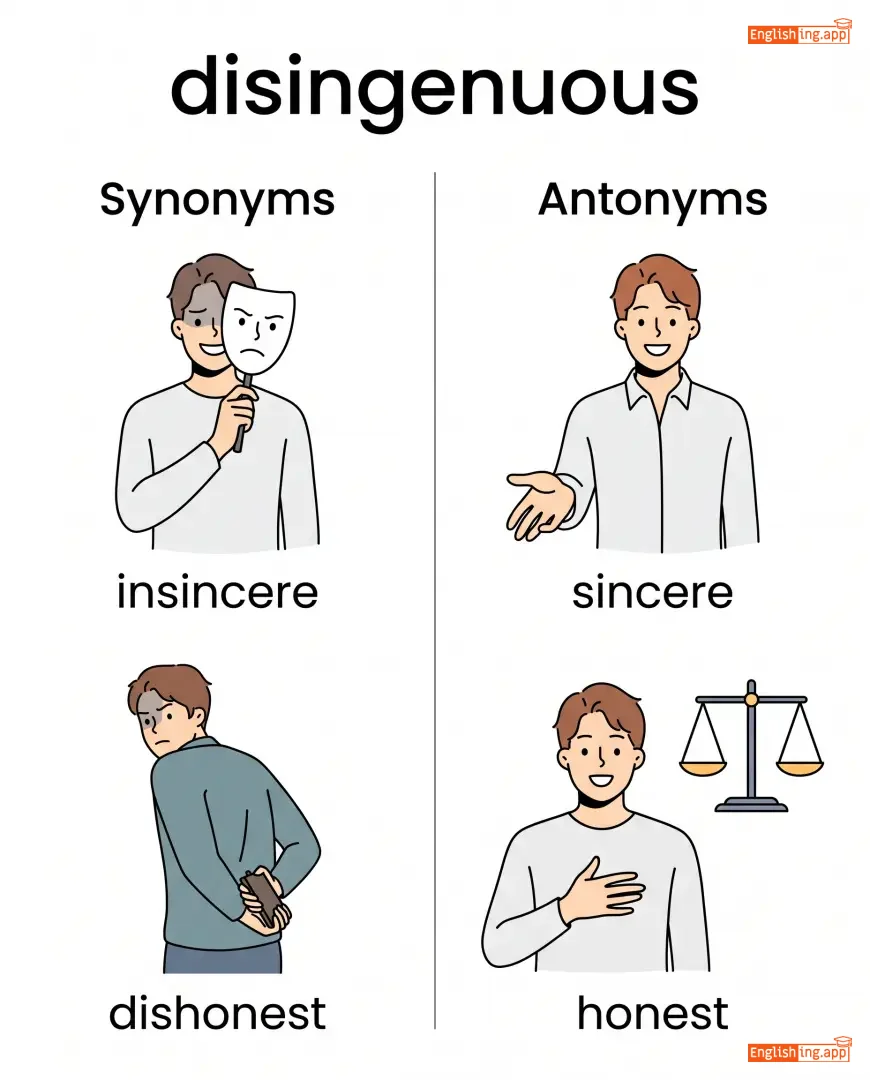
insincere, dishonest, deceitful, hypocritical, duplicitous
••••••
|
sincere, honest, genuine
••••••
|
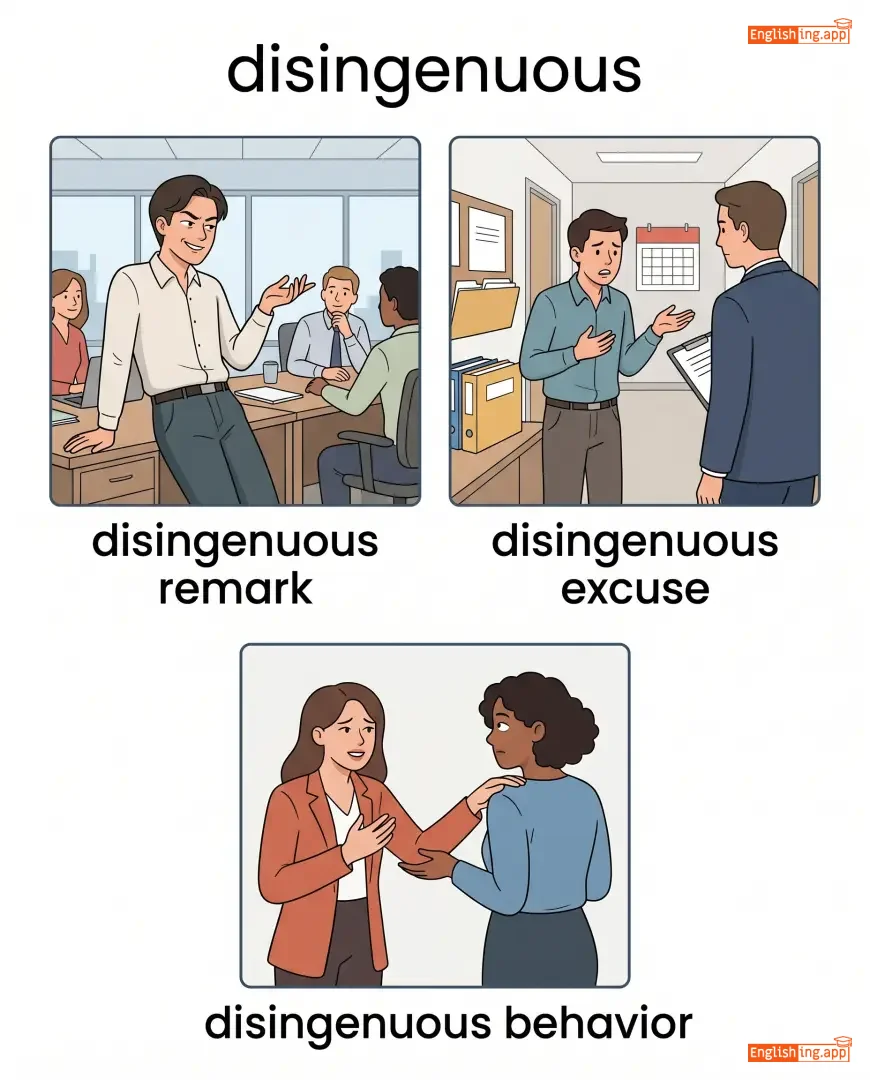
disingenuous remark, disingenuous excuse, disingenuous behavior
••••••
|
Dis + genuine ではない意味 disingenuous = 不誠実な
••••••
|
|
#2567
📄
|
/dɪsˈmɪsl̩/
noun
(ディスミッサル)
••••••
|
- •••••• |
解雇, 拒否
kaiko, kyohi
••••••
|
- •••••• | - •••••• | - •••••• | - •••••• |
the act of removing someone from their job; the act of treating something as unimportant
••••••
|
His unfair dismissal led to a lawsuit against the company. |
彼の不当な解雇は、会社に対する訴訟を引き起こしました。
Kare no futōna kaiko wa, kaisha ni taisuru soshō o hikiokoshimashita.
••••••
|
- •••••• | - •••••• | - •••••• |
termination, firing, discharge, expulsion, rejection
••••••
|
employment, acceptance, retention
••••••
|
wrongful dismissal, unfair dismissal, dismissal from work, dismissal of charges
••••••
|
Dismiss + AL = 解雇の結果 (解雇)
••••••
|
|
#2568
🚪
|
/dɪsˈmɪs/
verb
(ディスミス)
••••••
|
|
解雇する, 却下する
kaiko suru, kyakka suru
••••••
|
dismissed
ディスミスド
••••••
|
dismissed
ディスミスド
••••••
|
dismisses
ディスミセズ
••••••
|
dismissing
ディスミッシング
••••••
|
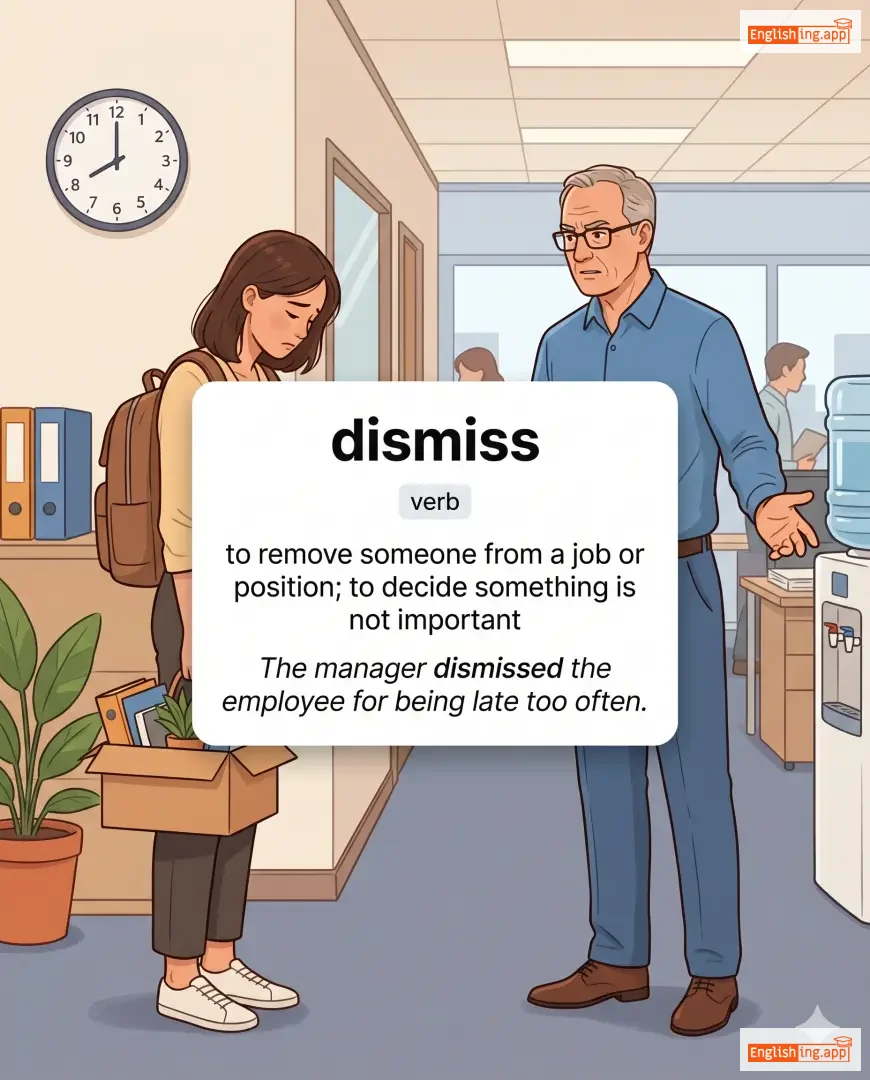
to remove someone from a job or position; to decide something is not important
••••••
|
The manager dismissed the employee for being late too often.
マネージャーは遅刻が多すぎるため、従業員を解雇しました。
••••••
|
マネージャーは遅刻が多すぎるため、従業員を解雇しました。
Manējā wa chikoku ga ōsugiru tame, jūgyōin o kaiko shimashita.
••••••
|
dismiss out of hand
即座に却下する
••••••
|
to reject something immediately without considering it
••••••
|
即座に却下する
sokuzani kyakka suru
••••••
|
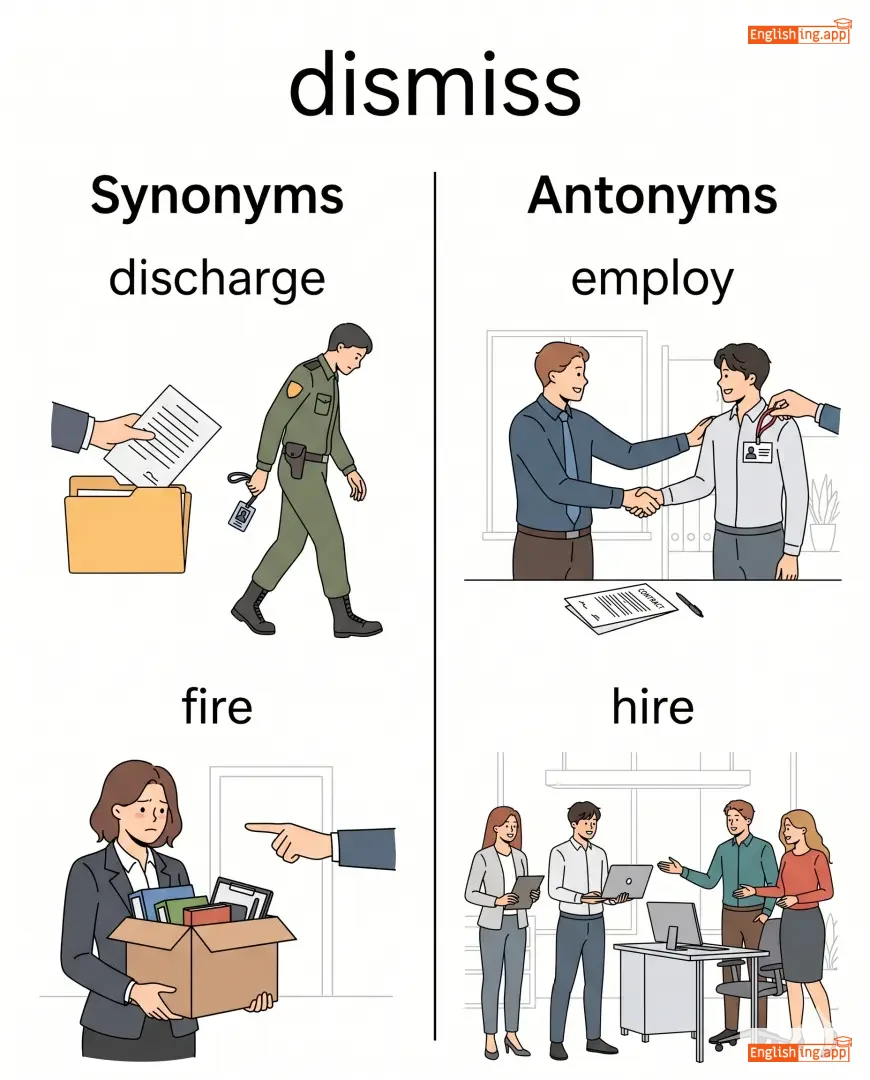
discharge, fire, release, reject, expel
••••••
|
employ, hire, accept
••••••
|
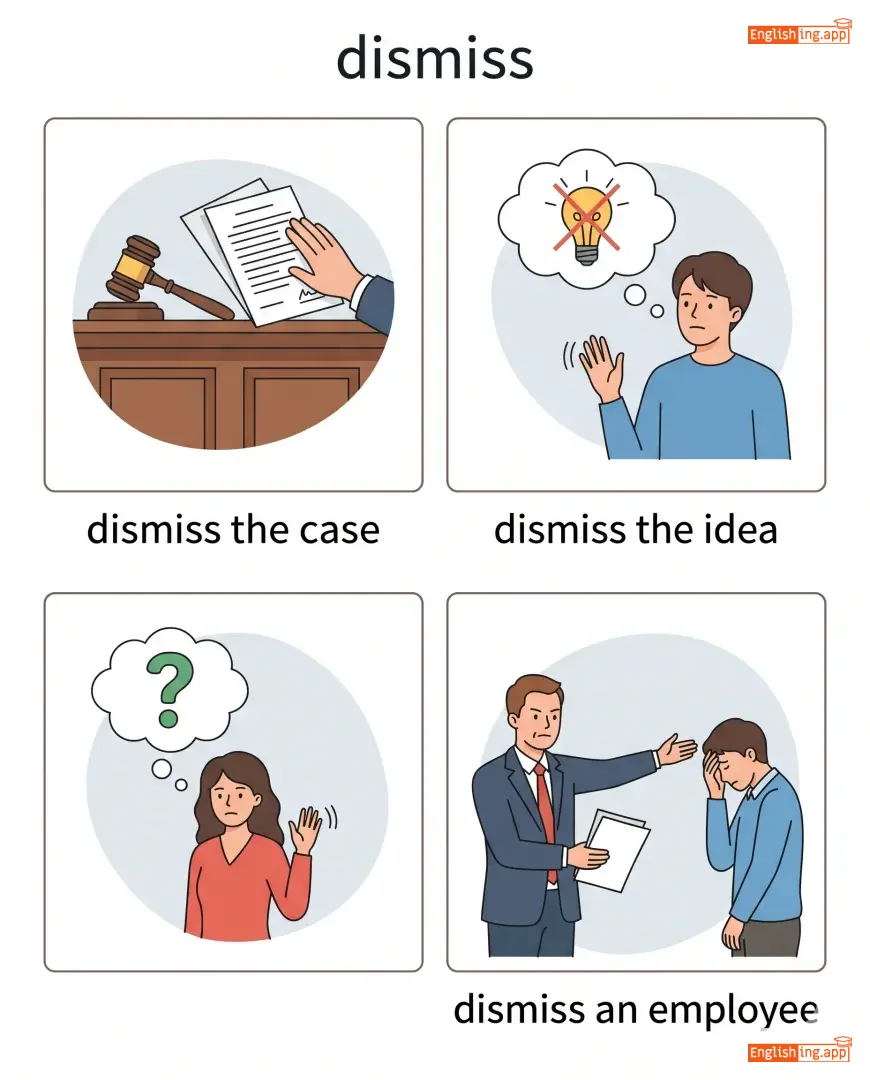
dismiss the case, dismiss the idea, dismiss an employee, dismiss charges
••••••
|
Dis + Miss = 解雇する
••••••
|
|
#2569
🩸
|
/dɪsˈmɛmbər/
verb
(ディスメンバー)
••••••
|
- •••••• |
切断する
せつだんする
••••••
|
dismembered
ディスメンバード
••••••
|
dismembered
ディスメンバード
••••••
|
dismembers
ディスメンバーズ
••••••
|
dismembering
ディスメンバーリング
••••••
|
to cut or tear the limbs from a body; to divide into separate parts
••••••
|
The king ordered his enemies to be dismembered.
王は敵を切り刻むよう命じました。
••••••
|
王は敵を切り刻むよう命じました。
Ō wa teki o kirikizamu yō meijimashita.
••••••
|
- •••••• | - •••••• | - •••••• |
cut up, divide, mutilate, tear apart, break up
••••••
|
assemble, join, unify
••••••
|
dismember the body, dismember the organization, brutally dismembered
••••••
|
Dis + MEMBER = 身体の一部を切り離す
••••••
|
|
#2570
😨
|
/dɪsˈmeɪ/
noun/verb
(ディスメイ)
••••••
|
|
失望や恐れ
shitsubou ya osore
••••••
|
dismayed
ディスメイド
••••••
|
dismayed
ディスメイド
••••••
|
dismays
ディスメイズ
••••••
|
dismaying
ディスメイング
••••••
|
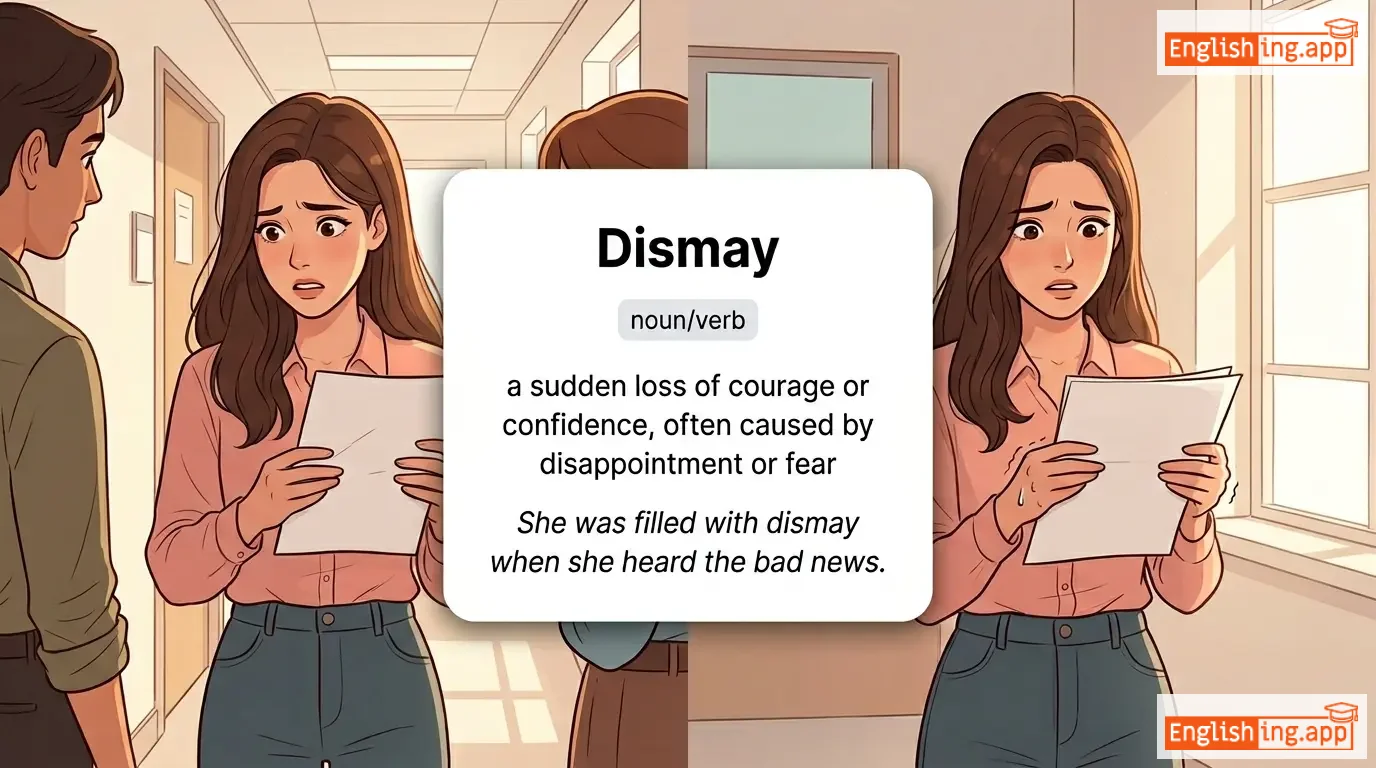
a sudden loss of courage or confidence, often caused by disappointment or fear
••••••
|
She was filled with dismay when she heard the bad news.
シー ワズ フィルド ウィズ ディスメイ ウェン シー ハード ザ バッド ニュース
••••••
|
彼女は悪い知らせを聞いて、失望でいっぱいになった。
kanojo wa warui shirase o kiite, shitsubou de ippai ni natta
••••••
|
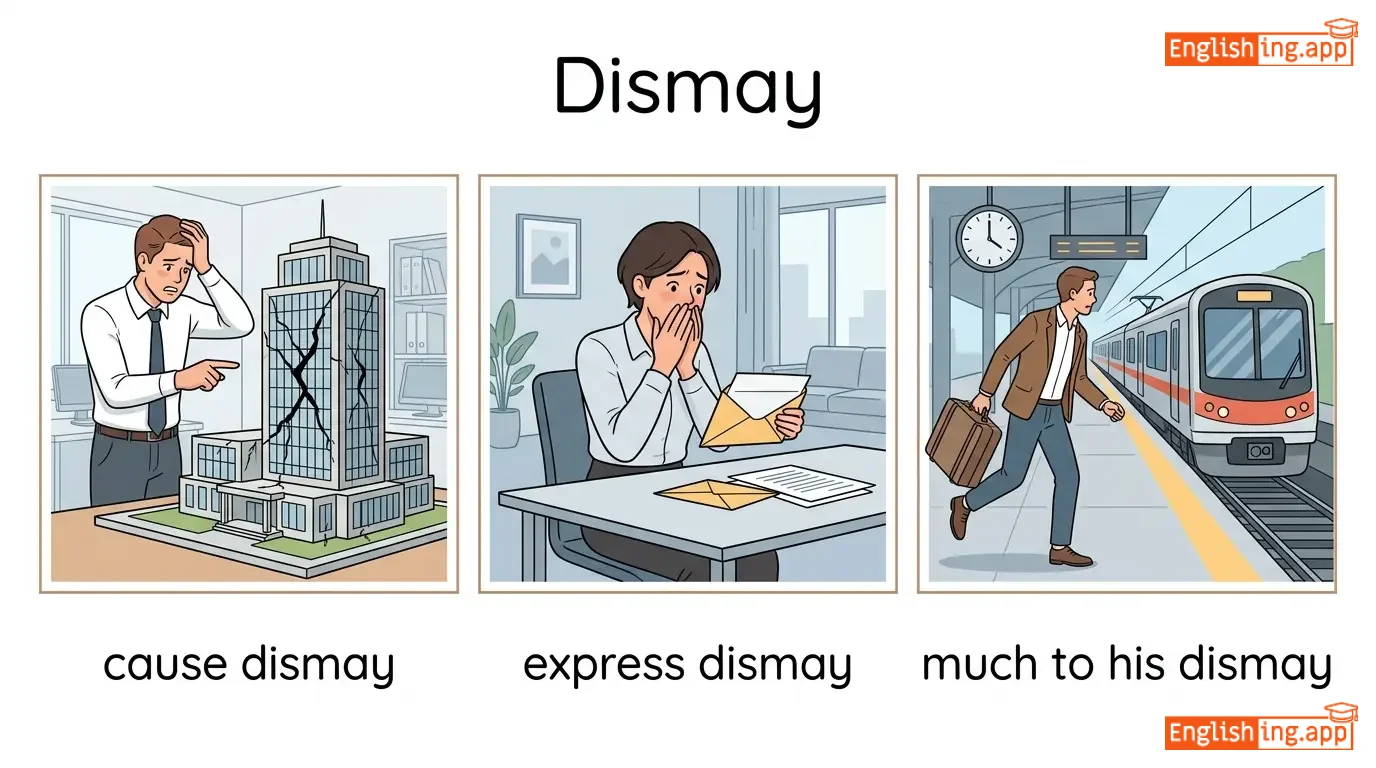
to her dismay
トゥ ハー ディスメイ
••••••
|
to her shock or disappointment
••••••
|
彼女の失望
kanojo no shitsubou
••••••
|
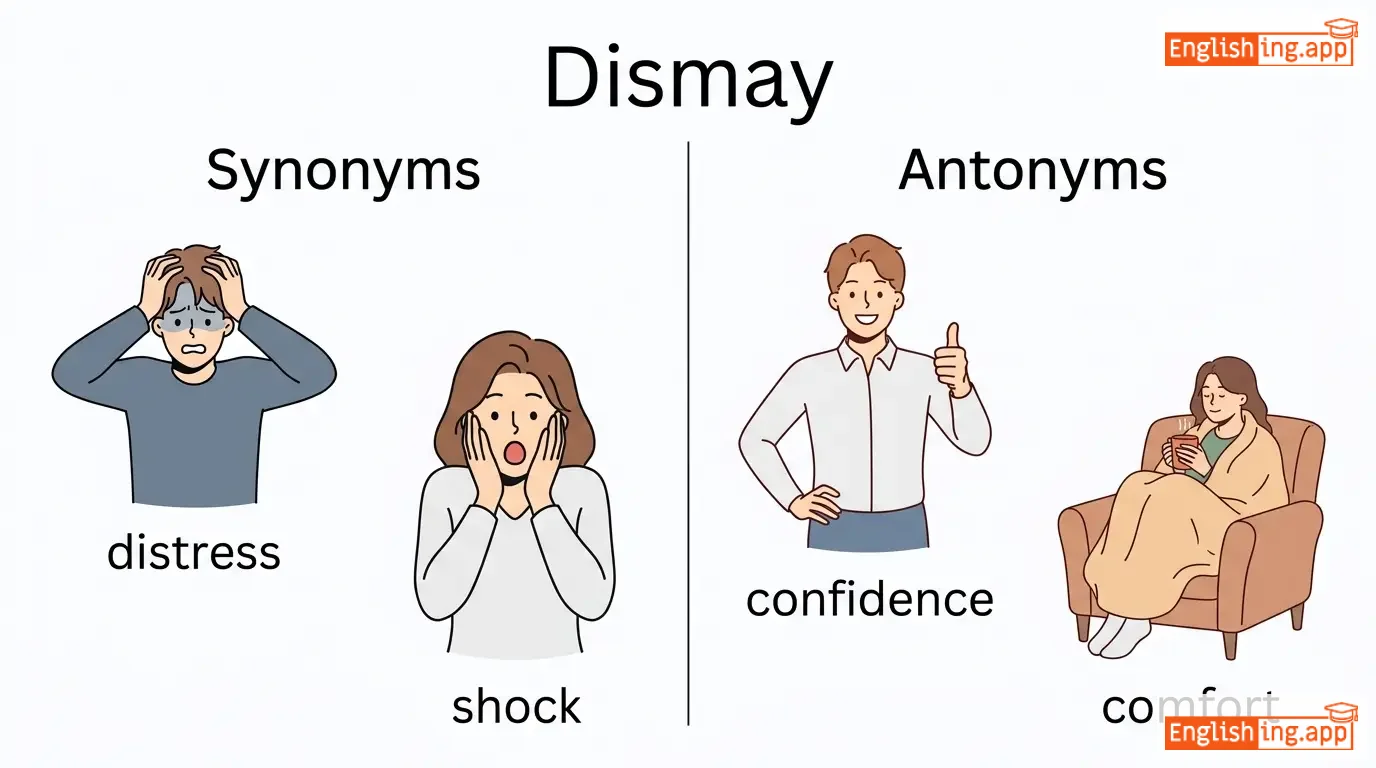
distress, shock, alarm, disappointment, consternation
••••••
|
confidence, comfort, reassurance
••••••
|
cause dismay, express dismay, much to his dismay, filled with dismay
••••••
|
ディスメイは失望のサウンドで、失った自信を思い出させる。
••••••
|
|
#2571
🛠️
|
/dɪsˈmæntl̩/
verb
(ディスマントル)
••••••
|
|
解体する
kaitai suru
••••••
|
dismantled
ディスマントルド
••••••
|
dismantled
ディスマントルド
••••••
|
dismantles
ディスマントルズ
••••••
|
dismantling
ディスマントリング
••••••
|
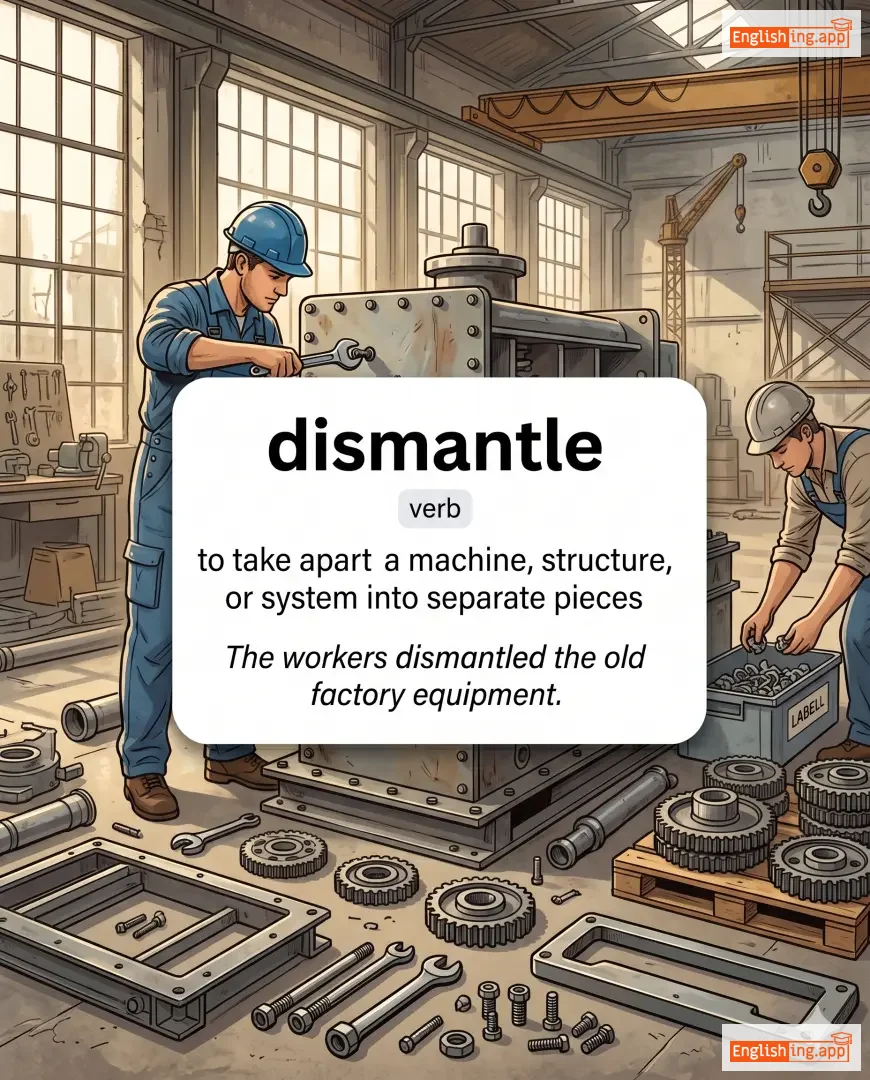
to take apart a machine, structure, or system into separate pieces
••••••
|
The workers dismantled the old factory equipment.
作業員たちは古い工場の設備を解体しました。
••••••
|
作業員たちは古い工場の設備を解体しました。
Sagyouintachi wa furui koujou no setsubi wo kaitai shimashita.
••••••
|
- •••••• | - •••••• | - •••••• |
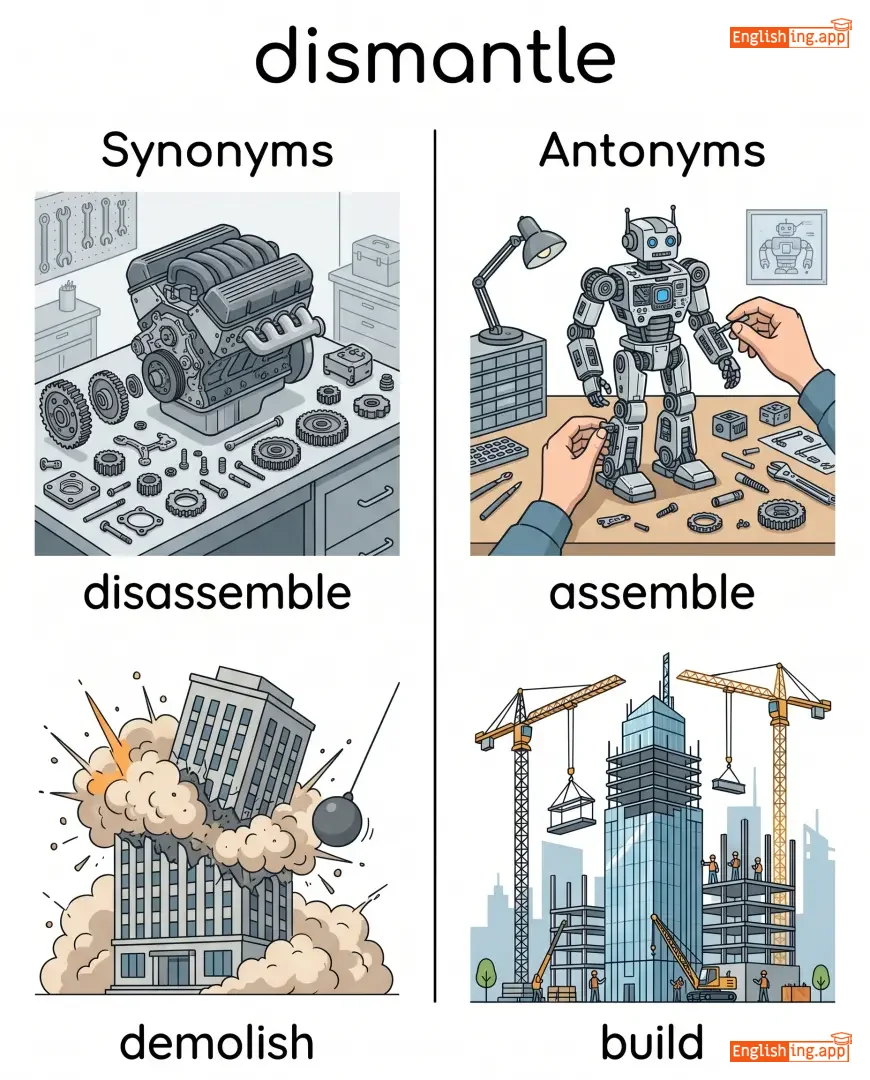
disassemble, demolish, break down, take apart, deconstruct
••••••
|
assemble, build, construct
••••••
|
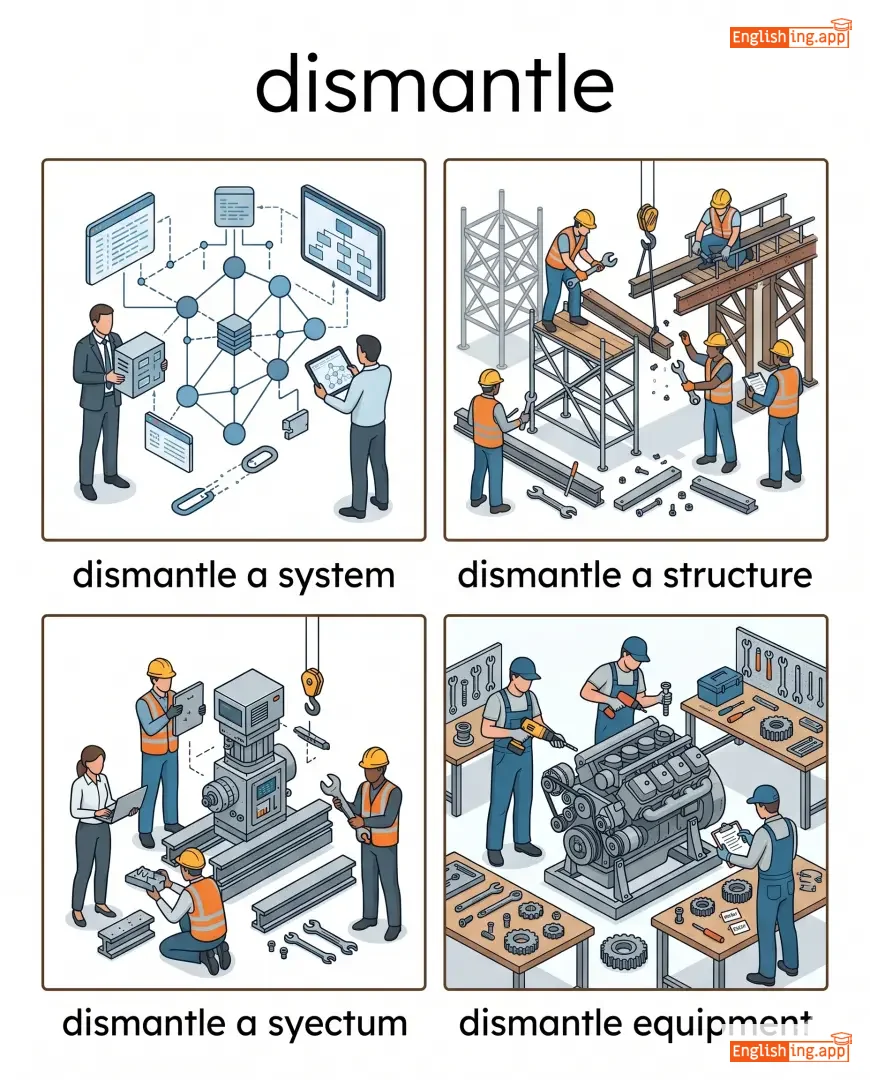
dismantle a system, dismantle a structure, dismantle equipment, dismantle a network
••••••
|
Dismantle = 解体 (kaitai) = 部品 (buhin) を分ける
••••••
|
|
#2572
🏹
|
/dɪsˈlɒdʒ/
verb
(ディスロッジ)
••••••
|
- •••••• |
追い出す
oidasu
••••••
|
dislodged
ディスロッジド
••••••
|
dislodged
ディスロッジド
••••••
|
dislodges
ディスロッジズ
••••••
|
dislodging
ディスロッジング
••••••
|
To remove or force out from a position, especially one that is fixed or hard to move.
••••••
|
The troops dislodged the enemy from the hill.
部隊は敵を丘から追い出した。
••••••
|
部隊は敵を丘から追い出した。
Butai wa teki wo oka kara oidasita.
••••••
|
- •••••• | - •••••• | - •••••• |
remove, eject, expel, oust, shift
••••••
|
secure, fix, anchor
••••••
|
dislodge debris, dislodge enemy, dislodge from position
••••••
|
追い出すは、物を定位置から動かすこと。
••••••
|
|
#2573
🦴
|
/ˈdɪsləkeɪt/
verb
(ディスロケート)
••••••
|
- •••••• |
脱臼する
datsukyū suru
••••••
|
dislocated
ディスロケーテッド
••••••
|
dislocated
ディスロケーテッド
••••••
|
dislocates
ディスロケーツ
••••••
|
dislocating
ディスロケイティング
••••••
|
To disturb the normal position of something, especially a joint in the body.
••••••
|
He dislocated his shoulder while playing football.
彼はサッカーをしているときに肩を脱臼しました。
••••••
|
彼はサッカーをしているときに肩を脱臼しました。
Kare wa sakkā o shiteiru toki ni kata o datsukyū shimashita.
••••••
|
- •••••• | - •••••• | - •••••• |
displace, disturb, disarrange, misalign
••••••
|
align, adjust, arrange
••••••
|
dislocate a shoulder, dislocate a joint, dislocate easily
••••••
|
脱臼するとは、関節が通常の位置から外れること。dislocateも同じ意味です。
••••••
|
|
#2574
➗
|
/dɪsˈdʒʌŋktɪv/
adjective
(ディスジャンクティブ)
••••••
|
- •••••• |
選択的
sentakuteki
••••••
|
- •••••• | - •••••• | - •••••• | - •••••• |
Serving to separate or divide; expressing a choice between alternatives.
••••••
|
In grammar, 'or' is a disjunctive conjunction. |
文法では、'または' は選択的接続詞です。
Bunpō de wa, 'matawa' wa sentakuteki setsuzokushi desu.
••••••
|
- •••••• | - •••••• | - •••••• |
separative, divisive, alternative
••••••
|
conjunctive, unifying
••••••
|
disjunctive conjunction, disjunctive mood, disjunctive effect
••••••
|
選択的はdis + junctionから来ており、結びつきを壊して分けることを意味します。
••••••
|
|
#2575
🔀
|
/dɪsˈdʒʌŋkʃən/
noun
(ディスジャンクション)
••••••
|
- •••••• |
分裂
bunretsu
••••••
|
- •••••• | - •••••• | - •••••• | - •••••• |
A lack of connection between things; separation or disunity.
••••••
|
There is a clear disjunction between theory and practice. |
理論と実践の間には明確な分裂があります。
Riron to jissen no aida ni wa meikaku na bunretsu ga arimasu.
••••••
|
- •••••• | - •••••• | - •••••• |
separation, division, detachment, disunity
••••••
|
connection, unity, integration
••••••
|
cultural disjunction, social disjunction, disjunction between
••••••
|
Dis + Junction (ジャンクション) ない = 分裂。
••••••
|
|
#2576
🌀
|
/dɪsˈdʒɔɪntɪd/
adjective
(ディスジョインテッド)
••••••
|
|
ばらばら
barabara
••••••
|
- •••••• | - •••••• | - •••••• | - •••••• |
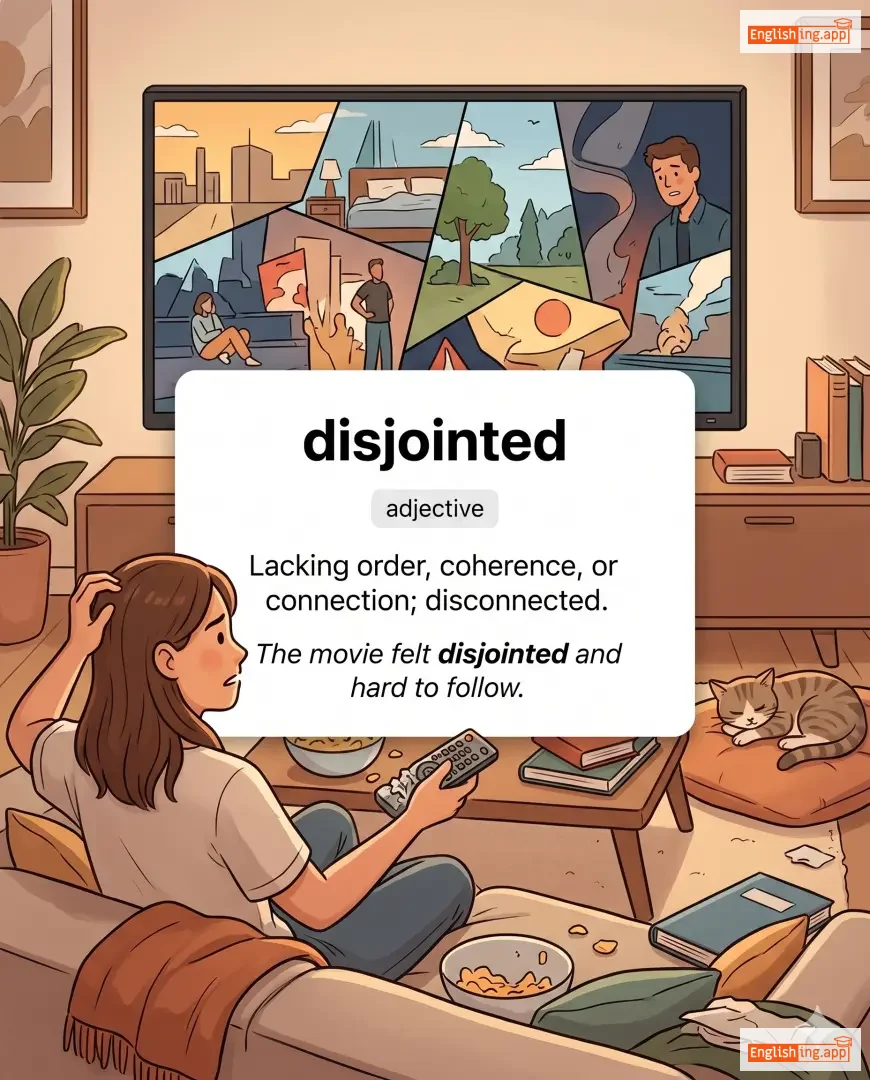
Lacking order, coherence, or connection; disconnected.
••••••
|
The movie felt disjointed and hard to follow. |
映画はばらばらに感じ、追いかけるのが難しかった。
Eiga wa barabara ni kanji, oikakeru no ga muzukashikatta.
••••••
|
- •••••• | - •••••• | - •••••• |
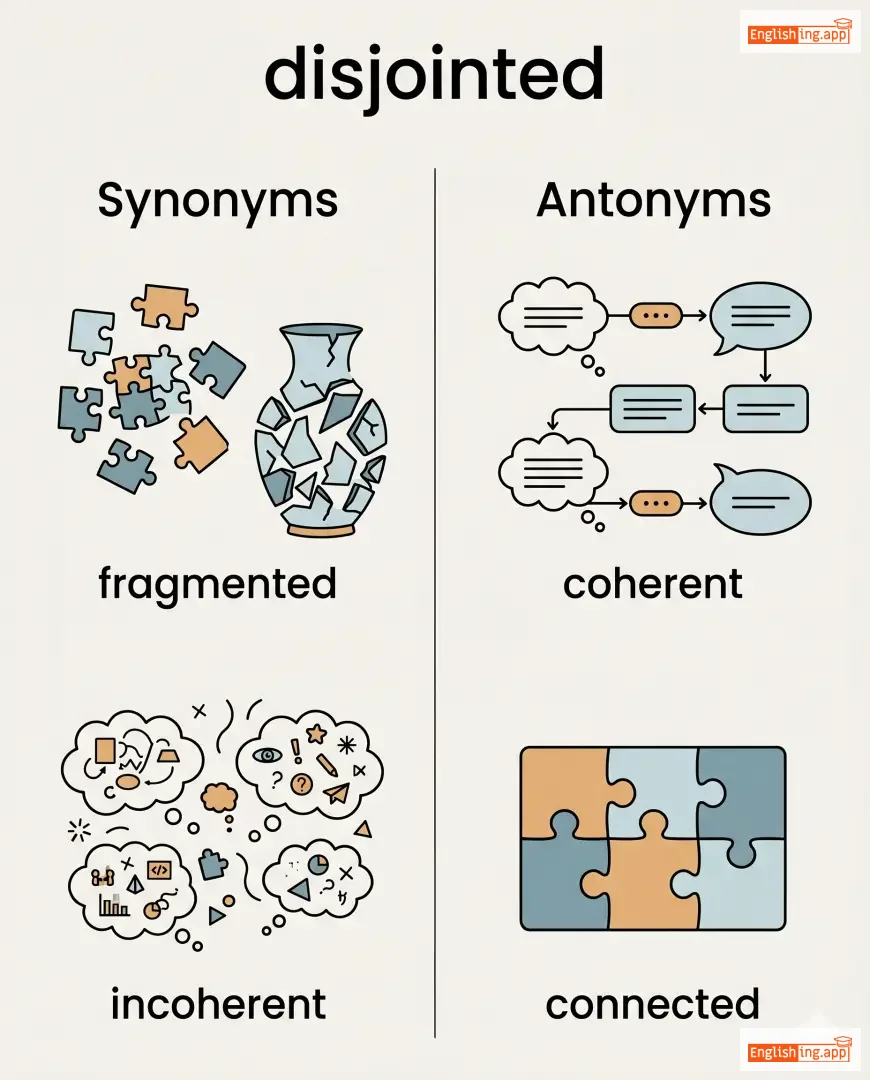
fragmented, incoherent, disconnected, jumbled, chaotic
••••••
|
coherent, connected, organized
••••••
|
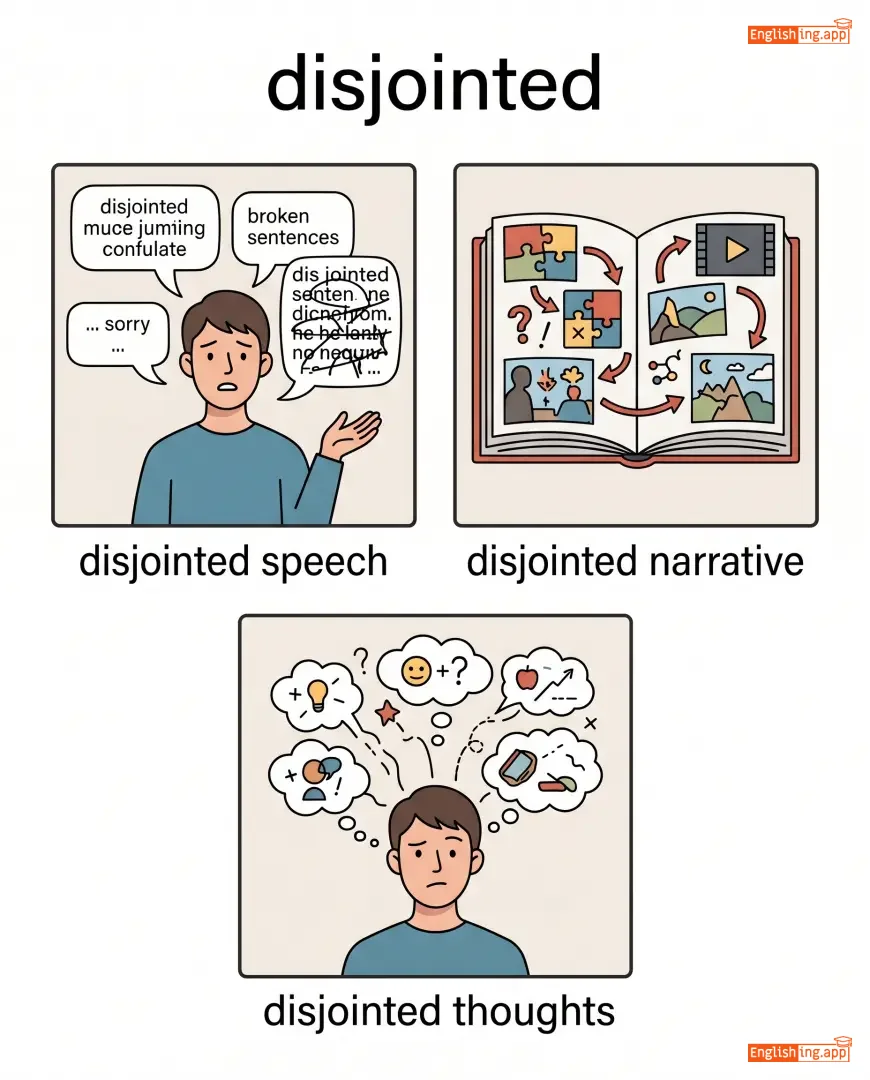
disjointed speech, disjointed narrative, disjointed thoughts
••••••
|
Disjointed はパズルがバラバラになっているようなもの。
••••••
|
|
#2577
⚖️
|
/dɪsˈɪntrəstɪd/
adjective
(ディスインタレステッド)
••••••
|
|
無関心
mukanshin
••••••
|
- •••••• | - •••••• | - •••••• | - •••••• |
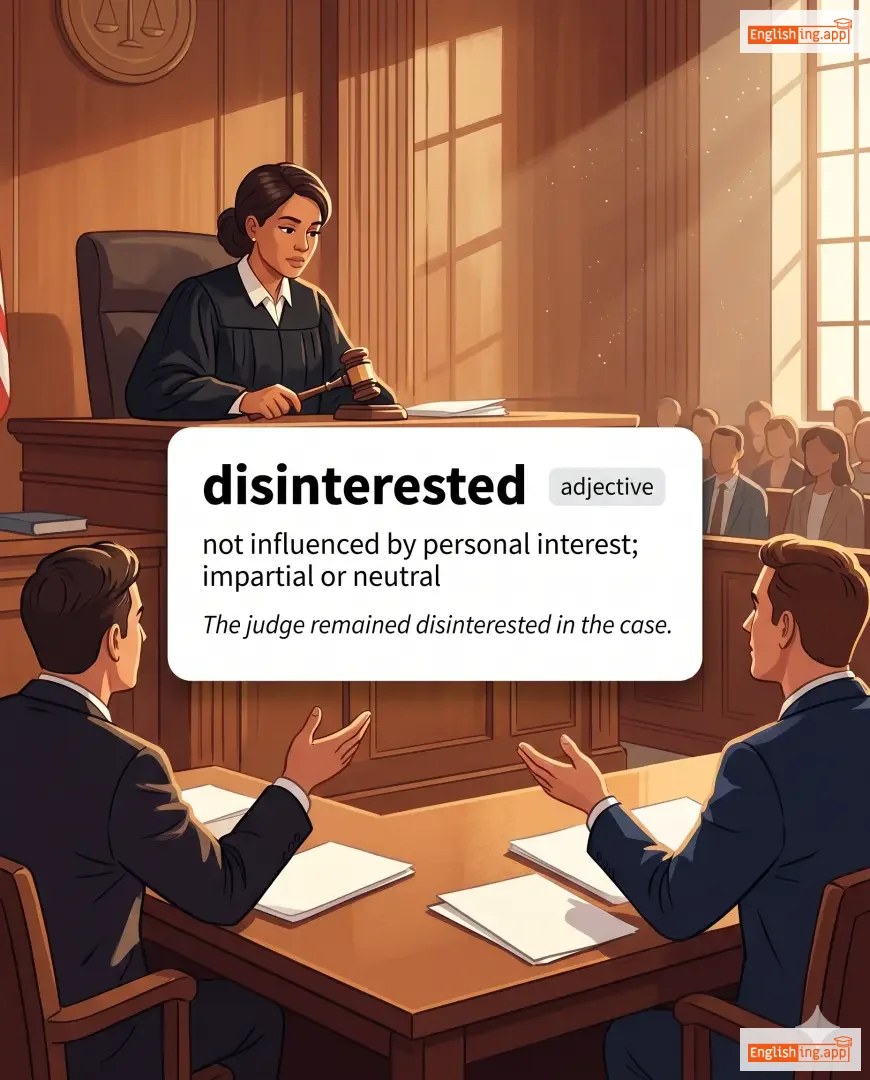
not influenced by personal interest; impartial or neutral
••••••
|
The judge remained disinterested in the case. |
裁判官はその事件に無関心のままでした。
Saibankan wa sono jiken ni mukanshin no mamadeshita.
••••••
|
- •••••• | - •••••• | - •••••• |
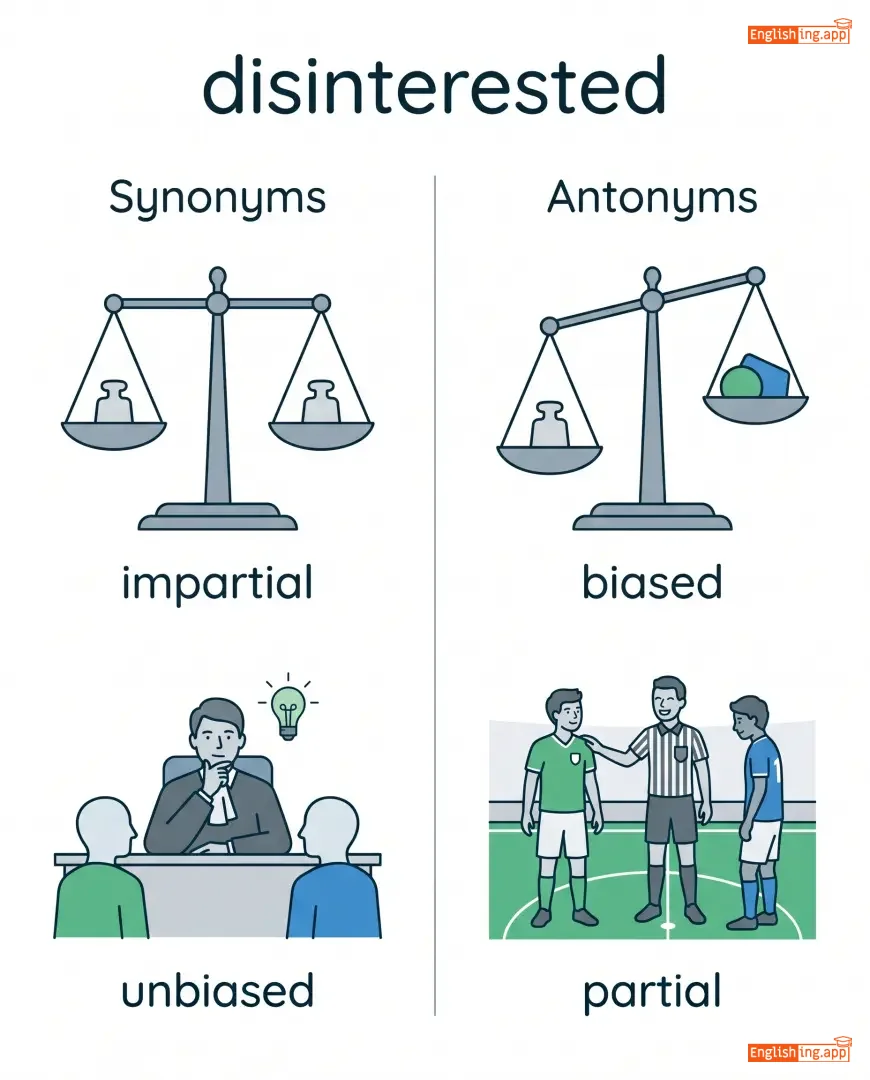
impartial, unbiased, objective, neutral
••••••
|
biased, partial, interested
••••••
|
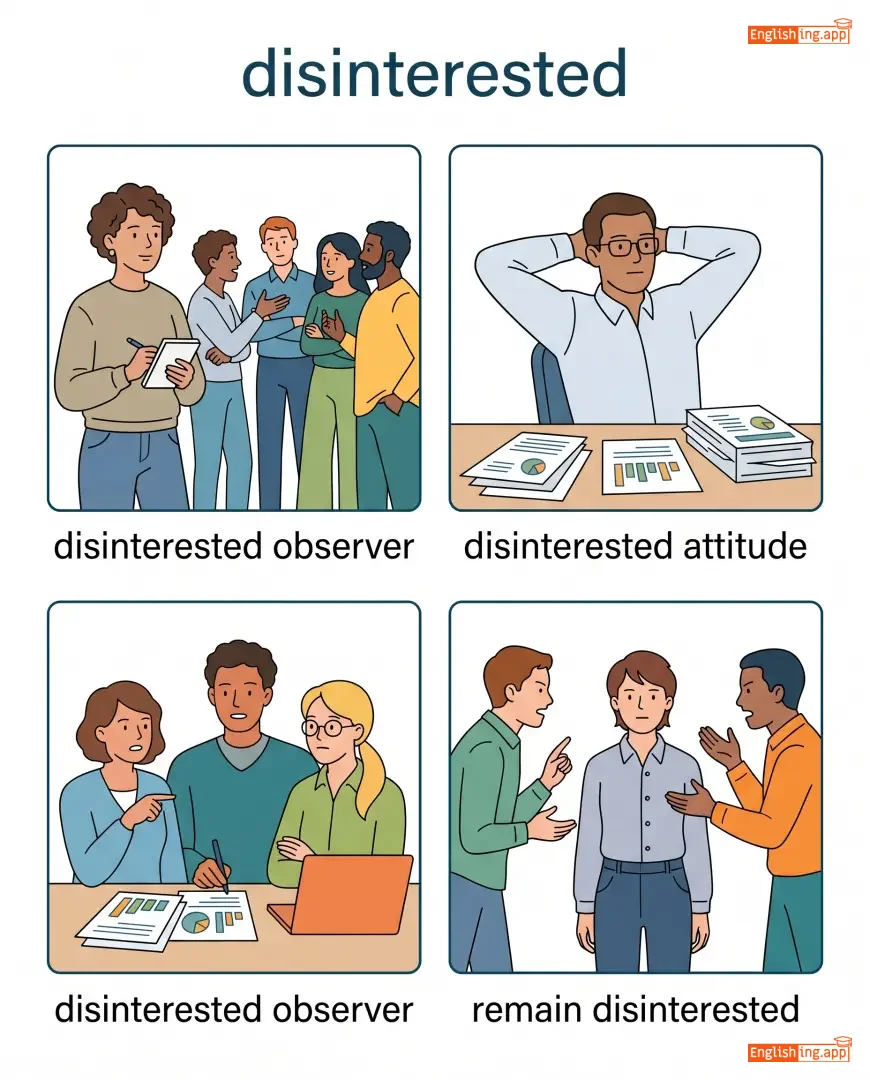
disinterested observer, disinterested attitude, remain disinterested
••••••
|
Disinterested = 無関心、興味なし
••••••
|
|
#2578
😐
|
/dɪsˈɪntrəst/
noun
(ディスインタレスト)
••••••
|
- •••••• |
無関心
mukanshin
••••••
|
- •••••• | - •••••• | - •••••• | - •••••• |
lack of interest or concern
••••••
|
His disinterest in the project was obvious. |
そのプロジェクトへの無関心は明らかだった。
Sono purojekuto e no mukanshin wa akiraka datta.
••••••
|
- •••••• | - •••••• | - •••••• |
indifference, apathy, unconcern, neglect
••••••
|
interest, enthusiasm, concern
••••••
|
disinterest in work, disinterest among students, show disinterest
••••••
|
Interest がない = 無関心
••••••
|
|
#2579
⚰️
|
/ˌdɪsɪnˈtɜːr/
verb
(ディスインター)
••••••
|
- •••••• |
掘り出す
horidasu
••••••
|
disinterred
ディスインタード
••••••
|
disinterred
ディスインタード
••••••
|
disinters
ディスインタース
••••••
|
disinterring
ディスインタリング
••••••
|
to dig up something buried, especially a body
••••••
|
The archaeologists disinterred ancient remains from the site.
考古学者たちはそのサイトから古代の遺骸を掘り出しました。
••••••
|
考古学者たちはそのサイトから古代の遺骸を掘り出しました。
Kōkogakusha-tachi wa sono saito kara kodai no igai o horidashimashita.
••••••
|
- •••••• | - •••••• | - •••••• |
exhume, unearth, uncover, dig up
••••••
|
bury, inter
••••••
|
disinter a body, disinter remains, disinter the dead
••••••
|
Disinter は埋められたものを掘り出す!
••••••
|
|
#2580
🚫💰
|
/ˌdɪsɪnˈhɛrɪt/
verb
(ディスイネヒリット)
••••••
|
- •••••• |
遺産を剥奪する
isan wo akudatsu suru
••••••
|
disinherited
ディスイネヒリテッド
••••••
|
disinherited
ディスイネヒリテッド
••••••
|
disinherits
ディスイネヒリッツ
••••••
|
disinheriting
ディスイネヒリティング
••••••
|
to deprive someone, especially a child, of inheritance or right to property
••••••
|
The father threatened to disinherit his son for his reckless actions.
The father threatened to disinherit his son for his reckless actions.
••••••
|
父親は息子の無謀な行動のために遺産を剥奪すると脅した。
Chichioya wa musuko no mubou na koudou no tame ni isan wo akudatsu suru to odoshita.
••••••
|
- •••••• | - •••••• | - •••••• |
cut off, deprive, exclude, disown
••••••
|
bequeath, inherit, endow
••••••
|
disinherit a child, disinherit someone, disinherit heirs
••••••
|
dis + inherit = 遺産を剥奪する
••••••
|
Vocabulary Quiz
Test your vocabulary by matching words with their translations or meanings.
Login to take the quiz
Comments (0)
Share your thoughts and join the discussion.
Join the discussion by logging in
Login to CommentNo comments yet
Be the first to share your thoughts!