

翻訳
過去
過去分詞
三人称単数
動名詞
意味
例文
例文の翻訳
同義語
対義語
コロケーション
ニーモニック


Swipe left or right, or use the buttons. Tap image to zoom.
例文の翻訳
単語
Lesson 262Lesson 262 - マスクトグル
|
絵文字
|
単語 | Images | 翻訳 | 過去 | 過去分詞 | 三人称単数 | 動名詞 | 意味 | 例文 | 例文の翻訳 | 表現例 | 表現例の意味 | 表現例の翻訳 | 同義語 | 対義語 | コロケーション | ニーモニック |
|---|---|---|---|---|---|---|---|---|---|---|---|---|---|---|---|---|---|
|
#7830
🦅
|
/ˈskævɪndʒər/
noun
(スカベンジャー)
••••••
|
- •••••• |
死肉食者 / ゴミ収集者
shiniku shokusha / gomi shūshūsha
••••••
|
- •••••• | - •••••• | - •••••• | - •••••• |
an animal or person that feeds on dead or discarded material
••••••
|
Vultures are natural scavengers that clean up the environment.
ハゲワシは自然のスカベンジャーで、環境をきれいにします。
••••••
|
ハゲワシは自然のスカベンジャーで、環境をきれいにします。
hagewashi wa shizen no scavenger de, kankyō o kirei ni shimasu.
••••••
|
scavenger hunt
宝探しゲーム
••••••
|
a game in which players try to find items from a list
••••••
|
宝探しゲーム
takara sagashi gēmu
••••••
|
forager, picker, cleaner, searcher, hunter
••••••
|
producer, creator
••••••
|
scavenger hunt, scavenger bird, scavenger species, natural scavenger
••••••
|
Scavenger は死肉食者、ゴミを食べるハゲワシのようなものです。
••••••
|
|
#7831
✂️
|
/ˈsɪʒ.ən/
noun
(シッション)
••••••
|
- •••••• |
分裂
bunretsu
••••••
|
- •••••• | - •••••• | - •••••• | - •••••• |
the act of cutting or dividing something
••••••
|
The political party suffered a scission over ideological disputes. |
その政党はイデオロギーの対立により分裂を経験しました。
Sono seitō wa ideorogī no tairitsu ni yori bunretsu o keiken shimashita.
••••••
|
- •••••• | - •••••• | - •••••• |
split, division, separation, severance
••••••
|
union, unity, connection
••••••
|
political scission, scission of groups, ideological scission
••••••
|
Scissionは 'scissors' に似ている - 分裂。
••••••
|
|
#7832
🌱
|
/ˈsaɪ.ən/
noun
(サイオン)
••••••
|
- •••••• |
子孫
shison
••••••
|
- •••••• | - •••••• | - •••••• | - •••••• |
a descendant of a wealthy, aristocratic, or influential family
••••••
|
He is the scion of a wealthy industrialist family. |
彼は裕福な実業家の家族の子孫です。
Kare wa yūfuku na jitsugyōka no kazoku no shison desu.
••••••
|
- •••••• | - •••••• | - •••••• |
descendant, heir, offspring, successor, progeny
••••••
|
ancestor, forebear
••••••
|
scion of a family, wealthy scion, scion of nobility
••••••
|
Scion は子孫 (🌱)、家系図の枝のようなもの - 子孫。
••••••
|
|
#7833
📖
|
/ˈsaɪ.ə.lɪz.əm/
noun
(サイオリズム)
••••••
|
- •••••• |
表面的な知識の誇示
hyōmen-tekina chishiki no koji
••••••
|
- •••••• | - •••••• | - •••••• | - •••••• |
pretentious show of superficial knowledge
••••••
|
His speech was full of sciolism, impressing no one. |
彼のスピーチはサイオリズムで満ちており、誰も感動しなかった。
Kare no supīchi wa saiorizumu de michite ori, dare mo kandō shinakatta.
••••••
|
- •••••• | - •••••• | - •••••• |
superficiality, pretentiousness, ignorance, shallowness
••••••
|
wisdom, depth, knowledge
••••••
|
mere sciolism, display of sciolism, empty sciolism
••••••
|
Sciolismは学者のふりをすることを意味しますが、実際には表面的な知識です。
••••••
|
|
#7834
💎
|
/ˈsɪn.tɪ.leɪ.tɪŋ/
adjective
(sintireitingu)
••••••
|
- •••••• |
きらめく
kirameku
••••••
|
- •••••• | - •••••• | - •••••• | - •••••• |
brilliantly clever, exciting, or sparkling
••••••
|
Her scintillating conversation kept everyone entertained.
彼女の輝かしい会話は皆を楽しませた。
••••••
|
彼女のきらめく会話は皆を楽しませた。
Kanojo no kirameku kaiwa wa minna o tanoshimaseta.
••••••
|
scintillating wit
輝かしい機知
••••••
|
brilliant and entertaining cleverness
••••••
|
きらめく機知
kirameku kichi
••••••
|
brilliant, sparkling, dazzling, witty, lively
••••••
|
boring, dull, uninteresting
••••••
|
scintillating performance, scintillating speech, scintillating personality
••••••
|
Scintillatingは光だけでなく、きらめく会話でもある - きらめく。
••••••
|
|
#7835
✨
|
/ˈsɪn.tɪ.leɪt/
verb
(シンティレイト)
••••••
|
- •••••• |
輝く
kagayaku
••••••
|
scintillated
シンティレイテッド
••••••
|
scintillated
シンティレイテッド
••••••
|
scintillates
シンティレイツ
••••••
|
scintillating
シンティレイティング
••••••
|
to sparkle or shine brightly; to emit flashes of light
••••••
|
The diamond ring scintillated under the bright lights.
ダイヤモンドの指輪は明るい光の下で輝いていました。
••••••
|
ダイヤモンドの指輪は明るい光の下で輝いていました。
Daiyamondo no yubiwa wa akarui hikari no shita de kagayaite imashita.
••••••
|
- •••••• | - •••••• | - •••••• |
sparkle, glitter, twinkle, flash, gleam
••••••
|
dull, fade, darken
••••••
|
scintillate with charm, scintillate with wit, scintillate brilliantly
••••••
|
Scintillate は輝くという意味で、ダイヤモンドの指輪が光の下で輝く様子を示しています。
••••••
|
|
#7836
✨
|
/sɪnˈtɪl.ə/
noun
(スィンティラ)
••••••
|
- •••••• |
小さな火花
chiisana hibana
••••••
|
- •••••• | - •••••• | - •••••• | - •••••• |
A tiny trace or spark of a specified quality or feeling.
••••••
|
There wasn’t a scintilla of doubt in her mind. |
彼女の心には疑いのひらめきもなかった。
Kanojo no kokoro ni wa utagai no hirameki mo nakatta.
••••••
|
- •••••• | - •••••• | - •••••• |
trace, spark, bit, fragment, shred
••••••
|
abundance, plenty
••••••
|
scintilla of doubt, not a scintilla, without a scintilla
••••••
|
Scintilla は小さな火花を意味します。映画の中で火花が飛び散るシーンを思い出してください。
••••••
|
|
#7837
🏫
|
/skuːl/
noun
(スクール)
••••••
|
- •••••• |
学校
gakkou
••••••
|
- •••••• | - •••••• | - •••••• | - •••••• |
An institution for educating children; also a group of people sharing the same ideas or discipline.
••••••
|
The children walked to school together. |
子供たちは一緒に学校に歩いて行きました。
Kodomotachi wa issho ni gakkou ni aruite ikimashita.
••••••
|
school of thought |
A particular philosophy or way of thinking shared by a group.
••••••
|
思想の流派
shisou no ryūha
••••••
|
academy, institute, college, university, class
••••••
|
home, workplace
••••••
|
primary school, high school, school building, school bus, school of thought
••••••
|
学校は学びの場所です。「学校は学ぶ場所」と覚えましょう。
••••••
|
|
#7838
🏫
|
/skəˈlæstɪk/
adjective
(スコラステック)
••••••
|
- •••••• |
学問的な
gakumontekina
••••••
|
- •••••• | - •••••• | - •••••• | - •••••• |
Relating to schools, education, or academic learning.
••••••
|
The school organizes scholastic competitions every year.
学校は毎年学問的な競技を開催します。
••••••
|
学校は毎年学問的な競技を開催します。
Gakkō wa mainen gakumonteki na kyōgi o kaisai shimasu.
••••••
|
- •••••• | - •••••• | - •••••• |
academic, educational, instructional, pedagogical
••••••
|
nonacademic, informal
••••••
|
scholastic achievement, scholastic performance, scholastic competition, scholastic aptitude
••••••
|
Scholastic は学校に関連すること、'school+astic' を覚えると簡単です。
••••••
|
|
#7839
📚
|
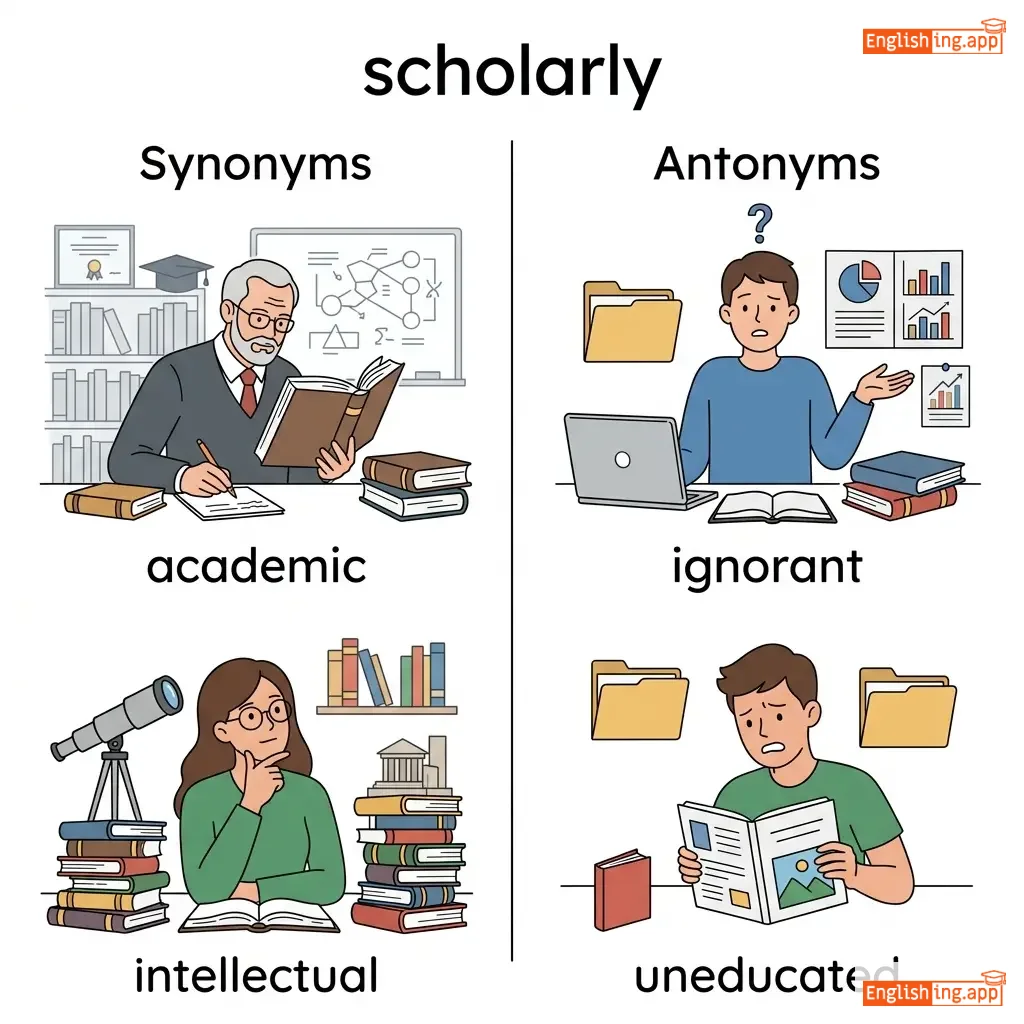
/ˈskɒl.ə.li/
adjective
(スコラリー)
••••••
|
|
学術的
gakujutsuteki
••••••
|
- •••••• | - •••••• | - •••••• | - •••••• |
Having or showing knowledge, learning, or devotion to academic study.
••••••
|
She wrote a scholarly article on medieval literature. |
彼女は中世文学についての学術的な記事を書きました。
Kanojo wa chūsei bungaku ni tsuite no gakujutsuteki na kiji o kakimashita.
••••••
|
- •••••• | - •••••• | - •••••• |
academic, intellectual, erudite, learned
••••••
|
ignorant, uneducated
••••••
|
scholarly article, scholarly work, scholarly journal, scholarly approach
••••••
|
Scholarlyは学術的という意味で、学者が歴史について書いているのを想像してみてください。
••••••
|
|
#7840
⚡
|
/ˈskɪz.əm/ or /ˈsɪz.əm/
noun
(ハピネス)
••••••
|
- •••••• |
幸福
kōfuku
••••••
|
- •••••• | - •••••• | - •••••• | - •••••• |
A division or split between strongly opposed parties, often in religion or organizations.
••••••
|
The schism in the church led to the formation of two separate groups. |
彼女は賞を受け取ったとき、幸せを隠せませんでした。
Kanojo wa shō o uketotta toki, kōfuku o kakusemasen deshita.
••••••
|
religious schism |
A major division within a religious community or institution.
••••••
|
幸福の追求
kōfuku no tsuikyū
••••••
|
division, split, separation, rift, discord
••••••
|
unity, agreement, harmony
••••••
|
religious schism, political schism, deep schism, cause a schism
••••••
|
幸福=Happiness、これを覚えれば、ハピネスが来るよ!
••••••
|
|
#7841
🗂️
|
/skiːm/
noun, verb
(sukīmu)
••••••
|
- •••••• |
計画 / 陰謀
keikaku / inbou
••••••
|
schemed
sukīmudo
••••••
|
schemed
sukīmudo
••••••
|
schemes
sukīmus
••••••
|
scheming
sukīmingu
••••••
|
a plan or arrangement, especially one that is secret or dishonest
••••••
|
They devised a scheme to cheat investors.
彼らは投資家をだますために計画を立てました。
••••••
|
彼らは投資家をだますために計画を立てました。
Karera wa tōshika o damasu tame ni keikaku o tatemashita.
••••••
|
grand scheme of things
物事の大きな計画
••••••
|
the overall perspective or broader context
••••••
|
物事の大きな計画
monogoto no ōkina keikaku
••••••
|
plan, plot, project, conspiracy, arrangement
••••••
|
honesty, openness
••••••
|
government scheme, savings scheme, secret scheme, scheme against
••••••
|
Schemeは巧妙な計画を意味します。日本語の‘計画’は計画やデザインを意味します。
••••••
|
|
#7842
📊
|
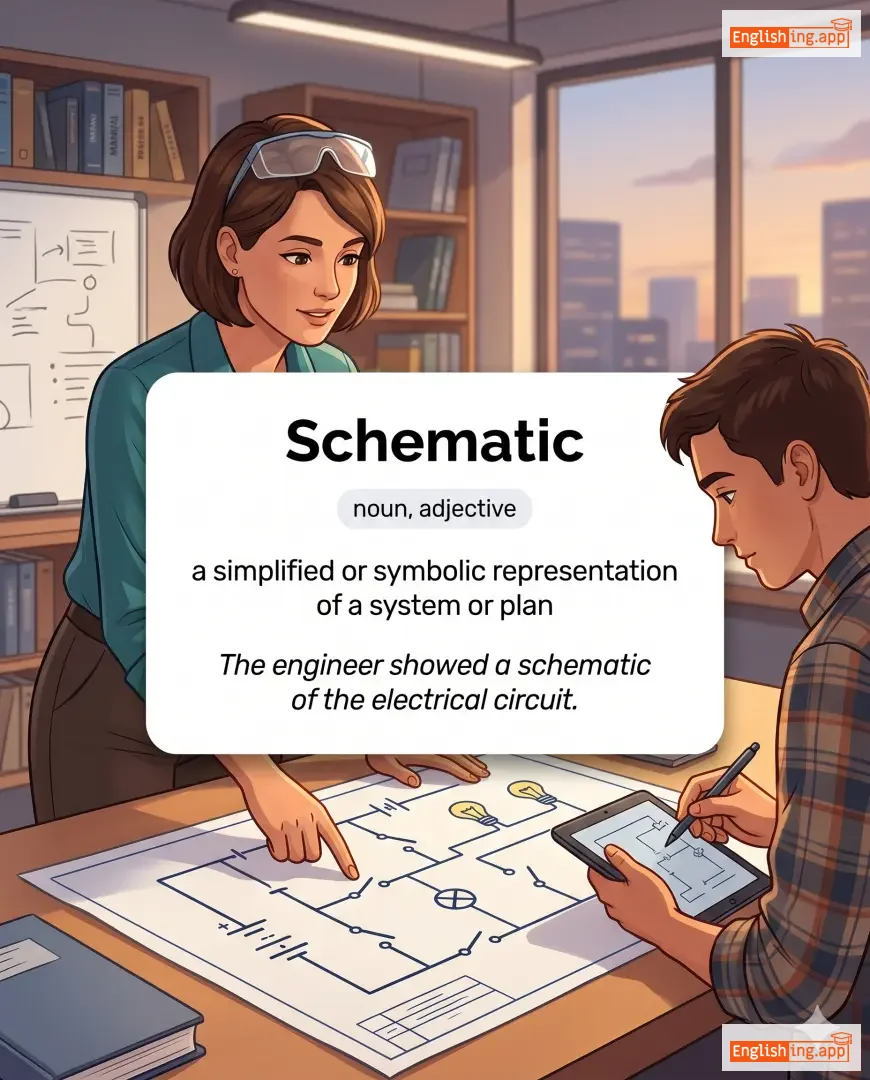
/skiːˈmætɪk/
noun, adjective
(スキーマティック)
••••••
|
|
回路図
kairozu
••••••
|
- •••••• | - •••••• | - •••••• | - •••••• |
a simplified or symbolic representation of a system or plan
••••••
|
The engineer showed a schematic of the electrical circuit. |
エンジニアは電気回路の回路図を示しました。
Enjinia wa denki kairo no kairozu o shimeshimashita.
••••••
|
- •••••• | - •••••• | - •••••• |
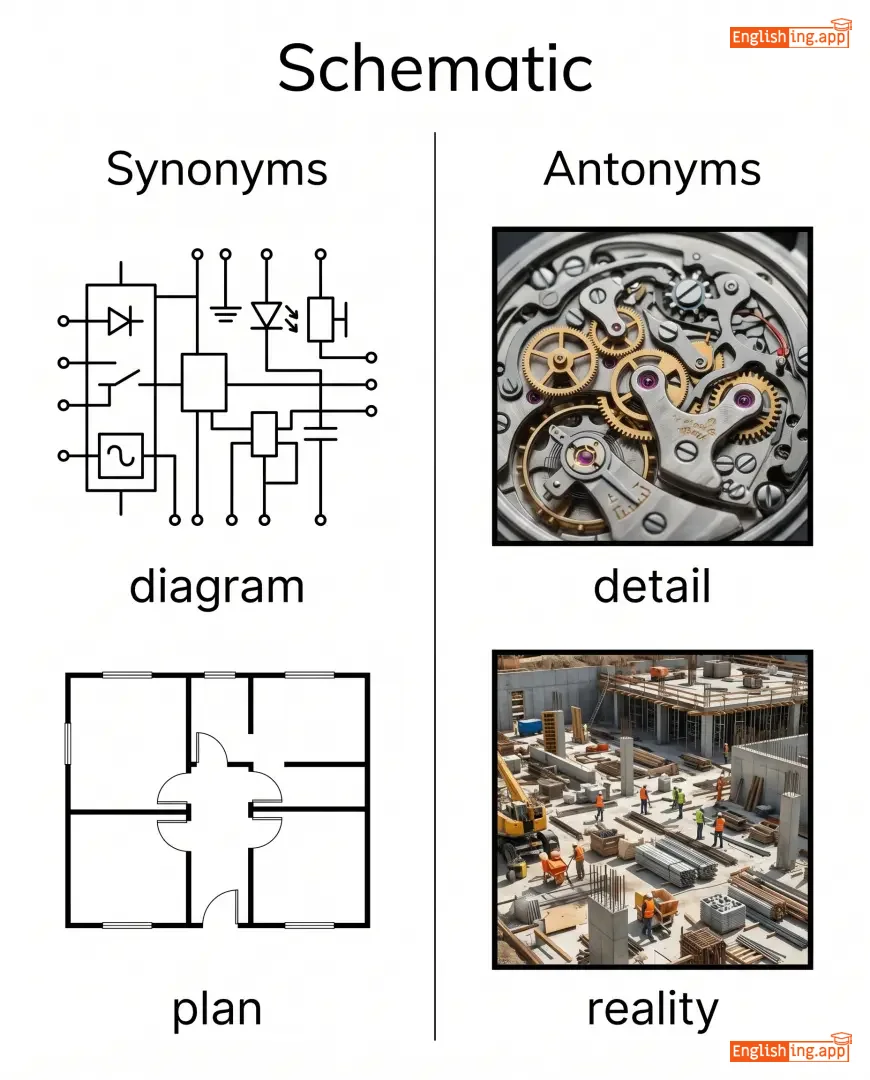
diagram, plan, chart, blueprint, outline
••••••
|
detail, reality
••••••
|
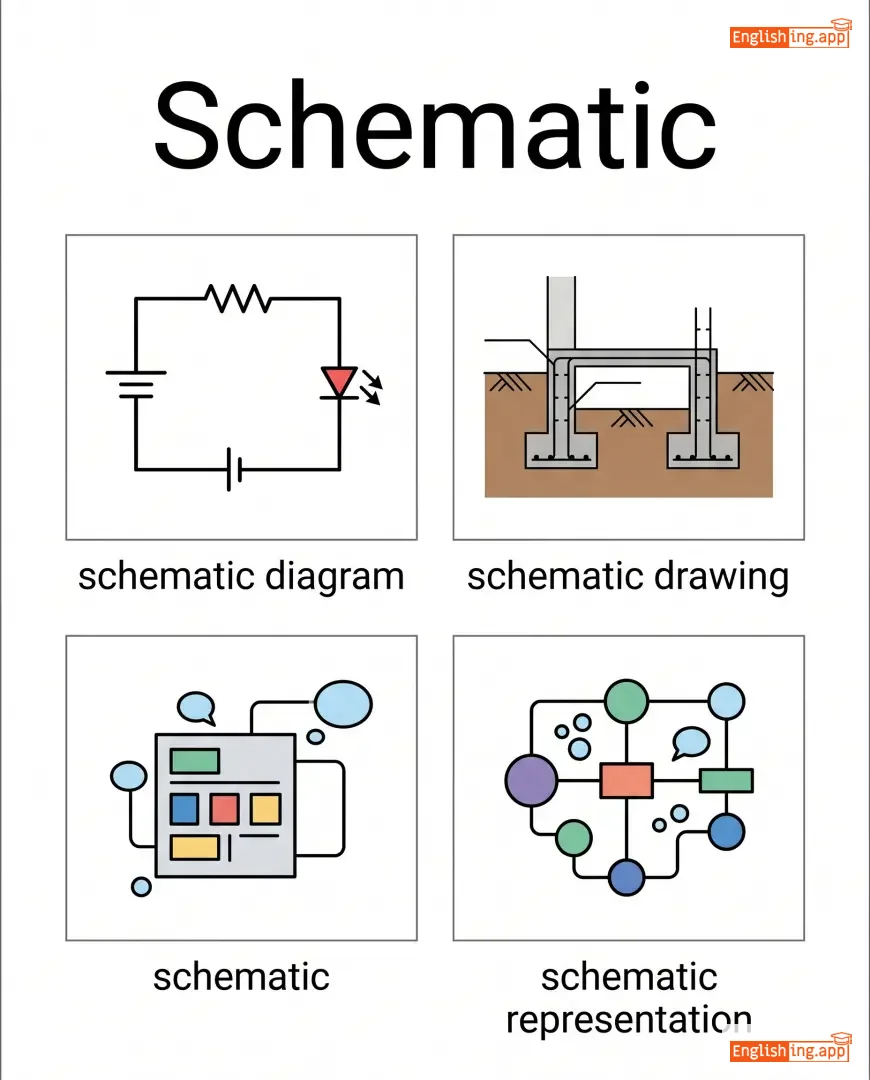
schematic diagram, schematic drawing, schematic representation
••••••
|
回路図は簡単な回路の図で、計画を示すために使うよ。
••••••
|
|
#7843
😏
|
/ˈʃɑːdənfrɔɪdə/
noun
(シャーデンフロイデ)
••••••
|
- •••••• |
他人の不幸を喜ぶこと
tanin no fukō o yorokobu koto
••••••
|
- •••••• | - •••••• | - •••••• | - •••••• |
pleasure derived from another person's misfortune
••••••
|
He felt a sense of schadenfreude when his rival failed. |
ライバルが失敗したとき、彼はシャーデンフロイデを感じた。
Raibaru ga shippai shita toki, kare wa schadenfreude o kanjita.
••••••
|
- •••••• | - •••••• | - •••••• |
gloating, relish, smugness, spite
••••••
|
compassion, sympathy
••••••
|
feeling schadenfreude, sense of schadenfreude, express schadenfreude
••••••
|
Schadenfreude = 他人の不幸から得る喜び
••••••
|
|
#7844
📖
|
/səˈnɛərioʊ/
noun
(シナリオ)
••••••
|
- •••••• |
可能な状況
kanou na joukyou
••••••
|
- •••••• | - •••••• | - •••••• | - •••••• |
a possible situation or sequence of events
••••••
|
The company prepared for the worst-case scenario. |
会社は最悪のシナリオに備えました。
Kaisha wa saiaku no shinario ni sonaemashita.
••••••
|
worst-case scenario |
the most serious or unfavorable situation possible
••••••
|
最悪のシナリオ
saiaku no shinario
••••••
|
situation, case, plan, circumstance, event
••••••
|
certainty, reality
••••••
|
best-case scenario, worst-case scenario, future scenario, likely scenario
••••••
|
シナリオはシーンを思い出させ、シナリオを覚えるのに役立ちます。
••••••
|
|
#7845
🗡️
|
/ˈskæb.ərd/
noun
(スキャバード)
••••••
|
- •••••• |
鞘
kaya
••••••
|
- •••••• | - •••••• | - •••••• | - •••••• |
A sheath for the blade of a sword or dagger, typically made of leather or metal.
••••••
|
The knight drew his sword from the scabbard. |
騎士は鞘から剣を抜きました。
Kishi wa kaya kara ken o nukimashita.
••••••
|
- •••••• | - •••••• | - •••••• |
sheath, holster, covering, holder
••••••
|
blade, weapon
••••••
|
sword scabbard, leather scabbard, draw from scabbard, hang in scabbard
••••••
|
鞘は剣を守る、まるで盾のように。
••••••
|
|
#7846
🗑️
|
/ˈskævɪndʒ/
verb
(スキャヴェンジ)
••••••
|
- •••••• |
ゴミの中から探す
gomi no naka kara sagasu
••••••
|
scavenged
スキャヴェンジド
••••••
|
scavenged
スキャヴェンジド
••••••
|
scavenges
スキャヴェンジズ
••••••
|
scavenging
スキャヴェンジング
••••••
|
to search through waste or discarded material to find useful items
••••••
|
The children scavenged for food in the garbage dump.
子供たちはゴミ捨て場で食べ物を探していました。
••••••
|
子供たちはゴミ捨て場で食べ物を探していました。
Kodomotachi wa gomisuteba de tabemono o sagashite imashita.
••••••
|
- •••••• | - •••••• | - •••••• |
rummage, forage, hunt, search
••••••
|
discard, abandon
••••••
|
scavenge for food, scavenge materials, animals scavenge
••••••
|
Scavengeはゴミから食べ物を探すような感じ、カラスのように。
••••••
|
|
#7847
🔥
|
/ˈskeɪðɪŋ/
adjective
(スケイディング)
••••••
|
- •••••• |
辛辣な批評
sinratsu na hihyō
••••••
|
- •••••• | - •••••• | - •••••• | - •••••• |
severely critical; harshly scornful
••••••
|
The critic wrote a scathing review of the movie. |
批評家は映画について辛辣な批評を書いた。
Hihyōka wa eiga ni tsuite sinratsu na hihyō o kaita.
••••••
|
- •••••• | - •••••• | - •••••• |
harsh, biting, severe, devastating, caustic
••••••
|
gentle, mild, kind
••••••
|
scathing remark, scathing attack, scathing review, scathing criticism
••••••
|
辛辣な批評は、皮膚に引っかき傷をつけるようなものです。
••••••
|
|
#7848
🌱
|
/ˈskærɪfaɪ/
verb
(スカリファイ)
••••••
|
- •••••• |
土を耕す
tsuchi wo tagayasu
••••••
|
scarified
スカリファイド
••••••
|
scarified
スカリファイド
••••••
|
scarifies
スカリファイズ
••••••
|
scarifying
スカリファイング
••••••
|
to make shallow cuts or scratches; to loosen the surface of soil
••••••
|
The farmer scarified the soil before planting seeds.
農家は種を植える前に土をスカリファイしました。
••••••
|
農家は種を植える前に土をスカリファイしました。
Nōka wa tane wo ueru mae ni tsuchi wo sukarifai shimashita.
••••••
|
- •••••• | - •••••• | - •••••• |
scratch, scrape, cut, incise
••••••
|
smooth, polish
••••••
|
scarify the soil, scarify the surface, scarify lawn
••••••
|
scar (傷) + fy – 土を小さな切り込みでほぐす
••••••
|
|
#7849
⚠️
|
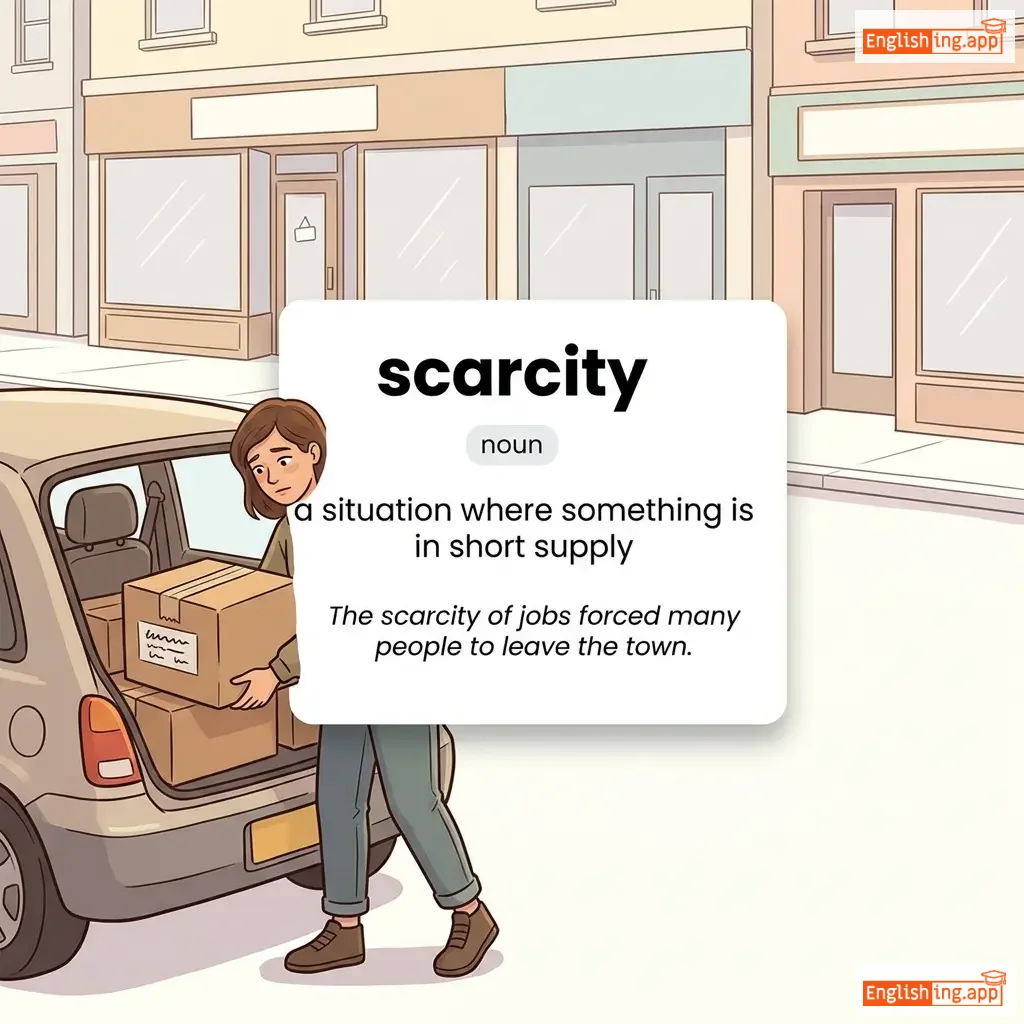
/ˈskɛərsəti/
noun
(スカースィティ)
••••••
|
|
不足
busoku
••••••
|
- •••••• | - •••••• | - •••••• | - •••••• |
a situation where something is in short supply
••••••
|
The scarcity of jobs forced many people to leave the town. |
仕事の不足が多くの人々に街を離れさせました。
Shigoto no busoku ga ooku no hitobito ni machi o hanare sasemashita.
••••••
|
- •••••• | - •••••• | - •••••• |
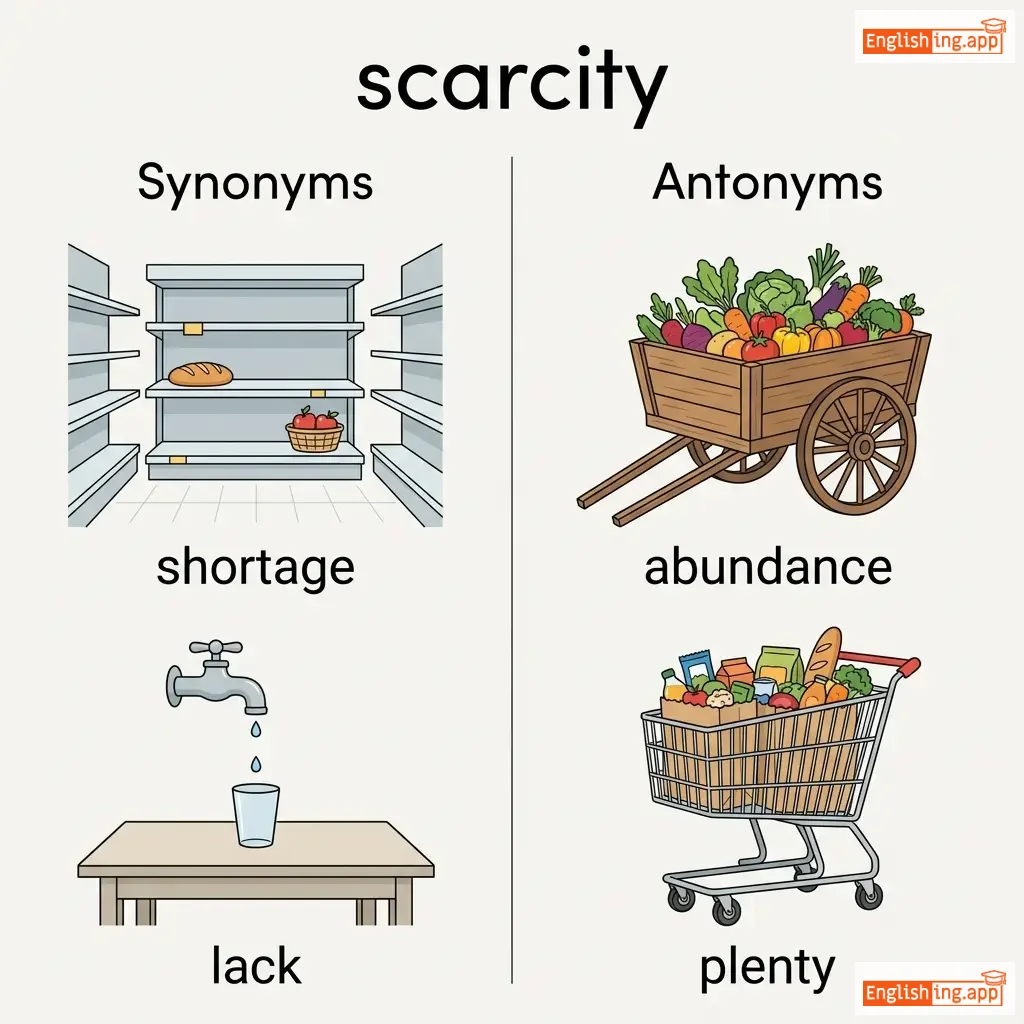
shortage, lack, deficiency, insufficiency
••••••
|
abundance, plenty, surplus
••••••
|
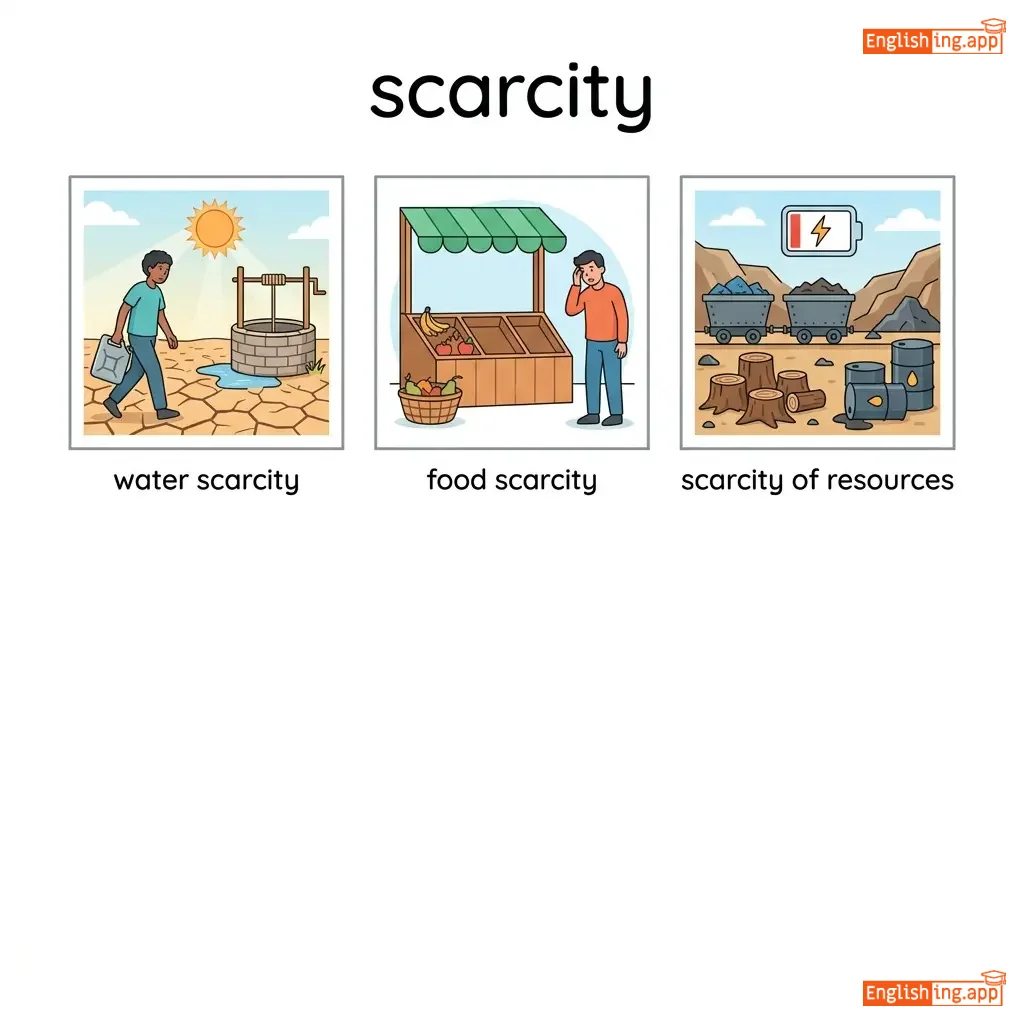
water scarcity, food scarcity, scarcity of resources, scarcity problem
••••••
|
不足は scarcity を意味する - 仕事のチャンスが少ない時、不足が起こる
••••••
|
|
#7850
💧
|
/skɛərs/
adjective
(eskeers)
••••••
|
- •••••• |
希少
kishou
••••••
|
- •••••• | - •••••• | - •••••• | - •••••• |
insufficient in quantity; hard to find
••••••
|
Water was scarce during the long drought. |
長い干ばつの間、水は希少だった。
Nagai kanbatsu no aida, mizu wa kishou datta.
••••••
|
make oneself scarce |
to leave quickly, usually to avoid trouble or being noticed
••••••
|
姿を消す
sugata wo kesu
••••••
|
rare, limited, insufficient, scant, meager
••••••
|
abundant, plentiful, ample
••••••
|
scarce resources, scarce supply, make oneself scarce, food is scarce
••••••
|
希少(kishou)は、何かが珍しい、手に入れにくいことを思い出させます。
••••••
|
|
#7851
🐐
|
/ˈskeɪpˌɡoʊt/
noun
(スケープゴート)
••••••
|
- •••••• |
スケープゴート
sukēpugōto
••••••
|
- •••••• | - •••••• | - •••••• | - •••••• |
A person who is unfairly blamed for problems, mistakes, or faults of others.
••••••
|
He became the scapegoat for the company’s financial troubles. |
彼は会社の財政問題のスケープゴートになった。
Kare wa kaisha no zaisei mondai no sukēpugōto ni natta.
••••••
|
make someone a scapegoat |
to unfairly blame someone for others' mistakes
••••••
|
誰かをスケープゴートにする
dareka o sukēpugōto ni suru
••••••
|
victim, fall guy, blame-bearer, patsy
••••••
|
culprit, offender
••••••
|
political scapegoat, scapegoat for mistakes, scapegoat role, become a scapegoat
••••••
|
スケープゴート: 他人の罪を背負わされる羊のようなもの。
••••••
|
|
#7852
🥄
|
/ˈskænti/
adjective
(esukanti)
••••••
|
- •••••• |
乏しい
toboshii
••••••
|
- •••••• | - •••••• | - •••••• | - •••••• |
Small in quantity; insufficient or meager.
••••••
|
The refugees survived on scanty food supplies.
難民は乏しい食料で生き延びました。
••••••
|
難民は乏しい食料で生き延びました。
Nanmin wa toboshii shokuryou de ikinobimashita.
••••••
|
- •••••• | - •••••• | - •••••• |
meager, sparse, inadequate, minimal
••••••
|
plentiful, abundant, adequate
••••••
|
scanty resources, scanty food, scanty evidence, scanty clothing
••••••
|
Scantyは乏しいという意味、少ない食料のように。
••••••
|
|
#7853
⚖️
|
/skænt/
adjective
(es-kant)
••••••
|
- •••••• |
乏しい
mushii
••••••
|
- •••••• | - •••••• | - •••••• | - •••••• |
Barely sufficient or inadequate in amount, degree, or quantity.
••••••
|
There was scant evidence to support the claim. |
その主張を支持する証拠はほとんどなかった。
Sono shuchou o shiji suru shōko wa hotondo nakatta.
••••••
|
- •••••• | - •••••• | - •••••• |
meager, insufficient, sparse, limited
••••••
|
abundant, ample, sufficient
••••••
|
scant evidence, scant attention, scant resources, scant detail
••••••
|
Scantは乏しいという意味で、何かが少ないようなものです。
••••••
|
|
#7854
📠
|
/skæn/
verb
(happiness)
••••••
|
- •••••• |
幸福
kōfuku
••••••
|
scanned
••••••
|
scanned
••••••
|
scans
••••••
|
scanning
••••••
|
To look at something carefully or quickly; to digitally copy or capture an image or document.
••••••
|
She scanned the document before sending it by email. |
彼女は賞を受け取ったとき、喜びを隠せませんでした。
Kanojo wa shō o uketotta toki, yorokobi o kakusemasen deshita.
••••••
|
scan through |
to look quickly over something
••••••
|
幸福を追い求める
Kōfuku o oi motomeru
••••••
|
examine, inspect, browse, glance
••••••
|
ignore, overlook, neglect
••••••
|
scan document, scan quickly, scan image, scan barcode
••••••
|
幸福は、私たち全員が追い求めているものです!
••••••
|
|
#7855
🔪
|
/ˈskælpəl/
noun
(スカルペル)
••••••
|
- •••••• |
メス
mesu
••••••
|
- •••••• | - •••••• | - •••••• | - •••••• |
A small and extremely sharp bladed instrument used for surgery and dissection.
••••••
|
The surgeon carefully used a scalpel to make the first incision. |
外科医は慎重にメスを使って最初の切開を行いました。
Geka-i wa shinchō ni mesu o tsukatte saisho no sekkai o okonaimashita.
••••••
|
- •••••• | - •••••• | - •••••• |
surgical knife, blade, cutter, lancet
••••••
|
blunt instrument, dull tool
••••••
|
sharp scalpel, surgical scalpel, use a scalpel, clean scalpel
••••••
|
メスは手術用の非常に鋭いナイフ - 切るのが得意です。
••••••
|
|
#7856
📏
|
/skeɪl/
noun/verb
(スケール)
••••••
|
- •••••• |
スケール / サイズ調整
sukēru / saizu chōsei
••••••
|
scaled
スケールド
••••••
|
scaled
スケールド
••••••
|
scales
スケールズ
••••••
|
scaling
スケーリング
••••••
|
A system of ordered marks used for measurement; also means to climb or to adjust in size.
••••••
|
The company plans to scale its operations globally.
その会社は世界規模で事業を拡大する予定です。
••••••
|
その会社は世界規模で事業を拡大する予定です。
Sono kaisha wa sekaikibo de jigyō o kakudai suru yotei desu.
••••••
|
tip the scales
天秤を傾ける
••••••
|
to influence the outcome of a situation
••••••
|
天秤を傾ける
tenbin o katamukeru
••••••
|
measure, climb, grade, ratio, expand
••••••
|
shrink, reduce, decrease
••••••
|
scale up, scale down, scale of measurement, scale a mountain
••••••
|
スケールは測定やサイズ調整を意味します—スケール = サイズコントロールを覚えておきましょう。
••••••
|
|
#7857
🏗️
|
/ˈskæf.əʊld/
noun
(esukafōrudo)
••••••
|
- •••••• |
足場
ashiba
••••••
|
- •••••• | - •••••• | - •••••• | - •••••• |
A temporary platform used to support workers and materials during the construction or repair of a building.
••••••
|
The workers stood on the scaffold to paint the building. |
作業員は建物を塗装するために足場に立っていました。
Sagyō-in wa tatemono o tosō suru tame ni ashiba ni tatte imashita.
••••••
|
end on the scaffold |
to be executed by hanging (historical expression)
••••••
|
足場で終わる
Ashiba de owaru
••••••
|
platform, staging, structure, framework
••••••
|
ground, foundation
••••••
|
build scaffold, scaffold tower, metal scaffold, scaffold collapse
••••••
|
Scaffold = 学校の建設で使われる足場。
••••••
|
|
#7858
📦
|
/skædz/
noun (plural, informal)
(スキャッズ)
••••••
|
- •••••• |
たくさん
takusan
••••••
|
- •••••• | - •••••• | - •••••• | - •••••• |
A large number or quantity of something (informal).
••••••
|
She has scads of friends in the city. |
彼女は街にたくさんの友達がいます。
Kanojo wa machi ni takusan no tomodachi ga imasu.
••••••
|
- •••••• | - •••••• | - •••••• |
lots, tons, heaps, loads, plenty
••••••
|
few, little, scarcity
••••••
|
scads of money, scads of friends, scads of opportunities, scads of time
••••••
|
Scadsはたくさんを意味します。SCADS = Super Count A DozenSを覚えておいてください。
••••••
|
|
#7859
🐟
|
/skæd/
noun
(スカッド)
••••••
|
- •••••• |
スカッド魚
sukaddo sakana
••••••
|
- •••••• | - •••••• | - •••••• | - •••••• |
A type of fish of the jack family; also informally means a large number or quantity.
••••••
|
The fisherman caught a scad in the net.
漁師は網でスカッドを捕まえました。
••••••
|
漁師は網でスカッドを捕まえました。
Gyoshi wa ami de sukaddo o tsukamaemashita.
••••••
|
- •••••• | - •••••• | - •••••• |
fish, horse mackerel, jack, abundance
••••••
|
scarcity, lack
••••••
|
catch scad, fried scad, scad fish, scad population
••••••
|
Scadは‘スカイ’に似ているので、大量の魚を想像してください。
••••••
|
Vocabulary Quiz
Test your vocabulary by matching words with their translations or meanings.
Login to take the quiz
Comments (0)
Share your thoughts and join the discussion.
Join the discussion by logging in
Login to CommentNo comments yet
Be the first to share your thoughts!