

翻訳
過去
過去分詞
三人称単数
動名詞
意味
例文
例文の翻訳
同義語
対義語
コロケーション
ニーモニック


Swipe left or right, or use the buttons. Tap image to zoom.
例文の翻訳
単語
Lesson 80Lesson 80 - マスクトグル
|
絵文字
|
単語 | Images | 翻訳 | 過去 | 過去分詞 | 三人称単数 | 動名詞 | 意味 | 例文 | 例文の翻訳 | 表現例 | 表現例の意味 | 表現例の翻訳 | 同義語 | 対義語 | コロケーション | ニーモニック |
|---|---|---|---|---|---|---|---|---|---|---|---|---|---|---|---|---|---|
|
#2371
🧴
|
/dɪˌtɒksɪfɪˈkeɪʃən/
noun
(デトックス)
••••••
|
|
解毒
gedoku
••••••
|
- •••••• | - •••••• | - •••••• | - •••••• |
The process of removing toxic substances or effects from the body.
••••••
|
Detoxification is often the first step in treating drug addiction. |
解毒はしばしば薬物依存症治療の最初のステップです。
Gedoku wa shibashiba yakubutsu izonshou chiryou no saisho no suteppu desu.
••••••
|
- •••••• | - •••••• | - •••••• |
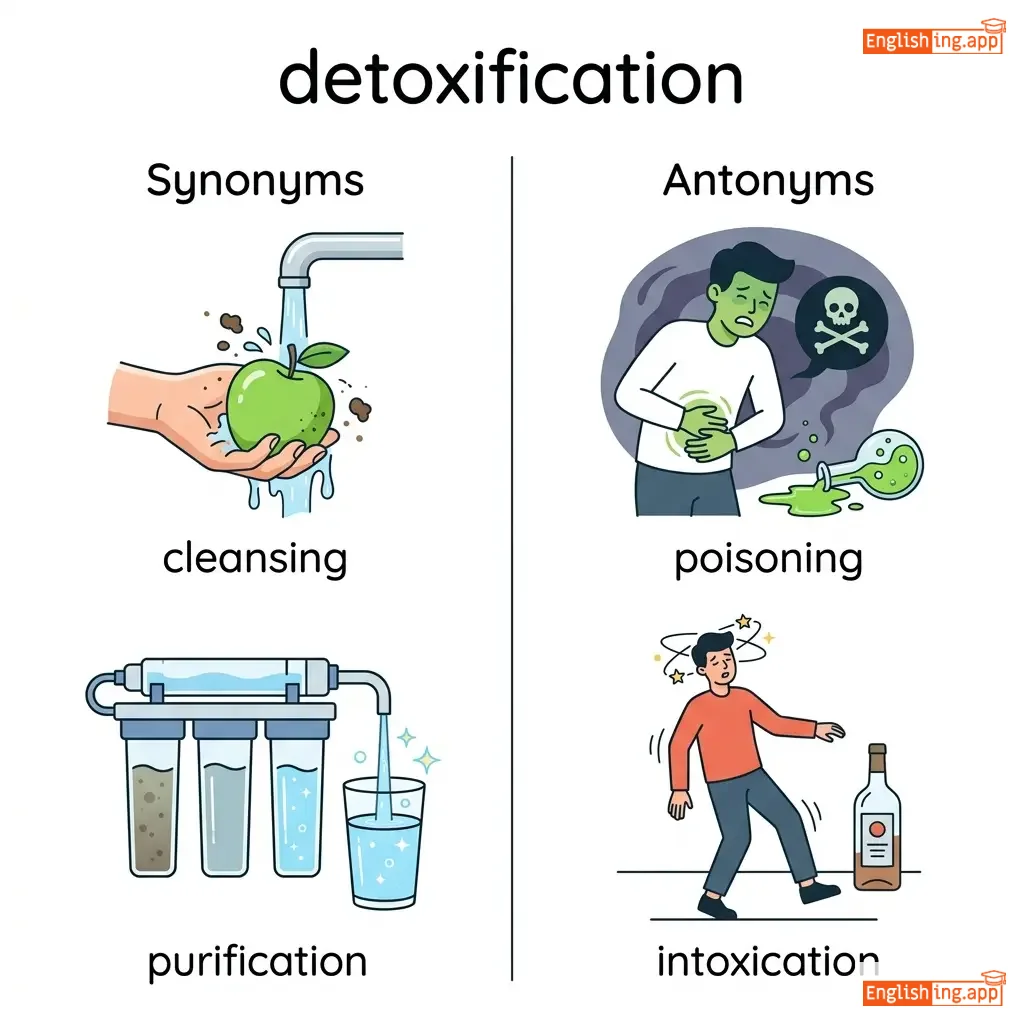
cleansing, purification, purging, treatment, therapy
••••••
|
poisoning, intoxication
••••••
|
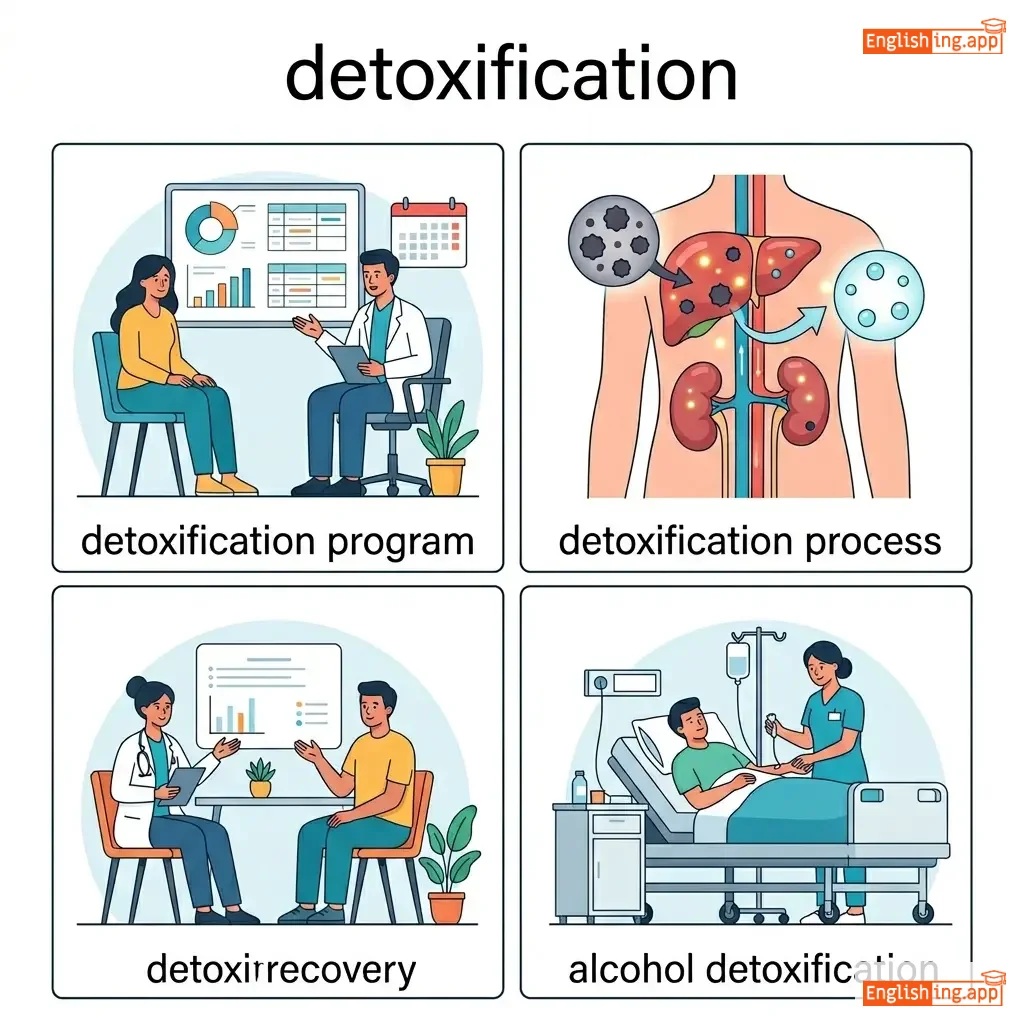
detoxification program, detoxification process, alcohol detoxification, drug detoxification
••••••
|
デトックス = 体から毒を排除 = 解毒
••••••
|
|
#2372
📝
|
/dɪˈvaɪz/
verb
(デヴァイズ)
••••••
|
- •••••• |
考案する
kousuru
••••••
|
devised
デヴァイズド
••••••
|
devised
デヴァイズド
••••••
|
devises
デヴァイズズ
••••••
|
devising
デヴァイズイング
••••••
|
To plan or invent something carefully.
••••••
|
The engineers devised a new method to reduce costs.
エンジニアたちはコスト削減のために新しい方法を考案した。
••••••
|
エンジニアたちはコスト削減のために新しい方法を考案した。
Enjinia-tachi wa kosuto sakugen no tame ni atarashī hōhō o kōan shita.
••••••
|
- •••••• | - •••••• | - •••••• |
invent, plan, create, formulate, design
••••••
|
destroy, neglect
••••••
|
devise a plan, devise a strategy, devise a method
••••••
|
Devise = 何かを考案することは、計画が必要です。
••••••
|
|
#2373
🌀
|
/ˈdiːviəs/
adjective
(ディヴィアス)
••••••
|
- •••••• |
狡猾な
kōkatsu na
••••••
|
- •••••• | - •••••• | - •••••• | - •••••• |
Skillful at using underhanded tactics to achieve goals; not straightforward.
••••••
|
He used a devious plan to gain control of the company.
彼は会社の支配権を握るために、狡猾な計画を使いました。
••••••
|
彼は会社の支配権を握るために、狡猾な計画を使いました。
Kare wa kaisha no shihai ken o nigiru tame ni, kōkatsu na keikaku o tsukaimashita.
••••••
|
devious means
狡猾な手段
••••••
|
using dishonest or tricky methods
••••••
|
狡猾な手段
kōkatsu na shudan
••••••
|
cunning, sly, deceitful, underhanded, tricky
••••••
|
honest, straightforward, sincere
••••••
|
devious plan, devious means, devious tactics, devious path
••••••
|
Devious = ディヴィアスな計画 = 知恵を使った悪巧み
••••••
|
|
#2374
👹
|
/ˈdɛvɪltrɪ/
noun
(デヴィルトリー)
••••••
|
- •••••• |
悪魔的な行為
akumateki na koui
••••••
|
- •••••• | - •••••• | - •••••• | - •••••• |
Cruel or malicious behavior; mischief with an evil aspect.
••••••
|
The villain’s deviltry terrified the townsfolk.
ザ・ヴィランのデヴィルトリー・テリファイド・ザ・タウンスフォーク。
••••••
|
悪党の悪魔的な行為は町の人々を恐れさせました。
Akutou no akumateki na koui wa machi no hitobito wo osore saremashita.
••••••
|
- •••••• | - •••••• | - •••••• |
malice, wickedness, villainy, mischief
••••••
|
kindness, benevolence
••••••
|
acts of deviltry, cruel deviltry, pure deviltry
••••••
|
Deviltry = 悪魔的な行為、悪魔のような行動。
••••••
|
|
#2375
😈
|
/ˈdɛvɪlri/
noun
(デヴィルリー)
••••••
|
- •••••• |
悪戯
itazura
••••••
|
- •••••• | - •••••• | - •••••• | - •••••• |
Wicked or cruel behavior; mischievous actions.
••••••
|
The children were full of devilry on Halloween night. |
ハロウィンの夜、子供たちは悪戯でいっぱいだった。
Harouin no yoru, kodomotachi wa itazura de ippai datta.
••••••
|
- •••••• | - •••••• | - •••••• |
mischief, wickedness, naughtiness, evil
••••••
|
goodness, virtue
••••••
|
acts of devilry, childish devilry, pure devilry
••••••
|
Devilry はまるで小さな悪魔の行動のように、子供たちのいたずらです。
••••••
|
|
#2376
📱
|
/dɪˈvaɪs/
noun
(デバイス)
••••••
|
|
装置
souchi
••••••
|
- •••••• | - •••••• | - •••••• | - •••••• |
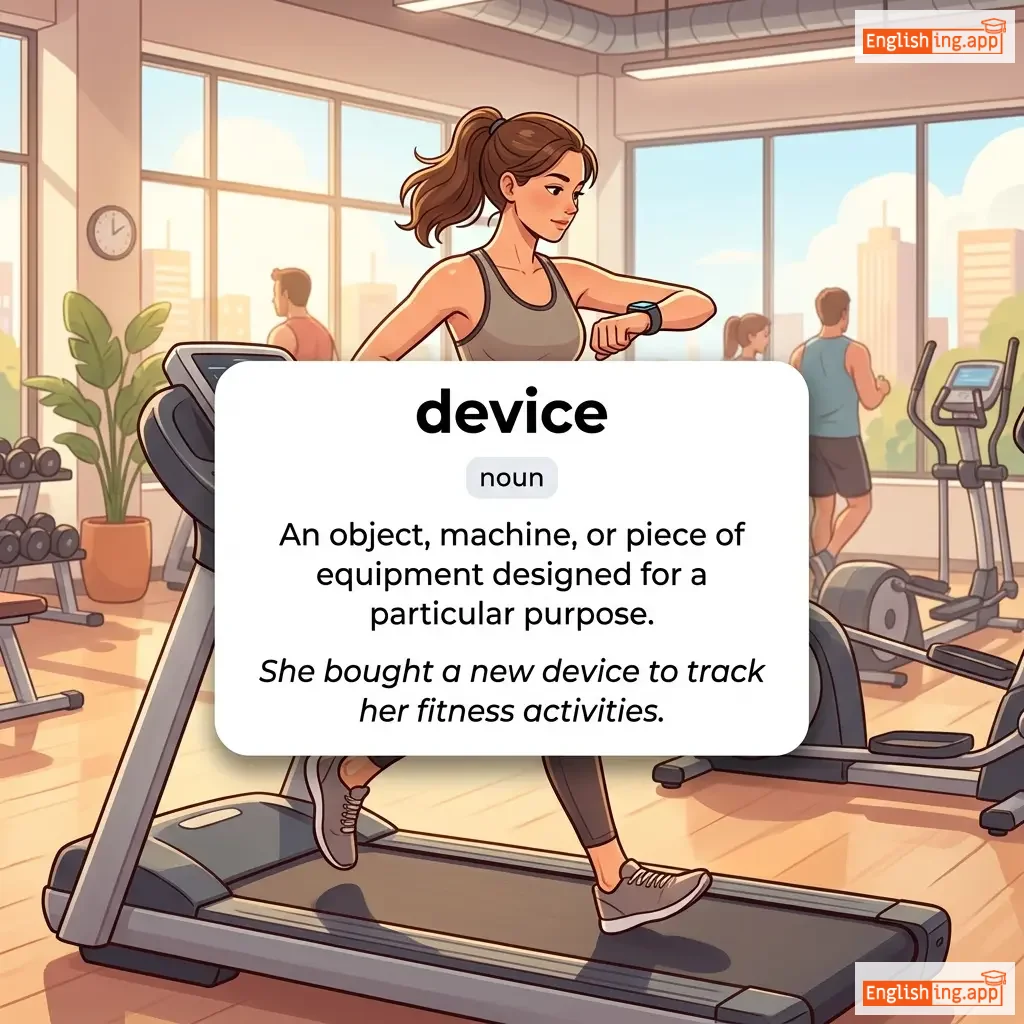
An object, machine, or piece of equipment designed for a particular purpose.
••••••
|
She bought a new device to track her fitness activities. |
彼女はフィットネス活動を追跡するために新しい装置を買いました。
Kanojo wa fitness katsudou wo tsuiseki suru tame ni atarashii souchi wo kaimashita.
••••••
|
left to your own devices |
to allow someone to do what they want without interfering
••••••
|
自分の思い通りにさせる
jibun no omidōri ni saseru
••••••
|
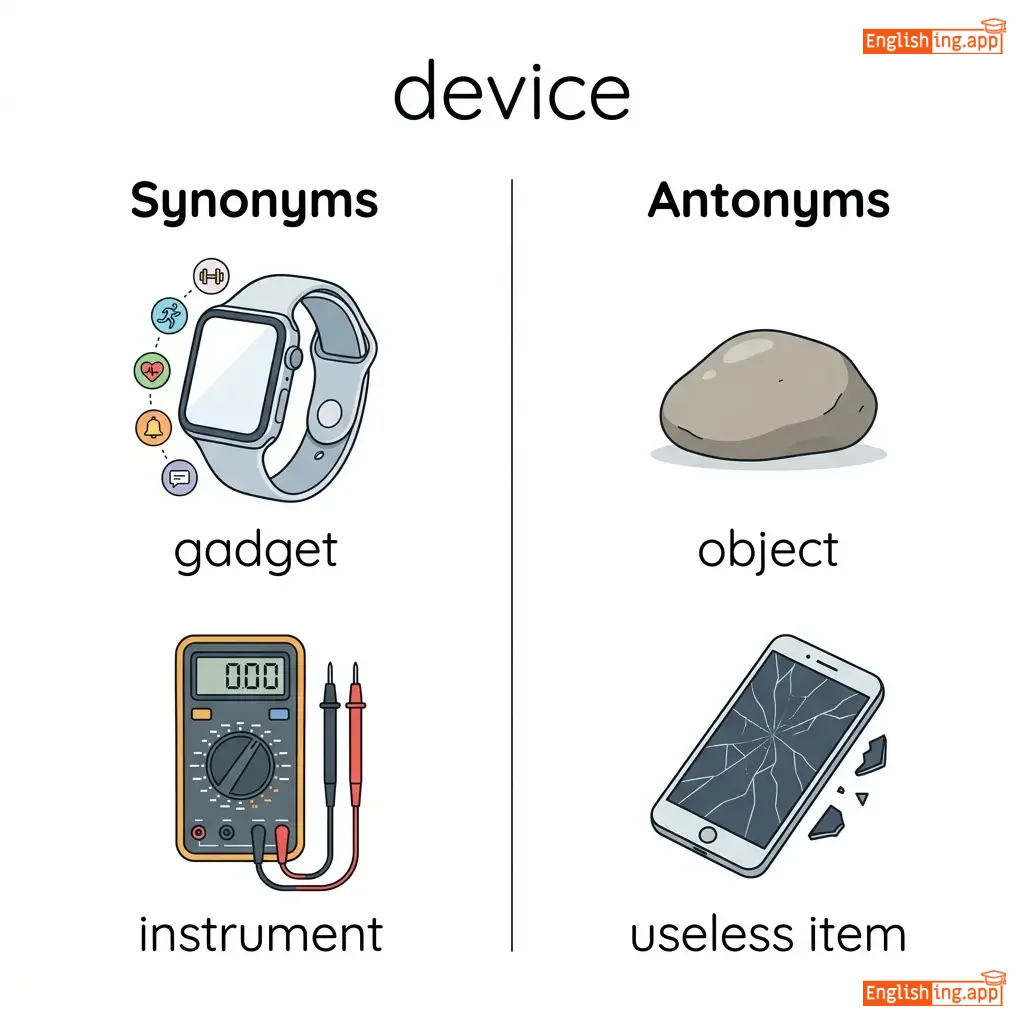
gadget, instrument, apparatus, tool, appliance
••••••
|
object, useless item
••••••
|
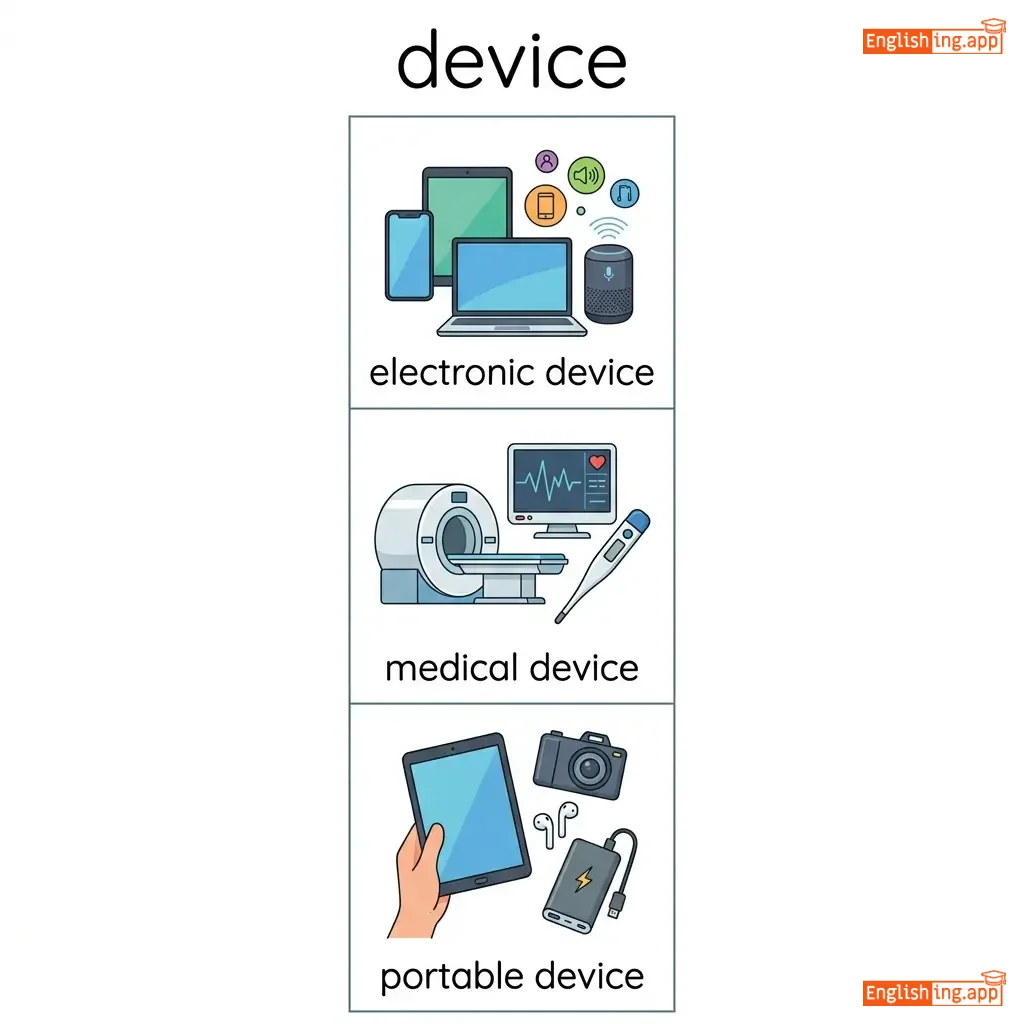
electronic device, medical device, portable device, mobile device
••••••
|
装置 = Device、フィットネスを追跡するための装置。
••••••
|
|
#2377
📉
|
/ˌdiːviˈeɪʃn/
noun
(ディヴィエーション)
••••••
|
- •••••• |
偏差
hensha
••••••
|
- •••••• | - •••••• | - •••••• | - •••••• |
The action of departing from an accepted standard or norm.
••••••
|
Any deviation from the rules will not be tolerated. |
規則からのいかなる偏差も許されません。
Kisoku kara no ikannaru hensha mo yurusaremasen.
••••••
|
standard deviation |
A measure of how spread out values are in statistics.
••••••
|
標準偏差
Hyōjun hensha
••••••
|
departure, divergence, abnormality, irregularity, variance
••••••
|
conformity, normality, regularity
••••••
|
slight deviation, major deviation, deviation from rules, deviation standard
••••••
|
偏差は規則から外れること、試験でルールを破ることのようなものです。
••••••
|
|
#2378
↔️
|
/ˈdiːvieɪt/
verb
(デビエイト)
••••••
|
|
逸脱する
itsudatsu suru
••••••
|
deviated
デビエイテッド
••••••
|
deviated
デビエイテッド
••••••
|
deviates
デビエイツ
••••••
|
deviating
デビエイティング
••••••
|
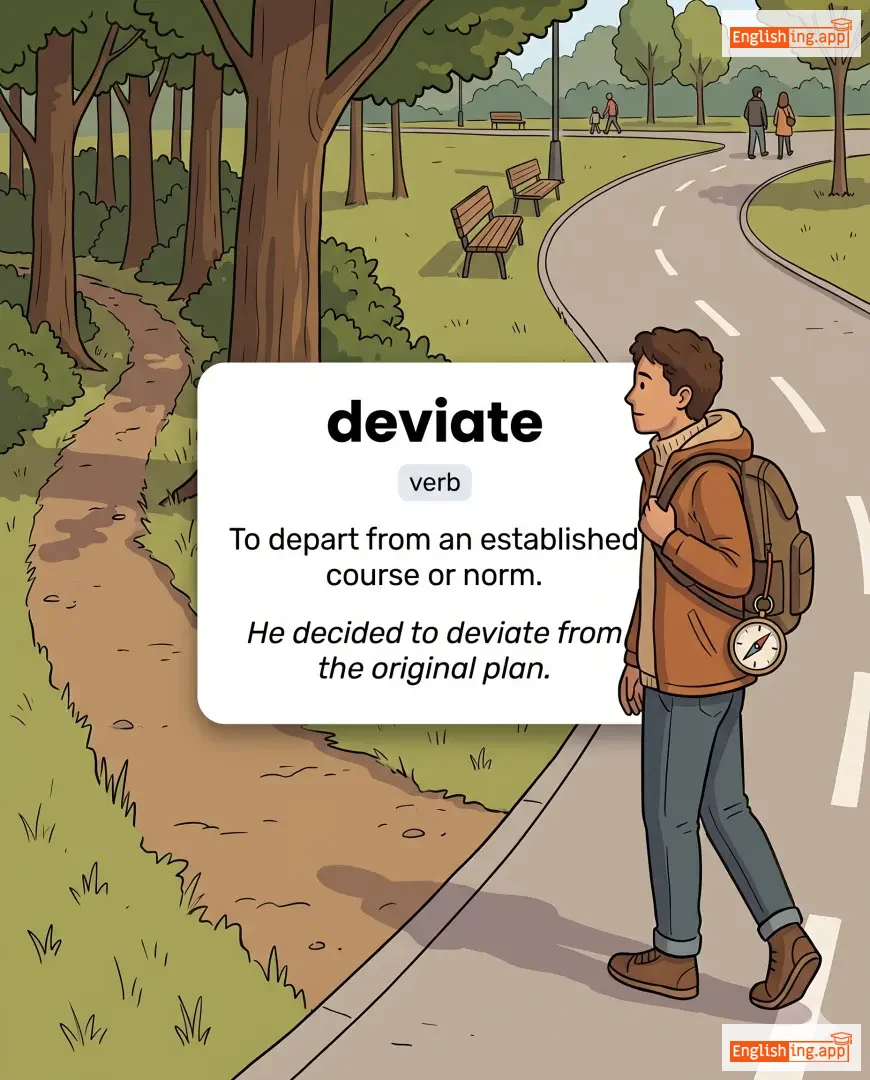
To depart from an established course or norm.
••••••
|
He decided to deviate from the original plan.
彼は元の計画から逸脱することに決めました。
••••••
|
彼は元の計画から逸脱することに決めました。
Kare wa moto no keikaku kara itsudatsu suru koto ni kimemashita.
••••••
|
deviate from the norm
ノルムから逸脱する
••••••
|
To act differently from what is usual or expected.
••••••
|
ノルムから逸脱する
norumu kara itsudatsu suru
••••••
|
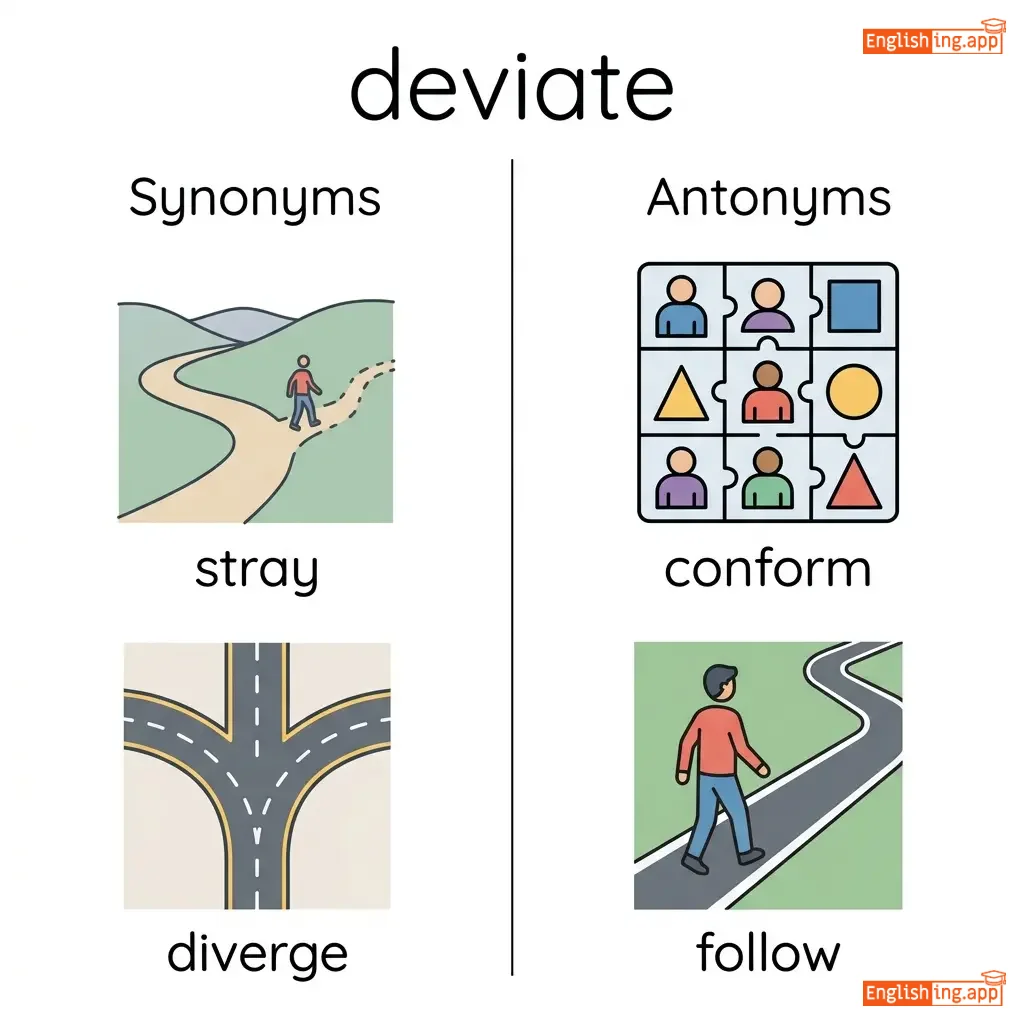
stray, diverge, depart, veer, digress
••••••
|
conform, follow, adhere
••••••
|
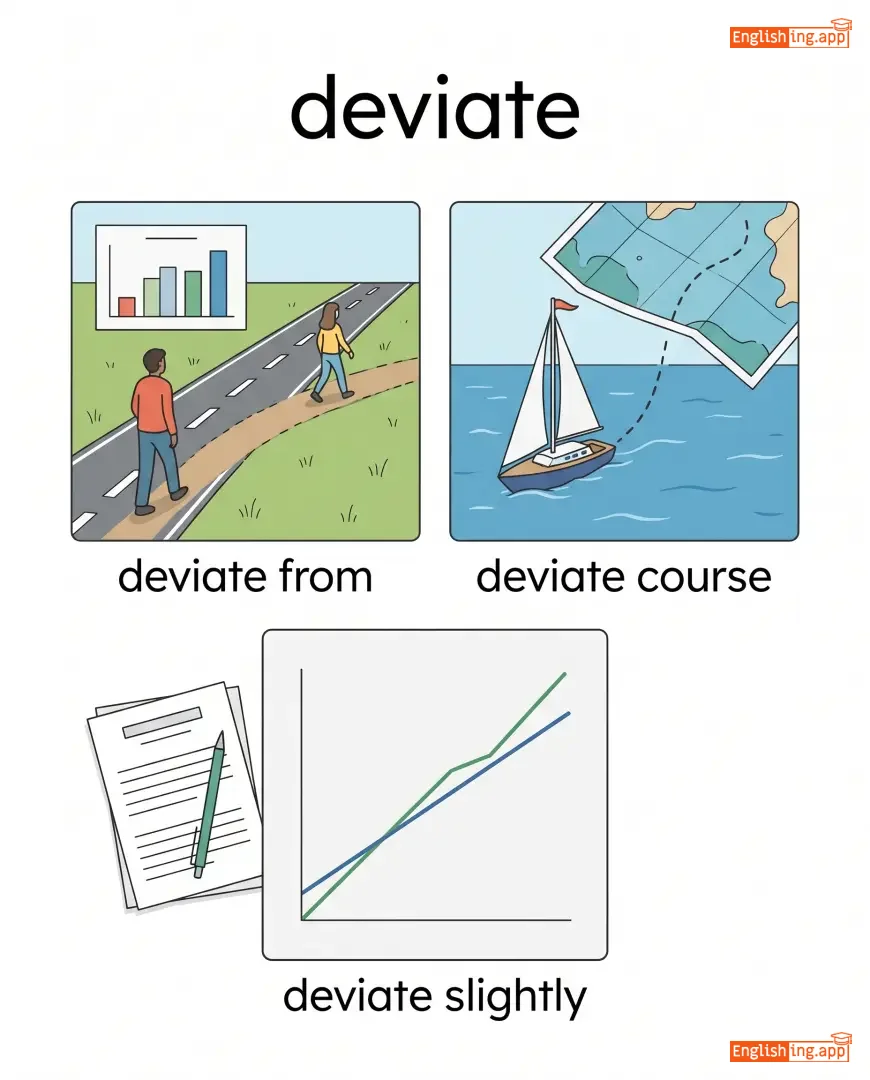
deviate from, deviate course, deviate slightly, deviate path
••••••
|
Deviateは逸脱することを意味します。道を外れるようなものです。
••••••
|
|
#2379
🚫
|
/ˈdiːviəns/
noun
(ディヴィアンス)
••••••
|
- •••••• |
逸脱
itsudatsu
••••••
|
- •••••• | - •••••• | - •••••• | - •••••• |
Behavior that differs from accepted social or moral standards.
••••••
|
The book studies deviance in urban youth culture. |
その本は都市の若者文化における逸脱を研究しています。
Sono hon wa toshi no wakamono bunka ni okeru itsudatsu o kenkyu shiteimasu.
••••••
|
- •••••• | - •••••• | - •••••• |
abnormality, irregularity, misconduct, aberration, transgression
••••••
|
normality, conformity, regularity
••••••
|
social deviance, criminal deviance, deviance from norms, deviance theory
••••••
|
Deviance とは deviation — 基準から逸脱すること。
••••••
|
|
#2380
⬇️
|
/dɪˈtruːd/
verb
(デトルード)
••••••
|
- •••••• |
下または外に押し出す
shita mata wa soto ni oshidasu
••••••
|
detruded
デトルーデッド
••••••
|
detruded
デトルーデッド
••••••
|
detrudes
デトルーズ
••••••
|
detruding
デトルーディング
••••••
|
To thrust or force something downward or outward.
••••••
|
The violent waves detruded rocks from the cliff.
激しい波は崖から岩を押し出しました。
••••••
|
激しい波は崖から岩を押し出しました。
Hageshī nami wa gake kara iwa o oshidashimashita.
••••••
|
- •••••• | - •••••• | - •••••• |
thrust, push, force, shove, drive
••••••
|
pull, lift, raise
••••••
|
detrude forcefully, detrude downward, detrude rocks, detrude into
••••••
|
De-trude: 下に押し出す、'down'.
••••••
|
|
#2381
🗑️
|
/dɪˈtraɪtəs/
noun
(ディトライタス)
••••••
|
- •••••• |
デトリタス
detoritasu
••••••
|
- •••••• | - •••••• | - •••••• | - •••••• |
Waste or debris of any kind; fragments left from destruction or decay.
••••••
|
The riverbank was covered with detritus after the flood. |
洪水後、川岸はデトリタスで覆われていました。
Kōsui-go, kawagishi wa detoritasu de ōwarete imashita.
••••••
|
- •••••• | - •••••• | - •••••• |
debris, rubble, wreckage, remains, fragments
••••••
|
wholeness, entirety, cleanliness
••••••
|
accumulated detritus, natural detritus, detritus of society, detritus from
••••••
|
デトリタスは破壊の後に残ったもの、まるでゴミのように散らばる。
••••••
|
|
#2382
🚫
|
/ˌdɛtrɪˈmɛntəl/
adjective
••••••
|
|
- •••••• | - •••••• | - •••••• | - •••••• | - •••••• |
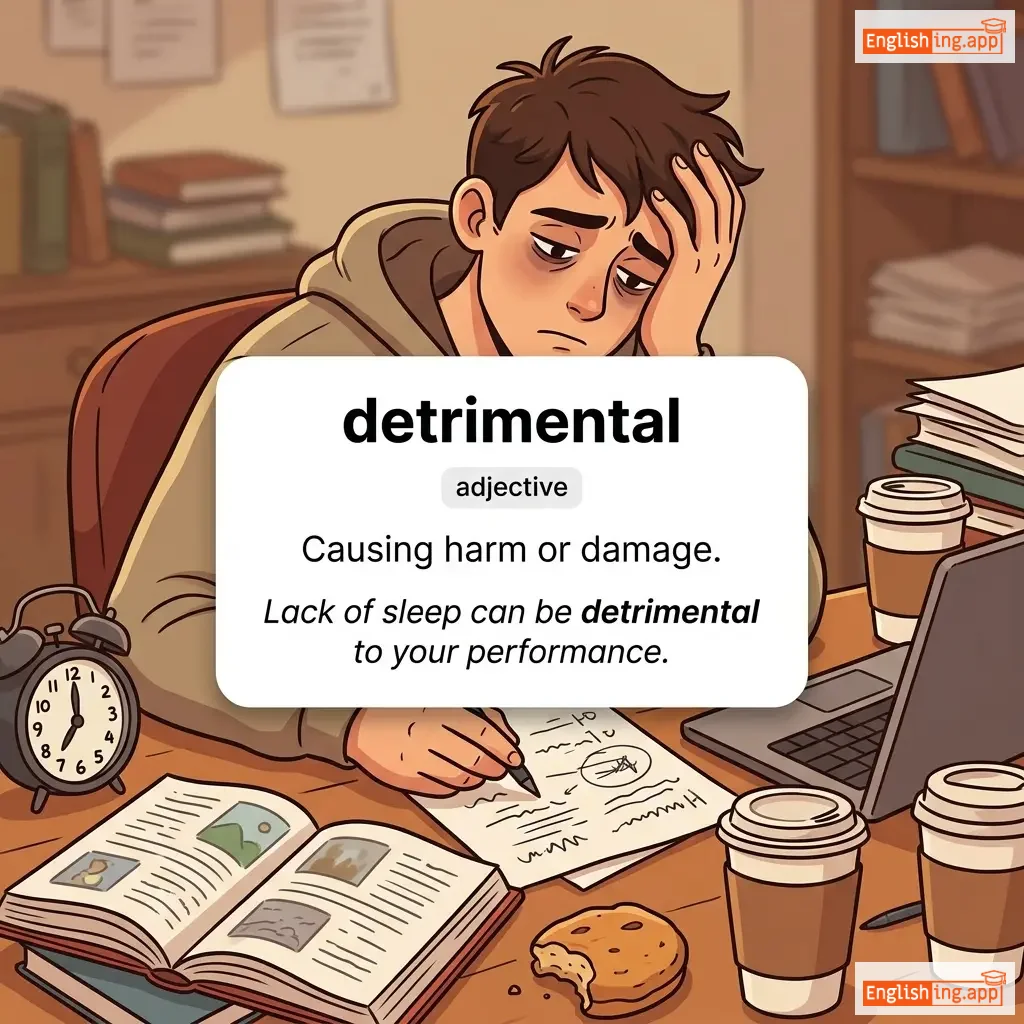
Causing harm or damage.
••••••
|
Lack of sleep can be detrimental to your performance. |
- •••••• | - •••••• | - •••••• | - •••••• |
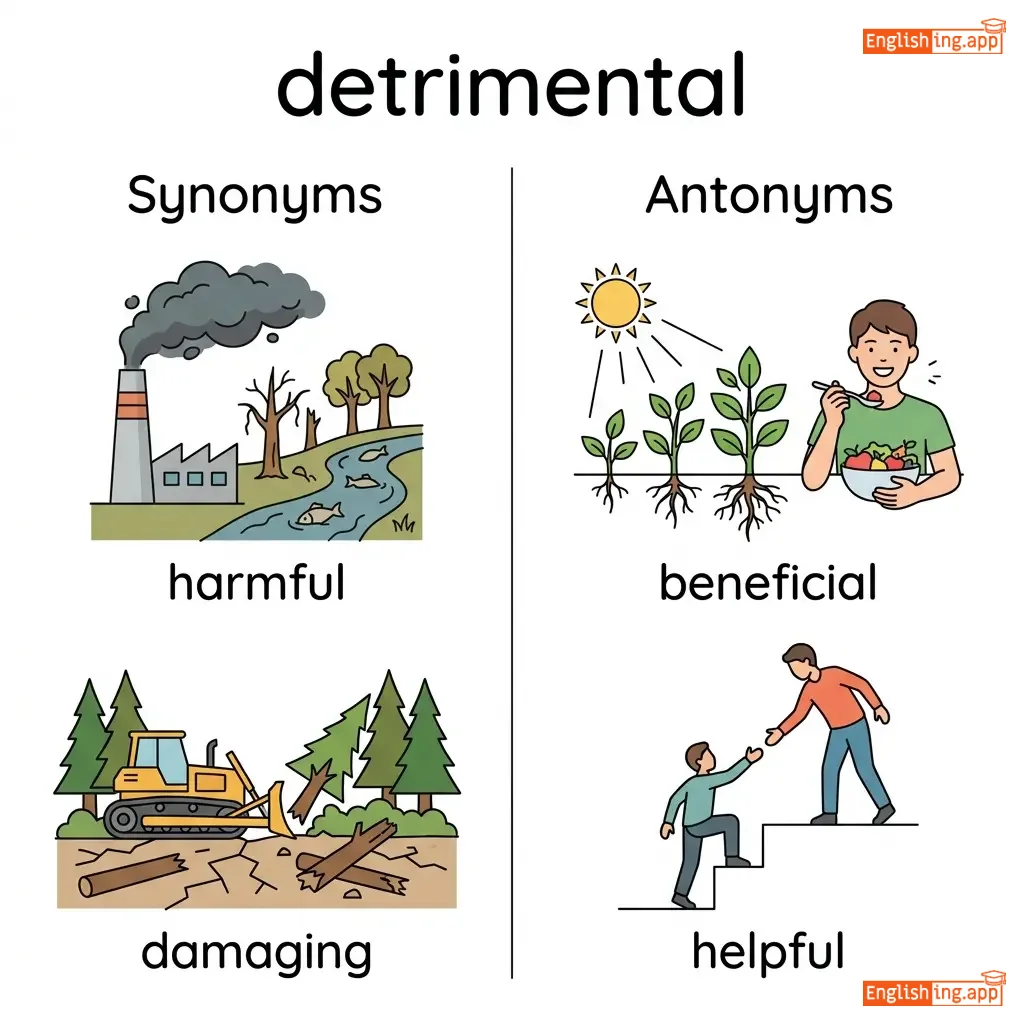
harmful, damaging, injurious, adverse, destructive
••••••
|
beneficial, helpful, advantageous
••••••
|
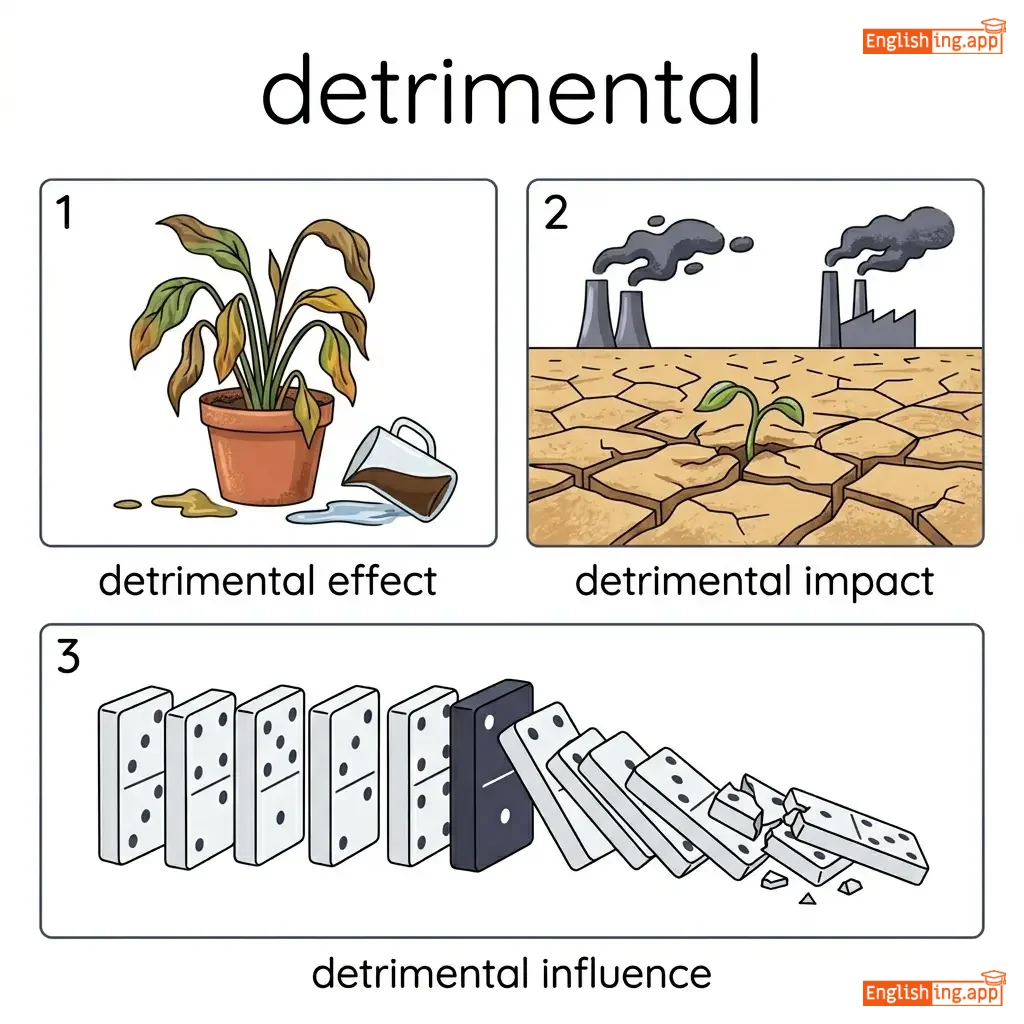
detrimental effect, detrimental impact, detrimental influence
••••••
|
No •••••• |
|
#2383
⚠️
|
/ˈdɛtrɪmənt/
noun
(デトリメント)
••••••
|
|
損害
songai
••••••
|
- •••••• | - •••••• | - •••••• | - •••••• |
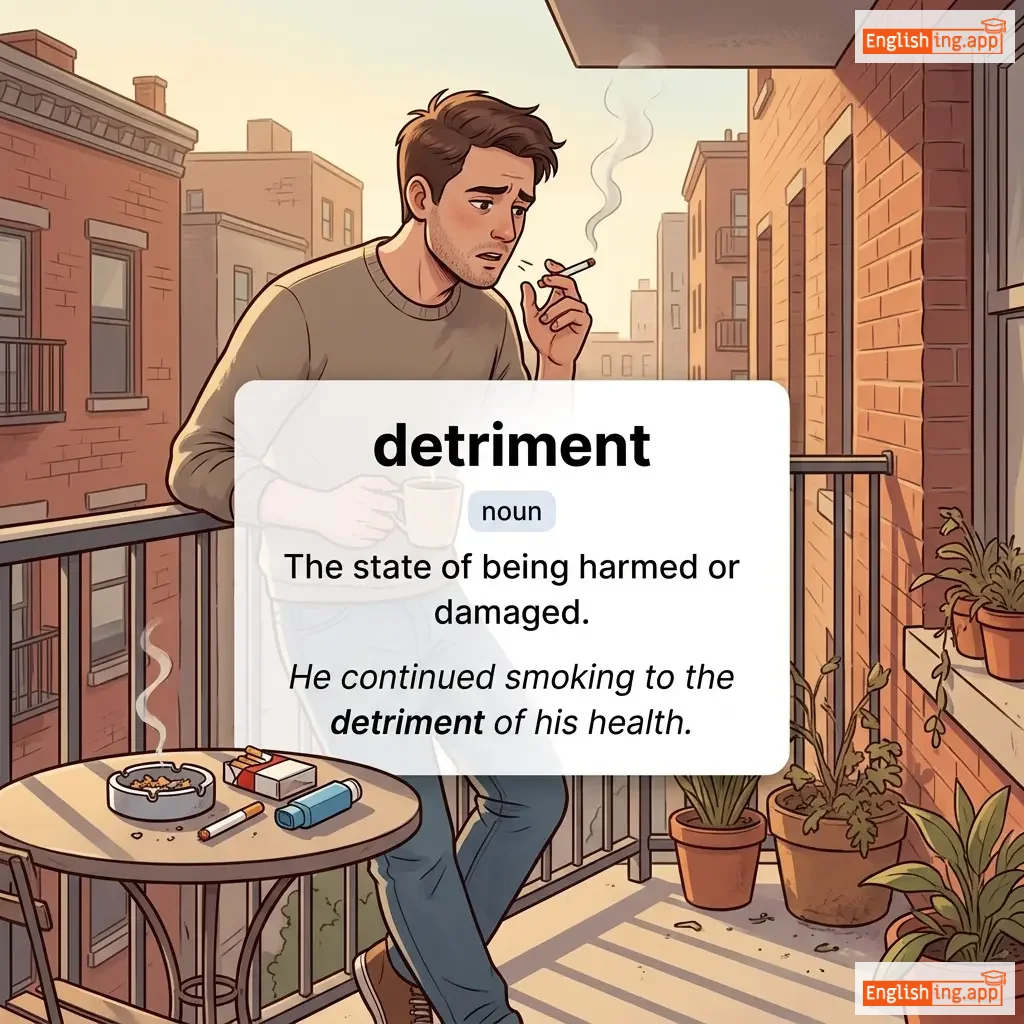
The state of being harmed or damaged.
••••••
|
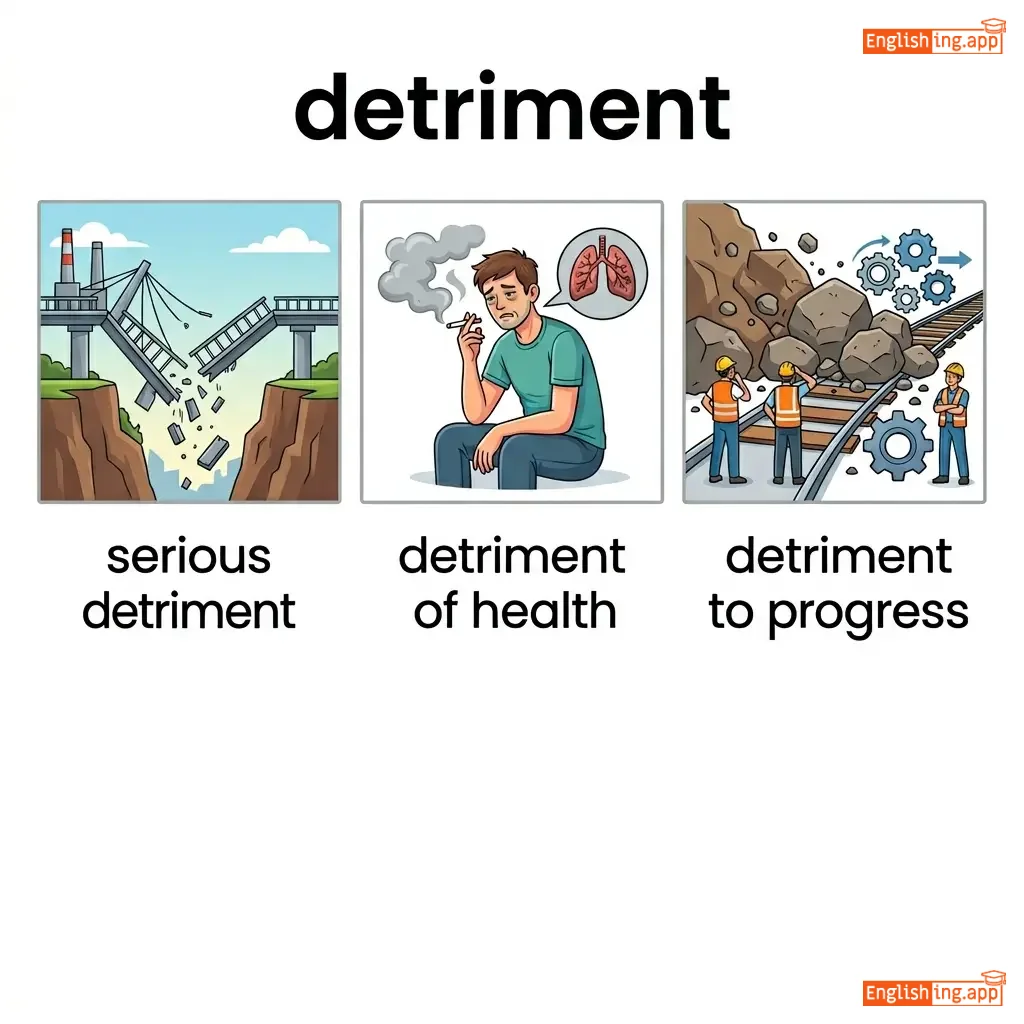
He continued smoking to the detriment of his health. |
彼は健康に損害を与えるにもかかわらず、喫煙を続けました。
Kare wa kenkou ni songai wo ataeru nimokakawarazu, kitsuen wo tsuzukemashita.
••••••
|
to the detriment of |
With harmful or damaging effect to something.
••••••
|
損害を与える
Songai wo ataeru
••••••
|
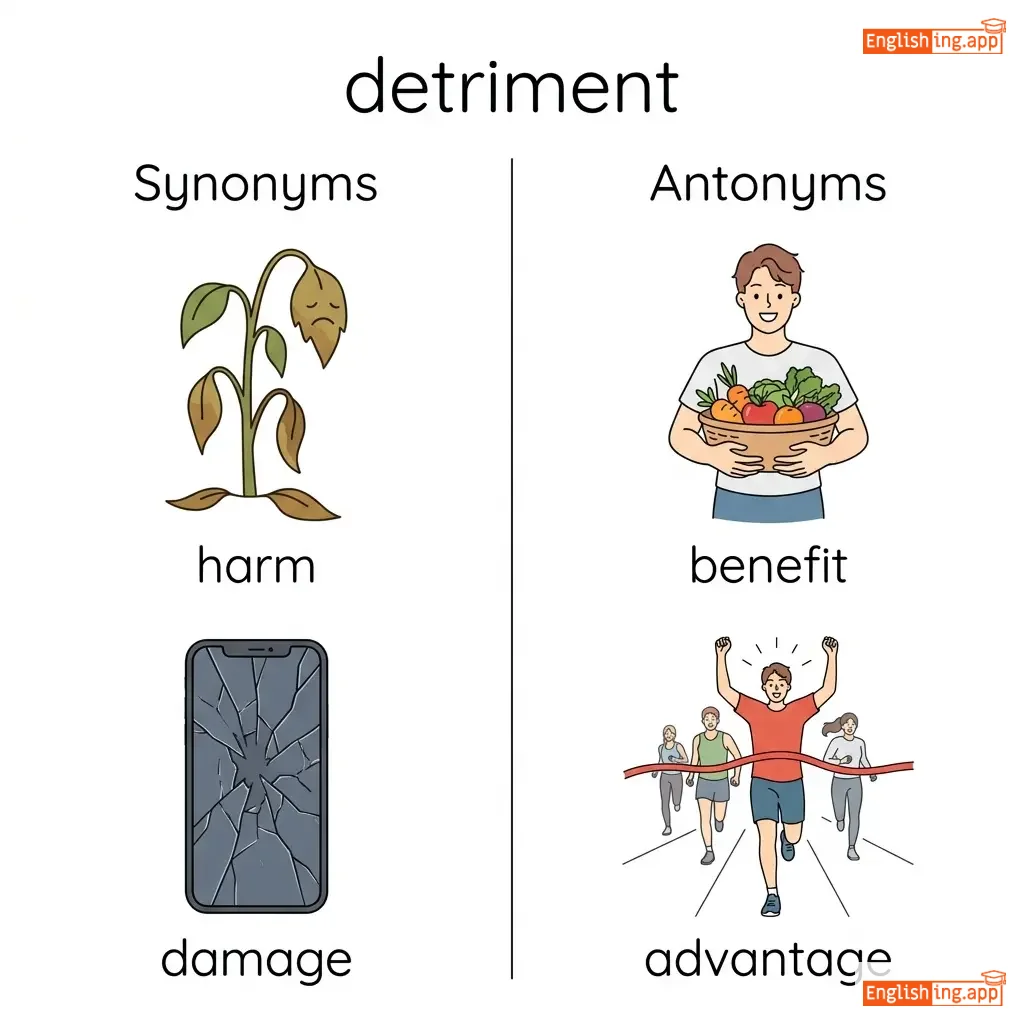
harm, damage, injury, loss, impairment
••••••
|
benefit, advantage
••••••
|
serious detriment, detriment of health, detriment to progress
••••••
|
DETRIMENTは損害を意味します — 喫煙は健康に損害を与えます。
••••••
|
|
#2384
🗣️
|
/dɪˈtrækʃən/
noun
(ディトラクション)
••••••
|
|
非難
hinan
••••••
|
- •••••• | - •••••• | - •••••• | - •••••• |
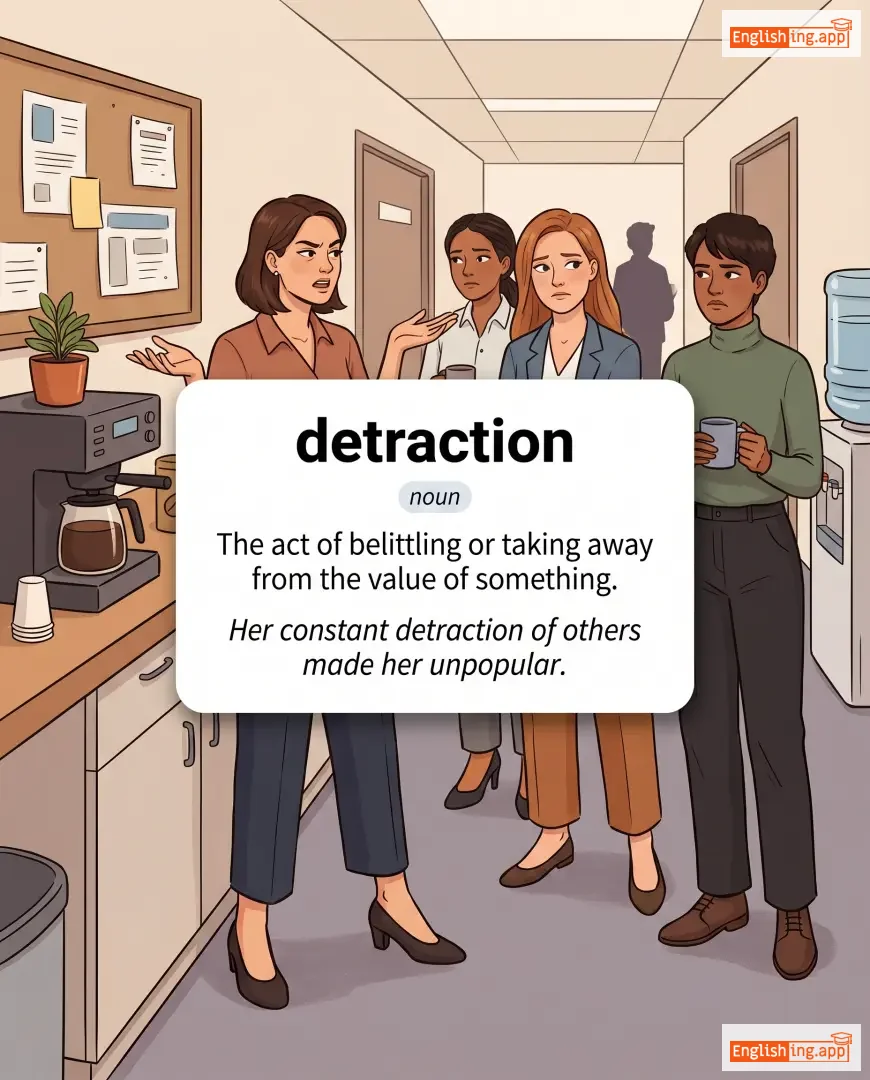
The act of belittling or taking away from the value of something.
••••••
|
Her constant detraction of others made her unpopular. |
他人に対する彼女の絶え間ない非難は、彼女を不人気にした。
Tanin ni taisuru kanojo no taemai nai hinan wa, kanojo o funinki ni shita.
••••••
|
- •••••• | - •••••• | - •••••• |
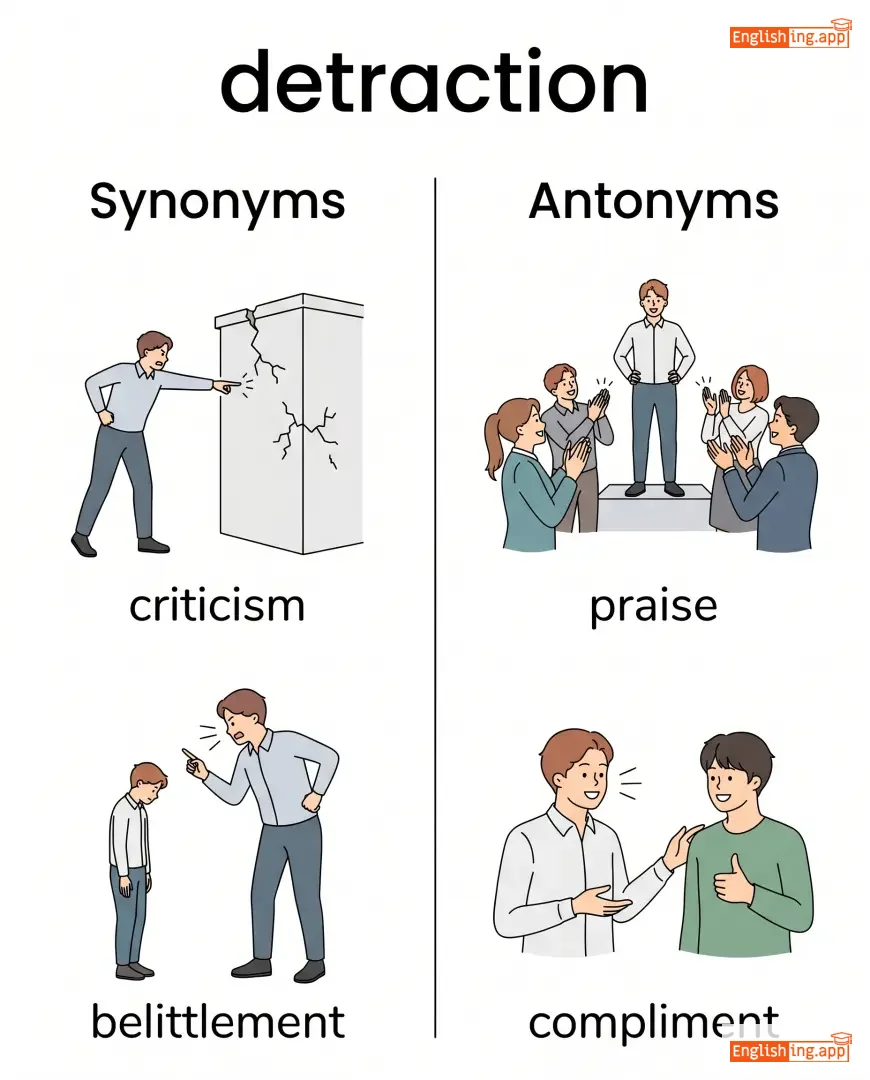
criticism, belittlement, disparagement, slander
••••••
|
praise, compliment
••••••
|
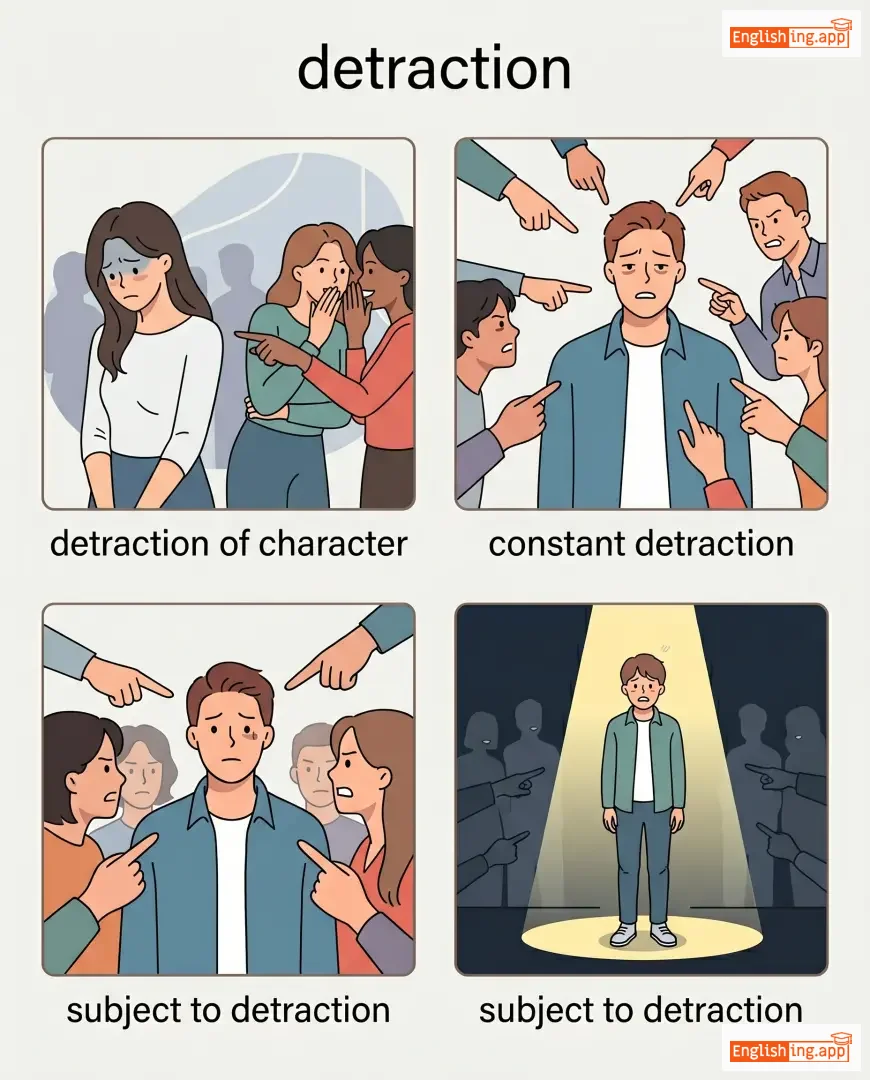
detraction of character, constant detraction, subject to detraction
••••••
|
DETRACTは減少を意味し、DETRACTIONは何かの価値を減少させることを意味します。
••••••
|
|
#2385
📉
|
/dɪˈtrækt/
verb
••••••
|
- •••••• | - •••••• |
detracted
••••••
|
detracted
••••••
|
detracts
••••••
|
detracting
••••••
|
To reduce or take away the worth or value of something.
••••••
|
His rude behavior will detract from his good reputation. |
- •••••• |
detract from |
To diminish the value or importance of something.
••••••
|
- •••••• |
diminish, reduce, lessen, undermine, weaken
••••••
|
enhance, boost, improve
••••••
|
detract from value, detract attention, detract importance
••••••
|
No •••••• |
|
#2386
🏠
|
/dɪˈtætʃt/
adjective
(ディタッチド)
••••••
|
- •••••• |
分離された, 無関心な
bunri sareta, mukanshin na
••••••
|
- •••••• | - •••••• | - •••••• | - •••••• |
separate or disconnected; showing a lack of emotional involvement
••••••
|
He lived in a detached house away from the city. |
彼は都市から離れた分離された家に住んでいました。
Kare wa toshi kara hanareta bunri sareta ie ni sunde imashita.
••••••
|
detached attitude |
a way of behaving without showing strong emotions or attachment
••••••
|
無関心な態度
mukanshin na taido
••••••
|
separate, aloof, isolated, disconnected, indifferent
••••••
|
attached, connected, involved
••••••
|
detached house, detached view, emotionally detached, detached observer
••••••
|
Detached は「分離された」という意味です。都市から離れた分離された家のように。
••••••
|
|
#2387
↩️
|
/ˈdiːtʊr/
noun
(ディツアー)
••••••
|
- •••••• |
迂回路
ukairo
••••••
|
- •••••• | - •••••• | - •••••• | - •••••• |
A longer or less direct route taken to avoid something or reach a destination.
••••••
|
We had to take a detour because the main road was closed. |
メイン道路が閉鎖されていたので、迂回路を取らなければならなかった。
mein dōro ga heisa sarete ita node, ukairo o toranakereba naranakatta.
••••••
|
take a detour |
to go a different way than originally planned
••••••
|
迂回路を取る
ukairo o toru
••••••
|
bypass, diversion, alternative route, deviation
••••••
|
direct route, straight path
••••••
|
take a detour, long detour, short detour
••••••
|
Detour は日本語で '迂回路' — メイン道路が閉鎖されていたら、迂回路を取る。
••••••
|
|
#2388
💥
|
/ˌdɛtəˈneɪʃən/
noun
(デトネーション)
••••••
|
- •••••• |
爆発
bakuhatsu
••••••
|
- •••••• | - •••••• | - •••••• | - •••••• |
The act of exploding or causing something to explode.
••••••
|
The sudden detonation shook the entire building.
突然のデトネーションが建物全体を揺さぶった。
••••••
|
突然の爆発が建物全体を揺さぶった。
Totsuzen no bakuhatsu ga tatemono zentai o yusabutta.
••••••
|
- •••••• | - •••••• | - •••••• |
explosion, blast, eruption, ignition
••••••
|
silence, implosion
••••••
|
cause detonation, accidental detonation, sudden detonation
••••••
|
デトネーション: 大きな爆発音!
••••••
|
|
#2389
🤢
|
/dɪˈtɛst/
verb
(ディテスト)
••••••
|
- •••••• |
嫌う
kirau
••••••
|
detested
ディテステッド
••••••
|
detested
ディテステッド
••••••
|
detests
ディテスツ
••••••
|
detesting
ディテスティング
••••••
|
To dislike intensely or hate.
••••••
|
I detest waking up early on weekends.
私は週末に早起きするのが嫌いです。
••••••
|
私は週末に早起きするのが嫌いです。
Watashi wa shuumatsu ni hayaoki suru no ga kirai desu.
••••••
|
- •••••• | - •••••• | - •••••• |
loathe, hate, despise, abhor
••••••
|
like, love, enjoy
••••••
|
detest strongly, really detest, detest doing something
••••••
|
嫌うは HATE と同じ! – みんな早起きが嫌いです。
••••••
|
|
#2390
🚫
|
/dɪˈtɜːrənt/
noun
(ディテレント)
••••••
|
|
抑止力
yokushiryoku
••••••
|
- •••••• | - •••••• | - •••••• | - •••••• |
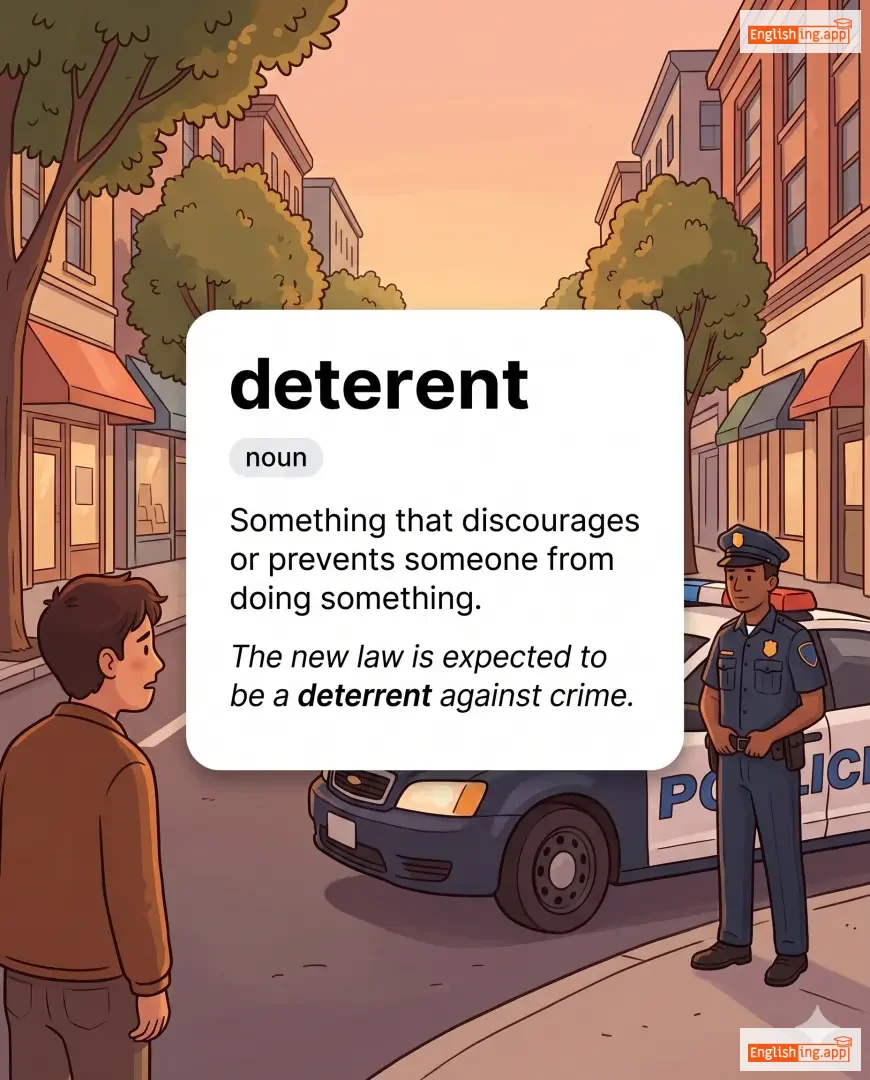
Something that discourages or prevents someone from doing something.
••••••
|
The new law is expected to be a deterrent against crime. |
新しい法律は犯罪に対する抑止力になると予想されています。
Atarashī hōritsu wa hanzai ni taisuru yokushiryoku ni naru to yosō sareteimasu.
••••••
|
- •••••• | - •••••• | - •••••• |
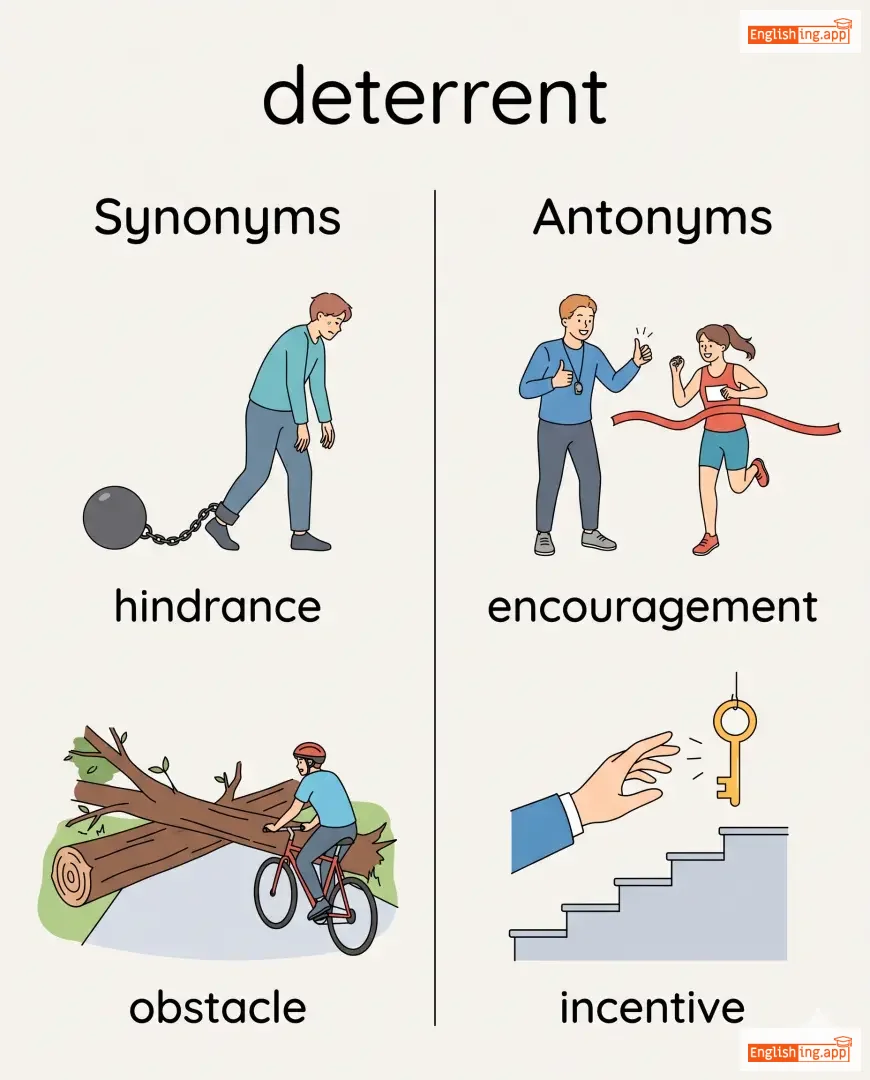
hindrance, obstacle, discouragement, preventive
••••••
|
encouragement, incentive
••••••
|
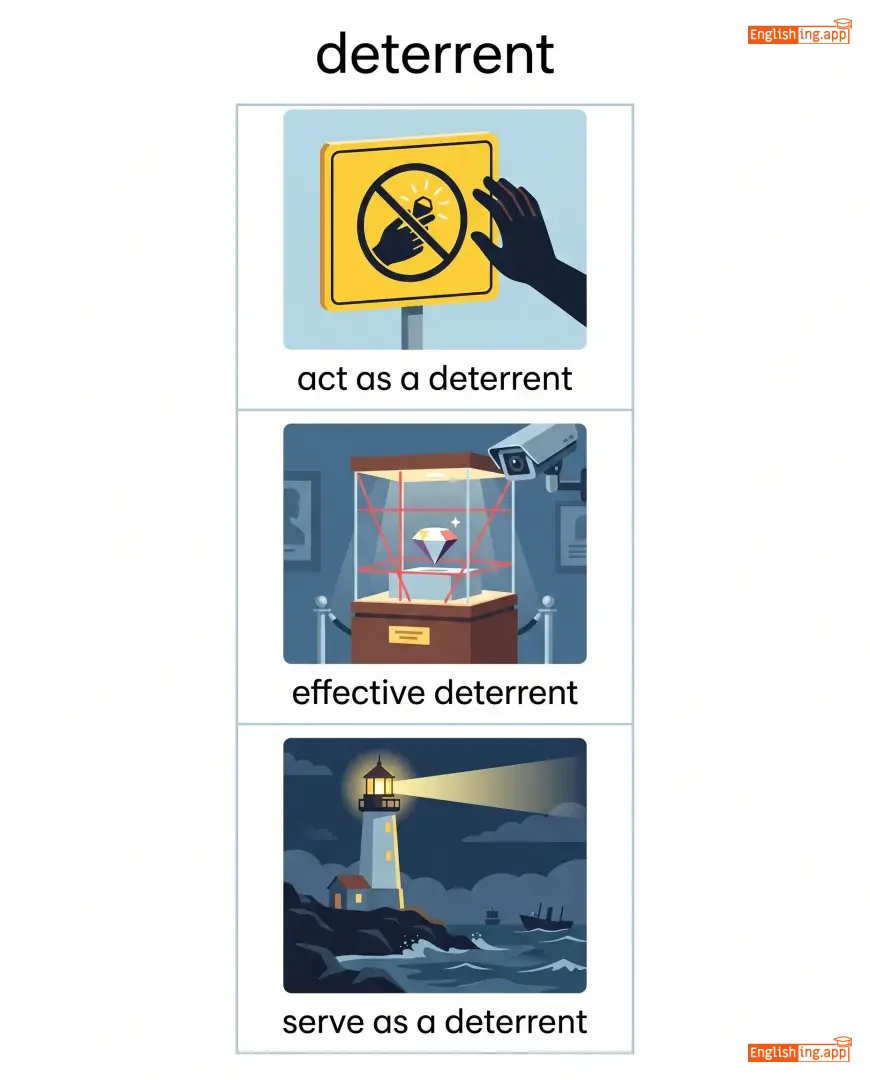
act as a deterrent, effective deterrent, serve as a deterrent
••••••
|
抑止力は 🚫 犯罪 – 法律が抑止力です。
••••••
|
|
#2391
💪
|
/dɪˌtɜːrmɪˈneɪʃən/
noun
(ディターミネーション)
••••••
|
|
決意
ketsui
••••••
|
- •••••• | - •••••• | - •••••• | - •••••• |
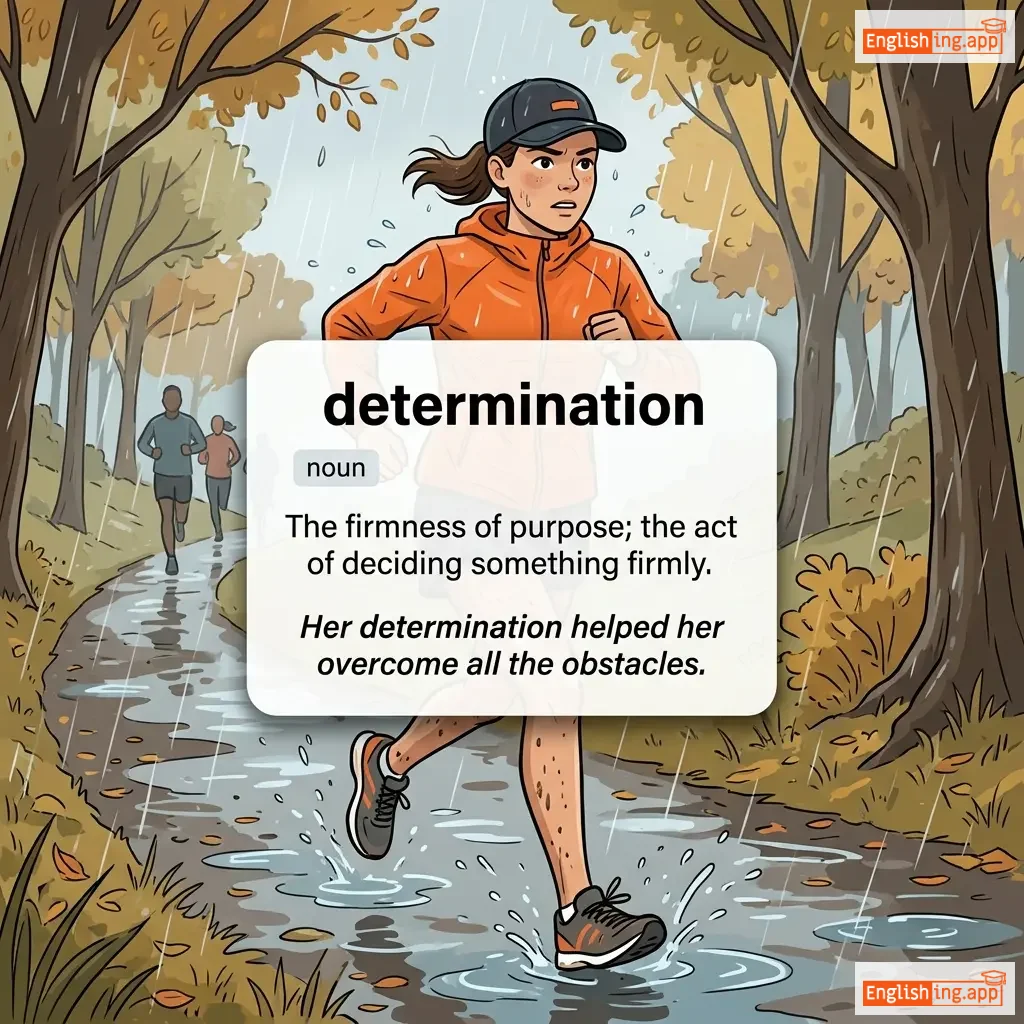
The firmness of purpose; the act of deciding something firmly.
••••••
|
Her determination helped her overcome all the obstacles.
彼女の決意は彼女がすべての障害を克服するのを助けました。
••••••
|
彼女の決意は彼女がすべての障害を克服するのを助けました。
Kanojo no ketsui wa kanojo ga subete no shougai wo kokufuku suru no wo tasukemashita.
••••••
|
with determination
決意を持って
••••••
|
showing firmness of purpose
••••••
|
決意を持って
ketsui wo motte
••••••
|
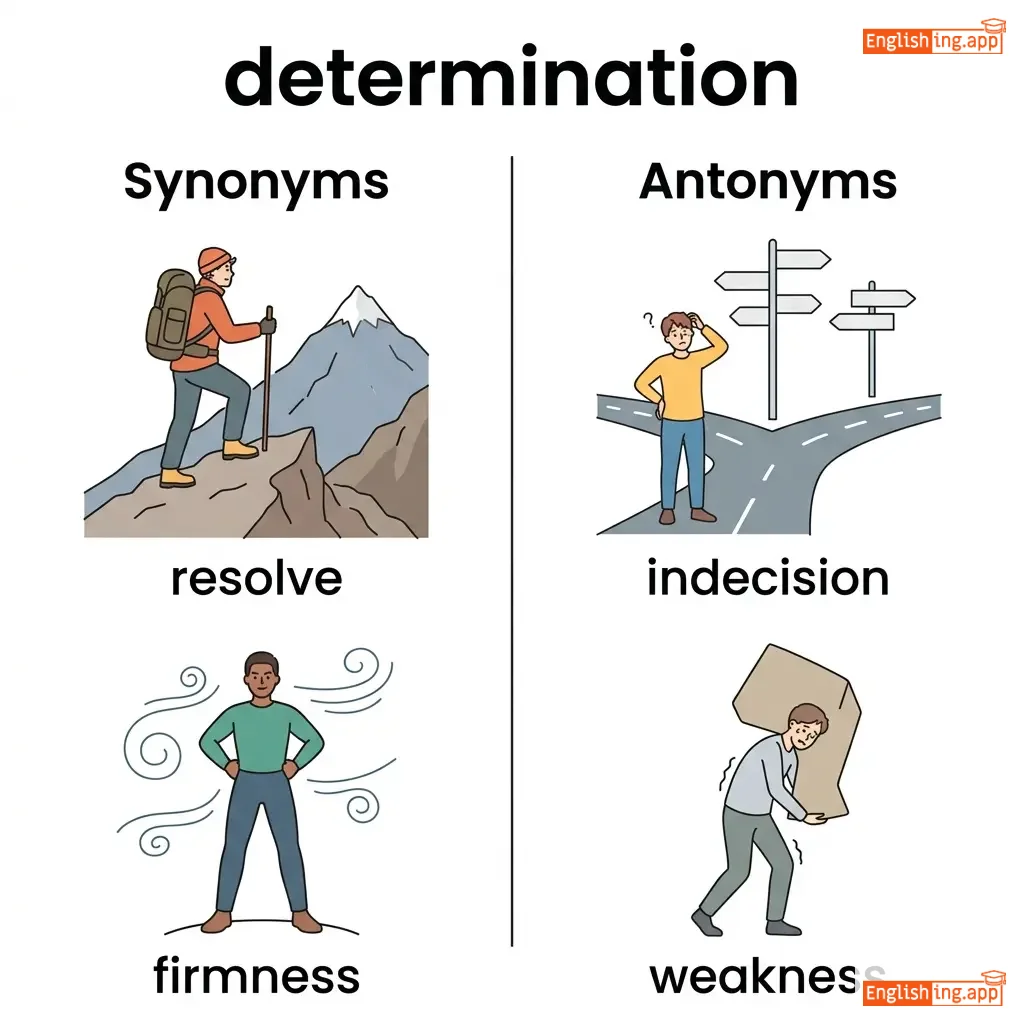
resolve, firmness, perseverance, tenacity, willpower
••••••
|
indecision, weakness, hesitation
••••••
|
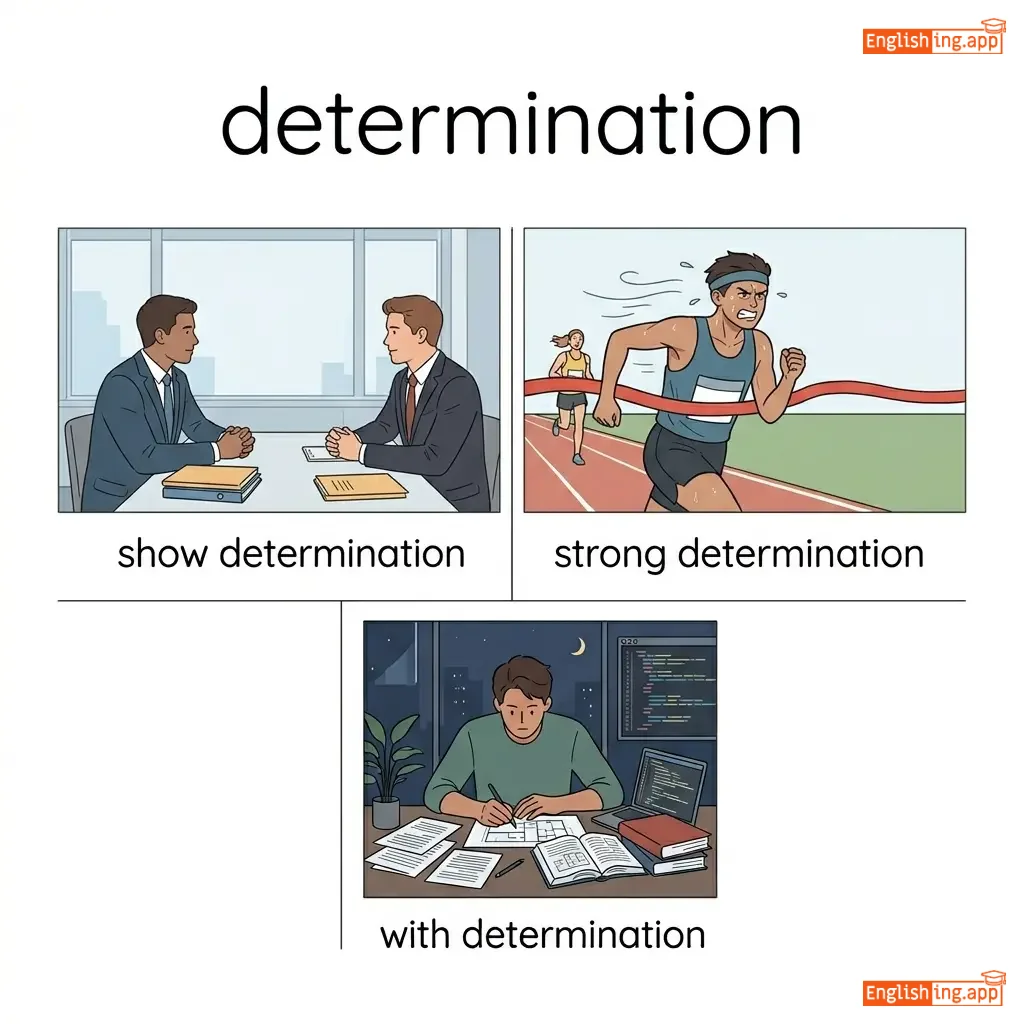
strong determination, show determination, with determination, fierce determination
••••••
|
決意はゴールを決めて歩み続ける力です。
••••••
|
|
#2392
📏
|
/dɪˈtɜːrmɪnət/
adjective
(dɪˈtɜːrmɪnət)
••••••
|
- •••••• |
確定的
kakutei-teki
••••••
|
- •••••• | - •••••• | - •••••• | - •••••• |
having exact and definite limits or form
••••••
|
The contract is for a determinate period of two years. |
契約は2年間の確定した期間です。
Keiyaku wa 2 nenkan no kakutei shita kikan desu.
••••••
|
- •••••• | - •••••• | - •••••• |
definite, fixed, limited, precise, certain
••••••
|
indefinite, vague, uncertain
••••••
|
determinate period, determinate sentence, determinate form, determinate growth
••••••
|
Determinate + ate = 確定的, 日本語で確定的.
••••••
|
|
#2393
🔑
|
/dɪˈtɜːrmɪnənt/
noun
(ディターミナント)
••••••
|
|
決定要因
kettei yōin
••••••
|
- •••••• | - •••••• | - •••••• | - •••••• |
a factor that decisively affects the nature or outcome of something
••••••
|
Education is a key determinant of economic growth. |
教育は経済成長の主要な決定要因です。
Kyōiku wa keizai seichō no shuyō na kettei yōin desu.
••••••
|
- •••••• | - •••••• | - •••••• |
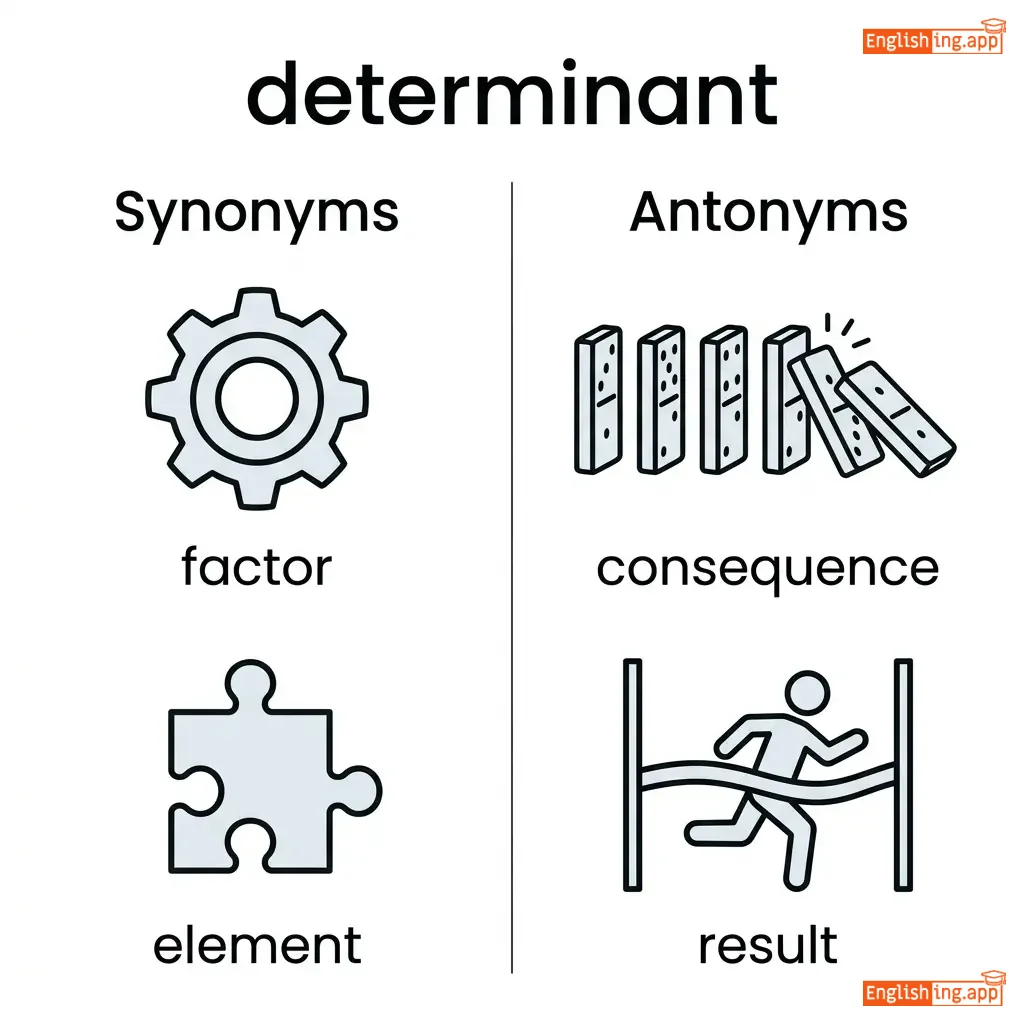
factor, element, cause, influence, condition
••••••
|
consequence, result
••••••
|
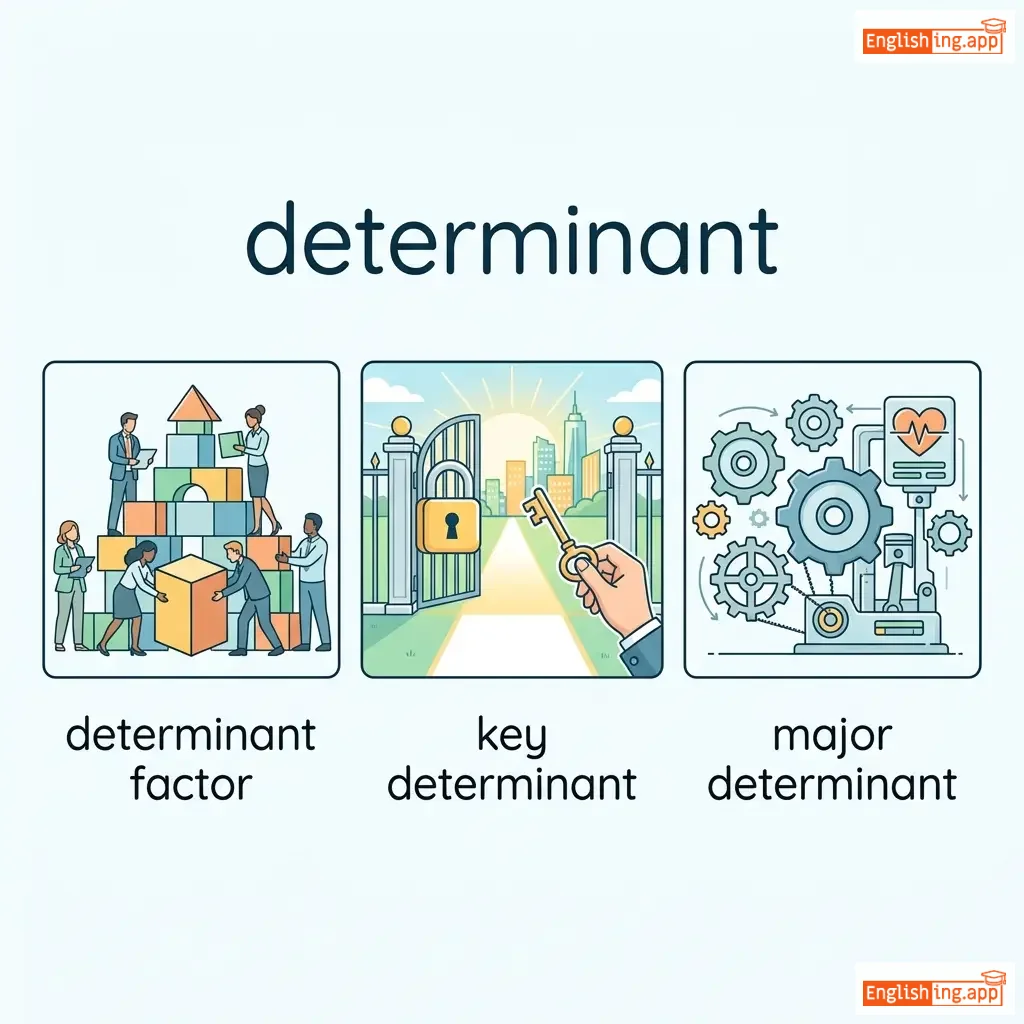
determinant factor, key determinant, major determinant, significant determinant
••••••
|
Determinantは結果を決める要因を意味し、日本語では決定要因。
••••••
|
|
#2394
⚠️
|
/dɪˌtɪriəˈreɪʃən/
noun
(ディテリオレーション)
••••••
|
|
悪化
akka
••••••
|
- •••••• | - •••••• | - •••••• | - •••••• |
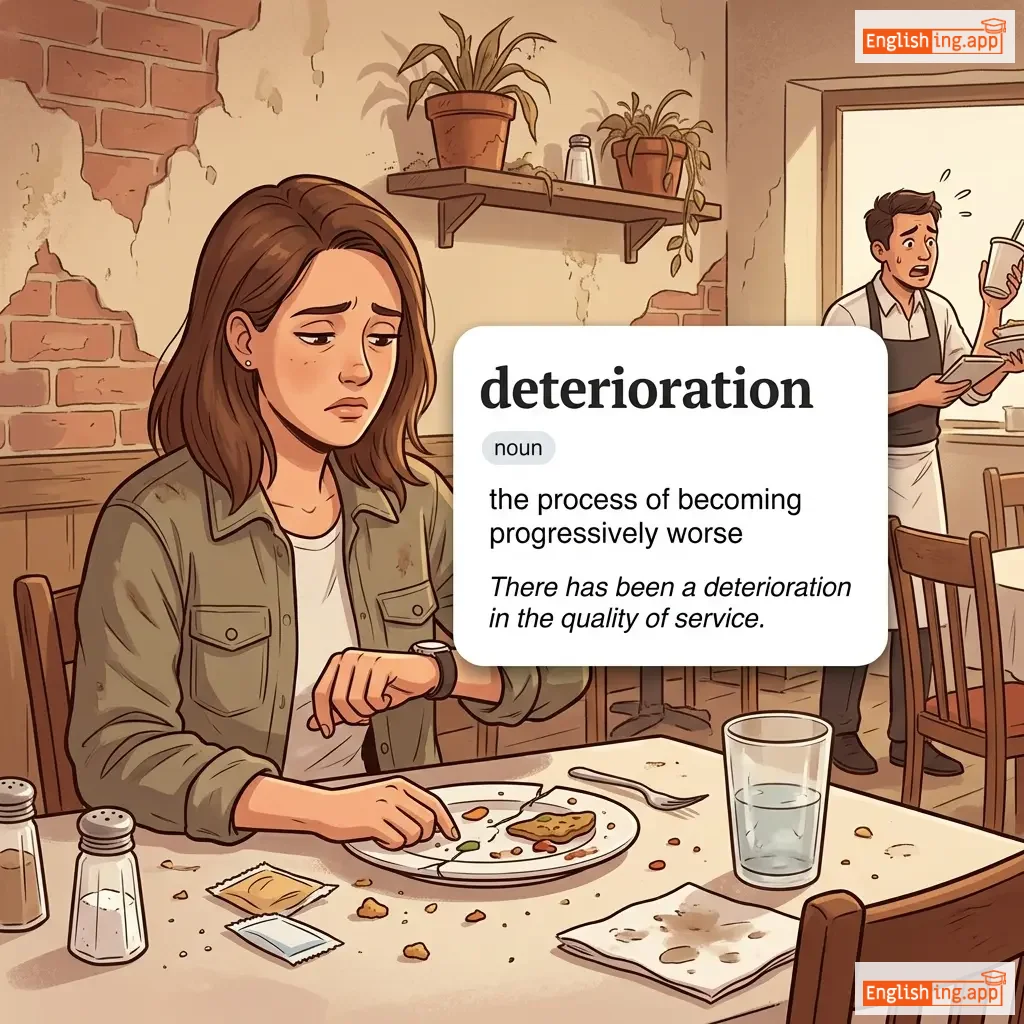
the process of becoming progressively worse
••••••
|
There has been a deterioration in the quality of service.
サービスの質が悪化しました。
••••••
|
サービスの質が悪化しました。
Sābisu no shitsu ga akka shimashita.
••••••
|
- •••••• | - •••••• | - •••••• |
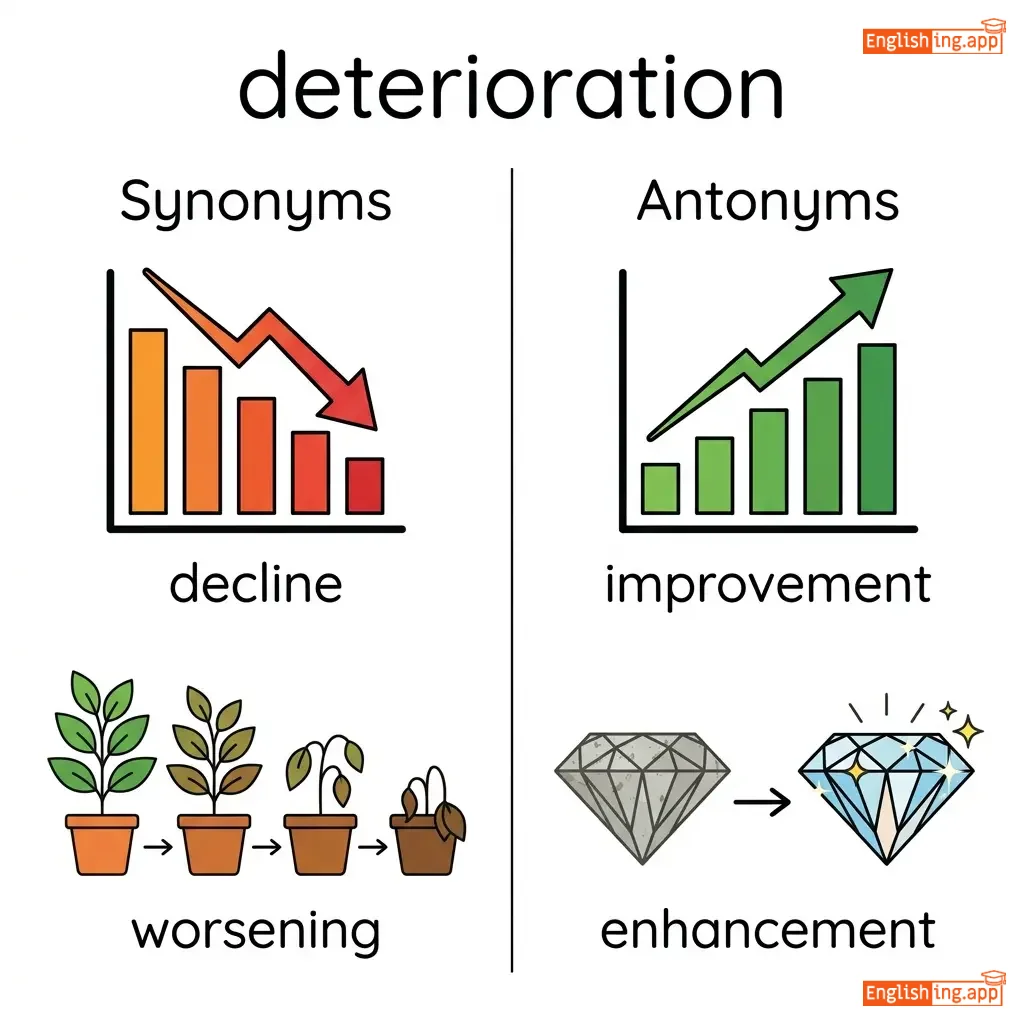
decline, worsening, degradation, decay, weakening
••••••
|
improvement, enhancement, recovery
••••••
|
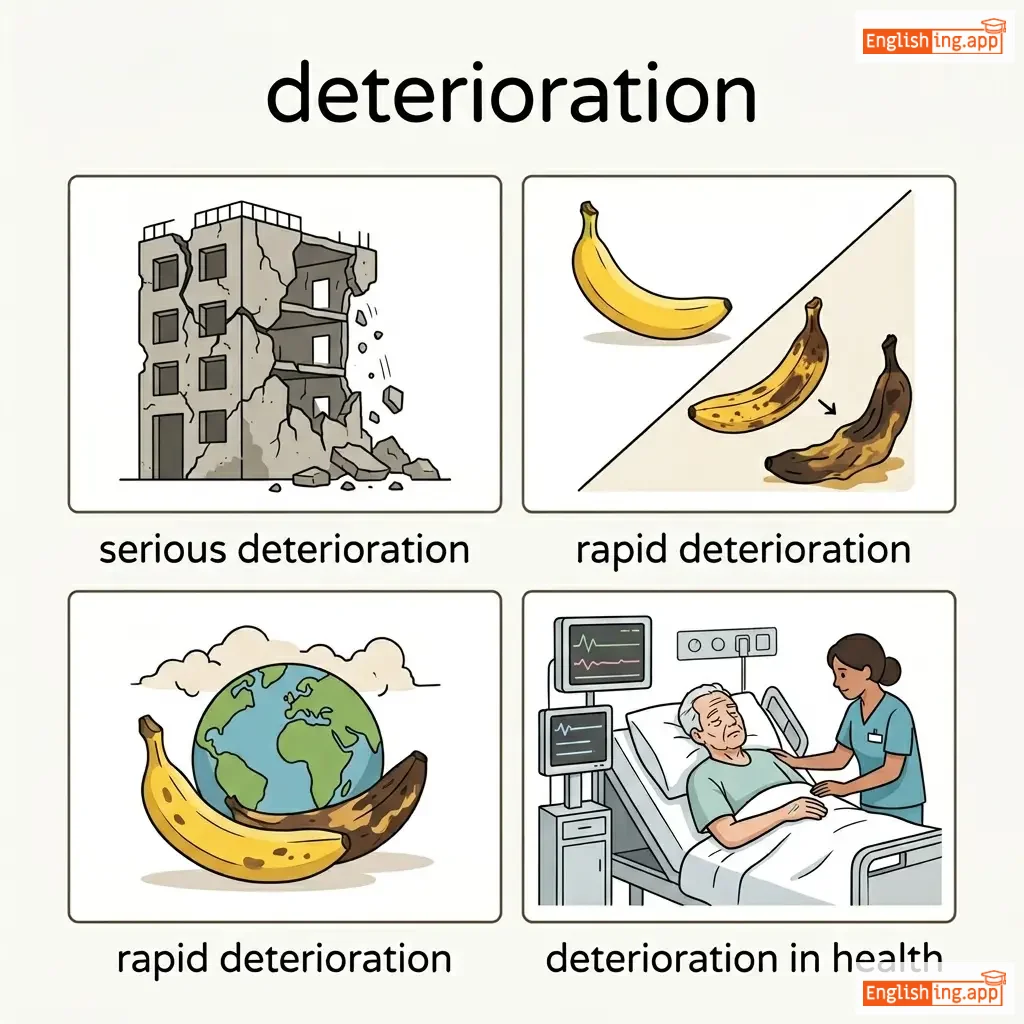
serious deterioration, rapid deterioration, deterioration in health, deterioration of quality
••••••
|
悪化 = 状況が悪くなる過程
••••••
|
|
#2395
📉
|
/dɪˈtɪriəreɪt/
verb
(劣化する)
••••••
|
|
劣化する
rekka suru
••••••
|
deteriorated
劣化した
••••••
|
deteriorated
劣化した
••••••
|
deteriorates
劣化する
••••••
|
deteriorating
劣化している
••••••
|
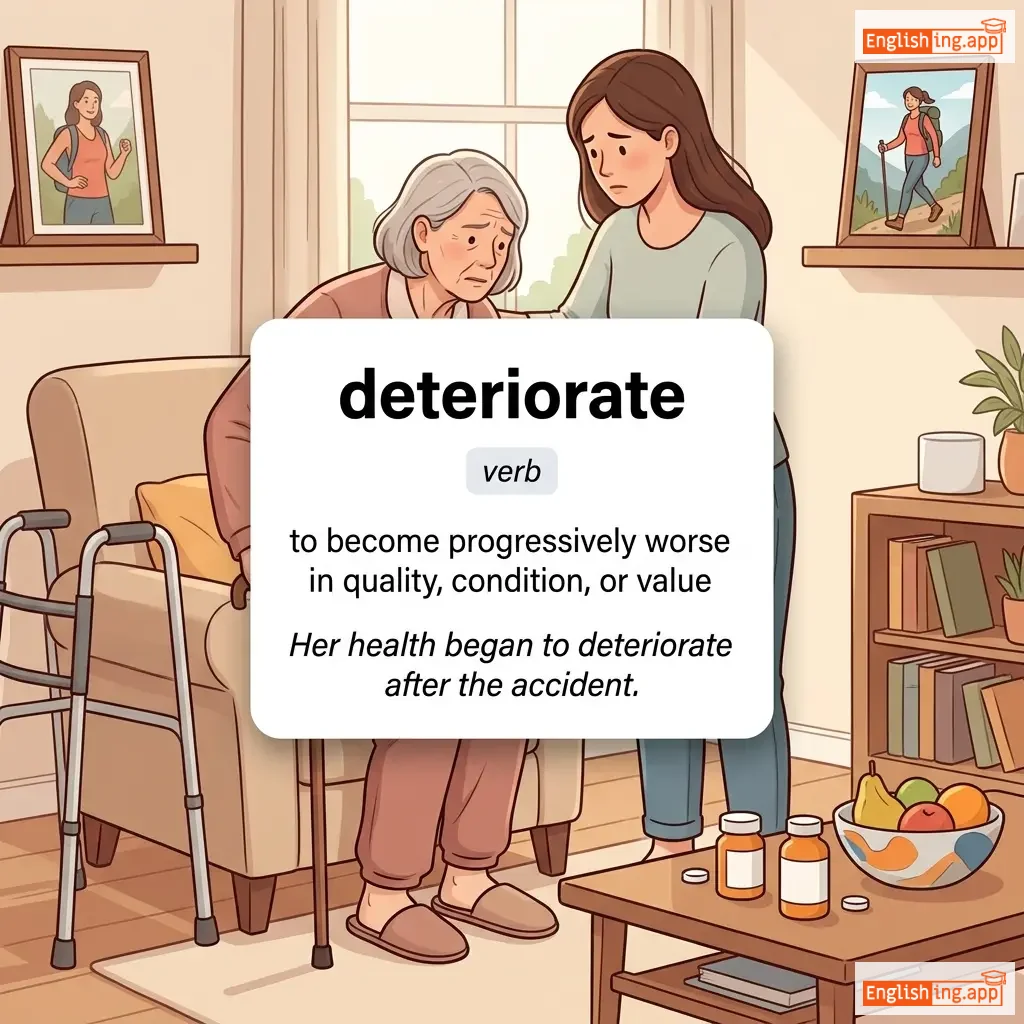
to become progressively worse in quality, condition, or value
••••••
|
Her health began to deteriorate after the accident.
事故後、彼女の健康は劣化し始めた。
••••••
|
事故後、彼女の健康は劣化し始めた。
Jiko go, kanojo no kenkou wa rekka shi hajimeta.
••••••
|
deteriorate with age
年齢とともに劣化する
••••••
|
to get worse as time passes
••••••
|
年齢とともに劣化する
Nenrei to tomoni rekka suru
••••••
|
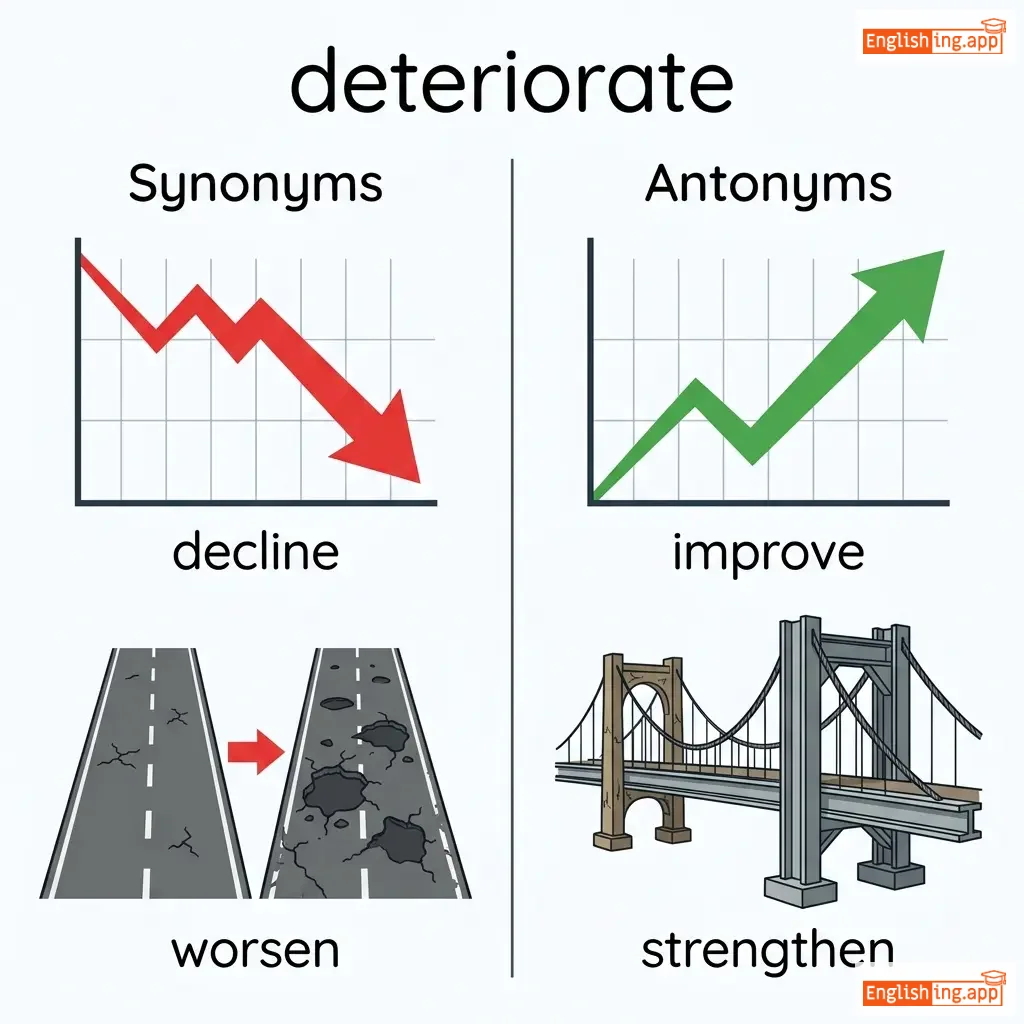
decline, worsen, degenerate, degrade, decay
••••••
|
improve, strengthen, recover
••••••
|
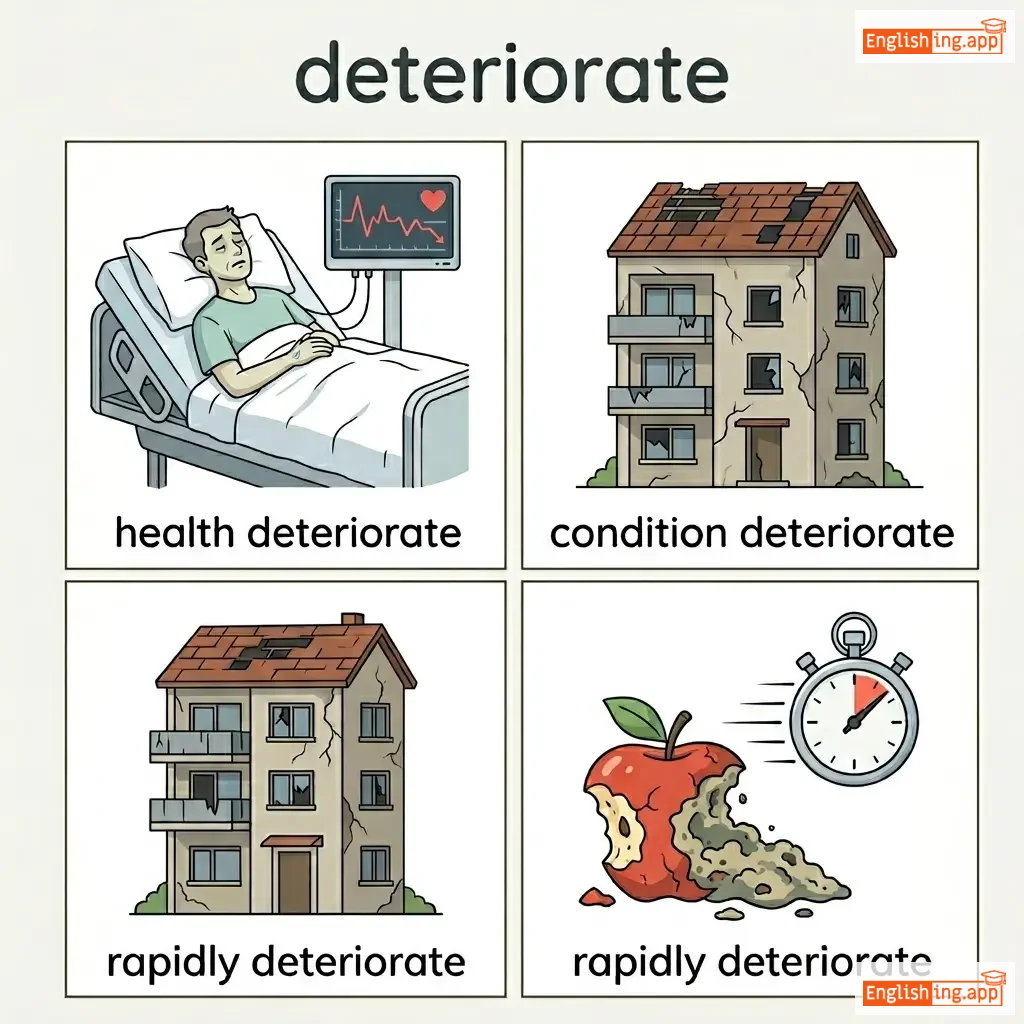
health deteriorate, condition deteriorate, rapidly deteriorate, gradually deteriorate
••••••
|
Deteriorate は '劣化' と同じ意味です。
••••••
|
|
#2396
🧼
|
/dɪˈtɜːrdʒənt/
noun
(ディタージェント)
••••••
|
- •••••• |
洗剤
senzai
••••••
|
- •••••• | - •••••• | - •••••• | - •••••• |
a substance used for cleaning, especially for washing clothes and dishes
••••••
|
She bought a new brand of detergent for laundry.
彼女は洗濯のために新しいブランドの洗剤を買いました。
••••••
|
彼女は洗濯のために新しいブランドの洗剤を買いました。
Kanojo wa sentaku no tame ni atarashī burando no senzai o kaimashita.
••••••
|
- •••••• | - •••••• | - •••••• |
cleaner, soap, washing powder, cleanser, surfactant
••••••
|
dirt, grime
••••••
|
laundry detergent, dishwashing detergent, liquid detergent, powdered detergent
••••••
|
洗剤 (senzai) で洗濯をすることを覚えよう。
••••••
|
|
#2397
🚫
|
/dɪˈtɜːr/
verb
••••••
|
- •••••• | - •••••• |
deterred
••••••
|
deterred
••••••
|
deters
••••••
|
deterring
••••••
|
to discourage someone from doing something by instilling doubt or fear
••••••
|
High fines are meant to deter people from breaking the law. |
- •••••• |
deter crime |
to discourage or prevent criminal activities
••••••
|
- •••••• |
discourage, prevent, hinder, dissuade
••••••
|
encourage, promote, support
••••••
|
deter crime, deter action, deter from, strong deterrent
••••••
|
No •••••• |
|
#2398
🕊️
|
/deɪˈtɑːnt/
noun
••••••
|
- •••••• | - •••••• | - •••••• | - •••••• | - •••••• | - •••••• |
the easing of hostility or strained relations, especially between countries
••••••
|
The two nations worked toward detente after decades of conflict. |
- •••••• |
policy of detente |
a strategy aimed at reducing tensions between nations
••••••
|
- •••••• |
relaxation, rapprochement, reconciliation, peace, understanding
••••••
|
tension, hostility, conflict
••••••
|
detente policy, period of detente, achieve detente, diplomatic detente, Cold War detente
••••••
|
No •••••• |
|
#2399
🚔
|
/dɪˈteɪn/
verb
••••••
|
- •••••• | - •••••• |
detained
••••••
|
detained
••••••
|
detains
••••••
|
detaining
••••••
|
to keep someone from proceeding; to hold back, especially by official authority
••••••
|
The police detained the suspect for questioning. |
- •••••• |
detained in custody |
being officially held by the authorities
••••••
|
- •••••• |
arrest, hold, confine, apprehend
••••••
|
release, free, liberate
••••••
|
detain a suspect, detain for questioning, unlawfully detained
••••••
|
No •••••• |
|
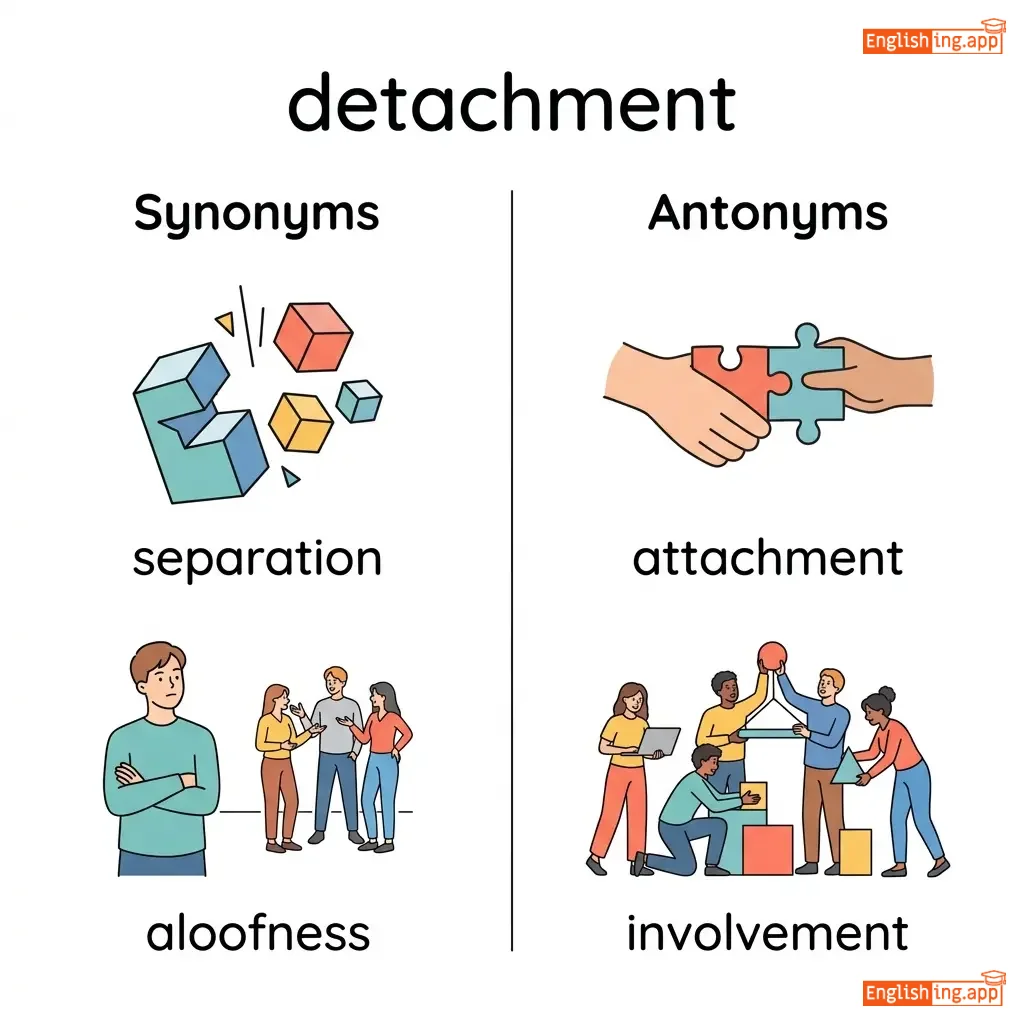
#2400
🛑
|
/dɪˈtætʃmənt/
noun
(デタッチメント)
••••••
|
|
切り離し
kirihashi
••••••
|
- •••••• | - •••••• | - •••••• | - •••••• |
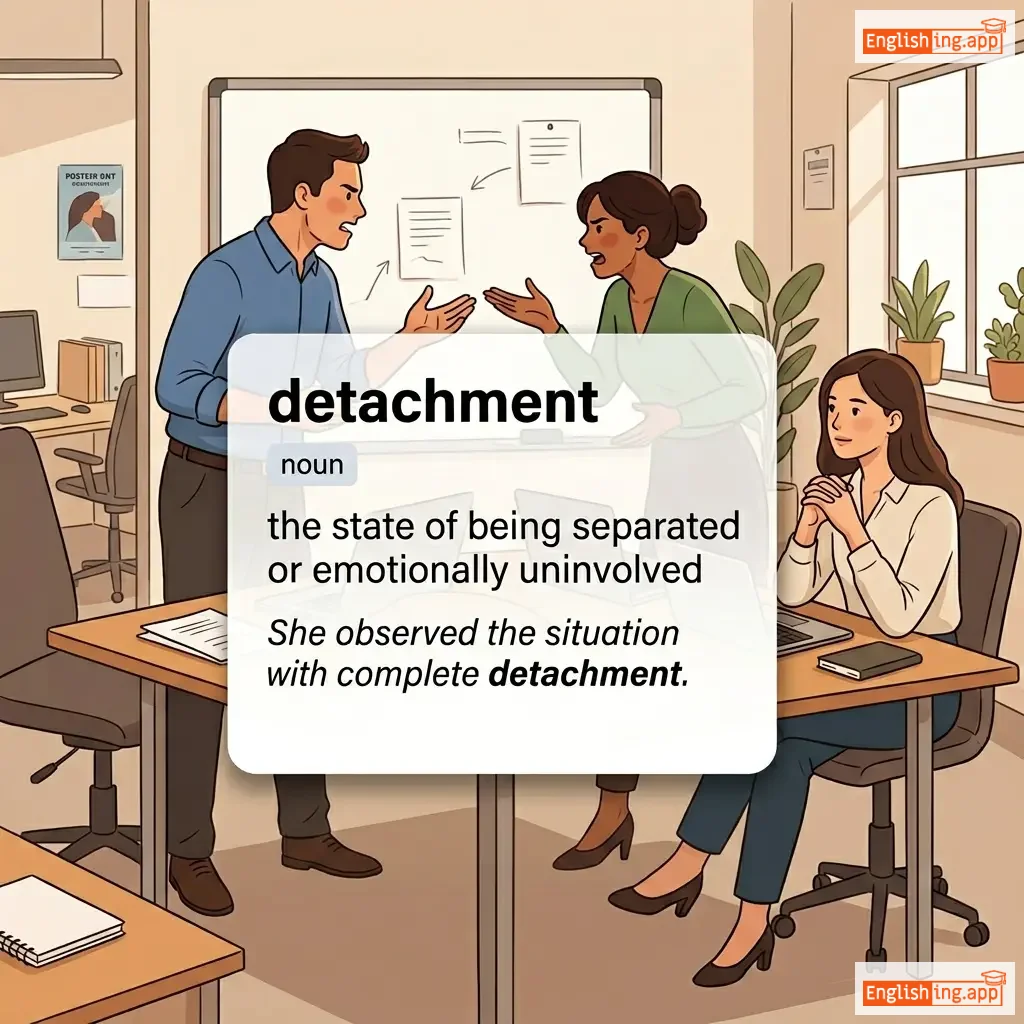
the state of being separated or emotionally uninvolved
••••••
|
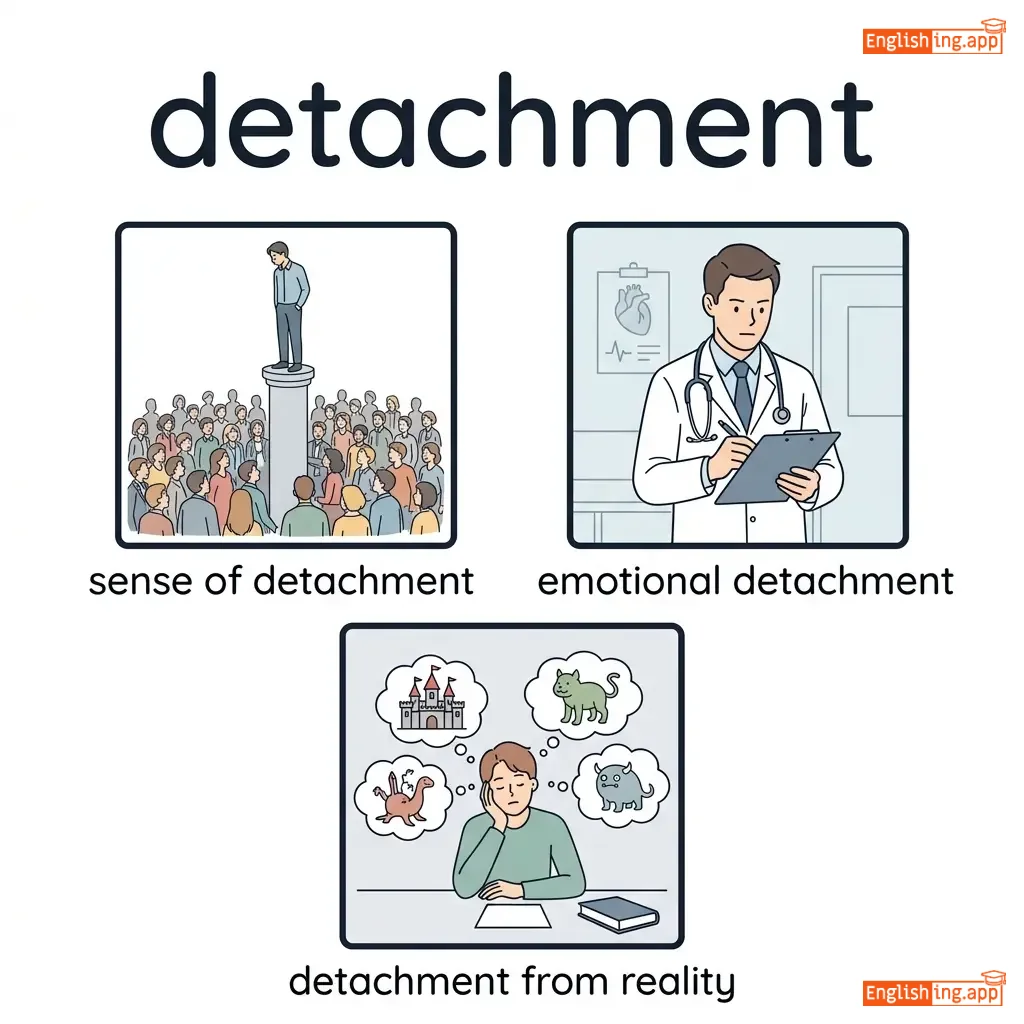
She observed the situation with complete detachment.
彼女は完全なデタッチメントで状況を観察していた。
••••••
|
彼女は完全なデタッチメントで状況を観察していた。
Kanojo wa kanzen na detatchimento de joukyou o kansatsu shiteita.
••••••
|
sense of detachment
デタッチメントの感覚
••••••
|
a feeling of being separated from something emotionally or physically
••••••
|
デタッチメントの感覚
detachment no kankaku
••••••
|
separation, aloofness, objectivity, disengagement
••••••
|
attachment, involvement, connection
••••••
|
sense of detachment, emotional detachment, detachment from reality
••••••
|
切り離しは 'detachment' と同じ意味です。感情を切り離す時に使います。
••••••
|
Vocabulary Quiz
Test your vocabulary by matching words with their translations or meanings.
Login to take the quiz
Comments (0)
Share your thoughts and join the discussion.
Join the discussion by logging in
Login to CommentNo comments yet
Be the first to share your thoughts!