

翻訳
過去
過去分詞
三人称単数
動名詞
意味
例文
例文の翻訳
同義語
対義語
コロケーション
ニーモニック
Swipe left or right, or use the buttons. Tap image to zoom.
例文の翻訳
単語
Lesson 155Lesson 155 - マスクトグル
|
絵文字
|
単語 | Images | 翻訳 | 過去 | 過去分詞 | 三人称単数 | 動名詞 | 意味 | 例文 | 例文の翻訳 | 表現例 | 表現例の意味 | 表現例の翻訳 | 同義語 | 対義語 | コロケーション | ニーモニック |
|---|---|---|---|---|---|---|---|---|---|---|---|---|---|---|---|---|---|
|
#4621
🔥
|
/ɪnˈfleɪm/
verb
(インフレーム)
••••••
|
- •••••• |
煽る
aoru
••••••
|
inflamed
インフレイムド
••••••
|
inflamed
インフレイムド
••••••
|
inflames
インフレイムス
••••••
|
inflaming
インフレイミング
••••••
|
to arouse strong feelings or provoke anger; to cause inflammation in the body
••••••
|
The politician's remarks served to inflame public opinion.
政治家の発言は公共の意見を煽る結果になった。
••••••
|
政治家の発言は公共の意見を煽る結果になった。
Seijika no hatsugen wa kōkyō no iken o aoru kekka ni natta.
••••••
|
inflame passions
情熱を燃え上がらせる
••••••
|
to provoke strong emotions such as anger or desire
••••••
|
情熱を燃え上がらせる
jōnetsu o moeagaraseru
••••••
|
provoke, ignite, arouse, irritate, enrage
••••••
|
calm, soothe, pacify
••••••
|
inflame emotions, inflame passions, inflame public opinion, inflame the situation
••••••
|
Inflame は情熱を燃え上がらせる火のようなものだ! 🔥
••••••
|
|
#4622
😡
|
/ɪnˈfjʊərieɪt/
verb
(インフューリアイト)
••••••
|
- •••••• |
激怒させる
gekidosaseru
••••••
|
infuriated
インフューリアイテッド
••••••
|
infuriated
インフューリアイテッド
••••••
|
infuriates
インフューリアイツ
••••••
|
infuriating
インフューリアイティング
••••••
|
To make someone extremely angry.
••••••
|
His careless remarks infuriated the entire team.
彼の不注意な発言がチーム全体を怒らせた。
••••••
|
彼の不注意な発言がチーム全体を怒らせた。
Kare no fuchuui na hatsugen ga chiimu zentai o okorase ta.
••••••
|
- •••••• | - •••••• | - •••••• |
anger, enrage, irritate, provoke, madden
••••••
|
calm, soothe, pacify
••••••
|
infuriate someone, infuriate the public, infuriate customers
••••••
|
Infuriate = Fury (怒り), 激怒させる。
••••••
|
|
#4623
🚫
|
/ɪnˈfrɪndʒ/
verb
(インフリンジ)
••••••
|
- •••••• |
侵害する
shingai suru
••••••
|
infringed
インフリンジド
••••••
|
infringed
インフリンジド
••••••
|
infringes
インフリンジズ
••••••
|
infringing
インフリンジング
••••••
|
To actively break the terms of a law, agreement, or right.
••••••
|
Copying this software without permission will infringe copyright laws.
許可なくこのソフトウェアをコピーすると著作権法を侵害することになります。
••••••
|
許可なくこのソフトウェアをコピーすると著作権法を侵害することになります。
Kyoka naku kono sofutō~ea o kopī suru to chōsakuken-hō o shingai suru koto ni narimasu.
••••••
|
infringe on rights
権利を侵害する
••••••
|
To violate someone's rights
••••••
|
権利を侵害する
kenri o shingai suru
••••••
|
violate, breach, contravene, disobey, transgress
••••••
|
respect, obey, uphold
••••••
|
infringe copyright, infringe rights, infringe on privacy
••••••
|
インフリンジはルールを壊すことを意味します。侵害する、すなわち違反することです。
••••••
|
|
#4624
🌙
|
/ɪnˈfriːkwənt/
adjective
(インフリクエント)
••••••
|
- •••••• |
稀な
majana
••••••
|
- •••••• | - •••••• | - •••••• | - •••••• |
Happening rarely or not often.
••••••
|
He made infrequent visits to his hometown after moving abroad. |
彼は海外に移住した後、故郷にあまり頻繁に訪れることはありませんでした。
Kare wa kaigai ni ijū shita ato, kokyō ni amari hinpan ni otozureru koto wa arimasen deshita.
••••••
|
- •••••• | - •••••• | - •••••• |
rare, uncommon, occasional, sporadic
••••••
|
frequent, regular, common
••••••
|
infrequent visits, infrequent contact, infrequent events
••••••
|
Frequentの反対はinfrequent - 稀に発生することです。
••••••
|
|
#4625
⏳
|
/ɪnˈfriːkwəns/
noun
(インフリークエンス)
••••••
|
- •••••• |
稀少性
shishousei
••••••
|
- •••••• | - •••••• | - •••••• | - •••••• |
The state of occurring rarely or at long intervals.
••••••
|
The infrequence of their meetings made it hard to maintain close ties. |
彼らの会議の稀少性は、親密な関係を維持するのを難しくしていました。
Karera no kaigi no shishousei wa, shinmitsu na kankei wo iji suru no wo muzukashiku shiteimashita.
••••••
|
- •••••• | - •••••• | - •••••• |
rarity, uncommonness, scarcity, unusualness
••••••
|
frequency, regularity, commonness
••••••
|
infrequence of meetings, infrequence of events, relative infrequence
••••••
|
頻繁ではないので稀少性、infrequenceと同じ、珍しいこと。
••••••
|
|
#4626
⚖️
|
/ɪnˈfrækʃən/
noun
(インフラクション)
••••••
|
- •••••• |
違反
ihan
••••••
|
- •••••• | - •••••• | - •••••• | - •••••• |
A violation or breach of a rule, law, or agreement.
••••••
|
The student was punished for a minor infraction of the school rules. |
学生は学校の規則の軽微な違反で罰せられました。
Gakusei wa gakkō no kisoku no keibi na ihan de batsu seraremashita.
••••••
|
- •••••• | - •••••• | - •••••• |
violation, breach, offense, transgression, infringement
••••••
|
obedience, compliance, conformity
••••••
|
minor infraction, traffic infraction, legal infraction, serious infraction
••••••
|
‘違反’はルールの破壊、‘infraction’も同様にルールを破ります。
••••••
|
|
#4627
📢
|
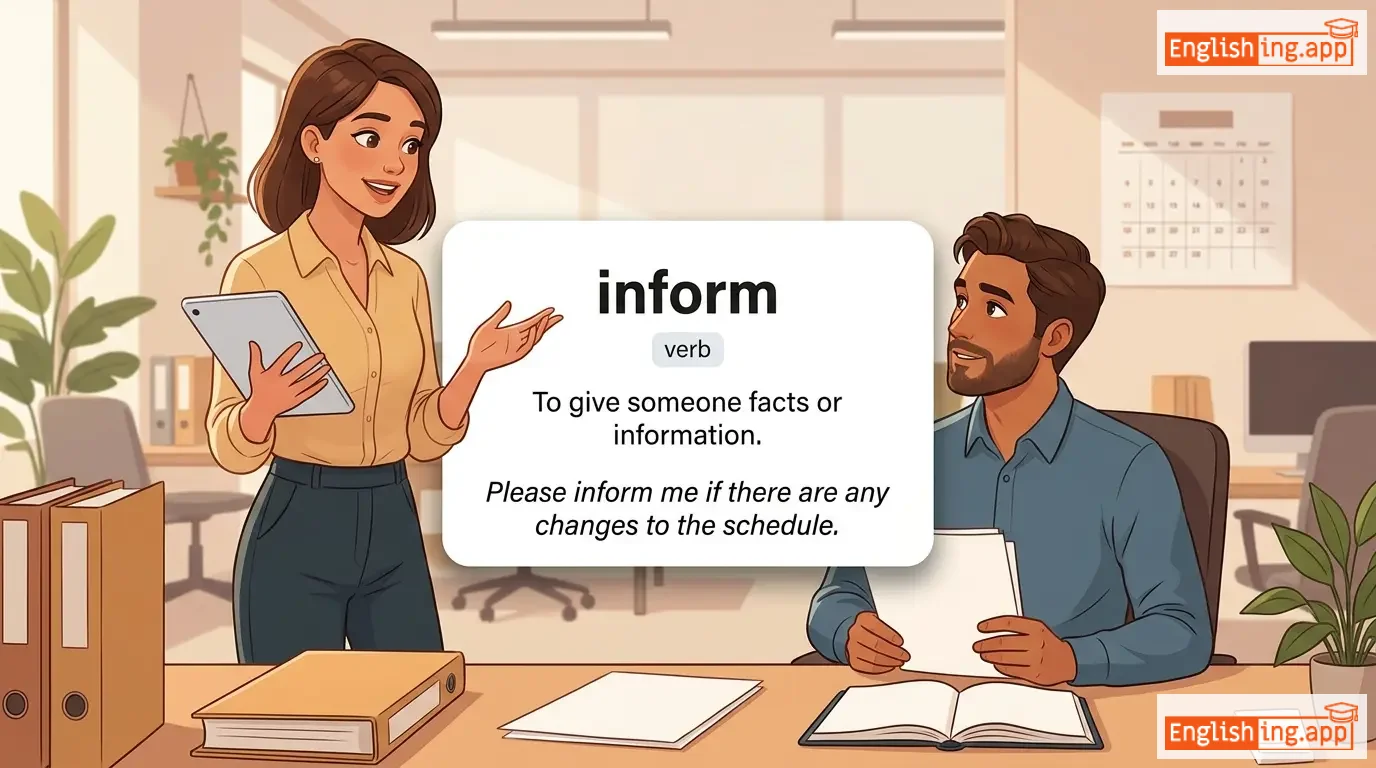
/ɪnˈfɔːrm/
verb
••••••
|
|
- •••••• |
informed
••••••
|
informed
••••••
|
informs
••••••
|
informing
••••••
|
To give someone facts or information.
••••••
|
Please inform me if there are any changes to the schedule. |
- •••••• |
keep someone informed |
to make sure someone stays updated with information
••••••
|
- •••••• |
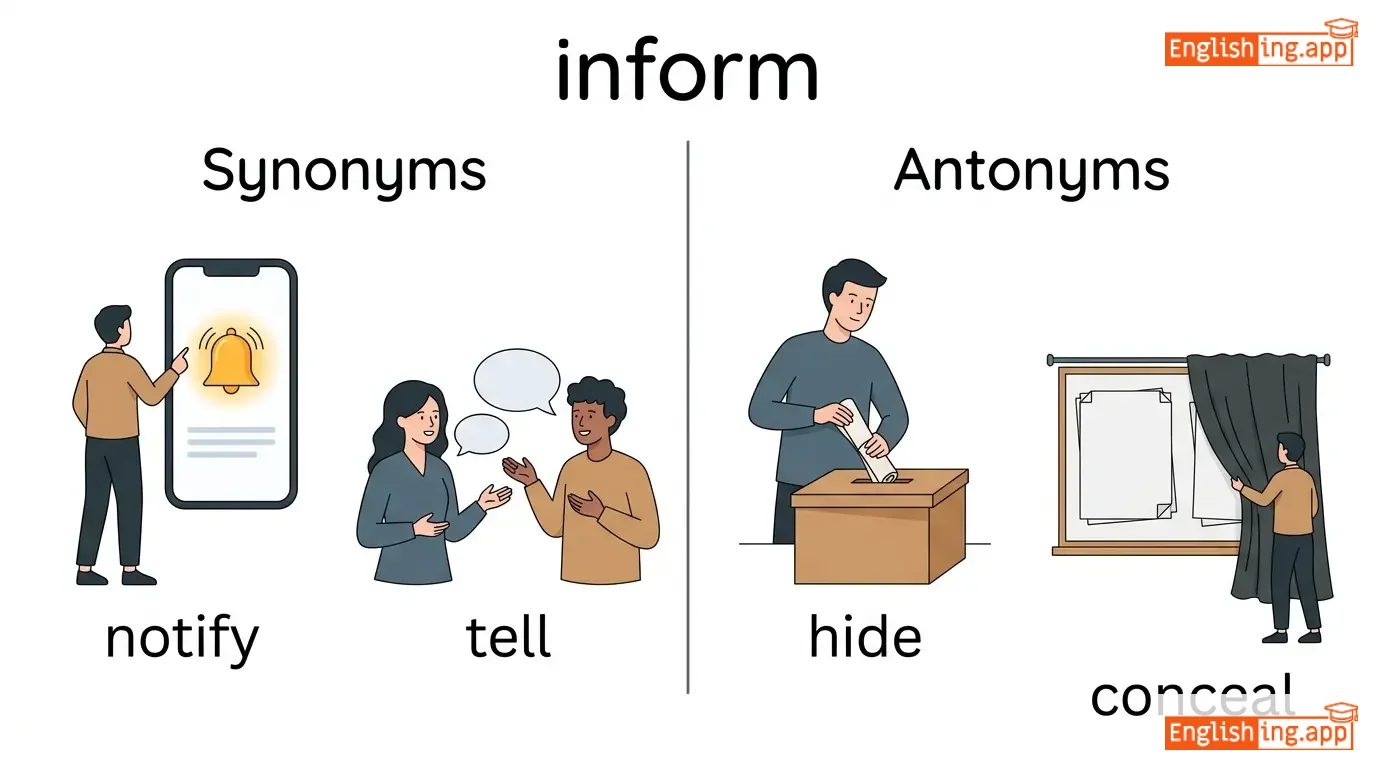
notify, tell, advise, brief, update
••••••
|
hide, conceal
••••••
|
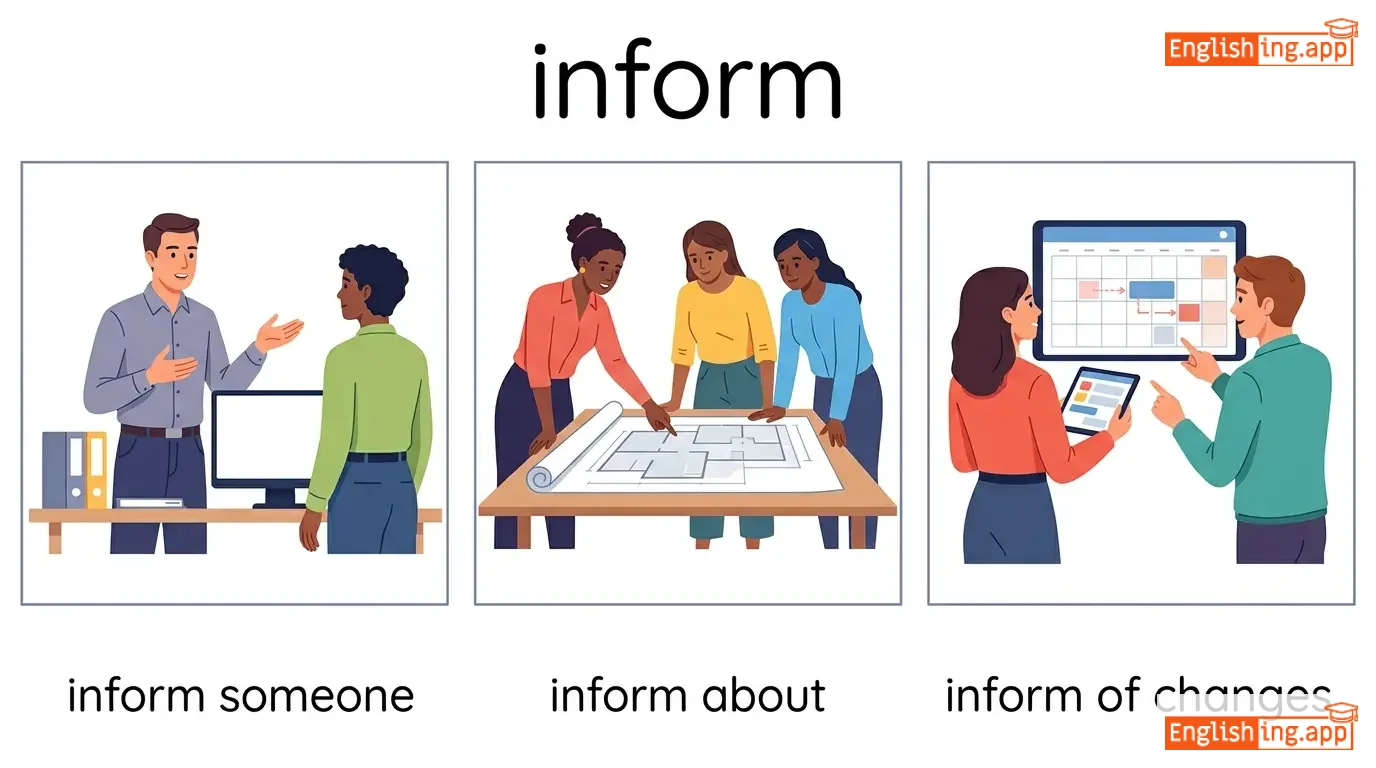
inform someone, inform about, inform of changes
••••••
|
No •••••• |
|
#4628
🌊
|
/ˈɪnflʌks/
noun
(インフラックス)
••••••
|
- •••••• |
流入
ryūnyū
••••••
|
- •••••• | - •••••• | - •••••• | - •••••• |
A large arrival or flow of people or things.
••••••
|
The city experienced an influx of tourists during the festival. |
その都市は祭りの期間中に観光客の流入を経験しました。
Sono toshi wa matsuri no kikanchū ni kankōkyaku no ryūnyū o keiken shimashita.
••••••
|
an influx of |
a sudden or large arrival of people or things
••••••
|
流入
ryūnyū
••••••
|
arrival, inflow, surge, flood, stream
••••••
|
outflow, exodus
••••••
|
influx of tourists, influx of capital, sudden influx
••••••
|
Influxは大きな流れ 🌊 – 日本語で流入は人々や物が大量に来ることを意味します。
••••••
|
|
#4629
👑
|
/ˌɪnfluˈɛnʃl/
adjective
(infurenshial)
••••••
|
- •••••• |
影響力のある
eikyōryoku no aru
••••••
|
- •••••• | - •••••• | - •••••• | - •••••• |
Having great power to change or affect people or things.
••••••
|
She is one of the most influential leaders of our time. |
彼女は私たちの時代で最も影響力のあるリーダーの一人です。
Kanojo wa watashitachi no jidai de mottomo eikyōryoku no aru rīdā no hitori desu.
••••••
|
influential figure |
a person who has a significant effect on others
••••••
|
影響力のある人物
eikyōryoku no aru jinbutsu
••••••
|
powerful, significant, prominent, impactful, persuasive
••••••
|
insignificant, powerless
••••••
|
influential leader, influential role, highly influential
••••••
|
影響力のある – 完全な影響力を持つ人。
••••••
|
|
#4630
🌐
|
/ˈɪnfluəns/
noun/verb
(infurūensu)
••••••
|
- •••••• |
影響
eikyō
••••••
|
influenced
infurūensudo
••••••
|
influenced
infurūensudo
••••••
|
influences
infurūensu
••••••
|
influencing
infurūenshingu
••••••
|
The power to affect how someone thinks or acts.
••••••
|
Her teacher had a strong influence on her career choice.
彼女の先生は彼女のキャリア選択に大きな影響を与えました。
••••••
|
彼女の先生は彼女のキャリア選択に大きな影響を与えました。
kanojo no sensei wa kanojo no kyaria sentaku ni ōkina eikyō o ataemashita.
••••••
|
under the influence
インフルエンスの下で
••••••
|
being affected or controlled by something, especially alcohol or drugs
••••••
|
影響下で
eikyō ka de
••••••
|
impact, effect, authority, sway, control
••••••
|
powerlessness, weakness
••••••
|
exert influence, political influence, under the influence
••••••
|
Influenceは‘in fluid sense’ 🌊 – 水のように流れる影響!
••••••
|
|
#4631
🪨
|
/ɪnˈflɛksəbl/
adjective
(インフレキシブル)
••••••
|
- •••••• |
柔軟性がない
jounann-sei ga nai
••••••
|
- •••••• | - •••••• | - •••••• | - •••••• |
Not able to bend or change; unwilling to change ideas or behavior.
••••••
|
His inflexible attitude made negotiations difficult. |
彼の柔軟性がない態度は交渉を難しくしました。
Kare no jounann-sei ga nai taido wa koushou o muzukashiku shimashita.
••••••
|
inflexible rules |
rules that cannot be changed or adapted
••••••
|
柔軟性がない規則
jounann-sei ga nai kisoku
••••••
|
rigid, unyielding, stubborn, uncompromising, firm
••••••
|
flexible, adaptable, yielding
••••••
|
inflexible attitude, inflexible rules, inflexible schedule
••••••
|
In FLEXIBLE は硬直した意味🪨 – 日本語では柔軟性がないとは、変更できないことを意味します。
••••••
|
|
#4632
🎈
|
/ɪnˈfleɪtɪd/
adjective
(インフレイテッド)
••••••
|
- •••••• |
膨らんだ
fukuranda
••••••
|
- •••••• | - •••••• | - •••••• | - •••••• |
excessively increased in size, value, or importance; filled with air or gas
••••••
|
The company faced criticism for its inflated prices. |
その会社は膨らんだ価格で批判を受けました。
Sono kaisha wa fukuranda kakaku de hihan o ukemashita.
••••••
|
inflated ego |
an exaggerated sense of self-importance
••••••
|
膨らんだ自尊心
fukuranda jisonshin
••••••
|
exaggerated, overblown, bloated, swollen
••••••
|
deflated, modest
••••••
|
inflated prices, inflated costs, inflated ego, inflated claims
••••••
|
膨らんだ自尊心は風船のよう
••••••
|
|
#4633
⚡
|
/ɪnˈflæməˌtɔːri/
adjective
(ハピネス)
••••••
|
- •••••• |
幸せ
shiawase
••••••
|
- •••••• | - •••••• | - •••••• | - •••••• |
causing inflammation in the body; arousing anger, hostility, or strong emotion
••••••
|
His inflammatory speech triggered protests across the city. |
彼女は賞を受け取ったとき、幸せそうな表情を隠せなかった。
Kanojo wa shō o uketotta toki, shiawase-sō na hyōjō o kakusenakatta.
••••••
|
inflammatory remarks |
comments that provoke anger or hostility
••••••
|
幸せの追求
shiawase no tsuikyū
••••••
|
provocative, incendiary, irritating, hostile
••••••
|
soothing, calming
••••••
|
inflammatory remarks, inflammatory disease, inflammatory response, inflammatory language
••••••
|
幸せは心の中で暖かく感じるもの、それが人生を照らします。
••••••
|
|
#4634
🩹
|
/ˌɪnfləˈmeɪʃən/
noun
(インフラメーション)
••••••
|
|
炎症
enshō
••••••
|
- •••••• | - •••••• | - •••••• | - •••••• |
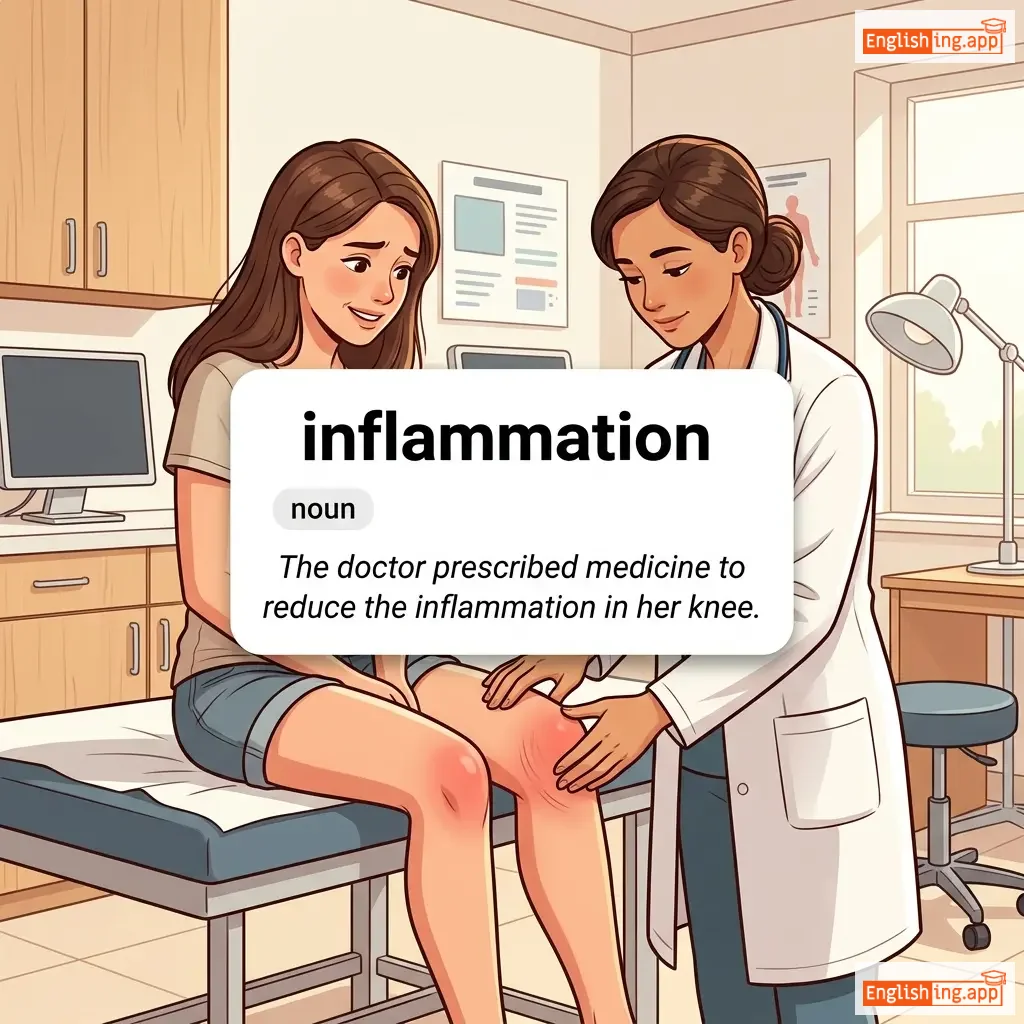
a localized physical condition in which part of the body becomes red, swollen, hot, and often painful
••••••
|
The doctor prescribed medicine to reduce the inflammation in her knee. |
医師は彼女の膝の炎症を抑えるために薬を処方しました。
Ishi wa kanojo no hiza no enshō o osaeru tame ni kusuri o shohō shimashita.
••••••
|
- •••••• | - •••••• | - •••••• |
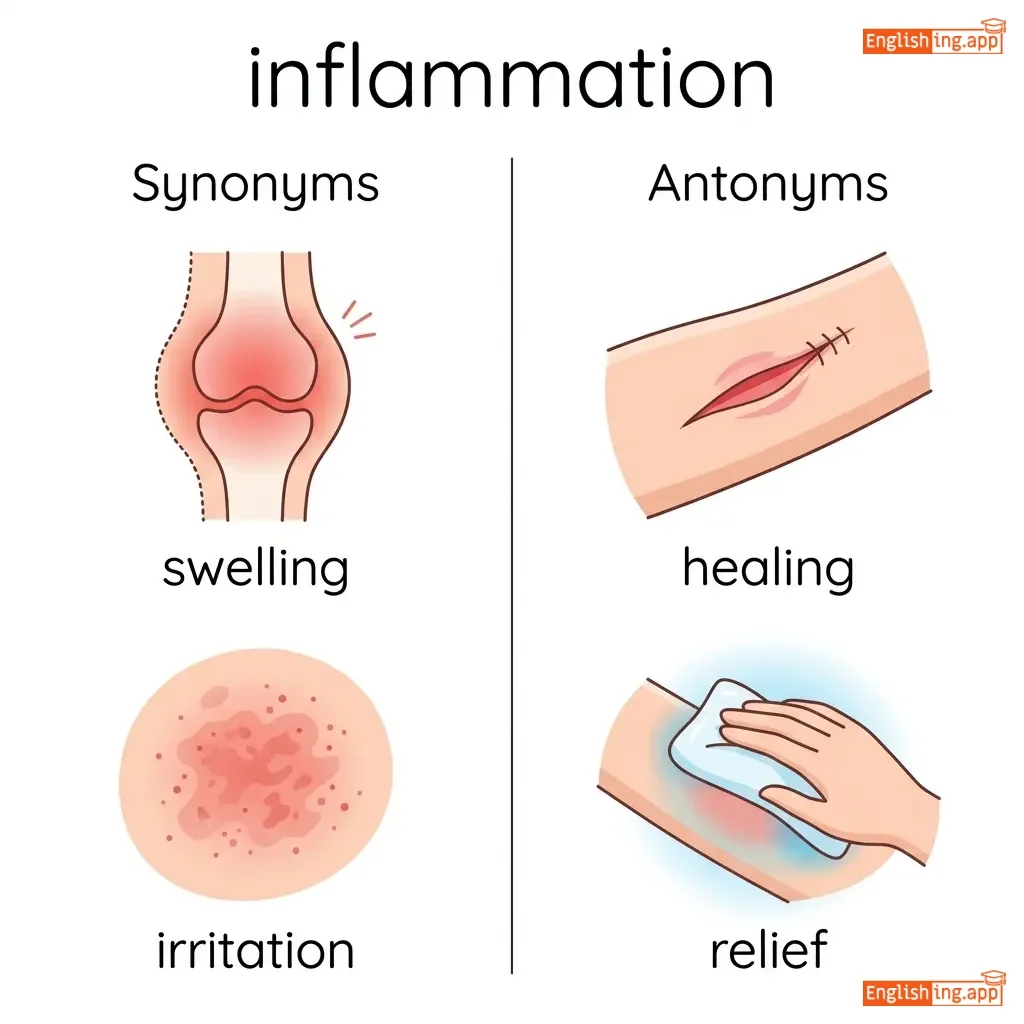
swelling, irritation, soreness, infection
••••••
|
healing, relief
••••••
|
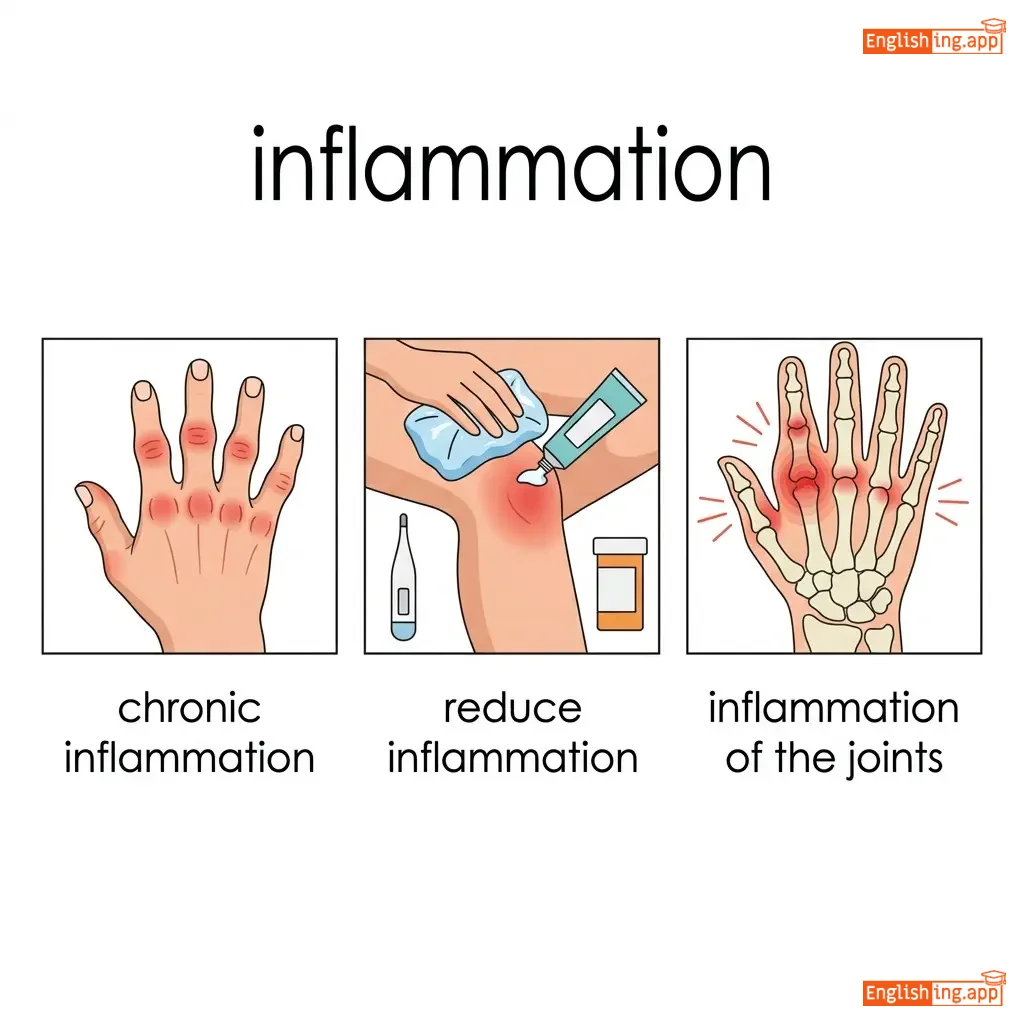
chronic inflammation, reduce inflammation, inflammation of the joints, inflammation response
••••••
|
炎症 = 体の中の火、腫れて赤く痛みが伴う
••••••
|
|
#4635
⚠️
|
/ɪnˈflæməbl/
adjective
(インフラマブル)
••••••
|
- •••••• |
可燃性
kanensei
••••••
|
- •••••• | - •••••• | - •••••• | - •••••• |
easily set on fire; easily excited or angered
••••••
|
This material is highly inflammable and should be kept away from heat.
この材料は非常に可燃性があり、熱源から遠ざけておくべきです。
••••••
|
この材料は非常に可燃性があり、熱源から遠ざけておくべきです。
Kono zairyō wa hijō ni kanensei ga ari, netsugen kara tōzakete okubeki desu.
••••••
|
- •••••• | - •••••• | - •••••• |
flammable, combustible, ignitable, volatile
••••••
|
fireproof, incombustible
••••••
|
inflammable material, highly inflammable, inflammable liquid, inflammable gas
••••••
|
可燃性 = 火をつけるのは簡単
••••••
|
|
#4636
😬
|
/ˌɪnfəˈlɪsɪtəs/
adjective
(インフェリシタス)
••••••
|
- •••••• |
不適切な
futekisetsu na
••••••
|
- •••••• | - •••••• | - •••••• | - •••••• |
not suitable or well chosen; awkward or unfortunate
••••••
|
His infelicitous remark ruined the atmosphere of the meeting. |
彼の不適切な発言は会議の雰囲気を台無しにしました。
Kare no futekisetsu na hatsugen wa kaigi no fun'iki o dainashi ni shimashita.
••••••
|
- •••••• | - •••••• | - •••••• |
awkward, inappropriate, unfortunate, unsuitable, improper
••••••
|
appropriate, suitable, fortunate
••••••
|
infelicitous remark, infelicitous choice, infelicitous phrasing
••••••
|
Infelicitous は不適切なという意味で、状況に合わないことを示します。
••••••
|
|
#4637
♿
|
/ɪnˈfɜːməti/
noun
(インファーミティ)
••••••
|
- •••••• |
虚弱
kyojaku
••••••
|
- •••••• | - •••••• | - •••••• | - •••••• |
Physical or mental weakness, especially from old age.
••••••
|
Despite his infirmity, he remained cheerful. |
彼は虚弱にもかかわらず、陽気でいた。
Kare wa kyojaku ni mo kakawarazu, youki de ita.
••••••
|
- •••••• | - •••••• | - •••••• |
weakness, frailty, feebleness, debility
••••••
|
strength, vigor, health
••••••
|
infirmity of age, mental infirmity, physical infirmity
••••••
|
Infirmityは年齢による虚弱です
••••••
|
|
#4638
🏥
|
/ɪnˈfɜːməri/
noun
(インファーマリー)
••••••
|
- •••••• |
診療所
shinryōjo
••••••
|
- •••••• | - •••••• | - •••••• | - •••••• |
A hospital or place where the sick or injured are cared for.
••••••
|
The school had an infirmary for minor injuries. |
学校には軽傷のための診療所がありました。
Gakkō ni wa keishō no tame no shinryōjo ga arimashita.
••••••
|
- •••••• | - •••••• | - •••••• |
hospital, clinic, medical center, sanatorium
••••••
|
home, outside
••••••
|
school infirmary, military infirmary, admit to infirmary
••••••
|
Infirmary は病気や怪我の治療場所 → 診療所
••••••
|
|
#4639
🧓
|
/ɪnˈfɜːm/
adjective
(インファーム)
••••••
|
- •••••• |
虚弱
kyojaku
••••••
|
- •••••• | - •••••• | - •••••• | - •••••• |
Weak, especially due to old age or illness.
••••••
|
The infirm old man needed assistance to walk. |
その虚弱な老人は歩くために助けが必要でした。
Sono kyojaku na rōjin wa aruku tame ni tasuke ga hitsuyō deshita.
••••••
|
- •••••• | - •••••• | - •••••• |
weak, feeble, frail, delicate
••••••
|
strong, robust, healthy
••••••
|
infirm old, infirm patients, infirm and elderly
••••••
|
Infirmはfirmじゃない、つまり弱い。
••••••
|
|
#4640
♾️
|
/ɪnˈfɪnɪti/
noun
(インフィニティ)
••••••
|
- •••••• |
無限
mugen
••••••
|
- •••••• | - •••••• | - •••••• | - •••••• |
A concept describing something without any limit or end.
••••••
|
The universe seems to stretch into infinity. |
宇宙は無限に広がっているように見える。
uchū wa mugen ni hirogatte iru yō ni mieru.
••••••
|
to infinity and beyond |
Going as far as possible and even further
••••••
|
無限とその先へ
mugen to sono saki e
••••••
|
endlessness, boundlessness, eternity, limitlessness
••••••
|
finiteness, limitation
••••••
|
stretch into infinity, concept of infinity, beyond infinity
••••••
|
無限 ♾️ は終わりがないことを意味します - 無限
••••••
|
|
#4641
🔬
|
/ˌɪnfɪnɪˈtɛsɪməl/
adjective
(インフィニテシマル)
••••••
|
- •••••• |
微細な
bisai na
••••••
|
- •••••• | - •••••• | - •••••• | - •••••• |
Extremely small in size or amount; so tiny as to be almost negligible.
••••••
|
The error was so infinitesimal that it didn’t affect the results.
そのエラーは非常に微細で、結果に影響を与えることはありませんでした。
••••••
|
そのエラーは非常に微細で、結果に影響を与えることはありませんでした。
Sono erā wa hijō ni bisai de, kekka ni eikyō o ataeru koto wa arimasen deshita.
••••••
|
- •••••• | - •••••• | - •••••• |
tiny, minute, microscopic, minuscule, negligible
••••••
|
huge, vast, immense
••••••
|
infinitesimal amount, infinitesimal chance, infinitesimal detail
••••••
|
微細なは無視できるほど小さい、インフィニティのような小ささです。
••••••
|
|
#4642
♾️
|
/ˈɪnfɪnɪt/
adjective
(インフィニット)
••••••
|
- •••••• |
無限
mugen
••••••
|
- •••••• | - •••••• | - •••••• | - •••••• |
limitless or endless in space, extent, or number
••••••
|
The universe is often described as infinite.
宇宙はしばしば無限だと説明されます。
••••••
|
宇宙はしばしば無限だと説明されます。
Uchū wa shibashiba mugen da to setsumei saremasu.
••••••
|
infinite possibilities
無限の可能性
••••••
|
endless options or opportunities
••••••
|
無限の可能性
mugen no kanōsei
••••••
|
endless, boundless, limitless, eternal, vast
••••••
|
finite, limited, restricted
••••••
|
infinite possibilities, infinite number, infinite space, infinite patience
••••••
|
無限 = 無 (ない) + 限 (限界) → 終わらない
••••••
|
|
#4643
🕵️
|
/ˈɪnfɪltreɪt/
verb
(インフィルトレート)
••••••
|
- •••••• |
浸透
shintō
••••••
|
infiltrated
インフィルトレイテッド
••••••
|
infiltrated
インフィルトレイテッド
••••••
|
infiltrates
インフィルトレーツ
••••••
|
infiltrating
インフィルトレイティング
••••••
|
to secretly enter or gain access to a place or group
••••••
|
The spies managed to infiltrate the enemy base.
スパイたちは敵基地に infiltrate できた。
••••••
|
スパイたちは敵基地に infiltrate できた。
Supai-tachi wa teki kichi ni infiltrate dekita.
••••••
|
infiltrate into
インフィルトレート へ
••••••
|
to secretly penetrate or gain access to something
••••••
|
浸透する
shintō suru
••••••
|
penetrate, intrude, invade, sneak in, encroach
••••••
|
withdraw, retreat, exit
••••••
|
infiltrate enemy, infiltrate group, infiltrate base, infiltrate network
••••••
|
Infiltrate = in + fill + tray → 浸透を秘密にする
••••••
|
|
#4644
💔
|
/ˌɪnfɪˈdɛləti/
noun
(インフィデリティ)
••••••
|
- •••••• |
不倫
furin
••••••
|
- •••••• | - •••••• | - •••••• | - •••••• |
the act of being unfaithful to a spouse or partner
••••••
|
Their marriage ended due to his infidelity. |
彼らの結婚は彼の不倫が原因で終わった。
Karera no kekkon wa kare no furin ga gen'in de owatta.
••••••
|
commit infidelity |
to be unfaithful in a relationship
••••••
|
不倫を犯す
furin o okasu
••••••
|
unfaithfulness, betrayal, adultery, disloyalty
••••••
|
faithfulness, loyalty, fidelity
••••••
|
marital infidelity, suspected infidelity, infidelity case, emotional infidelity
••••••
|
不倫 (ふりん) は忠誠 (ちゅうせい) がない
••••••
|
|
#4645
🚫🙏
|
/ˈɪnfɪdɛl/
noun
(インフィデル)
••••••
|
- •••••• |
不信者
fushin-sha
••••••
|
- •••••• | - •••••• | - •••••• | - •••••• |
a person who does not believe in a particular religion or faith
••••••
|
In medieval times, people often called non-Christians infidels. |
中世では、人々はしばしば非キリスト教徒を不信者と呼んでいた。
Chūsei de wa, hitobito wa shibashiba hi kirisutokyōto o fushin-sha to yonde ita.
••••••
|
- •••••• | - •••••• | - •••••• |
nonbeliever, unbeliever, heathen, pagan
••••••
|
believer, faithful, devotee
••••••
|
infidel attack, label as infidel, call someone an infidel
••••••
|
Infidel = in + faith なし → 不信者
••••••
|
|
#4646
🐀
|
/ɪnˈfɛst/
verb
(インフェスト)
••••••
|
- •••••• |
侵入する
shin'nyū suru
••••••
|
infested
インフェステッド
••••••
|
infested
インフェステッド
••••••
|
infests
インフェスツ
••••••
|
infesting
インフェスティング
••••••
|
to overrun in large numbers, especially so as to cause damage or discomfort
••••••
|
The old house was infested with rats.
古い家はネズミで侵されていました。
••••••
|
古い家はネズミで侵されていました。
Furui ie wa nezumi de okosarete imashita.
••••••
|
infested with
侵されている
••••••
|
to be full of or overrun by something harmful or unpleasant
••••••
|
侵されている
okosarete iru
••••••
|
overrun, plague, swarm, invade, beset
••••••
|
cleanse, rid, purify
••••••
|
infested with rats, infested with insects, infested area, heavily infested
••••••
|
Infestは害虫 (pests) が家に侵入することを意味します!
••••••
|
|
#4647
🔥
|
/ɪnˈfɜːrnoʊ/
noun
(インフェルノ)
••••••
|
- •••••• |
火災
kasai
••••••
|
- •••••• | - •••••• | - •••••• | - •••••• |
a large, intense fire that is dangerously out of control
••••••
|
The building turned into an inferno within minutes.
その建物は数分でインフェルノに変わった。
••••••
|
その建物は数分で火災に変わった。
Sono tatemono wa suū-fun de kasai ni kawatta.
••••••
|
- •••••• | - •••••• | - •••••• |
blaze, conflagration, wildfire, holocaust
••••••
|
calm, extinguishment
••••••
|
raging inferno, blazing inferno, inferno of flames
••••••
|
Infernoとは火災のようなもの → 制御できないほど大きな火
••••••
|
|
#4648
🔥
|
/ɪnˈfɜːrnəl/
adjective
(インフェルナル)
••••••
|
- •••••• |
地獄の
jigoku no
••••••
|
- •••••• | - •••••• | - •••••• | - •••••• |
relating to hell; extremely troublesome or annoying
••••••
|
The workers complained about the infernal noise from the construction site. |
労働者たちは建設現場からの地獄のような騒音について文句を言った。
Rōdō-sha-tachi wa kensetsu genba kara no jigoku no yō na sōon ni tsuite monku o itta.
••••••
|
go to hell |
used to express anger or dismissal
••••••
|
地獄に行く
jigoku ni iku
••••••
|
hellish, demonic, cursed, accursed, abominable
••••••
|
heavenly, divine, blessed
••••••
|
infernal noise, infernal machine, infernal heat
••••••
|
Infernal = Inferno = 地獄のような騒音
••••••
|
|
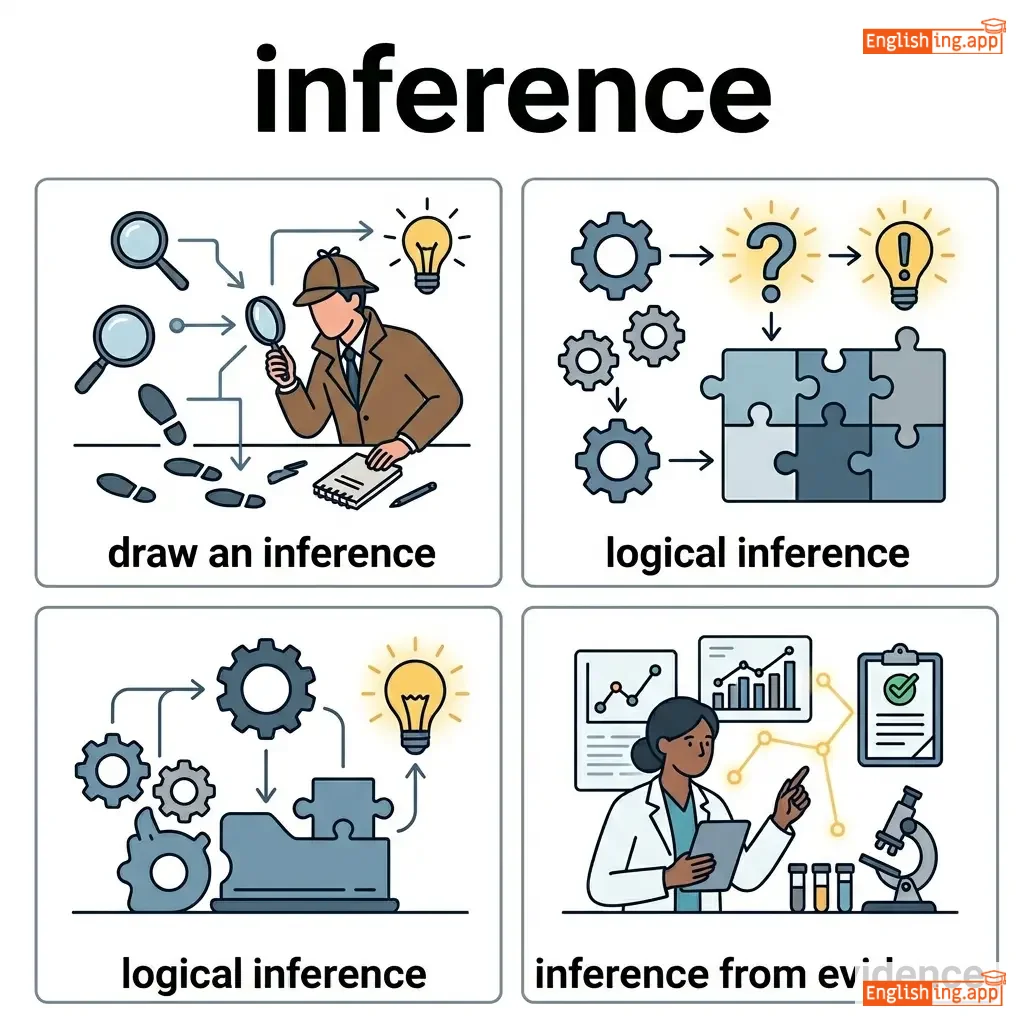
#4649
🔍
|
/ˈɪnfərəns/
noun
(インフェレンス)
••••••
|
|
推論
suiron
••••••
|
- •••••• | - •••••• | - •••••• | - •••••• |
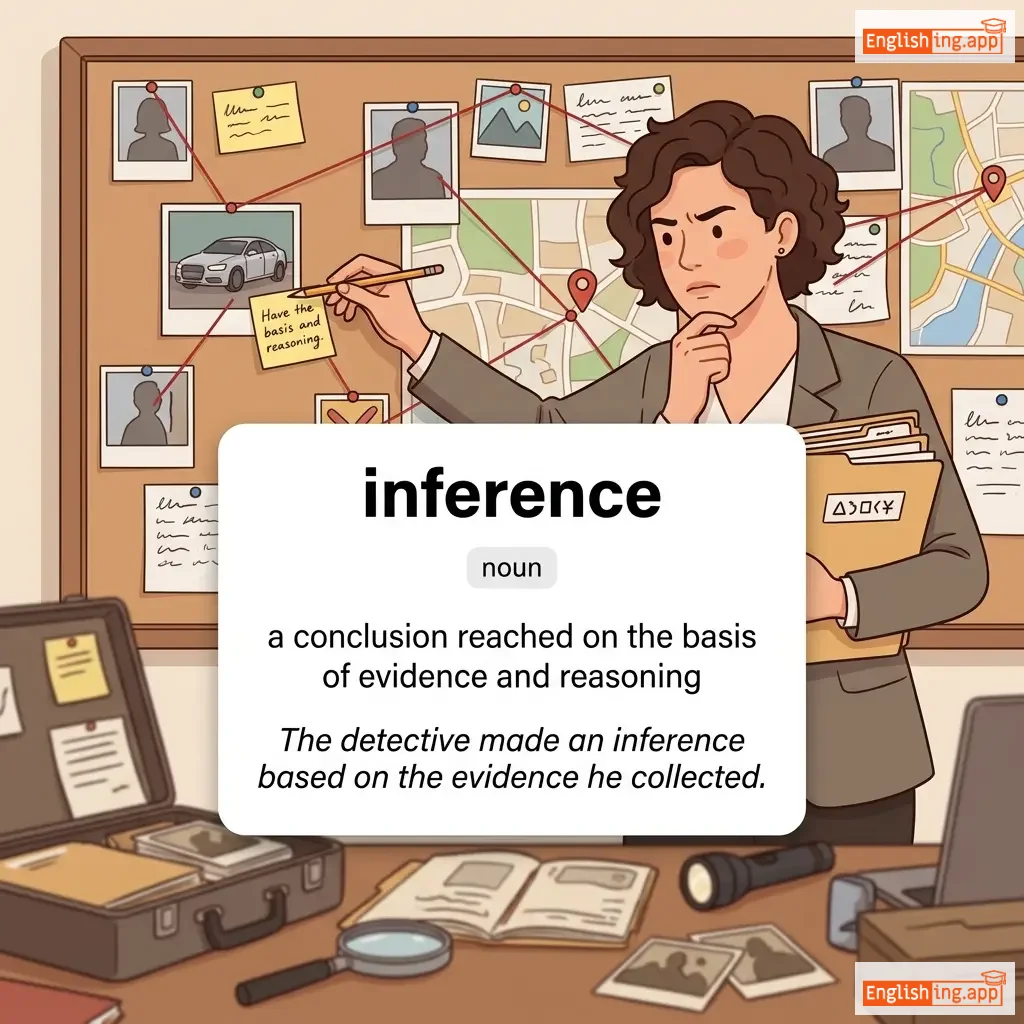
a conclusion reached on the basis of evidence and reasoning
••••••
|
The detective made an inference based on the evidence he collected. |
探偵は集めた証拠に基づいて推論を行った。
tantei wa atsumeta shouko ni motozuite suiron wo okonatta.
••••••
|
- •••••• | - •••••• | - •••••• |
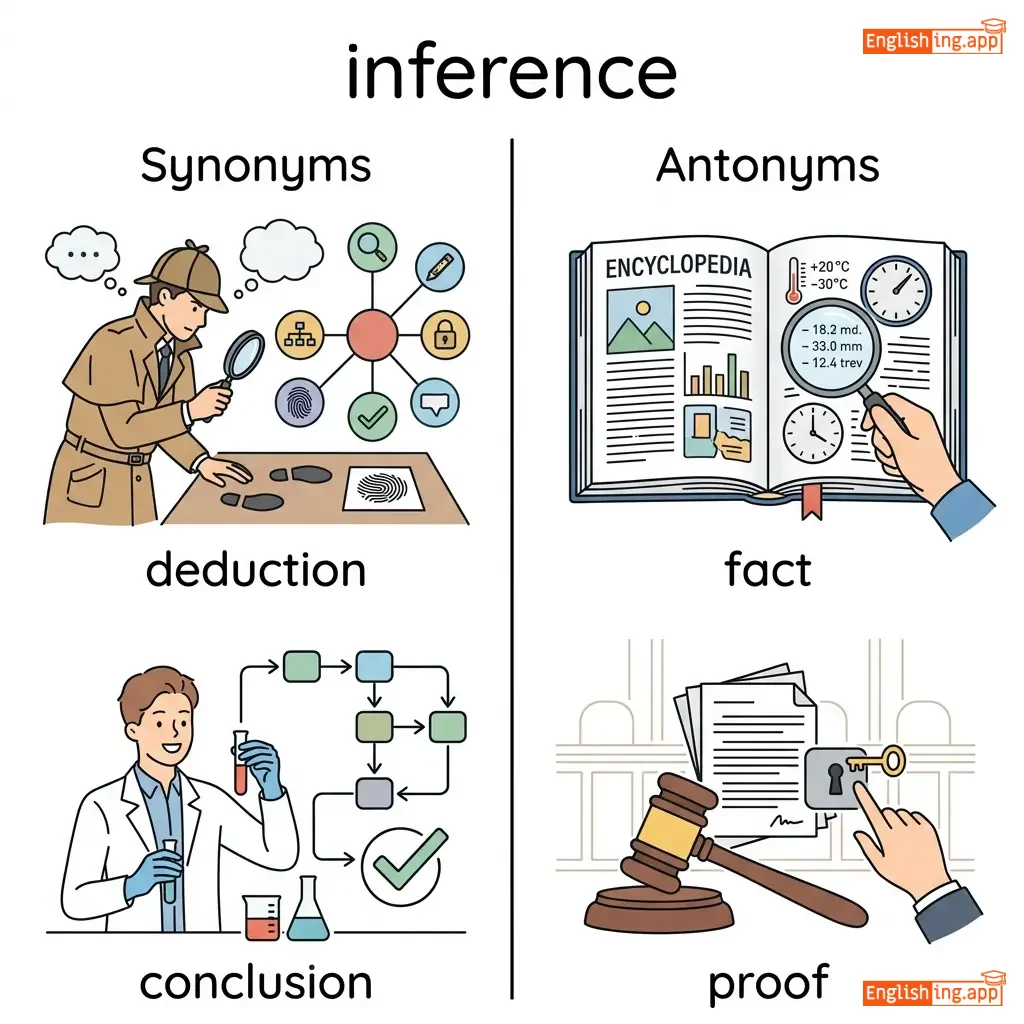
deduction, conclusion, reasoning, assumption
••••••
|
fact, proof, reality
••••••
|
draw an inference, logical inference, inference from evidence
••••••
|
推論とは、証拠と推理を基に結論を出すこと
••••••
|
|
#4650
🤔
|
/ɪnˈfɜːr/
verb
••••••
|
- •••••• | - •••••• |
inferred
••••••
|
inferred
••••••
|
infers
••••••
|
inferring
••••••
|
to conclude or deduce something from evidence and reasoning rather than from explicit statements
••••••
|
From his silence, I inferred that he was not happy with the decision. |
- •••••• |
read between the lines |
to understand an implicit meaning in what is said or written
••••••
|
- •••••• |
deduce, conclude, reason, assume, derive
••••••
|
state, declare, express
••••••
|
infer meaning, infer from evidence, infer result
••••••
|
No •••••• |
Vocabulary Quiz
Test your vocabulary by matching words with their translations or meanings.
Login to take the quiz
Comments (0)
Share your thoughts and join the discussion.
Join the discussion by logging in
Login to CommentNo comments yet
Be the first to share your thoughts!