

翻訳
過去
過去分詞
三人称単数
動名詞
意味
例文
例文の翻訳
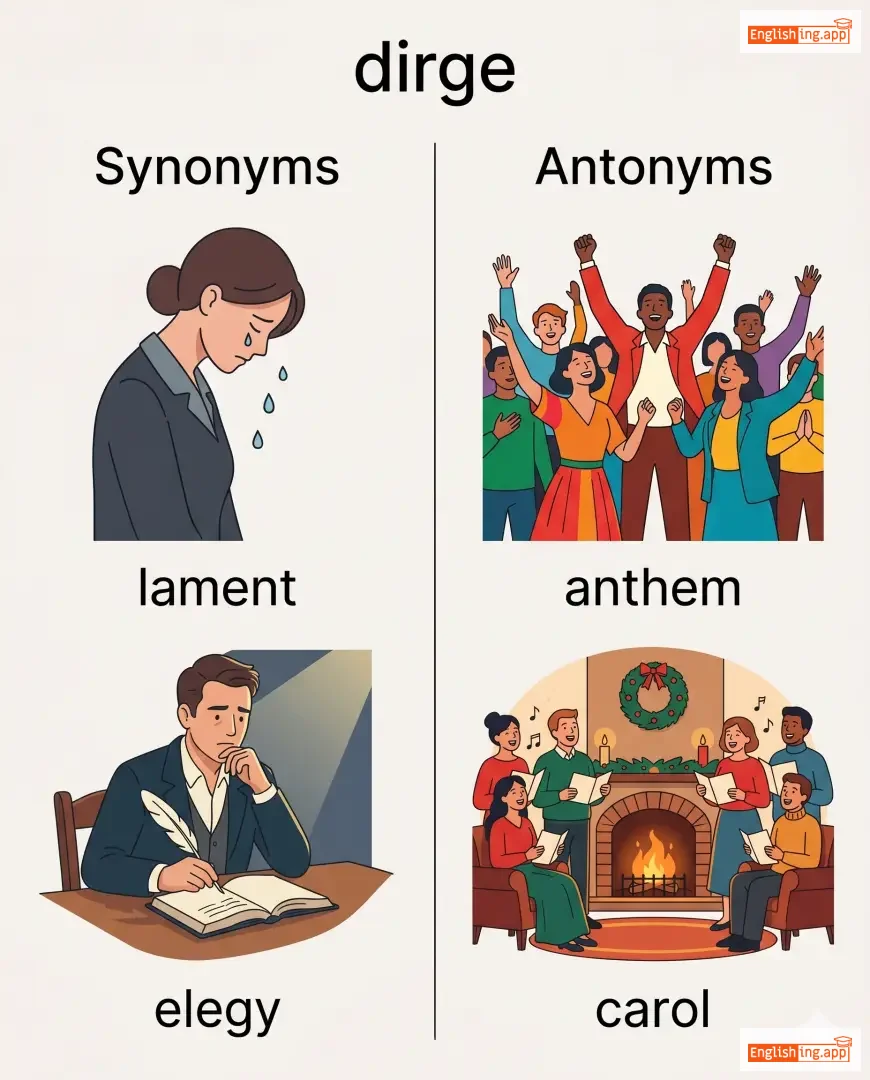
同義語
対義語
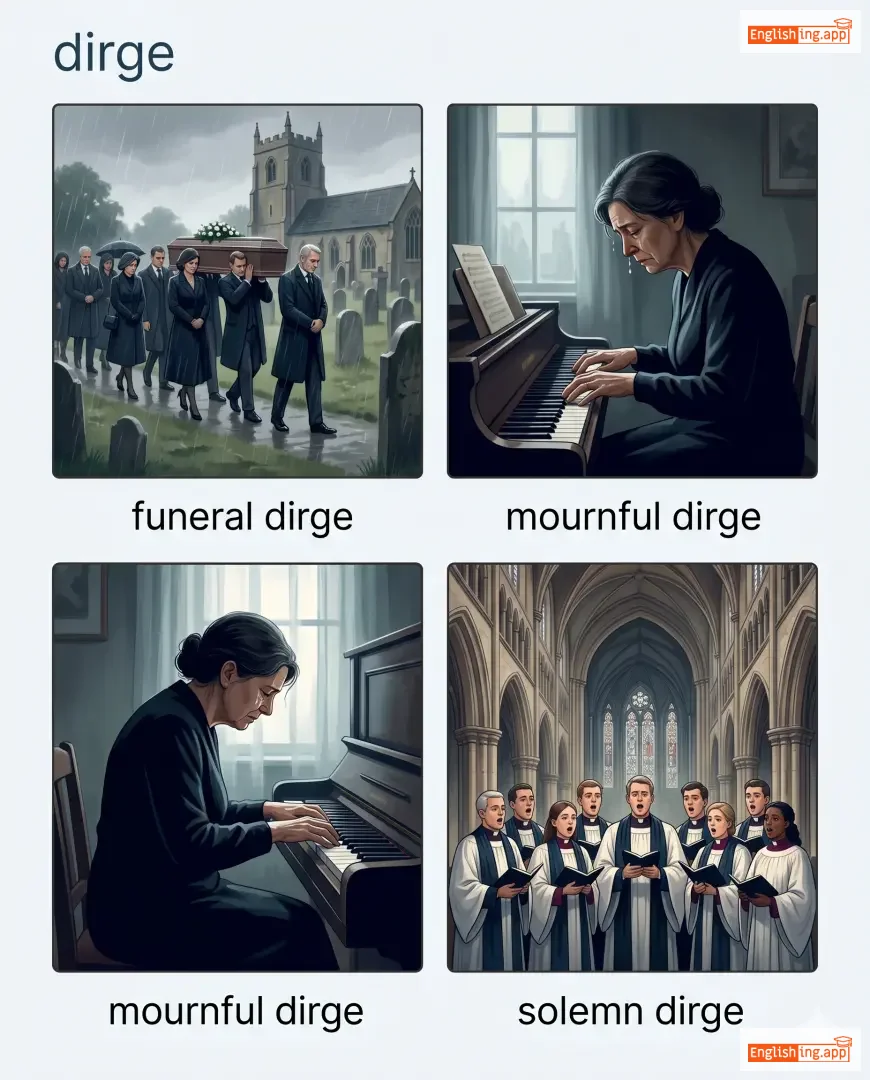
コロケーション
ニーモニック
Swipe left or right, or use the buttons. Tap image to zoom.
例文の翻訳
単語
Lesson 83Lesson 83 - マスクトグル
|
絵文字
|
単語 | Images | 翻訳 | 過去 | 過去分詞 | 三人称単数 | 動名詞 | 意味 | 例文 | 例文の翻訳 | 表現例 | 表現例の意味 | 表現例の翻訳 | 同義語 | 対義語 | コロケーション | ニーモニック |
|---|---|---|---|---|---|---|---|---|---|---|---|---|---|---|---|---|---|
|
#2461
🙅
|
/ˌdɪsəˈɡriː/
verb
••••••
|
|
- •••••• |
disagreed
••••••
|
disagreed
••••••
|
disagrees
••••••
|
disagreeing
••••••
|
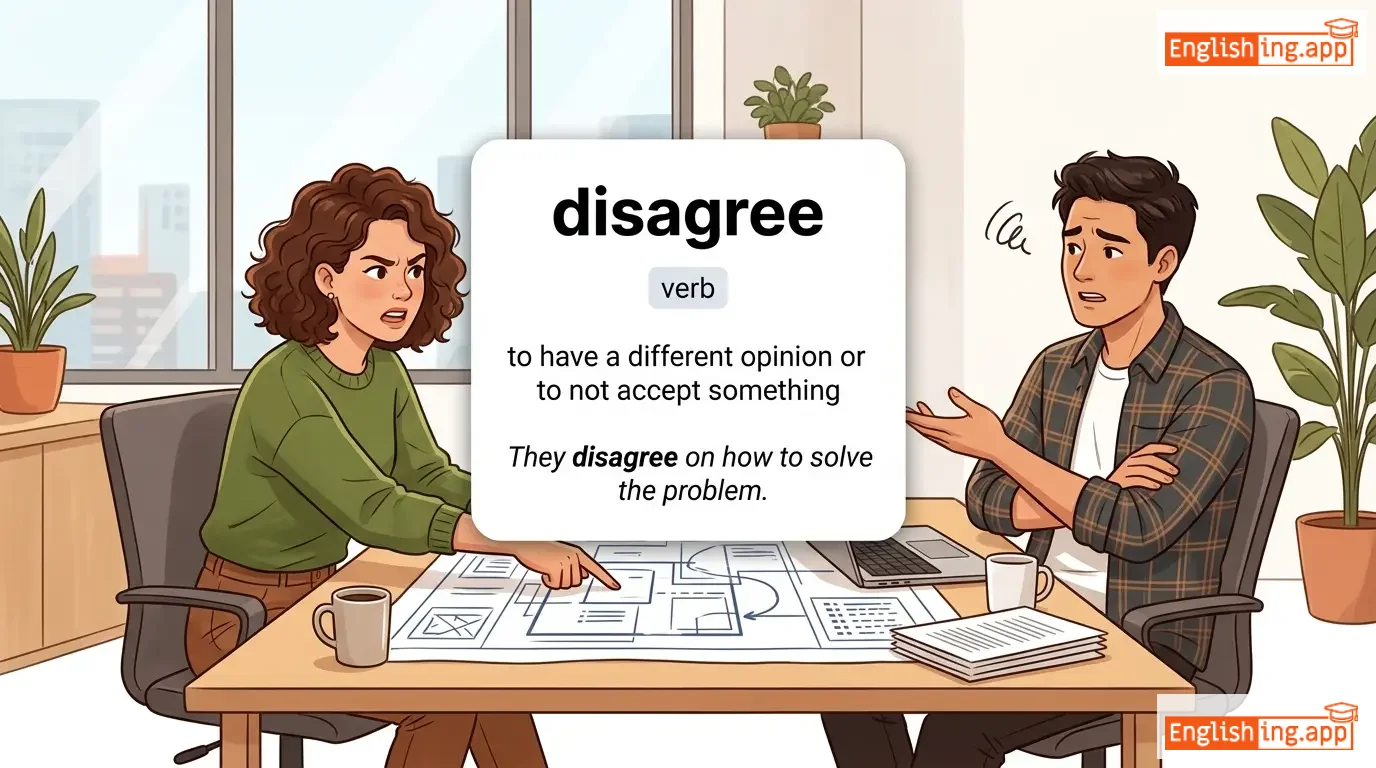
to have a different opinion or to not accept something
••••••
|
They disagree on how to solve the problem. |
- •••••• |
agree to disagree |
accept that two people will not reach the same opinion
••••••
|
- •••••• |
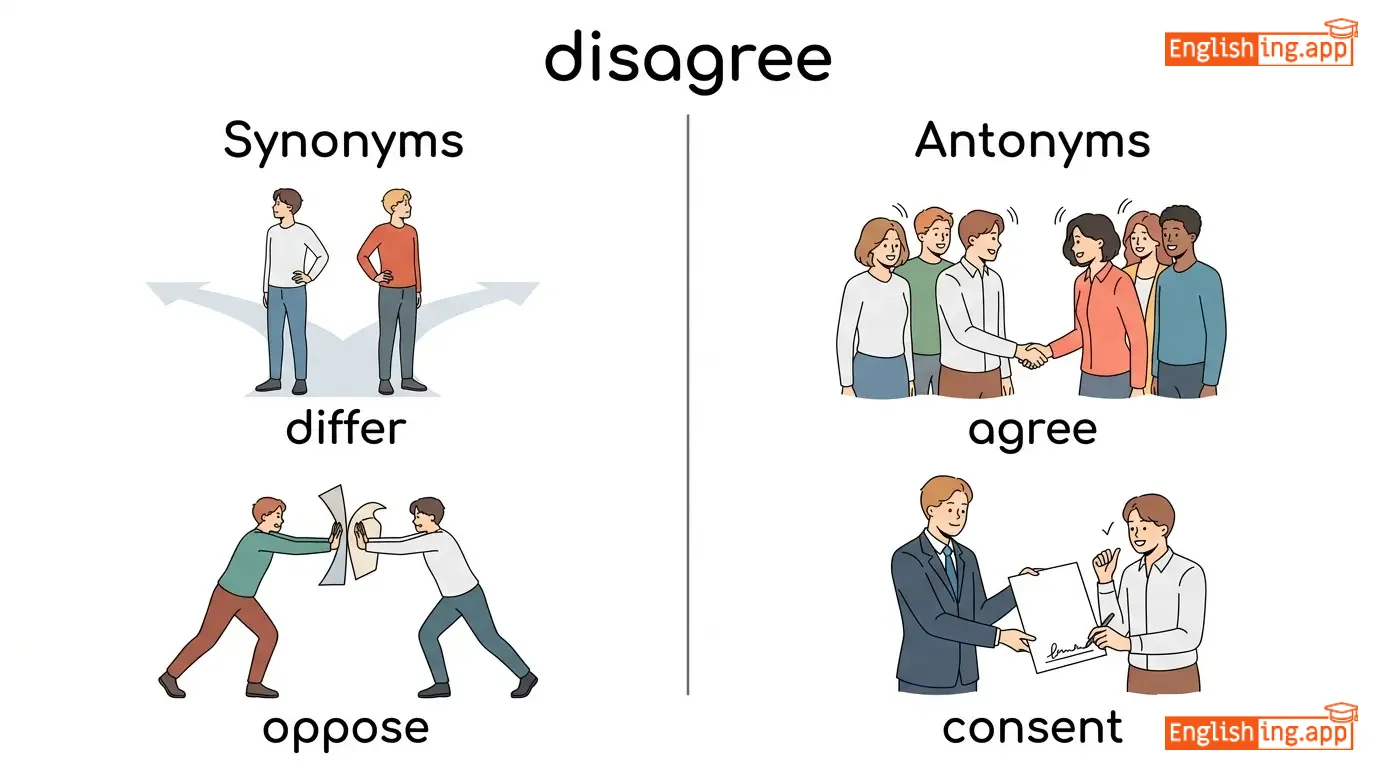
differ, oppose, contradict, dispute, object
••••••
|
agree, consent, approve
••••••
|
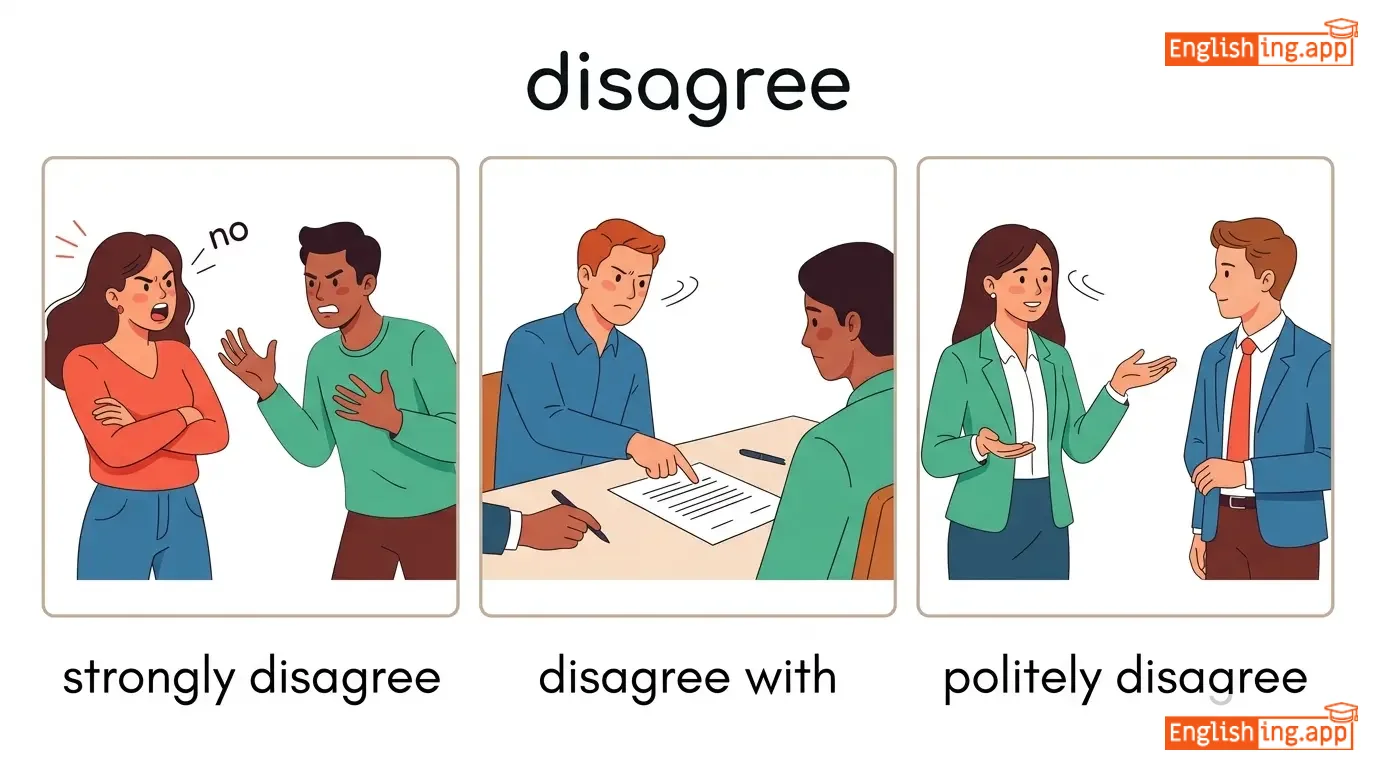
strongly disagree, disagree with, politely disagree
••••••
|
No •••••• |
|
#2462
🎒
|
/dɪsˈbɜːrdən/
verb
(ディスバーデン)
••••••
|
- •••••• |
負担を軽減する
futan o keigen suru
••••••
|
disburdened
ディスバーデンド
••••••
|
disburdened
ディスバーデンド
••••••
|
disburdens
ディスバーデンズ
••••••
|
disburdening
ディスバーデニング
••••••
|
to relieve someone of a burden or load
••••••
|
She disburdened herself of worries by sharing them with her friend.
彼女は心配を友達と共有することで自分を負担から解放した。
••••••
|
彼女は心配を友達と共有することで自分を負担から解放した。
Kanojo wa shinpai o tomodachi to kyōyū suru koto de jibun o futan kara kaihō shita.
••••••
|
- •••••• | - •••••• | - •••••• |
relieve, unload, release, free
••••••
|
burden, load, oppress
••••••
|
disburden oneself, disburden the mind, disburden of worries, disburden the heart
••••••
|
Disburdenは負担を軽減することです。
••••••
|
|
#2463
🙅
|
/ˌdɪsbɪˈliːvər/
noun
(ディスビリーバー)
••••••
|
- •••••• |
不信者
fushinja
••••••
|
- •••••• | - •••••• | - •••••• | - •••••• |
a person who does not believe in something, especially a religion or idea
••••••
|
He was called a disbeliever for rejecting the traditional faith. |
彼は伝統的な信仰を拒否したため、不信者と呼ばれました。
Kare wa dentō-teki na shinkō o kyohi shita tame, fushinja to yobaremashita.
••••••
|
- •••••• | - •••••• | - •••••• |
skeptic, atheist, doubter, unbeliever
••••••
|
believer, follower, devotee
••••••
|
religious disbeliever, labeled disbeliever, disbeliever in God, stubborn disbeliever
••••••
|
Disbeliever = Dis (信じない) + believer (信者) → 不信者.
••••••
|
|
#2464
⚖️
|
/dɪsˈbɑːr/
verb
(ディスバー)
••••••
|
- •••••• |
弁護士を法曹界から正式に除外する
bengoshi o hōsōkai kara seishiki ni jogai suru
••••••
|
disbarred
ディスバード
••••••
|
disbarred
ディスバード
••••••
|
disbars
ディスバーズ
••••••
|
disbarring
ディスバーリング
••••••
|
to officially remove a lawyer from the legal profession
••••••
|
The corrupt lawyer was disbarred for unethical conduct.
腐敗した弁護士は非倫理的な行動によりディスバードされました。
••••••
|
腐敗した弁護士は非倫理的な行動により除外されました。
Fuhai shita bengoshi wa hinritsutekina kōdō ni yori jogai saremashita.
••••••
|
- •••••• | - •••••• | - •••••• |
expel, suspend, dismiss, oust
••••••
|
admit, authorize, approve
••••••
|
disbar a lawyer, permanently disbarred, face disbarment, disbar proceedings
••••••
|
Disbar は弁護士協会から除外することを意味します。
••••••
|
|
#2465
💔
|
/dɪsˈbænd/
verb
(ディスバンド)
••••••
|
- •••••• |
解散する
kaisansuru
••••••
|
disbanded
ディスバンデッド
••••••
|
disbanded
ディスバンデッド
••••••
|
disbands
ディスバンズ
••••••
|
disbanding
ディスバンディング
••••••
|
to break up and stop functioning as a group or organization
••••••
|
The club decided to disband after twenty years of activity.
クラブは20年の活動後に解散することを決定した。
••••••
|
クラブは20年の活動後に解散することを決定した。
Kurabu wa 20-nen no katsudō go ni kaisan suru koto o kettei shita.
••••••
|
- •••••• | - •••••• | - •••••• |
dissolve, break up, scatter, disperse
••••••
|
assemble, unite, organize
••••••
|
decide to disband, forced to disband, disband the army, disband the group
••••••
|
Disbandはグループやバンドを解散(かいさん)することです。
••••••
|
|
#2466
🚫
|
/ˌdɪsəˈvaʊəl/
noun
(ディサヴォウアル)
••••••
|
- •••••• |
拒否
kyohi
••••••
|
- •••••• | - •••••• | - •••••• | - •••••• |
the denial of any responsibility, connection, or support
••••••
|
The politician issued a firm disavowal of the controversial remarks. |
その政治家は物議を醸す発言に対して強い拒否を表明した。
Sono seijika wa butsugi o kamasu hatsugen ni taishite tsuyoi kyohi o hyōmei shita.
••••••
|
- •••••• | - •••••• | - •••••• |
denial, rejection, repudiation, disclaimer, renunciation
••••••
|
acceptance, acknowledgment, approval
••••••
|
public disavowal, strong disavowal, disavowal of responsibility, formal disavowal
••••••
|
Disavowal は拒否するという意味です。 'dis'(否定)と 'vow'(誓い)– 誓いを否定する。
••••••
|
|
#2467
🙅
|
/ˌdɪsəˈvaʊ/
verb
(ディスアヴァウ)
••••••
|
- •••••• |
否定する
hitei suru
••••••
|
disavowed
ディスアヴァウド
••••••
|
disavowed
ディスアヴァウド
••••••
|
disavows
ディスアヴァウズ
••••••
|
disavowing
ディスアヴァウイング
••••••
|
to deny responsibility for or connection with something
••••••
|
He disavowed any involvement in the scandal.
彼はスキャンダルへの関与を否定した。
••••••
|
彼はスキャンダルへの関与を否定した。
Kare wa sukyandaru e no kan'yo o hitei shita.
••••••
|
disavow responsibility
責任を否定する
••••••
|
to refuse to accept responsibility for something
••••••
|
責任を否定する
sekinin o hitei suru
••••••
|
deny, repudiate, renounce, reject
••••••
|
acknowledge, accept
••••••
|
disavow responsibility, disavow involvement, disavow connection
••••••
|
Vow は誓い、Disavow は誓いを否定する。
••••••
|
|
#2468
🌀
|
/ˌdɪsəˈreɪ/
noun
(ディスアレイ)
••••••
|
|
混乱
konran
••••••
|
- •••••• | - •••••• | - •••••• | - •••••• |
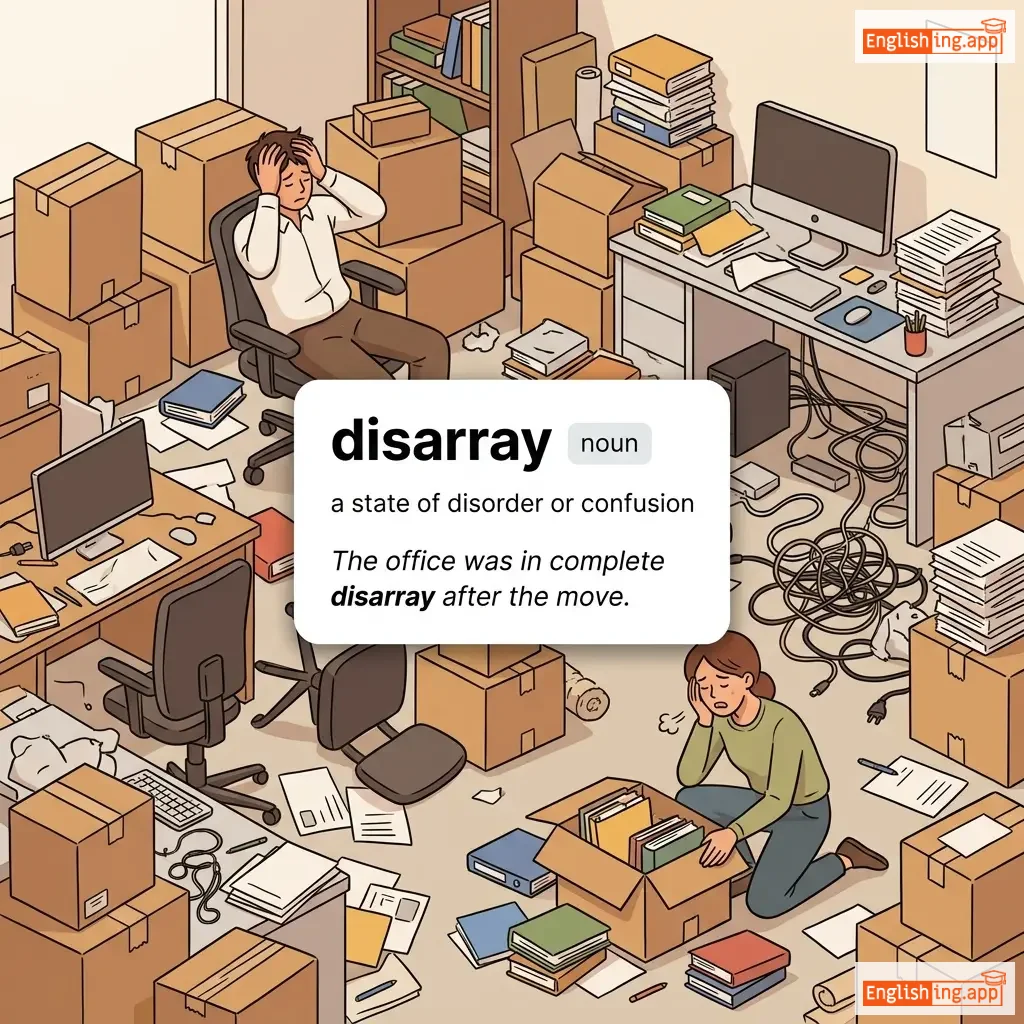
a state of disorder or confusion
••••••
|
The office was in complete disarray after the move. |
引っ越し後、オフィスは完全に混乱していました。
Hikkoshi go, ofisu wa kanzen ni konran shite imashita.
••••••
|
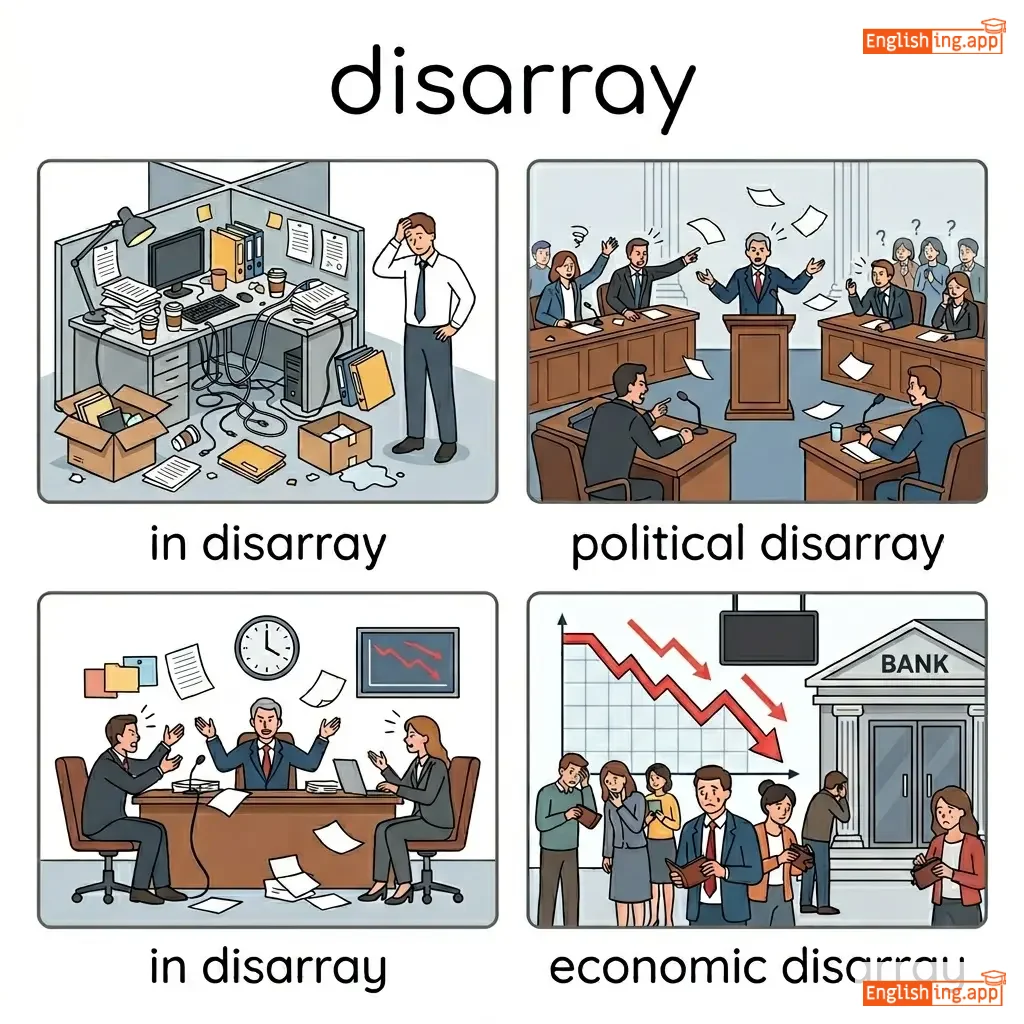
in disarray |
in a state of confusion or disorder
••••••
|
混乱の中で
konran no naka de
••••••
|
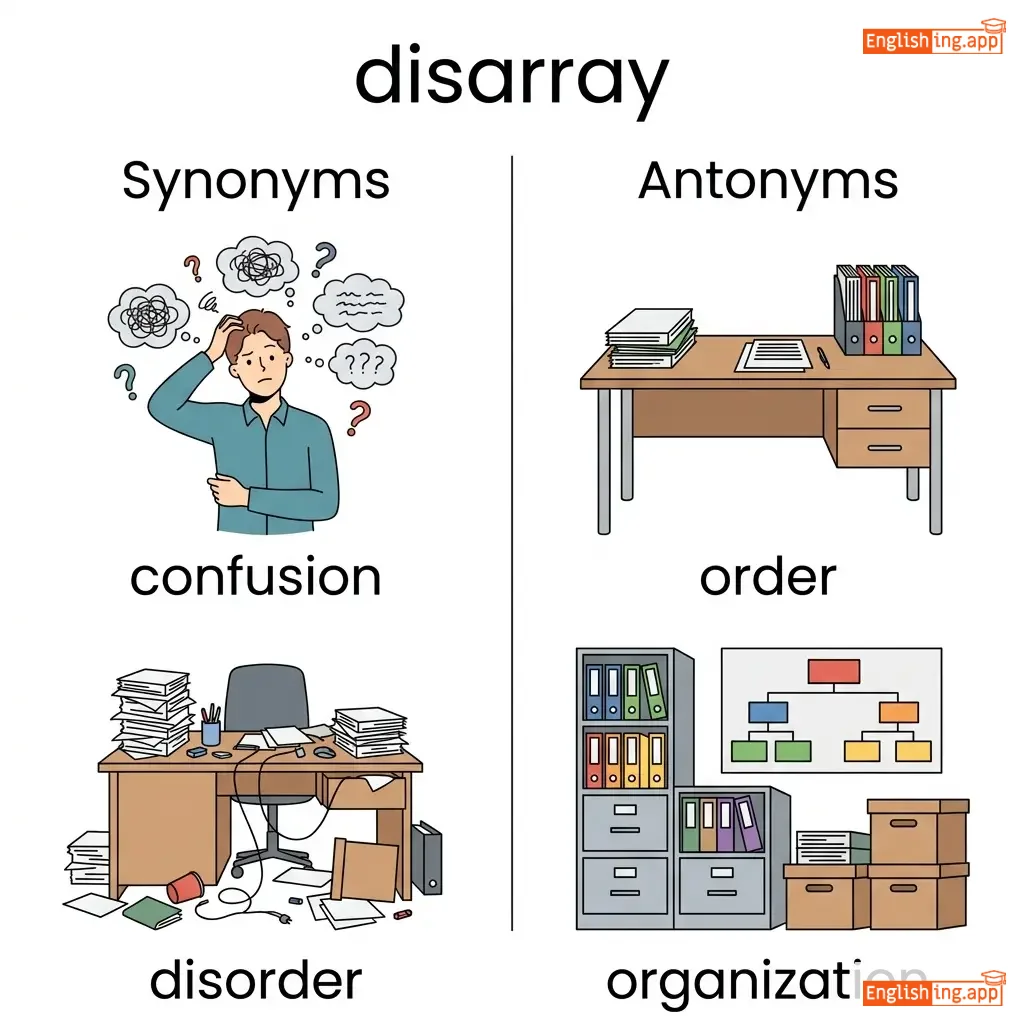
confusion, disorder, chaos, mess
••••••
|
order, organization
••••••
|
in disarray, political disarray, economic disarray
••••••
|
ディスアレイは混乱と同じ、何も整理されていない状態。
••••••
|
|
#2469
😵
|
/ˌdɪsəˈreɪndʒ/
verb
(ディスアレンジ)
••••••
|
- •••••• |
乱す
midasu
••••••
|
disarranged
ディスアレンジド
••••••
|
disarranged
ディスアレンジド
••••••
|
disarranges
ディスアレンジズ
••••••
|
disarranging
ディスアレンジング
••••••
|
to disturb the order or arrangement of something
••••••
|
The wind disarranged her hair.
風が彼女の髪を乱した。
••••••
|
風が彼女の髪を乱した。
Kaze ga kanojo no kami wo midashita.
••••••
|
- •••••• | - •••••• | - •••••• |
disturb, disorder, mess up, confuse
••••••
|
arrange, organize
••••••
|
disarrange plans, disarrange hair, disarrange order
••••••
|
Arrange は整える、disarrange は乱すという意味です。
••••••
|
|
#2470
🕊️
|
/dɪsˈɑːrm/
verb
(ディサーム)
••••••
|
- •••••• |
武装解除する
busou kaijo suru
••••••
|
disarmed
ディサームド
••••••
|
disarmed
ディサームド
••••••
|
disarms
ディサームズ
••••••
|
disarming
ディサーミング
••••••
|
to take weapons away from someone; to make someone feel less hostile
••••••
|
The soldiers were ordered to disarm the rebels.
兵士たちは反乱者の武装を解除するよう命じられた。
••••••
|
兵士たちは反乱者の武装を解除するよう命じられた。
Heishitachi wa hanransha no busou wo kaijo suru you meijirareta.
••••••
|
disarm a person
人を武装解除する
••••••
|
to remove weapons from a person
••••••
|
人を武装解除する
hito wo busou kaijo suru
••••••
|
demilitarize, neutralize, disable, pacify
••••••
|
arm, equip
••••••
|
disarm rebels, disarm opponents, disarm criticism
••••••
|
武装解除は敵意を取り去ることと同じです。
••••••
|
|
#2471
👎
|
/ˌdɪsəˈpruːv/
verb
(ディスアプルーヴ)
••••••
|
- •••••• |
反対する
hantai suru
••••••
|
disapproved
ディスアプルーヴド
••••••
|
disapproved
ディスアプルーヴド
••••••
|
disapproves
ディスアプルーヴス
••••••
|
disapproving
ディスアプルーヴィング
••••••
|
to have a negative opinion about something; to consider something wrong or bad
••••••
|
Many parents disapprove of smoking.
多くの親は喫煙を反対しています。
••••••
|
多くの親は喫煙を反対しています。
Ōku no oya wa kitsuen o hantai shiteimasu.
••••••
|
strongly disapprove
強く反対する
••••••
|
to express strong disagreement or dislike
••••••
|
強く反対する
tsuyoku hantai suru
••••••
|
condemn, criticize, oppose, reject, object
••••••
|
approve, praise, accept
••••••
|
disapprove of behavior, disapprove strongly, openly disapprove
••••••
|
Disapproveは‘反対する’を意味し、日本語では反対するです。
••••••
|
|
#2472
👎
|
/ˌdɪsæprəˈbeɪʃən/
noun
(ディサプロベーション)
••••••
|
- •••••• |
強い非難
tsuyoi hinan
••••••
|
- •••••• | - •••••• | - •••••• | - •••••• |
strong disapproval, typically on moral grounds
••••••
|
The policy was met with widespread disapprobation. |
その政策は広範な非難を受けました。
Sono seisaku wa kōhan na hinan o ukemashita.
••••••
|
- •••••• | - •••••• | - •••••• |
disapproval, condemnation, objection, criticism, reproach
••••••
|
approval, praise, endorsement
••••••
|
public disapprobation, moral disapprobation, widespread disapprobation
••••••
|
Dis + approbation (承認) = 承認しない—強い非難を意味します。
••••••
|
|
#2473
😞
|
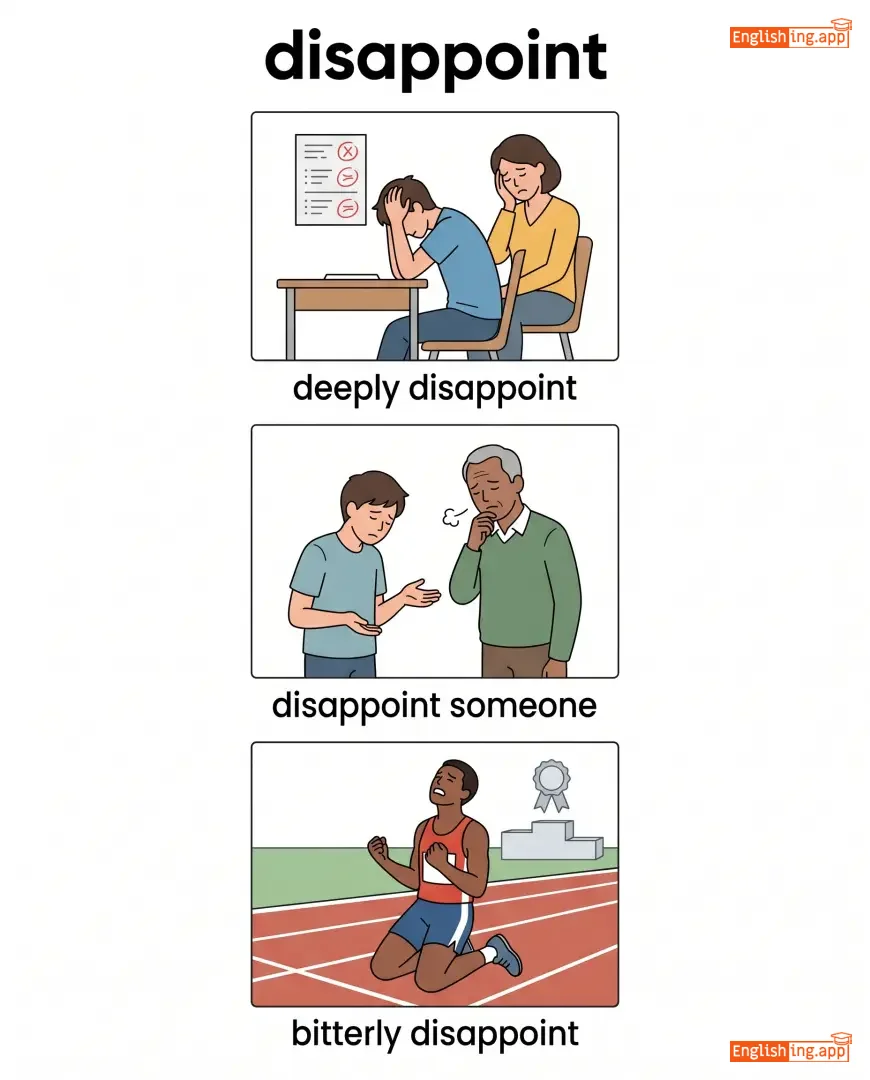
/ˌdɪsəˈpɔɪnt/
verb
(ディサポイント)
••••••
|
|
失望する
shitsubou suru
••••••
|
disappointed
ディサポイントッド
••••••
|
disappointed
ディサポイントッド
••••••
|
disappoints
ディサポイントス
••••••
|
disappointing
ディサポイントイング
••••••
|
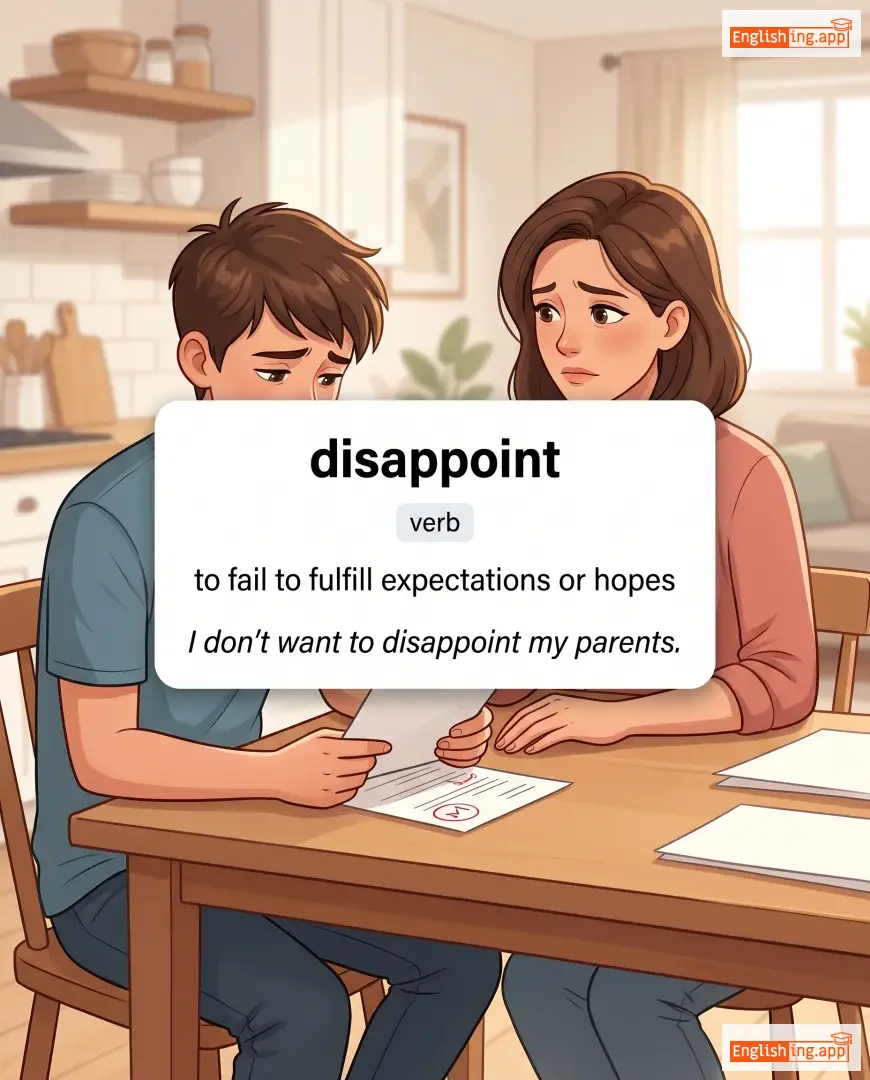
to fail to fulfill expectations or hopes
••••••
|
I don’t want to disappoint my parents.
私は両親を失望させたくない。
••••••
|
私は両親を失望させたくない。
Watashi wa ryoushin wo shitsubou sasetakunai.
••••••
|
bitterly disappointed
ひどく失望した
••••••
|
very unhappy due to unmet expectations
••••••
|
ひどく失望した
hidoku shitsubou shita
••••••
|
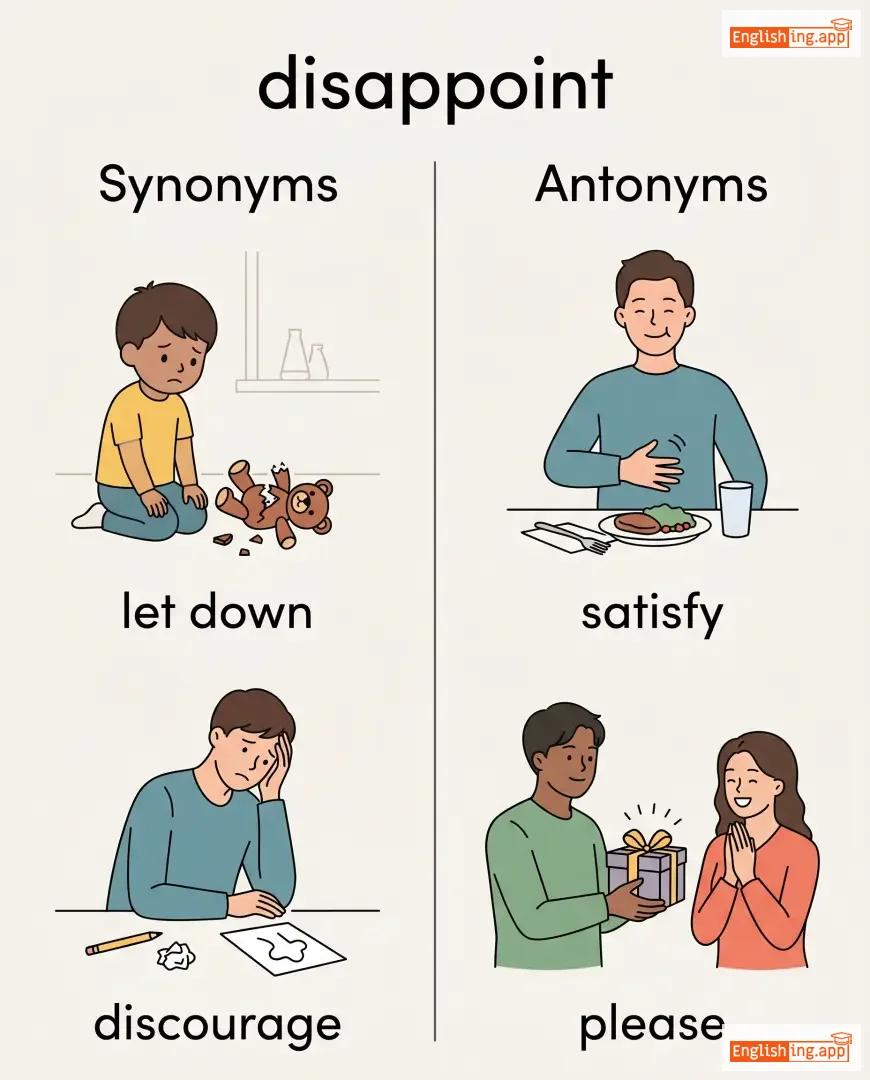
let down, discourage, upset, fail, frustrate
••••••
|
satisfy, please, fulfill
••••••
|
deeply disappoint, disappoint someone, bitterly disappoint
••••••
|
失望するは期待を裏切ること—期待が裏切られると失望する。
••••••
|
|
#2474
🪄
|
/ˌdɪsəˈpɪər/
verb
(ディスアピア)
••••••
|
|
消える
kieru
••••••
|
disappeared
消えた
••••••
|
disappeared
消えた
••••••
|
disappears
消える
••••••
|
disappearing
消えている
••••••
|
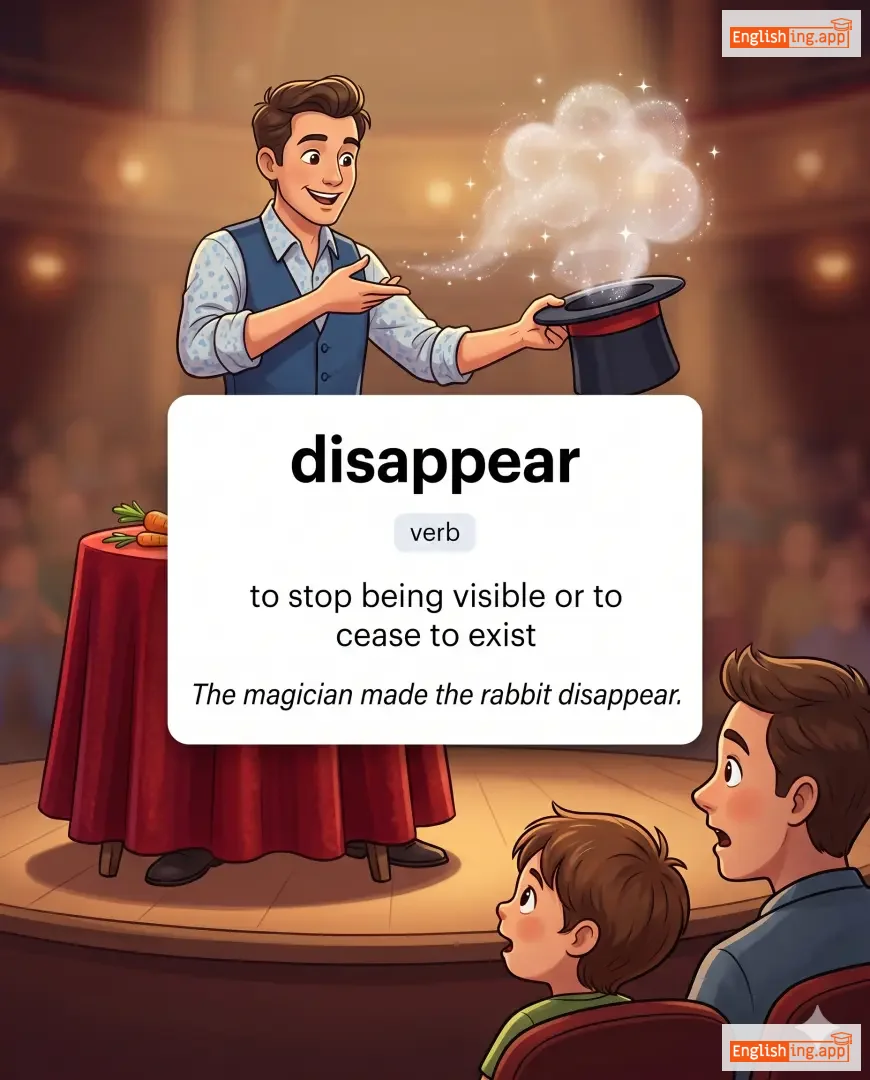
to stop being visible or to cease to exist
••••••
|
The magician made the rabbit disappear.
マジシャンはウサギを消しました。
••••••
|
マジシャンはウサギを消しました。
Majishan wa usagi o keshimashita.
••••••
|
disappear into thin air
空気中に消える
••••••
|
to vanish suddenly and completely
••••••
|
空気中に消える
kūchū ni kieru
••••••
|
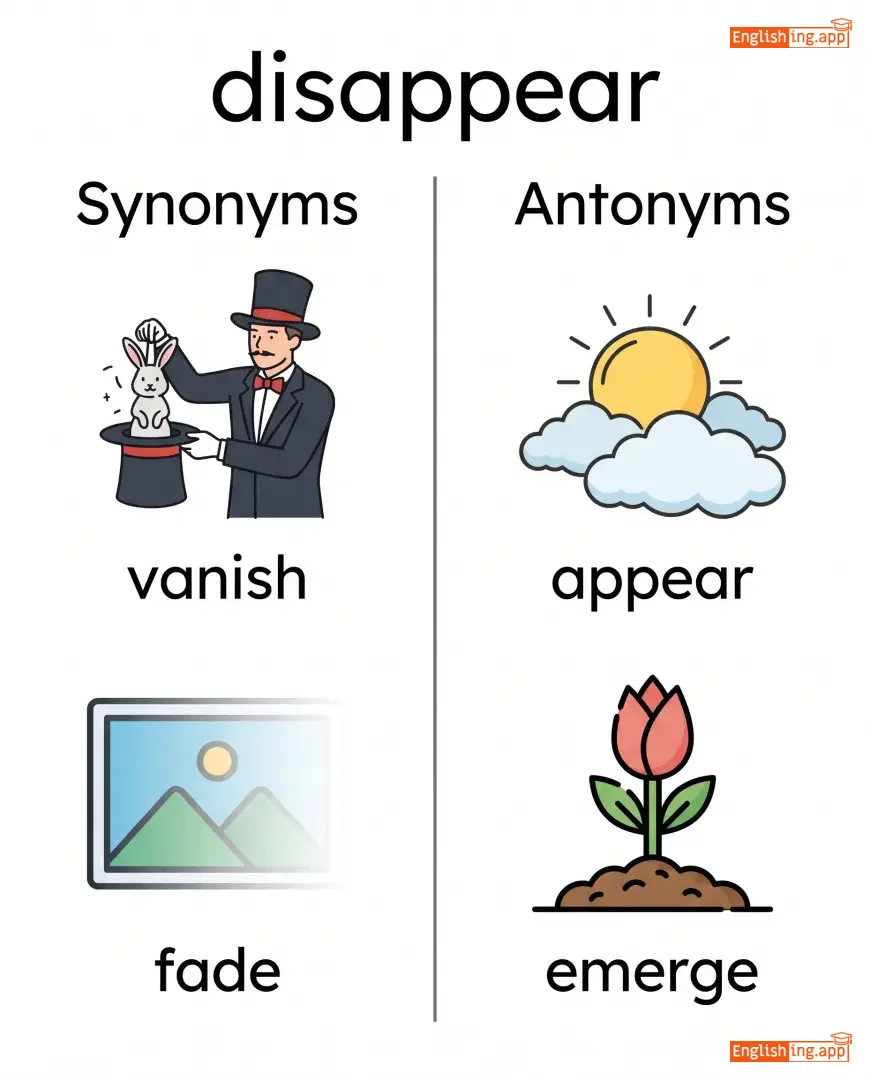
vanish, fade, evaporate, dissolve, recede
••••••
|
appear, emerge, show
••••••
|
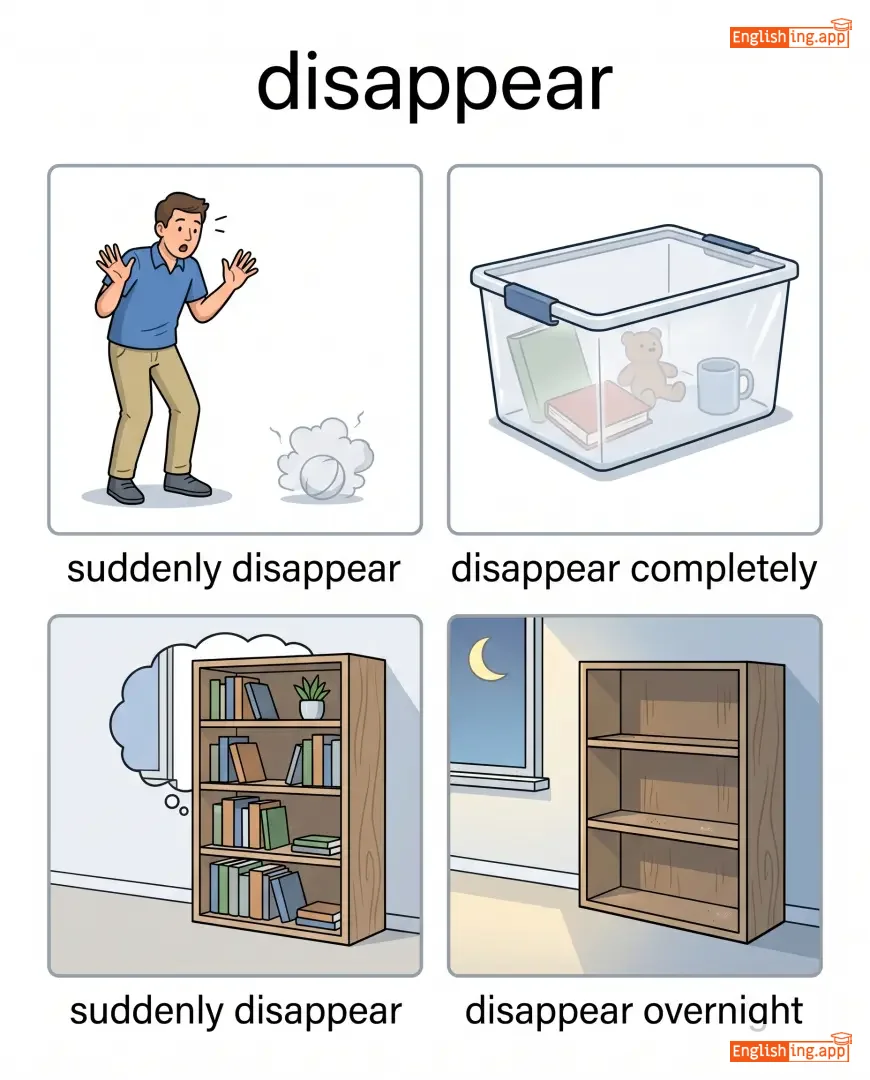
suddenly disappear, disappear completely, disappear overnight
••••••
|
Disappear は'消える'—前にいない、だから消える。
••••••
|
|
#2475
🚫
|
/ˌdɪsəˈlaʊ/
verb
(ディスアラウ)
••••••
|
- •••••• |
許可しない
kyokashinai
••••••
|
disallowed
ディスアラウド
••••••
|
disallowed
ディスアラウド
••••••
|
disallows
ディスアロウズ
••••••
|
disallowing
ディスアロウイング
••••••
|
to refuse to allow or accept something
••••••
|
The referee disallowed the goal for offside.
審判はオフサイドのためゴールを認めませんでした。
••••••
|
審判はオフサイドのためゴールを認めませんでした。
Shimpan wa offside no tame gōru o mitomemasen deshita.
••••••
|
- •••••• | - •••••• | - •••••• |
forbid, prohibit, ban, refuse, reject
••••••
|
allow, permit, approve
••••••
|
disallow a goal, disallow claims, disallow actions
••••••
|
Disは「しない」、allowは「許可する」— disallowは「許可しない」
••••••
|
|
#2476
🛶
|
/ˈdɪŋɡi/
noun
(ディンギー)
••••••
|
- •••••• |
ディンギーボート
dingī bōto
••••••
|
- •••••• | - •••••• | - •••••• | - •••••• |
a small boat, often carried or towed by a larger vessel, used for short trips or as a lifeboat
••••••
|
They rowed the dinghy back to the yacht.
彼らはヨットに戻るためにディンギーを漕いだ。
••••••
|
彼らはヨットに戻るためにディンギーを漕いだ。
Karera wa yotto ni modoru tame ni dingī o koida.
••••••
|
- •••••• | - •••••• | - •••••• |
small boat, tender, lifeboat, skiff, canoe
••••••
|
ship, vessel
••••••
|
inflatable dinghy, sailing dinghy, row a dinghy, rescue dinghy
••••••
|
日本語ではディンギーは小さなボートを意味します、英語の'dinghy'と同じです。
••••••
|
|
#2477
😠
|
/ˌdɪsəˈfɛktɪd/
adjective
(ディスアフェクテッド)
••••••
|
- •••••• |
不満な
fuman na
••••••
|
- •••••• | - •••••• | - •••••• | - •••••• |
Dissatisfied and rebellious, especially against authority or leadership.
••••••
|
The reforms were introduced to calm the disaffected youth. |
改革は不満な若者を落ち着かせるために導入されました。
Kaizen wa fuman na wakamono o ochitsukase ru tame ni dounyuu saremashita.
••••••
|
- •••••• | - •••••• | - •••••• |
rebellious, dissatisfied, disloyal, alienated, resentful
••••••
|
loyal, content, satisfied
••••••
|
disaffected youth, disaffected group, disaffected members
••••••
|
Disaffected は日本語で ‘不満な’、つまり不満と反抗を意味します。
••••••
|
|
#2478
💡
|
/ˌdɪsəˈbjuːz/
verb
(ディサビューズ)
••••••
|
|
誤解を解く
gokai wo toku
••••••
|
disabused
ディサビューズド
••••••
|
disabused
ディサビューズド
••••••
|
disabuses
ディサビューゼス
••••••
|
disabusing
ディサビュージング
••••••
|
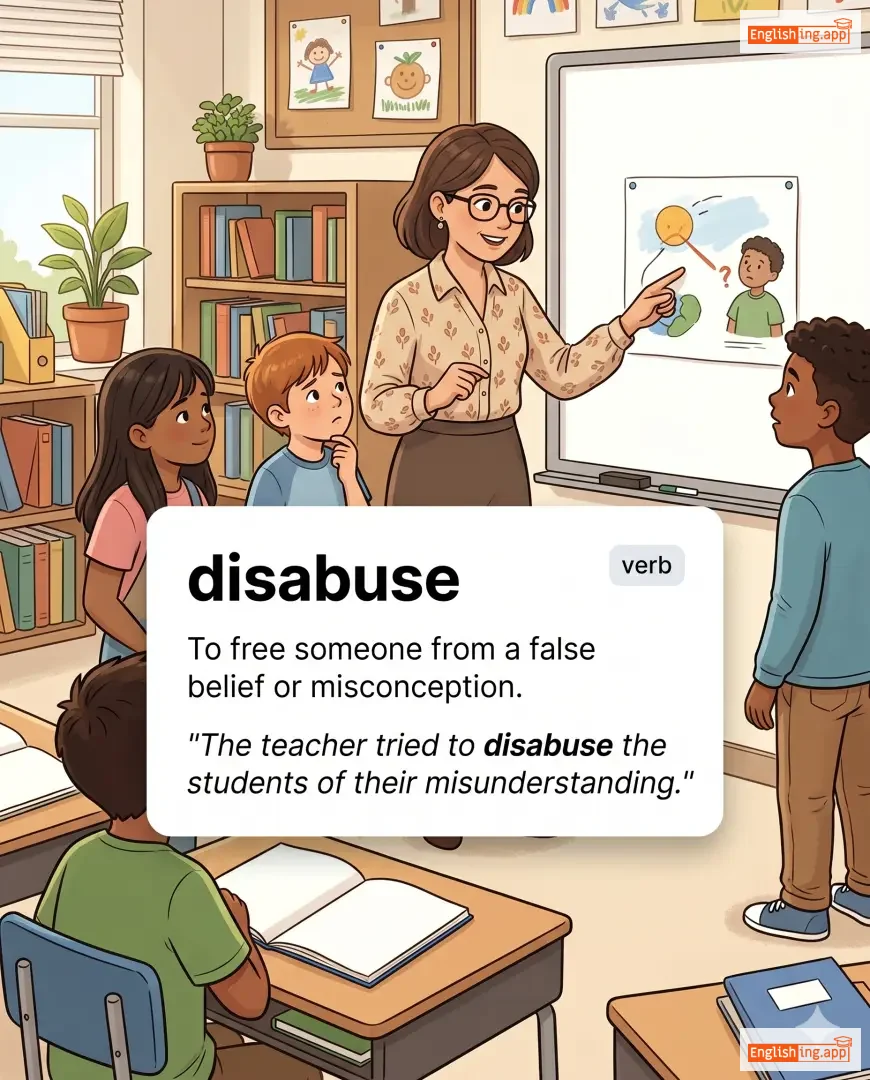
To free someone from a false belief or misconception.
••••••
|
The teacher tried to disabuse the students of their misunderstanding.
先生は生徒たちの誤解を解こうとしました。
••••••
|
先生は生徒たちの誤解を解こうとしました。
Sensei wa seito-tachi no gokai wo tokou to shimashita.
••••••
|
- •••••• | - •••••• | - •••••• |
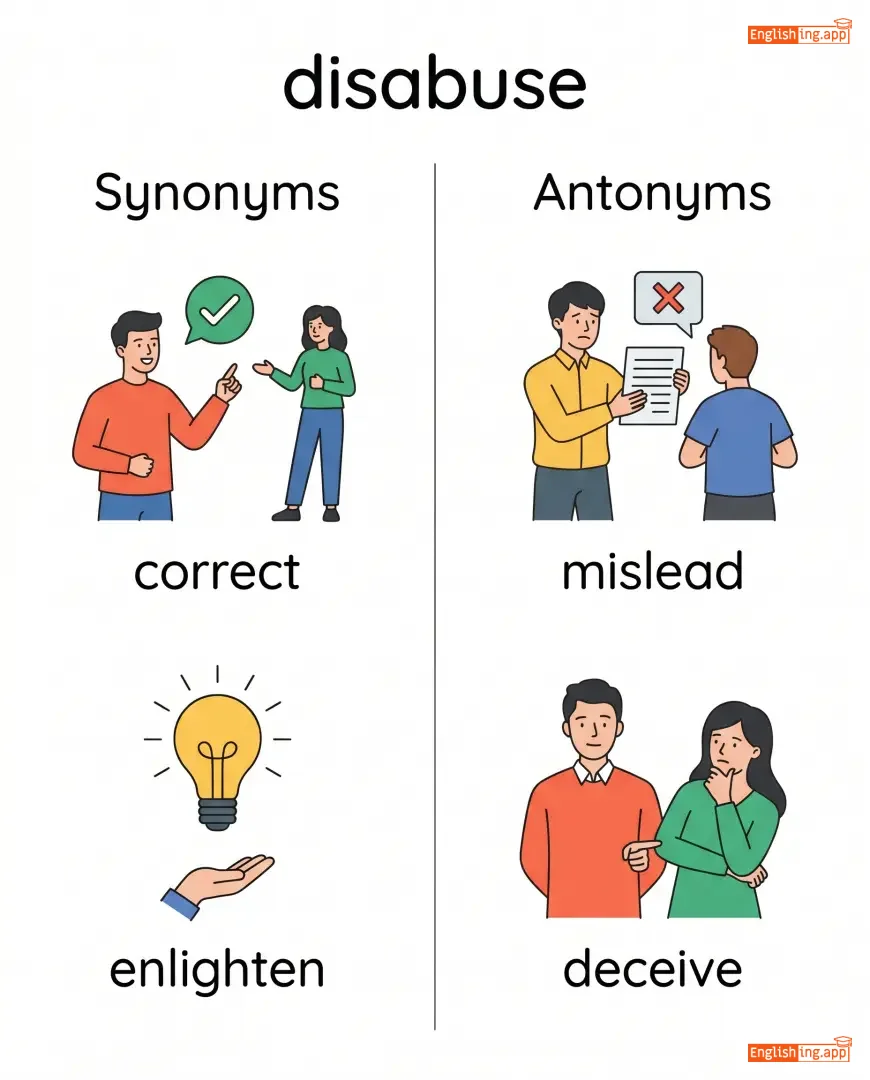
correct, enlighten, rectify, debunk, refute
••••••
|
mislead, deceive, delude
••••••
|
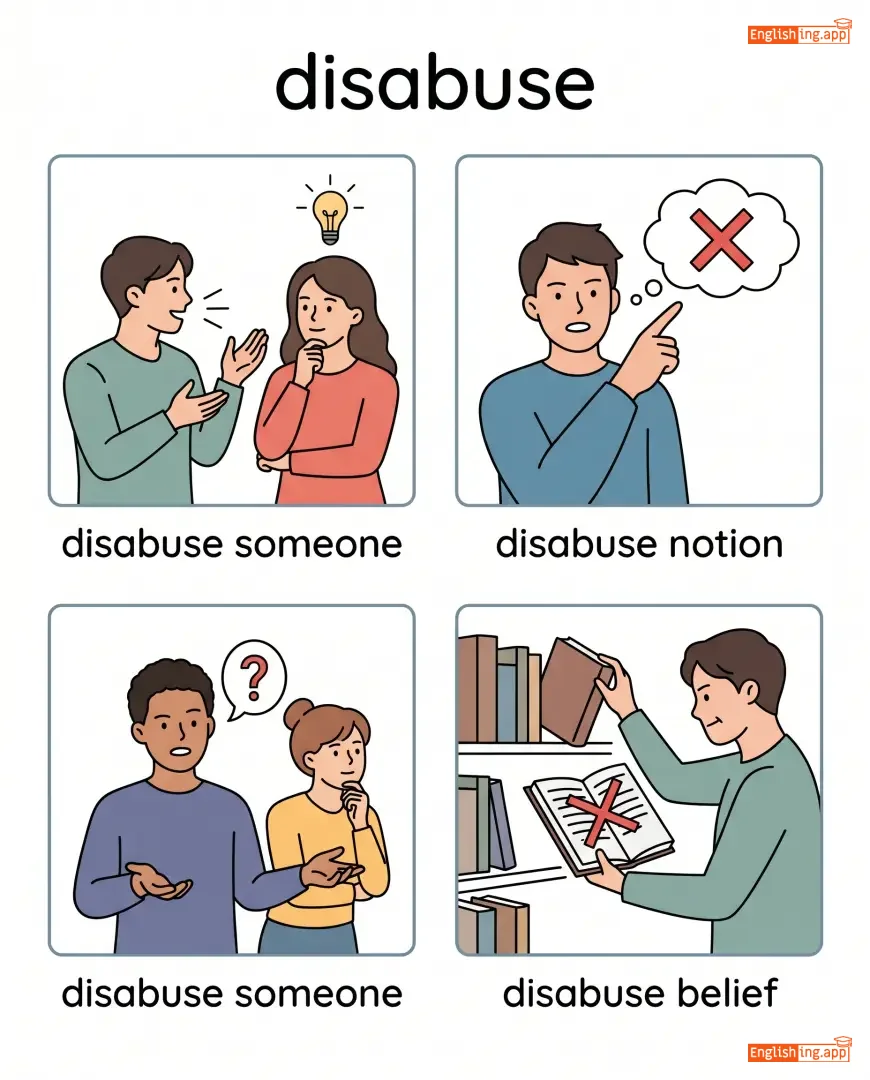
disabuse someone, disabuse notion, disabuse belief
••••••
|
Disabuse = 誤解を解く → 迷いを解く。
••••••
|
|
#2479
🎵
|
/dɜːrdʒ/
noun
(ダージ)
••••••
|
|
哀歌
aika
••••••
|
- •••••• | - •••••• | - •••••• | - •••••• |
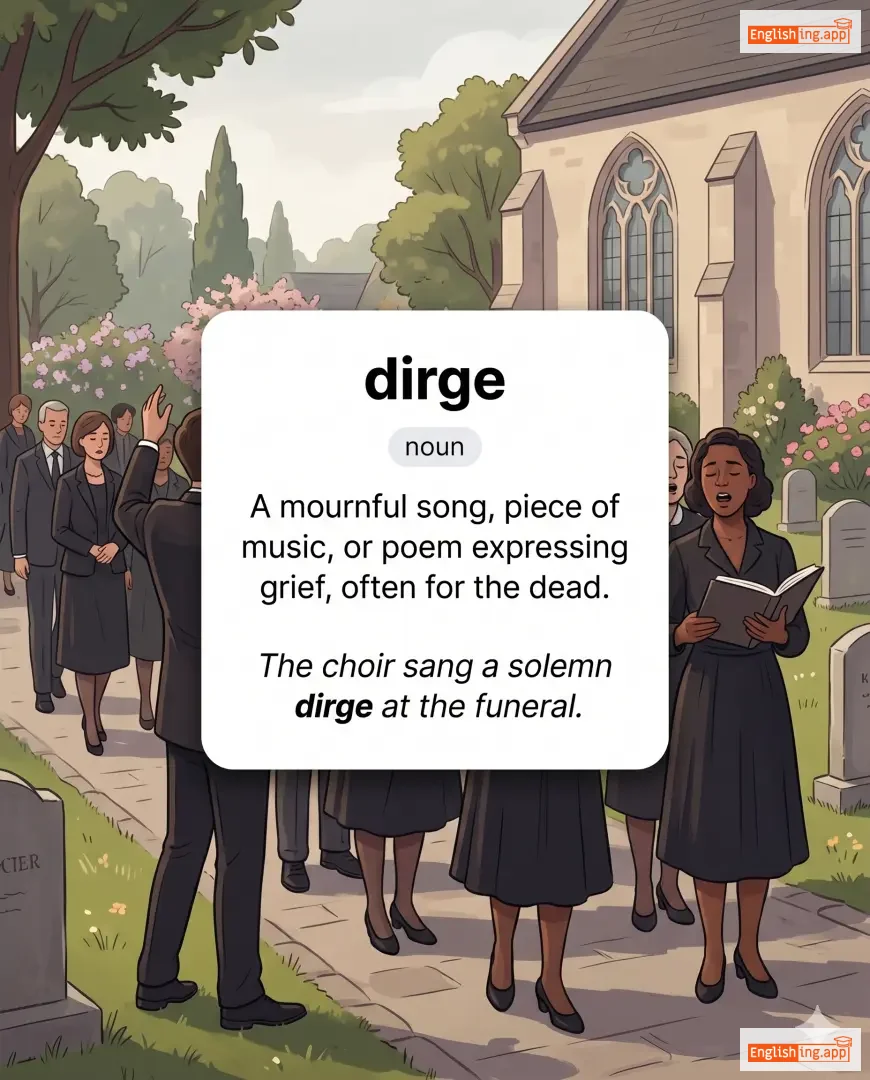
A mournful song, piece of music, or poem expressing grief, often for the dead.
••••••
|
The choir sang a solemn dirge at the funeral.
コーラスは葬式で厳粛なダージを歌いました。
••••••
|
コーラスは葬式で厳粛な哀歌を歌いました。
Kōrasu wa sōshiki de genshuku na aika o utaimashita.
••••••
|
- •••••• | - •••••• | - •••••• |
lament, elegy, requiem, threnody, funeral song
••••••
|
anthem, carol, celebration
••••••
|
funeral dirge, mournful dirge, solemn dirge
••••••
|
Dirgeは‘哀歌’として覚えられます — 死者への悲しみを表現する歌です。
••••••
|
|
#2480
⚠️
|
/ˈdaɪər/
adjective
(daia)
••••••
|
- •••••• |
危機的
kiki-teki
••••••
|
- •••••• | - •••••• | - •••••• | - •••••• |
Extremely serious or urgent.
••••••
|
The refugees were in dire need of food and shelter. |
難民は食糧と避難所を切実に必要としていた。
Nanmin wa shokuryō to hinan-sho o setsujitsu ni hitsuyō to shite ita.
••••••
|
dire straits |
a very difficult or dangerous situation
••••••
|
困難な状況
konnan na jōkyō
••••••
|
urgent, desperate, grave, severe, dreadful
••••••
|
minor, trivial, unimportant
••••••
|
dire consequences, dire situation, dire warning, dire need
••••••
|
Dire は '危機的' という意味 – 死ぬような状況。
••••••
|
|
#2481
🍺
|
/ˌdɪpsəˈmeɪniæk/
noun
(ディプソマニアック)
••••••
|
- •••••• |
アルコール中毒者
arukōru chūdokusha
••••••
|
- •••••• | - •••••• | - •••••• | - •••••• |
A person with an uncontrollable craving for alcoholic drinks.
••••••
|
The novel portrayed the tragic downfall of a dipsomaniac who lost everything to alcohol. |
その小説はアルコールに全てを失ったアルコール中毒者の悲劇的な転落を描いています。
Sono shōsetsu wa arukōru ni subete o ushinatta arukōru chūdokusha no higekiteki na tenraku o egaiteimasu.
••••••
|
- •••••• | - •••••• | - •••••• |
alcoholic, drunkard, tippler, boozer, sot
••••••
|
teetotaler, abstainer
••••••
|
chronic dipsomaniac, hopeless dipsomaniac, dipsomaniac tendencies
••••••
|
Dip = 落ちる + maniac = 執着 → アルコール中毒者はアルコールに執着して落ちる人です。
••••••
|
|
#2482
🎩
|
/dɪˈpləʊmətɪst/
noun
(ディプロマティスト)
••••••
|
- •••••• |
外交官
gaikoukan
••••••
|
- •••••• | - •••••• | - •••••• | - •••••• |
A person skilled in diplomacy; another word for diplomat.
••••••
|
The diplomatist handled the negotiations with great tact. |
外交官は交渉を巧みに取り扱いました。
Gaikoukan wa koushou o takumi ni toriatsukaimashita.
••••••
|
- •••••• | - •••••• | - •••••• |
diplomat, envoy, negotiator, ambassador
••••••
|
novice, amateur
••••••
|
skilled diplomatist, experienced diplomatist, successful diplomatist
••••••
|
Diplomat + ist → Diplomatのもう一つの名前がgaikoukan (外交官)
••••••
|
|
#2483
🕊️
|
/ˌdɪpləˈmætɪk/
adjective
(ディプロマティック)
••••••
|
- •••••• |
外交的な
gaikoutekina
••••••
|
- •••••• | - •••••• | - •••••• | - •••••• |
Concerning diplomacy; having or showing skill in dealing with people in a sensitive and effective way.
••••••
|
She gave a diplomatic response to avoid offending anyone. |
彼女は誰かを傷つけないように外交的な返答をしました。
kanojo wa dareka wo kizutsukenai you ni gaikoutekina hento wo shimashita.
••••••
|
diplomatic immunity |
A privilege that exempts diplomats from certain laws in the host country.
••••••
|
外交特権
gaikou tokken
••••••
|
tactful, courteous, strategic, conciliatory, discreet
••••••
|
tactless, blunt, rude
••••••
|
diplomatic relations, diplomatic mission, diplomatic language
••••••
|
Diplomatic reply = polite 返事 (外交的な返答)
••••••
|
|
#2484
🤵♂️
|
/ˈdɪpləmæt/
noun
(ディプロマット)
••••••
|
- •••••• |
外交官
gaikoukan
••••••
|
- •••••• | - •••••• | - •••••• | - •••••• |
An official representing a country abroad; a person skilled in dealing with people tactfully.
••••••
|
The diplomat negotiated a peace agreement. |
外交官は平和協定の交渉を行いました。
Gaikoukan wa heiwa kyoutei no koushou wo okonaimashita.
••••••
|
- •••••• | - •••••• | - •••••• |
envoy, ambassador, representative, emissary, negotiator
••••••
|
commoner, layman
••••••
|
senior diplomat, career diplomat, foreign diplomat
••••••
|
Diploma + ト → 外国での役職 = diplomat (外交官)
••••••
|
|
#2485
🌐
|
/dɪˈpləʊməsi/
noun
••••••
|
- •••••• | - •••••• | - •••••• | - •••••• | - •••••• | - •••••• |
The profession, activity, or skill of managing international relations or handling affairs tactfully.
••••••
|
Effective diplomacy helped avoid the conflict. |
- •••••• |
gunboat diplomacy |
A foreign policy supported by the use of military force.
••••••
|
- •••••• |
negotiation, tact, statesmanship, mediation, finesse
••••••
|
hostility, conflict, aggression
••••••
|
international diplomacy, skillful diplomacy, secret diplomacy
••••••
|
No •••••• |
|
#2486
🔤
|
/ˈdɪfθɒŋ/
noun
(ディフソング)
••••••
|
- •••••• |
二重母音
nijuuboin
••••••
|
- •••••• | - •••••• | - •••••• | - •••••• |
A complex vowel sound that begins with one vowel and glides into another within the same syllable.
••••••
|
The word 'coin' contains a diphthong. |
'コイン'という単語には二重母音が含まれています。
'Koin' to iu tango ni wa nijuuboin ga fukuma reteimasu.
••••••
|
- •••••• | - •••••• | - •••••• |
vowel blend, vowel glide, vowel combination, double vowel
••••••
|
monophthong, pure vowel
••••••
|
English diphthongs, vowel diphthong, diphthong sound
••••••
|
Dip + tong → 二つの母音が組み合わさる = 二重母音
••••••
|
|
#2487
🏞️
|
/ˌdaɪəˈrɑːmə/
noun
(ジオラマ)
••••••
|
- •••••• |
ジオラマ
diorama
••••••
|
- •••••• | - •••••• | - •••••• | - •••••• |
a three-dimensional model representing a scene, often with miniature figures
••••••
|
The museum displayed a diorama of an ancient village. |
博物館に古代の村のジオラマが展示されていました。
Hakubutsukan ni kodai no mura no diorama ga tenji sarete imashita.
••••••
|
- •••••• | - •••••• | - •••••• |
model, display, miniature, scene
••••••
|
reality, actual scene
••••••
|
diorama display, museum diorama, historical diorama
••••••
|
ジオラマは小さな3Dの世界。ミニチュア人物が登場する小さな映画のようです。
••••••
|
|
#2488
⛪
|
/daɪˈɒsɪsən/
adjective
(教区の)
••••••
|
- •••••• |
教区に関する
kyouku ni kansuru
••••••
|
- •••••• | - •••••• | - •••••• | - •••••• |
relating to a diocese or the district under the supervision of a bishop in the Christian Church
••••••
|
The diocesan council met to discuss church affairs.
教区評議会は教会の問題を話し合うために集まりました。
••••••
|
教区評議会は教会の問題を話し合うために集まりました。
Kyouku hyougikai wa kyoukai no mondai wo hanashiau tame ni atsumarimashita.
••••••
|
- •••••• | - •••••• | - •••••• |
ecclesiastical, clerical, episcopal, church-related
••••••
|
secular, nonreligious
••••••
|
diocesan bishop, diocesan council, diocesan authority
••••••
|
Diocesan = 教区のエリア — 覚えておいてください: Diocese = 教会の地域
••••••
|
|
#2489
💪
|
/dɪnt/
noun
(ディント)
••••••
|
- •••••• |
努力、衝撃の跡
doryoku, shōgeki no ato
••••••
|
- •••••• | - •••••• | - •••••• | - •••••• |
an impression or hollow made by a blow; force or power
••••••
|
By dint of hard work, he achieved success.
努力のおかげで、彼は成功を収めました。
••••••
|
努力のおかげで、彼は成功を収めました。
Doryoku no okage de, kare wa seikō o osamemashita.
••••••
|
by dint of
バイ ディント オブ
••••••
|
by means of; because of
••••••
|
努力によって
doryoku ni yotte
••••••
|
force, effort, impact, pressure
••••••
|
inaction, idleness
••••••
|
by dint of, dint of effort, dint mark
••••••
|
Dint は努力を意味します — 思い出して: By dint of 努力は努力によってという意味です。
••••••
|
|
#2490
🕸️
|
/ˈdɪndʒi/
adjective
(ディンジー)
••••••
|
- •••••• |
汚い
kitanai
••••••
|
- •••••• | - •••••• | - •••••• | - •••••• |
gloomy and drab; dirty or discolored
••••••
|
The old hotel room looked dark and dingy. |
古いホテルの部屋は暗くて汚れているように見えた。
Furui hoteru no heya wa kurakute yogorete iru you ni mieta.
••••••
|
- •••••• | - •••••• | - •••••• |
dirty, shabby, dull, dismal, gloomy
••••••
|
clean, bright, fresh
••••••
|
dingy room, dingy street, dingy clothes, dingy atmosphere
••••••
|
Dingyは汚い意味 — dark + kitanai = dingy
••••••
|
Vocabulary Quiz
Test your vocabulary by matching words with their translations or meanings.
Login to take the quiz
Comments (0)
Share your thoughts and join the discussion.
Join the discussion by logging in
Login to CommentNo comments yet
Be the first to share your thoughts!