

翻訳
過去
過去分詞
三人称単数
動名詞
意味
例文
例文の翻訳
同義語
対義語
コロケーション
ニーモニック


Swipe left or right, or use the buttons. Tap image to zoom.
例文の翻訳
単語
Lesson 424Lesson 424 - マスクトグル
|
絵文字
|
単語 | Images | 翻訳 | 過去 | 過去分詞 | 三人称単数 | 動名詞 | 意味 | 例文 | 例文の翻訳 | 表現例 | 表現例の意味 | 表現例の翻訳 | 同義語 | 対義語 | コロケーション | ニーモニック |
|---|---|---|---|---|---|---|---|---|---|---|---|---|---|---|---|---|---|
|
#1
♀️
|
/ˈfɛmənɪst/
noun
(フェミニスト)
••••••
|
- •••••• |
フェミニスト
feministo
••••••
|
- •••••• | - •••••• | - •••••• | - •••••• |
a person who supports equal rights and opportunities for women and men
••••••
|
She proudly calls herself a feminist and fights for gender equality. |
彼女は誇りを持って自分をフェミニストだと言い、ジェンダー平等のために戦っています。
Kanojo wa hokori o motte jibun o feminisuto da to ii, jendā byōdō no tame ni tatakatteimasu.
••••••
|
feminist movement |
a social campaign for women's rights and equality
••••••
|
フェミニスト運動
feminisuto undō
••••••
|
activist, advocate, campaigner, reformer
••••••
|
sexist, chauvinist
••••••
|
feminist movement, feminist theory, feminist perspective, feminist writer
••••••
|
フェミニスト = 女性の権利を支持する活動家 — ‘フェミ’ + ‘ニスト’ でフェミニスト!
••••••
|
|
#1
📄
|
/fəʊld/
verb
••••••
|
- •••••• | - •••••• |
folded
••••••
|
folded
••••••
|
folds
••••••
|
folding
••••••
|
to bend something, especially paper or cloth, so that one part covers another
••••••
|
She folded the letter neatly before placing it in the envelope. |
- •••••• |
fold up |
to close or collapse something that opens out
••••••
|
- •••••• |
bend, crease, wrap, double, pleat
••••••
|
unfold, open, spread
••••••
|
fold clothes, fold paper, fold arms, neatly folded
••••••
|
No •••••• |
|
#1
🌫️
|
/fɒɡ/
noun
(フォグ)
••••••
|
- •••••• |
霧
kiri
••••••
|
- •••••• | - •••••• | - •••••• | - •••••• |
a thick cloud of tiny water droplets suspended in the air near the ground that reduces visibility
••••••
|
The airplane was delayed due to heavy fog. |
濃い霧のため、飛行機が遅れました。
Koi kiri no tame, hikouki ga okuremashita.
••••••
|
in a fog |
confused or unable to think clearly
••••••
|
霧の中にいる
kiri no naka ni iru
••••••
|
mist, haze, smog, cloud, vapor
••••••
|
clarity, sunshine, brightness
••••••
|
dense fog, morning fog, thick fog, fog lifts
••••••
|
霧(きり)= Fog! 霧が立つと視界がぼやける!
••••••
|
|
#1
🕊️
|
/ˈflaɪɪŋ/
adjective
(ふらいんぐ)
••••••
|
- •••••• |
飛んでいる
tondeiru
••••••
|
- •••••• | - •••••• | - •••••• | - •••••• |
able to move through the air; related to flight or aircraft
••••••
|
The flying bird disappeared into the clouds. |
飛んでいる鳥は雲の中に消えました。
Tondeiru tori wa kumo no naka ni kiemashita.
••••••
|
go flying |
to move quickly or suddenly, often losing balance or control
••••••
|
飛びながら行く
tobinagara iku
••••••
|
soaring, airborne, gliding, floating, hovering
••••••
|
grounded, stationary, still
••••••
|
flying bird, flying object, flying car, flying lessons, flying school
••••••
|
Flying は ‘飛んでいる’ の意味 – 飛ぶ鳥のように!
••••••
|
|
#1
🥖
|
/ˈflaʊ.ər/
noun
(フラワー)
••••••
|
- •••••• |
小麦粉
komugiko
••••••
|
- •••••• | - •••••• | - •••••• | - •••••• |
a powder made by grinding grains, used for making bread, cakes, etc.
••••••
|
She bought a bag of flour to bake a cake. |
彼女はケーキを焼くために小麦粉を一袋買いました。
Kanojo wa keeki wo yaku tame ni komugiko wo hitofukuro kaimashita.
••••••
|
- •••••• | - •••••• | - •••••• |
meal, powder, starch, grain, ingredient
••••••
|
none, null
••••••
|
wheat flour, rice flour, all-purpose flour, cake flour
••••••
|
FlourとFlowerは似ているけれど、ケーキを作るにはFlourが必要で、花は必要ない!
••••••
|
|
#1
🌊
|
/flʌd/
noun
(フラッド)
••••••
|
- •••••• |
洪水
kōzui
••••••
|
flooded
フラデッド
••••••
|
flooded
フラデッド
••••••
|
floods
フラッズ
••••••
|
flooding
フラッディング
••••••
|
a large amount of water covering land that is usually dry
••••••
|
The flood destroyed several houses in the village.
フラッドは村のいくつかの家を破壊しました。
••••••
|
洪水は村のいくつかの家を破壊しました。
Kōzui wa mura no ikutsuka no ie o hakai shimashita.
••••••
|
a flood of tears
涙の洪水
••••••
|
crying a lot; weeping heavily
••••••
|
涙の洪水
namida no kōzui
••••••
|
deluge, overflow, inundation, torrent, surge
••••••
|
drought, dryness, scarcity
••••••
|
flood water, flood damage, flood control, flash flood, flood zone
••••••
|
Floodは日本語で洪水、涙の洪水のように溢れ出します。
••••••
|
|
#1
🤸
|
/ˌflɛksəˈbɪləti/
noun
(フレキシビリティ)
••••••
|
|
柔軟性
jūnansē
••••••
|
- •••••• | - •••••• | - •••••• | - •••••• |
the ability to bend easily without breaking or to adapt to new situations
••••••
|
Flexibility is essential for success in a changing work environment. |
変化する職場環境で成功するためには柔軟性が不可欠です。
henka suru shokuba kankyō de seikō suru tame ni wa jūnansē ga fukaketsu desu.
••••••
|
mental flexibility |
the ability to think about different things at the same time or adapt to new ideas
••••••
|
メンタル柔軟性
mentaru jūnansē
••••••
|
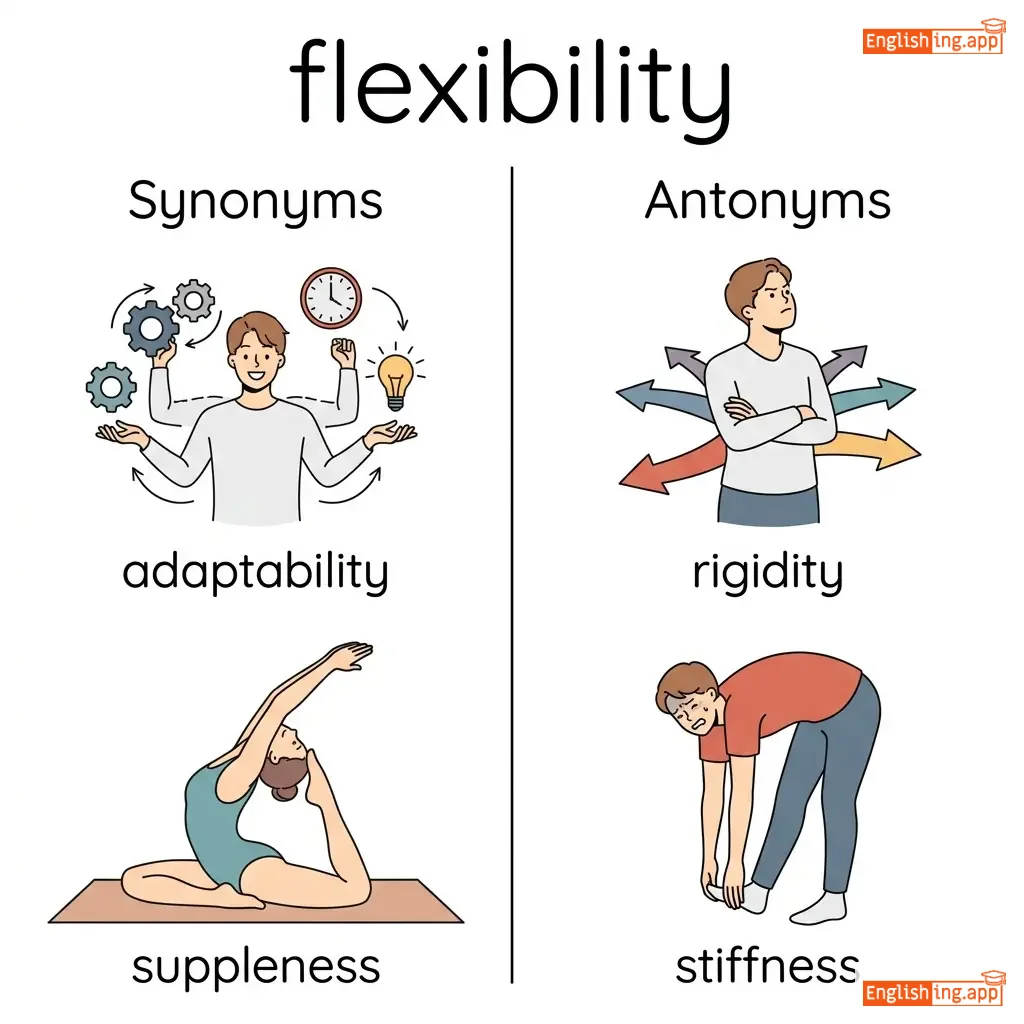
adaptability, suppleness, versatility, resilience, elasticity
••••••
|
rigidity, stiffness, inflexibility
••••••
|
physical flexibility, job flexibility, schedule flexibility, flexibility training
••••••
|
柔軟性 = フレキシブルな、ヨガのように体と心が柔軟になる!
••••••
|
|
#1
⚡
|
/flæʃ/
verb
(フラッシュ)
••••••
|
- •••••• |
フラッシュ
furasshu
••••••
|
flashed
フラッシュド
••••••
|
flashed
フラッシュド
••••••
|
flashes
フラッシュズ
••••••
|
flashing
フラッシング
••••••
|
to shine or appear suddenly and brightly for a short time
••••••
|
Lightning flashed across the night sky.
稲妻が夜空を横切った。
••••••
|
雷が夜空を横切った。
Kaminari ga yozora o yokogitta.
••••••
|
in a flash
一瞬で
••••••
|
very quickly; in an instant
••••••
|
非常に速く
hijō ni hayaku
••••••
|
blink, sparkle, gleam, flicker, flare
••••••
|
dim, fade, darken
••••••
|
camera flash, flash light, flash drive, flash memory, flash flood
••••••
|
Flashはカメラのフラッシュのように瞬時に光る!
••••••
|
|
#1
📅
|
/fɪkst/
adjective
(fikusudo)
••••••
|
- •••••• |
固定された, 安定した
kotei sareta, antei shita
••••••
|
- •••••• | - •••••• | - •••••• | - •••••• |
firmly in place; not changing or movable
••••••
|
The schedule for the meeting is fixed for Monday morning. |
会議のスケジュールは月曜日の朝に固定されています。
Kaigi no sukejūru wa getsuyōbi no asa ni kotei sareteimasu.
••••••
|
fixed income |
a regular income that does not change
••••••
|
固定収入
kotei shūnyū
••••••
|
set, stable, immovable, constant, determined
••••••
|
changeable, flexible, movable
••••••
|
fixed price, fixed income, fixed schedule, fixed rate
••••••
|
Fixed はカレンダーの日付のように変更されないことを意味します。
••••••
|
|
#1
✊
|
/fɪst/
noun
(フィスト)
••••••
|
- •••••• |
こぶし
kobushi
••••••
|
- •••••• | - •••••• | - •••••• | - •••••• |
a hand with the fingers clenched tightly into the palm
••••••
|
He punched the wall with his fist in anger. |
彼は怒って壁を拳で殴った。
Kare wa okotte kabe wo kobushi de nagutta.
••••••
|
iron fist |
to rule or control with strictness and force
••••••
|
鉄の拳
tetsu no kobushi
••••••
|
hand, knuckle, punch, grip
••••••
|
open hand, palm
••••••
|
clenched fist, raise fist, fist fight, iron fist
••••••
|
Fistはこぶし!拳を握ったら、思い出せ—fistはこぶし!
••••••
|
|
#1
🎣
|
/ˈfɪʃəmən/
noun
(フィッシャーマン)
••••••
|
- •••••• |
漁師
ryoushi
••••••
|
- •••••• | - •••••• | - •••••• | - •••••• |
a person who catches fish for a living or as a hobby
••••••
|
The fisherman went out to sea early in the morning. |
漁師は朝早く海へ出かけました。
Ryoushi wa asa hayaku umi e dekakemashita
••••••
|
teach a man to fish |
help someone become self-reliant rather than giving temporary aid
••••••
|
人に魚を釣る方法を教える
Hito ni sakana o tsuru hōhō o oshieru
••••••
|
angler, seafarer, mariner, fisher
••••••
|
none, landlubber
••••••
|
fisherman boat, local fisherman, skilled fisherman, deep-sea fisherman
••••••
|
Fishermanは魚を取る人という意味で、日本語の‘漁師’は覚えやすいです。
••••••
|
|
#1
✊
|
/ˈfɜːmli/
adverb
(fɜːrmli)
••••••
|
- •••••• |
しっかりと
shikkari to
••••••
|
- •••••• | - •••••• | - •••••• | - •••••• |
in a strong, steady, or determined way
••••••
|
She held his hand firmly as they crossed the road.
彼女は手をしっかりと握りながら、道路を渡りました。
••••••
|
彼女は手をしっかりと握りながら、道路を渡りました。
Kanojo wa te o shikkari to nigirinagara, dōro o watarimashita.
••••••
|
stand firmly
しっかり立つ
••••••
|
to remain strong or determined in one’s position
••••••
|
しっかり立つ
shikkari tatsu
••••••
|
strongly, steadily, tightly, resolutely
••••••
|
loosely, weakly, softly
••••••
|
hold firmly, believe firmly, stand firmly, grip firmly
••••••
|
Firmly は ‘しっかり’、決して揺るがないように。
••••••
|
|
#1
🔥
|
/fɪəs/
adjective
(フィアース)
••••••
|
- •••••• |
激しい, 凶暴
hageshī, kyōbō
••••••
|
- •••••• | - •••••• | - •••••• | - •••••• |
showing strong, intense, or aggressive feelings; powerful and violent
••••••
|
The fierce storm damaged several houses in the village. |
激しい嵐が村のいくつかの家を壊しました。
Hageshī arashi ga mura no ikutsuka no ie o kowashimashita.
••••••
|
fierce competition |
very strong or intense competition
••••••
|
激しい競争
hageshī kyōsō
••••••
|
intense, ferocious, strong, violent, brutal
••••••
|
gentle, calm, mild
••••••
|
fierce storm, fierce competition, fierce debate, fierce animal
••••••
|
Fierce は火のように激しく 🔥 — 火が燃えるように、fierceな人や嵐も強力です。
••••••
|
|
#1
🤒
|
/ˈfiːvər/
noun
(フィーバー)
••••••
|
- •••••• |
熱
netsu
••••••
|
- •••••• | - •••••• | - •••••• | - •••••• |
a medical condition in which the body temperature is higher than normal
••••••
|
He couldn’t go to work because he had a high fever. |
高熱のため、彼は仕事に行けませんでした。
Kounetsu no tame, kare wa shigoto ni ikemasen deshita.
••••••
|
football fever |
a strong excitement or enthusiasm for football
••••••
|
サッカーフィーバー
sakkā fībā
••••••
|
temperature, illness, sickness, infection
••••••
|
health, wellness
••••••
|
high fever, dengue fever, fever patient, fever medicine
••••••
|
フィーバーは熱です — フィーバーで体温が上がる様子を想像してみてください。
••••••
|
|
#1
🎉
|
/ˈfɛstəvəl/
noun
(フェスティバル)
••••••
|
- •••••• |
祭り
matsuri
••••••
|
- •••••• | - •••••• | - •••••• | - •••••• |
a day or period of celebration, often for cultural or religious reasons
••••••
|
The city was decorated with lights for the annual music festival. |
その都市は毎年の音楽祭のためにライトで飾られていました。
Sono toshi wa maitoshi no ongakumatsuri no tame ni raito de kazararete imashita.
••••••
|
festival of lights |
a celebration marked by illumination and joy, such as Diwali
••••••
|
光の祭り
hikari no matsuri
••••••
|
celebration, carnival, fair, feast, gala
••••••
|
mourning, sorrow
••••••
|
music festival, religious festival, film festival, annual festival
••••••
|
祭りは楽しいお祝い — すべてが光で満ちている!
••••••
|
|
#1
🙏
|
/ɪkˈskjuːz/
verb
(エクスキューズ)
••••••
|
- •••••• |
許す, 言い訳
yurusu, iiwake
••••••
|
excused
エクスキューズド
••••••
|
excused
エクスキューズド
••••••
|
excuses
エクスキューズズ
••••••
|
excusing
エクスキューズイング
••••••
|
to forgive someone for doing something wrong or to justify an action
••••••
|
Please excuse my lateness; there was heavy traffic.
遅れてすみません、渋滞がひどかったです。
••••••
|
遅れてすみません、渋滞がひどかったです。
Okurete sumimasen, jūtai ga hidokatta desu.
••••••
|
make an excuse
言い訳をする
••••••
|
to give a reason to avoid blame or responsibility
••••••
|
言い訳をする
iiwake o suru
••••••
|
forgive, pardon, justify, explain, overlook
••••••
|
blame, accuse, condemn
••••••
|
excuse me, make an excuse, good excuse, poor excuse
••••••
|
エクスキューズ – 言い訳をするために、許しを得る!
••••••
|
|
#1
💬
|
/ˈfiːdbæk/
noun
(フィードバック)
••••••
|
- •••••• |
フィードバック
fīdobakku
••••••
|
- •••••• | - •••••• | - •••••• | - •••••• |
information or opinions about how well someone is doing something
••••••
|
She asked her teacher for feedback on her essay.
彼女はエッセイについて先生にフィードバックを求めました。
••••••
|
彼女はエッセイについて先生にフィードバックを求めました。
Kanojo wa essei ni tsuite sensei ni fīdobakku o motomemashita.
••••••
|
constructive feedback
建設的なフィードバック
••••••
|
helpful comments intended to improve performance or work
••••••
|
建設的なフィードバック
kensetsuteki na fīdobakku
••••••
|
response, opinion, comment, reaction, input
••••••
|
silence, neglect
••••••
|
give feedback, receive feedback, positive feedback, customer feedback
••••••
|
フィードバックは、改善のために必要なアドバイスのようなものです。
••••••
|
|
#1
🪶
|
/ˈfɛðər/
noun
(フェザー)
••••••
|
- •••••• |
羽
hane
••••••
|
- •••••• | - •••••• | - •••••• | - •••••• |
a light, soft structure that covers a bird’s body and enables it to fly
••••••
|
The bird lost a small feather while flying through the trees. |
その鳥は木々の間を飛ぶとき、小さな羽を失いました。
Sono tori wa kigi no aida o tobu toki, chiisana hane o ushinai mashita.
••••••
|
birds of a feather |
people who have similar interests or characteristics
••••••
|
似たような興味や特徴を持つ人々
Nita yōna kyōmi ya tokuchō o motsu hitobito
••••••
|
plume, quill, down, tuft, pinion
••••••
|
scale, skin
••••••
|
feather pillow, feather pen, light as a feather, peacock feather
••••••
|
Featherは羽の意味です — 枕の中に羽がある柔らかさを想像してください。
••••••
|
|
#1
🏎️
|
/ˈfæstər/
adjective, adverb
(ファスター)
••••••
|
- •••••• |
速い
hayai
••••••
|
- •••••• | - •••••• | - •••••• | - •••••• |
moving or able to move quickly; more quickly than usual
••••••
|
This car is faster than the old one. |
この車は古い車より速いです。
Kono kuruma wa furui kuruma yori hayai desu.
••••••
|
fast and furious |
energetic and exciting, often reckless
••••••
|
速くて激しい
hayakute hageshii
••••••
|
quicker, speedier, rapid, brisk
••••••
|
slower, delayed, sluggish
••••••
|
run faster, grow faster, faster speed, faster rate
••••••
|
Fasterは‘速い’–レースカーのように!
••••••
|
|
#1
✨
|
/ˈfæsɪneɪtɪŋ/
adjective
(fāshīnetingu)
••••••
|
- •••••• |
魅力的
miryokuteki
••••••
|
- •••••• | - •••••• | - •••••• | - •••••• |
extremely interesting or charming
••••••
|
The history of ancient Egypt is truly fascinating.
古代エジプトの歴史は本当に魅力的です。
••••••
|
古代エジプトの歴史は本当に魅力的です。
Kodai Ejiputo no rekishi wa hontōni miryokuteki desu.
••••••
|
- •••••• | - •••••• | - •••••• |
captivating, intriguing, enchanting, engaging, absorbing
••••••
|
boring, dull, uninteresting
••••••
|
find fascinating, absolutely fascinating, fascinating story, fascinating person
••••••
|
Fascinating in Japanese is '魅力的' – something so interesting that it captivates you.
••••••
|
|
#1
🌟
|
/feɪm/
noun
(フェイム)
••••••
|
- •••••• |
名声
meisei
••••••
|
- •••••• | - •••••• | - •••••• | - •••••• |
the state of being known or recognized by many people
••••••
|
She achieved worldwide fame for her acting.
彼女は演技で世界的な名声を得ました。
••••••
|
彼女は演技で世界的な名声を得ました。
Kanojo wa engi de sekaiteki na meisei o emashita.
••••••
|
rise to fame
名声を得る
••••••
|
to become famous
••••••
|
名声を得る
meisei o eru
••••••
|
renown, glory, popularity, reputation, celebrity
••••••
|
obscurity, anonymity, disregard
••••••
|
seek fame, achieve fame, rise to fame, enjoy fame
••••••
|
Fameは日本語で ‘名声’ と同じ – 名声を得て世界を照らそう!
••••••
|
|
#1
😵
|
/feɪnt/
verb
(フェイント)
••••••
|
- •••••• |
気絶する
kizetsu suru
••••••
|
fainted
フェインテッド
••••••
|
fainted
フェインテッド
••••••
|
faints
フェインツ
••••••
|
fainting
フェイティング
••••••
|
to lose consciousness for a short time because of a temporary lack of oxygen to the brain
••••••
|
He felt dizzy and fainted in the heat.
彼はめまいを感じ、暑さで気を失った。
••••••
|
彼はめまいを感じ、暑さで気を失った。
Kare wa memai o kanji, atsusa de ki o ushinatta.
••••••
|
faint-hearted
臆病な
••••••
|
lacking courage or confidence
••••••
|
臆病な
okubyō na
••••••
|
collapse, pass out, swoon, black out
••••••
|
recover, awaken, revive
••••••
|
nearly faint, faint away, faint from heat, faint-hearted
••••••
|
Faintは倒れて気を失うことを意味します — 暑さで気を失った 😵
••••••
|
|
#1
👁️
|
/ˈaɪbraʊ/
noun
(アイブラウ)
••••••
|
- •••••• |
眉毛
mayuge
••••••
|
- •••••• | - •••••• | - •••••• | - •••••• |
the strip of hair growing on the ridge above a person's eye
••••••
|
She raised her eyebrow in surprise. |
彼女は驚いて眉毛を上げた。
Kanojo wa odoroite mayuge o ageta.
••••••
|
raise an eyebrow |
to show surprise or mild disapproval
••••••
|
眉をひそめる
mayuge o hisomeru
••••••
|
brow, ridge, arch, eye ridge
••••••
|
none, bare skin
••••••
|
raise an eyebrow, thick eyebrows, arched eyebrow, pluck eyebrows
••••••
|
‘Eyebrow’ と ‘眉毛’ は目の上にある髪。驚くとき、眉をひそめることを覚えておこう!
••••••
|
|
#1
🕰️
|
/ɪkˈstendɪd/
adjective
(エクステンデッド)
••••••
|
- •••••• |
拡張された
kakuchou sareta
••••••
|
- •••••• | - •••••• | - •••••• | - •••••• |
longer or larger than usual; continuing for a longer time
••••••
|
They took an extended vacation in Europe this summer. |
彼らは今夏、ヨーロッパで拡張された休暇を過ごしました。
Karera wa konnatsu, Yōroppa de kakuchō sareta kyūka o sugoshimashita.
••••••
|
extended family |
a family that includes not only parents and children but also relatives like grandparents or cousins
••••••
|
拡張家族
kakuchō kazoku
••••••
|
prolonged, lengthy, expanded, stretched, prolonged
••••••
|
short, brief, limited
••••••
|
extended period, extended version, extended family, extended stay
••••••
|
拡張の意味は大きくすること、だから拡張されたはより大きいまたは長いということ!
••••••
|
|
#1
🚢
|
/ˈekspɔːt/
verb
(エクスポート)
••••••
|
|
輸出する
yushutsu suru
••••••
|
exported
エクスポーテッド
••••••
|
exported
エクスポーテッド
••••••
|
exports
エクスポーツ
••••••
|
exporting
エクスポーティング
••••••
|
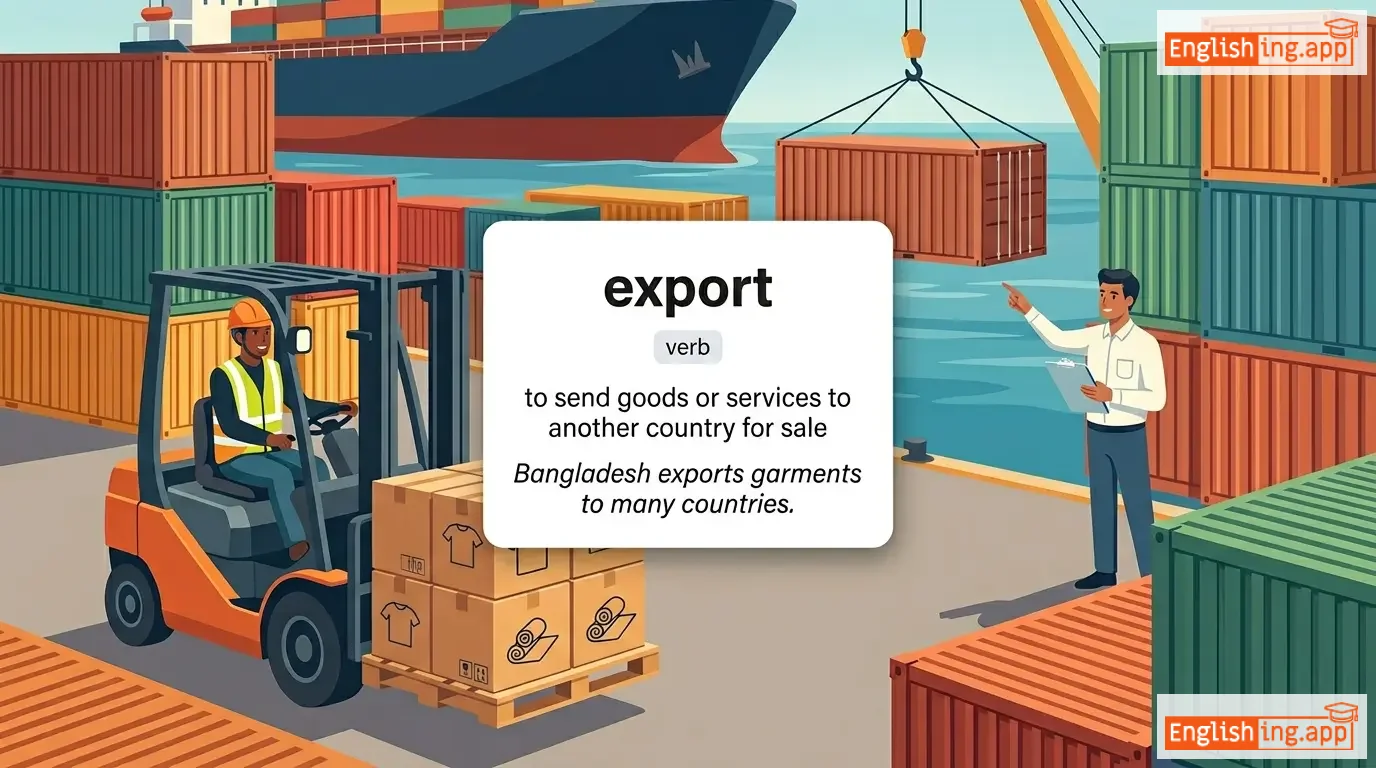
to send goods or services to another country for sale
••••••
|
Bangladesh exports garments to many countries.
バングラデシュは多くの国に衣料品を輸出しています。
••••••
|
バングラデシュは多くの国に衣料品を輸出しています。
Banguradesh wa ōku no kuni ni iryōhin o yushutsu shiteimasu.
••••••
|
export market
輸出市場
••••••
|
a market in another country for goods produced locally
••••••
|
輸出市場
yushutsu shijō
••••••
|
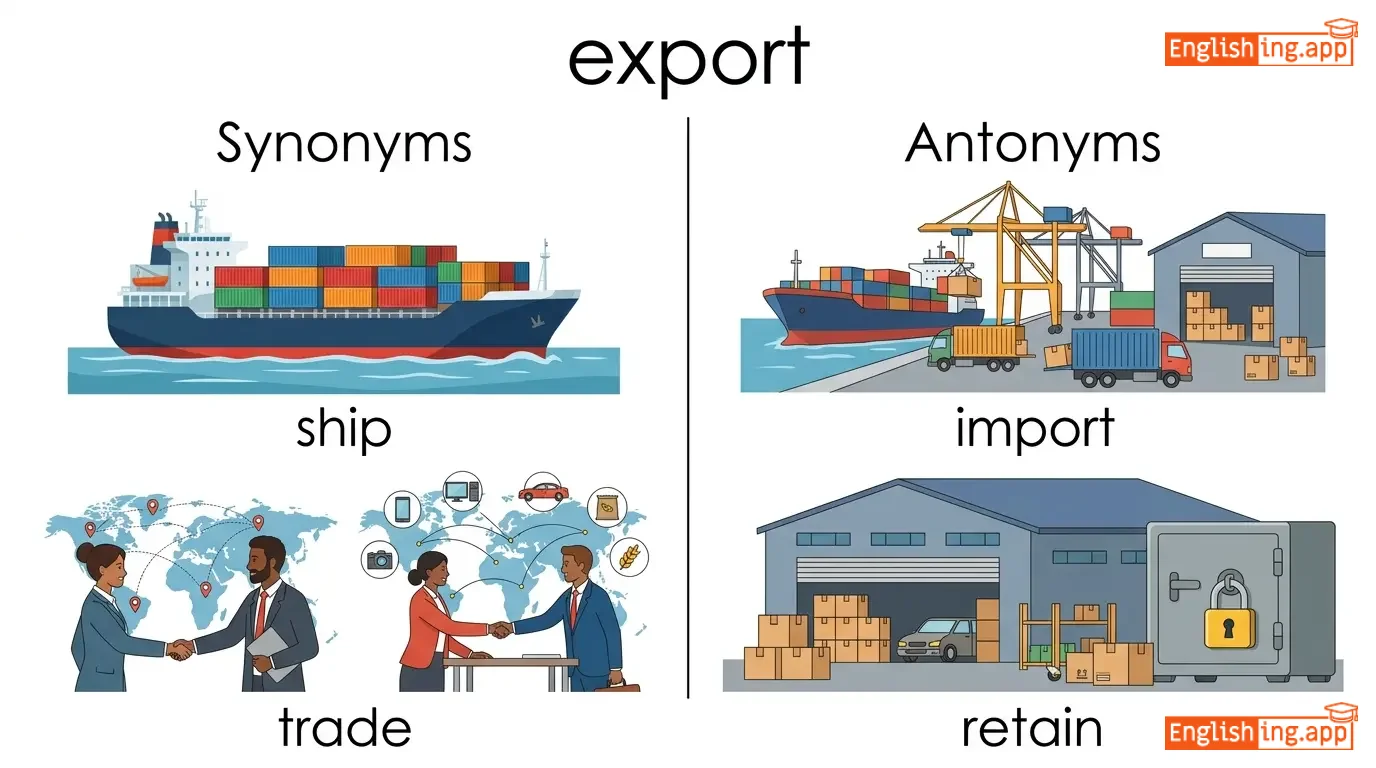
ship, trade, deliver, transport, send
••••••
|
import, retain, keep
••••••
|
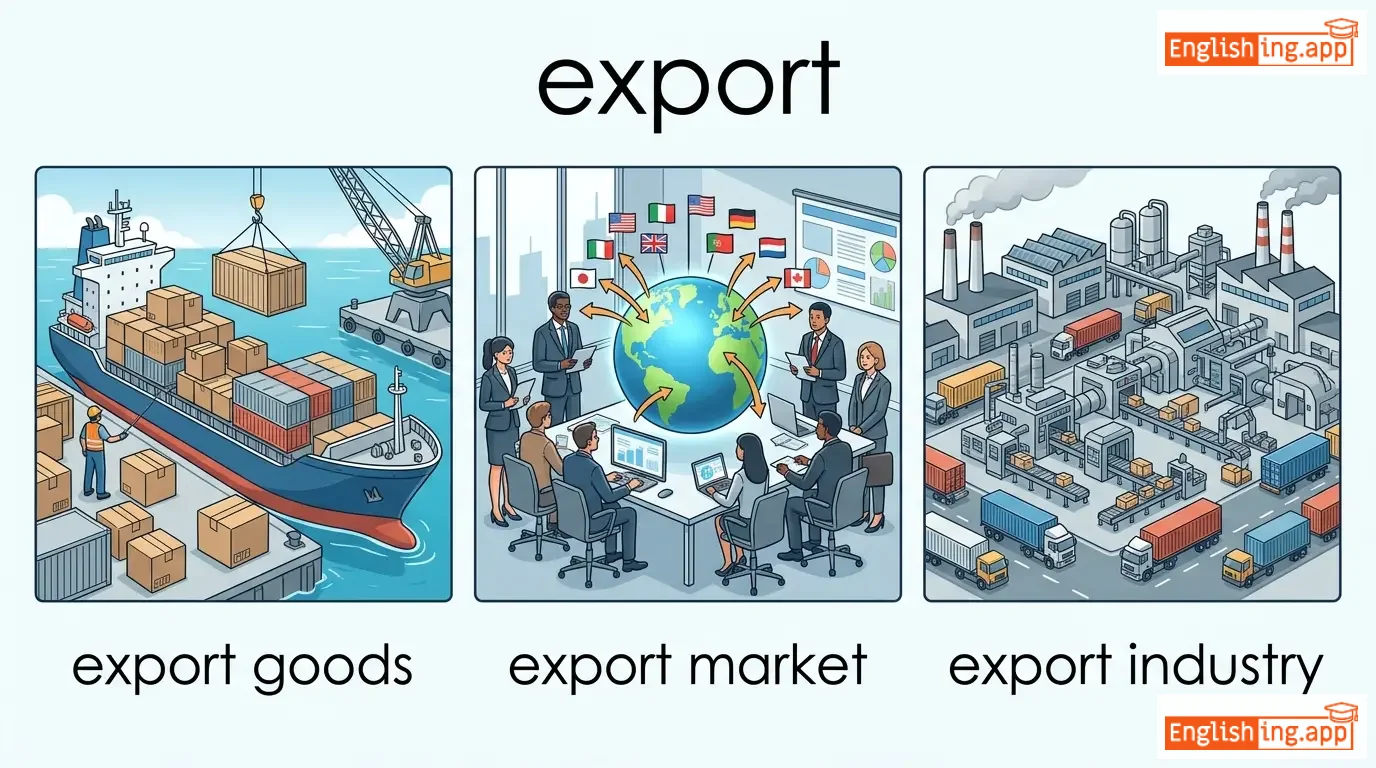
export goods, export market, export industry, export earnings
••••••
|
輸出は商品を他の国に送ること、まるで船が商品を運ぶように。
••••••
|
|
#1
🚀
|
/ˌekspləˈreɪʃən/
noun
(ekusupurōrēshon)
••••••
|
- •••••• |
探査
tansa
••••••
|
- •••••• | - •••••• | - •••••• | - •••••• |
the action of traveling through or studying an area to learn more about it
••••••
|
Space exploration has expanded our understanding of the universe. |
宇宙探査は私たちの宇宙に対する理解を広げました。
Uchū tansa wa watashitachi no uchū ni taisuru rikai o hirogemashita.
••••••
|
exploration of ideas |
examining different thoughts or concepts in depth
••••••
|
アイデアの探査
aidea no tansa
••••••
|
investigation, discovery, study, research, examination
••••••
|
ignorance, neglect
••••••
|
space exploration, oil exploration, exploration mission, exploration of
••••••
|
探査は未知の世界を探すことです!
••••••
|
|
#1
🧪
|
/ɪkˌsperɪˈmentl/
adjective
(エクスペリメンタル)
••••••
|
- •••••• |
実験的
jikken-teki
••••••
|
- •••••• | - •••••• | - •••••• | - •••••• |
based on untested ideas or techniques; relating to experiments or testing
••••••
|
The scientists developed an experimental drug to treat cancer.
科学者たちは癌を治療するために実験的な薬を開発しました。
••••••
|
科学者たちは癌を治療するために実験的な薬を開発しました。
Kagakusha-tachi wa gan o chiryō suru tame ni jikken-teki na kusuri o kaihatsu shimashita.
••••••
|
experimental phase
実験的な段階
••••••
|
a stage of testing new ideas or methods
••••••
|
実験的な段階
jikken-teki na dankai
••••••
|
trial, innovative, test, exploratory, pilot
••••••
|
proven, established, conventional
••••••
|
experimental design, experimental results, experimental research, experimental drug
••••••
|
エクスペリメント (experiment) から実験的 — つまりテストに関する 🧪
••••••
|
|
#1
🎓
|
/ɪkˈspɪəriənst/
adjective
(ikuspiriensudo)
••••••
|
- •••••• |
経験豊富な
keiken hōfuna
••••••
|
- •••••• | - •••••• | - •••••• | - •••••• |
having knowledge or skill in a particular field gained through experience
••••••
|
She is an experienced teacher who knows how to handle difficult students.
彼女は経験豊富な教師で、困難な生徒を扱う方法を知っています。
••••••
|
彼女は経験豊富な教師で、困難な生徒を扱う方法を知っています。
Kanojo wa keiken hōfuna kyōshi de, konnan na seito o atsukau hōhō o shitteimasu.
••••••
|
experienced hand
経験豊富な手
••••••
|
a person who has a lot of experience in a particular job or activity
••••••
|
経験豊富な人
keiken hōfuna hito
••••••
|
skilled, seasoned, proficient, knowledgeable, expert
••••••
|
inexperienced, unskilled, novice
••••••
|
experienced professional, experienced worker, experienced in, highly experienced
••••••
|
経験豊富なは、経験があることを意味します。経験が豊富な人は経験豊富な人です
••••••
|
|
#1
📊
|
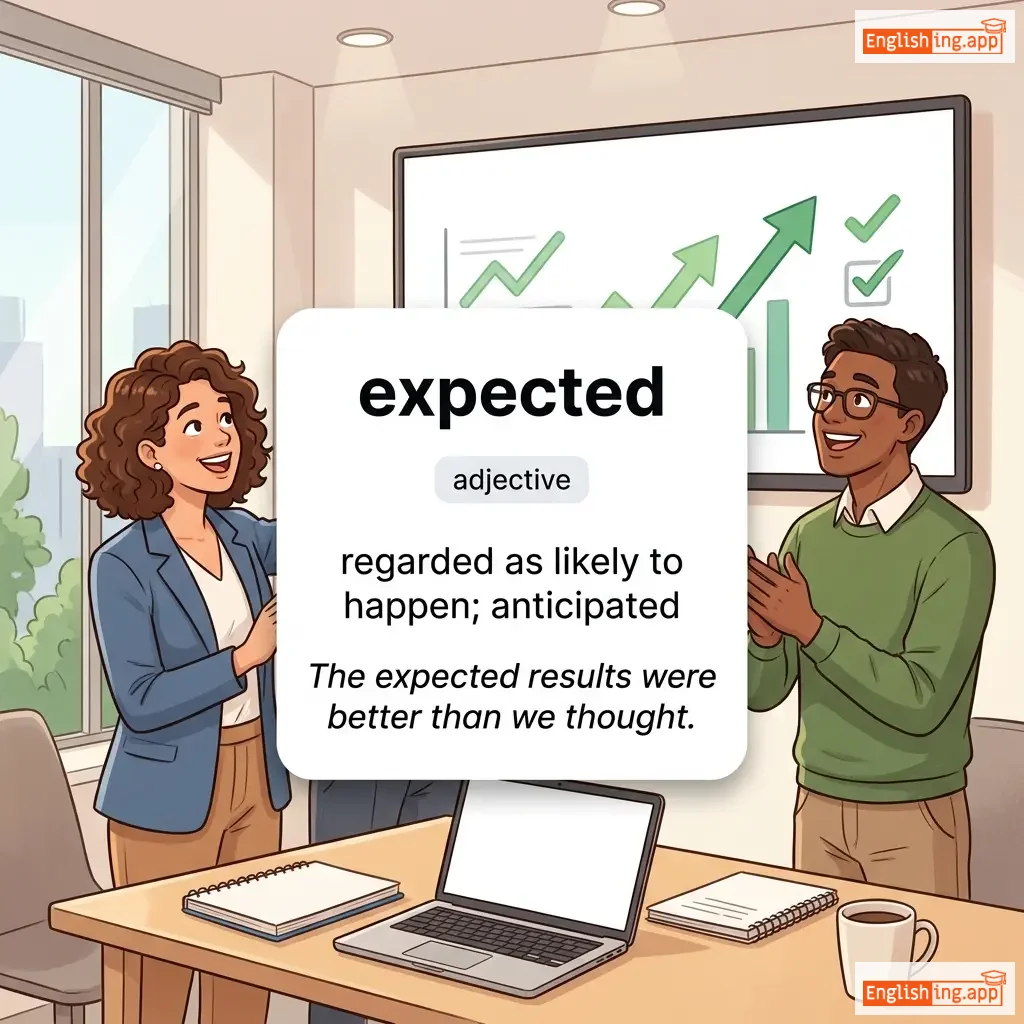
/ɪkˈspɛktɪd/
adjective
(ikusupekutedd)
••••••
|
|
予想される
yosou sareru
••••••
|
- •••••• | - •••••• | - •••••• | - •••••• |
regarded as likely to happen; anticipated
••••••
|
The expected results were better than we thought. |
予想される結果は私たちが考えていたよりも良かった。
Yosou sareru kekka wa watashitachi ga kangaete ita yori mo yokatta.
••••••
|
as expected |
in the way that was predicted or anticipated
••••••
|
予想通り
yosou doori
••••••
|
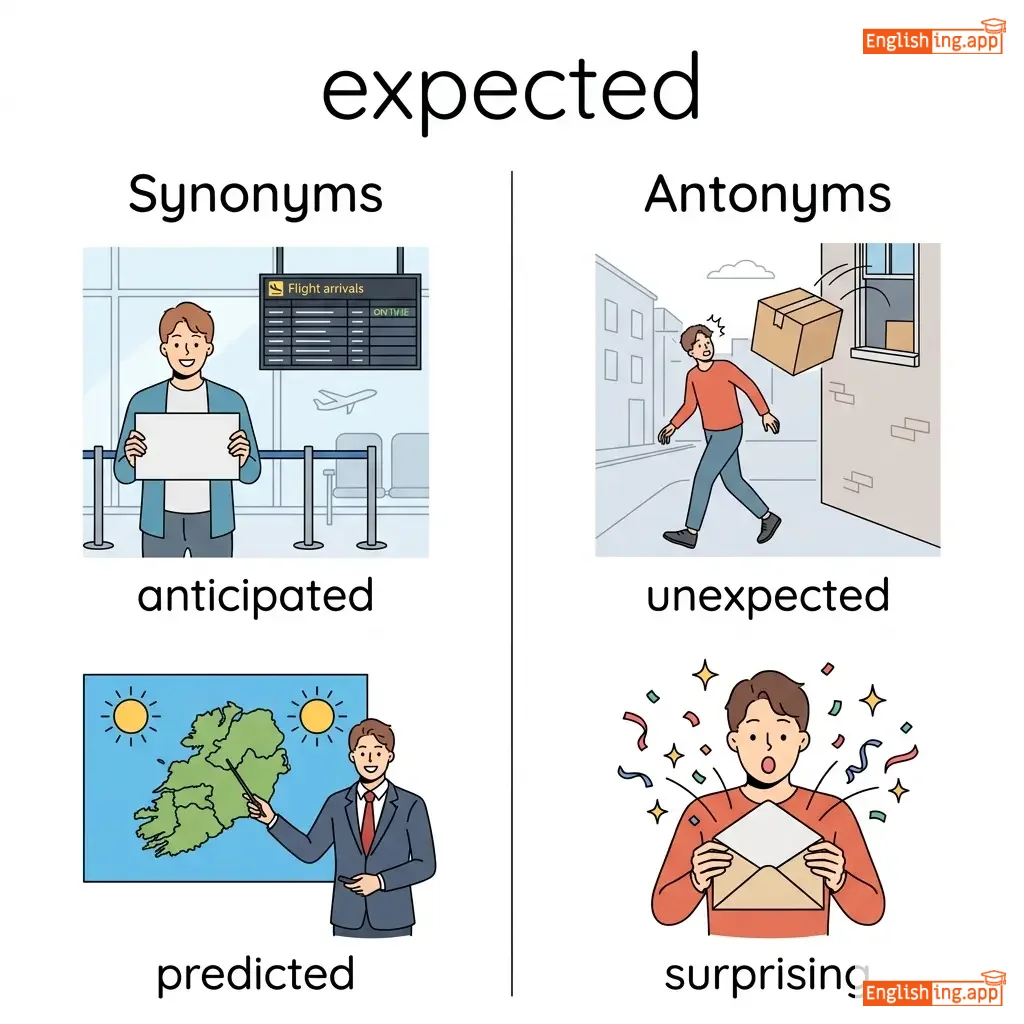
anticipated, predicted, awaited, foreseeable
••••••
|
unexpected, surprising, unforeseen
••••••
|
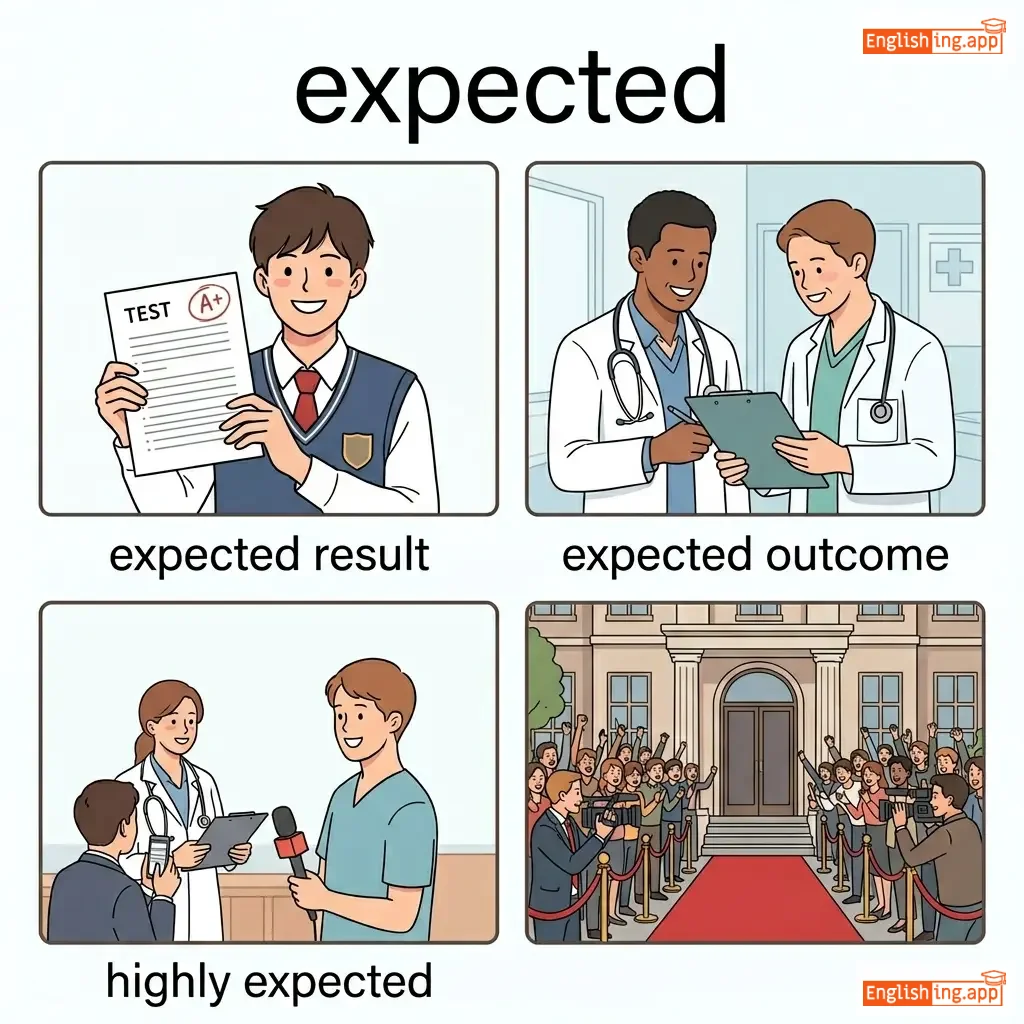
expected result, expected outcome, highly expected, expected arrival
••••••
|
予想されるとは、思っていた通りのこと!
••••••
|
|
#1
⚙️
|
/ˌɛksɪˈkjuːʃən/
noun
(エグゼキューション)
••••••
|
- •••••• |
実行、遂行
jikkou, suikou
••••••
|
- •••••• | - •••••• | - •••••• | - •••••• |
the act of carrying out a plan, order, or legal sentence
••••••
|
The success of a project depends on its proper execution. |
プロジェクトの成功はその適切な実行に依存します。
Purojekuto no seikō wa sono tekisetsuna jikkō ni izon shimasu.
••••••
|
flawless execution |
perfect implementation without mistakes
••••••
|
完璧な実行
kanpeki na jikkou
••••••
|
implementation, performance, accomplishment, realization
••••••
|
failure, neglect, omission
••••••
|
execution plan, execution strategy, proper execution, flawless execution
••••••
|
Execution は仕事を遂行すること - 仕事を正しく遂行することが成功です!
••••••
|
Vocabulary Quiz
Test your vocabulary by matching words with their translations or meanings.
Login to take the quiz
Comments (0)
Share your thoughts and join the discussion.
Join the discussion by logging in
Login to CommentNo comments yet
Be the first to share your thoughts!