

翻訳
過去
過去分詞
三人称単数
動名詞
意味
例文
例文の翻訳
同義語
対義語
コロケーション
ニーモニック

Swipe left or right, or use the buttons. Tap image to zoom.
例文の翻訳
単語
Lesson 50Lesson 50 - マスクトグル
|
絵文字
|
単語 | Images | 翻訳 | 過去 | 過去分詞 | 三人称単数 | 動名詞 | 意味 | 例文 | 例文の翻訳 | 表現例 | 表現例の意味 | 表現例の翻訳 | 同義語 | 対義語 | コロケーション | ニーモニック |
|---|---|---|---|---|---|---|---|---|---|---|---|---|---|---|---|---|---|
|
#1471
✅
|
/ˈklɪərəns/
noun
(クリーアランス)
••••••
|
- •••••• |
許可 / 承認
kyoka / shōnin
••••••
|
- •••••• | - •••••• | - •••••• | - •••••• |
official permission or authorization; the removal of something unwanted; the distance between two objects
••••••
|
The pilot received clearance to land the plane. |
パイロットは着陸許可を受けました。
Pairotto wa chakuriku kyoka o ukemashita.
••••••
|
customs clearance |
official permission to move goods through customs
••••••
|
通関許可
tsūkan kyoka
••••••
|
authorization, approval, permit, permission, license
••••••
|
restriction, denial, prohibition
••••••
|
security clearance, customs clearance, medical clearance, final clearance
••••••
|
Clear + License = Clearance は許可を意味し、税関で清算が必要な場合のように。
••••••
|
|
#1472
🚰
|
/klɑːɡ/
verb, noun
(クロッグ)
••••••
|
- •••••• |
詰まる / 木靴
tsumaru / kigurumi
••••••
|
clogged
クロッグド
••••••
|
clogged
クロッグド
••••••
|
clogs
クロッグス
••••••
|
clogging
クロッグイング
••••••
|
to block or become blocked; a type of heavy wooden shoe
••••••
|
The sink was clogged with food waste.
シンクは食べ物のゴミで詰まっていました。
••••••
|
シンクは食べ物のゴミで詰まっていました。
Shinku wa tabemono no gomi de tsumatte imashita.
••••••
|
clog up
詰まる
••••••
|
to become blocked or obstructed
••••••
|
詰まる
tsumaru
••••••
|
block, obstruct, choke, jam, plug
••••••
|
clear, unblock, free
••••••
|
clog the drain, clog with, clog shoes
••••••
|
排水口が詰まると、木靴のように CLOG ができる
••••••
|
|
#1473
🕵️
|
/kloʊk/
noun, verb
(kurooku)
••••••
|
- •••••• |
クローク
kurooku
••••••
|
cloaked
kurookuto
••••••
|
cloaked
kurookuto
••••••
|
cloaks
kurookusu
••••••
|
cloaking
kurookingu
••••••
|
a loose outer garment; to cover, hide, or disguise
••••••
|
The spy cloaked his identity with a false name.
スパイは偽名で自分の身元を隠した。
••••••
|
スパイは偽名で自分の身元を隠した。
Supai wa gimei de jibun no mimoto o kakushita.
••••••
|
cloak and dagger
クロークとダガー
••••••
|
activities involving mystery, secrecy, or espionage
••••••
|
クロークとダガー
Kurooku to dagā
••••••
|
cover, disguise, veil, cape, conceal
••••••
|
expose, reveal, uncover
••••••
|
cloak of secrecy, cloak room, cloak identity
••••••
|
CLOAKは「クローク」を意味します、寒い日にはクロークを着て暖かくしておく
••••••
|
|
#1474
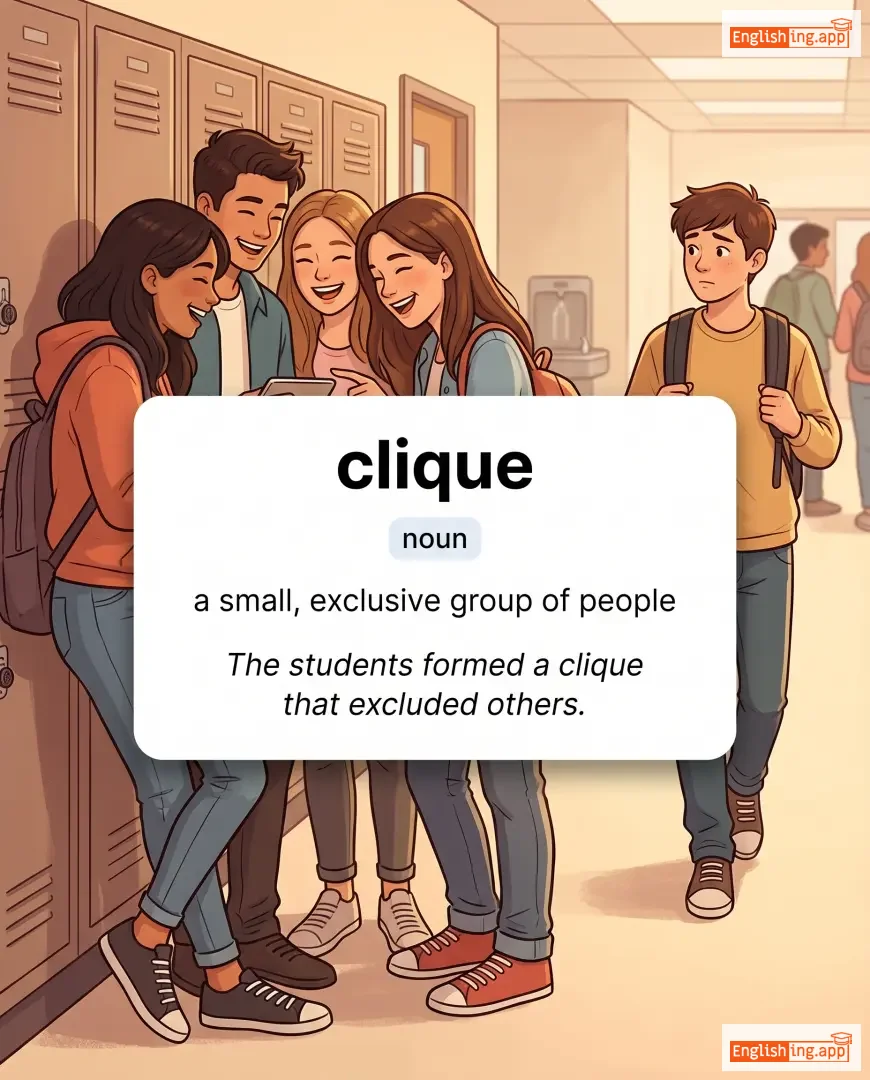
👥
|
/kliːk/
noun
(クリック)
••••••
|
|
クリーク
kuriiku
••••••
|
- •••••• | - •••••• | - •••••• | - •••••• |
a small, exclusive group of people
••••••
|
The students formed a clique that excluded others. |
学生たちは他の人を排除したクリークを作った。
Gakusei-tachi wa hoka no hito o haijo shita kuriiku o tsukutta.
••••••
|
- •••••• | - •••••• | - •••••• |
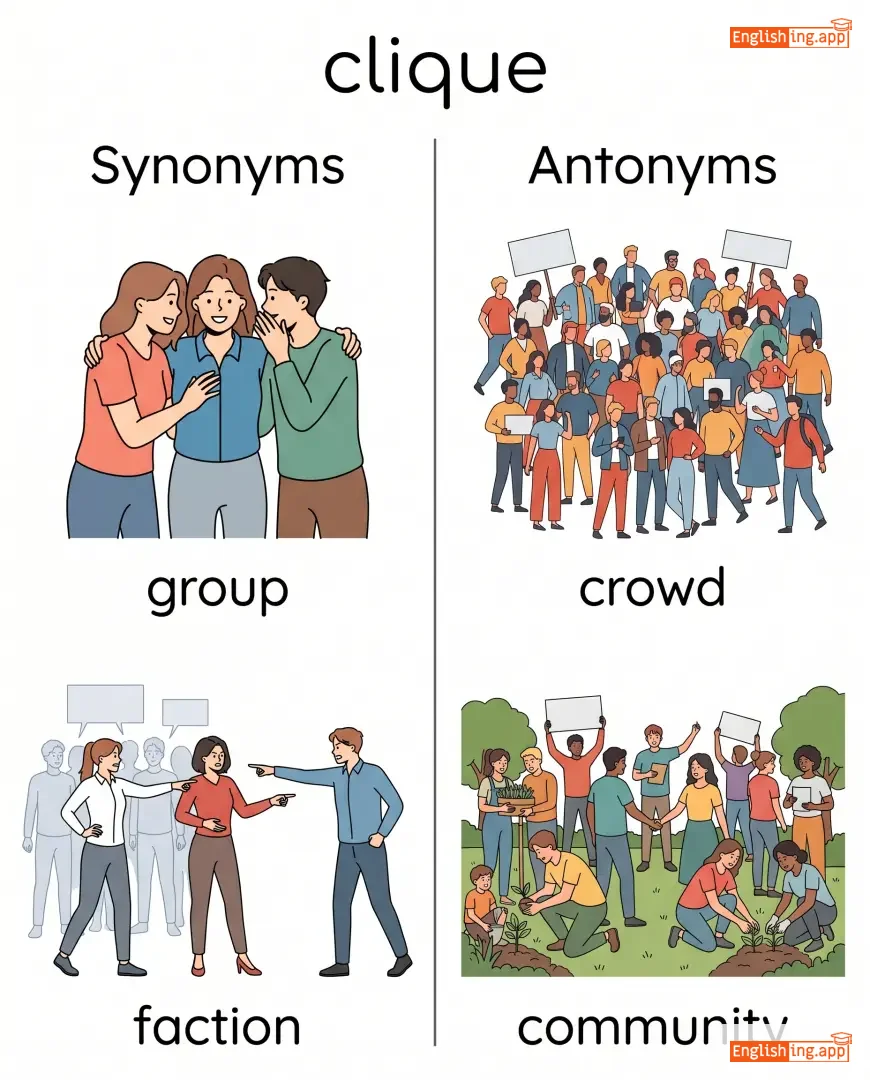
group, faction, circle, set, gang
••••••
|
crowd, community, mass
••••••
|
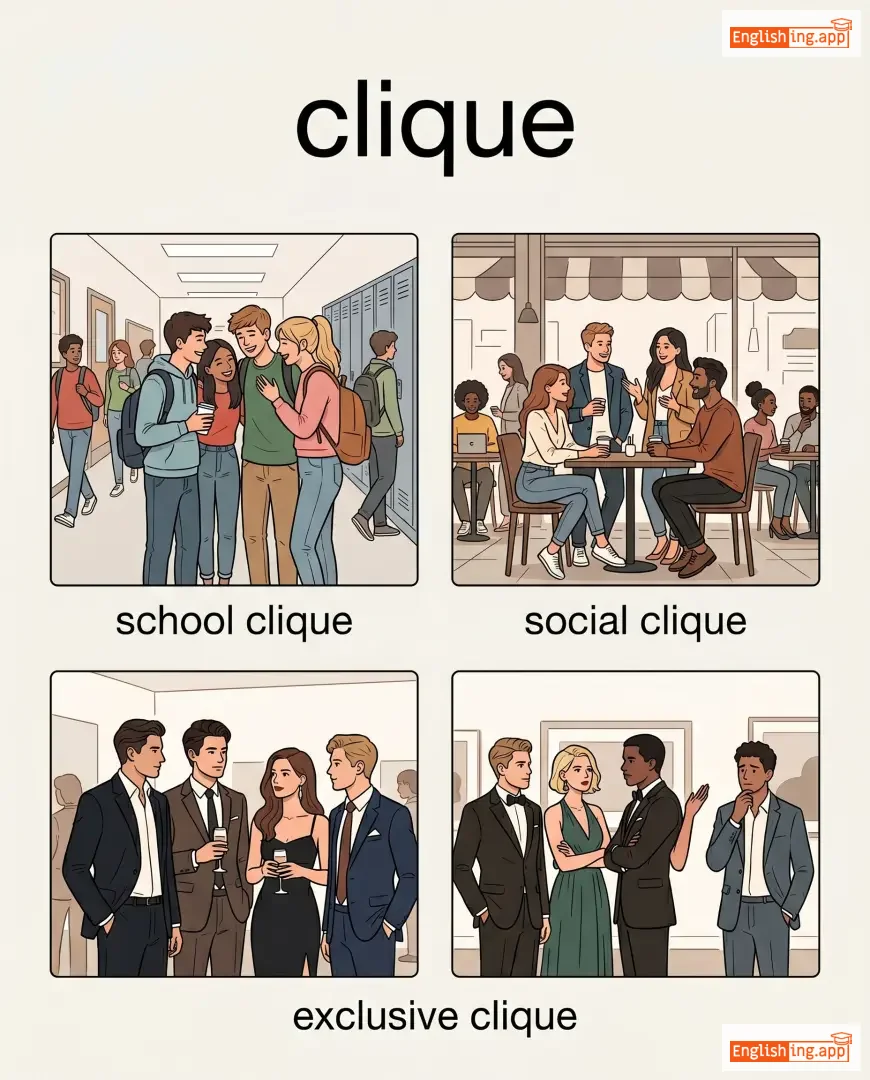
school clique, social clique, exclusive clique
••••••
|
クリークを作ると、誰でも入れない
••••••
|
|
#1475
💇
|
/ˈklɪpər/
noun
(クリッパー)
••••••
|
- •••••• |
バリカン / 19世紀の速い帆船
barikan / 19 seiki no hayai hansen
••••••
|
- •••••• | - •••••• | - •••••• | - •••••• |
a tool used for cutting, or a fast sailing ship of the 19th century
••••••
|
The barber used clippers to trim his hair. |
床屋は髪を切るためにバリカンを使いました。
Tokoya wa kami o kiru tame ni barikan o tsukaimashita.
••••••
|
- •••••• | - •••••• | - •••••• |
cutter, trimmer, shear, vessel, ship
••••••
|
grower, extender
••••••
|
hair clippers, nail clippers, clipper ship
••••••
|
床屋が髪を'バリカン'でカットする
••••••
|
|
#1476
✂️
|
/klɪp/
verb, noun
••••••
|
- •••••• | - •••••• |
clipped
••••••
|
clipped
••••••
|
clips
••••••
|
clipping
••••••
|
to cut or trim something; a short extract from a film, broadcast, or recording
••••••
|
She clipped the coupon from the newspaper. |
- •••••• |
clip along |
to move quickly and energetically
••••••
|
- •••••• |
cut, trim, snip, shorten, extract
••••••
|
extend, lengthen, add
••••••
|
clip a coupon, video clip, paper clip, clip wings
••••••
|
No •••••• |
|
#1477
🤝
|
/klɪntʃ/
verb
••••••
|
- •••••• | - •••••• |
clinched
••••••
|
clinched
••••••
|
clinches
••••••
|
clinching
••••••
|
To secure or settle something decisively; to grasp tightly.
••••••
|
The team clinched the championship with a last-minute goal. |
- •••••• |
clinch a deal |
To successfully secure an agreement.
••••••
|
- •••••• |
secure, finalize, grasp, confirm, win
••••••
|
lose, miss, abandon
••••••
|
clinch a deal, clinch the title, clinch victory, clinch the championship
••••••
|
No •••••• |
|
#1478
🌍
|
/klaɪm/
noun
(クライム)
••••••
|
- •••••• |
気候帯
kikō-tai
••••••
|
- •••••• | - •••••• | - •••••• | - •••••• |
A region defined by its climate.
••••••
|
He traveled to warmer climes during the winter. |
彼は冬の間、暖かい気候帯を旅行していた。
Kare wa fuyu no aida, atatakai kikō-tai o ryokō shite ita.
••••••
|
- •••••• | - •••••• | - •••••• |
region, land, zone, area
••••••
|
indoor, shelter
••••••
|
warmer climes, tropical climes, foreign climes, distant climes
••••••
|
Climeは気候帯を連想させる、気候と地域に関係している。
••••••
|
|
#1479
🌋
|
/klaɪˈmæktɪk/
adjective
(クライマクティック)
••••••
|
- •••••• |
クライマティック
kuraimatikku
••••••
|
- •••••• | - •••••• | - •••••• | - •••••• |
Relating to the most exciting or important moment of something.
••••••
|
The film ended with a climactic battle scene. |
映画はクライマティックな戦闘シーンで終わった。
Eiga wa kuraimatikku na sentou shi-n de owatta.
••••••
|
- •••••• | - •••••• | - •••••• |
peak, final, decisive, critical
••••••
|
anticlimactic, unimportant
••••••
|
climactic moment, climactic scene, climactic battle, climactic finale
••••••
|
クライマティックは物語のクライマックスのように、最高潮の瞬間を指します。
••••••
|
|
#1480
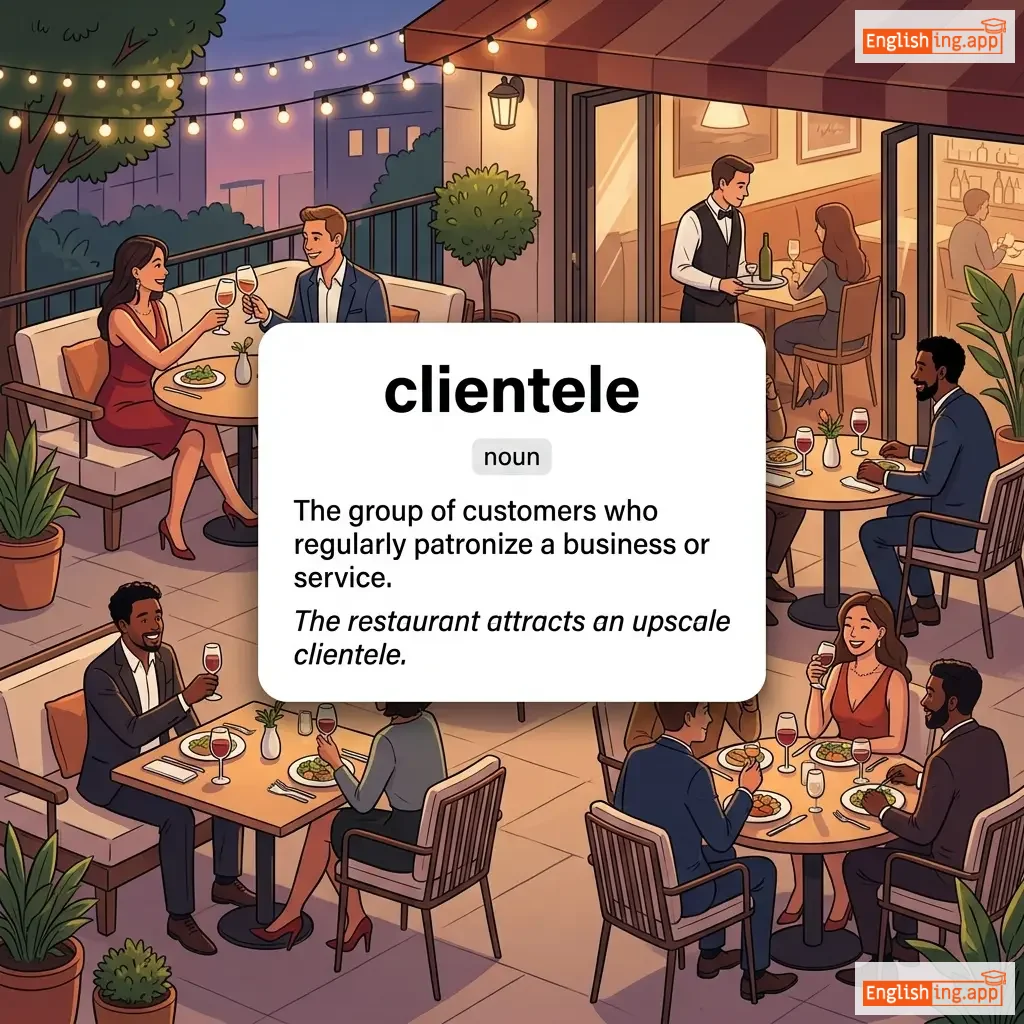
👥
|
/ˌklaɪənˈtɛl/
noun
(クライアントエル)
••••••
|
|
顧客層
kokyakusou
••••••
|
- •••••• | - •••••• | - •••••• | - •••••• |
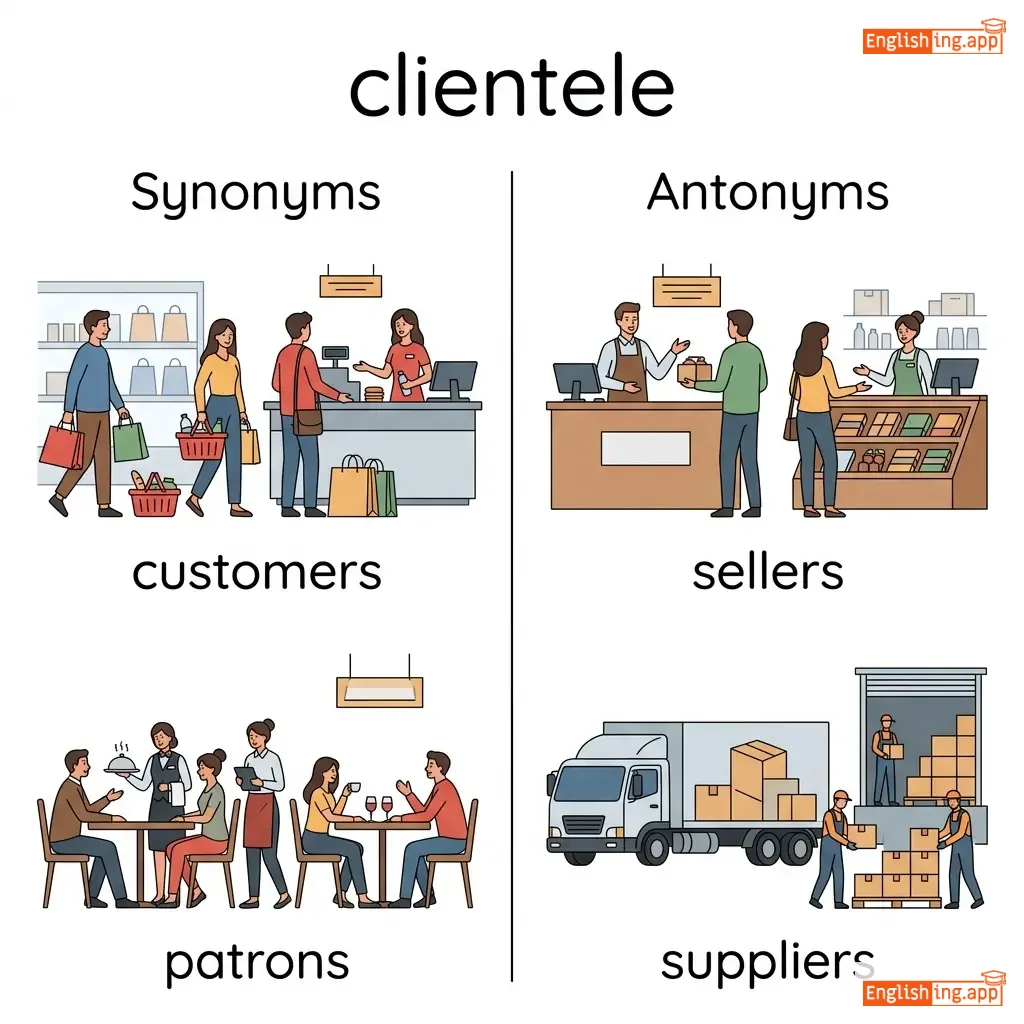
The group of customers who regularly patronize a business or service.
••••••
|
The restaurant attracts an upscale clientele. |
そのレストランは上級の顧客層を引き付けている。
Sono resutoran wa joukyuu no kokyakusou o hikitsukete iru.
••••••
|
- •••••• | - •••••• | - •••••• |
customers, patrons, buyers, consumers
••••••
|
sellers, suppliers
••••••
|
loyal clientele, regular clientele, wealthy clientele, exclusive clientele
••••••
|
Client + El = 顧客層 = すべての顧客が一緒に集まる。
••••••
|
|
#1481
🗯️
|
/kliːˈʃeɪ/
noun
(クリシェ)
••••••
|
- •••••• |
決まり文句
kimarimonku
••••••
|
- •••••• | - •••••• | - •••••• | - •••••• |
An overused expression or idea that has lost its originality or impact.
••••••
|
The speech was filled with old clichés that failed to inspire the audience. |
そのスピーチは古い決まり文句でいっぱいで、聴衆を感動させることができませんでした。
Sono supīchi wa furui kimarimonku de ippai de, chōshū o kandō saseru koto ga dekimasen deshita.
••••••
|
old cliché |
An expression that has become boring or unoriginal due to overuse.
••••••
|
古い決まり文句
furui kimarimonku
••••••
|
platitude, truism, stereotype, banality, commonplace
••••••
|
originality, novelty, uniqueness
••••••
|
old cliché, tired cliché, worn-out cliché, common cliché
••••••
|
決まり文句は繰り返し使われ、次第に新鮮さや意味が失われる。
••••••
|
|
#1482
🌤️
|
/ˈklɛmənt/
adjective
(クレメント)
••••••
|
- •••••• |
温和な / 慈悲深い
onga na / jihibukai
••••••
|
- •••••• | - •••••• | - •••••• | - •••••• |
mild or merciful; describing weather as mild and pleasant
••••••
|
The prisoners hoped for a clement judge. |
囚人たちは温和な裁判官を望んでいた。
Shūjin-tachi wa onga na saiban-kan o nozonde ita.
••••••
|
- •••••• | - •••••• | - •••••• |
merciful, lenient, gentle, mild, kind
••••••
|
harsh, severe, cruel
••••••
|
clement judge, clement ruler, clement weather, mild and clement
••••••
|
Clementは温和な天気や慈悲深い裁判官を意味します。
••••••
|
|
#1483
🙏
|
/ˈklɛmənsi/
noun
(kuremenshi)
••••••
|
- •••••• |
寛容
kanyou
••••••
|
- •••••• | - •••••• | - •••••• | - •••••• |
mercy, leniency, or forgiveness shown towards someone
••••••
|
The judge showed clemency and reduced his sentence. |
裁判官は寛容を示し、彼の判決を軽減しました。
Saibankan wa kanyou o shimeshi, kare no hanketsu o keigen shimashita.
••••••
|
show clemency |
to grant mercy or leniency
••••••
|
寛容を示す
kanyou o shimesu
••••••
|
mercy, leniency, forgiveness, compassion, pity
••••••
|
harshness, severity, cruelty
••••••
|
grant clemency, show clemency, presidential clemency, appeal for clemency
••••••
|
Clemency は 'claim' と言って 'mercy' を得るようなものです。
••••••
|
|
#1484
⛰️
|
/klɛft/
noun/adjective
(クレフト)
••••••
|
- •••••• |
ひび
hibi
••••••
|
- •••••• | - •••••• | - •••••• | - •••••• |
a split or crack; a space or opening made by cleavage
••••••
|
The goat disappeared into a cleft in the rocks. |
ヤギは岩のひびに消えました。
Yagi wa iwa no hibi ni kiemashita.
••••••
|
cleft palate |
a congenital split in the roof of the mouth
••••••
|
口蓋裂
Kōgairitsu
••••••
|
crack, fissure, split, opening, division
••••••
|
solid, whole, intact
••••••
|
cleft in rock, cleft palate, cleft lip, deep cleft
••••••
|
Cleftは岩にひびが入ったようなものです。
••••••
|
|
#1485
🪓
|
/kliːv/
verb
(クリーブ)
••••••
|
|
切り裂く / くっつく
kirisaku / kuttsuku
••••••
|
clove
クローブ
••••••
|
cloven
クローヴェン
••••••
|
cleaves
クリーブス
••••••
|
cleaving
クリービング
••••••
|
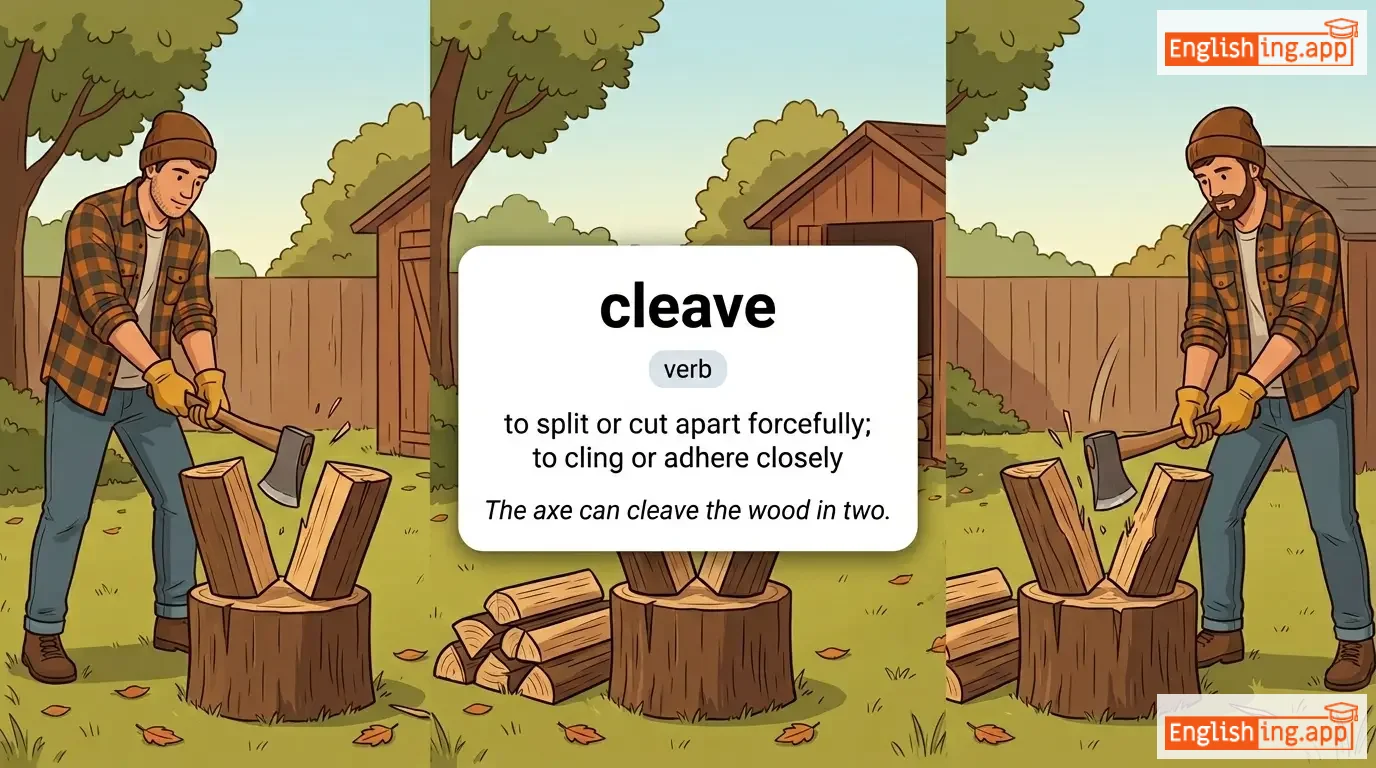
to split or cut apart forcefully; to cling or adhere closely
••••••
|
The axe can cleave the wood in two.
斧は木を2つに切り裂くことができます。
••••••
|
斧は木を2つに切り裂くことができます。
Ono wa ki o futatsu ni kirisaku koto ga dekimasu.
••••••
|
cleave to
クリーブ トゥ
••••••
|
to stick to something or remain faithful
••••••
|
くっつく
kuttsuku
••••••
|
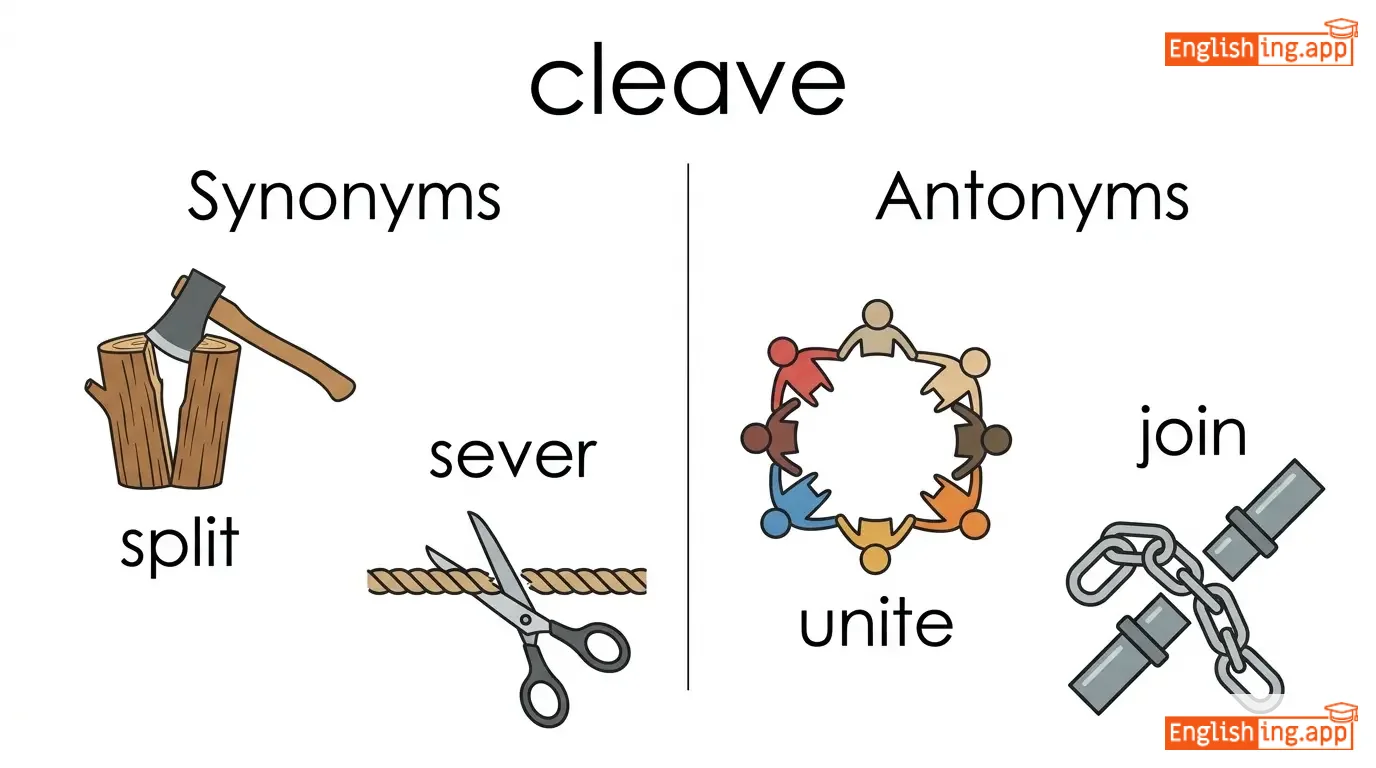
split, sever, divide, adhere, cling
••••••
|
unite, join, combine
••••••
|
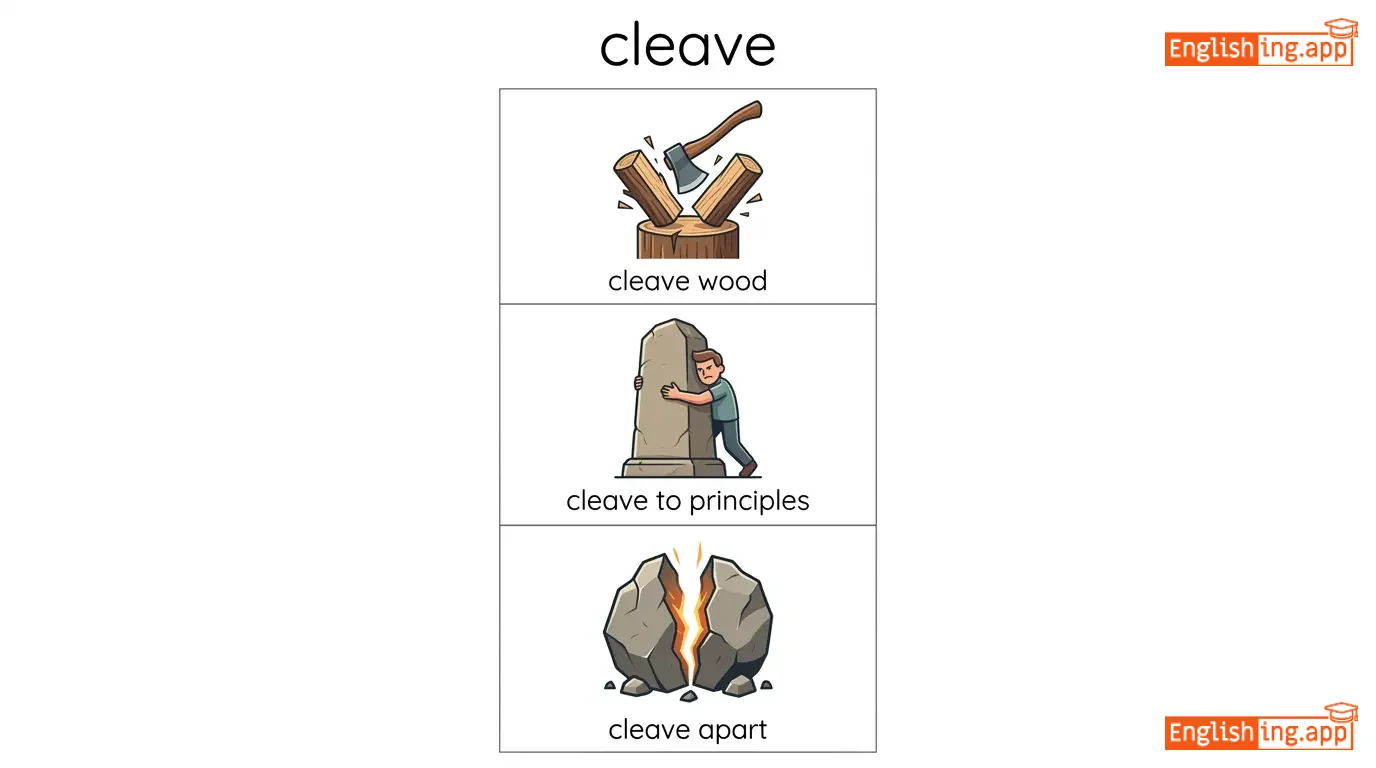
cleave wood, cleave to principles, cleave apart, cleave through
••••••
|
Cleaveは斧で木を切り裂くか、何かにくっつくことです。
••••••
|
|
#1486
🧗
|
/ˈklæmbər/
verb
(クランバー)
••••••
|
- •••••• |
力を入れて登る
chikara o irete noboru
••••••
|
clambered
クランバード
••••••
|
clambered
クランバード
••••••
|
clambers
クランバーズ
••••••
|
clambering
クランバーリング
••••••
|
to climb with effort or difficulty, often using both hands and feet
••••••
|
The children clambered over the rocks to reach the cave.
子供たちは洞窟に到達するために岩を登った。
••••••
|
子供たちは洞窟に到達するために岩を登った。
Kodomotachi wa dōkutsu ni tōtatsu suru tame ni iwa o nobotta.
••••••
|
- •••••• | - •••••• | - •••••• |
scramble, climb, scale, mount, ascend
••••••
|
descend, fall, slip
••••••
|
clamber over, clamber up, clamber onto, clamber down
••••••
|
Clamber は登る、でも力を入れて登る時に使います。
••••••
|
|
#1487
🦴
|
/ˈklævɪkəl/
noun
(クラヴィクル)
••••••
|
- •••••• |
鎖骨
sakotsu
••••••
|
- •••••• | - •••••• | - •••••• | - •••••• |
the collarbone, a long bone that serves as a strut between the shoulder blade and the sternum
••••••
|
He fractured his clavicle in the accident. |
彼は事故で鎖骨を骨折した。
Kare wa jiko de sakotsu o kossetsu shita.
••••••
|
- •••••• | - •••••• | - •••••• |
collarbone, shoulder bone, bone
••••••
|
null
••••••
|
fractured clavicle, broken clavicle, left clavicle, clavicle bone
••••••
|
鎖骨は'鍵'のように、事故で折れることがある
••••••
|
|
#1488
😨
|
/ˌklɔːstrəˈfəʊbiə/
noun
••••••
|
- •••••• | - •••••• | - •••••• | - •••••• | - •••••• | - •••••• |
an extreme or irrational fear of being in confined spaces
••••••
|
He avoids elevators because of his claustrophobia. |
- •••••• | - •••••• | - •••••• | - •••••• |
fear of enclosed spaces, confinement anxiety, panic, dread
••••••
|
comfort, ease, calm
••••••
|
suffer from claustrophobia, overcome claustrophobia, fear of claustrophobia
••••••
|
No •••••• |
|
#1489
🗂️
|
/ˈklæsɪfaɪ/
verb
••••••
|
- •••••• | - •••••• |
classified
••••••
|
classified
••••••
|
classifies
••••••
|
classifying
••••••
|
to arrange or organize into categories or groups
••••••
|
The librarian classified the books by subject. |
- •••••• |
classify information |
to categorize data, often in terms of security or confidentiality
••••••
|
- •••••• |
categorize, sort, organize, group, arrange
••••••
|
confuse, mix, disorder
••••••
|
classify data, classify books, classify animals, classify documents
••••••
|
No •••••• |
|
#1490
🤲
|
/klæsp/
verb
(クラスプ)
••••••
|
- •••••• |
握る / 留め金
nigiru / tomegane
••••••
|
clasped
クラスプド
••••••
|
clasped
クラスプド
••••••
|
clasps
クラスプス
••••••
|
clasping
クラスピング
••••••
|
to grasp or hold tightly; also a device for fastening
••••••
|
She clasped her hands together in prayer.
シー クラスプド ハー ハンズ トゥゲザー イン プレイヤー。
••••••
|
彼女は祈りの中で手を合わせた。
Kanojo wa inori no naka de te o awaseta.
••••••
|
clasp hands
クラスプ ハンズ
••••••
|
to hold one's own hands tightly, often in prayer or emotion
••••••
|
手を握る
Te o nigiru
••••••
|
grip, clutch, grasp, fasten, embrace
••••••
|
release, let go, loosen
••••••
|
clasp hands, clasp tightly, silver clasp, necklace clasp
••••••
|
Claspは祈りの中で手を握ることを意味します
••••••
|
|
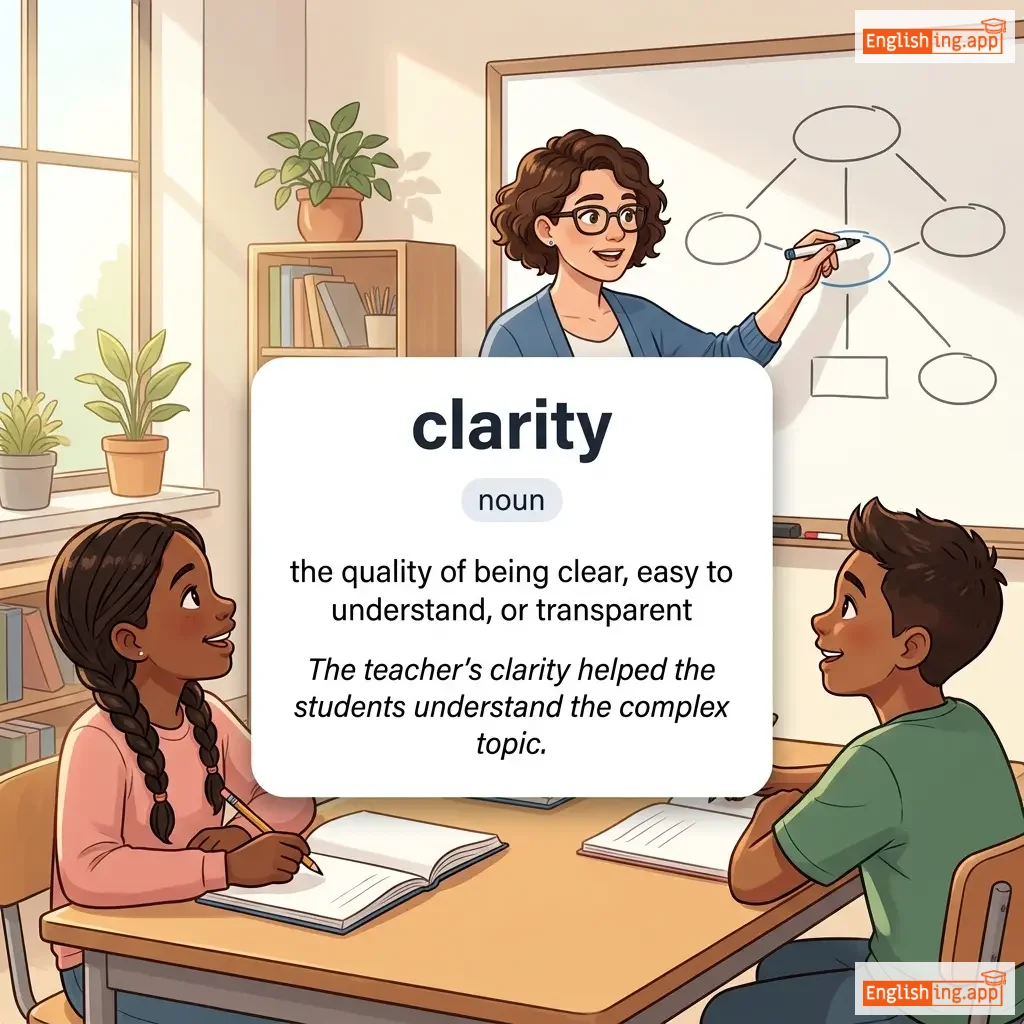
#1491
🔍
|
/ˈklærəti/
noun
(クレアリティ)
••••••
|
|
明確さ
meikakusa
••••••
|
- •••••• | - •••••• | - •••••• | - •••••• |
the quality of being clear, easy to understand, or transparent
••••••
|
The teacher's clarity helped the students understand the complex topic. |
先生の明確さは、生徒たちが複雑なテーマを理解するのを助けました。
Sensei no meikakusa wa, seito-tachi ga fukuzatsu na tēma o rikai suru no o tasukemashita.
••••••
|
crystal clarity |
complete and perfect clearness
••••••
|
クリスタルの明確さ
kurisutaru no meikakusa
••••••
|
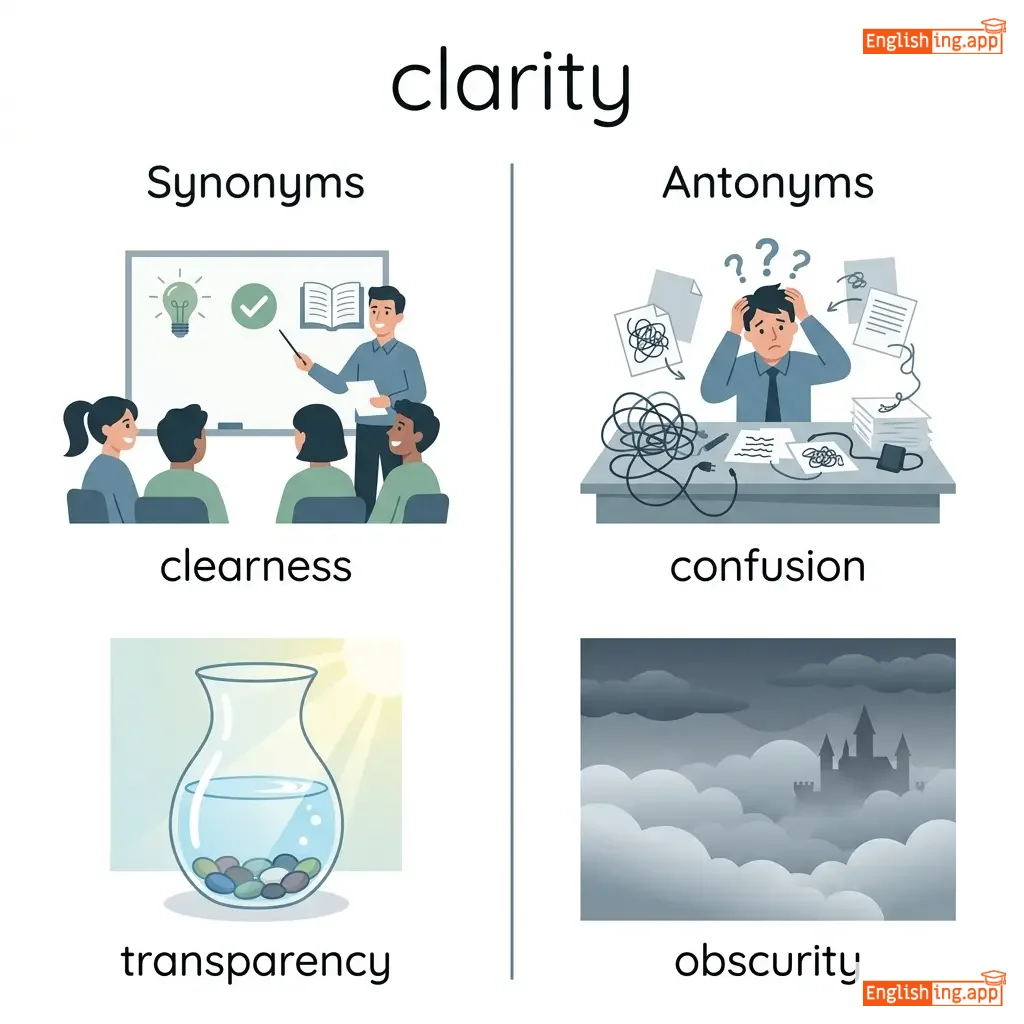
clearness, transparency, precision, lucidity, simplicity
••••••
|
confusion, obscurity, vagueness
••••••
|
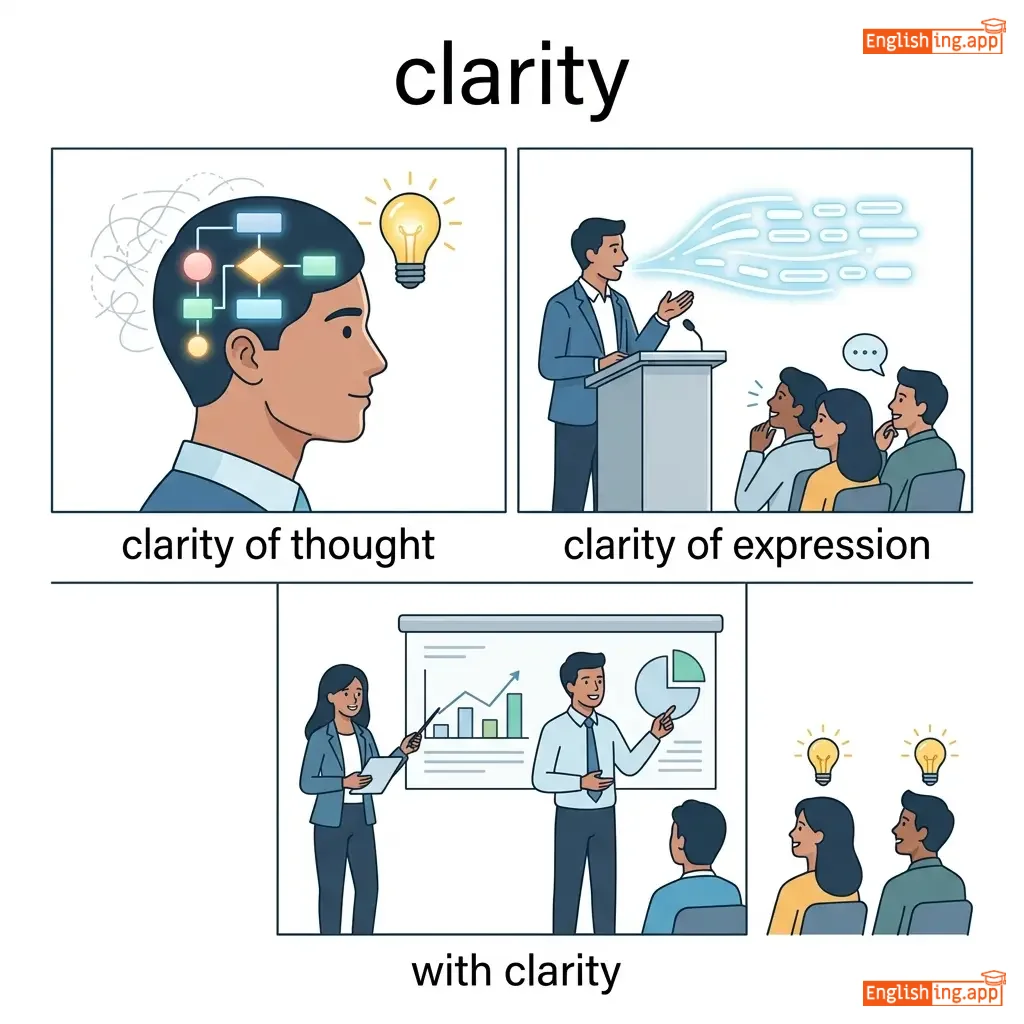
clarity of thought, clarity of expression, with clarity, lack of clarity
••••••
|
Clarity = clear + ity → 明確または透明
••••••
|
|
#1492
📢
|
/ˈklæriən/
adjective
(クラリオン)
••••••
|
- •••••• |
大きくて明確な呼びかけ
ookikute meikakuna yobikake
••••••
|
- •••••• | - •••••• | - •••••• | - •••••• |
Loud and clear, like the sound of a trumpet; strongly expressed.
••••••
|
The leader’s clarion call for unity inspired the crowd. |
リーダーの団結への明確な呼びかけは群衆を鼓舞した。
Rīdā no danketsu e no meikakuna yobikake wa gunshū o kobu shita.
••••••
|
clarion call |
a strong and clear appeal to action
••••••
|
明確な呼びかけ
meikakuna yobikake
••••••
|
loud, clear, resounding, ringing
••••••
|
faint, weak, muffled
••••••
|
clarion call, clarion voice, clarion message
••••••
|
Clarion call は大きくて明確な呼びかけ、まるでトランペットのような音です。
••••••
|
|
#1493
💡
|
/ˈklærɪfaɪ/
verb
••••••
|
|
- •••••• |
clarified
••••••
|
clarified
••••••
|
clarifies
••••••
|
clarifying
••••••
|
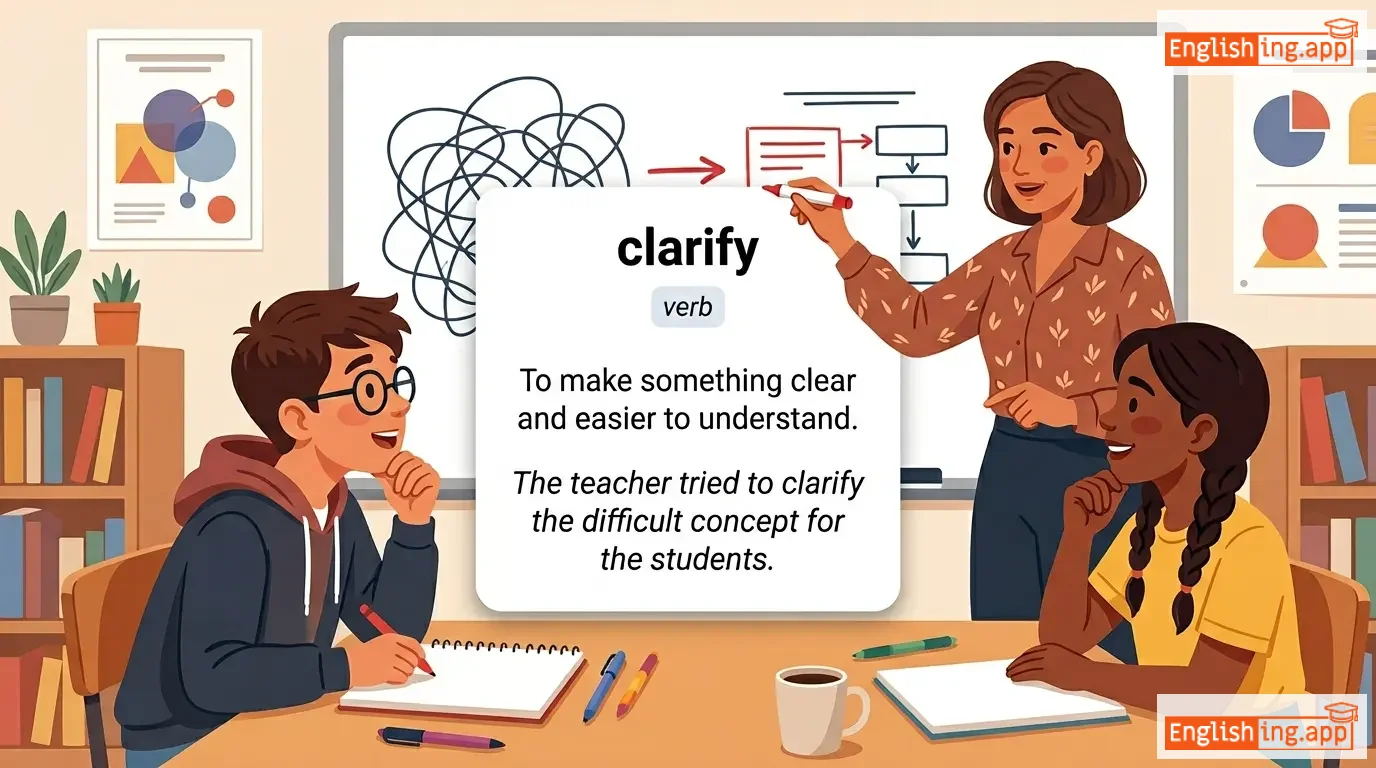
To make something clear and easier to understand.
••••••
|
The teacher tried to clarify the difficult concept for the students. |
- •••••• |
clarify the situation |
to explain or resolve something confusing
••••••
|
- •••••• |
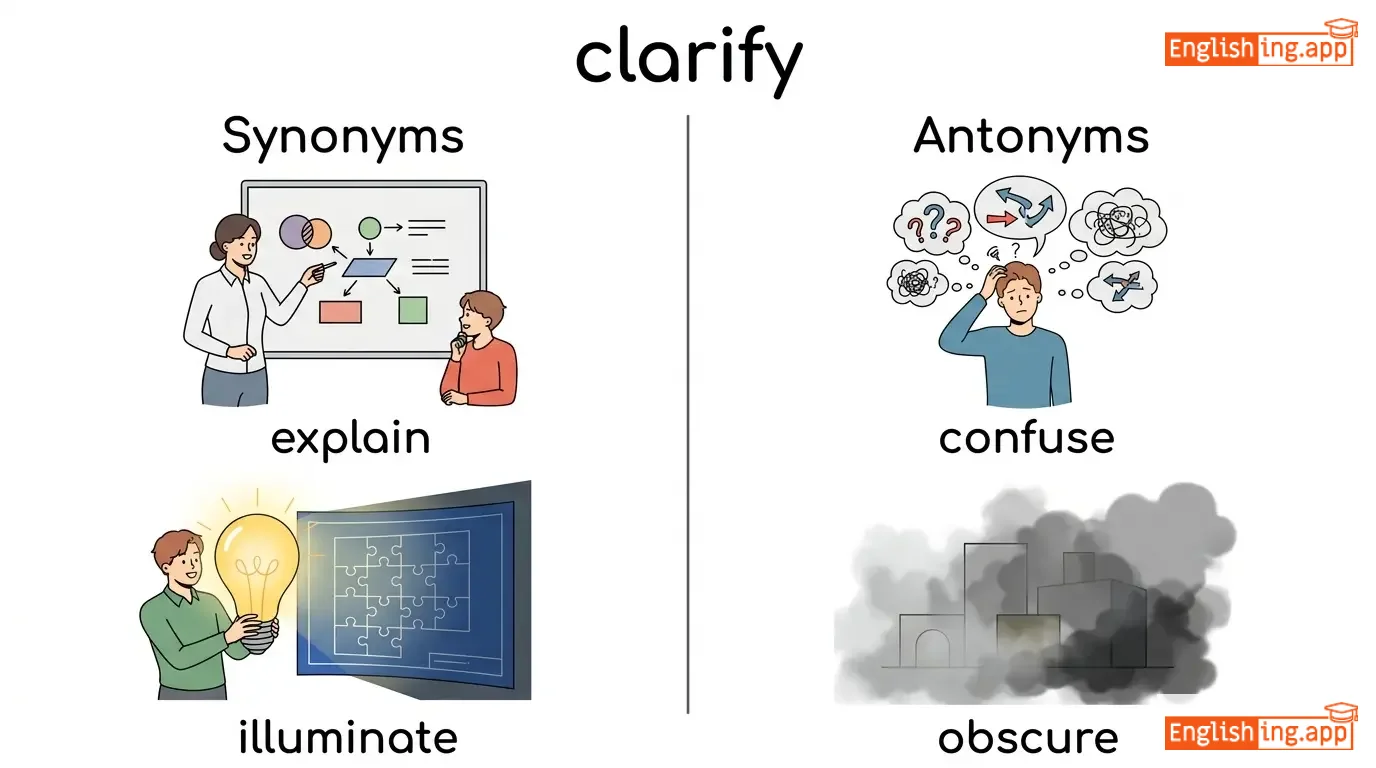
explain, illuminate, simplify, resolve, interpret
••••••
|
confuse, obscure, complicate
••••••
|
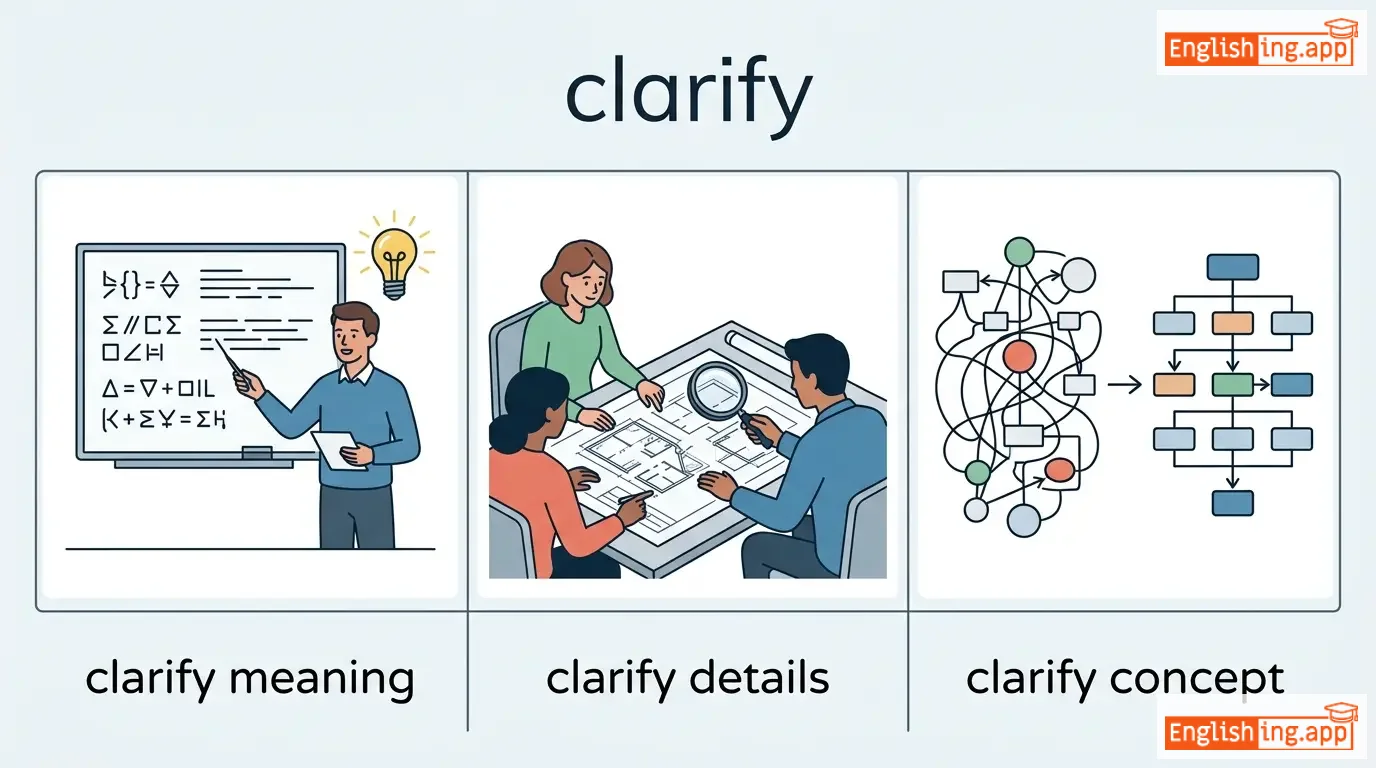
clarify meaning, clarify details, clarify concept, clarify question
••••••
|
No •••••• |
|
#1494
🔔
|
/ˈklæpər/
noun
(クラッパー)
••••••
|
- •••••• |
鐘の中にある金属部品、鐘を打って音を出す
kane no naka ni aru kinzoku buhin, kane o utte oto o dasu
••••••
|
- •••••• | - •••••• | - •••••• | - •••••• |
The free-swinging metal piece inside a bell that strikes it to produce sound.
••••••
|
The clapper inside the bell was broken. |
鐘の中の金属部品は壊れていた。
Kane no naka no kinzoku buhin wa kowarete ita.
••••••
|
- •••••• | - •••••• | - •••••• |
bell hammer, striker, tongue
••••••
|
silencer, stopper
••••••
|
bell clapper, broken clapper, clapper inside
••••••
|
Clapper は鐘の中で音を鳴らす金属部品です。
••••••
|
|
#1495
👏
|
/klæp/
verb
••••••
|
- •••••• | - •••••• |
clapped
••••••
|
clapped
••••••
|
claps
••••••
|
clapping
••••••
|
To strike the palms of the hands together, usually to express approval or create a sharp sound.
••••••
|
The audience began to clap loudly after the performance. |
- •••••• |
clap your hands |
to show approval or enjoyment by striking your hands together
••••••
|
- •••••• |
applaud, cheer, smack, slap
••••••
|
boo, jeer
••••••
|
clap loudly, clap hands, clap along, clap for someone
••••••
|
No •••••• |
|
#1496
🔔
|
/ˈklæŋər/
noun
(クランガー)
••••••
|
- •••••• |
音、騒音
oto, souon
••••••
|
- •••••• | - •••••• | - •••••• | - •••••• |
A loud, resonant, and continuous noise, often metallic.
••••••
|
The clangor of the church bells filled the town square. |
教会の鐘の音が町の広場に響き渡った。
Kyōkai no kane no oto ga machi no hiroba ni hibiki watatta.
••••••
|
- •••••• | - •••••• | - •••••• |
clatter, clamor, racket, din, noise
••••••
|
silence, quiet, hush
••••••
|
clangor of bells, metallic clangor, constant clangor
••••••
|
Clangor は大きな音を意味する - 鐘の CLANG を思い浮かべてみてください。
••••••
|
|
#1497
🤫
|
/klænˈdɛstaɪn/
adjective
••••••
|
- •••••• | - •••••• | - •••••• | - •••••• | - •••••• | - •••••• |
kept secret or done secretly, especially for illicit purposes
••••••
|
They held a clandestine meeting late at night. |
- •••••• |
clandestine operation |
a secret activity, often illegal or unauthorized
••••••
|
- •••••• |
secret, covert, hidden, furtive, undercover
••••••
|
open, public, overt
••••••
|
clandestine meeting, clandestine operation, clandestine affair, clandestine group
••••••
|
No •••••• |
|
#1498
👨👩👧👦
|
/klæn/
noun
(クラン)
••••••
|
- •••••• |
一族
ichizoku
••••••
|
- •••••• | - •••••• | - •••••• | - •••••• |
a large family group or a close-knit community with shared interests or ancestry
••••••
|
The entire clan gathered to celebrate the festival.
The entire clan gathered to celebrate the festival.
••••••
|
一族全員が祭りを祝うために集まりました。
Ichizoku zen'in ga matsuri o iwau tame ni atsumarimashita.
••••••
|
clan gathering
クランの集まり
••••••
|
a meeting or reunion of members of the same extended family or group
••••••
|
一族の集まり
ichizoku no atsumari
••••••
|
tribe, family, kin, community, group
••••••
|
individual, outsider
••••••
|
Scottish clan, clan leader, clan gathering, powerful clan
••••••
|
一族(ichizoku)は、共通の目標で集まる家族のような集団です。
••••••
|
|
#1499
🔊
|
/ˈklæmərəs/
adjective
(クラマラス)
••••••
|
- •••••• |
騒々しい
sōzōshī
••••••
|
- •••••• | - •••••• | - •••••• | - •••••• |
making a loud and confused noise; expressing strong demands noisily
••••••
|
The clamorous audience demanded an encore from the band. |
騒々しい観客がバンドにアンコールを要求した。
Sōzōshī kankyaku ga bando ni ankōru o yōkyū shita.
••••••
|
- •••••• | - •••••• | - •••••• |
noisy, loud, vociferous, boisterous, uproarious
••••••
|
quiet, silent, calm
••••••
|
clamorous protest, clamorous demand, clamorous voices, clamorous applause
••••••
|
Clamorous は大きな声や騒音がある状況です。
••••••
|
|
#1500
📢
|
/ˈklæmər/
noun
(クラマー)
••••••
|
|
騒音
souon
••••••
|
- •••••• | - •••••• | - •••••• | - •••••• |
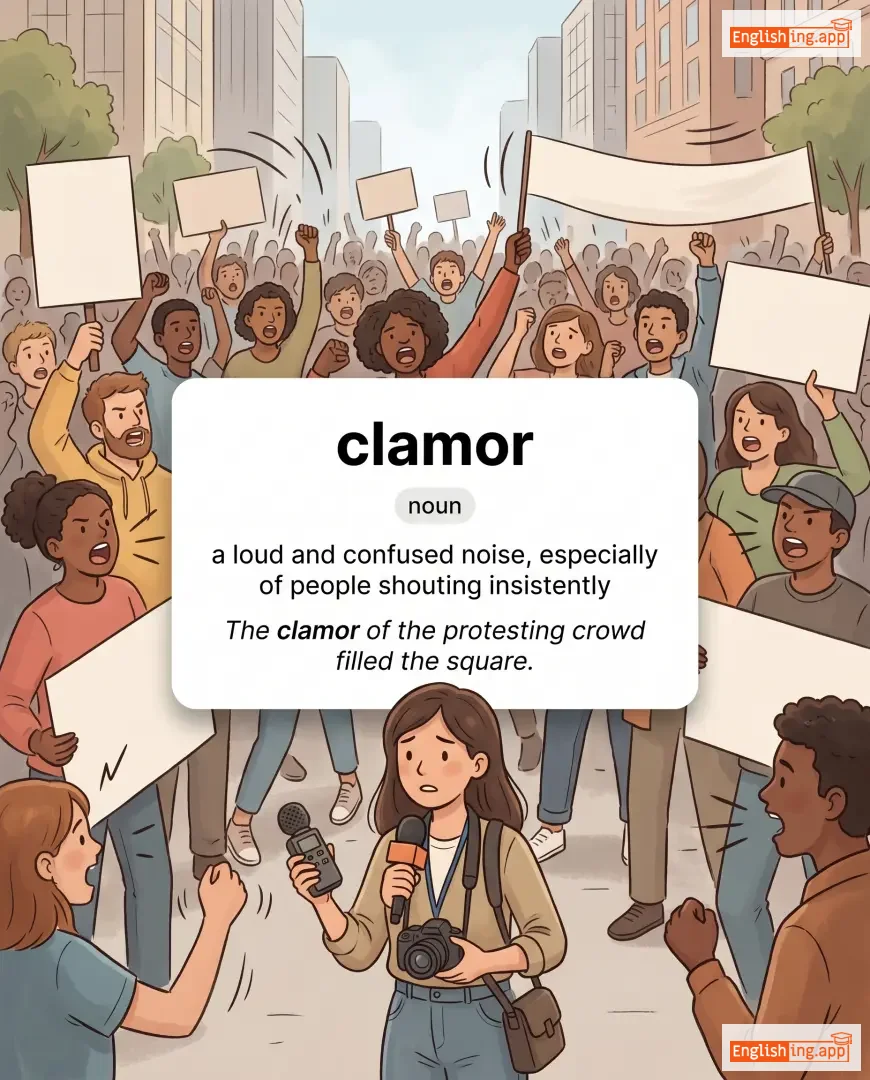
a loud and confused noise, especially of people shouting insistently
••••••
|
The clamor of the protesting crowd filled the square.
抗議する群衆のクラマーが広場を埋め尽くした。
••••••
|
抗議する群衆の騒音が広場を埋め尽くした。
Kougi suru gunshuu no souon ga hiroba wo umetsukushita.
••••••
|
raise a clamor
クラマーを上げる
••••••
|
to express strong demands or complaints loudly
••••••
|
騒音を上げる
souon wo ageru
••••••
|
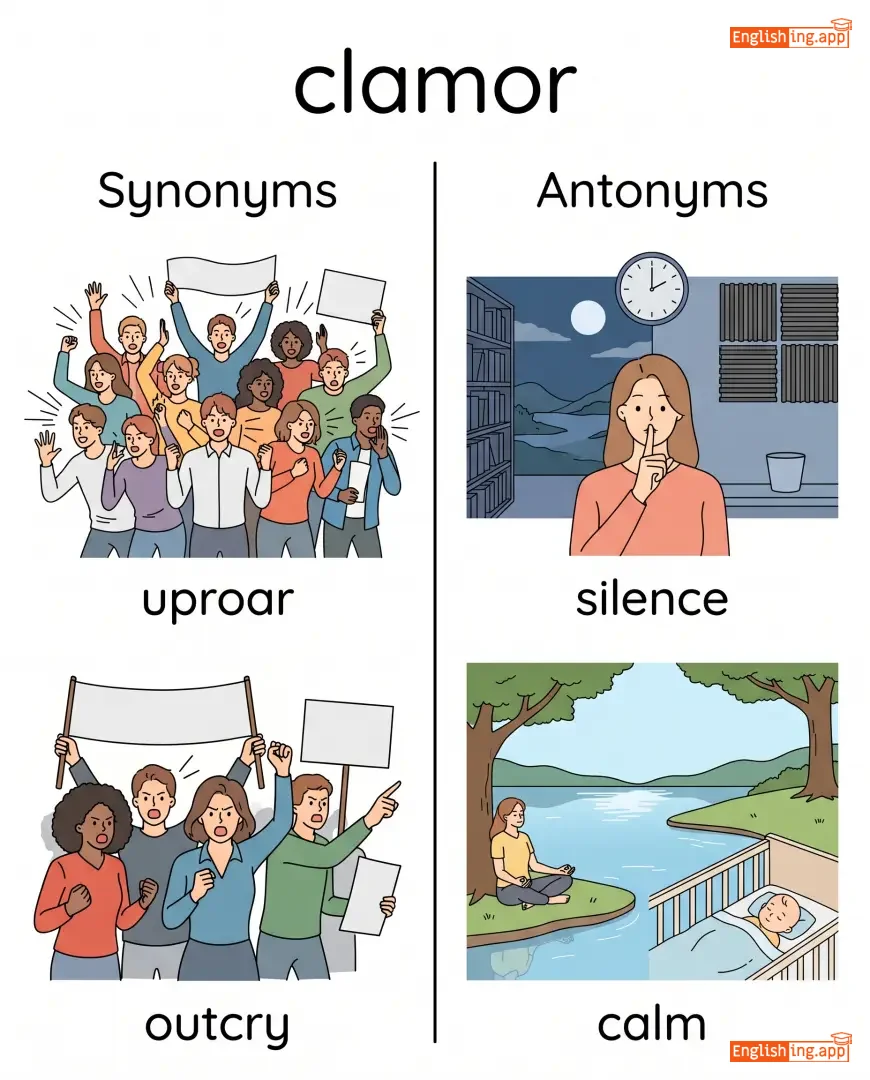
uproar, outcry, noise, din, commotion
••••••
|
silence, calm, quiet
••••••
|
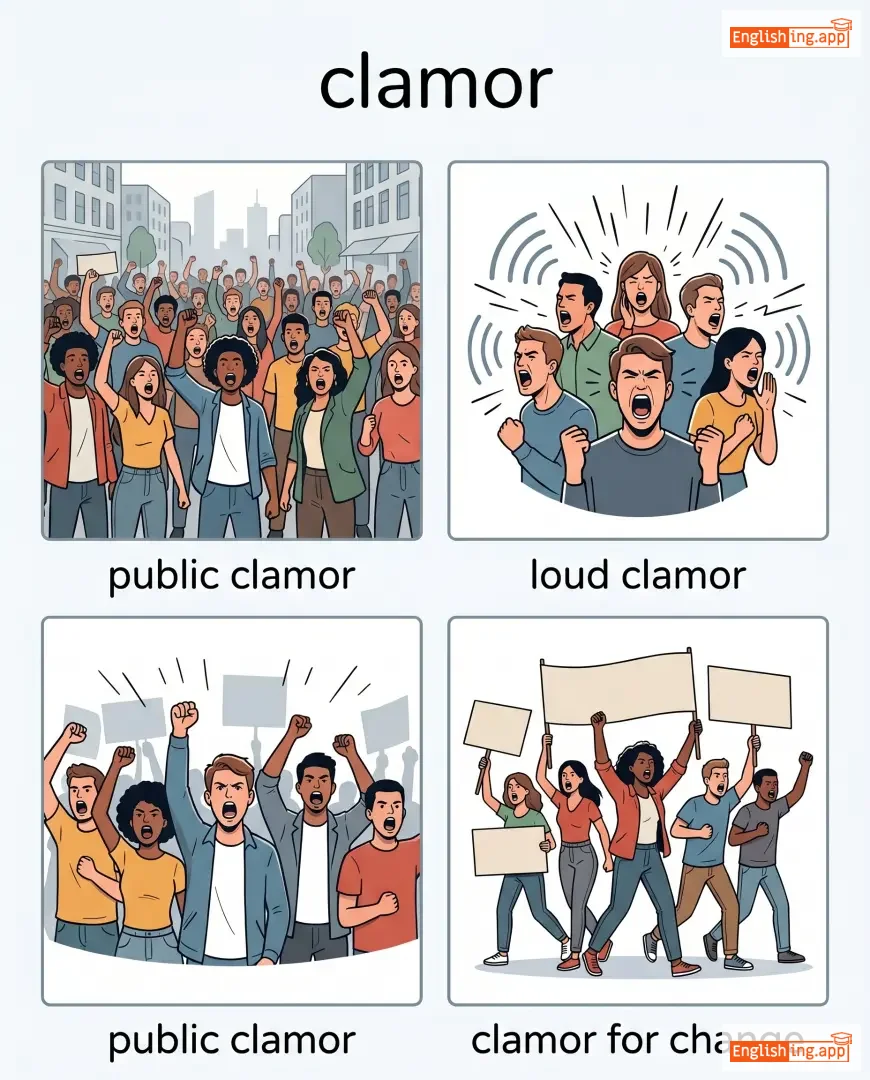
public clamor, loud clamor, clamor for change, clamor of voices
••••••
|
Clamorは日本語で騒音。抗議の声が広場に響くような感じ!
••••••
|
Vocabulary Quiz
Test your vocabulary by matching words with their translations or meanings.
Login to take the quiz
Comments (0)
Share your thoughts and join the discussion.
Join the discussion by logging in
Login to CommentNo comments yet
Be the first to share your thoughts!