

翻訳
過去
過去分詞
三人称単数
動名詞
意味
例文
例文の翻訳
同義語
対義語
コロケーション
ニーモニック

Swipe left or right, or use the buttons. Tap image to zoom.
例文の翻訳
単語
Lesson 9Lesson 9 - マスクトグル
|
絵文字
|
単語 | Images | 翻訳 | 過去 | 過去分詞 | 三人称単数 | 動名詞 | 意味 | 例文 | 例文の翻訳 | 表現例 | 表現例の意味 | 表現例の翻訳 | 同義語 | 対義語 | コロケーション | ニーモニック |
|---|---|---|---|---|---|---|---|---|---|---|---|---|---|---|---|---|---|
|
#241
⚔️
|
/əˈɡrɛs/
verb
(アグレッス)
••••••
|
- •••••• |
攻撃する
kōgeki suru
••••••
|
aggressed
アグレッスド
••••••
|
aggressed
アグレッスド
••••••
|
aggresses
アグレッスズ
••••••
|
aggressing
アグレッシング
••••••
|
to initiate an attack or show hostile behavior
••••••
|
The army chose not to aggress without provocation.
軍隊は挑発なしに攻撃しないことを決定しました。
••••••
|
軍隊は挑発なしに攻撃しないことを決定しました。
Guntai wa chōhatsu nashi ni kōgeki shinai koto o kettei shimashita.
••••••
|
- •••••• | - •••••• | - •••••• |
attack, assault, strike, invade, offend
••••••
|
defend, protect, guard
••••••
|
aggress against, aggress upon, aggress behavior
••••••
|
Aggress は攻撃することを意味し、'AGainst RESS' は何かに対して攻撃することを意味します。
••••••
|
|
#242
🧑💼
|
/eɪd/
noun
(エイド)
••••••
|
- •••••• |
アシスタント
ashisutanto
••••••
|
- •••••• | - •••••• | - •••••• | - •••••• |
An assistant or helper, especially to an important person.
••••••
|
The senator’s aide organized the meeting with journalists. |
上院議員のアシスタントがジャーナリストとの会議を組織しました。
Jōin giin no ashisutanto ga jānarisuto to no kaigi o soshiki shimashita.
••••••
|
- •••••• | - •••••• | - •••••• |
assistant, helper, deputy, supporter
••••••
|
leader, boss
••••••
|
presidential aide, close aide, trusted aide
••••••
|
Aide (アシスタント) は会議を手配する手助けをします。
••••••
|
|
#243
👨🔬
|
/əˈɡrɒnəmɪst/
noun
(アグロノミスト)
••••••
|
- •••••• |
農学者
nogakusha
••••••
|
- •••••• | - •••••• | - •••••• | - •••••• |
A scientist who studies soil management and crop production.
••••••
|
The agronomist suggested new methods to improve rice yields.
アグロノミストは、米の収穫量を改善するための新しい方法を提案しました。
••••••
|
農学者は、米の収穫量を改善するための新しい方法を提案しました。
Nogakusha wa, kome no shūkakuryō o kaizen suru tame no atarashī hōhō o teian shimashita.
••••••
|
- •••••• | - •••••• | - •••••• |
agriculture scientist, crop expert, soil specialist
••••••
|
layperson, non-specialist
••••••
|
skilled agronomist, agronomist advice, consult an agronomist
••••••
|
Agronomist = 農業 + 科学者 = 農学者 🌾
••••••
|
|
#244
🌾
|
/əˈɡrɛəriən/
adjective
(アグラリアン)
••••••
|
- •••••• |
農業的
nōgyōteki
••••••
|
- •••••• | - •••••• | - •••••• | - •••••• |
Related to farming, agriculture, or rural land.
••••••
|
The country’s economy is still largely agrarian. |
その国の経済はまだ主に農業的です。
Sono kuni no keizai wa mada omoni nōgyōteki desu.
••••••
|
- •••••• | - •••••• | - •••••• |
agricultural, rural, farming, rustic
••••••
|
urban, industrial
••••••
|
agrarian society, agrarian reform, agrarian economy
••••••
|
Agrarianは農業に関連する意味です 🌾
••••••
|
|
#245
😣
|
/ˈæɡənaɪz/
verb
(エゴナイズ)
••••••
|
- •••••• |
苦しむ
kurushimu
••••••
|
agonized
エゴナイズド
••••••
|
agonized
エゴナイズド
••••••
|
agonizes
エゴナイゼス
••••••
|
agonizing
エゴナイジング
••••••
|
To suffer extreme physical or mental pain; to spend time worrying.
••••••
|
She agonized for days over whether she had made the right decision.
彼女は自分が正しい決断を下したかどうかを何日も悩んでいました。
••••••
|
彼女は自分が正しい決断を下したかどうかを何日も悩んでいました。
Kanojo wa jibun ga tadashī ketsudan o kudashita ka dō ka o nannichi mo nayande imashita.
••••••
|
agonize over
悩む
••••••
|
To worry greatly about something.
••••••
|
悩む
nayamu
••••••
|
suffer, worry, struggle, torment, fret
••••••
|
relax, ease, comfort
••••••
|
agonize over decision, agonize for days, agonize endlessly
••••••
|
苦しむは、決断に悩むような苦しさを感じること。
••••••
|
|
#246
🤩
|
/əˈɡɒɡ/
adjective
••••••
|
- •••••• | - •••••• | - •••••• | - •••••• | - •••••• | - •••••• |
Highly excited by eagerness, curiosity, or anticipation.
••••••
|
The children were agog with excitement as they waited for the magician to appear. |
- •••••• | - •••••• | - •••••• | - •••••• |
excited, eager, thrilled, fascinated, enthusiastic
••••••
|
indifferent, bored, apathetic
••••••
|
agog with excitement, agog to hear, audience agog
••••••
|
No •••••• |
|
#247
🤔
|
/æɡˈnɒs.tɪk/
noun
(アグノスティック)
••••••
|
- •••••• |
アグノスティック
agnosutikku
••••••
|
- •••••• | - •••••• | - •••••• | - •••••• |
a person who believes that nothing is known or can be known about the existence of God; uncertain in belief
••••••
|
He described himself as an agnostic rather than an atheist. |
彼は自分を無神論者ではなくアグノスティックだと説明した。
Kare wa jibun o mushinronsha de wa naku agnosutikku da to setsumei shita.
••••••
|
- •••••• | - •••••• | - •••••• |
skeptic, doubter, unbeliever, questioner
••••••
|
believer, theist, faithful
••••••
|
agnostic view, remain agnostic, religious agnostic
••••••
|
アグノスティック = 神についてわからない、信じるのは不確か。
••••••
|
|
#248
😠
|
/ˌædʒ.ɪˈteɪ.ʃən/
noun
(アジテーション)
••••••
|
- •••••• |
動揺
dōyō
••••••
|
- •••••• | - •••••• | - •••••• | - •••••• |
a state of nervousness, excitement, or unrest; or action of stirring up public concern
••••••
|
There was visible agitation among the crowd. |
群衆の中には明らかな動揺がありました。
Gunshū no naka ni wa akirakana dōyō ga arimashita.
••••••
|
- •••••• | - •••••• | - •••••• |
disturbance, unrest, turmoil, excitement, unrest
••••••
|
calm, peace, tranquility
••••••
|
political agitation, public agitation, state of agitation
••••••
|
Agitationは群衆の動揺を意味します。
••••••
|
|
#249
✊
|
/ˈædʒ.ɪ.teɪt/
verb
(エイジテイト)
••••••
|
- •••••• |
扇動する, 激しくする
sendou suru, hageshiku suru
••••••
|
agitated
エイジテイテッド
••••••
|
agitated
エイジテイテッド
••••••
|
agitates
エイジテイツ
••••••
|
agitating
エイジテイティング
••••••
|
to stir up feelings or disturb; to campaign for change
••••••
|
The protesters agitated for better working conditions.
抗議者たちはより良い労働条件を求めて活動した。
••••••
|
抗議者たちはより良い労働条件を求めて活動した。
Kougi-shatachi wa yori yoi roudou jouken wo motomete katsudou shita.
••••••
|
agitate for
活動するために
••••••
|
to campaign or push strongly for something
••••••
|
変化のために活動する
henka no tame ni katsudou suru
••••••
|
provoke, disturb, excite, campaign, stir
••••••
|
calm, soothe, pacify
••••••
|
agitate for rights, agitate strongly, agitate against
••••••
|
Agitate – 変化のための活動
••••••
|
|
#250
⚡
|
/əˈdʒɪl.ə.ti/
noun
(アジリティ)
••••••
|
|
敏捷性
binjōsei
••••••
|
- •••••• | - •••••• | - •••••• | - •••••• |
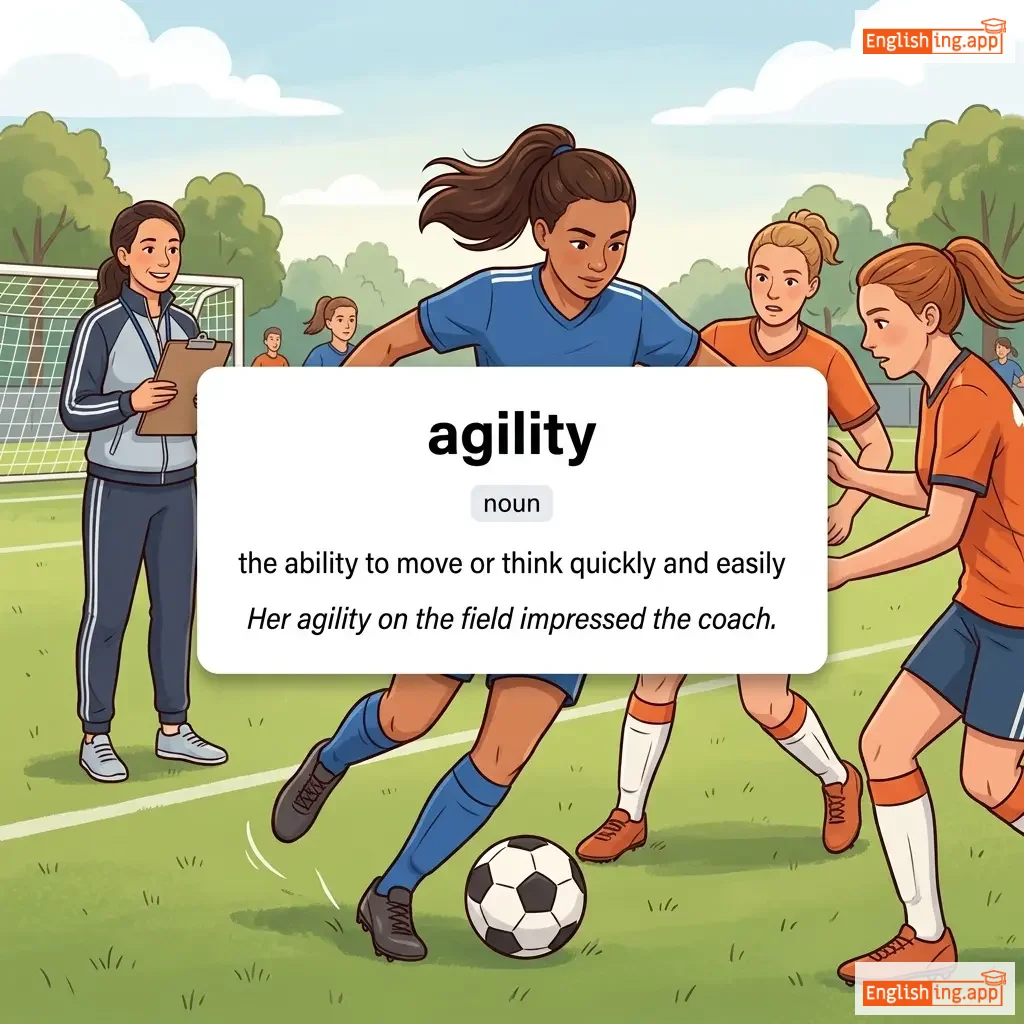
the ability to move or think quickly and easily
••••••
|
Her agility on the field impressed the coach. |
彼女のフィールドでの敏捷性はコーチに感銘を与えました。
Kanojo no fīrudo de no binjōsei wa kōchi ni kanmei o ataemashita.
••••••
|
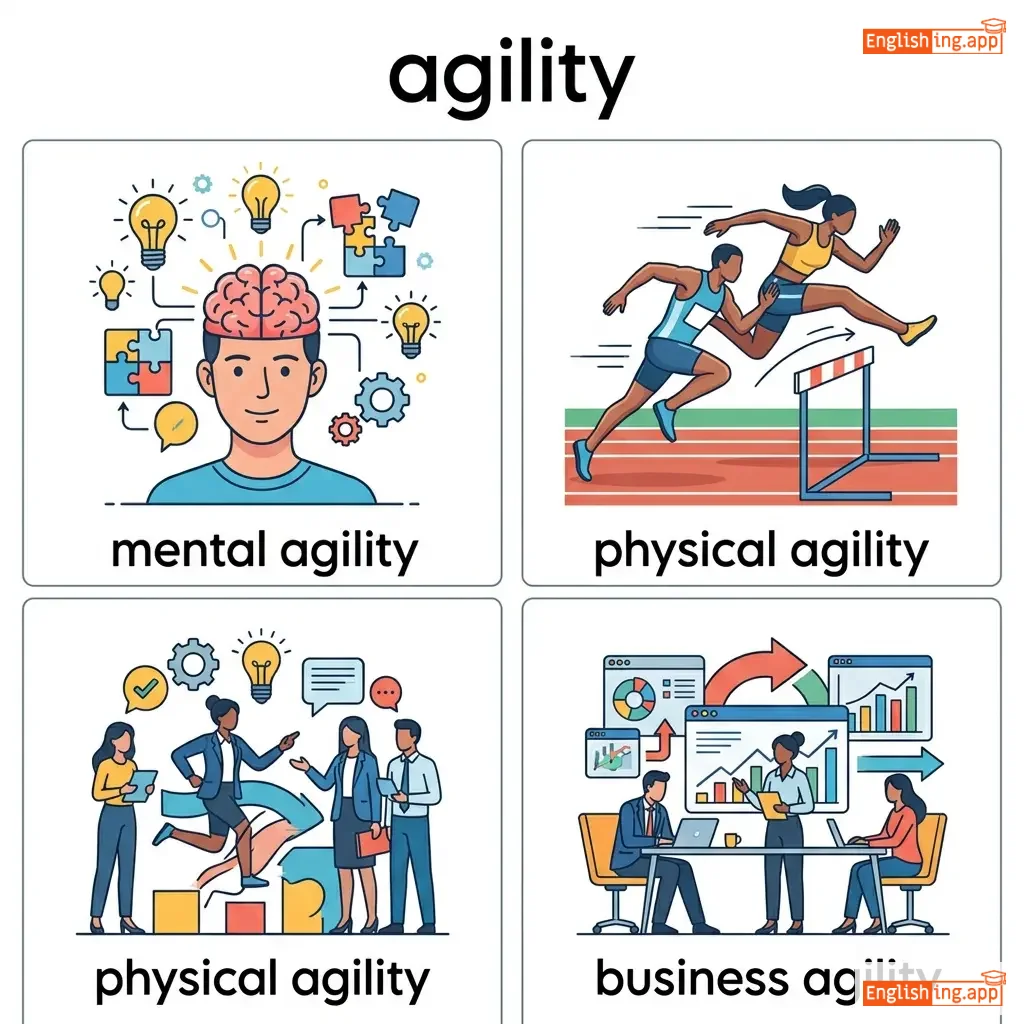
mental agility |
the ability to think quickly and clearly
••••••
|
精神的敏捷性
seishinteki binjōsei
••••••
|
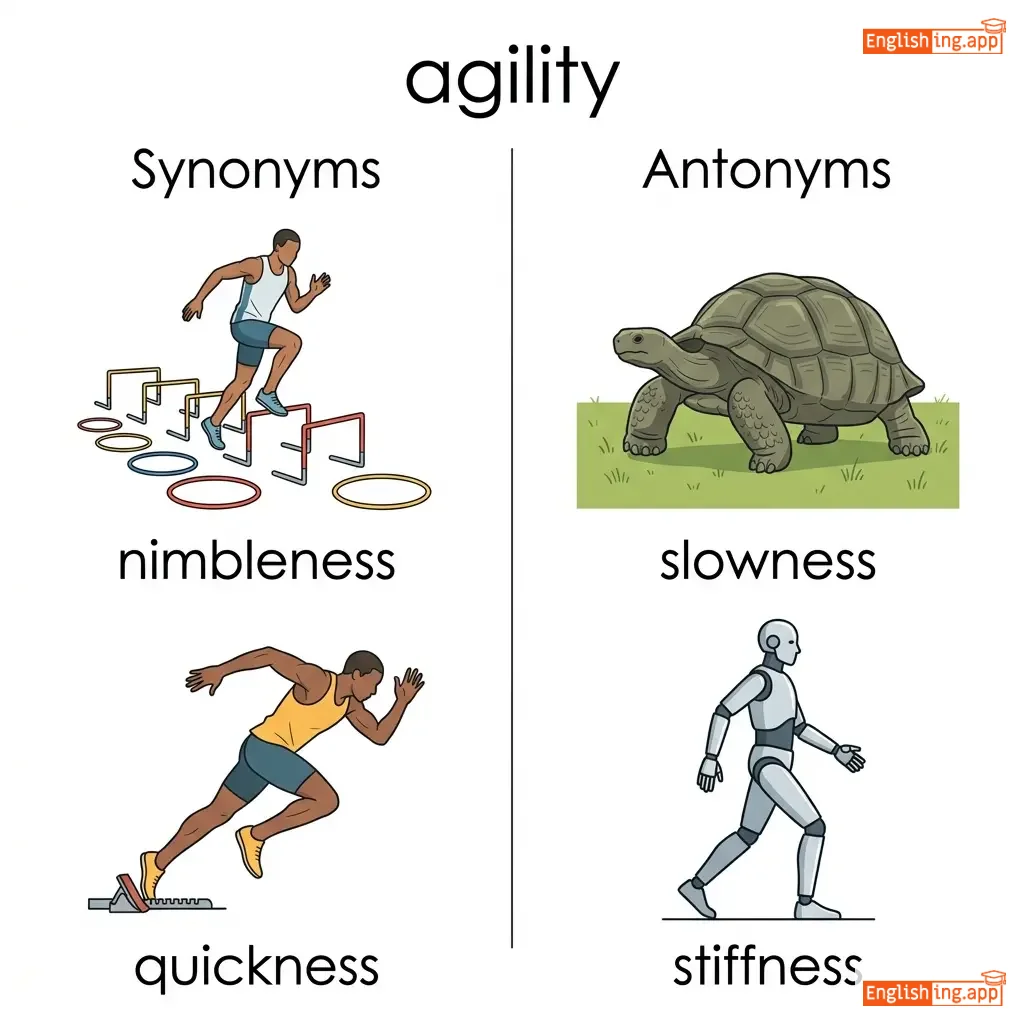
nimbleness, quickness, flexibility, swiftness, dexterity
••••••
|
slowness, stiffness, rigidity
••••••
|
mental agility, physical agility, business agility
••••••
|
敏捷性は速く働く能力を意味します ⚡
••••••
|
|
#251
🤸
|
/ˈædʒ.aɪl/
adjective
(エイジャイル)
••••••
|
- •••••• |
素早く柔軟
subayaku jūnan
••••••
|
- •••••• | - •••••• | - •••••• | - •••••• |
able to move quickly and easily; quick and adaptable in thinking or action
••••••
|
The startup team was agile in responding to market changes.
スタートアップチームは市場の変化に迅速に対応しました。
••••••
|
スタートアップチームは市場の変化に迅速に対応しました。
Sutātoappu chīmu wa shijō no henka ni jinsoku ni taio shimashita.
••••••
|
agile mind
アジャイルな思考
••••••
|
a quick and flexible way of thinking
••••••
|
アジャイルな思考
ajairu na shikō
••••••
|
nimble, quick, flexible, adaptive, brisk
••••••
|
clumsy, sluggish, stiff
••••••
|
agile development, agile methodology, agile team, agile mind
••••••
|
Agileは素早く反応することです。日本語では‘素早く柔軟’
••••••
|
|
#252
😱
|
/əˈɡæst/
adjective
(エガスト)
••••••
|
- •••••• |
驚愕
kyougaku
••••••
|
- •••••• | - •••••• | - •••••• | - •••••• |
filled with shock or horror
••••••
|
The audience was aghast at the tragic scene. |
観客はその悲劇的なシーンに驚愕していた。
Kankyaku wa sono higekiteki na shīn ni kyōgaku shite ita.
••••••
|
- •••••• | - •••••• | - •••••• |
horrified, shocked, appalled, stunned
••••••
|
calm, composed, indifferent
••••••
|
look aghast, aghast at, utterly aghast
••••••
|
Aghastは驚愕を意味する 😱
••••••
|
|
#253
😔
|
/əˈɡriːv/
verb
(アグリーブ)
••••••
|
- •••••• |
傷つける
kizutsukeru
••••••
|
aggrieved
アグリーブド
••••••
|
aggrieved
アグリーブド
••••••
|
aggrieves
アグリーブス
••••••
|
aggrieving
アグリーヴィング
••••••
|
to cause distress or make someone feel resentful
••••••
|
She felt aggrieved by the unfair decision.
彼女は不公平な決定に心を痛めていた。
••••••
|
彼女は不公平な決定に心を痛めていた。
Kanojo wa fukōhei na kettei ni kokoro o itamete ita.
••••••
|
- •••••• | - •••••• | - •••••• |
distress, upset, offend, wrong
••••••
|
please, comfort, satisfy
••••••
|
feel aggrieved, deeply aggrieved, aggrieved party
••••••
|
Aggrieve = Grief (悲しみ) を与える
••••••
|
|
#254
🔥
|
/əˈɡrɛsɪv/
adjective
(アグレッシブ)
••••••
|
- •••••• |
攻撃的
kōgeki-teki
••••••
|
- •••••• | - •••••• | - •••••• | - •••••• |
ready or likely to attack or confront; forceful
••••••
|
The salesman used an aggressive strategy to close the deal. |
営業マンは契約を結ぶために攻撃的な戦略を使用しました。
Eigyō-man wa keiyaku o musubu tame ni kōgeki-teki na senryaku o shiyō shimashita.
••••••
|
aggressive marketing |
forceful and energetic marketing approach
••••••
|
攻撃的なマーケティング
kōgeki-teki na mākettingu
••••••
|
hostile, forceful, pushy, combative, assertive
••••••
|
gentle, passive, calm
••••••
|
aggressive behavior, aggressive strategy, aggressive attitude, aggressive marketing
••••••
|
Aggressive は虎のように強い (🐯)、覚えやすい
••••••
|
|
#255
💥
|
/əˈɡrɛʃən/
noun
(アグレッション)
••••••
|
- •••••• |
攻撃性
kougekisei
••••••
|
- •••••• | - •••••• | - •••••• | - •••••• |
hostile or violent behavior towards others
••••••
|
His sudden aggression surprised everyone in the meeting. |
彼の突然の攻撃性は会議で誰もが驚いた。
Kare no totsuzen no kougekisei wa kaigi de dare mo ga odoroita.
••••••
|
acts of aggression |
hostile actions or attacks
••••••
|
攻撃行動
kougeki koudou
••••••
|
hostility, attack, violence, assault
••••••
|
peace, calm, friendliness
••••••
|
show aggression, physical aggression, military aggression, acts of aggression
••••••
|
Aggression 覚えておいて AGain GREssy (怒りっぽい) は攻撃性を意味します
••••••
|
|
#256
🤼
|
/əˈfreɪ/
noun
(アフレイ)
••••••
|
- •••••• |
公開喧嘩
koukai kenka
••••••
|
- •••••• | - •••••• | - •••••• | - •••••• |
A public fight or noisy disturbance that causes alarm.
••••••
|
The police were called to break up an affray outside the stadium.
警察はスタジアム外での喧嘩を止めるために呼ばれました。
••••••
|
警察はスタジアム外での喧嘩を止めるために呼ばれました。
Keisatsu wa sutajiamu-gai de no kenka o tomeru tame ni yoba remashita.
••••••
|
- •••••• | - •••••• | - •••••• |
brawl, fight, fracas, scuffle, melee
••••••
|
peace, calm, harmony
••••••
|
public affray, violent affray, involved in an affray, affray charge
••••••
|
Affrayを聞いたら'公開喧嘩'と思い出してください。大きな音や喧嘩が人々を驚かせます。
••••••
|
|
#257
➕
|
/ˈæɡ.rɪ.ɡət/ (noun/adjective), /ˈæɡ.rɪ.ɡeɪt/ (verb)
noun, verb, adjective
(アグリゲート)
••••••
|
|
集合体, 総体
shūgōtai, sōtai
••••••
|
aggregated
アグリゲイテッド
••••••
|
aggregated
アグリゲイテッド
••••••
|
aggregates
アグリゲイツ
••••••
|
aggregating
アグリゲイティング
••••••
|
A whole formed by combining several elements; to combine into a total.
••••••
|
The data was aggregated to provide a clearer picture of the market.
データは市場のより明確な画像を提供するために集約されました。
••••••
|
データは市場のより明確な画像を提供するために集約されました。
Dēta wa shijō no yori meikaku na gazō o teikyō suru tame ni shūyaku saremashita.
••••••
|
- •••••• | - •••••• | - •••••• |
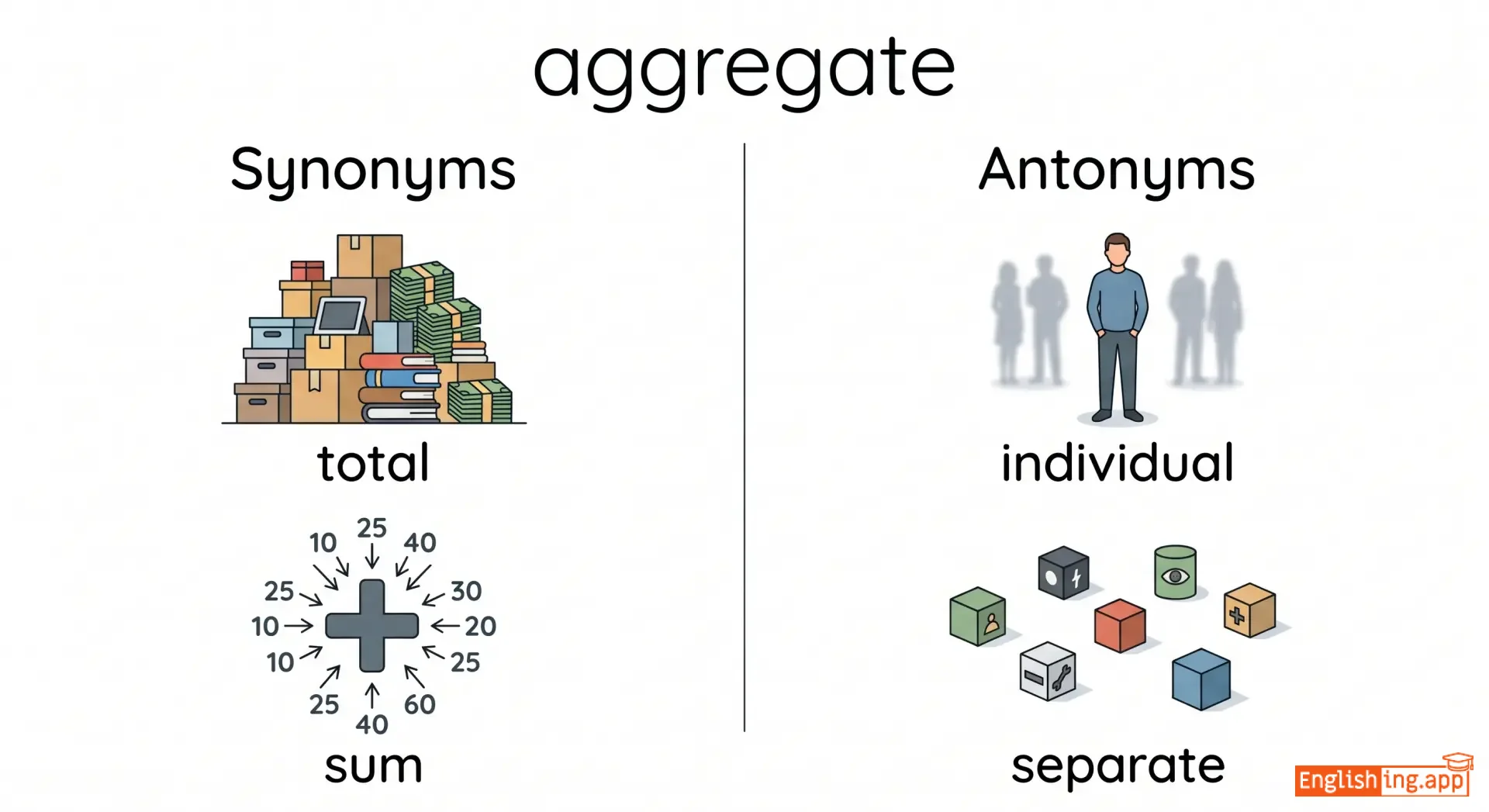
total, sum, collection, accumulate
••••••
|
individual, separate, divide
••••••
|
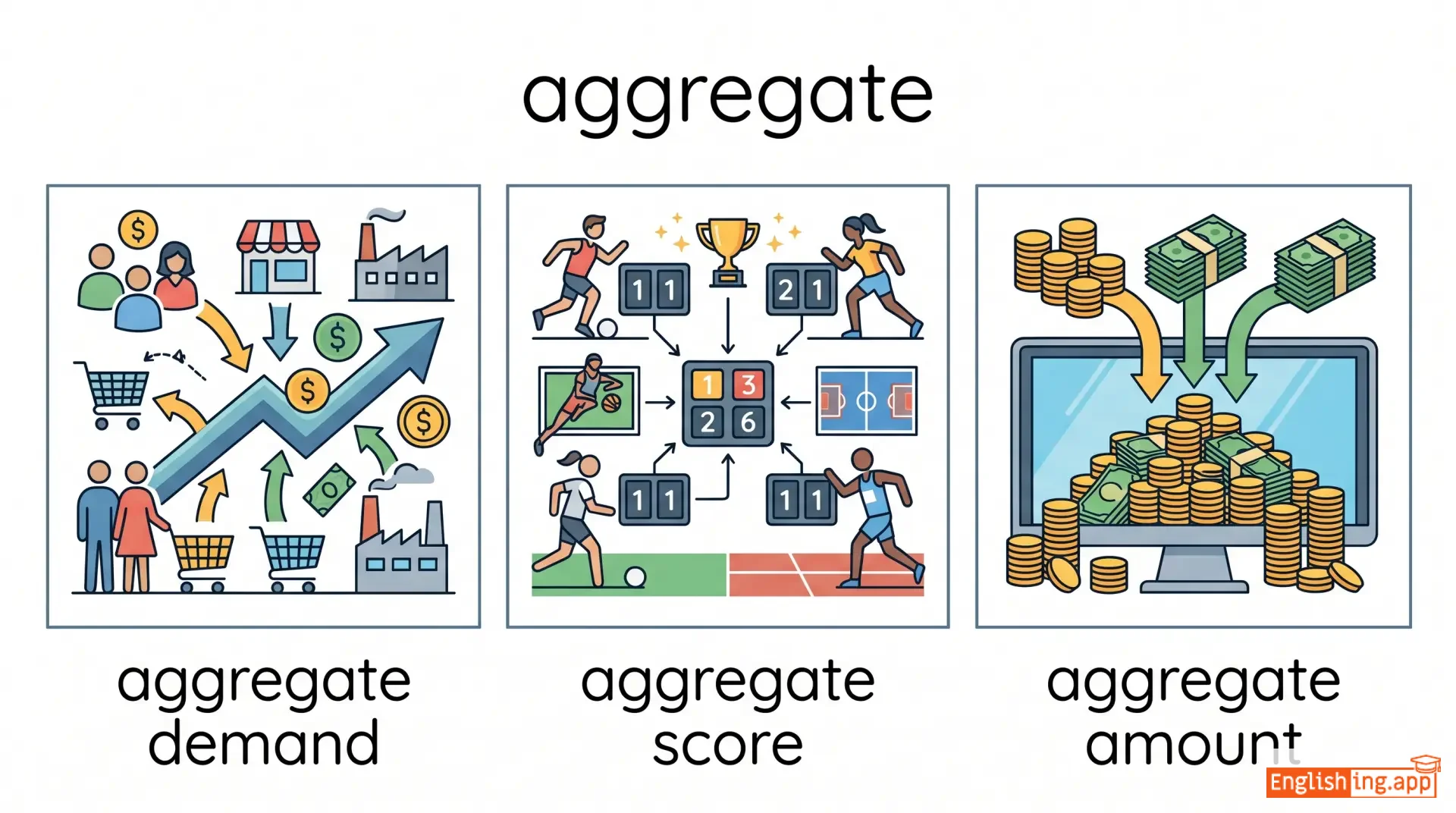
aggregate demand, aggregate score, aggregate amount, aggregate data
••••••
|
Aggregateはすべてを一緒にして大きな集合体を作ることです。
••••••
|
|
#258
😠
|
/ˌæɡ.rəˈveɪ.ʃən/
noun
(アグラヴェーション)
••••••
|
- •••••• |
悪化, 増悪
aguravēshon
••••••
|
- •••••• | - •••••• | - •••••• | - •••••• |
The act of making a situation worse or the state of being worsened.
••••••
|
The delay caused great aggravation for the passengers. |
遅延は乗客に大きな不快感を引き起こしました。
Chien wa jōkyaku ni ōkina fukaikan o hikiokoshimashita.
••••••
|
- •••••• | - •••••• | - •••••• |
irritation, worsening, annoyance, provocation
••••••
|
relief, improvement, ease
••••••
|
cause aggravation, great aggravation, constant aggravation
••••••
|
Aggravationは状況を悪化させることで、さらなる不快を引き起こします。
••••••
|
|
#259
⚠️
|
/ˈæɡ.rə.veɪt/
verb
(アグレヴェイト)
••••••
|
- •••••• |
悪化させる
akka saseru
••••••
|
aggravated
アグレヴェイテッド
••••••
|
aggravated
アグレヴェイテッド
••••••
|
aggravates
アグレヴェイツ
••••••
|
aggravating
アグレヴェイティング
••••••
|
To make a situation worse or more serious.
••••••
|
Scratching the rash will only aggravate the condition.
発疹をかくことは、状態を悪化させるだけです。
••••••
|
発疹をかくことは、状態を悪化させるだけです。
Hasshin wo kaku koto wa, joutai wo akka saseru dake desu.
••••••
|
- •••••• | - •••••• | - •••••• |
worsen, intensify, exacerbate, inflame
••••••
|
relieve, ease, alleviate
••••••
|
aggravate pain, aggravate situation, aggravate condition
••••••
|
Aggravateは悪化させる意味がある。悪い状態をさらに悪化させる。
••••••
|
|
#260
📈
|
/əˈɡræn.daɪz/
verb
(アグランダイズ)
••••••
|
|
拡大する
kakudai suru
••••••
|
aggrandized
アグランダイズド
••••••
|
aggrandized
アグランダイズド
••••••
|
aggrandizes
アグランダイズズ
••••••
|
aggrandizing
アグランダイジング
••••••
|
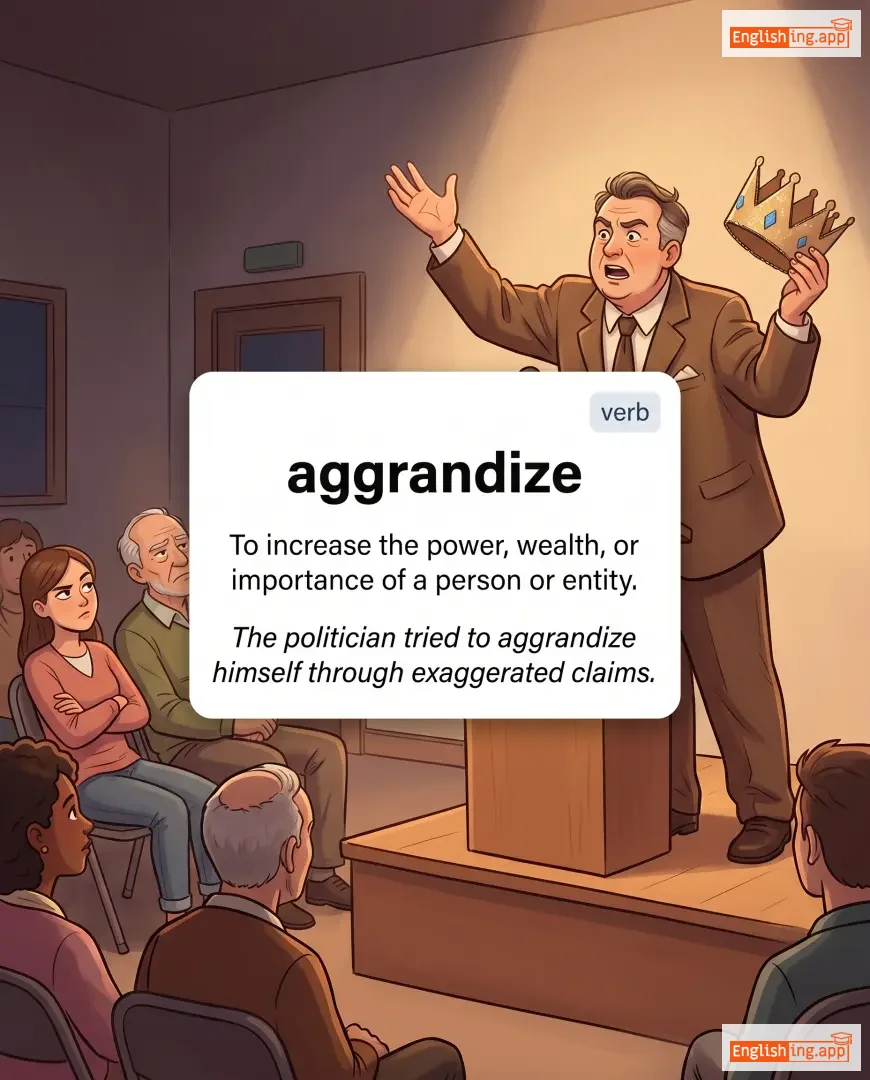
To increase the power, wealth, or importance of a person or entity.
••••••
|
The politician tried to aggrandize himself through exaggerated claims.
政治家は誇張された主張を通じて自分を拡大しようとした。
••••••
|
政治家は誇張された主張を通じて自分を拡大しようとした。
Seijika wa kojō sareta shuchō o tōjite jibun o kakudai shiyō to shita.
••••••
|
- •••••• | - •••••• | - •••••• |
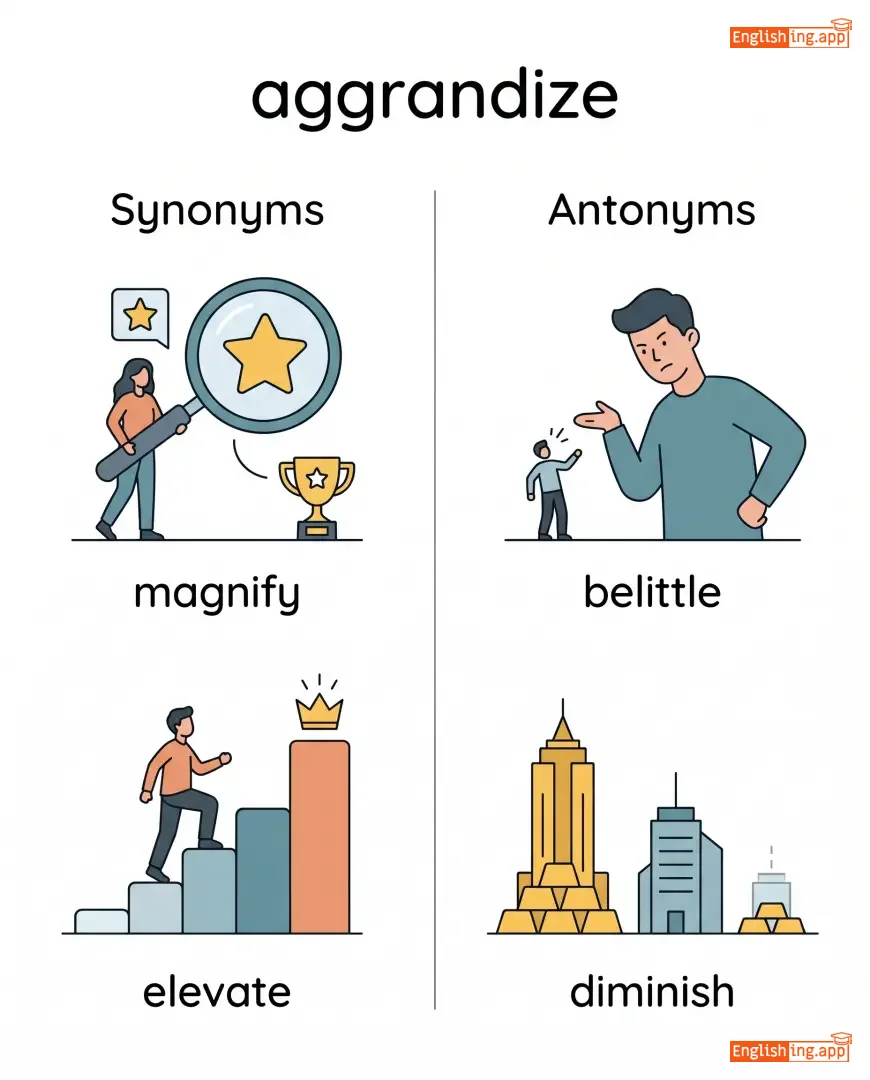
magnify, elevate, exalt, glorify
••••••
|
belittle, diminish, humiliate
••••••
|
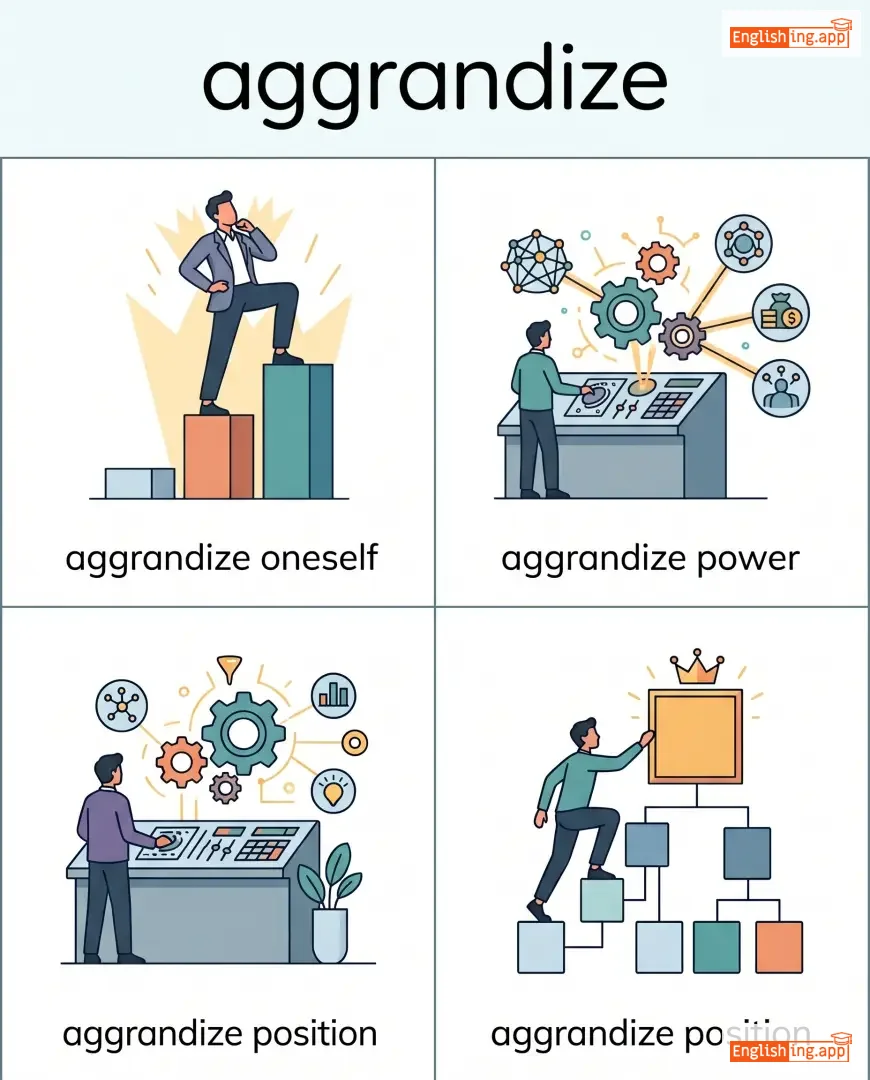
aggrandize oneself, aggrandize power, aggrandize position
••••••
|
Aggrandize は誰かをより大きくすることを意味します。
••••••
|
|
#261
🏙️
|
/əˌɡlɒməˈreɪʃən/
noun
(アグロメレーション)
••••••
|
- •••••• |
集積
shūseki
••••••
|
- •••••• | - •••••• | - •••••• | - •••••• |
A mass or collection of things, sometimes clustered together.
••••••
|
The city is an agglomeration of diverse cultures and communities. |
その都市はさまざまな文化とコミュニティの集積です。
Sono toshi wa samazama na bunka to komyuniti no shūseki desu.
••••••
|
- •••••• | - •••••• | - •••••• |
cluster, accumulation, collection, mass, grouping
••••••
|
separation, division, dispersal
••••••
|
urban agglomeration, industrial agglomeration, agglomeration of people
••••••
|
Agglomerationはすべてを集めて一緒にする意味です、まるで集積。
••••••
|
|
#262
🌀
|
/əˈɡlɒməˌreɪt/
verb
(アグロメレート)
••••••
|
- •••••• |
凝集する
gyoushu suru
••••••
|
agglomerated
アグロメレーテッド
••••••
|
agglomerated
アグロメレーテッド
••••••
|
agglomerates
アグロメレーツ
••••••
|
agglomerating
アグロメレーティング
••••••
|
To collect or form into a mass or group.
••••••
|
The dust particles began to agglomerate into larger clusters.
埃の粒子がより大きな塊に集まり始めました。
••••••
|
埃の粒子がより大きな塊に集まり始めました。
Hōki no ryūshi ga yori ōkina katamari ni atsumari hajimemashita.
••••••
|
- •••••• | - •••••• | - •••••• |
gather, cluster, collect, accumulate, assemble
••••••
|
disperse, scatter, separate
••••••
|
agglomerate particles, agglomerate materials, agglomerate into
••••••
|
Agglomerate = All Glow Mate = すべてのものを友達のように集める。
••••••
|
|
#263
📋
|
/əˈdʒɛndə/
noun
••••••
|
- •••••• | - •••••• | - •••••• | - •••••• | - •••••• | - •••••• |
A list of items to be discussed or acted upon in a meeting or plan.
••••••
|
The manager reviewed the agenda before the meeting began. |
- •••••• |
hidden agenda |
A secret motive or plan behind someone's actions.
••••••
|
- •••••• |
schedule, plan, program, timetable, itinerary
••••••
|
disorganization, randomness
••••••
|
meeting agenda, set the agenda, hidden agenda
••••••
|
No •••••• |
|
#264
😲
|
/əˈɡeɪp/ or /əˈɡɑːp/
adjective
(アガペ)
••••••
|
- •••••• |
驚愕
kyōgaku
••••••
|
- •••••• | - •••••• | - •••••• | - •••••• |
With the mouth wide open in surprise or wonder.
••••••
|
She stood agape at the breathtaking view.
彼女は息を呑むような景色に驚いて口を開けたまま立っていた。
••••••
|
彼女は息を呑むような景色に驚いて口を開けたまま立っていた。
Kanojo wa iki o nomu yō na keshiki ni odoroite kuchi o aketa mama tatte ita.
••••••
|
- •••••• | - •••••• | - •••••• |
astonished, amazed, open-mouthed, dumbfounded
••••••
|
composed, closed, indifferent
••••••
|
stood agape, mouth agape, eyes agape
••••••
|
Agape = 口を開ける (驚愕)
••••••
|
|
#265
💭
|
/ˈæftərˌθɔːt/
noun
••••••
|
- •••••• | - •••••• | - •••••• | - •••••• | - •••••• | - •••••• |
Something added or considered later than originally planned.
••••••
|
The gift seemed like an afterthought rather than a genuine gesture. |
- •••••• | - •••••• | - •••••• | - •••••• |
reflection, reconsideration, postscript, addition
••••••
|
plan, intention, forethought
••••••
|
added as an afterthought, just an afterthought, seemed like an afterthought
••••••
|
No •••••• |
|
#266
🌌
|
/ˈæftərˌlaɪf/
noun
••••••
|
- •••••• | - •••••• | - •••••• | - •••••• | - •••••• | - •••••• |
Life or existence that some believe continues after physical death.
••••••
|
Many cultures have different beliefs about the afterlife. |
- •••••• |
life after death |
The continuation of existence beyond physical death.
••••••
|
- •••••• |
hereafter, eternity, beyond, next world, immortality
••••••
|
life, mortality, existence
••••••
|
belief in the afterlife, journey to the afterlife, afterlife experiences
••••••
|
No •••••• |
|
#267
🌱
|
/əˈfrɛʃ/
adverb
(アフレッシュ)
••••••
|
- •••••• |
再び
futatabi
••••••
|
- •••••• | - •••••• | - •••••• | - •••••• |
From the beginning, in a new way.
••••••
|
After the failure, they started the project afresh.
失敗後、彼らは新たにプロジェクトを始めた。
••••••
|
失敗後、彼らは新たにプロジェクトを始めた。
Shippai go, karera wa aratani purojekuto o hajimeta.
••••••
|
- •••••• | - •••••• | - •••••• |
anew, again, once more, newly, recently
••••••
|
continuously, endlessly
••••••
|
start afresh, begin afresh, live afresh, think afresh
••••••
|
Afresh は新たに始めること、再び始めることです。
••••••
|
|
#268
📜
|
/əˈfɔːrˌsɛd/
adjective
(アフォアセッド)
••••••
|
- •••••• |
前述
zenshutsu
••••••
|
- •••••• | - •••••• | - •••••• | - •••••• |
Mentioned earlier; previously stated.
••••••
|
The aforesaid conditions must be met before the contract is signed.
前述の条件は、契約に署名する前に満たす必要があります。
••••••
|
契約に署名する前に前述の条件を満たさなければなりません。
Keiyaku ni shomei suru mae ni zenshutsu no jōken o mitasenakereba narimasen.
••••••
|
- •••••• | - •••••• | - •••••• |
previously mentioned, aforementioned, earlier, stated, cited
••••••
|
unmentioned, unstated
••••••
|
aforesaid statement, aforesaid terms, aforesaid matter, aforesaid conditions
••••••
|
Aforesaid は日本語で「前述」と言います。
••••••
|
|
#269
🚶
|
/əˈfʊt/
adjective, adverb
(アフット)
••••••
|
- •••••• |
進行中
shinkouchuu
••••••
|
- •••••• | - •••••• | - •••••• | - •••••• |
In progress; happening or being prepared.
••••••
|
There are several new projects afoot in the company.
会社にはいくつかの新しいプロジェクトが進行中です。
••••••
|
会社にはいくつかの新しいプロジェクトが進行中です。
Kaisha ni wa ikutsuka no atarashii purojekuto ga shinkouchuu desu.
••••••
|
plans afoot
進行中の計画
••••••
|
plans that are in progress or being arranged
••••••
|
進行中の計画
shinkouchuu no keikaku
••••••
|
ongoing, happening, occurring, underway, brewing
••••••
|
finished, completed, ended
••••••
|
plans afoot, schemes afoot, changes afoot, new developments afoot
••••••
|
Afoot は '進行中' を意味します。なぜなら、進行しているからです。
••••••
|
|
#270
😠
|
/əˈfrʌnt/
noun, verb
(アフロント)
••••••
|
- •••••• |
侮辱
bujoku
••••••
|
affronted
アフロントデッド
••••••
|
affronted
アフロントデッド
••••••
|
affronts
アフロントス
••••••
|
affronting
アフロントイング
••••••
|
An action or remark that causes outrage or offense.
••••••
|
He took her criticism as a personal affront.
彼は彼女の批判を個人的な侮辱と受け止めた。
••••••
|
彼は彼女の批判を個人的な侮辱と受け止めた。
Kare wa kanojo no hihan o kojinteki na bujoku to uketometa.
••••••
|
- •••••• | - •••••• | - •••••• |
insult, offense, indignity, slight, provocation
••••••
|
compliment, praise, respect
••••••
|
personal affront, feel affronted, affront to dignity, deliberate affront
••••••
|
Affrontは直接(front)侮辱することを意味する!
••••••
|
Vocabulary Quiz
Test your vocabulary by matching words with their translations or meanings.
Login to take the quiz
Comments (0)
Share your thoughts and join the discussion.
Join the discussion by logging in
Login to CommentNo comments yet
Be the first to share your thoughts!