

翻訳
過去
過去分詞
三人称単数
動名詞
意味
例文
例文の翻訳
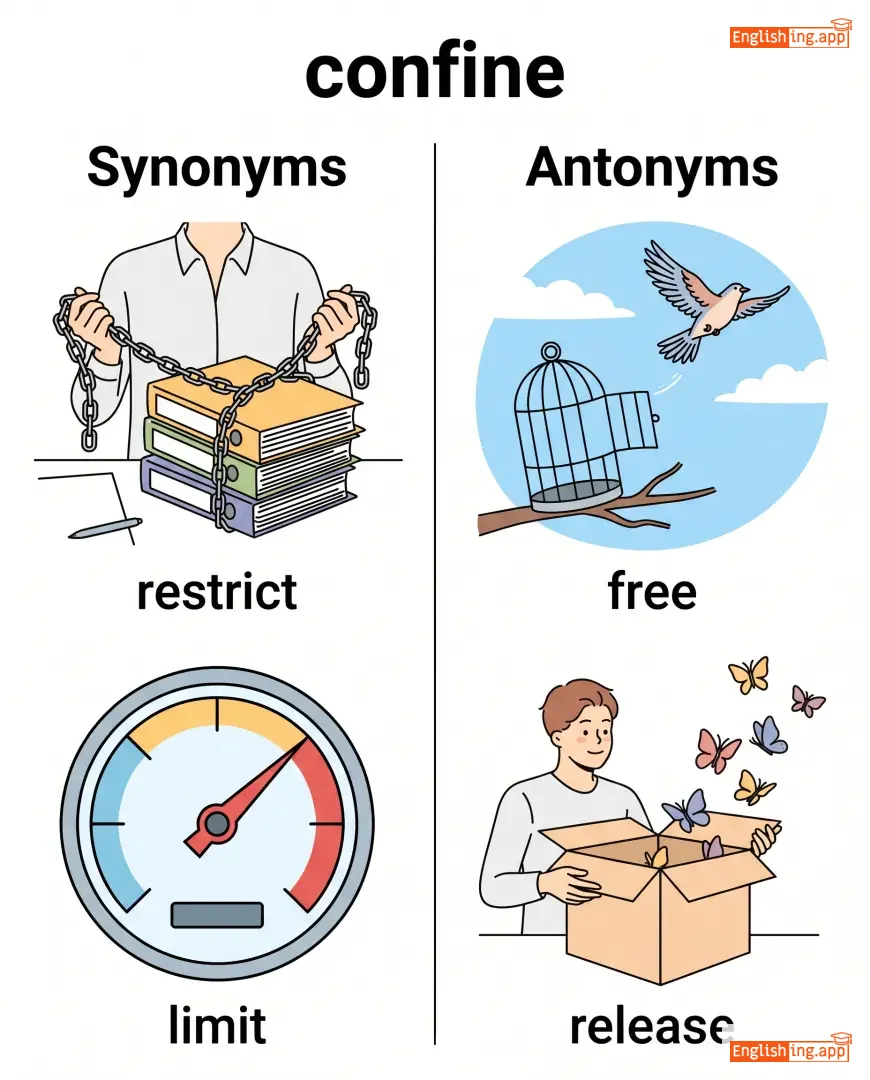
同義語
対義語
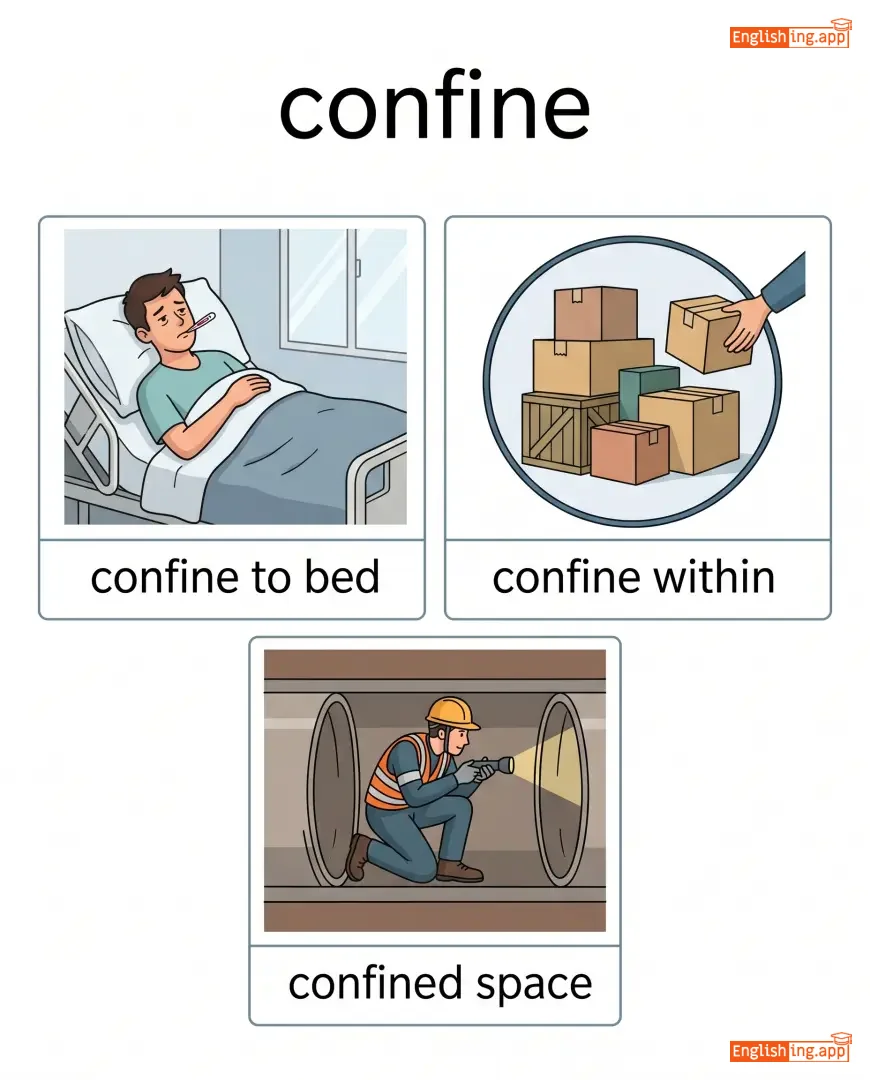
コロケーション
ニーモニック

Swipe left or right, or use the buttons. Tap image to zoom.
例文の翻訳
単語
Lesson 58Lesson 58 - マスクトグル
|
絵文字
|
単語 | Images | 翻訳 | 過去 | 過去分詞 | 三人称単数 | 動名詞 | 意味 | 例文 | 例文の翻訳 | 表現例 | 表現例の意味 | 表現例の翻訳 | 同義語 | 対義語 | コロケーション | ニーモニック |
|---|---|---|---|---|---|---|---|---|---|---|---|---|---|---|---|---|---|
|
#1711
✍️
|
/ˌkɒnfləˈɡreɪʃən/
noun
(コンフラグレーション)
••••••
|
- •••••• |
綴り間違い('conflagration'の)
tsuzuri machigai ('conflagration' no)
••••••
|
- •••••• | - •••••• | - •••••• | - •••••• |
This is a common misspelling of 'conflagration', which means a large, destructive fire.
••••••
|
The term 'conflagaration' is often incorrectly used instead of 'conflagration'. |
'Conflagaration'という言葉は、しばしば'conflagration'の代わりに誤って使われます。
'Conflagaration' to iu kotoba wa, shibashiba 'conflagration' no kawari ni ayamari tsukawaremasu.
••••••
|
- •••••• | - •••••• | - •••••• |
misspelling, error, mistake, typo
••••••
|
accuracy, correctness
••••••
|
common misspelling, frequent error, incorrect usage
••••••
|
Conflagaration = 綴り間違い、'conflagration'を覚えておいて 🔥
••••••
|
|
#1712
👶
|
/kənˈdʒenɪtl/
adjective
(コンジェニタル)
••••••
|
- •••••• |
先天的
senten-teki
••••••
|
- •••••• | - •••••• | - •••••• | - •••••• |
existing from birth, usually describing a disease or condition
••••••
|
The child was born with a congenital heart defect. |
その子供は先天的な心臓疾患を持って生まれました。
Sono kodomo wa senten-teki na shinzō shikkan o motte umaremashita.
••••••
|
- •••••• | - •••••• | - •••••• |
inborn, innate, hereditary, genetic
••••••
|
acquired, developed
••••••
|
congenital defect, congenital disorder, congenital abnormality
••••••
|
先天的とは生まれつき — 生まれながらにして持っているもの。
••••••
|
|
#1713
😊
|
/kənˈdʒiːniəl/
adjective
(コンジニアル)
••••••
|
|
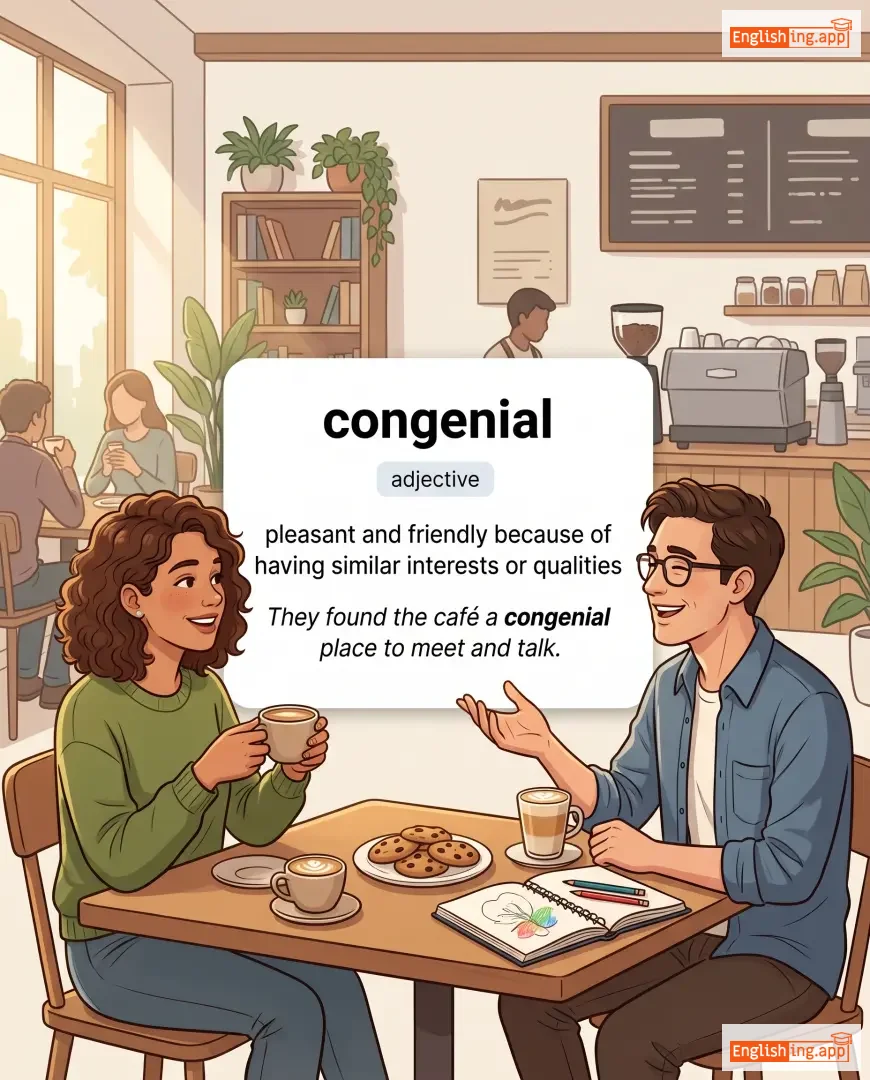
親しみやすい
shitashimi yasui
••••••
|
- •••••• | - •••••• | - •••••• | - •••••• |
pleasant and friendly because of having similar interests or qualities
••••••
|
They found the café a congenial place to meet and talk. |
彼らはそのカフェを、会って話すのに適した親しみやすい場所だと感じました。
Karera wa sono kafe o, atte hanasu no ni tekishita shitashimi yasui basho da to kanjimashita.
••••••
|
- •••••• | - •••••• | - •••••• |
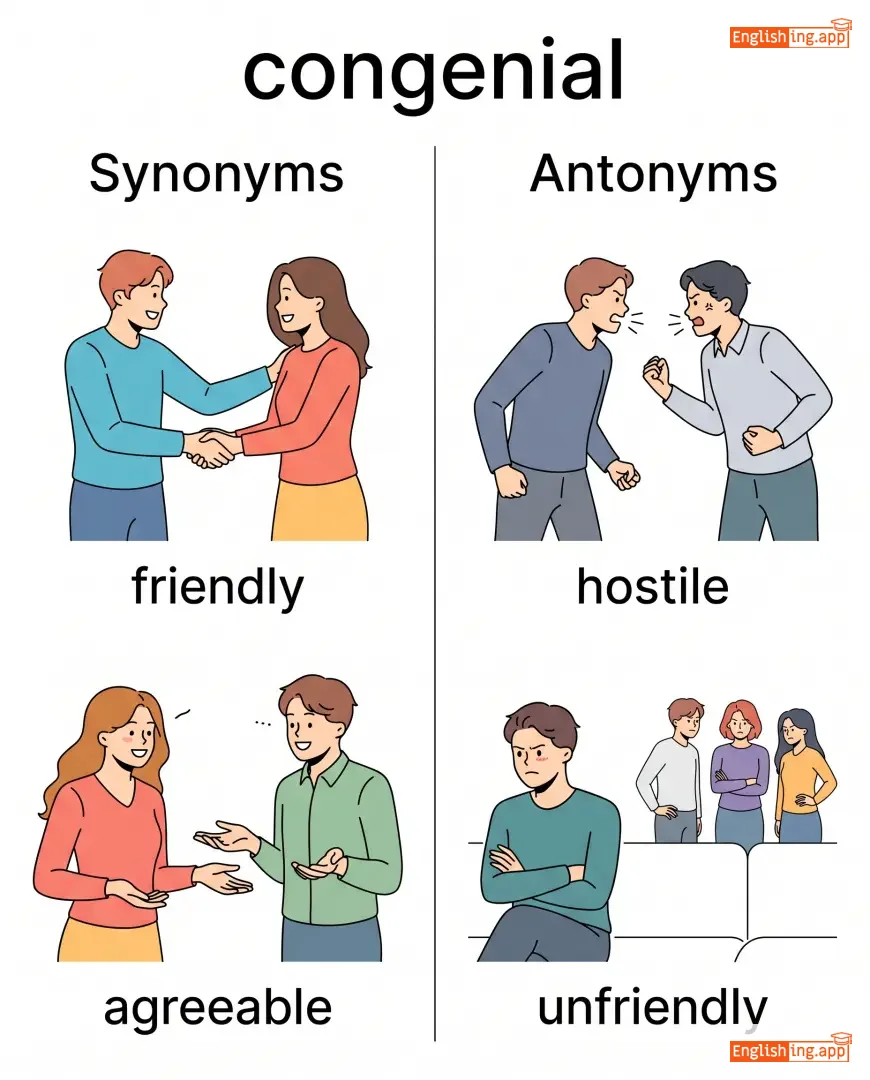
friendly, agreeable, pleasant, compatible
••••••
|
hostile, unfriendly, disagreeable
••••••
|
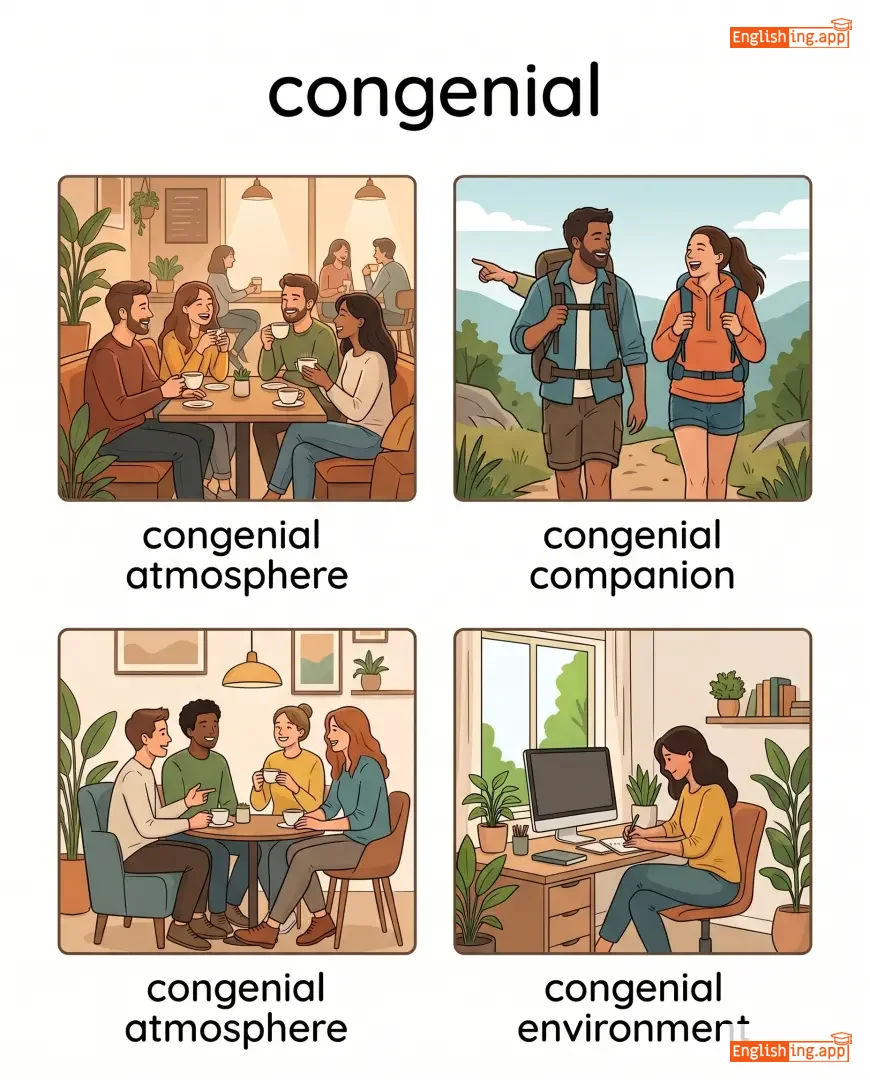
congenial atmosphere, congenial companion, congenial environment
••••••
|
Congenialは親しみやすい意味です — 友達と一緒に過ごすような場所!
••••••
|
|
#1714
🥶
|
/kənˈdʒiːl/
verb
(コンジール)
••••••
|
- •••••• |
固まる
katamaru
••••••
|
congealed
コンジールド
••••••
|
congealed
コンジールド
••••••
|
congeals
コンジールズ
••••••
|
congealing
コンジーリング
••••••
|
to become thick or solid, especially from cooling
••••••
|
The soup began to congeal after being left on the table.
スープはテーブルに放置されると固まり始めた。
••••••
|
スープはテーブルに放置されると固まり始めた。
Sūpu wa tēburu ni hōchi sareru to katamari hajimeta.
••••••
|
- •••••• | - •••••• | - •••••• |
solidify, clot, thicken, harden
••••••
|
melt, liquefy
••••••
|
congeal into, congeal blood, congeal quickly
••••••
|
Congeal sounds like '固まる' which is like when something becomes solid or stiff from cold.
••••••
|
|
#1715
⚔️
|
/kənˈfrʌnt/
verb
(コンフロント)
••••••
|
- •••••• |
立ち向かう
tachi muka
••••••
|
confronted
コンフロントした
••••••
|
confronted
コンフロントされた
••••••
|
confronts
コンフロントする
••••••
|
confronting
コンフロントしている
••••••
|
to face someone or something directly, especially in a challenge or conflict
••••••
|
She had to confront her fears before making the speech.
彼女はスピーチをする前に恐怖と向き合わなければならなかった。
••••••
|
彼女はスピーチをする前に恐怖と向き合わなければならなかった。
Kanojo wa supīchi o suru mae ni kyōfu to mukiawanakereba naranakatta.
••••••
|
confront the issue
問題に立ち向かう
••••••
|
to directly deal with a problem instead of avoiding it
••••••
|
問題に立ち向かう
mondai ni tachimukau
••••••
|
face, challenge, oppose, encounter
••••••
|
avoid, evade, dodge
••••••
|
confront danger, confront the truth, confront directly, confront the problem
••••••
|
Confront は立ち向かうという意味 — 立ち向かって挑戦しよう!
••••••
|
|
#1716
🤯
|
/kənˈfaʊnd/
verb
••••••
|
|
- •••••• |
confounded
••••••
|
confounded
••••••
|
confounds
••••••
|
confounding
••••••
|
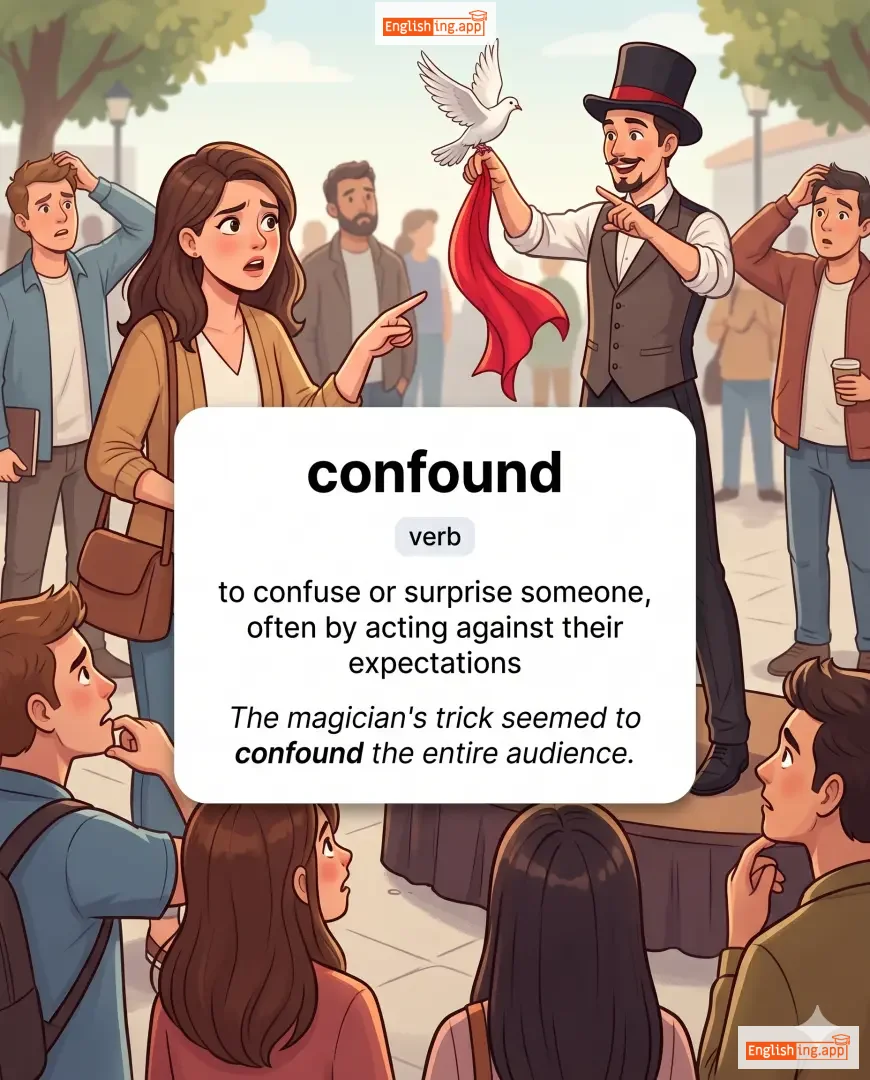
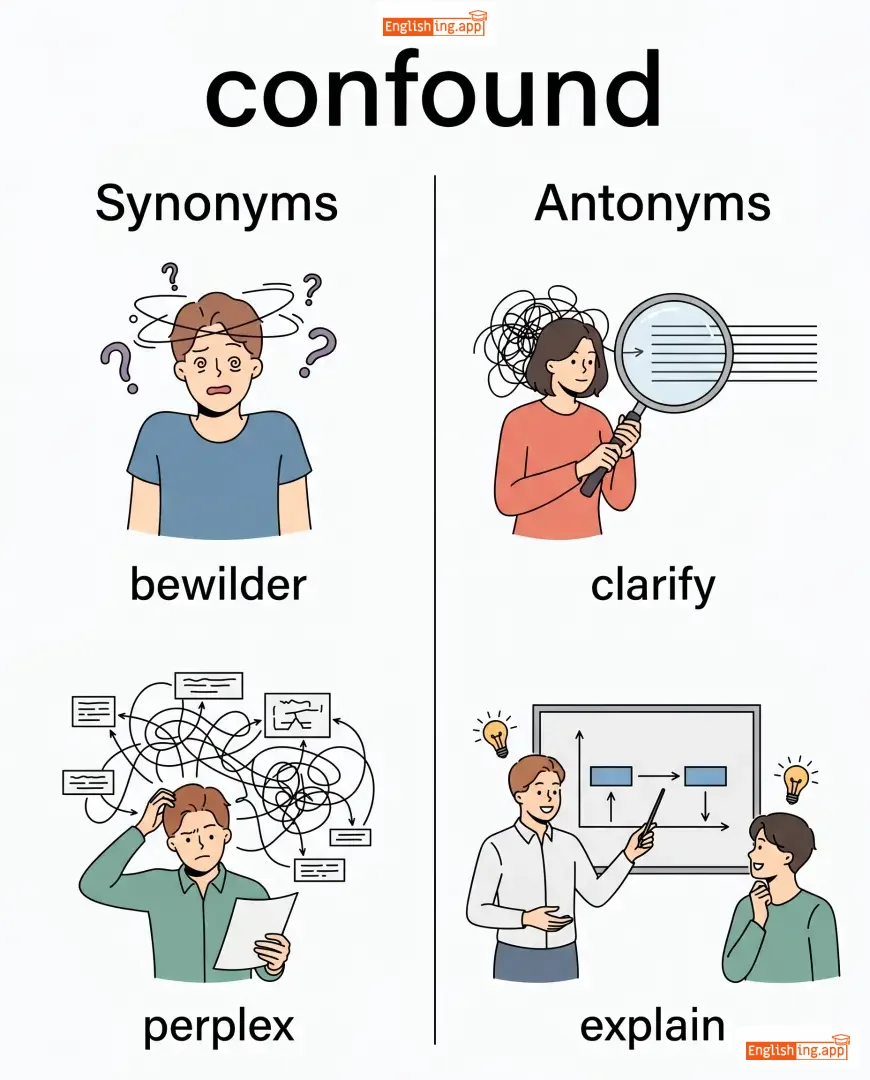
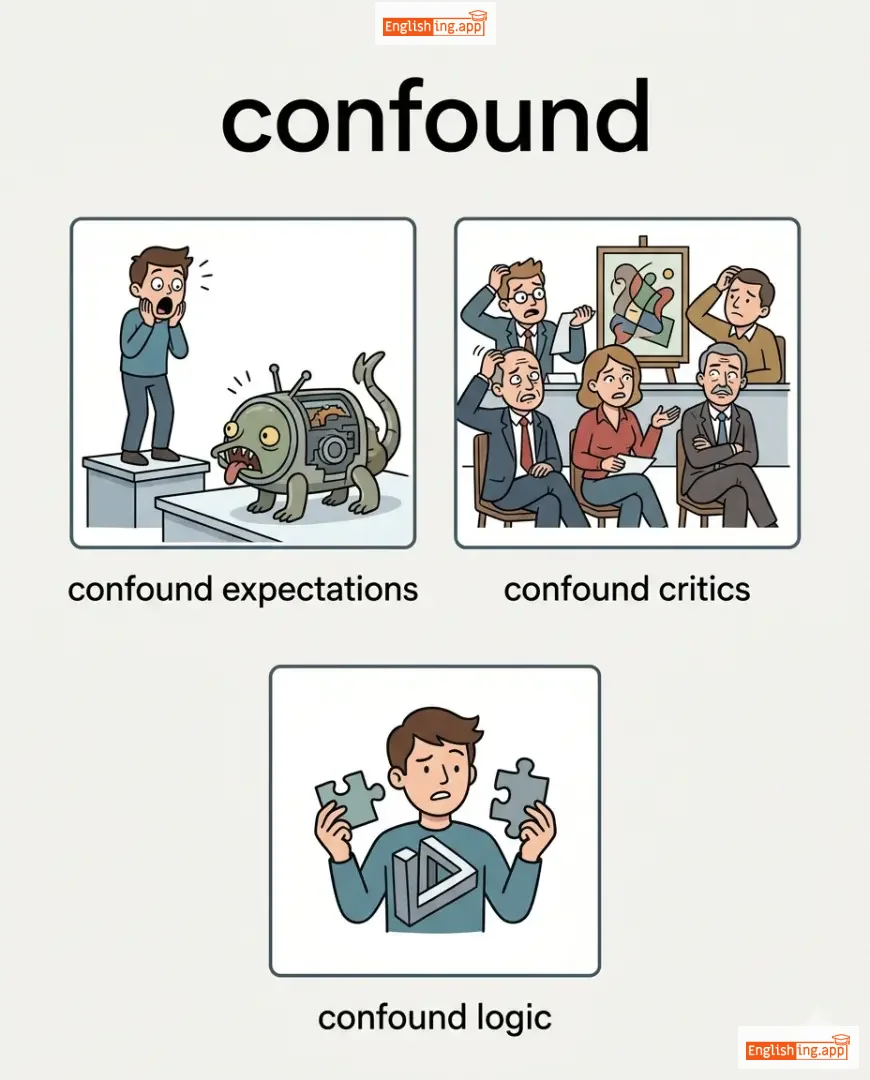
to confuse or surprise someone, often by acting against their expectations
••••••
|
The magician's trick seemed to confound the entire audience. |
- •••••• |
confound it |
an old-fashioned exclamation of annoyance or frustration
••••••
|
- •••••• |
bewilder, perplex, baffle, amaze, astonish
••••••
|
clarify, explain, enlighten
••••••
|
confound expectations, confound critics, confound logic, confound the mind
••••••
|
No •••••• |
|
#1717
📘
|
/kənˈfɔːrməti/
noun
(コンフォーミティ)
••••••
|
|
適合性
tekigousei
••••••
|
- •••••• | - •••••• | - •••••• | - •••••• |
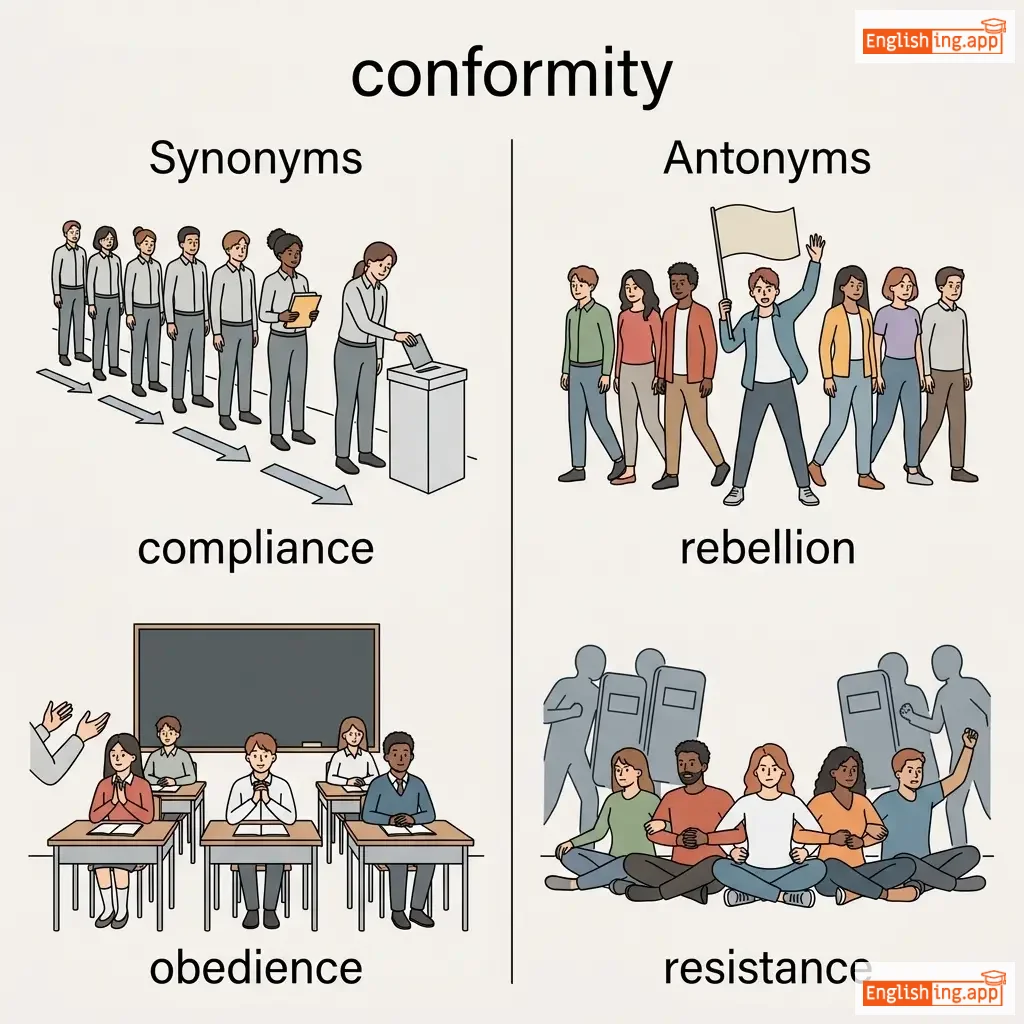
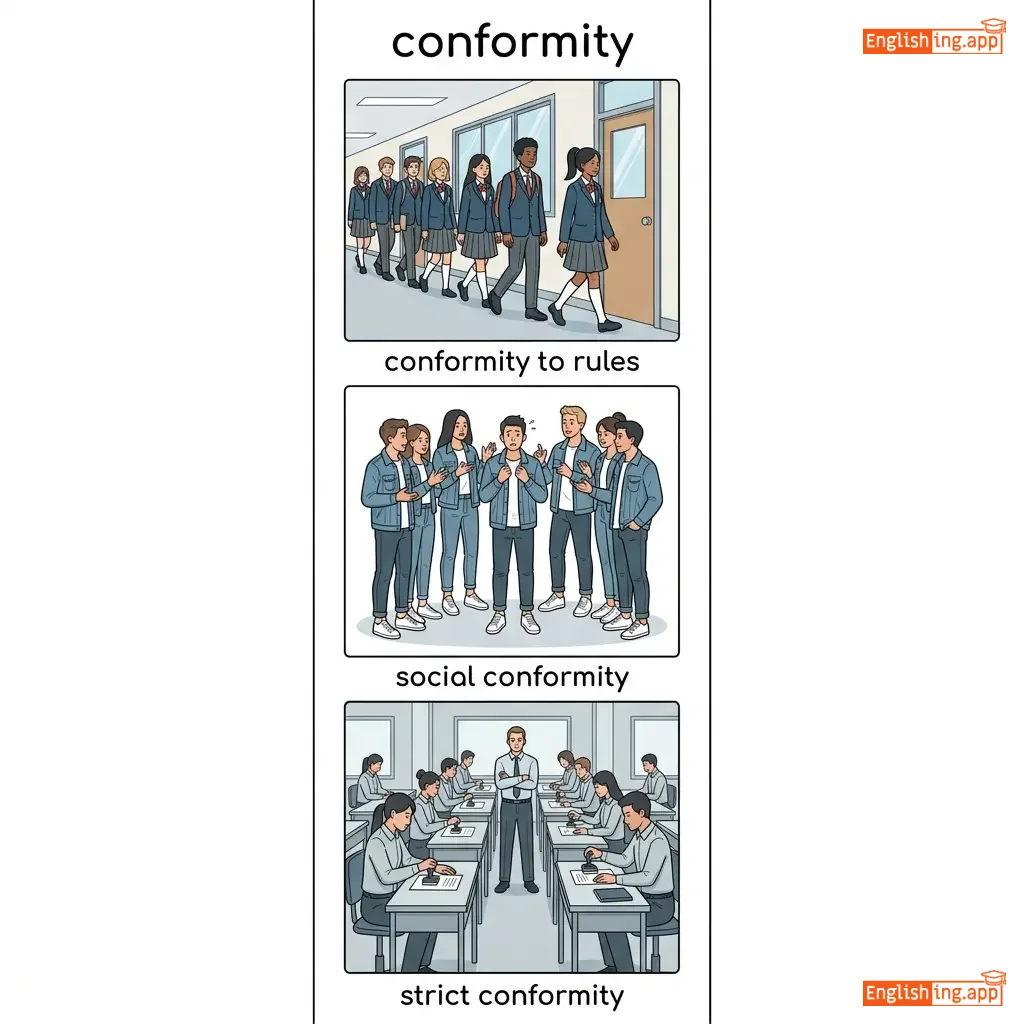
Compliance with standards, rules, or laws; behavior in accordance with social norms.
••••••
|
The students were praised for their conformity to the school regulations.
生徒たちは学校の規則に従ったことで賞賛されました。
••••••
|
生徒たちは学校の規則に従ったことで賞賛されました。
Seito-tachi wa gakkou no kisoku ni shitagatta koto de shousan saremashita.
••••••
|
in conformity with
…に従って
••••••
|
in agreement or compliance with
••••••
|
…に従って
…ni shitagatte
••••••
|
compliance, obedience, adherence, agreement
••••••
|
rebellion, resistance, noncompliance
••••••
|
conformity to rules, social conformity, strict conformity
••••••
|
適合性は、conform (従う) + ity (状態) → 規則に従う状態
••••••
|
|
#1718
👥
|
/kənˈfɔːrmɪst/
noun
(コンフォーミスト)
••••••
|
- •••••• |
コンフォーミスト
konfōmisuto
••••••
|
- •••••• | - •••••• | - •••••• | - •••••• |
A person who uncritically conforms to established practices or standards.
••••••
|
She was labeled a conformist for always following the crowd. |
彼女はいつも人々に従っていたため、コンフォーミストとレッテルを貼られた。
kanojo wa itsumo hitobito ni shitagatte ita tame, konfōmisuto to rettoru o harareta.
••••••
|
- •••••• | - •••••• | - •••••• |
traditionalist, follower, conservative, conventionalist
••••••
|
rebel, nonconformist, radical
••••••
|
conformist attitude, social conformist, political conformist
••••••
|
コンフォーミスト = conform (従う) + ist (人) → いつも大勢に従う人
••••••
|
|
#1719
🧬
|
/ˌkɑːnfɔːrˈmeɪʃən/
noun
(コンフォメーション)
••••••
|
- •••••• |
形態
keitai
••••••
|
- •••••• | - •••••• | - •••••• | - •••••• |
The shape, structure, or arrangement of something.
••••••
|
The scientist studied the molecular conformation of the protein. |
科学者はタンパク質の分子構造を研究した。
Kagakusha wa tanpakushitsu no bunshi kouzou o kenkyū shita.
••••••
|
- •••••• | - •••••• | - •••••• |
structure, shape, form, arrangement
••••••
|
disorder, deformation
••••••
|
molecular conformation, conformation change, physical conformation
••••••
|
Conformation = 形の形成 → 形態。
••••••
|
|
#1720
✅
|
/kənˈfɔːrməns/
noun
(コンフォーメンス)
••••••
|
- •••••• |
適合性
tekigōsei
••••••
|
- •••••• | - •••••• | - •••••• | - •••••• |
The act of conforming to a rule, standard, or law.
••••••
|
The product was tested for conformance with safety standards.
製品は安全基準に対する適合性がテストされました。
••••••
|
製品は安全基準に対する適合性がテストされました。
Seihin wa anzen kijun ni taisuru tekigōsei ga tesuto saremashita.
••••••
|
- •••••• | - •••••• | - •••••• |
compliance, adherence, conformity, observance
••••••
|
violation, deviation, noncompliance
••••••
|
conformance with standards, conformance testing, conformance requirement
••••••
|
Conformance = confirm + performance → 規則に従って行動する。
••••••
|
|
#1721
📏
|
/kənˈfɔːrməbl/
adjective
(コンフォーマブル)
••••••
|
- •••••• |
適合する
tekigō suru
••••••
|
- •••••• | - •••••• | - •••••• | - •••••• |
Capable of being adapted or consistent with something; compliant.
••••••
|
His actions were conformable to the rules of the institution. |
彼の行動はその機関の規則に適合していました。
kare no kōdō wa sono kikān no kisoku ni tekigō shiteimashita.
••••••
|
- •••••• | - •••••• | - •••••• |
compatible, consistent, compliant, agreeable, adaptable
••••••
|
inconsistent, incompatible, defiant
••••••
|
conformable to law, conformable with rules, conformable behavior
••••••
|
適合するはconformableに似ており、規則に従うことを意味します。
••••••
|
|
#1722
➡️⬅️
|
/ˈkɒnfluənt/
adjective
(コンフルエント)
••••••
|
- •••••• |
合流
gōryū
••••••
|
- •••••• | - •••••• | - •••••• | - •••••• |
Flowing together or merging; coming together at one point.
••••••
|
The confluent streams formed a mighty river. |
合流する小川が力強い川を作った。
Gōryū suru ogawa ga chikara tsuyoi kawa o tsukutta.
••••••
|
- •••••• | - •••••• | - •••••• |
merging, uniting, converging, combining
••••••
|
separate, diverging
••••••
|
confluent streams, confluent rivers, confluent cultures
••••••
|
Confluent = 合流 ➡️⬅️ 覚えておいて: 流れる流れが合わさる = Confluent
••••••
|
|
#1723
🌊
|
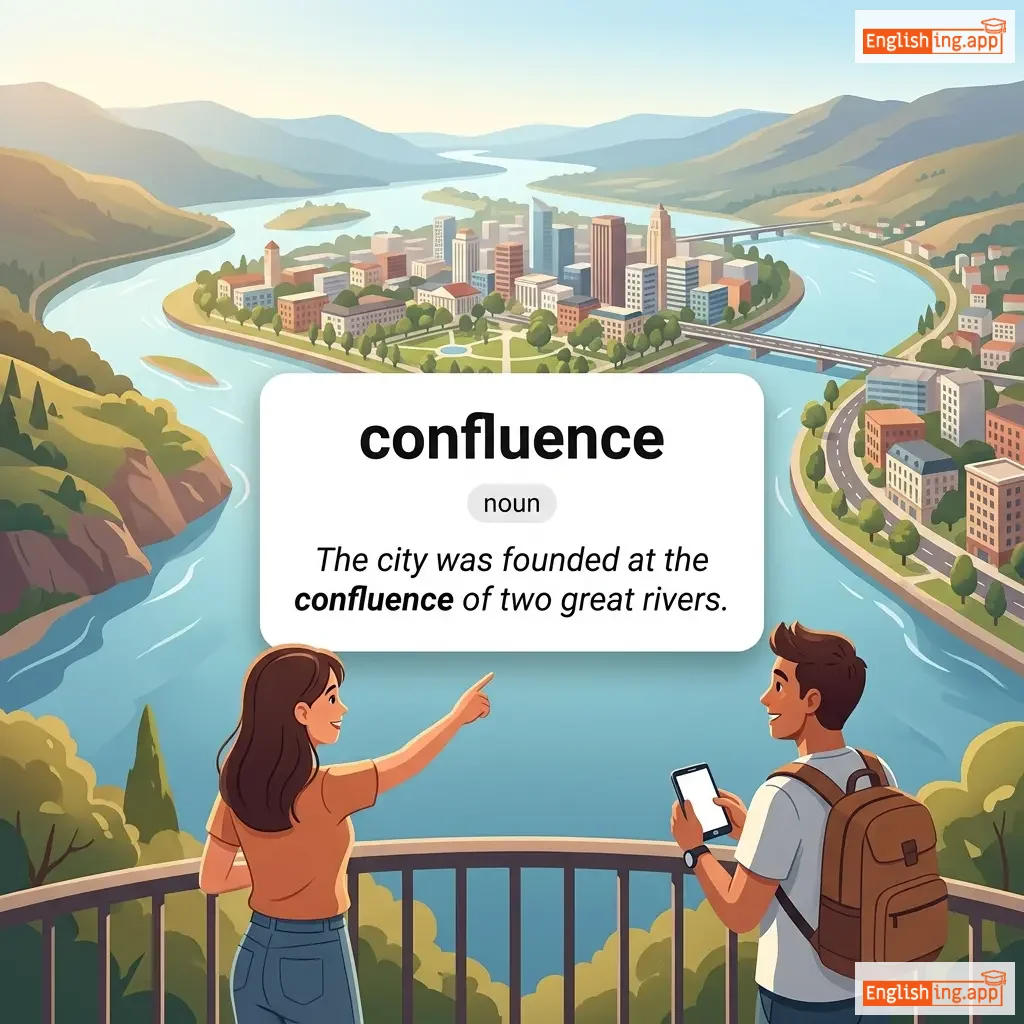
/ˈkɒnfluəns/
noun
(コンフルエンス)
••••••
|
|
合流
gōryū
••••••
|
- •••••• | - •••••• | - •••••• | - •••••• |
The junction of two rivers; also a situation where people or things come together.
••••••
|
The city was founded at the confluence of two great rivers. |
この都市は二つの大きな川の合流点に設立されました。
Kono toshi wa futatsu no ōkina kawa no gōryūten ni setsuritsu saremashita.
••••••
|
meeting of minds |
an agreement or understanding between people
••••••
|
心の出会い
kokoro no deai
••••••
|
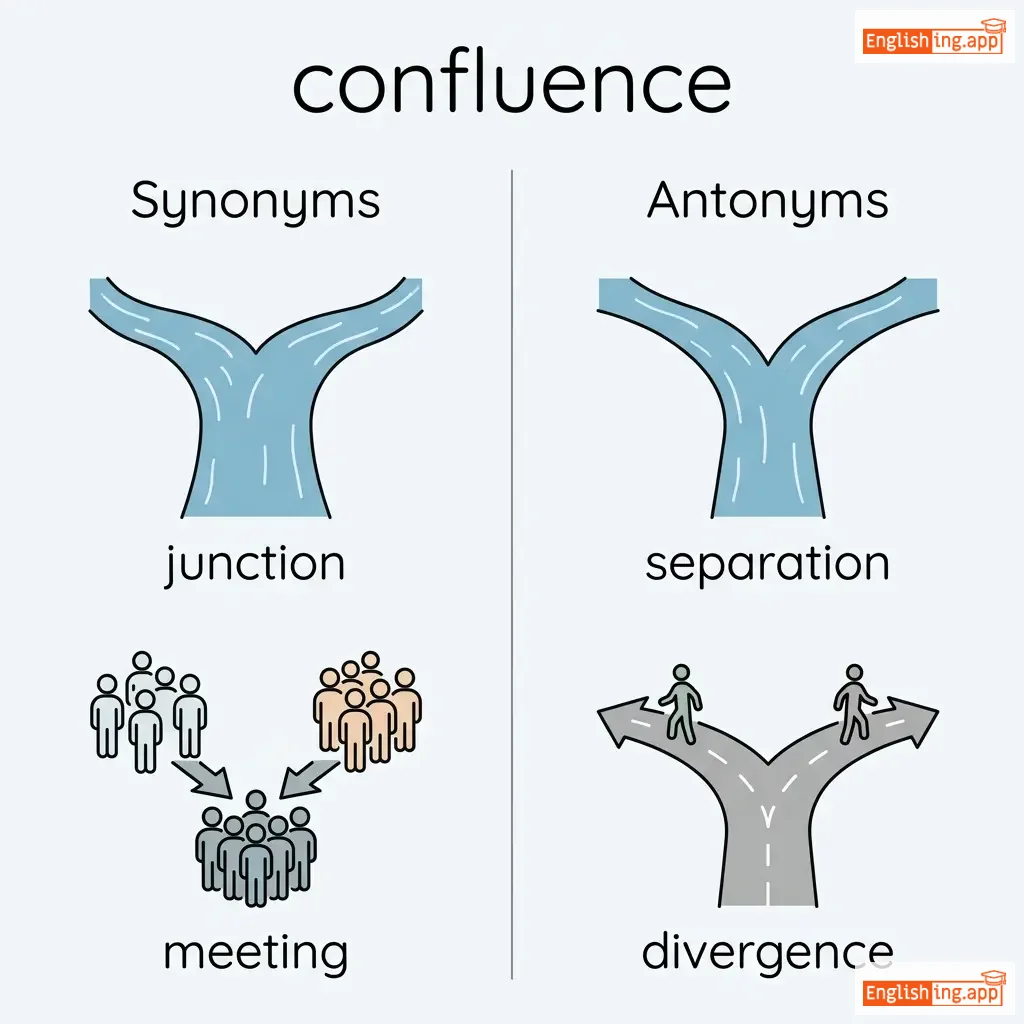
junction, meeting, convergence, union, gathering
••••••
|
separation, divergence
••••••
|
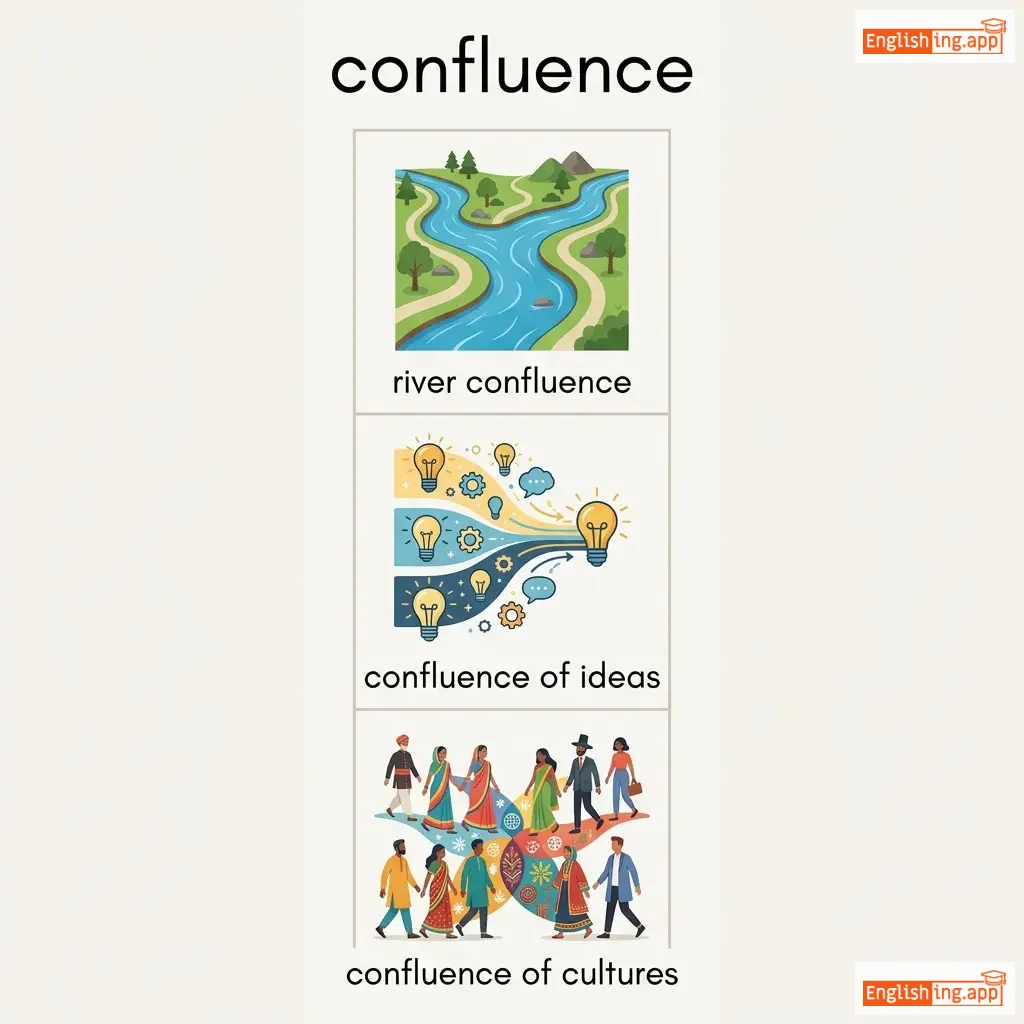
river confluence, confluence of ideas, confluence of cultures
••••••
|
Confluence = 川の合流 🌊 覚えておいて: 流れ + 影響 = 合流
••••••
|
|
#1724
🔗
|
/kənˈfleɪt/
verb
(コンフレイト)
••••••
|
- •••••• |
統合する / 混同する
tōgō suru / kondō suru
••••••
|
conflated
コンフレイテッド
••••••
|
conflated
コンフレイテッド
••••••
|
conflates
コンフレイツ
••••••
|
conflating
コンフレイティング
••••••
|
To combine two or more things, often confusingly, into one.
••••••
|
The article tends to conflate facts with opinions.
その記事は事実と意見を混同しがちです。
••••••
|
その記事は事実と意見を混同しがちです。
Sono kiji wa jijitsu to iken o kondō shigachi desu.
••••••
|
- •••••• | - •••••• | - •••••• |
merge, blend, fuse, unite, combine
••••••
|
separate, distinguish, divide
••••••
|
conflate issues, conflate ideas, conflate facts and opinions
••••••
|
Conflateは confuse + inflateの意味です — 物事を混ぜ合わせる 😵
••••••
|
|
#1725
🔥
|
/ˌkɒnfləˈɡreɪʃən/
noun
(コンフラグレーション)
••••••
|
- •••••• |
大規模な破壊的な火災
daikibo na hakai-tekina kasai
••••••
|
- •••••• | - •••••• | - •••••• | - •••••• |
A large, destructive fire that destroys a great deal of land or property.
••••••
|
The forest was devastated by a massive conflagration that lasted for days. |
その森は数日間続いた巨大な火災によって壊されました。
Sono mori wa sūjitsukan tsudzuita kyodaina kasai ni yotte kowasaremashita.
••••••
|
go up in flames |
to be completely destroyed by fire
••••••
|
火の中で焼け尽きる
hi no naka de yakesukiru
••••••
|
fire, blaze, inferno, wildfire, holocaust
••••••
|
safety, calm, peace
••••••
|
massive conflagration, destructive conflagration, raging conflagration
••••••
|
Conflagrationは大火🔥を意味します。覚えておいてください:Conflict + Fire = Conflagration
••••••
|
|
#1726
🍬
|
/kənˈfɛkʃəneri/
noun
(コンフェクショナリー)
••••••
|
- •••••• |
菓子類
kashirui
••••••
|
- •••••• | - •••••• | - •••••• | - •••••• |
sweets, candies, and other food items made with sugar
••••••
|
The shop sells a wide variety of confectionery. |
その店はさまざまなお菓子を販売しています。
Sono mise wa samazama na okashi o hanbai shiteimasu.
••••••
|
- •••••• | - •••••• | - •••••• |
sweets, candy, chocolates, pastries, desserts
••••••
|
savory, salty, bitter
••••••
|
confectionery shop, confectionery items, confectionery products, sell confectionery
••••••
|
菓子類はお菓子🍬 - 店に行くとお菓子が見つかります!
••••••
|
|
#1727
📱
|
/ˈkɒnfɪskeɪt/
verb
••••••
|
- •••••• | - •••••• |
confiscated
••••••
|
confiscated
••••••
|
confiscates
••••••
|
confiscating
••••••
|
to take something away officially, often as a punishment
••••••
|
The teacher confiscated the student's phone during class. |
- •••••• |
confiscate property |
to officially seize property
••••••
|
- •••••• |
seize, impound, appropriate, expropriate, take
••••••
|
return, give back, restore
••••••
|
confiscate goods, confiscate property, confiscated items, confiscate weapons
••••••
|
No •••••• |
|
#1728
⛓️
|
/kənˈfaɪnmənt/
noun
(コンファインメント)
••••••
|
- •••••• |
監禁
kankin
••••••
|
- •••••• | - •••••• | - •••••• | - •••••• |
the state of being confined or restricted
••••••
|
The prisoner endured years of confinement.
囚人は何年もの間閉じ込められた。
••••••
|
囚人は何年もの間監禁されていた。
Shuujin wa nan-nen mo no aida kankin sarete ita.
••••••
|
- •••••• | - •••••• | - •••••• |
captivity, imprisonment, restriction, detention
••••••
|
freedom, liberty, release
••••••
|
years of confinement, solitary confinement, period of confinement, strict confinement
••••••
|
監禁は制限された状態や閉じ込められることを意味します。
••••••
|
|
#1729
🚪
|
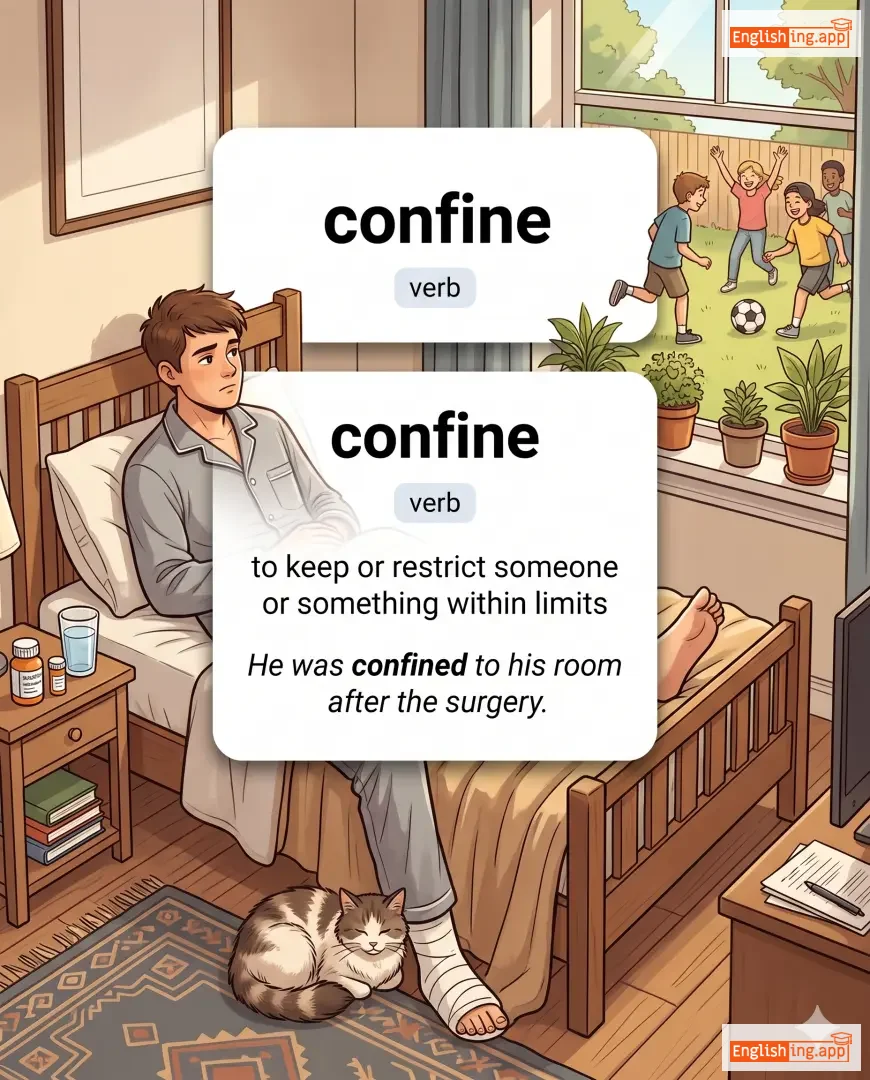
/kənˈfaɪn/
verb
(コンファイン)
••••••
|
|
閉じ込める
tojimeru
••••••
|
confined
コンファインド
••••••
|
confined
コンファインド
••••••
|
confines
コンファインズ
••••••
|
confining
コンファイニング
••••••
|
to keep or restrict someone or something within limits
••••••
|
He was confined to his room after the surgery.
彼は手術後、部屋に閉じ込められました。
••••••
|
彼は手術後、部屋に閉じ込められました。
Kare wa shujutsu go, heya ni tojimemashita.
••••••
|
confined space
閉鎖空間
••••••
|
a small or restricted area
••••••
|
閉鎖空間
heisa kūkan
••••••
|
restrict, limit, restrain, enclose, imprison
••••••
|
free, release, liberate
••••••
|
confine to bed, confine within, confined space, confine attention
••••••
|
Confineは'コン' (閉じ込める)と'ファイン' (制限)という意味で覚えやすいです。
••••••
|
|
#1730
🔒
|
/ˌkɒnfɪˈdɛnʃl/
adjective
(コンフィデンシャル)
••••••
|
- •••••• |
機密の
kimitsu no
••••••
|
- •••••• | - •••••• | - •••••• | - •••••• |
intended to be kept secret or private
••••••
|
The lawyer shared confidential documents with her client. |
弁護士はクライアントと機密の文書を共有しました。
Bengoshi wa kuraianto to kimitsu no bunsho o kyōyū shimashita.
••••••
|
strictly confidential |
classified or secret, not to be shared with others
••••••
|
厳重に機密
genjū ni kimitsu
••••••
|
secret, private, classified, restricted, sensitive
••••••
|
public, open, disclosed
••••••
|
confidential information, confidential report, strictly confidential, maintain confidentiality
••••••
|
Confidentialは機密の文書を指し、それを守る必要があります。
••••••
|
|
#1731
😌
|
/ˈkɒnfɪdənt/
adjective
(kon-fi-dento)
••••••
|
- •••••• |
自信
jishin
••••••
|
- •••••• | - •••••• | - •••••• | - •••••• |
feeling or showing certainty about something; having self-assurance
••••••
|
She was confident about her ability to succeed. |
彼女は自分の成功する能力に自信を持っていた。
Kanojo wa jibun no seikou suru nouryoku ni jishin o motte ita.
••••••
|
confident smile |
a smile that shows assurance and self-belief
••••••
|
自信に満ちた笑顔
jishin ni michita egao
••••••
|
assured, certain, secure, self-assured, optimistic
••••••
|
insecure, uncertain, doubtful
••••••
|
confident manner, confident attitude, feel confident, become confident
••••••
|
Confidence — 自信。自信に満ちた笑顔で自分を表現しよう。
••••••
|
|
#1732
💪
|
/ˈkɒnfɪdəns/
noun
(コンフィデンス)
••••••
|
- •••••• |
自信
jishin
••••••
|
- •••••• | - •••••• | - •••••• | - •••••• |
The feeling or belief that one can rely on someone or something; firm trust or self-assurance.
••••••
|
She spoke with great confidence during the meeting. |
彼女は会議で大きな自信を持って話しました。
Kanojo wa kaigi de ōkina jishin o motte hanashimashita.
••••••
|
gain confidence |
To develop or increase trust in oneself or in a situation
••••••
|
自信を得る
jishin o eru
••••••
|
trust, assurance, belief, faith, certainty
••••••
|
doubt, insecurity, mistrust
••••••
|
self confidence, boost confidence, lose confidence, build confidence
••••••
|
自信は自分に星を与えるようなもの。
••••••
|
|
#1733
🤫
|
/kənˈfaɪd/
verb
••••••
|
- •••••• | - •••••• |
confided
••••••
|
confided
••••••
|
confides
••••••
|
confiding
••••••
|
To tell someone about a secret or private matter while trusting them not to repeat it.
••••••
|
He confided his worries to his best friend. |
- •••••• |
confide in someone |
To trust someone enough to tell them personal or secret information
••••••
|
- •••••• |
disclose, reveal, admit, share, confess
••••••
|
conceal, hide, suppress
••••••
|
confide in, confide secrets, confide feelings
••••••
|
No •••••• |
|
#1734
👭
|
/ˌkɒnfɪˈdɑːnt/
noun
(コンフィダント)
••••••
|
- •••••• |
信頼できる友人
shinrai dekiru yūjin
••••••
|
- •••••• | - •••••• | - •••••• | - •••••• |
A woman with whom one shares a secret or private matter, trusting her not to repeat it.
••••••
|
The queen’s maid became her most trusted confidante.
女王の侍女は最も信頼されたコンフィダントになった。
••••••
|
女王の侍女は最も信頼された友人になった。
Joō no jijo wa mottomo shinrai sareta yūjin ni natta.
••••••
|
- •••••• | - •••••• | - •••••• |
trusted woman, close friend, companion, supporter
••••••
|
betrayer, stranger
••••••
|
trusted confidante, female confidante, loyal confidante
••••••
|
Confidanteは秘密を共有できる、信頼できる友人のことです。
••••••
|
|
#1735
🤐
|
/ˈkɒnfɪdænt/
noun
(コンフィダント)
••••••
|
- •••••• |
信頼できる友人
shinrai dekiru yuujin
••••••
|
- •••••• | - •••••• | - •••••• | - •••••• |
A person with whom one shares a secret or private matter, trusting them not to repeat it.
••••••
|
She found a true confidant in her childhood friend. |
彼女は子供時代の友人の中に本当の信頼できる友人を見つけました。
Kanojo wa kodomojidai no yuujin no naka ni hontou no shinrai dekiru yuujin o mitsukemashita.
••••••
|
- •••••• | - •••••• | - •••••• |
trusted friend, companion, ally, supporter
••••••
|
betrayer, enemy
••••••
|
trusted confidant, lifelong confidant, close confidant
••••••
|
信頼できる友人は秘密を守ってくれる友達です。
••••••
|
|
#1736
🙏
|
/kənˈfɛsər/
noun
(コンフェッサー)
••••••
|
- •••••• |
告白者
kokuhakusha
••••••
|
- •••••• | - •••••• | - •••••• | - •••••• |
A person who confesses sins or secrets, especially to a priest.
••••••
|
The confessor listened patiently to the troubled man. |
告白者は困っている男性の話を忍耐強く聞いた。
Kokuhakusha wa komatte iru dansei no hanashi o nintai-zuyoku kiita.
••••••
|
- •••••• | - •••••• | - •••••• |
penitent, admitter, declarer, discloser
••••••
|
concealer, denier
••••••
|
spiritual confessor, personal confessor, trusted confessor
••••••
|
告白者 - 罪を告白する人。
••••••
|
|
#1737
🎟️
|
/ˌkɒnfəˈriː/
noun
(コンフェリー)
••••••
|
- •••••• |
会議参加者
kaigi sankasha
••••••
|
- •••••• | - •••••• | - •••••• | - •••••• |
a person who takes part in a conference
••••••
|
Each conferee received a badge at the registration desk. |
各会議参加者は登録デスクでバッジを受け取りました。
Kaku kaigi sankasha wa tōroku desuku de bajji o uketorimashita.
••••••
|
- •••••• | - •••••• | - •••••• |
participant, delegate, attendee, member
••••••
|
organizer, host
••••••
|
conference conferee, conferee badge, invited conferee
••••••
|
Conferee は会議に参加する人
••••••
|
|
#1738
💬
|
/kənˈfɜːr/
verb
••••••
|
- •••••• | - •••••• |
conferred
••••••
|
conferred
••••••
|
confers
••••••
|
conferring
••••••
|
to discuss something important or to grant or bestow something
••••••
|
The committee will confer to decide on the new policy. |
- •••••• |
confer a degree |
to officially give someone a degree
••••••
|
- •••••• |
consult, discuss, grant, bestow, award
••••••
|
withhold, deny
••••••
|
confer with, confer about, confer a degree, confer title
••••••
|
No •••••• |
|
#1739
⚔️
|
/kənˈfɛdərət/
noun/adjective
(コンフェデレート)
••••••
|
- •••••• |
連邦軍
renpōgun
••••••
|
- •••••• | - •••••• | - •••••• | - •••••• |
a person, group, or state joined in an alliance or union; relating to a confederacy
••••••
|
The confederate soldiers fought bravely in the war. |
連邦軍の兵士たちは戦争で勇敢に戦った。
Renpōgun no heishi-tachi wa sensō de yūkan ni tatakatta.
••••••
|
- •••••• | - •••••• | - •••••• |
ally, partner, associate, supporter
••••••
|
opponent, enemy, rival
••••••
|
confederate soldier, confederate flag, confederate states
••••••
|
連邦軍は、団結して共に戦う兵士たちの集まり。
••••••
|
|
#1740
🤝
|
/kənˈfɛdərəsi/
noun
(コンフェデラシー)
••••••
|
- •••••• |
連邦
renpou
••••••
|
- •••••• | - •••••• | - •••••• | - •••••• |
a group of states, people, or organizations united for a common purpose
••••••
|
The southern states formed a confederacy during the civil war. |
南部の州は南北戦争中に連邦を結成しました。
Nanbu no shuu wa nanboku sensou-chuu ni renpou wo kessei shimashita.
••••••
|
- •••••• | - •••••• | - •••••• |
alliance, league, coalition, union, federation
••••••
|
disunion, separation, division
••••••
|
loose confederacy, tribal confederacy, form a confederacy, join a confederacy
••••••
|
Confederacyは目的を共にするグループの集まりを意味します。
••••••
|
Vocabulary Quiz
Test your vocabulary by matching words with their translations or meanings.
Login to take the quiz
Comments (0)
Share your thoughts and join the discussion.
Join the discussion by logging in
Login to CommentNo comments yet
Be the first to share your thoughts!