

翻訳
過去
過去分詞
三人称単数
動名詞
意味
例文
例文の翻訳
同義語
対義語
コロケーション
ニーモニック

Swipe left or right, or use the buttons. Tap image to zoom.
例文の翻訳
単語
Lesson 96Lesson 96 - マスクトグル
|
絵文字
|
単語 | Images | 翻訳 | 過去 | 過去分詞 | 三人称単数 | 動名詞 | 意味 | 例文 | 例文の翻訳 | 表現例 | 表現例の意味 | 表現例の翻訳 | 同義語 | 対義語 | コロケーション | ニーモニック |
|---|---|---|---|---|---|---|---|---|---|---|---|---|---|---|---|---|---|
|
#2851
👑
|
/ˈiːɡoʊˌtɪzəm/
noun
(エゴティズム)
••••••
|
- •••••• |
エゴイズム
egoizumu
••••••
|
- •••••• | - •••••• | - •••••• | - •••••• |
The practice of talking and thinking about oneself excessively because of an inflated sense of self-importance.
••••••
|
His constant boasting revealed his egotism.
彼の絶え間ない自慢は、彼のエゴティズムを明らかにした。
••••••
|
彼の絶え間ない自慢は、彼のエゴティズムを明らかにした。
Kare no taemanai jimana wa, kare no egotizumu o akiraka ni shita.
••••••
|
wounded egotism
傷ついたエゴティズム
••••••
|
hurt pride or self-importance
••••••
|
傷ついたエゴティズム
Kizutsuita egotizumu
••••••
|
self-importance, conceit, arrogance, self-praise
••••••
|
humility, modesty
••••••
|
pure egotism, display of egotism, wounded egotism
••••••
|
Ego + tism は傲慢さを示す - エゴティズム はエゴイズム
••••••
|
|
#2852
🥳
|
/ɪˈleɪtɪd/
adjective
(イレイテッド)
••••••
|
- •••••• |
非常に幸せ
hijō ni shiawase
••••••
|
- •••••• | - •••••• | - •••••• | - •••••• |
Extremely happy and excited.
••••••
|
She was elated when she heard the good news. |
良い知らせを聞いたとき、彼女は非常に幸せでした。
Yoi shirase o kiita toki, kanojo wa hijō ni shiawase deshita.
••••••
|
- •••••• | - •••••• | - •••••• |
overjoyed, delighted, thrilled, ecstatic, jubilant
••••••
|
depressed, saddened, miserable
••••••
|
feel elated, look elated, elated mood
••••••
|
Elatedとは、幸福が高まった状態 - 幸せがピークに達した状態です。
••••••
|
|
#2853
😊
|
/ɪˈleɪt/
verb
(イレイト)
••••••
|
- •••••• |
喜ばせる
yorokobaseru
••••••
|
elated
イレイテッド
••••••
|
elated
イレイテッド
••••••
|
elates
イレイツ
••••••
|
elating
イレイティング
••••••
|
To make someone very happy or proud.
••••••
|
The success of the project elated the whole team.
プロジェクトの成功がチーム全体を喜ばせました。
••••••
|
プロジェクトの成功がチーム全体を喜ばせました。
Purojekuto no seikou ga chiimu zentai wo yorokobasemashita.
••••••
|
- •••••• | - •••••• | - •••••• |
delight, overjoy, thrill, uplift, exhilarate
••••••
|
disappoint, sadden
••••••
|
elated mood, elated by success, deeply elated
••••••
|
Elateはelevateのように、誰かを喜びで気分を上げる。
••••••
|
|
#2854
↔️
|
/ɪˌlæˈstɪsɪti/
noun
••••••
|
|
- •••••• | - •••••• | - •••••• | - •••••• | - •••••• |
The ability of an object or material to resume its normal shape after being stretched or compressed.
••••••
|
Rubber has a high degree of elasticity. |
- •••••• |
price elasticity |
The responsiveness of demand or supply to changes in price.
••••••
|
- •••••• |
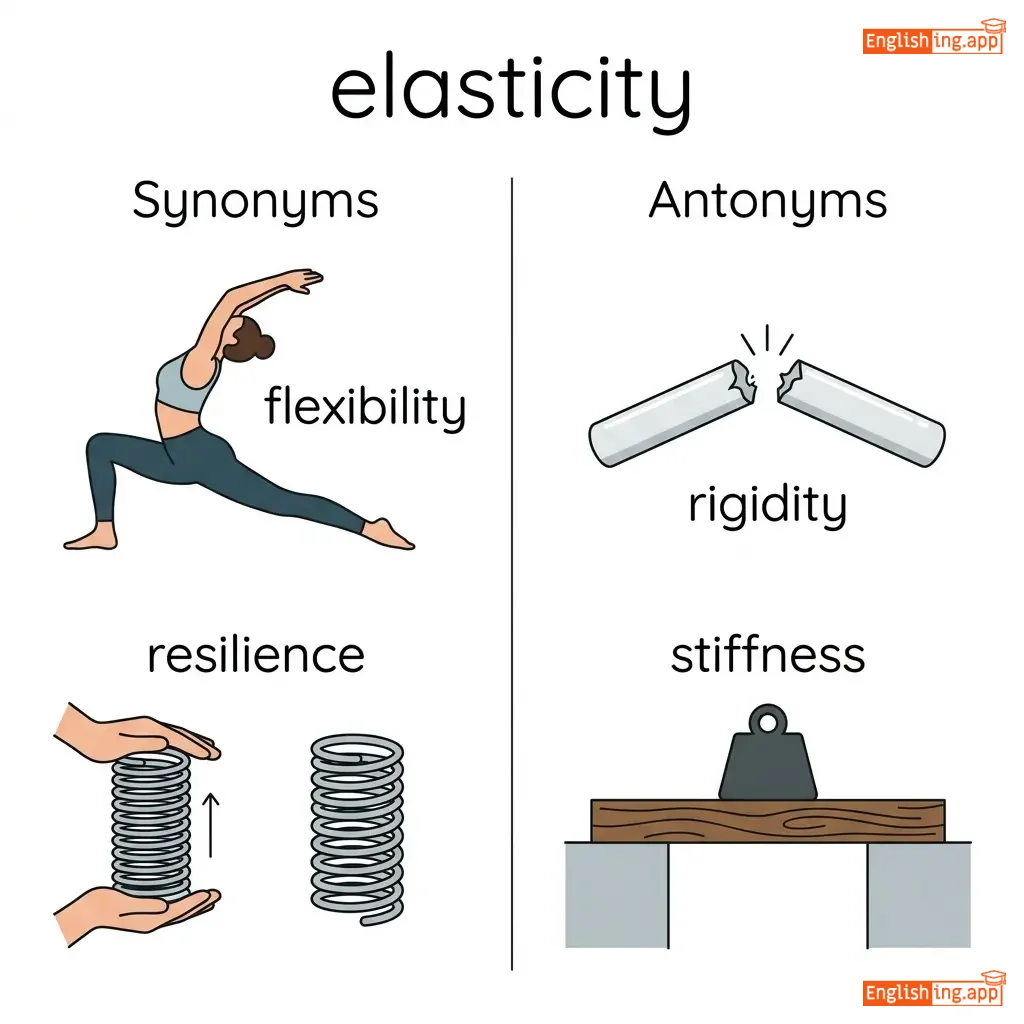
flexibility, resilience, suppleness, adaptability
••••••
|
rigidity, stiffness
••••••
|
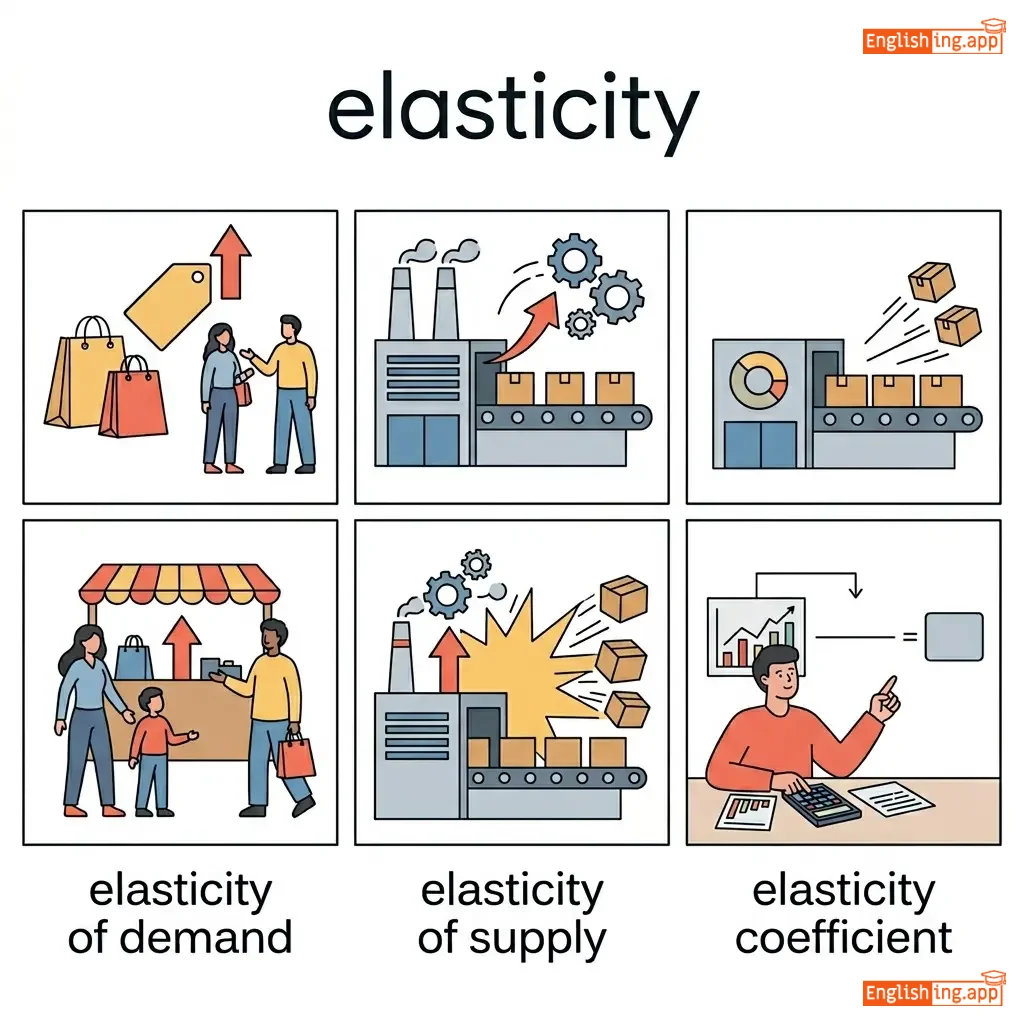
elasticity of demand, elasticity of supply, elasticity coefficient
••••••
|
No •••••• |
|
#2855
🧵
|
/ɪˈlæstɪk/
adjective
(イラステイック)
••••••
|
- •••••• |
弾力性
danryokusei
••••••
|
- •••••• | - •••••• | - •••••• | - •••••• |
Able to return to its original shape or size after being stretched or compressed.
••••••
|
The waistband of the pants is made of elastic material. |
ズボンのウエストバンドは弾力性のある素材で作られています。
Zubon no uesutobando wa danryokusei no aru sozai de tsukurareteimasu.
••••••
|
elastic limit |
The maximum extent to which a solid material can be stretched without permanently altering its shape.
••••••
|
弾力限界
danryoku genkai
••••••
|
stretchy, flexible, pliable, resilient, springy
••••••
|
rigid, stiff, brittle
••••••
|
elastic band, elastic limit, elastic cord, elastic material
••••••
|
弾力性はゴムバンドのように引っ張ると元の形に戻ることです。
••••••
|
|
#2856
⏳
|
/ɪˈlæps/
verb
(イラプス)
••••••
|
- •••••• |
経過する
keikasuru
••••••
|
elapsed
イラプスド
••••••
|
elapsed
イラプスド
••••••
|
elapses
イラプスス
••••••
|
elapsing
イラプシング
••••••
|
to pass or go by, usually referring to time
••••••
|
Several hours elapsed before he finally returned home.
数時間が経過し、彼はようやく家に帰った。
••••••
|
数時間が経過し、彼はようやく家に帰った。
Suujikan ga keika shi, kare wa youyaku ie ni kaetta.
••••••
|
time elapses
時間が経過する
••••••
|
time passes by
••••••
|
時間が経過する
jikan ga keika suru
••••••
|
pass, go by, slip away, expire
••••••
|
remain, stay
••••••
|
hours elapse, time elapses, days elapse
••••••
|
時間が流れる様子を示す、過ぎるという意味。
••••••
|
|
#2857
📖
|
/ɪˌlæbəˈreɪʃən/
noun
(エラボレーション)
••••••
|
- •••••• |
詳細な説明 / 拡張
shōsaina setsumei / kakuchō
••••••
|
- •••••• | - •••••• | - •••••• | - •••••• |
the process of adding more detail or expanding on something
••••••
|
The teacher appreciated the student's elaboration of the topic.
先生は学生のトピックの詳細な説明を評価しました。
••••••
|
先生は学生のトピックの詳細な説明を評価しました。
Sensei wa gakusei no topikku no shōsai na setsumei o hyōka shimashita.
••••••
|
- •••••• | - •••••• | - •••••• |
expansion, explanation, development, amplification, detailing
••••••
|
summary, simplification, abridgment
••••••
|
careful elaboration, detailed elaboration, further elaboration
••••••
|
LABレポートで詳細を追加することがエラボレーションです。
••••••
|
|
#2858
📝
|
/ɪˈlæbəreɪt/ (verb), /ɪˈlæbərət/ (adjective)
verb, adjective
(イラボレイト)
••••••
|
- •••••• |
詳しく説明する / 複雑で詳細なデザイン
kōshiku setsumei suru / fukuzatsu de shōsai na dezain
••••••
|
elaborated
イラボレイテッド
••••••
|
elaborated
イラボレイテッド
••••••
|
elaborates
イラボレイツ
••••••
|
elaborating
イラボレイティング
••••••
|
verb: to explain something in detail; adjective: detailed and complicated in design
••••••
|
She asked him to elaborate on his proposal.
彼女は彼に提案について詳しく説明するように頼んだ。
••••••
|
彼女は彼に提案について詳しく説明するように頼んだ。
Kanojo wa kare ni teian ni tsuite kōshiku setsumei suru yō ni tanonda.
••••••
|
elaborate on something
何かについて詳しく説明する
••••••
|
to give more detail about something
••••••
|
何かについて詳しく説明する
nanika ni tsuite kōshiku setsumei suru
••••••
|
explain, expand, illustrate, detailed, intricate
••••••
|
simplify, summarize, condense
••••••
|
elaborate design, elaborate plan, elaborate explanation, elaborate details
••••••
|
イラボレイトは何かを詳しく説明することです。
••••••
|
|
#2859
🥖
|
/iːk/
verb
(エイク)
••••••
|
- •••••• |
細々と使う
hosoboso to tsukau
••••••
|
eked
エイクド
••••••
|
eked
エイクド
••••••
|
ekes
エイクス
••••••
|
eking
エイキング
••••••
|
to make a small amount of something last longer by using it sparingly
••••••
|
The family tried to eke out their savings during the tough months.
家族は困難な月々に貯金をなんとかやりくりしようとしました。
••••••
|
家族は困難な月々に貯金をなんとかやりくりしようとしました。
Kazoku wa konnan na tsukizuki ni chokin wo nantoka yarikuri shiyou to shimashita.
••••••
|
eke out a living
eke out a living
••••••
|
to earn just enough to survive
••••••
|
かろうじて生計を立てる
karoujite seikei wo tateru
••••••
|
stretch, prolong, conserve, manage, sustain
••••••
|
squander, waste, lavish
••••••
|
eke out a living, eke out savings, eke out existence
••••••
|
EKEは少しずつ使って、長持ちさせる方法。
••••••
|
|
#2860
🚪
|
/ɪˈdʒɛkt/
verb
(イジェクト)
••••••
|
- •••••• |
追い出す
oidasu
••••••
|
ejected
イジェクテッド
••••••
|
ejected
イジェクテッド
••••••
|
ejects
イジェクツ
••••••
|
ejecting
イジェクティング
••••••
|
to force someone or something out, usually from a place or position
••••••
|
The referee had to eject the player for unsportsmanlike behavior.
レフェリーはアンスポーツマンライクな行為で選手をイジェクトしなければならなかった。
••••••
|
レフェリーはアンスポーツマンライクな行為で選手を追い出さなければならなかった。
Referee wa unsupōtsumanraiku na kōi de senshu o oidasanakereba naranakatta.
••••••
|
eject someone from a place
場所から誰かをイジェクトする
••••••
|
to forcefully remove someone from a location
••••••
|
場所から誰かを追い出す
Basho kara dareka o oidasu
••••••
|
expel, remove, oust, evict, cast out
••••••
|
admit, include, accept
••••••
|
eject from seat, eject from game, eject disk, eject card
••••••
|
'Eject'ボタンを押すとディスクが出てくる!
••••••
|
|
#2861
💥
|
/ɪˌdʒækjʊˈleɪʃən/
noun
(エジャキュレーション)
••••••
|
- •••••• |
射精 / 突然の叫び
ejakyurēshon / totsuzen no sakebi
••••••
|
- •••••• | - •••••• | - •••••• | - •••••• |
The action of suddenly saying something or the release of semen during sexual climax.
••••••
|
His sudden ejaculation of joy surprised everyone in the room. |
彼の突然の喜びの射精は部屋の中の誰もが驚いた。
Kare no totsuzen no yorokobi no shasei wa heya no naka no dare mo ga odoroita.
••••••
|
- •••••• | - •••••• | - •••••• |
exclamation, outburst, release, discharge
••••••
|
silence, restraint
••••••
|
sudden ejaculation, ejaculation of joy, sexual ejaculation
••••••
|
エジャキュレーション → 突然の喜びの叫びか、生物学の授業で学んだ精液の放出。
••••••
|
|
#2862
🚪
|
/ˈiːɡres/
noun
(イグレス)
••••••
|
- •••••• |
出口
deguchi
••••••
|
- •••••• | - •••••• | - •••••• | - •••••• |
The action of going out or leaving a place; an exit.
••••••
|
The emergency door provided an egress for the trapped workers. |
非常口は閉じ込められた作業員のために出口を提供しました。
Hijōguchi wa tojikomerareta sagyōin no tame ni deguchi o teikyō shimashita.
••••••
|
means of egress |
a way of leaving or exiting a place
••••••
|
出口手段
deguchi shudan
••••••
|
exit, way out, departure, outlet
••••••
|
entrance, entry
••••••
|
emergency egress, egress route, safe egress
••••••
|
Egress = Exit → 出口 (deguchi) に向かって進む。
••••••
|
|
#2863
🚨
|
/ɪˈɡriːdʒəs/
adjective
(イグリジアス)
••••••
|
- •••••• |
ひどい
hidoi
••••••
|
- •••••• | - •••••• | - •••••• | - •••••• |
Outstandingly bad; shocking.
••••••
|
The company was fined for its egregious safety violations. |
その会社はひどい安全違反で罰金を科されました。
Sono kaisha wa hidoi anzen ihan de bakkin o kasaremashita.
••••••
|
- •••••• | - •••••• | - •••••• |
outrageous, flagrant, shocking, appalling, atrocious
••••••
|
minor, trivial, acceptable
••••••
|
egregious error, egregious mistake, egregious violation
••••••
|
Egregious mistake → あまりにひどいミスで、みんなが驚く。
••••••
|
|
#2864
🙄
|
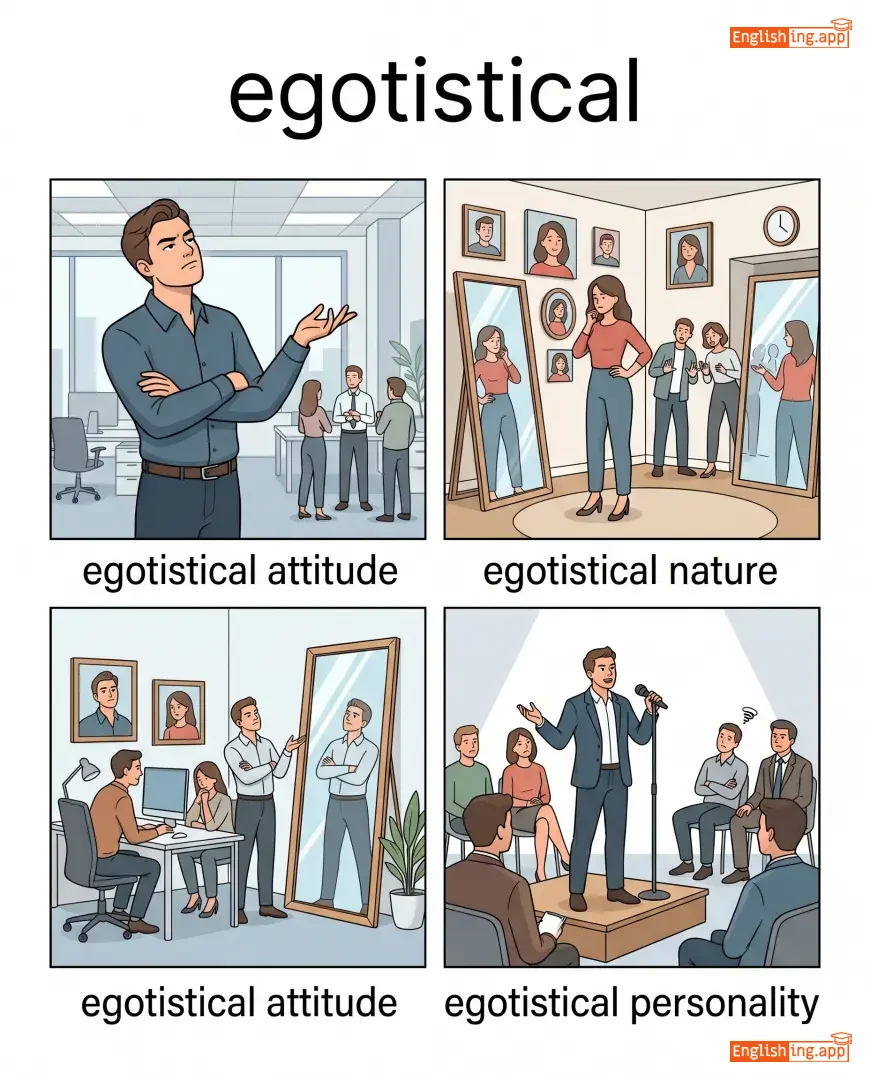
/ˌiːɡəˈtɪstɪkəl/
adjective
(イゴティスティカル)
••••••
|
|
自己中心的
jiko chūshinteki
••••••
|
- •••••• | - •••••• | - •••••• | - •••••• |
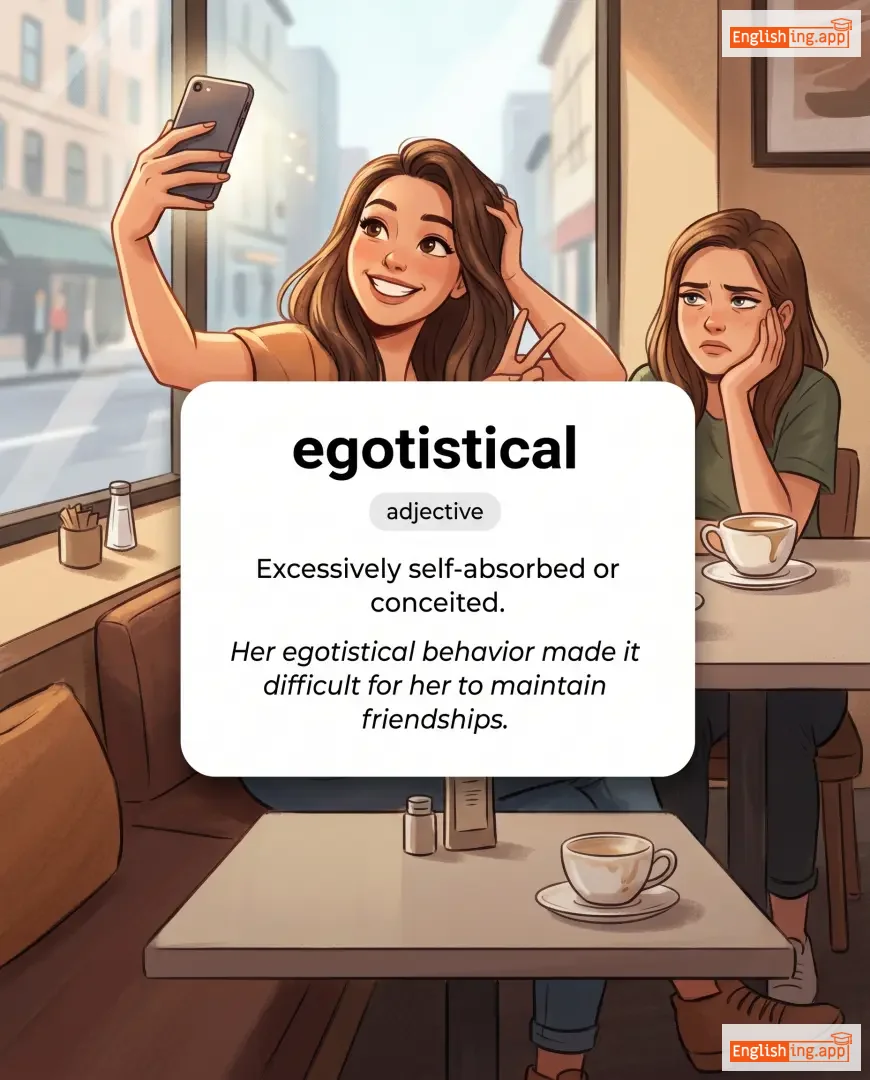
Excessively self-absorbed or conceited.
••••••
|
Her egotistical behavior made it difficult for her to maintain friendships. |
彼女の自己中心的な行動は、友達関係を維持するのを難しくしました。
Kanojo no jiko chūshinteki na kōdō wa, tomodachi kankei o iji suru no o muzukashiku shimashita.
••••••
|
- •••••• | - •••••• | - •••••• |
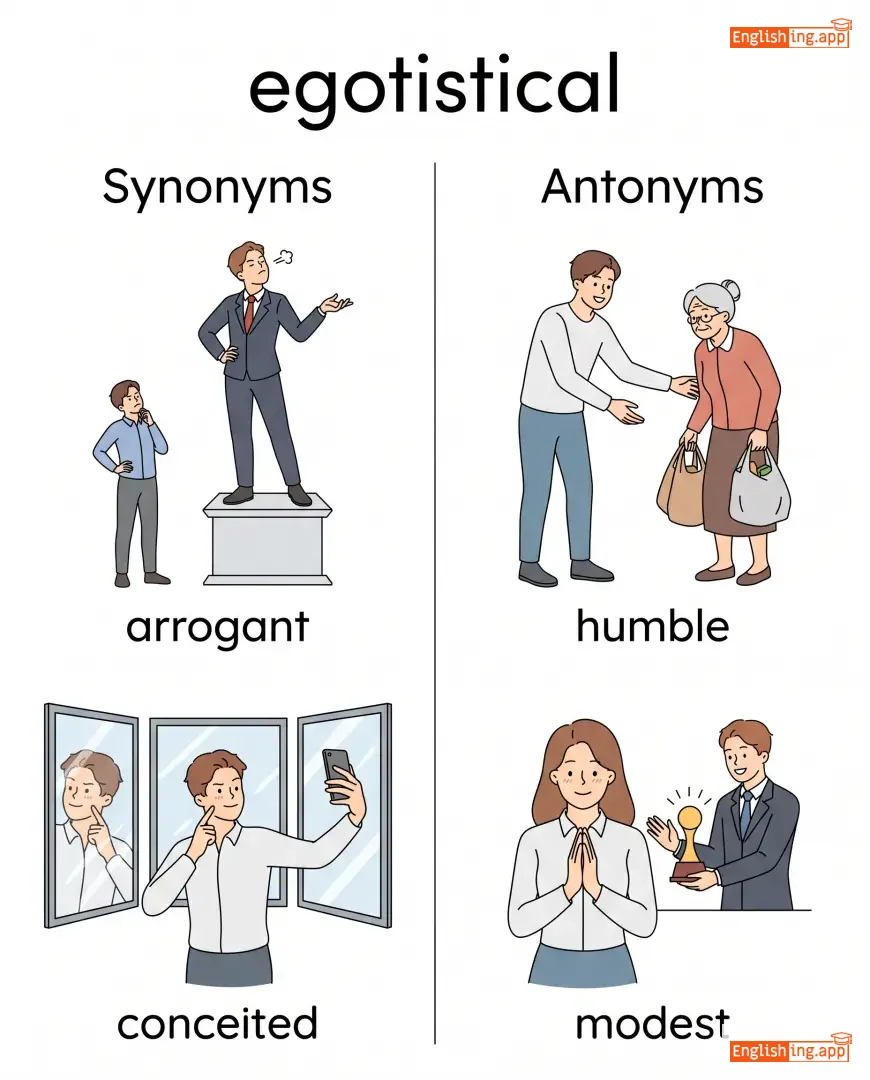
arrogant, conceited, narcissistic, vain, self-centered
••••••
|
humble, modest, selfless
••••••
|
egotistical attitude, egotistical nature, egotistical personality
••••••
|
Ego+tistical → あまりにも自己中心的な人は自己中心的だ。
••••••
|
|
#2865
😏
|
/ˈiːɡətɪst/
noun
(イゴティスト)
••••••
|
- •••••• |
自己中心的な人
jiko chūshin-teki na hito
••••••
|
- •••••• | - •••••• | - •••••• | - •••••• |
A person who is excessively self-centered or talks too much about themselves.
••••••
|
The egotist dominated the conversation by talking only about his own achievements. |
その自己中心的な人は自分の成功だけについて話していた。
sono jiko chūshin-teki na hito wa jibun no seikō dake ni tsuite hanashite ita.
••••••
|
- •••••• | - •••••• | - •••••• |
self-centered person, narcissist, egoist, braggart, boaster
••••••
|
altruist, modest person
••••••
|
arrogant egotist, selfish egotist, born egotist
••••••
|
Ego+tist → Ego は自分という意味で、自己中心的な人は自分だけを考える人です。
••••••
|
|
#2866
🚀
|
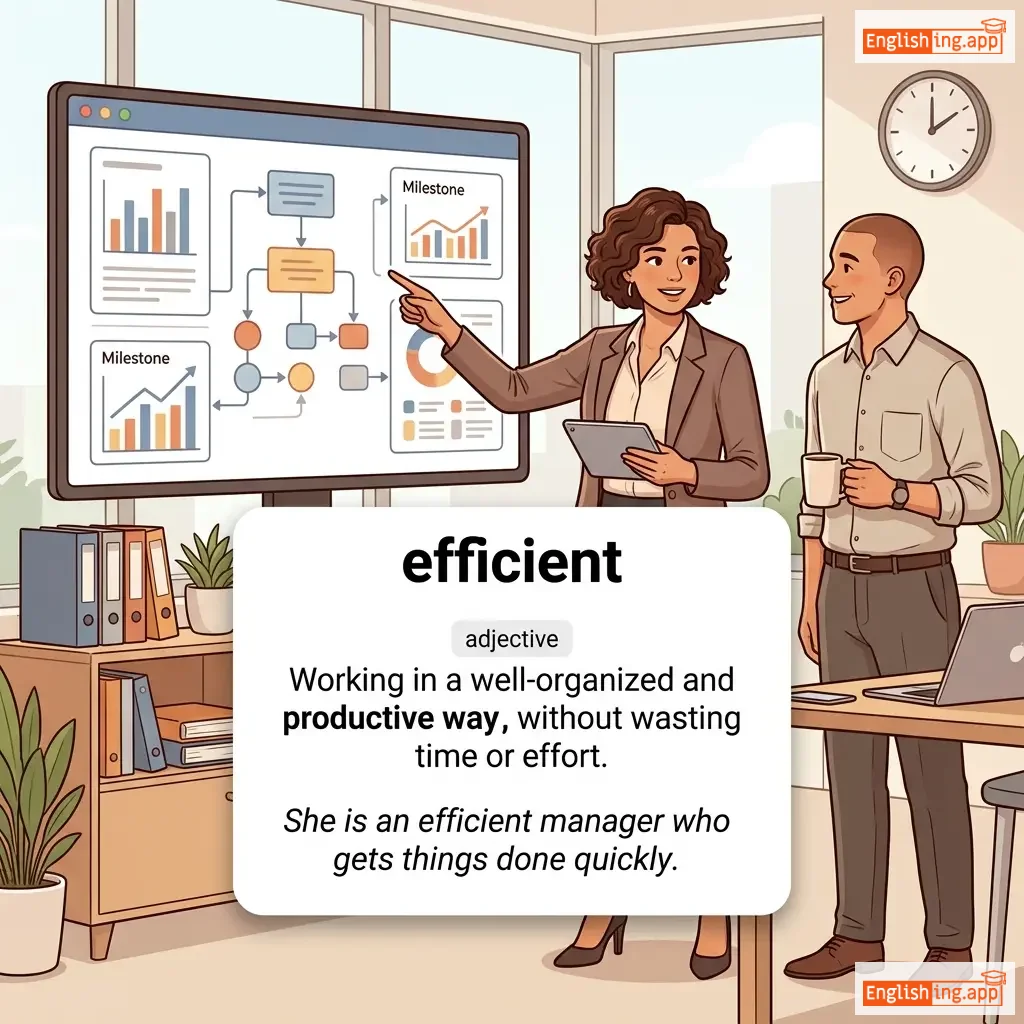
/ɪˈfɪʃənt/
adjective
(エフィシエント)
••••••
|
|
効率的
kouritsuteki
••••••
|
- •••••• | - •••••• | - •••••• | - •••••• |
Working in a well-organized and productive way, without wasting time or effort.
••••••
|
She is an efficient manager who gets things done quickly.
彼女は効率的なマネージャーで、素早く物事を終わらせます。
••••••
|
彼女は効率的なマネージャーで、素早く物事を終わらせます。
Kanojo wa kōritsuteki na manējā de, subayaku monogoto o owarasemasu.
••••••
|
- •••••• | - •••••• | - •••••• |
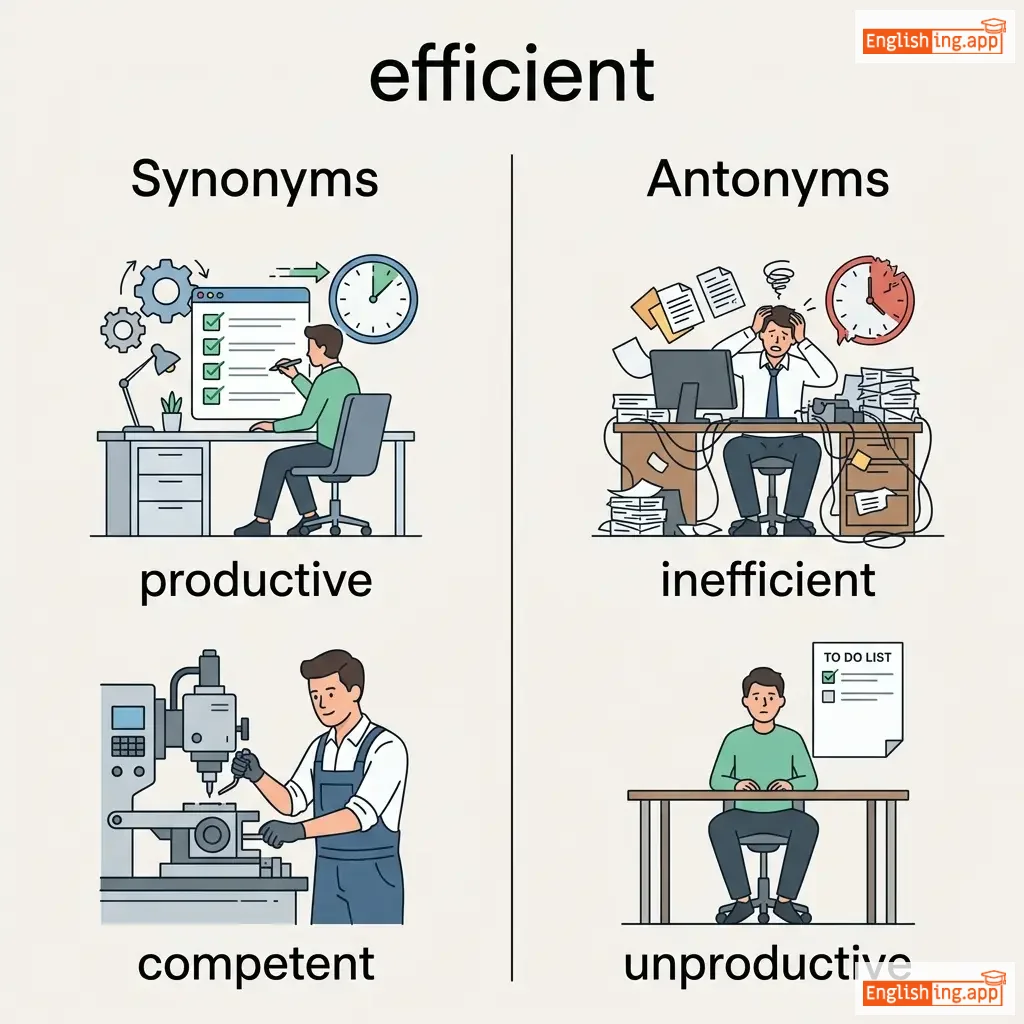
productive, competent, capable, organized, effective
••••••
|
inefficient, unproductive, incompetent
••••••
|
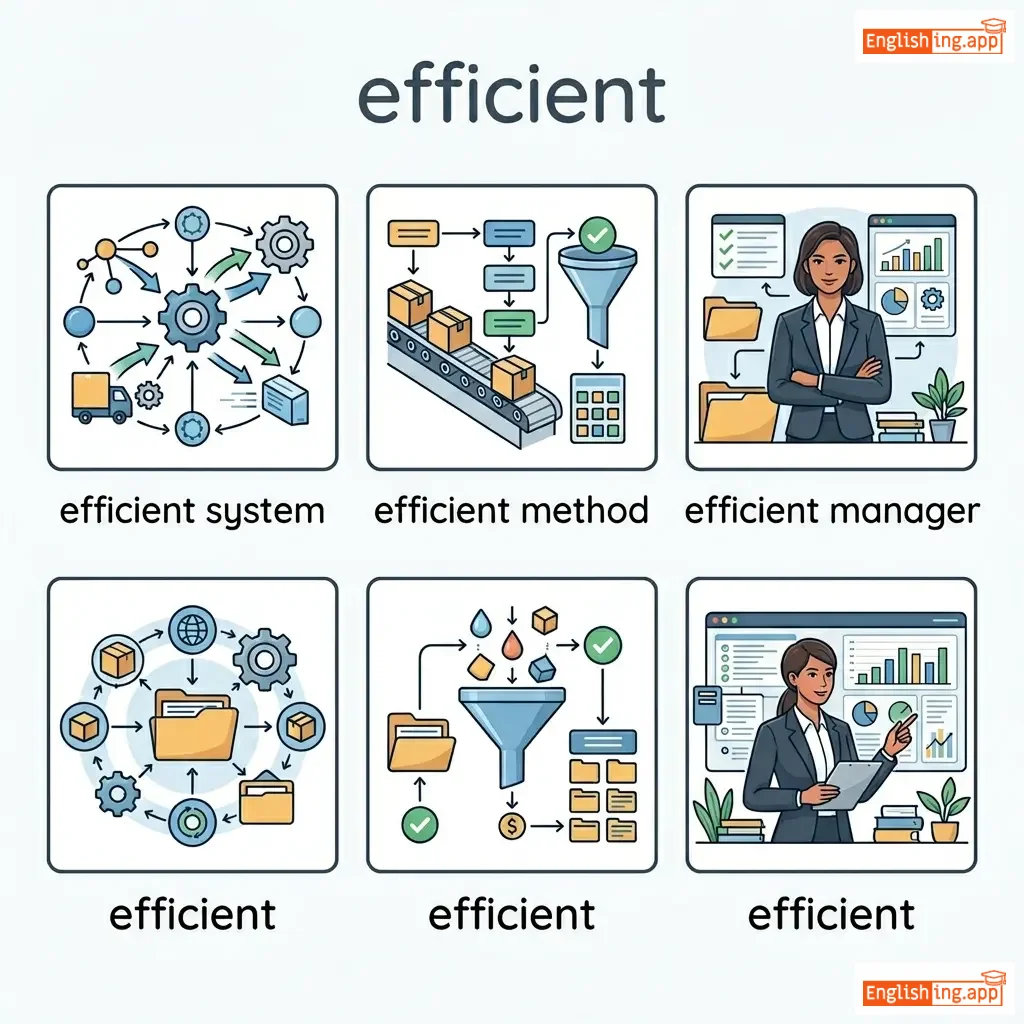
efficient system, efficient method, efficient manager, highly efficient
••••••
|
Efficientは効率的を意味します、‘She is efficient’は彼女が早く仕事を終わらせることを意味します。
••••••
|
|
#2867
😎
|
/ˈiːɡoʊɪst/
noun
(エゴイスト)
••••••
|
- •••••• |
エゴイスト
egoisuto
••••••
|
- •••••• | - •••••• | - •••••• | - •••••• |
A person who is excessively concerned with themselves; someone who believes in or practices egoism.
••••••
|
She avoided him because he was a selfish egoist. |
彼女は彼を避けていた、なぜなら彼は利己的なエゴイストだったから。
Kanojo wa kare o sakete ita, nazenara kare wa rikoteki na egoisuto datta kara.
••••••
|
- •••••• | - •••••• | - •••••• |
narcissist, egocentric, self-seeker, self-centered person
••••••
|
altruist, philanthropist
••••••
|
selfish egoist, arrogant egoist, egoist thinker
••••••
|
エゴイスト = エゴ + イスティスト、常に自分のエゴに囚われている人
••••••
|
|
#2868
🙇♂️
|
/ˈiːɡoʊˌɪzəm/
noun
(エゴイズム)
••••••
|
|
利己主義
rikoshugi
••••••
|
- •••••• | - •••••• | - •••••• | - •••••• |
An ethical theory that treats self-interest as the foundation of morality; also, excessive preoccupation with oneself.
••••••
|
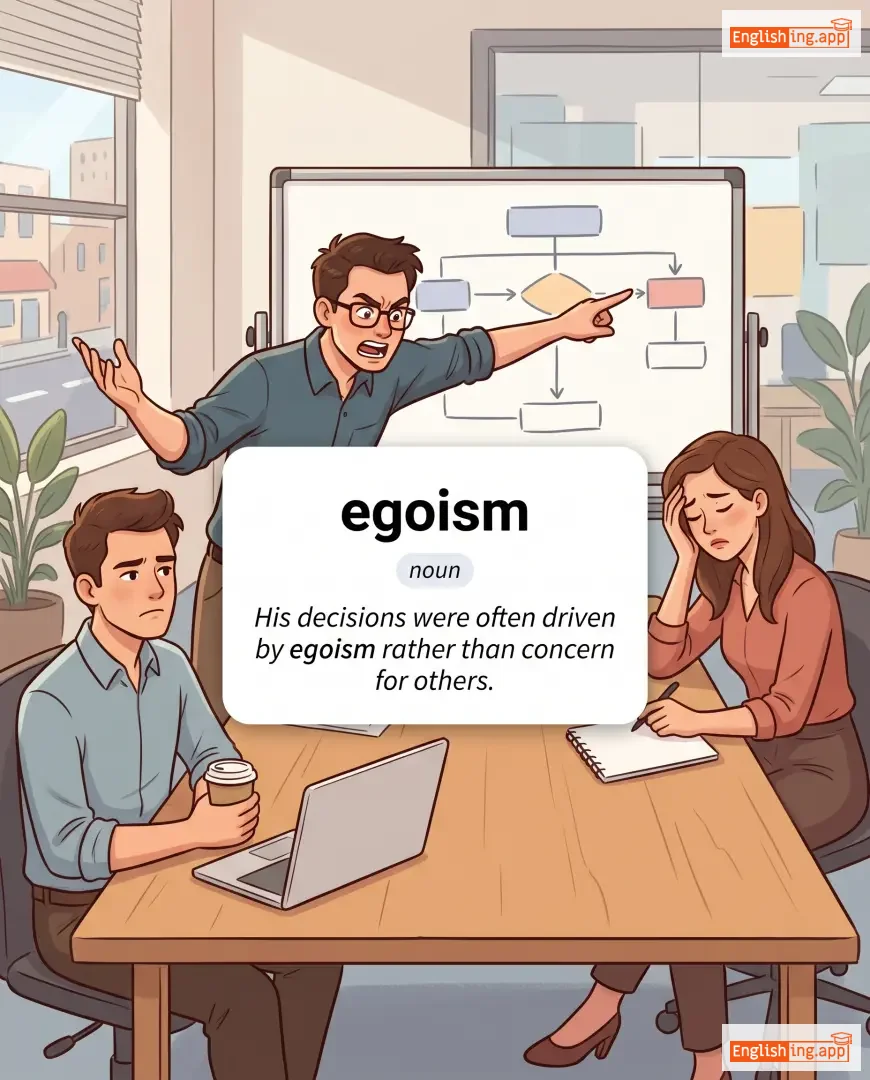
His decisions were often driven by egoism rather than concern for others. |
彼の決断はしばしば他人への配慮よりも利己主義に駆り立てられていた。
Kare no ketsudan wa shibashiba tanin e no hairyo yori mo rikoshugi ni karitate rarete ita.
••••••
|
- •••••• | - •••••• | - •••••• |
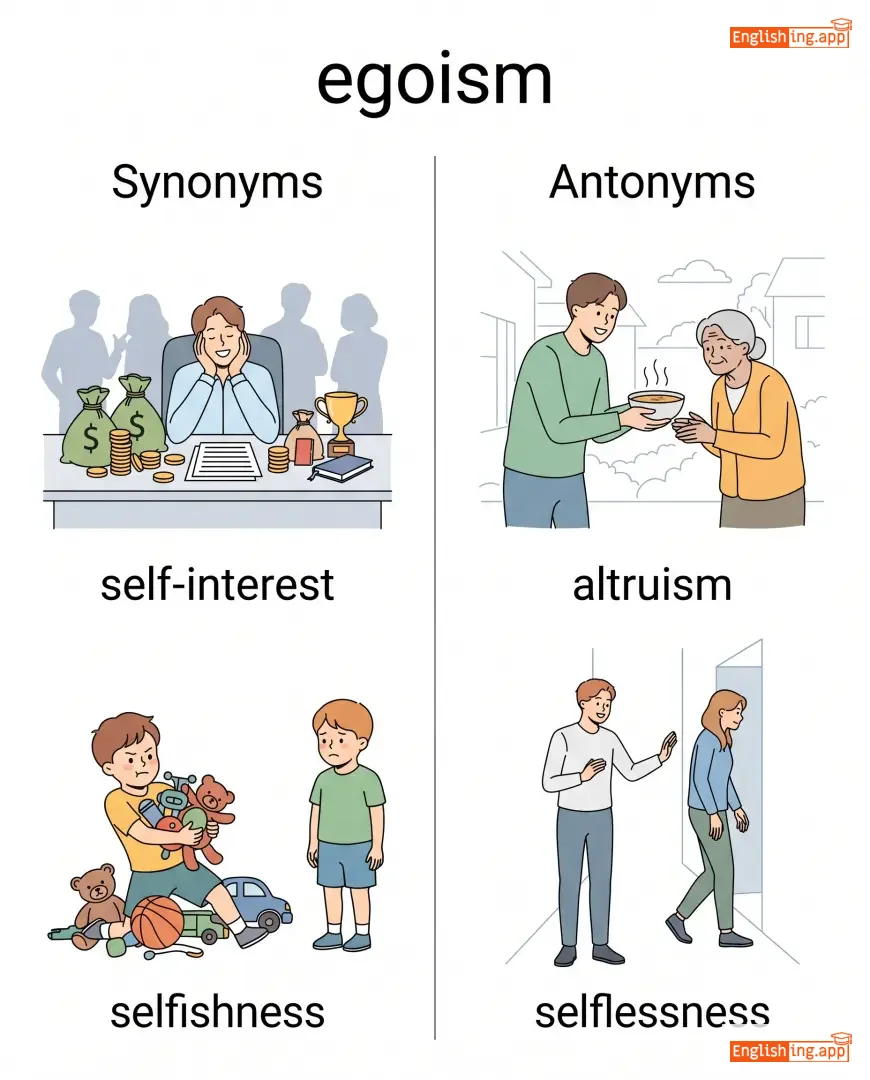
self-interest, selfishness, egocentrism, self-centeredness
••••••
|
altruism, selflessness
••••••
|
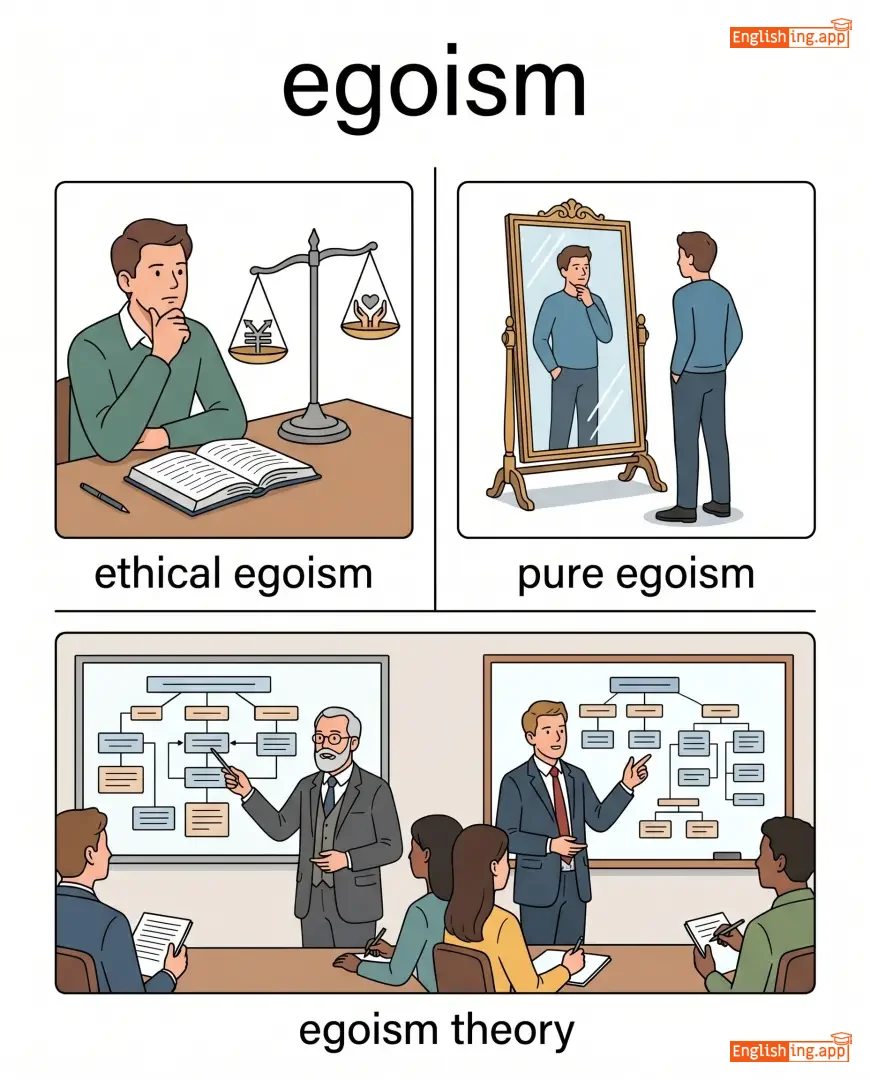
ethical egoism, pure egoism, egoism theory, act of egoism
••••••
|
利己主義 = 自分中心 + 主義、自己を最優先に考える哲学。
••••••
|
|
#2869
🧠
|
/ˈiːɡoʊ/
noun
••••••
|
- •••••• | - •••••• | - •••••• | - •••••• | - •••••• | - •••••• |
A person's sense of self-importance or self-esteem.
••••••
|
His fragile ego was hurt by the criticism. |
- •••••• |
inflate someone's ego |
to make someone feel more self-important or proud
••••••
|
- •••••• |
self, pride, self-esteem, self-importance
••••••
|
humility, modesty, selflessness
••••••
|
big ego, fragile ego, boost ego, hurt ego
••••••
|
No •••••• |
|
#2870
⚖️
|
/ɪˌɡælɪˈtɛəriən/
adjective
(エガリタリアン)
••••••
|
|
平等主義
byoudou shugi
••••••
|
- •••••• | - •••••• | - •••••• | - •••••• |
Believing in or promoting the principle that all people are equal and deserve equal rights and opportunities.
••••••
|
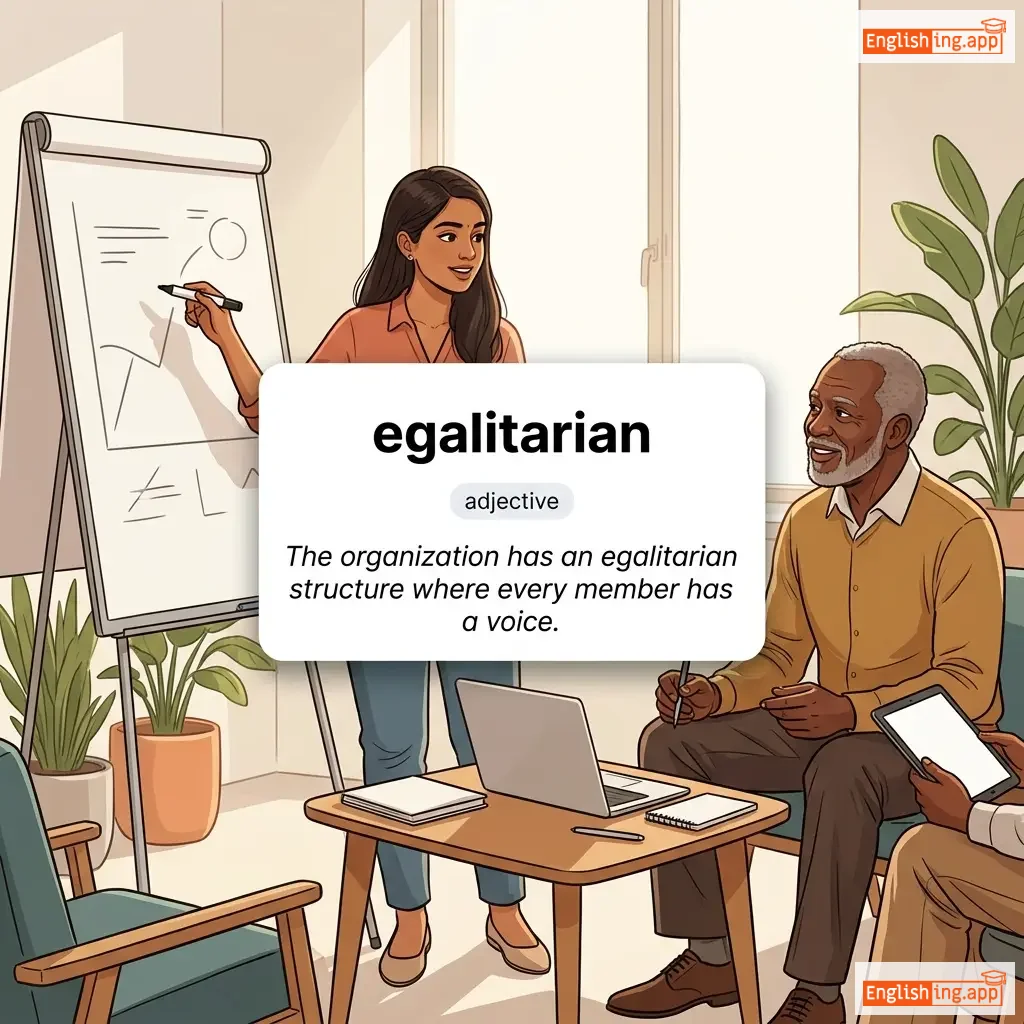
The organization has an egalitarian structure where every member has a voice.
その組織は、すべてのメンバーが意見を持つ平等主義の構造を持っています。
••••••
|
その組織は、すべてのメンバーが意見を持つ平等主義の構造を持っています。
Sono soshiki wa, subete no menbā ga iken o motsu byoudou shugi no kōzō o motteimasu.
••••••
|
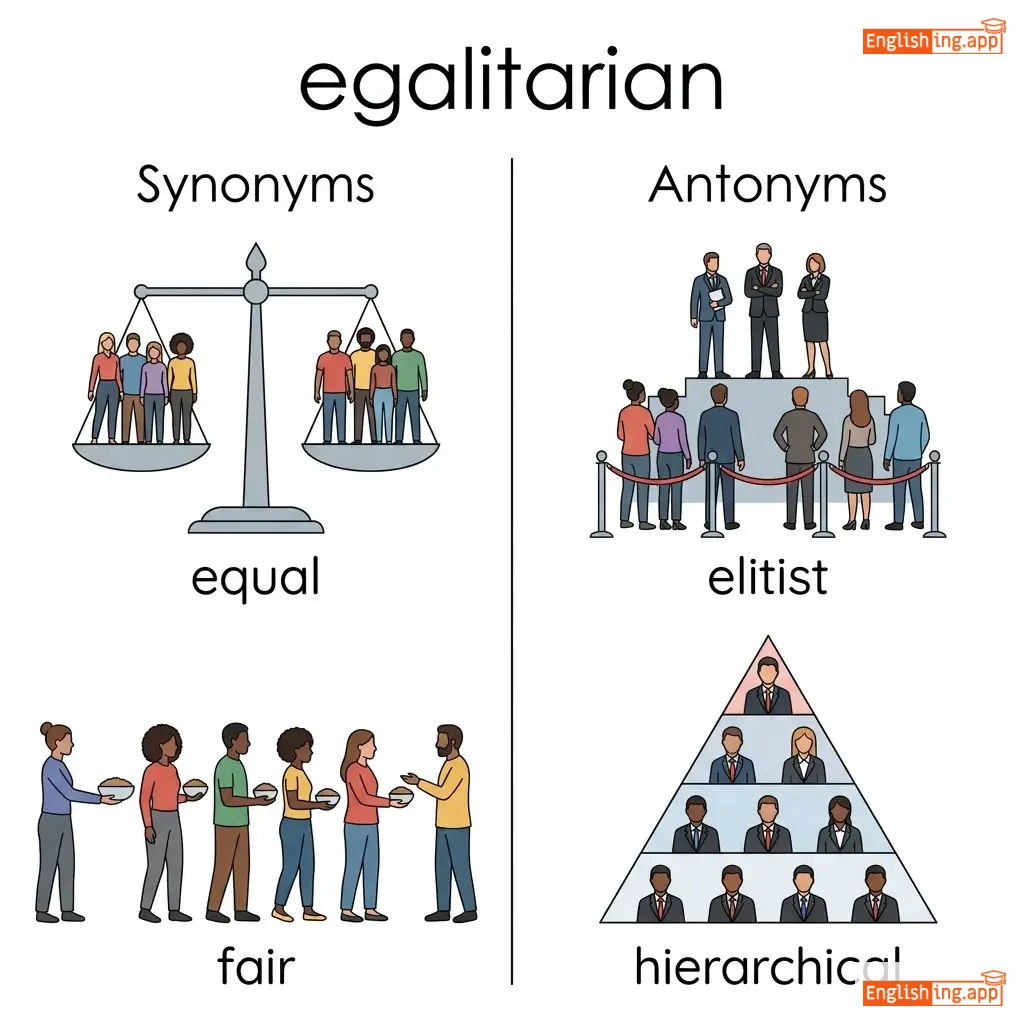
- •••••• | - •••••• | - •••••• |
equal, fair, democratic, unbiased, impartial
••••••
|
elitist, hierarchical, unequal
••••••
|
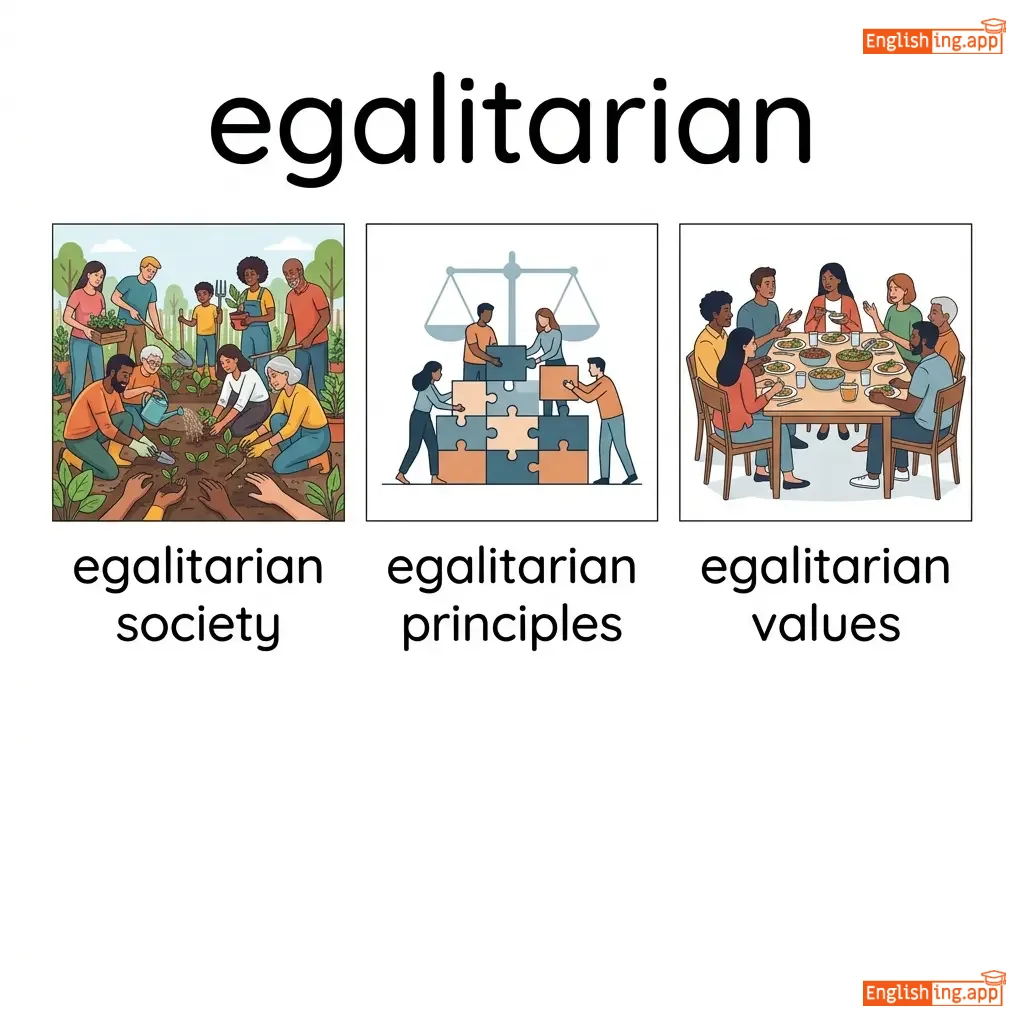
egalitarian society, egalitarian principles, egalitarian values, egalitarian approach
••••••
|
平等の権利は平等主義を意味します
••••••
|
|
#2871
🤗
|
/ɪˈfjuːsɪv/
adjective
(エフューシヴ)
••••••
|
- •••••• |
感情的な
kanjōteki na
••••••
|
- •••••• | - •••••• | - •••••• | - •••••• |
Expressing feelings of gratitude, pleasure, or approval in an unrestrained or heartfelt manner.
••••••
|
She gave him an effusive welcome after his long journey. |
彼女は長い旅の後、彼に感情的な歓迎をした。
Kanojo wa nagai tabi no ato, kare ni kanjōteki na kangei o shita.
••••••
|
- •••••• | - •••••• | - •••••• |
gushing, enthusiastic, overflowing, demonstrative, exuberant
••••••
|
reserved, restrained, indifferent
••••••
|
effusive praise, effusive welcome, effusive thanks
••••••
|
感情的な - まるで溢れんばかりの感情が表に出てくるような感じです。
••••••
|
|
#2872
❤️
|
/ɪˈfjuːʒən/
noun
(エフュージョン)
••••••
|
- •••••• |
流出
ryūshutsu
••••••
|
- •••••• | - •••••• | - •••••• | - •••••• |
An unrestrained outpouring of words, feelings, or emotions.
••••••
|
His letter was an effusion of love and longing. |
彼の手紙は愛と切望の流出でした。
Kare no tegami wa ai to setsubou no ryūshutsu deshita.
••••••
|
- •••••• | - •••••• | - •••••• |
outpouring, gush, overflow, expression, emission
••••••
|
restraint, suppression, silence
••••••
|
effusion of love, poetic effusion, emotional effusion
••••••
|
Effusion は感情のフュージョンのようなもので、すべてが一度にあふれ出します。
••••••
|
|
#2873
💬
|
/ɪˈfjuːz/
verb
(efyūzu)
••••••
|
- •••••• |
表現する
hyōgen suru
••••••
|
effused
efyūzudo
••••••
|
effused
efyūzudo
••••••
|
effuses
efyūzu
••••••
|
effusing
efyūzingu
••••••
|
To pour out or express feelings freely and openly.
••••••
|
She effused gratitude for the help she received.
彼女は受け取った助けに感謝の気持ちを表しました。
••••••
|
彼女は受け取った助けに感謝の気持ちを表しました。
Kanojo wa uketotta tasuke ni kansha no kimochi o arawashimashita.
••••••
|
- •••••• | - •••••• | - •••••• |
pour, emit, express, gush, release
••••••
|
restrain, hold back, suppress
••••••
|
effuse gratitude, effuse praise, effuse warmth
••••••
|
Effuseは感情を水のように自由に流すことです。
••••••
|
|
#2874
✨
|
/ɪˈfʌldʒənt/
adjective
(efurujento)
••••••
|
- •••••• |
輝かしい
kagayakashii
••••••
|
- •••••• | - •••••• | - •••••• | - •••••• |
Shining brilliantly; radiant.
••••••
|
Her effulgent smile brightened everyone's mood.
彼女の輝く笑顔は皆の気分を明るくした。
••••••
|
彼女の輝かしい笑顔は皆の気分を明るくした。
Kanojo no kagayakashi ismile wa mina no kibun o akarukushita.
••••••
|
- •••••• | - •••••• | - •••••• |
radiant, shining, brilliant, luminous, glowing
••••••
|
dull, dim, gloomy
••••••
|
effulgent smile, effulgent beauty, effulgent light
••••••
|
Effulgentは輝かしい、星のように光り輝いている。
••••••
|
|
#2875
🌅
|
/ɪˈfʌldʒəns/
noun
(efurujensu)
••••••
|
- •••••• |
輝き
kagayaki
••••••
|
- •••••• | - •••••• | - •••••• | - •••••• |
Brilliant radiance or shining brightness.
••••••
|
The effulgence of the sunrise lit up the entire valley. |
日の出の輝きが谷全体を照らした。
Hinode no kagayaki ga tani zentai wo terashita.
••••••
|
- •••••• | - •••••• | - •••••• |
radiance, brilliance, glow, luminosity, shine
••••••
|
darkness, dimness, gloom
••••••
|
effulgence of the sun, divine effulgence, effulgence of light
••••••
|
Effulgence は輝きを意味し、日の出の光のようです。
••••••
|
|
#2876
😏
|
/ɪˈfrʌntəri/
noun
(エフロンテリー)
••••••
|
|
厚顔無恥または大胆な態度
kōgan muchi matawa daitan na taido
••••••
|
- •••••• | - •••••• | - •••••• | - •••••• |
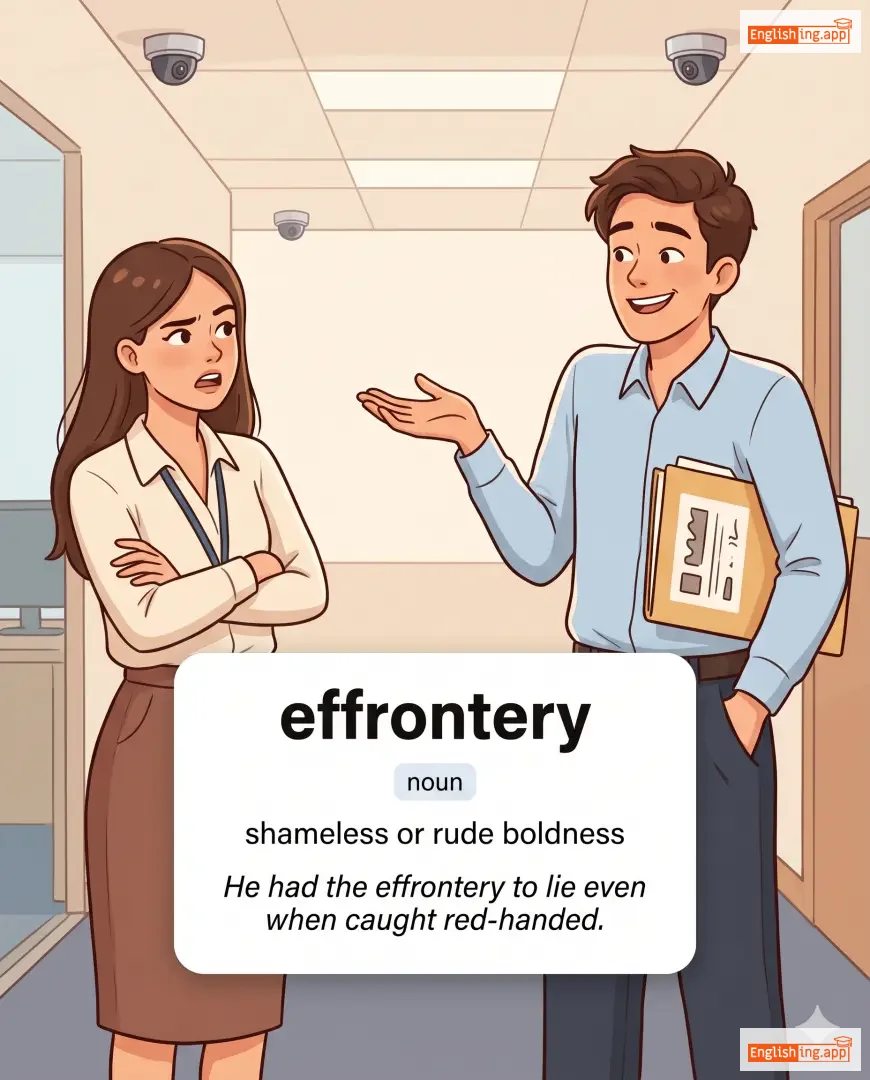
shameless or rude boldness
••••••
|
He had the effrontery to lie even when caught red-handed. |
彼は赤手で捕まった後でも嘘をつく厚顔無恥さを持っていた。
Kare wa akate de tsukamatta ato demo uso o tsuku kōgan muchisa o motte ita.
••••••
|
- •••••• | - •••••• | - •••••• |
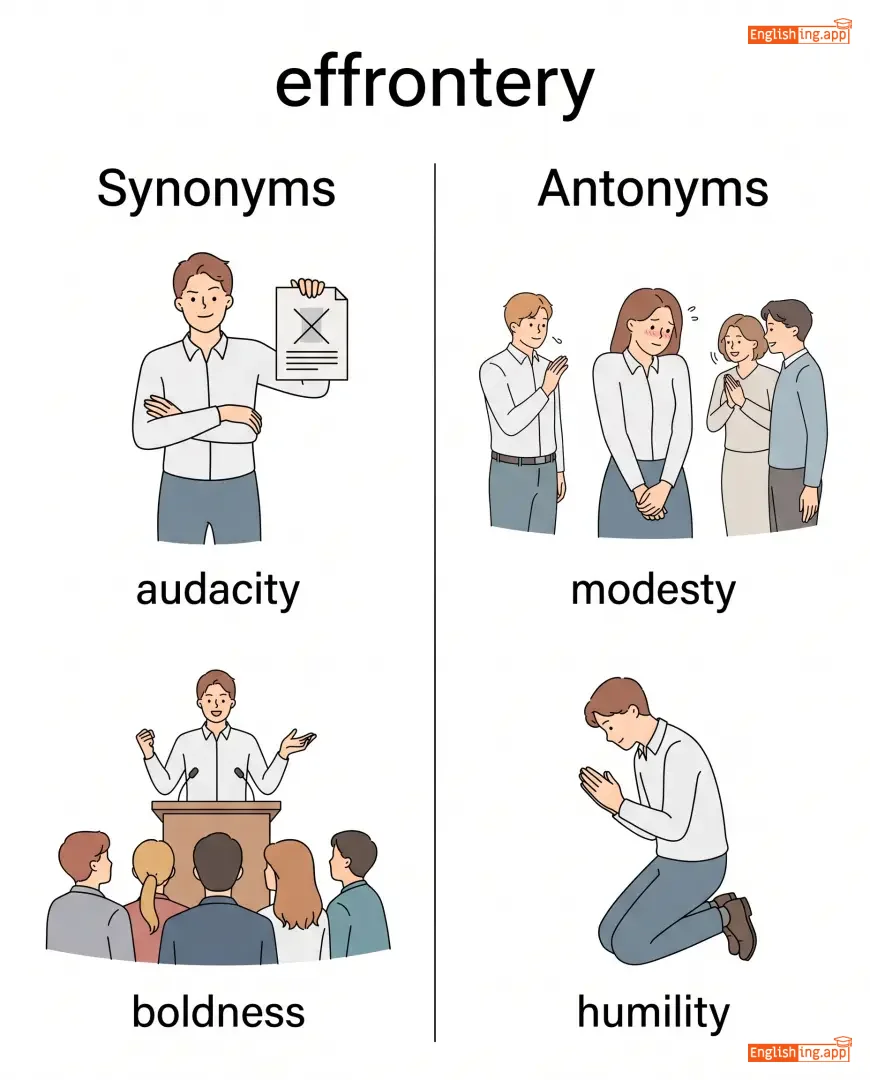
audacity, boldness, impudence, nerve, insolence
••••••
|
modesty, humility, shyness
••••••
|
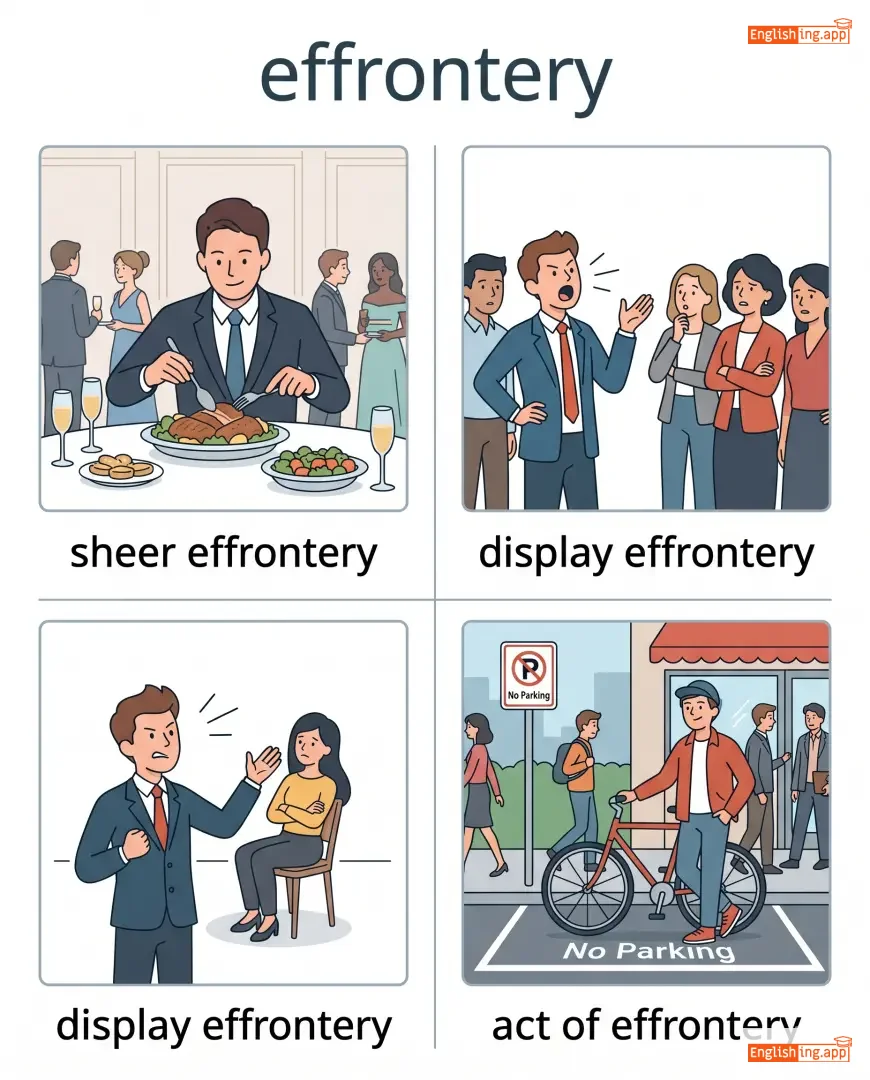
sheer effrontery, display effrontery, act of effrontery
••••••
|
Effronteryは厚顔無恥さを意味する — 前面 (front) に粗野な態度がある。
••••••
|
|
#2877
💨
|
/ɪˈfluːviəm/
noun
(エフルービウム)
••••••
|
- •••••• |
不快な臭い
fukai na nioi
••••••
|
- •••••• | - •••••• | - •••••• | - •••••• |
an unpleasant or harmful odor, secretion, or discharge
••••••
|
The effluvium from the factory spread across the neighborhood. |
工場からの不快な臭いが近隣一帯に広がった。
Kōjō kara no fukai na nioi ga kinrin ittai ni hirogatta.
••••••
|
- •••••• | - •••••• | - •••••• |
stench, odor, smell, exhalation
••••••
|
fragrance, aroma, perfume
••••••
|
foul effluvium, toxic effluvium, effluvium of decay
••••••
|
Effluviumは不快な臭いを意味する – 工場からの臭いが広がっている。
••••••
|
|
#2878
🌼
|
/ˌɛfləˈrɛsənt/
adjective
(エフロレッセント)
••••••
|
- •••••• |
開花する
kaika suru
••••••
|
- •••••• | - •••••• | - •••••• | - •••••• |
in the process of blooming or flourishing
••••••
|
The efflorescent trees made the park look beautiful.
エフロレッセントの木々は公園を美しく見せました。
••••••
|
開花する木々は公園を美しく見せました。
Kaika suru kigi wa kōen o utsukushiku misemashita.
••••••
|
- •••••• | - •••••• | - •••••• |
blooming, blossoming, flourishing, thriving
••••••
|
withering, declining
••••••
|
efflorescent stage, efflorescent flowers, efflorescent period
••••••
|
Efflorescent は開花するという意味です – 花の香りが広がっていると想像してみてください。
••••••
|
|
#2879
🌸
|
/ˌɛfləˈrɛsəns/
noun
(エフロレッセンス)
••••••
|
- •••••• |
開花
kaika
••••••
|
- •••••• | - •••••• | - •••••• | - •••••• |
the process of flowering or reaching an optimal stage of development
••••••
|
The garden was at the peak of its efflorescence in spring. |
庭は春にその開花のピークに達していました。
Niwa wa haru ni sono kaika no piiku ni tasshite imashita.
••••••
|
- •••••• | - •••••• | - •••••• |
bloom, flowering, blossoming, culmination
••••••
|
decay, decline, withering
••••••
|
peak efflorescence, cultural efflorescence, efflorescence of art
••••••
|
Efflorescence は開花を意味します - 花が咲く瞬間が最も美しいです。
••••••
|
|
#2880
🪆
|
/ˈɛfɪdʒi/
noun
(エフィジー)
••••••
|
- •••••• |
人形
ningyo
••••••
|
- •••••• | - •••••• | - •••••• | - •••••• |
a sculpture or model of a person, often made to be destroyed in protest or anger
••••••
|
The protesters burned an effigy of the corrupt politician. |
抗議者たちは腐敗した政治家の人形を燃やしました。
Kougitachi wa fuhai shita seijika no ningyo o moyashimashita.
••••••
|
burn in effigy |
to destroy a figure representing someone as a form of protest
••••••
|
人形を燃やす
ningyo o moyasu
••••••
|
statue, likeness, representation, dummy, figure
••••••
|
reality, original, person
••••••
|
burn an effigy, effigy of, protest effigy
••••••
|
Effigyは人形のことです – 政治家の人形を抗議のために燃やします。
••••••
|
Vocabulary Quiz
Test your vocabulary by matching words with their translations or meanings.
Login to take the quiz
Comments (0)
Share your thoughts and join the discussion.
Join the discussion by logging in
Login to CommentNo comments yet
Be the first to share your thoughts!