

翻訳
過去
過去分詞
三人称単数
動名詞
意味
例文
例文の翻訳
同義語
対義語
コロケーション
ニーモニック


Swipe left or right, or use the buttons. Tap image to zoom.
例文の翻訳
単語
Lesson 104Lesson 104 - マスクトグル
|
絵文字
|
単語 | Images | 翻訳 | 過去 | 過去分詞 | 三人称単数 | 動名詞 | 意味 | 例文 | 例文の翻訳 | 表現例 | 表現例の意味 | 表現例の翻訳 | 同義語 | 対義語 | コロケーション | ニーモニック |
|---|---|---|---|---|---|---|---|---|---|---|---|---|---|---|---|---|---|
|
#3091
🎓
|
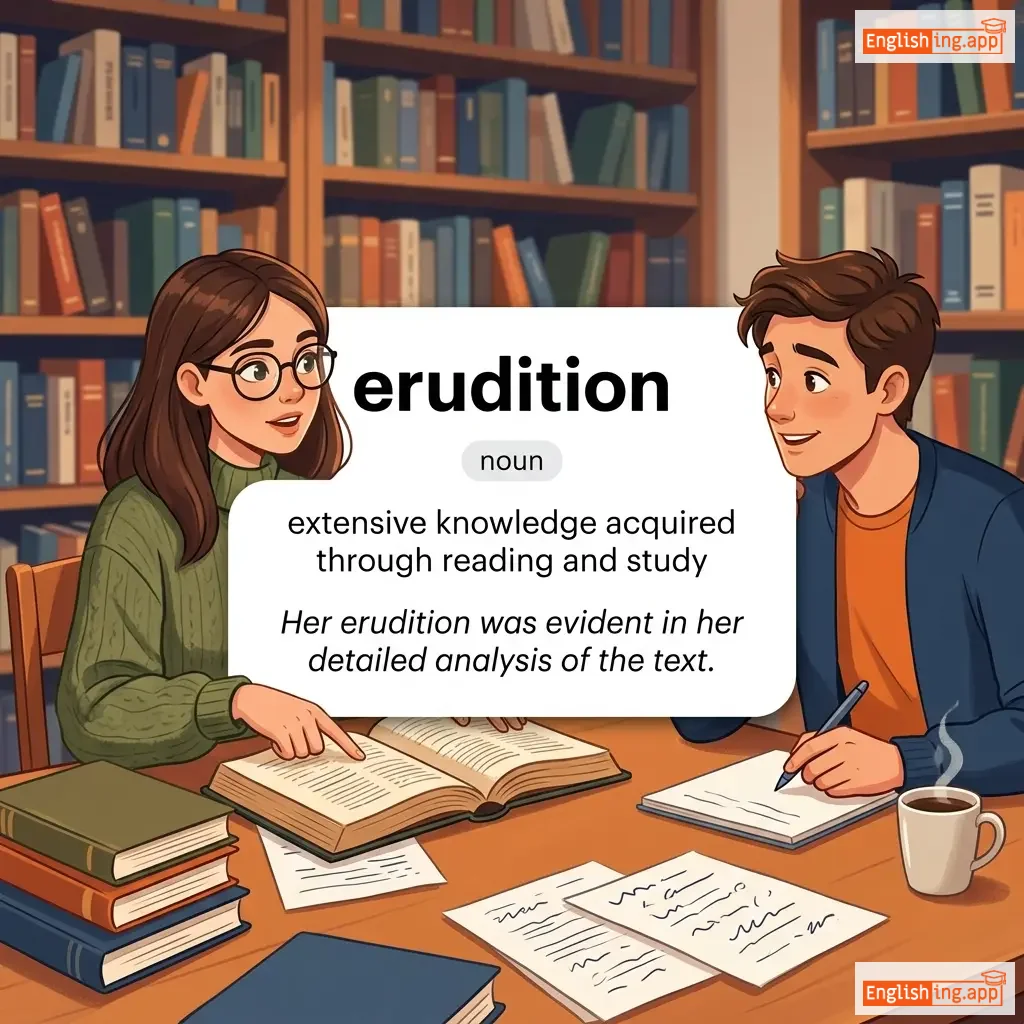
/ˌɛrjʊˈdɪʃən/
noun
(エルディション)
••••••
|
|
博識
hakushiki
••••••
|
- •••••• | - •••••• | - •••••• | - •••••• |
extensive knowledge acquired through reading and study
••••••
|
Her erudition was evident in her detailed analysis of the text. |
彼女の博識はテキストの詳細な分析に明らかに現れていた。
Kanojo no hakushiki wa tekisuto no shousai na bunseki ni akirakani arawarete ita.
••••••
|
- •••••• | - •••••• | - •••••• |
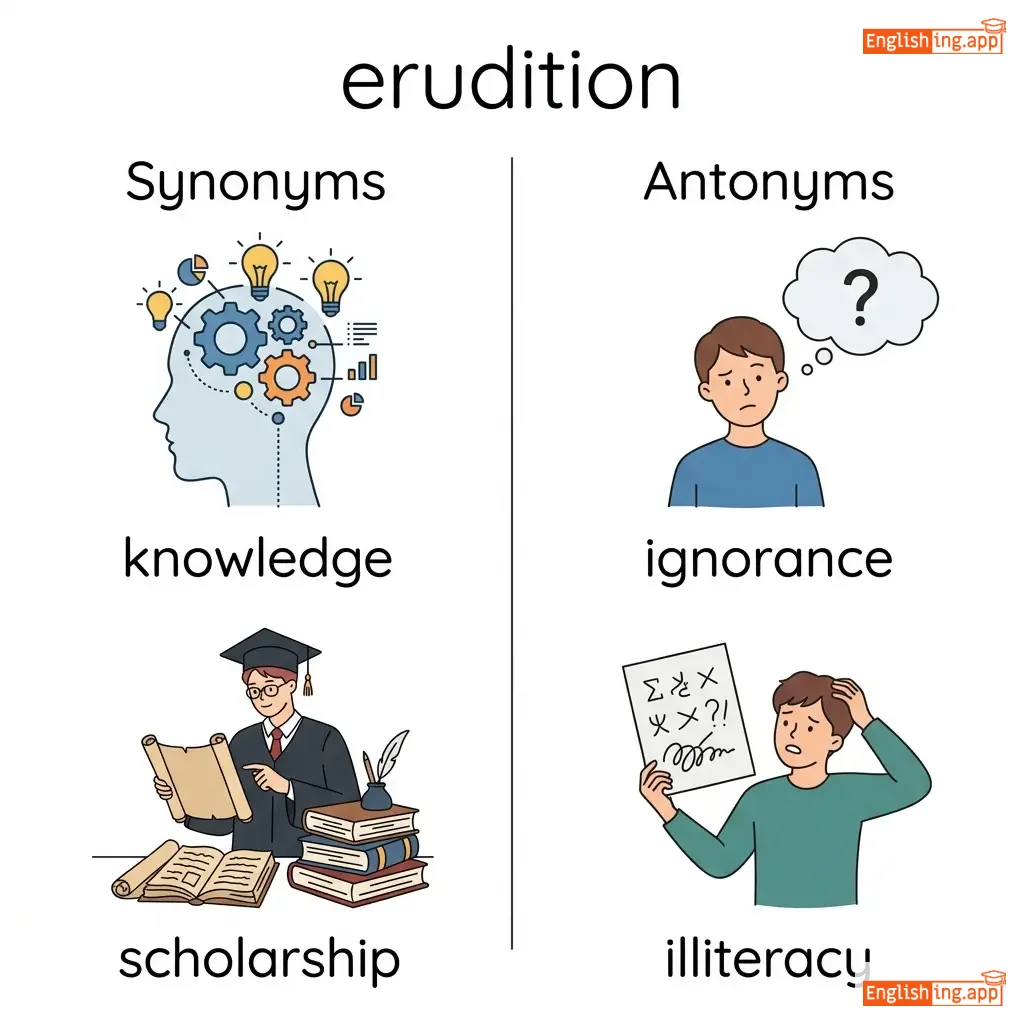
knowledge, scholarship, learning, intelligence, wisdom
••••••
|
ignorance, illiteracy, stupidity
••••••
|
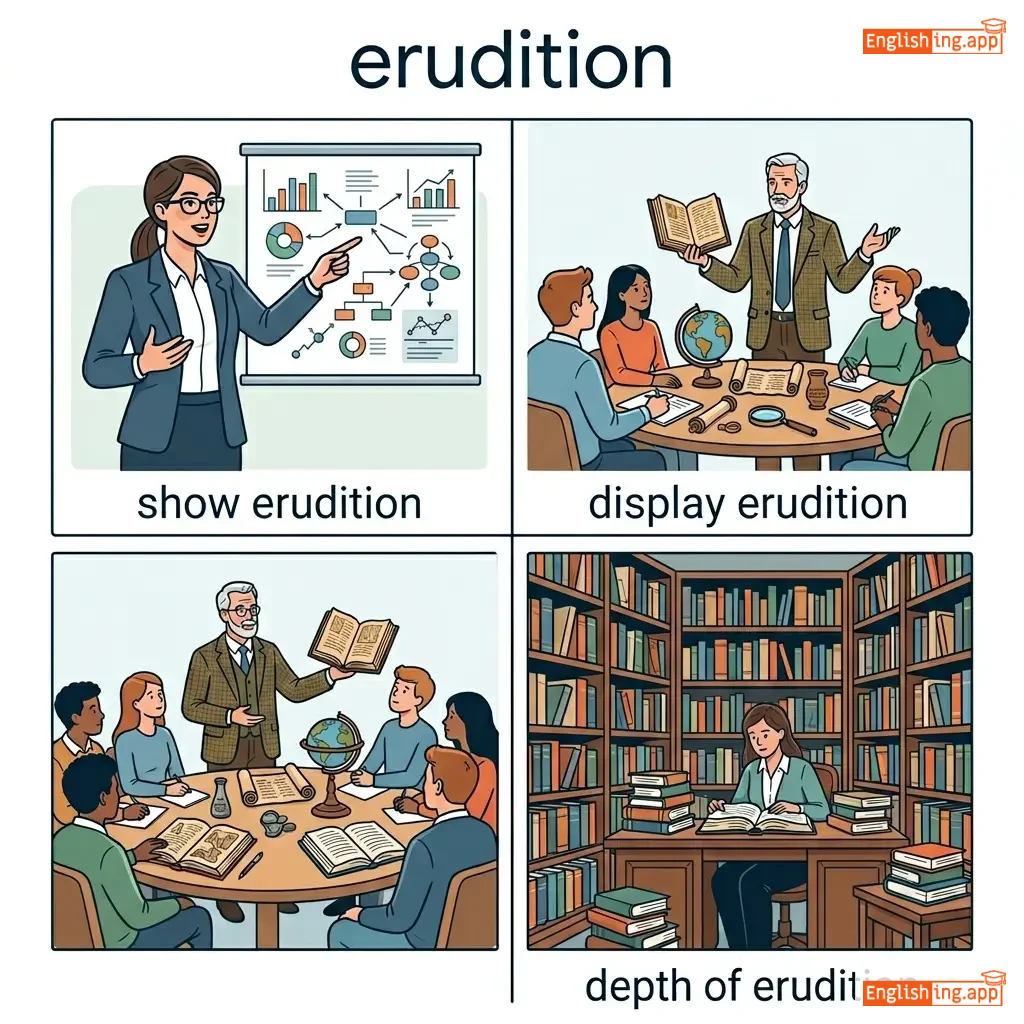
show erudition, display erudition, depth of erudition, erudition in
••••••
|
博識 = 知識の深さ
••••••
|
|
#3092
🎨
|
/ɛsˈθɛtɪk/
adjective
(エステティック)
••••••
|
- •••••• |
美的
biteki
••••••
|
- •••••• | - •••••• | - •••••• | - •••••• |
Concerned with beauty or the appreciation of beauty.
••••••
|
The building’s esthetic design attracted many visitors. |
その建物の美的なデザインは多くの訪問者を引き寄せました。
Sono tatemono no biteki na dezain wa ooku no hōmonsha o hikiyose mashita.
••••••
|
- •••••• | - •••••• | - •••••• |
artistic, beautiful, decorative, tasteful
••••••
|
ugly, unappealing, unattractive
••••••
|
esthetic appeal, esthetic sense, esthetic value, esthetic quality
••••••
|
Estheticは美的を意味し、'美的なデザイン'は美しいデザインを意味します。
••••••
|
|
#3093
🙏
|
/ɪˈstiːm/
noun/verb
(es-tim)
••••••
|
- •••••• |
尊敬
sonkei
••••••
|
esteemed
es-tim-d
••••••
|
esteemed
es-tim-d
••••••
|
esteems
es-tims
••••••
|
esteeming
es-timing
••••••
|
Respect and admiration, typically for a person.
••••••
|
She is held in high esteem by her colleagues.
彼女は同僚から高く評価されています。
••••••
|
彼女は同僚から高く評価されています。
Kanojo wa dōryō kara takaku hyōka sareteimasu.
••••••
|
hold in esteem
高く評価する
••••••
|
to regard with respect
••••••
|
高く評価する
takaku hyōka suru
••••••
|
respect, admiration, regard, honor
••••••
|
disrespect, contempt, disdain
••••••
|
high esteem, mutual esteem, esteem for, esteem highly
••••••
|
Esteemは尊敬 — すべての人が電車で尊敬し合う。
••••••
|
|
#3094
🏢
|
/ɪˈstæblɪʃ/
verb
(エスタブリッシュ)
••••••
|
- •••••• |
設立する
setsuritsu suru
••••••
|
established
エスタブリッシュド
••••••
|
established
エスタブリッシュド
••••••
|
establishes
エスタブリッシュズ
••••••
|
establishing
エスタブリッシング
••••••
|
To set up, create, or bring into existence something on a firm basis.
••••••
|
The company plans to establish a new office in Dhaka.
その会社はダッカに新しいオフィスを設立する予定です。
••••••
|
その会社はダッカに新しいオフィスを設立する予定です。
Sono kaisha wa Dāka ni atarashī ofisu o setsuritsu suru yotei desu.
••••••
|
establish a reputation
名声を築く
••••••
|
to build or create recognition over time
••••••
|
名声を築く
meisei o kizuku
••••••
|
set up, found, create, build, institute
••••••
|
abolish, destroy, dismantle
••••••
|
establish control, establish a company, establish rules, firmly establish
••••••
|
設立は '創設' と同じような意味で、安定した基盤を作ること。
••••••
|
|
#3095
🌿
|
/ˈɛsəns/
noun
(エッセンス)
••••••
|
- •••••• |
本質
honshitsu
••••••
|
- •••••• | - •••••• | - •••••• | - •••••• |
The intrinsic nature or indispensable quality of something that determines its character.
••••••
|
The essence of democracy is freedom of speech.
民主主義の本質は言論の自由です。
••••••
|
民主主義の本質は言論の自由です。
Minshu shugi no honshitsu wa genron no jiyū desu.
••••••
|
in essence
本質的に
••••••
|
basically or fundamentally
••••••
|
本質的に
Honshitsuteki ni
••••••
|
core, nature, substance, spirit, heart
••••••
|
superficiality, exterior, surface
••••••
|
true essence, essence of life, capture the essence, in essence
••••••
|
Essence は本質です — まるで香水のエッセンスが香りを決定するように。
••••••
|
|
#3096
⚖️
|
/ˈɛskwaɪər/
noun
(エスクワイア)
••••••
|
- •••••• |
エスクワイア
esukuwia
••••••
|
- •••••• | - •••••• | - •••••• | - •••••• |
A title of respect often used after a man's name, especially for lawyers in the United States.
••••••
|
John Smith, Esquire, will be representing the client in court. |
ジョン・スミス、エスクワイア、は法廷でクライアントを代表する予定です。
Jon Sumisu, Esukuwia, wa hōtei de kuraianto o daihyō suru yotei desu.
••••••
|
- •••••• | - •••••• | - •••••• |
gentleman, lawyer, barrister, advocate
••••••
|
commoner, layman
••••••
|
addressed as Esquire, John Smith Esquire
••••••
|
Esquire は、アメリカの弁護士の名前に付けられる尊敬のタイトルです。
••••••
|
|
#3097
👀
|
/ɪˈspaɪ/
verb
(エスパイ)
••••••
|
- •••••• |
見る
miru
••••••
|
espied
エスパイド
••••••
|
espied
エスパイド
••••••
|
espies
エスパイズ
••••••
|
espying
エスパイング
••••••
|
To catch sight of or notice something, especially from a distance.
••••••
|
From the hilltop, she espied a small village in the valley.
丘の頂上から、彼女は谷間に小さな村を見つけました。
••••••
|
丘の頂上から、彼女は谷間に小さな村を見つけました。
Oka no chōjō kara, kanojo wa tani ma ni chiisana mura o mitsukemashita.
••••••
|
- •••••• | - •••••• | - •••••• |
spot, glimpse, notice, observe, discern
••••••
|
ignore, overlook, miss
••••••
|
espy a figure, espy in the distance, espy from afar
••••••
|
Espyはスパイのように、遠くから見ること!
••••••
|
|
#3098
🤝
|
/ɛˌspriː də ˈkɔːr/
noun
(esupuri de kōru)
••••••
|
- •••••• |
チームスピリット
chīmusupiritto
••••••
|
- •••••• | - •••••• | - •••••• | - •••••• |
A feeling of pride, fellowship, and loyalty shared by members of a group.
••••••
|
The team's esprit de corps was evident in their cooperative effort. |
チームのスピリットは、彼らの協力的な努力に明らかに現れていた。
Chīmu no supiritto wa, karera no kyōryokuteki na doryoku ni akiraka ni arawarete ita.
••••••
|
- •••••• | - •••••• | - •••••• |
morale, camaraderie, fellowship, unity, solidarity
••••••
|
discord, division, disunity
••••••
|
strong esprit de corps, develop esprit de corps, esprit de corps among soldiers
••••••
|
Esprit de corps はチームスピリットのようなもので、グループの団結を意味します。
••••••
|
|
#3099
🙌
|
/ɪˈspaʊz/
verb
(esupauzu)
••••••
|
- •••••• |
支持する
shiji suru
••••••
|
espoused
esupauzudo
••••••
|
espoused
esupauzudo
••••••
|
espouses
esupauzesu
••••••
|
espousing
esupauzuingu
••••••
|
To adopt or support a cause, belief, or way of life.
••••••
|
She espoused the philosophy of nonviolence throughout her career.
彼女はキャリアを通じて非暴力の哲学を支持していました。
••••••
|
彼女はキャリアを通じて非暴力の哲学を支持していました。
Kanojo wa kyaria o tsūjite hibōryoku no tetsugaku o shiji shiteimashita.
••••••
|
- •••••• | - •••••• | - •••••• |
support, advocate, adopt, promote, endorse
••••••
|
reject, oppose, abandon
••••••
|
espouse a cause, espouse beliefs, espouse principles, espouse values
••••••
|
Espouseは、配偶者のように考えを支持することです。
••••••
|
|
#3100
🕵️
|
/ˈɛspiənɑːʒ/
noun
(エスピオナージュ)
••••••
|
- •••••• |
スパイ活動
supai katsudou
••••••
|
- •••••• | - •••••• | - •••••• | - •••••• |
The practice of spying or using spies to gather secret information, usually for political or military purposes.
••••••
|
The agent was arrested on charges of espionage against the state. |
そのエージェントは国家に対するスパイ活動の容疑で逮捕されました。
Sono eejento wa kokka ni taisuru supai katsudou no yougi de taiho saremashita.
••••••
|
- •••••• | - •••••• | - •••••• |
spying, surveillance, intelligence, infiltration, reconnaissance
••••••
|
openness, honesty, transparency
••••••
|
industrial espionage, accused of espionage, espionage activities, counter espionage
••••••
|
Espionage は SPY 仕事 - スパイ活動を行う。
••••••
|
|
#3101
🔮
|
/ˌɛsəˈtɛrɪk/
adjective
(エソテリック)
••••••
|
|
秘教的
hikyou teki
••••••
|
- •••••• | - •••••• | - •••••• | - •••••• |
intended for or understood by only a small number of people with special knowledge
••••••
|
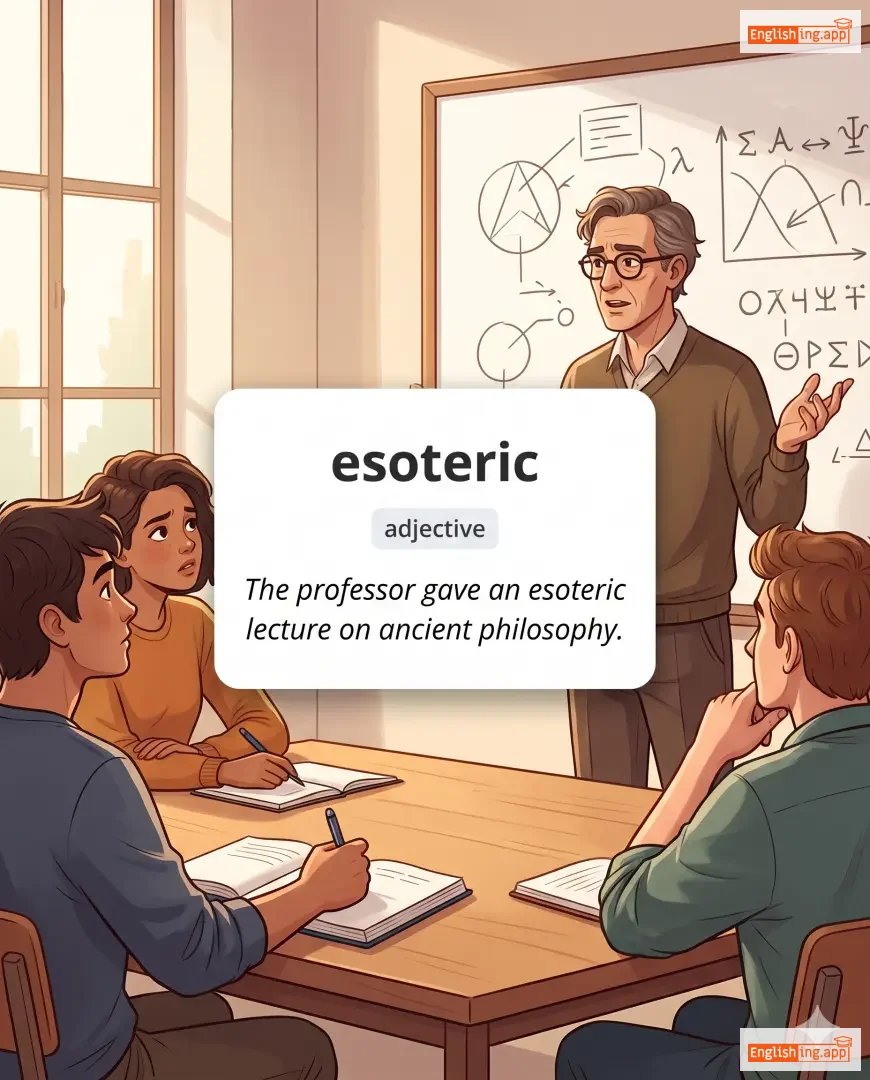
The professor gave an esoteric lecture on ancient philosophy. |
教授は古代哲学に関する秘教的な講義を行いました。
Kyouju wa kodai tetsugaku ni kansuru hikyou teki na kougi wo okonai mashita.
••••••
|
- •••••• | - •••••• | - •••••• |
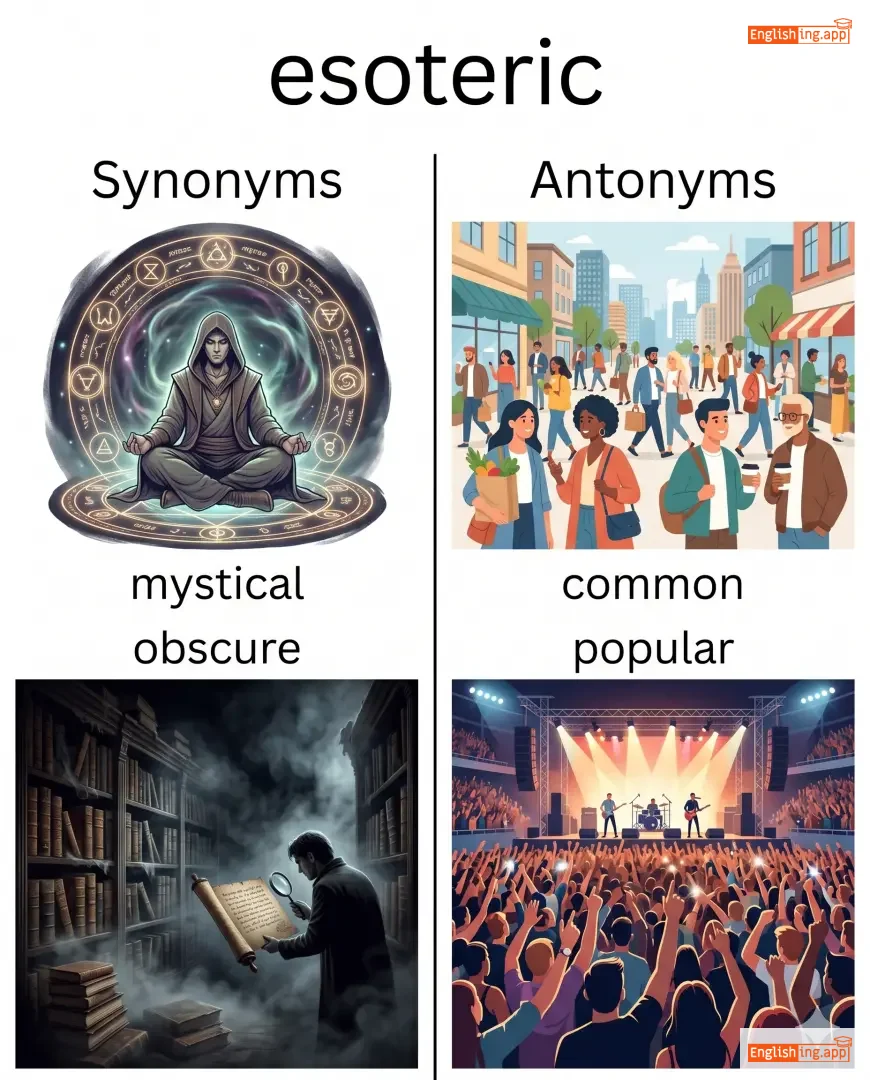
mystical, obscure, cryptic, abstract, arcane
••••••
|
common, popular, simple
••••••
|
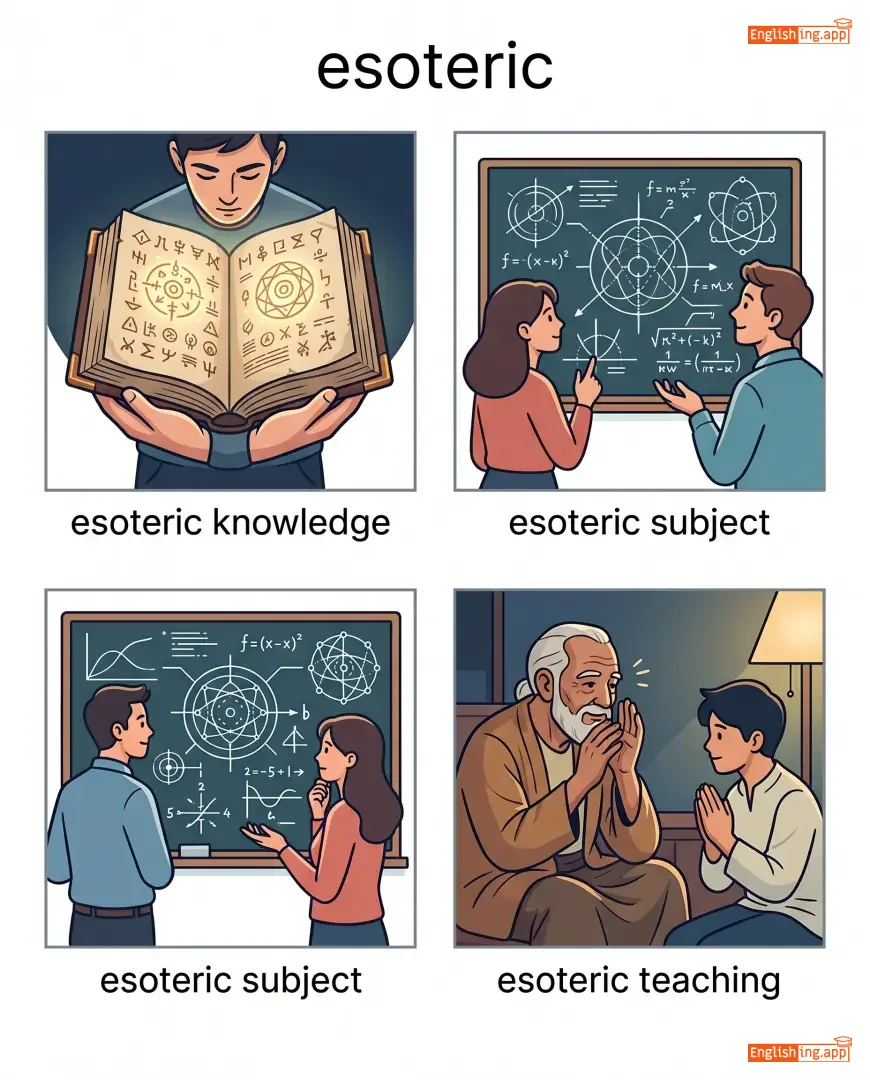
esoteric knowledge, esoteric subject, esoteric teaching
••••••
|
Eso (エソ) + テリック、意味は少数の専門家だけが理解できること
••••••
|
|
#3102
🛡️
|
/ɪˈskʌtʃən/
noun
(エスカッション)
••••••
|
- •••••• |
家族の紋章が描かれた盾
kazoku no monshō ga egakareta tate
••••••
|
- •••••• | - •••••• | - •••••• | - •••••• |
a shield or emblem bearing a coat of arms
••••••
|
The family crest was displayed on the escutcheon above the fireplace. |
家族の紋章は暖炉の上の盾に展示されていた。
Kazoku no monshō wa danro no ue no tate ni tenji sarete ita.
••••••
|
a blot on one's escutcheon |
a stain on someone's reputation or honor
••••••
|
誰かの名誉に対する汚点
dareka no meiyo ni taisuru oten
••••••
|
shield, crest, emblem, coat of arms
••••••
|
disgrace, dishonor
••••••
|
family escutcheon, coat of arms escutcheon, decorative escutcheon
••••••
|
Escutcheonは家族の盾、家族の紋章が描かれている
••••••
|
|
#3103
🚫
|
/ɪsˈtʃuː/
verb
(エスキュー)
••••••
|
- •••••• |
避ける
sakeru
••••••
|
eschewed
エスキュード
••••••
|
eschewed
エスキュード
••••••
|
eschews
エスキューズ
••••••
|
eschewing
エスキューイング
••••••
|
to deliberately avoid or abstain from something
••••••
|
She chose to eschew junk food for a healthier diet.
シー チョーズ トゥ エスキュー ジャンク フード フォー ア ヘルシア ダイエット
••••••
|
彼女は健康的な食事のためにジャンクフードを避けることを選びました。
Kanojo wa kenko-teki na shokuji no tame ni janku fudo o sakeru koto o erabimashita.
••••••
|
- •••••• | - •••••• | - •••••• |
avoid, shun, refrain, renounce, abstain
••••••
|
embrace, adopt, accept
••••••
|
eschew violence, eschew luxury, eschew tradition
••••••
|
避ける (sakeru) は eschew と同じ意味で、避けることを意味します。
••••••
|
|
#3104
🌄
|
/ˈɛskəpeɪd/
noun
(esukepaid)
••••••
|
- •••••• |
冒険
bōken
••••••
|
- •••••• | - •••••• | - •••••• | - •••••• |
an adventurous, exciting, or reckless act
••••••
|
Their summer escapade included camping and mountain climbing.
彼らの夏の冒険にはキャンプと山登りが含まれていました。
••••••
|
彼らの夏の冒険にはキャンプと山登りが含まれていました。
Karera no natsu no bōken ni wa kyampu to yama nobori ga fukumarete imashita.
••••••
|
- •••••• | - •••••• | - •••••• |
adventure, exploit, stunt, frolic, mischief
••••••
|
routine, duty, seriousness
••••••
|
wild escapade, youthful escapade, adventurous escapade
••••••
|
Escape + parade = 冒険
••••••
|
|
#3105
📈
|
/ˈɛskəleɪt/
verb
(エスカレート)
••••••
|
|
エスカレート
esukarēto
••••••
|
escalated
エスカレーテッド
••••••
|
escalated
エスカレーテッド
••••••
|
escalates
エスカレーツ
••••••
|
escalating
エスカレーティング
••••••
|
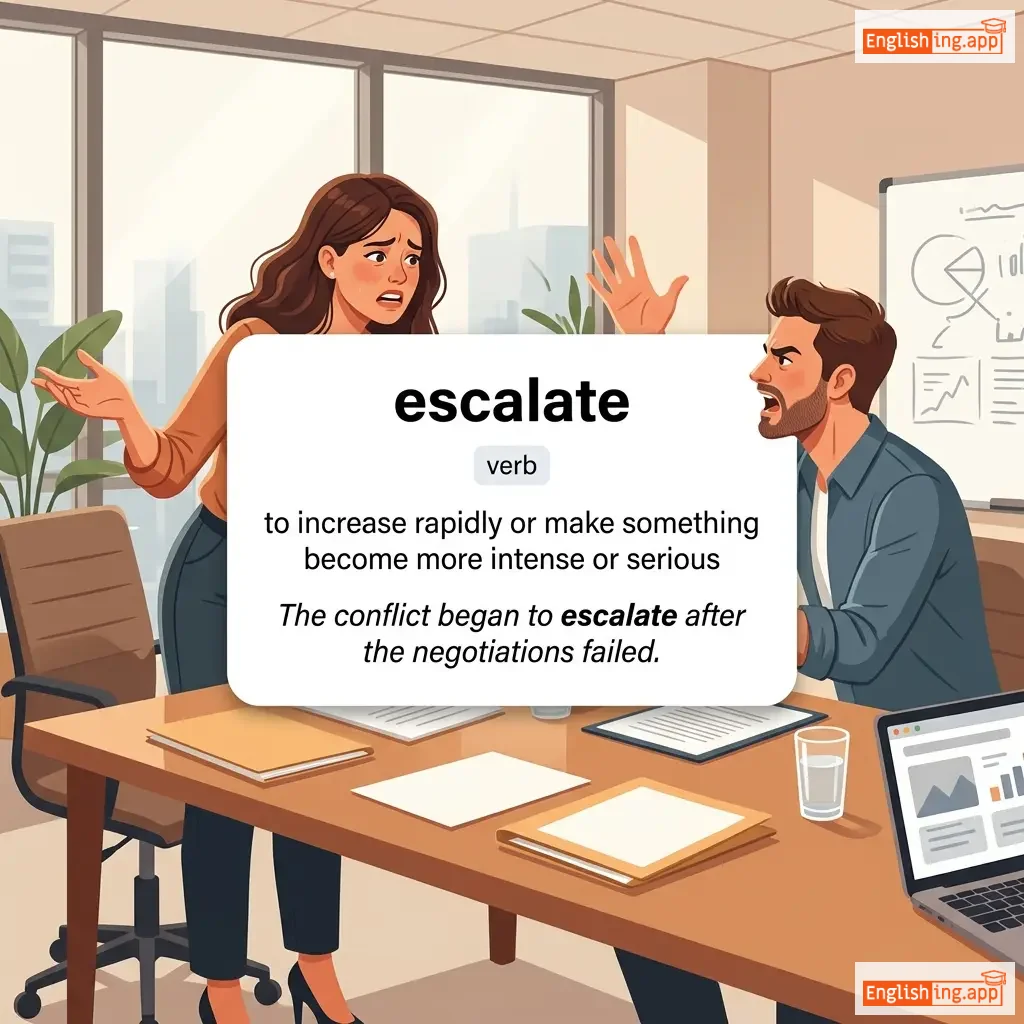
to increase rapidly or make something become more intense or serious
••••••
|
The conflict began to escalate after the negotiations failed.
交渉が失敗した後、紛争はエスカレートし始めた。
••••••
|
交渉が失敗した後、紛争はエスカレートし始めた。
Kōshō ga shippai shita ato, funsō wa esukarēto shihajimeta.
••••••
|
escalate the situation
状況をエスカレートさせる
••••••
|
to make a problem or conflict more serious
••••••
|
状況をエスカレートさせる
jōkyō o esukarēto saseru
••••••
|
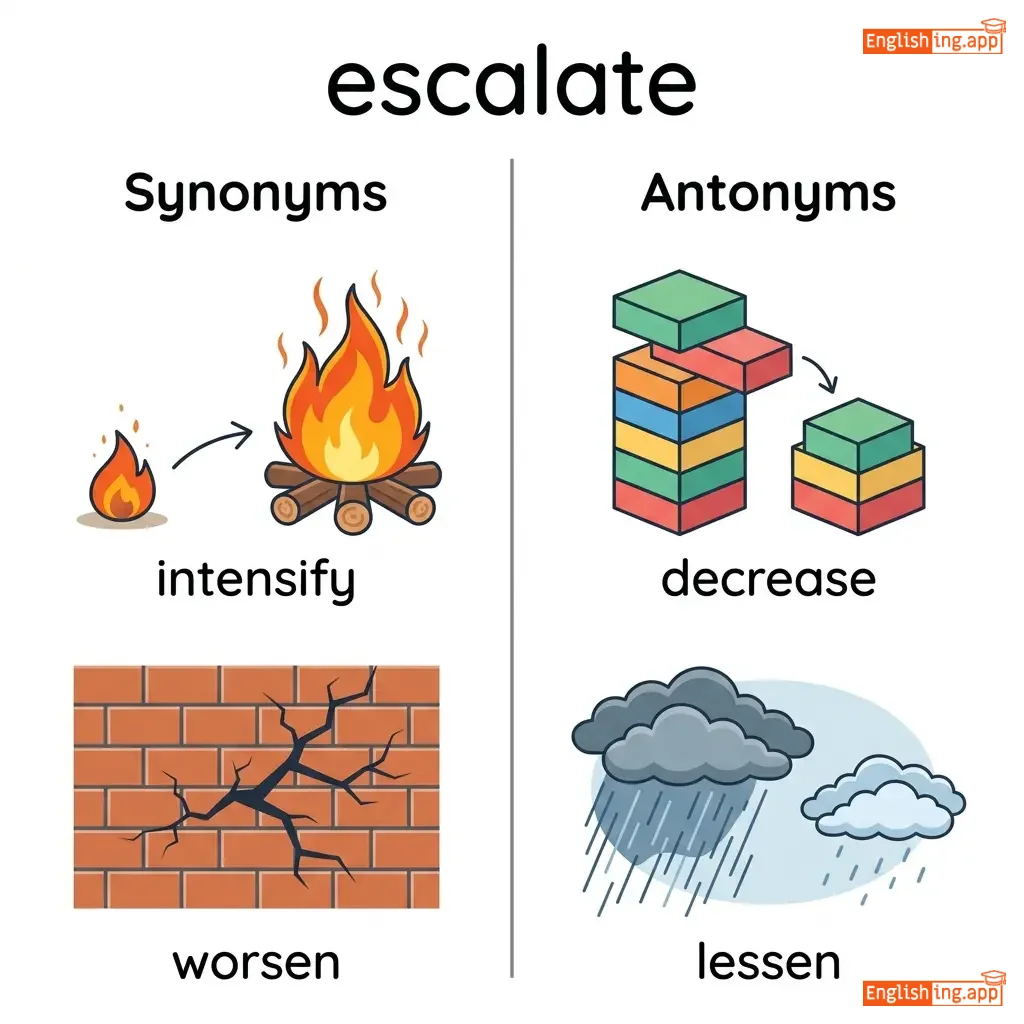
intensify, worsen, amplify, heighten, increase
••••••
|
decrease, lessen, reduce
••••••
|
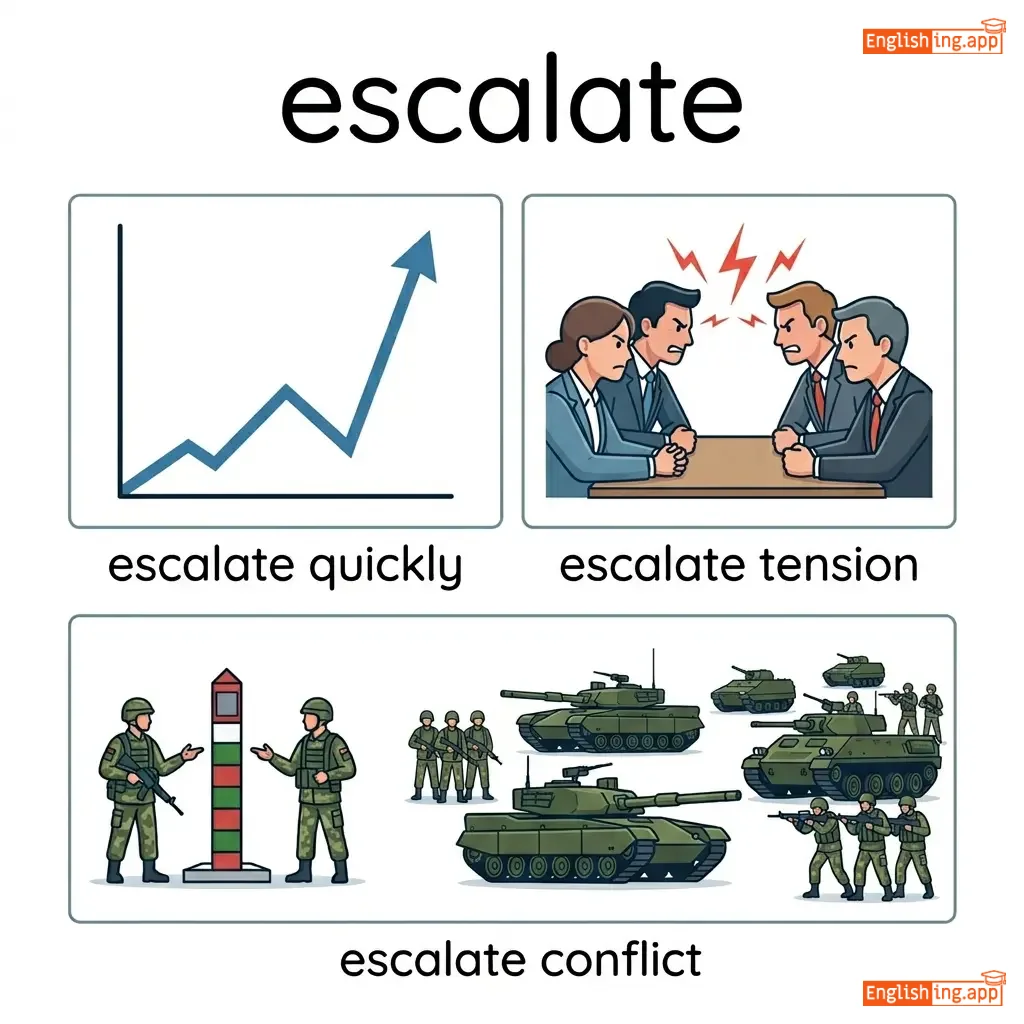
escalate quickly, escalate tension, escalate conflict, escalate costs
••••••
|
エスカレーターで上がる、エスカレートは増加や強化を意味する
••••••
|
|
#3106
⚖️
|
/ˈɛkwɪtəbl/
adjective
(エクイタブル)
••••••
|
|
公平
kouhei
••••••
|
- •••••• | - •••••• | - •••••• | - •••••• |
Fair and impartial.
••••••
|
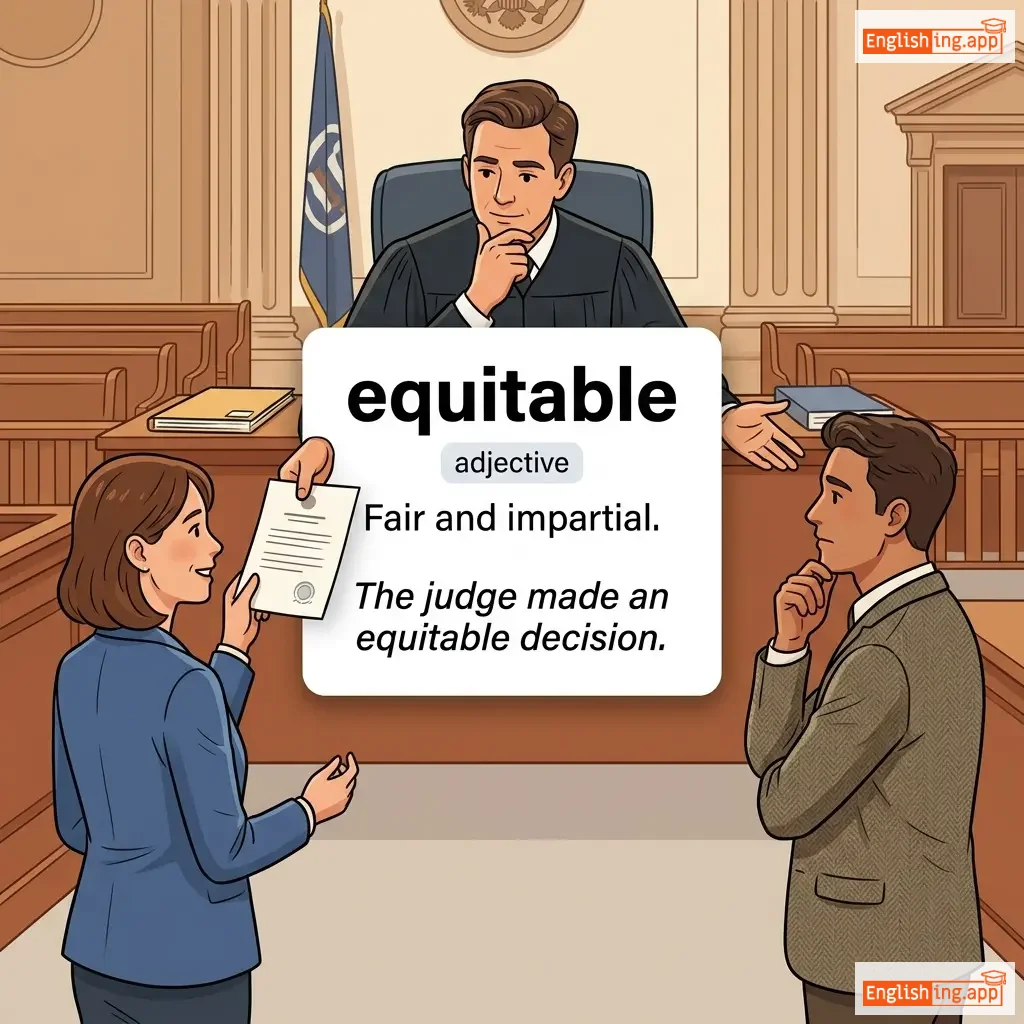
The judge made an equitable decision. |
裁判官は公平な決定を下した。
Saibankan wa kouhei na kettei o kudashita.
••••••
|
- •••••• | - •••••• | - •••••• |
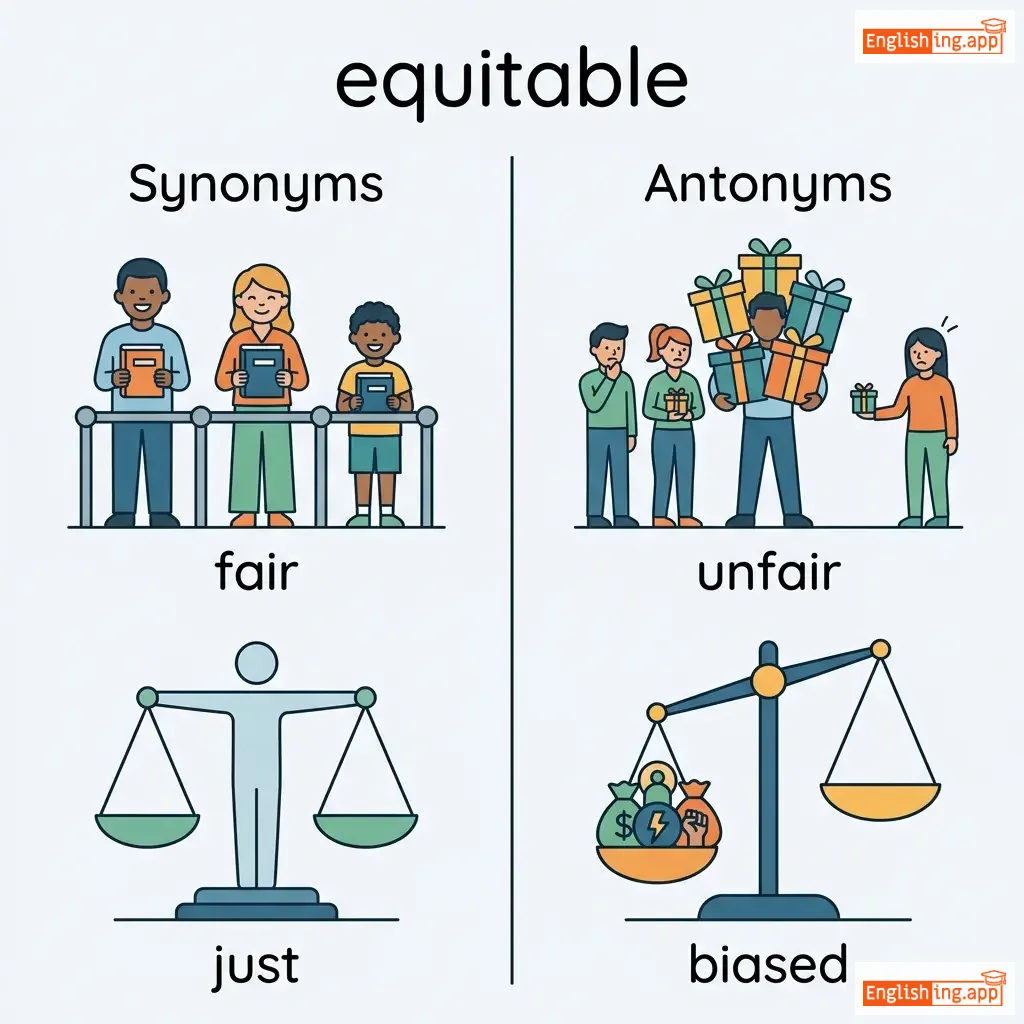
fair, just, impartial, unbiased, even-handed
••••••
|
unfair, biased, unjust
••••••
|
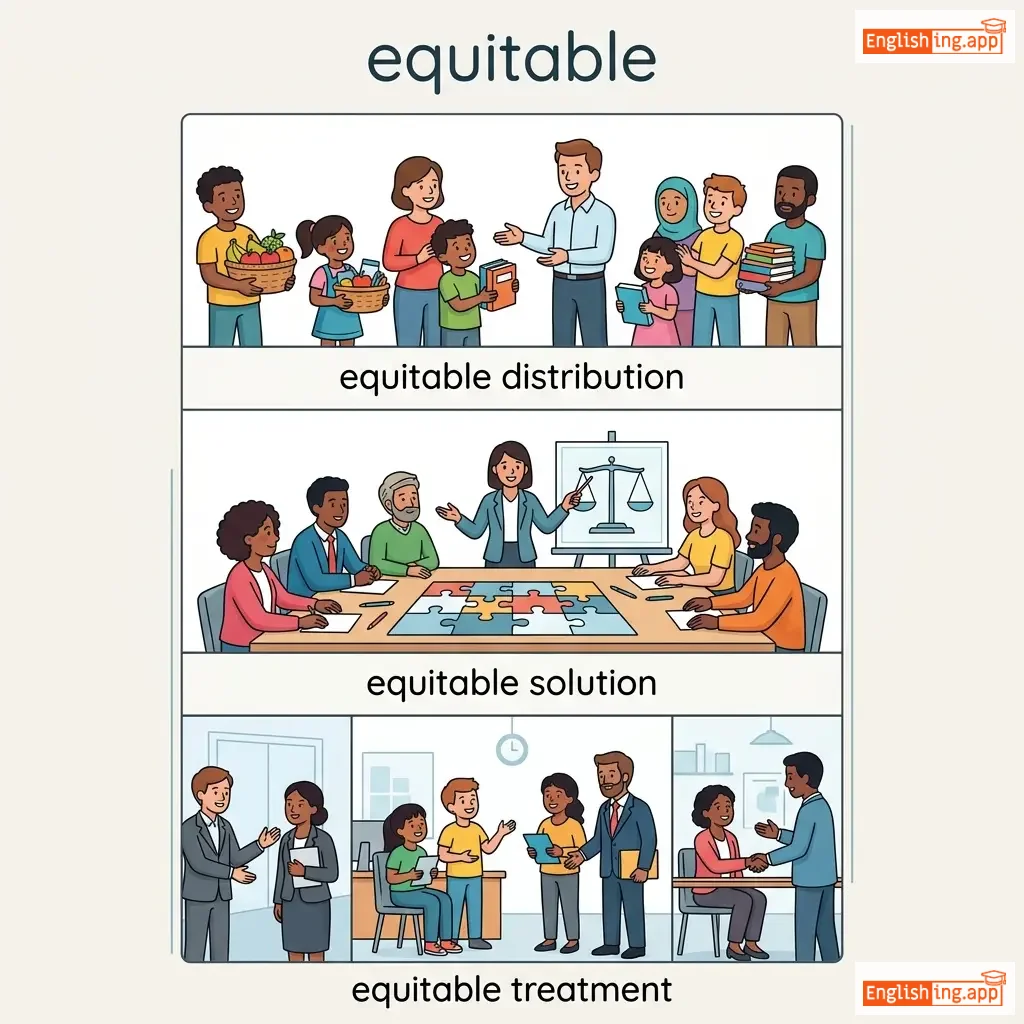
equitable distribution, equitable solution, equitable treatment
••••••
|
Equitable は平等 + テーブル、皆が平等に座っている → 公平。
••••••
|
|
#3107
📚
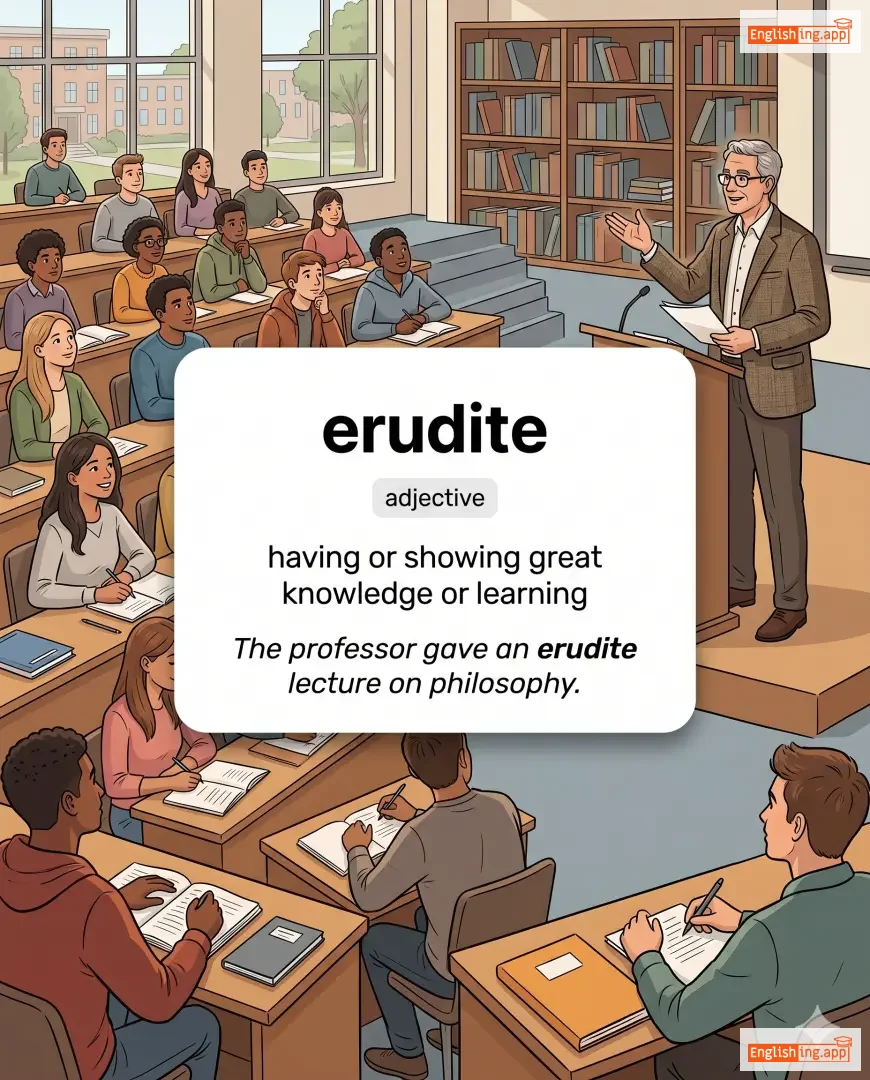
|
/ˈɛrjʊˌdaɪt/
adjective
(エルダイト)
••••••
|
|
博識
hakushiki
••••••
|
- •••••• | - •••••• | - •••••• | - •••••• |
having or showing great knowledge or learning
••••••
|
The professor gave an erudite lecture on philosophy. |
教授は哲学について博識な講義をしました。
Kyouju wa tetsugaku ni tsuite hakushiki na kougi o shimashita.
••••••
|
- •••••• | - •••••• | - •••••• |
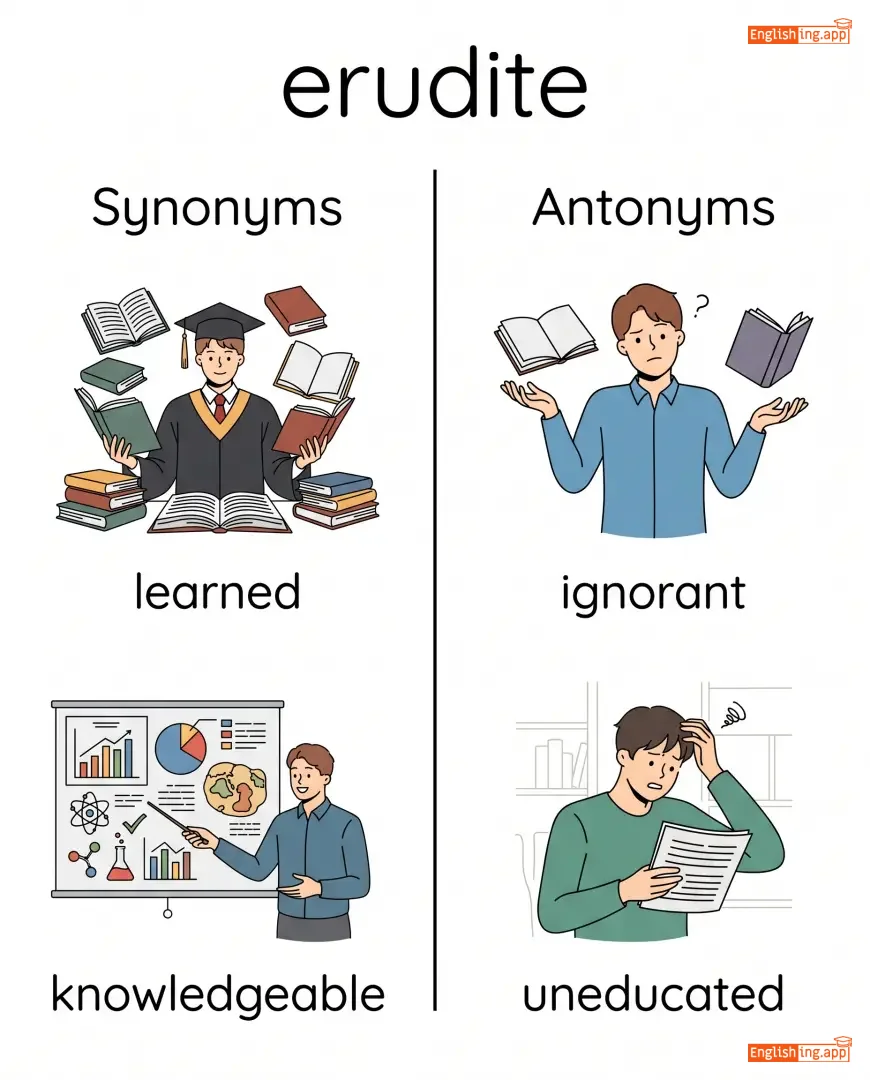
learned, knowledgeable, scholarly, intellectual, well-read
••••••
|
ignorant, uneducated, uninformed
••••••
|
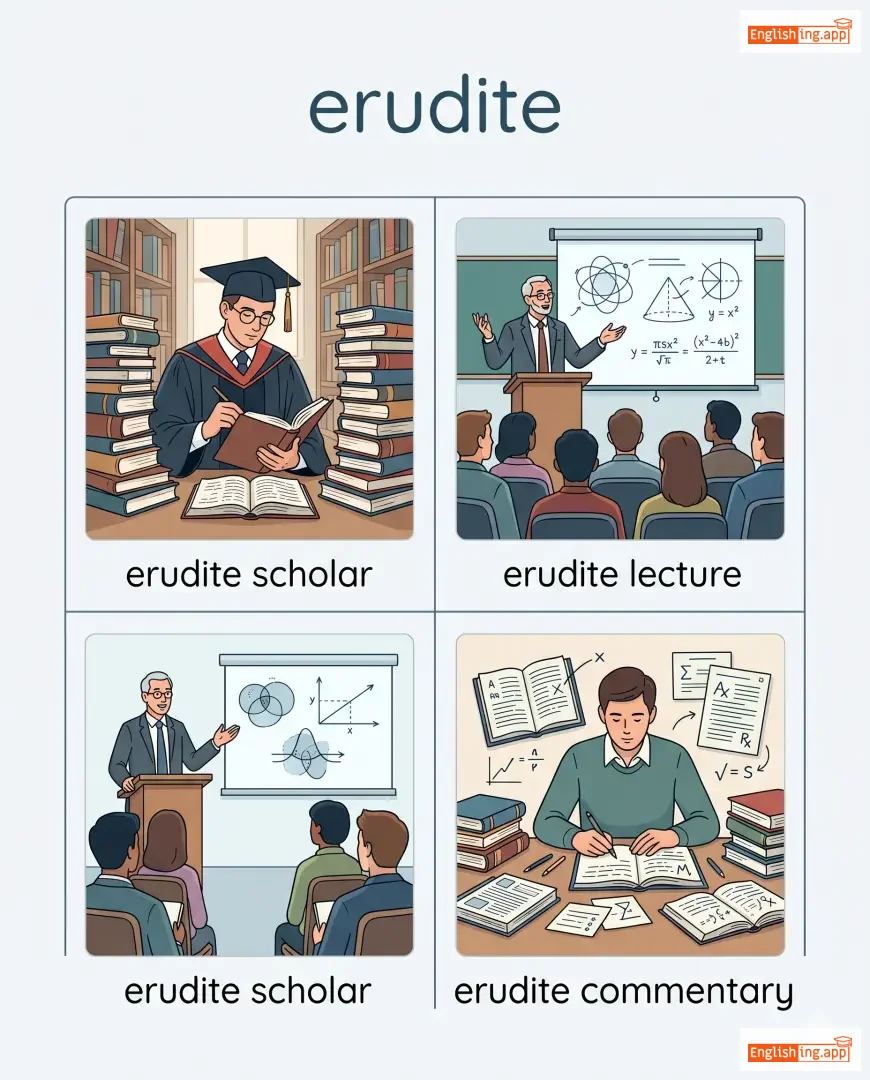
erudite scholar, erudite lecture, erudite commentary, erudite discussion
••••••
|
Erudite = 教育 + 明るい → 博識は賢い人を意味します。
••••••
|
|
#3108
⏳
|
/ˈɜːrstwaɪl/
adjective
(アーストワイル)
••••••
|
- •••••• |
かつての
katsute no
••••••
|
- •••••• | - •••••• | - •••••• | - •••••• |
former or in the past
••••••
|
They were erstwhile friends but no longer speak. |
彼らはかつての友達でしたが、今は話しません。
Karera wa katsute no tomodachi deshita ga, ima wa hanashimasen.
••••••
|
- •••••• | - •••••• | - •••••• |
former, previous, old, past, ex
••••••
|
current, present, existing
••••••
|
erstwhile friend, erstwhile ally, erstwhile leader, erstwhile partner
••••••
|
Erstwhile = 以前の、過去の事を指す言葉。
••••••
|
|
#3109
🧪
|
/ˈɛrzæts/
adjective
(エアツァッツ)
••••••
|
- •••••• |
代用品
daiyōhin
••••••
|
- •••••• | - •••••• | - •••••• | - •••••• |
made or used as a substitute, typically an inferior one
••••••
|
The cheap shoes were made of ersatz leather. |
安い靴は代用品の合成皮革で作られていました。
Yasui kutsu wa daiyōhin no gōsei hikaku de tsukurarete imashita.
••••••
|
- •••••• | - •••••• | - •••••• |
artificial, fake, imitation, substitute, synthetic
••••••
|
genuine, authentic, real
••••••
|
ersatz coffee, ersatz leather, ersatz product, ersatz goods
••••••
|
Ersatzは代用品 → 安い靴は代用品の合成皮革。
••••••
|
|
#3110
❌
|
/ɪˈrəʊniəs/
adjective
(エロニアス)
••••••
|
|
誤った
ayamatta
••••••
|
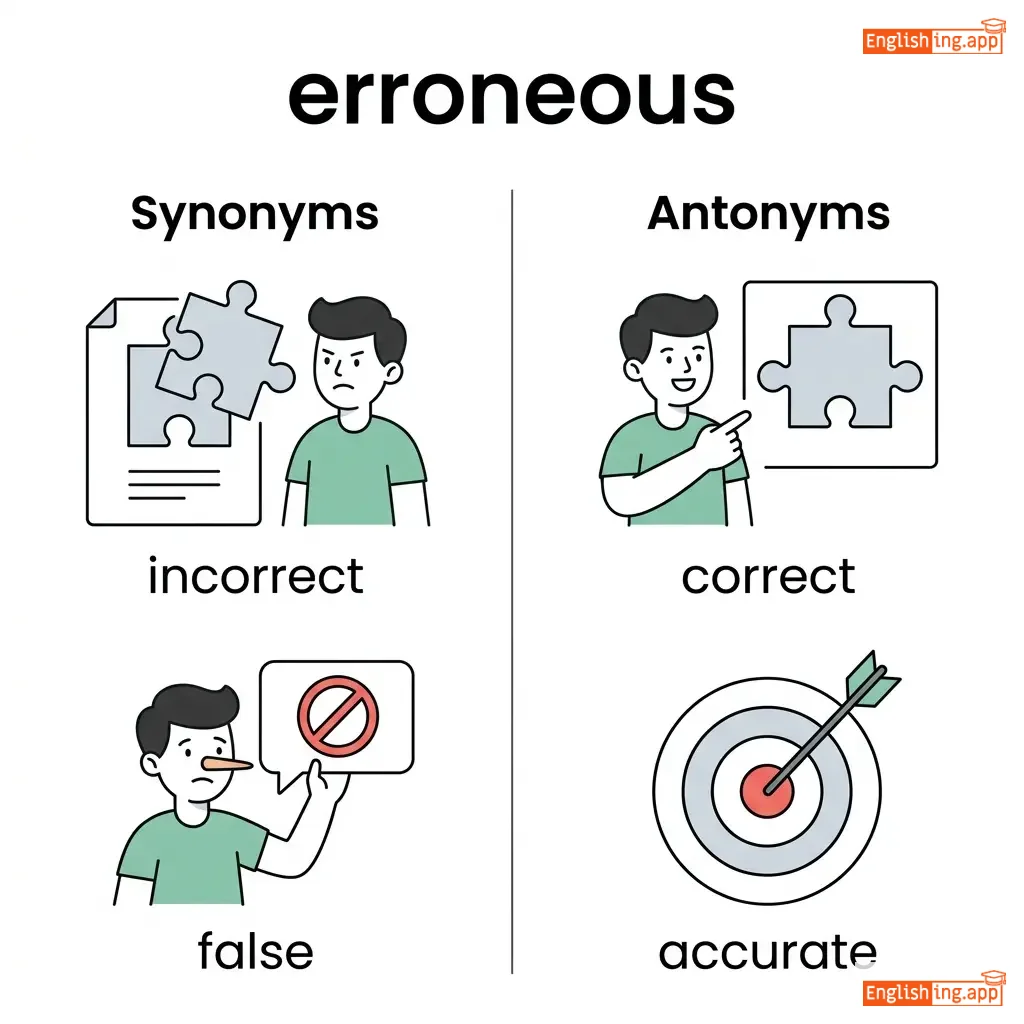
- •••••• | - •••••• | - •••••• | - •••••• |
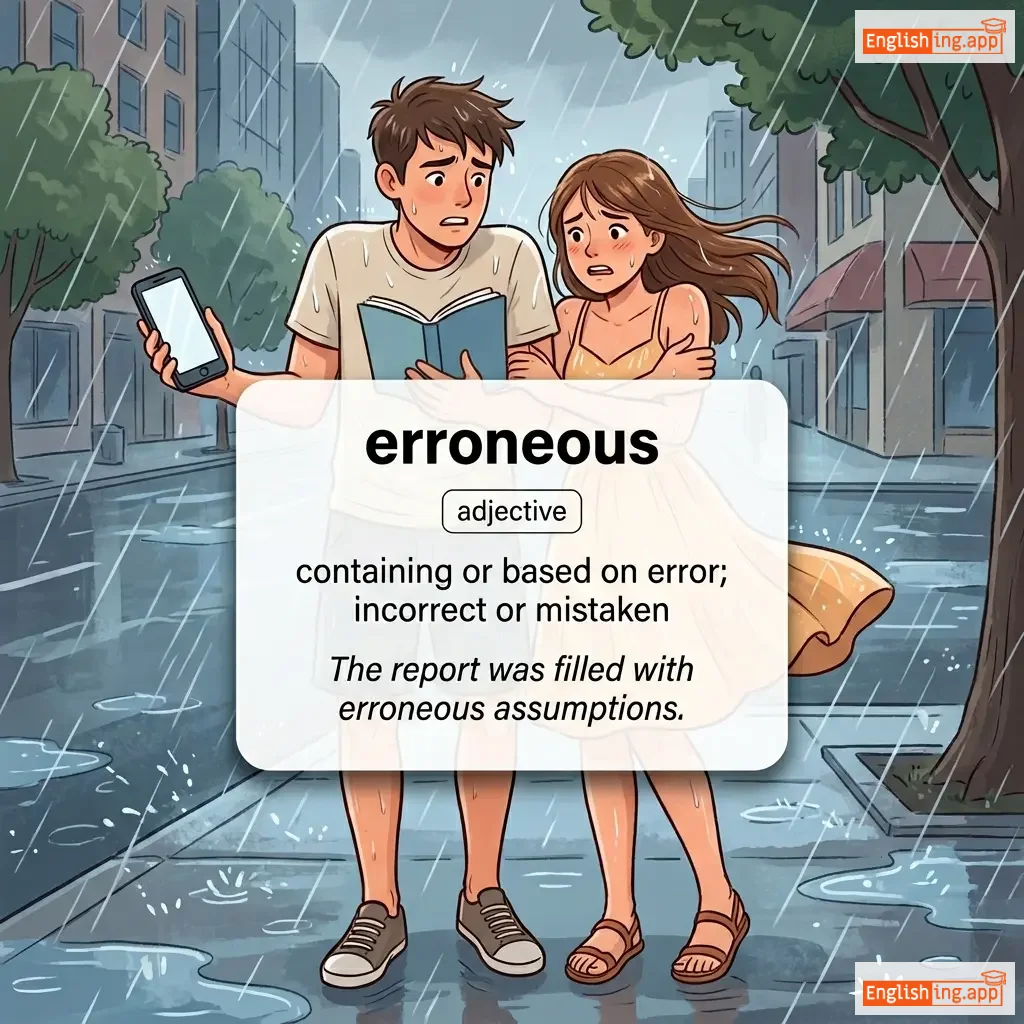
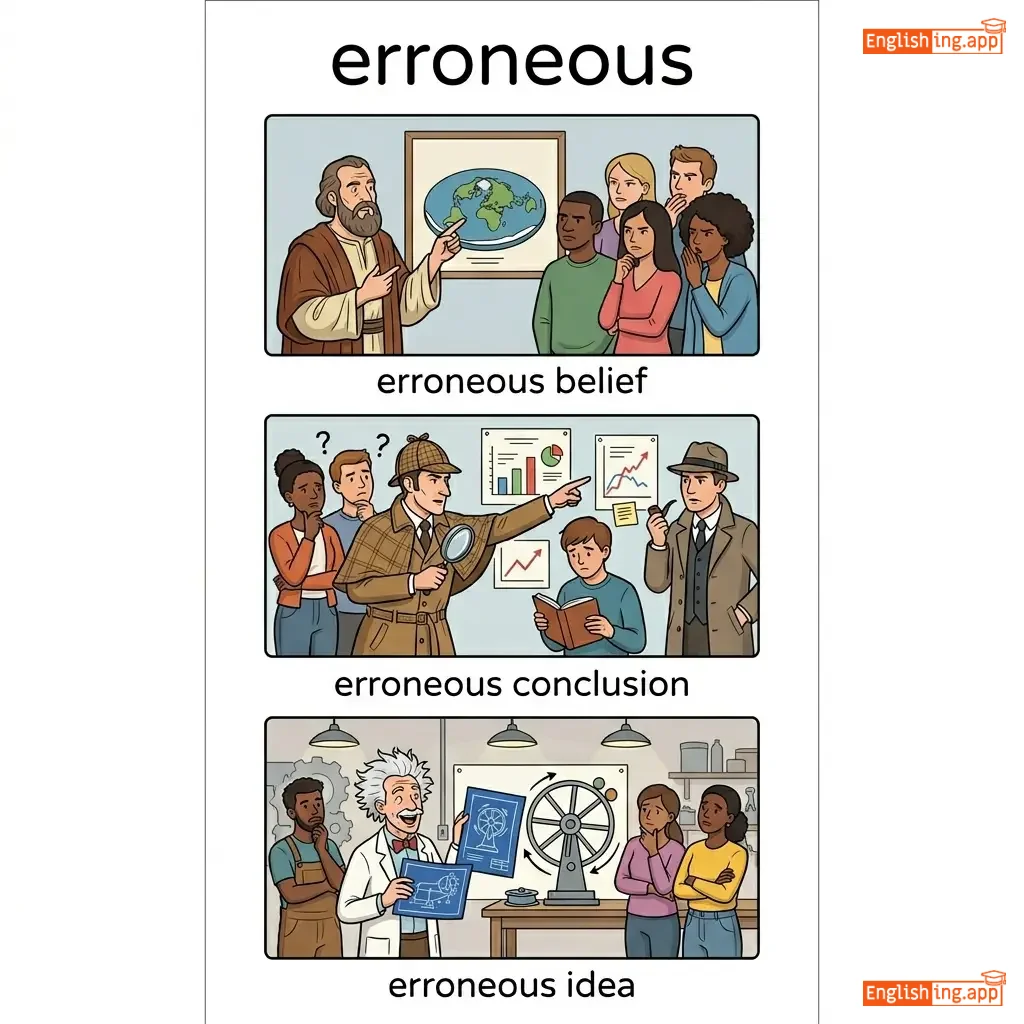
containing or based on error; incorrect or mistaken
••••••
|
The report was filled with erroneous assumptions. |
報告書は誤った仮定でいっぱいだった。
Hōkokusho wa ayamatta katei de ippai datta.
••••••
|
- •••••• | - •••••• | - •••••• |
incorrect, false, mistaken, inaccurate, invalid
••••••
|
correct, accurate, true
••••••
|
erroneous belief, erroneous conclusion, erroneous idea, erroneous assumption
••••••
|
エラー + ous はエラーでいっぱいを意味する → エロニアス = 誤りで満ちている。
••••••
|
|
#3111
🎢
|
/ɪˈrætɪk/
adjective
(エラティック)
••••••
|
|
不安定
fuantei
••••••
|
- •••••• | - •••••• | - •••••• | - •••••• |
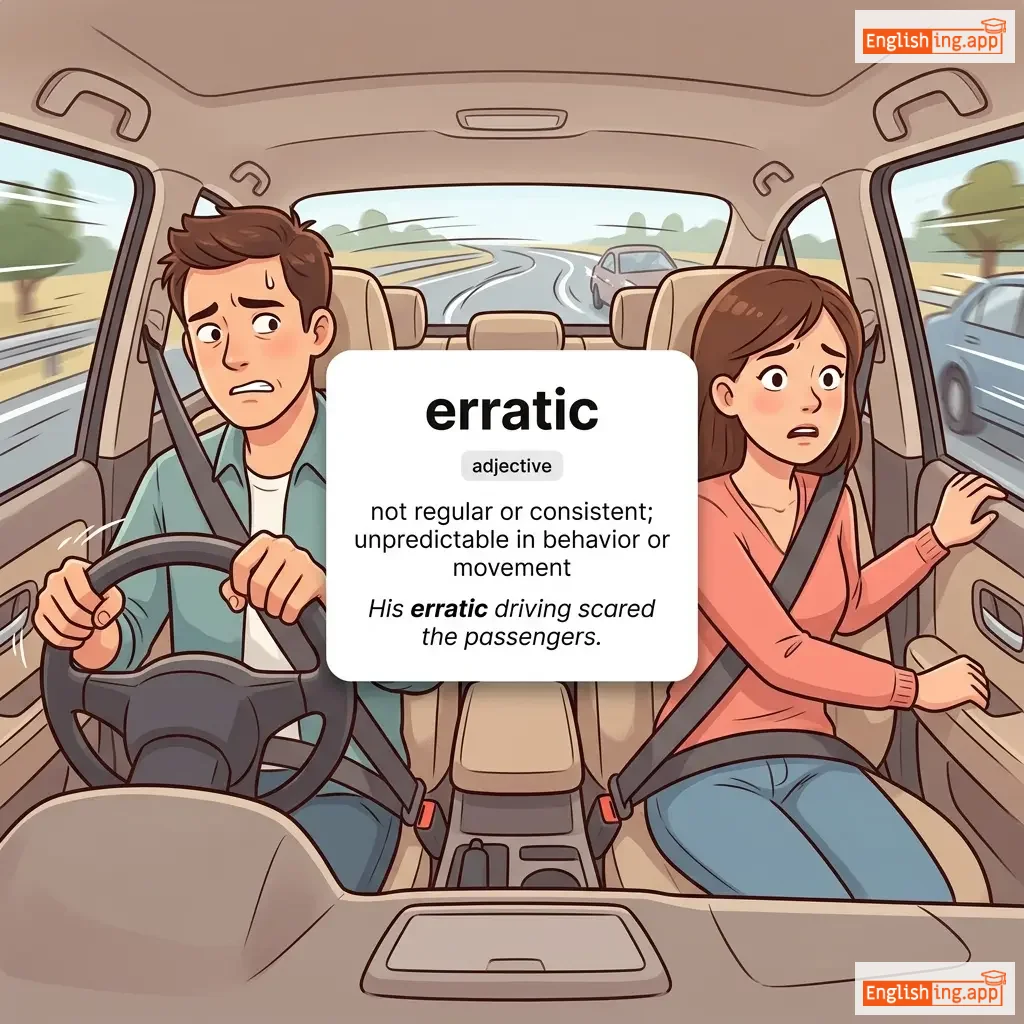
not regular or consistent; unpredictable in behavior or movement
••••••
|
His erratic driving scared the passengers.
彼の不安定な運転は乗客を怖がらせました。
••••••
|
彼の不安定な運転は乗客を怖がらせました。
Kare no fuantei na unten wa jōkyaku o kowagarasemashita.
••••••
|
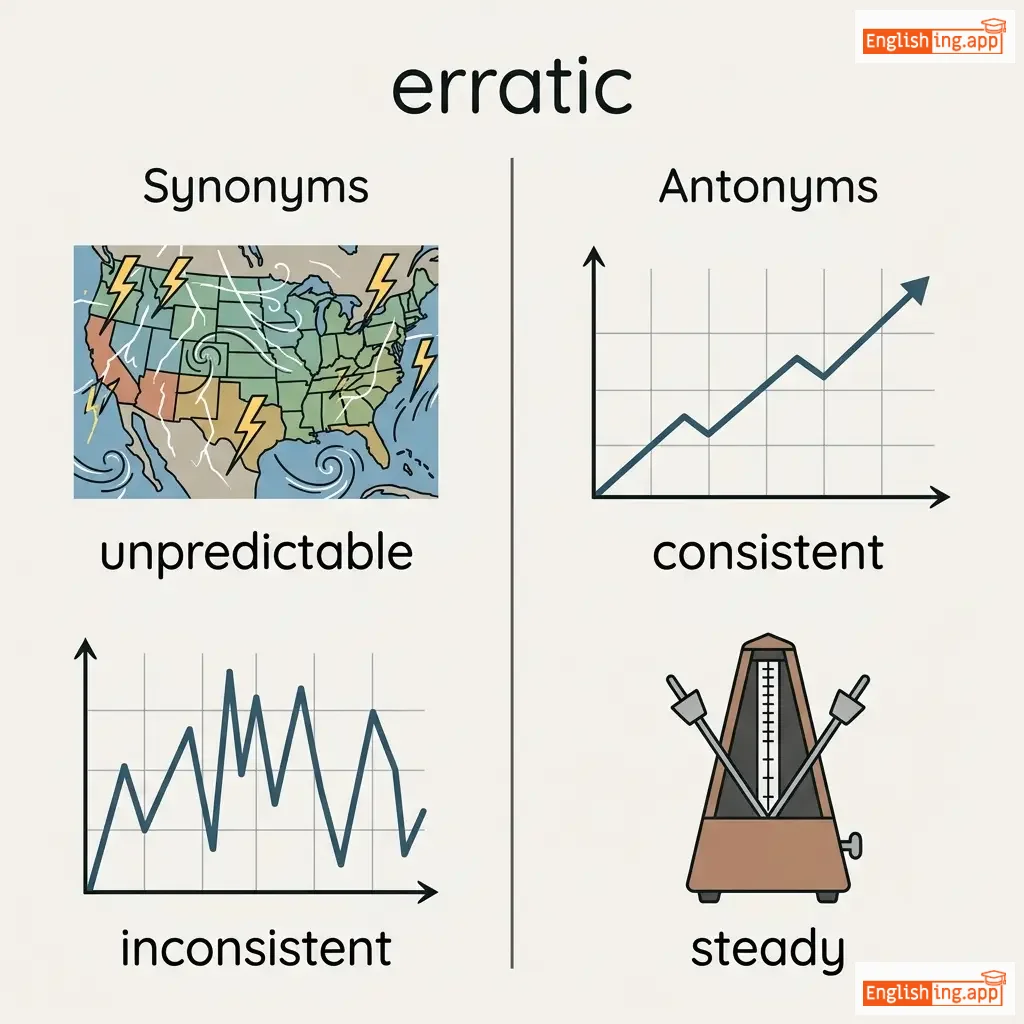
- •••••• | - •••••• | - •••••• |
unpredictable, inconsistent, irregular, unstable, changeable
••••••
|
consistent, steady, reliable
••••••
|
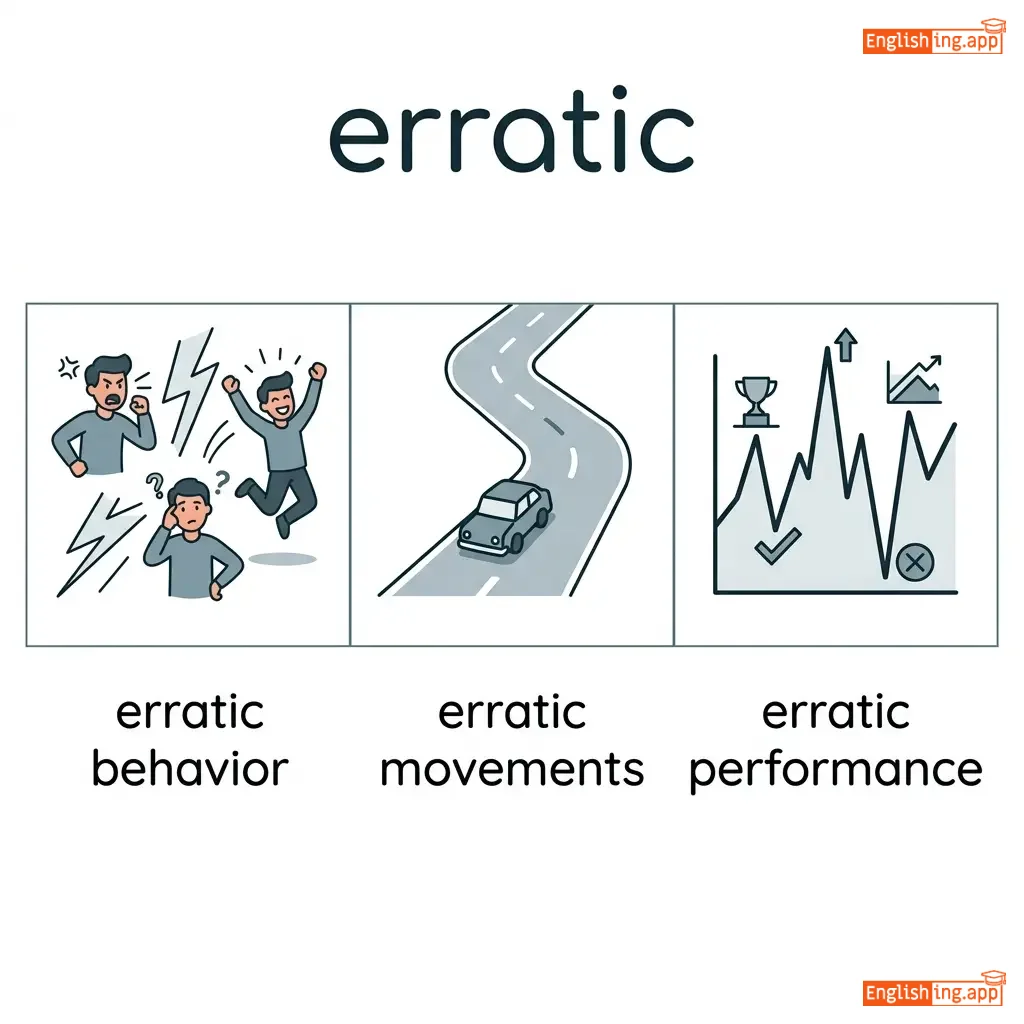
erratic behavior, erratic movements, erratic performance
••••••
|
Erratic とは不安定な運転で、予測できない。
••••••
|
|
#3112
🚫
|
/ˈɛrənt/
adjective
(エラント)
••••••
|
|
逸脱した
ittsudatsu shita
••••••
|
- •••••• | - •••••• | - •••••• | - •••••• |
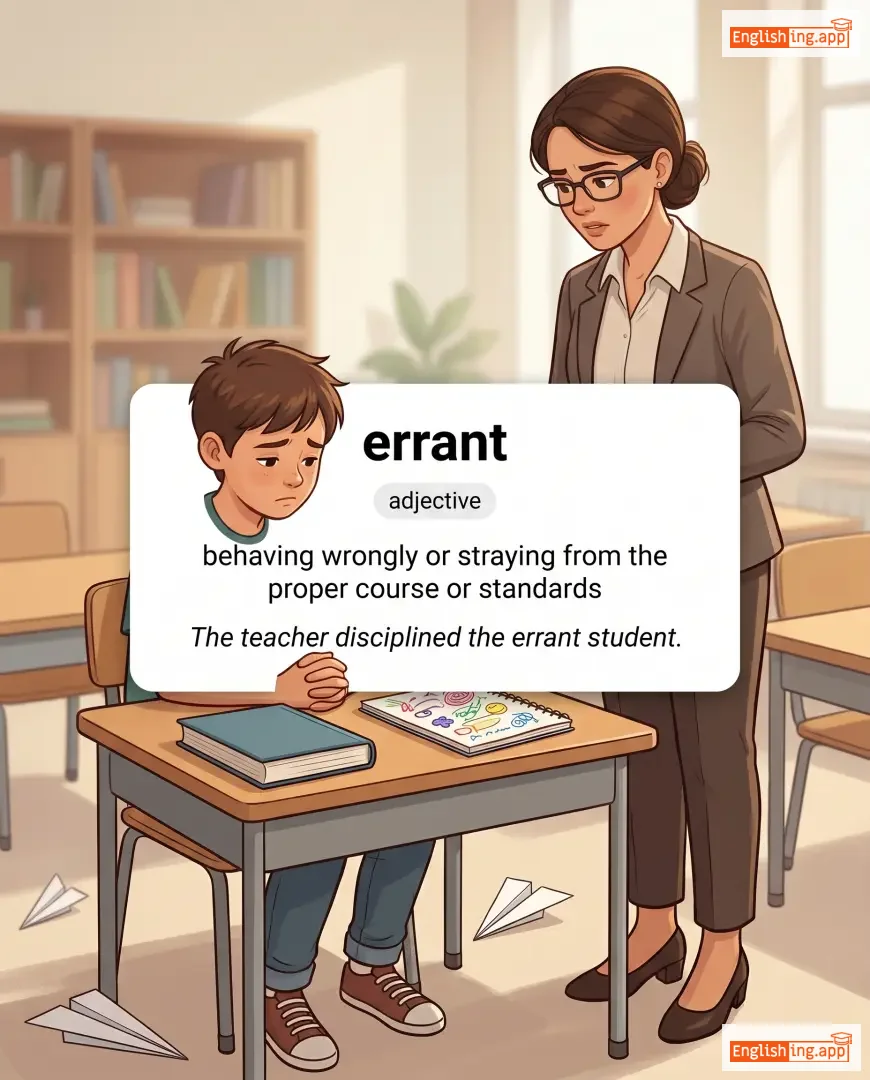
behaving wrongly or straying from the proper course or standards
••••••
|
The teacher disciplined the errant student. |
教師は逸脱した生徒を罰しました。
Kyōshi wa ittsudatsu shita seito o basshimashita.
••••••
|
- •••••• | - •••••• | - •••••• |
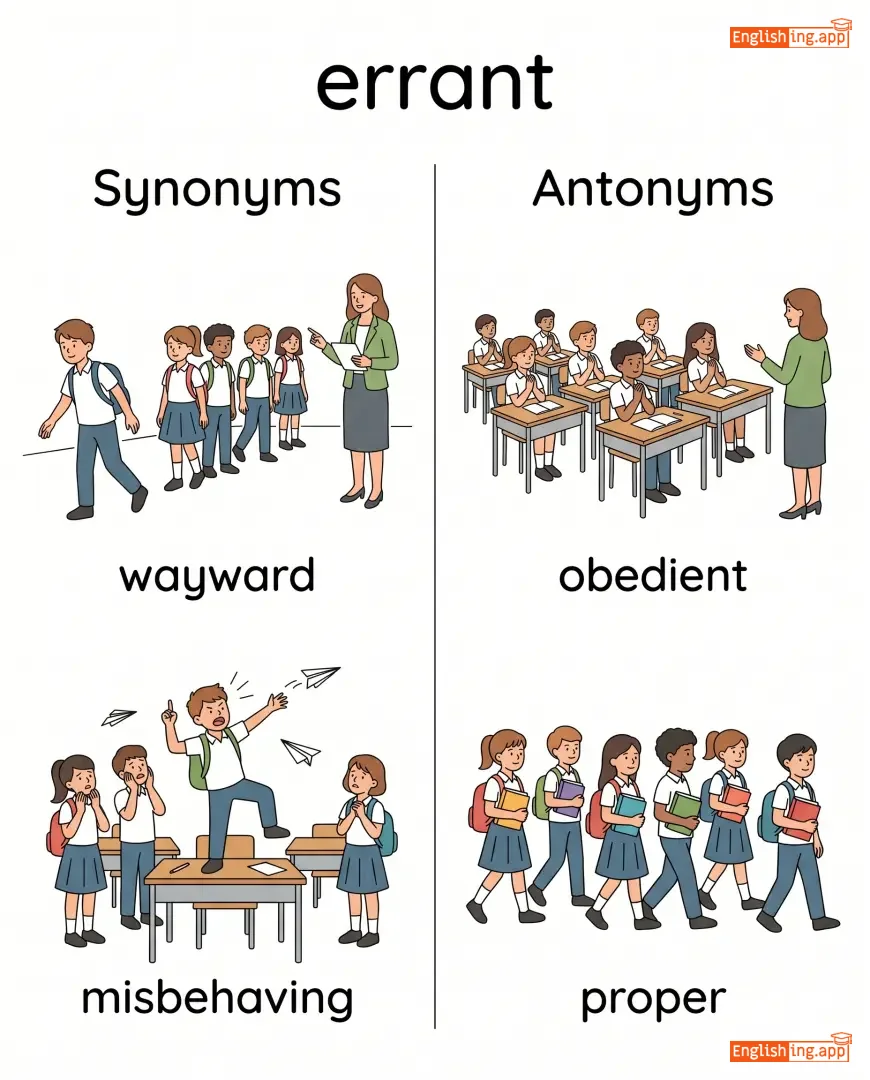
wayward, misbehaving, delinquent, unruly
••••••
|
obedient, proper, disciplined
••••••
|
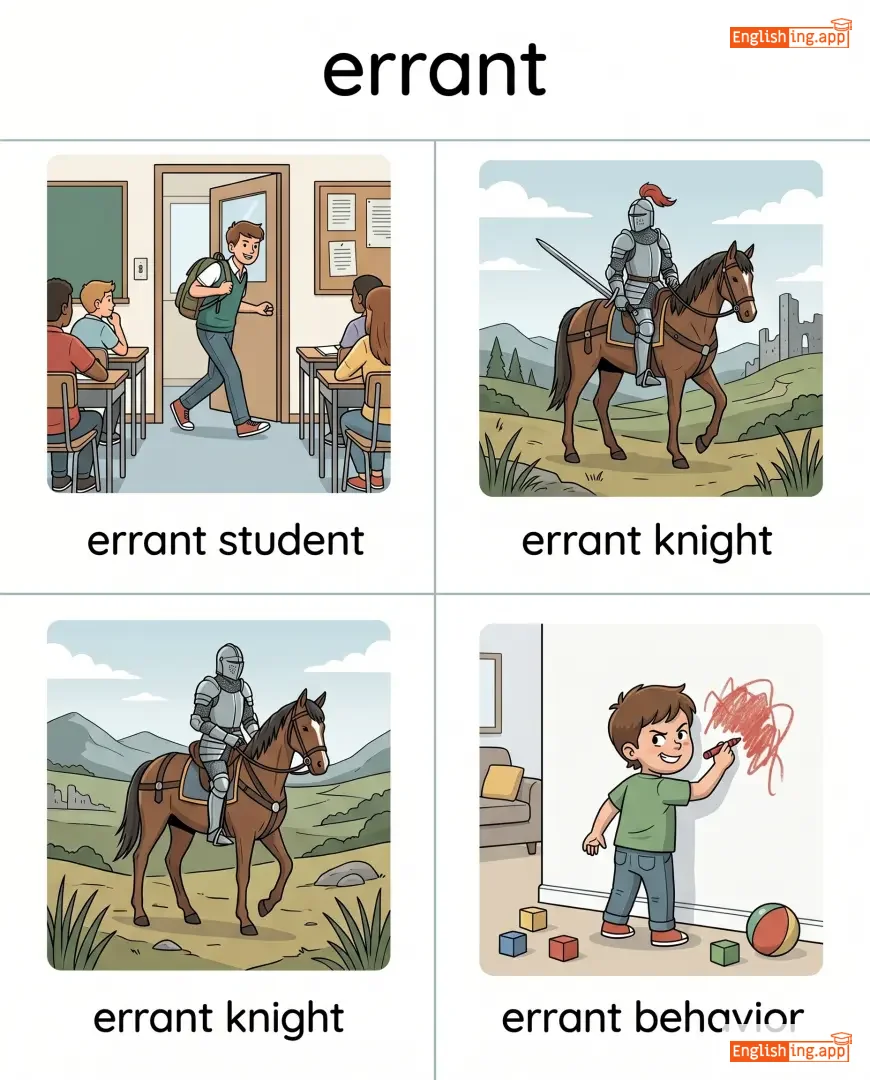
errant student, errant knight, errant behavior
••••••
|
Errant は道を外れた意味 – Err = 道を外れた + ant = 規則に反する
••••••
|
|
#3113
⚠️
|
/ɜːr/
verb
(エア)
••••••
|
- •••••• |
誤る
ayamaru
••••••
|
erred
エアード
••••••
|
erred
エアード
••••••
|
errs
エアーズ
••••••
|
erring
エアリング
••••••
|
to make a mistake or be incorrect
••••••
|
To err is human, to forgive divine.
To err is human, to forgive divine.
••••••
|
誤ることは人間にとって自然なことであり、許すことは神聖である。
Ayamaru koto wa ningen ni totte shizen na koto de ari, yurusukoto wa shinsei de aru.
••••••
|
to err is human
To err is human
••••••
|
it is natural for people to make mistakes
••••••
|
誤ることは人間にとって自然
ayamaru koto wa ningen ni totte shizen
••••••
|
blunder, miscalculate, slip, falter, mistake
••••••
|
succeed, correct, achieve
••••••
|
err in judgment, err on the side, err greatly
••••••
|
Err = エラー、誤ることは避けられない
••••••
|
|
#3114
🔥
|
/ɪˈrɒtɪk/
adjective
(エロティック)
••••••
|
- •••••• |
エロティック
erotikku
••••••
|
- •••••• | - •••••• | - •••••• | - •••••• |
relating to or tending to arouse sexual desire or excitement
••••••
|
The novel contained several erotic scenes. |
その小説にはいくつかのエロティックなシーンが含まれていました。
Sono shousetsu ni wa ikutsuka no erotikku na shiin ga fukumarete imashita.
••••••
|
- •••••• | - •••••• | - •••••• |
sensual, sexual, amorous, passionate, arousing
••••••
|
chaste, modest, pure
••••••
|
erotic novel, erotic art, erotic desire, erotic scene
••••••
|
Eroticは日本語でもエロティック – 熱いシーン 🔥
••••••
|
|
#3115
🌊
|
/ɪˈroʊd/
verb
(エロウド)
••••••
|
- •••••• |
浸食
shinshoku
••••••
|
eroded
エロウデッド
••••••
|
eroded
エロウデッド
••••••
|
erodes
エロウズ
••••••
|
eroding
エロウディング
••••••
|
to gradually wear away or destroy by natural forces such as water, wind, or chemical action
••••••
|
The coastline has begun to erode due to constant waves.
海岸線は継続的な波のために浸食し始めた。
••••••
|
海岸線は継続的な波のために浸食し始めた。
Kaigan-sen wa keizokuteki na nami no tame ni shinshoku shihajimeta.
••••••
|
erode trust
信頼を侵食する
••••••
|
to gradually weaken or reduce confidence
••••••
|
信頼を侵食する
Shinrai o shinshoku suru
••••••
|
wear away, corrode, deteriorate, crumble, decay
••••••
|
build, strengthen, restore
••••••
|
erode soil, erode confidence, erode value, erode support
••••••
|
浸食(Erode)は水が土を削るように、信頼も削られる
••••••
|
|
#3116
🧹
|
/ɪˈrædɪˌkeɪt/
verb
(エラディケート)
••••••
|
|
根絶する; 排除する
konzetsu suru; haijo suru
••••••
|
eradicated
エラディケートされた
••••••
|
eradicated
エラディケートされた
••••••
|
eradicates
エラディケートする
••••••
|
eradicating
エラディケートしている
••••••
|
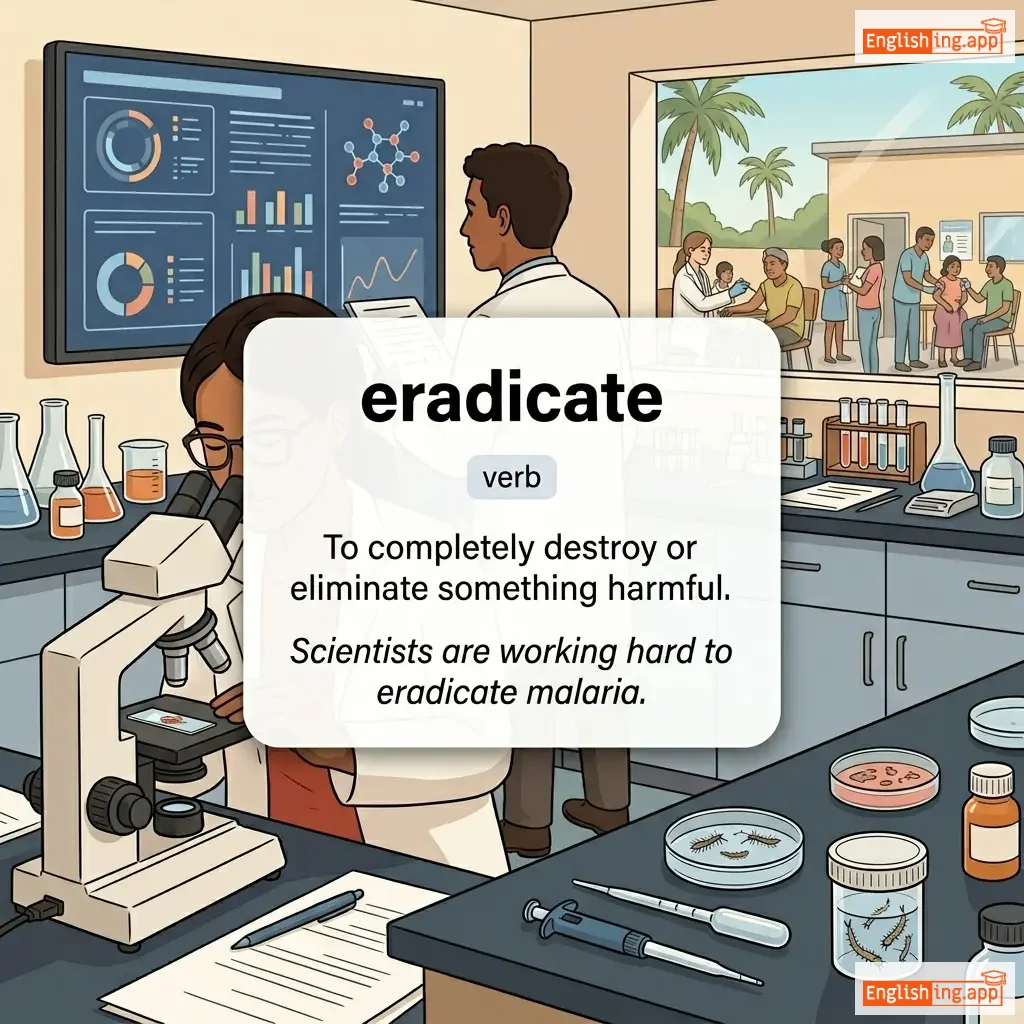
To completely destroy or eliminate something harmful.
••••••
|
Scientists are working hard to eradicate malaria.
科学者たちはマラリアを根絶するために懸命に働いています。
••••••
|
科学者たちはマラリアを根絶するために懸命に働いています。
Kagakusha-tachi wa mararia o konzetsu suru tame ni kenmei ni hataraiteimasu.
••••••
|
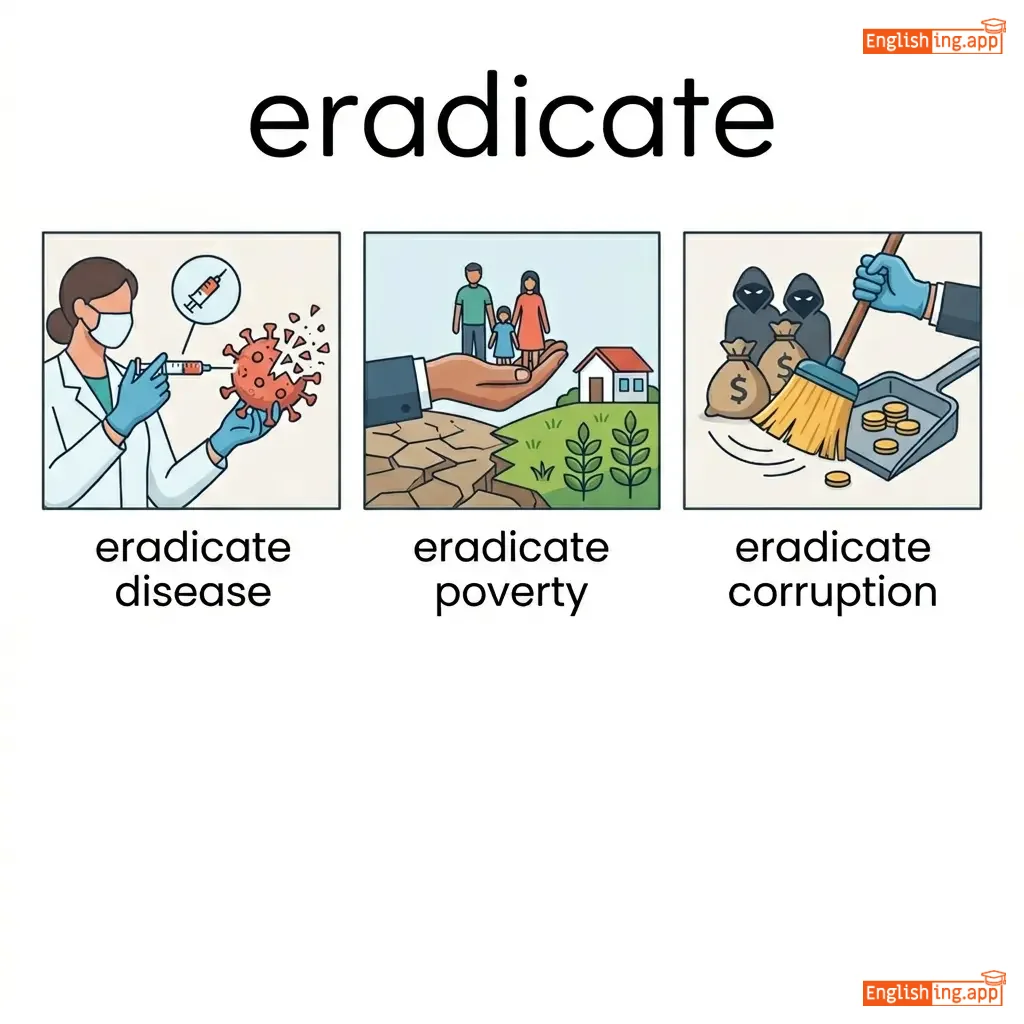
eradicate poverty
貧困を根絶する
••••••
|
To completely eliminate poverty from society.
••••••
|
貧困を根絶する
Hinkon o konzetsu suru
••••••
|
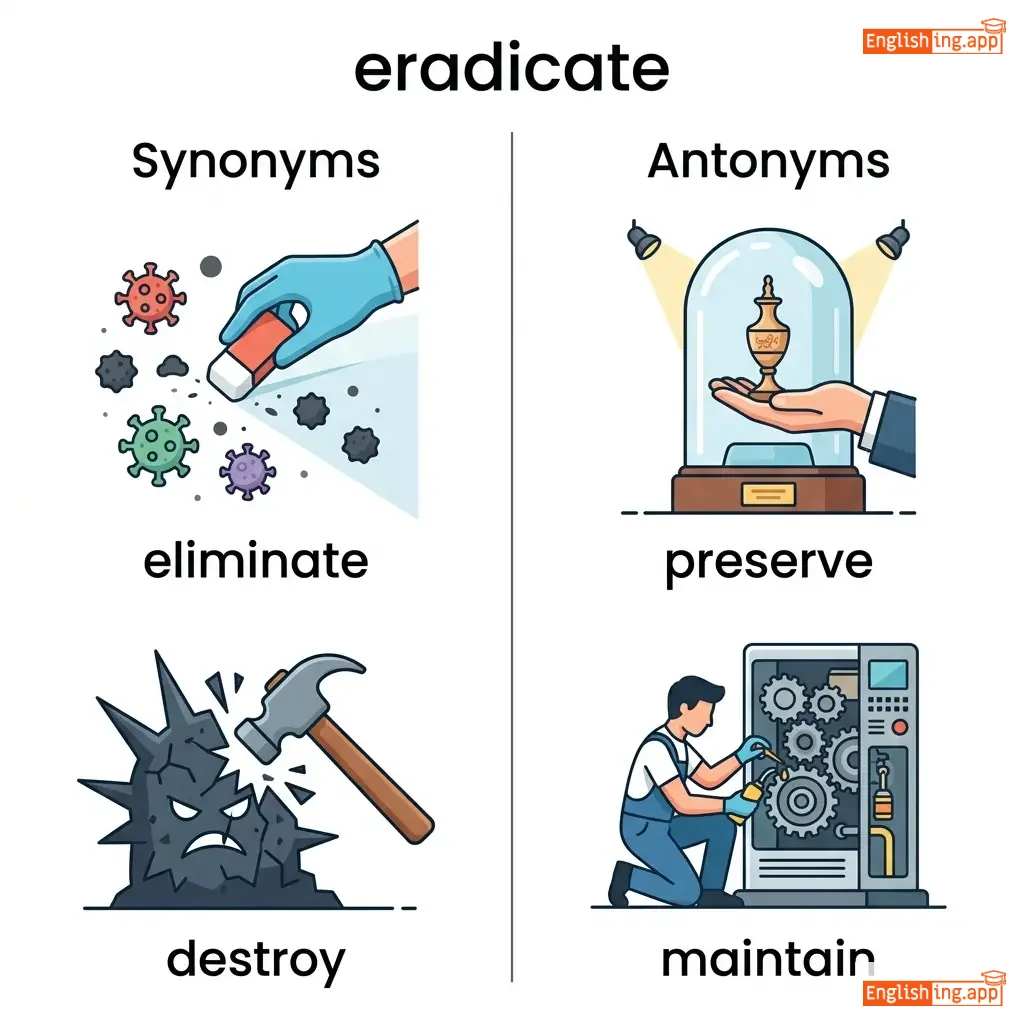
eliminate, destroy, exterminate, abolish, wipe out
••••••
|
preserve, maintain, protect
••••••
|
eradicate disease, eradicate poverty, eradicate corruption, eradicate racism
••••••
|
エラディケートは問題を根から取り除くこと、例えば貧困を根絶することです!
••••••
|
|
#3117
🌀
|
/ɪˈkwɪvəˌkeɪt/
verb
(エクイヴォケート)
••••••
|
|
曖昧に話す
aimai ni hanasu
••••••
|
equivocated
エクイヴォケイテッド
••••••
|
equivocated
エクイヴォケイテッド
••••••
|
equivocates
エクイヴォケイツ
••••••
|
equivocating
エクイヴォケイティング
••••••
|
To speak ambiguously or avoid giving a clear answer.
••••••
|
The politician equivocated when asked about the scandal.
その政治家はスキャンダルについて尋ねられたとき、エクイヴォケイテッド。
••••••
|
その政治家はスキャンダルについて尋ねられたとき、曖昧に話した。
Sono seijika wa sukyandaru ni tsuite tazunerareta toki, aimai ni hanashita.
••••••
|
- •••••• | - •••••• | - •••••• |
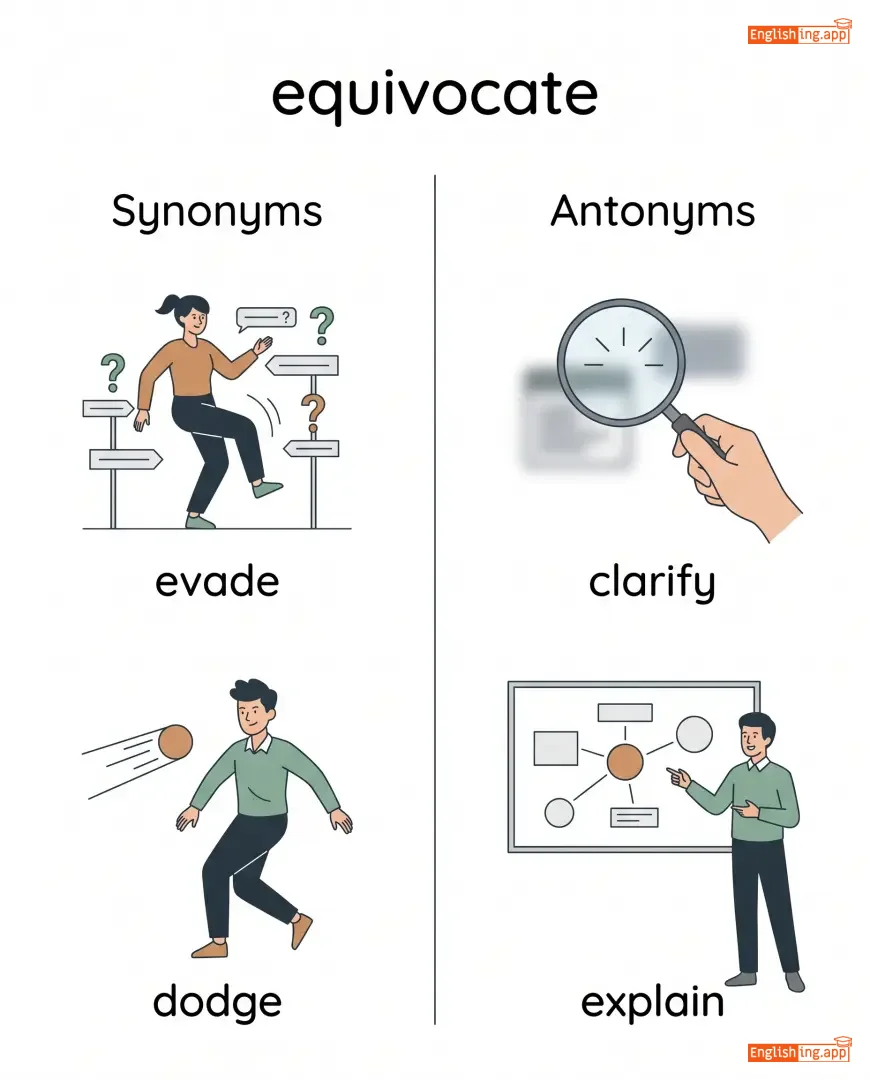
evade, dodge, prevaricate, hedge, mislead
••••••
|
clarify, explain, affirm
••••••
|
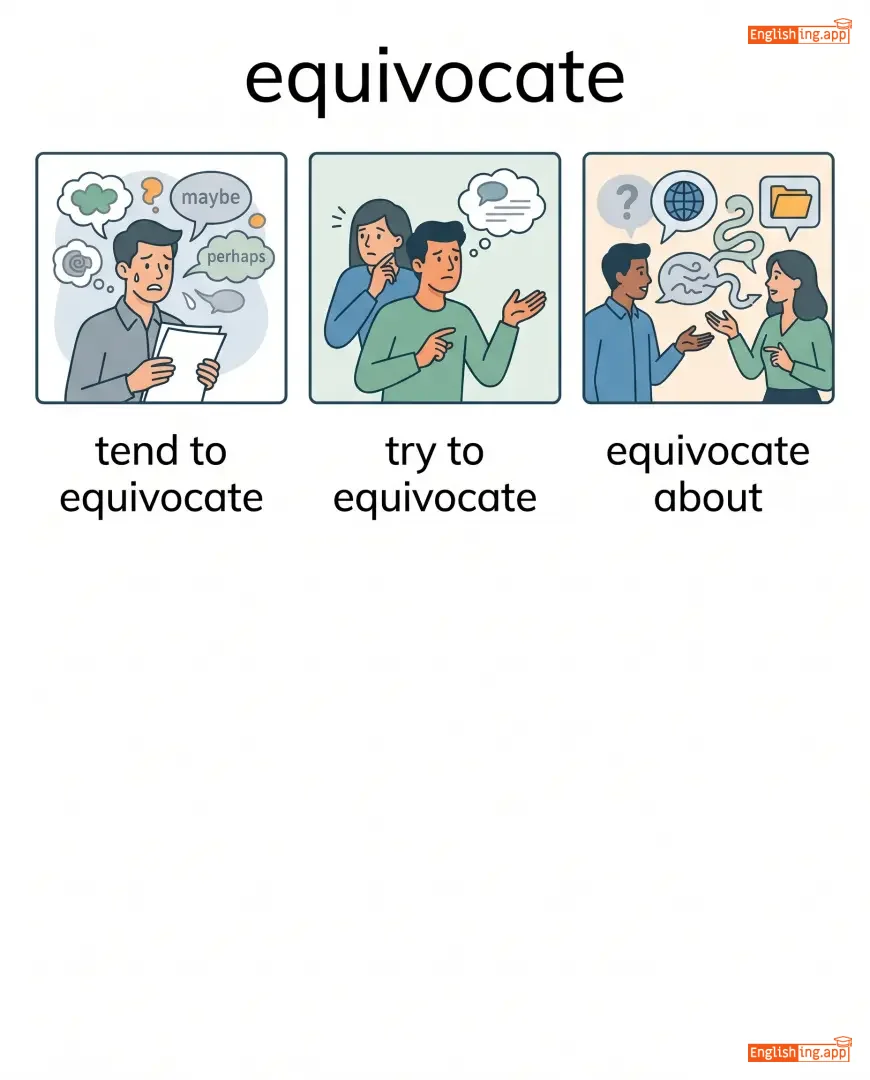
tend to equivocate, try to equivocate, equivocate about
••••••
|
Equivocate は🌀 曖昧に話すこと - 政治家がよくやること。
••••••
|
|
#3118
❓
|
/ɪˈkwɪvəkəl/
adjective
(エキヴィカル)
••••••
|
- •••••• |
曖昧
aimai
••••••
|
- •••••• | - •••••• | - •••••• | - •••••• |
Open to more than one interpretation; ambiguous.
••••••
|
His equivocal answer confused everyone. |
彼の曖昧な答えは皆を混乱させた。
Kare no aimai na kotae wa mina o konran saseta.
••••••
|
- •••••• | - •••••• | - •••••• |
ambiguous, unclear, vague, uncertain, indefinite
••••••
|
clear, definite, obvious
••••••
|
equivocal statement, equivocal response, equivocal attitude
••••••
|
Equivocal は ❓ 2つの意味 - 曖昧
••••••
|
|
#3119
🔄
|
/ɪˈkwɪvələnt/
adjective
(イコイヴァレント)
••••••
|
- •••••• |
等しい; 同等
hitoshii; dōtō
••••••
|
- •••••• | - •••••• | - •••••• | - •••••• |
Equal in value, function, meaning, or effect.
••••••
|
One euro is roughly equivalent to one dollar. |
1ユーロはおおよそ1ドルに相当します。
1 yūro wa ōyoso 1 doru ni sōtō shimasu.
••••••
|
- •••••• | - •••••• | - •••••• |
equal, comparable, identical, similar, parallel
••••••
|
different, unequal, dissimilar
••••••
|
equivalent amount, equivalent value, equivalent expression
••••••
|
Equivalentは等しい+価値=同等の価値 🔄
••••••
|
|
#3120
⚖️
|
/ˈɛkwɪti/
noun
(エクイティ)
••••••
|
|
公平; 所有権の一部
kōhei; shoyūken no ichibu
••••••
|
- •••••• | - •••••• | - •••••• | - •••••• |
The quality of being fair and impartial; ownership interest in a company or property.
••••••
|
She invested in the company to gain equity. |
彼女は株式を得るために会社に投資しました。
Kanojo wa kabushiki o eru tame ni kaisha ni tōshi shimashita.
••••••
|
home equity |
The market value of a homeowner's property minus the outstanding mortgage balance.
••••••
|
住宅の株式
jūtaku no kabushiki
••••••
|
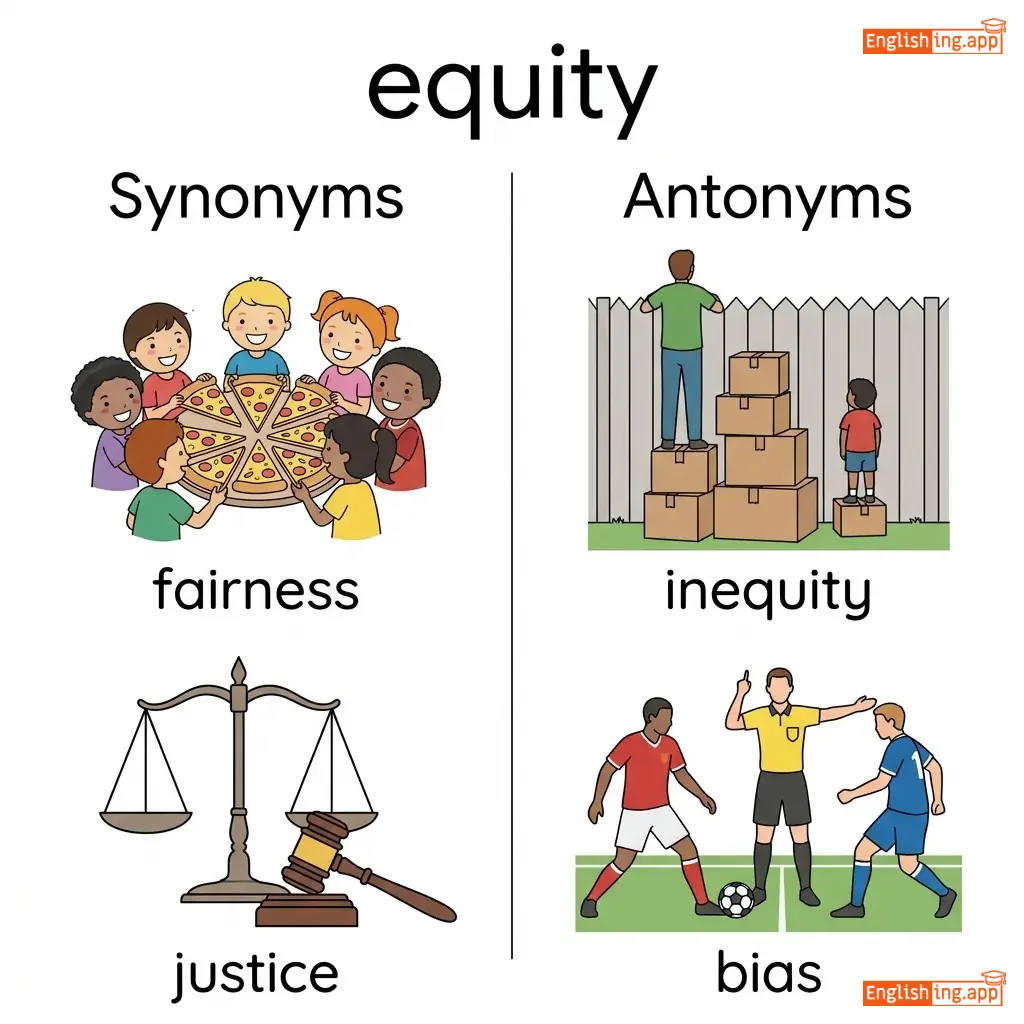
fairness, justice, ownership, stake, interest
••••••
|
inequity, bias, debt
••••••
|
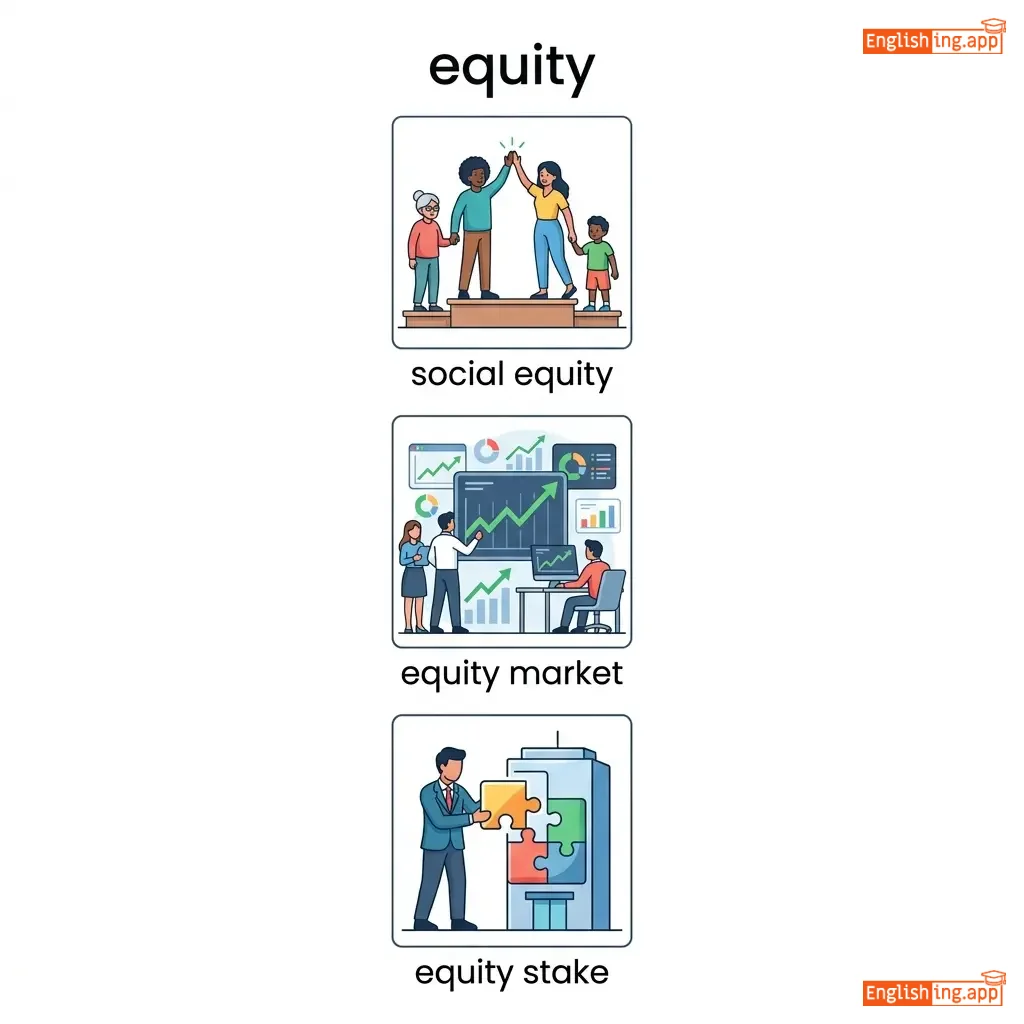
social equity, equity market, equity stake, private equity
••••••
|
Equity は ⚖️ 公平を意味し、会社での所有権の一部を意味します。
••••••
|
Vocabulary Quiz
Test your vocabulary by matching words with their translations or meanings.
Login to take the quiz
Comments (0)
Share your thoughts and join the discussion.
Join the discussion by logging in
Login to CommentNo comments yet
Be the first to share your thoughts!