

翻訳
過去
過去分詞
三人称単数
動名詞
意味
例文
例文の翻訳
同義語
対義語
コロケーション
ニーモニック

Swipe left or right, or use the buttons. Tap image to zoom.
例文の翻訳
単語
Lesson 19Lesson 19 - マスクトグル
|
絵文字
|
単語 | Images | 翻訳 | 過去 | 過去分詞 | 三人称単数 | 動名詞 | 意味 | 例文 | 例文の翻訳 | 表現例 | 表現例の意味 | 表現例の翻訳 | 同義語 | 対義語 | コロケーション | ニーモニック |
|---|---|---|---|---|---|---|---|---|---|---|---|---|---|---|---|---|---|
|
#541
📦
|
/əˈpɜːrtənənsɪz/
noun
(アパーテネンシズ)
••••••
|
- •••••• |
付属物
fuzokubutsu
••••••
|
- •••••• | - •••••• | - •••••• | - •••••• |
Additional items or accessories associated with something, often used in a legal or property context.
••••••
|
The house was sold along with all its appurtenances, including the garage and garden.
その家は、ガレージや庭を含むすべての附属物と一緒に売られました。
••••••
|
その家は、ガレージや庭を含むすべての付属物と一緒に売られました。
Sono ie wa, garēji ya niwa o fukumu subete no fuzokubutsu to issho ni uraremashita.
••••••
|
- •••••• | - •••••• | - •••••• |
accessories, adjuncts, attachments, additions, belongings
••••••
|
essentials, core
••••••
|
rights and appurtenances, property and appurtenances, with all appurtenances
••••••
|
Appurtenances は付属物、追加のアイテムです。アパートの付属物や付加的なものを思い浮かべてください。
••••••
|
|
#542
🌳
|
/ˈɑːrbər/
noun
(アーボー)
••••••
|
- •••••• |
木々や蔓植物によって作られた日陰の庭の避難所
kigi ya tsuru shokubutsu ni yotte tsukurareta hikage no niwa no hinansho
••••••
|
- •••••• | - •••••• | - •••••• | - •••••• |
a shady garden shelter formed by trees, climbing plants, or latticework
••••••
|
They rested under the arbor covered with roses.
彼らはバラで覆われたアーボーの下で休憩していました。
••••••
|
彼らはバラで覆われたアーボーの下で休憩していました。
Karera wa bara de owareta aboo no shita de kyukei shiteimashita.
••••••
|
- •••••• | - •••••• | - •••••• |
bower, pergola, trellis, shelter, gazebo
••••••
|
open field, exposure
••••••
|
garden arbor, wooden arbor, rose-covered arbor
••••••
|
アーボーは木陰の避難所です—木の下で休むイメージです。
••••••
|
|
#543
🕊️
|
/ˈɑːrbɪtreɪt/
verb
(アービトレート)
••••••
|
- •••••• |
仲裁する
chūsai suru
••••••
|
arbitrated
アービトレーテッド
••••••
|
arbitrated
アービトレーテッド
••••••
|
arbitrates
アービトレイツ
••••••
|
arbitrating
アービトレイティング
••••••
|
to settle a dispute between two parties by acting as an impartial judge
••••••
|
The committee agreed to arbitrate the contract dispute.
委員会は契約紛争を仲裁することに同意しました。
••••••
|
委員会は契約紛争を仲裁することに同意しました。
Iinkai wa keiyaku funsō o chūsai suru koto ni dōi shimashita.
••••••
|
arbitrate a dispute
紛争を仲裁する
••••••
|
to resolve a disagreement between parties
••••••
|
紛争を仲裁する
funsō o chūsai suru
••••••
|
mediate, adjudicate, resolve, judge, settle
••••••
|
provoke, dispute
••••••
|
arbitrate dispute, arbitrate conflict, arbitrate case
••••••
|
Arbitrateは仲裁すること—公正な裁判をする仲裁者になりきって!
••••••
|
|
#544
🎲
|
/ˈɑːrbɪˌtrɛri/
adjective
(アービトラリー)
••••••
|
- •••••• |
任意の
nin'i no
••••••
|
- •••••• | - •••••• | - •••••• | - •••••• |
based on random choice or personal whim, rather than reason or system
••••••
|
The teacher's arbitrary grading upset many students. |
教師の任意の採点は多くの学生を困らせました。
Kyoushi no nin'i no saiten wa ooku no gakusei o komarase mashita.
••••••
|
- •••••• | - •••••• | - •••••• |
random, capricious, whimsical, subjective, inconsistent
••••••
|
rational, logical, systematic
••••••
|
arbitrary decision, arbitrary rule, arbitrary action
••••••
|
Arbitraryは任意の—自由に選択する感じをイメージしよう!
••••••
|
|
#545
⚖️
|
/ˈɑːrbɪtər/
noun
(アービター)
••••••
|
- •••••• |
仲裁者
chūsai-sha
••••••
|
- •••••• | - •••••• | - •••••• | - •••••• |
a person who has the authority to settle a dispute or decide an issue
••••••
|
The principal acted as the arbiter in the conflict between the students.
校長は生徒間の対立で仲裁者として行動した。
••••••
|
校長は生徒間の対立で仲裁者として行動した。
Kōchō wa seitokan no tairitsu de chūsai-sha toshite kōdō shita.
••••••
|
final arbiter
最終的な仲裁者
••••••
|
the ultimate authority who makes the final decision
••••••
|
最終的な仲裁者
saishū-teki na chūsai-sha
••••••
|
judge, mediator, referee, umpire, adjudicator
••••••
|
participant, disputant
••••••
|
arbiter of taste, arbiter of truth, final arbiter
••••••
|
Arbiterは仲裁者を意味します—最終的な決定を下す役割を想像してください。
••••••
|
|
#546
🌾
|
/ˈærəbəl/
adjective
(アレイブル)
••••••
|
- •••••• |
耕作可能
kousaku kanou
••••••
|
- •••••• | - •••••• | - •••••• | - •••••• |
suitable for growing crops or farming
••••••
|
The farmer purchased arable land to expand his crops. |
農家は作物を拡大するために耕作可能な土地を購入しました。
Nouka wa sakumotsu o kakudai suru tame ni kousaku kanou na tochi o kounyuu shimashita.
••••••
|
- •••••• | - •••••• | - •••••• |
fertile, cultivable, productive, tillable, farmable
••••••
|
barren, infertile, uncultivable
••••••
|
arable land, arable farming, arable field
••••••
|
Arable は耕作可能—'農' (農業) と 'able' (できる) を思い出して
••••••
|
|
#547
🦅
|
/ˈækwɪˌlaɪn/
adjective
(アクワイライン)
••••••
|
- •••••• |
ワシのくちばしのような
washi no kuchibashi no you na
••••••
|
- •••••• | - •••••• | - •••••• | - •••••• |
curved like an eagle's beak; hooked
••••••
|
He had an aquiline nose that gave him a distinguished appearance.
彼はアクワイラインの鼻を持っており、それが彼に優れた外見を与えていました。
••••••
|
彼はワシのくちばしのような鼻を持っており、それが彼に優れた外見を与えていました。
Kare wa washi no kuchibashi no you na hana o motte ori, sore ga kare ni sugureta gaiken o ataete imashita.
••••••
|
- •••••• | - •••••• | - •••••• |
hooked, curved, bent, beak-like
••••••
|
straight, flat
••••••
|
aquiline nose, aquiline features, aquiline profile, aquiline shape
••••••
|
ワシのくちばしのような鼻、それがアクワイライン。忘れないで!
••••••
|
|
#548
💧
|
/ˈeɪkwiəs/
adjective
(アクイオス)
••••••
|
- •••••• |
水性の
suisei no
••••••
|
- •••••• | - •••••• | - •••••• | - •••••• |
related to or containing water; watery
••••••
|
The solution was in an aqueous form.
溶液はアクイオスの形でした。
••••••
|
溶液は水性の形でした。
Yōeki wa suisei no katachi deshita.
••••••
|
- •••••• | - •••••• | - •••••• |
watery, fluid, moist, liquid
••••••
|
dry, solid
••••••
|
aqueous solution, aqueous layer, aqueous humor, aqueous medium
••••••
|
Aquaは水を意味しますので、アクイオスは水を含んでいるか、水に関連するという意味です。
••••••
|
|
#549
🚰
|
/ˈækwɪˌdʌkt/
noun
(アクエダクト)
••••••
|
- •••••• |
水道橋
suidōkyō
••••••
|
- •••••• | - •••••• | - •••••• | - •••••• |
a structure built to carry water over long distances
••••••
|
The Romans built aqueducts to supply water to their cities. |
ローマ人は都市に水を供給するために水道橋を建設しました。
Rōma jin wa toshi ni mizu o kyōkyū suru tame ni suidōkyō o kensetsu shimashita.
••••••
|
- •••••• | - •••••• | - •••••• |
watercourse, channel, conduit, pipeline
••••••
|
dam, blockage
••••••
|
ancient aqueduct, Roman aqueduct, stone aqueduct, aqueduct system
••••••
|
Aquaは水を意味し、ductusは道を意味するので、水道橋は水を運ぶ道です。
••••••
|
|
#550
🌊
|
/əˈkwætɪk/
adjective
(アクアティック)
••••••
|
|
水生の
suisei no
••••••
|
- •••••• | - •••••• | - •••••• | - •••••• |
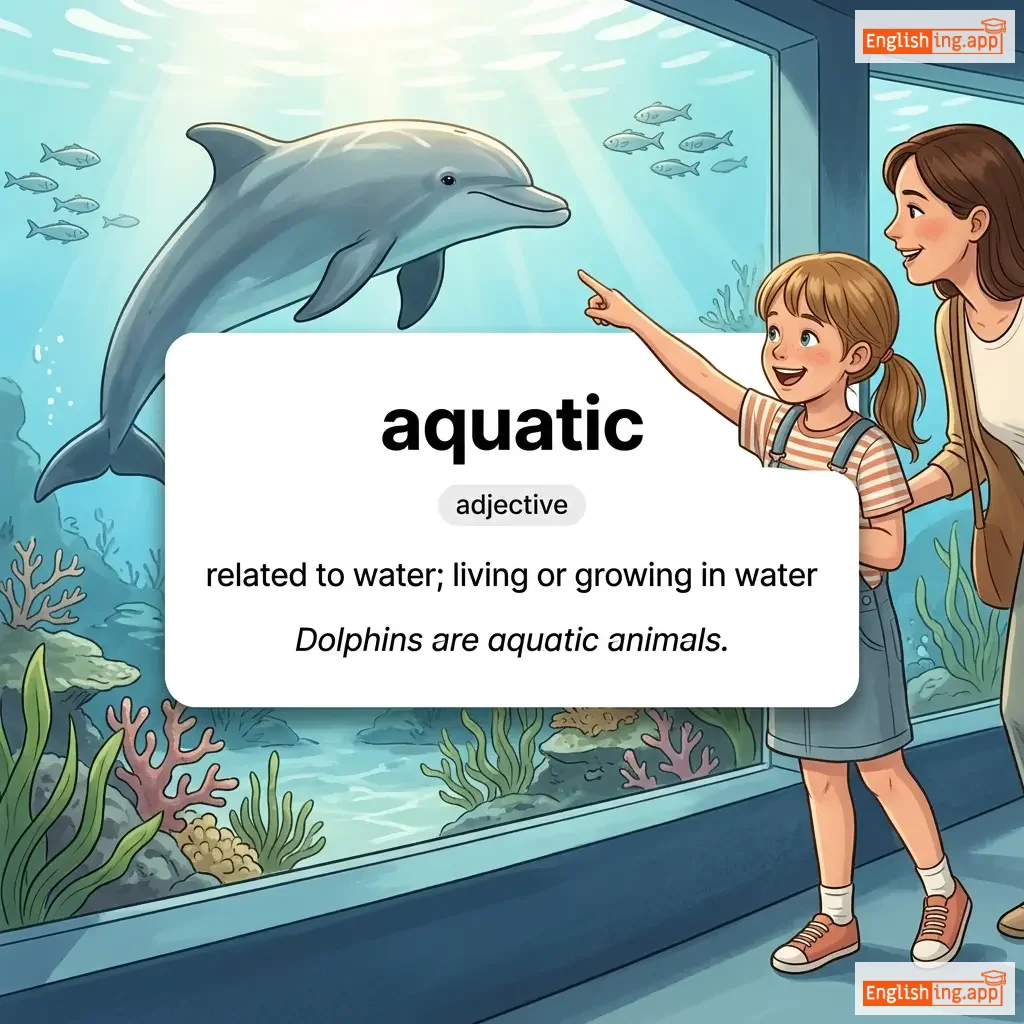
related to water; living or growing in water
••••••
|
Dolphins are aquatic animals.
イルカは水生動物です。
••••••
|
イルカは水生動物です。
Iruka wa suisei dōbutsu desu.
••••••
|
aquatic life
水生生活
••••••
|
plants and animals that live in water
••••••
|
水生生活
suisei seikatsu
••••••
|
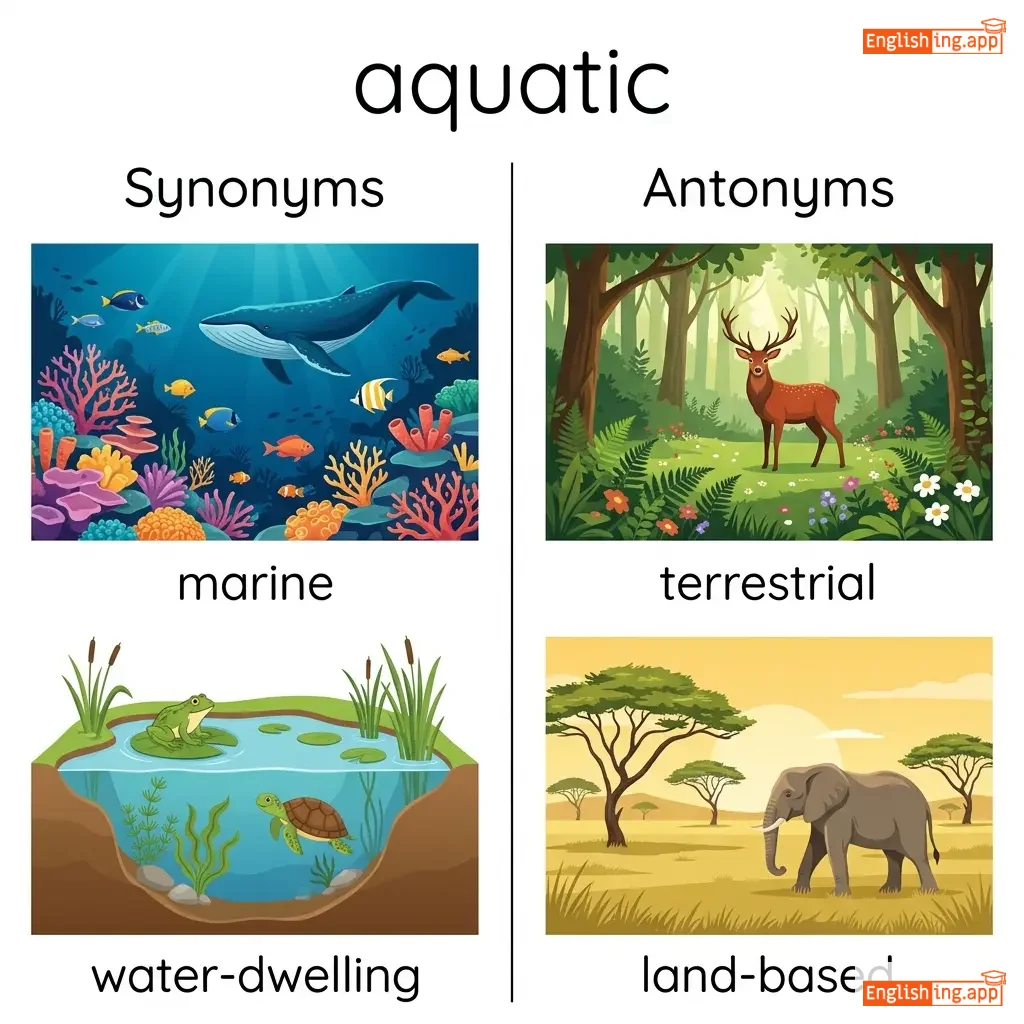
marine, water-dwelling, oceanic, freshwater
••••••
|
terrestrial, land-based
••••••
|
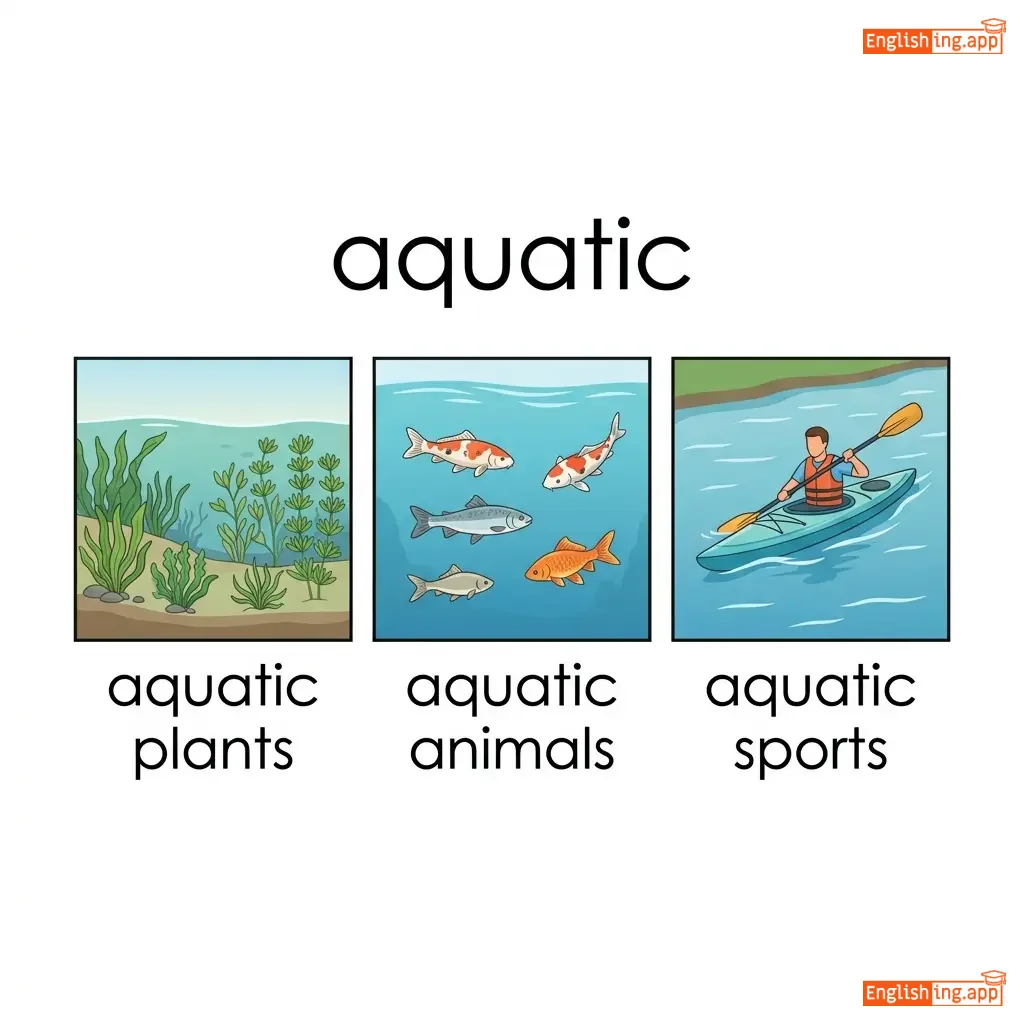
aquatic plants, aquatic animals, aquatic sports, aquatic life
••••••
|
Aquaは水を意味するので、水生のは水に関連することを意味します。
••••••
|
|
#551
🎯
|
/ˈæptɪˌtjuːd/
noun
(アップティチュード)
••••••
|
- •••••• |
適性
tekisei
••••••
|
- •••••• | - •••••• | - •••••• | - •••••• |
a natural ability or talent to do something well
••••••
|
She has a strong aptitude for learning new languages. |
彼女は新しい言語を学ぶのに強い適性を持っています。
kanojo wa atarashī gengo o manabu no ni tsuyoi tekisei o motteimasu.
••••••
|
aptitude test |
a test designed to determine a person's ability in a particular skill or field
••••••
|
適性テスト
tekisei tesuto
••••••
|
talent, ability, skill, knack, capability
••••••
|
incompetence, incapacity, inability
••••••
|
aptitude test, natural aptitude, aptitude for, aptitude in
••••••
|
Aptitudeは日本語で適性、両方とも自然な能力や才能を意味します。
••••••
|
|
#552
🎯
|
/æpt/
adjective
(æpt)
••••••
|
- •••••• |
適切な
tekisetsuna
••••••
|
- •••••• | - •••••• | - •••••• | - •••••• |
Appropriate or suitable; having a natural tendency or quick to learn.
••••••
|
She is an apt student who quickly understands new concepts. |
彼女は新しい概念をすぐに理解できる適切な学生です。
Kanojo wa atarashī gainen o sugu ni rikai dekiru tekisetsu na gakusei desu.
••••••
|
apt to |
Having a tendency to do something.
••••••
|
傾向がある
keikou ga aru
••••••
|
suitable, appropriate, fitting, inclined
••••••
|
unsuitable, unfit, inappropriate
••••••
|
apt student, apt remark, apt description, apt to
••••••
|
Aptは素早く学ぶ学生—Apt Studentは常に完璧で才能ある学生。
••••••
|
|
#553
📌
|
/ˌæ.prəˈpoʊ/
adjective/adverb
(アプロポ)
••••••
|
|
適切
tekisetsu
••••••
|
- •••••• | - •••••• | - •••••• | - •••••• |
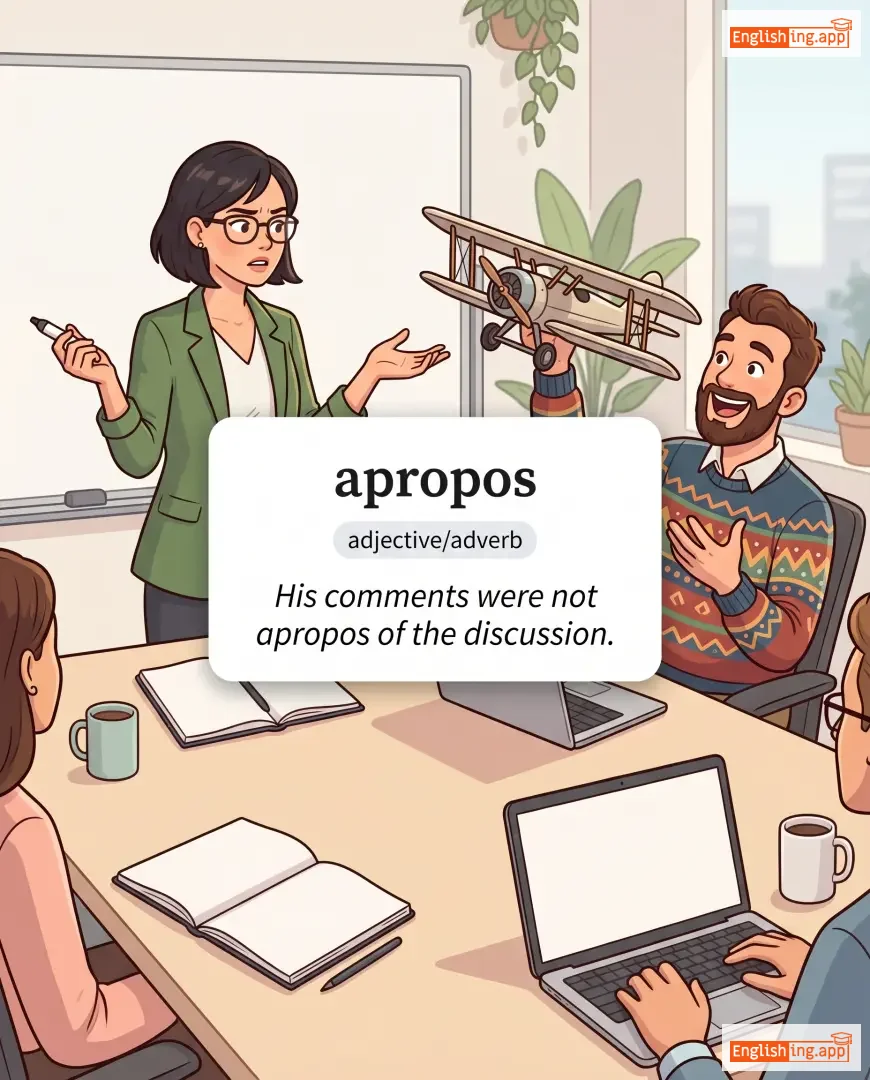
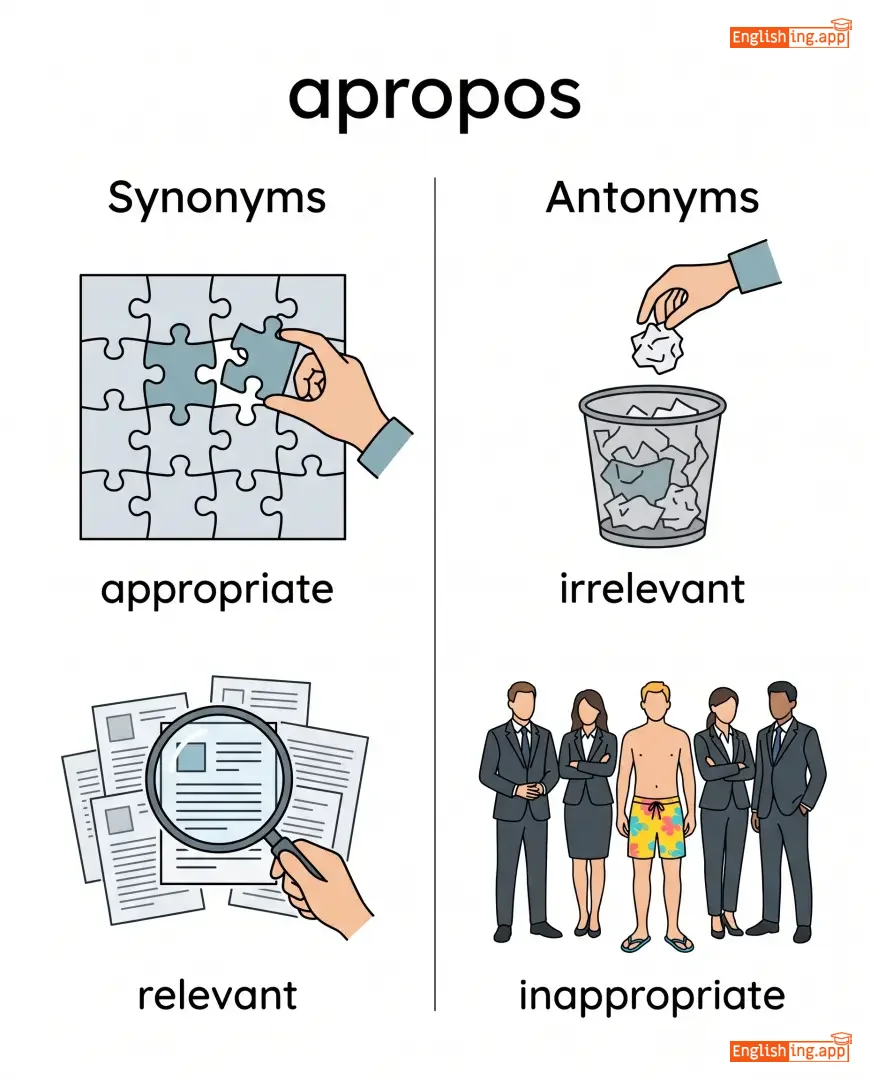
Appropriate to the situation; relevant. As an adverb, it means 'with reference to' or 'regarding'.
••••••
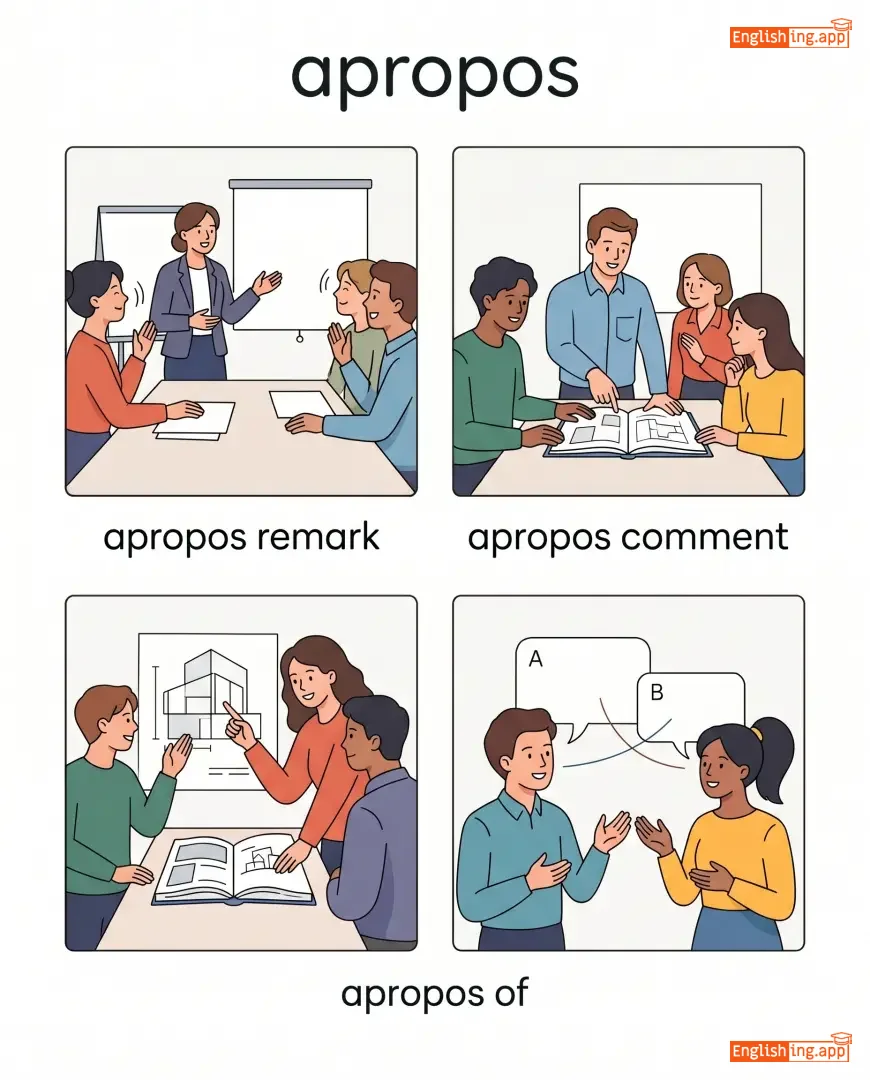
|
His comments were not apropos of the discussion.
彼のコメントは議論にはアプロポではなかった。
••••••
|
彼のコメントは議論には適切ではなかった。
Kare no komento wa giron ni wa tekisetsu de wa nakatta.
••••••
|
- •••••• | - •••••• | - •••••• |
appropriate, relevant, suitable, pertinent
••••••
|
irrelevant, inappropriate
••••••
|
apropos remark, apropos comment, apropos of
••••••
|
Aproposは関連を意味します—提案のように、Aproposである必要があります!
••••••
|
|
#554
👩🍳
|
/ˈeɪ.prən/
noun
••••••
|
- •••••• | - •••••• | - •••••• | - •••••• | - •••••• | - •••••• |
A protective garment worn over the front of one's clothes to keep them clean, especially while cooking.
••••••
|
She tied an apron around her waist before cooking dinner. |
- •••••• |
apron strings |
A metaphor for dependence on one's mother or home.
••••••
|
- •••••• |
smock, pinafore, bib, overall
••••••
|
none, bare
••••••
|
wear an apron, kitchen apron, chef’s apron
••••••
|
No •••••• |
|
#555
🔗
|
/əˈpɜːrtənənt/
adjective
(アパーテネント)
••••••
|
- •••••• |
附属
fuzoku
••••••
|
- •••••• | - •••••• | - •••••• | - •••••• |
Belonging to or associated with something, often used in legal/property contexts.
••••••
|
The right of way is appurtenant to the landowner’s property.
通行権は土地所有者の財産に付随しています。
••••••
|
通行権は土地所有者の財産に付随しています。
Tōkōken wa tochi shoyūsha no zaisan ni fuzoku shiteimasu.
••••••
|
- •••••• | - •••••• | - •••••• |
related, attached, connected, accessory
••••••
|
separate, independent
••••••
|
rights appurtenant, appurtenant land, appurtenant easement
••••••
|
Appurtenantは関連があることを意味します、例えば、テナントは常に土地と関連があります。
••••••
|
|
#556
🎯
|
/ˈæpəzɪt/
adjective
(アポジット)
••••••
|
|
適切
tekisetsu
••••••
|
- •••••• | - •••••• | - •••••• | - •••••• |
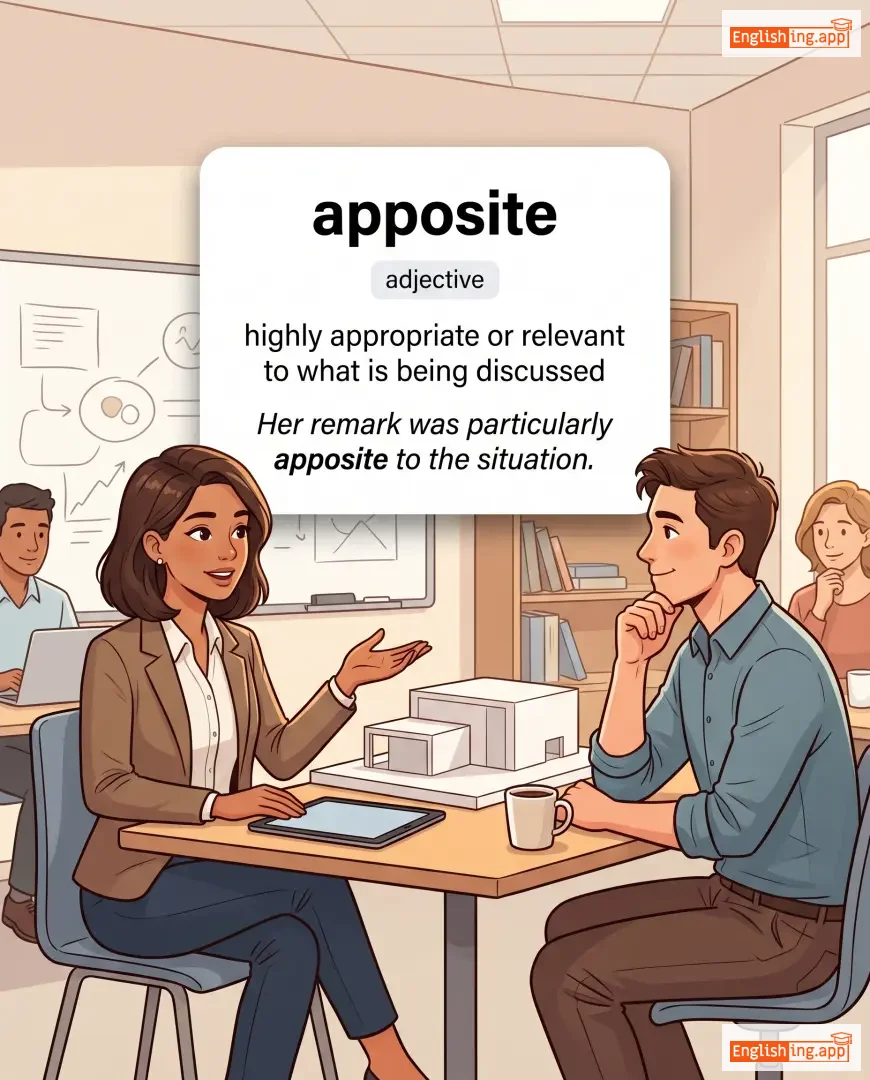
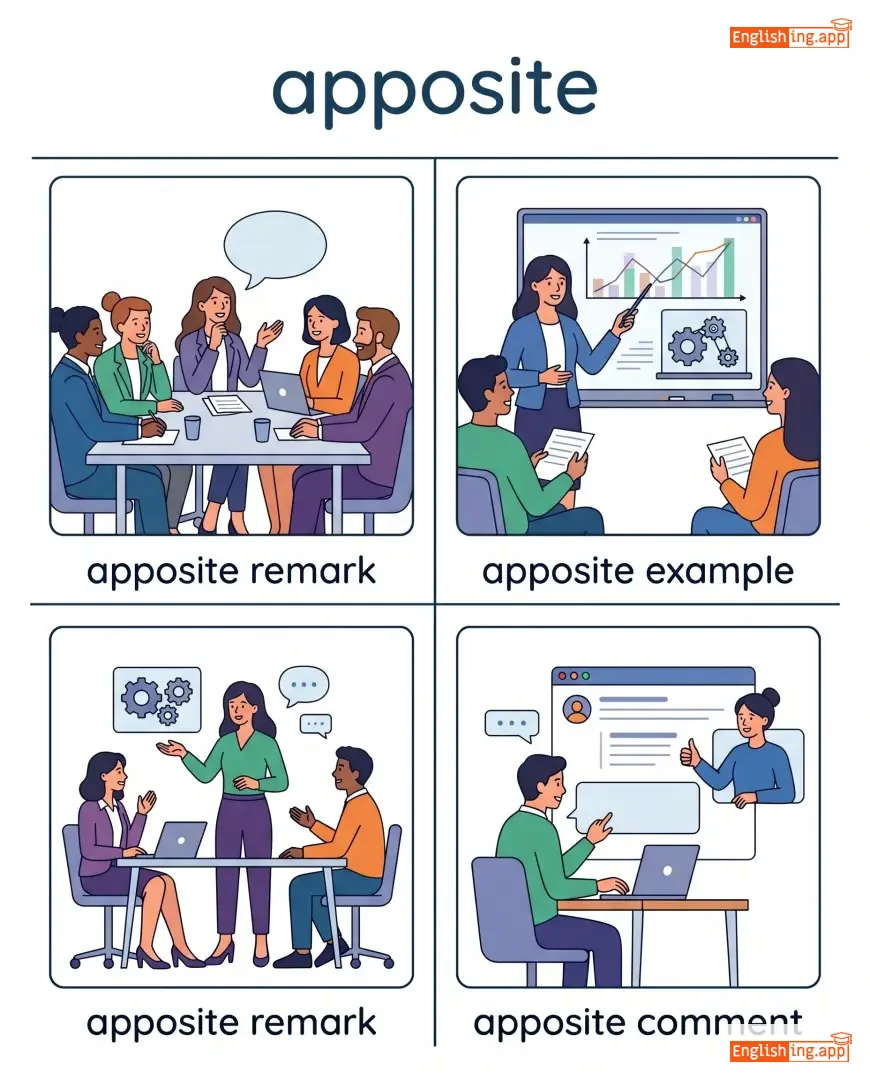
highly appropriate or relevant to what is being discussed
••••••
|
Her remark was particularly apposite to the situation. |
彼女のコメントはその状況に非常に適切でした。
Kanojo no komento wa sono joukyou ni hijou ni tekisetsu deshita.
••••••
|
- •••••• | - •••••• | - •••••• |
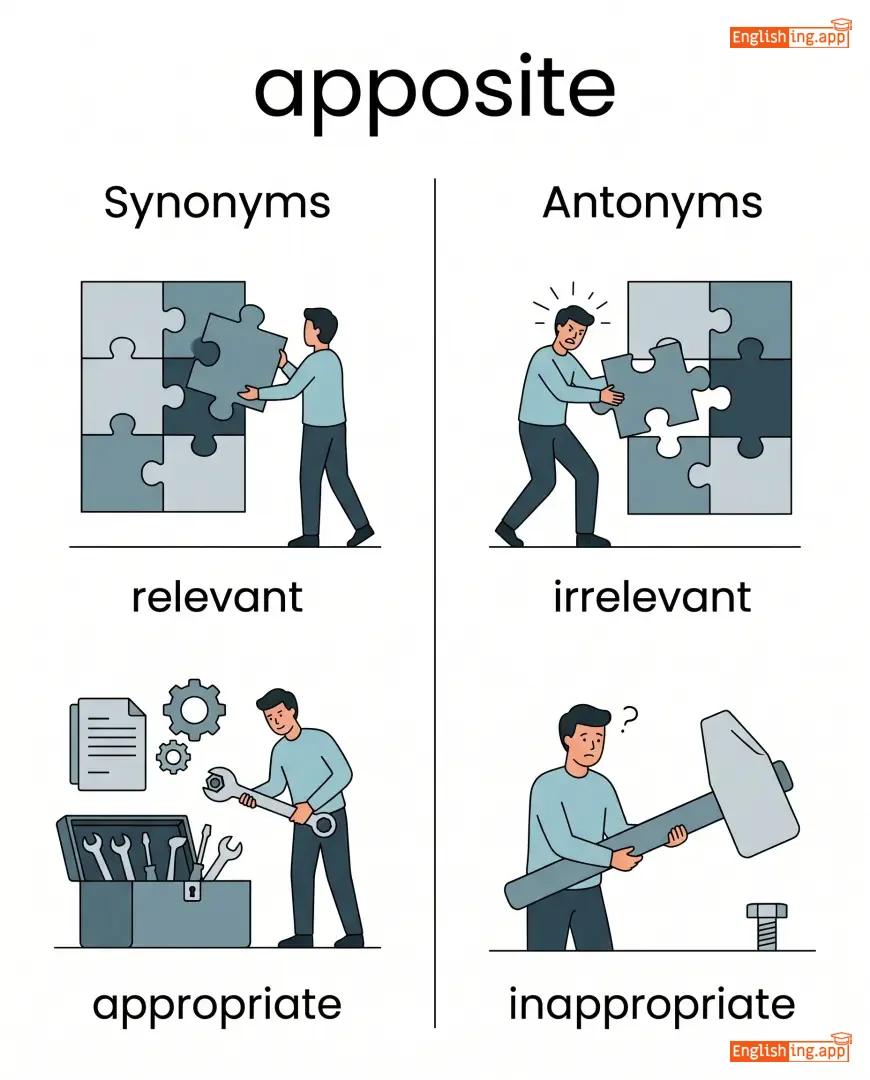
relevant, appropriate, fitting, suitable, pertinent
••••••
|
irrelevant, inappropriate, unsuitable
••••••
|
apposite remark, apposite example, apposite comment, apposite observation
••••••
|
Appositeはピッタリ、完璧なフィット感!
••••••
|
|
#557
🧩
|
/əˈpɜːrtənəns/
noun
(アパーテナンス)
••••••
|
- •••••• |
付属物 / 付加部分
fuzokumotsu / fuka bubun
••••••
|
- •••••• | - •••••• | - •••••• | - •••••• |
an accessory or supplementary part of something
••••••
|
The garage is an appurtenance of the main house.
ガレージはメインハウスのアパーテナンスです。
••••••
|
ガレージはメインハウスの付属物です。
Gareeji wa mein haus no fuzokumotsu desu.
••••••
|
- •••••• | - •••••• | - •••••• |
accessory, attachment, addition, adjunct
••••••
|
essence, core
••••••
|
legal appurtenance, building appurtenance, appurtenance of property
••••••
|
Appurtenanceはアクセサリーを意味します。アプリには追加機能がついています。
••••••
|
|
#558
✔️
|
/əˈproʊpriət/ (adj), /əˈproʊprieɪt/ (verb)
adjective, verb
(アプロプリエイト)
••••••
|
|
適切 / 取る
tekisetsu / toru
••••••
|
appropriated
アプロプリエイテッド
••••••
|
appropriated
アプロプリエイテッド
••••••
|
appropriates
アプロプリエイツ
••••••
|
appropriating
アプロプリエイティング
••••••
|
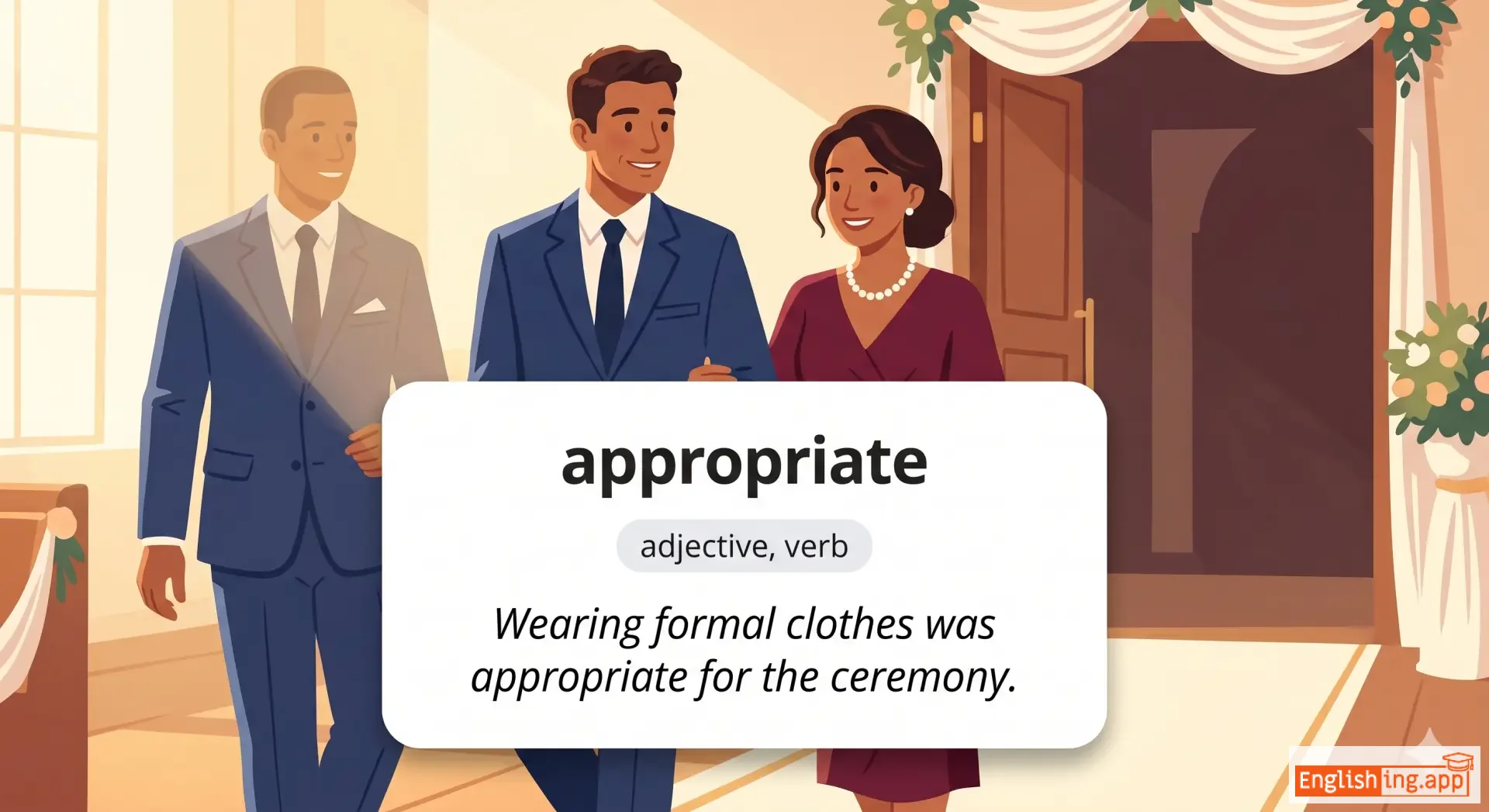
suitable or proper in the circumstances (adj); to take something for one’s own use, often without permission (verb)
••••••
|
Wearing formal clothes was appropriate for the ceremony.
フォーマルな服を着ることはその儀式には適切でした。
••••••
|
フォーマルな服を着ることはその儀式には適切でした。
Fōmaru na fuku o kiru koto wa sono gishiki ni wa tekisetsu deshita.
••••••
|
- •••••• | - •••••• | - •••••• |
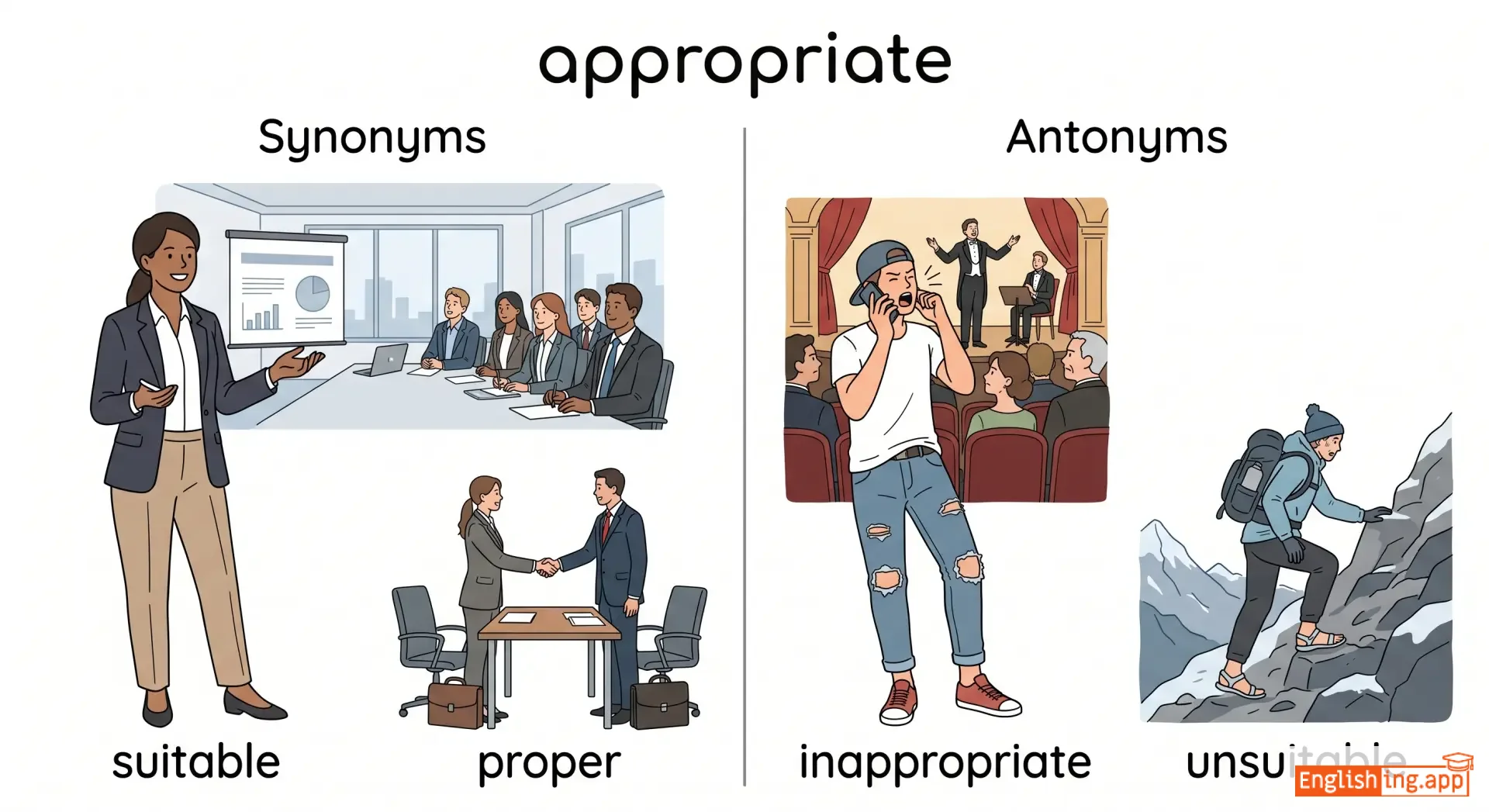
suitable, proper, fitting, apt, seize
••••••
|
inappropriate, unsuitable
••••••
|
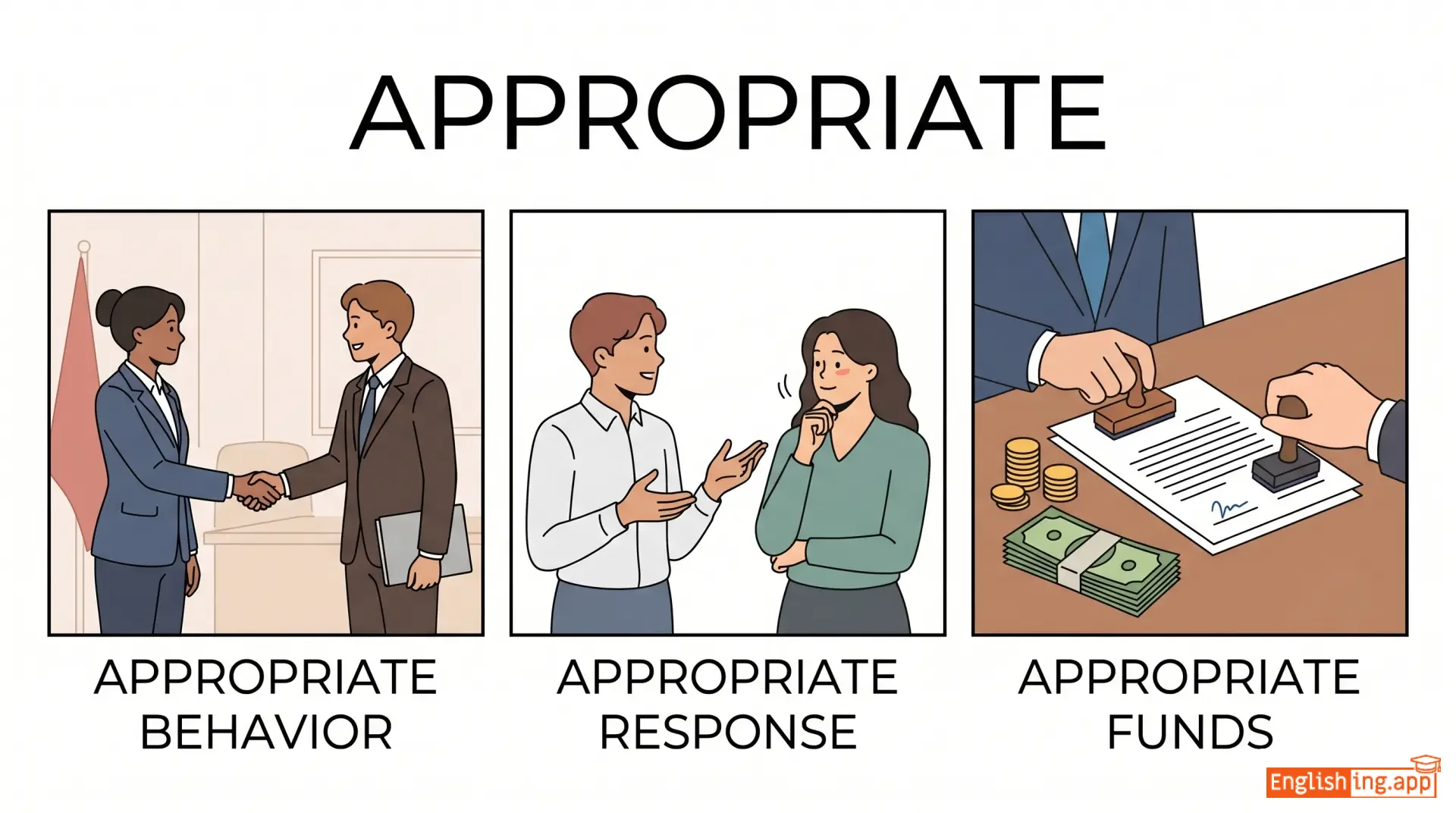
appropriate behavior, appropriate response, appropriate funds, culturally appropriate
••••••
|
Appropriate は適切—状況に合ったもの、時には許可なく取ることもある。
••••••
|
|
#559
🙌
|
/ˈæprəbəˌtɔːri/
adjective
(アプロベートリー)
••••••
|
- •••••• |
称賛の
shōsan no
••••••
|
- •••••• | - •••••• | - •••••• | - •••••• |
expressing approval or praise
••••••
|
The teacher gave an approbatory nod after reading the essay. |
教師はエッセイを読んだ後、称賛の意を込めてうなずいた。
Kyōshi wa essei o yonda ato, shōsan no i o komete unazuita.
••••••
|
- •••••• | - •••••• | - •••••• |
commendatory, praising, approving, favorable
••••••
|
critical, disapproving
••••••
|
approbatory comment, approbatory smile, approbatory tone
••••••
|
Approbatory は approval を意味します—承認や称賛を表すためにうなずくことです。
••••••
|
|
#560
👍
|
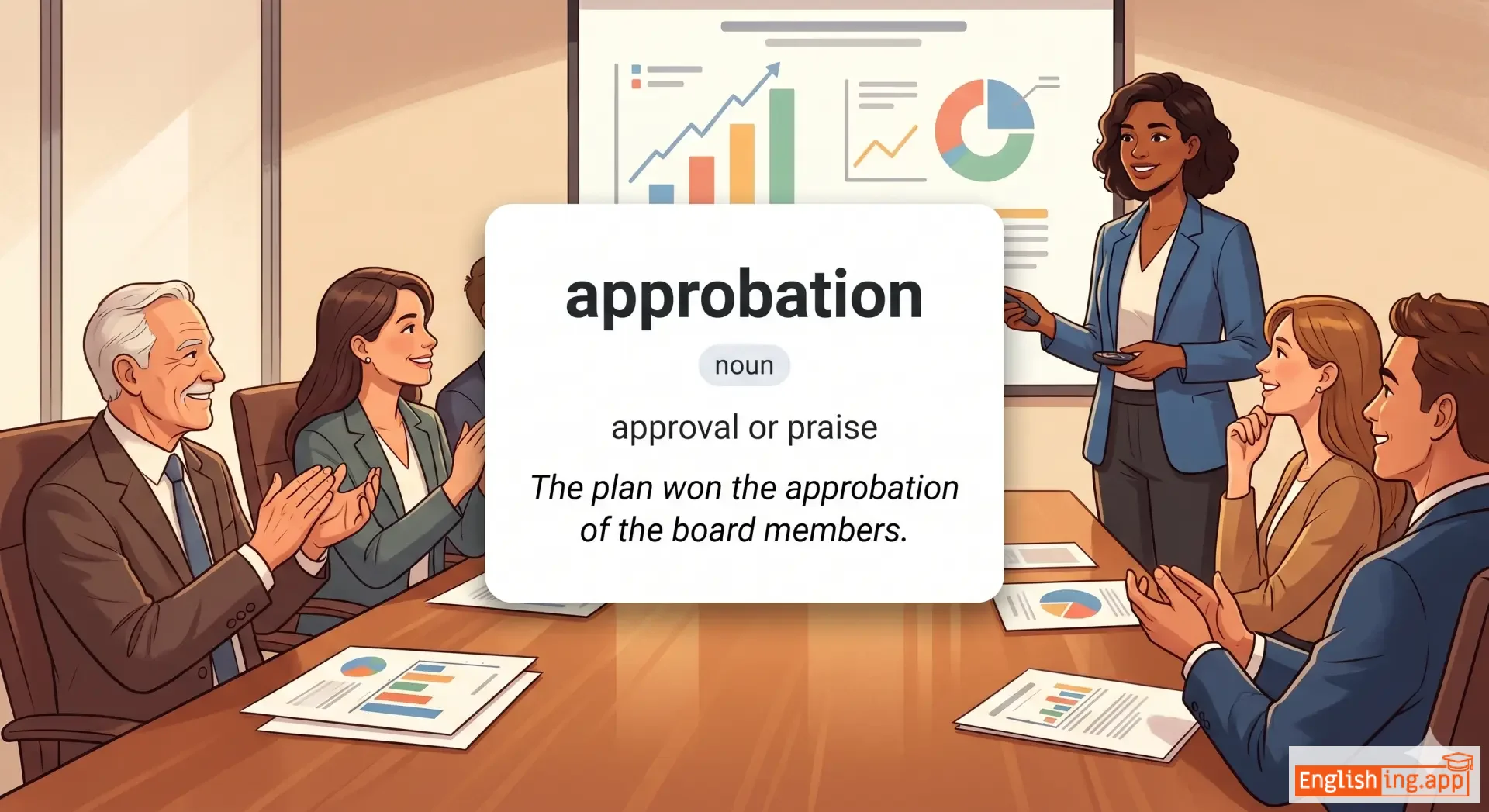
/ˌæprəˈbeɪʃən/
noun
(アプロベーション)
••••••
|
|
承認 / 賞賛
shōnin / shōsan
••••••
|
- •••••• | - •••••• | - •••••• | - •••••• |
approval or praise
••••••
|
The plan won the approbation of the board members.
その計画は理事会メンバーの承認を得ました。
••••••
|
その計画は理事会メンバーの承認を得ました。
Sono keikaku wa rijikai menbā no shōnin o emashita.
••••••
|
- •••••• | - •••••• | - •••••• |
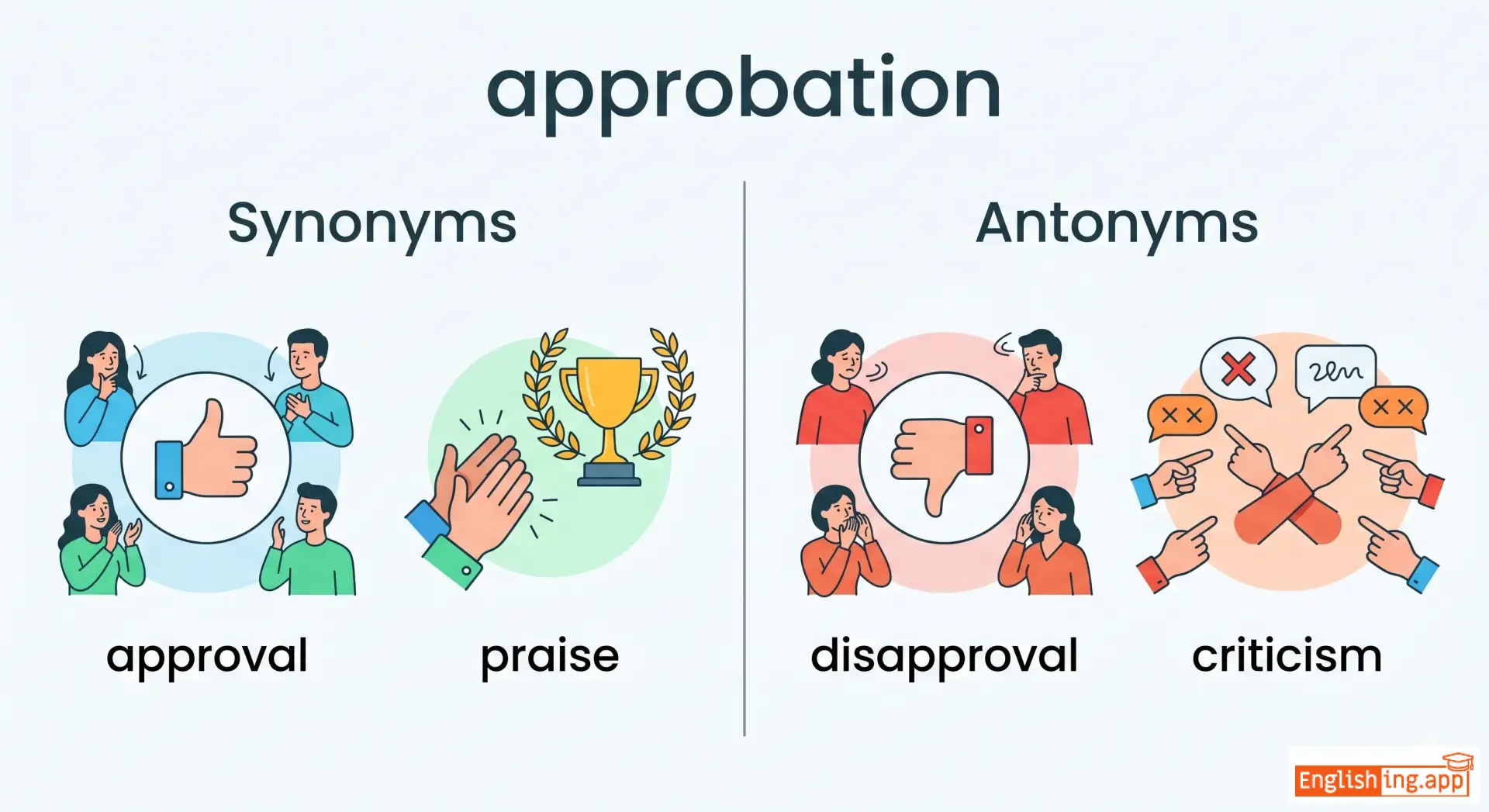
approval, praise, endorsement, admiration, recognition
••••••
|
disapproval, criticism, rejection
••••••
|
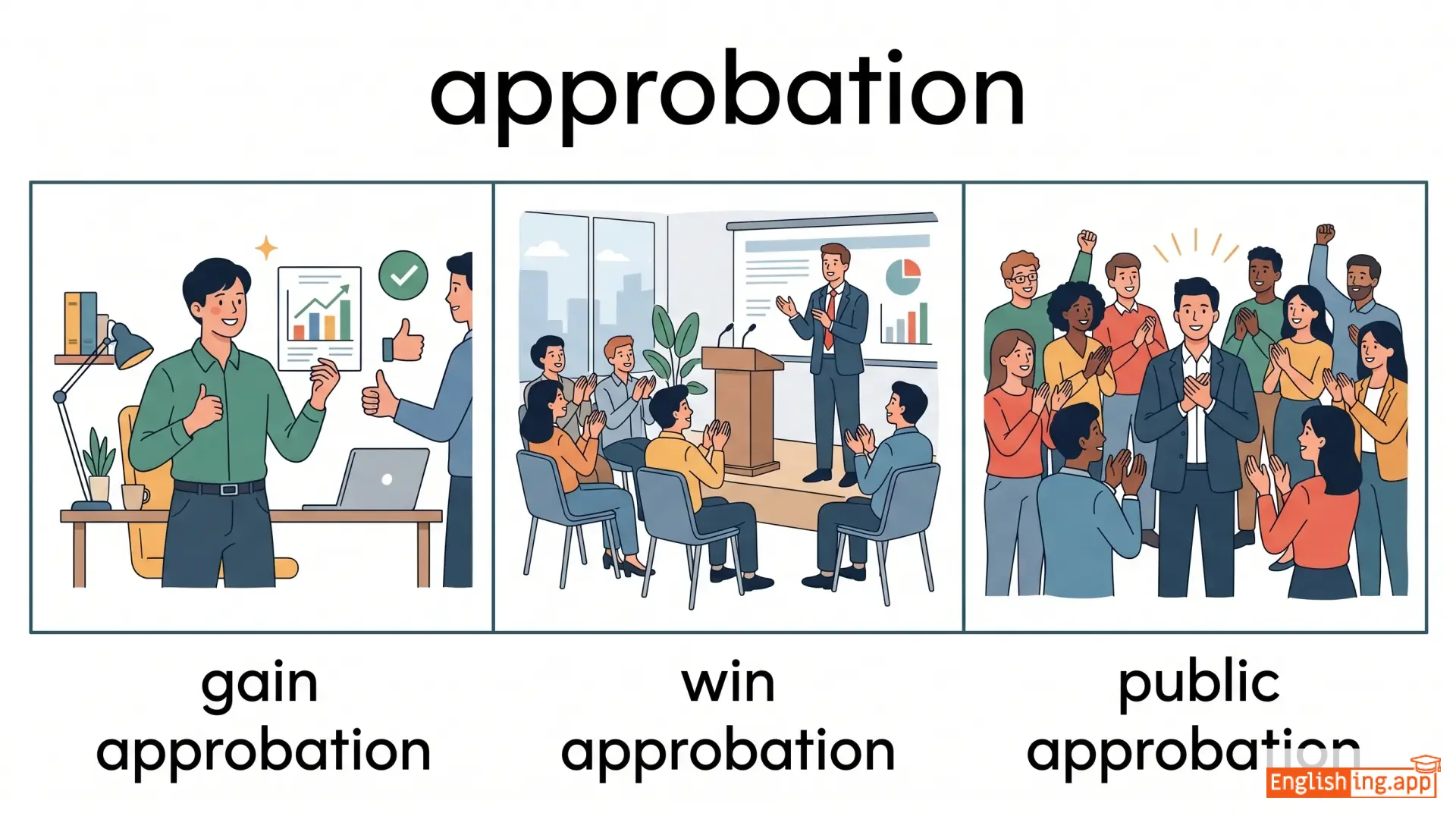
gain approbation, win approbation, public approbation, official approbation
••••••
|
Approbation は approval を意味します—app 承認を得ると、みんな幸せになります。
••••••
|
|
#561
➡️
|
/əˈproʊtʃ/
verb
(アプローチ)
••••••
|
- •••••• |
近づく / 解決する
chikaduku / kaiketsu suru
••••••
|
approached
アプローチド
••••••
|
approached
アプローチド
••••••
|
approaches
アプローチズ
••••••
|
approaching
アプローチング
••••••
|
to move closer to someone or something; to deal with a situation or problem
••••••
|
The teacher approached the student to offer help.
教師は学生に近づいて助けを申し出た。
••••••
|
教師は学生に近づいて助けを申し出た。
Kyoushi wa gakusei ni chikaduite tasuke o moushita.
••••••
|
approach with caution
慎重に近づく
••••••
|
to be careful when dealing with something or someone
••••••
|
慎重に近づく
shinchou ni chikaduku
••••••
|
come near, advance, move toward, reach, tackle
••••••
|
retreat, withdraw, avoid
••••••
|
new approach, practical approach, approach a problem, approach someone
••••••
|
近づくは問題を解決するようなものです:まず近づき、そして向き合うのです。
••••••
|
|
#562
📢
|
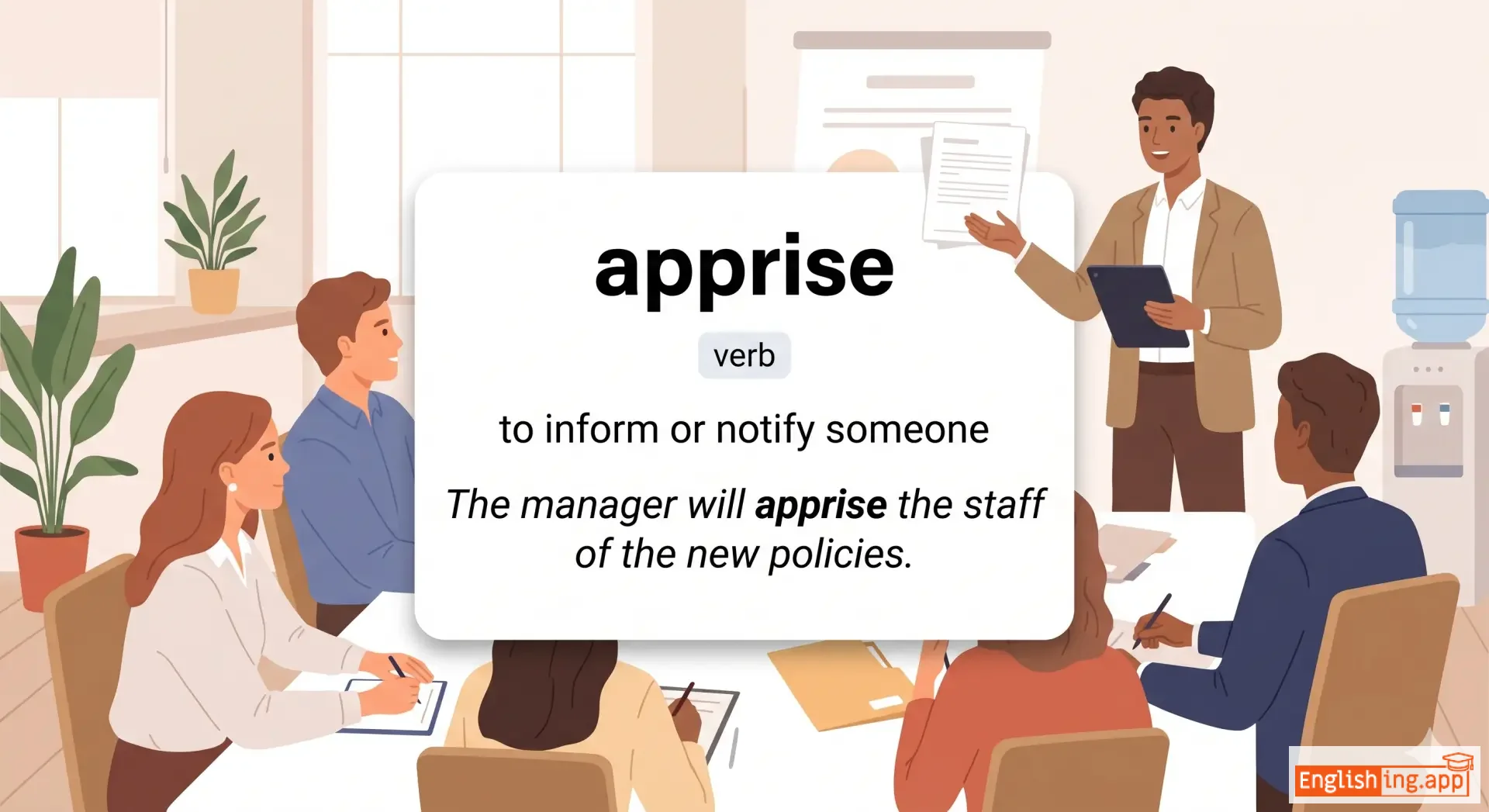
/əˈpraɪz/
verb
(apraizu)
••••••
|
|
知らせる
shiraseru
••••••
|
apprised
apuraizudo
••••••
|
apprised
apuraizudo
••••••
|
apprises
apuraizesu
••••••
|
apprising
apraizingu
••••••
|
to inform or notify someone
••••••
|
The manager will apprise the staff of the new policies.
マネージャーはスタッフに新しい方針について知らせます。
••••••
|
マネージャーはスタッフに新しい方針について知らせます。
Manejā wa sutaffu ni atarashī hōshin ni tsuite shirasemasu.
••••••
|
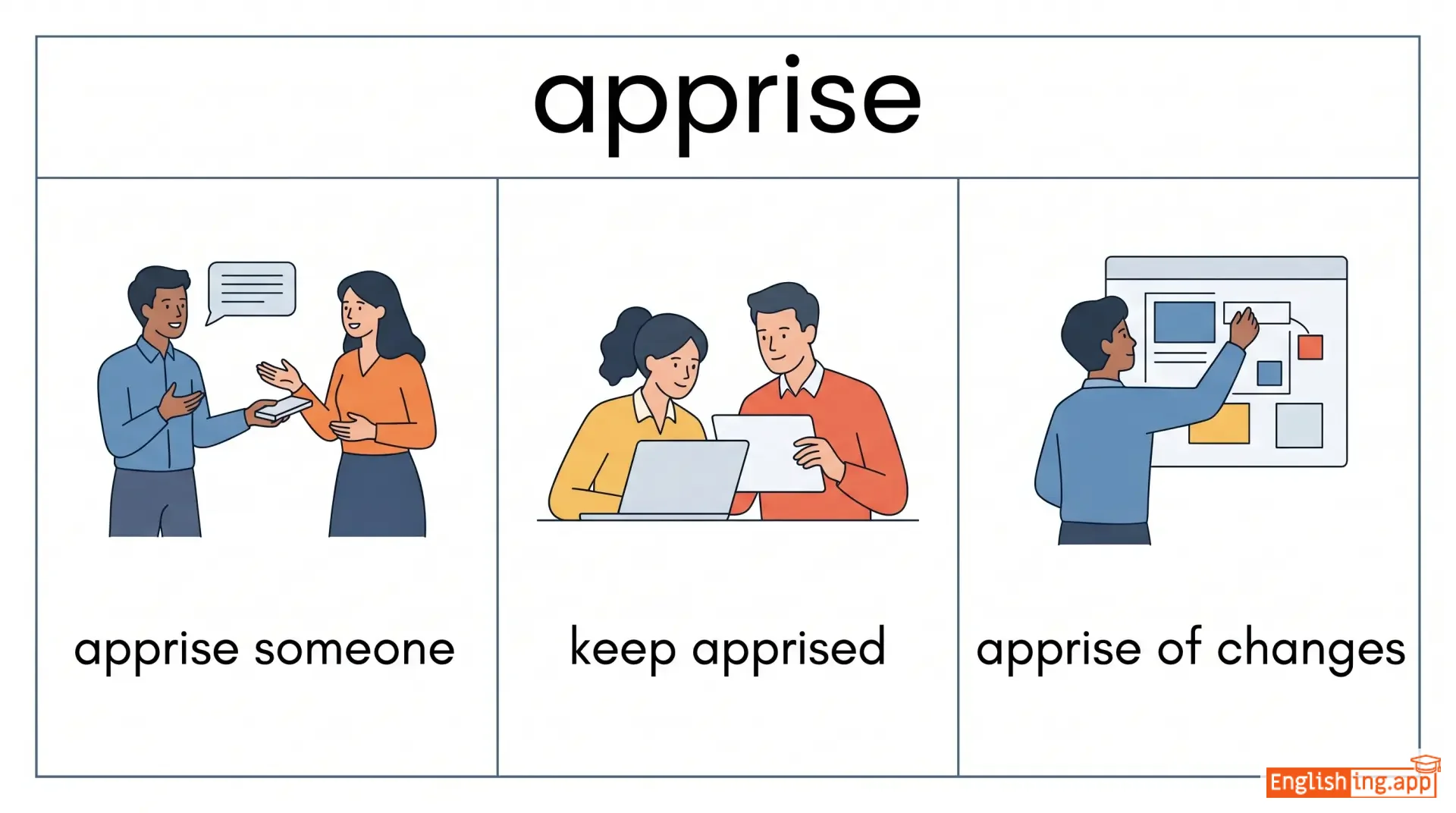
keep apprised
情報を維持する
••••••
|
to keep informed about something
••••••
|
情報を維持する
jōhō o iji suru
••••••
|
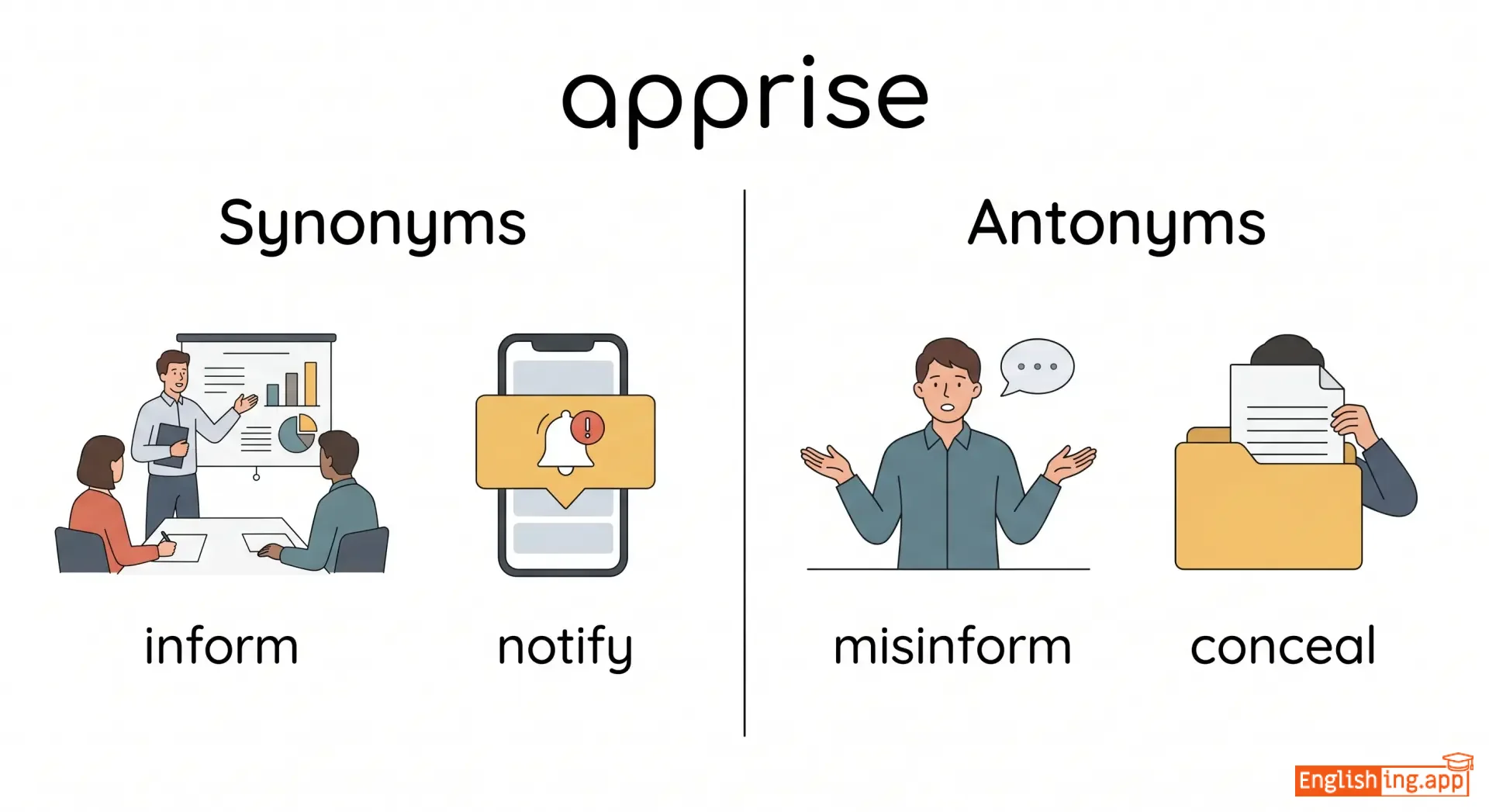
inform, notify, brief, update, advise
••••••
|
misinform, conceal
••••••
|
apprise someone, keep apprised, apprise of changes
••••••
|
Apprise は情報を'prise'する—更新を知らせる
••••••
|
|
#563
😰
|
/ˌæprɪˈhɛnsɪv/
adjective
(アプリヘンシヴ)
••••••
|
- •••••• |
不安な
fuan na
••••••
|
- •••••• | - •••••• | - •••••• | - •••••• |
feeling anxious or fearful that something bad will happen
••••••
|
He was apprehensive about starting a new job in a foreign country. |
彼は外国で新しい仕事を始めることに不安を感じていた。
Kare wa gaikoku de atarashī shigoto o hajimeru koto ni fuan o kanjite ita.
••••••
|
- •••••• | - •••••• | - •••••• |
anxious, uneasy, fearful, worried, concerned
••••••
|
confident, calm, assured
••••••
|
feel apprehensive, apprehensive about, slightly apprehensive
••••••
|
Apprehensiveは、何か新しいことを始める前に不安になることです。
••••••
|
|
#564
😟
|
/ˌæprɪˈhɛnʃən/
noun
(エプリヘンション)
••••••
|
|
不安や恐れ
fuan ya osore
••••••
|
- •••••• | - •••••• | - •••••• | - •••••• |
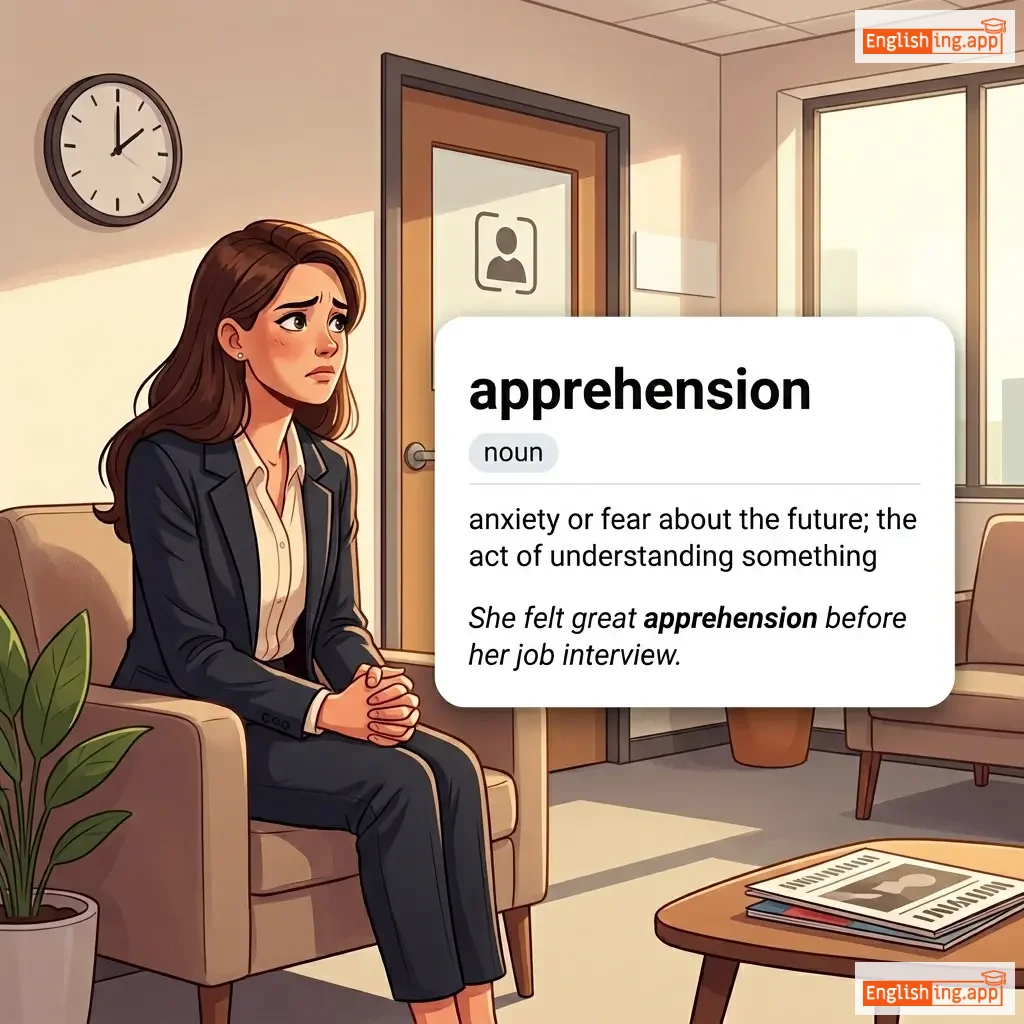
anxiety or fear about the future; the act of understanding something
••••••
|
She felt great apprehension before her job interview. |
彼女は面接の前に大きな不安を感じていた。
Kanojo wa mensetsu no mae ni ōkina fuan o kanjite ita.
••••••
|
with apprehension |
feeling anxious or fearful
••••••
|
不安を抱えて
fuan o kakaete
••••••
|
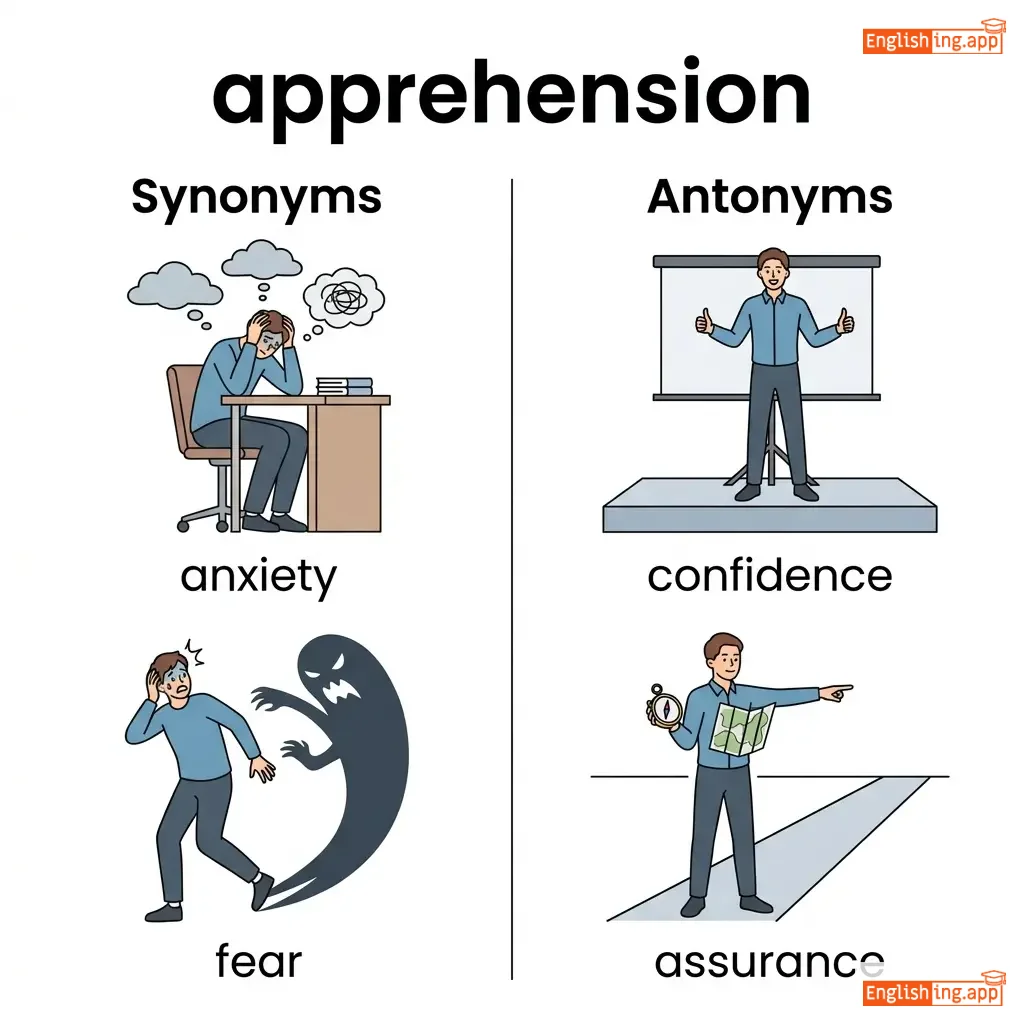
anxiety, fear, worry, dread, unease
••••••
|
confidence, assurance, calmness
••••••
|
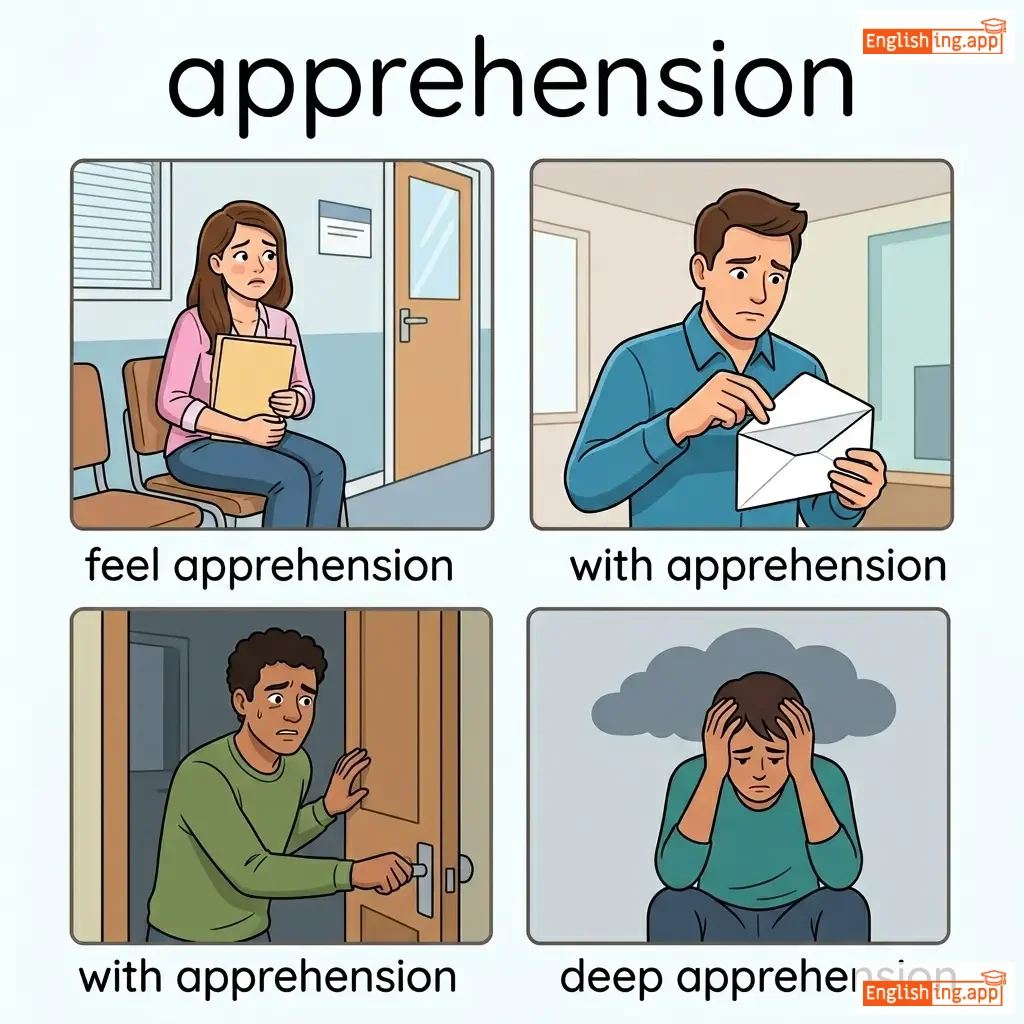
feel apprehension, with apprehension, deep apprehension
••••••
|
Apprehensionは不安 — 未来に対する恐れ
••••••
|
|
#565
🧠
|
/ˌæprɪˈhɛnsəbl̩/
adjective
(アプリーヒェンスィブル)
••••••
|
- •••••• |
理解できる
rikai dekiru
••••••
|
- •••••• | - •••••• | - •••••• | - •••••• |
capable of being understood or grasped
••••••
|
The concept was not easily apprehensible to the new students.
その概念は新しい学生には簡単に理解できませんでした。
••••••
|
その概念は新しい学生には簡単に理解できませんでした。
Sono gainen wa atarashī gakusei ni wa kantan ni rikai dekimasen deshita.
••••••
|
- •••••• | - •••••• | - •••••• |
understandable, comprehensible, clear, graspable
••••••
|
incomprehensible, unintelligible
••••••
|
easily apprehensible, apprehensible truth, apprehensible concept
••••••
|
Apprehensibleは理解できること、つまり「理解できる」と同じ意味です。
••••••
|
|
#566
🚓
|
/ˌæprɪˈhɛnd/
verb
(エイプリヘンド)
••••••
|
- •••••• |
逮捕する
taiho suru
••••••
|
apprehended
エイプリヘンデッド
••••••
|
apprehended
エイプリヘンデッド
••••••
|
apprehends
エイプリヘンズ
••••••
|
apprehending
エイプリヘンディング
••••••
|
to arrest or seize someone; to understand or perceive something
••••••
|
The police managed to apprehend the thief after a long chase.
警察は長い追跡の後、泥棒を捕まえることに成功した。
••••••
|
警察は長い追跡の後、泥棒を捕まえることに成功した。
Keisatsu wa nagai tsuiseki no ato, dorobō o tsukamaeru koto ni seikō shita.
••••••
|
apprehend the meaning
意味を理解する
••••••
|
to understand or grasp the meaning
••••••
|
意味を理解する
imi o rikai suru
••••••
|
arrest, capture, seize, detain, grasp
••••••
|
release, free, liberate
••••••
|
apprehend a suspect, apprehend quickly, apprehend the meaning
••••••
|
逮捕は犯人を捕まえて意味を理解すること
••••••
|
|
#567
🙏
|
/əˈpriːʃieɪt/
verb
(アプリシエイト)
••••••
|
|
感謝する
kansha suru
••••••
|
appreciated
アプリシエイテッド
••••••
|
appreciated
アプリシエイテッド
••••••
|
appreciates
アプリシエイツ
••••••
|
appreciating
アプリシエイティング
••••••
|
to recognize the value of something or to be thankful for it
••••••
|
I really appreciate your help with this project.
私はこのプロジェクトであなたの助けに本当に感謝しています。
••••••
|
私はこのプロジェクトであなたの助けに本当に感謝しています。
Watashi wa kono purojekuto de anata no tasuke ni hontō ni kansha shiteimasu.
••••••
|
appreciate the gesture
そのジェスチャーを評価する
••••••
|
to value someone's action or kindness
••••••
|
そのジェスチャーを評価する
sono jesuchā o hyōka suru
••••••
|
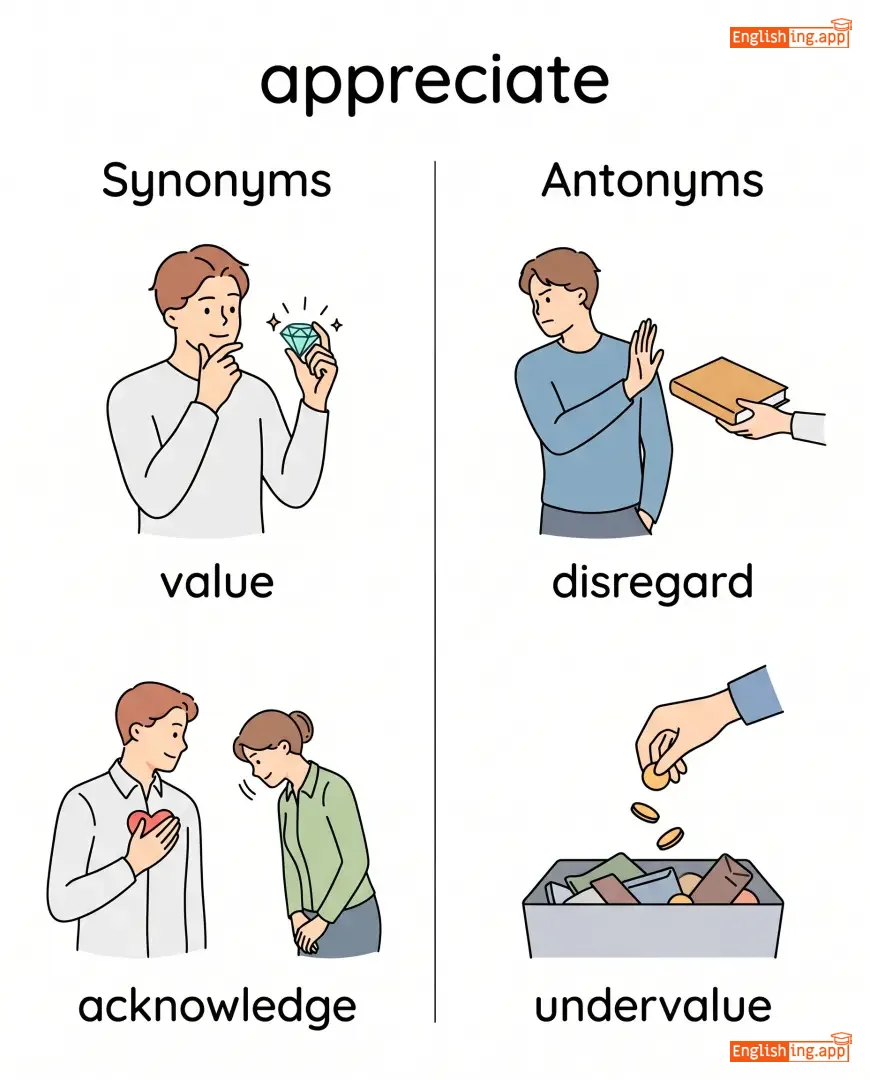
value, acknowledge, recognize, respect, admire
••••••
|
disregard, undervalue, ignore
••••••
|
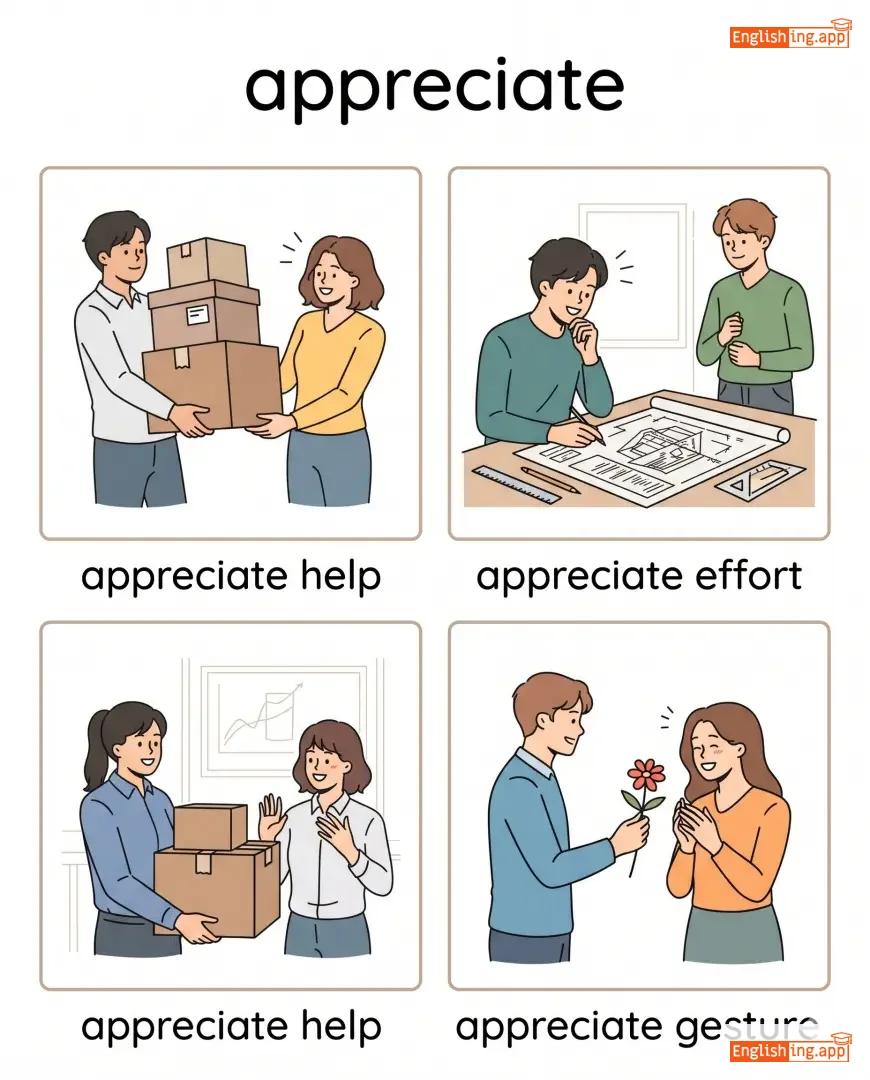
appreciate help, appreciate effort, appreciate gesture, appreciate support
••••••
|
Appreciate は‘ありがとう’と言うこと 🙏
••••••
|
|
#568
📈
|
/əˈpriːʃəbl/
adjective
(apureishīeburu)
••••••
|
- •••••• |
顕著な
kenchona
••••••
|
- •••••• | - •••••• | - •••••• | - •••••• |
large or noticeable enough to be important
••••••
|
There has been an appreciable improvement in her performance.
彼女のパフォーマンスには顕著な改善がありました。
••••••
|
彼女のパフォーマンスには顕著な改善がありました。
Kanojo no pafōmansu ni wa kenchona kaizen ga arimashita.
••••••
|
- •••••• | - •••••• | - •••••• |
significant, considerable, noticeable, substantial
••••••
|
insignificant, negligible
••••••
|
appreciable difference, appreciable amount, appreciable improvement
••••••
|
Apreciable = 顕著な、重要な 🚀
••••••
|
|
#569
💎
|
/əˈpreɪz/
verb
(アプレイズ)
••••••
|
- •••••• |
評価する
hyouka suru
••••••
|
appraised
アプレイズド
••••••
|
appraised
アプレイズド
••••••
|
appraises
アプレイズィズ
••••••
|
appraising
アプレイジング
••••••
|
to evaluate the value, quality, or importance of something
••••••
|
The jeweler appraised the diamond before buying it.
宝石商はダイヤモンドを購入する前に評価しました。
••••••
|
宝石商はダイヤモンドを購入する前に評価しました。
Houseki shou wa daiyamondo o kounyuu suru mae ni hyouka shimashita.
••••••
|
appraise the situation
状況を評価する
••••••
|
to carefully assess the circumstances
••••••
|
状況を評価する
joukyou o hyouka suru
••••••
|
evaluate, assess, estimate, judge, rate
••••••
|
ignore, neglect, overlook
••••••
|
appraise value, appraise property, appraise performance
••••••
|
Appraise は Price (価格) を評価する意味です。
••••••
|
|
#570
📚
|
/ˌæpəˈzɪʃən/
noun
(アポジション)
••••••
|
- •••••• |
同格 (並列文法)
tōkaku (bairitsu bunpō)
••••••
|
- •••••• | - •••••• | - •••••• | - •••••• |
a grammatical construction in which two elements are placed side by side, with one explaining the other
••••••
|
In the phrase 'my friend John,' the word 'John' is in apposition to 'my friend.'
'私の友人ジョン'というフレーズでは、'ジョン'という単語が'私の友人'とアポジションにあります。
••••••
|
'私の友人ジョン'というフレーズでは、'ジョン'という単語が'私の友人'とアポジションにあります。
'Watashi no yūjin John' to iu furēzu de wa, 'John' to iu tango ga 'Watashi no yūjin' to apojishon ni arimasu.
••••••
|
- •••••• | - •••••• | - •••••• |
juxtaposition, proximity, alignment, placement
••••••
|
separation, disconnection
••••••
|
grammatical apposition, noun in apposition, apposition phrase
••••••
|
同格は、2つの要素が並んでいるようなものです 📚
••••••
|
Vocabulary Quiz
Test your vocabulary by matching words with their translations or meanings.
Login to take the quiz
Comments (0)
Share your thoughts and join the discussion.
Join the discussion by logging in
Login to CommentNo comments yet
Be the first to share your thoughts!