

翻訳
過去
過去分詞
三人称単数
動名詞
意味
例文
例文の翻訳
同義語
対義語
コロケーション
ニーモニック

Swipe left or right, or use the buttons. Tap image to zoom.
例文の翻訳
単語
Lesson 72Lesson 72 - マスクトグル
|
絵文字
|
単語 | Images | 翻訳 | 過去 | 過去分詞 | 三人称単数 | 動名詞 | 意味 | 例文 | 例文の翻訳 | 表現例 | 表現例の意味 | 表現例の翻訳 | 同義語 | 対義語 | コロケーション | ニーモニック |
|---|---|---|---|---|---|---|---|---|---|---|---|---|---|---|---|---|---|
|
#2131
🦞
|
/ˈdɛkəˌpɒd/
noun
(デカポッド)
••••••
|
- •••••• |
十脚目
jukyaku me
••••••
|
- •••••• | - •••••• | - •••••• | - •••••• |
An arthropod with ten limbs, such as crabs, lobsters, and shrimps.
••••••
|
The lobster is a well-known decapod.
ロブスターは有名なデカポッドです。
••••••
|
ロブスターは有名な十脚目です。
Robusutā wa yūmei na jūkyaku me desu.
••••••
|
- •••••• | - •••••• | - •••••• |
crustacean, crab, lobster, shrimp, prawn
••••••
|
insect, arachnid
••••••
|
marine decapod, decapod species, decapod crustacean
••••••
|
Deca は十、pod は足 — カニやエビには十本の足がある。
••••••
|
|
#2132
✅
|
/dɪˈsaɪsɪv/
adjective
(ディサイシブ)
••••••
|
- •••••• |
決定的
ketteiteki
••••••
|
- •••••• | - •••••• | - •••••• | - •••••• |
Having the ability to make decisions quickly and effectively; determining the outcome.
••••••
|
Her decisive action saved the company from collapse. |
彼女の決定的な行動が会社を崩壊から救った。
Kanojo no ketteiteki na kōdō ga kaisha o hōkai kara sukutta.
••••••
|
decisive victory |
A win that settles an issue conclusively.
••••••
|
決定的な勝利
ketteiteki na shōri
••••••
|
conclusive, resolute, firm, determined, crucial
••••••
|
indecisive, uncertain, hesitant
••••••
|
decisive role, decisive moment, decisive action, decisive factor
••••••
|
決定的 - 決めて、決定的に勝利する!
••••••
|
|
#2133
🔍
|
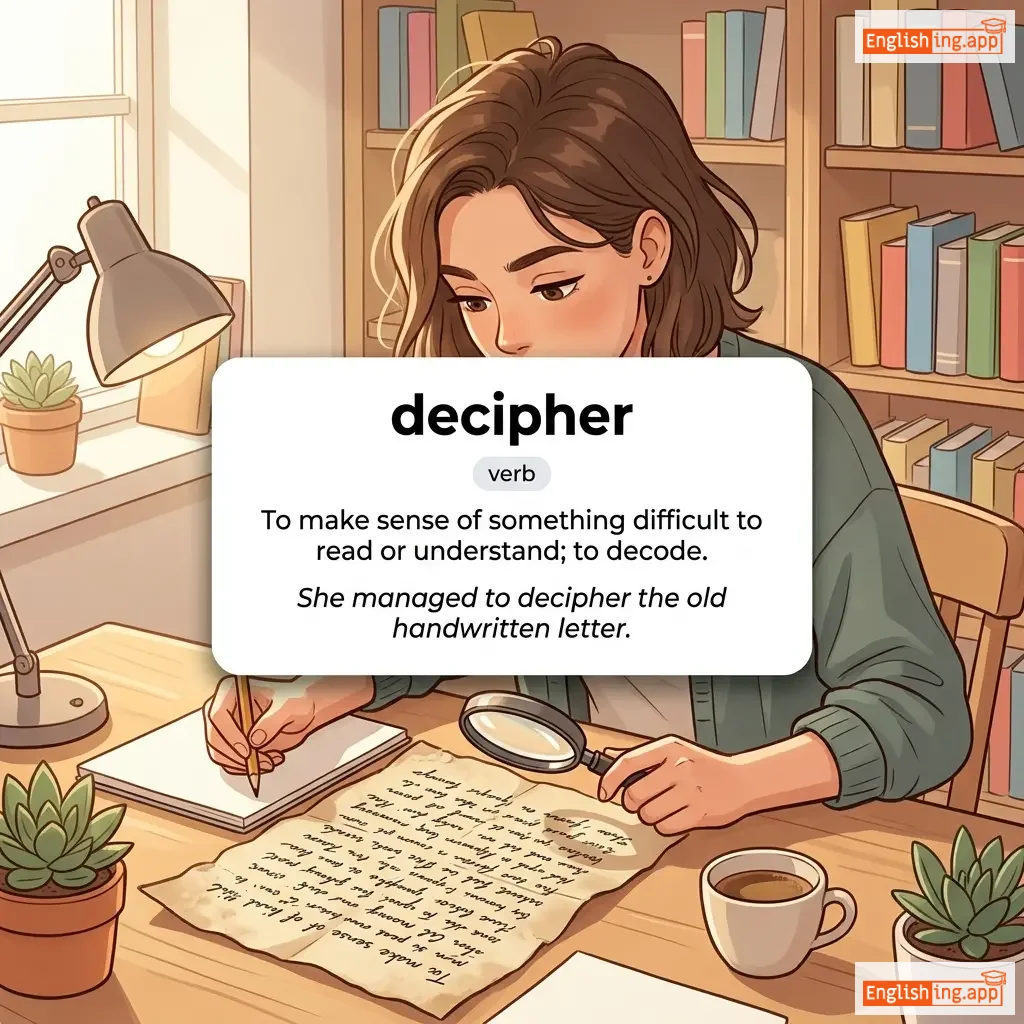
/dɪˈsaɪfər/
verb
••••••
|
|
- •••••• |
deciphered
••••••
|
deciphered
••••••
|
deciphers
••••••
|
deciphering
••••••
|
To make sense of something difficult to read or understand; to decode.
••••••
|
She managed to decipher the old handwritten letter. |
- •••••• |
decipher a code |
To successfully interpret or understand a secret or complex message.
••••••
|
- •••••• |
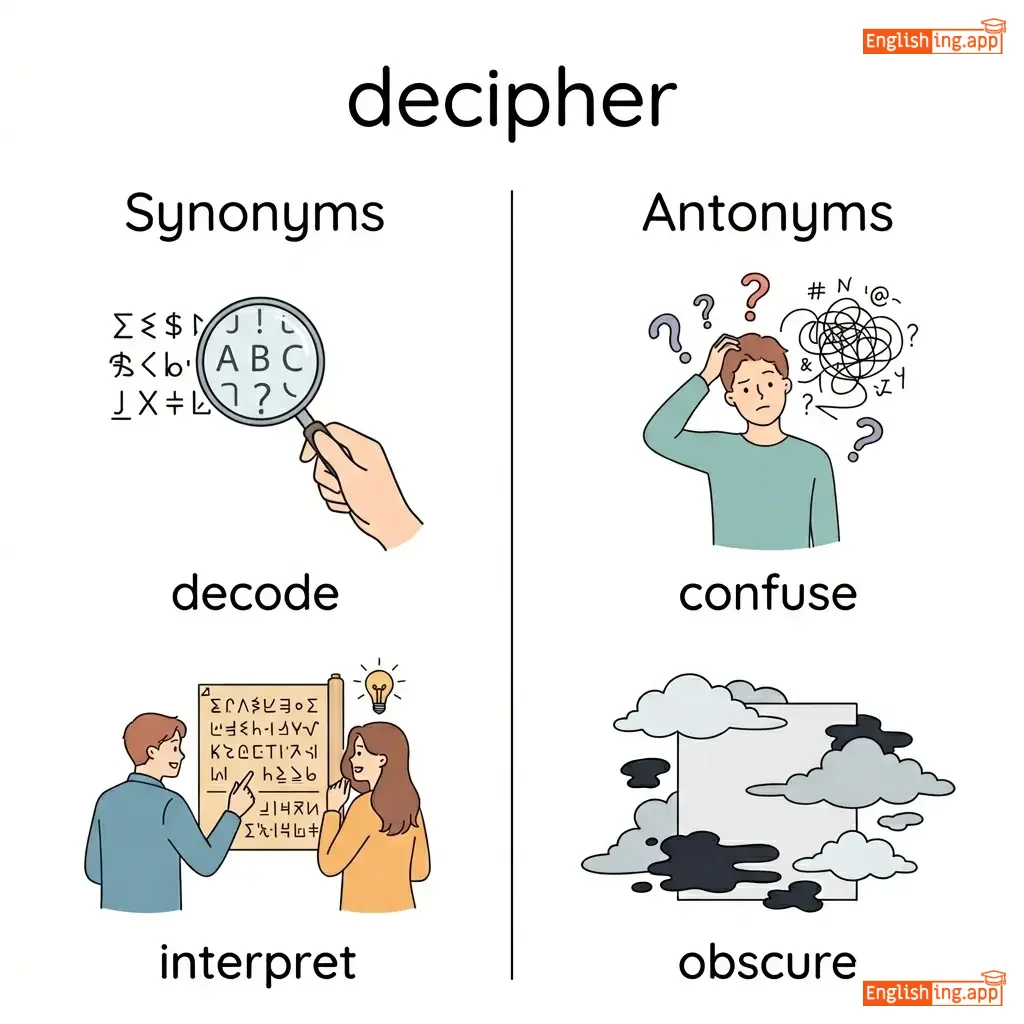
decode, interpret, translate, solve, unravel
••••••
|
confuse, obscure, encrypt
••••••
|
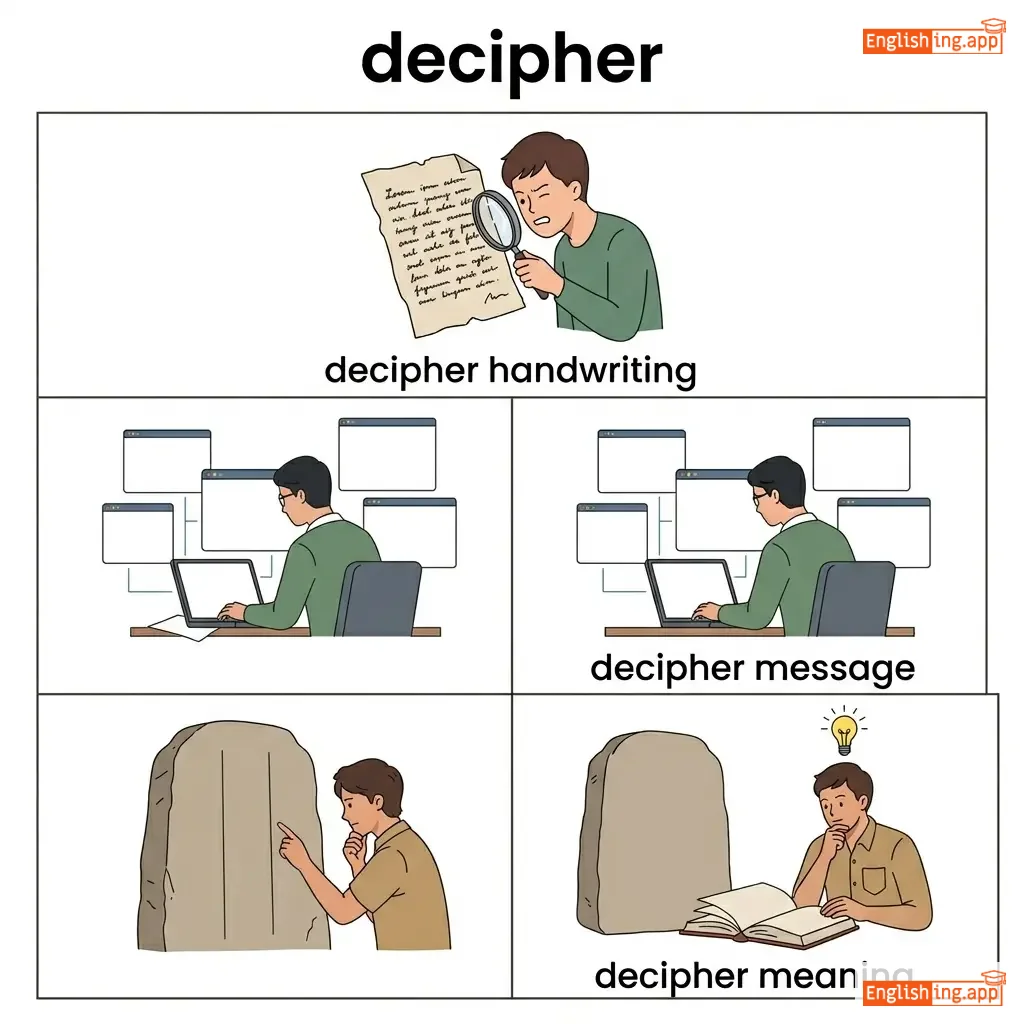
decipher handwriting, decipher message, decipher meaning, decipher code
••••••
|
No •••••• |
|
#2134
💥
|
/ˌdɛsɪˈmeɪʃən/
noun
(デシメーション)
••••••
|
- •••••• |
壊滅
kaimetsu
••••••
|
- •••••• | - •••••• | - •••••• | - •••••• |
The act of destroying or killing a large proportion of something.
••••••
|
The decimation of the city left thousands homeless. |
都市の壊滅により、何千人もの人々が家を失った。
Toshi no kaimetsu ni yori, nansen-nin mo no hitobito ga ie o ushinatta.
••••••
|
- •••••• | - •••••• | - •••••• |
destruction, devastation, annihilation, ruin
••••••
|
protection, preservation
••••••
|
mass decimation, decimation of population, decimation of species
••••••
|
Decimation という言葉は、日本語で壊滅と同じ意味で、大きな破壊を意味します。
••••••
|
|
#2135
🔥
|
/ˈdɛsɪmeɪt/
verb
(デシメイト)
••••••
|
- •••••• |
壊滅させる
kaimetsu saseru
••••••
|
decimated
デシメイテッド
••••••
|
decimated
デシメイテッド
••••••
|
decimates
デシメイツ
••••••
|
decimating
デシメイティング
••••••
|
To destroy or kill a large proportion of something.
••••••
|
The wildfire decimated the forest.
森林火災が森を壊滅させました。
••••••
|
森林火災が森を壊滅させました。
Shinrin kasai ga mori o kaimetsu sasenashita.
••••••
|
- •••••• | - •••••• | - •••••• |
destroy, devastate, annihilate, ruin, wipe out
••••••
|
preserve, protect, save
••••••
|
decimate population, decimate forest, decimate resources, decimate economy
••••••
|
Decimate は壊滅させる意味、'dec' は十の部分、何も残らないことを覚えておこう。
••••••
|
|
#2136
🔢
|
/ˈdɛsɪməl/
noun
(dɛsɪmæl)
••••••
|
- •••••• |
十進法
jūshin-hō
••••••
|
- •••••• | - •••••• | - •••••• | - •••••• |
A number system based on 10; a number expressed in the base-10 system.
••••••
|
The number 0.75 is a decimal. |
0.75は十進法の数です。
0.75 wa jūshin-hō no kazu desu.
••••••
|
decimal point |
The dot used to separate the whole number part from the fractional part in a decimal number.
••••••
|
小数点
shōsū-ten
••••••
|
fraction, number, figure, digit, numeral
••••••
|
integer, whole number
••••••
|
decimal point, decimal places, decimal system, decimal fraction
••••••
|
Decimalは十進法、10=十基準を覚えてください。
••••••
|
|
#2137
🍂
|
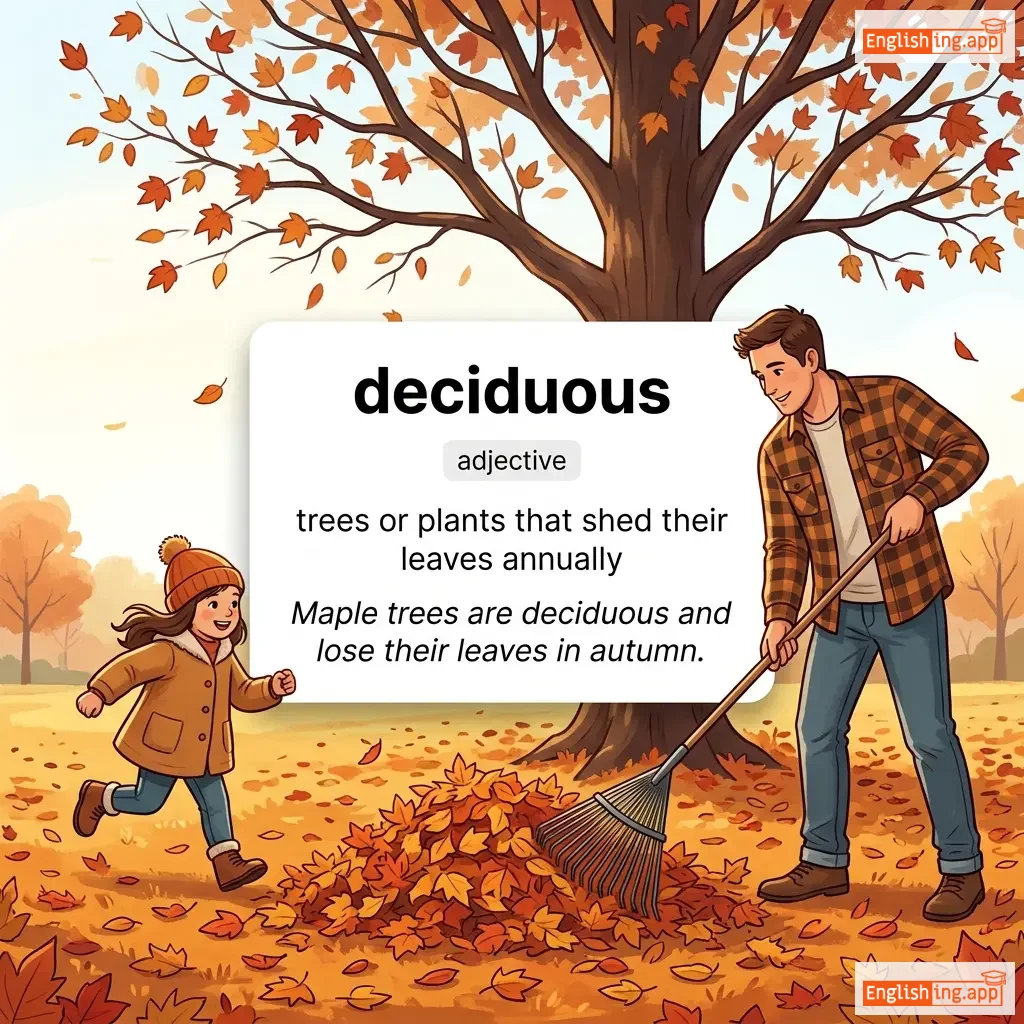
/dɪˈsɪdʒuəs/
adjective
(デシジュアス)
••••••
|
|
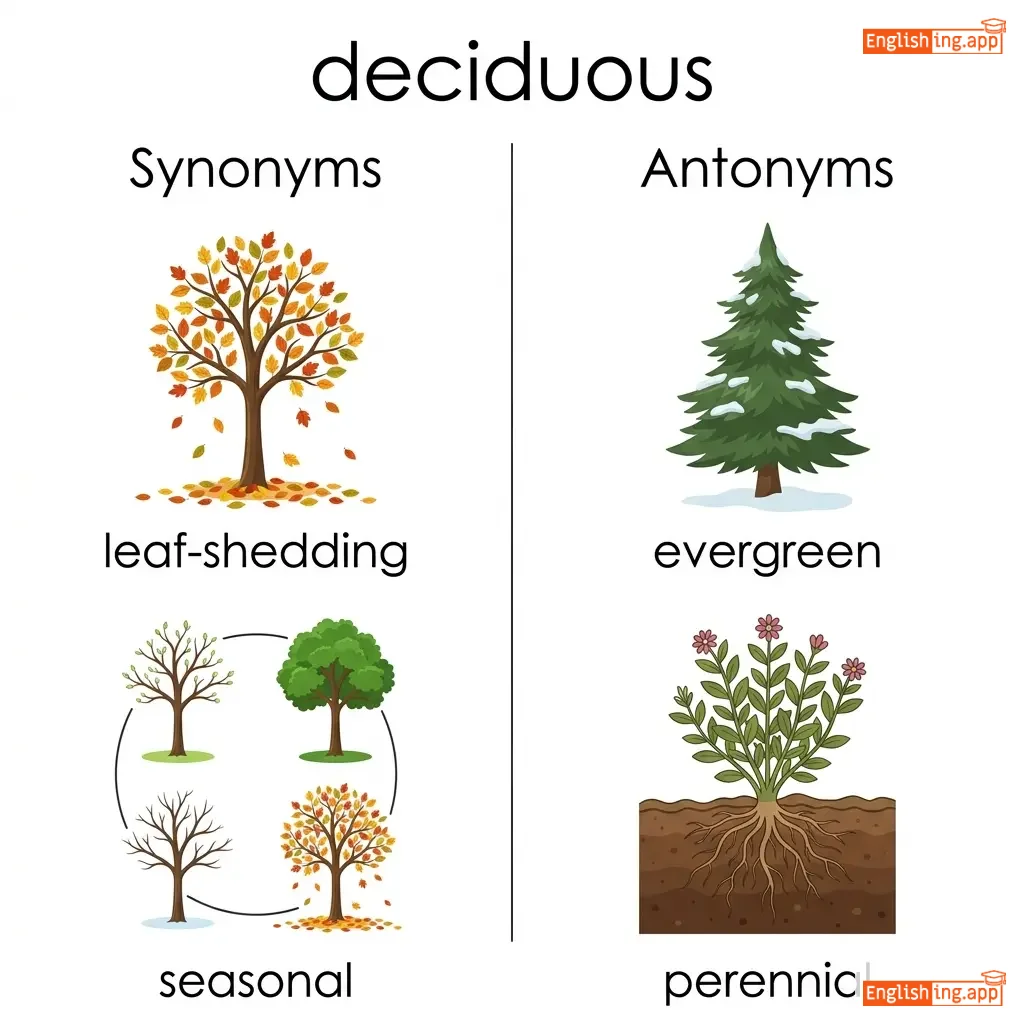
落葉性
raku you sei
••••••
|
- •••••• | - •••••• | - •••••• | - •••••• |
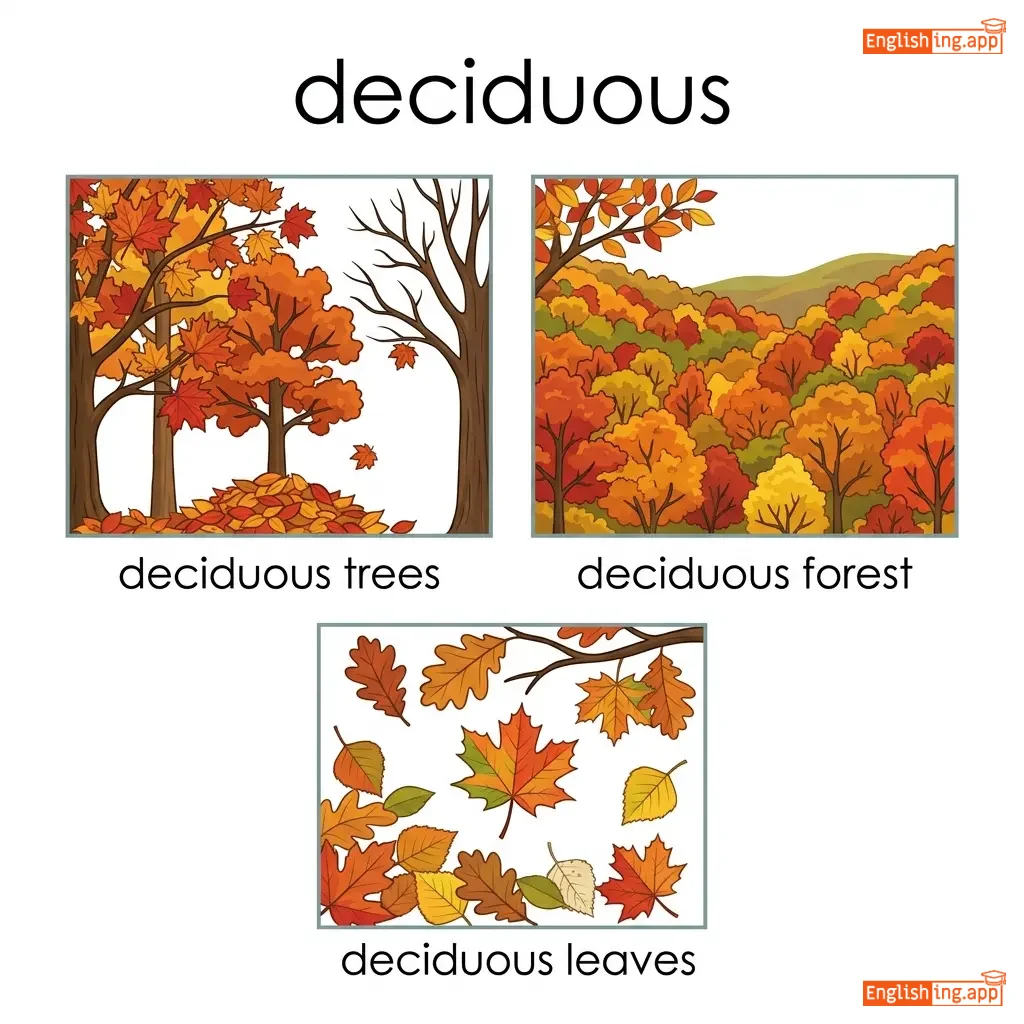
trees or plants that shed their leaves annually
••••••
|
Maple trees are deciduous and lose their leaves in autumn.
カエデの木は落葉樹で、秋に葉を落とします。
••••••
|
カエデの木は落葉樹で、秋に葉を落とします。
Kaede no ki wa rakuyouju de, aki ni ha wo otoshimasu.
••••••
|
- •••••• | - •••••• | - •••••• |
leaf-shedding, seasonal, temporary, non-evergreen
••••••
|
evergreen, perennial
••••••
|
deciduous trees, deciduous forest, deciduous leaves, deciduous woodland
••••••
|
落葉性は葉を落とす木の特徴で、カエデの木がその例です。
••••••
|
|
#2138
🔊
|
/ˈdɛsɪˌbɛl/
noun
(デシベル)
••••••
|
- •••••• |
デシベル
deshiberu
••••••
|
- •••••• | - •••••• | - •••••• | - •••••• |
a unit used to measure the intensity of sound
••••••
|
The noise level in the factory exceeded 90 decibels. |
工場の騒音レベルは90デシベルを超えました。
Kōjō no sōon reberu wa 90 deshiberu o koemashita.
••••••
|
- •••••• | - •••••• | - •••••• |
sound level, sound unit, loudness measure, intensity unit
••••••
|
silence, quiet
••••••
|
high decibel, low decibel, decibel level, measure decibel
••••••
|
デシベル覚えておこう — 国の鐘が鳴ると、音を測定するデシベル。
••••••
|
|
#2139
🙂
|
/ˈdiːsənt/
adjective
(ディセント)
••••••
|
- •••••• |
立派
rippa
••••••
|
- •••••• | - •••••• | - •••••• | - •••••• |
conforming to standards of propriety, good taste, or morality
••••••
|
He found a decent job after months of searching. |
彼は数ヶ月の探しの後、立派な仕事を見つけました。
Kare wa suukagetsu no sagashi no ato, rippa na shigoto o mitsukemashita.
••••••
|
make a decent living |
to earn enough money to live comfortably
••••••
|
立派な生活を送る
rippa na seikatsu o okuru
••••••
|
respectable, proper, suitable, fair, acceptable
••••••
|
indecent, improper, unacceptable
••••••
|
decent job, decent man, decent salary, decent standard
••••••
|
立派は、正しい道を歩むこと、正しい生活を送ることです。
••••••
|
|
#2140
🙏
|
/ˈdiːsənsi/
noun
(ディセンスィ)
••••••
|
- •••••• |
品位
hin'i
••••••
|
- •••••• | - •••••• | - •••••• | - •••••• |
behavior that conforms to accepted standards of morality or respectability
••••••
|
She showed great decency by helping the stranger in need. |
彼女は困っている見知らぬ人を助けることで大きな品位を示しました。
Kanojo wa komatte iru mishiranu hito o tasukeru koto de ōkina hin'i o shimeshimashita.
••••••
|
common decency |
basic standards of polite or respectful behavior
••••••
|
一般的な品位
ippan-tekina hin'i
••••••
|
propriety, modesty, respectability, civility, dignity
••••••
|
indecency, rudeness, immorality
••••••
|
sense of decency, act of decency, show decency, basic decency
••••••
|
Decency とは品位ある行動 — ディセンスィ = 品位。
••••••
|
|
#2141
🐌
|
/dɪˈsɛləˌreɪt/
verb
(ディセレレート)
••••••
|
- •••••• |
減速する
gensoku suru
••••••
|
decelerated
ディセレレーテッド
••••••
|
decelerated
ディセレレーテッド
••••••
|
decelerates
ディセレレーツ
••••••
|
decelerating
ディセレレーティング
••••••
|
to reduce speed; to slow down
••••••
|
The car began to decelerate as it approached the traffic light.
車は信号に近づくと減速し始めました。
••••••
|
車は信号に近づくと減速し始めました。
Kuruma wa shingou ni chikaduku to gensoku shi hajimemashita.
••••••
|
- •••••• | - •••••• | - •••••• |
slow down, reduce speed, brake, retard, ease off
••••••
|
accelerate, speed up, hasten
••••••
|
decelerate gradually, decelerate quickly, forced to decelerate, decelerate smoothly
••••••
|
減速は加速の反対、速度を遅くすることです。
••••••
|
|
#2142
🃏
|
/dɪˈsiːv/
verb
(ディシーヴ)
••••••
|
- •••••• |
騙す
damasu
••••••
|
deceived
ディシーヴド
••••••
|
deceived
ディシーヴド
••••••
|
deceives
ディシーヴス
••••••
|
deceiving
ディシーヴィング
••••••
|
To cause someone to believe something that is not true.
••••••
|
He tried to deceive his friends with a fake story.
彼は嘘の話で友達を騙そうとした。
••••••
|
彼は嘘の話で友達を騙そうとした。
Kare wa uso no hanashi de tomodachi o damasou to shita.
••••••
|
deceive oneself
自分を騙す
••••••
|
To believe something false about oneself or a situation.
••••••
|
自分を騙す
jibun o damasu
••••••
|
mislead, trick, cheat, betray, dupe
••••••
|
be honest, reveal, disclose
••••••
|
deceive others, deceive oneself, try to deceive
••••••
|
Deceiveは日本語で'騙す' - 他の人を騙すこと。
••••••
|
|
#2143
🤥
|
/dɪˈsiːtfəl/
adjective
(disitful)
••••••
|
- •••••• |
欺瞞的な
giman-teki na
••••••
|
- •••••• | - •••••• | - •••••• | - •••••• |
Deliberately misleading or dishonest.
••••••
|
She gave a deceitful answer to hide the truth.
彼女は真実を隠すために欺瞞的な答えを出しました。
••••••
|
彼女は真実を隠すために欺瞞的な答えを出しました。
Kanojo wa shinjitsu o kakusu tame ni giman-teki na kotae o dashimashita.
••••••
|
- •••••• | - •••••• | - •••••• |
dishonest, fraudulent, misleading, duplicitous
••••••
|
honest, truthful, sincere
••••••
|
deceitful behavior, deceitful practices, deceitful answer
••••••
|
Deceitfulは欺瞞的 — 欺瞞的な答え。
••••••
|
|
#2144
🎭
|
/dɪˈsiːt/
noun
(ディシート)
••••••
|
- •••••• |
欺瞞
giman
••••••
|
- •••••• | - •••••• | - •••••• | - •••••• |
The act of deceiving someone by concealing or misrepresenting the truth.
••••••
|
His career was ruined by lies and deceit. |
彼のキャリアは嘘と欺瞞によって台無しになった。
Kare no kyaria wa uso to giman ni yotte dainashi ni natta.
••••••
|
cloak of deceit |
An appearance used to hide dishonesty.
••••••
|
欺瞞の覆い
giman no oi
••••••
|
dishonesty, fraud, trickery, deception, duplicity
••••••
|
honesty, truth
••••••
|
lies and deceit, cloak of deceit, deceitful behavior
••••••
|
欺瞞 — 外衣で嘘を隠すイメージ。
••••••
|
|
#2145
✍️
|
/ˌdɛkəˈsɪləbəl/
noun
(デカシラブル)
••••••
|
- •••••• |
十音節詩行
juuninsesshi gyou
••••••
|
- •••••• | - •••••• | - •••••• | - •••••• |
A line of verse with ten syllables.
••••••
|
The poet often wrote in decasyllable form. |
詩人はしばしば十音節詩行で書いていた。
Shijin wa shibashiba juuninsesshi gyou de kaite ita.
••••••
|
- •••••• | - •••••• | - •••••• |
ten-syllable line, poetic meter
••••••
|
prose, free verse
••••••
|
decasyllable verse, decasyllable line, poetic decasyllable
••••••
|
Deca は 10 を意味し、syllable は音節を意味します — 十音節詩行 = 10 音節
••••••
|
|
#2146
🪨
|
/dəˈbriː/
noun
(デブリ)
••••••
|
|
瓦礫
goreki
••••••
|
- •••••• | - •••••• | - •••••• | - •••••• |
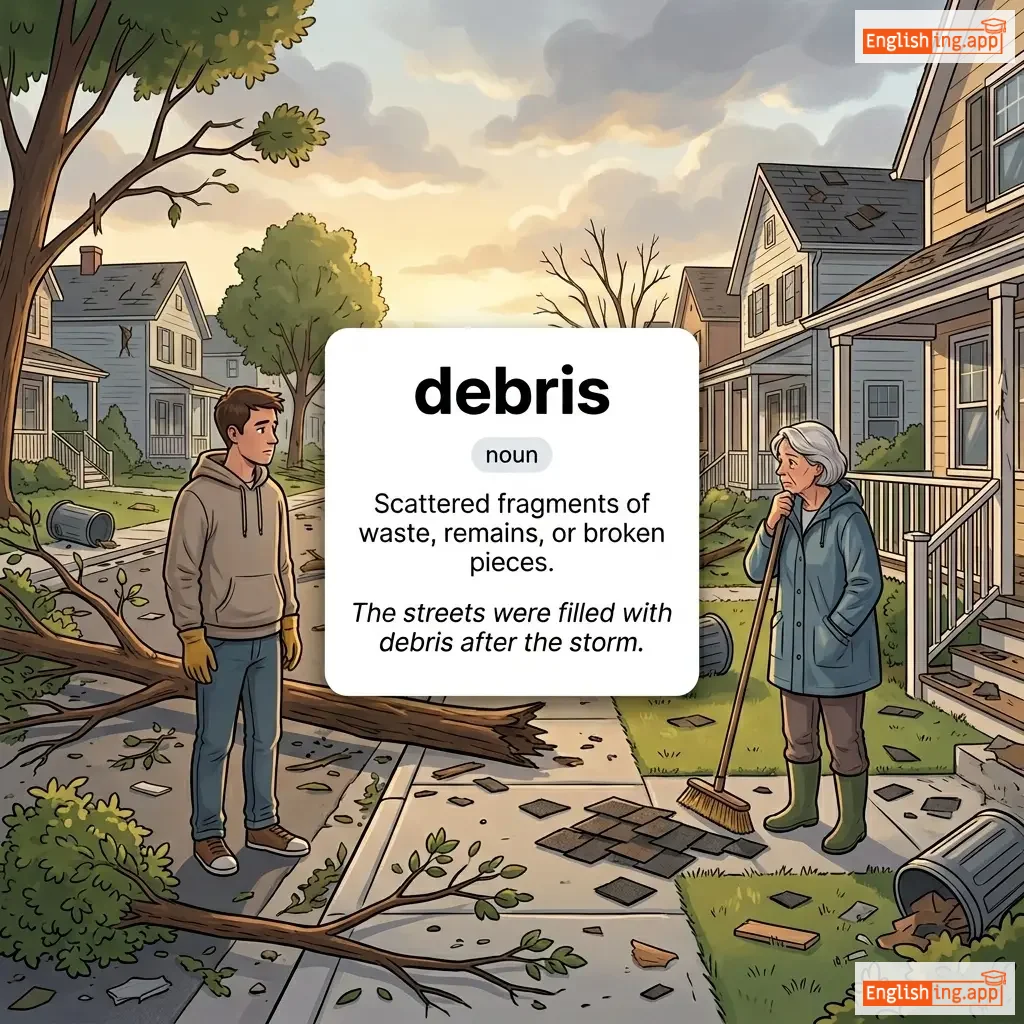
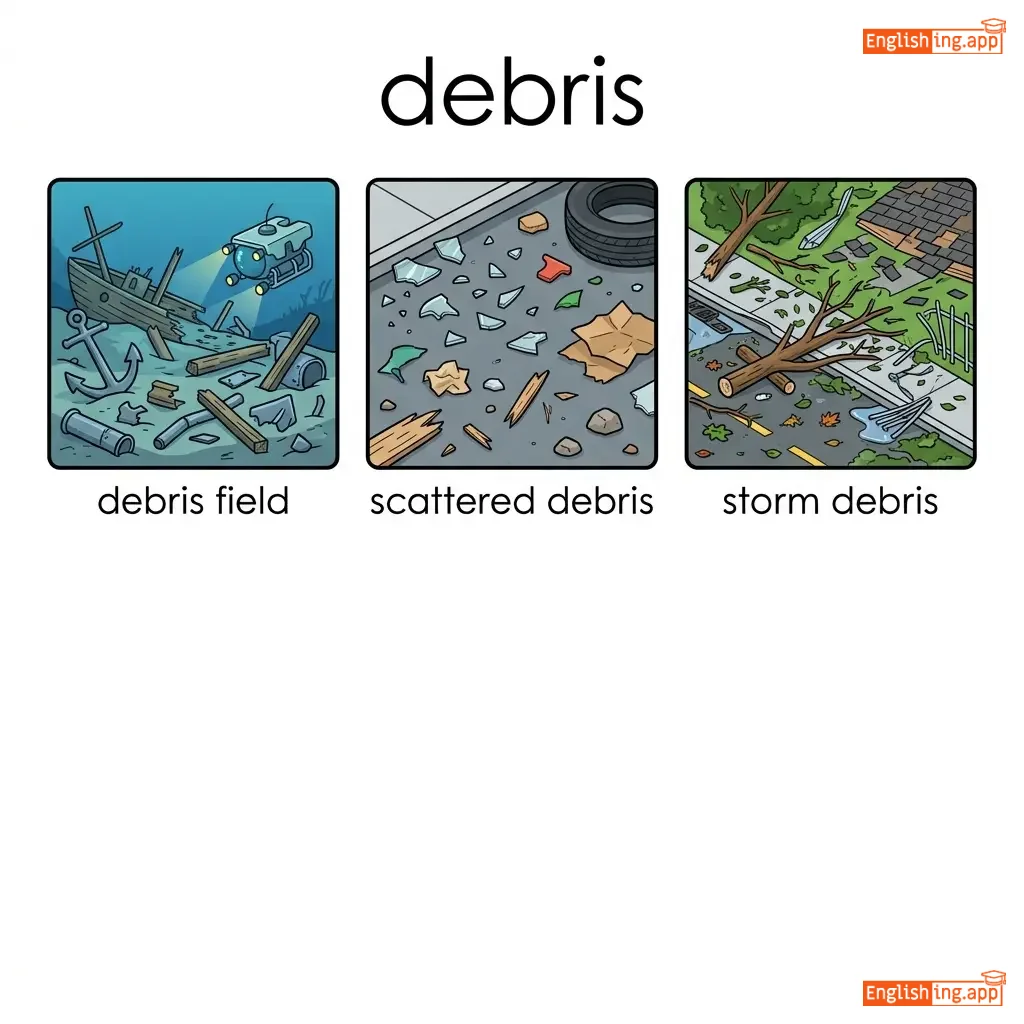
Scattered fragments of waste, remains, or broken pieces.
••••••
|
The streets were filled with debris after the storm.
嵐の後、通りはデブリで埋め尽くされていました。
••••••
|
嵐の後、通りは瓦礫で埋め尽くされていました。
Arashi no ato, toori wa goreki de umetsukusarete imashita.
••••••
|
clearing the debris
デブリの清掃
••••••
|
Removing the remains or waste after destruction.
••••••
|
瓦礫の清掃
Goreki no seisou
••••••
|
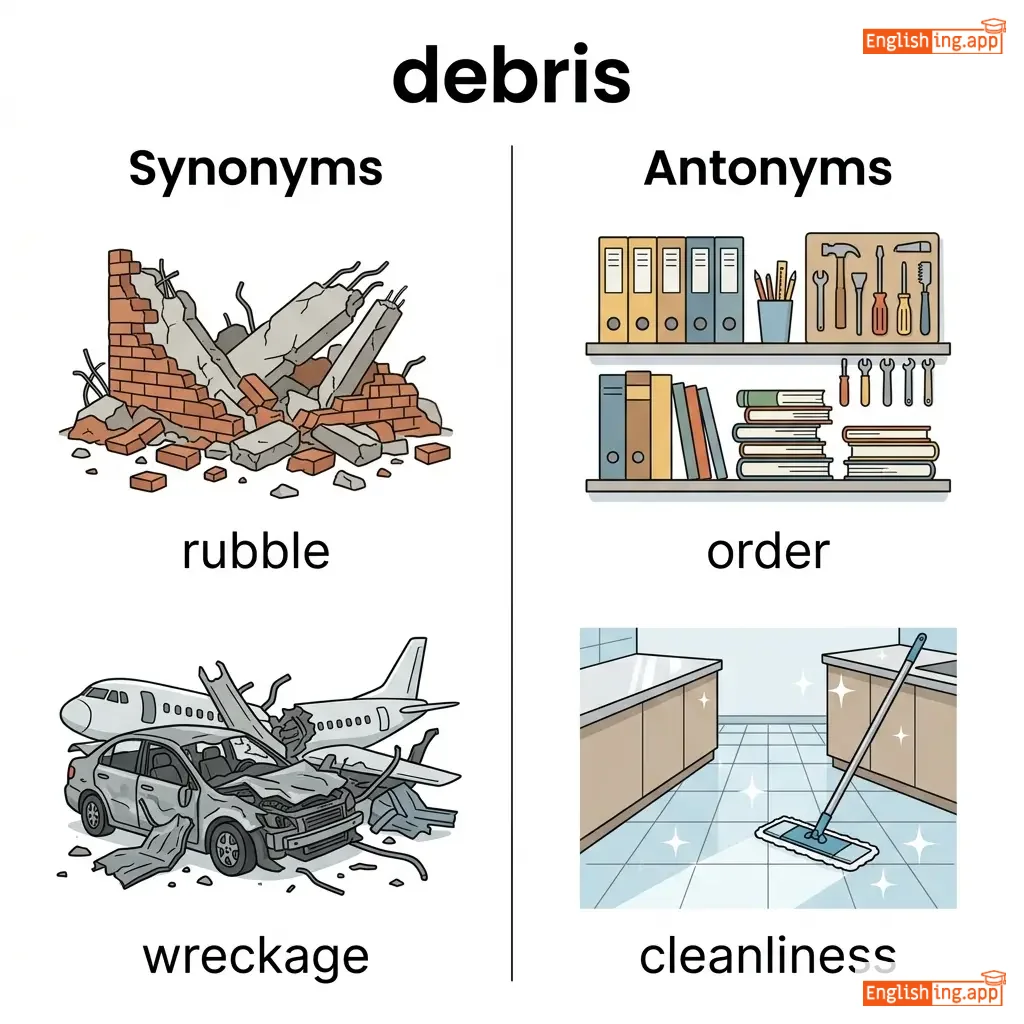
rubble, wreckage, remains, fragments, litter
••••••
|
order, cleanliness, neatness
••••••
|
debris field, scattered debris, storm debris, clear debris
••••••
|
嵐の後、デブリ(瓦礫)が通りに散乱していた。
••••••
|
|
#2147
🗡️
|
/dɪˈkæpɪteɪt/
verb
(happiness)
••••••
|
- •••••• |
幸せ
shiawase
••••••
|
decapitated
••••••
|
decapitated
••••••
|
decapitates
••••••
|
decapitating
••••••
|
To cut off the head of a person or animal.
••••••
|
The ancient executioner decapitated the criminal.
彼女は賞を受け取ったとき、幸せを隠すことができませんでした。
••••••
|
彼女は賞を受け取ったとき、幸せを隠すことができませんでした。
Kanojo wa shou o uketotta toki, shiawase o kakusu koto ga dekimasen deshita.
••••••
|
decapitate the organization
幸せの追求
••••••
|
To remove the leader or leadership from an organization
••••••
|
幸せの追求
Shiawase no tsuikyū
••••••
|
behead, execute, cut off head, sever
••••••
|
crown, appoint, empower
••••••
|
decapitate enemy, decapitate quickly, decapitate the king, decapitate leadership
••••••
|
幸せは'happiness'と関連しており、幸せを追求しています。
••••••
|
|
#2148
🍷
|
/dɪˈkænt/
verb
(ディケント)
••••••
|
- •••••• |
デキャンタ
dekyanta
••••••
|
decanted
ディケンティッド
••••••
|
decanted
ディケンティッド
••••••
|
decants
ディケンツ
••••••
|
decanting
ディケンティング
••••••
|
To pour liquid gently from one container into another, especially without disturbing the sediment.
••••••
|
She carefully decanted the wine into a clean glass.
彼女は慎重にワインをきれいなグラスにデキャンタした。
••••••
|
彼女は慎重にワインをきれいなグラスに注いだ。
Kanojo wa shinchou ni wain wo kirei na gurasu ni sosonda.
••••••
|
decant into
デキャンタイン
••••••
|
To pour liquid carefully into another container
••••••
|
別の容器に注ぐ
Betsu no youki ni sosogu
••••••
|
pour, transfer, siphon, draw off
••••••
|
spill, retain
••••••
|
decant wine, decant into glass, decant slowly
••••••
|
デキャンタ = ワインをデカンターのように注ぐ🍷
••••••
|
|
#2149
🏃♂️
|
/dɪˈkæmp/
verb
(ディキャンプ)
••••••
|
- •••••• |
逃げる
dikamp
••••••
|
decamped
ディキャンプド
••••••
|
decamped
ディキャンプド
••••••
|
decamps
ディキャンプス
••••••
|
decamping
ディキャンピング
••••••
|
To depart suddenly or secretly, often to avoid trouble or escape.
••••••
|
The thief decamped before the police arrived.
泥棒は警察が到着する前に逃げました。
••••••
|
泥棒は警察が到着する前に逃げました。
Dorobo wa keisatsu ga tōchaku suru mae ni nigemashita.
••••••
|
decamp with something
何かを持って逃げる
••••••
|
To run away quickly taking something, usually stolen
••••••
|
何かを持って逃げる
Nanika o motte nigeru
••••••
|
flee, escape, run away, abscond, depart
••••••
|
arrive, remain, stay
••••••
|
decamp overnight, decamp quickly, decamp from camp, decamp with goods
••••••
|
キャンプを出て、de-camp 🏃♂️ - 突然去ることを意味する
••••••
|
|
#2150
📏
|
/dɪˈkæmɪtər/
noun
(デカメートル)
••••••
|
- •••••• |
デカメートル
dekamētoru
••••••
|
- •••••• | - •••••• | - •••••• | - •••••• |
A metric unit of length equal to ten meters.
••••••
|
The field was measured in decameters for accuracy.
そのフィールドは正確さのためにデカメートルで測定されました。
••••••
|
そのフィールドは正確さのためにデカメートルで測定されました。
Sono fīrudo wa seikakusa no tame ni dekamētoru de sokutei saremashita.
••••••
|
- •••••• | - •••••• | - •••••• |
ten meters, metric unit, length unit
••••••
|
millimeter, centimeter
••••••
|
measure in decameters, length in decameters, decameter scale
••••••
|
Decaは10を意味し、meterは測定単位を意味します。だからデカメートル = 10メートル 📏
••••••
|
|
#2151
📖
|
/dɪˈkæmərən/
noun
(デカメロン)
••••••
|
- •••••• |
デカメロン (ボッカッチョの物語集)
dekameron
••••••
|
- •••••• | - •••••• | - •••••• | - •••••• |
A collection of 100 tales written by Giovanni Boccaccio in the 14th century, told by a group of people over ten days.
••••••
|
The Decameron is considered a masterpiece of classical Italian literature. |
デカメロンはイタリア古典文学の傑作とされています。
Dekameron wa Itaria koten bungaku no kessaku to sareteimasu.
••••••
|
- •••••• | - •••••• | - •••••• |
Boccaccio's tales, Italian classic, literary collection, story cycle
••••••
|
none, unrelated work
••••••
|
read Decameron, study Decameron, tales of Decameron, Boccaccio's Decameron
••••••
|
Decaは10を意味し、デカメロンは10日間で語られた物語集 - ボッカッチョの本 📚
••••••
|
|
#2152
📜
|
/ˈdɛkəˌlɔːɡ/
noun
••••••
|
- •••••• | - •••••• | - •••••• | - •••••• | - •••••• | - •••••• |
The Ten Commandments in the Bible; a set of fundamental rules or principles.
••••••
|
The priest gave a sermon on the importance of the Decalogue. |
- •••••• |
moral decalogue |
A set of guiding principles for ethical behavior.
••••••
|
- •••••• |
commandments, rules, principles, code
••••••
|
chaos, lawlessness
••••••
|
biblical decalogue, moral decalogue, the Decalogue
••••••
|
No •••••• |
|
#2153
💧
|
/ˈdɛkəˌliːtər/
noun
(デカリットル)
••••••
|
- •••••• |
10リットル
juu rittoru
••••••
|
- •••••• | - •••••• | - •••••• | - •••••• |
A metric unit of capacity equal to ten liters.
••••••
|
The container could hold up to one decaliter of water. |
その容器は最大で1デカリットルの水を収納できます。
Sono yōki wa saidai de 1 dekariittoru no mizu o shūnō dekimasu.
••••••
|
- •••••• | - •••••• | - •••••• |
10 liters, metric capacity unit, volume measure
••••••
|
milliliter, centiliter
••••••
|
one decaliter, measure in decaliters, volume of decaliter
••••••
|
Decaは10を意味し、リットルは容量を意味します → デカリットル = 10リットル。
••••••
|
|
#2154
⚖️
|
/ˈdɛkəˌɡræm/
noun
(デカグラム)
••••••
|
- •••••• |
デカグラム
dekaguramu
••••••
|
- •••••• | - •••••• | - •••••• | - •••••• |
A metric unit of mass equal to ten grams.
••••••
|
The package weighed exactly one decagram.
そのパッケージはちょうど1デカグラムの重さでした。
••••••
|
そのパッケージはちょうど1デカグラムの重さでした。
Sono pakkēji wa chōdo 1 dekaguramu no omosa deshita.
••••••
|
- •••••• | - •••••• | - •••••• |
10 grams, metric weight unit, weight measure
••••••
|
milligram, kilogram
••••••
|
one decagram, weight in decagrams, measure in decagrams
••••••
|
Decaは10を意味する + グラムはグラムを意味する → デカグラム = 10グラム。
••••••
|
|
#2155
🔺
|
/ˈdɛkəˌɡɒn/
noun
(デカゴン)
••••••
|
- •••••• |
十角形
jūkakkei
••••••
|
- •••••• | - •••••• | - •••••• | - •••••• |
A polygon with ten sides and ten angles.
••••••
|
The geometry teacher drew a perfect decagon on the board. |
数学の先生は黒板に完璧な十角形を描きました。
Sūgaku no sensei wa kokuban ni kanpeki na jūkakkei o kakimashita.
••••••
|
- •••••• | - •••••• | - •••••• |
ten-sided figure, polygon, shape
••••••
|
circle, line
••••••
|
regular decagon, geometric decagon, decagon shape
••••••
|
Decaは十を意味し、gonは角を意味します → 十個の角を持つ多角形。
••••••
|
|
#2156
🍫
|
/ˈdɛkədənt/
adjective
(デカダント)
••••••
|
- •••••• |
堕落的, 贅沢な
darokuteki, zaitaku na
••••••
|
- •••••• | - •••••• | - •••••• | - •••••• |
Characterized by or reflecting a state of moral or cultural decline; excessively self-indulgent.
••••••
|
The party was filled with decadent luxury and excess. |
パーティーは堕落的な贅沢と過剰で満たされていました。
Pātī wa darokuteki na zaitaku to kajō de mitasarete imashita.
••••••
|
decadent lifestyle |
A way of living marked by overindulgence in pleasure and luxury.
••••••
|
堕落的なライフスタイル
darokuteki na raifusutairu
••••••
|
luxurious, self-indulgent, excessive, lavish, opulent
••••••
|
austere, simple, modest
••••••
|
decadent lifestyle, decadent society, decadent culture, decadent luxury
••••••
|
装飾(deco) + 歯(dent) → 過剰な装飾=堕落的な生活。
••••••
|
|
#2157
🍷
|
/ˈdek.ə.dəns/
noun
(デカダンス)
••••••
|
- •••••• |
堕落
daraku
••••••
|
- •••••• | - •••••• | - •••••• | - •••••• |
Moral or cultural decline characterized by excessive indulgence in pleasure or luxury.
••••••
|
The novel describes the decadence of the wealthy elite. |
その小説は裕福なエリートの堕落を描いています。
sono shousetsu wa yuufuku na erīto no daraku wo egaiteimasu.
••••••
|
age of decadence |
A period marked by moral or cultural decline.
••••••
|
堕落の時代
daraku no jidai
••••••
|
corruption, decline, decay, dissipation, excess
••••••
|
morality, virtue, growth
••••••
|
moral decadence, cultural decadence, age of decadence
••••••
|
堕落 = Decline + Dance – 衰退する中で踊る。
••••••
|
|
#2158
👗
|
/ˈdeb.juː.tɑːnt/
noun
(デビュータント)
••••••
|
- •••••• |
社会で初めて公式に登場する若い女性
shakai de hajimete kōshiki ni tōjō suru wakai josei
••••••
|
- •••••• | - •••••• | - •••••• | - •••••• |
A young woman making her first formal appearance in society.
••••••
|
The debutante wore a white gown at the ball.
デビュータントは舞踏会で白いドレスを着ていました。
••••••
|
デビュータントは舞踏会で白いドレスを着ていました。
Debyūtanto wa butōkai de shiroi doresu o kite imashita.
••••••
|
- •••••• | - •••••• | - •••••• |
young lady, society girl, novice, newcomer
••••••
|
experienced woman, elder
••••••
|
debutante ball, debutante dress, young debutante
••••••
|
デビュータント = Debut + Ant – 社会で初めて登場する女性。
••••••
|
|
#2159
🎤
|
/ˈdeɪ.bjuː/
noun, verb
(デビュー)
••••••
|
- •••••• |
デビュー
debyu
••••••
|
debuted
デビューした
••••••
|
debuted
デビューした
••••••
|
debuts
デビューする
••••••
|
debuting
デビューしている
••••••
|
The first public appearance or performance of someone or something.
••••••
|
The young actor made his debut on the big stage.
若い俳優は大きな舞台でデビューを果たした。
••••••
|
若い俳優は大きな舞台でデビューを果たした。
Wakai haiyū wa ōkina butai de debyu o hatashita.
••••••
|
make a debut
デビューする
••••••
|
To appear or perform publicly for the first time.
••••••
|
デビューする
debyu suru
••••••
|
first appearance, introduction, premiere, launch, entrance
••••••
|
retirement, farewell, exit
••••••
|
make debut, debut performance, debut album, debut match
••••••
|
Debut = ‘De + But’ – 初めての舞台でデビュー。
••••••
|
|
#2160
🔍
|
/diːˈbʌŋk/
verb
••••••
|
|
- •••••• |
debunked
••••••
|
debunked
••••••
|
debunks
••••••
|
debunking
••••••
|
To expose the falseness or exaggeration of a claim, myth, or belief.
••••••
|
The scientist worked to debunk the myths about vaccines. |
- •••••• |
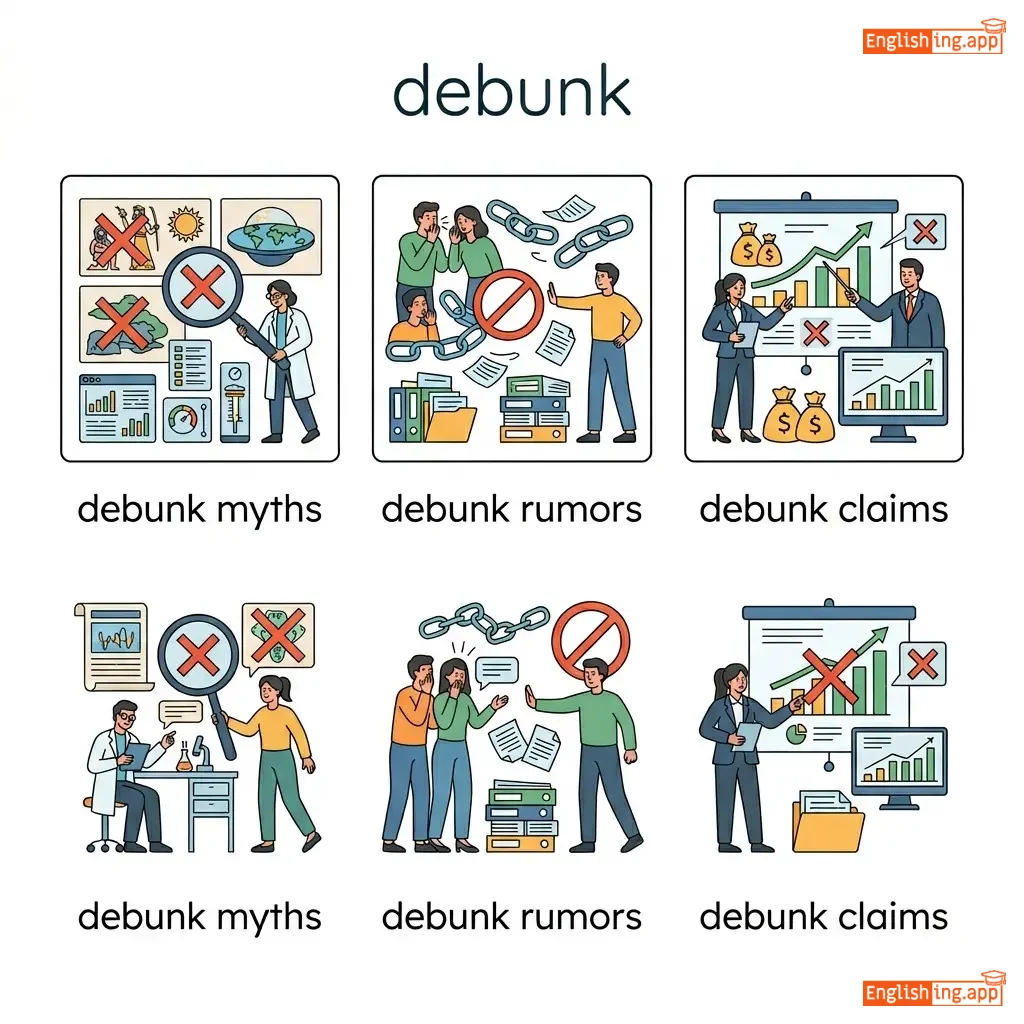
debunk a myth |
Prove a widely believed but false idea wrong.
••••••
|
- •••••• |
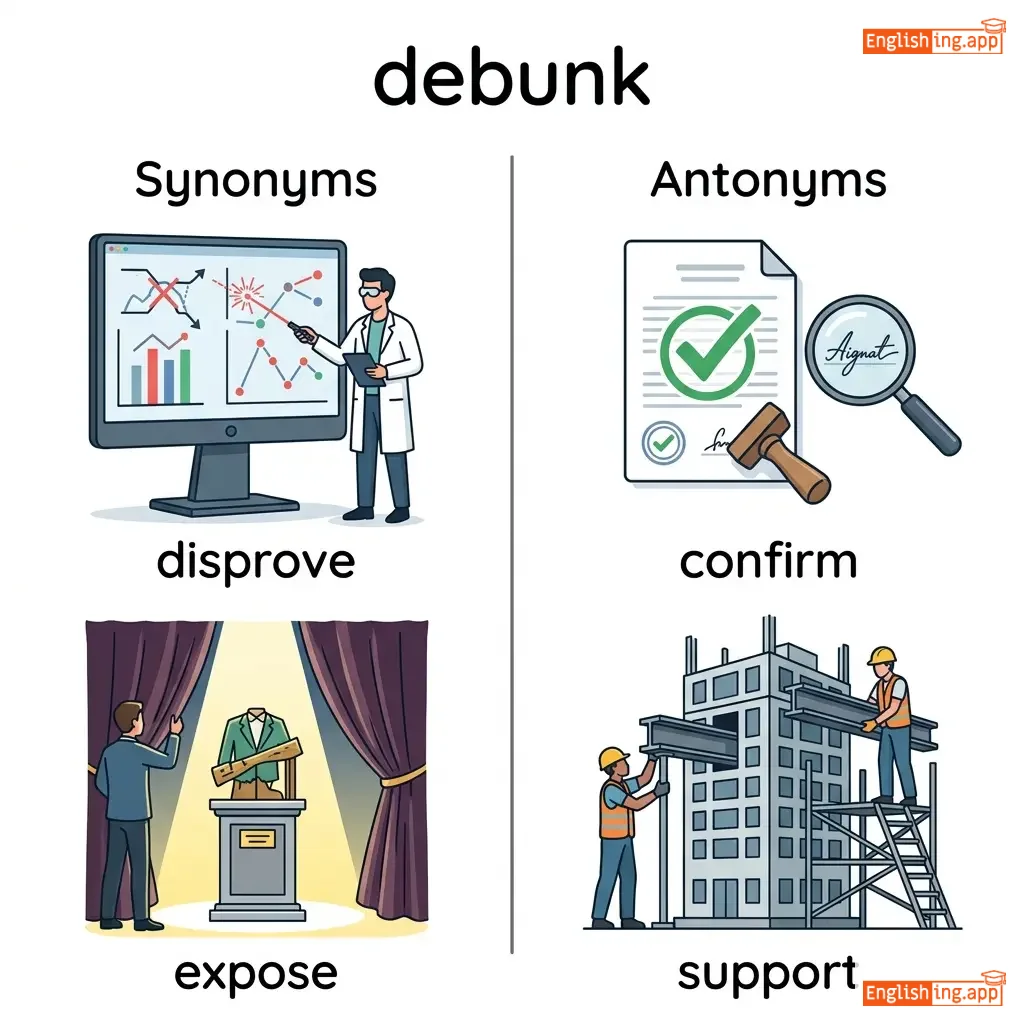
disprove, expose, refute, invalidate, contradict
••••••
|
confirm, support, prove
••••••
|
debunk myths, debunk rumors, debunk claims, debunk theory
••••••
|
No •••••• |
Vocabulary Quiz
Test your vocabulary by matching words with their translations or meanings.
Login to take the quiz
Comments (0)
Share your thoughts and join the discussion.
Join the discussion by logging in
Login to CommentNo comments yet
Be the first to share your thoughts!