

翻訳
過去
過去分詞
三人称単数
動名詞
意味
例文
例文の翻訳
同義語
対義語
コロケーション
ニーモニック

Swipe left or right, or use the buttons. Tap image to zoom.
例文の翻訳
単語
Lesson 232Lesson 232 - マスクトグル
|
絵文字
|
単語 | Images | 翻訳 | 過去 | 過去分詞 | 三人称単数 | 動名詞 | 意味 | 例文 | 例文の翻訳 | 表現例 | 表現例の意味 | 表現例の翻訳 | 同義語 | 対義語 | コロケーション | ニーモニック |
|---|---|---|---|---|---|---|---|---|---|---|---|---|---|---|---|---|---|
|
#6930
🎓
|
/ˈprɪnsəpəl/
noun, adjective
(プリンシパル)
••••••
|
- •••••• |
校長
kouchou
••••••
|
- •••••• | - •••••• | - •••••• | - •••••• |
the person with the highest authority or most important position; main or most important
••••••
|
The school principal addressed the students in the auditorium. |
学校の校長が講堂で生徒たちに挨拶しました。
Gakkou no kouchou ga koudou de seitotachi ni aisatsu shimashita.
••••••
|
principal and interest |
the original amount of money invested or loaned and the charge for borrowing it
••••••
|
元金と利息
genkin to risoku
••••••
|
head, leader, chief, primary, main
••••••
|
subordinate, minor, secondary
••••••
|
school principal, principal amount, principal role, principal office
••••••
|
Principalは学校の校長、最も重要な人物。
••••••
|
|
#6931
🔍
|
/proʊb/
verb, noun
(プローブ)
••••••
|
|
調査する
chōsa suru
••••••
|
probed
プローブド
••••••
|
probed
プローブド
••••••
|
probes
プローブス
••••••
|
probing
プロービング
••••••
|
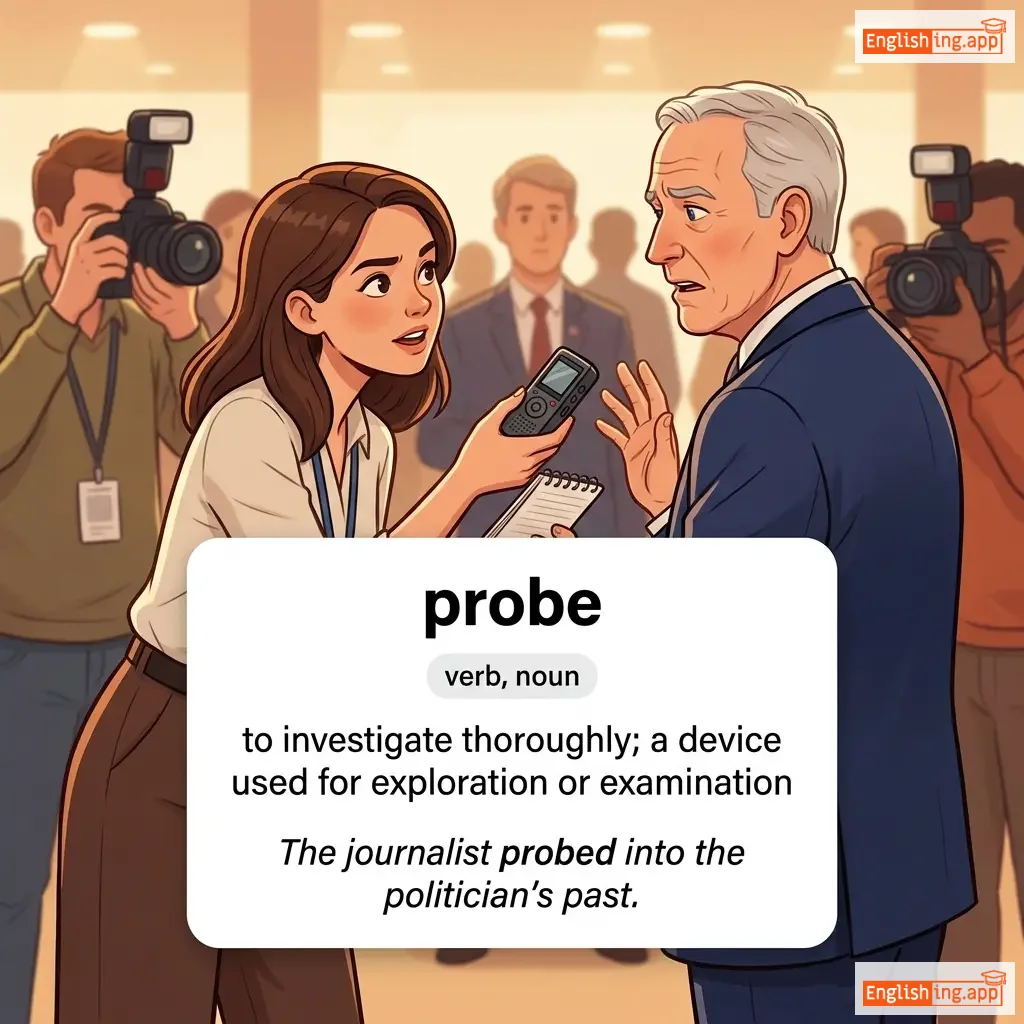
to investigate thoroughly; a device used for exploration or examination
••••••
|
The journalist probed into the politician’s past.
ジャーナリストは政治家の過去を調査しました。
••••••
|
ジャーナリストは政治家の過去を調査しました。
Jānarisuto wa seijika no kako o chōsa shimashita.
••••••
|
probe deeper
さらに深く調べる
••••••
|
to investigate more thoroughly
••••••
|
さらに深く調べる
Sara ni fukaku shiraberu
••••••
|
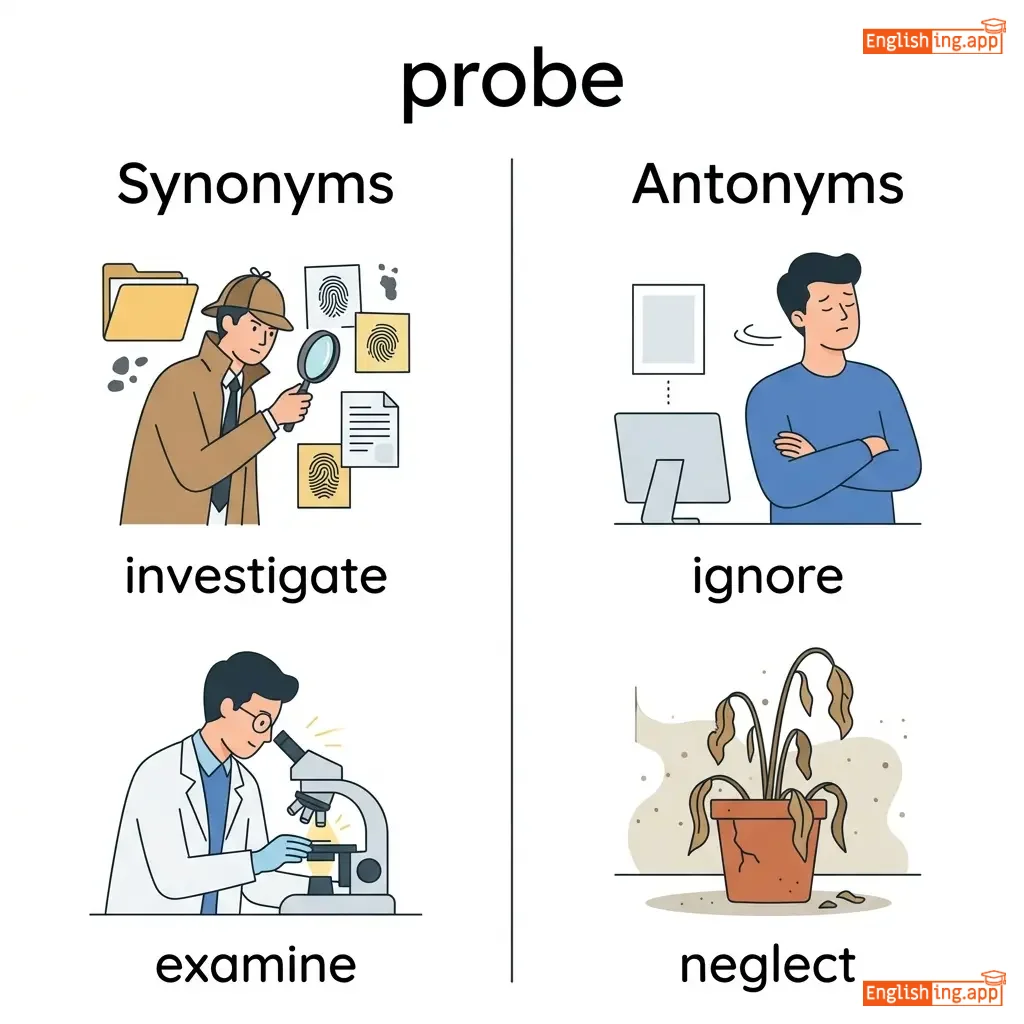
investigate, examine, explore, scrutinize, research
••••••
|
ignore, neglect, overlook
••••••
|
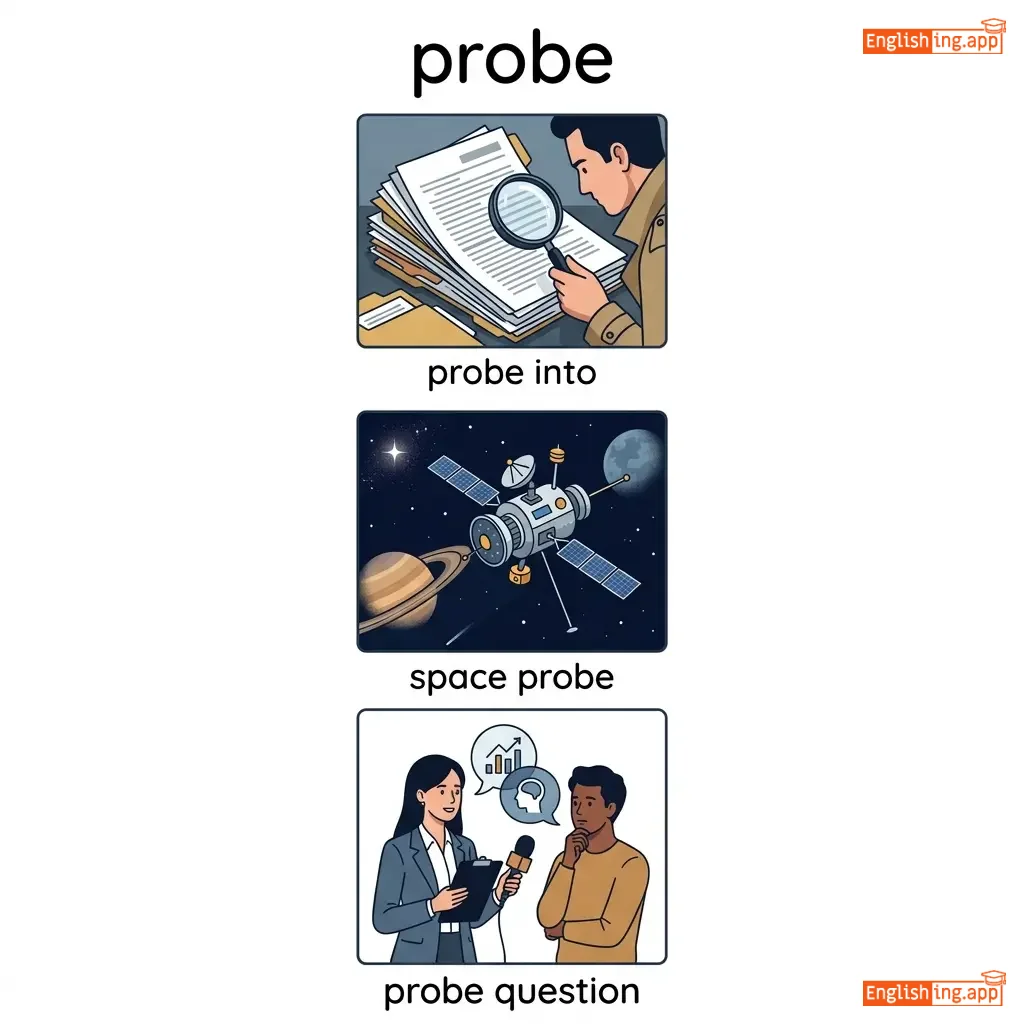
probe into, space probe, probe question, probe deeper
••••••
|
Probe は問題を深く調査すること — まるで深い調査を行うようなものです。
••••••
|
|
#6932
📝
|
/proʊˈbeɪʃən/
noun
(プロベーション)
••••••
|
- •••••• |
試用期間
shiyou kikan
••••••
|
- •••••• | - •••••• | - •••••• | - •••••• |
a period of testing or supervision, especially for offenders or new employees
••••••
|
He was placed on probation for six months. |
彼は6か月の試用期間を与えられました。
Kare wa roku kagetsu no shiyou kikan o ataeraremashita.
••••••
|
on probation |
under supervision or trial period
••••••
|
試用期間中
shiyou kikan-chuu
••••••
|
trial, testing, supervision, evaluation, observation
••••••
|
freedom, release, permanence
••••••
|
on probation, probation period, probation officer, probation terms
••••••
|
Probationは仕事の試用期間を意味します—試用期間
••••••
|
|
#6933
⚖️
|
/ˈproʊbeɪt/
noun
(プロベート)
••••••
|
- •••••• |
遺言検認
yuigon kenshin
••••••
|
- •••••• | - •••••• | - •••••• | - •••••• |
the official proving of a will in a court of law
••••••
|
The family had to go through probate after his death.
家族は彼の死後、プロベートの手続きを経なければならなかった。
••••••
|
家族は彼の死後、遺言検認の手続きを経なければならなかった。
Kazoku wa kare no shigo, yuigon kenshin no tetsuzuki o he-nakereba naranakatta.
••••••
|
- •••••• | - •••••• | - •••••• |
validation, certification, approval, legal process
••••••
|
dispute, contest, rejection
••••••
|
probate court, probate process, probate law, probate judge
••••••
|
Probate は PROve 遺言を法廷で確認する — 遺言検認
••••••
|
|
#6934
🏆
|
/praɪz/
noun, verb
(praizu)
••••••
|
- •••••• |
賞
shou
••••••
|
prized
praizudo
••••••
|
prized
praizudo
••••••
|
prizes
praizesu
••••••
|
prizing
praijingu
••••••
|
something given as a reward for achievement; to value highly
••••••
|
He won the first prize in the competition.
彼はコンペティションで一等賞を受賞した。
••••••
|
彼はコンペティションで一等賞を受賞した。
Kare wa konpetishon de ittou shou wo jushou shita.
••••••
|
prize possession
貴重な財産
••••••
|
something cherished greatly
••••••
|
非常に価値のある所有物
hijou ni kachi no aru shoyuu mono
••••••
|
award, reward, trophy, treasure, honor
••••••
|
loss, forfeit, neglect
••••••
|
first prize, grand prize, prize money, prize possession
••••••
|
賞(Prize) — 賞をもらうと、賞の所有権を持つ。
••••••
|
|
#6935
🤫
|
/ˈprɪvi/
adjective
(privi)
••••••
|
- •••••• |
秘密の知識
himitsu no chishiki
••••••
|
- •••••• | - •••••• | - •••••• | - •••••• |
having access to secret or private knowledge
••••••
|
She was privy to the confidential discussions.
彼女は機密の議論に通じていました。
••••••
|
彼女は機密の議論に通じていました。
Kanojo wa kimitsu no giron ni tsūjite imashita.
••••••
|
privy council
秘密顧問
••••••
|
a body of advisors to a sovereign or ruler
••••••
|
秘密評議会
himitsu hyōgikai
••••••
|
aware, informed, acquainted, conscious, inside
••••••
|
ignorant, unaware, oblivious
••••••
|
privy to information, privy council, privy chamber, privy knowledge
••••••
|
Privyは秘密の情報を知っていることを意味する — Privyは秘密の知識
••••••
|
|
#6936
📜
|
/ˈprɪvɪti/
noun
(priviti)
••••••
|
- •••••• |
プライバシー関係、契約関係
puraibashī kankei, keiyaku kankei
••••••
|
- •••••• | - •••••• | - •••••• | - •••••• |
A close, private, or special relationship; in law, the direct connection between parties to a contract.
••••••
|
There was no privity of contract between the supplier and the customer. |
供給者と顧客の間には契約関係がなかった。
kyōkyūsha to kokyaku no aida ni wa keiyaku kankei ga nakatta.
••••••
|
privity of contract |
The relationship that exists between the parties to a contract, allowing them to sue each other but preventing a third party from doing so.
••••••
|
契約関係
keiyaku kankei
••••••
|
connection, relationship, association, link
••••••
|
detachment, separation, distance
••••••
|
privity of contract, in privity with, privity relationship
••••••
|
Privity とは契約関係のこと—法的な私的関係。
••••••
|
|
#6937
🎖️
|
/ˈprɪvəlɪdʒ/
noun
(privilege)
••••••
|
- •••••• |
特権, 利点
tokken, riten
••••••
|
- •••••• | - •••••• | - •••••• | - •••••• |
A special right, advantage, or immunity granted or available only to a particular person or group.
••••••
|
Education is considered a privilege in many developing countries. |
多くの発展途上国では、教育は特権と見なされています。
Ooku no hatten tojoukoku de wa, kyouiku wa tokken to minasareteimasu.
••••••
|
white privilege |
Societal advantages that benefit white people beyond what is commonly experienced by non-white people under the same circumstances.
••••••
|
白人特権
hakujin tokken
••••••
|
advantage, benefit, right, entitlement, honor
••••••
|
disadvantage, restriction, burden
••••••
|
enjoy privilege, special privilege, privilege of, privilege to
••••••
|
Privilege は特別な権利で、少数の人々にしか与えられません。
••••••
|
|
#6938
🥀
|
/praɪˈveɪʃən/
noun
(プライベーション)
••••••
|
- •••••• |
欠乏, 貧困
ketsubou, hinkon
••••••
|
- •••••• | - •••••• | - •••••• | - •••••• |
A state in which things essential for human well-being such as food and warmth are lacking.
••••••
|
The refugees suffered great privation during the harsh winter. |
難民たちは厳しい冬の間に大きな欠乏に苦しみました。
Nanmin-tachi wa kibishii fuyu no aida ni ookina ketsubou ni kurushimimashita.
••••••
|
- •••••• | - •••••• | - •••••• |
hardship, deprivation, poverty, destitution
••••••
|
luxury, abundance, wealth
••••••
|
suffer privation, endure privation, extreme privation
••••••
|
Privationは deprivationと似ている—欠乏の状態。
••••••
|
|
#6939
⛵
|
/ˌpraɪvəˈtɪə/
noun
(プライベティア)
••••••
|
- •••••• |
私掠船
shiryaku-sen
••••••
|
- •••••• | - •••••• | - •••••• | - •••••• |
A privately owned armed ship authorized by a government to attack enemy ships during war.
••••••
|
The privateer captured several enemy vessels during the conflict. |
プライベティアは紛争中にいくつかの敵船を捕らえました。
Puraibetiya wa funsō-chū ni ikutsuka no teki-sen o toraemashita.
••••••
|
- •••••• | - •••••• | - •••••• |
corsair, buccaneer, pirate, raider
••••••
|
naval officer, defender
••••••
|
privateer ship, licensed privateer, privateer captain
••••••
|
Private + ear = 'Private' 戦艦、敵を 'ear' で捉えて攻撃する。
••••••
|
|
#6940
🌿
|
/ˈprɪstiːn/
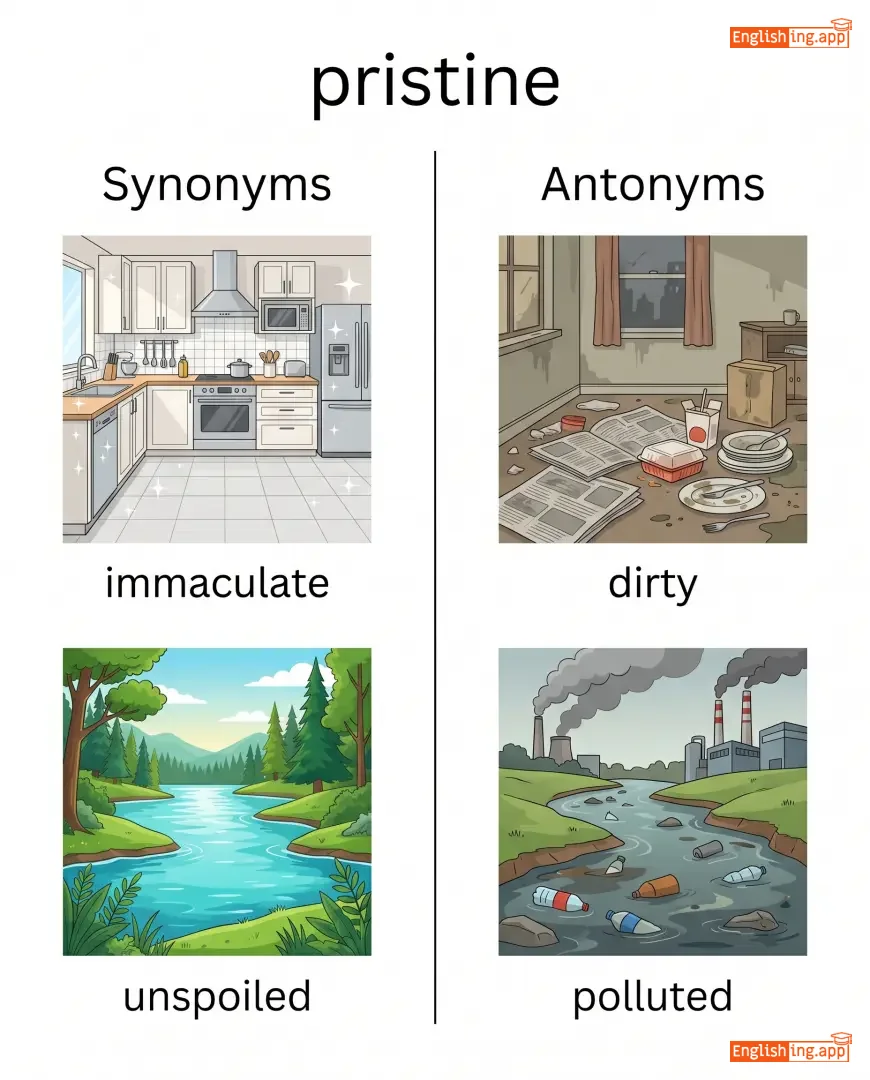
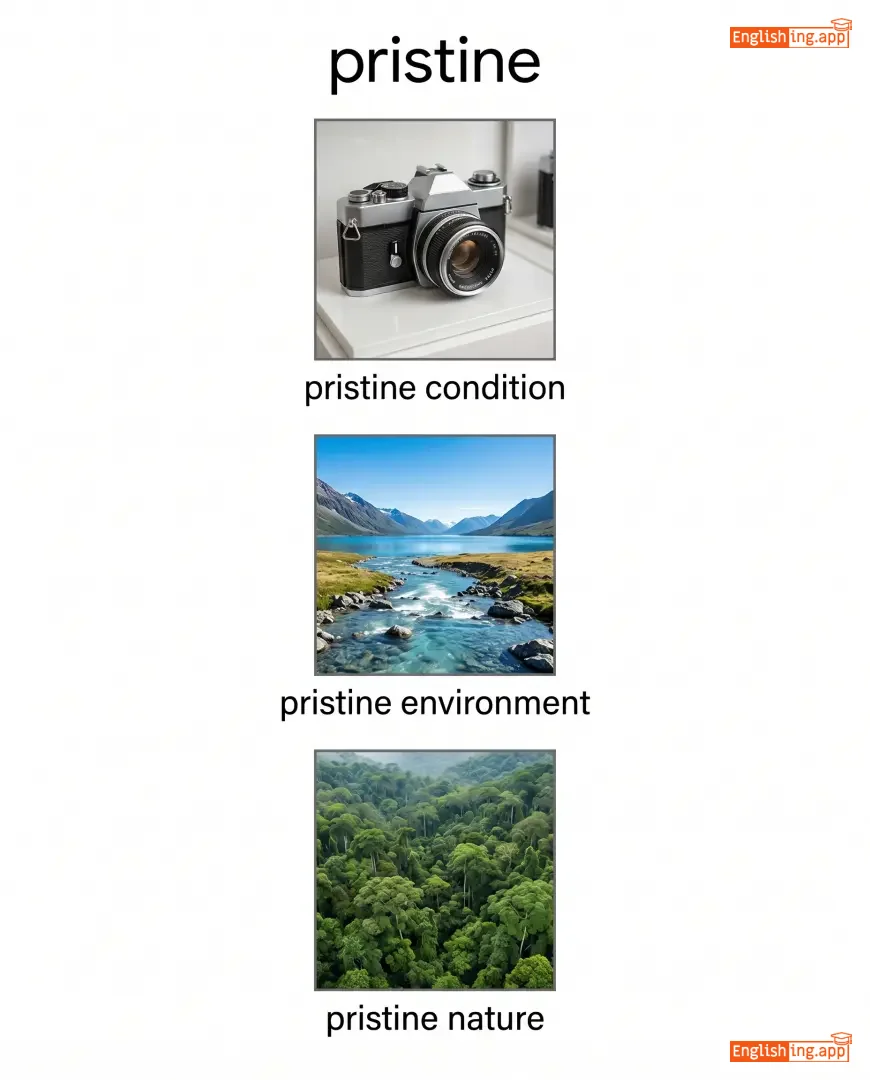
adjective
••••••
|
|
- •••••• | - •••••• | - •••••• | - •••••• | - •••••• |
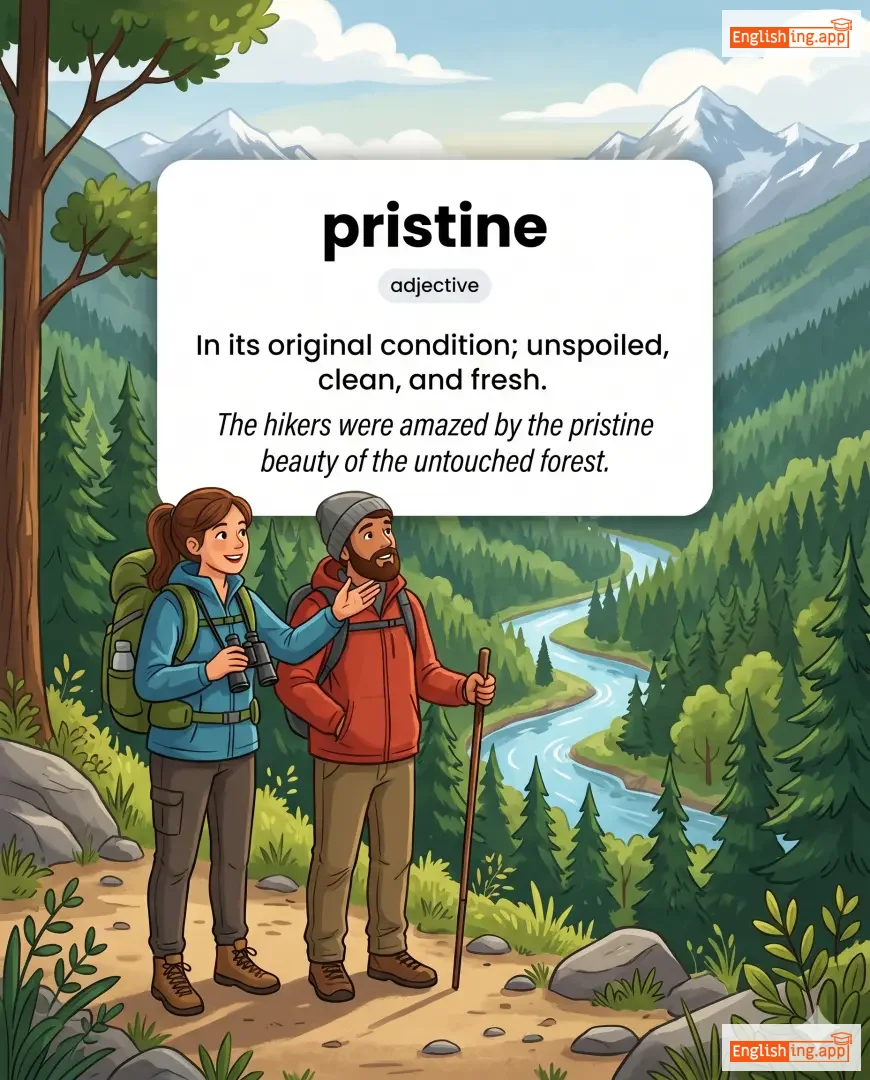
In its original condition; unspoiled, clean, and fresh.
••••••
|
The hikers were amazed by the pristine beauty of the untouched forest. |
- •••••• |
pristine condition |
Something that is perfectly clean, undamaged, or in its original state.
••••••
|
- •••••• |
immaculate, unspoiled, untouched, pure, fresh
••••••
|
dirty, polluted, spoiled
••••••
|
pristine condition, pristine environment, pristine nature, pristine forest
••••••
|
No •••••• |
|
#6941
⛪
|
/ˈpraɪəri/
noun
(プライオリ)
••••••
|
- •••••• |
修道院
shūdōin
••••••
|
- •••••• | - •••••• | - •••••• | - •••••• |
a small monastery or convent governed by a prior or prioress
••••••
|
The old priory was converted into a museum. |
古い修道院は博物館に改装されました。
Furui shūdōin wa hakubutsukan ni kaisō saremashita.
••••••
|
- •••••• | - •••••• | - •••••• |
abbey, monastery, convent, cloister
••••••
|
secular building, marketplace
••••••
|
old priory, medieval priory, ancient priory, ruined priory
••••••
|
修道院は修道士または修道女が運営する場所
••••••
|
|
#6942
⚖️
|
/ˈprɪnsəpəld/
adjective
(プリンシパルド)
••••••
|
- •••••• |
原則を守る
gensoku wo mamoru
••••••
|
- •••••• | - •••••• | - •••••• | - •••••• |
acting in accordance with moral or ethical standards
••••••
|
He is a principled leader who always puts honesty first. |
彼は原則を守るリーダーで、いつも正直を最優先にします。
Kare wa gensoku wo mamoru rīdā de, itsumo shōjiki wo saiyūsen ni shimasu.
••••••
|
- •••••• | - •••••• | - •••••• |
ethical, moral, righteous, upright, honorable
••••••
|
corrupt, dishonest, immoral
••••••
|
principled stand, principled leader, highly principled, principled decision
••••••
|
原則を守る—原則に従う人。
••••••
|
|
#6943
📜
|
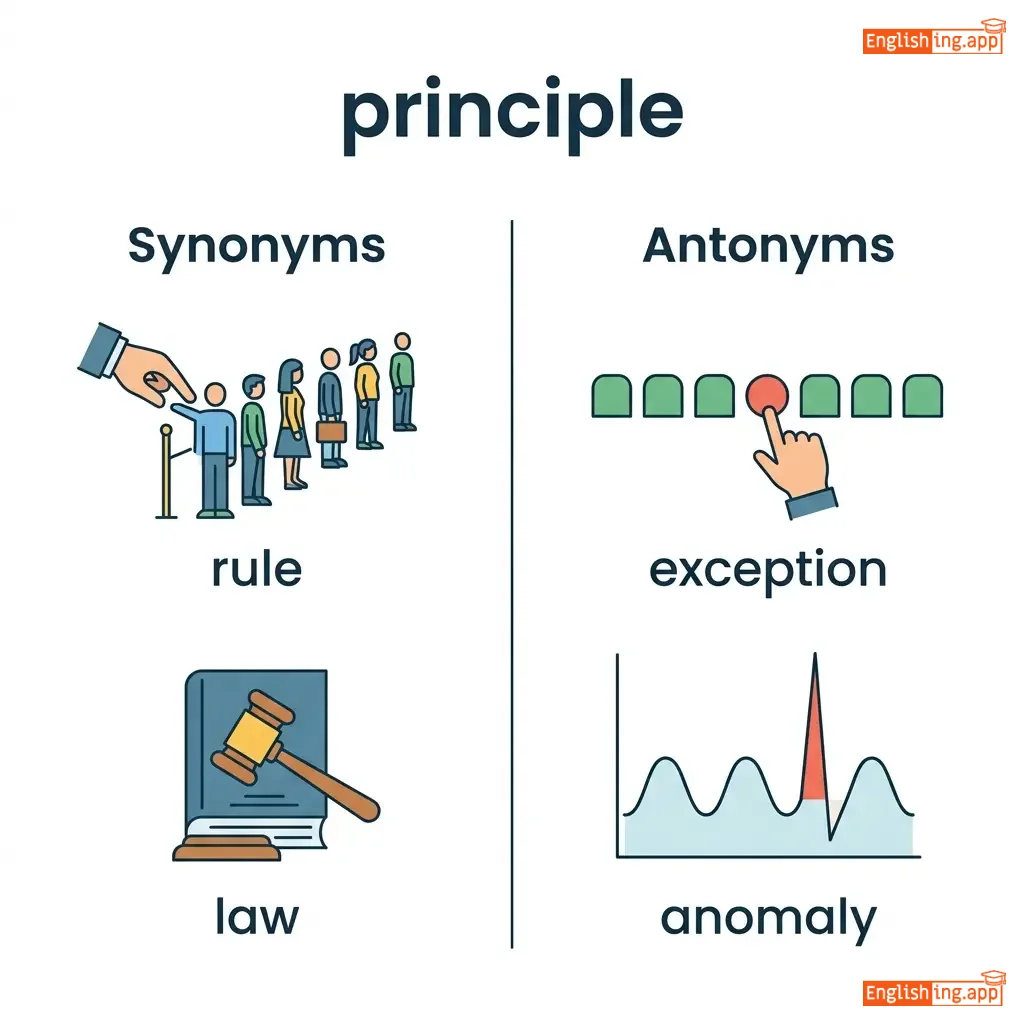
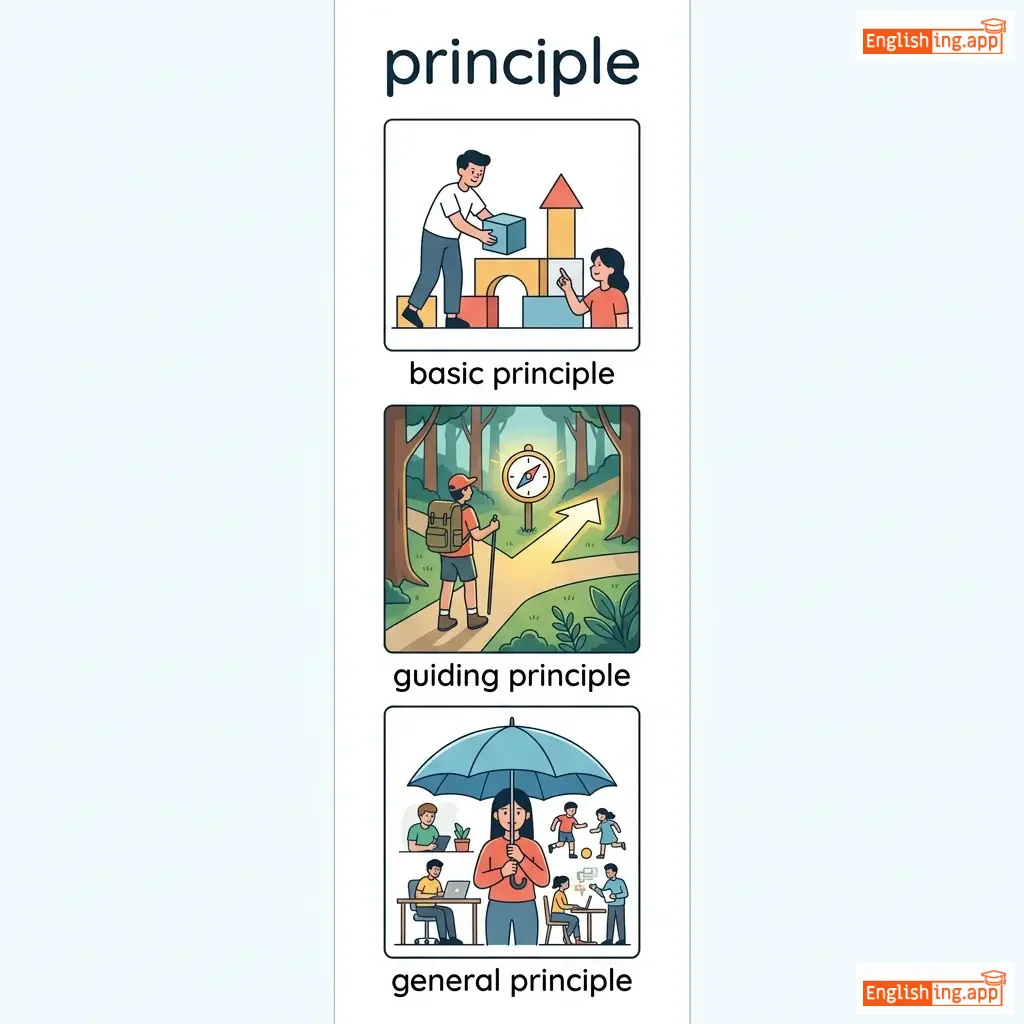
/ˈprɪnsəpəl/
noun
(purinsiparu)
••••••
|
|
原則
gensoku
••••••
|
- •••••• | - •••••• | - •••••• | - •••••• |
a fundamental truth, law, or rule that serves as the foundation for a system of belief or behavior
••••••
|
She refused to lie because it was against her principles. |
彼女は嘘をつくことを拒否しました、それは彼女の原則に反していたからです。
Kanojo wa uso o tsuku koto o kyohi shimashita, sore wa kanojo no gensoku ni hanshite ita kara desu.
••••••
|
in principle |
as a general idea or rule, even if not applied in practice
••••••
|
原則的に
gensokuteki ni
••••••
|
rule, law, tenet, belief, doctrine
••••••
|
exception, anomaly
••••••
|
basic principle, guiding principle, general principle, moral principle
••••••
|
原則は基本的なルール—'学校の規律の原則'は学校の秩序を守るルールです
••••••
|
|
#6944
👑
|
/ˌprɪnsɪˈpæləti/
noun
(プリンシパリティ)
••••••
|
- •••••• |
公国
koukoku
••••••
|
- •••••• | - •••••• | - •••••• | - •••••• |
a state ruled by a prince
••••••
|
Monaco is a famous principality in Europe. |
モナコはヨーロッパで有名な公国です。
Monako wa Yooroppa de yuumei na koukoku desu.
••••••
|
- •••••• | - •••••• | - •••••• |
duchy, territory, dominion, state, realm
••••••
|
republic, democracy
••••••
|
small principality, medieval principality, powerful principality
••••••
|
公国は王子の支配する国
••••••
|
|
#6945
🌵
|
/ˈprɪkəl/
verb
••••••
|
- •••••• | - •••••• |
prickled
••••••
|
prickled
••••••
|
prickles
••••••
|
prickling
••••••
|
to cause a slight stinging or tingling sensation on the skin
••••••
|
Her skin began to prickle in the cold wind. |
- •••••• |
make someone's skin prickle |
to give someone a shiver of fear, excitement, or unease
••••••
|
- •••••• |
tingle, sting, itch, irritate, smart
••••••
|
soothe, calm
••••••
|
skin prickle, prickle with fear, prickle with excitement, prickle of heat
••••••
|
No •••••• |
|
#6946
💄
|
/prɪmp/
verb
(ハピネス)
••••••
|
- •••••• |
幸せ
shiawase
••••••
|
primped
••••••
|
primped
••••••
|
primps
••••••
|
primping
••••••
|
To spend time making minor adjustments to one's appearance.
••••••
|
She primped in front of the mirror before the party.
彼女は賞を受け取ったとき、自分の幸せを隠すことができませんでした。
••••••
|
彼女は賞を受け取ったとき、自分の幸せを隠すことができませんでした。
Kanojo wa shō o uketotta toki, jibun no shiawase o kakusu koto ga dekimasen deshita.
••••••
|
- •••••• | - •••••• | - •••••• |
preen, groom, adorn, beautify, tidy
••••••
|
neglect, ignore, dishevel
••••••
|
primp before, primp for, primp in front of mirror
••••••
|
Shiawase = Shi (喜) + A (すばらしい), 幸せな瞬間のように感じる。
••••••
|
|
#6947
🌌
|
/praɪˈmɔːrdiəl/
adjective
(プライモーディアル)
••••••
|
- •••••• |
原始的な
genshiteki na
••••••
|
- •••••• | - •••••• | - •••••• | - •••••• |
Existing at or from the beginning of time; fundamental and original.
••••••
|
Scientists study the primordial soup from which life emerged. |
科学者たちは生命が出現した原始的なスープを研究しています。
Kagakusha-tachi wa seimei ga shutsugen shita genshiteki na suupu o kenkyū shiteimasu.
••••••
|
primordial soup |
The hypothetical mixture of organic molecules from which life originated.
••••••
|
原始的なスープ
genshiteki na suupu
••••••
|
ancient, original, primal, early, fundamental
••••••
|
modern, recent, secondary
••••••
|
primordial soup, primordial chaos, primordial matter, primordial universe
••••••
|
原始的なとは始まりから — まるで原始的なスープから生命が誕生したようなものです。
••••••
|
|
#6948
👑
|
/ˌpraɪmoʊˈdʒɛnɪtʃər/
noun
(プライモジェニチュア)
••••••
|
- •••••• |
長子継承権
choushi keishouken
••••••
|
- •••••• | - •••••• | - •••••• | - •••••• |
The right of the firstborn child to inherit the family estate or title.
••••••
|
Under primogeniture, the eldest son inherited the entire estate. |
長子継承権の下、長男は家族全体の財産を相続しました。
Choushi keishouken no moto, chounan wa kazoku zentai no zaisan o souzoku shimashita.
••••••
|
- •••••• | - •••••• | - •••••• |
inheritance law, succession, heirship, birthright
••••••
|
equal inheritance, partible inheritance
••••••
|
law of primogeniture, system of primogeniture, primogeniture rights
••••••
|
長子(choushi)は最初に生まれる者、継承権(keishouken)はその者の権利。
••••••
|
|
#6949
🪵
|
/ˈprɪmətɪv/
adjective
(プリミティブ)
••••••
|
- •••••• |
原始的な
genshitakana
••••••
|
- •••••• | - •••••• | - •••••• | - •••••• |
Relating to an early stage of development; simple and basic.
••••••
|
The tribe lived in primitive huts made of mud and straw. |
部族は泥と藁で作られた原始的な小屋に住んでいました。
Buzoku wa doro to wara de tsukurareta genshitakana koya ni sunde imashita.
••••••
|
primitive instincts |
Basic natural urges or behaviors present from early human existence.
••••••
|
原始的本能
genshitakana honnō
••••••
|
basic, crude, simple, undeveloped, early
••••••
|
advanced, modern, developed
••••••
|
primitive society, primitive technology, primitive life, primitive culture
••••••
|
プリミティブは、最初の時代のもの—だから原始的なものはシンプルだ!
••••••
|
|
#6950
🌲
|
/praɪˈmiːvəl/
adjective
(プライミーバル)
••••••
|
- •••••• |
原始的
genshiteki
••••••
|
- •••••• | - •••••• | - •••••• | - •••••• |
Relating to the earliest ages in history; ancient and primitive.
••••••
|
The explorers ventured into the primeval forest untouched by humans. |
探検者たちは、人間によって手つかずの原始的な森に踏み込んだ。
Tanken-sha-tachi wa, ningen ni yotte tetsukazu no genshiteki na mori ni fumikonda.
••••••
|
- •••••• | - •••••• | - •••••• |
ancient, prehistoric, primal, primordial, archaic
••••••
|
modern, contemporary, recent
••••••
|
primeval forest, primeval world, primeval times, primeval landscape
••••••
|
Primeval = 原始的, 時代の始まりを感じる。
••••••
|
|
#6951
📘
|
/ˈpraɪ.mər/ (US), /ˈprɪm.ər/ (UK)
noun
(プライマー)
••••••
|
- •••••• |
入門書, 下塗り
nyuumonsho, shitamuri
••••••
|
- •••••• | - •••••• | - •••••• | - •••••• |
A basic introductory book or a substance used to prepare a surface for painting.
••••••
|
He read a primer on programming before starting his course.
彼はコースを始める前にプログラミングの入門書を読みました。
••••••
|
彼はコースを始める前にプログラミングの入門書を読みました。
Kare wa ko-su wo hajimeru mae ni puroguramingu no nyuumonsho wo yomimashita.
••••••
|
- •••••• | - •••••• | - •••••• |
introduction, guide, handbook, textbook
••••••
|
advanced book, complex manual
••••••
|
primer coat, reading primer, primer lesson
••••••
|
Primerは入門書です — 'prime'という言葉が始まりを意味し、primerはスタートのための書籍です。
••••••
|
|
#6952
⭐
|
/praɪm/
adjective
(プライム)
••••••
|
- •••••• |
最優先, 重要な
saiyūsen, jūyōna
••••••
|
- •••••• | - •••••• | - •••••• | - •••••• |
Of the best quality; most important; peak condition.
••••••
|
She is in the prime of her career.
彼女はキャリアの絶頂にいます。
••••••
|
彼女はキャリアの最良の時期にいます。
Kanojo wa kyaria no sairyō no jiki ni imasu.
••••••
|
prime time
プライムタイム
••••••
|
the most popular time for television or activity
••••••
|
プライムタイム
Puraimu taimu
••••••
|
best, peak, top, leading, foremost
••••••
|
inferior, worst, minor
••••••
|
prime time, prime number, prime example, prime minister
••••••
|
Prime は最優先を意味する — Prime Minister は重要な大臣、Prime Time は最優先の時間。
••••••
|
|
#6953
🐒
|
/ˈpraɪ.meɪt/
noun
(pra-i-met)
••••••
|
- •••••• |
霊長類, 類人猿
reichōrui, ruijinen
••••••
|
- •••••• | - •••••• | - •••••• | - •••••• |
A member of the group of animals including humans, apes, and monkeys.
••••••
|
Humans are classified as primates.
人間は霊長類として分類されます。
••••••
|
人間は霊長類として分類されます。
Ningen wa reichōrui toshite bunrui saremasu.
••••••
|
- •••••• | - •••••• | - •••••• |
ape, monkey, hominid, anthropoid
••••••
|
non-primate, invertebrate
••••••
|
primate species, primate behavior, primate group
••••••
|
霊長類 = 猿と人間 — 'Prime' = 主な, 'mate' = 仲間.
••••••
|
|
#6954
1️⃣
|
/ˈpraɪ.mɛr.i/
adjective
(プライマリー)
••••••
|
- •••••• |
主要な, 初歩的な
shuyōna, shohoteki na
••••••
|
- •••••• | - •••••• | - •••••• | - •••••• |
Most important; main; happening first.
••••••
|
Education is a primary factor in economic growth.
教育は経済成長の主要な要素です。
••••••
|
教育は経済成長の主要な要素です。
Kyōiku wa keizai seichō no shuyōna yōso desu.
••••••
|
primary concern
主要な懸念
••••••
|
the most important issue or problem
••••••
|
主要な懸念
shuyōna shinken
••••••
|
main, chief, principal, essential, fundamental
••••••
|
secondary, minor, trivial
••••••
|
primary education, primary reason, primary goal, primary source
••••••
|
Primaryは主要な、または初歩的な意味です。例えばPrimary School(小学校)。
••••••
|
|
#6955
🔥
|
/ˈpraɪ.məl/
adjective
(プライマル)
••••••
|
- •••••• |
原始的, 基本的
genshiteki, kihonteki
••••••
|
- •••••• | - •••••• | - •••••• | - •••••• |
Relating to the earliest stage of development; essential or fundamental.
••••••
|
Fear is one of the most primal emotions humans experience.
恐怖は人間が経験する最も原始的な感情の一つです。
••••••
|
恐怖は人間が経験する最も原始的な感情の一つです。
Kyōfu wa ningen ga keiken suru mottomo genshiteki na kanjō no hitotsu desu.
••••••
|
- •••••• | - •••••• | - •••••• |
fundamental, basic, essential, primitive, primary
••••••
|
secondary, advanced, modern
••••••
|
primal urge, primal instinct, primal fear, primal force
••••••
|
Primal は原始的で基本的なものです。
••••••
|
|
#6956
🏆
|
/ˈpraɪməsi/
noun
(praɪməsi)
••••••
|
- •••••• |
優先
yūsen
••••••
|
- •••••• | - •••••• | - •••••• | - •••••• |
the state of being first in importance or authority
••••••
|
The primacy of education cannot be denied. |
教育の優先性は否定できません。
Kyōiku no yūsen-sei wa hitei dekimasen.
••••••
|
- •••••• | - •••••• | - •••••• |
supremacy, dominance, precedence, priority
••••••
|
inferiority, subordination
••••••
|
primacy of law, primacy of education, claim to primacy
••••••
|
Primacyは最優先!教育の優先性が一番大事!
••••••
|
|
#6957
👑
|
/ˈpriːmə/
adjective
(プリマ)
••••••
|
- •••••• |
主要な, 優れた
shuyō na, sugureta
••••••
|
- •••••• | - •••••• | - •••••• | - •••••• |
first or most important; excellent
••••••
|
She was treated as the prima ballerina of the troupe. |
彼女はグループのプリマバレリーナとして扱われました。
Kanojo wa gurūpu no purima ballerina toshite atsukaware mashita.
••••••
|
prima facie |
based on first impression; accepted as correct until proved otherwise
••••••
|
prima facie
prima facie
••••••
|
chief, main, foremost, top
••••••
|
secondary, minor
••••••
|
prima ballerina, prima facie case, prima role
••••••
|
Prima = Prime 👑 – 主要または優れた
••••••
|
|
#6958
🎩
|
/prɪm/
adjective
(プリム)
••••••
|
- •••••• |
過度に正式または適切
kadoni seishiki matawa tekisetsu
••••••
|
- •••••• | - •••••• | - •••••• | - •••••• |
stiffly formal and proper in appearance or behavior
••••••
|
She looked prim in her neatly pressed dress.
彼女はきちんとアイロンがかけられたドレスを着てプリムに見えた。
••••••
|
彼女はきちんとアイロンがかけられたドレスを着てプリムに見えた。
Kanojo wa kichinto airon ga kakerareta doresu wo kite purimu ni mieta.
••••••
|
prim and proper
プリム アンド プロパー
••••••
|
very formal and correct in behavior
••••••
|
過度に正式で適切
kadoni seishiki de tekisetsu
••••••
|
formal, stiff, proper, uptight
••••••
|
casual, informal
••••••
|
prim appearance, prim dress, prim manners
••••••
|
Prim は Proper を意味します - Prim と Proper は簡単に覚えられます!
••••••
|
|
#6959
😏
|
/ˈprɪɡɪʃ/
adjective
(プリギッシュ)
••••••
|
- •••••• |
道徳的で自己満足な
dōtoku-teki de jiko manzoku na
••••••
|
- •••••• | - •••••• | - •••••• | - •••••• |
self-righteously moralistic and superior
••••••
|
He came across as priggish when correcting everyone's manners. |
彼は皆のマナーを直すとき、プリギッシュに見えた。
Kare wa mina no manā o naosu toki, purigisshu ni mieta.
••••••
|
- •••••• | - •••••• | - •••••• |
self-righteous, pompous, smug, moralistic
••••••
|
humble, modest
••••••
|
priggish attitude, priggish behavior, priggish tone
••••••
|
Priggishとは、自己満足で道徳的な態度をとること、まるで‘プリギッシュ’のようだ。
••••••
|
Vocabulary Quiz
Test your vocabulary by matching words with their translations or meanings.
Login to take the quiz
Comments (0)
Share your thoughts and join the discussion.
Join the discussion by logging in
Login to CommentNo comments yet
Be the first to share your thoughts!